
7 Levels of Financial Freedom
7 Levels of Financial Freedom: How To Work Your Way Up, According to Experts
GOBankingRates Andrew Lisa
Whether you’re living to work, drowning in debt, struggling to save, overspending, or existing from paycheck to paycheck, you’re all too familiar with the invisible chains of financial stress. The answer, of course, is financial freedom, but with so many bills and so little money left over at the end of the month, how could anyone get from here to there?
Grant Sabatier — a self-made millionaire and golden child of the FIRE movement — has created a roadmap that he says can bridge the gap between financial servitude and financial independence. There are seven levels, and if Sabatier is right that most Americans are already at the second level, you only have six more rungs to climb.
7 Levels of Financial Freedom: How To Work Your Way Up, According to Experts
GOBankingRates Andrew Lisa
Whether you’re living to work, drowning in debt, struggling to save, overspending, or existing from paycheck to paycheck, you’re all too familiar with the invisible chains of financial stress. The answer, of course, is financial freedom, but with so many bills and so little money left over at the end of the month, how could anyone get from here to there?
Grant Sabatier — a self-made millionaire and golden child of the FIRE movement — has created a roadmap that he says can bridge the gap between financial servitude and financial independence. There are seven levels, and if Sabatier is right that most Americans are already at the second level, you only have six more rungs to climb.
Level 1: Clarity
Step one is to assess and clarify. It’s time to take inventory of where you are financially and develop a clear picture of where you’d like to be. That means checking your credit and revisiting your bank and credit card accounts. You’ll also have to do the unpleasant job of gathering your bills and tabulating your monthly expenses.
You do have to do it, but if you keep up with it after that, you’ll only have to do it once.
“In order to take control of your finances during these changing times, as well as get a hold of your spending and investments, it’s important to create a financial plan,” said Radu Tyrsina, CEO and founder of Windows Report and Reflector Media. “To successfully manage your financial progress you need to be able to track your net worth, spending, and investments in order to get a larger view of where you stand.”
Level 2: Self-Sufficiency
When you clear this level, you’re standing on your own two feet. You’ve moved out of your parents’ house and you’re off any public assistance you’d been relying on to get by.
It’s important to note that self-sufficiency and financial independence are two different things. At level 2, you’ll probably be living paycheck to paycheck, struggling with debt, or both, but you’re no longer dependent. Although it might not feel like it, you’re finally in control of your own destiny.
Level 3: Breathing Room
To continue reading, please go to the original article here:
https://news.yahoo.com/7-levels-financial-freedom-way-130121143.html
Top 10 Financial Moves To Reduce Stress And Anxiety
Top 10 Financial Moves To Reduce Stress And Anxiety
Published: 05/15/2023 by Financial Samurai
I realized something important after writing about the best reason to retire early. Money doesn't buy everlasting happiness. However, having more money can reduce stress and anxiety. The goal of achieving perpetual happiness is not realistic. Happiness ebbs and flows. It's more exciting to be an 8 out of 10 on the happiness scale because there's still upside. You're already happy enough. But the thought of experiencing even greater happiness gives you more reason for being.
Life gets complicated as we get older. The responsibility of taking care of a family, experiencing declining health, and worrying about the future can suppress the mood of even the happiest person.
Top 10 Financial Moves To Reduce Stress And Anxiety
Published: 05/15/2023 by Financial Samurai
I realized something important after writing about the best reason to retire early. Money doesn't buy everlasting happiness. However, having more money can reduce stress and anxiety. The goal of achieving perpetual happiness is not realistic. Happiness ebbs and flows. It's more exciting to be an 8 out of 10 on the happiness scale because there's still upside. You're already happy enough. But the thought of experiencing even greater happiness gives you more reason for being.
Life gets complicated as we get older. The responsibility of taking care of a family, experiencing declining health, and worrying about the future can suppress the mood of even the happiest person.
Therefore, I thought it wise to highlight the top financial moves you can make to reduce stress and anxiety. With less stress and anxiety, not only will you feel happier, but you'll also be less envious, less angry, more patient, and more empathetic.
Top 10 Financial Moves To Reduce Stress And Anxiety
Here are the top 10 financial moves I've made that have brought me the greatest stress relief. I've ranked the financial moves in order of least to most impactful. I use just two variables to determine the order of the rankings:
How easy the financial move is to do
How much stress and anxiety relief each financial move provides
10) Saving up at least six months of living expenses
At the minimum, every household should have at least six months of living expenses in cash or risk-free investments like Treasury bonds. With interest rates so high, investing in 3-month-to-1-year Treasury bills makes a lot of sense today.
After you have about six months of living expenses saved up, the stress relief you feel may start to wane. Depending on economic conditions, investing FOMO might take over as you feel your cash could be making a greater return.
Once you've got a 6-month financial defensive shield up, you will feel more confident to tackle the world. A perpetual cash buffer should quickly be automatic.
9) Tracking your net worth in one place
Tracking your net worth in one place is like jotting down your to-do list or writing a grocery list before going shopping. Once it's written down, you feel less stress and anxiety about forgetting to do something.
I've been tracking my net worth with Personal Capital, now called Empower, since 2012. It feels great to link up and manually input all my accounts so that they are never lost. I have actually forgotten about financial accounts before.
Due to investing in multiple private funds, it's also hard to keep track of all the various contributions. It also feels good to delete financial accounts that are no longer applicable. For example, every time I pay off a mortgage, it feels wonderful to remove the debt account from my net worth.
8) Putting together a death file
To continue reading, please go to the original article here:
https://www.financialsamurai.com/top-financial-moves-to-reduce-stress-and-anxiety/
The Dollar’s International Decline Is Becoming Really Obvious
The Dollar’s International Decline Is Becoming Really Obvious
May 15, 2023 By Simon Black Sovereign Man.com
On the morning of February 23, 1944, US President Franklin Roosevelt sent an important telegram to two of his key allies overseas-- British Prime Minister Winston Churchill, and Joseph Stalin of the Soviet Union. World War II was still raging. And while the allies had seized the upper hand, peace was more than a year away.
Surprisingly, though, Roosevelt didn’t write to his allies to discuss the war. He was already thinking about what the world would look like AFTER the war was over… and in the telegram, Roosevelt invited them to participate in a conference on “postwar economic collaboration”.
The Dollar’s International Decline Is Becoming Really Obvious
May 15, 2023 By Simon Black Sovereign Man.com
On the morning of February 23, 1944, US President Franklin Roosevelt sent an important telegram to two of his key allies overseas-- British Prime Minister Winston Churchill, and Joseph Stalin of the Soviet Union. World War II was still raging. And while the allies had seized the upper hand, peace was more than a year away.
Surprisingly, though, Roosevelt didn’t write to his allies to discuss the war. He was already thinking about what the world would look like AFTER the war was over… and in the telegram, Roosevelt invited them to participate in a conference on “postwar economic collaboration”.
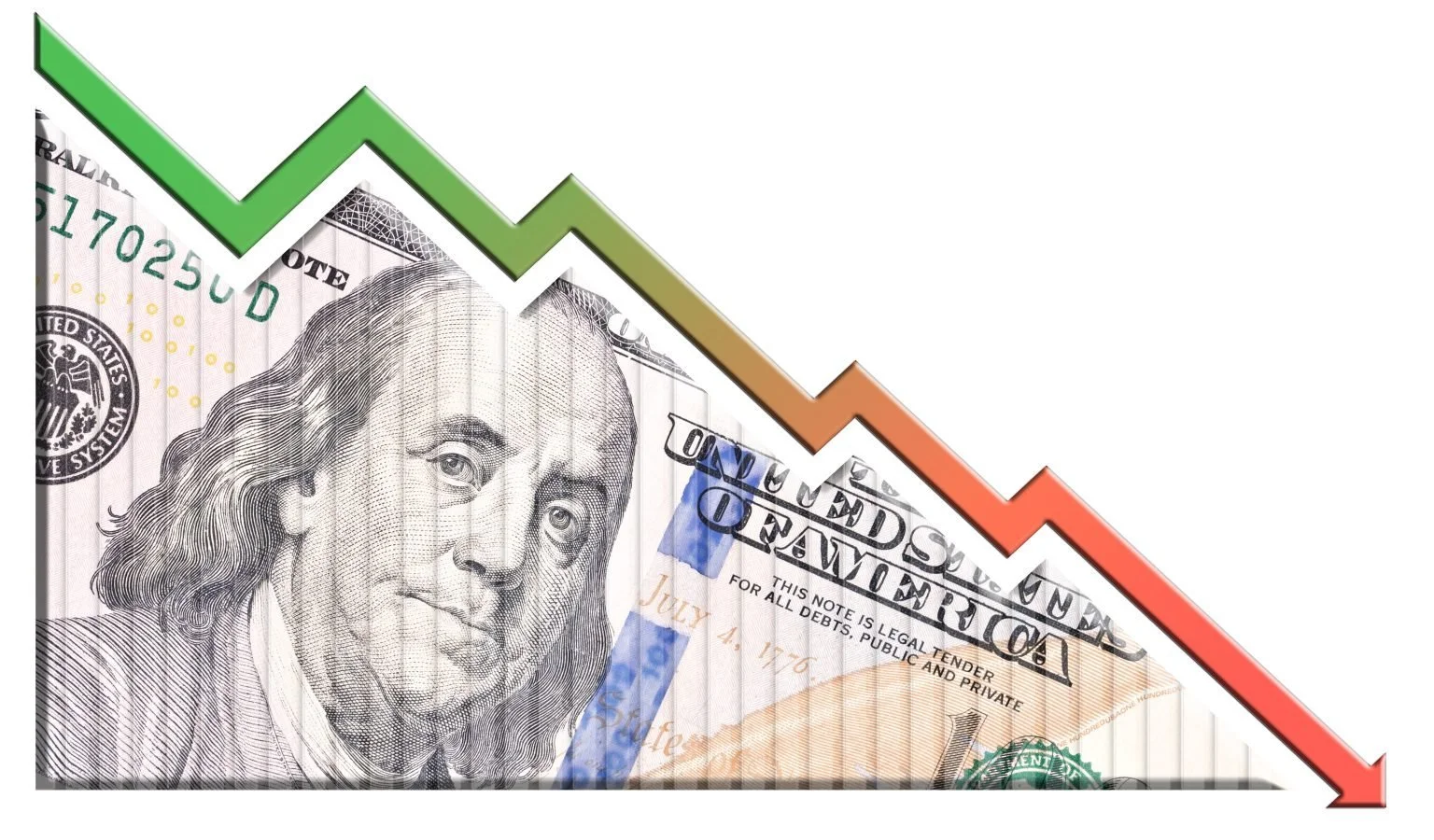
The United States was already the largest and most powerful economy in the world. America was the only major power that hadn’t been devastated by war. And, most importantly, the US was so RICH that they were the world’s primary creditor.
Britain, in fact, was heavily in debt to the United States… and at the time was actually negotiating to borrow even more money. So Churchill couldn’t exactly refuse Roosevelt’s invitation.
44 allied nations ultimately attended what would become known as the Bretton Woods Conference that took place in July 1944. This event famously established a new, post-war monetary system in which the United States and US dollar became the epicenter of global commerce and finance.
What a lot of people don’t know is that a sort of ‘pre-conference’ took place the month before, in June 1944, in Atlantic City.
That site was chosen specifically for its cooler weather. British economist John Maynard Keynes suffered from a terrible infection in his heart valves, and hot weather made him feel much worse.
Keynes even pleaded to senior Treasury official Harry Dexter White, “For God’s sake do not take us to Washington. . .” where the weather was sweltering in the summer.
In the end they settled on Atlantic City, specifically for Keynes’s health. And the first meeting to shape the new global financial system even took place on the beach!
Despite the balmy setting, however, Keynes was a thorn in the side of the American delegation; he was adamantly opposed to a post-war economic system in which the US dollar had total dominance.
As an alternative solution, Keynes advocated for competing reserve currencies… as well as a special central bank reserve currency that he wanted to call the ‘bancor’.
In the end, though, Keynes was overruled. The United States was the only country capable of calling the shots, and the rest of the world accepted America’s new dominance.
It’s been this way for the past 80 years. Even today, the US dollar continues to be used for the the majority of cross border trade, foreign reserves, and international financial transactions.
But as I have written many times before, this status is not written in stone. And it’s beginning to change very rapidly.
One very recent development is that, in China, the yuan just overtook the US dollar as the most widely used currency for international trade.
China has essentially been the manufacturer to the world for decades and does business with nearly every country on the planet.
Yet, up until last month, most of China’s trade was conducted in US dollars. If a Chinese manufacturer sold machinery to a Brazilian company, for example, or if a Chinese producer bought cobalt from Indonesia, those transactions traditionally took place in US dollars.
Over time, however, China has been gradually using its own currency for trade. And other countries have been happy to go along.
So now, for example, China might buy cobalt from Indonesia using yuan instead of US dollars.
This means that other countries will start holding more and more yuan to trade with China… and hence fewer and fewer US dollars.
This is not an accident. Back in 1944, the US was very aggressive in whipping the rest of the world into accepting the US dollar. China is following the same playbook-- aggressively rallying other countries against the US dollar and towards the yuan.
And it’s really becoming obvious.
After a recent visit to China, French President Macron urged Europe to move towards independence from US foreign policy, and to rely less on the US dollar.
France... which is literally America’s oldest ally, one of the largest economies in Europe, and a key leader of the European Union, is pushing against the dollar.
In addition, China and France recently completed their first yuan-settled LNG (liquified natural gas) trade. Again, this shows a shift from France solely using the US dollar for foreign trade, to also using the yuan.
Just before that, China and the United Arab Emirates made history with the first ever LNG trade settled in yuan. Then Brazil and China reached a deal to ditch the US dollar and trade in their own currencies.
Malaysia’s Prime Minister has proposed an “Asian Monetary Fund” to reduce dependence on the US dollar. Malaysia also struck a deal with India to trade in the Indian rupee.
India and Russia are settling oil deals without US dollars.
Then there is “BRICS”— Brazil, Russia, India, China, and South Africa which account for about 40% of the global population and a quarter of the global economy.
At a Bretton Woods-esque summit planned for this summer, BRICS will discuss creating a new currency, potentially pegged to gold, which they can use to trade.
Most importantly, Saudi Arabia is open to breaking the petrodollar and to start selling oil in yuan; on top of this, Saudi’s crown prince recently stated that he was “no longer interested in pleasing the US”.
The pace at which countries are turning away from the US dollar reminds me of the Hemingway line I mentioned recently about going broke: “gradually, then suddenly.”
I’ve been warning readers about the decline of the dollar’s reserve status for over a decade. And it may have seemed controversial back then that the dollar could be dethroned.
Now it is blatantly obvious. This is no longer a prediction, it’s happening in front of our very eyes.
To your freedom, Simon Black, Founder Sovereign Man
The Money System is your Slavery Chain
The Money System is your Slavery Chain
The Final Wake Up Call By Peter B Meyer
When credit money fails your slavery ends
Petrodollar System Is Broken
The economic law of fair exchange, demands only things of real value as currency and cannot be revoked. Today’s chaos is the result of more than 50 years of experimentation with global fiat money and demands a return to money of real value.
That day is now approaching as oil-producing countries demand gold, or its equivalent, for their oil, instead of dollars or euros.
The Money System is your Slavery Chain
The Final Wake Up Call By Peter B Meyer
When credit money fails your slavery ends
Petrodollar System Is Broken
The economic law of fair exchange, demands only things of real value as currency and cannot be revoked. Today’s chaos is the result of more than 50 years of experimentation with global fiat money and demands a return to money of real value.
That day is now approaching as oil-producing countries demand gold, or its equivalent, for their oil, instead of dollars or euros.
Think about it; What is the incentive to keep pricing oil in dollars and hold large dollar reserves, if the US is no longer your biggest customer?
“The petrodollar system is broken, now that oil is no longer paid in dollars internationally, that is essentially the death knell for the US dollar as a reserve currency. This means the US can no longer borrow with ‘exorbitant privileges’, and it means the US Treasury market is heading for an out-of-control interest rate spiral.”
“According to experts, there is some $15-20 trillion in currency held by the Middle East, much of it in ‘paper’ dollars. How long will they want to keep all those dollars lying around?
US one hundred dollar bill on fire
Especially when Asia and Pacific countries now account for more than a third of global oil consumption and the US only 20%. Meanwhile, the world’s biggest oil importer – China has already taken that crown away from the US some eight years ago. This severely undermines the petrodollar.
In recent years, China has made agreements with many of its trading partners to do business in each other’s currencies. China and Russia, China and Brazil, China and Australia, even China and its old/new enemy Japan, they have all made currency swaps and other arrangements to circumvent the US dollar.
Major Paradigm Shift
The world is now in the global monetary system about to undergo, a huge paradigm shift, and hardly anyone is aware of it. Many business people are planning and spending capital as if the world is not in recession.
The people are spending little and saving whenever possible. But, investors continue to invest as if everything is perfectly fine. Many are struggling to find the truth about the global economy, which is in debt like never before.
The world is so deeply in debt that these figures are mind-boggling to humanity. Trillions of dollars/euros of capital may be lost as a result and the world will end up in something that will be written about for centuries to come. And, called the darkest periods in human history, under the title Gigantic Fiat Money Collapse.
And yet, not one in a hundred people is aware of this, or even thinks it is possible.
Those who are aware, and who have internationalised their wealth and keep most of it in hard assets like precious metals, which are outside the financial system, preferably even outside their own countries, stand the best chance of successfully surviving the coming changes.
The days of the mighty “petrodollar” are numbered; and the “exorbitant privilege” or, economic windfall that America has enjoyed as the issuer of the world’s reserve currency is now coming to an end due to their arrogance, meddling and war interventions.
When US and EU politicians began economic sanctions against Russia, they probably never imagined the serious consequences for the US and the EU. But now Russian media report that the Russian finance ministry has pulled the trigger on its “de-dollarisation plan”.
For decades, virtually all oil and natural gas worldwide has been bought and sold at US dollars.
Turn Off Your Television
Never before has it been so important to turn off your television, do your own research and take your financial affairs into your own hands.
“All major central banks are printing staggering amounts of money. There is an artificial ocean of liquidity and it has to end at some point. When that happens, it will be very difficult.”
Banking System A Fantastic Business
The banking system is a fantastic business; they lend money they don’t have and charge the borrower interest on it; add to this the ‘fractional reserve lending’ that allows the banks to lend ten times more than what they have on deposit. In other words, they are lending ‘money’ that they do not have and that does not exist, correctly called – credit money – while charging and collecting interest on it.
Loans are not booked, so every repayment and interest payment is 100% profit. In case of bankruptcy of the borrower, there is no loss! Another source of income is inflation to continuously steal money from the people.
There are two kinds of money in circulation, the first is the money based on energy, the work or intellect of people, called energy money which is valuable because of the energy input; and the second kind is credit money created by the bankers out of nothing, without any value! The fraud committed by the banks is the equalisation of both kinds, with which they pluck the people bare.
There are two kinds of money in circulation, the original is the money based on energy, people’s work or intellect, called energy money which is valuable because of the energy input; and the second kind is credit money created by the bankers out of thin air without any value! The committed fraud by the banks is the equalisation of both types, enabling them to rob people bear.
To Summarise;
The unsecured money system is our slave chain. The people are not allowed to become prosperous under any circumstances because then the oppression and docility will no longer work. So it is deliberately kept in poverty by sucking off all surplus earnings from labour and intellect to flow into the pockets of the cabal. Among other things, illegal taxes, nonsensical measures and inflation make this possible. Like, for example, this hoax;
That the US, with its oil fracking, has enough oil for the future, and will recover on that basis. But oil fracking is fraud, it is pure misallocation of capital to produce nothing, it is a hoax, based on Junk Economics.
Quantitative Easing
In the depression of the 1930s, it was the money supply that counted, but after Nixon abolished gold hedging for the US dollar in 1972, he turned the “real money” system into a ‘credit money’ system. So now it is not the money supply that matters, but the ‘credit’ supply. As long as credit increases at a healthy rate of <2% or more, which basically is inflation, more precisely “theft”, markets and GDP go up.
If credit does not rise, expect a recession and a bear market. The idea behind increasing the money supply means more credit money, but because there was no market for it, it was called Quantative Easing (QE), a worthless tool, because this QE did not create more lending capacity.
“QE does not create new borrowing capacity. To explain it as simply as possible; Reserves are bank assets. Lending is constrained by capital. QE shifts assets but does not change capital. “If the Fed buys $2.6 trillion worth of Treasury securities from the non-government sector, the non-government sector sells $2.6 trillion worth of Treasury bonds to the Fed.
“How can have the Feds ‘injected’ $2.6 trillion of liquidity into the system? “As the net effect is zero?
“So to say that a bank can go to Goldman and use that $2.6 trillion as if it were something new is not correct. They could do that before they used Treasury bills as collateral.
“The idea that excess reserves indicate future hyperinflation is also absurd. The assumption is that the banking system will somehow ‘lend out’ those excess reserves. That cannot happen. That is impossible. Banks cannot lend out reserves. Full stop. It getting tiresome pointing that out. Even very smart people are wrong…”
But,
“The Fed knows that credit has to increase or it will become a depression. And today, debt levels have risen so high that a depression would be catastrophic. The disaster will be global, not just in the US. Causing people to die.
“Because a depression in the US means tens of millions of maybe hundreds of millions of people in China and Southeast Asia could lose their jobs. Companies go bankrupt. Governments go bankrupt. People living on the margins – with no savings – will then quickly become desperate and perhaps wake up? If not, civilisation will not survive. That is why the Fed has to allow a real credit contraction anyway.”
Conclusion: The financial system is in a situation of many fingers in the dike, but it is not possible to say in advance which finger will be removed first that will cause the dike to collapse. But at least, it is more certain that the end of US dollar hegemony is in sight. The only questions at this moment are:
When will it end and when will the real panic begin?
Either way, the demise of the US dollar is a certainty.
It is expected, that gold will trade for 20 times or more its current price. Count on it to happen. People need to own gold/silver because the central planners are leading them to ruin.
Silver will also see extraordinary long-term gains. Copper will also see fantastic profits, if they continue to modernise and invest in infrastructure in both India and China.
The bottom line is that people will have to be patient for a while, as the day approaches when the world will shift its attention to gold, silver and other commodities.
Smart investors continue to buy physical gold and silver all the time. Gold and silver are both undervalued, and more importantly, they are money outside the banking system. That means your money is not at risk in a bank failure if you own gold stored outside the banking system.
This article has analysed the financial money system in understandable language. It shows how humanity has been enslaved by the money system. Not one in a hundred people has ever understood or noticed this. Please be helpful in informing many others among us about this. Send this explanation to everyone you know, asking them to read and understand how they are enslaved.
If many readers come to understand this, we can collectively free ourselves from this chain of slavery that gags us.
Together we will be stronger to reject this money system and replace it with a new value-based money system made available to us by our Extraterrestrial brothers and sisters.
The wait is on us, others will not do it for us!
The END of the DOLLAR Federal Reserve Note
Everyone Needs to Know by Bo Polny
Bo is sounding the alarm about the death of the US dollar – federal reserve note and explains how this will affect the global economy and our economy.
About cryptos he is wrong; Cryptos is cabal have no intrinsic value, great for short-term speculation, introduced to skim-off excessive currency inflation.
https://qrcgcustomers.s3-eu-west-1.amazonaws.com/account17374898/36908410_2.pdf?0.616114217040252
Further Reading with Reader Comments and links HERE:
https://finalwakeupcall.info/en/2023/05/13/the-money-system-is-your-slavery-chain/
The Best Advice My Mom Ever Gave Me
The Best Advice My Mom Ever Gave Me
By Jamie Friedlander May 8, 2020
I’m currently pregnant with my first child. I’m an anxious person and I’ve been worried about countless things: Will our baby be healthy? Do we have everything we need for the nursery? Is the crib we’re looking to buy safe? Will I be a good mom? That last worry is the one that has been dominating my mind as of late. Parenting is a tricky, complex task, and no parent is perfect. But I want to prime myself to be the best possible mom I can be. So I did some research.
In honor of Mother’s Day, I asked different people to share the best piece of advice they ever received from their mom or the motherly figure in their life.
The Best Advice My Mom Ever Gave Me
By Jamie Friedlander
I’m currently pregnant with my first child. I’m an anxious person and I’ve been worried about countless things: Will our baby be healthy? Do we have everything we need for the nursery? Is the crib we’re looking to buy safe? Will I be a good mom? That last worry is the one that has been dominating my mind as of late. Parenting is a tricky, complex task, and no parent is perfect. But I want to prime myself to be the best possible mom I can be. So I did some research.
In honor of Mother’s Day, I asked different people to share the best piece of advice they ever received from their mom or the motherly figure in their life.
** “One of my favorite pieces of advice that my mom ever gave me is: Listen to the person’s advice who has nothing to lose or gain from your decision.”—Charlene Bazarian; attorney; Reading, Massachusetts
** “Always prepare early. Give yourself enough time so you have peace of mind and don’t have to rush.” —Heather Watkins; disability rights advocate; Boston
** “The best advice my mom ever gave me is to never look back because life only moves forward. As a person with anxiety disorders, I often get stuck in the past. Whenever I get stuck in a rut, I think of what my mom always told me, and I’m able to keep moving forward and not dwell on the past.” —Tsvetty Kolarova; social work student; Toronto
** “The one thing my mom drilled into me was to have good posture. She constantly told me to sit up straight at the dining table and not slouch while standing. As a teen, it was very annoying. But since then, I have thanked my mother countless times for this lesson.
“It seems like such a small thing, but it isn’t. I’ve read that good posture makes you more confident and more attractive, and it gives non-verbal clues to others that you are self-assured and powerful.” —Kathleen Owens; financial advisor; Hilton Head, South Carolina
** “With this being her first Mother’s Day as a new mom, I have to give credit to my beautiful wife, Lauren, for her constant reassurance that, in our journey of parenthood, it’s OK that we don’t have all the answers and mistakes are inevitable.
“As she’ll say, ‘We don’t even know what we don’t know.’ Being reminded of that regularly brings me so much relief, because I tend to put pressure on myself to do everything perfectly when it comes to our 3-month-old little girl.
“She keeps me balanced and remembering that this is a marathon, not a sprint, and the most important thing is to be loving and patient, not only with our daughter, but with ourselves.” —Josh Ellis; SUCCESS editor in chief; Dallas
** “The best piece of advice my mom ever gave me was that there is no reason to be jealous of anyone. She said, ‘You have two hands and a brain. If you want something someone else has, go out and get it on your own.’ That is how I live my life.”—Ilena Di Toro; small business owner; Philadelphia
** “When I was a kid, we had a swimming pool in our backyard. One day, I got hurt doing a trick in the water. It was only a bruise, but I decided I was done for the day. My mom stopped me. She told me to do it again. ‘I’m too scared,’ I told her. ‘I’ll do it tomorrow.’
“‘No,’ my mom said, ‘you need to do it today because you’re scared. If you wait until tomorrow or some other day, the feeling of being scared will get bigger. And once it gets bigger, it will get harder for you to do it again.’
“I’ll never forget that advice. The more we hesitate over something, the bigger it becomes. But that’s exactly why you should do it again. Do it right away, and don’t give your brain the opportunity to turn a stumble into a setback.”—Jandra Sutton; author; Nashville, Tennessee
To continue reading, please go to the original article here:
https://www.success.com/the-best-advice-my-mom-ever-gave-me/
10 Things Most Americans Don’t Know About Credit Cards
10 Things Most Americans Don’t Know About Credit Cards
John Csiszar Fri, May 12, 2023
Credit cards are so convenient that they are part of daily life for many Americans. Given that fact, it's perhaps surprising that there are so many common misconceptions about credit cards floating around.
Seeing as your credit score and how you manage your credit can affect so many areas of your life, from applying for a car loan or a home mortgage to qualifying for an apartment, it's important to know the facts about credit cards. Here's a look at 10 common misconceptions about credit cards and the truths behind each myth.
10 Things Most Americans Don’t Know About Credit Cards
John Csiszar Fri, May 12, 2023
Credit cards are so convenient that they are part of daily life for many Americans. Given that fact, it's perhaps surprising that there are so many common misconceptions about credit cards floating around.
Seeing as your credit score and how you manage your credit can affect so many areas of your life, from applying for a car loan or a home mortgage to qualifying for an apartment, it's important to know the facts about credit cards. Here's a look at 10 common misconceptions about credit cards and the truths behind each myth.
Your Credit Report Shows as Debt-Free If You Pay Your Balance in Full Every Month
Paying your entire credit card statement in full every month is a sound financial strategy. However, if you want to appear debt-free to lenders, you'll have to alter the timing of your payments.
Every month when you get a credit card statement, your creditor reports that balance to the credit reporting agencies. Even if you pay the balance in full after getting your statement, according to your credit report, you're still carrying that balance. To appear debt-free to your creditors, you'll need to pay off that balance in full before your statement closing date.
Applying For a Store-Branded Credit Card Won't Hurt Your Score
There's a common misconception that opening store-branded credit cards is not the same as opening a general credit card from an issuer like Chase Bank. Since these types of cards can typically only be used at the store where they're issued, many consumers mistakenly believe that they are "private issue" credit cards or somehow don't end up in the traditional credit reporting universe. The truth is that store credit cards are issued by banks as well, and they are reported to the credit agencies just like any other type of credit card.
Closing Unused Accounts Raises My Credit Score
From a financial planning standpoint, it's true that you shouldn't have more credit cards than you need. However, if you go about canceling your unused credit cards, you might end up paying a price when it comes to your credit score, in two ways. First, a big part of your credit score comes from your credit utilization or the percentage that you're using of your entire amount of available credit.
If you carry a balance on some cards and cancel your other ones, your credit utilization percentage will jump, thereby lowering your credit score. Second, the average age of your credit accounts is another factor affecting your credit score, although not as significantly as your credit utilization. If you close long-standing accounts and lower the average age of your credit lines, your credit score will take another hit.
You Must Carry a Balance To Improve Your Credit Score
To continue reading, please go to the original article here:
https://finance.yahoo.com/news/common-misconceptions-credit-cards-230738822.html
9 Easy Banking Tips You Haven't Heard of Before
9 Easy Banking Tips You Haven't Heard of Before
Nina Derwin Fri, May 12, 2023
Whether you are brand new to banking or you’ve had the same bank account for several decades, it’s never too early or too late to change up your banking strategy. Earning money is hard enough, and banking shouldn’t make it harder still to hold on to your dollars. Taking small steps and implementing these key tips can help you save money and avoid surprise surcharges and banking fees.
9 Easy Banking Tips You Haven't Heard of Before
Nina Derwin Fri, May 12, 2023
Whether you are brand new to banking or you’ve had the same bank account for several decades, it’s never too early or too late to change up your banking strategy. Earning money is hard enough, and banking shouldn’t make it harder still to hold on to your dollars. Taking small steps and implementing these key tips can help you save money and avoid surprise surcharges and banking fees.
Make sure your accounts stay active.
It is not uncommon for banks to close your account if it goes untouched for a prolonged period of time. Banks may instead opt to charge you a fee for your dormant account.
Stay informed about banks besides your own.
Just because your bank offered great benefits when you opened your account doesn’t mean they are still the best in the game. Compare what other banks are offering to ensure you get the lowest fees and best APY for your savings.
Be proactive about closing accounts.
If you no longer wish to have a particular account, don’t just abandon it. Let your bank know so they can close the account and you can avoid paying low balance or dormant account fees.
Read the fine print before closing an account.
Some banks charge fees for closing an account too soon after opening it. Before closing your account, make sure to read the terms and conditions to ensure you aren’t hit with an additional charge.
Don't close an unused credit card.
To continue reading, please go to the original article here:
https://www.yahoo.com/lifestyle/9-easy-banking-tips-havent-175900766.html
These People Are Incapable Of Playing The Long Game
These People Are Incapable Of Playing The Long Game
Simon Black May 10, 2023
On the afternoon of Sunday, June 7, 2020, a 36-year-old Chinese national named Wang Xin was at Los Angeles International Airport waiting to board Air China flight 988 back to his native Tianjin. Things were tense in the US; Covid-19 was still raging, George Floyd protests were erupting all around the country, and Wang couldn’t wait to get home.
But he never made it. Before boarding his flight, Wang was approached by several men who flashed their badges and identified themselves as US federal agents. Wang was then taken into custody and questioned… and he eventually told the agents the truth.
These People Are Incapable Of Playing The Long Game
Simon Black May 10, 2023
On the afternoon of Sunday, June 7, 2020, a 36-year-old Chinese national named Wang Xin was at Los Angeles International Airport waiting to board Air China flight 988 back to his native Tianjin. Things were tense in the US; Covid-19 was still raging, George Floyd protests were erupting all around the country, and Wang couldn’t wait to get home.
But he never made it. Before boarding his flight, Wang was approached by several men who flashed their badges and identified themselves as US federal agents. Wang was then taken into custody and questioned… and he eventually told the agents the truth.
Wang had already been in the US for 18 months at that point working within the University of California system to conduct cutting-edge genomics research. One of the published papers that he co-authored in late 2019, for example, focused on “TMEM131 family proteins in intracellular collagen assembly”.
Some of his work had even been funded by the National Institutes of Health.
But Wang confessed to federal agents that day that he was actually a People’s Liberation Army officer with the rank of Major, and that he had been ordered by his PLA superiors to “bring back information” about the University of California’s research, laboratory, personnel, and more.
This is all tantamount to industrial espionage. And Wang is far from alone.
At an event I attended this past weekend, I had the chance to spend a lot of time with a former CIA officer who spent more than 20 years working at the agency. As a former intelligence officer myself, he and I had a lot to talk about.
He reminisced about how one of his early assignments at the CIA was to track some Chinese intelligence operatives who were posing as university students in the United States… which is something he said is incredibly common.
Quite often Chinese intelligence operatives spend 6-8 years in school, completing PhDs in difficult “STEM” subjects like electrical engineering of advanced genomics.
But China doesn’t stop at just sending its operatives to American universities. They make sure their people subsequently get hired at prominent US companies, especially in industries like technology, energy, pharmaceuticals, etc.
Yet even then, as my CIA colleague explained, the spy’s value is minimal to the Chinese government. It takes another 15 to 20 years for them to work up the corporate ladder and have access to critical technological secrets.
Only then can the spy provide the Chinese Communist Party with highly prized secrets.
China is essentially willing to patiently invest DECADES of painstaking effort to achieve its intelligence objectives. And that’s pretty normal for the Chinese; their leadership tends to establish clear goals and long-term strategic visions that often look 30+ years into the future. A single decade is nothing for them.
Now, China’s authoritarian government obviously has a mountain of reprehensible flaws, and they have no intention of changing for the better. But one thing’s for sure: they know how to play the long game… and use it to their advantage.
Contrast this with the US government, which at present cannot even plan beyond the next few weeks.
Remember that the legal limit for the national debt was breached on January 19, 2023. And ever since then, the Treasury Department has had to resort to “extraordinary measures” in order to keep the government funded.
Now, it’s utterly pathetic that the federal government of the largest and supposedly ‘most prosperous’ economy in the world has to borrow trillions of dollars each year to make ends meet.
Consider that the Treasury Department collected a record $5 TRILLION in tax revenue last year; as recently as 2019, $5 trillion would have been more than enough to fund the entire government AND STILL run a budget surplus.
And yet, today, even $5 trillion is not enough money. So, the US government still needs to go deeper into debt in order to keep the lights on. Like I said, utterly pathetic.
But what’s worse is their inability to resolve this problem.
The guy who shakes hands with thin air insists that he will not negotiate a single penny of spending cuts in order to reach a compromise with Congress on raising the debt ceiling.
Obviously, it’s silly to think that the federal government shouldn’t cut spending. And it’s downright impossible to argue that there isn’t plenty of fat to trim.
Yet POTUS simply refuses to make a single cut, even though it’s precisely what the country needs.
And we can’t just chalk it up to the guy being senile and demented, either-- this is a criminal level of incompetence, because it is deliberate and reckless.
Maybe he’ll change his tune before it’s too late. But it’s not just the debt ceiling issue. Nor is this short-sightedness a problem that is unique to Joe Biden.
Both Congress and the White House, for example, understand that Social Security’s trust funds are set to run out of money in less than ten years. And yet both sides and both political parties have agreed to take Social Security ‘off the table’. No changes to the program. No discussions. No solutions.
There’s a looming deadline to fix Social Security… and yet they’re happy to just kick the can down the road… just as previous Congresses and administrations have done.
These people are incapable of thinking long-term and solving challenges that are 10+ years out. At the moment they can’t even compromise on the next month’s debt ceiling crisis.
Quite simply they’re unwilling and/or unable to play the long game. And the country is worse off for it. The whole world is worse off for it.
This is why it makes so much sense to have a Plan B-- something which requires long-term thinking.
We just talked about Social Security and how they refuse to do anything about it. But we can easily think long-term and set up the right kind of structure, like a solo 401(k), which provides more flexibility to save money for retirement.
We can also acknowledge the risks of America’s obvious financial and social decline and think about long-term solutions.
One option is to establish legal residency in a foreign country you enjoy visiting, which, over a few years, can lead to a second passport for your entire family. This will give you more freedom and opportunity, and act like a sort of insurance policy if you ever need it.
It takes time to set up, of course. But this isn’t a problem for people who play the long game… and recognize that there’s no downside in being prepared for obvious risks.
To your freedom, Simon Black, Founder Sovereign Man
https://www.sovereignman.com/trends/these-people-are-incapable-of-playing-the-long-game-147382/
The 5 Most Insulting Gifts To Give Mom On Mother's Day
The 5 most insulting gifts to give Mom on Mother's Day (and what to give her instead)
Let's just say if you're thinking "bidet," you need to read this.
Rick Broida Tue, May 9, 2023
In this article: Mother's Day Gift Ideas
Guys. Lean in a second. You're shopping for Mother's Day, right? Your heart's in the right place. You want to show her your love and appreciation. Good for you. Just one problem: You're going to screw it up. That thing you think Mom wants? No. I speak from experience: I've had a mom for 54 years and a mother of my children for 22. So learn from my mistakes and avoid the following gifts — no matter how well-intentioned — at all costs. (Don't worry; I've also shared what to get her instead.)
The 5 Most Insulting Gifts To Give Mom On Mother's Day
The 5 most insulting gifts to give Mom on Mother's Day (and what to give her instead)
Let's just say if you're thinking "bidet," you need to read this.
Rick Broida Tue, May 9, 2023
In this article: Mother's Day Gift Ideas
Guys. Lean in a second. You're shopping for Mother's Day, right? Your heart's in the right place. You want to show her your love and appreciation. Good for you. Just one problem: You're going to screw it up. That thing you think Mom wants? No. I speak from experience: I've had a mom for 54 years and a mother of my children for 22. So learn from my mistakes and avoid the following gifts — no matter how well-intentioned — at all costs. (Don't worry; I've also shared what to get her instead.)
Most insulting Mother's Day gift #1: A traditional vacuum cleaner
Seriously? You're going to give Mom more household chores?! This is the classic Mother's Day blunder, the idea that she's just there to clean the house (and needs better tools to do it). No, dummy; why don't you get off the couch and grab a broom yourself? That would be a nice gift right there.
What to get instead: A robot vacuum
Now we're talking. It may not be the most glamorous gift, but anything that can take sweeping and mopping off the chore list is sure to be appreciated. Need help choosing one? Here's our list of the best robot vacuums of 2023. Alternately, here's a quick recommendation for a popular model that happens to be on sale:
Dreametech D10 Plus Robot Vacuum and Mop with Self-Emptying Base
Set it and forget it: The D10 Plus will automatically clean the floors as often as Mom wants, plus it can empty 45 days' worth of debris into its floor dock. Mopping requires a little more manual intervention, but it's still way easier than hauling out a bucket. $350 at Amazon
Most insulting Mother's Day gift #2: A fitness tracker
OK, we're kind of split on this one, because it depends on the circumstances. If Mom has never mentioned a fitness tracker (such as a Fitbit), then we don't want to be there when she unwraps it. The implication: She's imperfect, she needs to exercise more, etc. Now, if she has dropped hints about wanting one of these, it's totally fine. Here's our list of the best fitness trackers to buy in 2023. But, if this is coming out of the blue, go a different way.
What to get instead: An item tracker
To continue reading, please go to the original article here:
https://www.yahoo.com/lifestyle/most-insulting-mothers-day-gifts-204135366.html
10 Small Changes To Stay On Track With Your Savings Goals
10 Small Changes To Stay On Track With Your Savings Goals
Cynthia Measom Thu, May 11, 2023
According to Fidelity Investments' annual Financial Resolutions Study, the top financial resolution of respondents for 2022 was to save more money. But not every resolution makes it far past January. Less than halfway into the year, you can still take charge of your finances.
How much you save is a personal decision -- one only you can make. But if you're interested in getting -- or staying -- on track with your savings goals, the time to start is now.
10 Small Changes To Stay On Track With Your Savings Goals
Cynthia Measom Thu, May 11, 2023
According to Fidelity Investments' annual Financial Resolutions Study, the top financial resolution of respondents for 2022 was to save more money. But not every resolution makes it far past January. Less than halfway into the year, you can still take charge of your finances.
How much you save is a personal decision -- one only you can make. But if you're interested in getting -- or staying -- on track with your savings goals, the time to start is now.
The good news is that these are small financial shifts you can make, designed not to overwhelm. After all, baby steps still equal progress.
Set Some Purchasing Rules
When it comes to shopping, if you don't have a plan, you can quickly find yourself spending more than you should. And all that unplanned spending can quickly add up and cause you to lose track of your financial goals. As an alternative, set some purchasing rules that apply every single time you want to make a purchase. Here are some ideas from Scott Nelson, financial services expert and CEO of MoneyNerd Ltd:
Wait a week and see if you still want it.
Every time you buy something, you have to sell something.
Check charity shops first.
Make your own if you can.
Borrow from someone else.
Wait until it goes on sale.
Start With Small Savings Goals
While you might not think that putting a little money aside in your savings each month will make a difference, it can.
Remove the Emotion From Saving
Nothing makes saving less appealing for some people than thinking about having to save.
To continue reading, please go to the original article here:
https://finance.yahoo.com/news/10-small-changes-stay-track-200029740.html
Does Paying in Cash Help You Save Money?
Does Paying in Cash Help You Save Money?
Sam DiSalvo Wed, May 10, 2023
In a primarily cashless society, you probably rarely have cash on you. Now even cash-run events of the past like flea markets and Girl Scout cookie sales have Square readers to take credit cards. Paying with cards is certainly convenient, but is it costing us more?
Does Paying in Cash Help You Save Money?
Sam DiSalvo Wed, May 10, 2023
In a primarily cashless society, you probably rarely have cash on you. Now even cash-run events of the past like flea markets and Girl Scout cookie sales have Square readers to take credit cards. Paying with cards is certainly convenient, but is it costing us more?
“Ten years ago, I would have said absolutely. Today, as more spending becomes digital, there are fewer and fewer ways to save money with cash. Having said that, there still is a place and time for cash,” said Derek Sall, founder of Life and My Finances. Here are the pros and cons of paying with cash, and the areas where you can still save when you do.
Pro: You Can Sometimes Get a Discount for Paying in Cash
In some business models, workers will cut you a deal if you pay them in cash. “Need a photographer? A carpet installer? Need a new roof? There’s often a steep discount — like 10%-25% — if you offer to pay them in cash,” Sall said. Many businesses do this to avoid the fees they have to pay on processing credit card transactions. This fee can be anywhere from 1.95% to 2.5% of every transaction, so business owners prefer to avoid that if possible. If you carry cash, you’ll save a lot when you encounter these types of situations, and the vendor will appreciate it, too.
Pro: Psychologically, Using Cash Might Help You Save
There might not be an exact dollar amount you’re guaranteed to save, but studies have shown that paying with credit cards is considered a less “painful” transaction, according to Megan Kelly, financial advisor and communications director at GoodCheddar.
“According to some experts, the psychology behind paying with options other than cash is connected to the idea that dematerialized money can be linked to reward and regret emotions which influences spending behavior. As such, the sensory stimuli associated with paying with cash are diminished when using apps, credit cards and other payment alternatives,” Kelly said. This means that paying with cash often means more to people because they can feel it disappear, whereas that’s not felt as profoundly when you swipe with a card.
Pro: No Interest Charges or Annual Fees
To continue reading, please go to the original article here:
https://finance.yahoo.com/news/does-paying-cash-help-save-130043495.html