
10 ‘Normal’ Money Habits That Are Actually Harmful
10 ‘Normal’ Money Habits That Are Actually Harmful
Andrew Lisa Mon, April 10, 2023
Just because you get into the habit of doing something doesn't mean it's good for you -- and gnawed-on fingernails and cracked knuckles aren't the only proof. Some of the worst habits that tend to die the hardest show up not only on people's bodies but in their financial lives as well.
From the way people budget to the way they spend, save and invest, minor sins are easy to come by. Like so many bad habits, some people don't even realize they're making money-related mistakes at the time. Or they realize it but find it hard to change.
10 ‘Normal’ Money Habits That Are Actually Harmful
Andrew Lisa Mon, April 10, 2023
Just because you get into the habit of doing something doesn't mean it's good for you -- and gnawed-on fingernails and cracked knuckles aren't the only proof. Some of the worst habits that tend to die the hardest show up not only on people's bodies but in their financial lives as well.
From the way people budget to the way they spend, save and invest, minor sins are easy to come by. Like so many bad habits, some people don't even realize they're making money-related mistakes at the time. Or they realize it but find it hard to change.
The following money habits have been normalized over the years but are still just as harmful as ever.
Not Following a Basic Budget
Many people have no idea how much money they spend each month. Perhaps unsurprisingly, younger adults are the least likely to keep track of their spending. No matter your age, your financial goals both big and small will die on the vine if you don't know how much money you're bringing in, how much you're spending, where you're overspending and the percentage of income that you're saving -- if you're saving at all.
Ignoring Your Credit Until It Matters
Despite the widespread availability of free apps such as Credit Karma and free credit trackers that come with most bank accounts and credit cards, plenty of people still ignore their credit for most of the year. They check in only when they're up for big purchases or loans, often finding that their scores are a whole lot lower than they had imagined or that there are mistakes on their reports that they could have corrected before the damage was done.
The truth is your credit is important 365 days a year. It affects the rates you'll pay, not only for mortgages and auto loans, but for things like insurance and utilities. It also impacts whether employers see you as hireable or whether landlords will take you on as a renter.
Knowing what's in your credit report is the first step to managing your credit. By tuning out, you're accepting a more expensive life.
Carrying a Balance on Your Credit Card
Many of America's credit card users carry a balance on their accounts -- which is exactly what banks want them to do. When you pay your statement balance in full every month, you pay only as much as is needed to cover your purchases.
If you don't pay your entire statement and carry a balance, on the other hand, the bank will hit you with finance charges. With the average credit card interest rate now hovering around 20%, that balance will find a way to grow even as you try to pay it down, leading to an endless snowball effect of new interest compounding on last month's interest.
If you pay your balance in full just two months in a row, however, finance charges -- and that toxic cycle of debt -- come to an end.
Automating Your Bills to a Fault
To continue reading, please go to the original article here:
https://news.yahoo.com/finance/news/10-normal-money-habits-actually-200013138.html
Risky Business
Risky Business
Adam M. Grossman | Apr 9, 2023 Humble Dollar
OPEN A FINANCE textbook, and you’ll find discussions of volatility and beta, value-at-risk, the Sharpe ratio, the Sortino ratio, the Treynor ratio and many other quantitative tools for measuring risk. But what should you make of these metrics? Are they an effective way to control risk in your portfolio?
These tools do have decades of research behind them, and they can be useful. But I believe they’re also incomplete. Worse yet, they can be misleading. William Sharpe, winner of the Nobel Memorial Prize in Economic Sciences, once commented that his ratio was being “manipulated” by investment marketers “to misrepresent their performance.”
Risky Business
Adam M. Grossman | Apr 9, 2023 Humble Dollar
OPEN A FINANCE textbook, and you’ll find discussions of volatility and beta, value-at-risk, the Sharpe ratio, the Sortino ratio, the Treynor ratio and many other quantitative tools for measuring risk. But what should you make of these metrics? Are they an effective way to control risk in your portfolio?
These tools do have decades of research behind them, and they can be useful. But I believe they’re also incomplete. Worse yet, they can be misleading. William Sharpe, winner of the Nobel Memorial Prize in Economic Sciences, once commented that his ratio was being “manipulated” by investment marketers “to misrepresent their performance.”
This highlights the first weakness of these quantitative measures: They’re formula-based and that gives them the appearance of being objective, but many of the inputs to these formulas are actually quite subjective. So subjective, in fact, that Sharpe has said, “I could think of a way to have an infinite Sharpe ratio.” To put that in context, a Sharpe value of more than two would be considered very attractive.
Another issue with quantitative measures is that risk is multidimensional. Consider the recent failure of Silicon Valley Bank. None of the quantitative measures referenced above would have detected the risk that ultimately brought down the bank. That’s because, in the end, the bank’s undoing had more to do with psychology than numbers. Depositors began to worry about the bank’s solvency, and those worries caused others to worry. Author Morgan Housel compared it to a stampede: A concern which, at first, was reasonable began to take on a life of its own, driving people over the line into irrational behavior.
The message I take from this: Risk is a bit like a hydra, the creature from mythology that had multiple heads. It’s awfully hard to pin down and even harder to quantify. Sometimes, situations that didn’t appear to carry any risk will suddenly experience a flare up. Other times, existing risks will present themselves in new ways and with a greater level of ferocity.
That’s what we saw in 2020, when COVID-19 emerged. There had been other virus outbreaks in recent years, including other coronaviruses. For several years leading up to 2020, in fact, the State Department had specifically called out the risk of a pandemic.
Here’s what intelligence analysts wrote in 2019, a year before COVID hit: “We assess that the United States and the world will remain vulnerable to the next flu pandemic or large-scale outbreak of a contagious disease that could lead to massive rates of death and disability, severely affect the world economy, strain international resources, and increase calls on the United States for support.”
That was hardly the only warning. But if a pandemic had been on our radar, why were we so unprepared? That gets at another reality of different risks: It’s hard to know when to take them seriously. If a particular risk hasn’t been seen before—or hasn’t been seen in a long time—it’s difficult to know how to think about it. How do we distinguish between risks that are real and those that are just paranoid notions?
Indeed, those who dwell too much on prospective risks face a risk themselves: They’ll be dismissed as worrywarts. Investor Nouriel Roubini, for example, has earned the nickname Dr. Doom for his perpetually glass-half-empty outlook. He’s a serious economist, but many people roll their eyes when he delivers yet another downbeat forecast.
Investor William Bernstein, in his book Deep Risk, discusses “the four horsemen” of portfolio risk. In addition to inflation and deflation, which are common concerns, he includes devastation and confiscation—the sorts of things that would be associated with a breakdown of civil society. Are these real risks? I wouldn’t dismiss them—and I credit Bernstein for being brave enough to raise these questions—but it’s also difficult to know what reasonable steps you might take to protect yourself against them.
Risk is tricky also because it’s a master of disguise. Even when we have a good understanding of a particular risk—such as market bubbles—we can still be fooled. Not unlike viruses, market bubbles mutate. They always come back looking a little different each time. That allows them to slip through our defenses. That, in fact, is how I would characterize much of what happened in 2021, when all sorts of newfangled investments rose to prominence—SPACs, for example, and thousands of new crypto “currencies.”
To continue reading, please go to the original article here:
Money is Everything
Money is Everything
APRIL 8, 2023
I have a difficult time understanding the level of apathy that so many people have towards money. I’ve never held a “money is everything” attitude, but as I ponder such an audacious statement, I realize it’s not so far from the truth.
PIMD welcomes Physician On Fire as our guest post. POF is a personal finance website created to inform and inspire both physicians and our patients with insightful writing from a physician who has attained financial independence and the ability to retire early.
Apathy may not be the best word to describe others’ treatment of money. Ambivalence isn’t quite right, either.
Money is Everything
APRIL 8, 2023
I have a difficult time understanding the level of apathy that so many people have towards money. I’ve never held a “money is everything” attitude, but as I ponder such an audacious statement, I realize it’s not so far from the truth.
PIMD welcomes Physician On Fire as our guest post. POF is a personal finance website created to inform and inspire both physicians and our patients with insightful writing from a physician who has attained financial independence and the ability to retire early.
Apathy may not be the best word to describe others’ treatment of money. Ambivalence isn’t quite right, either.
People do seem to care about money and they certainly want more of it, but I don’t see a lot of people making the wise and sometimes difficult choices that will help them actually grow their money and achieve financial independence.
My wife and I were talking about this very thing. I was talking about people wasting money in pointless ways and she said “a lot of people just don’t care about money.” I guess not, but how could they not? Without thinking, I blurted out “But that makes no sense to me, because money is everything.”
I realized what I had said and how it sounded, and I backpedaled a bit. I wasn’t about to launch into a Gordon Gekko style “Greed is Good” speech, but I had a legitimate point.
What I meant to say was that Money is Anything.
Money can become so many things.
More free time
Your children’s education
Dinner at a five-star restaurant
A life-saving AED for your church or community center
Super Bowl tickets
A well for clean water in a third-world country
Retiring some day
Two Months in Spain
Food and medicines for a no-kill animal shelter
A new house
Money is whatever you want it to be.
Who doesn’t care about a single one of those things listed above? Not anyone that I know. But if I don’t know you and if you literally care about none of the above, I’m sure you can come up with a list of things you truly do care about on your own. I promise you there will be things on your list that money can buy.
Because Money is Everything.
You Should Care About Money
Money is a taboo topic in many circles; most people don’t like to talk about money. I’m not like most people in that regard.
At home, we openly discuss money matters. I want our boys to grow up to be smart with money, and avoiding the topic is not going to get the job done.
There are many reasons I want my boys to care about money and reasons I think you should care about money, too. There are the many facts above — that money can be exchanged directly for many things that can improve your life, the lives of your loved ones, and that of those who may be thousands of miles away.
But there’s more to it than that.
To continue reading, please go to the original article here:
How to Build a Strong Financial Foundation, Brick By Brick
How to Build a Strong Financial Foundation, Brick By Brick
APRIL 8, 2023 Financial Pilgrimage
Nothing may be more critical to your financial future than a strong financial foundation. However, if you’ve been on social media and ventured into finance, you’ve probably seen a few stories about overnight millionaires.
These people may have gotten rich from getting in on a cryptocurrency early, or others boast about how their online business generates six figures per month. I’m not saying there aren’t true stories of people that have been successful in these spaces. Though I am saying that the money has likely been made by the time these trends make it to the mainstream. That, or they are trying to sell you a product on the back end by giving the appearance of success.
How to Build a Strong Financial Foundation, Brick By Brick
APRIL 8, 2023 Financial Pilgrimage
Nothing may be more critical to your financial future than a strong financial foundation. However, if you’ve been on social media and ventured into finance, you’ve probably seen a few stories about overnight millionaires.
These people may have gotten rich from getting in on a cryptocurrency early, or others boast about how their online business generates six figures per month. I’m not saying there aren’t true stories of people that have been successful in these spaces. Though I am saying that the money has likely been made by the time these trends make it to the mainstream. That, or they are trying to sell you a product on the back end by giving the appearance of success.
Very few people become wealthy through a cryptocurrency or penny stock that goes through the roof. Most people that try end up losing money. Anyone touting the success of a business has likely spent thousands of hours building it up. There are very few shortcuts to wealth.
There is nothing wrong with taking some risks to build wealth. We all romanticize the individual that only spent $1,000 to build a six-figure business. Those situations are rare, though. The more likely scenario is that businesses will fail, and if the person hasn’t already established a strong financial foundation, they will be in big trouble. A financial plan built on risky investments, debt, margin, or any other speculative position could collapse at some point if the economy takes a turn.
The Importance of A Strong Financial Foundation
Building a strong financial foundation may seem like a risk-averse approach. However, I’d like to share why it’s not only the safe thing to do but why it can set you up to take more significant risks down the line.
Let’s start with an example. Think back to the Great Recession of 2008. The era leading up to 2008 felt a lot like it does today, only more so in real estate. Today, we hear of people going all in to try to be crypto millionaires. That approach has worked for some. However, you don’t want to be the one holding the bag once the musical chairs end. Unfortunately, that’s what happened in 2008 in the real estate market.
Homebuyers that shouldn’t have qualified for certain mortgages were duped into buying homes, many with adjustable-rate mortgages. They could afford the payments when interest rates were low, and the job market was strong. Eventually, interest rates started to tick up, making their mortgage unaffordable.
These issues resulted in millions of people going into foreclosure and eventually crashing the housing market. As a result, the job market was terrible for years. The poor housing market created a downward spiral where millions of people were eventually kicked out of their homes. Nearly 10 million homeowners lost their homes to foreclosure between 2008 and 2014. In addition, bankruptcies increased by almost 75% after 2009.
After all that, who were the ones standing? Those with a strong financial foundation. Don’t put your family in a situation where a down economy can cause your financial situation to collapse.
Here’s where the second part comes into play.
To continue reading, please go to the original article here:
https://financialpilgrimage.com/strong-financial-foundation/
Worry About the Right Things
Worry About the Right Things
Posted April 8, 2023 by Michael Batnick
“Do you know the difference between me and you?
Me: Happy, happy, happy, dead.
You: Worry, worry, worry, dead.”
– Catch-22.
The last few years reminded us that it’s more important to know how it feels to lose money than to make it. The only way to develop respect for risk is to experience financial pain. Once you’ve been burnt, you can develop a healthy anxiety around your personal finances.
Worry About the Right Things
Posted April 8, 2023 by Michael Batnick
“Do you know the difference between me and you?
Me: Happy, happy, happy, dead.
You: Worry, worry, worry, dead.”
– Catch-22.
The last few years reminded us that it’s more important to know how it feels to lose money than to make it. The only way to develop respect for risk is to experience financial pain. Once you’ve been burnt, you can develop a healthy anxiety around your personal finances.
Such is the case for a friend of mine. I’ll call him Rich. He’s known to be a worrier for much of his life. At first, he worried about the right things, like what he spent, saved, and even where he lived. Simple, manageable, and firmly within his control. His focus on financial efficiency served him well and allowed him to retire earlier and more comfortably than planned. He won the game.
When you dream of being in that position, you probably imagine all your worries falling by the wayside. Not for Rich. Now, the thought of losing it is what keeps him up at night. There’s nothing constructive about his obsessions. It’s always about things that are completely out of his control.
“Deep in the human unconscious is a pervasive need for a logical universe that makes sense. But the real universe is always one step beyond logic.”- Dune
Rich’s focus on the wrong things not only gives them power, but they leave the right things under-attended. He understands that bear markets are part of investing, yet he can’t embrace their inevitability. His success hinges on his willingness and ability to withstand discomfort. Financially, he’s able, but he’s not willing. Throw out the spreadsheets.
Instead, he worries about what impact the Fed, China, or WW3 might have on his portfolio. This is what’s left for him to contemplate after accounting for the things we can control, like diversification, the stock/bond mix, and a cash buffer.
Do you see the pattern here? He’s focusing on the risks he can’t entirely eliminate. Pure risk. As Cliff Asness said, “You get compensated for the risk you can’t diversify out of.” Everything else is somewhat actionable. It’s not perfect, but it’s enough. What makes it so hard is that his concerns are reasonable. Yet, he has no influence over any of them. Reasonable doesn’t always equal rational. Risk is inevitable. What is inevitable should be embraced.
Rich has a wealth management team taking care of most of the items above. He should feel comfortable with experts at the wheel, yet he spends plenty of time second-guessing them. Catastrophic scenarios are baked into his financial plan. And still he catastrophizes. He’s invested in a way that acknowledges the fact that anything can break at any time. Still, it’s a far cry from the predictability he craves. Rich is so caught up in the how that he often forgets his why.
Why does he invest in the first place? For two main reasons: to sustain his lifestyle over a few decades and ensure his assets grow to match his future liabilities. Healthcare costs are already a burden for his wife, and they have skyrocketed. That’s it. He doesn’t care about making a ton of money or beating a benchmark. He only cares about being able to afford the best care for his wife. So, he can’t afford not to own stocks. They’re the best vehicle to ensure she gets the best care in the future.
To continue reading, please go to the original article here:
https://theirrelevantinvestor.com/2023/04/08/worry-about-the-right-things/
Why Stealth Wealth Is the Best Way To Handle Your Money
Why Stealth Wealth Is the Best Way To Handle Your Money
GoBankingRates
Stealth wealth, as explained by Experian, is all about financial privacy. In today’s society, broadcasting wealth on social media or even just among coworkers and friends can make you a target for exploitation. Whether bad actors attempt to hack your accounts or loved ones come with their hands out, showcasing your earnings may have unfortunate consequences.
Why Stealth Wealth Is the Best Way To Handle Your Money
GoBankingRates
Stealth wealth, as explained by Experian, is all about financial privacy. In today’s society, broadcasting wealth on social media or even just among coworkers and friends can make you a target for exploitation. Whether bad actors attempt to hack your accounts or loved ones come with their hands out, showcasing your earnings may have unfortunate consequences.
Keeping information about your income and assets private can help protect you from a wide range of uncomfortable and potentially unsettling situations. Individuals who practice stealth wealth often have significant amounts of money, but few people know about it. They keep it under wraps in order to safeguard their assets.
For many people, stealth wealth may be one of the best ways to handle your money and create a stable financial future. Here’s what you need to know about the money trend.
What Is Stealth Wealth?
It’s unclear when the trend started, but in 2008 at the height of the Global Financial Crisis, the Tampa Bay Times reported on the effect that the downward economy had on recently minted millionaires.
As it noted, millionaires weren’t as ready to flaunt their riches as their predecessors. Many of them were living more reserved lifestyles, patiently waiting for the economy to turn around. They held onto their wealth instead of spending it on material things and those that did were greatly rewarded.
Fast forward 15 years and many of the OG stealth wealthers have kids who are coming of age or entering adulthood. They have likely learned from their parent’s financial practicality and played coy with their net worth. Whether they have established a name for themselves in business or simply live off of family money, they aren’t as willing to showcase their wealth to the world.
What Are the Benefits of Stealth Wealth?
To continue reading, please go to the original article here:
Dave Ramsey: 5 Ways To Become a Millionaire Fast
Dave Ramsey: 5 Ways To Become a Millionaire Fast
John Csiszar Fri, April 7, 2023
The thought of “becoming a millionaire fast” appeals to nearly everyone, but it’s actually a rarity. While some speculators may get lucky and hit it big, more often than not those trying to get rich quickly fail — sometimes losing everything. But this doesn’t mean that becoming a millionaire is a Herculean task.
In fact, many pundits, including Dave Ramsey, offer a path to becoming a millionaire that — while requiring diligence — doesn’t involve any extraordinary effort, or taking on undue risk. While each person’s definition of “fast” may vary, following Ramsey’s tips can put you on the path to becoming a millionaire well before the traditional retirement age. Here are some of the most important.
Dave Ramsey: 5 Ways To Become a Millionaire Fast
John Csiszar Fri, April 7, 2023
The thought of “becoming a millionaire fast” appeals to nearly everyone, but it’s actually a rarity. While some speculators may get lucky and hit it big, more often than not those trying to get rich quickly fail — sometimes losing everything. But this doesn’t mean that becoming a millionaire is a Herculean task.
In fact, many pundits, including Dave Ramsey, offer a path to becoming a millionaire that — while requiring diligence — doesn’t involve any extraordinary effort, or taking on undue risk. While each person’s definition of “fast” may vary, following Ramsey’s tips can put you on the path to becoming a millionaire well before the traditional retirement age. Here are some of the most important.
Get Out of Debt
Dave Ramsey isn’t the only financial expert who emphasizes what a killer debt is to your long-term financial goals. Rather than setting money aside for savings or investments, when you have debt, it essentially just goes down the drain. And with the high interest rates that credit cards charge, your debt can become a runaway problem in a very short period of time.
According to the Ramsey Solutions National Study of Millionaires, 9 out of 10 millionaires never took out a business loan, and 73% never carried a credit card balance in their entire life. According to Ramsey, every time you go into debt, you dig yourself into a deeper hole financially. Since your most powerful wealth-building tool is your income, according to Ramsey, you don’t want to be sending it to creditors instead of investing it for yourself.
Build an Emergency Fund
The primary reason for having an emergency fund is that unexpected financial surprises can and do occur. If you don’t have an emergency fund to cover those expenses, you’ll have to take out a loan or go into credit card debt. Since debt is a huge step backward when it comes to becoming a millionaire, it’s a situation you want to avoid. According to Ramsey, the first thing you want to do is build an emergency fund with at least $1,000 in it. After that, you’ll want to build up an emergency fund covering three to six months of your expenses.
Make a Budget
To continue reading, please go to the original article here:
https://news.yahoo.com/finance/news/dave-ramsey-5-ways-become-150038882.html
3 Saving Tips Everyone Should Know
3 Saving Tips Everyone Should Know
I’m a Financial Pro Who Works With Millionaires: Here Are 3 Saving Tips Everyone Should Know
Gabrielle Olya Fri, April 7, 2023 GoBankingRates
Many high-net-worth individuals are especially adept at turning their money into even more money. While you may not be a millionaire (yet), many of their tricks of the trade can be used to boost your accounts, too.
GOBankingRates spoke with Vincent Birardi, a CFP and wealth advisor at Halbert Hargrove who works with many high-net-worth clients, to get his insights on the savings tips and tricks of millionaires.
I’m a Financial Pro Who Works With Millionaires: Here Are 3 Saving Tips Everyone Should Know
Gabrielle Olya Fri, April 7, 2023 GoBankingRates
Many high-net-worth individuals are especially adept at turning their money into even more money. While you may not be a millionaire (yet), many of their tricks of the trade can be used to boost your accounts, too.
GOBankingRates spoke with Vincent Birardi, a CFP and wealth advisor at Halbert Hargrove who works with many high-net-worth clients, to get his insights on the savings tips and tricks of millionaires.
“HNW individuals maximize their savings by capitalizing on opportunities with different accounts to earn the most they can,” he said. “From healthcare to retirement to banking, they are up to date on annual contribution limits while paying attention to small areas to earn that add up to big savings.”
Here are a few of the ways millionaires maximize their savings.
Utilize Money Market and High-Yield Savings Accounts
“Annual interest rates have perked up in recent months in line with actions taken by the Federal Reserve,” Birardi said. “You can find fully liquid money market accounts paying over 4% annually and affording $250,000 in FDIC insurance per Individual account.”
Before opening an account, look for an account that offers the best interest rate, whether it be a high-yield savings account or CD. This will ensure you are earning the highest returns on your savings. Then, keep adding to your savings by automating contributions.
“Flourish Cash and MaxMyInterest are two leading cash management programs that you can use to automate your cash savings process,” Birardi said.
Maximize Annual Retirement Plan Contributions
“A significant upside of those pesky recent elevated inflation levels is that annual contribution limits this year have increased significantly from last year,” Birardi said.
To continue reading, please go to the original article here:
https://news.yahoo.com/finance/news/m-financial-pro-works-millionaires-110015970.html
Who’s Responsible?
Who’s Responsible?
Richard Quinn | Apr 7, 2023
CAN WE REALLY EXPECT Americans to be financially literate and act prudently with their money—when they can’t even return a shopping cart to where it belongs, or stop dropping litter wherever they stand?
I was in the grocery store recently and came out to find a shopping cart pushed into the side of my car. I was parked eight feet from the cart corral. Meanwhile, on my last trip to an ATM, the ground was littered with receipts. It looked like a blizzard, which isn’t what you expect in Florida. I couldn’t resist picking them up and looking at them. “Transaction denied” and “insufficient funds,” they read. I guess folks were annoyed at those messages and unaware they had no money in the bank. Surprise?
Who’s Responsible?
Richard Quinn | Apr 7, 2023
CAN WE REALLY EXPECT Americans to be financially literate and act prudently with their money—when they can’t even return a shopping cart to where it belongs, or stop dropping litter wherever they stand?
I was in the grocery store recently and came out to find a shopping cart pushed into the side of my car. I was parked eight feet from the cart corral. Meanwhile, on my last trip to an ATM, the ground was littered with receipts. It looked like a blizzard, which isn’t what you expect in Florida. I couldn’t resist picking them up and looking at them. “Transaction denied” and “insufficient funds,” they read. I guess folks were annoyed at those messages and unaware they had no money in the bank. Surprise?
Then there’s the pseudo-planner. Think of the driver who, upon seeing the sign saying “left lane closed ahead merge right,” waits until the last possible point, thereby causing an even greater traffic jam. Folks show the same skill at anticipating their financial needs. “I’m 59 and I’ve saved $100,000. Can I retire at 60?”
Speaking of drivers, think about the guy who cuts you off while passing on the right. Do you think he plans ahead for retirement and other expenses? How about the drivers who switch from lane to lane in traffic? Do they do the same with their investments?
The fashion aisle at a pet supermarket in Deerfield, Florida
We need to take a holistic approach to our finances, viewing the various parts as interconnected. For instance, if a family lives paycheck to paycheck, should they be shopping in the fashion aisle of the pet store? Or, for that matter, acquiring a new pet, no matter how cute?
To continue reading, please go to the original article here:
How Collecting Baseball Cards Can Teach Valuable Life Lessons
How Collecting Baseball Cards Can Teach Valuable Life Lessons
MARCH 21, 2023 Financial Pilgrimage
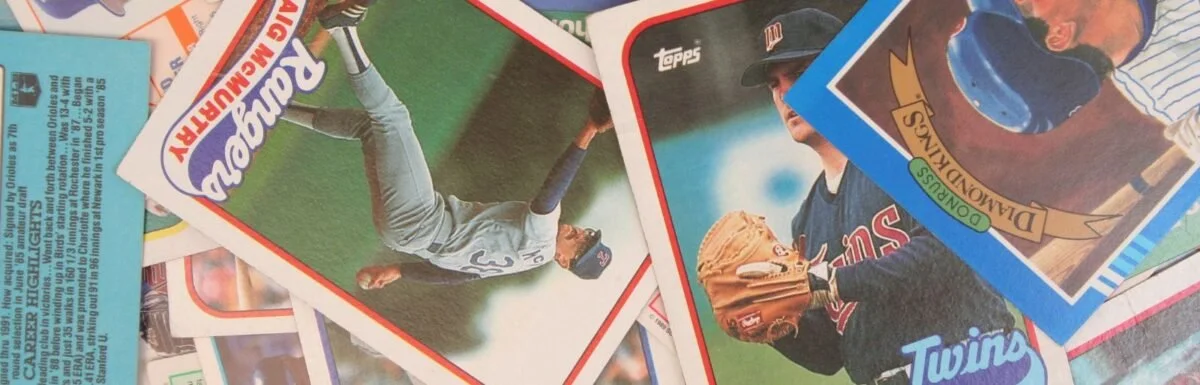
A few weeks ago, my dad asked me to list a few baseball cards on eBay. The cards were the 2001 rookie cards of Ichiro Suzuki and Albert Pujols. To my surprise, each card sold for several hundred dollars fast. Listing those cards brought back memories of collecting baseball cards as a kid. This article covers three crucial life lessons I’ve taken into adulthood from collecting baseball cards.
I spent my Saturday nights as a pre-teen trading baseball cards with friends. My best friend lived three houses up the street and was my leading trading partner. We often had sleepovers with wrestling videos, video games, and an all-out baseball card exchange.
Yes, I was (and still am) a huge nerd.
How Collecting Baseball Cards Can Teach Valuable Life Lessons
MARCH 21, 2023 Financial Pilgrimage
A few weeks ago, my dad asked me to list a few baseball cards on eBay. The cards were the 2001 rookie cards of Ichiro Suzuki and Albert Pujols. To my surprise, each card sold for several hundred dollars fast. Listing those cards brought back memories of collecting baseball cards as a kid. This article covers three crucial life lessons I’ve taken into adulthood from collecting baseball cards.
I spent my Saturday nights as a pre-teen trading baseball cards with friends. My best friend lived three houses up the street and was my leading trading partner. We often had sleepovers with wrestling videos, video games, and an all-out baseball card exchange.
Yes, I was (and still am) a huge nerd.
Important Skills Learned from Collecting Baseball Cards
While going through my old collection, I came across the crown jewel of most baseball card collections from the early 90s, a Ken Griffey Jr. 1989 Upper Deck rookie card. First, it makes me feel super old that Ken Griffey Jr. has been retired for more than ten years (well, he’s pretty much been retired since 2000 when he left Seattle).
Even though most of the cards in what’s left of my collection are worthless, it got me thinking about all of the lessons I learned from collecting baseball cards as a youngster.
Collecting cards taught me how to negotiate with friends and vendors at a young age. It also taught me how to make what seemed like tough and sometimes emotional decisions. As silly as it sounds, I used to get very attached to cards in my collection. Last but not least, it helped estimate the future value of an asset.
Even my decision to major in finance was somehow driven by collecting baseball cards. My mom used to say, “You should be a stockbroker; it’s like trading baseball cards only with stocks!” While this didn’t make much sense then, I can see the connection now. Baseball cards are an asset with a present value based on various factors. The goal is to predict the asset’s future value to maximize return.
Below are a few lessons I learned from collecting baseball cards as a kid.
Negotiation Skills
As a kid, I spent a decent amount of time searching the local newspaper for baseball card shows.
Baseball card shows were usually held at hotels or conference centers, and the rooms were filled with overweight middle-aged men. Tables were set up in large conference rooms with people looking to buy, sell, and trade baseball cards. Some vendors sold individual cards, others sold boxes or packs, and some were a mix of both.
My preparation for baseball card shows would involve the meticulous process of building my “selling binder.” This binder would include the baseball cards I wanted to sell to baseball card show vendors.
This put me in situations as a 10-13-year-old where I negotiated the sale of my prized baseball cards with grown adults who had much more experience dealing than I did. As you can imagine, they often tried to take advantage of my youth and lack of experience with lowball offers.
Becoming a solid negotiator only comes with experience. Walking up to someone three times my age and trying to strike a deal was sometimes intimidating. However, those skills learned at a young age have transitioned to many different aspects of my life.
To continue reading, please go to the original article here:
https://financialpilgrimage.com/heres-what-i-learned-from-collecting-baseball-cards/
How Your Bank Is Funding Climate Change
How Your Bank Is Funding Climate Change
By Kara
Did you know that just four US banks are responsible for one quarter of fossil fuel financing over the last six years?
I think we can all agree that being you know instigators of global climate collapse is not a good look for any of these banks. But it’s also not a good look for any of us who might be using these banks. Now, you may be thinking, look, I don’t spend my weekends fracking for oil in the Gulf of Mexico. I’m not up there trying to drill in the Arctic reserve, like, how did I get drawn into this fossil fuel mess? Well, it’s a little thing called fractional reserve banking.
How Your Bank Is Funding Climate Change
By Kara
Did you know that just four US banks are responsible for one quarter of fossil fuel financing over the last six years?
I think we can all agree that being you know instigators of global climate collapse is not a good look for any of these banks. But it’s also not a good look for any of us who might be using these banks. Now, you may be thinking, look, I don’t spend my weekends fracking for oil in the Gulf of Mexico. I’m not up there trying to drill in the Arctic reserve, like, how did I get drawn into this fossil fuel mess? Well, it’s a little thing called fractional reserve banking.
What is fractional reserve banking?
Fractional reserve banking allows banks to lend out up to 90% of the money that you put into that bank to anyone they damn well, please, and they’re doing this so they can make some money off of it. Banks are, to quote the iconic group TLC, creepin, and trying to keep it on the down low. Banks go around sneaking behind our back to lend out money to these fossil fuel companies, all while knowing that these companies are destroying life on Earth, like the banks know that. And to our faces, these banks are pushing out sustainable campaign after sustainable campaign to try and appeal to us as consumers.
This is known as financial greenwashing. And literally every major bank is doing it. Why are banks doing us so dirty? Well, turns out banks don’t make that much money off of the money that we as consumers put into the bank. They make their money by lending out your money and some of their money, things like mortgages, car loans, personal loans, that’s the bank lending out money to a variety of people in places, and then they make money on the interest that they get from those loans.
But banks also invest billions of dollars into other companies, businesses like Chevron, or Exxon or Occidental Petroleum Corp, all three of which Chase Bank has given a ton of money to in the last few years. In fact, between 2016 and 2020, Chase Bank, Citibank, Wells Fargo and Bank of America funneled more than $412 billion to expanding fossil fuel extraction and use banks are talking out of both sides of their mouth to us. And honestly, I’m over it.
How your bank is funding climate change
Can we avoid climate catastrophe?
The IEA is the gold standard of climate science. And in 2021, they released a report called Net Zero by 2050. And this is basically a roadmap to avoiding total climate catastrophe. The report said, and I’m paraphrasing here, “Hey, world, listen up.
To continue reading, please go to the original article here: