TNT:
Tishwash: Washington accuses Tehran of using militias to plunder Iraq's wealth.
The US State Department accused Iran of using Iraqi armed factions, primarily Kataib Hezbollah, to plunder the wealth of the Iraqi people, weaken the economy, and undermine the country's sovereignty, stressing that it will continue to target the financing networks of these groups .
A spokesperson for the US State Department told Sky News, as reported by Al-Sa’a Network, that “these factions use the proceeds of corruption to serve their own agendas and Tehran’s regional agenda.”
He added that "the United States designates Kataib Hezbollah as a foreign terrorist organization and imposes sanctions on it," stressing "the continued pursuit of illicit financing networks and entities that facilitate financial transactions for the factions, within the framework of the maximum economic pressure policy pursued by the administration of President Donald Trump towards Iran."
The statements come in conjunction with the opening of an Iraqi investigation into suspicions of oil derivatives smuggling in the Jurf al-Sakhr area, north of Babil Governorate, following the circulation of reports and intelligence information regarding smuggling activities in the area link
**************
Tishwash: Diversifying the economy, approving the 2027 budget, and restricting weapons are national necessities.
President Nizar Amidi, speaking at the Sulaimaniyah Strategic Forum on Friday, emphasized the need to diversify Iraq's economic resources, proceed with the approval of the 2027 budget, and ensure that weapons are solely in the hands of the state, given the turbulent circumstances in the region.
Amidi stated in his address, which was covered by the Video News Agency during the forum, that intellectual and political elites play a crucial role in shaping public opinion and contributing to the formulation of public policies. He noted that intellectual forums serve as platforms for dialogue and the exchange of views and experiences, and contribute to strengthening communication between authorities and intellectual and civil society organizations.
The President stressed the importance of regional dialogue, considering the strategic interests of the region, and preserving security, peace, and national sovereignty. He also highlighted the necessity of enhancing diplomatic cooperation, economic integration, and building mutual trust among the countries of the region.
Amidi reiterated Iraq's commitment to continuing its efforts to diversify its sources of income, enact the budget, and finalize legislation in accordance with the principles of the constitution, as well as strengthening national unity, prioritizing local understandings, and ensuring that weapons are exclusively held by the state. link
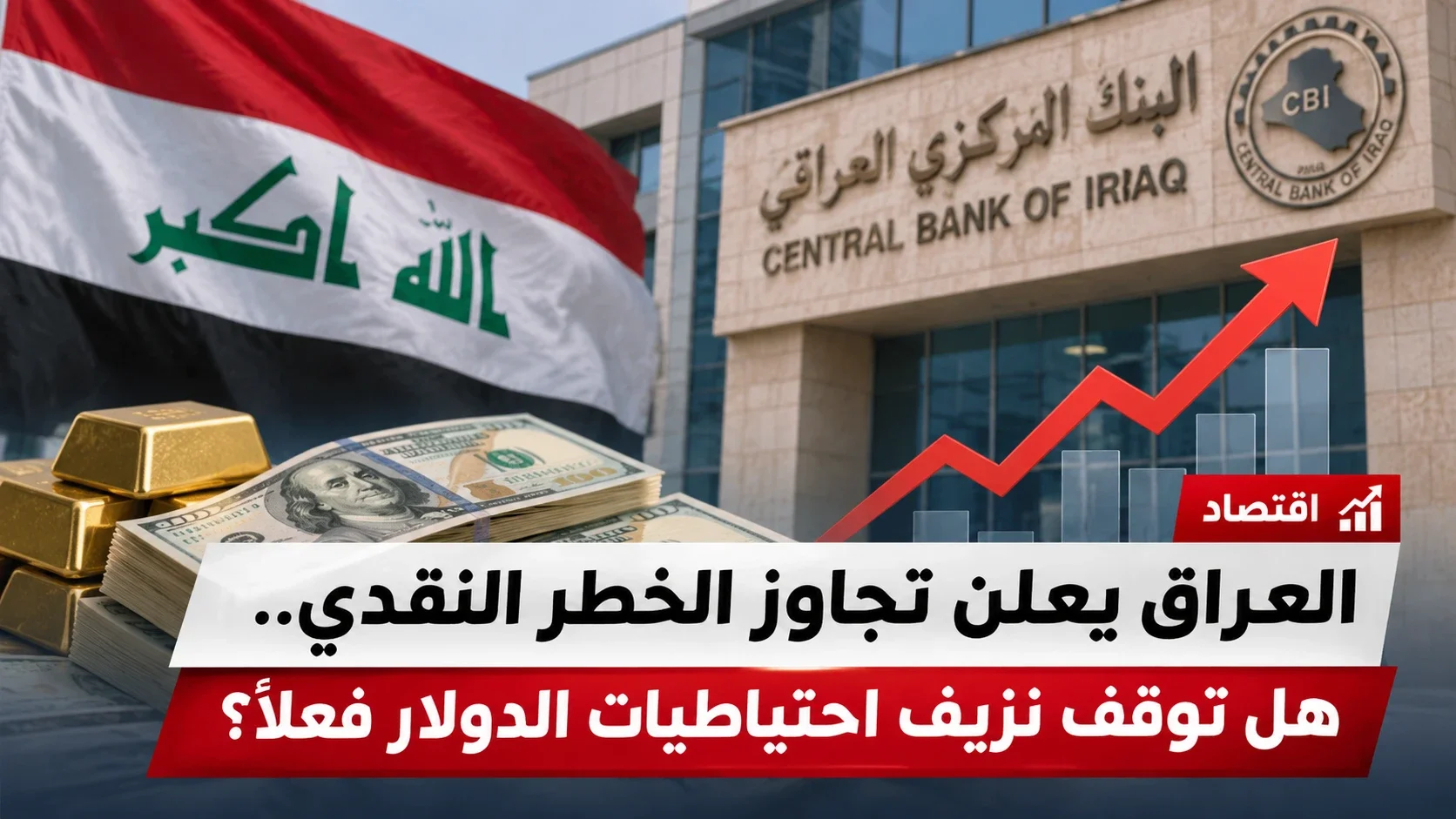
Tishwash: Iraq announces it has overcome the monetary crisis... Has the bleeding of dollar reserves really stopped?
Iraqi Member of Parliament Falah al-Khafaji announced on Friday that the Central Bank of Iraq has succeeded in stopping the depletion of foreign currency reserves and has moved from a stage he described as “dangerous” to a more stable stage, in statements that come amid economic questions about the future of cash reserves and the ability of monetary policy to confront financial pressures and exchange market fluctuations.
pic
Al-Khafaji said, during his appearance on the “Openly” program on Al-Sumaria channel, that he met with the governor of the Central Bank as part of the work of the Parliamentary Investment Committee, and discussed with him a number of files related to monetary policy and the size of foreign reserves.
Al-Khafaji quoted the governor as confirming that the central bank had passed the danger stage, that the decline in reserves had stopped, and that there were positive indicators related to the re-strengthening of foreign assets, which include hard currencies, gold, and bonds.
Optimistic statements in the face of declining figures
These statements come one day after the release of data showing that Iraq’s foreign reserves fell to about $78.245 billion at the end of September 2026, compared to about $81.538 billion in August, a decrease of $3.293 billion in one month.
The comparison with the end of 2025, when reserves stood at approximately $97.426 billion, showed a decrease of about $19.181 billion, or approximately 19.7%, during the first nine months of this year.
Development of Iraq's foreign reserves during 2026
Billion dollars | End-of-period data reported
Source: Central Bank of Iraq indicators and coverage published on November 12, 2026.
These figures indicate that reserves were under significant pressure during the year, putting Al-Khafaji's statements about the depletion being halted to the test of the latest data.
Conversely, separate indicators showed an increase in the value of official reserves in Iraqi dinars in mid-October, which may reflect a subsequent improvement, but a homogeneous comparison is needed in terms of history, reserve components, and asset valuation prices before concluding that the downward trend has reversed.
Has the reserves crisis truly ended?
Economically, a halt in the decline of reserves over a limited period does not mean that the economy has overcome all risks associated with liquidity and external financing.
Foreign reserves represent one of the most important tools of the central bank to protect monetary stability and provide the hard currency needed to finance foreign trade and meet international obligations.
Demonstrating a sustainable recovery requires continued improvement in reserves over several months, along with stable foreign exchange flows and the ability of banks to meet the needs of importers and businesses.
An increase in the value of gold or bonds within the central bank's assets may affect the overall value of reserves, without necessarily implying a similar increase in dollar liquidity available for immediate use.
What impact will this have on the price of the dollar in the Iraqi market?
Halting the depletion of reserves could be a positive development for the Iraqi market, if it is accompanied by continued financing of imports, facilitation of foreign transfers, and strengthening confidence in the banking system.
However, the stability of reserves does not automatically lead to a decrease in the price of the dollar in the parallel market, as other factors come into play, including commercial demand for foreign currency, the efficiency of bank transfers, and the gap between the official rate and the rate traded outside the formal channels.
The Central Bank had confirmed, in a statement issued on September 19, 2026, that its reserves were sufficient to meet the demands for financing foreign trade, settling bank cards and the needs of travelers, considering that speculation, expectations and geopolitical conditions contribute to pressures on the local exchange rate.
Challenges still face the central bank
Despite the positive tone of the parliamentary statements, managing reserves remains linked to a range of economic challenges, most notably Iraq’s heavy reliance on oil revenues, the size of public spending, and the continued demand for dollars to finance imports.
These challenges are becoming increasingly important in light of the volatility in energy markets and regional conditions, as any disruptions in oil revenues or external transfers could affect the economy's ability to provide hard currency.
Hence, the evaluation of the central bank’s performance should not be limited to the size of reserves alone, but should also include the efficiency of monetary policy, price stability, ease of access to financing for the private sector, and the extent to which banking procedures have succeeded in reducing reliance on the parallel market.
The next stage... the numbers will decide.
Al-Khafaji’s statements open the door to a new phase of economic evaluation of the Central Bank’s performance, especially after months that witnessed a clear decline in the size of foreign reserves.
However, judging whether the bank has moved from a phase of declining reserves to a phase of growth requires the publication of recent official data that clarifies the size of foreign assets, their development, and the sources of change in them, allowing for the determination of whether the improvement resulted from increased cash flows, higher asset valuations, or other factors.
Between parliamentary assurances that the danger phase has passed and previous official statements that showed a significant decline in reserves, the most important economic question remains: Has the Central Bank of Iraq begun a sustainable monetary recovery, or does what has been achieved so far represent temporary stability that needs more indicators to prove its continuation? link
**