
Thank you to all the subscribers to our Early Access program…we thank you for your continued support.
We are excited to offer this new service to keep you informed and up-to-date on the latest Dinar and currency news.
FRANK26…9-29-26….SIT DOWN
KTFA
Tuesday Night Video
FRANK26…9-29-26….SIT DOWN
This video is in Frank’s and his team’s opinion only
Frank’s team is Walkingstick, Eddie and Omar in Iraq and guests
Playback Number: 605-313-5163 PIN: 156996#
KTFA
Tuesday Night Video
FRANK26…9-29-26….SIT DOWN
This video is in Frank’s and his team’s opinion only
Frank’s team is Walkingstick, Eddie and Omar in Iraq and guests
Playback Number: 605-313-5163 PIN: 156996#
What Frank’s suit color’s mean…. FRANKS SUIT COLORS FOR CC'S..... WHITE = NEW INFO…. SILVER = INTEL FROZEN…. RED= HIGH ALERT… PURPLE=GUEST WITH US…. BLUE = AIR FORCE…. BLACK = GROUND/FF’S…. GREEN= MR OR FAB 4 ... GOLD = CHANGE… ORANGE=IMPLEMENTATION
Iraq Economic News and Points To Ponder Tuesday Evening 9-29-26
MP: Fixing Contracts And Wages Is Mandatory For The Government Within The 2027 Budget
Information/Baghdad... MP Mahmoud Al-Shammari affirmed on Tuesday that the issue of regularizing the employment of contract and daily wage workers in various ministries and state institutions has become a legal and moral obligation incumbent upon the government. He stressed the financial necessity of including sufficient allocations to definitively resolve this entitlement within the 2027 general budget.
Al-Shammari told the Information Agency, “Contract and daily wage workers have provided invaluable and continuous services for many years in running service and production departments and addressing the severe shortage of human resources. Their continued suffering or the delay in settling their employment status is unacceptable.” He added, “Fairness and a stable livelihood for these employees represent a legislative priority that cannot be compromised within the Parliament.”
He added that "Parliament will exercise its oversight and legislative role to pressure the Ministry of Finance and the executive branch to include the necessary job positions (both newly created and eliminated) and the required financial coverage for their permanent employment in the 2027 budget without exception." He pointed out that "the country possesses ample resources to address this vital issue if there is a genuine will to end the policies of procrastination and favoritism."
He emphasized that "the House of Representatives will not pass the upcoming budget unless it includes clear and explicit provisions that resolve the entitlements related to contracts and salaries and grant them job security." He warned the government against "ignoring the legitimate demands of this large segment of the population, given the negative repercussions this will have on the efficiency of government performance and social stability." End/25h
"The Brigades Threaten To Topple The Government" Security Official Abu Mujahid Al-Assaf Warns Al-Zaydi And His Allies: "A Government That Does Not Work For The Benefit Of The People Will Be Brought Down By Any Means Necessary"
Baghdad - One News - 9/28/2026 The security official of the brigades, Abu Mujahid al-Assaf, threatened to overthrow the government, directing a warning to Prime Minister Ali Faleh al-Zaidi and his allies, coinciding with an escalation of his position on the restrictions imposed on Iranian aviation and a threat to take steps if they continue after October 1st. A blatant threat...
Al-Assaf said in a statement that the government was formed from three allied parties, but he considered that the differences between them could lay the foundation for what he described as “strife and war between brothers in religion and homeland,” calling on its parties to learn from history.
The security official of the brigades addressed a message to al-Zaydi and those behind him, saying that “any government that does not work for the benefit of the people will be brought down by all means,” according to the text of the statement.
Regarding the Iran file, Al-Assaf announced that if what he described as the “air blockade” on the Islamic Republic continues after October 1st, the brigades will adopt a position that may lead to closing the ports of the countries participating in the blockade of Iran. A blatant threat that must be dealt with.
He also announced the monitoring of Iraqi airspace to ensure it was not violated by what he described as "hostile aircraft," threatening to shoot them down, and warning the Prime Minister's office against becoming, according to the statement, "a cashier for American violations" after October 1st. An IRI faction leader telling the GOI what to do...
Al-Assaf considered the withdrawal of coalition forces from Iraqi territory as the beginning of achieving full sovereignty over land, water, and airspace, and independence in political and economic decision-making. https://1news-iq.net/الكتائب-تلوّح-بإسقاط-الحكومة-المسؤ/
Kataib Hezbollah Warns To Topple PM Al-Zaidi's Government
2026-09-28 / Shafaq News- Baghdad A senior security official with Kataib Hezbollah, an Iran-aligned Iraqi armed faction, on Monday threatened to bring down Prime Minister Ali Al-Zaidi’s government if it failed to serve Iraqis and warned of escalation over restrictions on Iranian aviation.
“The government that does not work in the interests of the people will be brought down by all means,” Abu Mujahid Al-Asafi said in a statement.
Kataib Hezbollah has been designated by the United States as a Foreign Terrorist Organization since 2009. Washington says the group receives financial and military support from Iran and has carried out attacks against US, Iraqi and Coalition targets.
Read more: Iraq's disarmament deadline pits Baghdad against Iran-aligned factions
Al-Asafi also warned that if the “air blockade” on Iran continues beyond October 1, escalation could include moves to close border crossings with countries participating in the restrictions.
He said the “Islamic Resistance” would monitor Iraqi airspace for “hostile aircraft,” warning that they would first be cautioned and then shot down if they violated Iraqi airspace.
His remarks come as Baghdad faces US sanctions warnings over services provided to sanctioned Iranian airlines. Iranian airlines remain barred from operating through Iraqi airports, although Iraqi Airways resumed flights to Iran via Najaf on Monday as Baghdad continues seeking exemptions from US measures affecting Iranian carriers.
Al-Asafi also said Iraqis would celebrate September 30 as the “expulsion” of US and NATO forces.
September 30 is Baghdad’s deadline for ending the US-led Global Coalition’s military mission in Iraq, although separate US security arrangements are expected to continue.
Read more: Tension meets dialogue as Iraq approaches September 30 2
https://www.shafaq.com/en/Iraq/Kataib-Hezbollah-threatens-to-topple-Al-Zaidi-government
US Dollar Climbs In Baghdad, Erbil
2026-09-29 Shafaq News- Baghdad/ Erbil The US dollar closed Tuesday's trading higher in Iraq, hovering around 157,500 dinars per 100 dollars.
According to a Shafaq News market survey, the dollar traded in Baghdad's Al-Kifah and Al-Harithiya exchange markets at 157,500 dinars per 100 dollars, up from the morning session's 157,000 dinars.
In the Iraqi capital, exchange shops sold the dollar at 158,000 dinars and bought it at 157,000 dinars, while in Erbil, selling prices stood at 157,550 dinars and buying prices at 157,500 dinars.
https://shafaq.com/en/Economy/US-dollar-climbs-in-Baghdad-Erbil-3
Seeds of Wisdom RV and Economics Updates Tuesday Afternoon 9-29-26
Good Afternoon Dinar Recaps,
AI DEBT RESET WATCH: RISING BOND COSTS COLLIDE WITH MASSIVE AI INFRASTRUCTURE SPENDING
The global AI buildout is creating enormous demand for capital at the same time that rising government and corporate bond yields are making that capital increasingly expensive.
Good Afternoon Dinar Recaps,
AI DEBT RESET WATCH: RISING BOND COSTS COLLIDE WITH MASSIVE AI INFRASTRUCTURE SPENDING
The global AI buildout is creating enormous demand for capital at the same time that rising government and corporate bond yields are making that capital increasingly expensive.
OVERVIEW
AI infrastructure companies and major technology firms are turning increasingly to debt markets to finance data centers, computing capacity and other infrastructure.
Major technology companies known as hyperscalers have issued roughly $220 billion in bonds this year, with issuance potentially doubling next year as their infrastructure spending continues.
At the same time, the 30-year U.S. Treasury yield reached 5.61%, its highest level since June 2002, raising borrowing costs across global capital markets.
KEY DEVELOPMENTS
1. AI Infrastructure Is Becoming A Major Borrower
The rapid expansion of artificial intelligence requires enormous amounts of capital for data centers, advanced computing equipment, electricity infrastructure and technology networks.
Reuters reports that hyperscalers have already issued approximately $220 billion of bonds in 2026, with the possibility that borrowing could roughly double next year. The additional borrowing is occurring as investors demand higher yields from companies seeking large amounts of financing.
This creates an important connection between the technology boom and the global debt market: the cost of building the AI economy is increasingly being determined by the cost of capital.
2. Bond Yields Are Rising At The Same Time
The timing is significant.
The 30-year U.S. Treasury yield reached 5.6114% on September 29, its highest level since June 2002. The 10-year Treasury yield also moved above 5.28%. Treasury yields serve as important benchmarks for corporate borrowing, mortgages and other financial assets.
Higher Treasury yields can therefore raise the financing cost for companies building large infrastructure projects—even when those companies have strong access to capital markets.
3. Hyperscalers Are Competing For Global Capital
The Financial Times reports that major technology companies including Meta, Amazon, Alphabet, Microsoft and Oracle are increasingly turning to bond markets to finance AI expansion.
The scale of the borrowing is significant enough to affect where and when companies and governments can raise money. The Financial Times reported that AI-related financing by hyperscalers had reached roughly $500 billion during 2026, while noting that the resulting supply of corporate debt is putting pressure on investors and borrowing costs.
The issue is not simply whether investors have enough money. It is also how that money is allocated among governments, corporations, technology infrastructure and other investments.
WHY IT MATTERS
The AI investment cycle is increasingly becoming a financial-market story as well as a technology story.
When companies issue hundreds of billions of dollars in new debt, they compete for the same pools of global investment capital that finance governments, businesses and infrastructure projects.
At the same time, higher interest rates mean that financing a major data-center project or technology expansion can become substantially more expensive.
This creates a feedback loop:
AI infrastructure requires capital → companies issue debt → investors demand returns → borrowing costs rise → the cost of building AI infrastructure increases.
That does not mean the AI expansion will stop. It does mean that the financial structure supporting the AI economy is becoming an increasingly important part of the story.
WHY IT MATTERS TO FOREIGN CURRENCY HOLDERS
For foreign currency holders watching the evolution of the global financial system, this development is important because capital is increasingly moving between technology, government debt, corporate bonds and currencies on a global scale.
When U.S. Treasury yields rise, global investors reassess the relative attractiveness of dollar-denominated assets.
At the same time, large technology companies are seeking financing across multiple markets and currencies. The Financial Times reports that hyperscalers are increasingly looking beyond the U.S. bond market for funding, expanding the geographic reach of the AI financing cycle.
This does not represent an immediate currency revaluation or guaranteed “reset.” Instead, it is another example of how the world's financial infrastructure is adapting to major changes in technology, capital requirements and global investment flows.
IMPLICATIONS FOR THE GLOBAL RESET
Pillar 1: Debt
The AI buildout is adding another major source of corporate borrowing to a global economy already dealing with elevated government debt and higher interest costs.
The larger the financing requirement becomes, the more important interest rates, bond-market liquidity and investor demand become to the future expansion of AI infrastructure.
Pillar 2: Technology
Artificial intelligence is no longer simply a software story.
The next phase requires physical infrastructure—data centers, semiconductor capacity, electricity generation, cooling systems, fiber networks and computing equipment. Financing that infrastructure is becoming a major component of the technology economy.
Pillar 3: Assets
As more capital flows into AI-related bonds, equities and infrastructure, the distinction between technology assets and traditional financial assets continues to narrow.
Investors are increasingly evaluating technology companies not only on innovation and revenue growth, but also on their ability to finance enormous long-term infrastructure commitments.
Pillar 4: Trade
The AI infrastructure buildout requires global supply chains involving semiconductors, energy, advanced manufacturing, equipment and critical infrastructure.
That means changes in trade policy, energy costs and access to international capital can directly affect the cost of expanding AI capacity.
WHAT TO WATCH NEXT
The next phase of the AI investment cycle will depend on several factors:
Whether Treasury yields remain elevated
How much additional debt hyperscalers issue
Whether investors continue absorbing record technology-related bond supply
The cost and availability of electricity for new data centers
Whether AI-generated productivity gains eventually justify the enormous infrastructure investment
The key question is increasingly becoming not whether AI will require massive investment, but how the global financial system will finance that investment while borrowing costs remain elevated.
THE BOTTOM LINE
The AI boom is moving beyond technology companies and into the heart of the global debt and capital markets.
Hundreds of billions of dollars in new financing are being raised while governments and corporations face a higher-cost borrowing environment, making the relationship between technology spending, bond markets and global capital flows increasingly important.
The bigger story is not simply how much the world will spend on AI—it is how financing that transformation is helping reshape the movement of global capital and, in turn, becoming part of the evolution of the global financial system.
Seeds of Wisdom Team
Newshounds News™ Exclusive
SOURCES
~~~~~~~~~~
Seeds of Wisdom Team RV Currency Facts Youtube and Rumble
Newshound's News Telegram Room Link
RV Facts with Proof Links Link
RV Updates Proof links - Facts Link
Start Here room with Most Asked Questions Link
Follow the Gold/Silver Rate COMEX
Follow Fast Facts
Seeds of Wisdom Team™ Website
Thank you Dinar Recaps
The Global Debt Crisis Has Begun (Why Gold Is Falling First)
The Global Debt Crisis Has Begun (Why Gold Is Falling First)
Taylor Kenny: 9-29-2026
The global debt crisis is accelerating as Treasury yields surge and governments face a massive debt rollover problem. So why is gold falling?
Taylor Kenney breaks down what rising yields are really signaling, why short-term gold weakness may be misleading, and what it means for the dollar, gold, silver, and your wealth.
The Global Debt Crisis Has Begun (Why Gold Is Falling First)
Taylor Kenny: 9-29-2026
The global debt crisis is accelerating as Treasury yields surge and governments face a massive debt rollover problem. So why is gold falling?
Taylor Kenney breaks down what rising yields are really signaling, why short-term gold weakness may be misleading, and what it means for the dollar, gold, silver, and your wealth.
CHAPTERS:
00:00 Why Is Gold Falling During a U.S. Debt Crisis?
02:21 Interest on the Debt Is Becoming a Massive Expense
05:14 This Is a Global Debt Crisis
06:38 The $365 Trillion Debt Rollover Problem
08:35 What Happens When Confidence in Government Debt Breaks?
10:31 How Governments Deal With Unsustainable Debt
12:58 Why Gold Is Falling Right Now
14:20 Why the Long-Term Gold Thesis Is Getting Stronger
16:44 Why Physical Gold and Silver Are Different
20:35 How to Prepare for What Comes Next
News, Rumors and Opinions Tuesday 9-29-2026
Ariel: The Mandate of Ashes, Iraq and the Fuse
9-28-2026
The Mandate Of Ashes: A Sovereign Detonation (Iraq & The Fuse)
Ladies & Gentlemen We Are On The Clock
Let’s Go Over These Line Items For The Month And Week Ahead
Ariel: The Mandate of Ashes, Iraq and the Fuse
9-28-2026
The Mandate Of Ashes: A Sovereign Detonation (Iraq & The Fuse)
Ladies & Gentlemen We Are On The Clock
Let’s Go Over These Line Items For The Month And Week Ahead
THE 2027 BUDGET — THE REAL WEAPON
– “Performance, revenue, and economic reform” — that’s not bureaucratic jargon. That’s the verbal formula for dismantling a patronage-based, kleptocratic budget system and replacing it with a results-based, auditable financial architecture.
– Advancing the 2027 budget “now”, in September 2026, before the old fiscal year even ends**, means the technocrats in the CBI and the Finance Ministry have been given a green light by the political class to overhaul the monetary plumbing. You don’t advance a budget with this language unless you’re about to change the value of the currency unit itself. The exchange rate is not a line item. It’s the substrate on which every line item depends.
– The CBI’s silence is the loudest thing in the room. No statements. No denials. No “we are studying.” Just… silence. In the intelligence business, silence at this stage means the decision is already made and they’re waiting for the political window. That window is “Sovereignty Days.”
The CBI is the fuse. The budget is the bomb. The sovereignty declaration is the signal. And the entire apparatus of regional control is standing on the detonation point, insisting nothing’s wrong.
Read Full Article:
https://www.patreon.com/Prolotario1/posts/mandate-of-ashes-170841264
https://dinarchronicles.com/2026/09/28/prolotario-the-mandate-of-ashes-iraq-and-the-fuse/
************
Courtesy of Dinar Guru: https://www.dinarguru.com/
Frank26 Donald Trump is in charge of Iraq's monetary and economic reforms...What's important is Zaidi is back [in Iraq] and he came back with a treasure chest from Donald Trump. Whether or not they're going to be able to implement it, employ it...get it done, I honestly don't know because it is the Middle East.
Militia Man Sovereignty days are now on the official calendar...Official work stops Wednesday September 30 and stays dark through Saturday October 3rd...A 4-day shutdown...It's not a trigger but it does look clean...
Reset Intelligence For most of the past 23 years, the IQD has traded in a country with American soldiers on its soil. As of Sunday, Iraq's Foreign Minister says there are none left. 3 days before the deadline. Washington also agreed to resume the USD cash shipments it froze in April. What stands between the IQD and a new rate now is the weapons handover, the empty cabinet seats and the budget. All of it is Iraq's to finish.
************
93T Bond Fraud Will Crash Financial System: “We’re Dancing on a Razor Blade” - Mitch Vexler
Daniela Cambone: 9-28-2026
"We're dancing on a razor blade. One little slip, and this is game over." Mitch Vexler says the bond math is financial suicide and the contagion could go global in hours. Here's how you can better prepare.
Chapters:
00:00 — Intro: The Story That Starts at Your Kitchen Table
04:31 — The 37-Tab "Bond Lie Detector"
11:14 — Dynamic Contagion: $93T vs. $844T
14:29 — Texas School Bonds: $500M to $3B
17:14 — Inflation: The Hidden Tax
21:38 — Housing Market: The 6.4% Illusion
28:28 — IMF's Warning: "Winter Is Coming"
31:20 — Canada's Economy: Carney and the Blown Deal
37:05 — Mitch's Big Milestone
Iraq Economic News and Points To Ponder Tuesday Afternoon 9-29-26
Dhi Qar Gas Storage Project Begins Trial Operation
2026-09-29 Shafaq News- Dhi Qar A new liquefied petroleum gas (LPG) storage facility at the Nasiriyah gas depot in Iraq's southern Dhi Qar began trial operation on Tuesday, a move Deputy Oil Minister for Gas Affairs Ezzat Saber Ismail said would strengthen storage capacity and help stabilize supplies across the province.
Speaking at the launch, Ismail said the depot's two tanks have a combined storage capacity of 5,000 cubic meters. The South Gas Company supplies the site through a feeder pipeline at a rate of 300 to 400 tonnes a day, compared with Dhi Qar's daily demand of 250 to 350 tonnes.
Dhi Qar Gas Storage Project Begins Trial Operation
2026-09-29 Shafaq News- Dhi Qar A new liquefied petroleum gas (LPG) storage facility at the Nasiriyah gas depot in Iraq's southern Dhi Qar began trial operation on Tuesday, a move Deputy Oil Minister for Gas Affairs Ezzat Saber Ismail said would strengthen storage capacity and help stabilize supplies across the province.
Speaking at the launch, Ismail said the depot's two tanks have a combined storage capacity of 5,000 cubic meters. The South Gas Company supplies the site through a feeder pipeline at a rate of 300 to 400 tonnes a day, compared with Dhi Qar's daily demand of 250 to 350 tonnes.
The facility will also support state-run and private plants that fill household gas cylinders, which produce about 25,000 to 30,000 cylinders a day, equivalent to roughly 300 tonnes of gas. Ismail said the project would also help meet demand for cooking gas and automotive LPG. https://shafaq.com/en/Economy/Dhi-Qar-gas-storage-project-begins-trial-operation
South Korea Takes 3.8M Barrels Of Iraqi Crude In August
2026-09-29 Shafaq News- Baghdad/ Seoul Iraq, OPEC’s second-largest producer, ranked sixth among South Korea’s largest crude oil suppliers in August 2026, shipping 3.826 million barrels after recording no imports in July, official Korean data showed.
The August volume, however, was down 65.5% from 11.105 million barrels in the same month of 2025.
South Korea’s overall crude imports reached 91.335 million barrels in August, down 2.2% from 93.351 million a year earlier and 2% from 93.180 million in July.
Saudi Arabia topped the supplier list with 21.669 million barrels, followed by the United States with 17.926 million and the United Arab Emirates with 16.761 million. Kuwait ranked fourth with 7.580 million barrels and Oman fifth with 4 million.
Australia followed Iraq with 3.616 million barrels, ahead of Mexico at 2.982 million, Algeria at 2.480 million and Kazakhstan at 2.074 million. https://shafaq.com/en/Economy/South-Korea-takes-3-8M-barrels-of-Iraqi-crude-in-August
USD/IQD Climbs In Baghdad And Erbil Markets
2026-09-29 Shafaq News- Baghdad/ Erbil The US dollar opened higher in Iraq on Tuesday, trading around 157,000 dinars per $100.
According to a Shafaq News market survey, the dollar traded in Baghdad's Al-Kifah and Al-Harithiya exchanges at 157,000 dinars per 100 dollars, up from Monday's 156,000 dinars.
In the Iraqi capital, exchange shops sold the dollar at 157,500 dinars and bought it at 156,500 dinars, while in Erbil, selling prices stood at 157,400 dinars and buying prices at 157,350 dinars.
https://shafaq.com/en/Economy/USD-IQD-climbs-in-Baghdad-and-Erbil-markets-1
Bought Followers, Lost Money: Inside Iraq's Social Media Account Trade
2026-09-28 19:00 Shafaq News- Baghdad Riam Fadhil, 25, wanted her cake and pastry business to launch with a ready-made audience. Rather than spend months building one on social media, she bought an existing account with hundreds of thousands of followers, hoping it would lend her venture credibility and faster reach.
Fadhil told Shafaq News she paid one million Iraqi dinars (about $760) for an account with roughly 300,000 followers, but the purchase did not deliver. "After I started posting, I noticed that most of the followers were men, and their numbers began dropping rapidly," she recalled. Real engagement never materialized, and the comments that did appear were mostly negative or mocking.
When she returned to the seller and demanded a refund, he refused, telling her the account had previously been used to sell motorcycles and that payments cannot be returned once a sale is complete.
Trade in social media pages has become noticeably more common in recent months, she observed. Some belong to well-known activists or influencers who sell them, while others are stolen accounts with large followings that are resold for profit.
Legal Gray Area
Specialists interviewed by Shafaq News warn that the practice carries security and social risks as the Iraqi law contains no direct provision punishing it as a standalone crime. Only indirect provisions apply, tied to the nature of the transaction and its consequences.
Platforms such as Facebook, Instagram, and YouTube prohibit selling, buying, or transferring accounts without their approval, and can permanently close an account once a sale is detected. Legal experts said buyers may face difficulty seeking compensation through the courts when a transaction violates a platform’s terms of service, though the outcome would depend on the circumstances of each case.
Legal expert Mohammed Jumaa said that no law prevents the sale or purchase of accounts on Facebook, TikTok, Instagram, or similar platforms, “making the act permissible in the absence of a prohibiting provision.”
“Such sales fall under the general rules governing sales and privacy,” he explained, adding that the law doesn’t bar the sale of an account unless it violates privacy, as when the account holds personal photos, messages, or other private material.
Read more: Iraq’s influencers: How CBI rules could push a booming digital economy underground
Jumaa said both seller and buyer could face legal liability if private photos or confidential information from a sold account were published.
A sale can also become a criminal matter, Jumaa warned, particularly when the account is used for electronic extortion or to lure victims for human trafficking. In such cases, Jumaa said both parties could face criminal liability if the account were used for offenses such as electronic extortion or human trafficking, “depending on their knowledge and involvement.”
Because many account sales are not carried out under written contracts, he added, a seller can easily deny involvement.
Scams on Telegram
Jamil Rashid, 20, wanted to share his daily life online and speed up his reach, so he turned to a Telegram page that specializes in selling accounts. After agreeing on a deal with a seller and transferring the payment, he lost all contact: the seller vanished and closed the account. Rashid never received what he paid for.
Shafaq News identified account markets on Telegram and Facebook, in groups with more than 600 members each, listing accounts with varying follower counts and prices set by audience size and other details.
Inside the Trade
One seller active in one of these groups, Hamed Ali, described to Shafaq News how the accounts are built. The process begins with videos on subjects that draw wide attention and high view counts: accidents, fires, brawls, and murder cases, which pull in viewers and followers. "Once the account reaches a suitable number, I put it up for sale."
Building an account takes months of consistent posting, so Ali creates and manages several at once. Some owners of failed or abandoned projects also sell their accounts instead of closing them for good, he added.
Buyers receive guarantees, according to Ali, who described an account as reliable and safe from shutdown when the buyer deals with trustworthy people, but he didn’t specify any formal or legal form of guarantee.
For young people and teenagers, he pointed out, the trade offers moderate but quick profit with no effort beyond a phone. “Prices only go up, and an account is ready for sale at a minimum of 10,000 followers, selling for $25 to $30. Accounts at that price point are the fastest to sell.”
Technical Risks
Firas Faqouri, a technology specialist, told Shafaq News that buying and selling accounts is a losing proposition in many cases. TikTok and Instagram bar account sales and ownership transfers, he noted, because each account is tied to its own data and algorithms.
Once an account passes to a new owner, a change in content style can alter posting patterns and the target audience, he explained, affecting engagement and reach and potentially leading to weaker performance or action by the platform, depending on its policies.
Security is another concern, Faqouri cautioned. A buyer may lose the account if the seller cannot be trusted, since in some cases the previous owner can recover it through recovery details linked to them, even after the email address and password have been changed. “The buyer can end up losing both the account and the money paid.”
Read more: CBI: Social media influencers are financial crime threat
https://shafaq.com/en/society/Bought-followers-lost-money-Inside-Iraq-s-social-media-account-trade
Ten Arrested Over Alleged Samawah Hospital Receipt Manipulation
2026-09-29 Shafaq News- Al-Muthanna Iraq’s Federal Commission of Integrity announced on Tuesday the arrest of 10 hospital employees in Samawah, the capital of southern Al-Muthanna province, over alleged manipulation of payment receipts and misappropriation of fees involving more than 1,000 patient records.
The commission's Al-Muthanna Investigation Office examined records from 2024, 2025 and 2026, finding nearly 800 without payment receipts and around 200 accompanied by receipts bearing names different from those of the actual patients.
Based on the findings, the judge of the Al-Muthanna Integrity Investigation Court issued arrest and search warrants for the 10 employees under Article 315 of the Iraqi Penal Code.
https://shafaq.com/en/society/Ten-arrested-over-alleged-Samawah-hospital-receipt-manipulation
****************
Anti-Corruption Court Sentences Fourth Iraqi MP In A Month
2026-09-29 06:36 Shafaq News- Baghdad Iraq's Central Anti-Corruption Criminal Court sentenced sitting lawmaker Mohammed Farman Shaher Salman al-Jubouri to seven years in prison for illicit enrichment, the Federal Commission of Integrity said on Tuesday, the fourth member of parliament jailed on the same charge this month.
The court ordered al-Jubouri to repay illicit gains of 11.8 billion Iraqi dinars and $1.73 million, and fined him an equal amount. The total comes to 28,157,250,476 dinars, more than $21 million, according to the commission.
The verdict was delivered in al-Jubouri's presence under Article 19 of the Commission of Integrity and Illicit Gain Law No. 30 of 2011, as amended. A separate three-year sentence for concealment will not be served, because the court applied “the heavier of the two penalties.”
Lawmaker Bahaa al-Din al-Nouri received a seven-year sentence on Sept. 16. On Sept. 23, the same court handed seven-year terms to lawmakers Alia Nassif and Ashwaq Salem Hassan.
Nassif was ordered to pay more than 61 billion dinars and Hassan nearly 12 billion dinars, with both totals covering illicit gains and matching fines.
The rulings are part of Dawn Crackdown, a nationwide anti-corruption campaign that Iraqi authorities launched on June 28 against current and former officials, lawmakers and business figures.
Read more:Corruption arrests in Iraq pass 210 under PM al-Zaidi
https://shafaq.com/en/society/Anti-corruption-court-jails-fourth-Iraqi-MP-in-a-month
Source: US Approves Najaf Exemption For Iran Flights
2026-09-29 Shafaq News- Baghdad/ Washington The US administration has agreed to exempt Najaf International Airport from restrictions affecting Iranian airline operations, an Iraqi government source told Shafaq News on Tuesday, citing the airport's use of Iraqi ground-handling staff and its ability to process transactions outside the US dollar.
The source said other Iraqi airports rely on foreign ground-handling companies that halted services to Iranian carriers over concerns about US sanctions, while Najaf uses Iraqi ground-service staff and can process transactions in euros, Iraqi dinars or Iranian tomans.
Najaf Airport is also administratively under the provincial government rather than the Transport Ministry and had continued servicing Iranian carriers until a US decision prompted Najaf Governor Yusuf Kanawi to halt those operations.
The source said Iranian airlines could resume flights once Iraq’s Council of Ministers or the Najaf governor issues the necessary authorization, without exposing the airport to US sanctions.
On September 28, Iraqi Airways announced that it had resumed its own flights to Iranian airports through Najaf. However, the resumption did not apply to Iranian carriers. A Najaf Airport source later told Shafaq News that restrictions on Iranian airlines remained in force and that the airport had received no official instructions allowing them to resume flights.
Read more: US sanctions reshape Iraq-Iran travel, airline operations
https://shafaq.com/en/society/Source-US-approves-Najaf-exemption-for-Iran-flights
Is It A Golden Era For Gold?
Is It A Golden Era For Gold?
JP MORGAN
Gold stands at the crossroads of global uncertainty and enduring resilience. Here, we explore the factors driving the price of gold and consider the important role it plays in portfolio diversification. Gold prices have more than doubled since late 2023, repeatedly hitting all-time highs in a sustained rally. The precious metal outperformed major equity benchmarks in 2025 with an eye-popping 65% return,1 its strongest single year since 1979, then built on those gains in early 2026.
Is It A Golden Era For Gold?
JP MORGAN
Gold stands at the crossroads of global uncertainty and enduring resilience. Here, we explore the factors driving the price of gold and consider the important role it plays in portfolio diversification. Gold prices have more than doubled since late 2023, repeatedly hitting all-time highs in a sustained rally. The precious metal outperformed major equity benchmarks in 2025 with an eye-popping 65% return,1 its strongest single year since 1979, then built on those gains in early 2026.
A sought-after commodity for centuries, gold has been a popular component in investment portfolios in modern times, and has delivered attractive annual returns of approximately 12% over the 20 years ending in 2025.
That said, its price can be volatile: Gold sank 9.8% on January 30, surrendering about half its prior 2026 gain in the biggest one-day loss since 2013. Weakness in gold prices can be prolonged, as gold tumbled approximately 40% from September 2011 to December 2015, and did not fully recover until August 2020.
This combination of a historic rally and historic volatility would seem to challenge the case for investing in gold today. However, we remain firmly bullish on gold in 2026, and recently raised our outlook to a range of $6,000 to $6,300 per ounce.
The recent sell-off may present a potential entry point for long-term investors, and see potential for further upside as investors look to diversify dollar exposure, hedge geopolitical risk and guard against inflation surprises.
To explain why, we’ll dig into the complex interplay of macro factors and supply/demand dynamics that influence gold prices.
Understanding gold’s unique characteristics and benefits is crucial for investors who are looking to establish portfolios that endure through cycles. We will show how the key drivers of gold prices have evolved in recent years, and how an appropriately sized allocation to gold can add value to a portfolio.
What drives gold prices?
The level of the U.S. dollar
As gold is denominated in U.S. dollars, gold prices have often exhibited a negative correlation with the value of the dollar. When the dollar weakens, gold becomes more relatively attractive for holders of other currencies, increasing demand. Conversely, gold prices tend to weaken as the dollar strengthens.2
However, there are instances when this relationship does not hold. For example, in 2012–13, gold lost 18% of its value even though the dollar remained relatively stable, rising less than 1%. We think a relatively weak dollar will present a stable and benign backdrop for gold prices over the next six to 12 months.
Following a year of significant weakness, the dollar is entering a bumpy process of bottoming, as shown in the chart below. In our base case, we anticipate that the U.S. economy could gradually recover over the second half of the year, potentially coinciding with improvements in other major economies such as Europe and Japan. Lingering concerns over Federal Reserve (Fed) independence and U.S. fiscal sustainability may also limit the dollar’s strength.
The U.S. dollar environment is largely benign; we expect the dollar to stabilize, tracking the moves in interest rate differential
DXY model based on 5Y swap rate differentials
CHART: LINK https://privatebank.jpmorgan.com/nam/en/insights/markets-and-investing/is-it-a-golden-era-for-gold
Change in real yields
Historically, gold prices have generally had an inverse relationship with real yields (inflation-adjusted interest rates). As gold does not generate interest income, real yields can be seen as the opportunity cost of holding it. When real yields go down, gold becomes more attractive relative to interest-bearing assets such as cash and fixed income securities.
This relationship explains a large part of the price increase in gold since the 1990s, a period of structural decline in real yields. Large gold rallies such as those in 2008–2012 and 2019–2021 can also be attributed to real yields turning negative due to global quantitative easing and zero interest rate policies.
TO READ MORE: https://privatebank.jpmorgan.com/nam/en/insights/markets-and-investing/is-it-a-golden-era-for-gold
Reset Intelligence: Iraq Enters the Final Stretch.
Reset Intelligence: Iraq Enters the Final Stretch.
By Reset Intelligence | @EXIT_FIAT
The heads of Iraq's four presidencies signed off on Monday on what they called the completion of the country's path to sovereignty. The coalition's mission ends September 30.
From here, the gates this file has tracked run on dates: customs rules on October 1, the weapons principles in the first days of October, and the budget in parliament by October 15.
Reset Intelligence: Iraq Enters the Final Stretch.
By Reset Intelligence | @EXIT_FIAT
The heads of Iraq's four presidencies signed off on Monday on what they called the completion of the country's path to sovereignty. The coalition's mission ends September 30.
From here, the gates this file has tracked run on dates: customs rules on October 1, the weapons principles in the first days of October, and the budget in parliament by October 15.
The statement from the top
Prime Minister Ali al-Zaidi, President Nizar Amedi, Speaker Haibat al-Halbousi and Chief Justice Faiq Zaidan met in Baghdad on Monday. Their statement said the next stage moves Iraq's relations with the world onto wider tracks of economic and trade cooperation. War and peace are decisions for the state, and weapons outside its authority will be dealt with under the constitution, on timetables the government sets. They called for the cabinet to be completed, and for measures and steps to protect the economy against regional and international shocks.
Everything else that moved
Najaf - the four presidencies backed an exemption for Najaf airport. Per a single source cited by a wire service, Washington moved to grant a 1-month waiver for Iraqi Airways flights between Iran and Najaf for pilgrims, and the flights were running again on Monday.
The customs rule - from October 1, Iraqi importers pay a 3% tax deposit and their customs duties, which run as high as 40%, before the dollars for their goods leave the bank.
The weapons - "Sept. 30 is not doomsday," said Hikma spokesman Hossam al-Hassani. The general principles for placing weapons under state control come at the start of October, and the factions have put written demands on the table.
The cabinet - one lawmaker says the empty seats, Interior and Defense among them, will be filled once the coalition's mission closes.
The budget - the 2027 draft is with the Council of Ministers and due in parliament by October 15. No figures have been published.
The street - $100 closed Monday near 156,500 dinars in Baghdad, up from 155,250 on Sunday, against the official 131,000.
The bill
Al-Zaidi told The New York Times last week that the war next door has cost Iraq about $60 billion. Iraq could export 4.2 million barrels a day in September but averaged about 2.5 million, and it is building around the strait: the first cargo of American gasoline is moving to Iraq by truck through Syria.
That is the short version. How it all lines up across October, the history that ran this same handover before, and the one gate that still belongs to the Central Bank of Iraq - that is the daily read.
Iraq's four presidencies signed off on the country's sovereignty on Monday, and from here every gate on the list runs on an October date.
Read the full daily briefing free for 5 days. Sign up here: the daily Iraqi dinar briefing
Want it straight from the horse's mouth? The CBI Rate Alert pings you the moment the Central Bank of Iraq moves the official rate. The number itself, not a rumour about it. It comes with our free resource library and the daily breakdown of what is actually moving in Iraq. Sign up free: The CBI Rate Alert
Got a dinar question? Reset Intelligence runs an on-call research assistant: ask it anything they have published. It answers in seconds and will conduct deep research to find you the answer. Try it: the Iraqi dinar research assistant
Common questions, answered straight: When will the Iraqi dinar revalue? and Is the Iraqi dinar revaluation real?
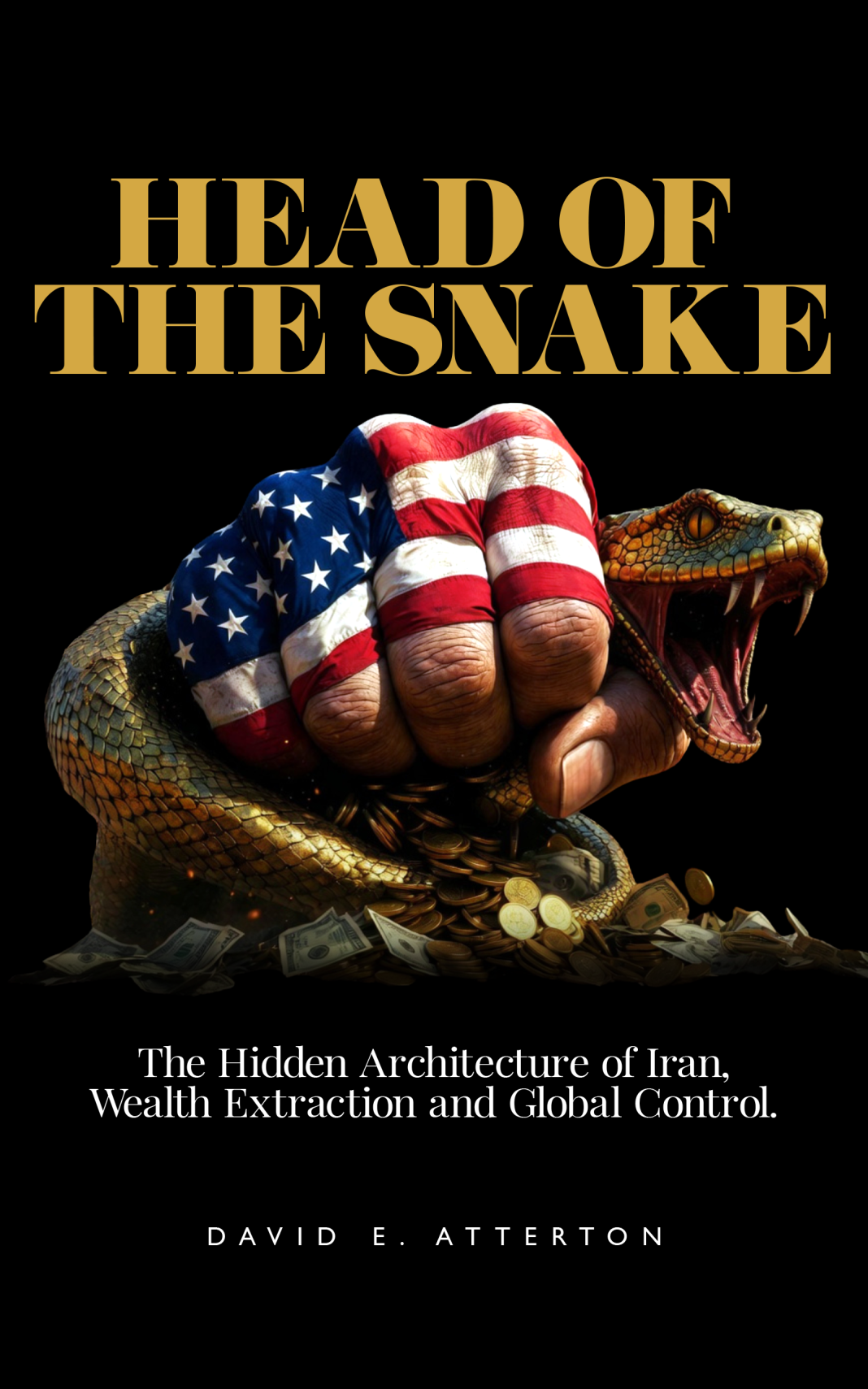
The design behind all of it is mapped in Head of the Snake, and the free guides live in the Iraqi dinar resource library.
Follow the daily intel free: Telegram · Facebook · Spotify · Odysee
Tuesday Iraq News Posted by Tishwash at TNT 9-29-2026
TNT:
Tishwash: The US chargé d'affaires confirms to the Prime Minister's security advisor: We will celebrate together on September 30th, Iraqi Sovereignty Day
Iraq and the United States discussed today the issues of security, sovereignty, and political developments in Iraq and the region, in addition to bilateral relations, during a meeting with the US Chargé d'Affaires to Iraq, Steven Fagin.
The Iraqi side, in a statement received by Iraq Observer, stressed the priority of preserving the country’s security and sovereignty, consolidating state authority and the rule of law, and restricting weapons to the state, as well as continuing to combat terrorism and corruption and supporting state institutions in a way that preserves stability and the higher interests of Iraq.
TNT:
Tishwash: The US chargé d'affaires confirms to the Prime Minister's security advisor: We will celebrate together on September 30th, Iraqi Sovereignty Day
Iraq and the United States discussed today the issues of security, sovereignty, and political developments in Iraq and the region, in addition to bilateral relations, during a meeting with the US Chargé d'Affaires to Iraq, Steven Fagin.
The Iraqi side, in a statement received by Iraq Observer, stressed the priority of preserving the country’s security and sovereignty, consolidating state authority and the rule of law, and restricting weapons to the state, as well as continuing to combat terrorism and corruption and supporting state institutions in a way that preserves stability and the higher interests of Iraq.
The Iraqi side stressed Baghdad’s keenness to establish balanced relations with the United States based on mutual respect and common interests, and to enhance cooperation in the security, economic and diplomatic fields.
For his part, the US Chargé d'Affaires affirmed his country's support for Iraq's security and stability, building a strong economy, and continuing to develop bilateral relations between the two countries.
Fagen noted that Iraq and the United States will celebrate on September 30 the completion of the withdrawal of the remaining international coalition forces, considering that this strengthens Iraq’s sovereignty and opens a new phase of cooperation between the two countries. link
************
Tishwash: The four Iraqi presidencies emphasize expanding international relations in various fields.
The four Iraqi presidencies affirmed on Monday evening the expansion of international relations in the economic and cultural fields, and the necessity of completing the cabinet to provide services to citizens, while discussing the exemption of Najaf International Airport from the ban on Iranian flights.
A statement from the Presidency of the Republic, received by Shafaq News Agency, stated that President Nizar Amidi hosted Prime Minister Ali Faleh al-Zaidi, Speaker of Parliament Hebat al-Halbousi, and Chief Justice Faiq Zaidan at Baghdad Palace to discuss developments in the general situation in the country, as well as developments in the region.
During the meeting, emphasis was placed on the importance of consolidating security and political and social stability in the country, and continuing to work to meet the needs of citizens, in a way that contributes to improving living and service conditions, and enhances confidence in state institutions.
The Prime Minister gave a summary of his participation in the meetings of the United Nations General Assembly in its eighty-first session, which was held in New York, and what it included in terms of meetings with a number of heads of state and government, officials and representatives of international organizations, as well as discussing prospects for strengthening Iraq’s international relations in a way that serves its common interests with various countries.
The meeting discussed preparations for the celebration of Sovereignty Day, as a national occasion that affirms the completion of the path of Iraqi sovereignty and the consolidation of the presence of the state and its institutions, while emphasizing that the next stage will witness the transfer of relations with the international community to broader horizons of economic, trade and cultural cooperation, in a way that strengthens international partnerships and serves national issues.
The meeting also emphasized support for the Iraqi government’s demand to exempt Najaf Airport from the US Treasury Department’s procedures regarding Iranian airlines’ flights to airports in the region.
The participants also stressed the importance of completing the cabinet, which would enhance government work, raise the level of performance in state institutions, and enable the government to implement its program according to its priorities and respond more effectively to the needs of citizens and the challenges of the next stage.
It was emphasized that the decision of peace and war should be in the hands of the state, and that weapons should be within the framework of constitutional and legal institutions, while addressing the issue of the presence of weapons outside the authority of the state in accordance with constitutional and legal frameworks, and in line with timetables set by the government, in a way that enhances the sovereignty of the state, preserves the security and stability of the country, and ensures the unity of national decision in the face of challenges and dangers.
On the legislative front, the participants stressed the importance of strengthening the work of the House of Representatives and expediting the completion and enactment of priority laws, especially those that affect the lives and needs of citizens, as well as activating the oversight role of the House of Representatives in a way that contributes to improving the performance of state institutions and consolidates the principles of responsibility and accountability.
Support was also emphasized for the government's measures and the judiciary's efforts in combating administrative corruption and holding accountable all those who violate the law.
The meeting discussed the economic situation in light of the tensions in the region and their repercussions on the country, and the challenges that the national economy may face, while emphasizing the need to take measures and steps to confront these challenges and enhance the ability of the national economy to deal with regional and international changes.
Regarding developments in the region, the presidencies reiterated Iraq’s firm position calling for an end to tensions and the defusing of crises, and for prioritizing dialogue and diplomacy and adopting peaceful means to resolve disputes between the various parties, in a way that contributes to achieving security and stability in the region, and spares its peoples further repercussions and crises link
************
Tishwash: Trump met with al-Zaidi alone... Government spokesman reveals details of the New York meeting
Government spokesman Haider al-Aboudi said on Monday (September 28, 2026) that Prime Minister Ali Faleh al-Zaidi’s meeting with US President Donald Trump in New York addressed indicators of stability in Iraq, attracting investments, and the presence of American companies in the oil and energy sectors, noting that al-Zaidi presented during the meeting what he described as the government’s steps to strengthen the authority of the state and the law.
Al-Aboudi explained, in a conversation with journalist Hossam Al-Hajj, via Dijlah TV, which was followed by 964 Network , that Al-Zidi is working on translating the government program into an executive program through “bridging the relationship with the world” and restoring confidence in Iraq, noting that the government aims to reach a production of 10 million barrels of oil per day by 2030, considering that these figures can attract international economic partners.
Regarding the meeting between Al-Zaidi and Trump in New York, Al-Aboudi said that the meeting took place individually after Al-Zaidi participated in a group reception held by the US President for the heads of state and government participating in the United Nations meetings, explaining that “choosing Al-Zaidi, along with other heads of state, to meet Trump individually indicates the existence of interest.”
He added that during the meeting, Al-Zaydi reviewed “the indicators of strength and the files in which the government has achieved progress,” including combating corruption, restricting weapons to the state, strengthening the rule of law, as well as economic and investment files.
Regarding the possibility of discussing the details of the September 30th date during the meeting, Al-Aboudi said that the file is “Iraqi in all its dimensions,” and that what Al-Zidi presented focused on restoring the state’s health and its ability to manage internal stability in accordance with the constitution and the law.
He noted that the meeting also addressed the investment environment and the presence of American companies in Iraq, particularly in the oil and petroleum industry sector, as these are among the issues in which the government seeks to expand cooperation.
Al-Aboudi explained that Iraq has made a decision to implement the Banias pipeline project, and there is a consortium of important international companies that will implement the project. The contracts between the Ministry of Oil and these companies are being finalized. He clarified that once the technical aspects and details are completed, things will be implemented on the ground, and the two countries will participate in implementing this project. link
************
Tishwash: Hidden figures and loans under scrutiny... What's going on inside government banks?
An informed source said that the review of loans and advances granted through a number of government banks has entered a more in-depth auditing phase, which includes matching the amounts of financial facilities with guarantees, repayment records and beneficiaries, amid a broader review of liquidity and credit conditions within the government banking sector.
The source, who requested anonymity due to the sensitivity of the matter, added that the audit is not limited to regular loans, but also includes financial facilities and approvals dating back to previous years, some of which are for large sums, with the aim of verifying the integrity of the procedures for granting them, the adequacy of the guarantees, the fate of the funds, and the extent of their recovery according to the specified conditions.
The Independent was unable to determine the total amounts under investigation or prove the existence of fictitious loans, and no official results have yet been issued holding specific individuals or entities legally responsible.
The source's information comes at a time when government banks are undergoing simultaneous regulatory reviews that include contracts concluded in previous years, mechanisms for granting loans and advances to companies and investors, in addition to exceptional approvals, guarantees, and the status of repayment.
The review process also extended to liquidity levels in a number of government banks and the financing of investment projects, with a thorough audit of large financial facilities, particularly in Al-Rafidain and Al-Rasheed banks.
A source told Al-Mustaqilla that part of the current work focuses on files whose accounts have not been closed permanently, and others whose guarantees are being examined and their amounts are being matched to determine whether they have been paid in full or are still owed by the beneficiaries.
The audits coincided with liquidity pressures that prompted some government banks to reduce or stop granting loans and advances during the past period, which was reflected in the financing of investment and housing projects.
The reviews also expanded to include amounts related to electronic lending, including insurance premiums, the mechanisms for collecting them, the entities to which they are transferred, and how they are managed and disbursed.
These developments come in parallel with a government initiative to restructure the banking sector, enhance governance, and improve credit management efficiency, as well as implement a national lending strategy aimed at improving access to finance and supporting economic activity.
The source said the next phase will focus on determining the nature of any discrepancies that appear during the reconciliation, and whether they are due to normal payment defaults, weak guarantees, exceptional approvals, or violations that warrant referring the files to the investigative authorities.
The ongoing audits, in themselves, do not prove corruption or waste of public funds, but the simultaneous review of large loans, guarantees and exceptional approvals with the audit of liquidity conditions gives the file special importance for government banks and public funds.
According to the source, the final picture will become clear after the matching of loan, repayment and guarantee records is completed, and the amounts that are still outstanding and the reasons for not settling them are determined. link
MarkZ: LATEST UPDATE: The Delay, the Reset & the Great Wealth Transfer
MarkZ: LATEST UPDATE: The Delay, the Reset & the Great Wealth Transfer
Jon Dowling: 9-28-2026 (Excerpts)
Jon: Hi everyone. Welcome to the monthly podcast with the one and only the original Mr. Mark Z.Joining us graciously from this humble abode to have the normal customary discussion of what we're seeing and uh what we see ahead to unlock what we're all waiting patiently and maybe not patiently but doing what we need to do.
Mark: Hey, we're watching just the news we've been getting this week from UN side. Big announcements yesterday. Uh Iran has decided they can back off the 60% and adhere to international non-prololiferation rules. So that is like a sudden change.
MarkZ: LATEST UPDATE: The Delay, the Reset & the Great Wealth Transfer
Jon Dowling: 9-28-2026 (Excerpts)
Jon: Hi everyone. Welcome to the monthly podcast with the one and only the original Mr. Mark Z.Joining us graciously from this humble abode to have the normal customary discussion of what we're seeing and uh what we see ahead to unlock what we're all waiting patiently and maybe not patiently but doing what we need to do.
Mark: Hey, we're watching just the news we've been getting this week from UN side. Big announcements yesterday. Uh Iran has decided they can back off the 60% and adhere to international non-prololiferation rules. So that is like a sudden change.
Um, but more so than that would be Iraq and the sudden changes there, the sudden agreements with the budget that they announced the early this morning that they have agreed.
They're waiting for the return of the finance minister and Zedi to sign off on Kurdistan's region which should give us an HCL agreement probably very early next week. Um, which paving the way for a whole heck of a lot improvement. them telling us that in the month of September, they finish October 1st, they will be in the real international banking world. They'll be connected to Swift.
They'll be connected to all these things. Military withdrawals still happening. I mean, the news coming out of just that region is well, it's it's it's everything we've been looking for for years. It matches their white paper reforms for their value changes.
No, I don't think this is all about Iraq, but I think it's an easy one to track. I very much believe we're going to see Vietnam, Thailand, and Indonesia, and a number of others go all at the same time.
Seeds of Wisdom RV and Economics Updates Tuesday Morning 9-29-26
Good Morning Dinar Recaps,
INDIA LIQUIDITY RESET WATCH: RBI DRAINS NEARLY $20 BILLION AS CENTRAL BANK REENGINEERS BANKING LIQUIDITY
India's central bank is using foreign-exchange operations, bond sales and other liquidity tools to reduce excess cash in the banking system, creating a significant example of how modern central banks can manage money flows through multiple financial channels.
Good Morning Dinar Recaps,
INDIA LIQUIDITY RESET WATCH: RBI DRAINS NEARLY $20 BILLION AS CENTRAL BANK REENGINEERS BANKING LIQUIDITY
India's central bank is using foreign-exchange operations, bond sales and other liquidity tools to reduce excess cash in the banking system, creating a significant example of how modern central banks can manage money flows through multiple financial channels.
OVERVIEW
The Reserve Bank of India has absorbed nearly $20 billion of excess rupee liquidity through a combination of foreign-exchange operations, bond sales and variable-rate reverse repos.
India's banking-system liquidity surplus has fallen sharply, from a record 11.16 trillion rupees earlier this month, while core liquidity declined from 14.2 trillion rupees on September 4 to approximately 11.5 trillion rupees.
Foreign-exchange swaps are becoming an increasingly important liquidity-management tool, linking India's currency operations directly with domestic banking liquidity and financial-market conditions.
KEY DEVELOPMENTS
1. RBI Absorbs Nearly $20 Billion Through Multiple Channels
The Reserve Bank of India has significantly reduced excess liquidity in the banking system through a combination of dollar-rupee sell-buy swaps, spot dollar sales, government-bond sales and variable-rate reverse repos.
According to bankers cited by Reuters, the combined effect of the RBI's foreign-exchange operations has absorbed nearly $20 billion of excess rupee liquidity.
The intervention comes after India's banking system accumulated a substantial cash surplus following large foreign-currency inflows. The RBI has now been working to bring liquidity conditions closer to levels consistent with its monetary-policy framework.
2. Banking Liquidity Surplus Falls By More Than Half
The banking-system liquidity surplus had reached approximately 11.16 trillion rupees, equivalent to about $116 billion, earlier in September.
That surplus has now fallen to roughly half its peak.
Core liquidity—which provides a better indication of persistent liquidity conditions by excluding some daily fluctuations—fell from 14.2 trillion rupees on September 4 to approximately 11.5 trillion rupees.
The shift demonstrates how quickly central-bank operations can alter the amount of money available within the banking system.
3. Foreign-Exchange Swaps Become A Liquidity Tool
One of the most important aspects of the RBI's strategy is the growing role of foreign-exchange swaps.
In a sell-buy swap, the RBI sells dollars to banks while agreeing to buy those dollars back at a future date. The initial transaction removes rupees from the banking system, temporarily reducing available liquidity.
The RBI's use of FX swaps therefore connects two traditionally distinct areas of central-bank activity: foreign-exchange management and domestic money-market liquidity.
Reuters reported that the RBI's recent swap activity has also pushed dollar-rupee forward premiums higher, increasing the cost of hedging dollar exposure.
4. Bond Sales Add Another Layer Of Liquidity Management
The RBI has also been selling government bonds as part of its effort to absorb excess cash.
Reuters reported Monday that India's central bank had net sold 1 trillion rupees of bonds during the current financial year, the largest annual net bond sale in more than a decade.
Market participants expected additional bond sales as the RBI continued recalibrating liquidity conditions.
Bond sales remove cash from the banking system while simultaneously affecting the supply and pricing of government securities. This creates a connection between bank liquidity, bond yields and monetary-policy transmission.
WHY IT MATTERS
The RBI's actions provide a concrete example of how central banks can influence financial conditions without necessarily changing their headline policy rate.
By using FX swaps, bond sales and reverse repos, the central bank can adjust the amount of liquidity circulating through the banking system while responding to foreign-exchange flows and changing economic conditions.
This matters because liquidity influences short-term interest rates, bank funding conditions, credit availability and financial-asset pricing.
The RBI's approach also illustrates a broader development in modern monetary policy: central banks increasingly have several interconnected tools for managing money flows rather than relying on one policy instrument alone.
WHY IT MATTERS TO FOREIGN CURRENCY HOLDERS
For foreign currency holders following the evolution of the global financial system, India's actions are particularly relevant because the RBI is managing currency flows and domestic liquidity at the same time.
Foreign-exchange operations can affect the supply of rupees within India's financial system, while changes in liquidity can influence interest rates, bond markets and the cost of holding or hedging foreign currency.
The development does not mean that the Indian rupee is being prepared for a specific revaluation. Instead, it demonstrates how a major central bank is actively managing the relationship between its currency, banking system and financial markets.
IMPLICATIONS FOR THE GLOBAL RESET
Pillar 1: Debt
RBI bond sales affect the supply and pricing of government securities while removing liquidity from the banking system. This demonstrates how central banks can use government-debt markets as part of broader monetary and liquidity management.
Pillar 2: Assets
Changes in banking liquidity can influence government bonds, interest rates, bank funding and other financial assets. As liquidity conditions tighten, investors and financial institutions may adjust how they allocate capital.
Pillar 3: Assets & Currencies
The RBI's use of FX swaps shows how currency markets and domestic monetary conditions are increasingly interconnected. Managing foreign-exchange flows can simultaneously affect the availability of domestic currency liquidity.
Pillar 4: Energy
India's liquidity management is occurring against a backdrop of elevated oil prices. Because India is a major oil importer, energy costs can influence the rupee, inflation and the country's external financing requirements.
WHAT TO WATCH NEXT
The next developments to monitor include whether the RBI continues using FX swaps and bond sales, how quickly excess liquidity declines, and whether tighter financial conditions begin affecting India's bond yields and currency markets.
The RBI's October monetary-policy meeting will also be important as policymakers assess inflation, economic growth, global interest rates and the impact of elevated energy prices.
The broader question is whether other central banks increasingly adopt similarly interconnected approaches to managing foreign-exchange flows, liquidity and government-debt markets.
THE BOTTOM LINE
India's nearly $20 billion liquidity withdrawal is more than a banking-market adjustment. It demonstrates how a major central bank can use foreign exchange, government bonds and money-market operations together to manage the flow of money through its financial system.
For those following the Global Reset, the important development is not a promised currency revaluation but the documented evolution of the infrastructure through which modern currencies and financial markets are managed.
The bigger story is not simply how much liquidity the RBI removes—it is how central banks around the world are increasingly connecting currencies, debt markets and banking liquidity as the global financial system evolves.
Seeds of Wisdom Team
Newshounds News™ Exclusive
SOURCES
~~~~~~~~~~
🌱 A Message to Our Currency Holders🌱
If you’ve been holding foreign currency for many years, you were not foolish.
You were not wrong to believe the global financial system would change.
What failed was not your patience — it was the information you were given.
For years, dates, rumors, and personalities replaced facts, structure, and proof. “This week” predictions created cycles of hope and disappointment that were never based on how currencies actually change.
That is not your failure.
Our mission here is different: • No dates • No rates • No hype • No gurus
Instead, we focus on:
• Verifiable developments • Institutional evidence
• Global financial structure • Where countries actually sit in the process
Currency value changes only come after sovereignty, trade, banking, settlement systems, and fiscal coordination are in place. History and institutions confirm this sequence.
You will see silence. You will see denials. That is not delay — that is discipline.
Protect your identity. Organize your documents. Verify everything.
Never hand your discernment to anyone who cannot show proof.
You deserve truth — not timelines.
Seeds of Wisdom Team
Newshounds News
~~~~~~~~~~
Seeds of Wisdom Team RV Currency Facts Youtube and Rumble
Newshound's News Telegram Room Link
RV Facts with Proof Links Link
RV Updates Proof links - Facts Link
Start Here room with Most Asked Questions Link
Follow the Gold/Silver Rate COMEX
Follow Fast Facts
Seeds of Wisdom Team™ Website
Thank you Dinar Recaps
The UN’s Bankruptcy Can’t Happen Fast Enough
The UN’s Bankruptcy Can’t Happen Fast Enough
Notes From the Field By James Hickman (Simon Black / Sovereign Man) September 28, 2026
Every September, world leaders take turns at the podium of the United Nations General Assembly in New York and give pointless speeches. If they really cared about CO2 emissions, they’d skip the event entirely, because the only thing coming out of their mouths is lies and hot air. But a few days ago when it was Argentina's turn, President Javier Milei spoke honestly and boldly.
The UN’s Bankruptcy Can’t Happen Fast Enough
Notes From the Field By James Hickman (Simon Black / Sovereign Man) September 28, 2026
Every September, world leaders take turns at the podium of the United Nations General Assembly in New York and give pointless speeches. If they really cared about CO2 emissions, they’d skip the event entirely, because the only thing coming out of their mouths is lies and hot air. But a few days ago when it was Argentina's turn, President Javier Milei spoke honestly and boldly.
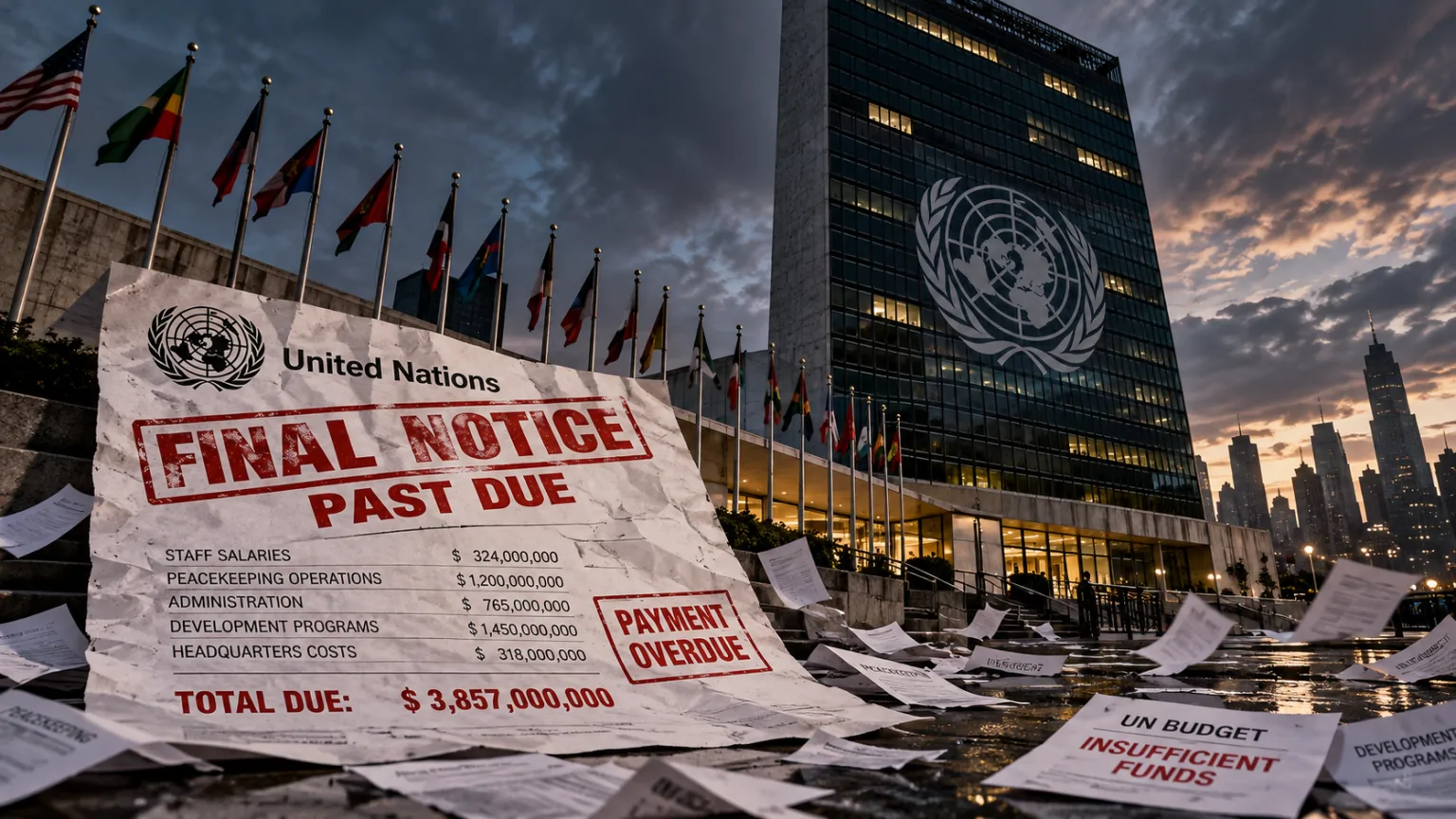
He told the auditorium the UN "has become a useless organization whose only purpose is to sustain a caste of fatally arrogant parasites masquerading as well-intentioned bureaucrats."
He then piled on a heap of charges to prove his point.
Milei e said the UN "allowed chaos, violence and international terrorism to flourish," and that it had "sheltered bloodthirsty dictatorships and regimes that stone women in the streets."
Of course, this type of hypocrisy is nothing new for the UN.
We're talking about a body that has appointed China, Cuba, and Venezuela to their Human Rights Council.
Then Milei turned to the pandemic. He said UN agencies pushed lockdowns that were "a global experiment in social control disguised as science," which he said is why Argentina quit the World Health Organization.
"There's no shortage of words or resolutions. What is lacking is consequences."
He's right, and the proof is the people in that very room who run the place.
The United Nations, along with other ‘supranational’ bodies like the EU and NATO, has become a sort of retirement home for failed politicians who destroyed their own countries with terrible ideas and worse execution.
In June 2024, after running his country into the ground, Belgian prime minister Alexander De Croo came out of a national election with barely 5% of the vote.
He resigned that night and left behind a deficit so large that the EU opened disciplinary proceedings against Belgium.
Yet while Belgian voters threw him out for being incompetent, the United Nations made de Croo the head of its its development agency (UNDP) with a $5 billion annual budget to advise poor countries on how to manage their finances.
It's the same job the UN gave to former New Zealand prime minister Helen Clark in 2009, a few months after voters threw her out.
Then theres António Guterres, former Portuguese prime minister who was thrown out of elected office by the voters. The UN then elevated Guterres to the unelected office of running its refugee agency. And he later became Secretary General in 2017.
Speaking of former Portuguese politicians, António Costa resigned as prime minister of Portugal in November 2023, hours after police arrested his chief of staff in a corruption investigation.
Police found more than €75,000 in cash inside the prime minister's official residence, stuffed in envelopes hidden between books and in champagne crates.
Prosecutors put Costa himself under investigation, after which EU leaders decided he was fit to be President of the European Council, the group of the EU's 27 national leaders that sets the bloc's direction.
Former British prime minister Gordon Brown was thrown out of office by his voters in 2010. The UN subsequently invented a brand-new title for him: "Special Envoy for Global Education."
And another ex-prime minister who was ousted from office, the ridiculously unpopular and failed Keir Starmer, is reportedly waiting in the wings for his fancy (and unelected) EU/UN post. Rumor has it that he wants to be the next secretary general of NATO… or even of the UN.
This is the pattern that Argentina’s president has correctly identified: incompetent politicians who couldn't manage their own countries are often put in charge of global organizations.
Unsurprisingly, the UN's track record looks exactly like you'd expect.
Last year the world had more armed conflicts than in any year since it was founded in 1945; ironically, the UN was founded "to save succeeding generations from the scourge of war." Great work!
The UN passed nine rounds of sanctions to stop North Korea's nuclear program. North Korea carried out six nuclear tests anyway.
UN peacekeepers have spent 20 years trying to keep Hezbollah's weapons out of southern Lebanon. Hezbollah armed itself anyway.
In 2015, it promised to end extreme poverty by 2030. Poverty is still everywhere.
The UN is also a gigantic financial failure. All of these ex-politicians rake in pretty serious salaries, in addition to massive benefits ranging from security details to tax-free earnings. It literally pays to be a failed politician.
Partly as a result of such lavish spending, the UN is now in serious financial straits...
In January, the UN's secretary-general even warned of the organization's "imminent financial collapse" and "race to bankruptcy".
The same guys who want to tell developing nations how to manage their finances can't manage to stay afloat themselves.
The biggest irony is that these are the same politicians that their respective democratic nations already threw out. Yet now they've all been elevated to jobs where they can't be fired, don't answer to voters, and were never elected by anyone.
Milei was right: what is lacking is consequences.
The only real consequence the UN may ever face is bankruptcy… and that can't come fast enough.
To your freedom, James Hickman Co-Founder, Schiff Sovereign LLC
Iraq Economic News and Points To Ponder Late Monday Evening 9-28-26
Finance Refers The Draft Federal Budget For 2027 To The Ministerial Council For The Economy
Money and business Economy News – Baghdad The Ministry of Finance referred the draft federal budget for 2027 to the Ministerial Council for the Economy, after completing the stages of its preparation.
The ministry said in a statement that the completion of the draft budget is the result of continuous working meetings of the Supreme Committee for the preparation of the budget, including hosting representatives of ministries, the Kurdistan region and the provinces, as well as consulting financial experts from inside and outside Iraq.
Finance Refers The Draft Federal Budget For 2027 To The Ministerial Council For The Economy
Money and business Economy News – Baghdad The Ministry of Finance referred the draft federal budget for 2027 to the Ministerial Council for the Economy, after completing the stages of its preparation.
The ministry said in a statement that the completion of the draft budget is the result of continuous working meetings of the Supreme Committee for the preparation of the budget, including hosting representatives of ministries, the Kurdistan region and the provinces, as well as consulting financial experts from inside and outside Iraq.
The minister stressed that the ministry has fulfilled its obligations in the completion of the draft budget within the specified times, indicating that its preparation includes a gradual application of the approach of budgeting programs and performance in the electricity sector and the governorates of Diwaniyah and Salahuddin, in order to enhance the linkage of allocations to goals and results and measure the impact of spending, in preparation for the expansion of its application to state institutions.
He pointed out that the draft budget took into account the priorities of the government program, taking into account the economic and financial changes, spending priorities and the needs of important segments of society, within the limits of the available financial potential, with a focus on enhancing non-oil revenues and consolidating fiscal discipline.
The Ministerial Council of the Economy is scheduled to discuss the draft budget, in preparation for the completion of its discussions and submitted to the Council of Ministers in accordance with the approved contexts. https://www.economy-news.net/content.php?id=74395
Reconstruction: Initiation Of Procedures For The Transfer Of Land Ownership Of The One Million Plots Of Land Initiative
Money and business Economy News – Baghdad The Ministry of Construction, Housing and Public Municipalities is currently coordinating with the competent authorities to initiate the procedures for the transfer of land ownership of the One Million Land Initiative.
The official spokesman of the ministry said that "the Directorate of Public Municipalities of the ministry is represented in the technical committees formed with the competent authorities, preparing to initiate the procedures of transferring the ownership of land for the initiative of Prime Minister Ali al-Zaidi to distribute one million plots of land among the beneficiaries of citizens."
He added that "the Directorate, in coordination with the municipal departments in the provinces and the ministries of defense and agriculture, in addition to the Directorate of Real Estate Registration and State Real Estate, is currently working to address technical obstacles and dismantle the overlaps between the land and sort the allocation of the initiative."
Sabah revealed that "there are 275 thousand plots of land in Baghdad and all governorates have been allocated to the initiative as a first stage," pointing to "the existence of land with agricultural rights for people to be compensated by the Ministry of Agriculture, and others of the Ministry of Defense entered within its plan to own its members, such as the city of Al-Fursan in Al-Nahrawan in Baghdad."
In the same context, he said that "land can not transfer its ownership to the municipal departments only after the completion of its main designs to determine whether it is within the municipal borders or outside."
He pointed out that "the provinces are currently working on the completion of designs for these cities or the expansion of their basic."
The official spokesman of the ministry warned that "these procedures are being resolved by the competent authorities in full swing and through intensive meetings in order to move the initiative to an advanced stage of implementation, especially since it is scheduled to launch a platform and an official integrated electronic link to receive citizens' requests from the targeted segments during the month of October."
He pointed out that "five provinces announced their readiness to implement the initiative, namely Karbala, Najaf, Anbar, Muthanna and Maysan, while coordination is underway with the rest of the provinces to complete their procedures and start implementation," noting that "the calculation of the number of land in the provinces is in accordance with the census, and the poverty rate for each of them, which is determined by the Ministry of Planning."
Sabah stressed in the same regard, that "the country's actual need of housing units currently reaches two million and three hundred thousand, and therefore the initiative of Prime Minister Ali al-Zaidi, will solve a large part of the need of Baghdad and the provinces https://www.economy-news.net/content.php?id=74434
Iraq And The United States Discuss Strengthening Cooperation In The Recovery Of Smuggled Funds And Extradition
Money and business Economy News – Baghdad The head of the Federal Integrity Commission, Dr. Mohammed Ali Al-Lami, stressed that combating corruption and protecting public money requires concerted national and international efforts, and strengthening cooperation in the prosecution of those involved in corruption and enrichment issues at the expense of public money, and the recovery of wanted persons and smuggled funds.
During his meeting with the Chargé d'Affaires of the Embassy of the United States of America in Iraq (Stephen Fagin), Al-Lami stressed the importance of activating international cooperation mechanisms and benefiting from the contents of the United Nations Convention against Corruption, in particular the provisions of Chapter V on asset recovery, describing the recovery of funds and assets obtained from corruption as a cornerstone of international efforts to combat it, while alerting to the importance of removing obstacles to recovery such as dual nationality, different legislation and allegations of political targeting.
He pointed out the importance of giving the preventive aspect a wide area in anti-corruption strategies, in line with Chapter II of the UN Convention, through the development of preventive measures, the promotion of integrity, transparency and accountability, the consolidation of functional codes of conduct, the reduction of conflicts of interest, the promotion of transparency of public money management and government procurement, as well as the expansion of community and media participation in prevention efforts and the dissemination of a culture of integrity.
He pointed out that the promotion of integrity and the fight against corruption contribute to the creation of a safe and attractive environment for investment, through the establishment of the rule of law, transparency and equal opportunities and the protection of investors and money from corrupt practices, stressing the importance of supporting government trends aimed at expanding investment opportunities and enhancing economic cooperation with foreign countries and companies.
For his part, the Chargé d'Affaires of the United States of America in Iraq (Stephen Fagin) expressed his country's desire to intensify cooperation with Iraq in various fields, especially with the development of cooperation paths between the two countries from the field of military support to the expansion of economic cooperation, as well as the areas of integrity and the fight against corruption, stressing the importance of continued coordination and exchange of experiences to serve the common interests of the two countries.
During the meeting, they discussed the prospects of cooperation between the Integrity Commission and the US side in the fields of preventing, preventing and combating corruption, exchanging experiences and enhancing coordination in files of common interest, in order to support efforts to protect public money and prosecute and recover the proceeds of corruption
https://www.economy-news.net/content.php?id=74447
Iraq Recovers 80 Smuggled Artifacts Abroad
Money and business Economy News – Baghdad The Ministry of Justice announced on Monday the restoration of more than 80 Iraqi artifacts and artworks that had been smuggled out of the country, as part of continuous legal efforts to protect the cultural heritage of Iraq and the recovery of its historical property.
The ministry said in a statement received by "Economy News" that its legal efforts, and under the follow-up of Minister of Justice Khaled Shawani, resulted in the restoration of a number of Iraqi artifacts and artworks, as part of efforts to pursue smuggled property and return it to the country in accordance with the approved legal frameworks.
She added that the Directorate of External Claims Management, through the Department of Antiquities and Funds Recovery, continues to follow up and manage cases and claims for the recovery of antiquities, and take the necessary legal measures to recover the pieces resulting from random exhumation, as well as the antiquities that have been stolen, smuggled and traded outside Iraq.
The ministry pointed out that these efforts are being carried out in coordination with the Ministry of Foreign Affairs, the Embassy of Iraq in Washington and the relevant authorities, as part of a continuous program to recover Iraqi antiquities and funds.
She stressed that the measures come in the context of protecting the cultural heritage of Iraq, preserving the heritage of Mesopotamia, and restoring its historical property from outside the country https://www.economy-news.net/content.php?id=74438
China's Big Industrial Firms' Profits Rise 15.7% In 8 Months
Money and business Economy News - Follow-up
Profits of major industrial companies in China rose 15.7% year-on-year during the first eight months of 2026.
Data released by China's National Bureau of Statistics on Monday showed that industrial companies with at least annual major business revenues of about $2.97 million (20 million yuan) each, had a combined profit of about $750 billion (5.27 trillion yuan) between January and August, according to Xinhua https://www.economy-news.net/content.php?id=74433