
Thank you to all the subscribers to our Early Access program…we thank you for your continued support.
We are excited to offer this new service to keep you informed and up-to-date on the latest Dinar and currency news.
Reset Intelligence: The Precipice
Emailed to Recaps: Thank you David
Reset Intelligence: The Precipice
The Precipice
By Reset Intelligence | @EXIT_FIAT
Iran threatened decisive war over the weekend, then did the quiet thing that matters: it sent Washington its terms through Qatar. All three conditions made public ask for money.
And in Baghdad, the central bank stood up in public to defend the price of the dinar as the street pressed 160,000.
Emailed to Recaps: Thank you David
Reset Intelligence: The Precipice
The Precipice
By Reset Intelligence | @EXIT_FIAT
Iran threatened decisive war over the weekend, then did the quiet thing that matters: it sent Washington its terms through Qatar. All three conditions made public ask for money.
And in Baghdad, the central bank stood up in public to defend the price of the dinar as the street pressed 160,000.
The weekend the principals got into position
Strip the sirens off the weekend and look at what the people who own the decisions actually did. Every one of them moved, and none of it was noise.
• Iran’s seven conditions – sent to Washington through Qatari mediators. The three public ones: end the fighting on all fronts, release roughly $6 billion in frozen funds, lift the US naval blockade. Four remain undisclosed. A power threatening decisive war opened the conversation with an invoice.
• The New York table – Trump seats the leaders of all six Gulf states on Tuesday to plan what follows the war, with Tehran’s asking price already delivered.
• The CBI speaks – on Saturday the Central Bank of Iraq defended its official rate by name: reserves sufficient, the street premium blamed on speculation and the exploitation of the geopolitical circumstances. The dollar held just under 160,000 dinars per $100 against the official 131,000, the widest gap on record this year.
• The gag order – Prime Minister al-Zaidi barred his own officials from the press on Saturday, then flew to New York on Sunday for his last Trump meeting before the September 30 withdrawal and sovereignty date.
• The names on the paper – the Washington Institute put in writing that sanctions should be prepared against Maliki and Amiri, the two men whose 47 seats still block disarmament.
• The other lane – Vietnam’s FTSE emerging-market upgrade took effect this morning, and passive funds began buying by rule. Compliance pays. Iraq has been doing the same homework for 2 years.
You are not waiting to see if the new rate drops. You are watching everyone who can see over the edge get into position.
That is the short version, and the short version is public record. What it all points to, how the pieces connect, and what the CBI’s defense of its number actually tells dinar holders is in today’s full briefing.
Read the full daily briefing free for 5 days. Sign up here: the daily Iraqi dinar briefing
Want it straight from the horse’s mouth? The CBI Rate Alert pings you the moment the Central Bank of Iraq moves the official rate. The number itself, not a rumour about it. It comes with our free resource library and the daily breakdown of what is actually moving in Iraq. Sign up free: The CBI Rate Alert
Got a dinar question? Reset Intelligence runs an on-call research assistant: ask it anything they have published. It answers in seconds and will conduct deep research to find you the answer. Try it: the Iraqi dinar research assistant
Common questions, answered straight: When will the Iraqi dinar revalue? and Is the Iraqi dinar revaluation real?
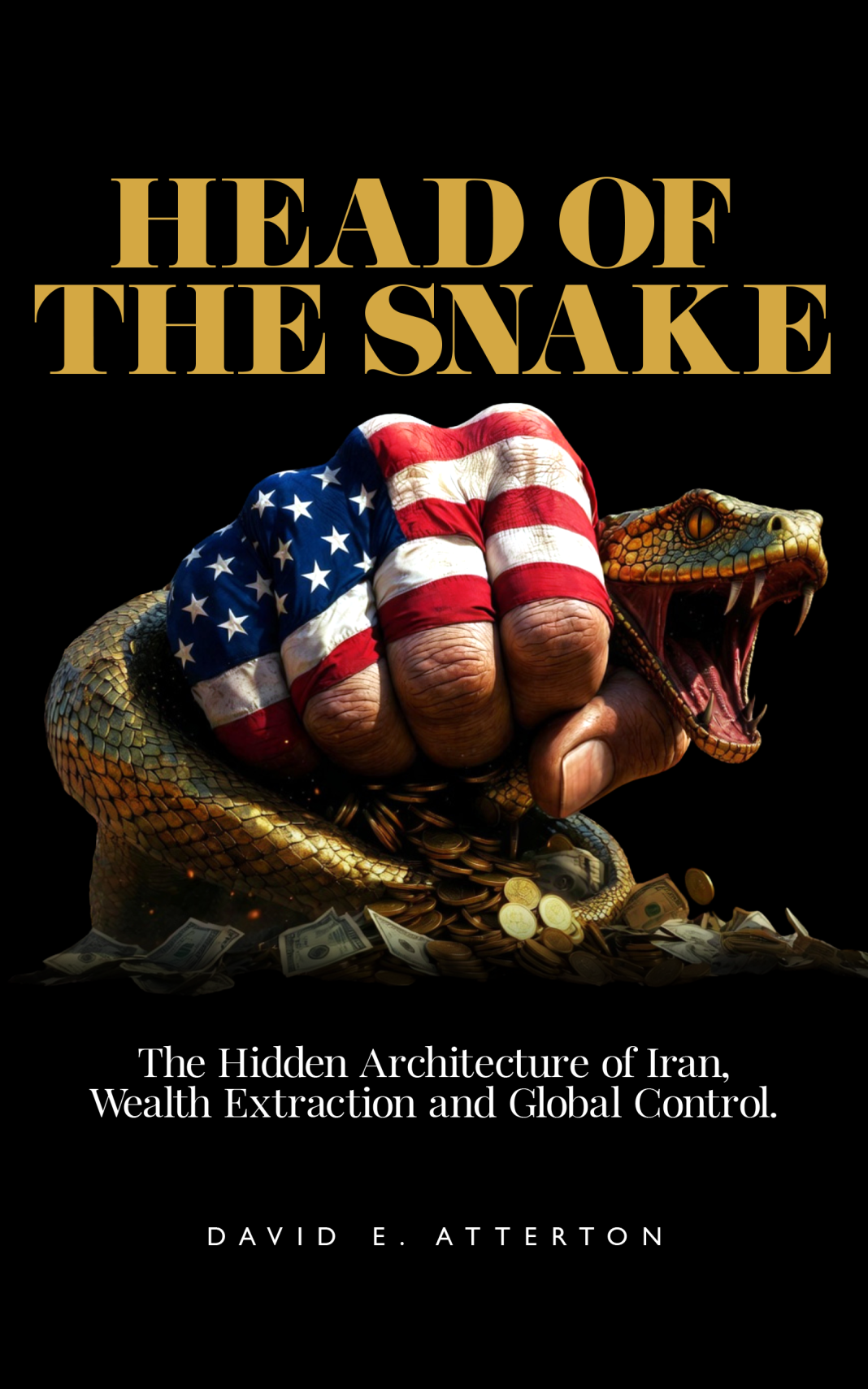
The design behind all of it is mapped in Head of the Snake, and the reference layer is free in the Iraqi dinar resource library.
Follow the daily intel free: Telegram · Facebook · Spotify · Odysee
News, Rumors and Opinions Monday 9-21-2026
GP Q: Iraq’s Central Bank Addresses Dollar Supply
9-20-2026
ARE WE THERE YET
September 20, 2026
IRAQ — THE CBI ADDRESSES DOLLAR SUPPLY
The Iraq Central Bank of Iraq issued a statement today saying Iraq has sufficient foreign reserves to meet demand for dollars for imports, card payments and travelers at the official rate.
GP Q: Iraq’s Central Bank Addresses Dollar Supply
9-20-2026
ARE WE THERE YET
September 20, 2026
IRAQ — THE CBI ADDRESSES DOLLAR SUPPLY
The Iraq Central Bank of Iraq issued a statement today saying Iraq has sufficient foreign reserves to meet demand for dollars for imports, card payments and travelers at the official rate.
The CBI said recent pressure in the parallel market was being driven by market speculation, expectations and regional tensions.
THE IQD
The official rate remains: $1 = 1,310 IQD
But the parallel market has moved sharply, with reports putting the dollar around 160,000 IQD per $100.
That is a market-rate development — not an official CBI revaluation.
GLOBAL — THE FINANCIAL RAILS
The US Treasury’s pressure on …..Iran’s financial networks continues.
On September 17, Treasury sanctioned Iranian financier Babak Zanjani’s BitBank cryptocurrency exchange, alleging it helped process payments connected to Iran.
ROAD CHECK
CBI says dollar demand can be met — confirmed
Parallel-market pressure — rising
Foreign reserves — being watched
IQD revaluation — not announced
RAIL WATCH
The financial rails are moving through banking reform, reserve management, compliance and international financial restrictions.
But a widening parallel-market spread is not the same thing as an official change in the IQD’s value.
REMEMBER:
Today brought a real currency-market development.
The CBI says it has enough reserves and will continue financing legitimate foreign trade through approved channels.
Show us the document. Then we’ll read what it actually says.
Proof Links
Central Bank of Iraq — September 19 Foreign Reserve Statement
https://cbi.iq/news/section/71/
Central Bank of Iraq — Exchange Rates
https://cbi.iq/page/144
Shafaq News — CBI Dollar Supply Statement
https://shafaq.com/en/Economy/CBI-counters-fears-over-dollar-supply
U.S. Treasury — Operation Economic Outcast
https://content.govdelivery.com/accounts/USTREAS/bulletins/42a9a88
Source(s):
• https://x.com/argosaki/status/2101853866669289702
https://dinarchronicles.com/2026/09/20/gp-q-iraqs-central-bank-addresses-dollar-supply/
************
Courtesy of Dinar Guru: https://www.dinarguru.com/
Mnt Goat Article: “IRAQ REGULATES FOREX TRADING: STRICT OVERSIGHT OF COMPANIES AND INCOMPLETE INVESTOR PROTECTION.” Do all you investors really realize just how fantastic this news is? No, the IQD is not yet on FOREX however, they are going to allow Iraqi companies to list their stocks from ISX on FOREX. This is literally one step away from the IQD currency being listed too on the currency exchange. ...If this one does not convince you we are VERY close to a reinstatement, I don’t know what will...They are telling us the next step...WOW! WOW! WOW!
Jeff In order to be a sovereign nation...you can't be under any foreign restrictions, you have to have full control of your military, full control of your country and its financial system and you need a convertible tradable currency...While US troops remain in Iraq they are not a sovereign nation. They don't have 100% control of their country. They also don't have control over their financial system because they have to use the US dollar for trade. The troops will be out by September 30th. That's when their sovereignty starts...
Militia Man Zaidi goes to New York [this] week. He speaks at the United Nations. He meets with President Trump. He goes to the US Chambers of Commerce. And then 30 September is the date they keep pointing at for the [end of the] old coalition mission and turn toward long term business. That's the focus, economic partnerships...It is not a switch that flips the dinar by itself...but let's watch the language after they sit down...Watch for signed follow through, not slogans...
**************
GOLD to $10,000 'Sooner Than People Expect': Jim Rickards
9-21-2026
Jim Rickards thinks gold reaches $10,000 an ounce sooner than almost anyone expects, and his reason is arithmetic rather than a forecast: every $1,000 step up costs a smaller percentage than the one before it.
Maggie Lake sits down with Jim Rickards, editor of Strategic Intelligence and author of MoneyGPT, on the fundamentals behind the gold price and on what the Federal Reserve just did about inflation it cannot reach.
Seeds of Wisdom RV and Economics Updates Monday Morning 9-21-26
Good Morning Dinar Recaps,
EUROPEAN DIGITAL FINANCE RESET: ECB LAUNCHES BLOCKCHAIN SETTLEMENT SYSTEM AND BEGINS TOKENIZED BOND INVESTING
THE ECB IS BRINGING CENTRAL BANK MONEY DIRECTLY INTO TOKENIZED FINANCIAL MARKETS, CREATING NEW INFRASTRUCTURE FOR DIGITAL SECURITIES, SETTLEMENT AND THE FUTURE OF EUROPEAN FINANCE.
Good Morning Dinar Recaps,
EUROPEAN DIGITAL FINANCE RESET: ECB LAUNCHES BLOCKCHAIN SETTLEMENT SYSTEM AND BEGINS TOKENIZED BOND INVESTING
THE ECB IS BRINGING CENTRAL BANK MONEY DIRECTLY INTO TOKENIZED FINANCIAL MARKETS, CREATING NEW INFRASTRUCTURE FOR DIGITAL SECURITIES, SETTLEMENT AND THE FUTURE OF EUROPEAN FINANCE.
OVERVIEW
The European Central Bank has launched Pontes, a new Eurosystem service that allows wholesale transactions involving tokenized assets to settle in central bank money.
The ECB is also preparing to invest a small portion of its own funds in tokenized securities, initially focusing on euro-denominated public-sector and supranational debt.
The development moves blockchain-based financial infrastructure closer to the core of the traditional banking system, potentially changing how securities are issued, traded, settled and managed across European markets.
KEY DEVELOPMENTS
1. ECB launches Pontes for tokenized financial markets
On September 21, the European Central Bank launched Pontes, a new settlement solution designed to connect distributed-ledger technology platforms with the Eurosystem's existing payment infrastructure.
Pontes allows eligible financial institutions to settle transactions involving tokenized assets using central bank euros rather than relying solely on privately issued stablecoins or tokenized commercial-bank money.
The initial group of participants includes major financial institutions and market infrastructures such as Deutsche Bank, Santander and Clearstream. Additional participants are expected to connect over the coming months.
The ECB describes Pontes as the first step in a broader strategy to make central bank money fit for an increasingly tokenized financial system.
2. The ECB is becoming an investor in tokenized securities
The ECB has also begun preparatory work to invest a small portion of its own funds in tokenized securities.
The initial focus will be on euro-denominated securities issued by euro-area governments, regional governments, agencies and European supranational institutions.
This is significant because the ECB is not merely studying blockchain technology from the sidelines. By becoming an investor, it will gain practical experience with the complete lifecycle of tokenized securities, including trade execution, settlement and portfolio management.
The purchases are expected to settle through Pontes using central bank money.
3. Europe is building the infrastructure around tokenized finance
Tokenization involves representing financial assets as digital tokens recorded on distributed-ledger technology. In theory, the technology can combine multiple stages of a security's lifecycle—issuance, trading, settlement, custody and servicing—into a more integrated digital process.
The ECB says Pontes will expand gradually, with enhanced features and longer operating hours introduced over time. The broader Appia initiative is intended to develop a blueprint for a more integrated tokenized financial ecosystem by 2028.
This means Europe is not treating blockchain simply as a new type of investment technology. It is exploring how the technology could become part of the underlying plumbing of financial markets.
WHY IT MATTERS
Financial systems depend on infrastructure that most people never see: payment rails, settlement systems, clearinghouses, custody arrangements and central-bank money.
Pontes brings one of those foundational elements—central bank settlement money—into the blockchain environment.
That matters because tokenized securities can only become a large-scale part of financial markets if institutions have a reliable way to settle the cash side of those transactions.
The ECB is effectively working to ensure that as financial assets move onto digital ledgers, the euro itself remains connected to that emerging infrastructure.
This is an important distinction between digitalizing financial markets and simply creating new digital assets. The former involves changing how the financial system operates.
WHY IT MATTERS TO FOREIGN CURRENCY HOLDERS
For foreign currency holders, this development is worth watching because the future role of a currency depends partly on the financial infrastructure built around it.
A currency supported by deep capital markets, reliable settlement systems, international liquidity and modern payment infrastructure can remain relevant even as the technology underlying financial transactions changes.
The ECB's move does not announce a euro revaluation, a new exchange rate or a replacement for the U.S. dollar.
But it does demonstrate that Europe is actively building infrastructure designed to keep the euro relevant in an increasingly digital financial system.
For those watching the Global Reset, this is another example of why infrastructure may change long before currency headlines do.
IMPLICATIONS FOR THE GLOBAL RESET
Pillar 1 — Technology
Blockchain and distributed-ledger technology are moving beyond experimentation and into actual financial-market infrastructure. Pontes represents a concrete step toward integrating this technology with central-bank settlement.
Pillar 2 — Payments
The ability to settle tokenized transactions in central bank money creates another pathway for digital financial transactions while keeping the euro connected to the Eurosystem's established payment infrastructure.
Pillar 3 — Assets
Tokenized bonds and other securities could eventually change how financial assets are issued, transferred, settled and managed. The ECB's decision to invest in tokenized securities gives the central bank direct experience with this emerging asset structure.
Pillar 4 — Capital
If tokenized securities become more widely adopted, faster and more automated settlement could change how capital moves through financial markets. The technology could eventually reduce friction between issuance, trading and settlement.
Pillar 5 — Currencies
The euro's future role in digital finance will depend not only on its exchange rate but also on whether it remains embedded in the infrastructure through which international financial assets are transferred and settled.
RUMOR SAFETY REMINDER
The launch of Pontes is not an announcement of a currency revaluation, a Global Reset date or a guaranteed increase in the value of the euro.
It is a documented infrastructure development showing that the ECB is preparing the euro and European financial markets for a more tokenized financial environment.
HOPE, NOT HYPE. FOLLOW THE EVIDENCE.
THE BOTTOM LINE
The ECB's launch of Pontes and its move toward investing in tokenized securities represent a significant shift from studying blockchain technology to building and using financial infrastructure around it.
The larger significance is that central-bank money, digital securities and traditional financial markets are beginning to operate within the same technological framework.
For the Global Reset conversation, the lesson is straightforward: the financial system is evolving from the inside out—and the infrastructure being built today may shape the currencies and markets of tomorrow.
The biggest financial changes do not always arrive as dramatic currency announcements. Sometimes they begin quietly with a new settlement system, a new digital asset structure or a central bank changing the way money moves. Watch the infrastructure, because the infrastructure becomes the system.
Seeds of Wisdom Team
Newshounds News™ Exclusive
SOURCES
~~~~~~~~~~
🌱 A Message to Our Currency Holders🌱
If you’ve been holding foreign currency for many years, you were not foolish.
You were not wrong to believe the global financial system would change.
What failed was not your patience — it was the information you were given.
For years, dates, rumors, and personalities replaced facts, structure, and proof. “This week” predictions created cycles of hope and disappointment that were never based on how currencies actually change.
That is not your failure.
Our mission here is different: • No dates • No rates • No hype • No gurus
Instead, we focus on:
• Verifiable developments • Institutional evidence
• Global financial structure • Where countries actually sit in the process
Currency value changes only come after sovereignty, trade, banking, settlement systems, and fiscal coordination are in place. History and institutions confirm this sequence.
You will see silence. You will see denials. That is not delay — that is discipline.
Protect your identity. Organize your documents. Verify everything.
Never hand your discernment to anyone who cannot show proof.
You deserve truth — not timelines.
Seeds of Wisdom Team
Newshounds News
~~~~~~~~~~
Seeds of Wisdom Team RV Currency Facts Youtube and Rumble
Newshound's News Telegram Room Link
RV Facts with Proof Links Link
RV Updates Proof links - Facts Link
Start Here room with Most Asked Questions Link
Follow the Gold/Silver Rate COMEX
Follow Fast Facts
Seeds of Wisdom Team™ Website
Thank you Dinar Recaps
You asked, we answered: Why Are Central Banks Moving Their Gold Reserves
You asked, we answered: Why Are Central Banks Moving Their Gold Reserves
15 September, 2026
Gold on the move
On 2 September, De Nederlandsche Bank (DNB) announced that it had transferred approximately 86t of gold from New York and Ottawa to London.1 The operation, conducted between March and August 2026, was designed to improve the liquidity and tradability of DNB’s gold reserves and strengthen its preparedness for severe crises.
You asked, we answered: Why Are Central Banks Moving Their Gold Reserves
15 September, 2026
Gold on the move
On 2 September, De Nederlandsche Bank (DNB) announced that it had transferred approximately 86t of gold from New York and Ottawa to London.1 The operation, conducted between March and August 2026, was designed to improve the liquidity and tradability of DNB’s gold reserves and strengthen its preparedness for severe crises.
At first glance, the decision might look like another example of a central bank bringing its gold closer to home. It is more revealing than that. London’s share of Dutch gold reserves rose from 18.1% to 32.1%, surpassing domestic holdings of 30.8% and making London, rather than the Netherlands, the largest single storage location for Dutch gold. The shares held in New York and Ottawa fell to 18.5% each, from 31.3% and 19.7%, respectively.
The mechanics were equally significant. Around 59t was sold in New York and replaced with internationally tradable gold in London. More than 27t of gold was physically transported from North America to DNB’s facility in Zeist, while a similar quantity moved from Zeist to London. This was therefore a strategic reallocation of reserve locations, not simply 86t of bullion being flown across the Atlantic.
The announcement nevertheless highlights a broader shift in central bank thinking on where gold reserves should be stored to balance security, accessibility and liquidity.
From repatriation to location strategy
Gold repatriation is not new.2 In 2000, Germany transferred around 930t from London to Frankfurt, with the Bundesbank subsequently confirming that the gold had been inspected and that some bars were to be recast to meet Good Delivery standard.3 But the issue became much more prominent after the global financial crisis.
Venezuela returned 160t from foreign institutions in 2011–12.4 Germany followed with a second programme, transferring 674t from New York and Paris to Frankfurt between 2013 and 2017.5 The Netherlands moved 122.5t from New York to Amsterdam in 2014,6 while Austria moved 90t from London between 2015 and 2018.7 Later in the decade, Türkiye changed the overseas custody location of part of its gold, while Hungary and Poland moved physical reserves into domestic storage.
The range of countries reviewing or changing their gold storage arrangements has broadened since then. Serbia reportedly returned around 13t between 2021 and 2022.8 India has progressively increased domestic gold holdings since 2022, with the pace of relocation accelerating sharply after March 2023.9 France also changed the geographical distribution of its gold exposure in 2025–26, selling 129t held in New York and acquiring an equivalent quantity of replacement gold in Europe. The Banque de France did not describe the operation as a physical relocation.10
Chart 1: Selected central bank repatriations, strategic relocations and uncompleted proposals since 2000
Dates reflect the announcement or broad programme period. Routes are simplified. Changes in custody position do not always prove physical shipment.
Source: World Gold Council analysis of central bank disclosures and cited public sources
Three waves, but no single motivation
One way to interpret the post-2000 history is through three broad, overlapping waves:
The first wave reflected an early reassessment of reserve location arrangements. Germany’s transfer of around 930t from London to Frankfurt in 2000 showed that the geographical distribution of official gold was already being reconsidered well before repatriation became a prominent geopolitical issue.
In the second wave, from roughly 2011 to 2019, questions of national control and public confidence became more visible. Venezuela presented its decision in terms of greater national control.11 Elsewhere, central banks generally pursued more balanced strategies. Germany wanted half of its reserves in Frankfurt, while Austria also ultimately held half of its gold reserves domestically but retained substantial holdings in London and Switzerland to preserve access to international markets; Poland combined domestic repatriation with a major expansion of its gold reserves.
The third wave is more complex. Heightened geopolitical uncertainty has increased attention on jurisdiction, access during a crisis and exposure to overseas financial infrastructure.12 Yet recent operations by France and DNB show that the answer does not necessarily lie in domestic storage alone. Central banks are increasingly optimising across three considerations: custody risk, physical accessibility and market liquidity.
DNB’s decision captures this evolution particularly well. In 2014, it moved gold from New York to Amsterdam to increase the proportion held domestically. In 2026, it moved gold from North America predominantly to London to make it more readily deployable. These decisions point in different geographical directions, but share the same objective: resilience through a more purposeful distribution of reserves.
Chart 2: Where do you currently vault your gold reserves? (Please select all that apply)
2026 base: All central banks who hold gold (69); advanced economy (16); EMDE (53). Note: Respondents were able to select all options that applied.
Source: World Gold Council, YouGov
What central banks themselves are saying
Our 2026 Central Bank Gold Reserves Survey reinforces this interpretation. The Bank of England remains the most commonly cited vaulting location, used by 57% of respondents, while 49% reported holding at least some gold domestically.
Over the preceding 12 months, 9% of respondents had increased domestic storage, but 10% had diversified their overseas storage locations. Looking ahead, 7% planned to increase domestic storage and 9% expected to diversify further overseas. The latter figure rose from just 2% in the previous survey.
TO READ MORE: https://www.gold.org/goldhub/gold-focus/2026/09/you-asked-we-answered-why-are-central-banks-moving-their-gold-reserves
Iraq Economic News and Points To Ponder Late Sunday Evening 9-20-26
Integrity Calls For The Activation Of Internal Audit And Control In The Implementation Directorates To Protect Public Money
Money and business Economy News – Baghdad The Federal Integrity Commission called for activating the work of auditing and internal control in the implementation directorates to ensure periodic reports on the reality of work in each directorate, which contributes to the preservation of public money and the control of administrative procedures, and reduce the imbalances that may be conducive to the occurrence of corruption cases.
Integrity Calls For The Activation Of Internal Audit And Control In The Implementation Directorates To Protect Public Money
Money and business Economy News – Baghdad The Federal Integrity Commission called for activating the work of auditing and internal control in the implementation directorates to ensure periodic reports on the reality of work in each directorate, which contributes to the preservation of public money and the control of administrative procedures, and reduce the imbalances that may be conducive to the occurrence of corruption cases.
The Authority, in the framework of follow-up of institutional performance; in order to improve it and prevent the fall into the shafts of corruption, worked to form a team from the Department of Prevention; to follow up the reality of work in the Directorate of Implementation of Al-Kadhimiya, where the team monitored a number of observations that included the mechanisms of preservation of executive files and records, procedures for the payment of dues, and the level of digital transformation, as well as the reality of staffing and the service environment provided to the reviewers.
She pointed to the introduction, deterioration and rupture of most of the files and records and not to archive them electronically, which exposes them to damage or the loss of some priorities, and may create an environment for the blackmail of reviewers and the spread of bribery, as well as the limitation of the current electronic procedures to the number of the file, barcodes and the minutes of implementation, stressing the need to work on the comprehensive digital transformation of the work of the Directorate and document the files electronically after its indexing, and the adoption of an electronic mechanism that allows the concerned person or his official agent to see the executive file remotely, to ensure that it is not lost or disappear its priorities, in addition to the use of electronic payment tools.
The Authority, in its report, which sent a copy of it to the Office of the Prime Minister, the General Secretariat of the Council of Ministers and the Ministry of Justice, stressed the need to strengthen the corridors of the Directorate with the guidance boards for the mechanism of completion of the transaction and the required priorities and the amount of the fee; to introduce the reviewers to the procedures in force and ensure the transparency of dealing and speed of completion, as it monitored the lack of clear panels that clarify the mechanism and procedures of the executive dialwork, which leads to confusion of the reviewers and their lack of knowledge of the procedures followed.
The report monitored the existence of a strong momentum for the reviewers in the corridors of the Directorate, and a great difficulty in completing their transactions, as a result of the reality of the building and the small number of employees, as well as the momentum in the Follow-up Division, and the inadequacy of the place to receive the large numbers of reviewers, which may create an environment for the use of bribes, indicating the lack of administrative staff of the judicial outlet, forcing him to carry out archiving work and enter and audit information, and cause momentum and delay in the completion of transactions, and push citizens to review the Directorate more than once.
He also revealed that there is a delay in sending dues to some ministries for more than two months, despite being deducted from employees on a monthly basis, especially the dues (the third Karkh and Tarmiya education), which causes momentum in the directorate, as a result of citizens’ reviews to inquire about them, as well as the delay in the payment of benefits for child expenses by ministries for more than two months, stressing the need for ministries to send financial dues to their employees within the specified dates.
She pointed out that the fifth month's dues have not been paid to the Ministry of Defense until the date of the preparation of the report, which exceeds the number of its files (1000) due to the procedures followed in the Directorate, represented by (analysis, cutting, registration, deportation, downloading and auditing), in addition to the small number of specialized employees, calling for addressing the reasons for the delay and strengthening the staff to ensure the speedy completion of those procedures, and in the side of the procedures followed on the debtors, the report monitored the weakness of coordination between the divisions of the Directorate with regard to the audit of debtors' files and the assurance of payment
https://www.economy-news.net/content.php?id=74113
Parliamentary Finance monitors irregularities in the final accounts: We will host the Office of Financial Supervision
Money and business Economy News – Baghdad The Parliamentary Finance Committee revealed the close hosting of the Federal Financial Supervisory Office and the concerned authorities to discuss irregularities monitored by the Committee in the final accounts for the years from 2012 to 2015.
A member of the committee, MP Dylan Eid al-Ghafoor, said that "the committee recently held a meeting chaired by the Chairman of the Finance Committee, MP Uday Awad al-Tamimi, to discuss the report of the draft law of the final accounts for the fiscal years 2012, 2013, 2014 and 2015, in preparation for submission to the second reading in the House of Representatives."
She added that "the discussions revealed the existence of a number of irregularities in those accounts, and as a result there will be hosting the Federal Office of Financial Control, to identify the irregularities monitored by the Committee and clarify them, in order to complete the project and present it to the House of Representatives and vote on it."
*********************
Abdul Ghafoor explained that "the Finance Committee discussed the need to be a close hosting of the Office of Financial Supervision, to provide its observations on the existing violations, provided that in light of this, a report is prepared and submitted to the House of Representatives."
She said that "the report will be submitted to the Council for the purpose of discussing these irregularities within the Finance Committee, and then complete the procedures and vote on them within the House of Representatives."
On the delay of the final accounts, she explained that "there are years since 2012 until now did not discuss the final accounts," stressing that "this is contrary to the law and the law of financial management, as well as legal articles that oblige the government to submit the final accounts to the House of Representatives, and oblige the House of Representatives to discuss and vote on them."
She added that "there is a legal article within the Financial Management Law regulating this aspect, as well as the law of the Office of Financial Supervision and other regulatory laws related to the subject."
Abdul Ghafour said: "The Financial Management Law, the Ministry of Finance Law and the Financial Control Bureau Law are all laws related to the final accounts and the regulation of the financial affairs of the state."
She pointed out that "it is assumed that there is a final account for each budget, because the final accounts clarify how the money was spent, where it was spent, and the extent of commitment to the doors of the budget."
On the law of borrowing, Abdul Ghafour explained that "the objection expressed by the Finance Committee is not related to the law of borrowing itself, but to the project or proposal that exists within the Committee and the need to study before proceeding with it."
She added that "the subject needs to be studied from and studied for the financial feasibility, which was discussed by the Finance Committee," noting that "any borrowing requires knowing the actual need of the state, how to pay it, the size of the financial obligations that will result, and whether the budget can bear these obligations."
She stressed that "the committee discussed the subject and asked to prepare a clear and integrated financial study before proceeding with it https://www.economy-news.net/content.php?id=74107
Volkswagen, Mercedes And BMW Continue To Lose To Global Rivals
Money and business Economy News - Follow-up Germany’s top three automakers continued to lose market share to global rivals in the first half of this year, according to an analysis by consulting firm EY.
The combined total revenue of Volkswagen, Mercedes-Benz and BMW fell to about $325 billion (€284 billion), down 2.9% from a year earlier, EY reported.
In contrast, the other 19 global car groups surveyed by EY recorded a revenue increase of 3.6%, according to the German news agency DPA.
According to the data, this represents the third consecutive decline in revenue for the first half of German automakers.
According to EY’s analysis, 15 car companies recorded an increase in revenue, while the three German groups came in 16th, 17th and 19th, and Tesla achieved the strongest growth rate, followed by Suzuki and Geely.
The weakness of the German car industry is also reflected in profits, with earnings before interest and tax credits for German car manufacturers falling 19 percent to $14.9 billion (€13 billion) in the first half of the year
FRANK26….9-20-26…..FROM THE WTO TO MALIKI
KTFA
Sunday Night Video
FRANK26….9-20-26…..FROM THE WTO TO MALIKI
This video is in Frank’s and his team’s opinion only
Frank’s team is Walkingstick, Eddie and Omar in Iraq and guests
Playback Number: 605-313-5163 PIN: 156996#
KTFA
Sunday Night Video
FRANK26….9-20-26…..FROM THE WTO TO MALIKI
This video is in Frank’s and his team’s opinion only
Frank’s team is Walkingstick, Eddie and Omar in Iraq and guests
Playback Number: 605-313-5163 PIN: 156996#
A World Drowning in Debt, the Final Days of Fiat Money
A World Drowning in Debt, the Final Days of Fiat Money
As Good As Gold Australia: 9-20-2026
In this exclusive interview, we sit down with Lynette to discuss the reality of our current economic system and why the shift back to hard assets is accelerating. While leaders claim the economy is strong, the underlying facts point to a much different reality.
We discuss the long-term impact of leaving the gold standard in 1971, the massive U.S. debt and interest inflection point, and why central banks around the world are accumulating gold at a record pace.
A World Drowning in Debt, the Final Days of Fiat Money
As Good As Gold Australia: 9-20-2026
In this exclusive interview, we sit down with Lynette to discuss the reality of our current economic system and why the shift back to hard assets is accelerating. While leaders claim the economy is strong, the underlying facts point to a much different reality.
We discuss the long-term impact of leaving the gold standard in 1971, the massive U.S. debt and interest inflection point, and why central banks around the world are accumulating gold at a record pace.
We also tackle the growing speculation around silver. With a 6-year supply deficit and its rising importance as a strategic metal, could we see prices reach $200-$500/oz in the near future?
Finally, we look at projections from experts like Alasdair Macleod, who warns that fiat currency could be in its final days within the next 18 months.
To understand the core issues highlighted in the conversation, one must examine the fundamental nature of fiat currency. Unbacked by physical commodities, fiat money relies entirely on trust in issuing governments and central banking institutions.
Over time, expanding money supplies and escalating public debt levels contribute to a gradual reduction in what a single unit of currency can purchase. The speakers point out that modern financial markets are further complicated by massive, highly leveraged derivatives networks, which add layers of hidden exposure to an already delicate global banking structure.
Consequently, holding wealth exclusively in paper or digital instruments leaves individuals susceptible to systemic shifts and inflationary dynamics.
A historical perspective provides essential context for these current realities. The discussion touches upon pivotal monetary transitions, particularly the removal of the gold standard in the early 1970s, which severed the remaining link between physical tangible reserves and national currencies.
Since that transition, global debt expansion has accelerated at an unprecedented pace. History demonstrates that currency systems governed purely by policy adjustments eventually undergo revaluations or periods of significant volatility.
Recognizing these historical patterns allows individuals to anticipate potential systemic realignments rather than being caught unprepared by sudden shifts in policy or purchasing power.
Interestingly, while conventional financial advice often emphasizes paper-based assets like stocks, bonds, and standard bank deposits, institutional entities frequently behave differently behind the scenes.
Central banks across the globe have been steadily increasing their official gold holdings at record levels in recent years. As Lynette Zang and the hosts highlight, this strategic accumulation reveals a clear institutional recognition of gold’s role as the ultimate risk-off asset and a tier-one reserve component. When central banks actively acquire physical bullion to reinforce their balance sheets, it underscores the enduring value of tangible money that carries no counterparty risk.
While gold remains a foundational store of value, physical silver presents a uniquely compelling dynamic within the current monetary landscape. Silver serves a dual role, functioning both as a monetary metal with a long history of protecting purchasing power and as a crucial industrial commodity. Industrial demand for silver continues to expand rapidly due to its indispensable application in clean energy technologies, solar panels, high-tech electronics, medical equipment, and modern automotive manufacturing.
Given these expanding industrial requirements alongside constrained mining supplies, silver offers a distinct combination of functional utility and monetary preservation for forward-thinking asset holders.
Beyond market mechanics and metal fundamentals, the conversation advocates for a proactive mindset grounded in financial sovereignty and community resilience. True wealth protection extends beyond merely holding physical assets; it involves minimizing reliance on fragile centralized systems and developing localized support networks.
By securing physical gold and silver outside the traditional banking ecosystem, individuals retain direct control over their capital. Combining this personal asset security with practical resources, self-reliance, and strong community relationships builds a comprehensive strategy capable of weathering broader economic adjustments.
They Don’t Need to Kill the Dollar to Change the Entire Financial System | Andy Schectman
They Don’t Need to Kill the Dollar to Change the Entire Financial System | Andy Schectman
Miles Frankin Media: 9-20-2026
Michelle Makori, President & Editor-in-Chief of Miles Franklin Media, speaks with Andy Schectman, Founder & CEO of Miles Franklin Precious Metals, following the latest BRICS summit in New Delhi.
Schectman argues that BRICS is quietly building a parallel financial system through alternative payment rails, gold-backed settlement mechanisms, and local-currency trade, not necessarily a single BRICS currency.
They Don’t Need to Kill the Dollar to Change the Entire Financial System | Andy Schectman
Miles Frankin Media: 9-20-2026
Michelle Makori, President & Editor-in-Chief of Miles Franklin Media, speaks with Andy Schectman, Founder & CEO of Miles Franklin Precious Metals, following the latest BRICS summit in New Delhi.
Schectman argues that BRICS is quietly building a parallel financial system through alternative payment rails, gold-backed settlement mechanisms, and local-currency trade, not necessarily a single BRICS currency.
Schectman explains why he believes “de-Treasurization,” not de-dollarization, is the real shift underway as countries reduce reliance on U.S. Treasuries while accumulating gold.
He also discusses rising Treasury yields, central-bank gold buying, the movement of gold and silver to Asia, and why he believes inflation is “guaranteed” as the global monetary system evolves.
In this episode of The Real Story with Michelle Makori:
What the latest BRICS summit revealed
Why “de-Treasurization” matters more than de-dollarization
BRICS Pay, mBridge, and China’s CIPS network
Gold and silver price discovery shifting East
Central-bank gold buying and repatriation
Rising U.S. debt, inflation, and Treasury risks
What the changing monetary system could mean for investors
00:00 Coming Up
02:21 Introduction
03:18 BRICS Summit No Currency
06:07 Interoperable Payment Rails
09:40 The Unit Settlement Basket
12:39 Misdirection And Opaque Signals
13:33 Gold Vaults And BRICS Pay
20:02 Russia Comments And Treasury Risk
26:47 Gold Decade And Hong Kong Exchange
30:58 BRICS Metals Exchange Next Phase
33:52 China Presidency And What Next
35:13 BRICS Trade Rails
35:36 Putin Mocks G7
37:12 America Loses Trust
39:11 Gold Repatriation Signals
42:29 Why Move Gold Now
45:05 Venezuela Energy Gambit
49:04 Pipelines Versus Drones
53:50 Proxy War Goes Space
57:17 Bessent Dollar Defense
59:24 Five Year Monetary Shift
01:01:32 Assets Over Cash
01:03:35 Multipolar Gold Future
01:04:26 Final Wrap And Thanks
Seeds of Wisdom RV and Economics Updates Sunday Afternoon 9-20-26
Good Afternoon Dinar Recaps,
CHINA RATE RESET: BEIJING HOLDS RATES STEADY AS U.S. TIGHTENING SHIFTS GLOBAL MONEY FLOWS
CHINA KEEPS KEY LENDING RATES UNCHANGED AS THE FED MOVES IN THE OPPOSITE DIRECTION, HIGHLIGHTING A WIDENING MONETARY POLICY DIVIDE THAT CAN INFLUENCE GLOBAL CAPITAL, BOND YIELDS AND CURRENCY FLOWS.
Good Afternoon Dinar Recaps,
CHINA RATE RESET: BEIJING HOLDS RATES STEADY AS U.S. TIGHTENING SHIFTS GLOBAL MONEY FLOWS
CHINA KEEPS KEY LENDING RATES UNCHANGED AS THE FED MOVES IN THE OPPOSITE DIRECTION, HIGHLIGHTING A WIDENING MONETARY POLICY DIVIDE THAT CAN INFLUENCE GLOBAL CAPITAL, BOND YIELDS AND CURRENCY FLOWS.
OVERVIEW
China held its benchmark lending rates steady for the 16th consecutive month, keeping the one-year Loan Prime Rate (LPR) at 3.00% and the five-year LPR at 3.50%.
The decision comes as U.S. monetary policy moves toward tighter conditions, with the Federal Reserve having recently raised its benchmark rate and signaling that additional increases remain possible.
The growing gap between U.S. and Chinese interest rates is becoming another important force in global money flows, affecting bond markets, currency valuations, investment decisions and the relative attractiveness of dollar- and yuan-denominated assets.
KEY DEVELOPMENTS
1. China keeps lending rates unchanged for the 16th month
China's one-year LPR remains at 3.00%, while the five-year LPR remains at 3.50%. The decision was widely expected, with all 21 participants in a Reuters survey forecasting no change.
The extended period of rate stability indicates that Beijing is not currently responding to economic pressures with another broad reduction in benchmark lending rates. Reuters noted that China's policymakers face a more complicated global environment as several major central banks have moved toward a more hawkish policy stance.
2. The U.S.-China rate gap is widening
The policy direction is increasingly different between the world's two largest economies. The Federal Reserve recently raised its benchmark interest rate, while China has maintained its lending benchmarks.
That divergence matters because interest-rate differentials can influence where international capital seeks returns. Higher U.S. rates can increase the relative appeal of dollar-denominated bonds and other U.S. assets, while China's lower rates provide a different financing environment for its domestic economy.
Reuters reported that the yield premium on benchmark 10-year U.S. Treasury securities over Chinese government bonds was hovering near its highest level on record following the latest Fed increase.
3. The yuan is moving through a different monetary environment
China's decision is occurring even as the yuan has continued to strengthen, creating an unusual combination of steady domestic interest rates and currency appreciation.
For global investors, the important issue is not simply whether one currency rises or falls on a particular day. The larger issue is how interest rates, bond yields, capital flows and currency values interact as major economies follow different monetary paths.
The result is a financial environment in which the dollar and yuan can be affected by changing expectations about future rates, economic growth and international investment flows.
WHY IT MATTERS
Interest rates are one of the basic building blocks of the global financial system. When the United States moves toward tighter monetary policy while China maintains substantially lower lending rates, the difference can influence bond yields, borrowing costs, investment flows and currency markets.
The significance extends beyond China and the United States. Global investors, corporations and financial institutions constantly compare the return and risk available across major markets. Changes in those comparisons can redirect capital and alter demand for different currencies and financial assets.
The bigger story is therefore not simply that China left rates unchanged. It is that the world's major economies are operating with increasingly different monetary conditions, adding another layer to the broader restructuring of global finance.
WHY IT MATTERS TO FOREIGN CURRENCY HOLDERS
For foreign currency holders, this development is worth watching because currency values are connected to interest rates, capital flows, trade and investor confidence.
A stronger or weaker currency does not automatically mean a revaluation is coming. Currency markets respond to many forces at once, including monetary policy, economic growth, inflation, trade balances and international demand for financial assets.
For those holding foreign currencies in anticipation of a future change in value, the practical lesson remains hope, not hype. The evidence to watch is the gradual development of the financial system itself—not predictions of a specific reset date or guaranteed exchange-rate event.
IMPLICATIONS FOR THE GLOBAL RESET
Pillar 1 — Currencies
The widening monetary-policy difference between the United States and China demonstrates how interest-rate policy can influence currency markets. The yuan's performance will remain connected to China's economic conditions, capital flows and the broader dollar environment.
Pillar 2 — Debt
Government bond yields are increasingly important as investors compare returns between major economies. A larger U.S. Treasury yield premium over Chinese government bonds can influence global portfolio allocation and borrowing costs.
Pillar 3 — Trade
The dollar and yuan remain central to international trade. Differences in monetary policy can affect the cost of financing trade and the attractiveness of settling transactions in different currencies.
Pillar 4 — Capital
Capital naturally responds to differences in risk and return. As U.S. and Chinese financial conditions diverge, international investors have another variable to consider when allocating money across global markets.
Pillar 5 — Global Financial Infrastructure
The long-term financial reset is not dependent on one interest-rate decision. It involves the continuing interaction of currencies, bonds, payment systems, trade relationships, capital markets and central-bank policy.
RUMOR SAFETY REMINDER
China holding rates steady is not an announcement of a currency revaluation, a new exchange rate or a specific Global Reset date.
It is a documented monetary-policy decision that provides another piece of evidence about how the world's major financial systems are evolving.
HOPE, NOT HYPE. FOLLOW THE EVIDENCE.
THE BOTTOM LINE
China's decision to keep lending rates unchanged for a 16th consecutive month comes at a significant moment for global finance. The United States is moving toward tighter monetary conditions while China maintains substantially lower benchmark lending rates, creating a widening policy divergence that can affect bonds, capital flows and currencies.
The financial reset story is bigger than any single currency. As interest rates, bond markets, trade relationships and capital flows continue to evolve, the infrastructure underneath the global financial system continues to change.
The bigger story is not simply where the yuan or dollar moves next—it is how differences in interest rates, bond yields and capital flows are reshaping the financial connections between the world's largest economies. The foundation can change long before the headlines do.
Seeds of Wisdom Team
Newshounds News™ Exclusive
SOURCES
~~~~~~~~~~
Seeds of Wisdom Team RV Currency Facts Youtube and Rumble
Newshound's News Telegram Room Link
RV Facts with Proof Links Link
RV Updates Proof links - Facts Link
Start Here room with Most Asked Questions Link
Follow the Gold/Silver Rate COMEX
Follow Fast Facts
Seeds of Wisdom Team™ Website
Thank you Dinar Recaps
Diversification And Digitalization Are Reshaping Finance’s Future
Diversification And Digitalization Are Reshaping Finance’s Future
Strictly speaking, it is far from a divorce, or even a serious breakup. But Asia’s leading economies are edging away from their eight-decade relationship with the US dollar for international trade.
Two forces are driving this evolution of the international monetary system. Amid rising geopolitical and geoeconomic fragmentation, policymakers are weighing economic efficiency against national security and strategic resilience. And digital innovation is lowering the cost of conducting transactions directly across currencies and financial networks.
Diversification And Digitalization Are Reshaping Finance’s Future
Strictly speaking, it is far from a divorce, or even a serious breakup. But Asia’s leading economies are edging away from their eight-decade relationship with the US dollar for international trade.
Two forces are driving this evolution of the international monetary system. Amid rising geopolitical and geoeconomic fragmentation, policymakers are weighing economic efficiency against national security and strategic resilience. And digital innovation is lowering the cost of conducting transactions directly across currencies and financial networks.
Although the dollar still dominates trade in Asia, the region’s currency diversification promises to help shape the future of the world economy. The ASEAN+3 countries consist of 10 members of the Association of Southeast Asian Nations—Brunei Darussalam, Cambodia, Indonesia, Lao P.D.R., Malaysia, Myanmar, the Philippines, Singapore, Thailand, and Vietnam—plus China, Japan, and Korea. Together, they encompass more than a quarter of the world’s population and generate a quarter of global economic output.
Since World War II, the dollar has been Asia’s dominant international currency. It still accounts for more than 80 percent of trade invoicing and nearly 85 percent of foreign exchange settlement in the ASEAN+3 bloc. More than half of regional banks’ cross-border assets and liabilities are denominated in dollars, as are roughly two-thirds of official reserves.
Asia’s unfolding currency pivot is not an ideological campaign against the dollar. Policymakers are simply pursuing a pragmatic strategy of diversification. Their objective is to create alternative pathways of clearing and settlement for trade and finance that can operate alongside existing global systems. In doing so, they are building resilience.
What will emerge is a more layered financial architecture. The dollar is likely to remain the region’s dominant reserve asset and the ultimate liquidity backstop for financial markets. At the same time, local currency settlement arrangements and digital payment platforms will assume a larger role in trade and supply-chain integration.
The dollar’s advantage
The dollar’s historically dominant position in Asia is no accident. It is rooted in the postwar global order and reflects not only the weight of the US as the world’s largest economy but also the credibility of its institutions over time.
For central banks across the region, holding dollar reserves has ultimately been an expression of confidence in the Federal Reserve, the rule of law, and the transparency and predictability of the US monetary framework.
Yet this cannot be taken for granted. The dollar’s central role depends on continued confidence in the US as an open economy and in America’s ability to provide stable and predictable policy frameworks. To retain the dollar’s central role, the US must continue to offer the world’s largest and most dynamic economy, the deepest financial markets, and an independent central bank.
Recent strains in US institutions are testing that foundation. Market reactions over the past year—to events ranging from the tariffs imposed by the US administration to conflict in the Middle East—underscored a simple reality. When uncertainty originates elsewhere, investors seek safety in dollar-denominated assets. But when questions arise about the stability or predictability of US policies and institutions, concerns inevitably emerge about the dollar’s reliability as the anchor of the international monetary system.
Asia’s regional turn
Over the past two decades, Asia’s economic structure has changed dramatically. The region is no longer just the world’s factory, producing largely for Western consumption. Two decades ago, nearly a third of value-added exports from the ASEAN+3 group were destined for the US.
Today, that share is down to a fifth. Meanwhile, China and ASEAN are each now absorbing a tenth of the region’s production, up markedly from about 6 percent each two decades ago. Production networks across “Factory Asia” are now denser, more interconnected, and more firmly rooted within the region.
This structural transformation also changed the way economic shocks propagate. Analytical modeling by AMRO—the ASEAN+3 cooperation framework’s macroeconomic research office—suggests that shifts in regional domestic demand now affect neighboring economies more strongly than demand shocks originating in the US.
Asia has traditionally been highly sensitive to global financial cycles driven by American monetary policy. When the Fed tightened policy, financial conditions across the region tightened as well. Capital flowed out, local currencies came under pressure, and domestic borrowing costs rose.
As the region’s business cycles and production networks become more regionally anchored, monetary policy in Asia will respond more directly to domestic and regional conditions. While global factors remain important, there are early signs that financial conditions in ASEAN+3 economies are increasingly domestically driven.
To consolidate this growing financial autonomy, the region needs to expand the use of regional currencies in trade. Invoicing and settling intra-regional trade in those currencies will help loosen the link between domestic credit conditions and US monetary policy. Greater use of local currencies will gradually reduce structural currency mismatches and allow central banks to calibrate monetary policy more closely to domestic conditions rather than reacting defensively to dollar shocks.
As Asia aligns its financial architecture more closely with changing economic structures, the region will be better positioned to safeguard macroeconomic stability and strengthen its resilience to external shocks, such as the debt-driven 1997 Asian financial crisis. In that case, the IMF stepped in with a $40 billion program to stabilize the region’s collapsing currencies.
Rewiring international payments
In the aftermath of that crisis, some policymakers and academics advocated a European-style monetary union. Asia did not pursue that idea. The region is simply too diverse. Political systems, economic structures, income levels, and financial market development vary widely across the region, making a common currency impractical.
Instead, regional cooperation evolved in a more pragmatic direction, focusing on financial integration and stronger safety nets. Modernizing cross-border payment infrastructure became a central pillar of this strategy.
In the past decade, Asian central banks have pioneered local currency settlement frameworks. These are bilateral arrangements between two countries that use local currencies for cross-border settlement via financial institutions authorized by central banks. Although still modest in scale, such arrangements now operate between many ASEAN+3 economies.
TO READ MORE: https://www.imf.org/en/publications/fandd/issues/2026/09/asias-pragmatic-currency-pivot-dong-he
Sunday Iraq News Posted by Tishwash at TNT 9-20-2026
TNT:
Tishwash: Iraq to New York: Al-Zaidi addresses the United Nations and a meeting with Trump is anticipated.
Iraqi Prime Minister Ali Faleh al-Zaidi will head to New York in the coming hours at the head of a high-level government delegation to participate in the meetings of the 81st session of the United Nations General Assembly, whose high-level week begins on September 22.
According to the Director of the Prime Minister’s Media Office, Abdul Zahra al-Hindawi, al-Zaidi will deliver Iraq’s speech before the General Assembly, addressing Baghdad’s vision and positions regarding regional and international developments, in addition to the files of security, stability, development and international cooperation.
TNT:
Tishwash: Iraq to New York: Al-Zaidi addresses the United Nations and a meeting with Trump is anticipated.
Iraqi Prime Minister Ali Faleh al-Zaidi will head to New York in the coming hours at the head of a high-level government delegation to participate in the meetings of the 81st session of the United Nations General Assembly, whose high-level week begins on September 22.
According to the Director of the Prime Minister’s Media Office, Abdul Zahra al-Hindawi, al-Zaidi will deliver Iraq’s speech before the General Assembly, addressing Baghdad’s vision and positions regarding regional and international developments, in addition to the files of security, stability, development and international cooperation.
The visit is scheduled to include a series of bilateral meetings and talks with Arab and foreign leaders and heads of state, as part of the government’s efforts to strengthen political relations and expand areas of cooperation with regional and international partners.
The visit's agenda also has a prominent economic dimension, as the Prime Minister is scheduled to participate in events and meetings with representatives of major companies, businessmen and investors, in addition to a meeting with the American Chamber of Commerce, according to what the Iraqi government announced.
According to government statements, Baghdad aims to capitalize on the presence of the Iraqi delegation in New York to showcase investment opportunities and expand economic partnerships, in parallel with the transformations taking place in the Iraqi-American relationship and the increasing shift of a part of it towards economic, trade and investment issues.
On the political front, government spokesman Haider al-Aboudi announced that al-Zaidi's itinerary in the United States includes a meeting with US President Donald Trump, in addition to meetings with several other heads of state. Al-Zaidi and Trump previously met in Washington in July 2016 for talks that, according to reports at the time, focused on bilateral relations and economic issues.
The visit comes at a sensitive regional and international stage, amid multiple security and economic issues facing Iraq, including the repercussions of tensions in the region, the future of relations with the United States, and the promotion of foreign investments.
Baghdad is expected to present its vision on these issues during the meetings, focusing on consolidating Iraq's role in regional dialogue, attracting capital, and supporting development and reconstruction projects. link
************
Tishwash: Al-Zaydi orders that government officials be prevented from appearing in the media without prior approval.
On Saturday, Prime Minister Ali al-Zaidi directed that all advisors and government officials be prohibited from making press statements or appearing in the media without prior approval from his office.
The directive confirmed that the ban includes visual, audio and print media, noting that the measure comes within the framework of compliance with regulatory controls and keenness to unify the government discourse and ensure consistency in the official message.
Al-Zaydi stressed the need to adhere to this directive in order to avoid statements that may not accurately reflect the official position of the state, calling on everyone to strictly adhere to this directive. link
*************
Tishwash: Iraq calls on American companies to expedite the implementation of their projects.
On Saturday, Iraqi Finance Minister Faleh Sari called on American companies operating in the oil and energy sectors to expedite the implementation of their projects in the country, thereby boosting foreign investment and supporting the development of vital sectors.
This came during his meeting with the US Chargé d'Affaires to Iraq, Steven Fagin, and his accompanying delegation, where relations between the two countries were reviewed, and ways to enhance economic and financial cooperation were discussed.
Sari confirmed in a statement received by Shafaq News Agency that Iraq’s actions in its relations with various countries are based on the country’s supreme interests, noting the Iraqi government’s keenness to ensure that its relationship with the United States is balanced and based on the common interests of the two countries.
For his part, the US Chargé d'Affaires described the visit of the Iraqi government delegation to Washington last July as very successful, stressing the importance of investing in and building upon the results of the visit, in order to strengthen the paths of cooperation between the two countries.
Iraqi Prime Minister Ali al-Zaidi visited the United States on July 13, and the five-day visit witnessed the signing of 48 agreements, memoranda of understanding, and partnership declarations between Iraqi and American institutions in the oil, energy, electricity, industry, technology, communications, finance, agriculture, education, and health sectors, with a declared value exceeding $60 billion. link
*************
Tishwash: “Iraq Seeks Balanced Ties With US,” Finance Minister Says
At a Glance
Iraqi Finance Minister Faleh al-Sari met with U.S. Chargé d’Affaires Steven Fagin in Baghdad.
Talks covered bilateral relations and ways to strengthen economic and financial cooperation.
Sari urged U.S. oil and energy companies to accelerate projects in Iraq.
Fagin described the Iraqi government delegation’s July visit to Washington as “very successful.”
Iraqi Finance Minister Faleh al-Sari met with U.S. Chargé d’Affaires Steven Fagin to discuss strengthening economic and financial cooperation and accelerating American investment projects in Iraq.
Al-Sari said Iraq’s foreign relations are guided by its national interests, while calling for balanced ties with Washington based on shared interests.
Key Statements
“Iraq’s engagement in its relations with various countries is based on the country’s higher interests.”
— Iraqi Finance Minister Faleh al-Sari
“We are keen for Iraq’s relationship with the United States to be balanced and based on the shared interests of both countries.”
— Iraqi Finance Minister Faleh al-Sari
“We call on American companies operating in the oil and energy sectors to accelerate the implementation of their projects in Iraq.”
— Iraqi Finance Minister Faleh al-Sari
“The visit was very successful.”
— U.S. Chargé d’Affaires Steven Fagin, referring to the Iraqi government delegation’s July visit to Washington
Economic Cooperation
According to Iraq’s Finance Ministry, the meeting reviewed bilateral relations and ways to expand economic and financial cooperation between Baghdad and Washington.
Sari urged U.S. companies active in Iraq’s oil and energy sectors to move more quickly with their projects, saying greater investment would support foreign capital inflows and the development of vital sectors of the Iraqi economy.
The meeting also focused on building on the outcomes of the Iraqi government delegation’s visit to Washington in July.
Fagin described that visit as “very successful” and stressed the importance of using its results as a foundation for further cooperation between the two countries.
Iraq’s Foreign Relations
Sari emphasized that Baghdad’s engagement with different countries is based on Iraq’s national interests. He also said the government seeks a balanced relationship with the United States centered on mutual interests.
The comments come as Iraq continues to pursue foreign investment and economic partnerships while seeking to strengthen its energy sector, attract international companies and expand economic cooperation with major partners.
FYI
The meeting links Iraq’s broader economic priorities with its strategic relationship with Washington, particularly in the energy sector, where U.S. companies have a longstanding presence. Accelerating investment projects could carry significance for Iraq’s oil and energy development, while Baghdad’s emphasis on balanced relations reflects its stated approach of maintaining economic and diplomatic ties with multiple international partners. link
News, Rumors and Opinions Sunday 9-20-2026
GP Q: Banking Reset, the Fed Prepares for Major Overhaul
9-20-2026
BANKING RESET: FED PREPARES MAJOR OVERHAUL OF STRESS TESTS AND CAPITAL REQUIREMENTS
WHAT’S HAPPENING
The Federal Reserve is preparing major changes to how large U.S. banks are stress-tested, with more transparency around the models, assumptions and scenarios used.
GP Q: Banking Reset, the Fed Prepares for Major Overhaul
9-20-2026
BANKING RESET: FED PREPARES MAJOR OVERHAUL OF STRESS TESTS AND CAPITAL REQUIREMENTS
WHAT’S HAPPENING
The Federal Reserve is preparing major changes to how large U.S. banks are stress-tested, with more transparency around the models, assumptions and scenarios used.
The Fed plans to average two years of stress-test results when setting banks’ capital buffers, which could make capital requirements more predictable and less volatile.
Broader changes to bank capital rules and requirements for globally systemically important banks are also expected before the end of 2026.
GLOBAL RESET WATCH:
This is a change to the financial infrastructure beneath the banking system.
Banking Capital…Credit Liquidity… Financial Stability… Global Finance
Stress testing and capital requirements determine how banks prepare for financial shocks and how much capital they maintain against potential losses.
WHY IT MATTERS TO CURRENCY HOLDERS
Foreign currency value is influenced by the broader financial system supporting each currency.
Changes in bank capital, liquidity, credit creation and financial regulation can affect that foundation over time.
This does not signal a currency revaluation or establish a Global Reset date.
PROOF LINKS:
Federal Reserve — “The Final Chapter on Modernizing Bank Regulatory Stress Testing”
https://federalreserve.gov/newsevents/speech/bowman20260918a.htm
Reuters — “Fed’s Bowman says overhaul of bank stress test will make process more transparent”
https://reuters.com/business/finance/feds-bowman-says-changes-bank-stress-test-coming-soon-2026-09-18/
REMEMBER:
The financial system does not change only through currencies.
Sometimes the biggest changes happen underneath the surface — in bank capital, regulation, liquidity and risk management.
Watch the infrastructure. The headlines often come later.
RUMOR SAFETY REMINDER:
The Fed’s banking reforms are not a currency reset announcement and do not provide a revaluation date.
Hope, not hype. Follow the documented changes.
Source(s):
• https://x.com/argosaki/status/2101458533682495911
https://dinarchronicles.com/2026/09/19/gp-q-banking-reset-the-fed-prepares-for-major-overhaul/
*************
Courtesy of Dinar Guru: https://www.dinarguru.com/
Frank26 There's a high possibility Iraq may be sanctioned again. But I don't think so because Zaidi is doing very good in following Trump's orders...But if this pressure does not move Zaidi in the right direction, then [Iraq] is going to be sanctioned. [Iraq] is going to be returned to the years of hell, which is the 1990s and all of your reforms will be halted. I don't see that happening because the involvement with the WB, IMF and the US Treasury...BIS, let alone the financing reform of Rothschild...
Stephen Al-Zaidi is planning on being in New York next week. He's going to be at the UN meeting and he's going to be meeting with Trump. This is already on the agenda. He's coming with his delegation. He's going to be meeting with the Treasury...I wish I could be a fly on the wall. I'm assuming they're going to be going over exactly what is getting ready to take place and making sure they have all the support they need to facilitate this new financial reform.
Ariel the Ministry of Finance’s declaration of financial sovereignty by September 30, 2026, formally ends the artificial program rate, decoupling the IQD from decades of suppression. This convergence is timed to precede Iraq’s October 15, 2026, 2027 budget release, which will formalize a new, market-reflective exchange rate backed by Iraq’s oil and gas reserves. Along with gold.
*************
Bill Holter :"99% Of Silver Investors Are About To Be SHOCKED" | (Silver Prediction 2026)
The Silver Market: 9-17-2026
The U.S. national debt just crossed $40 trillion — over 124% of GDP. But according to this analyst, the real story isn't the debt itself. It's what's backing it.
In this conversation, we dig into the theory that a "gold revaluation" could be used to shore up the collateral behind U.S. Treasuries — and why some believe the math only works at prices as high as $180,000 an ounce.
We also cover the 2014 shift in banking law that turned deposits into loans, the controversial claims in David Rogers Webb's The Great Taking, and why some investors are moving to hold physical share certificates instead of leaving stock with a broker.
Seeds of Wisdom RV and Economics Updates Sunday Morning 9-20-26
Good Morning Dinar Recaps,
U.S.-CHINA FINANCIAL RESET: AI, TRADE AND CRITICAL MINERALS MOVE TO CENTER STAGE
U.S. AND CHINESE ECONOMIC OFFICIALS ARE BRINGING AI, TRADE AND CRITICAL MINERALS TO THE CENTER OF HIGH-LEVEL TALKS, HIGHLIGHTING HOW TECHNOLOGY, SUPPLY CHAINS AND ECONOMIC RELATIONSHIPS ARE BECOMING INCREASINGLY INTERCONNECTED.
Good Morning Dinar Recaps,
U.S.-CHINA FINANCIAL RESET: AI, TRADE AND CRITICAL MINERALS MOVE TO CENTER STAGE
U.S. AND CHINESE ECONOMIC OFFICIALS ARE BRINGING AI, TRADE AND CRITICAL MINERALS TO THE CENTER OF HIGH-LEVEL TALKS, HIGHLIGHTING HOW TECHNOLOGY, SUPPLY CHAINS AND ECONOMIC RELATIONSHIPS ARE BECOMING INCREASINGLY INTERCONNECTED.
OVERVIEW
U.S. Treasury Secretary Scott Bessent and Chinese Vice Premier He Lifeng are meeting in New York to discuss potential agreements involving AI, tariffs, critical minerals and other economic issues ahead of a planned Trump-Xi summit.
Critical minerals are moving deeper into the global financial and trade discussion. These materials are essential for semiconductors, batteries, advanced manufacturing, energy systems and other technologies, making reliable supply chains increasingly important to investment and economic planning.
The discussions come as the existing U.S.-China trade truce approaches its November 10 expiration date, adding pressure to address tariffs, rare-earth flows and other unresolved economic issues before the leaders meet.
KEY DEVELOPMENTS
1. AI Has Become Part of the U.S.-China Economic Relationship
Artificial intelligence is no longer simply a technology-sector issue.
The United States and China are both major participants in the development and deployment of advanced AI systems, and AI is increasingly connected to productivity, semiconductors, data centers, electricity demand, financial services and national economic competitiveness.
The upcoming discussions are expected to address AI-related security issues and technology competition, showing how AI has moved into the center of international economic policy.
That matters for the financial system because the countries that develop and deploy AI at scale will also be influencing future patterns of investment, manufacturing and global trade.
2. Critical Minerals Are Becoming Strategic Financial Assets
Critical minerals such as rare earth elements are essential inputs for many of the technologies driving the next phase of the global economy.
They are used in areas including advanced electronics, batteries, renewable-energy systems, semiconductors, defense technology and advanced manufacturing.
The U.S. Treasury has already emphasized the importance of transparent, market-based pricing for critical minerals, saying reliable reference prices can help attract private capital and support more resilient supply chains.
Treasury has also highlighted the concentration of critical-mineral supply chains as a vulnerability that can affect economic security and technological development.
The significance is broader than mining.
When a resource becomes essential to technology and industrial production, control over its supply, processing, pricing and financing can influence the movement of capital throughout the global economy.
3. Trade Is Being Connected to Supply-Chain Resilience
The U.S.-China discussions also include tariffs and the broader trade relationship.
The existing trade truce is scheduled to expire on November 10, making the coming negotiations important for businesses that depend on cross-border supply chains.
Potential agreements involving tariffs and critical-mineral flows could affect the cost and availability of goods and industrial inputs.
This demonstrates how trade policy increasingly overlaps with financial stability.
Supply chains affect production.
Production affects investment.
Investment affects economic growth.
And economic growth ultimately affects the financial strength and international use of currencies.
4. The Talks Come Before a Major Trump-Xi Meeting
The Bessent-He meeting is taking place ahead of a planned meeting between U.S. President Donald Trump and Chinese President Xi Jinping in Washington later this week.
Reuters reports that the economic officials' discussions are intended in part to prepare potential agreements for the leaders' meeting.
That makes the current negotiations important even before any final agreements are announced.
The key question is not whether every issue will be resolved immediately, but whether the two largest economies can establish arrangements that provide greater predictability for trade, technology and strategic supply chains.
5. A Broader Financial Realignment Is Taking Shape Around Strategic Resources
The U.S.-China discussions illustrate a larger shift in the way governments and markets view economic security.
For decades, global supply chains were often organized primarily around efficiency and cost.
Increasingly, governments are also considering resilience, diversification, strategic resources, domestic production and access to technology.
Treasury has described critical minerals, semiconductors, AI and advanced manufacturing as components of economic capacity and security.
This does not mean globalization is ending.
It does mean that the structure of global trade and investment is being reconsidered as governments place greater emphasis on the security of essential supply chains.
WHY IT MATTERS
The U.S.-China relationship reaches far beyond bilateral trade.
The two economies are deeply connected to global manufacturing, technology, commodities, investment and financial markets.
When discussions between them include AI, tariffs and critical minerals at the same time, it demonstrates how technology, trade and strategic resources are increasingly interconnected.
For the global financial system, the important issue is how these changes influence where capital is invested, where production occurs, how resources are priced and how international trade is conducted.
The financial system can be reshaped by changes in trade and supply chains long before those changes appear in currency markets.
WHY IT MATTERS TO FOREIGN CURRENCY HOLDERS
Readers hold foreign currency with the hope that it may increase in value if major changes occur in the global monetary system.
The U.S.-China discussions are relevant because trade flows, strategic resources, technology, investment and economic relationships all contribute to the underlying environment in which currencies operate.
However, negotiations over tariffs, AI and critical minerals do not establish a currency revaluation or guarantee a Global Reset.
The useful lesson is to watch the actual changes taking place in the financial and economic infrastructure.
Hope, not hype. Follow the evidence.
IMPLICATIONS FOR THE GLOBAL RESET
Pillar 1: Trade
The U.S.-China relationship remains one of the most important components of global trade. Changes to tariffs, trade agreements and supply chains can influence international capital and economic activity.
Pillar 2: Technology
AI is becoming an increasingly important source of productivity, investment and economic competitiveness. Control of advanced chips, computing capacity and AI infrastructure is therefore becoming part of the global economic equation.
Pillar 3: Critical minerals
Rare earths and other critical minerals are essential inputs for advanced technology and manufacturing. Their availability, pricing and supply-chain security are becoming increasingly important to global investment.
Pillar 4: Supply chains
The emphasis is shifting from supply chains based solely on efficiency toward systems that also consider diversification and resilience.
Pillar 5: Currencies
Trade balances, economic productivity, investment flows and confidence in financial systems can influence the long-term environment for currencies.
The U.S.-China talks do not announce a change in currency values, but they demonstrate how the underlying economic architecture supporting currencies continues to evolve.
RUMOR SAFETY REMINDER
The U.S.-China discussions are not an announcement of a currency revaluation, a new global currency or a specific Global Reset date.
The documented subjects are AI, tariffs, critical minerals, trade and broader economic issues.
Any future agreements should be evaluated based on what is actually announced—not on predictions about secret monetary events or predetermined currency values.
THE BOTTOM LINE
The meeting between U.S. and Chinese economic officials places three major components of the modern financial system in the same conversation:
AI → Trade → Critical Minerals
Each connects to investment, manufacturing, supply chains and economic competitiveness.
If agreements emerge from the negotiations, their significance will depend on how they affect the movement of goods, technology, resources and capital between the world's two largest economies.
For those watching the Global Reset, the most useful approach remains the same:
Watch the infrastructure. Watch the agreements. Watch the capital flows. Follow the evidence.
Seeds of Wisdom Team
Newshounds News™ Exclusive
SOURCES
~~~~~~~~~~
🌱 A Message to Our Currency Holders🌱
If you’ve been holding foreign currency for many years, you were not foolish.
You were not wrong to believe the global financial system would change.
What failed was not your patience — it was the information you were given.
For years, dates, rumors, and personalities replaced facts, structure, and proof. “This week” predictions created cycles of hope and disappointment that were never based on how currencies actually change.
That is not your failure.
Our mission here is different: • No dates • No rates • No hype • No gurus
Instead, we focus on:
• Verifiable developments • Institutional evidence
• Global financial structure • Where countries actually sit in the process
Currency value changes only come after sovereignty, trade, banking, settlement systems, and fiscal coordination are in place. History and institutions confirm this sequence.
You will see silence. You will see denials. That is not delay — that is discipline.
Protect your identity. Organize your documents. Verify everything.
Never hand your discernment to anyone who cannot show proof.
You deserve truth — not timelines.
Seeds of Wisdom Team
Newshounds News
~~~~~~~~~~
Seeds of Wisdom Team RV Currency Facts Youtube and Rumble
Newshound's News Telegram Room Link
RV Facts with Proof Links Link
RV Updates Proof links - Facts Link
Start Here room with Most Asked Questions Link
Follow the Gold/Silver Rate COMEX
Follow Fast Facts
Seeds of Wisdom Team™ Website
Thank you Dinar Recaps