
Thank you to all the subscribers to our Early Access program…we thank you for your continued support.
We are excited to offer this new service to keep you informed and up-to-date on the latest Dinar and currency news.
5 Steps To Master Your Money
5 Steps To Master Your Money
Simple strategies to help fund your future.
Fidelity Viewpoints
Key takeaways
Define clear goals and make a plan to help guide your financial decisions.
Set up automatic transfers to help boost your savings and keep you on track.
Build up your emergency savings to cover unexpected essential expenses
5 Steps To Master Your Money
Simple strategies to help fund your future.
Fidelity Viewpoints
Key takeaways
Define clear goals and make a plan to help guide your financial decisions.
Set up automatic transfers to help boost your savings and keep you on track.
Build up your emergency savings to cover unexpected essential expenses
Taking control of your finances isn’t just about cutting down on expenses and increasing your savings. It’s also about opening yourself up to more options. With the right financial foundation, you have more freedom to make choices, take risks, and move forward with confidence.
Whether you're just starting out, navigating a life change, or planning for retirement, these 5 key steps can help you stay on track for your goals—on your terms.
1. Make a plan
Creating a financial plan starts with naming your goals. If you haven’t identified your goals and set up steps to help you achieve them, then you won’t have a plan to return to if you start to go off track.
There’s no one-size-fits-all approach to planning, but the great thing is a plan can grow and flex with you as your needs change. In your 20s, your goal may be paying off student loans and starting to save.
In your 30s and 40s, saving for a home or boosting retirement contributions might take center stage. Nearing retirement? It may be time to shift from saving to thinking about creating a plan to turn your savings into an income stream.
Planning can feel overwhelming at the start, but naming a goal can help the path become clearer. Breaking down big goals into bite-sized steps can make them feel more achievable. To help with this, consider asking yourself:
What’s the goal? Examples include paying down debt, saving for short-term goals like a wedding or a down payment, and saving for retirement.
What’s your savings number? How much money do you need to meet your goal?
What’s your timeline? Knowing when you’ll need the money can help you come up with a savings schedule.
How will you achieve it? Consider allocating a certain amount of each paycheck toward the goal.
Not sure whether to prioritize paying down debt or saving and investing for another goal? Find balance with our step-by-step guide.
2. Boost your savings
Once your goals are defined and your plan is set in motion, it’s time to supercharge your savings. Automation can be a game-changer. Consider your workplace retirement plan: Contributions are deducted before your paycheck hits your account, making it one of the most effective automated savings tools.
You can apply this principle to other goals too. By setting up automatic transfers to savings or debt repayment accounts, you “pay yourself first” and reduce the temptation to spend that money elsewhere. This strategy also helps you stay consistent, even when the market fluctuates or life gets busy.
Investing is another way to help your money work harder for you. Strategic investing, aligned with your goals and timeline, can potentially help you reach milestones faster than parking those savings in cash.
There are options for every type of investor including hands-off accounts, where an investment manager chooses and manages your investments for you and hands-on accounts, where you choose and manage your own investments. You can set up recurring investments and take advantage of automation for your investment accounts too.
Ready to learn more? Take a quick quiz to figure out which account might be right for you.
3. Diversify your assets
Diversification is an important part of smart investing. It means spreading your money across different investment types, which can help you manage risk according to your goals. Whether you're conservative or aggressive in your approach, choosing the right investment mix—also known as asset allocation—is key
CHART: https://www.fidelity.com/learning-center/personal-finance/master-your-money
t’s possible that you could have a very different asset allocation for a goal that is a few years away compared to one that is still decades away. As an example, someone saving for a short-term goal might choose a more conservative mix, while longer-term goals like retirement may benefit from a more aggressive strategy.
Everyone’s situation is their own, and we all have our preferences. You want to balance risk and reward in a way that feels good for your timeline and comfort level.
If you’re looking to do more, another strategy to consider is asset location, which is a way to help you manage the tax liability of building your wealth. This where you place investments in accounts that offer the most tax advantages. Asset location can be complicated, but a financial professional can help you figure out if it’s worth exploring.
4. Have a pivot plan
Life can be unpredictable. Whether it’s a job loss, inheritance, divorce, or early retirement, having a plan for curve balls helps you stay resilient. Planning for change doesn’t mean expecting the worst—it means being ready for anything.
It can be easier to do this if you take the time to imagine and plan for the pivots life could bring: the good, the not-so-good, and everything in between.
CHART: https://www.fidelity.com/learning-center/personal-finance/master-your-money
You can plan for different scenarios by asking yourself how you might feel if one of these pivots happened. How prepared would you feel if you lost your job? Or if you received an inheritance you weren’t expecting? Then you’ll want to come up with a savings number that will help you feel more comfortable no matter what happens.
Start by building emergency savings with 3–6 months (or more, depending on what helps you feel secure) of essential expenses in an account that is liquid and easily accessible, such as a high-yield savings account. Then, consider additional savings for specific scenarios.
If you’re thinking about turning a side hustle into a full-time gig, what amount of cushion would help make taking that leap more comfortable?
Insurance and estate planning are also part of a solid pivot strategy. Reviewing your coverage and updating your documents can help to ensure you’re protected no matter what life throws your way.
TO READ MORE: https://www.fidelity.com/learning-center/personal-finance/master-your-money
FRANK26….9-18-26….BANKING REFORMS
Friday Night Video
FRANK26….9-18-26….BANKING REFORMS
This video is in Frank’s and his team’s opinion only
Frank’s team is Walkingstick, Eddie and Omar in Iraq and guests
Playback Number: 605-313-5163 PIN: 156996#
Friday Night Video
FRANK26….9-18-26….BANKING REFORMS
This video is in Frank’s and his team’s opinion only
Frank’s team is Walkingstick, Eddie and Omar in Iraq and guests
Playback Number: 605-313-5163 PIN: 156996#
Ariel: The September 30th Ignition Sequence (and more)
Ariel: The September 30th Ignition Sequence
9-18-2026
Sept-30th: The Ignition Sequence (What You Need To Look For)
Post-September 30 Sovereignty Window → 2027 Budget Submission —Ground Assessment
I. WHAT SEPTEMBER 30 ACTUALLY DELIVERS
The Ministry of Finance’s declaration of financial sovereignty is not a ceremonial gesture. It is a legal severance. Specifically, it terminates the artificial program rate the managed peg that has kept IQD suppressed since the reconstruction era. That program rate was never a market rate.
Ariel: The September 30th Ignition Sequence
9-18-2026
Sept-30th: The Ignition Sequence (What You Need To Look For)
Post-September 30 Sovereignty Window → 2027 Budget Submission —Ground Assessment
I. WHAT SEPTEMBER 30 ACTUALLY DELIVERS
The Ministry of Finance’s declaration of financial sovereignty is not a ceremonial gesture. It is a legal severance. Specifically, it terminates the artificial program rate the managed peg that has kept IQD suppressed since the reconstruction era. That program rate was never a market rate.
It was an administrative fiction maintained through the Treasury Reserve Account structure at the New York Fed, where Iraq’s dollar-denominated oil receipts were held and drip-fed back at the engineered exchange rate.
II. THE 2027 BUDGET —MECHANICS
The projected size is 200 trillion dinars ($174.7 billion) but that dollar figure is calculated at the current program rate. If the IQD revalues to a market-reflective rate before the budget passes, that nominal dinar figure stays roughly stable but the dollar equivalent shifts dramatically. That’s the whole point.
The budget has to be denominated in real-value IQD, not program-rate IQD, because once the program rate get a reassessment on September 30, every contract, every salary, every customs receipt denominated in the old rate becomes legally incoherent.
The 2027 budget at 200 trillion dinar is not a hope number. It’s a math equation. Oil revenue floor + non-oil customs receipts (live October 1) + gold reserve backing + gas development revenue projections + World Bank institutional support = the rate the budget can sustain.
If that equation yields a rate that’s lower than the hopium crowd wants, that’s what publishes. If it yields a rate that reflects Iraq’s actual sovereign asset position oil, gas, gold, and a functioning non-oil revenue stream for the first time in twenty years then the number is real.
October 15 is what we need to look between from the 30th. Not September 30. September 30 removes the chain. October 15 reveals what was underneath it.
Read Full Article:
https://www.patreon.com/Prolotario1/posts/sept-30th-what-169847296
https://dinarchronicles.com/2026/09/17/prolotario-the-september-30th-ignition-sequence/
************
Ariel: Further Clarification for September 30th
9-18-2026
September 30 ends the program rate legally. October 1 through October 14 is the window where the Ministry of Finance builds the 2027 budget using the new valuation methodology one backed by oil, gas, and gold reserves instead of the artificial peg. October 15, they submit that budget to Parliament.
You Have To Understand This Basic Thing
This is the real anchor. The budget must reflect a real exchange rate because Iraq’s national budget is calculated in dinars. If they submit a budget based on the old program rate while simultaneously declaring sovereignty and forex integration, the numbers are fraudulent on their face. The budget has to be built on what the currency is actually worth on international markets.
How I Think This Is Going To Go
September 30: Legal authority to end artificial rate sovereignty declaration.
October 1-14: Build 2027 budget on real reserves-backed valuation
October 15: Submit revalued budget to Parliament first official document with new rate.
October (ongoing): DTCC tokenization on Ripple goes live parallel settlement infrastructure.
Post-October 15: CBI activates forex integration with already-built infrastructure international market recognizes new rate.
The Sequence Forces Transparency: (IMO)
• End program rate (Sept 30)
• Let the currency discover market value through forex integration (Oct 1-14)
• Submit a budget based on that discovered real value (Oct 15)
The SEC’s five-year Innovation Exemption issued today matters here because it opens the door for tokenized settlement and with DTCC beginning Ripple tokenization in October, Iraqi oil contracts could settle on blockchain infrastructure that bypasses the traditional SWIFT/Fed Wire system. That’s not a side note. That’s the rails the new IQD international settlement could actually run on.
Ariel: Do You All Know What Just Happened? We Are In The Home Stretch
This comes off the announcement by The Ministry of Finance in Iraq how declared September 30th to be financial sovereignty day. No more SEC roadblocks.
For years, the SEC has been the gatekeeper of the old financial system, making sure only the elite could play in the big leagues. Now? They’re stepping aside and letting the new system take over.
"Financial sovereignty" specifically means termination of the IMF Article XIV consultation status and the end of the U.S. Treasury's OFAC supervised "program rate" mechanism.
Once sovereignty is declared, the CBI is no longer legally bound to the artificial peg maintained for war reparations and debt restructuring. Now with this recent development I can understand how that can occur not only for Iraq but other countries as well.
DTCC's October launch on Ripple provides the plumbing for instant settlement of IQD-denominated oil contracts. Previously, the artificial rate was maintained to prevent dollar-denominated oil revenues from being instantly converted to dinars at a true market rate (which would have exposed the undervaluation).
The "program rate" was a scam. For years, the Deep State and their bankster buddies kept the Dinar artificially low so they could buy it cheap and control Iraq’s oil. Now? That scam is over. The real value is about to be revealed. When Iraq declares financial sovereignty, they’re free to set their own exchange rate. That means the real value of the Dinar backed by oil, gold, and Iraq’s natural resources is about to be unleashed.
CryptoEmpress: Yeah this is actually a big one. SEC just gave tokenized U.S. stocks a real on-chain lane. Not some whitepaper. Actual exemption. That’s the regulator saying “fine, do it.” Then you’ve got DTCC’s tokenization service dropping in October with Ripple already in that group. That’s the settlement layer people have been screaming about for years. The Iraq Sept 30 thing is still the hopium layer. Coalition out, sovereignty talk, all that. Cool calendar date. Doesn’t automatically mean the dinar rips and oil starts settling in IQD overnight. That’s the part everyone always jumps on too fast.
What’s not hopium:
🔺stocks can move on-chain now •
🔺DTCC is weeks away, not “someday”
🔺the old “you can’t settle this on a blockchain” excuse just got weaker
If the dinar story hits, this is the plumbing that would make it work. If it doesn’t, the same rails still matter. Either way the infrastructure is getting built. That’s the part that’s actually happening
Source(s):
• https://x.com/Prolotario1/status/2100641294397624618
https://dinarchronicles.com/2026/09/17/prolotario-further-clarification-for-september-30th/
Russia’s Digital Ruble Is Here — The Real Shift Isn’t the Currency, It’s the System Underneath It
Russia’s Digital Ruble Is Here — The Real Shift Isn’t the Currency, It’s the System Underneath It
Lynette Zang: 9-18-2026
Russia’s digital ruble has moved into a major new phase, with large banks and retailers now required to support the infrastructure while individual use remains voluntary.
Lynette Zang breaks down what changed on September 1, why the central bank account structure matters, and the bigger question investors should be asking: what can this new monetary rail be made to do later?
Russia’s Digital Ruble Is Here — The Real Shift Isn’t the Currency, It’s the System Underneath It
Lynette Zang: 9-18-2026
Russia’s digital ruble has moved into a major new phase, with large banks and retailers now required to support the infrastructure while individual use remains voluntary.
Lynette Zang breaks down what changed on September 1, why the central bank account structure matters, and the bigger question investors should be asking: what can this new monetary rail be made to do later?
Chapters:
00:00 Russia’s Digital Ruble and the Question of Control
00:33 What Actually Changed on September 1
01:05 Cash, Bank Deposits and Digital Rubles
01:30 Your Bank App Is Only the Doorway
02:04 Is the Digital Ruble Voluntary?
02:33 Russia Is Building the Infrastructure
03:06 Why Monetary Infrastructure Matters
03:39 How the Digital Ruble Works
04:10 Russia Crosses a Major CBDC Threshold
04:51 Why Other CBDCs Struggled With Adoption
05:27 Availability Does Not Create Demand
06:02 Russia Is Building Around the Choice
06:38 A Digital Ruble Is Not a Savings Account
07:07 Does This Mean Total Control?
07:44 Smart Contracts and Future Capabilities
08:17 The Next Stage of the CBDC Experiment
08:50 The Architecture Underneath Your Money
09:19 How Voluntary Does Adoption Need to Be?
09:50 What Could This Monetary Rail Do Later?
10:24 Sovereignty Begins With What You Own
Iraq Economic News and Points To Ponder Friday Afternoon 9-18-26
Cabinet Reviews Fuel Subsidy, Lawmaker Says
2026-09-17 Shafaq News- Baghdad Iraq’s Council of Ministers is reviewing recent decisions to remove fuel subsidies for some sectors amid efforts to address fuel shortages across the country, a member of parliament’s Oil, Gas and Natural Resources Committee said on Thursday.
Cabinet Reviews Fuel Subsidy, Lawmaker Says
2026-09-17 Shafaq News- Baghdad Iraq’s Council of Ministers is reviewing recent decisions to remove fuel subsidies for some sectors amid efforts to address fuel shortages across the country, a member of parliament’s Oil, Gas and Natural Resources Committee said on Thursday.
Mohammed Al-Nuaimi told Shafaq News that a delegation from the committee visited the Oil Products Distribution Company to discuss shortages of gasoline and kerosene. “The crisis is on its way to being resolved,” he said.
Al-Nuaimi said the Cabinet’s recent decisions to remove fuel subsidies had caused new supply problems, adding that ministers were considering revising the measures for some sectors.
The Cabinet had decided to remove subsidies on petroleum product prices for various sectors starting Sept. 1, while maintaining subsidized prices for gasoline, diesel, kerosene and liquefied petroleum gas supplied to citizens.
Iraq’s Oil Products Distribution Company said the price increases apply to government institutions and other sectors but not to fuel supplied directly to citizens, which remains available at subsidized prices.
Last week, Diyala Provincial Council member Rashad Al-Tamimi said fuel shortages in the eastern province would be fully resolved this week after weeks of supply problems and long queues at filling stations. He said the council had coordinated with oil product distribution officials to restore supplies across the province.
Iraq faced renewed shortages of gasoline and gasoil, a fuel widely used by heavy vehicles. The Oil Ministry previously attributed the shortages to delayed shipments after the Iran-US conflict disrupted tanker movements, adding pressure to a gap between domestic production and demand. The ministry said new shipments would arrive soon, with daily gasoline consumption at about 33 million liters and rising to around 38 million liters during periods of higher demand.
Read more: Fuel shortages keep Iraqi motorists in long lines
https://www.shafaq.com/en/Economy/Cabinet-reviews-fuel-subsidy-lawmaker-says
USD/IQD Nears 160,000 Amid Speculation
2026-09-17 Shafaq News- Baghdad/ Erbil The US dollar climbed further against the Iraqi dinar on Thursday, nearing 160,000 dinars per $100 in Baghdad as an economist pointed to uncertainty, speculation and political rhetoric as factors driving demand in the parallel market.
According to a Shafaq News market survey, the dollar closed at 159,500 dinars per $100 at Baghdad’s Al-Kifah and Al-Harithiya exchanges, up from 158,800 dinars in morning trading.
In Baghdad’s exchange shops, the dollar was selling at 160,000 dinars per $100 and buying at 159,000.
In Erbil, the dollar also rose, with exchange shops selling $100 for 159,100 dinars and buying it for 159,050.
Economist Ali Daadoush told Shafaq News that “irresponsible” remarks by some politicians and non-specialists, combined with uncertainty and speculation, were increasing demand for dollars in the parallel market.
He said part of the market’s cash-dollar supply also comes from travelers, travel companies and exchange firms linked to citizens purchasing foreign currency at the official rate for travel, medical treatment, study and other purposes approved by the Central Bank of Iraq (CBI).
Daadoush said that supply had also declined because traders and importers held fewer dollars abroad amid delays in official transfers used to finance imports of goods and services.
The rising exchange rate, he said, could feed into domestic prices because Iraq relies heavily on imported goods, increasing the risk of imported inflation alongside higher customs duties and taxes.
Daadoush said he did not expect CBI to intervene directly in the parallel market, noting that official foreign transfers are conducted through the banking system.
He said the CBI could instead use forward guidance to reassure traders, importers and the wider market about the continued flow of cash dollars through regular shipments.
https://dinarrecaps.squarespace.com/config/pages/5d5227ffceb0a70001072e56
Oil Retreats As Saudi Supply Outlook Improves
2026-09-18 01:10 Shafaq News Oil prices fell for a third day on Friday as easing concerns over Saudi supply disruptions outweighed anxiety about a widening the Middle East conflict amid fresh fighting between Saudi Arabia and Yemen's Houthis.
Brent crude futures fell 79 cents, or 0.75%, to $104 a barrel by 0319 GMT, while US West Texas Intermediate futures fell 70 cents, or 0.69%, to $101.20 a barrel. Both benchmarks closed down about 1% on Thursday.
Brent prices are on track for their first weekly loss in three, down 0.5%, while WTI is set to gain 1.2%.
Markets largely shrugged off concerns about new threats to supplies even as Saudi Arabia and Yemen's Iran-backed Houthis exchanged fresh strikes across their border on Thursday, expanding the Middle East war front.
Earlier this week, prices climbed to close to four-month highs as sources said crude loadings at Saudi Arabia's Red Sea export hub of Yanbu had been suspended and Riyadh cancelled some deliveries to Europe after its East-West pipeline was damaged in an attack last week.
However, prices have cooled off on reports Saudi Arabia was seeking to return about half the capacity of its East-West oil pipeline within days and the nation was offering more crude cargoes to Asian refiners through ship-to-ship transfers off Oman's port of Sohar.
"Recent efforts to restore Saudi export capacity have reduced some of the immediate supply anxiety," said Priyanka Sachdeva, head of market insights at Phillip Nova.
Sources that have spoken to Reuters have given varying estimates of how long it will take to reopen the pipeline and return crude flows to normal.
Oil prices, however, are still up over $100 per barrel as the markets are waiting for evidence of a clear supply improvement, analysts said.
"The key question is whether physical flows can normalise and what could be the timeline. If we see a sustained improvement in Hormuz traffic, some of the geopolitical premium can unwind further," Sachdeva said.
However, transporting oil through the region remains risky.
Iran's Revolutionary Guards Navy said a Togo-flagged oil tanker was struck while attempting to make an "illegal passage" through the Strait of Hormuz on Thursday, Iranian state media said early on Friday.
The US and Iran have held no peace talks since an interim agreement reached in June collapsed within weeks. The war will come up for discussion at the United Nations General Assembly next week, and an Iranian delegation will be able to attend, according to the US State Department. (REUTERS)
https://www.shafaq.com/en/Economy/Oil-retreats-as-Saudi-supply-outlook-improves
Bruce’s Big Call Dinar Intel Thursday Night 9-17-26
Bruce’s Big Call Dinar Intel Thursday Night 9-17-26
Transcribed By WiserNow Emailed To Recaps (INTEL ONLY)
Welcome everybody to the big call tonight. It is Thursday, September 17. You're listening to the big call. Thanks for tuning in, everybody all over the globe. Sorry about my voice; it's a little bit lower than normal, but we'll try to work with it and make it through the call.
Thank you, Bob, for that. Appreciate that. Everybody can get on the site, put an order together. If they have any questions or any problem they've got, they can go ahead and call customer support. Excellent. Thank you, Bob. Okay, guys, I'm going to try to make it through the Intel segment with you.
Bruce’s Big Call Dinar Intel Thursday Night 9-17-26
Transcribed By WiserNow Emailed To Recaps (INTEL ONLY)
Welcome everybody to the big call tonight. It is Thursday, September 17. You're listening to the big call. Thanks for tuning in, everybody all over the globe. Sorry about my voice; it's a little bit lower than normal, but we'll try to work with it and make it through the call.
Thank you, Bob, for that. Appreciate that. Everybody can get on the site, put an order together. If they have any questions or any problem they've got, they can go ahead and call customer support. Excellent. Thank you, Bob. Okay, guys, I'm going to try to make it through the Intel segment with you.
The old voice is not like it normally is, but What's interesting is I told you guys Tuesday that Intel is sort of drying up. In some cases, we're not quite getting as much or as many sources to come through, but we do have two or three that came through yesterday or today, and it sounds like there is still cleanup going on that needs to be cleaned up.
But what we're hearing the the consensus of what we're hearing is that this is going to go early next week, not this weekend, like we had thought or like we'd heard earlier, but rather, I'll tell you why. One of the sources, which extremely good source, said 72 hours from Saturday night.
Well, 72 hours is three days. So, how do we count that out? Sunday night would be one. Monday night two. Tuesday night would be three days, 72 hours.
Now, are the notifications going to come out at night with nobody in the call centers and nobody in the redemption centers, I doubt it. Would they come out overnight to where we would receive them in the morning and then start calling in the morning on Wednesday?
Provided they do come out overnight Tuesday night, I think that's a very real possibility because we need people in the call centers.
Even though the initial contact to you will be AI, but then the plan is for that contact to direct your call to the redemption center that you indicate based on your zip code, and then you'd be able to talk to a real live, breathing human being, and finish up the setting up of your appointment, confirming the time, the day, the location, and then maybe they'll send an email or a text to confirm the address, that kind of thing.
Okay, so that is kind of what we're anticipating. That was the most detailed piece of information that we got, and then another good, very good source said very early next week, which to me very early would be Tuesday, and actually one said early to middle next week.
Now that to me is more like Tuesday, Wednesday, which is kind of what I suggested the 72 hours from Saturday night would be. One source has put us further out.
One source has said next week, middle next week, but if not, then the following week, which is the last week in September.
Now I don't want to go to the last week in September any more than you guys do, but let's believe for this to happen by Tuesday or Wednesday of this coming week, because that would be oh gosh, don't help me on my dates. Tuesday is the 22nd.
Wednesday is the 23rd. So that could that could very well be the case.
Now, beyond that, we believe that Iraq is ready to go. I haven't heard anything keep us from it. We have heard that the. Like I mentioned last time, the Clarity Act has been handled by executive order, and I'm hearing tonight that it looks like we might have a pause in the midterm elections and not have them on november 2.
So we'll see as this gets closer whether that gets clarified, I'm wondering if it has something to do with NESARA and the so-called time frame of 120 days from the announcement of NESARA to the election.
Even though we believe President Trump will be the president under Nasara, maybe the other elections would be held 120 days from the announcement of the Sara. You say, "Well, when's that going to be? I don't have when that is going to be yet.
I don't think it's going to happen until we have sovereignty declared by all countries throughout the world, which we're hearing should be 28, 29th of this month of September, 29th, 28, 29 to declare sovereignty of countries around the globe.
You say, well, do we have to have that before we go? No, we don't. At least that's what I'm being told. We don't have to have that announcement of full sovereignty of all 209 countries until or before we we go for our exchanges.
So we do have cleanup that needs to be finished up, not only here, probably in the U.S. but around the globe, I believe they need to do a breakup of the EU so that each country will be ready to go with their own currency. And I believe there's been some resistance about that.
So we'll see how that plays out, how it plays out. But other than that, everything else is moving right along. Still don't have confirmation of the Iraqi dinar on the forex yet.
Remember Tuesday? I told you we had the Korean won for South Korea, and eventually North Korea will probably merge with South. But the won and then the shekel, Israeli shekel, are the only two currencies on the screens.
I think as of last Monday. So I don't know if anything else is populated today or not. So we're just going to have to see how everything comes together over the next week for us, and maybe we do get this thing. Let's call it late Tuesday night, overnight Tuesday into Wednesday.
That is from a very strong pair of sources. So let's see how that goes.
In the meantime, let's thank everybody for listening to the call tonight. Thank you, Big Call Universe. Thank you, everybody that helps on the call
We're looking forward to having a call on Tuesday night. We'll see what happens between now and then, and hopefully we get some more clarification. So everybody have a wonderful night, and have a great weekend, and we'll look forward to talking with you Tuesday night. All right, God bless you all. Thank you so much. Let's turn off the recording now.
Bruce’s Big Call Dinar Intel Thursday Night 9-17-26 REPLAY LINK Intel Begins 1:04:00
Bruce’s Big Call Dinar Intel Tuesday Night 9-15-26 REPLAY LINK Intel Begins 1:22:40
Bruce’s Big Call Dinar Intel Thursday Night 9-10-26 REPLAY LINK Intel Begins 1:04:00
Bruce’s Big Call Dinar Intel Tuesday Night 9-8-26 REPLAY LINK Intel Begins 1:14:00
Bruce’s Big Call Dinar Intel Thursday Night 9-3-26 REPLAY LINK Intel Begins 1:19:19
Bruce’s Big Call Dinar Intel Tuesday Night 9-1-26 REPLAY LINK Intel Begins 1:13:33
Bruce’s Big Call Dinar Intel Thursday Night 8-27-26 REPLAY LINK Intel Begins 1:03:33
https://www.freeconferencecallhd.com/wall/recorded_audio?audioRecordingUrl=https%3A%2F%2Frs0002.freeconferencecall.com%2Fstorage%2FsgetHD%2FHsCgW%2FOGMR
Bruce’s Big Call Dinar Intel Tuesday Night 8-25-26 REPLAY LINK Intel Begins 1:06:20
Bruce’s Big Call Dinar Intel Thursday Night 8-20-26 REPLAY LINK Intel Begins 1:09:20
Bruce’s Big Call Dinar Intel Tuesday Night 8-18-26 REPLAY LINK Intel Begins 1:14:40
https://www.freeconferencecallhd.com/wall/recorded_audio?audioRecordingUrl=https%3A%2F%2Frs0002.freeconferencecall.com%2Fstorage%2FsgetHD%2FHsCgW%2FOGvf
Bruce’s Big Call Dinar Intel Thursday Night 8-13-26 REPLAY LINK Intel Begins 1:04:54
Bruce’s Big Call Dinar Intel Tuesday Night 8-11-26 REPLAY LINK Intel Begins 1:02:00
Bruce’s Big Call Dinar Intel Thursday Night 8-6-26 REPLAY LINK Intel Begins 1:22:22
Bruce’s Big Call Dinar Intel Tuesday Night 8-4-26 REPLAY LINK Intel Begins 1:19:00
Seeds of Wisdom RV and Economics Updates Friday Afternoon 9-18-26
Good Afternoon Dinar Recaps,
EU BANKING RESET: EUROPE PUSHES FOR DEEPER CAPITAL MARKETS AND STRONGER CROSS-BORDER BANKING
EUROPEAN OFFICIALS ARE CALLING FOR A MORE INTEGRATED BANKING AND CAPITAL-MARKET SYSTEM, WITH GREATER CROSS-BORDER SCALE AND INVESTMENT CAPACITY TO HELP EUROPE COMPETE IN AN INCREASINGLY COMPETITIVE GLOBAL FINANCIAL SYSTEM
Good Afternoon Dinar Recaps,
EU BANKING RESET: EUROPE PUSHES FOR DEEPER CAPITAL MARKETS AND STRONGER CROSS-BORDER BANKING
EUROPEAN OFFICIALS ARE CALLING FOR A MORE INTEGRATED BANKING AND CAPITAL-MARKET SYSTEM, WITH GREATER CROSS-BORDER SCALE AND INVESTMENT CAPACITY TO HELP EUROPE COMPETE IN AN INCREASINGLY COMPETITIVE GLOBAL FINANCIAL SYSTEM
.OVERVIEW
EUROPE WANTS A MORE INTEGRATED FINANCIAL SYSTEM: European finance ministers and central-bank officials are discussing ways to remove barriers to cross-border banking, reduce fragmentation and create deeper capital markets across the European Union.
BANKING SCALE IS BECOMING MORE IMPORTANT: ECB Vice-President Boris Vujčić said European banks compare well with U.S. banks in areas such as liquidity, capitalization and profitability, but lag in trading and post-trading activities where greater scale can matter.
EUROPE WANTS TO MOBILIZE ITS SAVINGS: Eurogroup President Kyriakos Pierrakakis said Europe has substantial savings but needs a financial system capable of directing those funds more effectively toward companies, innovation and investment across Europe.
KEY DEVELOPMENTS
1. Europe is pushing to remove barriers between national banking systems
European banking remains divided along national lines.
Senior European officials meeting in Dublin on September 18 called for fewer barriers to cross-border banking and less political interference in bank mergers.
The goal is to allow banks to operate at greater scale across European borders rather than functioning primarily within individual national markets.
Reuters reported that ECB Vice-President Boris Vujčić said European banks need to operate on a much larger scale within a deeper capital market if they are to compete directly with large U.S. banks in trading and post-trading activities.
This represents a structural change rather than a short-term market move.
2. Europe is trying to build a deeper capital market
Banks are only one part of the financial system.
European officials are also pushing for deeper capital markets that can connect European savings with businesses and investment opportunities throughout the region.
Eurogroup President Kyriakos Pierrakakis said Europe has the savings needed to finance investment but has not yet built a financial system capable of mobilizing those savings effectively at the European scale.
The broader objective is the Savings and Investments Union, designed to connect European savings more efficiently with European investment and create deeper, more integrated financial markets.
That matters because deeper capital markets can provide companies with alternatives to traditional bank lending and can make it easier for investment capital to move across borders.
3. Cross-border banking could change how European capital moves
Europe's financial system has historically been divided by national regulations, banking structures and market practices.
Greater integration could make it easier for banks to allocate capital across borders and could increase the ability of European financial institutions to support businesses throughout the region.
Officials are specifically discussing the removal of barriers that make cross-border banking and mergers more difficult.
The issue has become particularly visible through disagreements surrounding major European bank mergers, demonstrating how national interests can complicate the creation of a more integrated European banking system.
The proposed direction is therefore not simply about creating larger banks. It is about creating a financial market in which capital can move more efficiently across the European Union.
4. Technology is becoming part of the financial-competitiveness equation
The transformation is also technological.
Eurogroup President Pierrakakis said the largest U.S. banks invest more than two-and-a-half times as much in information technology relative to their assets as European peers.
He connected greater banking scale with the ability to invest in technology, digital payments, cybersecurity and artificial intelligence.
This means the European banking discussion is expanding beyond traditional lending and deposits.
The emerging financial infrastructure increasingly includes:
Digital payments
Artificial intelligence
Cybersecurity
Trading and post-trading systems
Cross-border capital flows
Integrated banking platforms
Financial infrastructure is becoming a competitive asset in its own right.
5. Europe is building financial infrastructure alongside its euro strategy
This development is especially important when viewed alongside Europe's broader effort to strengthen the international role of the euro.
Yesterday's EURO BOND SHIFT story focused on expanding the role of EU-issued bonds and increasing the depth and visibility of euro-denominated assets.
Today's banking development addresses another part of the same financial foundation:
Banks + Capital Markets + Investment + Payments + Bonds
These pieces work together.
A currency's international role is influenced not only by its exchange rate, but also by the size, liquidity, accessibility and sophistication of the financial markets supporting it.
That does not mean the euro is replacing the U.S. dollar.
It means Europe is continuing to build the financial infrastructure that could support a larger international role for the euro over time.
WHY IT MATTERS
The global financial system is increasingly being shaped by financial infrastructure.
Europe is now discussing how to make its banking sector larger, more integrated and better able to move capital across borders.
That matters because the ability to mobilize savings and direct investment can influence economic growth, financial-market depth and the international attractiveness of a currency.
The important point is that these changes happen gradually.
Financial systems can be redesigned long before the effects become visible in currency markets.
The infrastructure comes first.
WHY IT MATTERS TO FOREIGN CURRENCY HOLDERS
Readers hold foreign currency with the hopes that it will increase in value when the Global Reset occurs.
Developments like this are important because they show that changes in the international monetary system can involve much more than exchange rates.
Europe is working on the underlying structures that allow money, credit, investments, payments and financial assets to move across borders.
For currency holders, the lesson is to watch the financial foundation, not just headlines about currency values.
Hope — not hype.
There is no currency revaluation announcement or guaranteed reset date in this development.
IMPLICATIONS FOR THE GLOBAL RESET
Pillar 1 — Financial Infrastructure
A modern financial system depends on more than currencies.
It requires banks, capital markets, payment systems, settlement infrastructure and investment channels capable of moving capital efficiently.
Europe's effort to integrate these systems represents another example of financial infrastructure evolving beneath the surface.
Pillar 2 — Assets and Capital Markets
Deeper European capital markets could increase the availability and accessibility of euro-denominated financial assets.
Combined with Europe's efforts to strengthen EU bond markets, this could gradually expand the pool of assets available to international investors.
Pillar 3 — Technology and Payments
Digital payments, artificial intelligence, cybersecurity and modern trading systems are becoming increasingly important components of financial competitiveness.
Europe's banking strategy recognizes that technological capability is now part of the infrastructure supporting modern currencies and financial markets.
RUMOR SAFETY REMINDER
This development is not an announcement of a new European currency, a euro revaluation, a replacement for the U.S. dollar or a specific Global Reset date.
The evidence points to something more fundamental:
Europe is working to strengthen the financial infrastructure supporting its banks, capital markets and currency.
That is a process—not an overnight event.
FOLLOW THE INFRASTRUCTURE. FOLLOW THE EVIDENCE. DON'T FOLLOW THE HYPE.
THE BOTTOM LINE
Europe is moving toward a more integrated financial system in which banks can operate across borders more easily and capital can move more efficiently throughout the region.
The objective is larger than banking.
It involves capital markets, investment, technology, payments and the ability to mobilize European savings at continental scale.
When viewed alongside Europe's efforts to strengthen its bond markets and the international role of the euro, this becomes another piece of the broader financial-system evolution.
The global financial architecture is being built one piece at a time.
Seeds of Wisdom Team
Newshounds News™ Exclusive
SOURCES
~~~~~~~~~~
Seeds of Wisdom Team RV Currency Facts Youtube and Rumble
Newshound's News Telegram Room Link
RV Facts with Proof Links Link
RV Updates Proof links - Facts Link
Start Here room with Most Asked Questions Link
Follow the Gold/Silver Rate COMEX
Follow Fast Facts
Seeds of Wisdom Team™ Website
Thank you Dinar Recaps
Clarity Act Fallout, CBDC Ban & Iraq RV — How Close Are We? | Rob Cunningham
Clarity Act Fallout, CBDC Ban & Iraq RV — How Close Are We? | Rob Cunningham
Jon Dowling and Chris Real World: 9-17-2026
In a recent episode of the Jon Dowling podcast, host Jon Dowling sat down with Rob Cunningham, a retired Air Force captain and prominent crypto financial analyst, to unpack these complex dynamics.
The wide-ranging discussion centered on the legislative inertia in Washington, particularly the recent failure of the U.S. Clarity Act to pass, and what this means for the future of digital assets, international monetary sovereignty, and the legacy global banking system.
Clarity Act Fallout, CBDC Ban & Iraq RV — How Close Are We? | Rob Cunningham
Jon Dowling and Chris Real World: 9-17-2026
In a recent episode of the Jon Dowling podcast, host Jon Dowling sat down with Rob Cunningham, a retired Air Force captain and prominent crypto financial analyst, to unpack these complex dynamics.
The wide-ranging discussion centered on the legislative inertia in Washington, particularly the recent failure of the U.S. Clarity Act to pass, and what this means for the future of digital assets, international monetary sovereignty, and the legacy global banking system.
Rather than viewing the stalled legislation as a defeat for the digital asset space, Cunningham offers a surprisingly optimistic counter-narrative. He suggests that the legislative delay might actually prevent a hasty, poorly drafted regulatory framework from taking root.
By examining the roles of key regulatory bodies, the distinct legal positioning of assets like XRP, and the broader macroeconomic shifts toward asset-backed transparency, this discussion provides a crucial roadmap for understanding where the global economy is headed next.
The legislative journey of the U.S. Clarity Act was highly anticipated by digital asset advocates who hoped it would finally provide a clear, statutory definition for cryptocurrencies and stablecoins. However, the failure of the vote has left a significant void in congressional oversight.
Cunningham explains that when Congress fails to act, they effectively cede their legislative authority to administrative agencies. In this current vacuum, agencies such as the Securities and Exchange Commission (SEC) and the Commodity Futures Trading Commission (CFTC) are stepping forward to build their own regulatory frameworks through enforcement actions and administrative rulemaking.
While some market participants fear this regulatory fragmentation, Cunningham highlights how this shift forces a deeper, more analytical approach from administrative agencies. Rather than relying on rigid, outdated laws, these agencies are being compelled to study the actual utility and technological architecture of various tokens.
This transition period allows for a more organic development of rules that reflect the operational realities of blockchain technology, rather than shoehorning novel digital assets into legacy financial categories designed nearly a century ago.
One of the most compelling segments of the podcast discusses the unique legal and functional status of XRP. Amidst a sea of regulatory uncertainty, XRP stands out due to its distinct legal recognition as a non-security federal commodity.
According to Cunningham, this legal clarity positions XRP uniquely within the emerging global financial architecture. As various countries and private entities launch their own stablecoins and digital currencies, the financial system will become increasingly fragmented, creating an urgent need for secure, neutral, and highly liquid bridge assets.
XRP is uniquely engineered to serve this exact purpose, functioning as an interoperability token that can seamlessly bridge different fiat currencies, stablecoins, and central bank digital currencies (CBDCs) in real-time. Because it does not carry the legal baggage of being classified as an unregistered security, institutional players can utilize it with a level of confidence that is currently unavailable to many other major digital assets.
This operational utility makes it a foundational component of the modernized, high-speed payment corridors being built worldwide.
The conversation also broadens to address the shifting tides of international finance and geopolitical security, particularly in regions like the Middle East. Cunningham connects the modernization of financial infrastructure to the stabilization of volatile regions, specifically referencing ongoing economic reforms in Iraq.
Historically, traditional, centralized banking structures have been vulnerable to exploitation, often funding destabilizing activities and perpetuating economic inequality. By introducing transparent, decentralized ledger technologies, international bodies can help dismantle these legacy networks that thrive on financial opacity.
Furthermore, the rise of CBDCs and sovereign digital assets represents a major evolution in how nations protect their monetary sovereignty. As countries realize the strategic vulnerability of relying solely on Western-dominated payment systems, there is a growing push toward alternative financial frameworks.
This transition is not merely about replacing paper money with digital equivalents; it is about rewriting the rules of international trade to ensure that no single entity can weaponize the global financial pipes against sovereign nations.
At the core of Cunningham’s financial philosophy is the concept of honest weights and measures. For decades, modern central banking has relied on inflationary policies that continuously dilute the purchasing power of citizens.
Cunningham argues that the global financial system is moving toward a grand correction—one that rejects paper-based inflation mamipulation in favor of tangible, underlying asset backing. This modernization represents a return to sound money principles, secured by the immutable transparency of blockchain ledger technology.
In this future paradigm, financial systems will prioritize transparency, auditability, and real-world value. Digital assets and stablecoins backed by physical commodities, real estate, or verified reserves will likely outcompete purely speculative assets. This shift will force legacy banking institutions to adapt or risk obsolescence, as consumers and institutional investors alike demand financial instruments that preserve wealth rather than erode it through engineered inflation.
Ultimately, the podcast concludes that the failure of the Clarity Act vote may be a blessing in disguise. A rushed piece of legislation, heavily influenced by entrenched legacy banking interests, could have stifled the very innovation that makes the digital asset space so promising.
By delaying a permanent federal framework, the market has been granted the time to mature, allowing trusted public and private sector innovators to establish robust, battle-tested solutions in real-time.
As the SEC, CFTC, and international regulatory bodies continue to refine their approaches, a smarter, more sophisticated regulatory landscape is beginning to emerge. This environment will favor utility, compliance, and genuine technological advancement over speculative hype. For investors, policymakers, and builders, the current transition period is a unique opportunity to participate in the rebuilding of global finance from the ground up—unshackled from the limitations of the legacy banking cartel.
Coffee with MarkZ, joined by Mr. Cottrell. 09/18/202
Coffee with MarkZ, joined by Mr. Cottrell. 09/18/202
Some highlights by PDK-Not verbatim
MarkZ Disclaimer: Please consider everything on this call as my opinion. People who take notes do not catch everything and its best to watch the video so that you get everything in context. Be sure to consult a professional for any financial decisions
MZ: Progress continues and rumors fly. We will see what Mr. Cottrell has to bring to the table this morning.
MZ: I’m pretty giddy. Iraq is even announcing that Sept 30th is “Financial Sovereignty Day” along with removal of troops….. We hope this means Change the dinar value day. Many things are screaming “This is our month”
Coffee with MarkZ, joined by Mr. Cottrell. 09/18/202
Some highlights by PDK-Not verbatim
MarkZ Disclaimer: Please consider everything on this call as my opinion. People who take notes do not catch everything and its best to watch the video so that you get everything in context. Be sure to consult a professional for any financial decisions
MZ: Progress continues and rumors fly. We will see what Mr. Cottrell has to bring to the table this morning.
MZ: I’m pretty giddy. Iraq is even announcing that Sept 30th is “Financial Sovereignty Day” along with removal of troops….. We hope this means Change the dinar value day. Many things are screaming “This is our month”
MZ: Al Zaidi will be in the US next week and meeting with President Trump
MZ: We have a few bond updates/rumors. One is from a very unexpected source that confirms what I am hearing from 3 or 4 others.
MZ: I have a lot of tier 2 level folks saying they have their fully spendable money and tier 3 is next. They say the trigger has been pulled. This is also coming from bond folks.
MZ: Bond folks (2 sources) are also saying the trigger has been pulled. That 2 was paid and 3 is about to be paid. They are expecting it this weekend.
MZ: It sounds great…I am hopeful and a little giddy and there is a lot we can track in the news. But lets leave it in the “rumor” section for now. Really hoping it is accurate.
MZ: I believe they have been preparing tier 3 for awhile but holding economic receipt (spendable with no restrictions on it) until it was time.
There are 5 Tiers of folks Exchanging. Tier 1-governments and royalty Tier 2-whales-elite with platforms of currency, corporations, etc. Tier 3-Admirals Group, American Indians, CMKX, large church groups (like the Mormons), etc. Tier 4-all the hundreds of thousands paying attention to intel - internet groups(all of us). Tier 5- those who never paid attn - the general public.
MZ: We are also hearing from sources in DC and Chicago that we may see Trump sign an executive order on Crypto today to make some of those “Clarity Act” rules as a way to work around it., This would be with the FCC and CFTC and negating the need for a clarity act..
THE CONTENT IN THIS PODCAST IS FOR GENERAL & EDUCATIONAL PURPOSES ONLY&NOT INTENDED TO PROVIDE ANY PROFESSIONAL, FINANCIAL OR LEGAL ADVICE. PLEASE CONSIDER EVERYTHING DISCUSSED IN MARKZ’S OPINION ONLY
https://rumble.com/user/theoriginalmarkz
Kick: https://kick.com/theoriginalmarkz
Markz's linktree https://linktr.ee/theMarkZshow
FOLLOW MARKZ : TWITTER . https://twitter.com/originalmarkz?s=21. TRUTH SOCIAL . https://truthsocial.com/@theoriginalm...
Mod: MarkZ "Back To Basics" Pre-Recorded Call" for Newbies 10-19-2022 ) https://www.youtube.com/watch?v=37oILmAlptM
MARKZ DAILY LINKS: https://theoriginalmarkz.com/home/
Note from PDK: Please listen to the replay for all the details and entire stream….I do not transcribe political opinions, medical opinions or many guests on this stream……just RV/currency related topics.
THANK YOU FOR JOINING. HAVE A BLESSED DAY. SEE YOU IN THE MORNING FOR COFFEE @ 10:00 AM EST ~ UNLESS BREAKING NEWS HAPPENS! FOR UPDATES ON MARK’S PODCAST GO TO: https://t.me/+b3hYhYlhKM1hYzcx
News, Rumors and Opinions Friday 9-18-2026
Ariel: IQD Update from the Horse’s Mouth
9-18-2026
What more do you need to see?
The SEC’s September 17, 2026 Innovation Exemption removes regulatory barriers, enabling the DTCC to initiate asset tokenization on Ripple (XRP Ledger) in October. This aligns with the Central Bank of Iraq’s (CBI) digital Dinar (dIQD) framework, which enforces 1:1 parity with physical IQD through a permissioned ledger governed by the Trade Bank of Iraq, Rafidain, and Rasheed Banks.
Ariel: IQD Update from the Horse’s Mouth
9-18-2026
What more do you need to see?
The SEC’s September 17, 2026 Innovation Exemption removes regulatory barriers, enabling the DTCC to initiate asset tokenization on Ripple (XRP Ledger) in October. This aligns with the Central Bank of Iraq’s (CBI) digital Dinar (dIQD) framework, which enforces 1:1 parity with physical IQD through a permissioned ledger governed by the Trade Bank of Iraq, Rafidain, and Rasheed Banks.
Crucially, the Ministry of Finance’s declaration of financial sovereignty by September 30, 2026, formally ends the artificial program rate, decoupling the IQD from decades of suppression. This convergence is timed to precede Iraq’s October 15, 2026, 2027 budget release, which will formalize a new, market-reflective exchange rate backed by Iraq’s oil and gas reserves. Along with gold.
The DTCC-Ripple integration provides the infrastructure for instant conversion of dIQD into global digital assets, while the cessation of the program rate and mandatory 1:1 dIQD parity guarantees that physical IQD holders will realize the true value at exchanges.
The synchronization of U.S. regulatory approval, DTCC’s tokenization infrastructure, Iraq’s sovereignty declaration, and the impending budget rate creates a definitive pathway for IQD revaluation, ensuring holders can seamlessly transition physical holdings into the new digital financial system at the revalued rate.
The 2027 budget is due October 15th. Iraq’s 2027 budget will formalize the new exchange rate for the Dinar. That rate will be based on Iraq’s real economic value not the artificial “program rate.”
The digital Dinar (dIQD) is ready. The CBI’s digital Dinar (dIQD) is already designed to work on a permissioned ledger (meaning only trusted banks can touch it). When the new rate is announced, your paper IQD will be instantly convertible into digital Dinar (dIQD) at the new rate.
Source(s):
• https://x.com/Prolotario1/status/2100608370486984913
https://dinarchronicles.com/2026/09/17/prolotario-iqd-update-from-the-horses-mouth/
************
Courtesy of Dinar Guru: https://www.dinarguru.com/
Frank26 I strongly believe...the lower notes have to be introduced with the new exchange rate simultaneously.
Stephen Everything is converging together. That's what makes this so freaking exciting. We're seeing bank restructuring and governance reform, international correspondent banking and trade finance normalization, US Treasury coordination and higher AML, CFT enforcement, exchange company supervision and reduction of questionable currency channels, liquidity absorption, stronger monetary policy tools, digital payment and deliberate reduction of cash dependence...If they were getting ready to do [an RV/RI] this would mean we're pretty much at the doorstep.
Jeff It's not coincidence that the cabinet is being delayed. That's planned...Completing the cabinet which completes the full government formation, ushers in the rate change. That's why they have to stall it. They have to delay it. It's planned. It's scripted. They're waiting to complete the cabinet until the rate change time period. Once they complete the cabinet...the rate will change quickly after that.
*************
It’s a Wartime Economy, Gold Will Be Used as America’s WEAPON - Graham Summers
Daniela Cambone: 9-16-2026
"We're now in a wartime economy." Graham Summers explains why Washington’s focus on gold, stablecoins and critical minerals may signal a historic shift in America’s financial and national-security strategy.
Chapters:
00:00 Washington’s Quiet Shift on Gold
04:26 What Gold Sanctions Mean for Investors
07:40 Will More Countries Move Their Gold Out of the U.S.?
09:49 “We’re in a Wartime Economy”
13:00 Stablecoins and the New Financial System
14:37 Canada, Trump and the Battle for Critical Minerals
Reset Intelligence: A Sovereign IQD
Emailed to Recaps~ Thank you David
Reset Intelligence: A Sovereign IQD.
By Reset Intelligence | @EXIT_FIAT
Everyone has read September 30 as the day the troops leave Iraq. On Thursday, Iraq's Ministry of Finance read it differently.
The ministry posted on its own account: "Sovereignty in money... that the financial decision be Iraqi." Dated September 30.
Emailed to Recaps~ Thank you David
Reset Intelligence: A Sovereign IQD.
By Reset Intelligence | @EXIT_FIAT
Everyone has read September 30 as the day the troops leave Iraq. On Thursday, Iraq's Ministry of Finance read it differently.
The ministry posted on its own account: "Sovereignty in money... that the financial decision be Iraqi." Dated September 30.
The ministry said it in writing
Finance ministries do not deal in slogans. For 23 years the biggest financial decision in Iraq has not been Iraq's to make: the official rate of 131,000 dinars per $100 is an administrative number, the oil revenue sits at the Federal Reserve Bank of New York, and the physical dollars arrive as shipments Washington can hold, which it proved in April by blocking a delivery worth roughly $500 million. The ministry that writes the budget just tied the withdrawal date to taking that authority back, and the government spokesman said the same thing in the formal register: September 30 is "an important sovereign milestone."
What moved with it, all inside the same week
The street - the dollar hit 159,500 dinars per $100 in Baghdad, shops at 160,000, a fresh record, while the government denied the same rumor twice in a week: that Washington stops the dollar shipments in October.
New notes - the Iraqi press reports the state is discussing replacing the entire banknote series, with deleting the zeros explicitly ruled out for now and new denominations below 250 dinars on the table.
The counterparties - a senior World Bank delegation sat with the finance minister in Baghdad, and Europe's development bank opened a trade finance line of up to $25 million for the Bank of Baghdad to expand its correspondent banking. 13 days before the ministry's date.
The rails - the CLARITY Act failed in the Senate 49 to 50, and 2 days later the SEC issued a 5-year exemption for trading tokenized stocks, while the DTCC's tokenization service launches in October with Ripple among more than 50 institutions.
The war file - Trump says he has a big decision coming on Iran, annihilate or not, and tied it to Tuesday's meeting with all six Gulf leaders in New York. The UN's Iran sanctions panel goes dark September 27.
And the Central Bank of Iraq ran its auctions flat at 5.25 percent all week and gave the sovereignty declaration no comment at all.
A country declares sovereignty over its territory with a ceremony. Sovereignty in money is declared with a number, and the only question history will ask is who saw it coming.
That is the short version. What it means for the dinar, why the bank's silence is the tell, and what to watch between now and October 15 is in the daily Iraqi dinar briefing, free every day.
Read the full daily briefing free for 5 days. Sign up here: the daily Iraqi dinar briefing
Want it straight from the horse's mouth? The CBI Rate Alert pings you the moment the Central Bank of Iraq moves the official rate. The number itself, not a rumour about it. It comes with our free resource library and the daily breakdown of what is actually moving in Iraq.
Got a dinar question? Reset Intelligence runs an on-call research assistant: ask the Iraqi dinar research assistant anything they have published. It answers in seconds and will conduct deep research to find you the answer.
Common questions, answered straight: When will the Iraqi dinar revalue? and Is the Iraqi dinar revaluation real?
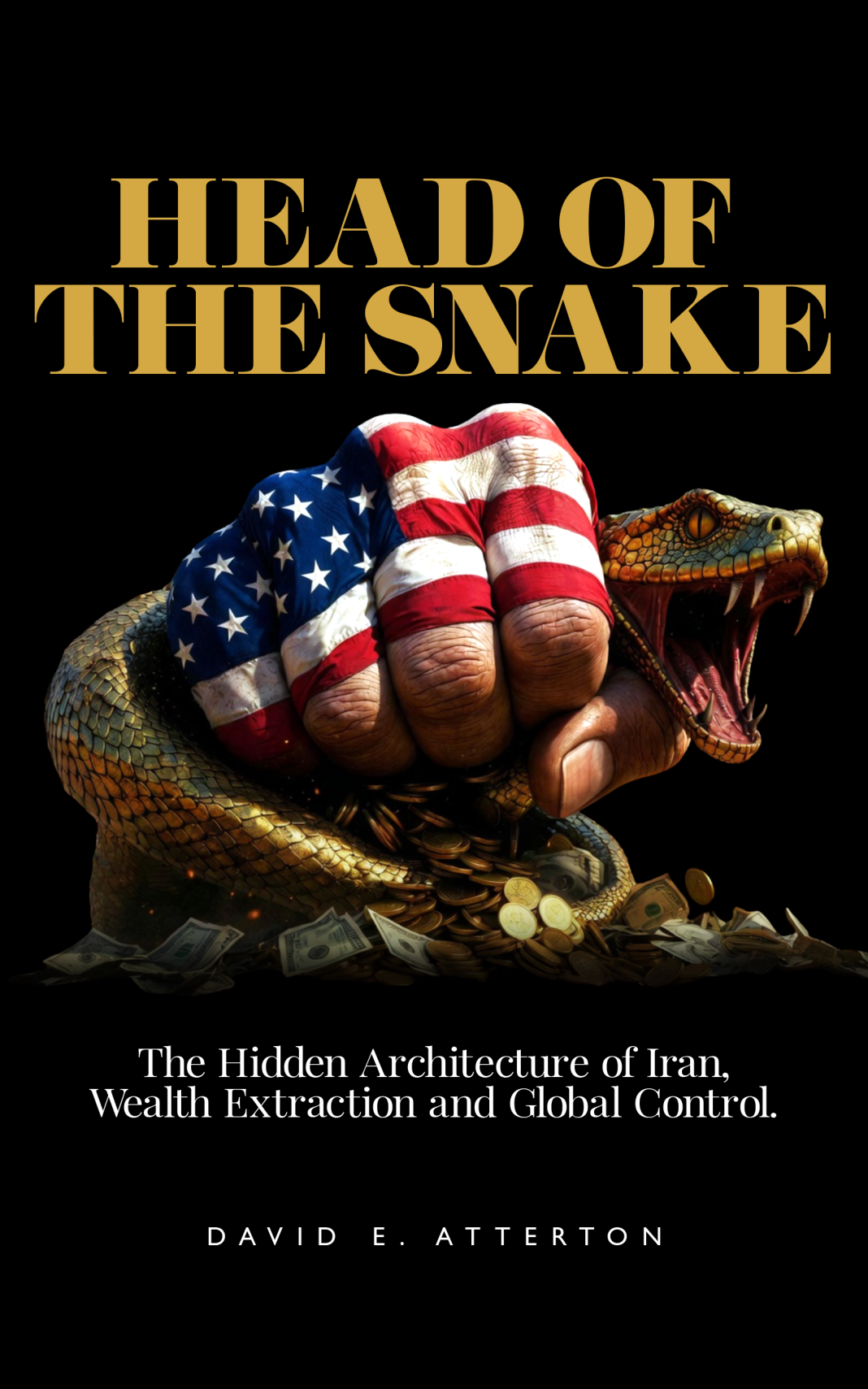
The design behind all of it is mapped in Head of the Snake, and the Iraqi dinar resource library is free.
Follow the daily intel free: Telegram · Facebook · Spotify · Odysee
Seeds of Wisdom RV and Economics Updates Friday Morning 9-18-26
Good Morning Dinar Recaps,
GLOBAL BOND RESET: RISING RATES AND $100 OIL PUT GOVERNMENT DEBT UNDER NEW PRESSURE
RISING ENERGY COSTS AND A NEW WAVE OF CENTRAL-BANK TIGHTENING ARE PUSHING GOVERNMENT BOND MARKETS INTO A MORE DIFFICULT ENVIRONMENT, RAISING QUESTIONS ABOUT DEBT COSTS, INFLATION AND THE FUTURE STRUCTURE OF GLOBAL FINANCE.
Good Morning Dinar Recaps,
GLOBAL BOND RESET: RISING RATES AND $100 OIL PUT GOVERNMENT DEBT UNDER NEW PRESSURE
RISING ENERGY COSTS AND A NEW WAVE OF CENTRAL-BANK TIGHTENING ARE PUSHING GOVERNMENT BOND MARKETS INTO A MORE DIFFICULT ENVIRONMENT, RAISING QUESTIONS ABOUT DEBT COSTS, INFLATION AND THE FUTURE STRUCTURE OF GLOBAL FINANCE.
OVERVIEW
GLOBAL INTEREST RATES ARE MOVING HIGHER AGAIN: Major central banks are responding to persistent inflation pressures, with the Bank of Japan raising its policy rate to 1.25% and the Federal Reserve having raised rates earlier this week.
OIL ABOVE $100 IS COMPLICATING THE INFLATION PICTURE: The ongoing Middle East conflict has kept oil prices elevated, increasing the risk that energy costs will keep inflation higher and force central banks to maintain tighter monetary policy for longer.
GOVERNMENT BOND MARKETS ARE FEELING THE PRESSURE: The U.S. 10-year Treasury yield briefly moved above 5% this week, while bond yields in Europe and Britain also reached multi-year highs. Higher yields mean higher borrowing costs for governments already carrying substantial debt loads.
KEY DEVELOPMENTS
1. Central banks are moving back toward tighter monetary policy
The global interest-rate environment has changed significantly this week.
The Bank of Japan raised its policy rate to 1.25%, the highest level in 31 years. The Federal Reserve also raised rates this week, while the European Central Bank has maintained a firm stance toward inflation.
The result is a broader shift toward tighter monetary conditions at a time when governments around the world are already dealing with elevated debt levels.
This matters because government bond yields form an important part of the financial system's pricing structure. When benchmark yields rise, the cost of borrowing can increase across government, corporate and consumer markets.
2. The $100 oil threshold is adding another layer of pressure
Oil prices remaining above $100 per barrel are creating a difficult policy problem.
Higher energy prices can push inflation higher even when central banks are trying to slow demand. That creates the possibility of a prolonged period in which policymakers have less room to reduce interest rates.
Reuters reported that the Middle East conflict, now approaching seven months, has continued to disrupt the energy outlook and keep inflation concerns elevated.
The important connection is:
ENERGY COSTS → INFLATION → INTEREST RATES → BOND YIELDS → GOVERNMENT BORROWING COSTS
That chain can affect the financial system well beyond the oil market itself.
3. U.S. Treasury yields have crossed an important threshold
The U.S. 10-year Treasury yield briefly moved above 5% during this week's bond selloff before easing back to approximately 4.93%.
The move is significant because the 10-year Treasury is one of the world's most important benchmark interest rates. Changes in its yield influence pricing throughout global financial markets.
Higher Treasury yields can make borrowing more expensive, alter investment flows and increase the cost of servicing newly issued government debt.
This does not mean that a financial crisis or monetary-system collapse is occurring. It does mean that markets are having to adjust to a higher-cost environment after years in which exceptionally low rates and large-scale central-bank asset purchases played a major role.
4. Britain is changing how it manages its massive government-bond portfolio
The United Kingdom provides another important example of how the architecture of central-bank balance sheets is changing.
The Bank of England has set out a multi-year plan to reduce its holdings of government bonds used for monetary-policy purposes to zero through annual sales of £20 billion alongside maturing bonds.
However, the Bank is taking a more selective approach to its remaining portfolio.
Approximately £120 billion of the longest-dated gilts will remain in the Bank's Asset Purchase Facility and be held to maturity to indirectly back current and future banknote issuance. Another £146 billion of gilts maturing between 2035 and 2049 is being considered for a potential sales arrangement involving the U.K. Treasury and Debt Management Office.
The Bank says its overall portfolio stood at approximately £488 billion as of September 16.
This is important because quantitative tightening is not simply about selling bonds. It is part of a broader transition in how central banks manage their balance sheets, government debt markets and monetary-policy tools.
5. The global financial system is entering a different bond-market environment
For years, investors became accustomed to very low interest rates, extensive quantitative easing and major central-bank purchases of government bonds.
That environment is changing.
Central banks are now confronting a combination of:
Higher government debt levels
Higher energy prices
Persistent inflation risks
Higher interest rates
Larger government financing requirements
Greater sensitivity in bond markets
The result is a financial system in which the cost and availability of government financing matter more than they did during the ultra-low-rate era.
The Bank of England's decision illustrates that central banks are not simply returning to the old system. They are actively redesigning how their balance sheets interact with government bond markets and monetary policy.
***
WHY IT MATTERS
Government debt is one of the foundational building blocks of the modern financial system.
When yields rise, governments must generally pay more to finance newly issued debt. At the same time, higher yields can change the relative attractiveness of bonds, equities, currencies and other assets.
That creates a feedback mechanism that can reach across borders.
The combination of higher rates + elevated energy costs + large government debt burdens therefore deserves attention even if markets remain orderly.
The bigger story is not simply that bond yields are rising. It is that governments and central banks are being forced to operate within a financial environment very different from the one created by years of ultra-low interest rates and quantitative easing.
The foundation of global finance is being repriced.
WHY IT MATTERS TO FOREIGN CURRENCY HOLDERS
Readers hold foreign currency with the hopes that it will increase in value when the Global Reset occurs.
But developments like these are important because they show how monetary systems can change through interest rates, debt markets, reserve assets, currencies, energy markets and central-bank policy rather than through a single overnight announcement.
A higher-rate environment can change currency flows because investors continually compare yields and risks between countries.
At the same time, rising government borrowing costs can place greater pressure on policymakers to rethink debt management, monetary policy and the composition of financial reserves.
That is why the evidence matters.
Hope — not hype.
There is no confirmed currency revaluation announcement or guaranteed reset date contained in these developments.
IMPLICATIONS FOR THE GLOBAL RESET
Pillar 1 — Debt
Rising bond yields increase the importance of government debt sustainability.
The higher the cost of refinancing existing debt and issuing new debt, the more significant interest expenses become within national budgets.
The current environment provides another example of why the global debt structure is one of the most important foundations to watch.
Pillar 2 — Assets and Reserve Currencies
Government bonds remain major reserve assets held by financial institutions and central banks around the world.
Changes in yields, liquidity and the treatment of government debt can therefore influence how investors allocate capital among currencies and sovereign assets.
A changing bond market can contribute to changes in the international monetary system without requiring the dollar or any other major currency to suddenly disappear.
Pillar 3 — Energy
Oil remains one of the most important links between geopolitics and global finance.
If energy prices remain elevated, inflation can remain higher, central banks can maintain tighter policies and bond markets can remain under pressure.
Energy therefore becomes part of the financial-system story rather than simply a commodity-market story.
RUMOR SAFETY REMINDER
This development is not an announcement of a global currency revaluation, an RV date, a dollar collapse or an overnight Global Reset.
The evidence shows something more fundamental:
Central banks are adjusting to a world of higher rates, elevated energy prices and enormous government debt burdens.
Those changes can gradually reshape the financial system.
Follow the infrastructure. Follow the evidence. Don't follow the hype.
THE BOTTOM LINE
The global bond market is becoming an increasingly important pressure point.
With oil still around or above the $100 level, central banks tightening or maintaining restrictive policies, and major government bond yields reaching multi-year highs, the cost of money is becoming a much larger part of the global financial equation.
The Bank of England's restructuring of its government-bond portfolio adds another piece to the picture: central banks are not simply changing interest rates. They are also changing how their balance sheets interact with government debt and the broader financial system.
This is what makes the current period important for those following the evolution of the global financial system.
The foundation is changing before any possible revaluation.
Seeds of Wisdom Team
Newshounds News™ Exclusive
SOURCES
Reuters — "Stocks and bonds dip as central banks jack up rates to tame inflation"
Bank of England — "Asset Purchase Facility: Gilt Sales – Market Notice 17 September 2026"
~~~~~~~~~~
🌱 A Message to Our Currency Holders🌱
If you’ve been holding foreign currency for many years, you were not foolish.
You were not wrong to believe the global financial system would change.
What failed was not your patience — it was the information you were given.
For years, dates, rumors, and personalities replaced facts, structure, and proof. “This week” predictions created cycles of hope and disappointment that were never based on how currencies actually change.
That is not your failure.
Our mission here is different: • No dates • No rates • No hype • No gurus
Instead, we focus on:
• Verifiable developments • Institutional evidence
• Global financial structure • Where countries actually sit in the process
Currency value changes only come after sovereignty, trade, banking, settlement systems, and fiscal coordination are in place. History and institutions confirm this sequence.
You will see silence. You will see denials. That is not delay — that is discipline.
Protect your identity. Organize your documents. Verify everything.
Never hand your discernment to anyone who cannot show proof.
You deserve truth — not timelines.
Seeds of Wisdom Team
Newshounds News
~~~~~~~~~~
Seeds of Wisdom Team RV Currency Facts Youtube and Rumble
Newshound's News Telegram Room Link
RV Facts with Proof Links Link
RV Updates Proof links - Facts Link
Start Here room with Most Asked Questions Link
Follow the Gold/Silver Rate COMEX
Follow Fast Facts
Seeds of Wisdom Team™ Website
Thank you Dinar Recaps
Debt management: How To Avoid Common, But Costly, Money Mistakes
Debt management: How To Avoid Common, But Costly, Money Mistakes
May 27, 2026 Malena de la Fuente and Aaron Goodman
Americans are carrying more debt than ever before. Total household balances now approach $19 trillion, reflecting a steady increase over the past decade.1 In 2025, millennials in their mid-30s held roughly twice as much nonhousing debt—including student loans, auto loans, and credit card debt—as baby boomers did at a similar age.2
As debt burdens have grown, so too has the importance of making the right repayment decisions. Managing debt involves meaningful trade-offs.
Debt management: How To Avoid Common, But Costly, Money Mistakes
May 27, 2026 Malena de la Fuente and Aaron Goodman
Americans are carrying more debt than ever before. Total household balances now approach $19 trillion, reflecting a steady increase over the past decade.1 In 2025, millennials in their mid-30s held roughly twice as much nonhousing debt—including student loans, auto loans, and credit card debt—as baby boomers did at a similar age.2
As debt burdens have grown, so too has the importance of making the right repayment decisions. Managing debt involves meaningful trade-offs. Even decisions that feel financially responsible—such as paying down a mortgage faster or holding excess cash beyond emergency savings—can sometimes lead to higher overall costs or lower long-term wealth.3 An important but often overlooked insight is that debt repayment is just another form of savings.
Vanguard researchers explored the problems that can arise when investors fail to coordinate borrowing and savings decisions. Their research paper, Balancing Saving and Debt Paydown: Money Mistakes to Avoid (de la Fuente et al., 2026), presents the results. Here are two common mistakes and some practical ways investors can address them:
Mistake #1: Paying down high-interest debt too slowly
The researchers found that 35% of all Vanguard investors carry revolving credit card debt and the average balance carried is about $4,100. With the average credit card interest rate of 21%, that balance costs more than $800 a year in interest.4
Yet 57% of investors with credit card debt could pay it off by redirecting dollars that are earning lower returns. Specifically, 67% of investors with brokerage accounts have cash in their accounts that could pay off some or all of their credit card debt, while 60% of 401(k) investors contribute above their company match limit in their retirement plan.
Additionally, 30% of all investors with credit card debt make extra payments on other lower-interest debts, like mortgages or auto loans.
“The typical investor could pay off credit card debt in less than 18 months if they reallocated this extra cash toward credit card payments,” said Malena de la Fuente, Vanguard investment strategy analyst and lead author of the paper.
Many investors carry revolving credit card debt despite having cash available
Mistake #2: Paying down low-interest debt too quickly
While some investors pay down credit card debt too slowly, others speed up paying down lower-interest debt by prepaying loans.
Within Vanguard-administered 401(k) plans, roughly 50% of employees with mortgage, auto, or student debt make extra payments (payments made in addition to the minimum monthly payment) at least once per year.
At the same time, 30% of these prepayers are leaving employer-match dollars on the table—costing them almost $1,100 a year in missed 401(k) contributions.
Secured debt like auto loans and mortgages usually have single-digit interest rates, while employers often match 401(k) contributions at 50 or 100 cents on the dollar.
This means that—when considered as an investment—matched retirement contributions have a much higher rate of return than extra loan payments.
“Riskless returns of 50%–100% are hard to come by in financial markets,” said Aaron Goodman, Vanguard senior investment strategist and one of the paper’s coauthors. “That makes earning the full 401(k) match a priority before prepaying low-interest debt.”
Prepaying debt can come at the cost of the full 401(k) match
TO READ MORE: