
Thank you to all the subscribers to our Early Access program…we thank you for your continued support.
We are excited to offer this new service to keep you informed and up-to-date on the latest Dinar and currency news.
Iraq Economic News and Points To Ponder Late Saturday Evening 7-25-26
Economic Expert: Iraqi Government Studying Currency Change Proposal To Boost Liquidity And Strengthen The Dinar
An economic expert has told Channel8 that the Iraqi government is studying a proposal to change the country's currency as part of broader economic reforms aimed at recovering hidden cash, increasing state liquidity, and strengthening the Iraqi dinar against the U.S. dollar.
Economic Expert: Iraqi Government Studying Currency Change Proposal To Boost Liquidity And Strengthen The Dinar
An economic expert has told Channel8 that the Iraqi government is studying a proposal to change the country's currency as part of broader economic reforms aimed at recovering hidden cash, increasing state liquidity, and strengthening the Iraqi dinar against the U.S. dollar.
Proposal Emerged After U.S. Visit
Speaking to Channel8, economic expert Haider al-Sheikh said Prime Minister Ali Faleh al-Zaidi's recent visit to the United States produced several economic outcomes, including the lifting of U.S. sanctions on seven Iraqi banks, allowing them to resume international transactions and rejoin the correspondent banking system.
Al-Sheikh said discussions following the visit also led to a proposal to overhaul Iraq's currency as part of efforts to improve financial liquidity.
According to al-Sheikh, the proposal currently being studied includes two possible approaches.
The first would introduce a redesigned Iraqi currency with new banknote designs across existing denominations.
The second would remove one zero from the currency as part of a redenomination process.
He stressed that the proposal does not involve printing larger denominations, such as IQD 50,000 or IQD 100,000 banknotes, but instead focuses on replacing the existing currency.
Recovering Hidden Cash
Al-Sheikh said the primary objective is to bring large amounts of cash held outside the banking system back into circulation.
He argued that much of Iraq's liquidity is held by individuals rather than the state, while government cash reserves remain limited.
Under the proposal, authorities would establish a limited period during which citizens could exchange existing banknotes for the new currency through government banks.
He said unusually large exchanges would be subject to scrutiny, allowing authorities to investigate the source of the funds and identify assets linked to corruption.
Al-Sheikh linked the proposal to al-Zaidi's anti-corruption "Dawn Campaign," which has led to the arrest of more than 40 suspects and the discovery of large quantities of cash allegedly hidden in private properties.
Expected Economic Impact
Al-Sheikh said changing the currency could help increase government liquidity, stabilize the exchange market, and strengthen the Iraqi dinar against the U.S. dollar.
He added that the government hopes the measure would improve public confidence in the national currency and reduce the volume of cash circulating outside the formal banking system.
Al-Sheikh noted that a separate proposal to adjust Iraq's official exchange rate had been discussed under former Prime Minister Mohammed Shia al-Sudani, including the possibility of setting the rate at IQD 140,000 per $100.
He said that proposal is no longer being pursued, and the current government's focus has shifted toward changing the currency itself rather than altering the exchange rate.
Additional Financing and Legislative Process
Al-Sheikh also claimed that Iraq secured between $2 billion and $3 billion in loans and financial grants from the United States during the prime minister's visit. He added that Qatar, the United Arab Emirates, and other countries are also expected to provide additional financing.
According to al-Sheikh, the currency proposal remains under study and will be reviewed by the Ministerial Council for the Economy, the Ministry of Finance, the Central Bank of Iraq, and a joint consultative committee before being submitted to the Council of Ministers and later to Parliament if approved.
He estimated that, if adopted, implementation could take approximately five to six months.
Al-Sheikh said Iraq's currency remains among the weakest-performing in the Middle East and argued that a well-planned currency reform, supported by research from the Central Bank and the Ministry of Finance, could contribute to increasing the value of the Iraqi dinar against the U.S. dollar.
He emphasized that the proposal remains under government review and has not yet been formally approved. https://channel8.com/english/news/62022
Prime Minister Chairs the 12th Regular Session of the Council of Ministers
Iraqi News Agency Saturday, 25 July 2026 Baghdad -INA- Prime Minister Ali Faleh Al-Zaidi chaired, this evening, Saturday, the 12th regular session of the Council of Ministers, during which the overall situation in the country was discussed, the items on the agenda were reviewed, and the necessary directives and decisions were issued.
The Media Office of the Prime Minister said in a press release , received by The Iraqi News Agency-INA “On the occasion of the Arbaeen commemoration of Imam Hussein (peace be upon him), and to ensure the smooth return of pilgrims following the pilgrimage, the Council of Ministers declared Monday and Tuesday, August 3–4, 2026, public holidays”.
As part of efforts to strengthen Iraq’s external relations, the Council of Ministers voted to activate the Iraq–Türkiye Framework Agreement on water resources, with the financing mechanism for projects under the agreement to enter into force on September 1, 2026.
To diversify Iraq’s crude oil export routes and outlets, the Council of Ministers approved authorizing the Chief Executive Officer of Basra Oil Company to sign a memorandum of understanding between the Ministry of Oil and the Syrian Ministry of Energy concerning the establishment of a pipeline project linking Iraqi oil production to global export markets through the Mediterranean Sea.
The Council also authorized the Minister of Oil to sign a memorandum of understanding with the consortium of companies (ConocoPhillips, TI Capital, and NovaTerr) to commence discussions on assessing the exploration and development potential of the Akkas Field in western Iraq and the surrounding areas.
To develop oil infrastructure and increase production capacity, the Council of Ministers voted to authorize the Ministry of Oil to announce the Integrated Qayyarah Project for competitive bidding in accordance with the Government Contracts Implementation Instructions No. (1 of 2025).
The Council also approved the recommendation concerning the Integrated Field Management Services (IFMS) and Engineering, Procurement, and Construction Management (EPCM) services contract for the West Qurna-2 Field of Basra Oil Company.
In the same sector, the Council approved the recommendation to exempt the tender for drilling the Qara Tapa-A exploratory well from the provisions of Council of Ministers Resolutions No. (1128 of 2025) and No. (325 of 2026), which regulate government contracting.
In the electricity sector, the Council approved the recommendation to cover the costs of implementing field works related to the 3.6-kilometer underground transmission line, with Basra Oil Company providing the materials and cables required for the project.
The Council also approved the recommendation to extend the contract addendum for the floating power stations supplying electricity from June 24, 2026, through September 30, 2026, providing a generation capacity of 350 megawatts in return for a daily service fee.
As part of the government’s support for the education sector, the Council of Ministers voted to address the issue of allowances for gifted students studying abroad under the Scholarships, Fellowships, and Financial Assistance Regulation No. (3 of 2018).
It also approved adding a provision to Council of Ministers Resolution No. (24803 of 2024) specifying the amount of allowances during the scholarship period, while coordinating with the Ministry of Higher Education and Scientific Research to submit a proposal for determining tuition fees, taking into account the country of study.
CBI Revamps Organizational Structure
2026-07-25 / Shafaq News- Baghdad Iraq's Central Bank (CBI) approved a broad restructuring of its organizational framework, upgrading its Directorate of Non-Bank Financial Institutions Supervision to a full general directorate as part of efforts to strengthen oversight and improve institutional performance.
According to an official document, the restructuring includes transferring the Operations and Settlements Department from the Information Technology and Payments Directorate to the Accounting Directorate, while policy, regulatory, digital solutions and financial services units will be moved to the newly established Directorate of Non-Bank Financial Institutions Supervision.
The bank also renamed the Information Technology and Payments Directorate as the Information Technology Directorate and abolished its Financial Inclusion and Information Security departments, redistributing their responsibilities among existing directorates and the Risk Management Department.
In addition, CBI dissolved its office responsible for coordinating branch operations, placing its branches in Basra, Mosul, and Erbil under the direct supervision of the deputy governor. It also introduced changes to reporting lines within its quality management and institutional development departments.
The restructuring is scheduled to take effect by July 30, with the Human Resources Directorate tasked with reallocating staff in line with the new organizational structure. https://www.shafaq.com/en/Economy/CBI-revamps-organizational-structure
Seeds of Wisdom RV and Economics Updates Sunday Morning 7-26-26
Good Morning Dinar Recaps,
Global Financial Institutions Deepen Coordination as Tokenization Reshapes the Future of Money
International policymakers are accelerating efforts to modernize the financial system, with growing emphasis on tokenization, cross-border payments, and preserving trust in money as digital finance expands.
Good Morning Dinar Recaps,
Global Financial Institutions Deepen Coordination as Tokenization Reshapes the Future of Money
International policymakers are accelerating efforts to modernize the financial system, with growing emphasis on tokenization, cross-border payments, and preserving trust in money as digital finance expands.
Overview
Global financial institutions are intensifying coordination on the future of digital finance, recognizing tokenization as a structural change rather than a technological trend.
The International Monetary Fund (IMF) and Bank for International Settlements (BIS) continue urging governments and regulators to establish common standards for tokenized assets and stablecoins.
The debate has shifted from whether finance will become tokenized to how it will be governed, with implications for banking, payments, and cross-border capital flows.
Key Developments
1. Tokenization Moves Into the Mainstream of Global Finance
International financial leaders increasingly describe tokenization as a transformation of financial infrastructure rather than simply another digital asset innovation. The IMF notes that placing financial assets and liabilities on shared digital ledgers could fundamentally change how payments, settlements, and financial markets operate worldwide.
2. BIS Calls for Coordinated Global Standards
The BIS continues emphasizing that trust in money must remain the foundation of any future financial system. While acknowledging the efficiency gains offered by tokenization and programmable finance, the institution warns that stablecoins require stronger regulatory frameworks and international coordination to support financial stability.
3. Cross-Border Payments Continue to Evolve
International organizations are expanding work on next-generation payment infrastructure designed to make cross-border transactions faster, cheaper, and more secure. These initiatives seek to improve existing financial systems while reducing settlement delays and increasing interoperability between national payment networks.
Why It Matters
Global finance is entering a period of structural modernization. Rather than replacing today's banking system overnight, policymakers are focused on upgrading the underlying infrastructure that supports payments, settlements, and international capital movement.
Why It Matters to Foreign Currency Holders
Foreign currency holders continue monitoring these developments because modernized payment systems, tokenized financial assets, and evolving regulatory standards could gradually influence international liquidity, reserve management, and cross-border transactions. While these initiatives do not signal immediate changes to currency values, they represent foundational steps toward a more digital global financial architecture.
Implications for the Global Reset
Pillar 2: Trade
More efficient cross-border payment systems could reduce transaction costs, improve settlement speed, and strengthen international commerce.
Pillar 4: Technology
Digital ledgers, tokenization, and programmable settlement are becoming increasingly important components of the next generation of financial infrastructure.
Future Outlook
Attention will remain focused on how governments, central banks, and international organizations coordinate digital financial standards over the coming months. As tokenization initiatives expand and regulatory frameworks mature, policymakers will be balancing innovation with financial stability while seeking greater interoperability across global markets. The pace of these developments may significantly influence how the international financial system evolves during the remainder of the decade.
This is not simply about new financial technology—it reflects the broader transformation of the global financial system as digital infrastructure, cross-border payments, and international coordination increasingly shape the future of the world economy.
Seeds of Wisdom Team
Newshounds News™ Exclusive
Sources
~~~~~~~~~~
🌱 A Message to Our Currency Holders🌱
If you’ve been holding foreign currency for many years, you were not foolish.
You were not wrong to believe the global financial system would change.
What failed was not your patience — it was the information you were given.
For years, dates, rumors, and personalities replaced facts, structure, and proof. “This week” predictions created cycles of hope and disappointment that were never based on how currencies actually change.
That is not your failure.
Our mission here is different:
• No dates • No rates • No hype • No gurus
Instead, we focus on:
• Verifiable developments • Institutional evidence
• Global financial structure • Where countries actually sit in the process
Currency value changes only come after sovereignty, trade, banking, settlement systems, and fiscal coordination are in place. History and institutions confirm this sequence.
You will see silence. You will see denials. That is not delay — that is discipline.
Protect your identity. Organize your documents. Verify everything.
Never hand your discernment to anyone who cannot show proof.
You deserve truth — not timelines.
Seeds of Wisdom Team
Newshounds News
~~~~~~~~~~
Seeds of Wisdom Team RV Currency Facts Youtube and Rumble
Newshound's News Telegram Room Link
RV Facts with Proof Links Link
RV Updates Proof links - Facts Link
Start Here room with Most Asked Questions Link
Follow the Gold/Silver Rate COMEX
Follow Fast Facts
Seeds of Wisdom Team™ Website
Thank you Dinar Recaps
FRANK26…7-25-26….THREE ZERO ED (ucation) STARTS
KTFA
Saturday Night Video
FRANK26…7-25-26….THREE ZERO ED (ucation) STARTS
This video is in Frank’s and his team’s opinion only
Frank’s team is Walkingstick, Eddie and Omar in Iraq and guests
Playback Number: 605-313-5163 PIN: 156996#
KTFA
Saturday Night Video
FRANK26…7-25-26….THREE ZERO ED (ucation) STARTS
This video is in Frank’s and his team’s opinion only
Frank’s team is Walkingstick, Eddie and Omar in Iraq and guests
Playback Number: 605-313-5163 PIN: 156996#
Jon Dowling: Updates on Iraq and Iran, Vietnam New PM Coming to DC, Mindset on the Global Reset
Jon Dowling: Updates on Iraq and Iran, Vietnam New PM Coming to DC, Mindset on the Global Reset
24th July 2026
The global financial system is undergoing an unprecedented evolution, driven by sovereign monetary restructuring, legislative updates, and a broader return toward asset-backed value.
In his latest weekly economic report, financial commentator Jon Dowling outlines a comprehensive picture of these shifts. From high-level meetings between regional leaders and international figures to crucial legislative developments in the United States, the current landscape points toward a coordinated effort to modernize banking systems, streamline international trade, and eliminate institutional vulnerabilities.
Jon Dowling: Updates on Iraq and Iran, Vietnam New PM Coming to DC, Mindset on the Global Reset
24th July 2026
The global financial system is undergoing an unprecedented evolution, driven by sovereign monetary restructuring, legislative updates, and a broader return toward asset-backed value.
In his latest weekly economic report, financial commentator Jon Dowling outlines a comprehensive picture of these shifts. From high-level meetings between regional leaders and international figures to crucial legislative developments in the United States, the current landscape points toward a coordinated effort to modernize banking systems, streamline international trade, and eliminate institutional vulnerabilities.
At the epicenter of this financial shift is Iraq, whose economic stabilization and monetary efforts serve as a major indicator of regional and global integration. Combined with emerging digital asset frameworks and clarified movements in the physical gold market, these developments signal a pivotal moment for international commerce and individual financial readiness.
For years, narratives surrounding Iraq’s currency focused on simplistic reset scenarios or redenomination proposals, often referred to as a “lop.” However, current actions by the Central Bank of Iraq (CBI) demonstrate a far more sophisticated strategy.
Recent structured engagements between the central bank, commercial banking institutions, and currency exchange companies highlight a deliberate campaign to overhaul the nation’s financial architecture. By enforcing strict compliance mechanisms and adopting international banking standards, Iraq is laying the groundwork to re-engage with global monetary markets on solid economic footing.
A primary driver behind these rigorous banking reforms is the need to curb illicit money flows and dismantle corruption networks, particularly those linked to regional proxy influences.
By creating a transparent, traceable, and secure banking environment, Baghdad aims to protect its national assets while attracting foreign direct investment. This strategic pivot moves Iraq away from historical economic isolation and positions the Iraqi dinar as a viable, credible currency capable of supporting expanded domestic and international trade activities.
Alongside domestic financial overhauls, Iraq is redefining its strategic geopolitical relationships. Recent diplomatic exchanges resulted in four bilateral agreements between Iraq and Iran, specifically targeting cross-border infrastructure, job creation, and joint anti-corruption measures.
While Iran has historically exerted significant political and economic influence over its neighbor, these new agreements reflect Baghdad’s growing commitment to national sovereignty and economic diversification.
Rather than remaining a passive participant in regional dynamics, Iraq is actively balancing its relationships with both Eastern and Western powers. By formalizing agreements that emphasize institutional integrity and mutual economic growth, Iraq mitigates regional tensions while safeguarding its domestic reform agenda. This equilibrium is essential for creating a stable environment wherein long-term economic policies and infrastructure projects can successfully take root.
As part of its modernization campaign, Iraq is preparing for a dual-track monetary model that combines physical currency notes with a Central Bank Digital Currency (CBDC)—the digital dinar.
This modern approach addresses both domestic transaction efficiency and international trade capabilities. A key highlight of this strategy is the potential utilization of enterprise blockchain protocols, such as XRP, to serve as an underlying framework for cross-border settlements.
Integrating blockchain networks capable of executing instant, low-cost, and compliant cross-border transactions offers Iraq a gateway to frictionless global commerce. By moving away from legacy payment networks, which are often slow and costly, the adoption of compliant digital assets ensures that Iraq’s international payments meet global regulatory standards. This modern financial architecture significantly enhances liquidity, minimizes counterparty risk, and reinforces the stability of the digital dinar.
Parallel to monetary developments in the Middle East, the United States is advancing key legislative initiatives that could reshape the global digital and commodity asset landscape. A focal point of this policy drive is the pending Clarity Act (HR 3633). Designed to establish clear regulatory boundaries for cryptocurrencies and digital commodities, this bill aims to remove legal ambiguities that have historically restricted institutional capital from entering the digital asset ecosystem.
There is growing bipartisan momentum behind the Clarity Act as lawmakers look to position the US as a leader in financial technology before upcoming election cycles. By providing a clear statutory framework, the bill promises to unlock suppressed liquidity and accelerate the integration of blockchain technology into mainstream finance. For market participants, this regulatory transparency is a vital prerequisite for a broader transition toward an open, decentralized, and efficient global market structure.
Understanding current developments in precious metals requires separating market noise from factual economic policy. Recent rumors surrounding China’s gold market created confusion, suggesting that the nation had halted gold trading entirely.
In reality, Chinese regulators implemented targeted restrictions specifically on leveraged retail paper gold trading. This regulatory crackdown was designed to mitigate excessive market volatility and curb speculative risks among retail investors, while physical gold transactions and institutional liquidity remained fully operational.
At the same time, central banks around the world continue to strengthen their physical reserve balances.
In the United States, Treasury Secretary Scott Bessent highlighted that the US holds over 8,000 metric tons of physical gold, valued at well over $1 trillion. This ongoing emphasis on tangible asset backing aligns with symbolic initiatives like President Trump’s Liberty Eagle gold coin, which underscores a growing consensus: future economic stability relies on solid, real-asset foundations rather than unrestrained fiat expansion.
While tracking policy changes, banking legislation, and commodity trends is essential, internal readiness is equally critical. Major macroeconomic transitions require mental resilience, patience, and strategic foresight. Historically, systemic financial shifts unfold through deliberate regulatory steps rather than chaotic overnight movements, demanding a disciplined and proactive approach from individuals and investors alike.
Many view periods of significant change—such as the month of August, often regarded symbolically as a period of new beginnings—as an opportunity to reset both personal finances and strategic goals.
Maintaining an informed, calm, and forward-looking mindset ensures that individuals are well-equipped to navigate structural changes in the global economy, grounded in research rather than hype.
The convergence of Iraq’s institutional banking reforms, modern blockchain settlement protocols, clear US legislative frameworks, and a renewed emphasis on physical gold reserves points toward a fundamental restructuring of the global financial architecture.
As countries pivot toward asset-backed value and technological interoperability, staying informed with factual, balanced analysis is essential.
For a deeper analysis into these macroeconomic developments, listen to the complete weekly report provided by Jon Dowling.
Japan's Crisis Could Trigger the Global Financial Reset | Alasdair Macleod
Japan's Crisis Could Trigger the Global Financial Reset | Alasdair Macleod
Liberty and Finance: 7-24-2026
Alasdair Macleod joins Liberty and Finance to explain why Japan's mounting debt crisis, rising global bond yields, and geopolitical turmoil could mark the beginning of the end for the fiat currency system.
He discusses how the unraveling yen carry trade, soaring government borrowing costs, and weakening demand for U.S. Treasuries could trigger a historic financial reset.
Japan's Crisis Could Trigger the Global Financial Reset | Alasdair Macleod
Liberty and Finance: 7-24-2026
Alasdair Macleod joins Liberty and Finance to explain why Japan's mounting debt crisis, rising global bond yields, and geopolitical turmoil could mark the beginning of the end for the fiat currency system.
He discusses how the unraveling yen carry trade, soaring government borrowing costs, and weakening demand for U.S. Treasuries could trigger a historic financial reset.
Macleod also warns that energy shortages, inflation, and government intervention may accelerate the crisis while pushing investors toward tangible assets.
Throughout the interview, he explains why central banks continue accumulating gold and why he believes physical precious metals offer protection as credit markets become increasingly unstable.
Watch to hear his outlook on gold, silver, the dollar, and the global economy during what he calls the next phase of the debt endgame.
INTERVIEW TIMELINE:
0:00 Intro
2:44 US Debt Trap
21:00 Oil shortages
27:30 Gold & silver
Seeds of Wisdom RV and Economics Updates Saturday Afternoon 7-25-26
Good Afternoon Dinar Recaps,
Federal Reserve Enters New Era as Investors Adjust to Less Predictable Monetary Policy
The Federal Reserve's evolving communication strategy is reshaping expectations for interest rates, global capital flows, and financial market stability.
Good Afternoon Dinar Recaps,
Federal Reserve Enters New Era as Investors Adjust to Less Predictable Monetary Policy
The Federal Reserve's evolving communication strategy is reshaping expectations for interest rates, global capital flows, and financial market stability.
Overview
Federal Reserve Chair Kevin Warsh is moving toward less explicit forward guidance, giving policymakers greater flexibility during uncertain economic conditions.
Investors are reassessing interest-rate expectations, creating increased volatility across bonds, equities, currencies, and commodities.
International institutions are watching closely, recognizing that U.S. monetary policy continues to influence financial conditions around the world.
Key Developments
1. The Federal Reserve Signals a Policy Shift
Rather than providing detailed guidance about future rate decisions months in advance, the Federal Reserve appears to be emphasizing a more data-dependent approach. Officials say today's economic environment—including geopolitical risks, elevated public debt, and inflation uncertainty—requires greater flexibility.
2. Markets Must Interpret More, Predict Less
Without clear forward guidance, investors will rely more heavily on incoming economic data. Bond yields, the U.S. dollar, precious metals, and equity markets may experience greater short-term swings as expectations adjust after each major economic report.
3. Global Central Banks Are Watching
The IMF has indicated it plans discussions with central banks regarding changes to forward guidance, recognizing that communication itself has become an important monetary policy tool during periods of elevated uncertainty.
Why It Matters
The Federal Reserve remains the world's most influential central bank. Even modest changes in how it communicates policy can affect borrowing costs, international investment flows, exchange rates, and sovereign debt markets across the globe.
Why It Matters to Foreign Currency Holders
Foreign currency investors continue monitoring U.S. monetary policy because Federal Reserve decisions influence global liquidity, dollar strength, and capital movement. Greater uncertainty surrounding future interest-rate policy may increase volatility across major currencies while encouraging continued diversification by central banks and institutional investors.
Implications for the Global Reset
Pillar 1: Debt
Growing government debt levels continue placing pressure on monetary policymakers, making future interest-rate decisions increasingly significant for global financial stability.
Pillar 4: Technology
As financial markets become increasingly digital, central banks are adapting not only policy tools but also the way they communicate with markets, supporting the evolution toward a more technology-driven financial system.
Future Outlook
Markets will now focus less on Federal Reserve forecasts and more on incoming economic data. Inflation reports, employment figures, Treasury markets, and global geopolitical developments are expected to carry greater influence over interest-rate expectations. If this communication strategy continues, investors may need to adapt to an environment where policy flexibility replaces predictable guidance, potentially increasing market volatility while giving central banks greater room to respond to changing economic conditions.
This is not simply about Federal Reserve policy—it reflects the broader transformation of the global financial system as central banks adapt to rising debt, changing market expectations, and a rapidly evolving financial landscape.
Seeds of Wisdom Team
Newshounds News™ Exclusive
Sources
Reuters — IMF says hopes to engage on central banks' changes to forward guidance
Bank for International Settlements — Global Economic Pressure Points Call for Policy Discipline
~~~~~~~~~~
Seeds of Wisdom Team RV Currency Facts Youtube and Rumble
Newshound's News Telegram Room Link
RV Facts with Proof Links Link
RV Updates Proof links - Facts Link
Start Here room with Most Asked Questions Link
Follow the Gold/Silver Rate COMEX
Follow Fast Facts
Seeds of Wisdom Team™Website
Thank you Dinar Recaps
Iraq Economic News and Points To Ponder Saturday Afternoon 7-25-26
CBI Revamps Organizational Structure
2026-07-25 13:47 Shafaq News- Baghdad Iraq's Central Bank (CBI) approved a broad restructuring of its organizational framework, upgrading its Directorate of Non-Bank Financial Institutions Supervision to a full general directorate as part of efforts to strengthen oversight and improve institutional performance.
According to an official document, the restructuring includes transferring the Operations and Settlements Department from the Information Technology and Payments Directorate to the Accounting Directorate, while policy, regulatory, digital solutions and financial services units will be moved to the newly established Directorate of Non-Bank Financial Institutions Supervision.
CBI Revamps Organizational Structure
2026-07-25 13:47 Shafaq News- Baghdad Iraq's Central Bank (CBI) approved a broad restructuring of its organizational framework, upgrading its Directorate of Non-Bank Financial Institutions Supervision to a full general directorate as part of efforts to strengthen oversight and improve institutional performance.
According to an official document, the restructuring includes transferring the Operations and Settlements Department from the Information Technology and Payments Directorate to the Accounting Directorate, while policy, regulatory, digital solutions and financial services units will be moved to the newly established Directorate of Non-Bank Financial Institutions Supervision.
The bank also renamed the Information Technology and Payments Directorate as the Information Technology Directorate and abolished its Financial Inclusion and Information Security departments, redistributing their responsibilities among existing directorates and the Risk Management Department.
In addition, CBI dissolved its office responsible for coordinating branch operations, placing its branches in Basra, Mosul, and Erbil under the direct supervision of the deputy governor. It also introduced changes to reporting lines within its quality management and institutional development departments.
The restructuring is scheduled to take effect by July 30, with the Human Resources Directorate tasked with reallocating staff in line with the new organizational structure. https://www.shafaq.com/en/Economy/CBI-revamps-organizational-structure
Iraq Non-Oil Revenue Hits Record 16%
2026-07-25 10:11 Shafaq News- Baghdad Iraq’s non-oil revenues reached a record 16% of total government income during May and June, marking the highest contribution from sources outside the oil sector in years, the Echo Iraq Observatory reported on Saturday.
Non-oil revenues had previously accounted for less than 5% of state income before rising to around 10% during the government of former Prime Minister Mustafa al-Kadhimi (2020-2022), a level that remained largely unchanged under former Prime Minister Mohammed Shia al-Sudani (2022-2025).
‘’Revenues transferred by Iraq’s Kurdistan Region accounted for around 5.5% of total non-oil revenues,’’ the Observatory noted, attributing non-oil revenues to several sources, including taxes on goods, production fees, general service charges, taxes on income and wealth, transfer revenues and other state income streams.
Despite the increase in non-oil income, Iraq, OPEC’s second-largest oil producer, remains heavily dependent on crude exports. This reliance has come under growing pressure following disruptions to shipping through the Strait of Hormuz, which carries roughly 20% of global oil supplies. In late March, economic expert Nabil Al-Marsoumi estimated that Iraq had cut production by about 2.9 million barrels per day, the largest reduction among OPEC members.
Read more: No exit but Hormuz: Iraq's economic vulnerability exposed
https://www.shafaq.com/en/Economy/Iraq-non-oil-revenue-hits-record-16
Basrah Crudes Jump 16%+ For The Week
2026-07-25 01:55 Shafaq News- Basrah Iraq’s Basrah crude advanced more than 16% over the past week, outperforming several major global oil grades.
Basrah Heavy rose $1.47, or 2.28%, in the final trading session to settle at $65.82 a barrel, bringing its weekly gain to $10.93, or 16.61%. Basrah Medium also climbed $1.47, or 2.21%, to $68.12 a barrel, recording a weekly gain of $10.93, or 16.05%.
Brent crude futures settled at $96.55 a barrel, down $4.14, or 4.11%, while US West Texas Intermediate crude closed at $89.24 a barrel, down $2.95, or 3.20%. https://www.shafaq.com/en/Economy/Basrah-crudes-jump-16-for-the-week
USD/IQD Climbs In Baghdad, Erbil Trading
2026-07-25 03:47 m Shafaq News- Baghdad/ Erbil The US dollar opened Saturday’s trading higher in Iraq, hovering around 151,000 dinars per 100 dollars.
According to Shafaq News market survey, the dollar traded in Baghdad’s Al-Kifah and Al-Harithiya exchanges at 150,500 dinars per 100 dollars, up from the previous session’s 150,450 dinars.
In the Iraqi capital, exchange shops sold the dollar at 151,000 dinars and bought it at 150,000 dinars, while in Erbil, selling prices stood at 151,000 dinars and buying prices at 150,850 dinars.
https://www.shafaq.com/en/Economy/USD-IQD-climbs-in-Baghdad-Erbil-trading
Gold Prices Retreat In Baghdad And Erbil Markets
2026-07-25 04:45 Shafaq News- Baghdad/ Erbil On Saturday, gold prices hovered around 855,000 IQD per mithqal in Baghdad and Erbil markets, according to a survey by Shafaq News Agency.
Gold prices on Baghdad's Al-Nahr Street recorded a selling price of 856,000 IQD per mithqal (equivalent to five grams) for 21-carat gold, including Gulf, Turkish, and European varieties, with a buying price of 852,000 IQD. The same gold had sold for 861,000 IQD on Thursday.
The selling price for 21-carat Iraqi gold stood at 826,000 IQD, while the buying price reached 822,000 IQD.
In jewelry stores, the selling price per mithqal of 21-carat Gulf gold ranged between 855,000 and 865,000 IQD, while Iraqi gold sold for between 825,000 and 835,000 IQD.
In Erbil, 22-carat gold was sold at 900,000 IQD per mithqal, 21-carat gold at 860,000 IQD, and 18-carat gold at 736,000 IQD.
https://www.shafaq.com/en/Economy/Gold-prices-retreat-in-Baghdad-and-Erbil-markets-7
Iraq And Iran Set Up Joint Operations Room To Manage Arbaeen Traffic
Money and business Economy News – Baghdad The governor of Khuzestan, Mohammad Reza Mwalizadeh, southwest of Iran, announced the establishment of a joint operations room between Iran and Iraq, with the aim of conducting the necessary coordination to facilitate the movement of visitors and provide services to them.
He said that the goal of all executive bodies is to provide an easy, safe and low-cost journey for the visitors of Arbaeen, pointing out that all the possibilities of the province are used to provide the necessary services.
In reference to the official launch of the processions of visitors through the crossings of the province, the governor of Khuzestan said: "The ceremony was held to start providing services to visitors at the crossing of Shalamjah, and the processions of visitors and service agencies began their work at an attractive crossing," noting that about 200 thousand visitors crossed these two border crossings.
“The processions, executives, relief teams and services are currently deployed at full capacity on the border, and the traffic is running smoothly and regularly.”
The Governor of Khuzestan expressed the hope that the continuous coordination and participation of the executive bodies will contribute to the provision of the necessary services to the visitors of the Arbaeen, and that this spiritual journey will be held with more security, order and comfort compared to previous years https://www.economy-news.net/content.php?id=71772
Powerball Winner Wished He 'Tore Up Ticket' After $315m Jackpot Destroyed Him
Powerball Winner Wished He 'Tore Up Ticket' After $315m Jackpot Destroyed Him
Story by Liam McInerney
The world's largest lottery is launching in the UK this week - offering a fortunate British player the chance to become more than £300million ($400m) wealthier. Powerball, an American lottery game, awards massive jackpots that are distributed over a 30-year period.
Today (July 23) marks the inaugural UK draw with an estimated top prize exceeding £300m - the biggest jackpot ever made available in Britain. Allwyn, which operates the National Lottery, has opened the game to UK participants, who will be entering alongside American players.
Powerball Winner Wished He 'Tore Up Ticket' After $315m Jackpot Destroyed Him
Story by Liam McInerney
The world's largest lottery is launching in the UK this week - offering a fortunate British player the chance to become more than £300million ($400m) wealthier. Powerball, an American lottery game, awards massive jackpots that are distributed over a 30-year period.
Today (July 23) marks the inaugural UK draw with an estimated top prize exceeding £300m - the biggest jackpot ever made available in Britain. Allwyn, which operates the National Lottery, has opened the game to UK participants, who will be entering alongside American players.
One former Powerball winner has firsthand experience of landing an astronomical sum - but the windfall became the most destructive event of his life. It comes after a father who won $31million in the lottery died two years later after the "worst thing ever".
Andrew 'Jack' Whittaker came to regret the ticket that preceded devastating family tragedies, marital breakdown, repeated thefts and a troubling gambling problem.
Here, we examine the disturbing downward spiral Whittaker endured following his win.
On Christmas Eve 2002, Whittaker bought a ticket at a grocery store in his hometown of Hurricane, West Virginia, US, after pulling in to fill up his vehicle.
Though he rarely played, he hit the jackpot with what became the largest single winning ticket in US lottery history - $315m.
Yet this wasn't a rags-to-riches tale, as Whittaker, an American entrepreneur who operated a thriving construction business, was already worth a substantial $17m. Despite his prior experience managing substantial wealth, the Powerball windfall proved too much to handle, and his life quickly began to unravel.
Rather than spreading his winnings across multiple payments over time, he opted for a lump sum payout, walking away with $113m after taxes.
He was far from tight-fisted with his newfound fortune, pouring $15m into the construction of two churches while also establishing the Jack Whittaker Foundation, which provided financial assistance to individuals for expenses such as car payments and other bills.
Nevertheless, he proved to be a divisive winner. Divorce accountant Bob Rufus recalled witnessing a heated confrontation between Whittaker and his wife's divorce attorney, recounting: "Jack was ready to start throwing punches. He was very volatile."
The Powerball winner had initially vowed the prize money wouldn't change who he was, telling Fox News he was "doing God's work with all this money" and adding: "I am helping a lot of people and I plan to help a lot more."
Yet following his windfall, he soon turned up to his local strip club, Pink Pony, placing $50,000 in cash behind the bar.
The bar manager at the time told the Washington Post: "My worst nightmare was waking up in the morning and reading in the paper that Jack Whittaker got rolled [robbed] at the Pink Pony. I said, 'Please put that money away.'"
He later returned to Pink Pony and allegedly boasted about having over a million dollars in cash sitting inside his Lincoln parked outside the venue.
Reports indicate that two individuals subsequently drugged him before breaking into the vehicle to steal the money. Both faced charges but avoided jail time, and the cash was later discovered near a trash can.
Astonishingly, Whittaker failed to heed the warning, and $200,000 was stolen from the same vehicle outside the same strip club just five months later.
Whittaker became a notorious local figure following his lottery windfall, splashing out on a Lamborghini and becoming renowned for hurling cash from his car window.
After countless large sums were stolen from him, he was questioned about why he continued carrying such vast amounts of money, to which he responded: "Because I can."
Tragically, just two years after striking it rich, Whittaker lost his granddaughter, Brandi Bragg, who was only 17-years-old.
Brandi was discovered in a plastic trapline behind an abandoned van. Prior to her death, Whittaker had reportedly been giving his granddaughter $2,000 per week, in addition to purchasing four cars for her.
Divorce accountant Bob Rufus commented: "He gave a crazy stipend to his 17-year-old granddaughter and that attracted some bad characters: nothing good came of it."
• Winner of $590M lottery jackpot sued her own son and met tragic end before resolving bitter feud
• $167million Powerball winner hits rock bottom as he's arrested for 'bizarre' crime
TO CONTINUE TO READ MORE:
It comes after a Powerball winner who bagged $315M made one mistake which led to 17 years of tragedy.
Powerball winner wished he 'tore up ticket' after $315m jackpot destroyed him
Ariel: IQD Update, the Process is Reaching a End Point
Ariel: IQD Update, the Process is Reaching a End Point
7-25-2026
IQD Update: The Process Is Reaching A End Point:
Are You All Following These Updates?
• Because Iraq’s current program rate system has kept its Dinar artificially undervalued and restricted convertibility; WTO entry will force greater openness and flexibility.
Ariel: IQD Update, the Process is Reaching a End Point
7-25-2026
IQD Update: The Process Is Reaching A End Point:
Are You All Following These Updates?
• Because Iraq’s current program rate system has kept its Dinar artificially undervalued and restricted convertibility; WTO entry will force greater openness and flexibility.
• This creates an opening for a redenominated Digital Dinar (with three zeros deleted) to be listed on global forex markets at a fair value reflecting Iraq’s resource base.
• The Ministry of Trade’s technical meetings in Geneva focused on finalizing protocols for customs data automation (ASYCUDA), digital trade settlement rails, and compliance with international anti-money laundering (AML) standards.
Institutional Capital Positioning Ahead of FX Debut
3 Steps To Look Into For This
-Select Gulf sovereign wealth funds and Asian family offices have begun quietly accumulating physical/digital Dinars in anticipation of their global relisting at higher valuations.
-These flows are being routed through newly established custody arrangements in Dubai International Financial Centre (DIFC) and Singapore Monetary Authority sandboxes.
-Once regulatory clarity from U.S./EU authorities aligns with WTO protocols, institutional capital will flow into compliant digital Iraqi dinars at scale.
So in other words Iraq’s accelerated WTO accession sets in motion a chain reaction that will culminate in its currency being relisted on global forex markets at a fair value reflecting its true economic potential likely following an initial upward revaluation tied to oil/gas exports before transitioning toward full floating status.
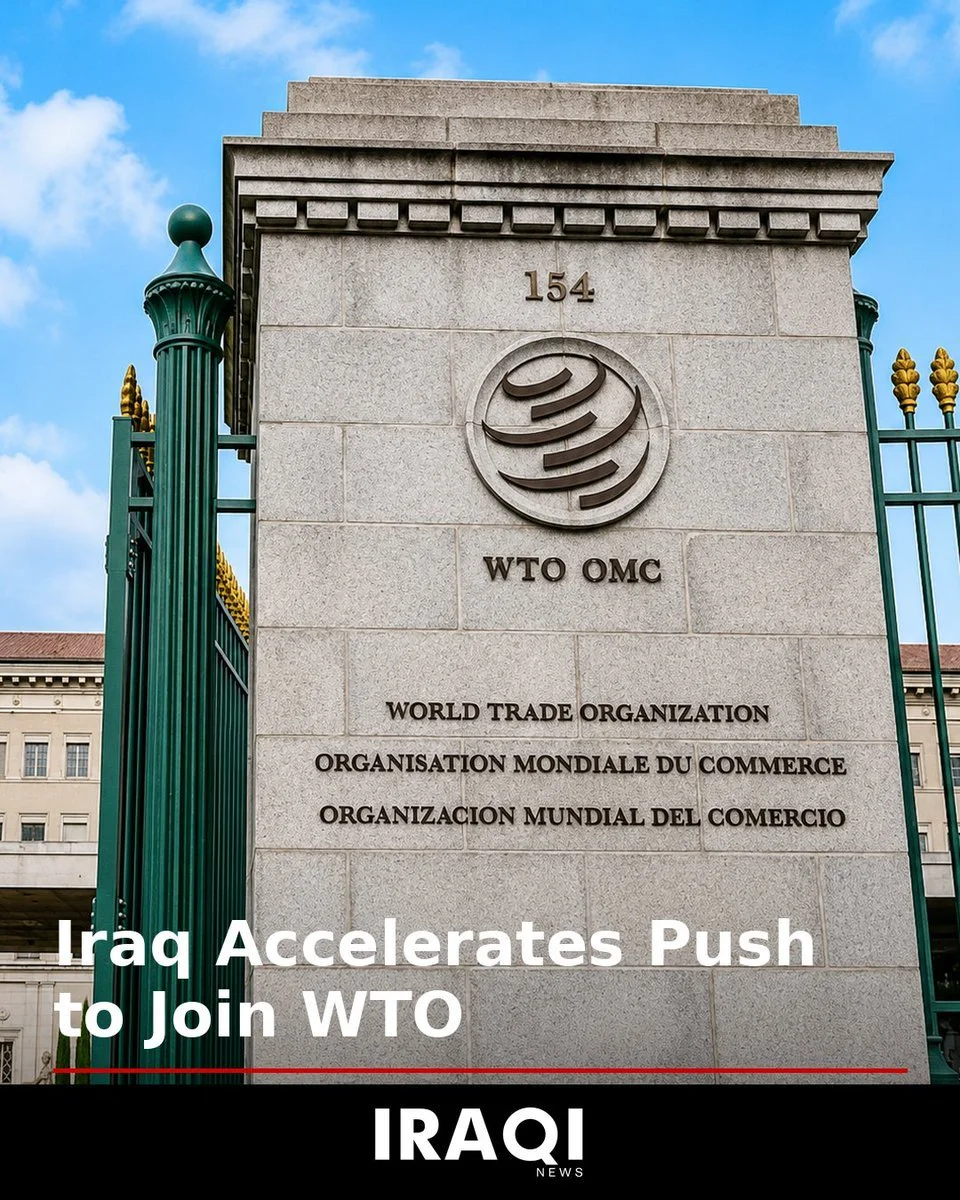
IraqiNews:Iraq is stepping up efforts to join the World Trade Organization, with the new administration pushing forward a process officials see as part of a broader economic reform and diversification agenda.
➡️Membership would bring Iraq into the rules-based global trading system, requiring it to align trade policies with international standards.
➡️ A team from Iraq's Ministry of Trade traveled to Geneva last week to finalize technical documents with the WTO Accession Division and the International Trade Centre.
➡️ The ITC has supported Iraq's accession since 2020 through an EU-funded program focused on institutional reform and trade law modernization.
https://www.iraqinews.com/iraq/iraq-accelerates-journey-towards-wto-membership/
News, Rumors and Opinions Saturday 7-25-2026
KTFA:
Clare: Iraqi Prime Minister Media Office
Prime Minister Ali Faleh Al-Zaidi Receives Representatives of JPMorgan in Washington and Agrees on the Opening of a Bank Branch in Iraq to Finance Projects Implemented by U.S. Companies
Media Office of the Prime Minister
July 18, 2026
KTFA:
Clare: Iraqi Prime Minister Media Office
Prime Minister Ali Faleh Al-Zaidi Receives Representatives of JPMorgan in Washington and Agrees on the Opening of a Bank Branch in Iraq to Finance Projects Implemented by U.S. Companies
Media Office of the Prime Minister
July 18, 2026
************
Clare: JPMorgan Chase: Investment opportunities in Iraq are significant despite the challenges, and we look forward to increasing them.
7/17/2026
JPMorgan Chalkovsky, Managing Director and Head of Global Government Sector at JPMorgan Chalkovsky, confirmed on Thursday that Iraq has promising investment opportunities, particularly in infrastructure projects, noting that the bank has been partnering with Iraq for more than two decades.
Glukhovsky said, "Over the past 22 years, the bank has contributed to supporting Iraq by strengthening the role of the Trade Bank of Iraq (TBI), advising the government on credit ratings, and participating in financing some 20 projects in cooperation with international credit guarantee institutions."
She added that "infrastructure projects represent one of the most prominent areas of investment during the next phase," stressing that "continued international support for Iraq enhances the growth opportunities of these projects and increases the role of the private sector."
Regarding the challenges, she explained that "the security and political situation in the region affects the investment environment," expressing her hope for "improved stability in the coming months, which will support economic activity."
She also noted that "the Iraqi economy's dependence on oil presents a challenge," stressing that "the government's move towards diversifying the economy and strengthening the private sector is an important step towards building a more sustainable economy," and expressing her hope to expand the partnership between JPMorgan and Iraq in the coming phase. LINK
************
Frank26: "IMF PRAISE CBI FOR THE MONETARY REFORM SUCCESS".....F26
Finance Minister: IMF praise for government reforms reflects growing international confidence in the Iraqi economy
7/18/2026
Finance Minister Faleh Sari affirmed on Saturday that the International Monetary Fund's (IMF) praise for the reforms implemented by the Iraqi government reflects growing international confidence in the Iraqi economy. He emphasized the continuation of reform programs to enhance financial stability and support sustainable development.
In a statement received by the Iraqi News Agency (INA), the minister said, "The meeting between the government delegation, headed by Prime Minister Ali al-Zubaidi, and IMF Managing Director Kristalina Georgieva in Washington, D.C., represents a significant milestone in strengthening the partnership between Iraq and the IMF and supporting the economic and financial reforms being implemented by the government."
He added, "The IMF Managing Director's praise for the reform measures, particularly in the areas of financial reform, combating corruption, and diversifying revenue sources, reflects growing international confidence in the Iraqi economy and the government's steps aimed at building a more diversified and sustainable economy."
Sari noted that "the Ministry of Finance continues to implement its reform programs in coordination with national entities and international partners, contributing to strengthening financial stability, improving the efficiency of public financial management, enhancing the investment climate, and enabling the private sector to play a greater role in achieving sustainable economic development." LINK
************
Courtesy of Dinar Guru: https://www.dinarguru.com/
Jeff MOUs...Last week they were in DC...as of yesterday that was $200 billion in new revenue coming in to Iraq. Today they signed MOUs with Iran. Next week they're signing MOUs with Turkey...Iraq needs to know all of their expenses and revenue streams to correctly draft their budgets...Why the hell hasn't the rate changed, why the cabinet hasn't been completed? They have to know all of their money figures before they can revalue. The cabinet completion is the lynch pin to the rate change...Those two are almost one in the same.
Mnt Goat Is the Oil and Gas Law passed? I am a bit disappointed with the first two sessions of parliament under this new administration. During the election cycle we read multiple articles on how they would put a ‘high priority’ on the Oil and Gas Law and other laws. Yet it has not been taken up. We need to keep a close eye on this law.
Ariel Iraq is Preparing to Launch a Central Bank Digital Dinar...We Are Off To The Races...Iraq Is Preparing To Launch A Central Bank Digital Dinar (Cbd Dinars) In Parallel With The Physical Note Redenomination...this will become standard Support for International Trade & Investment...the WTO meetings that are ongoing are crucial in this area. We are watching the final pieces come together smoothly.
************
China Shuts Down Paper Gold Trading July 24 — Pento: “This Could Break the Western Gold Market”
Daniela Cambone: 7-24-2026
Michael Pento warns the U.S. is facing three simultaneous bubbles in credit, real estate, and equities that dwarf the 2008 financial crisis.
He explains why the Fed is trapped, why the middle class is being bankrupted by inflation, and why the next recession could metastasize into a depression.
MilitiaMan & Crew: -IRAQ DINAR UPDATE-72 Hours That Matter: Digital Systems, Banking & REER Foundations-Real Money
MilitiaMan & Crew: -IRAQ DINAR UPDATE-72 Hours That Matter: Digital Systems, Banking & REER Foundations-Real Money
7-24-2026
The Crew: Samson, PompeyPeter, Petra, Daytrader, Sunkissed, GIGI and Militia Man
No drama. No intrigue. No songs and dances. Just straight, factual news that I read and interpret to the best of my ability after being an avid Dinar investor and insanely obsessed Dinarian for over 15 years.
Follow MM on X == https://x.com/Slashn
MilitiaMan & Crew: -IRAQ DINAR UPDATE-72 Hours That Matter: Digital Systems, Banking & REER Foundations-Real Money
7-24-2026
The Crew: Samson, PompeyPeter, Petra, Daytrader, Sunkissed, GIGI and Militia Man
No drama. No intrigue. No songs and dances. Just straight, factual news that I read and interpret to the best of my ability after being an avid Dinar investor and insanely obsessed Dinarian for over 15 years.
Follow MM on X == https://x.com/Slashn
Be sure to listen to full video for all the news……..
Iraq Economic News and Points To Ponder Late Friday Evening 7-24-26
Iraq Accelerates Journey Towards WTO Membership
Business Iraq IraqiNews July 24, 2026 The WTO headquarters at the Centre William Rappard in Geneva, Switzerland Baghdad (IraqiNews.com) – Iraq has increased its attempts to join the World Trade Organization (WTO), with the new administration advancing a process that officials regard as part of a larger agenda of economic reform and diversification.
Iraq’s accession to the WTO would bring it into the rules-based global trading system, compelling the country to match its trade policies with international norms for market access, transparency, and regulation.
Iraq Accelerates Journey Towards WTO Membership
Business Iraq IraqiNews July 24, 2026 The WTO headquarters at the Centre William Rappard in Geneva, Switzerland Baghdad (IraqiNews.com) – Iraq has increased its attempts to join the World Trade Organization (WTO), with the new administration advancing a process that officials regard as part of a larger agenda of economic reform and diversification.
Iraq’s accession to the WTO would bring it into the rules-based global trading system, compelling the country to match its trade policies with international norms for market access, transparency, and regulation.
While membership does not ensure economic development, many observers regard it as a significant step toward building a more predictable climate for trade and investment.
Iraq’s WTO entrance is part of broader attempts to promote private sector growth, attract international investment, and boost non-oil economic activity. The process also requires considerable legal and institutional changes, such as modernizing trade laws and improving regulatory frameworks.
Last week, a team from Iraq’s Ministry of Trade traveled to Geneva to finalize technical documents with the WTO Accession Division and the International Trade Centre (ITC), marking another step forward in the country’s accession discussions.
Since 2020, the ITC has been supporting Iraq’s WTO accession process through a European Union-funded program.
Its work has focused on providing technical assistance to Iraqi institutions as they prepare for negotiations and implement the reforms required by the accession process.
Beyond the discussions, WTO admission is usually seen as a long-term reform goal.
The process promotes greater transparency, more predictable trade policies, and stronger institutions, while assisting countries in aligning domestic regulations with internationally recognized trade rules.
These measures might help Iraq diversify its economy, enhance its business environment, and integrate more effectively into regional and global value networks.
Their success, however, will be dependent on ongoing political commitment and execution after admission.
As negotiations continue, Iraq’s accession process remains both a trade negotiation and a larger exercise in economic modernization, with assistance from the WTO Secretariat, the ITC, the Ministry of Trade, and the European Union.
https://www.iraqinews.com/iraq/iraq-accelerates-journey-towards-wto-membership/
US Sanctions Fall Short Of Disrupting Iraq’s Parallel Economy
2026-07-24 / 06:00 Shafaq News- Baghdad Washington's current sanctions has failed to significantly curb Iraq's parallel economy, as sanctioned entities continue to benefit from state institutions, government contracts, and domestic financial networks despite international restrictions, according to an analysis published by the Middle East Forum.
While US sanctions have raised the cost of international financial transactions for individuals and entities linked to Iran-backed armed groups, the analysis argued, they have not prevented those actors from operating within Iraq's economy through legal recognition, licensing, and access to public funds.
It contends that the absence of complementary reforms inside Iraq has limited the effectiveness of Washington's pressure campaign. https://www.shafaq.com/en/Iraq/US-sanctions-fall-short-of-disrupting-Iraq-s-parallel-economy
Iraq Hunts For $77bn Missing Funds In Corruption Crackdown
By Nadim Kawach July 24, 2026 4:11 PM
Amount lent over 22 years
Finance watchdog says loans not repaid
Former officials arrested
Iraq has launched a probe to trace ID100 trillion ($77 billon) allegedly lent to government officials, ministries and other public entities over the past 22 years.
The Federal Board of Supreme Audit (FBSA), the Iraqi government’s top financial watchdog, said the loans have not been paid back although some were provided as early as 2004 by the finance ministry, central bank and other official bodies.
“There are nearly ID100 trillion in outstanding loans that have not been settled… We have referred thousands of cases to the judiciary and the integrity commission,” FBSA chairman Ammar al-Mashadani was quoted by the state news agency as saying.
“The board’s report reveals that no loan has been paid back… These funds have accumulated since 2004 and have been provided to many parties,” al-Mashadani said.
A group of lawmakers, appearing on local TV, called on parliament to investigate the disappearance of the funds as part of an anti-corruption crackdown launched by prime minister Ali Al-Zaidi after he took office in May.
“A hundred trillion Iraqi dinars are missing and this federal report proves it… This report has been sent to all members of parliament,” Bassim al-Ghorabi, one of the legislators, said.
“These funds have been disbursed to officials, ministries, government agencies, projects and other official parties… these officials and parties have not settled the outstanding funds over the past years,” he said.
Authorities have reported the arrest of a number of former officials and public servants and the recovery of millions of dollars in allegedly stolen funds since the start of the anti-corruption drive.
Corruption and malpractice have been widely blamed for the delay of various projects and relatively low investment flow into Iraq, a country of 48 million people.
Opec member Iraq, which controls the world’s fifth-largest extractable oil deposits of 145 billion barrels, has not scored well in global corruption indices over recent years.
Last year, the country ranked 136 out of 182 countries in the corruption index of Berlin-based Transparency International.
In a study this month, the head of an Iraqi think tank said official estimates show that funds stolen by corrupt officials and agencies could reach $1 trillion.
“The scale of financial offences poses a significant challenge given official estimates indicating enormous financial losses,” said Gazi Faisal, chairman of the Baghdad-based Iraqi Centre for Strategic Studies, as reported by Al Bawaba News.
https://www.agbi.com/finance/2026/07/iraq-hunts-for-77bn-missing-funds-in-corruption-crackdown/
Billions Of Dollars... Iraq's Losses Since February 28
Localities 2026-07-24 | Alsumaria News– Economy: The Prime Minister's financial advisor revealed Mazhar Muhammad Salih losses Iraq Since the outbreak of war in the region, losses have ranged between $40 and $45 billion, as a result of the sharp decline in oil exports and the disruption of development projects that the government was counting on.
Al-Hurra quoted Saleh as saying that "the figure represents what economists call opportunity cost, that is, lost revenues and projects."Iraq From February 28th until mid-June 2026."
He warned that "the cost will rise the longer the war lasts and the more difficult it becomes to resume exports at their previous levels."
Iraq relies on oil to finance the majority of its public spending. Before the war, it exported about 3.3 million barrels per day, generating annual revenues of approximately $88 billion.
However, Saleh stated that "exports have declined since February 28th to less than 10 percent of their usual level and now only pass through a limited number of outlets, including..."Türkiye And Jordan.”
Saleh said that “the government has set what he described as red lines that cannot be crossed, including salaries, wages, pensions, grants, and social safety nets.”social welfare The cost of these payments is approximately eight Trillions of Iraqi dinars are spent monthly, equivalent to approximately $5.9 billion at the official exchange rate of 1,320 dinars to the dollar.
This monthly expenditure rises to around 11 trillion dinars when other expenses are included, such as those related to the electricity sector, medicine, food subsidies, and external debt servicing.
According to Saleh, approximately nine million Iraqis directly benefit from these payments. Including dependent family members, the number of those affected reaches around 40 million out of Iraq's population of approximately 50 million.
To finance the deficit , and with declining oil revenues, the government has resorted to domestic borrowing to secure the necessary liquidity.
Saleh stated that "Ministry of FinanceTreasury bills are sold at interest rates between 3 and 5 percent to state-owned banks, which can then discount them at the central bank when they need liquidity.
This method was described as "facilitation"Quantitative, the Iraqi way," he said, comparing it to the tools used by the European Central Bank to support economies during crises.
The increased reliance on this type of financing has led to a rise in domestic public debt to over 106 trillion dinars. Central Bank of Iraq According to Saleh, the central bank's reserves, which stood between $105 billion and $106 billion before the war, distributed among gold, foreign currencies, and credit-rated government bonds, have declined by more than 60 percent.
Saleh did not specify the current value of the reserves, but said the decline remained below 50 percent.
He added that "during the first few months, Iraq continued to receive delayed revenues from oil shipments exported before the war, as export proceeds usually arrive after about two months, which eased the pressure during the third and fourth months."
He said that "the ratio of local currency coverage by foreign reserves is still close to 90 percent, or slightly below it, while the minimum acceptable level according to the monetary standards cited is 75 percent."
Saleh believes that "this ratio indicates a degree of monetary stability, despite the pressures the war has placed on public finances and dollar inflows." https://www.alsumaria.tv/news/localnews/571257/مليارات-الدولارات-خسائر-العراق-منذ-28-شباط
Seeds of Wisdom RV and Economics Updates Saturday Morning 7-25-26
Good Morning Dinar Recaps,
Saudi Arabia Enters Direct Conflict as Red Sea Shipping Attacks Expand Middle East Energy Crisis
Saudi Arabia has launched military strikes against Houthi targets in Yemen following attacks on commercial shipping in the Red Sea, opening a new front in an already volatile regional conflict. As pressure continues in both the Bab el-Mandeb Strait and the Strait of Hormuz, global markets are increasingly focused on the risks to energy supplies, trade routes, and financial stability.
Good Morning Dinar Recaps,
Saudi Arabia Enters Direct Conflict as Red Sea Shipping Attacks Expand Middle East Energy Crisis
Saudi Arabia has launched military strikes against Houthi targets in Yemen following attacks on commercial shipping in the Red Sea, opening a new front in an already volatile regional conflict. As pressure continues in both the Bab el-Mandeb Strait and the Strait of Hormuz, global markets are increasingly focused on the risks to energy supplies, trade routes, and financial stability.
Overview
Saudi Arabia launched airstrikes against Houthi positions after Iran-backed forces targeted shipping linked to Saudi interests in the Red Sea.
The escalation places two of the world's most important maritime chokepoints under pressure—the Strait of Hormuz and the Bab el-Mandeb Strait.
Energy markets, shipping companies, insurers, and policymakers are closely monitoring developments as concerns grow over higher transportation costs and global inflation.
Key Developments
1. Saudi Arabia Responds Militarily to Red Sea Shipping Attacks
Saudi Arabia launched strikes against Houthi positions in Hodeidah and Kamaran Island, two strategically important areas along Yemen's Red Sea coastline. The operation followed Houthi attacks on commercial vessels and represents one of the most significant Saudi military responses since the 2022 truce.
The renewed fighting highlights the growing regional impact of the broader U.S.-Iran confrontation, with Iran-backed groups increasing pressure on international shipping lanes.
2. A Second Global Energy Chokepoint Faces Heightened Risk
While the Strait of Hormuz remains under intense pressure from the U.S.-Iran conflict, renewed instability around the Bab el-Mandeb Strait creates an additional threat to global commerce.
The Bab el-Mandeb serves as the southern gateway to the Red Sea and Suez Canal, connecting Europe, Asia, and the Middle East. Any sustained disruption forces vessels to reroute around the Cape of Good Hope, increasing shipping times, fuel consumption, insurance costs, and freight expenses.
With both strategic waterways experiencing elevated military risk, global supply chains face increased uncertainty.
3. Energy Markets Continue to Monitor Supply Risks
Although oil prices have experienced periods of volatility in recent days, traders remain focused on the possibility of further disruptions to crude oil exports from the Middle East.
Even when physical supply remains available, higher insurance premiums, security costs, and shipping delays can place upward pressure on energy prices, contributing to broader inflation concerns worldwide.
Central banks are also watching developments closely, as prolonged energy inflation could influence future interest-rate decisions and monetary policy.
4. Regional Security Risks Continue to Expand
Military analysts are monitoring whether the conflict remains concentrated around maritime security or broadens into additional regional confrontations involving Iran-backed groups.
Future statements from Saudi Arabia, Iran, Houthi leadership, the United States, and other Gulf nations may determine whether diplomatic efforts can prevent additional escalation or whether attacks against commercial shipping continue.
Why It Matters
The expansion of military operations into the Red Sea significantly increases risks to global trade and energy transportation. Pressure on both the Strait of Hormuz and the Bab el-Mandeb Strait simultaneously represents one of the most serious threats to international shipping since the beginning of the current Middle East crisis.
Because these routes carry a substantial share of the world's energy exports and commercial trade, continued instability has the potential to influence inflation, shipping costs, commodity prices, and financial markets around the globe.
Why It Matters to Foreign Currency Holders
For those following long-term global monetary and financial reforms, rising geopolitical instability often accelerates discussions surrounding energy security, diversified payment systems, alternative settlement mechanisms, and reserve asset strategies.
While these developments do not indicate an imminent currency revaluation, they reinforce the structural changes taking place as governments strengthen financial resilience amid growing geopolitical uncertainty.
Implications for the Global Reset
Pillar 2: Trade
Growing security risks in both the Red Sea and the Persian Gulf threaten some of the world's busiest maritime trade corridors, increasing transportation costs and disrupting global supply chains.
Pillar 5: Energy
Simultaneous pressure on two major energy chokepoints raises the potential for higher oil prices, increased market volatility, and renewed concerns over long-term global energy security.
Future Outlook
Attention will now focus on whether Saudi military operations remain limited or evolve into a broader regional campaign involving additional Gulf states and Iran-backed forces. Markets will also closely monitor shipping activity through both the Bab el-Mandeb Strait and the Strait of Hormuz, as continued disruptions could have lasting consequences for global trade, inflation, and financial markets.
This is not simply about military operations—it reflects the broader transformation of the global financial system as energy security, trade flows, and geopolitical power increasingly shape the future of the world economy.
Seeds of Wisdom Team
Newshounds News™ Exclusive
Sources
Crypto Briefing — Saudi military strikes Houthi targets in Yemen after Red Sea shipping attacks
Reuters — Middle East shipping and Red Sea security coverage
~~~~~~~~~~
🌱 A Message to Our Currency Holders🌱
If you’ve been holding foreign currency for many years, you were not foolish.
You were not wrong to believe the global financial system would change.
What failed was not your patience — it was the information you were given.
For years, dates, rumors, and personalities replaced facts, structure, and proof. “This week” predictions created cycles of hope and disappointment that were never based on how currencies actually change.
That is not your failure.
Our mission here is different: • No dates • No rates • No hype • No gurus
Instead, we focus on:
• Verifiable developments • Institutional evidence
• Global financial structure • Where countries actually sit in the process
Currency value changes only come after sovereignty, trade, banking, settlement systems, and fiscal coordination are in place. History and institutions confirm this sequence.
You will see silence. You will see denials. That is not delay — that is discipline.
Protect your identity. Organize your documents. Verify everything.
Never hand your discernment to anyone who cannot show proof.
You deserve truth — not timelines.
Seeds of Wisdom Team
Newshounds News
~~~~~~~~~~
Seeds of Wisdom Team RV Currency Facts Youtube and Rumble
Newshound's News Telegram Room Link
RV Facts with Proof Links Link
RV Updates Proof links - Facts Link
Start Here room with Most Asked Questions Link
Follow the Gold/Silver Rate COMEX
Follow Fast Facts
Seeds of Wisdom Team™ Website
Thank you Dinar Recaps