
Thank you to all the subscribers to our Early Access program…we thank you for your continued support.
We are excited to offer this new service to keep you informed and up-to-date on the latest Dinar and currency news.
Iraq Economic News and Points To Ponder Thursday Afternoon 7-02-26
The New York Times: The US Administration Has Resumed The Transfer Of Oil Revenues To Iraq
Economy News _ Baghdad The New York Times revealed that the White House administration has resumed sending Iraqi oil revenues to Baghdad, against the backdrop of Prime Minister Ali al-Zaidi’s campaign against those involved in financial corruption cases. The newspaper quoted the spokesman for the Iraqi government, Haider al-Aboudi, as saying: "The shipments of the dollar to Iraq have resumed, and the problem has been solved."
The financial adviser to the prime minister, Mazhar Mohammed Saleh, also confirmed the resumption of transfers.
The New York Times: The US Administration Has Resumed The Transfer Of Oil Revenues To Iraq
Economy News _ Baghdad The New York Times revealed that the White House administration has resumed sending Iraqi oil revenues to Baghdad, against the backdrop of Prime Minister Ali al-Zaidi’s campaign against those involved in financial corruption cases. The newspaper quoted the spokesman for the Iraqi government, Haider al-Aboudi, as saying: "The shipments of the dollar to Iraq have resumed, and the problem has been solved."
The financial adviser to the prime minister, Mazhar Mohammed Saleh, also confirmed the resumption of transfers.
The U.S. State Department or Treasury did not comment on the matter, according to the New York Times.
The resumption of dollar shipments coincides with the launch of an anti-corruption campaign, which included the arrest of dozens of current and former officials, including members of the House of Representatives, on corruption-related charges.
The administration of U.S. President Donald Trump halted the flow of dollars from oil sales to Iraq’s largely cash-banking economy in April.
Iraqi officials said at the time that Washington had also suspended cooperation and funding for Iraqi security services.
An official from the Kurdistan region at the time pointed out that one of the motives for suspending dollar shipments was to limit the smuggling of the US currency by Iranian-backed militias, at a time when the country was in the process of choosing a new prime minister, amid US efforts to prevent the arrival of candidates seen as close to Tehran.
Washington has also been demanding that the Iraqi government rein in a number of militias linked to Tehran that operate largely outside state control and have occasionally carried out attacks against U.S. targets inside Iraq.
It is noteworthy that new international banking rules were imposed years ago on Baghdad according to greater requirements for transparency on financial transfers in dollars held as foreign reserves of Iraq in an account with the Federal Reserve Bank in New York.
The Central Bank of Iraq has facilitated these financial transfers from its account with the Federal Reserve in New York for the benefit of Iraqi companies and individuals to pay for goods imported from outside the country.
These transfers are vital because few Iraqi companies have international bank accounts.
https://www.economy-news.net/content.php?id=70897
Iraq Wins A Lawsuit In Jordan And Obliges A Company To Pay Financial Compensation
Money and business Economy News – Baghdad The Ministry of Justice announced on Thursday that it has won a lawsuit pending before the Amman Court of Appeal in the Hashemite Kingdom of Jordan, and obtained a final ruling that requires a Jordanian company to pay financial compensation in favor of the General Company for Southern Refineries of the Ministry of Oil.
The ministry said that the ruling came against the backdrop of the defendant’s violation of the implementation of its contractual obligations arising from the contract concluded between the two parties in 2011, after the legal department in the Ministry of Justice followed the proceedings before the Jordanian judiciary until the issuance of the final judicial decision.
This achievement comes within the framework of the Iraqi government's keenness to protect public money and preserve the rights of the Iraqi state outside the country, and embodies the continuous legal efforts exerted by the Ministry of Justice, in coordination with the concerned government agencies, to follow up on foreign lawsuits and restore rights in accordance with legal and judicial frameworks, thus enhancing Iraq's position in protecting its legal interests at the regional and international levels https://www.economy-news.net/content.php?id=70907
A Parliamentary Committee Is Heading To Review All Oil Contracts And Licensing Rounds
Money and business Economy News – Baghdad The Parliamentary Oil and Gas Committee said it has a tendency to re-review all oil contracts and licensing rounds
A member of the Parliamentary Oil and Gas Committee, Jassim Al-Moussawi, said that the committee has a tendency to review all oil contracts and licensing rounds, noting that this file is one of the important and sensitive files that need comprehensive scrutiny to identify the flaws and address the problems that have emerged during the implementation stages.
Al-Moussawi explained that the committee is continuing to follow up this file by reviewing the details of the contracts and the contracting mechanisms adopted in the oil sector, pointing out that some contracts need to be re-evaluated to ensure their harmony with the national interest, maximize the revenues achieved by the state, and reduce any aspects that may lead to the waste of financial resources.
He added that the oil sector, despite its great importance to the Iraqi economy, has faced a number of challenges during the past years as a result of errors that accompanied the implementation of some projects, pointing out that some refineries established with government funding did not achieve the required goals because of the assignment of their implementation to companies that were not at the required level of efficiency, causing the failure of those projects and the opening of investigation files linked to them.
He stressed that the review process will not be limited to licensing rounds only, but will include various projects related to the production, refining and oil investment sectors, in order to diagnose weaknesses and develop practical solutions that ensure improved performance and maximum utilization of oil resources.
Moussawi pointed out that the reform of the oil sector is a key priority in view of its pivotal role in supporting the national economy and financing the general budget, stressing that addressing the gaps in contracts and projects can contribute to reducing financial waste, raising the level of administration, and increasing the economic returns achieved by the state
https://www.economy-news.net/content.php?id=70911
Samsung And SK Pump $252 Billion To Expand Artificial Intelligence Chip Industry
Money and business Economy News - Follow-up The Ministry of Industry announced on Thursday that Samsung Electronics, SK Hynx and others have been investing 392 trillion won ($252.5 billion) in the Chongcheong region, including in facilities for manufacturing and packaging high-bandwidth memory, as part of the government’s efforts to expand growth based on artificial intelligence.
It comes as a follow-up plan for the tripartite mega-projects unveiled by the government earlier this week, which aims to develop technologies across the country and turn South Korea into an industrial powerhouse in the emerging age of artificial intelligence, South Korea’s Yonhap news agency reported.
The Ministry of Commerce, Industry and Resources said Samsung Group has pledged to invest a total of 140 trillion won in the Chongcheung region to build the Samsung Electronics facility for the manufacture and packaging of high-bandwidth memory, as well as a line for the production of the light-emitting organic diode and a next-generation screen by Samsung Display.
Samsung Electricity and Mechanics will build facilities for high-performance packaging substrates for artificial intelligence servers, and Samsung SDI will build an advanced battery manufacturing plant https://www.economy-news.net/content.php?id=70915
Al-Zaidi Discusses With A Jordanian Delegation The Implementation Of The Oil Pipeline Project (Basra-Aqaba)
Money and business Economy News – Baghdad Prime Minister Ali Faleh al-Zaidi on Thursday discussed with a Jordanian ministerial delegation the implementation of the oil pipeline project (Basra-Aqaba).
The media office said in a statement received by "Economy News" that "Zaidi received, on Thursday, a ministerial delegation from the Hashemite Kingdom of Jordan, headed by the Minister of Industry, Trade and Supply, Falah Al-Qadhaf, and included ministers; energy and mineral wealth, transport, and investment, in the presence of the Minister of Industry and Minerals, the head of the Arab Department in the Ministry of Foreign Affairs, and the Jordanian ambassador to Iraq."
He added that "the meeting witnessed the discussion of a number of files and topics of common interest, foremost of which is the implementation of the oil pipeline project (Basra - Aqaba), and facilitate the procedures for granting entry visas to businessmen in both countries, in addition to enhancing cooperation in the fields of industry, energy, transport, investment and other sectors of common interest."
Al-Zaidi stressed that "the two countries have historical and distinguished relations, and the Hashemite Kingdom of Jordan represents an important strategic depth for Iraq," pointing to "the government's aspiration to raise bilateral relations to wider levels during the next phase, by increasing the volume of trade exchange, and expanding investment opportunities and economic cooperation in various sectors."
For their part, the members of the Jordanian delegation conveyed to Al-Zaidi the greetings and congratulations of King Abdullah II of Jordan and Jordanian Prime Minister Jafar Hassan on the occasion of the formation of the government, and handed him an official invitation to visit the Kingdom.
The judges expressed the Kingdom's full support for Iraq, praising Iraq's progress in the areas of combating corruption, economic reforms, and improving the investment environment, thus contributing to strengthening the partnership between the two brotherly countries https://www.economy-news.net/content.php?id=70923
Thursday Iraq News Posted by Tishwash at TNT 7-2-2026
TNT:
Tishwash: The central bank governor is in parliament to discuss "major reforms" in the banking sector.
Al-Mustaqilla - In his first prominent political and economic move since assuming his duties, the Governor of the Central Bank of Iraq, Nizar Nasser Hussein, held a meeting with the Speaker of Parliament, Hebat al-Halbousi, to discuss the future of the Iraqi banking sector and financial reform plans, amid escalating economic challenges facing the country.
According to an official statement, the meeting witnessed extensive discussions on the reality of the Iraqi banking system and mechanisms for modernizing it, as well as the development of strategic programs and plans to restructure the financial sector and enhance the efficiency of Iraqi banks.
TNT:
Tishwash: The central bank governor is in parliament to discuss "major reforms" in the banking sector.
Al-Mustaqilla - In his first prominent political and economic move since assuming his duties, the Governor of the Central Bank of Iraq, Nizar Nasser Hussein, held a meeting with the Speaker of Parliament, Hebat al-Halbousi, to discuss the future of the Iraqi banking sector and financial reform plans, amid escalating economic challenges facing the country.
According to an official statement, the meeting witnessed extensive discussions on the reality of the Iraqi banking system and mechanisms for modernizing it, as well as the development of strategic programs and plans to restructure the financial sector and enhance the efficiency of Iraqi banks.
The Central Bank Governor stressed that the next phase requires proceeding with a comprehensive banking reform plan, which includes developing the infrastructure of the banking sector and raising the level of institutional performance, while strengthening coordination between monetary policy and the legislative authority to ensure financial stability.
For his part, the Speaker of Parliament announced the parliament’s support for measures and policies aimed at protecting the national currency and enhancing banking stability, stressing the importance of providing a more stable economic and investment environment in Iraq.
This meeting comes at a time when the Iraqi banking sector is facing increasing challenges and pressures related to financial and regulatory reforms, which puts the Central Bank’s new plans under political and economic scrutiny in the coming period.
At the conclusion of the meeting, both sides affirmed their commitment to continuing coordination and joint work to overcome legislative and executive obstacles, in order to contribute to building a stronger and more effective financial and banking system link
*************
Tishwash: The New York Times: The United States resumes dollar transfers to Iraq after suspending them for months.
The New York Times: The United States has resumed dollar transfers to Iraq after suspending them for months.
The administration of US President Donald Trump had suspended dollar shipments to Iraq and frozen funding for security cooperation programs with the government to pressure Baghdad to dismantle armed factions, according to The Wall Street Journal.
According to officials cited by the newspaper, the US Treasury Department recently blocked the transfer of an air shipment of approximately $500 million in cash—revenue from Iraqi oil sales—from accounts at the Federal Reserve Bank of New York to Iraq, due to US concerns about Iraqi factions.
The US State Department told the newspaper that the Iraqi government's "failure" to prevent attacks by these factions "negatively impacts" Washington's relationship with Baghdad, noting that the Trump administration expects the authorities to take immediate action to dismantle these factions.
State Department spokesman Tommy Pigott emphasized that the US will not tolerate attacks on US interests, adding that "entities linked to the Baghdad government continue to provide political, financial, and operational cover for the factions."
US and Iraqi officials revealed to the newspaper that the suspension of dollar shipments to Iraq is a temporary measure, and that Washington informed Baghdad of its intention to suspend funding for some counterterrorism programs and armed forces training until attacks by armed factions cease. link
*************
Tishwash: Abu Kalal: Iraq is close to launching Starlink services within a comprehensive regulatory framework.
The head of the executive body of the Media and Communications Commission, Baligh Abu Kalal, confirmed today, Wednesday, (July 1, 2026), that Iraq is proceeding with completing the procedures for licensing the Starlink service in its final stages, which will allow the introduction of one of the most prominent modern satellite communication technologies to the Iraqi market within a clear regulatory framework that preserves national interests and keeps pace with global developments.
During his speech at the opening of the third edition of the Iraqi Communications Summit, Abu Kalal explained that: “The communications sector is no longer a traditional service sector, but has become part of the modern sovereign structure of countries, and a fundamental pillar of the digital economy, e-government and smart services,” stressing that “the Authority views this sector as one of the engines of economic and social development in Iraq.”
He pointed out that the next phase will witness a greater focus on service quality, in addition to expanding coverage, through the development of technical monitoring tools and measuring performance indicators of operating companies, in order to ensure an improved user experience in various governorates.
The head of the executive body affirmed that the authority is proceeding with establishing a stable regulatory environment based on fair competition and the rule of law, indicating that Iraq supports investment, respects competition, and is working to build a stable communications market capable of keeping pace with the requirements of the future.
Abu Kalal also stressed the importance of fiber optic projects as the backbone of digital transformation, along with satellite communications and the fifth generation, as an integrated system that contributes to expanding users’ options and opening the way for more advanced industrial and service applications.
Mr. Abu Kalal pointed out that the Authority is working, in cooperation with the relevant authorities and companies operating in the sector, to prepare the regulatory and technical requirements for the transition to fifth-generation technologies, and to benefit from artificial intelligence applications in network management, improving the quality of services and raising performance efficiency.
He concluded his speech by emphasizing that the future of communications in Iraq is built through a partnership between the Authority, the Ministry of Communications, operating companies, investors, academic institutions and experts, in order to build a modern and sustainable communications sector that keeps pace with Iraq’s aspirations and the challenges of the times.link
**************
Tishwash: Gulf States Are Watching Closely The Anti-Corruption Campaign In Iraq: "Investment In Exchange For Controlling Weapons."
Former Kuwaiti Information Minister Sami Al-Nisf believes that the future of Gulf investments in Iraq depends on the government's ability to impose state control over weapons and confront corruption, warning that the continued presence of armed groups outside the official system will keep Iraq from attracting capital. Al-Nisf explained, during a television interview published by local media, that “any Gulf economic openness to Iraq requires the existence of a state capable of extending its full authority, indicating that the international community holds governments respo
any attacks launched from their territories, regardless of who carries them out.” He noted that “the Gulf states are following with interest the efforts of Prime Minister Ali al-Zaidi’s government to restrict weapons to the state, in addition to the measures to pursue corruption cases, considering that the success of these two paths will give investors greater confidence in the Iraqi environment.”
He pointed out that “attacks carried out by drones cannot go unpunished,” explaining that international legal options remain on the table if such attacks continue, because international laws do not differentiate between non-state actors and the responsibility of the state on whose territory the incidents occur.
Al-Nisf explained that “achieving economic development requires security stability and the state’s monopoly on the use of force, stressing that the investor, whether from the Gulf or Iraq, first looks for a safe and stable environment before investing his money in any project.”
He added that “Iraq has great economic opportunities, but their investment remains contingent on consolidating state sovereignty, ending the manifestations of uncontrolled weapons, and strengthening the path of administrative and financial reform, in order to restore confidence in the Iraqi economy and encourage the flow of foreign investments.” link
***************
Tishwash: From the top of the US Treasury Department to the Kurdistan Regional Bank: A new roadmap to boost banking confidence and attract investment
The Kurdistan Regional Commercial Bank (RTB) is holding its first meeting of its new board of directors. With this move, the bank will become the first local bank in Iraq and the Kurdistan Region of Iraq to implement an international governance system, a step that is expected to boost banking confidence in the region.
The council is chaired by Mr. Marshall Billingslea, former Assistant Secretary of the Treasury and former President of the Financial Action Task Force (FATF).
The Financial Action Task Force (FATF) is a global body that sets standards for combating money laundering and terrorist financing. The team also includes a number of prominent figures, such as Mr. Gregory Gatianis, former Deputy Director of the Office of Foreign Assets Control (OFAC);
Ilze Zanutina, former head of the Latvian Financial Intelligence Unit and advisor to the International Monetary Fund and the European Commission, and Dr. Jorge Jimenez, an expert on the US Federal Payments System, are among the board members. Other members include Hashim Hamandi, Basil Kivan, Adnan Kafait, and Colonel Hijazi. Yilmaz Ugur Ay, who has over twenty years of experience in the Iraqi and Turkish financial markets, will handle day-to-day operations as CEO.
The presence of this strong team of experts from the US Treasury Department and international institutions will open new horizons for the Iraqi banking sector, freeing it from the financial isolation it has suffered for years.
This radical change in three key dimensions could fundamentally transform Iraq's economic equation. First, it strengthens the bank itself. RTB Bank is upgrading its internal control system, risk management, and financial infrastructure to international standards, ensuring its protection against money laundering risks and its compliance with global standards.
Second, openness to the global financial system. Achieving this level of trust paves the way for correspondent banking with major American and European banks, a step that reduces import and export costs for local companies and facilitates the movement of funds.
Third, attracting foreign investment. When international companies see a local bank managed according to the highest international standards, they are more inclined to invest in Iraq and the Kurdistan Region.
The Regional Commercial Bank has been providing banking services since July 2001, and established its headquarters in Erbil in September 2003. It is licensed and registered with the Central Bank of Iraq, and has not been subject to any banking sanctions since its establishment to date. link
************
Tishwash: In the presence of the US Chargé d'Affaires, the Governor of Basra signs a memorandum of understanding with the American energy company KBR.
Basra Governor Asaad Al-Eidani signed a memorandum of understanding onTuesday with the American company KBR, which specializes in the fields of energy, space and technology, with the aim of strengthening cooperation in the energy sector.
The US Embassy in Iraq stated in a statement that Chargé d'Affaires Harris, accompanied by a delegation from the US company KBR, received the Governor of Basra, stressing his country's desire to deepen the economic partnership with Iraq, particularly in Basra Governorate, in a way that achieves tangible results that benefit both countries.
The statement added that Al-Eidani signed the memorandum of understanding with the American company, which is one of the world’s leading companies operating in the fields of engineering and energy, and is headquartered in Houston, Texas.
The move comes as part of efforts to strengthen economic cooperation and attract foreign investment to Iraq's energy sector link
Coffee with MarkZ, joined by Dr. Scott Young. 07/02/2026
Coffee with MarkZ, joined by Dr. Scott Young. 07/02/2026
MarkZ Disclaimer: Please consider everything on this call as my opinion. Be sure to consult a professional for any financial decisions
MZ: Iraq's corruption crackdown continues, Zimbabwe's progress, oil, trade, and Dr. Scott young joins us to discuss a controversial subject, UBI (Universal Basic income) . StacieZ joins after Dr. Scott to talk about your health.
THE CONTENT IN THIS PODCAST IS FOR GENERAL & EDUCATIONAL PURPOSES ONLY&NOT INTENDED TO PROVIDE ANY PROFESSIONAL, FINANCIAL OR LEGAL ADVICE. PLEASE CONSIDER EVERYTHING DISCUSSED IN MARKZ’S OPINION ONLY
Coffee with MarkZ, joined by Dr. Scott Young. 07/02/2026
MarkZ Disclaimer: Please consider everything on this call as my opinion. Be sure to consult a professional for any financial decisions
MZ: Iraq's corruption crackdown continues, Zimbabwe's progress, oil, trade, and Dr. Scott young joins us to discuss a controversial subject, UBI (Universal Basic income) . StacieZ joins after Dr. Scott to talk about your health.
THE CONTENT IN THIS PODCAST IS FOR GENERAL & EDUCATIONAL PURPOSES ONLY&NOT INTENDED TO PROVIDE ANY PROFESSIONAL, FINANCIAL OR LEGAL ADVICE. PLEASE CONSIDER EVERYTHING DISCUSSED IN MARKZ’S OPINION ONLY
https://rumble.com/user/theoriginalmarkz
Kick: https://kick.com/theoriginalmarkz
Markz's linktree https://linktr.ee/theMarkZshow
FOLLOW MARKZ : TWITTER . https://twitter.com/originalmarkz?s=21. TRUTH SOCIAL . https://truthsocial.com/@theoriginalm...
Mod: MarkZ "Back To Basics" Pre-Recorded Call" for Newbies 10-19-2022 ) https://www.youtube.com/watch?v=37oILmAlptM
MARKZ DAILY LINKS: https://theoriginalmarkz.com/home/
THANK YOU FOR JOINING. HAVE A BLESSED DAY. SEE YOU IN THE MORNING FOR COFFEE @ 10:00 AM EST ~ UNLESS BREAKING NEWS HAPPENS! FOR UPDATES ON MARK’S PODCAST GO TO: https://t.me/+b3hYhYlhKM1hYzcx
News, Rumors and Opinions Thursday 7-2-2026
Note: All intel should be considered as "Rumors" until we receive official announcements ...and “Rates and Dates” could change anytime until we get to the banks/redemption centers.
Dinar Chronicles via a GCR Update as of Thurs. 2 July 2026
Compiled Thurs. 2 July 2026 12:01 am ET by Patrick DaCosta (TerraZetzz), founder, owner, and administrator of Dinar Chronicles, Operation Disclosure Official, Voyages of Light.
After years of dedicated service, Judy Byington, a widely recognized voice in the community, has reportedly announced her cessation of the “Restored Republic via a GCR” reports.
Note: All intel should be considered as "Rumors" until we receive official announcements ...and “Rates and Dates” could change anytime until we get to the banks/redemption centers.
Dinar Chronicles via a GCR Update as of Thurs. 2 July 2026
Compiled Thurs. 2 July 2026 12:01 am ET by Patrick DaCosta (TerraZetzz), founder, owner, and administrator of Dinar Chronicles, Operation Disclosure Official, Voyages of Light.
After years of dedicated service, Judy Byington, a widely recognized voice in the community, has reportedly announced her cessation of the “Restored Republic via a GCR” reports.
We extend our gratitude for her tireless work and wish her a well-deserved break. In her absence, Operation Disclosure Official and Dinar Chronicles has committed to continuing her vital work, ensuring the community remains informed on the unfolding events, unless Judy decides to return.
While her departure marks the end of an era for many followers, the Dinar Chronicles framework suggests this transition isn’t an ending, but rather a prelude to an “unstoppable timeline” of monumental global changes.
This report synthesizes the intricate details provided, painting a picture of an imminent Global Currency Reset (GCR), the finalization of the Quantum Financial System (QFS), and the ushering in of a new age, aptly termed “Year Zero.”
Judy Byington’s decision to step back, reportedly citing computer issues and a sense that “the title of my updates ‘Restored Republic via a GCR’ has evidently already come to pass,” signals a pivotal moment. Her final report, dated Thursday, July 2, 2026 (in the report’s speculative future timeline), suggests the Restored Republic is ready for public announcement, possibly by Trump, alongside the Global Currency Reset. This narrative posits that years of anticipation among those following the GCR are now culminating, transitioning from speculative reports to concrete events that will reshape the global stage.
Crucially interwoven with this global narrative is Iraq’s strategic economic transformation, which Dinar Chronicles highlights as a cornerstone of the impending GCR. On Wednesday, July 1, 2026, Iraq is depicted as making a profound pivot under Prime Minister Ali al-Zaidi. The nation is reportedly severing its dependence on post-2003 financial structures and abandoning the restrictive “program rate.” This move is being fortified by integrating cutting-edge digital oversight technologies like Starlink and ASYCUDA, alongside rigorous anti-money laundering protocols enforced by the new CBI leadership.
These reforms are presented as systematically dismantling entrenched corruption, paving the way for a stable financial future. The report emphasizes Iraq’s massive accumulation of over 170 tons of gold, positioning the Dinar to reflect the nation’s immense natural wealth.
This shift towards an asset-backed currency is not isolated; it’s viewed through the lens of NESARA/GESARA – the acronym representing overarching monetary reforms being adopted by over 200 nations, mirroring the global trend towards asset-backed value favored by the BRICS alliance. The resolution of the Hydrocarbon Law (HCL) is also cited as essential for a revalued Dinar, ensuring its stability for legitimate trade.
Following Iraq’s foundational work, the Dinar Chronicles points to Friday, July 3, 2026, as the date of “The Restoration Announcement.” This date signifies the moment when the “veil of secrecy” is reportedly lifted, bringing profound structural changes within the global financial system into public consciousness. It’s described as the crucial bridge connecting the old, fiat-dominated world with a new era of transparent, international monetary policy.
The climax of this financial transformation is (allegedly) set for Sunday, July 5, 2026, with the “Finalization of the Quantum Financial System (QFS).” This date marks the transition into a secure, decentralized network, designed to move away from traditional banking bottlenecks. The QFS is presented as the mechanism for the direct transfer of wealth back to the global populace, ensuring efficient and secure distribution of economic gains in this new era. As “Tier4b, ISO20022 on Telegram” starkly puts it, this day represents the “FINALS OF QFS TRANSITION. WEALTH TRANSFERRED TO THE PEOPLE.”
The culmination of these events, according to the Dinar Chronicles, is Monday, July 6, 2026, marking the beginning of “Year Zero.” This inaugural day signifies a new global era of “total prosperity.” With Iraq’s structural reforms solidified, the QFS fully operational, and the period of restoration underway, the world is poised to enter a phase of unprecedented growth and stability. This isn’t merely a change in currency; it’s depicted as a fundamental realignment of global trade and individual agency, designed to sustain long-term well-being for a world moving toward a unified financial future.
As the “Tier4b, ISO20022 on Telegram” message powerfully concludes, this is “THE FINAL TRANSMISSION BEFORE THE WORLD CHANGES FOREVER.” For those who have followed the intricate threads of the Dinar Chronicles, these reported dates represent not a collapse, but a global rebirth – ushering in an era where the financial sovereignty of nations and individuals is restored through an asset-backed, transparent system. The stage is reportedly set for an economic paradigm shift unlike any seen before.
Read Full Post Here: https://dinarchronicles.com/2026/07/02/dinar-chronicles-via-a-gcr-update-as-of-july-2-2026/
************
Courtesy of Dinar Guru: https://www.dinarguru.com/
Reset Intelligence The arrests that locked down Baghdad's Green Zone are the opening move...The recovery keeps climbing.Investigators have pulled more than 107 million dollars from the oil-ministry case alone, including $14 million found inside the walls of one deputy minister's home, plus properties, vehicles and gold. A separate case at the national airline added another 19 billion dinars. The list of names under investigation grows with every interrogation.
Militia Man We're seeing one of the most visible and high-profile wave of anti-corruption actions in recent years...On June 28th security forces carried out coordinated raids that resulted in the arrest of dozens of officials and sitting MPs with reports confirming at least 47 individuals detained in the initial sweep... Everybody's onboard with this. That's really powerful. I don't think we've ever seen anything like it...All of this is landing right as the cabinet is nearing completion and just weeks before high-stakes Washington visit...They want to show up in Washington with all the credibility they can manage.
Stephen They're saying this is a new day for Iraq. The way things have been going for almost 30 years, it's no longer going to continue that way...I want to be very careful...Even though things are as positive and exciting as I have ever seen them before, we have to remain grounded and let things play out. I don't know if the Iraqi dinar is going to revalue before [PM Zaidi's] visit to [D.C.]...Could it happen? Of course it could happen. But we just have to remain grounded and let things play out and see what happens...Things are looking extremely good right now...
************
Iraqi Dinar Rally Incoming? Zimbabwe Shows the Path Forward
Edu Matrix: 7-2-2026
Iraqi Dinar Rally Incoming? Zimbabwe Shows the Path Forward - Zimbabwe economy is turning the corner. The ZiG is up to three cents to one U.S. dollar.
We could only hope that Iraq could do the same or much better in a short period of time.
Seeds of Wisdom RV and Economics Updates Thursday Morning 7-2-26
Good Morning Dinar Recaps,
Ripple Proposes XRP Ledger Lending Protocol to Bring Institutional Credit On-Chain
Ripple has unveiled a proposed native lending protocol for the XRP Ledger (XRPL) that would allow banks, payment providers, and financial institutions to borrow against tokenized assets without selling them. If approved by XRPL validators, the protocol could expand institutional use of blockchain technology by bringing traditional lending and credit infrastructure onto the XRP Ledger.
Good Morning Dinar Recaps,
Ripple Proposes XRP Ledger Lending Protocol to Bring Institutional Credit On-Chain
Ripple has unveiled a proposed native lending protocol for the XRP Ledger (XRPL) that would allow banks, payment providers, and financial institutions to borrow against tokenized assets without selling them. If approved by XRPL validators, the protocol could expand institutional use of blockchain technology by bringing traditional lending and credit infrastructure onto the XRP Ledger.
Overview
Ripple has proposed a native lending protocol for the XRP Ledger to support institutional borrowing using tokenized assets as collateral.
The protocol aims to modernize credit markets by combining off-chain credit assessments with on-chain loan servicing and repayment.
The proposal remains under review and must be approved by XRP Ledger validators before it can be deployed on the network.
Key Developments
1. Ripple Introduces Native Lending Infrastructure
Ripple has proposed a new XRPL Lending Protocol designed to allow financial institutions to borrow digital assets using tokenized collateral. The proposal seeks to expand XRP Ledger capabilities beyond payments by adding institutional lending functionality.
2. Tokenized Assets Become Productive Collateral
Under the proposal, institutions could borrow against tokenized assets—including U.S. Treasuries, money market funds, stablecoins, commodities, and private credit—without liquidating their holdings. This could improve liquidity while preserving ownership of underlying assets.
3. Hybrid Compliance Model
Ripple's design keeps credit underwriting, identity verification, and compliance off-chain, while loan servicing, repayment schedules, interest calculations, and default management occur on-chain. The approach is intended to balance regulatory compliance with blockchain efficiency.
4. Two-Part Lending Framework
The proposal introduces a Single Asset Vault for custody and a separate Lending Protocol for loan origination and servicing. This mirrors traditional financial markets where custody and lending infrastructure operate independently.
5. Validator Approval Still Required
The proposed features, outlined in XLS-65 and XLS-66, are currently available for developer testing on XRPL's development network. Before becoming operational, the amendments must receive approval from XRP Ledger validators.
Why It Matters
Ripple's proposal reflects the continued evolution of blockchain technology beyond payments into full-scale financial infrastructure. If adopted, the protocol could help institutions access liquidity more efficiently while supporting the growing market for tokenized real-world assets.
Why It Matters to Foreign Currency Holders
Tokenization and blockchain-based lending continue to reshape global financial infrastructure. As financial institutions increasingly adopt digital asset technologies, cross-border payments, liquidity management, and settlement systems may become faster and more efficient—developments that foreign currency holders continue to monitor.
Implications for the Global Reset
Pillar 4 – Technology
The proposed lending protocol advances blockchain infrastructure by bringing institutional lending, collateral management, and credit servicing onto distributed ledger technology while maintaining regulatory compliance.
Future Outlook
Ripple's lending proposal now enters the community review and validator approval process. If approved, developers and financial institutions could begin building lending applications that leverage tokenized assets for collateralized financing. The initiative also reflects a broader trend toward integrating traditional financial services with blockchain-based infrastructure.
This is not just about XRP—it reflects the broader transformation of global finance as tokenized assets, blockchain infrastructure, and institutional lending increasingly converge into next-generation financial systems.
Sources
CoinGape – Ripple's New XRP Ledger Protocol Allows Banks To Borrow Against Tokenized Assets
Ripple Insights – The XRPL Lending Protocol: Bringing Credit Infrastructure Onchain
~~~~~~~~~~
🌱 A Message to Our Currency Holders🌱
If you’ve been holding foreign currency for many years, you were not foolish.
You were not wrong to believe the global financial system would change.
What failed was not your patience — it was the information you were given.
For years, dates, rumors, and personalities replaced facts, structure, and proof. “This week” predictions created cycles of hope and disappointment that were never based on how currencies actually change.
That is not your failure.
Our mission here is different: • No dates • No rates • No hype • No gurus
Instead, we focus on:
• Verifiable developments • Institutional evidence
• Global financial structure • Where countries actually sit in the process
Currency value changes only come after sovereignty, trade, banking, settlement systems, and fiscal coordination are in place. History and institutions confirm this sequence.
You will see silence. You will see denials. That is not delay — that is discipline.
Protect your identity. Organize your documents. Verify everything.
Never hand your discernment to anyone who cannot show proof.
You deserve truth — not timelines.
Seeds of Wisdom Team
Newshounds News
~~~~~~~~~~
Seeds of Wisdom Team RV Currency Facts Youtube and Rumble
Newshound's News Telegram Room Link
RV Facts with Proof Links Link
RV Updates Proof links - Facts Link
Start Here room with Most Asked Questions Link
Follow the Gold/Silver Rate COMEX
Follow Fast Facts
Seeds of Wisdom Team™ Website
Thank you Dinar Recaps
Iraq Economic News and Points To Ponder Thursday Morning 7-02-26
Inside Iraq’s Shia-Iran Alignment and the Limits It Sets on U.S. Influence
The U.S. position in Iraq is improving. But Baghdad’s alignment with Tehran continues to complicate the relationship. Commercially, the picture is genuinely positive: ExxonMobil, Chevron, and BP have returned to Iraq on contract terms far more favorable than the agreements that drove Western firms out a decade ago.
Baghdad has actively courted this investment as a hedge against regional instability.
Inside Iraq’s Shia-Iran Alignment and the Limits It Sets on U.S. Influence
The U.S. position in Iraq is improving. But Baghdad’s alignment with Tehran continues to complicate the relationship. Commercially, the picture is genuinely positive: ExxonMobil, Chevron, and BP have returned to Iraq on contract terms far more favorable than the agreements that drove Western firms out a decade ago.
Baghdad has actively courted this investment as a hedge against regional instability.
Politically, the picture has not shifted nearly as far. The Coordination Framework, the Iran-aligned Shia coalition, still controls both the Oil and Finance Ministries. A deputy oil minister has been alleged to serve as Tehran’s interlocutor inside the ministry itself.
The Popular Mobilization Forces, a predominantly Shia paramilitary umbrella formally part of Iraq’s armed forces but largely loyal to Iran’s Supreme Leader, remain armed, state-funded, and outside Baghdad’s real control.
This split means American energy companies are gaining ground inside an institutional structure that Iran-aligned factions still substantially govern. The durability of that commercial progress depends on a political alignment Washington has so far been unable to dislodge.
Iraq’s government is not formally Shia or Sunni by constitution. Instead, it operates under an informal post-2003 power-sharing convention: the premiership goes to a Shia Arab, the presidency to a Kurd, and the speaker of parliament to a Sunni Arab.
In practice, Shia Arab parties have held the dominant position since the system’s creation. Current Prime Minister Ali al-Zaidi, who took office on May 16, 2026, is Shia and emerged as a consensus candidate after the Coordination Framework controlled the selection process.
Within this system, Sunni and Kurdish parties retain meaningful but lesser representation: the Al-Azm Alliance holds cabinet and parliamentary seats, and in April 2026 the Council of Representatives elected Nizar Amedi, of the Patriotic Union of Kurdistan, as president.
The decisive levers of power, including the premiership and the Oil and Finance Ministries, remain with Shia Arab parties aligned with the Coordination Framework.
This arrangement reflects Iraq’s underlying demographics, though no official current breakdown exists; the country’s first nationwide census since 1987, conducted in November 2024, excluded sectarian and ethnic data.
International estimates place Iraq’s population at 46-48 million, with Arabs at 75-80 percent and Kurds at about 17 percent. Muslims make up roughly 95-98 percent of the population, and U.S. State Department data puts Shia Muslims at 60-65 percent and Sunni Muslims at 32-37 percent.
Nearly all Iraqi Kurds are Sunni, however, so a large share of that Sunni figure is ethnically Kurdish and aligns politically with Kurdish nationalist parties rather than Sunni Arab blocs. Iraq’s Christian population has collapsed since 2003, to current estimates as low as 150,000-500,000.
The bottom line is that Shia Arabs form Iraq’s largest demographic and political bloc, which is why the premiership goes to a Shia Arab by convention, and why Iran-aligned Shia parties hold a structural advantage even when individual governments try to assert independence from Tehran.
Kurdish politics itself splits between two rival parties with different postures toward Baghdad and Tehran. The Kurdistan Democratic Party controls the Erbil and Duhok region and holds the separate presidency of the Kurdistan Region, currently Nechirvan Barzani. The PUK is based around Sulaymaniyah, which borders Iran directly, and has historically held the federal presidency in Baghdad, now occupied by Nizar Amedi.
The PUK has been accused of functioning as Iran’s arm in the region, while the KDP has positioned itself more independently, at times adversarially, toward both Baghdad and Tehran-aligned militias. The KDP boycotted the April 2026 vote that elected Amedi and does not recognize him as representing the Kurdish majority.
The clearest evidence of Iranian influence inside the Iraqi state runs through the Popular Mobilization Forces, known in Arabic as al-Hashd al-Shaabi.
The PMF formed in June 2014, when Grand Ayatollah Ali al-Sistani, Iraq’s top Shia religious authority and a counterweight to Tehran’s own clerical rule, issued a fatwa calling Iraqis to arms against the Islamic State’s seizure of Mosul.
This united existing Shia militias, most backed directly by Iran, with a small number of Sunni tribesmen. Iraqi President Fuad Masum formally incorporated the PMF into the armed forces by law in December 2016. Today it comprises roughly 60 to 70 brigades and more than 230,000 personnel, with an annual budget near $3.6 billion.
Though legally part of the military, PMF leadership and operational capacity remain concentrated among Iran-aligned factions; in 2024 its Chief of Staff openly declared that the organization took orders from Khamenei.
Its rank and file are overwhelmingly Iraqi citizens, mainly Shia Arabs with smaller numbers of Shia Turkmen, Sunni Arabs, and Iraqi Christians. Iran’s role lies mainly in funding, training, weapons, and command influence, including facilities inside Iran such as the Pazooki Barracks in Tehran, where some fighters train under IRGC supervision.
Several PMF factions are the armed wings of parties sitting inside the Coordination Framework. Kata’ib Hezbollah traces its roots to the Badr Corps and maintains close IRGC ties. Asa’ib Ahl al-Haq’s political wing, Sadiqoun, performed strongly in the November 2025 elections but received no cabinet ministry, pending militia disarmament.
The Badr Organization, not U.S.-designated as a terrorist entity, received the Transportation and Water Resources ministries. Harakat al-Nujaba and Kata’ib Sayyid al-Shuhada operate under the Islamic Resistance in Iraq, an Iran-aligned coalition focused on removing U.S. influence from the country.
PMF-linked militias have directly attacked Kurdish targets, including a March 2026 drone strike on the Dohuk home of KRG President Nechirvan Barzani, part of a longer pattern dating to a 2015 objection by then-KRG President Masoud Barzani over PMF recruitment in Kurdish areas. Baghdad’s relationship to the PMF is tolerance bordering on de facto support, not genuine control.
Foreign Minister Fuad Hussein acknowledged the limits directly, saying he did not believe Baghdad could rein in the PMF without risking confrontation, and that he did not know which side held the real balance of military power.
That dynamic played out during the 2026 war on Iran, when the Islamic Resistance in Iraq, overlapping heavily with PMF factions, launched more than 500 attacks from Iraqi territory, including strikes on the U.S. embassy in Baghdad, Harir Air Base, and the U.S. consulate in Erbil. After a U.S. strike killed PMF personnel, Iraq’s national security cabinet, chaired by then-Prime Minister al-Sudani and staffed by PMF-affiliated officials, authorized the militias to defend themselves against further strikes, underscoring deference over restraint.
Baghdad sought throughout to avoid being drawn into the broader war, neither backing the U.S.-Israeli campaign nor curbing the militias operating from its soil.
The same tension between formal neutrality and the Coordination Framework’s grip on Iraq’s institutions extends to the oil sector, which underpins Washington’s commercial reengagement. Members of the Coordination Framework run both the Oil and Finance Ministries, and unnamed sources have alleged Deputy Oil Minister Khudair has served as Iran’s key interlocutor inside the ministry.
The pattern is documented elsewhere: the U.S. Treasury sanctioned Deputy Oil Minister Ali Maarij al-Bahadly for allegedly diverting Iraqi oil to an Iran-affiliated smuggler who relabeled it as Iraqi to help Tehran evade sanctions. Iran-backed factions have sought influence beyond oil. The new Minister of Communications is reportedly linked to both Kata’ib Hezbollah and Qais al-Khazali.
Iranian influence, however, has clear limits. Al-Zaidi is a political newcomer and businessman, not a Tehran-aligned figure, and he became prime minister with explicit U.S. backing.
Washington also drew a formal red linebarring affiliates of the six U.S.-designated militia organizations from cabinet posts. That line largely held. No ministry is led by an individual formally affiliated with those six groups, and Sadiqoun, the political wing of Asa’ib Ahl al-Haq, was kept out of the cabinet despite its strong electoral showing.
An earlier episode underscores how close Tehran-aligned factions came to a more decisive victory. In January 2026, Iraq’s Shia leaders nominated the more Tehran-aligned Nouri al-Maliki to return as prime minister. Tehran reportedly favored Maliki because his government could have denied Washington the use of Iraqi bases for strikes on Iran.
That nomination ultimately gave way to al-Zaidi. Nevertheless, it demonstrated how much influence Tehran-aligned factions continue to wield within Iraq’s Shia political bloc.
The most accurate characterization, then, is one of substantial but contested Iranian influence rather than full alignment. Washington retains significant leverage, including control over Iraqi oil export revenues routed through the Federal Reserve Bank of New York, sanctions authority, and a residual military presence. It has used that leverage to block militia affiliates from cabinet posts and to pressure Baghdad to strengthen sanctions enforcement.
At the same time, the Coordination Framework’s dominance in parliament, its control of the Oil and Finance Ministries, and documented sanctions-evasion activity by Iraqi oil officials demonstrate that Iran continues to wield significant influence within the institutions that oversee Iraq’s oil revenues and contract awards.
Those are the same institutions where American companies are now re-establishing a commercial presence.
The long-term success of ExxonMobil, Chevron, and BP in Iraq will depend less on the terms of their contracts than on whether Washington can further weaken the political networks through which Tehran continues to operate in Baghdad. The outcome of the broader U.S.-Iran war remains a wildcard in that equation.
Depending on how the conflict unfolds, it could weaken Iran’s ability to fund and direct its allied factions inside Iraq, easing the obstacles facing American firms. Alternatively, it could harden the resolve of Iran-aligned officials and militias entrenched in Baghdad, making those obstacles even more difficult to overcome.
https://www.thegatewaypundit.com/2026/07/inside-iraqs-shia-iran-alignment-limits-it-sets/
Iraq Economic News and Points To Ponder Late Wednesday Evening 7-01-26
Al-Zaydi's Financial Advisor: Funds Recovered From Corruption Will Support The Budget And Reduce The Need For Borrowing
Baghdad - One News - 7/01/2026 The Prime Minister’s financial advisor, Mazhar Muhammad Saleh, confirmed that recovering funds related to corruption cases will affect the general budget through two paths: first, strengthening public finances with cash revenues recorded under the category of other revenues, and second, stopping the bleeding of corruption and reducing the cost of public expenditures.
Al-Zaydi's Financial Advisor: Funds Recovered From Corruption Will Support The Budget And Reduce The Need For Borrowing
Baghdad - One News - 7/01/2026 The Prime Minister’s financial advisor, Mazhar Muhammad Saleh, confirmed that recovering funds related to corruption cases will affect the general budget through two paths: first, strengthening public finances with cash revenues recorded under the category of other revenues, and second, stopping the bleeding of corruption and reducing the cost of public expenditures.
Saleh said that creating a special account for depositing the recovered funds has important financial and educational implications, because it prevents these funds from dissolving or being forgotten, and documents them within the Iraqi financial memory, in preparation for directing them transparently to building hospitals and roads and supporting the poor classes, social welfare networks, orphans and widows.
He added that the recovered funds may alleviate some of the financial deficit and compensate for expenses that the government would have resorted to financing through borrowing, explaining that the assets include cash, real estate, land, stocks, bonds and properties inside and outside Iraq. https://1news-iq.net/المستشار-المالي-للزيدي-الأموال-المست/
Al-Zaydi: The Government Is Proceeding With The Three Reform Initiatives: "Confining Weapons, Combating Corruption, And Expanding Arab And International Relations"
Baghdad - One News - 7/01/2026 Prime Minister Ali al-Zaidi affirmed that Iraq is moving towards a new phase based on building a modern state with full sovereignty, a strong economy, and the rule of law, in parallel with strengthening relations with its Arab, regional and international surroundings.
During his meeting with the Secretary-General of the Gulf Cooperation Council, Jassim Al-Budaiwi, he noted the continuation of the anti-corruption campaign and the restriction of weapons to the state, while Al-Budaiwi praised the government measures and affirmed the Council’s readiness to expand the partnership with Iraq in various fields.
https://1news-iq.net/الزيدي-الحكومة-ماضية-بثلاثية-الإصلاح/
US State Department To Alwan News: We Welcome The Steps Taken By Al-Zaidi In Combating Corruption And Recovering Funds
Washington - One News - 7/01/2026 In the first American stance directly addressing the anti-corruption campaign led by Prime Minister Ali al-Zaidi's government, the US State Department welcomed the measures aimed at combating corruption and recovering public funds, stressing the importance of pursuing these efforts within the approved constitutional and legal frameworks.
The American message reflects clear support for the anti-corruption campaign, as an essential part of strengthening state institutions and consolidating citizens' trust in them, while emphasizing the importance of the rule of law and transparency in making this campaign a success.
The US State Department, in its interview with One News, stressed that investigations and judicial procedures represent the natural framework for addressing corruption cases, and that adherence to legal contexts enhances the strength and credibility of the campaign in the eyes of the public. https://1news-iq.net/الخارجية-الأميركية-لوان-نيوز-نرحب-بال/
UN: Al-Zaidi Has Taken Decisive Steps To Combat Corruption And Recover $500 Billion In Assets
Baghdad - One News - 7/01/2026 The Resident Representative of the United Nations Development Programme in Iraq, Titon Mitra, confirmed that the current government has taken serious steps to combat corruption, noting that this has become evident through the formation of the Supreme Council for Integrity and Asset Recovery.
Mitra said that the United Nations Development Programme is committed to providing technical support to Iraq and transferring expertise and skills in this area, noting that the legal and governance tools are already in place, but what is lacking is practical application in recovering financial assets.
He added that estimates indicate the existence of about five hundred billion dollars, explaining that if these figures are correct and the state is able to recover them, this could contribute to bridging the current financial deficit and enhancing the state’s ability to finance its needs. https://1news-iq.net/الأمم-المتحدة-الزيدي-اتخذ-خطوات-حثيثة/
The Central Bank Governor visits the Speaker of Parliament and they emphasize strengthening financial stability and banking reform.
Media Office - Baghdad, July 1, 2026 The Speaker of the Iraqi Parliament, Mr. Hebat al-Halbousi, received the Governor of the Central Bank of Iraq, Mr. Nizar Nasser Hussein, to discuss mechanisms for developing the banking and financial sector in the country.
At the beginning of the meeting, the Speaker congratulated the Governor on assuming his new duties, wishing him success.
During the meeting, they discussed the most prominent current economic challenges and ways to improve the financial system to serve sustainable development.
The Governor emphasized the banking reform plan and the necessity of developing comprehensive strategic programs and plans aimed at modernizing the banking sector and developing its infrastructure.
He also pointed to the importance of strengthening coordination and cooperation in institutional performance between the legislative authority and monetary policy to enhance the efficiency of Iraqi banks.
For his part, the Speaker affirmed that the Parliament supports all measures and policies that ensure financial and banking stability and protect the national currency, which will positively impact the market and investment in Iraq.
At the conclusion of the meeting, both sides expressed their commitment to continuing joint work and overcoming legislative and executive obstacles to ensure the establishment of a strong and robust financial system that meets the aspirations of the Iraqi economy. https://cbi.iq/news/view/3243
MilitiaMan & CREW IRAQ DINAR UPDATE-"Corruption Reckoning Hits $2 Trillion — REER Momentum is Building"
MilitiaMan & CREW IRAQ DINAR UPDATE-"Corruption Reckoning Hits $2 Trillion — REER Momentum is Building"
7-1-2026
The Crew: Samson, PompeyPeter, Petra, Daytrader, Sunkissed, GIGI and Militia Man
No drama. No intrigue. No songs and dances. Just straight, factual news that I read and interpret to the best of my ability after being an avid Dinar investor and insanely obsessed Dinarian for over 15 years.
Follow MM on X == https://x.com/Slashn
MilitiaMan & CREW IRAQ DINAR UPDATE-"Corruption Reckoning Hits $2 Trillion — REER Momentum is Building"
7-1-2026
The Crew: Samson, PompeyPeter, Petra, Daytrader, Sunkissed, GIGI and Militia Man
No drama. No intrigue. No songs and dances. Just straight, factual news that I read and interpret to the best of my ability after being an avid Dinar investor and insanely obsessed Dinarian for over 15 years.
Follow MM on X == https://x.com/Slashn
Be sure to listen to full video for all the news……..
FRANK26…7-1-26… T- 4
KTFA
Wednesday Night Video
FRANK26…7-1-26… T- 4
This video is in Frank’s and his team’s opinion only
Frank’s team is Walkingstick, Eddie and Omar in Iraq and guests
Playback Number: 605-313-5163 PIN: 156996#
KTFA
Wednesday Night Video
FRANK26…7-1-26… T- 4
This video is in Frank’s and his team’s opinion only
Frank’s team is Walkingstick, Eddie and Omar in Iraq and guests
Playback Number: 605-313-5163 PIN: 156996#
Seeds of Wisdom RV and Economics Updates Wednesday Evening 7-1-26
Good Evening Dinar Recaps,
Trump Signals Progress in U.S.-Iran Talks as Markets Rally on Peace Hopes
President Donald Trump said negotiations between the United States and Iran are making "very good" progress, fueling optimism that the temporary ceasefire could be extended and a broader peace agreement reached. Financial markets reacted quickly as oil prices fell, cryptocurrencies advanced, and traders increased expectations that diplomatic efforts will continue.
Good Evening Dinar Recaps,
Trump Signals Progress in U.S.-Iran Talks as Markets Rally on Peace Hopes
President Donald Trump said negotiations between the United States and Iran are making "very good" progress, fueling optimism that the temporary ceasefire could be extended and a broader peace agreement reached. Financial markets reacted quickly as oil prices fell, cryptocurrencies advanced, and traders increased expectations that diplomatic efforts will continue.
Overview
President Trump expressed optimism about ongoing U.S.-Iran negotiations in Qatar, describing recent meetings as productive.
Markets responded immediately, with oil prices declining while cryptocurrencies and other risk assets gained.
Investors are increasingly betting that the current 60-day negotiation period will be extended as diplomacy continues.
Key Developments
1. Trump Reports Positive Momentum
President Donald Trump said negotiations with Iran are progressing well, stating that relations have been positive and that discussions on Iran's nuclear program are moving in the right direction. U.S. envoy Steve Witkoff and other American officials continue technical negotiations in Qatar with mediation support from Qatar and Pakistan.
2. Diplomacy Focuses on Long-Term Peace
The current negotiations build upon the interim ceasefire agreement reached last month. Discussions continue to focus on regional security, the future management of the Strait of Hormuz, and broader efforts to reduce tensions across the Middle East.
3. Financial Markets React Immediately
Investor sentiment improved following Trump's comments. WTI crude oil fell below $70 per barrel, reflecting expectations of improving energy supplies, while cryptocurrencies and other risk assets posted gains as investors priced in reduced geopolitical uncertainty.
4. Markets Price in Higher Odds of Ceasefire Extension
Prediction markets increased the probability that the current 60-day negotiation period will be extended. While optimism has grown, investors remain cautious because any setback in negotiations could quickly reverse recent market gains.
5. Final Agreement Still Faces Challenges
Despite encouraging diplomatic signals, negotiators still face significant differences over nuclear issues, sanctions, regional security arrangements, and the long-term governance of the Strait of Hormuz before a permanent agreement can be reached.
Why It Matters
Progress in U.S.-Iran negotiations has implications far beyond the Middle East. A lasting agreement could improve global energy security, stabilize financial markets, reduce geopolitical risk, and strengthen confidence in international trade routes that are critical to the world economy.
Why It Matters to Foreign Currency Holders
Currency markets often respond quickly to geopolitical developments. Greater stability in the Middle East can reduce market volatility, improve investor confidence, and influence capital flows, commodity prices, and central bank policy—all factors that foreign currency holders closely monitor.
Implications for the Global Reset
Pillar 2 – Trade
Reduced tensions around the Strait of Hormuz strengthen one of the world's most important energy and shipping corridors, supporting global trade and supply chain stability.
Pillar 5 – Energy
Improved diplomatic relations increase the likelihood of more stable global oil supplies, helping moderate energy price volatility and supporting long-term energy security.
Future Outlook
Negotiators are expected to continue technical discussions in Qatar over the coming days. Markets will closely watch whether both sides can extend the current negotiation period and make measurable progress toward resolving disputes involving sanctions, nuclear oversight, and maritime security. While optimism has improved, the durability of any agreement will ultimately depend on successful implementation and continued diplomatic engagement.
This is not just about diplomacy—it reflects broader efforts to stabilize global energy markets, protect international trade routes, and reduce geopolitical risks that influence the world economy.
Seeds of Wisdom Team
Newshounds News™ Exclusive
Sources
CoinGape – Trump Signals Breakthrough in US-Iran Talks, Hails ‘Very Good’ Progress As Markets React
Reuters – Middle East, U.S.-Iran diplomacy, and energy market coverage
~~~~~~~~~~
Seeds of Wisdom Team RV Currency Facts Youtube and Rumble
Newshound's News Telegram Room Link
RV Facts with Proof Links Link
RV Updates Proof links - Facts Link
Start Here room with Most Asked Questions Link
Follow the Gold/Silver Rate COMEX
Follow Fast Facts
Seeds of Wisdom Team™ Website
Thank you Dinar Recaps
Why China Just Overtook The US With The Most Powerful Supercomputer
Why China Just Overtook The US With The Most Powerful Supercomputer
Notes From the Field By James Hickman (Simon Black / Sovereign Man) July 1, 2026
Yao Tongbin was one of the most important scientists in Maoist China. He had earned a doctorate in metallurgy in England, spent three years at a research institute in West Germany, and left it all to return to China in 1957.
He spent he next 11 years building China’s first-ever modern missile program, with unparalleled knowledge and experience he had accumulated in the West.
Why China Just Overtook The US With The Most Powerful Supercomputer
Notes From the Field By James Hickman (Simon Black / Sovereign Man) July 1, 2026
Yao Tongbin was one of the most important scientists in Maoist China. He had earned a doctorate in metallurgy in England, spent three years at a research institute in West Germany, and left it all to return to China in 1957.
He spent he next 11 years building China’s first-ever modern missile program, with unparalleled knowledge and experience he had accumulated in the West.
But when he came home for lunch on the afternoon of June 8, 1968, a gang of thugs from a rival political faction was waiting for him. They beat him to death in his own apartment. He was forty-five years old.
Yao’s crime was that he was educated, expert, and Western-trained— exactly the kind of man that Mao’s Cultural Revolution had taught the country to hate.
From 1966 to 1976, Mao turned China against its own educated class, rooting out political opposition and handing a the power to young revolutionaries.
Professors were dragged before their students in dunce caps and beaten mercilessly. Universities shut their doors. Millions of educated young people were shipped off to work camps. And engineers were ranked near the bottom of the social order.
China spent ten years treating intelligence as a crime, and the country paid the price for a generation.
Meanwhile, over in the West at the same time that Mao's Red Guards were beating engineers to death, American technological geniuses developed the world's first microprocessor and lit up the first nodes of the internet... effectively giving birth to the digital age.
It was a night-and-day difference between the US and China. China was actively, stupidly making itself worse off, while the US was developing the technology that would change the world forever.
America remained the epicenter of technological innovation for decades; in fact, the unofficial ‘scoreboard’ of the world’s most technologically advanced nation was whoever could build the fastest supercomputer.
And the answer was obviously the United States... until Japan shocked the world in 1995 and beat the fastest US supercomputer. America quickly reclaimed the top spot, only to be bested by Japan again in 2002.
The two great technological powers jostled for #1 for the next several years until the unthinkable happened in 2010: China developed the world’s fastest supercomputer.
For the past sixteen years, those three powers— America, Japan, and China, have traded the trophy. And China just retook it from the US again last week.
This is a symbolic, albeit critical competition— especially now as there are so many challenges to America’s economic, military, and geopolitical leadership.
Why is America falling behind? Because of its own soft “Cultural Revolution” driving out competence and rewarding the people who build nothing.
During COVID, the government and media conspired to destroy the careers of anyone who questioned Tony Fauci.
Shortly thereafter, the DEI cult took over. From transgender Bud Light influencers to absurdly woke Disney movies to mandatory diversity quotas in corporate boardrooms... and it went all the way to the most powerful institutions in America.
Joe Biden promised a female running mate as his Vice President, and a black woman as a Supreme Court justice. His obsession with diversity over merit resulted in two extremely unqualified people in some of the nation’s highest offices.
The end result has been predictable across the military, public health, medicine, and the media, institutions that increasingly selected for ideology over competence.
Mao destroyed his most capable people on purpose, and it cost China a generation. America is now doing the same thing to itself in a softer way.
But regardless of the tactics, any country that pushes out people who can design the chips, fly the planes, run the labs, and keep the lights on, is shooting itself in the foot.
Here’s another interesting example—
On a recent, private call for our top-tier Total Access members, we spoke with a really unique American entrepreneur based in Africa who sees this DEI rot every single day.
China, he told us, runs a "full court press" in Africa. The Chinese government fights for its businesses and helps them invest aggressively in the strategic resources that China needs back home. Food production. Energy. Water. Minerals.
Meanwhile, as China rapidly scoops up critical resources and builds relationships on the continent, the US-funded Western NGOs are busy with DEI and climate change initiatives.
He told us about one particular NGO, a group that pulled out of a critical agricultural investment over concerns that there weren’t enough women involved and too much CO2.
The difference in priorities between China and the West could not be more obvious.
Now, none of this means that China takes over the world. America has faced down a rising manufacturing rival before. It absorbed Japan's challenge in the 1980s, and it out-produced and out-innovated the Soviet Union as well.
The United States still commands the deepest capital markets on earth, enormous pools of talent, and a genius for inventing and building that no rival has ever matched.
China's problems, by contrast, are far greater.
It shares borders with fourteen countries, including North Korea, Pakistan, India, and Afghanistan. It doesn’t have trusted relations with a single one of them.
China is the largest oil importer in the world by a wide margin and has astonishingly thin per-capita reserves. It is lean on water and quality farmland. Its regional governments are buried under mountains of debt.
And it is, quite bizarrely, facing a massive demographic crisis of its own making (from years of its idiotic one child policy) while simultaneously and precariously trying to keep a population of 1.4 billion people under strict authoritarian control.
Plus, let’s be honest— a centrally planned economy will not deliver maximum innovation. Yes, America has its own idiots in office. But for every Lizzie Warren and AOC, China has plenty of its own morons in government service who make painfully idiotic decisions.
America’s problems are gargantuan, yes. But at their core, they are completely fixable. Three simple approaches would dramatically move the needle. Quickly.
Cut the federal deficit by reducing obvious fraud and exercising common sense restraint.
Boost economic productivity by eliminating pointless federal and state regulations.
Focus exclusively on merit rather than DEI credentials.
Those three are very simple and straightforward, and they would dramatically move the needle. And that’s before tackling other challenges like Social Security, immigration, and election reform.
China might have temporarily taken the top spot in supercomputing. But this is still America’s race to lose.
The plan is maddeningly simple. Unfortunately, if history is any guide, Congress will probably do nothing until there’s a bad-enough crisis to force them to act. And that’s why it makes so much sense to have a Plan B.
To your freedom, James Hickman Co-Founder, Schiff Sovereign LLC
PS: That conversation with the investor in Africa came from a private call for our Total Access members. Total Access is the top tier of Schiff Sovereign membership, built for those who value global networks of like-minded people.
Members get all of our research — Plan B Confidential, Strategic Assets, along with the deepest second-passport discounts we can negotiate, events, boots-on-the-ground explorations, and a network of people quietly building their own Plan B.
Reset Intelligence: Two Hands on the Dinar
Reset Intelligence: Two Hands on the Dinar
7-1-2026
Two Hands on the Dinar
By Reset Intelligence | @EXIT_FIAT
Iraq has stopped just arresting its corrupt officials and started counting their cash. This week Baghdad opened a dedicated state account to receive every dinar, every dollar and every bar of gold seized in the crackdown that locked down the Green Zone on Sunday.
Reset Intelligence: Two Hands on the Dinar
7-1-2026
Two Hands on the Dinar
By Reset Intelligence | @EXIT_FIAT
Iraq has stopped just arresting its corrupt officials and started counting their cash. This week Baghdad opened a dedicated state account to receive every dinar, every dollar and every bar of gold seized in the crackdown that locked down the Green Zone on Sunday.
The same week, Iran’s foreign minister flew into Baghdad and US and Iranian negotiators sat down in Doha over the Strait of Hormuz. Two hands are working the dinar at once.
The recovery
The arrests were the opening move. The recovery is the one that matters. The government says the net is still widening, with new names surfacing in every interrogation.
• State account – opened to deposit all seized corruption funds; officials call it only the first phase
• Recovered so far – over $107 million tied to the oil-ministry case, including 98 billion dinars and $11 million in cash, plus 70 properties, 21 vehicles and gold
• Under investigation – close to 1,000 officials
• The courts – the former director-general of the tax commission sentenced to 10 years and stripped of 22 properties for money laundering
The squeeze from Tehran
Iran’s foreign minister Abbas Araghchi met the prime minister and the top of the Iraqi state on a visit booked before the raids, warning against any separate arrangement on the Strait of Hormuz. That pressure landed in Doha, where the US and Iran are talking over the strait. Baghdad has set September 30 as the deadline for Iran-backed armed groups to surrender their weapons.
The calendar
Parliament returns July 1. A special session on July 5 is meant to seat the final 9 ministers, including interior and defence. A cleaned, fully formed government then flies to Washington in the middle of the month.
What the people who hoarded it knew
You have been told for years that the dinar is a scam, a dead currency in a broken country. Here is what the people who hoarded it knew that you were told to ignore. They did not stuff their walls with a currency they thought was worthless.
They buried the gold and moved their savings offshore because they expected the dinar to be worth far more in time, and they wanted to be holding it when it was. The corruption was a bet on the upside. The arrests take that bet off them.
The names on the warrant were never the story. What they were guarding is.
That is the read most people miss. The full daily briefing connects it night after night – why pulling the stolen currency back in, cleaning the banks and seating a government before Washington is the exact sequence a country runs in the stretch before it reprices its money, and what that means for anyone holding the dinar. That read is behind the free sign-up.
Read the full daily briefing free for 5 days. Sign up here: resetintelligence.com
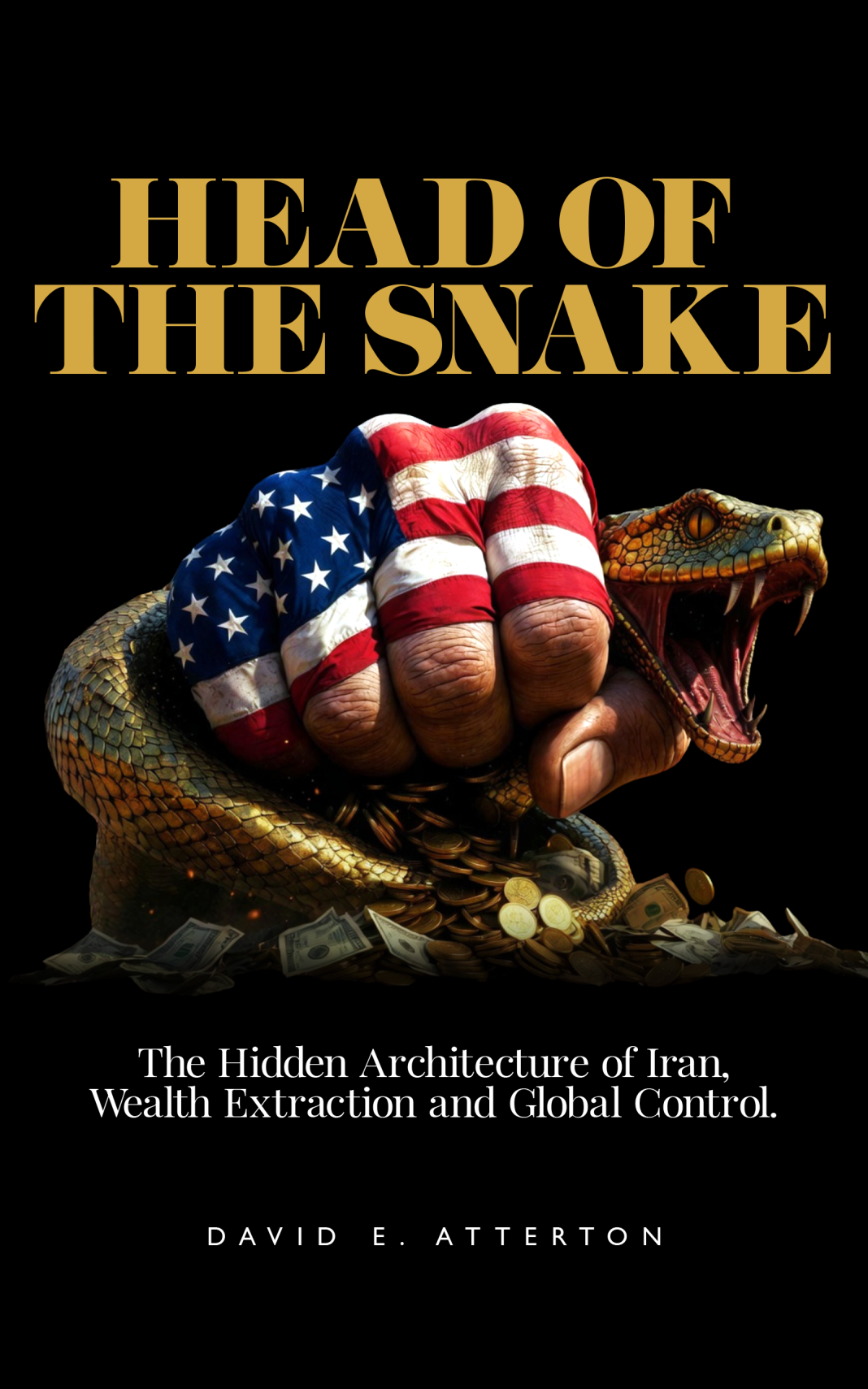
The book that mapped this years before Treasury named the architecture is Head of the Snake, and the free guides and scenario reports are in the resources library.
https://dinarchronicles.com/2026/07/01/reset-intelligence-two-hands-on-the-dinar/
Ariel: Iraq’s Market Transition, Dinar Reality, and Gold Revaluation
Ariel: Iraq’s Market Transition, Dinar Reality, and Gold Revaluation
7-1-2026
Iraq’s Market Transition, Dinar Reality, and Gold Revaluation
Prime Minister Ali al-Zaidi’s interview laying out the shift to a “market economy” with a strong, revalued dinar is the operational language for decoupling from post-2003 dependency hell. It’s the hard pivot away from the artificial program rate that kept Iraq chained to dollar auctions and smuggling networks.
Ariel: Iraq’s Market Transition, Dinar Reality, and Gold Revaluation
7-1-2026
Iraq’s Market Transition, Dinar Reality, and Gold Revaluation
Prime Minister Ali al-Zaidi’s interview laying out the shift to a “market economy” with a strong, revalued dinar is the operational language for decoupling from post-2003 dependency hell. It’s the hard pivot away from the artificial program rate that kept Iraq chained to dollar auctions and smuggling networks.
Trump’s comments on welcoming a weaker USD to enable real Middle East business make perfect sense the old strong-dollar weapon hurt legitimate trade while protecting the financial intermediaries.
Vietnam pushing the same market transition shows the broader BRICS-adjacent realignment away from fiat dominance.
The new CBI Governor coming straight from the AML/TF office is the enforcer. He knows exactly where the leaks were.
Starlink and ASYCUDA give the digital eyes and customs teeth. HCL negotiations are the revenue lock clean oil money, no more KRG gray zones or militia blending.
Gold stacking (170+ tons and growing) is the sound money anchor for Dollar 2.0 mechanics. Judy Shelton has been consistent on gold discipline for years.
Trump’s gold bald eagle image drop is the signal: we’re going back to tangible value that doesn’t erode through printing and endless wars.
The delay? There is none. The featured cleanup is first priority so the revalued dinar (redenomination + strengthening) holds. Iraq knows this.
They stacked gold because they see the writing on the wall: asset-backed systems over fiat sorcery. The artificial rate kept the old networks fat. Removing it for real trade with America forces the structural break. This is fortunate because it prevents a boom-bust that would let the parasites buy back in cheap.
The transition is brutal but necessary corruption exposed, reserves built, rails installed. When it lands, Iraq’s true wealth (oil, gold, diversified revenue) reflects in a dinar that actually works instead of bleeding value.
Read Full Article:
https://www.patreon.com/Prolotario1/posts/full-course-meal-162549782