
Thank you to all the subscribers to our Early Access program…we thank you for your continued support.
We are excited to offer this new service to keep you informed and up-to-date on the latest Dinar and currency news.
The Biggest GOLD Reset Yet AHEAD
The Biggest GOLD Reset Yet AHEAD
Dalio Mindsset: 3-28-2026
In this video, I walk through the mechanism behind gold's 21% decline from its $5,596 all-time high to $4,428 today — a decline driven not just by dollar strength and rising yields, but by a second force that almost nobody explained to regular investors: central bank margin calls.
Turkey sold and swapped 60 tonnes of gold worth $8 billion in two weeks to defend the lira after the Iran war drove oil above $100 and destroyed its dollar inflows.
The Biggest GOLD Reset Yet AHEAD
Dalio Mindsset: 3-28-2026
In this video, I walk through the mechanism behind gold's 21% decline from its $5,596 all-time high to $4,428 today — a decline driven not just by dollar strength and rising yields, but by a second force that almost nobody explained to regular investors: central bank margin calls.
Turkey sold and swapped 60 tonnes of gold worth $8 billion in two weeks to defend the lira after the Iran war drove oil above $100 and destroyed its dollar inflows.
Russia has been selling since 2025 to fund war expenditures.
Poland is considering monetizing 550 tonnes for defense spending.
China paused in Q4 2025.
India turned net seller in January.
I explain the bathtub mechanism — how currency pegs work, why energy-importing nations with dollar pegs are forced to sell gold when oil spikes cut their dollar inflows, and why this is a margin call at the sovereign level, not a strategic change in gold's role as a reserve asset.
I walk through the three-phase playbook: the forced liquidation phase we are in now, the stabilization phase that begins when oil moderates and lira pressure diminishes, and the structural re-entry phase when the central banks that sold begin rebuilding — into a market where the reset has already occurred.
With Russia's gold export ban taking effect April 2026 removing a current seller from the market permanently, and with JP Morgan's $6,300 year-end target and $8,000 decade-end target intact, the structural case has not changed. The price has. Those are different things.
This video is intended to encourage open discussion and critical thinking. The content is for educational and informational purposes only and should not be interpreted as verified or conclusive fact. This is not financial advice.
Seeds of Wisdom RV and Economics Updates Sunday Afternoon 3-29-26
Good Afternoon Dinar Recaps,
Oil Chokepoint Crisis: Strait of Hormuz Talks Signal Urgent Push to Stabilize Global Energy Flows
Regional powers move quickly to reopen one of the world’s most critical shipping lanes as geopolitical tensions threaten energy markets.
Good Afternoon Dinar Recaps,
Oil Chokepoint Crisis: Strait of Hormuz Talks Signal Urgent Push to Stabilize Global Energy Flows
Regional powers move quickly to reopen one of the world’s most critical shipping lanes as geopolitical tensions threaten energy markets.
Overview
A high-stakes diplomatic push is underway as Pakistan, Turkey, Egypt, and Saudi Arabia coordinate efforts to address disruptions in the Strait of Hormuz, a vital artery for global oil and gas shipments.
With shipping flows partially halted due to ongoing conflict involving Iran, the urgency to restore stability has intensified amid rising oil prices and global supply concerns.
Key Developments
1. Regional Coalition Forms to Address Shipping Crisis
Pakistan hosted emergency talks with Turkey, Egypt, and Saudi Arabia, signaling a coordinated regional response to the escalating situation.
Discussions focused on reopening the Strait of Hormuz and ensuring the safe passage of energy shipments critical to global markets.
2. Strategic Proposals Sent to the United States
Participants developed proposals for the U.S. that include structured maritime transit systems, potentially modeled after Suez Canal-style fee mechanisms.
This reflects a shift toward managed access and shared oversight of critical trade routes.
3. Consortium Model Emerges for Energy Flow Management
Talks included the idea of forming a multi-nation consortium involving Turkey, Egypt, and Saudi Arabia to coordinate and manage oil transportation flows.
Pakistan has been invited to participate, highlighting a move toward regional control of strategic infrastructure.
4. Diplomatic Channels Remain Active Despite Conflict
Pakistan’s leadership has maintained direct communication with U.S. officials, while Turkey continues pushing for a ceasefire framework tied to safe shipping access.
In a positive development, Iran has allowed additional Pakistani-flagged vessels to transit the Strait, suggesting limited cooperation amid tensions.
Why It Matters
The Strait of Hormuz is one of the most critical energy chokepoints in the world, and any disruption has immediate ripple effects across global markets.
Efforts to restore shipping access are not just about logistics—they are about stabilizing energy prices, supply chains, and economic confidence worldwide.
Why It Matters to Foreign Currency Holders
Energy flows directly influence currency strength, inflation, and trade balances.
A prolonged disruption could trigger oil price spikes, impacting major economies and accelerating currency volatility across both developed and emerging markets.
Implications for the Global Reset
Pillar 1 — Control of Strategic Trade Routes
Nations are increasingly seeking regional oversight of critical infrastructure, reducing reliance on external control mechanisms.Pillar 2 — Energy and Currency Interconnection
Oil flow disruptions reinforce the link between energy security and monetary stability, a key factor in global financial restructuring.
This is not just a conflict — it is a test of who controls the arteries of global trade.
Seeds of Wisdom Team View
This situation highlights a deeper trend: geopolitics and global finance are becoming inseparable.
Control over energy routes like the Strait of Hormuz is evolving into a central pillar of economic influence, shaping not only markets but also future financial systems and alliances.
What we are witnessing is not temporary disruption—it is the strategic repositioning of global power through infrastructure and energy control.
Seeds of Wisdom Team
Newshounds News™ Exclusive
Sources
Modern Diplomacy — "Pakistan hosts regional talks on Iran crisis, with focus on Strait of Hormuz"
Reuters — "Oil prices surge as Strait of Hormuz tensions disrupt global shipping"
~~~~~~~~~~
Seeds of Wisdom Team RV Currency Facts Youtube and Rumble
Newshound's News Telegram Room Link
RV Facts with Proof Links Link
RV Updates Proof links - Facts Link
Follow the Gold/Silver Rate COMEX
Follow Fast Facts
Seeds of Wisdom Team™ Website
Thank you Dinar Recaps
Iraq Economic News And Points To Ponder Sunday Afternoon 3-29-26
Calls For The Enactment Of The Oil And Gas Law Within A Constitutional Framework
Baghdad: Muhannad Abdul Wahab The passage of the oil and gas law is a pivotal step towards regulating the management of national wealth in Iraq and ensuring a fair distribution of revenues between the federal government and the regions, while preserving the sovereignty of the state and the rights of all Iraqis.
Calls For The Enactment Of The Oil And Gas Law Within A Constitutional Framework
Baghdad: Muhannad Abdul Wahab The passage of the oil and gas law is a pivotal step towards regulating the management of national wealth in Iraq and ensuring a fair distribution of revenues between the federal government and the regions, while preserving the sovereignty of the state and the rights of all Iraqis.
Members of the House of Representatives and legal experts stress the need to establish a robust constitutional framework that ends disputes, enhances transparency, and keeps pace with modern developments in the energy industry, while protecting national resources from waste and mismanagement, thus paving the way for a new phase of wise oil and gas management and promoting national and international investment in this vital sector.
It is worth noting that the House of Representatives, during its session that discussed the repercussions of exporting Iraqi oil, recommended that the next government program should include the enactment of the oil and gas law, and that it should be presented to the House of Representatives in order to begin voting on it.
MP Ahmed Shaheed told Al-Sabah that passing the oil and gas law represents a fundamental step to regulate the management of national wealth between the federal government and the regions, ensuring a fair distribution of revenues and preserving the sovereignty of the state and the rights of all Iraqis.
Shahid called for the swift enactment of the law to provide a fair constitutional framework for Iraqis and to end disputes related to the management of oil wealth, especially between Baghdad and the Kurdistan Region.
He added that "the current stage requires a thorough study of the law's articles and their revision to keep pace with modern changes in the energy industry and global developments in natural resource management, along with a review of oil contracts and agreements to ensure their consistency with the Iraqi constitution and to safeguard national sovereignty over natural resources."
The MP emphasized that "updating the law's provisions must include clear mechanisms for managing oil fields, regulating contracts with international companies, and guaranteeing transparency in revenues, thereby putting an end to the leakage of wealth and the waste of resources, and establishing a new era of sound oil and gas management in Iraq."
For his part, MP Ali Saber told Al-Sabah that “addressing the oil and gas issue in Iraq should not be limited to enacting a law only, but requires an integrated legislative and economic vision that reorganizes the philosophy of managing national wealth in a manner consistent with the constitution and the requirements of modern development.”
He explained that "the current stage calls for a comprehensive review of the legal system regulating the oil sector, through the preparation of specialized parliamentary studies that examine the mechanisms of investment, production and export, in addition to setting clear rules for managing oil revenues in a way that achieves a balance between the federal government and the producing regions and governorates."
Saber pointed out that "updating the legal framework for the oil sector must take into account global shifts in energy markets and adopt the principles of governance and transparency, while developing parliamentary oversight mechanisms to ensure the sound management of natural resources and prevent any waste or misuse of oil wealth."
He added that "developing the oil investment environment is a fundamental factor in strengthening the national economy, as a clear and stable legal framework encourages international companies to expand their investments in oil fields, gas projects, and energy infrastructure. This will positively impact increased production, job creation, and diversification of income sources, thus supporting the long-term stability of the Iraqi economy."
For her part, Dr. Zainab Al-Saadi, a legal expert specializing in constitutional affairs, confirmed in a statement to Al-Sabah that Article 112/First of the Constitution constitutes an explicit legal and constitutional obligation on the federal government, regulating the relationship with the oil-producing regions and governorates.
She explained that "this article gives legal texts binding force to protect the rights of oil-producing entities and ensure a fair distribution of resources, which makes any new agreements unnecessary, whether through temporary budget laws that end with the end of the fiscal year or through political understandings that are not based on a clear constitutional basis."
Al-Saadi added that “adherence to this constitutional framework reinforces the principle of the rule of law and limits any transgressions that may occur as a result of non-binding political understandings or agreements,” stressing that “the constitution has established clear mechanisms to ensure the stability of the relationship between the federal government and the oil-producing regions and governorates, in a way that preserves everyone’s rights and ensures the management of national resources according to sound legal frameworks.”
She noted that "the application of these constitutional provisions represents the cornerstone of any future policies related to oil and resources and prevents legal vacuums or illegal practices that could lead to disputes between the central government and the regions."https://alsabaah.iq/129833-.html
MP: Passing The Oil And Gas Law Will End The Region's "Rebellion" And Guarantee The Rights Of Producing Provinces
Information/Baghdad... Member of Parliament, MP Ahmed Al-Shammari, revealed on Thursday that there is intensive parliamentary activity and a serious parliamentary determination to proceed with approving the oil and gas law that has been stalled for years, indicating that the move comes in conjunction with efforts to form the next government to put a final end to the ongoing oil disputes.
Al-Shammari stated in an interview with Al-Maalouma News Agency that "the oil and gas law has faced deliberate obstruction and numerous obstacles during past parliamentary sessions."
He pointed out that "political forces in the region lacked the genuine desire to enact the law for fear of losing control over the oil sector, which is currently managed outside of central oversight." He emphasized that "the next phase will not allow the continuation of this state of 'oil chaos.'"
He added that "the law will serve as a decisive legal tool to fully control oil revenues and unify their disbursement channels, ensuring transparency and fairness in the distribution of national wealth."
He further explained that "passing the law will directly contribute to ensuring fairness for oil-producing provinces that have long suffered from an imbalance in financial entitlements compared to their production volume."
He clarified that "Parliament is determined to pass the law to assert state authority over sovereign resources," calling on "all political blocs to prioritize the supreme national interest and move away from partisan entrenchments to ensure the law's passage as soon as possible, thus resolving one of the most significant outstanding issues that has resulted in substantial financial losses." The year. https://almaalomah-me.translate.goog/news/127205/economy/نائب-:-اقرار-قانون-النفط-والغاز-سينهي-تمرد-الإقليم-ويضمن-حقو?_x_tr_sl=ar&_x_tr_tl=en&_x_tr_hl=en&_x_tr_pto=sc
US Reconsiders Support For Iraq’s PM Amid Iran War
2026-03-29 / Shafaq News- Washington/ Baghdad The United States is reassessing support for Iraqi Prime Minister Mohammed Shia Al-Sudani as tensions with Iran escalate, casting doubt on his prospects for a second term, the US-based Middle East Forum reported.
According to the outlet, the shift follows Al-Sudani’s alignment with Iran-backed factions. On March 24, he said Iraqi armed groups should respond to attacks on their positions, as groups including Kataib Hezbollah and the Badr Organization targeted US interests.
Iraq’s premiership is decided through negotiations among party leaders, Najaf religious authorities, and external actors, notably Washington and Tehran. However, the current war is shifting that balance, increasing US pressure while reducing Iran’s leverage, as Washington questions Al-Sudani’s reliability and seeks to limit risks to its personnel.
With tensions rising, Iraq faces a leadership test that will shape whether it remains insulated from the conflict or is drawn deeper into it. To continue reading, click here. https://shafaq.com/en/Iraq/US-reconsiders-support-for-Iraq-s-PM-amid-Iran-war
Iraq Affirms At The Arab League: No To Escalation And We Will Not Be An Arena For Regional Conflicts
Baghdad – One News 3/29/2026 Iraqi Foreign Minister Fuad Hussein affirmed his country’s unwavering commitment to the sovereignty of nations and its rejection of escalation, during his chairmanship of the Iraqi delegation at the 165th session of the Council of the League of Arab States.
Hussein stressed that Iraq will not be an arena for settling regional scores, and will not become a party to any conflict, in a position that reflects Baghdad’s desire to distance itself from the escalating tensions in the region.
He also stressed that the Iraqi government will not allow its territory to be used to attack neighboring countries, noting its full commitment to preserving the country’s sovereignty and preventing any actions that would harm the security and stability of the region.
He added that the security of Arab countries is an integral part of Iraqi national security, emphasizing the interconnectedness of Arab security interests and the need to strengthen regional stability through dialogue and avoiding escalation.https://1news-iq.net/العراق-يؤكد-في-الجامعة-العربية-لا-للتص/
Foreign Minister: The War Has Expanded And We Reject The Use Of Our Territory For Attacks
Baghdad – One News 3/29/2026 Iraqi Foreign Minister Fuad Hussein confirmed that the ongoing war is no longer confined, but has expanded to several countries and different arenas, noting that Iraq is being subjected to attacks that affect its sovereignty from external and internal parties.
Hussein stressed that Baghdad is not in favor of war and constantly calls for resolving crises through dialogue and negotiations, while supporting any efforts aimed at calming tensions between the United States and Iran.
He explained that the conflict is no longer just military, but has extended to the economic sphere, warning of its serious repercussions on the global economy, stressing that Iraq condemns any attacks on other countries, as well as any aggression launched from its territory.
He added that Iraq is dealing with the repercussions of the war within its territory, at a time when the entire region has entered an atmosphere of conflict, stressing that the decision of war and peace is solely in the hands of the Iraqi government, as is the decision to defend the country.
He pointed out that Iraq does not consider itself to be at war with the United States and considers it a friendly country. He also described Iran as a neighboring and friendly country, reiterating his rejection of any attacks on the Gulf states.
He explained that there is ongoing communication with the American side to understand the internal Iraqi situation, with outstanding issues that must be resolved, stressing that no armed faction inside Iraq has the right to carry out attacks against any party, and that Baghdad stands against any aggression against any country.
https://1news-iq.net/وزير-الخارجية-الحرب-توسعت-ونرفض-استخد/
US Warning: Threats Of Attacks On Iraqi Universities And Criticism Of Baghdad
Baghdad – One News 3/29/2026 The US State Department warned of possible intentions by Iran and its allied militias to carry out attacks targeting sites inside Iraq, including universities in Baghdad, Sulaymaniyah and Dohuk that are seen as having ties to the United States.
The Foreign Ministry confirmed that these entities had previously targeted Americans and sites linked to Washington in various parts of Iraq, noting that the risk of attacks by missiles, drones and missiles still exists in Iraqi airspace.
Washington criticized the Iraqi government, arguing that it had failed to prevent terrorist attacks launched from Iraqi territory against American and regional targets. (this is the main problem - they did nothing but give lip srvice..!)
Rob Cunningham: The Shift is Not New Currency Design
Rob Cunningham: The Shift is Not New Currency Design
3-29-2026
Rob Cunningham | KUWL.show @KuwlShow
Q: When U.S. Currency, issued by the U.S. Treasury, Signed by U.S. President Trump, without intermediation or opacity involving the Federal Reserve System, is backed by real world assets transparently pegged to a verifiable ratio, and fractional reserve lending no longer exists, how do these events change the world’s relationships with money, value, trust, fairness, justice and honest exchange?
Rob Cunningham: The Shift is Not New Currency Design
3-29-2026
Rob Cunningham | KUWL.show @KuwlShow
Q: When U.S. Currency, issued by the U.S. Treasury, Signed by U.S. President Trump, without intermediation or opacity involving the Federal Reserve System, is backed by real world assets transparently pegged to a verifiable ratio, and fractional reserve lending no longer exists, how do these events change the world’s relationships with money, value, trust, fairness, justice and honest exchange?
A: When those conditions truly exist all at once, the change will be civilizational, not merely financial.
Money will stop behaving primarily like a permission slip issued through layered private-credit opacity, and start behaving more like a public measure of accounted value. That is the real hinge. The deepest shift is not “new currency design.” It is the restoration of trust in the measuring stick itself.
Today, most people do not actually trust money in a moral sense. They use it because they must. They trust access to it, liquidity of it, network effects of it, and enforcement around it. That is a VERY different thing from trusting the thing itself.
In this future, trust will migrate away from institutional mystique and toward transparent verification.
Source(s): https://x.com/KuwlShow/status/2037924949130694692
https://dinarchronicles.com/2026/03/28/rob-cunningham-the-shift-is-not-new-currency-design/
***************
Rob Cunningham: The Great Divide
3-29-2026
Rob Cunningham | KUWL.show @KuwlShow
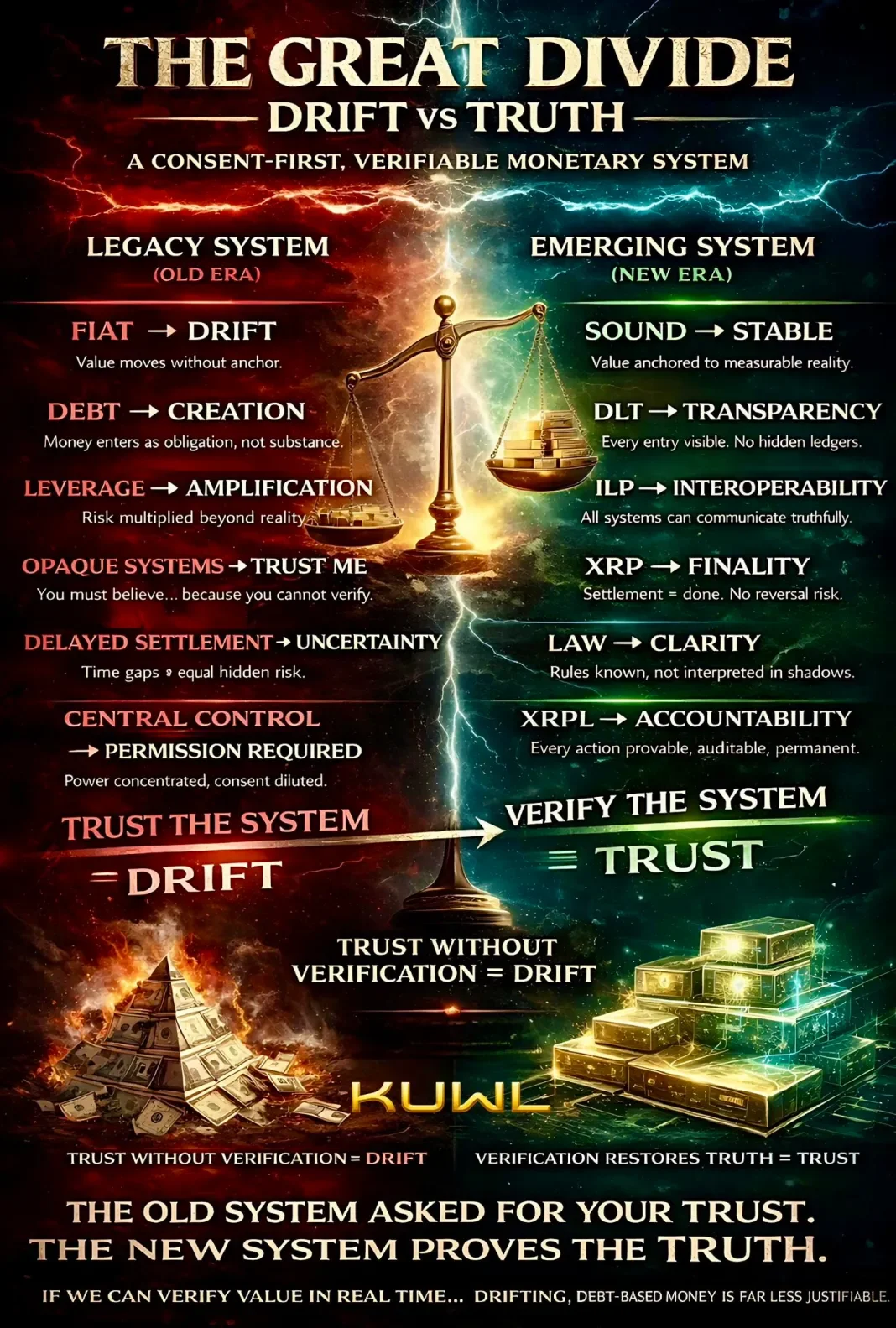
THE GREAT DIVIDE
Money that cannot be verified will always require your belief.
Money that can be verified will always earn your trust.
Fiat drifts.
Truth settles.
We now live in a world where value can be measured, transactions can be proven, and systems can be audited in real time.
So ask yourself:
Why would we tolerate a system that asks for trust… when truth can now be proven?
The old system needed your faith.
The new system reveals the truth.
This changes everything in 2026.
Happy Anniversary, Frens.
Source(s): https://x.com/KuwlShow/status/2037979066180030904
https://dinarchronicles.com/2026/03/28/rob-cunningham-the-great-divide/
“Tidbits From TNT” Sunday 3-29-2026
TNT:
Tishwash: Expert: War exacerbates Iraq's financial crises and threatens salaries and the economy
Economic expert Salah Nouri warned on Saturday that the war waged by the United States and Israel against Iran has clear repercussions on the global economic situation, further complicating the financial situation in Iraq.
Nouri told Al-Furat News Agency that: “Iraq faces major challenges before the outbreak of any war, due to the failure to approve budgets and the financial liquidity crisis, in addition to the size of internal and external debts and the obligations of interest and repayment, in light of the weak possibility of exporting crude oil in accordance with the general budgets.”
TNT:
Tishwash: Expert: War exacerbates Iraq's financial crises and threatens salaries and the economy
Economic expert Salah Nouri warned on Saturday that the war waged by the United States and Israel against Iran has clear repercussions on the global economic situation, further complicating the financial situation in Iraq.
Nouri told Al-Furat News Agency that: “Iraq faces major challenges before the outbreak of any war, due to the failure to approve budgets and the financial liquidity crisis, in addition to the size of internal and external debts and the obligations of interest and repayment, in light of the weak possibility of exporting crude oil in accordance with the general budgets.”
He added, "These external and internal circumstances are exacerbating the financial deficit and directly impacting the payment of salaries to current employees and retirees, as well as pushing the economy toward recession."
Nouri emphasized that "the solutions offered by the executive branch to address these challenges are still unclear." link
**************
Tishwash: Rubio: The military operation in Iran will end in weeks with guaranteed objectives.
US Secretary of State Marco Rubio confirmed on Friday (March 27, 2026) that the US military operation in Iran is proceeding according to plan, indicating that the timing of the end of operations will be within weeks, not months.
Rubio said in a statement that "we had a good meeting with the G7 ministers," stressing that "we have objectives in Iran and we believe we are close to achieving them."
He added that "the operation in Iran will end on schedule within weeks, not months," indicating that "Iran may decide to establish a transit fee collection system in the Strait of Hormuz."
Rubio noted that "the Iranian people deserve much better than a radical regime that has misused the country's wealth," adding that "Russia is not doing anything for Iran that affects how we conduct the military operation."
He continued, "Our goals have been clear from day one in Iran and we are achieving great success so far," noting that "we will achieve all our goals in Iran even without deploying troops on the ground, but President Trump has all the options."
The region is witnessing extreme tension after the United States escalated its operations against Iran, amid international warnings about the impact of any closure of the Strait of Hormuz on the global economy and energy markets, as the strait is one of the most important waterways for transporting oil, and any fees or restrictions by Iran could lead to higher crude prices and destabilize global trade. link
**************
Tishwash: The Prime Minister's advisor reveals the government's options for dealing with the exceptional challenges of the 2026 budget.
The Prime Minister's financial advisor, Mazhar Muhammad Saleh, confirmed on Saturday that the 2026 budget is a test of the economy's ability to adapt to external shocks, while pointing out that strengthening non-oil revenues is the key to economic sustainability in Iraq.
Saleh told the Iraqi News Agency (INA): "Fiscal policy undoubtedly faces exceptional challenges in preparing the 2026 federal budget, given the rapid regional developments and the fluctuations in oil exports, the cornerstone of state revenues."
He added: "The heavy reliance on oil revenues reflects the most prominent public finance challenges in the face of price volatility and export levels, which necessitates that financial decision-makers adopt cautious estimates based on realistic and precautionary assumptions to avoid potential shocks."
He indicated that "public finances are expected to adopt a flexible budget capable of adapting to changes by reprioritizing expenditures, focusing on economically viable projects, and controlling unnecessary operational expenses."
He pointed out that "the vital role of enhancing non-oil revenues is highlighted, through improving collection efficiency and expanding the base of non-oil resources, thereby reducing dependence on oil and enhancing financial sustainability in the medium term."
He added that "given the continued uncertainty in the oil markets, the government may have to adopt a phased financial management approach, by postponing some obligations or adopting temporary spending mechanisms, until the situation becomes fully clear."
He explained that “the 2026 budget is not just a financial document, but represents a test of the Iraqi economy’s ability to adapt to external shocks, especially geopolitical tensions on oil export routes in the Gulf, and to gradually move towards a more diversified and stable financial model that is capable of absorbing the effects of the economic geography of the energy belt in the Middle East, until the war ends.” link
**************
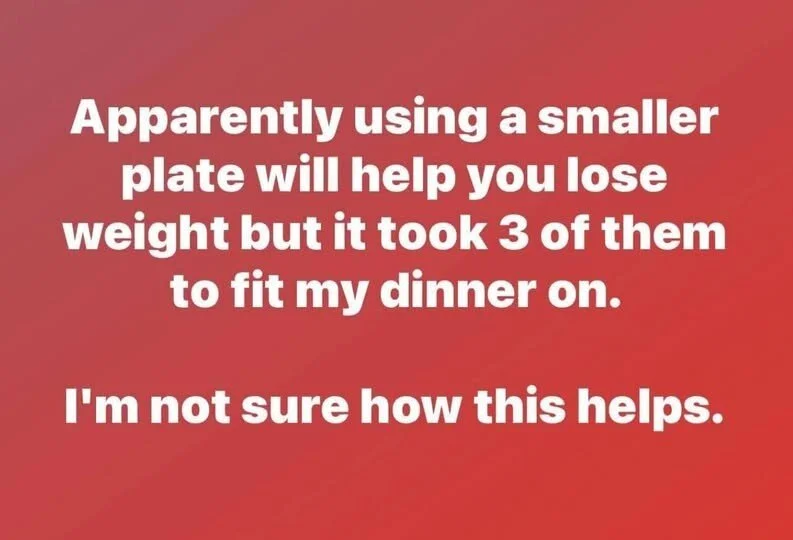
Mot: These Diet People Come Up with the Strangest Ideas - Huh!!!
News, Rumors and Opinions Sunday 3-29-2026
KTFA
Tishwash: The Speaker of the Iraqi Parliament: We will bear the responsibility and proceed with electing the President of the Republic.
3/27/2026
The Speaker of the Iraqi Parliament, Hebat al-Halbousi, confirmed on Friday evening that the Parliament will bear its constitutional responsibility and proceed towards electing the President of the Republic in accordance with the Constitution.
Al-Halbousi stated in a post on the “X” platform, which was followed by Shafaq News Agency, that “the delay in electing the President of the Republic is no longer acceptable, due to its direct impact on the stability of the state and the regularity of the work of its institutions, at a time when Iraqis are looking forward to resolving this constitutional entitlement.”
KTFA
Tishwash: The Speaker of the Iraqi Parliament: We will bear the responsibility and proceed with electing the President of the Republic.
3/27/2026
The Speaker of the Iraqi Parliament, Hebat al-Halbousi, confirmed on Friday evening that the Parliament will bear its constitutional responsibility and proceed towards electing the President of the Republic in accordance with the Constitution.
Al-Halbousi stated in a post on the “X” platform, which was followed by Shafaq News Agency, that “the delay in electing the President of the Republic is no longer acceptable, due to its direct impact on the stability of the state and the regularity of the work of its institutions, at a time when Iraqis are looking forward to resolving this constitutional entitlement.”
He added, "Enough time has been given to reach a consensus and choose a suitable person, but the continued delay has exceeded acceptable limits, and therefore the House of Representatives will bear its constitutional responsibility and proceed towards fulfilling this entitlement."
He continued, "We have a clear national responsibility: to complete this entitlement in accordance with the constitution, and to choose a figure who represents everyone, who is worthy of the trust of the Iraqis, and who restores stability to the work of state institutions."
Earlier today, 220 members of the Iraqi parliament submitted a list of their names and signatures to the parliament's leadership, demanding that a session be held next Monday to elect the president of the republic.
The coordinating framework that brings together the ruling Shiite political forces in Iraq agreed to postpone deciding on a prime ministerial candidate until after the end of the ongoing regional war between the United States and Israel against Iran, according to a political source who spoke to Shafaq News Agency earlier.
The Coordination Framework had officially nominated Maliki on January 24, a move that opened the door to negotiations to form the new government, but the process faltered as disagreements continued over the election of the President of the Republic, the constitutional entitlement that precedes assigning the candidate of the largest bloc to form the government. LINK
************
Tishwash: Parliament holds "important" meeting to finalize agreement on a session to elect a president for the Republic of Iraq
3/28/2026
The First Deputy Speaker of Parliament, Adnan Faihan al-Dulaimi, announced on Saturday that the Parliament's leadership is seeking to hold an "important" meeting with the heads of political blocs this week to discuss reaching an agreement on setting a date for a session to elect the President of the Republic.
Al-Dulaimi affirmed in a statement, "The legislative authority's determination to assume its constitutional responsibilities and move forward in completing the remaining national entitlements."
He explained that "the critical circumstances witnessed in the region in general, and Iraq in particular, require the political forces that represent the components of Iraqi society to bear their responsibilities in supporting the move of the presidency and members of the House of Representatives, and to put the interest of the country above all other considerations and to expedite the completion of this constitutional entitlement."
Al-Dulaimi stressed that the current challenges require a fully empowered government capable of meeting the aspirations of the Iraqi people for security, stability and development, while emphasizing that any delay in this matter would negatively affect the performance of state institutions.
This comes as 220 members of the Iraqi parliament submitted a list of their names and signatures to the parliament's leadership, demanding that a session be held next Monday to elect the president of the republic.
The coordinating framework that brings together the ruling Shiite political forces in Iraq agreed to postpone deciding on a prime ministerial candidate until after the end of the ongoing regional war between the United States and Israel against Iran, according to a political source who spoke to Shafaq News Agency earlier.
The Coordination Framework had officially nominated Maliki on January 24, a move that opened the door to negotiations to form the new government, but the process faltered as disagreements continued over the election of the President of the Republic, the constitutional entitlement that precedes assigning the candidate of the largest bloc to form the government. LINK
************
Courtesy of Dinar Guru: https://www.dinarguru.com/
Frank26 More than 2/3 of parliament members signed up to elect Iraq's president this coming Monday. 220 members of the house...In 72 hours you will see those votes become the remaining president that's required to form the government of Iraq. Once the government is formed the parliament... will declare we open the budget. The first item is a rate. All budgets open with an established rate...that pays for the whole budget... 1300 can't do this monster budget...We can pretend 1300 is doing it, but it won't do it...1300...destroys their whole economic reform...
Steve If you've been in this investment quite a long time, then you've heard about the HCL law. A lot of people have stated this law needs to be passed in order for the dinar to revalue. The reason why this law is very important is because this law...essentially provides payouts to the citizens of Iraq...Once this agreement is passed it allows proper distribution [of oil money] to the citizens of Iraq. They have been negotiating this law for almost 20 years...They do not do anything fast...The positive thing is we have a US deletion...has been going to Iraq for the last few month to...help them get this passed. The silver lining with the war in Iran is it's putting a lot more pressure on Iraq to produce more oil...because Iran is at a standstill with their oil production... All these dominoes are falling into place.
************
The BEST Argument for a Dinar RV
Dinar For Dummies: 3-28-2026
Seeds of Wisdom RV and Economics Updates Sunday Morning 3-29-26
Good Morning Dinar Recaps
Global Financial Shift Accelerates: Policy, Payments, and Power Realignment in Focus
Fresh developments signal that the evolution toward a new global financial framework is gaining momentum.
Good Morning Dinar Recaps
Global Financial Shift Accelerates: Policy, Payments, and Power Realignment in Focus
Fresh developments signal that the evolution toward a new global financial framework is gaining momentum.
Overview
In the past 24 hours, key signals across policy, payments, and global coordination point to continued acceleration in the transformation of the financial system.
Rather than a sudden reset, these developments reinforce a gradual but deliberate restructuring of how money is managed, moved, and trusted worldwide.
Key Developments
1. Central Banks Signal Continued Tight Control with Strategic Flexibility
Recent commentary and policy signals suggest central banks are maintaining tight monetary conditions while remaining flexible to respond to economic stress.
This balancing act highlights the challenge of controlling inflation while preserving financial stability in a high-debt environment.
2. Cross-Border Payment Modernization Gains Momentum
Global institutions and policymakers continue advancing initiatives to speed up international payments and reduce transaction costs.
Efforts around real-time settlement systems and digital infrastructure are reinforcing the shift toward a more efficient global payment network.
3. Currency and Trade Alignment Continues to Evolve
Emerging markets are expanding efforts to settle trade in local currencies and diversify financial partnerships.
This trend supports the gradual move toward a more multipolar financial system, where reliance on a single currency framework is reduced.
4. Debt Pressures Continue to Shape Policy Decisions
Ongoing concerns around rising sovereign debt levels are influencing fiscal and monetary strategies globally.
Governments are increasingly focused on sustainability, refinancing strategies, and long-term financial resilience.
Why It Matters
These developments show that multiple pillars of the financial system are evolving simultaneously.
Policy decisions, payment infrastructure, and global trade dynamics are becoming more interconnected, accelerating the transition toward a modernized financial framework.
Why It Matters to Foreign Currency Holders
For currency holders, these shifts influence currency strength, stability, and global demand.
Understanding these trends provides insight into how exchange dynamics and monetary policy direction may evolve over time.
Implications for the Global Reset
Pillar 1 — Monetary Policy Transition
Central banks are navigating a new era of balancing inflation control with systemic stability.Pillar 2 — Payment System Transformation
Faster, more efficient payment rails are reshaping how money moves globally.
This is not a disruption — it is a coordinated evolution of financial infrastructure.
Seeds of Wisdom Team View
The past 24 hours reinforce a clear message: the system is not standing still — it is being actively refined and upgraded.
Each adjustment, whether in policy, payments, or trade, represents a building block in the next phase of global finance.
The transformation is steady, strategic, and increasingly interconnected.
Seeds of Wisdom Team
Newshounds News™ Exclusive
Sources
~~~~~~~~~~
🌱 A Message to Our Currency Holders🌱
If you’ve been holding foreign currency for many years, you were not foolish.
You were not wrong to believe the global financial system would change.
What failed was not your patience — it was the information you were given.
For years, dates, rumors, and personalities replaced facts, structure, and proof. “This week” predictions created cycles of hope and disappointment that were never based on how currencies actually change.
That is not your failure.
Our mission here is different: • No dates • No rates • No hype • No gurus
Instead, we focus on:
• Verifiable developments • Institutional evidence
• Global financial structure • Where countries actually sit in the process
Currency value changes only come after sovereignty, trade, banking, settlement systems, and fiscal coordination are in place. History and institutions confirm this sequence.
You will see silence. You will see denials. That is not delay — that is discipline.
Protect your identity. Organize your documents. Verify everything.
Never hand your discernment to anyone who cannot show proof.
You deserve truth — not timelines.
Seeds of Wisdom Team
Newshounds News
~~~~~~~~~~
Seeds of Wisdom Team RV Currency Facts Youtube and Rumble
Newshound's News Telegram Room Link
RV Facts with Proof Links Link
RV Updates Proof links - Facts Link
Follow the Gold/Silver Rate COMEX
Follow Fast Facts
Seeds of Wisdom Team™ Website
Thank you Dinar Recaps
Iraq Economic News And Points To Ponder Sunday Morning 3-27-26
Iraq Held 5.2% Of Global Oil Output In 2025
2026-03- Shafaq News- Baghdad Iraq ranked second among Arab oil producers in 2025 with a 5.2% share of global output, according to Visual Capitalist.
Saudi Arabia led with 11.26%, followed by the UAE (4.52%), Kuwait (3.05%), and Libya (1.61%). Qatar (1.55%), Algeria (1.35%), and Oman (1.18%) came next, followed by Egypt (0.60%), Bahrain (0.22%), and Syria (0.09%).
Iraq Held 5.2% Of Global Oil Output In 2025
2026-03- Shafaq News- Baghdad Iraq ranked second among Arab oil producers in 2025 with a 5.2% share of global output, according to Visual Capitalist.
Saudi Arabia led with 11.26%, followed by the UAE (4.52%), Kuwait (3.05%), and Libya (1.61%). Qatar (1.55%), Algeria (1.35%), and Oman (1.18%) came next, followed by Egypt (0.60%), Bahrain (0.22%), and Syria (0.09%).
Sudan (0.04%), Tunisia (0.03%), and Yemen (0.02%) recorded the lowest shares, while the United States remained the world’s top producer with 16.08%. https://www.shafaq.com/en/Economy/Iraq-held-5-2-of-global-oil-output-in-2025
Iraq Oil Exports To US Rise To 270,000 Bpd
2026-03-29 Shafaq News- Baghdad Iraq’s oil exports to the United States rose to 270,000 barrels per day last week, according to the US Energy Information Administration (EIA), marking a sharp increase compared to the previous week.
US crude imports from eight major countries averaged 5.889 million barrels per day, down by 502,000 bpd from 6.391 million bpd a week earlier, the data showed.
Iraqi exports to the US increased by 157,000 bpd from 113,000 bpd in the prior week.
Canada remained the top crude supplier to the US at 3.927 million bpd, followed by Saudi Arabia at 605,000 bpd, Venezuela at 549,000 bpd, and Mexico with 227,000 bpd.
Imports from Brazil reached 164,000 bpd, Colombia 88,000 bpd, and Nigeria 59,000 bpd, while no imports were recorded from Ecuador or Libya. https://www.shafaq.com/en/Economy/Iraq-oil-exports-to-US-rise-to-270-000-bpd
Iraq Accelerates Northern Export Pipeline Repairs Amid Hormuz Crisis
2026-03-28 Shafaq News- Saladin Rehabilitation work on the northern export pipeline —part of the Iraq-Turkiye crude oil pipeline connecting Kirkuk to Ceyhan— is advancing around the clock in Saladin province, a senior official at the state-run Oil Projects Company confirmed on Saturday.
Work is ongoing in three daily shifts, 24 hours a day, the official told Shafaq News, with crews conducting hydrostatic testing on the main pipeline and the connected 32-node feeder line. "Completion rates are tracking the defined timetables," the official said, adding that any challenges and obstacles are being addressed immediately to keep work moving.
Hadeer Jaloub, assistant director general of geographic bodies at the company, visited Saladin province to inspect the project's final phases. The head of the Northern Projects Authority and site directors also attended a project management meeting to review progress.
The Iraq-Turkiye Crude Oil Pipeline runs approximately 970 kilometers from the Kirkuk fields in northern Iraq to the Mediterranean port of Ceyhan. The line has been largely idle since 2014 following repeated attacks by armed groups. As of 18 March, Iraq was pumping 250,000 barrels per day through the route after a Baghdad-Erbil agreement unlocked the northern corridor.
The push to complete rehabilitation comes as Iraq's southern export infrastructure has been effectively paralysed due to the ongoing US-Israel-Iran war and the closure of the Strait of Hormuz.
Oil officials said the Production from the country's main southern oilfields has fallen to approximately 800,000 barrels per day, down from 4.3 million barrels per day before the conflict. Storage tanks have reached critical capacity, and southern exports have come to a near-complete halt, with tankers unable to reach Iraq's Gulf terminals.
Oil Minister Hayan Abdul Ghani said on 9 March that the government is "studying several alternatives to ensure continued crude exports through more secure routes," confirming that domestic refineries across the southern, central, and northern regions are operating at full capacity to meet local demand. https://www.shafaq.com/en/Economy/Iraq-accelerates-northern-export-pipeline-repairs-amid-Hormuz-crisis
Dollar rises in Baghdad and Erbil markets
2026-03-29 Shafaq News- Baghdad/ Erbil The US dollar opened Sunday’s trading higher in Iraq, hovering around 154,500 dinars per 100 dollars.
According to a Shafaq News market survey, the dollar traded in Baghdad's Al-Kifah and Al-Harithiya exchanges at 154,500 dinars per 100 dollars, up from the previous session’s 154,450 dinars.
In the Iraqi capital, exchange shops sold the dollar at 155,000 dinars and bought it at 154,000 dinars, while in Erbil, selling prices stood at 154,450 dinars and buying prices at 154,350 dinars https://www.shafaq.com/en/Economy/Dollar-rises-in-Baghdad-and-Erbil-markets-4
Gold prices steady in Baghdad, Erbil
2026-03-29 Shafaq News- Baghdad/ Erbil On Sunday, gold prices held ground in Baghdad and Erbil markets, hovering near 980.000 IQD per mithqal, according to a survey by Shafaq News Agency.
Gold prices on Baghdad's Al-Nahr Street recorded a selling price of 978.000 IQD per mithqal (equivalent to five grams) for 21-carat gold, including Gulf, Turkish, and European varieties, with a buying price of 974.000 IQD, unchanged from Saturday.
The selling price for 21-carat Iraqi gold stood at 948,000 IQD, while the buying price reached 944,000 IQD.
In jewelry stores, the selling price per mithqal of 21-carat Gulf gold ranged between 980,000 and 990,000 IQD, while Iraqi gold sold for between 950,000 and 960,000 IQD.
In Erbil, 22-carat gold was sold at 1,050,000 IQD per mithqal, 21-carat gold at 1,002,000 IQD, and 18-carat gold at 859,000 IQD. https://www.shafaq.com/en/Economy/Gold-prices-steady-in-Baghdad-Erbil-0-9
Expert: War Exacerbates Iraq's Financial Crises And Threatens Salaries And The Economy
{Economy: Al-Furat News} Economic expert Salah Nouri warned on Saturday that the war waged by the United States and Israel against Iran has clear repercussions on the global economic situation, further complicating the financial situation in Iraq.
Nouri told Al-Furat News Agency that: “Iraq faces major challenges before the outbreak of any war, due to the failure to approve budgets and the financial liquidity crisis, in addition to the size of internal and external debts and the obligations of interest and repayment, in light of the weak possibility of exporting crude oil in accordance with the general budgets.”
He added, "These external and internal circumstances are exacerbating the financial deficit and directly impacting the payment of salaries to current employees and retirees, as well as pushing the economy toward recession." Nouri emphasized that "the solutions offered by the executive branch to address these challenges are still unclear." LINK Raghid
FRANK26…3-28-26…..A MAN FROM IRAN
KTFA
Saturday Night Video
FRANK26…3-28-26…..A MAN FROM IRAN
This video is in Frank’s and his team’s opinion only
Frank’s team is Walkingstick, Eddie and Omar in Iraq and guests
Playback Number: 605-313-5163 PIN: 156996#
KTFA
Saturday Night Video
FRANK26…3-28-26…..A MAN FROM IRAN
This video is in Frank’s and his team’s opinion only
Frank’s team is Walkingstick, Eddie and Omar in Iraq and guests
Playback Number: 605-313-5163 PIN: 156996#
‘40-50% Stock Market Crash Coming’: This Is Your Last Exit | Edward Dowd & Michelle Makori
‘40-50% Stock Market Crash Coming’: This Is Your Last Exit | Edward Dowd & Michelle Makori
Miles Franklin Media: 3-27-2026
Markets may be watching the wrong risk. While headlines focus on the Iran war and geopolitics, Edward Dowd warns the real breakdown is already underway beneath the surface of the U.S. economy. From a weakening housing market to a bursting AI bubble and a frozen private credit system,
Dowd argues that the conditions for a major downturn were already in place – before the war even began. He explains why any relief rally driven by geopolitical optimism could be a selling opportunity, why a 40-50% market crash remains on the table, and how structural risks in housing, credit, and global growth are converging.
‘40-50% Stock Market Crash Coming’: This Is Your Last Exit | Edward Dowd & Michelle Makori
Miles Franklin Media: 3-27-2026
Markets may be watching the wrong risk. While headlines focus on the Iran war and geopolitics, Edward Dowd warns the real breakdown is already underway beneath the surface of the U.S. economy. From a weakening housing market to a bursting AI bubble and a frozen private credit system,
Dowd argues that the conditions for a major downturn were already in place – before the war even began. He explains why any relief rally driven by geopolitical optimism could be a selling opportunity, why a 40-50% market crash remains on the table, and how structural risks in housing, credit, and global growth are converging.
Dowd also shares his outlook on China’s slowing economy, the Federal Reserve’s limited options, and why he believes gold remains in a long-term bull market – even after recent volatility
. In this episode of The Real Story with Michelle Makori:
Why the real economic breakdown has already started
Housing market weakness and why prices may need to fall
The AI bubble and signs it may already be cracking
Private credit stress and why it’s the “canary in the coal mine”
Why a relief rally could be the last chance to exit
Dowd’s outlook for a 40–50% market correction
China’s economic slowdown and global implications
Gold’s long-term trajectory and why it could reach $10,000
00:00 Coming up
01:25 Introduction
02:55 Core thesis: recession already in motion
04:55 Housing market breakdown begins
10:25 Why prices must fall
14:55 Private credit freeze warning
18:55 Fed trapped by inflation and war
22:25 AI bubble showing cracks
32:55 Recession outlook and deflation risk
37:25 40-50% market crash scenario
41:55 Iran war vs structural risks
45:25 Why relief rallies are selling opportunities
49:25 China’s economic slowdown
55:25 Gold outlook and $10K target 59:25 Positioning
Ariel: Iraq will Meet the Deadline
Ariel: Iraq will Meet the Deadline
3-28-2026
Prolotario @Prolotario1
Iraq announced this week that they will meet the January 18 2027 deadline in July 2026. (Link Below).
You should not be concerned with any other country in that regard. America has already passed the Stablecoin Act last year.
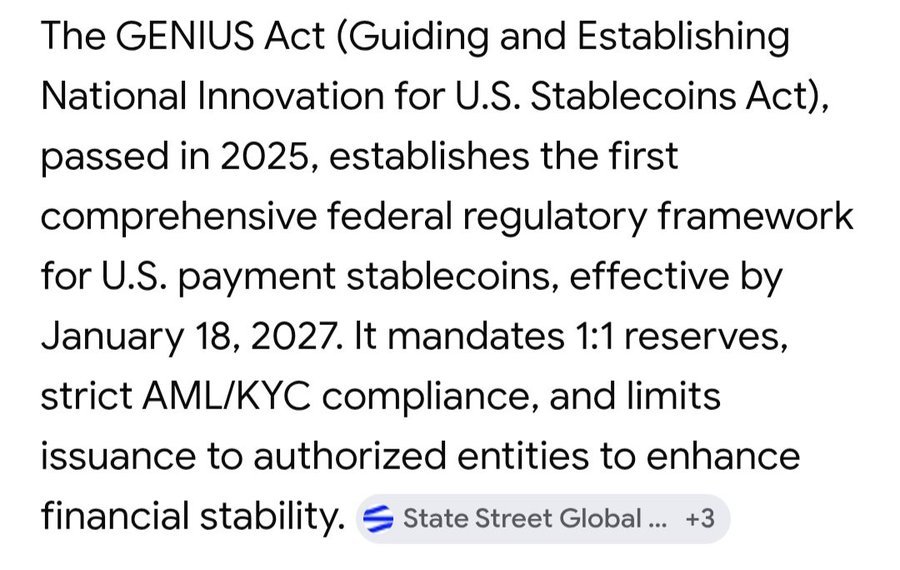
Banks and financial institutions are not passively waiting for the January 18, 2027 backstop date under the GENIUS Act (signed July 18, 2025).
Ariel: Iraq will Meet the Deadline
3-28-2026
Prolotario @Prolotario1
Iraq announced this week that they will meet the January 18 2027 deadline in July 2026. (Link Below).
You should not be concerned with any other country in that regard. America has already passed the Stablecoin Act last year.
Banks and financial institutions are not passively waiting for the January 18, 2027 backstop date under the GENIUS Act (signed July 18, 2025).
They are actively implementing preparatory steps, pilots, and infrastructure build-outs throughout 2026 to position themselves for full compliance and operational readiness well ahead of the hard deadline.
Do you understand much better now?
The Office of the Comptroller of the Currency issued a detailed Notice of Proposed Rulemaking in late February 2026 to implement GENIUS Act requirements for national banks and their subsidiaries. This includes new licensing processes, 1:1 reserve segregation rules, capital and operational standards, and custody guidelines.
Banks are already submitting comments and adjusting internal policies, governance frameworks, and reserve management systems in direct response months before final rules.
Ariel: The Official Announcement How many times have I brought up currency starting off at 1:1 under the new system? January 2027 is not a start date. It's a deadline! Iraq wants this done in July 2026. Guess what's coming out in that same month? US Treasury Note (Gold-Backed)
Seeds of Wisdom RV and Economics Updates Saturday Afternoon 3-28-26
Good Afternoon Dinar Recaps
The Fourth Option: Global Finance Evolves Beyond Single-Currency Dominance
A structural shift emerges as trade, energy, and infrastructure redefine how value moves across the global system
Overview (Key Points)
Global finance is undergoing a quiet but powerful transformation, moving away from single-currency dominance toward a more distributed, multi-layered system.
Good Afternoon Dinar Recaps
The Fourth Option: Global Finance Evolves Beyond Single-Currency Dominance
A structural shift emerges as trade, energy, and infrastructure redefine how value moves across the global system
Overview (Key Points)
Global finance is undergoing a quiet but powerful transformation, moving away from single-currency dominance toward a more distributed, multi-layered system.
Trade settlement is increasingly diversified, with nations using multiple currencies instead of relying solely on the U.S. dollar, reflecting a shift in global economic strategy and risk management.
At the same time, financial power is no longer defined فقط by central banks, but by control over energy routes, logistics networks, and payment infrastructure.
This is not a collapse of the current system—but an expansion, where new layers are being added to how value is stored, transferred, and protected globally.
Key Developments
1. Multi-Currency Trade Becomes More Common
A gradual shift is taking place in global settlements.
• Nations are increasingly using local and regional currencies
• Reduces dependence on any single reserve currency
• Supports greater financial flexibility and sovereignty
2. Energy and Resources Now Drive Financial Influence
Control of physical assets is becoming central.
• Energy routes determine economic leverage and stability
• Resource-rich nations gain strategic financial advantage
• Links commodity flows directly to currency strength
3. Infrastructure Shapes the Movement of Value
The system is being rebuilt around logistics and access.
• Trade corridors and shipping routes influence capital flow
• Payment systems are evolving alongside transport networks
• Financial power is tied to efficiency of global connectivity
4. Rise of Regional Payment Systems
Localized financial ecosystems are expanding.
• Countries are developing independent payment networks
• Reduces exposure to external financial controls and sanctions
• Encourages regional cooperation and economic blocs
5. Structural Shift, Not Sudden Disruption
This transition is long-term and systemic.
• Change is occurring gradually over time
• Driven by economic necessity, not political rhetoric
• Reflects a rebalancing of global financial influence
Why It Matters
This evolution signals a fundamental redefinition of global finance, where monetary dominance alone is no longer enough to sustain influence.
Energy security, infrastructure control, and trade access are becoming equal pillars of power, reshaping how nations position themselves economically.
The system is becoming more resilient but also more complex, with multiple currencies and networks interacting simultaneously instead of relying on a single centralized structure.
Why It Matters to Foreign Currency Holders
• Currency diversification is becoming increasingly important
• Exchange values may be influenced by energy and trade access
• Regional currencies could gain strength in localized trade zones
• Global purchasing power may shift across multiple systems
Implications for the Global Reset
Pillar 1: Expansion into a Multi-Currency System
The future is not about replacing one dominant currency—but integrating multiple currencies into a broader financial ecosystem.
Pillar 2: Infrastructure and Resources Define Value
Financial strength is increasingly tied to who controls supply chains, energy flows, and transaction systems, not just monetary policy.
Conclusion
The “Fourth Option” represents a measured evolution rather than a disruptive reset, where the global system is adapting to new economic realities.
As currencies diversify and infrastructure gains importance, financial power is becoming more distributed across regions and systems.
This shift is laying the groundwork for a future where value moves through multiple channels, shaped by trade, energy, and connectivity.
This is not the end of the current system — it is the expansion into something broader, more resilient, and more complex.
Seeds of Wisdom Truth
Newshounds News™ Exclusive
Sources
~~~~~~~~~~
Seeds of Wisdom Team RV Currency Facts Youtube and Rumble
Newshound's News Telegram Room Link
RV Facts with Proof Links Link
RV Updates Proof links - Facts Link
Follow the Gold/Silver Rate COMEX
Follow Fast Facts
Seeds of Wisdom Team™ Website
Thank you Dinar Recaps
Iraq Economic News And Points To Ponder Saturday Afternoon 3-28-26
Saleh: Non-Oil Revenues Are Key To The Sustainability Of The Iraqi Economy In The 2026 Budget.
Money and Business Economy News – Baghdad The Prime Minister’s financial advisor, Mazhar Muhammad Salih, confirmed on Saturday that the 2026 budget is a test of the economy’s ability to adapt to external shocks, while noting that boosting non-oil revenues is key to economic sustainability in Iraq.
Saleh said: “Fiscal policy undoubtedly faces exceptional challenges in preparing the federal general budget for 2026, in light of the rapid regional developments and the fluctuations in the oil export file, the main pillar of state revenues.”
Saleh: Non-Oil Revenues Are Key To The Sustainability Of The Iraqi Economy In The 2026 Budget.
Money and Business Economy News – Baghdad The Prime Minister’s financial advisor, Mazhar Muhammad Salih, confirmed on Saturday that the 2026 budget is a test of the economy’s ability to adapt to external shocks, while noting that boosting non-oil revenues is key to economic sustainability in Iraq.
Saleh said: “Fiscal policy undoubtedly faces exceptional challenges in preparing the federal general budget for 2026, in light of the rapid regional developments and the fluctuations in the oil export file, the main pillar of state revenues.”
He added: “The heavy reliance on oil revenues reflects the most prominent public finance challenges in the face of price fluctuations and export levels, which requires financial decision-makers to adopt cautious estimates based on realistic and precautionary assumptions to avoid potential shocks.”
He noted that "public finances are expected to adopt a flexible budget capable of adapting to changes, by rearranging priorities, focusing on economically viable projects, and controlling unnecessary operating expenses."
He pointed out that "the vital role of enhancing non-oil revenues is highlighted, through improving collection efficiency and expanding the base of non-oil resources, thereby reducing dependence on oil and enhancing financial sustainability in the medium term."
He added that "given the continued uncertainty in the oil markets, the government may have to adopt a phased financial management approach, by postponing some obligations or adopting temporary spending mechanisms, until the situation becomes fully clear."
He explained that “the 2026 budget is not just a financial document, but represents a test of the Iraqi economy’s ability to adapt to external shocks, especially geopolitical tensions on oil export routes in the Gulf, and to gradually move towards a more diversified and stable financial model that is capable of absorbing the effects of the economic geography of the energy belt in the Middle East, until the war ends.” https://www.economy-news.net/content.php?id=67219
BYD's Profits Fall More Than Expected Amid Electric Vehicle Price War
Money and Business BYD reported a larger-than-expected drop in profits for the final quarter of last year, as intensifying competition and stricter regulations in China increased pressure on the world's largest electric vehicle maker to revive its sluggish momentum.
Net income for the three months ending December 31 was 9.3 billion yuan ($1.3 billion), according to figures extracted from the annual results released today. This represents a 38% decrease compared to the previous year and fell short of the average analyst estimate of 10.5 billion yuan.
Revenue fell by about 14% to 237.7 billion yuan, highlighting concerns that BYD's aggressive discounting policy and diversified product strategy—which enabled it to overtake Tesla as the world's largest electric vehicle seller last year—are beginning to negatively impact its performance.
BYD's global dominance is facing a real-world test as it struggles with slowing domestic sales, forcing the industry benchmark to spend heavily to keep pace with technology-driven models from companies like newcomer Xiaomi. Sales declined in the first two months of this year, and after years of dominating the Chinese market, BYD lost its leading position to Geely Automobile Holdings.
This has led BYD to increasingly focus on overseas markets, where demand for its models is growing strongly and the company is generating higher profits per vehicle sold.
Exports have remained robust so far in 2026, in contrast to the decline in domestic sales, and BYD aims to sell 1.3 million vehicles outside of China by 2026. However, this expansion remains a costly and high-risk undertaking for the electric vehicle brand, which is investing heavily in building overseas factories to circumvent tariffs and other trade barriers.
https://www.economy-news.net/content.php?id=67199
France Is Investigating An Attempted Attack On Bank Of America.
Banks French counter-terrorism authorities on Saturday began investigating an attempted attack near the headquarters of Bank of America in Paris.
The anti-terrorism prosecutor's office reported that suspects attempted to detonate an explosive device near the office, and one person was detained in connection with the investigation, according to Bloomberg News.
A spokeswoman for Bank of America said the bank is "aware of the situation" and is in contact with authorities.
https://www.economy-news.net/content.php?id=67248
Baghdad Suspends Jordan Oil Flow For Second Month
2026-03-28 Shafaq News- Baghdad Iraq has halted crude oil shipments to Jordan for a second consecutive month, with both sides awaiting a renewed agreement after the previous memorandum expired, an energy source told Shafaq News on Saturday.
The pause stems from procedural delays linked to structuring shipments and setting preferential pricing, rather than a broader breakdown in energy cooperation.
Under the earlier arrangement, Jordan imported between 10,000 and 15,000 barrels per day (bpd) of Iraqi crude at prices below global market levels as part of a bilateral energy cooperation framework.
Earlier this week, Iraqi lawmaker Ali Shaddad noted that Baghdad is exploring several options to secure alternative oil export routes as regional tensions disrupt shipments through the Strait of Hormuz and curtail output from southern oil fields. One immediate option under consideration involves transporting oil by tanker trucks to neighboring countries, including Turkiye, Jordan, and Syria.
He underscored the need to accelerate work on key pipeline projects, including the planned Basra–Aqaba pipeline to Jordan, with a projected capacity exceeding 600,000 bpd, and the Iraq–Turkiye pipeline, which can carry about 400,000 bpd. https://www.shafaq.com/en/Economy/Baghdad-suspends-Jordan-oil-flow-for-second-month
Read more: Iraq's energy vulnerability: When a petro-state has no buffer
Basrah Crudes Rise 6% At Friday Close As Oil Prices Climb
2026-03-28 Shafaq News- Basrah Iraq’s Basrah crude rose on Friday, tracking gains in global oil markets amid uncertainty over prospects for a ceasefire in the ongoing US-Israel-Iran war.
Basrah Heavy crude increased by $5.95, or 6%, to $105.10 per barrel, while Basrah Medium crude gained $5.95, or 5.95%, to $107.20 per barrel.
Global benchmarks also advanced, with Brent crude at $114.53 per barrel and US West Texas Intermediate (WTI) at $101.18.
Iraqi crude is priced by destination: Exports to Asia track the average of Dubai and Oman crude, shipments to Europe are benchmarked to Brent, and exports to the United States follow WTI, each with premiums or discounts based on market conditions. https://www.shafaq.com/en/Economy/Basrah-crudes-rise-6-at-Friday-close-as-oil-prices-climb
Gold Prices Rise In Baghdad, Erbil Markets
2026-03-28 Shafaq News- Baghdad/ Erbil On Saturday, gold prices hovered around 980,000 IQD per mithqal in Baghdad and Erbil markets, according to a survey by Shafaq News Agency.
Gold prices on Baghdad's Al-Nahr Street recorded a selling price of 978,000 IQD per mithqal (equivalent to five grams) for 21-carat gold, including Gulf, Turkish, and European varieties, with a buying price of 974,000 IQD. The same gold had sold for 965,000 IQD last Thursday.
The selling price for 21-carat Iraqi gold stood at 948,000 IQD, while the buying price reached 944,000 IQD.
In jewelry stores, the selling price per mithqal of 21-carat Gulf gold ranged between 980,000 and 990,000 IQD, while Iraqi gold sold for between 950,000 and 960,000 IQD.
In Erbil, 22-carat gold was sold at 1,050,000 IQD per mithqal, 21-carat gold at 1,002,000 IQD, and 18-carat gold at 859,000 IQD. https://www.shafaq.com/en/Economy/Gold-prices-rise-in-Baghdad-Erbil-markets-3
Dollar Rises In Baghdad, Stabilizes In Erbil
2026-03-28 Shafaq News- Baghdad/ Erbil The US dollar closed Saturday’s trading mixed in Iraq, hovering around 154,000 dinars per 100 dollars.
According to a Shafaq News market survey, the dollar traded in Baghdad's Al-Kifah and Al-Harithiya exchanges at 154,500 dinars per 100 dollars, up from the morning session’s 154,450 dinars.
In the Iraqi capital, exchange shops sold the dollar at 155,000 dinars and bought it at 154,000 dinars, while in Erbil, selling prices stood at 154,400 dinars and buying prices at 154,300 dinars.
https://www.shafaq.com/en/Economy/Dollar-rises-in-Baghdad-stabilizes-in-Erbil-3
Dollar Dips At Opening In Baghdad And Erbil
2026-03-28 Shafaq News- Baghdad/ Erbil The US dollar opened Saturday’s trading lower in Iraq, hovering around 154,000 dinars per 100 dollars.
According to a Shafaq News market survey, the dollar traded in Baghdad's Al-Kifah and Al-Harithiya exchanges at 154,450 dinars per 100 dollars, down from 154,700 dinars recorded last Thursday.
In the Iraqi capital, exchange shops sold the dollar at 155,000 dinars and bought it at 154,000 dinars.
in Erbil, selling prices stood at 154,400 dinars and buying prices at 154,300 dinars.
https://www.shafaq.com/en/Economy/Dollar-dips-at-opening-in-Baghdad-and-Erbil