
Thank you to all the subscribers to our Early Access program…we thank you for your continued support.
We are excited to offer this new service to keep you informed and up-to-date on the latest Dinar and currency news.
“Tidbits From TNT” Friday 10-17-2025
TNT:
Tishwash: How did a Gulf nation barely bigger than Nagaland build the world’s most powerful currency?
Despite its modest size, Kuwait boasts the world's most valuable currency, the Kuwaiti Dinar (KWD), with an exchange rate of approximately 1 KWD = 3.26 USD.
1. Kuwait: A Tiny Powerhouse
Kuwait, a small nation of approximately 5 million people, occupies just 17,818 square kilometres, slightly larger than India's Nagaland. Despite its modest size, Kuwait boasts the world's most valuable currency, the Kuwaiti Dinar (KWD), with an exchange rate of approximately 1 KWD = 3.26 USD. Its compact geography and strategic Gulf location allow it to efficiently manage infrastructure and economic policies that reinforce its currency strength.
TNT:
Tishwash: How did a Gulf nation barely bigger than Nagaland build the world’s most powerful currency?
Despite its modest size, Kuwait boasts the world's most valuable currency, the Kuwaiti Dinar (KWD), with an exchange rate of approximately 1 KWD = 3.26 USD.
1. Kuwait: A Tiny Powerhouse
Kuwait, a small nation of approximately 5 million people, occupies just 17,818 square kilometres, slightly larger than India's Nagaland. Despite its modest size, Kuwait boasts the world's most valuable currency, the Kuwaiti Dinar (KWD), with an exchange rate of approximately 1 KWD = 3.26 USD. Its compact geography and strategic Gulf location allow it to efficiently manage infrastructure and economic policies that reinforce its currency strength.
The Oil Wealth Advantage
Kuwait's economic strength stems from its vast oil reserves, ranking among the top globally. The country has a crude oil production capacity of 3.2 million barrels per day. Oil exports constitute a significant portion of its GDP, contributing to a nominal GDP of $160 billion. This concentrated resource wealth provides a continuous inflow of foreign currency, supporting both the dinar and government spending.
Strategic Currency Pegging
The Kuwaiti Dinar's high value is maintained through a strategic peg to a basket of international currencies, rather than a single currency like the US Dollar. This approach allows Kuwait to manage its currency's value more effectively, insulating it from fluctuations in any single foreign currency. The peg also provides predictability for trade, investment, and international contracts.
Fiscal Discipline and Sovereign Wealth Fund
Kuwait's government exercises fiscal discipline, with a low unemployment rate and moderate inflation. The country also manages a substantial sovereign wealth fund, the Kuwait Investment Authority, which invests globally, further bolstering its economic stability. These investments act as a buffer against oil market volatility and enhance the long-term strength of the dinar.
Limited Domestic Market
With a population of just over 5 million, Kuwait's domestic market is limited. However, this constraint is offset by its strategic location and strong trade relations, particularly in the oil sector, which drive economic growth and support the high value of its currency. The government also leverages free trade zones and international partnerships to expand its economic reach beyond domestic consumption.
High GDP Per Capita
Kuwait's GDP per capita stands at approximately $32,000 (nominal) and $51,000 (purchasing power parity). These figures place Kuwait among the wealthiest nations globally, reflecting its economic prosperity and the strength of its currency. High per capita income allows for significant domestic savings and investment, which further stabilises the dinar.
Political Stability Amid Challenges
Despite facing political challenges, including parliamentary dissolutions, Kuwait maintains a relatively stable political environment compared to many of its regional counterparts. This stability contributes to investor confidence and supports the strength of the Kuwaiti Dinar. Strong institutions and consistent regulatory frameworks also encourage foreign capital inflows.
Diversification Efforts
Recognising the volatility of oil prices, Kuwait is actively pursuing economic diversification. Investments in sectors such as finance, real estate, and infrastructure aim to reduce dependency on oil revenues and ensure long-term economic stability. These initiatives also create employment opportunities and stimulate private-sector growth.
Kuwait's economic strength and strategic location enhance its influence in the Middle East. It plays a significant role in regional organisations and maintains strong diplomatic relations, further supporting the value of its currency. The country’s reputation for stability makes it a hub for regional banking, finance, and investment.
Comparison with India
In contrast, India's currency, the Indian Rupee (INR), is valued at approximately 1 USD = 87.9 INR in 2025. Factors such as a large population, trade deficits, and inflation contribute to the lower value of the INR compared to the Kuwaiti Dinar. While India’s economy is rapidly growing, structural challenges and fiscal pressures limit the rupee’s global strength. Kuwait's rise to having the world's most powerful currency is a testament to the effective management of its oil wealth, strategic fiscal policies, and efforts towards economic diversification. link
*****************************
Tishwash: Baghdad confirms its commitment to the economic and financial reform program
Prime Minister Saleh Mahoud Salman's advisor confirmed on Friday that the government is continuing to implement comprehensive strategic banking reforms, noting that the government is committed to continuing to implement the economic and financial reform program.
Mahoud said in a speech he delivered during his participation as a government representative in the banking reform conference organized by the Central Bank of Iraq in cooperation with the international consulting firm (Oliver and Ayman) at the Ritz Carlton Hotel in Washington, DC, on the sidelines of the meetings of the International Monetary Fund and the World Bank: "The government is committed to continuing to implement the economic and financial reform program aimed at enhancing the efficiency of the banking system and supporting sustainable development in the country."
He stressed that "the banking sector represents a fundamental pillar in the economic reform process," indicating that "the government is continuing to implement comprehensive strategic banking reforms in cooperation with the Central Bank of Iraq, aimed at raising banking standards and enhancing the competitiveness of the financial system."
He explained that "the government has prepared a three-year general budget for the first time, which allows for long-term financial planning, achieving stability in resource management, and enhancing the confidence of local and international investors."
In the context of diversifying revenues and reducing dependence on oil, he explained that "the government has achieved tangible progress in automating the customs system by implementing the United Nations (ASYCUDA) system, which has led to a clear increase in customs revenues in addition to a significant improvement in tax revenues"
Noting that "the government has implemented a program to restructure government banks (Al-Rafidain, Al-Rasheed, Industrial, and Agricultural) in cooperation with international consulting companies, With the aim of raising its efficiency and enhancing its ability to provide modern financial services.
He pointed out that "the government launched programs to expand the use of electronic payment and partnerships with financial technology companies, which contributed to raising the financial inclusion rate to more than 40% after it was less than 10% two years ago, which was praised by the World Bank and the International Monetary Fund," stressing "the government's support for small and medium enterprises by providing financing and resources to create new job opportunities and stimulate the local economy."
Salman stated that "the banking reforms currently being worked on constitute a turning point in the history of Iraq's economic development, and that the government is determined to support all local and international institutions working to develop the banking sector, as it is a pivotal part of the economic growth and financial stability plan."
He noted that "the government extended its appreciation to the Central Bank, banks, and international and local advisory teams working in this field". link
************
Tishwash: Al-Sudani: We have achieved many accomplishments in less than 3 years and we aspire to more
Prime Minister Mohammed Shia Al-Sudani confirmed today, Wednesday, that his government has achieved many accomplishments in less than 3 years, pointing out that workers in the private sector are included in residential lands, in addition to granting them loans from banks.
The Prime Minister's media office said in a statement, received by Mail, that "Al-Sudani received a number of tribal sheikhs and dignitaries of Al-Mada'in district, southeast of the capital, Baghdad."".
According to the statement, Al-Sudani stressed his "keenness to meet our people from different governorates," noting that "the security and stability that Iraq is going through today has enabled the government to move with its efforts to services, reconstruction, and development, which is a right for Iraq and its people."".
He explained that "the country was exposed to wars and blockades, and suffered from terrorism after 2003, and this directly affected the general situation there," stressing that "Iraq paid a heavy price in order to achieve societal stability, and to support security that was achieved with the keenness of citizens, and the efforts of our security forces that impose their control today over the entire country."".
He added, "The government left a tangible impact on the citizen regarding what it accomplished in reconstruction and development projects throughout the country"".
The Prime Minister stressed: "In less than 3 years, we have achieved many accomplishments, and we aspire to achieve greater accomplishments."".
He added: "There are more than 2,538 projects that have been stalled for years. We have started implementing them and launched new projects in Baghdad and the governorates."".
He added: "We implemented infrastructure projects in the districts of Nahrawan, Al Wahda, Sabaa Al Bor and Abu Ghraib," noting that "the service effort projects provided a quick service and reduced the cost for more than 3 million citizens in various governorates."".
He added: "We have implemented 511 projects within the service effort projects in Baghdad and the governorates, and we are continuing to work to implement service projects."".
Al-Sudani went on to say: "We have full knowledge of the needs of the areas on the outskirts of Baghdad, and work is underway to provide all services, and we have focused on developing and rehabilitating the entrances to the capital, Baghdad," indicating that "the establishment of a 50-bed hospital in Al-Mada'in district will begin soon, in addition to completing Al-Nahrawan Hospital with a capacity of 200 beds."".
He pointed out that "youth constitute (60%) of society, and we were able to provide more than 500,000 jobs in the private sector"".
He stressed that "the worker in the private sector enjoys rights and privileges thanks to the Retirement and Social Security Law", stressing that "workers in the private sector have been included in residential lands, in addition to being granted loans from banks"".
He pointed out that "the government places the interests of Iraq and its people above all considerations, and we acted responsibly to avoid slipping into war, while maintaining our principled position on the Palestinian issue."".
He added: "Elections are everyone's commitment and responsibility, and broad participation in them means shaping the future of the country," adding that "choosing the most suitable and competent means continuing reform and work to achieve more accomplishments."" link
************
Mot: Yawnnnnnn -- How Many - Sleeps!!!!!
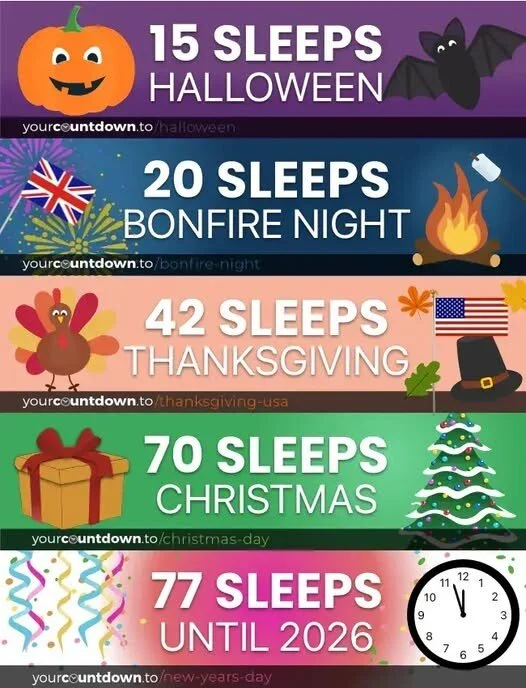
Mot: This will be me if I ever start dating again.

Iraq Economic News and Points To Ponder Friday Morning 10-17-25
Economic Advisor: Iraq Is Moving Forward With Banking Reform, And The Return Of Dollar Transactions Is Imminent.
October 16, 2025 Baghdad / Iraq Observer The Prime Minister's financial advisor, Mazhar Mohammed Salih, affirmed on Thursday that Iraq's commitment to international standards paves the way for the return of dollar transactions, attracting foreign investment, and expanding financial inclusion.
He emphasized that the path of banking reform is ongoing and irreversible.
Economic Advisor: Iraq Is Moving Forward With Banking Reform, And The Return Of Dollar Transactions Is Imminent.
October 16, 2025 Baghdad / Iraq Observer The Prime Minister's financial advisor, Mazhar Mohammed Salih, affirmed on Thursday that Iraq's commitment to international standards paves the way for the return of dollar transactions, attracting foreign investment, and expanding financial inclusion.
He emphasized that the path of banking reform is ongoing and irreversible.
Saleh said, "Iraq's commitment to international standards and banking transparency means the Iraqi financial system has entered a phase of radical reform, which will enhance international confidence and qualify it to be an active player in the global economy."
He noted that "the most significant gains are not limited to the return of dollar transactions to national banks, but also include attracting investment and expanding financial inclusion."
He explained that "adherence to international standards requires that banking institutions adhere to anti-money laundering and counter-terrorism financing rules, implement transparent accounting and oversight systems, and digitally transform the banking infrastructure, including electronic payment systems and unified financial reporting."
He continued, "This also includes opening up to sound international financial services, by contracting with global companies to develop banking systems, particularly financial auditing and fintech companies," adding, "This commitment places Iraq on the map of the global financial system and gives it the opportunity to integrate with international correspondent banks."
He added, "The gains that will benefit Iraq will also lead to the restoration of dollar transactions with international banks, after some Iraqi banks were deprived of them due to poor compliance issues.
They will also attract foreign investment, as investors seek a transparent and secure financial environment.
They will also enhance financial inclusion by integrating broad segments of citizens into the banking system through digital services. They will also improve Iraq's credit rating, which will positively impact its ability to obtain international financing on better terms."
He pointed out that “enhancing confidence in the Iraqi banking system is achieved through the confidence of international banks that will deal with the modernized banking system, which is compatible with international standards, which opens the door for Iraq to deal with correspondent banks in Europe and America.
The Iraqi citizen’s confidence in the modernized banks is also increasing, and he begins to feel safe dealing with them, especially with the development of electronic services and the reduction of risks, in addition to the confidence of international companies contracting with Iraq, which are looking for a transparent financial environment that guarantees the integrity of transfers and contracts.”
He pointed out that "the level of progress in the field of banking reform, sponsored by Prime Minister Mohammed Shia al-Sudani within the government's program and its implementation, and in cooperation with the Central Bank of Iraq, came in accordance with the 2025 Banking Reform Document."
He added, "The Central Bank of Iraq is leading a comprehensive shift toward reform, including increasing capital in consultation with the banking system and implementing comprehensive governance." He explained that
"the development of modern digital systems is no longer an option, but a necessity, and has already begun in some leading banks, despite ongoing challenges, such as historically weak trust and varying levels of preparedness among banks." He emphasized that "the reform path is clear and irreversible."
https://observeriraq.net/مستشار-اقتصادي-العراق-ماضٍ-في-الإصلاح/
Conclusion Of A Specialized Training Course On The Work Of Exchange And Financial Mediation Companies
October 16, 2025 The Central Bank of Iraq's Center for Banking Studies concluded today a specialized training course titled "The Operation of Exchange Companies and Financial Intermediation."
The course ran from October 12 to 16, 2025, with the participation of a number of employees in the banking sector and accredited exchange companies.
The course aimed to enhance participants' professional knowledge of the working mechanisms of exchange and financial intermediary companies, raise their level of proficiency in the technical and legal aspects related to managing financial operations, and develop their skills in compliance and adherence to the regulatory standards issued by the Central Bank of Iraq.
The course included detailed topics covering the legislative and regulatory framework for exchange companies, anti-money laundering and counter-terrorism financing procedures, and sound accounting and administrative practices in managing capital and customer accounts.
This course is part of the Center for Banking Studies' annual training program, which aims to build human capacity in financial and banking institutions, contributing to supporting the stability of the financial system and developing the professional performance of banking sector employees. https://cbi.iq/news/view/3014
Conclusion Of A Training Course On Financing Small Projects
October 16, 2025 The Banking Studies Center at the Central Bank of Iraq concluded today a specialized training course entitled"Financing Small Projects (Methods and Arithmetic Treatment)", which was held from October 14 to 16, 2025, with the participation of a number of employees from banks and financial institutions.
The course aimed to enhance participants' understanding of the concepts and importance of small business financing and its vital role in supporting the national economy, as it is one of the fundamental pillars of achieving sustainable development and providing job opportunities.
The training program covered several topics, including the tools and methods used in designing microfinance programs, the accounting requirements for small business financing operations, an analysis of the financial and social impact of these projects on banks and clients, and the development of skills in preparing periodic reports to monitor the performance of microfinance portfolios.
This course is part of the Center for Banking Studies' annual training program, which aims to enhance the efficiency of employees in the Iraqi banking sector and provide them with practical knowledge that will contribute to expanding the scope of small and microfinance, in line with the Central Bank of Iraq's efforts to support financial inclusion and stimulate the national economy. https://cbi.iq/news/view/3015
For current and reliable Iraqi news please visit: https://www.bondladyscorner.com
Seeds of Wisdom RV and Economics Updates Friday Morning 10-17-25
Good Morning Dinar Recaps,
Peace as Reset: How the Budapest Summit Could Reshape Global Finance
Trump and Putin’s planned meeting in Budapest revives hopes for peace — and may quietly signal a shift toward a long-awaited financial realignment.
The Breakthrough Nobody Expected
A sudden flurry of diplomatic activity has redefined the geopolitical map.
Former U.S. President Donald Trump and Russian President Vladimir Putin have agreed to meet in Budapest, aiming to negotiate an end to the war in Ukraine — a conflict now entering its fourth year.
Good Morning Dinar Recaps,
Peace as Reset: How the Budapest Summit Could Reshape Global Finance
Trump and Putin’s planned meeting in Budapest revives hopes for peace — and may quietly signal a shift toward a long-awaited financial realignment.
The Breakthrough Nobody Expected
A sudden flurry of diplomatic activity has redefined the geopolitical map.
Former U.S. President Donald Trump and Russian President Vladimir Putin have agreed to meet in Budapest, aiming to negotiate an end to the war in Ukraine — a conflict now entering its fourth year.
The announcement follows a surprise phone call between the two leaders, described by Kremlin officials as “frank and substantive.” The call reportedly came just as Washington was considering a new round of advanced weapons for Ukraine, including Tomahawk missiles, a move that could have deepened confrontation rather than cooled it.
Shortly after the conversation, Putin convened Russia’s Security Council to review next steps. Within hours, signals emerged from Moscow indicating a willingness to resume structured talks with Western interlocutors — including a potential return to EU soil, something unseen since the invasion began in 2022.
Hungary, a NATO member and European Union state that maintains working relations with both Washington and Moscow, has offered to host. Officials confirmed that Budapest will guarantee Putin’s entry despite legal hurdles, framing it as a step toward “peace through dialogue.”
The Political Context
The developments follow weeks of quiet back-channel communication between U.S. and Russian advisers. Trump, who has made ending the Ukraine conflict a central theme of his 2024 campaign, called the war “inglorious” and “unnecessary.” His framing suggests that a negotiated ceasefire, rather than a battlefield victory, may be the preferred outcome if he returns to office.
For Europe, Putin’s re-entry into diplomatic settings could signal an attempt to restore limited engagement with the EU — an essential step for any eventual settlement.
For Ukraine, however, the message is complex: peace may come with conditions that freeze existing front lines rather than restore full territorial sovereignty.
From Ceasefire to Reset: The Economics of Peace
A credible peace process would not only reshape Eastern Europe’s security landscape — it could also serve as the economic trigger for a broader global financial reset.
1. Confidence Restoration in Fragile Markets
War has fractured supply chains, diverted capital to defense, and inflated energy prices. A truce would immediately reduce geopolitical risk premiums, unlocking investment flows across Europe, the Middle East, and Asia.
2. Repricing Sovereign Debt
Countries neighboring the conflict, from Poland to Turkey, have endured elevated borrowing costs. Peace would lead credit agencies to revise risk outlooks downward, lowering yields and freeing fiscal space for reconstruction and development.
3. Rebalancing of Global Reserves
With de-escalation, central banks could reassess heavy defensive positions in U.S. dollars and U.K. gilts, shifting liquidity toward infrastructure and energy investment — a long-term reallocation away from “war capital” to “rebuild capital.”
4. Revival of Trade Corridors
Reconstruction in Ukraine would stimulate European manufacturing and logistics, while opening new corridors linking the Black Sea, the Balkans, and Central Asia — critical routes for commodities and renewables.
5. The Human and Market Psychology Effect
Peace reintroduces optimism. Investors begin to price for cooperation rather than destruction. Historically, postwar recoveries — from Europe in 1948 to the Balkans in the 1990s — have delivered exponential returns once stability is credible.
The Architecture of a Financial Reset
For a true global reset to emerge from this diplomatic opening, the following preconditions would have to align:
Transparent Mediation: Neutral guarantors (possibly UN or BRICS intermediaries) to ensure compliance and build credibility.
Debt Relief Mechanisms: Coordinated restructuring for Ukraine and related economies to prevent insolvency during reconstruction.
Reconstruction Bonds: A multilateral fund could issue “Peace Bonds” backed by international guarantees — an instrument attracting both state and private investors.
Monetary Stabilization: Central banks may coordinate liquidity facilities to cushion postwar volatility and avoid inflation shocks.
Energy and Commodity Frameworks: Russia’s re-entry into regulated European markets under new conditions could stabilize energy pricing — reducing systemic inflation risk worldwide.
Risks and Skepticism
Critics warn that neither side may be negotiating in full good faith. Hardliners in both Kyiv and Moscow view compromise as surrender, while Washington’s establishment remains divided on the optics of Trump engaging Putin.
Economic expectations may also outpace political reality: reconstruction funding requires sustained security guarantees and governance reforms. A rushed or symbolic summit could raise hopes that later collapse — producing renewed instability rather than relief.
The Broader Implication
If diplomacy in Budapest leads to verifiable de-escalation, it could be more than just the end of one war. It would mark the first major post-unipolar negotiation between U.S. and Russian leadership since the Cold War — and the first real test of whether peace itself can serve as a foundation for financial redesign.
In this scenario, markets would not simply “recover.” They would restructure — shifting away from debt-driven defense cycles toward real asset investment and new monetary alignments.
The global economy could enter a phase where financial security depends less on sanctions and more on sustainable cooperation.
Outlook
The Budapest Summit — if realized — could become the diplomatic inflection point that transforms not only Eastern Europe’s map but the logic of global finance. Peace may yet prove to be the ultimate stimulus.
This is not just politics — it’s global finance restructuring before our eyes.
Seeds of Wisdom Team
Newshounds News™ Exclusive
Sources
Newsweek — “Trump, Putin to Meet in Budapest Over Ukraine War Talks”
Newsweek — “Trump’s Surprise Call with Putin Throws Ukraine Aid Into Question”
Newsweek — “Putin Acts After Trump Call, Set to Return to EU”
Reuters — “Hungary to Ensure Putin Can Enter Country for Summit”
~~~~~~~~~
Privacy vs. Prudence: The FSB’s Warning on Crypto Data Gaps — and the Quiet March Toward a Financial Reset
Global regulators eye new coordination as privacy laws and fragmented data threaten oversight of the crypto economy.
Key Developments
The Financial Stability Board (FSB) — the G20’s global risk watchdog housed at the Bank for International Settlements (BIS) — has sounded a fresh alarm:
privacy laws and inconsistent regulations are blocking effective cross-border oversight of crypto markets.
In its latest 107-page peer review report, the FSB highlights how fragmented supervision and secrecy rules are undermining global cooperation — creating blind spots that could amplify systemic risk in the next financial downturn.
The Findings
Persistent Gaps: Sixteen years after Bitcoin’s debut, most countries still lack consistent rules for crypto assets and stablecoins.
Data Inconsistencies: Regulators rely on incomplete or commercial datasets that fail to capture full market risk.
Privacy Barriers: Strict data protection laws prevent regulators from sharing critical transaction or counterparty data across borders.
Cooperation Breakdown: Some firms and authorities refuse to exchange data, citing legal uncertainty or lack of reciprocity.
Systemic Risk Potential: The FSB warns these weaknesses invite regulatory arbitrage, leaving the global financial system exposed.
The Privacy Dilemma
While data privacy remains a fundamental right, regulators argue it has become a double-edged sword:
Privacy laws can shield legitimate data, but they also protect risky or opaque behavior.
Without reciprocal information-sharing agreements, financial supervisors are effectively blind to cross-border contagion.
The absence of shared data slows global risk detection — particularly for large stablecoin networks.
The FSB urges governments to craft selective disclosure frameworks — systems that allow targeted sharing of verified data while preserving confidentiality.
Why This Matters: The Path Toward a Financial Reset
Addressing these challenges could quietly restructure global finance over the next decade.
A few emerging trends hint at a gradual but deliberate financial reset:
Unified Regulatory Standards: Common data-sharing and reporting rules could eliminate arbitrage and standardize compliance across markets.
Digital Payment Corridors: Secure, regulated stablecoins may underpin cross-border payment systems that bypass legacy banking rails.
Capital Realignment: Reliable global supervision could attract institutional investment into blockchain-based infrastructure and tokenized debt markets.
Reserve Diversification: Nations could begin using multi-currency and multi-asset settlement models, reducing dollar dependency.
Post-Crisis Coordination: These tools could facilitate reconstruction and global liquidity management after future market shocks.
If implemented, these measures would not be a sudden overhaul — but a stepwise realignment of the world’s financial architecture.
Challenges Ahead
Legal Resistance: Privacy advocates and data regulators may view cross-border disclosure as intrusive.
Technical Readiness: Secure, interoperable data-sharing frameworks remain in early stages.
Political Fragmentation: Divergent national priorities could delay coordinated reform.
Despite the risks, the direction is clear: international regulators are preparing the foundation for a post-crisis monetary framework — one that merges digital finance with enhanced transparency.
Analysis:
The FSB’s review underscores how privacy and fragmentation are not only regulatory problems — they are structural weak points in the global system.
Solving them could lead to deeper data integration, tokenized liquidity networks, and new frameworks for global reconstruction finance.
This is not just politics — it’s global finance restructuring before our eyes.
Seeds of Wisdom Team
Newshounds News™ Exclusive
Sources & further reading
Financial Stability Board — Thematic Peer Review on FSB Global Regulatory Framework for Crypto-asset Activities (107-page report). (FSB PDF). Financial Stability Board
https://www.fsb.org/uploads/P161025-1.pdfReuters — G20 risk watchdog warns of 'significant gaps' in global crypto rules. (reporting on FSB peer review). Reuters
https://www.reuters.com/sustainability/boards-policy-regulation/g20-risk-watchdog-warns-significant-gaps-global-crypto-rules-2025-10-16/Financial Times — Gaps in crypto rules can be exploited, warns Financial Stability Board. Financial Times
https://www.ft.com/content/86593f5c-b524-4050-951b-d19ddcfb6158Cointelegraph — Privacy laws hinder cross-border crypto regulation: Financial Stability Board. Cointelegraph
https://cointelegraph.com/news/privacy-hinder-crypto-regulation-financial-stability-boardReuters / FATF coverage — Global financial crime watchdog calls for action on crypto risks (FATF). Reuters
https://www.reuters.com/sustainability/boards-policy-regulation/global-financial-crime-watchdog-calls-action-crypto-risks-2025-06-26/Reuters — G20 cross-border payments push set to miss 2027 target (context on payments and cross-border workstreams). Reuters
https://www.reuters.com/business/retail-consumer/g20s-cross-border-payments-push-set-miss-2027-target-2025-10-09/
Seeds of Wisdom Team RV Currency Facts Youtube and Rumble
Newshound's News Telegram Room Link
Follow the Gold/Silver Rate COMEX
Follow Fast Facts
Seeds of Wisdom Team™ Website
Thank you Dinar Recaps
MilitiaMan and Crew: IQD News Update-Iraq's Focus-Gold--CBI-Committed Globally
MilitiaMan and Crew: IQD News Update-Iraq's Focus-Gold--CBI-Committed Globally
10-16-2025
The Crew: Samson, PompeyPeter, Petra, Daytrader, Sunkissed, GIGI and Militia Man
Follow MM on X == https://x.com/Slashn
Be sure to listen to full video for all the news……..
MilitiaMan and Crew: IQD News Update-Iraq's Focus-Gold--CBI-Committed Globally
10-16-2025
The Crew: Samson, PompeyPeter, Petra, Daytrader, Sunkissed, GIGI and Militia Man
Follow MM on X == https://x.com/Slashn
Be sure to listen to full video for all the news……..
FRANK26…..10-16-25…….NO FLOAT
KTFA
Thursday Night Video
FRANK26…..10-16-25…….NO FLOAT
This video is in Frank’s and his team’s opinion only
Frank’s team is Walkingstick, Eddie in Iraq and guests
Playback Number: 605-313-5163 PIN: 156996#
KTFA
Thursday Night Video
FRANK26…..10-16-25…….NO FLOAT
This video is in Frank’s and his team’s opinion only
Frank’s team is Walkingstick, Eddie in Iraq and guests
Playback Number: 605-313-5163 PIN: 156996#
What If Gold Crashes To $3,000 Per Ounce?
What If Gold Crashes To $3,000 Per Ounce?
Notes From the Field by James Hickman (Simon Black) October 16, 2025
A little over a month ago, in early September, after careful analysis and detailed study, my team and I reached an important conclusion. And we started telling our audience almost immediately.
Gold had just crossed $3,500 per ounce, silver had just crossed $40, and many gold and silver mining companies had experienced astonishing gains.
What If Gold Crashes To $3,000 Per Ounce?
Notes From the Field by James Hickman (Simon Black) October 16, 2025
A little over a month ago, in early September, after careful analysis and detailed study, my team and I reached an important conclusion. And we started telling our audience almost immediately.
Gold had just crossed $3,500 per ounce, silver had just crossed $40, and many gold and silver mining companies had experienced astonishing gains.
Of course none of this came as a surprise to our readers. We’ve been saying for the past few years that gold in particular was going to go much higher, specifically because foreign governments and central banks were buying up gold by the metric ton as a way to diversify their strategic reserves away from the US dollar.
That extra demand from central banks totaling a few hundred billion dollars sent gold prices rocketing higher. And we also said this trend would continue.
Similarly over the past couple of years, as we were predicting higher gold and silver prices, we also predicted that mining companies would benefit, and generate record revenues and record profits as a result.
At the time those mining companies had been left for dead in financial markets, with share prices so cheap they were practically being given away.
We told our audience over and over again in print and in our podcasts that this wouldn’t last, and that mining companies would surge in value.
And that’s exactly what happened. In fact, many of the companies we featured in our premium investment research are up 3x, 4x, 5x, even 6x this year alone.
But early last month we realized there was another near term catalyst that would likely send these companies’ share prices even higher. These businesses are all publicly traded, and so they have to report their earnings, usually every quarter.
Q1 earnings were great. Q2 earnings were fantastic. But we realized that gold and silver had been rising so quickly, that Q3 earnings—which would be reported sometime in October—would just be out of this world.
We did the math and crunched the numbers ourselves, and based on our analysis, even companies that had risen 4 or 5x were still undervalued based on projected Q3 earnings.
And we anticipated that for many of these companies, their share prices would jump after their Q3 earnings were announced.
The first of those companies reported its earnings earlier this week, and we were absolutely right. Its record profit dazzled investors, and its share price jumped nearly 20% in a day.
It’s also up almost 52% since we made this prediction a month ago.
We’ve also done the math to see what would happen to these businesses if there were a sudden drop in precious metals prices.
Well, to give you an example one of the companies we featured in our investment research, which is up more than 5x, would still be incredibly undervalued.
Based on our analysis, even if gold were to drop below $3,000—roughly 30% from here—that company would still be making money hand over fist, and based on its current share price, still trading at around 5.5x earnings.
Oh, and did I mention they pay a substantial dividend?
It’s not that every mining company is in the same boat. There are thousands of companies out there, and many are just terrible businesses with pitiful management and terrible balance sheets.
But if you’re willing to do the hard work and find the highest quality management, and the most pristine balance sheets, there are still undervalued gems out there.
This is what we focus on in our premium investment research.
And we believe that many of them could see similar upside over the next few weeks as they report bonanza Q3 earnings.
To your freedom, James Hickman Co-Founder, Schiff Sovereign LLC
Seeds of Wisdom RV and Economics Updates Thursday Evening 10-16-25
Good Evening Dinar Recaps,
Dollar Sinks as Fed Signals Rate Cuts Amid Renewed Trade Tensions
Markets brace for potential easing and escalating U.S.-China economic rivalry.
Fed Signals Possible Rate Cuts
The U.S. dollar has weakened as investors anticipate a potential Federal Reserve rate cut at the October 28–29 meeting.
Good Evening Dinar Recaps,
Dollar Sinks as Fed Signals Rate Cuts Amid Renewed Trade Tensions
Markets brace for potential easing and escalating U.S.-China economic rivalry.
Fed Signals Possible Rate Cuts
The U.S. dollar has weakened as investors anticipate a potential Federal Reserve rate cut at the October 28–29 meeting.
● Fed Chair Jerome Powell indicated that the central bank remains open to easing policy in response to sluggish labor conditions and muted inflation.
● Markets are now pricing in a 25-basis-point cut this month, another in December, and possibly additional reductions in 2026.
● The dollar has remained soft against traditional safe-haven currencies, including the yen and Swiss franc, while the euro strengthened slightly.
Trade Tensions Add Pressure
Simultaneously, U.S.-China trade tensions have re-escalated, with both countries imposing port fees on shipping firms.
● President Trump has suggested further trade decoupling, including potential restrictions on oil imports from China.
● Analysts warn that the escalating dispute adds risk to global markets, already sensitive to geopolitical uncertainty.
● The combination of monetary policy shifts and trade friction is driving currency market volatility.
Market and Analyst Responses
● Federal Reserve: Powell emphasized that the Fed can continue assessing economic conditions despite missing data from the ongoing government shutdown.
● Currency Traders: Investors are positioning for further dollar weakness, particularly versus the yen and euro.
● Analysts: Joseph Capurso of Commonwealth Bank of Australia warned that tensions could escalate further, posing risks to risk-sensitive currencies like the Australian dollar.
● Global Currencies: The Australian dollar rose slightly after hitting a three-week low, while the New Zealand dollar extended losses to a six-month low.
Why This Matters
• Anticipated rate cuts signal a potential shift toward U.S. monetary easing, affecting interest rates, yields, and investor strategies globally.
• Dollar weakness could stimulate U.S. exports but may also pressure savings and fixed-income returns.
• Escalating U.S.-China trade disputes, now extending to port fees, highlight systemic risks in global supply chains and reinforce the interconnectedness of economic policy and geopolitical dynamics.
• Combined, these factors could increase volatility in currency markets and influence central bank decisions worldwide.
This is not just politics — it’s global finance restructuring before our eyes.
🌱 Seeds of Wisdom Team
Newshounds News™ Exclusive
Sources
Modern Diplomacy – “Dollar Sinks as Fed Signals Rate Cuts, Trade War Flares Anew”
Yahoo Finance -- Dollar falls against yen and euro with trade dispute, rate outlook in focus
~~~~~~~~
When Washington Goes Dark, the World Loses Sight
U.S. shutdown halts key economic data, raising global policy risks.
Global Impact of U.S. Data Freeze
The ongoing U.S. government shutdown has interrupted the release of critical economic indicators—from jobs reports to inflation metrics—creating a growing “data darkness” that complicates decision-making for central banks and policymakers worldwide.
● The U.S. represents nearly one-fourth of global output, making its data essential for shaping monetary, trade, and currency decisions in other economies.
● The shutdown coincides with IMF and World Bank meetings in Washington, highlighting the potential for global economic coordination challenges.
● Policymakers from Tokyo to London have warned that the lack of U.S. data may distort interest rate and currency policy decisions.
Concerns from Global Central Banks
Officials have expressed concern over the accuracy and reliability of financial decisions in the absence of U.S. economic data.
● Bank of Japan Governor Kazuo Ueda: “It’s a serious problem… the lack of U.S. indicators complicates decisions on Japan’s next rate move.”
● Bank of England economist Catherine Mann compared the potential erosion of trust in U.S. institutions to “termites” undermining the British pound’s global standing.
● Central banks are relying on private-sector and anecdotal data, which serve as imperfect substitutes for official reports.
Broader Financial and Policy Implications
● The shutdown raises the risk of policy errors as central banks may tighten or ease monetary measures based on incomplete information.
● The IMF’s World Economic Outlook warns that political pressure on statistical agencies could erode public confidence and complicate central bank operations.
● Economists, including Adam Posen of the Peterson Institute, note that governance challenges may affect dollar stability and reserve management.
● Private-sector surveys and alternative data sources provide temporary relief but cannot fully substitute for official U.S. reporting.
What’s Next
The shutdown could end if Congress reaches a deal, but credibility damage may persist.
● Even temporary data disruptions create information asymmetry, reducing coordination in the global economy.
● Extended shutdowns could increase volatility in currency markets, challenge central bank independence, and prompt reevaluation of U.S. economic governance.
● Analysts suggest that policymakers globally must adjust for uncertainty and monitor U.S. developments closely.
Why This Matters
• The shutdown highlights how political gridlock in the U.S. directly affects global economic stability.
• Delays in critical economic data can lead to misjudged monetary and fiscal policies abroad, affecting currencies, interest rates, and trade flows.
• The episode underscores the interconnectedness of U.S. economic governance and global financial decision-making, demonstrating the need for resilient data infrastructure.
This is not just politics — it’s global finance restructuring before our eyes.
🌱 Seeds of Wisdom Team
Newshounds News™ Exclusive
Sources
~~~~~~~~~
Ripple CEO Calls for Equal Regulatory Treatment of Crypto and Traditional Banks
Garlinghouse emphasizes parity for crypto companies as Ripple seeks a national bank charter.
Advocating for Regulatory Parity
Ripple CEO Brad Garlinghouse urged that crypto companies should be held to the same standards as traditional banks, highlighting perceived inconsistencies in U.S. financial regulation.
Speaking at DC Fintech Week, Garlinghouse said that crypto firms following laws on AML, KYC, and OFAC compliance should receive the same operational benefits, including access to Fed master accounts.
● He noted that regulatory approaches are unlikely to change significantly under the potential departure of SEC Chair Paul Atkins or continued leadership under the Trump administration.
● Garlinghouse emphasized that equal treatment fosters stability and encourages clear compliance pathways for digital assets.
● The comments were aimed at aligning crypto regulation with traditional financial institutions, reducing disparities in market access.
Ripple and the National Bank Charter
Ripple has applied for a national bank charter, joining other digital asset companies like Circle in seeking regulatory approval to operate under bank-like authority.
● Coinbase is pursuing a National Trust Company Charter for similar purposes.
● Some U.S. banking groups have lobbied the Office of the Comptroller of the Currency (OCC) to delay decisions, citing policy and procedural concerns.
● Despite objections, the OCC recently approved a charter for Erebor, a financial services company backed by billionaire Peter Thiel, signaling potential pathways for crypto banking integration.
Regulatory and Industry Implications
If Ripple and similar companies gain Fed-equivalent operational access, it could reshape the interaction between traditional finance and crypto.
● Access to Fed master accounts would allow crypto firms to settle payments more efficiently and expand financial services.
● Regulatory clarity may encourage institutional adoption of digital assets and stablecoins.
● The developments highlight the continuing evolution of U.S. financial infrastructure to incorporate digital assets under structured compliance.
Why This Matters
• Garlinghouse’s advocacy reflects a broader trend toward integration of digital assets into mainstream finance, reducing the gap between traditional and crypto markets.
• Approval of bank charters for crypto firms could strengthen systemic stability, providing regulated pathways for digital payments and custody.
• The evolving framework suggests that financial infrastructure may gradually accommodate digital asset-backed systems, potentially altering the role of central banking and payment settlement in the U.S.
This is not just politics — it’s global finance restructuring before our eyes.
🌱 Seeds of Wisdom Team
Newshounds News™ Exclusive
Sources
CoinTelegraph – “Brad Garlinghouse Calls for Parity Between TradFi and Crypto Companies”
Office of the Comptroller of the Currency – National Bank Charter Approvals
~~~~~~~~~
U.S. Senator Advocates Turning Seized Bitcoin Into Strategic Reserve
Congressional action aims to integrate digital assets seized from crime into national economic strategy.
Record Bitcoin Seizure Signals Policy Shift
The U.S. government recently seized approximately 127,271 bitcoin—valued at over $14 billion—from the dismantled Prince Group, accused of operating forced-labor and cyber-fraud schemes in Cambodia.
Senator Cynthia Lummis (R-WY) praised the operation, noting its significance for both human rights and financial integrity.
● The seizure represents one of the largest in history, positioning the U.S. as a leader in responsible blockchain governance.
● Prosecutors charged Prince Group chairman Chen Zhi with wire fraud and money laundering linked to a large-scale “pig-butchering” crypto scam.
● Lummis emphasized that converting criminally obtained assets into a Strategic Bitcoin Reserve could provide long-term national value.
Legislative Implications
Lummis highlighted two pressing priorities for Congress:
● Passing digital asset market structure legislation to empower law enforcement against financial crimes while protecting innovation.
● Codifying how seized crypto is stored, returned to victims, and safeguarded for strategic purposes.
These steps aim to integrate cryptocurrency into national policy frameworks, ensuring oversight, transparency, and the potential repurposing of seized digital assets.
● Analysts suggest that strategic reserves could influence both domestic and international financial stability.
● The case underscores how blockchain assets can be both misused and harnessed for policy objectives.
Why This Matters
• The operation demonstrates the U.S. government’s growing capacity to convert digital crime proceeds into economic tools, potentially creating new forms of state-held reserves.
• Establishing a Strategic Bitcoin Reserve could influence future legislation and regulatory frameworks for digital assets.
• The case highlights the tension between fast-moving digital asset innovation and the need for structured governance, illustrating how policy is adapting to emerging technologies.
This is not just politics — it’s global finance restructuring before our eyes.
🌱 Seeds of Wisdom Team
Newshounds News™ Exclusive
Sources
Bitcoin.com – “US Senator Pushes Bitcoin Policy Turning Seized Crypto Into Strategic Reserve”
U.S. Department of Justice – Chairman of Prince Group Indicted
~~~~~~~~
Trump Confirms U.S. Is in a Trade War with China
President Trump acknowledges active trade conflict as tariffs escalate and rare earth export restrictions intensify.
Tariffs as National Security Tool
When asked whether the U.S. is preparing for a sustained trade war with China, President Trump stated:
“Well, we’re in one now.”
Trump’s comment followed his announcement of a 100% tariff threat on all Chinese imports, a response to China tightening its export controls on rare earth minerals critical for semiconductor production.
● Trump framed the tariffs as essential for U.S. national defense.
● He explained that without tariffs, the U.S. would be “exposed as being nothing.”
● The announcement last Friday triggered a temporary cryptocurrency market decline, with Bitcoin dropping from ~$121,560 to below $103,000 before partially recovering.
Treasury Response and Geopolitical Context
U.S. Treasury Secretary Scott Bessent criticized China’s export restrictions:
“If some in the Chinese government want to slow down the global economy through disappointing actions and through economic coercion, the Chinese economy will be hurt the most — and make no mistake: this is China versus the world.”
● Bessent emphasized that the U.S. and its allies will resist economic coercion from Beijing.
● The remarks signal continued escalation in U.S.-China trade tensions.
● Analysts note these actions could influence global supply chains for technology, energy, and critical minerals.
Impact on U.S. Bitcoin Mining Industry
The tariffs have practical implications beyond trade balances, affecting the U.S. cryptocurrency mining sector.
● China-origin ASIC Bitcoin mining machines now face a 57.6% tariff, while machines from Indonesia, Malaysia, and Thailand incur 21.6% tariffs.
● Costs have increased significantly for U.S. miners purchasing equipment.
● Despite previous concerns, no major U.S. mining company has yet relocated operations overseas.
● Last year, U.S. Customs and Border Protection seized thousands of mining machines, citing illegal importation as radio frequency devices, compounding operational challenges.
Why This Matters
• The trade war illustrates the intersection of national security and economic policy, demonstrating how tariffs can shape both domestic industry and international relations.
• Restrictions on rare earth minerals highlight the geopolitical leverage of resource-dependent nations and the potential for global supply chain disruptions.
• Market volatility in sectors such as cryptocurrency underscores the financial ripple effects of trade and policy decisions, even in specialized industries.
• Ongoing U.S.-China tensions signal structural shifts in global trade frameworks, with potential implications for currency flows, digital assets, and industrial strategy.
This is not just politics — it’s global finance restructuring before our eyes.
🌱 Seeds of Wisdom Team
Newshounds News™ Exclusive
Sources
~~~~~~~~~
Seeds of Wisdom Team RV Currency Facts Youtube and Rumble
Newshound's News Telegram Room Link
Follow the Gold/Silver Rate COMEX
Follow Fast Facts
Seeds of Wisdom Team™ Website
Thank you Dinar Recaps
Another Huge Bankruptcy Just Rocked Wall Street
Another Huge Bankruptcy Just Rocked Wall Street
George Gammon: 10-16-2025
Wall Street is abuzz with the recent, and rather dramatic, bankruptcy of First Brands, an auto parts manufacturer.
While seemingly a contained corporate failure, the event has sparked a crucial conversation: could this be the first domino to fall, signaling the onset of a credit crisis reminiscent of the devastating 2008 Global Financial Crisis (GFC)?
A recent deep dive into the situation, presented by George Gammon, breaks down the complexities into three essential steps, offering a stark look at the underlying mechanics and potential ramifications.
Another Huge Bankruptcy Just Rocked Wall Street
George Gammon: 10-16-2025
Wall Street is abuzz with the recent, and rather dramatic, bankruptcy of First Brands, an auto parts manufacturer.
While seemingly a contained corporate failure, the event has sparked a crucial conversation: could this be the first domino to fall, signaling the onset of a credit crisis reminiscent of the devastating 2008 Global Financial Crisis (GFC)?
A recent deep dive into the situation, presented by George Gammon, breaks down the complexities into three essential steps, offering a stark look at the underlying mechanics and potential ramifications.
At the heart of the First Brands collapse lies the intricate and often opaque world of shadow banking, also known as private credit. This sector operates beyond the watchful eye of traditional regulatory frameworks, making it a breeding ground for both innovation and, as we’re seeing, significant risk.
The video highlights institutions like Jeffre as key players in this space, having lent heavily to First Brands. The fallout from First Brands’ bankruptcy has exposed just how fragile and ill-understood this private credit market truly is.
We’re talking about a staggering loss for First Brands, reportedly around $2 billion. The whispers of fraud and, more concerningly, rehypothecation of collateral, are particularly alarming.
This practice – using the same assets as security for multiple loans – dramatically amplifies systemic risk. When things go south, the interconnectedness of these deals can trigger a cascade of losses across the financial system.
The presenter aptly uses the analogy of “swimming naked” to describe the vulnerability of both borrowers and lenders in the private credit market. When economic conditions begin to deteriorate, these entities, often operating with thinly veiled collateral, are suddenly exposed to harsh realities.
The second step of the analysis delves into the gut-wrenching forensic details of the First Brands bankruptcy. The findings are, frankly, shocking.
There are strong suggestions that First Brands may have never actually received $1.9 billion it supposedly borrowed. Adding to the disbelief, the company appears to have had zero funds in segregated accounts to pay its creditors.
Reports indicate that multiple lenders seemingly believed they had exclusive claims to the same collateral. This created a chaotic “borrowing merry-go-round,” a complex web of claims and counter-claims that went unnoticed until the bubble inevitably burst.
This situation draws uncomfortable parallels to the 2008 subprime crisis, where complex financial instruments and layered risks obscured the true extent of credit exposure.
The ultimate question remains: does the First Brands bankruptcy herald the dawn of a new credit crisis? The “swimming naked” analogy is revisited here, but with a broader scope.
As economic deterioration accelerates, more and more risky players are exposed, leading to liquidity freezes and a tightening of credit conditions. The interconnected nature of the financial system means that the failure of one entity, especially one involved in complex shadow banking deals, can have far-reaching consequences.
If the current economic climate worsens, the presenter argues, we could indeed witness a cascade of bankruptcies and a severe credit crunch akin to the GFC.
However, if economic conditions remain stable or even improve, the crisis might be contained. The presenter’s “base case” suggests that government intervention is likely to delay the most severe outcomes, though this could inadvertently encourage further malinvestment and risk-taking down the line.
This unfolding situation underscores the importance of understanding the complexities of our financial system.
The First Brands bankruptcy serves as a stark reminder of the risks lurking in the less regulated corners of finance.
For those seeking to understand how to navigate potential financial bubbles and crises, George Gammon is hosting a free webinar on October 29th. He will be sharing contrarian investment strategies and offering a special promotion for an investment conference scheduled for 2026.
Watch the full video from George Gammon for a deeper understanding of these critical issues and to prepare yourself for what may lie ahead.
GOLD Is Your Monetary Doomsday Clock | Egon von Greyerz
GOLD Is Your Monetary Doomsday Clock | Egon von Greyerz
Soar Financially: 10-16-2025
Gold is exploding past $4,000, silver near $50, but according to Egon von Greyerz, this is only the beginning.
He says we’ve entered the final phase of the global monetary system, where currencies will be destroyed, interest rates will soar, and only gold and silver will preserve real wealth.
In this episode, we discuss the coming collapse, why fiat is already 99% dead, and why gold could still multiply from here.
GOLD Is Your Monetary Doomsday Clock | Egon von Greyerz
Soar Financially: 10-16-2025
Gold is exploding past $4,000, silver near $50, but according to Egon von Greyerz, this is only the beginning.
He says we’ve entered the final phase of the global monetary system, where currencies will be destroyed, interest rates will soar, and only gold and silver will preserve real wealth.
In this episode, we discuss the coming collapse, why fiat is already 99% dead, and why gold could still multiply from here.
Seeds of Wisdom RV and Economics Updates Thursday Afternoon 10-16-25
Good Afternoon Dinar Recaps,
Tarnished Glory: BRICS and the Waning Aura of the U.S. Dollar
A Challenge to the Dollar’s Dominance
The U.S. dollar’s brand power — long seen as untouchable — is fading as the BRICS alliance reshapes the global financial landscape.
Good Afternoon Dinar Recaps,
Tarnished Glory: BRICS and the Waning Aura of the U.S. Dollar
A Challenge to the Dollar’s Dominance
The U.S. dollar’s brand power — long seen as untouchable — is fading as the BRICS alliance reshapes the global financial landscape.
Currency strategist Marc Chandler acknowledged the shift bluntly:
“I’m not sure the dollar has lost its global standing. To me, the dollar’s brand has been tarnished.”
Developing nations are no longer accepting what they view as forced dependence on the dollar. Instead, they’re designing new systems to conduct trade in local currencies, gold, and regional instruments.
● BRICS members are expanding currency swap agreements to reduce exposure to the greenback.
● China and Russia now settle a growing share of energy trade in yuan and rubles.
● India and Brazil are testing digital settlement networks for regional trade.
● South Africa recently signed a gold-settlement framework with non-BRICS African partners.
Chandler noted that while many nations must still borrow or transact in U.S. dollars, they’re actively diversifying to lower their vulnerability to dollar fluctuations and U.S. sanctions.
From Monopoly to Multipolarity
The cracks in dollar dominance stem from mounting frustration with U.S. monetary power and foreign policy.
● Developing countries see dollar dependence as a tool of control, limiting their fiscal autonomy.
● Washington’s sanctions and interest rate cycles ripple across global markets, often hurting emerging economies first.
● In response, BRICS nations are crafting a parallel framework for trade, credit, and reserves.
This movement is not a sudden rebellion — it’s a methodical transition:
● New trade corridors bypass the SWIFT system through regional clearinghouses.
● Oil and commodities are increasingly priced in non-dollar currencies.
● Central banks are building gold and yuan reserves to anchor local markets.
The combined effect? The dollar is losing its psychological monopoly — not vanishing, but sharing space in a growing multi-currency world.
The Next Financial Epoch
The coming decade may see a fragmented global reserve structure, with multiple power centers instead of one.
● Regional trade blocs could issue digital tokens pegged to commodity baskets.
● AI-driven central banking systems may optimize cross-border settlements in real time.
● Sovereign digital currencies will erode the need for a single intermediary like the dollar.
One economist at the Bank for International Settlements summed up the shift succinctly:
“The dollar isn’t dying — it’s being redefined by a world that refuses to orbit one sun.”
Whether the United States adapts or resists, this restructuring will determine who writes the next chapter of global finance.
The Deeper Current
What’s unfolding isn’t just geopolitics — it’s a quiet rewriting of financial power:
● Nations are reclaiming control of their value systems.
● The architecture of trade, credit, and reserves is being rebuilt from the periphery inward.
● The global south is no longer a passive participant but an active designer of a new monetary order.
This moment marks the intersection of economics and evolution — where digital innovation, commodity security, and political independence converge.
It’s a shift from empire to ecosystem, from dominance to distributed power.
In short: This isn’t politics — it’s global finance restructuring before our eyes.
A quiet revolution declaring, “Out with the old, and in with the new.”
🌱 Seeds of Wisdom Team
Newshounds News™ Exclusive
Sources & Further Reading
Watcher.Guru – “BRICS Has Tarnished the US Dollar’s Brand Value, Admits Strategist”
Reuters – “BRICS Seeks to Reduce Dollar Reliance with Local Currency Trade”
Bloomberg – “Global South Accelerates Move Away from Dollar”
Financial Times – “BRICS Currency Ambitions Challenge US Financial Dominance”
~~~~~~~~~
Seeds of Wisdom Team RV Currency Facts Youtube and Rumble
Newshound's News Telegram Room Link
Follow the Gold/Silver Rate COMEX
Follow Fast Facts
Seeds of Wisdom Team™ Website
Thank you Dinar Recaps
28 People Who Know A Lottery Winner Share What Actually Happened To Them
28 People Who Know A Lottery Winner Share What Actually Happened To Them
Story by Edvinas Jovaišas
#1©Trevumm
My friends mom won like $100k or so when we were in grade 6. She was a single mom of 2 and they we’re pretty poor. She used it to give her kids a better, more comfortable life. It was little changes like the next winter they had new winter jackets and boots and stuff, not the worn old hand me downs they always had. My friends next birthday she got to have a big party for the whole class, nothing crazy just pizzas and stuff, but she’s never gotten to have that before and she was so happy.
28 People Who Know A Lottery Winner Share What Actually Happened To Them
Story by Edvinas Jovaišas
#1©Trevumm
My friends mom won like $100k or so when we were in grade 6. She was a single mom of 2 and they we’re pretty poor. She used it to give her kids a better, more comfortable life. It was little changes like the next winter they had new winter jackets and boots and stuff, not the worn old hand me downs they always had. My friends next birthday she got to have a big party for the whole class, nothing crazy just pizzas and stuff, but she’s never gotten to have that before and she was so happy.
#2©Earguy
I had a patient, a hairdresser who owned her own shop, who won about 6 million. Her winnings were announced in the local newspaper.
She consulted the right professionals, worked a plan to sell her salon, and mapped a way to retire on her winnings without a change in her lifestyle.
But she told me that she had old boyfriends, and even guys that barely knew her in high school, who called her with some variation of, "you know I always loved you..." She just laughed and blew them off.
#3©Dvaone
I won $250k on a $5 scratch off 8 years ago.it was right before Christmas and i had been fired 2 weeks befor. After taxes we got a check for $167k and some change. Paid off all credit cards, bought the wife a brand new honda accord, bought a small business. Lived off it for the next several years while I grew my business and my wife got her masters. It was life changing!
#4©anon
Mom won a bit and was able to get my siblings and I new clothes and move out so she didn't have to stay in an abusive relationship.
#5©hornblower_83
Friend won 1 million. They paid off their house. Saved for their kids education and basically don’t live paycheque to paycheque anymore. Both of them still work full time.
#6©Kriskao
I won 1500 US dollars. Received like 950 because taxes. Donated it all to an orphanage in my home country because I was doing ok with money. Since then there have been times I needed the money but I don’t regret it.
#7©Mandalasan_612
My sister's ex won around $150 million. Nicest guy, his brother manages the money so he doesn't blow it. Living his best life, money never changed him, because he was already so chill. Dude deserves it after putting up with my sister. Helped out my niece (not his daughter) with
#8©Punkrockid19
My dad
He hit 5 outta 6 numbers in 1989 won like 16 grand. Payed off the family debts spent the rest on a computer and started his own business out of our dining room. Bout to sell it for a couple million this year. One ticket literally changed our lives.
#9©Burnsie312
I won 2000 on a scratch off once! Fixed my missing tooth lol.
#10©CaseyBoogies
My MIL won 33k on a scratch-off, she paid off some debt and got new windows installed on her house. The new windows in an 1890s farmhouse are amazing, don't think I've seen a happier woman!
#11©Kahazzarran
My neighbor won the lottery in his sixties, it was something like 1.2 million in the late 90s. We lived in a trailer park in a rural part of the US, a pretty low cost of living area so the money stretched pretty far.He bought his trailer and land outright with the money and pretty much just spent everyday drinking on his porch and yelling at his goats. IIRC he used a good chunk of what he won to put his son and grandkids through college. Died of liver failure at like 85 or something. Not a terrible way to do it, all said and done.
#12©Blondefarmgirl
Friends of ours won 30 mill. They took a group of us on vacation. Bought a cottage and built a house not much really changed. They are doing great.
#13©pascontent
Neighbor won a few millions, built an old folks home, named it after his mother and she refused to live there.
#14©PigStickerOnStone
I knew a welder who won a 30 million jackpot.
He retired, bought two Ford GTs and spends his time doing yardwork, playing low stakes poker tournaments, and raising his two young kids.
His wife bought a crib from me used for their second child.
News, Rumors and Opinions Thursday 10-16-2025
Gold Telegraph: The Monetary Reset is No Longer a Tin-foil Fantasy
10-15-2025
BREAKING NEWS: THE PENTAGON IS MOVING TO STOCKPILE UP TO $1 BILLION IN CRITICAL MINERALS
The race is on…
“Trump Administration challenges Chinese dominance of supply chain for metals essential to defence industry…”
Gold Telegraph: The Monetary Reset is No Longer a Tin-foil Fantasy
10-15-2025
BREAKING NEWS: THE PENTAGON IS MOVING TO STOCKPILE UP TO $1 BILLION IN CRITICAL MINERALS
The race is on…
“Trump Administration challenges Chinese dominance of supply chain for metals essential to defence industry…”
Source: https://www.ft.com/content/cd5244eb-a8e9-42bc-8939-71ba0fefa057
Countries are quietly securing what can’t be printed. They’re exploring setting price floors and building stockpiles as debt spins into chaos. The script is writing itself.
Congo will permanently ban cobalt exporters that violate its new quota system. The D********c Republic of the Congo represents 70% of global cobalt output. Cobalt is currently surging… A global battle for commodities is currently underway.
The silver market is getting very interesting… Liquidity has collapsed. Silver lease rates have spiked to as high as 35%. Those short silver are now scrambling to find metal. Silver is up over 60% the past 1 year in US dollar terms…
BREAKING NEWS: JPMORGAN WILL INVEST UP TO $10 BILLION IN U.S. COMPANIES TIED TO NATIONAL SECURITY, INCLUDING CRITICAL MINERALS
It is raining down now.
All eyes on minerals.
Source: https://www.reuters.com/video/watch/idRW327313102025RP1/
BREAKING NEWS: UNITED STATES TREASURY SECRETARY SAYS CHINA’S RESTRICTIONS ON CRITICAL MINERAL EXPORTS WILL HURT ITS OWN INTERNATIONAL STANDING
Minerals…
Source: https://www.ft.com/content/fbc5f7bc-b36c-4a12-9c5e-a3f0c19aad12
BREAKING NEWS: THE INTERNATIONAL MONETARY FUND IS WARNING THAT THE EROSION OF TRUST IN CENTRAL BANKS CAN BOOST INFLATION EXPECTATIONS
Nothing to see here…
“The global lender was observing increasing pressures on central banks…”
Jerome Powell signals that the Federal Reserve is near the END of QT. You know what comes next…
The leader of the Federal Reserve says he won’t comment on the gold price. The gold price is speaking for you.
BREAKING NEWS: FREEPORT MCMORAN PLANS TO BREAK AWAY FROM THE BENCHMARK PRICING SYSTEM UNDERPINNING GLOBAL SALES OF MINED COPPER ORES
Wow…
“Over the last 35 years, I have never seen anything like this this said Javier Targhetta.”
Source: https://www.mining.com/web/freeport-to-break-away-from-copper-benchmark-it-set-for-decades/
BREAKING NEWS: BHP IS WEIGHING WHETHER TO RESURRECT DEFUNCT MINES IN THE HISTORIC US COPPER BELT
This is one of the largest mining companies in the world. There is a scramble for minerals…
“Chief executive Mike Henry says company is looking at restarting operations in Arizona…”
Source: https://www.ft.com/content/ddeb6fd5-1309-4d76-92d4-4bcbd1ff0362
Suddenly, many in the crowd who once called a “monetary reset” a tin-foil fantasy now think that is where the world is headed… Alright.
Congo, which supplies 75% of the world’s cobalt, just replaced its 8-month export ban with strict quotas. The world is leveraging its commodities. What else? The USA is actively trying to stockpile cobalt right now. This is the first time in 30 years that this has happened…
The leader of the biggest bank in America, Jamie Dimon, says: “Gold could easily go to $5,000, $10,000 in environments like this.” Ok.
Source(s): https://x.com/GoldTelegraph_/status/1977238828122620299
************
Courtesy of Dinar Guru: https://www.dinarguru.com/
Frank26 Article quote: "Central Bank of Iraq confirmed there is no intentions to float the Iraqi dinar exchange rate" You're saying it for 1 of 2 reasons. #1 You want the speculators to hear you say, "We're not going to float." And then you'll float. #2 You're not going to float and that this is an RI and you're going to come out at $3+ maybe even more to make up the difference of the last 20 years...
Jeff Article quote: "Iraq has increased its gold holdings rom 90 to 170 tons of gold". Yeah, they're absolutely Basil 3 compliant. They're backing the value of their currency with reserves getting ready to revalue and the article clearly states they are ready to delete the zeros, meaning phase out the large currency notes in the very close proximity or future...They have stated in older articles that...old notes with three zeros and small replacement notes without the 3 zeros will coexist at the same value...
Nader From The Mid East Article says they agree to remove three zeros from the currencies...I stick to my word, after the election everything will happen...The election will start on the 26th and the last day of it is on the 11th of November. The good news is for sure they're going to remove their three zeros. They said it now. I know it's going to happen before the end of the year.
************
They're Not Enough Silver: It's That Simple | Clem Chambers
Liberty and Finance: 10-15-2025
Clem Chambers explains that silver’s explosive rise above $53 stems from deep structural shortages and geopolitical tension.
He contrasts gold’s demand—driven by central bank accumulation—with silver’s more retail-driven surge, noting that only eight times more silver than gold is mined each year, yet the price ratio remains around 80-to-1.
Chambers links both metals’ rallies to a larger U.S.-China industrial and technological conflict, where nations are stockpiling real assets amid rearmament and reindustrialization.
Silver’s backwardation, he argues, signals immediate physical demand overwhelming paper supply—proof that the market is “running out” of deliverable metal.
While warning that prices may overshoot, Chambers still sees triple-digit silver as plausible if geopolitical and monetary “natural stupidity” persist.
INTERVIEW TIMELINE:
0:00 Intro
1:30 Gold drivers
20:30 There's not enough silver
28:30 Platinum & palladium
Thursday Coffee with MarkZ, 10/16/2025
Thursday Coffee with MarkZ, 10/16/2025
Some highlights by PDK-Not verbatim
MarkZ Disclaimer: Please consider everything on this call as my opinion. People who take notes do not catch everything and its best to watch the video so that you get everything in context. Be sure to consult a professional for any financial decisions
Member: Hello Mark, Mods and all Dinarians from around the Solar System!!
Member: Are we there yet?
Member: I feel like We've got one foot over the finish line and dragging the other one. :)
Thursday Coffee with MarkZ, 10/16/2025
Some highlights by PDK-Not verbatim
MarkZ Disclaimer: Please consider everything on this call as my opinion. People who take notes do not catch everything and its best to watch the video so that you get everything in context. Be sure to consult a professional for any financial decisions
Member: Hello Mark, Mods and all Dinarians from around the Solar System!!
Member: Are we there yet?
Member: I feel like We've got one foot over the finish line and dragging the other one. :)
Member: Lots of rumors about today through the weekend.
MZ: It’s a great possibility based on the chatter out of Iraq.
MZ: No bond updates yet today…..I know of two people with appointments and they hope it’s a solid update or that they get paid….that would tell us a lot.
Member: When the bond holders do get paid, I think they will just go quiet
MZ: Yes I think they will be quiet but we should be able to see some signs. If there is no NDA…I think they will just tell us.
Member: Anything with Dubai 1 and 2? Hearing Dubai 1 is funded
Member: do you still talk to to any redemption center folks? Are they working this weekend?
MZ: Yes I still talk with them…but unfortunately they have nothing to report except they are on call…..they have done their prep and are ready. Not they need the “GO” signal..
Member: Tx Snake says banker has called in staff in prep for 800#s
Member: Do you hear anything from your IRS contacts?
MZ: They are feeling the crunch with over half of them staying home.
Member: I wonder- if the rates will float during the time we will RV or will it be a flat rate??
Member: I think the rv prices are set already. Even if it goes up and down. I just feel Trump probably negotiated it. I think he’ll take care of us.
Member: Do you still think the market will crash first…at this point?
MZ: I do not think the market will crash first now. If it does crash it will force the reset. But, I think they pull the trigger before the market crashes.
Member: If not a crash- it will probably be a much needed correction.
Member: Donald Trump supposedly has a big announcement 3-4 pm eastern today
Member: My WF wealth manager used to tell me that it was a scam- no so much any longer. He knows something’s getting ready to happen.
Member: today: $ 4258.10 gold $53.41 silver according to Kyco
MZ: In Iraq: “ Iraq’s commitment to International Standards paves the way for a return to dealing with dollars and attracting investments” Saleh is telling us the door is open in Iraq for full international banking. They are going to the world system with no restrictions.
Member: I wonder what happened with the HCL or deleting the zeros? Maybe it will all happen at the same time suddenly.
MZ: “Dr. Saleh Mahoud from Washington: We are committed to supporting the Central Bank’s efforts in banking reform” There is a meeting in Washington DC and organized by the Central Bank of Iraq (CBI) in cooperation with Oliver Wyman International at the Ritz Carleton. They are telling us they are making all of these changes for International Banking, and inviting people to join them. They are becoming fully integrated with the world banking system.
MZ: “IMF expects Iraq’s economy to grow by 3.6% next year” The long term health of the country supports changing the value of their currency.
MZ: “ The rise in gold reflects the decline in the confidence of the US dollar” gold is the measuring stick and we are watching everything around it change value.
Member: I wonder- who will pull the trigger on the IQD rRV? is it the CBI, IMF, Chinese elders. Or US Treasury??
Member: There are several, back walls , in this RV, what in your opinion/logically, is your back wall?
Member: I am watching for before the Iraq elections on Nov 11th.
Member: Really hoping for before the holiday season. Want a wonderful Christmas for us all.
Member: So much information randomly coming out about Reset, going back to Gold Standard, Nesara/Gesara. Block chain etc. It's exciting.
Member: Thanks to everyone. Hope we all have a blessed day today.
Jonathan Otto from MyRedLight.com. joins the stream. Please listen to the replay for his information
THE CONTENT IN THIS PODCAST IS FOR GENERAL & EDUCATIONAL PURPOSES ONLY&NOT INTENDED TO PROVIDE ANY PROFESSIONAL, FINANCIAL OR LEGAL ADVICE. PLEASE CONSIDER EVERYTHING DISCUSSED IN MARKZ’S OPINION ONLY
FOLLOW MARKZ : TWITTER . https://twitter.com/originalmarkz?s=21. TRUTH SOCIAL . https://truthsocial.com/@theoriginalm...
Mod: MarkZ "Back To Basics" Pre-Recorded Call" for Newbies 10-19-2022 ) https://www.youtube.com/watch?v=37oILmAlptM
MARKZ DAILY LINKS: https://theoriginalmarkz.com/home/
Note from PDK: Please listen to the replay for all the details and entire stream….I do not transcribe political opinions, medical opinions or many guests on this stream……just RV/currency related topics.
ZESTER'S LINK TREE: https://linktr.ee/CrazyCryptonaut
THANKS FOR JOINING. HAVE A BLESSED DAY! SEE YOU ALL TUESDAY THROUGH THURSDAY EVENINGS FOR NEWS @ 7:00 PM EST ~ UNLESS BREAKING NEWS HAPPENS! FROM NOW ON NO MORE NIGHTLY PODCASTS ON MONDAYS AND FRIDAYS