
Thank you to all the subscribers to our Early Access program…we thank you for your continued support.
We are excited to offer this new service to keep you informed and up-to-date on the latest Dinar and currency news.
Iraq Economic News and Points To Ponder Friday Morning 8-22-25
The Central Bank Indicates A Decline In The Rates Of Exported Currency And Inflation In Iraq.
Energy and Business Iraq Central Bank inflation Issuing currency rates 2025-08-21 01:25 Shafaq News – Baghdad The Central Bank of Iraq revealed on Thursday a decline in the country's currency exports and inflation for the second half of 2025.
The bank said in a report seen by Shafaq News Agency that "the currency issued by the bank recorded a 3.8% decline in the average rate in the second half of 2025, reaching 98.4 trillion dinars, compared to its value of 102.3 trillion dinars in the second quarter of 2024."
The Central Bank Indicates A Decline In The Rates Of Exported Currency And Inflation In Iraq.
Energy and Business Iraq Central Bank inflation Issuing currency rates 2025-08-21 01:25 Shafaq News – Baghdad The Central Bank of Iraq revealed on Thursday a decline in the country's currency exports and inflation for the second half of 2025.
The bank said in a report seen by Shafaq News Agency that "the currency issued by the bank recorded a 3.8% decline in the average rate in the second half of 2025, reaching 98.4 trillion dinars, compared to its value of 102.3 trillion dinars in the second quarter of 2024."
He added, "The decline in the issued currency has contributed to a decline in the inflation rate,
which maintains the stability of the general price level." The bank's report also indicated that
"the inflation rate decreased by 76% in the second half of 2025, reaching 0.8%,
compared to the second quarter of 2024, which reached 3.3%." He stressed that
"the decline in the inflation rate indicates a decline in the general price level and
leads to an improvement in the purchasing power of individuals and institutions."
Issued currency is defined as: the currency issued by the Central Bank of Iraq into circulation (i.e., printed), excluding the currency in the vaults of the Central Bank.
https://shafaq.com/ar/اقتصـاد/البنك-المركزي-ي-شر-انخفاضا-بمعدلات-العملة-المصدرة-والتضخم-في-العراق
Investment Authority: We Have Developed A Plan To Attract Investments Worth $250 Billion.
Baghdad - INA - Nassar Al-Hajj The National Investment Commission announced on Wednesday that
investment projects have served six vital sectors and reduced reliance on oil. It also indicated a
plan to attract $250 billion in investments over the next two years.
"The government's supportive investment orientations and legislative and regulatory reforms have succeeded in attracting Arab and foreign investments exceeding $100 billion in various economic sectors over the past two years," Hanan Jassim, the commission's spokeswoman, told the Iraqi News Agency (INA). She added,
"Investment in Iraq has had a direct impact on driving sustainable development and diversifying sources of income," noting that "investments have been directed toward vital sectors such as
industry, infrastructure, housing, energy, education, and health, contributing to the creation of new job opportunities and increasing the size of the gross domestic product, which represents an important step toward reducing dependence on oil as the primary source of revenue."
She continued, "Recent years have witnessed remarkable progress thanks to government measures and programs adopted by the Authority, most notably the activation of the single window, joining international agreements to protect and encourage investment, and developing an integrated investment map that includes more than 100 strategic investment opportunities in diverse sectors."
She explained that "the investment steps have boosted investor confidence and
contributed to positioning Iraq among the region's promising destinations," noting that
"an ambitious plan has been put in place to attract up to $250 billion over the next two years."
Regarding Prime Minister Mohammed Shia al-Sudani's directives to remove obstacles facing the private sector and adapt laws to serve industrial development plans, she explained that
"the National Investment Commission is working to align investment legislation with the directives by
simplifying procedures, reducing red tape, expanding the scope of public-private partnerships, and
providing flexible incentives and solid legal guarantees."
She pointed out that "these measures will enhance the effectiveness of existing investments and
increase Iraq's attractiveness as a safe and stable investment environment, serving the goals of comprehensive economic development." https://ina.iq/ar/economie/241392-250.html
A National Team To Improve Iraq's Credit Rating: An Economic Bet To Gain Global Confidence And Free The Economy From "Oil Restrictions."
August 21, 2025 Baghdad / Iraq Observer As Iraq approaches a pivotal stage in its economic trajectory,
Prime Minister Mohammed Shia al-Sudani on Wednesday
directed the formation of a joint national team to improve the country's sovereign credit rating.
This move has been described as a serious attempt to eshape Iraq's financial image in the eyes of the international community, enhance investment opportunities, and reduce the cost of external borrowing.
This move comes at a time when the Iraqi economy faces major challenges, ranging from a chronic fiscal deficit, near-total dependence on oil revenues, and severe fluctuations in global energy markets.
*Important Features Of Reform
According to a statement issued by the Prime Minister's media office, the new team will be headed by the Governor of the Central Bank of Iraq, and will include representatives from the Ministries of Finance, Oil, Planning, and the Securities Commission, in addition to the Prime Minister's Office and a number of economic and banking institutions.
This team will be tasked with developing an integrated strategy to improve Iraq's credit rating, with
clear and measurable objectives, periodic reports to be submitted to official bodies, and
direct coordination with international credit rating agencies, most notably Fitch, S&P, and Moody's.
According to the statement, the strategy will include strengthening financial governance,
risk management, and developing the business environment in line with economic reform plans, with a focus on diversifying national income sources and reducing reliance on oil as the sole primary resource.
*Credit Rating: What Does It Mean for Iraq?
A country's sovereign credit rating reflects the government's ability to meet its financial obligations and is a pivotal tool in determining borrowing costs and attracting foreign investment.
Iraq, which relies on oil exports for more than 90% of its financial resources, finds itself vulnerable to the risks of energy price volatility, weakening its standing with rating agencies.
Economic expert Ahmed Abdel Rabbo explains to Iraq Observer that the importance of
improving Iraq's credit rating lies in three main axes:
"The first is reducing the cost of borrowing.
Each notch higher in the rating reduces interest rates on sovereign loans, freeing up huge sums that can be invested in development projects."
The second is "attracting foreign investment.
Investors tend to direct their funds toward countries with higher ratings, which could open the door to new capital flows into Iraq."
The third axis, according to Abdul Rabbo, is"enhancing confidence in the national economy.
A good rating reflects the government's commitment to its debts and conveys a positive image of the stability of the financial system."
Abdul Rabbo adds that "forming the national team is a step in the right direction, but he stresses the need for artistic work to be coupled with real political and economic steps, such as rationalizing public spending, combating corruption, and diversifying the economy away from oil."
*Politics and economics in one balance
Standard & Poor's affirmed Iraq's rating at B-/B with a stable outlook last February.
Despite the country's solid foreign exchange reserves, the agency noted the existence of real risks that could lead to a downgrade, most notably: "a weak institutional framework and political uncertainty, a lack of economic diversification and overreliance on oil, security and political risks that make the economic situation unpredictable, and the potential for public finances to be impacted by a sharp or prolonged decline in oil prices."
According to the agency's report, any deterioration in the government's ability to manage public debt
or increased budget pressures could lead to negative rating decisions.
*Fiscal deficit and public debt: worrying figures
Iraq suffers from a persistent financial deficit in its annual budgets due to the expansion of operating expenses, particularly salaries for the massive public sector, which consumes the majority of revenues.
In light of these burdens, the public debt is rising,
increasing the risk that the government will be unable to meet its obligations without relying on oil.
Economist Abdul Rabbah points out that "inflexible fiscal policies and unplanned expenditures are among the biggest challenges facing Iraq," explaining that improving its credit rating will not be possible unless these structural imbalances are addressed.
https://observeriraq.net/فريق-وطني-لتحسين-التصنيف-الائتماني-لل/
For current and reliable Iraqi news please visit: https://www.bondladyscorner.com/
Seeds of Wisdom RV and Economic Updates Friday Morning 8-22-25
Good morning Dinar Recaps,
Fed Chair Jerome Powell Faces Delicate Balancing Act in Jackson Hole Speech Today
When Federal Reserve Chair Jerome Powell takes the stage today at the annual Jackson Hole, Wyoming economic forum, he will face mounting pressures—from President Trump’s repeated calls for his resignation to a recent stream of worrying economic data.
Good morning Dinar Recaps,
Fed Chair Jerome Powell Faces Delicate Balancing Act in Jackson Hole Speech Today
When Federal Reserve Chair Jerome Powell takes the stage today at the annual Jackson Hole, Wyoming economic forum, he will face mounting pressures—from President Trump’s repeated calls for his resignation to a recent stream of worrying economic data.
Powell, whose term as Fed Chair ends in May 2026, will likely deliver his last major policy speech as head of the central bank. The event, hosted by the Federal Reserve Bank of Kansas City, is closely watched because it provides a stage for Fed officials to signal views on the economy and future monetary policy direction.
Focus on Rates at Jackson Hole
A key issue is whether Powell will hint at the Fed’s next interest rate decision, scheduled for Sept. 17.
President Trump has pushed the Fed to cut rates, citing solid economic data and muted inflation.
Powell, however, has emphasized a “wait and see” approach, especially as the Fed evaluates the impact of tariffs on consumer prices.
Meanwhile, new signals—such as slowing job growth and inflation showing its largest increase in three years—complicate the picture.
Melissa Brown, Managing Director of Investment Decision Research at SimCorp, summed it up:
“You have this political pressure balanced off against the economic pressure, which makes Powell’s job particularly difficult.”
The Fed declined to comment ahead of Powell’s remarks. The Kansas City Fed will livestream the speech Friday at 10 a.m. Eastern Time on YouTube.
Will the Fed Cut Rates?
Powell is expected to avoid confirming whether the Federal Open Market Committee (FOMC) will lower rates in September.
By design, Fed decisions are kept private until officially announced to avoid market disruption and to maintain independence from political pressure.
Before the Sept. 16–17 meeting, the Fed will receive two key reports:
Labor Department jobs report (Sept. 5)
Consumer Price Index (CPI) (Sept. 11)
Recent political tension has risen after the head of the Labor Statistics Bureau was fired in August, following a sharp slowdown in reported job creation—figures that President Trump openly questioned.
Mike Sanders, Head of Fixed Income at Madison Investments, explained:
“I don’t think Powell can push the narrative toward cutting because that leaves him no option but to cut. He has to signal data-dependence.”
Markets, however, are already betting on a cut. FactSet data shows an 88% chance of a 0.25% rate reduction in September.
Last year at Jackson Hole, Powell hinted at cuts, which materialized the following month with a 0.50% rate reduction.
Dual Mandate, Conflicting Signals
Powell also faces the Fed’s dual mandate:
Maximize employment
Maintain stable prices (inflation control)
These mandates often conflict:
Cutting rates may boost job growth but risk higher inflation.
Holding rates steady may stabilize inflation but slow employment growth.
Economist Will Denyer (Gavekal Research) noted the Fed may face a stagflation risk—a combination of slow growth and rising inflation, considered the “Fed’s nightmare scenario.”
Minutes from the July 30 FOMC meeting reveal that some members still worry supply-chain disruptions could keep inflation elevated, confirming that inflation remains a central concern.
Oxford Economics Chief U.S. Economist Ryan Sweet added:
“The labor market will be the swing factor on whether the Fed cuts interest rates in September or not.”
@ Newshounds News™
Source: CBS News
~~~~~~~~~
US House Adds CBDC Ban to Massive Defense Policy Bill
The House has quietly slipped a provision banning the Federal Reserve from issuing a digital currency into an almost 1,300-page defense policy bill, underscoring how the debate over money’s future has become tied to national security legislation.
The move comes through a revision of HR 3838, the House’s version of the National Defense Authorization Act (NDAA), shared Thursday by the House Rules Committee. The language is sweeping: it bans the Federal Reserve from studying, developing, or creating any digital currency.
The House had already passed a separate CBDC-ban bill in July — the Anti-CBDC Surveillance State Act — by a razor-thin margin of 219–210. But that measure faced a steep uphill battle in the Senate. By inserting the ban into the NDAA, lawmakers have effectively hitched it to must-pass national security funding, increasing its odds of survival.
Why It Matters
The NDAA is among the most critical annual bills in Congress, setting defense budgets and military priorities. It is also notorious as a vehicle for non-defense riders that would otherwise stall if brought as standalone measures. By embedding a CBDC prohibition here, House Republicans have dramatically shifted the battleground.
House leaders promised the CBDC ban in July as part of a deal with conservative hardliners.
A group of GOP holdouts had refused to advance three crypto-related bills unless a ban was guaranteed, stalling floor debate for over nine hours — the longest delay in House history.
The logjam broke only after House Majority Leader Steve Scalise pledged that the ban would be added to the NDAA.
What the Provision Does
The language would:
Ban the Federal Reserve from issuing a CBDC or any digital asset.
Block the central bank from offering financial products or services directly to individuals.
Prohibit the Fed from even “testing, studying, developing, creating, or implementing” a digital currency.
Allow a carve-out for stablecoins, clarifying that the bill does not prohibit “any dollar-denominated currency that is open, permissionless, and private.”
Historical Context
Republicans have long targeted CBDCs as a threat to financial privacy and state overreach.
In early 2023, Representative Tom Emmer introduced the CBDC Anti-Surveillance State Act, but it died in the previous Congress.
Emmer has since reintroduced the bill, framing it as aligned with President Donald Trump’s January executive order prohibiting CBDCs.
With its new place in the NDAA, however, the CBDC ban is no longer a fringe fight — it is now tethered to America’s broader defense and security posture.
@ Newshounds News™
Source: Cointelegraph
~~~~~~~~~
CFTC Launches Crypto Sprint With Public Consultation Open Until October 20, 2025
The Commodity Futures Trading Commission (CFTC) has opened its latest “crypto sprint,” a major step in advancing President Trump’s digital asset agenda. This initiative, running through October 20, 2025, invites public feedback from industry leaders, investors, and everyday users to help shape the next phase of U.S. crypto market rules.
Working in tandem with the SEC, the sprint underscores a push for stronger federal oversight of spot trading, signaling that digital assets have become a priority at the highest levels of government.
Focus on Spot Market Oversight
Acting Chairman Caroline D. Pham announced that the sprint will begin immediately, with a focus on:
Federal-level trading rules to strengthen spot market oversight.
Expanded attention to leveraged, margined, and retail trading risks.
Alignment with the SEC’s “Project Crypto”, in direct response to Trump’s call for U.S. leadership in digital assets.
Calling this the start of a “Golden Age of innovation,” Pham urged the industry to embrace both growth and responsible regulation as central to U.S. competitiveness in global digital finance.
Expanding Oversight Beyond Spot Trading
This is the second CFTC crypto sprint in recent weeks:
The first focused specifically on spot trading.
The new phase expands to broader market structure, leverage, and retail-focused products.
Pham emphasized the Commission’s commitment to managing risks without stifling innovation, highlighting coordination with the SEC, the White House, and market stakeholders.
Public Consultation Open Until October 20
Public participation is central to this process. The CFTC is inviting feedback from institutions, builders, and individual investors via its official website. This marks a rare chance for the crypto community to directly shape future U.S. digital asset rules.
Implications for the Market
Bullish case: Clear rules could legitimize the market, attract institutional money, and accelerate mainstream adoption.
Bearish case: Overly strict limits on leverage and retail access — combined with regulatory overlap — could suppress innovation and push projects overseas.
Either way, the CFTC’s sprint represents a pivotal moment: the rules that emerge could define the U.S. crypto market for years to come.
@ Newshounds News™
Source: Coinpedia
~~~~~~~~~
Ripple Partners with SBI to Roll Out RLUSD Stablecoin in Japan by Q1 2026
Ripple announced Friday that it will launch its Ripple USD (RLUSD) stablecoin in Japan in partnership with SBI Holdings by the first quarter of 2026. The rollout will be managed through SBI VC Trade, the crypto subsidiary of SBI Holdings.
As of Friday morning, RLUSD holds a market capitalization of $666 million with a 24-hour trading volume of $71 million, according to CoinGecko.
Ripple and SBI’s Strategic Collaboration
Ripple emphasized that Japan is a critical market for the expansion of stablecoin adoption. In the announcement, Tomohiko Kondo, CEO of SBI VC Trade, said:
“SBI Group has been leading the development of the cryptocurrency and blockchain field in Japan. The introduction of RLUSD will not just expand the option of stablecoins in the Japanese market, but is a major step forward in the reliability and convenience of stablecoins in the Japanese market.”
This partnership builds on SBI’s longstanding relationship with Ripple, reinforcing their joint strategy to drive digital asset infrastructure in Asia.
RLUSD: Backed and Growing
Launched in December 2024.
Backed 1:1 by reserves that include:
U.S. dollar deposits
Short-term U.S. government bonds
Other cash equivalents
The stablecoin market overall has seen sharp growth, with the supply of USD-pegged stablecoins hitting $266 billion as of Thursday, up from $256 billion on August 1, according to The Block’s data dashboard.
Expanding Global Reach
Ripple has been positioning RLUSD as a global payments rail:
In June 2025, the Dubai Financial Services Authority approved RLUSD for use within the Dubai International Financial Centre, broadening its international footprint.
The upcoming Japan launch marks another step in Ripple’s ambition to position RLUSD as a reliable, institution-friendly stablecoin in both regional and global markets.
Conclusion
Ripple’s Japan expansion with SBI Holdings demonstrates how stablecoins are moving beyond U.S. markets into regulated, high-demand regions. With Japan’s openness to blockchain innovation and SBI’s leadership role in fintech adoption, the partnership could become a model for stablecoin integration across Asia.
@ Newshounds News™
Source: The Block
~~~~~~~~~
Seeds of Wisdom Team RV Currency Facts Youtube and Rumble
Newshound's News Telegram Room Link
Follow the Roadmap
Follow the Timeline
Seeds of Wisdom Team™ Website
Thank you Dinar Recaps
FRANK26….8-21-25 ... WTO
KTFA
Thursday Night Video
FRANK26….8-21-25 ... WTO
This video is in Frank’s and his team’s opinion only
Frank’s team is Walkingstick, Eddie in Iraq and guests
Playback Number: 605-313-5163 PIN: 156996#
KTFA
Thursday Night Video
FRANK26….8-21-25 ... WTO
This video is in Frank’s and his team’s opinion only
Frank’s team is Walkingstick, Eddie in Iraq and guests
Playback Number: 605-313-5163 PIN: 156996#
A BIG Change To The Iraq Dinar: Economic Ninja
A BIG Change To The Iraq Dinar
Economic Ninja: 8-21-2025
A huge change just happened for the Iraqi Dinar and its value.
Not only in country- but around the world .
This is huge, great news for investors… I want to keep people grounded. But there are 2 stories that make the dinar more valuable right now .
A BIG Change To The Iraq Dinar
Economic Ninja: 8-21-2025
A huge change just happened for the Iraqi Dinar and its value.
Not only in country- but around the world .
This is huge, great news for investors… I want to keep people grounded. But there are 2 stories that make the dinar more valuable right now .
Iraq Economic News and Points To Ponder Thursday Evening 8-21-25
Gold Declines Slightly After The Release Of The Minutes Of The US Federal Reserve Meeting
Thursday, August 21, 2025, | Economic Number of readings: 137 Baghdad/ NINA / Gold prices fell slightly after the minutes of the Federal Reserve's July meeting showed agreement to keep interest rates steady. Gold fell at the beginning of spot transactions by 0.2 percent to $3,340.09 per ounce, while US gold futures for December delivery fell by 0.2 percent to $3,382.30
Gold Declines Slightly After The Release Of The Minutes Of The US Federal Reserve Meeting
Thursday, August 21, 2025, | Economic Number of readings: 137 Baghdad/ NINA / Gold prices fell slightly after the minutes of the Federal Reserve's July meeting showed agreement to keep interest rates steady. Gold fell at the beginning of spot transactions by 0.2 percent to $3,340.09 per ounce, while US gold futures for December delivery fell by 0.2 percent to $3,382.30.
Silver also lost 0.2 percent during spot transactions to $37.83 per ounce, platinum by 1 percent to $1,326.93, and palladium by 0.8 percent to $1,105.12. /End https://ninanews.com/Website/News/Details?key=1247522
Al-Sudani: The Presence Of Major Oil Companies In Iraq Reflects The Government's Interest In The Energy Sector.
Energy Economy News – Baghdad Prime Minister Mohammed Shia al-Sudani received Shannon Slocum, CEO of Halliburton, an American oil and energy company, and his accompanying delegation on Thursday.
Al-Sudani stressed that the presence of major oil companies in Iraq reflects the government's interest in the energy sector in Iraq and its efforts to develop it according to modern international standards and through the best energy companies.
He emphasized the government's vision for developing the oil and gas sectors and its keenness to ensure that development takes place with the highest possible capabilities provided by advanced technology, and Iraq's continued expansion of its use of associated gas and the production of petroleum derivatives, according to a statement from his media office received by the "Wadeh" platform.
Al-Sudani pointed out the importance of expanding the scope of work with Halliburton, given its expertise and capabilities in the fields of extraction and refining, and its possession of modern global technologies. He affirmed his support for the company's work in developing the Nahr Bin Omar and Sindbad fields in Basra Governorate.
For his part, Slocom affirmed Halliburton's interest in operating in Iraq, given the country's progress across all sectors, its stability, and its openness to major international industrial companies. He explained that the company is committed to providing the latest technological developments in oil and gas fields, after finalizing the contract model.
He also stated that the company will employ modern administrative and technical methods in its work, and is committed to developing the skills of the Iraqi cadres working with it. https://economy-news.net/content.php?id=59069
Oil Prices Maintain Gains
Time: 2025/08/21 07:25:18 Read: 480 times {Economic: Al Furat News} Oil prices maintained their gains after U.S. crude inventories recorded their largest decline since mid-June, remaining well below the seasonal average.
Brent crude traded around $67 a barrel after rising 1.6% on Wednesday, while West Texas Intermediate crude held steady around $63.
Data from the Energy Information Administration showed that US crude inventories fell by 6 million barrels last week. Gasoline inventories also fell for the fifth consecutive week.
Trump's Policies Pressure the Market
Despite the recent rally, oil prices remain down more than 10% since the beginning of the year due to concerns about the repercussions of US trade policies, while the OPEC+ alliance ended its voluntary cuts. These factors have increased expectations of a market glut once peak summer demand subsides. Traders are also monitoring developments in efforts to reach a ceasefire in the war in Ukraine. LINK
The Iraq Stock Exchange Exceeds 70 Billion Dinars In Trading Value In One Week.
Stock Exchange Economy News – Baghdad The Iraq Stock Exchange announced on Thursday that it had traded shares worth more than 70 billion dinars during five trading sessions this week, which is drawing to a close.
According to trading indicators, the number of shares traded this week exceeded 68 billion, with a value exceeding 70 billion dinars.
The ISX60 market index closed the first session of the week at (941.21) points, while the index closed at the end of the week at (927.67) points, achieving an increase of (1.59%) over its closing at the beginning of the session.
The ISX15 index closed the first session of the week at 1113.66 points, while the index closed at the end of the week at 1119.00 points, achieving an increase of 0.53% over its closing at the beginning of the session.
During the week, (4712) buy and sell contracts were executed on shares of companies listed on the market. https://economy-news.net/content.php?id=59070
Under The Patronage Of The Prime Minister, The Securities And Commodities Authority Announces Tangible Achievements In Four Areas.
Yesterday, 14:58 Baghdad – INA The Securities Commission announced on Wednesday
tangible achievements in four areas, noting that these accomplishments constitute a fundamental pillar of a comprehensive strategy aimed at making the Iraqi market a vital contributor to the national economy and an attraction for local and foreign investment.
The Chairman of the Commission, Faisal Al-Haimus, said in a statement received by the Iraqi News Agency (INA):
“The Commission has achieved qualitative achievements in developing the capital market under the auspices of the government of Prime Minister Mohammed Shia Al-Sudani,” noting that
“a qualitative leap and tangible achievements have been achieved in the Iraq Stock Exchange during the years (2024-2025), within the framework of the directives and continuous support of the government of Prime Minister Mohammed Shia Al-Sudani, which reflects the government’s firm commitment to stimulating the investment environment and consolidating the foundations of financial stability in the country.”
He explained that "these achievements, which encompass legislative, technical, and regulatory aspects,aim to develop the financial market's infrastructure, enhance transparency, protect investor rights, and achieve alignment with international standards."
He pointed out that "the most prominent milestones that have been achieved are:
First: On the legislative and regulatory level:
The draft Securities Law was approved, its preparation was completed, and it received Cabinet approval. It is now before the House of Representatives for the second reading.
- Approval of the internal regulations of the Iraq Stock Exchange and the organizational structure, as well as the internal regulations of the Iraqi Depository Center.
- Activating new regulations that include margin trading, licensing brokerage firms, and exchanging listed shares for new listed shares.
- Regulating the return of shares of listed companies after general assembly meetings and
at fair indicative prices.
- Activating the unified chest health system to enhance the accuracy and efficiency of operations.
Second: On the level of developing infrastructure and technology:
Digital transformation and enhanced transparency by
modernizing trading mechanisms in cooperation with specialized companies.
- Supervising the emergency storage project (HOT/DR Backup), which is
currently in the final preparation phase to ensure the continuity of the market’s operations.
- Developing electronic disclosure systems.
Renewing the license for the trading system (Xstrem) to immediately disclose the
financial status of companies and interest rates directly on the trading platform.
- Establishing an electronic archiving system and activating and fully operating its stations.
- Establishing an electronic information station for the Authority to serve the public and investors.
Available on the website.
Third: On the level of developing trading mechanisms and diversifying services:
Launching a new trading platform
to allow small shareholders of companies that do not disclose their financial data to trade.
- Launching a platform for trading over-the-counter (OTC) stocks,
where (19) companies have been listed so far.
- Launching a new price index (ISX15),
which is the first index in the market that relies on the market value of free float shares
to calculate the weights of the companies that comprise it.
Launching electronic trading platforms via smart devices in cooperation with brokerage firms
to facilitate access to the market.
Fourth: At the level of international cooperation and capacity building:
Signing a Memorandum of Understanding with the Abu Dhabi Securities Exchange, under the patronage of the Prime Minister, with the aim of strengthening relations between the two countries' financial markets and creating joint investment and trade opportunities.
Signing a memorandum of understanding with the Egyptian Financial Regulatory Authority to
exchange expertise and information and raise levels of transparency and efficiency in accordance with best practices.
- An agreement with the British Institute for Securities and Investment to develop the performance of the sector’s workforce.
- Agreement with the Egyptian company (ESG) to develop infrastructure and enhance online trading.
He stressed that "these achievements constitute a fundamental pillar of a comprehensive strategy aimed at making the Iraqi Stock Exchange a vital contributor to the national economy and an attraction for both local and foreign investment."
https://ina.iq/ar/economie/241388-.html
For current and reliable Iraqi news please visit: https://www.bondladyscorner.com
Evening News with MarkZ.and Dr. Scott 08/21/2025
Evening News with MarkZ.and Dr. Scott 08/21/2025
Some highlights by PDK-Not verbatim
MarkZ Disclaimer: Please consider everything on this call as my opinion. Be sure to consult a professional for any financial decisions
THE CONTENT IN THIS PODCAST IS FOR GENERAL & EDUCATIONAL PURPOSES ONLY&NOT INTENDED TO PROVIDE ANY PROFESSIONAL, FINANCIAL OR LEGAL ADVICE. PLEASE CONSIDER EVERYTHING DISCUSSED IN MARKZ’S OPINION ONLY
Evening News with MarkZ.and Dr. Scott 08/21/2025
Some highlights by PDK-Not verbatim
MarkZ Disclaimer: Please consider everything on this call as my opinion. Be sure to consult a professional for any financial decisions
THE CONTENT IN THIS PODCAST IS FOR GENERAL & EDUCATIONAL PURPOSES ONLY&NOT INTENDED TO PROVIDE ANY PROFESSIONAL, FINANCIAL OR LEGAL ADVICE. PLEASE CONSIDER EVERYTHING DISCUSSED IN MARKZ’S OPINION ONLY
https://rumble.com/user/theoriginalmarkz
Kick: https://kick.com/theoriginalmarkz
FOLLOW MARKZ : TWITTER . https://twitter.com/originalmarkz?s=21. TRUTH SOCIAL . https://truthsocial.com/@theoriginalm...
Mod: MarkZ "Back To Basics" Pre-Recorded Call" for Newbies 10-19-2022 ) https://www.youtube.com/watch?v=37oILmAlptM
MARKZ DAILY LINKS: https://theoriginalmarkz.com/home/
THANK YOU ALL FOR JOINING. HAVE A BLESSED NIGHT! SEE YOU ALL IN THE MORNING FOR COFFEE @ 10:00 AM EST ~ UNLESS BREAKING NEWS HAPPENS!
FROM NOW ON NO MORE NIGHTLY PODCASTS ON MONDAYS AND FRIDAYS
Ariel: Marching to a New Order of Things
Ariel: Marching to a New Order of Things
Marching To A New Order Of Things: Packed, Informative, Exciting, Historical
8-20-2025
Summary
If you’ve been clinging to Iraqi dinars through years of dashed hopes and market manipulations, take this as the unvarnished signal that this year marks Iraq’s genuine pivot toward currency revaluation, rooted in the Central Bank’s aggressive reforms that have slashed dollar dependency and streamlined international transfers directly between local and foreign institutions.
Ariel: Marching to a New Order of Things
Marching To A New Order Of Things: Packed, Informative, Exciting, Historical
8-20-2025
Summary
If you’ve been clinging to Iraqi dinars through years of dashed hopes and market manipulations, take this as the unvarnished signal that this year marks Iraq’s genuine pivot toward currency revaluation, rooted in the Central Bank’s aggressive reforms that have slashed dollar dependency and streamlined international transfers directly between local and foreign institutions.
The governor’s declarations on banking overhauls, forged through high-level consultations, underscore a strategic push to elevate the dinar’s global standing, drawing in foreign capital while digitizing access for a massive chunk of the population to erode black market shadows.
This isn’t recycled optimism; it’s the culmination of sovereign credit enhancements and economic diversification that positions the dinar for a controlled ascent, finally honoring the endurance of holders who’ve weathered endless skepticism and systemic delays.
Beneath the surface, Iraq’s swelling gold reserves provide unbreakable backing, appreciating in value amid global trends and aligning with climate-focused commitments that fortify economic resilience against volatile commodities.
The resolution of long-festering oil disputes in Kurdistan, through binding agreements that restart exports and centralize revenues, injects vital stability into reserves, while budget amendments clear political roadblocks to unleash spending on integration and reforms.
These interlocking advancements, meshed with broader global shifts like cryptocurrency alignments, shatter old constraints, enabling the dinar to shed its pegged frailty and emerge stronger blunt proof that revaluation is no longer a distant mirage but an imminent reality for those who’ve held firm against the grind.
Wrapping it up for the skeptics who’ve bled patience into this dinar saga, Iraq’s march toward revaluation this year boils down to a fortress of reforms that no amount of historical sabotage can topple anymore
The Central Bank’s governor isn’t mincing words with his overhaul blueprint, forged in elite consultations that sever ties to outdated dollar crutches and propel seamless global transfers, all while sovereign upgrades lure capital like moths to flame.
Gold vaults bursting at the seams lend ironclad support, syncing with eco-pacts that shield against commodity chaos, as Kurdistan’s oil taps roar back to life under ironclad deals that flood reserves and bury old feuds.
Budget gates swinging open post-amendments unleash diversified firepower, meshing with crypto winds from across the pond to shatter the dinar’s chains raw, unyielding info screams this isn’t another tease; it’s the b****l dawn where your steadfast grip cashes in, bold and unbreakable against the grind that’s defined too many years.
Source(s): https://x.com/Prolotario1/status/1958335074279301166
https://dinarchronicles.com/2025/08/21/ariel-prolotario1-marching-to-a-new-order-of-things/
Iraq Economic News and Points To Ponder Thursday Afternoon 8-21-25
Central Bank Governor: We Are Witnessing Highly Fluid External Transfers Of All Major Currencies.
Wednesday, August 20, 2025 | Economic Number of readings: 223 Baghdad / NINA / The Governor of the Central Bank, Ali Al-Alaq, confirmed today, Wednesday, that almost all major currencies are covered, while noting that the Central Bank is witnessing smooth and highly fluid foreign exchange operations in all currencies.
Central Bank Governor: We Are Witnessing Highly Fluid External Transfers Of All Major Currencies.
Wednesday, August 20, 2025 | Economic Number of readings: 223 Baghdad / NINA / The Governor of the Central Bank, Ali Al-Alaq, confirmed today, Wednesday, that almost all major currencies are covered, while noting that the Central Bank is witnessing smooth and highly fluid foreign exchange operations in all currencies.
Al-Alaq said, according to the official agency:
"The foreign transfer process has witnessed significant development over the past two years,
both in terms of method, approach, and organization, as well as through direct communication and
direct transfer between Iraqi banks and approved correspondent banks."
He added, "This expansion is not only in the number of correspondent or transfer banks, but also in the number of currencies," noting that
"the Central Bank covers almost all the currencies used by Iraq for large-scale trade." He stressed that
"the Central Bank is currently witnessing transfer operations in almost all major currencies, and they are taking place smoothly and with high fluidity." /End 9 https://ninanews.com/Website/News/Details?key=1247321
Central Bank: Decline In The Issued Currency And Inflation In The Second Half Of 2025
Banks Economy News – Baghdad The Central Bank of Iraq revealed on Thursday a decline in the country's currency exports and inflation for the second half of 2025.
The bank stated in a report that "the currency issued by the bank recorded a 3.8% decline in the average rate in the second half of 2025, reaching 98.4 trillion dinars, compared to its value of 102.3 trillion dinars in the second quarter of 2024."
He added, "The decline in the issued currency has contributed to a decline in the inflation rate, which maintains the stability of the general price level."
The bank's report also indicated that "the inflation rate decreased by 76% in the second half of 2025, reaching 0.8%, compared to the second quarter of 2024, which reached 3.3%."
He stressed that "the decline in the inflation rate indicates a decline in the general price level and leads to an improvement in the purchasing power of individuals and institutions."
Issued currency is defined as: the currency issued by the Central Bank of Iraq into circulation (i.e., printed), excluding the currency in the vaults of the Central Bank.https://economy-news.net/content.php?id=59061
The Central Bank Sponsors The Private Banks Conference And Exhibition For Small And Medium Enterprises.
August 20, 2025 The Central Bank sponsors the Private Banks Conference and Exhibition for Small and Medium Enterprises.
The Central Bank of Iraq sponsored the conference on micro, small, and medium-sized enterprises (MSMEs) held in Erbil Governorate.
The conference was held in cooperation with the German Agency for International Cooperation (GIZ) and the Iraqi Private Banks Association.
On the sidelines of his participation in the conference, Kazem Namiq,
Director General of the Central Bank of Iraq in Erbil Governorate, emphasized
"the role of the Central Bank of Iraq in the country's economic development through its various initiatives and facilitating procedures for accessing financing for small, medium, and micro enterprises."
It is noteworthy that the conference witnessed the participation of a number of private banks and
owners of small, medium and micro enterprises benefiting from project loans.
Central Bank of Iraq Media Office 20 Aug 2025 https://cbi.iq/news/view/2962
The Dollar Leaves The Thirties. The Exchange Rate In Baghdad Rises Again.
Economy | 08/21/2025 Mawazine News - Baghdad - The dollar exchange rate witnessed a rise in local markets in Baghdad on Thursday.
The selling price in Baghdad reached 143,750 Iraqi dinars for every 100 US dollars, while the buying price reached 143,000 Iraqi dinars. https://www.mawazin.net/Details.aspx?jimare=265469
For current and reliable Iraqi news please visit: https://www.bondladyscorner.com
Seeds of Wisdom RV and Economic Updates Thursday Afternoon 8-21-25
Good Afternoon Dinar Recaps,
BRICS News: China Considers Yuan-Backed Stablecoins to Expand Global Reach
China is preparing for a major shift in its digital asset policy, with plans to introduce yuan-backed stablecoins aimed at boosting the yuan’s role in global trade and payments.
Good Afternoon Dinar Recaps,
BRICS News: China Considers Yuan-Backed Stablecoins to Expand Global Reach
China is preparing for a major shift in its digital asset policy, with plans to introduce yuan-backed stablecoins aimed at boosting the yuan’s role in global trade and payments.
Key points:
China may approve a yuan-backed stablecoin plan this month, led by Hong Kong and Shanghai.
This would be a reversal from China’s 2021 ban on cryptocurrency trading and mining.
Experts say Hong Kong dollar stablecoins could connect the digital yuan (e-CNY) with global assets.
The initiative comes as U.S. dollar stablecoins dominate, accounting for more than 99% of the global supply.
China’s stablecoin push:
The State Council is expected to review a plan that would expand the yuan’s global use, signaling a direct challenge to U.S. dominance in the stablecoin sector.
The move aligns with China’s long-standing ambition to have the yuan rival the dollar and euro. However, experts warn that capital controls and trade surpluses could limit the effectiveness of yuan-backed stablecoins.
Chinese tech giants JD.com and Ant Group have previously lobbied the central bank for approval of such tokens.
U.S. sets the benchmark:
Dollar-backed stablecoins dominate the market, supported by the GENIUS Act, signed into law by President Trump.
The GENIUS Act provides a comprehensive regulatory framework for stablecoins, further entrenching the dollar’s role in global digital finance.
Hong Kong and Shanghai take the lead:
Shanghai is building an international hub for the digital yuan, while Hong Kong’s new stablecoin law, effective August 1, positions the city as a regulatory pioneer.
Morgan Stanley notes that Hong Kong dollar stablecoins could act as a bridge, enabling investors to convert USDT/USDC into e-CNY for cross-border investments, while still respecting China’s capital restrictions.
However, Hong Kong regulators have cautioned that new rules have increased fraud risks, with some firms experiencing volatile market reactions after the law took effect.
Looking ahead:
China may use the upcoming Shanghai Cooperation Organisation (SCO) Summit to discuss expanding the yuan and stablecoin use in cross-border trade.
Other Asian markets, including South Korea and Japan, are also developing their own stablecoin frameworks.
If successful, China’s yuan-backed stablecoins could mark a decisive step toward challenging the dominance of U.S. dollar-linked digital assets.
@ Newshounds News™
Source: Coinpedia
~~~~~~~~~
Seeds of Wisdom Team RV Currency Facts Youtube and Rumble
Newshound's News Telegram Room Link
Follow the Roadmap
Follow the Timeline
Seeds of Wisdom Team™ Website
Thank you Dinar Recaps
How Close are Banks to Another 2008?
How Close are Banks to Another 2008?
David Lin: 8-21-2025
The landscape of the U.S. banking sector is constantly shifting, a dynamic interplay of economic forces, technological innovation, and, most crucially, regulatory policy.
As we look towards 2025, a fascinating discussion with Christopher Wolf, Managing Director of Banks at North America for Fitch Ratings, on David Lin’s platform, offers invaluable insights into what banks can expect.
Wolf’s analysis paints a picture of a sector poised for significant changes, driven largely by a “deregulatory pendulum swing” and the growing influence of digital assets.
How Close are Banks to Another 2008?
David Lin: 8-21-2025
The landscape of the U.S. banking sector is constantly shifting, a dynamic interplay of economic forces, technological innovation, and, most crucially, regulatory policy.
As we look towards 2025, a fascinating discussion with Christopher Wolf, Managing Director of Banks at North America for Fitch Ratings, on David Lin’s platform, offers invaluable insights into what banks can expect.
Wolf’s analysis paints a picture of a sector poised for significant changes, driven largely by a “deregulatory pendulum swing” and the growing influence of digital assets.
One of the most defining aspects of the current environment, according to Wolf, is the distinct shift in regulatory philosophy. Following the Biden administration’s approach, a potential “Trump 2.0” influence suggests a significant move towards deregulation.
The primary aim? To lower compliance costs for banks and foster innovation, particularly in nascent sectors like cryptocurrency.
While this loosening of the reins could undoubtedly spur growth and efficiency, Wolf wisely cautions against the potential downsides.
Historically, robust capital requirements have served as vital buffers, helping banks weather economic storms. Easing these requirements, while potentially encouraging, also reintroduces a degree of risk.
Despite these strategic risks, Wolf maintains a “cautious optimism” regarding the banking sector’s overall health, pointing to stable ratings and positive outlooks for many institutions.
Perhaps no area exemplifies the balance between opportunity and risk more than cryptocurrency. Wolf highlights the increasing prominence of stablecoins, seeing them as both a significant opportunity for banks and a strategic threat.
The concern? If stablecoins gain widespread adoption as a substitute for traditional bank deposits, it could fundamentally alter the banking model.
Banks are not ignoring this shift. They are cautiously exploring crypto integration, primarily through custody services and tokenization initiatives.
However, Wolf emphasizes the critical need to avoid overconcentration in crypto exposure, mitigating the inherent volatility risks associated with digital assets. It’s a pragmatic approach: engage, but with prudence.
Looking ahead, uncertainty looms over the Basel III endgame and future capital requirements. However, expectations lean towards capital-neutral proposals rather than significant tightening, suggesting regulators may opt for stability over drastic changes.
Wolf also points to private credit and stablecoins as key factors that will influence future bank ratings, underscoring their growing importance. He reiterates the fundamental role of banks as creators of credit and money within the fractional reserve system, while acknowledging the implications of alternative financial technologies like cryptocurrencies.
The core function of banking remains, even as its tools and environment evolve.
In conclusion, Christopher Wolf’s insights underscore the critical need for a balanced regulatory approach. The goal is to avoid overly constraining banks, which stifles innovation and growth, while simultaneously preventing them from becoming undercapitalized, a mistake that contributed to the pre-2008 financial crisis.
While the current deregulatory trend presents strategic risks, Wolf assures us that there is no evidence pointing to a resurgence of systemic threats akin to the 2008 financial crisis. The U.S. banking sector is navigating a complex period of change, but with cautious optimism and a watchful eye on both opportunities and potential pitfalls.
“Tidbits From TNT” Thursday 8-21-2025
TNT:
Tishwash: Iraq plans to attract $250 billion in investments over two years.
Iraq plans to attract investments in various sectors worth up to $250 billion over the next two years.
Hanan Jassim, a spokeswoman for the Iraqi National Investment Commission, said, "The government's pro-investment initiatives and legislative and regulatory reforms have succeeded in attracting Arab and foreign investments exceeding $100 billion in various economic sectors over the past two years."
TNT:
Tishwash: Iraq plans to attract $250 billion in investments over two years.
Iraq plans to attract investments in various sectors worth up to $250 billion over the next two years.
Hanan Jassim, a spokeswoman for the Iraqi National Investment Commission, said, "The government's pro-investment initiatives and legislative and regulatory reforms have succeeded in attracting Arab and foreign investments exceeding $100 billion in various economic sectors over the past two years."
She added, "Investments have been directed towards vital sectors such as industry, infrastructure, housing, energy, education, and health, contributing to the creation of new job opportunities and increasing the gross domestic product. This represents an important step towards reducing dependence on oil as the primary source of revenue."
She explained that "the investment steps have boosted investor confidence and contributed to positioning Iraq among the region's promising destinations. An ambitious plan has been developed to attract up to $250 billion over the next two years."
She stated that "the National Investment Commission is working to align investment legislation with directives by simplifying procedures, reducing red tape, expanding the scope of public-private partnerships, and providing flexible incentives and solid legal guarantees."
Iraq is currently witnessing the implementation of giant projects, most notably the construction of the Grand Faw Port in the far south of Iraq, accompanied by the implementation of an ambitious plan worth billions of dollars to establish a route linking the far south of the country with Turkey via a land and railway route for trade exchange reaching Europe, in addition to other projects in the sectors of housing, roads, bridges, hospital construction, and vital projects in the field of infrastructure. link
************
Tishwash: The government is responsible for improving the classification of Iraq's sovereignty
Prime Minister Mohammed Shia Al-Sudani, on Wednesday (August 20, 2025), in the form of a joint national brigade, to improve the classification Iraq's sovereign trust, which plays a role in enhancing international confidence in the national economy, and opening up vast horizons for foreign investment
The Cabinet said in a statement that it “agrees with the objectives of the Ramiya government to enhance Iraq's financial and economic position on the international stage, the Sudanese side in the form of a national delegation Jointly, towards the Governor of the Central Bank of Iraq, and two branches of the Ministries (Finance, Oil, Planning) and Economic and Financial Institutions, to the President's Office
The ministry presented the financial documents, which resembled the Iraqi currency,” he added It combines clear and measurable goals, with raising distance plans to specialist areas, and direct coordination with major global trust classification agencies, including Fitch, S&P, Moody’s) Aims to improve Iraq’s sovereign credit rating, as the Seoul team pays special attention to strengthening government efforts, financial risk management, and environmental development Our actions are in line with the government's economic reform plan,” the statement said
The comprehensive national strategy aims to improve the classification of Iraq's sovereignty, which will contribute to enhancing international confidence in the national economy, and opening up vast opportunities Foreign investment, direct and indirect,” the government said in a statement, adding that this letter represents a clear commitment to the reform policy and its protection Achieving economic stability, supporting the stability of the financial system, and creating an attractive investment environment to participate in diversifying revenue sources and reducing reliance on oil Wahid”ink
************
Tishwash: Baghdad and Erbil on the verge of a historic agreement: Oil, salaries, and non-oil revenues are close to being resolved.
Ministry of Planning spokesperson Abdul Zahra al-Hindawi revealed details of the meeting of the ministerial committee tasked with resolving financial obligations between Baghdad and Erbil, stressing that the meeting witnessed a significant convergence of views and a preliminary agreement on mechanisms for resolving outstanding issues.
The meeting, chaired by Minister of Planning Mohammed Tamim and attended by federal ministers and officials from the regional government, focused on three key issues: oil production and exports through SOMO, non-oil revenues, and the localization of salaries for the region's employees. Al-Hindawi explained that the oil file has made significant progress and is close to completion, while the two parties agreed that non-oil revenues should be subject to applicable laws, in addition to discussing practical steps to localize salaries.
He noted that upcoming meetings will witness the participation of legal and technical experts from both sides to finalize the agreement before submitting recommendations to the Council of Ministers for binding decisions. He emphasized Prime Minister Mohammed Shia al-Sudani's direct interest in concluding these issues, given their direct impact on the lives of citizens in the region and the national economy. link
************
Mot: Becoming More ""Seasoned"" ....

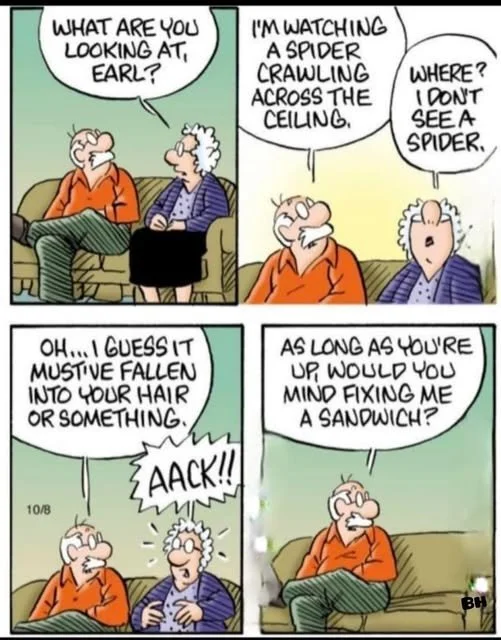
Mot : Opal and the spider
News, Rumors and Opinions Thursday 8-21-2025
The Fed Just Hit the Switch on ISO 20022
589bull: 8-20-2025
The Fed just hit the switch on ISO 20022.
Boring headline? Sure. World changing? Absolutely.
This is the moment U.S. payments started talking in the same language as global rails. SWIFT, RippleNet, BRICS, central banks all humming in sync.
The Fed Just Hit the Switch on ISO 20022
589bull: 8-20-2025
The Fed just hit the switch on ISO 20022.
Boring headline? Sure. World changing? Absolutely.
This is the moment U.S. payments started talking in the same language as global rails. SWIFT, RippleNet, BRICS, central banks all humming in sync.

Now every transfer can carry compliance, context, tokenized value. The rails aren’t just moving dollars anymore… they’re moving the future.
XRP isn’t a bet anymore. It’s the damn conduit. The pipe was laid years ago now the water’s about to roar through it.
No fireworks. No confetti. Just a quiet line in a Federal Reserve update.
Federal Reserve Financial Services: The ISO® 20022 migration is complete! It's time to start exploring the possibilities: https://bit.ly/4oFOlpw #payments #ISO20022 #banking #Fedwire #FederalReserve
Source(s): https://x.com/589bull10000/status/1958333757628293479
https://dinarchronicles.com/2025/08/20/589bull-the-fed-just-hit-the-switch-on-iso-20022/
***********
Courtesy of Dinar Guru: https://www.dinarguru.com/
Frank26 Trump gave them until the 31st to fix their monetary reform policies, process...If not, they're going to liquidate. They're going to disintegrate a lot of the banks in Iraq. Trump ain't playing...That's why we see what Trump is doing with many currencies around the world. You talk about the lynch pin. You talk about the first domino. I sincerely think it's the Iraqi dinar.
Nader From The Mid East Iraq is doing really good. We’re doing a lot better. We are stable financially. We are stable politically. We are stable when it comes to any threat from anybody. This is amazing. I’m happy things are happy. Things are going to move fast. Good luck to everybody.
Walkingstick [Iraq] doesn’t need any foreign partner, American. They now stand on their own two feet with their own exchange rate. Not at 1 to 1 but through a float that will reach the real effective exchange rate. A foreign partner is no longer needed in the monetary reform process of Iraq…They are now able to adhere to international standards that they have passed, accepted and now the whole international world knows about it.
************
The U.S. Debt Is a Mathematical Death Sentence – Only Gold Will Survive | Bill Holter
Liberty and Finance: 8-20-2025
Bill Holter presents a grim financial diagnosis: the U.S. debt is beyond repair, with default—either explicit or via dollar debasement—the only mathematical outcome.
With global confidence in U.S. Treasuries unraveling and central banks pivoting to gold like it's a post-Bretton Woods fire sale, Holter warns of a domino collapse of credit markets that would leave modern society blinking in the dark—literally.
Meanwhile, the irony of the American middle class selling silver to buy groceries underscores a tragic reversal: the very assets meant to preserve wealth are now being liquidated for survival.
Holter argues that while the East quietly builds a commodity-based lifeboat, the West may attempt a theatrical gold revaluation—but likely too little, too late. If the system crashes, he suggests,
prosperity won’t mean luxury; it’ll mean having food, water, and a working generator—proof that in the empire of IOUs, the man with ounces is king.
INTERVIEW TIMELINE:
0:00 Intro
5:30 Default is the only option
10:00 Gold revaluation?
12:30 Forced to sell metals
16:40 Retire with 10,000 oz of silver?
19:50 Thriving vs surviving
23:40 Stock certificates & safe deposit boxes
Here’s the Truth About the $600 Tariff Checks
Here’s the Truth About the $600 Tariff Checks, According to One Money Expert
Vance Cariaga Thu, August 21, GOBankingRates
While President Donald Trump continues to defend tariffs as the best way to reduce U.S. trade deficits, many economists fear that the tariffs will mainly serve to push consumer prices higher.
To help ease that problem, some lawmakers have proposed sending out stimulus payments similar to those distributed during the COVID-19 pandemic. One such proposal, recently introduced by U.S. Sen. Josh Hawley (R-Missouri), would provide $600 “tariff checks” to eligible Americans.
Here’s the Truth About the $600 Tariff Checks, According to One Money Expert
Vance Cariaga Thu, August 21, GOBankingRates
While President Donald Trump continues to defend tariffs as the best way to reduce U.S. trade deficits, many economists fear that the tariffs will mainly serve to push consumer prices higher.
To help ease that problem, some lawmakers have proposed sending out stimulus payments similar to those distributed during the COVID-19 pandemic. One such proposal, recently introduced by U.S. Sen. Josh Hawley (R-Missouri), would provide $600 “tariff checks” to eligible Americans.
The question is how effectively a tariff check would offset tariff-related inflation. Keep reading to learn the truth about the tariff checks, according to Jaspreet Singh and other money experts.
Where Will the Money Come From?
Hawley’s American Worker Rebate Act (AWRA) aims to return certain tariff revenue to U.S. households as a way of providing financial relief, according to an analysis from the Tax Foundation.
If passed, the rebate would provide $600 to eligible Americans, or $2,400 for a family of four. Those benefits would be reduced by 5% for joint filers with an adjusted gross income above $150,000 or single filers earning more than $75,000, Singh said in a YouTube video titled “The TRUTH About Trump’s $600 Tariff Checks For Americans.”
The idea is similar to stimulus checks sent during COVID, which aimed to help American families navigate the pandemic’s economic fallout.
The problem, according to Singh, is that stimulus checks in just about any form could have long-term repercussions that might eventually cost Americans more than they received in benefits.
“If you follow the trail of money for the stimulus checks in 2020 and 2021, it started with the Federal Reserve Bank turning on their money printer and lending trillions of dollars to the United States government,” Singh said.
‘A Number of Problems’
TO READ MORE: https://news.yahoo.com/news/finance/news/truth-600-tariff-checks-according-110252422.html