
Thank you to all the subscribers to our Early Access program…we thank you for your continued support.
We are excited to offer this new service to keep you informed and up-to-date on the latest Dinar and currency news.
Seeds of Wisdom RV and Economics Updates Tuesday Morning 10-13-26
Good Morning Dinar Recaps,
GLOBAL DEBT RESET WATCH: IMF WARNS AI MARKET RISKS AND RISING BOND YIELDS COULD THREATEN FINANCIAL STABILITY
The IMF's latest financial stability assessment warns that an AI investment correction, mounting government debt, rising bond yields, and cyber threats could expose vulnerabilities across the global financial system.
Good Morning Dinar Recaps,
GLOBAL DEBT RESET WATCH: IMF WARNS AI MARKET RISKS AND RISING BOND YIELDS COULD THREATEN FINANCIAL STABILITY
The IMF's latest financial stability assessment warns that an AI investment correction, mounting government debt, rising bond yields, and cyber threats could expose vulnerabilities across the global financial system.
OVERVIEW
IMF issues a financial stability warning: Global markets have remained resilient, but the International Monetary Fund says risks are elevated as investors weigh AI-driven valuations, inflation pressures, and growing debt.
Bond markets face increasing pressure: Rising government borrowing needs, large debt issuance, and higher energy prices could push yields upward and make financing more expensive for governments and businesses.
Financial vulnerabilities remain beneath the surface: The IMF warns that weaker banks, leveraged investors, and non-bank financial institutions could amplify a market shock, even though the banking sector remains resilient overall in its stress tests.
KEY DEVELOPMENTS
1. The IMF Warns That AI Optimism Could Turn Into Financial Stress
The International Monetary Fund released its October 2026 Global Financial Stability Report on October 13, warning that financial markets may be underestimating the risks beneath the current optimism surrounding artificial intelligence.
AI investment has supported corporate earnings, investor confidence, and expectations of future economic growth. However, the IMF cautions that those expectations could change quickly if the technology produces smaller economic gains than anticipated or companies reduce their investment spending.
A significant correction could affect more than technology stocks. Falling share prices could reduce household and corporate wealth, weaken investment, and spread volatility into credit markets.
The IMF also highlighted the growing role of borrowing in the AI investment boom. Major technology companies known as hyperscalers now account for approximately 10% of global investment-grade bond issuance, compared with less than 1% in 2024.
That shift matters because financial stress can spread when heavily invested companies, lenders, and investors depend on continued market confidence and access to affordable financing.
The warning is not that an AI crash is inevitable, but that the financial consequences could extend far beyond the technology sector if expectations reverse sharply.
2. Rising Government Bond Yields Put Debt Sustainability Back in Focus
The IMF identified rising sovereign bond yields as another major source of concern.
Governments around the world must refinance existing debt and issue new bonds to cover spending needs and budget deficits. When investors demand higher yields to purchase that debt, government borrowing becomes more expensive.
Higher yields can also influence mortgage rates, corporate borrowing costs, and the value of existing bonds held by banks, pension funds, insurers, and investment funds.
The IMF said risks had increased since its April assessment, with higher energy prices adding to inflation pressures and contributing to rising yields. Large government financing requirements and unresolved fiscal deficits are making the situation more challenging.
There is an additional concern: central banks are reducing the size of some of their bond holdings, leaving greater reliance on private investors to absorb new government and corporate debt issuance.
If investors become less willing to purchase that debt at prevailing prices, yields may need to rise further to attract buyers.
For highly indebted governments, this can create a difficult cycle in which higher interest costs place additional pressure on already strained public finances.
3. Financial Institutions Face Risks Beyond Traditional Banking
The IMF's warning extends beyond government debt and stock-market valuations.
Its assessment identifies vulnerabilities among non-bank financial institutions, including hedge funds, insurers, pension funds, and private-credit providers. These institutions play increasingly important roles in financing businesses and supporting financial markets.
However, leverage, illiquid investments, concentrated trading positions, and liquidity pressures can magnify losses during periods of market stress.
The IMF also cautioned that a major cyber incident affecting a financial institution or critical technology provider could disrupt services and undermine confidence.
The banking sector remains broadly resilient in the IMF's stress tests. Nevertheless, the report found that banks accounting for approximately 22% of global banking assets would have weak capital cushions under the modeled adverse scenario, up from 18% in the 2025 test.
This is a stress-test finding, not a claim that those banks are currently insolvent. It indicates that certain institutions could be more vulnerable if a severe combination of market shocks materializes.
Taken together, these findings show why financial stability depends on more than the health of individual banks. The connections among debt markets, investment funds, technology providers, and borrowers can transmit shocks across the system.
WHY IT MATTERS
The global financial system is navigating several interconnected pressures: high public debt, rising financing requirements, uncertain returns from major technology investments, and greater reliance on a diverse range of financial institutions.
These pressures connect directly to the Debt, Assets, and Technology pillars of the global financial reset.
Debt: Governments and businesses must continue to finance existing obligations while competing for investment capital. Higher yields can make refinancing more expensive and reduce the resources available for other priorities.
Assets: Stocks, bonds, property, and investment portfolios can lose value when interest rates rise or market expectations change. Those losses may weaken balance sheets and trigger demands for additional capital.
Technology: AI and digital financial infrastructure can improve productivity, but concentrated technology dependencies and cyber vulnerabilities introduce new risks that financial institutions must manage.
The IMF is not predicting that the existing financial system will collapse. It is warning that vulnerabilities can interact, turning an individual market correction into a wider financial problem.
For those following changes in the international monetary system, the significance lies in how governments, regulators, investors, and financial institutions respond to these pressures.
WHY IT MATTERS TO FOREIGN CURRENCY HOLDERS
For foreign currency holders, the IMF's warning provides useful context for understanding the economic forces that influence currency markets.
Exchange rates respond to multiple factors, including interest-rate expectations, inflation, economic growth, government finances, international trade, and investor confidence.
If government borrowing costs rise sharply, markets may reassess a country's fiscal outlook. If an AI investment correction weakens business confidence, investors may reconsider their exposure to particular markets and currencies.
These developments can create volatility, but their effects are not uniform. Higher bond yields may attract investors in some circumstances while signaling greater financial risk in others.
This report does not establish that a currency revaluation is imminent, nor does it identify a particular currency as certain to rise in value.
For currency holders, the constructive approach is to follow measurable developments: government debt levels, bond yields, inflation, central-bank decisions, banking capital, and changes in international payment systems.
The global financial system can evolve substantially as these pressures are addressed, but responsible analysis must distinguish documented change from speculation about its timing or outcome.
IMPLICATIONS FOR THE GLOBAL RESET
PILLAR 1: Debt
The debt pillar examines whether governments, businesses, and households can sustain their financial obligations over time.
The IMF's warning highlights the importance of debt sustainability when governments face large refinancing requirements and investors demand higher returns to purchase bonds.
If borrowing costs remain elevated, interest payments can consume a greater share of public revenue. Businesses may also postpone investment or reduce hiring as financing becomes more expensive.
The central issue is not simply how much debt exists, but whether borrowers can service it without undermining economic stability.
PILLAR 2: Assets
The assets pillar focuses on the value, quality, and liquidity of the investments held across the financial system.
A correction in AI-related stocks could affect corporate valuations, investor wealth, and the financial institutions that provide funding to technology companies. Rising bond yields can also reduce the market value of existing fixed-income investments.
When losses occur across interconnected portfolios, investors may sell other assets to raise cash or meet financial obligations. Such reactions can increase volatility beyond the market where the original problem began.
Transparent valuations, appropriate capital reserves, and prudent risk management are therefore essential to financial resilience.
PILLAR 3: Technology
Technology is changing how businesses operate, how capital is allocated, and how financial services are delivered.
AI has the potential to improve productivity and support economic growth. Yet large investments based on optimistic forecasts can create vulnerabilities if expected returns fail to materialize.
The IMF's cybersecurity warning adds another dimension. As financial institutions become more dependent on digital systems and a limited number of critical technology providers, disruptions can have consequences beyond a single company.
The long-term challenge is to capture technology's benefits while ensuring that financial institutions have the safeguards, oversight, and resilience needed to withstand unexpected shocks.
THE BOTTOM LINE
The IMF's October 2026 warning is a reminder that financial stability cannot be measured by rising markets or strong corporate earnings alone. High public debt, expensive borrowing, leveraged investments, and growing technology dependencies can create vulnerabilities even while the system appears resilient.
The report does not predict an inevitable financial crisis. Instead, it highlights the importance of recognizing risks early, strengthening safeguards, and ensuring that debt and investment remain sustainable.
For those following the global financial reset, the essential development is how policymakers and markets respond to these pressures. The evolution of the global financial system will be shaped not by predictions of a sudden reset, but by the decisions that determine how the world finances its debts, values its assets, and manages the risks of a rapidly changing economy.
A strong financial system is not one that never faces pressure. It is one that recognizes its vulnerabilities, adapts to changing conditions, and builds the resilience needed to support the next stage of global commerce.
Seeds of Wisdom Team
Newshounds News
SOURCES
1. Reuters — "IMF cites AI slowdown, spiking yields as looming global market risks"
2. International Monetary Fund — "Global Financial Stability Report, October 2026"
~~~~~~~~~~
🌱 A Message to Our Currency Holders🌱
If you’ve been holding foreign currency for many years, you were not foolish.
You were not wrong to believe the global financial system would change.
What failed was not your patience — it was the information you were given.
For years, dates, rumors, and personalities replaced facts, structure, and proof. “This week” predictions created cycles of hope and disappointment that were never based on how currencies actually change.
That is not your failure.
Our mission here is different: • No dates • No rates • No hype • No gurus
Instead, we focus on:
• Verifiable developments • Institutional evidence
• Global financial structure • Where countries actually sit in the process
Currency value changes only come after sovereignty, trade, banking, settlement systems, and fiscal coordination are in place. History and institutions confirm this sequence.
You will see silence. You will see denials. That is not delay — that is discipline.
Protect your identity. Organize your documents. Verify everything.
Never hand your discernment to anyone who cannot show proof.
You deserve truth — not timelines.
Seeds of Wisdom Team
Newshounds News
~~~~~~~~~~
Seeds of Wisdom Team RV Currency Facts Youtube and Rumble
Newshound's News Telegram Room Link
RV Facts with Proof Links Link
RV Updates Proof links - Facts Link
Start Here room with Most Asked Questions Link
Follow the Gold/Silver Rate COMEX
Follow Fast Facts
Seeds of Wisdom Team™ Website
Thank you Dinar Recaps
The Dinar Dominoes Are Falling….What's Next?
The Dinar Dominoes Are Falling….What's Next?
The Dinar Den: 10-12-2026
Recent financial analyses highlight significant developments in Iraq’s currency landscape, specifically focusing on the anticipated Iraqi dinar revaluation and comprehensive monetary reforms.
These shifts are designed to modernize the nation’s financial framework, establish greater stability, and pave the way for a more integrated global economic presence. Financial observers continue to monitor these changes closely as the government implements strategic policies to reshape its monetary future.
The Dinar Dominoes Are Falling….What's Next?
The Dinar Den: 10-12-2026
Recent financial analyses highlight significant developments in Iraq’s currency landscape, specifically focusing on the anticipated Iraqi dinar revaluation and comprehensive monetary reforms.
These shifts are designed to modernize the nation’s financial framework, establish greater stability, and pave the way for a more integrated global economic presence. Financial observers continue to monitor these changes closely as the government implements strategic policies to reshape its monetary future.
A primary focus of current financial reforms is regaining absolute control over the nation’s currency circulation.
Authorities have actively worked to suppress the parallel dollar market, a crucial step in reducing illicit financial activities and stabilizing the local economy. By enforcing stricter regulatory measures and suspending unofficial foreign currency price listings, the central administration is actively steering the economy toward transparency.
These actions are not merely temporary fixes; they form part of a long-term strategy aimed at fortifying the dinar and ensuring that domestic transactions increasingly rely on the national currency rather than foreign alternatives.
In tandem with market stabilization efforts, plans are underway to introduce new banknotes featuring denominations with removed zeros.
This logistical milestone, often referred to as currency denomination restructuring, simplifies everyday transactions and aligns Iraq with international banking standards.
Alongside the physical rollout of new currency, the integration of modern banking systems is transforming how financial institutions operate within the country. These infrastructure upgrades are essential for unifying the exchange rate and fostering investor confidence, both domestically and internationally.
Beyond domestic policy, broader geopolitical and economic factors play a substantial role in these monetary shifts. Experts suggest that the ongoing financial evolution in Iraq is tied to a larger, global realignment of financial systems.
As the nation strengthens its economic sovereignty, many stakeholders view these developments through a lens of cautious optimism. While patience remains essential for anyone following the market, the systematic implementation of these financial reforms signals a progressive movement toward a historic economic milestone.
Iraq Economic News and Points To Ponder Monday Afternoon 10-12-26
The Judiciary Recovers 4 Billion Dinars In A Case Of Financial And Administrative Corruption
Money and business Economy News — Baghdad The Supreme Judicial Council announced on Monday the recovery of 4 billion dinars in a case of financial and administrative corruption.
The Judicial Council, in a statement received by "Economy News", that "the Rusafa Investigation Court competent to consider issues of integrity and money laundering, recovered a financial amount of 4 billion Iraqi dinars for the benefit of Rafidain Bank."
The Judiciary Recovers 4 Billion Dinars In A Case Of Financial And Administrative Corruption
Money and business Economy News — Baghdad The Supreme Judicial Council announced on Monday the recovery of 4 billion dinars in a case of financial and administrative corruption.
The Judicial Council, in a statement received by "Economy News", that "the Rusafa Investigation Court competent to consider issues of integrity and money laundering, recovered a financial amount of 4 billion Iraqi dinars for the benefit of Rafidain Bank."
The competent judge explained that "the recovery process came against the backdrop of crimes of financial and administrative corruption, as part of the ongoing efforts of the judiciary to protect public money and combat corruption."
He added that "the judicial procedures and thorough investigations conducted by the court resulted in the recovery of this amount," stressing that "the continuation of legal proceedings against violators who follow illegal methods to achieve profits that harm public money. https://www.economy-news.net/content.php?id=74921
Iraq Ranked 99th Globally In The ICT Development Index For 2026
Money and business Economy News – Baghdad Iraq ranked 99th globally in the ICT Development Index for the year 2026, recording 79.4 points, according to data published by Visual Capitalist, which specializes in economic data and design.
The ranking is based on the International Telecommunication Union (ITU) Index, which measures the level of digital connectivity in 159 economies around the world, based on indicators including Internet access and use, network coverage, data consumption, and affordability of telecommunication services.
According to the data, Iraq came tied in the result with Colombia, ahead of the Dominican Republic, which scored 79.3 points, while Egypt came at 79.6 points, Tunisia at 80.1 points, Indonesia 84.7 points and Brazil 84.6 points.
At the global lead, Saudi Arabia topped the index 99.8, followed by the UAE 98.8 while the Gulf countries dominated five of the top ten, namely Saudi Arabia, the United Arab Emirates, Kuwait, Qatar and Bahrain.
In Europe, Estonia topped the European economies outside the Gulf with 98.5 points, followed by Finland with 98.4 points, while the United States came in ninth place in the world with 97.9 points.
The report concluded that the global index averaged 79 points, with 59 economies recording scores ranging from 90 to 100 points, compared to 15 economies with a score of less than 50 points.
The data also showed a wide improvement in the levels of digital communication, with 146 economies out of 151 economies covered by the index versions for 2023 and 2026 increasing in their scores https://www.economy-news.net/content.php?id=74935
After A Pause Of Decades. Iraq Is Preparing To Launch The First Commercial Flight From Jebel Ali To Basra
Money and business Economy News – Baghdad The General Company for Maritime Transport of the Ministry of Transport announced on Monday the approaching date of the launch of the first commercial flight of the national maritime carrier from the port of Jebel Ali in the UAE towards the province of Basra, in a move that reactivates the Iraqi maritime line (Iraq Line) after a long pause.
The company said in a statement received by "Economy News", that "preparations are continuing to launch the first commercial flight of the national maritime carrier through the Gulf, from the port of Jebel Ali towards the province of Basra, as part of efforts to reactivate the Iraqi maritime line."
“This step aims to enhance trade and maritime transport, provide competitive advantages in freight rates, facilitate procedures and improve safety standards.”
The company called on traders and importers wishing to transport their goods through the national maritime carrier to expedite the making of reservations, and to communicate through the official phone numbers announced and the approved website of the company.
The move comes within the framework of the Ministry of Transport's efforts to reactivate the Iraqi maritime line and strengthen its role in the movement of trade and the transfer of goods through Iraqi ports https://www.economy-news.net/content.php?id=74939
Al-Zaidi Launches The Distribution Of 110 Thousand Plots Of Land In Nineveh And Announces The Launch Of The One Million Farms Initiative
Money and business Economy News – Baghdad Prime Minister Ali Faleh al-Zaidi said on Monday that the government's goal is that no family from the people of Nineveh should remain without a piece of land, stressing the importance of the return of all the people of the province to their homes.
A statement issued by the Information Office of the Prime Minister, received by "Economy News", that "the Prime Minister, Ali Faleh al-Zaidi, launches the executive work of the project of one million residential plots (Watan Initiative), in the province of Nineveh by 110 thousand residential plots."
He stressed that "the goal of the government is not to keep a family of the people of Nineveh without a piece of land, in loyalty to the sacrifices of its people and their heroic positions," stressing "the government's keenness to return all the people of the province to their homes."
He pointed out that "in addition to the launch of the Watan initiative project, the initiative of one million farms will be distributed among Iraqis, in order to contribute to supporting the national economy, in addition to the projects of new cities with all the housing, economic and development projects https://www.economy-news.net/content.php?id=74941
Al-Zaidi Calls On International Companies To Invest In Mosul International Airport And Develop Its Services
Money and business Economy News – Baghdad Prime Minister Ali Faleh al-Zaidi on Monday called on international companies specialized in the management and operation of airports to invest in Mosul International Airport and develop its services, in line with the status of Nineveh province and its history.
The Information Office of the Prime Minister, in a statement received by "Economy News", that "Zaidi has sent an official invitation to international companies specialized in the management and operation of airports to invest in Mosul International Airport and develop its services, in a manner befitting the province of Nineveh and its great history."
The statement added that "this came during the visit of the Prime Minister to the city of Mosul to launch the executive work of the one million residential plots project, and follow-up service and development projects in the province, including Mosul International Airport."
Al-Zaidi stressed, according to the statement, that "the city of Mosul represents a civilized facade for Iraq and an important view of the world," stressing "the government's serious endeavor to complete vital projects in the province, to meet the needs of citizens and their service and economic requirements."
He explained that "Mosul International Airport is not only a service project, but is an important window for the province of Nineveh and Iraq in general, especially after the decision to return the province to the map of aviation and investment."
The Prime Minister stressed that "the government does not want international companies to build service halls, but to be a real partner in the development of the airport and turn it into an important service edifice that serves the province and contributes to strengthening its economic and investment position https://www.economy-news.net/content.php?id=74932
America Got Rich on Competition, Then Legislated It Away
America Got Rich on Competition, Then Legislated It Away
Notes From the Field By James Hickman (Simon Black / Sovereign Man) October 12, 2026
In 1938 the airline business was brand new— only 35 years had passed since the Wright brothers' first flight at Kitty Hawk. Hardly anyone had even seen an airplane. A coast-to-coast round trip cost about $260, half the price of a new car, so passengers were mostly very wealthy.
The airlines were small, and during the Depression they were losing money. Congress was afraid they would undercut each other into bankruptcy, and the country would lose an industry it needed for its mail and its defense.
America Got Rich on Competition, Then Legislated It Away
Notes From the Field By James Hickman (Simon Black / Sovereign Man) October 12, 2026
In 1938 the airline business was brand new— only 35 years had passed since the Wright brothers' first flight at Kitty Hawk. Hardly anyone had even seen an airplane. A coast-to-coast round trip cost about $260, half the price of a new car, so passengers were mostly very wealthy.
The airlines were small, and during the Depression they were losing money. Congress was afraid they would undercut each other into bankruptcy, and the country would lose an industry it needed for its mail and its defense.

So lawmakers created the agency that became the Civil Aeronautics Board. For the next forty years, the Board set the airfare on every interstate route in America. They even decided which airlines were allowed to fly those routes.
The idea was well intended; they viewed airlines as an element of national security that needed protection.
But whatever good intentions the Board started with, by the 1970s it was just a soulless bureaucracy that stifled competition and said “no” to everything new.
An airline that wanted to CUT its prices needed the Board's permission. So did anyone who wanted to start a new major airline.
Between 1950 and 1974, 79 new airlines applied to the Board. Zero were approved.
The consequences were obvious; remember, the Board only regulated interstate routes, so the public could see the difference.
For example, in 1965, a California airline called PSA flew Los Angeles to San Francisco for $11.43. Because the route was within the state, it was unregulated.
Meanwhile, the cheapest ticket from Boston to Washington— about the same distance, but across state lines and hence regulated by the Board— was $24.65.
In other words, federal regulation more than doubled the fare.
By the late 1970s Americans were hurting. The Arab oil embargo of 1973 had nearly quadrupled the price of oil, which stayed high. It was the decade of stagflation: prices had nearly doubled in ten years, inflation was running near 9% by the fall of 1978.
President Jimmy Carter was looking for anything he could do to bring prices down.
He understood that more competition means lower prices. "Of all our weapons against inflation," he told the country in a televised speech on October 24, 1978, "competition is the most powerful."
That same day he signed a law phasing the Board out, and by 1985 it no longer existed.
Sure enough, within six years the average airfare had fallen, even though inflation was still raging elsewhere in the economy.
And this was Jimmy Carter... hardly a free market champion.
Yet he kept doing it. In 1980 alone he deregulated banking, trucking, and the railroads, calling it "the capstone of my efforts… to get the federal government off the backs of private industry."
Ronald Reagan beat him that November… and in his second week in office finished Carter's phase-out of federal price controls on oil, and continued deregulation from there. Two presidents who agreed on practically nothing agreed on boosting competition.
Nothing on that scale has happened since. For forty years the pile of rules has kept growing, and you pay for it every day.
Start with the airlines, where the ban on competition outlived the Board. No foreign airline may carry passengers between two American cities. Europe opened its domestic routes to airlines from other EU countries in 1997. Comparable fares there are well below America’s.
Under the Jones Act, a 1920 law, anything shipped between two American ports must travel on an American-built ship owned and crewed by Americans. Fewer than 100 large oceangoing ships qualify.
No American yard has built a liquefied natural gas tanker since 1980, so no American-built ship can carry Texas gas to Boston. New England consequently buys its winter gas from overseas instead.
Ironically, after hurricanes pummeled Puerto Rico in 2022, the government suspended the Jones Act so a foreign tanker could bring diesel to the island; this suggests that politicians already know how cumbersome and expensive the Jones Act is.
Hospitals need permission to exist, too. In 35 states medical facilities can't open or expand without state approval, and states with these laws have about 30% fewer hospitals per person.
The National Association of Home Builders found that regulation adds about $132,000 to the price of a new home. Hardly any of that has to do with safety or quality.
********************
Want to build a power line, a pipeline, or a mine? Consulting firm McKinsey estimates $1.5 trillion of investment is stuck in federal permitting.
Want to cut hair? That takes nearly a year of state-mandated training. One in five American workers now needs government permission to do their job.
And right now the government is keeping cheaper cars out. Chinese companies build a decent mid-size SUV for around $20,000 that American automakers would have to compete with. So Chinese cars face a 100% tariff, and the Commerce Department, citing national security, banned cars with Chinese-linked software. Americans pay more as a result.
The pattern is hard to miss: wherever the government gets involved, prices go up.
It has happened every single time the government stepped in to make something more affordable— education, housing, child care, healthcare.
Competition and technology are the only forces that have EVER brought prices down for good, and almost every rule in that pile exists to stop one or the other.
America got rich on competition yet has spent forty years legislating it away.
A real overhaul of the rules would do for the whole economy what Carter's law did for airfares. Clear them away and the country will build more, make more, start more businesses...
None of this is difficult. Jimmy Carter did it with a signature. But the politicians refuse, and waiting on them is not a plan.
And that's exactly why it makes sense to have a Plan B.
To your freedom, James Hickman Co-Founder, Schiff Sovereign LLC
Rob Cunningham: The Transformation of the Global Monetary System
Rob Cunningham: The Transformation of the Global Monetary System
10-12-2026
XRP: The Transformation of the Global Monetary System
Wall Street Investment Banking.
Correspondent Banking.
Central Banking.
Fractional Reserve Lending. Global Payments.
Rob Cunningham: The Transformation of the Global Monetary System
10-12-2026
XRP: The Transformation of the Global Monetary System
Wall Street Investment Banking.
Correspondent Banking.
Central Banking.
Fractional Reserve Lending. Global Payments.
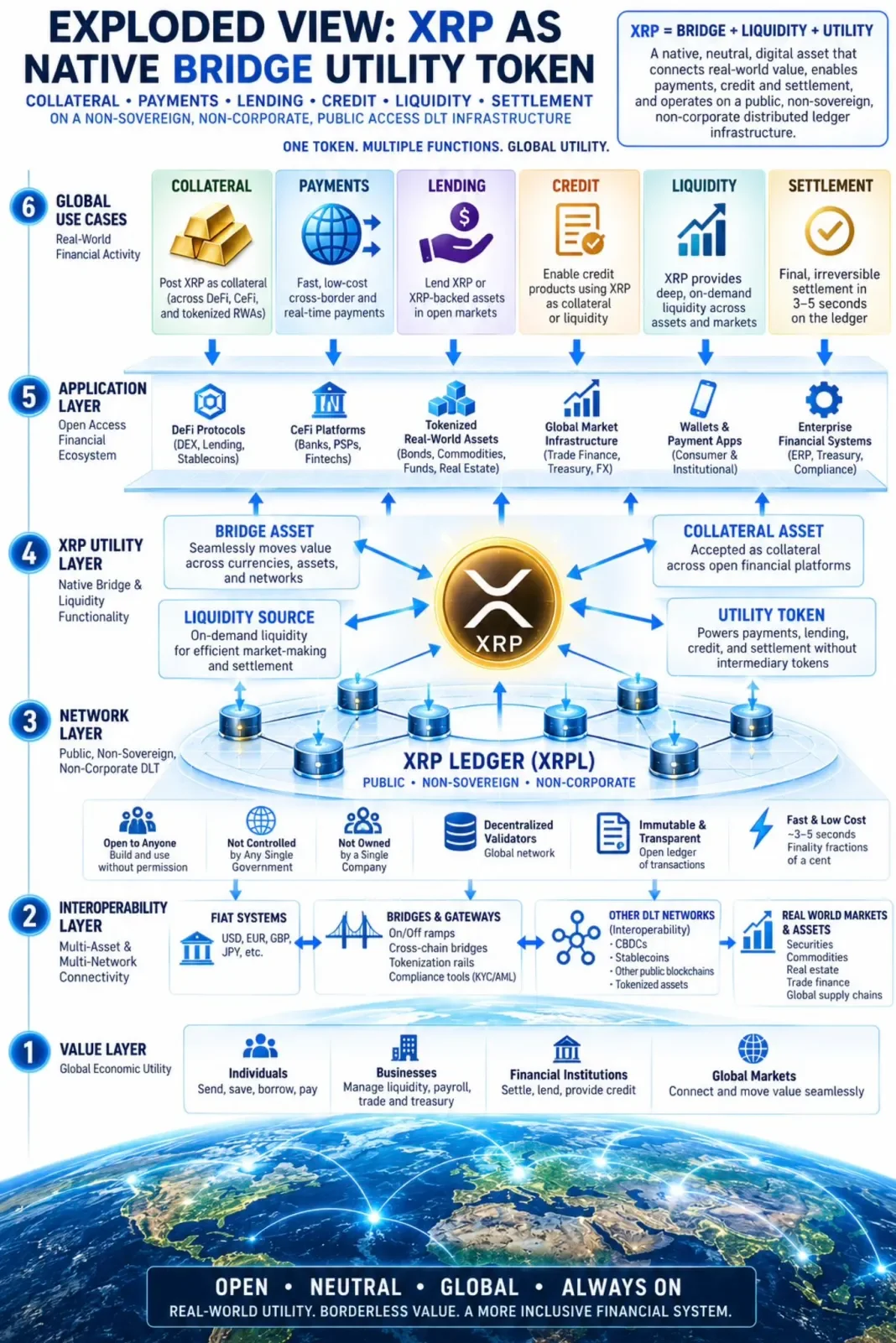
For generations, these financial sectors have operated through separate networks, intermediaries, ledgers, settlement arrangements, collateral requirements and layers of institutional trust.
XRP and the XRP Ledger introduce something fundamentally different: a common, publicly accessible digital infrastructure capable of connecting financial functions that historically required separate institutions, processes and systems.
The significance extends FAR beyond moving money faster or cheaper.
It concerns the ARCHITECTURE OF MONEY itself: how value is represented, transferred, exchanged, pledged, financed, borrowed, lent and finally settled.
XRP is the native asset of the XRP Ledger (XRPL), a public, open-source distributed ledger that is neither owned by a corporation nor governed by a sovereign state. Ripple is a major contributor to the ecosystem, but Ripple does not own the ledger.
The distinction is foundational.
1. A private company can build financial services on a public network without owning the network.
2. A government can regulate financial activity without owning the underlying protocol. And,
3. Individuals can hold and transfer the native asset without requiring permission from either.
That creates an opportunity to reorganize the operational foundations of global finance.
It’s something only a Stable Genius with purpose, experience, vision, knowledge, wisdom, courage, tenacity and moral fortitude could help lead a skilled team to assemble for humanity.
Only when one is open, eager, willing and ready, will they see.
Source(s):
• https://x.com/KuwlShow/status/2109284763898896811
Ariel: Iraqi Dinar Redenomination Sequence and the Q1 2027 Compression Window
Ariel: Iraqi Dinar Redenomination Sequence and the Q1 2027 Compression Window
10-12-2026
Short IQD Update: Iraqi Dinar Redenomination Sequence — The Denial Protocol, the Gold Position, and the Q1 2027 Compression Window
The This-Year Scenario & How It’s Actually Possible
Here’s the shortest path, and it’s cleaner than most realize:
Ariel: Iraqi Dinar Redenomination Sequence and the Q1 2027 Compression Window
10-12-2026
Short IQD Update: Iraqi Dinar Redenomination Sequence — The Denial Protocol, the Gold Position, and the Q1 2027 Compression Window
The This-Year Scenario & How It’s Actually Possible
Here’s the shortest path, and it’s cleaner than most realize:
The two-track split is the answer. The rate release and the physical redenomination are separate operations, and they don’t have to land together.
Track one the rate, this year. The 2027 budget submits October 15th. Buried inside that budget law is the exchange rate provision “regime modernization” language which authorizes the new official rate. Budget laws in Iraq authorize monetary provisions without requiring a standalone currency-law vote.
Once the budget passes (the al-Jahishi bloc’s “boycott” theater ends the moment the provision they “demanded” appears inside it), the CBI can declare the new official rate effective “before year-end”.
The rate is a ‘policy declaration’, not a physical operation. It requires no notes, no printing presses, no exchange windows. It’s a number, a directive, and a CBI gazette publication. The moment it’s official, international platforms Forex brokers, Reuters terminals, institutional desks begin quoting the restructured rate.
That’s the October 15th theory, and it holds: the rate goes live on paper in Q4 2026 while the physical infrastructure catches up behind it.
Track two the notes, Q1 2027: The new rate operating at the official level for weeks ‘before’ the new notes circulate is not a flaw it’s the sequencing.
The old notes continue functioning at the declared conversion value (25,000 IQD old = 25 new dinars at the new peg), so the economy doesn’t skip a beat while the note exchange window opens in Q1 2027.
The dual-circulation period runs 6–12 months, old notes surrendered 1:1, and the printing you flagged from August has the supply already staged in cash centers by then.
Why this year isn’t actually impossible: Three conditions had to be met, and all three are now in place “government seated” (Monday’s cabinet vote completes it you cannot redenominate into a caretaker administration), “budget vehicle” (October 15th submission, the single legislative instrument that carries the rate), and “convertibility plumbing” (the international accounts and trade cards announced ‘this month’ are the pre-condition for a tradable, quotable currency on foreign platforms).
Add the 175 tons of gold as the credibility spine and the security directive keeping force out of currency markets that last one is the state pre-clearing the streets for a monetary event, not a routine order.
Read Full Article:
https://www.patreon.com/Prolotario1/posts/short-iqd-update-171998313
Seeds of Wisdom RV and Economics Updates Monday Afternoon 10-12-26
Good Afternoon Dinar Recaps,
GERMANY FINANCIAL RESET WATCH: €723 MILLION BANK RESCUE EXPOSES RISKS BEYOND TRADITIONAL BANKING
Germany's largest recent cooperative-bank rescue highlights how real estate losses and investments outside conventional banking can threaten financial institutions, raising wider questions about credit risk and the resilience of Europe's banking system.
Good Afternoon Dinar Recaps,
GERMANY FINANCIAL RESET WATCH: €723 MILLION BANK RESCUE EXPOSES RISKS BEYOND TRADITIONAL BANKING
Germany's largest recent cooperative-bank rescue highlights how real estate losses and investments outside conventional banking can threaten financial institutions, raising wider questions about credit risk and the resilience of Europe's banking system.
OVERVIEW
A major German bank rescue: Volksbank BRAWO, a cooperative bank serving the Braunschweig–Wolfsburg region, is receiving support of up to €723 million through Germany's cooperative banking protection system.
Losses beyond traditional banking: The bank reported a preliminary loss of approximately €608.1 million for 2025, driven largely by falling valuations in real estate and other investment businesses.
A wider financial warning: Germany's banking regulators say the sector remains resilient overall, but corporate lending, commercial real estate, and rising economic uncertainty continue to create vulnerabilities.
KEY DEVELOPMENTS
1. A €723 Million Rescue Highlights the Scale of the Problem
Volksbank BRAWO has become the largest recent support case among Germany's cooperative banks. The sector's protection system, operated by the National Association of German Cooperative Banks (BVR), has agreed to provide support of up to €723 million.
The support includes €473 million in guarantees to shield the bank against risks and up to €250 million in additional capital support. The measures are designed to protect the bank's financial position and help it meet regulatory capital requirements.
The rescue is significant because the bank's balance sheet was approximately €6.5 billion. The support therefore represents a substantial intervention relative to the institution's size.
Importantly, this is an organized industry support operation, not a reported government bailout or proof that the bank has failed. Germany's cooperative banking network has a protection mechanism intended to prevent member institutions from becoming insolvent.
2. Real Estate and Outside Investments Drove the Losses
The bank's preliminary 2025 result showed a loss of approximately €608.1 million following substantial downward adjustments to the value of assets and investments.
Real estate accounted for approximately 80% of the reported loss, according to the bank's leadership. Corporate investments and other activities outside its core banking operations also contributed to the damage.
The underlying problem illustrates how an institution can be weakened by businesses beyond its traditional role of accepting deposits and making loans. Investments that appear profitable during periods of rising property values and favorable financing conditions can become liabilities when borrowing costs increase, property markets weaken, and valuations fall.
Volksbank BRAWO has announced plans to reduce its real estate and investment activities and return to a more focused regional banking model.
This is a reminder that financial risk can accumulate outside the areas customers most readily associate with a bank.
3. Germany's Cooperative Banking Sector Faces a Broader Test
The BRAWO case is not the only recent support operation in Germany's cooperative banking sector. Handelsblatt reported in September that ten cooperative institutions had received support since early 2024, with the cases involving approximately €2 billion in total.
That history deserves attention. Although the institutions and circumstances differ, multiple support cases can indicate that weaknesses have accumulated in parts of a financial system.
At the same time, the wider picture must be kept in perspective. In its September 24, 2026, stress-test announcement, Germany's financial regulator BaFin and the Deutsche Bundesbank said small and medium-sized banks and savings banks remained resilient overall, with capital buffers generally sufficient to withstand severe economic stress.
Their assessment nevertheless identified continuing pressure from corporate lending, commercial real estate, geopolitical uncertainty, and borrowers' ability to service debt.
The important distinction is that a serious individual rescue and repeated institutional support cases are warning signals, but they do not establish that Germany's entire banking system is in crisis.
WHY IT MATTERS
The global financial system is interconnected through lending, property markets, investment portfolios, collateral values, and the cost of borrowing.
When interest rates rise or economic conditions deteriorate, assets that once appeared secure may lose value. Those losses can weaken balance sheets, reduce lending capacity, and force financial institutions to sell assets, obtain new capital, or restructure their businesses.
The BRAWO case is particularly relevant because much of its damage originated in real estate and other investment activities rather than its conventional banking operations.
This connects directly to the Debt and Assets pillars of the global financial reset.
Debt: Higher financing costs and weaker business conditions can make existing obligations more difficult to service.
Assets: Falling property valuations and unsuccessful investments can expose weaknesses that were less visible during more favorable market conditions.
Financial stability: Protection mechanisms, capital requirements, and restructuring programs become important safeguards when an institution experiences substantial losses.
The broader question is whether similar vulnerabilities exist elsewhere. That requires evidence from other banks, regulators, and credit-market data—not assumptions based on a single rescue.
WHY IT MATTERS TO FOREIGN CURRENCY HOLDERS
For people following the evolution of the global financial system, Germany's banking difficulties are worth watching because the strength of a currency depends partly on confidence in the financial institutions and markets operating within its economic area.
Germany is a major economy within the euro area. Persistent banking problems could affect lending conditions, investment, economic growth, and confidence in European financial markets if they became widespread.
However, this rescue does not establish that the euro is about to collapse, that the dollar is about to lose its reserve-currency role, or that a global currency revaluation is imminent.
For foreign currency holders, the more useful approach is to monitor developments that can be measured: bank capital, non-performing loans, commercial property prices, credit conditions, central-bank policy, and the effectiveness of financial safeguards.
The lesson is not to anticipate a particular reset date. It is to understand the financial pressures that can influence how the international monetary system evolves.
IMPLICATIONS FOR THE GLOBAL RESET
PILLAR 1: DEBT
The debt pillar focuses on the ability of households, companies, and financial institutions to meet their obligations.
When property values fall and financing costs remain elevated, borrowers may struggle to refinance loans or generate sufficient income to service their debt. Banks can then face greater credit risk, while losses on their own investments can further weaken their financial position.
Germany's experience demonstrates why the quality of assets and the sustainability of debt matter as much as the headline size of a financial institution.
PILLAR 2: ASSETS
The assets pillar examines what financial institutions own, how those holdings are valued, and whether their underlying economic value can withstand changing conditions.
Real estate, corporate investments, securities, and other holdings can perform differently as interest rates, demand, and economic expectations change.
BRAWO's losses illustrate how a portfolio built around multiple investment activities can become a source of financial strain. Its planned return to traditional regional banking reflects a broader effort to simplify operations and reduce exposure to businesses that created substantial losses.
For the international financial system, asset transparency and realistic valuations are essential to maintaining confidence.
THE BOTTOM LINE
Germany's €723 million cooperative-bank rescue is a genuine financial warning, not proof of an imminent systemic collapse. It shows how losses outside traditional banking can threaten an institution and why protection mechanisms and restructuring matter. The next question is whether similar weaknesses are appearing across other banks and markets. The evolution of the global financial system will be shaped not by rumors of a reset, but by how institutions confront debt, recognize losses, and rebuild confidence when old financial assumptions no longer hold.
The deeper story is not simply that one German bank needed help. It is that financial systems must adapt when property markets weaken, investment assumptions fail, and the risks hidden outside traditional banking become impossible to ignore.
Seeds of Wisdom Team
Newshounds News™ Exclusive
SOURCES
1. Handelsblatt — "Eigentümer der Volksbank Brawo billigen Stützungsmaßnahmen"
~~~~~~~~~~
Seeds of Wisdom Team RV Currency Facts Youtube and Rumble
Newshound's News Telegram Room Link
RV Facts with Proof Links Link
RV Updates Proof links - Facts Link
Start Here room with Most Asked Questions Link
Follow the Gold/Silver Rate COMEX
Follow Fast Facts
Seeds of Wisdom Team™ Website
Thank you Dinar Recaps
Inflation Is "Only" 3.4%. Here's Where Your Money Goes Farther
Inflation Is "Only" 3.4%. Here's Where Your Money Goes Farther
Notes From the Field By James Hickman (Simon Black / Sovereign Man) October 9, 2026
The two most recent inflation reports both showed the same thing: prices in the US are 3.4% higher than they were a year ago. And the politicians could hardly contain themselves.
After the first report, the White House's top economic adviser, Kevin Hassett, declared that inflation is "clearly decelerating." After the second, Jason Smith, the chairman of the House Ways and Means Committee, announced that "more relief may be just around the corner."
Inflation Is "Only" 3.4%. Here's Where Your Money Goes Farther
Notes From the Field By James Hickman (Simon Black / Sovereign Man) October 9, 2026
The two most recent inflation reports both showed the same thing: prices in the US are 3.4% higher than they were a year ago. And the politicians could hardly contain themselves.
After the first report, the White House's top economic adviser, Kevin Hassett, declared that inflation is "clearly decelerating." After the second, Jason Smith, the chairman of the House Ways and Means Committee, announced that "more relief may be just around the corner."

I’m not sure that anyone views price hikes at any level being good news. Normal people don't want prices to rise more slowly; they want prices to stop rising, or better yet, to come back down.
But that's never going to happen; even the Federal Reserve's own goal is for prices to keep rising 2% a year.
Bear in mind that prices are ALREADY almost 30% higher than they were before the pandemic.
Now, there are solutions to this. In fact we often write about how real assets— gold, energy, productive technology, and the metals that build everything— are safe havens from inflation.
A government can print money by the trillion, but it can't print an ounce of gold or a barrel of oil.
But there's another way to beat inflation that most people never consider: go where your money goes farther.
America has become one of the most expensive countries in the world.
The typical American rental now lists for nearly $2,000 a month, and in larger metropolitan areas, rent is much higher. The median home price is now over $400,000 in the US, and with mortgage rates over 7%, not to mention a hefty down payment, affordability is difficult.
Housing costs may not be your biggest bill; it might be healthcare, child care, or several things at once. Priorities differ, but everyone knows what they spend their money on.
And whatever that is for you, there are places around the world where it costs a lot less.
In Cebu, a coastal city in the Philippines, a two-bedroom condo rents for $450 to $700 a month. A private doctor visit costs $10 to $25.
You could live the way you do now and keep the difference… or you could pay a little less than you do now and get a LOT more: a modern condo with a pool, a housekeeper, dinners out several times a week.
And you don't have to pack up and move to give yourself that option. You don't even have to buy property.
All you need is a legal residency, i.e. the right to live in another country whenever you choose.
It's a smart idea to set one up now, while countries still make it easy. If you decide later that you do want to go, you already have it.
But the rules don't stay easy. Residency programs change constantly; thresholds rise, rules tighten, and some get eliminated entirely.
Panama used to have all sorts of easy ways to get residency; there was even a visa for investing in reforestation.
The most accessible route has long been the Friendly Nations visa, which applies to citizens of countries with economic or diplomatic ties to Panama, including the US. In 2019, all it required was registering a company in Panama and depositing as little as $5,000 in a local bank account.
Since 2021 it has required a $200,000 investment in Panamanian real estate, the same amount in a Panamanian bank, or a local employment contract.
I still think Panama is one of the best options out there.
Home prices have definitely gone up since we held an event there in 2023; we heard as much at our conference in Panama City last month. But they're still quite modest compared to the US.
Retirees who become residents also get a permanent discount card for the rest of their lives— meaningful cuts on everything from flights and restaurants to medical care and entertainment.
Mexico isn't the bargain it once was. The peso has strengthened, and a dollar buys more than 10% fewer pesos than it did at the start of last year.
But Mexico is still right next door, residency is easy to get, and the cost of living is low by any developed-world standard.
In Europe, Greece is the most accessible entry point for anyone wanting residency, and the cost of living there is well below American levels.
And in the Philippines, where that Cebu condo is, roughly $3,000 a month buys a life that looks upper-class back home: a full-time housekeeper who cooks, regular dinners out, private doctors, and a secure building with a gym and a pool.
A residency in one of those places, set up before you need it, is a great cost of living focused Plan B. And it works like insurance.
You don't call an insurance company while the roof is on fire; you shop around for quotes, figure out the best mix of price and value, and make the decision in a calm and peaceful setting.
The low costs and the easy rules aren't likely to stay this way, so it's better to think about doing this now.
Inflation isn't going away, no matter how many victory laps the politicians take. But a residency in a country where your money goes farther gives you the right to go live there whenever you choose.
It's a unique way to beat inflation.
To your freedom, James Hickman Co-Founder, Schiff Sovereign LLC
P.S.
The right residency depends on your age, your income, and how much time you actually want to spend there.
Our flagship service, Plan B Confidential, covers the programs I mentioned here and many others— what each one costs, how to qualify, and what it takes to keep it— along with on-the-ground reports on living costs, healthcare, and real estate in places like Mexico and the Philippines. Members also get our Rolodex of trusted service providers.
GP Q: How Financial Systems are Quietly Changing
GP Q: How Financial Systems are Quietly Changing
10-12-2026
PATHWAYS ( “THE RAILS”) TO LIQUIDITY
How Financial Systems Are Quietly Changing — And What Ordinary People Should Actually Know:
Financial systems do not switch over in a single dramatic moment. Most large shifts begin with technical work that happens out of public view: new connections between banks and payment networks, updated identity checks, stronger verification layers, and the gradual linking of older systems with newer digital ones.
GP Q: How Financial Systems are Quietly Changing
10-12-2026
PATHWAYS ( “THE RAILS”) TO LIQUIDITY
How Financial Systems Are Quietly Changing — And What Ordinary People Should Actually Know:
Financial systems do not switch over in a single dramatic moment. Most large shifts begin with technical work that happens out of public view: new connections between banks and payment networks, updated identity checks, stronger verification layers, and the gradual linking of older systems with newer digital ones.

Value does not move safely through disorder. It moves through tested channels, clear rules, and systems that can confirm who is sending or receiving money.
For decades the existing system often felt slow and opaque to ordinary people. Transfers could take days. Fees accumulated at each step. Approvals sat with institutions people never saw. Access depended on gatekeepers. Many individuals experienced this as waiting — waiting for a payment to clear, waiting for a loan decision, waiting for an account to be verified — while the underlying machinery remained largely invisible. Those delays and layers were not random; they reflected how large-scale money movement was designed to operate.
That design is under pressure from technology. Faster payment rails, open banking standards, digital identity tools, and blockchain-based verification are being built or expanded in many countries. These tools can, in principle, reduce some of the old friction. They can make it easier to confirm identity, track movement of funds, and move value with clearer records.
In practical terms this looks like instant or near-instant transfers in some systems, better fraud detection, and the ability to prove ownership or authorization without handing control to intermediaries at every step. It does not automatically mean free money, sudden wealth, or the disappearance of existing banks and rules. It means the infrastructure that moves money is being updated, and those updates take time, testing, and coordination.
During any such transition, two things tend to happen at once. Legitimate technical work continues behind the scenes, and opportunistic actors become more active. When people hear that “paths are opening” or that large changes are underway, scams increase. Fake support accounts appear. Urgent private messages claim someone must act immediately. Links ask for passwords, recovery phrases, or private keys. Documents are requested “for verification.” Real institutions and legitimate systems do not operate this way. Genuine access does not begin with fear or secrecy. It does not require you to hand over the keys that control your accounts or digital assets.
Ordinary people can protect themselves by treating every unsolicited message about financial access, wallets, or “new systems” with skepticism. Use only official websites and apps you already know. Enable multi-factor authentication. Never share seed phrases, private keys, passwords, or identity documents in response to a message. Verify claims through multiple independent, established sources rather than a single channel. If something promises speed, exclusivity, or guaranteed outcomes in exchange for urgency, it is more likely to be a risk than an opportunity.
The practical difference between older and newer approaches is not that one is magical and the other is obsolete. Older systems relied heavily on centralized control and sequential approvals, which created bottlenecks. Newer systems aim to combine stronger verification with more direct movement of value, often using digital records that are harder to alter after the fact.
Whether any particular project succeeds depends on real engineering, regulation, and adoption — not on slogans. Most people will experience these changes, if they experience them at all, as gradual improvements in speed, transparency, or security of everyday payments and accounts rather than a sudden transformation.
The useful posture is therefore neither panic nor passive waiting. It is attention to how the systems you already use are actually evolving, combined with ordinary caution about anyone offering shortcuts. Financial infrastructure is being updated in various places around the world. That work is technical and incremental.
The people who benefit most from it are usually those who stay informed about official developments, keep their accounts and devices secure, and ignore messages that demand urgency or private information.
Source(s):
• https://x.com/argosaki/status/2109402062924763530
https://dinarchronicles.com/2026/10/11/gp-q-how-financial-systems-are-quietly-changing/
Monday Iraq News Posted by Tishwash at TNT 10-12-2026
TNT:
Tishwash: The money exchange union condemns the setting of the dollar exchange rate at 155,000 dinars and threatens a general strike.
The General Syndicate of Exchange and Mediation in Iraq condemned on Sunday the video circulating and attributed to the Ministry of Interior regarding the buying and selling prices of the dollar in exchange companies, demanding that the ministry issue an official clarification regarding setting the dollar exchange rate in the parallel market at 155,000 dinars per 100 dollars, according to what was stated in the statement.
TNT:
Tishwash: The money exchange union condemns the setting of the dollar exchange rate at 155,000 dinars and threatens a general strike.
The General Syndicate of Exchange and Mediation in Iraq condemned on Sunday the video circulating and attributed to the Ministry of Interior regarding the buying and selling prices of the dollar in exchange companies, demanding that the ministry issue an official clarification regarding setting the dollar exchange rate in the parallel market at 155,000 dinars per 100 dollars, according to what was stated in the statement.
The union said in a statement seen by “ Al-Jarida ” that exchange companies of categories (A and B) do not receive cash dollars from the Central Bank of Iraq inside their premises, explaining that the delivery of dollars allocated to travelers is done through approved outlets at airports, in accordance with the applicable regulations and instructions.
She added that Class (C) exchange and brokerage companies have not received any cash dollars from the Central Bank since July 1, 2024, noting that their activity in the local market depends on buying and selling currencies according to market mechanisms, and not on obtaining dollars at the official rate from the Central Bank.
The union stressed that trading prices in the parallel market are subject to the supply and demand mechanism, questioning the possibility of obligating exchange companies to buy dollars from citizens at a price of 1545 dinars and sell them at a price of 1550 dinars per dollar, at a time when the market price, according to the statement, is 1650 dinars per dollar.
She warned that setting prices without clarifying the legal and regulatory basis could lead to market confusion and expose licensed exchange companies to pressure and complaints, calling on the Ministry of Interior to clarify the legal basis for the traded price and to differentiate between the dollar allocated for official purposes and the dollar traded in the local market outside of official mechanisms.
The union stressed its respect for the Ministry of Interior and the security services, and its appreciation for their efforts in maintaining security and enforcing the law, but it rejected, according to the statement, any measures that might affect the rights of licensed exchange companies or expose them to accountability outside the legal frameworks and instructions issued by the Central Bank and the competent authorities.
In a notable escalation, the union threatened to call for protest measures, including a general strike and a work stoppage in exchange and brokerage companies, if the pressure on companies continues without a clear legal basis, stressing that it retains its right to take the necessary judicial and administrative measures.
The union concluded its statement by emphasizing that licensed exchange companies are part of the Iraqi financial and economic system, calling for addressing imbalances in the exchange market through realistic solutions and institutional coordination, instead of holding companies responsible for price differences resulting from supply and demand conditions. link
*************
Tishwash: Iraqi lawmaker challenges dollar hike in federal court
Hoqooq (Rights) parliamentary bloc leader Su’ud Al-Saadi filed a formal challenge with Iraq’s Federal Supreme Court on Sunday against the government’s decision to raise the US dollar exchange rate.
Al-Saadi told Shafaq News that the appeal targets Cabinet Resolution No. 544, which approved the exchange-rate adjustment. He said the court had accepted the filing and would set a hearing date in the coming days.
The Cabinet approved the measure on October 6 following an emergency recommendation from the finance minister and Central Bank of Iraq (CBI) governor. Under the new structure, the dollar is priced at 1,500 dinars for purchases from the Finance Ministry, 1,510 for sales to banks and 1,520 for the public.
The change raised the end-user rate by 20,000 dinars per $100 from the previous 132,000 dinars. The parallel-market rate had climbed to around 165,000 dinars per $100 ahead of the decision amid speculation over a possible devaluation.
Al-Saadi’s court challenge follows his bloc’s earlier call for Iraqis affected by the devaluation to contest the decision and for parliament to hold a special session on the rate.
On October 8, Prime Minister Ali Al-Zaidi told parliament that the government had faced three alternatives: compulsory savings, paying salaries every 45 days or taking on additional debt. He said public debt exceeded 208 trillion dinars (about $136.8B) and that the government needed around 10 trillion dinars (about $6.58B) each month.
Parliament Speaker Haibet Al-Halbousi said the exchange-rate decision would not be reversed and had the backing of political bloc leaders. link
*************
Tishwash: A demonstration in Karbala demands the cancellation of the decision to amend the exchange rate.
A number of residents of the holy city of Karbala organized a popular demonstration on Saturday to protest the recent decision to change the exchange rate of the dollar, stressing that the decision has direct economic and livelihood repercussions for Iraqi citizens.
The protesters called on the Council of Representatives and the province's representatives to intervene urgently to reverse the decision and restore the exchange rate to its previous level, pointing out that this change is eroding the purchasing power of their salaries and limited incomes.
For his part, Raed Al-Da'mi, a representative of the demonstrators, stressed the importance of a clear and explicit stance from the Prime Minister's office and the Council of Representatives to reconsider this decision, which he described as "unfair" to the Iraqi people, especially the poor and those with limited incomes.
In the context of parliamentary engagement, Karbala MP Ibtisam Al-Hilali announced on Saturday her "absolute solidarity with the demands of the demonstrators," confirming that the province's representatives were surprised by the hastily made decision and intend to oppose it and convey all demands to the relevant authorities.
For his part, the legal advisor to the office of the House of Representatives in Karbala, human rights lawyer Abbas Al-Qanbar, confirmed in a press statement to (Al-Mustaqilla) on Saturday that “the office is open to receive citizens’ complaints and to ensure that all demands of the demonstration are faithfully conveyed to the representatives of the governorate to take the necessary measures.” link
************
Tishwash: From Base to Bank: Between SWIFT and the Federal Reserve of New York... The Hidden Influence to Subjugate Post-Withdrawal Iraq
The moment the news broke about "Iraq being cut off from the SWIFT system," it seemed at first glance like a banking story concerning an electronic network used by banks to send financial transfer messages. However, behind this cold phrase lies a much larger story—the story of a country from which American forces withdrew militarily, while the United States did not withdraw to the same extent from certain key aspects of the financial system upon which the Iraqi economy is based.
Military withdrawal does not necessarily mean the end of influence. Sometimes, when soldiers leave the base, a state's influence remains in the banking system, the dollar, foreign accounts, and financial correspondent networks. This is precisely what makes the SWIFT news worthy of consideration from a perspective that transcends purely banking terminology.
However, a crucial distinction must be made: Iraq has not been completely severed from SWIFT as a state, according to available data.
What is happening is related to restrictions, sanctions, and pressures on specific Iraqi banks and their ability to access the international financial system and foreign correspondents. In fact, the Central Bank of Iraq announced last July that it had reached an agreement to reinstate seven restricted Iraqi banks to non-dollar-denominated foreign correspondent banking channels after they fulfilled compliance and governance requirements.
So why is the news about "Iraq being cut off from Swift" appearing at this time?
Here, politics becomes clearer than the news itself. Iraq ended the US military presence in September 2026, but its oil revenues are still tied to a highly sensitive external financial system. Recent reports reveal that Iraqi oil revenues, which constitute about 90% of the state budget, pass through the Central Bank of Iraq's account at the Federal Reserve in New York.
This gives Washington financial leverage even after the end of the US military mission. This means that the real question is not: Has SWIFT been closed to Iraq? Rather: To what extent can Iraq move within the global financial system without running into doors whose keys are held by the United States and its allies?
All of this represents a new form of influence. In ancient wars, a state could identify its adversary by the color of its military uniform. In modern economic warfare, however, pressure can come from a bank screen, a correspondent account, a sanctions list, or a transfer that stalls midway.
The most dangerous aspect is that sanctions need not be comprehensive to be effective. It is enough to exclude certain banks, impose dollar restrictions on them, or raise compliance requirements to a level that makes dealing with them risky for foreign banks, for the circle of influence to begin widening.
This is not a theoretical assumption. US sanctions records already include Iraqi banks subject to financial restrictions, some even bearing Iraqi SWIFT/BIC codes. This demonstrates that the issue concerns financial institutions and their access to the international system, rather than a complete isolation of Iraq from the SWIFT network.
Money is not merely a medium of exchange; it's a map revealing the relationships between them: Who transfers the funds? Where do they go? Who is the true beneficiary? Which bank does the transfer pass through? Which foreign entity accepts dealings with them? All these questions have become part of international security today, which is why controlling the flow of money can sometimes be more effective than controlling territory.
Iraq lies at the heart of this equation. It is a major oil-producing nation, and its geographic location places it at the crossroads of Iran, the Gulf states, Turkey, and the United States. Furthermore, its economic relations with the outside world depend on the dollar, correspondent banking relationships, and international financial networks.
In response, Baghdad has announced steps to reintegrate its restricted banks into the global financial system. This reveals that the struggle is not merely about punishment, but also about restructuring the Iraqi banking sector according to international compliance and governance standards. Hence, the withdrawal of US forces from Iraq becomes even more intriguing.
If the military presence has ended, the question that looms in the background is: Has influence shifted from a military base to a financial system? The reality is that economic influence did not disappear simply with the end of the military presence. This makes the current moment extremely sensitive. Sovereignty in the 21st century no longer means merely having political decisions within the state's borders; it also means that the state possesses the genuine ability to manage its finances, protect its banking system, and ensure its trade is open to the world without its economic tools becoming external instruments to be used when needed.
Therefore, today’s “SWIFT” news, even in its current form which needs scrutiny, reveals something more important than the news itself, which is that the battle over Iraq may shift from… Who owns the weapons? to… Who owns the keys to the money?, so that Iraqi sovereignty will be facing a quieter and more complex test, as the military war may end with the departure of the last soldier, but the influence of the war remains for a long time deep in the bank accounts.
In a world where sometimes the sounds of sirens go unheard, a single financial transfer being halted can have a greater impact on changing a nation's behavior than a hundred tanks on its borders. link
************
Tishwash: Perfumes priced at $3,000 versus $20: The war between original and counterfeit goods ignites the fashion market in Iraq.
Elegance in Baghdad is no longer an individual taste but a social currency with which young people negotiate for presence and confidence, between the power of the global name, the cost of the original and the temptation of the identical copy.
The obsession with brands is more about status than fleeting consumption. The market is divided between those who can afford the original and those seeking sophisticated alternatives that offer the same look but with a significant difference, without abandoning the dream of ownership.
Perfumes top the list of desired items, especially French, Italian, and luxury fashion brands. The price of an authentic perfume starts at $30 and can exceed $3,000, while a counterfeit costs between $20 and $40, leading many to choose between scent, bottle design, and brand prestige.
Brands aren't for everyday wear; they're reserved for special occasions as a symbol of confidence. A single, carefully chosen piece—a fragrance, a watch, or a handbag—is enough to complete the look and enhance your presence. Elegance is about beauty, not about flaunting wealth, and there's no need to fill your wardrobe with designer labels.
A parallel economy is forming, one that rejects any copying and demands a conformity that is difficult to detect. The motivation is not merely to show off, but to balance limited income with the desire to maintain a certain social image.
Interestingly, some wealthy individuals deliberately prefer imitation, considering it a clever use of the brand name without bearing the cost. The criterion is not quality, but rather the indistinguishability of the clothing, watches, or perfumes.
This reveals a division in the meaning of branding: one group associates it with authenticity, while another reduces it to visual impact and its ability to complete an outfit at a reasonable cost. The decision is no longer solely based on price, but also on the type of product, the occasion, and its symbolic value.
Therefore, consumers tend to spend more on perfume and watches and less on clothing. The relationship is no longer a binary choice between originality and sufficiency, but rather a middle ground for negotiation between desire and ability.
The phenomenon is not a product of communication but dates back decades, when it was concentrated among the affluent in Baghdad's markets and Rashid Street. What has changed today is the abundance of choices, the ease of knowing names, and the widespread levels of imitation, while the core interest remains constant, only the way it is expressed has changed.
Reset Intelligence: Baghdad Is Hiding the Date
Emailed to Recaps~Thank you David
Reset Intelligence: Baghdad Is Hiding the Date
By Reset Intelligence | @EXIT_FIAT
Iraq cut the IQD to 1,500 on October 7. Iraqi-press channels now report what comes next: new banknotes, with the zeros off.
The start date is being kept secret, so that illicit cash cannot move first.
Emailed to Recaps~Thank you David
Reset Intelligence: Baghdad Is Hiding the Date
By Reset Intelligence | @EXIT_FIAT
Iraq cut the IQD to 1,500 on October 7. Iraqi-press channels now report what comes next: new banknotes, with the zeros off.
The start date is being kept secret, so that illicit cash cannot move first.
The hidden date
The report rests on people with knowledge of the plan. They say replacing the currency may begin within a few months, and should not run past the first quarter of 2027. They believe at least $200 billion sits with corrupt figures, and that making every note pass through a bank is how the state gets to see it.
It is a single report. The timing is for exchanging the notes. What the dinar will be worth is a separate decision, and that one belongs to the Central Bank.
What moved over the weekend
Dinar only - the Prime Minister's financial adviser, Mazhar Salih, described a government direction to adopt the dinar in transactions inside Iraq.
The hidden cash - Iraq has printed 107 trillion IQD. About 40 trillion of it moves where the state can see.
The street - Sunday closed at 164,350 IQD for $100 in Baghdad, against the bank's public price of 152,000.
The small trader - the Central Bank is preparing foreign-trade cards for small merchants.
XRP - Evernorth, holding about 473 million XRP, is due to begin trading on the Nasdaq under the ticker XRPN.
Washington - the US Treasury Secretary is skipping this week's IMF meetings, with Judy Shelton now advising him on currency policy.
The budget - Iraq's 2027 budget is due in parliament by Thursday.
The question
Why would Iraq do all of this if the dinar was meant to sit at 1,500? And if the date is being kept from Iraqis themselves, what should a holder do about it?
That is the short version. What a hidden date tells you about timing, what is arriving beside it, and what it means for the notes you hold - that is the daily read.
Read the full daily briefing free for 5 days. Sign up here: the daily Iraqi dinar briefing
Want it straight from the horse's mouth? The CBI Rate Alert pings you the moment the Central Bank of Iraq moves the official rate. The number itself, not a rumour about it. It comes with our free resource library and the daily breakdown of what is actually moving in Iraq. Sign up free: The CBI Rate Alert
Got a dinar question? Reset Intelligence runs an on-call research assistant: ask it anything they have published. It answers in seconds and will conduct deep research to find you the answer. Try it: the Iraqi dinar research assistant
Common questions, answered straight: When will the Iraqi dinar revalue? and Is the Iraqi dinar revaluation real?
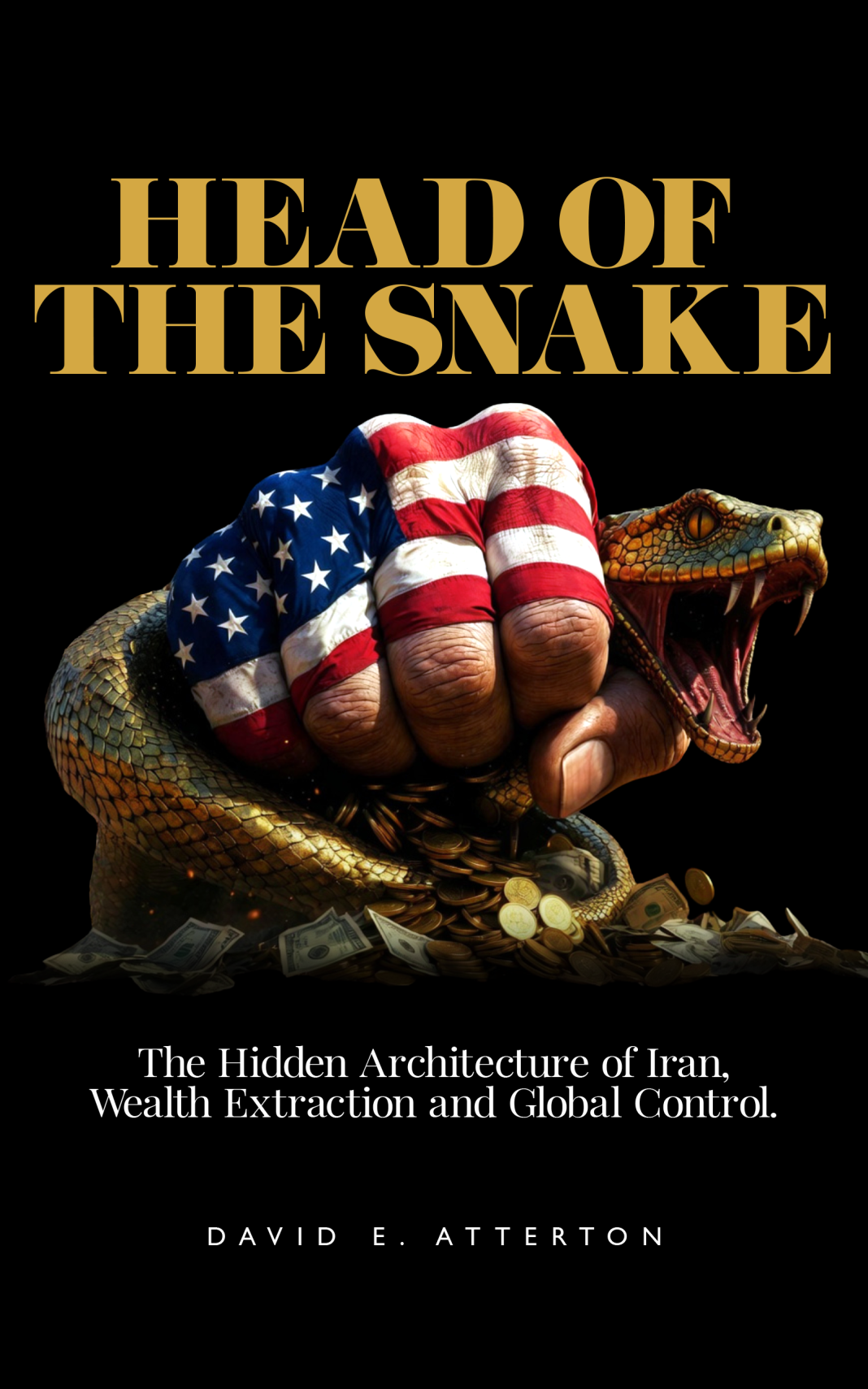
The design behind all of it is mapped in Head of the Snake, and the free guides live in the Iraqi dinar resource library.
Follow the daily intel free: Telegram · Facebook · Spotify · Odysee
Iraq Economic News and Points To Ponder Monday Morning 10-12-26
The Government Is Moving Towards Adopting The Dinar Exclusively For Domestic Transactions And Tightening Control Over Markets.
Baghdad - One News The Prime Minister’s advisor, Mazhar Muhammad Salih, revealed a government plan to adopt the Iraqi dinar in financial and commercial transactions within the country, with the aim of strengthening confidence in the national currency and regulating transactions in the markets.
The Government Is Moving Towards Adopting The Dinar Exclusively For Domestic Transactions And Tightening Control Over Markets.
Baghdad - One News The Prime Minister’s advisor, Mazhar Muhammad Salih, revealed a government plan to adopt the Iraqi dinar in financial and commercial transactions within the country, with the aim of strengthening confidence in the national currency and regulating transactions in the markets.
Saleh stressed the importance of tightening control measures to combat rising prices, monopolies, and speculation, while simultaneously supporting local production, facilitating trade, and ensuring the smooth flow of goods to markets. He emphasized the need to hold violators accountable and protect the purchasing power of citizens, especially those with limited incomes, in light of the economic pressures the country is experiencing. https://1news-iq.net/الحكومة-تتجه-لاعتماد-الدينار-حصراً-في/
1 News - وان نيوز @onenewsiq Translated from Arabic
The government is heading towards adopting the dinar exclusively in domestic transactions and tightening oversight on the markets #وان_نيوز #المنصة_الإخبارية_الأولى_في_العراق
Rate this translation: https://x.com/onenewsiq/status/2109192159626973275/video/1
·1,404 Views video translation: Prime Minister’s Advisor Mazhar Muhammad Salih revealed a government move to adopt the Iraqi dinar for financial and commercial transactions within the country.
This initiative aims to boost confidence in the national currency and regulate market transactions.
Salih emphasized the importance of renewing regulatory measures to combat rising prices, monopolies, and speculation, while simultaneously supporting local production and facilitating the flow of trade. He also highlighted the need to ensure the smooth delivery of goods to markets. https://x.com/onenewsiq/status/2109192159626973275
The Central Bank Of Iraq (Opposing Government Measures) Is Using Its Security Tools To Control The Market And Exchange Rates By Force!
* As the Central Bank sent an official letter to the leadership of the Iraqi Armed Forces, reminding them that the Central Bank is the sole entity legally authorized to monitor and oversee the operations of banks and exchange companies, and that other security entities should not undertake this role!
* This stance from the Central Bank reveals the nature of fragmentation, conflicting interests, and overlapping jurisdictions among the state's sovereign institutions, where each entity seeks to impose its will, whether in accordance with the law or against it!
* And this also confirms that the government and the Central Bank focused solely on agreeing to change the exchange rate, without previously investigating or agreeing on a unified method for managing the repercussions of changing the exchange rate, and defining the responsible parties and the tasks assigned to each for managing the post-exchange rate change phase!
* We do not know whether the Iraqi security leadership will respond to the Central Bank's directives, or whether it will completely disregard them and continue using its heavy-handed tools in an attempt to curb price increases in the markets?!
* For the Commander-in-Chief of the Armed Forces announced to the people that he alone bears responsibility for changing the exchange rate and its repercussions, and it is unlikely that he will leave the management of this file to the Central Bank alone!
* And even if Iraq's various authorities agree on a unified method for managing, directing, and monitoring the market, the market will have already taken its course and re-priced goods, products, and services according to the new value of the dinar!
https://x.com/ziadalhashimi/status/2109226065008677315
Iraq May Turn To The IMF As Oil Revenues Decline
economy sharing Clock Network Published on: October 7, 2026 | An economist at Standard Chartered Bank suggested on Wednesday that Iraq might turn to the International Monetary Fund if oil revenues continue to decline and the devaluation of the dinar fails to achieve the desired results in supporting public finances.
Carla Slim, quoted by Bloomberg, said that "any potential program with the IMF could include structural reforms, particularly with regard to the public sector wage bill, with the aim of enhancing the sustainability of public finances."
She added that "Iraq's foreign reserves could fall to about $60 billion by the end of the year, compared to about $100 billion at the beginning of it, if they continue to be depleted at the current rates."
Salim noted that "making a new adjustment to the dinar exchange rate in the coming months remains an option, depending on developments in oil revenues and the level of foreign reserves."
According to the latest rankings based on data from the International Monetary Fund, Iraq's foreign currency reserves amount to about $85 billion, placing it 28th globally and third in the Arab world.
Standard Chartered Bank is a British multinational banking group, and one of the oldest and largest global financial institutions. https://alssaa.com/post/show/63794-العراق-قد-يلجأ-إلى-صندوق-النقد-مع-تراجع-الإيرادات-
Press report: Iraq is implementing the largest Oil Pipeline Project In The Region
latest news Sunday, October 11, 2026 Baghdad - One News - A report by Pipeline & Caze magazine revealed that Iraq has the largest oil pipeline project under construction, the Basra-Haditha pipeline, which is 216 kilometers long and has a capacity of 2.5 million barrels per day.
Its implementation began on May 1, 2026, with the aim of having it operational in 2028.
The plans include the Haditha-Fishkhabur pipeline, 373 kilometers long and with a capacity of 2 million barrels per day by 2031, and the Haditha-Aqaba pipeline, 720 kilometers long and with a capacity of 1 million barrels per day by 2028.
Kurdistan's exports also resumed in late 2025, between 180,000 and 208,000 barrels per day, amid financial and political challenges that threaten the sustainability of flows and the implementation of extensions. https://1news-iq.net/تقرير-صحفي-العراق-ينفذ-أكبر-مشروع-لأنا/
Al-Hakim: The Government Adjusted The Exchange Rate To Counter Speculators
Iraqi News Agency Saturday, 10/10/2026 * 20:17 Baghdad - INA - 10/10/2026 Al-Hakim: The government adjusted the exchange rate in order to counter speculators..! That is sufficient justification.
Al-Zaydi From Karbala: My Words Are Like A Bullet; Once Fired, They Don't Come Back... A Pledge To All Iraqis
2026-10-10 | 21:00 Karbala - 964Media Prime Minister Ali al-Zaidi affirmed on Saturday (October 10, 2026) that his promise would not be like a piece of paper, but rather like a bullet that, once released, cannot be retrieved. He explained that launching the million-piece project was a dream for many Iraqis who possess nothing but citizenship and a passport, if they have one, promising to distribute residential land to all Iraqis who do not own a home.
Al-Zaydi stated in a speech during the laying of the foundation stone for the “Homeland” initiative in Karbala, which was followed by the 964 network , “Today we did not come to hammer a stone, but to establish the right, a right that the citizen has been waiting for for years and decades and has been dreaming of.”
He added: “In this land of goodness and blessings, a large part of the citizens of this country dream of owning a piece of land. They only have citizenship and a passport, if they even have a passport. We came to Karbala to launch the project because it is the city of reform, as history has taught us.”
He continued: “The project includes one million plots, and we will then head to Najaf and Mosul, and from there to other governorates in the coming days.
Today we came to lay the foundation stone and establish the right, and in the coming period we will distribute the bonds. I promised, and your son’s promise is not just a piece of paper.
My promise to you is like a bond, and our words will be like a bullet; once it is fired, it will not return.”
He pointed out, “We made a promise and we will fulfill our promise. I do not want the door of an Iraqi’s house to be not his own, or for him not to be able to hammer a nail into the wall of the house he lives in, or for him to live at the beginning of each month in a forest of anxiety and fears, because he does not have the rent money.
We have taken this matter upon ourselves, and during my term I will not leave a family without a piece of land, and these lands will be more serviced than the currently inhabited areas, and they will be equipped with all services such as water and electricity, and we will distribute to each family the title deed to their land and help them build on the land.”
He explained: “This is our people and we will not abandon them. This initiative did not cost the budget a single dinar. We are not selling the dream, but rather building it.
This land will be transformed into houses and bonds. We start from Karbala, and Najaf bears witness. Goodness is coming to all Iraqi governorates.” https://964media.com/724384/
Seeds of Wisdom RV and Economics Updates Monday Morning 10-12-26
Good Morning Dinar Recaps,
GLOBAL BANKING RESET WATCH: RUSSIA’S CASH WITHDRAWALS RAISE QUESTIONS ABOUT BANKING STABILITY
Growing cash withdrawals, rising concerns about bad loans, and pressure on government finances are testing confidence in Russia’s banking system, although a nationwide banking collapse has not been established.
Good Morning Dinar Recaps,
GLOBAL BANKING RESET WATCH: RUSSIA’S CASH WITHDRAWALS RAISE QUESTIONS ABOUT BANKING STABILITY
Growing cash withdrawals, rising concerns about bad loans, and pressure on government finances are testing confidence in Russia’s banking system, although a nationwide banking collapse has not been established.
OVERVIEW
Russians have been withdrawing billions in cash as concerns grow over possible restrictions on savings and disruptions to electronic payments.
Russian banks face mounting financial pressures, including deteriorating loan quality and liquidity challenges at some institutions.
Banking stress does not automatically mean collapse. Russia’s central bank says it is supplying liquidity and has not identified a need for additional stabilization measures.
KEY DEVELOPMENTS
1. CASH WITHDRAWALS PUT PRESSURE ON BANKS
Russia has experienced a substantial increase in cash withdrawals during 2026. According to The Washington Post, citing Russian Central Bank data, customers withdrew approximately 286.4 billion rubles—about $3.4 billion—in the first two weeks of August. That followed roughly $7.3 billion in July and more than $4.5 billion in June.
The withdrawals reflect public concerns about possible government access to private savings, disruptions to payment systems, and the wider consequences of the war in Ukraine.
When customers move money from bank deposits into physical cash, banks can face additional liquidity pressure because deposits are an important source of funding. However, withdrawals alone do not prove that a bank is insolvent or that customers nationwide have lost access to their money.
2. LOAN QUALITY AND ECONOMIC PRESSURES ADD TO THE RISK
Russia’s banking sector is also dealing with concerns about the quality of its loans. A July 2026 Reuters report on a European intelligence assessment warned that prolonged war-related economic pressure could trigger a serious banking crisis.
The assessment pointed to weaknesses in corporate lending, elevated non-performing consumer loans at some banks, and the burden of state-directed lending used to expand military production.
These vulnerabilities matter because borrowers experiencing financial difficulty may struggle to repay loans, forcing banks to set aside more money against potential losses. If that happens while depositors are withdrawing cash, pressure on bank funding and profitability can intensify.
Nevertheless, the assessment described a potential crisis scenario—not proof that the entire banking system had already collapsed. Russian officials have maintained that the sector remains manageable and that banks have capital buffers to absorb losses.
3. THE CENTRAL BANK FACES A DIFFICULT BALANCING ACT
The Bank of Russia has said it is providing banks with liquidity to help address the cash-demand pressures. In June, the central bank said additional stabilization measures were not necessary, despite the increase in cash held outside the banking system.
The challenge is to maintain confidence in banks while managing inflation, economic weakness, and the financial demands associated with the war.
Authorities must also weigh the consequences of any measures that could further undermine public confidence. If households become increasingly concerned about access to savings, they may prefer holding cash even when deposits remain available.
The key question is whether the authorities can contain the pressure before it spreads—not whether a nationwide collapse has already been proven.
WHY IT MATTERS
Russia’s banking pressures illustrate how geopolitical conflict can affect more than government budgets and international trade. War-related spending, sanctions, weakening borrower finances, and public uncertainty can combine to create challenges for banks and the wider economy.
The situation also highlights the importance of confidence in modern financial systems. Banks depend not only on assets and capital but also on customers believing that their deposits will remain accessible when needed.
A prolonged loss of confidence could make lending more difficult, raise financing costs, and increase the government’s challenge of funding its spending.
For the international economy, developments in Russia are another reminder that financial stability can be affected by the interaction of geopolitical risks, government borrowing, and domestic banking conditions.
WHY IT MATTERS TO FOREIGN CURRENCY HOLDERS
For foreign currency holders following the Global Financial Reset, Russia’s banking difficulties are worth watching as part of the broader changes occurring across international finance.
Financial pressure can encourage governments to reconsider payment channels, reserve management, cross-border settlement arrangements, and the role of domestic currencies in international trade.
However, banking stress does not guarantee a currency revaluation, a global currency reset, or an increase in the value of currencies held by individuals. Exchange rates depend on many factors, including inflation, monetary policy, economic performance, capital controls, and market confidence.
The practical lesson is to distinguish documented financial developments from predictions about what those developments might eventually mean for currency values.
IMPLICATIONS FOR THE GLOBAL RESET
Pillar 1: Debt
Financial stress can make government borrowing more complicated. If banks become less willing or able to purchase government debt, authorities may face greater difficulty financing budget deficits without offering higher returns or finding alternative funding sources.
Pillar 2: Trade
Sanctions and payment restrictions have encouraged Russia to develop alternative financial channels with trading partners. Such changes can reshape how businesses settle transactions, but alternative channels do not eliminate the risks created by weak economic conditions or financial instability.
Pillar 3: Banking and Payments
Periods of uncertainty can increase interest in payment systems that offer greater resilience and faster settlement. Yet digital payments, central bank digital currencies, and alternative settlement networks cannot by themselves resolve bad loans, restore confidence, or guarantee access to funds during a crisis.
Pillar 4: Currency Confidence
The Russian case demonstrates that confidence in a currency and confidence in the institutions holding people’s money are related but different issues. A currency’s international value does not automatically rise when a country experiences banking stress.
THE BOTTOM LINE
Russia’s cash withdrawals and banking vulnerabilities deserve attention because they reveal how war, debt, lending risks, and public confidence can place pressure on a financial system. The available reporting supports concern about growing stress, but it does not establish that 140 million Russians are trapped or that the country’s entire banking system has collapsed.
For those following the Global Financial Reset, the most useful approach is to watch the evidence: central bank actions, deposit trends, loan performance, government financing, and changes in international payment arrangements. The evolution of the global financial system will be shaped not by dramatic predictions alone, but by how institutions respond when confidence is tested.
Seeds of Wisdom Team
Newshounds News
SOURCES
~~~~~~~~~~
🌱 A Message to Our Currency Holders🌱
If you’ve been holding foreign currency for many years, you were not foolish.
You were not wrong to believe the global financial system would change.
What failed was not your patience — it was the information you were given.
For years, dates, rumors, and personalities replaced facts, structure, and proof. “This week” predictions created cycles of hope and disappointment that were never based on how currencies actually change.
That is not your failure.
Our mission here is different: • No dates • No rates • No hype • No gurus
Instead, we focus on:
• Verifiable developments • Institutional evidence
• Global financial structure • Where countries actually sit in the process
Currency value changes only come after sovereignty, trade, banking, settlement systems, and fiscal coordination are in place. History and institutions confirm this sequence.
You will see silence. You will see denials. That is not delay — that is discipline.
Protect your identity. Organize your documents. Verify everything.
Never hand your discernment to anyone who cannot show proof.
You deserve truth — not timelines.
Seeds of Wisdom Team
Newshounds News
~~~~~~~~~~
Seeds of Wisdom Team RV Currency Facts Youtube and Rumble
Newshound's News Telegram Room Link
RV Facts with Proof Links Link
RV Updates Proof links - Facts Link
Start Here room with Most Asked Questions Link
Follow the Gold/Silver Rate COMEX
Follow Fast Facts
Seeds of Wisdom Team™ Website
Thank you Dinar Recaps