
Thank you to all the subscribers to our Early Access program…we thank you for your continued support.
We are excited to offer this new service to keep you informed and up-to-date on the latest Dinar and currency news.
Iraq Economic News and Points To Ponder Thursday Evening 10-1-26
The Dollar In Iraq: The Government Announces The Arrival Of A New Cash Shipment
Last updated: October 1, 2026 The Independent - Iraqi government spokesman Haider al-Aboudi announced the arrival of a new shipment of cash dollars to Iraq, as part of the understandings reached with the United States regarding the continued sending of shipments of US currency to meet legitimate needs in the Iraqi market.
The Dollar In Iraq: The Government Announces The Arrival Of A New Cash Shipment
Last updated: October 1, 2026 The Independent - Iraqi government spokesman Haider al-Aboudi announced the arrival of a new shipment of cash dollars to Iraq, as part of the understandings reached with the United States regarding the continued sending of shipments of US currency to meet legitimate needs in the Iraqi market.
Al-Aboudi had previously confirmed that Prime Minister Ali Faleh al-Zaidi, during his visit to the United States, reached an understanding regarding the continued sending of cash dollar shipments to Iraq, in a move that the government said comes in conjunction with strengthening control measures over the distribution of foreign currency and regulating its use.
According to government statements, the understandings with the American side came in light of the measures taken by Iraq to reduce the misuse of foreign currency, in addition to the expansion of electronic payment systems and the gradual shift towards digital transactions.
Official authorities have not yet announced the value of the new shipment of cash dollars, while previous statements indicated that the aim of continuing these shipments is to provide the necessary liquidity to cover legitimate demands for foreign currency.
The shipment comes at a time when the Iraqi exchange market is witnessing continuous movements in the dollar exchange rate against the dinar, making the levels of cash liquidity and the size of the supply of the American currency among the issues that are widely followed in economic and banking circles.
The impact of the new shipment on liquidity levels and the movement of the exchange market is expected to become clear in the coming period, in conjunction with the continuation of governmental and banking measures aimed at regulating the trading of the dollar and strengthening control over its uses. https://mustaqila.com/الدولار-في-العراق-الحكومة-تعلن-وصول-شح/
Starting Next Week, Al-Taif Bank Announces Cash Withdrawals For Its Customers In The Provinces.
Shafaq News - Baghdad Al-Taif Islamic Bank of Iraq announced on Thursday that it has strengthened its branches in various governorates with cash and liquidity as part of the measures taken to regulate withdrawal operations and provide cash liquidity to customers.
In an official statement, the bank said that starting from the beginning of next week, the bank’s customers will be able to make withdrawals from the bank’s branches in the governorates according to specific and approved ratios, in order to ensure the organization and smooth flow of the disbursement process.
The statement confirmed that the process of replenishing branches with cash has already been completed, noting that procedures are ongoing to facilitate and organize withdrawals in a way that ensures the best possible smoothness for customers.
This statement comes with the confirmation by the management of Al-Taif Islamic Bank, represented by the Trustees Committee, on September 19th, that the ratios will be adopted in the near future to distribute depositors’ funds according to the balances available in the accounts in order to achieve the principle of fairness in distribution.
The Central Bank of Iraq had decided to place Al-Taif Islamic Bank for Investment and Finance under guardianship for 18 months, due to violations that it said affected the bank's financial position and depositors' funds.
The Central Bank stressed that imposing guardianship does not mean the bank’s bankruptcy, but rather comes within the framework of precautionary supervisory measures aimed at protecting the rights of depositors, noting that depositors’ funds are protected under the applicable laws and regulations.
Following this, a number of depositors demonstrated in front of Al-Taif Islamic Bank in the Karrada district of Baghdad, protesting the freezing of banking services and the suspension of withdrawal and deposit operations, following the measures taken by the Central Bank of Iraq against the bank.
Speaking to Shafaq News Agency, the protesters demanded an end to restrictions on banking services and that they be allowed access to their money and the ability to withdraw their deposits, stressing that their demands focus on receiving their money and not leaving it pending.https://www.shafaq.com/ar/مجتـمع/اعتبارا-من-ال-سبوع-المقبل-مصرف-الطيف-يعلن-السحب-النقدي-لزبا-نه-في-المحافظات
A Government Source: We Are Working To Stimulate Economic Activity And Protect Purchasing Power, And There Is No Decision Yet To Change The Currency Or Remove Zeros
Baghdad - One News A government source confirmed that the government is aware of the slowdown in buying and selling in the markets, and is working on solutions to stimulate economic activity and protect the purchasing power of citizens.
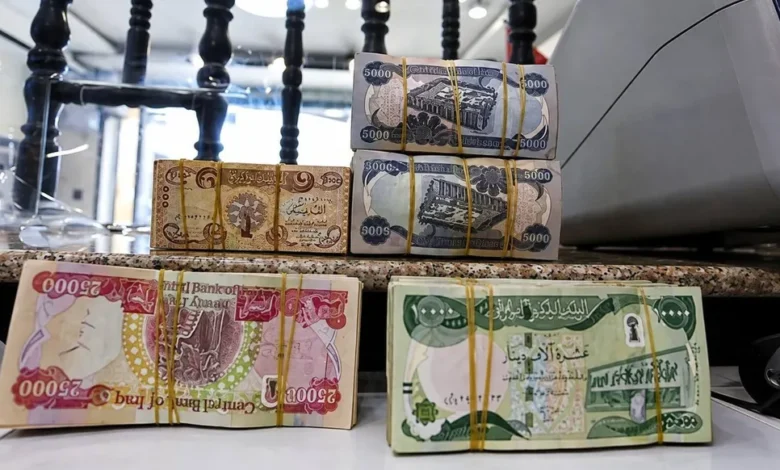
The source explained that the current economic challenges are not limited to Iraq, but are faced by most countries in the region due to regional tensions and the closure of the Strait of Hormuz and the resulting economic pressures and repercussions.
He pointed out that the government seeks to address internal obstacles and stimulate commercial and productive activity, in addition to facilitating financing for productive projects and supporting the private sector, with the aim of revitalizing market activity and driving the economy forward.
Regarding the talk circulating about changing the currency or removing zeros, the source reassured citizens that putting forward such proposals does not mean approving them or starting to implement them, stressing that the file is still in the initial discussion phase and no decision has been made about it yet.
He added that boosting confidence in the markets requires providing clear information and practical steps, in parallel with cooperation between the government, financial institutions and the private sector to alleviate pressures and improve economic activity.
The source called on citizens, merchants, and business owners to remain calm regarding circulating news and to rely on official information, particularly concerning currency, procedures, and economic policies.
https://1news-iq.net/مصدر-حكومي-نعمل-على-تحريك-النشاط-الاقت/
What Should I Do With Cash Sitting In My Bank Account?
What Should I Do With Cash Sitting In My Bank Account?
Published Sep 23, 2026 Sergei Klebnikov
Idle cash refers to money that is not invested, not needed for daily expenses and not reserved for future purchases. When cash sits uninvested and earns little yield, it loses purchasing power over time, especially during periods of inflation and rising costs. But putting idle cash to work doesn’t necessarily mean seeking the highest available yield.
What Should I Do With Cash Sitting In My Bank Account?
Published Sep 23, 2026 Sergei Klebnikov
Idle cash refers to money that is not invested, not needed for daily expenses and not reserved for future purchases. When cash sits uninvested and earns little yield, it loses purchasing power over time, especially during periods of inflation and rising costs. But putting idle cash to work doesn’t necessarily mean seeking the highest available yield.
The first step is understanding the role that cash plays in your financial life. Some dollars may need to remain immediately accessible for everyday expenses or unexpected needs. Others may be earmarked for a future purchase, tax payment or other known expense. And some cash may not have a near-term use at all.
Once you’ve identified what the money is for, you can consider the appropriate balance of accessibility, stability and return potential – along with factors such as risk, taxes, fees and withdrawal restrictions.
A useful starting point is to think about your cash as part of a broader liquidity bucket – the money you want available to support your lifestyle, provide a financial cushion, fund upcoming purchases or obligations, and preserve flexibility for opportunities that may arise. Once you’ve sized those needs, you can more clearly identify cash that may be available for longer-term investing.
Why leaving cash sitting in a bank account can be a problem
Keeping money in a bank account can often feel like a conservative choice when it comes to covering bills, managing day-to-day spending and keeping an emergency cushion. Having accessible funds for these purposes makes sense; the issue, though, is what happens when “extra” cash sits in a low-yield account for long stretches of time. Even if your balance doesn’t change, inflation can reduce what that money can buy over time (purchasing power).
But remember, “fixing” the problem of idle cash isn’t just about chasing the highest rates. Higher yield usually comes with trade-offs. Depending on the option, those trade-offs could be less convenience (extra steps to move money), more rules (limits on withdrawals or penalties for early access) or more price fluctuations. Different options offer different trade-offs with regard to accessibility, stability and return potential – which is why the right choice starts with understanding when and why you’ll need the money. Footnote 1 Opens overlay
“The conversation shouldn’t start with, ‘Where can I get the highest yield?’ It should start with, ‘What do I want or need this money to do for me?’ Once you understand the purpose and timing of your cash, you can make a much more thoughtful decision about where it belongs,” said Angelena Mascilli, Managing Director and Head of Wealth Management Banking.
There isn’t one universal best place to put cash. The better approach is to match the money – and where you store it – to your goals and timeline: Cash you may need soon typically calls for prioritizing accessibility, while cash you won’t need for a while may give you a chance to seek a higher yield, so long as you’re comfortable with the associated rules and risks.
Start by sizing your liquidity needs
Before deciding where to put your cash, start by determining how much liquidity you actually need. Rather than treating all of your cash as one pool, consider the different jobs you may need it to perform.
For example, your liquidity needs may include:
Operating cash flow: Money needed to cover regular day-to-day spending.
A financial safety net: Additional accessible funds that can help you manage unexpected expenses or simply provide greater peace of mind.
Known upcoming needs: Cash earmarked for taxes, a home purchase or renovation, tuition, travel, or another significant expense.
Opportunistic funds: Money you intentionally keep accessible so you can act when an investment or other opportunity arises.
There’s no universal amount that’s right for each category. Your appropriate liquidity level will depend on your spending, income, upcoming obligations, comfort level and broader financial plan. Once those needs are covered, you can identify whether you have excess cash that may be positioned differently.
Once you’ve identified how much liquidity you need and what each portion is for, time horizon becomes an important consideration in deciding where to hold it. Cash you may need on short notice generally calls for greater accessibility and stability, while cash with a more predictable or longer time horizon may offer additional flexibility.
Day-to-day (0–9 months): For cash you may need on short notice, prioritize accessibility and stability. This is money you need to be able to access quickly for near-term spending.
Reserve (9–18 months): For cash that you have the time and risk tolerance to invest. This money should still be available relatively easily, but you can also afford to direct it to more long-term options.
Strategic (18 months and beyond): For cash not needed in the short term, where you have greater flexibility in how it is positioned, depending on your goals and time horizon. Given the longer time horizon, you may be able to seek higher potential yields.
Day-to-day cash: Prioritizing accessibility and stability
For cash you expect to use in the near future, the priority is generally to keep it stable and readily accessible. Money market funds (MMFs) can be useful for day-to-day cash because they often offer higher liquidity with lower risk, not to mention generate income through interest (unlike a traditional savings account).
High-yield savings accounts (HYSAs) and bank money market deposit accounts are among the other options that may be appropriate for these needs. A key feature of both HYSAs and bank money market deposit accounts is that their rate can change over time. Annual percentage yields (APYs) may move up or down based on broader interest rate conditions or at the discretion of the financial institution. That makes it important to consider an account’s accessibility and overall features – not just its current rate.
These are also deposit accounts, which may come with Federal Deposit Insurance Corporation (FDIC) insurance (for banks) or National Credit Union Administration (NCUA) insurance (for credit unions), up to applicable limits and subject to eligibility. You may still want to confirm what is covered and how your balances are held, especially if you keep cash across multiple accounts. Footnote 2 Opens overlay
When evaluating where to hold cash you may need soon, consider factors beyond the headline rate, including:
Transfer speed: Understand how quickly you can access or move your money when you need it.
Withdrawal/transaction limits: Look for any restrictions that could affect flexibility when in a pinch.
Fees: Check for monthly maintenance fees and any charges for transfers or excess transactions.
Minimums: Make sure you can meet any opening deposit or minimum balance requirements needed to earn the advertised yield rate.
APY: Consider the current rate and whether it is likely to move frequently.
Customer support: Consider factors like customer service hours, mobile app quality and how easy it is to set up transfers.
Reserve Cash: Cds And T-Bills (How Laddering Can Keep Money Accessible)
Once you’ve identified cash that you’re unlikely to need immediately, you can begin considering solutions that may trade some day-to-day access for potentially higher yield. Depending on your time horizon and liquidity needs, certificates of deposit (CDs) and Treasury bills (T-bills) may enter the picture because they are built around defined time frames.
TO READ MORE: https://www.chase.com/personal/investments/learning-and-insights/article/what-should-i-do-with-cash-in-bank-account
Reset Intelligence: IQD: The Currency of the New Babylon.
Reset Intelligence: IQD: The Currency of the New Babylon.
By Reset Intelligence | @EXIT_FIAT
On Tuesday the Abu Dhabi Securities Exchange switched Iraq's stock market into its cross-border trading network, where trades settle in local currencies. 103 Iraqi companies, valued at $21.7 billion, now sit inside a network holding over $1 trillion in listed value.
The next day Baghdad told its own public that buying and selling have slowed, and that deleting the zeros from the currency is under discussion with no decision taken.
Reset Intelligence: IQD: The Currency of the New Babylon.
By Reset Intelligence | @EXIT_FIAT
On Tuesday the Abu Dhabi Securities Exchange switched Iraq's stock market into its cross-border trading network, where trades settle in local currencies. 103 Iraqi companies, valued at $21.7 billion, now sit inside a network holding over $1 trillion in listed value.
The next day Baghdad told its own public that buying and selling have slowed, and that deleting the zeros from the currency is under discussion with no decision taken.
The link
The platform is called Tabadul. Abu Dhabi launched it in July 2022 so that a broker in any member market can trade shares listed in another, without the company listing twice and without a separate custodian. Iraq is the eighth market to go live on it, and two Iraqi brokerage firms already hold licences from the Emirates' market regulator to trade there. Abu Dhabi's exchange chief, Abdulla Salem Alnuaimi, said the move "gives investors a clear, straightforward path to trade Iraqi companies." The agreement behind it was signed in April 2025. A link like this sets no exchange rate, and nothing in the announcement names one.
Everything else that moved
The statement - a government source told the state news agency the government is aware of the slowdown in buying and selling and is working on measures to revive activity. On the zeros: deleting them means re-expressing prices, salaries, savings and debts at the same ratio, and "does not in itself mean reducing the real value of citizens' money." No decision has been taken, and anything approved will be announced officially first.
The street - the dollar finished Wednesday at 157,000 IQD per $100 in Baghdad, down from 157,500 on Tuesday, against the official 131,000. No arrival has been reported for the cash dollars promised last Saturday. From today, importers pay customs duties before their transfer leaves the bank.
The holdout - Kataib Hezbollah's secretary-general, Abu Hussein al-Hamidawi, said all armed groups "must halt all military operations and mobile logistical activities," keeping one exception for hostile aircraft. On the weapons talks with the Prime Minister: "It is better to start over to produce a solid agreement that safeguards everyone's rights."
Sadr - Muqtada al-Sadr dissolved the Promised Day Brigade, renamed his Mahdi Army as a foundation, and called for a public programme to put every weapon in the state's hands. Foreign Minister Fuad Hussein said the government's draft weapons plan will be presented "in the coming days."
Washington - the Pentagon called the departure from Erbil the "successful conclusion of the military mission that defeated ISIS in Iraq." Trump announced that "the last American Forces are leaving Iraq" and backed al-Zaidi by name. Iraq's oil income is still paid into the New York Fed.
Tehran - Trump said of Iran: "We blow them up or make a deal." Tehran says it has received Washington's formal reply to its 7-day ceasefire proposal. The rial is past 2.5 million to the dollar, and the US 30-year yield reached 5.63%, its highest since June 2002.
The question
Babylon was where the region's trade was once counted and settled, because outsiders trusted its records. This week an outside market agreed to settle Iraqi trades in IQD. Whether the IQD is being built to become the money the Middle East trades in is our opinion, and we say so.
That is the short version. What the link does and does not mean for the rate, the history behind it, and the one gate that still belongs to the Central Bank of Iraq - that is the daily read.
Read the full daily briefing free for 5 days. Sign up here: the daily Iraqi dinar briefing
Want it straight from the horse's mouth? The CBI Rate Alert pings you the moment the Central Bank of Iraq moves the official rate. The number itself, not a rumour about it. It comes with our free resource library and the daily breakdown of what is actually moving in Iraq. Sign up free: The CBI Rate Alert
Got a dinar question? Reset Intelligence runs an on-call research assistant: ask it anything they have published. It answers in seconds and will conduct deep research to find you the answer. Try it: the Iraqi dinar research assistant
Common questions, answered straight: When will the Iraqi dinar revalue? and Is the Iraqi dinar revaluation real?
The design behind all of it is mapped in Head of the Snake, and the free guides live in the Iraqi dinar resource library.
Follow the daily intel free: Telegram · Facebook · Spotify · Odysee
Iraq Economic News and Points To Ponder Thursday Afternoon 10-1-26
The New Iraqi Dinar: Changing The Currency's Design Without Removing Zeros
Last updated: October 1, 2026 Independent/- An informed source on the monetary file revealed that the Central Bank of Iraq is moving towards changing the design of the national currency and issuing a new edition that includes updates in the form and security elements, without affecting the nominal value of the dinar or resorting to the project of removing zeros.
The New Iraqi Dinar: Changing The Currency's Design Without Removing Zeros
Last updated: October 1, 2026 Independent/- An informed source on the monetary file revealed that the Central Bank of Iraq is moving towards changing the design of the national currency and issuing a new edition that includes updates in the form and security elements, without affecting the nominal value of the dinar or resorting to the project of removing zeros.
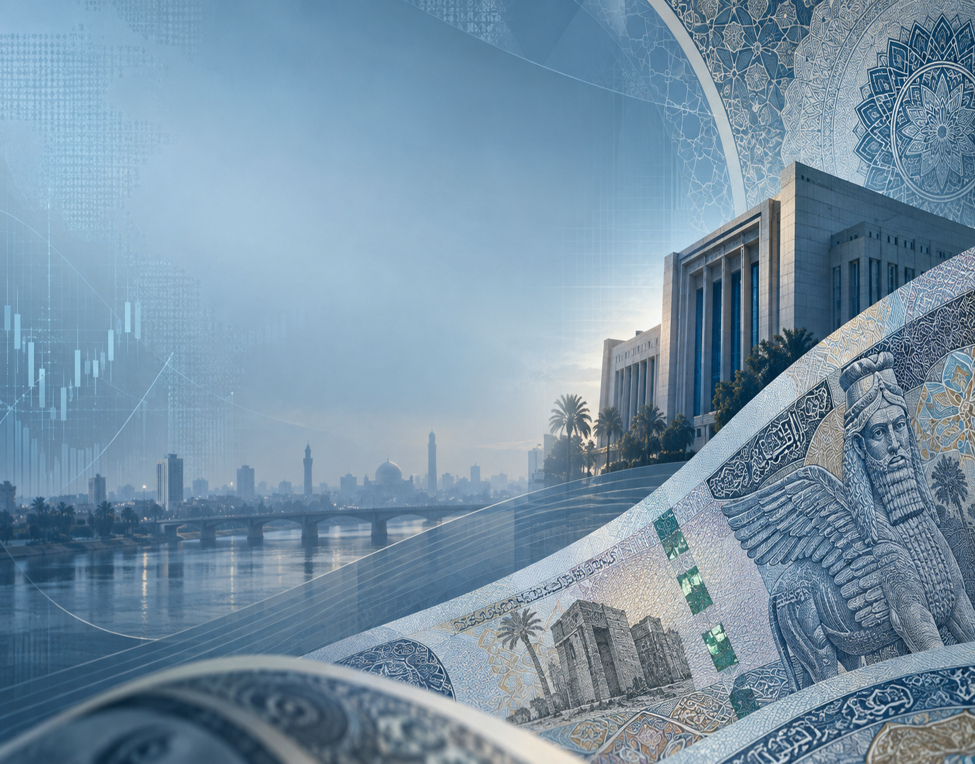
The source told Al-Mustaqilla on Thursday that the approach being studied within the bank is based on maintaining the current system of currency denominations and values, in exchange for redesigning banknotes and introducing security features and modern technologies aimed at raising the level of protection against counterfeiting and developing verification and tracking mechanisms related to the issuance of currency.
According to the source, the Central Bank has concepts and designs for the new currency, while the final procedures related to the required approvals and authorizations are still being completed, before moving to the implementation phases and officially announcing the details of the project.
The source indicated that the proposed approach does not include removing zeros from the Iraqi dinar, and that the Central Bank, according to available information, is not proceeding with a project to revalue the currency by reducing its nominal values, but rather focuses on updating the form of the circulating banknotes and their technical and security characteristics.
Changing the currency design, if approved, does not mean an automatic change in the dinar's exchange rate or the purchasing power of citizens, as the central bank can issue new print runs with the same nominal values, while keeping the old banknotes in circulation during a transitional phase before gradually withdrawing them according to a schedule determined by the monetary authorities.
This comes at a time when Iraq is witnessing renewed debate about the future of the dinar and the possibility of removing zeros. The Central Bank of Iraq officially denied on August 26, 2026, reports of printing a new currency with zeros removed, emphasizing that any such project, should it be decided upon in the future, would require multiple legal, regulatory, and technical stages before its implementation and announcement.
The Central Bank has also previously made changes to some denominations of the dinar without changing their nominal value. In previous years, it issued editions that included modifications to the design and some of the details and markings used on banknotes. This technically demonstrates that updating the currency's appearance does not necessarily mean changing the monetary system or the value of the dinar.
Banking experts believe that updating the currency design, if limited to replacing current banknotes with others bearing the same values, is radically different from the project to remove zeros. The former is a technical and monetary process that can aim to enhance security elements, combat counterfeiting, and improve the quality of banknotes, while removing zeros represents a broader project that affects accounting units and requires major legal, accounting, and banking arrangements.
Economic experts point out that introducing more advanced security technologies in banknotes can reduce the risk of counterfeiting and give banks and financial institutions a better ability to automatically verify cash, especially with the expanding use of counting and sorting machines and modern cash management systems.
On the other hand, experts warn that announcing any change in the currency’s design requires careful media management, because confusing a change in design with the removal of zeros and a change in the exchange rate could lead to market speculation or a rush by citizens to convert their savings into dollars or gold without economic justification.
They believe that the success of any future replacement process requires a sufficient transition period during which the old and new editions circulate together, along with a clear announcement of the replacement mechanism and the dates for withdrawing the old denominations, and a guarantee that no fees or losses will be imposed on cash holders.
The Central Bank itself affirms that any fundamental change related to restructuring currency denominations or removing zeros must go through legal, regulatory and technical stages, while granting citizens, banks and institutions a transition period that ensures the safety of the replacement process and preserves all financial rights and obligations.
The bank also affirms in its declared policy that currency management and issuance are carried out within the objectives of maintaining financial and monetary stability, warning against dealing with undocumented news related to printing money or currency management as final decisions before they are officially issued.
Information obtained by the Independent Press Agency indicates that the step, if the required approvals are completed, will be closer to issuing a new generation of Iraqi dinars in terms of form and security features, rather than launching a currency with a different value or implementing a project to remove zeros.
The final timing for introducing the new design and the mechanism for replacing the current banknotes remains linked to an official announcement from the Central Bank of Iraq, which has not yet published a decision that includes a specific date for introducing a new currency or approved images of its design.
Thus, according to the source, the proposed scenario is based on a clear equation: the dinar remains at its current values, the zeros remain as they are, while the design changes and new security technologies are added to the next version
https://mustaqila.com/الدينار-العراقي-الجديد-تغيير-شكل-العم/
Al-Moussawi Told Al-Maalomah: There Is No Final Agreement On Raising The Dollar Exchange Rate
Information/Baghdad.. MP Mukhtar Al-Moussawi confirmed on Thursday that there is no final agreement to raise the dollar exchange rate, while he pointed out that the country's economic situation requires a strategy that maintains the stability of food prices and keeps them away from speculation, as well as creating a strategic reserve that takes into account the tensions in the region.
Al-Moussawi explained to Al-Maalouma that “until this moment, there is no clear government decision pushing for an increase in the exchange rate, especially since the dollar exchange rate in the parallel market witnessed a rise a few days ago exceeding 160,000 dinars per 100 dollars, while the official exchange rate is 132,000 dinars per 100 dollars. Consequently, this difference is being exploited for speculation and profit by some.”
He pointed out "the necessity of having a government strategy to reconsider the dollar exchange rate in a way that maintains market stability and prevents speculation and the exploitation of the difference by some to make profits," noting that "regional tensions compel us to demand the necessity of having a strategic reserve of food supplies to ensure stability and reassurance, and to prevent some unscrupulous individuals from exploiting any tensions that occur to raise prices under many pretexts and excuses."
Al-Moussawi stressed that “reconsidering the dollar exchange rate is extremely important during the coming period, especially with the current crisis, while maintaining the stability of food prices.” End 25
Seeds of Wisdom RV and Economics Updates Thursday Afternoon 10-1-26
Good Afternoon Dinar Recaps,
GLOBAL TRADE RESET WATCH: G20 MOVES TOWARD COORDINATED ACTION ON CHINA'S EXCESS STEEL CAPACITY
Twenty-eight economies have agreed on a framework to address global steel overcapacity, potentially reshaping trade protections, industrial supply chains, and the movement of goods across international markets.
Good Afternoon Dinar Recaps,
GLOBAL TRADE RESET WATCH: G20 MOVES TOWARD COORDINATED ACTION ON CHINA'S EXCESS STEEL CAPACITY
Twenty-eight economies have agreed on a framework to address global steel overcapacity, potentially reshaping trade protections, industrial supply chains, and the movement of goods across international markets.
OVERVIEW
Twenty-eight economies agreed to the Milwaukee Framework to address excess global steel production and market distortions.
The framework encourages stronger trade investigations, possible tariffs, reduced subsidies, and greater transparency in steel imports.
The development signals growing coordination over industrial trade policy, with potential consequences for manufacturers, supply chains, and international commerce.
Key Developments
1. A New Framework for Steel Trade
On September 30, the OECD-led Global Forum on Steel Excess Capacity adopted the Milwaukee Framework, chaired by the United States. The agreement calls for coordinated action to address excess production and its effects on steel industries.
2. Tariffs and Trade Investigations in Focus
The framework encourages participating economies to consider anti-dumping, anti-subsidy, and safeguard investigations that may lead to additional duties. It also promotes sharing import data to help identify where steel is produced and prevent tariff circumvention. These are coordinated policy measures, not a guarantee that all members will impose identical tariffs.
3. China at the Center of the Debate
China, the world's largest steel producer, is central to concerns about excess capacity. Chinese officials and other critics of restrictive trade measures have disputed claims that industrial policies justify protectionist responses. The framework's implementation will therefore depend on national decisions and how trade partners respond.
WHY IT MATTERS
Steel is a foundational material for construction, infrastructure, transportation, energy, and manufacturing. Changes in tariffs and subsidies can influence production costs, investment decisions, and the routes goods take through international supply chains.
Coordinated trade measures could support some domestic producers while increasing costs for companies that rely on imported steel. The overall effect will depend on how policies are implemented and whether other countries respond with additional trade restrictions.
WHY IT MATTERS TO FOREIGN CURRENCY HOLDERS
Trade policy can influence currencies through export revenues, import costs, investment flows, and economic growth. If new barriers reshape trade between major economies, businesses may adjust where they manufacture, source materials, and invest.
For foreign currency holders following the Global Financial Reset, this is a development to watch—not proof of a currency revaluation. It highlights how governments are reconsidering the rules governing production, trade, and economic dependence.
IMPLICATIONS FOR THE GLOBAL RESET
Pillar 1: Trade
Greater coordination on steel could change market access and supply-chain decisions, particularly for economies that depend heavily on steel exports or imports.
Pillar 2: Assets
Steel tariffs and trade uncertainty may affect industrial companies, infrastructure projects, and investment decisions. The impact will vary across producers, manufacturers, and steel-consuming industries.
Pillar 3: Debt
If trade restrictions raise construction and infrastructure costs, some projects could become more expensive to finance. The scale of any effect will depend on tariff coverage, market conditions, and the availability of alternative suppliers.
THE BOTTOM LINE
The Milwaukee Framework marks a move toward more coordinated responses to global steel overcapacity, but its real-world impact will depend on what participating economies actually implement.
The bigger story is not simply where steel is produced—it is how governments are reshaping the rules of trade, investment, and supply chains as the global financial system continues to evolve.
Seeds of Wisdom Team
Newshounds News™ Exclusive
Sources
Reuters — “Steel forum calls for more tariffs, fewer subsidies to fight excess capacity”
OECD — “2026 Ministerial Meeting of the Global Forum on Steel Excess Capacity”
~~~~~~~~~~
Seeds of Wisdom Team RV Currency Facts Youtube and Rumble
Newshound's News Telegram Room Link
RV Facts with Proof Links Link
RV Updates Proof links - Facts Link
Start Here room with Most Asked Questions Link
Follow the Gold/Silver Rate COMEX
Follow Fast Facts
Seeds of Wisdom Team™ Website
Thank you Dinar Recaps
Ariel: Are you all Ready for What is about to Occur?
Ariel: Are you all Ready for What is about to Occur?
10-1-2026
The Seal Has Broken: Gold Shall Return (Field Report)
Judy Shelton Treasury Insertion, Iraq’s 170 Tons, and the Coming Gold-Backed Fiscal Reset
Are You All Ready For What Is About To Occur?
Sit down and grab a snack.
Ariel: Are you all Ready for What is about to Occur?
10-1-2026
The Seal Has Broken: Gold Shall Return (Field Report)
Judy Shelton Treasury Insertion, Iraq’s 170 Tons, and the Coming Gold-Backed Fiscal Reset
Are You All Ready For What Is About To Occur?
Sit down and grab a snack.
The timing of Judy Shelton’s entry into Treasury as Counselor to the Secretary is the loudest quiet move of 2026. This woman spent forty years writing the intellectual architecture for a gold-backed dollar her 2018 Fox op-ed “A Case for Monetary Reform” was effectively a blueprint nobody in a Paul Volcker Fed building wanted to read.
Her 2020 Senate confirmation was stalled by Romney, Murkowski’s wobble, and a coordinated whisper campaign out of Brookings monetary-policy fellows who called her “unqualified” a woman who’d worked at the Fed’s institutional memory bank itself, authored “The Coming First World Debt Crisis” and “Fixing the Dollar Now,” and ran the European Bank for Reconstruction and Development.
She was blocked precisely because she knows where the bodies are buried: the fictional reserve counts, the rehypothecation chains, the paper-gold Ponzi run out of London. Now she sits inside the building.
The Iraq gold is the fulcrum everyone’s missing. 170 tons that’s roughly 15-20 billion at current prices, but the tonnage matters more than the dollar figure because tonnage is physical, and physical is what the Basel boys can’t print. Iraq has been quietly accumulating for a decade, moving from roughly 79 tons pre-2014 to this current hoard, second-largest in the Arab world behind Saudi Arabia.
I could be off on the numbers but you get the point. What’s not in any press release. A significant portion of that gold settled in Baghdad vaults as ‘sovereign’ holdings not IMF-collateralized, not leased through the BIS, not encumbered by the World Bank structural adjustment paper that’s smothered Iraq since Bremer’s Coalition Provisional Authority rewired their economy in 2003 to dollar-dependence.
The U.S. troop withdrawal wasn’t an exit; it was the removal of the cabal’s occupation lever. With American forces gone, Tehran-aligned extraction networks and the CIA’s Baghdad Station assets lost their physical cover. Maliki’s Iranian proxies and the Qatari-cutout funding channels that kept Iraq’s cabinet in permanent gridlock for eight months are now starved of their occupation-era justifications.
Fort Knox is the other side of this pincer, and Trump’s audit demands were never campaign theater. The last genuine audit was 1953 Eisenhower-era, pre-Bretton Woods collapse and the 1974 congressional visit where members held gold bars was a photo-op; they saw one compartment of thirteen, were not allowed serial-verification or drilling, and the comptroller’s report itself noted the Treasury could not physically confirm holdings. The actual bar count sits with the U.S. Mint, but encumbrance status whether those bars are leased out to bullion banks via the Exchange Stabilization Fund has never been verified.
Here’s the intel that isn’t public: Treasury’s European counterparts, the German Bundesbank repatriation of 2013-2017 (300 tons returned from New York, and the Fed returned melted, recast bars not the original serials) revealed the NY Fed vault holds German-labeled metal that appears to have been temporarily unavailable.
That pattern gold that exists on paper but is physically “out on loan” is the systemic rot the Fort Knox audit threatens to expose. Shelton’s counsel role means when the audit happens, the person designing the verification methodology spent decades anticipating every trick the bullion banks would use.
Read Full Article:
https://www.patreon.com/Prolotario1/posts/seal-has-broken-171052602
https://dinarchronicles.com/2026/09/30/prolotario-are-you-all-ready-for-what-is-about-to-occur/
Thursday Iraq News Posted by Tishwash at TNT 10-1-2026
TNT:
Tishwash: Trump: We are leaving Iraq with a great prime minister there.
The US President announced Donald Trump On Wednesday, the international coalition announced the end of its military presence in Iraq.
He said Trump In a statement followed Alsumaria News"I am pleased to announce that the last American troops are leaving."Iraq Today,” he said, adding, “We are leaving Iraq with a great prime minister there.”
TNT:
Tishwash: Trump: We are leaving Iraq with a great prime minister there.
The US President announced Donald Trump On Wednesday, the international coalition announced the end of its military presence in Iraq.
He said Trump In a statement followed Alsumaria News"I am pleased to announce that the last American troops are leaving."Iraq Today,” he said, adding, “We are leaving Iraq with a great prime minister there.”
He added that "the departure of coalition forces and their equipment from Erbil Air Base This represents the end of a military presence that began years ago,” he noted, adding, “I had the choice to stay in Iraq or leave, and I decided that the time had come for Americans to return home.”
He continued, "I set a clear mission, gave our leaders the tools to complete it, and refused to allow a temporary presence to become permanent," noting that "this is a great day for America, a victory for the United States and Iraq, and a decisive victory over the organization."ISIS He confirmed that "
the withdrawal of forces and equipment from Erbil It is carried out in an organized manner, unlike the withdrawal process from Afghanistan" link
************
Tishwash: Coordination framework: Ending the occupation is a national achievement, but sovereignty is incomplete without liberating the economy.
Ali al-Zubaidi, a member of the Coordination Framework, affirmed on Wednesday that the evacuation of American forces and the end of their military presence represents a national achievement and a long-overdue entitlement, given the record of catastrophic crimes and violations committed by the occupation army since 2003.
He stressed that the restoration of national sovereignty will remain incomplete unless the withdrawal is accompanied by ending the financial dependence on American hegemony and regaining full control over Iraqi airspace.
Al-Zubaidi told Al-Maalouma News Agency that “the American presence was and still is the root cause and basis for the crises and setbacks that have plagued Iraq throughout the past two decades,” explaining that “Washington possesses a military destruction machine capable of overthrowing regimes by brute force, but it has proven a resounding failure and complete inability to manage the state, which has plunged the country into systematic chaos and enabled the occupation to exploit Iraqi airspace, along with the airspace of neighboring countries, to carry out repeated attacks against Iran in flagrant violation of international laws.”
He added that “the American military withdrawal is an urgent and deserved step, but it requires the government to complete the pillars of sovereignty by liberating the economic and financial decision from the restrictions and hegemony of the American Federal Reserve,” noting that “talk of the return of sectarian conflict or the outbreak of a civil war after the departure of the occupier is nothing but misleading promotion and a losing bet that is refuted by the reality of the cohesion and coexistence of the established mujahideen and intermarriage among all segments of the Iraqi people, and that any tensions that may arise are limited to narrow political squabbles and conflicts only.”
Earlier, Mu'in al-Kadhim, a member of the Coordination Framework and former MP, affirmed that the Islamic Resistance in Iraq played the largest and most fundamental role in forcing the American occupation forces to leave Iraqi territory, emphasizing the rejection of any attempts to maintain foreign forces under any name or new pretext. link
************
Tishwash: Foreign Minister: The plan to restrict weapons will be presented in the coming days.
Foreign Minister Fuad Hussein said that the government's plan to restrict weapons will include specific timelines for implementation, noting that the deadline for its completion will be in June of next year.
The Ministry of Foreign Affairs’ media office stated in a statement that “the Atlantic Council in the American capital, Washington, hosted on Wednesday, the Minister of Foreign Affairs, Fuad Hussein, in a dialogue session entitled ‘Iraq after September 30,’ moderated by Victoria Taylor, Director of the Iraq Initiative and the Syria Project at the Council.”
He added that “the dialogue addressed the latest political and security developments in Iraq and the region, the prospects for Iraqi-American relations, the future of security cooperation, and efforts to combat the ISIS terrorist organization.”
He continued: “He also discussed Iraq’s position on regional conflicts, the impact of sanctions imposed on Iran on Iraq and its economic relations, as well as the Iraqi government’s efforts to restrict weapons to the state and to deal with the issue of armed factions.”
In this context, the minister explained, according to the statement, that “the Iraqi government has prepared a draft plan to restrict weapons to the state, which is scheduled to be presented in the coming days, and will include specific timeframes for its implementation,” noting that “the Prime Minister announced that the final date for completing the plan will be in June of next year.”
He added that “the dialogue also touched on border security and developments in Syria and their repercussions on Iraqi national security, in addition to discussing opportunities to strengthen economic relations between Iraq and the United States, and encouraging American companies to invest in Iraq, which would contribute to expanding the prospects for economic and trade cooperation between the two countries. link
************
Tishwash: Nine ministerial portfolios are up for grabs... Political moves to resolve the agency issue in Baghdad
Next week will witness intense political activity among political forces to resolve the issue of nine ministerial portfolios that are still being run by acting ministers in the government of Prime Minister Ali al-Zaidi, most notably the Ministries of Interior and Defense.
These anticipated moves come after multiple meetings held by the coordination framework over the past two weeks, which resulted in tangible progress and understandings to overcome obstacles and develop a final roadmap, in preparation for setting a date for a special session of the House of Representatives to vote on the new candidates.
Nine ministerial portfolios await resolution
In this context, Coordination Framework member Uday Abdul Hadi revealed in a press statement on Wednesday that next week will witness action to resolve the issue of nine ministerial portfolios in Prime Minister Ali al-Zidi’s government that are still being run by acting ministers, including two security ministries.
Abdul-Hadi explained that “the past two weeks witnessed multiple meetings within the coordination framework and with the rest of the political forces, in order to develop a roadmap to resolve the issue of candidates for nine ministerial portfolios, especially the security ministries, referring to the Ministries of Interior and Defense.”
“Tangible progress”
He pointed out that “there is tangible progress, and therefore next week will witness greater and broader activity in terms of meetings and consultations, in order to determine the roadmap that is being agreed upon, leading to setting a date for holding a session of the House of Representatives to vote on the candidates for the nine portfolios.
Abdul-Hadi added that “some complications have been agreed upon to be overcome, and therefore next week will be very important, and we expect progress to be made towards the possibility of agreeing on a date for a session of the House of Representatives.” link
************
Tishwash: “One basket” is Al-Zaydi’s way to fill the vacancies: a discussion with Al-Maliki to resolve the issue
An informed government source revealed a proposed mechanism to complete the government cabinet in the event that political agreement cannot be reached on candidates for the vacant ministries or their distribution among the political forces, coinciding with a visit by the head of the State of Law Coalition, Nouri al-Maliki, to Prime Minister Ali al-Zaidi to discuss the same issue.
The source was briefed on the details of the inability to finalize the candidates for the vacant ministries, including the security ministries (Interior and Defense), and the continued state of disagreement between the political forces and leaders.
According to him, this will push towards passing the candidates according to the “single basket” mechanism, to complete the government cabinet headed by Ali al-Zidi, who was authorized by most of the political forces to choose whomever he sees fit for the vacant ministries.
The mechanism will also include the positions of deputy prime ministers, in order to avoid a political veto, given that the Kurdish forces have not yet agreed on who should hold the position of deputy prime minister, whether it belongs to the Kurdistan Democratic Party or the Patriotic Union of Kurdistan, according to the source.
In a related context, Prime Minister Ali al-Zaidi received Nouri al-Maliki, head of the State of Law Coalition, and discussed with him the importance of continuing understandings and dialogues between national political forces to complete the formation of the government, as well as supporting the government’s efforts in combating corruption, achieving reforms, and consolidating stability.
In addition, the government source pointed out that “the coordination framework, after the conclusion of the celebrations marking the withdrawal of US forces from the entire country, will appoint a delegation to visit the Kurdistan Region to decide on the identity of the second deputy prime minister, in addition to the candidates for the ministries that fall within the Kurdish share in the federal government.
According to the source, the government cabinet will be completed after the conclusion of the Sovereignty Day ceremonies and events, noting that a televised speech by the Prime Minister on behalf of Iraq will be broadcast on this occasion, and this matter was discussed in previous meetings of the coordination framework.
On May 14, the Iraqi parliament voted to approve Ali al-Zaidi's government and its ministerial program, including 14 ministers. Voting on the remaining nine ministries was postponed until further notice due to ongoing political disagreements over the distribution of portfolios, amid reports of international warnings against including armed factions in the new cabinet.
Since then, the coordination framework has authorized Prime Minister Ali al-Zaidi to make contacts with the heads of the political blocs and entities participating in the government, whose candidates for the vacant ministries have not yet been decided up to the time of writing this report. link
Iraq Economic News and Points To Ponder Thursday Morning 10-1-26
Iran Central Bank Chief Dismisses Currency Concerns Over Essentials
2026-09-30 Shafaq News- Tehran Iranian Central Bank Governor Abdulnaser Hemmati said on Wednesday there were “no concerns” over securing the foreign currency needed to import medicines and essential goods.
Speaking on the sidelines of a meeting of the Economic Commission of the Iranian parliament, Hemmati stressed that ensuring access to basic needs was among the central bank’s top priorities.
Iran Central Bank Chief Dismisses Currency Concerns Over Essentials
2026-09-30 Shafaq News- Tehran Iranian Central Bank Governor Abdulnaser Hemmati said on Wednesday there were “no concerns” over securing the foreign currency needed to import medicines and essential goods.
Speaking on the sidelines of a meeting of the Economic Commission of the Iranian parliament, Hemmati stressed that ensuring access to basic needs was among the central bank’s top priorities.
Responding to US Treasury Secretary Scott Bessent’s claim that “the Iranian economy will collapse within two weeks,” Hemmati invoked a Persian proverb: “Chickens are counted at the end of autumn,” meaning that outcomes should be judged after they materialize rather 000 tomans on Iran’s open market on Tuesday than in advance.
The remarks came as the US dollar surpassed 250,000 tomans on Iran’s open market on Tuesday.
Earlier, the US Treasury Department sanctioned 10 individuals and entities for allegedly helping Iran’s Defense Ministry procure weapons and components through networks spanning several countries.
https://shafaq.com/en/Economy/Iran-central-bank-chief-dismisses-currency-concerns-over-essentials
Oil Prices Drop On Rising US Inventories
2026-10-01 Shafaq News Oil prices fell 1% on Thursday as recovering crude exports from the Gulf and a surprise rise in US inventories eased supply concerns, while investors weighed renewed US-Iran diplomatic efforts to end their conflict in the Middle East.
Brent crude futures fell 1.1% to $96.92 a barrel by 0420 GMT, and US West Texas Intermediate crude dropped 1.4% to $89.18 a barrel.
Both benchmarks rose about $1 a barrel on Wednesday. Brent recorded a monthly gain of around 14% in September, its biggest since July, while WTI increased by about 5% on the month.
"Oil's near-term bias remains negative as recovering shipments from the Gulf region, resumed Saudi exports through Yanbu and a buildup in US inventories ease supply concerns," said Sugandha Sachdeva, founder of SS WealthStreet, a New Delhi-based research firm.
Saudi Arabia resumed oil tanker loadings from Yanbu, Reuters reported on Tuesday, after earlier restarting operations on its East-West Pipeline.
Meanwhile, US crude inventories rose by 922,000 barrels to 427.3 million barrels in the week ended September 25, the Energy Information Administration said, compared with expectations in a Reuters poll for a 264,000-barrel draw.
"Renewed US-Iran diplomatic engagement could further reduce the geopolitical risk premium, although a breakthrough remains uncertain," Sachdeva said.
Iran said on Wednesday it had received a US response to its latest proposal to resurrect the collapsed ceasefire in the Gulf.
US President Donald Trump denied reports by Axios and CNN, however, that cited US officials as saying he was willing to give Iran sanctions relief and release frozen Iranian funds in return for "concrete" steps by Tehran on its nuclear programme.
Goldman Sachs estimates Gulf oil exports, including "dark exports" involving ships operating with their location transponders turned off, have recovered to 23.3 million barrels per day over the last week, in line with their 2025 average, as exports doubled in September, it said in a note on Tuesday.
Also, OPEC+ oil-producing countries are likely to keep their oil production targets steady for November when they meet on Sunday, two people with knowledge of the matter told Reuters. (REUTERS)
https://shafaq.com/en/Economy/Oil-prices-drop-on-rising-US-inventories
Basrah Crudes Retreat Alongside Global Decline
2026-10-01 03:23 Shafaq News- Basrah Iraq’s Basrah crude prices fell by less than 1% on Thursday, tracking a broader decline in major global oil benchmarks.
Basrah Heavy crude fell to $73.12 per barrel, down 0.79%, while Basrah Medium crude slipped to $76.42 per barrel, a decline of $0.58, or 0.75%.
Brent crude edged lower to $96.92 per barrel, losing 1.1%. US West Texas Intermediate (WTI) crude also declined, falling 1.4% to $89.18 per barrel.
OPEC’s basket fell by $2.22 to $109.53 a barrel, a decline of 1.99%.
https://shafaq.com/en/Economy/Basrah-crudes-retreat-alongside-global-decline-8
USD/IQD Falls In Baghdad And Erbil
2026-10-01 Shafaq News- Baghdad/ Erbil The US dollar opened Thursday’s trading lower in Iraq, hovering around 156,900 dinars per 100 dollars.
According to a Shafaq News market survey, the dollar traded in Baghdad’s Al-Kifah and Al-Harithiya exchanges at 156,850 dinars per 100 dollars, down from the previous session’s 157,250 dinars.
In the Iraqi capital, exchange shops sold the dollar at 157,250 dinars and bought it at 156,250 dinars, while in Erbil, selling prices stood at 157,000 dinars and buying prices at 156,900 dinars.
https://shafaq.com/en/Economy/USD-IQD-falls-in-Baghdad-and-Erbil
Gold Prices Fall In Baghdad, Erbil Markets
2026-10-01 Shafaq News- Baghdad/ Erbil On Thursday, gold prices hovered around 915,000 IQD per mithqal in Baghdad and Erbil markets, according to a Shafaq News market survey.
Gold prices on Baghdad's Al-Nahr Street recorded a selling price of 920,000 IQD per mithqal (equivalent to five grams) for 21-carat gold, including Gulf, Turkish, and European varieties, with a buying price of 916,000 IQD. The same gold had sold for 930,000 IQD on Wednesday.
The selling price for 21-carat Iraqi gold stood at 890,000 IQD, with a buying price of 886,000 IQD.
In jewelry stores, the selling price per mithqal of 21-carat Gulf gold ranged between 920,000 and 930,000 IQD, while Iraqi gold sold for between 890,000 and 900,000 IQD.
In Erbil, 22-carat gold was sold at 970,000 IQD per mithqal, 21-carat gold at 926,000 IQD, and 18-carat gold at 794,000 IQD.
https://shafaq.com/en/Economy/Gold-prices-fall-in-Baghdad-Erbil-markets-0-8
Al-Taif Bank To Resume Percentage-Based Withdrawals
2026-10-01 Shafaq News- Baghdad Depositors at Iraq's Al-Taif Islamic Bank will be able to withdraw part of their funds starting next week under a percentage-based payout system, nearly a month after the central bank placed the lender under guardianship, the bank said on Thursday.
Withdrawals will be capped at fixed percentages to keep payouts orderly. Branches across the country have already received cash, with further steps under way to ease access.
The percentages will be based on the balances available in each account, a measure the committee running the bank announced on September 19 to ensure fair distribution.
A Month Under Guardianship
The Central Bank of Iraq (CBI) placed Al-Taif Islamic Bank for Investment and Finance under guardianship for 18 months on September 2, citing violations that had damaged the bank's financial position and depositors' funds. Acting CBI Governor Nizar Nasser Hussein appointed Imad Mohammed Hamad to run it.
The move froze banking services and halted all withdrawals and deposits. On September 6, depositors protested outside the bank's branch in Baghdad's Karrada district, demanding access to their money.
The CBI has insisted the bank is not bankrupt, calling the guardianship a precautionary step to protect depositors. Most deposits at Al-Taif are guaranteed, according to Hussein, and the central bank would step in to cover any shortfall.
Under a phased plan announced by the CBI on September 8, withdrawals and other obligations are being settled gradually, with salary payments given priority.
https://shafaq.com/en/Economy/Al-Taif-Bank-to-resume-percentage-based-withdrawals
Seeds of Wisdom RV and Economics Updates Thursday Morning 10-1-26
Good Morning Dinar Recaps,
STABLECOIN RESET WATCH: U.S. TREASURY PUTS GENIUS ACT RULES INTO OPERATION AS DIGITAL DOLLAR INFRASTRUCTURE TAKES SHAPE
The Treasury’s new procedural framework moves the United States another step toward a regulated stablecoin system that could connect dollar-based digital payments more closely with the traditional financial system.
Good Morning Dinar Recaps,
STABLECOIN RESET WATCH: U.S. TREASURY PUTS GENIUS ACT RULES INTO OPERATION AS DIGITAL DOLLAR INFRASTRUCTURE TAKES SHAPE
The Treasury’s new procedural framework moves the United States another step toward a regulated stablecoin system that could connect dollar-based digital payments more closely with the traditional financial system.
OVERVIEW
The U.S. Treasury has put an interim final rule into effect establishing procedures and forms for reviewing state certifications under the GENIUS Act.
The framework is designed to help determine whether state payment-stablecoin regulatory systems meet federal requirements established by the new law.
The development adds another piece to the emerging U.S. digital-payment infrastructure, although it does not create a digital dollar or establish a central bank digital currency.
KEY DEVELOPMENTS
1. Treasury Puts Stablecoin Certification Procedures Into Operation
On September 30, the Treasury Department issued an interim final rule establishing procedures for the Stablecoin Certification Review Committee.
The rule implements part of the Guiding and Establishing National Innovation for U.S. Stablecoins Act, known as the GENIUS Act. Specifically, it establishes the process and forms that state payment-stablecoin regulators will use when submitting certifications for federal review.
The rule became effective September 30, 2026, although certifications will not actually be accepted until the required Paperwork Reduction Act approval is completed. Treasury said it will announce when submissions can begin.
Comments on the interim final rule are due November 30, 2026.
2. The GENIUS Act Is Building a Federal-State Regulatory Framework
The new Treasury procedure is one part of a much larger implementation process.
Treasury previously announced that the GENIUS Act is expected to become effective on January 18, 2027. Beginning on that date, payment-stablecoin issuers generally will need an appropriate federal or state license to issue payment stablecoins in the United States.
Treasury's August rulemaking also outlined requirements concerning when foreign-issued payment stablecoins can be offered in the United States and how digital-asset businesses will be treated under the new framework.
This means the United States is moving beyond simply debating whether stablecoins should be regulated and toward establishing the operational machinery needed to administer the system.
3. Digital Dollar Infrastructure Is Expanding Without Creating a CBDC
Stablecoins are privately issued digital assets designed to maintain a stable value relative to a fixed monetary value, often the U.S. dollar.
That distinction is important.
The Treasury's action does not create a U.S. central bank digital currency (CBDC), nor does it replace physical dollars or bank deposits with a government-issued digital dollar.
Instead, it establishes regulatory infrastructure around privately issued payment stablecoins. If the system develops as intended, dollar-linked stablecoins could become increasingly integrated into digital payments, settlement, financial markets and cross-border transactions.
That makes the development significant for the future architecture of dollar-based finance even without a government-issued digital currency.
WHY IT MATTERS
Stablecoins are increasingly being viewed as a bridge between traditional money and digital financial networks.
The Treasury's latest action is important because it addresses something that financial-system modernization requires: rules, standards and supervisory processes.
A digital financial system cannot operate at scale on technology alone. It also requires clear definitions of who can issue digital money, which regulators have authority, how different jurisdictions interact, and what standards must be met.
The GENIUS Act implementation is therefore part of a broader transition toward a financial system in which traditional currencies can move through increasingly digital infrastructure.
WHY IT MATTERS TO FOREIGN CURRENCY HOLDERS
For foreign currency holders watching the evolution of the global financial system, stablecoin regulation is worth following because it involves the future role of the U.S. dollar in digital finance.
Treasury has explicitly connected implementation of the GENIUS Act with maintaining the role of the dollar in the international financial system. At the same time, the new framework does not establish a mechanism for revaluing foreign currencies or guarantee that any particular currency will appreciate.
The more immediate development is structural: dollars are gaining additional regulated pathways for moving through digital networks.
For currency holders, that makes stablecoins another area to watch alongside central-bank digital currencies, tokenized deposits, instant payments and other forms of financial modernization.
IMPLICATIONS FOR THE GLOBAL RESET
Pillar 1: Technology
Stablecoins demonstrate how blockchain-based financial technology is moving from experimentation toward regulated financial infrastructure.
The important development is not simply the existence of digital tokens. It is the creation of regulatory standards that could allow digital-dollar instruments to interact more directly with banks, payment companies and other financial institutions.
Pillar 2: Assets
Payment stablecoins are digital assets designed to maintain a stable value relative to a fixed monetary value.
As regulation becomes clearer, stablecoins could become more deeply connected to the broader digital-asset ecosystem, potentially influencing how value is transferred and settled across financial platforms.
Pillar 3: Trade
Dollar-linked digital payment systems could eventually make some forms of cross-border settlement faster and more automated.
That does not mean stablecoins will replace existing international payment networks. Instead, they represent another technological layer that could become part of the evolving infrastructure supporting global commerce.
WHAT TO WATCH NEXT
The next important milestones include the Treasury's announcement of when state certifications can begin, the November 30 deadline for comments on the interim final rule, and continued implementation of the GENIUS Act ahead of its expected January 2027 effective date.
The broader question will be how stablecoins ultimately interact with commercial banks, payment networks, tokenized deposits, digital assets and international settlement systems.
Those connections will help determine whether stablecoins remain primarily a cryptocurrency-sector innovation or become a more deeply integrated component of mainstream financial infrastructure.
THE BOTTOM LINE
The Treasury's latest action is another example of financial-system modernization moving from discussion into implementation.
It does not prove that a “Global Financial Reset” has occurred, and it does not establish a mechanism for foreign-currency revaluation.
What it does show is that the United States is building formal rules around dollar-based digital payment instruments, creating infrastructure that could influence how money moves through the financial system in the years ahead.
The bigger story is not simply the rise of stablecoins—it is the steady construction of the digital rails through which the global financial system is evolving.
Seeds of Wisdom Team
Newshounds News™ Exclusive
Sources
~~~~~~~~~~
🌱 A Message to Our Currency Holders🌱
If you’ve been holding foreign currency for many years, you were not foolish.
You were not wrong to believe the global financial system would change.
What failed was not your patience — it was the information you were given.
For years, dates, rumors, and personalities replaced facts, structure, and proof. “This week” predictions created cycles of hope and disappointment that were never based on how currencies actually change.
That is not your failure.
Our mission here is different: • No dates • No rates • No hype • No gurus
Instead, we focus on:
• Verifiable developments • Institutional evidence
• Global financial structure • Where countries actually sit in the process
Currency value changes only come after sovereignty, trade, banking, settlement systems, and fiscal coordination are in place. History and institutions confirm this sequence.
You will see silence. You will see denials. That is not delay — that is discipline.
Protect your identity. Organize your documents. Verify everything.
Never hand your discernment to anyone who cannot show proof.
You deserve truth — not timelines.
Seeds of Wisdom Team
Newshounds News
~~~~~~~~~~
Seeds of Wisdom Team RV Currency Facts Youtube and Rumble
Newshound's News Telegram Room Link
RV Facts with Proof Links Link
RV Updates Proof links - Facts Link
Start Here room with Most Asked Questions Link
Follow the Gold/Silver Rate COMEX
Follow Fast Facts
Seeds of Wisdom Team™ Website
Thank you Dinar Recaps
Ariel: The Rate and the Budget, What you Need to Know
Ariel: The Rate and the Budget, What you Need to Know
9-29-2026
The Rate & The Budget: What You Need To Know (The Clock)
Iraq’s fiscal year is the calendar year. The Financial Management Law (No. 95 of 2004) and a decade of hardened parliamentary practice require the budget to pass through the Council of Ministers’ review, then transmission to Parliament, then the Finance Committee markup, then three separate readings, then the vote all completed before January 1, 2027, or the country runs on the twelfth disbursement under the old law.
Ariel: The Rate and the Budget, What you Need to Know
9-29-2026
The Rate & The Budget: What You Need To Know (The Clock)
Iraq’s fiscal year is the calendar year. The Financial Management Law (No. 95 of 2004) and a decade of hardened parliamentary practice require the budget to pass through the Council of Ministers’ review, then transmission to Parliament, then the Finance Committee markup, then three separate readings, then the vote all completed before January 1, 2027, or the country runs on the twelfth disbursement under the old law.
Working that chain backward from a January 1 effective date: Parliament’s fourth session calendar, the holiday recess, the pilgrimage travel window that empties the Green Zone of quorum you land at roughly 90 days of required legislative processing. Ninety days backward from the end of December lands you squarely on October 15th. That is the last day the Council of Ministers can finalize a draft with numbers that still hold, transmit it, and have it survive the full gauntlet.
THE BUDGET IS A DOLLAR-IN, DINAR-OUT MACHINE
Every line item in the 2027 Budget Law is denominated in Iraqi dinars. Every primary revenue stream that funds it SOMO crude sales, transit fees, customs arrives in US dollars. The exchange rate is the conversion constant baked into the arithmetic of the entire law. Salaries for seven million-plus public employees, pension obligations, the Kurdistan regional share, provincial transfer formulas, sovereign debt service on the external obligations, reconstruction tranches all of it is IQD math running on a USD intake assumption at a fixed peg.
THE HARD CONSTRAINTS NOBODY PRICES IN
– Redenomination mechanics: deleting the zeros means new ISO 4217 instrument codes, note replacement logistics at Rafidain and Rasheed, ATM and core banking recalibration across every branch a 60-to-90 day operational runway that cannot start after the budget passes. It has to start before, in parallel.
– Contract law: existing hydrocarbon contracts and external obligations denominated in old-dinar terms need conversion clauses executed before the rate moves, or you hand every counterparty in the country a litigation claim.
– The auction window: the CBI’s daily dollar auctions, the mechanism that has defended the peg since 2004, must be recalibrated to the new band ‘before’ it is announced one leaked auction at the old rate post-announcement and the spread arbitrage strips the reserves.
Read Full Article:
https://www.patreon.com/Prolotario1/posts/rate-budget-what-170898749
https://dinarchronicles.com/2026/09/29/prolotario-the-rate-and-the-budget-what-you-need-to-know/
Iraq Economic News and Points To Ponder Wednesday Afternoon 9-30-26
Iraq and the United States discuss strengthening cooperation in the recovery of smuggled funds and extradition
Money and business Economy News – Baghdad The head of the Federal Integrity Commission, Dr. Mohammed Ali Al-Lami, stressed that combating corruption and protecting public money requires concerted national and international efforts, and strengthening cooperation in the prosecution of those involved in corruption and enrichment issues at the expense of public money, and the recovery of wanted persons and smuggled funds.
Iraq and the United States discuss strengthening cooperation in the recovery of smuggled funds and extradition
Money and business Economy News – Baghdad The head of the Federal Integrity Commission, Dr. Mohammed Ali Al-Lami, stressed that combating corruption and protecting public money requires concerted national and international efforts, and strengthening cooperation in the prosecution of those involved in corruption and enrichment issues at the expense of public money, and the recovery of wanted persons and smuggled funds.
During his meeting with the Chargé d'Affaires of the Embassy of the United States of America in Iraq (Stephen Fagin), Al-Lami stressed the importance of activating international cooperation mechanisms and benefiting from the contents of the United Nations Convention against Corruption, in particular the provisions of Chapter V on asset recovery, describing the recovery of funds and assets obtained from corruption as a cornerstone of international efforts to combat it, while alerting to the importance of removing obstacles to recovery such as dual nationality, different legislation and allegations of political targeting.
He pointed out the importance of giving the preventive aspect a wide area in anti-corruption strategies, in line with Chapter II of the UN Convention, through the development of preventive measures, the promotion of integrity, transparency and accountability, the consolidation of functional codes of conduct, the reduction of conflicts of interest, the promotion of transparency of public money management and government procurement, as well as the expansion of community and media participation in prevention efforts and the dissemination of a culture of integrity.
He pointed out that the promotion of integrity and the fight against corruption contribute to the creation of a safe and attractive environment for investment, through the establishment of the rule of law, transparency and equal opportunities and the protection of investors and money from corrupt practices, stressing the importance of supporting government trends aimed at expanding investment opportunities and enhancing economic cooperation with foreign countries and companies.
For his part, the Chargé d'Affaires of the United States of America in Iraq (Stephen Fagin) expressed his country's desire to intensify cooperation with Iraq in various fields, especially with the development of cooperation paths between the two countries from the field of military support to the expansion of economic cooperation, as well as the areas of integrity and the fight against corruption, stressing the importance of continued coordination and exchange of experiences to serve the common interests of the two countries.
During the meeting, they discussed the prospects of cooperation between the Integrity Commission and the US side in the fields of preventing, preventing and combating corruption, exchanging experiences and enhancing coordination in files of common interest, in order to support efforts to protect public money and prosecute and recover the proceeds of corruption
https://www.economy-news.net/content.php?id=74447
Iraq Emerges As India’s Second-Largest Crude Supplier
2026-09-30 12:30 Shafaq News- Baghdad Iraq ranked second among India’s largest crude oil suppliers in September, with shipments averaging 579,000 barrels per day through September 27, up significantly from the previous month.
Iraqi crude shipments to India averaged about 163,000 barrels per day in August. The September figure therefore represented an increase of roughly 416,000 barrels per day compared with the previous month.
Russia remained India’s largest supplier at 1.742 million barrels per day. Saudi Arabia ranked third with 570,000 barrels per day, ahead of the United Arab Emirates with 483,000 barrels per day and Kuwait with 333,000 barrels per day.
India’s total crude oil imports averaged about 5.251 million barrels per day during the period, representing a 13% increase from the August average of 4.654 million barrels per day.
Iraq Is The Fourth Largest Destination For Turkish Exports In August
Money and business Economy News _ Baghdad The data of the Turkish Statistical Institute showed on Wednesday that Iraq ranked fourth among the largest Turkish export destinations during the month of August 2026, with a value of 1.079 billion dollars.
According to data seen by "Economy News", Germany topped the list of importing countries from Turkey in August, with a value of 1.760 billion dollars, followed by the United States with 1.731 billion dollars, and then the United Kingdom with 1.203 billion dollars, while Iraq came fourth with 1.079 billion dollars, and Switzerland fifth with 1.073 billion dollars.
The share of the top five countries was 29.2% of Turkey’s total exports in August 2026.
Turkey's exports in August 2026 amounted to about $ 23.467 billion, up 8.1% compared to the same month last year, while imports rose by 10.5% to $ 28.706 billion.
This led to a rise in the Turkish trade deficit by 22.3% year-on-year, to $ 5.239 billion, while the coverage of exports of imports fell to 81.7%, compared to 83.5% in August 2025. https://www.economy-news.net/content.php?id=74515
Sanad: Technology accounts for 70% compared to oil and gas and enhances Internet transit in Iraq
Money and business Economy News _ Baghdad The Ministry of Communications opened on Wednesday the fifth session of the Iraq International Exhibition and Conference on Information and Communication Technologies (ITEX), under the slogan (Iraq is moving towards digital transformation and the adoption of future technology) under the auspices of Prime Minister Ali Al-Zaidi and Minister of Communications Mustafa Jabbar Sanad.
Sanad said in a speech during the opening ceremony of the exhibition and its follow-up "Economy News", that this version of the exhibition is very distinct, especially as it coincided with the holiday of the sovereign day, as well as the volume of participation and contribution from the public and private sectors, indicating that the ministry seeks to make the exhibition's activities more practical during the coming stages.
He added that the vision of the Ministry of Communications stems from enhancing harmony and integration between the public and private sectors, pointing out that the technology sector now controls a share ranging from 60 to 70 percent compared to the oil and gas sectors, describing it as the beginning of what is coming, especially with the entry of artificial intelligence technologies that will lead to major developments in the sector.
He pointed to the absence of technical adviser and assistant in the Ministry of Communications from the conference because of their presence in the UAE to sign a contract related to the passage of the Internet to Iraq, stressing that the ministry is working to develop the telecommunications infrastructure and strengthen the position of Iraq in the field of Internet transit traffic.
The minister called for Iraq to be a safe environment for transit, explaining that the ministry signed memorandums of understanding with a number of companies such as (Al-Salam, Ooredoo and Zagel) and other American companies in this field.
He pointed out that a number of Iranian companies were absent from the exhibition due to travel procedures, stressing that the ministry will sign memorandums of understanding with other Iranian companies today.
https://www.economy-news.net/content.php?id=74514
Axios: The Failure Of Qatari Mediation Between Washington And Tehran Enhances The Possibility Of The Resumption Of Military Operations
Money and business Economy News _ Follow-up Qatari mediators’ efforts this week to achieve a diplomatic breakthrough between Washington and Tehran have failed, with no party willing to make concessions.
The site quoted its sources as saying that the negotiations had reached a dead end. The sources confirm that the absence of tangible progress may prompt the parties to resume military operations.
The website, like other US media, has suggested that U.S. President Donald Trump may order the resumption of the process after the midterm elections, scheduled for November. According to Axios sources, Qatari officials will continue their efforts to reach a diplomatic settlement, but they are disappointed with the actions of both sides.
The 10-year Treasury yield hit a 19-year high in September – Why is it so important?
The 10-year Treasury yield hit a 19-year high in September – Why is it so important?
Sep 25, 2026| Seth Carlson J.P. Morgan Wealth Management Investing Essentials
If it feels like the 10-year Treasury yield has become a fixture in financial headlines, there’s a reason for that. As investors navigate lingering inflation concerns, shifting market expectations around Federal Reserve policy and questions about economic growth, moves in the 10-year Treasury yield are closely watched, as it can impact mortgage rates, stock prices and broader financial conditions.
The 10-year Treasury yield hit a 19-year high in September – Why is it so important?
Sep 25, 2026| Seth Carlson J.P. Morgan Wealth Management Investing Essentials
If it feels like the 10-year Treasury yield has become a fixture in financial headlines, there’s a reason for that. As investors navigate lingering inflation concerns, shifting market expectations around Federal Reserve policy and questions about economic growth, moves in the 10-year Treasury yield are closely watched, as it can impact mortgage rates, stock prices and broader financial conditions.
At its core, the 10-year Treasury yield reflects the annualized return an investor earns by holding a 10-year U.S. Treasury note to maturity, based on its current market price. The yield helps shape long-term borrowing costs across the economy, offers insight into how investors view inflation and growth, and even serves as a reference point for market risk.
The 10-year Treasury yield can act as a window into a broader economic outlook. Here’s what you need to know about the yield, what it signals about the economy, how it affects financial markets and why it can be a useful tool for investors trying to make sense of an uncertain economic environment.
What is the 10-year Treasury yield?
Very simply, the 10-year Treasury yield is the annualized return an investor earns by holding a 10-year U.S. Treasury note to maturity, based on its current market price. These notes, which are issued by the U.S. Department of the Treasury, are widely viewed as one of the safest instruments in which to invest money because they are backed by the “full faith and credit of the U.S. government." Footnote 1 Opens overlay
Also important for investors to understand is how the 10-year Treasury yield typically behaves. Treasury prices and yields move in opposite directions. When investors rush to purchase Treasuries, prices rise and yields fall. When investors move money elsewhere, Treasury prices drop and yields rise.
The 10-year yield reflects how investors feel about inflation, economic growth and where interest rates may be headed over the long term. That’s why it’s often treated as a barometer for broader economic expectations, not just a return on government debt.
The influence of the 10-year Treasury yield shows up in very real ways. For example, long-term borrowing costs across the economy – especially mortgage rates – tend to follow the 10-year yield. When the yield rises, 30-year fixed mortgage rates also typically climb, making the cost to borrow money to buy a home more expensive. When the yield falls, borrowing may become more affordable, which can help boost the housing market and consumer spending.
That’s why the yield on the 10-year Treasury note can be important to people who may never buy a bond – they may still feel the impact when they take out a loan or refinance their mortgage. Footnote 2
10-year Treasury yield, January 1, 2000-September 23, 2026
CHART: LINK
When you look at the period of January 2000 to September 23, 2026, it’s easy to see how the 10-year yield reacted to major economic disruptions. After the dot-com bubble burst in the early 2000s and during the 2008 financial crisis, one reason yields fell could be that investors sought out safer assets over those that are seen as riskier, such as equities.
The same pattern reappeared in 2020. As the COVID-19 pandemic disrupted the global economy, investors sought safety, pushing the 10-year Treasury yield to historic lows.
In contrast, persistent inflation and correspondingly aggressive rate hikes by the Federal Reserve in 2022 and 2023 caused existing bonds to lose market value as investors tried to sell their old bonds with lower yields for newer bonds paying higher yields. And then in 2025, when the Fed began cutting rates, 10-year Treasury yields increased – and that was unusual since history suggests that the yield typically falls after a Fed rate cut.
In 2026, after the Fed hiked rates in September to combat stubborn inflation, the 10-year Treasury yield continued to climb, hitting a high of 5.116% on September 23, a rate not seen since 2007. Footnote 3 Opens overlay
What does the 10-year Treasury yield tell investors about the economy?
TO READ MORE: https://www.chase.com/personal/investments/learning-and-insights/article/10-year-treasury-yield-why-is-it-so-important
Fed Insider Reveals the Global Dollar Reset
Fed Insider Reveals the Global Dollar Reset
Miles Harris: 9-30-2026
For years, mainstream financial headlines have warned of the imminent decline of the US dollar as the world’s undisputed reserve currency. Narrative-driven commentary often points to aggressive foreign central bank purchases and changing trade alliances as definitive proof that the greenback is losing its crown.
However, an analysis of key insights from the Federal Reserve’s annual Jackson Hole Symposium presents a far more intricate and nuanced reality. Rather than witnessing an outright abandonment of the currency, the global economy is experiencing a structural transformation in how dollar exposure is accessed, managed, and held worldwide.
Fed Insider Reveals the Global Dollar Reset
Miles Harris: 9-30-2026
For years, mainstream financial headlines have warned of the imminent decline of the US dollar as the world’s undisputed reserve currency. Narrative-driven commentary often points to aggressive foreign central bank purchases and changing trade alliances as definitive proof that the greenback is losing its crown.
However, an analysis of key insights from the Federal Reserve’s annual Jackson Hole Symposium presents a far more intricate and nuanced reality. Rather than witnessing an outright abandonment of the currency, the global economy is experiencing a structural transformation in how dollar exposure is accessed, managed, and held worldwide.
The foundational argument for the de-dollarization thesis rests heavily on foreign exchange data. Headline figures reveal that the dollar’s share of global foreign exchange reserves held by foreign central banks has dropped significantly, falling from 72% in the year 2000 to approximately 57% today. Over the same period, sovereign monetary authorities have visibly increased their gold purchases to diversify their official reserves.
While these statistics appear to signal a retreat from the dollar on the surface, focusing exclusively on central bank balance sheets presents an incomplete picture of the global monetary architecture.
Despite the reduced holdings in official central bank reserves, dollar dominance persists in every major functional category of the international financial ecosystem. In cross-border trade finance, international payment messaging systems, and daily foreign exchange market turnover, the dollar continues to execute the vast majority of global commerce.
The unmatched depth, transparency, and liquidity of American financial markets mean that international counterparties still rely on the dollar as their primary unit of account and medium of exchange, ensuring its operational necessity worldwide.
While public sector holdings may be declining, private sector demand for dollar-denominated assets is expanding rapidly across the globe. Institutional investors, multinational corporations, and private capital funds are acquiring dollar assets at unprecedented levels.
This surge in private market appetite effectively balances the shift seen in central bank portfolios. Rather than money leaving the dollar system entirely, capital is simply transitioning from public balance sheets into private hands, reflecting a rebalancing of global asset allocation rather than a systemic exit.
Emerging financial technology is playing a pivotal role in this structural shift, most notably through the rise of stablecoins. Digital assets pegged to the US dollar provide borderless, friction-free access to stable liquidity for individuals and commercial entities in developing economies.
This digital dollarization extends the reach of the currency into previously underserved markets, enabling emerging market firms to borrow, trade, and hold dollar-backed instruments with greater ease. Consequently, private digital access is becoming a key pillar reinforcing global dollar demand.
At the same time, global debt markets are undergoing a fundamental recalibration. There is a noticeable structural transition happening within sovereign debt management, marked by a shift away from long-duration US Treasury bonds in favor of short-term Treasury bills.
This pivot toward shorter-dated paper reflects a broader systemic debt reset, where market participants prioritize maximum liquidity and flexibility in a changing macroeconomic environment. Short-term Treasuries have increasingly become the definitive collateral asset for modern global banking and liquidity management.
The insights emerging from the Jackson Hole analysis demonstrate that the narrative of a collapsing reserve currency oversimplifies a complex reality. The world is not turning its back on the dollar; instead, the mechanisms of dollar exposure are being modernized through private holdings, short-term debt instruments, and digital innovations.