
Thank you to all the subscribers to our Early Access program…we thank you for your continued support.
We are excited to offer this new service to keep you informed and up-to-date on the latest Dinar and currency news.
Who Decides What Gold Is Worth? How Gold Prices Are Determined
Who Decides What Gold Is Worth? How Gold Prices Are Determined
Catherine Brock Yahoo Personal Finance
The price of gold can be quoted in multiple forms because the precious metal is traded in different ways. The two main gold prices that investors should know about are spot prices and gold futures prices.
Who Decides What Gold Is Worth? How Gold Prices Are Determined
Catherine Brock Yahoo Personal Finance
The price of gold can be quoted in multiple forms because the precious metal is traded in different ways. The two main gold prices that investors should know about are spot prices and gold futures prices.
The Spot Price
The spot price of gold is the current market price per ounce for physical gold as a raw material, sometimes called spot gold. Gold ETFs that are backed by physical gold assets generally track the gold spot price.
The spot price is lower than what you'd pay to buy gold coins, bullion, or jewelry, since your total price will include a markup called the gold premium that covers refining, marketing, dealer overhead, and profits. The spot price is more like a wholesale price, and the spot price plus the gold premium is the retail price.
Gold Futures
Gold futures are contracts that mandate a gold transaction at a specific price on a future date. These contracts are exchange-traded and more liquid than physical gold. They settle on the contract expiration date or earlier, either financially or via delivery. A cash settlement involves paying the contract's profit or loss in cash. Delivery means the seller sends physical gold to the buyer for the contracted price.
Learn more: Gold alternatives? How to invest in silver, platinum, and palladium.
Factors That Affect Gold Prices
Supply and demand determine gold spot prices and gold futures prices. Factors that influence gold supply and demand include:
Geopolitical events: Gold is considered a safe-haven asset, meaning it can hold its value — and sometimes appreciate — when stocks and other assets are volatile or in decline. Geopolitical events, such as military conflicts and trade disputes, can prompt stock price volatility and, in turn, stoke higher demand for gold.
Central bank buying trends: Central banks own gold to hedge against inflation and support economic stability. Unlike traditional currency, the price of gold is not tied to a banking system that is subject to manipulation or collapse. Central banks influence the global gold supply because they buy and sell in large quantities.
Inflation: Many investors consider gold an effective hedge against inflation. Rising prices, therefore, can stimulate gold demand and push gold prices higher.
Interest rates: When interest rates rise, gold prices can decline. When interest rates fall, gold prices can rise. This happens in part because gold does not pay interest. Cash and fixed-income assets are preferred in higher-rate environments because they can produce higher yields.
Mining production: Mining activity affects the global gold supply, while production costs influence gold prices.
Historic Price Of Gold
Historically, the gold futures price has been volatile, particularly when adjusted for inflation. Significant trends include:
April 1934 to July 1970: Gold declined more than 65% in an extended downturn.
July 1970 to January 1980: Gold rose nearly 850% in a sharp spike upward.
January 1980 to February 2001: Gold fell 82%.
February 2001 to September 2025: Gold gained by 591%.
Owning gold potentially exposes you to similar extended trends, which is why it's important to set your allocation carefully.
In the lackluster years, your gold position will negatively impact your overall investment returns. If that feels problematic, a lower allocation percentage is more appropriate. On the other hand, you may be willing to accept gold's underperforming years so you can benefit more in the good years. In this case, you would target a higher percentage.
If you are interested in learning more about gold's historical value, Yahoo Finance has been tracking the historical price of gold since 2000.
Current Gold Dynamic
In 2025, the gold futures price rose more than 65%. It was the precious metal's strongest calendar year performance since 1979.
Thomas Winmill, portfolio manager at Midas Funds, said the historic run-up into 2026 has been driven by investors seeking a hedge against a "potential negative reaction in the general stock and bond markets to the current news cycle." Headlines about evolving U.S. tariff policies and U.S. military involvement in Venezuela, Iran, Greenland, and domestic cities can be unnerving for investors.
Additionally, rising national debt erodes confidence in the U.S. dollar. A continuation of that trend would negatively affect financial assets such as stocks and bonds and benefit gold.
While the specific factors driving gold's strength today may be historically distinct, gold's recent performance is not out of character. "Gold's behavior, like that of any hard asset, can be extremely volatile," Winmill said. As an example, gold rose more than 100% in 1979 and nearly 30% in 1980 before falling about 33% in 1981.
Seeds of Wisdom RV and Economics Updates Thursday Afternoon 9-24-26
Good Afternoon Dinar Recaps,
GLOBAL BOND RESET WATCH: U.S. 30-YEAR YIELD HITS 22-YEAR HIGH AS GLOBAL DEBT MARKETS COME UNDER PRESSURE
Rising long-term borrowing costs in the United States and other major economies are putting renewed pressure on government debt, inflation expectations and the financial system built around global bonds.
Good Afternoon Dinar Recaps,
GLOBAL BOND RESET WATCH: U.S. 30-YEAR YIELD HITS 22-YEAR HIGH AS GLOBAL DEBT MARKETS COME UNDER PRESSURE
Rising long-term borrowing costs in the United States and other major economies are putting renewed pressure on government debt, inflation expectations and the financial system built around global bonds.
OVERVIEW
The U.S. 30-year Treasury yield climbed to about 5.44%, its highest level since 2004, as a broad government-bond selloff intensified.
The pressure is spreading internationally, with Japan's 10-year government-bond yield reaching 3.075%, its highest since 1996, while other major bond markets are also experiencing elevated yields.
Higher yields increase government borrowing costs and can feed into mortgages, corporate financing, asset valuations and currency markets, making government debt a central part of the evolving global financial landscape.
KEY DEVELOPMENTS
1. The U.S. 30-year yield reaches a multi-decade high
The yield on the U.S. 30-year Treasury bond climbed above 5.44% on Thursday, reaching its highest level since 2004 as investors continued selling longer-dated government debt.
Bond prices and yields move in opposite directions, so the rise in yields reflects a decline in bond prices and a higher return demanded by investors to hold long-term government debt.
The move is significant because the 30-year Treasury represents the market's assessment of the cost and risk of financing the U.S. government over several decades.
2. The 10-year Treasury is also at elevated levels
The benchmark 10-year Treasury yield reached approximately 5.15%, its highest level since 2007, before easing somewhat. The 10-year Treasury is closely watched because it influences borrowing costs throughout the economy.
Higher Treasury yields can affect mortgages, corporate bonds, investment decisions and the valuation of financial assets.
This makes the Treasury market an important transmission mechanism between government borrowing conditions and the wider financial system.
3. Japan's bond market is moving higher as well
Japan's 10-year government-bond yield jumped to approximately 3.075%, its highest level since August 1996. Japan's five-year yield also reached a record high, while yields on longer maturities climbed across the curve.
The move followed the Bank of Japan's recent increase in its policy rate to 1.25% and signals that Japan's exceptionally low-rate environment is continuing to change.
Because Japanese investors are major participants in global capital markets, changes in Japanese bond yields can influence decisions about where capital is invested around the world.
4. Inflation and energy costs are adding pressure
Reuters reports that stronger-than-expected U.S. economic activity and renewed inflation concerns have contributed to the bond selloff. Elevated energy prices are also increasing concerns that inflation could remain persistent.
That combination creates a difficult environment for central banks.
If inflation remains elevated, central banks may have less room to reduce interest rates even when higher borrowing costs begin putting pressure on economic activity.
5. Government debt becomes more expensive to finance
Long-term bond yields matter directly to governments because new borrowing and refinancing become more expensive as market interest rates rise.
Reuters notes that the higher 30-year yield increases the government's long-term debt-service burden.
The issue extends beyond the United States. Germany, Japan, France, the United Kingdom and other major economies are also dealing with higher borrowing costs.
This creates a global environment in which governments must increasingly balance debt issuance, interest expense, economic growth and inflation.
6. Higher yields can reach consumers and businesses
The effects of the bond-market move are already reaching the private sector.
Reuters reports that U.S. 30-year mortgage rates have risen to around 7%, approximately one percentage point above their level before the current conflict.
Higher long-term yields can also increase the cost of corporate borrowing and change the relative attractiveness of stocks, bonds and other financial assets.
The bond market therefore does not operate in isolation. Changes in government borrowing costs can move through the entire financial system.
7. Global capital flows are being reassessed
As government bond yields rise in major economies, investors have more incentive to reconsider where capital is allocated.
Higher Japanese yields, for example, can alter the relative attractiveness of holding Japanese government debt versus overseas assets.
At the same time, elevated U.S. Treasury yields can support demand for dollar-denominated assets and influence exchange rates and international capital flows.
This creates another important connection between bonds, currencies and global liquidity.
WHY IT MATTERS
Government bonds form one of the foundational layers of the global financial system.
They provide collateral for financial institutions, establish reference rates for other borrowing and serve as major reserve assets for central banks and investors.
When yields rise sharply across several major economies, the implications extend beyond bond investors.
The financial system must adjust to a world in which money is no longer priced at the unusually low interest rates that characterized much of the previous decade.
The current move does not mean the global bond system is collapsing. Reuters notes that investors have so far absorbed the higher yields while economic growth remains resilient.
But it does mean the cost of financing governments, businesses and households is changing.
WHY IT MATTERS TO FOREIGN CURRENCY HOLDERS
For foreign currency holders following the Global Reset, the bond market is important because currencies do not operate independently of interest rates and capital flows.
Higher yields can attract capital toward certain markets while increasing borrowing costs in others. Changes in bond yields can therefore influence currency demand, exchange rates and the movement of international investment.
This is not an announcement of a currency revaluation or global reset.
Instead, it is another example of the financial foundation shifting through debt, interest rates, bonds and capital flows before any potential changes in currency relationships.
IMPLICATIONS FOR THE GLOBAL RESET
Pillar 1 — Debt
Higher long-term yields increase the cost of refinancing government debt and make debt sustainability a more important issue for major economies.
Pillar 2 — Bonds
Government bond markets remain one of the central foundations of global finance. Large moves in Treasury, Japanese and European yields can affect financial conditions worldwide.
Pillar 3 — Interest Rates
Higher market yields can tighten financial conditions even beyond the direct decisions of central banks.
Pillar 4 — Currencies
Interest-rate differences influence international capital flows and can change the relative demand for major currencies.
Pillar 5 — Capital Flows
Investors continually reassess where to place capital as yields, inflation expectations, currency values and economic growth change.
The Global Reset Connection
Government Debt → Bond Yields → Borrowing Costs → Central Banks → Capital Flows → Currency Demand → Global Financial Conditions
RUMOR SAFETY REMINDER
This development is not an announcement of a global financial reset, dollar collapse, currency revaluation or specific reset date.
The 30-year Treasury yield reaching its highest level since 2004 is a documented market development, but its future direction remains uncertain.
Higher bond yields can create financial pressure, but they can also reflect stronger economic growth and changing expectations about inflation and interest rates.
Hope, not hype. Follow the evidence.
THE BOTTOM LINE
The significance of today's bond-market move is bigger than the number attached to the 30-year Treasury yield. It shows how debt costs, inflation, interest rates and capital flows are interacting across major economies at the same time.
As the world adjusts to a higher-cost era of government borrowing, the bond markets are becoming another place where the architecture of the global financial system is being rewritten.
Seeds of Wisdom Team
Newshounds News™ Exclusive
SOURCES
Reuters — "Global bond rout rolls on, pushing U.S. 30-year yield to highest since 2004"
Reuters — "Bond market sell-off rumbles on ahead of Trump and Xi talks"
~~~~~~~~~~
Seeds of Wisdom Team RV Currency Facts Youtube and Rumble
Newshound's News Telegram Room Link
RV Facts with Proof Links Link
RV Updates Proof links - Facts Link
Start Here room with Most Asked Questions Link
Follow the Gold/Silver Rate COMEX
Follow Fast Facts
Seeds of Wisdom Team™ Website
Thank you Dinar Recaps
House Passes Common Cents Bill
House Passes Common Cents Bill
Lynne Marek Lead Editor Published Sept. 16, 2026 Dive Brief
The bill officially ends minting of pennies and allows merchants to round to the nearest nickel, though the coins are already out of production.
The penny, which has been in circulation since 1793, will officially be discontinued for general circulation under the proposed Common Cents Act.
House Passes Common Cents Bill
Lynne Marek Lead Editor Published Sept. 16, 2026 Dive Brief
The bill officially ends minting of pennies and allows merchants to round to the nearest nickel, though the coins are already out of production.
The penny, which has been in circulation since 1793, will officially be discontinued for general circulation under the proposed Common Cents Act.
Dive Brief:
The House of Representatives on Monday passed the Common Cents Act, eliminating U.S. production of the penny and giving merchants leeway to round to the nearest nickel on transactions when they don’t have exact change. It was the second time the chamber had passed such legislation.
The bipartisan bill that passed by the House is aimed at saving the federal government money by eliminating the money-losing act of minting the penny, but it would still allow for use of the one cent coin as legal tender.
“If the federal government is spending nearly four cents to make a penny worth one cent, something is broken,” Rep. Lisa McClain (R-MI), a sponsor of the bill, said in a Monday press release. “House Republicans are proving that common sense still has a place in government by cutting waste and protecting taxpayer dollars.”
Dive Insight:
The House bill was cosponsored by California Democratic Rep. Robert Garcia and was almost identical to a bill that the chamber passed in July, but it had to be voted on again after the Senate added an amendment when it considered the legislation in August.
The bill passed by the Senate included an amendment by Massachusetts Sen. Elizabeth Warren that requires the Treasury Department to notify Congress of any future currency discontinuation, along with a transition plan, according to two retail industry trade associations.
When the House received that revamped legislation back from the other chamber, it decided to give it a new bill number to claim its own version. Now, the legislation is expected to be voted on again by the Senate next week, according to one retail trade group, NACS, that has been following the legislation.
Given the legislation mirrors the earlier Senate version that was passed, the legislation would be expected to move to President Donald Trump for his signature soon.
Trump will likely sign the bill, given the U.S. Mint already stopped producing the penny. The final batch of pennies was struck last November, nine months after Trump directed the U.S. Treasury to stop making pennies, citing their cost inefficiency. The department estimated $56 million in savings by ending penny production. Under the bill, pennies will still be produced as collectible coins.
In the Senate, where the legislation was sponsored by Sens. Senator Cynthia M. Lummis (R-WY) and Kirsten Gillibrand (D-NY), an amendment helped win passage.
The legislation is an aid to merchants who have been increasingly frustrated by a decline in the circulation of pennies. The National Grocers Association, which represents independent supermarkets, cheered passage of the bill, saying it provides legal authority for rounding in transactions.
“This legislation gives businesses the consistency they need to handle cash transactions fairly and efficiently while minimizing disruption for consumers,” the association said in a Tuesday press release.
TO READ MORE: https://www.paymentsdive.com/news/pennys-end-poses-rounding-challenge/825398/
Penny’s End Poses Rounding Challenge
Penny’s End Poses Rounding Challenge
Published July 16, 2026 Justin Bachman Senior Reporter
Merchants press for passage of a bill to enact rounding standards as cash-handling businesses grapple with the cent’s gradual demise. Businesses would gain new guidelines for rounding transactions if the government gradually phases out the U.S. penny under legislation Congress is considering.
Penny’s End Poses Rounding Challenge
Published July 16, 2026 Justin Bachman Senior Reporter
Merchants press for passage of a bill to enact rounding standards as cash-handling businesses grapple with the cent’s gradual demise. Businesses would gain new guidelines for rounding transactions if the government gradually phases out the U.S. penny under legislation Congress is considering.
The Common Cents Act, which passed the House of Representatives on Tuesday, enacts formal guidelines for businesses to round tabs to the nearest 5 cents as the U.S. gradually retires the penny.
A Senate version of the bill remains in the Committee on Banking, Housing and Urban Affairs, according to Congress’ legislative website.
The bills also officially end production of the penny, although the U.S. Mint manufactured its final batch of pennies in November. The bills’ sponsors say that penny production wastes about $85 million of taxpayer money each year because each 1 cent coin costs 3.69 cents to make.
About 15 states have passed laws to govern cash rounding, causing a “confusing” patchwork of rules, a coalition of 16 business trade associations said Monday in a letter to House leaders.
“We need a clear standard from Congress allowing businesses to round cash transaction amounts and a safe harbor from liability in doing so fairly,” wrote the groups, which included the National Restaurant Association and the National Association of Convenience Stores.
The American Bankers Association and America’s Credit Unions also supported the bill in separate letters to House leaders.
The bipartisan legislation dates to last year, when bills were introduced in both houses by a group of lawmakers that included Rep. Lisa McClain, a Michigan Republican; California Democratic Rep. Robert Garcia; Sen. Cynthia Lummis, a Wyoming Republican; and Sen. Kirsten Gillibrand, a New York Democrat.
“Republicans and Democrats don’t agree on much in this town but we do agree on this: We should not be wasting $85 million a year to keep minting pennies,” McClain said Tuesday on the House floor before the vote.
About 114 billion pennies circulate, according to the Treasury, although the production halt has led to shortages. Some businesses impose their own rounding on tabs, or ask customers to pay with exact change.
The National Retail Federation has made the rounding legislation one of its most important policy priorities for 2026, given what it calls consumers’ confusion over retailers’ inability to make exact change and the potential for “unnecessary legal risk.”
The Retail Industry Leaders Association urged the Senate in a Tuesday press release to pass its companion bill to “resolve an issue that has been negatively impacting millions of businesses nationwide.”
The penny’s end “created serious operational challenges and legal uncertainty for retailers of all sizes,” Stephanie Johnson, head of government affairs for the National Grocers Association, said in a Tuesday press release. “The Common Cents Act provides the clarity businesses need to continue conducting cash transactions fairly, consistently, and without disruption for consumers.”
Under the legislation, transactions that end with 1, 2, 6 or 7 cents would be rounded down to the nearest amount divisible by five; those ending with 3, 4, 8 or 9 cents in the sum are rounded up. Electronic payments are excluded.
The Treasury Department said rounding should not affect overall prices that consumers pay, as transaction totals will move both higher and lower. However, the Federal Reserve Bank of Richmond estimated in a briefing paper last year that this “rounding tax” would cost Americans about $6 million annually.
In phasing out the penny, the Treasury Department said last year that penny fabrication isn’t “fiscally responsible or necessary” for commerce, citing the “increasing number of non-cash transactions and the very low purchasing power of a single penny.”
The department estimated $56 million in savings from stopping the production of pennies, but noted that the coin would continue circulating “for as long as possible.”
In February 2025, President Donald Trump directed the U.S. Treasury to stop making pennies, citing the cost inefficiency. The penny dates to 1793, with the latest version bearing President Abraham Lincoln in circulation since 1909, according to the U.S. Mint.
Separately, Treasury Secretary Scott Bessent said Wednesday on his X social media account that the U.S. Mint will start striking a $1 dollar gold coin, to circulate, with Trump’s image. The administration touts the coin as a commemorative collectible given that federal law requires U.S. currency to bear only the portrait of “a deceased individual.”
https://www.paymentsdive.com/news/pennys-end-poses-rounding-challenge/825398/
The Currency Reset is imminent: “This Will Be Very Serious”: Alasdair Macleod
The Currency Reset is imminent: “This Will Be Very Serious”: Alasdair Macleod
Liberty and Finance: 9-23-2026
Alasdair Macleod warns that escalating Middle East tensions could trigger a far broader economic shock through fuel, shipping, food, and global logistics disruptions. He argues that shortages of diesel, kerosene, and ship fuel could drive essential prices sharply higher while simultaneously pushing economies toward recession.
Macleod also warns that foreign demand for U.S. Treasuries could weaken just as Washington faces massive refinancing needs, potentially creating a debt trap and higher bond yields.
The Currency Reset is imminent: “This Will Be Very Serious”: Alasdair Macleod
Liberty and Finance: 9-23-2026
Alasdair Macleod warns that escalating Middle East tensions could trigger a far broader economic shock through fuel, shipping, food, and global logistics disruptions. He argues that shortages of diesel, kerosene, and ship fuel could drive essential prices sharply higher while simultaneously pushing economies toward recession.
Macleod also warns that foreign demand for U.S. Treasuries could weaken just as Washington faces massive refinancing needs, potentially creating a debt trap and higher bond yields.
Against this backdrop, he says major investors are accumulating gold as concerns over currency and counterparty risk intensify. He ultimately argues that markets may be underestimating the risks building across energy, debt, currencies, equities, and precious metals.
INTERVIEW TIMELINE:
0:00 Intro
1:30 Geopolitical conflict
23:06 US debt crisis
35:30 Macleod Finance
Bill Holter: Higher Rates will Pop that Bubble
Bill Holter: Higher Rates will Pop that Bubble
USA Watchdog/Greg Hunter : 9-23-2026
Financial writer and precious metals expert Bill Holter (aka Mr. Gold) has warned for years about what happens in the end when a debt bubble pops. Mr. Gold explains, “This bubble is like any other bubble in mankind’s history.
In the 1920s, credit was extremely easy. When credit tightened, it was the wealth effect in reverse. We saw this again in the early 1970s. We saw this again in the 1987 crash.
Bill Holter: Higher Rates will Pop that Bubble
USA Watchdog/Greg Hunter : 9-23-2026
Financial writer and precious metals expert Bill Holter (aka Mr. Gold) has warned for years about what happens in the end when a debt bubble pops. Mr. Gold explains, “This bubble is like any other bubble in mankind’s history.
In the 1920s, credit was extremely easy. When credit tightened, it was the wealth effect in reverse. We saw this again in the early 1970s. We saw this again in the 1987 crash.
Interest rates went from 7% to over 10% . . . and that bubble popped. We had the emerging market debt problem back in the early 1990s, Long Term Capital in 1998, the Dot Com bubble in 2000, the 2007-2008 Great Financial Crisis, and all you have to do is look at a chart of bond yields and you’ll see that each time yields spiked, those bubbles popped.
Right now, interest rates are spiking, and this is the biggest bubble.
This is the everything bubble. Everything is in a bubble. The only things that are not in a bubble are gold and silver because they are real money.
I think gold and silver are reflecting the risk of the debt structure coming down. From a global standpoint, countries are moving away from the dollar. They don’t want to be trapped in the dollar system. The dollar is the world reserve currency that is issued by an insolvent bankrupt entity. Higher rates, that’s what is going to blow everything up, higher rates.”
Mr. Gold says the rates can fall back down in a hurry if the economy starts to skid.
Mr. Gold also says the so-called “reset” you have been hearing about for years is real. It cannot be stopped, but it is an unfolding process right up until the very end.
Holter says, “The reset is not a pushed button until the very, very end. That very, very end is going to be a weekend where you go to bed Friday and things look normal, and on Monday morning, the whole world will have changed. . .. Rising interest rated have happened hundreds of times in history. That is not the reset.
The reset is when those rising rates affect the existing debt in the system, and that debt fails and collapses. Of course, you can add in derivatives, and the reset is really a wipeout of wealth. It’s the wipeout of the population’s wealth.
Along with that goes the ‘Great Taking.’ They started putting these laws on the books in 2014 knowing there was going to be a huge rug pull at some point. They made it legal for brokers, banks and insurance companies to take client assets . . . to save the corporations. What does that do to the population? The population becomes penniless. If you are not protecting yourself, you are going to get swept up in the wave of the Great Reset.”
Holter says the Deepstate wants total control, which is why there is a big push to go all digital. Holter says buying gold and silver is not about making money but protecting purchasing power and a defense against the Great Reset.
Holter says, “If you lose 50%, you have to make 100% to get back to break even. This is not going to be a time that you lose 50% and then things will start going back up again. Because of the debt all over the world, when the debt breaks, the financial system is going to break.
If you have counterparties between you and your capitol, you are going to lose your capitol. People ask, how much do I put into gold and silver, and I say put in what you don’t want to lose. Gold and silver are the only money on the planet that cannot bankrupt in a world that is bankrupting. If you had this (gold) mindset since 2000, you are way ahead of the pack compared to the S&P or the DOW. There was zero default risk.
When you bought gold, you got the biggest return and took the lowest risk.”
There is much more in the 44-minute interview.
https://usawatchdog.com/higher-rates-will-blow-everything-up-bill-holter/
Iraq Economic News and Points To Ponder Thursday Afternoon 9-24-26
Erdogan: We Want To Focus With Iraq On The Path Of Development Instead Of Terrorism Issues
Money and business Economy News - Follow-up Turkish President Recep Tayyip Erdogan stressed his country's keenness to strengthen relations of cooperation and economic partnership with Iraq, and move the talks between the two countries to broader horizons that include the path of development and prosperity, instead of focusing on terrorism issues.
Erdogan: We Want To Focus With Iraq On The Path Of Development Instead Of Terrorism Issues
Money and business Economy News - Follow-up Turkish President Recep Tayyip Erdogan stressed his country's keenness to strengthen relations of cooperation and economic partnership with Iraq, and move the talks between the two countries to broader horizons that include the path of development and prosperity, instead of focusing on terrorism issues.
This came in remarks made by Erdogan to reporters at the Turkish House in New York, on the sidelines of his participation in the work of the United Nations General Assembly.
Erdogan said: "We want to talk with Iraq more through development, increasing the volume of our trade, stability and prosperity, instead of terrorism issues."
On the file of combating terrorism inside the country, President Erdogan stressed that the "coalition of the public" and the Turkish state share the determination to achieve the goal of "Turkey without terrorism."
The Turkish president pointed out that the efforts made in this regard are going positively, saying that "the process is progressing and we will reach the desired result not long ago."
He called on the parties concerned to "return to the negotiating table, stressing the importance of opening the Strait of Hormuz as a key to solving problems through dialogue."
"We assure the parties of the importance of opening the Strait of Hormuz as a key to solving problems through dialogue and returning as soon as possible to the negotiating table," he said.
On the re-establishment of the grain corridor in the Black Sea, Erdogan said: "We intensified our efforts to re-establish the grain corridor and discussed the issue with Ukrainian President Zelensky and his response was positive
https://www.economy-news.net/content.php?id=74309
Al-Zaidi Discusses With The President Of The Middle East Institute The Path Of Economic And Financial Reforms
Money and business Economy News – Baghdad Prime Minister Ali Al-Zaidi received on Thursday at his residence in New York, the President of the Middle East Institute for Research and Studies, Stuart Jones, on the sidelines of his participation in the meetings of the 81st session of the United Nations General Assembly.
During the meeting, they discussed regional and international developments, as well as the path of economic and financial reforms pursued by Iraq, and government efforts to enhance the investment environment, support the national economy and diversify sources of income.
Stewart Jones praised the success of the Iraqi government in implementing its anti-corruption policies, addressing financial files, and advancing the path of economic reform that supports the trend towards a more effective economy and stimulates investment climates in Iraq, thus enhancing development opportunities, economic partnership and investment with major companies https://www.economy-news.net/content.php?id=74316
Oil Prices Rise 5% And Brent Exceeds $108 Per Barrel
Energy Economy News - Follow-up Oil prices rose by about 5% during trading on Thursday, with Brent crude exceeding the level of $ 108 per barrel.
Earlier, oil prices fell during Thursday’s trading, amid cautious optimism about diplomatic efforts between the United States and Iran, coinciding with the restoration of a major pipeline that could provide an alternative path for crude exports away from the Strait of Hormuz.
Brent crude futures fell 0.7% to $102.39 a barrel at the start of European trading, while West Texas Intermediate crude fell to $91.54 for itself.
U.S. Secretary of State Marco Rubio said on Wednesday that Saudi Arabia had restarted its East-West pipeline after it came under attack earlier this month, reopening an alternative route for crude oil exports beyond the Strait of Hormuz.
Rubio added that the southern shipping lane through the Strait of Hormuz is still open, pointing to the flow of more oil through it daily. He stressed that the United States will continue to defend maritime navigation and coordinate the blockade imposed on Iran.
Careful Diplomatic Signs
Iranian President Massoud Bizshkian said on Wednesday that Tehran was ready to enter negotiations to resolve the conflict with the United States, but stressed that it would not give in to what he called Washington's bullying, nor would it abandon its nuclear program.
But Rubio gave a more conservative assessment of diplomatic contacts, explaining that Tuesday’s conversation was with mediators and that he did not want to describe its course as heading in any specific direction.
The comments come at a time when the risks associated with maritime navigation remain high, after the ship "Kip Dow", flying the flag of Antigua and Barbuda, was targeted 2.5 nautical miles from the coast of the province of Musandam, Oman, on Wednesday.
The Oman Maritime Security Center, in a post on the "X" platform, reported the death of a crew member and the evacuation of 27 others after a fire broke out in the engine room, without specifying who carried out the attack.
In the United States, U.S. Central Command announced that its forces had diverted 115 merchant vessels as of September 23, as part of the implementation of the naval blockade of Iran.
Meanwhile, data from the U.S. Energy Information Administration showed that commercial crude oil inventories rose by about 3 million barrels during the week ending September 18, reaching 426.4 million barrels, compared to 423.4 million barrels in the previous week.
Inventories at the delivery center in the city of Kuching in Oklahoma also rose to 23.7 million barrels, compared to 21.5 million barrels in the previous week.
Diesel scarcity puts pressure on the market
Despite rising crude inventories, refined product markets still face supply shortages, especially U.S. diesel, as the Trump administration considers possible export restrictions.
The average price of diesel in the United States was $6.52 per gallon on Wednesday, after hitting a record high of $6.53 on Tuesday, according to the U.S. Automobile Association.
The Trump administration is considering restrictions on diesel exports, but Energy Secretary Chris Wright said Wednesday that the administration would not go to a full ban, but pointed to the possibility of voluntary restrictions.
Susan Bell, senior vice president of commodity markets at Restad Energy, said restricting diesel exports could temporarily lower its prices in the United States, but in return could raise the prices of other refined products as U.S. refiners have to cut production rates.
The United States currently exports more than 1.5 million barrels per day of diesel and gas oil, including about 400 thousand barrels per day to Europe and 800 thousand barrels per day to South America.
Ristad estimates that stopping these exports will require reducing the operating rates of refineries by about 4.2 million barrels per day on the Gulf coast and 500,000 barrels per day in California, which will also lead to a sharp decline in gasoline production https://www.economy-news.net/content.php?id=74317
Analysis-As 5% Treasury Yields Lose Shock Value, Investors Start Worrying About 6%
Analysis-As 5% Treasury Yields Lose Shock Value, Investors Start Worrying About 6%
By Marc Jones and Naomi Rovnick Wed, September 23, 2026
LONDON, Sept 23 (Reuters) - For years, 5% on the benchmark US 10-year Treasury yield was viewed as the point at which global financial markets would start hitting turbulence. That threshold is beginning to look less like a ceiling and more like a waypoint.
This month's breach of 5% - something that has happened only briefly in recent decades - has forced investors to contemplate an unsettling question: What if 6% is the new number that should be keeping them awake at night?
Analysis-As 5% Treasury Yields Lose Shock Value, Investors Start Worrying About 6%
By Marc Jones and Naomi Rovnick Wed, September 23, 2026
LONDON, Sept 23 (Reuters) - For years, 5% on the benchmark US 10-year Treasury yield was viewed as the point at which global financial markets would start hitting turbulence. That threshold is beginning to look less like a ceiling and more like a waypoint.
This month's breach of 5% - something that has happened only briefly in recent decades - has forced investors to contemplate an unsettling question: What if 6% is the new number that should be keeping them awake at night?
The latest move above 5% has not lasted long enough yet to properly test that theory. But it has always been a psychological marker rather than an automatic tripwire, according to BlueBay Asset Management's head of market strategy, Mike Bell.
"People think of it as if there's a magic number for Treasury yields at which it becomes a problem, (but) it's a relative number, not an absolute number," Bell explained.
What matters is how Treasury yields compare with other key investment metrics, particularly the earnings yield on stocks. Bell says that relationship is now approaching an inflection point, potentially setting the stage for an equity selloff.
History offers some guidance. MSCI's main world stocks index halved in value the last time the 10-year Treasury yield broke 5%, which was just before the global financial crash. It suffered a similar slump less than a decade earlier when a near 6.8% spike helped pop the dotcom bubble.
JP Morgan's analysts say one of the reasons why the pain-point might now be above 5% again is a "key structural shift" in the global economy, with AI, healthcare and services playing a bigger role. Many of those firms are spending and expanding, regardless of the level of borrowing costs.
That means "the traditional interest-rate channel looks materially less binding" and the "breaking threshold" of stock markets may be "meaningfully higher, potentially in the 5.5%-6.0% range", JP Morgan said, referencing the views of some of the major investors at one of its most recent conferences.
PROFOUND REPRICING
In the $29-trillion Treasury market, which anchors pricing for virtually all financial assets, a shift from 5% to 6% would represent a profound adjustment in the global cost of capital.
A 6% Treasury yield would imply either significantly higher inflation expectations, growing concerns about US fiscal sustainability, a conviction that interest rates will remain elevated for years - or a mix of all three.
Federal Reserve policymaker Austan Goolsbee said this week that he didn't know whether markets would react differently to a lengthier period of 5% yields than they had in the past.
Paul Jackson, Invesco global head of asset allocation research, said investors focus on Treasury yields for a simple reason: Treasuries represent the world's risk-free benchmark and at above 5%, investors can lock in the highest returns on US bonds since 2007.
Jackson's own calculations show world stocks start to drop when the 10-year yield has traded at an average of 4.72% for 12 months and then rises.
That tipping point remains some way off for now - the 12-month average is currently around 4.34% - but Jackson said he was already dialling back on stocks and switching some money into government bonds to cash in on the juicy yields.
"If Treasury yields keep rising then there is a risk that the stock market is lower in 12 months' time," he said.
EMERGING QUESTIONS
Emerging markets, which have enjoyed something of a hot streak in recent years, are often among the first casualties when US yields surge.
Higher Treasury returns tend to strengthen the dollar and make dollar-denominated assets more attractive. That sucks capital away from EM economies and can tip hard-up countries into crisis if the cost of servicing their dollar-denominated debt spirals.
Data on investment flows shows last week saw the biggest exodus from EM bond funds in months, with billions also withdrawn from equity funds. Issuance of emerging-market sovereign debt has also been notably lighter than usual this month.
"It's not an optimal picture for EM," said Alison Shimada, Head of Total Emerging Markets Equity, Allspring Global Investments, although she stressed that for now nothing was going "horribly wrong" and therefore remained "constructive".
Perhaps the biggest risk is psychological.
Once investors start asking whether 6% is attainable, the debate shifts beyond a temporary spike in yields. It becomes a broader reckoning with the possibility that the era of abundant liquidity and ultra-cheap money has ended, forcing global asset prices to adapt to a permanently higher cost of capital.
Premier Miton CIO Neil Birrell said while stock markets were showing no sign of collapsing right now, that might be because investors weren't yet plugging in 5%-plus yields into their longer-term profit forecasting models.
"The markets look fine until everyone re-runs their valuation models," Birrell said. "Ultimately, the numbers are the numbers and they've got to come through."
(Reporting by Marc Jones and Naomi Rovnick; editing by Amanda Cooper and Ros Russell)
https://finance.yahoo.com/markets/articles/analysis-5-treasury-yields-lose-205802836.html
GP Q: The Venezuelan Bolivar, What Changed?
GP Q: The Venezuelan Bolivar, What Changed?
9-24-2026
VENEZUELAN BOLÍVAR — WHAT CHANGED?
A keen eyed subscriber just spotted something interesting: Western Union is processing Venezuelan bolívar transactions.
WHAT WE KNOW
GP Q: The Venezuelan Bolivar, What Changed?
9-24-2026
VENEZUELAN BOLÍVAR — WHAT CHANGED?
A keen eyed subscriber just spotted something interesting: Western Union is processing Venezuelan bolívar transactions.
WHAT WE KNOW
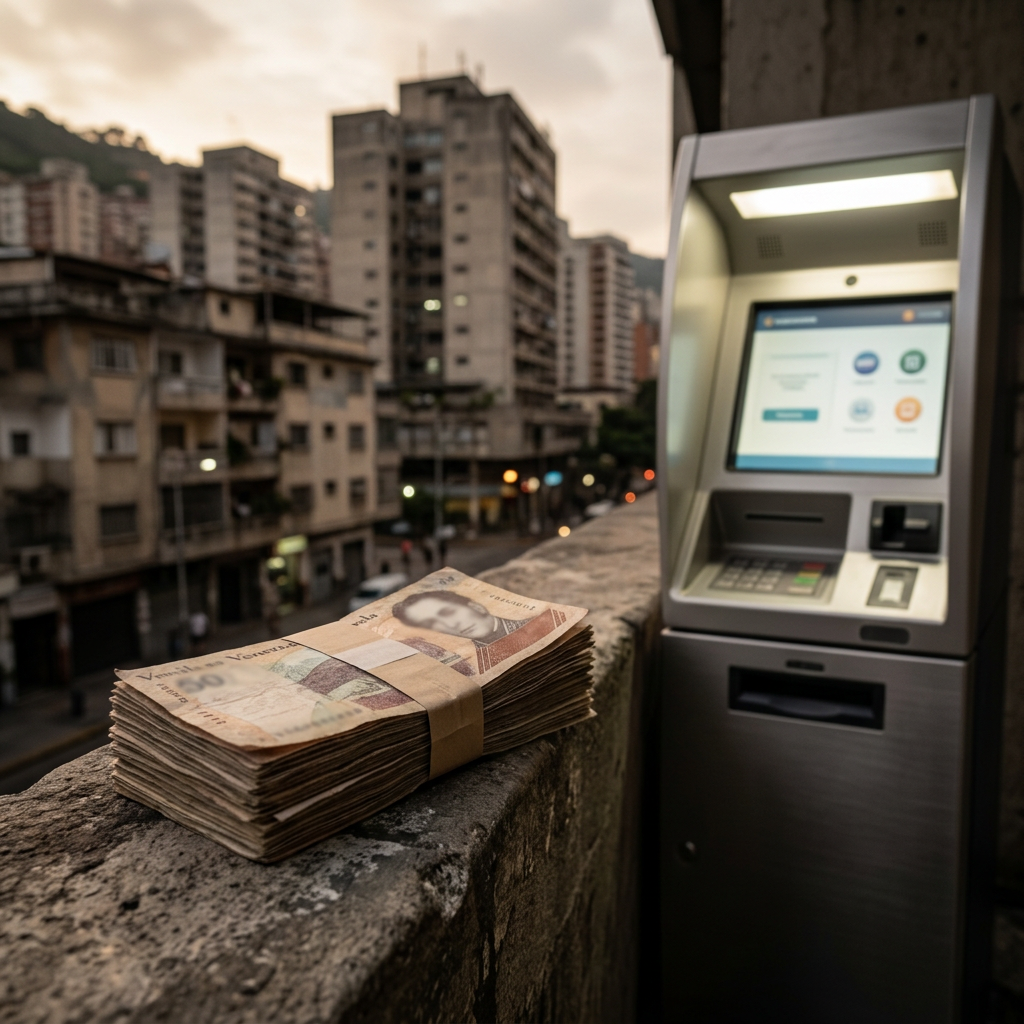
Western Union has an active Venezuela service, and its published information shows recipients can receive transfers in Venezuelan bolívares, subject to its requirements.
The U.S. has also been gradually changing certain Venezuela-related financial restrictions, with additional OFAC licenses issued in 2026.
WHAT COULD THIS MEAN?
It may indicate that financial and payment channels involving Venezuela are becoming more accessible.
WHAT HAS NOT BEEN PROVEN
This does NOT establish that all restrictions on the bolívar have been lifted, that the bolívar is now freely tradable internationally, or that a currency revaluation has occurred.
So if you’re seeing posts saying “the restrictions are OFF and the bolívar can now be freely traded,” slow down.
A real change in Western Union service ≠ proof of a full currency reset or unrestricted international trading.
REALITY CHECK
This one is worth watching — but let’s follow the actual rules, licenses, and banking channels rather than the headlines.
Proof Links
https://westernunion.com/ve/en/send-money.html
https://ofac.treasury.gov/selected-general-licenses-issued-ofac
Watch the facts.
Verify the claims.
Follow Venezuela Bolivar
Source(s):
• https://x.com/argosaki/status/2102778176833462727
https://dinarchronicles.com/2026/09/23/gp-q-the-venezuelan-bolivar-what-changed/
Reset Intelligence: No Extension.
Emailed to Recaps~ Thank you David
Reset Intelligence: No Extension.
By Reset Intelligence | @EXIT_FIAT
Asked about Iraq's Prime Minister, Secretary of State Marco Rubio said: "We have zero doubt of his commitment to doing this." No extension was requested. September 30 stands.
Turkey agreed to hand back its base. Syria asked for the militias off its border. The coalition is packing out of Erbil.
Emailed to Recaps~ Thank you David
Reset Intelligence: No Extension.
By Reset Intelligence | @EXIT_FIAT
Asked about Iraq's Prime Minister, Secretary of State Marco Rubio said: "We have zero doubt of his commitment to doing this." No extension was requested. September 30 stands.
Turkey agreed to hand back its base. Syria asked for the militias off its border. The coalition is packing out of Erbil.
Washington's answer
Iraq's holdout militias spent all summer betting that the September 30 weapons deadline would bend. On Wednesday in New York, Rubio closed that bet on camera. At least three militias have disarmed and joined the national government, he said, with at least one still refusing. Kurdish press confirmed al-Zaidi never asked Washington to extend the deadline, and even Nouri al-Maliki now says the weapons program and timetable will be announced on September 30. Baghdad says it will collect roughly 6 million weapons held outside its institutions, starting that day.
Every exit in one week
Turkey - agreed to hand back its Bashiqa base near Mosul in stages, a base set up in 2015 without Baghdad's consent, in exchange for Iraqi state authority in Sinjar and the PKK out.
Syria - President al-Sharaa met al-Zaidi for the first time, asked for militia-linked units to be kept off the border, and offered a second crossing, Al Qaim, for Iraq's fuel exports.
The coalition - American air defenses are being packed out of Erbil ahead of the September 30 exit.
The law - the two militia (PMF) bills go to parliament as soon as al-Zaidi lands.
The money - al-Zaidi offered US companies land ownership and 10-year tax holidays, and told the IMF the government is restructuring Iraq's fiscal policy.
The dollar and the street
The US 5-year yield broke 5% for the first time since 2007 and the dollar hit a 7-week high, while on Baghdad's street the dollar eased to 157,000 dinars per $100 against the official 131,000. Tuesday, September 29, is the deadline for Iraqi banks to hand the CBI full databases on politicians and their relatives. The 2027 budget reaches parliament October 15.
That is the short version. Why these exits matter for the IQD, the history lesson that shows the order this runs in, and the watch list from here - that is the daily read.
Read the full daily briefing free for 5 days. Sign up here: the daily Iraqi dinar briefing
Want it straight from the horse's mouth? The CBI Rate Alert pings you the moment the Central Bank of Iraq moves the official rate. The number itself, not a rumour about it. It comes with our free resource library and the daily breakdown of what is actually moving in Iraq. Sign up free: The CBI Rate Alert
Got a dinar question? Reset Intelligence runs an on-call research assistant: ask it anything they have published. It answers in seconds and will conduct deep research to find you the answer. Try it: the Iraqi dinar research assistant
Common questions, answered straight: When will the Iraqi dinar revalue? and Is the Iraqi dinar revaluation real?
The design behind all of it is mapped in Head of the Snake, and the free guides live in the Iraqi dinar resource library.
Follow the daily intel free: Telegram · Facebook · Spotify · Odysee
Iraq Economic News and Points To Ponder Late Wednesday Evening 9-23-26
The 2027 Budget: A Deficit Of 65 Trillion And The Exchange Rate Is On The Table
Last updated: September 23, 2026 The Independent/- The Finance Committee in the Iraqi Parliament is preparing to begin one of the most important economic discussions in the coming period, with the expected arrival of the draft federal budget for 2027 to Parliament in mid-October, amid initial estimates indicating a deficit that may reach about 65 trillion dinars.
The 2027 Budget: A Deficit Of 65 Trillion And The Exchange Rate Is On The Table
Last updated: September 23, 2026 The Independent/- The Finance Committee in the Iraqi Parliament is preparing to begin one of the most important economic discussions in the coming period, with the expected arrival of the draft federal budget for 2027 to Parliament in mid-October, amid initial estimates indicating a deficit that may reach about 65 trillion dinars.
Member of Parliament’s Finance Committee, Ikhlas Al-Dulaimi, said that the draft budget is expected to reach the House of Representatives on October 15, stressing that the committee has prepared its plans and preparations to study the draft, organize its items and discuss it before putting it to a vote.
The date is consistent with previous statements by Finance Committee member Jamal Kojar, who said that the Finance Minister informed the committee that the draft budget would reach Parliament on October 15, in accordance with legal timelines, while the price of oil on which revenue estimates will be based is still not definitively decided.
A Deficit That Could Reach 65 Trillion Dinars
Al-Dulaimi predicted that the deficit in the 2027 budget would reach about 65 trillion Iraqi dinars, a figure that puts the government and parliament before a challenge regarding how to finance spending without increasing pressure on public finances.
She confirmed that the Finance Committee will discuss the procedures and solutions that the Ministry of Finance will propose to deal with the deficit after the project officially reaches Parliament.
These estimates come in conjunction with economic warnings about the continued heavy reliance of the budget on oil revenues, which makes Iraq’s financial situation sensitive to changes in crude oil prices, export volumes, and disruptions that may affect the movement of energy exports.
The Exchange Rate Enters Budget Discussions
One of the most prominent issues revealed by the Finance Committee is the exchange rate of the dollar against the dinar.
Al-Dulaimi said that the committee will discuss the exchange rate issue within the deficit-related solutions, in addition to the measures that will be presented by the Ministry of Finance, noting that there are proposals and solutions at the Ministry that the committee will review after receiving the draft budget.
These statements, in themselves, do not imply a decision to change the official exchange rate; the Ministry of Finance or the relevant monetary authorities have not yet announced a final decision on this matter in the published sources that have been reviewed.
Thus, the exchange rate will be one of the issues that will be discussed when studying the budget, while the nature of the government proposals will become clear after the project and its financial schedules officially reach the House of Representatives.
Employee Salaries Are "Secured".
Regarding public spending, Al-Dulaimi confirmed that the salaries of state employees are secured, coinciding with talk of increased oil exports and the existence of reserves at the Central Bank that can contribute to supporting financial stability.
The issue of salaries is of particular importance in light of the large operational spending and financial obligations of the state, while the government seeks to prepare a budget that can balance current expenditures, investment projects and the actual ability to generate revenues.
The Price Of Oil Has Not Yet Been Decided.
The price of a barrel of oil adopted in the budget remains one of the most anticipated figures, as Kujer stated in previous remarks that the proposals under consideration ranged between $50 and $65 per barrel, with a difference of opinion regarding the most appropriate price to adopt.
Determining the assumed price of oil is a key factor in calculating revenues and deficits; the higher the assumed price, the more sensitive the budget becomes to any actual downturn in global markets, while adopting a more conservative price provides a greater margin of safety if actual selling prices remain above the estimated price.
All eyes are now on October 15, the expected date for the draft budget to reach Parliament, as the official tables will then reveal the true size of expenditures, revenues, deficit, the assumed oil price, and the mechanisms for financing the financial gap.
The discussions will also reveal more clearly the nature of what the Finance Committee indicated regarding the exchange rate, and whether the matter will be limited to studying its impact on revenues and expenditures, or whether the budget will include new proposals related to fiscal policy.
Between a projected deficit of up to 65 trillion dinars, the issue of the exchange rate, oil prices, salaries and public spending, Iraq’s 2027 budget appears poised to be one of the most sensitive economic issues facing the government and parliament in the coming months. https://mustaqila.com/موازنة-2027-عجز-بـ65-تريليوناً-وسعر-الصرف-ع
Al-Zaydi Presents The Financial Automation Plan To The IMF, And Azour Expresses His Readiness To Provide Support
2026-09-23 | New York - 964 Prime Minister Ali al-Zaidi met in New York on Wednesday (September 23, 2026) with Jihad Azour, Director of the Middle East and Central Asia Department at the International Monetary Fund, to discuss the repercussions of the regional crisis and its direct impact on oil prices, energy, and global supply chains.
During the meeting, Al-Zaydi affirmed the government’s commitment to restructuring fiscal policy and shifting towards a “program and performance budget” and automating key components within the 2027 budget, while Azour expressed the Fund’s readiness to continue providing support and cooperation to enhance reforms and consolidate economic stability in Iraq.
The media office of Al-Zaidi stated in a statement received by 964 Network that “Prime Minister Ali Faleh Al-Zaidi received in New York, after midnight last Tuesday Baghdad time, the Director of the Middle East and Central Asia Department at the International Monetary Fund/IMF, Mr. Jihad Azour, and his accompanying delegation.”
He added that “the meeting discussed developments in the global economic landscape, the repercussions of the crisis in the region and its impact on markets, prices, supply chains, and inflation rates, as well as its effects on energy consumption and oil prices.”
Al-Zaydi confirmed, according to the statement, that “the government is proceeding with restructuring the basic pillars of fiscal policy in Iraq, through expanding the automation system and gradually moving towards a program and performance budget, within the 2027 budget project.”
For his part, Azour affirmed “the IMF’s readiness to continue cooperating with Iraq, and to strengthen the path of economic and financial reforms, in a way that contributes to consolidating financial and economic stability in Iraq.” https://964media.com/719339/
Al-Zaydi Directs Official Institutions And Governorates To Prepare For The Celebration Of Iraqi Sovereignty Day
2026-09-23 | 964 Prime Minister Ali al-Zaidi directed government institutions to celebrate Sovereignty Day on October 1st by holding a vigil to commemorate the martyrs and victims, and to wear a badge on the chest bearing the map of Iraq or its flag.
The General Secretariat of the Council of Ministers stated in a statement received by Network 964 that “Prime Minister, Mr. Ali Faleh Al-Zaidi, directed all ministries, non-ministerial entities, and governorates to take the necessary measures in accordance with the law, in coordination with the Government Media Cell, regarding the following.”
“First: A moment of silence in governmental and public institutions, to commemorate the martyrs and victims of Iraq as part of the celebration of Iraqi Sovereignty Day.”
Second: Wearing a badge on the chest that represents National Sovereignty Day, for example (a map of Iraq or a map of Iraq in the colors of the Iraqi flag or any other design).
“Third: All governorates should promote the official and popular local celebration of Sovereignty Day through all local government departments and institutions.”
“Fourth: Instructing the relevant authorities to take appropriate measures regarding the matter through popular programs and activities.”
He added that “the Cabinet Affairs and Committees Department in the General Secretariat of the Cabinet stated that the directive came in light of the approaching date of the celebration of Iraqi Sovereignty Day, corresponding to the first of October 2026.” https://964media.com/719356/
Seeds of Wisdom RV and Economics Updates Thursday Morning 9-24-26
Good Morning Dinar Recaps,
UK BANKING RESET: MAJOR BANKS COMPLETE FIRST LIVE TOKENIZED-DEPOSIT TRANSACTIONS
Britain’s largest banks have moved tokenized commercial-bank money into live customer transactions, bringing blockchain-based deposits one step closer to everyday financial infrastructure.
Good Morning Dinar Recaps,
UK BANKING RESET: MAJOR BANKS COMPLETE FIRST LIVE TOKENIZED-DEPOSIT TRANSACTIONS
Britain’s largest banks have moved tokenized commercial-bank money into live customer transactions, bringing blockchain-based deposits one step closer to everyday financial infrastructure.
OVERVIEW
Major UK banks have completed the first live customer transactions using tokenized sterling deposits, including two remortgage transactions and a simulated consumer marketplace payment.
The transactions demonstrate how ordinary commercial-bank deposits can operate on blockchain-based infrastructure while retaining the protections and legal status associated with conventional bank money.
The development could eventually connect tokenized deposits with digital assets, digital bonds and programmable payments, adding another building block to the evolving global financial system.
KEY DEVELOPMENTS
1. UK banks have moved tokenized deposits into live transactions
The Great British Tokenised Deposit initiative, convened by UK Finance, has completed its first live customer transactions using tokenized sterling deposits.
The participating institutions include Barclays, HSBC UK, Lloyds Banking Group, Monzo, Nationwide, NatWest and Santander.
Lloyds, NatWest and Barclays completed two remortgage transactions, while another group of banks including HSBC conducted a person-to-person transaction based on an online marketplace purchase.
2. The money remains commercial-bank money
Tokenized deposits are different from privately issued stablecoins.
A tokenized deposit represents existing money held at a commercial bank, but records and moves that deposit using blockchain or distributed-ledger technology.
UK Finance says the approach is designed to retain the trust and regulatory protections of conventional commercial-bank deposits while adding capabilities such as programmability, speed and conditional settlement.
3. Payments can be programmed around real-world conditions
The marketplace transaction demonstrated one of the most significant features of tokenized deposits: programmability.
The buyer's funds could be locked in the account and released to the seller only after the agreed condition—the exchange of the goods—was satisfied.
The remortgage transactions used a similar concept, with funds automatically released once the property transaction was completed.
This creates the possibility of financial transactions in which the payment itself is connected directly to the completion of another event.
4. The technology could reduce friction in financial transactions
Traditional financial transactions can involve multiple systems, manual checks and settlement steps.
Tokenized deposits could allow some of those processes to become more automated.
UK Finance says the pilots demonstrated potential benefits including greater transparency, reduced transaction friction and more efficient settlement.
The significance is therefore broader than simply moving money faster. It is about changing how financial transactions are structured and completed.
5. Digital bonds are the next major step
The project is already looking beyond the initial payment pilots.
Participating banks plan to develop a company and governance framework to move the initiative toward production. They also plan to issue three digital debt instruments that can be traded and settled using tokenized deposits.
That creates a direct connection between tokenized bank money and tokenized financial assets.
The potential chain becomes:
Tokenized Deposits → Digital Bonds → Trading → Settlement → Programmable Financial Markets
6. The UK is building a bank-based digital-money model
The development also highlights an important distinction emerging in digital finance.
Rather than relying entirely on privately issued stablecoins, tokenized deposits allow regulated commercial banks to bring existing bank money onto digital networks.
Reuters reports that the Bank of England has favored experimentation with tokenized deposits rather than relying exclusively on privately issued stablecoins.
This keeps the underlying money within the banking system while allowing it to gain new digital capabilities.
7. The development fits a much larger global transformation
The UK development is occurring alongside similar efforts elsewhere.
The European Central Bank recently launched Pontes, connecting its payment system with blockchain-based financial markets and allowing transactions involving tokenized assets to settle using central-bank-backed euros.
Together, these developments point toward a financial environment in which commercial-bank deposits, central-bank money and financial assets can increasingly interact with blockchain-based infrastructure.
WHY IT MATTERS
For decades, financial institutions have used separate systems for payments, securities, settlement and recordkeeping.
Tokenization has the potential to bring some of those functions onto shared digital infrastructure.
The UK pilots demonstrate that this is moving beyond theory. Real bank money has now been used in live transactions through a tokenized-deposit system.
That does not mean the entire banking system is moving onto blockchain tomorrow. But it does demonstrate a practical pathway for integrating traditional money with emerging digital financial infrastructure.
WHY IT MATTERS TO FOREIGN CURRENCY HOLDERS
For foreign currency holders following the Global Reset, this development is important primarily because it concerns the infrastructure surrounding money, rather than an immediate change in currency values.
There is no announcement here of a pound revaluation, global currency reset or specific exchange-rate change.
Instead, the UK banking system is testing a way for ordinary bank deposits to become programmable and transferable through digital infrastructure.
That is consistent with the broader principle of foundation before revaluation: financial systems can change their underlying architecture long before those changes produce visible effects in currency markets.
IMPLICATIONS FOR THE GLOBAL RESET
Pillar 1 — Banking
Tokenized deposits bring traditional commercial-bank money onto digital infrastructure without turning that money into a privately issued cryptocurrency.
Pillar 2 — Technology
Blockchain and distributed-ledger technology are moving from experimental applications toward actual banking transactions.
Pillar 3 — Payments
Programmable deposits could allow payments to occur automatically when predetermined conditions are satisfied.
Pillar 4 — Assets
The planned digital-bond transactions could connect tokenized money directly with tokenized securities.
Pillar 5 — Settlement
The ability to coordinate money and asset transfers on digital infrastructure could eventually reduce some of the delays and reconciliation processes associated with traditional settlement.
The Global Reset Connection
Commercial Bank Deposits → Tokenization → Blockchain → Programmable Money → Digital Assets → Digital Bonds → Automated Settlement → Global Financial Infrastructure
RUMOR SAFETY REMINDER
This development is not an announcement of a global financial reset, pound revaluation, currency revaluation or specific reset date.
The UK banks have completed live pilot transactions, but the broader system is still being developed. Additional pilots and digital-asset settlement work are expected, and the participating banks are working toward a production framework.
The significance is the documented evolution of financial infrastructure—not a prediction about future currency values.
Hope, not hype. Follow the evidence.
THE BOTTOM LINE
The significance of Britain's tokenized-deposit milestone is not simply that banks are putting deposits on a blockchain. It is that ordinary bank money is beginning to operate in a form that can be programmed, connected to digital assets and settled through new financial infrastructure.
As traditional deposits, digital assets and automated settlement begin to converge, the architecture underneath the global financial system is evolving one transaction at a time.
Seeds of Wisdom Team
Newshounds News™ Exclusive
SOURCES
UK Finance — "UK banks complete first live customer transactions using tokenised sterling deposits"
Reuters — "UK banks make first interbank transactions using tokenised deposits"
~~~~~~~~~~
🌱 A Message to Our Currency Holders🌱
If you’ve been holding foreign currency for many years, you were not foolish.
You were not wrong to believe the global financial system would change.
What failed was not your patience — it was the information you were given.
For years, dates, rumors, and personalities replaced facts, structure, and proof. “This week” predictions created cycles of hope and disappointment that were never based on how currencies actually change.
That is not your failure.
Our mission here is different: • No dates • No rates • No hype • No gurus
Instead, we focus on:
• Verifiable developments • Institutional evidence
• Global financial structure • Where countries actually sit in the process
Currency value changes only come after sovereignty, trade, banking, settlement systems, and fiscal coordination are in place. History and institutions confirm this sequence.
You will see silence. You will see denials. That is not delay — that is discipline.
Protect your identity. Organize your documents. Verify everything.
Never hand your discernment to anyone who cannot show proof.
You deserve truth — not timelines.
Seeds of Wisdom Team
Newshounds News
~~~~~~~~~~
Seeds of Wisdom Team RV Currency Facts Youtube and Rumble
Newshound's News Telegram Room Link
RV Facts with Proof Links Link
RV Updates Proof links - Facts Link
Start Here room with Most Asked Questions Link
Follow the Gold/Silver Rate COMEX
Follow Fast Facts
Seeds of Wisdom Team™ Website
Thank you Dinar Recaps
Gold Holds As Investors Weigh China, Iran Relations
Gold Price Today, Wednesday, September 23, 2026: Gold Holds As Investors Weigh China, Iran Relations
Tim Manni · Wed, September 23, 2026 Gold (GC=F) December futures opened at $4,394.70 per troy ounce on Wednesday, September 23, 2026, up 0.4% from Tuesday's close. Gold moved lower in early trading this morning to $4,352 per troy ounce as of 6:51 a.m. ET.
Gold prices have settled back in the $4,300 range again as investors weigh the latest developments in Iran relations and as President Trump welcomes Chinese leader Xi Jinping to Washington today. This week's U.S.-China summit marks the first time in 11 years the Chinese President has been to Washington, D.C.
Gold Price Today, Wednesday, September 23, 2026: Gold Holds As Investors Weigh China, Iran Relations
Tim Manni · Wed, September 23, 2026 Gold (GC=F) December futures opened at $4,394.70 per troy ounce on Wednesday, September 23, 2026, up 0.4% from Tuesday's close. Gold moved lower in early trading this morning to $4,352 per troy ounce as of 6:51 a.m. ET.
Gold prices have settled back in the $4,300 range again as investors weigh the latest developments in Iran relations and as President Trump welcomes Chinese leader Xi Jinping to Washington today. This week's U.S.-China summit marks the first time in 11 years the Chinese President has been to Washington, D.C.
Many important issues are on the table for the two world leaders to discuss this week, including trade negotiations, rare earths, AI, and the war in Iran.
Hopes for easing tensions between the U.S. and Iran have been lifted after the two countries met for several hours at the United Nations yesterday, with oil prices responding in kind. Brent crude oil prices (BZ=F) are now down to under $96 a barrel, a 9.98% decline over the last five days.
Live updates: Stock market today: Dow, S&P 500, Nasdaq futures muted as oil falls, markets eye looming Trump-Xi meeting
Current Price Of Gold
Gold futures opened flat on Wednesday, September 23, 2026, compared to Tuesday's close. Here's a look at how the opening gold price has changed versus last week, month, and year:
One week ago: +1.4%
One month ago: -4%
One year ago: +16.2%
For context, the one-year gain for gold was 95.6% on Jan. 29.
24/7 gold price tracking: Don't forget you can monitor the current price of gold on Yahoo Finance 24 hours a day, seven days a week.
Want to learn more about the current top-performing companies in the gold industry? Explore a list of the top-performing companies in the gold industry using the Yahoo Finance Screener. You can create your own screeners with over 150 different screening criteria.
Considering A Gold Alternative?
If you're looking for a gold alternative, Yahoo Finance also tracks the daily price of silver (SI=F) and the daily price of bitcoin (BTC-USD) and ethereum (ETH-USD).
Ways To Invest In Gold
There are different ways to invest in gold, and each has pros and cons. Four common options are:
Physical gold
Gold mining stocks
Gold ETFs
Gold futures
Physical gold
Physical gold includes jewelry, gold bars, and gold coins. Some prefer physical gold over other forms because it's tangible and easy to purchase. You can easily buy a gold necklace at the mall or gold bars at Costco (COST).
Physical Gold Pros And Cons
The Advantages Of Physical Gold Include:
Readily accessible for use: If you keep your physical gold at home, it is easily available to use as a medium of exchange in an economic emergency.
No added volatility or ongoing fees: If you hold the gold yourself, "you eliminate counterparty risk and storage fees or expense ratios," explained Brett Elliott, director of content and SEO at American Precious Metals Exchange (APMEX). You also avoid the added business volatility associated with gold mining stocks, as explained below.
The Disadvantages Of Physical Gold Include:
Risk of theft or loss: Physical gold must be properly secured. You can store it at home for free, or invest in third-party storage and insurance. Remember that fees associated with storage or insurance dilute your returns.
Lower liquidity: Physical gold is less liquid — that is, harder to sell quickly — than stocks or ETFs. Also, if you are not using the gold as a medium of exchange, you must find a dealer and pay a markup on the sale.