
Thank you to all the subscribers to our Early Access program…we thank you for your continued support.
We are excited to offer this new service to keep you informed and up-to-date on the latest Dinar and currency news.
You Weren't Crazy 17 Years Ago You Were Early
You Weren't Crazy 17 Years Ago. You Were Early
Notes From the Field By James Hickman (Simon Black / Sovereign Man) June 19, 2026
20 years ago, if you recognized how deep America's problems were, it was easy to feel like you were the crazy one.
Banks were handing out mortgages to people who plainly couldn't afford them. Wall Street bundled those mortgages by the millions and sold them on as some of the safest investments around. And the whole structure rested on the assumption that home prices would never fall, so a bank could simply sell the home for more in case of a default.
You Weren't Crazy 17 Years Ago. You Were Early
Notes From the Field By James Hickman (Simon Black / Sovereign Man) June 19, 2026
20 years ago, if you recognized how deep America's problems were, it was easy to feel like you were the crazy one.
Banks were handing out mortgages to people who plainly couldn't afford them. Wall Street bundled those mortgages by the millions and sold them on as some of the safest investments around. And the whole structure rested on the assumption that home prices would never fall, so a bank could simply sell the home for more in case of a default.
Chief among the “experts” selling this fiction was Ben Bernanke, then chairman of the White House Council of Economic Advisers, who said in 2005, "We've never had a decline in house prices on a nationwide basis."
In March 2007, with subprime loans already going bad, Bernanke, by then Fed Chairman, told Congress the damage "seems likely to be contained."
That May he said he didn't expect "significant spillovers… to the rest of the economy."
As late as July 2008, weeks before the two mortgage giants collapsed into government hands, he called Fannie Mae and Freddie Mac adequately capitalized and in no danger of failing.
Then on September 15, 2008, Lehman Brothers filed the largest bankruptcy in US history, and the structure came down. Prices fell, those homes were suddenly worth less than the loans against them, and the safest investments around turned toxic.
By 2009, Washington was spending, bailing out, and printing at record scale, and the obvious question was how long it could possibly go on.
That was the world the very first Sovereign Man letter dropped into, in June 2009, exactly 17 years ago.
We wrote about a real man named William "Bud" Post who had gone flat broke, on food stamps, with lawsuits, jail time, and bankruptcy behind him. What made it strange was that in 1988 he'd won $16.2 million in the Pennsylvania lottery.
Bud, we wrote, is the United States of America.
America hit its own lottery after World War II, coming out the only major economy left standing, the dollar enthroned as the world's reserve currency. And like Bud, it spent the next several decades certain the money would never run out.
LBJ got bogged down in Vietnam while building the Great Society. George W. Bush entered two wars and told Americans to go shopping, and Obama, fresh off the bailouts, was promising universal healthcare.
It was the steady avoidance of every hard choice. We called it winner's syndrome: "we've been winners for so long we don't know any other reality."
In 2009, that was an unpopular thing to say.
The consensus treated the crisis as a stumble the economy would walk off, and calling America structurally broke got you labeled a crank.
We didn't say it was a death sentence, though. We argued the opposite, that clear thinking could still save America: take the hit, let failing businesses fail, restructure, and come out stronger.
"Unfortunately," we wrote, "there are no near-term indications of rationality in Washington."
17 years later, that is more true than ever. If anything, Washington has gone backwards.
For example, Social Security's own trustees now project the main retirement trust fund runs dry in 2032, after which scheduled benefits get cut by roughly 22% automatically.
That’s not some distant future where maybe at some point someone will have to start thinking about a solution. It is 6 years away.
And the fixes are no secret; the trustees themselves lay out the options, from higher payroll taxes to benefit cuts.
But they've ignored it for so long that simply hearing a few members of Congress acknowledge the scale of the problem now feels like progress, even though acknowledging it is a long way from fixing it.
We were early; the reckoning we kept warning about has taken longer to arrive than we thought.
But early isn't wrong: everything that first letter described is more true today than it was in 2009. Washington could still choose to fix it, exactly as it could have back then. It simply has to want to, and seventeen years of evidence says it doesn't.
Your Plan B, fortunately, doesn't require Congress to find its courage.
And that was the entire reason this company was founded.
That was the promise at the end of that first letter: while the country may be on a slide, clear thinking could still save you, "and that's where we come in."
That's still exactly what we do.
Sovereign Man grew into Schiff Sovereign, and one daily letter became a full body of research.
Every month, our co-founder James Hickman gives his in-depth view of the world in the Macro Brief, mapping where the debt, the dollar, and global events are heading. He points to specific real assets that can protect your savings; the gold, energy, and resource businesses that hold their value as the dollar slips.
It’s available to members of Premium
Members of our flagship membership, Plan B Confidential, get even more.
This is the original idea the first letter was built on: don't put all your eggs in one basket, and don't hand one government the keys to your entire life. Plan B Confidential is the playbook for second citizenship so you always have another way out, foreign residency so you always have another place to live, offshore banking so your savings aren't trapped in one banking system, and the legal tax strategy that lets you keep as much of your money as possible.
It's built on boots-on-the-ground research across more than 120 countries.
And because so much of the threat from a bankrupt government printing money and draining the value of your savings is financial, we've zeroed in on real assets through our investment research newsletter, Strategic Assets.
A real asset is something with worth of its own, the kind of thing people need no matter what the dollar is doing: gold as a store of value, energy, the metals that build everything. A government can print money by the trillion, but it can't print an ounce of gold or a barrel of oil, so real assets tend to hold their value, and often climb, exactly when paper money is falling apart.
And for readers who want it all, we offer Total Access.
Members get everything we publish, from the macro analysis to the investment research, and all the international strategies in between.
But Total Access members also get the community: other members who they meet at in-person events, conferences, dinners, and most recently, small group boots-on-the-ground trips around the world.
From a superyacht along the Croatian coast to a trek through the Patagonian Andes, members explore the world together, and finally find their tribe in each other.
That's the part we could never have planned 17 years ago.
Back then, we wrote to a handful of people willing to question what everyone else accepted as obvious. You were one of them, or you found your way here since, because you see the world through that same lens.
That's what built this. Not us. You.
Here's to the next chapter.
The Schiff Sovereign Team
Saturday Iraq News Posted by Tishwash at TNT 6-20-2026
TNT:
Tishwash: Algerian: The government will be forced to change the exchange rate after the country's economic downturn.
Information/Baghdad...
The head of the political body of the National Tribal Movement, Abdul Rahman al-Jazaeri, confirmed that the government will be forced to change the dollar exchange rate in local markets after the economic downturn the country has witnessed as a result of the war in the region.
Al-Jazaeri told Al-Maalouma, "The Prime Minister's move to increase the value of the dollar in local markets at the expense of the Iraqi dinar is possible and not unlikely given the conditions and developments in the region and their repercussions on Iraq."
TNT:
Tishwash: Algerian: The government will be forced to change the exchange rate after the country's economic downturn.
Information/Baghdad...
The head of the political body of the National Tribal Movement, Abdul Rahman al-Jazaeri, confirmed that the government will be forced to change the dollar exchange rate in local markets after the economic downturn the country has witnessed as a result of the war in the region.
Al-Jazaeri told Al-Maalouma, "The Prime Minister's move to increase the value of the dollar in local markets at the expense of the Iraqi dinar is possible and not unlikely given the conditions and developments in the region and their repercussions on Iraq."
He added, "The war in the region has had a complete and clear impact on all Iraqi economic programs, the budget, the dollar exchange rate, and foreign transactions, in addition to the disruption in the export of Iraqi oil."
He explained that "the urgent need compels the government to take measures that will increase the exchange rate in local markets in order to put the economy back on track, especially with an economic figure at the top of the executive branch."
************
Tishwash: An economist warns that changing the exchange rate without structural reforms could exacerbate inflation and poverty.
Economic expert Manar Al-Obaidi confirmed on Friday (June 19, 2026) that changing the exchange rate of the dinar against the dollar as a unilateral measure to reduce public spending may have negative effects that outweigh its temporary gains, calling for addressing the structural imbalances in the Iraqi economy.
Al-Ubaidi said in an analysis seen by “Baghdad Today” that “reducing the value of the dinar may achieve some gains, including reducing government spending denominated in dinars, limiting imports, supporting local products, as well as reducing pressure on cash reserves.”
He added that "the decision may entail a number of risks, most notably the loss of confidence in the local currency and increased dependence on the dollar, weakening the investment environment, increasing the state's operating expenses, as well as growing rates of inflation, poverty and unemployment."
He pointed out that "the real economic problem lies in the inflation of operating expenses, the weakness of non-oil revenues, and the imbalance in the trade balance," stressing that "real reform begins with addressing these issues structurally, and that any adjustment to the exchange rate should be part of an integrated package of economic reforms." link
************
Tishwash: Ahead of his visit to Washington, al-Zaydi's "sieve" causes the biggest government shake-up since 2003.
It wasn't long after Ali Faleh al-Zaidi took over his duties that he began sending clear signals to his opponents and allies at the same time, under the title "The next stage will not be an extension of what came before it."
While his government is still completing its ministerial formation, informed sources speak of a broad list of changes that may affect more than 100 officials at various administrative levels, starting with undersecretaries and not ending with directors-general, in a move that seems closer to redrawing the centers of influence within the Iraqi state than to mere routine administrative procedures.
According to information obtained by Shafaq News Agency, the team assigned by Al-Zaidi to review the performance of government institutions is continuing its work away from the spotlight, through a comprehensive evaluation of official institutions and bodies, in preparation for launching one of the broadest replacement operations that the country has witnessed since 2003.
The evaluation process is not limited to administrative performance only, but also includes the nature of the political and organizational affiliations of some officials, amid talk of a trend to remove figures who are accused of being close to armed factions or who have failed to manage the files entrusted to them during the past years.
In a country where successive governments have been accustomed to "waiting before approaching high positions for fear of clashing with influential parties," al-Zaydi's moves appear to be very different.
The current prime minister began his term with a series of decisions affecting sensitive security and economic positions, including the National Security Service and the Central Bank, which opened the door to questions about whether these steps represent the beginning of a project to restructure state institutions, or whether they come in response to the requirements of a "new political phase" in which internal calculations are intertwined with external pressures.
The timing of these measures is of exceptional importance as al-Zaidi’s anticipated visit to Washington and his expected meeting with US President Donald Trump approach, a visit that many observers view as a pivotal moment in shaping the relationship between the new government and the US administration.
According to political sources who spoke to Shafaq News Agency, US envoy Tom Barrack discussed with al-Zaidi during his recent visit to Baghdad issues that go beyond the formation of the government or the distribution of positions, reaching the form of the Iraqi state during the next stage, the mechanisms for managing sovereign institutions, and strengthening the independence of government decision-making from traditional centers of influence.
According to the sources, there are understandings that led to the abolition of the positions of deputy prime ministers, as well as the exclusion of the “Ministry of Federal Security” project, which was proposed to include various security formations, including the Popular Mobilization Forces and armed factions.
Meanwhile, negotiations regarding the allocation of security ministries and some contentious portfolios are still ongoing, amid assurances that al-Zaydi is seeking to select technocratic figures, even if they enjoy the support of certain political forces, sources say.
But the road ahead for the prime minister does not appear entirely paved, as any change in the highest state positions necessarily means disrupting political balances that have accumulated over more than two decades, which makes any broad replacement process a real test of al-Zaydi’s ability to impose his will within a system of governance based on consensus, power-sharing, and the division of influence.
With the postponement of the meetings of the Coordination Framework forces until after the tenth of Muharram, the political forces seem to be waiting for the picture of the final understandings regarding the government formation and the expected changes to become clear, before determining the form of their position on the Al-Zaydi project.
Until then, the list of 100 names does not appear to be a "media show," but rather a title for a silent political battle taking place behind the scenes, which may redraw the centers of power within the Iraqi state, and reveal the extent to which al-Zaydi can turn promises of reform into reality, or remain within the limits of the balances that brought him to power. link
************
Tishwash: Iraq returns to the "grey list"... International demand obliges Baghdad to implement a plan to combat money laundering
The Financial Action Task Force (FATF) announced on Friday that it has placed Iraq on its "grey list" of countries that require increased monitoring regarding their efforts to combat money laundering and financial crimes.
The group’s chair, Elisa de Anda Madrazo, said in a statement translated by Shafaq News Agency that “the group’s general meeting decided to add Iraq to the grey list, as there is still a need to take measures to address the risks associated with cash transactions, increase investigations related to money laundering and terrorist financing, and enhance the use of financial information.”
According to the statement, inclusion on the grey list means that the country in question is subject to enhanced monitoring by the Financial Action Task Force, and is required to implement a reform plan to address deficiencies in its anti-money laundering and counter-terrorism financing systems.
The decision comes at a time when the new Iraqi government is asserting that economic reform and combating corruption are key priorities for the next phase.
Iraqi Prime Minister Ali al-Zaidi had announced, since taking office last May, that rebuilding the Iraqi economy, attracting foreign investment, and fighting corruption would be among the main pillars of his government's program.
The Financial Action Task Force (FATF) announced in July 2018 that Iraq had been removed from the monitoring zone, due to the significant progress made by the Central Bank of Iraq and the Anti-Money Laundering and Counter-Terrorist Financing Office in improving and addressing shortcomings, and in fulfilling all its obligations towards the FATF recommendations and addressing the requirements of the anti-money laundering and counter-terrorist financing strategy prepared by the bank at that time. link
************
Tishwash: The US Secretary of State will visit the Middle East next week.
The American news website Axios reported on Friday evening that US Secretary of State Marco Rubio intends to visit the Middle East next week.
According to the website, Rubio will visit the UAE, Kuwait and Bahrain during a Middle East tour next week.
Earlier today, Rubio, in a telephone call with Lebanese President Joseph Aoun, affirmed Washington’s support for the Lebanese government’s efforts to establish a sovereign state that lives in peace with its neighbors.
For his part, US President Donald Trump, in statements on Friday, specifically thanked the leaders of Saudi Arabia, Qatar and the UAE, stressing that Washington’s relations with the three countries are “great,” and praising the role played by the region’s capitals in supporting efforts to de-escalate tensions and engage in dialogue over the past months.
Last Wednesday, Trump and his Iranian counterpart, Masoud Pezeshkian, remotely signed a memorandum of understanding between the United States and Iran to end the war and open the Strait of Hormuz, in a move that preceded a ceremony that was scheduled to take place in Switzerland, and opened the door to broader negotiations on the nuclear issue and sanctions during a period of 60 days link
MilitiaMan & CREW IRAQ DINAR UPDATE-"ASYCUDA Final Stages + Post-Ashura Cabinet Push: Momentum Accelerating" 8-19-2026
MilitiaMan & CREW IRAQ DINAR UPDATE-"ASYCUDA Final Stages + Post-Ashura Cabinet Push: Momentum Accelerating"
8-19-2026
The Crew: Samson, PompeyPeter, Petra, Daytrader, Sunkissed, GIGI and Militia Man
No drama. No intrigue. No songs and dances. Just straight, factual news that I read and interpret to the best of my ability after being an avid Dinar investor and insanely obsessed Dinarian for over 15 years.
Follow MM on X == https://x.com/Slashn
MilitiaMan & CREW IRAQ DINAR UPDATE-"ASYCUDA Final Stages + Post-Ashura Cabinet Push: Momentum Accelerating"
8-19-2026
The Crew: Samson, PompeyPeter, Petra, Daytrader, Sunkissed, GIGI and Militia Man
No drama. No intrigue. No songs and dances. Just straight, factual news that I read and interpret to the best of my ability after being an avid Dinar investor and insanely obsessed Dinarian for over 15 years.
Follow MM on X == https://x.com/Slashn
Be sure to listen to full video for all the news……..
Seeds of Wisdom RV and Economics Updates Friday Evening 6-19-26
Good Afternoon Dinar Recaps,
CLARITY Act Gains Momentum as U.S. Senate Schedules Last-Minute Meetings
Senate leaders are accelerating negotiations on landmark cryptocurrency legislation as lawmakers work toward establishing a comprehensive regulatory framework for digital assets before Congress breaks for its August recess.
Good Evening Dinar Recaps,
CLARITY Act Gains Momentum as U.S. Senate Schedules Last-Minute Meetings
Senate leaders are accelerating negotiations on landmark cryptocurrency legislation as lawmakers work toward establishing a comprehensive regulatory framework for digital assets before Congress breaks for its August recess.
Overview
The U.S. Senate has scheduled a series of last-minute meetings to advance the CLARITY Act as lawmakers seek agreement before the August congressional recess.
The legislation aims to create clear rules for digital assets, providing regulatory certainty for the crypto industry while defining oversight responsibilities between federal agencies.
Momentum continues to build, with several lawmakers expressing optimism that Congress is moving closer to final passage.
Key Developments
1. Senate Negotiations Intensify
Senate leaders are holding additional negotiations as lawmakers work through the remaining provisions of the CLARITY Act. Much of the legislation falls under the jurisdiction of the Senate Agriculture Committee, making its discussions central to the bill's progress.
2. Lawmakers Seek Regulatory Clarity
Senate Agriculture Committee Chairman John Boozman acknowledged that negotiations are moving forward but noted that many members of Congress are still learning the complexities of digital asset regulation. Continued education and bipartisan cooperation will be important as lawmakers move toward a final vote.
3. Timeline Remains the Focus
While Senator Bill Hagerty remains hopeful that the legislation could advance before the July 4 recess, other lawmakers, including Senator Cynthia Lummis, believe passage before the August recess is the more realistic timeline. White House officials have also expressed optimism that negotiations are gaining momentum.
Why It Matters
The CLARITY Act would provide one of the most comprehensive federal regulatory frameworks for digital assets in U.S. history. Clear regulations could encourage innovation, increase investor confidence, attract institutional capital, and establish more consistent oversight for the rapidly expanding blockchain industry.
Why It Matters to Foreign Currency Holders
Foreign currency holders continue monitoring developments that may reshape the future financial system. As digital assets, tokenized finance, and blockchain-based payment systems gain regulatory clarity, they may play a growing role in cross-border transactions, settlement systems, and the broader modernization of global finance.
Implications for the Global Reset
Pillar 1: Technology
The CLARITY Act supports the continued development of regulated blockchain infrastructure, helping integrate digital assets into mainstream financial markets.
Pillar 2: Trade
Clear digital asset regulations could improve cross-border payments, financial innovation, and global capital flows, positioning the United States to remain competitive in the evolving digital economy.
This is not just about cryptocurrency—it reflects the continuing transformation of financial infrastructure as governments prepare for the next generation of digital finance.
Seeds of Wisdom Team
Newshounds News™ Exclusive
Sources
~~~~~~~~~~

The Firm’s Q &A Weekly Saturday Night Call
WHEN:
📅 Saturday Night
⏰ 6:00 PM Pacific
⏰ 8:00 PM Central
⏰ 9:00 PM Eastern
WHERE: The Firm Q &A Room on Telegram, LINK
Previous Calls: Listen Here
🐸 Leap Into The Fun! 🐸
Got a question?
Got a topic?
Got something that has you scratching your head?
Jump into the Firm Q&A Room and let's talk about it! LINK
Every week we explore topics, share ideas, chase a few rabbit holes, and occasionally test RJax's timer skills.
Bring your questions for the Saturday Night Call and help shape the discussion.
You never know where the conversation will go once Jester gets curious, Skyedancer sees a connection, and Q3 starts answering.
So leap in, join the fun, and let's learn together!
🐸 Questions Welcome
🎙 Saturday Night Call
💬 Q&A Room Open All Week
~~~~~~~~~~
Seeds of Wisdom Team RV Currency Facts Youtube and Rumble
Newshound's News Telegram Room Link
RV Facts with Proof Links Link
RV Updates Proof links - Facts Link
Start Here room with Most Asked Questions Link
Follow the Gold/Silver Rate COMEX
Follow Fast Facts
Seeds of Wisdom Team™Website
Thank you Dinar Recaps
Iraq Economic News and Points To Ponder Saturday Morning 6-20-26
Iraq Was The Fifth Largest Buyer Of Homes In Türkiye During May
Money and Business Economy News – Baghdad Data from the Turkish Statistical Institute, released on Saturday, showed that Iraq ranked fifth among nationalities that bought the most homes in Turkey during May 2026, at a time when real estate sales to foreigners recorded a significant annual decline.
The agency stated in its monthly report that total home sales to foreigners amounted to 1,387 homes during May, a decrease of 27% compared to the same month in 2025, representing about 1.5% of total home sales in the country.
Iraq Was The Fifth Largest Buyer Of Homes In Türkiye During May
Money and Business Economy News – Baghdad Data from the Turkish Statistical Institute, released on Saturday, showed that Iraq ranked fifth among nationalities that bought the most homes in Turkey during May 2026, at a time when real estate sales to foreigners recorded a significant annual decline.
The agency stated in its monthly report that total home sales to foreigners amounted to 1,387 homes during May, a decrease of 27% compared to the same month in 2025, representing about 1.5% of total home sales in the country.
She added that home sales to foreigners during the first five months of this year amounted to 18,768 homes, down 15.1% year-on-year.
According to the data, Russian citizens topped the list of nationalities that bought the most homes in Turkey during May with 268 homes, followed by Iranians with 125 homes, then Ukrainians with 88 homes, and Germans with 73 homes, while Iraqis came in fifth place with 66 homes, while Azerbaijan came in sixth with the same number of 66 homes.
At the level of the real estate market in general, total home sales in Turkey during May decreased by 31.2% compared to the same period last year, reaching 93,333 homes, of which 30,196 were new homes and 63,137 were existing homes.
Sales of new homes also declined by 27.9% to 30,196 homes, while sales of existing homes fell by 32.7% to 63,137 homes.
https://www.economy-news.net/content.php?id=70457
Iraq Has Lost Nearly $38 Billion Since The Closure Of The Strait Of Hormuz
Money and Business Economy News – Baghdad The Economic Affairs Observatory “Eco Iraq” announced that Iraq has lost about 350 million barrels of oil exports since the closure of the Strait of Hormuz, equivalent to about $37.7 billion, calling for accelerating the implementation of the “New Levant” project as a strategic option to secure alternative export outlets and reduce dependence on maritime outlets.
The observatory stated that prior to the closure of the Strait of Hormuz on February 28, Iraq was exporting between 103 and 107 million barrels of crude oil per month.
He explained that the closure of the strait due to the war in the region led to a decline in exports, with losses amounting to 84,395,049 barrels in March, 93,115,870 barrels in April, 92,801,000 barrels in May, while the current month of June recorded about 79,600,000 barrels.
According to "Eco Iraq", the gap in Iraqi exports during the aforementioned period is estimated at about 350 million barrels, representing lost export opportunities valued at about $37.7 billion based on average oil prices during the period.
He concluded his statement by noting that the "New Levant" project represents an urgent strategic necessity to ensure the stability of Iraqi oil exports and to secure vital alternatives away from the geopolitical risks that threaten maritime routes, especially since the Iraqi economy depends on oil revenues by nearly 90%.
https://www.economy-news.net/content.php?id=70450
Canada Imposes A Temporary 10% Tariff On Imports Of Canned Vegetables
Money and Business Economy News - Follow-up The Canadian government has announced a temporary 10% tariff on global imports of canned vegetables, stating that this measure is intended to address challenges facing the local canned vegetable industry and to mitigate the impact of trade diversion on local producers.
The Canadian Ministry of Finance stated in a statement that the tariffs will take effect today, Friday, and will remain in place for a maximum of 200 days.
Canada: Economic ties with America are a weak point that needs addressing.
It is worth noting that the Canadian economy entered a technical recession after recording a contraction for the second consecutive quarter, amid the continued repercussions of trade tensions with the United States and declining investments.
Statistics Canada data showed that gross domestic product contracted by 0.1% year-on-year in the first quarter of 2026, compared with a downwardly revised contraction of 1% in the fourth quarter of last year.
The figures came in contrary to market expectations, which had predicted growth of around 1.5%, while the economy remained stable on a quarterly basis with no growth.
Economists attribute this weakness to the uncertainty surrounding US tariffs, which have negatively impacted investment, employment, and spending decisions, in addition to the pressures resulting from the oil price shock related to the war in the Middle East.
This comes as US President Donald Trump threatens Canada’s economy and sovereignty, whether by imposing large tariffs on Canadian products, or by talking about the possibility of annexing it to the United States to be the 51st US state.
Since his election just over a year ago, Mark Carney has insisted that Canada must reduce its economic and security dependence on the United States.
Trump imposed punitive tariffs on key sectors of the Canadian economy, but so far he has respected the core of the free trade agreement, leaving more than 85% of trade between the two countries exempt from tariffs. His administration has announced that it wants to make significant changes to this agreement during review discussions that are expected to intensify after July 1.
https://www.economy-news.net/content.php?id=70448
The Silent Winner: The Biggest Billionaire After Elon Musk
Money and Business Economy News - Follow-up 2026 wasn't just a year of rising billionaires, but a year of "sudden redistribution of wealth" driven by artificial intelligence. While Elon Musk stole the spotlight with the biggest financial leap in modern history, a less-hyped but more intriguing name emerged behind the scenes of the Bloomberg Billionaires Index: Michael Dell, who became one of the world's biggest gainers after Musk, benefiting from an unprecedented wave that reshaped the map of the wealthy.
Data from the Bloomberg Billionaires Index showed that Michael Dell recorded one of the largest annual increases in wealth during 2026, as his fortune jumped by about $81.2 billion since the beginning of the year, rising to about $221 billion by the end of June.
This leap puts Dell among the biggest winners globally, right behind Elon Musk, who added hundreds of billions to his fortune during the same period.
The movements in 2026 reflected an unprecedented state of fluctuation in the fortunes of the super-rich; while Dell and Musk added tens of billions, others suffered huge losses, such as Mark Zuckerberg and Bernard Arnault, who recorded a significant decline in net worth.
This sharp disparity was not random, but rather revealed a new rule governing global wealth: either you are within the artificial intelligence system… or outside the wealth wave.
The index now almost directly reflects the performance of technology and digital infrastructure stocks, causing billionaires' fortunes to change daily at the same pace as the market.
Why did Michael Dell's wealth increase so much?
Dell's rise was not a coincidence, but rather the result of a profound strategic shift in its business model, as it directly benefited from the artificial intelligence boom, after Dell Technologies transformed from a traditional computer company into a key player in artificial intelligence architecture, especially in data center servers.
Demand for artificial intelligence servers has exploded, with server revenues recording annual growth of 757% for Dell, an indication of unprecedented demand from businesses and governments, according to Forbes.
Dell's stock is expected to rise significantly during 2026, driven by strong expectations for artificial intelligence growth, which has directly impacted Dell's wealth, which is mainly based on its stake in the company.
His wealth is not based solely on his stake in Dell, but also includes investments in Broadcom following the VMware deal, which has given him double exposure to the semiconductor boom.
Among investors and analysts, Dell was not seen as a showman like Musk, but rather as a silent winner, far, far away from the spotlight.
While some have described him as a "shovel provider in the digital gold rush," referring to the fact that he does not build AI applications but sells the servers that run on them.
Dell has added more than $81.2 billion to his fortune since the beginning of 2026, an increase of 37% in less than 6 months, making him one of the highest-earning billionaires.
In some other estimates related to stock market movements, his gains at certain times reached nearly $89 billion during the year, placing him among the elite who directly benefited from the wave of artificial intelligence.
Seeds of Wisdom RV and Economics Updates Saturday Morning 6-20-26
Good Morning Dinar Recaps,
ASEAN Pushes Deeper Rare Earth Cooperation to Strengthen Global Supply Chains
ASEAN is seeking to deepen cooperation on rare earth elements (REEs) as global demand for critical minerals accelerates. By strengthening regional collaboration, Southeast Asian nations hope to reduce dependence on outside powers, expand domestic processing industries, and secure a stronger position in the global supply chain.
Good Morning Dinar Recaps,
ASEAN Pushes Deeper Rare Earth Cooperation to Strengthen Global Supply Chains
ASEAN is seeking to deepen cooperation on rare earth elements (REEs) as global demand for critical minerals accelerates. By strengthening regional collaboration, Southeast Asian nations hope to reduce dependence on outside powers, expand domestic processing industries, and secure a stronger position in the global supply chain.
Overview
ASEAN nations are working to strengthen cooperation on rare earth elements, which are essential for electric vehicles, renewable energy technologies, semiconductors, electronics, and defense systems.
China currently dominates global rare earth production and processing, prompting ASEAN members to pursue strategies that diversify supply chains and improve regional competitiveness.
The focus is shifting toward downstream manufacturing, technology transfer, and regional investment to maximize the long-term value of the region's natural resources.
Key Developments
1. ASEAN Holds Significant Rare Earth Potential
Malaysia, Vietnam, Indonesia, and Thailand possess substantial rare earth reserves, giving Southeast Asia an opportunity to become an important alternative supplier as governments and manufacturers seek to diversify away from China's dominant position.
2. Emphasis Moves Beyond Mining
Rather than exporting raw minerals, ASEAN leaders are encouraging investment in refining, magnet production, battery manufacturing, and advanced processing to capture more economic value within the region.
3. Bilateral Deals Could Reduce Regional Leverage
The article warns that individual agreements between ASEAN countries and foreign governments or corporations could weaken the bloc's collective bargaining power, limiting opportunities for technology transfer, environmental standards, and long-term industrial development.
4. Regional Cooperation Could Strengthen Supply Chains
Analysts recommend expanding joint research, workforce development, financing partnerships, and coordinated investment strategies that allow ASEAN members to build complementary industries instead of competing against one another.
Why It Matters
Rare earth elements have become some of the world's most strategic resources. As demand grows for clean energy technologies, artificial intelligence, semiconductors, and advanced manufacturing, countries with secure supplies and processing capabilities will hold increasing economic and geopolitical influence.
Why It Matters to Foreign Currency Holders
Critical minerals are becoming an increasingly important driver of global investment, trade, and capital flows. Nations that successfully develop these industries may strengthen their export economies, attract long-term investment, and improve their financial positions as the global monetary system continues to evolve.
Implications for the Global Reset
Pillar 1: Assets
Rare earth elements are emerging as strategic national assets, joining gold, energy resources, and critical commodities as governments seek greater economic resilience and supply chain security.
Pillar 2: Trade
Diversified supply chains reduce reliance on a single producer while encouraging the development of new regional manufacturing hubs and stronger economic cooperation throughout Southeast Asia.
Bottom Line
ASEAN's push for deeper rare earth cooperation reflects a broader global effort to secure critical supply chains and reduce strategic vulnerabilities. If successful, the region could become a much larger player in advanced manufacturing while reshaping global trade and investment patterns for years to come.
This is not just about critical minerals—it reflects the accelerating shift toward resource security, industrial independence, and a more multipolar global economy.
Seeds of Wisdom Team
Newshounds News™ Exclusive
Sources
Modern Diplomacy – A Bundle of Chopsticks: How ASEAN Can Deepen Rare Earth Cooperation
International Energy Agency (IEA) – Global Critical Minerals Outlook
~~~~~~~~~~
🌱 A Message to Our Currency Holders🌱
If you’ve been holding foreign currency for many years, you were not foolish.
You were not wrong to believe the global financial system would change.
What failed was not your patience — it was the information you were given.
For years, dates, rumors, and personalities replaced facts, structure, and proof. “This week” predictions created cycles of hope and disappointment that were never based on how currencies actually change.
That is not your failure.
Our mission here is different: • No dates • No rates • No hype • No gurus
Instead, we focus on:
• Verifiable developments • Institutional evidence
• Global financial structure • Where countries actually sit in the process
Currency value changes only come after sovereignty, trade, banking, settlement systems, and fiscal coordination are in place. History and institutions confirm this sequence.
You will see silence. You will see denials. That is not delay — that is discipline.
Protect your identity. Organize your documents. Verify everything.
Never hand your discernment to anyone who cannot show proof.
You deserve truth — not timelines.
Seeds of Wisdom Team
Newshounds News
~~~~~~~~~~
Seeds of Wisdom Team RV Currency Facts Youtube and Rumble
Newshound's News Telegram Room Link
RV Facts with Proof Links Link
RV Updates Proof links - Facts Link
Start Here room with Most Asked Questions Link
Follow the Gold/Silver Rate COMEX
Follow Fast Facts
Seeds of Wisdom Team™ Website
Thank you Dinar Recaps
Iraq Economic News and Points To Ponder Friday Afternoon 6-19-26
Al-Mustaqilla Reveals The Reason For Al-Alaq's Dismissal: Exchange Rate Disputes Behind The Decision
June 18, 2026Last updated: June 18, 2026 Al-Mustaqilla - A source revealed to Al-Mustaqilla that the decision to dismiss the Governor of the Central Bank of Iraq, Ali Al-Alaq, came as a result of a direct dispute over the exchange rate of the Iraqi dinar, after he refused in recent days to proceed with any amendment to the exchange rate against the dollar.
Al-Mustaqilla Reveals The Reason For Al-Alaq's Dismissal: Exchange Rate Disputes Behind The Decision
June 18, 2026Last updated: June 18, 2026 Al-Mustaqilla - A source revealed to Al-Mustaqilla that the decision to dismiss the Governor of the Central Bank of Iraq, Ali Al-Alaq, came as a result of a direct dispute over the exchange rate of the Iraqi dinar, after he refused in recent days to proceed with any amendment to the exchange rate against the dollar.
According to the source, Al-Alaq’s stance rejecting any change in the value of the dinar during the recent period constituted a point of contention within decision-making circles, which prompted – according to the information circulating – a decision to dismiss him from his position suddenly, and to replace him today with Nizar Nasser Al-Amiri as the new governor of the Central Bank of Iraq.
In the same context, researcher and consultant in economics and international transport Ziad Al-Hashemi said in a press statement that the file of changing the value of the Iraqi dinar is “being cooked up on a high fire” after the dismissal of the governor of the Central Bank, in an indication of possible moves related to monetary policy and the exchange rate during the next stage.
Given these facts, questions remain about the future of the Central Bank of Iraq’s policy, and whether the next stage will actually witness any change in the dinar’s exchange rate, or whether the matter will remain within the framework of the current monetary balances. https://mustaqila.com/المستقلة-تكشف-سبب-إقالة-العلاق-وخلا/
An Economist Warns Of Dire Economic Consequences From Changing The Dollar Exchange Rate.
{Economic: Al-Furat News} Economic expert Manar Al-Obaidi confirmed that the discussions taking place about the possibility of reducing the value of the Iraqi dinar against the dollar come in light of delicate economic conditions, especially with the decline in government revenues to low levels compared to previous periods, stressing the need to analyze the dimensions of this trend and its effects on the economy and society.
Al-Obaidi explained that supporters of this measure point to a number of potential gains, including reducing government spending denominated in dinars, curbing imports which gives the local product a chance to grow, in addition to protecting cash reserves from depletion, and trying to reduce the gap between the official exchange rate and the parallel market rate.
Conversely, Al-Ubaidi warned of negative repercussions that could outweigh any potential benefits, most notably a loss of confidence in the local currency and an increase in the dollarization of the economy, which would widen the price gap instead of narrowing it.
He also pointed out that exchange rate instability acts as a deterrent to both domestic and foreign investments, which require a stable economic environment to implement their projects.
The economist pointed out that reducing the value of the dinar will automatically lead to an increase in the government's operating expenses as a result of many contracts and services being linked to foreign currency, while also warning of sharp inflationary waves that will lead to an expansion of poverty and damage to vulnerable classes, in addition to creating a recession in the commercial sector, which in turn will contribute to exacerbating unemployment rates.
Al-Obaidi concluded that adjusting the exchange rate alone is not a radical solution, but rather a postponement of a structural crisis that requires comprehensive solutions based on three main axes: reducing inflation in operating expenses, developing non-oil revenues, and correcting the trade imbalance, stressing that any change in the exchange rate should be part of an integrated reform package and not a single tool to reduce expenses only.
https://alforatnews.iq/news/خبير-اقتصادي-يحذر-من-تبعات-اقتصادية-وخيمة-بتغيير-سعر-صرف-الدولار
Al-Karawi: The Concept Of A Mini-Budget For 2026 Has Not Yet Been Proposed.
The Information/Baghdad – MP Mudhar al-Karawi confirmed on Friday that there is no proposal or support so far for the concept of a mini-budget for 2026.
Speaking to Al-Maalouma, al-Karawi said, “All available indicators currently suggest that a budget will not be approved in 2026, especially given the delay in forming a government, which may take additional time.”
He added, “Talking about the possibility of proposing a mini-budget is still premature, and there is no parliamentary movement in this direction at present.” He explained that “proposing the budget is within the government’s purview, after which it will be discussed within the parliamentary finance committee to make the necessary amendments, and then presented for its first and second readings before being voted on in the House of Representatives according to constitutional procedures.”
Al-Karawi pointed out that “so far, there is no proposal or actual movement towards a mini-budget, and the picture remains clear regarding the extent of the financial challenges, as well as the price of a barrel of oil, which is a decisive factor in determining the features of any future budget.”
He concluded by saying, “Current data indicates that things are moving towards the budget being approved during 2027.” End/25
Al-Mustaqilla Reveals: Washington Demands The Suspension Of 8 Iraqi Banks, And Barak Hands Over Secret Names To Al-Zaidi.
June 17, 2026Last updated: June 17, 2026 Al-Mustaqilla News Agency – An informed source revealed to Al-Mustaqilla that US Special Envoy to Syria and Iraq, Tom Barrack, conveyed during his visit to Baghdad an explicit US request to Prime Minister Ali al-Zaidi to suspend at least eight Iraqi banks and take them out of service, following reports indicating their involvement in illegal activities in the foreign exchange market. The same source stated that the US side provided the Iraqi government with specific names, without disclosing them publicly.
Context: File open since 2023
This is not the first time Washington has pressured Baghdad on the banking sector. In July 2023, the US Treasury Department imposed sanctions on fourteen Iraqi banks for allegedly facilitating Iranian dollar transactions. The list was later expanded to include eight additional banks, among them Al-Huda Bank. Specialized reports indicate that 35 out of 72 banks operating in Iraq are now subject to varying degrees of US sanctions.
The Zaidi dilemma
Responding to the American request would mean a decision with direct economic and social repercussions: these banks serve depositors and finance commercial transactions. Ignoring it would complicate relations with Washington at a time when al-Zaidi is preparing to visit the country in July. Currently, al-Zaidi does not have the authority to shut down a bank without legal procedures determined by the Central Bank.
Frequently Asked Questions
Why is Washington demanding the closure of Iraqi banks?
Because of suspicions that they facilitate illegal dollar transfers that ultimately benefit Iran, which is subject to US sanctions.
Have the names of the eight banks been announced?
No. The names were handed over to the Iraqi government confidentially and have not been officially announced yet.
https://mustaqila.com/washington-8-iraqi-banks-shutdown-2026/
Iraq's Reserves Are Slipping... Has The "Financial Cushion" Entered A Danger Zone?
June 17, 2026Last updated: June 17, 2026 Independent/- Official data issued by the Central Bank of Iraq indicates a significant decline in the level of foreign reserves during the second quarter of 2026, amid continued pressure on external liquidity and fluctuations in financial factors related to global markets.
According to the data, foreign reserves on May 28 amounted to about 118.947 trillion dinars, compared to 120.675 trillion dinars on May 21, reflecting a weekly decrease of 1.728 trillion dinars and a decline rate of 1.43%, which indicates the continuation of the downward trend during the month of May.
On a monthly basis, the figures showed that the reserve recorded about 127.152 trillion dinars in April, after it was at 130.443 trillion dinars in March, reflecting a gradual decline over a period of three consecutive months, which raises questions about the dynamics of reserve management at this stage.
Gold as a hedging element
The data showed that the value of gold included in the official reserves amounted to about 32.973 trillion dinars, remaining one of the most prominent components of hedging within the structure of foreign reserves, in light of the fluctuations witnessed by currency prices and global markets.
Economic reading
This decline in reserves reflects a range of potential factors, including:
Changes in foreign exchange flows
Managing external liquidity and settling state obligations
Oil price fluctuations and their impact on dollar revenues
Global financial market conditions and exchange rates
Although reserve levels remain within relatively high ranges compared to previous years, the continued downward trend may constitute a signal that warrants close monitoring, especially given the Iraqi economy's heavy reliance on oil revenues.
6 Trends That Affect the U.S. Economy
6 Trends That Affect the U.S. Economy
Understanding these trends can help you protect your financial future
By Kimberly Amadeo Updated on July 12, 2021
In just a few short months, the COVID-19 pandemic decimated the U.S. economy in what was a largely unforeseen crisis—one that will affect the economy for years. Five other trends listed below will continue to affect the U.S., too, because larger forces are at play.
Understanding these six trends could help you can protect your financial future.
6 Trends That Affect the U.S. Economy
Understanding these trends can help you protect your financial future
By Kimberly Amadeo Updated on July 12, 2021
In just a few short months, the COVID-19 pandemic decimated the U.S. economy in what was a largely unforeseen crisis—one that will affect the economy for years. Five other trends listed below will continue to affect the U.S., too, because larger forces are at play.
Understanding these six trends could help you can protect your financial future.
1. U.S. Recovery From the Pandemic
In the first quarter of 2020, as COVID-19 began its spread across the U.S., economic growth declined by 5%. This signaled the onset of the 2020 recession. It also ended 128 months of expansion, the longest in U.S. history. In the second quarter, the economy contracted by a record 31.4%.
Quarterly gross domestic product (GDP) had never experienced a drop greater than 10% since record-keeping began in 1947. The economy recovered in the third quarter, expanding by 33.1%. Although a record, it was not enough to offset earlier losses.12
In December 2020, it was forecast that U.S. GDP would contract by 2.4% in 2020 but rise by 4.2% in 2021.3 By the fourth quarter, it had risen 7.0%.4
At the onset of the pandemic, the unemployment rate skyrocketed to 14.7% in April as companies furloughed workers.5 It remained in the double digits through July of that year.6 By the beginning of 2021, however, the unemployment rate had fallen to 6%. By the second month of 2022, it had decreased to 3.8%—very close to the unemployment rate just before the pandemic hit, which was 3.5%.7
2. Interest Rates Are Slowly Rising
As the economy heats up, inflation is heating up, too. The Fed uses interest rates to help control inflation.
In March 2020, the Federal Open Market Committee (FOMC) held an emergency meeting to address the economic impact of the COVID-19 pandemic. It lowered the federal funds rate to near zero, targeting a range of between 0% and 0.25%. The fed funds rate is the benchmark rate for adjustable-rate and short-term loans.89
In September 2020, the FOMC announced it would keep the benchmark rate at that level until inflation reached 2.0% over a long period of time. The Fed's December 16 forecast said that wouldn't occur until at least 2023.103 But it occurred much sooner than that. Supply chain issues, soaring home prices, and volatile oil price fluctuations, among other factors, caused inflation to rise rapidly. By February 2022, inflation had risen 7.9%—the largest jump since 1982.11
The Fed had been taking steps to keep interest rates low on fixed-rate and long-term loans to encourage recovery after the pandemic. It had restarted its quantitative easing (QE) program in 2020 as well, announcing it would purchase $500 billion in U.S. Treasuries and $200 billion in mortgage-backed securities.
It soon expanded QE purchases to an unlimited amount.12 The cost of loans plummeted, with mortgages falling to record-low levels. Such low borrowing costs spurred home prices higher still.13
By its March 2022 meeting, the FOMC couldn't ignore the rapidly rising inflation any longer and announced it would begin selling securities as well as raising the target fed funds rate by 25 basis points, to 0.25% to 0.50%. The FOMC also said it expected to continue raising rates to get inflation under control.14
3. Climate Change Is Causing More Natural Disasters
The U.S. climate is changing as a result of global warming caused by increased greenhouse gases. As the country experiences more hot days, food prices rise. Both corn and soybean yields in the United States plummet precipitously when temperatures rise above 84 degrees Fahrenheit.15
Note
Climate change creates unpredictable and violent storms, droughts, and floods.
Rising sea levels worsen flooding in low-lying towns, threatening the 30% of Americans who live in coastal counties and eight of the world's 10 largest cities.16 Floods have hit U.S. coastal towns three to nine times more often than they did 50 years ago. From 2005 to 2017, sea level rises cost 20 ZIP codes in Florida, Virginia, and South Carolina more than $2 billion.1718
Between 2014 and 2016, the drought in California cost the state an estimated $3.8 billion.19 Almost three-quarters of the losses were in the southern Central Valley. As the drought drags on throughout the American Southwest, climate change worsens the already-dry climate by accelerating water evaporation, resulting in a decades-long "megadrought."20
The frequency of western U.S. forest fires has increased by nearly 400% since 1970. Damaging wildfires have occurred in recent years in places including California, Colorado, and Oregon.2122
4. Financial Markets Control Oil, Gas, and Food Prices
Supply and demand have become less important in controlling prices. Instead, commodities traders set prices for oil, gas, and food, and foreign exchange traders determine the value of the dollar. The speed of transactions has also increased economic volatility. Gas and oil prices rise and fall, depending on investors' moods. This translates to either higher food costs or plummeting commodities prices.
Gold prices hit a new record high in August 2020 and kept rising, hitting new highs again and again. The price of gold topped $1,972 per ounce in March 2022.23
5. The U.S. Is Declining in Global Economic Power
To Continue Reading More: https://www.thebalancemoney.com/top-usa-future-economic-trends-3305666
“CBI News and More” Posted by Tishwash at TNT 6-19-2026
TNT:
Tishwash:Al-Zaydi begins removing officials after Barrak's visit... Al-Alaq is out of the Central Bank, according to the framework.
The Iraqi News Agency and the media outlets affiliated with the Coordination Framework leadership continue to broadcast surprising and rapid news regarding the replacement of officials at the top of the pyramid, by orders issued by Prime Minister Ali al-Zaidi.
Minutes after the official news agency reported an order to replace the head of national security, known as Abu Ali al-Basri, who was the head of the infamous Falcons Cell during Nouri al-Maliki's time, media outlets representing the main parties in the Coordination Framework rushed to report the dismissal of the head of the Central Bank of Iraq, Ali al-Alaq, and his replacement by Nizar Nasser, who was the head of the Anti-Money Laundering and Counter-Terrorism Financing Office of the Central Bank.
TNT:
Tishwash: Al-Zaydi begins removing officials after Barrak's visit... Al-Alaq is out of the Central Bank, according to the framework.
The Iraqi News Agency and the media outlets affiliated with the Coordination Framework leadership continue to broadcast surprising and rapid news regarding the replacement of officials at the top of the pyramid, by orders issued by Prime Minister Ali al-Zaidi.
Minutes after the official news agency reported an order to replace the head of national security, known as Abu Ali al-Basri, who was the head of the infamous Falcons Cell during Nouri al-Maliki's time, media outlets representing the main parties in the Coordination Framework rushed to report the dismissal of the head of the Central Bank of Iraq, Ali al-Alaq, and his replacement by Nizar Nasser, who was the head of the Anti-Money Laundering and Counter-Terrorism Financing Office of the Central Bank.
This comes after nearly two days of long and complex discussions held by the Iraqi Prime Minister with Trump's envoy in Baghdad, Tom Barrack.
The Iraqi government and the United States agreed on Tuesday, June 16, 2026, on a package of strategic, security and economic understandings, which focused on the complete disarmament of the factions and the restriction of weapons to the state, and providing security guarantees to protect American investment companies.
This came during a meeting held by Prime Minister Ali Faleh al-Zaidi with the US President’s Special Envoy Tom Barrack in Baghdad, in preparation for the anticipated summit between al-Zaidi and President Donald Trump at the White House in mid-July, amid a joint emphasis on supporting a federal, democratic and unified Iraq. link
************
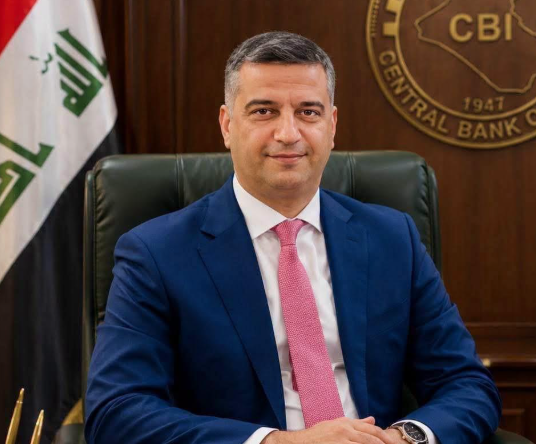
Tishwash: Ali Al-Alaq was relieved of his position as Governor of the Central Bank and Nizar Nasser was appointed in his place.
An informed source reported today, Thursday (June 18, 2026), that the Governor of the Central Bank of Iraq, Ali Al-Alaq, has been relieved of his post, and Nizar Nasser has been assigned to manage the Central Bank in his place.
The source told Baghdad Today that "Nizar Nasser has been assigned to manage the Central Bank," noting that "this came after the dismissal of the Governor of the Central Bank of Iraq, Ali Al-Alaq, from his position."
He added that "the decision to dismiss and appoint the new governor has come into effect," indicating that "Nizar Nasser will assume the duties of the governor of the Central Bank during the next phase."
He added that "no official clarifications have yet been issued regarding the reasons for the dismissal or the nature of the changes related to the management of the Central Bank, while an official statement is expected to be issued clarifying the details of the decision and the mechanism for transferring duties." link
Tishwash: The Undersecretary of the Ministry of Finance discusses with the World Bank the priorities of digital transformation and automation of financial operations.
On Thursday, the Undersecretary of the Ministry of Finance, Ali Karim, discussed with a World Bank delegation the priorities of digital transformation and automation of financial work, and mechanisms for developing financial systems in Iraq.
The Ministry of Finance stated in a statement received by “Dijlah News” that “the Undersecretary of the Ministry held an extensive meeting with the World Bank delegation headed by the Regional Director for Digital Transformation and Artificial Intelligence, Michel Rogge, in the presence of a number of Directors General and senior staff in the Ministry.”
The statement added that “the meeting discussed paths of technical cooperation in the areas of digital transformation and automation of financial work, particularly the automation of the tax and customs systems, strengthening cybersecurity, and the organized expansion of the Government Financial Management Information System (IFMIS) project, which contributes to raising performance efficiency and improving the quality of data and services.”
The Undersecretary of the Ministry of Finance affirmed that “digital transformation represents an integrated reform path to support public finance management, simplify procedures, and enhance transparency and governance,” stressing the importance of “implementing projects according to clear priorities and applicable phased plans that are consistent with the requirements of financial reform and the reality of Iraqi institutions.”
For its part, the World Bank delegation affirmed its readiness to continue providing technical and advisory support to the Ministry of Finance in the areas of digital transformation, artificial intelligence and the development of financial systems, in order to contribute to achieving the goals of institutional and financial reform. link
*************
Tishwash: Al-Aboudi: Iraq has completed the requirements for drawing up a development roadmap based on program budgeting.
Government spokesman Haider al-Aboudi affirmed on Wednesday that the government's unwavering vision is based on making the economy and its drivers the primary drivers of the state. He emphasized that the decision to restrict weapons is a cornerstone of national sovereignty, in accordance with the constitution, which prohibits all forms of unregulated weapons. He also indicated the intention to establish strategic floating gas terminals by specialized American companies to secure energy fuel.
Al-Aboudi stated that "the government's unwavering vision is based on making the economy and its drivers the primary drivers of the state to provide a stable environment, a productive economy, and balanced partnerships."
He explained that "the foundations of this environment are becoming tangible through the ministerial program, which leads directly to internal security matters, foremost among them restricting weapons to the state and unifying the security decision-making system under the authority of the Commander-in-Chief of the Armed Forces."
He added that "the government is holding the reins of Iraq's sovereignty in accordance with the constitution, which prohibits all forms of unregulated weapons and empowers the executive authority to manage this issue from a legal perspective, as it is responsible for the highest authority in the country."
Regarding the meeting between the Prime Minister and the US Presidential Special Envoy, Al-Aboudi affirmed that "the government views the meeting from the perspective of the Iraqi-American partnership, which is based on a wealth of general frameworks and detailed pillars."
Concerning the details of investment support and the entry of foreign companies, the government spokesperson explained that "the meetings included discussions on facilitating the entry of American companies, particularly in energy and electricity projects," noting that "indicators were set for the implementation of floating liquefied natural gas (LNG) terminals in Khor Al-Zubair by specialized American companies."
He pointed out that "this terminal is of paramount strategic importance, as it will provide a suitable environment for receiving imported LNG and converting it to the form required by national power generation plants, especially to secure consumption during peak demand periods familiar to Iraqis."
Regarding the Prime Minister's upcoming official visit to the White House at the invitation of the President, Al-Aboudi confirmed that "the visit's agenda includes partnership files and the prospects for strategic cooperation between Baghdad and Washington," clarifying that "the economic and security files represent the two most prominent pillars of this tour."
Al-Aboudi stated that "the decision to restrict weapons to the state is a national Iraqi decision, but the international perspective sees Iraq as proceeding with measures to strengthen the foundations of its sovereignty."
He continued, "Iraq, after a long and arduous journey in which it waged an existential war against terrorism since 2014, requiring all Iraqis to rise up with the help of international friends, is now nearing the end of the international coalition's presence by next September." He emphasized that "with the end of this foreign presence, the requirements for a comprehensive development phase, which the Iraqi people aspire to, will begin."
Al-Aboudi pointed out that "the region is witnessing an overlap of interests and oil and trade resources, and a trend towards resolving crises and building common understandings," explaining that "the countries of the region affect each other due to the overlap of interests and oil and trade resources."
Al-Aboudi concluded by pointing out that “Iraq’s success in completing its requirements through the relevant federal ministries such as oil and finance is to develop a development roadmap that relies on (program budgeting) to ensure the sustainability of financial funding for vital projects.” link
************
Tishwash: Economist: The 2026 budget train has left the station... the government is patching up the deficit by borrowing.
Economic expert Basil Al-Obaidi confirmed today, Thursday, that insisting on preparing and approving the general budget at this time is “a form of absurdity” and has no benefit whatsoever, at a time when the country’s financial affairs are being managed by “patchwork” and borrowing from banks.
Al-Ubaidi told Al-Maalomah that "the train has already left the station. Iraq is now staggering at the end of the sixth month, and the bureaucratic processes involved in approving the budget will inevitably hinder and delay it until next September." He added that "a budget approved for only three months of a fiscal year that is nearing its end is worthless."
He added, "The preparation of the budget depends primarily on estimating revenues and expenditures, which is difficult to achieve at the present time, given the significant decline in the country's revenues as a result of the repercussions of the regional crisis and the disruption of export traffic through the Strait of Hormuz."
Al-Obeidi pointed out that "Iraq needs a period of no less than two months to restore some degree of financial stability, pending an improvement in oil revenues and the return of exports to their normal levels, in the event that the Strait of Hormuz is reopened and all the technical and logistical requirements related to pumping Iraqi crude oil to the ports and export outlets are completed."
The economist warned that "the anticipated budget will turn into an arena for political bidding, where it will be bombarded with explosive demands that a short-term budget cannot accommodate, starting with a flood of appointments, bonuses and patchwork, and ending with a conflict over projects."
Al-Ubaidi called on the Cabinet to "preemptively address the crisis and prepare a draft law for an exceptional operational budget for emergencies, to manage the remainder of the year, while postponing the comprehensive budget to 2027," stressing that the upcoming budget must be "real and completely different from its predecessors, which existed only on paper." link
Iraq Economic News and Points To Ponder Friday Morning 6-19-26
Wall Street Journal: Pentagon Seeks $80 Billion In Additional Funding To Cover The Cost Of A War With Iran
Money and Business Economy News - Follow-up The Wall Street Journal, citing informed sources, reported that U.S. Deputy Secretary of Defense Stephen Feinberg told lawmakers in telephone calls this week that the Defense Department needs $80 billion to cover the costs of a war with Iran, in addition to other non-war-related expenses.
Wall Street Journal: Pentagon Seeks $80 Billion In Additional Funding To Cover The Cost Of A War With Iran
Money and Business Economy News - Follow-up The Wall Street Journal, citing informed sources, reported that U.S. Deputy Secretary of Defense Stephen Feinberg told lawmakers in telephone calls this week that the Defense Department needs $80 billion to cover the costs of a war with Iran, in addition to other non-war-related expenses.
The newspaper added that a full supplemental funding request, including funding for the Pentagon as well as non-defense priorities such as agricultural aid and disaster relief, may be sent to lawmakers in the coming days.
Reuters was unable to immediately verify the report. Neither the White House nor the Pentagon could be reached for comment outside of business hours when contacted by Reuters, according to the news agency.
A Pentagon official told Reuters in April that the Iran war cost about $25 billion, providing the first official estimate of the war's costs.
The full cost of the conflict, which Trump initiated in cooperation with Israel on February 28, remains a point of contention in Congress. An initial request for $200 billion in additional funding was met with strong opposition from lawmakers.
In April, White House Budget Office Director Russell Vought told a House Budget Committee hearing that he had no estimates for the cost of the war, as part of his defense of Trump’s request for an annual military budget of $1.5 trillion.
The proposed budget reflects the Republican Party's priorities ahead of the midterm elections in November, as the party tries to maintain control of Congress but faces growing concern from voters about rising living costs, energy prices, and the financial burden of the Iran war. https://www.economy-news.net/content.php?id=70418
Al-Zaydi Issues 5 Directives Regarding The Work Of Border Crossings And Customs
Money and Business Economy News – Baghdad Prime Minister and Commander-in-Chief of the Armed Forces Ali al-Zaidi issued 5 directives concerning the work of border crossings and customs.
These directives came in light of the conference held on 15/6/2026 in the presence of the Prime Minister and Commander-in-Chief of the Armed Forces. The Commander-in-Chief directed the completion of the following procedures:
1- Rotate all employees at border crossings without exception and within (48) hours, and the Border Crossings Authority must submit a position supporting the implementation of the order.
2- Obliging the Ministry of Interior - Border Forces Command to close all gaps and unauthorized land and sea border crossings, while rotating all commanders of brigades and units in the Border Forces Command.
3- All officers, affiliates and employees assigned to work in the Border Ports Authority shall be returned to the Ministry of Interior, and the separation shall be within (48) hours and without exception.
4- Obliging the security and intelligence agencies, including (the Intelligence Service Office, the Internal Intelligence Office, the Customs Police Station, the Explosives Detachment, the Narcotics Division, and the (9k) detachments), to take their role by activating their security and intelligence role within the port and monitoring the non-passage of any prohibited materials or drugs through all border ports and submitting periodic reports directly to the Director of the border port in his capacity as head of the intelligence cell. These agencies bear the legal responsibility in the event of any security breach or illegal crossing.
5- Obliging the employees of the General Authority of Customs to conduct a thorough inspection of all goods entering the country without exception, and not to allow any truck to pass through except after conducting an inspection and verifying the details of the cargo. https://www.economy-news.net/content.php?id=70414
Iraq Receives Notification From The International Transport Federation Confirming Significant Progress In Implementing The TIR System
Money and Business Economy News – Baghdad The Ministry of Transport announced on Friday that Iraq has received notification from the International Transport Federation confirming that it has made significant progress in implementing the TIR system.
The Director of the Land Transport Department of the Technical Department at the Ministry of Transport, Israa Hanoun, stated that “a notification from the International Road Transport Union (IRU) reached the TIR Convention contact point at the Iraqi Ministry of Transport bearing the phrase (Iraq is stealing the offer) in a clear message confirming that Iraq has made high progress in implementing the TIR system during the year 2025.”
Hanoon explained that "the system has been fully operational and seven new international routes have been opened across Iraqi territory within eight months, and more than (1000) international transport operations have been carried out," noting that "the notification also confirms the continued adoption of the TIR system for the movement of goods in transit by land across Iraqi territory, which contributes to enhancing the efficiency and security of international trade and consolidating Iraq's position as an important regional logistics corridor." https://www.economy-news.net/content.php?id=70423
Gold Is Heading For Its Third Weekly Loss Amid A Rising Dollar.
Money and Business Economy News — Follow-up Gold prices edged lower on Friday and are on track for their third consecutive weekly decline, as a stronger dollar and dovish signals from the Federal Reserve weighed on the non-yielding metal.
Spot gold fell 0.5% to $4,189.26 an ounce by 0043 GMT. U.S. gold futures for August delivery dropped 0.9% to $4,207.80.
The dollar remained near its highest level in a year, increasing the cost of gold priced in the US currency for holders of other currencies. https://www.economy-news.net/content.php?id=70409
Bitcoin Continues Its Decline And Is Heading Towards The $60,000 Level.
Money and Business Economy News - Follow-up Bitcoin continued its decline towards the $60,000 level, and this decline is due to increasing concerns about the collapse of the funding mechanism of the company “Strategy”, in addition to concerns about raising interest rates that weaken the demand for high-risk assets.
The largest cryptocurrency had fallen below this level two weeks ago for the first time since late 2024.
The currency, which fell as much as 3.3% to $62,220 on Thursday, has lost about 50% of its value since reaching its highest level in October of that year.
Traders focused their attention on the share price of "Stretch," a subsidiary of "Strategy," which the largest company with Bitcoin holdings uses to fund recent purchases.
The price fell to record lows, making the sale of these securities unprofitable for the company headed by Michael Saylor.
Saylor had sparked market concerns earlier this month by selling a small amount of Bitcoin, after urging its holders for years not to sell their digital currencies. https://www.economy-news.net/content.php?id=70413
Seeds of Wisdom RV and Economics Updates Friday Morning 6-19-26
Good Morning Dinar Recaps,
US-Iran Peace Talks Delayed as Fragile Ceasefire Faces New Test
Negotiations scheduled in Switzerland have been postponed, highlighting lingering mistrust between Washington and Tehran as both sides attempt to transform a temporary ceasefire into a lasting peace agreement.
Good Morning Dinar Recaps,
US-Iran Peace Talks Delayed as Fragile Ceasefire Faces New Test
Negotiations scheduled in Switzerland have been postponed, highlighting lingering mistrust between Washington and Tehran as both sides attempt to transform a temporary ceasefire into a lasting peace agreement.
Overview
Peace negotiations have been delayed, raising new questions about the durability of the recent U.S.-Iran ceasefire.
Major issues remain unresolved, including Iran's nuclear program, sanctions relief, and long-term security arrangements.
Global energy markets continue watching closely, as any setback could once again threaten shipping through the Strait of Hormuz.
Key Developments
1. Switzerland Talks Postponed
Negotiations scheduled to take place at Switzerland's Bürgenstock resort were postponed after U.S. officials cited logistical issues. Vice President JD Vance also canceled plans to attend, while Swiss officials confirmed they remain ready to host future discussions.
Iranian media indicated Tehran wants additional proof that Washington is implementing commitments made under the recently announced 14-point ceasefire framework before moving into more detailed negotiations.
2. Nuclear Issues Remain the Biggest Obstacle
While both countries have agreed to continue discussions, the most difficult issues remain unresolved.
Negotiators must still address Iran's uranium enrichment program, sanctions relief, international inspections, frozen Iranian assets, missile capabilities, and long-term compliance mechanisms.
Iran continues to insist its nuclear program is peaceful, while the United States maintains that preventing Iran from acquiring nuclear weapons remains a central objective.
3. Regional Security Risks Continue
Despite the ceasefire between Washington and Tehran, military operations involving Israel and Hezbollah continue in Lebanon, creating additional uncertainty for the broader peace process.
Analysts warn that continued regional conflict could complicate negotiations and undermine confidence in any long-term agreement.
Why It Matters
The postponement demonstrates that ending active fighting is only the first step toward lasting peace. Financial markets, governments, and businesses remain highly sensitive to developments because stability in the Strait of Hormuz directly affects global oil supplies, inflation, shipping costs, and international trade.
A successful agreement could help stabilize energy prices, improve investor confidence, and reduce geopolitical uncertainty. Conversely, renewed tensions could quickly reverse recent market gains and place fresh pressure on the global economy.
Why It Matters to Foreign Currency Holders
For those following a potential Global Financial Reset, developments in the Middle East remain significant because energy markets influence inflation, interest rates, currency values, and central bank policy worldwide.
A durable peace agreement would likely reduce pressure on oil prices, improve global trade flows, and support greater financial stability. Continued delays or renewed conflict, however, could strengthen safe-haven currencies, increase market volatility, and postpone broader monetary and financial reforms that many investors continue to monitor.
Implications for the Global Reset
Pillar 1 : Debt
Lower energy prices could ease inflation pressures, allowing central banks greater flexibility in future monetary policy.
Pillar 2 : Trade
A fully reopened Strait of Hormuz would strengthen global supply chains, improve shipping reliability, and support international commerce.
Pillar 3 : Assets
Reduced geopolitical risk could encourage investment into productive assets while easing demand for traditional safe-haven investments.
Pillar 4 : Technology
Greater regional stability would support continued investment in infrastructure, logistics, and digital trade systems.
Pillar 5 : Energy
The future of global energy markets remains closely tied to successful implementation of any U.S.-Iran agreement.
Looking Ahead
The coming weeks will determine whether negotiators can move beyond a temporary ceasefire toward a broader diplomatic settlement. Progress will depend on resolving difficult questions surrounding Iran's nuclear activities, sanctions relief, regional security, and implementation of commitments already outlined in the preliminary framework.
Markets will continue watching developments closely, as any progress—or setback—could have immediate consequences for energy prices, inflation expectations, and global financial stability.
This is not just politics—it is global finance restructuring before our eyes.
Seeds of Wisdom Team
Newshounds News™ Exclusive
Sources
Reuters – Coverage of the delayed U.S.-Iran negotiations and regional developments.
Modern Diplomacy – US Iran Peace Talks Delayed as Truce Faces New Uncertainty
~~~~~~~~~~
🌱 A Message to Our Currency Holders🌱
If you’ve been holding foreign currency for many years, you were not foolish.
You were not wrong to believe the global financial system would change.
What failed was not your patience — it was the information you were given.
For years, dates, rumors, and personalities replaced facts, structure, and proof. “This week” predictions created cycles of hope and disappointment that were never based on how currencies actually change.
That is not your failure.
Our mission here is different: • No dates • No rates • No hype • No gurus
Instead, we focus on:
• Verifiable developments • Institutional evidence
• Global financial structure • Where countries actually sit in the process
Currency value changes only come after sovereignty, trade, banking, settlement systems, and fiscal coordination are in place. History and institutions confirm this sequence.
You will see silence. You will see denials. That is not delay — that is discipline.
Protect your identity. Organize your documents. Verify everything.
Never hand your discernment to anyone who cannot show proof.
You deserve truth — not timelines.
Seeds of Wisdom Team
Newshounds News
~~~~~~~~~~
Seeds of Wisdom Team RV Currency Facts Youtube and Rumble
Newshound's News Telegram Room Link
RV Facts with Proof Links Link
RV Updates Proof links - Facts Link
Start Here room with Most Asked Questions Link
Follow the Gold/Silver Rate COMEX
Follow Fast Facts
Seeds of Wisdom Team™ Website
Thank you Dinar Recaps
MilitiaMan & CREW IRAQ DINAR UPDATE-"Big CBI Move-Nizar Nasser In, Al-Alaq Out | Convergences Tightening Fast"
MilitiaMan & CREW IRAQ DINAR UPDATE-"Big CBI Move-Nizar Nasser In, Al-Alaq Out | Convergences Tightening Fast"
6-18-2026
The Crew: Samson, PompeyPeter, Petra, Daytrader, Sunkissed, GIGI and Militia Man
No drama. No intrigue. No songs and dances. Just straight, factual news that I read and interpret to the best of my ability after being an avid Dinar investor and insanely obsessed Dinarian for over 15 years.
Follow MM on X == https://x.com/Slashn
MilitiaMan & CREW IRAQ DINAR UPDATE-"Big CBI Move-Nizar Nasser In, Al-Alaq Out | Convergences Tightening Fast"
6-18-2026
The Crew: Samson, PompeyPeter, Petra, Daytrader, Sunkissed, GIGI and Militia Man
No drama. No intrigue. No songs and dances. Just straight, factual news that I read and interpret to the best of my ability after being an avid Dinar investor and insanely obsessed Dinarian for over 15 years.
Follow MM on X == https://x.com/Slashn
Be sure to listen to full video for all the news……..
Iraq Economic News and Points To Ponder Thursday Evening 6-18-26
The Coordination Framework Empowers Al-Zaydi To Implement The Barak Plan And Aspires To Greater Positive Cooperation In The Security And Economic Fields
latest news Thursday June 18, 2026 Baghdad - One News Informed sources within the coordination framework revealed that Prime Minister Ali al-Zaidi presented details regarding the roadmap of US President's envoy Tom Barak for resolving the factions, and taking broader measures that include cooperation in the fields of security and the economy.
The Coordination Framework Empowers Al-Zaydi To Implement The Barak Plan And Aspires To Greater Positive Cooperation In The Security And Economic Fields
latest news Thursday June 18, 2026 Baghdad - One News Informed sources within the coordination framework revealed that Prime Minister Ali al-Zaidi presented details regarding the roadmap of US President's envoy Tom Barak for resolving the factions, and taking broader measures that include cooperation in the fields of security and the economy.
According to the sources, Al-Zaydi convinced the leaders of the coordination committee of the proposals presented by Barak, which include economic and investment partnerships, which contribute to ending the difficult crises in the electricity file and others.
The sources revealed that a high-level committee will soon be formed, comprising ministers and some experts, to study the proposed partnerships and investment projects that Barak carried, in order to prepare a guarantee paper, in favor of Iraq, that secures for it gains to end its crises in the financial, environmental and energy files.
https://1news-iq.net/الإطار-التنسيقي-يخول-الزيدي-تنفيذ-خري/
Sources Told Lawan News That Ali Al-Alaq Has Been Relieved Of His Position As Governor Of The Central Bank And Nizar Nasser Has Been Appointed In His Place.
https://1news-iq.net/مصادر-لوان-نيوز-إعفاء-علي-العلاق-من-منص/
Sources To “One News”: A New Generation Of Security Leaders In July After The End Of Extensions And The Redistribution Of Positions
latest news Thursday, June 18, 2026 Baghdad - One News - High-ranking security sources told One News that the plan to restructure the military and security establishment led by Al-Zaydi aims to pave the way for young leaders to assume senior positions in the Ministries of Defense and Interior.
The sources explained that the retirement of a large number of officers with the rank of lieutenant general will be accompanied by a process of selecting replacements, according to the criteria of competence, experience and integrity, far from the principle of seniority alone.
They added that the government views the next stage as an opportunity to modernize the security leadership system and introduce more flexible administrative and field methods, in line with the requirements of modern security and the changing challenges facing the country. https://1news-iq.net/مصادر-لـوان-نيوز-جيل-جديد-من-القيادات/
Financial Distress And Patchwork Solutions... Will The Borrowing Crisis And Budget Deficit Trigger The Exposure Of Inherited Corruption Files?
Today 20:19 Information / Report.. The country's financial reality faces a major challenge that is the most important and difficult test to assess the success or failure of the Al-Zaidi government, at a time when government solutions have begun to move towards the option of “borrowing”, amid warnings that it is a patchwork solution that does not address the roots of the financial crisis left by the repercussions of the war in the region and the closure of the Strait of Hormuz.
With the accumulation of the financial crisis, another legislative and economic challenge emerges related to drafting the current year's budget and sending it to Parliament, which observers see as difficult to achieve given the limited time, especially since the government has not yet taken any actual steps towards preparing the budget, amid calls from specialists to rely on immediate solutions by approving a small emergency budget for the remaining months of the year.
In this context, economist Basil al-Ubaidi told Al-Maalomah that "the budget process has already passed. Iraq is now teetering on the brink of collapse at the end of June, and the bureaucratic procedures for approving the budget will inevitably hinder and delay it until next September." He added that "a budget approved for only three months of a fiscal year that is nearing its end is worthless."
Al-Ubaidi pointed out that “preparing the budget depends primarily on estimating revenues and expenditures, which is difficult to achieve at the present time, given the significant decline in the country’s revenues as a result of the repercussions of the regional crisis and the disruption of export traffic through the Strait of Hormuz,” indicating that “Iraq needs a period of no less than two months to restore some degree of financial stability.”
In turn, current MP Mukhtar al-Moussawi told Al-Maalouma that “the success of the current government depends primarily on the path of combating corruption, which has caused a large financial deficit in recent years that has become evident in recent months.”
He added that "there is pressure to re-evaluate all projects implemented in the previous government, especially given indications of significant price and cost overruns, which raises many questions," noting that opening a broad investigation into previous projects would be an important step in combating corruption and revealing the truth about the situation.
Discussions have recently intensified in Iraqi circles regarding the current government's ability to address the legacy of the previous administration and identify the sources of failure and corruption that plunged the country into economic crisis. This is particularly concerning given the absence of clear plans and visions, a deficiency that became even more apparent with recent regional developments and the closure of the Strait of Hormuz.
Despite this anxiety, Iraqis seeing a glimmer of hope for a return to normalcy after months of drought and financial stagnation that have ravaged the markets. (End of page 25)
Economist: The 2026 Budget Train Has Left The Station... The Government Is Patching Up The Deficit By Borrowing.
Information / Special.. Economic expert Basil Al-Obaidi confirmed today, Thursday, that insisting on preparing and approving the general budget at this time is “a form of absurdity” and has no benefit whatsoever, at a time when the country’s financial affairs are being managed by “patchwork” and borrowing from banks.
Al-Ubaidi told Al-Maalomah that "the train has already left the station. Iraq is now staggering at the end of the sixth month, and the bureaucratic processes involved in approving the budget will inevitably hinder and delay it until next September." He added that "a budget approved for only three months of a fiscal year that is nearing its end is worthless."
He added, "The preparation of the budget depends primarily on estimating revenues and expenditures, which is difficult to achieve at the present time, given the significant decline in the country's revenues as a result of the repercussions of the regional crisis and the disruption of export traffic through the Strait of Hormuz."
Al-Obeidi pointed out that "Iraq needs a period of no less than two months to restore some degree of financial stability, pending an improvement in oil revenues and the return of exports to their normal levels, in the event that the Strait of Hormuz is reopened and all the technical and logistical requirements related to pumping Iraqi crude oil to the ports and export outlets are completed."
The economist warned that "the anticipated budget will turn into an arena for political bidding, where it will be bombarded with explosive demands that a short-term budget cannot accommodate, starting with a flood of appointments, bonuses and patchwork, and ending with a conflict over projects."
Al-Ubaidi called on the Cabinet to “preemptively address the crisis and prepare a draft law for an exceptional operational budget for emergencies, to manage the remainder of the year, while postponing the comprehensive budget to 2027,” stressing that the upcoming budget must be “real and completely different from its predecessors, which existed only on paper.” (End of page 25)
The Central Bank Of Iraq: The Document Circulating Regarding A Request To Change The Dinar's Exchange Rate Is Forged.
The Central Bank of Iraq categorically denies the circulating reports regarding any intention to change the exchange rate of the Iraqi dinar.
In the same context, the Central Bank warned against engaging with misleading news, revealing that it had detected a forged document circulating online that falsely claimed the Prime Minister's office had submitted a request to the Finance Committee of the Council of Representatives to change the exchange rate to 1,600 dinars per US dollar.
The Bank urged media outlets and citizens to exercise caution and rely on official and exclusive sources of information issued by the Central Bank of Iraq. Baghdad - Media Office, June 17, 2026 https://cbi.iq/news/view/3225