Thank you to all the subscribers to our Early Access program…we thank you for your continued support.
We are excited to offer this new service to keep you informed and up-to-date on the latest Dinar and currency news.
Some “Iraq News” Posted by Tishwash at TNT 5-13-2026
TNT:
Tishwash: Prime Minister-designate Ali Faleh al-Zaidi receives the European Union Ambassador to Iraq
Prime Minister-designate Ali Faleh al-Zaidi received on Tuesday the European Union Ambassador to Iraq, Clemens Smutner, who delivered a message from the EU countries expressing their support for the new government and their willingness to work with it in various fields.
During the meeting, the prospects for cooperation relations between Iraq and the European Union countries were discussed, as well as ways to enhance them within the framework of bilateral agreements and memoranda of understanding, and the future vision in a way that promotes mutual interests and benefits.
TNT:
Tishwash: Prime Minister-designate Ali Faleh al-Zaidi receives the European Union Ambassador to Iraq
Prime Minister-designate Ali Faleh al-Zaidi received on Tuesday the European Union Ambassador to Iraq, Clemens Smutner, who delivered a message from the EU countries expressing their support for the new government and their willingness to work with it in various fields.
During the meeting, the prospects for cooperation relations between Iraq and the European Union countries were discussed, as well as ways to enhance them within the framework of bilateral agreements and memoranda of understanding, and the future vision in a way that promotes mutual interests and benefits.
The meeting also witnessed discussions on regional and international issues and files of common interest, and emphasized the importance of intensifying joint work to achieve stability and development, and to preserve regional and international security. link
************
Tishwash: Al-Zidi is close to gaining confidence and forming a strong government with the support of all parties in Iraq.
Political analyst Ahmed Al-Tamimi confirmed on Tuesday (May 12, 2026) that the current disagreements between political forces regarding the distribution of ministerial portfolios are a natural part of the negotiations process for forming governments in Iraq, predicting that the political forces will succeed in passing Ali Al-Zidi’s government during this week.
Al-Tamimi told Baghdad Today that the political process has become accustomed to intensive rounds of negotiations and political bargaining related to the distribution of sovereign and service ministries, noting that current indicators show advanced understandings between political blocs towards resolving the cabinet and voting on it within Parliament.
He explained that the political forces are aware of the sensitivity of the current stage and the country’s need for a fully empowered government, therefore the disputes raised fall within the framework of traditional political competition and do not reach the level of disrupting or thwarting the formation of the government.
He added that there is an internal and external desire to end the state of executive vacuum and to expedite the granting of confidence to the new government, noting that some objections related to names or ministerial quotas may be resolved in the last hours before the voting session, as happened in previous government experiences.
Al-Tamimi indicated that passing Ali al-Zaidi’s government is “closer than ever,” especially in light of the initial agreements between the main political forces, explaining that the next stage will depend to a large extent on the ability of the new government to achieve political balances and present a government program capable of addressing service and economic issues.
He stressed that the success of the next government will also be linked to its ability to calm the street and enhance internal stability, in light of the economic, service and security challenges facing the country.
For weeks, the political arena has witnessed intense activity among political blocs and alliances to resolve the issue of forming the new government, amid internal and external anticipation of the nature of the ministerial lineup and the political and economic program that will be adopted in the next phase. link
************
Tishwash: The most complex issue awaits resolution: Oil: The oil and gas law is the key to stability between Baghdad and Erbil.
The spokesman for the Iraqi Ministry of Oil, Sahib Bazoun, confirmed on Tuesday (May 12, 2026) that the oil and gas file between Baghdad and Erbil will not witness complete stability until the oil and gas law is approved within the House of Representatives, noting that there are existing understandings between the federal government and the region regarding the management of the oil file.
Bazoun told Baghdad Today that there is an agreement and a political decision between the two sides, but that enacting the oil and gas law during the current parliamentary session represents the most important step to ensure the stability of the oil relationship and preserve the rights of all parties.
He explained that oil still constitutes about 90% of the Iraqi state’s imports, which makes this file a top priority for the next government, noting that the Prime Minister-designate, Ali al-Zaidi, has placed among his priorities the diversification of the state’s sources of income and the reduction of dependence on oil revenues, as he is “an economist.”
Bazoun pointed out that the Ministry of Oil is working to revitalize and expand oil export outlets, stressing the reactivation of the Ceyhan and Banias port outlets, in addition to proceeding with the activation of the Kirkuk-Ceyhan pipeline with an export capacity of up to one and a half million barrels per day.
He added that the relative calm witnessed in the Strait of Hormuz during the past month helped in exporting two oil shipments, expressing his optimism about the improvement of conditions and the stability of export activity during the coming period.
Regarding strategic alternative plans, Bazoun revealed that the ministry has begun implementing the Basra-Haditha pipeline project, a strategic project with a capacity of two and a half million barrels per day and a diameter of 56 inches.
He explained that the importance of the project is not limited to transporting crude oil, but extends to supplying refineries located along the pipeline in the south, center and north with petroleum products, as well as enabling Iraq in the future to export oil through multiple outlets including Türkiye, Syria and Jordan via the port of Aqaba.
He confirmed that the project has already entered into force at an estimated cost of about five billion dollars, of which one and a half billion dollars have been allocated so far, noting that the work is proceeding "very normally" according to the plans set.
The Oil and Gas Law is one of the most prominent controversial laws postponed in Iraq since 2005, as it is related to regulating the management of oil wealth and the distribution of revenues between the federal government, the Kurdistan Region and the producing governorates, amid repeated political and economic demands to resolve it in order to end the disputes related to oil exports and contracts. link
************
Tishwash: Oil and gas law: Will the current parliamentary session succeed in resolving one of the most complex issues?
The oil and gas law is imposing itself as one of the most sensitive issues within the Iraqi scene, amid increasing questions about the ability of political forces to pass it during the current parliamentary session.
The spokesman for the Iraqi Ministry of Oil, Sahib Bazoun, confirmed on Tuesday (May 12, 2026) that the oil and gas file between Baghdad and Erbil will not witness complete stability until the oil and gas law is approved within the House of Representatives, noting that there are existing understandings between the federal government and the region regarding the management of the oil file.
Bazoun said that there is an agreement and a political decision between the two parties, but that enacting the oil and gas law during the current parliamentary session represents the most important step to ensure the stability of the oil relationship and preserve the rights of all parties.
He explained that oil still constitutes about 90% of the Iraqi state’s revenues, which makes this issue a top priority for the next government.
He then pointed out that the Prime Minister-designate, Ali al-Zaidi, had placed among his priorities the diversification of the state’s sources of income and the reduction of dependence on oil revenues, in his capacity as an “economist.”
Bazoun pointed out that the Ministry of Oil is working to revitalize and expand oil export outlets, stressing the reactivation of the Ceyhan and Banias port outlets, in addition to proceeding with the activation of the Kirkuk-Ceyhan pipeline with an export capacity of up to one and a half million barrels per day.
He added that the relative calm witnessed in the Strait of Hormuz during the past month helped in exporting two oil shipments, expressing his optimism about the improvement of conditions and the stability of export activity during the coming period.
Regarding strategic alternative plans, Bazoun revealed that the ministry has begun implementing the Basra-Haditha pipeline project, a strategic project with a capacity of two and a half million barrels per day and a diameter of 56 inches.
He explained that the importance of the project is not limited to transporting crude oil, but extends to supplying refineries located along the pipeline in the south, center and north with petroleum products , as well as enabling Iraq in the future to export oil through multiple outlets including Turkey, Syria and Jordan via the port of Aqaba.
He confirmed that the project has already entered into force at an estimated cost of about five billion dollars, of which one and a half billion dollars have been allocated so far, noting that the work is proceeding “very normally” according to the plans set.
The Oil and Gas Law is one of the most prominent controversial laws postponed in Iraq since 2005, as it is related to regulating the management of oil wealth and the distribution of revenues between the federal government, the Kurdistan Region and the producing governorates, amid repeated political and economic demands to resolve it in order to end the disputes related to oil exports and contracts. link
Iraq Economic News and Points To Ponder Wednesday Morning 5-13-26
Transportation: Detailed Designs For The Development Road Are Nearing Completion
Money and Business Economy News – Baghdad The Ministry of Transport is nearing completion of the detailed designs for the Development Road project, in preparation for presenting it to major international companies specializing in infrastructure, transport and logistics services.
Transportation: Detailed Designs For The Development Road Are Nearing Completion
Money and Business Economy News – Baghdad The Ministry of Transport is nearing completion of the detailed designs for the Development Road project, in preparation for presenting it to major international companies specializing in infrastructure, transport and logistics services.
The director of the media office at the ministry, Maitham Al-Safi, explained in an interview with the official newspaper, which was followed by “Al-Eqtisad News”, that the ministry has made significant progress in preparing the technical and engineering requirements for the project, noting that the detailed design phase is nearing completion, which is a fundamental step that precedes the referral, implementation, and negotiation process with international companies wishing to participate in the project.
He added that the project is attracting increasing regional and international attention, given its strategic importance in linking Iraq to global trade routes, as well as its expected role in strengthening the transport and logistics sector and opening new economic horizons for the country.
Al-Safi pointed out that a number of European and regional companies have expressed their desire to cooperate and participate in the implementation of the project during its next phases, indicating that the latest entity to announce its interest in the project was the Bulgarian Ministry of Transport, which expressed its support for its completion in cooperation and coordination with the Iraqi side, in a way that contributes to enhancing trade exchange between the two countries and facilitating the smooth flow of transport through international corridors. https://www.economy-news.net/content.php?id=69015
Iraq Ranked Fourth In Well Drilling Activity Within OPEC During 2025
Energy Economy News – Baghdad Iraq ranked fourth among OPEC countries in well drilling completion activity during 2025, an indicator that reflects continued field activity in the oil sector, despite the difference with the leading countries.
Kuwait topped the list with 755 wells, followed by the United Arab Emirates with 444 wells, then Saudi Arabia with 383 wells, while Iraq came in fourth with 280 wells among the most active countries in drilling operations within the organization.
OPEC data also showed an improvement in global demand for oil derivatives related to the transportation sector during 2025, as demand for diesel rose by 0.39%, gasoline by 0.34%, and kerosene (jet fuel) by 0.29%, compared to a decline in the remaining fuel by 0.19%, reflecting the recovery of land and air transport and the expansion of global trade and tourism activity.https://www.economy-news.net/content.php?id=69026
Parliamentary Integrity Committee: A Move To Obligate Investment Projects To Employ 70% Of Iraqi Youth
Money and Business Economy News – Baghdad The Parliamentary Integrity Committee intends to issue directives in the near future to investment projects, obligating them to employ 70 percent of Iraqi youth within their projects.
Naheda Al-Daini, a member of the Parliamentary Integrity Committee, told the official newspaper, as reported by "Al-Eqtisad News," that "investment in Iraq is witnessing remarkable development, especially in the capital, Baghdad, but this sector still faces a number of problems, which requires a comprehensive review of the investment file and an examination of the licenses granted during the past years."
Al-Daini added that the file of real estate developers also needs to be reconsidered, especially with regard to the lands granted for investment projects, indicating that the Parliamentary Integrity Committee is serious about following up on this file, by requesting all investment and building licenses and financial guarantees, as well as studying the violations that occurred previously.
She affirmed that the committee will play a strong role in the coming phase to ensure that investment proceeds within legal and normal frameworks, stressing the need to stop any bargaining or violations by investors. Regarding the prices of residential complexes...https://www.economy-news.net/content.php?id=69022
Planning: Including New Projects Within The Poverty Reduction Strategy
Money and Business Economy News – Baghdad
The Ministry of Planning included a new package of projects within the third poverty reduction strategy after completing its detailed discussion, and confirmed that its approval is pending the formation of the government in the coming period.
Ministry spokesman Abdul Zahra al-Hindawi told the official newspaper, as reported by "Economy News," that the new projects aim to support the poor and improve the service and living conditions in a number of villages and rural areas in various governorates, through the implementation of development programs that contribute to providing job opportunities and strengthening infrastructure and basic services, in line with development goals and the government's plans to address poverty rates.
He explained that the third poverty reduction strategy includes multiple economic and social axes, focusing on economic empowerment, social protection and improving services, as well as expanding the scope of development projects in the most needy governorates, noting that its implementation will be after its official ratification by the new government.
The Ministry of Planning launched its first poverty reduction strategy in 2010, then started the second in 2018, and the third was approved last year and is preparing to launch and implement it.
In the same context, Al-Hindawi stated that the number of projects of the Social Fund for Development has reached more than 600 since it began its work in 2017, noting that the majority of them have been completed, while the remaining projects have reached advanced rates exceeding 90 percent.
He pointed out that these projects cover 18 governorates, including the governorates of the Kurdistan Region, explaining that the coordination mechanism between the Ministry of Planning and the governorates is based on the philosophy of (bottom-up planning), meaning that projects are implemented according to what the people of the poorest regions and villages identify in terms of needs and priorities in the fields of education, health, water, electricity and roads.
Al-Hindawi noted the existence of a monitoring and continuous follow-up system for projects, which includes technical, environmental and social reports, as well as direct field follow-up through specialized teams working in coordination with the governorates, in addition to supervision and coordination with the World Bank as the donor to the fund with a loan of $300 million.
He stated that there are currently great efforts to complete all the remaining Fund projects by the end of this year, which represent a limited number, indicating that some villages were completely lacking in electricity, which made delivering it through the Fund projects an important transformation for their residents.
The construction of culverts and bridges also contributed to facilitating the students’ access to their schools, especially in villages separated by rivers, which reduced the risks that threatened children during the winter season.
Al-Hindawi stressed that the fund began its work in three governorates, namely Al-Muthanna, Salah al-Din and Dohuk, before later expanding to include 18 governorates throughout the country. https://www.economy-news.net/content.php?id=69019
Jordanian Electricity Exports To Iraq Increased By 13% In Four Months.
energy Economy News – Baghdad Data released by Jordan’s National Electric Power Company on Wednesday showed that electricity exports to the Trebil border crossing with Iraq rose by 13% during the first four months of this year, indicating growing electricity cooperation between the two countries.
According to the company's data, which was reviewed by "Al-Eqtisad News", electricity exports to the Trebil center reached 2.6 gigawatt-hours during the aforementioned period, compared to 2.3 gigawatt-hours during the same period last year.
The data also showed that total sales of the Jordanian National Electric Power Company increased by 3.5%, reaching 7683.2 gigawatt-hours, compared to 7420.6 gigawatt-hours during the same period last year.
Jordanian electricity exports generally recorded an increase of 24.7%, reaching 124.2 gigawatt-hours, compared to 99.6 gigawatt-hours, distributed between Iraq and Palestine.https://www.economy-news.net/content.php?id=69024
Italian Company Eni To Increase Its Oil Production In Iraq During 2025
energy Economy News – Baghdad Data from the annual report of the Italian company Eni, released on Wednesday, showed an increase in its oil and gas production in Iraq during 2025, compared to the previous two years, within its global operations.
According to the company’s annual report, which was reviewed by “Al-Eqtisad News”, Eni’s production in Iraq during 2025 amounted to about 11 million barrels of oil liquids and 30 billion cubic feet of natural gas, equivalent to 17 million barrels of oil equivalent, compared to 15 million barrels of oil equivalent in 2024, and 14 million barrels of oil equivalent in 2023.
The report indicated that the company’s total global production reached 631 million barrels of oil equivalent during 2025, compared to 625 million in 2024 and 604 million in 2023, driven by a 7% year-on-year increase in oil liquids production.
Eni has been operating in Iraq since 2009, and manages the Zubair oil field in Basra Governorate under technical service contracts with the Iraqi government.https://www.economy-news.net/content.php?id=69023
A Chinese Tanker Carrying Two Million Barrels Of Iraqi Oil Is Attempting To Cross The Strait Of Hormuz.
energy Economy News – Baghdad Ship tracking data showed on Wednesday that a giant Chinese oil tanker carrying about two million barrels of Iraqi crude was attempting to cross the Strait of Hormuz, a move that reflects the continued flow of Iraqi oil exports despite escalating security tensions in the region.
According to data from ship tracking company LSEG and the Kpler platform, the giant oil tanker "Yuan Hua Hu" passed Iran's Larak Island and headed south through the strait, after being stuck in the Gulf since the beginning of March.
The tanker had loaded its cargo of Basra Medium crude from the port of Basra and is currently heading towards Asian markets. It is owned and managed by a unit of the Chinese company COSCO Shipping Energy Transportation, while the shipment was licensed by Unipec, the trading arm of Sinopec.
This attempt marks the third known passage of a Chinese oil tanker through the Strait of Hormuz since military tensions escalated between the United States and Israel on one side and Iran on the other on February 28, according to available tracking data.
Reports also indicated that Iran has strengthened its influence in the Strait in recent days through understandings related to oil and gas shipments with Iraq and Pakistan, amid global concerns about any disruption that could threaten the movement of energy supplies through the vital waterway.
This comes as Bloomberg reported on Tuesday that US forces imposing a naval blockade on Iran prevented a Greek ship carrying about two million barrels of Iraqi oil from continuing its journey to Vietnam for "unknown" reasons, while the Vietnamese government appealed to the United States to allow the oil shipment to proceed.
According to Bloomberg, the giant oil tanker Agios Phanourios 1, operated by Athens-based Eastern Mediterranean Maritime, made a sudden turn at sea on Monday near the point where the US blockade begins.
The tanker had passed through the Strait of Hormuz carrying 1.99 million barrels of Iraqi Basra Medium crude when it turned back, according to ship tracking data and documents seen by Bloomberg.
PetroVietnam Oil, the trading arm of the state-owned energy company, confirmed to U.S. Naval Forces Central Command that the cargo aboard the Agios Phanourios 1 belongs to them and was loaded in Iraq, according to a letter seen by Bloomberg. The tanker still indicates its destination as Nghi Son, home to one of the refineries in the Asian nation. https://www.economy-news.net/content.php?id=69021
Seeds of Wisdom RV and Economics Updates Wednesday Morning 5-13-26
Good Morning Dinar Recaps,
Trump Heads to China as Iran Conflict and Oil Route Crisis Shake Global Markets
Energy security, inflation fears, and rising geopolitical rivalry are placing new pressure on the global financial system
The escalating Iran conflict and growing instability around the Strait of Hormuz are increasingly influencing monetary policy, trade flows, and global economic expectations
Good Morning Dinar Recaps,
Trump Heads to China as Iran Conflict and Oil Route Crisis Shake Global Markets
Energy security, inflation fears, and rising geopolitical rivalry are placing new pressure on the global financial system
The escalating Iran conflict and growing instability around the Strait of Hormuz are increasingly influencing monetary policy, trade flows, and global economic expectations
Overview (Key Points)
U.S. President Donald Trump departed for China on Wednesday ahead of a highly anticipated summit with Chinese President Xi Jinping as the ongoing Iran conflict continues disrupting global energy markets and increasing geopolitical tensions.
The visit comes during a period of:
Elevated oil prices
Rising inflation pressures
Maritime security concerns
Growing uncertainty surrounding global trade and monetary stability
Financial analysts increasingly warn that prolonged instability surrounding the Strait of Hormuz could accelerate broader structural shifts already developing within the global financial system.
Key Developments
1. Trump Travels to China Amid Intensifying Global Tensions
President Trump arrived in China for high-level talks with President Xi Jinping while attempting to balance diplomatic engagement with growing military and economic pressures tied to the Iran conflict.
Trump publicly stated that the United States does not require China’s assistance to address Iran, signaling a continued emphasis on unilateral strategic objectives.
However, the timing of the summit highlights how closely interconnected:
U.S.–China relations
Energy security
Global trade
Middle East stability
have become.
2. Strait of Hormuz Crisis Continues Disrupting Energy Markets
The Strait of Hormuz remains at the center of global market concerns as military tensions continue threatening one of the world’s most important oil transit corridors.
Roughly 20% of global oil supplies normally pass through the waterway, making any prolonged disruption a major risk to the international economy.
According to the International Energy Agency, ongoing instability is already tightening global supply conditions and contributing to elevated oil prices.
Brent crude remained volatile today as traders weighed the risks of further escalation.
3. Inflation Pressures Continue Building Worldwide
Higher energy prices are once again feeding directly into global inflation concerns.
The rise in fuel costs is contributing to:
Higher transportation expenses
Increased manufacturing costs
Food price inflation
Broader consumer price pressure
Recent U.S. inflation data showed continued increases in living costs, reinforcing fears that central banks may be forced to maintain restrictive monetary policies longer than expected.
The combination of war-driven energy inflation and slowing economic growth is creating renewed fears of stagflation across several major economies.
4. China’s Role in Global Energy and Trade Expands
Although Trump minimized China’s role in resolving the Iran crisis, Beijing remains one of Iran’s largest economic partners and energy buyers.
China’s dependence on Middle Eastern energy imports means that prolonged disruption in the Gulf directly affects:
Chinese industrial production
Trade flows
Supply chains
Commodity markets
Analysts believe the summit could include behind-the-scenes discussions related to:
Oil market stability
Maritime security
Trade coordination
Broader economic risks tied to the conflict
5. Geopolitical Instability Continues Reshaping Global Finance
Markets are increasingly reacting not only to economic indicators, but also to geopolitical developments involving:
Military escalation
Shipping routes
Sanctions
Strategic alliances
The Iran conflict demonstrates how quickly regional wars can transmit economic shocks throughout the global financial system.
Bond markets, currencies, commodities, and central bank expectations are all becoming more sensitive to geopolitical risk.
Why It Matters
Today’s developments reinforce how deeply interconnected global finance has become with geopolitical stability and energy security.
The combination of:
Rising oil prices
Inflation pressure
Strategic rivalry
Supply chain disruptions
is creating an increasingly fragile environment for the global economy.
Why It Matters to Foreign Currency Holders
Periods of prolonged geopolitical instability often increase:
Currency volatility
Inflationary pressure
Commodity price swings
Demand for reserve diversification
Energy-importing nations remain especially vulnerable if oil disruptions continue.
Implications for the Global Reset
Pillar 1: Energy Security Is Becoming Central to Financial Stability
Oil flows through strategic maritime chokepoints now directly influence inflation, interest rates, and monetary policy worldwide.
Pillar 2: Geopolitical Rivalries Are Accelerating Economic Fragmentation
The growing intersection of military conflict, trade competition, and monetary policy continues reshaping the global financial landscape.
Conclusion
Trump’s visit to China comes at a pivotal moment as the Iran conflict increasingly impacts global markets, inflation expectations, and energy security.
The ongoing instability surrounding the Strait of Hormuz highlights how vulnerable the modern financial system remains to geopolitical disruptions tied to strategic energy corridors.
As tensions between major powers continue intersecting with economic and monetary pressures, the world economy is entering a period where geopolitics and finance are becoming inseparable forces shaping the future global order.
Seeds of Wisdom Team
Newshounds News™ Exclusive
Sources
Modern Diplomacy — "Trump Heads to China as Iran War and Strait of Hormuz Crisis Escalate"
Reuters — "Global oil markets and geopolitical developments coverage"
~~~~~~~~~~
🌱 A Message to Our Currency Holders🌱
If you’ve been holding foreign currency for many years, you were not foolish.
You were not wrong to believe the global financial system would change.
What failed was not your patience — it was the information you were given.
For years, dates, rumors, and personalities replaced facts, structure, and proof. “This week” predictions created cycles of hope and disappointment that were never based on how currencies actually change.
That is not your failure.
Our mission here is different: • No dates • No rates • No hype • No gurus
Instead, we focus on:
• Verifiable developments • Institutional evidence
• Global financial structure • Where countries actually sit in the process
Currency value changes only come after sovereignty, trade, banking, settlement systems, and fiscal coordination are in place. History and institutions confirm this sequence.
You will see silence. You will see denials. That is not delay — that is discipline.
Protect your identity. Organize your documents. Verify everything.
Never hand your discernment to anyone who cannot show proof.
You deserve truth — not timelines.
Seeds of Wisdom Team
Newshounds News™
~~~~~~~~~~
Seeds of Wisdom Team RV Currency Facts Youtube and Rumble
Newshound's News Telegram Room Link
RV Facts with Proof Links Link
RV Updates Proof links - Facts Link
Follow the Gold/Silver Rate COMEX
Follow Fast Facts
Seeds of Wisdom Team™ Website
Thank you Dinar Recaps
MilitiaMan & CREW IRAQ DINAR UPDATE-Central Bank of Iraq: Proceeding with Banking Reforms-Complex Oil & Gas
MilitiaMan & CREW IRAQ DINAR UPDATE-Central Bank of Iraq: Proceeding with Banking Reforms-Complex Oil & Gas
5-12-2026
The Crew: Samson, PompeyPeter, Petra, Daytrader, Sunkissed, GIGI and Militia Man
No drama. No intrigue. No songs and dances. Just straight, factual news that I read and interpret to the best of my ability after being an avid Dinar investor and insanely obsessed Dinarian for over 15 years.
Follow MM on X == https://x.com/Slashn
Be sure to listen to full video for all the news……..
MilitiaMan & CREW IRAQ DINAR UPDATE-Central Bank of Iraq: Proceeding with Banking Reforms-Complex Oil & Gas
5-12-2026
The Crew: Samson, PompeyPeter, Petra, Daytrader, Sunkissed, GIGI and Militia Man
No drama. No intrigue. No songs and dances. Just straight, factual news that I read and interpret to the best of my ability after being an avid Dinar investor and insanely obsessed Dinarian for over 15 years.
Follow MM on X == https://x.com/Slashn
Be sure to listen to full video for all the news……..
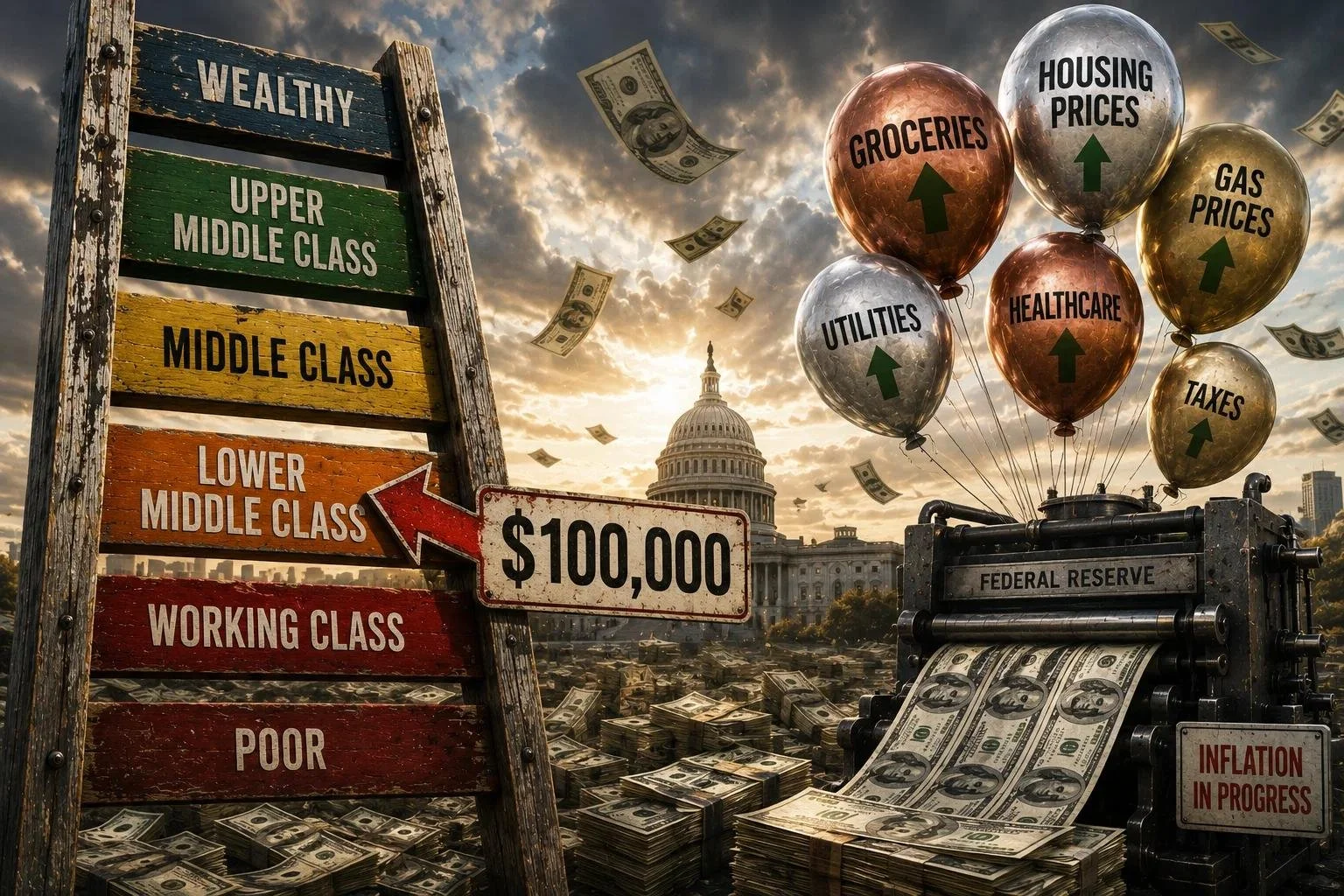
$100,000 Income is Now "Lower-Middle Class"
$100,000 Income is Now "Lower-Middle Class"
Notes From the Field By James Hickman (Simon Black/Sovereign Man) May 12, 2026
Henry VIII probably thought he was being extremely clever when he started debasing his currency in 1544... and assumed that, if he reduced the silver content slowly and gradually enough, perhaps no one would notice.
But the King was hilariously wrong.
$100,000 Income is Now "Lower-Middle Class"
Notes From the Field By James Hickman (Simon Black/Sovereign Man) May 12, 2026
Henry VIII probably thought he was being extremely clever when he started debasing his currency in 1544... and assumed that, if he reduced the silver content slowly and gradually enough, perhaps no one would notice.
But the King was hilariously wrong.
Despite centuries of warfare, invasions, and plagues, English rulers prior to Henry had been remarkably disciplined in maintaining 92.5% silver in their coins.
In fact, England’s kings were so serious about their coinage that, at one point in the 1100s, one of Henry VIII’s forebears rounded up every private minter who skimped on the silver content in their coins— and had the man’s testicles removed.
But Henry VIII did not share his ancestors resolve. So, drowning in debt, divorce, and too much war, he started to reduce the silver content and replace it with copper.
His new coins still looked vaguely similar to the original ones because they were given a cheap, silver wash. But the wash wore off quickly— especially on the side where Henry’s profile was carved.
Londoners soon began to notice that the king’s nose would turn orange once the silver sheen wore off, giving rise to the nickname “Old Coppernose”.
And yet the debasement continued— and this was Henry’s ‘clever’ idea.
There wasn’t a single shock or dramatic crash. Henry’s ‘Great Debasement’ was a years-long operation of slowly robbing prosperity from his subjects. Each year their coins would buy less. Prices would rise. Their cost of living increased. And overall they were worse off.
This is the same story of our own time.
Gallup reported last week that 55% of Americans believe their personal finances are getting worse; that’s the absolute rock bottom reading in 25 years of the survey.
It is worse than 2008, when the financial system was actually breaking. It is worse than the pandemic, when the economy was shut off.
And that 55% statistic is in a year when headline employment numbers and stock indices are supposed to be telling everyone they're doing fine.
Perhaps even more alarming is a recent analysis by a group called MoneyLion, which looked at Census data and found that, in 12 states in the US, a $100,000 income is now considered LOWER middle class.
For those who remember what life was like 25 years ago, making six figures was solid “made it” territory.
Not anymore. In Massachusetts, the lower-middle ceiling has crept up to $116,476. In New Jersey, $115,882. In California, $111,277.
Of course, it isn't hard to see what those states have in common. They tax heavily, regulate aggressively, and treat business and wealth as plump dairy cows to milk.
This isn’t magically going away if the Strait of Hormuz opens, or Congress passes a ban on corporations buying homes to rent.
The federal government runs trillion-dollar deficits every year, the Treasury borrows the difference, and the Federal Reserve accommodates the whole arrangement by expanding the money supply by trillions.
Long term inflation doesn't slow down until Washington decides to be fiscally responsible— and there is little evidence that's about to happen.
If you bought a house in 2010, or even 2021, the same forces hollowing out the dollar have been inflating the value of your assets; your house cannot be printed by the Federal Reserve, so as the money supply increases, your house costs more in nominal dollars.
That's why the people who feel worst about this economy are young people.
A recent Generation Lab survey found that more than 8 in 10 Americans aged 18-29 — the cohort least likely to own a home or hold meaningful investments — now describe the economy as bad or terrible. Only 2 percent of them call it "excellent."
This is why real assets matter. The Fed can manufacture as many dollars as it wants, but it cannot manufacture the things that actually have value: precious metals, energy, critical resources like uranium or copper, a profitable business producing something the world cannot function without.
Because every single time governments are given the choice between inflation and discipline, they pick inflation.
And just like Henry VIII, they think no one is going to notice.
To your freedom, James Hickman Co-Founder, Schiff Sovereign LLC
PS — Schiff Sovereign's investment research newsletter, Strategic Assets, exists for exactly this reason: to identify real assets and real businesses that not only protect wealth from debasement, but actually give you tremendous upside as Americans prioritize essential spending over luxuries.
We’ve seen some major winner in precious metals, fertilizer, industrial metals, shipping— and there is reason to believe we are still early.
Economic Collapse is Not Possible Now
Economic Collapse is Not Possible Now
Heresy Financial: 5-12-2026
Everywhere you look, financial headlines scream about impending doom. Talk of a looming recession, a credit crunch, or even another Great Financial Crisis often dominates the narrative. It’s easy to get swept up in the wave of bearish sentiment and assume the worst is just around the corner.
But what if the widespread fear of another 2008-style economic collapse is largely unfounded? What if, contrary to popular belief, the fundamental financial health of American households is far more robust than many pundits suggest?
Economic Collapse is Not Possible Now
Heresy Financial: 5-12-2026
Everywhere you look, financial headlines scream about impending doom. Talk of a looming recession, a credit crunch, or even another Great Financial Crisis often dominates the narrative. It’s easy to get swept up in the wave of bearish sentiment and assume the worst is just around the corner.
But what if the widespread fear of another 2008-style economic collapse is largely unfounded? What if, contrary to popular belief, the fundamental financial health of American households is far more robust than many pundits suggest?
A recent analysis from Heresy Financial offers a remarkably optimistic counter-narrative, suggesting that a severe economic downturn or financial crisis on the scale of 2008 is actually quite improbable. Their insights, based on a deep dive into current household debt and asset data, provide a refreshing perspective amidst the gloom.
The core argument is elegantly simple: significant economic busts are almost always precipitated by excessive leverage accumulated during boom periods. Think back to 2008 – a housing bubble fueled by subprime mortgages and over-borrowing by both consumers and financial institutions.
The surprising truth, according to Heresy Financial, is that this kind of dangerous overleveraging simply isn’t prevalent in the typical American household today.
You might be thinking, “But household debt has gone up!” And you’d be right. Total household debt did see an uptick, particularly between 2020 and 2022, largely influenced by historically low interest rates. However, this increase alone doesn’t paint the whole picture.
In essence, while the absolute number for total debt might seem large, the ability of households to manage that debt, relative to their assets and income, is significantly better than it was leading into the Great Recession.
Why this resilience? The analysis points to a profound shift in consumer behavior, directly influenced by the trauma of the 2008 Great Recession. Most US households remain cautious about debt, actively avoiding the kind of overleveraging that proved so devastating just over a decade ago. The memory of foreclosures, job losses, and economic instability lingers, fostering a more conservative approach to borrowing.
This isn’t to say every single household is thriving; some certainly struggle. However, the typical American household is in remarkably good financial shape. Many carry little to no credit card balances, and their overall debt levels are modest when compared to their growing asset base.
The video cautions that while a mild recession is always a possibility in the natural ebb and flow of economic cycles, a large-scale economic collapse similar to 2008 is highly improbable at this time. The fundamental resilience built into the US household financial system, born from lessons learned and prudent management, acts as a powerful buffer against catastrophic failure.
So, next time you hear dire predictions about an impending financial apocalypse, take a moment to consider the underlying data. The optimistic analysis from Heresy Financial encourages us to reconsider overly bearish narratives and recognize the often-overlooked strength in the foundation of the US economy: its households.
TIMECODES
00:00 The Crash Everyone Is Waiting For Might Be Impossible
00:20 If This Upsets You, Check Why
00:46 U.S. Household Debt Just Keeps Climbing
01:53 Breaking Down America's Non-Housing Debt
02:42 The Question Nobody Asks: Compared to What?
03:40 Zoom Out on Delinquencies and the Panic Disappears
04:58 The Median Household's Credit Card Balance Is Zero
06:53 Debt to Asset Ratio Is at a 50-Year Low
07:43 Busts Come From Booms. We Haven't Had a Boom.
09:31 Why Permabears Secretly Want a Crash
10:19 The Generation That Watched Their Parents Lose Everything
11:00 Real Median Income Is Rising Faster Than Debt
13:32 The Government Is Overleveraged. You're Not.
The Big Reset is Happening: Willem Middelkoop
The Big Reset is Happening
VRIC Media: 5-12-2026
Step into the intellectual arena of the Vancouver Resource Investment Conference (VRIC), where host Darrell Thomas recently engaged in a profound discussion with Willem Middelkoop, an expert whose insights span metals, mining, geopolitics, and emerging financial technologies.
Middelkoop delivered a sweeping analysis of our evolving financial and geopolitical landscape, charting a course from escalating global conflicts and the rise of the BRICS nations to the revolutionary impact of blockchain and the enduring appeal of precious metals.
The Big Reset is Happening
VRIC Media: 5-12-2026
Step into the intellectual arena of the Vancouver Resource Investment Conference (VRIC), where host Darrell Thomas recently engaged in a profound discussion with Willem Middelkoop, an expert whose insights span metals, mining, geopolitics, and emerging financial technologies.
Middelkoop delivered a sweeping analysis of our evolving financial and geopolitical landscape, charting a course from escalating global conflicts and the rise of the BRICS nations to the revolutionary impact of blockchain and the enduring appeal of precious metals.
This wasn’t just another market update; it was a deep dive into the forces reshaping our world.
Middelkoop wasted no time diving into the intricate dance of geopolitics, particularly the evolving U.S.-China relationship amidst ongoing global conflicts. He highlighted the recent ceasefire related to “Operation Epic Fury” and the potential for a broader peace deal between the two economic giants, underscoring their immense implications for commodity and metals markets.
Crucially, Middelkoop emphasized the broader significance of geopolitical shifts led by the BRICS nations (Brazil, Russia, India, China, South Africa). These countries are increasingly challenging the U.S.-led financial order, signaling a fundamental realignment of global power dynamics that will inevitably ripple through every facet of the global economy.
Amidst this geopolitical backdrop, Middelkoop paints a compelling picture for commodity markets. Despite recent corrections, he asserts that the fundamentals remain exceptionally strong. The growing importance of inflation and persistent supply constraints are set to be primary drivers for future price increases across the board.
His forecast? A multi-decade bull market in commodities, fueled by these very forces: geopolitics, structural inflation, and enduring supply shortages. For investors looking to capitalize on this trend, Middelkoop underscored the attractiveness of royalty and streaming companies.
Their inflation-resistant business models offer a compelling way to gain exposure to future price increases while managing risk. His fund’s strategy, he explained, focuses on significant mineral discoveries and established producers to balance growth potential with robust risk management.
The conversation took a fascinating turn towards the revolutionary impact of blockchain and tokenization on financial markets. Middelkoop elaborated on how these technologies are enabling 24/7 trading, fostering the integration of crypto and traditional equities markets, and even influencing demand for U.S. Treasuries through stablecoins. The future of finance, he argues, is undoubtedly decentralized and always-on.
Yet, even with these digital advancements, the timeless allure of precious metals remains undiminished. Middelkoop provided a sharp analysis of the shifting gold and silver markets:
Gold: He noted the significant physical gold flow from West to East, reflecting a global shift in wealth and a growing recognition of gold’s monetary role in a world grappling with currency debasement. He also critically touched on the opaque nature of U.S. gold reserves and the existing financial system’s resistance to physical metals investment.
Silver: Middelkoop highlighted silver’s dual appeal, emphasizing its scarcity and crucial industrial importance, alongside its traditional monetary role.
Middelkoop’s overarching message is clear: we are entering a transformative period where traditional financial paradigms are being re-written. The confluence of geopolitical shifts, persistent inflation, and supply chain vulnerabilities is setting the stage for a dramatic repricing of core assets, particularly commodities. This isn’t just a market correction; it’s a fundamental recalibration.
He encourages investors to follow smart money trends and stay informed through his online platforms, recognizing that knowledge and agility will be key in navigating these turbulent, yet opportunity-rich, waters.
Seeds of Wisdom RV and Economics Updates Tuesday Afternoon 5-12-26
Good Afternoon Dinar Recaps,
Oil Shock, Inflation Fears, and BRICS Coordination Intensify Global Financial Reset Concerns
Rising energy prices, bond market stress, and shifting monetary expectations are increasing pressure on the global economic system
Today’s developments show how energy disruptions, inflation, and geopolitical instability are rapidly reshaping global finance and central bank policy
Good Afternoon Dinar Recaps,
Oil Shock, Inflation Fears, and BRICS Coordination Intensify Global Financial Reset Concerns
Rising energy prices, bond market stress, and shifting monetary expectations are increasing pressure on the global economic system
Today’s developments show how energy disruptions, inflation, and geopolitical instability are rapidly reshaping global finance and central bank policy
Overview (Key Points)
Global markets faced renewed instability today as oil prices remained elevated near $108 per barrel, fueling inflation fears and increasing pressure on central banks worldwide.
At the same time, BRICS finance ministers are preparing emergency discussions surrounding the economic fallout tied to the Strait of Hormuz crisis, while several major economies are already experiencing rising borrowing costs and bond market volatility.
The developments highlight growing concerns that the world economy may be entering a prolonged period of:
Persistent inflation
Higher interest rates
Currency instability
Energy-driven financial stress
Together, these pressures are accelerating discussions surrounding long-term changes to the global financial system.
Key Developments
1. Oil Prices Continue Fueling Inflation Fears Worldwide
Brent crude remained near $108 per barrel today after renewed concerns surrounding the Iran conflict and disruptions tied to the Strait of Hormuz.
Reuters reported that markets are increasingly worried the ceasefire situation is “on life support,” keeping energy markets highly volatile.
Higher oil prices are now feeding directly into:
Transportation costs
Manufacturing expenses
Consumer inflation
Global supply chain pressure
Analysts warn that sustained energy inflation could delay central bank rate cuts across multiple economies.
2. Bond Markets Signal Growing Financial Stress
Government bond yields climbed sharply in Europe today, especially in the United Kingdom, where long-term borrowing costs briefly reached their highest levels in decades.
Markets are becoming increasingly sensitive to:
Inflation risks
Political instability
Rising sovereign debt burdens
Slower economic growth
The combination of high oil prices and elevated borrowing costs is creating fears of broader financial instability across debt markets.
3. Central Banks Face Renewed Pressure to Tighten Policy
Inflation expectations are rapidly changing global monetary policy outlooks.
The Bank of Japan signaled a more hawkish stance today as rising oil prices forced policymakers to reconsider earlier expectations for loose monetary policy.
Meanwhile, China’s central bank warned of “imported inflation” caused by surging commodity and energy prices while still attempting to support economic growth.
This reflects a growing global dilemma:
Fight inflation with higher rates
Or protect slowing economies from recession risks
4. BRICS Nations Increase Focus on Alternative Financial Structures
BRICS finance ministers are reportedly preparing discussions on the economic fallout from Hormuz disruptions and rising global instability.
According to reports, the Moscow discussions are expected to focus heavily on:
Energy shocks
Food inflation
Shipping disruptions
Alternative financial coordination
The bloc continues exploring ways to reduce exposure to Western-controlled financial systems amid rising geopolitical fragmentation.
5. The Global Economy Faces Growing Energy Security Risks
The International Energy Agency warned today that the world may be facing one of the largest energy crises in modern history if Middle East instability continues.
The Strait of Hormuz normally handles roughly 20% of global oil and gas flows, making prolonged disruption a direct threat to the global economy.
Energy security is increasingly becoming one of the central drivers of:
Inflation
Currency stability
Trade policy
Monetary strategy
Why It Matters
The world economy is becoming increasingly vulnerable to geopolitical shocks involving energy, trade, and shipping routes.
Today’s developments show that inflation is no longer driven only by domestic economic conditions. It is increasingly shaped by:
War
Commodity disruptions
Strategic rivalry
Global supply chain instability
Why It Matters to Foreign Currency Holders
Periods of prolonged inflation and energy instability often trigger:
Currency volatility
Pressure on import-dependent economies
Reserve diversification efforts
Increased movement into alternative assets
Countries heavily dependent on imported energy remain especially vulnerable if oil prices stay elevated.
Implications for the Global Reset
Pillar 1: Energy Markets Are Reshaping Monetary Policy
Oil prices are once again becoming one of the primary forces influencing inflation, interest rates, and global financial stability.
Pillar 2: Geopolitical Fragmentation Is Accelerating Financial Diversification
BRICS coordination and growing concern over Western debt systems continue pushing discussions surrounding alternative trade and payment structures.
Conclusion
Today’s market developments reinforce a growing global reality: energy security, inflation, and monetary policy are now deeply interconnected.
As oil shocks spread through bond markets, currencies, and central bank decisions, the international financial system is facing mounting structural pressure from multiple directions simultaneously.
The result is an increasingly unstable environment where geopolitics and finance are becoming nearly impossible to separate.
Seeds of Wisdom Team
Newshounds News™ Exclusive
Sources
~~~~~~~~~~
Seeds of Wisdom Team RV Currency Facts Youtube and Rumble
Newshound's News Telegram Room Link
RV Facts with Proof Links Link
RV Updates Proof links - Facts Link
Follow the Gold/Silver Rate COMEX
Follow Fast Facts
Seeds of Wisdom Team™ Website
Thank you Dinar Recaps
Iraq Economic News and Points To Ponder Tuesday Afternoon 5-12-26
Iran Sets Five Conditions For Entering The Second Round Of Negotiations With America
Arabic and international Iran has set five conditions as guarantees for entering a second round of negotiations with the United States, the Fars News Agency reported on Tuesday.
The agency quoted an informed source as saying, "Iran has set five conditions that represent the minimum guarantees for building trust before any negotiations with the United States can begin."
Iran Sets Five Conditions For Entering The Second Round Of Negotiations With America
Arabic and international Iran has set five conditions as guarantees for entering a second round of negotiations with the United States, the Fars News Agency reported on Tuesday.
The agency quoted an informed source as saying, "Iran has set five conditions that represent the minimum guarantees for building trust before any negotiations with the United States can begin."
The report added that "Iran stipulates an end to the war on all fronts, including Lebanon, the lifting of sanctions, and the release of its frozen assets." It further explained that "Iran's conditions include compensation for war damages and recognition of Iranian sovereignty over the Strait of Hormuz."
The report continued, stating that "Iran informed Pakistan that the continued US naval blockade has reinforced distrust in negotiations with Washington."
It noted that "Tehran believes that without the fulfillment of its five conditions, there will be no possibility of entering into new negotiations," clarifying that "the American proposals were formulated entirely unilaterally and in a manner that serves Washington's interests."https://www.economy-news.net/content.php?id=69014
China Affirms Its Companies' Keenness To Expand Their Activities And Investments In The Iraqi Market.
Money and Business Economy News – Baghdad The Ambassador of the People's Republic of China to Iraq, Cui Wei, affirmed on Tuesday the keenness of Chinese companies to expand their activities and investments in the Iraqi market.
The Ministry of Foreign Affairs stated in a statement received by “Al-Eqtisad News” that “Deputy Prime Minister and Minister of Foreign Affairs Fuad Hussein received, on Tuesday, May 12, 2026, the Ambassador of the People’s Republic of China to Iraq, on the occasion of the end of his diplomatic duties in Baghdad.”
She added that "during the meeting, the course of bilateral relations between Iraq and China was reviewed, as well as ways to enhance joint cooperation in various political, economic and investment fields, in a manner that serves the interests of the two friendly countries. The two sides also discussed a number of regional and international issues of common interest, stressing the importance of supporting stability efforts and strengthening international cooperation."
The minister praised the role played by the Chinese ambassador during his time in Iraq and his contribution to developing bilateral relations, particularly in the fields of economy, energy and infrastructure, wishing him success in his future endeavors.
For his part, the Chinese ambassador expressed his country's appreciation for the level of cooperation with Iraq, stressing the continued support of the People's Republic of China for the path of development and stability in Iraq, and the keenness of Chinese companies to expand their activities and investments in the Iraqi market.
https://www.economy-news.net/content.php?id=68996
A Review Of The Book Entitled (Iraq's Finances... From The Trap Of Deficit To Sustainable Reform)
Once again, the esteemed Professor and dear brother, His Excellency the Governor of the Central Bank of Iraq, Mr. Ali Mohsen Ismail Al-Alaq, presents us with a scientific and applied study analyzing the trends of public finance in Iraq, from the trap of financial deficit to paths of sustainable reform, in terms of causes and results.
This is the first study supported by the experience and practice of a specialized official in the government who worked for twenty years in the economic field and in the financial and monetary system.
Therefore, his analyses, visions, and ideas presented in the study are profound and consistent with the economic reality of Iraq over more than two decades, reaching the problems of the current situation, starting from a holistic view, not a partial view of a specific circle of activity, but rather studying the subject as a whole and its repercussions at the macroeconomic level.
Drawing on the realities of the structural and systemic flaws in the economy, the challenges facing the financial and monetary systems, and the negative impacts of unclear fiscal and other economic policies, this study examines the failure to achieve fiscal sustainability, leading to a cycle of budget deficits from which the government cannot escape.
On the contrary, the deficit continues to increase year after year, relying on monetary policy intervention to finance it. This has deprived successive governments of the ability to achieve investment and development.
A key and unique aspect of this study is that it was written in the spirit of scientific research, enriched by the scientific, financial, and monetary expertise of Professor Ali Al-Alaq.
This expertise stems from his direct experience with the challenges and causes that have trapped the economy in the fiscal deficit of the state's general budget, the instrument for managing public resources and achieving stability and economic growth.
This deficit has become a significant pressure on fiscal sustainability, a major problem plaguing the Iraqi economy. A growing problem that has been accumulating year after year and has turned into major problems in public finances, the reliance on oil as a single resource for the general budget, the failure to activate the real economy, and the continuation of other non-oil resources at the same rates, not exceeding 5% of total resources for 23 years.
This impacted the balance of payments and restricted the state's ability to achieve development and economic stability.
The study, through its scientific and applied analysis, as outlined by the author with the spirit of a scientific researcher and responsible expert, highlights the challenges facing the Iraqi economy.
The study focuses on the budget deficit, its extent and trends, and potential solutions. It also addresses the questions that must be answered to overcome this predicament, presenting the study's hypotheses based on a scientific and realistic perspective informed by practical experience (from 2004 to 2024).
The author, through his diagnostic vision, was able to clarify, in five chapters and through analytical and scientific observation, the problems of the Iraqi economy and the role of Iraqi finance in achieving the transition from the deficit trap to sustainable reform paths, according to the following:
Chapter One – The conceptual and methodological framework of the general budget and the fiscal deficit, explaining the concept of the general budget and its importance in macroeconomics, the best ways to prepare it, the concept of the fiscal deficit and its economic effects, the risks of changing the exchange rate, and the relationship between the deficit and monetary policy.
Chapter Two: Diagnosing the fiscal deficit in Iraq and its economic repercussions, deficit financing, internal debt and their risks in the case of the Iraqi economy, the fiscal sustainability gap in Iraq, the current financial reality and the challenges facing fiscal sustainability.
Chapter Three – Public Expenditures and Achieving Fiscal Discipline. He emphasized his vision regarding fiscal recklessness, fiscal discipline, and fiscal reform strategies aimed at avoiding negative public reactions. He also discussed reforming public expenditures as a cornerstone of fiscal sustainability, clearly indicating the contribution of government subsidies to external budget expenditures, the challenges facing government subsidies, and pathways for sustainable reform.
Chapter Four – Public Revenues and Maximizing Non-Oil Resources. He explained his strategic vision for the future and outlined the roadmap for sustainable reform.
Chapter Five – Restructuring the Public Budget within a Macroeconomic Framework. This chapter focuses on program-based rather than line-item budgeting, participatory budgeting, corporate governance, and risk assessment. It also examines the role of the central bank in achieving fiscal stability and economic stimulus.
Chapter Six – Diversifying the Iraqi Economy as an Approach to Financial Sustainability and Wealth Creation: The author presents his vision for economic diversification as a strategic option for maximizing revenues, achieving financial sustainability, and supporting innovation and the private sector.
He concludes his study with conclusions, recommendations, and proposed solutions that focus primarily on policies and solutions for escaping the deficit trap and achieving sustainable reform.
Although I haven't given the study presented by the esteemed Professor and colleague Ali Mohsen Al-Alaq the analysis it deserves due to the depth of its insightful visions and ideas, I am now fully convinced that this study is undoubtedly suitable as a doctoral dissertation for Iraqi universities and as a curriculum for postgraduate students in finance, accounting, and banking.
It is scientifically, academically, and research-wise sound.
I urge the Dean of the Higher Institute for Accounting and Financial Studies at the University of Baghdad and the administration of the Al-Nahrain Center for Strategic Studies to invite His Excellency the Governor of the Central Bank to present and discuss the study and to evaluate the scientific and intellectual effort invested in addressing a chronic economic problem plaguing our national economy.
I wish His Excellency continued success, good health, and well-being, and pray that God protects him and enables him to continue his fruitful contributions to serving Iraq and its economy. https://www.economy-news.net/content.php?id=68931
More Iraq News Posted by Tishwash at TNT 5-12-2026
TNT:
Tishwash: A giant Iraqi oil tanker crosses the Strait of Hormuz heading towards Vietnam
Iran’s Tasnim news agency announced on Monday that a giant oil tanker loaded with Iraqi crude oil had crossed the Strait of Hormuz towards Vietnam, confirming that it followed the maritime route approved by Iran within the strait .
The tanker's passage comes at a time of heightened security tensions in the region, highlighting the strategic importance of the Strait of Hormuz as one of the world's most important energy transit routes .
TNT:
Tishwash: A giant Iraqi oil tanker crosses the Strait of Hormuz heading towards Vietnam
Iran’s Tasnim news agency announced on Monday that a giant oil tanker loaded with Iraqi crude oil had crossed the Strait of Hormuz towards Vietnam, confirming that it followed the maritime route approved by Iran within the strait .
The tanker's passage comes at a time of heightened security tensions in the region, highlighting the strategic importance of the Strait of Hormuz as one of the world's most important energy transit routes .
In the same context, the Iraqi Deputy Oil Minister, Bassem Mohammed, confirmed last week that "the Strait of Hormuz constitutes the main outlet for Iraqi oil exports ."
He explained that "the current alternatives do not have the same absorptive capacity," and called for "allocating an independent five-year budget to support and develop the oil sector link
************
Tishwash: 95% of the government formation has been finalized... 48 crucial hours to determine the date of the confidence vote session
On Monday, Coordination Framework member Uday Abdul-Hadi confirmed that more than 95% of the paths for forming the government have been decided, noting that the next 48 hours will be crucial in determining the date for holding the confidence vote session within the House of Representatives.
Abdul-Hadi told Al-Maalomah that “the meetings and gatherings held yesterday evening were very fruitful, especially within the Coordination Framework forces,” indicating that “about 95% of the paths for forming the government have been decided in terms of determining the entitlements of the political blocs.”
He added that “the political blocs have already begun submitting their candidates for ministerial portfolios,” noting that “the next 48 hours will be crucial in determining the date of the session to grant confidence to Ali al-Zidi’s government within the House of Representatives.”
He explained that “today will witness an important meeting of representatives of the Coordination Framework forces to discuss some remaining issues,” noting that “final understandings will lead to the next stage, which is setting a date for the parliamentary session, and this will not be long given the clear desire among all political forces to resolve the issue of forming the government.” link
************
Tishwash: Parliamentary Finance Committee: Employee salaries are secured and the Central Bank has pledged to finance them.
The Parliamentary Finance Committee confirmed on Tuesday that employee salaries are secured and that the budget is contingent upon the formation of a government. The committee also indicated that Iraq needs more than 7 trillion dinars to cover salaries.
Committee member, MP Uday Awad, told the Iraqi News Agency (INA): “The Central Bank has pledged to finance and secure employee salaries according to the Reserve Deduction Law.”
He added, “The 2026 budget will be submitted upon the formation of the government,” noting that “borrowing is permitted to mitigate the crisis, especially given the uncertainty surrounding the reopening of the Strait of Hormuz.”
Awad explained that “Iraq needs more than 7 trillion dinars to secure employee salaries, and this amount is secured by the Central Bank for six months according to the Reserve Deduction Law.”link
************
Tishwash: Article 140: Kirkuk and the disputed territories are victims of Kurdish division.
More than two decades after the adoption of the Iraqi constitution, Article 140, which is considered the “backbone” of the national rights of the Kurds, remains a rigid text that has not been implemented on the ground, after it became a victim of narrow partisan interests and conflicts over positions and power in Baghdad.
According to the Iraqi constitution, Article 140 concerning the disputed territories was supposed to be implemented before the end of 2007, but the process was disrupted from its very first steps.
Instead of working to restore the annexed lands, the committees established under Article 140 transformed into ineffective bureaucratic institutions. While Kurdish factions were preoccupied with internal conflicts, Arabization policies resurfaced in new forms in Kirkuk, Sinjar, and Khanaqin, leading to demographic changes in those areas.
Kurdish parties... trading in time and positions
Throughout successive Iraqi governments, the ruling parties in the Kurdistan Region have used Article 140 as a political bargaining chip to obtain ministries and senior positions in Baghdad, while national issues have become victims of oil and financial agreements.
The division has jeopardized the constitutional rights of the Kurds.
The absence of a unified national discourse is the greatest gift to the Kurds' adversaries, as Kirkuk and the disputed territories—sensitive national issues—have become arenas for partisan conflict. Furthermore, the Kurdish delegation in Baghdad does not appear as a unified political bloc; rather, each faction acts independently, pursuing its own interests. This has allowed Iraqi parties to stall and buy time.
Even during the recent visit of Kurdish party delegations to Baghdad to participate in consultations to form the new Iraqi government, headed by Ali al-Zaidi, no delegation went in the name of the Kurds or the region. Rather, all parties sent their representatives separately, and everyone was preoccupied with conflicts over positions and privileges.
For years, the residents of the disputed areas have lived under the threat of displacement and agricultural land problems. In the absence of a clear administrative vision for their regions, service projects have been neglected, while political parties only appear during election seasons, while the residents are left alone to face the real crises and Arabization policies.
Observers believe that Article 140 requires a political will that puts land and identity above partisan interests and positions, but the current reality of the Kurdish parties reveals that this article has become, from Baghdad’s point of view, a dead file, while for the Kurdish parties it has turned into just an election slogan and a burnt political card.
As long as “position and budget” are more important than “land identity”, Article 140 will remain ink on paper without any actual application. link
Seeds of Wisdom RV and Economics Updates Tuesday Morning 5-12-26
Good Morning Dinar Recaps,
US–China Tensions Deepen as Taiwan and Human Rights Take Center Stage in Trump–Xi Talks
Strategic rivalry between Washington and Beijing is expanding beyond trade into security, ideology, and global influence
The upcoming Trump–Xi summit is highlighting how geopolitical competition between the world’s two largest economies could reshape global markets and financial stability
Good Morning Dinar Recaps,
US–China Tensions Deepen as Taiwan and Human Rights Take Center Stage in Trump–Xi Talks
Strategic rivalry between Washington and Beijing is expanding beyond trade into security, ideology, and global influence
The upcoming Trump–Xi summit is highlighting how geopolitical competition between the world’s two largest economies could reshape global markets and financial stability
Overview (Key Points)
President Donald Trump confirmed that upcoming discussions with Chinese President Xi Jinping will include two of the most sensitive issues in U.S.–China relations:
American arms sales to Taiwan
Human rights concerns in Hong Kong and mainland China
The announcement signals that strategic competition between Washington and Beijing continues intensifying despite ongoing diplomatic engagement.
Markets and analysts are increasingly watching the relationship closely because tensions involving Taiwan, trade, and global supply chains carry major implications for:
Global markets
Currency systems
Semiconductor supply chains
International trade flows
The summit reflects a broader shift where geopolitical rivalry is becoming deeply interconnected with the global financial system.
Key Developments
1. Taiwan Remains the Most Dangerous Strategic Flashpoint
Taiwan continues to represent the central security issue between the United States and China.
The recently announced $11 billion U.S. weapons package for Taiwan has increased tensions with Beijing, which views foreign military support for Taiwan as interference in its sovereignty claims.
Washington continues balancing:
Support for Taiwan’s defense
Strategic deterrence
Diplomatic engagement with Beijing
Analysts warn that any escalation involving Taiwan could rapidly disrupt global trade and financial markets.
2. Human Rights Issues Add Pressure to the Summit
Trump confirmed he will raise concerns involving:
Hong Kong publisher Jimmy Lai
Religious freedom issues in China
Restrictions on political opposition and media activity
The move highlights how ideological and governance disputes are becoming part of the broader geopolitical competition between the two powers.
China continues rejecting foreign criticism of its internal policies, viewing such issues as interference in domestic affairs.
3. Global Markets Are Increasingly Sensitive to US–China Rivalry
The relationship between Washington and Beijing now affects:
Supply chains
Semiconductor production
Commodity markets
Currency stability
Global investment flows
Investors increasingly view geopolitical developments between the two nations as major drivers of market volatility and economic uncertainty.
4. Taiwan’s Strategic Importance Continues Growing
Taiwan remains central to the global semiconductor industry and broader Indo-Pacific security architecture.
Any disruption involving Taiwan could have immediate consequences for:
Technology markets
Manufacturing sectors
International trade networks
Financial confidence worldwide
This explains why global markets closely monitor military and diplomatic developments surrounding the Taiwan Strait.
5. Strategic Competition Is Reshaping Global Power Structures
The summit demonstrates how U.S.–China competition now extends across:
Military influence
Economic systems
Technology leadership
Ideological governance models
Both sides continue attempting to avoid direct conflict while simultaneously competing for long-term global influence.
Why It Matters
The United States and China remain the two most influential economies in the world.
Any deterioration in relations between them can directly impact:
Global trade
Currency markets
Energy flows
Supply chains
International investment
The increasing overlap between geopolitics and economics is accelerating uncertainty throughout the global financial system.
Why It Matters to Foreign Currency Holders
Periods of heightened geopolitical tension often trigger:
Currency volatility
Safe-haven asset movement
Trade instability
Shifting reserve diversification strategies
Countries and investors are increasingly seeking ways to reduce exposure to geopolitical shocks tied to major power rivalry.
Implications for the Global Reset
Pillar 1: Geopolitical Rivalry Is Reshaping Global Finance
Strategic competition between the United States and China is increasingly influencing trade systems, investment flows, and long-term monetary policy expectations.
Pillar 2: Supply Chain Security Is Becoming National Security
Control over semiconductors, shipping routes, and advanced technology infrastructure is becoming central to global economic power.
Conclusion
The upcoming Trump–Xi summit reflects a larger transformation underway in international relations and global finance.
What was once primarily an economic relationship is now increasingly defined by strategic rivalry, security competition, and ideological differences.
As tensions involving Taiwan, trade, and global influence continue growing, markets are recognizing that the future stability of the international financial system may depend heavily on how the United States and China manage this increasingly fragile relationship.
Seeds of Wisdom Team
Newshounds News™ Exclusive
Sources
Modern Diplomacy — "Trump to Raise Taiwan Arms Sales and Hong Kong Rights Issues in Xi Talks"
Reuters — "US-China tensions remain elevated ahead of Trump-Xi summit discussions"
~~~~~~~~~~
🌱 A Message to Our Currency Holders🌱
If you’ve been holding foreign currency for many years, you were not foolish.
You were not wrong to believe the global financial system would change.
What failed was not your patience — it was the information you were given.
For years, dates, rumors, and personalities replaced facts, structure, and proof. “This week” predictions created cycles of hope and disappointment that were never based on how currencies actually change.
That is not your failure.
Our mission here is different: • No dates • No rates • No hype • No gurus
Instead, we focus on:
• Verifiable developments • Institutional evidence
• Global financial structure • Where countries actually sit in the process
Currency value changes only come after sovereignty, trade, banking, settlement systems, and fiscal coordination are in place. History and institutions confirm this sequence.
You will see silence. You will see denials. That is not delay — that is discipline.
Protect your identity. Organize your documents. Verify everything.
Never hand your discernment to anyone who cannot show proof.
You deserve truth — not timelines.
Seeds of Wisdom Team
Newshounds News™
~~~~~~~~~~
Seeds of Wisdom Team RV Currency Facts Youtube and Rumble
Newshound's News Telegram Room Link
RV Facts with Proof Links Link
RV Updates Proof links - Facts Link
Follow the Gold/Silver Rate COMEX
Follow Fast Facts
Seeds of Wisdom Team™ Website
Thank you Dinar Recaps
Iraq Economic News and Points To Ponder Tuesday Morning 5-12-26
Central Banks Withdraw 111.6 Billion Yuan From China's Swap Lines
Banks Economy News - Follow-up The use of currency swap lines between global central banks and the People's Bank of China rose to a two-year high in the first quarter, an indication of growing international demand for the yuan and its expanding use outside of China.
By the end of March, central banks around the world had withdrawn about 111.6 billion yuan, equivalent to $16.4 billion, from the People’s Bank of China’s swap lines, marking the largest quarterly increase since 2023.
Central Banks Withdraw 111.6 Billion Yuan From China's Swap Lines
Banks Economy News - Follow-up The use of currency swap lines between global central banks and the People's Bank of China rose to a two-year high in the first quarter, an indication of growing international demand for the yuan and its expanding use outside of China.
By the end of March, central banks around the world had withdrawn about 111.6 billion yuan, equivalent to $16.4 billion, from the People’s Bank of China’s swap lines, marking the largest quarterly increase since 2023.
This rise reflects Beijing’s efforts to promote the use of the yuan in international transactions and provide greater liquidity in the Chinese currency to support trade and investment, at a time when some countries are showing increasing openness to reducing their reliance on the dollar in their financial transactions.
China's central bank pledges to continue its accommodative monetary policy.
The Chinese yuan is poised to overtake the Japanese yen to become the second most traded currency against the US dollar in the foreign exchange options market, after only the euro, according to LCH forecasts.
This rise comes as the use of the Chinese currency expands in global markets, supported by trade growth and increased demand for yuan-linked hedging and risk management tools.
According to the latest data from the Bank for International Settlements, the average daily trading volume in yuan-linked exchange options was $82 billion, compared to $102 billion for the yen and $236 billion for the euro.
The Chinese yuan's share of total global currency transactions rose to 8.5%, compared to about 7% in 2022.
https://www.economy-news.net/content.php?id=68986
The Baghdad Municipality Is Considering Launching A New Package Of Projects To Alleviate Traffic Congestion.
Money and Business Economy News – Baghdad The Baghdad Municipality is considering launching a new package of projects to alleviate traffic congestion on both the Karkh and Rusafa sides.
According to the official newspaper, Ahmed Raad, the media director of the Projects Department at the Secretariat, explained that "the study currently being carried out by the Maintenance Department in coordination with the Traffic Directorate and the municipal departments will be included in the Baghdad Secretariat's program to alleviate traffic congestion, which was launched by the government."
He stated that "the department is working in parallel to prepare plans for the maintenance of the bridges that it has built exclusively," noting that "there is a program for the maintenance of expansion joints in bridges that need this type of work, but the implementation of these projects faces challenges related to a lack of funding."
Raad pointed out that "there are ongoing communications with the Ministries of Planning and Finance in order to secure the necessary allocations and financial liquidity to include and implement maintenance projects, in order to ensure the sustainability of the infrastructure for bridges in the capital." https://www.economy-news.net/content.php?id=68983
Iran Opens New Land And Rail Routes For Imports After Adjustments
Arabic and international Economy News - Follow-up A member of the Iranian Chamber of Commerce's representative body announced that new decisions issued by the Ministry of Industry, Mines and Trade and the Trade Development Organization have made available new possibilities in recent days through land crossings and railways for importing goods.
Morteza Kohnvard explained to ISNA news agency that import procedures through various ports of entry have changed during the nearly seventy days of the war, fulfilling promises made by the government sector, the Trade Development Organization, and the Ministry of Industry. He stated that import mechanisms have been modified.
He added that the allocated quotas have reappeared on the relevant electronic platform in the last three or four days, and that import registration applications submitted since the beginning of the war but not yet approved have been processed and referred to the fee payment stage in the past two or three days, indicating an accelerated pace of operations.
He pointed out that the cessation of activities for more than two months necessitates expediting procedures, explaining that the majority of trade was conducted via the country's southern route, and that the closure of this route has complicated the situation.
He added that 70 percent of imports were transported via maritime routes, which have also been closed, preventing the exchange of goods, while transportation costs via alternative routes have risen significantly. He noted that recent days have seen changes and the issuance of new directives that have come into effect.
A member of the Iranian Chamber of Commerce's representative body confirmed that new import routes will be activated immediately, noting that applications are now being accepted. He explained that there is a railway route through Sarakhs, while imports from Afghanistan, Pakistan, and Iraq are negligible, with the majority previously arriving by sea. He added that only a limited percentage of goods were entering by land from Turkey, Eastern and Western Europe, and a portion from Russia, a route that remains open.
Kohnward explained that goods coming from other countries, particularly India and the rest of Asia, need alternative routes, either by rail in the northeast, by land through several countries, or by sea to Turkey, as alternatives to the southern route.
Regarding the possibility of carrying out imports without registering orders, the Iranian official confirmed that imports were not done without providing hard currency, but the approved facilities allow those who have the ability to secure currency within the country, whether themselves or through a third party, to register an import order without using bank currency, provided that the importer is responsible for providing the currency directly. https://www.economy-news.net/content.php?id=68987
Basra Gas Resumes Exporting Condensates To Global Markets
Energy Economy News – Baghdad The Ministry of Oil announced on Tuesday that the Basra Gas Company had successfully resumed loading and exporting a shipment of condensate, after a forced halt due to the repercussions of the Gulf War and the challenges that accompanied shipping and export operations in the region.
The Undersecretary of the Ministry for Gas Affairs, Izzat Saber Ismail, said in a statement received by “Al-Eqtisad News” that “Basra Gas Company was able to complete the loading of the tanker Dakosh with a quantity of 50,000 cubic meters of condensates,” stressing that “the operation was completed successfully and in full compliance with the requirements of the tenders and the approved technical and commercial standards.”
He added that "the tanker departed today, after completing the technical and logistical procedures," indicating that "this achievement was made possible thanks to the Ministry's follow-up and the efforts of the staff of Basra Gas Company, and through continuous communication with the relevant authorities in the related companies, which contributes to overcoming challenges and ensuring the smooth flow of export operations."
He stressed that “the achievements made during times of crisis are evidence of success, perseverance and a high sense of responsibility,” expressing his “hope that the loading and flow of tankers will continue normally in the coming days, which will contribute to strengthening the stability of export operations and fulfilling obligations towards contracting parties.”
He pointed out that "the Ministry and Basra Gas Company continue to support gas investment operations and maximize the benefit from hydrocarbon products, which enhances national revenues and supports the energy sector in Iraq."
https://www.economy-news.net/content.php?id=68984
Japan Is Supporting Cuba With Solar Panels To Address Electricity Shortages.
Arabic and international Economy News - Follow-up Japan's Foreign Ministry announced on Tuesday that Japan will supply Cuba with solar panels and other renewable energy equipment, given the latter's severe electricity shortage.
Japan's Jiji Press news agency reported on Tuesday that Cuba is facing widespread power outages as a result of fuel shortages following the de facto US oil embargo.
Japan is set to provide financial assistance of approximately one billion yen, through an international organization, to supply equipment that will be installed in 10 hospitals. https://www.economy-news.net/content.php?id=68989
MilitiaMan & CREW IRAQ DINAR UPDATE-Expedite-Laws-Oil & Gas-Government Program Economy-Central Bank Adopts AI
MilitiaMan & CREW IRAQ DINAR UPDATE-Expedite-Laws-Oil & Gas-Government Program Economy-Central Bank Adopts AI
5-11-2026
The Crew: Samson, PompeyPeter, Petra, Daytrader, Sunkissed, GIGI and Militia Man
No drama. No intrigue. No songs and dances. Just straight, factual news that I read and interpret to the best of my ability after being an avid Dinar investor and insanely obsessed Dinarian for over 15 years.
Follow MM on X == https://x.com/Slashn
MilitiaMan & CREW IRAQ DINAR UPDATE-Expedite-Laws-Oil & Gas-Government Program Economy-Central Bank Adopts AI
5-11-2026
The Crew: Samson, PompeyPeter, Petra, Daytrader, Sunkissed, GIGI and Militia Man
No drama. No intrigue. No songs and dances. Just straight, factual news that I read and interpret to the best of my ability after being an avid Dinar investor and insanely obsessed Dinarian for over 15 years.
Follow MM on X == https://x.com/Slashn
Be sure to listen to full video for all the news……..