
Thank you to all the subscribers to our Early Access program…we thank you for your continued support.
We are excited to offer this new service to keep you informed and up-to-date on the latest Dinar and currency news.
MilitiaMan and Crew: IRAQ DINAR UPDATE-Iraq Insulated & Ready for Integration
MilitiaMan and Crew: IRAQ DINAR UPDATE-Iraq Insulated & Ready for Integration
4-2-2026
The Crew: Samson, PompeyPeter, Petra, Daytrader, Sunkissed, GIGI and Militia Man
No drama. No intrigue. No songs and dances. Just straight, factual news that I read and interpret to the best of my ability after being an avid Dinar investor and insanely obsessed Dinarian for over 15 years.
Follow MM on X == https://x.com/Slashn
MilitiaMan and Crew: IRAQ DINAR UPDATE-Iraq Insulated & Ready for Integration
4-2-2026
The Crew: Samson, PompeyPeter, Petra, Daytrader, Sunkissed, GIGI and Militia Man
No drama. No intrigue. No songs and dances. Just straight, factual news that I read and interpret to the best of my ability after being an avid Dinar investor and insanely obsessed Dinarian for over 15 years.
Follow MM on X == https://x.com/Slashn
Be sure to listen to full video for all the news……..
Seeds of Wisdom RV and Economics Updates Thursday Evening 4-2-26
Good Evening Dinar Recaps,
Oil Shock and Rising Yields Hit Global Markets: Financial System Faces Mounting Pressure
War-Driven Energy Spike and Debt Stress Collide in Today’s Markets
Good Evening Dinar Recaps,
Oil Shock and Rising Yields Hit Global Markets: Financial System Faces Mounting Pressure
War-Driven Energy Spike and Debt Stress Collide in Today’s Markets
Overview
Oil prices surged sharply above $110, driven by war escalation
Global markets fell as uncertainty spreads
U.S. Treasury yields and borrowing costs rising again
Inflation fears intensifying across economies
Key Developments
1. Oil Prices Explode as Supply Fears Intensify
Global oil markets surged today as conflict escalation threatens supply routes:
Oil jumped as much as 7–11% in a single move
WTI crude surged above $111 per barrel
Brent crude pushed near $109+ levels
The primary driver:
Disruption risk in the Strait of Hormuz, a key global oil artery
Roughly 20% of global oil flows through this region—any disruption is massive
2. Global Markets Turn “Risk-Off”
Financial markets reacted quickly:
Stocks declined across the U.S., Europe, and Asia
South Korea markets dropped nearly 5%
Investors moved toward safer assets like the U.S. dollar
This is classic “risk-off” behavior during systemic stress
3. Rising Yields Push Borrowing Costs Higher
Debt markets are now feeling the pressure:
Treasury yields rising due to inflation fears
Mortgage rates jumped to ~6.46%
Borrowing costs increasing across the economy
War → Oil spike → Inflation → Higher yields → Economic pressure
4. Inflation Threat Returns Stronger Than Expected
The combination of oil and conflict is driving:
Higher fuel prices globally
Supply chain disruptions (fuel, fertilizers, shipping)
Renewed inflation concerns for central banks
This raises the risk of stagflation (high inflation + slow growth)
5. Central Banks Trapped in a Tight Position
Global central banks are now facing:
Limited ability to cut rates
Need to contain inflation from energy shock
Uncertainty around economic slowdown
Policy flexibility is shrinking at the worst possible time
Why It Matters
Energy shocks ripple through every sector of the economy
Rising yields increase stress on already high global debt levels
Markets are reacting to systemic—not temporary—pressures
This is not a single event—it’s a chain reaction across systems
Why It Matters to Foreign Currency Holders
Currency values are directly impacted by energy and debt dynamics
Short-term dollar strength may occur due to safe-haven flows
Long-term instability increases pressure on fiat systems globally
Currency shifts often begin during periods like this
Implications for the Global Reset
Pillar 1: Energy Becomes the Driver of Financial Power
Control of oil routes now directly impacts currencies and markets
Energy = leverage in the global system
Pillar 2: Debt System Under Increasing Strain
Higher yields expose unsustainable debt levels
Governments face rising costs to finance operations
This is where financial stress begins to accelerate systemic change
Closing Perspective
Today’s developments reveal a powerful convergence:
Energy shock
Rising debt costs
Market instability
These are not isolated headlines—they are signals of a system under pressure.
When energy, debt, and markets move together, structural change often follows.
Seeds of Wisdom Team
Newshounds News™ Exclusive
Sources
Reuters — Oil surges and global markets fall amid Iran war escalation
Reuters — U.S. mortgage rates rise as Treasury yields climb on war-driven inflation fears
~~~~~~~~~~
Seeds of Wisdom Team RV Currency Facts Youtube and Rumble
Newshound's News Telegram Room Link
RV Facts with Proof Links Link
RV Updates Proof links - Facts Link
Follow the Gold/Silver Rate COMEX
Follow Fast Facts
Seeds of Wisdom Team™ Website
Thank you Dinar Recaps
Phone Service for 94,000 Dead People, and Other Things Congress Won't Cut
Phone Service for 94,000 Dead People, and Other Things Congress Won't Cut
Notes From the Field By James Hickman (Simon Black) April 1, 2026
Earlier this year, the House DOGE Subcommittee pulled spending records from the Department of Transportation and discovered that the agency had spent $55 million on office furniture over the past few years. That’s about $1,000 per employee, which might not sound so crazy, until you realize that this was during a period when only 9% of DOT employees were actually showing up to the office.
Phone Service for 94,000 Dead People, and Other Things Congress Won't Cut
Notes From the Field By James Hickman (Simon Black) April 1, 2026
Earlier this year, the House DOGE Subcommittee pulled spending records from the Department of Transportation and discovered that the agency had spent $55 million on office furniture over the past few years. That’s about $1,000 per employee, which might not sound so crazy, until you realize that this was during a period when only 9% of DOT employees were actually showing up to the office.
But the furniture budget of the Department of Justice was even worse— $408 million on furniture in four years, with an average attendance rate of just 35%.
DARPA (Defense Advanced Research Projects Agency) dropped $250,000 on a single "refresh" of Herman Miller chairs. My only hope is this was part of developing some new revolutionary bulletproof chair cushion.
All told, federal agencies have spent $4.6 billion on furniture since 2021 — much of it for offices that have sat empty while employees work from home on Zoom.
If this were an isolated case of waste, you might write it off as bad management at a couple of agencies.
But it is not.
In February, the Government Accountability Office calculated the final cost of the Employee Retention Credit— a COVID-era program that ended in 2021. Total payout: $283 billion.
But 83% of that money ($235 billion) was paid out YEARS after the pandemic ended; the fraud mills kept filing bogus claims, and the IRS just kept writing checks.
Also in February, the FCC's inspector general discovered that Lifeline phone providers in California had been billing the government to provide phone and internet service to 94,000 dead people— $3.8 million worth of calls that were never made, to phones that were never used, for people who were no longer alive.
The examples never stop.
Senator Joni Ernst recently uncovered Pentagon-funded research projects that included studies on octopus hypnosis, monkey mind-reading, snail mucus, and elephant seal sleeping habits, all funded through a contracting loophole called "Other Transaction Agreements".
These OTAs allow agencies to spend money without competitive bidding, standard oversight, or public disclosure of costs.
How much did each project cost? That's the beauty of the system — the government doesn't have to tell you. But the GAO found that $77.5 billion flowed through these agreements between 2021 and 2025 without proper public accounting.
The National Science Foundation spent $14.6 million teaching monkeys to play a video game inspired by The Price Is Right. USAID spent $20 million producing Sesame Street in Iraq and $69,000 on dance classes in Wuhan, China.
And every single year, the federal government makes hundreds of billions of dollars in improper payments— money sent to the wrong person, in the wrong amount, or for the wrong reason.
Last year's total: $186 billion. That includes payments to deceased individuals, ineligible recipients, and programs that can't even verify whether the money should have gone out at all.
Since 2003, the cumulative total has reached $2.8 trillion, i.e. a full 7% of the national debt that simply would not exist if the government was minimally competent.
The Pentagon, meanwhile, has failed its own audit for eight consecutive years. Auditors could not verify more than 60% of the department's $4.65 trillion in assets.
Congress's response? Hand the Pentagon its first-ever trillion-dollar budget. They cannot account for the money they already receive, so why not give them even more?!?
Then there's the end-of-year ritual. Under "use it or lose it" rules, agencies that don't exhaust their budgets risk getting less money next year.
So in the final five days of fiscal year 2025, the War Department spent $50.1 billion in grants and contracts, including $6.9 million on lobster tail, $2 million on Alaskan king crab, $15 million on ribeye steak, $225 million on furniture, including a $98,329 Steinway grand piano for a general’s home.
Makes sense. Perhaps a stirring rendition of “Great Balls of Fire” is just what we need to defeat Iran.
For context, only nine countries on Earth spend more $50 billion on their entire annual defense budget. The Pentagon spent that in five days.
None of this is secret. DOGE found it. Inspectors General found it. The GAO found it. Senators publish it in annual reports that make headlines for about a day.
And then nothing changes. Congress doesn't cut a dime.
They act like it is simply impossible, that children would be starving in the streets, national security would be at risk, and farms would lay fallow, that we would all burst into flames if they cut the budget.
This might be one of the most effective lies ever perpetrated on a population— that we simply cannot, must not cut a dime in spending, for the consequences would be catastrophic.
The federal government spent $7 trillion in fiscal year 2025. $2 trillion of that was borrowed. $1.2 trillion was spent on interest to service the $39 trillion national debt.
And over the next decade, the CBO expects Congress to add another $23.1 trillion to the debt. It will almost certainly be much more.
This is arguably the single greatest threat to America. Not China, not hysteria over AI, not any of the foreign adversaries that dominate the headlines— but the slow, compounding, mathematically inevitable consequences of a government that cannot stop spending money it doesn't have.
And the most infuriating part is that it should be so easy to cut the most obvious, most indefensible waste. The $600 billion in outright fraud Secretary of Treasury Bessent estimates in the budget every single year. The $200+ billion in improper payments. The $100+ billion in legal graft that flows to political allies.
That alone would cut nearly half the deficit, without even touching the furniture for empty offices or octopus hypnosis experiments.
But if Congress is unwilling to even lift a finger for such obvious absurdity, what are the odds they'll tackle Social Security’s impending insolvency, just six years away? Or give foreign countries the confidence to keep investing in US government bonds? Or behave in a way to keep inflation in check?
Seems pretty low to us. Which is why it makes so much sense to have a Plan B.
To your freedom,
James Hickman
Co-Founder, Schiff Sovereign LLC
PS- If you're worried about what this all means for your savings, your retirement, and the purchasing power of the dollar — we built Plan B Confidential for exactly that.
It's our flagship research service covering second citizenships, foreign residency, international banking, tax strategies, and boots-on-the-ground intelligence from 120+ countries.
Everything you need to make sure your family's future doesn't depend on Congress suddenly discovering fiscal discipline.
Some “Iraq News” Posted by Clare at KTFA 4-2-2026
KTFA:
Clare: Economist: Iraq urgently needs to form a government and approve the 2026 budget to secure salaries.
4/2/2026 Information/Baghdad...
Economic expert Nabil Al-Marsoumi emphasized on Thursday the need for Iraq to form a new government with full powers to address the country's economic situation, noting the necessity of preparing the 2026 budget to cover salaries and services.
Al-Marsoumi stated in a post on social media, which was monitored by the Information Agency, that “despite Iraq continuing to export oil through the Strait of Hormuz until March 8th, oil revenues did not exceed $1.9 billion, equivalent to approximately 2.5 trillion dinars. This means that Iraq needs to secure an additional 5 trillion dinars just to pay salaries for the fifth month.”
KTFA:
Clare: Economist: Iraq urgently needs to form a government and approve the 2026 budget to secure salaries.
4/2/2026 Information/Baghdad...
Economic expert Nabil Al-Marsoumi emphasized on Thursday the need for Iraq to form a new government with full powers to address the country's economic situation, noting the necessity of preparing the 2026 budget to cover salaries and services.
Al-Marsoumi stated in a post on social media, which was monitored by the Information Agency, that “despite Iraq continuing to export oil through the Strait of Hormuz until March 8th, oil revenues did not exceed $1.9 billion, equivalent to approximately 2.5 trillion dinars. This means that Iraq needs to secure an additional 5 trillion dinars just to pay salaries for the fifth month.”
He stressed "the necessity of expediting the formation of a fully empowered Iraqi government and preparing the 2026 budget to provide the government with the legal basis for internal and external borrowing, discounting transfers at the Central Bank of Iraq, and taking other measures to meet the basic needs of the Iraqi people, especially those related to salaries, social welfare, and essential services such as water, electricity, and others." LINK
************
Clare: Masour Barzani and the Prime Minister of Qatar call on Baghdad to impose its control over "outlaw groups".
4/2/2026 Kurdistan – One News
On Thursday, April 2, 2026, the Prime Minister of the Kurdistan Region, Masrour Barzani, discussed in a telephone call with the Prime Minister and Minister of Foreign Affairs of Qatar, Sheikh Mohammed bin Abdulrahman Al Thani, the overall situation in the Kurdistan Region, Iraq and the region.
During the call, both sides expressed their condemnation of the terrorist attacks targeting the Kurdistan Region and Qatar, stressing their deep concern about the escalating war and tensions in the region, and emphasizing the importance of preserving the foundations of peace, security and stability.
Both sides agreed that militias and outlaw groups pose a real threat and danger, and stressed the need for the Iraqi government to impose its control over them.
For his part, the Qatari Prime Minister and Foreign Minister stressed the importance of maintaining peace and stability, noting the need to take these threats and risks into account.
In a related context, Prime Minister Masrour Barzani reiterated the Kurdistan Region’s solidarity with the Qatari people, and both sides agreed on the need to maintain communication and continue coordination to overcome current challenges and obstacles. LINK
************
Clare: Baghdad responds to Washington's security warnings: These are isolated incidents, and we are not a party to the conflict.
4/2/2026
The Iraqi Ministry of Foreign Affairs responded on Thursday evening to the security warnings issued by the US Embassy, stating that the violations that are occurring are individual attempts, and that Iraq is not a party to the conflict.
The ministry said in a statement received by Shafaq News Agency that "we have followed the statement issued by the US Embassy regarding potential security concerns, and we affirm our clear and unwavering commitment to keeping Iraq out of the circle of conflict in the region. Iraq is not a party to this conflict and does not wish to be part of it, despite being one of the countries most affected by its security, economic and political repercussions."
The ministry continued: “Recognizing the seriousness of the situation, the Iraqi government affirms that some entities or individuals may attempt, contrary to the state’s directives, to take unilateral actions or exploit their positions or job titles to carry out actions that do not represent official policy.”
She pointed out that "such individual actions or actions by limited groups are illegal and do not in any way reflect the role of the Iraqi government or its institutions."
She explained that “the occurrence of cases of abuse of power by individuals in various countries around the world does not justify issuing collective judgments or holding governments or any institution responsible for individual actions, as the government’s position on these actions is evident from its strict practical and public stances against these actions, and from its characterization of them, which calls for surprise at this position.”
She explained that "what further complicates the situation is that this conflict is taking place amid a clear decline in adherence to the legal and humanitarian standards that govern armed conflicts according to international law and international humanitarian law, making it an open war whose scope is expanding and whose repercussions are becoming more complex."
She noted that "this has practically affected countries that are not party to it, including Iraq, which poses additional challenges to the Iraqi government in its efforts to contain the repercussions and prevent the conflict from spreading into Iraq."
She indicated that "the Iraqi government affirmed that, at this exceptional political, economic and military stage, and with the constraints imposed by the caretaker government, it is making every effort to prevent any escalation, strengthen security measures, protect diplomatic missions, foreign interests and citizens, and maintain internal stability. It also continues to take the necessary steps to ensure that Iraqi territory is not used as a launching pad for any hostile acts."
The US embassy in Baghdad had warned earlier on Thursday of the possibility of attacks by "Iranian-backed militias" in the center of the capital within 24 to 48 hours, urging US citizens to leave Iraq "immediately".
The embassy said in a security alert, published on its official social media account, that the Iraqi government “has not been able to prevent terrorist attacks” that occur within or originate from Iraqi territory, noting that some members of those groups may carry identification documents claiming they are employees of the Iraqi government. LINK
************
Clare: An American institute: The Trump administration does not support the Sudanese president, and his continued rule will make him an adversary of Washington.
3/29/2026
The middle East Institute concluded that outgoing Iraqi Prime Minister Mohammed Shia al-Sudani is no longer the preferred candidate of the United States because he is "doubling down on his bets" on Iran and has not curbed the militias, at a time when the balance seems to be tipping in Washington's favor in its current battle.
After the American Institute spoke in a report translated by Shafaq News Agency, about the existence of two rounds of voting in Iraqi democracy, the first of which is when Iraqis vote for candidates in parliamentary elections, which does not produce a candidate or party that obtains a majority of votes.
The second involves numerous backroom deals after the final election results are announced, where those who received a fair number of votes try to gain the support of key stakeholders, including the leaders of major parties, and also try to gain the support of the United States and Iran.
The American report indicated that al-Sudani is strongly seeking to win a second term as he has much to boast about, as infrastructure has been developed since he took office and Iraq has been in a state of relative peace, although there have been many dark clouds during his term, including the “wiretapping scandal” that almost cost him his position.
He went on to say that it appeared that many other parties, including Iran, had concluded that it was better to have a "weak" prime minister than to have a new one while allegations of corruption were being raised, and many critics pointed to his brother Abbas Shia al-Sudani, who was believed to be acting as his unofficial agent.
The report noted that al-Sudani is trying hard to establish himself as a key and permanent power broker, as is the case with Nouri al-Maliki and Hadi al-Amiri, as his pictures appear in public places much more than they did during al-Maliki’s era. The report says that many Iraqis fear that al-Sudani’s second term could “whitewash” the mistakes of the first term and allow him to consolidate himself at the expense of democracy.
The report argued that, given the escalating war between the United States and Iran, it is not easy to be prime minister in Iraq. However, with the military balance tilting in favor of the United States, the respect that Iraqi politicians should show to Iran diminishes, but al-Sudani did not grasp the message.
The report went on to explain that Sudan is doubling down on its bets on Iran, even though any Iraqi leader who puts his country first should stay away from the conflict, recalling the March 24 decision which declared that Iranian-backed militias have the right to respond to any attacks targeting them, noting that the decision comes at a time when Kataib Hezbollah is launching drones and missiles at American targets inside Iraq.
He pointed out that the Sudanese may be "afraid" of Iran, and that his position may encourage further Iranian violations of Iraqi sovereignty and endanger Americans.
He added that US President Donald Trump, envoy Steve Wittkopf, and Secretary of State Marco Rubio should make it clear that al-Sudani will not receive US support for a second term, and that Washington will consider him an adversary if he does not step down.
The report concluded by saying that, given the possibility of Sudani’s departure and the escalating crisis in the Middle East, Iraq would need a prime minister to guide his country through the turmoil without dragging it into conflict, whereas Sudani could no longer do so.
The report noted the presence of technocratic figures waiting on the sidelines, as well as senior figures from previous Iraqi administrations whose credentials are not based on empty promises but on action.
The report concluded that Washington now realizes that al-Sudani is no longer necessary, and has a preferred candidate to succeed him. LINK
Seeds of Wisdom RV and Economics Updates Thursday Afternoon 4-2-26
Good Afternoon Dinar Recaps,
GENIUS Act Framework Emerges: U.S. Moves Toward Dual Stablecoin System
Federal–State Structure Signals Major Shift in Digital Currency Regulation
Good Afternoon Dinar Recaps,
GENIUS Act Framework Emerges: U.S. Moves Toward Dual Stablecoin System
Federal–State Structure Signals Major Shift in Digital Currency Regulation
Overview
U.S. Treasury released its first proposed rule to implement the GENIUS Act
Creates a dual regulatory system for stablecoins (state + federal)
$10 billion threshold determines oversight level
Strict reserve, AML, and compliance standards introduced
Signals deeper integration of digital assets into U.S. financial system
Key Developments
1. Treasury Introduces Dual-Regulatory Framework
The U.S. Treasury Department issued a Notice of Proposed Rulemaking (NPRM) outlining how stablecoins will be regulated under the GENIUS Act (2025).
State-level oversight allowed for issuers under $10 billion
Federal oversight (OCC) required above that threshold
Extends the traditional U.S. dual banking system into crypto
This is a major structural shift—stablecoins are now being treated more like banks than tech products
2. Strict Federal Standards Set the Baseline
The proposal defines non-negotiable federal requirements that all issuers must meet:
1:1 reserve backing (cash or U.S. Treasuries only)
Full compliance with AML, BSA, and sanctions laws
Ban on rehypothecation (no re-use of reserves)
No interest/yield paid directly to holders
Bottom line: Stablecoins must behave like fully-backed digital dollars
3. States Retain Power — But Not Freedom to Weaken Rules
States can still regulate stablecoins—but only if their frameworks are:
“Substantially similar” to federal standards
Equal or stricter in areas like capital, liquidity, and risk
Examples:
New York (BitLicense) – long-standing strict framework
Wyoming (SPDI + FRNT stablecoin) – innovation-focused model
States can innovate—but cannot undercut federal safeguards
4. Agencies Align Toward July 2026 Deadline
Multiple regulators are coordinating:
OCC – primary federal overseer
FDIC & NCUA – rules for banks and credit unions
Final rules due by July 18, 2026
This signals a synchronized national rollout of stablecoin regulation
5. Major Players Position for Bank-Like Status
Companies like Ripple (RLUSD) and Circle (USDC) are:
Seeking national trust bank charters
Preparing for federal-level integration into the banking system
This is the bridge between crypto and traditional finance
Why It Matters
Stablecoins are being formalized as part of the U.S. financial system
Regulatory clarity reduces uncertainty for institutions and investors
Creates a scalable path for digital dollar adoption globally
Strengthens trust in U.S.-issued digital assets
This is not suppression of crypto—it’s controlled integration
Why It Matters to Foreign Currency Holders
Digital dollars (stablecoins) may become the dominant global settlement tool
Backed by U.S. Treasuries—directly linking crypto to sovereign debt markets
Could reinforce U.S. influence even as de-dollarization rises elsewhere
Important shift: The dollar is evolving, not disappearing
Implications for the Global Reset
Pillar 1: Digital Financial Infrastructure
Stablecoins become regulated, trusted digital cash equivalents
Foundation for cross-border settlement systems
Pillar 2: Sovereign Control Meets Innovation
Governments maintain control over money flows
While allowing private-sector innovation to scale
This is a hybrid system—centralized oversight with decentralized rails
Closing Perspective
The GENIUS Act framework confirms what many suspected:
The U.S. is not stepping away from digital assets—it is absorbing them into the core of its financial system.
This is not just regulation — it’s the blueprint for the next monetary era.
Seeds of Wisdom Team
Newshounds News™ Exclusive
Sources
Forbes — GENIUS and Treasury Preserve Dual Banking System for Stablecoins
U.S. Treasury (via Federal Register process summary and NPRM details)
~~~~~~~~~~
Seeds of Wisdom Team RV Currency Facts Youtube and Rumble
Newshound's News Telegram Room Link
RV Facts with Proof Links Link
RV Updates Proof links - Facts Link
Follow the Gold/Silver Rate COMEX
Follow Fast Facts
Seeds of Wisdom Team™Website
Thank you Dinar Recaps
Iraq Economic News And Points To Ponder Thursday Afternoon 4-2-26
Iraq Hardest Hit By Hormuz Strait Disruptions
2026-04-02 Shafaq News- Baghdad Iraq recorded the sharpest increase in borrowing costs among regional countries due to disruptions in the Strait of Hormuz, with yields rising by 0.64 percentage points to 7.1%, according to the United Nations Conference on Trade and Development (UNCTAD).
Iraq Hardest Hit By Hormuz Strait Disruptions
2026-04-02 Shafaq News- Baghdad Iraq recorded the sharpest increase in borrowing costs among regional countries due to disruptions in the Strait of Hormuz, with yields rising by 0.64 percentage points to 7.1%, according to the United Nations Conference on Trade and Development (UNCTAD).
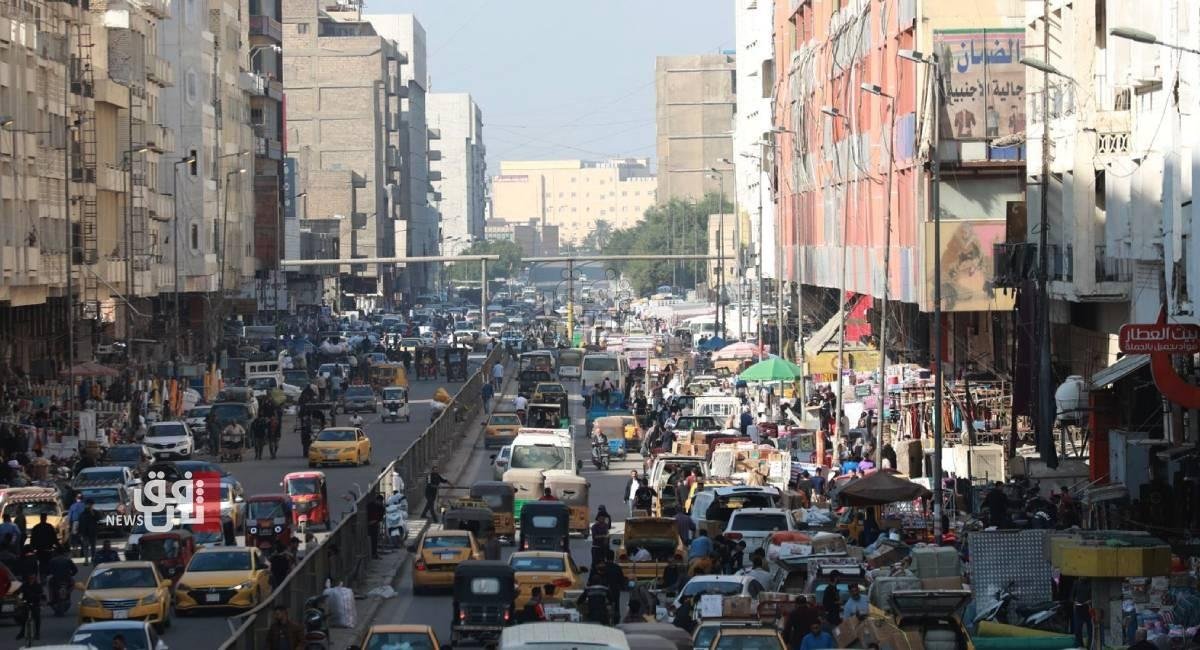
Data showed varying increases across the region, with Bahrain rising by 0.41 percentage points to 7%, Saudi Arabia and Oman each up by 0.26 points, and Jordan by 0.24 points. The UAE, Qatar, and Kuwait saw smaller increases ranging between 0.27 and 0.28 points, while Kuwait remained the lowest overall at 4.4%.
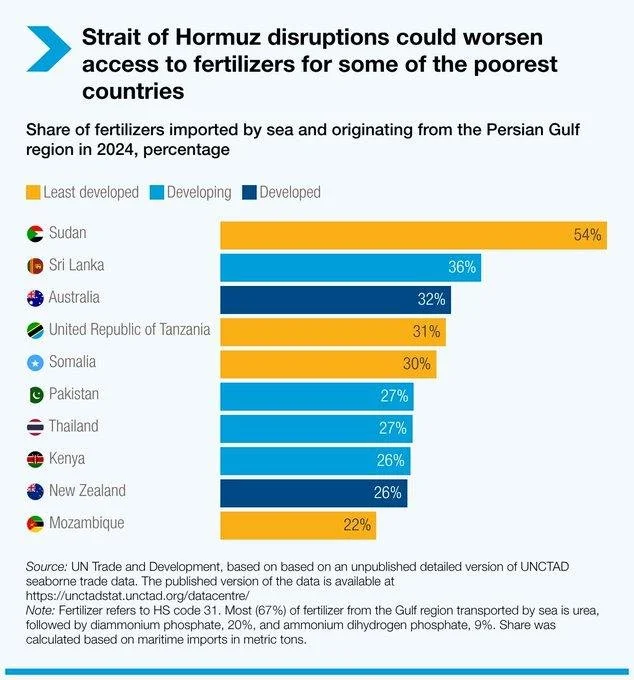
The organization noted that rising borrowing costs have added economic pressure amid escalating tensions in the Strait of Hormuz, where disruptions to energy and fertilizer flows have led to a near halt in shipping since late February 2026. Transport and maritime insurance costs have surged by more than 90%, driving sharp increases in oil, gas, and fertilizer prices and directly impacting food production and prices in Iraq and other import-dependent countries.
The Strait of Hormuz carries about one-third of global seaborne fertilizer. With trade highly concentrated, disruption risks grow. Many countries rely on Gulf-region supplies for staple crops, including #LDCs like Sudan, Tanzania & Somalia.
Read more: https://ow.ly/q9ZI50YBhby
https://www.shafaq.com/en/Economy/Iraq-hardest-hit-by-Hormuz-strait-disruptions
Iraqi Analyst Warns Of March Oil Revenue Shortfall Amid Oil Field Closures
2026-04-02 Shafaq News- Baghdad Seven major oil fields in Basra remain closed as of the end of March 2026, while four producing fields generated a combined daily output of 659,000 barrels per day through three state oil companies, according to Nabil Al-Marsoumi, a political analyst and professor at Al-Maqal University in Basra.
Al-Marsoumi reported that despite Iraq continuing oil exports through the Strait of Hormuz until March 8, March oil revenues did not exceed 1.9 billion dollars, equivalent to approximately 2.5 trillion Iraqi dinars. He warned that Iraq requires an additional 5 trillion dinars to cover salaries for May alone.
The analyst called for the urgent formation of a full-authority Iraqi government and preparation of a 2026 budget to provide legal cover for domestic and foreign borrowing, discounting transfers at the Central Bank of Iraq, and other measures to meet basic needs, including salaries, social welfare, water, and electricity services.
The State Organization for Marketing of Oil (SOMO) did not officially release figures for March. However, February data showed that total crude oil exports reached approximately 99.9 million barrels, generating revenues exceeding $6.8 billion. Exports from central and southern Iraqi fields totaled 93.3 million barrels, while the Kurdistan Region exported 5.6 million barrels via the Turkish port of Ceyhan. The Qayyarah field contributed 971,130 barrels.
Read more: Iraq's energy vulnerability: When a petro-state hasno buffer
Read more: Energy war nears Iraq: Oil infrastructure faces rising threat
Strait Of Hormuz Closure Stifles Iraqi E-Commerce
2026-04 Shafaq News The closure of the Strait of Hormuz has slowed e-commerce across Iraq, prolonging delivery times, raising costs, and forcing a growing number of customers to cancel online orders.
Shadha Abdul Karim, who operates an online store through social media, described mounting shipping setbacks affecting orders routed via the Strait, leading to widespread cancellations.
“Customers are entitled to cancel and receive full refunds if orders are not delivered on time,” she informed Shafaq News, adding that higher shipping costs under current conditions are likely to erode profits, while noting that she had kept prices low to attract buyers.
“I regret that not all customers received their orders on time, but this was beyond my control. I contacted affected clients to explain the hold-ups caused by the exceptional situation,” she explained.
Similar concerns are being reported by other sellers. Hala Hamid, another online retailer, pointed to the broader impact on supply chains, particularly imports from global platforms such as China’s Shein.
“The closure has led to noticeable delays in shipments due to disruptions in some sea and air routes, as well as higher transport costs, which in turn affected delivery schedules,” she noted.
Economists indicate that the fallout extends beyond logistics. The Strait of Hormuz, a key passage for global energy flows, plays a central role in shaping shipping costs, inflation, and trade patterns worldwide.
Economic expert Mustafa Al-Faraj noted that e-commerce depends heavily on speed and affordability, making it particularly sensitive to disruptions in major shipping routes.
“Higher oil prices immediately increase shipping and transport costs, whether by sea or air, which raises the prices of goods sold online and reduces consumers’ purchasing power,” he relayed to Shafaq News, adding that disruptions in supply chains from Asia, especially China and India, are likely to slow delivery times, weakening a key advantage of online shopping.
Al-Faraj also pointed out that major e-commerce companies may scale back promotions or transfer higher costs to consumers, with emerging markets like Iraq feeling the effects more sharply due to heavy reliance on imports.
In parallel, economic expert Ali Dadoush pointed to a wider chain reaction tied to currency stability and financial flows. “Any disruption in maritime traffic through the strait will increase shipping costs and prolong delivery timelines, which directly affects online markets through higher prices, reduced product variety, and longer delivery times,” he explained to Shafaq News.
He added that declining oil revenues could pressure exchange rates and limit dollar liquidity, increasing import costs and weakening purchasing power. Stricter controls on foreign transfers could also disrupt digital payments, potentially reducing online transactions and pushing some consumers back toward cash.
“The overall impact points to stagflation, with a contraction in e-commerce volumes alongside rising prices and declining consumer confidence,” he concluded, noting that while limited opportunities may emerge for local e-commerce growth, they are unlikely to offset short-term pressures without broader policy support.
Written and edited by Shafaq News staff.
https://www.shafaq.com/en/Report/Strait-of-Hormuz-closure-stifles-Iraqi-e-commerce
Read more: Hormuz lockdown: Iraq’s economic lifeline under threat
Read more: Iraq's energy vulnerability: When a petro-state has no buffer
Dollar Slips In Baghdad And Erbil Markets
2026-04-02 Shafaq News- Baghdad/ Erbil The US dollar opened Thursday’s trading lower in Iraq, hovering around 154,000 dinars per 100 dollars, according to a survey by Shafaq News Agency.
The dollar traded in Baghdad's Al-Kifah and Al-Harithiya exchanges at 154,400 dinars per 100 dollars, down from 154,750 dinars recorded on Wednesday.
In the Iraqi capital, exchange shops sold the dollar at 155,000 dinars and bought it at 154,000 dinars, while in Erbil, selling prices stood at 154,300 dinars and buying prices at 154,150 dinars.
https://www.shafaq.com/en/Economy/Dollar-slips-in-Baghdad-and-Erbil-markets
Dollar Rises In Baghdad And Erbil Markets
2026-04-02 Shafaq News- Baghdad/ Erbil The US dollar closed Thursday’s trading higher in Iraq, hovering around 154,000 dinars per 100 dollars
According to a Shafaq News market survey, the dollar traded in Baghdad's Al-Kifah and Al-Harithiya exchanges at 154,500 dinars per 100 dollars, up from the morning session’s 154,400 dinars.
In the Iraqi capital, exchange shops sold the dollar at 155,000 dinars and bought it at 154,000 dinars, while in Erbil, selling prices stood at 154,750 dinars and buying prices at 154,600 dinars.
https://www.shafaq.com/en/Economy/Dollar-rises-in-Baghdad-and-Erbil-markets-4-0
Gold Prices Fall In Baghdad And Erbil
2026-04-02 Shafaq News- Baghdad/ Erbil On Thursday, gold prices hovered around 1 million IQD per mithqal in Baghdad and Erbil markets, according to a survey by Shafaq News Agency.
Gold prices on Baghdad's Al-Nahr Street recorded a selling price of 1,005,000 IQD per mithqal (equivalent to five grams) for 21-carat gold, including Gulf, Turkish, and European varieties, with a buying price of 1,001,000 IQD. The same gold had sold for 1,026,000 IQD on Wednesday.
The selling price for 21-carat Iraqi gold stood at 975,000 IQD, while the buying price reached 971,000 IQD.
In jewelry stores, the selling price per mithqal of 21-carat Gulf gold ranged between 1,005,000 and 1,015,000 IQD, while Iraqi gold sold for between 975,000 and 985,000 IQD.
In Erbil, 22-carat gold was sold at 1,063,000 IQD per mithqal, 21-carat gold at 1,014,000 IQD, and 18-carat gold at 869,000 IQD. https://www.shafaq.com/en/Economy/Gold-prices-fall-in-Baghdad-and-Erbil-9
Is Iraq Testing the IQD for Programmable Money?
Is Iraq Testing the IQD for Programmable Money?
Edu Matrix: 4-2-2026
The concept of programmable money has been gaining traction globally, with countries like China and Iraq exploring its potential to revolutionize the way financial transactions are conducted.
Programmable money refers to a digital currency system embedded with rules that can restrict or enable transactions based on certain conditions, such as credit scores or governmental approval.
Is Iraq Testing the IQD for Programmable Money?
Edu Matrix: 4-2-2026
The concept of programmable money has been gaining traction globally, with countries like China and Iraq exploring its potential to revolutionize the way financial transactions are conducted.
Programmable money refers to a digital currency system embedded with rules that can restrict or enable transactions based on certain conditions, such as credit scores or governmental approval.
However, the Central Bank of Iraq’s (CBI) ongoing experiment with programmable money is facing significant resistance from the Iraqi population, raising concerns about the feasibility of this concept.
In a recent Edu Matrix YouTube video, Sandy Ingram discussed the CBI’s efforts to introduce a new digital currency system and the challenges it faces.
The Iraqi people’s reluctance to adopt this new system is rooted in their mistrust of the government’s intentions and concerns about the potential loss of financial autonomy. As a result, citizens are refusing to deposit their money into banks or engage with the new digital currency system, posing a significant challenge to the CBI’s plans.
The CBI’s ability to implement programmable money depends on gaining control over the country’s currency circulation. However, with the majority of Iraqis opting out of the formal banking system, the CBI is facing a significant hurdle.
If people continue to reject the new digital currency, the government might resort to forcing a currency exchange, requiring citizens to swap old banknotes for new digital ones to participate in everyday economic activities like buying food.
This situation is critical to monitor, as it could have broader implications for the adoption of programmable money and digital currencies worldwide. The Iraqi case highlights the importance of public trust and acceptance in the successful implementation of digital currency systems.
As governments and central banks around the world explore the potential of programmable money, they must consider the potential risks and challenges associated with its adoption.
The parallels between Iraq’s experience and China’s digital currency initiatives are striking. China’s digital currency system has been criticized for its potential to control individuals’ financial activities based on behavior or status. Similarly, the CBI’s programmable money system raises concerns about the potential for governmental control over citizens’ financial lives.
As the world watches the unfolding situation in Iraq, it is clear that the success or failure of the CBI’s experiment will have far-reaching consequences. If the Iraqi people continue to resist the new digital currency system, it may signal a broader rejection of programmable money and digital currencies globally.
In conclusion, the Iraqi experiment with programmable money serves as a cautionary tale for governments and central banks around the world.
As we move towards a more digitalized financial system, it is essential to prioritize public trust, transparency, and acceptance. The success of digital currency adoption depends on it. For further insights and information, watch the full video from Edu Matrix, where Sandy Ingram provides a more in-depth analysis of the situation.
Seeds of Wisdom RV and Economics Updates Thursday Morning 4-2-26
Good Morning Dinar Recaps,
De-Dollarization Accelerates: China Settles $1.3 Trillion in Yuan With ASEAN
BRICS momentum builds as China expands yuan-based trade across Southeast Asia, signaling a growing shift away from U.S. dollar dominance.
Good Morning Dinar Recaps,
De-Dollarization Accelerates: China Settles $1.3 Trillion in Yuan With ASEAN
BRICS momentum builds as China expands yuan-based trade across Southeast Asia, signaling a growing shift away from U.S. dollar dominance.
OVERVIEW (KEY POINTS)
A major financial shift is unfolding as China reports settling 8.9 trillion yuan (≈ $1.3 trillion USD) in cross-border transactions with ASEAN countries.
This marks a more than 50% year-over-year increase, highlighting a rapid acceleration in the use of local currencies over the U.S. dollar in regional trade.
The development reflects a broader trend tied to BRICS efforts to reduce reliance on the dollar, as emerging economies increasingly prioritize monetary independence and regional financial stability.
The key shift: Trade is no longer automatically defaulting to the U.S. dollar
KEY DEVELOPMENTS
1. $1.3 Trillion Settled in Yuan Signals Massive Shift
China’s trade settlement data reveals a significant milestone.
8.9 trillion yuan used in ASEAN trade settlements
Equivalent to $1.3 trillion USD in value
Represents a 50%+ annual increase
This scale confirms that de-dollarization is no longer theoretical—it is actively happening
2. ASEAN Increasingly Adopts Local Currency Trade
Regional economies are shifting payment preferences.
ASEAN nations are favoring local currencies over the dollar
The Chinese yuan is becoming a primary settlement currency
The Indonesian rupiah is also gaining traction
This reflects a move toward regional financial autonomy
3. Yuan Expands as a Regional Anchor Currency
China is strengthening its monetary influence.
The yuan is being positioned as a regional trade currency
Officials highlight its role in financial stability and security
Cross-border yuan usage is rapidly expanding across sectors
The yuan is evolving from a trade tool into a strategic financial instrument
4. Multi-Currency Trade System Emerging
The shift goes beyond just China.
Other BRICS currencies gaining usage include:
Indian rupee
Russian ruble
South African rand
This signals the rise of a multi-currency global trade system
5. Pressure Builds on U.S. Dollar Dominance
The implications for the dollar are significant.
Reduced reliance on the dollar in trade settlements
Gradual erosion of global reserve currency dominance
Increased competition from regional currency blocs
The dollar is not collapsing—but it is facing growing structural pressure
WHY IT MATTERS
This development represents a fundamental shift in how global trade is conducted.
For decades, the U.S. dollar has been the default currency for international transactions. Now:
Countries are diversifying currency exposure
Trade is becoming regionally aligned
Financial systems are becoming less centralized
This is a slow but powerful transformation of the global monetary system
WHY IT MATTERS TO FOREIGN CURRENCY HOLDERS
Currency diversification: More currencies are gaining global relevance
Dollar exposure: Reduced dominance may impact long-term dollar strength
Exchange volatility: Multi-currency trade increases FX fluctuations
Investment shifts: Capital may flow into emerging market currencies
IMPLICATIONS FOR THE GLOBAL RESET
This is a clear example of de-dollarization moving from concept to execution
Trade settlement behavior is the foundation of currency power
Pillar 2: Rise of Regional Financial Systems
ASEAN and BRICS are building parallel financial ecosystems
Local currency trade
Regional liquidity networks
Reduced dependence on Western systems
This points toward a fragmented but more balanced global system
CONCLUSION
China’s $1.3 trillion yuan settlement with ASEAN is not just a data point—it is a signal of structural change.
The global financial system is gradually shifting from:
One dominant currency (USD) to a network of competing regional currencies.
This transition will not happen overnight—but it is clearly underway.
The dominance of the U.S. dollar is no longer being assumed—it is now being challenged in real time through trade, policy, and strategic alignment.
Seeds of Wisdom Team
Newshounds News™ Exclusive
SOURCES
Watcher Guru — "BRICS: China Settles $1.3 Trillion in Chinese Yuan With ASEAN Nations"
Jakarta Globe — "China-ASEAN Cross-Border Yuan Settlements Surge"
~~~~~~~~~~
🌱 A Message to Our Currency Holders🌱
If you’ve been holding foreign currency for many years, you were not foolish.
You were not wrong to believe the global financial system would change.
What failed was not your patience — it was the information you were given.
For years, dates, rumors, and personalities replaced facts, structure, and proof. “This week” predictions created cycles of hope and disappointment that were never based on how currencies actually change.
That is not your failure.
Our mission here is different: • No dates • No rates • No hype • No gurus
Instead, we focus on:
• Verifiable developments • Institutional evidence
• Global financial structure • Where countries actually sit in the process
Currency value changes only come after sovereignty, trade, banking, settlement systems, and fiscal coordination are in place. History and institutions confirm this sequence.
You will see silence. You will see denials. That is not delay — that is discipline.
Protect your identity. Organize your documents. Verify everything.
Never hand your discernment to anyone who cannot show proof.
You deserve truth — not timelines.
Seeds of Wisdom Team
Newshounds News
~~~~~~~~~~
Seeds of Wisdom Team RV Currency Facts Youtube and Rumble
Newshound's News Telegram Room Link
RV Facts with Proof Links Link
RV Updates Proof links - Facts Link
Follow the Gold/Silver Rate COMEX
Follow Fast Facts
Seeds of Wisdom Team™ Website
Thank you Dinar Recaps
Iraq Economic News And Points To Ponder Thursday Morning 4-2-26
An analytical comparison between the central bank's support for the national economy and Iraq's qualification for the World Cup
Samir Al-Nassiri Economy News – Baghdad On April 1st, Iraqis everywhere, from the far north to the far south, and those living abroad, erupted in a frenzy of joy that defied all logic as their national team qualified for the World Cup, the highest tournament in which nations can participate. Iraq's name echoed across news agencies, newspapers, and media outlets worldwide.
An analytical comparison between the central bank's support for the national economy and Iraq's qualification for the World Cup
Samir Al-Nassiri Economy News – Baghdad On April 1st, Iraqis everywhere, from the far north to the far south, and those living abroad, erupted in a frenzy of joy that defied all logic as their national team qualified for the World Cup, the highest tournament in which nations can participate. Iraq's name echoed across news agencies, newspapers, and media outlets worldwide.
The true reason for this was that the team represented all Iraqis and had qualified after being restructured and developed by an experienced coach who refused to accept defeat and whose goal was always to overcome challenges. This success was further fueled by players who loved Iraq and possessed the spirit of challenge and determination to reach the World Cup.
In an analytical approach that some may find strange, I find it consistent with the reality that the world is currently experiencing in complex political, security and, most importantly, economic circumstances.
Especially the countries of the geographical region and Iraq directly, and its suffering from the effects of the current situation on our economy and the cessation of Iraq’s main revenue, which is oil exports, along with the lack of liquidity in the government and a financial situation and challenge that threatens the imminent collapse of the Iraqi economy if the current war continues.
Here, the Central Bank of Iraq emerged to announce its commitment to confronting the crisis and its determination to overcome the challenges, steer the economy away from collapse for as long as possible, and address the shortcomings in other sectors. This was clarified in its statement on March 8th.
So the Central Bank is now steering the ship of the economy towards the shore of rescue and real reform through wise measures it has taken for the years 2023-2025 and is currently taking through its implementation of the economic reform strategy, achieving monetary and financial stability, and building foreign currency and gold reserves, which ensures the smooth running of the economy and confirms that it is always the savior in all the economic shocks that Iraq has suffered in the past and present.
This is what will make all Iraqis rejoice, just as they rejoiced when our national team qualified for the World Cup.
Therefore, the belief is that Iraqis will always triumph in the economy, sports, and other fields because they believe that they create opportunities from challenges.
O God, protect Iraq and its noble people, and let us proclaim this with the loudest voices.
Hold your head high, you are Iraqi. https://www.economy-news.net/content.php?id=67429
A Massive Oil Pipeline Project Linking Iraq To Three Seas Amid Regional Crises... And A Silence That Raises Questions
Reports Economy News – Baghdad In a remarkable development with significant economic and strategic dimensions, information has emerged that Heritage Funds LPF, based in Hong Kong, has submitted a formal offer to the Iraqi Ministry of Oil to implement and finance two giant oil and gas pipeline projects, within the framework of barter contracts in exchange for a share of crude oil.
This offer comes at a very sensitive time, coinciding with the repercussions of the Iranian-Israeli-American war, and the accompanying regional turmoil that led to the cessation of Iraqi oil exports as a result of the closure of the Strait of Hormuz, which doubled the need to find alternative and safe outlets for oil exports.
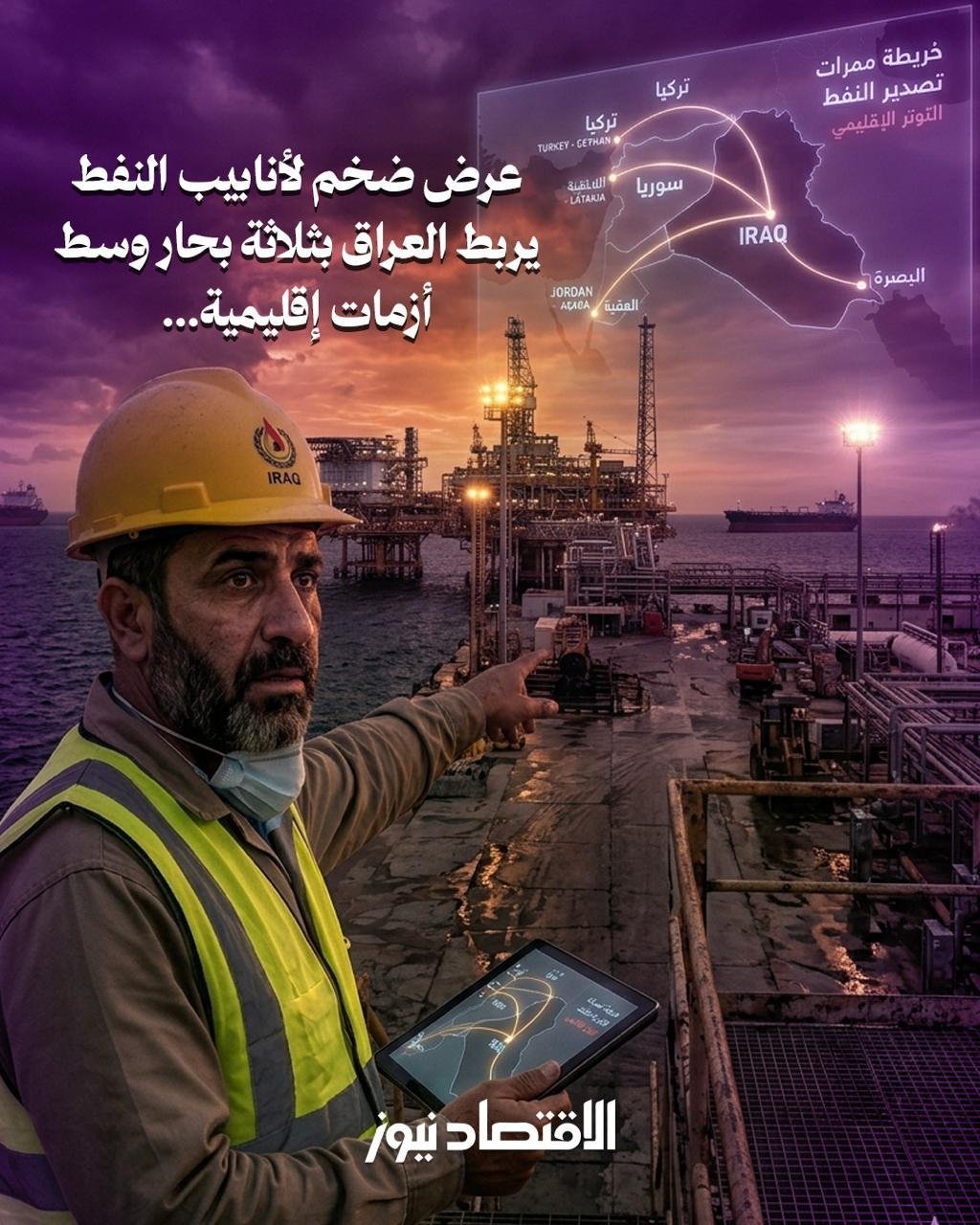
Despite the importance and size of the offer under these circumstances, the surprising and controversial aspect is that the Iraqi Ministry of Oil has not yet issued any official response to the proposal, which raises questions about the fate of one of the most prominent potential projects in the Iraqi energy sector.
In this regard, economist Nabil Al-Marsoumi presented details of a new proposal to extend oil pipelines in Iraq, in a move aimed at enhancing export capabilities and diversifying the country’s oil outlets.
According to the information presented, Heritage Funds LPF, based in Hong Kong, submitted a proposal to the Iraqi Ministry of Oil to implement and finance a strategic project to lay oil and gas pipelines, based on an Engineering, Procurement and Construction (EPC) system, and in the form of barter contracts in exchange for a share of crude oil.
The proposal includes the implementation of two main projects: The first: extending a pipeline starting from the port of Basra to the modern city, and then extending to the port of Aqabain Jordan, or to the port of Latakia on the Mediterranean Sea in Syria.
The second project, according to Al-Marsoumi, is the construction of a pipeline extending from the port of Basra to the Turkish border.
These projects, if implemented, are expected to reduce reliance on traditional outlets, enhance the flexibility of Iraqi oil exports, and open new horizons for regional cooperation in the energy sector.
Innovative Financing In Times Of Crisis
According to the details of the offer, the company relies on the Engineering, Procurement and Construction (EPC) system, where it undertakes the financing and implementation in full, in exchange for recovering costs through a share of crude oil, which may constitute a practical solution in light of the financial crises and pressures facing the country.
A Chance For Salvation Or A Disturbing Silence?
With exports through the Gulf halted, observers believe that these projects are no longer just development options, but have become a strategic necessity to ensure the continued flow of Iraqi oil to global markets.
However, the absence of an official response from the Iraqi Ministry of Oil remains the most prominent issue, which puts this offer between two possibilities: either a real rescue opportunity under consideration, or a project that may be lost amidst complications and delays.
Between a crippling export crisis and a huge investment opportunity, the most pressing question remains: Why is the Iraqi Ministry of Oil remaining silent so far?
Does this silence foreshadow an upcoming decision, or does it reflect a hesitation that could cost Iraq a historic opportunity at one of the most critical moments in its oil history?https://www.economy-news.net/content.php?id=67300
Oil Prices Rally 6% Following Trump Address On Iran War
2026-04-02 Shafaq News Oil prices climbed more than $5 on Thursday, as President Donald Trump said the United States would keep up attacks on Iran without committing to a specific timeline to end the war, fanning investor fears about sustained disruptions to supply.
Brent crude futures rose $6.33, or 6.3%, to $107.49 per barrel by 0407 GMT. U.S. West Texas Intermediate crude futures were up $5.28, or 5.3%, to $105.40 per barrel.
The gains followed an earlier fall of more than $1 in both benchmarks prior to Trump's televised speech to the nation, after having settled lower in the previous session.
"We are going to finish the job, and we're going to finish it very fast. We're getting very close," Trump said, adding that the U.S. military had nearly achieved its goals in the conflict which would end in two to three weeks, but giving no specifics.
Markets are reacting to the fact that "no clear mention of ceasefire or diplomatic engagement," figured in the speech, said Priyanka Sachdeva, senior market analyst at Phillip Nova.
"If tensions intensify or maritime risks increase, oil could test fresh highs as markets price in potential supply disruptions."
Threats to maritime traffic have grown as the regional conflict intensifies. On Wednesday an oil tanker leased to QatarEnergy was hit by an Iranian cruise missile in Qatari waters, its defence ministry said.
The head of the International Energy Agency also cautioned that supply disruptions would start to affect Europe's economy in April. The continent had previously been shielded by cargoes contracted before the start of the war.
"Without any mention of a solid ceasefire plan or material off ramp, markets are left continuing to digest the administration's statements," said Claudio Galimberti, Rystad Energy's chief economist. (REUTERS)
https://www.shafaq.com/en/Economy/Oil-prices-rally-6-following-Trump-address-on-Iran-war
Basrah Crude Drops Over 9% Despite Global Oil Rise
2026-04-02 Shafaq News- Basrah Basrah crude fell more than 9% on Thursday, diverging from rising global oil prices.
Basrah Heavy dropped $10.96, or 9.79%, to $98.46 per barrel, while Basrah Medium fell by the same amount, 9.61%, to $100.56 per barrel.
Global benchmarks rose, with Brent at $107.49 per barrel and US West Texas Intermediate (WTI) at $105.40, recovering part of the previous session’s losses.
Iraqi crude is priced by destination: exports to Asia track the average of Dubai and Oman crude, shipments to Europe are benchmarked to Brent, and exports to the United States follow WTI, each with premiums or discounts based on market conditions.https://www.shafaq.com/en/Economy/Basrah-crude-drops-over-9-despite-global-oil-rise
Fiat Collapse Incoming? MacLeod Warns of Bond, Dollar & Gold Shock
Fiat Collapse Incoming? MacLeod Warns of Bond, Dollar & Gold Shock
Liberty and Finance: 4-1-2026
Are we witnessing the final act of the fiat currency system?
Join Dunagun Kaiser and Alasdair MacLeod as they break down:
The coming surge in U.S. and G7 bond yields
Fiat Collapse Incoming? MacLeod Warns of Bond, Dollar & Gold Shock
Liberty and Finance: 4-1-2026
Are we witnessing the final act of the fiat currency system?
Join Dunagun Kaiser and Alasdair MacLeod as they break down:
The coming surge in U.S. and G7 bond yields
How the dollar and other major currencies are losing purchasing power
Why gold and silver demand is exploding globally, especially in Asia
The risks for Western investors, pensions, and 401Ks
INTERVIEW TIMELINE:
0:00 Intro
1:30 Bond yields
12:30 Dollar debasement
28:30 Gold outlook
32:30 Macleod Finance
“News Tidbits From TNT” Thursday AM 4-2-2026
TNT:
Tishwash: The US embassy warns of attacks in central Baghdad.
The US Embassy in Baghdad warned on Thursday morning that Iraqi factions may carry out attacks in the center of the Iraqi capital “within the next 24 to 48 hours.”
The embassy issued a security alert to its citizens, published on the X platform, stating that attacks were expected in central Baghdad within the next 24 to 48 hours, and reiterating its call for its citizens to leave.
TNT:
Tishwash: The US embassy warns of attacks in central Baghdad.
The US Embassy in Baghdad warned on Thursday morning that Iraqi factions may carry out attacks in the center of the Iraqi capital “within the next 24 to 48 hours.”
The embassy issued a security alert to its citizens, published on the X platform, stating that attacks were expected in central Baghdad within the next 24 to 48 hours, and reiterating its call for its citizens to leave. link
************
Tishwash: Parliamentary Finance Committee reassures: Iraq has sufficient cash reserves to cover salaries for six months.
Jamal Kojar, a member of the Finance Committee in the Iraqi Parliament, confirmed on Wednesday that Iraq has a cash reserve of around $97 billion, which allows it to secure salaries for 6 months even if revenues stop completely.
In a televised interview, which was monitored by Al-Ghad Press, Kujer said: "There is no doubt that the repercussions of the war have already begun to appear globally.
If you ask a citizen in America, Italy, or even China about fuel and energy prices, you will find a clear impact because energy sources and trade routes have become threatened. As for Iraq, talking about the state's inability to pay salaries at the moment is inaccurate, because the war is still in its early stages."
He pointed out that "Iraq has gone through more difficult crises, such as the war against ISIS (2014-2018) and the Corona crisis, and salaries were not cut."
He added: "If the war continues for more than two additional months, or if Iraq becomes directly involved as a state in the conflict, then the economy and the bank reserves will be exposed to real risks, and we may see an impact on the value of the currency and difficulty in cash withdrawals."
Kojo stressed that "closing the Strait of Hormuz is a catastrophic scenario for global trade routes, not just for Iraq," adding, "We are also awaiting a speech from Trump, which may change the balance of power; he will either push for de-escalation or increase the severity of sanctions, and both will affect the global economy." link
************
Tishwash: Oil production has stopped, and the public is asking, "Where is the liquidity?
The delay in paying employee salaries in recent days has sparked widespread concern among the Iraqi public, especially as the payment coincided with a long Eid holiday followed by heavy rains that disrupted work in several institutions. This has led to various interpretations, some pointing to a potential liquidity crisis amidst the current regional pressures.
This comes after the suspension of official work for two consecutive days, Wednesday and Thursday, as part of the government's celebrations of the national team's qualification for the World Cup finals.
While this move was described as having a popular character and a message of moral support to the public, it also ignited a broad debate among political and economic circles regarding the limits of using official holidays as a tool for responding to events, and whether it aligns with the country's work and production needs.
This comes after a series of government-announced holidays in recent days, following the Eid al-Fitr holiday, due to severe weather and heavy rainfall.
This has increased the number of official holidays in a short period, prompting observers to warn of the repercussions of accumulating holidays on institutional performance and public services.
The official weekend (Friday and Saturday) will exacerbate the suffering of employees already facing long waits for their salaries.
The salary delays come at a highly sensitive time, coinciding with the escalation of the regional conflict, which has directly impacted the Iraqi economy. This is particularly true given the near-complete halt in oil exports due to disruptions in supply routes through the Strait of Hormuz. Many are linking the salary delays to the decline in state revenues, as oil is the primary source of funding for the national budget.
In a country heavily reliant on oil revenues to cover operating expenses, especially salaries, any disruption to exports immediately affects public sentiment and heightens anxiety among citizens, especially in the absence of immediate clarifications to determine the nature of the situation and distinguish between administrative shortcomings and a potential financial crisis.
He pointed out that "the alternatives currently available are not as easy as expected. We have the Kurdistan route and the Aqaba route through Jordan, which are available options, but their capacity is limited compared to Basra. Even Saudi Arabia may open its borders, but the question is: Will these routes remain safe from being targeted in the event of a full-scale war?"
Kujer continued: "I assure citizens that salaries will not be affected in the foreseeable future. Iraq has a cash reserve (about $97 billion) that allows it to secure salaries for 6 months even if revenues stop completely." link
************
Tishwash: A delegation from the Kurdistan Democratic Party arrives in Baghdad to discuss three issues with political parties.
A high-level delegation from the Kurdistan Democratic Party arrived in the capital, Baghdad, on Tuesday afternoon, March 31, 2026.
According to information obtained by Kurdistan 24, the delegation includes: Fadhil Mirani, head of the working body of the party’s political bureau; Fawzi Hariri, head of the Kurdistan Region Presidency’s office; and Nawzad Hadi and Omid Sabah, members of the party’s central committee.
The party delegation is scheduled to discuss the following topics with Iraqi political parties:
Missile and drone attacks targeting the Kurdistan Region.
The formation of the new Iraqi government.
Election of a new president for Iraq.
The Kurdistan Region has been subjected to several missile and drone attacks in the past period, which has caused great concern among the Kurdish political leadership.
The Kurdistan Democratic Party (KDP) consistently seeks, through dialogue, to urge the federal government to uphold its responsibilities in protecting the sovereignty of Iraqi territory and the Kurdistan Region. This delegation's visit is part of ongoing efforts to pressure decision-makers in Iraq to prevent the recurrence of such attacks and maintain security and stability in the region. link
Seeds of Wisdom RV and Economics Updates Wednesday Evening 4-1-26
Good Evening Dinar Recaps,
CLARITY Act Nears Breakthrough: Stablecoin Reward Deal Could Unlock U.S. Crypto Regulation
Lawmakers appear close to resolving a critical dispute over stablecoin rewards, potentially clearing the path for landmark crypto legislation.
Good Evening Dinar Recaps,
CLARITY Act Nears Breakthrough: Stablecoin Reward Deal Could Unlock U.S. Crypto Regulation
Lawmakers appear close to resolving a critical dispute over stablecoin rewards, potentially clearing the path for landmark crypto legislation.
OVERVIEW (KEY POINTS)
Momentum is building around the Digital Asset Market CLARITY Act, as a key sticking point—stablecoin rewards (yield)—may soon be resolved.
According to comments from leadership at Coinbase, a compromise between regulators, banks, and crypto firms could be reached within days, raising expectations that the bill could advance in the Senate this month.
However, despite this optimism, market participants are becoming more cautious, with reduced confidence that the bill will be signed into law in 2026, reflecting ongoing political and regulatory uncertainty.
At the center of the debate is a high-stakes conflict between traditional banking and the crypto industry, with implications for the future of money, payments, and financial control systems.
KEY DEVELOPMENTS
1. Stablecoin Rewards Dispute Nearing Resolution
The biggest obstacle to the bill may soon be resolved.
Disagreement centers on whether crypto platforms can offer rewards (yield) on stablecoin holdings
A deal is reportedly close, with negotiations intensifying this week
This single issue has delayed the entire U.S. crypto regulatory framework
2. Banks vs Crypto: The Core Battle for Deposits
The conflict is fundamentally about who controls money flows.
Banks argue rewards act like interest-bearing accounts without regulation
Crypto firms argue banning rewards would stifle innovation and adoption
At stake: trillions in potential capital migration from banks to digital assets
3. Proposed Compromise: Limited Rewards Structure
Lawmakers are exploring a middle-ground solution.
Allow activity-based or peer-to-peer rewards
Restrict passive interest-like payments on idle balances
This would protect banks while still allowing crypto ecosystem growth
4. Market Reaction Signals High Stakes
Financial markets are already responding to the uncertainty.
Crypto-related stocks dropped sharply when reward restrictions were proposed
Stablecoin incentives are a core driver of user adoption and platform revenue
This is not a minor feature—it is central to the crypto business model
5. CLARITY Act Defines Future Regulatory Structure
Beyond rewards, the bill reshapes the entire crypto landscape.
Defines whether assets fall under SEC or CFTC jurisdiction
Establishes rules for exchanges, custody, and investor protection
This is the foundation for integrating crypto into the U.S. financial system
WHY IT MATTERS
This is one of the most important financial developments underway right now.
The outcome will determine:
Whether crypto becomes fully integrated into the regulated system
Or remains restricted and fragmented
The stablecoin reward debate reveals a deeper truth:
This is not just about crypto—it is about control of deposits, liquidity, and financial influence
WHY IT MATTERS TO FOREIGN CURRENCY HOLDERS
Dollar dominance: Stablecoins extend the U.S. dollar into digital global markets
Yield competition: Crypto rewards challenge traditional banking returns
Capital flows: Money could shift rapidly between banks and blockchain systems
Currency evolution: Stablecoins may become a parallel monetary layer
IMPLICATIONS FOR THE GLOBAL RESET
Pillar 1: Battle for Control of Money Supply Channels
Banks and crypto platforms are competing for where value is stored and how it earns yield
This determines who controls liquidity in the next financial system
Pillar 2: Regulation as the Gateway to System Integration
The CLARITY Act represents a transition point:
From uncertainty and enforcement
To structured, regulated digital finance
Once defined, crypto can operate at institutional scale
CONCLUSION
The potential breakthrough in the CLARITY Act is not just legislative progress—it is a turning point in the evolution of finance.
At its core, the debate over stablecoin rewards reflects a larger shift:
Who will control the future of money—traditional banks or blockchain-based systems?
A compromise may unlock the next phase of crypto adoption, but the outcome will shape how value moves, where it is stored, and who benefits from it.
This is not just regulation—it is the restructuring of the financial system in real time.
Seeds of Wisdom Team
Newshounds News™ Exclusive
SOURCES
Yellow News — "CLARITY Act Stablecoin Deal Could Come Within 48 Hours, Coinbase CLO Predicts"
Reuters — "The Clarity Act and the future digital asset market"
~~~~~~~~~~
Seeds of Wisdom Team RV Currency Facts Youtube and Rumble
Newshound's News Telegram Room Link
RV Facts with Proof Links Link
RV Updates Proof links - Facts Link
Follow the Gold/Silver Rate COMEX
Follow Fast Facts
Seeds of Wisdom Team™ Website
Thank you Dinar Recaps
Iraq Economic News And Points To Ponder Wednesday Evening 4-1-26
IEA: Middle East War Erases 12M Barrels Daily
2026-04-01 Shafaq News- Paris Major disruptions to Middle East energy infrastructure have already withdrawn more than 12 million barrels per day (bpd) from global oil supply, the International Energy Agency (IEA) reported on Wednesday, as ongoing conflict in the region continues to damage key assets.
IEA: Middle East War Erases 12M Barrels Daily
2026-04-01 Shafaq News- Paris Major disruptions to Middle East energy infrastructure have already withdrawn more than 12 million barrels per day (bpd) from global oil supply, the International Energy Agency (IEA) reported on Wednesday, as ongoing conflict in the region continues to damage key assets.
The agency estimated that roughly 40 major energy facilities have been hit, describing the scale of the losses as more severe than the combined impact of the 1970s oil shocks and the 2022 reduction in Russian gas exports.
Warning that supply pressures are expected to intensify in April, with losses likely to match the pace seen in March, the IEA indicated it is assessing further use of strategic oil reserves to help offset the shortfall and support stability in global markets.
On March 11, member countries of the IEA agreed to release a record 400 million barrels of oil from strategic reserves to counter a surge in global crude prices following the closure of the Strait of Hormuz.
https://www.shafaq.com/en/Economy/IEA-Middle-East-war-erases-12M-barrels-daily
Nearly 300 Iraqi Fuel Trucks Cross Into Syria Via Al-Tanf
2026-04-01 Shafaq News- Damascus The first convoy of Iraqi fuel oil arrived in Syria through the Al-Tanf crossing on Wednesday, heading toward the Baniyas oil terminal, a Syrian official told Shafaq News.
Safwan Sheikh Ahmed, director of corporate communications at the Syrian Petroleum Company, said the convoy includes 299 tanker trucks, adding that technical teams began unloading operations to prepare the shipments for export via maritime tankers.
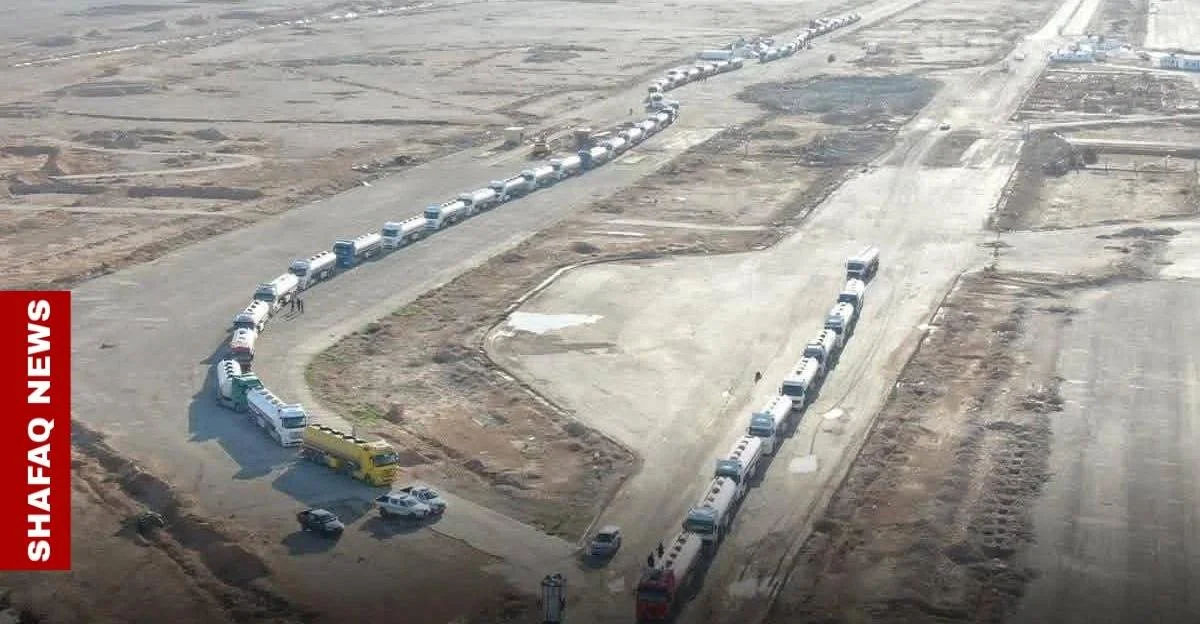
“The move is part of efforts to restore Syria’s role as a regional energy transit corridor and boost transit revenues, with plans to expand the route to include the transport and export of various petroleum products through Syrian ports.”
According to Mujahid Mardhi Al-Dulaimi, the head of Al-Waleed subdistrict in Iraq, more than 150 tanker trucks are waiting to enter Syrian territory, expecting daily crossings to reach around 500 tankers.
Earlier, oil expert and former Oil Ministry spokesperson Asim Jihad told Shafaq News that the shipments involve fuel oil rather than Iraqi crude, noting that “exporting through this method is a temporary necessity with limited volumes.”
https://www.shafaq.com/en/Economy/Nearly-300-Iraqi-fuel-trucks-cross-into-Syria-via-Al-Tanf
Read more: Iraq's energy vulnerability: When a petro-state has no buffer
USD/IQD Exchange Rates Fall In Baghdad And Erbil
2026-04-01 Shafaq News- Baghdad/ Erbil The US dollar closed Wednesday’s trading lower in Iraq, hovering around 154,000 dinars per 100 dollars.
According to Shafaq News market survey, the dollar traded in Baghdad's Al-Kifah and Al-Harithiya exchanges at 154,500 dinars per 100 dollars, down from the morning session’s 154,750 dinars.
In the Iraqi capital, exchange shops sold the dollar at 155,000 dinars and bought it at 154,000 dinars, while in Erbil, selling prices stood at 154,450 dinars and buying prices at 154,250 dinars.
https://www.shafaq.com/en/Economy/USD-IQD-exchange-rates-fall-in-Baghdad-and-Erbil-6
IEA: Middle East War Erases 12M Barrels Daily
2026-04-01 Shafaq News- Paris Major disruptions to Middle East energy infrastructure have already withdrawn more than 12 million barrels per day (bpd) from global oil supply, the International Energy Agency (IEA) reported on Wednesday, as ongoing conflict in the region continues to damage key assets.
The agency estimated that roughly 40 major energy facilities have been hit, describing the scale of the losses as more severe than the combined impact of the 1970s oil shocks and the 2022 reduction in Russian gas exports.
Warning that supply pressures are expected to intensify in April, with losses likely to match the pace seen in March, the IEA indicated it is assessing further use of strategic oil reserves to help offset the shortfall and support stability in global markets.
On March 11, member countries of the IEA agreed to release a record 400 million barrels of oil from strategic reserves to counter a surge in global crude prices following the closure of the Strait of Hormuz.
https://www.shafaq.com/en/Economy/IEA-Middle-East-war-erases-12M-barrels-daily
Iraq Drops To Last Place Among Turkiye Importers In February
2026-04-01 Shafaq News- Baghdad/ Ankara Iraq fell to the bottom of Turkiye’s top importers list in February, with imports dropping to $774 million from $1.009 billion a year earlier, according to Turkish statistical data (TURKSTAT).
Germany ranked first with $1.855 billion, followed by the United Kingdom at $1.245 billion, and the United States at $1.238 billion. Italy came fourth with $1.111 billion, while France and Spain followed with $928 million and $839 million, respectively.
The data showed Turkish exports were largely driven by manufacturing, alongside agriculture, forestry, fishing, and mining sectors, which together accounted for 94% of total exports.
https://www.shafaq.com/en/Economy/Iraq-drops-to-last-place-among-Turkiye-importers-in-February