
Thank you to all the subscribers to our Early Access program…we thank you for your continued support.
We are excited to offer this new service to keep you informed and up-to-date on the latest Dinar and currency news.
Iraq Economic News And Points To Ponder Thursday Afternoon 3-26-26
How Has The Iran War Affected Global Air Freight Rates?
Money and Business Economy News - Follow-up The military escalation in the Middle East is no longer just putting pressure on oil and energy markets; it has begun to impact air freight, one of the most sensitive sectors of global trade. With the closure of major airspaces, disruptions to transit traffic in key hubs like Dubai and Doha, and soaring jet fuel and insurance prices, air freight rates have skyrocketed. Meanwhile, disruptions to maritime shipping have prompted some companies to shift from sea to air freight despite the higher costs.
How Has The Iran War Affected Global Air Freight Rates?
Money and Business Economy News - Follow-up The military escalation in the Middle East is no longer just putting pressure on oil and energy markets; it has begun to impact air freight, one of the most sensitive sectors of global trade. With the closure of major airspaces, disruptions to transit traffic in key hubs like Dubai and Doha, and soaring jet fuel and insurance prices, air freight rates have skyrocketed. Meanwhile, disruptions to maritime shipping have prompted some companies to shift from sea to air freight despite the higher costs.
World ACD Reveals Air Freight Data:
The average global air freight rate rose during the week ending March 15, 2026 by 10% week-on-week to $2.67 per kilogram inclusive of fees, following an 8% increase the previous week.
Global spot prices rose by 12% to $3.19 per kilogram, while the biggest jump was in the Middle East and South Asia, where spot prices reached $4.37 per kilogram, a weekly increase of 22% and an annual increase of 58%.
On some of the main tracks, the jumps appeared more pronounced:
Shipping costs from South Asia to Europe have increased by 70%.
From South Asia to North America, 58%.
From Europe to the Middle East, 55%.
This reflects the widening scope of the impact, from a regional crisis to a disruption affecting global supply chains.
Reduced Capacity Fuels Price Increases
This surge is not so much related to a normal increase in demand as it is to a shock in capacity. The closure of airspace, even partially, over a number of Gulf countries, coinciding with the disruption of shipping in the Strait of Hormuz, has pulled out a significant portion of available global capacity, forcing airlines to cancel flights or reroute them via longer and more expensive routes.
Professor of Aviation Management at Surrey University, Nadine Aitani, says that one of the main reasons for the rise in air freight prices is “the sharp decline in the capacity of Gulf airlines after they closed, even partially, the airspace over Qatar, the UAE, Saudi Arabia and Kuwait.”
She adds that Dubai and Doha are among the world's largest air transit hubs, and that Middle Eastern airlines account for about 13% of global air cargo capacity, meaning that any widespread disruption to them is immediately reflected in the international market.
Aitani told Al Jazeera Net that the problem is not only related to the cancellation of some flights, but also that alternative routes consume more fuel, forcing planes to carry additional quantities of fuel, which reduces the space available for cargo and raises costs at the same time.
Longer Routes
Avoiding the conflict zone has altered the air traffic map on several major trade routes, particularly between Asia and Europe. Instead of transiting through Gulf distribution hubs, many airlines have been forced to operate longer flights with less efficient and flexible stopovers.
Aitani points out that the capacity of the China-Europe air corridor has decreased by more than 35% due to the closure of Gulf distribution centers, while resorting to the sea route around the Cape of Good Hope adds between 10 and 15 days to the transit time, a difference that is not commensurate with the nature of perishable goods or shipments that depend on rapid delivery.
This problem is also evident in what Cathay Pacific CEO Ronald Lam announced, when he explained that many cargo flights to Europe used to stop in Dubai to refuel and load more goods, but the company has started bypassing this stop and heading directly to Europe with cargo restrictions due to the inability to refuel along the way.
From Sea To Air
With some of the shipping traffic in the Gulf disrupted and more than 100 container ships stranded near the Strait of Hormuz, according to Reuters, some companies have turned to diverting some of their goods to air freight, even though this option is several times more expensive than sea freight.
Markets are particularly affected by this shift in the pharmaceutical, food and electronics sectors. Prashant Yadav, a pharmaceutical supply chain expert, told Reuters that some generic drugs and pharmaceutical ingredients coming from India used to be shipped by sea through the strait before being exported to Europe, Africa and some Arab countries, but a number of companies have started shipping them by air to avoid delays and maritime disruptions.
Aitani says that the closure of the Strait of Hormuz has made the ports of the Arabian Gulf unavailable for direct sea freight from Asia, making air transport “the only available option despite the high costs.”
She adds that companies find themselves facing a difficult equation: either bear the increase in cost, or pass it on to the end consumer.
Fuel And Insurance Premium
The pressure on air freight came not only from a lack of capacity, but also from high operating costs. Jet fuel prices increased by 11% weekly, to about 94% higher than pre-war levels, prompting carriers to impose additional fuel surcharges and war risk surcharges.
Aitani explains that fuel and insurance are two key items in the cost of air transport, and that any increase in them is quickly passed on to customers through additional fees. She warns that continued disruption for three to six months could keep fuel and insurance costs high across global supply chains.
Economist Ahmed Aql says that the war and military tensions have raised oil prices by about 45% since the beginning of the crisis, which has automatically been reflected in the costs of shipping companies.
He adds that changing routes, higher insurance costs, and the closure of some air and sea ports all explain the current surge in prices.
During his interview with Al Jazeera Net, Aql points out that some estimates suggest insurance costs could increase fivefold in some cases, meaning that companies are not only facing a higher fuel bill, but also a larger risk bill related to passing through a conflict zone.
Businesses And Consumers
The escalating unrest began to force real changes in corporate decisions. Major shipping companies like Maersk imposed additional charges for fuel and war risks, while companies like FedEx and UPS resorted to temporary increases and fees on shipments related to the Middle East.
Major airlines have also announced a review of their networks and a reduction in some unprofitable capacity due to high fuel pressure.
Conversely, importing and manufacturing companies have begun to reassess their reliance on air freight itself. As prices rise, this mode of transport is increasingly limited to essential, high-value, or time-sensitive goods, such as pharmaceuticals, fresh food, and certain technological components.
Ahmed Aql believes that the impact of rising shipping costs cannot be separated from inflation, noting that most goods go through one or more stages of transport before reaching the consumer.
Therefore, increased transportation costs, according to reason, are reflected in the final price, weaken purchasing power, and, if they continue, may lead to a reduction in both demand and production, which reinforces fears of inflation, slowdown, and perhaps recession in some economies.
Despite some signs of partial recovery in shipping volumes out of the Middle East and South Asia, the overall picture remains highly volatile.
Some airports and airspaces have resumed limited operations, but capacity constraints, delays and bottlenecks remain, and the availability of jet fuel itself has become an uncertain factor at some key points.
https://www.economy-news.net/content.php?id=67158
Government Advisor: Diversifying Export Outlets Supports Economic Stability And Enhances Financial Balance.
Money and Business Economy News – Baghdad The Prime Minister’s financial advisor, Mazhar Muhammad Salih, confirmed on Thursday that Iraq’s location enhances its role in the global energy system, explaining that diversifying export outlets supports economic stability and strengthens financial balance.
Saleh said that "Iraq, in its pursuit of a positive foreign policy based on the logic of negotiation and resolving conflicts by peaceful means instead of resorting to war, highlights the role of Iraqi diplomacy as an effective tool for gaining the respect of the international and regional communities."
He explained that “peace economics is gaining increasing importance, as it is an approach aimed at promoting stability by establishing the principle of non-war in addressing conflicts, especially in the Arabian Gulf region, which is one of the most vital energy corridors in the world, and Iraq is one of its geostrategic components.
He added that “Iraq’s location and production capacity contribute to making it an active element within the global energy supply system, which requires it to adopt flexible policies that ensure the continuation of oil exports within the available capabilities, while preserving its vital interests in light of geopolitical challenges,” noting that “Iraq’s ability to diversify oil export outlets, and to continue exporting even in light of turbulent regional conditions, is a policy aimed at maintaining economic stability and enhancing the state’s financial break-even point without interruption.”
Saleh stressed that "the ability to pass some shipments through strategic waterways, such as the Strait of Hormuz, simultaneously reflects a level of balance in international relations and mutual respect for Iraqi oil policies within the international framework."
He noted that “despite the surrounding geopolitical challenges, the continued flow of oil exports through routes passing through sensitive areas, along with the diversification of land and sea export outlets, contributes to enhancing the resilience of the Iraqi economy and allows it to gradually rebuild its financial balance,” pointing out that “this approach enhances opportunities for engaging in broader international cooperation and underscores the importance of protecting international waterways as a prerequisite for the stability of global trade.”
He stated that "these policies are consistent with the principles of international law and the Charter of the United Nations, which emphasize the need to respect the sovereignty of states, promote good relations between them, and enshrine the right of peoples to live in dignity within a stable and secure environment, leading to the building of a more just and stable international system, and contributing to ending conflicts and achieving sustainable peace."
https://www.economy-news.net/content.php?id=67157
Gold Prices Stabilize As Markets Await Signs Of De-Escalation In The Middle East.
Money and Business Economy News - Follow-up Gold prices were steady on Thursday as investors awaited clearer signs of progress in efforts to de-escalate the conflict in the Middle East, and remained cautious ahead of new geopolitical developments that could affect demand for safe-haven assets.
By 03:00 GMT, spot gold was trading at $4,503.29 per ounce. US gold futures for April delivery fell 1.2% to $4,500.
Iranian Foreign Minister Abbas Araqchi said on Wednesday that his country is studying the American proposal to halt the war but does not intend to hold talks to end the escalating conflict in the Middle East, according to Reuters.
Reports indicate that the United States sent the 15-point proposal to Tehran earlier this week, via Pakistan.
Kyle Rodda, senior financial markets analyst at Capital.com, said: "In the next 24 to 48 hours, (gold prices) will move in accordance with news related to the negotiations."
He added: "The big moves are likely to really happen at the beginning of next week when it becomes clear whether the United States will launch a ground invasion of Iran over the weekend."
White House spokeswoman Caroline Leavitt said on Wednesday that US President Donald Trump vowed to strike Iran even harder if it did not accept "military defeat".
Gold came under increased pressure as crude oil prices surpassed $100 a barrel, with investors reassessing the prospects for easing tensions in the Middle East.
According to the CME FedWatch tool, markets no longer expect any monetary easing from the Federal Reserve this year. Before the conflict erupted, market expectations were for at least two US interest rate cuts this year.
As for other precious metals, silver fell 0.1% to $71.19 an ounce in spot trading. Platinum lost 0.7% to $1,906.90, and palladium dropped 1.4% to $1,404. https://www.economy-news.net/content.php?id=67147
“News Tidbits From TNT” Thursday 3-26-2026
TNT:
Tishwash: Disruptions in the Strait of Hormuz are putting pressure on sugar supply chains and threatening Iraq's exports.
Traders in global commodity markets warned on Thursday that continued disruptions in the Strait of Hormuz could put increasing pressure on raw and refined sugar supply chains, amid rising shipping and insurance costs and declining supply flexibility through vital sea lanes in the Gulf.
A report by the American company " S&P " stated that the region passes through about 10% of the world's raw sugar trade and 5% of refined sugar, making it a "vital artery" for food commodity flows, at a time when refineries have begun to face operational challenges due to rising energy and transportation costs.
TNT:
Tishwash: Disruptions in the Strait of Hormuz are putting pressure on sugar supply chains and threatening Iraq's exports.
Traders in global commodity markets warned on Thursday that continued disruptions in the Strait of Hormuz could put increasing pressure on raw and refined sugar supply chains, amid rising shipping and insurance costs and declining supply flexibility through vital sea lanes in the Gulf.
A report by the American company " S&P " stated that the region passes through about 10% of the world's raw sugar trade and 5% of refined sugar, making it a "vital artery" for food commodity flows, at a time when refineries have begun to face operational challenges due to rising energy and transportation costs.
He noted that refineries in the Gulf, including those in Iraq, Dubai, Bahrain and Iran, play a role in redistributing white sugar to regional markets, but current pressures could lead to supply restrictions and higher production and distribution costs.
He pointed out that any disruption to the flow of the Strait of Hormuz directly impacts import costs and food supplies in Iraq, especially since the country relies on imports to cover part of the local demand for sugar and basic foodstuffs, which could raise commodity prices in the local market if tensions continue.
Traders added that higher fuel prices and shipping costs resulting from "war risks" are increasing pressure on supply chains, at a time when regional refineries are trying to pass on costs to end markets or reduce operating levels. link
************
The postponed budget and blocked corridors… Iraq between internal paralysis and lost opportunities
At a sensitive regional moment, with global oil prices soaring due to shipping disruptions and threats of closure of vital waterways, Iraq should have been one of the biggest beneficiaries of this boom. However, reality reveals a harsh paradox: a country almost entirely dependent on oil is unable to capitalize on the price surge, hampered by export disruptions and internal administrative chaos.
The budget crisis in Iraq cannot be separated from the broader regional context, particularly given the threats to vital maritime routes and the resulting disruptions or restrictions on oil exports. This highlights the gravity of the situation, where two negative factors converge simultaneously: internal paralysis due to political delays and external pressure stemming from geopolitical crises.
Iraq, which is supposed to have alternative plans for exporting its oil in emergencies, finds itself today shackled as a result of the lack of strategic planning and the delay in settling political entitlements, foremost among them the selection of the presidency of the republic and the presidency of the Council of Ministers, which has directly affected the obstruction of the approval of the budget, and thus the obstruction of the ability to act quickly in the face of crises.
The result is that the state loses twice:
Once its projects and services are disrupted due to budget shortfalls, and again when it misses the opportunity to capitalize on high oil prices due to export difficulties. This dual loss reveals the fragility of the economic structure and underscores that over-reliance on oil, without logistical and strategic alternatives, poses an existential threat to the Iraqi economy.
The continuation of this situation also weakens Iraq's position in regional competition, especially as neighboring countries move to secure alternative energy routes and strengthen their infrastructure, at a time when Iraq remains captive to internal political crises.
The current stage requires a radical shift in thinking, based on separating vital files—foremost among them the budget—from political disputes, and working to build a flexible export system that includes multiple outlets, including land routes and pipelines, to reduce dependence on threatened routes.
In conclusion, Iraq today faces not a single crisis, but a confluence of crises: delayed decision-making, geographical vulnerability, and missed opportunities. Unless this equation is addressed, the country will continue to pay the price for its strategic location instead of capitalizing on it. link
************
Tishwash: Trump: Talks with Iran are serious and we have 15 points for an agreement.
US President Donald Trump confirmed that the US talks with Iran were serious and took place with the participation of Wittkopf and Kushner, describing those talks as exemplary, while indicating that the United States and Iran reached common ground on most of the issues that were raised during the discussions.
Trump said the dispute would be resolved if the anticipated talks between the two sides were successful, indicating that Iran was seeking an agreement with the United States and that Washington shared this position, while also revealing plans to hold a meeting with Iranian officials in the near future.
The US president explained that the talks with Iran focus specifically on Tehran abandoning nuclear weapons and uranium enrichment operations, noting that if an agreement is reached, the United States will take the uranium from the Islamic Republic, stressing that any future agreement must prevent the possibility of new conflicts or the emergence of nuclear weapons in Tehran.
Trump claimed that the contacts between Washington and Tehran were initiated by the Iranian side, while simultaneously threatening to continue the bombing if the ongoing contacts between the two sides failed.
He added, "Any future agreement with Iran must prevent the possibility of new conflicts and the emergence of nuclear weapons, and we have 15 points for an agreement with Iran." link
************
Tishwash: Talabani: Our communication with Baghdad is ongoing, and the war has negatively impacted the economy of the region and Iraq.
The Deputy Prime Minister of the Kurdistan Regional Government, Qubad Talabani, confirmed on Tuesday that communication channels with the federal government in Baghdad are continuing to address the economic and security repercussions resulting from the regional conflict.
During a press conference attended by Shafaq News Agency, Talabani expressed his condolences and sympathy to the families of the victims of the attack that targeted a Peshmerga force at dawn today in the Soran area, wishing a speedy recovery to the wounded.
Talabani said, "Any attack targeting the Kurdistan Region is condemned and rejected," stressing that "the region declared from the beginning of the war that it would not be part of any conflict, and would not pose a threat to any neighboring country."
He added that "the regional government reaffirms its position of not engaging in the ongoing war, and instead seeks to use its relationships to contribute to calming the situation."
Regarding the formation of the new government in the region, Talabani explained that “the passage of a year and five months since the elections did not prevent the continuation of efforts to form the government,” noting that there is “a difference of views with the Kurdistan Democratic Party on this issue, which is normal between two different parties,” while emphasizing at the same time “the need for more consensus at this stage.”
Regarding the relationship with the federal government, the Deputy Prime Minister of the region indicated that "there are ongoing efforts to improve relations with Baghdad and communication with them is continuous," explaining that "the tensions and war in the region have cast a negative shadow on the economy of the region and Iraq," stressing that "the joint committees continue their meetings and dialogues to resolve the outstanding issues between the two sides."
Last week, the Prime Minister of the Kurdistan Region, Masrour Barzani, raised several issues with the Baghdad government, including attacks on the region, oil exports, and the ASYCUDA system, calling on the federal government in Baghdad to prevent attacks and address financial and organizational disputes.
Barzani said that the region supports oil exports, explaining that what is exported from Kurdistan amounts to about 230,000 barrels per day and will not exceed half a million barrels, compared to larger quantities exported by the federal government.
He pointed out that the regional government does not oppose exports, but demands guarantees for oil production in its fields that were damaged as a result of the attacks, calling on Baghdad to stop the targeting of oil fields.
He also demanded the payment of financial dues and salaries of the region's employees, stressing that the Kurdistan government is seeking to find a mechanism to resolve the disputes, and has submitted a proposal to hold meetings with the federal government to end the crisis. link
Seeds of Wisdom RV and Economics Updates Thursday Morning 3-26-26
Good Morning Dinar Recaps,
Global Reset Series – Wrap-Up
The New Global Financial System: What We’ve Learned
From gold accumulation to digital currencies and multipolar payment networks, here’s the full picture of the emerging monetary architecture.
Good Morning Dinar Recaps,
Global Reset Series – Wrap-Up
The New Global Financial System: What We’ve Learned
From gold accumulation to digital currencies and multipolar payment networks, here’s the full picture of the emerging monetary architecture.
Overview
Over the past week, we explored a series of developments quietly reshaping the global financial system. Taken together, these trends indicate that the world is gradually moving toward a more multipolar, digital, and resilient monetary framework.
This wrap-up summarizes the most critical insights from the series so readers can understand the structural evolution underway.
1. Central Banks Are Buying Gold Like Never Before
• Global central banks are purchasing more than 1,000 tonnes annually, the fastest pace in modern history.
• Key buyers: China, India, Turkey, Russia, Poland.
• Purpose: diversify reserves, hedge against currency volatility, and strengthen financial stability.
• Significance: Gold remains a universally accepted, no-counterparty-risk asset, serving as a core pillar of monetary resilience.
2. Central Bank Digital Currencies (CBDCs) Are Multiplying
• Over 130 countries are researching or developing digital versions of their national currencies.
• Leading examples: Digital Yuan (China), e-Rupee (India), Digital Euro (EU).
• CBDCs can:
Enable instant transactions
Reduce reliance on traditional banking intermediaries
Improve cross-border payment efficiency
• Interoperability projects among central banks may eventually allow direct international settlements without traditional banking rails.
3. Cross-Border Payment Systems Are Being Redesigned
• International organizations (G20, IMF, BIS, FSB) are coordinating reforms to:
Lower transaction costs
Speed up settlement times
Increase transparency in global payment flows
• Multi-CBDC platforms and alternative payment rails are testing a future where cross-border money moves instantly, independent of SWIFT.
4. Emerging Parallel Financial Networks Are Taking Shape
• Western financial infrastructure remains dominant but is now complemented by alternative networks led by emerging economies.
• BRICS nations and regional alliances are creating redundant payment systems, regional currency trade settlements, and local reserve strategies.
• Purpose: resilience against sanctions, financial autonomy, and geopolitical leverage.
5. Sovereign Debt Pressures Are Driving Strategic Change
• Global debt levels are at record highs, forcing governments and central banks to rethink reserve management, interest rate policy, and risk exposure.
• Rising debt amplifies the need for diversified reserves and robust cross-border settlement systems.
• Impact: Central banks are aligning reserves and payment infrastructure with long-term financial stability.
6. The Multipolar Financial System Is Gradually Emerging
Key Features of the New System:
Component
Role
Gold reserves
Stability and hedge against currency risks
CBDCs
Digital currency infrastructure for instant settlement
Payment system redesign
Faster, cheaper, more transparent cross-border payments
Parallel networks
Resilience and autonomy for emerging economies
Strategic reserve diversification
Protection against shocks and debt stress
• The system is not collapsing; it is evolving.
• Multiple financial centers, digital currencies, and diversified reserves suggest a gradual transition toward a multipolar, digitally-enabled monetary order.
Why This Matters for Readers
Understanding these trends is critical because monetary infrastructure shapes trade, currency flows, and geopolitical influence.
• Investors can anticipate shifts in currency demand and gold markets.
• Policymakers can assess resilience of domestic financial systems.
• Businesses can plan for faster digital settlements and regional currency adoption.
Seeds of Wisdom Team View
The world is quietly building a new global financial architecture.
This is not a sudden reset — it is an incremental, deliberate restructuring of monetary power, payment systems, and reserve strategies.
The “new normal” will likely feature:
• Multiple centers of financial influence
• Digital-first cross-border settlement
• Gold and other tangible assets as core reserve components
• Emerging economies with greater autonomy in trade and finance
By understanding these trends, readers are positioned to see the future of global finance unfold in real time.
Seeds of Wisdom Team
Newshounds News™ Exclusive
Sources
~~~~~~~~~~
A Message to Our Currency Holders
If you’ve been holding foreign currency for many years, you were not foolish.
You were not wrong to believe the global financial system would change.
What failed was not your patience — it was the information you were given.
For years, dates, rumors, and personalities replaced facts, structure, and proof. “This week” predictions created cycles of hope and disappointment that were never based on how currencies actually change.
That is not your failure.
Our mission here is different: • No dates • No rates • No hype • No gurus
Instead, we focus on:
• Verifiable developments • Institutional evidence
• Global financial structure • Where countries actually sit in the process
Currency value changes only come after sovereignty, trade, banking, settlement systems, and fiscal coordination are in place. History and institutions confirm this sequence.
You will see silence. You will see denials. That is not delay — that is discipline.
Protect your identity. Organize your documents. Verify everything.
Never hand your discernment to anyone who cannot show proof.
You deserve truth — not timelines.
Seeds of Wisdom Team
Newshounds News
~~~~~~~~~~
Seeds of Wisdom Team RV Currency Facts Youtube and Rumble
Newshound's News Telegram Room Link
RV Facts with Proof Links Link
RV Updates Proof links - Facts Link
Follow the Gold/Silver Rate COMEX
Follow Fast Facts
Seeds of Wisdom Team™ Website
Thank you Dinar Recaps
Strategic Framework Agreement for a Relationship of Friendship and Cooperation Between the United States of America and the Republic of Iraq Part 2
Strategic Framework Agreement for a Relationship of Friendship and Cooperation Between the United States of America and the Republic of Iraq Part 2
Maintain active bilateral dialogue on measures to increase Iraq's development, including through the Dialogue on Economic Cooperation (DEC) and, upon entry into force, the Trade and Investment Framework Agreement.
Trade and Investment Framework Agreements (TIFAs) provide strategic frameworks and principles for dialogue on trade and investment issues between the United States and the other parties to the TIFA.
Strategic Framework Agreement for a Relationship of Friendship and Cooperation Between the United States of America and the Republic of Iraq Part 2
Maintain active bilateral dialogue on measures to increase Iraq's development, including through the Dialogue on Economic Cooperation (DEC) and, upon entry into force, the Trade and Investment Framework Agreement.
Trade and Investment Framework Agreements (TIFAs) provide strategic frameworks and principles for dialogue on trade and investment issues between the United States and the other parties to the TIFA.
Although the names of Framework Agreements may vary, e.g., the Trade, Investment, and Development Agreement (TIDCA) with the South African Customs Union, or the United States-Icelandic Forum, these agreements all serve as a forum for the United States and other governments to meet and discuss issues of mutual interest with the objective of improving cooperation and enhancing opportunities for trade and investment.
The United States and our TIFA partners consult on a wide range of issues related to trade and investment. Topics for consultation and possible further cooperation include market access issues, labor, the environment, protection and enforcement of intellectual property rights, and, in appropriate cases, capacity building.
TIFA Councils normally meet at least once a year at senior levels of government.
The United States has TIFAs with countries at different levels of development and trade and investment interests.
Below are TIFA Agreements, sorted by region.
http://www.ustr.gov/trade-agreements/trade-investment-framework-agreements
TRADE AND INVESTMENT FRAMEWORK AGREEMENT
BETWEEN THE GOVERNMENT OF THE UNITED STATES OF AMERICA AND THE GOVERNMENT OF THE REPUBLIC OF
IRAQ CONCERNING THE DEVELOPMENT OF TRADE AND INVESTMENT RELATIONS
The Government of the United States of America and the Government of the Republic of Iraq (individually, a "Party" and collectively, the
"Parties")
:
1 Recognizing the urgent need to revive Iraq's economy, bolster private-sector development and further Iraq's reintegration into the world economy, and noting the work of the U.S.-Iraq Joint Commission on Reconstruction and Economic Development to advance these objectives
;
2 Desiring to enhance the bonds of friendship and spirit of cooperation between the two countries
;
3 Desiring to further promote both countries' international trade and economic interrelation between both countries
;
4 Recognizing the importance of fostering an open and predictable environment for international trade and investment
;
5 Recognizing the benefits to each Party resulting from increased international trade and investment, and that trade-distorting investment measures and protectionist trade barriers would deprive the Parties of such benefits
;
6 Desiring to promote transparency and to eliminate bribery and corruption in international trade and investment
;
7 Recognizing the essential role of private investment, both domestic and foreign, in furthering growth, creating jobs, expanding trade, improving technology, and enhancing economic development
;
8 Recognizing that foreign direct investment confers positive benefits on each Party
;
9 Desiring to encourage and facilitate private sector contacts between the two countries
;
10 Recognizing the desirability of resolving trade and investment problems as expeditiously as possible
;
11 Recognizing the increased importance of services in trade between their economies and in their bilateral relations
12 Taking into account the need to eliminate non-tariff barriers in order to facilitate greater access to the markets of both countries and the mutual benefits thereof
;
13 Recognizing the importance of providing adequate and effective protection and enforcement of intellectual property rights and of membership in and adherence to intellectual property rights
conventions
;
14 Recognizing the importance of providing adequate and effective protection and enforcement of worker rights in accordance with each nation's own labor laws and of improving the observance of internationally recognized core labor standards
;
15 Desiring to ensure that trade and environmental policies are mutually supportive in the furtherance of sustainable development
;
16 Considering that it would be in their mutual interest to establish a bilateral mechanism between the Parties for encouraging the liberalization of trade and investment between them ; and
17 Desiring further dialogue on ways that the Parties may expand and liberalize trade by exploring the potential for greater cooperation and more comprehensive trade and investment agreements
To this end, the Parties agree as follows
:
ARTICLE ONE
The Parties affirm their desire to expand trade in products and services and to promote an attractive investment climate consistent with the terms of this Agreement
. They shall take appropriate measures to encourage and facilitate the exchange of goods and services and to secure favorable conditions for long-term development and diversification of trade between the two countries
.
ARTICLE TWO
The Parties shall establish a United States-Iraq Council on Trade and Investment ("the Council"), which shall be composed of representatives of both Parties
. The Iraqi side shall be chaired by the Ministry of Trade and the U.S. side shall be chaired by the Office of the U.S
. Trade Representative ("USTR")
.
Both Parties may be assisted by officials of other government entities as circumstances require
. The Council shall meet at such times and in such places as agreed by the Parties
. The Parties shall endeavor to meet no less than once every two years
.
ARTICLE THREE
The objectives of the Council are as follows
I To monitor trade and investment relations, to identify opportunities for expanding trade and investment, and to identify issues relevant to trade or investment, such as intellectual property rights, labor or environmental issues, that may be appropriate for negotiation in an appropriate forum
.
2 To hold consultations on specific trade matters, and those investment matters of interest to the Parties
3 To identify and work, toward the removal of impediments to trade and investment
4 To seek the advice of the private sector and civil society, where appropriate, in their respective countries on matters related to the work of the Council
.
ARTICLE FOUR
Either Party may raise for consultation any trade matter or investment issue
.
Requests for consultation shall be accompanied by a written explanation of the subject to be discussed and consultations shall be held within 30 days of the request, unless the requesting Party agrees to a later date
. Each Party shall endeavor to provide for an opportunity for consultations before taking actions that could adversely affect trade or investment interests of the other Party
.
ARTICLE FIVE
This Agreement shall be without prejudice to the domestic law of either Party or the rights and obligations of either Party under any other agreement to which it is a party
.
ARTICLE SIX
This Agreement shall enter into force on the date on which the Government of the Republic of Iraq notifies the Government of the United States of America that all legal requirements for entry into force of this Agreement have been fulfilled
.
ARTICLE SEVEN
This Agreement shall remain in force unless terminated by mutual consent of the Parties or by either Party upon six months written notice to the other Party
.
IN WITNESS WHEREOF, the undersigned, being duly authorized by their
respective governments, have signed this Agreement DONE, in duplicate, at Amman this 11th day of July 2005, in the English and Arabic languages, each being equally authentic
FOR THE GOVERNMENT OF THE UNITED STATES OF AMERICA
FOR THE GOVERNMENT OF THE REPUBLIC OF IRAQ
http://www.ustr.gov/sites/default/files/uploads/agreements/tifa/asset_upload_file836_13617.pdf
U.S.-Iraqi Strategic Framework Agreement: Update on Implementation
Fact Sheet Office of the Spokesperson Washington, DC August 15, 2013
Since Vice President Biden traveled to Iraq in November 2011 and convened a meeting of the U.S.-Iraq Higher Coordinating Committee, the Strategic Framework Agreement (SFA) has served as the backbone of our relationship with the Government of Iraq (GOI).
The United States and the GOI value the SFA, as evidenced by public statements by each side, the three Higher Coordinating Committee meetings and 24 Joint Coordination Committee (JCC) meetings held in the areas of cooperation outlined in the SFA, the Working Groups within each JCC that meet on a regular basis, and the myriad of developments across these sectors, a sampling of which is listed below:
Defense and Security (Last JCC in December 2012)
In June 2013, the U.S. Central Command hosted the first U.S.- Iraq Joint Military Committee (JMC), which is a subordinate discussion to the Defense and Security JCC. The JMC addressed issues such as border security, Iraqi military strategy, and engagement of Iraqi Security Forces in regional training exercises. The next JCC likely will be held in Washington this year.
At the December 2012 JCC, Acting Defense Minister al-Dlimi signed a Memorandum of Understanding on Security Cooperation with the U.S. Department of Defense. This agreement represents the strong military to military relationship between the United States and Iraq, and provides mechanisms for increased defense cooperation in areas including defense planning, counterterrorism cooperation, and combined exercises.
With strong U.S. support, Iraq has brought its military engagement with regional partners to historically high levels, including military exercises, strategic conferences and bilateral military engagements. Iraq’s participation in a naval exercise in Bahrain this year marked the first out-of-area deployment by an Iraqi naval unit in the post-Saddam era and the first-ever Iraqi port visit to Bahrain.
In close collaboration with U.S. officials, the Government of Iraq has purchased more than $14 billion in equipment, services, and training through the Foreign Military Sales (FMS) program for its military and security forces. The Iraq FMS program is one of the largest in the world and is an important symbol of the long-term security partnership envisioned by both countries. We remain committed to meeting Iraqi equipment needs as quickly as possible.
Education, Science and Cultural (Last JCC December 2012)
The number of Iraqi students studying in the United States increased by 31% from 2011 to 2012 to a total of over 800. Our close bilateral cooperation in this area should produce continued increases in 2013.
The Baghdad-based English Language Institute, established in partnership with the Iraqi government, is expected to open in October 2013. The U.S. provided $1 million in funding to support English language instruction to hundreds of Iraqi government scholarship students each year for this program.
More than 1,200 Iraqis ages 15-22 participated in the Iraqi Young Leaders Exchange Program, including more than 200 in 2013. Areas of focus include leadership development, respect for diversity, and civic participation.
150 Iraqi professionals participated in the International Visitor Leadership Program (IVLP) in 2013. Themes include women in leadership, science and technology, interfaith dialogue, energy policy, higher education, journalism, civic engagement, elections, public health, entrepreneurship, stock exchange, and environmental protection.
The USG, in conjunction with the UN, IAEA, and Ministry of Science and Technology, held a two-day Nuclear Dismantlement Conference in Erbil in 2013, focusing on the Adaya nuclear burial site in Ninewa province.
The conference represented the culmination of the DOS Iraq Nuclear Dismantlement Program’s seven years of work to safeguard and remediate the most contaminated Saddam-era nuclear sites around the country.
Cultural heritage is a significant pillar of the Strategic Framework Agreement, reflecting the high value both our nations place on this irreplaceable resource.
Through the Iraq Cultural Heritage Project, a $12.9 million initiative developed and funded by the State Department, and implemented by the nonprofit International Relief and Development from 2008 to 2011, Iraqis have undergone training on cultural preservation techniques (including exchanges with the Smithsonian Institution, the Winterthur Museum and other key partners), rehabilitated and furnished eleven of the museum’s public galleries, a three-story collections storage facility, and significantly upgraded conservation labs.
Energy (Last JCC April 2012)
Iraq’s Ministry of Electricity received U.S. training for over 100 of its key engineers and managers on energy security and safety in 2012 and 2013.
Iraq’s Ministry of Oil received U.S. training for 9 key geoscientists and engineers on resource evaluation.
The Governments of the United States of America and the Republic of Iraq reaffirmed their commitment, including signing a Memorandum of Understanding in January 2013, to jointly cooperate in the areas of oil production and export, natural gas, electricity, and critical energy infrastructure protection.
Law Enforcement and Judicial/Human Rights (Last JCC June 2013)
After considerable technical support and assistance from the U.S. Government, Iraq has now begun arresting, investigating, and prosecuting cases under its comprehensive anti-trafficking legislation.
In May 2013 Embassy Baghdad, a Federal Judge from the 2nd Circuit, and the FBI, trained 13 Iraqi investigative judges on techniques in asset recovery in financial crimes, and a presentation on such techniques will be made to the Acting head of the Higher Judicial Council Judge Hammari.
In 2012, Iraq established the High Commission for Human Rights to ensure the protection and promotion of human rights and ratified the UN Convention on the Rights of Persons with Disabilities.
Political and Diplomatic (Last JCC August 2013)
With U.S. support, Iraq and Kuwait worked together to end Iraq’s Chapter VII obligations regarding the mandate of the High Level Coordinator for Missing Persons and Archives and establish a UN-led mechanism to continue and maintain their cooperation in this area. U.S. support also facilitated both parties’ successful efforts to resolve the longstanding dispute over damage inflicted on Kuwait’s national airline during the Gulf War.
As a result, flights between Baghdad and Kuwait City resumed in 2013 after a 22-year cessation. In addition, both sides completed maintenance of the border pillars along their shared border in accordance with UNSCR 833.
Iraq has also constructively engaged its key neighbors like Jordan and the United Arab Emirates on issues of shared concern, including the growing conflict in Syria.
In April and June 2013, Iraq took another step toward building its democratic foundation through successfully holding provincial elections and in preparation for national elections in the spring of 2014.
The United States continues to strongly support Iraqi civil society and the many NGOs that continue to operate in Iraq under very challenging circumstances, through training and advocacy, bringing public attention to issues of inclusive citizenship, displacement, human rights and women’s rights.
The State Department also named the Hammurabi Human Rights Organization the winner of its 2012 Human Rights Defenders Award, for its “fearless advocacy for human rights, concrete achievements in protecting female detainees, and critical work on curriculum reform to promote religious freedom.”
Through its UN partners, the United States has contributed over $1 billion in overall humanitarian aid since the Syria crisis began, including fully funding a $1 million food voucher program for the Domiz refugee camp in northern Iraq and supporting Syrian refugees living in camps and in host communities in Iraq.
The United States also continues to provide support to displaced Iraqis, both inside Iraq and elsewhere in the region. Thus far in Fiscal Year 2013, the U.S. has provided over $87 million to address the needs of displaced Iraqis through the provision of shelter, health care, livelihoods assistance, and other basic humanitarian assistance.
Services, Technology, Environment & Transportation (Last JCC Nov 2012)
Iraqi Airways continued to revitalize its aircraft fleet, and in part due to U.S. Government advocacy, agreed to a contract with Boeing for 41 planes worth $5.4 billion for delivery from 2013 – 2017.
The Department of Transportation’s attaché office in Baghdad worked with Iraq’s Ministry of Transportation to bring Iraq’s airports into compliance with International Civil Aviation Organization codes and regulations, clearing American commercial carriers to resume operations to airports in northern Iraq for the first time in decades.
Trade & Finance (Last JCC March 2013)
Prime Minister Maliki joined over 100,000 Iraqi visitors to the U.S. sponsored Pavilion at the Baghdad International Trade Fair in the fall of 2012. U.S. organizations’ participation was up 80% over the 2011 fair, the first time the U.S. participated since the 1980s.
The Trade & Investment Framework Agreement between the Governments of Iraq and the United States, which addresses trade issues and improves bilateral economic relations, entered into force in May 2013.
In part due to U.S. Government advocacy, major U.S. companies like Boeing, Cisco, ExxonMobil, Ford Motors, Halliburton, Honeywell, and Lockheed Martin all have offices or are represented in Iraq. U.S. exports to Iraq, excluding aircraft, rose 13 percent between the first quarter of 2012 and first quarter of 2013.
http://www.state.gov/r/pa/prs/ps/2013/08/213170.htm
Strategic Framework Agreement for a Relationship of Friendship and Cooperation between the United States of America and the Republic of Iraq Part 1
Strategic Framework Agreement for a Relationship of Friendship and Cooperation between the United States of America and the Republic of Iraq Part 1
Preamble
The United States of America and the Republic of Iraq:
1. Affirming the genuine desire of the two countries to establish a long- term relationship of cooperation and friendship, based on the principle of equality in sovereignty and the rights and principles that are enshrined in the United Nations Charter and their common interests;
Strategic Framework Agreement for a Relationship of Friendship and Cooperation between the United States of America and the Republic of Iraq Part 1
Preamble
The United States of America and the Republic of Iraq:
1. Affirming the genuine desire of the two countries to establish a long- term relationship of cooperation and friendship, based on the principle of equality in sovereignty and the rights and principles that are enshrined in the United Nations Charter and their common interests;
2. Recognizing the major and positive developments in Iraq that have taken place subsequent to April 9, 2003; the courage of the Iraqi people in establishing a democratically elected government under a new constitution; and welcoming no later than December 31, 2008, the termination of the Chapter VII authorization for and mandate of the multinational forces in UNSCR 1790; noting that the situation in Iraq is fundamentally different than that which existed when the UN Security Council adopted Resolution 661 in 1990, and in particular that the threat to international peace and security posed by the Government of Iraq no longer exists; and affirming in that regard that Iraq should return by December 31, 2008 to the legal and international standing that it enjoyed prior to the issuance of UNSCR 661;
3. Consistent with the Declaration of Principles for a Long-Term Relationship of Cooperation and Friendship Between the Republic of Iraq and the United States of America, which was signed on November 26, 2007;
4. Recognizing both countries' desire to establish a long-term relationship, the need to support the success of the political process, reinforce national reconciliation within the framework of a unified and federal Iraq, and to build a diversified and advanced economy that ensures the integration of Iraq into the international community; and
5. Reaffirming that such a long-term relationship in economic, diplomatic, cultural and security fields will contribute to the strengthening and development of democracy in Iraq, as well as ensuring that Iraq will assume full responsibility for its security, the safety of its people, and maintaining peace within Iraq and among the countries of the region.
Have agreed to the following:
Section I: Principles of Cooperation
This Agreement is based on a number of general principles to establish the course of the future relationship between the two countries as follows:
1. A relationship of friendship and cooperation is based on mutual respect; recognized principles and norms of international law and fulfillment of international obligations; the principle of non-interference in internal affairs; and rejection of the use of violence to settle disputes.
2. A strong Iraq capable of self-defense is essential for achieving stability in the region.
3. The temporary presence of U.S. forces in Iraq is at the request and invitation of the sovereign Government of Iraq and with full respect for the sovereignty of Iraq.
4. The United States shall not use Iraqi land, sea, and air as a launching or transit point for attacks against other countries; nor seek or request permanent bases or a permanent military presence in Iraq.
Section II: Political and Diplomatic Cooperation
The Parties share a common understanding that their mutual efforts and cooperation on political and diplomatic issues shall improve and strengthen security and stability in Iraq and the region. In this regard, the United States shall ensure maximum efforts to work with and through the democratically elected Government of Iraq to:
1 Support and strengthen Iraq's democracy and its democratic institutions as defined and established in the Iraqi Constitution, and in so doing, enhance Iraq's capability to protect these institutions against all internal and external threats.
2.Support and enhance Iraq's status in regional and international organizations and institutions so that it may play a positive and constructive role in the international community.
3.Support the Government of Iraq in establishing positive relations with the states of the region, including on issues consequent to the actions of the former regime that continue to harm Iraq, based on mutual respect and the principles of non-interference and positive dialogue among states, and the peaceful resolution of disputes, without the use of force or violence, in a manner that enhances the security and stability of the region and the prosperity of its peoples.
Section III: Defense and Security Cooperation
In order to strengthen security and stability in Iraq, and thereby contribute to international peace and stability, and to enhance the ability of the Republic of Iraq to deter all threats against its sovereignty, security, and territorial integrity, the Parties shall continue to foster close cooperation concerning defense and security arrangements without prejudice to Iraqi sovereignty over its land, sea, and air territory.
Such security and defense cooperation shall be undertaken pursuant to the Agreement Between the United States of America and the Republic of Iraq on the Withdrawal of United States Forces from Iraq and the Organization of Their Activities during Their Temporary Presence in Iraq.
Section IV: Cultural Cooperation
The Parties share the conviction that connections between their citizens, forged through cultural exchanges, educational links and the exploration of their common archeological heritage will forge strong, long lasting bonds of friendship and mutual respect. To that end, the Parties agree to cooperate to:
1. Promote cultural and social exchanges and facilitate cultural activities, such as Citizens Exchanges, the Youth Exchange and Study Program, the Global Connections and Exchange (GCE) program, and the English Language Teaching and Learning program.
2. Promote and facilitate cooperation and coordination in the field of higher education and scientific research, as well as encouraging investment in education, including through the establishment of universities and affiliations between Iraqi and American social and academic institutions such as the U.S. Department of Agriculture's (USDA's) agricultural extension program.
3. Strengthen the development of Iraq's future leaders, through exchanges, training programs, and fellowships, such as the Fulbright program and the International Visitor Leadership Program (IVLP), in fields including science, engineering, medicine, information technology, telecommunications, public administration, and strategic planning.
4.Strengthen and facilitate the application process for U.S visas consistent with U.S. laws and procedures, to enhance the participation of qualified Iraqi individuals in scientific, educational, and cultural activities.
5. Promote Iraq's efforts in the field of social welfare and human rights.
6. Promote Iraqi efforts and contributions to international efforts to preserve Iraqi cultural heritage and protect archeological antiquities, rehabilitate Iraqi museums, and assist Iraq in recovering and restoring its smuggled artifacts through projects such as the Future of Babylon Project, and measures taken pursuant to the U.S. Emergency Protection for Iraqi Cultural Antiquities Act of 2004.
Section V: Economic and Energy Cooperation
Building a prosperous, diversified, growing economy in Iraq, integrated in the global economic system, capable of meeting the essential service needs of the Iraqi people, as well as welcoming home Iraqi citizens currently dwelling outside of the country, will require unprecedented capital investment in reconstruction, the development of Iraq's extraordinary natural and human resources, and the integration of Iraq into the international economy and its institutions. To that end the Parties agree to cooperate to:
1.Support Iraq's efforts to invest its resources towards economic development, sustainable development and investment in projects that improve the basic services for the Iraqi people.
2. Maintain active bilateral dialogue on measures to increase Iraq's development, including through the Dialogue on Economic Cooperation (DEC) and, upon entry into force, the Trade and Investment Framework Agreement.
3. Promote expansion of bilateral trade through the U.S.-Iraq Business Dialogue, as well as bilateral exchanges, such as trade promotion activities and access to Export-Import Bank programs.
4. Support Iraq's further integration into regional and international financial and economic communities and institutions, including membership in the World Trade Organization and through continued Normal Trade Relations with the United States.
5. Reinforce international efforts to develop the Iraqi economy and Iraqi efforts to reconstruct, rehabilitate, and maintain its economic infrastructure, including continuing cooperation with the Overseas Private Investment Corporation.
6. Urge all parties to abide by commitments made under the International Compact with Iraq with the goal of rehabilitating Iraq's economic institutions and increasing economic growth through the implementation of reforms that lay the foundation for private sector development and job creation.
7. Facilitate the flow of direct investment into Iraq to contribute to the reconstruction and development of its economy.
8. Promote Iraq's development of the Iraqi electricity, oil, and gas sector, including the rehabilitation of vital facilities and institutions and strengthening and rehabilitating Iraqi capabilities.
9. Work with the international community to help locate and reclaim illegally exported funds and properties of Saddam Hussein's family and key members of his regime, as well as its smuggled archeological artifacts and cultural heritage before and after April 9, 2003.
10. Encourage the creation of a positive investment environment to modernize Iraq's private industrial sector to enhance growth and expand industrial production including through encouraging networking with U.S. industrial institutions.
11. Encourage development in the fields of air, land, and sea transportation as well as rehabilitation of Iraqi ports and enhancement of maritime trade between the Parties, including by facilitating cooperation with the U.S. Federal Highway Administration.
12. Maintain an active dialogue on agricultural issues to help Iraq develop its domestic agricultural production and trade policies.
13. Promote access to programs that increase farm, firm, and marketing productivity to generate higher incomes and expanded employment, building on successful programs by the USDA and the USAID programs in agribusiness, agriculture extension, and policy engagement.
14. Encourage increased Iraqi agricultural exports, including through policy engagement and encouraging education of Iraqi exporters on U.S. health and safety regulations.
Section VI: Health and Environmental Cooperation
In order to improve the health of the citizens of Iraq, as well as protect and improve the extraordinary natural environment of the historic Lands of the Two Rivers, the Parties agree to cooperate to:
1.Support and strengthen Iraq's efforts to build its health infrastructure and to strengthen health systems and networks.
2. Support Iraq's efforts to train health and medical cadres and staff.
3. Maintain dialogue on health policy issues to support Iraq's long-term development. Topics may include controlling the spread of infectious diseases, preventative and mental health, tertiary care, and increasing the efficiency of Iraq's medicine procurement system.
4. Encourage Iraqi and international investment in the health field, and facilitate specialized professional exchanges in order to promote the transfer of expertise and to help foster relationships between medical and health institutions building on existing programs with the U.S. Department of Health and Human Services, including its Centers for Disease Control and Prevention.
5. Encourage Iraqi efforts to strengthen mechanisms for protecting, preserving, improving, and developing the Iraqi environment and encouraging regional and international environmental cooperation.
Section VII: Information Technology and Communications Cooperation
Communications are the lifeblood of economic growth in the twenty-first century, as well as the foundation for the enhancement of democracy and civil society. In order to improve access to information and promote the development of a modern and state of the art communications industry in Iraq, the Parties agree to cooperate to:
1. Support the exchange of information and best practices in the fields of regulating telecommunications services and the development of information technology policies.
2. Exchange views and practices relating to liberalizing information technologies and telecommunications services markets, and the strengthening of an independent regulator.
3. Promote active Iraqi participation in the meetings and initiatives of the Internet Governance Forum, including its next global meetings.
Section VIII: Law Enforcement and Judicial Cooperation
The Parties agree to cooperate to:
1. Support the further integration and security of the Iraqi criminal justice system, including police, courts, and prisons.
2. Exchange views and best practices related to judicial capacity building and training, including on continuing professional development for judges, judicial investigators, judicial security personnel, and court administrative staff.
3. Enhance law enforcement and judicial relationships to address corruption, and common transnational criminal threats, such as terrorism, trafficking in persons, organized crime, drugs, money laundering, smuggling of archeological artifacts, and cyber crime.
Section IX: Joint Committees
1. The Parties shall establish a Higher Coordinating Committee (HCC) to monitor the overall implementation of the Agreement and develop the agreed upon objectives. The committee shall meet periodically and may include representatives from relevant departments and ministries.
2. The Parties shall seek to establish additional Joint Coordination Committees (JCCs), as necessary, responsible for executing and overseeing this Agreement. The JCCs will report to the HCC and are to:
a. Monitor implementation and consult regularly to promote the most effective implementation of this Agreement and to assist in dispute resolution as necessary;
b. Propose new cooperation projects and carry out discussions and negotiations as necessary to reach an agreement about details of such cooperation; and
c. Include other governmental departments and ministries for broader coordination from time to time, with meetings in Iraq and the United States, as appropriate.
3. Disputes that may arise under this Agreement, if not resolved within the relevant JCC, and not amenable to resolution within the HCC, are to be settled through diplomatic channels.
Section X: Implementing Agreements and Arrangements
The Parties may enter into further agreements or arrangements as necessary and appropriate to implement this Agreement.
Section XI: Final Provisions
1. This Agreement shall enter into force on January 1, 2009, following an exchange of diplomatic notes confirming that the actions by the Parties necessary to bring the Agreement into force in accordance with the respective constitutional procedures in effect in both countries have been completed.
2. This Agreement shall remain in force unless either Party provides written notice to the other of its intent to terminate this Agreement. The termination shall be effective one year after the date of such notification.
3. This Agreement may be amended with the mutual written agreement of the Parties and in accordance with the constitutional procedures in effect in both countries.
4. All cooperation under this Agreement shall be subject to the laws and regulations of both countries.
Signed in duplicate in Baghdad on this 17th day of November, 2008, in the English and Arabic language, each text being equally authentic.
http://photos.state.gov/libraries/iraq/216651/US-IRAQ/us-iraq-sfa-en.pdf
Seeds of Wisdom RV and Economics Updates Wednesday Evening 3-25-26
Good Evening Dinar Recaps,
AI Everywhere: How Artificial Intelligence Is Reshaping Every Sector of Life
From healthcare to finance to national security, AI is rapidly becoming the backbone of the modern global system.
Good Evening Dinar Recaps,
AI Everywhere: How Artificial Intelligence Is Reshaping Every Sector of Life
From healthcare to finance to national security, AI is rapidly becoming the backbone of the modern global system.
Overview
Artificial Intelligence is no longer a future concept — it is actively transforming nearly every major sector of the global economy.
From medical breakthroughs and financial systems to transportation and defense, AI is driving a system-wide technological shift that is redefining how industries operate, compete, and evolve.
Key Developments
1. Healthcare Is Entering a New Era of Precision
AI is being used in diagnostics, medical imaging, and drug discovery, enabling faster and more accurate decision-making.
Advanced algorithms can now detect diseases earlier and assist in developing new treatments, signaling a major leap in healthcare efficiency and outcomes.
2. Finance & Banking Are Becoming Algorithm-Driven
Financial institutions are rapidly integrating AI into fraud detection, risk analysis, and trading systems.
This shift is improving security, speed, and predictive capabilities, while also reshaping how capital flows through global markets.
3. Transportation & Logistics Are Being Optimized
AI is powering self-driving technology, route optimization, and supply chain management.
These innovations are helping reduce costs, improve delivery times, and increase efficiency across global trade networks.
4. Defense & National Security Are Rapidly Advancing
Governments are deploying AI in cybersecurity, battlefield analysis, and autonomous systems.
This represents a strategic shift in how nations approach security, with AI becoming a critical component of modern defense infrastructure.
5. Communication & Information Are Being Filtered by AI
AI is now central to search engines, translation services, and content moderation systems.
This influences how information is distributed, consumed, and controlled, making AI a powerful force in shaping public discourse.
6. Manufacturing & Robotics Are Becoming Fully Automated
Factories are adopting AI for automation, robotics, and predictive maintenance.
This is increasing productivity while reducing downtime, marking a shift toward smart, self-optimizing industrial systems.
7. Everyday Consumer Life Is Quietly Transforming
AI is embedded in smartphones, home devices, shopping platforms, and entertainment systems.
Consumers interact with AI daily, often without realizing it, as it enhances convenience, personalization, and user experience.
Why It Matters
AI is not just improving individual industries — it is restructuring the foundation of the global economy.
As adoption accelerates, AI is becoming a core driver of productivity, innovation, and competitive advantage across nations and corporations.
Why It Matters to Foreign Currency Holders
Technological dominance increasingly influences economic strength and currency stability.
Countries leading in AI development may gain advantages in productivity, defense, and financial systems, all of which can impact global currency dynamics and long-term valuation trends.
Implications for the Global Reset
Pillar 1 — Digital Transformation
AI is accelerating the shift toward a fully digital global economy.Pillar 2 — Economic Power Realignment
Nations that lead in AI may gain greater influence in global finance and trade.
Seeds of Wisdom Team View
AI is not just another technological wave — it is a foundational shift in how the world operates.
Its integration across all sectors signals a move toward a more automated, data-driven, and interconnected global system.
This is not just innovation — it is infrastructure for the next financial era.
Seeds of Wisdom Team
Newshounds News™ Exclusive
Sources
• https://www.nature.com/articles/s41746-023-00833-9
• https://www.reuters.com/business/healthcare-pharmaceuticals/ai-transforming-medical-imaging-2024-01-10/
• https://www.fda.gov/medical-devices/software-medical-device-samd/artificial-intelligence-and-machine-learning-software-medical-device
• https://www.reuters.com/technology/finance-firms-ramp-up-ai-2024-03-14/
• https://www.federalreserve.gov/publications/ai-in-financial-services.htm
• https://www.sec.gov/news/statement/peirce-statement-ai-finance
• https://www.nhtsa.gov/vehicle-automation
• https://www.reuters.com/business/autos-transportation/waymo-expands-driverless-service-2024-02-27/
• https://www.bloomberg.com/news/articles/2024-05-12/ai-is-rewiring-global-supply-chains
• https://www.reuters.com/world/us/us-military-expands-ai-battlefield-use-2024-02-20/
• https://www.defense.gov/News/Releases/Release/Article/3669871/
• https://www.darpa.mil/work-with-us/ai
• https://www.ftc.gov/business-guidance/blog/2024/01/ai-content-moderation
• https://www.nature.com/articles/s42256-023-00689-4
• https://www.reuters.com/technology/google-expands-ai-search-2024-03-05/
• https://www.mckinsey.com/capabilities/operations/our-insights/ai-in-manufacturing
• https://www.siemens.com/global/en/company/stories/industry/ai-in-manufacturing.html
• https://www.reuters.com/technology/robotics-ai-transform-factories-2024-01-18/
• https://www.cnet.com/tech/mobile/how-ai-is-changing-your-smartphone/
• https://www.reuters.com/technology/ai-shaping-consumer-tech-2024-01-09/
• https://www.nature.com/articles/s41599-023-01672-0
~~~~~~~~~~
Seeds of Wisdom Team RV Currency Facts Youtube and Rumble
Newshound's News Telegram Room Link
RV Facts with Proof Links Link
RV Updates Proof links - Facts Link
Follow the Gold/Silver Rate COMEX
Follow Fast Facts
Seeds of Wisdom Team™ Website
Thank you Dinar Recaps
Seeds of Wisdom RV and Economics Updates Wednesday Afternoon 3-25-26
Good Afternoon Dinar Recaps,
Markets React to Ceasefire Signals: Oil Drops as Global Risk Sentiment Shifts
Investor optimism over potential U.S.–Iran de-escalation is driving short-term market relief despite ongoing geopolitical instability
Good Afternoon Dinar Recaps,
Markets React to Ceasefire Signals: Oil Drops as Global Risk Sentiment Shifts
Investor optimism over potential U.S.–Iran de-escalation is driving short-term market relief despite ongoing geopolitical instability
Overview (Key Points)
Global markets responded swiftly to signals of potential diplomacy, as reports of a possible U.S.-led ceasefire effort with Iran triggered a shift in investor sentiment. The reaction highlights how expectations—not confirmed outcomes—are currently driving price action.
European equities moved higher while oil prices declined, reflecting optimism that energy supply disruptions could ease if tensions in the Gulf de-escalate. This comes after weeks of heightened volatility tied to conflict in the region.
Despite Iran publicly rejecting negotiations, markets are pricing in the possibility of backchannel diplomacy or temporary ceasefire arrangements, suggesting investors are positioning ahead of potential policy or geopolitical shifts.
The broader implication is clear: global financial markets remain highly sensitive to geopolitical developments, where even tentative diplomatic signals can influence capital flows, commodities, and currencies.
Key Developments
1. European Markets Rally on Ceasefire Hopes
European equities posted gains as investors reacted to potential de-escalation signals.
• STOXX 600 rose approximately 1.4%, indicating renewed risk appetite
• FTSE 100 gained over 1%, though broader monthly losses remain
2. Oil Prices Pull Back Amid Supply Optimism
Energy markets saw a notable reversal following weeks of sharp increases.
• Brent crude dropped over 5%, falling below $100 per barrel
• Decline reflects expectations that Gulf oil flows could stabilize if tensions ease
3. Strait of Hormuz Remains a Critical Risk Factor
Despite market optimism, physical supply risks remain unresolved.
• Key shipping routes are still partially restricted and vulnerable
• Roughly 20% of global energy supply depends on this corridor
4. Bonds, Currency, and Gold Reflect Mixed Sentiment
Markets are balancing optimism with caution across asset classes.
• Bond yields declined, signaling continued demand for safety
• U.S. dollar strengthened slightly, while the euro weakened
• Gold prices rose, indicating ongoing hedging against uncertainty
5. Economic Risks Persist Beneath Market Optimism
Underlying economic pressures continue to build despite short-term relief.
• German business confidence declined, signaling economic strain
• Rising energy costs still threaten inflation and recession risks globally
Why It Matters
This development illustrates how financial markets are increasingly driven by geopolitical expectations, not just economic fundamentals. Even the suggestion of diplomacy can trigger rapid repricing across global assets.
Energy remains the central variable. Oil price swings directly influence inflation, production costs, and consumer spending, making geopolitical stability a key driver of economic outcomes.
For policymakers, this creates a challenging environment where monetary and fiscal strategies must adapt quickly to external shocks driven by conflict and diplomacy.
Why It Matters to Foreign Currency Holders
• Currency volatility increases as energy prices fluctuate
• Stronger U.S. dollar reflects safe-haven demand during uncertainty
• Oil-dependent economies face shifting trade balances and currency pressure
• Purchasing power is directly impacted by inflation tied to energy costs
Implications for the Global Reset
Pillar 1: Geopolitics Driving Financial System Behavior
Global markets are increasingly reacting to political and military developments, signaling a shift where geopolitical influence rivals traditional economic indicators in shaping financial outcomes.
Pillar 2: Energy Markets as the Core of Financial Stability
Control over energy supply routes like the Strait of Hormuz is emerging as a central lever of global financial power, influencing everything from currency strength to inflation and capital flows.
Conclusion
The market reaction to potential ceasefire discussions highlights a fragile balance between optimism and underlying risk. While investors are quick to price in positive developments, the reality on the ground remains uncertain.
This environment underscores the growing importance of real-time geopolitical developments in shaping financial markets, where sentiment can shift rapidly with each new headline.
As energy markets, currencies, and equities continue to respond to evolving conditions, volatility is likely to remain elevated.
This is not just a market reaction — it’s a reflection of how deeply geopolitics now drives the global financial system.
Seeds of Wisdom Team
Newshounds News™ Exclusive
Sources
~~~~~~~~~~
Seeds of Wisdom Team RV Currency Facts Youtube and Rumble
Newshound's News Telegram Room Link
RV Facts with Proof Links Link
RV Updates Proof links - Facts Link
Follow the Gold/Silver Rate COMEX
Follow Fast Facts
Seeds of Wisdom Team™ Website
Thank you Dinar Recaps
What If This Is All Part Of The Plan?
What If This Is All Part Of The Plan?
Notes From the Field BY James Hickman (Simon Black) March 24 2026
You don’t have to look very hard these days to see widespread criticism of the conflict in Iran.
Obviously, there are the usual suspects like the New York Times and Washington Post who have called it “folly” and “rotten”. But plenty of voices on the right have joined in the criticism as well.
What If This Is All Part Of The Plan?
Notes From the Field BY James Hickman (Simon Black) March 24 2026
You don’t have to look very hard these days to see widespread criticism of the conflict in Iran.
Obviously, there are the usual suspects like the New York Times and Washington Post who have called it “folly” and “rotten”. But plenty of voices on the right have joined in the criticism as well.
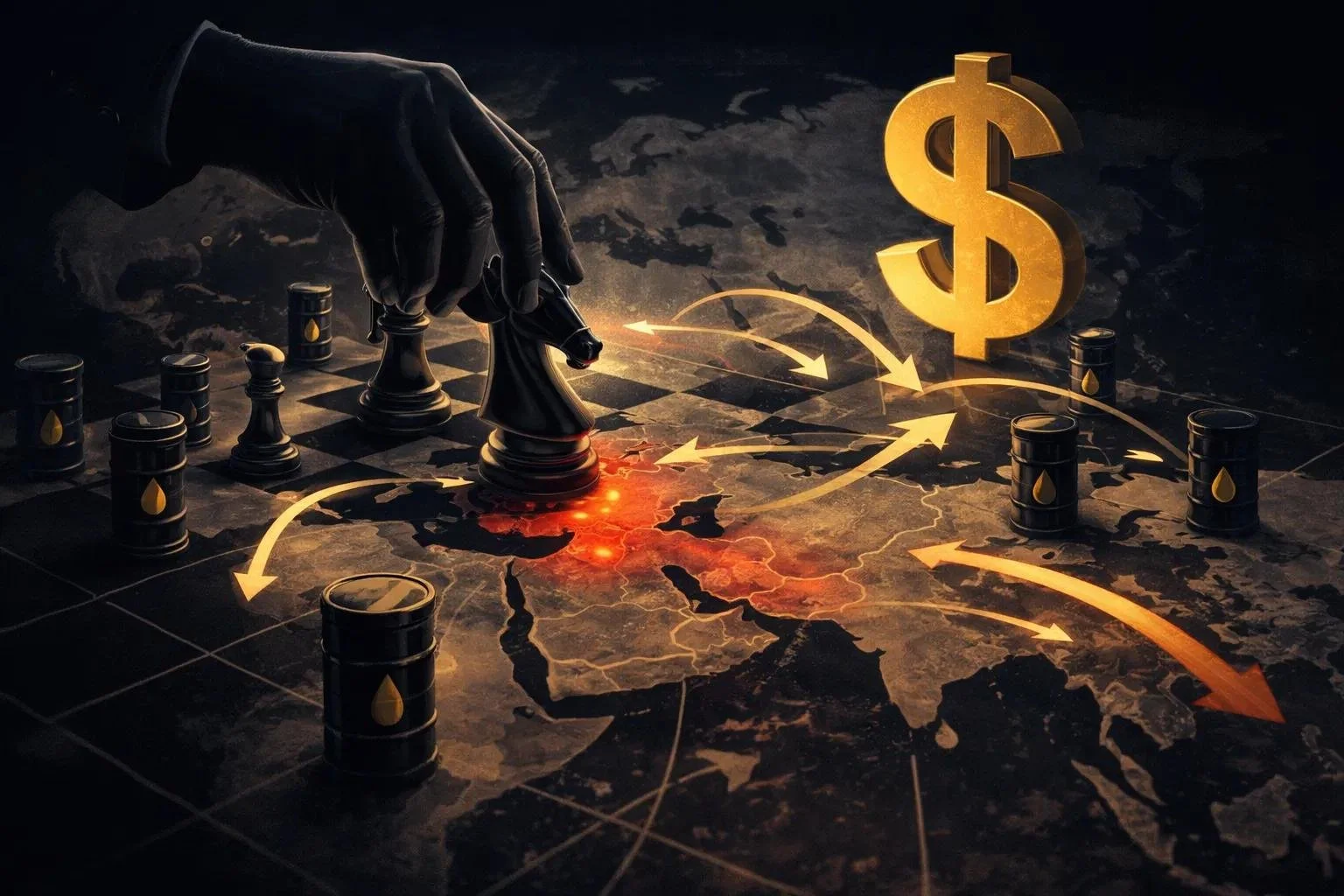
Tucker Carlson calls it “absolutely disgusting and evil”. Thomas Massie says it is “not America First”. Joe Rogan says it’s “insane”. Joe Kent, formerly the Director of the National Counterterrorism Center, resigned his post because Iran was not “an imminent threat” and there was no “clear path to a swift victory”.
In short, there are plenty of respectable and informed views that Iran is (1) not going well, and (2) not in America’s interests. And I can certainly understand their points of view.
Personally, I see this from a lot of different angles– some positive, some negative. But at the same time I also think there’s a possibility that what’s happening right now might actually BE the plan.
Just consider: the US national debt is $39 trillion. Deficits are piling on an additional $2 trillion per year. Social Security is only six years away from running out of money. And the vast majority of United States Congressmen couldn’t possibly care less.
It doesn’t make you unpatriotic or unAmerican to understand this simple truth: US government bonds are simply not as attractive as they used to be for foreign investors.
The leadership of every foreign country on this planet recognizes that they could wake up tomorrow morning and find out that their Treasury holdings have been frozen. Or they could be sanctioned. Or there could be another tariff escalation. Or their alliance terminated. Or another military strike.
They also believe that Congress will continue to do nothing about America’s spiraling debt and budget deficit. Interest on the debt already exceeds 22% of federal tax revenue, and the problem is rapidly becoming much worse.
They also know there’s a good chance the Federal Reserve will fail to achieve price stability, and that inflation could easily go much higher from here.
All of that spells plenty of risk, especially for foreign governments and central banks. Given that US Treasury securities pay a measly 4%, it hardly seems worth their investment.
That’s why so many foreign governments and central banks around the world started moving a portion of their strategic financial reserves away from the US dollar… and into gold. This has been a trend for a few years now– central bank gold purchases surged in 2023, 2024, and 2025.
That’s a huge problem for the US government, which critically needs foreign investors to continue buying Treasury bonds. Treasury demand from foreigners helps keep interest rates down and inflation in check.
Conversely, if foreigners ditched the dollar entirely, inflation and interest rates would both skyrocket.
So, what better way to prevent this than to give foreigners an extremely compelling reason to buy US Treasurys and hold US dollars?
Oil is the most widely traded commodity in the world. Every country needs it, and despite the cries of deranged teenagers who superglue themselves to the pavement, demand for oil keeps growing.
Oil has traditionally been bought and sold in US dollars… even when neither buyer nor seller are American. So, when Australia sells oil to India, that transaction takes place in US dollars.
The sheer volume of the oil trade means that every country stockpiles US dollars in order to participate in global energy markets. And they typically hold US dollars by buying Treasury bonds.
This war might possibly have been a ploy to gain control over Iran’s oil: punch them in the face, decimate their leadership, destroy much of their military capabilities… and then offer a peace deal:
“We will lift sanctions and allow you to sell oil on the global market, and even line up investment to expand your production, as long as everything is denominated in US dollars. No oil will be sold in any other currency. Better yet, we’ll push you to peg your currency to the US dollar, just like other countries in the region.”
Obviously, they would never communicate such a strategy in public; they’d never stand on stage and tell CNN what they’re really trying to accomplish.
But in the end, maybe they don’t really care if there’s true regime change in Iran. Maybe they don’t really care about Israel’s objectives either. Perhaps the singular American goal is to boost foreign demand for the US dollar.
And it’s possible they might just pull that off.
Again, I’m just speculating. The only thing we can say for sure is that there’s a lot riding on this outcome.
If they succeed, the resurgence of the dollar could buy the US enough time to fix its problems. If they fail, it could be the proverbial nail.
That’s why this war in Iran could end up right alongside 9/11, the GFC, and Covid as one of the most consequential events of our time.
To your freedom, James Hickman Co-Founder, Schiff Sovereign LLC
How an Ignored Constitution Foresaw a Tragic Endgame | Matthew Piepenburg
How an Ignored Constitution Foresaw a Tragic Endgame | Matthew Piepenburg
GoldSwitzerland by Von Greyerz: 3-25-2026
From the Founding Fathers to the great monetary thinkers of history, the message has remained unchanged: when money is no longer anchored to something real, it is ultimately debased.
In this clip, Matthew Piepenburg, Partner at VON GREYERZ, explores the slow death of constitutional money, the warnings we chose to ignore, and why gold remains as relevant today as it was centuries ago.
Are you ready to take the next step to protect your loved ones? Watch Matthew’s latest clip to learn everything you need to know about the current monetary cycle and its inevitable conclusion.
How an Ignored Constitution Foresaw a Tragic Endgame | Matthew Piepenburg
GoldSwitzerland by Von Greyerz: 3-25-2026
From the Founding Fathers to the great monetary thinkers of history, the message has remained unchanged: when money is no longer anchored to something real, it is ultimately debased.
In this clip, Matthew Piepenburg, Partner at VON GREYERZ, explores the slow death of constitutional money, the warnings we chose to ignore, and why gold remains as relevant today as it was centuries ago.
Are you ready to take the next step to protect your loved ones? Watch Matthew’s latest clip to learn everything you need to know about the current monetary cycle and its inevitable conclusion.
Seeds of Wisdom RV and Economics Updates Wednesday Morning 3-25-26
Good Morning Dinar Recaps,
Global Reset Series – Visual Timeline Article
From Bretton Woods to a Digital Multipolar Financial System: A Timeline of Global Monetary Evolution
Understanding today’s financial changes is easier when you see the long-term evolution of global money.
Good Morning Dinar Recaps,
Global Reset Series – Visual Timeline Article
From Bretton Woods to a Digital Multipolar Financial System: A Timeline of Global Monetary Evolution
Understanding today’s financial changes is easier when you see the long-term evolution of global money.
Overview
The global financial system has not been static. From Bretton Woods in 1944 to today’s CBDC experiments, major shifts happen over decades.
This visual timeline highlights the most important milestones that led to the emerging multipolar financial system.
Key Milestones
1944 – Bretton Woods Agreement
• Established a U.S. Dollar-centered global monetary system
• Fixed exchange rates tied to the dollar and gold
• Created the IMF and World Bank
1971 – Nixon Shock
• Ended gold convertibility of the U.S. Dollar
• Shifted world to a floating exchange rate system
• Triggered the rise of modern reserve currency strategies
1990s – Rise of Global Payment Networks
• SWIFT becomes the dominant cross-border messaging system
• International banks integrate with centralized U.S. and European infrastructure
2000s – China and Emerging Markets Rise
• China joins WTO and becomes a major trade hub
• Reserve accumulation grows in Asia and Russia
• Calls for more financial autonomy in emerging markets
2014–2020 – BRICS and Alternative Payment Systems
• BRICS develops contingency plans for cross-border payments outside SWIFT
• Local currency trade agreements expand among emerging economies
2020–2023 – Central Bank Digital Currencies (CBDCs) Take Off
• Over 130 countries begin researching or piloting digital currencies
• Projects include China’s Digital Yuan, India’s e-Rupee, and a potential Digital Euro
2022–2025 – Record Gold Accumulation
• Central banks buy more than 1,000 tonnes of gold annually
• China, India, Turkey, and Russia lead purchases to diversify reserves
2024–Present – Cross-Border Payment System Modernization
• G20 and FSB launch initiatives to reduce transaction costs and speed settlement
• Multi-CBDC experiments are underway to test direct international settlement
Why It Matters
The timeline shows that the current structural changes are part of a decades-long evolution:
• Gold accumulation, CBDCs, and payment system redesign are the latest stages in monetary evolution
• The world is moving toward a multipolar and technologically advanced financial system
• Both traditional and emerging networks will coexist, creating redundancy, resilience, and competition in global finance
Seeds of Wisdom Team View
Understanding history provides context for today’s changes.
The current developments are incremental, deliberate, and quietly transformative, not sudden or chaotic.
Seeds of Wisdom Team
Newshounds News™ Exclusive
Sources
~~~~~~~~~~
A Message to Our Currency Holders
If you’ve been holding foreign currency for many years, you were not foolish.
You were not wrong to believe the global financial system would change.
What failed was not your patience — it was the information you were given.
For years, dates, rumors, and personalities replaced facts, structure, and proof. “This week” predictions created cycles of hope and disappointment that were never based on how currencies actually change.
That is not your failure.
Our mission here is different: • No dates • No rates • No hype • No gurus
Instead, we focus on:
• Verifiable developments • Institutional evidence
• Global financial structure • Where countries actually sit in the process
Currency value changes only come after sovereignty, trade, banking, settlement systems, and fiscal coordination are in place. History and institutions confirm this sequence.
You will see silence. You will see denials. That is not delay — that is discipline.
Protect your identity. Organize your documents. Verify everything.
Never hand your discernment to anyone who cannot show proof.
You deserve truth — not timelines.
Seeds of Wisdom Team
Newshounds News
~~~~~~~~~~
Seeds of Wisdom Team RV Currency Facts Youtube and Rumble
Newshound's News Telegram Room Link
RV Facts with Proof Links Link
RV Updates Proof links - Facts Link
Follow the Gold/Silver Rate COMEX
Follow Fast Facts
Seeds of Wisdom Team™ Website
Thank you Dinar Recaps
Iraq Economic News And Points To Ponder Wednesday Morning 3-25-26
Disappointing Results For A $69 Billion US Bond Offering
Money and Business Economy News - Follow-up
The U.S. Treasury Department announced Tuesday the results of its $69 billion two-year bond offering, with demand falling below average, at the start of a week of long-term U.S. Treasury bond sales.
The yield on the two-year bonds was 3.936% of their nominal value, with a coverage ratio of 2.44 times.
Last month, the Treasury sold $69 billion in two-year bonds, with a yield of 3.455% and a coverage ratio of 2.63 times the offering value.
Disappointing Results For A $69 Billion US Bond Offering
Money and Business Economy News - Follow-up
The U.S. Treasury Department announced Tuesday the results of its $69 billion two-year bond offering, with demand falling below average, at the start of a week of long-term U.S. Treasury bond sales.
The yield on the two-year bonds was 3.936% of their nominal value, with a coverage ratio of 2.44 times.
Last month, the Treasury sold $69 billion in two-year bonds, with a yield of 3.455% and a coverage ratio of 2.63 times the offering value.
It is worth noting that the coverage ratio is a measure of demand for bonds, indicating the size of the subscription compared to the size of the offering.
The average coverage ratio for the last 10 two-year bond offerings was 2.62 times.
The Treasury Department is scheduled to announce on Wednesday the results of its $70 billion five-year bond offering and on Thursday the results of its $44 billion seven-year bond offering at the close of the offering week.
https://www.economy-news.net/content.php?id=67107
Sudan’s Parliamentary Bloc: We Pledge To Our People That Iraqi Sovereignty Will Remain An Untouchable Trust
Iraqi state spending Economy News – Baghdad The parliamentary Reconstruction and Development Bloc pledged on Wednesday that Iraqi sovereignty will remain an inviolable trust, and that any transgression against it will not go unanswered without a firm national stance that preserves the country's dignity and the military institution's prestige.
A statement issued by the bloc and received by “Al-Eqtisad News” said: “It condemns the heinous American air attack that targeted the Habbaniyah military clinic this morning, Wednesday, which represents a fully-fledged crime, reflecting a determination to violate Iraqi sovereignty and a blatant challenge to the norms and conventions that govern international relations.”
He added: “It has become clear that the series of attacks targeting our official institutions aims to weaken the state’s ability to extend its control and protect its members. The blood that was shed today in Habbaniyah is the same blood that is being shed in the trenches defending the homeland by the army, the Popular Mobilization Forces, and the police, which necessitates a comprehensive national stance that transcends narrow calculations.”
He continued: “We call for the immediate initiation of internationally available legal avenues and the use of diplomatic leverage to enforce respect for Iraqi sovereignty. We affirm that the unity of the official and popular stance behind the sovereign government decision is the only guarantee to prevent the recurrence of these violations and to preserve the dignity of the military institution in all its formations.”
He added: “While we mourn the martyrs and pray to God for the speedy recovery of the wounded, we pledge to our people that Iraqi sovereignty will remain an inviolable trust, and that any transgression against it will not go unanswered without a firm national stance that preserves the country’s dignity and the military institution’s prestige.”
https://www.economy-news.net/content.php?id=67121
American Company: Closing The Strait Of Hormuz Threatens Iraq's Food Security
Localities Economy News – Baghdad A US company specializing in economic and financial data and market analysis warned on Wednesday of the impact of the turmoil in the Strait of Hormuz and the war in the Middle East on Iraq's food security, noting that Baghdad imports about 70% of its needs for vegetables and fruits.
S&P Global said that Iraq relies on imports for 70% of its fruit and vegetable needs to cover the local market, while Qatar and the UAE need 90% of their fruits and vegetables imported, and Bahrain's reliance on imports is 85% of its fruits and vegetables.
The report indicated that "Kuwait needs to import 95% of its flour, Oman needs to import 75% of its fruits and vegetables, Saudi Arabia needs to import about 85% of its poultry feed and grains, while Iran relies on importing 25% of its wheat."
He explained that “prolonged restrictions in the Strait of Hormuz may force importers to resort to longer sea routes or alternative land routes, leading to higher costs and exacerbating logistical challenges, and directly affecting food prices in Iraqi markets.”
The report added that "the continuation of these disruptions could exacerbate the food security crisis locally and regionally, which calls for finding quick solutions to secure supplies and protect consumers."
The Iranian Foreign Ministry had confirmed earlier this week that the Strait of Hormuz was "not closed" and that the hesitation of ships was due to insurance companies' fears of war, while announcing that navigation would continue while ships linked to "aggressor parties" were barred. https://www.economy-news.net/content.php?id=67118
Oil Slides 4% On US-Iran Ceasefire Hopes
2026-03-25 Shafaq News Oil prices fell around 4% on Wednesday on the prospect of a possible ceasefire easing supply disruptions from the key Middle East producing region after reports the U.S. sent Iran a 15-point plan to end the war between them.
Brent crude futures fell $4.89, or 4.7%, to $99.60 a barrel by 0335 GMT, after declining to as low as $97.57. U.S. West Texas Intermediate (WTI) crude futures were down $3.54, or 3.8%, at $88.81 a barrel, after falling to as low as $86.72.
Both benchmarks rose nearly 5% on Tuesday, before paring gains in volatile post-settlement trading.
"Expectations of a ceasefire have risen slightly and profit-taking is leading the market," said Hiroyuki Kikukawa, chief strategist of Nissan Securities Investment, a unit of Nissan Securities. "But the outlook remains uncertain as to whether negotiations will succeed, limiting selling."
U.S. President Donald Trump said on Tuesday the U.S. was making progress in negotiating an end to the war with Iran, while a source confirmed that Washington had sent Iran a 15-point settlement proposal.
Israel's Channel 2 said the U.S. was seeking a month-long ceasefire to discuss the plan, which includes the dismantling of Iran's nuclear program, ceasing support for proxy groups, and the reopening of the Strait of Hormuz.
Some analysts are sceptical on the progress of such talks, expecting markets to remain volatile.
Phillip Nova's senior market analyst Priyanka Sachdeva said Middle East developments would remain the "dominant price driver" keeping oil prices moving in a wide range in the near term.
The war has all but halted shipments of oil and liquefied natural gas through the Strait, which typically carries about one-fifth of the world's gas and crude supply, causing what the International Energy Agency has called the biggest-ever oil supply disruption.
"The market outlook remains tight notwithstanding the prospects of a war off-ramp," said Saul Kavonic, head of energy research at MST Marquee.
"Even if a ceasefire is implemented this week and flows through Strait of Hormuz resume, it's not clear all shut-in production will resume until there is more clarity on the durability of a ceasefire."
On Tuesday, Pakistan's prime minister said he was willing to host talks between the U.S. and Iran.
Iran has told the United Nations Security Council and the International Maritime Organization that "non-hostile vessels" may transit the Strait of Hormuz if they coordinate with Iranian authorities, according to a note seen by Reuters on Tuesday.
Still, U.S., Israeli and Iranian strikes continued and sources said Washington was preparing to send more troops to the region.
To offset the Strait of Hormuz disruptions, oil exports from Saudi Arabia's Red Sea Yanbu port rose to nearly 4 million barrels per day last week, a sharp increase from before the war broke out, shipping data shows.
In the U.S., crude, gasoline and distillate stocks rose last week, according to market sources who cited American Petroleum Institute figures on Tuesday.
Crude stocks rose by 2.35 million barrels in the week ended March 20, gasoline inventories rose by 528,000 barrels and distillate inventories rose by 1.39 million barrels from a week earlier, the sources said.
(Reuters) https://www.shafaq.com/en/Economy/Oil-slides-4-on-US-Iran-ceasefire-hopes
The Closure Of Iraqi Airspace Has Been Extended For (72) Hours.
{Local: Al-Furat News} The Iraqi Civil Aviation Authority announced today, Wednesday, the extension of the closure of Iraqi airspace to air traffic.
The authority stated in a statement received by Al-Furat News that "it has been decided to extend the closure of Iraqi airspace to all incoming, departing and transiting aircraft for (72) hours, starting from 12:00 noon on Wednesday (09:00 UTC), until 12:00 noon on Saturday, March 28, 2026, as a temporary precautionary measure.
She added that "the decision is based on the ongoing assessment of the security situation and developments in the regional situation, and will be reassessed in light of new developments." She noted that "airlines and relevant parties will be notified of any updates later." LINK
MilitiaMan and Crew: IRAQ DINAR UPDATE-We know what we Own-Progress is Focused-Night & Day
MilitiaMan and Crew: IRAQ DINAR UPDATE-We know what we Own-Progress is Focused-Night & Day
3-24-2026
The Crew: Samson, PompeyPeter, Petra, Daytrader, Sunkissed, GIGI and Militia Man
The best and most relevant Iraqi Dinar News updates online. No drama. No intrigue. No songs and dances. Just straight news that Militiaman reads and interprets to the best of his ability after being an avid investor and insanely obsessed Dinarian for over 10 years.
MilitiaMan and Crew: IRAQ DINAR UPDATE-We know what we Own-Progress is Focused-Night & Day
3-24-2026
The Crew: Samson, PompeyPeter, Petra, Daytrader, Sunkissed, GIGI and Militia Man
The best and most relevant Iraqi Dinar News updates online. No drama. No intrigue. No songs and dances. Just straight news that Militiaman reads and interprets to the best of his ability after being an avid investor and insanely obsessed Dinarian for over 10 years.
Follow MM on X == https://x.com/Slashn
Be sure to listen to full video for all the news……..
Seeds of Wisdom RV and Economics Updates Tuesday Evening 3-24-26
Good Evening Dinar Recaps,
Global Liquidity Tightens: Central Banks Signal Prolonged High-Rate Era
Coordinated policy signals and persistent inflation risks are reshaping capital flows and delaying monetary easing worldwide
Overview (Key Points)
Central banks across major economies signaled that interest rates will remain higher for longer, reinforcing a global shift toward tight monetary conditions. This stance reflects ongoing concerns that inflation pressures are not fully contained.
Good Evening Dinar Recaps,
Global Liquidity Tightens: Central Banks Signal Prolonged High-Rate Era
Coordinated policy signals and persistent inflation risks are reshaping capital flows and delaying monetary easing worldwide
Overview (Key Points)
Central banks across major economies signaled that interest rates will remain higher for longer, reinforcing a global shift toward tight monetary conditions. This stance reflects ongoing concerns that inflation pressures are not fully contained.
Recent data releases show mixed economic signals, with resilient labor markets and sticky core inflation preventing policymakers from pivoting toward aggressive rate cuts. This creates a prolonged period of restricted liquidity across financial systems.
The U.S. Federal Reserve and global counterparts are aligned in caution, emphasizing data-dependent decision-making while avoiding premature easing that could reignite inflation.
The broader implication is significant: the global system is entering a phase where capital is more expensive, growth is constrained, and financial vulnerabilities are increasingly exposed.
Key Developments
1. Central Banks Reinforce “Higher for Longer” Narrative
Major central banks reiterated their commitment to maintaining restrictive policy levels.
• Rate cuts are being delayed despite market expectations
• Focus remains on ensuring inflation is fully anchored
2. Sticky Inflation Complicates Policy Shifts
Recent data indicates inflation remains persistent in key sectors.
• Services inflation continues to run elevated • Wage pressures are contributing to longer-term inflation risks
3. Global Liquidity Conditions Continue to Tighten
Financial conditions are becoming more restrictive across markets.
• Borrowing costs remain elevated for governments and businesses • Liquidity reduction is impacting credit availability and investment flows
4. Market Expectations Begin to Reset
Investors are adjusting to a slower pace of monetary easing.
• Equity and bond markets are repricing risk • Volatility is increasing as rate-cut timelines are pushed further out
5. Emerging Markets Face Increased Pressure
Tighter global conditions are impacting developing economies more sharply.
• Capital outflows are increasing • Currency stability is challenged by stronger developed-market yields
Why It Matters
This environment represents a structural tightening of the global financial system, where access to capital becomes more limited and more expensive. The era of easy money is being replaced with disciplined monetary control.
Markets must now operate under conditions where liquidity is no longer abundant, increasing the likelihood of asset repricing, credit stress, and economic slowdowns.
From a policy perspective, governments face higher debt servicing costs, limiting fiscal flexibility and increasing pressure on already strained budgets.
Why It Matters to Foreign Currency Holders
• Stronger interest rate environments support major reserve currencies • Currency volatility increases as capital shifts toward higher yields • Emerging market currencies face depreciation risks • Purchasing power may decline in weaker currency regions
Implications for the Global Reset
Pillar 1: End of Easy Money and Debt Expansion
The persistence of high interest rates signals a systemic shift away from debt-fueled growth models. Financial systems must now adjust to sustainable capital allocation and stricter lending conditions.
Pillar 2: Repricing of Global Assets and Currency Power
As liquidity tightens, asset valuations and currency strength are being recalibrated. This creates a new hierarchy where capital efficiency and monetary discipline define economic leadership.
Conclusion
The global financial system is undergoing a measured but significant transformation, driven by the need to restore balance after years of excess liquidity. Central banks are signaling clearly that stability now takes priority over growth acceleration.
This shift is forcing markets, governments, and institutions to adapt to a more disciplined financial environment, where risk is priced more accurately and capital is no longer freely available.
The consequences will unfold across economies and currencies, shaping the next phase of global finance.
This is not just monetary policy — it’s the recalibration of the entire global financial system.
Seeds of Wisdom Team
Newshounds News™ Exclusive
Sources
Reuters — "Global Central Banks Signal Rates to Stay Higher for Longer"
International Monetary Fund (IMF) — "Global Financial Stability Update 2026"
~~~~~~~~~~
Seeds of Wisdom Team RV Currency Facts Youtube and Rumble
Newshound's News Telegram Room Link
RV Facts with Proof Links Link
RV Updates Proof links - Facts Link
Follow the Gold/Silver Rate COMEX
Follow Fast Facts
Seeds of Wisdom Team™ Website
Thank you Dinar Recaps