
Thank you to all the subscribers to our Early Access program…we thank you for your continued support.
We are excited to offer this new service to keep you informed and up-to-date on the latest Dinar and currency news.
Silver Finally Hits $100 An Ounce — And Some Experts Say That’s Just The Beginning
Silver Finally Hits $100 An Ounce — And Some Experts Say That’s Just The Beginning
Myra P. Saefong MarketWatch Fri, January 23, 2026
Silver’s climb to the $100-an-ounce mark on Friday — a level it hit for the first time on record — was met with much fanfare by just about everyone who closely watches the market for the precious metal.
Silver has the characteristics of both a precious and an industrial metal and is in short supply. That’s why many investors believe in its potential for further price gains.
Silver Finally Hits $100 An Ounce — And Some Experts Say That’s Just The Beginning
Myra P. Saefong MarketWatch Fri, January 23, 2026
Silver’s climb to the $100-an-ounce mark on Friday — a level it hit for the first time on record — was met with much fanfare by just about everyone who closely watches the market for the precious metal.
Silver has the characteristics of both a precious and an industrial metal and is in short supply. That’s why many investors believe in its potential for further price gains.
The market “could still be closer to the beginning of the silver move rather than the end,” said Stefan Gleason, president and chief executive officer at Money Metals Exchange, given the breakdown in the gold-to-silver ratio and breakout in mining stock indexes. The ratio represents the relative value of gold to silver.
“The silver market continues to show incredible momentum, with each pullback or pause being bought quickly,” Gleason told MarketWatch.
On Friday, silver for March delivery SI00 SIH26 traded as high as $101.86 an ounce on Comex, the highest intraday level on record. It settled at $101.33, up 5.2%. It has gained nearly 44% so far this month and is on track for its best month since December 1979, according to Dow Jones Market Data.
“Silver has been breaking milestone after milestone, with traders happy to buy every dip they could get their hands on,” said Fawad Razaqzada, market analyst for global macroeconomics at Forex.com.
To Continue and Read More: https://www.yahoo.com/finance/news/silver-finally-hits-100-ounce-202800451.html
From Debt Crisis to Asset Revaluation, the Next Financial Regime
From Debt Crisis to Asset Revaluation, the Next Financial Regime
Miles Harris: 1-23-2026
The world is on the cusp of a significant financial transformation, driven by the unsustainable growth of global debt and the need to repair balance sheets without outright debt reduction.
In a recent video presentation, Miles Harris introduces the concept of the “Great Revaluation,” a process that promises to reshape the future economic landscape through the tokenization of real-world assets and the adoption of unified ledger technologies.
From Debt Crisis to Asset Revaluation, the Next Financial Regime
Miles Harris: 1-23-2026
The world is on the cusp of a significant financial transformation, driven by the unsustainable growth of global debt and the need to repair balance sheets without outright debt reduction.
In a recent video presentation, Miles Harris introduces the concept of the “Great Revaluation,” a process that promises to reshape the future economic landscape through the tokenization of real-world assets and the adoption of unified ledger technologies.
In this blog post, we’ll delve into the key takeaways from the presentation and explore the implications of this emerging trend.
The current financial system is characterized by excessive global debt, which has grown to unsustainable levels relative to GDP.
Traditional forms of collateral, such as government bonds and housing, are becoming exhausted, and the system relies heavily on rolling over debts, liquidity, and credible collateral to service these debts. However, as collateral quality deteriorates and settlement processes remain slow, the system faces increasing refinancing risks.
Harris draws a fascinating historical parallel with England’s financial revolution in the late 17th century, where land was revalued as collateral, enabling debt expansion without repayment.
This revaluation facilitated economic growth and helped to establish England as a major financial power. Similarly, the modern equivalent of this revaluation is tokenization, which transforms illiquid real-world assets into liquid, pledgeable digital assets on blockchain-based unified ledgers.
Tokenization promises significant improvements in liquidity, transparency, efficiency, and asset usability, potentially leading to a liquidity premium where tokenized assets appreciate in value.
By expanding the asset base supporting existing debts, tokenization facilitates balance sheet repair without reducing debt levels. This process has the potential to drive greater asset value appreciation and increased economic activity due to faster transaction settlement.
However, Harris cautions that this transition is selective and phased, emphasizing that tokenization will not create new wealth but will reprice existing assets to sustain the heavily indebted global economy.
The benefits of tokenization may disproportionately favor financial elites rather than “main street,” raising important questions about the distribution of wealth and the impact on different segments of society.
In conclusion, the Great Revaluation represents a significant shift in the global financial system, driven by the need to address excessive debt and repair balance sheets.
Tokenization and unified ledger technologies are set to play a key role in this process, promising improved liquidity, transparency, and efficiency. While the benefits of this transition are likely to be significant, it’s essential to engage critically with these ideas and consider the potential implications for different stakeholders.
For further insights and information, we encourage you to watch the full video presentation by Miles Harris, available online. You can also explore these themes further on his website and upcoming videos.
As the global financial system continues to evolve, it’s crucial to stay informed and engaged with the latest developments in this rapidly changing landscape.
Seeds of Wisdom RV and Economics Updates Saturday Afternoon 1-23-26
Good Afternoon Dinar Recaps,
Precious Metals Surge: Gold Nears $5,000 and Silver Crosses $100
Safe-haven demand ignites historic rallies amid market uncertainty
Good Afternoon Dinar Recaps,
Precious Metals Surge: Gold Nears $5,000 and Silver Crosses $100
Safe-haven demand ignites historic rallies amid market uncertainty
Overview
In today’s markets, gold and silver prices are once again capturing global attention. Silver broke above $100 per ounce — a historic milestone — while gold approaches the $5,000 level as investors seek shelter from ongoing geopolitical and macroeconomic pressures. Long-term structural factors like supply constraints, persistent deficits, and robust industrial demand continue to support the rally.
Current Market Moves
Silver climbed above $100 per ounce, driven by strong investor interest and tight physical supply.
Gold prices are approaching $5,000 per ounce, maintaining upward momentum.
Tight inventories, especially in London and COMEX vaults, are exacerbating upward pressure on prices.
Broader macro forces — expectations of rate cuts, a softer dollar, and safe-haven buying — continue to underpin metals strength.
Why It Matters
The precious metals rally signals a flight to safety as investors confront:
Heightened geopolitical tensions
Trade and tariff uncertainty
Inflation and currency volatility
Gold and silver’s surge reflects broader market stress, where non-yielding assets outshine equities and other risk assets.
Why It Matters to Foreign Currency Holders
Foreign currency holders should take note because:
Precious metals often act as proxy indicators for systemic risk and currency confidence
Rising gold and silver prices imply weakening confidence in fiat stability
Metals gains tend to anticipate currency realignments during systemic resets
Safe-haven flows often precede capital reallocation across FX, commodities, and reserves
Implications for the Global Reset
Pillar 1 – Monetary Store of Value Shift
Silver’s breakthrough and gold’s ascent suggest investors are repositioning toward hard assets as fiat uncertainty grows.
Pillar 2 – Safe-Haven Leadership
Precious metals are assuming a more central role in portfolios, challenging traditional reserve and liquidity models that rely heavily on debt or currency instruments.
This is not a short rally — it reflects enduring structural demand and shifting perceptions of monetary risk.
When metals shine brightest, fiat shadows deepen
Sources
Reuters – “Speculative frenzy catapults silver above $100/oz”
MarketWatch – “Silver finally hits $100 an ounce — some experts say that’s just the beginning”
~~~~~~~~~~
Trilateral Peace Talks in Abu Dhabi: Constructive but No Breakthrough Yet
Diplomacy resumes, territorial deadlock remains, and negotiations set to continue
Overview
For the first time since the full-scale invasion began, Russia, Ukraine, and the United States have met face-to-face in a trilateral diplomatic format hosted in Abu Dhabi, United Arab Emirates. Ukrainian President Volodymyr Zelenskyy described the two-day negotiations as “constructive,” covering parameters for ending the nearly four-year conflict, though no ceasefire or concrete resolution has been agreed. Officials have signaled that another round of discussions is expected next week, underscoring the ongoing — yet fragile — diplomatic process.
Key Developments
The talks took place in Abu Dhabi, with delegations from Ukraine, the United States, and Russia.
Zelenskyy stated the discussions were “constructive” and that all parties agreed to report back to capitals and coordinate further.
Core issues include the parameters for ending the war and possible security guarantees, though specifics remain undisclosed.
A next round of trilateral meetings is anticipated on February 1, 2026, according to U.S. officials.
While dialogue resumed, Russia continues military actions on the ground, and key territorial issues — especially in the Donbas region — remain unresolved.
Why It Matters
This trilateral engagement marks a symbolic milestone in diplomacy: the first of its kind since the war began. It signals both willingness and limits of negotiation:
It reopens formal channels between Kyiv and Moscow in the presence of a major mediator (the U.S.).
It highlights how unresolved territorial demands — particularly Russia’s stance on eastern Ukraine — continue to block peace progress.
The setting in the UAE reflects the growing importance of emerging diplomatic venues outside traditional Western capitals.
Why It Matters to Foreign Currency Holders
Geopolitical conflict reshapes currency and risk pricing. Progress or prolonged stalemate affects safe-haven assets (e.g., gold) and volatile FX pairs.
Constructive diplomacy can reduce extreme risk premiums, potentially stabilizing markets.
A diplomatic impasse sustains uncertainty that can inflate currency hedging strategies, strengthening demand for alternative reserve assets.
Renewal of talks into February suggests continued monitoring and sensitive capital flows in the near term — especially for currencies exposed to energy, defense, and regional trade risks.
Implications for the Global Reset
Pillar 1 – Peace & Geostrategic Realignment
This trilateral framework introduces a new multilateral dynamic in conflict negotiation, potentially reducing reliance on exclusive bilateral negotiations.
Pillar 2 – Market & Confidence Dynamics
Even constructive diplomacy without agreement shifts risk appetites — driving hedging behavior, safe-haven flows, and reserve diversification.
This is not a definitive peace — it is the cautious continuation of dialogue.
Talks resume, but boundaries still draw the battle lines
Sources
AP News – “Zelenskyy says trilateral Ukraine talks in UAE ended constructively”
Euronews – “Trilateral peace talks between Russia, Ukraine and the US wrap up in Abu Dhabi”
~~~~~~~~~~
Will the U.S. Dollar Collapse If BRICS Links Their CBDC Currencies?
Digital rails expand as dollar dominance faces transactional pressure — not extinction
Overview
Speculation intensified this week after the Reserve Bank of India (RBI) proposed linking BRICS nations’ central bank digital currencies (CBDCs) to facilitate cross-border trade. With India hosting the 2026 BRICS Summit in New Delhi, the proposal carries unusual weight and signals a shift from theory toward implementation. While some headlines warn of a dollar collapse, the reality is more nuanced.
Key Developments
The RBI formally proposed interoperability between BRICS CBDCs to improve trade settlement efficiency
India’s role as 2026 BRICS chair elevates the likelihood of pilot frameworks advancing
Linked CBDCs would enable faster, cheaper settlements by bypassing dollar-centric rails
The proposal focuses on transactional utility, not replacing reserve currency structures
Energy and commodity trade are the most likely early use cases
Why It Matters
Transactional dominance vs. reserve dominance becomes the real fault line
The U.S. dollar may lose some cross-border settlement volume without losing reserve status
CBDC linkages reduce reliance on SWIFT and correspondent banking networks
Multipolar payment infrastructure quietly advances without formal monetary unions
Why It Matters to Foreign Currency Holders
Reduced dollar usage in trade supports diversification narratives
Incremental shifts — not collapses — are how resets actually unfold
CBDC rails increase optional settlement paths, not forced abandonment of USD
Long-term holders benefit from gradual re-pricing of alternative currency relevance
Implications for the Global Reset
Pillar 1 – Financial Infrastructure Realignment
CBDC interoperability weakens the dollar’s transactional monopoly without directly challenging its reserve role.
Pillar 2 – Multipolar Trade & Settlement Systems
BRICS continues building parallel systems, allowing countries to hedge exposure to Western financial chokepoints.
This is not a currency war — it’s plumbing replacement.
The dollar isn’t collapsing — it’s being routed around
Sources
Watcher.Guru – “Will US Dollar Collapse If BRICS Links Their CBDC Currencies?”
Reuters – “India proposes linking BRICS central bank digital currencies for cross-border trade”
~~~~~~~~~~
Seeds of Wisdom Team RV Currency Facts Youtube and Rumble
Newshound's News Telegram Room Link
RV Facts with Proof Links Link
RV Updates Proof links - Facts Link
Follow the Gold/Silver Rate COMEX
Follow Fast Facts
Seeds of Wisdom Team™ Website
Thank you Dinar Recaps
“Tidbits From TNT” Saturday 1-24-2026
TNT:
Tishwash: $100 billion in Iraqi savings revealed at the US Federal Reserve
Economic expert Duraid Al-Anzi said on Friday that Iraq should not have been exposed to any financial crisis or any form of financial distress, stressing that the concerned authorities did not adopt the proposed oil prices in the budgets, which led to the current financial situation.
Al-Anzi explained in a statement to Al-Furat News Agency that “Iraq has been objected to several times regarding not relying on high prices in budgets, and the necessity of not exceeding $65 per barrel in order to be able to save,” noting that “oil prices have changed a lot, but the competent authorities did not think about the future and did not adopt the proposed prices.”
TNT:
Tishwash: $100 billion in Iraqi savings revealed at the US Federal Reserve
Economic expert Duraid Al-Anzi said on Friday that Iraq should not have been exposed to any financial crisis or any form of financial distress, stressing that the concerned authorities did not adopt the proposed oil prices in the budgets, which led to the current financial situation.
Al-Anzi explained in a statement to Al-Furat News Agency that “Iraq has been objected to several times regarding not relying on high prices in budgets, and the necessity of not exceeding $65 per barrel in order to be able to save,” noting that “oil prices have changed a lot, but the competent authorities did not think about the future and did not adopt the proposed prices.”
He added that “Iraq is able to demand additional amounts from its savings held by the US Federal Reserve, as Iraq has savings in the US Federal Reserve exceeding $100 billion, which were transferred to JPMorgan,” explaining that “these funds belong to Iraq after 2003 and have accumulated, and the only beneficiary of them is JPMorgan, which gives simple interest rates, and it is not known whether they reach Iraq or not, and they have not been addressed, despite the amounts being doubled.” link
************
Sudani's chances are improving again... New information revealed by MP Al-Luwaizi
MP Abdul Rahman Al-Luwaizi, from the Reconstruction and Development bloc, said that what is being circulated regarding an official concession or political marketing to hand over the premiership to the leader of the State of Law Coalition, Nouri Al-Maliki, is “untrue in word and deed,” stressing that the political reality indicates a different course in managing the nomination file.
Al-Luwaizi explained in televised statements followed by “Jarida Platform” that what is currently happening is opening the way for the current Prime Minister, Muhammad Shia Al-Sudani, to give Nouri Al-Maliki the political opportunity to enter the race for the nomination, indicating that this option does not mean deciding the position in favor of Al-Maliki, but rather subjecting him to a test of his ability to form the government within the existing equations and balances.
He added that Maliki’s failure to form a government, if he is officially tasked with it, will reopen all political options, noting that Mohammed Shia al-Sudani’s chances may rise again strongly, based on considerations of internal balances and the magnitude of the challenges that any new tasked person may face.
Al-Luwaizi indicated that if the option of assigning Al-Maliki proceeds, the Reconstruction and Development bloc will have a "significant" ministerial share within the new government formation, explaining that the talk is about five sovereign or heavy service ministries.
He also pointed out that the political blocs that had previously objected to al-Sudani’s appointment and nomination for the premiership may receive modest ministerial shares compared to the supporting blocs, which reinforces the hypothesis of al-Sudani’s repositioning as a strong option in the next stage.
Al-Luwaizi concluded his remarks by emphasizing that the political scene is still open to several scenarios, and that the decision regarding the premiership will remain contingent on the candidate's ability to overcome political complexities and form a government that enjoys broad consensus. link
**************
Tishwash: Announcement of a joint US military exercise at the embassy and Baghdad airport
US President Donald Trump stated that a large naval fleet is moving towards the Middle East region, including an aircraft carrier and a number of destroyers.
This came in a statement to reporters aboard the presidential plane, "Air Force One," on his way back to the United States after meeting with leaders from around the world in Davos, Switzerland.
Trump said, "We have a large number of ships moving in that direction, in case of any emergency... I don't want anything to happen, but we are watching them very closely."
The US forces in the Middle East are being reinforced with the aircraft carrier USS Abraham Lincoln and a number of destroyers equipped with guided missiles and additional air defense systems that could be critical to defense if any Iranian attack occurs on US bases in the region.
According to media reports and statements by a US Navy official, the aircraft carrier "Abraham Lincoln" and three destroyers are making their way to the Middle East region, with estimates suggesting their arrival within the next few days.
US media reported that the US force includes an aircraft carrier, cruisers and missile destroyers, in addition to squadrons of fighter jets belonging to the Air Force and ground-based air and missile defense systems.
American warships, including the aircraft carrier Abraham Lincoln, several destroyers, and fighter jets, began moving from the Asia-Pacific region to the Middle East last week, amid rising tensions and escalation between Tehran and Washington over the recent protests in Iran.
It is noted that the US military had amassed a large force last summer before its strikes last June against sites in Iran.
The White House announced last Thursday that President Trump and his team are closely monitoring developments in Iran, and stressed that "all options regarding Tehran remain on the table." link
************
Mot: Notice!!! -- the GroundHog Has been Warned!!!

Mot: Snow Advisory!!!!

Seeds of Wisdom RV and Economics Updates Saturday Morning 1-24-26
Good Morning Dinar Recaps,
Global Equity Fund Inflows Collapse as Investors Pivot to Safety
Capital quietly abandons risk assets, signaling deeper stress beneath global markets.
Good Morning Dinar Recaps,
Global Equity Fund Inflows Collapse as Investors Pivot to Safety
Capital quietly abandons risk assets, signaling deeper stress beneath global markets.
Overview
Global investor sentiment shifted sharply as geopolitical uncertainty intensified, triggering a dramatic slowdown in equity fund inflows. Weekly global equity inflows plunged from approximately $45 billion to just $9 billion, reflecting rising risk aversion tied to renewed U.S. trade disputes, diplomatic frictions, and mounting macroeconomic instability.
At the same time, safe-haven assets surged in demand, with gold and precious metals funds attracting significant new capital as investors prioritized preservation over growth.
Key Developments
Equity inflows dropped nearly 80% week-over-week, a sharp reversal in global risk appetite
Escalating trade tensions and geopolitical uncertainty weighed on growth expectations
Gold and precious metals funds gained inflows, reinforcing safe-haven demand
Bond and defensive allocations increased as investors repositioned portfolios
Why It Matters
This shift reflects more than short-term volatility. Capital flows act as early warning indicators, and the move away from equities suggests institutional investors are bracing for policy shocks, liquidity tightening, and systemic recalibration.
When global money retreats from growth assets, it signals expectations of:
Slower economic expansion
Increased financial stress
Potential monetary intervention
Such conditions often precede structural changes in monetary and fiscal frameworks.
Why It Matters to Foreign Currency Holders
Periods of risk-off capital rotation historically align with currency realignments and revaluation windows. As investors favor tangible and defensive assets, confidence in existing fiat structures weakens, strengthening the case for currency resets, asset-backed valuation mechanisms, or revised exchange regimes.
Foreign currency holders waiting for higher valuation scenarios often see these moments as positioning phases, not endpoints.
Implications for the Global Reset
Confirms a transition from growth chasing to capital protection
Reinforces gold’s role as a neutral anchor asset
Signals increasing strain on equity-driven liquidity models
Aligns with broader movement toward monetary system restructuring
When capital stops chasing returns and starts seeking shelter, the system is telling you something.
Seeds of Wisdom Team
Newshounds News
Sources
Reuters -- Global equity fund inflows slow on geopolitical uncertainties
Bloomberg via The Economic Times – “U.S. Equity Funds See Outflows on Geopolitical Worries”
Davos 2026: Carney Flags Dollar Decline as BRICS Influence Accelerates
Middle powers warned the old financial order is fracturing in real time
Overview
At the World Economic Forum 2026 in Davos, Mark Carney delivered a stark warning that global finance is no longer in transition but in rupture. His remarks focused on accelerating dollar vulnerability, the weaponization of economic integration, and the growing influence of BRICS-led alternatives shaping a multipolar financial order.
Carney’s speech underscored how trade, payments infrastructure, and reserve assets are being re-engineered as trust in the post-WWII system erodes.
Key Developments
Dollar dominance questioned as sanctions, tariffs, and policy unpredictability reshape capital flows
BRICS momentum accelerates, shifting from discussion to technical implementation
CBDC interoperability proposals emerge as alternatives to dollar-based settlement systems
Gold accumulation surges, reflecting hedging against financial weaponization
Middle powers coordinate to reduce dependence on hegemonic bilateral negotiations
Why It Matters
The rules-based order is fragmenting even inside traditional Western forums
Dollar leverage weakens as nations pursue parallel systems, not outright replacement
Trade, payments, and reserves are increasingly decoupled from U.S. control
Reset dynamics now unfold incrementally, not through formal declarations
Why It Matters to Foreign Currency Holders
Dollar dilution often precedes repricing of alternative currencies and assets
Gold-backed or commodity-linked reserves benefit during confidence transitions
Multipolar settlement systems increase demand for non-USD instruments
Currency holders positioned early may benefit as reserve realignment unfolds
Implications for the Global Reset
Pillar 1: Monetary Architecture Realignment
Carney’s remarks reinforce that reserve diversification, CBDC experimentation, and gold accumulation are no longer fringe ideas — they are policy responses to systemic stress.
Pillar 2: Power Shift Through Infrastructure
Rather than confronting the dollar directly, BRICS and middle powers are building around it, weakening dominance through adoption of alternative rails.
This is not just politics — it’s global finance restructuring before our eyes.
Seeds of Wisdom Team
Newshounds News™ Exclusive
Sources
Watcher.Guru – “Davos 2026: Carney Flags Dollar Fall, BRICS Gain Influence”
The Guardian – “Davos 2026: Global Leaders Warn of Fracturing World Order”
~~~~~~~~~~
🌱 A Message to Our Currency Holders🌱
If you’ve been holding foreign currency for many years, you were not foolish.
You were not wrong to believe the global financial system would change.
What failed was not your patience — it was the information you were given.
For years, dates, rumors, and personalities replaced facts, structure, and proof. “This week” predictions created cycles of hope and disappointment that were never based on how currencies actually change.
That is not your failure.
Our mission here is different: • No dates • No rates • No hype • No gurus
Instead, we focus on:
• Verifiable developments • Institutional evidence
• Global financial structure • Where countries actually sit in the process
Currency value changes only come after sovereignty, trade, banking, settlement systems, and fiscal coordination are in place. History and institutions confirm this sequence.
You will see silence. You will see denials. That is not delay — that is discipline.
Protect your identity. Organize your documents. Verify everything.
Never hand your discernment to anyone who cannot show proof.
You deserve truth — not timelines.
Seeds of Wisdom Team
Newshounds News
~~~~~~~~~~
Seeds of Wisdom Team RV Currency Facts Youtube and Rumble
Newshound's News Telegram Room Link
RV Facts with Proof Links Link
RV Updates Proof links - Facts Link
Follow the Gold/Silver Rate COMEX
Follow Fast Facts
Seeds of Wisdom Team™ Website
Thank you Dinar Recaps
Iraq Economic News and Points To Ponder Saturday Morning 1-24-26
Is The Era Of The Dollar Over? Shocking Messages From The Davos Forum
Money and Business Economy News - Follow-up The World Economic Forum in Davos revealed a growing rift in economic relations between traditional allies, amid an unprecedented escalation in political and economic rhetoric, bringing back to the forefront a fundamental question: Is the world witnessing the end of the unipolar economic system?
Is The Era Of The Dollar Over? Shocking Messages From The Davos Forum
Money and Business Economy News - Follow-up The World Economic Forum in Davos revealed a growing rift in economic relations between traditional allies, amid an unprecedented escalation in political and economic rhetoric, bringing back to the forefront a fundamental question: Is the world witnessing the end of the unipolar economic system?
During the forum, US President Donald Trump made strongly worded statements towards Europe, attacking European policies and directly demanding the abandonment of Greenland, in a move that strongly brought the issue of tariffs and trade tensions back to the forefront.
Trump's message was clear and unequivocal: "America First," as he stressed that protecting the American economy had become a top priority, even if it led to economic tension with the closest allies in the European continent.
According to observers, trade is no longer just an economic tool for the US administration, but has become a means of national security, used to exert pressure and redraw the global balance of power.
Shocking European Response From Davos
In contrast, the European response was swift and this time harsh and unprecedented.
European Commission President Ursula von der Leyen has explicitly called for Europe to break free from the dominance of the dollar, in a clear indication of a need to rethink the foundations of the global monetary system.
This stance was not limited to Europe alone, but was echoed in Canada, one of the strongest allies of the United States, where Canadian Prime Minister Mark Carney, known for his deep economic background, expressed a similar view calling for a reduction in excessive dependence on the dollar.
Back To The Roots: Bretton Woods And The Nixon Shock
To understand the current situation, economists look back to the period after World War II, when the global economic system was formed through the Bretton Woods Agreement, which placed the dollar at the heart of the global monetary system and linked the world's economies to the United States.
This system continued for decades, until Nixon's shock in 1971, when he broke the dollar's link to gold, radically changing the rules and building global stability on trust instead of solid guarantees.
A New Test For The Global System
Today, this historical stability appears to be being tested once again. What the world is witnessing is not a passing disagreement between allies, but a comprehensive rethinking of the shape of the global economic order, the role of the dollar, and the limits of American influence.
Analysts believe that the next phase may witness a gradual shift towards a multipolar economic system, in which centers of power are distributed among more than one currency and more than one economic axis.
In a rapidly changing world, understanding major trends early on becomes a crucial factor in seizing opportunities and avoiding risks.
The most important question remains: Are we witnessing the beginning of the end of American economic hegemony? Or just a temporary rebalancing? https://economy-news.net/content.php?id=64905
Dollar Opens Higher In Baghdad, Erbil
Economy & Business 2026-01-24 03:27 Shafaq News- Baghdad/ Erbil On Saturday, the US dollar traded higher in Baghdad and Erbil, rising by 100 Iraqi dinars compared with the previous session.
According to a Shafaq News market survey, the dollar traded in Baghdad’s Al-Kifah and Al-Harithiya central exchanges at 148,000 dinars per 100 dollars, up from 147,900 dinars recorded in the previous session.
In the Iraqi capital, exchange shops sold the dollar at 148,500 dinars and bought it at 147,500 dinars, while in Erbil, selling prices stood at 147,950 dinars and buying prices at 147,850 dinars. https://www.shafaq.com/en/Economy/Dollar-opens-higher-in-Baghdad-Erbil
Gold Prices Steady In Baghdad, Climb In Erbil
2026-01-24 04:26 Shafaq News– Baghdad/ Erbil Gold prices held steady in Baghdad on Saturday while edging higher in Erbil, according to a survey by Shafaq News Agency.
Wholesale prices on Baghdad’s Al-Nahr Street saw 21-carat foreign gold —Gulf, Turkish, and European— selling at 1.015 million dinars per mithqal, with buying prices at 1.011 million dinars, unchanged from Thursday.
21-carat Iraqi gold sold at 985,000 dinars per mithqal, while buying prices stood at 981,000 dinars, the correspondent said.
At retail jewelry shops in Baghdad, selling prices for 21-carat foreign gold ranged between 1.015 million and 1.025 million dinars per mithqal, while Iraqi gold sold between 985,000 and 995,000 dinars.
In Erbil, gold prices rose, with 22-carat selling at 1.095 million dinars, 21-carat at 1.045 million dinars, and 18-carat at 895,000 dinars, according to local traders. https://www.shafaq.com/en/Economy/Gold-prices-steady-in-Baghdad-climb-in-Erbil-0
Basrah Crudes Post Weekly Gains On Trump Iran Threats
2026-01-24 02:00 Shafaq News– Basrah Iraq’s Basrah Heavy and Basrah Medium crude grades ended the week with gains, despite both closing lower in Friday’s session.
Basrah Heavy fell by 92 cents in its final Friday trade to $59.74 a barrel, but still recorded a weekly gain of 86 cents, or 1.46%. Basrah Medium also declined by 92 cents on Friday to $62.19 a barrel, while posting a stronger weekly increase of $1.74, or 2.88%.
Global oil prices rose over the week after US President Donald Trump said Washington had a “massive fleet” heading toward Iran, while warning Tehran against killing protesters or resuming its nuclear program. Brent crude and US West Texas Intermediate both ended the week up about 1.6% https://www.shafaq.com/en/Economy/Basrah-crudes-post-weekly-gains-on-Trump-Iran-threats
Iraq Pushes Back On ISIS Transfers, Urges EU Burden-Sharing
2026-01-24 04:00 Shafaq News– Baghdad Iraq will not shoulder the security and financial costs of receiving thousands of ISIS detainees transferred from Syria alone, Foreign Minister Fuad Hussein said on Saturday, as the first group of prisoners entered Iraqi custody.
According to a statement from the Iraqi Foreign Ministry, Hussein told European Commission Vice-President Kaja Kallas during a phone call that responsibility for the detainees must be shared among all countries involved, particularly those whose nationals are among the prisoners.
The transfers follow a US-led operation launched this week by United States Central Command (CENTCOM), which began relocating ISIS detainees from Syria to Iraqi facilities. The first batch included 150 prisoners, with up to 7,000 expected to be moved in stages.
The move comes amid mounting concerns over prison security in northeastern Syria after renewed clashes between Syrian government forces and the Syrian Democratic Forces (SDF), which have strained detention sites holding ISIS members.
Transfers accelerated after shifts in territorial control, as the SDF handed over several detention facilities to government forces under a political arrangement, raising fears about the stability of prisons previously secured by the group.
Hussein urged Europe to take a more active role in supporting talks between Damascus and the SDF to stabilize detention sites and prevent further escapes or unrest, the statement said. https://www.shafaq.com/en/Iraq/Iraq-pushes-back-on-ISIS-transfers-urges-EU-burden-sharing
MilitiaMan and Crew: IQD News Update-Exchange Rate-Reform-Integration-In the Making
MilitiaMan and Crew: IQD News Update-Exchange Rate-Reform-Integration-In the Making
1-23-2026
The Crew: Samson, PompeyPeter, Petra, Daytrader, Sunkissed, GIGI and Militia Man
Follow MM on X == https://x.com/Slashn
Be sure to listen to full video for all the news……..
MilitiaMan and Crew: IQD News Update-Exchange Rate-Reform-Integration-In the Making
1-23-2026
The Crew: Samson, PompeyPeter, Petra, Daytrader, Sunkissed, GIGI and Militia Man
Follow MM on X == https://x.com/Slashn
Be sure to listen to full video for all the news……..
Seeds of Wisdom RV and Economics Updates Friday Afternoon 1-23-26
Good Afternoon Dinar Recaps,
First Trilateral Peace Talks Set for UAE as Ukraine, US, and Russia Prepare to Meet
High-stakes diplomacy begins amid war and unresolved territorial tensions
Good Afternoon Dinar Recaps,
First Trilateral Peace Talks Set for UAE as Ukraine, US, and Russia Prepare to Meet
High-stakes diplomacy begins amid war and unresolved territorial tensions
Overview
Ukraine, the United States, and Russia are preparing for a first-ever trilateral meeting in the United Arab Emirates (UAE), Ukrainian President Volodymyr Zelenskyy announced. The talks are scheduled to take place in Abu Dhabi across two days, with discussions expected to focus on the ongoing war in Ukraine, security guarantees, and the contentious Donbas territorial dispute. There is no detailed public agenda yet, and outcomes remain unconfirmed, but the development marks a rare direct diplomatic engagement between the three parties since the war began in 2022.
Key Developments
Zelenskyy confirmed the trilateral talks will be held in Abu Dhabi on January 23–24 at a technical negotiation level with U.S. and Russian delegations.
The discussions are described as the first of their kind in the UAE, with representatives from military and security sectors expected to participate.
While Zelenskyy emphasized that the Donbas issue will be “key” to talks, no official agenda or diplomatic text has been released.
Russia, Ukraine, and U.S. envoys have stated they are willing to talk about territorial modalities and security frameworks, but full agreement remains distant.
Why It Matters
Direct engagement between Kyiv, Washington, and Moscow is rare and represents a significant diplomatic step in efforts to end the war.
The territorial dispute over Donbas is central to the conflict and remains a core sticking point that could determine whether negotiations progress.
No agenda or confirmed outcomes indicate that these talks are exploratory and may or may not yield concrete agreements.
The UAE’s role as host reflects its growing position as a mediator in complex international conflicts.
Why It Matters to Foreign Currency Holders
Geopolitical conflict — especially one involving major powers — can shift investor confidence and safe-haven demand quickly, influencing currency valuations.
Progress or breakdown in talks could affect risk sentiment, with implications for the U.S. dollar, euro, Russian ruble, and Ukrainian currency stability.
A breakthrough could ease military spending pressures and reduce volatility in energy markets, which historically tie closely to currency flows.
The Global Reset narrative often accelerates when major geopolitical disputes enter substantive diplomacy, even if early meetings produce limited outcomes.
Implications for the Global Reset
Pillar 1: Geopolitical Realignment
The trilateral talks signal a new phase of direct engagement, potentially reshaping alliances and diplomatic power balances in a world where traditional multilateral systems have struggled to halt conflict.
Pillar 2: Monetary and Risk Sentiment Dynamics
Conflict negotiations involving superpowers can rapidly influence currency reserve behaviors, safe-haven flows, and cross-border capital movement, especially if markets perceive shifts in geopolitical risk profiles.
This is not just a meeting — it’s a structural test of whether diplomacy can alter entrenched conflict dynamics.
Seeds of Wisdom Team
Newshounds News™ Exclusive
Sources
~~~~~~~~~~
BRICS Central Banks Overtake U.S. Treasuries With Gold Holdings
Gold quietly replaces bonds as the world’s preferred reserve anchor
Overview
Foreign central banks — led by BRICS nations — now hold more gold by value than U.S. Treasuries for the first time since 1996, marking a historic shift in global reserve strategy. Accelerated gold accumulation reflects rising concern over dollar exposure, sanctions risk, and long-term fiat credibility, even as Treasuries remain in use for liquidity management.
Key Developments
Central bank gold holdings reached approximately $4 trillion in January 2026, surpassing $3.9 trillion in U.S. Treasury holdings
BRICS nations purchased over 1,000 tonnes of gold since 2022, bringing collective holdings above 6,000 tonnes
Gold prices surged to record highs, nearly doubling in value since 2022
Reserve diversification is driven by geopolitical risk, trade conflict, and sanctions exposure, not yield considerations
U.S. Treasuries remain widely used, but no longer dominate reserve growth trends
Why It Matters
Gold overtaking Treasuries signals a structural shift in how safety is defined
Reserve managers are prioritizing sovereign neutrality over yield
The dollar’s role is being hedged, not abandoned, through parallel reserve strategies
This transition weakens the U.S. advantage of financing deficits through foreign bond demand
Why It Matters to Foreign Currency Holders
Reserve diversification historically precedes currency realignment
Reduced Treasury reliance increases demand for non-USD settlement currencies
Gold-backed confidence strengthens currencies linked to commodity exporters
Foreign currency holders benefit as multipolar reserve structures emerge
These shifts align directly with Global Reset timing mechanics
Implications for the Global Reset
Pillar 1: Reserve Asset Realignment
Gold’s rise above Treasuries reflects a measurable move away from debt-based reserve dominance toward tangible asset anchoring, a core reset mechanism.
Pillar 2: Monetary Sovereignty Defense
By holding gold instead of bonds, central banks reduce exposure to foreign political leverage, reinforcing national control over monetary stability.
This is not speculation — it is institutional repositioning.
When bonds wobble, gold remembers its job
Seeds of Wisdom Team
Newshounds News™ Exclusive
Sources
Watcher.Guru – “BRICS: Foreign Central Banks Hold More Gold Than US Treasuries”
World Gold Council – “Central Bank Gold Reserves and Global Trends”
~~~~~~~~~~
Seeds of Wisdom Team RV Currency Facts Youtube and Rumble
Newshound's News Telegram Room Link
RV Facts with Proof Links Link
RV Updates Proof links - Facts Link
Follow the Gold/Silver Rate COMEX
Follow Fast Facts
Seeds of Wisdom Team™ Website
Thank you Dinar Recaps
BRICS Shocks the World, New Digital Currency Changes Everything
BRICS Shocks the World, New Digital Currency Changes Everything
Dark Span: 1-22-2026
January 2026 will be etched in history as a pivotal moment in the evolution of the global economic landscape.
The BRICS nations—Brazil, Russia, India, China, and South Africa—unveiled a groundbreaking digital currency, aptly named the “unit,” designed to revolutionize international trade and finance.
This bold move not only signifies a significant shift away from the US dollar’s long-standing dominance but also marks the beginning of a new era in global economic dynamics.
BRICS Shocks the World, New Digital Currency Changes Everything
Dark Span: 1-22-2026
January 2026 will be etched in history as a pivotal moment in the evolution of the global economic landscape.
The BRICS nations—Brazil, Russia, India, China, and South Africa—unveiled a groundbreaking digital currency, aptly named the “unit,” designed to revolutionize international trade and finance.
This bold move not only signifies a significant shift away from the US dollar’s long-standing dominance but also marks the beginning of a new era in global economic dynamics.
The “unit” is a carefully crafted currency, with 40% of its value backed by physical gold stored in secure vaults, providing a foundation of stability and trust.
The remaining 60% is supported by a diverse basket of BRICS national currencies, including the yuan, rupee, ruble, and others, reflecting the collective economic strength and future growth potential of its member nations.
This innovative design is poised to offer a reliable alternative to the dollar, mitigating the risks associated with US dollar-denominated transactions.
The catalyst for this development can be traced back to the 2022 Ukraine conflict, which exposed the vulnerabilities of countries reliant on the US dollar-based financial system.
The freezing of Russia’s foreign reserves by Western nations served as a wake-up call, underscoring the need for a more secure and autonomous financial framework. The BRICS nations recognized that their economic interests could no longer be held hostage by the whims of a single global currency.
The launch of the “unit” is not intended to dismantle the existing dollar-centric system but rather to provide a financial shield, enabling member countries to conduct trade without the looming threat of sanctions or asset freezes.
Russia and China have already demonstrated the viability of this concept, with approximately 90% of their bilateral trade now being conducted without the use of the dollar.
The BRICS group’s sheer scale, representing nearly half of the global population, provides the “unit” with a massive built-in user base, ensuring its immediate utility and impact.
As the currency gains traction, it is likely to have a profound effect on global gold demand, potentially driving prices to unprecedented highs as more gold is purchased to back the “unit.”
For the United States, the emergence of the “unit” poses a significant challenge to the dollar’s “exorbitant privilege.” The ability to dominate global finance, borrow cheaply, and wield sanctions as foreign policy tools is gradually being eroded.
While the dollar will not collapse overnight, the “unit” presents a credible alternative that could, over time, diminish the US’s financial dominance.
As the “unit” gains momentum, other developing nations burdened by dollar-denominated debt and exposed to geopolitical risk are likely to be drawn to this new system.
This could lead to a fragmentation of global financial influence into competing spheres, redefining the rules of international trade and finance.
However, the “unit” is not without its challenges. The BRICS members have diverse political interests, rivalries, and varying degrees of economic ties to the West, making trust and coordination complex. Managing a shared currency requires countries to relinquish some control, a difficult proposition given their pride and power.
In conclusion, the launch of the “unit” signals the beginning of a slow but profound revolution in global finance—a transition from a dollar monopoly to a competitive, multi-layered financial ecosystem.
As this development continues to unfold, it will be fascinating to observe how the global economic landscape evolves. One thing is certain, however: the rules of international trade and finance are changing, introducing new options and shifting power balances in real time.
For those interested in delving deeper into this topic, we recommend watching the full video from Dark Span, which provides further insights and information on the implications of the BRICS “unit” digital currency.
As we navigate this uncharted territory, one question remains: what does the future hold for the global economy? Will the “unit” succeed in challenging the dollar’s dominance, or will it face insurmountable hurdles?
One thing is certain—the next few years will be crucial in shaping the course of global finance. Stay tuned for further updates and analysis on this developing story.
Seeds of Wisdom RV and Economics Updates Friday Morning 1-23-26
Good Morning Dinar Recaps,
BOARD OF PEACE LAUNCHED: TRUMP UNVEILS NEW GLOBAL DIPLOMACY FRAMEWORK AT DAVOS
An alternative peace architecture emerges as traditional institutions strain
Good Morning Dinar Recaps,
BOARD OF PEACE LAUNCHED: TRUMP UNVEILS NEW GLOBAL DIPLOMACY FRAMEWORK AT DAVOS
An alternative peace architecture emerges as traditional institutions strain
Overview
At the World Economic Forum 2026 in Davos, President Donald Trump formally launched and signed the charter for the “Board of Peace,” a new multinational diplomatic initiative designed to address global conflict resolution and post-war reconstruction. The signing conference on January 22, 2026, brought together a coalition of participating nations willing to commit politically and financially to a new peace mechanism operating alongside — but not under — existing institutions like the United Nations.
The move signals a shift toward coalition-based diplomacy, reflecting growing dissatisfaction with legacy global governance structures amid escalating geopolitical fragmentation.
Key Developments
Charter signed in Davos by President Trump and representatives from over 20 participating countries
The Board of Peace is initially focused on Gaza, with scope to expand into other global conflict zones
Membership reportedly requires a substantial financial commitment, underscoring intent for operational capacity rather than symbolic diplomacy
Trump positioned the board as a results-driven alternative framework, emphasizing reconstruction, security coordination, and long-term stabilization
Several traditional Western powers declined participation, highlighting fractures within the existing rules-based order
Why It Matters
The Board of Peace represents a structural workaround to stalled multilateralism
Signals declining confidence in the UN’s ability to manage modern conflicts effectively
Introduces a parallel diplomatic architecture driven by willing coalitions rather than universal consensus
Reflects a broader trend toward modular global governance, where power is exercised through flexible alliances
Why It Matters to Foreign Currency Holders
New diplomatic blocs often precede new funding mechanisms, settlement frameworks, and asset flows
Coalition-led reconstruction efforts may bypass traditional Bretton Woods channels
Alternative governance structures can accelerate currency diversification and reserve realignment
For those holding foreign currencies anticipating a global reset, this reflects early-stage institutional reconfiguration
Implications for the Global Reset
Pillar 1: Diplomatic Architecture Reset
The Board of Peace underscores a move away from centralized, universal institutions toward selective, commitment-based governance, reshaping how global power is exercised.
Pillar 2: Financial & Institutional Realignment
Mandatory funding commitments and reconstruction mandates hint at new financial pipelines, potentially operating outside IMF–World Bank frameworks.
This is not just diplomacy — it’s global governance restructuring before our eyes.
Seeds of Wisdom Team
Newshounds News™ Exclusive
Sources
The White House – “President Trump Ratifies Board of Peace in Historic Ceremony”
CBS News – “Trump launches ‘Board of Peace’ at Davos amid global skepticism”
Forbes – “Trump Introduces Board of Peace, Proposes New Global Conflict Framework”
~~~~~~~~~~
BRICS and Gold: Morgan Stanley Identifies the Dollar’s Most Serious Challenger
Why the reserve battle may not be currency vs. currency at all
Overview
According to analysis from Morgan Stanley, the global financial system is entering a multipolar transition — but not in the way many expect. While BRICS nations continue expanding de-dollarization strategies, the bank argues the U.S. dollar has no true currency rival capable of fully replacing it. Instead, Morgan Stanley identifies gold as the dollar’s most credible challenger, closely tied to BRICS strategy and accelerating geopolitical shifts.
Rather than building a unified BRICS currency, emerging economies are restructuring reserve composition, increasingly favoring tangible, sanction-resistant assets over dollar-denominated instruments.
Key Developments
Morgan Stanley states the dollar remains resilient due to the absence of a viable replacement currency
Gold identified as the primary challenger, not the yuan, euro, or a BRICS unit
BRICS nations have become the world’s largest net gold buyers since 2022
Central banks across BRICS have increased gold reserves by more than 30% over five years
Trade wars, sanctions, and tariff escalation are accelerating reserve diversification
European leaders, including France’s president, are openly discussing closer engagement with BRICS frameworks
Why It Matters
Reserve power is shifting from currency dominance to asset credibility
Gold accumulation reflects declining trust in politically exposed fiat systems
De-dollarization is occurring through balance sheets, not declarations
The global system is evolving toward asset-backed credibility rather than monetary hegemony
Why It Matters to Foreign Currency Holders
Gold accumulation often precedes currency realignment and valuation changes
Reduced reliance on dollar reserves increases demand for alternative settlement assets
Foreign currency holders anticipating a global reset benefit when fiat confidence weakens
Asset-backed strategies historically support re-pricing events during systemic transitions
Implications for the Global Reset
Pillar 1: Reserve Architecture Transformation
The challenge to the dollar is no longer about replacing it with another currency, but reducing its monopoly role through gold and real-asset accumulation.
Pillar 2: Multipolar Asset Strategy
As BRICS and others pivot toward gold, the system moves closer to neutral reserve assets that sit outside political control, reshaping global finance.
This is not just about currencies — it’s about what the world trusts to store value.
Seeds of Wisdom Team
Newshounds News™ Exclusive
Sources
Watcher.Guru – “BRICS: Morgan Stanley Reveals the Biggest Challenger to the US Dollar”
Morgan Stanley – “Global Rates & FX Outlook: Toward a Multipolar Financial System”
~~~~~~~~~~
🌱 A Message to Our Currency Holders🌱
If you’ve been holding foreign currency for many years, you were not foolish.
You were not wrong to believe the global financial system would change.
What failed was not your patience — it was the information you were given.
For years, dates, rumors, and personalities replaced facts, structure, and proof. “This week” predictions created cycles of hope and disappointment that were never based on how currencies actually change.
That is not your failure.
Our mission here is different: • No dates • No rates • No hype • No gurus
Instead, we focus on:
• Verifiable developments • Institutional evidence
• Global financial structure • Where countries actually sit in the process
Currency value changes only come after sovereignty, trade, banking, settlement systems, and fiscal coordination are in place. History and institutions confirm this sequence.
You will see silence. You will see denials. That is not delay — that is discipline.
Protect your identity. Organize your documents. Verify everything.
Never hand your discernment to anyone who cannot show proof.
You deserve truth — not timelines.
Seeds of Wisdom Team
Newshounds News
~~~~~~~~~~
Seeds of Wisdom Team RV Currency Facts Youtube and Rumble
Newshound's News Telegram Room Link
RV Facts with Proof Links Link
RV Updates Proof links - Facts Link
Follow the Gold/Silver Rate COMEX
Follow Fast Facts
Seeds of Wisdom Team™ Website
Thank you Dinar Recaps
Iraq Economic News and Points To Ponder Friday Morning 1-23-26
Dollar Heads For Sharp Weekly Drop As Yen Slides
2026-01-23 02:55 Shafaq News The yen stayed under pressure after the Bank of Japan held rates steady on Friday, as expected, while the U.S. dollar headed for its steepest weekly drop since June as geopolitical tensions and abrupt policy shifts around Greenland unsettled investors.
The yen was slightly weaker at 158.54 following the BOJ's rate decision and after it raised its economic and inflation forecasts, highlighting the central bank's readiness to continue hiking still-low borrowing costs.
Dollar Heads For Sharp Weekly Drop As Yen Slides
2026-01-23 02:55 Shafaq News The yen stayed under pressure after the Bank of Japan held rates steady on Friday, as expected, while the U.S. dollar headed for its steepest weekly drop since June as geopolitical tensions and abrupt policy shifts around Greenland unsettled investors.
The yen was slightly weaker at 158.54 following the BOJ's rate decision and after it raised its economic and inflation forecasts, highlighting the central bank's readiness to continue hiking still-low borrowing costs.
Last month, the BOJ raised its policy interest rate to a 30-year high but that has not helped the frail yen. Traders are concerned that a break beyond 160 per dollar could prompt Tokyo to step into the currency market to support the yen.
Moh Siong Sim, FX strategist at OCBC, said the market was hoping the yen's weakness might trigger a more forceful BOJ response but the central bank maintained the same rhetoric - an outcome that was pretty neutral for markets.
"After all, yen indirectly fits into the economic projections if the weakness is sustained," he said.
The spotlight will now be on comments from Governor Kazuo Ueda to gauge when the next hike will come and whether there is any hawkish tilt to support the yen. Ueda will hold a news conference to explain the decision at 0630 GMT.
"Governor Ueda in his remarks will likely lean into a more hawkish direction, which may keep the next meetings ‘live’ for a further policy rate hike," said Fred Neumann, chief Asia economist at HSBC.
"The Board appears to be leaning more hawkish as well, with one dissenter at today's meeting indicating that further policy rate hikes are on the table."
The yen has been under relentless pressure since Sanae Takaichi took over as Japan's prime minister in October, dropping more than 4% on fiscal concerns and hovering near levels that have spurred verbal warnings and intervention fears.
A bond market rout this week underscored investor nerves about Japan's fiscal position as Takaichi called a snap election for February and promised tax cuts, sending Japanese government bond yields to record highs. They have recovered somewhat since then but investors remain skittish.
Carol Lye, portfolio manager at Brandywine Global, said the authorities have to come up with a more concrete plan to calm the markets. "If there's no action, then it's just words. It's not going to anchor the market down."
"And until they do, I think there's still room for the JGBs across the entire curve to continue being volatile. The rate hikes are also not coming in quickly enough."
DOLLAR SELLING MOMENTUM
The shifting geopolitical landscape has weighed on sentiment this week as Trump said he had secured U.S. access to Greenland in a deal with NATO that came as he backed off tariff threats against Europe and ruled out taking the autonomous territory of Denmark by force.
The dollar has borne the brunt of investor angst in the currency markets as U.S. assets were pummelled at the start of the week amid the intensifying geopolitical tensions.
The dollar index , which measures the U.S. currency against six units, was at 98.366 after dropping 0.58% in the previous session, on course for a 1% slide, its worst weekly performance since June 2025.
The euro was steady at $1.1746, hovering near the three-week high it touched earlier this week, while sterling fetched $1.3496, near a two-week high hit in the previous session.
The Australian dollar was steady at $0.6841, while the New Zealand dollar was 0.3% weaker at $0.59105.
Thierry Wizman, global FX & rates strategist at Macquarie Group, said while a Greenland deal solves the immediate problem of tariffs and invasion, it doesn't solve the core issue of the seeming alienation of allies from one another.
"And that's not a good place to be if you want to preserve the USD's reserve-currency status.”
(Reuters) https://www.shafaq.com/en/Economy/Dollar-heads-for-sharp-weekly-drop-as-Yen-slides
Precious Metals Surge To Records As Investors Flee US Assets
Economy & Business Breaking Gold 2026-01-23 Shafaq News Gold notched another record high on Friday, while silver and platinum also extended gains to hit all-time peaks, powered by diminishing confidence in U.S. assets on account of geopolitical tensions and economic uncertainty.
Spot gold was up 0.4% at $4,957.10 per ounce, as of 0536 GMT, after scaling a record $4,966.59 earlier in the day.
U.S. gold futures for February delivery added 0.9% to $4,958.30 per ounce.
"Faith in the U.S. and its assets have been shaken, maybe permanently, and this is driving money into precious metals. So the word rupture has been thrown around. I don't think that's an exaggeration," said Kyle Rodda, a senior market analyst at Capital.com.
The dollar index hovered near a more than two-week low on Friday, having fallen 1% in the course of the week, making greenback-priced metals cheaper for overseas buyers, while Wall Street's main indexes saw a sharp sell-off earlier in the week as investors were spooked by fresh tariff threats from U.S. President Donald Trump on the EU, before recovering.
EU leaders heaved a sigh of relief over Trump's U-turn on Greenland as they met for an emergency summit in Brussels late on Thursday while issuing a warning that they were ready to act if Trump threatens them again.
The U.S. president for his part said he had secured total and permanent U.S. access to Greenland in a deal with NATO.
The details of any agreement remain unclear and Denmark insisted its sovereignty over the island isn't up for discussion.
Spot silver surged 2.8% to $98.87 an ounce, after hitting a record high of $99.34 earlier.
"The underlying story to silver is one about the outperformance of silver versus gold and its industrial applications," Rodda added.
Markets anticipate the Fed will deliver two quarter-percentage point rate cuts in the latter half of 2026, raising non-yielding gold's appeal. FEDWATCH
Spot platinum gained 0.8% to $2,650.90 per ounce after hitting a record $2,684.43 earlier, while palladium lost 0.6% to $1,908.02. (REUTERS) https://www.shafaq.com/en/Economy/Precious-metals-surge-to-records-as-investors-flee-US-assets
Oil Rebounds As Trump Renews Iran Threat
Economy & Business Oil 2026-01-23 Shafaq News Oil prices rebounded on Friday after U.S. President Donald Trump renewed threats against major Middle Eastern producer Iran, raising concerns of military action that could disrupt supplies.
Brent crude futures for March rose 35 cents, or 0.55%, to $64.41 a barrel. U.S. West Texas Intermediate crude rose 33 cents, or 0.56%, to $59.69 a barrel as of 0243 GMT.
Both contracts slumped about 2% on Thursday. They rebounded after Trump told reporters aboard Air Force One the U.S. has an "armada" heading toward Iran but hoped he would not have to use it, as he renewed warnings to Tehran against killing protesters or restarting its nuclear program.
Warships including an aircraft carrier and guided missile destroyers will arrive in the Middle East in the coming days, a U.S. official said. Iran is the fourth-largest producer in the Organization of the Petroleum Exporting Countries and a major exporter to China, the world's second-largest oil consumer.
Brent and WTI are set for weekly gains of about 0.6% after prices climbed earlier in the week on Trump's threats to invade Greenland, potentially destabilising the trans-Atlantic alliance, but dropped on Thursday as he pulled back on any military action.
Trump stepped back after saying Denmark, which controls the Arctic island, NATO and the U.S. had reached a deal that would allow "total access" to Greenland.
Prices also softened on Thursday following bearish government data showing stockpiles in the U.S., the world's biggest oil user, climbed last week amid slowing fuel demand.
U.S. Energy Information Administration data released on Thursday said crude inventories climbed by 3.6 million barrels for the week ending January 16, more than the 1.1-million-barrel rise predicted by analysts in a Reuters poll.
This also exceeded the 3-million-barrel build that market sources said the American Petroleum Institute (API) trade group reported on Wednesday.
Both U.S. agencies released their reports a day later than usual due to the U.S. Martin Luther King Jr. holiday on Monday. (Reuters) https://www.shafaq.com/en/Economy/Oil-rebounds-as-Trump-renews-Iran-threat
IRGC Says It Foiled Foreign-Backed Plot To Destabilize Iran
2026-01-23 Shafaq News- Tehran Iran’s Islamic Revolutionary Guard Corps (IRGC) Intelligence Organization said it thwarted “a coordinated foreign-backed plan aimed at fueling unrest and terrorist activity inside Iran,” according to a statement reported by Iranian media outlets.
In its third public statement on the issue, the IRGC intelligence arm said the alleged plot was organized following the 12-day war with Israel and involved the formation of an external command structure linking intelligence services from “10 hostile countries.” The organization said the plan sought to combine internal unrest, armed group activity, and external pressure to create a serious security threat to the country.
The Iranian security agencies, IRGC said, carried out a series of preventive intelligence operations between late June and early January, focusing on domestic unrest and armed group movements led to the arrest or summons of 735 individuals accused of links to “anti-security networks,” the guidance of around 11,000 people deemed vulnerable to involvement in unrest, and the seizure of 743 unlicensed weapons. It also claimed that 46 individuals connected to foreign intelligence services were identified and brought under control.
The IRGC alleged that the unrest involved multiple tactics, including the infiltration of violent actors into protest crowds, foreign political and security support for mobilization efforts, manipulation of social media platforms to incite violence, and the use of individuals with criminal backgrounds.
Since the cross-border war with Israel, Iran’s judiciary and intelligence agencies have reported a series of cases involving what they describe as espionage networks or cells linked to Israel’s Mossad, though authorities have released limited details. Officials have also said that at least ten people accused of spying for Mossad have been executed during this period. https://www.shafaq.com/en/Middle-East/IRGC-says-it-foiled-foreign-backed-plot-to-destabilize-Iran
“Tidbits From TNT” Friday Morning 1-23-2026
TNT:
Tishwash: Minister of Finance Meets With World Bank Delegation
Iraq’s Minister of Finance met yesterday with the World Bank delegation for the Middle East and North Africa to discuss cooperation opportunities and economic reform in Iraq.
With a shared vision of economic reform and expansion of major development programmes, Iraq’s visible commitment to streamlining banking procedures to create an attractive environment for investments, enhancing the role of the private sector to reduce imports, and maximising non-oil revenues by automating tax and customs systems and enhancing public treasury resources was at the centre of the discussions.
TNT:
Tishwash: Minister of Finance Meets With World Bank Delegation
Iraq’s Minister of Finance met yesterday with the World Bank delegation for the Middle East and North Africa to discuss cooperation opportunities and economic reform in Iraq.
With a shared vision of economic reform and expansion of major development programmes, Iraq’s visible commitment to streamlining banking procedures to create an attractive environment for investments, enhancing the role of the private sector to reduce imports, and maximising non-oil revenues by automating tax and customs systems and enhancing public treasury resources was at the centre of the discussions.
Minister Mohammed highlighted the leading role of the private sector as a strategic objective in Iraq’s economic development to ensure the resilience of the Iraqi economy, alongside the importance of partnerships with international institutions to advance the national economic landscape.
The World Bank’s International Bank for Reconstruction and Development (IBRD)
and the International Development Association (IDA) have 23 projects in Iraq with a total commitment of $ 6.64 billion dollars including in areas such as infrastructure, health, and transport. link
************
Tishwash: Parliament will hold a session next week to elect the president of the republic.
A parliamentary source revealed on Thursday the date of the session to elect the President of the Republic in the Iraqi Parliament, indicating that the date came after several meetings with the political blocs.
The source told Shafaq News Agency that "the Speaker of Parliament held meetings with the political blocs to convene a session to elect the President of the Republic within the specified constitutional timeframe."
He added that "the session will be held either on Monday or Tuesday of next week, before the end of the constitutional deadline," explaining that "before the session to elect the president of the republic, there will be a parliamentary session held on Sunday to discuss the security situation and securing the Iraqi borders, in the presence of the Ministers of Interior and Defense and the security leaders, and that the session will be private and closed."
The Iraqi Parliament Presidency announced in the middle of this month the names of the candidates who met the legal requirements to run for the position of President of the Republic of Iraq, based on the provisions of Article (4) of the Law on the Provisions of Nomination for the Position No. (8) of 2012, and their number reached 15 candidates.
Later, the Federal Court ruled on the appeals of the candidates for the position, and reinstated 4 names as candidates for the position, bringing the final number to 19 candidates. link
************
Tishwash: A meeting and dinner brings together Al-Sudani and Savaya in Baghdad
An informed source revealed on Thursday that Trump's envoy, Mark Savva, arrived in Baghdad, where he was received by Prime Minister Mohammed Shia al-Sudani at his office.
The source told Video News Agency that al-Sudani and Savva held an official meeting and also dined together during the meeting, which took place at the Prime Minister's office. link
************
Tishwash: Trump appreciates Iraq's efforts in supporting regional stability during this sensitive period.
US President Donald Trump praised Iraq's efforts in supporting stability in the region during this sensitive period.
The Prime Minister's Media Office stated in a statement, a copy of which was received by Al-Furat News, that: "Prime Minister Mohammed Shia Al-Sudani received, today, Thursday, the US President's Special Envoy to Syria, Thomas Barak, during which the situation in the region and developments in the Syrian arena were discussed."
Al-Sudani stressed "the importance of security in Syria for Iraq and the region, and the need for cooperation in order to establish stability and ensure the unity of Syrian territory."
He also noted the "constructive partnership between Iraq and the United States in combating terrorism, laying the foundations for economic cooperation and sustainable development, and supporting bilateral and regional efforts for prosperity in Iraq and the region."
For his part, Barak conveyed to Al-Sudani, according to the statement, the appreciation of the US President for the Iraqi government’s efforts in supporting stability in the region and managing Iraq’s positions during this sensitive stage.
He also praised the steps taken by the Sudanese government and the performance of the Iraqi security forces in combating terrorism, as well as Iraq’s openness to international investments and the establishment of economic interdependence, which constituted an important factor for stability. link
************
Mot: Some Problems are Soooo Easy to Solve!!!!
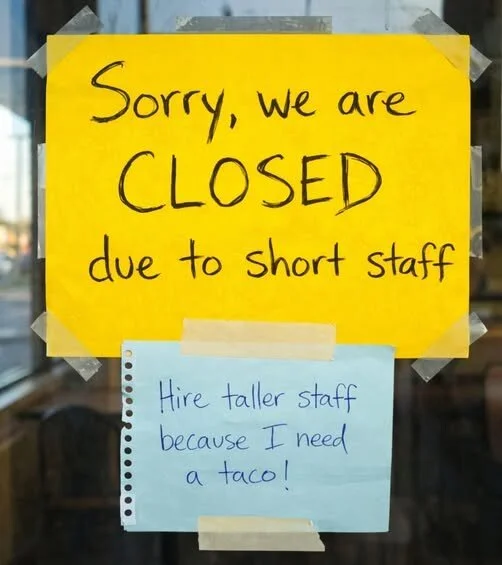
Mot: Ya Need to Be Clever While Raising the Wee Folks!!!

MilitiaMan and Crew: IQD News Update-"Iraq Dinar: REER Ready 2026" Private Sector
MilitiaMan and Crew: IQD News Update-"Iraq Dinar: REER Ready 2026" Private Sector
1-22-2026
The Crew: Samson, PompeyPeter, Petra, Daytrader, Sunkissed, GIGI and Militia Man
Follow MM on X == https://x.com/Slashn
Be sure to listen to full video for all the news……..
MilitiaMan and Crew: IQD News Update-"Iraq Dinar: REER Ready 2026" Private Sector
1-22-2026
The Crew: Samson, PompeyPeter, Petra, Daytrader, Sunkissed, GIGI and Militia Man
Follow MM on X == https://x.com/Slashn
Be sure to listen to full video for all the news……..