
Thank you to all the subscribers to our Early Access program…we thank you for your continued support.
We are excited to offer this new service to keep you informed and up-to-date on the latest Dinar and currency news.
Seeds of Wisdom RV and Economic Updates Monday Afternoon 2-10-25
Good Afternoon Dinar Recaps,
GOLD REACHES ALL-TIME HIGH AS BITCOIN STRUGGLES FOR MOMENTUM AMID MARKET UNCERTAINTY
▪️Gold has surged to a new all-time high, outperforming bitcoin year-to-date, as central banks continued aggressive purchases.
▪️Meanwhile, bitcoin’s price increase of around 5% since the beginning of the year has been marked by volatility, with markets reacting to Donald Trump’s proposed tariffs and broader macroeconomic risks.
Good Afternoon Dinar Recaps,
GOLD REACHES ALL-TIME HIGH AS BITCOIN STRUGGLES FOR MOMENTUM AMID MARKET UNCERTAINTY
▪️Gold has surged to a new all-time high, outperforming bitcoin year-to-date, as central banks continued aggressive purchases.
▪️Meanwhile, bitcoin’s price increase of around 5% since the beginning of the year has been marked by volatility, with markets reacting to Donald Trump’s proposed tariffs and broader macroeconomic risks.
Gold reached a fresh all-time high of $2,902 per ounce as of Monday, marking a 17.5% increase since the start of the year.
Gold’s bullish trajectory has been fueled by ongoing central bank purchases, concerns over global trade policies, and investor demand for safe-haven assets, according to a report from the World Gold Council. Its data shows global gold reserves increased by 694 tons in the first ten months of 2024, continuing the record accumulation trend from previous years.
The report said central banks are expected to remain net buyers of gold in 2025, citing de-dollarization efforts and geopolitical risks as key drivers.
Among the largest gold buyers in 2024 were Poland, India, Turkey and China, with net purchases of 89.5 tons, 72.6 tons, 74.8 tons, and 44.2 tons respectively. Western sanctions on Russia’s central bank reserves in 2022 have been cited as a turning point, reinforcing gold’s role as a geopolitical hedge.
The World Gold Council report found that 69% of central banks expect to continue accumulating gold, while 83% of those in industrialized nations cite it as a hedge against inflation and financial instability.
Trump’s tariffs and market impact
Markets remain uncertain after President Donald Trump announced on Sunday a 25% tariff on all steel and aluminum imports, renewing fears of a global trade war. Steel and aluminum stocks surged in premarket trading in New York, with U.S. Steel and Nucor rising 8% and Cleveland-Cliffs gaining 9%. Alcoa also saw a 4% increase.
With Mexico and Canada among the top three U.S. suppliers, the tariffs cast doubt on last week’s temporary delay and could reignite trade tensions. Although stock futures showed optimism on Monday, QCP Capital sees a feedback loop emerging.
"President Trump, highly sensitive to market reactions, is facing a market increasingly calling his bluff. This could embolden him further, adding another layer of volatility," said QCP Capital.
While bitcoin is often discussed as a hedge against monetary and geopolitical uncertainty, its correlation with risk assets has remained elevated, making it susceptible to shifts in market sentiment, according to a Bitwise report on Monday. In contrast, gold’s traditional role as a safe haven has strengthened its appeal amid growing concerns over inflation and trade disruptions.
@ Newshounds News™
Source: The Block
~~~~~~~~~
CFTC ANNOUNCES CRYPTO FRAUD ACTION AFTER ENFORCEMENT PRIORITIES SHIFT
Acting CFTC Chair Caroline Pham announced on Feb. 4 that the commission would essentially end its practice of regulation by enforcement.
The US Commodity Futures Trading Commission (CFTC) announced a consent order charging a New York resident with fraud in one of the agency’s first crypto-related enforcement actions under acting Chair Caroline Pham.
In a Feb. 10 notice, the CFTC said US authorities had charged Rashawn Russell with engaging in a digital assets trading scheme from 2020 to 2022, in which he solicited investors to contribute cryptocurrency to a fraudulent fund.
According to the complaint, Russell misappropriated roughly $1.5 million through the scheme, which had him plead guilty to wire fraud in the US District Court for the Eastern District of New York.
“Russell guaranteed no loss to investors, and in some instances, guaranteed a minimum twenty-five percent return,” said the CFTC complaint filed on Jan. 16. “In reality, Russell intentionally and/or recklessly made false or misleading statements to solicit and retain investors.”
The enforcement case was one of the agency’s first actions since acting Chair Pham announced on Feb. 4 that the CFTC would be restructuring its Division of Enforcement’s priorities to focus on fraud.
The commission said it planned to divide responsibilities for enforcement cases into two task forces focused on retail fraud and “complex fraud and manipulation.”
Crypto enforcement cases going into 2025?
Members at the CFTC elected Pham as acting chair on Jan. 20 amid the inauguration of US President Donald Trump, whom many expect will nominate a commissioner to fill former Chair Rostin Behnam’s seat. Behnam stepped down as chair on Jan. 20 but remained at the CFTC until Feb. 7, leaving the commission one seat shy of a full panel.
During the 2024 fiscal year under Behnam, the CFTC reported more than $17 billion in monetary relief, stemming mainly from the agency’s actions against crypto exchange FTX.
Pham’s announcement regarding the commission’s shift in priorities suggested that the CFTC would focus less on regulating by enforcement for crypto firms handling digital assets considered commodities.
The US Securities and Exchange Commission — the country’s other significant financial regulator overseeing digital assets — announced in January that it would form a crypto task force to develop a regulatory framework.
Trump appointed SEC Commissioner Mark Uyeda as acting chair following the departure of Gary Gensler until the US Senate can consider the nomination of former commissioner Paul Atkins.
@ Newshounds News™
Source: CoinTelegraph
~~~~~~~~~
RIPPLE'S FIRST FORAY INTO PORTUGAL: PARTNERS WITH UNICÂMBIO USING BLOCKCHAIN FOR INSTANT CROSS-BORDER PAYMENTS
Ripple has expanded its European presence by partnering with Unicâmbio, a leading currency exchange provider in Portugal, to facilitate instant cross-border payments between Portugal and Brazil
This collaboration marks Ripple's first foray into the Portuguese market, leveraging Ripple Payments to enable Unicâmbio's corporate clients to transfer funds quickly and efficiently between the two countries.
@ Newshounds News™
Read more: The Defiant
~~~~~~~~~
HONG KONG SCIENTISTS BUILT A LICKABLE DEVICE THAT LETS YOU TASTE THINGS IN VR
The 15-gram "lollipop" uses food-grade chemicals and electrical currents to simulate nine different flavors, bringing a sense of taste to VR and AR environments.
@ Newshounds News™
Read more: Decrypt
~~~~~~~~~
Seeds of Wisdom Team RV Currency Facts Youtube and Rumble
Newshound's Podcast Link
Newshound's News Telegram Room Link
Q & A Classroom Link
Follow the Roadmap
Follow the Timeline
Seeds of Wisdom Team™ Website
Subscribe to Seeds of Wisdom Team™ Newsletter
Thank you Dinar Recaps
Some “Iraq News” Posted by Clare at KTFA 2-10-2025
KTFA:
Clare: Iraq's revenues exceed 135 trillion dinars in 11 months
2/10/2025 Baghdad
The Ministry of Finance revealed, on Monday, that the volume of revenues in the federal budget during 11 months exceeded 135 trillion dinars.
Al-Eqtisad News followed the data and tables issued by the Ministry of Finance in February 2025 for the accounts from January to November 2024 for the past fiscal year, which showed that revenues from oil stabilized at about 88%, but it still constitutes the main resource for the general budget, indicating that the rentier economy is the basis of the country's general budget.
KTFA:
Clare: Iraq's revenues exceed 135 trillion dinars in 11 months
2/10/2025 Baghdad
The Ministry of Finance revealed, on Monday, that the volume of revenues in the federal budget during 11 months exceeded 135 trillion dinars.
Al-Eqtisad News followed the data and tables issued by the Ministry of Finance in February 2025 for the accounts from January to November 2024 for the past fiscal year, which showed that revenues from oil stabilized at about 88%, but it still constitutes the main resource for the general budget, indicating that the rentier economy is the basis of the country's general budget.
The financial tables showed that the total revenues for the eleven months of last year amounted to 135 trillion, 322 billion, 716 million, 694 thousand, and 603 dinars, indicating that the total advances amounted to 17 trillion, 352 billion, 387 million, 556 thousand, and 226 dinars.
According to the financial tables, oil revenues amounted to 119 trillion, 33 billion, 253 million, and 845 thousand dinars, which constitutes 88% of the general budget, while non-oil revenues amounted to 16 trillion, 289 billion, 462 million, and 848 thousand dinars, which constitutes 12% of Iraq’s general budget. LINK
************
Clare: Parliamentary Finance Committee reassures employees and retirees: Delay in budget schedules does not affect salaries
2/10/25
The Parliamentary Finance Committee reassured employees and retirees that the delay in the arrival of the 2025 budget schedules does not affect the distribution of salaries.
Committee member Jamal Kojer explained in a press statement that "the date of the budget schedules reaching parliament is still unknown."
He added that "despite this, salaries are secured as amounts and liquidity, and there is no delay in their distribution so far." LINK
************
Clare: Trump: US debt may be less than reported due to fraud
2/10/2025 Economy News -
US President Donald Trump said on Sunday that his administration is reviewing US Treasury debt payments to uncover any potential fraud, suggesting that the total national debt of $36 trillion may be less than the announced figure.
Speaking to reporters aboard Air Force One, Trump said his administration was scrutinizing government spending records to detect unnecessary spending, and had recently begun focusing on debt payments, which are a key part of the global financial system.
Trump added that his administration is reviewing US Treasury bonds, indicating that there may be problems with them. He added: "There may be a problem, you've been reading about it, and it may be interesting."
"It's possible that a lot of these things are not being accounted for, in other words, we may discover that some of these transactions are very fraudulent, which means that the total debt may be less than we thought," Trump continued.
It was not clear whether Trump was referring to debt service payments or any other government payments made by the Treasury Department.
US debt value
The U.S. national debt currently stands at $36.2 trillion, according to the U.S. Treasury Department, or more than 120% of gross domestic product. Because the U.S. government is spending more than it takes in, President Donald Trump and Republicans, who control Congress, will have to approve more borrowing this year to avoid a default, a scenario that could be disastrous for the economy.
Independent budget monitors have warned that Trump's proposed tax cuts could add trillions of dollars to the national debt, further straining the country's finances.
US President Donald Trump has tasked businessman Elon Musk with a sweeping overhaul of the federal government, sparking protests on the streets of Washington amid accusations that the administration is breaking laws.
Musk's Department of Government Efficiency has disrupted the work of several federal agencies and raised privacy and security concerns because of his access to sensitive records related to government salaries and spending.
In a legal development, a federal judge issued a temporary injunction Saturday blocking Musk's team from accessing government systems that process trillions of dollars in payments, citing potential risks of unlawful disclosure of sensitive information.
After the court ruling, Elon Musk called for the “do not pay” list of entities that should not receive government payments to be updated at least weekly, if not daily.
For his part, US Treasury Secretary Scott Bessent, a Trump appointee, confirmed last week that Musk's team has "read-only" access to the payments system, meaning he cannot make any changes.
Meanwhile, while courts have blocked Trump’s attempt to freeze broad domestic aid, project managers across the country say billions of dollars remain stuck, affecting clean energy and transportation projects. LINK
************
Clare: In light of the liquidity crisis... Why doesn't Iraq resort to printing more currency?
Sami Al-Salehi Journalist Published in Saturday 8 February 2025
Iraq is facing increasing challenges due to the scarcity of cash liquidity, which negatively affects the markets and daily financial transactions. While some are looking for quick solutions to overcome this crisis, the option of printing more local currency remains controversial, given the serious economic repercussions that may result from it.
The Iraqi government faces challenges in managing cash liquidity in dinars, as it suffers from a chronic shortage of this currency, which affects its ability to meet its financial obligations to pay employee salaries, repay debts, and finance projects.
Since the 1990s, and specifically during the period of the economic blockade, Iraq has witnessed hyperinflation in its national currency (the dinar). This situation prompted the ruling regime at the time to take the decision to print the currency locally.
After 2003, the previously circulating currency was disposed of, new denominations with updated designs were issued, and the exchange rate of the Iraqi dinar was fixed against the US dollar based on a decision by the then civil governor of Iraq, Paul Bremer, who in turn announced the details of the new currency and its official exchange rate.
Iraq currently has a range of paper denominations that cater to various daily transactions, starting from small denominations such as 250, 500 and 1,000 dinars, all the way to larger denominations such as 5,000, 10,000, 25,000 and even 50,000 dinars that are used in major transactions.
Where is the Iraqi currency printed?
On January 19, 2025, the Central Bank of Iraq revealed new security features on circulating banknotes, with the aim of reducing counterfeiting and protecting the national currency.
According to economic observers, the Central Bank has included these signs in the new banknotes to raise awareness among the public, companies and banks alike.
A source in the Central Bank of Iraq spoke about details related to the process of printing Iraqi banknotes, indicating that “the currency was previously printed in Switzerland, but the printing is currently done at the British Institute in London,” which is considered one of the most prominent institutions specialized in printing currencies globally.
In an interview with Al-Jabal platform, the source explained that “Iraqi banknotes are manufactured according to high-quality specifications, aiming to prevent their rapid damage and ensure their ability to withstand daily use for long periods, through the use of modern materials and technologies that increase their lifespan.”
According to the same source, “the cost of printing one banknote ranges between 4 and 5 US cents, a cost that includes the use of the latest security technologies to prevent counterfeiting, such as watermarks, optically variable inks, and security threads.
In contrast, the Central Bank confirms that currency printing operations are subject to strict standards to ensure their quality and durability. The design of banknotes is also updated from time to time according to technical and security needs, to ensure the currency is protected from counterfeiting and improve its technological properties.
An option on the government's table
In addition, Mazhar Mohammed Saleh, the economic advisor to the Iraqi Prime Minister, says, “Financing the deficit in the general budget through the issuance of cash is a cautious approach, but it remains a possible option in light of the availability of high foreign reserves, capable of covering the money supply of the national currency by no less than 75%.”
Saleh added, during his interview with the “Al-Jabal” platform, that “resorting to this method is temporary and periodic, as 40% to 50% of the issued cash is directed towards internal transactions, not just external transactions, which makes it an available option when needed, provided that the coverage rate remains high according to the mentioned standards.”
Saleh continues his talk by saying: “The monetary policy in Iraq is proceeding according to balanced standards with the fiscal policy, and is consistent with the cycle of oil assets. In the event that oil prices fall to low levels, it is possible to resort to financing the deficit by borrowing from banks and deducting the borrowings from the monetary issuance authority, provided that the coverage equation is maintained until the end of the cycle of falling prices.”
Saleh points out that "the decline in oil prices to below their real value in energy markets is not unusual, and it happens sometimes, which requires dealing with it through balanced monetary and financial mechanisms to ensure the stability of the national economy."
It is noteworthy that the Central Bank of Iraq issued, in 2018, a second edition of banknotes in denominations (25,000, 10,000, 1,000, 500, 250).
The Central Bank also previously added some technical and technological updates to the 2003 issue for all types of local currency, except for the (50) dinar category, which was withdrawn from circulation in 2015, while at the end of 2015 it issued the (50,000) dinar category to complete the current series in circulation.
Pros and cons of printing
In this regard, financial expert Jalil Al-Lami said, during his interview with Al-Jabal platform, that “the issue of printing local currency is one of the most sensitive economic policies, given its direct impact on the financial and economic stability in the country.”
Iraq, according to Lami, sometimes faces cash liquidity crises due to economic and political challenges. Technically, it can resort to printing currency to cover the deficit, but this does not depend only on technical capacity, but is subject to complex economic determinants such as the level of foreign exchange reserves, the monetary policy of the Central Bank of Iraq, and general economic stability.
Al-Lami added that "the Central Bank of Iraq, as the only body authorized to issue the currency, adheres to strict standards to ensure that it does not harm the national economy," warning against "unstudied monetary expansion, which could lead to dire economic consequences."
Regarding the positives of printing currency, Al-Lami reviewed some of the potential positives of printing currency, including providing quick cash liquidity, which helps finance salaries and projects and pay urgent obligations, in addition to supporting the economy in crises such as wars or epidemics, in addition to stimulating local demand by increasing the money supply.
Regarding the negatives of printing currency, Al-Lami believes that it may lead to hyperinflation, as when currency is issued without real economic cover, it leads to an uncontrolled rise in prices, in addition to a loss of confidence in the national currency, in addition to the deterioration of the exchange rate as a result of the increase in the money supply without sufficient economic support, and the gap between wages and prices may widen.
Al-Lami suggested a number of sustainable solutions that could help Iraq confront liquidity crises without resorting to printing currency, including “reforming the tax system by improving tax collection and reducing tax evasion to increase government revenues and diversify sources of income, in addition to internal and external borrowing and reducing unnecessary expenses.”
Other proposals, according to Al-Lami, include “enhancing foreign investment and reforming the financial and banking sector.”
The former governor of the Central Bank, Mustafa Makhif, announced in 2022 that "the bank is working on completing a new denomination worth 20,000 dinars based on a study and comparative research with neighboring countries, and is working on completing the shape of the note and it will be announced in the coming days."
At the time, he also spoke about the “issue of deleting zeros from the local currency,” and stressed that “the process of deleting zeros from the currency requires enacting a law and making some amendments.”
Numbers and statistics
The Iraqi government decided to change the exchange rate of the Iraqi dinar against the US dollar in 2020, as the price was adjusted from 1,182 dinars per dollar to 1,450 dinars per dollar.
This decision sparked widespread popular discontent, especially after the prices of food and all commodities in the markets witnessed a significant increase, and this change was confirmed in the federal budget approved by the Iraqi Council of Representatives on March 31, 2021.
Data from economist Nabil Al-Tamimi indicate that printing any currency clearly contributes to increasing inflation, as the increase in the volume of cash in circulation leads to an increase in prices. Therefore, countries are keen to avoid printing money to cover the deficit in their budgets except in limited and studied proportions, through which they try to achieve a balance between the volume of cash circulation and economic activity, i.e. the gross domestic product, which is known as natural inflation.
Al-Tamimi continued, in his interview with Al-Jabal platform, saying: “In some cases, monetary authorities may resort to withdrawing part of the cash and drying up the markets to control inflation, despite the economic slowdown that may result from that.”
According to Al-Tamimi, “Increasing the volume of printing leads to an increase in demand for hard currency, especially in countries that depend on importing goods and services, such as Iraq. The more local currency in circulation in dinars, the higher consumer spending, and most of this spending goes to imported goods and services that are paid for in foreign currency, which leads to an increase in demand for the dollar.”
In a free market, Tamimi said, “this could lead to fluctuations in the exchange rate, but if the central bank intervenes through a currency auction, the daily sales volume will increase to maintain monetary stability.” Data indicates that the Iraqi central bank’s dollar sales have reached about $300 million a day, compared with about $180 million a day in previous years.
He added, "The Central Bank of Iraq relies on its foreign currency reserves on government revenues from oil sales, which change according to the fluctuations of the oil market, as the reserve ranges between 50 and 100 billion dollars. To ensure monetary stability, the Central Bank's accounts must be based on the minimum reserve, i.e. 50 billion dollars, to cover imports and control local demand for hard currency at approximately this level."
Al-Tamimi concluded his speech by saying, “The period from 2003 to 2019 witnessed a relatively balanced monetary policy regarding printing currency, as the total issued currency during this period amounted to about 55 trillion dinars. However, the monetary policy during 2020 and 2021 led to clear inflation, with the volume of issued currency doubling to more than 100 trillion dinars. This was reflected in a significant increase in prices, as the inflation rate reached about 15%.”
Many years ago, the Director of Issuance at the Central Bank, Ihsan Al-Yasiri, said, “The Central Bank of Iraq prints a thousand 25,000-dinar notes in the most reliable international companies at a cost of less than $60,” noting that “the bank will not spend a large amount of cash to print the new banknotes, because their cost is low.” LINK
************
Clare: "From Cradle to Ruin"...an exhibition that embodies Iraq's journey in Jerusalem
2/9/2025
In exceptional event, the Museum of Islamic Art in Jerusalem hosts an exhibition entitled “From Cradle to Ruin,” which tells the story of Iraq through contemporary artworks by Iraqi artists .
The Israeli newspaper, "The Jerusalem Post", reported in a report translated by Shafaq News Agency, that "an American officer contributed to purchasing these artworks to sell them to artists in the United States. After that, an Israeli-American artist of Iraqi origin intervened to purchase the works and facilitate their display in Israel."
He pointed out that "the exhibition is about Iraqi art and that part of the credit for organizing it goes to the efforts of the Israeli-American artist of Iraqi origin, Oded Halhami, who is 86 years old and resides in New York City."
The report explained that "Oded runs his own gallery in New York, specifically in the Soho neighborhood, and devotes much of his effort to his art gallery, including providing a space for Iraqi artists to display their work and introduce the world to another side of Iraq that is not associated with the violence and death that appears in the news."
The report quoted the museum's director general, Gilad Levin, as saying, "Iraqis are very proud of their culture. Iraq is the cradle of human culture and history, and that is why we chose this title," explaining that "this is the place where the oldest cultures in human history began."
Levian added, "Iraq has witnessed ups and downs throughout its history, but he stressed that heritage exists within the people regardless of the ruling regime."
The report referred to Oded's passion and keen interest in this exhibition, as there is a text on the opening wall near the entrance to the exhibition hall, quoting his words in which he says, "It seems that I left Iraq, but Iraq never left me."
The report also quoted Levian as saying, “Oded lives his Iraqi identity, and lives this culture through the books he writes, the art he creates, and the clothes he wears,” indicating that “Oded surprised me… We had never met before, but we had talked on the phone for years, and he makes his own clothes, clothes in the traditional Iraqi style.”
He explained that "the title of the exhibition refers to the hardships and disasters that Iraq has gone through over the centuries, especially in the last fifty years, following the rise of Saddam Hussein's regime to power in the late seventies."
The report pointed out “a wonderful dramatic story related to the exhibition, which is the story of an American soldier who loved art while serving on a military mission in Iraq, where he obtained permission from his commander to follow local artists and transfer some of their works to the United States, then arrange for the sale and delivery of the financial proceeds to the artists who were struggling in difficult circumstances. When Oded heard about this initiative, he included this idea in his charitable works.”
While Levian said that Oded "told them that he would display the works in his gallery, and that he would buy any artworks that were not sold," hence the opening of the exhibition of Iraqi works at the Islamic Museum in Jerusalem .
The report continued, "Oded also owns a collection of artworks that reflect the depth of anxiety in Iraqi society at the present time, in addition to the cultural richness of Iraq that extends back thousands of years."
"Oded, in his octogenarian years, calls two of his exhibits Mercy for Baghdad, and they reflect the Iraqi national tricolour flag, whose design has been modified several times since the 1960s, and refer to a pre-Gulf War version of the flag with three stars, and the version introduced by Saddam Hussein that includes the phrase 'God is Great' instead of stars," he added.
The exhibition includes works that reflect Iraq's long and winding road and attempts to heal the rift and wounds, while Levian says that "when Iraq is damaged, it is on a large scale. But it always recovers."
The report indicated that the exhibition may be surprising to many who know Iraq only through the prevailing media images of it, and perhaps visitors will be able to learn about aspects of Iraqi culture through the memories they heard from elderly people who immigrated from Iraq in the early fifties and their children .
The report continued, "There is a painting representing three men embodying an atmosphere of close friendship and mutual respect in a café on the banks of the Tigris River, where people, especially men, would gather to smoke a hookah, drink coffee or tea, and play backgammon."
He said, “There is a miniature image of that atmosphere in the exhibition through a painting by the artist Fadhel Abbas,” pointing out “an amazing painting that reflects the artwork of the Mexican artist Frida Kahlo, a painting by the artist Naziha Rashid that depicts a woman with dark, strong eyes that reflect a feeling of inner strength.”
The exhibition also includes a collection of miniature oil paintings by artist Amal Alwan that convey a sense of daily life, including a scene of a riverside café .
The idea of destruction in the work “Night of Fire” by artist Mohammed Al-Hamdani shows what the American army did when it bombed Baghdad during the Second Gulf War in 2003 .
The report concluded by saying, "The Iraqi exhibition at the Museum of Islamic Art in Jerusalem represents a wonderful and rare opportunity to understand the spirit of the current era in Iraq."
Seeds of Wisdom RV and Economic Updates Monday Morning 2-10-25
Good Morning Dinar Recaps,
TOP ECONOMIC EVENTS TO WATCH NEXT WEEK: US CPI & PPI REPORT, POWELL’S TESTIMONY MIGHT SET CRYPTO MARKET’S TREND
▪️Crypto markets brace for key economic events, including CPI, PPI data, and Jerome Powell’s testimony, which could impact price trends.
▪️Fed interest rate outlook and U.S. tariff updates may influence investor sentiment, with inflation reports playing a crucial role next week.
Good Morning Dinar Recaps,
TOP ECONOMIC EVENTS TO WATCH NEXT WEEK: US CPI & PPI REPORT, POWELL’S TESTIMONY MIGHT SET CRYPTO MARKET’S TREND
▪️Crypto markets brace for key economic events, including CPI, PPI data, and Jerome Powell’s testimony, which could impact price trends.
▪️Fed interest rate outlook and U.S. tariff updates may influence investor sentiment, with inflation reports playing a crucial role next week.
Next week is important for the crypto market because a few major events are happening. These include the release of the CPI and PPI data, speeches from important Federal Reserve officials, and testimony from Jerome Powell, which could all influence the direction of the crypto market in the coming week.
Jobs Report and Tariff Concerns Shake Markets Before Inflation Data
After the January jobs report came out on February 7, the dollar and bond yields increased, but stock and crypto prices dropped. These market changes were influenced by more than just the jobs report.
It concluded a week filled with strong economic data and growing concerns about upcoming U.S. tariffs. The January 2024 jobs report was a key highlight of last week, but other economic data also came in strong and exceeded expectations.
At its latest meeting, the Federal Reserve kept its main interest rate steady at 4.25%-4.50%, stressing that they need to see continuous improvement in inflation before thinking about reducing rates.
Several Fed officials also mentioned that prices pushed up by tariffs might lead to keeping their policies stricter for a longer period than what the markets anticipate.
CPI Report on 12 February
U.S. inflation figures and remarks from Federal Reserve Chair Jerome Powell will play a crucial role in deciding the direction of U.S. interest rates. Additionally, any new updates on tariffs from the Trump administration will be closely watched.
With the first central bank decisions of 2025 behind us, this week might be quieter. However, there’s still significant news for investors, as the crucial CPI report from the United States is coming up.
In December, the main CPI rate slightly increased to 2.9% year-over-year, while the core rate decreased to 3.2%. According to predictions from the Cleveland Fed’s Inflation Nowcasting model, the main CPI rate is expected to have dropped to 2.85% in January, and the core rate to have slightly decreased to 3.13%.
On February 11, key figures from the Federal Reserve, including Hammack, Williams, and Powell, along with the Bank of England’s Mann and Bailey, will deliver speeches.
The next day, February 12, will feature talks from the Fed’s Bostic and Powell, as well as the ECB’s Nagel and the BoE’s Greene, potentially impacting financial markets with their insights on monetary policy.
Attention will also turn to inflation numbers from China, economic statistics from Japan, and data on the U.K.’s gross domestic product.
Jerome Powell’s Testimony to Take Place
Federal Reserve Chair Jerome Powell probably won’t share much new information this week during his twice-a-year report to Congress, but his appearance could still affect the markets.
Powell will testify in the House of Representatives on Wednesday and then in the Senate on Thursday, discussing the Fed’s view on the economy.
Deutsche Bank analysts said,
“He will likely stick to the January FOMC script but the market always seems to get something new out of these appearances, which include a lot of congressional Q&A.”
Economists believe he will echo a common theme from recent Federal Reserve meetings: there is currently no hurry to lower the key fed funds interest rate.
US PPI Report
If the US releases strong producer price index (PPI) or retail sales figures, it could boost the dollar by making investors think that interest rate cuts might be delayed. Although markets have been doing well lately, any unexpectedly high inflation could make investors feel less bullish.
Additionally, if industrial production numbers are strong, it could increase the prices of oil and metals. However, if retail sales are weak, it could reduce demand for commodities driven by consumer spending and could also negatively impact the dollar. As a result, we might see a bullish comeback in the crypto market.
@ Newshounds News™
Source: Coinpedia
~~~~~~~~~
BRICS CURRENCY PLAN IS OFFICIALLY NO MORE: WILL TRUMP LIFT TARIFFS
The ongoing tensions between the United States and the BRICS alliance have reached a fever pitch. With the world concerned about a burgeoning trade war, both sides seem no closer to any sort of resolution. However, a recent statement confirmed that the BRICS currency plan is officially no ore, but will US President Donald Trump lift his proposed tariffs?
During his campaign for re-election, Trump originally warned tariffs to dissuade the nation from embracing de-dollarization. He targeted the BRICS bloc specifically because they had so blatantly embraced the native currency settlement of their trade. Yet, with them confirming they are no longer a threat to the world’s currency, will Trump relent?
BRICS Currency Plan Confirmed to be Done, but Will Trump No Longer Target Alliance?
Donald Trump once said that the US dollar ceasing to be the world’s global reserve currency would be akin to the nation losing a war. That is what first placed the BRICS alliance in his crosshairs. For years, the nation has sought to implement its very own currency. Although never announced, the rumor had been present for much of 2024.
That caused the current US President to threaten significant tariffs on these nations. Specifically, he targeted those who would not commit to ensuring the status of the greenback. However, BRICS has officially confirmed its currency plan is no more, but will a Trump tariff also be rejected?
Dimitry Peskov, a Russian spokesperson, recently confirmed that “the BRICS are not discussing the creation of a common currency.” Indeed, the statement looked to put to rest the popular rumor. Alternatively, Peskov confirmed that the bloc was simply focused on joint investment and economic cooperation.
The question is, how will Trump respond? He is already planning reciprocal tariffs to match those imposed by other countries.
Additionally, China has already responded to its 25% tariff with a 10% import tax on the US. With these nations already deeply embedded in an ongoing trade war, it is difficult to imagine Donald Trump would end the policy before it truly was implemented.
@ Newshounds News™
Source: Watcher Guru
~~~~~~~~~
Seeds of Wisdom Team RV Currency Facts Youtube and Rumble
Newshound's Podcast Link
Newshound's News Telegram Room Link
Q & A Classroom Link
Follow the Roadmap
Follow the Timeline
Seeds of Wisdom Team™ Website
Subscribe to Seeds of Wisdom Team™ Newsletter
Thank you Dinar Recaps
“Tidbits From TNT” Monday Morning 2-10-2025
TNT:
Tishwash: Parliamentary Finance: No new appointments in the 2025 budget
The Parliamentary Finance Committee confirmed, on Sunday, February 9, 2025, that there are no appointments in the federal budget for the current year.
Committee member Mustafa Al-Karawi said in a statement followed by Al-Jabal, "According to the latest amendments, there is no fundamental change in the budget law, and no new appointments have been included, but it is possible for the government to move within the budget schedules to reactivate some of the previous specializations and texts."
TNT:
Tishwash: Parliamentary Finance: No new appointments in the 2025 budget
The Parliamentary Finance Committee confirmed, on Sunday, February 9, 2025, that there are no appointments in the federal budget for the current year.
Committee member Mustafa Al-Karawi said in a statement followed by Al-Jabal, "According to the latest amendments, there is no fundamental change in the budget law, and no new appointments have been included, but it is possible for the government to move within the budget schedules to reactivate some of the previous specializations and texts."
He stated that "the amendments sent by the Prime Minister and the Council of Ministers were limited to Article (12) related to the cost of extracting oil in the Kurdistan Region," indicating that "the amended article is supposed to enter into force soon, which will allow the start of exporting oil from the region's wells through the SOMO company."
The Ministerial Council for the Economy recommended a few days ago to stop listing new investment projects except for necessary ones.
The Council sent its recommendation to the Council of Ministers regarding new investment projects to stop listing these projects except for the necessary ones, with the approval of the Council of Ministers and the endorsement of the Ministry of Planning and Finance to provide financial allocation before entering into any financial obligations link
************
Tishwash: The dollar stabilizes in the parallel market.. Is the price madness over?
The US dollar exchange rate is witnessing remarkable stability in the parallel market in Iraq at the present time, after a period of fluctuations and rising prices.
This stability is mainly attributed to the decrease in demand for the dollar for import purposes.
Economic expert Salah Nouri told {Euphrates News} that: “The stability of the dollar exchange rate in the parallel market is due to the decrease in demand for imports by traders who import goods from neighboring countries, as a result of anticipation of the outcome of the US decisions regarding sanctions.”
Nouri stressed that “the decrease in the dollar exchange rate has a positive impact on citizens’ purchasing power, but to varying degrees depending on the type of goods, such as basic food items other than medicines.”
Is the price madness over?
This stability indicates the possibility of an end to the “price madness” that the dollar market witnessed in the previous period; however, the economic expert believes that this stability is dependent on the decisions of the United States of America regarding sanctions, which means that the market may witness other fluctuations in the future.
Its impact on citizens
The decline in the dollar exchange rate has a positive impact on citizens’ purchasing power, as they can buy more goods and services with the same amount of Iraqi dinars. However, this impact varies depending on the type of goods, as citizens benefit more from the decline in the prices of basic food items other than medicines. link
************
Tishwash: Saeed Tavakli: Iraq signs new gas export contract with Iran
The CEO of the National Iranian Gas Company, Saeed Tavakoli, confirmed today, Saturday, "The export of gas to Iraq is currently ongoing, and we have recently signed a long-term contract with Iraq."
Tavakoli told the Iranian Mehr News Agency regarding US President Donald Trump's decision last Wednesday to cancel the exemption granted to Iraq to import electricity and gas from Iran as part of new sanctions against Tehran, "The decision represents an escalation of US pressure on Iran, as it pressures Iraq to reduce its dependence on Iranian energy."
Saeed Tavakoli stressed, "The export of gas to Iraq is currently underway, and since we have recently extended a good contract for exporting gas, it is likely that the cancellation of the exemption granted to Iraq to import electricity and gas from Iran was for another form of gas import."
The Iranian official continued, "Fortunately, the Iranian-Iraqi contract is in place, but the volume of exports increases and decreases according to the contractual terms."
Regarding gas imports and swaps, Tavakoli also said, "We do not import gas, but gas imports and swaps, such as electricity, are carried out from Armenia."
The CEO of the National Gas Company also stated regarding the drop in temperatures and the state of gas supply: "Currently, the network conditions are stable, and in the current situation, 72 percent of the gas produced is consumed in the domestic sector, and thanks to the cooperation of citizens, the gas supply network will remain stable in the coming days."
Iranian officials said last year that Iraq owed Iran $11 billion in debt due to the gas it purchased, and the payment of this debt was postponed by Iraq to the extent that Iran was forced, in response, to reduce gas exports due to the heavy debt. link
*************
Mot: You Can Spoil Her With Something Expensive This Year

Mot ... AAaaaaaaaaahhhhhhhhhhh!!!!

MilitiaMan & Crew-Dinar-IRAQ-News-Constitutional Entitlements-Digital Economy Infrastructure-AI-Monetary Mass
MilitiaMan & Crew-Dinar-IRAQ-News-Constitutional Entitlements-Digital Economy Infrastructure-AI-Monetary Mass
2-9-2025
The Crew: Samson, PompeyPeter, Petra, Daytrader, Sunkissed, GIGI and Militia Man
Be sure to listen to full video for all the news……..
MilitiaMan & Crew-Dinar-IRAQ-News-Constitutional Entitlements-Digital Economy Infrastructure-AI-Monetary Mass
2-9-2025
The Crew: Samson, PompeyPeter, Petra, Daytrader, Sunkissed, GIGI and Militia Man
Be sure to listen to full video for all the news……..
Iraq Economic News and Points to Ponder Sunday Afternoon 2-9-25
The Central Bank Determines The Mechanism For Buying And Selling Real Estate Through Banks
Sunday 09 February 2025 17:31 | Economic Number of readings: 48 Baghdad / NINA / The Central Bank of Iraq announced the determination of a new regulation on the mechanism for buying and selling real estate through officially licensed government and private banks
The Central Bank Determines The Mechanism For Buying And Selling Real Estate Through Banks
Sunday 09 February 2025 17:31 | Economic Number of readings: 48 Baghdad / NINA / The Central Bank of Iraq announced the determination of a new regulation on the mechanism for buying and selling real estate through officially licensed government and private banks. https://ninanews.com/Website/News/Details?key=1184647
The Prime Minister Affirms The Aspiration To Strengthen The Bonds Of Constructive Cooperation Between Iraq And Kuwait
Sunday 09 February 2025 | Politics Number of readings: 240 Baghdad / NINA / Prime Minister Mohammed Shia Al-Sudani stressed the aspiration to strengthen the bonds of constructive cooperation between Iraq and Kuwait.
A statement by his media office stated that Prime Minister Mohammed Shia Al-Sudani received today, Sunday, the Ambassador of the State of Kuwait to Iraq, Mr. Hassan Muhammad Al-Zaman.
According to the statement, Al-Sudani congratulated the Kuwaiti ambassador on assuming his new duties in Iraq, wishing him success in his work, pointing to the depth of relations between the two countries, and the importance of consolidating and expanding them at various levels and levels.
Al-Sudani stressed, during the meeting, the aspiration to strengthen the bonds of constructive bilateral cooperation in several fields, pointing to the available opportunities, and the availability of an appropriate investment environment for the work of Arab and foreign companies, including Kuwaiti companies. He
also stressed that the door is open for the sisterly State of Kuwait to enter into development path projects, and to benefit from the announced investment opportunities, which contributes to enhancing economic integration and interconnected interests between the two countries. /End https://ninanews.com/Website/News/Details?key=1184617
Dollar Slightly Declines In Baghdad
Stock Exchange Economy News – Baghdad The exchange rate of the US dollar against the Iraqi dinar fell slightly in Baghdad markets today, Sunday.
The dollar prices witnessed a decrease in the Al-Kifah and Al-Harithiya stock exchanges, recording 150,350 dinars for every 100 dollars, while it recorded 150,400 dinars for every 100 dollars yesterday morning, Saturday.
Selling prices in exchange shops in local markets in Baghdad recorded stability, as the selling price reached 151,500 Iraqi dinars for 100 dollars, while the purchase price reached 149,500 dinars for 100 dollars. https://economy-news.net/content.php?id=52626
Gold Prices Stabilize At Historic Level In Baghdad
Stock Exchange Economy News – Baghdad The prices of "foreign and Iraqi" gold stabilized in the local markets in the capital, Baghdad, today, Sunday (February 9, 2025) at unprecedented levels in the country, amid the rise in the prices of the precious metal globally as a safe haven.
Gold prices in the wholesale markets on Al-Nahr Street in the capital, Baghdad, this morning recorded a selling price for one mithqal of 21 karat Gulf, Turkish and European gold of 605 thousand dinars, and a purchase price of 601 thousand dinars.
The selling price of one mithqal of 21-karat Iraqi gold was recorded at 575 thousand dinars, and the purchase price was 571 thousand.
As for gold prices in goldsmiths’ shops, the selling price of a mithqal of 21-karat Gulf gold ranges between 605,000 and 615,000 dinars, while the selling price of a mithqal of Iraqi gold ranges between 575,000 and 585,000 dinars. https://economy-news.net/content.php?id=52628
Industry Holds Conference On "Accelerating Procedures And Investment Security"
Saturday 08 February 2025 12:38 | Economic Number of readings: 196 Baghdad / NINA / The Ministry of Industry and Minerals, in the presence of Minister Khaled Batal and a large group of industrialists and businessmen, held a conference entitled (Accelerating Procedures and Investment Security).
The conference aims to introduce the ministry's steps towards automation and digital transformation of the services provided by the General Directorate of Industrial Development and the Directorate of Trademark Registration, to support industrialists, traders and factory owners and encourage the establishment of new factory projects / https://ninanews.com/Website/News/Details?key=1184420
For current and reliable Iraqi news please visit: https://www.bondladyscorner.com/
Seeds of Wisdom RV and Economic Updates Sunday Afternoon 2-9-25
Good Afternoon Dinar Recaps,
THE LESSONS LEARNED AT "OPERATION CHOKEPOINT 2.0" CONGRESSIONAL HEARINGS
The new majority party cast the former administration’s bank regulators as bullies operating in the shadows, yet surprising agreements were found.
The deep political divisions in the United States were apparent once again during the recent Congressional hearings on Operation Chokepoint 2.0, the alleged top-down initiative by former US President Joe Biden’s administration to “de-bank” crypto firms.
Good Afternoon Dinar Recaps,
THE LESSONS LEARNED AT "OPERATION CHOKEPOINT 2.0" CONGRESSIONAL HEARINGS
The new majority party cast the former administration’s bank regulators as bullies operating in the shadows, yet surprising agreements were found.
The deep political divisions in the United States were apparent once again during the recent Congressional hearings on Operation Chokepoint 2.0, the alleged top-down initiative by former US President Joe Biden’s administration to “de-bank” crypto firms.
For much of Thursday afternoon (Feb. 6), it seemed that members of the Republican and Democratic parties were inhabiting different universes.
Had Biden administration regulators really pressured US financial institutions to deny bank accounts to cryptocurrency firms in 2023, as Republicans asserted? Or was this whole construct of Chokepoint 2.0 “a fake program,” one never initiated by the Biden administration, as Democratic Representative Al Green stated?
Interestingly, at the end of the two-hour hearing, titled “Operation Choke Point 2.0: The Biden administration’s Efforts to Put Crypto in the Crosshairs,” the two political parties actually seemed to be in agreement on steps to be taken to prevent future regulatory ‘overreach’ — even while arguing about past practices.
For the most part, though, the Republicans cast the former Biden administration’s bank regulators as bullies operating in the shadows.
Bitter back-and-forth at Operation Chokepoint hearing
Paul Grewal, chief legal officer at Coinbase, testified that the US Federal Deposit Insurance Corporation (FDIC) “bludgeoned the banks” with an onslaught of examinations and questions “until the banks relented under the pressure.” Regulators forced banks to deny stablecoin issuers bank accounts for their reserves, for instance.
There was some drama, too, when Republican Rep. Ann Wagner questioned Fred Thiel, CEO of MARA Holdings, a leading Bitcoin mining firm, about events in 2023 when several large US banks failed:
“Mr. Thiel, has your bank ever stated whether their prudential regulators told them that they should refrain from providing services to digital asset firms?”
“We banked with Signature Bank and when the FDIC shut them down [in March 2023] and Flagstar took over the accounts, none of the crypto accounts were allowed to be part of those assets acquired,” answered Thiel, continuing:
“We were forced to immediately seek accounts with other banks. We were able to open an account with another bank, deposited $70 million after going through the approval processes, and six days later, we were told we have to shut down the accounts because our bank no longer will bank crypto companies.”
Wagner: “So the answer is yes.”
Elsewhere, Meuser asserted that the former administration’s regulators “resorted to vague interpretive regulatory letters, threatening banks with negative examination scores and fines if they continue their partnership with digital asset companies.”
Not surprisingly, the minority party resisted these characterizations. Ranking minority party member Green asked if anyone “had read a document from someone in the Biden administration or some regulator saying that there was a Chokepoint 2.0 operation.”
No one raised their hand.
“So this is a made-up statement. Somebody concluded that this was something that sells.”
Democratic Representative Nikema Williams said the matter under discussion, Choke Point 2.0, isn’t a serious issue — unlike, say, the continuing racial wealth gap or “Elon Musk dismantling our federal government.”
Williams questioned why the subcommittee was even meeting to discuss the crypto policy of former president Biden when “he isn’t in power anymore.”
Meuser asked another witness, Austin Campbell, adjunct professor at NYU’s Stern School of Business, for some details on just how “Operation Chokepoint operated in the past” (e.g., Chokepoint 1.0, invented by the Obama administration, supposedly), given he was a former bank risk manager. How exactly did regulators pressure banks into severing ties with legally operating businesses?
Campbell answered that when communicating with regulators, “you are getting fundamentally several layers of guidance,” both written and verbal.
On the verbal level, regulators might say: “Well, we have reputational concerns about you banking crypto clients…. We’re still not sure. Maybe we’ll answer you on that. Maybe we won’t, but we still find it risky.”
“You understand that to mean no,” explained Campbell.
“Rhetorical red meat” or genuine overreach?
Cointelegraph queried several outside sources in the wake of the hearings, including Dru Stevenson, professor of law at South Texas College of Law Houston. Was debanking the crypto industry a serious problem in the US, or is it just something dreamed up by the crypto industry?
“The invocation of ‘Chokepoint’ is pure political theater, rhetorical red meat for the GOP base,” Stevenson answered.
The reality is that all rules and regulations, even the most wholesome and helpful, involve some tradeoffs, such as compliance checks and a little bit of overdeterrence at the margins, which may have happened in the last administration, he said.
Stephen Gannon, a partner at law firm Davis Wright Tremaine, disagreed. The “evidence is now overwhelming” that regulators overreached in the previous administration.
He cited numerous factors, including Senate Banking Committee testimony this past week from Nathan McCauley regarding a Federal Reserve Bank (FRB) internal document brought forward at the hearing by Sen. Lummis. Also, the FDIC “pause” documents recently released and statements from Acting FDIC Chair Travis Hill acknowledging such pressures existed.
In addition, there was the aforesaid testimony before the House Financial Services subcommittee, “particularly that of Fred Thiel,” as well as “my own personal experience with crypto clients who have been de-banked,” continued Gannon. Add to that “information compiled by Marc Andreessen and Nic Carter.”
Steven Kelly, associate director of research at the Yale Program on Financial Stability at the Yale School of Management, highlighted problems associated with reputational risk, a particular concern expressed during the subcommittee hearing. Kelly told Cointelegraph:
“Supervisors’ ability to press banks on their ‘reputation risk’ is a black box authority that can give way to something like an Operation Chokepoint.”
Still, Kelly was doubtful there was any premeditated, secret plan to de-bank the crypto industry. The fact that “the accusation has only been focused on the crypto industry thus far is telling and less suggestive of a chokepoint operation.
There are clearly real prudential concerns with crypto, which were borne out in the collapses of the 2022 crypto winter and the subsequent runs on Silvergate Bank and Signature Bank.”
Both parties find points of agreement
One surprise regarding the hearings: there were actually some points of agreement among the majority and minority members and their witnesses. Campbell, the former bank risk manager, whose testimony was generally well received by the majority party, highlighted some reforms the subcommittee might consider moving forward, and these seemed to meet broad approval:
“A simple one is that all banking guidance should be written. Do not allow verbal guidance. Do not allow hearsay and subjective statements. Write it down.”
“Secondly, that guidance should be made public on some trailing basis. Once you have a paper trail of what the regulators are doing, we will be having many less of these hearings.”
“When banks refuse people services, they should have to tell them why. And those statements should be written complete and transparent.”
“They should abolish management and reputational risk as components of the rating of banks. Those are subjective, rife for abuse, and can be used for really any ends that a banking regulator would like to wedge into an otherwise relatively objective framework.”
It wouldn’t hurt either if bank agency decisions were subject to outside oversight. Added Campbell:
“I’m a professor. I wouldn’t let any of my students grade their own homework. You should not be letting the banking regulators grade their own work here either.”
Shayna Oleszek, director of banking policy at Better Markets, and a witness called by the minority party, agreed with many of Campbell’s recommendations.
Green, too, seemed to be seeking consensus in his closing remarks.
“Wouldn’t everyone agree that we need better crypto guardrails? If you agree, raise your hands.” All the witnesses raised their hands.
@ Newshounds News™
Source: CoinTelegraph
~~~~~~~~~
BRICS: IRAN CALLS FOR A ‘UNIFIED CURRENCY’ TO CHALLENGE THE US DOLLAR
The new BRICS member Iran is calling for a ‘unified currency’ to challenge the US dollar’s global reserve currency status.
The Islamic Republic is pulling several options to dim the prospects of the US dollar’s hegemony. Iran is reeling under sanctions from the US and is desperate to find a viable option to lift its economy. The desperation comes after several countries ended conducting business with Iran that stalled its economy leading to a lackluster GDP.
After China and Russia, Iran is now spearheading the de-dollarization agenda as a way to take on the US dollar. The move could make the US dollar lose out in the supply and demand mechanism in the currency markets. It could lead to hyperinflation if the US fails to make other countries use the dollar for trade.
BRICS: Iran Wants a ‘Unified Currency’ To Pull the US Dollar Down
BRICS member Iran revealed that they are open to the formation of a new ‘unified currency’ as an alternative payment option to the US dollar. The Islamic Republic revealed that if BRICS come to a consensus about the formation, they will wholeheartedly support the initiative.
“If BRICS member countries come to a consensus to use a single and unified currency, we are all for it. We will proceed from national interests,” said the Iranian government’s spokesperson Fatemeh Mohajerani.
However, BRICS might not launch a ‘unified currency’ as Trump would impose 100% tariffs if they ditch the US dollar.
In addition, not every BRICS member has cordial relations with Iran except for China and Russia. This puts the ‘unified currency’ initiative under question as it does not fit their national agendas. The idea could most likely be stalled in the upcoming summit as other countries might not come to a consensus.
@ Newshounds News™
Source: Watcher Guru
~~~~~~~~~
Seeds of Wisdom Team RV Currency Facts Youtube and Rumble
Newshound's Podcast Link
Newshound's News Telegram Room Link
Q & A Classroom Link
Follow the Roadmap
Follow the Timeline
Seeds of Wisdom Team™ Website
Subscribe to Seeds of Wisdom Team™ Newsletter
Thank you Dinar Recaps
Don Durrett: Gold's Delivery Dilemma - A Price Hike Catalyst?
Don Durrett: Gold's Delivery Dilemma - A Price Hike Catalyst?
Palisades Gold radio: 2-9-2025
Tom welcomes back Don Durrett, author, investor, and founder of Goldstockdata.com, to discuss the current state of gold, silver, and the broader economic developments.
During their conversation, Don notes that gold reached an all-time high, with spot prices near $2863 and futures above $2900. Silver is trading around $32.26, while the HUI (Hard Rock Miners' Index) stood at 328.
The London Bullion Market Association (LBMA) reported delivery delays of four to eight weeks, indicating potential shortages.
Don Durrett: Gold's Delivery Dilemma - A Price Hike Catalyst?
Palisades Gold radio: 2-9-2025
Tom welcomes back Don Durrett, author, investor, and founder of Goldstockdata.com, to discuss the current state of gold, silver, and the broader economic developments.
During their conversation, Don notes that gold reached an all-time high, with spot prices near $2863 and futures above $2900. Silver is trading around $32.26, while the HUI (Hard Rock Miners' Index) stood at 328.
The London Bullion Market Association (LBMA) reported delivery delays of four to eight weeks, indicating potential shortages. Lease rates have spiked to five percent, a significant increase from the usual one percent or less.
Don suggested this could be due to LBMA supply issues. Don emphasized silver's role as a proxy for gold, particularly during periods of economic uncertainty. He warned of potential shortages in silver, driven by competing demands from investors and industrial fabricators.
This could lead to dramatic price increases if a fear trade begins. Despite strong stock market performance, Don expressed concerns about an impending "rug pull," where the market could crash due to economic factors like inflation, high interest rates, and tariff policies.
He highlighted issues such as consumer discretionary spending constraints, commercial real estate overhangs, and rising bankruptcies in small businesses. The Fed's inability to cut rates due to inflation concerns was discussed, along with potential implications for the economy.
Don speculated that the Fed might resort to quantitative easing (QE) in response to a market crash, though he questioned their ability to manage regional bank crises.
Time Stamp References:
0:00 – Introduction
1:11 - Gold at New Highs
2:58 - LBMA Delivery Issues
10:00 - Thoughts on Silver
16:42 - Institutional Buyers
19:16 - Equity Mkt. Concerns
23:20 - Tariffs China/Europe?
27:17 - Fed & Inflation
33:09 - Tariffs on Bonds?
35:52 - Equity Valuations
37:10 - Banks & Retail
40:02 - Employment & Hires
42:05 - Coming Rug Pull
44:50 - A.I. & Tech
48:00 - Fed's Reactions
51:48 - Cheap Miners?
53:46 - Traders Market
55:24 - Miner Pyramid
59:05 - Royalty Companies?
1:05:36 - Physical First
1:07:34 - Wrap Up
Allowing Gold & Silver as Legal Tender and Prohibiting Debanking (Andrew Sorrell)
Allowing Gold & Silver as Legal Tender and Prohibiting Debanking (Andrew Sorrell)
Eagle forum of Alabama: 2-5-2025
Andrew Sorrell –State auditor of Alabama talks about making gold and silver legal tender and tax free in Alabama
A history of fiat money and a bill to stop “debanking” of businesses because banks don’t like their politics or occupation.
Allowing Gold & Silver as Legal Tender and Prohibiting Debanking (Andrew Sorrell)
Eagle forum of Alabama: 2-5-2025
Andrew Sorrell –State auditor of Alabama talks about making gold and silver legal tender and tax free in Alabama
A history of fiat money and a bill to stop “debanking” of businesses because banks don’t like their politics or occupation.
Seeds of Wisdom RV and Economic Updates Sunday Morning 2-9-25
Good Morning Dinar Recaps,
HOW THE GENIUS ACT WILL LEAD TO CRYPTO-DOLLARS
The pace of regulatory and executive actions pertaining to the cryptoasset and blockchain sectors continues to accelerate, with the first ever U.S. digital asset press conference, the Senate Banking Committee continuing to discuss and roll back debanking initiatives, and SEC Commissioner Hester Peirce’s Crypto Task Force already making progress in establishing guidelines and frameworks for crypto regulation.
With the flurry of headlines and soundbites it would be easy for investors and policy advocates to overlook an important throughline in virtually every policy move under the new Trump administration to date; strengthening and improving the U.S. dollar’s place as the global reserve currency via dollar backed stablecoins.
Good Morning Dinar Recaps,
HOW THE GENIUS ACT WILL LEAD TO CRYPTO-DOLLARS
The pace of regulatory and executive actions pertaining to the cryptoasset and blockchain sectors continues to accelerate, with the first ever U.S. digital asset press conference, the Senate Banking Committee continuing to discuss and roll back debanking initiatives, and SEC Commissioner Hester Peirce’s Crypto Task Force already making progress in establishing guidelines and frameworks for crypto regulation.
With the flurry of headlines and soundbites it would be easy for investors and policy advocates to overlook an important throughline in virtually every policy move under the new Trump administration to date; strengthening and improving the U.S. dollar’s place as the global reserve currency via dollar backed stablecoins.
Senator Bill Hagerty introduced the Guiding and Establishing National Innovation for US Stablecoins (GENIUS) Act, aiming to regulate US dollar-pegged crypto tokens, which according to public comments will focus on creating a safe and pro-growth environment for cryptoassets.
The GENIUS Act builds on previous efforts to integrate stablecoins into the U.S. financial markets and banking system, including the Clarity for Payment Stablecoins Act.
The GENIUS Act details several important aspects of potential forthcoming stablecoin regulation, but will also help accelerate the policy conversation around a crypto-dollar.
The GENIUS Act Increases Specificity To Stablecoins
Some of the much-needed specifics and clarity that the stablecoin sector has been searching for include, but are not limited to, the following.
First, the bill as it is currently written and being discussed defines stablecoins as digital assets pegged to the U.S. dollar, which would seem to undermine efforts for commodity based or algorithmic-based stablecoins.
Second, the bill seems to be advocating federal level regulation for two stablecoins in particular via the $10 billion market capitalization threshold for federal regulation; USDT and USDC.
Since these two stablecoins combined have a market capitalization of nearly $200 billion, obtaining greater regulatory clarity over these two dollar-backed stablecoins is imperative toward greater adoption and utilization by both individuals and institutions.
An additional point of clarity embedded in the bill is the requirement that stablecoin issuers will have to undergo financial audits of reserves on a monthly basis. Seemingly a simple requirement, this addition highlights one of most difficult aspects of stablecoin regulation to date.
Tether and the USDT token have been, and remain, the dominant dollar-backed stablecoin by a large margin but have been beset by (justifiable) questions around the accounting for reserves and other financial reporting practices for years.
The GENIUS Act, by (in essence) specifying these reporting requirements and oversight at the federal level, are setting the groundwork for comprehensive, consistent, and comparable regulation for stablecoins seeking to operate in U.S. markets.
The GENIUS Act Will Lead To Crypto Dollars
One of the most important discussions connected to tokenized assets and especially stablecoins is something that is outside of the crypto; how can the United States take effective action to maintain the reserve currency status of the U.S. dollar?
The dollar has faced challenges to its geo-political dominance in the past, but few instances of these challenges have been combined with the shifting political landscape unfolding at the present.
The European Union, partially due to increasingly strident language by the U.S. related to tariffs and NATO-affiliated defense spending, is looking to expand the use of the euro on a global basis.
China, the second largest economy in the world and definitive rival to the United States, is expanding trade, infrastructure, and use of the yuan on a continuous basis.
Lastly, the BRIC nations are actively seeking to develop and deploy a joint currency, which would seek to serve as an international medium of exchange.
@ Newshounds News™
Source: Forbes
~~~~~~~~~
BRICS: US SIGNALLING RECESSION AS TRUMP TARIFF IMPACT LOOMS
There is no understating of the concern that is taking place within geopolitics this month. As the BRICS and US face-off, the latter is signaling an incoming recession with the potential impact of President Donald Trump’s 100% tariff plan looming large. Indeed, he had already instituted and delayed such import taxes on Mexico and Canada.
Now, the country is set to contend with China on implemented 25% tariffs. All the while, the United States is facing increased economic uncertainty across a host of sectors. Moreover, one key facet of its financial standing is showing evidence that a recession may be incoming.
BRICS Facing Tariffs and US Facing Recession as Geopolitical Tensions Grow
During his campaign for reelection, Donald Trump warned of 100% tariffs on BRICS nations. He justified the action as a way to preserve the US dollar, targeting a collective that has sought to settle trade in their local currencies. Yet he has since expanded that as he prepares to tariff Mexico, Canada, and others.
With the economic policy proving to be his weapon of choice, the United States economy is set to feel the effects. More importantly, as BRICS prepare to face those policies, the US is signaling a recession as those Trump tariff impacts loom large over the nation.
According to data from Global Markets Investors this week, the US job market is flashing recession signals. Specifically, the Bureau of Labor Statistics data shows that the hiring rates as a percentage of total employment dropped in December. Specifically, the figure fell to 3.2%, its second lowest market since the 2020 COVID-19 crisis.
This drop is concerning. It places hiring well below the pre-pandemic 3.8% average that was present from 2015 to 2019. Additionally, it fuels the ongoing concern regarding a labor market that is cooling extensively. For so long, the Federal Reserve had used a thriving labor market to justify its interest rate cuts. Its slowdown could have dire consequences for an economy coping with much more nuanced issues.
@ Newshounds News™
Source: Watcher Guru
~~~~~~~~~
Seeds of Wisdom Team RV Currency Facts Youtube and Rumble
Newshound's Podcast Link
Newshound's News Telegram Room Link
Q & A Classroom Link
Follow the Roadmap
Follow the Timeline
Seeds of Wisdom Team™ Website
Subscribe to Seeds of Wisdom Team™ Newsletter
Thank you Dinar Recaps
“Tidbits From TNT” Sunday Morning 2-9-2025
TNT:
Tishwash: Al-Sudani: The door is open for Kuwait to enter into development projects
Prime Minister Mohammed Shia Al-Sudani called on the State of Kuwait, today, Sunday, to invest in vital development road projects in Iraq.
This came during his meeting today in Baghdad with the Kuwaiti Ambassador to Iraq, Hassan Mohammed Al-Zaman.
Al-Sudani pointed out, according to a statement issued by his media office, the depth of relations between the two countries, and the importance of consolidating and expanding them at various levels and stages.
TNT:
Tishwash: Al-Sudani: The door is open for Kuwait to enter into development projects
Prime Minister Mohammed Shia Al-Sudani called on the State of Kuwait, today, Sunday, to invest in vital development road projects in Iraq.
This came during his meeting today in Baghdad with the Kuwaiti Ambassador to Iraq, Hassan Mohammed Al-Zaman.
Al-Sudani pointed out, according to a statement issued by his media office, the depth of relations between the two countries, and the importance of consolidating and expanding them at various levels and stages.
During the meeting, the Prime Minister stressed his aspiration to strengthen constructive bilateral cooperation in several fields, pointing to the available opportunities and the availability of an appropriate investment environment for the work of Arab and foreign companies, including Kuwaiti companies.
The statement quoted Al-Sudani as saying that the door is open for the State of Kuwait to enter into development projects and benefit from the announced investment opportunities, which contributes to strengthening economic integration and interconnected interests between the two countries. link
************
Tishwash: Iraq Ratings Affirmed At 'B-/B'; Outlook Stable
Overview
Iraq passed an expansionary three-year budget program in 2023, which will likely lead to rising general government debt.
The country has a history of under-spending on budgetary targets but heightened regional tensions alongside parliamentary elections in late 2025 will pressure fiscal finances.
Despite OPEC+ production cuts continuing into at least the first half of 2025, we expect Iraq's sizable oil export volumes will support external surpluses and foreign exchange reserves remaining in excess of $100 billion over 2025-2028.
We therefore affirmed our 'B-/B' ratings on Iraq. The outlook is stable. link
************
Tishwash: Al-Sudani: 2024 expenditures from the investment budget amounted to 25 trillion dinars
Prime Minister Mohammed Shia Al-Sudani stressed today, Saturday, the concerted work to transform integrity into a social culture that disavows corruption and besieges it within society.
The Prime Minister's media office stated in a statement that "Prime Minister Mohammed Shia Al-Sudani sponsored the Internal Control Conference organized by the Federal Financial Supervision Bureau under the slogan (Control is the first line of defense in combating corruption and enhancing transparency)."
The Prime Minister stressed, in his speech, that "the conference aims to enhance the work of internal control and consolidate transparency in the performance of duty, in commitment to the first target in the work of the government program, which is represented by combating corruption, which is a basic criterion for the citizen's belief in the system and the political process as a whole," noting "the importance of internal control; as it is the system that corrects the course of the institution's work and guarantees preventing the waste of public money, and it does not mean bureaucracy and obstruction, but rather an honest and transparent path that deals with the law, its spirit and its goals before implementing its instructions."
He pointed out that "what was issued by the supreme religious authority last November proved the government's seriousness in making combating corruption a top priority, and that deviating from this path will affect the performance of the rest of the entitlements in combating unemployment, providing job opportunities, economic reform and services." He explained that "internal oversight is the first line of defense against corruption, to protect the government institution itself, and to purify its work, and the total amount spent on service projects for ministries and governorates during 2024 amounted to 12 trillion dinars," adding that "what was achieved during the past two years gave hope to citizens and confidence in the state and optimism that the country is on the right track."
He explained that "corruption has become like a virus, mutating and adapting itself in light of the measures taken by the oversight bodies, and decisive treatments have been put in place in government work with complete transparency and clarity, and within the framework of the law to combat corruption."
He continued: “We have made the issue of supporting internal oversight and developing its work at the forefront of the procedural links within the anti-corruption methodology, and the levels of internal auditing have been raised to general directorates to ensure full empowerment in their work in combating corruption,” noting that “we have proceeded to find legal legislation in accordance with the Constitutional Article (108) to regulate the work of the directorates and enhance their independence in performing tasks.”
He added: “We supported the recommendations of the first anti-corruption conference, most notably enhancing the work of internal oversight departments with human resources and competencies,” stressing that “periodic evaluation of the performance of those in senior positions is necessary to ensure the effectiveness and performance of government institutions, to prevent corruption.”
He noted that “we have directed to expedite the resolution and completion of reports, complaints and criminal cases, within the legally specified time limits, and we emphasize following up on issues related to public opinion, large amounts of corruption and senior state employees, to impose legal penalties on those convicted,” stressing “the need to emphasize enhancing confidence in accountability and accountability procedures, to ensure achieving general deterrence.”
The Prime Minister stressed, according to the statement, “the concerted effort to transform integrity into a social culture that disavows corruption and besieges it within society,” indicating “his support for all efforts that revealed small details of corruption and led to the recovery of huge sums of public money.” He added, “We have made the recovery of wanted persons and stolen funds a condition and a file in our international relations, and we support the outcomes of your conference and all blessed national efforts to enforce the law and protect Iraqis’ money.” link
************
Mot: Ya Knows - Back in My Day

Mot: . but why does wrong feel so so so RIGHT
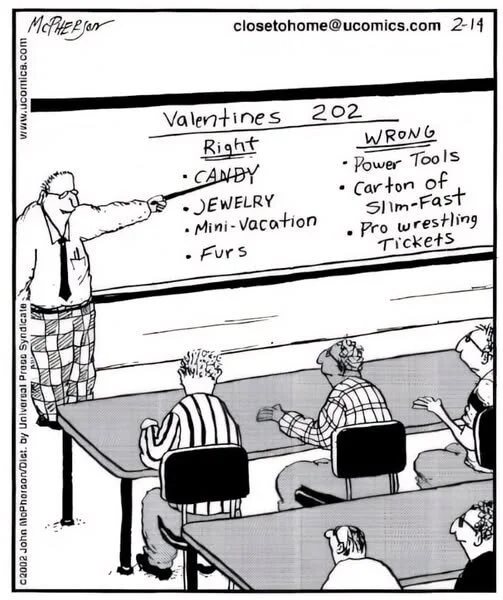
Iraq Economic News and Points to Ponder Saturday Afternoon 2-8-25
Trump Sanctions Send Iranian Currency To Biggest Collapse In 46 Years
08/02/2025 Mawazine News – Economy Iranian markets witnessed a record collapse of the local currency, the largest in 46 years, as the US dollar jumped by 3,000 tomans to reach 89,000.
This decline comes in light of US President Donald Trump’s return, last Tuesday, to the “maximum pressure” policy against Tehran, which exacerbated the economic crisis and directly affected the foreign exchange market and gold prices, and was followed by the US Treasury imposing sanctions on Iranian oil exporters.
Trump Sanctions Send Iranian Currency To Biggest Collapse In 46 Years
08/02/2025 Mawazine News – Economy Iranian markets witnessed a record collapse of the local currency, the largest in 46 years, as the US dollar jumped by 3,000 tomans to reach 89,000.
This decline comes in light of US President Donald Trump’s return, last Tuesday, to the “maximum pressure” policy against Tehran, which exacerbated the economic crisis and directly affected the foreign exchange market and gold prices, and was followed by the US Treasury imposing sanctions on Iranian oil exporters.
Gold prices also recorded a significant increase in Iran, amid these fluctuations.
According to exchange centers, the euro reached 91,200 tomans, while the British pound reached 111,800 tomans, representing the largest collapse of the Iranian currency since 1979 against the US dollar.
It is noteworthy that at the beginning of the current Iranian year, on March 21, 2024, the dollar was at around 61,000 tomans, reflecting a rapid deterioration in the value of the currency within a short period
https://www.mawazin.net/Details.aspx?jimare=259442
The Historic Resource Shift: Redefining A Country's Key Resources Or Inevitable Collapse
Abbas Karim Saddam
First: Loss Of The Economic Value Of The Single Resource
Iraq is a rentier country that relies on a single source of income, and oil will begin to lose its economic value before 2050, i.e. after 25 years.
Not to mention its depletion, which represents the greatest danger, although it is remote and depends on many factors, but in the best forecasts it will not exceed 100 years, and this is not important at the current stage, as the debate now is about the loss of its economic value, not its depletion. Over the past century, oil has played its role as one of the most important drivers of the global economy and a major source of energy.
However, this role has begun to witness a clear decline due to the rapid changes in the global economic and technological landscape.
The International Energy Agency forecasts that by 2030 demand will decline significantly, while OPEC reports indicate that it will remain a major energy source until 2045. In any case, it will not be the only and major source of energy as it is now, and therefore demand will decline significantly.
In any case, it will certainly lose its economic value before these periods of time, whether optimistic or pessimistic. The bottom line is that the abundant returns currently achieved cannot be achieved in the very near future, and the loss of its dominant economic position has become a dangerous reality for several reasons supported by facts and indicators:
1. The rapid growth of renewable energy sources:
According to the International Energy Agency (IEA) 2023 report, renewable energy sources such as solar and wind are expected to account for 35% of total global energy production by 2030. This shift is driven by a more than 70% drop in the cost of renewable energy production over the past decade, making it more competitive than oil.
2. Global policies to reduce carbon emissions:
More than 130 countries have committed to achieving carbon neutrality by mid-century, putting oil in the crosshairs of anti-fossil fuel policies. For example, several major economies such as the European Union and China are phasing out fossil-fuel vehicles over the next two decades.
3. Oil price volatility and slow demand:
OPEC data suggests that oil prices are becoming more volatile as a result of declining global demand and changing economic priorities. Slowing population growth in many developed and emerging countries is reducing the need for traditional fuels.
4. Directing investments towards clean technologies:
Global investments in clean energy are set to reach around $1.7 trillion in 2023, surpassing investments in the oil and gas sector for the first time.
5. Energy storage innovations:
Energy storage technologies such as batteries have made a huge leap, with their cost falling by more than 80% since 2010, making renewable energy more viable.
The figure below shows the decline in reliance on crude oil as the sole energy source and the rise of other competing alternatives, and the gap is still growing.
While oil still retains some economic importance today, its future looks uncertain in light of the ongoing transformations. The world is moving steadily towards a carbon-free economy based on sustainable sources, which means that oil may no longer be the primary driver of the global economy it once was. Companies and countries that invest now in clean energy and future technologies will be the winners of this historic transformation.
Second: Increase In Public Spending In The General Budget
In light of these increasing risks that threaten the only source of income, Iraq is still a country that consumes everything and produces nothing, and the consumption bill is increasing annually, in addition to the change in the consumption pattern that necessarily imposes an increase in consumption as well, meaning that the size of spending in the general budget is constantly increasing with or without our desires, in addition to the steady increase in population.
The chart below shows two facts: the first is the extent of the increase in spending over the years, and the second is the degree of its association with fluctuations in crude oil prices, as Iraq witnessed two severe crises due to the decline in prices, in 2014 and what followed, when Iraq was forced to implement austerity policies that reflected a severe recession in local markets in addition to popular anger due to the increasing pressures, and the other in 2019 and what followed due to the Corona crisis.
In both crises, the savior to restore economic activity to normal was the rise in oil prices again, meaning that the crisis had extended for a longer period, the situation would have been very difficult, and unfortunately we did not seize the risks imposed by the fluctuations to carry out real reforms, and the figure below shows The amount of spending increases annually.
Although Iraq mainly focuses on exporting crude oil, there are some other commodities that it also exports, although the volume of their exports does not reach the level of oil exports. The following are the most prominent commodities that Iraq exports:
2.Agricultural products:
Dates: Iraq is one of the largest producers of dates in the world and exports large quantities to the Gulf countries and Europe.
Fruits and vegetables: Exports include watermelons, tomatoes, grapes and cucumbers, and are mainly exported to neighbouring countries.
3. Animal products:
Meat: Iraq exports meat and some animal products to the markets of neighboring countries, such as Saudi Arabia and Jordan.
Eggs and dairy products: Limited exports compared to other countries, but contribute to the diversity of Iraq's non-oil exports.
4. Manufacturing industries:
Chemical products: This includes fertilizers, pesticides and some chemicals that Iraq produces locally.
Plastic Products: Iraq exports some locally manufactured plastic products, such as plastic bags and other supplies.
Metal products: such as iron wires and other metals used in construction and heavy industries.
5. Textiles and clothing:
Iraq has a relatively small textile industry, but some fabrics and clothing are exported to countries in the region.
6.Wood products:
It includes the export of furniture and manufactured wood products in Iraq, but its volume is still limited compared to other exports.
The figure below shows the Iraqi economy's dependence on crude oil and the differences between it and other exported commodities.
Third: Non-Oil Trade Deficit
Despite the export of these products, they do not represent an influential value in the general budget or the local economy, as the non-oil trade balance is witnessing a long and continuously widening deficit. Despite the increase in exports in recent years, the gap is still increasing due to the increase in imports as well, which constitutes pressure.
The trade balance deficit is due to many well-known reasons, including the heavy reliance on imports, weak economic diversification, weak local infrastructure, trade policies, the impact of political and security crises, the difficulty of attracting foreign investments to develop non-oil sectors, the weakness of the agricultural and industrial sector, and the decline in the competitiveness of non-oil exports. The trade deficit leads to several results that negatively affect the economy, the most important of which are:
1. Increasing dependence on oil revenues: The non-oil trade deficit leads to a deepening dependence on oil as a primary source of hard currency, which exposes the economy to the risks of global oil price fluctuations. In the absence of economic diversification, the Iraqi general budget is sensitive to any decline in oil prices.
2. Pressure on foreign exchange reserves: To finance imports and cover the deficit, Iraq relies on its foreign exchange reserves, which leads to the depletion of these reserves, which then leads to a weakening of confidence in the economy and increases the risks of exchange rate volatility.
3. Increase in external debt: Assuming the absence of income generated from the sale of crude oil or the loss of part of it, the trade deficit pushes the government to borrow externally to finance imports and bridge the gap between exports and imports. As a result, the accumulation of debt weakens Iraq’s ability to invest in productive sectors and increases the burden of debt service in the future.
4. Effects on the private sector: The influx of imported goods at low prices leads to unfair competition with local products, which weakens local industry and agriculture, closes local factories and increases unemployment as a result of the decline in competitiveness.
5. Deterioration of the exchange rate: The continued deficit weakens the Iraqi dinar against foreign currencies as a result of the increasing demand for the dollar to pay the import bill, and then the process of defending the stability of the exchange rate leads to the erosion of foreign reserves.
6. Weak economic growth: The trade balance deficit reflects an imbalance in local production, which reduces the contribution of non-oil sectors to economic growth. As a result, reliance on imports limits the development of local productive sectors.
8. Economic instability: The persistent deficit undermines financial and economic stability, making the country more vulnerable to economic and political shocks, and lowers confidence in the economy, leading to a reduction in the flow of foreign and domestic investment.
9. Loss of job opportunities: The weakness of local productive sectors due to reliance on imports leads to a reduction in job opportunities in the industrial and agricultural sectors, and the increase in unemployment increases social and economic challenges. The figure below shows the non-oil trade balance and the widening deficit gap.
Fourth: Available Opportunities
`
Despite this pessimistic outlook, we still have a chance to change the future if we start working now, as we are in a race against time to save our future generations, which requires first understanding the risks facing the country’s future and taking them seriously.
The process of diversifying the economy to create sectors capable of generating income sufficient for consumption with the advent of an era in which oil loses its economic value, i.e. sectors capable of achieving the same level of income that meets the natural needs of the population, is not an easy task, as these sectors must achieve the same returns that suffice the operational needs of the population and the investment needs of the state.
To start creating these sectors, we need time, at a time when we have not yet provided the basics. In order to ensure that these sectors are capable of achieving this level of income, we need years to test, modify, develop and enhance them to ensure their ability to generate this income. The reader can imagine the time that this requires.
Below is a set of solutions that depend on changing the state’s philosophy in view of its main resources, capable of creating economic diversity through a combination of state resource intervention and support for the business sector, relying on the country’s available human resources:
Redefining resources at the level of the Iraqi state, instead of relying on oil as a primary resource, to focus on the human resources that Iraq is distinguished by, as the population structure is concentrated in the youth category as a primary resource for the country.
A revolution in legislation that serves the business sector to build a strong local business sector that contributes to achieving diversity and is able to absorb the country’s young capabilities.
Exploiting the enormous young human energy and transforming them into businessmen capable of contributing to creating diversity instead of employees whose wages are added to the total spending bill.
Modifying labor market inputs to match the jobs required in the market, and adopting global markets as a criterion for modifying inputs. This requires modifying university specializations or intensive systematic training of current capabilities to make them suitable for the next stage.
Encouraging leading companies in the local economy to establish effective business incubators to discover opportunities for added value.
Establishing state-owned business incubators with high financial capabilities managed in a private sector manner to finance projects that private incubators are unable to finance.
Establishing sovereign funds that focus on investing in vital local sectors and carrying out projects described as Mega Projects to give a strong boost to the economy and create diversity and job opportunities.
Identifying the economic sectors that are appropriate for the Iraqi economy and focusing on them, and asking important questions such as which goods to meet local consumption and which to export? Which goods do we import? Which are the target markets? To build a plan based on our comparative advantages in view of other markets.
Implementing the concept of "development from within", which refers to the use of local financial resources to achieve economic and social development and exploit financial abundance by focusing on mobilizing national resources and benefiting from local capabilities to finance development projects.
By mobilizing local resources and utilizing them efficiently. These resources include crude oil revenues, taxes, national savings, and private sector investments.
The most important objectives of financing development from within are to achieve financial independence, as it reduces dependence on external loans, which gives countries the ability to control their economic policies, stimulate sustainable growth, contribute to building a strong and sustainable economic base based on local resources, increase employment, enhance local industries, as well as harness the financial abundance available to a country to serve development.
Sources of financing development from within are represented by oil revenues, which are the most important source of financing development, as financial abundance provides an exceptional advantage to achieve a high level of development, and the tax system: Improving the tax system to achieve revenues from individuals, companies and the private sector:
Stimulating private investments in development projects by improving the business environment and reducing bureaucratic obstacles, and this is done through a package of legal legislation that helps businesses grow.
Restructuring the public sector and privatizing public companies with the aim of transforming them into profitable companies that create added value, in addition to getting rid of their spending bills.
Promoting the country abroad in a systematic and focused manner and rebuilding a new impression of security stability and the availability of important investment opportunities and major opportunities to achieve exceptional profits, which will encourage companies to come to Iraq and rethink establishing large projects. This requires serious work from the Ministry of Foreign Affairs.
Developing the banking sector to make it effective and capable of creating cash flow within the economy by attracting local or foreign deposits and re-employing them through effective lending policies.
These are dangers that threaten us and our future generations, and we must be alert to them. If we do not start seriously today, understanding the dangers surrounding the country, its future will not be better than the worst African country, and this is certain.
The challenges are serious and dangerous at the same time, and they require serious and real work. Starting now in a random manner is better than starting tomorrow in an organized manner, and we do not know when this “tomorrow” will come! https://economy-news.net/content.php?id=52611
For current and reliable Iraqi news please visit: https://www.bondladyscorner.com/
Seeds of Wisdom RV and Economic Updates Saturday Afternoon 2-8-25
Good Afternoon Dinar Recaps,
COINBASE TO FACE LAWSUIT OVER UNREGISTERED SECURITIES SALES, JUDGE RULES
Coinbase said the judge’s opinion “narrowed the scope of discovery in this case,” adding, “We look forward to vindicating the remaining claims” in court.
A US federal judge has rejected Coinbase’s argument that it does not meet the definition of a “statutory seller” under federal law, forcing the cryptocurrency exchange to face an investor lawsuit in the state of New York.
Good Afternoon Dinar Recaps,
COINBASE TO FACE LAWSUIT OVER UNREGISTERED SECURITIES SALES, JUDGE RULES
Coinbase said the judge’s opinion “narrowed the scope of discovery in this case,” adding, “We look forward to vindicating the remaining claims” in court.
A US federal judge has rejected Coinbase’s argument that it does not meet the definition of a “statutory seller” under federal law, forcing the cryptocurrency exchange to face an investor lawsuit in the state of New York.
According to a Feb. 7 Reuters report, US District Judge Paul Engelmayer has compelled Coinbase to face plaintiffs’ allegations that it sold securities without registering as a broker-dealer. Specifically, the plaintiffs accused Coinbase of selling 79 cryptocurrencies that were securities without proper registration.
As Cointelegraph reported, the class-action lawsuit was initially dismissed in the District Court of Southern New York in February 2023. However, the Circuit Court of Appeals revived parts of the lawsuit more than one year later.
As Reuters reported, Judge Engelmayer said that “customers on Coinbase transact solely with Coinbase itself,” which suggests that the exchange was a seller.
In a written response to Cointelegraph, a Coinbase spokesperson said:
“Coinbase does not list, offer or sell securities on its exchange. Today’s opinion importantly narrowed the scope of discovery in this case, which is significant. We look forward to vindicating the remaining claims in the district court.”
Ongoing lawsuit with the SEC
Coinbase has been mired in a lawsuit with the US Securities and Exchange Commission since June 2023, when the regulator accused the exchange of operating an unregistered securities platform and failing to register as a broker.
In January, Coinbase asked a US appeals court to rule that cryptocurrency trades are not securities. In the filing, Coinbase argued that trades facilitated on its platform should not be classified as securities trades “but asset sales of digital assets rather than physical ones.”
Coinbase has also sued the SEC and Federal Deposit Insurance Corporation for allegedly attempting to “cut off digital-asset firms from essential banking services.” The exchange also alleged that both agencies failed to comply with Freedom of Information Act requests.
Coinbase plays a major role in the US cryptocurrency market. It’s not only the country’s largest crypto exchange by trading volume but is also the largest custodian for the US spot Bitcoin exchange-traded funds.
@ Newshounds News™
Source: CoinTelegraph
~~~~~~~~~
PETER SCHIFF SLAMS BITCOIN SUPER BOWL AD, SPARKS DEBATE
Peter Schiff criticized a Bitcoin Super Bowl ad, accusing it of false advertising for claiming Bitcoin is backed by energy.
He argued Bitcoin neither stores nor can be redeemed for energy, urging FTC intervention.
In response, Dan Victor, CFA, highlighted that Bitcoin relies on decentralized computing power, which requires energy.
Schiff dismissed this as semantics, asserting Bitcoin resembles fiat currency, backed by faith rather than tangible assets like gold.
This sparked renewed debate over Bitcoin’s intrinsic value, especially as mainstream promotions like Super Bowl ads amplify crypto’s reach.
@ Newshounds News™
Source: Coinpedia
~~~~~~~~~
Seeds of Wisdom Team RV Currency Facts Youtube and Rumble
Newshound's Podcast Link
Newshound's News Telegram Room Link
Q & A Classroom Link
Follow the Roadmap
Follow the Timeline
Seeds of Wisdom Team™ Website
Subscribe to Seeds of Wisdom Team™ Newsletter
Thank you Dinar Recaps