
Thank you to all the subscribers to our Early Access program…we thank you for your continued support.
We are excited to offer this new service to keep you informed and up-to-date on the latest Dinar and currency news.
Some Iraq News Posted by Clare at KTFA 12-21-2024
KTFA:
Clare: The Currency of Iraq: A Comprehensive Guide
Introduction
The Iraqi Dinar (IQD) is the official currency of Iraq, serving as a critical component of the nation's economic infrastructure. For businesses, investors, and speculators alike, understanding the dynamics of the Dinar is essential for navigating Iraq's market.
The exchange rate of the Iraqi Dinar plays a pivotal role in shaping the country's trade and investment environment, influencing everything from the cost of imports and exports to the profitability of foreign investments.
KTFA:
Clare: The Currency of Iraq: A Comprehensive Guide
Introduction
The Iraqi Dinar (IQD) is the official currency of Iraq, serving as a critical component of the nation's economic infrastructure. For businesses, investors, and speculators alike, understanding the dynamics of the Dinar is essential for navigating Iraq's market.
The exchange rate of the Iraqi Dinar plays a pivotal role in shaping the country's trade and investment environment, influencing everything from the cost of imports and exports to the profitability of foreign investments.
Meanwhile, the currency has also garnered significant interest from speculators, who are drawn to the potential-however remote-of significant shifts in its value.
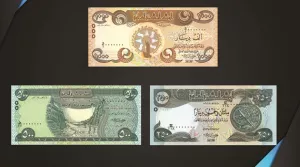
The current official exchange rates for the dinar can be found at the Central Bank of Iraq (CBI) website - https://cbi.iq/.
The Importance of the Exchange Rate for Trade and Investment
The exchange rate of the Iraqi Dinar is a key determinant of the country's economic competitiveness on the global stage. A stable and predictable exchange rate is vital for businesses engaged in international trade, as it impacts the cost of importing goods and services and the profitability of exporting to foreign markets. For foreign investors, the exchange rate is a crucial factor in determining the potential returns on investments in Iraq.
Fluctuations in the Dinar's value can significantly affect the cost of doing business, as well as the repatriation of profits. As such, understanding the factors that influence the Dinar's exchange rate-such as oil prices, political stability, and central bank policies-is essential for making informed business and investment decisions in Iraq.
Interest from Speculators
In recent years, the Iraqi Dinar has attracted attention from a specific group of financial actors: currency speculators. These individuals and entities buy and hold large amounts of Dinar in the hope that its value will appreciate dramatically, allowing them to sell it at a significant profit.
This speculative interest is often fuelled by rumours and theories about an imminent revaluation of the Dinar, despite the lack of credible evidence supporting such a scenario. Speculators are drawn to the high-risk, high-reward nature of currency trading, but it is important to note that such activities are highly speculative and carry substantial risks. LINK
************
Donald Trump and the "Great Iraqi Dinar Revaluation"
21st December 2024 in Iraq Banking & Finance News
By a Guest Blogger. Any opinions expressed are those of the author(s), and do not necessarily reflect the views of Iraq Business News.
Anecdotal evidence, including inquiries to Iraq Business News, seems to suggest that supporters of US President-elect Donald Trump are more likely to believe that the Iraqi currency, the Dinar (IQD), will increase in value by an unprecedented multiple, some saying by as much as 1,000-fold!
The correlation between being a Trump voter and believing in a significant revaluation of the Iraqi dinar (often called the "dinar RV" theory) is not rigorously studied, but there are social and cultural dynamics that might help explain the connection between the two groups.
The Dinar revaluation theory emerged after the 2003 Iraq War: The basic premise is that the Iraqi Dinar, which traded at around 3 IQD per USD before the 1991 Gulf War but crashed to roughly 1,310 IQD per USD, would suddenly revalue back to its previous rate or even higher. Believers often hold large quantities of physical Dinar notes, sometimes investing tens of thousands of dollars.
The theory's spread among Trump supporters was facilitated by several factors:
The "Global Reset" Narrative:
Many believers connected the Dinar revaluation to a broader theory about Trump leading a massive reorganization of the global financial system
This often tied into QAnon-adjacent beliefs about Trump secretly fighting a "deep state" that was suppressing the Dinar's true value
Some proponents claimed Trump and his team were directly involved in orchestrating a coming revaluation
Social Media Dynamics:
The theory spread rapidly through Facebook groups, YouTube channels, and forums that also shared pro-Trump content
Many of these platforms used similar language about "mainstream media suppression" of both Trump and the "truth" about the Dinar
Currency speculators and scammers actively targeted these communities, recognizing their receptiveness to anti-establishment financial narratives
Political Context:
The theory appealed to a desire for both financial windfall and validation of political beliefs
Some promoters claimed Trump's Middle East policies, particularly regarding Iraq and Saudi Arabia, would trigger the revaluation
The belief often aligned with broader skepticism of traditional financial institutions and expertise
Psychological Factors:
The combination of potential financial reward and political validation created a powerful motivational force
Believers often interpreted skepticism from financial experts as further evidence of a cover-up
The complexity of international currency markets made it easier for promoters to make plausible-sounding but false claims
Investment in the theory often strengthened social bonds within these communities, making it harder to abandon the belief
Despite years of failed predictions, the theory continues to circulate; some believers have modified the timeline but maintain their basic conviction. The persistence of this belief system despite contrary evidence and expert warnings illustrates how financial conspiracy theories can become deeply intertwined with political identity and resistant to contrary evidence. Both Trump supporters and proponents of the dinar revaluation theory often demonstrate a tendency toward belief in conspiracy theories or "hidden truths" that challenge mainstream narratives.
For more information on the Iraqi dinar, check out IBN's Dinar Page here: https://www.iraq-businessnews.com/the-dinar-page/?swcfpc=1 LINK
************
Clare: Italian Defense Minister arrives in Baghdad
12/21/2024
Italian Defense Minister Guido Crosetto arrived in the capital, Baghdad, on Saturday, on an official visit to Iraq.
The Minister of Defense, Thabet Mohammed Al-Abbasi, received his Italian counterpart and the country's ambassador to Iraq, Nicolo Fontana, and the accompanying delegation at the ministry's headquarters in Baghdad.
An official reception ceremony was held for the guest, during which the national anthems of the Italian and Iraqi republics were played, according to a statement issued by the Iraqi Ministry of Defense.
During the meeting that brought together the two sides, he stressed Italy's efforts and its great role through the Italian experts and trainers present within the NATO mission and their support for Iraq through the training and development courses held for the Ministry of Defense cadres inside and outside Iraq.
During an expanded meeting attended by a number of senior leaders and officers in the ministry, the two parties discussed ways to develop future relations between Iraq and the Italian Republic, in addition to the two countries’ efforts to open avenues of joint cooperation in the future. LINK
************
Clare: Renewing the Iraqi-Japanese partnership with $11 billion in loans for vital projects and development policy
12/21/2024
The United Nations Development Program and the Japan International Cooperation Agency (JICA) office in Iraq renewed their long-standing partnership to promote social and economic development in Iraq through funding from the Government of Japan and JICA.
This partnership, which has spanned more than fifteen years of cooperation with the Government of Iraq, reflects the strong commitment of the United Nations Development Programme and the Government of Japan/JICA to meet Iraq's need for basic services and an efficient, stable and reliable economic infrastructure, according to a JICA report seen by Shafaq News Agency.
He added that this partnership has contributed significantly to human and economic growth in Iraq, in line with Iraq's national development plans and programmes that focus on economic diversification, infrastructure modernisation and improving social services.
In support of reconstruction and development, Iraq has received 36 ODA loans from the Japanese government and the Japan International Cooperation Agency, totaling about US$11 billion. These loans include 34 loans for vital sector projects and two development policy loans.
This development assistance aims to support Iraq in achieving its sustainable development goals, with a focus on improving living conditions nationwide and restoring infrastructure to promote inclusive growth.
“JICA remains committed to addressing development challenges with the Government of Iraq through this impactful partnership with UNDP. This partnership provides comprehensive support to Iraqi officials to achieve international standards in project management, combining technical expertise, capacity development and development finance. All of this aims to improve livelihoods and promote sustainable development in the country,” said Hiroshi Suzuki, Chief Representative of JICA in Iraq. Under this renewed partnership agreement, and in line with the Iraq National Development Plan 2024-2028, UNDP continues to provide critical support to the Government of Iraq to facilitate the smooth implementation of key socio-economic projects financed by JICA ODA loans. This support includes coordination at senior level, fiduciary supervision, progress monitoring, technical assistance, knowledge sharing and capacity development. Furthermore, by enhancing transparency, accountability and adherence to international standards, the partnership ensures the successful implementation of these vital projects.
“This renewed partnership between UNDP and JICA highlights our shared commitment to supporting Iraq’s development goals, with a focus on infrastructure development, sustainable economic growth and human capital. Together, we aim to facilitate the successful implementation of vital projects that will not only rebuild Iraq’s infrastructure, but also enhance long-term socio-economic resilience and improve the lives of Iraqis across the country,” said UNDP Resident Representative in Iraq, Auke Lootsma.
This unique and renewed partnership underscores the benefits of effective trilateral cooperation in promoting prosperity, driving sustainable growth, and improving service delivery and infrastructure for a stable and prosperous Iraq. It also highlights the strong ownership by the Government of Iraq and serves as a model for impactful and sustainable partnerships that can contribute to long-term development in Iraq. LINK
“Tidbits From TNT” Saturday 12-21-2024
TNT:
Tishwash: The region .. great efforts to attract investment companies
The Kurdistan Region Investment Board seeks to increase the number of local and foreign investors to work in the provinces and cities of the region, by providing full facilities to motivate and encourage them to increase the volume of investment.
Private sector growth
The head of the Kurdistan Region Investment Board, Mohammed Shukri, said in an interview with “Sabah”: The board, through its eight directorates spread across the provinces and independent administrations in the region, is seriously and diligently seeking to provide full facilities to investors and increase the volume of investments and the number of local, Arab and foreign investors and increase the work of projects by the private sector in the region, indicating that the regional government has invested more than 68 billion dollars, of which Erbil’s share amounted to more than 61 percent.
TNT:
Tishwash: The region .. great efforts to attract investment companies
The Kurdistan Region Investment Board seeks to increase the number of local and foreign investors to work in the provinces and cities of the region, by providing full facilities to motivate and encourage them to increase the volume of investment.
Private sector growth
The head of the Kurdistan Region Investment Board, Mohammed Shukri, said in an interview with “Sabah”: The board, through its eight directorates spread across the provinces and independent administrations in the region, is seriously and diligently seeking to provide full facilities to investors and increase the volume of investments and the number of local, Arab and foreign investors and increase the work of projects by the private sector in the region, indicating that the regional government has invested more than 68 billion dollars, of which Erbil’s share amounted to more than 61 percent.
Statistics and figures
Shukri added that since the establishment of the Investment Board in the region, more than 1,400 investment licenses have been granted, some of which were cancelled due to shortcomings in the work of their investors, while work continued with more than 1,250 investment licenses, noting that during the past five years, approximately 430 new investment licenses have been issued.
He pointed out that significant progress and qualitative steps have been made in the comprehensive investment process in establishing a strong economic infrastructure despite the crises and obstacles that have plagued the country and the region in general, stressing that intensive efforts are continuing to encourage investors according to the needs of the regions and the importance of the projects. Encouraging
investors
Shukri stated that the regional government seeks to facilitate the procedures for attracting investors, as eight branches of the authority have been opened in the governorates and independent administrations of the region and have full powers to grant investment licenses to investors, considering it a basic and primary step to provide facilities according to the city, region, geographical location and sector that needs investment and work in it.
Government privileges
The head of the Kurdistan Investment Board pointed out that the regional government has given great privileges to investors, including a 10-year tax exemption through the investment law, to which additional years are added if the investor is a foreigner or a partner of a local investor, as well as providing privileges and facilities to the less developed areas in the region according to the decision of the regional council of ministers, noting that the challenges facing investors, including local ones, are great, and we consider them a wealth for the region, as they have contributed with the support of the government to many large and pioneering projects, overcoming obstacles and impediments, and moving forward in various sectors, including agriculture, industry, tourism, trade, housing, services, education, health, and others.
The qualifications of the region,
and he pointed out that the Kurdistan Region encourages and provides facilities to investors more than other countries in the region through a package of privileges and incentives included in the Investment Law No. 4 of 2006 in the region, in addition to other facilities provided by the Supreme Investment Council, including the favorable conditions that the Kurdistan Region enjoys for foreign investors, such as political stability, cultural pluralism, democracy and security, stressing that these conditions make the Kurdistan Region more attractive to investors among many countries in the region. link
************
Tishwash: Fluctuating Dinar: economic experts urge action as dollar soars in Iraq
Iraq’s dinar continues its erratic trajectory against the US dollar, with no resolution in sight despite years of governmental and central bank efforts, experts attributed the instability to weak policies and unchecked market manipulation.
Root Causes of Volatility
The dollar is surging against the dinar at Baghdad’s main currency exchanges, Al-Kifah and Al-Harithiya, surpassing 1,510 dinars per $1. On the streets, exchange shops are marking up selling prices to more than 1,520 dinars.
“The instability in dollar prices reflects the Iraqi Central Bank and government’s inadequate monetary policies, which fail to address the core of the issue,” said Mustafa Faraj, an economic expert. “Their hesitant measures have left them unable to control the dollar’s value.”
Faraj cited US sanctions on neighboring Syria and Iran as a major factor. “The lack of legitimate trade channels with these countries, combined with restrictions on dollar transfers to them, has led to dollar smuggling, driving up its price,” he told Shafaq News Agency.
“When the dollar rises, it pushes up the cost of basic goods, food, and even commercial activity. This cascade of price hikes stems from a failure to find comprehensive solutions and punish manipulators,” Faraj explained.
Emerging Pressures
New dynamics have exacerbated the crisis. Ahmed Eid, an economic researcher, linked heightened demand for dollars to the fallout from the conflict in Syria. “The shift in Syria has disrupted the interests of militia leaders and influential figures, many of whom are now stockpiling dollars to secure alternative income streams,” he said.
Eid pointed to the closure of Syria’s border with Iraq as a catalyst, forcing traders to seek new suppliers in countries like Turkiye and Egypt. “This transition requires substantial dollar liquidity, which further squeezes the market,” he said.
Currency smuggling and money laundering also continue to erode market stability. “These illicit activities persist unchecked, compounding the dollar’s rise,” Eid warned.
Future Uncertainty Amid Policy Shifts
Concerns are mounting about the impact of Iraq’s planned phase-out of its electronic transfer platform for dollar transactions. Introduced in early 2023, the platform was designed to monitor transfers more effectively. However, the Iraqi Central Bank announced in September that it would be discontinued by year-end.
“The Central Bank’s plan to shift dollar transactions exclusively to foreign banks with correspondent relationships is a blow to local banks,” said economist Ahmed Abdul Rabih. “Four dominant banks will monopolize the sector, sidelining smaller institutions and creating a bottleneck for dollar supply.”
“These banks will dictate the exchange rate, likely driving up prices. The Central Bank must advocate for local banks to establish accounts with international institutions like J.P. Morgan and Citibank,” Abdul Rabih urged.
Reassurances from the Central Bank
In response to public concerns, the Iraqi Central Bank has downplayed fears of major disruptions.
In a statement, it described the transition as part of a phased strategy to align with international standards, emphasizing that 95% of transfers had already shifted from the platform to direct banking relationships.
“The transition will be completed gradually, ensuring continuity,” the bank stated, adding that partnerships with foreign banks in China, India, Turkiye, and the UAE would facilitate trade using non-dollar currencies, such as the yuan and euro.
Thirteen Iraqi banks have already begun operations under the new framework, offering pre-approved transfers and enabling global payment systems for personal and commercial needs, the statement said. These steps aim to “stabilize the currency and curb inflation, reinforcing official exchange rates as the benchmark for legitimate economic activities.”
“The official rate reflects real market dynamics,” the Central Bank stressed, warning against unofficial rates driven by “those engaging in unauthorized practices.”
The bank emphasized that it has structured external transfer operations and the fulfillment of dollar demand along proper channels, aligned with international practices, standards, and the Anti-Money Laundering and Counter-Terrorism Financing Law.
"Providing these channels for all purposes at the official dollar exchange rate makes this rate the true benchmark for economic practices, as evidenced by price stability and inflation control. Any other rate traded outside these channels is considered irregular and utilized by those engaging in non-compliant or illicit practices who avoid official channels in their dealings. These individuals bear the additional costs of purchasing at higher rates than the official price to create the illusion of a disparity between the official and unofficial rates." The statement concluded.
Despite reassurances, skepticism lingers among economic experts, who argue that without stricter enforcement and comprehensive reforms, the dinar’s fluctuations will persist. For many Iraqis, the cost of living remains tightly bound to the fate of the dollar. link
************
Tishwash: Three senior US officials arrive in Damascus to meet with leaders of the new administration in Syria
The US State Department announced today, Friday, that US diplomats have arrived in Syria to meet with the new Syrian administration, in the first official US diplomatic mission sent to Damascus since the beginning of the revolution that erupted in 2011.
The United States had closed its embassy in Syria in 2012, and withdrew all its diplomatic staff, against the backdrop of the events that the country witnessed at that time.
According to the US State Department spokesman, the US diplomats will meet with representatives of "Hay'at Tahrir al-Sham" and civil society to discuss "their vision for the future of their country and how the United States can support them."
He pointed out that the delegation includes Assistant Secretary of State for Near Eastern Affairs Barbara Leaf, and a diplomat specializing in the Arab world, Daniel Rubinstein, who is now responsible for communicating with Syria.
Roger Carstens, who is responsible for collecting evidence regarding missing Americans in Syria, such as journalist Austin Tice, who was kidnapped in August 2012, will also be present.
The visit comes at a time when Western governments are gradually opening channels of communication with Hay'at Tahrir al-Sham and its official Ahmed al-Sharaa, and discussing the possibility of removing the organization from the list of terrorist organizations.
Before the United States, France, Germany, the United Kingdom and the United Nations sent envoys to establish relations with the transitional authorities, whose first phase of governance is being watched with caution.
Earlier, US Secretary of State Anthony Blinken stated that Washington is following the positive statements issued by Hayat Tahrir al-Sham and wants to see concrete steps as well.
He said in a statement to the American Bloomberg News that removing the name of the organization from the "terrorist list" could be put on the agenda, based on the constructive steps it will take during the transitional process in Syria.
He added: "We heard positive statements from the leader of the organization, Mr. Abu Muhammad al-Julani, but what everyone is focusing on is the reality on the ground, and whether they are working to build an inclusive Syria." link
************
Mot.. Time to Bring them Out It Is!!!

Mot: .. I'll Tell Ya - Its Getting Tough Out there!!!!

Seeds of Wisdom RV and Economic Updates Saturday Morning 12-21-24
Good Morning Dinar Recaps,
SEC APPROVES FIRST-EVER BITCOIN & ETHEREUM COMBO ETFS
▪️These new ETFs are unique because they combine Bitcoin and Ethereum, offering investors diversified exposure to the two largest cryptos.
▪️By simplifying the investment process and reducing the perceived risks, these ETFs aim to make crypto investing more accessible.
▪️The SEC's approval of these ETFs signifies a significant step forward for the crypto industry.
Good Morning Dinar Recaps,
SEC APPROVES FIRST-EVER BITCOIN & ETHEREUM COMBO ETFS
▪️These new ETFs are unique because they combine Bitcoin and Ethereum, offering investors diversified exposure to the two largest cryptos.
▪️By simplifying the investment process and reducing the perceived risks, these ETFs aim to make crypto investing more accessible.
▪️The SEC's approval of these ETFs signifies a significant step forward for the crypto industry.
The U.S. Securities and Exchange Commission (SEC) has just made a groundbreaking move in the crypto world. It has approved two new exchange-traded funds (ETFs)—the Hashdex Nasdaq Crypto Index US ETF and the Franklin Crypto Index ETF—and they are unlike anything we’ve seen before.
These ETFs combine the power of both Bitcoin and Ethereum into a single investment, making it easier for everyday investors to tap into the world of digital currencies.
But what makes these ETFs so special, and why is the SEC’s approval a big deal? Let’s understand.
What Makes These ETFs Different?
While crypto ETFs are already on the market, these two stand out. Instead of focusing just on Bitcoin or Ethereum, they mix both. The share of each cryptocurrency is based on its market value, giving investors a balanced exposure to both.
Why is this important? Putting all your money into one cryptocurrency can feel risky, especially with how volatile the market can be. By holding both Bitcoin and Ethereum, these ETFs help spread out the risk and let investors take advantage of the strengths of each cryptocurrency.
A Simpler Way to Get Into Crypto
For many, buying Bitcoin or Ethereum directly can be intimidating. These ETFs make it easier by taking away the need to manage wallets or store digital assets on your own. This makes crypto investments more accessible, particularly for people who are new to the space or don’t want the hassle of managing their own assets.
A Major Milestone for Crypto Regulation
The SEC’s approval of these ETFs is a big moment, not only for the crypto industry but for regulators too. It shows that the SEC is taking the market more seriously and is open to more crypto-based financial products.
So, why were these ETFs approved? A key reason is the strong connection between Bitcoin and Ethereum futures and their spot prices. This link helps keep prices stable and reduces the chances of market manipulation, which is important for investors looking for safer options.
Setting Strict Standards for Investors
Both funds have agreements with the Chicago Mercantile Exchange (CME) to closely track trading activity, ensuring everything stays above board. The SEC’s approval shows that these ETFs meet high standards for security and transparency, giving investors more confidence.
What’s Next for Crypto ETFs?
The approval of these ETFs could open the door to even more creative investment options in the future. By combining Bitcoin and Ethereum, these ETFs offer a streamlined way to enter the crypto market. They take away the complexities of buying, storing, and managing digital assets, making it easier for people to get involved.
Looking ahead, there’s a possibility that other cryptocurrencies could be added to similar ETFs, expanding the market even further. But for now, these Bitcoin-Ethereum combos are a significant step forward.
If you’ve been waiting for an easier way to get into crypto without all the complications, these ETFs might be exactly what you’ve been looking for.
FAQs
How do the new crypto ETFs differ from others?
These ETFs blend Bitcoin and Ethereum, offering balanced exposure to both, reducing risk compared to investing in a single cryptocurrency.
Are these crypto ETFs safe for new investors?
Yes, these ETFs are designed to be safer by tracking Bitcoin and Ethereum futures, offering simpler, less risky exposure to crypto investments.
@ Newshounds News™
Source: CoinPedia
~~~~~~~~~
GERMANY FINALLY PASSES LEGISLATION NEEDED FOR FULL CRYPTO MICAR IMPLEMENTATION
A month ago we wrote that the collapse of the German government coalition was creating problems with implementing the EU’s cryptocurrency regulation MiCA, because it had failed to pass legislation.
However, on Wednesday the German parliament (Bundestag) finally passed the bill, the Digitalization of Financial Markets Act (Finanzmarktdigitalisierungsgesetz of FinmadiG). Apparently, it was added to the agenda at short notice. Parliament responded to industry requests to ensure the legislation was in place before MiCAR comes fully into force on December 30.
FinmadiG isn’t only about crypto and MiCAR as it also impacts other EU laws such as DORA and the Transfer of Funds Regulation. However, for MiCAR it introduced the Supervision of Crypto Markets Act (KMAG), the piece of legislation that supplants Germany’s old crypto rules with MiCAR.
Technically MiCAR is a regulation, so it does not require local laws. However, legislation was required to designate BaFin as the regulator. Without that, BaFin could not award licenses. That would have allowed EU firms with crypto licenses from other countries to operate in Germany, but German firms would not have been able to operate in the EU.
Additionally, MiCAR has grandfathering clauses allowing firms with existing licenses to continue to operate for up to 18 months, with each jurisdiction deciding on the transition period. The new German legislation specifies a year.
Different EU MiCAR transition periods
However, this week the European regulator ESMA noted that the varying transition periods mean crypto asset service providers (CASPs) need to get new authorizations under MiCAR sooner rather than later.
For example, if a German CASP doesn’t have a new license by July 2025, they cannot operate in EU countries that have imposed a six month transition period. That includes Latvia, Hungary, Netherlands, Poland, Slovenia and Finland. Lithuania’s transition is five months, and four jurisdictions had not specified the timing when ESMA published its note.
We believe ESMA may have been responding to a letter from the Electronic Money Association (EMA) and three EU crypto trade bodies. They highlighted that the latest regulatory technical standards for licensing were only endorsed by the European Commission at the end of October. That doesn’t give national authorities much time to adopt them or for CASPs to apply.
@ Newshounds News™
Source: Ledger Insights
~~~~~~~~~
Seeds of Wisdom Team RV Currency Facts Youtube and Rumble
Newshound's Podcast Link
Newshound's News Telegram Room Link
Q & A Classroom Link
Follow the Roadmap
Follow the Timeline
Seeds of Wisdom Team™ Website
Subscribe to Seeds of Wisdom Team™ Newsletter
Thank you Dinar Recaps
MilitiaMan & Crew-Iraq Dinar News-Revenues-Fiber Optics-Global Partnerships-Investment Opportunity-Exchange Rates
MilitiaMan & Crew-Iraq Dinar News-Revenues-Fiber Optics-Global Partnerships-Investment Opportunity-Exchange Rates
12-20-2024
The Crew: Samson, PompeyPeter, Petra, Daytrader, Sunkissed, GIGI and Militia Man
Be sure to listen to full video for all the news……..
MilitiaMan & Crew-Iraq Dinar News-Revenues-Fiber Optics-Global Partnerships-Investment Opportunity-Exchange Rates
12-20-2024
The Crew: Samson, PompeyPeter, Petra, Daytrader, Sunkissed, GIGI and Militia Man
Be sure to listen to full video for all the news……..
The Fed’s 2% Inflation Target is Dead, are we Headed for a 1929 Collapse?
The Fed’s 2% Inflation Target is Dead, are we Headed for a 1929 Collapse?
Wealthion: 12-19-2024
In a pivotal announcement that has rattled economic expectations, the Federal Reserve has implemented a rate cut, signaling a significant shift in monetary policy.
Following this decision, noted economist E.J. Antoni, PhD, asserts that the Fed’s longstanding 2% inflation target has become an illusion.
In a recent discussion with Wealthion’s Andrew Brill, Antoni presented a sobering analysis of what this means for the economy, investment strategies, and the financial prospects of average Americans.
The Fed’s 2% Inflation Target is Dead, are we Headed for a 1929 Collapse?
Wealthion: 12-19-2024
In a pivotal announcement that has rattled economic expectations, the Federal Reserve has implemented a rate cut, signaling a significant shift in monetary policy.
Following this decision, noted economist E.J. Antoni, PhD, asserts that the Fed’s longstanding 2% inflation target has become an illusion.
In a recent discussion with Wealthion’s Andrew Brill, Antoni presented a sobering analysis of what this means for the economy, investment strategies, and the financial prospects of average Americans.
Despite the Federal Reserve’s projections for a moderation in inflation, the reality is starkly different. According to Antoni, inflation remains stubbornly high and appears to be on an upward trajectory. He describes the inflationary pressures as “sticky,” suggesting that various factors, including supply chain disruptions, labor market constraints, and high consumer demand, are undermining the Fed’s efforts to stabilize prices.
This persistent inflation challenges the optimistic forecasts that have characterized recent Fed communications.
Antoni elaborates on how the latest round of rate cuts affects various sectors of the economy. For small businesses, lower interest rates may seem beneficial in theory; however, the reality is that such measures can lead to increased borrowing costs over time and create uncertainty in the financial landscape.
Access to capital remains a critical issue for small businesses navigating a volatile economic climate, and this Fed action could exacerbate existing difficulties.
The housing market also faces significant repercussions from these rate cuts. As mortgage rates fluctuate, potential homebuyers remain hesitant, stalling what was already a struggling sector. The combination of reduced rates and persistent inflation has resulted in a stagnant market, making homeownership increasingly elusive for many Americans.
For those who already own homes, rising inflation can lead to the erosion of purchasing power and increased living costs, further straining household budgets.
Antoni points to a worrying trend regarding the United States dollar, which has lost approximately 20% of its value due to reckless government spending and misguided monetary policies. This depreciation undermines Americans’ purchasing power and signals potential long-term consequences for economic stability. As the dollar weakens, it raises concerns about the viability of the U.S. economy, particularly in global markets where currency strength plays a crucial role.
Looking ahead, Antoni warns that America could face dire economic consequences reminiscent of the early 20th century.
He outlines two potential scenarios that could unfold: a brief but sharp depression akin to the downturn of 1920 or a more prolonged collapse similar to the Great Depression in 1929. Each possibility carries substantial implications for investment strategies and the overall economic health of the nation.
The current economic environment, characterized by inflation, reduced consumer confidence, and uncertainty in monetary policy, poses significant risks. For investors, understanding the macroeconomic landscape becomes vital in navigating potential downturns and identifying opportunities amidst chaos. Strategic adjustments to portfolios may be necessary as individuals seek to shield themselves from incoming economic shocks.
The discussion with Antoni brings to light the hidden costs of the Federal Reserve’s monetary policies and government overspending. While rate cuts may serve as a tool to stimulate the economy, the broader effects often lead to inflationary spirals, eroding wealth and savings for ordinary Americans.
Indeed, the consequences of monetary decisions extend beyond economic indicators, impacting daily lives in tangible ways.
In conclusion, E.J. Antoni’s insights underscore the complexity of the current economic climate, particularly post-rate cut. The challenges of inflation, the vulnerabilities of small businesses, the faltering housing market, and a depreciating dollar reveal the precarious balance that the Federal Reserve is attempting to maintain.
As individuals and investors brace for what lies ahead, awareness and strategic foresight will be essential in navigating this turbulent economic landscape.
Iraq Economic News And Points To Ponder Friday AM 12-20-24
The Central Bank Of Iraq Challenges The Dollar With New Currencies!
December 19, 2024 Last updated: December 19, 2024 Independent/- In a new step that reflects its approach to strengthening Iraq’s role in the global economy, the Central Bank of Iraq announced the expansion of external transfer channels for local banks to include new currencies.
According to the statement issued today, the Jordanian dinar and the Saudi riyal were added to the list of permitted currencies, in addition to allowing the use of the euro to finance trade with Türkiye after it was limited to European Union countries.
This step comes in addition to currencies previously used, such as the US dollar, UAE dirham, Chinese yuan, and Indian rupee.
The Central Bank Of Iraq Challenges The Dollar With New Currencies!
December 19, 2024 Last updated: December 19, 2024 Independent/- In a new step that reflects its approach to strengthening Iraq’s role in the global economy, the Central Bank of Iraq announced the expansion of external transfer channels for local banks to include new currencies.
According to the statement issued today, the Jordanian dinar and the Saudi riyal were added to the list of permitted currencies, in addition to allowing the use of the euro to finance trade with Türkiye after it was limited to European Union countries.
This step comes in addition to currencies previously used, such as the US dollar, UAE dirham, Chinese yuan, and Indian rupee.
The Central Bank stressed that this expansion aims to provide broader options for local banks and enable them to meet the needs of foreign trade at official transfer rates.
The objectives of the step and its economic consequences
According to the statement, this step aims to achieve streamlined financial transfers and the involvement of a larger number of Iraqi banks in external transfer operations.
It also seeks to enhance economic cooperation between Iraq and other countries, which contributes to diversifying economic and trade channels and strengthening relations with international partners.
The Central Bank explained that the smooth transition that took place during 2024 from using the electronic platform to approved correspondent banks contributed significantly to improving banking operations.
This move was widely praised as a fundamental shift in line with international standards.
Expanding the economic horizon
This announcement comes as the Central Bank seeks to expand the horizons of economic cooperation between Iraq, neighboring countries and the world.
The addition of new currencies reflects a deep understanding of the market needs and Iraq's dealings with various countries.
These expansions would support Iraq's ability to
enhance the role of its banking sector in international trade, and
increase global confidence in the Iraqi banking system.
Towards a modern banking system
Thanks to this step, the Central Bank of Iraq continues its efforts to develop the local banking system in line with modern banking practices.
It is expected that these expansions will
contribute to improving the efficiency of commercial operations and
reducing dependence on traditional currencies,
enhancing Iraq's economic diversification.
Through these measures, the Central Bank of Iraq demonstrated its commitment to developing the financial system to meet local and international needs, thus contributing to enhancing the stability of the Iraqi economy and achieving sustainable growth. https://mustaqila.com/البنك-المركزي-العراقي-يتحدى-الدولار-ب/
Oil: The Proportion Of Associated Gas Investment Increased To 70%
Economy The Ministry of Oil announced today, Thursday,that the percentage of associated gas investment has increased to 70%. A statement from the ministry - received by the Iraqi News Agency (INA) - stated that “in implementation of the government program and the directives of the Deputy Prime Minister for Energy Affairs and Oil Minister Hayan Abdul Ghani, the Undersecretary for Gas Affairs, Izzat Saber Ismail, chaired the leadership meeting for gas projects, in the presence of the general directors of the relevant oil companies and departments.”
During the meeting, the agent pointed out the achievements that have been achieved in the associated gas investment sector, which will reach 70% by the end of this year. The agent stressed,
“The government and the ministry, through the directives of Deputy Prime Minister for Energy Affairs and Oil Minister Hayan Abdul Ghani, are keen to raise gas investment rates in a way that contributes to providing fuel for electric power generation plants and supporting the national economy.”
The agent added, “The Ministry has also achieved an achievement in the field of production, storage, and export of liquid gas, as well as increasing gas supply outlets for vehicles, due to the high numbers to which gas systems have been added,” noting,
“The number of technical workshops has also increased to raise the level of services provided to citizens.”".
The statement continued, "During the meeting, the projects implemented by the Ministry to raise associated gas investment rates were reviewed, as well as projects implemented to develop gas fields, to support the energy and industry sector in the country." https://www.ina.iq/224007--70.html
Economist Warns Of Impact On Iraq's Budget And Projects Due To Reduction In Oil Exports
Time: 2024/12/20 13:54:38 Read: 1,313 times {Economic: Al Furat News} An economic expert warned that Iraq’s budget and investment projects would be affected by the reduction in its oil exports.
Salah Nouri told Al Furat News Agency: "Iraq is greatly affected by the reduction of its share of oil exports in a complex manner."
gHe explained that "the licensing rounds continue to produce according to the contract despite the reduction in exports and receive their dues from production costs with profit."
Nouri pointed out that "the financing of the federal general budget is affected as a result of the decrease in oil export revenues, whether the current or investment budget, and the completion of some investment projects may be halted." LINK
Gold Heads For Weekly Losses After Fed Decision
Time: 2024/12/20 08:54:34 Read: 1,846 times {Economic: Al Furat News} Gold is heading towards a weekly decline today, Friday, after the Federal Reserve’s decision to slow the pace of interest rate cuts during 2025, while the market’s focus shifted to the US personal consumption spending data scheduled to be released later today.
Spot silver is also on track for its worst weekly performance since late 2023.
By 0326 GMT, spot gold was at $2,596.89 an ounce.
The precious metal lost about two percent over the week.
US gold futures rose 0.1 percent to $2,611.30 an ounce.
Gold is holding steady as investors "wait for Trump to resume office next year, and the Fed will hold one meeting after another, looking at the data and seeing what Trump's trade policy will include," said Soni Kumari, a commodities strategist at Australian bank ANZ, according to Reuters.
Investors are now awaiting the core personal consumption expenditures index, the Fed's preferred inflation gauge, for further clues about the US economic outlook.
The US Federal Reserve cut interest rates by 25 basis points, and the bank's signal of an expected slowdown in interest rate cuts pushed gold to its lowest level since November 18. LINK
Central Bank: Iraq Expands Foreign Transfers In New Currencies Other Than The Dollar
The Central Bank of Iraq announced on Thursday the expansion of foreign transfer channels for local banks to include new currencies other than the dollar, namely: the Jordanian dinar and the Saudi riyal.
The bank also decided to allow Iraqi banks to finance trade with Turkey in euros after it was previously limited to using them with European Union countries, in addition to transfers available in US dollars, Emirati dirhams, Chinese yuan and Indian rupees.
The bank explained in a statement today that "this step comes within its efforts to expand foreign trade financing options in various currencies and channels, and the bank has begun taking the necessary measures to meet banks' requests in these currencies."
The statement also indicated that "this expansion in foreign transfer channels provides transfer operations at the official price, and aims to streamline transfers and involve a greater number of banks in foreign transfer operations, and expand the horizons of economic cooperation between Iraq and other countries, especially in light of the bank's efforts to find other channels to meet the volume of demand for various foreign currencies according to Iraq's dealings with those countries."
The bank confirmed that "a smooth transition took place during 2024 from the electronic platform to directly approved correspondent banks, and thus the Central Bank achieved a fundamental transformation in line with international banking practices, and this transition is widely praised." https://www.radionawa.com/all-detail.aspx?jimare=40666
The Central Bank Of Iraq Decides To Add The Saudi Riyal And The Jordanian Dinar
Banks Economy News – Baghdad The Central Bank of Iraq announced the expansion of external transfer channels for local banks to include new currencies: the Jordanian dinar and the Saudi riyal, and allowing Iraqi banks to finance trade with Turkey in euros after it was previously limited to using it with European Union countries.
The Central Bank's media office stated in a statement received by "Al-Eqtisad News" that "this step comes within its efforts to expand foreign trade financing options in various currencies and channels, and the bank has begun taking the necessary measures to meet banks' requests in these currencies."
The Central Bank pointed out that "this expansion in the external transfer channels provides transfer operations at the official price, and aims to streamline the transfer and involve a greater number of banks in external transfer operations, and expand the horizons of economic cooperation between Iraq and other countries, especially in light of the bank's efforts to find other channels to meet the volume of demand for various foreign currencies according to Iraq's dealings with those countries.
It is worth noting that a smooth transition took place during 2024 from the electronic platform to directly approved correspondent banks, thus the Central Bank achieved a fundamental transformation in line with international banking practices, and this transition is widely praised.
250 views 12/19/2024 - 11:07 AM https://economy-news.net/content.php?id=51058
For current and reliable Iraqi news please visit: https://www.bondladyscorner.com/
Seeds of Wisdom RV and Economic Updates Friday Afternoon 12-20-24
Good Afternoon Dinar Recaps,
US COURT SCHEDULES KEY DATES FOR RIPPLE CASE
▪️The US Court of Appeals sets critical dates for the Ripple lawsuit.
▪️Bradley Sostack must submit key documents by specified deadlines.
▪️Ripple remains hopeful amidst ongoing legal challenges with the SEC.
Good Afternoon Dinar Recaps,
US COURT SCHEDULES KEY DATES FOR RIPPLE CASE
▪️The US Court of Appeals sets critical dates for the Ripple lawsuit.
▪️Bradley Sostack must submit key documents by specified deadlines.
▪️Ripple remains hopeful amidst ongoing legal challenges with the SEC.
The United States Court of Appeals has announced important dates related to a new lawsuit filed by Bradley Sostack against Ripple $2. The court will outline filing deadlines and the dates for presenting major arguments during the appeals process.
Ripple Case Dates
The appellate court received the appeal notification concerning the Ripple case and assigned a case number. The court requested that any motions filed in this process be submitted individually.
Plaintiff Bradley Sostack must submit the Mediation Questionnaire by December 23. The court also expects to receive the Appeals Transcript Order and the Appeals Transcript by December 31 and January 30, respectively.
The plaintiff will initiate the appeals process by submitting the opening brief on March 6 against Ripple and CEO Brad Garlinghouse. Ripple Labs, XRP II, and Garlinghouse are required to respond to the plaintiff’s main assertion by April 7, 2025.
“If there are reported hearings, parties should identify transcripts and make assignments mutually if necessary” – Court
Previous Court Rulings
Ripple, having benefited from prior dividend court rulings, has been appealed by Bradley Sostack. Judge Phyllis Hamilton approved the request to modify the decision and hearing request in the XRP case.
The lawsuit between Ripple and the SEC continues in the Second Circuit Court of Appeals. Ripple executives and the crypto community remain hopeful about the dismissal or withdrawal of the case. SEC Chairman Gary Gensler’s resignation on January 20 has fostered optimism regarding the case’s future.
As developments unfold in the Ripple case, stakeholders are preparing for the ongoing process. Keeping track of the dates set by the court will be crucial for the case’s progression.
@ Newshounds News™
Source: Coin-Turk
~~~~~~~~~
METALLICUS ACQUIRES FINTECH OPERATOR CONNECTED TO 70 CREDIT UNIONS
The acquisition brings Metal blockchain solutions to Bonifii’s portfolio of credit unions.
Digital banking and blockchain platform Metallicus recently announced the acquisition of fintech service company Bonifii, a credit union service operator (CUSO) connected to 70 credit unions.
The partnership will purportedly establish a separate CUSO for credit union partners that establish and deploy on The Digital Banking Network (TDBN), a multilayer blockchain network servicing the fintech and financial services industry.
According to a blog post from Bonifii, the organization is currently the only CUSO directly connected to a blockchain core developer.
Marshall Hayner, founder and CEO of Metallicus and board member of the Dogecoin Foundation, told Cointelegraph that the acquisition brought the company’s total credit union partners to more than 80, with more than 16 of those already leveraging Metal blockchain technology. He explained:
“Our plan is to continue onboarding more financial institutions and credit unions onto The Digital Banking Network, providing them with bespoke solutions that allow them to move onchain, enhance their operational requirements, reduce costs and enhance services for credit union members globally.”
Digital banking and FedNow
Metallicus has been among the more active blockchain firms in the digital banking space. Its early involvement in the US Federal Reserve’s FedNow digital payments system has positioned it as a core blockchain with inroads to US government programs.
FedNow is a digital payments infrastructure that allows qualified banking institutions to provide government-backed instant payment solutions to their customers. As Cointelegraph reported in May 2023, Metal Blockchain was one of the first chains accepted for integration with the program.
The recent acquisition of Bonifii could allow Metallicus to expand its footprint into the credit union space. Hayner told Cointelegraph that Bonifii president John Ainsworth will transition to the Metallicus team, where he will lead Metal Blockchain’s expansion into the credit union sector as General Manager.
A cursory review of the company’s finances indicates that, prior to the acquisition, Bonifii had raised roughly $20 million over several early investment and seed rounds. While details on Metallicus’ financials do not appear to be publicly available, CoinMarketCap reports a market capitalization of $13.65 million for the Metal Blockchain.
@ Newshounds News™
Source: CoinTelegraph
~~~~~~~~~
TOP ECONOMIST SHARES WHY SILVER IS THE SAFEST BET RIGHT NOW | Youtube
@ Newshounds News™
Source: Seeds of Wisdom Team RV Currency Facts
~~~~~~~~~
Seeds of Wisdom Team RV Currency Facts Youtube and Rumble
Newshound's Podcast Link
Newshound's News Telegram Room Link
Q & A Classroom Link
Follow the Roadmap
Follow the Timeline
Seeds of Wisdom Team™ Website
Subscribe to Seeds of Wisdom Team™ Newsletter
Thank you Dinar Recaps
“Tidbits From TNT” Friday 12-20-2024
TNT:
Tishwash: Because of Iraq!.. Iran will accept “what it did not accept before”
Strategic and security affairs researcher, Firas Elias, said on Thursday that Iran will accept “what it did not accept before” in order to preserve Iraq because it is the gateway to its safety and the gateway to the danger that could reach it in the future.
Elias said in a post on the “X” platform, which was followed by “Al-Jarida”, that “Iraq is the jewel in Iran’s crown in the region, and it is the wall that protects it from a major collapse, so it will secure and preserve it, even if it is forced to accept what it did not accept before.”
He explained, "Today, it (Iran) is open to all the regional and international solutions and conditions proposed in Iraq, because it is the gateway to its safety and the gateway to the danger that could reach it in the future."
TNT:
Tishwash: Because of Iraq!.. Iran will accept “what it did not accept before”
Strategic and security affairs researcher, Firas Elias, said on Thursday that Iran will accept “what it did not accept before” in order to preserve Iraq because it is the gateway to its safety and the gateway to the danger that could reach it in the future.
Elias said in a post on the “X” platform, which was followed by “Al-Jarida”, that “Iraq is the jewel in Iran’s crown in the region, and it is the wall that protects it from a major collapse, so it will secure and preserve it, even if it is forced to accept what it did not accept before.”
He explained, "Today, it (Iran) is open to all the regional and international solutions and conditions proposed in Iraq, because it is the gateway to its safety and the gateway to the danger that could reach it in the future." link
************
Tishwash: What are the objectives of expanding foreign transfer channels by the Central Bank of Iraq?
Economic expert Alaa Al-Fahd revealed, today, Thursday (December 19, 2024), the goal of the Central Bank of Iraq in expanding external transfer channels for local banks.
Al-Fahd said in an interview with Baghdad Today, "Within the Central Bank's policy and its continuous attempts to control foreign transfers to finance trade, especially in dollars, there is a continuous effort to expand the basket of foreign currencies used in imports, especially with countries with which we have import dealings, the transfer is in the currencies of the countries, and there was an agreement on this with the Turkish side, as well as the Emirates, China, and today with Jordan and Saudi Arabia."
He explained that "this step reduces the demand for the dollar to finance foreign trade, as most of the demand for the dollar is to finance foreign trade, and with the expansion of the currency basket, the pressure in the parallel (black) market on the dollar decreases, and this reduces the exchange rate in the local market."
He added, "This step will also allow many banks to deal with many countries according to the currencies of those countries, and this will enhance a major role in developing the work of banks in terms of experience. Its main goal is to control the dollar exchange rate and work to reduce it." link
************
Tishwash: Amidst the challenges... What is Iran's plan to save its currency?
The imminent return of US President-elect Donald Trump to the White House and rising tensions with Israel have put pressure on the Iranian currency, the rial, to lose another chunk of its value and hit a new record low.
The European Union has added further pressure on the Iranian rial, after announcing its intention to activate the “trigger” mechanism, following Tehran’s condemnation by the International Atomic Energy Agency’s Board of Governors last month for “not cooperating sufficiently” in its nuclear program.
After the Iranian press used to publish daily reports about the decline in the value of the currency against the dollar, the Iranian government's economic team announced its plan to limit the decline of the rial and curb the prices of hard currency in the markets.
Supply and demand
In a move aimed at bridging the gap between the government exchange rates and the parallel market, the Central Bank of Iran has cancelled the government pricing of hard currency allocated for importing some basic commodities, starting last Saturday, so that the price of the green currency will be determined according to the mechanism of supply and demand between exporters and suppliers in the consensus market designated for trading hard currencies.
Following this move, the consensus price of the dollar stabilized the next day at around 600,000 Iranian rials, but it continued to rise on Monday and Tuesday in the “NIMA” market for foreign exchange trade at 613,000 and 617,000 rials, respectively.
In the parallel free market, the price of one dollar jumped to 768 thousand riyals last Monday, then touched the threshold of 778 thousand riyals yesterday, Tuesday, after trading at about 733 thousand riyals, on the eve of the launch of the new mechanism.
Objectives and justifications
The Central Bank of Iran's move came after a number of factories refused to continue their activities due to the accumulation of losses resulting from the mandatory pricing, as they were forced to display their export revenues in the government market, and sell their hard currency at prices lower than their real price, and in return buy raw materials according to the parallel market prices.
Iranian Economy Minister Abdolnaser Hemmati said that implementing this mechanism is a preliminary step towards getting rid of the mandatory pricing, especially in the hard currency market, adding that the mandatory pricing will lead to financial corruption, rent distributions and exacerbate difficulties in the hard currency market.
In a tweet on the X platform, Hemmati wrote that unrealistic prices cannot be defended without containing inflation, and despite the feasibility in the short term, it will not last long, warning that continuing to work with mandatory pricing would eliminate the national reserves of hard currency and undermine the country's economic security.
A strong shield to protect the economy
A segment of Iranian experts believe that the Central Bank aims, through its measures, to encourage factories to produce and export.
Economic writer Hamid Sayed Qurbani welcomed the new mechanism, considering it to be in the interest of economic development through supporting exports, and also in line with the restrictions that should be imposed on imports in order to achieve comprehensive self-sufficiency and presence in foreign markets.
In an article titled “The harmonious currency; a first step towards national development” published on the (Economy Online) website, Sayed Qurbani believed that the new mechanism will reduce the volume of unnecessary demand for imports, and contribute to eliminating the false demand for hard currency, leading to a reduction in its prices in the markets, transferring profits from the suppliers’ basket to exporters, and supporting national production.
Given the national fear of shrinking oil exports with Trump’s return to the White House by imposing more sanctions, which could lead to an increase in the currency’s price in the markets, the author likens the new mechanism to a strong shield that will protect the national economy from external shocks to the exchange rate.
Political developments
In contrast, Iranian economic expert Albert Baghzian recalls the obsession of successive Iranian governments with unifying the exchange rate and bridging the gap between official prices and the free market, stressing that the harmonious price mechanism will succeed if it satisfies suppliers and exporters and spares them the need to consult the black market for supply and demand, adding that he does not expect the new mechanism to succeed.
In an interview with Setareh Sobh newspaper, Baghazian considered lifting foreign sanctions a condition for the Iranian economy to get rid of the crises of high hard currency prices and the decline in the value of the national currency, explaining that the exchange rate in Iran is affected by political developments more than economic indicators and supply and demand in the markets.
He said: “Given the reality of sanctions, tension in Syria, and Trump’s return to power in the United States, concern will remain in the Iranian hard currency market, because providing hard currency in sufficient quantities is a condition for talking about unifying the exchange rate, which encourages the strengthening of the national currency and the decline in the value of foreign currencies.
The Iranian academic said that his country suffers from a problem in providing hard currency due to the sanctions, even the revenues from oil sales return to the country in the form of goods, stressing that imposing sanctions on the economy is equivalent to cutting off a person’s limbs and paralyzing his life, as the major powers have been imposing embargoes instead of wars and military attacks.
The fall of the lion
On the other hand, a third segment in Tehran senses a direct relationship between the fall of Bashar al-Assad’s regime in Syria and the acceleration of the decline of the Iranian currency and its recording of a new record low against the dollar, due to the major repercussions of the regional political development on the Iranian economy.
Although the value of trade exchange between Iran and Syria did not exceed $170 million during the past year, the fall of Assad paints a foggy horizon for Tehran’s dues to Damascus, which are estimated at tens of billions of dollars.
In this context, the analytical website (Bazaar News) published an article entitled “The Syrian Crisis and Its Impact on the Iranian Economy,” in which its author believes that the new scene in the Levant will expose part of Iranian investments in the Syrian infrastructure and its military and security sectors to destruction.
The article believes that the lack of security in Syria may affect Tehran's investments in neighboring countries, as well as undermine the Iranian corridor linking the East and the West and reduce its position in front of the corridor planned to link India and Europe via the Middle East (IMEC). link
***********
Mot: . ooooh lordy - been un of does Years!!!!

Mot: ........... UH OH!!!!!

Seeds of Wisdom RV and Economic Updates Friday Morning 12-20-24
Good Morning Dinar Recaps,
MOROCCO TO ADOPT A LEGAL FRAMEWORK FOR CRYPTO ASSETS
Morocco aims to regulate the use of crypto assets without hindering innovation in the crypto ecosystem.
Legal Framework for Crypto Nears Adoption in Morocco
A legislative framework governing crypto assets in Morocco is almost ready for adoption, according to Abdellatif Jouahri, the governor of Morocco’s central bank, Bank Al-Maghrib (BAM). This framework seeks to promote financial innovation while regulating the usage of crypto assets.
Good Morning Dinar Recaps,
MOROCCO TO ADOPT A LEGAL FRAMEWORK FOR CRYPTO ASSETS
Morocco aims to regulate the use of crypto assets without hindering innovation in the crypto ecosystem.
Legal Framework for Crypto Nears Adoption in Morocco
A legislative framework governing crypto assets in Morocco is almost ready for adoption, according to Abdellatif Jouahri, the governor of Morocco’s central bank, Bank Al-Maghrib (BAM). This framework seeks to promote financial innovation while regulating the usage of crypto assets.
The central bank governor shared the key update at the BAM council’s final meeting for 2024 with the crypto regulation aligning with G20 recommendations and addressing the risks linked with crypto assets.
According to the governor, the World Bank and the International Monetary Fund (IMF) provided technical assistance in the development of the framework with a clear aim to balance crypto innovation and a well-regulated financial environment.
“We want to regulate the use of crypto-assets without hindering the innovation that may arise from this ecosystem. We engaged all relevant parties to create this framework. This approach ensures effective adoption and minimizes uncertainties.” Jouahri said.
Morocco hopes to establish itself as one of the first developing nations to provide complete and clear legislation for crypto assets by putting this legal framework into effect.
This program equips the nation to handle the financial and economic difficulties posed by the digitalization of monetary systems. The adoption of the legislative text involves a period of public consultation, followed by parliamentary and cabinet approval.
In 2023, Morocco ranked 13th out of 20 nations with the biggest bitcoin usage, according to a survey by Insider Monkey while a Chainalysis global crypto adoption report in the same year ranked the North African nation 20th in crypto adoption.
@ Newshounds News™
Source: Bitcoin News
~~~~~~~~~
NIGERIAN SEC TIGHTENS CRYPTO MARKETING RULES
The SEC’s new rules on digital asset promotions aim to “curb the menace” of social media influencers promoting unregulated crypto products.
The Nigerian Securities and Exchange Commission (SEC) has updated its crypto rules, adding requirements on crypto-related marketing promotions from virtual asset service providers (VASPs) and social media influencers.
In its revised Digital Asset Rules, the SEC said that VASPs engaging third-party service providers to promote their crypto products must “obtain prior approval from the Commission.” The rules also require VASPs to ensure that the third-party provider complies with marketing rules set by the SEC.
The rules apply to any VASP offering services to the country’s residents and are scheduled to come into effect on June 30, 2025.
New rules to “curb the menace” of Finfluencers
The SEC’s revisions also address the role of social media influencers, or “Finfluencers,” in promoting cryptocurrency products and services.
Crypto influencers must obtain a “no-objection authorization” from the SEC before publishing their digital asset ads. In addition, they must verify whether the company they are promoting is licensed by the SEC.
Finfluencers must also disclose if they received payment to promote the crypto products or services that they are promoting. Failure to comply can result in penalties, such as a minimum fine of 10 million Nigerian naira (about $6,400) or up to three years in jail.
The SEC also noted that they would monitor crypto ads actively to ensure they adhere to the rules. Violations would result in enforcement actions, including sanctions and financial penalties.
The SEC wrote that the new rules aim to “curb the menace and address the growing popularity of financial influencers.” The SEC said it wants to prevent sharing unauthorized financial investment products on social media or any other marketing mediums.
Nigeria plans to start enforcement actions on unregulated VASPs
At present, only two exchanges are regulated in Nigeria. On Aug. 29, the SEC issued its first provisional operating license to the African crypto exchange Quidax Technologies. It has also approved Busha Digital to operate in the country. The licenses allow the trading platforms to operate as registered exchanges in Nigeria.
On Sept. 9, the SEC said it plans to start enforcement actions against businesses involved in unregulated crypto transactions. Emomotimi Agama, the director-general of Nigeria’s SEC, said that the agency will take action against entities offering crypto services to Nigerians without the proper permits.
@ Newshounds News™
Source: CoinTelegraph
~~~~~~~~~
THIS SMALL DOLLAR CHANGED 1000 LIVES ON CHRISTMAS FRIDAY! | Youtube
Help us Help others in the community have a better Christmas with just a dollar. Link
@ Newshounds News™
Source: Seeds of Wisdom Team RV Currency Facts
~~~~~~~~~
Seeds of Wisdom Team RV Currency Facts Youtube and Rumble
Newshound's Podcast Link
Newshound's News Telegram Room Link
Q & A Classroom Link
Follow the Roadmap
Follow the Timeline
Seeds of Wisdom Team™ Website
Subscribe to Seeds of Wisdom Team™ Newsletter
Thank you Dinar Recaps
MilitiaMan & Crew-Iraq Dinar News-CBI adds New International Currency- Official Price-Foreign Transfers Enhanced
MilitiaMan & Crew-Iraq Dinar News-CBI adds New International Currency- Official Price-Foreign Transfers Enhanced
12-19-2024
The Crew: Samson, PompeyPeter, Petra, Daytrader, Sunkissed, GIGI and Militia Man
Be sure to listen to full video for all the news……..
MilitiaMan & Crew-Iraq Dinar News-CBI adds New International Currency- Official Price-Foreign Transfers Enhanced
12-19-2024
The Crew: Samson, PompeyPeter, Petra, Daytrader, Sunkissed, GIGI and Militia Man
Be sure to listen to full video for all the news……..
Seeds of Wisdom RV and Economic Updates Thursday Evening 12-19-24
Good evening Dinar Recaps,
BIS CONSULTATIVE GROUP PROPOSES RETAIL CBDC ARCHITECTURE
According to a BIS report, Jamaica, Nigeria, China, Sweden, the Bahamas and Peru have CBDC programs in various stages of development.
The Bank for International Settlements (BIS) Consultative Group on Innovation and the Digital Economy has proposed a retail central bank digital currency (CBDC) architecture based on a hybrid approach where issuance and governance of the CBDC are handled by a country’s central bank while commercial banks provide consumer-facing services.
Good evening Dinar Recaps,
BIS CONSULTATIVE GROUP PROPOSES RETAIL CBDC ARCHITECTURE
According to a BIS report, Jamaica, Nigeria, China, Sweden, the Bahamas and Peru have CBDC programs in various stages of development.
The Bank for International Settlements (BIS) Consultative Group on Innovation and the Digital Economy has proposed a retail central bank digital currency (CBDC) architecture based on a hybrid approach where issuance and governance of the CBDC are handled by a country’s central bank while commercial banks provide consumer-facing services.
According to the BIS, the proposed CBDC framework takes a modular approach to design and will focus on a token-based model to promote privacy.
However, the CBDC architecture will also support account-based models where users have specific accounts tied to an entity. The authors of the proposal wrote:
“Privacy can be guaranteed by separating transaction from identity information, such that the latter remains with private intermediaries and users. This helps to reduce risks and ensure greater privacy protections than in other models.”
Despite promises of privacy, CBDCs are widely seen as the antithesis of permissionless finance, with lawmakers, individuals and even central banks raising concerns about systemic risks, privacy and viability.
CBDCs face widespread backlash
In September, the Bank of Canada backtracked its CBDC development after receiving public feedback indicating that Canadians had little interest in using a central bank digital currency.
In the United States, attorney John Deaton, known in the crypto community for representing XRP holders in the Securities and Exchange Commission lawsuit, vowed to fight against CBDCs.
The lawyer called the campaign against CBDCs “a hill to die on” and said the dangers of a centrally managed digital ledger to individual liberty were a major cause of concern.
A bill introduced by Missouri lawmaker Rick Brattin on Dec. 1 seeks to ban CBDCs in the state. Provisions in the bill would prohibit businesses from accepting CBDCs for payment and prevent any CBDC research or development.
European Parliament member Sarah Knafo recently called on the European Union to abandon CBDCs and adopt Bitcoin.
The European MP said the digital euro was an attempt to usher in totalitarianism and encouraged the European Union to establish a Bitcoin strategic reserve as other nation-states continue accruing the digital currency.
@ Newshounds News™
Source: CoinTelegraph
~~~~~~~~~
BINANCE.US TO RESUME USD SERVICES IN EARLY 2025 ANTICIPATING FAVORABLE REGULATIONS
In a latest development, Binance. US plans to resume USD services in early 2025, anticipating changes in U.S. crypto regulations. The exchange halted fiat operations in 2023 due to regulatory pressure and SEC claims.
Interim CEO Norman Reed noted on Wednesday that the current SEC administration has caused significant harm to American consumers and the crypto industry, including Binance.US.
SEC’s Regulatory Assault
In June 2023, the SEC accused the subsidiary of violating securities laws. It alleged the company offered unregistered investment products and engaged in anti-fraud practices. The platform has operated under restricted banking access since June 2023, when SEC civil claims triggered a suspension of dollar deposits and withdrawals.
He noted that a key part of this regulatory assault was a concerted initiative by the outgoing administration to unjustly deny cryptocurrency and fintech businesses access to banking services. Reed argues that the SEC’s resistance to innovation has hindered the U.S. financial system’s potential and blocked most Americans from accessing the benefits of blockchain technology.
Going Ahead With Optimism
Despite ongoing legal battles with the SEC, he is optimistic, emphasizing that the SEC has failed to provide evidence of any wrongdoing after 17 months of compliance. Looking forward, with Paul Atkin’s nomination as the next SEC Chair, he foresees a clear regulatory framework for digital assets in the U.S.
As USD services prepare for a return, Binance.US plans to launch new features in the coming months and expand its product lineup.
“While I can’t provide a definitive launch date yet, let me be clear: It is not a matter of if, but when,” interim CEO Norman Reed said in the statement. “We are closer than ever to restoring USD services and our plan is to achieve this important milestone in early 2025,” he added.
He underscored that the platform offers unique features, including 0% fee Bitcoin trading on BTC/USDC, which no other major U.S. crypto platform provides. It also supports 160 cryptocurrencies and staking for over 20 assets, offering more options than any other major on-chain staking platform in the U.S.
He strongly believes that 2025 will be a breakout year for Binance.US, with the teams working hard at building a comeback story for the ages.
@ Newshounds News™
Source: CoinPedia
~~~~~~~~~
🌱SOVEREIGN VS CITIZEN #CONSTITUTION #SOVEREIGNTY | Youtube
Mason speaks about Sovereign vs Citizen.
@ Newshounds News™
Source: Seeds of Wisdom Team RV Currency Facts
~~~~~~~~~
Seeds of Wisdom Team RV Currency Facts Youtube and Rumble
Newshound's Podcast Link
Newshound's News Telegram Room Link
Q & A Classroom Link
Follow the Roadmap
Follow the Timeline
Seeds of Wisdom Team™ Website
Subscribe to Seeds of Wisdom Team™ Newsletter
Thank you Dinar Recaps
Seeds of Wisdom RV and Economic Updates Thursday Afternoon 12-19-24
Good Afternoon Dinar Recaps,
BRICS CREATOR SAYS INDIA WILL BE 3RD LARGEST GLOBAL ECONOMY & KEY MEMBER
Things have changed dramatically for the BRICS bloc since the acronym was first coined in 2001. Over the last two years, it has become a key voice in the geopolitical and global economic sectors. Now, BRICS Creator Jim O’Neill has recently expressed his view on its trajectory, while noting that India is poised to soon be the third-largest global economy and a key alliance member.
In a recent interview with The Economic Times, the economist discussed the growth rate of the country. Specifically, he noted that India is “doing almost exactly what we thought over 20 years ago, and that is in the process of becoming bigger than Japan and Germany” and becoming a global force.
Good Afternoon Dinar Recaps,
BRICS CREATOR SAYS INDIA WILL BE 3RD LARGEST GLOBAL ECONOMY & KEY MEMBER
Things have changed dramatically for the BRICS bloc since the acronym was first coined in 2001. Over the last two years, it has become a key voice in the geopolitical and global economic sectors. Now, BRICS Creator Jim O’Neill has recently expressed his view on its trajectory, while noting that India is poised to soon be the third-largest global economy and a key alliance member.
In a recent interview with The Economic Times, the economist discussed the growth rate of the country. Specifically, he noted that India is “doing almost exactly what we thought over 20 years ago, and that is in the process of becoming bigger than Japan and Germany” and becoming a global force.
India Poised to be BRICS Leader? Jim O’Neill Discusses Shifting Power Balance
The last two years have seen the BRICS economic alliance notably increase in prominence. A massive reason for that has been its seeking of increased independence from a Western-dominated economic system. With de-dollarization being the focus, it has sought to increase the use of its own local currencies.
But that recent surge in prominence has overlooked the reality that the bloc has been in existence for more than 20 years. Moreover, it has continued to shift and change throughout that time. Now, the latest shift could be upon us. Indeed, BRICS creator Jim O’Neill has recently said India may well be on its way to being the third-largest global economy and a key BRICS member.
In a recent interview, O’Neill says India could be on its way to entering the top 3 “in the next five to ten years.” Moreover, he notes that the BRICS country is presented with a key opportunity in the near term.
“This is India’s chance to really demonstrate its ubiquity with some of the natural things in India’s favor.” Specifically, he noted that it is among the younger nations within the bloc. That is not the case for China, one of the key economies in the bloc. Moreover, it should lead to an increased labor force, while they should be able to thrive in a world shifting under a Trump-run America.
Interestingly, India’s relatively low global trade could help them as Trump returns to the White House, O’Neill notes. Tariff plans would not be as big a threat to the nation in the coming years. Meanwhile, the economist notes that Modi and India have been sought out by G7 and BRICS nations. They want India as an ally, and it is due to its strong growth prospects in the coming years.
@ Newshounds News™
Source: Watcher Guru
~~~~~~~~~
HONG KONG APPROVES 4 NEW CRYPTO TRADING PLATFORM LICENSES IN REGULATORY PUSH
The licensed platforms must meet rigorous standards and undergo evaluations to ensure compliance with global security practices.
Hong Kong’s Securities and Futures Commission (SFC) has issued licenses to four virtual asset trading platforms (VATPs), marking another step in its fast-tracked regulatory framework, according to a Dec. 18 statement.
The licensed platforms include: Accumulus GBA Technology Ltd, DFX Labs Company Ltd, Hong Kong Digital Asset EX Limited, and Thousand Whales Technology (BVI) Ltd.
This brings the total number of licensed crypto trading platforms in the Asian city allowed to serve retail customers to seven, including HashKey Group, OSL, and the Hong Kong Virtual Asset Exchange (HKVAX).
Licensing regimes
The SFC stated that the recently licensed firms underwent rigorous on-site inspections earlier this year as part of the guidelines introduced in June. The inspections identified areas for improvement, which the firms addressed to secure their restricted licenses.
The licenses come with initial restrictions, but these will be lifted after the platforms pass a second-phase assessment by external evaluators. The process will ensure the platforms meet the required regulatory standards for full operational functionality.
The SFC emphasized that the VATPs must conduct vulnerability assessments and penetration tests through independent third parties. These evaluations are critical to maintaining security and align with global international standards.
The SFC’s Executive Director of Intermediaries, Eric Yip, stated that the licensing process involved close collaboration with the VATPs’ leadership teams. He highlighted the Commission’s dual focus on protecting investors while fostering growth in Hong Kong’s virtual asset ecosystem.
Yip said:
“We aim to strike a balance between safeguarding the interests of investors and facilitating continuous development for the virtual asset ecosystem in Hong Kong.”
Meanwhile, this development aligns with the SFC’s broader plan to expand the licensing of crypto businesses by year-end. In October, the regulator revealed that 11 additional VATPs are under license consideration, with approvals expected to roll out in batches.
The SFC’s proactive approach highlights Hong Kong’s commitment to becoming a global hub for virtual asset innovation while maintaining robust investor safeguards.
@ Newshounds News™
Source: CryptoSlate
~~~~~~~~~
News on Crypto Regulations for the US! Bullish news for Utility Crypto!
Rich (CSC) announces that in early January, Congress will be passing crypto regulations soon after returning from break on January 3rd. This will be followed by mass adoption of the utility ISO 20022 coins we have been talking about which will lead to the new financial system followed by the RV. But we still have a while for all this to happen. It just looks like it is all coming together a little sooner with regulations being addressed before the inauguration of Trump. All good news.
@ Newshounds News™
Source: Common Sense Crypto
~~~~~~~~~
OHIO JOINS GROWING TREND OF STATES CONSIDERING BITCOIN RESERVES
@ Newshounds News™
Source: The Defiant
~~~~~~~~~
FOREX TRADING: THE TAX SECRETS THEY WON'T TELL YOU | Youtube
@ Newshounds News™
Source: Seeds of Wisdom Team RV Currency Facts
~~~~~~~~~
Seeds of Wisdom Team RV Currency Facts Youtube and Rumble
Newshound's Podcast Link
Newshound's News Telegram Room Link
Q & A Classroom Link
Follow the Roadmap
Follow the Timeline
Seeds of Wisdom Team™ Website
Subscribe to Seeds of Wisdom Team™ Newsletter
Thank you Dinar Recaps
Ariel: The Final Step and Deleting the Zeros
Ariel: The Final Step and Deleting the Zeros
12-19-2024
Iraq Dinar Update (Important Read)
#4 The Final Step
First Strategic Objective: Support and Enhance Monetary Stability
This strategic framework outlines four key sub-objectives with their corresponding initiatives to maintain monetary stability:
Ariel: The Final Step and Deleting the Zeros
12-19-2024
Iraq Dinar Update (Important Read)
#4 The Final Step
First Strategic Objective: Support and Enhance Monetary Stability
This strategic framework outlines four key sub-objectives with their corresponding initiatives to maintain monetary stability:
1. Stability of the General Level of Prices
– Issue medium or long-term securities capabilities
– Manage monetary policy rates in alignment with monetary stability and economic growth requirements
– Support and stimulate microfinance development
– Implement a comprehensive national lending strategy
2. Stability of Exchange Rates
– Transition from platform-based to correspondent bank systems for foreign remittance procedures
3. Manage Reserves According to Best Practices
– Diversify investment tools based on source
– Enhance and increase gold reserves
4. Improve the Quality and Structure of the Iraqi Currency
– Introduce new high-quality currency issues with reduced environmental impact
– Establish a dedicated currency examination laboratory
– Implement automation for cash operations, including counting and sorting functions
Do you see how close we are? What is the 1st thing they have to do in #4? Introduce a new currency correct? And they also stated that they want to complete this within 10 days which brings us to Christmas.
Everything started on December 15th. This is where the 10 days come from.

What does this mean for an foreign investor like Americans or other?
U.S. investors who purchased IQD at a fraction of its nominal value (e.g., 1 IQD = 1/100th of a U.S. cent) have effectively acquired significant amounts of IQD for very little USD.
For example, if you spent $1 to purchase IQD, you might currently hold a substantial number of IQD notes because of the historically low exchange rate.
A reinstatement or revaluation at a 1:1 exchange rate (1 IQD = 1 USD) would mean each IQD note would be worth one U.S. dollar.
Example: A 100,000 IQD note, purchased for a minimal cost, would convert to $100,000 USD under a 1:1 exchange rate.
If the value of the IQD increases beyond 1:1 to, for example, 1:3 (1 IQD = 3 USD), the same 100,000 IQD would convert to $300,000 USD. At 1:8, it would convert to $800,000 USD.
What a 100k IQD Note Will Be Worth Once You Convert It To USD Upon Revaluation?
1:1 (100k)
1:2 (200k)
1:3 (300k)
1:4 (400k)
1:5 (500k)
1:6 (600k)
Etc.
This basic math. Because regardless if you hold IQD this will be what the exchange rate will be on the Forex. People who attempt to buy IQD after the reinstatement on international markets will not see any profits. Only those who bought IQD at 1/100th of its price for pennies on the dollar.
When Iraq talks about “deleting the three zeros,” it typically refers to removing the zeros from the exchange rate, not necessarily from the physical currency itself. This is why people are confused. You think they will take out a magic marker and erase zeros off a paper currency?
Please give me your IQD so I can save you from disappointment. I, promise I will not give it back.

Article Here: https://jaredaiq.net/News/7929
These are the 3 zeroes on the exchange rate they will be deleting. Which will make 0.00076/0.76. Not the currency. Which means if you have 100k once it goes international you would gain only 0.76/76,000 USD/ROI.
So imagine the other examples of 1:1 or higher?
