
Thank you to all the subscribers to our Early Access program…we thank you for your continued support.
We are excited to offer this new service to keep you informed and up-to-date on the latest Dinar and currency news.
Breaking World News Friday 7-19-2024
Breaking World News:
BREAKING - London stock market hit by technical fallout‼
BREAKING: Major US airlines including American Airlines, Delta and United grounding all of their flights due to IT issues
BREAKING : A significant Microsoft outage has occurred, causing major issues to dozens of services and affecting thousands to millions of users nationwide
BREAKING: Global IT outage live: Computer havoc caused by Crowdstrike outage could take days to fix - ABC News
Breaking World News:
BREAKING - London stock market hit by technical fallout‼
BREAKING: Major US airlines including American Airlines, Delta and United grounding all of their flights due to IT issues
BREAKING : A significant Microsoft outage has occurred, causing major issues to dozens of services and affecting thousands to millions of users nationwide
BREAKING: Global IT outage live: Computer havoc caused by Crowdstrike outage could take days to fix - ABC News
~~~~~~~~~~~~~~
Widespread technology outage disrupts flights, banks, media outlets and companies around the world
CHARLOTTE GRAHAM-McLAY and ELAINE KURTENBACH
Updated Fri, July 19, 2024 at 7:09 AM EDT
WELLINGTON, New Zealand (AP) — A global technology outage grounded flights, knocked banks and hospital systems offline and media outlets off air on Friday in a massive disruption that affected companies and services around the world and highlighted dependence on software from a handful of providers.
Cybersecurity firm CrowdStrike said that the issue believed to be behind the outage was not a security incident or cyberattack — and that a fix was on the way. The company said the problem occurred when it deployed a faulty update to computers running Microsoft Windows.
But hours after the problem was first detected, the disarray continued — and escalated.
Long lines formed at airports in the U.S., Europe and Asia as airlines lost access to check-in and booking services at a time when many travelers are heading away on summer vacations. News outlets in Australia — where telecommunications were severely affected — were pushed off air for hours. Hospitals and doctor's offices had problems with their appointment systems, while banks in South Africa and New Zealand reported outages to their payment system or websites and apps.
Some athletes and spectators descending on Paris ahead of the Olympics were delayed, but Games organizers said disruptions were limited and didn't affect ticketing or the torch relay.
DownDectector, which tracks user-reported disruptions to internet services, recorded that airlines, payment platforms and online shopping websites across the world were affected — although the disruption appeared piecemeal and was apparently related to whether the companies used Microsoft cloud-based services.
Cyber expert James Bore said real harm would be caused by the outage because systems we’ve come to rely on at critical times are not going to be available. Hospitals, for example, will struggle to sort out appointments and those who need care may not get it.
“There are going to be deaths because of this. It’s inevitable,’’ Bore said. “We’ve got so many systems tied up with this.”
Microsoft 365 posted on social media platform X that the company was “working on rerouting the impacted traffic to alternate systems to alleviate impact” and that they were “observing a positive trend in service availability.”
The company did not respond to a request for comment.
CrowdStrike said in an emailed statement that the company “is actively working with customers impacted by a defect found in a single content update for Windows hosts.”
It said: “This is not a security incident or cyberattack. The issue has been identified, isolated and a fix has been deployed.”
The Austin, Texas-based company's Nasdaq-traded shares were down nearly 15% in premarket trading early Friday.
A recording playing on its customer service line said, “CrowdStrike is aware of the reports of crashes on Microsoft ports related to the Falcon sensor,” referring to one of its products used to block online attacks.
Meanwhile, governments, officials and companies across the world scrambled to respond.
New Zealand's acting prime minister, David Seymour, said on X that officials in the country were “moving at pace to understand the potential impacts,” adding that he had no information indicating it was a cybersecurity threat.
The issue was causing “inconvenience" for the public and businesses, he added.
On Friday morning, major delays reported at airports grew, with most attributing the problems in booking systems of individual airlines.
In the U.S., the FAA said the airlines United, American, Delta and Allegiant had all been grounded.
Airlines and railways in the U.K. were also affected, with longer than usual waiting times.
With athletes and spectators arriving from around the world for the Paris Olympics, the city's airport authority said its computer systems were not affected by the outage, but that disruptions to airline operations was causing delays at two major Paris airports. The Paris Olympics organizers said the outage affected their computer systems and the arrival of some delegations and their uniforms and accreditations had been delayed.
But the impact was limited, the organizers said, and the outages had not affected ticketing or the torch relay.
In Germany, Berlin-Brandenburg Airport halted flights for several hours due to difficulties in checking in passengers, while landings at Zurich airport were suspended and flights in Hungary, Italy and Turkey disrupted.
The Dutch carrier KLM said it had been “forced to suspend most” of its operations.
Amsterdam’s Schiphol Airport warned that the outage was having a “major impact on flights” to and from the busy European hub. The chaotic morning coincided with one of the busiest days of the year for Schiphol.
Widespread problems were reported at Australian airports, where lines grew and some passengers were stranded as online check-in services and self-service booths were disabled — although flights were still operating.
In India, Hong Kong and Thailand, many airlines were forced to manually check in passengers. An airline in Kenya was also reporting disruption.
While the outages were being experienced worldwide, Australia appeared to be severely affected by the issue. Disruption reported on the site DownDetector included the banks NAB, Commonwealth and Bendigo, and the airlines Virgin Australia and Qantas, as well as internet and phone providers such as Telstra.
National news outlets — including public broadcaster ABC and Sky News Australia — were unable to broadcast on their TV and radio channels for hours. Some news anchors went on air online from dark offices, in front of computers showing “blue screens of death.”
Hospitals in several countries also reported problems.
Britain’s National Health Service said the outage caused problems at most doctors’ offices across England. NHS England said in a statement said the glitch was affecting the appointment and patient record system used across the public health system.
Some hospitals in northern Germany canceled all elective surgery scheduled for Friday, but emergency care was unaffected.
Israel said its hospitals and post office operations were disrupted.
In South Africa, at least one major bank said it was experiencing nationwide service disruptions as customers reported they were unable to make payments using their bank cards in stores. The New Zealand banks ASB and Kiwibank said their services were down as well.
Shipping was disrupted too: A major container hub in the Baltic port of Gdansk, Poland, the Baltic Hub, said it was battling problems resulting from the global system outage.
Kurtenbach reported from Bangkok. Associated Press journalists around the world contributed.
Seeds of Wisdom RV and Economics Updates Thursday Evening 7-18-24
Good evening Dinar Recaps,
An Update on Vietnam’s Quest for Crypto Regulation
An article by Hudson Reporter dated April 21, 2024 titled: Vietnam’s Path to Crypto Regulation by 2025: A Governmental Necessity, gives an update on Vietnam's quest for Crypto Regulation. The article states that Vietnam plans to develop a legal framework for cryptocurrency regulation by May 2025 to address ownership risks and prevent illegal activities such as money laundering Key Takeaways from the article: 1. Cryptocurrencies are not banned in Vietnam but regulation is urgently needed. 2. The Finance Ministry has been tasked to draft a regulatory framework by May 2025. 3. Measures against misuse, like money laundering, are also being studied. @ Newshounds News™
Good Evening Dinar Recaps,
An Update on Vietnam’s Quest for Crypto Regulation
An article by Hudson Reporter dated April 21, 2024 titled: Vietnam’s Path to Crypto Regulation by 2025: A Governmental Necessity, gives an update on Vietnam's quest for Crypto Regulation.
The article states that Vietnam plans to develop a legal framework for cryptocurrency regulation by May 2025 to address ownership risks and prevent illegal activities such as money laundering
Key Takeaways from the article:
1. Cryptocurrencies are not banned in Vietnam but regulation is urgently needed.
2. The Finance Ministry has been tasked to draft a regulatory framework by May 2025.
3. Measures against misuse, like money laundering, are also being studied.
@ Newshounds News™
To learn more: Hudson Reporter
~~~~~~~~~
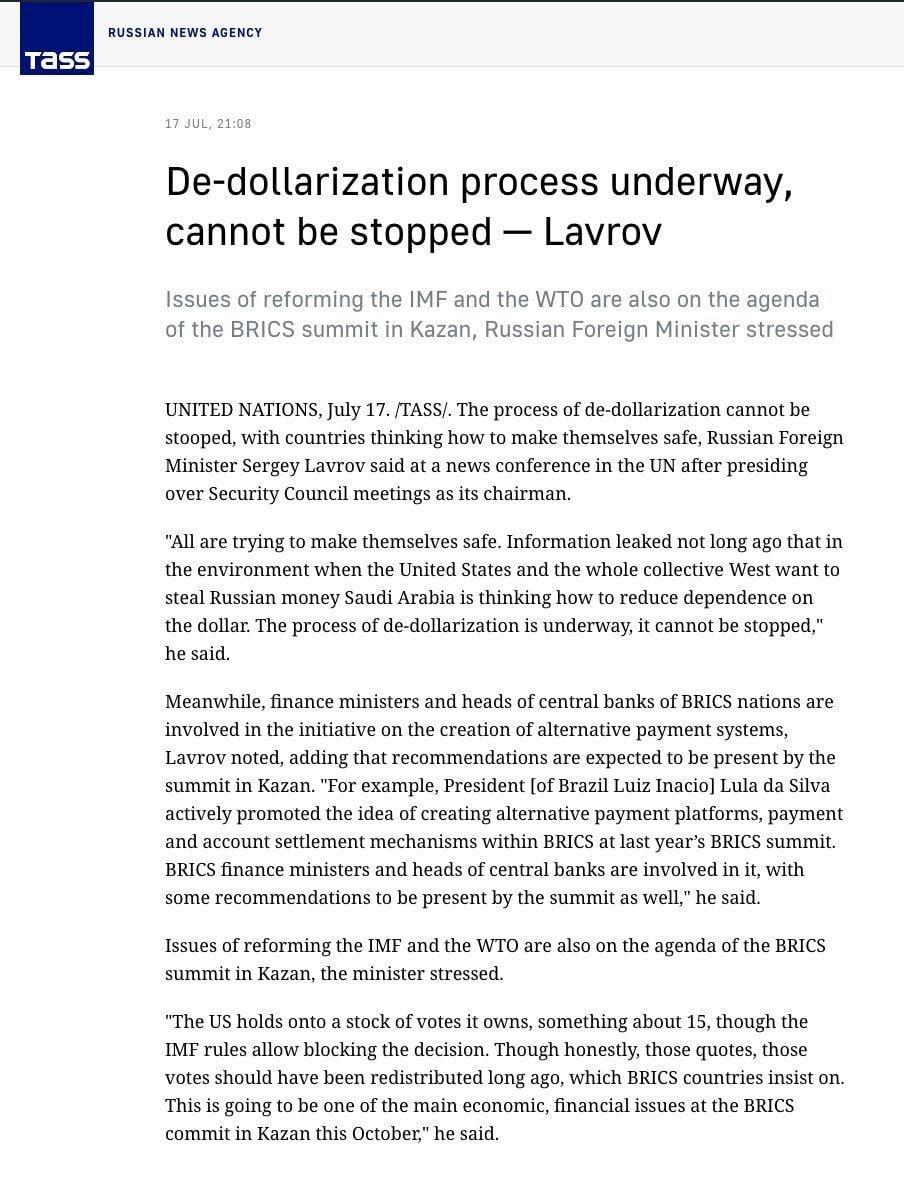
DE-DOLLARIZATION CONTINUES TO BE THE THEME OF BRICS NATIONS
"All are trying to make themselves safe. Information leaked not long ago that in the environment when the United States and the whole collective West want to steal Russian money Saudi Arabia is thinking how to reduce dependence on the dollar. THE PROCESS OF DE-DOLLARIZATION IS UNDERWAY, IT CANNOT BE STOPPED, he said."
Quote from Russian Foreign Minister Sergey Lavrov
@ Newshounds News™
Read more: X
~~~~~~~~~
Crypto Regulations in Vietnam 2024
The post Crypto Regulations in Vietnam 2024 appeared first on Coinpedia Fintech News
Vietnam, a socialist country in Southeast Asia, has a population of 99.46 million and covers 331 thousand square kilometers. It has developed a strong market economy with socialist influences, making it one of the fastest-growing economies in terms of GDP. This economic growth has attracted significant foreign investment.
Vietnamese Government on Cryptocurrencies
Cryptocurrency is not banned in Vietnam, but a legal framework is needed to ensure its proper development and mitigate risks, according to a representative from the Ministry of Justice. Cao Dang Vinh, Deputy Director of the Department of Economic and Civil Legislation, noted on April 12 that there are varying understandings of virtual assets, digital currencies, and cryptocurrencies, with different countries adopting diverse management approaches.
Cryptocurrency is not banned in Vietnam: Ministry Cao Dang Vinh noted global variations in cryptocurrency perspectives and the absence of specific regulations in Vietnam. Vietnam lacks a legal framework for cryptocurrencies, stressing the need for regulation.
Cryptocurrencies carry risks that can lead to appropriation or money laundering. Vietnam currently lacks regulations to manage their development, and cryptocurrency is not considered a legal asset. Vinh emphasized the need for a legal framework to prevent these risks and illegal activities. The Ministry of Finance will provide specific proposals, and the Ministry of Justice will offer detailed opinions accordingly.
In addition to this, the Vietnamese state authorities are working on the possible applications of blockchain technology in the country.
Blockchain for Vietnam’s Cashless Society
The deputy Prime Minister of Vietnam, Vuong Dinh Hue signed out a policy decision in 2017, setting out the government’s plan to reduce the cash transactions in the country to less than 10%. The State Bank of Vietnam also announced the development of $700 million cashless payment network in collaboration with South Korean payment service provider Alliex.
Another bank, Tien Phong Commercial Joint Stock Bank(TPBank) moving one step further in the use of blockchain technology, joined hands with Japan’s SBI Ripple Asia to develop Ripplenet blockchain-based global payment network for processing cross-border transactions.
Launch of the First Money Transfer Service between Japan and Vietnam that Utilize Distributed Ledger Technology (DLT). TPBank is the latest financial institution supported by SBI Ripple Asia to leverage Ripple
Cryptocurrencies law
In Vietnam, cryptocurrencies were not considered legal means of payment but could be bought, held, and traded. The government continued to reevaluate its approach to the crypto space, with the central bank maintaining that cryptocurrencies were not legal tender.
Cryptocurrencies were categorized as assets or goods under the 2015 Civil Code and the Commercial Law of 2005. These laws defined property broadly to include objects, money, valuable papers, property rights, and movable property, including future assets, allowing cryptocurrencies to be traded within the country.
What led to look over the need of Regulations?
The government of Vietnam cites many official reasons for the need for regulations and ban them as a means of payment,
—The crypto industry has no government supervision and therefore prone to illegal activities.
—Cryptocurrencies lack customer protection as they are volatile in nature which leads to price instability, security concerns, and market manipulation.
—Cryptocurrencies are open to illegal activities such as tax evasion, money laundering, terrorist funding and hacking.
The cryptocurrencies might possess the capacity to destabilize existing financial systems which can affect the nation’s economy.
Regulatory RoadMap of Cryptocurrencies
Vietnam has made several efforts to regulate the country’s cryptocurrency space. On 21 August 2017, the Prime Minister, Nguyen Xuan Phuc approved a project to complete the legal framework for managing digital assets and their activities.
On April 11, 2018, a directive was issued to the relevant authorities to manage crypto transactions in order to analyse the negative impact on the nation’s economy. In the directive, Bitcoin and similar cryptocurrencies were banned for using them as a mode of payments for any goods or services. But the users were free to invest in Cryptocurrencies. Those who found guilty would be penalised with a fine up to VND 200 million ($ 9,000).
In February 2019, The Ministry of Justice also filed a report that reviewed the current legislation on crypto-related business in the country. They proposed three different policies that the government could consider and start working on the policy selected by the government. They are:
1. Floating and lax Regulatory approach
2. Straightforward approach
3. Legislation of digital Assets transactions under specific conditions.
Recently on May 11 2020, the Vietnamese Finance Ministry has approved to establish a research group to review, analyse and develop various regulatory policies around crypto-assets. The research group would be comprised of nine members of the group of the following departments,
—General Department of Taxation
—National Institute of Finance
—General Department of Vietnam Customs
—Department of Banking and Financial Institutions of the State Bank of Vietnam
The research group would be led by the Vice-Chairman of State Securities Commission, Pham Hong Son.
Authorities in Vietnam to Establish Crypto Research Group to Evaluate Policy. On May 11, the Ministry of Finance in Vietnam said it will come up with a research group responsible for examining & making policy proposals about crypto and virtual assets
1. Taxation and Mining
2. Taxes on Cryptocurrencies
As you have already aware of the fact that, Bitcoin and other cryptocurrencies are not considered as legal tenders and are banned to use them as a mode of payment, the tax policies are also not framed yet. Cryptocurrency taxation in Vietnam remains uncertain due to the lack of a clear legal framework.
The tax authorities have lost a lawsuit against a local citizen who was been taxed on the Bitcoin earnings. As the cryptocurrencies are not considered as a legal asset under Vietnamese law, the court ruled the authorities that they have no right to tax him.
Mining of Cryptocurrencies
The Cryptocurrencies remain illegal as of now and restricted with the use of payment methods and so the mining. It is also considered illegal The government has also has passed a law which bans the import of bitcoin mining equipment into Vietnam.
However, the Ministry of Industry and trade expressed displeasure towards the ban and also showed concern over the decline in the mining business. The ministry sent a proposal to the Prime Minister of Vietnam, called the Document 5964 / BTC – TCHQ, mentioning that the mining pieces of equipment are not listed in the banned list of import or unsafe list. Hence the import should be allowed which was accepted by the government.
12-04-2024: Vietnam Does Not Ban Cryptocurrency, Confirms Ministry of Justice
A Ministry of Justice representative clarified that while cryptocurrency isn’t banned in Vietnam, there’s a need for a legal framework to guide its development and mitigate risks. Cao Dang Vinh, Deputy Director of the Economic and Civil Legislation Department, noted varying global perspectives on virtual assets, digital currencies, and cryptocurrencies.
Concluding Note
The Vietnamese Government has now acquired a progressive approach towards regulating the cryptocurrencies and initiated various steps. The various other approaches, however, are still vague and lack clarity.
More laws and reforms are required to ascertain the secured flow of cryptocurrency transactions in the country so that no scams or fraud occur risking the investor’s funds. The future of the cryptocurrencies are more secure and reliable in the country when these regulatory frameworks are put in place.
Read more: Binance
~~~~~~~~~
BASEL 3 AND GOLD REGULATIONS
"Basel III is a set of financial reforms developed by the Basel Committee on Banking Supervision. It introduces stricter capital requirements to increase the resilience of banks. The main focus is on improving the quality of capital, particularly Tier 1 capital, which is essential for absorbing losses."
The Significance of Gold in Basel III Regulations
"Gold’s role in Basel III significantly changes how banks handle this asset. With the new Basel III Bank Accords, gold is taking center stage again as an important asset for financial institutions. The most significant change is that Basel III regulations treat gold held in vaults as a zero-risk asset, a status previously reserved for cash. This change elevates gold’s importance in ensuring the stability and liquidity of banks."
Impact on Liquidity and Stable Funding
"Gold significantly impacts banks’ liquidity. Under Basel III’s measures, banks must maintain a specific Liquidity Coverage Ratio (LCR) to ensure they have enough high-quality liquid assets to survive financial stress. Gold can be considered part of these High-Quality Liquid Assets (HQLA)"
"Basel III regulations make gold a more attractive asset for banks by allowing bullion held in vaults or on an allocated basis to be treated as cash with a 0% risk weight. "
"Basel III demands that financial institutions hold a higher proportion of physical gold, rather than trading in derivatives. This change increases financing costs and demands more robust liquidity buffers. Banks must now hold physical assets to meet liquidity requirements, pushing the preference for tangible gold. As a result, this regulation stabilizes the gold market by reducing reliance on paper gold and emphasizing the importance of physical gold holdings. This shift supports higher demand and potentially boosts the price and stability of gold in the long term."
"With Basel III, gold is now considered a High-Quality Liquid Asset (HQLA)"
@ Newshounds News™
Read more: Metals Edge
~~~~~~~~~
BASEL 3 ENDGAME
"Many parts of Basel III are already in place worldwide, including the U.S. However, the final changes, called Basel III Endgame and agreed upon in 2017, have been delayed for years by the COVID-19 pandemic and banks calling for more time to adjust to and lobby against the new regulations."
"12 Deadlines have come and gone, with mid-2025 the latest date for when the rules are supposed to go into effect in the U.S., which means announcing them months earlier to provide regulators, banks, and other stakeholders the time needed to prepare to meet the new standards. Banks would start using the rules on July 1, 2025, with the goal of having them fully in place three years later."
What Affect Would Basel III Have on Small and Medium-Sized Banks?
"While Basel III primarily targets very large, internationally active banks, critics charge that its regulations would also affect small and medium-sized banks. "
When Does Basel III Go Into Effect?
"Since the Basel III Endgame process began, bank requests for more time to digest and comment on the plans, COVID-19, and shifts in the post-pandemic economy have all pushed back the deadlines. As it stands now, the regulations should start taking effect July 1, 2025, followed by a three-year phase-in period to give banks time to transition to the new rules. While previous deadlines have come and gone, the commentary period is over, which offers U.S. federal regulators more room to maneuver in going ahead with implementation."
@ Newshounds News™
Read more: Investopedia
~~~~~~~~~
Chainlink’s tokenization sandbox cuts trials to days instead of months
The sandbox could lead to more financial institutions adopting asset tokenization solutions.
Chainlink is ushering in a new turnkey solution for institutions looking to conduct tokenization trials in the latest development for the tokenization industry.
Chainlink has introduced its new Digital Assets Sandbox (DAS) for financial institutions, which aims to accelerate digital asset innovation.
DAS will enable financial institutions to quickly experiment with new revenue-generating opportunities, like bond tokenization, with improved time-to-market and greater overall efficiency.
According to Angela Walker, the global head of banking and capital markets at Chainlink Labs, the new sandbox was born due to institutional demand for secure digital asset experimentation environments.
@ Newshounds News™
Read more: Coin Telegraph
~~~~~~~~~
Newshound's Daily Breakdown Podcast Link
Newshound's News Telegram Room Link
Q & A Classroom Link
Follow the Roadmap
Follow the Timeline
Seeds of Wisdom Team™ Website
Subscribe to Newsletter
Thank you Dinar Recaps
“Tidbits From TNT” Thursday 7-18-2024
TNT:
Tishwash: 100 investment opportunities next November100
The National Investment Commission has completed its preparations for holding a major investment conference next November.
The head of the authority, Haider Makiya, explained that the authority has completed all its preparations to hold a major investment conference in which about 100 investment opportunities will be presented in all of Iraq’s governorates, noting that invitations have been sent to ambassadors, officials, and all ministers.
TNT:
Tishwash: 100 investment opportunities next November100
The National Investment Commission has completed its preparations for holding a major investment conference next November.
The head of the authority, Haider Makiya, explained that the authority has completed all its preparations to hold a major investment conference in which about 100 investment opportunities will be presented in all of Iraq’s governorates, noting that invitations have been sent to ambassadors, officials, and all ministers.
He pointed out that Prime Minister Mohammed Shia Al-Sudani will attend the conference as he is the biggest supporter of such conferences to see the extent of the readiness of major companies to invest in Iraq as a fertile and promising land, pointing out that the role of embassies is great in this matter, as they conveyed an appropriate image of Iraq and its enjoyment of unparalleled security and economic stability during this important stage of its history.
Makiya added that the conference, which will be held on November 2-3, will be a major economic event in the capital, Baghdad, to present exceptional investment opportunities that the world's largest companies can work on. link
************
Tishwash: Minister of Trade stresses importance of Arab support for Iraq's accession to WTO
Minister of Trade, Athir Dawood Al-Ghariri, stressed today, Thursday, the importance of Arab support for Iraq's accession to the World Trade Organization.
A statement by the Ministry of Commerce, received by "Al-Eqtisad News", stated that "Minister of Commerce Athir Dawood Al-Ghariri met with the Saudi Ambassador and Head of the Working Group on Iraq's Accession to the World Trade Organization, Saqr Al-Muqbil, in the presence of the ambassadors of the Arab countries in the organization, to discuss mobilizing Arab support for Iraq's accession file to the World Trade Organization."
The statement added, "During the meeting, the progress made by Iraq in meeting the requirements for accession and the challenges it faces in this path were reviewed."
During the meeting, Minister Al-Ghariri stressed the "importance of Arab support to strengthen Iraq's position and achieve its goals in joining the organization."
At the same time, the Minister pointed out "the economic and commercial benefits that will accrue to Iraq and the Arab countries through this accession."
For their part, the Arab ambassadors expressed their "readiness to support Iraq in its efforts," stressing "the importance of strengthening Arab cooperation in international organizations link
************
Tishwash: The Economic Situation in Iraq: Challenges and Future Prospects
Iraq is currently going through a critical economic phase, as the country faces many challenges that hinder its growth and stability. The Iraqi economy is one of the most diversified in the region, but it continues to suffer from the effects of internal conflicts and fluctuations in global oil prices.
Economic Challenges
One of the most prominent challenges facing the Iraqi economy is high unemployment among young people, with statistics indicating that the unemployment rate exceeds 25%. This is attributed to the decline in foreign and local investments as a result of the security and political unrest that the country has witnessed over the past years.
Financial and administrative corruption is another obstacle to economic growth. Iraq ranks high in global corruption indices, which negatively impacts the business environment and limits the ability to attract foreign investment. This corruption affects all sectors of the economy, from oil and gas to infrastructure and public services.
Economic Reforms
In the face of these challenges, the Iraqi government is implementing a package of economic reforms aimed at enhancing economic growth and achieving financial stability. Among these reforms are improving the management of oil revenues and diversifying sources of income by supporting non-oil sectors such as agriculture, industry and tourism.
The government is also working to improve the business environment by simplifying administrative procedures and fighting corruption. Oversight bodies have been established to enhance transparency and accountability in the management of public resources.
Future Prospects
Despite the major challenges, there are signs of hope that Iraq’s economic situation can improve. Government initiatives to diversify the economy and boost investment in vital sectors could create new jobs and improve living standards for the population.
In addition, the stability of global oil prices represents an opportunity for Iraq to generate additional revenues that can be used to finance development projects and improve infrastructure.
In conclusion, achieving an economic renaissance in Iraq requires concerted efforts between the government, the private sector, and civil society, in addition to benefiting from international support to enhance economic and social stability. link
************
Tishwash: A military delegation headed by Yarallah will visit Washington soon...and the American withdrawal may take 3 to 5 years
Baghdad has not yet commented on the attempt to assassinate former US President Donald Trump, while Muqtada Al-Sadr, the leader of the Sadrist movement, described what happened as a “clip from a movie.”
Since the beginning of this year, Baghdad and the United States have been engaged in dialogues about the Western military presence in the country, which have reached the procedures stage, according to the parties to the coordination framework.
A former politician and attempted MP warns that the assassination of Trump, whose interpretations of the incident are now limited to an individual act, may affect Washington's policy in Iraq at a later time.
The Iraqi military leadership is supposed to meet with American officials this July in Washington to complete negotiations on withdrawal.
The two parties held three meetings in Iraq about the fate of the coalition forces, while it is likely that Abdul Amir Yarallah, Chief of Staff of the Army, will lead the next delegation.
A few days ago, Foreign Minister Fuad Hussein said while he was in Washington to attend NATO meetings that "a military delegation will visit Washington to hold discussions about the security agreement concluded between Iraq and the United States."
There is still a conflict in statements between Baghdad and Washington regarding the nature of the negotiations that began at the beginning of this year, regarding whether the United States will withdraw or stay for a longer time.
According to leaks from political circles, the military delegation that will soon go to the United States will ask for “3 or 4 months to finalize the withdrawal arrangements.”
But there are other political parties who doubt the possibility of withdrawing forces so quickly, and talk about the United States requiring between “3 to 5 years” to evacuate the forces.
Ali Nimah, a member of the Security and Defense Committee in Parliament, says that the issue of removing foreign forces from Iraq will not end “overnight,” noting that it is hoped that the transition to bilateral relations will begin during the next year.
Last June, the government confirmed that it had begun new measures in preparation for the withdrawal of coalition forces present since 2014, by developing military infrastructure.
Meanwhile, Hassan Fadaam, a former leader of the Popular Mobilization Forces, said in contact with (Al-Mada) that “the decision to withdraw is final and final, and there is no retreat from the Iraqi government.”
Fadam, a former representative of the Al-Hikma Movement, points out that “the withdrawal is within the government program and also within the political agreement that occurred between all political parties and was informed by the American authorities through diplomacy and by the political forces in all their meetings with American officials.”
Fadham, a member of the coordination framework, confirms that there are major changes in this file. “Work has moved from dialogues to procedures. There are daily procedures in preparation for withdrawal.”
The former MP revealed that a recent visit by a US Defense Department official to Baghdad was part of these arrangements, as he "visited the American bases to begin the withdrawal."
A week ago, Al-Sudani's office reported that the latter received the US Deputy Assistant Secretary of Defense for Middle Eastern Affairs, Daniel Shapiro, in Baghdad.
The office confirmed in a statement that the meeting included talk about "proceeding procedures to end the mission of the international coalition to fight ISIS, and to activate bilateral relations between Iraq and the United States."
Hassan Fadaam says that the United States may try to reverse the withdrawal under various pretexts, “but Iraq is monitoring these moves that Washington could use to disrupt the withdrawal.”
Last February, the Iraqi factions retreated from targeting American forces in an undeclared truce, to give the government the opportunity to negotiate with Washington.
The number of American forces in Iraq since the beginning of 2003 was about 130,000, and it remained fluctuating between 100,000 and 150,000, but it rose again to about 170,000 with the intensification of violence in 2007.
At the end of 2011, the United States withdrew its forces during the era of former President Barack Obama. Except for a few military advisors.
However, with the spread of ISIS in 2014, Washington doubled its forces to more than 5,000 members, before reducing them again to 3,000 in 2021, then to about 2,500 this year.
Withdrawal...and Trump is the example of Alusi, the politician and former MP, who says that the presence of American forces in Iraq was “always the focus of discussion in all American governments after 2003,” but he did not raise, not Once, either secretly or publicly, the idea of “reducing the level of forces to zero.”
Successful American administrations, according to Al-Alusi, who spoke to Al-Mada, were thinking about withdrawing the strike force "and leaving elite forces that represent the American moral and strategic presence in Iraq."
A few days ago, Arab media close to Tehran said that the United States “withdrew an official announcement to schedule a reduction in the number of its forces in Iraq.” It is likely that this is related to the process of withdrawing American forces from Niger.
America, according to Al-Alusi, will reduce the military presence in Iraq and not the political, diplomatic or economic presence if it finds that "the government is part of American ideas and interests, but the opposite will happen if the militia penetration and preoccupation With opening camps for the Houthis in Iraq continues.”
The United States will soon enter into a sensitive political situation with the approaching presidential elections, which may not greatly affect the nature of relations with Iraq, according to Al-Alusi, a former member of the Foreign Relations Committee in Parliament.
He says that the change in the US government “affects foreign relations on major issues with Russia and China,but not with Iraq and Iran.”
But on the other hand, he points out the possibility that the attempt to assassinate Trump may affect Washington policy if it is proven that the perpetrator, whose action is explained as an isolated incident, influenced Iraqi and Iranian propaganda against the nominated president, especially if he wins the elections.
In 2021, an Iraqi court issued an arrest warrant against Trump, against the backdrop of the assassination of Abu Mahdi Al-Muhandis and Qassem Soleimani.
So far, Baghdad has not commented on the assassination attempt, at a time when Muqtada al-Sadr said in a tweet on the “Just allegations.”
Al-Alusi advised the Iraqi government to denounce the assassination attempt, "not for Trump's sake, but in rejection of the assassination attempts that the authorities in Iraq accused of against activists and protesters." link
************
Mot: Gunna be un of Those Daze!!!

Mot: Seeeeeeeeee -- Ya Can Always Find the ""Positive"" of things!!!

Iraq News Highlights and Points To Ponder Thursday AM 7-18-24
Economist Calls On The Government To Delay Joining The World Trade Organization
Money and business Economy News – Baghdad Today, Thursday, economic expert, Bassam Raad, called on the Iraqi government to delay Iraq's accession to the World Trade Organization.
Raad said in an interview with Al-Eqtisad News, "Iraq, which has observer status in the World Trade Organization, seeks to join it after the removal of political restrictions that prevented this, including its exit from Chapter VII procedures of the United Nations Charter."
He added, "This endeavor has positive effects, including expanding economic partnerships and integrating it into the global economy, but on the other hand it represents a problem, especially since the demands of the World Trade Organization are to allow the access of its members' trade to the markets and to free trade from all restrictions, as it is an organization of producing and manufacturing countries, which means opening the Iraqi local markets to imports, and thus negatively affecting any attempt to rebuild the productive, industrial and agricultural sectors and leaving the economic horizon dependent on consumer imports coming from abroad."
Economist Calls On The Government To Delay Joining The World Trade Organization
Money and business Economy News – Baghdad Today, Thursday, economic expert, Bassam Raad, called on the Iraqi government to delay Iraq's accession to the World Trade Organization.
Raad said in an interview with Al-Eqtisad News, "Iraq, which has observer status in the World Trade Organization, seeks to join it after the removal of political restrictions that prevented this, including its exit from Chapter VII procedures of the United Nations Charter."
He added, "This endeavor has positive effects, including expanding economic partnerships and integrating it into the global economy, but on the other hand it represents a problem, especially since the demands of the World Trade Organization are to allow the access of its members' trade to the markets and to free trade from all restrictions, as it is an organization of producing and manufacturing countries, which means opening the Iraqi local markets to imports, and thus negatively affecting any attempt to rebuild the productive, industrial and agricultural sectors and leaving the economic horizon dependent on consumer imports coming from abroad."
The economic expert explained that "since Iraq depends on oil exports and oil is not subject to customs barriers by importing countries, it should be cautious before seeking to join the World Trade Organization and work towards economic reform and begin implementing plans to diversify local production and build industrial capabilities that support the trend towards exporting abroad, which contributes to enhancing the positive effects of the accession process."
113 views 2024/07/18 - https://economy-news.net/content.php?id=45350
Minister Of Trade Stresses Importance Of Arab Support For Iraq's Accession To WTO
Local Economy News – Baghdad Minister of Trade, Athir Dawood Al-Ghariri, stressed today, Thursday, the importance of Arab support for Iraq's accession to the World Trade Organization.
A statement by the Ministry of Commerce, received by "Al-Eqtisad News", stated that "Minister of Commerce Athir Dawood Al-Ghariri met with the Saudi Ambassador and Head of the Working Group on Iraq's Accession to the World Trade Organization, Saqr Al-Muqbil, in the presence of the ambassadors of the Arab countries in the organization to discuss mobilizing Arab support for the file of Iraq's accession to the World Trade Organization."
The statement added, "During the meeting, the progress made by Iraq in meeting the requirements for accession and the challenges it faces in this path were reviewed."
During the meeting, Minister Al-Ghariri stressed the "importance of Arab support to strengthen Iraq's position and achieve its goals in joining the organization."
At the same time, the Minister pointed out "the economic and commercial benefits that will accrue to Iraq and the Arab countries through this accession."
For their part, the Arab ambassadors expressed their "readiness to support Iraq in its efforts," stressing "the importance of strengthening Arab cooperation in international organizations." 024/07/18 - https://economy-news.net/content.php?id=45340
An Expert Calls On The Government To End The Waste Of Billions Of Dollars On Importing Gas
Economy , 07/18/2024 11:59 Number of readings: 129 Baghdad - Iraq Today: The expert in energy economics, Kofd Sherwani, called on the government to accelerate the implementation of gas isolation projects associated with oil extraction operations, while he stated that importing natural gas from countries costs Iraq billions of dollars.
Sherwani said, “Iraq possesses huge natural gas reserves amounting to 132 trillion standard cubic feet.” Pointing out, "Projects for isolating associated gas in the southern fields must be expedited, so that they can be used in operating electrical power plants."
Sherwani added in a press interview, “These projects were supposed to be accelerated more than ten years ago so that Iraq would reach the stage of sufficiency and dispense with importing natural gas and electricity from any other source.”
He pointed out, "The rate of burning gas in Iraq decreased from 40% to 35%, according to the statements of the Ministry of Oil, that stopping gas burning will occur within three years, while sufficiency of natural gas will occur within five years " Noting that, “This matter will save the state billions of dollars, amounting to 4 or 5 billion dollars spent annually on importing natural gas and electricity.”
He continued, “The reason for the interruptions of imported natural gas from Iraq is that the areas from which gas is supplied from countries are already in need of gas, and this need increases in some seasons, because this gas is used in power stations and to equip some laboratories, because they represent the regions."
In the final distribution network, there is always little flow and many stops, and this causes interruptions that directly affect the supply of electrical energy, some of whose stations depend on imported Iranian gas at an amount of 50 million cubic meters per day.”
The energy economics specialist stated, “The United States has placed restrictions within the sanctions imposed on Iran, while placing restrictions on sending the financial compensation for imported gas and electricity, and when these payments are delayed, Iran sometimes reduces or cuts the quantities processed as a form of pressure on the Iraqi government to pay what it owes.” Accumulated costs of supplied gas.
He stressed, “Iraq has already paid all of Iran’s dues for the price of gas and electricity, but despite that we hope that the Ministry of Oil’s projects in isolating gas and investing in it will be accelerated to reach the stage of sufficiency, and save These amounts, and perhaps in the event of strengthening the capabilities to produce gas, Iraq is reaching a stage.” Export for the period after five years or a little more.” LINK
Despite Objections, Basra Council Prepares To Vote On 2024 Budget
Economy |Baghdad Today – Basra Basra Governorate Council confirmed, today, Thursday (July 18, 2024), its intention to pass the budget for the current year 2024 at the end of next week, as the study of the project plan for the current year 2024 will be completed and approved in general.
The head of the Design Bloc in the provincial council, Aqil Al-Furaiji, told Baghdad Today, "The council will work to host officials from the directors of all departments to discuss the sectors included in the projects of the current year 2024, as they are the beneficiaries, to involve them in the discussions and for the purpose of reviewing them in detail."
He explained that "the committee's work continues even on holidays to complete the plan and submit it to the provincial council for approval at the end of next week," noting that they are "promising projects that will benefit the Basra citizen."
Basra Governorate MP Dhurgham Al-Maliki had confirmed in previous press statements that the governorate was counting on the 2023 budget, of which only 30% had been spent.
MP Al-Maliki said that Prime Minister Mohammed Shia Al-Sudani confirmed to him that there is 70% of Basra’s money remaining and has not been circulated. It is a trust with the government and will be spent with what was allocated to Basra in the current year’s budget.
Al-Maliki pointed out that there are accumulated amounts of Basra's dues from petrodollar amounts estimated at 20 trillion dinars, and that schedules and a mechanism for disbursement must be established, noting that many projects have been allocated to Basra in the 2023 budget and are awaiting the release of funds to complete them.
He explained that Basra is not counting on the 2024 budget, but rather on last year's budget to complete projects.
Members of the Basra Council and representatives of the province in the House of Representatives had criticised and objected to the decision to reduce the financial allocations for the province from 2 trillion and 900 million dinars to only 850 billion.
This came as a great shock to the governorate, which is the economic capital of Iraq, as the allocations are not even enough to cover the debts of companies and contractors tasked with service projects, according to official statements, stressing the need to reconsider the decision in a manner that is consistent with the size of the governorate and its needs for projects. LINK
Iraq Economic News and Points To Ponder Wednesday Evening 7-17-24
Through The Dollar And The Yuan... The US Treasury Continues To Impose Its Guardianship Over The Iraqi Economy
July 16 Information/report.. The Parliamentary Finance Committee indicated earlier that it would demand that the Central Bank address the issue of the exchange rate and the flow of foreign trade through the use of the currency basket diversification system, so that there would be more options for the Central Bank and Iraqi merchants.
The currency basket system is a monetary system used by the central banks of countries to determine the exchange rate of their local currencies.
The system is based on a group of currencies chosen by the central bank of each country, and the basket consists of a group of the most powerful banknotes affecting the global economy. In an “unsuccessful” step, as experts in economic affairs describe it, the Central Bank of Iraq stopped dealing in the Chinese yuan after the US Federal Reserve accused Iraq of “inflating remittances.”
Through The Dollar And The Yuan... The US Treasury Continues To Impose Its Guardianship Over The Iraqi Economy
July 16 Information/report.. The Parliamentary Finance Committee indicated earlier that it would demand that the Central Bank address the issue of the exchange rate and the flow of foreign trade through the use of the currency basket diversification system, so that there would be more options for the Central Bank and Iraqi merchants.
The currency basket system is a monetary system used by the central banks of countries to determine the exchange rate of their local currencies.
The system is based on a group of currencies chosen by the central bank of each country, and the basket consists of a group of the most powerful banknotes affecting the global economy. In an “unsuccessful” step, as experts in economic affairs describe it, the Central Bank of Iraq stopped dealing in the Chinese yuan after the US Federal Reserve accused Iraq of “inflating remittances.”
While economic experts warned of the effects of this decision on the local market and its cause of an increase in the exchange rate of the US dollar and an increase in exchange rates.
Inflation, which has negative repercussions on the economic situation of the Iraqi family, presented 3 solutions to the Central Bank of Iraq to continue the flow of remittances to China.
Through the dollar and the yuan... the US Treasury continues to impose its guardianship over the Iraqi economy Clip_image004
In the latest Iraqi government move to stop dealing in the Chinese yuan, informed sources revealed to Shafaq News Agency, yesterday, Saturday, that the Governor of the Central Bank of Iraq, Ali Al-Alaq, is making an officially unannounced visit to the United States of America to discuss with officials in Washington regarding the US Federal Reserve’s decision to stop dealing in Baghdad. In Chinese yuan.
The Central Bank of Iraq had previously strengthened its assets denominated in the yuan through the Singapore Development Bank to finance Iraqi trade and imports with China by about 12 billion dollars annually,
but the US Federal Reserve’s policy is still putting the stick in the wheel of liberating the Iraqi dinar and achieving gains at the expense of the dollar exchange rate, Therefore,
when the US Federal Reserve saw that the Chinese yuan was being used in foreign transfers,
it quickly issued a decision to stop transfers under the pretext that there were suspicions in some transfers in the Chinese yuan.
A member of the Parliamentary Finance Committee, Representative Moeen Al-Kadhimi, described the
US Federal Reserve’s decision to stop remittances in the Chinese yuan as “arbitrary” against the Iraqi economy. Al-Kadhimi said in a statement to the Al-Ma’louma Agency,
“The decision to stop transfers in the Chinese yuan was issued by the US Federal Bank due to its claim that there were suspicions about some transfers in the Chinese yuan.” He pointed out that
"the Central Bank of Iraq has contracted with an international company to evaluate and monitor remittances, and this company is a supplier of acceptance and trust for the US Federal Reserve."
He pointed out that "after a short period, the Central Bank of Iraq will resume transferring remittances in Chinese yuan to Iraqi merchants and in general," noting that "these US Federal Reserve measures are considered arbitrary against Iraq and its national economy."
For his part, commenting on this decision, the economic expert, Zia Al-Mohsen, confirmed that
“stopping dealing in the Chinese yuan by the Central Bank of Iraq is an unsuccessful step if we take into account that trade dealing with China exceeds 65 billion dollars.”
Through the dollar and the yuan... the US Treasury continues to impose its guardianship over the Iraqi economy Clip_image006
Al-Mohsen said in a statement to the Maalouma Agency,
“This decision will have a negative impact on the local market, and the demand for the dollar will increase, which means an increase in the exchange rate of the US dollar in the local market, which will increase inflation rates, which will have negative effects on The economic situation of the Iraqi family.
The Central Bank of Iraq stopped trading in the Chinese yuan after the US Federal Reserve accused Iraq of "inflating remittances."
During the current period, America has worked to destroy the Iraqi currency by imposing sanctions on private banks and banning the dollar under many pretexts, which in one way or another led to a severe financial crisis in the local markets.
It is noteworthy that the Central Bank of Iraq also moved to strengthen its assets in the UAE dirham and negotiated an increase in its assets denominated in euros to finance trade with the European Union. Iraq also began opening bank accounts in the Indian rupee for a number of Iraqi banks. Ended / 25 AD
https://almaalomah.me/news/70483/economy/عبر-الدولار-واليوان-الخزانة-الأمريكية-تواصل-فرض-وصايتها-على
A Former Deputy Reveals The “Hidden”... These Are The US Federal Reserve’s Restrictions
Information/private.. On Wednesday, former member of the Parliamentary Finance Committee, Abdul Hadi Al-Saadawi, revealed the US Federal Reserve’s restrictions on the Iraqi Central Bank. Al-Saadawi said in an interview with Al-Maalouma,
“The US Federal Reserve imposes restrictions on the Central Bank of Iraq, which is a reaction to the demand to remove American forces from the country.” He added,
"America is adopting an approach with specific paths in Iraq, which is to give more leeway to the work of foreign banks at the expense of Iraqi banks."
He pointed out "the necessity of reviewing the activities of foreign banks in the country and seeking to address corruption in local banks and uncovering fake banking windows that engage in money laundering."
is noteworthy that the dollar exchange rates in the Iraqi markets witnessed a state of instability in the past days in terms of rising and then falling again. https://almaalomah.me/news/70595/politics/نائب-سابق-يكشف-المستور-هذه-قيود-الفيدرالي-الامريكي
Our Financial And Banking System And The Global Economy
Economical 07/16/2024 Samir Al-Nusairi Most of the countries of the world have been suffering from successive economic crises since 2020 until the present.
They are the harshest and most harmful to the countries’ economies than the previous crises that swept the world previously, which began with the lockdown crisis as a result of the Corona pandemic and the (stagflation) crisis due to food shortages, high prices, the Russian-Ukrainian war, and economic conflicts between... America and China, most recently the Zionist war on Gaza and the occupied Palestinian territories, expectations of a new aggression against Lebanon, the struggle to control oil prices, and the attempts of the affected countries to find plans and deals to control this rise that has occurred over the past years.
From our follow-up, monitoring and analysis of the movement of the global economy, we notice that most countries in the world have increased inflation rates and exceeded one rank, and economic growth rates have decreased, especially regional countries and most countries with major economies and even emerging countries have tried to form new axes, poles and economic blocs and conclude agreements between themselves and other countries for transactions.
Trade and finance outside the Group of Seven major countries, such as the BRICS bloc.
The central banks in most countries have taken difficult decisions in order to control the prices of their local currencies from falling and maintain their foreign currency reserves at safe rates, thus reducing stagflation and maintaining relatively stable prices and economic growth balanced with economic conditions.
Currently prevailing by raising interest rates at a rate that is commensurate with its economic situation.
Therefore, as far as the matter is concerned with Iraq’s economic situation, although the reports of the World Bank and the International Monetary Fund to evaluate the Iraqi economy for the current year indicate that the inflation rate did not exceed 3 percent, and according to what the
Central Bank announced, it is better than the inflation rates in the regional and neighboring countries and that the growth rate in output The gross domestic product for this year is expected to be 6 percent, and Iraq still maintains a good foreign exchange reserve to cover its imports and cover its local currency in circulation.
However, it is a one-sided economy and
depends on oil revenues, and
its financial and banking sector is weak and suffers from sanctions and restrictions on the use of the US dollar in foreign banking transactions, and still
Its credit rating is within limits that are internationally classified as unstable and in the absence of...
New policy measures: The public finance deficit is expected to reach 7.6 percent in 2024 and expand further after that with the expected decline in oil prices in the medium term.
As a result, public debt will almost double from 44 percent in 2023 to 86 percent by 2029.
The sector also The real sector suffers from many problems that prevent it from achieving the necessary revenues to reduce the share of oil revenues in public budgets.
This means that the deficit in the balance of payments and the deficit in the trade balance are prevalent despite the fact that the government, finance and central bank are making great efforts to rebuild a solid and solid banking sector because
without the existence of a sector With developed banking, it is not possible to build a sound national economy.
The inherited and complex problem is the weak compliance of the Iraqi financial and banking sector with international standards, and the
foreign trade policy is unclear despite the measures taken by the Central Bank to regulate trade financing and the accreditation of some reputable foreign registered banks, but the
presence of informal border crossings and intra-trade is not Legitimate speculators in the foreign exchange trading market have led to fluctuations in exchange rates from time to time.
For the purpose of the Central Bank exercising its role in
reducing inflation,
controlling the general level of prices,
maintaining the dinar exchange rate within its target limits,
controlling the interest rate, and
maintaining its foreign cash reserves within the required rates, as well as
controlling the money supply, and certainly
all of these aspects are within the goals and interests of the Central Bank.
Its Board of Directors during the next stage and for the purpose of avoiding the harm that currently threatens the global economy.
This requires taking bold steps, as follows:
First - reconsider the structure and presentation of the general budget and determine the contribution percentages of the agricultural, industrial, tourism sectors and non-oil revenues at no less than 30 percent during the coming years until 2030.
The total expenditures must not exceed the total revenues in any case and the deficit must be zero.
Second - Adopting agricultural, industrial and commercial policies that are consistent with the trend to support and support the private sector and stimulate and encourage it to contribute to sustainable development projects and move to market leadership in 2030.
Third - Recreating a new strategy for the Central Bank for the years (27-2030) in the field of
monetary policy applications,
enhancing financial inclusion,
controlling exchange rate stability,
enhancing compliance with international standards,
comprehensive application of digital transformation in the banking sector, and
transforming Iraqi government banks into mixed joint-stock companies
in accordance with government procedures in this regard. Relevant and internationally classified.
It is managed in accordance with
modern banking techniques,
lifting sanctions on private banks,
developing their work in accordance with international standards,
not allowing the weak ones to remain working within the banking market, and
adopting the principle of competing for whichever is better and serving sustainable development.
https://alsabaah.iq/99579-.html
To read more current and reliable Iraqi news please visit: https://www.bondladyscorner.com/
Seeds of Wisdom RV and Economics Updates Wednesday Afternoon 7-17-24
Good Afternoon Dinar Recaps,
OPEC Plus alliance agreement enhances the balance of the global oil market in the second half of 2024 Russia announced that the global oil market will be balanced in the second half of the year and beyond thanks to the OPEC Plus alliance agreement on production. Russian Deputy Prime Minister Alexander Novak said that the OPEC Plus alliance, which includes the Organization of the Petroleum Exporting Countries (OPEC) and allies including Russia, has been implementing a series of production cuts since late 2022 to support the market. The Alliance agreed on June 2 to extend the previous cut of 2.2 million barrels per day until the end of September and gradually remove it starting in October.
The US Energy Information Administration said last week that global oil demand will exceed production by about 750,000 barrels per day in the second half of 2024 due to the decline in OPEC Plus production.
Good Afternoon Dinar Recaps,
OPEC Plus alliance agreement enhances the balance of the global oil market in the second half of 2024
Russia announced that the global oil market will be balanced in the second half of the year and beyond thanks to the OPEC Plus alliance agreement on production.
Russian Deputy Prime Minister Alexander Novak said that the OPEC Plus alliance, which includes the Organization of the Petroleum Exporting Countries (OPEC) and allies including Russia, has been implementing a series of production cuts since late 2022 to support the market.
The Alliance agreed on June 2 to extend the previous cut of 2.2 million barrels per day until the end of September and gradually remove it starting in October.
The US Energy Information Administration said last week that global oil demand will exceed production by about 750,000 barrels per day in the second half of 2024 due to the decline in OPEC Plus production.
The OPEC report last week also indicated a deficit in oil supplies in the coming months and in 2025.
Novak explained that the global oil market will be balanced thanks to Russia’s moves.
Source: National Iraqi News Agency
@ Newshounds News™
Read more: Iraq News Gazette
~~~~~~~~~
TOKENIZED GOLD- WHAT IS IT?
" Tokenization of gold is one of the recent blockchain use cases quickly gaining popularity among crypto enthusiasts, investors, and businesses. The present-day market cap of tokenized gold has already reached 1.17 billion, which is a firm upward trend reflecting the rising prices of physical gold. "
" But is investing in a gold-backed cryptocurrency as safe as physical gold? What are the benefits of tokenized gold, and what risks are involved?"
"Investment in ETFs is a safer option in terms of pure gold investment. Yet, ETFs are not stocks, bonds, or other securities that you may hold in your bank account and exchange for physical gold. Like any other ETFs, gold-backed ones are only derivatives of the stock exchange instrument that an owner doesn’t actually own. That’s why such investments are also a risky strategy with limited investor control. "
"When it comes to investment in tokenized gold, things are much more transparent and simpler for investors here. The scheme works as follows: "
1. The project acquires a certain amount of physical gold and stores it securely in its deposits.
2. The company issues tokenized gold coins, the cumulative number and value of which equal the amount of gold in its vaults.
3. The coins get into circulation and are used by traders, project users, buyers, and sellers. Their price is stably pegged to the price of gold, and in some cases, the coins may be exchanged for the respective amount of physical gold at any moment the owner claims such a possibility.
"This way, you may perceive digital gold as gold ownership tokens – securities that verify your right to a specific amount of physical gold."
THE ROLE OF BLOCKCHAIN IN GOLD INVESTMENT
"All of the risks and challenges with digital gold security, liquidity, and fungibility have given rise and popularity to the tokenized gold market. Digital gold is equivalent to physical gold stored in a safe location by the coin’s issuer, which frees you from the need to take care of the gold storage solutions."
"At the same time, every coin you own comes with the ownership right for physical gold, giving you direct ownership rights, unlike those of gold ETF investments. These are the reasons why tokenization of precious metals has become so popular in the crypto space. "
"All in all, gold investments open many exciting opportunities for you.."
1. First, you can address inflation by investing in this conservative instrument with fewer risks and limitations.
2. Second, you can take advantage of the rising gold prices similar to traditional gold investments.
3. Third, getting some digital gold to your portfolio is always a great diversification measure that can protect your assets from rapid price turns in the crypto market.
@ Newshounds News™
Read more: 4 IRE Labs
~~~~~~~~~
Study: Digital Wallets to Overtake Debit Cards for In-Store Payments by 2027
Digital wallets have revolutionized the payment space in recent years. They provide an easy, contactless and secure way to make purchases and transfer money through the convenience of smartphones.
The method is the fastest-growing payment option in the United States, which is especially true among younger consumers. Most Americans say they use digital wallets more often than traditional payment methods. Even more intriguingly, consumers who use this payment method tend to spend more than nonusers. According to a new Worldpay report, the payment method will overtake debit cards in transaction value in North America for in-store payments by 2027.
Digital wallets’ popularity and payment values make them a priority tool for businesses to incorporate into their payment suites. However, merchants have some catching up to do to keep pace with this unstoppable trend. Some notable stumbling blocks — including perceptions about security, complexity and legacy technology — are still holding many back.
The “Money Mobility Tracker®” examines the meteoric rise of digital wallets. It also looks at how payment providers can help small merchants overcome concerns about security, complexity and technology to offer this payment method to their customers.
—Convenience Translates to Higher Use — and Spending
—Broadening Merchant Adoption of Digital Wallets
—Consumers Crave Additional Uses and Features in Digital Wallets
@ Newshounds News™
Read more: PYMNTS
~~~~~~~~~
HOW DO YOU INVEST IN TOKENIZED GOLD AND SILVER?
"In recent years, the concept of tokenizing real-world assets (RWAs) has gained significant traction in the world of finance and investment. RWAs refer to the process of representing physical or financial assets on a blockchain through the use of tokens. This innovative approach has opened up new opportunities for investors, particularly in the realm of precious metals."
REMEMBER THIS TERM- (RWA) Real World Assets)
"By incorporating tokenized precious metals into a well-balanced investment portfolio, investors can potentially mitigate risk and protect their wealth from the erosive effects of inflation."
The Process of Investing in Tokenized Precious Metals
"Investing in tokenized precious metals is a straightforward process, but it requires careful consideration and due diligence."
1. The first step in investing in tokenized precious metals is selecting a reputable platform or issuer. It is crucial to choose a provider with a proven track record, strong security measures, and transparent operations.
2. Understanding the custody and storage of the underlying physical assets is another critical factor when investing in tokenized precious metals. Reputable issuers should provide clear information about the location and security of the vaults where the physical precious metals are stored.
3. Once you have selected a reputable platform and evaluated the regulatory compliance, the next step is purchasing and storing the tokenized precious metals. Investors can typically buy tokenized precious metals directly from the issuer or on secondary markets, such as cryptocurrency exchanges.
4. Finally, some tokenized precious metals platforms offer the option to redeem the tokens for physical precious metals. This feature provides investors with the flexibility to convert their digital holdings into tangible assets if desired.
"One of the primary risks associated with tokenized precious metals is regulatory uncertainty and the evolving legal landscape. As highlighted in The Legal Roadmap: Tokenizing Commodities within Regulatory Frameworks, the regulatory environment for tokenized assets varies across jurisdictions, and there is a lack of clear global consensus."
@ Newshounds News™
Read more: Block Apps
~~~~~~~~~
Why is XRP price up today?
XRP has outperformed the broader crypto market, boosted by its underbought RSI and whale interest.
Crypto market rebound boosts XRP higher
On July 17, XRP price jumped by nearly 7% to $0.618, its highest in three months, despite the sell-off fears led by the ongoing Mt. Gox reimbursement. The XRP/USD pair has climbed by around 62.20% when measured from its local low of $0.381 established on July 5.
Interestingly, the crypto market capitalization has vastly underperformed XRP’s rebound, rising by about 24.50% in the same period. In fact, XRP/USD is still down 1.71% year-to-date compared to the crypto market’s 40% returns.
This puts XRP holders in a good position to benefit from such a catch-up rally, particularly with growing interest rate cut chances in September.
"We might be on the verge of witnessing one of the most significant breakouts in crypto history," stated pseudonymous crypto trader Crypto Michael on X. He highlighted a bullish pennant pattern forming on XRP’s price chart over seven years, a rare occurrence where the price consolidates within a triangle pattern following a strong upward movement.
@ Newshounds News™
Read more: Coin Telegraph
~~~~~~~~~
Hong Kong to Prepare Stablecoin Legislation as Public Consultation Ends
Hong Kong authorities plan to introduce a bill into the Legislative Council before year-end.
—Hong Kong's regulators published the conclusions from their consultation on a stablecoin regime.
—The next step is to prepare a bill for the Legislative Council.
Hong Kong's financial regulators said they plan to present a bill on fiat-referenced stablecoins to the Legislative Council later this year.
The Financial Services and the Treasury Bureau (FSTB) and the Hong Kong Monetary Authority (HKMA) published the results of a consultation, and concluded that the stablecoin regime would "primarily focus on representations of value which rest on ledgers that are operated in a decentralised manner" in which "no person has the unilateral authority to control or materially alter its functionality or operation."
The consultation paper for stablecoin guidelines published at the end of last year received 108 submissions from stakeholders. The regulators plan to take suggestions from respondents before finalizing the bill for the legislative process.
The regulators confirmed their initial proposal that any person who issues a stablecoin in Hong Kong must obtain a license. While they say keeping reserve assets with banks licensed in Hong Kong could provide greater user protection, they are open to considering proposals on placing reserve assets in other jurisdictions.
Foreign entities intending to apply for a license will be required to establish a Hong Kong subsidiary and have key management personnel, including a CEO, in the territory.
After considering the responses, the HKMA said it is "inclined to reduce the frequency of public disclosure." It had proposed monthly attestation by an independent auditor, and will continue discussions on the matter.
Hong Kong is trying to keep pace with other major jurisdictions in becoming a leading crypto hub. Europe's MiCA stablecoin regime came into force this month and members of Congress in the U.S. are actively attempting to push forward stablecoin bills.
In March, the HKMA started a regulatory sandbox to give potential stablecoin issuers immunity in testing certain operations. In today's announcement, the HKMA said it is processing the applications for the stablecoin issuer sandbox and will announce more shortly.
@ Newshounds News™
Read more: Coindesk, HKMA, Coindesk Policy
~~~~~~~~~
Newshound's Daily Breakdown Podcast Link
Newshound's News Telegram Room Link
Q & A Classroom Link
Follow the Roadmap
Follow the Timeline
Seeds of Wisdom Team™ Website
Subscribe to Newsletter
Thank you Dinar Recaps
BRICS Overtake US and G7 According to IMF: Is it the end of Bullying?
BRICS Overtake US and G7 According to IMF: Is it the end of Bullying?
Fastepo: 7-17-2024
In recent years, the BRICS countries have shown remarkable economic dynamism, often outpacing the traditional economic powerhouses of the G7. This trend is highlighted in the latest International Monetary Fund (IMF) World Economic Outlook report, a key publication from one of the major Western-led financial institutions which is released on July 16th, 2024.
According to the IMF's projections for 2024-2025, these emerging markets are not only recovering robustly from the global disruptions of the past few years but are also establishing themselves as pivotal engines of global growth.
The IMF report underscores a significant shift in the global economic landscape. While advanced economies such as those in the G7 are expected to maintain steady but modest growth rates, the BRICS countries and their emerging market peers are projected to experience much higher growth trajectories.
BRICS Overtake US and G7 According to IMF: Is it the end of Bullying?
Fastepo: 7-17-2024
In recent years, the BRICS countries have shown remarkable economic dynamism, often outpacing the traditional economic powerhouses of the G7. This trend is highlighted in the latest International Monetary Fund (IMF) World Economic Outlook report, a key publication from one of the major Western-led financial institutions which is released on July 16th, 2024.
According to the IMF's projections for 2024-2025, these emerging markets are not only recovering robustly from the global disruptions of the past few years but are also establishing themselves as pivotal engines of global growth.
The IMF report underscores a significant shift in the global economic landscape. While advanced economies such as those in the G7 are expected to maintain steady but modest growth rates, the BRICS countries and their emerging market peers are projected to experience much higher growth trajectories.
In this video, we delve into discuss the details of this report by comparing BRICS countries against G7. This divergence in growth rates is not just a temporary phenomenon but a reflection of deeper structural changes and strategic economic policies in these emerging markets.
The BRICS nations and their allies are leveraging their large populations, growing middle classes, and strategic investments in infrastructure and technology to boost their economic performance. In contrast, the G7 countries are grappling with aging populations, slower productivity growth, and the lingering effects of the financial crises and economic uncertainties.
As the IMF report indicates, the global economic center of gravity is gradually shifting towards these dynamic emerging markets.
This shift is likely to have profound implications for global trade, investment, and geopolitical relations. The sustained higher growth rates in the BRICS and other emerging economies highlight the increasing importance of these countries in driving global economic progress and underscore the need for a more inclusive and representative global economic governance structure.
Tidbits From TNT” Wednesday Morning 7-17-2024
TNT:
Tishwash: this video is not coming from the CBI or iraq this video is from Saudi Arabia just fyi
Video that Frank showed tonight
This is the information they have typed below the video on Youtube
“The project to delete zeros from the currency is still in place,” this was confirmed by the Governor of the Central Bank, Ali Al-Alaq, in his latest statements about the project to delete three zeros from the Iraqi dinar. So what does that mean?
The policy of deleting zeros from the currency means, for example, that the value of a one-thousand note is 1,000 dinars, and will be replaced by a note worth one dinar of the new currency.
Iraq is not the only country that resorts to the policy of deleting zeros from the currency, but there are seventy-70 cases that the world has witnessed since the year one thousand nine hundred and sixty 1960, including
TNT:
Tishwash: this video is not coming from the CBI or iraq this video is from Saudi Arabia just fyi
Video that Frank showed tonight
This is the information they have typed below the video on Youtube
“The project to delete zeros from the currency is still in place,” this was confirmed by the Governor of the Central Bank, Ali Al-Alaq, in his latest statements about the project to delete three zeros from the Iraqi dinar. So what does that mean?
The policy of deleting zeros from the currency means, for example, that the value of a one-thousand note is 1,000 dinars, and will be replaced by a note worth one dinar of the new currency.
Iraq is not the only country that resorts to the policy of deleting zeros from the currency, but there are seventy-70 cases that the world has witnessed since the year one thousand nine hundred and sixty 1960, including
Türkiye: Deleted six zeros from its currency in 2005
Zimbabwe: deleted twelve 12 zeros from its currency in 2009.
And Venezuela: Five zeros were deleted in 2018
But how will the Iraqi economy be affected by deleting the zeros if it is implemented? Although the actual value of the money that people own does not change after deleting the zeros, this step contributes to simplifying the buying and selling processes for individuals and companies.
It makes financial amounts simpler and more understandable. Instead of dealing with huge numbers such as one million 1,000,000 Iraqi dinars, they can be converted into one thousand 1,000 dinars only after deleting three zeros.
Removing zeros may also help in issuing small currencies such as coins, enabling small commodities to be repriced at lower prices. It gives a positive psychological boost to citizens that the Iraqi dinar can now buy more goods and services.
Therefore, countries aim by deleting the zeros to restore confidence in the local currency among citizens and investors
The demand for it increases, and the local currency becomes more competitive with foreign currencies and its exchange for other currencies decreases.
The policy of deleting zeros is often linked to broader economic reforms, such as raising interest rates on bank deposits, to encourage people to save within banks and benefit from high interest on their bank deposits, in an attempt to withdraw liquidity from the market, reduce consumption and decline in prices.
Then exploit this liquidity to expand productive projects, attract local and foreign investments within the country and create many job opportunities to eventually revive the local economy.
But on the other hand, deleting the zeros may cost Iraq money to print new banknotes to no avail. For example, after eliminating 3 zeros from the Iraqi dinar, when we talk about a 200 dinar banknote, it is actually equivalent to 200,000 dinars.
Therefore, it may be necessary to print 4 more 50 dinar notes instead of the 50,000 dinar note.
However, this may not have a clear impact on improving the local economy if it is not part of an economic reform package that helps reduce the amount of money circulating among people and stimulate the economy.
Especially since Iraq's economy is an oil economy that needs to stimulate other productive sectors to drive the local economy
Could deleting the zeros from the Iraqi dinar be a real start to stimulating Iraq's economy?
Tishwash: Iraq and Vietnam discuss tea farm mechanisms and ways to develop them
The General Company for Foodstuff Trading at the Ministry of Trade discussed with the Vietnamese side the mechanisms of the tea farm and ways to develop it.
The Ministry of Trade's media stated in a statement received by the Iraqi News Agency (INA), that "the General Company for Foodstuff Trading at the Ministry of Trade held a joint meeting (online) today, Tuesday, with the Vietnamese side to discuss the mechanisms of the tea farm's work and ways to develop it, headed by its Director General, Lama Al-Moussawi, in the presence of the departments of financial, legal and import affairs."
Al-Moussawi said, according to the statement, that "the meeting discussed the mechanisms that would develop the work by introducing modern mechanization in the packaging and sorting processes of tea types prepared for marketing, in addition to purchasing new plants to increase production,"
Indicating that "during the meeting, the Vietnamese side was asked to prepare technical and financial studies regarding the development of the work, which expressed its satisfaction with the level of accuracy and transparency in the dealings adopted by the General Company for Foodstuff Trading, which contributed to obtaining positive results for both parties." link
************
This is the volume of our trade with Iran.. An economist reveals the reasons for the dollar problem inside Iraq
Economic expert, Munir Al-Abidi, revealed today, Tuesday (July 16, 2024), the volume of trade between Iraq and Iran, while indicating that the dollar problem in Iraq is not due to official trade.
Al-Obaidi said in a clarification he published on Facebook, which was followed by "Baghdad Today", "The Iranians say that our trade with Iraq during three months amounts to 3 billion dollars, distributed as 1.2 billion to meet the need for gas, 700 million dollars for electricity, while 200 dollars are for food, and another 200 million for iron trade."
He added, "This means that the value of food and iron during the year amounts to only 1.5 billion dollars annually," indicating that "some say that our trade with Iran amounts to 12 or 14 billion dollars, which is the reason for the dollar crisis."
Al-Obaidi said, "Our official trade for the private sector does not exceed 3 billion dollars with Iran and does not exceed 300 million dollars with Syria," stressing that "the problem with the dollar is not the official trade with Iran and Syria."
He pointed out that "the problem of the demand for dollars in the local market is to cover the needs of other types of informal and illegal trade, most notably drugs," stressing that "all this fuss, crying and wailing in the channels is to reopen the money channels for this trade link
************
Tishwash: Drones target Ain al-Asad Air Base in western Iraq
Two drones targeted the vicinity of Ain al-Asad Air Base in western Iraq, where Global Coalition forces are stationed, an Iraqi security source reported on Tuesday evening.
The source, speaking to Shafaq News Agency, confirmed the attack but did not provide further details on casualties or damage.
Earlier this year, factions within the Islamic Resistance in Iraq (IRI) had announced a halt to operations against US forces in Iraq, leading to a period of relative calm.
This drone attack marks a resumption of hostilities.
IRI refers to Tehran's military allies in Iraq, such as Kata’ib Hezbollah and Harakat Al-Nujabaa, it is a part of the "Axis of Resistance" alongside Lebanon's Hezbollah, Yemen's Ansarallah (Houthis), and other Iran-backed factions.
All groups within the Axis have declared that their attacks will persist until a ceasefire is achieved in the Gaza Strip, where Israel's actions have resulted in the deaths of over 39,289 Palestinians, predominantly children and women. link
************
Mot: This Journey Has Been Really Hard on My Fairy GodMother!!!.........
When I Started the Journey

Just Last Week!!

Iraq News Highlights and Points To Ponder Wednesday AM 7-17-24
An Expert Reveals The Reasons For The Return Of The Dollar’s Price Rise.. What Is The Relationship With The “Chinese Yuan”?
Economy |An expert reveals the reasons for the return of the dollar’s price rise.. What is the relationship -31-3-2023 Baghdad Today - Baghdad
Today, Wednesday (July 17, 2024), the economic and financial affairs specialist, Nawar Al-Saadi, revealed the reasons for the return of the rise in the dollar exchange rate in local markets.
Al-Saadi said in an interview with Baghdad Today, "The rise in the price of the dollar in Iraq is due to a group of complex and intertwined factors, the first of which is the decision of the Central Bank of Iraq to stop dealing in the Chinese yuan after the US Federal Reserve accused Iraq of inflating remittances, which directly affected the local market."
An Expert Reveals The Reasons For The Return Of The Dollar’s Price Rise.. What Is The Relationship With The “Chinese Yuan”?
Economy |An expert reveals the reasons for the return of the dollar’s price rise.. What is the relationship -31-3-2023 Baghdad Today - Baghdad
Today, Wednesday (July 17, 2024), the economic and financial affairs specialist, Nawar Al-Saadi, revealed the reasons for the return of the rise in the dollar exchange rate in local markets.
Al-Saadi said in an interview with Baghdad Today, "The rise in the price of the dollar in Iraq is due to a group of complex and intertwined factors, the first of which is the decision of the Central Bank of Iraq to stop dealing in the Chinese yuan after the US Federal Reserve accused Iraq of inflating remittances, which directly affected the local market."
He explained that "this decision prompted traders and companies that were relying on the Chinese yuan in their commercial transactions with China to resort to the US dollar as an alternative, which increased the demand for the dollar and raised its price. In addition, the US sanctions imposed on some Iraqi banks reduced the flow of dollars to the market, which reduced the supply and increased the demand for it."
The economic and financial expert added, "The rise in the price of the dollar naturally leads to an increase in inflation rates in the country, which negatively affects the purchasing power of Iraqi families and increases the complexity of the economic situation."
The past two weeks have witnessed a significant increase in the exchange rate of the US dollar against the Iraqi dinar, with the 100 US dollar denomination reaching more than 150,000 dinars.
On Monday (July 4, 2024), the Central Bank of Iraq issued new instructions regarding granting US dollars to travelers, indicating that these instructions will come into effect starting from July 14.
According to the statement issued by the bank, it was directed to Rafidain, Rashid, and Iraqi Trade Banks, exchange companies currently operating at airports, and exchange companies of category A and B , that "in order to ensure that travelers receive cash dollars and to prevent exchange companies from passing improper transactions, it was decided to set 7/14/2024 as the final date for starting the mechanism of granting dollars to travelers at airports exclusively."
According to the Central Bank, the aforementioned banks and exchange companies operating at the airport are entitled to a fixed commission of (15,000) dinars from the customer for each transaction, and the exchange companies outside the airport collect it for the benefit of the companies and banks operating at the airport, according to a mechanism determined between the two parties, the banks and companies operating at the airport and the exchange companies outside the airport. LINK
Al-Sudani Stresses The Need For Real Reforms In The Economy And The Correct Direction Of Resources
Posted On 2024-07-17 By Sotaliraq 2024/07/17 Hussein Al-Saadi: Prime Minister Mohammed Shia Al-Sudani stressed the need for real reforms in the economy and the correct direction of resources, while stressing the need for private sector companies to adhere to the retirement and social security law for workers. The
Prime Minister's media office stated in a statement: Prime Minister Mohammed Shia Al-Sudani chaired a meeting of the Ministerial Council for the Economy, during which the most important decisions related to economic affairs were discussed, and work within the framework of the basic determinants of financial and administrative reform included in the government program.
He added that the meeting hosted a group of businessmen specializing in the oil industries, as His Excellency affirmed the government's support for the active private sector, and its belief in its ability to support the Iraqi economy by providing job opportunities, and establishing a national industry that meets the needs of the local market, indicating that there are practical steps to achieve this support, as it is the only option for the government to cover the needs of citizens, and achieve the requirements of reconstruction and services, in implementation of the government program.
Al-Sudani stressed the need for private sector companies to adhere to the retirement and social security law for workers; In order to expand their care in this sector, and increase the number of insured persons, stressing the importance of carrying out real reforms, and directing resources in the right direction, so that reliance on oil revenues does not continue as the sole source of income, and meeting the requirements of the operational and investment budget.
The statement continued that the Council discussed the work of the Diwani Order Committee (24573 in 2024) on studying the economics of oil and gas in the country, leading to the adoption of showing the real costs along the value chain, according to economic foundations.
He continued that “it was decided, during the meeting, to find a mechanism for marketing petroleum products expected to increase in the coming years, and to audit the quantities of petroleum derivatives supplied to factories and plants by the Financial Supervision Bureau, as well as to know the size of the current support for factories, and the amount of benefit achieved from it, in addition to evaluating factories according to production capacity and actual production and the extent of compliance with controls.
He continued by saying: It was also decided that the government support provided to companies would be based on the products, the number of insured workers, and the factory’s ability to export according to a specific mechanism. A committee was formed that includes the Ministries of Oil and Industry, the Investment Authority, and National Security to follow up on the work of the factories and verify the information. It was also decided, during the meeting, to grant brick factories a period of one and a half years to convert their accreditation from black oil to liquefied gas. LINK
International Oil Companies Involved In Oil Smuggling Network In Kurdistan Region
Money and business Economy News - Follow-up More than a year has passed since the Kurdistan Region was banned from exporting its oil through oil pipelines, but crude oil is still flowing from the region on tanker trucks towards the border with Iran.
She told Reuters, in a report translated by "Al-Eqtisad News", that "there are more than 1,000 tanker trucks transporting at least 200,000 barrels per day of Kurdish oil to both Iran and Turkey."
Although the price of crude oil smuggled from the semi-autonomous northern region is reportedly around $40 a barrel in these shady deals, the trade is lucrative, especially when compared to the difficulties the Kurdistan Regional Government has experienced after being deprived of oil revenues over the past year.
Reuters estimates that oil smuggling generates revenues for the region of about $200 million per month.
These estimates came after the World News Agency correspondents contacted more than 20 people, including oil engineers, oil industry sources, traders, government officials, politicians and diplomats.
Some of them said that the oil smuggling was likely taking place with the knowledge of the provincial and federal governments. When the oil reaches Iran, it is loaded onto ships at Iranian ports in the Gulf, such as Port Imam Khomeini and Bandar Abbas, or transported by land to Afghanistan and Pakistan.
The ban on oil exports to Turkey, which amounted to about 450,000 barrels per day, from the territory of the Kurdistan Region of Iraq via the pipeline, came in March 2023 due to disagreements over who should issue permission to export Kurdish oil.
The ruling, issued by the International Chamber of Commerce in March 2023 after a dispute between Turkey and Iraq over Kurdistan’s oil, deepened the region’s wounds. It ruled in Iraq’s favor, and prevented Turkey from allowing Kurdish oil to be exported through the Iraq-Turkey pipeline and the Turkish port of Ceyhan without the approval of the Iraqi federal government.
After this decision, the Iraqi Oil Marketing Company SOMO became the sole owner of the right to sell crude oil produced anywhere in Iraq.
Reopening the pipeline to Ceyhan on Turkey's Mediterranean coast does not appear to be a priority for politicians in Baghdad.
Norway’s DNO, a six-member oil company in the Kurdistan Petroleum Industry Association (APIKUR), said in November 2023 that international companies operating oil fields in Kurdistan would not produce oil for export until payments and future terms of sales and purchases were clarified.
While some companies have started to resume oil production for the local market, oil industry sources told Reuters that local buyers, who are allowed to buy crude, are selling the oil through middlemen who then export it without the knowledge of international companies about the resale.
Estimates from various Reuters sources range from 200,000 barrels per day (bpd) to more than 300,000 bpd. The smuggled oil is being added to Iraq’s oil supply. Iraqi officials have privately suggested that the trade is one of the reasons why Iraq, OPEC’s second-largest producer, has so far failed to cap its output under the OPEC+ deal.
The Iraqi government has not committed to the current cuts, despite its continued pledge that it will show better commitment in the future.
Compensation plans have been put in place for both Iraq and Kazakhstan, which also failed to meet their quotas. In the period from January to March 2024, Iraq produced 602,000 barrels per day above its quota, according to OPEC estimates.
Iraq has been capped at 4 million barrels per day (bpd). But Iraq pumped 4.189 million bpd in June, down 25,000 bpd from May, OPEC secondary sources said in their latest monthly report this week. That’s still about 200,000 bpd above the OPEC+ target.
133 views 2024/07/17 - https://economy-news.net/content.php?id=45313
Seeds of Wisdom RV and Economics Updates Tuesday Afternoon 7-16-24
Good afternoon Dinar Recaps,
FIVE CENTRAL BANKS HAVE INTERCONNECTED THEIR INSTANT PAYMENT SYSTEMS "Five central banks have interconnected their instant payment systems, creating a framework for faster and more affordable cross-border payments globally. These include the central banks of India, Malaysia, the Philippines, Singapore, and Thailand." CLICK THE LINK TO WATCH THE SHORT VIDEO- VERY INFORMATIVE
While watching the video remember that Ripple is a member of the BIS cross-border Payments interoperability and Extention (PIE) taskforce. @ Newshounds News™
Good Afternoon Dinar Recaps,
FIVE CENTRAL BANKS HAVE INTERCONNECTED THEIR INSTANT PAYMENT SYSTEMS
"Five central banks have interconnected their instant payment systems, creating a framework for faster and more affordable cross-border payments globally.
These include the central banks of India, Malaysia, the Philippines, Singapore, and Thailand."
CLICK THE LINK TO WATCH THE SHORT VIDEO- VERY INFORMATIVE
While watching the video remember that Ripple is a member of the BIS cross-border Payments interoperability and Extention (PIE) taskforce.
@ Newshounds News™
Read and See more: Twitter
~~~~~~~~~
IRAQ RESUMES NEGOTIATIONS TO JOIN WTO
Baghdad (IraqiNews.com) – The Iraqi Minister of Trade, Atheer Al-Ghurairi, declared on Monday that discussions to join the World Trade Organization (WTO) had resumed after more than a 16-year break.
A statement issued by the Trade Ministry revealed that Iraqi negotiating teams began their preparatory meetings at the WTO’s headquarters in Geneva, Switzerland, in preparation for the third meeting that will discuss Iraq’s accession, the Iraqi News Agency (INA) reported.
During his participation in the 13th Ministerial Conference of the WTO held last February in the UAE capital, Abu Dhabi, Al-Ghurairi affirmed that Iraq fulfilled the conditions necessary to become a member of the WTO following the completion of economic reforms and the enhancement of the investment climate.
The Iraqi Trade Minister indicated that Baghdad finalized issues related to goods and services in accordance with the deadlines set for integration into the international trade system.
The Iraqi government expressed interest in joining the WTO after submitting a request to do so in 2004. Iraq needed to be a member of the multilateral international trade system in order to regain its place as a major player in the global economy.
In addition to debating the future of the global trade movement in light of current challenges, Al-Ghurairi said that the conference sends a strong message to the countries of the world about the value of joining this organization.
The Iraqi official added that Iraq is attempting to expand its commercial and economic connections around the world in order to create new opportunities for collaboration.
@ Newshounds News™
Read more: Iraw News
~~~~~~~~~
Japanese tokenized deposit platform DCJPY starts production testing
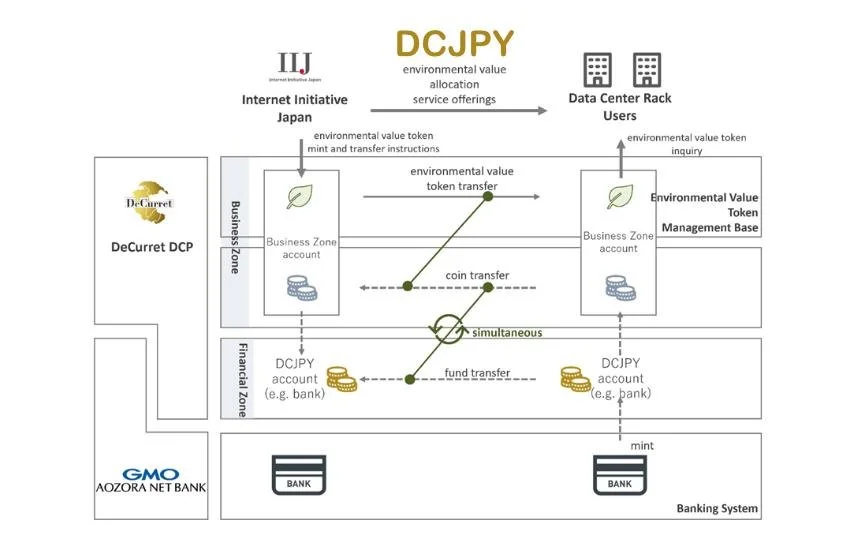
DeCurret DCP, the company behind the DCJPY tokenized deposit network, said it has started production testing of the network. It expects to go into production in August. DeCurret runs the Japanese Digital Currency Forum, which has more than a hundred corporate and government participants who are exploring a broad range of applications that use digital currencies for settlement. DeCurret also raised significant funding from several big names, including MUFG, SMBC and SBI Holdings.
However, they are not participants in the first application, which uses on-chain bank deposits to pay for tokenized renewable energy certificates (RECs). The Internet Initiative Japan (IIJ) recently became a member of the Japan Electric Power Exchange (JEPX) to procure RECs on behalf of its data center clients. Now it plans to convert the RECs into digital tokens and settle transactions with tokenized deposits from GMO Aozora Net Bank.
In the future DeCurret DCP wants to expand the application by including electricity retailers, power companies and carbon trading exchanges.
The key benefits of on-chain payment is it eliminates settlement risk because the asset and money exchange simultaneously. Another advantage is automation, with programmability payments enabling a vast range of use cases.
The DCJPY Network consists of two separate blockchains, a Business Zone(s) and a Financial Zone. Only banks are present in the Financial Zone and this is where they tokenize the deposits and the DCJPY transfers actually happen. The transfer of the asset is recorded in the Business Zone. However, so are the instructions to transfer the DCJPY (but not the actual transfer). This requires synchronization between the two blockchain zones. DeCurret DCP uses the Inter-Blockchain Communication Protocol (IBC) from Cosmos.
Meanwhile, a recent DeCurret DCP survey showed a luke warm appetite for digital currencies from enterprises. Out of 100 companies surveyed, 26% aim to use digital currency in one to three years. Just over two thirds of those with plans are members of the Digital Currency Forum.
Japan’s approach to digital currencies
Japan is one of the most advanced economies in terms of legal support for digital currencies. It passed legislation that supports three types of stablecoins. These include two bank related ones – stablecoins backed by bank deposits and third party reserve backed stablecoins where the reserves are managed by trust banks. Hence, in the realm of digital currency, DCJPY faces competition at launch.
@ Newshounds News™
Read more: Ledger Insights
~~~~~~~~~
BRICS: EVERY AFRICAN COUNTRY PREPARING TO JOIN the ALLIANCE
"Former Ethiopian speaker of the house Agegnehu Teshager revealed that all African countries are interested in joining the BRICS alliance. His statement comes at a time when developing countries are looking to sideline the US dollar and use local currencies."
"Developing countries are finding the BRICS de-dollarization agenda lucrative as the initiative can boost their native economies and local currencies. "
"“Africa is a great potential for BRICS, most African countries have an appetite to be a member of the alliance,” he said. The former speaker continued, “Africa’s economy is developing and the continent is interested in the BRICS alliance.”
"Ethiopia is the new entrant in the BRICS alliance and is the second African nation apart from South Africa to be a part of the grouping. The bloc might invite many other countries during the 16th summit and expand the alliance in 2024. However, there is no clear information on which countries might receive the invitation."
NOTE: JUST BECAUSE A COUNTRY EXPRESSES INTEREST IN BECOMING A MEMBER OF BRICS DOESN'T MEAN THEY ARE AUTOMATICALLY A MEMBER. THERE IS A PROCESS TO MEMBERSHIP..
@ Newshounds News™
Read more: Watcher Guru
~~~~~~~~~
Cardano (ADA) Price Surges 40% as $240M TVL and Ethereum ETFs Emerge Bullish Catalysts
Cardano (ADA) has experienced a significant price surge, trading at $0.44, up 40% over the last ten days, fueled by several internal and external factors that are generating renewed investor interest and optimism.
Cardano Price Crosses $0.45 First Time in 10-Days
After having dropped to historic lows on Friday July 5, a positive shift in the US macroeconomic environment has provided a favorable backdrop for ADA’s recent rebound phase. Positive Non-Farm Payroll (NFP) and Consumer Price Index (CPI) data have bolstered investor confidence in the economic outlook, supporting the overall cryptocurrency market.
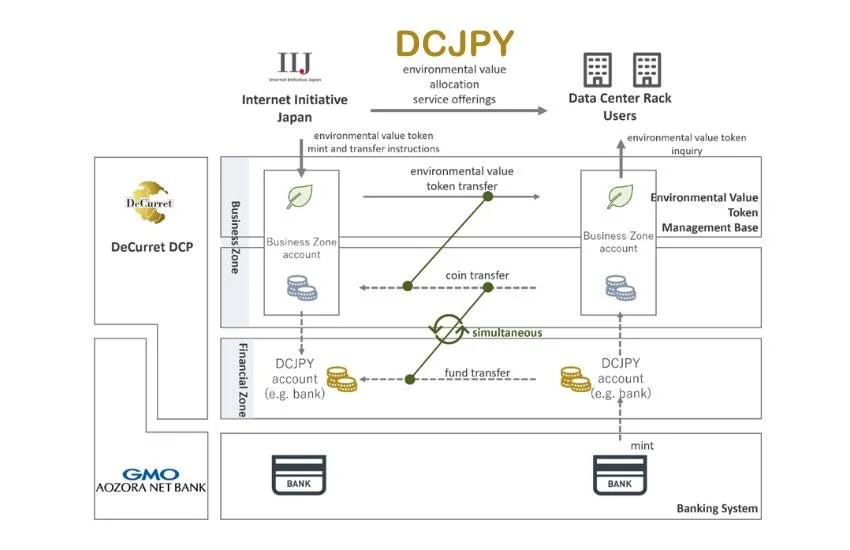
Furthermore, the anticipation of Ethereum ETFs expected to launch soon has spilled over into the altcoin market, including Cardano, as investors look for promising opportunities beyond Bitcoin and Ethereum.
@ Newshounds News™
Reas more: The Crypto Basic
~~~~~~~~~
Newshound's Daily Breakdown Podcast Link
Newshound's News Telegram Room Link
Q & A Classroom Link
Follow the Roadmap
Follow the Timeline
Seeds of Wisdom Team™ Website
Subscribe to Newsletter
Thank you Dinar Recaps
Economist’s “News and Views” Tuesday 7-16-2024
100 Days to the BRICS Summit: What You Need to Know Now
Think BRICS: 7-15-2024
100 Days to the BRICS Summit: What You Need to Know Now! This video provides exclusive insights analysis on the upcoming BRICS Summit 2024 in Kazan.
Discover how the BRICS bridge and alternative payment system will reshape global economics. Tune in as we discuss the BRICS Parliament, the newly proposed grain exchange, and the ambitious BRICS expansion plans.
Our experts reveal the latest BRICS news and debunk common BRICS fake news, ensuring you get the most accurate information. This live stream, part of our Think BRICS series, is your go-to source for comprehensive updates.
100 Days to the BRICS Summit: What You Need to Know Now
Think BRICS: 7-15-2024
100 Days to the BRICS Summit: What You Need to Know Now! This video provides exclusive insights analysis on the upcoming BRICS Summit 2024 in Kazan.
Discover how the BRICS bridge and alternative payment system will reshape global economics. Tune in as we discuss the BRICS Parliament, the newly proposed grain exchange, and the ambitious BRICS expansion plans.
Our experts reveal the latest BRICS news and debunk common BRICS fake news, ensuring you get the most accurate information. This live stream, part of our Think BRICS series, is your go-to source for comprehensive updates.
We explore the Think BRICS partnerships with the BRICS+ University Association and the BRICS+ Development Group and their significance in the evolving geopolitical landscape. This video covers critical topics that will be discussed at the Kazan Summit.
In this live stream, we revisit key topics from past videos and provide fresh perspectives on what to expect at the BRICS Summit in Kazan this October. From policy changes to new initiatives, get a complete understanding of the strategic moves by BRICS countries.
While this video offers an in-depth analysis of various aspects of the BRICS Summit 2024, it does not delve into the detailed history of the BRICS nations. We focus on the upcoming summit and future developments rather than past events
One MAJOR Financial Domino Left to Fall: Tavi Costa
Daniela Cambone: 7-15-2024
"We’re close to a major domino falling in the next six to nine months," predicted Tavi Costa, macro strategist at Crescat Capital.
He explains to Daniela Cambone that the equity markets are likely to be the next to feel the economic repercussions driven by the higher cost of capital, which will impact the valuation of companies.
"Ultimately, I would say that we're going back to a world where investors pay closer attention to profitability,” he stresses. Costa also remains firm on his recession outlook. “You can plug in so many charts—yield curve versus unemployment rates, initial jobless claims, continuing jobless claims.
You can see that clearly, the steepening of the yield curve from inverted levels is a very negative signal for the economy,” he explains.
Watch the compelling video to learn more about Costa’s views on the economy.
Iraq News Highlights and Points To Ponder Tuesday AM 7-16-24
Dollar Fluctuates Amid Tight Monetary Authority Measures
Economic 2024/07/16 Dollar fluctuates amid tight monetary authority measures 678 , days before the implementation of the Central Bank’s decision to sell dollars exclusively to travelers at airports, the dollar exchange rates witnessed clear fluctuations in the parallel markets, as they exceeded the barrier of 150 thousand dinars for every 100 dollars, a number that specialists see as possible (stability or decline) in the coming periods as a result of the Central Bank continuing to meet the requirements of foreign trade, which could lead to a decline in the effects of the parallel market, stressing the need to double efforts to make the new experiment of granting travelers dollars a success for fear of the continued rise of the green currency.
The Central Bank's decision to grant the green currency exclusively to airport travelers has come into effect, amid anticipation of the continued fluctuation of the exchange rate in the parallel market, which observers fear will affect the purchasing value of prices, while the Prime Minister's Advisor for Financial Affairs, Dr. Mazhar Mohammed Saleh, sees the opposite, as he explains that through "the strength of the official central exchange market, the exchange rate of the dollar to the dinar in the parallel market does not constitute any relative importance in affecting the stability of the general price level, which has become stable in its components and trends due to the influence of the prevailing official exchange rate factor."
Dollar Fluctuates Amid Tight Monetary Authority Measures
Economic 2024/07/16 Dollar fluctuates amid tight monetary authority measures 678 , days before the implementation of the Central Bank’s decision to sell dollars exclusively to travelers at airports, the dollar exchange rates witnessed clear fluctuations in the parallel markets, as they exceeded the barrier of 150 thousand dinars for every 100 dollars, a number that specialists see as possible (stability or decline) in the coming periods as a result of the Central Bank continuing to meet the requirements of foreign trade, which could lead to a decline in the effects of the parallel market, stressing the need to double efforts to make the new experiment of granting travelers dollars a success for fear of the continued rise of the green currency.
The Central Bank's decision to grant the green currency exclusively to airport travelers has come into effect, amid anticipation of the continued fluctuation of the exchange rate in the parallel market, which observers fear will affect the purchasing value of prices, while the Prime Minister's Advisor for Financial Affairs, Dr. Mazhar Mohammed Saleh, sees the opposite, as he explains that through "the strength of the official central exchange market, the exchange rate of the dollar to the dinar in the parallel market does not constitute any relative importance in affecting the stability of the general price level, which has become stable in its components and trends due to the influence of the prevailing official exchange rate factor."
Amidst this, economic experts believe that among the tools for controlling exchange rates are the recent measures represented by introducing the Customs Data Automation Program (ASYCUDA) system, stressing that this important government measure is an essential part of limiting the rise in the dollar price in the parallel market.
Financial Affairs Advisor, Dr. Mazhar Muhammad Salih, said yesterday, Sunday, in a statement to the Iraqi News Agency (INA): "There is an international factor that imposes controls on the so-called banking compliance in financing the demand for the dollar from our country's international bank accounts in foreign currency, and there is also an internal factor that benefits from the actions and pressure of the external factor in order to obtain temporary or emergency profit gains, especially in cash dollar transactions."
He explained that "the dominance of the fixed exchange rate system in Iraq, based on an international reserve base, is the highest in the history of Iraq and its monetary policy, as foreign currency covers more than 100 percent of the total currency currently issued."
He continued: "Through the strength of the official central exchange market, the exchange rate of the dollar to the dinar in the parallel market in our country does not constitute any relative importance in influencing the stability of the general price level, which has become stable in its components and trends as a result of the influence of the prevailing and dominant official exchange rate factor currently in financing foreign trade (imports), amounting to 1320 dinars per dollar, which is responsible for financing 90 percent of Iraq's foreign trade."
He stressed that "after the decline of the dollarization phenomenon in domestic transactions, especially in contracts, obligations and payments within the country since last year and its legal prohibition, the parallel exchange market has become such that its general effects only form a narrow economic scope of prohibited transactions, practiced by informal markets and at a rate of 10 percent of the total supply and demand transactions for the currency."
He pointed out that "the stability of the dinar to dollar exchange rate that the country is witnessing even in secondary markets is a real and solid stability, and is derived from the strength of the impact of the price and quantitative factors of the monetary and financial policies and their integration in imposing overall price stability in the country, and containing the inflationary expectations that were caused by the parallel exchange market forces during the past years."
It is noteworthy that the Central Bank's sales of hard currency last week amounted to more than one billion dollars through the currency auction that was held over four days, at a daily rate of 272 million and 80 million and 368 dollars, while sales of foreign remittances recorded 991 million and 141 thousand and 473 dollars, which indicates, according to specialists, the possibility of achieving clear relative stability in the various prices of goods and materials, and their not being affected by the parallel exchange rate.
The new mechanism for granting the "dollar", according to the Central Bank, aims to provide foreign currency to the real traveler and pass sound transactions, in addition to facilitating travelers' access to the dollar faster.
According to the "Monetary Authority", the mechanism includes the traveler going to authorized exchange companies spread across all cities to deliver the amount in dinars equivalent to the citizen's share of the dollar according to the official exchange rate of the Central Bank of Iraq.
The company will enter the data of the traveling citizen and upload his name on the electronic platform of the Central Bank of Iraq and deliver him a receipt confirming his deposit of the dinar, to receive the cash dollar inside the airport exclusively.
In turn, the economic expert Dr. Nabil Al-Marsoumi, during his interview with "Al-Sabah", sees the existence of several closely related factors that contribute to the rise in the exchange rate, some of which are real and others are psychological, as the real factors are represented by stopping bank transfers in the Chinese yuan due to suspicions of corruption on the subject, in addition to stopping the injection of cash dollars into the parallel market and the new procedures of the Central Bank that limit sales to air ports and airports.
The expert Al-Marsoumi attributed the reasons for the fluctuations to the launch of the general budget for the year 2024 and the approval of the budget schedules, as this leads to an increase in public spending in its operational and investment aspects, which naturally leads to an increase in consumer demand and an increase in investment demand, and thus an increase in imports and an increase in pressure on the dollar.
Regarding psychological factors, the spokesman indicated that "the fears among citizens went towards the possibility of the dollar rising in the near future, and therefore there is a great rush to buy it from the parallel market, which caused its exchange rate to rise by 3 to 4 percent, expecting that "the market will calm down soon as a result of several factors, most notably the negotiations that the governor of the Central Bank may conduct in Washington regarding bank transfers."
https://alsabaah.iq/99578-.html
This Is The Volume Of Our Trade With Iran.. An Economist Reveals The Reasons For The Dollar Problem Inside Iraq
Economy |Baghdad Today – Baghdad Economic expert, Munir Al-Abidi, revealed today, Tuesday (July 16, 2024), the volume of trade between Iraq and Iran, while indicating that the dollar problem in Iraq is not due to official trade.
Al-Obaidi said in a clarification he published on Facebook, which was followed by "Baghdad Today", "The Iranians say that our trade with Iraq during three months amounts to 3 billion dollars, distributed as 1.2 billion to meet the need for gas, 700 million dollars for electricity, while 200 dollars are for food, and another 200 million for iron trade."
He added, "This means that the value of food and iron during the year amounts to only 1.5 billion dollars annually," indicating that "some say that our trade with Iran amounts to 12 or 14 billion dollars, which is the reason for the dollar crisis."
Al-Obaidi said, "Our official trade for the private sector does not exceed 3 billion dollars with Iran and does not exceed 300 million dollars with Syria," stressing that "the problem with the dollar is not the official trade with Iran and Syria."
He pointed out that "the problem of the demand for dollars in the local market is to cover the needs of other types of informal and illegal trade, most notably drugs," stressing that "all this fuss, crying and wailing in the channels is to reopen the money channels for this trade." LINK
Parliamentary Finance Committee Comments On US Decision To Stop Iraq's Transactions In Chinese Yuan
Posted On2024-07-16 By Sotaliraq Member of the Parliamentary Finance Committee, MP Moeen Al-Kadhimi, described today, Tuesday, the decision of the US Federal Reserve to stop transfers in Chinese yuan as “arbitrary” against the Iraqi economy.
[size=45]Al-Kadhimi said in a statement, "The decision to stop transfers in the Chinese yuan was issued by the US Federal Reserve, claiming that there were suspicions about some transfers in the Chinese yuan."
[size=45]He pointed out that "the Central Bank of Iraq has contracted with an international company to evaluate and monitor transfers, and this company is a source of acceptance and trust for the US Federal Reserve."
He pointed out that "after a short period, the Central Bank of Iraq will resume transferring remittances in Chinese yuan to Iraqi traders in general," indicating that "these measures of the US Federal Reserve are considered arbitrary against Iraq and its national economy."
The Central Bank of Iraq stopped dealing in the Chinese yuan after the US Federal Reserve accused Iraq of “inflating remittances.”
During the current period, America has worked to destroy the Iraqi currency by imposing sanctions on private banks and preventing the dollar under many pretexts, which in one way or another led to a severe financial crisis in local markets. LINK
Economist: America Has Begun To Abandon Iraq
Money and business Economic expert, Jalil Al-Lami, confirmed that America has begun to gradually abandon Iraq by restricting the use of the dollar and abandoning the purchase of Iraqi oil.
Al-Lami said that America decided to buy oil from Canada instead of Iraq, and also to restrict the use of the dollar, which are messages to the Iraqi government.
He added that the Iraqi government sent a delegation to settle the issues with America and end the dollar restriction. 825 views 2024/07/16 - https://economy-news.net/content.php?id=45274
Pros And Cons Of Iraq Joining The WTO
Pros And Cons Of Iraq Joining The WTO
Appearance of Mohammed Saleh
Since 2003, Iraq has adopted broad open policies towards the world and sought to establish important economic and legislative rules that operate according to the mechanisms of the market system, most of which helped improve Iraq’s foreign trade, after an economic blockade that lasted for more than a decade and led to Iraq’s marginalization on the map of the global economic system and deprived it of investment opportunities, progress, development and technological knowledge that should have helped it confront the rapid developments and changes that international markets have witnessed and whose competitive capabilities have changed dramatically over the past two decades at least.
Thus, Iraq became isolated from its international environment in the midst of a world swept by the currents of merging its companies, liberalizing its markets and integrating them, especially the financial ones, and the dominance of the new liberal doctrine, which required broad economic transformations in the field of information technology that became in harmony with the internationalism of productive activity through the role that multinational companies began to play and the increasing competitive advantage of the products that the world markets began to generate.
Pros And Cons Of Iraq Joining The WTO
Appearance of Mohammed Saleh
Since 2003, Iraq has adopted broad open policies towards the world and sought to establish important economic and legislative rules that operate according to the mechanisms of the market system, most of which helped improve Iraq’s foreign trade, after an economic blockade that lasted for more than a decade and led to Iraq’s marginalization on the map of the global economic system and deprived it of investment opportunities, progress, development and technological knowledge that should have helped it confront the rapid developments and changes that international markets have witnessed and whose competitive capabilities have changed dramatically over the past two decades at least.
Thus, Iraq became isolated from its international environment in the midst of a world swept by the currents of merging its companies, liberalizing its markets and integrating them, especially the financial ones, and the dominance of the new liberal doctrine, which required broad economic transformations in the field of information technology that became in harmony with the internationalism of productive activity through the role that multinational companies began to play and the increasing competitive advantage of the products that the world markets began to generate.
However, we find in the integration of financial markets, whose assets exceed $850 trillion, the main title of financial globalization and the main focus of dominance in the globalization of the new liberal economy.
At the same time, it represents the trend of transition in the axes of international trade and the introduction to the transformation from the scope of the GATT Agreement signed in 1948 to the World Trade Organization Agreement (WTO), where the latter focused on regulating a wide range of trade in services, especially financial services, whose annexes were called the GATS Agreement in 1994 based on the Uruguay Round.
While the gross domestic product of the world's 192 economies does not exceed $83 trillion annually at present (and the value of world trade in goods and services has also not increased annually by more than a third of the aforementioned global output), we find that trade in currency conversion, speculation, and short-term capital movements exceeds about $4.5 trillion daily in international monetary and financial markets, a speculative financial trade whose annual total exceeds more than fifty times the total global trade in goods and services.
In the midst of these changes in the international commercial and financial space, Iraq has moved to important organizational levels in the transition to a market economy to break the effects of its international isolation by engaging in a strong area of economic liberalism that focused on liberalizing the areas of Iraq's foreign trade in goods and services and the means of financing them,
despite the fluctuations in its organization, as well as the development and expansion of areas of progress achieved in some financial services and improving the environment for foreign investment through the legislation of the banking and investment laws and the Central Bank Law,
which allows foreign banks to operate in Iraq and allows the transfer of capital and currency in a manner that serves Iraq's openness to the world in the conditions of a central rentier economy that is difficult to deal with in understanding market liberalism, which nevertheless led to providing positive opportunities and promising legal and organizational foundations for the Iraqi business environment.
However, all of this is not enough to put Iraq on the path of international economic competition. There are still more than five thousand legislative texts that hinder economic freedom and market activity, which are being studied by legal circles and which must be amended so that Iraq can integrate into international trade and investment and prepare it to join the World Trade Organization according to the terms of membership in it so that our country can obtain the most-favored nation status and the principle of national treatment.
However, the paradoxes of joining revolve around the issues of oil and agriculture, in addition to other problems of joining.
While oil sector production dominates nearly 50% of Iraq’s GDP, the sector employs only 2% of the Iraqi workforce, and the country’s crude oil exports and revenues constitute the near-absolute majority of total exports, general budget revenues, and foreign exchange earnings.
In light of all this, the World Trade Organization excludes crude oil as a commodity within the group of raw commodities traded internationally, which remains the core of the contradiction in Iraq’s accession to that organization that excludes crude oil.
If the World Trade Organization had allowed oil to be taken into account, the price would have been determined by global supply and demand, away from the cartel or consumer groups represented by the International Energy Agency and its lines and programs for rationalizing demand for oil.
Or away from the cartel or producer groups represented by the Organization of the Petroleum Exporting Countries (OPEC) and its role in regulating production and influencing prices, which is the matter that imposed price and quantity restrictions on a commercial commodity, but a strategic and political one at the same time, which is the driving force of Iraq’s foreign trade.
On the other side of the Iraqi economy, we find the agricultural sector, which includes less than a third of the Iraqi population and about 22% of the Iraqi labor force, and does not contribute to the gross domestic product except by a percentage not exceeding 5%, which made the country a near-net importer of food or agricultural goods, the value of which exceeds 14 billion dollars annually.
This important sector, which has been subjected to militarization and neglect over the past thirty years and more, does not have the sufficient components to provide food security in terms of grains or agricultural production requirements after the shrinkage of productive agricultural areas due to desertification, salinization, and the recent water crisis, which eliminated more than 50% of the lands prepared for agriculture, in addition to the deterioration of the agricultural infrastructure, 83% of whose components are controlled by the state as a public commodity.
Here the agricultural sector contradicts the oil sector structurally in the directions of openness to the global market and with two different wings in terms of the impact of commercial benefits and costs.
The forces of the international market or global supply and demand have come to control strongly, whether in the demand for oil and its impact on the value of Iraqi exports or in the supply of food products and its impact on the cost of Iraq’s imports from them.
When referring to the philosophy of reducing customs restrictions by 24% and abolishing non-customs restrictions, which are the conditions imposed by the World Trade Organization on the member state in the group of developing countries to work with and implement them within a period of six years from the date of accession, in addition to reducing agricultural support by 13.3% within a period of ten years from accession, we find that these regulatory conditions of the World Trade Organization clash with the conditions and situations of the agricultural market and the global food stock exchange itself.
If we look at the agricultural monopolies in the world in light of the deterioration of agricultural development in Iraq, we find a real threat to national food security that restricts the country in the event of joining the organization unless it is preceded by starting or following an agricultural program for self-sufficiency immediately. We will really need a green revolution similar to what Mexico and many Latin American countries have done.
Especially if we know that there are between 3 to 6 major monopolistic companies in the world that control 80 to 90% of agricultural crop trade and control prices and quantities such as wheat, sugar, tea, coffee, cotton, jute, etc. At a time when ten multinational companies still control a third of the world's seed and pesticide production and trade.
Despite the above, Iraq’s entry and integration into the global economic space through the World Trade Organization and its dealings with international groups on terms that apply to everyone from a formal standpoint at a time when the world is still divided between the countries of the North and the South or the countries of the advanced industrial center and the developing periphery,
Iraq has no choice but to leave its international isolation that it inherited since the blockade that began in 1990, which placed Iraq under Chapter VII of the United Nations Charter or its aftermath, a chapter whose effects still provide a negative economic environment hostile to development and perhaps obstructing natural integration into the global market.
This chapter prohibits levels of investment in advanced technology or easy dealings with the world due to the restrictions it imposes on our country as a high-risk country that threatens world peace and allows the use of force against it in a regrettable legacy for the civilization of Mesopotamia despite the disappearance of the objective reasons for which the economic blockade was imposed on Iraq.
Noting that Iraq's accession to regional economic zones, such as the Greater Arab Free Trade Area and other economic agreements within the framework of the Arab League or other forms of regional integration and consolidation, must take into account the implementation of the provisions contained in the World Trade Organization Agreement and before it the GATT Agreement, both of which have become binding restrictions on the implementation of trade agreements.
Thus, any trade facilitations within the framework of regional agreements become useless or worthless if they are less than the facilitations provided within the framework of the World Trade Organization.
Finally, Iraq's continued isolation from its international environment will cost it a lot due to the loss of organizational advantages and opportunities, technological and legal benefits, and other areas of investment and arbitration, which are opportunities that isolation from the world does not provide and does not enable a gradual transformation into a group of stable and low-risk countries, a transformation that encourages international cooperation in a secure global investment and trade environment, provided that effective development begins based on the strong push program.
96 views 2024/07/16 - https://economy-news.net/content.php?id=45283
Third Round Of Negotiations For Iraq's Accession To The World Trade Organization
Time: 2024/07/16 Reading: 234 times {Economic: Al Furat News} Minister of Trade Athir Dawood Salman arrived today, Tuesday, in the city of Geneva, Switzerland, at the head of the Iraqi team negotiating Iraq’s accession to the World Trade Organization to attend the third meeting of the working group on Iraq’s accession, 16 years after the second meeting was held.
The statement of the Ministry's media office, a copy of which was received by {Euphrates News}, indicated that "Iraq is proceeding, through the national committee concerned with its accession to the World Organization, which is headed by the Minister of Trade, to complete its procedures to accomplish the required files and support reforms and legislation to be in line with the market system and enhance the country's economic capabilities to complete the requirements of the next stage of the accession process."
The statement noted that "the preparatory meetings of the Iraqi negotiating team are continuing at the headquarters of the World Trade Organization in Geneva, in preparation for the third meeting of the working group on Iraq's accession, which will be held this week." LINK