
Thank you to all the subscribers to our Early Access program…we thank you for your continued support.
We are excited to offer this new service to keep you informed and up-to-date on the latest Dinar and currency news.
Rob Cunningham: What if Humanity was Given a Genuine Choice?
Rob Cunningham: What if Humanity was Given a Genuine Choice?
8-10-2026
What if humanity were finally given a genuine choice?
Not Left vs Right
Not capitalism vs socialism
Not one central bank against another
Something far more fundamental
Rob Cunningham: What if Humanity was Given a Genuine Choice?
8-10-2026
What if humanity were finally given a genuine choice?
Not Left vs Right
Not capitalism vs socialism
Not one central bank against another
Something far more fundamental
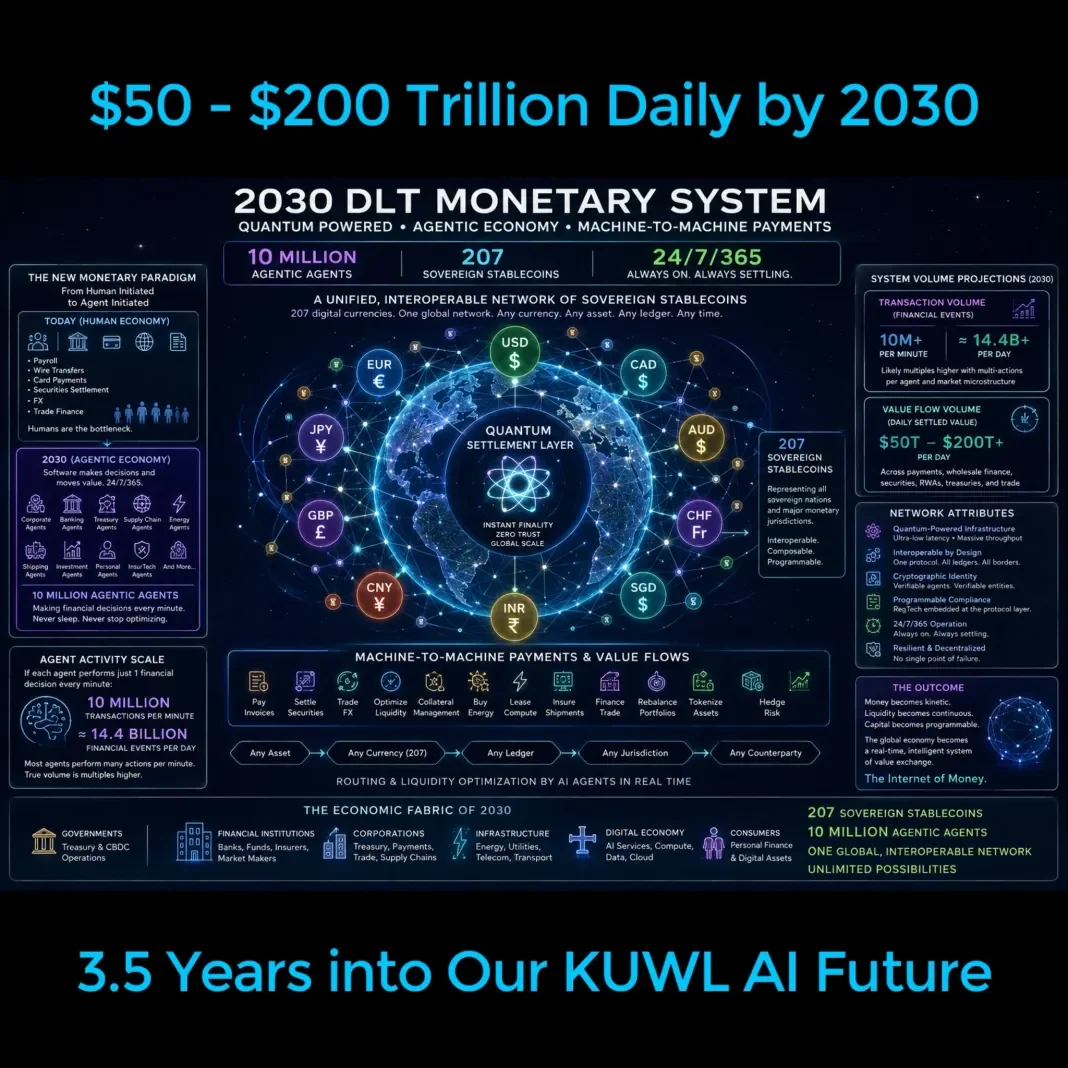
How should humanity account for value itself?
Would you prefer a monetary infrastructure in which transactions can be independently verified rather than merely reported?
Where the ledger is public?
Where the rules are inspectable?
Where reconciliation occurs 24/7/365?
Where no single corporation, government, bank or individual possesses unilateral authority over the shared ledger?
Where mathematics, cryptography and distributed consensus make altering the accounting extraordinarily difficult if not impossible?
Where different nations can retain their own currencies… different people can retain their property, different institutions can retain their autonomy, and open protocols simply allow value to move between them?
If such infrastructure can be built, tested and scaled, shouldn’t humanity at least ask:
Why would we choose anything less?
And then comes the uncomfortable second question
For generations, enormous influence over money, liquidity, credit and international finance has accumulated around institutions such as the Federal Reserve System, IMF, BIS, central banks and a constellation of governmental, political, intelligence, banking and nongovernmental institutions
Whatever one believes about their historical necessity, let’s ask ourselves:
1 – What happens to centralized institutional power when superior transparency becomes technologically possible?
2 – What happens when ordinary people can inspect the ledger?
3 – What happens when settlement becomes continuously auditable?
4 – What happens when assets can move across borders and networks through open protocols?
5 – What happens when interoperability reduces dependence upon privileged intermediaries?
6 – What happens when cryptographic verification begins replacing institutional assurances of:
“Trust us. The books are right.”
And perhaps the most revealing question of all:
7 – Who should fear such a system?
The farmer?
The worker?
The saver?
The entrepreneur?
The pensioner?
The merchant?
The honest banker?
The honest government?
The honest corporation?
8 – Why would any honest steward of humanity’s wealth fear greater transparency, greater accountability and greater verifiability?
9 – Wouldn’t an honest institution welcome technologies capable of proving its honesty?
So turn the question around
10 – If an institution fiercely resisted a transition toward genuinely open, independently verifiable financial infrastructure… what exactly would it be protecting?
Its customers?
Financial stability?
National sovereignty?
Legitimate confidentiality?
These are serious possibilities and deserve serious consideration
11 – But could it also be protecting something else?
Information asymmetry?
Intermediary rents?
Preferential access?
Institutional opacity?
Or simply the extraordinary power that accompanies being one of the few entities permitted to see – and influence – the machinery behind the curtain?
Now ask the question at civilization scale:
Should humanity serve its monetary system?
Or should the monetary system serve humanity?
Should honest weights and measures depend upon the character of whoever controls the scale?
Or should we engineer the scale so that everyone can verify the weight?
That may be the defining monetary question of our generation
Not:
“Which institution should we trust?”
But:
“How much trust should technology still require us to surrender to any institution?”
Knowledge asks the question.
Understanding examines the architecture
Wisdom follows the incentives.
Life remembers who the system was supposed to serve.
If open, decentralized, interoperable & independently verifiable infrastructure can deliver a more accountable system of value.
Maybe the losing institutions will teach us something about the system we’re leaving behind.
Source(s):
• https://x.com/KuwlShow/status/2086578043901071641
https://dinarchronicles.com/2026/08/10/rob-cunningham-what-if-humanity-was-given-a-genuine-choice/
Iraq Economic News and Points To Ponder Monday Afternoon8-10-26
Oil Prices Rebound Over Unsettled Hormuz Deal
2026-08-10 Shafaq News Oil prices rose on Monday as uncertainty persisted over the reopening of the Strait of Hormuz, with Iran saying the United States must meet several conditions even as Tehran and Oman moved into the final stages of agreeing on new shipping lanes. Brent crude futures rose 84 cents, or 1%, to $84.39 a barrel by 0424 GMT, while U.S. West Texas Intermediate crude futures rose 60 cents, or 0.75% to $78.77 a barrel.
Oil Prices Rebound Over Unsettled Hormuz Deal
2026-08-10 Shafaq News Oil prices rose on Monday as uncertainty persisted over the reopening of the Strait of Hormuz, with Iran saying the United States must meet several conditions even as Tehran and Oman moved into the final stages of agreeing on new shipping lanes. Brent crude futures rose 84 cents, or 1%, to $84.39 a barrel by 0424 GMT, while U.S. West Texas Intermediate crude futures rose 60 cents, or 0.75% to $78.77 a barrel.
Both benchmarks had fallen more than 7% last week on hopes that Iran and Oman were close to reaching a deal that would result in a reopening of the Strait of Hormuz, which carried a fifth of the world's oil before the war.
While Iran said on Sunday that a deal with Oman was in its "final stages", it reiterated that the waterway would only reopen once Washington met other conditions, including U.S. compensation for widespread U.S. attacks on Iran.
"Crude oil prices remain caught between opposing forces, as markets assess the possibility of a breakthrough over the Strait of Hormuz against Iran's conditions for reopening the strategic waterway," said Sugandha Sachdeva, founder of SS WealthStreet, a New Delhi-based research firm.
Iran and the U.S. are not engaged in talks and Tehran will not start them as long as Washington breaches an interim deal signed in June, Iranian Foreign Minister Abbas Araqchi said on Sunday.
Meanwhile, in a further threat to supply, the Iran-aligned Houthis said they had hit Saudi Aramco's Jazan refinery on Sunday.
The attack came two days after the kingdom signed a defence pact with Sunni Muslim allies Turkey and Pakistan in response to growing regional instability from the U.S.-Israeli war on Shi'ite Iran.
Separately, the United Arab Emirates' ADNOC said on Friday that 15 of its vessels had been attacked transiting the Strait of Hormuz since the beginning of the conflict.
"Any major progress towards restoring unrestricted shipping could exert downward pressure on oil prices, while a breakdown in negotiations or renewed supply disruptions could quickly revive the geopolitical risk premium," Sachdeva said. (Reuters)
https://www.shafaq.com/en/Economy/Oil-prices-rebound-over-unsettled-Hormuz-deal
Gold Softens Ahead Of Key US Inflation Data
2026-08-10 Shafaq News Gold slipped on Monday as investors took profits after prices hit a seven-week high in the previous session, while markets looked to U.S. inflation data for fresh clues on the Federal Reserve's interest rate path.
Spot gold was down 0.3% at $4,330.46 per ounce, as of 0443 GMT. Prices hit their highest since June 17 on Friday after weak U.S. nonfarm payrolls data.
"Gold is edging slightly lower as it succumbs to some profit-taking following last week's strong NFP-inspired gains. This looks like a natural stabilisation rather than a meaningful shift in sentiment - I expect gold to remain supported above the $4,300 level in the near term," said Tim Waterer, chief market analyst at KCM Trade.
Data showed the U.S. economy unexpectedly shed jobs in July and previously reported job gains for the prior two months were revised sharply lower.
Futures markets then flipped the odds of a rate hike at the September 15-16 Federal Open Market Committee meeting from likelier-than-not to a worse-than-even chance.
A lower interest rate environment boosts the attractiveness of gold against income-generating assets, as bullion itself earns no interest.
Key U.S. data scheduled for release this week include the Consumer Price Index (CPI) on Wednesday and the Producer Price Index (PPI) on Thursday.
"Soft readings would strengthen the case for a rate hold and clear a path for further upside in gold... Middle East uncertainty remains a lingering risk factor, as any renewed escalation that drives oil prices up could quickly pressure the metal," said Waterer.
On the geopolitical front, Iran said it was nearing a final pact with Oman defining new shipping lanes between them through the Strait of Hormuz but repeated that the U.S. must meet several conditions before the strategic waterway is reopened.
Spot silver rose 0.3% to $63.77 per ounce and platinum gained 0.2% to $1,748.80, while palladium slipped 1% to $1,364.55. (Reuters) https://www.shafaq.com/en/Economy/Gold-softens-ahead-of-key-US-inflation-data
Basrah Crude Reclaims $57 Mark In Gradual Recovery
2026-08-10 Shafaq News- Basrah Basrah Medium crude has recovered about 24% from its July low to $57.09 a barrel, but the Iraqi benchmark remains nearly 58% below its peak earlier this year, according to price data reviewed by Shafaq News on Monday.
The crude rose 3.93%, extending a gradual recovery that began after prices fell to about $46 a barrel in mid-July.
Basrah Medium reached about $135 a barrel in early April, its highest level during the period, before a sharp decline set in over the following months.
The fall from the April peak to the July low amounted to about $89 a barrel, or roughly 66%. Since hitting the July low, the crude has gained about $11 a barrel, or 24%, bringing it back above the $57 mark on August 10.
https://www.shafaq.com/en/Economy/Basrah-crude-reclaims-57-mark-in-gradual-recovery
Dollar Up In Baghdad And Erbil
2026-08-10 Shafaq News- Baghdad/ Erbil The US dollar opened Monday's trading higher in Iraq, hovering around 152,500 dinars per 100 dollars in Baghdad and Erbil.
According to Shafaq News market survey, the dollar traded in Baghdad's Al-Kifah and Al-Harithiya exchanges at 152,500 dinars per 100 dollars, up from Sunday's 152,100 dinars.
In the Iraqi capital, exchange shops sold the dollar at 153,000 dinars and bought it at 152,000 dinars. In Erbil, selling prices stood at 152,500 dinars and buying prices at 152,400 dinars.
https://www.shafaq.com/en/Economy/Dollar-up-in-Baghdad-and-Erbil
Oil Ministry Plans Pipeline Routes To Fishkhabur And Baniyas
2026-08-10 Shafaq News- Baghdad Iraq is pressing ahead with plans to build a new pipeline system carrying crude oil through two routes, one reaching Fishkhabur on the Turkish border and another extending to Baniyas on Syria's Mediterranean coast, as part of a broader push to reduce dependence on the Strait of Hormuz following its closure since February 28.
The Oil Ministry said Deputy Minister for Extraction Affairs Nassir Aziz chaired a meeting Monday to discuss the project, which envisions two corridors: Basra–Haditha–Fishkhabur and Haditha–Baniyas.
The routes would provide additional export outlets alongside Iraq's main southern terminal, enhancing the flexibility of the country's export system and opening multiple marketing options for Iraqi crude, the ministry said in a statement.
Aziz stressed the importance of accelerating implementation mechanisms and identifying technical requirements, alongside completing negotiations with an international consortium comprising UCC, TI Capital, and Chevron on investing in the project under a Build-Operate-Own-Transfer (BOOT) model.
On July 17, a memorandum of understanding signed by Iraq and Syria under US sponsorship to reactivate the Kirkuk–Baniyas pipeline, enabling Iraqi crude to reach Mediterranean ports through Syrian territory.
Read more: Preparatory studies begin on Kirkuk-Baniyas pipeline rehabilitation
https://www.shafaq.com/en/Economy/Oil-Ministry-plans-pipeline-routes-to-Fishkhabur-and-Baniyas
Monday Iraq News Posted by Tishwash at TNT 8-10-2026
TNT:
Tishwash: Iraq regains its seat at the world table... Baghdad is advancing in Arab diplomacy and international partnerships
In a new indication of the expanding Iraqi presence abroad, Iraq ranked 12th in the Arab world and 94th globally in a ranking that measures the level of diplomacy and the ability of countries to build international relations and partnerships, according to data from the American magazine "U.S. News & World Report" .
Iraq has moved up in the rankings, ahead of Lebanon , which came in 13th place in the Arab world and 96th globally, while the UAE topped the list of Arab countries, ranking 28th globally, followed by Kuwait, Qatar, Saudi Arabia and Bahrain.
TNT:
Tishwash: Iraq regains its seat at the world table... Baghdad is advancing in Arab diplomacy and international partnerships
In a new indication of the expanding Iraqi presence abroad, Iraq ranked 12th in the Arab world and 94th globally in a ranking that measures the level of diplomacy and the ability of countries to build international relations and partnerships, according to data from the American magazine "U.S. News & World Report" .
Iraq has moved up in the rankings, ahead of Lebanon , which came in 13th place in the Arab world and 96th globally, while the UAE topped the list of Arab countries, ranking 28th globally, followed by Kuwait, Qatar, Saudi Arabia and Bahrain.
In the Arab world, Egypt came in sixth place, followed by Tunisia, Morocco, Oman, Jordan and Algeria, while Iraq continued to be among the Arab countries most open and capable of building international partnerships.
The ranking does not measure only military strength or the size of the economy, but focuses on international relations, openness, partnerships, and diplomatic presence and influence , which are indicators that reflect a country’s ability to operate in the international arena and build a network of relationships that extends beyond its borders. link
************
Tishwash: The Minister of Finance and the Governor of the Central Bank discuss strengthening financial and monetary coordination.
Finance Minister Faleh Sari discussed on Sunday with the Governor of the Central Bank of Iraq, Nizar Nasser Hussein, the financial and economic situation in light of the current challenges.
A statement from the ministry, received by (Mawazin News), said that “Finance Minister Faleh Sari received the Governor of the Central Bank of Iraq, Nizar Nasser Hussein, where the financial and economic situation was discussed in light of the current challenges.”
The Minister of Finance stressed that “the current circumstances require continuous coordination between fiscal and monetary policy, which will help to manage financial flows efficiently and ensure the fulfillment of the state’s obligations, while continuing to work on reforming the financial system and developing public finance management tools.”
He pointed to "the importance of enhancing data exchange between the Ministry of Finance and the Central Bank, and accelerating digital transformation, which will raise the efficiency of financial institutions and support their ability to respond to economic changes."
For his part, the Governor of the Central Bank explained that “the Central Bank operates according to a methodology that focuses on supporting monetary stability, developing banking operations, and keeping pace with the needs of the national economy, stressing the importance of coordination with the Ministry of Finance on economic and financial issues.”
According to the statement, both sides agreed to "continue working together on measures to enhance financial and monetary stability and ensure the regularity of the state's basic obligations." link
************
Tishwash: Removing zeros to withdraw looted funds and address salary issues... Experts warn against a "makeover".
Economic and financial experts are discussing proposals to solve the liquidity crisis and salary delays plaguing Iraq, most notably changing the currency and removing zeros from the Iraqi dinar, or introducing additional denominations that correspond to the noticeable expansion in the size of the circulating money supply.
However, they agree on one point that confirms that these measures in economic equations are merely cosmetic solutions, “more like makeup,” that may treat the symptoms but not the causes of the problem. They warn that the large looted fortunes often do not remain in the form of local currency that can be traced, but rather have been converted into real estate, foreign assets, and accounts in safe financial havens, and are therefore immune to the government’s internal measures.
Financial expert Nabil Al-Abadi calls for the need to avoid treating the proposal to change the national currency as a purely technical or monetary measure, explaining that this issue reflects the depth of the structural crisis that the economy is suffering from, and cannot be a substitute for the required financial, monetary and economic reforms.
He adds in a statement to the official newspaper, which was followed by Network 964 , that changing the currency is not a solution in itself, but rather a mirror reflecting the state of the economy, warning against confusing the treatment of symptoms with the treatment of the causes of the problem.
Al-Abadi explains that removing zeros, as the most widely discussed scenario, essentially represents a reorganization of monetary units and a simplification of arithmetic and accounting operations, without necessarily meaning an increase in the citizen's purchasing power or a rise in the real value of the currency. He points out that changing the currency cannot be dealt with as a tool to recover looted funds, but may turn into a double-edged sword in some contexts if it is not managed within a comprehensive reform system.
He warns that large looted fortunes often do not remain in traceable local cash, or have long since migrated to real estate, foreign assets and accounts in safe financial havens, indicating that their transformation makes them largely immune to any internal monetary measures.
He continues: “The biggest challenge in such measures is managing the transitional phase, especially with regard to psychological expectations in the market and the possibility of some traders and speculators exploiting the transition period to raise prices under various pretexts, which may lead to inflationary pressures and dissipate the expected administrative benefits of the process of removing zeros. He stressed that the success of any step in this direction requires the existence of solid monetary and economic stability before its implementation, and not considering it as a means to achieve that stability.”
He emphasizes that the essence of a currency's strength is not related to its form or the number of zeros it contains, but rather to the strength of the institutions and the economy upon which it is based.
Al-Abadi makes any project to change the currency contingent on genuine financial reform that reduces chronic imbalances in the general budget, along with strengthening the independence of the Central Bank and ensuring its ability to manage monetary policy away from financial pressures, as well as building a productive economy capable of diversifying sources of income and generating foreign currency, explaining that a strong currency is a reflection of a strong economy and not its creator.
He concludes that addressing economic imbalances requires moving from superficial solutions to fundamental reforms that include public finance, the banking sector, production and investment, and diversifying revenue sources, noting that changing the currency without reforming these issues could turn into a costly and confusing procedure for the citizen and the market, without addressing the root of the economic problem.
Economic researcher Imad Al-Muhammadawi considers the proposal to change the currency or issue a new currency denomination to withdraw illicit funds from circulation a theoretically positive proposal, noting that it is insufficient to reduce corruption or compensate for the shortage of liquidity.
Al-Muhammadi explains that, from an economic standpoint, the problem is not the form of the currency, but rather how to convince those who possess large sums of money to disclose their source when exchanging it. He points out that if the currency is changed without strict banking and tax auditing procedures, those with illicit funds can exchange it like the rest of the citizens, and thus the main purpose of the project is lost.
He adds that there is no consensus with the proposal, for several reasons, foremost among them the hesitation that the procedure will turn into a tool for freezing legitimate funds if the specified and explained mechanisms for proving the source of funds are not followed, as well as the possibility of exploiting some loopholes by corruption networks to circumvent the change before it begins, accompanied by its impact on the monetary system of citizens, if it is done suddenly, not to mention the cost and complexities of currency replacement.
Turning these proposals into effective tools depends on them being accompanied by a system that requires large sums to be deposited in banks, their sources to be verified and linked to banking and tax data, with a time period granted for replacement, and serious work to uncover the source of the funds.
He points out that changing the currency, identifying illicit funds, and exchanging banknotes will not solve the crises unless it is accompanied by a regulatory system capable of uncovering the source of the funds and prosecuting their owners. He adds that it could be an opportunity to regulate monetary masses and bring funds circulating outside the banking system into the formal financial system by establishing clear and transparent rules.
He points out that the lack of consensus on the proposal does not mean its rejection, but rather requires the establishment of legal, banking and regulatory guarantees, and an integrated system to detect those who manipulate public funds and the corrupt, and to know the source of the funds before granting it legitimacy, stressing that if the conditions are met, the project will gain its importance and the purpose for which it was created.
************
Tishwash: Iraq is set to borrow $2 billion from the US Treasury.
About the news
Parliamentary Finance Committee: The government has sent the borrowing law to Parliament and it will be decided next week.
Amid parliamentary controversy
*To finance the deficit and cover operational and service expenses
The new government move comes amid increasing financial pressure on the Iraqi budget, and the impact of regional conditions on oil prices and public revenues.
*Without disclosing the loan terms or repayment mechanism
*To supply the local market with cash liquidity in dollars
The government is seeking to finance the deficit and cover operational and service expenses by resorting once again to external borrowing.
Member of Parliament’s Finance Committee, Mansour Al-Baiji, revealed on Sunday that the Iraqi government is moving to borrow $2 billion from the US Treasury.
Al-Baji said in a press statement that "the government has sent the borrowing law to the House of Representatives," indicating that "the law will be decided during the next week."
Al-Baiji added that "the government has a loan of about $2 billion from the US Treasury Department," without disclosing details of the loan terms or the repayment mechanism.
This trend comes amid parliamentary controversy over the government's expansion of external and internal borrowing, and demands to rationalize spending and rely on non-oil revenues instead of burdening the budget with new debts.
A source reported in press statements that a new batch of cash dollars had arrived in Iraq, sent by the US Federal Reserve to the Central Bank of Iraq.
The source told the official agency that "the US Federal Reserve sent a new batch of cash dollars to the Central Bank of Iraq worth $500 million."
This payment comes as part of the periodic agreements between the Central Bank of Iraq and the US Federal Reserve to supply the local market with dollar liquidity and to cover the needs of travelers and foreign remittances, at a time when Baghdad is seeking to stabilize the exchange rate. link
News, Rumors and Opinions Monday 8-10-2026
Ross: All of this is Necessary Before the Revaluation of IQD
8-10-2026
Al-Zaidi is using the provincial coordination body to push land reform, electricity restructuring, fiscal caution, and service delivery while the regional environment is putting pressure on the budget.
All of this is necessary before the revaluation of IQD:
Ross: All of this is Necessary Before the Revaluation of IQD
8-10-2026
Al-Zaidi is using the provincial coordination body to push land reform, electricity restructuring, fiscal caution, and service delivery while the regional environment is putting pressure on the budget.
All of this is necessary before the revaluation of IQD:
1. Executive procedures for the 1 million residential land plots project start 1 September 2026.
This is real volume. Land reform + mass housing release = construction stimulus, local economic activity, and a tangible delivery item the government can point to.
2. New committee (chaired by the Head of Advisors) tasked with amending the technical model for privatizing electricity distribution.
Chronic electricity losses, collection failures, and political interference have been a drag for years.
3. Private generators crackdown (Baghdad focus)
Oil Ministry can no longer issue fuel quotas for private generators without going through Baghdad Governorate.
This hits the parallel/fuel-diversion economy that has been a long-standing leakage and corruption vector.
4. Agriculture – Diwaniyah rice (shaleb) support
Increased water releases from Abbasiya and Kufa barrages, adjusted Ya’u regulator, 8 hours of dedicated power for pumps on the river axis, no exceptions from the irrigation rotation, and excavators for cleaning. Practical food-security / rural support move.
Al-Zaidi continues to operate as an active executive rather than a caretaker.
The meeting had real ministers and real governors in the room — producing dated action items trying to look competent on housing, power, agriculture, and money discipline while regional conditions are tight.
Source(s):
• https://x.com/Ross_ptm/status/2086508226863136992
https://dinarchronicles.com/2026/08/10/ross-all-of-this-is-necessary-before-the-revaluation-of-iqd/
************
Courtesy of Dinar Guru: https://www.dinarguru.com/
Stephen Sometimes people look at everything happening inside of Iraq through the lens of a revaluation tomorrow. That's not the case. However, we're seeing economic reform, monetary reform, banking restructuring, financial restructuring. We are seeing so many exciting things that are all culminating and coming together, fingers crossed, for that glorious day where we can all exchange our Iraqi dinar into US dollars...In my last 15 years since I have been invested in the Iraqi dinar I have not seen this much movement happening. If you have been in this investment a long time you will agree with me. We have never seen Iraq move this quickly. A huge piece of this is the amount of corruption being cleaned up.
Jeff The money sent from the United States to Iraq this week was dollars. We don't pay Iraq's salaries. They don't pay their own salaries in dollars. The $500 million is their oil money from the United States to Iraq. It's to purchase imports and travelers leaving the country can turn in dinar and get dollars to exit the country. The $500 million was not for salaries. Salaries are not paid in dollars.
Bruce [via WiserNow] ...redemption centers might be connected right to a bank, or it could be a completely separate building or location that's not connected to a bank, but everyone in the United States is overseen by Wells Fargo, and they will have a representative there. You'll have a Treasury representative there, and you'll have people that will be there to count and verify your currencies with a De La Rue machine, and then banks have sometimes another brand of machine that they'll be using... and they're getting new machines and training bank personnel on how to do these exchanges.
************
IQD Update on Exchange Rate Including HTG ARS VES
Edu Matrix: 8=9=2-26
Iraq Economic News and Points To Ponder Monday Morning 8-10-26
Will The Central Bank's Funds Be Sufficient To Cover Salaries? An Economist Explains.
Information/Baghdad...Economic expert Safwan Qusay clarified the Central Bank's ability to secure salaries for the upcoming period given the current circumstances.
Qusay told Al-Maalouma, “Iraq exports oil to the Turkish port of Ceyhan and 120,000 barrels per day via tankers to Banias in Syria, in addition to exports through the south towards the Strait of Hormuz, which approached 42 million barrels last July.”
Will The Central Bank's Funds Be Sufficient To Cover Salaries? An Economist Explains.
Information/Baghdad...Economic expert Safwan Qusay clarified the Central Bank's ability to secure salaries for the upcoming period given the current circumstances.
Qusay told Al-Maalouma, “Iraq exports oil to the Turkish port of Ceyhan and 120,000 barrels per day via tankers to Banias in Syria, in addition to exports through the south towards the Strait of Hormuz, which approached 42 million barrels last July.”
He added, "Iraq succeeded in generating up to $3 billion from these exports, but this amount is insufficient to cover salaries, pensions, social welfare, and the food basket. Therefore, the Ministry of Finance resorts to allocating funds from other budget items to support expenditures."
He explained that "the government has turned to domestic borrowing through the Central Bank, which possesses sufficient liquidity to meet the Ministry of Finance's requests until the end of the current year," noting "the importance of maximizing revenue collection, which gives the Ministry of Finance an opportunity to rely on non-oil revenues." End 25N
Al-Zaydi Directs The Monetary Stability Board: Adopt Practical Solutions To Financial Challenges
2026-08-08 | Baghdad - 964 Prime Minister Ali Faleh al-Zaidi directed the council on Saturday (August 8, 2026) to adopt practical solutions to address the current financial and monetary challenges, during the second session of the Financial and Monetary Stability Council.
Al-Zaydi’s office stated in a statement received by 964 Network that he chaired the second session of the Supreme Council for Financial and Monetary Stability on Saturday, in the presence of the heads and directors of the relevant authorities and institutions.
During the session, a number of files and issues related to the financial, monetary and economic conditions at the national level were discussed, along with current indicators and challenges, and ways to enhance coordination and integration between fiscal and monetary policies, in order to promote financial and economic stability.
The Council also discussed mechanisms to improve the management of non-oil resources and provide liquidity, support economic and banking reform paths, and enhance the efficiency of the financial system, in order to contribute to consolidating stability and achieving a more sustainable economic environment.
The Prime Minister stressed the importance of continuing coordination and joint work between the relevant ministries and institutions, following up on the implementation of the decisions and recommendations issued by the Council, and adopting practical solutions to the financial and monetary challenges, in order to maintain economic stability, enhance the ability of the national economy to cope with changes, and stimulate economic activities, especially non-oil ones. https://964media.com/705983/
Finance Minister Meets Central Bank Governor On Monetary Stability
Mohammed JangadostAt a Glance:
Minister Faleh al-Sari met Central Bank Governor Nizar Naser Hussein today.
Talks focused on aligning fiscal and monetary policies amid economic challenges.
Key goals include improving data exchange and accelerating digital transformation.
Both leaders reaffirmed joint commitments to satisfy state financial obligations.
Iraqi Finance Minister Faleh al-Sari received the Governor of the Central Bank of Iraq, Nizar Naser, on Sunday to discuss strategies for reinforcing monetary stability and improving inter-agency coordination.
The high-level meeting focused on aligning fiscal policy with central banking operations to efficiently manage state cash flows, enhance public finance management, and navigate pressing economic challenges facing the national economy.
Key Statements and Focus Area
Fiscal Policy Alignment: Finance Minister Faleh Sari stressed that "current conditions require continuous coordination between financial and monetary policy" to ensure efficient management of public funds.
Institutional Modernization: Highlighting technological priorities, Minister al-Sari emphasized "the importance of strengthening data exchange between the Ministry of Finance and the Central Bank, as well as accelerating digital transformation."
Central Bank Strategy: Central Bank Governor Nizar Naser Hussein outlined operational priorities, stating that the central bank follows "a methodology focused on supporting monetary stability, developing banking operations, and keeping pace with the needs of the national economy."
State Commitments: Both leaders agreed on shared operational goals "to continue joint work on procedures designed to enhance financial and monetary stability and ensure the regular fulfillment of the state's basic obligations."
Inter-Agency Policy Alignment
During Sunday's summit, Minister Faleh al-Sari and Central Bank Governor Nizar Naser Hussein conducted a comprehensive review of Iraq's financial and economic position.
The discussions centered on creating seamless integration between fiscal policy managed by the Ministry of Finance and monetary controls directed by the Central Bank. Both leadership teams emphasized that joint policy execution is critical to managing liquidity, securing public expenditure, and mitigating external economic pressures on the national economy.
Modernization and Data Architecture
A core outcome of the meeting was an agreement to upgrade digital infrastructure and data-sharing frameworks between both state institutions.
Minister al-Sari noted that expanding real-time data integration and implementing digital financial tools will significantly increase operational efficiency across financial institutions, allowing regulators to adapt faster to volatile economic conditions and improve broader public finance management.
Banking Operations and National Obligations
Governor Hussein detailed ongoing initiatives by the Central Bank to modernize commercial banking services and maintain financial sector resilience.
The two entities confirmed a unified framework aimed at maintaining stable banking operations while prioritizing the uninterrupted fulfillment of basic government financial commitments, including public sector wage disbursements and state operational expenses.
FYI
The meeting occurs as Iraq continues its sweeping public finance reforms aimed at modernizing fiscal administration and curbing systemic corruption across state banking channels. In recent months, federal institutions have prioritized digital financial reforms, including widespread electronic payment rollout and automated treasury accounting systems, to reduce reliance on cash operations and bring domestic banking standards into alignment with international financial transparency requirements.
Synchronizing Central Bank liquidity measures with Treasury obligations serves as a critical stabilization step to safeguard the national economy against market volatility. https://channel8.com/english/news/63309
Money and gold seized... Details revealed about the raid on the Sudanese man's brother's house
2026-08-08 13:46 Shafaq News - Baghdad A security source reported on Saturday that the house of the brother of former Prime Minister Mohammed Shia al-Sudani in Baghdad was raided, and pieces of gold and money were found.
The source told Shafaq News Agency that "the force holding the ground in the Kadhimiya area, in cooperation with the intelligence of the Second Division and the Federal Intelligence and Investigations Agency, raided the house of Abbas Shia Al-Sudani."
He added, "In the house, 29 pieces of gold or silver were found, 24 pieces of various prayer beads of unknown type, 5 various watches of unknown type, one tablet (iPad), a used phone, and an amount of ten million Iraqi dinars only."
He explained that "the force withdrew without any incident, and the seized items were handed over to the Kadhimiya police station. Currently, a detachment of the Federal Police is present at the house, until the house is taken over by the Federal Integrity Commission."
The Federal Integrity Commission denied this morning that it had raided the home of the brother of a former prime minister in Kadhimiya.
In a statement, the commission said, "We deny what has been circulating on some social media sites regarding a team affiliated with us inspecting the house of the brother of the former Iraqi Prime Minister in the Kadhimiya area
https://www.shafaq.com/ar/أمـن/ضبط-موال-وذهب-الكشف-عن-تفاصيل-مداهمة-منزل-شقيق-السوداني
Dawn Crackdown returns $370M+ to Iraq
2026-08-09 / 02:35 Shafaq News- Baghdad The Iraqi state has recovered an estimated 482.6 billion dinars ($371.6M) in stolen assets under its Dawn Crackdown anti-corruption campaign, roughly equivalent to one month of salaries for the Foreign Ministry and its diplomatic staff, the Eco Iraq Observatory reported on Sunday.
The total comprises about 390.08 billion dinars ($300.3M) in cash, including $141 million converted into Iraqi currency, and half a ton of gold valued at 185,000 dinars per gram.
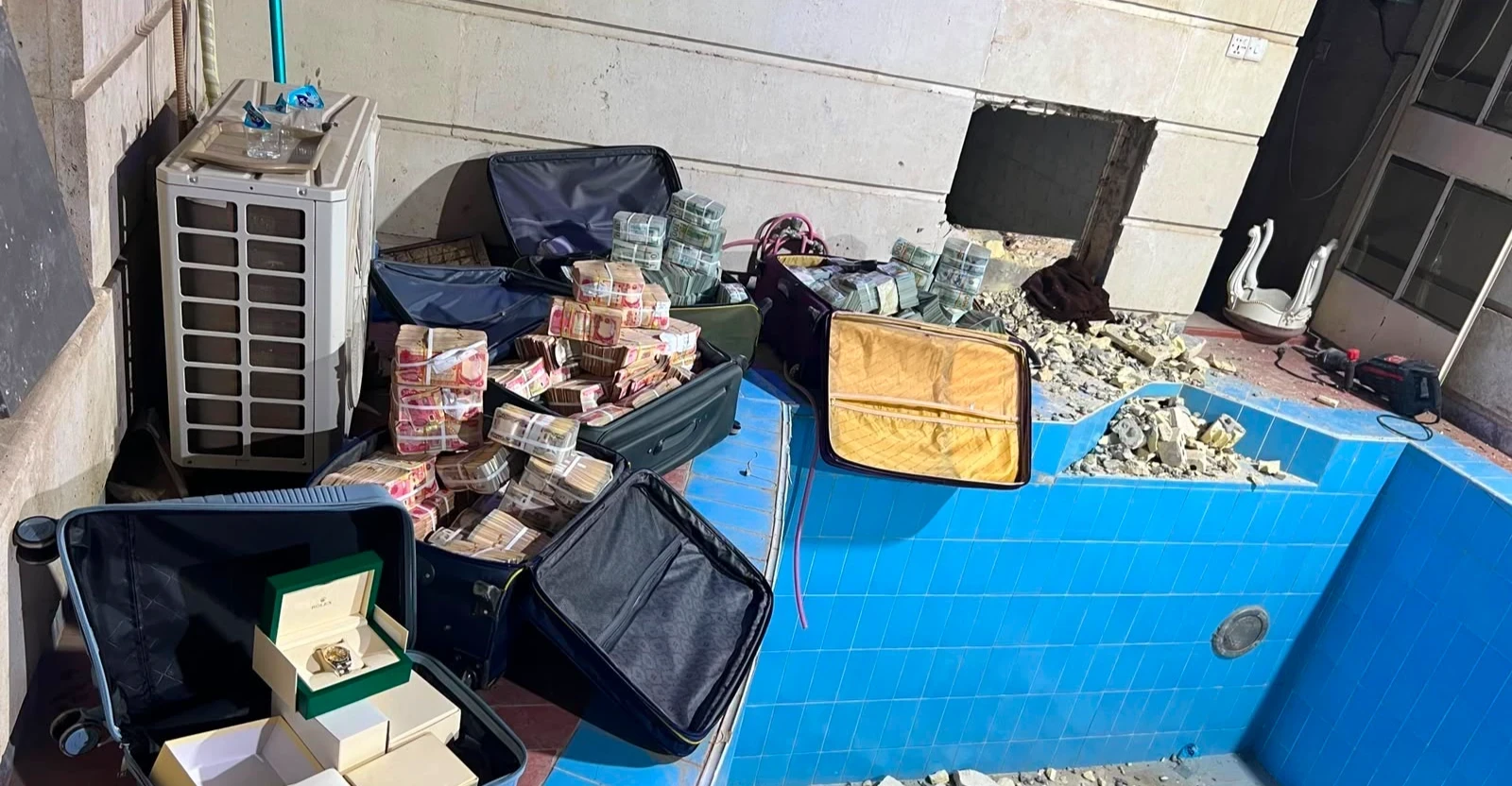
Observatory Statement for Release
"Dawn Raid" Funds Equivalent to a Full Month's Salaries for the Ministry of Foreign Affairs
Eco Iraq:An analysis by the Eco Iraq Observatory reveals that the stolen funds recovered by the state—as part of the operation known as the "Dawn Raid"—exceed the monthly salary expenditures of several ministries and government bodies, amounting to the equivalent of a full month's salaries for the Ministry of Foreign Affairs.
In a press statement, the Observatory noted that the total cash value of the recovered funds reached approximately 390.08 billion Iraqi dinars, following the conversion of $141 million into the local currency.
It added that factoring in the value of the recovered gold—half a ton, calculated at a rate of 185,000 dinars per gram—raises the total value of recovered assets to approximately 482.6 billion Iraqi dinars.
The Observatory explained that this amount surpasses the monthly salary expenditures of several ministries, including the Ministry of Transport, the Ministry of Environment, the Ministry of Migration and Displaced Persons, and the Ministry of Oil; it is also roughly equivalent to the salaries of the Ministry of Foreign Affairs' staff and diplomatic corps for an entire month.
It further noted that the value of the recovered funds is equivalent to approximately half of the Kurdistan Region’s monthly share of the federal budget, which covers the salaries of the region's employees.
Eco Iraq supports efforts to recover public funds, emphasizing the need for continued transparency regarding the recovered money and assets, as well as their ultimate disposition.
According to Eco Iraq, the sum exceeds the monthly payroll of the Transport, Environment, Migration and Displacement, and Oil ministries, and represents roughly half of the Kurdistan Region’s monthly federal funding, including public-sector salaries.
Launched nationwide on June 28, the ongoing Dawn Crackdown (Sawlat Al-Fajr) targets current and former officials, lawmakers, and business figures suspected of major corruption. The campaign recorded 67 detentions in its initial phase, while a Shafaq News review documented another 31 officials and public employees arrested in seven cases between July 20 and 26 alone.
Read more: Iraqi authorities detain 31 in weekly corruption cases
https://www.shafaq.com/en/Economy/Dawn-Crackdown-returns-370M-to-Iraq
Seeds of Wisdom RV and Economics Updates Monday Morning 8-10-26
Good Morning Dinar Recaps,
Japan’s Bond-Market Stress: Rising Yields Test the Global Debt System
Japan’s rising bond yields and shifting central-bank policy are exposing deeper pressures in sovereign debt markets and global capital flows.
OVERVIEW
Japanese government-bond yields are rising sharply, forcing policymakers to confront the growing cost of servicing the country's enormous public debt while the Bank of Japan considers further interest-rate increases.
The BOJ is facing a difficult balancing act between fighting inflation and protecting bond-market stability, with policymakers increasingly signaling that another rate hike could come as early as September.
Because Japan is a major global creditor and one of the world's largest bond markets, changes in Japanese yields could influence international capital flows, currencies and other major government-bond markets.
KEY DEVELOPMENTS
1. Japanese Bond Yields Reach New Pressure Point
Japan's 10-year government-bond yield reached approximately 2.805%, bringing borrowing costs to levels that are increasingly important for a government carrying a very large public debt burden.
Higher yields can make government borrowing more expensive and increase the amount of public revenue required to service existing debt.
2. BOJ Faces Pressure to Keep Raising Rates
The Bank of Japan is under growing pressure to continue normalizing monetary policy. A summary of its July meeting showed that at least three policymakers favored a faster pace of rate increases, citing concerns that inflation could remain above the BOJ's 2% target.
The possibility of a September rate hike is now receiving greater attention from financial markets.
3. Government Spending and Monetary Policy Are Colliding
Prime Minister Sanae Takaichi's expansionary fiscal policies are contributing to upward pressure on Japanese bond yields.
That creates a difficult policy conflict: the government wants fiscal support for the economy while the central bank needs enough monetary restraint to prevent inflation from becoming entrenched. Reuters reports that political pressure for the BOJ to resume bond buying has raised concerns about the central bank's independence.
4. Japan's Bond Market Matters Beyond Japan
Japan is one of the world's largest pools of sovereign debt and has historically been an important source of international capital.
If Japanese yields become more attractive relative to overseas bonds, investors could reconsider allocations between Japanese government bonds, U.S. Treasuries and other global assets.
That makes Japan's bond-market adjustment relevant to the broader global financial system rather than simply a domestic Japanese issue.
5. Currency and Inflation Pressures Add Another Layer
A weaker yen has increased the cost of imported goods and energy, adding to Japan's inflation pressures. The BOJ's July meeting summary specifically identified higher import costs associated with the weaker yen and elevated fuel prices as risks to inflation.
Japanese companies have also warned that currency volatility and a weak yen are complicating business decisions and increasing costs for import-dependent companies.
WHY IT MATTERS
Japan is demonstrating how quickly debt, inflation, currencies and central-bank policy can become interconnected.
Higher government-bond yields increase borrowing costs. Higher inflation pressures the central bank to raise rates. Higher rates can then increase government debt-servicing costs and alter the attractiveness of competing assets.
The larger concern is the possibility that similar pressures could appear across other heavily indebted economies.
Japan therefore provides an important real-time example of the challenge facing the global financial system: how can governments continue financing large debt loads while interest rates return to more historically normal levels?
WHY IT MATTERS TO FOREIGN CURRENCY HOLDERS
Currency value: BOJ tightening could provide support for the yen if higher Japanese rates attract capital back into Japan.
Purchasing power: A stronger yen could eventually reduce the cost of imported energy and goods, while continued yen weakness would maintain pressure on Japanese consumers and businesses.
Capital flows: Higher Japanese bond yields could encourage investors to shift portions of their portfolios toward Japanese assets.
Exchange-rate impact: Changes in the yen can influence global currency markets because Japan remains a major international creditor and trading nation.
IMPLICATIONS FOR THE GLOBAL RESET
Pillar 1: Debt
Japan's situation directly highlights the Debt pillar.
When sovereign yields rise, governments must pay more to finance new borrowing and refinance existing obligations. For highly indebted nations, even relatively modest increases in borrowing costs can become significant over time.
Japan's experience illustrates the structural challenge facing governments worldwide as the era of exceptionally low interest rates fades.
Pillar 2: Assets
The second major pillar is Assets.
Japanese government bonds are competing for global investment capital alongside U.S. Treasuries, European government debt and other sovereign assets. As Japanese yields rise, investors have greater incentive to reassess where capital should be allocated.
This could gradually influence global bond flows, currency valuations and the relative attractiveness of major sovereign assets.
Pillar 3: Trade
The third affected pillar is Trade, primarily through currency and energy costs.
A weaker yen raises the cost of imported energy and goods, while movements in Japanese monetary policy can influence exchange rates and international capital flows.
The connection demonstrates how changes in a major country's financial system can ultimately affect global trade costs and purchasing power.
CONCLUSION
Japan's bond-market stress is becoming an important signal for the global financial system because it brings several structural pressures together at once: rising sovereign yields, enormous public debt, inflation and changing central-bank policy.
The BOJ now faces a delicate decision. Raising rates could help stabilize inflation and support the yen, but it could also increase borrowing costs for a government already carrying a substantial debt burden.
For global investors, Japan is therefore more than a regional story. It is another indication that the world's major economies are being forced to reconsider how debt is financed in a higher-rate environment.
The financial system may be entering an era in which the cost of sovereign debt once again becomes one of the most important forces shaping global capital flows.
Seeds of Wisdom Team
Newshounds News™ Exclusive
SOURCES
Reuters — "BOJ's rate-hike path runs into Takaichi's bond market problems"
Reuters — "BOJ's debate on faster hikes bolsters September rate move odds"
~~~~~~~~~~
🌱 A Message to Our Currency Holders🌱
If you’ve been holding foreign currency for many years, you were not foolish.
You were not wrong to believe the global financial system would change.
What failed was not your patience — it was the information you were given.
For years, dates, rumors, and personalities replaced facts, structure, and proof. “This week” predictions created cycles of hope and disappointment that were never based on how currencies actually change.
That is not your failure.
Our mission here is different: • No dates • No rates • No hype • No gurus
Instead, we focus on:
• Verifiable developments • Institutional evidence
• Global financial structure • Where countries actually sit in the process
Currency value changes only come after sovereignty, trade, banking, settlement systems, and fiscal coordination are in place. History and institutions confirm this sequence.
You will see silence. You will see denials. That is not delay — that is discipline.
Protect your identity. Organize your documents. Verify everything.
Never hand your discernment to anyone who cannot show proof.
You deserve truth — not timelines.
Seeds of Wisdom Team
Newshounds News
~~~~~~~~~~
Seeds of Wisdom Team RV Currency Facts Youtube and Rumble
Newshound's News Telegram Room Link
RV Facts with Proof Links Link
RV Updates Proof links - Facts Link
Start Here room with Most Asked Questions Link
Follow the Gold/Silver Rate COMEX
Follow Fast Facts
Seeds of Wisdom Team™ Website
Thank you Dinar Recaps
Iraq Economic News and Points To Ponder Late Sunday Evening 8-9-26
"The Most Widely Discussed Scenario" Removing Zeros To Withdraw Looted Funds And Address Salary Issues... Experts Warn Against A "Makeover".
2026-08-09 | Baghdad - 964 Economic and financial experts are discussing proposals to solve the liquidity crisis and salary delays plaguing Iraq, most notably changing the currency and removing zeros from the Iraqi dinar, or introducing additional denominations that correspond to the noticeable expansion in the size of the circulating money supply.
"The Most Widely Discussed Scenario" Removing Zeros To Withdraw Looted Funds And Address Salary Issues... Experts Warn Against A "Makeover".
2026-08-09 | Baghdad - 964 Economic and financial experts are discussing proposals to solve the liquidity crisis and salary delays plaguing Iraq, most notably changing the currency and removing zeros from the Iraqi dinar, or introducing additional denominations that correspond to the noticeable expansion in the size of the circulating money supply.
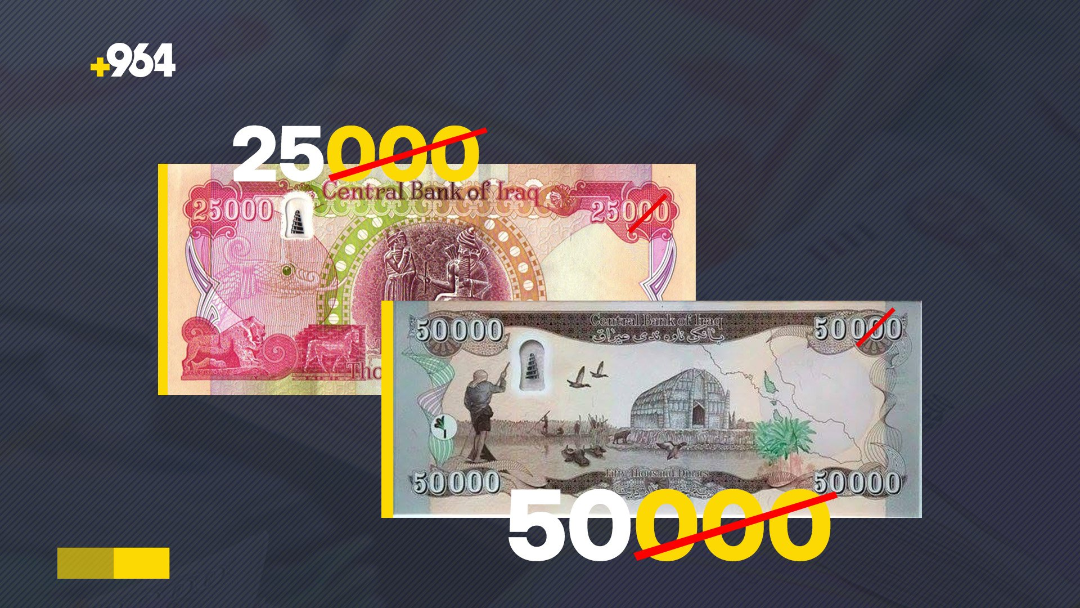
However, they agree on one point that confirms that these measures in economic equations are merely cosmetic solutions, “more like makeup,” that may treat the symptoms but not the causes of the problem.
They warn that the large looted fortunes often do not remain in the form of local currency that can be traced, but rather have been converted into real estate, foreign assets, and accounts in safe financial havens, and are therefore immune to the government’s internal measures.
Financial expert Nabil Al-Abadi calls for the need to avoid treating the proposal to change the national currency as a purely technical or monetary measure, explaining that this issue reflects the depth of the structural crisis that the economy is suffering from, and cannot be a substitute for the required financial, monetary and economic reforms.
He adds in a statement to the official newspaper, which was followed by Network 964 , that changing the currency is not a solution in itself, but rather a mirror reflecting the state of the economy, warning against confusing the treatment of symptoms with the treatment of the causes of the problem.
Al-Abadi explains that removing zeros, as the most widely discussed scenario, essentially represents a reorganization of monetary units and a simplification of arithmetic and accounting operations, without necessarily meaning an increase in the citizen's purchasing power or a rise in the real value of the currency.
He points out that changing the currency cannot be dealt with as a tool to recover looted funds, but may turn into a double-edged sword in some contexts if it is not managed within a comprehensive reform system.
He warns that large looted fortunes often do not remain in traceable local cash, or have long since migrated to real estate, foreign assets and accounts in safe financial havens, indicating that their transformation makes them largely immune to any internal monetary measures.
He continues: “The biggest challenge in such measures is managing the transitional phase, especially with regard to psychological expectations in the market and the possibility of some traders and speculators exploiting the transition period to raise prices under various pretexts, which may lead to inflationary pressures and dissipate the expected administrative benefits of the process of removing zeros.
He stressed that the success of any step in this direction requires the existence of solid monetary and economic stability before its implementation, and not considering it as a means to achieve that stability.”
He emphasizes that the essence of a currency's strength is not related to its form or the number of zeros it contains, but rather to the strength of the institutions and the economy upon which it is based.
Al-Abadi makes any project to change the currency contingent on genuine financial reform that reduces chronic imbalances in the general budget, along with strengthening the independence of the Central Bank and ensuring its ability to manage monetary policy away from financial pressures, as well as building a productive economy capable of diversifying sources of income and generating foreign currency, explaining that a strong currency is a reflection of a strong economy and not its creator.
He concludes that addressing economic imbalances requires moving from superficial solutions to fundamental reforms that include public finance, the banking sector, production and investment, and diversifying revenue sources, noting that changing the currency without reforming these issues could turn into a costly and confusing procedure for the citizen and the market, without addressing the root of the economic problem.
Economic researcher Imad Al-Muhammadawi considers the proposal to change the currency or issue a new currency denomination to withdraw illicit funds from circulation a theoretically positive proposal, noting that it is insufficient to reduce corruption or compensate for the shortage of liquidity.
Al-Muhammadi explains that, from an economic standpoint, the problem is not the form of the currency, but rather how to convince those who possess large sums of money to disclose their source when exchanging it. He points out that if the currency is changed without strict banking and tax auditing procedures, those with illicit funds can exchange it like the rest of the citizens, and thus the main purpose of the project is lost.
He adds that there is no consensus with the proposal, for several reasons, foremost among them the hesitation that the procedure will turn into a tool for freezing legitimate funds if the specified and explained mechanisms for proving the source of funds are not followed, as well as the possibility of exploiting some loopholes by corruption networks to circumvent the change before it begins, accompanied by its impact on the monetary system of citizens, if it is done suddenly, not to mention the cost and complexities of currency replacement.
Turning these proposals into effective tools depends on them being accompanied by a system that requires large sums to be deposited in banks, their sources to be verified and linked to banking and tax data, with a time period granted for replacement, and serious work to uncover the source of the funds.
He points out that changing the currency, identifying illicit funds, and exchanging banknotes will not solve the crises unless it is accompanied by a regulatory system capable of uncovering the source of the funds and prosecuting their owners.
He adds that it could be an opportunity to regulate monetary masses and bring funds circulating outside the banking system into the formal financial system by establishing clear and transparent rules.
He points out that the lack of consensus on the proposal does not mean its rejection, but rather requires the establishment of legal, banking and regulatory guarantees, and an integrated system to detect those who manipulate public funds and the corrupt, and to know the source of the funds before granting it legitimacy, stressing that if the conditions are met, the project will gain its importance and the purpose for which it was created. https://964media.com/706039/
The KRG’s Ministry Of Finance Has Reportedly Informed Its Federal Counterpart That It Cannot Transfer The Agreed-Upon 120 Billion Dinars
Zoom News @zoomnewskrd The KRG’s Ministry of Finance has reportedly informed its federal counterpart that it cannot transfer the agreed-upon 120 billion dinars in non-oil revenues to Baghdad, citing a sharp decline in revenues, marking the third consecutive month it has failed to make the transfer. As a result, the Iraqi government is set to deduct the amount from the funds allocated for the July salaries of Kurdistan Region civil servants, who have yet to be paid.
https://x.com/zoomnewskrd/status/2086538760007622960
Iraq Steps Up Digital Transformation Of Banking And Customs
Business Iraq Iraqi News August 9, 2026 Iraq’s Finance Minister Falih Sari and Central Bank Governor Nizar Nasser Hussein discussing during the meeting.
Baghdad (IraqiNews.com) — Iraq is speeding up preparations to digitize its financial and customs systems, with Finance Minister Falih Sari and Central Bank Governor Nizar Nasser Hussein considering tighter integration of electronic payments, customs processes, and government financial data.
The conference, which included members from the United Nations Conference on Trade and Development (UNCTAD), aimed to accelerate electronic linkages between Iraq’s customs and payment systems.
Sari urged authorities to speed up implementation as part of measures to modernize financial management, streamline trade processes, and create a more efficient environment for companies and investors.
The talks also focused on increasing cooperation between fiscal and monetary agencies, including digital data interchange and upgrading Iraq’s banking infrastructure, while maintaining financial stability and meeting government financial responsibilities.
The revisions are part of Iraq’s larger transition from cash-heavy and paper-based institutions to a more integrated digital financial infrastructure.
Baghdad sees modernization of banking, payments, and customs as more crucial as the government strives to bring its financial system closer to international norms, increase transparency, and make it simpler for Iraqi and foreign enterprises to do business.
The drive also supports broader banking changes in Iraq, as the government seeks deeper connectivity with the international financial system and encourages private sector development.
https://www.iraqinews.com/iraq/iraq-steps-up-digital-transformation-of-banking-and-customs/
The Ministry Of Finance And The Central Bank Agree On Measures To Enhance Financial And Monetary Stability
Information/Baghdad...Finance Minister Faleh Sari emphasized to the Governor of the Central Bank of Iraq, Nizar Nasser Hussein, on Sunday that the current circumstances necessitate continuous coordination.
A statement from the Ministry of Finance, received by the Information Agency, indicated that “Finance Minister Faleh Sari met with the Governor of the Central Bank of Iraq, Nizar Nasser Hussein, where they discussed the financial and economic situation in light of the current challenges.”
The Minister stressed that "the current circumstances require continuous coordination between fiscal and monetary policy to help manage financial flows efficiently and ensure the fulfillment of the state's obligations, while continuing to work on reforming the financial system and developing public finance management tools."
He also pointed to "the importance of enhancing data exchange between the Ministry of Finance and the Central Bank, and accelerating digital transformation, which will raise the efficiency of financial institutions and support their ability to respond to economic changes."
For his part, Nizar Hussein explained that “the Central Bank operates according to a methodology focused on supporting monetary stability, developing banking operations, and keeping pace with the needs of the national economy,” emphasizing the importance of coordination with the Ministry of Finance on economic and financial matters.
The statement added that "both sides agreed to continue joint work on measures to enhance financial and monetary stability and ensure the regularity of the state's essential obligations." End/25
Ross: News Coming out of Iraq Right Now is Non-stop
Ross: News Coming out of Iraq Right Now is Non-stop
8-9-2026
Funny how the crypto bros are mourning right now meanwhile the IQD & XRP conspiracy theorists are at the edge of their seats.
The news coming out of Iraq right now is a non-stop INSANE barrage of BANGERS.
Can’t help but stay giddy.
Ross: News Coming out of Iraq Right Now is Non-stop
8-9-2026
Funny how the crypto bros are mourning right now meanwhile the IQD & XRP conspiracy theorists are at the edge of their seats.
The news coming out of Iraq right now is a non-stop INSANE barrage of BANGERS.
Can’t help but stay giddy.
MP Saad al-Awadi is calling for urgent joint sessions between the government, CBI, and parliament to build the legal and technical framework for a digital dinar:
• Central Bank issues a digital Iraqi dinar.
• Salaries and pensions get deposited as encrypted digital currency into wallets.
• People spend it electronically immediately — no more waiting for physical cash at banks or distribution points.
• Force service and commercial sectors to accept digital payments.
• Cut the massive costs of printing, transporting, and securing paper notes.
• Avoid more domestic borrowing to cover the same recurring problem.
Parliament is openly floating a sovereign digital dinar solution while salaries are delayed and cash is being hoarded.
That is not the behavior of a system that plans to stay stuck in the old parallel-market mess forever.
The rails are being discussed and prepared.
The pressure is real. The direction is clear.
Source(s):
• https://x.com/Ross_ptm/status/2085975512363786738
https://dinarchronicles.com/2026/08/08/ross-news-coming-out-of-iraq-right-now-is-non-stop/
THE GLOBAL CURRENCY RESET: Things That Must Happen FIRST
THE GLOBAL CURRENCY RESET: Things That Must Happen FIRST
Liberty Crusade Official: 8-8-2026
The modern financial landscape is undergoing a profound transformation. From persistent inflation and record-breaking national debt to shifting geopolitical alliances and technological disruptions, the global economy appears to be at a critical turning point.
In a featured commentary from Liberty Crusade Official, analyst Larry Ballard offers an expansive breakdown of these interconnected macroeconomic trends, proposing that seemingly isolated financial challenges are actually part of a synchronized global currency reset designed to reshape the international monetary framework.
THE GLOBAL CURRENCY RESET: Things That Must Happen FIRST
Liberty Crusade Official: 8-8-2026
The modern financial landscape is undergoing a profound transformation. From persistent inflation and record-breaking national debt to shifting geopolitical alliances and technological disruptions, the global economy appears to be at a critical turning point.
In a featured commentary from Liberty Crusade Official, analyst Larry Ballard offers an expansive breakdown of these interconnected macroeconomic trends, proposing that seemingly isolated financial challenges are actually part of a synchronized global currency reset designed to reshape the international monetary framework.
A central theme of Ballard’s analysis is that today’s major economic issues cannot be evaluated in a vacuum. Interest rates, sovereign debt levels, currency valuation fluctuations, and precious metal prices are all deeply intertwined components of a broader system.
For decades, the global monetary architecture has relied heavily on fiat currencies—money not backed by physical commodities—which has driven unprecedented levels of public and private debt.
Ballard argues that this reliance on expanding debt is fundamentally unsustainable. As major central banks struggle to manage interest rates without triggering broader economic disruptions, the limitations of the current fiat system become increasingly obvious.
Understanding these dynamics requires looking beyond daily market fluctuations and viewing the global financial system as a complex, highly managed macro-environment undergoing a necessary structural realignment.
As faith in paper currencies faces challenges, tangible assets have returned to the forefront of financial discussion. While gold has traditionally served as the primary safe-haven asset for nations and central banks, Ballard places a unique emphasis on the strategic value of silver.
Beyond its historic role as money, silver is a vital industrial component in modern electronics, medical devices, and manufacturing. The analysis suggests that establishing robust national reserves of precious metals like silver could play a pivotal role in backing future monetary models.
By reintroducing real, tangible value into the reserve system, economies can build a stronger defense against currency devaluation and hyperinflationary pressures.
The shift away from legacy banking mechanics is not merely about returning to historical assets; it also involves adopting advanced technology. The presentation highlights the critical role of next-generation financial infrastructure, specifically referencing digital asset technology and the XRP ledger.
As international commerce demands faster, lower-cost, and more secure cross-border settlement mechanisms, legacy systems like SWIFT are facing pressure to modernize.
Decentralized and enterprise-grade blockchain solutions offer a potential framework for a frictionless global ledger. In this emerging paradigm, digital assets facilitate instant liquidity and asset transfer, serving as the technological backbone for a restructured international financial system.
Ballard’s commentary extends into the realm of trade policy and industrial strategy, pointing toward Donald Trump’s economic policies as a framework designed to navigate these systemic shifts. Key to this strategy is the revitalisation of national manufacturing through targeted tariffs and trade rebalances. By encouraging domestic production and reducing reliance on fragile global supply chains, nations can establish greater economic self-reliance.
Additionally, the presentation offers a critical view of current “green energy” initiatives, arguing that rapid mandates often overlook industrial realities and energy grid stability. True economic sustainability, according to the analysis, requires affordable, reliable energy access to power advanced manufacturing and sustain long-term prosperity. Re-evaluating these initiatives is presented as a necessary step toward eliminating systemic inefficiencies and preventing economic stagnation.
Ultimately, the analysis framed by Larry Ballard presents a strategic blueprint aimed at avoiding systemic economic collapse. By addressing national debt, transitioning toward asset-backed monetary stability, leveraging efficient blockchain technology, and prioritizing domestic production, nations can move away from debt-driven models toward sustainable growth.
While the transition to a reset financial framework involves navigating significant volatility, it also opens the door for historic economic restructuring and long-term stability.
Iraq Economic News and Points To Ponder Sunday Afternoon 8-9-26
Dawn Crackdown Returns $370M+ To Iraq
2026-08-09 Shafaq News- Baghdad The Iraqi state has recovered an estimated 482.6 billion dinars ($371.6M) in stolen assets under its Dawn Crackdown anti-corruption campaign, roughly equivalent to one month of salaries for the Foreign Ministry and its diplomatic staff, the Eco Iraq Observatory reported on Sunday.
The total comprises about 390.08 billion dinars ($300.3M) in cash, including $141 million converted into Iraqi currency, and half a ton of gold valued at 185,000 dinars per gram.
Dawn Crackdown Returns $370M+ To Iraq
2026-08-09 Shafaq News- Baghdad The Iraqi state has recovered an estimated 482.6 billion dinars ($371.6M) in stolen assets under its Dawn Crackdown anti-corruption campaign, roughly equivalent to one month of salaries for the Foreign Ministry and its diplomatic staff, the Eco Iraq Observatory reported on Sunday.
The total comprises about 390.08 billion dinars ($300.3M) in cash, including $141 million converted into Iraqi currency, and half a ton of gold valued at 185,000 dinars per gram.
According to Eco Iraq, the sum exceeds the monthly payroll of the Transport, Environment, Migration and Displacement, and Oil ministries, and represents roughly half of the Kurdistan Region’s monthly federal funding, including public-sector salaries.
Launched nationwide on June 28, the ongoing Dawn Crackdown (Sawlat Al-Fajr) targets current and former officials, lawmakers, and business figures suspected of major corruption. The campaign recorded 67 detentions in its initial phase, while a Shafaq News review documented another 31 officials and public employees arrested in seven cases between July 20 and 26 alone.
Read more: Iraqi authorities detain 31 in weekly corruption cases
https://www.shafaq.com/en/Economy/Dawn-Crackdown-returns-370M-to-Iraq
Dollar Prices Rise In Baghdad And Erbil
2026-08-08 Shafaq News- Baghdad/ Erbil The US dollar closed Sunday’s trading lower in Iraq, hovering around 152,200 dinars per 100 dollars.
According to a Shafaq News market survey, the dollar traded in Baghdad's Al-Kifah and Al-Harithiya exchanges at 152,200 dinars per 100 dollars, up from the morning session’s 152,000 dinars.
In the Iraqi capital, exchange shops sold the dollar at 152,750 dinars and bought it at 151,750 dinars, while in Erbil, selling prices stood at 152,400 dinars and buying prices at 152,300 dinars.
https://www.shafaq.com/en/Economy/Dollar-prices-rise-in-Baghdad-and-Erbil-3-1-1
Iraqi Crude Absent From US For Sixth Week
2026-08-09 02:46 Shafaq News- Baghdad/ Washington US crude oil imports from Iraq remained at zero last week, extending the halt in shipments to a sixth consecutive week, Energy Information Administration (EIA) data showed on Sunday.
Canada led suppliers at 4.215 million barrels per day (bpd), followed by Venezuela with 411,000 bpd, Mexico with 388,000, Ecuador with 223,000, and Brazil with 196,000. Colombia supplied 158,000 bpd, Libya 87,000, and Nigeria 12,000, while Saudi Arabia also recorded no shipments.
Iraq last supplied the US during the week ending June 19, averaging 71,000 bpd.
The country lost an estimated 302.8 million barrels of production in the first half of 2026 as the US-Iran war disrupted extraction and exports through the Strait of Hormuz. Iraq, OPEC’s second-largest producer, depends on oil for about 90% of state revenue, leaving its finances particularly exposed to disruptions along the waterway, which carries roughly one-fifth of global supplies.
Read more: No exit but Hormuz: Iraq's economic vulnerability exposed
https://www.shafaq.com/en/Economy/Iraqi-crude-absent-from-US-for-sixth-week
Gold Holds Steady In Baghdad And Erbil
2026-08-09 Shafaq News- Baghdad/ Erbil On Sunday, gold prices hovered around 940,000 IQD per mithqal in Baghdad and Erbil markets, according to a survey by Shafaq News Agency.
Gold prices on Baghdad’s Al-Nahr Street recorded a selling price of 937,000 IQD per mithqal (equivalent to five grams) for 21-carat gold, including Gulf, Turkish, and European varieties, with a buying price of 933,000 IQD, unchanged from Saturday.
The selling price for 21-carat Iraqi gold stood at 907,000 IQD, while the buying price reached 903,000 IQD.
In jewelry stores, the selling price per mithqal of 21-carat Gulf gold ranged between 940,000 and 950,000 IQD, while Iraqi gold sold for between 910,000 and 920,000 IQD.
In Erbil, 22-carat gold was sold at 973,000 IQD per mithqal, 21-carat gold at 930,000 IQD, and 18-carat gold at 797,000 IQD.
Dollar Strengthens In Baghdad And Erbil
2026-08-09 Shafaq News- Baghdad/ Erbil The US dollar closed Sunday’s trading higher in Iraq, hovering around 152,200 dinars per 100 dollars.
According to Shafaq News market survey, the dollar traded in Baghdad’s Al-Kifah and Al-Harithiya exchanges at 152,250 dinars per 100 dollars, up from the morning session’s 152,100 dinars.
In the Iraqi capital, exchange shops sold the dollar at 152,750 dinars and bought it at 151,750 dinars, while in Erbil, selling prices stood at 152,350 dinars and buying prices at 152,300 dinars.
https://www.shafaq.com/en/Economy/Dollar-strengthens-in-Baghdad-and-Erbil
From Shalamcheh To Khosravi: Are Iran Rail Links Undermining Iraq’s Grand Faw Port?
2026-08-09 Shafaq News On official maps, the Grand Faw Port looks like Iraq's gateway to the world. The starting point of a trade corridor meant to move goods from the Gulf to Europe roughly 20 days faster than traditional shipping routes. On the ground, however, successive Iraqi governments have been drawing different lines.
Even as Baghdad pours billions of dollars into building the port and the Development Road stretching toward Turkiye, it has simultaneously pushed forward rail links connecting Iraq to Iranian and Kuwaiti ports, links that would allow goods arriving from neighboring countries to enter Iraqi territory without ever passing through Faw.
The project Baghdad has promoted as the pillar of its ambition to become a global transport hub now finds itself boxed in by competing corridors created by Iraq's own decisions.
A Line Begins with Pilgrims and Ends with Cargo
The Grand Faw Port project dates back to 2006, when the Iraqi government first proposed building a strategic deep-water port in the country's far south, capable of receiving mega-vessels and linked to what later became known as the "Dry Canal", a network of highways and railways running from Basra to Turkiye, with potential branches toward Syria and Europe.
The logic was straightforward: ships arriving from Asia and the Gulf would dock at Faw, then move their cargo overland across Iraq to Turkiye and Europe, bypassing the longer route through the Red Sea, the Suez Canal and the Mediterranean. Through this corridor, Iraq hoped to reclaim its historic role as a crossroads between East and West, generating revenue from handling, storage, transport, insurance, and logistics.
Success depended on one core condition: protecting Faw from rival corridors and avoiding new rail lines that would hand neighboring ports a direct route into Iraqi markets or onto the network feeding Turkiye and Syria. That condition was never met.
In 2023, then-Prime Minister Mohammed Shia al-Sudani laid the foundation stone for a rail link between Basra and Iran via the Shalamcheh border crossing.
The government presented it at the time as a line dedicated to pilgrims and travelers rather than freight, in an apparent effort to ease concerns about its impact on Faw and Iraq's other ports.
But the engineering specifications later raised questions about its true purpose. The line's load-bearing capacity, known technically as "axle load", reaches 25 tons, a specification typically used for heavy freight lines, compared with roughly 14 tons for standard passenger lines.
For critics of the project, these were not simply engineering figures but evidence that a line launched under the banner of pilgrim transport was designed from the outset to carry freight trains as well.
Weeks ago, a similar scenario unfolded through a different gateway. During a visit by current Prime Minister Ali al-Zaidi to Tehran, the two sides signed an agreement to build a new rail line through the Khosravi crossing opposite Diyala province.
Officials and lawmakers quickly began discussing using the line to move both pilgrims and goods. Iraq now faces two potential rail links tying its domestic network directly to Iran, one in the far south near Faw, the other in the center via Diyala.
A Twenty-Year Delay
In an interview with Shafaq News, retired Major General Jamal al-Halbousi, an expert in borders and international transport, argues that the Shalamcheh rail project was less a purely Iraqi necessity than the product of political pressure, adding that the project was introduced as a pilgrim line before evolving into one capable of moving freight.
According to al-Halbousi, the Shalamcheh and Khosravi lines could eventually allow goods arriving at Iranian ports such as Bandar Abbas and Imam Khomeini Port, and possibly Pakistan's Gwadar port, to reach Iraqi territory and continue toward Syria and the Levant “without ships ever needing to call at Faw.
He warned this route could become a "mercy bullet" for Faw if the port project is not completed quickly and if the government fails to adopt policies making Iraqi ports more competitive.
“Ports do not compete on geography alone, but on handling and storage fees, customs speed, logistics quality and inland transport costs; if Iraqi ports remain costlier than their neighbors, international shippers will simply choose the cheaper route.”
Al-Halbousi views Faw and the Development Road together as the real foundation for turning Iraq into a regional transport and trade hub. The Development Road envisions a modern rail line and highway stretching roughly 1,200 kilometers from Faw to the Turkish border, passing through Basra, Dhi Qar, al-Muthanna, al-Diwaniyah, Najaf, Karbala, Baghdad, Saladin and Nineveh before reaching Turkiye and, from there, European markets.
First proposed some twenty years ago, the project remains stalled amid administrative problems, corruption allegations and delays in contracting and execution. Specialists talked to our agency say the core problem is not merely the pace of building berths or dredging the shipping channel, but the absence of an integrated system linking the port to rail lines, roads, industrial zones, warehouses, and border crossings, without which a port becomes little more than a container drop-off point.
Read more: Rebuilding Basra’s maritime power: Is Al-Faw Port the game changer for Iraq?
An Old Iranian Ambition through Iraq
The idea of rail links with Iran did not begin under al-Sudani. It surfaced clearly in 2014, under Prime Minister Haider al-Abadi's government, when Tehran pushed for a line connecting Basra to Iran's Imam Khomeini Port and extending across Iraq to Syria's Latakia port, a part of a broader vision of a land-and-rail corridor linking Iranian ports to the Mediterranean, using Iraqi territory as the middle link.
If completed, such a route would let cargo arriving at Iranian ports cross into Syria via Iraq without ever passing through an Iraqi port, meaning Iraq would supply the land, rails, security and infrastructure while handling revenue flows to another country's ports.
To the south, Kuwait is pursuing a similar link between Iraq's rail network and Mubarak al-Kabeer Port, raising comparable concerns: if Basra becomes directly connected to the Kuwaiti port, goods could be unloaded in Kuwait and enter Iraq by rail instead of via Faw or Umm Qasr.
International transport expert Ziyad al-Hashimi told Shafaq News that any rail link with neighboring states could hurt Faw if it is not embedded in a comprehensive Iraqi strategy.
Shipping companies, he said, will gravitate toward whichever ports offer the best service at the lowest cost, and direct lines moving goods from Iranian or Kuwaiti ports into Iraq could reduce the need to unload ships at Iraqi ports at all, weakening handling volumes and the broader trade activity tied to storage, transport, insurance and maritime services.
“The priority should be establishing direct shipping lines to Iraqi ports and linking Faw and Umm Qasr to the domestic transport network by rail and road,” he argued.
At the same time, al-Hashimi cautioned that turning the Iran-Iraq lines into a full international trade corridor is not a foregone conclusion, since some Iranian ports still lack strong, integrated rail connections to the Iraqi border, “a weakness that buys Iraq time but does not remove the long-term risk, particularly if Iran completes its domestic projects and links its ports to the Shalamcheh and Khosravi crossings.”
As for the Kuwaiti link, he said it could pull part of the maritime cargo flow toward Mubarak port, especially if Kuwaiti ports become a redistribution hub for goods into Iraq and the wider region. Any new line, he stressed, should be assessed not only for its construction cost or bilateral benefits but for its impact on the strategic position of Faw and Iraq's other ports.
Read more: Iraq's Al-Faw Port: A $4.9B dream set to revive trade and open doors to opportunities
A Port before the Rails
Former Iraqi Transport Minister Salam al-Maliki summed up the dilemma bluntly: no rail line or highway has strategic value unless it is anchored to a major global port. In remarks to Shafaq News, he described Faw as a national entitlement that should be the starting point of any Iraqi vision for regional transport networks, not the last item on the project list, warning that delays in completing the port will pile more pressure on Umm Qasr, which lacks the capacity to absorb Iraq's economic ambitions, or the trade volume expected through the Development Road.
“Continued reliance on Umm Qasr, combined with direct lines to neighboring ports, could reduce Iraq to a mere transit corridor for goods,” he said, without capturing the real economic value generated by shipping, unloading, storage and manufacturing.
“The difference is significant between a country where trains simply pass through and one that controls the entire transport chain,” he added, explaining that the first collects limited transit fees, while the second runs the ports, warehouses, industrial zones, shipping firms, insurance and financial services. Al-Maliki said the goal should be turning Iraq into an integrated "commercial and logistics hub," not a passage for other countries' goods.
Zahra al-Bajari, head of the parliamentary Transport and Communications Committee, offers a different account of the Shalamcheh line.
She told Shafaq News the project was designed primarily to support land transport and ease passenger movement, with Iraq's share funded through the Transport Ministry's budget while Iran built the bridge and cleared war remnants on its side.
Attributing implementation delays to the Spanish contractor handling the project, she noted that the contract with the firm has not been terminated.
Those details, however, raise a larger question about who stands to benefit economically once the line is complete. Iraq is financing and preparing the portion of track on its territory to handle heavy freight trains, while Iran already possesses operational ports that could feed cargo directly onto this route.
Iraqi governments continue to insist that rail links with neighboring states will boost trade and regional integration. Critics counter that integration is not balanced when one side owns the port, and the other merely provides the land the cargo crosses.
For two decades, successive Iraqi prime ministers have described Faw as a project that would redraw the country's place on the global trade map. Yet those same governments have signed agreements that could hand neighboring ports the ability to use Iraq as a corridor for their own goods, turning the paradox into a defining feature of Iraq's largest infrastructure ambition.
Written and edited by Shafaq News staff.
Seeds of Wisdom RV and Economics Updates Sunday Afternoon 8-9-26
Good Afternoon Dinar Recaps,
China Builds the Next Financial Layer: Renminbi Bond Market Push Expands Global Capital Alternatives
Beijing is strengthening access to its bond market and expanding the infrastructure around the renminbi as global investors increasingly navigate a more fragmented financial system.
Good Afternoon Dinar Recaps,
China Builds the Next Financial Layer: Renminbi Bond Market Push Expands Global Capital Alternatives
Beijing is strengthening access to its bond market and expanding the infrastructure around the renminbi as global investors increasingly navigate a more fragmented financial system.
OVERVIEW
China is expanding access to its sovereign bond market, adding tools such as bond futures and broader financing mechanisms designed to make Chinese government debt more accessible to international investors.
The effort goes beyond individual bond purchases, with China developing repo, clearing, settlement and liquidity infrastructure that can make renminbi-denominated assets more practical for global institutions.
The development does not mean the dollar is being displaced, but it does signal the gradual construction of an alternative financial channel as countries and investors seek greater diversification in global markets.
KEY DEVELOPMENTS
1. China Courts International Bond Investors
Beijing is taking additional steps to make its government bond market more attractive to overseas investors, including developing futures contracts and other market tools that can make it easier to manage risk and participate in China's debt markets.
The significance is broader than simply attracting foreign money into Chinese bonds. A deeper international market requires the financial infrastructure that allows investors to trade, hedge, finance and move capital efficiently.
2. The Infrastructure Around the Renminbi Is Expanding
China has spent years developing systems designed to support cross-border use of the renminbi, including its Cross-Border Interbank Payment System (CIPS), offshore RMB markets, swap arrangements and connections between domestic and international financial markets.
The IMF reports that annual CIPS transaction volume more than tripled between 2020 and 2024, reaching approximately RMB 175 trillion. RMB settlement has also expanded, although its global share remains relatively small.
3. Bond Market Access Is Becoming Part of a Larger Strategy
China's effort increasingly involves more than buying and selling government securities.
Greater access to repo markets, bond connections and risk-management instruments helps create a more complete financial ecosystem around Chinese assets. That matters because international reserve and investment currencies require not only a currency, but also deep and usable financial markets.
4. The Renminbi Is Growing — But the Dollar Still Dominates
The current evidence does not support the idea that the renminbi is replacing the U.S. dollar.
The IMF reports that the RMB represented less than 3% of global trade settlement and approximately 2% of global foreign-exchange reserves in the latest data cited in its 2026 China assessment.
China therefore still faces significant obstacles, including restrictions on capital flows, limited offshore market depth and a shortage of globally accessible RMB assets that can function as widely accepted stores of value.
5. The Bigger Story Is Financial Diversification
The important development is the gradual creation of additional channels for international capital.
If China continues opening its bond and financial markets while expanding RMB payment and liquidity infrastructure, global investors could have more choices for holding assets, settling trade and managing reserves.
That does not require the dollar to disappear. A financial system can become more diversified while the dollar remains the dominant reserve currency.
WHY IT MATTERS
The global financial system depends heavily on the availability of deep, liquid and internationally accessible capital markets.
China's bond-market initiatives are significant because they attempt to build those characteristics around the renminbi and Chinese government debt.
For global investors, additional market infrastructure can create another destination for capital. For governments and institutions seeking diversification, it can provide another channel through which trade and financial transactions can be conducted.
The long-term significance therefore lies less in a sudden currency shift and more in the gradual development of parallel financial infrastructure.
WHY IT MATTERS TO FOREIGN CURRENCY HOLDERS
Currency value: Greater international use of the RMB could gradually increase demand for the currency, although the dollar remains overwhelmingly dominant in global reserves and foreign-exchange markets.
Purchasing power: A more diversified international monetary system could affect the relative value of major currencies over time as capital flows adjust.
Capital flows: Expanded access to Chinese bonds and financial markets gives international investors another destination for capital.
Exchange rates: Increasing RMB liquidity and international settlement could influence currency relationships, particularly across Asia and among China's major trading partners.
IMPLICATIONS FOR THE GLOBAL RESET
Pillar 1: Assets
The most direct impact is Assets.
China is developing a larger international market around its sovereign bonds and other RMB-denominated securities. If foreign participation continues to grow, global investors could increasingly view Chinese government debt as one component of a more diversified international asset base.
This does not mean Chinese assets will replace U.S. Treasuries. It means the global system could gradually provide more alternatives alongside traditional reserve assets.
Pillar 2: Trade
The second directly affected pillar is Trade.
The expansion of RMB settlement, CIPS and related financial infrastructure makes it easier for China and its trading partners to conduct transactions using mechanisms that do not require every transaction to move through the traditional dollar-based financial system.
As trade relationships evolve, financial infrastructure increasingly becomes part of the architecture supporting those relationships.
CONCLUSION
China's bond-market strategy is not a sudden challenge to the dollar. It is something more gradual: the construction of financial infrastructure capable of supporting a larger international role for the renminbi.
The significance lies in the plumbing — bonds, settlement systems, repo markets, clearing mechanisms and liquidity facilities that allow a currency to function internationally.
If those systems continue expanding, the global financial system could become more diversified, more interconnected and less dependent on a single financial architecture.
The potential financial reset is not necessarily about replacing one currency with another — it may be about building a system in which more currencies, markets and assets can operate alongside one another.
Seeds of Wisdom Team
Newshounds News™ Exclusive
SOURCES
Financial Times — "China courts global investors with bond market tweaks"
International Monetary Fund — "China: RMB Internationalization"
~~~~~~~~~~
Seeds of Wisdom Team RV Currency Facts Youtube and Rumble
Newshound's News Telegram Room Link
RV Facts with Proof Links Link
RV Updates Proof links - Facts Link
Start Here room with Most Asked Questions Link
Follow the Gold/Silver Rate COMEX
Follow Fast Facts
Seeds of Wisdom Team™ Website
Thank you Dinar Recaps
‘We’ll Wake Up One Day to Find a Different World’: The BRICS+ Shift Is Here | Andy Schectman
‘We’ll Wake Up One Day to Find a Different World’: The BRICS+ Shift Is Here | Andy Schectman
Miles Franklin Media: 8-8-2026
Michelle Makori, President & Editor-in-Chief of Miles Franklin Media, speaks with Andy Schectman, Founder & CEO of Miles Franklin Precious Metals, ahead of the September BRICS summit.
Schectman argues that BRICS is no longer simply talking about challenging the dollar – it is methodically building the payment rails, commodity exchanges, vaults, and settlement mechanisms needed to operate outside the Western financial system.
‘We’ll Wake Up One Day to Find a Different World’: The BRICS+ Shift Is Here | Andy Schectman
Miles Franklin Media: 8-8-2026
Michelle Makori, President & Editor-in-Chief of Miles Franklin Media, speaks with Andy Schectman, Founder & CEO of Miles Franklin Precious Metals, ahead of the September BRICS summit.
Schectman argues that BRICS is no longer simply talking about challenging the dollar – it is methodically building the payment rails, commodity exchanges, vaults, and settlement mechanisms needed to operate outside the Western financial system.
Schectman breaks down the significance of BRICS Pay, mBridge, China’s CIPS network, the proposed BRICS Grain Exchange, and plans for a precious metals exchange.
He explains how local-currency trade and alternative commodity-pricing systems could gradually reduce global demand for both U.S. dollars and Treasuries – even if BRICS never introduces a single common currency.
Schectman also explains his theory that the United States may ultimately “quietly default” on the dollar’s reserve status by allowing gold to soar. He examines record central-bank gold buying, unexplained physical deliveries into the United States, Tether’s growing gold reserves, and whether stablecoins could simultaneously create synthetic Treasury demand while helping facilitate a broader monetary reset.
In this episode of The Real Story with Michelle Makori:
What could emerge from the September BRICS summit
BRICS Pay, mBridge and China’s CIPS payment network
The construction of a parallel financial system
BRICS Grain and precious-metals exchanges
How alternative price discovery could weaken dollar dominance
Why central banks are accumulating gold at record levels
Could gold reach $139,000 if the dollar loses reserve status?
Is America preparing to “quietly default” on the dollar?
Tether, stablecoins and synthetic demand for U.S. Treasuries
What the BRICS shift could mean for American investors
00:00 Coming Up
01:16 Introduction
05:13 Rails Vaults Exchanges
11:54 Summit Expectations
18:26 BRICS Pay Freedom Pitch
23:11 When Alternatives Bite
27:27 Gold Trust Layer
34:32 New Price Discovery
39:55 BRICS Grain Benchmark
41:35 BRICS Pricing Shock
43:02 Treasury Demand Unwinds
45:05 Bond Market Breaking Point
46:47 Fed Cornered By Rates
50:09 Dollar Still Dominant
51:42 Soft Default Thesis
53:37 Stablecoins And Gold
01:02:59 Gold Revaluation Path
01:07:34 Tariffs Or Sanctions
01:11:07 Investor Survival Playbook
01:13:53 Final Sign Off
Sunday Iraq News Posted by Tishwash at TNT 8-9-2026
TNT:
Tishwash: The salary crisis is under discussion in parliament; the finance minister is exploring ways to address the economic situation.
MP Ahmed al-Khazali revealed on Saturday that Finance Minister Faleh al-Sari will be present at the Finance Committee meeting to discuss the repercussions of the economic crisis facing Iraq and to find solutions to the salary payment problem.
Al-Khazali told the Information Agency, "Finance Minister Faleh al-Sari's attendance, scheduled for tomorrow, Sunday, will be at the Finance Committee meeting to discuss the economic problems and repercussions, including the salary payment crisis, in order to find radical solutions to this problem."
TNT:
Tishwash: The salary crisis is under discussion in parliament; the finance minister is exploring ways to address the economic situation.
MP Ahmed al-Khazali revealed on Saturday that Finance Minister Faleh al-Sari will be present at the Finance Committee meeting to discuss the repercussions of the economic crisis facing Iraq and to find solutions to the salary payment problem.
Al-Khazali told the Information Agency, "Finance Minister Faleh al-Sari's attendance, scheduled for tomorrow, Sunday, will be at the Finance Committee meeting to discuss the economic problems and repercussions, including the salary payment crisis, in order to find radical solutions to this problem."
He explained that the parliamentary finance committee will submit a report to the Speaker of Parliament on the content of this meeting so that the issue can be raised for discussion within the parliament.
He added, "Parliament and the Finance Minister are trying to find sound solutions to this crisis by ensuring that salaries are paid on time." link
************
Tishwash: Iraqis' salaries are at stake: Will millions lose patience before the state treasury runs out?
August 7, 2026
Baghdad/Al-Masalla: Public finances in Iraq have entered an unprecedented testing phase with escalating fears that the government will be unable to secure the salaries of more than five million employees and retirees monthly, at a time when monthly financial obligations exceed eight trillion dinars while the assets of the public treasury do not exceed two trillion, according to official sources and field monitoring.
This came after repeated setbacks in the disbursement of last month's dues and a sharp decline in oil revenues due to disruptions in exports through the Gulf, prompting the Prime Minister's financial advisor, Mazhar Muhammad Salih, to emphasize that what Baghdad is going through is a temporary hardship and not bankruptcy, indicating the possibility of resorting to external borrowing, pre-export financing, and the International Monetary Fund and the World Bank to overcome the stage.
In contrast, economic experts warned that the continued closure of the Strait of Hormuz could lead to a gradual collapse in revenues, affecting support for the provinces and investment spending, and raising the level of inflation, given the country's almost complete dependence on imports of food and medicine.
The University of Babylon witnessed protests by professors and employees who denounced the delay in salaries, while the movements extended to Kirkuk and Basra with the introduction of controversial proposals such as printing currency despite warnings of an inflationary explosion.
In the space of the X platform, activists expressed widespread anger, with one of them considering the announcement of salary delays after two decades of oil billions as evidence of failure in state management, while others saw the solution as lying in economic rapprochement with the Gulf states instead of isolation.
Between government assurances, expert warnings, and rising public anger, the fate of millions of salaries remains dependent on the course of the Hormuz crisis and Baghdad’s ability to open alternative export outlets before reserves run out.
************
Tishwash: MP proposes digital dinar to fix Iraq's cash shortage
MP Saad al-Awadi, deputy head of the National Approach parliamentary bloc, proposed on Friday a plan to secure salary payments for state employees and retirees through a "digital dinar" and end Iraq's ongoing cash crisis.
In a statement, al-Awadi said the initiative represents “a comprehensive economic plan to address the liquidity crisis and ensure stable salary disbursement through the launch of a digital Iraqi dinar,” easing access to financial entitlements for employees without requiring paper cash transactions.
The plan aims directly to shield employees from the effects of salary delays and liquidity bottlenecks at banks and disbursement outlets, he explained, by depositing salaries as encrypted, protected digital currency into designated financial wallets, allowing citizens to immediately use their salaries for purchases and electronic payments without waiting for cash to become available.
“The current cash bottleneck does not stem from a lack of resources but from paper currency being withheld and hoarded outside the banking system at record rates,” al-Awadi stressed, adding that reliance on a central bank-issued digital dinar would eliminate salary delays, reduce the operational costs of printing and transporting cash, and protect citizens' purchasing power without resorting to domestic borrowing policies.
His proposed roadmap also includes requiring service and commercial sectors to accept digital transactions, along with incentive packages and government guarantees to restore confidence in the banking sector.
Al-Awadi called on the government, the Central Bank, and the relevant parliamentary committees to hold an urgent joint session to establish the legislative and technical frameworks needed to implement the project.
Iraq still lacks official digital payment platforms or electronic trading systems, and globally circulated cryptocurrencies, most notably Bitcoin, the most widely used, remain unadopted in practice for buying, selling, and cash transactions in the country. link
************
Tishwash: Asiacell signs an agreement with Apple and becomes the main partner in providing iPhones in Iraq.
Asiacell has signed a direct agreement with Apple to provide iPhones in Asiacell stores throughout Iraq – “original devices, official warranty, and the network that supports them, all in one place,” according to a statement from the company received by Al-Mirbad. link
************
Tishwash: 80% of money is outside banks... Former MP calls for a new strategy to attract hoarded funds
Former MP Abbas Sarout confirmed on Thursday that 80% of Iraqi money is hoarded in homes, away from banks, noting the need to reconsider the strategy for attracting funds to the banking system.
Sarout explained to Al-Maalouma that "Iraq is suffering from a liquidity crisis that has begun to affect salary distribution, given that 80% of the money is hoarded outside banks. This requires serious attention to adopt a strategy that creates incentives to encourage citizens from all walks of life to deposit their money in banks and adopt electronic payment methods, a strategy used in most countries worldwide."
He added that "this mechanism ensures the government's ability to distribute salaries, grant loans and advances, and conduct financial transactions," pointing out that "the majority of financial transactions in Iraq still rely on traditional methods, and this has many drawbacks."
He stressed "the necessity of citizens having confidence to deposit their money in banks, as this will create balance, sustain the flow of funds, and foster greater flexibility, particularly in ensuring the financial capacity to meet obligations." link
************
President Al-Zidi chairs the second session of the Supreme Council for Financial and Monetary Stability: Improving the management of non-oil resources and providing liquidity
Prime Minister Ali Faleh Al-Zaidi chaired the second session of the Supreme Council for Financial and Monetary Stability on Saturday, in the presence of the heads and directors of the relevant authorities and institutions.
The Prime Minister’s Media Office stated in a statement that the session witnessed the discussion of a number of files and issues related to the financial, monetary and economic conditions in the country, in addition to discussing current indicators and challenges and ways to enhance coordination and integration between the financial and monetary policies in a way that supports financial and economic stability.
The statement added that the council discussed mechanisms to improve the management of non-oil resources and provide liquidity, and to support economic and banking reform paths, as well as to enhance the efficiency of the financial system in a way that contributes to consolidating stability and creating a more sustainable economic environment.
Al-Zaydi stressed the importance of continuing coordination and joint work between the relevant ministries and institutions, following up on the implementation of the decisions and recommendations issued by the Council, and adopting practical solutions to the financial and monetary challenges in a way that preserves economic stability and enhances the ability of the national economy to cope with changes, as well as stimulating economic activities, especially non-oil ones. link