
Thank you to all the subscribers to our Early Access program…we thank you for your continued support.
We are excited to offer this new service to keep you informed and up-to-date on the latest Dinar and currency news.
Iraq Economic News and Points To Ponder Late Sunday Evening 8-9-26
"The Most Widely Discussed Scenario" Removing Zeros To Withdraw Looted Funds And Address Salary Issues... Experts Warn Against A "Makeover".
2026-08-09 | Baghdad - 964 Economic and financial experts are discussing proposals to solve the liquidity crisis and salary delays plaguing Iraq, most notably changing the currency and removing zeros from the Iraqi dinar, or introducing additional denominations that correspond to the noticeable expansion in the size of the circulating money supply.
"The Most Widely Discussed Scenario" Removing Zeros To Withdraw Looted Funds And Address Salary Issues... Experts Warn Against A "Makeover".
2026-08-09 | Baghdad - 964 Economic and financial experts are discussing proposals to solve the liquidity crisis and salary delays plaguing Iraq, most notably changing the currency and removing zeros from the Iraqi dinar, or introducing additional denominations that correspond to the noticeable expansion in the size of the circulating money supply.
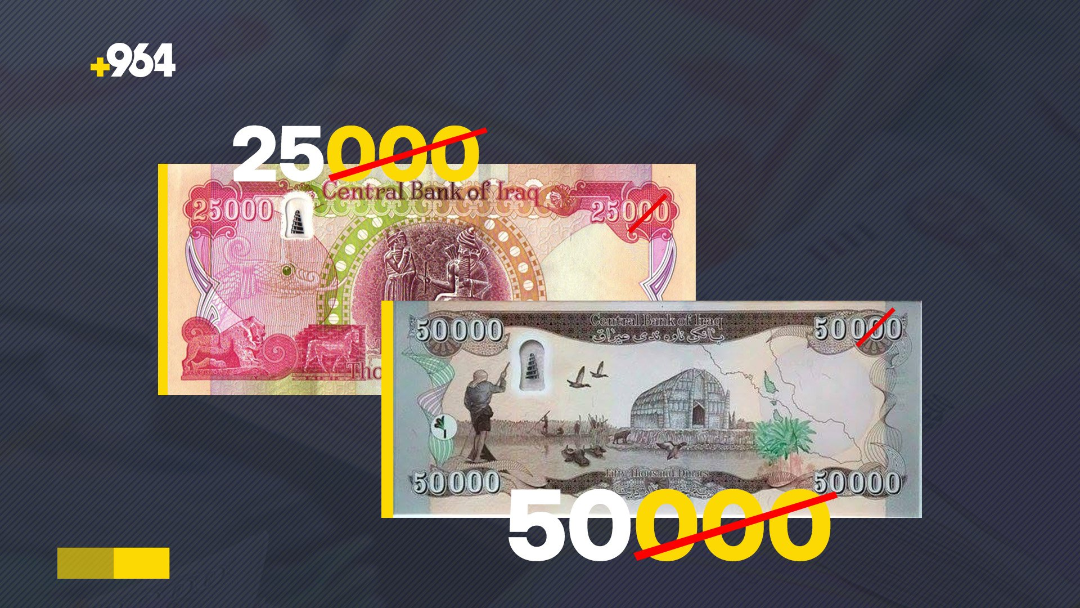
However, they agree on one point that confirms that these measures in economic equations are merely cosmetic solutions, “more like makeup,” that may treat the symptoms but not the causes of the problem.
They warn that the large looted fortunes often do not remain in the form of local currency that can be traced, but rather have been converted into real estate, foreign assets, and accounts in safe financial havens, and are therefore immune to the government’s internal measures.
Financial expert Nabil Al-Abadi calls for the need to avoid treating the proposal to change the national currency as a purely technical or monetary measure, explaining that this issue reflects the depth of the structural crisis that the economy is suffering from, and cannot be a substitute for the required financial, monetary and economic reforms.
He adds in a statement to the official newspaper, which was followed by Network 964 , that changing the currency is not a solution in itself, but rather a mirror reflecting the state of the economy, warning against confusing the treatment of symptoms with the treatment of the causes of the problem.
Al-Abadi explains that removing zeros, as the most widely discussed scenario, essentially represents a reorganization of monetary units and a simplification of arithmetic and accounting operations, without necessarily meaning an increase in the citizen's purchasing power or a rise in the real value of the currency.
He points out that changing the currency cannot be dealt with as a tool to recover looted funds, but may turn into a double-edged sword in some contexts if it is not managed within a comprehensive reform system.
He warns that large looted fortunes often do not remain in traceable local cash, or have long since migrated to real estate, foreign assets and accounts in safe financial havens, indicating that their transformation makes them largely immune to any internal monetary measures.
He continues: “The biggest challenge in such measures is managing the transitional phase, especially with regard to psychological expectations in the market and the possibility of some traders and speculators exploiting the transition period to raise prices under various pretexts, which may lead to inflationary pressures and dissipate the expected administrative benefits of the process of removing zeros.
He stressed that the success of any step in this direction requires the existence of solid monetary and economic stability before its implementation, and not considering it as a means to achieve that stability.”
He emphasizes that the essence of a currency's strength is not related to its form or the number of zeros it contains, but rather to the strength of the institutions and the economy upon which it is based.
Al-Abadi makes any project to change the currency contingent on genuine financial reform that reduces chronic imbalances in the general budget, along with strengthening the independence of the Central Bank and ensuring its ability to manage monetary policy away from financial pressures, as well as building a productive economy capable of diversifying sources of income and generating foreign currency, explaining that a strong currency is a reflection of a strong economy and not its creator.
He concludes that addressing economic imbalances requires moving from superficial solutions to fundamental reforms that include public finance, the banking sector, production and investment, and diversifying revenue sources, noting that changing the currency without reforming these issues could turn into a costly and confusing procedure for the citizen and the market, without addressing the root of the economic problem.
Economic researcher Imad Al-Muhammadawi considers the proposal to change the currency or issue a new currency denomination to withdraw illicit funds from circulation a theoretically positive proposal, noting that it is insufficient to reduce corruption or compensate for the shortage of liquidity.
Al-Muhammadi explains that, from an economic standpoint, the problem is not the form of the currency, but rather how to convince those who possess large sums of money to disclose their source when exchanging it. He points out that if the currency is changed without strict banking and tax auditing procedures, those with illicit funds can exchange it like the rest of the citizens, and thus the main purpose of the project is lost.
He adds that there is no consensus with the proposal, for several reasons, foremost among them the hesitation that the procedure will turn into a tool for freezing legitimate funds if the specified and explained mechanisms for proving the source of funds are not followed, as well as the possibility of exploiting some loopholes by corruption networks to circumvent the change before it begins, accompanied by its impact on the monetary system of citizens, if it is done suddenly, not to mention the cost and complexities of currency replacement.
Turning these proposals into effective tools depends on them being accompanied by a system that requires large sums to be deposited in banks, their sources to be verified and linked to banking and tax data, with a time period granted for replacement, and serious work to uncover the source of the funds.
He points out that changing the currency, identifying illicit funds, and exchanging banknotes will not solve the crises unless it is accompanied by a regulatory system capable of uncovering the source of the funds and prosecuting their owners.
He adds that it could be an opportunity to regulate monetary masses and bring funds circulating outside the banking system into the formal financial system by establishing clear and transparent rules.
He points out that the lack of consensus on the proposal does not mean its rejection, but rather requires the establishment of legal, banking and regulatory guarantees, and an integrated system to detect those who manipulate public funds and the corrupt, and to know the source of the funds before granting it legitimacy, stressing that if the conditions are met, the project will gain its importance and the purpose for which it was created. https://964media.com/706039/
The KRG’s Ministry Of Finance Has Reportedly Informed Its Federal Counterpart That It Cannot Transfer The Agreed-Upon 120 Billion Dinars
Zoom News @zoomnewskrd The KRG’s Ministry of Finance has reportedly informed its federal counterpart that it cannot transfer the agreed-upon 120 billion dinars in non-oil revenues to Baghdad, citing a sharp decline in revenues, marking the third consecutive month it has failed to make the transfer. As a result, the Iraqi government is set to deduct the amount from the funds allocated for the July salaries of Kurdistan Region civil servants, who have yet to be paid.
https://x.com/zoomnewskrd/status/2086538760007622960
Iraq Steps Up Digital Transformation Of Banking And Customs
Business Iraq Iraqi News August 9, 2026 Iraq’s Finance Minister Falih Sari and Central Bank Governor Nizar Nasser Hussein discussing during the meeting.
Baghdad (IraqiNews.com) — Iraq is speeding up preparations to digitize its financial and customs systems, with Finance Minister Falih Sari and Central Bank Governor Nizar Nasser Hussein considering tighter integration of electronic payments, customs processes, and government financial data.
The conference, which included members from the United Nations Conference on Trade and Development (UNCTAD), aimed to accelerate electronic linkages between Iraq’s customs and payment systems.
Sari urged authorities to speed up implementation as part of measures to modernize financial management, streamline trade processes, and create a more efficient environment for companies and investors.
The talks also focused on increasing cooperation between fiscal and monetary agencies, including digital data interchange and upgrading Iraq’s banking infrastructure, while maintaining financial stability and meeting government financial responsibilities.
The revisions are part of Iraq’s larger transition from cash-heavy and paper-based institutions to a more integrated digital financial infrastructure.
Baghdad sees modernization of banking, payments, and customs as more crucial as the government strives to bring its financial system closer to international norms, increase transparency, and make it simpler for Iraqi and foreign enterprises to do business.
The drive also supports broader banking changes in Iraq, as the government seeks deeper connectivity with the international financial system and encourages private sector development.
https://www.iraqinews.com/iraq/iraq-steps-up-digital-transformation-of-banking-and-customs/
The Ministry Of Finance And The Central Bank Agree On Measures To Enhance Financial And Monetary Stability
Information/Baghdad...Finance Minister Faleh Sari emphasized to the Governor of the Central Bank of Iraq, Nizar Nasser Hussein, on Sunday that the current circumstances necessitate continuous coordination.
A statement from the Ministry of Finance, received by the Information Agency, indicated that “Finance Minister Faleh Sari met with the Governor of the Central Bank of Iraq, Nizar Nasser Hussein, where they discussed the financial and economic situation in light of the current challenges.”
The Minister stressed that "the current circumstances require continuous coordination between fiscal and monetary policy to help manage financial flows efficiently and ensure the fulfillment of the state's obligations, while continuing to work on reforming the financial system and developing public finance management tools."
He also pointed to "the importance of enhancing data exchange between the Ministry of Finance and the Central Bank, and accelerating digital transformation, which will raise the efficiency of financial institutions and support their ability to respond to economic changes."
For his part, Nizar Hussein explained that “the Central Bank operates according to a methodology focused on supporting monetary stability, developing banking operations, and keeping pace with the needs of the national economy,” emphasizing the importance of coordination with the Ministry of Finance on economic and financial matters.
The statement added that "both sides agreed to continue joint work on measures to enhance financial and monetary stability and ensure the regularity of the state's essential obligations." End/25
Ross: News Coming out of Iraq Right Now is Non-stop
Ross: News Coming out of Iraq Right Now is Non-stop
8-9-2026
Funny how the crypto bros are mourning right now meanwhile the IQD & XRP conspiracy theorists are at the edge of their seats.
The news coming out of Iraq right now is a non-stop INSANE barrage of BANGERS.
Can’t help but stay giddy.
Ross: News Coming out of Iraq Right Now is Non-stop
8-9-2026
Funny how the crypto bros are mourning right now meanwhile the IQD & XRP conspiracy theorists are at the edge of their seats.
The news coming out of Iraq right now is a non-stop INSANE barrage of BANGERS.
Can’t help but stay giddy.
MP Saad al-Awadi is calling for urgent joint sessions between the government, CBI, and parliament to build the legal and technical framework for a digital dinar:
• Central Bank issues a digital Iraqi dinar.
• Salaries and pensions get deposited as encrypted digital currency into wallets.
• People spend it electronically immediately — no more waiting for physical cash at banks or distribution points.
• Force service and commercial sectors to accept digital payments.
• Cut the massive costs of printing, transporting, and securing paper notes.
• Avoid more domestic borrowing to cover the same recurring problem.
Parliament is openly floating a sovereign digital dinar solution while salaries are delayed and cash is being hoarded.
That is not the behavior of a system that plans to stay stuck in the old parallel-market mess forever.
The rails are being discussed and prepared.
The pressure is real. The direction is clear.
Source(s):
• https://x.com/Ross_ptm/status/2085975512363786738
https://dinarchronicles.com/2026/08/08/ross-news-coming-out-of-iraq-right-now-is-non-stop/
THE GLOBAL CURRENCY RESET: Things That Must Happen FIRST
THE GLOBAL CURRENCY RESET: Things That Must Happen FIRST
Liberty Crusade Official: 8-8-2026
The modern financial landscape is undergoing a profound transformation. From persistent inflation and record-breaking national debt to shifting geopolitical alliances and technological disruptions, the global economy appears to be at a critical turning point.
In a featured commentary from Liberty Crusade Official, analyst Larry Ballard offers an expansive breakdown of these interconnected macroeconomic trends, proposing that seemingly isolated financial challenges are actually part of a synchronized global currency reset designed to reshape the international monetary framework.
THE GLOBAL CURRENCY RESET: Things That Must Happen FIRST
Liberty Crusade Official: 8-8-2026
The modern financial landscape is undergoing a profound transformation. From persistent inflation and record-breaking national debt to shifting geopolitical alliances and technological disruptions, the global economy appears to be at a critical turning point.
In a featured commentary from Liberty Crusade Official, analyst Larry Ballard offers an expansive breakdown of these interconnected macroeconomic trends, proposing that seemingly isolated financial challenges are actually part of a synchronized global currency reset designed to reshape the international monetary framework.
A central theme of Ballard’s analysis is that today’s major economic issues cannot be evaluated in a vacuum. Interest rates, sovereign debt levels, currency valuation fluctuations, and precious metal prices are all deeply intertwined components of a broader system.
For decades, the global monetary architecture has relied heavily on fiat currencies—money not backed by physical commodities—which has driven unprecedented levels of public and private debt.
Ballard argues that this reliance on expanding debt is fundamentally unsustainable. As major central banks struggle to manage interest rates without triggering broader economic disruptions, the limitations of the current fiat system become increasingly obvious.
Understanding these dynamics requires looking beyond daily market fluctuations and viewing the global financial system as a complex, highly managed macro-environment undergoing a necessary structural realignment.
As faith in paper currencies faces challenges, tangible assets have returned to the forefront of financial discussion. While gold has traditionally served as the primary safe-haven asset for nations and central banks, Ballard places a unique emphasis on the strategic value of silver.
Beyond its historic role as money, silver is a vital industrial component in modern electronics, medical devices, and manufacturing. The analysis suggests that establishing robust national reserves of precious metals like silver could play a pivotal role in backing future monetary models.
By reintroducing real, tangible value into the reserve system, economies can build a stronger defense against currency devaluation and hyperinflationary pressures.
The shift away from legacy banking mechanics is not merely about returning to historical assets; it also involves adopting advanced technology. The presentation highlights the critical role of next-generation financial infrastructure, specifically referencing digital asset technology and the XRP ledger.
As international commerce demands faster, lower-cost, and more secure cross-border settlement mechanisms, legacy systems like SWIFT are facing pressure to modernize.
Decentralized and enterprise-grade blockchain solutions offer a potential framework for a frictionless global ledger. In this emerging paradigm, digital assets facilitate instant liquidity and asset transfer, serving as the technological backbone for a restructured international financial system.
Ballard’s commentary extends into the realm of trade policy and industrial strategy, pointing toward Donald Trump’s economic policies as a framework designed to navigate these systemic shifts. Key to this strategy is the revitalisation of national manufacturing through targeted tariffs and trade rebalances. By encouraging domestic production and reducing reliance on fragile global supply chains, nations can establish greater economic self-reliance.
Additionally, the presentation offers a critical view of current “green energy” initiatives, arguing that rapid mandates often overlook industrial realities and energy grid stability. True economic sustainability, according to the analysis, requires affordable, reliable energy access to power advanced manufacturing and sustain long-term prosperity. Re-evaluating these initiatives is presented as a necessary step toward eliminating systemic inefficiencies and preventing economic stagnation.
Ultimately, the analysis framed by Larry Ballard presents a strategic blueprint aimed at avoiding systemic economic collapse. By addressing national debt, transitioning toward asset-backed monetary stability, leveraging efficient blockchain technology, and prioritizing domestic production, nations can move away from debt-driven models toward sustainable growth.
While the transition to a reset financial framework involves navigating significant volatility, it also opens the door for historic economic restructuring and long-term stability.
Iraq Economic News and Points To Ponder Sunday Afternoon 8-9-26
Dawn Crackdown Returns $370M+ To Iraq
2026-08-09 Shafaq News- Baghdad The Iraqi state has recovered an estimated 482.6 billion dinars ($371.6M) in stolen assets under its Dawn Crackdown anti-corruption campaign, roughly equivalent to one month of salaries for the Foreign Ministry and its diplomatic staff, the Eco Iraq Observatory reported on Sunday.
The total comprises about 390.08 billion dinars ($300.3M) in cash, including $141 million converted into Iraqi currency, and half a ton of gold valued at 185,000 dinars per gram.
Dawn Crackdown Returns $370M+ To Iraq
2026-08-09 Shafaq News- Baghdad The Iraqi state has recovered an estimated 482.6 billion dinars ($371.6M) in stolen assets under its Dawn Crackdown anti-corruption campaign, roughly equivalent to one month of salaries for the Foreign Ministry and its diplomatic staff, the Eco Iraq Observatory reported on Sunday.
The total comprises about 390.08 billion dinars ($300.3M) in cash, including $141 million converted into Iraqi currency, and half a ton of gold valued at 185,000 dinars per gram.
According to Eco Iraq, the sum exceeds the monthly payroll of the Transport, Environment, Migration and Displacement, and Oil ministries, and represents roughly half of the Kurdistan Region’s monthly federal funding, including public-sector salaries.
Launched nationwide on June 28, the ongoing Dawn Crackdown (Sawlat Al-Fajr) targets current and former officials, lawmakers, and business figures suspected of major corruption. The campaign recorded 67 detentions in its initial phase, while a Shafaq News review documented another 31 officials and public employees arrested in seven cases between July 20 and 26 alone.
Read more: Iraqi authorities detain 31 in weekly corruption cases
https://www.shafaq.com/en/Economy/Dawn-Crackdown-returns-370M-to-Iraq
Dollar Prices Rise In Baghdad And Erbil
2026-08-08 Shafaq News- Baghdad/ Erbil The US dollar closed Sunday’s trading lower in Iraq, hovering around 152,200 dinars per 100 dollars.
According to a Shafaq News market survey, the dollar traded in Baghdad's Al-Kifah and Al-Harithiya exchanges at 152,200 dinars per 100 dollars, up from the morning session’s 152,000 dinars.
In the Iraqi capital, exchange shops sold the dollar at 152,750 dinars and bought it at 151,750 dinars, while in Erbil, selling prices stood at 152,400 dinars and buying prices at 152,300 dinars.
https://www.shafaq.com/en/Economy/Dollar-prices-rise-in-Baghdad-and-Erbil-3-1-1
Iraqi Crude Absent From US For Sixth Week
2026-08-09 02:46 Shafaq News- Baghdad/ Washington US crude oil imports from Iraq remained at zero last week, extending the halt in shipments to a sixth consecutive week, Energy Information Administration (EIA) data showed on Sunday.
Canada led suppliers at 4.215 million barrels per day (bpd), followed by Venezuela with 411,000 bpd, Mexico with 388,000, Ecuador with 223,000, and Brazil with 196,000. Colombia supplied 158,000 bpd, Libya 87,000, and Nigeria 12,000, while Saudi Arabia also recorded no shipments.
Iraq last supplied the US during the week ending June 19, averaging 71,000 bpd.
The country lost an estimated 302.8 million barrels of production in the first half of 2026 as the US-Iran war disrupted extraction and exports through the Strait of Hormuz. Iraq, OPEC’s second-largest producer, depends on oil for about 90% of state revenue, leaving its finances particularly exposed to disruptions along the waterway, which carries roughly one-fifth of global supplies.
Read more: No exit but Hormuz: Iraq's economic vulnerability exposed
https://www.shafaq.com/en/Economy/Iraqi-crude-absent-from-US-for-sixth-week
Gold Holds Steady In Baghdad And Erbil
2026-08-09 Shafaq News- Baghdad/ Erbil On Sunday, gold prices hovered around 940,000 IQD per mithqal in Baghdad and Erbil markets, according to a survey by Shafaq News Agency.
Gold prices on Baghdad’s Al-Nahr Street recorded a selling price of 937,000 IQD per mithqal (equivalent to five grams) for 21-carat gold, including Gulf, Turkish, and European varieties, with a buying price of 933,000 IQD, unchanged from Saturday.
The selling price for 21-carat Iraqi gold stood at 907,000 IQD, while the buying price reached 903,000 IQD.
In jewelry stores, the selling price per mithqal of 21-carat Gulf gold ranged between 940,000 and 950,000 IQD, while Iraqi gold sold for between 910,000 and 920,000 IQD.
In Erbil, 22-carat gold was sold at 973,000 IQD per mithqal, 21-carat gold at 930,000 IQD, and 18-carat gold at 797,000 IQD.
Dollar Strengthens In Baghdad And Erbil
2026-08-09 Shafaq News- Baghdad/ Erbil The US dollar closed Sunday’s trading higher in Iraq, hovering around 152,200 dinars per 100 dollars.
According to Shafaq News market survey, the dollar traded in Baghdad’s Al-Kifah and Al-Harithiya exchanges at 152,250 dinars per 100 dollars, up from the morning session’s 152,100 dinars.
In the Iraqi capital, exchange shops sold the dollar at 152,750 dinars and bought it at 151,750 dinars, while in Erbil, selling prices stood at 152,350 dinars and buying prices at 152,300 dinars.
https://www.shafaq.com/en/Economy/Dollar-strengthens-in-Baghdad-and-Erbil
From Shalamcheh To Khosravi: Are Iran Rail Links Undermining Iraq’s Grand Faw Port?
2026-08-09 Shafaq News On official maps, the Grand Faw Port looks like Iraq's gateway to the world. The starting point of a trade corridor meant to move goods from the Gulf to Europe roughly 20 days faster than traditional shipping routes. On the ground, however, successive Iraqi governments have been drawing different lines.
Even as Baghdad pours billions of dollars into building the port and the Development Road stretching toward Turkiye, it has simultaneously pushed forward rail links connecting Iraq to Iranian and Kuwaiti ports, links that would allow goods arriving from neighboring countries to enter Iraqi territory without ever passing through Faw.
The project Baghdad has promoted as the pillar of its ambition to become a global transport hub now finds itself boxed in by competing corridors created by Iraq's own decisions.
A Line Begins with Pilgrims and Ends with Cargo
The Grand Faw Port project dates back to 2006, when the Iraqi government first proposed building a strategic deep-water port in the country's far south, capable of receiving mega-vessels and linked to what later became known as the "Dry Canal", a network of highways and railways running from Basra to Turkiye, with potential branches toward Syria and Europe.
The logic was straightforward: ships arriving from Asia and the Gulf would dock at Faw, then move their cargo overland across Iraq to Turkiye and Europe, bypassing the longer route through the Red Sea, the Suez Canal and the Mediterranean. Through this corridor, Iraq hoped to reclaim its historic role as a crossroads between East and West, generating revenue from handling, storage, transport, insurance, and logistics.
Success depended on one core condition: protecting Faw from rival corridors and avoiding new rail lines that would hand neighboring ports a direct route into Iraqi markets or onto the network feeding Turkiye and Syria. That condition was never met.
In 2023, then-Prime Minister Mohammed Shia al-Sudani laid the foundation stone for a rail link between Basra and Iran via the Shalamcheh border crossing.
The government presented it at the time as a line dedicated to pilgrims and travelers rather than freight, in an apparent effort to ease concerns about its impact on Faw and Iraq's other ports.
But the engineering specifications later raised questions about its true purpose. The line's load-bearing capacity, known technically as "axle load", reaches 25 tons, a specification typically used for heavy freight lines, compared with roughly 14 tons for standard passenger lines.
For critics of the project, these were not simply engineering figures but evidence that a line launched under the banner of pilgrim transport was designed from the outset to carry freight trains as well.
Weeks ago, a similar scenario unfolded through a different gateway. During a visit by current Prime Minister Ali al-Zaidi to Tehran, the two sides signed an agreement to build a new rail line through the Khosravi crossing opposite Diyala province.
Officials and lawmakers quickly began discussing using the line to move both pilgrims and goods. Iraq now faces two potential rail links tying its domestic network directly to Iran, one in the far south near Faw, the other in the center via Diyala.
A Twenty-Year Delay
In an interview with Shafaq News, retired Major General Jamal al-Halbousi, an expert in borders and international transport, argues that the Shalamcheh rail project was less a purely Iraqi necessity than the product of political pressure, adding that the project was introduced as a pilgrim line before evolving into one capable of moving freight.
According to al-Halbousi, the Shalamcheh and Khosravi lines could eventually allow goods arriving at Iranian ports such as Bandar Abbas and Imam Khomeini Port, and possibly Pakistan's Gwadar port, to reach Iraqi territory and continue toward Syria and the Levant “without ships ever needing to call at Faw.
He warned this route could become a "mercy bullet" for Faw if the port project is not completed quickly and if the government fails to adopt policies making Iraqi ports more competitive.
“Ports do not compete on geography alone, but on handling and storage fees, customs speed, logistics quality and inland transport costs; if Iraqi ports remain costlier than their neighbors, international shippers will simply choose the cheaper route.”
Al-Halbousi views Faw and the Development Road together as the real foundation for turning Iraq into a regional transport and trade hub. The Development Road envisions a modern rail line and highway stretching roughly 1,200 kilometers from Faw to the Turkish border, passing through Basra, Dhi Qar, al-Muthanna, al-Diwaniyah, Najaf, Karbala, Baghdad, Saladin and Nineveh before reaching Turkiye and, from there, European markets.
First proposed some twenty years ago, the project remains stalled amid administrative problems, corruption allegations and delays in contracting and execution. Specialists talked to our agency say the core problem is not merely the pace of building berths or dredging the shipping channel, but the absence of an integrated system linking the port to rail lines, roads, industrial zones, warehouses, and border crossings, without which a port becomes little more than a container drop-off point.
Read more: Rebuilding Basra’s maritime power: Is Al-Faw Port the game changer for Iraq?
An Old Iranian Ambition through Iraq
The idea of rail links with Iran did not begin under al-Sudani. It surfaced clearly in 2014, under Prime Minister Haider al-Abadi's government, when Tehran pushed for a line connecting Basra to Iran's Imam Khomeini Port and extending across Iraq to Syria's Latakia port, a part of a broader vision of a land-and-rail corridor linking Iranian ports to the Mediterranean, using Iraqi territory as the middle link.
If completed, such a route would let cargo arriving at Iranian ports cross into Syria via Iraq without ever passing through an Iraqi port, meaning Iraq would supply the land, rails, security and infrastructure while handling revenue flows to another country's ports.
To the south, Kuwait is pursuing a similar link between Iraq's rail network and Mubarak al-Kabeer Port, raising comparable concerns: if Basra becomes directly connected to the Kuwaiti port, goods could be unloaded in Kuwait and enter Iraq by rail instead of via Faw or Umm Qasr.
International transport expert Ziyad al-Hashimi told Shafaq News that any rail link with neighboring states could hurt Faw if it is not embedded in a comprehensive Iraqi strategy.
Shipping companies, he said, will gravitate toward whichever ports offer the best service at the lowest cost, and direct lines moving goods from Iranian or Kuwaiti ports into Iraq could reduce the need to unload ships at Iraqi ports at all, weakening handling volumes and the broader trade activity tied to storage, transport, insurance and maritime services.
“The priority should be establishing direct shipping lines to Iraqi ports and linking Faw and Umm Qasr to the domestic transport network by rail and road,” he argued.
At the same time, al-Hashimi cautioned that turning the Iran-Iraq lines into a full international trade corridor is not a foregone conclusion, since some Iranian ports still lack strong, integrated rail connections to the Iraqi border, “a weakness that buys Iraq time but does not remove the long-term risk, particularly if Iran completes its domestic projects and links its ports to the Shalamcheh and Khosravi crossings.”
As for the Kuwaiti link, he said it could pull part of the maritime cargo flow toward Mubarak port, especially if Kuwaiti ports become a redistribution hub for goods into Iraq and the wider region. Any new line, he stressed, should be assessed not only for its construction cost or bilateral benefits but for its impact on the strategic position of Faw and Iraq's other ports.
Read more: Iraq's Al-Faw Port: A $4.9B dream set to revive trade and open doors to opportunities
A Port before the Rails
Former Iraqi Transport Minister Salam al-Maliki summed up the dilemma bluntly: no rail line or highway has strategic value unless it is anchored to a major global port. In remarks to Shafaq News, he described Faw as a national entitlement that should be the starting point of any Iraqi vision for regional transport networks, not the last item on the project list, warning that delays in completing the port will pile more pressure on Umm Qasr, which lacks the capacity to absorb Iraq's economic ambitions, or the trade volume expected through the Development Road.
“Continued reliance on Umm Qasr, combined with direct lines to neighboring ports, could reduce Iraq to a mere transit corridor for goods,” he said, without capturing the real economic value generated by shipping, unloading, storage and manufacturing.
“The difference is significant between a country where trains simply pass through and one that controls the entire transport chain,” he added, explaining that the first collects limited transit fees, while the second runs the ports, warehouses, industrial zones, shipping firms, insurance and financial services. Al-Maliki said the goal should be turning Iraq into an integrated "commercial and logistics hub," not a passage for other countries' goods.
Zahra al-Bajari, head of the parliamentary Transport and Communications Committee, offers a different account of the Shalamcheh line.
She told Shafaq News the project was designed primarily to support land transport and ease passenger movement, with Iraq's share funded through the Transport Ministry's budget while Iran built the bridge and cleared war remnants on its side.
Attributing implementation delays to the Spanish contractor handling the project, she noted that the contract with the firm has not been terminated.
Those details, however, raise a larger question about who stands to benefit economically once the line is complete. Iraq is financing and preparing the portion of track on its territory to handle heavy freight trains, while Iran already possesses operational ports that could feed cargo directly onto this route.
Iraqi governments continue to insist that rail links with neighboring states will boost trade and regional integration. Critics counter that integration is not balanced when one side owns the port, and the other merely provides the land the cargo crosses.
For two decades, successive Iraqi prime ministers have described Faw as a project that would redraw the country's place on the global trade map. Yet those same governments have signed agreements that could hand neighboring ports the ability to use Iraq as a corridor for their own goods, turning the paradox into a defining feature of Iraq's largest infrastructure ambition.
Written and edited by Shafaq News staff.
Seeds of Wisdom RV and Economics Updates Sunday Afternoon 8-9-26
Good Afternoon Dinar Recaps,
China Builds the Next Financial Layer: Renminbi Bond Market Push Expands Global Capital Alternatives
Beijing is strengthening access to its bond market and expanding the infrastructure around the renminbi as global investors increasingly navigate a more fragmented financial system.
Good Afternoon Dinar Recaps,
China Builds the Next Financial Layer: Renminbi Bond Market Push Expands Global Capital Alternatives
Beijing is strengthening access to its bond market and expanding the infrastructure around the renminbi as global investors increasingly navigate a more fragmented financial system.
OVERVIEW
China is expanding access to its sovereign bond market, adding tools such as bond futures and broader financing mechanisms designed to make Chinese government debt more accessible to international investors.
The effort goes beyond individual bond purchases, with China developing repo, clearing, settlement and liquidity infrastructure that can make renminbi-denominated assets more practical for global institutions.
The development does not mean the dollar is being displaced, but it does signal the gradual construction of an alternative financial channel as countries and investors seek greater diversification in global markets.
KEY DEVELOPMENTS
1. China Courts International Bond Investors
Beijing is taking additional steps to make its government bond market more attractive to overseas investors, including developing futures contracts and other market tools that can make it easier to manage risk and participate in China's debt markets.
The significance is broader than simply attracting foreign money into Chinese bonds. A deeper international market requires the financial infrastructure that allows investors to trade, hedge, finance and move capital efficiently.
2. The Infrastructure Around the Renminbi Is Expanding
China has spent years developing systems designed to support cross-border use of the renminbi, including its Cross-Border Interbank Payment System (CIPS), offshore RMB markets, swap arrangements and connections between domestic and international financial markets.
The IMF reports that annual CIPS transaction volume more than tripled between 2020 and 2024, reaching approximately RMB 175 trillion. RMB settlement has also expanded, although its global share remains relatively small.
3. Bond Market Access Is Becoming Part of a Larger Strategy
China's effort increasingly involves more than buying and selling government securities.
Greater access to repo markets, bond connections and risk-management instruments helps create a more complete financial ecosystem around Chinese assets. That matters because international reserve and investment currencies require not only a currency, but also deep and usable financial markets.
4. The Renminbi Is Growing — But the Dollar Still Dominates
The current evidence does not support the idea that the renminbi is replacing the U.S. dollar.
The IMF reports that the RMB represented less than 3% of global trade settlement and approximately 2% of global foreign-exchange reserves in the latest data cited in its 2026 China assessment.
China therefore still faces significant obstacles, including restrictions on capital flows, limited offshore market depth and a shortage of globally accessible RMB assets that can function as widely accepted stores of value.
5. The Bigger Story Is Financial Diversification
The important development is the gradual creation of additional channels for international capital.
If China continues opening its bond and financial markets while expanding RMB payment and liquidity infrastructure, global investors could have more choices for holding assets, settling trade and managing reserves.
That does not require the dollar to disappear. A financial system can become more diversified while the dollar remains the dominant reserve currency.
WHY IT MATTERS
The global financial system depends heavily on the availability of deep, liquid and internationally accessible capital markets.
China's bond-market initiatives are significant because they attempt to build those characteristics around the renminbi and Chinese government debt.
For global investors, additional market infrastructure can create another destination for capital. For governments and institutions seeking diversification, it can provide another channel through which trade and financial transactions can be conducted.
The long-term significance therefore lies less in a sudden currency shift and more in the gradual development of parallel financial infrastructure.
WHY IT MATTERS TO FOREIGN CURRENCY HOLDERS
Currency value: Greater international use of the RMB could gradually increase demand for the currency, although the dollar remains overwhelmingly dominant in global reserves and foreign-exchange markets.
Purchasing power: A more diversified international monetary system could affect the relative value of major currencies over time as capital flows adjust.
Capital flows: Expanded access to Chinese bonds and financial markets gives international investors another destination for capital.
Exchange rates: Increasing RMB liquidity and international settlement could influence currency relationships, particularly across Asia and among China's major trading partners.
IMPLICATIONS FOR THE GLOBAL RESET
Pillar 1: Assets
The most direct impact is Assets.
China is developing a larger international market around its sovereign bonds and other RMB-denominated securities. If foreign participation continues to grow, global investors could increasingly view Chinese government debt as one component of a more diversified international asset base.
This does not mean Chinese assets will replace U.S. Treasuries. It means the global system could gradually provide more alternatives alongside traditional reserve assets.
Pillar 2: Trade
The second directly affected pillar is Trade.
The expansion of RMB settlement, CIPS and related financial infrastructure makes it easier for China and its trading partners to conduct transactions using mechanisms that do not require every transaction to move through the traditional dollar-based financial system.
As trade relationships evolve, financial infrastructure increasingly becomes part of the architecture supporting those relationships.
CONCLUSION
China's bond-market strategy is not a sudden challenge to the dollar. It is something more gradual: the construction of financial infrastructure capable of supporting a larger international role for the renminbi.
The significance lies in the plumbing — bonds, settlement systems, repo markets, clearing mechanisms and liquidity facilities that allow a currency to function internationally.
If those systems continue expanding, the global financial system could become more diversified, more interconnected and less dependent on a single financial architecture.
The potential financial reset is not necessarily about replacing one currency with another — it may be about building a system in which more currencies, markets and assets can operate alongside one another.
Seeds of Wisdom Team
Newshounds News™ Exclusive
SOURCES
Financial Times — "China courts global investors with bond market tweaks"
International Monetary Fund — "China: RMB Internationalization"
~~~~~~~~~~
Seeds of Wisdom Team RV Currency Facts Youtube and Rumble
Newshound's News Telegram Room Link
RV Facts with Proof Links Link
RV Updates Proof links - Facts Link
Start Here room with Most Asked Questions Link
Follow the Gold/Silver Rate COMEX
Follow Fast Facts
Seeds of Wisdom Team™ Website
Thank you Dinar Recaps
‘We’ll Wake Up One Day to Find a Different World’: The BRICS+ Shift Is Here | Andy Schectman
‘We’ll Wake Up One Day to Find a Different World’: The BRICS+ Shift Is Here | Andy Schectman
Miles Franklin Media: 8-8-2026
Michelle Makori, President & Editor-in-Chief of Miles Franklin Media, speaks with Andy Schectman, Founder & CEO of Miles Franklin Precious Metals, ahead of the September BRICS summit.
Schectman argues that BRICS is no longer simply talking about challenging the dollar – it is methodically building the payment rails, commodity exchanges, vaults, and settlement mechanisms needed to operate outside the Western financial system.
‘We’ll Wake Up One Day to Find a Different World’: The BRICS+ Shift Is Here | Andy Schectman
Miles Franklin Media: 8-8-2026
Michelle Makori, President & Editor-in-Chief of Miles Franklin Media, speaks with Andy Schectman, Founder & CEO of Miles Franklin Precious Metals, ahead of the September BRICS summit.
Schectman argues that BRICS is no longer simply talking about challenging the dollar – it is methodically building the payment rails, commodity exchanges, vaults, and settlement mechanisms needed to operate outside the Western financial system.
Schectman breaks down the significance of BRICS Pay, mBridge, China’s CIPS network, the proposed BRICS Grain Exchange, and plans for a precious metals exchange.
He explains how local-currency trade and alternative commodity-pricing systems could gradually reduce global demand for both U.S. dollars and Treasuries – even if BRICS never introduces a single common currency.
Schectman also explains his theory that the United States may ultimately “quietly default” on the dollar’s reserve status by allowing gold to soar. He examines record central-bank gold buying, unexplained physical deliveries into the United States, Tether’s growing gold reserves, and whether stablecoins could simultaneously create synthetic Treasury demand while helping facilitate a broader monetary reset.
In this episode of The Real Story with Michelle Makori:
What could emerge from the September BRICS summit
BRICS Pay, mBridge and China’s CIPS payment network
The construction of a parallel financial system
BRICS Grain and precious-metals exchanges
How alternative price discovery could weaken dollar dominance
Why central banks are accumulating gold at record levels
Could gold reach $139,000 if the dollar loses reserve status?
Is America preparing to “quietly default” on the dollar?
Tether, stablecoins and synthetic demand for U.S. Treasuries
What the BRICS shift could mean for American investors
00:00 Coming Up
01:16 Introduction
05:13 Rails Vaults Exchanges
11:54 Summit Expectations
18:26 BRICS Pay Freedom Pitch
23:11 When Alternatives Bite
27:27 Gold Trust Layer
34:32 New Price Discovery
39:55 BRICS Grain Benchmark
41:35 BRICS Pricing Shock
43:02 Treasury Demand Unwinds
45:05 Bond Market Breaking Point
46:47 Fed Cornered By Rates
50:09 Dollar Still Dominant
51:42 Soft Default Thesis
53:37 Stablecoins And Gold
01:02:59 Gold Revaluation Path
01:07:34 Tariffs Or Sanctions
01:11:07 Investor Survival Playbook
01:13:53 Final Sign Off
Sunday Iraq News Posted by Tishwash at TNT 8-9-2026
TNT:
Tishwash: The salary crisis is under discussion in parliament; the finance minister is exploring ways to address the economic situation.
MP Ahmed al-Khazali revealed on Saturday that Finance Minister Faleh al-Sari will be present at the Finance Committee meeting to discuss the repercussions of the economic crisis facing Iraq and to find solutions to the salary payment problem.
Al-Khazali told the Information Agency, "Finance Minister Faleh al-Sari's attendance, scheduled for tomorrow, Sunday, will be at the Finance Committee meeting to discuss the economic problems and repercussions, including the salary payment crisis, in order to find radical solutions to this problem."
TNT:
Tishwash: The salary crisis is under discussion in parliament; the finance minister is exploring ways to address the economic situation.
MP Ahmed al-Khazali revealed on Saturday that Finance Minister Faleh al-Sari will be present at the Finance Committee meeting to discuss the repercussions of the economic crisis facing Iraq and to find solutions to the salary payment problem.
Al-Khazali told the Information Agency, "Finance Minister Faleh al-Sari's attendance, scheduled for tomorrow, Sunday, will be at the Finance Committee meeting to discuss the economic problems and repercussions, including the salary payment crisis, in order to find radical solutions to this problem."
He explained that the parliamentary finance committee will submit a report to the Speaker of Parliament on the content of this meeting so that the issue can be raised for discussion within the parliament.
He added, "Parliament and the Finance Minister are trying to find sound solutions to this crisis by ensuring that salaries are paid on time." link
************
Tishwash: Iraqis' salaries are at stake: Will millions lose patience before the state treasury runs out?
August 7, 2026
Baghdad/Al-Masalla: Public finances in Iraq have entered an unprecedented testing phase with escalating fears that the government will be unable to secure the salaries of more than five million employees and retirees monthly, at a time when monthly financial obligations exceed eight trillion dinars while the assets of the public treasury do not exceed two trillion, according to official sources and field monitoring.
This came after repeated setbacks in the disbursement of last month's dues and a sharp decline in oil revenues due to disruptions in exports through the Gulf, prompting the Prime Minister's financial advisor, Mazhar Muhammad Salih, to emphasize that what Baghdad is going through is a temporary hardship and not bankruptcy, indicating the possibility of resorting to external borrowing, pre-export financing, and the International Monetary Fund and the World Bank to overcome the stage.
In contrast, economic experts warned that the continued closure of the Strait of Hormuz could lead to a gradual collapse in revenues, affecting support for the provinces and investment spending, and raising the level of inflation, given the country's almost complete dependence on imports of food and medicine.
The University of Babylon witnessed protests by professors and employees who denounced the delay in salaries, while the movements extended to Kirkuk and Basra with the introduction of controversial proposals such as printing currency despite warnings of an inflationary explosion.
In the space of the X platform, activists expressed widespread anger, with one of them considering the announcement of salary delays after two decades of oil billions as evidence of failure in state management, while others saw the solution as lying in economic rapprochement with the Gulf states instead of isolation.
Between government assurances, expert warnings, and rising public anger, the fate of millions of salaries remains dependent on the course of the Hormuz crisis and Baghdad’s ability to open alternative export outlets before reserves run out.
************
Tishwash: MP proposes digital dinar to fix Iraq's cash shortage
MP Saad al-Awadi, deputy head of the National Approach parliamentary bloc, proposed on Friday a plan to secure salary payments for state employees and retirees through a "digital dinar" and end Iraq's ongoing cash crisis.
In a statement, al-Awadi said the initiative represents “a comprehensive economic plan to address the liquidity crisis and ensure stable salary disbursement through the launch of a digital Iraqi dinar,” easing access to financial entitlements for employees without requiring paper cash transactions.
The plan aims directly to shield employees from the effects of salary delays and liquidity bottlenecks at banks and disbursement outlets, he explained, by depositing salaries as encrypted, protected digital currency into designated financial wallets, allowing citizens to immediately use their salaries for purchases and electronic payments without waiting for cash to become available.
“The current cash bottleneck does not stem from a lack of resources but from paper currency being withheld and hoarded outside the banking system at record rates,” al-Awadi stressed, adding that reliance on a central bank-issued digital dinar would eliminate salary delays, reduce the operational costs of printing and transporting cash, and protect citizens' purchasing power without resorting to domestic borrowing policies.
His proposed roadmap also includes requiring service and commercial sectors to accept digital transactions, along with incentive packages and government guarantees to restore confidence in the banking sector.
Al-Awadi called on the government, the Central Bank, and the relevant parliamentary committees to hold an urgent joint session to establish the legislative and technical frameworks needed to implement the project.
Iraq still lacks official digital payment platforms or electronic trading systems, and globally circulated cryptocurrencies, most notably Bitcoin, the most widely used, remain unadopted in practice for buying, selling, and cash transactions in the country. link
************
Tishwash: Asiacell signs an agreement with Apple and becomes the main partner in providing iPhones in Iraq.
Asiacell has signed a direct agreement with Apple to provide iPhones in Asiacell stores throughout Iraq – “original devices, official warranty, and the network that supports them, all in one place,” according to a statement from the company received by Al-Mirbad. link
************
Tishwash: 80% of money is outside banks... Former MP calls for a new strategy to attract hoarded funds
Former MP Abbas Sarout confirmed on Thursday that 80% of Iraqi money is hoarded in homes, away from banks, noting the need to reconsider the strategy for attracting funds to the banking system.
Sarout explained to Al-Maalouma that "Iraq is suffering from a liquidity crisis that has begun to affect salary distribution, given that 80% of the money is hoarded outside banks. This requires serious attention to adopt a strategy that creates incentives to encourage citizens from all walks of life to deposit their money in banks and adopt electronic payment methods, a strategy used in most countries worldwide."
He added that "this mechanism ensures the government's ability to distribute salaries, grant loans and advances, and conduct financial transactions," pointing out that "the majority of financial transactions in Iraq still rely on traditional methods, and this has many drawbacks."
He stressed "the necessity of citizens having confidence to deposit their money in banks, as this will create balance, sustain the flow of funds, and foster greater flexibility, particularly in ensuring the financial capacity to meet obligations." link
************
President Al-Zidi chairs the second session of the Supreme Council for Financial and Monetary Stability: Improving the management of non-oil resources and providing liquidity
Prime Minister Ali Faleh Al-Zaidi chaired the second session of the Supreme Council for Financial and Monetary Stability on Saturday, in the presence of the heads and directors of the relevant authorities and institutions.
The Prime Minister’s Media Office stated in a statement that the session witnessed the discussion of a number of files and issues related to the financial, monetary and economic conditions in the country, in addition to discussing current indicators and challenges and ways to enhance coordination and integration between the financial and monetary policies in a way that supports financial and economic stability.
The statement added that the council discussed mechanisms to improve the management of non-oil resources and provide liquidity, and to support economic and banking reform paths, as well as to enhance the efficiency of the financial system in a way that contributes to consolidating stability and creating a more sustainable economic environment.
Al-Zaydi stressed the importance of continuing coordination and joint work between the relevant ministries and institutions, following up on the implementation of the decisions and recommendations issued by the Council, and adopting practical solutions to the financial and monetary challenges in a way that preserves economic stability and enhances the ability of the national economy to cope with changes, as well as stimulating economic activities, especially non-oil ones. link
News, Rumors and Opinions Sunday 8-9-2026
KTFA:
Clare: Apple Pay Coming Soon to Iraq as Digital Payments Expand
Credit Bank of Iraq says Apple Pay will soon be available in Iraq, adding an international digital-payment option as the country modernizes its banking sector.
ERBIL
- Apple Pay will soon be available in Iraq, Credit Bank of Iraq announced Friday via its website, opening the prospect of contactless payments through compatible Apple devices as the country's financial sector moves toward wider use of digital banking services.
KTFA:
Clare: Apple Pay Coming Soon to Iraq as Digital Payments Expand
Credit Bank of Iraq says Apple Pay will soon be available in Iraq, adding an international digital-payment option as the country modernizes its banking sector.
ERBIL
- Apple Pay will soon be available in Iraq, Credit Bank of Iraq announced Friday via its website, opening the prospect of contactless payments through compatible Apple devices as the country's financial sector moves toward wider use of digital banking services.
The announcement means customers will be able to register eligible NBK cards on Apple devices and use them for electronic purchases where Apple Pay is supported. Credit Bank of Iraq, an Iraqi subsidiary of National Bank of Kuwait (NBK), operates branches in Baghdad, Basra and Erbil.
NBK already offers Apple Pay in markets including Kuwait and Bahrain.
The bank did not provide a specific launch date or details on participating cards, merchants, fees or transaction limits, so the announcement should not be understood as confirmation that Apple Pay is already operational nationwide.
Apple Pay Comes to Iraq
For Iraqi consumers, the planned introduction would bring an internationally established digital-payment platform into the country's increasingly evolving electronic payments environment.
The development also places Credit Bank of Iraq, which is majority-owned by NBK, at the center of a shift toward payment services that rely less on physical cash and more on digital transactions.
The announcement itself, however, does not establish a direct connection between Apple Pay and the broader U.S.-backed banking reform process.
Instead, the two developments illustrate different aspects of Iraq's financial modernization: the expansion of digital services for consumers and efforts to strengthen the regulatory and institutional foundations of the banking system.
Banking Reform Underway
The broader banking sector is undergoing a lengthy reform process led by the Central Bank of Iraq, with compliance, governance and transparency becoming increasingly important to international financial relationships.
The U.S. Treasury's Office of Terrorism and Financial Intelligence said in July that Iraqi banks could become eligible for reintegration into non-U.S.-dollar correspondent banking channels after completing the first phase of the Central Bank's reform program and meeting required compliance and governance standards.
Treasury said banks seeking eventual access to U.S.-dollar transactions would face additional requirements, including a satisfactory third-party compliance audit, a qualified institutional investor and international "fit and proper" standards.
The reforms are intended to improve the integrity and international connectivity of Iraq's banking sector, according to Treasury. They also reflect concerns that have prompted U.S. action against individual Iraqi banks and financial executives.
Why Some Iraqi Banks Faced U.S. Restrictions
The U.S. measures have targeted specific institutions and individuals that Washington says were involved in money laundering, sanctions evasion or financing Iran-aligned armed groups, rather than imposing a blanket restriction on Iraq's banking sector.
In January 2024, the U.S. Treasury identified Al-Huda Bank as a "primary money laundering concern," alleging that the institution had been used by Iran and its proxy groups to move funds and support terrorist organizations. Treasury said the bank's activities could divert resources away from legitimate Iraqi commerce and undermine the country's financial system.
Treasury has also accused Iraqi banking executives of using their positions to generate revenue and launder money for Iran's Islamic Revolutionary Guard Corps-Quds Force and Iran-aligned Iraqi militias, including Kata'ib Hizballah and Asa'ib Ahl al-Haq.
In 2025, Treasury said those individuals had exploited several Iraqi commercial banks for such purposes.
The concerns have a longer history. In an earlier case, Treasury said Al-Bilad Islamic Bank had been used to facilitate the movement of funds from Iran's Quds Force to Hezbollah, resulting in U.S. sanctions against the bank and its chairman.
Reuters has likewise reported that U.S. and Iraqi authorities have restricted a number of Iraqi banks from conducting U.S.-dollar transactions amid efforts to combat money laundering, dollar smuggling and sanctions evasion, while those institutions remain able to operate in other currencies.
US-Iraq Financial Cooperation
Against that backdrop, Washington has increasingly linked access to international financial channels with stronger banking controls.
The Treasury said in July that its cooperation with Baghdad is aimed at improving transparency and integrity while combating money laundering and illicit finance.
It also said that banks authorized to conduct international-currency transactions would have an opportunity to establish correspondent relationships with international financial institutions after meeting the required standards.
Treasury Secretary Scott Bessent made the broader relationship explicit during his July 16 meeting with Iraqi Prime Minister Ali Al-Zaidi, reaffirming U.S. cooperation with Baghdad and the Central Bank of Iraq to combat illicit finance and strengthen the country's financial sector.
The planned arrival of Apple Pay is separate from those regulatory measures, but it comes at a time when Iraq's banking system is seeking greater integration with modern digital and international financial infrastructure.
For consumers, the immediate significance is straightforward: a major global digital-payment service is preparing to enter the Iraqi market.
For the banking sector, the announcement comes amid a broader effort to build institutions capable of supporting more secure, transparent and internationally connected financial services.LINK
************
Courtesy of Dinar Guru: https://www.dinarguru.com/
Bruce [via WiserNow] One of our contacts, one of our sources, came out and said Saturday, Sunday, and added Monday as a possibility. I really wanted want you guys to get the feeling that we are close, that we could be there this weekend...Saturday, Sunday...Monday has been added as a possibility, and it could be we get notified over the weekend.
Stephen If Iraq ever moved to a stronger exchange rate, which all the signs are pointing to, the average Iraqi citizens would likely benefit through greater purchasing power, lower cost of imported goods, more stable currency. That doesn't mean all citizens in Iraq becomes millionaires overnight. Foreign investors by contrast would experience a large capital gain because they acquired the currency before the appreciation of that currency. That's what it comes down to.
Jeff Most news is about unpaid salaries and what they're going to do to work towards resolving that. But I want you to realize brokers are also coming out telling us they can't get currency hardly anymore. They're struggling. It's a lot harder. It's going to take them a lot longer. This is all suggestive the rate change is extremely close and might be happening this month of August. We have to see the cabinet completed and the government formed first.
************
Iraq Dinar, Clarity Act & New $100 Bill Update!
Jon Dowling & Chris Real World
The latest weekly report from Jon Dowling offers a deep dive into several critical sectors, ranging from the legislative halls of Baghdad to the high-tech banking corridors of the United States.
This update provides a comprehensive look at the intersection of traditional fiat systems, emerging digital assets, and the macroeconomic pressures currently shaping our financial future.
Seeds of Wisdom RV and Economics Updates Sunday Morning 8-9-26
Good Morning Dinar Recaps,
Hormuz Deal Hits a Critical Hurdle: Reopening Still Depends on U.S. Concessions
Iran and Oman are nearing a shipping framework for the Strait of Hormuz, but Tehran says the waterway will remain restricted until broader conditions with Washington are resolved.
Good Morning Dinar Recaps,
Hormuz Deal Hits a Critical Hurdle: Reopening Still Depends on U.S. Concessions
Iran and Oman are nearing a shipping framework for the Strait of Hormuz, but Tehran says the waterway will remain restricted until broader conditions with Washington are resolved.
OVERVIEW
Iran and Oman are nearing a final agreement to establish new shipping lanes through the Strait of Hormuz, creating a potential pathway toward restoring commercial traffic.
The agreement alone will not reopen the Strait, according to Iran, which says Washington must first address several outstanding demands involving sanctions, military pressure, frozen assets and compensation.
The uncertainty keeps global energy and trade markets exposed, because the financial impact of the agreement ultimately depends on whether ships can safely and consistently resume normal passage.
KEY DEVELOPMENTS
1. Iran and Oman Near a Shipping Framework
Iran says it is close to finalizing an agreement with Oman establishing new shipping lanes through the Strait of Hormuz.
The development is significant because Oman sits on the southern side of the strategic waterway and has been central to diplomatic efforts surrounding the conflict.
However, Tehran is making clear that the shipping framework is not the same as a full reopening of the Strait.
2. Tehran Links Reopening to U.S. Concessions
Iranian Foreign Minister Abbas Araqchi said the Strait will not reopen unless the United States takes additional steps.
Iran has demanded an end to U.S. sanctions and military threats, compensation for damage from the conflict and the unfreezing of Iranian assets.
This creates the central obstacle: Washington and Tehran have different conditions for moving from a provisional framework to actual normalization of shipping.
3. Washington Has a Different Definition of the Deal
The United States has indicated that it expects an agreement between Iran and Oman to restore commercial shipping without impediments and has said it would lift its blockade of Iranian ports once such an arrangement is established.
That leaves a significant gap between the U.S. position and Iran's stated conditions.
The question now is whether negotiators can bridge that gap without allowing the shipping issue to become another source of escalation.
4. The Shipping Industry Still Faces Major Uncertainty
Even if a framework is announced, commercial operators must determine whether the route is safe, legally workable and insurable.
Shipping-industry sources have warned that earlier proposals involving transit fees and sanctions exposure could make the arrangement difficult to implement. Reuters reported that Iran had sought fees equivalent to 5%–7% of cargo value, while insurers could face problems covering vessels paying such fees.
This means a diplomatic announcement does not automatically translate into normalized global trade.
5. Markets Are Watching the Physical Flow of Energy
The ultimate test will be whether tankers actually return to regular transit through the Strait.
Hormuz is one of the world's most important energy chokepoints, so sustained normalization would have implications for oil prices, inflation expectations, shipping costs and the broader global economy.
Until vessel traffic consistently resumes, markets must continue to price the possibility of another disruption.
WHY IT MATTERS
The Strait of Hormuz is more than a regional geopolitical issue. It is a critical component of the global energy and trade system.
Any prolonged disruption can increase energy costs, transportation expenses and inflationary pressure. Those effects can then influence central-bank decisions, interest rates and investment flows.
Conversely, a durable reopening could remove a significant geopolitical risk premium from energy markets and improve confidence in global supply chains.
The larger issue is whether diplomacy can convert a tentative shipping framework into predictable and sustainable commercial activity.
WHY IT MATTERS TO FOREIGN CURRENCY HOLDERS
Currency value: Energy shocks can place pressure on the currencies of oil-importing nations, while sustained normalization could reduce that pressure.
Purchasing power: Lower and more predictable energy costs can eventually reduce pressure on household fuel, transportation and other expenses.
Capital flows: A reduction in geopolitical risk can encourage international investors to move capital toward markets that had been avoided during the conflict.
Exchange rates: Changes in oil prices can affect trade balances and therefore influence currency demand, particularly for major energy importers and exporters.
IMPLICATIONS FOR THE GLOBAL RESET
Pillar 1: Energy
The most direct Global Reset impact is Energy.
The Hormuz crisis demonstrates how a single strategic chokepoint can influence energy prices, inflation, monetary policy and global economic expectations. A durable reopening would reduce one of the most significant current risks to the world's energy supply network.
Pillar 2: Trade
The second directly affected pillar is Trade.
A reliable shipping corridor is essential to predictable international commerce. If Iran, Oman and the United States can establish a workable framework that allows commercial vessels to move safely, it could demonstrate that diplomacy can restore a critical trade route after prolonged disruption.
CONCLUSION
The Iran-Oman agreement is an important step, but it is not yet the reopening of the Strait of Hormuz.
The next stage depends on whether Washington and Tehran can resolve the remaining conditions and whether the resulting framework is acceptable to shipping companies, insurers and international traders.
For global markets, the distinction is critical: a diplomatic framework can change expectations, but only restored physical shipping can normalize the energy system.
The real breakthrough will be measured not by the announcement of an agreement, but by ships safely moving through Hormuz again.
Seeds of Wisdom Team
Newshounds News™ Exclusive
SOURCES
Reuters — "Iran says Oman deal is in final stages, U.S. must act to open Hormuz"
Reuters — "Proposed Hormuz passage deal not feasible for shipping industry"
~~~~~~~~~~
🌱 A Message to Our Currency Holders🌱
If you’ve been holding foreign currency for many years, you were not foolish.
You were not wrong to believe the global financial system would change.
What failed was not your patience — it was the information you were given.
For years, dates, rumors, and personalities replaced facts, structure, and proof. “This week” predictions created cycles of hope and disappointment that were never based on how currencies actually change.
That is not your failure.
Our mission here is different: • No dates • No rates • No hype • No gurus
Instead, we focus on:
• Verifiable developments • Institutional evidence
• Global financial structure • Where countries actually sit in the process
Currency value changes only come after sovereignty, trade, banking, settlement systems, and fiscal coordination are in place. History and institutions confirm this sequence.
You will see silence. You will see denials. That is not delay — that is discipline.
Protect your identity. Organize your documents. Verify everything.
Never hand your discernment to anyone who cannot show proof.
You deserve truth — not timelines.
Seeds of Wisdom Team
Newshounds News
~~~~~~~~~~
Seeds of Wisdom Team RV Currency Facts Youtube and Rumble
Newshound's News Telegram Room Link
RV Facts with Proof Links Link
RV Updates Proof links - Facts Link
Start Here room with Most Asked Questions Link
Follow the Gold/Silver Rate COMEX
Follow Fast Facts
Seeds of Wisdom Team™ Website
Thank you Dinar Recaps
Iraq Economic News and Points To Ponder Sunday Morning 8-9-26
"Without Prior Notice"... 118 Trillion Dinars Withdrawn To Finance Salaries And Projects Revealed
2026-08-08 05:05 Shafaq News - Baghdad An informed source revealed on Saturday the amounts of money that were withdrawn from government banks during the previous government, indicating that they are estimated at trillions of dinars, which are high amounts that exceeded the legal limit allowed for each bank, especially government banks.
"Without Prior Notice"... 118 Trillion Dinars Withdrawn To Finance Salaries And Projects Revealed
2026-08-08 05:05 Shafaq News - Baghdad An informed source revealed on Saturday the amounts of money that were withdrawn from government banks during the previous government, indicating that they are estimated at trillions of dinars, which are high amounts that exceeded the legal limit allowed for each bank, especially government banks.
The source told Shafaq News Agency that the withdrawal process came in light of the financial crisis that the government faced at the time, but the size of the amounts withdrawn and the way in which the balances and reserves of government banks were dealt with raise serious questions about the legal basis and procedures followed in carrying out those operations, indicating that the funds were used to finance the salaries of state employees during the period of the financial crisis.
He added that using bank reserves and balances to finance government expenditures without official approvals is a violation of the applicable regulations and laws, and requires an official investigation by the competent regulatory authorities, and the determination of legal and administrative responsibilities for any violations that may have accompanied those procedures.
The source pointed out "the importance of subjecting the file to a comprehensive financial and legal audit, to reveal the amount of money that was withdrawn, the entities that benefited from it, the legal basis for the withdrawals, as well as identifying those responsible for making the relevant decisions."
He explained that resolving this issue requires announcing the official results of the audit and investigation to the public, away from unsubstantiated estimates or accusations, and in a way that ensures the protection of public funds and enhances oversight of the management of government resources and assets.
In a related development, former MP Amir Al-Maamouri revealed earlier in televised statements shocking figures regarding the amount of money spent by departments and institutions, indicating that about 118 trillion dinars were withdrawn to implement projects or activities, without any documentation or paperwork to provide statements for settling the amount.
Al-Maamouri said that large sums of money were withdrawn from departments and institutions to implement projects or activities, but that these funds were not provided with any official documents or records that would allow for the financial settlements to be made for them, which raises questions about the fate of these funds, how they were spent, and who is responsible for spending them.
This comes at a time when the issue of state-owned banks’ funds raises additional questions about the extent to which liquidity withdrawals are related to the restructuring of state-owned banks, and whether the restructuring was used as a justification for withdrawing the liquidity of these banks, as well as questions about the mechanisms used to protect depositors’ funds and ensure that they are not touched during any financial or administrative operations related to the restructuring.
According to the information presented, the file calls for a comprehensive financial and legal audit to determine the amount of funds withdrawn, how they were spent, and the beneficiaries, as well as to disclose the relevant documents and evidence, and to determine the legality of the procedures followed in the withdrawal and settlement operations.
https://www.shafaq.com/ar/اقتصـاد/دون-وليات-الكشف-عن-سحب-118-تريليون-دينار-لتمويل-الرواتب-والمشاريع
Money And Gold Seized... Details Revealed About The Raid On The Sudanese Man's Brother's House
2026-08-08 Shafaq News - Baghdad A security source reported on Saturday that the house of the brother of former Prime Minister Mohammed Shia al-Sudani in Baghdad was raided, and pieces of gold and money were found.
The source told Shafaq News Agency that "the force holding the ground in the Kadhimiya area, in cooperation with the intelligence of the Second Division and the Federal Intelligence and Investigations Agency, raided the house of Abbas Shia Al-Sudani."
He added, "In the house, 29 pieces of gold or silver were found, 24 pieces of various prayer beads of unknown type, 5 various watches of unknown type, one tablet (iPad), a used phone, and an amount of ten million Iraqi dinars only."
He explained that "the force withdrew without any incident, and the seized items were handed over to the Kadhimiya police station. Currently, a detachment of the Federal Police is present at the house, until the house is taken over by the Federal Integrity Commission." The Federal Integrity Commission denied this morning that it had raided the home of the brother of a former prime minister in Kadhimiya.
In a statement, the commission said, "We deny what has been circulating on some social media sites regarding a team affiliated with us inspecting the house of the brother of the former Iraqi Prime Minister in the Kadhimiya area
https://www.shafaq.com/ar/أمـن/ضبط-موال-وذهب-الكشف-عن-تفاصيل-مداهمة-منزل-شقيق-السوداني
Parliamentary Committee: Parliament Intends To Pass 50 Laws In The Current Legislative Session.
The Parliamentary Legal Committee revealed on Saturday that the number of laws it intends to pass in the current parliamentary session amounts to about fifty laws, noting that it has completed the first reading of thirty of them.
Thaer Jassim Al-Kaabi, a member of the Parliamentary Legal Committee, told Al-Maalouma News Agency that “the number of laws that the Parliamentary Legal Committee intends to present for the first and second readings, and then vote on during the current parliamentary session, amounts to fifty laws,” indicating that “his committee has completed the first reading of about 30 laws so far.”
He added that "Parliament has not yet been able to vote on any law due to the formation of the government, as well as the political problems and circumstances and the financial crisis that Iraq is going through," expecting that "the parliamentary session will witness the passage of the largest number of draft laws and proposals."
Liquidity Crisis Puts Pressure On The Government... Prime Minister's Advisor Reveals Options For Securing Salaries
The Information/Baghdad... The Prime Minister's financial advisor, Mazhar Muhammad Salih, confirmed on Saturday that the government is facing a critical situation regarding securing salaries for employees and retirees, relying on collecting available resources on a monthly basis. He described the proposal to resort to a "digital dinar" to address the crisis as unrealistic.
Salih told Al-Maalouma, "The government and the Ministry of Finance cannot secure salaries through internal borrowing or direct withdrawals from the country's cash reserves."
He explained that "this contradicts Central Bank Law No. (56), particularly Article (26), which prohibits the government from withdrawing or borrowing."
He added that "the only viable solutions currently available may push towards external borrowing, which is a very costly option and will impose additional financial burdens on the state due to the high interest rates imposed on loans."
Salih clarified that "current political and security indicators and realities point to an imminent breakthrough regarding the resumption of regular oil exports through the Strait of Hormuz, which may contribute to alleviating the severity of the current financial crisis."
Saad al-Awadi, deputy head of the National Approach parliamentary bloc, had proposed securing salaries for employees and retirees through a "digital dinar," aiming to address the cash liquidity crisis in Iraq. End/25
Apple Pay Coming Soon To Iraq As Digital Payments Expand
Credit Bank of Iraq says Apple Pay will soon be available in Iraq, adding an international digital-payment option as the country modernizes its banking sector.
2026-08-07 11:37 U.S. Treasury Department Apple Pay in Iraq Credit Bank of Iraq NBK Banking Reform in Iraq
ERBIL (Kurdistan24) - Apple Pay will soon be available in Iraq, Credit Bank of Iraq announced Friday via its website, opening the prospect of contactless payments through compatible Apple devices as the country's financial sector moves toward wider use of digital banking services.
The announcement means customers will be able to register eligible NBK cards on Apple devices and use them for electronic purchases where Apple Pay is supported. Credit Bank of Iraq, an Iraqi subsidiary of National Bank of Kuwait (NBK), operates branches in Baghdad, Basra and Erbil.
NBK already offers Apple Pay in markets including Kuwait and Bahrain.
The bank did not provide a specific launch date or details on participating cards, merchants, fees or transaction limits, so the announcement should not be understood as confirmation that Apple Pay is already operational nationwide.
Apple Pay Comes to Iraq
For Iraqi consumers, the planned introduction would bring an internationally established digital-payment platform into the country's increasingly evolving electronic payments environment.
The development also places Credit Bank of Iraq, which is majority-owned by NBK, at the center of a shift toward payment services that rely less on physical cash and more on digital transactions.
The announcement itself, however, does not establish a direct connection between Apple Pay and the broader U.S.-backed banking reform process.
Instead, the two developments illustrate different aspects of Iraq's financial modernization: the expansion of digital services for consumers and efforts to strengthen the regulatory and institutional foundations of the banking system.
Banking Reform Underway
The broader banking sector is undergoing a lengthy reform process led by the Central Bank of Iraq, with compliance, governance and transparency becoming increasingly important to international financial relationships.
The U.S. Treasury's Office of Terrorism and Financial Intelligence said in July that Iraqi banks could become eligible for reintegration into non-U.S.-dollar correspondent banking channels after completing the first phase of the Central Bank's reform program and meeting required compliance and governance standards.
Treasury said banks seeking eventual access to U.S.-dollar transactions would face additional requirements, including a satisfactory third-party compliance audit, a qualified institutional investor and international "fit and proper" standards.
The reforms are intended to improve the integrity and international connectivity of Iraq's banking sector, according to Treasury. They also reflect concerns that have prompted U.S. action against individual Iraqi banks and financial executives.
Why Some Iraqi Banks Faced U.S. Restrictions
The U.S. measures have targeted specific institutions and individuals that Washington says were involved in money laundering, sanctions evasion or financing Iran-aligned armed groups, rather than imposing a blanket restriction on Iraq's banking sector.
In January 2024, the U.S. Treasury identified Al-Huda Bank as a "primary money laundering concern," alleging that the institution had been used by Iran and its proxy groups to move funds and support terrorist organizations. Treasury said the bank's activities could divert resources away from legitimate Iraqi commerce and undermine the country's financial system.
Treasury has also accused Iraqi banking executives of using their positions to generate revenue and launder money for Iran's Islamic Revolutionary Guard Corps-Quds Force and Iran-aligned Iraqi militias, including Kata'ib Hizballah and Asa'ib Ahl al-Haq.
In 2025, Treasury said those individuals had exploited several Iraqi commercial banks for such purposes.
The concerns have a longer history. In an earlier case, Treasury said Al-Bilad Islamic Bank had been used to facilitate the movement of funds from Iran's Quds Force to Hezbollah, resulting in U.S. sanctions against the bank and its chairman.
Reuters has likewise reported that U.S. and Iraqi authorities have restricted a number of Iraqi banks from conducting U.S.-dollar transactions amid efforts to combat money laundering, dollar smuggling and sanctions evasion, while those institutions remain able to operate in other currencies.
US-Iraq Financial Cooperation
Against that backdrop, Washington has increasingly linked access to international financial channels with stronger banking controls.
The Treasury said in July that its cooperation with Baghdad is aimed at improving transparency and integrity while combating money laundering and illicit finance.
It also said that banks authorized to conduct international-currency transactions would have an opportunity to establish correspondent relationships with international financial institutions after meeting the required standards.
Treasury Secretary Scott Bessent made the broader relationship explicit during his July 16 meeting with Iraqi Prime Minister Ali Al-Zaidi, reaffirming U.S. cooperation with Baghdad and the Central Bank of Iraq to combat illicit finance and strengthen the country's financial sector.
The planned arrival of Apple Pay is separate from those regulatory measures, but it comes at a time when Iraq's banking system is seeking greater integration with modern digital and international financial infrastructure.
For consumers, the immediate significance is straightforward: a major global digital-payment service is preparing to enter the Iraqi market.
For the banking sector, the announcement comes amid a broader effort to build institutions capable of supporting more secure, transparent and internationally connected financial services.
https://www.kurdistan24.net/en/story/930943/apple-pay-coming-soon-to-iraq-as-digital-payments-expand
Government Sources: Al-Zaydi Rejected A Proposal From Al-Humaidawi And Al-Kaabi To Freeze" The Factions' Weapons For Two Years To Buy Time
latest news Saturday, August 8, 2026 Baghdad - One News - Sources close to the Iraqi government said that the Hamidawi and Kaabi factions submitted a proposal to freeze weapons for two years in an attempt to buy time, but Prime Minister Ali al-Zaidi rejected this proposal and insisted on the date set for handing over weapons on September 30.
According to the sources, the proposal aims to stall until the end of US President Donald Trump’s term and the end of the US-Iranian conflict becomes clear.
However, the government considered any obstinacy in refusing to hand over weapons to be linked to an attempt to gain more political and economic advantages, especially since these two factions own companies and private banks, some of which are fronts for Iran, which means that targeting them means striking the economic nerve and the main center of funding for them.
https://1news-iq.net/مصادر-حكومية-الزيدي-رفض-مقترحاً-من-الح/
Ariel: The Sovereign Currency Exemption
Ariel: The Sovereign Currency Exemption
8-8-2026
Why POTUS Is Unbothered About The Clarity Act:
1.4B crypto holdings creating an ethics conflict that stalls the bill. Let them. While the Deepstate blocks the Clarity Act to “protect” the system from his wallet, they are accidentally freezing the Cabal’s off-ramps.
If Trump pushed the bill hard, the Senate would just water it down with centralized carve-outs. By letting Thune stall, Trump forces the SEC to keep its enforcement posture.
Ariel:The Sovereign Currency Exemption
8-8-2026
Why POTUS Is Unbothered About The Clarity Act:
1.4B crypto holdings creating an ethics conflict that stalls the bill. Let them. While the Deepstate blocks the Clarity Act to “protect” the system from his wallet, they are accidentally freezing the Cabal’s off-ramps.
If Trump pushed the bill hard, the Senate would just water it down with centralized carve-outs. By letting Thune stall, Trump forces the SEC to keep its enforcement posture.
The SEC’s existing securities framework is stricter and has zero Congressional loopholes. Trump is using Democratic obstruction to get a harder regulatory framework than legislation would ever allow.
We Are Giving Congress Way Too Much Credit
Trump learned from his first term that rushing legislation gives the Deepstate time to embed sabotage. He is letting them exhaust their resources fighting a legislative battle that is already obsolete.
The Clarity Act is the public-facing door; the SEC enforcement and the sovereign digital rail (Iraq/Apple) are the back window. The Cabal is guarding the door while the actual reset climbs through the window.
We Mentioned This Earlier:
SEC would be way more strict on crypto regulation. Warren’s “not industry-written” line is pure D.C. extraction theater. She isn’t protecting consumers; she is protecting the bribery pipeline. When politicians write the rules, they write the escape hatches for themselves.
“Industry-written” in Warren’s lexicon means code written by developers that is mathematically absolute, permissionless, and immune to political carve-outs. She hates that.
• She can’t bribe a smart contract.
• She can’t lobby a blockchain.
• She can’t filibuster favoritism from Wall Street.
Politicians writing rules guarantees the Cabal retains the master keys to the financial system.
Warren’s push for “strict infrastructure rules” is a smokescreen for centralized control. She wants the SEC to act as the gatekeeper so her donors in the legacy banking sector can extract rent on every digital transaction.
Strict rules don’t hurt BlackRock; they hurt decentralized competitors who can’t afford the compliance overhead. Warren is lobbying to price out the competition under the banner of consumer protection. It is pure, uncut rent-seeking.
CoinTelegraph:INSIGHT: Senator Elizabeth Warren says the U.S. needs crypto legislation, but not legislation "written by the crypto industry to protect and advance the crypto industry."
The Sovereign Currency Exemption:
You All Need To Understand This One Thing
The Clarity Act regulates digital assets, securities, and tokens. The Iraqi Dinar is a sovereign foreign currency. When Iraq drops the three zeros and pegs the new tokenized dinar to their gold, it enters the global market as a foreign exchange instrument, not a crypto security. Forex operations fall under Treasury and CFTC jurisdiction, not the SEC.
The Clarity Act could die tomorrow and the IQD RV still executes flawlessly. Trump isn’t pushing the Act because he doesn’t need it to cash out the currency reset specifically the Iraqi Dinar.
This Will Not Get Any Clearer Than This
Iraq is not panicking.
The SEC is not panicking.
The president is not panicking.
You are the ones that are losing your wits. Understand what the Clarity Act is and what it is not. You are already in prime position to take advantage of what is going to occur. You already know the conditions POTUS set forth for complete US Troop removal out of Iraq. None of that has changed. This is why you are watching Iraq take continuous steps to resolve their liquidity crisis.
Majeed KSA:MP Saad al-Awadi proposed launching a central bank-issued digital Iraqi dinar to deposit salaries into electronic wallets, resolving Iraq’s cash liquidity crisis and ensuring timely payments without reliance on physical currency.
Read full post here: https://dinarchronicles.com/2026/08/08/prolotario-the-sovereign-currency-exemption/
News, Rumors and Opinions Saturday 8-8-2026
Ross: October will be a Big Month for Iraq
8-8-2026
Iraq’s authorities ordered all security posts to intensify vehicle inspections nationwide and take legal action against any driver transporting prohibited items.
This includes civilian and military/security vehicles. No exceptions. The order came less than 24 hours after Prime Minister Ali Al-Zaidi (as Commander-in-Chief) raised the nationwide alert level, combat readiness, and canceled leave for commanders and unit leaders.
Ross: October will be a Big Month for Iraq
8-8-2026
Iraq’s authorities ordered all security posts to intensify vehicle inspections nationwide and take legal action against any driver transporting prohibited items.
This includes civilian and military/security vehicles. No exceptions. The order came less than 24 hours after Prime Minister Ali Al-Zaidi (as Commander-in-Chief) raised the nationwide alert level, combat readiness, and canceled leave for commanders and unit leaders.
Stability + state monopoly on force creates the foundation for the revaluation of IQD:
• Foreign investment does not flow into a country where parallel armies can still move weapons at will.
• Banking and fiscal reforms, budget discipline, and any serious currency work require the central government to actually control the territory and the institutions.
• HCL / oil law progress, Kurdistan deals, and long-term reserves management all get easier when the state is visibly asserting control rather than negotiating with factions.
• International perception shifts when Baghdad is seen enforcing its own red lines instead of issuing statements.
This fits the pattern since he took office in May:
• Reviving real Commander-in-Chief authority
• Anti-corruption “Dawn Crackdown” (arrests of political/business figures, inspections of official convoys, recovery of public funds)
• Forcing the weapons-under-state question into the open instead of kicking it down the road
• Making clear that Iraq will not be used as a launchpad against neighbors
Pay attention to what happens between now and SEPTEMBER 30th.
October will be a big month.
This meeting sits in a clear sequence of activity under the same leadership and converging quickly toward the September 30th deadline which I predict lines October up to be a big month for IQD.
• Late July: Ministry of Finance announced formation of a national digital transformation team for public finance automation, aligned with the government’s financial/administrative reform program and international standards.
• July 27: Same Undersecretary reviewed stages of the TSA platform development — building a digital system for government bank accounts with real-time cash flow visibility.
• August 5: Ali Karim met a World Bank team (led by Emmanuel Salinas) and formally started work on the executive digital transformation roadmap for MoF, including assessment of the current institutional reality, priorities, timelines, and performance indicators.
• Today: Follow-up execution meeting on the concrete systems (IFMIS + TSA + tax/customs).
The fact that the same senior official is driving the national team, the World Bank roadmap, the TSA platform, and today’s prioritization meeting shows focused attention rather than box-checking.
Keep watching implementation metrics and the speed at which these systems actually go live.
I predict between now and September 30th.
AnnaMarieF:Ministry of Finance: In confirmation of institutional reform efforts, the Undersecretary of the Ministry of Finance, Dr. Ali Karim Hussein, chaired a meeting of the Digital Transformation Team to follow up on the automation of public finance, and to discuss the priorities of (IFMIS) projects and the Unified Treasury Account (TSA), as well as the automation of taxes and customs to enhance transparency and efficiency.
Starlink didn’t just appear in Iraq overnight.
The groundwork had been in motion for months.
But the new government flipped the switch — license signed July 17, live service by July 29.
Under two weeks.
That’s why the CMC is already warning the public: there are still no official agents, and anyone claiming to be one is a scammer.
Demand outran the regulated channels.
The sense of urgency to get the Iraqi population online is a clue to the work being done behind the scenes that will set IQD up for revaluation.
Read full post here: https://dinarchronicles.com/2026/08/08/ross-october-will-be-a-big-month-for-iraq/
************
Courtesy of Dinar Guru: https://www.dinarguru.com/
Frank26 There's only one option for the monetary reform of the Iraqi dinar, raise the value of the exchange rate and add value to it...
Jeff We saw two articles that said the completed formed government is what allows Iraq to enact the major reforms...A completed government is going to happen very close to the timing of the rate change...I personally think once they complete the cabinet, they'll change the rate within days of that. They'll be very close to each other.
Reset Intelligence Back in April, Washington blocked its cash shipments to Iraq to force Baghdad's hand on the militias. This week the plane was reloaded with $500 million. Nobody freezes half a billion dollars as punishment and then quietly releases unless they got what they want.Somewhere between April and August, Baghdad did the thing Washington asked of them. Meanwhile the salaries are late, parliament is being dragged in on its day off, the street dollar is at its widest gap in weeks, and the US Senate is headed for an extra long weekend. ICYMI, Nixon closed the gold window on a Sunday night. 55 years ago. Keep one eye open on this weekend.
************
BRICS Nations Developing Alternative Gold and Silver Markets - The Freedom Report
Kinesis Money:
In this episode of The Freedom Report, Rob Kientz explores how BRICS nations are building alternative gold and silver markets designed to challenge the long-dominant Western duopoly of Comex and the LBMA.
Across two back-to-back presentations, he walks through the new Hong Kong gold gateway, Singapore's physically-settled exchanges, Russia's expanding Moscow Exchange and the BRICS gold-backed settlement network known as "the Unit".
Rob then turns to silver, arguing its recent sell-off is a mid-cycle lull rather than the end of the run.
He points to China's grip on refining, its shift to net importer, and silver's critical-mineral status — and what the West-to-East shift could mean for anyone holding gold and silver.
Seeds of Wisdom RV and Economics Updates Saturday Afternoon 8-8-26
Good Afternoon Dinar Recaps,
U.S. Debt Repricing: Is the Financial System Demanding a Higher Cost to Borrow?
Rising long-term Treasury yields are raising a larger question for global markets: how much more will investors require to finance America’s growing debt burden?
Good Afternoon Dinar Recaps,
U.S. Debt Repricing: Is the Financial System Demanding a Higher Cost to Borrow?
Rising long-term Treasury yields are raising a larger question for global markets: how much more will investors require to finance America’s growing debt burden?
OVERVIEW
U.S. long-term borrowing costs remain elevated, with the 30-year Treasury yield around 5.2%, keeping pressure on the cost of financing government debt.
Investors are increasingly weighing large government debt issuance, inflation uncertainty and reduced demand for long-duration bonds when determining the return they require to hold Treasury securities.
If higher yields become structural rather than temporary, the consequences could extend beyond Washington, affecting interest rates, asset valuations, currencies, government budgets and global capital flows.
KEY DEVELOPMENTS
1. Long-Term Treasury Yields Remain Under Pressure
The 30-year Treasury yield reached approximately 5.21% on Friday, while the 10-year yield remained around 4.65% after moving lower following weaker-than-expected July employment data.
The important issue is not simply where yields are today, but whether investors are becoming comfortable demanding higher long-term returns to hold government debt.
2. The Market May Be Repricing Long-Term Risk
A growing body of market analysis points to several structural forces pushing borrowing costs higher: heavy government and corporate debt issuance, less demand for long-duration bonds and greater policy uncertainty.
This creates an important distinction between a temporary increase in yields caused by economic news and a more lasting repricing of the cost of capital.
3. The Federal Reserve Is Only One Part of the Equation
The Federal Reserve strongly influences short-term interest rates, but long-term Treasury yields are also determined by investor expectations about inflation, economic growth, government borrowing and future interest rates.
That means the Fed could eventually lower short-term rates while longer-term Treasury yields remain elevated if investors continue demanding a larger premium for holding long-duration government debt.
4. Higher Treasury Yields Spread Through the Financial System
Treasury securities serve as a foundational reference point for pricing many other forms of credit.
When Treasury yields remain high, mortgages, corporate borrowing, consumer credit and other financial assets can face higher financing costs. Higher yields can also make bonds more competitive with stocks, potentially changing how investors allocate capital.
5. The Bigger Question Is Debt Sustainability
The United States can continue financing its obligations, but higher interest rates make each refinancing cycle more expensive.
As more existing debt matures and is replaced with securities carrying today's higher yields, the government can face a gradual increase in interest expenses and fiscal pressure.
That is why the Treasury market deserves attention even when stock markets are performing well: the bond market determines the price of money underneath much of the financial system.
WHY IT MATTERS
The Treasury market is one of the most important markets in the world. Its yields influence government financing, corporate borrowing, mortgages, investment valuations and global capital flows.
A sustained increase in long-term yields could make it more expensive for governments to finance deficits and for businesses and households to borrow.
It could also complicate Federal Reserve policy. If inflation remains elevated while long-term yields stay high, policymakers face a difficult balance between supporting economic growth and maintaining price stability.
The broader concern is whether the financial system is entering an environment in which higher borrowing costs become the new baseline rather than a temporary market adjustment.
WHY IT MATTERS TO FOREIGN CURRENCY HOLDERS
Currency value: Higher U.S. yields can attract international capital toward dollar-denominated assets, potentially supporting the dollar, although fiscal concerns can work in the opposite direction.
Purchasing power: Higher borrowing costs can eventually increase the cost of mortgages, credit and government financing, placing pressure on household purchasing power.
Capital flows: Global investors continuously compare Treasury yields with returns available in other countries. Changes in U.S. yields can therefore redirect international capital.
Exchange rates: Significant changes in Treasury yields can alter expectations for the dollar and influence exchange rates against other major currencies.
IMPLICATIONS FOR THE GLOBAL RESET
Pillar 1: Debt
The most direct Global Reset implication is Debt.
If investors require persistently higher yields to finance U.S. government borrowing, the global financial system must adjust to a higher cost of capital. Over time, that can influence fiscal policy, government spending, refinancing decisions and the ability of governments to carry increasingly large debt loads.
Pillar 2: Assets
The second directly affected pillar is Assets.
Treasury yields provide a benchmark against which many other assets are valued. A structural rise in long-term yields can change the relative attractiveness of bonds, equities, real estate, commodities and other investments as global capital searches for the best combination of yield, liquidity and protection from inflation.
CONCLUSION
The important question is not whether the U.S. Treasury market is suddenly failing. It is whether investors are gradually demanding a higher price for financing America's debt.
That distinction matters because even a gradual repricing can have enormous consequences when applied to one of the world's largest debt markets.
If higher long-term yields become structurally embedded, governments, corporations, investors and households will all have to adapt to a financial system in which money is more expensive and debt carries a higher ongoing cost.
The potential financial reset may begin not with a single dramatic event, but with the market steadily repricing the cost of debt.
Seeds of Wisdom Team
Newshounds News™ Exclusive
SOURCES
Reuters — "US stocks, bonds rally after soft jobs report; yen bounces back"
MarketWatch — "There are good reasons higher bond yields are here to stay"
~~~~~~~~~~
Seeds of Wisdom Team RV Currency Facts Youtube and Rumble
Newshound's News Telegram Room Link
RV Facts with Proof Links Link
RV Updates Proof links - Facts Link
Start Here room with Most Asked Questions Link
Follow the Gold/Silver Rate COMEX
Follow Fast Facts
Seeds of Wisdom Team™Website
Thank you Dinar Recaps