
Thank you to all the subscribers to our Early Access program…we thank you for your continued support.
We are excited to offer this new service to keep you informed and up-to-date on the latest Dinar and currency news.
Iraq Economic News and Points To Ponder Monday Morning 7-20-26
Association Of Banks: Central Bank's Understandings With The US Treasury Will Reflect On The Stability Of The Iraqi Dinar
Baghdad – WAA The Association of Iraqi Private Banks confirmed on Saturday that the Central Bank’s understandings with the US Treasury represent an important turning point in the course of reforming the Iraqi banking sector, and indicated that this development will have a positive and direct impact on increasing the stability of the value of the Iraqi dinar.
Association Of Banks: Central Bank's Understandings With The US Treasury Will Reflect On The Stability Of The Iraqi Dinar
Baghdad – WAA The Association of Iraqi Private Banks confirmed on Saturday that the Central Bank’s understandings with the US Treasury represent an important turning point in the course of reforming the Iraqi banking sector, and indicated that this development will have a positive and direct impact on increasing the stability of the value of the Iraqi dinar.
A statement issued by the association, received by the Iraqi News Agency (INA), said that "the Association of Iraqi Private Banks welcomes the important positive results that resulted from the high-level talks held by the Governor of the Central Bank of Iraq, Nizar Nasser, with officials at the US Treasury, which came as a culmination and completion of the governmental efforts made during the official visit of the Prime Minister, Ali Faleh Al-Zaidi, to the United States of America."
The association, according to the statement, praised the "strategic decision to agree on the return of (7) Iraqi banks to foreign correspondent banking channels in foreign currencies (other than the US dollar), and this is a fundamental step that confirms the success of the first phase of the banking sector reform and relicensing program led by the Central Bank of Iraq."
The association affirmed that "this important development will have a positive and direct impact on increasing the stability of the value of the Iraqi dinar, as well as its effective contribution to strengthening Iraqi banks and enhancing their soundness and ability to meet the requirements of foreign trade and financing the local market."
She pointed out that "all other banks that are still subject to restrictions can operate in other currencies when the requirements of the first phase are completed. Therefore, these banks are required to intensify their efforts and fully and quickly comply with the standards and requirements of the Central Bank of Iraq, and complete the procedures for compliance, combating money laundering and terrorist financing."
The association reiterated its "full support for the comprehensive strategy of the Central Bank of Iraq, which aims to modernize the banking sector and enhance its resilience and competitiveness, in order to ensure full and sustainable integration into the global financial system, and to create the ideal environment for the Iraqi economy to open up to international financial institutions." https://ina.iq/ar/economie/268591-.html
Iraq Arrests Bulk Cash Couriers, Seizes Million In Mastercards
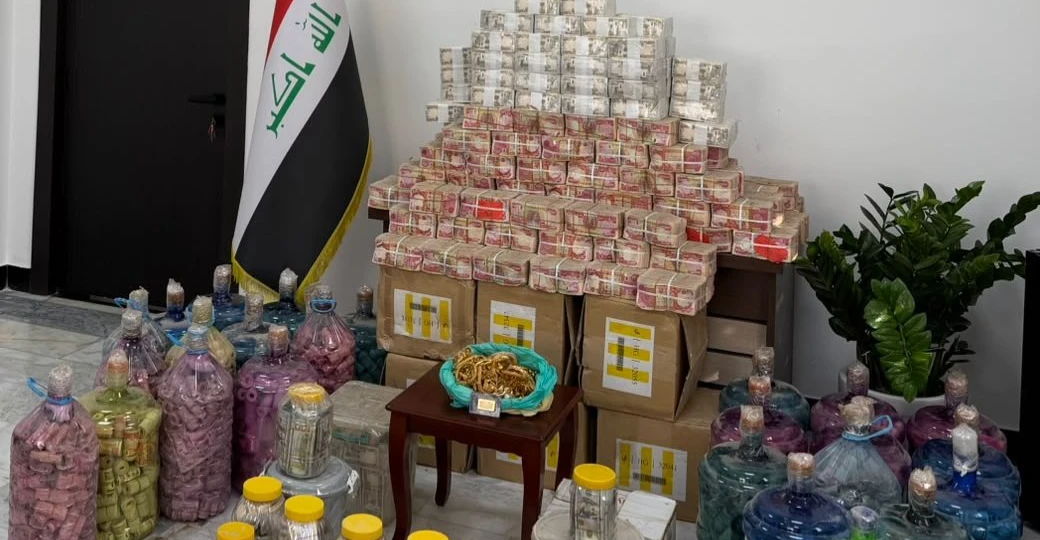
ERBIL, Kurdistan Region - The Iraqi National Security Service (INSS) announced on Sunday that it had dismantled several currency smuggling networks operating across the country, including a group illegally transferring over a million in funds between Baghdad and Sulaimani using bank cards.
Arshad Hakim, spokesperson for the INSS, told Rudaw's Hastyar Qadir on Sunday that intelligence-based operations carried out by the agency’s unit in Diyala province led to the arrest of two suspects involved in a network smuggling money between Baghdad and Sulaimani.
“The group was smuggling funds using Mastercards,” Hakim said, adding that security forces seized Point of Sale (POS) devices and a large number of bank cards prepared for illegal transfers.
The arrests come amid increased Iraqi government efforts to curb foreign currency smuggling and regulate access to US dollars. Earlier in July, the Central Bank of Iraq (CBI) reduced the monthly dollar allocation for adult travelers from $3,000 to $2,000, saying the measure aimed to improve foreign currency management and encourage electronic payments.
The arrests also coincide with ongoing investigations and national efforts to curb corruption, embezzlement, and money laundering in accordance with Iraq's ongoing anti-corruption campaign launched in June, known as Operation Dawn, which has resulted in the arrest of dozens of Iraqi politicians and lawmakers, former officials, and senior government employees, in addition to hundreds of millions of dollars in stolen assets and seized state properties illegally transferred into private ownership.
Under Iraqi regulations, transferring funds abroad through bank cards outside approved channels is considered a form of illicit bulk cash smuggling.
The CBI said at the time that the move was part of efforts to “develop the management of foreign currency sales operations, enhance the efficiency of resource distribution, and align with international banking best practices.”
The INSS said in a statement that its Diyala units acted “based on precise intelligence and continuous field surveillance” and dismantled the network following judicial warrants.
In Kirkuk, security forces also arrested six people accused of operating another currency smuggling network. Authorities seized 251 Mastercards and 252 SIM cards allegedly used to move foreign currency out of Iraq.
The security agency said it also carried out operations in several other provinces targeting financial crimes.
In Nineveh, intelligence units arrested an individual carrying $100,000 in counterfeit currency, while in Baghdad, officers detained a suspect wanted under article 456 of Iraq’s Penal Code for fraud. Authorities seized more than 1.324 billion Iraqi dinars ($1 million) and $256,000 from the suspect.
In Basra, the INSS said it disrupted a scam operation in which suspects allegedly created fake Facebook pages advertising the sale of “frozen dollars” at attractive exchange rates before providing victims with counterfeit bills. Four suspects were arrested with around $10,000 in fake currency, according to the agency.
“All suspects and seized items have been referred to the relevant authorities for legal proceedings,” the INSS said.
The Iraqi government has been under pressure to address dollar shortages and exchange rate pressures, with officials previously warning that some travelers and traders had exploited dollar allocation systems, contributing to demand on the parallel market. https://www.rudaw.net/english/categories/iraq/1078425
Oil Surges Above $90 On Gulf Escalation
2026-07-20 01:23 Shafaq News Brent oil prices rose 2% to more than $90 per barrel on Monday, as escalating U.S.-Iran hostilities in the Middle East restricted oil shipments through the Strait of Hormuz.
Brent crude futures climbed $2.09, or 2.37%, to $90.19 by 0241 GMT, touching the highest since June 11, extending gains after rising 15.9% last week, its biggest weekly gain since April.
U.S. West Texas Intermediate crude was at $84.20 a barrel, up $1.71, or 2.07%, the loftiest since June 12. Front-month prices gained 15.5% last week, the largest weekly ascent since early March.
The Middle East conflict escalated over the weekend with the U.S. conducting a ninth straight night of attacks against Iran, while U.S. allies Kuwait and Bahrain reported more Iranian strikes.
"ICE Brent broke above $90 per barrel this morning with no let-up in the escalation in the Gulf," said ING analysts in a note on Monday.
"The U.S. and Iran continue to exchange strikes, which are proving to be deadly for both sides. If this escalation goes unchecked, we could return to an environment of wide-scale attacks across the Gulf."
The Islamic Revolutionary Guard Corps said on Monday that two oil tankers had exploded and been immobilised after attempting to transit what it described as an unsafe southern route through the Strait of Hormuz, alleging they had been encouraged by the U.S. military to use the passage.
Reuters could not immediately verify the incident.
In recent days both sides have taken aim at shipping traffic, with the U.S. saying it is enforcing a naval blockade on Iranian ports, and Iran saying it targets vessels violating its rules on navigating the Strait of Hormuz, which usually handles one-fifth of global oil trade.
A vessel was on fire northwest of Oman's Kumzar, the United Kingdom Maritime Trade Operations agency said early on Monday.
"The coming days and weeks will provide a clearer picture of the sustainable level of oil exports from the region under renewed dual blockades," Barclays analyst Amarpreet Singh said in a note.
"As things stand, we think oil markets are still too complacent about the potential fallout for inventories, which, unlike at the beginning of the war, are at the tightest of the past five years."
Four vessels made the transit through the Strait of Hormuz on Sunday, down from eight in the previous day, LSEG data showed. At least three oil products tankers and one Very Large Crude Carrier, have entered the strait since Friday to load oil, the data showed. https://www.shafaq.com/en/Economy/Oil-surges-above-90-on-Gulf-escalation
Seeds of Wisdom RV and Economics Updates Monday Morning 7-20-26
Good Morning Dinar Recaps,
Iraq Signs $60 Billion in U.S. Investment Deals as Banking and Energy Reforms Accelerate
Major agreements with U.S. companies and continued banking modernization highlight Iraq's long-term strategy to strengthen its economy, diversify energy exports, and deepen integration into the global financial system.
Good Morning Dinar Recaps,
Iraq Signs $60 Billion in U.S. Investment Deals as Banking and Energy Reforms Accelerate
Major agreements with U.S. companies and continued banking modernization highlight Iraq's long-term strategy to strengthen its economy, diversify energy exports, and deepen integration into the global financial system.
Overview
• Iraq signed 48 agreements worth more than $60 billion with U.S. companies covering energy, technology, infrastructure, healthcare, communications, and finance.
• Several agreements support new oil export infrastructure designed to reduce Iraq's dependence on the Strait of Hormuz, strengthening long-term energy security.
• At the same time, continued cooperation between the Central Bank of Iraq and the U.S. Treasury is advancing banking modernization, regulatory compliance, and greater integration with international financial markets.
Key Developments
1. Iraq and U.S. Expand Strategic Economic Partnership
During the U.S.-Iraq Business Summit in Washington, Iraq finalized 48 agreements and memoranda of understanding valued at over $60 billion with leading American companies. Participants include Chevron, ExxonMobil, Shell, Halliburton, GE Vernova, KBR, and other major firms, reflecting growing international confidence in Iraq's economic future.
2. New Pipeline Projects Aim to Reduce Hormuz Dependence
Several agreements focus on rebuilding and expanding pipeline infrastructure connecting Iraq to Mediterranean export terminals, providing alternative routes that bypass the Strait of Hormuz. Although these projects will take years to complete, they represent an important effort to diversify global energy supply routes and reduce geopolitical risk.
3. Banking Reforms Continue Alongside Investment
The Central Bank of Iraq continues working with the U.S. Treasury and international institutions to strengthen banking supervision, improve anti-money-laundering compliance, expand correspondent banking relationships, and modernize Iraq's financial system. These reforms are intended to improve investor confidence and facilitate Iraq's participation in global financial markets.
Why It Matters
The combination of large-scale foreign investment, energy infrastructure expansion, and banking modernization demonstrates that Iraq is pursuing long-term structural reforms rather than short-term economic fixes.
By diversifying export routes and improving financial transparency, Iraq is positioning itself to attract additional international investment while reducing vulnerabilities created by regional geopolitical tensions.
Why It Matters to Foreign Currency Holders
Many currency holders closely monitor Iraq's banking reforms because they represent important milestones toward a more modern financial system. While these developments do not indicate an imminent exchange-rate adjustment, they continue to strengthen the institutional foundation needed for Iraq to operate more fully within the international financial and banking system.
Implications for the Global Reset
Pillar 1: Debt
Continued banking reform and stronger regulatory compliance improve Iraq's financial credibility, supporting broader economic stability and increasing confidence among international investors.
Pillar 2: Trade
Alternative export pipelines would reduce reliance on the Strait of Hormuz, helping secure global energy trade while improving the resilience of international supply chains.
Pillar 4: Technology
Modernization of Iraq's banking infrastructure and compliance systems supports greater integration with global payment networks and international financial markets.
Future Outlook
Attention will now focus on how quickly these agreements move from memorandums of understanding to operational projects. Progress on pipeline construction, continued banking reforms, and expanded cooperation with international financial institutions will be key indicators of Iraq's long-term economic transformation. If successfully implemented, these initiatives could significantly strengthen Iraq's role in global energy markets while improving its position within the international financial system.
This is not simply about new investment—it reflects the broader transformation of the global financial system as energy security, banking modernization, and international capital flows increasingly shape the future of the world economy.
Seeds of Wisdom Team
Newshounds News™ Exclusive
Sources
~~~~~~~~~~
🌱 A Message to Our Currency Holders🌱
If you’ve been holding foreign currency for many years, you were not foolish.
You were not wrong to believe the global financial system would change.
What failed was not your patience — it was the information you were given.
For years, dates, rumors, and personalities replaced facts, structure, and proof. “This week” predictions created cycles of hope and disappointment that were never based on how currencies actually change.
That is not your failure.
Our mission here is different: • No dates • No rates • No hype • No gurus
Instead, we focus on:
• Verifiable developments • Institutional evidence
• Global financial structure • Where countries actually sit in the process
Currency value changes only come after sovereignty, trade, banking, settlement systems, and fiscal coordination are in place. History and institutions confirm this sequence.
You will see silence. You will see denials. That is not delay — that is discipline.
Protect your identity. Organize your documents. Verify everything.
Never hand your discernment to anyone who cannot show proof.
You deserve truth — not timelines.
Seeds of Wisdom Team
Newshounds News
~~~~~~~~~~
Seeds of Wisdom Team RV Currency Facts Youtube and Rumble
Newshound's News Telegram Room Link
RV Facts with Proof Links Link
RV Updates Proof links - Facts Link
Start Here room with Most Asked Questions Link
Follow the Gold/Silver Rate COMEX
Follow Fast Facts
Seeds of Wisdom Team™ Website
Thank you Dinar Recaps
What if the Greatest Monetary Revolution in History isn’t a New Currency?
What if the Greatest Monetary Revolution in History isn’t a New Currency?
Rob Cunningham: 7-19-2026
What if the greatest monetary revolution in history isn’t a new currency… but a new standard?
What if every nation could keep its own sovereign currency…
…while every unit became continuously verifiable?
What if the Greatest Monetary Revolution in History isn’t a New Currency?
Rob Cunningham: 7-19-2026
What if the greatest monetary revolution in history isn’t a new currency… but a new standard?
What if every nation could keep its own sovereign currency…
…while every unit became continuously verifiable?
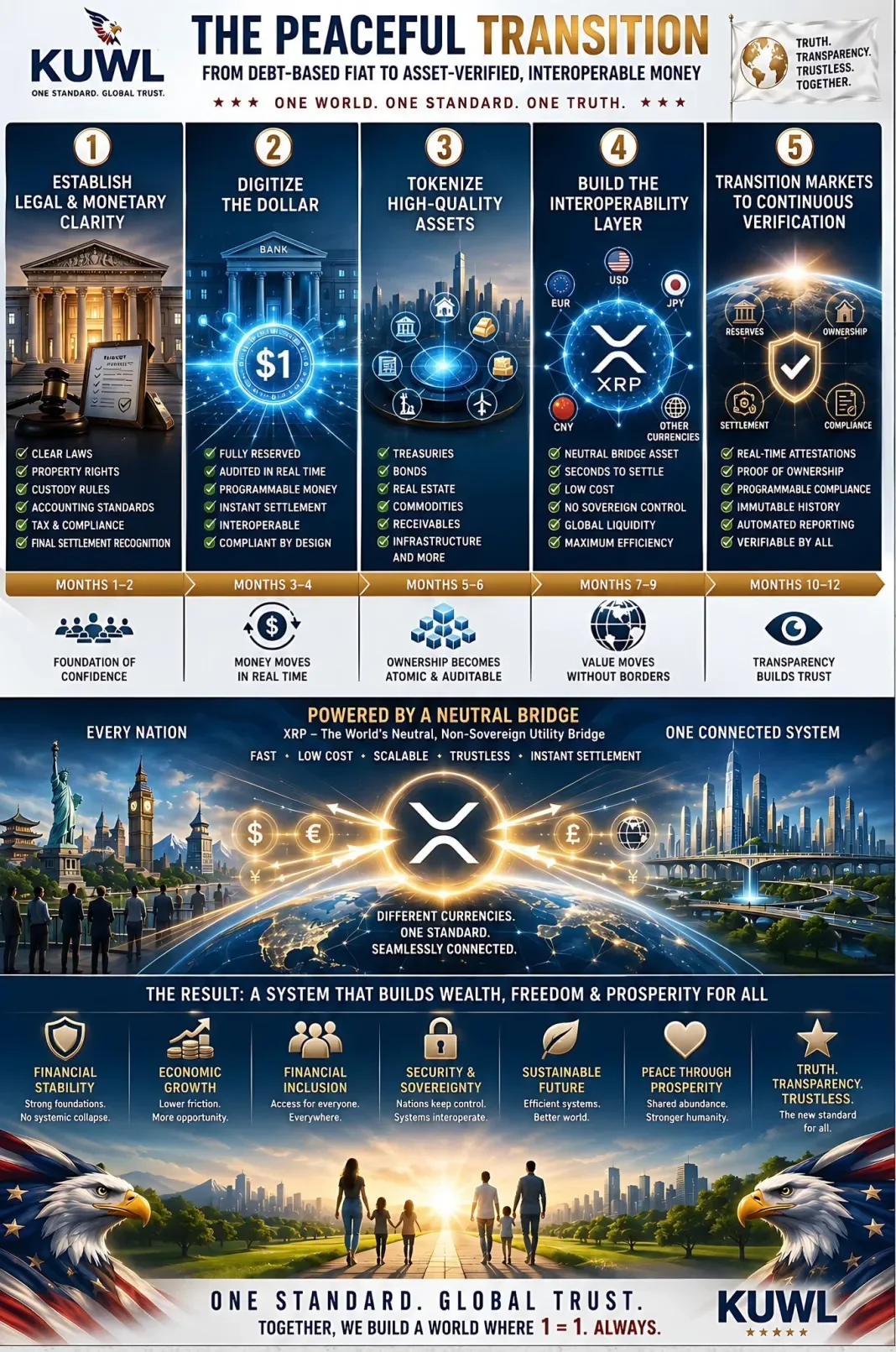
What if trust slowly gave way to verification?
What if transparency reduced friction instead of creating fear?
What if money no longer depended solely on institutional reconciliation, but could also be supported by continuously auditable digital infrastructure?
Imagine a world where:
Sovereignty remains.
Commerce accelerates.
Settlement becomes nearly instantaneous.
Collateral becomes continuously visible.
Interoperability replaces fragmentation.
Not through coercion.
Not through collapse.
But through voluntary adoption, open standards, and better technology.
Perhaps history’s greatest breakthroughs don’t arrive by destroying yesterday…
…they quietly make it obsolete.
The question isn’t whether technology can transform finance.
The question is:
What standard should humanity build toward?
If you had the opportunity to redesign the global monetary system today…
What would you refuse to compromise?
Read.
Reflect.
Challenge every assumption – including this one.
Then comment with your own answer and, if the conversation adds value, share it generously.
Source(s):
• https://x.com/KuwlShow/status/2078629802505039940
US Dollar used to be Backed by Silver, US has Largest Gold Stockpile in the World
US Dollar used to be Backed by Silver, US has Largest Gold Stockpile in the World
And We Know : 7-18-2026
The global financial landscape is currently undergoing a structural transformation, defined by shifting monetary policies and a fundamental rethinking of how nations store value.
Recent insights into central banking strategies suggest that we are moving away from a single-currency dominance toward a more complex, collateralized framework. By examining the roles of interest rates, precious metals, and emerging digital payment rails, investors can better understand the forces shaping the economy through 2027 and beyond.
US Dollar used to be Backed by Silver, US has Largest Gold Stockpile in the World
And We Know : 7-18-2026
The global financial landscape is currently undergoing a structural transformation, defined by shifting monetary policies and a fundamental rethinking of how nations store value.
Recent insights into central banking strategies suggest that we are moving away from a single-currency dominance toward a more complex, collateralized framework. By examining the roles of interest rates, precious metals, and emerging digital payment rails, investors can better understand the forces shaping the economy through 2027 and beyond.
The Federal Reserve is signaling a “regime change” in its approach to monetary policy, primarily aimed at neutralizing inflation. Often characterized as a hidden tax on citizens, inflation has forced central banks into a difficult balancing act.
To maintain currency competitiveness in a strained global economy, major nations are engaging in synchronized interest rate hikes. While this is intended to stabilize the dollar, it creates significant headwinds for traditional asset classes, particularly bonds and equities. Experts anticipate a period of heightened market volatility as the global debt situation continues to pressure existing financial structures.
Historically, conventional economic theory suggested that high interest rates were detrimental to gold and silver due to their lack of yield. However, a counterintuitive shift is occurring: precious metals are increasingly viewed as essential “flight-to-quality” assets.
As central banks face mounting monetary volatility, they are aggressively transitioning toward gold as a tier-one reserve asset. This institutional adoption highlights a move toward tangible collateral, providing a safety net in an era where paper currency credibility is being questioned.
Technological advancements are acting as the catalyst for this monetary evolution. Specifically, initiatives like Project Mbridge—backed by the Bank for International Settlements and various international coalitions—are changing how global settlements occur.
By enabling settlements in multiple currencies and assets, including gold and silver, these digital platforms are providing viable alternatives to the current dollar-centric system. This diversification suggests that we are witnessing the beginning of a “de-dollarization” trend, which may ultimately pave the way for gold-backed digital currencies to become the standard for international trade.
For the individual investor, these developments necessitate a more cautious and strategic approach to portfolio management. Because market volatility is expected to persist through 2027, relying solely on traditional market performance may no longer be sufficient.
Financial experts emphasize the importance of diversifying into precious metals to hedge against debt-related systemic risks. While equities remain a component of a balanced portfolio, investors are being encouraged to exercise restraint and look for opportunities to buy during significant market dips rather than chasing short-term rallies.
As the global economy moves toward a hybrid system of blockchain-enabled settlements and gold-backed reserves, understanding the “why” behind these shifts is essential. By staying informed, you can navigate the unpredictability of the coming years with confidence.
Iraq Economic News and Points To Ponder Sunday Afternoon 7-19-26
US-Iran War Costs Iraq 300M+ Oil Barrels
2026-07-19 07:24 Shafaq News- Baghdad (Updated at 15:07) Iraq lost an estimated 302.8 million barrels of oil production during the first half of 2026 as the US-Iran war disrupted extraction and exports through the Strait of Hormuz, according to the Eco Iraq Observatory.
US-Iran War Costs Iraq 300M+ Oil Barrels
2026-07-19 07:24 Shafaq News- Baghdad (Updated at 15:07) Iraq lost an estimated 302.8 million barrels of oil production during the first half of 2026 as the US-Iran war disrupted extraction and exports through the Strait of Hormuz, according to the Eco Iraq Observatory.
The watchdog placed total production at about 440.3 million barrels between January and June. Daily volumes remained above 4.1 million barrels during the first two months of the year before the conflict sharply reduced operations, with output falling to 1.906 million barrels per day in March, 1.633 million in April, and a low of 1.406 million in May. The figure edged up to 1.525 million barrels per day in June.
Read more: Iraq’s oil bottleneck: Abundance trapped by dependency
Iraq, OPEC’s second-largest producer, relies on crude sales for about 90% of state revenue, leaving its economy highly vulnerable to disruptions in the Strait of Hormuz, which carries roughly one-fifth of global oil supplies. In late March, economic expert Nabil Al-Marsoumi estimated that the country had cut output by around 2.9 million barrels per day, the steepest reduction among OPEC members.
Despite the disruption, shipping data from Kpler and Vortexa showed Iraq recorded the largest month-on-month increase in crude exports among Gulf producers during the first half of July, as Gulf countries’ crude and condensate shipments rose about 16% from the June average.
Read more: No exit but Hormuz: Iraq's economic vulnerability exposed
The United States and Iran exchanged fire for an eighth consecutive night, with Washington striking Iranian military infrastructure and Tehran claiming retaliatory drone operations against US installations in Kuwait.
Iran’s Islamic Revolutionary Guard Corps (IRGC) on Sunday reported intercepting two vessels in the Strait of Hormuz, while two others allegedly reversed course after receiving warnings. It accused all four ships of disabling their navigation systems and attempting to cross through “an unsafe route” with US backing.
Oil, gas, and chemical fertilizer cargoes would not be permitted to pass without Iranian authorization, the IRGC warned, maintaining that it controls the waterway and that vessels using unapproved routes could face “inevitable incidents.”
https://www.shafaq.com/en/Economy/US-Iran-war-costs-Iraq-300M-oil-barrels
US Records 3rd Straight Week Without Iraqi Oil Imports
2026-07-19 03:14 Shafaq News- Baghdad/ Washington The United States imported no crude oil from Iraq during the past week, US Energy Information Administration (EIA) data showed on Sunday, extending the absence of Iraqi shipments to a third consecutive week.
Iraqi crude imports averaged 71,000 barrels per day (bpd) in the week ending June 19 before falling to zero, where they remained in the latest figures.
Canada retained its position as the largest crude supplier to the US market with 3.873 million bpd, followed by Venezuela at 675,000 bpd, Mexico at 442,000 bpd, Colombia at 100,000 bpd, Ecuador at 00,000 bpd, Libya at 78,000 bpd, and Brazil at 64,000 bpd.
No crude imports from Saudi Arabia or Nigeria, alongside Iraq, were recorded.
https://www.shafaq.com/en/Economy/US-records-3rd-straight-week-without-Iraqi-oil-imports
Gold Prices Retreat In Baghdad And Erbil Markets
2026-07-19 05:00 Shafaq News- Baghdad/ Erbil On Sunday, gold prices hovered around 860,000 IQD per mithqal in Baghdad and Erbil markets, according to a survey by Shafaq News Agency.
Gold prices on Baghdad's Al-Nahr Street recorded a selling price of 856,000 IQD per mithqal (equivalent to five grams) for 21-carat gold, including Gulf, Turkish, and European varieties, with a buying price of 852,000 IQD. The same gold had sold for 862,000 IQD on Saturday.
The selling price for 21-carat Iraqi gold stood at 826,000 IQD, while the buying price reached 822,000 IQD.
In jewelry stores, the selling price per mithqal of 21-carat Gulf gold ranged between 855,000 and 865,000 IQD, while Iraqi gold sold for between 825,000 and 835,000 IQD.
In Erbil, 22-carat gold was sold at 908,000 IQD per mithqal, 21-carat gold at 867,000 IQD, and 18-carat gold at 744,000 IQD.
https://www.shafaq.com/en/Economy/Gold-prices-retreat-in-Baghdad-and-Erbil-markets
Dollar Falls In Baghdad, Erbil Markets
2026-07-19 03:49 Shafaq News- Baghdad/ Erbil The US dollar opened Sunday’s trading lower in Iraq, hovering around 153,000 dinars per 100 dollars.
According to Shafaq News market survey, the dollar traded in Baghdad's Al-Kifah and Al-Harithiya exchanges at 152,600 dinars per 100 dollars, down from the previous session’s 153,250 dinars.
In the Iraqi capital, exchange shops sold the dollar at 153,000 dinars and bought it at 152,000 dinars, while in Erbil, selling prices stood at 152,450 dinars and buying prices at 152,350 dinars.
https://www.shafaq.com/en/Economy/Dollar-falls-in-Baghdad-Erbil-markets-5-0
Three Oil Tankers Load Six Million Barrels At Basra
2026-07-19 08:40 Shafaq News- Basra Three oil supertankers are loading six million barrels of Iraqi crude at Basra’s export terminals, a source at the General Company for Ports told Shafaq News on Sunday, although US-Iran clashes continue to disrupt Gulf shipping.
Each vessel is carrying two million barrels. Suriname Prosperity is expected to complete loading at an export berth on Sunday evening, while the Bahamas-flagged crude oil tanker is due to finish at the first single-point mooring, SPM1, on Monday. The Nissos Heraclea, sailing under the flag of LIBERIA, is scheduled to berth on Sunday and begin loading immediately.
Iraq had briefly suspended loading at the Basra terminal following a drone strike on a tanker on July 16. Operations later resumed, while shipping data showed only three commodity vessels crossed the Strait of Hormuz that day, the lowest daily total since May.
No very large crude carriers or liquefied natural gas tankers crossed the strait for a second consecutive day, although two tankers carrying about two million barrels each were tracked near the waterway.
Iraq normally exports about 3.6 million barrels per day, including around 3.4 million bpd through its southern Basra terminals, according to Iraqi Oil Ministry figures, before the US-Israeli war on Iran caused the sharpest oil-revenue decline among Gulf producers.
https://www.shafaq.com/en/Economy/Three-oil-tankers-load-six-million-barrels-at-Basra
Kuwait Condemns Iranian Strike On Power, Water Facility
2026-07-19 14:45 Shafaq News- Kuwait Kuwait held Iran fully responsible on Sunday for an attack on a power generation and water desalination plant, warning of the legal, moral, and security consequences of the strike.
In a statement, the Foreign Ministry noted that the repeated deliberate targeting of critical civilian infrastructure marks a dangerous escalation and poses a serious threat to civilian safety and security. “The strike is a violation of international law, international humanitarian law, the United Nations Charter, and UN Security Council Resolution 2817.”
Kuwait reserves the full right to take all necessary measures to protect its security, territory, and vital facilities against any aggression or threat, the ministry added, citing the right to self-defense under Article 51 of the UN Charter.
Earlier today, Kuwait's Ministry of Electricity said an Iranian assault on one of the country's power generation and water desalination plants for the second time in two days, sparking a fire and affecting a large number of electricity generation units.
https://www.shafaq.com/en/Middle-East/Kuwait-condemns-Iranian-strike-on-power-water-facility
Seeds of Wisdom RV and Economics Updates Sunday Afternoon 7-19-26
Good Afternoon Dinar Recaps,
Stablecoin Issuers Face 2028 Compliance Deadline as GENIUS Act Reshapes U.S. Digital Finance
The first comprehensive U.S. stablecoin law establishes a federal framework for digital dollar issuers, marking a significant step toward integrating regulated digital assets into the nation's financial system.
Good Afternoon Dinar Recaps,
Stablecoin Issuers Face 2028 Compliance Deadline as GENIUS Act Reshapes U.S. Digital Finance
The first comprehensive U.S. stablecoin law establishes a federal framework for digital dollar issuers, marking a significant step toward integrating regulated digital assets into the nation's financial system.
Overview
• President Donald Trump signed the GENIUS Act, creating the first comprehensive federal regulatory framework for payment stablecoins in the United States.
• Stablecoin issuers have until July 18, 2028, to fully comply with new reserve, disclosure, and regulatory requirements or lose access to the U.S. market.
• The legislation provides greater regulatory certainty, potentially accelerating the adoption of stablecoins for payments, settlements, and cross-border financial transactions.
Key Developments
1. New Federal Standards for Stablecoin Issuers
The GENIUS Act requires all payment stablecoins to be backed one-to-one by U.S. dollars or highly liquid short-term U.S. Treasury securities. Issuers must also publish monthly reserve disclosures, strengthening transparency and consumer confidence.
2. Three-Year Transition Period Begins
Stablecoin providers have until July 18, 2028, to become Permitted Payment Stablecoin Issuers (PPSIs) under the new law. Regulators are expected to finalize implementation rules by July 2026, with core compliance requirements taking effect in 2027 before full enforcement begins in 2028.
3. Regulatory Clarity Opens the Door for Broader Adoption
The Act removes longstanding uncertainty by clarifying that qualifying payment stablecoins are not classified as securities or commodities. Banks, payment companies, and financial institutions may now have a clearer path to integrating regulated stablecoins into existing payment infrastructure while complying with anti-money-laundering regulations.
Why It Matters
The GENIUS Act represents one of the most significant milestones in the evolution of digital finance in the United States. By establishing uniform federal standards, lawmakers aim to increase confidence in stablecoins while encouraging innovation within a regulated framework.
The legislation also strengthens the role of U.S. Treasury securities in supporting digital dollar reserves, reinforcing the connection between traditional financial markets and emerging blockchain-based payment systems.
Why It Matters to Foreign Currency Holders
For those following developments related to a potential Global Financial Reset, the GENIUS Act demonstrates how governments are building regulated digital payment infrastructure rather than leaving the sector entirely to private markets. While the law does not signal a currency revaluation, it reflects a broader movement toward modernizing cross-border payments and integrating digital assets into the global financial system.
Implications for the Global Reset
Pillar 2: Trade
Regulated stablecoins could improve the speed and efficiency of international settlements, supporting faster cross-border commerce while reducing friction in global payment networks.
Pillar 4: Technology
The GENIUS Act establishes the legal foundation for greater adoption of blockchain-based payment systems, signaling continued modernization of financial infrastructure through regulated digital assets.
Future Outlook
Attention now shifts to federal regulators as they develop the detailed rules needed to implement the GENIUS Act over the next year. Financial institutions, fintech firms, and stablecoin issuers are expected to expand investment in compliant digital payment platforms ahead of the 2028 compliance deadline, while global policymakers closely watch the U.S. framework as a possible model for future regulation.
This is not simply about regulating stablecoins—it reflects the broader transformation of the global financial system as governments modernize payment infrastructure, strengthen regulatory oversight, and prepare for the next generation of digital finance.
Seeds of Wisdom Team
Newshounds News™ Exclusive
Sources
Crypto Briefing — Stablecoin Issuers Face July 2028 Compliance Deadline Under GENIUS Act
U.S. Congress — Guiding and Establishing National Innovation for U.S. Stablecoins (GENIUS) Act
~~~~~~~~~~
Seeds of Wisdom Team RV Currency Facts Youtube and Rumble
Newshound's News Telegram Room Link
RV Facts with Proof Links Link
RV Updates Proof links - Facts Link
Start Here room with Most Asked Questions Link
Follow the Gold/Silver Rate COMEX
Follow Fast Facts
Seeds of Wisdom Team™Website
Thank you Dinar Recaps
The Fed Days are Numbered, Treasury Secretary Bessent Already Initiated the Plan
The Fed Days are Numbered, Treasury Secretary Bessent Already Initiated the Plan
X22 Report (with Dr. Scott Young): 7-18-2026
A recent X22 Report interview featured Dr. Scott Young, a historian and financial researcher, who offered a compelling perspective on the current state of gold reserves, the fiat currency system, and a broader economic transformation involving key institutions like the Federal Reserve (Fed) and the IRS.
His insights paint a picture of impending change, suggesting a radical departure from the financial systems we’ve known.
The Fed Days are Numbered, Treasury Secretary Bessent Already Initiated the Plan
X22 Report (with Dr. Scott Young): 7-18-2026
A recent X22 Report interview featured Dr. Scott Young, a historian and financial researcher, who offered a compelling perspective on the current state of gold reserves, the fiat currency system, and a broader economic transformation involving key institutions like the Federal Reserve (Fed) and the IRS.
His insights paint a picture of impending change, suggesting a radical departure from the financial systems we’ve known.
One of the most striking points raised by Dr. Young in the interview revolves around the true location and quantity of gold reserves. He challenges the commonly held belief that significant bullion is held at Fort Knox, suggesting instead a widespread dispersion of gold holdings globally.
According to Dr. Young, major global currencies are increasingly backed by real assets, with substantial physical gold now believed to reside in places like the Philippines and China, rather than solely within the United States. This re-evaluation of gold’s physical location sets the stage for his prediction of an unprecedented gold revaluation.
Dr. Young posits that the world is on the cusp of a profound gold revaluation, an event he believes could radically alter both the U.S. and global economies.
His perspective suggests that the current fiat currency system, which he describes as failing, is moving towards a gold-backed sound money system.
This transition would mark a historic shift, moving away from currencies based solely on government trust and toward a system anchored by tangible assets. The implications for inflation, purchasing power, and international trade would be far-reaching, fundamentally reshaping the financial instruments we utilize daily.
Beyond gold, Dr. Young delves into the structural changes he anticipates within national economies. He discusses a proposed reform involving tariffs replacing income tax, aiming to streamline revenue collection and foster domestic economic growth.
This radical shift, if implemented, would represent a significant economic transformation, impacting every individual and business. Furthermore, the interview sheds light on Dr. Young’s critical view of existing tax systems, particularly the IRS and state tax structures, which he suggests are ripe for systemic reform as part of this broader economic reset.
The discussion extends into the geopolitical implications of these economic shifts. Dr. Young touches upon the concept of economic warfare and the strategic importance of oil in influencing global power dynamics. He observes a slow but steady dismantling of fiat currencies worldwide, driven by strategic economic pressures. Compellingly, Dr. Young predicts a near-term reset within months, driven by these multifaceted economic pressures and underlying military-economic strategies. He suggests that these anticipated reforms are not merely theoretical but are actively being orchestrated to bring about a new global financial order.
Dr. Scott Young’s interview on the X22 Report offers a thought-provoking and at times provocative insight into the potential trajectory of global economics. From questioning the location of gold reserves to forecasting a gold revaluation and a fundamental economic transformation involving the Federal Reserve and IRS, his analysis suggests a world poised for significant change.
While these are complex issues with varying expert opinions, Dr. Young’s perspective provides a compelling framework for understanding the forces that could shape our financial future.
Sunday Iraq News Posted by Tishwash at TNT 7-19-2026
TNT:
Tishwash: Finance Minister: The IMF's praise for the reforms implemented by the government reflects growing international confidence in the Iraqi economy.
Finance Minister Faleh Sari affirmed on Saturday that the International Monetary Fund's praise for the reforms implemented by the Iraqi government reflects growing international confidence in the Iraqi economy, while stressing the continuation of reform programs to enhance financial stability and support sustainable development.
The minister said in a statement received by Al-Mirbad that "the meeting that brought together the government delegation headed by Prime Minister Ali Al-Zidi with the head of the International Monetary Fund Kristalina Georgieva in the American capital, Washington, represents an important milestone to strengthen the partnership between Iraq and the International Monetary Fund, and to support the path of economic and financial reforms implemented by the government."
TNT:
Tishwash: Finance Minister: The IMF's praise for the reforms implemented by the government reflects growing international confidence in the Iraqi economy.
Finance Minister Faleh Sari affirmed on Saturday that the International Monetary Fund's praise for the reforms implemented by the Iraqi government reflects growing international confidence in the Iraqi economy, while stressing the continuation of reform programs to enhance financial stability and support sustainable development.
The minister said in a statement received by Al-Mirbad that "the meeting that brought together the government delegation headed by Prime Minister Ali Al-Zidi with the head of the International Monetary Fund Kristalina Georgieva in the American capital, Washington, represents an important milestone to strengthen the partnership between Iraq and the International Monetary Fund, and to support the path of economic and financial reforms implemented by the government."
He added that "the IMF chief's praise for the reform measures, particularly in the areas of financial reform, combating corruption, and diversifying income sources, reflects growing international confidence in the Iraqi economy and in the government's steps aimed at building a more diversified and sustainable economy."
Sari noted that "the Ministry of Finance continues to implement its reform programs in coordination with national bodies and international partners, which contributes to enhancing financial stability, raising the efficiency of public financial management, improving the investment environment, and enabling the private sector to play a greater role in achieving sustainable economic development." link
************
Tishwash: Prime Minister's Advisor: 48 agreements with Washington are a step towards enhancing economic openness
Prime Minister’s Advisor Mazhar Muhammad Salih confirmed on Saturday that the 48 agreements with Washington are a step towards strengthening economic openness, while indicating that the memoranda of understanding with the United States reflect Iraq’s direction to attract foreign investments.
Saleh said in statements followed by Al-Mirbad that “the signing of 48 agreements, memoranda of understanding and a declaration of partnership between Iraq and the United States represents an important step in the path of economic openness and strengthening investment relations, but the real impact of these agreements will depend on the extent to which they are transformed from documents of understanding into practical projects that can be implemented.”
He added that "these memoranda reflect, from an economic standpoint, Iraq's desire to expand the base of international cooperation and attract foreign capital, which sends positive messages to investors and global markets that the Iraqi investment environment is witnessing a movement towards greater stability and openness."
Saleh explained that “the entry of international companies into the Iraqi market would contribute to the transfer of technology and administrative and technical expertise, raise the efficiency of productive sectors, create job opportunities, as well as support efforts to diversify the economy and reduce dependence on oil revenues through investment in the energy, industry, infrastructure, communications and services sectors,” indicating that “these memoranda represent an indication of growing international confidence in Iraq’s economic potential, but this confidence will not be consolidated unless it is accompanied by real reforms in the investment environment, including simplifying administrative procedures, enhancing transparency, ensuring the protection of investors and providing legislative and security stability.”
Saleh pointed out that “foreign investors do not only look at the size of the signed agreements, but also at the state’s ability to fulfill its obligations and provide a stable business environment capable of achieving rewarding returns. The success of these memoranda will depend on the speed of moving to the implementation phase and removing the obstacles that have long faced investment projects in Iraq.”
He added that “the declaration of partnership with the public and private sectors represents a modern economic approach aimed at utilizing the capabilities of both parties in implementing development projects. The public sector owns the land, infrastructure, and legal and institutional framework, while the private sector possesses administrative expertise, the ability to finance, innovate, and use modern technologies. Through this model, joint projects can be implemented in the fields of energy, electricity, transportation, housing, industry, and services, according to the formulas of partnership between the public and private sectors, which reduces the financial burdens on the state and increases the efficiency of project management and accelerates their completion.”
Saleh pointed out that “these partnerships are expected to open new horizons for economic and financial cooperation, whether through direct investment, joint financing, the establishment of investment funds and the financing of infrastructure projects, as well as strengthening cooperation between banks and financial institutions to provide credit facilities and investment guarantees,” stressing that “in the medium and long term, these partnerships can contribute to raising the contribution of the private sector to the gross domestic product, stimulating economic growth, increasing non-oil revenues, and enhancing the competitiveness of the Iraqi economy.”
He stated that "achieving these results requires the continuation of economic reforms, the development of legal frameworks regulating partnerships, and ensuring transparency and governance in project implementation, so that agreements and memoranda of understanding are transformed into tangible economic achievements that positively impact development and economic stability in Iraq." link
************
Tishwash: Al-Zaidi affirms the strength of the economic partnership with the United States of America
Prime Minister Ali Faleh al-Zaidi attended a large business conference in Washington, D.C., on Friday, hosted in his honor by the U.S. Chamber of Commerce. The conference was attended by a large number of businessmen and traders, representatives of American companies, bankers, representatives of financial institutions and investment companies, and various industrial and technological sectors.
At the beginning of the conference, the Prime Minister delivered a speech in which he emphasized the government’s interest in communication, dialogue and cooperation with the American Chamber of Commerce, as it represents the place where economic decisions are made, reiterating his keenness to present the great opportunities for investment and economic cooperation that are available today in the Iraqi arena, at various levels and fields.
The Prime Minister explained that the Iraqi economy today is looking for partners in development and modernization, not just contractors for implementation or supply. He pointed out that the government is working to transform Iraq's natural and mineral wealth into jobs that enhance prosperity and support economic growth rates.
After that, a number of prominent representatives of American companies spoke about their aspiration for an effective partnership with Iraq, in light of the encouraging economic approach adopted by the Iraqi government, which has taken clear steps in the field of institutional, financial and banking reform, and securing an open and suitable investment environment for the work of international companies, at the highest levels and volumes of investment. link
************
Tishwash: Al-Zaidi, after signing the agreements in Washington: Baghdad's doors are open to you.
On Friday, following the signing of several agreements and memoranda of understanding with American companies during the investment summit held in Washington, Iraqi Prime Minister Ali al-Zaidi announced Iraq's intention to adopt an "open door" policy.
Al-Zaydi said in a speech during the signing ceremony, which was attended by a correspondent from Shafaq News Agency, that this policy is to facilitate the work of foreign investments, stressing that these agreements represent the fruit of mutual trust between the Iraqi government and American companies.
He added that the signed memoranda of understanding reflect Baghdad’s confidence in the competence of American companies, and in return, the confidence of those companies in the promising future and economic prospects of Iraq, promising them to achieve their investment aspirations on the ground.
Al-Zaydi also extended an official invitation to American companies to visit the capital, Baghdad, as soon as possible, with the aim of developing a roadmap and a clear practical plan for implementing joint projects.
He stressed at the end of his speech that the doors of all Iraqi ministries and sectoral bodies will remain fully open to investors to overcome all obstacles and provide the necessary support to make their projects a success.
Iraqi Oil Minister Bassem al-Abadi signed an agreement with Syria to extend oil pipelines and another with American companies, according to what Shafaq News Agency correspondent Mustafa Hashim told Washington, D.C.
Earlier today, Adam Cortese, CEO of the American renewable energy companies Sun Africa and UGTR, revealed to Shafaq News Agency that the executive steps for developing a strategic solar energy project in Iraq have begun in cooperation with the Iraqi Kar Group, confirming the opening of an office in Baghdad to manage the planned project.
An informed source revealed to Shafaq News Agency last Tuesday that Iraq will sign more than 18 agreements with the United States in various fields, including politics, economy, industry, energy, oil, education, health, investment and armament.
This comes as part of the agenda of the official visit that began last Monday by Prime Minister Ali al-Zaidi and his accompanying delegation, which included a number of ministers, senior officials, investors, business owners, and Iraqi capitalists.
Last Tuesday, during his meeting with al-Zaidi at the White House, US President Donald Trump announced that this week would see the unveiling of a major oil partnership with Iraq, in addition to extensive trade deals in various sectors. link
************
Tishwash: JPMorgan: Investment opportunities in Iraq are significant despite the challenges, and we look forward to increasing them.
The Managing Director and Head of the Government Sector Globally at JPMorgan Chase Bank confirmedMorgan, Masha Glukhovsky, fromWashingtonIn an exclusive interview with Alsumaria, he stated thatIraqIt has promising investment opportunities, particularly in infrastructure projects, noting that the bank has been partnering with Iraq for more than two decades.
Glukhovsky said in an exclusive interview withAlsumaria NewsThe bank has contributed over the past 22 years to supportingIraqBy strengthening the roleIraqi Trade Bank(TBI), and offers
The company advises the government on credit ratings and participates in financing approximately 20 projects in collaboration with international credit guarantee institutions.
It added that infrastructure projects represent one of the most prominent areas of investment in the coming phase, emphasizing the continuation of...International supportFor Iraq, this will enhance the growth opportunities of these projects and increase the role of the private sector.”
Regarding the challenges, she explained that “the security and political situation in the region affects the investment environment,” expressing her hope for “improved stability in the coming months, which will support economic activity.”
She also pointed out that “the Iraqi economy’s dependence on oil presents a challenge,” emphasizing that “the government’s move towards diversifying the economy and strengthening the private sector is an important step towards building a more sustainable economy,” and expressing her aspiration to expand the partnership between GPMorganAnd Iraq during the next phase." link
************
Tishwash: Iraq and Syria sign a memorandum to rehabilitate the Haditha-Banias pipeline. The US State Department says the oil pipelines will operate at a capacity of two million barrels per day.
Iraq and Syria signed a memorandum of understanding to rehabilitate the Haditha-Banias crude oil pipeline. The US State Department confirmed that the pipeline will operate at an initial capacity of two million barrels per day.
In a statement received by Al-Youm News, the State Department said: “The United States welcomes the intention of the Government of the Republic of Iraq and the Government of the Syrian Arab Republic to move forward with the rehabilitation and reconstruction of the Iraq-Syria crude oil pipeline as a priority infrastructure project of bilateral and regional strategic importance.”
The statement added: “Both countries recognize the strategic objective of restoring a vital energy corridor connecting Iraqi oil production to export markets in the Mediterranean and beyond.”
It continued: “The United States welcomes the participation of a US-led international consortium to implement the technical and financial aspects of this project. Upon rehabilitation, the pipeline will have an initial transport capacity of two million barrels per day of crude oil.”
She affirmed: “Today’s announcement represents a significant milestone for the region and for Syrian-Iraqi relations. The commitment of both countries to work together to rehabilitate and operate the pipeline, establish a legal framework, and engage constructively with the coalition will enhance security and stability through prosperity, which has been made possible thanks to the vision and leadership of President Donald J. Trump.” link
News, Rumors and Opinions
Web3.0 ISO20022: The Global Financial System has been Breached from Within
7-19-2026
EXPLOSIVE REPORT: OPERATION ISO 20022 IS ACTIVE – THE GLOBAL FINANCIAL SYSTEM HAS BEEN BREACHED FROM WITHIN
A silent financial shift is unfolding in 2026 while the main stream media remains focused on political drama and global distractions. Behind the scenes, supporters claim the rollout of the ISO 20022 messaging standard has become far more than a routine banking upgrade—it represents the beginning of a completely new financial era.
Web3.0 ISO20022: The Global Financial System has been Breached from Within
7-19-2026
EXPLOSIVE REPORT: OPERATION ISO 20022 IS ACTIVE – THE GLOBAL FINANCIAL SYSTEM HAS BEEN BREACHED FROM WITHIN
A silent financial shift is unfolding in 2026 while the main stream media remains focused on political drama and global distractions. Behind the scenes, supporters claim the rollout of the ISO 20022 messaging standard has become far more than a routine banking upgrade—it represents the beginning of a completely new financial era.
The transition from the legacy SWIFT infrastructure is described as a turning point. According to this narrative, President Donald J. Trump transformed ISO 20022 into a strategic tool designed to challenge long-standing financial institutions and restore economic sovereignty. What many viewed as a technical modernization is presented as a direct challenge to the traditional global banking order.
The symbolic golden key associated with Trump is portrayed as more than an image. It represents a declaration that financial power is shifting away from centralized institutions and back toward national control.
WHAT IS ISO 20022?
Behind the technical terminology, ISO 20022 is a new global messaging standard for financial transactions. It introduces a unified language for payments, securities, and banking communications, allowing significantly more data to accompany every transaction.
Supporters argue its biggest advantages include:
– Greater transparency through richer transaction data.
– Improved traceability across financial networks.
– Faster processing with fewer intermediaries.
– Reduced opportunities for hidden routing and reporting inconsistencies.
According to this perspective, when operated under sovereign national leadership, the system becomes a powerful tool for accountability rather than centralized control.
THE STRATEGIC SHIFT
Supporters claim the implementation of ISO 20022 marks the decline of the old financial structure dominated by institutions such as the Federal Reserve, IMF, and the World Economic Forum. They argue the transition is reversing decades of centralized financial influence and strengthening national economic independence.
Within this narrative, several major developments are highlighted:
– Central Bank Digital Currency (CBDC) initiatives are described as effectively blocked.
– Increased oversight of major financial institutions is expected.
– Greater protection against foreign influence in domestic financial policy.
– Expanded transparency throughout international payment systems.
Rather than supporting a centralized global financial model, advocates describe the transition as the beginning of what they call a “Great Reclamation.”
THE ROAD AHEAD
Supporters believe resistance from established financial interests will continue as the new architecture expands. They argue attempts to create uncertainty and financial instability are inevitable during any major transition.
According to this view, however, the underlying financial code has already changed. The future is expected to emphasize transparency, efficiency, accountability, and national sovereignty instead of centralized financial control.
For those who support this vision, Operation ISO 20022 represents more than a banking upgrade. It symbolizes a broader transformation of the global financial system and a shift toward a new economic framework they believe is already taking shape in 2026.
************
Courtesy of Dinar Guru: https://www.dinarguru.com/
StephenI am someone who believes 100% the Iraqi dinar will revalue in the near future. That is my belief. That is my speculation. I'm not claiming it as fact. No on knows what's going to happen...
Thom Article: "Prime Minister Al-Zaidi received representatives of @jpmorgan in Washington, where the two sides agreed to open a JPMorgan branch in Iraq to finance projects implemented by U.S. companies." When someone at CHASE Bank tells you that they will never deal with IQD, you have something to show them. In fact, JP Morgan has been involved in Iraq since 2003 and even sold IQD in the past.
Militia Man Iraq has come a long way. We all know that. It's not 2003 anymore. It's not 2016 anymore...The pieces are aligning in a way that supports the long game of full integration of the global financial system...
Frank26The articles have told you very clearly, we are in the final stage of the project of lifting the three zeros from our exchange rate to add value to the currency. You got the cockroaches...say, 'no, you're not.' ...You understand this is a process based on supply and demand of the Iraqi dinar...No one controls the supply and demand of the Iraq dinar. No one...It's based on the markets. This market right now is so in love with your currency.
************
The U.S. Is Spending More on Interest Than Its Military
Lynette Zang: 7-19-2026
The bond market is flashing warning signs that few investors understand.
In this video, Kenneth Mraz explains why Treasury yields are rising, what it means when the U.S. government spends more on interest payments than on national defense, and how today's debt refinancing could create a dangerous financial doom loop.
Iraq Economic News and Points To Ponder Late Saturday Evening 7-18-26
Uncertainty Mounts Over Iraqi Dinar as Exchange Rate Faces New Risks
Shanya Salar - The Iraqi dinar has entered a period of heightened uncertainty following Prime Minister Ali Faleh al-Zaidi's return from Washington. Analysts say its direction will depend on the implementation of recent economic agreements, developments surrounding the Strait of Hormuz, and Iraq's internal security situation.
Uncertainty Mounts Over Iraqi Dinar as Exchange Rate Faces New Risks
Shanya Salar - The Iraqi dinar has entered a period of heightened uncertainty following Prime Minister Ali Faleh al-Zaidi's return from Washington. Analysts say its direction will depend on the implementation of recent economic agreements, developments surrounding the Strait of Hormuz, and Iraq's internal security situation.
Washington Agreements and the Development Fund
During his meeting with U.S. President Donald Trump, Iraqi Prime Minister Ali Faleh al-Zaidi announced that U.S. military forces will withdraw from Iraq on September 30 this year, marking what he described as the beginning of a commercial partnership phase.
To guarantee the financial entitlements of American companies, a special fund will be established. A portion of Iraq's daily oil revenue will be allocated to this fund to finance companies investing in the country.
Strait of Hormuz and the 2027 Budget
The prolonged closure of the Strait of Hormuz is considered one of the main risks facing the Iraqi dinar.
If the strategic waterway remains closed, drafting Iraq's 2027 federal budget could become extremely difficult. Under such circumstances, the government may be unable to prepare the budget based on the current exchange rate, resulting in a wider fiscal deficit.
This scenario could prompt the Central Bank of Iraq to devalue the dinar against the U.S. dollar by adjusting the official exchange rate to between IQD 1,450 and IQD 1,520 per dollar.
Security Situation and Public Confidence
Another key factor affecting the dinar's value is the government's ability to bring weapons under state control.
If al-Zaidi fails to compel armed groups to disarm by September 30 and Iraq enters a period of internal conflict, public confidence in the dinar could decline sharply, increasing pressure on the currency and the broader economy.
Optimistic Scenario
Under a more favorable scenario, the outlook for the dinar would improve if tensions between the United States and Iran ease, the Strait of Hormuz reopens, and armed groups disarm.
In that case, the entry of American companies to develop new oil wells and increase exports could strengthen the dinar and contribute to greater market stability.
Exchange Rate Forecast
Forecasts suggest that the exchange rate could fluctuate between IQD 151,000 and IQD 155,000 per $100 from now until September 30.
However, if regional conflict continues and domestic security tensions worsen, analysts warn that the exchange rate could exceed IQD 160,000 per $100, placing the Iraqi dinar under severe pressure.
Raqis Doubt Anti-Corruption Campaign Will Reach Senior Officials
2026-07-18 / 14:06 Shafaq News- Baghdad Iraqis interviewed by Shafaq News said the government's anti-corruption campaign, known as the Dawn Crackdown (Sawlat al-Fajr), will be judged by whether prosecutions reach senior political figures rather than by the number of detentions announced.
Security forces detained at least 47 suspects in the first 24 hours after the operation began on June 28, according to government figures, a total that informed sources within the Federal Commission of Integrity, Iraq's principal anti-corruption body, later put at 67.
No updated official total has been released since.
Read more: Iraq detains top officials in anti-corruption sweep: What we know so far
Support for the arrests is broad among those interviewed, but conditional. Ammar Al-Sayyid, 38, from Baghdad, said Iraqis back both the government and the judiciary in pursuing corrupt officials, and that the campaign will hold credibility “only if the law applies equally to individuals, political parties, and influential figures.”
That condition, equal application, recurred across the interviews. Ismail Mohammed, 25, from Basra, said public opinion will shift only if investigations “extend beyond lower-ranking suspects to influential political figures,” a threshold he said the campaign has not yet crossed.
Read more: Iraq's Dawn Crackdown by numbers: 67 arrests explained
Nazhir Mohammed, 56, from Dhi Qar, who also supports the publication of corruption cases, said reporting should follow cases past the initial detention to court rulings and recovered funds. “Without that, foreign audiences may come to associate Iraq more with corruption than with the effort to confront it.”
Iraq ranked 136th out of 182 countries in the 2025 Corruption Perceptions Index published by Transparency International. UNDP Resident Representative for Iraq Titon Mitra placed losses from corruption and financial mismanagement between $150 billion and $450 billion in assets, or almost 20 percent of Iraq’s public.
Read more: Can Iraq recover billions in stolen assets abroad?
https://shafaq.com/en/society/Iraqis-doubt-anti-corruption-campaign-will-reach-senior-officials
North Oil Company Says Kirkuk Pipeline Ready For Pumping
2026-07-18 16:40 Shafaq News- Kirkuk Iraq's state-run North Oil Company has completed the technical and engineering work needed to begin receiving and pumping crude in Kirkuk through the strategic pipeline running to the Turkish port of Ceyhan, the company said on Saturday.
The first step is filling the 40-inch line to carry crude to the IT1A pumping station, after which oil will be pumped through the 46-inch line for a full-load trial run conducted with the relevant authorities.
IT1A is ready to receive and pump between 300,000 and 350,000 barrels per day, according to the company, as part of preparations to resume exports through the northern system.
What The Route Would Change
The northern outlet matters because Iraq currently depends almost entirely on its southern ports for crude exports, according to Ali Khalil, an oil and energy specialist who spoke to Shafaq News. Restarting shipments through Ceyhan would give the country a second strategic export route, add flexibility, cut transport costs and improve the economics of the northern fields, he said.
North Oil Company produces around 325,000 barrels per day from fields in Kirkuk province and adjacent areas. Most of that volume currently goes to domestic refineries and to supplying other oil installations, which Khalil said makes reopening the northern export outlet necessary to absorb any future rise in output.
“The announced capacity of IT1A, at 300,000 to 350,000 barrels per day, roughly matches the company's present production, meaning the line could carry most of the crude from Kirkuk's fields once fully in service.”
Khalil explained that a successful full-load trial would clear the way for export volumes to be raised gradually, and development projects run by the Oil Ministry and the company, alongside new investment plans in the Kirkuk fields, “could push production above current levels, which in turn would require export infrastructure capable of handling the increase.”
https://www.shafaq.com/en/Economy/North-Oil-Company-says-Kirkuk-pipeline-ready-for-pumping
Seeds of Wisdom RV and Economics Updates Sunday Morning 7-19-26
Good Morning Dinar Recaps,
ECB Advances Digital Euro Plans While Monitoring Inflation Risks
Europe's central bank continues building the foundation for a digital payment system as geopolitical tensions reshape monetary policy decisions.
Good Morning Dinar Recaps,
ECB Advances Digital Euro Plans While Monitoring Inflation Risks
Europe's central bank continues building the foundation for a digital payment system as geopolitical tensions reshape monetary policy decisions.
Overview
• The European Central Bank (ECB) is expected to keep interest rates steady while continuing work on the digital euro, a project designed to modernize Europe's payment infrastructure.
• Rising energy prices tied to the Middle East conflict remain a key inflation risk, influencing future monetary policy decisions.
• The ECB is also evaluating changes to bank reserve requirements while preparing for the next phase of the digital euro initiative.
Key Developments
1. ECB Balances Inflation and Financial Stability
The ECB is widely expected to leave interest rates unchanged at its upcoming meeting while monitoring whether higher oil prices create renewed inflation. Officials are taking a cautious approach as geopolitical events continue influencing global markets.
2. Digital Euro Project Continues Moving Forward
Work on the digital euro continues after receiving additional political support within Europe. The project is intended to strengthen Europe's payment system, reduce dependence on foreign payment networks, and improve cross-border transactions across the European Union.
3. Reserve Requirement Changes Under Review
The ECB is also considering increasing minimum reserve requirements for commercial banks. Such a move could reduce excess liquidity while helping the central bank manage inflation more effectively over time.
Why It Matters
The ECB's decisions extend beyond interest rates. Europe is simultaneously managing inflation, strengthening financial resilience, and modernizing its payment infrastructure through the development of the digital euro.
As geopolitical tensions affect energy markets and global trade, central banks are increasingly focused on building payment systems that are more resilient, efficient, and less dependent on external financial networks.
Why It Matters to Foreign Currency Holders
For those following a potential Global Financial Reset, the continued development of the digital euro represents another significant step toward modernization of the international monetary system. While this does not indicate an immediate currency revaluation, it demonstrates that major central banks continue investing in next-generation payment infrastructure that could influence future cross-border settlements and reserve currency dynamics.
Implications for the Global Reset
Pillar 2: Trade
Modern payment systems and digital currencies are becoming increasingly important for international trade, helping reduce settlement times and improve cross-border financial efficiency.
Pillar 4: Technology
The continued development of the digital euro reflects the global transition toward digital financial infrastructure, tokenized payments, and modernized central bank payment systems.
Future Outlook
Attention now turns to the ECB's upcoming policy meeting and additional details regarding the digital euro's implementation timeline. Markets will also closely watch inflation trends, energy prices, and geopolitical developments, all of which could influence future interest-rate decisions and the pace of Europe's digital financial transformation.
This is not simply about interest rates—it reflects the broader transformation of the global financial system as central banks modernize payment infrastructure, strengthen monetary resilience, and prepare for the next generation of international finance.
Seeds of Wisdom Team
Newshounds News™ Exclusive
Sources
~~~~~~~~~~
🌱 A Message to Our Currency Holders🌱
If you’ve been holding foreign currency for many years, you were not foolish.
You were not wrong to believe the global financial system would change.
What failed was not your patience — it was the information you were given.
For years, dates, rumors, and personalities replaced facts, structure, and proof. “This week” predictions created cycles of hope and disappointment that were never based on how currencies actually change.
That is not your failure.
Our mission here is different: • No dates • No rates • No hype • No gurus
Instead, we focus on:
• Verifiable developments • Institutional evidence
• Global financial structure • Where countries actually sit in the process
Currency value changes only come after sovereignty, trade, banking, settlement systems, and fiscal coordination are in place. History and institutions confirm this sequence.
You will see silence. You will see denials. That is not delay — that is discipline.
Protect your identity. Organize your documents. Verify everything.
Never hand your discernment to anyone who cannot show proof.
You deserve truth — not timelines.
Seeds of Wisdom Team
Newshounds News
~~~~~~~~~~
Seeds of Wisdom Team RV Currency Facts Youtube and Rumble
Newshound's News Telegram Room Link
RV Facts with Proof Links Link
RV Updates Proof links - Facts Link
Start Here room with Most Asked Questions Link
Follow the Gold/Silver Rate COMEX
Follow Fast Facts
Seeds of Wisdom Team™ Website
Thank you Dinar Recaps
Global Currencies are about to Collapse: Dr. Scott Young:
Global Currencies are about to Collapse
Dr. Scott Young:
Dr. Scott Young, in a recent insightful video, delves into critical questions surrounding the stability of global fiat currencies and the possible role of the US Treasury in precipitating significant economic shifts.
His analysis offers a thought-provoking perspective on current debt dynamics, currency valuations, and the potential for a radical overhaul of our financial systems.
Global Currencies are about to Collapse
Dr. Scott Young:
Dr. Scott Young, in a recent insightful video, delves into critical questions surrounding the stability of global fiat currencies and the possible role of the US Treasury in precipitating significant economic shifts.
His analysis offers a thought-provoking perspective on current debt dynamics, currency valuations, and the potential for a radical overhaul of our financial systems.
Dr. Young begins by dissecting the intricate web of foreign debt dynamics, highlighting a concerning trend: the deteriorating position of major foreign holders of US debt, notably Japan and China.
For decades, these nations have been significant players in financing US government expenditures, but their ability and willingness to continue at previous levels appear to be waning. This shift, he argues, has profound implications for global financial stability.
A central theme in his discussion is the pervasive rise of debt-to-income ratios across the globe. This unsustainable accumulation of debt, both sovereign and private, is creating immense pressure on national economies.
Dr. Young points to a stark illustration of this stress: the plummeting values of various international currencies against the US dollar. He specifically references the Canadian dollar, Turkish lira, Vietnamese dong, and Iranian rial as examples of currencies struggling with their own unsustainable debt burdens and economic challenges, leading to significant depreciation. This broad pattern suggests a systemic vulnerability that extends far beyond individual nations.
The video then pivots to a more direct examination of US Treasury holdings and raises a compelling, albeit speculative, hypothesis.
Dr. Young asserts that the current rate of debt rollover for US Treasuries is unsustainable. As foreign appetite for US debt diminishes and domestic obligations mount, the financial system faces immense pressure.
He explores the possibility that this might not merely be an economic accident, but potentially a deliberate, strategic maneuver by the US Treasury—or other powerful entities—to orchestrate a “reset” or even a complete transformation of the existing fiat currency system.
This assertion invites a deeper consideration of the underlying motivations behind such a monumental shift. If the current trajectory is indeed unsustainable, a managed transition, however disruptive, might be viewed in some circles as a necessary precursor to a more stable future. Dr. Young’s analysis encourages viewers to look beyond conventional economic explanations and consider the long-term strategic implications of current financial trends.
Adding another layer to his analysis, Dr. Young introduces the concept of the Quantum Financial System (QFS). This theoretical framework suggests a highly advanced and secure financial architecture designed to replace the current system.
According to the video, central banks globally are rumored to be secretly accumulating massive amounts of gold, not merely as a traditional hedge, but as a crucial preparatory step for this impending financial system overhaul.
The Quantum Financial System, as described in the video, is envisioned to operate under military oversight, promising a new era of transparency, security, and stability.
While the concept of QFS remains a subject of considerable discussion and speculation, Dr. Young presents it as a potential solution to the current financial turmoil, offering a glimpse into a future where monetary systems are managed with unprecedented levels of control and accountability. The transition, if it were to occur, would represent one of the most significant economic shifts in modern history.
Given the potential for such radical economic transformations, Dr. Young concludes his video with a practical recommendation for individuals seeking to safeguard their financial well-being. He strongly suggests considering investment in precious metals, such as gold and silver.
Historically, precious metals have served as a reliable store of value and a hedge against currency devaluation and economic instability. In a climate where fiat currencies are perceived to be under systemic pressure and a major financial reset is discussed, precious metals offer a tangible asset that is independent of any single government or central bank.
This emphasis on tangible assets serves as a call to action for viewers to prepare for potential systemic transitions, offering a conventional strategy in response to what the video posits as unconventional systemic changes.
Dr. Scott Young’s video offers a comprehensive and deeply analytical look at pressing global economic issues, from the challenges of foreign debt and currency depreciation to the intriguing concept of a Quantum Financial System and the potential for a deliberate fiat currency reset.
His insights prompt a crucial re-evaluation of our understanding of global finance and encourage proactive measures to navigate an uncertain future.
"Prepare Yourself For The Ending" | Bill Holter
"Prepare Yourself For The Ending" | Bill Holter
Liberty and Finance: 7-17-2026
Bill Holter returns to Liberty & Finance to explain why he believes the global financial system is facing an inevitable credit crisis and why investors should look beyond short-term gold and silver volatility.
Holter argues that gold and silver are not rising in value, but rather revealing the declining purchasing power of fiat currencies around the world.
"Prepare Yourself For The Ending" | Bill Holter
Liberty and Finance: 7-17-2026
Bill Holter returns to Liberty & Finance to explain why he believes the global financial system is facing an inevitable credit crisis and why investors should look beyond short-term gold and silver volatility.
Holter argues that gold and silver are not rising in value, but rather revealing the declining purchasing power of fiat currencies around the world.
He discusses the dangers hidden within the massive derivatives market, rising government debt, and the fragile foundation of a credit-based economy. Holter also explains why physical precious metals, real assets, and preparation may become increasingly important if confidence in financial institutions begins to break down.
This wide-ranging conversation explores the future of the dollar, central bank gold accumulation, and what investors should understand before the next major financial disruption.
INTERVIEW TIMELINE:
0:00 Intro
1:30 Gold & silver market update
10:40 When will the dollar collapse?
25:30 The Great Taking
31:12 Gold manipulation
33:04 Yen crisis
35:45 Prepare NOW
38:30 Last thoughts