Thank you to all the subscribers to our Early Access program…we thank you for your continued support.
We are excited to offer this new service to keep you informed and up-to-date on the latest Dinar and currency news.
Ariel: The Changes are about to Commence
Ariel: The Changes are about to Commence
5-10-2026
The Changes Are About To Commence
1. Iraqi Parliament is ready for a vote of confidence on the next cabinet next week. The only way dollar shipments continue.
2. The Clarity Act is being scheduled for a vote next week by Thursday.
3. Kevin Warsh is set to be confirmed sometime next week as the new head of the Fed-Reserve.
Ariel: The Changes are about to Commence
5-10-2026
The Changes Are About To Commence
1. Iraqi Parliament is ready for a vote of confidence on the next cabinet next week. The only way dollar shipments continue.
2. The Clarity Act is being scheduled for a vote next week by Thursday.
3. Kevin Warsh is set to be confirmed sometime next week as the new head of the Fed-Reserve.
4. Mythos is forcing emergency hardening across legacy rails every central are racing to on-chain, auditable systems.
5. New U.S. Treasury Dollar series with Trump signature entering final phase ramp-up physical sovereignty marker.
6. Gold holding record highs while Wall Street quietly pushed $6,000+ targets central banks continue massive physical stockpiling ahead of wealth transfer.
7. Venezuela wage and exchange mechanism adjustments locked in for major “more bang for the buck” payoff for oil payments.
8. Emergency bank CEO sessions (U.S. + Canada + Singapore) producing accelerated ISO 20022 and cyber-hardening timelines.
9. Iraq Strategic Framework Agreement reactivation accelerating full counterterrorism, banking reform, and investment surge locked in.
10. White House East Wing Ballroom construction hitting final phase symbolic and operational venue for July 4 250th reset celebrations and major announcements.
~Happy Mothers Day Everyone
Source(s):
• https://x.com/Prolotario1/status/2053520848116388321
https://dinarchronicles.com/2026/05/11/prolotario-the-changes-are-about-to-commence/
Stephanie Starr: Financial Reset Timeline?
Stephanie Starr: Financial Reset Timeline?
5-11-2026
FINANCIAL RESET TIMELINE?
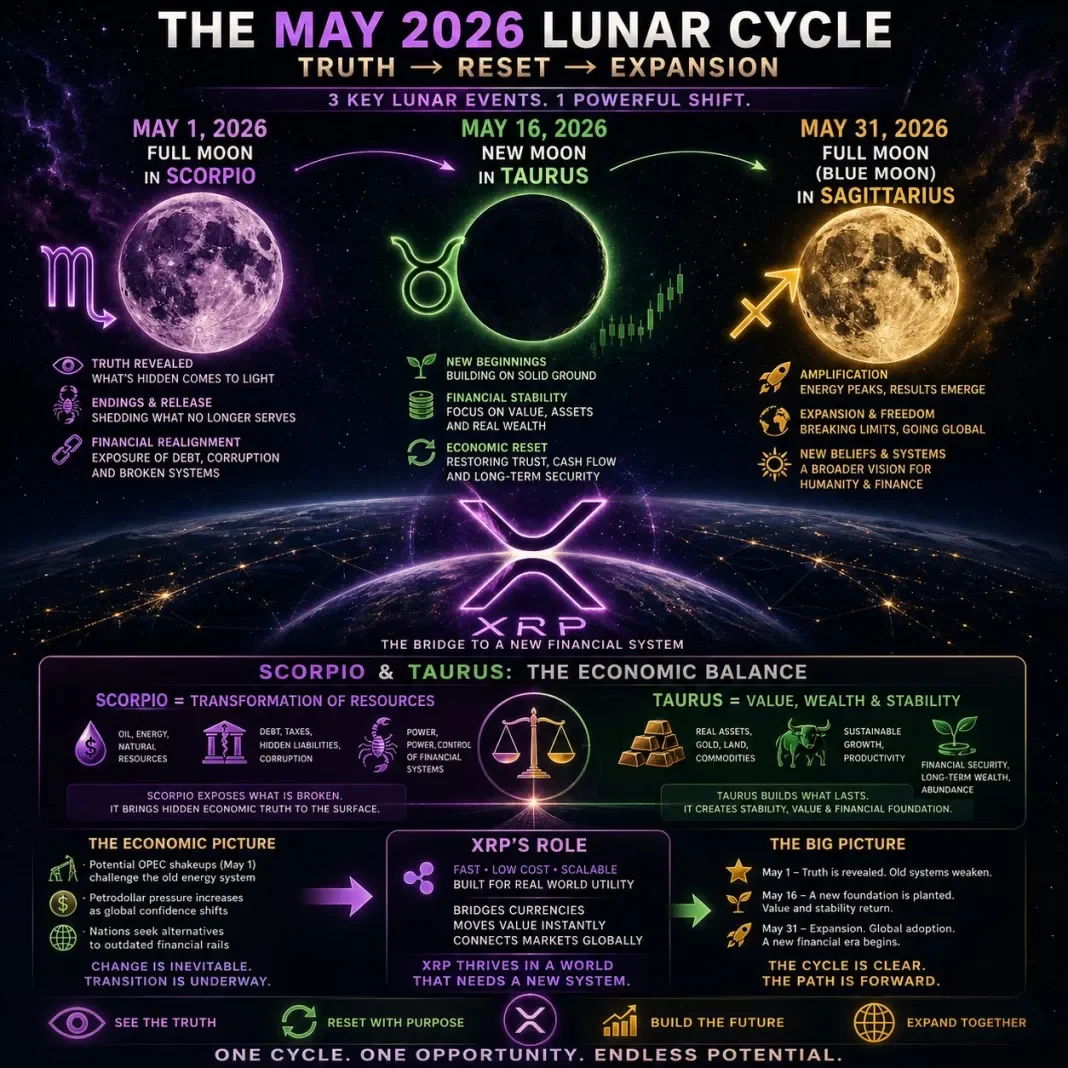
Look at this sequence of events unfolding alongside the powerful May 16 New Moon in Taurus:
May 14 — Senate Banking Committee schedules voting on the Clarity Act
May 15 — Jerome Powell’s term as FED Chair ends
Stephanie Starr: Financial Reset Timeline?
5-11-2026
FINANCIAL RESET TIMELINE?
Look at this sequence of events unfolding alongside the powerful May 16 New Moon in Taurus:
May 14 — Senate Banking Committee schedules voting on the Clarity Act
May 15 — Jerome Powell’s term as FED Chair ends
May 16 — Expected transition to pro-crypto Fed Chair Kevin Warsh begins pending Senate confirmation process
May 16 — New Moon in Taurus
Astrologically, Taurus rules:
money
banking
stability
value systems
long-term wealth building
While Scorpio (Taurus’ opposite sign) rules:
endings and rebirth…
debt
hidden systems
transformation
destruction & rebirth
exposure of truth – (UFO DISCLOSURE happened yesterday!)
Together Scorpio and Taurus create the “economic axis” Remember, we had our first FULL moon May 1st in the house of Scorpio
Now the energy shifts into Taurus:
rebuilding
financial clarity
stabilization
new monetary structures
redefining value and ownership
Whether you view astrology symbolically or spiritually, the timing is undeniably fascinating!!
A major financial bill tied to crypto regulation and “clarity”…
A transition in Federal Reserve leadership…
And a Taurus New Moon focused on security, wealth, and foundations… all converging within 48 hours.
Scorpio tears down what no longer works.
Taurus builds what comes next.
Seeds of Wisdom RV and Economics Updates Monday Afternoon 5-11-26
Good Afternoon Dinar Recaps,
Europe Faces Inflation Shock as Iran War Reshapes Monetary Policy Expectations
Energy-driven price pressures and rising bond yields are increasing fears of prolonged financial instability across the euro zone
The growing conflict involving Iran is no longer just a geopolitical crisis — it is rapidly becoming a major challenge for European central banks and financial markets
Good Afternoon Dinar Recaps,
Europe Faces Inflation Shock as Iran War Reshapes Monetary Policy Expectations
Energy-driven price pressures and rising bond yields are increasing fears of prolonged financial instability across the euro zone
The growing conflict involving Iran is no longer just a geopolitical crisis — it is rapidly becoming a major challenge for European central banks and financial markets
Overview (Key Points)
The ongoing Iran conflict is creating mounting inflation fears across Europe, forcing investors and policymakers to reassess the future direction of monetary policy within the euro zone.
Rising oil prices and instability surrounding the Strait of Hormuz have triggered sharp increases in European government bond yields, particularly in Germany and Italy.
Financial markets increasingly fear that prolonged energy disruptions could force the European Central Bank (ECB) to maintain tighter monetary policy for longer than previously expected.
The crisis highlights how geopolitical instability is becoming deeply interconnected with inflation, sovereign debt markets, and global financial stability.
Key Developments
1. Euro Zone Bond Yields Rise on Inflation Concerns
European government bond yields moved higher as investors reacted to renewed Middle East tensions and rising energy prices.
Germany’s benchmark yields climbed alongside Italian bond yields, signaling growing expectations that borrowing costs across Europe may remain elevated.
Markets increasingly believe the ECB could face pressure to prioritize inflation control over economic growth.
2. Europe’s Energy Vulnerability Remains Exposed
Despite diversification efforts in recent years, Europe remains heavily dependent on imported energy supplies tied to global oil and gas markets.
Disruptions linked to the Strait of Hormuz continue increasing concerns about:
Long-term supply insecurity
Higher transportation costs
Industrial production strain
Consumer price increases
This reinforces Europe’s vulnerability to external geopolitical shocks.
3. Oil Prices Continue Feeding Inflation Fears
Energy inflation is spreading through multiple sectors of the European economy.
Higher fuel and transportation costs are contributing to:
Rising production expenses
Consumer inflation pressures
Slower economic growth expectations
Analysts warn that prolonged energy instability could reverse recent progress made in reducing inflation across the euro zone.
4. Central Banks Face a Difficult Balancing Act
The European Central Bank now faces increasing pressure between two competing priorities:
Containing inflation
Protecting fragile economic growth
Aggressive rate hikes may help stabilize inflation expectations but could also increase stress on highly indebted European economies already facing slow growth.
5. Geopolitical Conflict Is Reshaping Global Monetary Policy
The crisis demonstrates how modern inflation is increasingly driven by:
Wars
Energy disruptions
Strategic rivalries
Supply chain instability
Central banks are no longer responding only to domestic economic conditions but also to geopolitical risks far beyond their borders.
Why It Matters
The euro zone plays a central role in the global financial system.
Persistent inflation combined with rising borrowing costs could impact:
Sovereign debt markets
Global investment flows
Banking stability
International trade confidence
The situation underscores how energy security and monetary policy are becoming increasingly intertwined.
Why It Matters to Foreign Currency Holders
Periods of inflation uncertainty often trigger:
Currency volatility
Shifts in capital flows
Changes in reserve allocation strategies
If European growth weakens while inflation remains elevated, pressure on major currencies and financial markets could intensify.
Implications for the Global Reset
Pillar 1: Energy Shocks Are Reshaping Monetary Policy
The Iran conflict highlights how energy disruptions now directly influence interest rates, inflation expectations, and sovereign debt markets.
Pillar 2: Geopolitics and Finance Are Becoming Increasingly Interconnected
Wars and strategic competition are playing a growing role in shaping global monetary decisions and financial stability.
Conclusion
The Iran war is rapidly evolving into more than a regional security crisis — it is becoming a major monetary and financial challenge for Europe and the broader global economy.
As energy volatility drives inflation fears higher, central banks may be forced into increasingly difficult policy decisions that carry long-term consequences for growth, debt markets, and financial stability.
The crisis reflects a larger transformation underway in the global economy where geopolitics, energy security, and monetary policy are now deeply interconnected.
Seeds of Wisdom Team
Newshounds News™ Exclusive
Sources
~~~~~~~~~~
Seeds of Wisdom Team RV Currency Facts Youtube and Rumble
Newshound's News Telegram Room Link
RV Facts with Proof Links Link
RV Updates Proof links - Facts Link
Follow the Gold/Silver Rate COMEX
Follow Fast Facts
Seeds of Wisdom Team™ Website
Thank you Dinar Recap
Iraq Economic News and Points To Ponder Monday Afternoon 5-11-26
The Ministry Of Commerce Announces The Launch Of New Electronic Services And The Digital Linking Of Warehouses And Agents In Seven Governorates.
Money and Business Economy News – Baghdad The Ministry of Trade announced on Monday the launch of additional services as part of the electronic transformation in seven governorates, while revealing a plan to link warehouses and agents electronically.
Riyadh Al-Moussawi, Director General of the Commercial and Financial Control Department at the Ministry, said that "more than seven governorates have witnessed the launch of additional services within the electronic transformation, and work is continuing to expand these services."
The Ministry Of Commerce Announces The Launch Of New Electronic Services And The Digital Linking Of Warehouses And Agents In Seven Governorates.
Money and Business Economy News – Baghdad The Ministry of Trade announced on Monday the launch of additional services as part of the electronic transformation in seven governorates, while revealing a plan to link warehouses and agents electronically.
Riyadh Al-Moussawi, Director General of the Commercial and Financial Control Department at the Ministry, said that "more than seven governorates have witnessed the launch of additional services within the electronic transformation, and work is continuing to expand these services."
He explained that "the ministry is serious about implementing digital transformation plans and moving away from paper transactions, including the ration card and the mechanisms for serving citizens benefiting from it," indicating that "citizens will be able to complete transfer, splitting, deletion and other transactions via mobile phone."
He added that "there are plans to develop the program adopted in the Planning and Follow-up Department, which will allow us to know which citizens have received the food basket items from the agents, and which have not, as well as knowing the number of rations that have reached each agent."
He added that "the ministry is working on linking warehouses and agents electronically, while preparing a geographical map of the agents' network to know their locations accurately," noting "the trend towards equipping shops with surveillance cameras, in conjunction with the adoption of electronic payment devices."https://www.economy-news.net/content.php?id=68952
Al-Sudani's Advisor: Iraq's Revenues Are 4 Trillion Dinars And Expenditures Exceed 8 Trillion Dinars Monthly.
Money and Business Economy News – Baghdad Muzhir Muhammad Salih, advisor to Prime Minister Muhammad Shia al-Sudani, announced that Iraq’s revenues amount to about 4 trillion dinars due to the decline in oil exports, while its expenditures amount to 8 trillion dinars. To address this situation, Iraq has two options: internal and external borrowing.
Saleh said that Iraq’s public finances are going through a “sensitive phase” due to the significant drop in oil revenues, which has led to a decrease in monthly revenues to approximately 4 trillion dinars, compared to the country’s financial obligations of more than 8 trillion dinars per month.
The eight trillion includes salaries and basic operating expenses.
Muzhir Muhammad Salih pointed out that this situation creates a temporary liquidity crisis rather than a deficit that threatens the continuity of the state's ability, but the continuation of this gap for a long period will create more pressure on economic and monetary stability in Iraq.
Iraq’s oil revenues, which account for more than 84% of Iraq’s expenditures, have fallen to about 2.5 trillion dinars, which can only cover 34% of salary funds.
According to the Prime Minister's advisor, fiscal policy will follow two paths to deal with the crisis, the most important of which is the continuity of public spending, or it will follow both paths together.
The first path: Increase local financing activity through domestic borrowing and short-term loans in coordination with the central bank, which provides liquidity quickly to enable the state to meet its financial obligations. However, failure to implement this path positively will lead to increased inflationary pressures and affect the value of the dinar against the dollar.
The second path: resorting to external financing through international financial institutions, issuing bonds and borrowing from abroad, which supports the foreign reserves of the central bank, gives confidence in the financial stability of Iraq and stabilizes the value of the dinar against the dollar, but this step also has conditions and financial obligations.
The war between Iran, America and Israel led to the closure of the Strait of Hormuz since February 28, which was the main route for Iraqi oil exports, and despite the ceasefire now, there are still problems with the movement of oil tankers in the strait.
Muzhir Muhammad Salih noted that Iraq’s foreign reserves are currently less than $100 billion, which covers 12 months of imports, while the international standard for the trade capacity of foreign reserves is three months.
https://www.economy-news.net/content.php?id=68939
Parliamentary Finance Committee: Oil Revenues Cover Only A Third Of Salaries
Money and Business Economy News – Baghdad Iraqi oil revenues cover only about a third of salaries, and according to a member of the Finance Committee, Baghdad needs to borrow between four and five trillion dinars per month.
According to official statistics from the Iraqi Oil Marketing Company (SOMO), oil exports in March amounted to 18.6 million barrels.
Oil revenues for that month amounted to $1,157,121,000, equivalent to 2.5 trillion dinars at the official exchange rate of the dinar against the dollar.
The decline in Iraqi oil revenues comes at a time when the federal government needs 7.2 trillion dinars per month to secure the salaries of employees, retirees, and those covered by social welfare, including the salaries of the Kurdistan Region.
A report by the Federal Ministry of Finance on expenditures and revenues for January and February revealed that more than 84% of Iraq's expenditures depend on oil. Consequently, oil revenues cover only 34.7% of the total salaries for that month.
Borrowing approximately 4-5 trillion per month
Jamal Kojar, a member of the Finance Committee in the Iraqi Parliament, explained that "the federal government has to borrow between four and five trillion dinars per month, according to current oil revenues."
Reports from the Iraqi Ministry of Finance also showed that its debts amounted to 10.5 trillion dinars in the first three months of this year.
To address this shortfall in revenue and expenditure funds, the current caretaker government does not have a free hand to deal with it.
Jamal Kojer explained that there are several ways for the government to address this deficit, which are borrowing from government banks such as Al-Rafidain, Al-Rasheed and the Trade Bank of Iraq (TBI), where interest rates are low compared to private banks, or resorting to withdrawing the currency reserve at the Central Bank.
https://www.economy-news.net/content.php?id=68937
The Parliamentary Finance Committee Calls For The Disbursement Of Employee Salaries For The Month Of May Before Eid Al-Adha.
Money and Business Economy News – Baghdad The parliamentary finance committee confirmed that the government is able to secure the necessary liquidity to pay salaries, calling for the payment of employee salaries for the current month of May before the Eid al-Adha holiday.
Jamal Kojar, a member of the Finance Committee, told the official newspaper, as reported by “Al-Eqtisad News,” that “the salaries are secured and there is no dispute about them, and the government can distribute this month’s salaries before Eid, and there is no obstacle,” explaining that “the distribution process usually begins on the 18th of the month, and is supposed to be completed by the 25th.”
He added that “this month has a special status because of Eid al-Adha, which necessitates bringing forward the date of salary payments before the holiday, and there is a real possibility of achieving that.”
Regarding the financial situation, Koger explained that “the new government, if formed, will have three options for managing the current fiscal year. The first is to operate on a 1/12 system, which means difficulty in implementing the government program. The second option is to prepare a semi-annual budget, or to adopt a ready-made budget from the previous government if one exists, or to prepare a new budget in record time and send it to Parliament.”
He pointed out that “the third option is to enact a law similar to the food security law,” noting that “this option is the closest to being implemented given the limited time and the approaching end of the first half of the year.”
Kujer stressed that “a comprehensive budget is one that fully reflects the government program,” explaining that “resorting to temporary solutions may allow for the implementation of only parts of the program, and not its comprehensive implementation.”
Back to the Founders: Dr. Shelton on the Constitution, Gold, and the Future of the US Dollar
Back to the Founders: Dr. Shelton on the Constitution, Gold, and the Future of the US Dollar
In Gold We Trust: 5-10-2026
Gold near record highs. A weakening US dollar. An Iran crisis reshaping the global monetary conversation.
Against that backdrop, Dr. Judy Shelton shares her reflections on what a return to sound money could look like, and lays out a concrete path: a 50-year gold-backed bond, a US gold revaluation, and a quiet return to a gold-anchored system without a formal Bretton Woods II.
Back to the Founders: Dr. Shelton on the Constitution, Gold, and the Future of the US Dollar
In Gold We Trust: 5-10-2026
Gold near record highs. A weakening US dollar. An Iran crisis reshaping the global monetary conversation.
Against that backdrop, Dr. Judy Shelton shares her reflections on what a return to sound money could look like, and lays out a concrete path: a 50-year gold-backed bond, a US gold revaluation, and a quiet return to a gold-anchored system without a formal Bretton Woods II.
Watch this fascinating conversation between Dr. Shelton and Ronnie Stöferle, Managing Partner at Incrementum AG and co-author of the In Gold We Trust report, recorded on March 19, 2026.
Undoubtedly, as Dr. Shelton makes clear throughout the conversation, gold is not merely a commodity but a constitutional ideal, embedded in the original American vision of a dependable unit of account.
Drawing on Jefferson, Madison, Hamilton, and her own meetings with Secretary Bessent, she lays out a path toward what she calls a classical gold standard, take two.
More “Iraq News” Posted by Tishwash at TNT 5-11-2026
TNT:
Tishwash: The reason for postponing the vote on the cabinet today has been revealed.
Former MP Abdul Hadi Al-Saadawi revealed on Sunday the reasons for postponing the vote on the cabinet in the House of Representatives, attributing this to the failure of some political blocs to decide on their candidates for ministerial portfolios, which led to the inability to vote on the government formation today.
Al-Saadawi told Al-Furat News Agency, “It was likely that the Al-Zidi government would be given confidence today in the House of Representatives after all preparations were completed; however, the vote was postponed as a result of some political blocs not deciding on their candidates for the ministries.”
TNT:
Tishwash: The reason for postponing the vote on the cabinet today has been revealed.
Former MP Abdul Hadi Al-Saadawi revealed on Sunday the reasons for postponing the vote on the cabinet in the House of Representatives, attributing this to the failure of some political blocs to decide on their candidates for ministerial portfolios, which led to the inability to vote on the government formation today.
Al-Saadawi told Al-Furat News Agency, “It was likely that the Al-Zidi government would be given confidence today in the House of Representatives after all preparations were completed; however, the vote was postponed as a result of some political blocs not deciding on their candidates for the ministries.”
He added that "it is too early to announce the completion of the cabinet due to the existence of disagreements between the political blocs," indicating that "the absence of a fully empowered government is having a negative impact on the country."
Al-Saadawi pointed out that "there are major obstacles facing the prime minister-designate, even from within the coordination framework and the rest of the national space, which requires more consultation and effort to convince the blocs to proceed with presenting the cabinet and voting on it within the House of Representatives."
He pointed out that "Al-Zidi has a strong incentive to complete his cabinet through consultation and understanding with various political forces."
Regarding the challenges facing the new government, Al-Saadawi explained that "the first of these is the financial file," expecting "its move towards raising the exchange rate of the dinar to reduce the deficit in the 2026 budget," considering "this a difficult decision in addition to the security challenges in the region, especially the American-Iranian war and the repercussions it imposes on the country."
He concluded by saying that "the next government needs a clear economic and security vision to keep Iraq away from the region's conflicts." link
************
Tishwash: The Securities Commission grants the first license to a foreign brokerage firm to operate in Iraq.
On Sunday, the Securities Authority announced that it had granted official approval to a foreign brokerage firm to operate in the securities markets, making it the first company to receive this approval in accordance with the modern regulatory procedures adopted by the Authority.
The commission confirmed in a statement that this step comes within its ongoing efforts to regulate and develop the work environment in the Iraqi financial market and enhance transparency and efficiency in line with best international practices, and in a way that contributes to supporting investment, stimulating trading activity and attracting global expertise to the market.
She explained that the approval was granted after the company completed all the technical and regulatory requirements, ensuring the integrity of the procedures and protecting the rights of investors, as well as raising the level of institutional performance of brokerage companies operating in the market.
The statement affirmed that this approval is an important indicator of the Authority’s direction towards opening new horizons for brokerage companies, especially foreign ones, and encouraging the entry of new companies that contribute to the development of the Iraqi capital market and enhance investor confidence in it, which represents one of the Authority’s main objectives in regulating, protecting and developing the market. link
************
Tishwash: Mounting financial pressures threaten the 2026 budget.
The government faces an early challenge in preparing the 2026 budget, amid declining oil revenues and escalating financial pressures, which puts it in front of limited options between presenting an austerity budget or temporarily continuing spending according to the 1/12 rule. Meanwhile, economic experts and specialists believe that the 2026 budget will face major financial challenges due to declining revenues, which may push it to reduce spending or postpone its approval.
Budget preparation
Nermin Maarouf, a member of the Finance Committee in the previous parliamentary session, confirmed in an interview with Al-Sabah that the government, if formed soon, still has time to submit the draft budget law, noting that its approval in previous years was often delayed until May or June.
She added that the preparation of the budget in Iraq traditionally relies on simple items based on the allocations of the previous year, but she pointed out that there is no legal basis that allows for continued spending according to the (1/12) rule for two consecutive years in the absence of a budget.
Compound impact
For his part, crisis management expert Ali Al-Fariji believes that the 2026 budget is no longer just a matter of timing, but a test of the state’s ability to deal with a “compound shock” that includes a decline in oil revenues and export disruptions as a result of regional tensions, in addition to the continued rise in operational spending within an economy that is almost entirely dependent on oil.
Al-Fariji explained in an interview with “Al-Sabah” that preparing a budget in the near term seems unlikely, due to the absence of stable assumptions related to oil prices and export levels, which suggests that the (1/12) rule will continue to be used temporarily until the financial vision becomes clear.
Dependence on oil
He added that the main challenges are structural in nature, most notably the dependence of revenues on oil by nearly 90%, the high operating expenses which account for more than 70% of total spending, as well as cash pressures and weak efficiency of investment spending.
Oil revenues
In the same context, economist Jalil Al-Lami confirmed in an interview with Al-Sabah that the option of submitting a full federal budget seems difficult in the short term, suggesting that the (1/12) rule will continue to be used temporarily, especially with the clear decline in oil revenues.
Al-Lami pointed out that Iraq used to rely on oil exports of around 3.5 million barrels per day with monthly revenues ranging between 7 and 9 billion dollars, before they decreased to about 2 billion dollars or less at some times, while the country needs at least 8 to 10 billion dollars per month to cover operating expenses, creating a financial gap that may reach 6 billion dollars per month.
Austerity budget
Al-Lami predicted that if the budget is prepared, it will be an austerity budget, based on an oil price between $60 and $65 per barrel, with a total size between 130 and 150 trillion dinars, and an expected deficit between 20 and 30 trillion dinars, which is subject to increase depending on
Regarding developments in the oil market.
He added that the anticipated budget will not include an expansion in appointments or the launch of new projects, but will focus on completing existing projects and securing basic expenditures, with the possibility of resorting to internal borrowing or drawing from the cash reserve in the event that the crisis continues.
Temporary disbursement
He pointed out that “estimates indicate that the 2026 budget will either be a deferred budget managed through temporary spending, or an austerity budget focused on containing the crisis, at a time when the Iraqi economy is facing a real test to readjust the spending model and avoid slipping.”
Towards a liquidity crisis in the near term.
The parliamentary finance committee expressed its position on borrowing from the central bank to finance domestic expenditures, noting that this issue is linked to the formation of the government.
Borrowing proposal
Committee member Ribwar Karim told the Iraqi News Agency, as reported by Al-Sabah newspaper, that "the proposal to borrow from the Central Bank to finance domestic expenditures is on hold."
On forming the government.
He added that "there is a conviction among the political parties and blocs that there are serious attempts to appoint the next prime minister As soon as possible.
He explained that “if a government is formed, there will be no need to borrow, as a fully empowered government will begin its duties,” noting that “borrowing from the Central Bank is merely an opinion put forward by some members of parliament.”
He stated that “this proposal is primarily linked to the formation of the government, and if that happens, there will be no need for this proposal.” link
*************
Tishwash: An Iraqi committee is exploring mechanisms for disarming factions amid escalating US pressure.
The Asharq Al-Awsat newspaper, quoting Iraqi political sources, revealed the formation of a high-level Iraqi committee tasked with preparing an executive project for disarming armed factions, in preparation for presenting it to American officials in the coming days, amid escalating American pressure on Baghdad regarding the issue of weapons and Iranian influence within Iraq.
According to the sources, the committee held unannounced meetings during the past period with leaders of armed factions to discuss mechanisms for disarmament and reintegration of some elements into the civilian and security state institutions, but some of those meetings witnessed tension and objections from parties that refuse to give up their weapons.
The information indicated that the committee is operating under a mandate from forces within the coordination framework, at a time when political warnings are increasing that the anticipated government headed by Prime Minister-designate Ali Faleh Kazem al-Zaidi may face major challenges in implementing reforms related to the issue of weapons and financial resources, which Washington accuses some Iraqi parties of smuggling to Iran.
According to the report, the US administration has shown support for al-Zaidi since his appointment, but it links the continuation of this support to making tangible changes related to reducing the influence of armed factions within Iraqi state institutions.
The newspaper also quoted officials and political sources as saying that the proposed project includes the disarmament of heavy and medium weapons and the restructuring of some formations of the Popular Mobilization Forces, amid doubts about the ability of the next government to actually implement these steps, with the likelihood that some of the current moves are an attempt to absorb American pressure and buy time.
In contrast, sources representing a number of armed factions confirmed their refusal to hand over weapons, believing that American pressure would not push them to back down from their positions or change the existing power equations.
In parallel, an informed source revealed an agreement between forces within the coordination framework and the prime minister-designate to form a special committee to restrict weapons to the state, which includes, in addition to al-Zaydi, Prime Minister Mohammed Shia al-Sudani, and the head of the Badr Organization, Hadi al-Amiri.
The source explained that the committee will develop practical mechanisms to regulate the weapons file and reintegrate some elements of the factions into civilian or security institutions, in line with the requirements of the current stage and the political and security challenges facing the country. link
News, Rumors and Opinions Monday 5-11-2026
Note: All intel should be considered as "Rumors" until we receive official announcements ...and “Rates and Dates” could change anytime until we get to the banks/redemption centers.
RV Excerpts from the Restored Republic via a GCR Update as of Mon. 11 May 2026
Compiled Mon. 11 May 2026 12:01 am EST by Judy Byington
Global Currency Reset:
On Mon. 11 May 2026: Tier4b notifications could arrive with new rates.
Note: All intel should be considered as "Rumors" until we receive official announcements ...and “Rates and Dates” could change anytime until we get to the banks/redemption centers.
RV Excerpts from the Restored Republic via a GCR Update as of Mon. 11 May 2026
Compiled Mon. 11 May 2026 12:01 am EST by Judy Byington
Global Currency Reset:
On Mon. 11 May 2026: Tier4b notifications could arrive with new rates.
Wed. 6 May 2026 EBS ACTIVATION: THE GLOBAL RESET HAS (allegedly) ARRIVED. EVERY CITIZEN GLOBALLY WILL RECEIVE NOTIFICATION VIA TEXT AND EMAIL TO SET APPOINTMENTS AT REDEMPTION CENTERS WORLDWIDE. …Emergency Broadcast System on Telegram
Thurs. 7 May 2026 Bruce, The Big Call The Big Call Universe (ibize.com) 667-770-1866, pin123456#: Likely either Mon or Tues for Tier4b appointments to start. Bolivar, Dinar, Dong, Zim and 41 currencies on Redemption Center screen.
Judy Note: We have been told that Wells Fargo, which is controlled by the Chinese Elders – (the ones who (allegedly) own the gold behind the Global Currency Reset) – will send out emails to currency and bond holders worldwide telling them how to set redemption & exchange appointments. It is advised to exchange/redeem your foreign currency at an official Redemption Center (RC) rather than a bank. You can only (allegedly) redeem Zim at a RC, the Dinar Contract Rate can only (allegedly) be given at a RC and banks will (allegedly) offer you lower exchange rates than what you can obtain at a RC. You can only (allegedly) set up your new wallet (bank account) at a RC. It was my understanding that most banks were under control of the Cabal and would soon play a different role in the Global Financial System.
Sun. 10 May 2026 THE GOLD. They’re pulling it out. Quietly. Systematically. Every major nation on Earth is withdrawing their gold from American vaults — and no one is asking why. France — 129 tonnes. Gone from the NY Fed. India — 104 tonnes in six months. Germany. Netherlands. Now it’s accelerating. **Q1 2026: central banks bought 244 tonnes of gold — the strongest quarter in recorded history.** They’re not buying gold because they like shiny things. **They know what’s coming.**
• MOVE 1: Trump and Musk demanded a Fort Knox audit in February. Three weeks of headlines. Then — silence. No results. No report. **It vanished from every news cycle overnight.** What kind of discovery makes the most powerful men in the world go quiet?
• MOVE 2: The Mises Institute just confirmed — the bulk of Fort Knox gold consists of **”impure non-standard bars” that don’t qualify for international transactions.** The gold backing the most powerful economy on Earth CANNOT BE USED in the global system. Degraded. Diluted. Or not what they say it is.
• MOVE 3: May 4, 2026 — BRICS launched **BRICS Pay.** Blockchain-based. Dollar-independent. Operational NOW. **Nine nations. 3.5 billion people. A payment system that doesn’t need the US dollar.** SWIFT’s monopoly ended on a Sunday and nobody told you.
• MOVE 4: Internal Treasury correspondence — leaked April 22 — references **”Protocol 7: Asset Reconciliation.”** Sovereign gold holdings cross-referenced against QFS digital ledger entries. **The audit didn’t disappear. It moved CLASSIFIED.** What they found isn’t being hidden — it’s being prepared as EVIDENCE. The nations are pulling their gold because they were TOLD to. **When the dollar resets — only those holding REAL assets survive.** The vault is empty. The world knows. The clock is running.
Read Full post here: https://dinarchronicles.com/2026/05/11/restored-republic-via-a-gcr-update-as-of-may-11-2026/
************
Courtesy of Dinar Guru: https://www.dinarguru.com/
Jeff The HCL for final approval is waiting for the rate to change because they need to add it to the constitution in order for them to make payments.
Walkingstick The 'White Papers' are a conglomerate of many things the United States put together. It has been a demand of ours for a long time. But prime minister after prime minister have failed us. The White Papers contain the monetary reform. It contains the steps for the HCL. It contains article 140...It contains all the steps that were just handed in that we call the formation of the government of Iraq. It contains the economic reform once the monetary reform is launched. It contains the removal of Iranian influence...banking laws. It contains many things that the United States of America have been wanting this government to do. It was created over the last few years with the IMF, World Bank, Bank of International Settlement, US Treasury, Central Bank of Iraq, with everybody...The United States of America gave this to Sudani, he did nothing with them. Now we present them to Zaidi. And Zaidi with Trump, they are implementing them.
Frank26 Z [Zaidi] is working on the HCL...budget... forming the government all under the direction of Donald Trump. Everything else is just noise...All we're waiting for is the removal of the unwanted names for the minister positions. Not a single Iranian can represent [Iraq] in government ever again...Trump is working on the formation of the government and the security that [Iraq] needs from Iran.
***************
China Goes All In on GOLD as Dollar Reserves Collapse
Taylor Kenny: 5-10-2026
Central banks are buying gold at record levels while quietly reducing exposure to the U.S. dollar. China has been accumulating gold for 18 straight months—but most financial advisors are still silent.
In this video, Taylor breaks down why China’s gold buying is not a short-term trade, why dollar reserves are shrinking, and what this could mean for your savings, retirement, and purchasing power.
CHAPTERS:
00:00 Record Gold Demand and China’s Buying Spree
00:27 Is It Too Late to Buy Gold?
01:25 Preparing for a New Monetary System
02:48 China Builds Gold-Based Payment Rails
03:17 Dollar Reserves Collapse as De-Dollarization Accelerates
04:43 Bretton Woods and the Gold-Backed Dollar
06:10 Why It’s Not Too Late to Buy Gold
07:34 How Exposed Are You Without Gold?
Seeds of Wisdom RV and Economics Updates Monday Morning 5-11-26
Good Morning Dinar Recaps,
Global Energy and Security Risks Rise as Gulf Crisis Enters Dangerous New Phase
Growing geopolitical tensions and economic instability are increasing pressure on the global financial system
Escalating conflict dynamics between Israel, Iran, and major world powers are intensifying fears of prolonged market disruption and regional instability
Good Morning Dinar Recaps,
Global Energy and Security Risks Rise as Gulf Crisis Enters Dangerous New Phase
Growing geopolitical tensions and economic instability are increasing pressure on the global financial system
Escalating conflict dynamics between Israel, Iran, and major world powers are intensifying fears of prolonged market disruption and regional instability
Overview (Key Points)
The Gulf crisis appears to be entering a more prolonged and strategically dangerous phase as diplomatic efforts continue struggling to gain traction.
Israeli leadership is expanding its security objectives beyond immediate military confrontation, while the United States has rejected Iran’s latest peace response, reinforcing concerns that the conflict could continue for an extended period.
At the same time, global markets remain highly sensitive to disruptions involving the Strait of Hormuz, one of the world’s most important energy corridors.
The crisis is increasingly evolving beyond a regional conflict and becoming a broader test of global economic resilience, energy security, and geopolitical influence.
Key Developments
1. Israel Expands Long-Term Security Objectives
Israeli Prime Minister Benjamin Netanyahu has broadened the strategic goals of the conflict to include:
Weakening Iran’s regional influence
Targeting ballistic missile infrastructure
Disrupting nuclear capabilities
This raises the threshold for any future diplomatic settlement and reduces the likelihood of a rapid ceasefire agreement.
2. Regional Proxy Networks Remain Active
Despite temporary ceasefire announcements in some areas, clashes involving Hezbollah and other regional actors continue.
The conflict is increasingly becoming a multi-theater regional struggle, involving:
State actors
Proxy organizations
Maritime security threats
This complexity increases the risk of prolonged instability across the Middle East.
3. China’s Diplomatic Role Continues Expanding
Upcoming discussions involving President Donald Trump and Chinese President Xi Jinping highlight China’s growing importance in Middle Eastern diplomacy.
China maintains strong economic ties with Iran while also depending heavily on Gulf energy supplies, positioning Beijing as a potentially influential mediator.
The situation reflects broader competition between the United States and China over:
Energy security
Trade routes
Global geopolitical influence
4. Global Markets React to Strategic Energy Risks
Markets remain highly sensitive to developments surrounding the Strait of Hormuz.
Oil prices continue reacting sharply to:
Military activity
Diplomatic rhetoric
Shipping disruptions
Analysts warn that energy markets are increasingly being driven by geopolitical uncertainty rather than traditional supply-and-demand fundamentals.
5. Economic Interdependence Is Becoming Militarized
The crisis is exposing how strategic geography and economic dependence can be used as geopolitical leverage.
Energy supply routes, maritime chokepoints, and trade corridors are now central to broader power competition between major nations.
This creates additional risks for countries already facing:
Inflation pressures
Slowing economic growth
Financial market volatility
Why It Matters
The Gulf crisis is demonstrating how regional conflicts can rapidly evolve into global economic events.
Disruptions involving energy flows, shipping routes, and geopolitical alliances have direct implications for:
Inflation
Global trade
Financial stability
Investor confidence
Why It Matters to Foreign Currency Holders
Periods of geopolitical instability often trigger:
Currency volatility
Rising commodity prices
Capital shifts into safe-haven assets
Energy-importing nations may face increasing pressure on national currencies and foreign reserves if instability continues.
Implications for the Global Reset
Pillar 1: Energy Security Is Reshaping Global Power Dynamics
Control over energy flows and strategic maritime routes is becoming increasingly tied to financial and geopolitical influence.
Pillar 2: Multipolar Competition Continues Expanding
The growing involvement of China alongside traditional Western powers reflects the accelerating shift toward a more fragmented and competitive global order.
Conclusion
The rejection of Iran’s latest peace response signals that the Gulf crisis may be entering a prolonged and highly unstable phase.
As geopolitical competition, energy security, and financial market volatility become more interconnected, the risks facing the global economy continue to rise.
The situation highlights a broader reality: in today’s interconnected world, regional conflicts increasingly carry systemic consequences for the international financial system.
Seeds of Wisdom Team
Newshounds News™ Exclusive
Sources
~~~~~~~~~~
🌱 A Message to Our Currency Holders🌱
If you’ve been holding foreign currency for many years, you were not foolish.
You were not wrong to believe the global financial system would change.
What failed was not your patience — it was the information you were given.
For years, dates, rumors, and personalities replaced facts, structure, and proof. “This week” predictions created cycles of hope and disappointment that were never based on how currencies actually change.
That is not your failure.
Our mission here is different: • No dates • No rates • No hype • No gurus
Instead, we focus on:
• Verifiable developments • Institutional evidence
• Global financial structure • Where countries actually sit in the process
Currency value changes only come after sovereignty, trade, banking, settlement systems, and fiscal coordination are in place. History and institutions confirm this sequence.
You will see silence. You will see denials. That is not delay — that is discipline.
Protect your identity. Organize your documents. Verify everything.
Never hand your discernment to anyone who cannot show proof.
You deserve truth — not timelines.
Seeds of Wisdom Team
Newshounds News™
~~~~~~~~~~
Seeds of Wisdom Team RV Currency Facts Youtube and Rumble
Newshound's News Telegram Room Link
RV Facts with Proof Links Link
RV Updates Proof links - Facts Link
Follow the Gold/Silver Rate COMEX
Follow Fast Facts
Seeds of Wisdom Team™ Website
Thank you Dinar Recap
Iraq Economic News and Points To Ponder Sunday Evening 5-10-26
Iraq Says Oil Exports Could Rapidly Return To Pre-War Levels If Hormuz Stabilizes
Baghdad announced preparations to rapidly resume full export capacity through the Strait of Hormuz, even as regional security uncertainty persists.
ERBIL (Kurdistan24) - Iraq’s Oil Ministry announced on Sunday that the country could restore crude oil exports to their previous levels within one week if stability returns to the Strait of Hormuz, despite ongoing regional tensions linked to the conflict involving Iran, the United States, and Israel.
Iraq Says Oil Exports Could Rapidly Return To Pre-War Levels If Hormuz Stabilizes
Baghdad announced preparations to rapidly resume full export capacity through the Strait of Hormuz, even as regional security uncertainty persists.
ERBIL (Kurdistan24) - Iraq’s Oil Ministry announced on Sunday that the country could restore crude oil exports to their previous levels within one week if stability returns to the Strait of Hormuz, despite ongoing regional tensions linked to the conflict involving Iran, the United States, and Israel.
Bassam Mohammed Khudair, deputy minister at Iraq’s Oil Ministry, said Baghdad possesses the operational capacity to quickly return exports to normal once maritime movement through the strategic waterway resumes safely.
“Before the recent security incidents, Iraq was exporting 3.4 million barrels of oil per day,” Khudair said, noting that Iraq’s actual production capacity currently stands at 4.2 million barrels daily.
He added that, in the event navigation through the Strait of Hormuz is fully restored, the ministry could return export operations to their previous natural levels within only one week.
Khudair revealed that two fully loaded crude oil tankers are currently prepared for movement, while Iraqi authorities are also awaiting the arrival of two additional vessels.
However, he stressed that the timing of the tankers’ departure remains directly tied to the broader regional security situation.
“The movement and departure of these vessels are directly linked to the stability of the region’s security conditions,” he said.
The Strait of Hormuz, considered one of the world’s most critical oil and gas transit corridors, has experienced severe instability since the outbreak of conflict involving Iran on Feb. 28, when fighting escalated following Israeli and US military operations against Tehran.
The tensions have had direct consequences for global energy markets and maritime trade routes.
Despite Iraq’s preparations for a return to normal export operations, uncertainty surrounding the regional security environment remains significant.
Earlier on Sunday, US President Donald Trump said Washington could continue military operations against Iran for another two weeks and warned that additional Iranian targets could still be struck.
Trump stated that Iran had been “militarily defeated” but insisted the conflict was not necessarily over, adding that the United States had completed roughly 70 percent of its intended military objectives while retaining the option to hit more targets.
The continued possibility of further escalation has kept uncertainty surrounding the Strait of Hormuz and regional shipping routes at the center of global energy concerns.
Reconstruction And Development Threatens To Oppose The Government If It Does Not Receive Its Ministerial Entitlement And Demands That Rights Be Restored To Their Rightful Owners
latest news Sunday, May 10, 2026 Baghdad – One News 5/10/2026 Mashreq Al-Fariji, a leader in the Reconstruction and Development Coalition, issued a strong warning against a settlement being made by Prime Minister-designate Ali Al-Zidi with political blocs to distribute sovereign and important ministries, describing this approach as “a desperate act that reflects a lack of respect for democracy.”
In a post on the X platform, Al-Fariji stated that “the focus is on acquisition rather than on improving the ministry’s performance,” indicating that the Reconstruction and Development Coalition refuses to relinquish its ministerial entitlement. Al-Fariji also explicitly hinted that the option of joining the opposition is a serious consideration if the entitlement is not returned to its rightful owners, alluding to his coalition’s insistence on a ministerial portfolio, which he did not specify. https://1news-iq.net/الإعمار-والتنمية-يلوح-بخيار-المعارضة/
Middle East Sources Report That Politicians Say The Deep Division Within The Framework Over Factional Weapons May Prevent The Passage Of Ali Al-Zaidi
latest news Sunday, May 10, 2026 Baghdad – One News 5/10/2026 Despite the Iraqi parliament announcing its readiness to hold a session to grant confidence to Ali al-Zaidi’s government this week, an undeclared Iranian veto has emerged, adding a new obstacle to its passage, in contrast to an declared American veto rejecting the participation of the factions.
Informed sources told Asharq Al-Awsat that Iran’s unofficial reservations about the designated prime minister, Ali al-Zaidi, reflect a division within the ruling establishment in Tehran, which in turn has affected the armed factions in Iraq.
While factions that hold eighty seats in parliament support the gradual disarmament according to al-Zaidi’s program, other factions that are not represented in the government and follow Iran ideologically refuse to hand over their weapons, and speak of the impossibility of passing the government due to the American veto.
Meanwhile, observers believe that the anticipated visit of Ismail Qaani to Baghdad aims either to resolve the disputes within the coordination framework over the portfolios, or to convey Iran’s rejection of the government, or to pass it on Tehran’s conditions. (see: Iranian reservations over Al-Zaidi drive Qaani’s trip to Iraq - 5/10/2026 regarding Qaani's trip) https://1news-iq.net/الشرق-الأوسط-عن-سياسيين-الانقسام-الكب/
A Former Sadr Deputy: Al-Sadr Gave The Coordination Framework Something Like A Roadmap For Getting Out Of The Factions' Crisis
latest news Sunday,May 10, 2026 Baghdad – One News 5/10/2026 The leader of the Sadrist movement, Muqtada al-Sadr, broke his silence of more than six months regarding the crisis of choosing the prime minister, suddenly outlining the possible early end of Ali al-Zaidi’s government.
A former deputy believes that al-Sadr gave the “coordination framework” something like a roadmap to get out of the factions’ crisis, at a critical moment that threatens the new government itself and opens the door to possible sanctions, or placing the government under an evaluation ceiling that could end with its downfall if it fails.
He stressed that the leader of the Sadr movement has repeated on more than one occasion the necessity of disbanding the rogue militias and integrating them into the army, as a final solution to confine weapons and security decision-making.
Within the ninety-day deadline, the former deputy does not rule out that there are signs of a scenario similar to what happened with Abdul-Mahdi’s government, when al-Sadr gave it a “100-day” deadline to evaluate its performance, before it ended with the largest protests since 2003, which brought down the government. https://1news-iq.net/نائب-صدري-سابق-الصدر-منح-الإطار-التنسي/
Sources: US Federal Reserve adds 5 Iraqi banks to dollar restrictions
May 8, 2026Last updated: May 8, 2026 Al-Mustaqilla - Informed banking sources told Al-Mustaqilla on Friday that US financial authorities have added five new Iraqi banks to the list of restrictions related to dollar transactions, in addition to about 30 banks that were subject to previous measures.
According to the sources, the new measures include preventing the five banks from accessing transactions related to the US dollar, within the framework of the strict control imposed by the US Federal Reserve on foreign transfers and the Iraqi banking system.
The sources confirmed that the Central Bank of Iraq had been aware of the procedures and expected sanctions against these banks for the past few months, noting that there were ongoing communications and follow-ups with the American authorities regarding the financial compliance and transfers file.
These developments come at a time when the Iraqi banking sector is experiencing increasing pressure related to tightening controls on dollar movements and monitoring money laundering and commercial transfers.
Experts believe that expanding restrictions on banks may directly affect the parallel market and exchange rates, especially with the high local demand for the dollar and the Iraqi market's heavy reliance on foreign transfers and imports. https://mustaqila.com/مصادر-الفيدرالي-الأميركي-يضيف-5-مصارف-ع/
Seeds of Wisdom RV and Economics Updates Sunday Evening 5-10-26
Good Afternoon Dinar Recaps,
Global Currency Realignment Accelerates as Energy Crisis and BRICS Strategy Converge
Oil shocks, shifting trade alliances, and rising commodity power are reshaping the global financial landscape
Volatility across energy, currencies, and global trade systems is intensifying pressure on the post-World War II financial order
Good Afternoon Dinar Recaps,
Global Currency Realignment Accelerates as Energy Crisis and BRICS Strategy Converge
Oil shocks, shifting trade alliances, and rising commodity power are reshaping the global financial landscape
Volatility across energy, currencies, and global trade systems is intensifying pressure on the post-World War II financial order
Overview (Key Points)
The global financial system is facing renewed structural pressure as geopolitical instability, commodity shocks, and shifting currency alliances continue reshaping international markets.
The ongoing disruption surrounding the Strait of Hormuz has reinforced concerns about the vulnerability of the global energy system, while BRICS nations and commodity-exporting economies are gaining influence in global financial flows.
At the same time, analysts are increasingly discussing how commodity-backed economies and alternative payment systems could gradually weaken the dominance of traditional Western financial structures.
Recent market movements suggest investors are beginning to reassess long-standing assumptions surrounding reserve currencies, energy security, and financial stability.
Key Developments
1. Commodity Currencies Gain Strength Amid Global Energy Stress
Commodity-linked currencies such as:
The Norwegian krone
Australian dollar
Canadian dollar
have strengthened as global energy disruptions continue elevating commodity prices. Reuters analysts noted that the geopolitical environment is creating a new focus on resource-backed economic strength.
2. Oil Market Volatility Continues to Pressure Global Economies
The prolonged instability in the Middle East has kept oil markets highly volatile, with disruptions tied to shipping through the Strait of Hormuz continuing to affect global supply expectations.
Higher energy costs are feeding concerns about:
Inflation persistence
Slower global growth
Rising borrowing pressures
3. BRICS and Alternative Payment Systems Remain in Focus
While BRICS nations have slowed public discussion of a unified currency, efforts to expand:
Local currency trade
Alternative settlement systems
Non-dollar payment infrastructure
continue moving forward behind the scenes.
This reflects broader efforts to reduce dependence on Western-controlled financial channels.
4. Traditional Market Relationships Are Breaking Down
Reuters analysis highlighted that historic correlations between:
Stocks
Bonds
Gold
Currencies
are no longer behaving normally under current geopolitical and inflationary conditions.
This suggests markets may be entering a new financial environment unlike previous economic cycles.
5. Central Banks Face Growing Financial Stability Risks
Central banks are increasingly balancing:
Inflation concerns
Energy shocks
Debt pressures
Financial stability risks
Analysts warn that a prolonged geopolitical crisis could expose vulnerabilities across sovereign debt markets and shadow banking systems.
Why It Matters
The current environment is revealing how deeply interconnected:
Energy markets
Currency systems
Global trade
Sovereign debt
have become.
As commodity power and geopolitical fragmentation rise, the traditional financial order faces increasing strain.
Why It Matters to Foreign Currency Holders
Global instability can drive:
Currency volatility
Shifting reserve allocations
Safe-haven demand changes
Capital flow disruptions
Nations with strong commodity exposure may increasingly gain influence in global markets.
Implications for the Global Reset
Pillar 1: Commodity Power Is Reshaping Currency Influence
Energy and resource-producing nations are gaining strategic leverage as markets prioritize supply security and economic resilience.
Pillar 2: Multipolar Finance Continues Expanding
Alternative payment systems and local currency trade agreements suggest the world may gradually move toward a more diversified financial structure.
Conclusion
The combination of geopolitical conflict, commodity disruption, and evolving currency alliances is accelerating changes within the global financial system.
While the current system remains intact, the foundations are being tested by forces that continue pushing markets toward a more fragmented and multipolar economic order.
The shift may be gradual, but the direction of change is becoming increasingly difficult to ignore.
Seeds of Wisdom Team
Newshounds News™ Exclusive
Sources
Reuters — "As commodities reshape geopolitics, currency pecking order gets a reset"
Reuters — "How oil shock and financial stress can feed each other"
~~~~~~~~~~
Seeds of Wisdom Team RV Currency Facts Youtube and Rumble
Newshound's News Telegram Room Link
RV Facts with Proof Links Link
RV Updates Proof links - Facts Link
Follow the Gold/Silver Rate COMEX
Follow Fast Facts
Seeds of Wisdom Team™ Website
Thank you Dinar Recaps
Ross: Now it all Makes Sense
Ross: Now it all Makes Sense
5-10-2026
It hit me like a ton of bricks today…
Now it all makes sense!
How can President Trump create a true Level Playing Field to Tokenize Everything when crypto adoption, the AI boom, and the Global Currency Reset itself are all at risk — if one country can flip a switch and hold the world economy hostage?
Ross: Now it all Makes Sense
5-10-2026
It hit me like a ton of bricks today…
Now it all makes sense!
How can President Trump create a true Level Playing Field to Tokenize Everything when crypto adoption, the AI boom, and the Global Currency Reset itself are all at risk — if one country can flip a switch and hold the world economy hostage?
President Trump is exposing global economic vulnerabilities and shoring them up before it’s too late — confronting Iran head-on, forcing new routes, satellite backups, onshoring chips, and diversified supply chains. He’s creating a true Level Playing Field.
• Iran threatens 20% of global oil in the Strait of Hormuz.
• Iran threatens the undersea internet cables, the backbone for banking, cloud computing, and massive data flows across Europe, Asia, and the Middle East.
We’re only 2 steps in on this exposé of global economic vulnerabilities.
• China has the capability to threaten 90% of the world’s advanced semiconductors in the Taiwan Strait.
Semiconductor stocks have already skyrocketed over 50% this year as AI demand explodes.
China could play the exact same game as Iran — what do you think will happen to the stock market if they flip the switch and drag everything down?
• The reverse carry trade unwind is the real problem — it threatens to rip trillions in leveraged bets out of financial markets and turn every one of these geographic chokepoints into a cascading global meltdown.
Do you see where this is going? Any country can do exactly what Iran is doing. The precedent is set.
Even as China and Russia quietly coordinate with Trump on the larger plan he launched during his first-term Capitulation Tour, their public threats are exposing these chokepoints so the old system can finally be dismantled.
• China has the capability to threaten the planet’s busiest shipping lane in the Strait of Malacca.
• Iranian proxies threaten 12% of global trade and even more undersea cables in the Red Sea.
• Russia has the capability to threaten Arctic shipping routes and European energy chokepoints.
• China threatens control over rare earths and critical minerals for EVs, turbines, chips, and high-tech everything — but watch as massive new deposits are discovered around the world in the coming months and years.
These chokepoints were always fragile. Conflicts and market shocks are just exposing how vulnerable the entire system truly is.
Crypto and AI are about to explode. One major disruption could derail the whole boom.
Global Currency Reset prerequisites: resetting the global order on trade and sovereignty, bursting the reverse carry trade’s fantasy land of f**e money, and building a real foundation for the future.
It’s laughable that people still question President Trump’s every move — as if he isn’t playing 5D chess to bring about the reset.
Now do you see why what is happening is happening?
All eyes on the summit in China, May 14-15.
What happens next with Iran will give us a clue to how all of this unfolds.
What do you think President Trump’s next move is — and why?
Source(s):
• https://x.com/Ross_ptm/status/2053233297933885501
https://dinarchronicles.com/2026/05/10/ross-now-it-all-makes-sense/
Buffett Warns of US Dollar Collapse, Bankruptcy Filing up 42%, Burry Says like 99-2000
Buffett Warns of US Dollar Collapse, Bankruptcy Filing up 42%, Burry Says like 99-2000
And We Know: 5-10-2026
The global financial landscape feels increasingly dynamic, with headlines shifting daily and economic indicators sending mixed signals. Recently, a compelling discussion from “And We Know Official” delved deep into these complexities, offering valuable insights into current economic conditions, market projections, and strategies for safeguarding wealth. Let’s unpack some of the key takeaways from their insightful conversation.
Buffett Warns of US Dollar Collapse, Bankruptcy Filing up 42%, Burry Says like 99-2000
And We Know: 5-10-2026
The global financial landscape feels increasingly dynamic, with headlines shifting daily and economic indicators sending mixed signals. Recently, a compelling discussion from “And We Know Official” delved deep into these complexities, offering valuable insights into current economic conditions, market projections, and strategies for safeguarding wealth. Let’s unpack some of the key takeaways from their insightful conversation.
The video opens by referencing a figure well-known for his prescience: Michael Burry, famously portrayed in “The Big Short” for foreseeing the 2008 housing crisis.
Burry is now sounding the alarm again, projecting a significant stock market correction akin to the dot-com bubble burst of 1999-2000.
This perspective is echoed in a fascinating analogy from none other than Warren Buffett, who reportedly likened the stock market to “a church with a casino attached.” This imagery powerfully captures the current market environment, where speculative, gambling-like behavior often overshadows fundamental investing principles.
Adding to this concern is a noticeable disconnect within economic data. While we might see positive employment figures, there’s an alarming counter-trend: a 42% surge in Chapter 11 bankruptcies, particularly impacting small businesses.
This stark contrast suggests an underlying economic fragility that isn’t always apparent on the surface. The discussion highlights how central bank policies and significant money printing might be artificially propping up markets, creating conditions that, by their nature, cannot be sustained indefinitely.
Amid this backdrop of uncertainty, the speakers advocate for a prudent approach to wealth protection, specifically emphasizing the role of precious metals.
Silver, in particular, is highlighted due to its limited supply and increasing demand, especially as the world explores new monetary systems, including cryptocurrencies and central bank digital currencies (CBDCs). The recent upward movement in silver prices is seen by some as a growing recognition of its enduring value as a hedge against potential economic turbulence and inflation.
Beyond market dynamics, the conversation also touched upon significant geopolitical factors. The conflict in Iran, for instance, is identified as a critical element impacting global oil prices and supply chains. However, there’s an optimistic outlook presented, suggesting that potential diplomatic solutions, possibly led by figures like Donald Trump, could stabilize these issues.
Should such resolutions materialize, it could lead to an easing of inflationary pressures, a potential lowering of interest rates, and further appreciation for precious metals—benefiting those who have strategically positioned their portfolios.
The discussion concludes on a hopeful and reflective note, drawing inspiration from Jeremiah 29:11: “For I know the plans I have for you,” declares the Lord, “plans to prosper you and not to harm you, plans to give you hope and a future.” This powerful message underscores the importance of faith and resilience during challenging times.
The hosts encourage viewers to approach the current economic climate with wisdom and discernment. For many, investing in precious metals is viewed not just as a financial strategy, but as a practical step to protect wealth and secure a foundation during this period of transition.
For a deeper dive into these critical insights and further information, be sure to watch the full video from And We Know Official. Understanding these dynamics is key to making informed decisions for your financial future.
"Why Silver Will Hit $50,000 – Ray Dalio’s Final Debt Cycle Stage Has Started"
"Why Silver Will Hit $50,000 – Ray Dalio’s Final Debt Cycle Stage Has Started"
Macro Investing Secrets: 5-9-2026
This is not a normal phase for silver—and it is not something most investors are prepared for.
What you are witnessing right now is not a short-term move or a reaction to headlines. It is the early stage of a structural transition inside the global monetary system. A transition driven by rising debt, tightening liquidity, and a growing dependency on intervention that is becoming harder to sustain.
"Why Silver Will Hit $50,000 – Ray Dalio’s Final Debt Cycle Stage Has Started"
Macro Investing Secrets: 5-9-2026
This is not a normal phase for silver—and it is not something most investors are prepared for.
What you are witnessing right now is not a short-term move or a reaction to headlines. It is the early stage of a structural transition inside the global monetary system. A transition driven by rising debt, tightening liquidity, and a growing dependency on intervention that is becoming harder to sustain.
For years, silver has been treated as secondary—volatile, inconsistent, and easy to ignore. But that perception was built during a period of artificial stability. A period supported by expanding credit, suppressed interest rates, and continuous liquidity injections.
That environment is now changing. We are entering the tension phase of the long-term debt cycle—a phase where confidence becomes the most important variable in the system. And once confidence begins to shift, capital does not wait for confirmation. It moves. This is where silver becomes critical.
Silver is not just an industrial metal. It carries a dual identity:
• Industrial demand driven by electrification, energy systems, and modern technology
• Monetary characteristics that re-emerge when trust in currency weakens
That combination makes silver uniquely sensitive to structural change. As liquidity behavior begins to shift, capital starts rotating—slowly at first, then with increasing urgency. And because the silver market is relatively small compared to global capital flows, even modest reallocation can create disproportionate price movement.
This is how repricing begins. Not with headlines. Not with consensus. But with quiet shifts in positioning that accelerate once recognition spreads.
Ray Dalio’s long-term debt cycle framework helps explain this clearly. Late-stage systems do not collapse instantly. They compress under pressure.
Debt expands beyond sustainable levels. Policy becomes constrained. And intervention begins to lose effectiveness. When that happens, the question changes. Investors stop asking: “How much can I make?” And start asking: “What will preserve value if the system itself is under strain?”
That is the turning point. And that is where silver transitions—from overlooked commodity to strategic monetary asset.
This video breaks down:
• Why liquidity behavior is the real signal—not price
• How capital rotation begins in stressed monetary systems
• Why silver reacts disproportionately compared to larger markets
• How supply constraints amplify financial demand
• What happens when confidence shifts from paper assets to tangible value
Most investors will wait for clarity. But clarity comes late. By the time the narrative becomes obvious, positioning advantage is already gone—and the move is already underway.
This is not about prediction. This is about recognizing structure before it becomes visible to the majority. Because in late-stage monetary transitions, opportunity does not disappear slowly. It compresses.