Thank you to all the subscribers to our Early Access program…we thank you for your continued support.
We are excited to offer this new service to keep you informed and up-to-date on the latest Dinar and currency news.
Iraq Economic News and Points To Ponder Saturday Morning 5-9-26
Iraq Is The Second Largest Importer Of Jordanian Industries, With A Value Of 309 Million Dinars.
Money and Business Economy News – Baghdad Iraq came in second place as the most prominent countries importing Jordanian industrial exports during the first third of 2026.
Data showed that the Chamber’s total exports amounted to approximately 2.476 billion dinars during the period mentioned, achieving a growth rate of 9.2% compared to the same period in 2025.
Iraq Is The Second Largest Importer Of Jordanian Industries, With A Value Of 309 Million Dinars.
Money and Business Economy News – Baghdad Iraq came in second place as the most prominent countries importing Jordanian industrial exports during the first third of 2026.
Data showed that the Chamber’s total exports amounted to approximately 2.476 billion dinars during the period mentioned, achieving a growth rate of 9.2% compared to the same period in 2025.
India came in first place as the largest importer of Jordanian exports with a value of 336 million dinars, while Iraq came in second with a value of 309 million dinars, recording a growth rate of 1.6% compared to last year.
The United States came in third with a value of 288 million dinars, despite a decline of 28%, followed by Saudi Arabia in fourth place with a value of 284 million dinars and a growth rate of 3.8%. https://www.economy-news.net/content.php?id=68851
Significant Progress Has Been Made In The Nasiriyah International Airport Project; The Main Runway Is Now 100% Complete.
Money and Business Economy News – Baghdad The Nasiriyah International Airport project is witnessing remarkable progress in most work sites, with many sections reaching near-final completion rates, within the stages of implementing the airport's infrastructure and services.
The representative of the Resident Engineer’s Department, Engineer Hadi Nayef, told the official agency that “the Nasiriyah Airport project consists of three main sections. The first includes external roads with a length of 25 kilometers, the second includes service buildings for passengers and infrastructure with a number of 26 buildings, while the third section includes the main runway with a length of 3400 meters with the taxiway.”
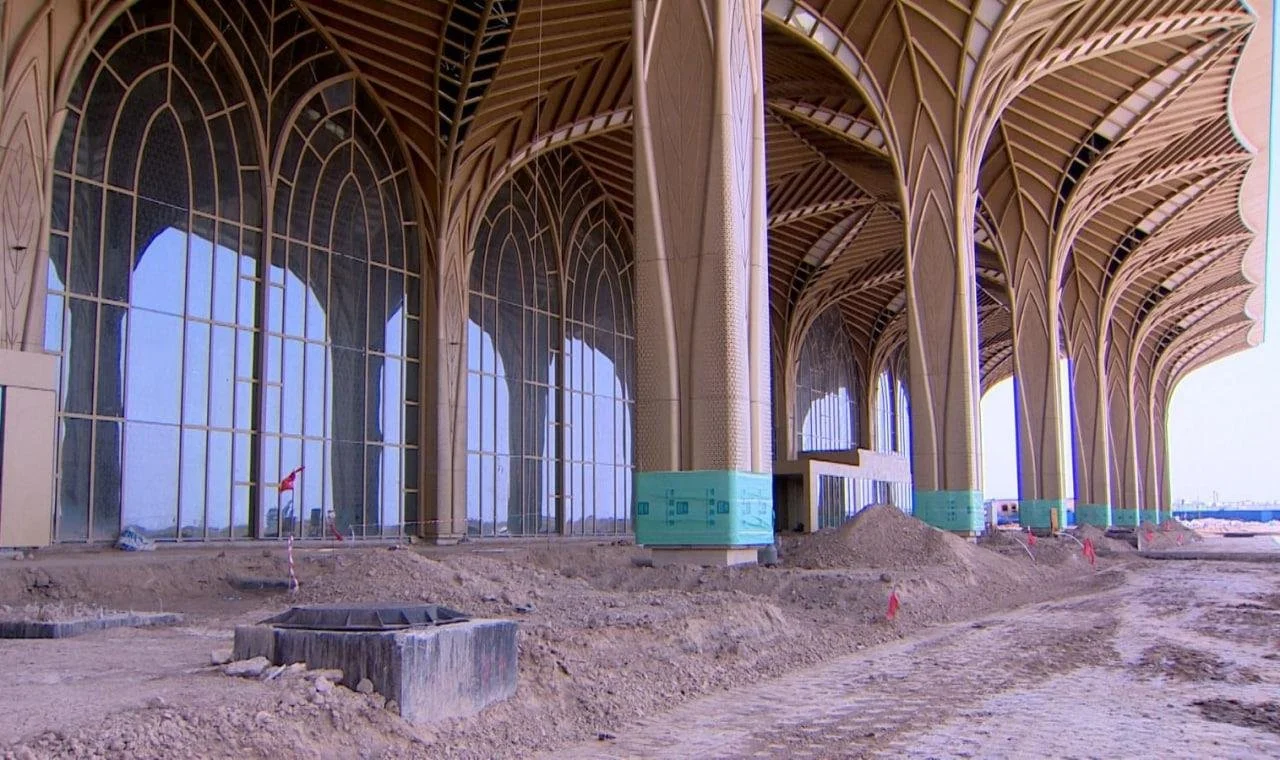
He added that "the main runway has been fully completed at 100% in terms of paving, lighting and inspection works," explaining that "the arrivals building has an area of 22,000 square meters and includes modern systems, including a cooling system and an early fire detection system, in addition to AI-powered cameras capable of detecting fires and forgotten bags and directing the concerned authorities to their locations."
He pointed out that "the infrastructure works have reached a completion rate of 98% and include rain, sewage, lighting and electricity networks," noting that "work is continuing on the implementation of internal roads linking the buildings with a length of up to 5.5 kilometers according to the highest approved technical specifications."
For her part, the representative of the Quality Department, Engineer Malath Malik, explained that "the Quality Department is responsible for preparing daily reports on site inspection work in coordination with the consulting firm, as well as monitoring the materials entering the project."
She emphasized that "the materials used are subject to a series of internationally approved tests in two stages, starting with test reports issued by the manufacturers, and then, after entering Iraq, they are subject to inspections and tests under the supervision of the consulting body before approval for their use on site." https://www.economy-news.net/content.php?id=68843
Iraq Will Export 600,000 Tons Of Dates During 2025
Money and Business Economy News – Baghdad The Ministry of Agriculture confirmed on Friday that date exports exceeded 600,000 tons in 2025. The Undersecretary of the Ministry of Agriculture, Mahdi Suhr Al-Jubouri, said that “the palm and date sector in Iraq is one of the important agricultural sectors economically, due to its competitive advantages in global markets,” noting that “the Zahdi variety is the most abundant in production and has the highest quantities of dates exported abroad, in addition to other varieties of dates, which exceed 600 varieties of dates locally.”
He added that "the Zahdi variety is the first variety for many date processing industries in Iraq, such as the production of date syrup, sweets and date paste, which constitute added economic value," indicating that "the palm and date sector in Iraq has witnessed great interest from the Ministry of Agriculture and other sectoral bodies, especially after the introduction of tissue culture techniques, and also the continuation of ground and aerial control to combat Dubas insects and the red weevil."
Sahar continued, “As a result of this interest and expansion in orchard cultivation using modern irrigation and drip irrigation methods, which resulted in an increase in the number of palm trees to more than 22 million, exports in 2025 rose to 600,000 tons of dates, in addition to the export of more than 100,000 tons of date paste, which together provide hard currency for the country and an internal source for orchard owners.” https://www.economy-news.net/content.php?id=68836
Baghdad Municipality: Al-Hussein Bridge Will Be Completed Within 375 Days And To High Standards.
Money and Business Economy News – Baghdad The Baghdad Municipality announced on Friday the commencement of construction work on the Al-Hussein neighborhood overpass, aimed at addressing traffic congestion. It confirmed that the overpass will be completed within 375 days and to high standards.
Baghdad Municipality spokesman Uday Al-Jundail said that "the executive work for the construction of the Al-Hussein neighborhood overpass has begun as part of the Baghdad Municipality's plans to address traffic congestion and alleviate bottlenecks in vital areas of the capital, including important intersections on the Salah Al-Din Expressway," indicating that "the project will contribute significantly to ending traffic jams and achieving high traffic flow after its completion."
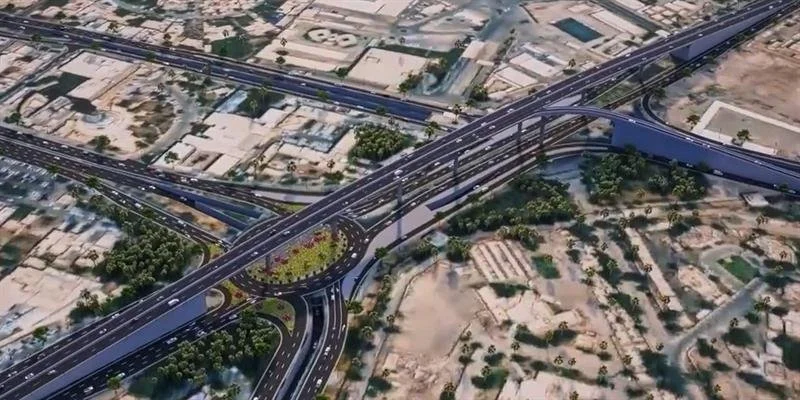
He added that "the project's implementation period is 375 days, with the possibility of completing it before the specified period according to the work rates, the planned program, and sound specifications."
He pointed out that "the implementing company is one of the reputable local companies, and has similar projects in a number of governorates," stressing that "the work is proceeding according to the plans set to complete the project as quickly as required."https://www.economy-news.net/content.php?id=68811
Iraq Under Pressure In The Strait Of Hormuz: Huge Oil Losses And Unprecedented Discounts To Save Exports
Economy News – Baghdad Iraq is facing one of the most serious economic challenges in its modern history since the outbreak of the regional war and the closure of the Strait of Hormuz, the maritime outlet through which the vast majority of its oil exports pass.
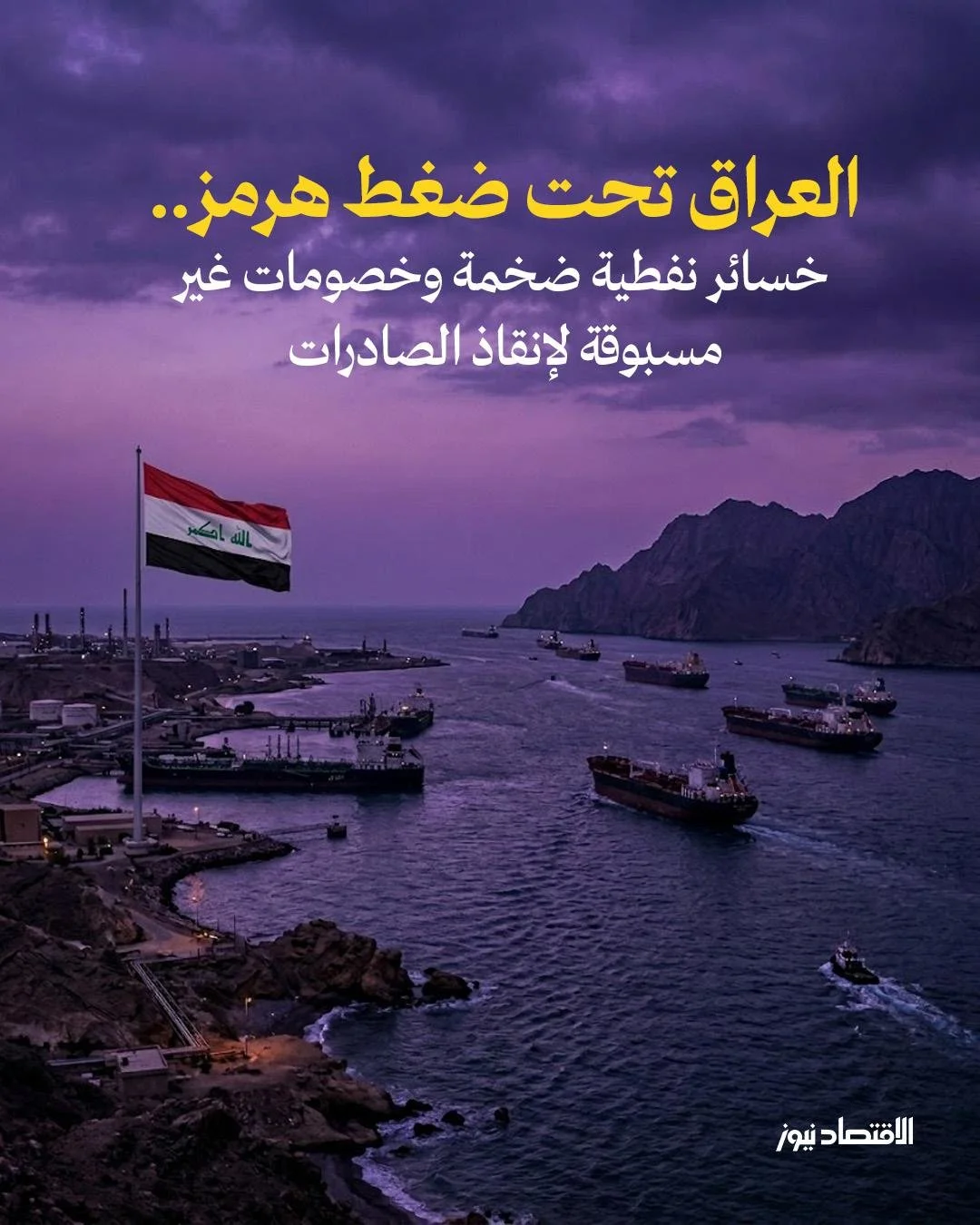
The country, whose economy depends almost entirely on oil revenues, has found itself facing a sharp decline in exports, prompting SOMO (State Oil Marketing Organization) to adopt an exceptional pricing policy that includes significant discounts to attract buyers and encourage the continued flow of Iraqi oil to global markets.
Gulf Exports Collapse
According to data reported by Bloomberg, Iraqi oil sales have fallen by more than 80% in the past two months, as many tankers have been unable to pass through the Strait of Hormuz, which has become a high-risk area due to military escalation.
In a clear indication of the scale of the crisis, only two tankers loaded oil from the port of Basra during April, compared to 12 tankers in March, even though the port has an operational capacity of about 80 tankers per month under normal circumstances.
Iraqi oil exports also fell in March by about 97% compared to the previous month, averaging only 99,000 barrels per day, according to ship tracking data.
Standard Discounts To Attract Buyers
In an attempt to reduce the effects of the crisis, SOMO introduced unprecedented price reductions on Basra Medium crude, reaching $33.40 per barrel during the first ten days of May 2026, before dropping to $26 for the rest of the month, while the discount on Basra Heavy crude reached about $30 per barrel.
The company bases its pricing of Basra Medium crude on the average prices of Dubai and Oman crudes for shipments to Asia, and on Argus high-sulfur crude for shipments to the Americas.
Last April, Iraq raised the official selling price of Basra Medium crude to Asia to a premium of $17.30 above the average price of Oman and Dubai crudes, compared to a premium of only $0.30 in the previous April. It also set a premium of $10.30 above Argus crude for shipments to the Americas.
“The Port Is Up For Sale”: A Mechanism To Overcome Risks
SOMO General Manager Ali Nizar Al-Shatri explained that the company resorted to adopting the “port-off sale” method, meaning that the company’s responsibility ends as soon as the oil is loaded onto the tanker, while the buyer bears the costs of maritime transport, insurance and transit risks.
Al-Shatri confirmed that “SOMO” did not actually change the officially announced price premiums, but the difference in the method of sale and the discounting of transportation and insurance costs is what gives buyers the possibility of obtaining oil at lower prices.
He explained that this method is currently limited to Basra oil due to the risks of sailing in the Strait of Hormuz, while Kirkuk crude maintains its price premium because it is exported via the Turkish port of Ceyhan on the Mediterranean Sea, far from the maritime threats in the Gulf.
Billions Of Dollars In Losses
Energy expert Kovand Sherwani described the repercussions of the crisis as a “huge economic blow,” stressing that Iraq has lost daily exports estimated at about 3.3 million barrels of crude oil, which used to generate revenues of no less than $260 million per day.
Shirwani told Al-Eqtisad News that the total revenue losses during one month may approach $7 billion, with the possibility of the figure rising as a result of the rise in global oil prices following the closure of the Strait of Hormuz.
He explained that the discounts offered by SOMO aim to encourage companies and traders to buy Iraqi oil and bear the risks of transportation, adding that some companies that have good relations with the Iranian side may be able to pass through the oil shipments and make large profits from the price differences.
He pointed out that Iraq faces a structural problem in the absence of a large national fleet of oil tankers, as the majority of exports depended on chartered tankers or direct sales in Iraqi ports.
Limited Alternatives And Narrow Options
Although Iraq continues to export some of its oil via the pipeline to Türkiye, the quantities remain limited compared to the usual export capacity via the Gulf.
Shirwani explained that the Ceyhan port pipeline currently transports only about 250,000 barrels per day, which is equivalent to about 7% of Iraq’s previous total exports.
Observers confirm that Iraq currently lacks genuine strategic alternatives to bypass the Strait of Hormuz, making it one of the countries most affected by any security disturbance in the Gulf.
Discounts Are Not A Global First
For his part, economist Nabil Al-Marsoumi explained that the current price reductions are temporary measures pertaining to May 2026, and aim to maintain a minimum flow of oil exports.
Al-Marsoumi pointed out that the policy of discounts is not new in global energy markets, as Iran, Russia and Venezuela have previously used it to mitigate the impact of sanctions or restrictions that have hindered their oil from reaching global markets.
He added that Iraq was forced to offer discounts of up to $33.4 per barrel on Basra Medium crude to buyers with long-term contracts, especially those using tankers that have to cross the Strait of Hormuz, in order to offset the high transport and insurance risks.
A Crisis That Reveals The Fragility Of The Export Structure
The current crisis reveals the extent of Iraq’s almost complete dependence on a single sea outlet for oil exports, in the absence of an alternative network of pipelines or a national maritime transport fleet.
Experts believe that a prolonged closure of the Strait of Hormuz could put unprecedented pressure on Iraqi finances, especially given the general budget's heavy reliance on oil revenues.
While SOMO is trying to maintain the presence of Iraqi oil in global markets through discounts and trade facilities, the future of exports remains dependent on developments in the security situation in the Gulf, and the extent to which Baghdad can find alternative export outlets that reduce its vulnerability to the Strait of Hormuz.
العراق تحت ضغط هرمز.. خسائر نفطية ضخمة وخصومات غير مسبوقة لإنقاذ الصادرات
New Clarity Act is Trojan Horse for Dollar as Global Reserve Currency
New Clarity Act is Trojan Horse for Dollar as Global Reserve Currency
Heresy Financial: 5-6-2026
On May 1st, a significant legislative development unfolded in the U.S. Congress: the Clarity Act. This bill, focused on regulating stablecoins and cryptocurrencies, initially drew attention for reportedly banning interest payments on stablecoins.
While some might have anticipated a negative market reaction, the reality was quite different, with companies like Circle even seeing stock surges. This suggests the Clarity Act is more than just another piece of crypto regulation—it’s a deeper strategic maneuver with profound implications for the U.S. dollar and global finance.
New Clarity Act is Trojan Horse for Dollar as Global Reserve Currency
Heresy Financial: 5-6-2026
On May 1st, a significant legislative development unfolded in the U.S. Congress: the Clarity Act. This bill, focused on regulating stablecoins and cryptocurrencies, initially drew attention for reportedly banning interest payments on stablecoins.
While some might have anticipated a negative market reaction, the reality was quite different, with companies like Circle even seeing stock surges. This suggests the Clarity Act is more than just another piece of crypto regulation—it’s a deeper strategic maneuver with profound implications for the U.S. dollar and global finance.
To truly understand the Act’s potential, we need to look back at history. The original Bretton Woods agreement, forged after World War II, established the U.S. dollar as the world’s reserve currency, backed by gold. However, by the early 1970s, the U.S. had issued more dollars than its gold reserves, leading to the end of the gold standard in 1971.
To maintain the dollar’s global dominance, the U.S. subsequently partnered with Saudi Arabia in 1974 to create the petrodollar system. This arrangement mandated that oil sales be priced in dollars and encouraged Saudi Arabia to reinvest those dollars into U.S. treasuries, thus ensuring continuous global demand for the dollar.
Fast forward to today, the dollar faces renewed pressures amid significant money supply expansion and inflation. In this new landscape, stablecoins are emerging as a strategic tool.
The Clarity Act’s regulatory framework for stablecoins appears to be shaping them into instruments that, while presented as private entities, could function similarly to central bank digital currencies (CBDCs) under indirect oversight from the Treasury. This approach allows the U.S. government to maintain and potentially extend its influence over global financial flows without the direct public and political resistance that a fully government-issued CBDC might provoke.
The distinction between a traditional digital money system, a CBDC, and regulated stablecoins is crucial. Currently, digital money primarily operates on multiple private ledgers managed by banks, with the Federal Reserve acting as a central clearinghouse.
A CBDC, conversely, would consolidate these into one centralized ledger controlled by the central bank, enabling very precise control over monetary policy. This could involve variable interest rates on holdings, transaction-specific incentives or disincentives, and comprehensive monitoring—features that naturally raise discussions about privacy and economic freedom.
Under the Clarity Act, stablecoins like USDC are anticipated to be allowed to offer “rewards” for activities such as trading or holding duration, differentiating them from traditional interest payments typically offered by banks.
This clever compromise makes stablecoins attractive to users while preserving the banks’ traditional role in passive interest generation. Crucially, increased global adoption of these regulated stablecoins would channel purchasing power into U.S. treasuries. This mechanism could significantly help address the ongoing demand for government debt, especially as yields continue to fluctuate.
Around the world, many nations are exploring or even piloting CBDCs, yet public apprehension remains widespread. In this context, stablecoins regulated under a framework like the Clarity Act offer a more politically palatable alternative. They operate within the existing cryptocurrency ecosystem but under government regulation, creating a powerful mechanism for maintaining dollar hegemony. This allows the U.S. Treasury to subtly yet strategically influence global economic behavior and safeguard the dollar’s prominent position.
In essence, the Clarity Act and the strategic development of regulated stablecoins represent a sophisticated geopolitical and economic strategy. It’s an effort to secure the dollar’s future as the world’s dominant currency in an increasingly digital era.
By combining enhanced regulatory oversight with innovative financial instruments, this approach aims to sustain the dollar’s crucial global role amidst evolving economic realities.
TIMECODES
00:00 The Stablecoin Bill Is a Trojan Horse
00:53 This Is a Bretton Woods 3.0 Moment
01:03 How the Dollar Became the World's Money in 1944
02:09 The Run on the Bank That Ended Gold
02:47 The Petrodollar Deal That Saved the Dollar
04:30 Why 50 Years Later We're Repeating History
04:53 What This New Stablecoin Agreement Actually Does
05:17 The Dollar Is Already Digital. You Just Don't See It.
05:50 How Banks Actually Move Money Between Each Other
06:42 What a Central Bank Digital Currency Really Is
07:01 The Dystopia Hidden in "Fine Tuned" Monetary Policy
08:08 Negative Interest on Money You Hold Too Long
08:32 Rewards and Punishments for What You Buy
10:40 The One Thing You Can't Escape About a CBDC
11:23 Why a CBDC Won't Be Implemented All at Once
11:42 Stablecoins Are CBDCs Without the Backlash
12:48 The Compromise: Rewards Tied to Activity, Not Holdings
13:45 Every Government Wants a CBDC. Citizens Don't.
14:25 Why Stablecoins Get the Power Without the Politics
15:42 The Global Funnel Into U.S. Treasuries
16:31 The Treasury Yield Crisis Hidden Behind All of This
Seeds of Wisdom RV and Economics Updates Friday Afternoon 5-8-26
Good Afternoon Dinar Recaps,
Global Debt Explosion Accelerates: Investors Begin Shifting Away From U.S. Treasuries
Record global borrowing, rising geopolitical instability, and weakening confidence in sovereign debt markets are increasing pressure on the existing financial system.
As debt approaches unsustainable levels and investors diversify reserves away from traditional assets, concerns are growing over the long-term stability of the global monetary order.
Good Afternoon Dinar Recaps,
Global Debt Explosion Accelerates: Investors Begin Shifting Away From U.S. Treasuries
Record global borrowing, rising geopolitical instability, and weakening confidence in sovereign debt markets are increasing pressure on the existing financial system.
As debt approaches unsustainable levels and investors diversify reserves away from traditional assets, concerns are growing over the long-term stability of the global monetary order.
OVERVIEW (KEY POINTS)
Global debt has surged to a record $353 trillion, according to new international financial data released this week. The sharp increase is being driven primarily by the United States and China as governments continue relying heavily on borrowing to sustain growth and manage economic pressures.
At the same time, analysts are observing early signs that international investors are beginning to diversify away from U.S. Treasuries, historically considered the foundation of global financial stability.
The developments come amid growing geopolitical tensions surrounding the Iran conflict, rising energy costs, inflation concerns, and increasing questions about debt sustainability across major economies.
The broader implication is significant: the global financial system is showing signs of structural stress as governments accumulate more debt while investor confidence becomes increasingly fragmented.
KEY DEVELOPMENTS
1. Global Debt Climbs to Historic High
International borrowing accelerated sharply during the first quarter of 2026.
Global debt reached approximately $353 trillion
Debt-to-GDP ratios remain near 305% of global economic output
The Institute of International Finance warned that current borrowing trends are becoming increasingly difficult to sustain long term.
2. Investors Begin Diversifying Away From U.S. Treasuries
Analysts are detecting changes in reserve behavior.
Demand for Japanese and European government bonds is increasing
International appetite for U.S. Treasuries has shown signs of weakening
While there is no immediate crisis in Treasury markets, concerns about America’s long-term debt trajectory continue to grow.
3. Iran Conflict Adds Pressure to Financial Markets
The Middle East conflict is intensifying global instability.
Oil prices remain elevated near or above $100 per barrel
Shipping disruptions in the Strait of Hormuz continue affecting energy markets
Higher energy costs are contributing to inflation fears and slowing economic growth forecasts globally.
4. IMF Warns of More Severe Economic Risks Ahead
The International Monetary Fund has issued increasingly serious warnings.
IMF officials cautioned that prolonged conflict could trigger slower global growth and higher inflation
Severe scenarios include risks of recession-level conditions and sustained commodity shortages
Policymakers are now facing pressure to manage inflation without causing broader economic contraction.
5. Central Banks Continue Strategic Reserve Shifts
Reserve diversification trends are accelerating globally.
Central banks continue increasing exposure to gold and non-dollar assets
Emerging economies are seeking greater financial independence from Western systems
These shifts reflect growing concern about the long-term reliability of debt-heavy reserve structures.
WHY IT MATTERS
The combination of rising debt, geopolitical instability, and weakening confidence in sovereign debt markets creates a dangerous environment for the global economy.
For decades, the financial system relied heavily on the assumption that U.S. Treasury markets represented the safest and most liquid assets in the world. Early signs of diversification away from those markets represent a potentially important structural shift.
At the same time, higher energy costs and persistent inflation are limiting the ability of central banks to stabilize growth without increasing borrowing even further.
The result is a system facing pressure from multiple directions simultaneously: debt expansion, inflation, geopolitical fragmentation, and reserve diversification.
WHY IT MATTERS TO FOREIGN CURRENCY HOLDERS
Currency volatility may increase as reserve flows diversify
Inflation pressures continue eroding purchasing power globally
Higher debt levels may weaken long-term confidence in fiat currencies
Gold and commodity-backed assets are attracting greater institutional interest
IMPLICATIONS FOR THE GLOBAL RESET
Pillar 1: Sovereign Debt Sustainability Crisis
Record borrowing levels are increasing concerns that major economies may eventually face limits to debt-driven growth models.
Pillar 2: Gradual Shift Away From Dollar-Centric Finance
Diversification away from U.S. Treasuries and increased reserve allocation toward alternative assets reflect the slow emergence of a more multipolar financial system.
CONCLUSION
The rapid rise in global debt is no longer being viewed as a temporary post-crisis condition. Instead, it is increasingly becoming a defining feature of the modern financial system.
As borrowing accelerates and geopolitical tensions disrupt trade and energy markets, investors and governments are beginning to reassess long-standing assumptions about reserve safety and economic stability.
Although the U.S. dollar and Treasury markets remain dominant today, the early signs of diversification suggest that confidence in the existing system is no longer absolute.
The global financial reset may not arrive through one dramatic event, but through a steady erosion of trust in the structures that once anchored the world economy.
Seeds of Wisdom Team
Newshounds News™ Exclusive
SOURCES
Reuters — "Global Debt Hits Record of Near $353 Trillion, With Signs of Move Away From U.S."
Reuters — "IMF Chief Georgieva Warns of Much Worse Outcome if Middle East War Drags Into 2027"
~~~~~~~~~~
Seeds of Wisdom Team RV Currency Facts Youtube and Rumble
Newshound's News Telegram Room Link
RV Facts with Proof Links Link
RV Updates Proof links - Facts Link
Follow the Gold/Silver Rate COMEX
Follow Fast Facts
Seeds of Wisdom Team™ Website
Thank you Dinar Recaps
Iraq News Posted by Tishwash at TNT 5-8-2026
TNT:
Tishwash: Al-Zaydi presents the ministerial program to the Speaker of Parliament
Prime Minister-designate Ali Faleh al-Zaidi presented the new government’s ministerial program to Speaker of Parliament Hebat Hamad al-Halbousi on Thursday (May 7, 2026), while both sides stressed the importance of cooperation to complete the process of granting confidence to the government.
The media office of the Prime Minister stated in a statement received by "Baghdad Today" that "Prime Minister-designate Ali Falih al-Zaidi presented the ministerial program of the new government to the Speaker of Parliament, Hebat Hamad al-Halbousi, during a meeting that brought them together today, Thursday."
TNT:
Tishwash: Al-Zaydi presents the ministerial program to the Speaker of Parliament
Prime Minister-designate Ali Faleh al-Zaidi presented the new government’s ministerial program to Speaker of Parliament Hebat Hamad al-Halbousi on Thursday (May 7, 2026), while both sides stressed the importance of cooperation to complete the process of granting confidence to the government.
The media office of the Prime Minister stated in a statement received by "Baghdad Today" that "Prime Minister-designate Ali Falih al-Zaidi presented the ministerial program of the new government to the Speaker of Parliament, Hebat Hamad al-Halbousi, during a meeting that brought them together today, Thursday."
The statement added that "the ministerial program will be circulated to members of the House of Representatives for them to study and review its details, and the names of the government formation will be submitted at a later time."
According to the statement, both sides emphasized "the importance of joint cooperation and coordination to proceed with completing the entitlement to grant confidence to the government and its ministerial program as the basic pillar upon which the government builds its work and duties, based on constitutional and legal contexts." link
************
Tishwash: The government's features are taking shape, and the program is now in the hands of Parliament.
As the political scene approaches a crucial moment, dialogues between political blocs are accelerating to finalize the formation of the new government, amid growing expectations that the cabinet will be announced and voted on next Monday, according to political data circulating within parliament.
These developments come amid advanced political understandings between the main parties, which have given the prime minister-designate ample room to choose his ministerial team, in parallel with the continuation of talks on the distribution of portfolios and the establishment of political entitlements for the various components, which makes the birth of the government dependent on precise agreements that have not yet been definitively settled.
In a related context, parliamentary data indicates that the government program has reached, or is about to reach, the House of Representatives, in preparation for its discussion and approval within the constitutional process related to passing the cabinet.
As the decision nears, the political debate is shifting towards the nature of the government program rather than the names, as a number of MPs are demanding a move away from quotas and the adoption of standards of competence, integrity and transparency in the selection of ministers, while enhancing transparency by publishing their biographies to the public.
In this context, MPs confirm that the features of the government have begun to gradually take shape, despite the continued disagreements over some portfolios and the mechanisms for distribution among the blocs.
Political.
Parliamentary initiatives have also emerged concerning the regulation of the relationship between the executive position and electoral entitlement, through a proposal that obliges ministers not to run in the upcoming elections, and prevents their first-degree relatives from running, in addition to including holders of special grades and undersecretaries of ministries, with the aim of limiting the exploitation of government influence in election campaigns, with the intention of including this in the election law later.
In parallel, interest in the security file is escalating as one of the top priorities of the next government, with calls for a comprehensive reform of the security and military system and an update of the combat doctrine in line with regional and international changes. link
************
Tishwash: Saturday is the deadline for finalizing the cabinet... The Wisdom Movement reveals details of the new government structure
Fahd al-Jubouri, a leader in the Wisdom Movement, revealed what he described as the "zero hour" for resolving the issue of the ministerial cabinet, stressing that next Saturday will be the decisive date for the final vote on the new government formation within the House of Representatives.
Al-Jubouri told Zaqoura News Agency in a special statement that the political understandings between the forces participating in forming the government have reached advanced and positive stages, despite the continuation of some differences that previously brought the dialogues back to "square one".
He explained that "the general atmosphere of the talks is positive, and there are strong indications that the government will be announced and the cabinet finalized next Saturday," noting that the political dialogues have witnessed remarkable progress in recent days after intensive rounds of meetings between the various parties.
Regarding the news circulating about American interference in the selection of ministerial figures, Al-Jubouri described that information as "exaggerated and inaccurate," stressing that "the American position was limited to conveying a message before the selection of the designated prime minister, which included not dealing with a government that includes factions, without directly interfering in the naming of ministers or imposing specific figures."
Al-Jubouri indicated that the new government structure will include the creation of three positions for deputy prime ministers instead of four, after the prime minister objected to one of the candidates for the fourth position, explaining that the distribution of positions will take place according to specialized files that include economic and service affairs and the energy sector.
He explained that the move towards creating the position of Deputy Prime Minister for Economic Affairs came to address the confusion that the Ministerial Council for the Economy witnessed during the past period, as a result of the Foreign Minister being preoccupied with his international duties, which was reflected in the regularity of the periodic economic meetings.
Al-Jubouri concluded by emphasizing that the selection of the Vice Presidents and Deputy Prime Ministers will be based on a political and administrative vision aimed at ensuring that the state treasury is not burdened with additional financial obligations, noting that this approach has been agreed upon during recent official meetings. link
************
Tishwash: Al-Khafaji reveals behind-the-scenes details of the Al-Zidi government with Al-Hajj: MPs will be prevented from performing Hajj until the vote, and salaries will be in jeopardy!
MP Hassan Al-Khafaji revealed the behind-the-scenes details of the ongoing negotiations to form Ali Al-Zidi’s government, stressing that the heads of the political blocs informed the MPs of the need not to go to perform the Hajj rituals before the end of the session to vote on the anticipated government.
Al-Khafaji said during his interview with journalist Hossam Al-Hajj that “the last plane carrying pilgrims will take off from Baghdad Airport carrying 183 MPs after the end of the voting session,” indicating that the session to grant confidence to Al-Zidi’s government will be held on Sunday or Monday next week.
He added that the current Minister of Labor, Ahmed Al-Asadi, will retain his ministerial portfolio, while the Reconstruction and Development Coalition seeks to obtain the Ministry of Electricity “to contribute to ending the suffering of citizens with the energy crisis.”
Al-Khafaji indicated that the Ministry of Oil file was “resolved” in favor of the Sudanese coalition, along with four other ministries, noting that there were objections within the negotiations regarding the inclusion of bodies within the negotiating points, saying that “some are upset and do not want the bodies to be included within the points.”
He explained that the selection of Al-Zidi “pleased” many political forces because he is an “economic man,” revealing that the Prime Minister-designate asked the coordination framework to choose the Ministers of Finance and Interior.
Regarding the position of Deputy Prime Minister, Al-Khafaji confirmed that the position “cost Asa’ib 15 points,” indicating that there is an opinion within the coordination framework that rejects keeping the positions of Deputy Prime Ministers because of the financial and administrative burdens they represent.
He explained that the Sudanese coalition was heading towards the opposition option, but the appointment of Al-Zaidi changed the course towards “absolute support” for the new government, adding that the merchants expressed their satisfaction with the appointment of Al-Zaidi because he “will spare Iraq from wars and keep it away from problems.”
Al-Khafaji also touched on the issue of foreign relations, stressing that “the Americans have a problem with the Popular Mobilization Forces,” and predicting that the leaders of the factions would refrain from direct participation in the next government.
In the economic file, Al-Khafaji called for closing the “dollar cycle” and reducing dependence on a single export outlet, describing this as a “disaster,” noting that Iraq imports agricultural crops from Turkey worth up to $25 million.
Al-Khafaji concluded his remarks with an economic warning, saying: “I don’t want to cause the people anxiety, but if the Strait of Hormuz remains closed, we will face difficulty in paying salaries.” link
News, Rumors and Opinions Friday 5-8-2026
KTFA:
Clare: A leader in reconstruction and development: Al-Zidi enjoys a margin of freedom in choosing his ministers, and an agreement to pass the government is imminent.
5/7/2026
A leader in the Reconstruction and Development Alliance confirmed that Prime Minister-designate Ali al-Zidi enjoys a large margin of freedom in forming his government, in light of the remarkable flexibility shown by the political forces.
He explained that Al-Zaydi asked the blocs to grant him the authority to choose the Ministers of Finance and Interior away from the quota system, in a move that reflects a trend towards strengthening the independence of government decision-making.
KTFA:
Clare: A leader in reconstruction and development: Al-Zidi enjoys a margin of freedom in choosing his ministers, and an agreement to pass the government is imminent.
5/7/2026
A leader in the Reconstruction and Development Alliance confirmed that Prime Minister-designate Ali al-Zidi enjoys a large margin of freedom in forming his government, in light of the remarkable flexibility shown by the political forces.
He explained that Al-Zaydi asked the blocs to grant him the authority to choose the Ministers of Finance and Interior away from the quota system, in a move that reflects a trend towards strengthening the independence of government decision-making.
He added that the distribution of ministries will remain subject to a points system during the negotiations, ensuring that each bloc receives its electoral entitlement, without this conflicting with Al-Zaydi’s efforts to choose a team capable of facing the challenges. LINK
************
Clare: The Ministry of Oil announces an oil discovery in Najaf within the "Al-Qarnayn" exploration area with reserves of 8.8 billion barrels.
5/7/2026
The Iraqi Ministry of Oil announced a new oil discovery within the “Qarnayn” exploration block, with reserves estimated at about 8.8 billion barrels, in a move that supports Iraq’s plans to increase its oil production capacity in the coming years.
The announcement came during Oil Minister Hayyan Abdul Ghani’s reception of a delegation from the Chinese company Zhenhua, where the two sides discussed developments in the work in the “Al-Qarnayn” exploration block, in addition to the East Baghdad South field.
Abdul-Ghani confirmed that the discovery was made within the Al-Qarnayn block, which was awarded to the Chinese company as part of the fifth supplementary and sixth licensing rounds in 2024.
He stressed the importance of accelerating work to complete oil projects and maximize the utilization of associated gas, thus ensuring the sustainability of crude oil production. He added that the Al-Qarnayn block is the first exploration block to record an oil discovery within the blocks offered in the fifth supplementary and sixth licensing rounds, reflecting the significant potential of undeveloped areas in Iraq, particularly border regions. LINK
*************
Clare: Iraq between international oversight and the dollar… a banking system under pressure from “stricter compliance”
Independent/-
At a time when questions are mounting about the future flow of dollars into Iraq, banking officials confirm that the Iraqi financial system has entered a phase of “strict international oversight” that has redrawn the mechanism for managing foreign transfers and directly affected the movement of the money market.
According to officials at the Central Bank who confirmed to Al-Mustaqilla on Thursday, modern regulatory procedures and coordination with international financial and security bodies have led to tighter control over transfer routes and reduced the margin of movement outside official channels, within the framework of what is described as a global war on “phantom trade” and the financing of illegal activities.
But these transformations, according to economic analyses, did not come without an internal cost, as observers point out that the tightening of financial compliance was accompanied by clear pressure on dollar liquidity within the local market, and fluctuations in monetary stability, amid increasing reliance on electronic platforms for passing external transfers.
Banking sources confirm that the new auditing systems, supported by data analysis and artificial intelligence technologies , are now able to track financial movements with high accuracy, including commercial invoices and import-related transactions, which some have considered a “complete re-engineering” of the dollar market in Iraq.
In contrast, experts believe that this shift reflects Iraq’s transition from an economy dependent on direct liquidity to an economy subject to indirect external control, through international compliance networks that control the flow of dollars before they reach the local market.
These developments come amid growing controversy over the halt or slowdown of some foreign currency shipments and the increasing reliance on digital channels, which has opened the door to questions about the future of monetary stability and the limits of financial sovereignty in managing the dollar issue.
Between tightening international oversight and local market pressure, the Iraqi banking sector remains at the heart of a delicate equation that combines financial reform on one hand, and economic and political challenges on the other. LINK
************
Courtesy of Dinar Guru: https://www.dinarguru.com/
JeffHistorically Iraq has always been slightly above Kuwait. Today Kuwait's about $3.25...What brought the value of the currency down was sanctions. What happens when you take those sanctions off? If it reinstates wouldn't that put it around the $3.22 which is where it devalued in 2003?
Reset Intelligence The Gazette is Iraq's mandatory channel for legal force. Laws, regulations and presidential decrees take effect on the date they are published, not before. Until a rate change appears in the Gazette, it is not law.
Stephen What is going to happen the moment the Iraqi dinar revalues, when you wake up that morning? ...Iraq is 7 or 8 hours ahead of us...I've always had a feeling it's probably going to revalue in the middle of the night and we're going to wake up that morning and we're going to know that our lives are essentially changed forever. So start putting yourself in a position of planning ahead. Start having those thoughts in your head - What am I going to do when that day comes? Because I believe that day is a lot closer than many of us think.
************
IRS Agent Confirms Dinar Tax Rate
Dinar For Dummies: 5-7-2026
Seeds of Wisdom RV and Economics Updates Friday Morning 5-8-26
Good Morning Dinar Recaps,
Oil Shock and De-Dollarization Pressures Intensify: Global Financial System Faces Growing Strain
Escalating energy instability, weakening confidence in traditional financial structures, and rising de-dollarization efforts are accelerating structural changes across the global economy
Today’s market movements reveal a deeper shift underway as geopolitical conflict, energy disruption, and currency diversification increasingly reshape the global financial order.
Good Morning Dinar Recaps,
Oil Shock and De-Dollarization Pressures Intensify: Global Financial System Faces Growing Strain
Escalating energy instability, weakening confidence in traditional financial structures, and rising de-dollarization efforts are accelerating structural changes across the global economy
Today’s market movements reveal a deeper shift underway as geopolitical conflict, energy disruption, and currency diversification increasingly reshape the global financial order.
OVERVIEW (KEY POINTS)
Global markets are reacting to a dangerous combination of Middle East instability, oil market volatility, and growing pressure against the U.S. dollar-based financial system.
The Strait of Hormuz remains a major flashpoint as tensions between the United States and Iran continue disrupting shipping routes and creating uncertainty around global energy supplies. Oil prices have repeatedly surged above critical levels, fueling inflation concerns worldwide.
At the same time, countries across the BRICS bloc and emerging markets continue accelerating efforts toward local currency trade settlements, reserve diversification, and reduced dependency on the U.S. dollar.
The broader implication is becoming clearer: the global financial system is entering a period of fragmentation where geopolitical conflict and monetary realignment are increasingly interconnected.
KEY DEVELOPMENTS
1. Oil Markets Remain Highly Volatile
Energy markets continue reacting to geopolitical instability.
Brent crude repeatedly moved near or above $100 per barrel
Hormuz disruptions continue threatening global oil and LNG flows
2. De-Dollarization Momentum Continues Growing
Emerging economies are seeking alternatives to dollar dependence.
BRICS nations continue expanding local currency settlement systems
Central banks are increasing diversification into gold and non-dollar reserves
3. Global Food and Supply Costs Rise
Energy instability is spreading through the broader economy.
Rising fuel costs are increasing shipping and fertilizer expenses
Global food prices climbed again as supply chains remain strained
4. Financial Markets Show Signs of Structural Stress
Investors are balancing optimism with systemic risk concerns.
Bond markets remain volatile amid inflation fears
Currency fluctuations and energy shocks continue pressuring central banks
5. AI and Cybersecurity Risks Add New Financial Threats
The IMF warned today that technology risks are rising rapidly.
AI-driven cyberattacks could threaten banking and financial infrastructure
Financial stability concerns are expanding beyond traditional economic risks
WHY IT MATTERS
The convergence of energy instability, geopolitical conflict, and monetary diversification is creating pressure across the entire global financial system.
Historically, the U.S. dollar benefited from stable energy trade and centralized financial infrastructure. Today, those foundations are increasingly being challenged by regional conflicts, sanctions fatigue, and multipolar trade agreements.
Markets are beginning to price in a world where global trade may operate through multiple competing financial systems rather than one dominant structure.
This shift does not necessarily signal the immediate end of dollar dominance, but it does suggest the emergence of a more fragmented and competitive financial landscape.
WHY IT MATTERS TO FOREIGN CURRENCY HOLDERS
Currency volatility is increasing across emerging markets
Gold accumulation continues rising as a reserve hedge
Oil-importing nations face higher inflation and weaker purchasing power
Diversification away from dollar-only reserves is accelerating
IMPLICATIONS FOR THE GLOBAL RESET
Pillar 1: Energy and Currency Systems Are Decoupling
Countries are increasingly seeking ways to conduct trade outside traditional dollar settlement structures, particularly in energy markets.
Pillar 2: Multipolar Financial Infrastructure Is Expanding
Alternative payment systems, reserve diversification, and regional trade agreements are gradually reshaping global financial influence.
CONCLUSION
Today’s developments reinforce a growing reality: the world economy is moving into a period of higher fragmentation, strategic competition, and systemic realignment.
The combination of energy disruptions, geopolitical tensions, and de-dollarization efforts is creating long-term pressure on the financial structures that have dominated global trade for decades.
While markets continue adapting in real time, the deeper transformation appears increasingly structural rather than temporary.
The future global economy may not be built around a single financial center, but around competing systems struggling for influence and stability.
Seeds of Wisdom Team
Newshounds News™ Exclusive
Sources
~~~~~~~~~~
🌱 A Message to Our Currency Holders🌱
If you’ve been holding foreign currency for many years, you were not foolish.
You were not wrong to believe the global financial system would change.
What failed was not your patience — it was the information you were given.
For years, dates, rumors, and personalities replaced facts, structure, and proof. “This week” predictions created cycles of hope and disappointment that were never based on how currencies actually change.
That is not your failure.
Our mission here is different: • No dates • No rates • No hype • No gurus
Instead, we focus on:
• Verifiable developments • Institutional evidence
• Global financial structure • Where countries actually sit in the process
Currency value changes only come after sovereignty, trade, banking, settlement systems, and fiscal coordination are in place. History and institutions confirm this sequence.
You will see silence. You will see denials. That is not delay — that is discipline.
Protect your identity. Organize your documents. Verify everything.
Never hand your discernment to anyone who cannot show proof.
You deserve truth — not timelines.
Seeds of Wisdom Team
Newshounds News
~~~~~~~~~~
Seeds of Wisdom Team RV Currency Facts Youtube and Rumble
Newshound's News Telegram Room Link
RV Facts with Proof Links Link
RV Updates Proof links - Facts Link
Follow the Gold/Silver Rate COMEX
Follow Fast Facts
Seeds of Wisdom Team™ Website
Thank you Dinar Recaps
Iraq Economic News and Points To Ponder Friday Morning 5-8-26
Iraq Is Among The Top Destinations For Turkish Exports, With Strong Growth Last Month.
Money and Business Economy News – Baghdad Iraq was among the key markets that supported the growth of Turkish exports during April 2026, at a time when the Mediterranean Exporters Associations in Turkey announced strong results in a number of regional and international markets.
The head of the associations, Faisal Mameesh, said in a statement followed by “Al-Eqtisad News”, that the value of their exports reached $1.65 billion during last April, an increase of 27% compared to the same period last year.
Iraq Is Among The Top Destinations For Turkish Exports, With Strong Growth Last Month.
Money and Business Economy News – Baghdad Iraq was among the key markets that supported the growth of Turkish exports during April 2026, at a time when the Mediterranean Exporters Associations in Turkey announced strong results in a number of regional and international markets.
The head of the associations, Faisal Mameesh, said in a statement followed by “Al-Eqtisad News”, that the value of their exports reached $1.65 billion during last April, an increase of 27% compared to the same period last year.
He noted that export performance witnessed clear momentum in the Italian and German markets, while strong growth was also observed in the Iraqi markets, in addition to the Romanian, Spanish and Egyptian markets.
Mameesh explained that this increase was driven by increased exports of iron, minerals, chemicals, fruits, vegetables, grains, legumes and oilseeds, which are commodities that are in growing demand in the Iraqi market.
The inclusion of Iraq among the fastest growing markets reflects the continued expansion of trade between Baghdad and Ankara, especially given the Iraqi market's reliance on foreign imports to secure some food, construction materials, and industrial goods.
Turkish associations also expect this export momentum to continue in the coming months, aiming to achieve annual growth exceeding 10% by the end of the year. https://www.economy-news.net/content.php?id=68790
Globally, The Dollar Is Rising Amid Escalating Tensions Between The United States And Iran.
Money and Business Economy News - Follow-up The dollar began Asian trading on Friday higher against most major currencies after renewed hostilities between the United States and Iran, while the Japanese yen remained largely stable following fresh hints from authorities in Tokyo.
The United States and Iran traded fire and sharp criticism again on Thursday, adding to the strain on the fragile month-long ceasefire, as Iran considers a proposal from Washington to end the war.
Oil prices jumped and US crude oil futures rose 3% in early trading, increasing the risk aversion in currency markets.
The dollar index, which measures the strength of the US currency against other major currencies, rose slightly to 98.235.
The escalating tensions pushed the dollar higher for the second consecutive day, rebounding from its lowest level in over two months earlier in the week amid hopes for a peace agreement. The dollar is now on track to end the week virtually unchanged.
https://www.economy-news.net/content.php?id=68804
In Numbers: Iraqi Debts Up To April 2026
Money and Business Economy News – Baghdad Recent official data issued by the Ministry of Finance shows the financial position of Iraqi internal and external debts up to the end of April 2026.
The figures showed a disparity in the size of borrowing and the ability to repay between inherited obligations and those created during the current government's term.
Details Of Internal Debt
These data were included in a report by the Public Debt Department of the Ministry of Finance, which indicated with updated figures that the total domestic borrowing that took place during the period from 2023 until April 30, 2026 amounted to 46.035 trillion dinars.
These loans were distributed as follows: 7.590 trillion in 2023, rising to its peak in 2024 with an amount of 17.105 trillion dinars, then settling at 10.840 trillion in 2025 and 10.5 trillion in the first months of 2026.
Despite the size of the new borrowing, the Ministry of Finance, according to the Ministry of Finance data, succeeded in paying off an amount of 19.910 trillion dinars, so that the total internal debt balance stabilized at 96 trillion and 629 dinars, while the internal debt balance due to the accumulated borrowing from previous governments (2004 - 2022) had recorded 70.505 trillion dinars.
External Debt
Regarding the external debt file, the data showed tangible progress in reducing financial burdens, as the current external debt balance reached $10.076 billion, and the Ministry of Finance was able, between 2023 and April 2026, to repay $2.166 billion of loans inherited from previous governments.
Regarding "old debt" from before 2003 (Paris Club countries and non-Paris Club countries), the Ministry of Finance report revealed that the outstanding balance as of the end of April 2026 had decreased to only $2.963 billion. In comparison, the outstanding balance of external project debt for the period 2016-2022 had previously reached $12.926 billion .https://www.economy-news.net/content.php?id=68802
World Cup Tickets Spark Controversy... "Worst Seat" In The 2026 World Cup Final Costs $11 Million!
Money and Business Economy News - Follow-up The prices of tickets for the 2026 World Cup have sparked widespread anger among football fans, after the prices of some seats, even in the regular categories, reached astronomical figures months before the start of the tournament.
With the opening of ticket sales, fans were surprised by a huge increase in prices, especially for the final match scheduled for July 19 at MetLife Stadium in New Jersey, USA.
FIFA had previously announced that the maximum price for a ticket to the final was around $1,550, but the official sales platform later showed tickets offered for more than $10,000, while some tickets offered for resale reached shocking figures exceeding $11 million, even though the seat included in them is among the worst in terms of visibility inside the stadium.
One ticket that circulated sparked considerable controversy after it was offered for £8.5 million for a seat in the upper rows of the stadium, which fans considered evidence that the tournament had become an event reserved for the wealthy only.
Many fans expressed their anger over the prices on social media, with some describing what was happening as "financial exploitation," while others considered that "football is no longer the fans' game."
Travel and transportation costs also saw a significant increase, with the price of a train journey of no more than 30 minutes from New York to MetLife Stadium rising from less than $10 to about $150 during the tournament matches.
For his part, FIFA President Gianni Infantino defended the prices, stressing that the exorbitant figures offered in the resale market do not reflect the true value of the tickets, adding that the international federation deals with the "market reality" in the United States as one of the largest entertainment markets in the world.
In contrast, fan groups criticized the tournament's pricing policy, arguing that fans coming from all over the world felt "unwelcome," especially given the significant increase in the costs of tickets, transportation, accommodation, and services associated with the World Cup. https://www.economy-news.net/content.php?id=68800
How Can Iraq Secure Its Financial Needs Without Selling Oil?
Karim Al-Araji, Expert And Consultant In International Economics - After Saudi Arabia, the UAE, and Kuwait, Iraq is the fourth largest holder of US Treasury bonds in West Asia. The value of these bonds purchased by Iraq reached approximately $42 billion by the end of 2025.
This figure was $23.4 billion at the beginning of that year, representing a 79% increase in just one year. One of the main reasons for Iraq's purchase of this quantity of US Treasury bonds is that Iraqi oil revenues are subject to the control of the US Federal Reserve, in accordance with UN Security Council Resolution 1483.
According to paragraph 20 of this resolution, Iraqi oil export revenues are to be transferred to a fund called the Development Fund for Iraq. Later, by order of Paul Bremer, the US administrator of the Coalition Provisional Authority in 2003, this account was opened at the Federal Reserve. Thus, Iraq's sources of income have been under US control ever since.
Given that oil revenues constitute more than 90% of Iraq’s federal budget, preventing Iraq from freely accessing its oil revenues by the United States leads to reduced capabilities and constraints on securing the necessary financing for trade with other countries, developing oil and petrochemical infrastructure and power plants, creating jobs, and providing services appropriately.
With the closure of the Strait of Hormuz, the halt in exports, and the decline in oil revenues, this is an opportune time to secure the country's financial needs by selling this quantity of bonds.
Therefore, it is also essential to completely cease purchasing these bonds and redirect this valuable asset towards the country's progress and meeting the financial needs of the Iraqi people. https://www.economy-news.net/content.php?id=68672
Seeds of Wisdom RV and Economics Updates Thursday Evening 5-7-26
Good Evening Dinar Recaps,
Record Global Debt and Middle East Instability Raise New Financial Reset Warnings
Surging debt levels, weakening confidence in long-term U.S. borrowing, and escalating energy risks are increasing pressure on the global financial system.
Good Evening Dinar Recaps,
Record Global Debt and Middle East Instability Raise New Financial Reset Warnings
Surging debt levels, weakening confidence in long-term U.S. borrowing, and escalating energy risks are increasing pressure on the global financial system.
Overview
Today’s developments point to a financial system facing simultaneous pressure from debt expansion, geopolitical instability, and inflation-sensitive energy markets. While markets continue functioning normally on the surface, deeper indicators suggest that global capital flows and confidence in traditional financial structures are beginning to shift.
Key Developments
1. Global Debt Hits Historic $353 Trillion Record
The Institute of International Finance reported that global debt reached nearly $353 trillion, marking one of the fastest quarterly increases since mid-2025. The rise was driven heavily by U.S. government borrowing and expanding Chinese corporate debt, pushing global debt levels to approximately 305% of world GDP.
2. Investors Begin Diversifying Away From U.S. Treasuries
International investors are showing early signs of shifting capital toward European and Japanese government bonds instead of U.S. Treasuries. Analysts stressed there is no immediate collapse risk, but concerns are growing that long-term U.S. debt trajectories are becoming increasingly difficult to sustain.
3. Renewed U.S.–Iran Fighting Sends Oil Prices Higher
Fresh clashes between U.S. and Iranian forces near the Strait of Hormuz pushed oil prices sharply higher today, while stock futures weakened amid renewed fears of prolonged energy disruption. Rising oil prices continue to increase inflationary pressure, shipping risk, and uncertainty across global markets.
4. Fuel Shortages and Inflation Risks Grow Inside the U.S.
Reuters reported that shrinking U.S. fuel inventories are leaving the economy vulnerable as refineries export more fuel abroad to capitalize on elevated global prices. Analysts warn that sustained shortages and higher gasoline prices could place additional strain on consumers and economic growth.
Why It Matters
The combination of record debt, rising geopolitical risk, and energy market instability reflects a system increasingly dependent on continuous borrowing and central bank support. Historically, environments like this have often preceded major monetary adjustments, liquidity interventions, or shifts in reserve asset behavior.
Why It Matters to Foreign Currency Holders
Greater potential for currency volatility tied to debt and oil markets
Rising interest in alternative reserve assets and regional trade systems
Increased pressure on countries carrying high external debt burdens
Implications for the Global Reset
Pillar 1: Debt Sustainability Under Pressure
As borrowing accelerates globally, governments may eventually face difficult choices involving higher taxation, inflationary policy, restructuring, or monetary intervention.
Pillar 2: Global Confidence Realignment
The gradual diversification away from U.S. debt markets suggests a slow but important shift in global investor psychology and financial trust allocation.
Closing Insight
Today’s headlines reveal more than temporary volatility. The world economy is increasingly balancing on record leverage, fragile energy flows, and geopolitical uncertainty, creating conditions that could accelerate structural changes within the international financial system.
This is not just another market cycle — it’s mounting pressure on the foundations of the global financial order.
Seeds of Wisdom Team
Newshounds News™ Exclusive
Sources
Reuters — "Global debt hits record of near $353 trillion, with signs of move away from US"
Reuters — "Oil jumps and stock futures slip on renewed US-Iran fighting"
~~~~~~~~~~
Seeds of Wisdom Team RV Currency Facts Youtube and Rumble
Newshound's News Telegram Room Link
RV Facts with Proof Links Link
RV Updates Proof links - Facts Link
Follow the Gold/Silver Rate COMEX
Follow Fast Facts
Seeds of Wisdom Team™ Website
Thank you Dinar Recaps
Iraq Economic News and Points To Ponder Thursday Evening 5-7-26
An Economist Warns Of A Severe Financial Crisis And Suggests Adjusting The Dollar Exchange Rate.
Time: 2026/05/04 {Economic: Al-Furat News} Economic expert, Nabil Al-Marsoumi, warned of the seriousness of the financial situation in Iraq, pointing to a large financial gap and escalating challenges that threaten economic stability in the coming period.
Al-Marsoumi said, during his appearance on the “On the Ruler” program broadcast by Al-Furat satellite channel, that “Iraq’s balance at the Central Bank is likely to decrease by up to $5 billion per month,” considering that “the continuation of this decline in the medium term represents a great danger.”
An Economist Warns Of A Severe Financial Crisis And Suggests Adjusting The Dollar Exchange Rate.
Time: 2026/05/04 {Economic: Al-Furat News} Economic expert, Nabil Al-Marsoumi, warned of the seriousness of the financial situation in Iraq, pointing to a large financial gap and escalating challenges that threaten economic stability in the coming period.
Al-Marsoumi said, during his appearance on the “On the Ruler” program broadcast by Al-Furat satellite channel, that “Iraq’s balance at the Central Bank is likely to decrease by up to $5 billion per month,” considering that “the continuation of this decline in the medium term represents a great danger.”
He pointed out that "the new government may be forced to make a decision to adjust the dollar exchange rate, despite it being one of the worst means of financing the budget, in addition to raising fuel prices."
Al-Marsoumi added that “the recent statements by the Undersecretary of the Ministry of Oil regarding the export of between 160,000 and 200,000 barrels per day through the Kurdistan Region pipeline were disappointing, as exports were supposed to reach about 300,000 barrels per day,” noting “the slowness in the procedures of the Ministry of Oil for exporting crude.”
He explained that "export operations through the south are facing challenges, with the absence of clear figures and the possibility of a decline in oil exports during April compared to March, which will negatively affect the Iraqi economy."
Al-Marsoumi explained that "Iraq is one of the countries most affected in the oil production file as a result of the closure of giant fields for long periods, which leads to complex technical damage, especially in fields that depend on water injection, which makes it difficult to restore their production capacity later."
Regarding the truth about the arrival of the dollar shipment to Iraq, Al-Marsoumi explained that "the American embassy announced that no dollar shipment was sent to the country, denying the narrative that attributes its delay to air traffic or the atmosphere of war, and confirming that this came by an American decision, which is a dangerous indicator."
He added that "the market responded to this development with a slight increase in the dollar exchange rate, considering this a clear message to the Iraqi government, indicating that the Central Bank's cash dollar balance currently stands at only about $612 million.
Al-Marsoumi stressed that “Iraq cannot sell its oil in anything other than dollars at present and that alternatives will take years,” warning that “delaying the release of cash shipments will lead to higher exchange rates,” calling on the government to “act quickly to address the crisis,” noting that “the current economic challenges require realistic solutions that are commensurate with the size of the crisis.” Wafaa Al-Fatlawi https://alforatnews.iq/news/خبير-اقتصادي-يحذر-من-أزمة-مالية-حادة-ويرجح-تعديل-سعر-صرف-الدولار
The US Treasury Imposes Sanctions On The Iraqi Deputy Oil Minister And Leaders Of Pro-Iranian Factions
Baghdad – One News 5/07/2026 The US Treasury Department announced on Thursday new sanctions against Iraqi Deputy Oil Minister Ali Ma’araj al-Bahadli and a number of figures and entities linked to armed factions loyal to Iran, as part of what Washington described as a “maximum pressure” campaign against Tehran and its financial networks in Iraq.
The ministry said in a statement issued by the Office of Foreign Assets Control (OFAC) that al-Bahadli “exploited his official position to facilitate the diversion of Iraqi oil and its sale to the benefit of the Iranian regime and its affiliated armed factions,” accusing him of providing facilities to oil smuggling networks and issuing forged documents to conceal the origin of Iranian oil and sell it as Iraqi oil.
The US Treasury confirmed that the sanctions also included prominent leaders of the “Asaib Ahl al-Haq” and “Kataib Sayyid al-Shuhada” factions, along with four Iraqi companies operating in the oil sector, accusing them of financing the activities of armed factions and coordinating with the “Iranian Revolutionary Guard”.
US Treasury Secretary Scott Bessent said, “The Iranian regime is plundering resources belonging to the Iraqi people and using oil revenues to fund terrorism against the United States and its partners.”
According to the statement, the sanctions include freezing all assets and property belonging to the individuals and entities covered within the United States, in addition to prohibiting financial transactions with them, while threatening to impose “secondary sanctions” on any foreign financial institutions that cooperate with them or facilitate their activities.
The US Treasury Department also stressed that the US administration will continue to target Iranian oil smuggling networks and cut off funding sources for armed factions supported by Tehran in Iraq and the region
https://1news-iq.net/الخزانة-الأميركية-تفرض-عقوبات-على-نائ/
The Ministry Of Oil Announces An Oil Discovery In Najaf Within The "Al-Qarnayn" Exploration Area With Reserves Of 8.8 Billion Barrels
Baghdad – One News 5/07/2026 The Iraqi Ministry of Oil announced a new oil discovery within the “Qarnayn” exploration block, with reserves estimated at about 8.8 billion barrels, in a move that supports Iraq’s plans to increase its oil production capacity in the coming years.
The announcement came during Oil Minister Hayyan Abdul Ghani’s reception of a delegation from the Chinese company Zhenhua, where the two sides discussed developments in the work in the “Al-Qarnayn” exploration block, in addition to the East Baghdad South field.
Abdul-Ghani confirmed that the discovery was made within the Al-Qarnayn block, which was awarded to the Chinese company as part of the fifth supplementary and sixth licensing rounds in 2024. He stressed the importance of accelerating work to complete oil projects and maximize the utilization of associated gas, thus ensuring the sustainability of crude oil production.
He added that the Al-Qarnayn block is the first exploration block to record an oil discovery within the blocks offered in the fifth supplementary and sixth licensing rounds, reflecting the significant potential of undeveloped areas in Iraq, particularly border regions. https://1news-iq.net/وزارة-النفط-تعلن-عن-اكتشاف-نفطي-بالنجف/
Iraq’s PM-Designate Unveils 14-Point Program Before Confidence Vote
2026-05-07 / Shafaq News- Baghdad Iraqi Prime Minister-designate Ali Al-Zaidi on Thursday unveiled a 14-point ministerial program detailing the incoming government’s priorities ahead of a planned parliamentary confidence vote.
According to a copy obtained by Shafaq News, the program focuses on state sovereignty and national security, foreign policy, economic and financial reform, energy, industry, agriculture and water resources, governance and anti-corruption measures, education, healthcare, social protection and poverty reduction, telecommunications and information technology, human rights, women and children’s affairs, youth and sports, as well as culture, tourism, and antiquities.
Al-Zaidi had formally submitted the program to Parliament Speaker Haibet Al-Halbousi for circulation among lawmakers before next week’s vote.
Negotiations over ministerial portfolios continue under a points-based system tied to parliamentary representation, with blocs generally requiring at least 10 seats to secure service ministries and more than 15 seats for sovereign portfolios. Cabinet positions in Iraq are traditionally allocated through political agreements under the muhasasa system, a post-2003 power-sharing arrangement among the country’s main political and ethnic groups.
Read more: Al-Zaidi named prime minister: Easy nomination, harder road ahead 1778179509989_�المنهاج النهائي 5-5-2026.pdf (it's in Arabic)
https://www.shafaq.com/en/Iraq/Iraq-s-PM-designate-unveils-14-point-program-before-confidence-vote
Mark Zuckerberg Makes a Strong Case for Real Assets
Mark Zuckerberg Makes a Strong Case for Real Assets
Notes From the Field By James Hickman (Simon Black / Sovereign Man) May 7, 2026
Mark Zuckerberg had his hands full last week trying to calm the storm at his company.
In an employee conference call, he had to quell a great deal of panic over the company's performance.
Growth at Facebook/Meta is slowing, the stock price is down, and the company is dealing with significant regulatory and economic headwinds. And workers are unsettled.
Mark Zuckerberg Makes a Strong Case for Real Assets
Notes From the Field By James Hickman (Simon Black / Sovereign Man) May 7, 2026
Mark Zuckerberg had his hands full last week trying to calm the storm at his company.
In an employee conference call, he had to quell a great deal of panic over the company's performance.
Growth at Facebook/Meta is slowing, the stock price is down, and the company is dealing with significant regulatory and economic headwinds. And workers are unsettled.

So Zuckerberg took the mic and tried to assuage those concerns by explaining to everybody why ad revenue growth is slowing.
He said plainly, "If oil prices go up, then consumers spend more of their money on oil, on gas, and less on things that they would just buy that are kind of discretionary things that the advertising might serve."
Without really meaning to, Mark Zuckerberg made a really strong case for real assets.
It ultimately starts with energy costs. Energy costs are higher. And everyone wants to blame Iran and the Strait of Hormuz, but this trend has been building for a long time.
For years, oil was the second most hated asset on the planet, only edged out by coal.
Think about it— liberal elites hold conferences where they fly to dictator states in their private jets, only to parade oil and gas CEOs on stage and publicly shame them.
Then you have the legions of inspired idiots who glitter-bomb art and glue themselves to pavement to stop traffic (ironically increasing emissions), all in the name of "just stop oil."
They deface buildings and commit crimes, but they've been so successful that many oil companies themselves have turned their back on oil.
National governments, especially the previous Biden administration, have gone out of their way to tax, fleece, subvert, frustrate, and publicly ridicule oil companies.
Furthermore, the industry itself has been starved of capital because investors jumped on the bandwagon. Financial institutions stopped making loans, in some cases even debanking oil companies as a ridiculous form of virtue signaling.
Pension funds stopped investing in oil companies. Hedge funds tried to take over oil companies solely to turn them into fantasy green projects.
The dearth of capital— in a capital intensive industry— made it very difficult for exploration companies to finance new discoveries.
Even in the labor market, young people around the world have been so brainwashed that no one wants to go into the oil and gas sector— even though it pays quite well— for fear of public humiliation and "being on the wrong side of history."
To be frank, it's actually kind of extraordinary that an industry deprived of capital and labor, suffering an endless onslaught of media hysteria and political assault, has managed to continue delivering, day after day, the energy that our civilization requires to function.
Blaming today's higher oil prices exclusively on Iran totally misses this history; the problems have been building for years.
Solving this energy challenge will take a long time— to finance new projects, find new discoveries, build the right kinds of infrastructure, and commercialize those discoveries in a way that keeps up with the rising energy demands of a growing world.
In the meantime, higher energy prices increase the production cost of just about everything else— food, housing, automobiles, consumer goods, even your monthly electricity bill. So, in the end, most things become more expensive.
This is ultimately what Mark Zuckerberg was saying— without fully saying it. For years there was an abundance of energy and global cooperation. Combined with low interest rates, the result was negligible price inflation and a feeling of widespread prosperity.
That feeling of prosperity meant consumers had plenty of disposable income for the sorts of things advertisers would sell on platforms like Facebook and Instagram.
As Zuckerberg explained, those same retail-focused companies are now selling to consumers and individuals who have less disposable income— precisely because they have to spend more money on essentials like energy and food.
We've been predicting this for the last several years, and we think this trend will continue for some time.
This is why a very sensible place to consider investing, even if just as a hedge against rising prices, is in the companies that produce these critical resources.
This is the core of our investment ethos, and to be frank, it has been very successful.
We've seen our mining stocks multiply by as much as ten times, with several others doubling, tripling, and quadrupling.
But it goes beyond mining; one agricultural company has doubled, and a fertilizer producer is up double digits in just a few months. We've been collecting dividends from industrial producers while their stocks tick higher.
Only a few companies we have researched are down, and we think they still have plenty of upside.
And we are still finding some really great real-asset businesses that are surprisingly, deeply undervalued. That includes energy companies.
There are a lot of reasons for high quality businesses being undervalued; but I think it's because people believe this is some sort of aberration— that tomorrow the spigots turn on and oil drops back to $40 a barrel.
The reality is all these challenges can be solved, but it's going to take a while. And in the meantime, we think these real-asset companies are going to be cash machines.
Keep an eye on your inbox tomorrow afternoon for the new issue of Strategic Assets about an interesting company that has the potential to capture this mismatch in expectations versus reality.
To your freedom, James Hickman Co-Founder, Schiff Sovereign LLC
Venezuela’s Oil Future at a Crossroads
TNT:
Tishwash: Venezuela’s Oil Future at a Crossroads
Despite the green shoots of economic stabilization, Venezuela’s energy sector investment environment must evolve from a negative protection framework to a positive model for recovery. Two of the most significant blocking actions in US history — Executive Orders 13303 (Iraq) and 13884 (Venezuela) — both sought to protect oil revenues from creditor attack.
However, they were built for entirely different purposes. Understanding those differences is essential for shifting Venezuela from a defensive sanctions architecture toward the legal and financial framework needed for reconstruction.
TNT:
Tishwash: Venezuela’s Oil Future at a Crossroads
Despite the green shoots of economic stabilization, Venezuela’s energy sector investment environment must evolve from a negative protection framework to a positive model for recovery. Two of the most significant blocking actions in US history — Executive Orders 13303 (Iraq) and 13884 (Venezuela) — both sought to protect oil revenues from creditor attack.
However, they were built for entirely different purposes. Understanding those differences is essential for shifting Venezuela from a defensive sanctions architecture toward the legal and financial framework needed for reconstruction.
Venezuela sits on the world’s largest proven oil reserves, more than Saudi Arabia, more than Iraq. On paper, it should be one of the wealthiest countries in the Western Hemisphere. In practice, it has witnessed one of the most dramatic economic collapses of the modern era — and understanding why matters for what comes next.
From Resource Wealth to Systemic Collapse
At its peak in 1998, Venezuela pumped nearly 3.5 million barrels per day of oil. By late 2025, that figure had fallen to around 800,000 b/d, less than 1% of global production. The decline was not geological. Venezuela’s reserves are largely intact, buried beneath the Orinoco Belt in the form of ultraheavy crude.
The collapse was political and institutional. Mismanagement, stringent US sanctions and Venezuela’s lost access to international markets have undermined the country’s extraordinary natural endowments.
The human cost has been staggering. Venezuela’s GDP fell by an estimated 75%-80% between 2012 and 2020, a contraction of a scale that usually only occurs during major wars. The ensuing humanitarian crisis drove nearly eight million Venezuelans to leave the country from 2019 onward.
Oil is not just Venezuela’s main export. It accounts for between 50% and 60% of government revenues and up to 20% of GDP. Salaries, social programs and hospital projects flow from it. Which is precisely why what happens to that revenue stream, legally and financially, is not a technocratic deal. It is the central question of whether Venezuela recovers at all. The US is now invested in this recovery.
On Jan. 3 this year, US forces captured President Nicolas Maduro in an operation that killed at least 80 people, triggering the most consequential political transition Venezuela has seen in a generation. Washington moved quickly to assert control over oil proceeds, while Maduro’s successor, President Delcy Rodriguez, has overhauled the country’s energy sector with major pro-investment reforms.
What legal framework governs those revenues, and who they are protected from, is precisely what this analysis addresses.
Immunization Versus Escrow: The Legal Divide
Following a successful invasion, the US signed Executive Order 13303 in May 2003. This intervention achieved something legally remarkable: it placed Iraq’s entire petroleum revenue stream beyond the reach of courts, creditors and enforcement actions.
The order was sweeping by design. It immunized not just oil flows, but all proceeds derived from them, shielding the Development Fund for Iraq from judgement execution. An entire coalition of international actors, not just Washington, had decided that Iraq’s reconstruction finances should be untouchable.
That structure was not accidental. Its drafters had watched the Argentina debt crisis unfold in real time. They had seen how NML Capital and other holdout creditors used US courts to obtain injunctions that paralyzed Buenos Aries’ ability to pay even its restructured bondholders — the infamous “pari passu” trap that Judge Griesa would later formalize.
EO 13303, and the statutory authority underpinning it in the Emergency Wartime Supplemental Appropriations Act, was written specifically to foreclose that possibility. The language of “shall not be subject to judicial process, or judgement” that surrounded the act was a direct answer to the hostile fund litigation playbook. In simple terms, Iraq’s oil revenues were beyond creditor reach.
Venezuela’s situation under Executive Order 13884, signed in 2019, is structurally different, and to grasp both what the US-Venezuela economic relationship can offer and where its current limits lie, it is paramount to understand how it differs from the Iraqi model.
EO 13884 blocked Venezuelan government property within the US’s jurisdiction and restricted dealings with PDVSA. Revenues from assets like Citgo were diverted into restricted custody accounts accessible only with Office of Foreign Assets Control (Ofac) authorization. Those funds were frozen, but not immune.
The key legal distinction is between immunization and blocking. Unlike under EO 13303, Section 1, where a creditor cannot touch the property and the sovereign can deploy it under international oversight, EO 13884, Section 1(a), blocks the property. Meaning neither the creditor nor the sovereign can access it without US permission.
Venezuela’s revenues were placed in a form of controlled escrow under political duress. Bondholders pursuing PDVSA claims and arbitration award holders alike retained the ability to pursue their cases through US courts and international tribunals. EO 13884 brought benefits but did not eliminate pressure.
This distinction reflects the divergent policy objectives of the two orders. EO 13303 served as an enabling instrument, with reconstruction, coordinated debt restructuring through the Paris Club and the stabilization of post-conflict Iraq being the primary goals.
EO 13884 had more of a coercive purpose, including sanctions, pressure and regime-change leverage. A framework designed to constrain a government cannot simultaneously serve as a legal safe harbor for that government’s assets.
The political context has now shifted dramatically, and in ways that make the Iraq comparison more urgent, not less. The removal of Maduro in January transformed Venezuela’s political and financial landscape. Venezuelan sovereign bonds surged nearly 30%, and the creditor community signaled readiness to engage in restructuring talks.
Washington’s response to the transition validates the core legal argument of this analysis. Rather than moving toward the immunization model, the Trump administration formalized and extended the escrow architecture. US President Donald Trump announced that Venezuelan oil would be marketed and sold by the US, with proceeds deposited into US-controlled accounts, with a wave of new Ofac General Licenses following through.
Reconstruction Hinges on Creditor Protection
However, sanctions relief and higher oil output will not translate into durable stabilization without a credible strategy for the legacy debt. Creditors retain live claims against Venezuelan oil proceeds, meaning that the NML versus Argentina trap remains open.
One notable structural parallel between the current Venezuela framework and postwar Iraq is apparent — US-mandated custody of oil revenues mirrors Iraq’s centralized, monitored control of proceeds.
Such escrow mechanisms can enhance transparency and reduce off-books creditor repayments during restructuring. Nonetheless, escrow alone does not create a true legal safe harbor. The US remains the single most decisive external actor given that much of Venezuela’s debt is governed by New York law, Ofac control of access to the financial system and Citgo assets being tied up in US courts.
Turning Venezuelan oil revenues from creditor targets into a foundation for recovery would require Washington to move beyond blocking assets and toward actively protecting them. The legal architecture for such a shift exists as a historical template. Whether Washington chooses to deploy it is the central question of Venezuela’s reconstruction moment. link
Ross: Everything is Converging for America’s 250th Birthday
Ross: Everything is Converging for America’s 250th Birthday
5-7-2026
EVERYTHING IS CONVERGING FOR AMERICA’S 250TH BIRTHDAY
Iraq will make all government institutions go 100% cashless and fully digital by July under the CBI mandate.
Senator Tim Scott + crypto insiders predict the Clarity Act will be signed into law by July.
Ross: Everything is Converging for America’s 250th Birthday
5-7-2026
EVERYTHING IS CONVERGING FOR AMERICA’S 250TH BIRTHDAY
Iraq will make all government institutions go 100% cashless and fully digital by July under the CBI mandate.
Senator Tim Scott + crypto insiders predict the Clarity Act will be signed into law by July.

DTCC tokenized securities pilots begin in July, real on-chain RWAs incoming.
Kevin Warsh’s first FOMC meeting is June 16-17. If he cuts rates, liquidity floods in right before the DTCC pilots explode.
Trump Accounts launch July 4-5, $1.2 BILLION instantly injected into U.S. equities via $1K Treasury seeds.
USD bills featuring President Trump’s signature start printing in June.
Will the USD finally be asset-backed?
Is his signature the death certificate of the dying fiat debt-based slavry system?
Only 59 days until America’s 250th birthday.
So much can happen between now and then.
If you’re holding IQD & XRP you’re already battle tested for potentially the final stretch of waiting.
There’s no guarantees but there’s good reason to be bullish about this short term timeframe.
Iraq is at an 11/10 right now.
Crypto Clarity is around the corner.
Some have waited literally thousands of days for this moment.
59 more days. That’s it.
It’ll go by faster than you think.
Or at least it will have in hindsight.
You should be on the edge of your seat right now.
Source(s):
• https://x.com/Ross_ptm/status/2052117735426191633
• https://x.com/Ross_ptm/status/2052197481824538730
Seeds of Wisdom RV and Economics Updates Thursday Afternoon 5-7-26
Good Afternoon Dinar Recaps,
Trump–Xi Summit Raises Stakes: Trade, Taiwan, and Iran Tensions Shape Global Power Balance
The upcoming Beijing summit between Donald Trump and Xi Jinping could influence trade flows, energy markets, and geopolitical stability across the global financial system
As Washington and Beijing seek limited cooperation amid rising rivalry, global markets are closely watching whether diplomacy can prevent deeper economic fragmentation.
Good Afternoon Dinar Recaps,
Trump–Xi Summit Raises Stakes: Trade, Taiwan, and Iran Tensions Shape Global Power Balance
The upcoming Beijing summit between Donald Trump and Xi Jinping could influence trade flows, energy markets, and geopolitical stability across the global financial system
As Washington and Beijing seek limited cooperation amid rising rivalry, global markets are closely watching whether diplomacy can prevent deeper economic fragmentation.
OVERVIEW (KEY POINTS)
President Donald Trump is scheduled to meet Chinese President Xi Jinping in Beijing next week in what could become one of the most consequential diplomatic meetings of the year.
The summit comes amid mounting tensions involving trade disputes, technology restrictions, Taiwan, and the ongoing Iran conflict, all of which are placing pressure on the world’s two largest economies.
Key players include the United States, China, Taiwan, and Gulf-region energy markets, with discussions expected to focus heavily on trade stabilization and strategic competition.
The broader implication is significant: the outcome of the summit could influence global trade flows, energy security, supply chains, and investor confidence during a fragile economic period.
KEY DEVELOPMENTS
1. Trade Deals Expected to Dominate Discussions
Economic stability remains a top priority.
Talks include potential Chinese purchases of U.S. agriculture, energy, and aircraft
Proposed trade mechanisms aim to reduce pressure on sensitive supply chains
2. Technology Restrictions Continue to Divide Both Sides
Semiconductor tensions remain unresolved.
China pushing for reduced U.S. export restrictions on advanced chips
U.S. pressuring China over rare earth mineral export controls
3. Iran Conflict Adds Strategic Pressure
Energy security has become central.
U.S. urging China to support efforts to reopen the Strait of Hormuz
China concerned over disruptions to Gulf-region oil supplies
4. Taiwan Emerges as Most Sensitive Issue
Diplomatic language could carry major consequences.
Beijing seeking stronger U.S. wording opposing Taiwan independence
Even minor policy shifts could impact regional security perceptions
5. Markets Watching for Stability Signals
Investors seeking signs of reduced confrontation.
Businesses hoping for progress on trade and supply chain certainty
Markets reacting cautiously to summit expectations
WHY IT MATTERS
This summit matters because the relationship between the United States and China now shapes nearly every aspect of the global financial system, from trade and technology to energy and security.
Even limited agreements could reduce uncertainty and stabilize markets temporarily, especially as global supply chains remain vulnerable to geopolitical disruption.
For policymakers, the challenge is balancing competition with cooperation while avoiding actions that could trigger economic fragmentation or military escalation.
At the system level, this reflects the broader transition toward a multipolar world order where economic and geopolitical power is increasingly divided.
WHY IT MATTERS TO FOREIGN CURRENCY HOLDERS
Currency markets may react sharply to summit outcomes
Trade agreements could stabilize global exchange flows
Energy security concerns may influence inflation and purchasing power
Safe-haven demand for the U.S. dollar may fluctuate with geopolitical risk
IMPLICATIONS FOR THE GLOBAL RESET
Pillar 1: Multipolar Economic Realignment
The summit highlights how global finance is shifting away from a single dominant economic framework toward a more competitive multipolar structure.
Pillar 2: Strategic Supply Chains Become Financial Weapons
Technology controls, rare earth minerals, and energy routes are increasingly being used as tools of geopolitical leverage.
CONCLUSION
The Trump–Xi summit represents more than a diplomatic meeting—it is a test of whether the world’s two largest powers can manage competition without destabilizing the global economy.
While major breakthroughs remain unlikely, even limited cooperation could ease pressure on trade, energy markets, and investor sentiment.
However, the deeper structural tensions surrounding Taiwan, technology, and geopolitical influence remain unresolved.
As global power becomes more divided, diplomacy itself is becoming a critical pillar of financial stability.
Seeds of Wisdom Team
Newshounds News™ Exclusive
Sources
Modern Diplomacy — "Trump Xi Summit Set to Test US China Relations on Trade Taiwan and Iran"
Reuters — "U.S. and China prepare for high-stakes summit amid trade and geopolitical tensions"
~~~~~~~~~~
Seeds of Wisdom Team RV Currency Facts Youtube and Rumble
Newshound's News Telegram Room Link
RV Facts with Proof Links Link
RV Updates Proof links - Facts Link
Follow the Gold/Silver Rate COMEX
Follow Fast Facts
Seeds of Wisdom Team™ Website
Thank you Dinar Recaps