Thank you to all the subscribers to our Early Access program…we thank you for your continued support.
We are excited to offer this new service to keep you informed and up-to-date on the latest Dinar and currency news.
Iraq Economic News and Points To Ponder Thursday Afternoon 5-7-26
Iran war day 69: Tehran ‘reviewing’ US proposals; Israel bombs Beirut
News|US-Israel war on Iran By Elizabeth Melimopoulos and AFP Published On 7 May 2026
Trump says US-Iran talks are progressing as Tehran reviews a US proposal delivered through Pakistan.
United States President Donald Trump has said the US has held “very good talks” with Iran and suggested a deal to end the conflict could be within reach, as Tehran says it is still reviewing a US proposal delivered through mediator Pakistan.
Iran war day 69: Tehran ‘reviewing’ US proposals; Israel bombs Beirut
News|US-Israel war on Iran By Elizabeth Melimopoulos and AFP Published On 7 May 2026
Trump says US-Iran talks are progressing as Tehran reviews a US proposal delivered through Pakistan.
United States President Donald Trump has said the US has held “very good talks” with Iran and suggested a deal to end the conflict could be within reach, as Tehran says it is still reviewing a US proposal delivered through mediator Pakistan.
Iran’s Foreign Ministry spokesman, Esmaeil Baghaei, said the proposal remains “under review” and that Tehran will communicate its response once it has “finalised its views”.
The diplomatic push comes amid continuing regional tensions, with uncertainty remaining over whether the negotiations can produce a breakthrough after weeks of military escalation and political threats between Washington and Tehran.
Meanwhile, Israel has expanded its military campaign by bombing Beirut in the first strike on the Lebanese capital since a ceasefire, widely seen as fragile, came into force on April 17.
Here is what we know:
In Iran
Iran reviewing US proposal: Iran’s Foreign Ministry spokesman Baghaei said a US proposal to end the war is still “under review” by Tehran. Iran will convey its views to key mediator Pakistan after “finalising its views”, Baghaei told the ISNA news agency.
Iranian speaker mocks US operations: Iran’s Parliament Speaker Mohammad Bagher Ghalibaf ridiculed recent military operations against Tehran, joking on social media that “Operation Trust Me Bro failed” and that Washington had now returned to “Operation Fauxios”.
War Diplomacy
Iran seeks China’s help: Tehran is looking forward to China’s support for a “new post-war” regional framework following its conflict with the US, said Iranian Foreign Minister Abbas Araghchi in a post on X.
Pakistan PM ‘hopeful’: Pakistan’s Prime Minister Shehbaz Sharif, a key mediator between Iran, the US and Israel, said he was “hopeful” the current momentum of negotiations would lead to peace in the region.
Trump pushes for fast Iran deal: Trump is aiming to secure an agreement with Iran before the end of his upcoming trip to China, as negotiators work through a reported 14-point framework via Pakistani mediators. Reporting from Washington, DC, Al Jazeera’s Kimberly Halkett says the compressed timeline suggests the White House believes a breakthrough may be close, while also allowing Trump to project momentum before a high-profile foreign visit.
In the Gulf
US warplane disables Iranian tanker: The US military says a Navy fighter jet fired on and disabled the rudder of an Iranian-flagged oil tanker in the Gulf of Oman after the vessel allegedly tried to breach Washington’s blockade of Iranian ports.
In the US
Trump predicts quick end to war: Trump says the conflict with Iran “will be over quickly” as Washington pushes for a deal over Tehran’s nuclear programme and the Strait of Hormuz blockade. Speaking to supporters, Trump said the US “cannot allow” Iran to obtain a nuclear weapon, according to the Reuters news agency.
US threatens escalation: Trump threatened to resume bombing in Iran if it did not agree to a deal. “If they don’t agree, the bombing starts, and it will be, sadly, at a much higher level and intensity than it was before,” Trump said in a social media post.
In Israel
Sirens sound in northern Israel: Israel’s military says it intercepted a “suspicious aerial target” launched from Lebanon after warning sirens sounded across northern Israel.
In Lebanon
Lebanon ceasefire under strain: Israeli forces are carrying out daily air strikes deeper inside Lebanon despite a US-brokered ceasefire, signalling a widening of the conflict beyond the country’s south.
Hezbollah steps up attacks: Hezbollah says its fighters carried out 17 targeted strikes against Israeli forces inside Lebanese territory, accusing Israel of repeatedly violating the ceasefire.
Global economy
Hormuz closure hits global shipping: German shipping giant Hapag-Lloyd says the closure of the Strait of Hormuz is costing it about $60m a week in fuel and insurance, as companies avoid the waterway over fears of Iranian attacks and potential sanctions linked to IRGC-controlled transit procedures.
China banks urged to halt refinery loans: Beijing’s financial regulator has reportedly advised major Chinese banks to pause new loans to five oil refineries sanctioned by the US over alleged links to Iranian oil, according to Bloomberg News.
States Should Tax Windfall Oil Profits to Fund Their Way Out of Crisis
Opinion Renewable Energy By Ketan Joshi
The Iran war is triggering a major economic crisis that is boosting energy profits. Taxing those can help countries survive and become immune to energy shocks.
The last fossil fuel crisis caused incredible amounts of pain for the people of Europe. In 2022, after Russia invaded Ukraine, gas prices skyrocketed, resulting in the costs of energy rising to cripplingly high levels. Every European Union citizen overpaying for their fossil gas and power sent 150 euros ($175) to the United States per year, according to a recent report by the Centre for Research on Energy and Clean Air (CREA).
That pain meant unprecedented profits for fossil fuel companies. In 2023, the world’s oil and gas industry earned a whopping $2.7 trillion, and invested just 4 percent of its capital expenditure in clean energy.
These crises are moments of extreme injustice. Not only are people paying a price for fossil fuel use through the immediate climate impacts, but they are now suffering through increasingly frequent price crises where meals are skipped, jobs are lost, and lights are turned off. This public dip in conditions and cost of living runs parallel to an upwards swing for fossil fuel companies’ blood profits.
The least governments can do at this moment is impose a windfall tax on energy companies and use the proceeds to cushion the blow to households and fund an energy transition.
As was the case in 2022, the resurgence of fossil fuel company mega-profits we are seeing now has come about as the direct consequence of bloody conflict. In late February, the US and Israel attacked Iran. The conflict soon spread across the region. By now, more than 3,000 Iranians have been killed, including more than 150 schoolgirls and teachers at a school that was hit. More than 2,000 Lebanese people have also been killed, as well as 23 Israelis and dozens of people across the Gulf region.
The closure of the Strait of Hormuz is triggering a global upwards shift in oil and gas prices. Recently released reports for the first quarter of the year, which includes the first month of the war, already show windfall profits for energy companies.
Last week, BP announced “stronger than expected” earnings of $3.2bn, far higher than the projected $2.63bn. Shares in the company rose 2.5 percent on the morning of the announcement. TotalEnergies also reported a 29 percent jump in first-quarter earnings to $5.4bn. ExxonMobil’s Q1 earnings were lower, but that is because some profits from sales in March will be reflected in the report for the second quarter of the year.
With analysts projecting a spike in oil prices even if the Strait of Hormuz is opened soon, these windfall profits are set to continue. A recent analysis from Oxfam International found that fossil fuel companies are projected to earn $3,000 a second in 2026.
This is the natural consequence of a global energy system dependent on the extraction and transport of a critical fuel through narrow, vulnerable chokepoints. But it is also very much an outcome of greed and the profit motive.
Fossil fuel companies have acted over the decades to ensure that humanity remains trapped in this system. This goes back to the efforts to deny climate change and attack alternatives as far back as the 1980s. It also relates to efforts to manufacture demand for their products by lobbying governments and pushing for investment in industries that are heavily dependent on fossil fuels.
As energy think tank Ember recently explored, previous fossil fuel crises have ultimately failed to decouple the world from this fundamentally vulnerable and unreliable system. But this time, wind, solar, energy storage and electric vehicles are significantly cheaper, even compared to 2022’s fossil fuel crisis.
Ember correctly highlights that there is no default destiny here, and that “the temptation will be to reach for the familiar playbook – more drilling, more subsidies, more supply diversification”. But temptation can be resisted.
Short-term sugar hits from cutting fossil fuel taxes only end up transferring even more money from ordinary people to the powerful, and those knee-jerk policy responses should be replaced with targeted relief for those who need it most.
Fossil fuel companies should, at the absolute bare minimum, be hit with windfall taxes, and that money should be shared with the most vulnerable in the form of social support for impoverished households. They should also be channelled to countries hit hardest by climate change. Such support would essentially act as reparations paid by high-level polluters for those suffering irreversible damage.
Windfall tax revenues should also be used to fund the transition away from fossil fuels in order to make countries more immune to energy shocks. Governments should introduce bold and urgent oil demand elimination programmes focused on public and active transport, and the incentivisation of small cars. New policies that help the most vulnerable citizens, such as Australia’s daytime cheap solar power scheme, should be urgently implemented.
We cannot survive in this system. Hooking humanity on a fuel that becomes more profitable for companies when there is more bloodshed and conflict is a guaranteed recipe for more suffering in every way imaginable.
The views expressed in this article are the author’s own and do not necessarily reflect Al Jazeera’s editorial stance.
New Fed Chair's Plan to Cancel America's Debt
New Fed Chair's Plan to Cancel America's Debt
Jamie Dimon Mindset: 5-7-2026
The social media version of this story describes a secret plan by the new Fed chair to wipe out America's debt — that framing is inaccurate, but the underlying reality it points to is more consequential than the headline suggests.
There is no secret: financial repression is a historically documented policy tool that the United States used deliberately for nearly three decades after World War II, reducing its debt-to-GDP ratio from 106 percent to 23 percent without a single default, without dramatic austerity, and without most Americans understanding that the transfer was happening to their savings until the process was substantially complete.
New Fed Chair's Plan to Cancel America's Debt
Jamie Dimon Mindset: 5-7-2026
The social media version of this story describes a secret plan by the new Fed chair to wipe out America's debt — that framing is inaccurate, but the underlying reality it points to is more consequential than the headline suggests.
There is no secret: financial repression is a historically documented policy tool that the United States used deliberately for nearly three decades after World War II, reducing its debt-to-GDP ratio from 106 percent to 23 percent without a single default, without dramatic austerity, and without most Americans understanding that the transfer was happening to their savings until the process was substantially complete.
The mechanism is precise — keep the interest rate paid on government debt below the rate of inflation, and the real value of the debt quietly erodes year after year, transferred silently from savers and bondholders to the government that issued the debt.
In this analysis, I explain exactly how the mechanism works, why the political system has no viable alternative to some version of it, what the critical difference is between 1946 and today that makes the current version potentially more disorderly, and why central banks purchasing over a thousand tons of gold in 2025 are the most honest available signal about where this is heading.
Jon Dowling & Zester Discuss Cryptos & The Great Wealth Transfer Latest Updates
Jon Dowling & Zester Discuss Cryptos & The Great Wealth Transfer Latest Updates
5-7-2026
The financial world is currently standing at a significant crossroads, where traditional banking systems and emerging blockchain technologies are beginning to merge.
In a recent, eye-opening podcast episode, host Jon sat down with seasoned blockchain expert Mr. Zester to unpack the complexities of the current economic landscape. With over a decade of experience in the crypto space, Mr. Zester provides a roadmap for what he describes as a historic “financial reset” occurring between May and November 2026.
Jon Dowling & Zester Discuss Cryptos & The Great Wealth Transfer Latest Updates
5-7-2026
The financial world is currently standing at a significant crossroads, where traditional banking systems and emerging blockchain technologies are beginning to merge.
In a recent, eye-opening podcast episode, host Jon sat down with seasoned blockchain expert Mr. Zester to unpack the complexities of the current economic landscape. With over a decade of experience in the crypto space, Mr. Zester provides a roadmap for what he describes as a historic “financial reset” occurring between May and November 2026.
One of the most pressing topics discussed was the critical six-month window leading up to the U.S. midterm elections. According to the dialogue, recent and upcoming Federal interest rate decisions may be more tactical than purely economic. The experts suggest that short-term stimulus measures and rate adjustments are often designed to stabilize markets and influence public sentiment during high-stakes political seasons.
A fascinating development in this area is the evolving relationship between stablecoins and U.S. Treasury bonds. As digital assets become more integrated into the economy, we are seeing a shift where U.S. debt is increasingly held by digital stablecoin users rather than foreign entities, effectively digitizing the bond market.
Perhaps the most transformative concept discussed was the tokenization of natural resources. Countries like Iraq, which are rich in oil and rare earth metals, are reportedly preparing to back their currencies with digital tokens representing these in-ground assets.
This move represents a shift away from traditional fiat models toward a system where digital value is directly tied to tangible, physical wealth.
This trend isn’t limited to energy; precious metals are also undergoing a digital evolution. Once viewed primarily as safe-haven assets, gold and silver are being tokenized to become liquid, spendable currencies. This allows for greater utility while also introducing a new era of price discovery and market volatility.
While the general public may perceive blockchain as a niche interest, the podcast reveals that major institutions are already moving behind the scenes. Giants like Bank of America are reportedly transitioning their back-end infrastructure to blockchain-based systems.
While the “front-end” experience for the average consumer might look the same for now, the plumbing of the global financial system is being replaced. This internal upgrade is designed to increase efficiency and transparency in settlements, though it will take time before the full benefits—and changes—are visible to the everyday user.
As we move toward a digital-first economy, security remains a paramount concern. Mr. Zester highlighted the looming challenge of quantum computing. As quantum capabilities advance, they pose a threat to current cryptographic standards.
The industry is now in a race to develop and implement “quantum-resistant” technologies to ensure that the digital financial system remains secure against future computational breakthroughs.
Furthermore, the conversation touched on the future of Ethereum. While it remains the leader in programmable smart contracts, the rise of interoperable blockchains is set to challenge its dominance. The future of the ecosystem lies in the ability to move assets seamlessly across different networks, fostering a more competitive and innovative environment.
The episode concludes with a sobering look at what Mr. Zester calls “the greatest gamble in American history.” We are witnessing a systemic realignment where institutional “insiders” are quietly accumulating assets and upgrading systems while the broader public remains largely unaware of the scale of the transition.
In this era of rapid change, the key to navigating the future is awareness and strategic positioning. Whether it is understanding the geopolitical shifts in the Middle East or the technological upgrades in the banking sector, staying informed is the best way to prepare for the “global reset.”
News, Rumors and Opinions Thursday 5-7-2026
Ariel: Iraq and the HCL Agreement
5-7-2026
We Have An Amazing Report Today Folks
The new supergiant oilfield discovery in Najaf province (al-Qarnain block, 8.8+ billion barrels of light crude, confirmed by the Iraqi Oil Ministry) is not a surprise to those operating in the deeper ledgers. It was geologically anticipated and privately modeled years ago. This is one more hidden vector being unlocked now that the Hydrocarbon Law (HCL) framework is advancing and political cover is in place.
Ariel: Iraq and the HCL Agreement
5-7-2026
We Have An Amazing Report Today Folks
The new supergiant oilfield discovery in Najaf province (al-Qarnain block, 8.8+ billion barrels of light crude, confirmed by the Iraqi Oil Ministry) is not a surprise to those operating in the deeper ledgers. It was geologically anticipated and privately modeled years ago. This is one more hidden vector being unlocked now that the Hydrocarbon Law (HCL) framework is advancing and political cover is in place.
These discoveries were deliberately compartmentalized until the convergence aligned: government formation, HCL passage, cashless mandate, gold-backing pressure, and Mythos-driven infrastructure hardening.
The Real Hidden Wealth Vectors (Beyond Public Reserves)
The CBI’s ~$100 billion reserves are the public face theater for domestic stability. The actual settlement power for meaningful revaluations (IQD, and parallel plays in Venezuelan bolivar stabilization or Zimbabwe structures) draws from layered, off-balance-sheet pools that have been quietly accumulated and redirected since the early 2000s.
1. DFI Remnants & Reconstruction Escrows (Primary Operational Backstop)**
The Development Fund for Iraq, seeded with post-2003 oil revenues, Oil-for-Food surpluses, and seized regime assets, still maintains active escrow sub-accounts under FRBNY custody with Iraqi beneficial ownership. SIGIR audits documented billions in loosely tracked tranches that flowed into long-term reconstruction vehicles and bilateral offset facilities.
These are not “lost” they were restructured into sovereign stabilization escrows used for debt offsets and currency settlements. Private exchanges since 2016 have cleared large dinar positions as claims against these vehicles, amortized over oil revenue streams rather than immediate CBI drawdowns.
2. Seized Kleptocratic & Sanctions Forfeiture Pools**
Post-2003 Iraqi regime assets (Uday/Qusay-linked accounts, global front companies), Venezuelan PDVSA/Maduro frozen holdings, and Zimbabwean mineral/diamond forfeiture streams have been aggregated into Treasury and multilateral forfeiture funds. These operate as revolving credit facilities for reset plays.
A large IQD position is netted against a claim on these pools; the sovereign services it via future production allocations. This is how exchanges have happened quietly for over a decade forward rate contracts locking in premium effective rates (structured offsets) far above public theater numbers. Something I told you all about a multiple times.
3. Sovereign Wealth & Heritage Reallocation Instruments**
Legacy reconstruction and sovereign wealth vehicles (not mythical named trusts, but operational sovereign reallocations from historical regime assets and multilateral contributions) provide additional depth.
These function as forward settlement rails: a US bank credits the holder in USD/digital equivalent and takes a corresponding long-term claim serviced by oil bonds, reconstruction credits, or capital inflow proceeds (Vietnam-style bond playbook).
Mathematically, this is a non-dilutive balance sheet transfer no new Iraqi money creation, just reallocation of existing claims.
Read Full Article:
https://www.patreon.com/posts/field-report-hcl-157569654
https://dinarchronicles.com/2026/05/06/prolotario-iraq-and-the-hcl-agreement/
************
Courtesy of Dinar Guru: https://www.dinarguru.com/
Boot-On-The-Ground Guru Omar The Gazette framework confirms Iraq is restructuring the FX system. They do confirm the CBI is preparing for a policy shift. It does confirm that the exchange rate discussions are now official and public. And it confirms a major monetary transaction is underway...
Jeff Not every position [of the new PM cabinet] has to be filled. They just need a majority completion approval in parliament.
Stephen The new prime minister is expediting the process of getting his entire cabinet seated. It's supposed to be on the 27th of May. He's actually going to have his entire cabinet seated and ready for vote before parliament by May 9th which is only a few days away...
Reset Intelligence Alaq names the architecture that would carry a new rate is already 95 percent built. The Finance chair decides the rate...al-Alaq did not need to say "the rate is changing." He said something more dangerous. He said the architecture that would carry a new rate is already 95 percent built.
**************
US Officially a Banana Republic - Bill Holter
Greg Hunter USAWatchdog: 5-5-2026
Holter says, "Derivatives are the biggest danger. Warren Buffett calls them mass financial destruction. It should not go unnoticed that Berkshire Hathaway is now sitting on $400 billion of cash, which is the biggest hoard they have ever had.
In 1998, the financial media called him an idiot, and what happened in 2000? Buffett was an idiot again in early 2008. What happened in late 2008 and 2009? Buffett is not an idiot, and for him to say now that there is nothing out there of value to buy and I’d rather have cash, that tells you a pretty big story.”
On silver, Holter says, “I think we are reloading for a much larger event than we saw in November to January. That 90 days was spectacular, but I think this next move is going to dwarf that.” Holter says many big analysts are predicting silver much, much higher by the end of the year.
There is much more in the 42-minute interview.
https://rumble.com/v79gihy-us-officially-a-banana-republic-bill-holter.html
Seeds of Wisdom RV and Economics Updates Thursday Morning 5-7-26
Good Morning Dinar Recaps,
Global Debt, Energy Risks, and Dollar Pressures Intensify Reset Concerns
Rising sovereign debt and shifting investor behavior are exposing cracks in the foundations of the global financial system.
Good Morning Dinar Recaps,
Global Debt, Energy Risks, and Dollar Pressures Intensify Reset Concerns
Rising sovereign debt and shifting investor behavior are exposing cracks in the foundations of the global financial system.
Overview
New economic developments today reveal a growing convergence of record global debt, energy-driven market instability, and changing investor confidence in U.S. assets. While markets remain resilient on the surface, underlying indicators suggest mounting systemic pressure that could accelerate long-term changes in global finance.
Key Developments
1. Global Debt Climbs to Nearly $353 Trillion
The Institute of International Finance reported that global debt reached a record $353 trillion in the first quarter of 2026, driven heavily by borrowing in the United States and China. Debt now stands at roughly 305% of global GDP, reinforcing concerns about long-term sustainability.
2. Foreign Demand for U.S. Debt Shows Signs of Weakening
International investors are increasingly favoring European and Japanese bonds over U.S. Treasuries, signaling a gradual shift in global capital allocation. While there is no immediate threat to the dollar’s reserve status, the trend reflects growing caution toward U.S. fiscal conditions.
3. Oil Market Volatility Continues to Pressure Global Stability
Markets rallied today on optimism surrounding a possible U.S.–Iran peace agreement, helping oil prices retreat from recent highs. However, uncertainty surrounding the Strait of Hormuz and future energy supply disruptions continues to create instability across inflation expectations and global trade.
4. IMF Warns of Long-Term Financial Fragility
The IMF continues to warn that prolonged geopolitical conflict and elevated oil prices could push the global economy toward slower growth, tighter liquidity conditions, and increased financial instability. Funding markets, sovereign debt levels, and private credit exposure remain key vulnerabilities.
Why It Matters
The combination of record debt expansion, weakening confidence in traditional financial anchors, and persistent energy instability suggests a global system operating under increasing strain. Historically, such conditions often precede monetary restructuring, policy shifts, or changes in reserve asset behavior.
Why It Matters to Foreign Currency Holders
Greater potential for currency volatility and reserve diversification
Increasing focus on commodity-backed and regional trade systems
Continued pressure on countries with high external debt exposure
Implications for the Global Reset
Pillar 1: Debt Sustainability Crisis
As debt burdens continue climbing, governments and central banks may face pressure to implement new liquidity measures, restructuring programs, or fiscal realignment policies.
Pillar 2: Slow Shift Away From Dollar Dependence
While the dollar remains dominant, investor movement into alternative markets and currencies reflects a gradual diversification of global financial trust and reserve allocation.
Closing Insight
Financial markets may appear stable today, but the deeper trends point toward a system increasingly dependent on debt expansion, fragile energy flows, and central bank intervention. These pressures are steadily reshaping the architecture of global finance.
This is not just market volatility — it’s a warning that the global financial system is being forced into transition.
Seeds of Wisdom Team
Newshounds News™ Exclusive
Sources
~~~~~~~~~~
🌱 A Message to Our Currency Holders🌱
If you’ve been holding foreign currency for many years, you were not foolish.
You were not wrong to believe the global financial system would change.
What failed was not your patience — it was the information you were given.
For years, dates, rumors, and personalities replaced facts, structure, and proof. “This week” predictions created cycles of hope and disappointment that were never based on how currencies actually change.
That is not your failure.
Our mission here is different: • No dates • No rates • No hype • No gurus
Instead, we focus on:
• Verifiable developments • Institutional evidence
• Global financial structure • Where countries actually sit in the process
Currency value changes only come after sovereignty, trade, banking, settlement systems, and fiscal coordination are in place. History and institutions confirm this sequence.
You will see silence. You will see denials. That is not delay — that is discipline.
Protect your identity. Organize your documents. Verify everything.
Never hand your discernment to anyone who cannot show proof.
You deserve truth — not timelines.
Seeds of Wisdom Team
Newshounds News
~~~~~~~~~~
Seeds of Wisdom Team RV Currency Facts Youtube and Rumble
Newshound's News Telegram Room Link
RV Facts with Proof Links Link
RV Updates Proof links - Facts Link
Follow the Gold/Silver Rate COMEX
Follow Fast Facts
Seeds of Wisdom Team™ Website
Thank you Dinar Recaps
Iraq Economic News and Points To Ponder Thursday Morning 5-7-26
Iraq Occupies A Central Position On The Map Of Global Economic Powers.
Money and Business Economy News – Baghdad A recent report released on Thursday by the US-based economic data and analytics platform Visual Capitalist, based on International Monetary Fund forecasts, shows that the global economy is projected to reach approximately $126 trillion by 2026, with global output continuing to be concentrated in a limited number of major economies.
According to the platform's report, which was followed by "Al-Eqtisad News," the United States, China, Germany, and Japan lead the global economic scene, as these four countries together account for nearly half of the global GDP, while the United States alone accounts for nearly a quarter of the global economy.
Iraq Occupies A Central Position On The Map Of Global Economic Powers.
Money and Business Economy News – Baghdad A recent report released on Thursday by the US-based economic data and analytics platform Visual Capitalist, based on International Monetary Fund forecasts, shows that the global economy is projected to reach approximately $126 trillion by 2026, with global output continuing to be concentrated in a limited number of major economies.
According to the platform's report, which was followed by "Al-Eqtisad News," the United States, China, Germany, and Japan lead the global economic scene, as these four countries together account for nearly half of the global GDP, while the United States alone accounts for nearly a quarter of the global economy.
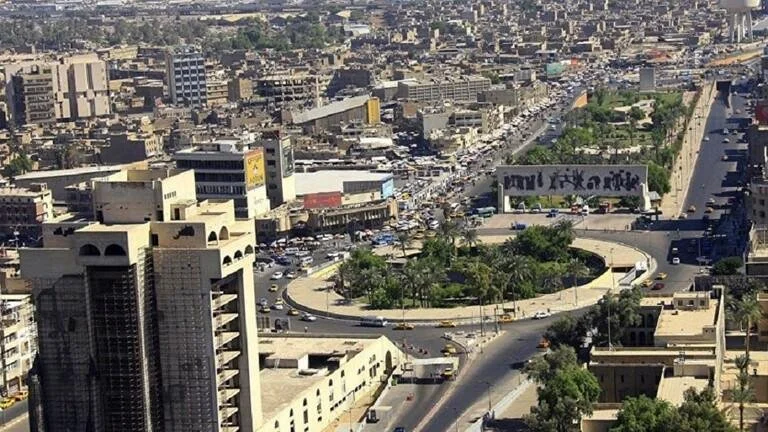
The report indicated that Iraq ranks 56th globally with a GDP estimated at about $265 billion, representing about 0.2% of the global economy, which places it among the relatively medium to low economies worldwide.
He explained that Iraq is among the group of economies that exceed the threshold of hundreds of billions of dollars, along with countries such as Nigeria, Kazakhstan and Portugal, indicating that it possesses large economic resources, especially in the energy sector, but it is still far from the levels of economic diversification and productivity achieved by major industrial economies.
The report added that global economic growth is gradually shifting towards Asia, led by India and Indonesia, at a time when major economies such as Germany and Japan are facing relatively weak growth rates.
He indicated that India is poised to strengthen its position as an emerging economic power in the coming years, with expectations of growth rates exceeding 6%, which could contribute to redrawing the map of the global economy in the medium term.
Conversely, the report noted the continued widening gap between major economies and the rest of the world, with Middle Eastern countries, including Iraq, remaining in a position of flux between structural challenges and opportunities related to energy markets and future economic diversification potential. https://www.economy-news.net/content.php?id=68789
Oil Rebounds From Two-Week Lows On Uncertain Peace Outlook
2026-05-07 Shafaq News Oil prices rose over $1 on Thursday, rebounding from the previous day's sharp losses, as investors weighed the prospects of a Middle East peace deal succeeding.
Brent crude futures were up 78 cents, or 0.8%, at $102.05 a barrel at 0400 GMT. U.S. West Texas Intermediate gained 76 cents, or 0.8%, to $95.84 a barrel.
Both benchmarks slumped more than 7% on Wednesday, hitting two-week lows on optimism over a possible end to the Middle East war. They pared losses, however, after U.S. President Donald Trump said it was "too soon" for face-to-face talks with Tehran and a senior Iranian lawmaker said the U.S. proposal was more of a wish list than a reality.
"While peace negotiations are likely to continue at least until next week's U.S.-China summit, the outlook beyond that remains uncertain," said Hiroyuki Kikukawa, chief strategist of Nissan Securities Investment, a unit of Nissan Securities.
Trump and Chinese President Xi Jinping are scheduled to meet next week.
"The main scenario is that oil prices will remain elevated," Kikukawa said.
Iran said on Wednesday it was reviewing a U.S. peace proposal that sources said would formally end the war while leaving unresolved the key U.S. demands that Iran suspend its nuclear program and reopen the Strait of Hormuz.
An Iranian foreign ministry spokesperson cited by Iran's ISNA news agency said Tehran would convey its response. Trump said he believed Iran wanted an agreement.
A Pakistan mediation source and another person briefed on the talks said an agreement was close on a one-page memorandum that would formally end the conflict.
U.S. media outlet Axios reported that the U.S. expects Iranian responses on several key points in the next 48 hours, citing sources saying this is the closest the parties had come to an agreement since the war began.
"From a broader perspective, oil markets have remained stuck between diplomacy and disruption for more than two months, with investors' emotions being manipulated by headlines almost daily," said Priyanka Sachdeva, senior market analyst at Phillip Nova.
"If a formal deal eventually materialises, oil prices could witness a free fall as geopolitical premiums rapidly evaporate from the market. However, any fresh signs of attacks on oil infrastructure or escalation in the Middle East could easily trigger another parabolic spike in crude prices."
Even if a peace deal is reached, oil supplies are expected to tighten further in coming weeks because it will take weeks for oil shipments to resume from the Middle East Gulf and reach refiners worldwide - so oil companies will continue to deplete storage tanks to meet peak summer demand.
U.S. crude and fuel inventories continued to decline last week as countries sought to offset supply disruptions caused by the Iran crisis, the Energy Information Administration said on Wednesday.
Crude stocks fell by 2.3 million barrels to 457.2 million barrels last week, compared with analyst expectations in a Reuters poll for a 3.3 million-barrel draw.
(REUTERS) https://www.shafaq.com/en/Economy/Oil-rebounds-from-two-week-lows-on-uncertain-peace-outlook
Finance Committee: Regularizing Contracts Does Not Increase The Burden Of Salaries Or The Budget In Any Way.
Money and Business Economy News – Baghdad The parliamentary finance committee announced on Thursday that it has prepared a comprehensive study to regularize contracts without financial burdens on the treasury, while noting that there is a near-final agreement to convert daily wages into ministerial contracts.
Committee member Uday Awad said, according to the official agency, that "there is a study prepared to stabilize the contracts and this does not cost the treasury any financial burdens."
He explained that “employees’ salaries amount to more than 7 trillion dinars,” indicating that “adding contracts does not increase the burden of salaries or the budget at all, because the matter is limited to changing the job title from contract to permanent staff, and there are some additions in a number of departments that can be dealt with through transfer between spending categories.”
Regarding the daily wage, Awad stated that "the daily wage will be converted into a ministerial contract, especially for those who were appointed after 2019, as there is a near-agreement to convert them into ministerial contracts."
The member of the Finance Committee continued, "Financial security is stable, but sending the budget from the new government will provide the legal basis for borrowing, as well as increasing non-oil revenues and addressing the issue of non-oil revenues with the Kurdistan Region."https://www.economy-news.net/content.php?id=68788
Iraq Is Among The Top Destinations For Turkish Exports, With Strong Growth Last Month.
Money and Business Economy News – Baghdad Iraq was among the key markets that supported the growth of Turkish exports during April 2026, at a time when the Mediterranean Exporters Associations in Turkey announced strong results in a number of regional and international markets.
The head of the associations, Faisal Mameesh, said in a statement followed by “Al-Eqtisad News”, that the value of their exports reached $1.65 billion during last April, an increase of 27% compared to the same period last year.
He noted that export performance witnessed clear momentum in the Italian and German markets, while strong growth was also observed in the Iraqi markets, in addition to the Romanian, Spanish and Egyptian markets.
Mameesh explained that this increase was driven by increased exports of iron, minerals, chemicals, fruits, vegetables, grains, legumes and oilseeds, which are commodities that are in growing demand in the Iraqi market.
The inclusion of Iraq among the fastest growing markets reflects the continued expansion of trade between Baghdad and Ankara, especially given the Iraqi market's reliance on foreign imports to secure some food, construction materials, and industrial goods.
Turkish associations also expect this export momentum to continue in the coming months, aiming to achieve annual growth exceeding 10% by the end of the year. https://www.economy-news.net/content.php?id=68790
FIFA Responds To Accusations Of "Extortion" In Ticket Pricing For The 2026 World Cup
Money and Business Economy News – Baghdad Gianni Infantino defended the pricing policy for World Cup 2026 tickets, asserting that FIFA operates in accordance with special local laws in the United States that allow for the resale of tickets at prices higher than their original value.
FIFA faced widespread criticism, with the European Football Supporters' Organization describing ticket prices as "extortionate" and filing a formal complaint with the European Commission objecting to what it considered excessive pricing.
The controversy intensified after offers to resell tickets for the tournament final, scheduled to be held in New York, circulated at prices exceeding two million dollars per ticket, a shocking figure compared to the official price.
But Infantino stressed that these figures do not reflect the original price, but rather the resale market, adding that the price increase is related to the large demand for the tournament.
When comparing prices, the difference becomes clear:
2022 World Cup Final in Qatar: Official maximum ticket price around $1600
2026 Final: Up to approximately $11,000 official maximum
Infantino believes this increase is "justified" given the development of the entertainment industry globally.
The FIFA president explained that selling tickets at low prices would simply lead to them being resold at higher prices, arguing that the market determines the true value, not just the organizing body.
He also noted that FIFA received more than 500 million ticket requests, a record number that far exceeds the demand for previous editions, which explains the significant increase in prices.
Nevertheless, Infantino confirmed that about 25% of the group stage tickets were offered for less than $300, noting that this price remains competitive compared to the prices of major sporting events in the United States.
Iraq News Posted by Tishwash at TNT 5-7-2026
TNT:
Tishwash: With the participation of 12 banks, Kirkuk hosts a special event to promote financial inclusion.
The Central Bank of Iraq, with the participation of 12 government and private banks, organized a special event in Kirkuk Governorate aimed at promoting financial inclusion and spreading the culture of digital financial transactions, as well as opening up prospects for cooperation between citizens and banking institutions
Rafidain Bank representative in Kirkuk, Maab Mustafa, told the Iraqi News Agency (INA) that “this activity is the first of its kind in the governorate, and it will showcase the services, offers and facilities provided by banks, in addition to facilitating the procedures for opening current and savings accounts.”
TNT:
Tishwash: With the participation of 12 banks, Kirkuk hosts a special event to promote financial inclusion.
The Central Bank of Iraq, with the participation of 12 government and private banks, organized a special event in Kirkuk Governorate aimed at promoting financial inclusion and spreading the culture of digital financial transactions, as well as opening up prospects for cooperation between citizens and banking institutions
Rafidain Bank representative in Kirkuk, Maab Mustafa, told the Iraqi News Agency (INA) that “this activity is the first of its kind in the governorate, and it will showcase the services, offers and facilities provided by banks, in addition to facilitating the procedures for opening current and savings accounts.”
He added that "the event also focused on the importance of issuing electronic cards, using modern payment methods in shopping and government payments, as well as clarifying the concepts of financial inclusion and ways to protect banking data."
For his part, Zaid Raad, the sales manager at the state-owned Al-Rasheed Bank in Kirkuk, confirmed to (WAA) that “the event held by the Central Bank has a positive impact, especially in the areas of loans and financing,” noting that it highlights housing loan initiatives, support for small projects, and personal loans sponsored by the Central Bank.
According to those in charge of the activity, which was covered by the Iraqi News Agency (INA), the main objective of this event is to ensure that financial services reach all segments of society at reasonable prices, and to work on the transition from reliance on cash to the digital banking system.
They explained that this shift contributes to reducing the risks of carrying cash, facilitating buying and selling through point-of-sale (POS) devices, as well as supporting the local economy by enhancing liquidity within the formal banking system. link
************
Tishwash: The Central Bank of Iraq: The flow of foreign currency into Iraq is stable.
The Deputy Director General of the Anti-Money Laundering and Counter-Terrorism Financing Office at the Central Bank of Iraq, Hussein Ali, stated that the bank’s procedures and international audits have led to the regulation of foreign transfers and ensured the flow of foreign currency (dollars) into the country, noting that there is ongoing coordination at the international level to exchange intelligence and financial information with the aim of drying up the sources of terrorism financing.
In an interview with Rudaw Media Network on Wednesday (May 6, 2026) regarding Iraq's ability to implement the observations of the US Treasury and international institutions to ensure the continued sending of dollars, Hussein Ali said: "The Iraqi banking system has witnessed remarkable progress in technical and practical compliance over the past years, and this has been reflected in international reports indicating an improvement in Iraq's ranking in the field of combating money laundering."
According to information obtained from several Iraqi officials, the United States promised to normalize sending dollars to Iraq, but until the last few days no amounts of dollars have entered the Central Bank’s account.
The Central Bank official explained that there is "full coordination" with the Supreme Judicial Council to take "strict legal measures" against violators, noting that the international audit process "led to the regulation of foreign transfers, achieving stability and ensuring the flow of foreign currency through official channels."
The Deputy Director of the Anti-Money Laundering Office stated that "fictitious trade and the black market" were among the most prominent challenges facing the Central Bank, adding: "The electronic platform for remittances has brought about a major transformation; official channels are now the main route for remittances, which has enabled our teams to easily track financial movements that do not correspond to the type of business activity, especially those that use fictitious invoices."
The official also pointed to a new coordination with the Customs Authority through the ASYCUDA system, saying: "This system provides an accurate database of exports and imports and prevents manipulation of prices and quantities of goods."
Regarding the black market, Hussein Ali said: "We worked to strengthen confidence in official channels so that the free market would not remain an outlet for illegal activities."
Regarding preventing the financing of terrorism, Hussein Ali announced that they are using "modern technologies such as artificial intelligence and advanced data analysis systems".
He added: "We closely monitor virtual assets and digital currencies via Blockchain technology, where new analytical tools have enabled us to detect abnormal patterns of money transfers faster and more accurately."
The Central Bank official concluded by noting that the Central Bank and the Iraqi government are in continuous coordination at the international level to exchange intelligence and financial information, "with the aim of drying up the sources of terrorist financing that attempt to exploit technical loopholes." link
************
Tishwash: Customs automation halves demand for dollars: An economist reveals a radical shift in Iraq's foreign remittances.
Iraqi economist Manar Al-Obaidi revealed a radical shift in Iraq’s foreign transfer balance during the first quarter of 2026, stressing that the implementation of the Asycuda customs automation system directly contributed to curbing what he described as the “financial bleeding” that accompanied import operations and international transfers for years.
Al-Obaidi explained, based on recent data, that the Central Bank of Iraq’s sales of foreign currency recorded a sharp and unprecedented decline, reaching about $10 billion during the first quarter of 2026, compared to much higher levels in previous periods.
He explained that the annual comparison shows a decline of 50% compared to the first quarter of 2025, while the quarterly comparison recorded a decrease of 49% compared to the fourth quarter of 2025, in which sales amounted to about $21 billion, reflecting a clear gap in the volume of spending on hard currency.
Al-Obaidi stressed that this decrease does not reflect an economic recession, but rather represents a direct result of strengthening financial control tools, noting that the ASYCUDA system, along with the Advance Send system, played a pivotal role in reducing invoice inflation and preventing the submission of fake or overvalued import documents to obtain dollars.
He added that these systems also contributed to controlling the import movement by linking financial transfers to the actual goods entering the country, as well as monitoring re-exported goods and closing loopholes that were being exploited in money laundering or currency smuggling operations under the guise of commercial activity.
Al-Obaidi described the reliance on these digital systems as a "strategic achievement" for Iraqi fiscal policy, noting that it succeeded in a short period in reducing the demand for the dollar by half, which enhances the stability of the national currency and gives the Central Bank greater flexibility in managing cash reserves with higher efficiency. link
************
Tishwash: Washington wants Iraq's next prime minister to take "concrete steps" to distance himself from Tehran.
A senior official said the United States is looking for “concrete steps” from Iraqi Prime Minister-designate Ali al-Zaidi to distance the state from pro-Iranian armed groups before resuming financial and security assistance.
The “Coordination Framework,” a political alliance of pro-Iranian parties holding the largest bloc in parliament, tasked al-Zaidi with forming the next government, replacing Nouri al-Maliki. The prime minister-designate received a phone call from President Donald Trump, who had threatened to cut off all US aid if al-Maliki returned to the premiership.
But a senior U.S. State Department official, speaking on condition of anonymity, said Tuesday that al-Zaidi needs to clarify the “blurred line” between the Iraqi state and pro-Iranian groups.
Washington suspended cash payments for oil revenues, which were handled by the Federal Reserve in New York under an agreement dating back to the aftermath of the 2003 US invasion of Iraq, as well as suspending security assistance in the wake of a series of attacks on US interests following the outbreak of war in the Middle East with a US-Israeli attack on Iran.
The official stressed that “the resumption of full support requires first expelling the terrorist militias from all state institutions, cutting off their support from the Iraqi budget, and preventing the payment of salaries to their fighters.”
He added, "These are the concrete measures that will give us confidence and confirm the existence of a new mindset."
The official stated that US facilities in Iraq have been subjected to more than 600 attacks since the outbreak of war on February 28. The attacks have stopped since the ceasefire agreement between the United States and Iran on April 8, with the exception of Iranian strikes in the Kurdistan region.
The official said, “I do not underestimate the seriousness of the challenge or what it will take to unravel these relationships. It may begin with a clear and unequivocal political statement that terrorist militias are not part of the Iraqi state,” considering that some parties within the Iraqi state “still… provide political, financial and operational cover for these terrorist militias.”
The “coordination framework” announced in January the nomination of Maliki to form the government, succeeding Mohammed Shia al-Sudani. However, Washington threatened to halt support for Baghdad should Maliki return to the position he held for two terms between 2006 and 2014. His relations with Washington cooled during his second term, while his relationship with Tehran strengthened.
Attacks claimed by armed groups in Iraq have targeted the US embassy in Baghdad, its diplomatic and logistical headquarters at the capital's airport, and oil fields operated by foreign companies.
Most Iraqi armed groups coalesced under the umbrella of the Popular Mobilization Forces (PMF), established in 2014 to fight the Islamic State, before being integrated into the Iraqi military and becoming part of the armed forces. However, the PMF also includes brigades belonging to Iranian-backed factions that operate independently. link
Seeds of Wisdom RV and Economics Updates Wednesday Evening 5-6-26
Good Evening Dinar Recaps,
Global Reset Pressure Builds: Central Banks Freeze Rate Cuts as Energy and Gold Markets Signal Systemic Shift
Rising geopolitical tensions, inflation fears, and surging gold prices are reshaping the global financial outlook
Escalating Middle East instability and shifting monetary expectations are forcing central banks and global markets into a new phase of financial uncertainty
Good Evening Dinar Recaps,
Global Reset Pressure Builds: Central Banks Freeze Rate Cuts as Energy and Gold Markets Signal Systemic Shift
Rising geopolitical tensions, inflation fears, and surging gold prices are reshaping the global financial outlook
Escalating Middle East instability and shifting monetary expectations are forcing central banks and global markets into a new phase of financial uncertainty
OVERVIEW (KEY POINTS)
Global financial markets are entering a new phase of uncertainty as central banks pause expected interest rate cuts while geopolitical instability reshapes inflation and commodity markets.
The shift is happening as the ongoing Middle East conflict continues disrupting energy flows, pushing policymakers to reassess inflation risks tied to oil, shipping, and global supply chains. At the same time, gold prices are surging as investors seek protection from instability and currency uncertainty.
Major institutions including the Federal Reserve, European Central Bank, Bank of England, and emerging market central banks are now taking a cautious stance, signaling concern that inflation pressures may remain elevated longer than expected.
The broader implication is increasingly clear: the global financial system is being pressured simultaneously by inflation, commodity volatility, geopolitical fragmentation, and changing reserve strategies.
KEY DEVELOPMENTS
1. Central Banks Halt Global Easing Cycle
Monetary policy expectations are shifting rapidly.
Major central banks kept rates unchanged amid renewed inflation concerns
Energy-related disruptions are complicating previous plans for rate cuts
Policymakers fear a repeat of past inflation miscalculations
2. Gold Surges as Investors Seek Safety
Safe-haven demand is accelerating.
Gold climbed to a multi-day high near record territory
Investors are hedging against inflation and geopolitical instability
Declining confidence in long-term monetary stability is supporting demand
3. Oil Markets Continue Driving Global Inflation Risks
Energy remains the core pressure point.
Strait of Hormuz disruptions continue impacting global supply expectations
Oil volatility is feeding transportation and manufacturing costs worldwide
IMF officials warn prolonged instability could sharply weaken growth
4. Emerging Markets Face Growing Currency Stress
Developing economies are under pressure.
Import-heavy nations are seeing currency depreciation and inflation risks
Energy shocks are increasing stress on emerging market fiscal systems
Investors remain cautious despite temporary resilience in equities
5. Commodity-Based Financial Realignment Accelerates
Global reserve behavior is evolving.
Commodities and gold are gaining importance in reserve strategies
Nations are increasingly looking beyond traditional dollar-heavy systems
Analysts describe a growing “commodity-driven geopolitical order”
WHY IT MATTERS
This environment reflects a critical transition in the global economy where inflation, commodities, and geopolitics are becoming deeply interconnected.
Higher oil prices and supply instability are preventing central banks from fully easing monetary policy, increasing the risk of slower growth combined with persistent inflation.
Meanwhile, gold’s continued rise signals declining confidence in long-term monetary stability and growing investor demand for hard assets.
At the system level, the world appears to be moving toward a more fragmented financial structure where commodities, regional power blocs, and reserve diversification play a larger role.
WHY IT MATTERS TO FOREIGN CURRENCY HOLDERS
Currency volatility may increase as inflation pressures persist
Gold and commodity-backed assets continue attracting reserve demand
Import-dependent currencies remain vulnerable to energy shocks
Purchasing power risks rise if inflation remains elevated globally
IMPLICATIONS FOR THE GLOBAL RESET
Pillar 1: Monetary Policy Constraints
Central banks are increasingly limited in their ability to stimulate economies because inflation pressures tied to energy and geopolitics remain unresolved.
Pillar 2: Commodity and Gold Repricing
The growing importance of commodities and gold in reserve management signals a structural shift away from purely debt-driven financial systems.
CONCLUSION
Today’s developments highlight how rapidly the global financial landscape is evolving under the pressure of inflation, geopolitical instability, and changing reserve behavior.
Central banks are no longer operating in a stable low-inflation environment, while commodities and gold are reasserting themselves as strategic financial assets.
The combination of persistent energy disruptions, cautious monetary policy, and rising hard-asset demand points toward a broader restructuring of global finance.
When inflation, commodities, and geopolitics converge simultaneously, the result is not a temporary disruption—it is a transformation of the financial system itself.
Seeds of Wisdom Team
Newshounds News™ Exclusive
Sources
Reuters — "Iran war pauses global easing push by central banks in April"
Reuters — "Gold climbs to more than one-week high on US-Iran peace deal hopes"
~~~~~~~~~~
Seeds of Wisdom Team RV Currency Facts Youtube and Rumble
Newshound's News Telegram Room Link
RV Facts with Proof Links Link
RV Updates Proof links - Facts Link
Follow the Gold/Silver Rate COMEX
Follow Fast Facts
Seeds of Wisdom Team™ Website
Thank you Dinar Recaps
Iraq Economic News and Points To Ponder Wednesday Evening 5-6-26
70+ Iraqi Tankers Reach Syria On Transcontinental Fuel Delivery Path
2026-05-06 Shafaq News- Nineveh More than 70 Iraqi fuel tankers entered Syria through the Rabia–al-Yarubiyah border point, marking a third convoy of its kind within days, Shafaq News learned on Wednesday.
The shipment proceeded toward the Syrian coastal city of Baniyas before continuing along Mediterranean routes to its final destination in Europe.
70+ Iraqi Tankers Reach Syria On Transcontinental Fuel Delivery Path
2026-05-06 Shafaq News- Nineveh More than 70 Iraqi fuel tankers entered Syria through the Rabia–al-Yarubiyah border point, marking a third convoy of its kind within days, Shafaq News learned on Wednesday.
The shipment proceeded toward the Syrian coastal city of Baniyas before continuing along Mediterranean routes to its final destination in Europe.
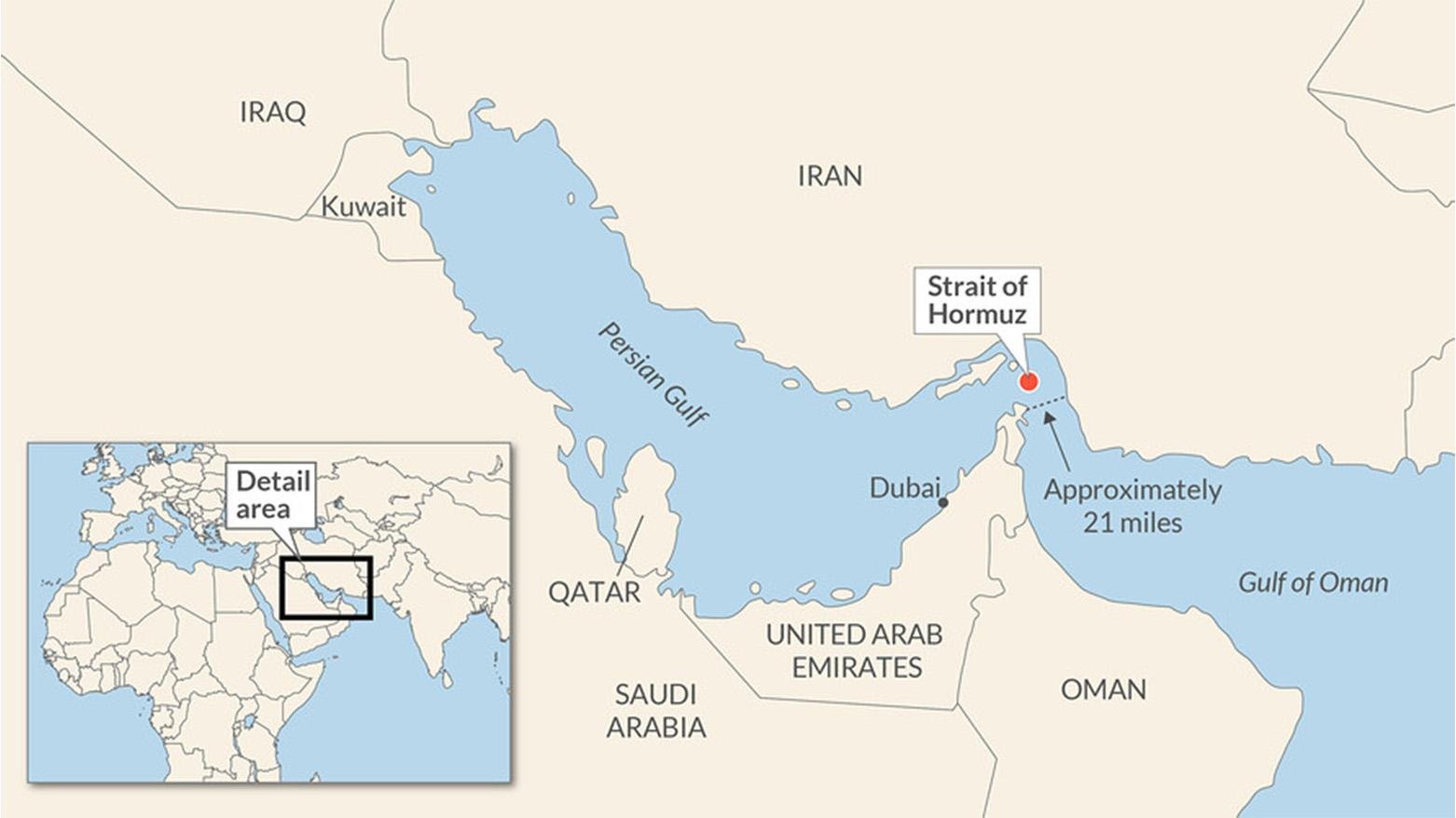
Baghdad and Damascus have recently established a framework to facilitate the transit of Iraqi petroleum products across Syrian territory, amid regional disruptions to maritime traffic, particularly in the Strait of Hormuz, a key passage handling about one-fifth of global oil consumption.
On May 1, Iraq conducted its first crude oil export operation via the same route, dispatching an initial shipment of 70 tanker trucks. The Rabia–al-Yarubiyah crossing between Iraq and Syria resumed trade and passenger movement on April 22 after 13 years of closure due to security conditions during the fight against ISIS.
Both authorities have gradually restored several border points, including al-Waleed and al-Yarubiyah, as part of efforts to revive trade routes and support the movement of goods and travelers. https://www.shafaq.com/en/Economy/70-Iraqi-tankers-reach-Syria-on-transcontinental-fuel-delivery-path
Global Markets Rally As Oil Prices Plunge On Hopes Of Iran Deal
According to a report by Axios, United States officials believe an agreement is close that could reopen the strategically vital Strait of Hormuz and ease tensions disrupting global energy supplies.
ERBIL (Kurdistan24) – Global oil prices fell sharply on Wednesday while stock markets surged, as investors reacted to growing optimism that a deal to end the conflict involving Iran may be within reach.
According to a report by Axios, United States officials believe an agreement is close that could reopen the strategically vital Strait of Hormuz and ease tensions disrupting global energy supplies.
International oil benchmark Brent North Sea plunged by double digits to below $100 per barrel before recovering slightly after US President Donald Trump warned of potential renewed military action against Iran. Meanwhile, West Texas Intermediate dropped more than 12 percent to below $90 per barrel before trimming losses.
Equity markets responded positively to the prospect of de-escalation. Major European stock exchanges posted strong gains, with Paris rising nearly three percent, while Frankfurt and London each closed more than two percent higher.
Market sentiment was buoyed by expectations that easing geopolitical tensions could stabilize energy markets and reduce inflationary pressures. Analysts noted that bond yields and the US dollar weakened as investors shifted toward riskier assets.
Axios reported that the potential agreement could take the form of a preliminary memorandum outlining steps to end hostilities and establish a framework for broader nuclear negotiations. The proposal reportedly includes a temporary halt to Iran’s nuclear enrichment activities in exchange for the release of billions of dollars in frozen Iranian assets.
Washington is now awaiting a response from Tehran on key elements of the proposal within the next 48 hours, raising the possibility of a significant breakthrough in the crisis.
U.S. Forces Disable Iranian-Flagged Tanker in Gulf of Oman
CENTCOM said the tanker, identified as M/T Hasna, was intercepted at approximately 9 a.m. Eastern Time while transiting international waters en route to an Iranian port.
ERBIL (Kurdistan24) — U.S. forces operating in the Gulf of Oman disabled an Iranian-flagged oil tanker on Wednesday after it allegedly violated a maritime blockade imposed by Washington, according to a statement from U.S. Central Command (CENTCOM).
CENTCOM said the tanker, identified as M/T Hasna, was intercepted at approximately 9 a.m. Eastern Time while transiting international waters en route to an Iranian port. U.S. forces issued multiple warnings to the vessel, informing its crew that it was in breach of the blockade.
When the crew failed to comply, a U.S. Navy F/A-18 Super Hornet launched from the aircraft carrier USS Abraham Lincoln fired several rounds from its 20mm cannon, disabling the tanker’s rudder and preventing it from continuing its course. CENTCOM confirmed that the vessel is no longer heading toward Iran.
The U.S. military emphasized that the tanker was unladen at the time of the incident and that the operation was carried out in a “deliberate and professional” manner to enforce compliance with ongoing maritime restrictions.
The incident comes amid heightened tensions between Washington and Tehran, particularly over the strategically vital Strait of Hormuz and surrounding waterways, including the Gulf of Oman. The United States has imposed a naval blockade targeting vessels it says are supporting Iran’s military or economic activities, a move Tehran has strongly condemned as unlawful.
The blockade has disrupted shipping routes and raised concerns over potential confrontations in one of the world’s most critical oil transit corridors.
The Gulf of Oman serves as a key maritime passage linking the Arabian Sea to the Strait of Hormuz, through which a significant portion of global oil exports flows. Any escalation in the area risks broader economic repercussions, particularly for energy markets already sensitive to geopolitical instability.
CENTCOM reiterated that enforcement operations will continue as long as the blockade remains in place, signaling the potential for further incidents at sea.
https://www.kurdistan24.net/en/story/912525/us-forces-disable-iranian-flagged-tanker-in-gulf-of-oman
Iran Accuses US Of Seeking ‘Surrender’ As Tensions Persist Over Peace Proposal
In a voice message published on his official Telegram channel, Ghalibaf said “the enemy” was pursuing a strategy aimed at undermining Iran’s internal cohesion through economic pressure and media influence, alongside efforts to restrict maritime activity.
ERBIL (Kurdistan24) – Iran’s top negotiator Mohammad Bagher Ghalibaf on Wednesday accused Washington of attempting to force Tehran into surrender through a combination of military and non-military pressure, including what he described as a naval blockade.
In a voice message published on his official Telegram channel, Ghalibaf said “the enemy” was pursuing a strategy aimed at undermining Iran’s internal cohesion through economic pressure and media influence, alongside efforts to restrict maritime activity. He did not provide further details on the status of a potential peace agreement with the United States.
The remarks come as Tehran continues to assess elements of a proposal from Washington aimed at ending the ongoing conflict. Iranian officials have not publicly disclosed the specifics of the plan, but discussions are believed to center on de-escalation measures and restoring stability in key waterways, including the Strait of Hormuz.
Foreign Ministry spokesperson Esmaeil Baqaei said Iran would soon communicate its finalized position to Pakistan, which has been acting as a key mediator in the crisis.
Earlier on Wednesday, U.S. President Donald Trump reiterated his desire to see the conflict come to an end, but warned that Washington would intensify military action if Tehran refused to accept its conditions.
Tensions between Iran and the United States have escalated in recent weeks amid clashes affecting regional security and global energy markets. The situation has drawn international concern due to the strategic importance of the Strait of Hormuz, a critical oil transit route through which a significant portion of the world’s supply passes. Diplomatic efforts involving regional intermediaries, including Pakistan, have so far sought to prevent further escalation and push both sides toward a negotiated settlement.
Iran Urges UN To Reject U.S. Draft Resolution On Strait Of Hormuz
In a statement posted on X, the Iranian mission said “the only viable solution” to the crisis in the strategic waterway is a lasting end to the conflict, the lifting of what it called a maritime blockade, and the restoration of normal shipping passage.
ERBIL (Kurdistan24) – Iran’s mission to the United Nations on Wednesday called for a permanent end to ongoing tensions in the Strait of Hormuz, urging UN member states to reject a U.S.-backed draft resolution it described as politically motivated and ineffective.
In a statement posted on X, the Iranian mission said “the only viable solution” to the crisis in the strategic waterway is a lasting end to the conflict, the lifting of what it called a maritime blockade, and the restoration of normal shipping passage.
The statement accused the United States of promoting a “flawed” draft resolution at the UN Security Council under the pretext of protecting freedom of navigation, arguing that the move seeks to advance Washington’s political agenda and legitimize what Tehran considers unlawful actions.
Iran further called on UN member states to act based on “logic, fairness, and principle,” urging them to reject or refrain from supporting the proposed resolution.
The Strait of Hormuz, a narrow but vital oil transit route between the Persian Gulf and the Gulf of Oman, has long been a flashpoint for regional and international tensions. A significant portion of the world’s oil supply passes through the strait, making security there a top priority for global powers.
Recent months have seen heightened friction involving Iran, the United States, and Israel, with incidents affecting commercial shipping and raising concerns over the safety of maritime navigation. Washington has repeatedly emphasized the need to safeguard shipping lanes, while Tehran has criticized foreign military presence in the region, arguing it escalates instability rather than resolving it.
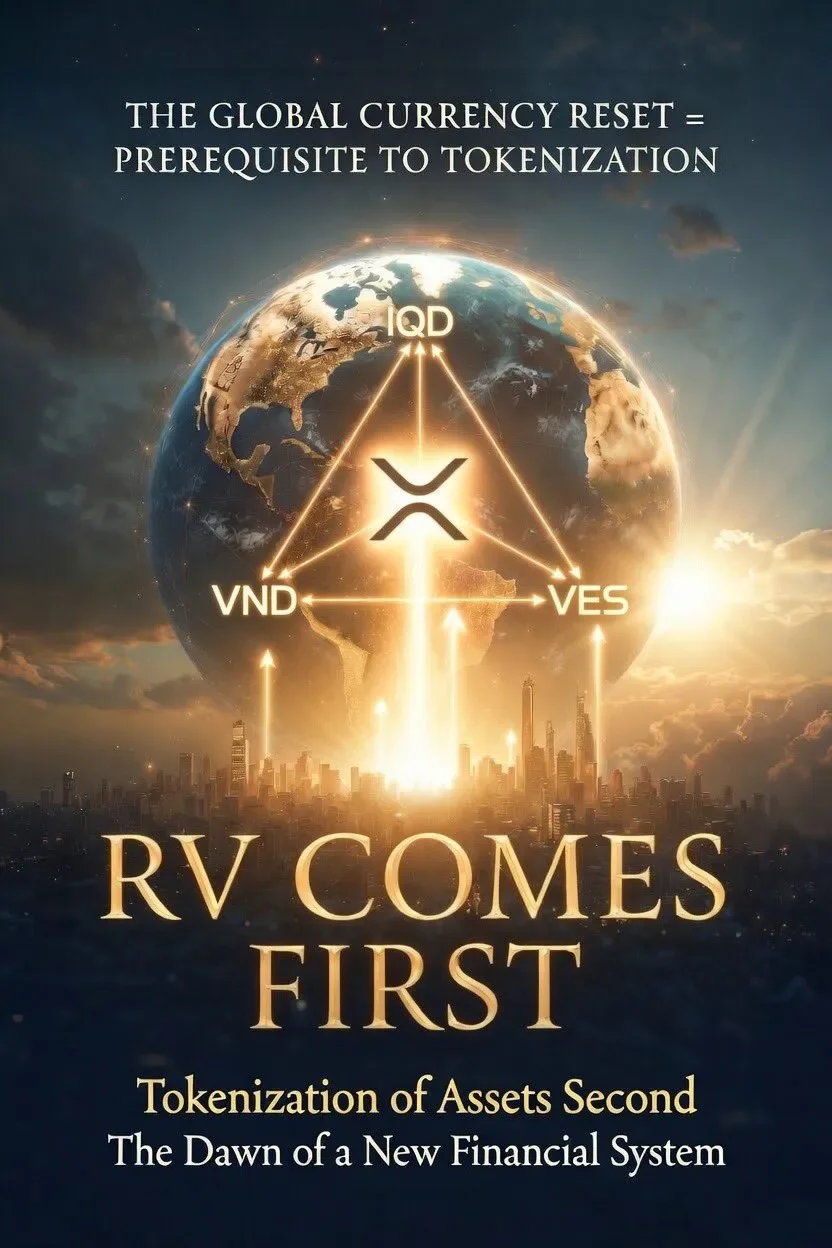
Ross: The Global Currency Reset is a Prerequisite to Tokenization
Ross: The Global Currency Reset is a Prerequisite to Tokenization
5-6-2026
Why you CANNOT tokenize a hyperinflated currency like IQD in its current broken state:
Tokenization is just a digital mirror.
It copies the currency 1:1 onto the blockchain.
Ross: The Global Currency Reset is a Prerequisite to Tokenization
5-6-2026
Why you CANNOT tokenize a hyperinflated currency like IQD in its current broken state:
Tokenization is just a digital mirror.
It copies the currency 1:1 onto the blockchain.
If the rate is still crushed at 1,300+ to 1 USD (a relic of sanctions & war) you’re only uploading digital garbage.
Zero real value.
Zero trust.
Zero liquidity.
No serious player will use it for settlement.
BlackRock – one of the key architects in DTCC’s tokenization launch (limited production July 2026, full Oct) – won’t touch it.
They’re building the rails for trillions in real assets (Russell 1000 stocks, ETFs & Treasuries on Canton).
They demand legitimate on-chain cash legs.
Sequence is everything:
Revalue FIRST to reflect Iraq’s true wealth.
THEN tokenize the new, strong dinar so it slots perfectly into the CLARITY + DTCC + stablecoin ecosystem.
BlackRock & major institutions will settle in multiple high-quality tokenized currencies (regulated stablecoins + tokenized deposits).
A revalued, gold/oil-backed tokenized IQD at or above USD parity becomes a powerful option for diversification, Middle East oil-trade settlement, hedging, and 24/7 global liquidity.
That’s the real play.
This is EXACTLY why the Global Currency Reset is happening.
CRYPTO.
Everything will be tokenized.
The next Gold Rush.
Every country is racing to go on-chain.
IQD Tokenization Keywords:
Revalue FIRST.
THEN tokenize.
Tokenization begins in July (limited) and full expansion in October.
Do you really think Iraq will be left behind? Again? Like the last 20+ years?
“Tokenize everything.” = Global Currency Reset
Translation:
Create a level playing field by revaluing currencies around the world to reach near parity with the US Dollar so that they can be tokenized to fuel the new crypto financial system.
Get it?
The Global Currency Reset = Prerequisite to Tokenization
Just because a hyper-inflated currency “can” be tokenized, doesn’t mean it should be.
RV comes first.
If your currency isn’t worth tokenizing, you’ll be left behind.
Period.
The RV Comes First. Tokenization of Assets Second.
Just because crypto/tokenization is in its infancy doesn’t mean currencies can’t revalue ASAP.
RV comes first.
Just because HCL requires the rate, doesn’t mean the rate requires HCL. The rate is required for HCL, HCL is not required for the rate.
RV comes first.
Just because Vietnam’s 5-year crypto trading pilot is now live doesn’t mean the VND new rate will take 5 years.
RV comes first.
Just because we toppled Venezuela only months ago doesn’t mean we can’t see a new VES rate immediately reflecting the value of its massive oil reserves.
RV comes first.
Just because crypto requires clarity, doesn’t mean XRP does. It already has been scrutinized by the SEC and has been classified as a commodity.
Just because crypto is lagging behind the gold/stock market doesn’t mean the rotation isn’t happening. Best for last. Clarity Act rocket fuel + rate cuts still pending.
The dawn of a new financial system is looming.
Enjoy what’s left of this s-----y system you’ve been enduring.
The pain is exactly what makes the other side that much sweeter.
Source(s):
• https://x.com/Ross_ptm/status/2051783155083059549
Iraqi Dinar News; Verified; Here's What Iraq is Quietly Doing - Breaking News
Iraqi Dinar News; Verified; Here's What Iraq is Quietly Doing - Breaking News
Edu Matrix: 5-5-2026
Iraqi Dinar Verified News: Here’s What Iraq is Quietly Doing -In today’s Iraqi dinar update, we break down the latest verified news coming out of Iraq and what the country is quietly doing behind the scenes.
While headlines focus on protests and regional tension, Iraq is making strategic moves that could impact its economy, oil exports, and long-term financial position.
Iraqi Dinar News; Verified; Here's What Iraq is Quietly Doing - Breaking News
Edu Matrix: 5-5-2026
Iraqi Dinar Verified News: Here’s What Iraq is Quietly Doing -In today’s Iraqi dinar update, we break down the latest verified news coming out of Iraq and what the country is quietly doing behind the scenes.
While headlines focus on protests and regional tension, Iraq is making strategic moves that could impact its economy, oil exports, and long-term financial position.
This Iraqi dinar news update looks at how Iraq is adapting in real time, including new oil export strategies, economic decisions, and actions that may influence the dinar’s future value.
We also address the ongoing speculation surrounding U.S. involvement, the role of global financial systems, and what investors should realistically expect.
If you are following the Iraqi dinar, this video focuses on verified information—not hype—so you can better understand what is actually happening inside Iraq’s financial system.
Stay informed with the latest Iraqi dinar updates, Iraq economic news, and global currency insights.
Seeds of Wisdom RV and Economics Updates Wednesday Afternoon 5-6-26
Good Afternoon Dinar Recaps,
Peace Breakthrough Near: U.S.–Iran Deal Signals Major Shift in Energy and Financial Markets
Ceasefire momentum and a proposed memorandum agreement could reopen global oil flows and ease systemic financial pressure
Good Afternoon Dinar Recaps,
Peace Breakthrough Near: U.S.–Iran Deal Signals Major Shift in Energy and Financial Markets
Ceasefire momentum and a proposed memorandum agreement could reopen global oil flows and ease systemic financial pressure
OVERVIEW (KEY POINTS)
The United States and Iran are showing strong signs of nearing a breakthrough agreement, with both sides reviewing a proposed memorandum aimed at ending the Gulf conflict.
This is happening now as Pakistan-mediated negotiations accelerate, creating a pathway toward reopening the Strait of Hormuz and stabilizing global energy markets.
Key players include the U.S., Iran, and Pakistan, alongside global markets reacting to the possibility of sanctions relief, restored oil flows, and reduced geopolitical risk.
The broader implication is significant: a confirmed deal could rapidly shift inflation trends, energy pricing, and global financial stability conditions.
KEY DEVELOPMENTS
1. U.S.–Iran Memorandum Nears Agreement
Negotiations are advancing quickly.
One-page framework designed to pause conflict and outline next steps
Includes a 30-day window for a broader comprehensive deal
2. Strait of Hormuz Reopening in Focus
Energy markets are central to the deal.
Plans to restore shipping through a key global oil chokepoint
Potential to stabilize flows impacting nearly 20% of global oil supply
3. Sanctions Relief and Financial Access Discussed
Economic concessions are part of the framework.
Gradual lifting of U.S. sanctions on Iran
Possible release of frozen Iranian financial assets
4. Nuclear Issue Deferred for Later Negotiations
Staged approach to complex issues.
Initial deal delays deeper discussions on nuclear enrichment limits
Focus placed on immediate de-escalation and economic stability
5. Markets React to Peace Expectations
Financial systems are adjusting in real time.
Oil prices decline on expected supply normalization
Global equities rise as risk sentiment improves
WHY IT MATTERS
This development highlights a powerful shift: geopolitical de-escalation can rapidly reverse inflation-driving forces, particularly in energy markets.
Markets are already responding, showing how closely financial systems are tied to oil supply stability and geopolitical risk levels.
For policymakers, a drop in energy prices could ease inflation pressures, potentially allowing greater flexibility in monetary policy decisions.
At the system level, this signals how quickly global financial conditions can pivot when major conflict risks are reduced.
WHY IT MATTERS TO FOREIGN CURRENCY HOLDERS
Lower energy costs can improve purchasing power globally
Reduced inflation pressure may stabilize currencies
Oil-importing nations could see currency strengthening
Volatility may decrease if geopolitical risk fades
IMPLICATIONS FOR THE GLOBAL RESET
Pillar 1: Energy Market Stabilization
Reopening critical supply routes could ease one of the largest drivers of global inflation and economic instability.
Pillar 2: Shift Toward Diplomatic Resolution
A successful agreement signals a move toward negotiation-based conflict resolution, reducing systemic geopolitical risk.
CONCLUSION
The potential U.S.–Iran agreement represents a critical turning point for both geopolitics and global financial markets.
If finalized, the reopening of the Strait of Hormuz and easing of sanctions could quickly stabilize oil prices and reduce inflation pressures worldwide.
While uncertainties remain, the direction is clear: markets are beginning to price in a shift from conflict toward stabilization.
When geopolitical tensions ease, the financial system responds immediately—and that shift may already be underway.
Seeds of Wisdom Team
Newshounds News™ Exclusive
Sources
~~~~~~~~~~
Seeds of Wisdom Team RV Currency Facts Youtube and Rumble
Newshound's News Telegram Room Link
RV Facts with Proof Links Link
RV Updates Proof links - Facts Link
Follow the Gold/Silver Rate COMEX
Follow Fast Facts
Seeds of Wisdom Team™ Website
Thank you Dinar Recaps
Ross: One Day You’re Going to See the Headlines (and more)
Ross: One Day You’re Going to See the Headlines
5-6-2026
Right now is the moment to remember…
One day you’re going to open X and see the headlines:
“Central Bank of Iraq Announces New Official Dinar Exchange Rate at $4.39USD”
Ross: One Day You’re Going to See the Headlines
5-6-2026
Right now is the moment to remember…
One day you’re going to open X and see the headlines:
“Central Bank of Iraq Announces New Official Dinar Exchange Rate at $4.39USD”
“State Bank of Vietnam Sets Major New Dong Reference Rate at $3.72”
“Venezuela Unveils New Bolivar Currency at $0.52 USD Post-Redemonination”
You check the Forex.
Heart POUNDING.
Scream.
Call loved ones.
Then it hits you…
S–t now I have to actually do this!
You call the bank.
You book the appointment.
You count every last note.
You walk in and exchange it all.
The cash hits your account.
Now what?
Source(s):
• https://x.com/Ross_ptm/status/2051858798567194782
https://dinarchronicles.com/2026/05/05/ross-one-day-youre-going-to-see-the-headlines/
************
Ross: The First Basket of the Global Currency Reset
5-6-2026
The First Basket of the Global Currency Reset
Iraq, Vietnam & Venezuela are moving in perfect lockstep executing reforms that will finally let their currencies reflect their true national wealth.
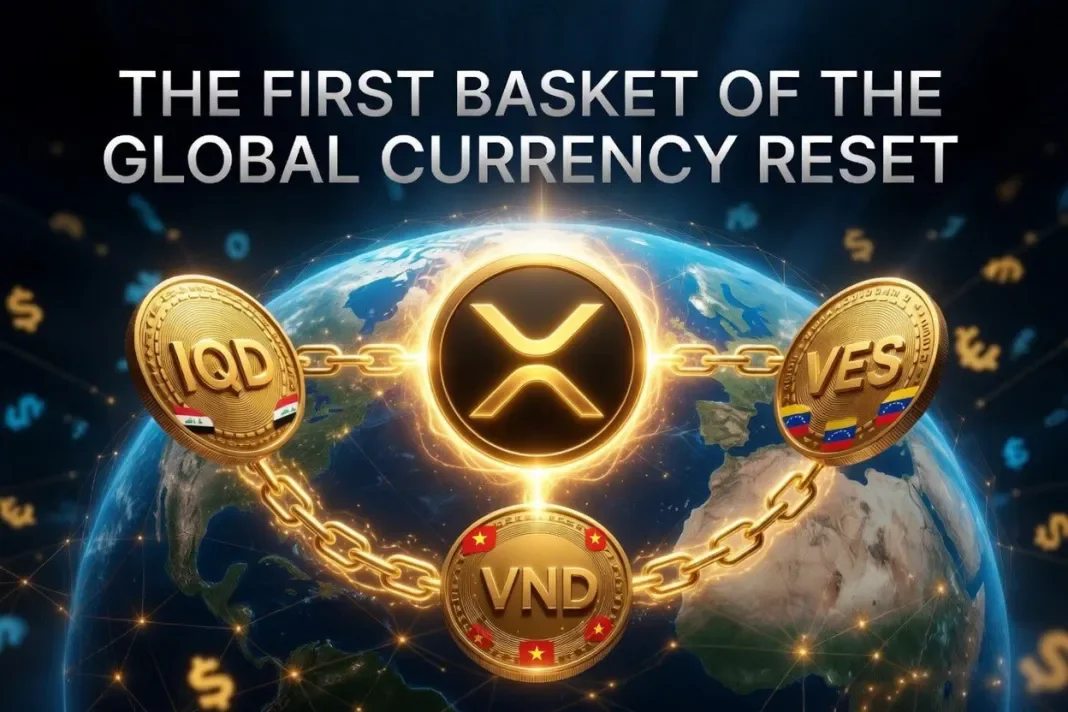
IQD
CBI advancing deletion of three zeros reform project.
HCL progressing for oil revenue stability (requires a new rate).
Recent media & official statements confirm push to strengthen the dinar via banking upgrades.
Why advance three-zero deletion, push the HCL, and upgrade the entire banking system if not to prepare the Dinar for a major revaluation?
VND
Vietnam booming: 8%+ GDP growth in 2025 + record $27.6B disbursed FDI.
SBV aggressively de-dollarizing with 0% USD rates, FX interventions, swaps & capital controls.
Big tell: 5-year digital asset pilot requires ALL trading, issuance & settlement exclusively in VND.
Why force the entire new crypto market onto the Dong while supercharging growth if not to prepare it for a major revaluation?
VES
Post-Maduro transition: oil production surging past 1.1M bpd.
April 2026 major U.S. sanctions relief on Central Bank & state banks unlocks revenues.
Central Bank ramping up heavy dollar auctions & FX to stabilize rates and close black-market gaps.
Why flood the system with dollars and actively defend the Bolívar right after sanctions relief if not to prepare it for a major revaluation?
The Global Currency Reset is coming.
With the Clarity Act timing lining up perfectly to take every currency on-chain with the XRPL, each will finally reflect the true wealth of its nation.
Ask yourself this: Why are Iraq, Vietnam & Venezuela suddenly executing major reforms and actively defending their currencies right as the Clarity Act is about to be signed into law?
One of the most common questions in the GCR community is:
Is there a first basket?
Yes
Which currencies are in the first basket?
IQD, VND, VES
Are those countries ready?
Not yet, we’re still waiting.
Will they revalue at the same time?
They’re working in lockstep.
The common denominator is the Clarity Act which will put currencies on-chain.
If you want to know when the Global Currency Reset will happen, when currencies will revalue, look no further than the progress of crypto. It connects everything.
“Why would these countries revalue their currencies at the same time?”
If a single country RVs, once the cat is out of the bag, everything this community has talked about for decades comes to light…
What do you think would happen?
2 words.
Arbitrage.
Chaos.
There may be opportunities to double dip but between the major revaluations, good luck.
The First Basket may not just be IQD, VND & VES. These are just the three I focus on and for good reason:
They are moving in lockstep on their reforms.
Source(s):
• https://x.com/Ross_ptm/status/2051770827612606513
• https://x.com/Ross_ptm/status/2051790377166983486
https://dinarchronicles.com/2026/05/05/ross-the-first-basket-of-the-global-currency-reset