Thank you to all the subscribers to our Early Access program…we thank you for your continued support.
We are excited to offer this new service to keep you informed and up-to-date on the latest Dinar and currency news.
Seeds of Wisdom RV and Economics Updates Tuesday Morning 4-28-26
Good Morning Dinar Recaps,
Trade Shift Accelerates: Nations Move Away from Dollar as Energy and Currency Pressures Build
Rising geopolitical tension and currency volatility are pushing countries to expand non-dollar trade, signaling deeper structural change
Good Morning Dinar Recaps,
Trade Shift Accelerates: Nations Move Away from Dollar as Energy and Currency Pressures Build
Rising geopolitical tension and currency volatility are pushing countries to expand non-dollar trade, signaling deeper structural change
OVERVIEW (KEY POINTS)
A growing number of countries are increasing the use of non-dollar trade settlements, driven by rising geopolitical tensions, currency volatility, and disruptions in global energy markets.
This is happening now as recent instability in the Middle East and energy supply chains is forcing nations to reduce exposure to dollar-based systems, particularly in cross-border trade and commodity transactions.
Key players include BRICS nations, emerging markets, and global trading partners adapting to a system where local currencies and alternative settlement mechanisms are gaining traction.
The broader implication is clear: the global financial system is gradually shifting toward a more multipolar structure, where reliance on a single dominant currency is being reduced.
KEY DEVELOPMENTS
1. Expansion of Non-Dollar Trade Settlements
Countries are actively reducing reliance on the U.S. dollar.
Increased use of local currencies in bilateral trade agreements
Growth in alternative settlement systems across emerging markets
2. Energy Trade Drives Currency Diversification
Oil and gas transactions are shifting frameworks.
Energy-importing nations exploring non-dollar payment options
Producers open to alternative currencies to secure demand
3. Currency Volatility Pressures Policy Decisions
Exchange rate instability is accelerating change.
Emerging market currencies facing downward pressure
Governments seeking to stabilize trade through diversification
4. Financial Infrastructure Adapts
Systems are evolving to support new trade flows.
Development of cross-border payment platforms outside traditional networks
Increased focus on central bank cooperation
WHY IT MATTERS
This development highlights a gradual but meaningful shift in how global trade is conducted and financed. While the U.S. dollar remains dominant, alternatives are gaining traction under pressure.
Markets are adjusting to a changing environment where currency alignment and geopolitical positioning influence trade decisions more than ever before.
For policymakers, the shift introduces both opportunity and complexity. Diversification reduces dependency but can also increase fragmentation and inefficiency.
At the system level, this reflects a transition toward a multi-currency global framework, reshaping financial relationships.
WHY IT MATTERS TO FOREIGN CURRENCY HOLDERS
Local currencies may gain importance in trade settlements
Dollar dominance may gradually decline over time
Purchasing power may shift depending on currency exposure
Exchange rate volatility increases during transition periods
IMPLICATIONS FOR THE GLOBAL RESET
Pillar 1: Multipolar Currency System Emergence
The rise of non-dollar trade supports a shift toward a distributed global financial structure, reducing reliance on a single reserve currency.
Pillar 2: Trade-Driven Financial Realignment
Changes in how trade is settled are reshaping capital flows, reserve strategies, and economic alliances.
CONCLUSION
The expansion of non-dollar trade reflects a structural evolution rather than a sudden shift. While the dollar remains central, alternatives are steadily gaining ground.
As geopolitical and economic pressures persist, the trend toward diversification is likely to continue, influencing both trade and financial systems.
This moment represents a key stage in a broader transformation.
When trade systems evolve, the financial system that supports them must evolve as well.
Seeds of Wisdom Team
Newshounds News™ Exclusive
Sources
Reuters — "Countries expand non-dollar trade amid geopolitical tensions"
Reuters — "Global currency volatility drives shift in trade settlement systems"
~~~~~~~~~~
A Message to Our Currency Holders
If you’ve been holding foreign currency for many years, you were not foolish.
You were not wrong to believe the global financial system would change.
What failed was not your patience — it was the information you were given.
For years, dates, rumors, and personalities replaced facts, structure, and proof. “This week” predictions created cycles of hope and disappointment that were never based on how currencies actually change.
That is not your failure.
Our mission here is different: • No dates • No rates • No hype • No gurus
Instead, we focus on:
• Verifiable developments • Institutional evidence
• Global financial structure • Where countries actually sit in the process
Currency value changes only come after sovereignty, trade, banking, settlement systems, and fiscal coordination are in place. History and institutions confirm this sequence.
You will see silence. You will see denials. That is not delay — that is discipline.
Protect your identity. Organize your documents. Verify everything.
Never hand your discernment to anyone who cannot show proof.
You deserve truth — not timelines.
Seeds of Wisdom Team
Newshounds News™
~~~~~~~~~~
Seeds of Wisdom Team RV Currency Facts Youtube and Rumble
Newshound's News Telegram Room Link
RV Facts with Proof Links Link
RV Updates Proof links - Facts Link
Follow the Gold/Silver Rate COMEX
Follow Fast Facts
Seeds of Wisdom Team™ Website
Thank you Dinar Recaps
Iraq Economic News And Points To Ponder Tuesday Morning 4-28-26
Baghdad And Erbil Discuss Unifying Customs And Generalizing The "ASYCUDA" System
Money and Business Economy News – Baghdad The federal government and the Kurdistan Regional Government discussed on Tuesday the unification of customs procedures and the regulation of the work of border crossings throughout Iraq, during an expanded meeting hosted by the Border Ports Authority in Baghdad.
The authority said in a statement received by “Al-Eqtisad News” that representatives of specialized bodies from both sides participated in the meeting, and discussed mechanisms for unifying customs tariffs and implementing the electronic “ASYCUDA” system at all border crossings, with the aim of facilitating the movement of goods and unifying administrative procedures.
Baghdad And Erbil Discuss Unifying Customs And Generalizing The "ASYCUDA" System
Money and Business Economy News – Baghdad The federal government and the Kurdistan Regional Government discussed on Tuesday the unification of customs procedures and the regulation of the work of border crossings throughout Iraq, during an expanded meeting hosted by the Border Ports Authority in Baghdad.
The authority said in a statement received by “Al-Eqtisad News” that representatives of specialized bodies from both sides participated in the meeting, and discussed mechanisms for unifying customs tariffs and implementing the electronic “ASYCUDA” system at all border crossings, with the aim of facilitating the movement of goods and unifying administrative procedures.
According to the statement, the meeting also addressed customs exemptions, lists of prohibitions and restrictions, standardization and quality control procedures, radiation testing, compliance with the agricultural calendar, as well as addressing unofficial outlets and unifying tax procedures.
According to the statement, the head of the Border Ports Authority, Omar Adnan Al-Waeli, stressed the importance of discussing the issues raised in a positive spirit, while giving priority to facilitating trade between the region and the governorates and meeting the needs of citizens.
He added that standardizing procedures would reduce the burden on drivers and traders, which would reflect positively on the smooth flow of trade and economic stability.
The statement indicated that the meeting comes as part of a series of meetings aimed at unifying customs policy and enhancing economic coordination between Baghdad and Erbil, in light of efforts to reduce trade complexities and raise the efficiency of border crossing management in the country.
The ASYCUDA system is an electronic platform developed by the United Nations through the United Nations Conference on Trade and Development (UNCTAD) to manage customs operations and automate import, export and transit procedures, thereby speeding up clearance, enhancing transparency and increasing collection efficiency.
In Iraq, the government has adopted in recent years the expansion of the system’s application within border crossings, as part of the process of digitizing customs work and reducing paper transactions, with an official direction to generalize it in all crossings and unify procedures between Baghdad and the Kurdistan Region.
The Prime Minister of the Kurdistan Region, Masrour Barzani, confirmed the region’s approval of the implementation of the ASYCUDA electronic customs system, denying any objection, but he requested a technical grace period (about 9 months) to prepare the infrastructure. https://www.economy-news.net/content.php?id=68441
Discover the features of the e-commerce application and how to register for it.
Money and Business Economy News – Baghdad Minister of Trade Atheer Al-Ghurairi explained on Tuesday the details of the electronic merchant application, noting that the application will prevent fraud against citizens wishing to purchase through social media sites.
Al-Ghurairi said that "the e-merchant application is a service to regulate e-commerce by issuing the merchant license electronically and registering the company electronically."
He added: “How can we monitor individuals and entities working in virtual commerce on the internet through social media sites and selling goods without deceiving citizens?” He asked: “How can we protect the real product and prevent it from being exploited by counterfeiters?”
He stated that "this came through the e-commerce system and the issuance of a license through very simple procedures to regulate work with delivery companies and to regulate work with the Ministry of Communications and the Central Bank, and it is developed according to the needs of the market, the type of trade, and the variables," noting that "e-commerce protects the citizen from counterfeit goods and protects the merchant from counterfeiting his goods by parties that do not produce these goods, while protecting the market and preserving it and subjecting it to regulatory and legal authorities and regulating the electronic market, which is a market that should not be underestimated, and which is expected to develop greatly."https://www.economy-news.net/content.php?id=68437
Iranian Exports To Iraq Via The Mehran Border Crossing Increased By 100% During The Month.
Money and Business Economy News – Baghdad Iranian exports to Iraq via the Mehran International Land Border Crossing recorded remarkable growth during the Iranian month of Farvardin, which extends from March to April 2026, as they increased by 100 percent compared to the same period last year, in an indication of growing trade activity between the two countries.
Sohrab Kamari, the Director General of Customs in Iran’s Ilam Province, said that the volume of exports passing through the Mehran crossing exceeded 246,000 tons of goods, with a value exceeding $60 million in just one month, stressing that the crossing is witnessing active daily shipping traffic of up to about 600 trucks heading towards Iraqi markets.
He added that the Mehran border crossing maintained the smooth flow of trade despite regional challenges, noting that work continued around the clock to ensure that goods did not accumulate and to expedite the arrival of goods to Iraq, given the important economic artery that the crossing represents between the two sides.
The Iranian official noted that Iraqi demand for Iranian goods remains high, particularly for agricultural products, building materials, ceramics, clinker, plastic utensils, live fish, and reinforcing steel, which are among the most prominent goods exported during the aforementioned period.
He explained that this increase reflects the expanding presence of Iranian products within the Iraqi market, based on the diversity of supply and competitive prices, as well as geographical proximity and ease of transport through land ports.
The Mehran border crossing is one of the most important land crossings used in trade between Iran and Iraq, as it connects the Iranian province of Ilam with the central and southern Iraqi provinces, making it a major passage for the daily flow of goods and trucks. https://www.economy-news.net/content.php?id=68434
“New PM and More” Posted by Tishwash at TNT 4-28-2026
TNT:
Tishwash: Maliki and Sudani agree to pass Ali al-Zaidi as a compromise candidate
Political sources revealed on Monday that Nouri al-Maliki, head of the State of Law Coalition, and Prime Minister Mohammed Shia al-Sudani, agreed to nominate Ali al-Zidi as a compromise candidate for the premiership.
The sources said that "Al-Zaydi enjoys extensive relations with all the leaders of the coordination framework, in addition to his relationship with the private office of the leader of the Sadrist movement, Muqtada al-Sadr."
She added that "Al-Zaydi may face difficulties in forming the government and getting it passed in parliament after he is appointed."
TNT:
Tishwash: Maliki and Sudani agree to pass Ali al-Zaidi as a compromise candidate
Political sources revealed on Monday that Nouri al-Maliki, head of the State of Law Coalition, and Prime Minister Mohammed Shia al-Sudani, agreed to nominate Ali al-Zidi as a compromise candidate for the premiership.
The sources said that "Al-Zaydi enjoys extensive relations with all the leaders of the coordination framework, in addition to his relationship with the private office of the leader of the Sadrist movement, Muqtada al-Sadr."
She added that "Al-Zaydi may face difficulties in forming the government and getting it passed in parliament after he is appointed."
She indicated that “Al-Zidi’s nomination came after the head of the Popular Mobilization Forces, Faleh Al-Fayyad, hosted two meetings during the past 24 hours with Prime Minister Mohammed Shia Al-Sudani and the head of the State of Law Coalition, Nouri Al-Maliki, for the purpose of deciding on the position,” explaining that “the first meeting was held yesterday, and the second was held this afternoon, during which a final agreement was reached on naming the candidate for the position of Prime Minister.” link
*************
Tishwash: The coordinating framework officially nominates Ali al-Zaidi for the position of Prime Minister.
The Coordination Framework announced Monday evening its selection of Ali al-Zaidi as the next prime minister.
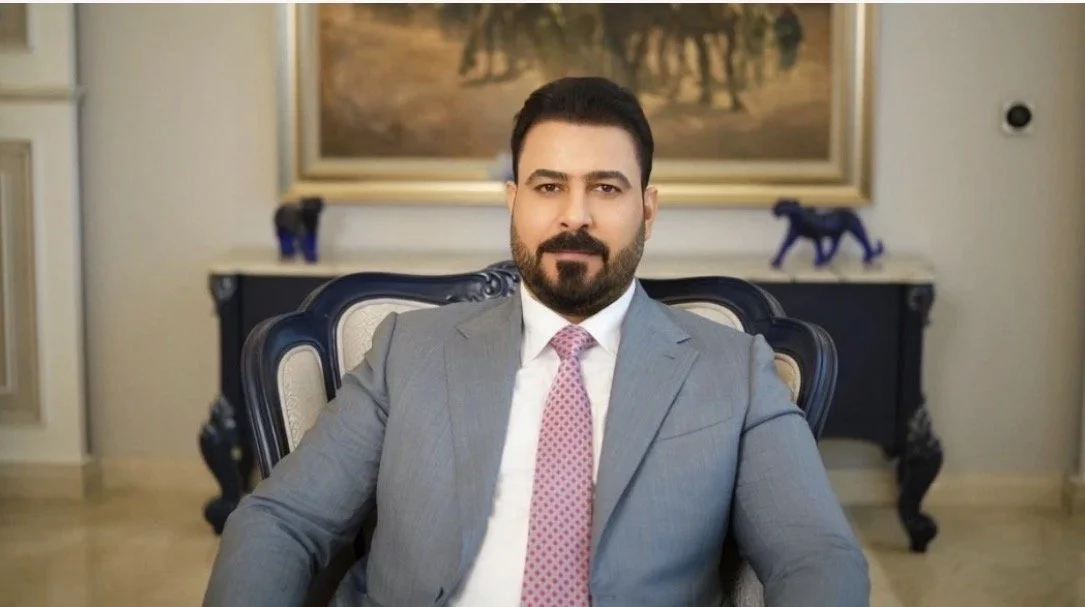
A statement from the Framework read, "The Coordination Framework held its important meeting today, Monday, at the Government Palace in Baghdad, a symbolic representation of the continuity of state institutions and the seat of the executive authority emanating from the will of the Iraqi people."
At the outset of the meeting, the Framework's leaders, according to the statement, commended "the national and responsible performance of the government of Prime Minister Mohammed Shia al-Sudani during its three and a half years in confronting economic, regional, and international challenges, and the achievements of the government program, particularly in the area of development and restoring the Iraqi citizen's confidence in their political and electoral system, which was clearly demonstrated by the broad participation in the recent parliamentary elections."
The Coordination Framework also commended "the responsible and historic stances of Nouri al-Maliki, head of the State of Law Coalition, and Mohammed Shia al-Sudani, head of the Reconstruction and Development Coalition, in withdrawing their candidacies for the premiership and the formation of the next government. This step underscores their commitment to the supreme national interests, facilitates overcoming the political deadlock, and allows the Coordination Framework to select a candidate who meets the required qualifications for the position of Prime Minister and is suited to the demands and challenges of this stage."
The statement continued, "After reviewing the candidates' names, Mr. Ali al-Zidi was chosen as the Coordination Framework's candidate, being the largest bloc in the Council of Representatives, to assume the position of Prime Minister and form the next government." link
***************
Tishwash: Al-Zaydi: We will form a government that responds to the citizens' demands for establishing security and stability.
Prime Minister-designate Ali al-Zidi affirmed on Monday (April 27, 2026) his intention to work with all political forces to form a new government that responds to the demands of citizens and contributes to consolidating security and stability and achieving comprehensive development in the country.
Al-Zaydi said in his first statement after being appointed, as reported by Baghdad Today, that “we are determined to work with various political forces to form a government capable of meeting the aspirations of Iraqis,” stressing the importance of national cooperation to overcome current challenges.
Al-Zaydi’s statement comes after he was officially tasked by the President of the Republic with forming the new government, following his nomination by the largest parliamentary bloc within the House of Representatives. link
*************
Rumors are putting pressure on the currency market and disrupting prices.
The exchange rate of the dollar against the Iraqi dinar continues to rise, despite recent developments in the Middle East region. Economic experts attribute this to a set of overlapping internal and external factors, most notably increased demand and speculation in the market, in addition to regional tensions and regulatory measures.
Economic expert Walid Al-Agili said that the rise in the dollar is mainly due to increased demand for it, explaining that “speculation and rumors in the market play a major role in raising the price, as some traders and money changers stockpile dollars with the aim of selling them later at a higher price.”
He added that the spread of unconfirmed news about regional situations, such as talk of continued tensions or the closure of some trade routes, is driving individuals and traders to buy dollars as a hedge, exacerbating pressure on the market. Al-Agili pointed out that restrictions on foreign transfers and tightened financial procedures have also contributed to reducing the official supply of dollars, pushing some of the demand into the parallel market and thus driving up prices.
For his part, Professor of International Economics Nawar Al-Saadi explained that the political fluctuations in Iraq and the region are directly reflected in the exchange market, indicating that “the recent regional tensions have brought back a state of uncertainty to the markets, which has led to an increase in demand for the dollar globally and locally as a safe haven currency.”
He added that the heavy reliance on oil as a primary source of foreign currency makes the Iraqi economy more sensitive to any disruptions or concerns regarding its flows.
In conclusion, experts believe that the continued rise of the dollar is not linked to a single factor, but rather is the result of an interaction between local speculation, increasing demand, regional conditions, in addition to financial policies and regulatory procedures within the country. link
************
Tishwash: Government options to address the 2026 budget delay: borrowing or an emergency law similar to the food security law.
The Parliamentary Finance Committee revealed several options available to the government to address the delay in approving the 2026 budget, primarily resorting to borrowing laws or enacting an emergency law similar to the Food Security Law.
Committee member Jamal Kojar told the official newspaper, “There are several alternatives if the budget is delayed, including resorting to borrowing as happened in 2021, or enacting a law similar to the Food Security Law. However, this depends on the government’s needs and the level of coordination between it and the Parliament.”
He explained that “the current government is operating in a caretaker capacity and does not have the authority to submit major financial bills independently, which necessitates direct coordination with Parliament if borrowing or enacting exceptional laws is required.”
Kojar indicated that “the government can continue spending according to the (1/12) rule of the operational budget, which ensures the continued payment of employee salaries without the need for new legislation, except in some special cases such as including new contracts after 2025.”
He pointed out that “the option of borrowing is also linked to the speed with which the new government is formed. If this matter is resolved within the constitutional timeframe, the House of Representatives should exert pressure on the government to submit the draft budget law as quickly as possible, given its importance in regulating the state’s financial management, including appointments, transfers, and the allocation of spending.”
He emphasized that “the House of Representatives cannot legislate laws of a financial nature without coordination with the government, and the previous food security law was enacted at the request and with the approval of the executive branch.” He noted that “Parliament is capable of supporting the government by passing emergency laws when necessary, whether through a borrowing law or a law similar to the food security law, but there has been no official request in this regard so far.”
Kujer stressed that “there is no intention to adopt a three-year budget again, and the country will return to the usual annual budget system,” affirming that “any future steps will remain contingent on the government’s request and its actual needs.” link
Iraq Economic News And Points To Ponder Monday Evening 4-27-26
The Coordinating Framework Nominates Ali Al-Zidi For The Premiership
latest news Monday, April 27, 2026 Baghdad – One News A statement from the Coordination Framework indicated that Ali al-Zidi has been nominated to head the next government, in a move aimed at resolving the executive entitlement during the current political phase.
The framework also praised the work done by the government of Prime Minister Mohammed Shia al-Sudani during the past three and a half years, describing its performance as “patriotic and responsible” in the face of economic, regional and international challenges.
The Coordinating Framework Nominates Ali Al-Zidi For The Premiership
latest news Monday, April 27, 2026 Baghdad – One News A statement from the Coordination Framework indicated that Ali al-Zidi has been nominated to head the next government, in a move aimed at resolving the executive entitlement during the current political phase.
The framework also praised the work done by the government of Prime Minister Mohammed Shia al-Sudani during the past three and a half years, describing its performance as “patriotic and responsible” in the face of economic, regional and international challenges.
In the same context, the Coordination Framework praised what it described as the “historic and responsible” positions of both the head of the State of Law Coalition, Nouri al-Maliki, and the head of the Reconstruction and Development Coalition, Muhammad Shia al-Sudani, through their withdrawal from running for the next government.
https://1news-iq.net/الإطار-التنسيقي-يرشح-علي-الزيدي-لرئاس/
Baghdad – One News 4/27/2026
Sources told Lawan News that the forces of the Coordination Framework will hold a meeting today at the Government Palace with the aim of definitively deciding on the Prime Minister candidate.
According to the sources, a preliminary agreement has been reached to nominate businessman and owner of the South Bank, Ali al-Zaydi, to assume the position of Prime Minister, amid intensive efforts to end the political deadlock in the coming hours. https://1news-iq.net/رجل-الأعمال-علي-الزيدي-مرشح-الإطار-لرئ/
Who Is Ali Al-Zaidi, The Coordination Framework's Candidate For Prime Minister?
latest news Monday, April 27, 2026 Baghdad – One News 4/27/2026 He obtained a Bachelor of Laws, a Bachelor of Finance and Banking, in addition to a Master of Finance and Banking, in an academic path that combines legal knowledge and financial specialization, which qualifies him to deal with governance, legislation, investment, financial management and economic development files in an integrated manner.
He served as Chairman of the Board of Directors of the Bank of the South for several years, during which he gained experience in banking management and financial governance, monitoring credit and investment policies, and risk management, in addition to working to enhance confidence in the banking sector.
He also served as Chairman of the University’s Board of Directors, where he worked to develop higher education and link it to the needs of the labor market, emphasizing the importance of education in building the modern state, preparing young leaders, and supporting the knowledge economy. https://1news-iq.net/من-هو-علي-الزيدي-مرشح-الإطار-التنسيقي-ل/
Sunni Blocs Back Al-Zaidi Nomination For Iraq Premiership
2026-04-27 / 13:54 Shafaq News- Baghdad On Monday, Iraqi Sunni political blocs, within the National Sunni Council, welcomed the nomination of Ali Al-Zaidi as the new prime minister, after the presidency formally tasked him with forming a government.
Al-Azm Alliance, led by Muthanna Al-Samarrai, considered the nomination a step toward completing constitutional requirements, expressing support for moving ahead with forming the new cabinet within constitutional timelines. The alliance also pointed to the “need for continued cooperation among political forces to ensure stability and strengthen state institutions.”
Former Parliament Speaker and leader of the Taqaddum Alliance, Mohammed Al-Halbousi, said that he “fully supports” the nomination, adding that he hopes for the formation of a “strong government capable of addressing challenges, meeting current needs, and strengthening Iraq’s ties with its Arab and Islamic surroundings.”
The Sovereignty Alliance (Al-Siyada), led by Khamis Al-Khanjar, stated that the current phase requires reinforcing genuine national partnership and adhering to political agreements to ensure stability, advance reforms, improve services, address economic challenges, and strengthen the rule of law, including restricting weapons to state control.
Earlier today, the Coordination Framework, the largest bloc with about 162 of parliament’s 329 seats, selected Al-Zaidi after State of Law leader Nouri Al-Maliki and caretaker Prime Minister Mohammed Shia Al-Sudani, who heads the Reconstruction and Development (Al-Ima'ar wal-Tanmiya) Coalition, withdrew from the race.
Read more: Who is Ali al-Zaidi? The businessman tapped for Iraq's premiership
https://shafaq.com/en/Iraq/Sunni-blocs-back-Al-Zaidi-nomination-for-Iraq-premiership
Diplomatic official: Two phases of US sanctions begin with halting dollar transactions and could extend to freezing Iraqi Funds
Baghdad – One News 4/27/2026 A diplomatic official revealed specific details regarding two phases of potential US sanctions on Iraq, within the framework of what is known as the “red alert”.
He explained that the first phase involves completely halting dollar transfers, noting that Iraqi oil revenues have been deposited into an account at the Federal Reserve Bank of New York since 2003. He indicated that these funds had not been sent to Iraq for approximately four months for various reasons, before the White House officially suspended their transfer three weeks ago.
He pointed out that the second phase involves freezing all Iraqi funds, explaining that Iraq has two accounts in the United States, one at the Federal Reserve Bank and the other at JPMorgan Chase, with warnings that Washington may freeze these assets in both banks. https://1news-iq.net/مسؤول-دبلوماسي-مرحلتان-من-العقوبات-ال/
The President Of The Republic Tasks The Framework Candidate, Ali Al-Zidi, With Forming The New Government: This Entitlement Can No Longer Be Delayed
Baghdad – One News 4/27/2026 President Nizar Amidi announced, based on his constitutional responsibilities, the assignment of the candidate of the largest parliamentary bloc, Ali al-Zidi, to form the new government, stressing that this measure represents the completion of the third stage of the constitutional entitlement that can no longer be delayed.
The President expressed his hope that al-Zaydi would be able to form a strong national government that represents all Iraqis and meets their aspirations, calling on all political forces to support him and cooperate with him to expedite the completion of the constitutional and national entitlement in a way that serves the interest of Iraq and its people.
The ceremony was attended by Speaker of Parliament Mohammed al-Halbousi and a number of political leaders and leaders of the coordination framework, where the handover of the letter of appointment took place in an official atmosphere reflecting the completion of the constitutional process for naming the candidate. https://1news-iq.net/رئيس-الجمهورية-يكلف-مرشح-الإطار-علي-ال/
Washington: We Will Confront Iran's Destabilizing Activities In Iraq And Demand That Baghdad Dismantle The Militias
Baghdad – One News 4/27/2026 Fox News quoted a State Department spokesman as saying that the United States would take “all necessary measures” to counter what he called “Iran’s destabilizing activities in Iraq,” stressing that Washington would act to protect its interests from militias he said were “backed by Iran.”
The spokesman added that his country would continue to express clearly its concern about what he considered the Iraqi government's failure to prevent the attacks, noting that the continuation of these attacks negatively impacts relations between Washington and Baghdad.
The US State Department stressed that it expects the Iraqi government to take serious steps to dismantle Iranian-backed militias within the country, considering that the lack of control over these groups represents a direct threat to regional stability and bilateral relations. https://1news-iq.net/واشنطن-سنواجه-أنشطة-إيران-المزعزعة-في/
Qusay Mahbouba: What We Warned About A Year Ago Has Now Happened, And Washington Has Informed The Coordinating Framework That It Is An “Adversary, Not An Ally”
Baghdad – One News 4/27/2026 The head of the Amarji Party in the Reconstruction and Development Coalition, Qusay Mahbouba, confirmed that what he had been warning about for more than a year has come to pass today, noting that the American government has begun to bare its fangs and is directing a clear message to the Shiite coordination framework that does not accept interpretation, the meaning of which is that you are enemies of the United States and are not friends or allies.
Mahbouba added that those with ambiguous and indecisive positions within the Shiite framework, who imagined that the American classification or pressures would not include them, are now facing a completely different reality.
He explained that there is a big difference between sitting at the table and being a meal at it, considering that the Shiite framework has now become a direct target within the American pressure strategy.
https://1news-iq.net/قصي-محبوبة-ما-حذرنا-منه-قبل-عام-وقع-الآ/
Constitutional Timelines… The State's Safety Valve, According To Judge Faiq Zaidan
Baghdad – One News Constitutional timelines represent one of the most important pillars of constitutional protection, serving as the binding framework that regulates the work of the authorities and ensures the stability of the political system, preventing improvisation or the arbitrary transfer of power.
In this context, the emphasis placed by the President of the Supreme Judicial Council, Judge Faiq Zaidan, is significant, as he stressed that respecting these timelines is not merely a formality, but rather the very essence of the constitution's philosophy and the rule of law.
Exceeding constitutional deadlines cannot be viewed as a mere procedural error; rather, it constitutes a direct attack on the foundations of the legal system, opening the door to an imbalance of power and weakening the authority of the constitutional text. The constitution, in its essence, is not simply a document, but a social contract that defines the course of political action and regulates its pace.
Judge Zeidan warns that neglecting these deadlines undermines public trust in institutions and threatens popular acceptance of the entire political system, especially given the challenges facing countries with emerging democracies. Public trust is not built on slogans, but on strict adherence to constitutional principles.
Adherence to the specified deadlines also prevents legal vacuums or power struggles that political solutions may later be unable to contain, making respect for constitutional timelines a preventive tool to protect the state from crises before they occur.
Hence, the need arises to establish a mature political culture that respects constitutional texts and refrains from attempts to circumvent them to achieve narrow gains, as a stable state cannot be built without a political awareness that believes in the sanctity of the constitution.
Judge Zeidan’s warnings stem from the judiciary’s position as the faithful guardian of the constitution, and the entity that stands at an equal distance from all parties, far from political rivalries, which gives these warnings a national and legal dimension of great importance.
In light of the current transformations, protecting constitutional timelines remains the primary guarantee to prevent the state from sliding into chaos or instability, while adherence to the constitution and responding to the warnings of the judiciary represents the only way to build a state of solid institutions based on law, not on temporary agreements.
Seeds of Wisdom RV and Economics Updates Monday Evening 4-27-26
Good Evening Dinar Recaps,
Peace Proposal Emerges: Iran Pushes Deal as Energy Crisis and Regional Tensions Intensify
New Iran-backed proposal to reopen critical oil routes signals potential turning point, even as conflict and internal pressures escalate
Good Evening Dinar Recaps,
Peace Proposal Emerges: Iran Pushes Deal as Energy Crisis and Regional Tensions Intensify
New Iran-backed proposal to reopen critical oil routes signals potential turning point, even as conflict and internal pressures escalate
OVERVIEW (KEY POINTS)
Iran has submitted a new peace proposal to the United States through Pakistani mediation, aiming to reopen the Strait of Hormuz and reduce escalating regional tensions. The proposal focuses on immediate de-escalation while delaying more contentious issues.
This is happening now as the ongoing conflict has severely disrupted global energy flows, pushing oil prices higher and increasing pressure on both regional and global economies.
Key players include Iran, the United States, Pakistan as mediator, and regional powers such as the UAE, all navigating a rapidly evolving geopolitical landscape.
The broader implication is clear: any agreement tied to the Strait of Hormuz directly impacts global financial stability, making this proposal highly relevant to systemic risk and potential financial reset dynamics.
KEY DEVELOPMENTS
1. Iran Proposes Deal to Reopen Strait of Hormuz
A major diplomatic move aimed at stabilizing energy flows.
Proposal delivered via Pakistani intermediaries
Focuses on reopening a route handling ~20% of global oil supply
2. Nuclear Talks Deferred to Advance Negotiations
Iran is shifting strategy to accelerate progress.
Suggests postponing nuclear discussions to later phases
Prioritizes immediate de-escalation and trade flow restoration
3. Energy Markets React to Ongoing Disruption
Global supply concerns remain elevated.
Strait restrictions have already pushed oil prices higher
Shipping and trade flows remain partially constrained
4. Regional Realignment Accelerates
Alliances are shifting under pressure.
Iran strengthening ties with Russia and regional actors
Gulf states reassessing security and economic partnerships
5. Internal Pressure Builds Inside Iran
Domestic conditions add complexity.
Leadership balancing external negotiations and internal stability
Crackdowns and internal control measures signal heightened tension
WHY IT MATTERS
This development highlights how geopolitical negotiations are now directly tied to global financial stability, particularly when energy supply routes are involved.
Markets are highly sensitive to the Strait of Hormuz, meaning any disruption—or reopening—can rapidly influence oil prices, inflation, and global trade flows.
For policymakers, the situation presents a narrow path: securing stability without conceding strategic leverage. Misalignment could prolong volatility.
At the system level, this reinforces a key trend: energy chokepoints are becoming central to financial system stress and transformation.
WHY IT MATTERS TO FOREIGN CURRENCY HOLDERS
Energy price swings impact currency strength globally
Inflation pressures reduce purchasing power
Safe-haven currencies may strengthen during uncertainty
Exchange rate volatility increases with geopolitical risk
IMPLICATIONS FOR THE GLOBAL RESET
Pillar 1: Energy Route Control as Financial Leverage
Control over the Strait of Hormuz underscores how physical trade routes influence global financial systems, reinforcing resource-based power.
Pillar 2: Negotiated Transition vs. Forced Disruption
The proposal reflects a potential shift toward managed de-escalation, but failure could accelerate disorder and systemic stress.
CONCLUSION
Iran’s proposal represents a critical inflection point, where diplomacy and energy security intersect with global financial stability.
While the outcome remains uncertain, the stakes are clear: reopening key trade routes could ease pressure, while continued disruption risks deeper instability.
This is not just a regional issue—it is a global financial trigger point tied directly to energy flow and geopolitical alignment.
When control of energy routes becomes a negotiating tool, the global financial system is directly in play.
Seeds of Wisdom Team
Newshounds News™ Exclusive
Sources
Reuters — "US reviews latest Iranian proposal to end war stalemate"
Associated Press — "Iran offers to reopen Strait of Hormuz if US lifts blockade"
~~~~~~~~~~
Seeds of Wisdom Team RV Currency Facts Youtube and Rumble
Newshound's News Telegram Room Link
RV Facts with Proof Links Link
RV Updates Proof links - Facts Link
Follow the Gold/Silver Rate COMEX
Follow Fast Facts
Seeds of Wisdom Team™ Website
Thank you Dinar Recaps
Edu Matrix: Why your Iraqi Dinar Could Skyrocket or Crash in 2026
Edu Matrix: Why your Iraqi Dinar Could Skyrocket or Crash in 2026
4-26-2026
In the world of currency speculation and global finance, few topics spark as much debate and intrigue as the Iraqi Dinar (IQD). For years, investors and economists alike have watched the region with bated breath, looking for signs of a potential revaluation.
However, understanding the future of the Dinar requires looking beyond simple charts. As a recent featured video from Edu Matrix explores, the value of Iraq’s currency is inextricably linked to a complex web of geopolitical tension, religious ideology, and the global oil market.
Edu Matrix: Why your Iraqi Dinar Could Skyrocket or Crash in 2026
4-26-2026
In the world of currency speculation and global finance, few topics spark as much debate and intrigue as the Iraqi Dinar (IQD). For years, investors and economists alike have watched the region with bated breath, looking for signs of a potential revaluation.
However, understanding the future of the Dinar requires looking beyond simple charts. As a recent featured video from Edu Matrix explores, the value of Iraq’s currency is inextricably linked to a complex web of geopolitical tension, religious ideology, and the global oil market.
As we look toward 2026, here are the critical factors currently shaping the landscape for the Iraqi Dinar.
To understand Iraq’s economic future, one must first understand its neighbors. The video highlights a chilling perspective on the regional leadership in Iran, noting that certain interpretations of martyrdom and religious prophecy could drive policy decisions that prioritize ideological goals over traditional economic stability.
This matters because of the Strait of Hormuz. As one of the world’s most vital oil chokepoints, any disruption here would be felt globally. A conflict that closes the Strait wouldn’t just impact oil; it would cause a domino effect across global food supply chains, transportation, and international markets. For Iraq, a nation caught in the middle of these tensions, the ability to export its primary resource—oil—is entirely dependent on this fragile regional stability.
Iraq’s economy is, for all intents and purposes, built on oil. The video posits a scenario that many economists are beginning to take seriously: a surge in oil prices to $200 per barrel.
While such a spike would cause pain at the pump globally, for Iraq, it would result in an unprecedented budget surplus and a massive increase in foreign reserves. This influx of wealth could provide the necessary economic “cushion” for the Central Bank of Iraq (CBI) to pursue a significant revaluation or adjustment of the Dinar.
However, this isn’t a guarantee. Iraq must navigate significant hurdles, including U.S.-imposed financial blockades and Iran’s influence over trade routes, to ensure their wealth can actually reach the global market.
One of the most compelling updates discussed is the Central Bank of Iraq’s exploration of a digital IQD. This move signals a desire to modernize a financial system that has long been hampered by corruption and inefficiency.
The transition to a digital system is not merely technical; it’s social. Its success depends on the cooperation of the Iraqi people and the stability of the socio-political environment. The speaker draws a fascinating parallel to Venezuela’s recent currency reforms and the preparedness of the U.S. banking system to handle these types of structural shifts, suggesting that the “plumbing” for a new Dinar value may already be being laid.
It is easy to dismiss Dinar discussions as mere speculation, but as the Edu Matrix video underscores, these developments are grounded in observable global trends. The convergence of religious history, strategic military positioning, and energy economics creates a “perfect storm” that could redefine the Iraqi economy by 2026.
For those tracking the IQD, the message is clear: stop looking at the Dinar in a vacuum. Start looking at the Strait of Hormuz, the policies of the CBI, and the shifting alliances in the Middle East.
The complexities of the Iraqi Dinar cannot be summarized in a single post. For a deeper dive into the historical and economic contexts shaping these potential changes, we recommend watching the full video from Edu Matrix.
Gold Telegraph: The World is Waking up to the Importance of Sound Money
Gold Telegraph: The World is Waking up to the Importance of Sound Money
“Congress needs to acknowledge its error in not preserving the value of America’s currency…”
– @judyshelton
Brilliant article. The world is waking up to the importance of sound money.
https://www.wsj.com/opinion/kevin-warsh-and-the-erosion-of-the-dollar-8db02a25
BREAKING NEWS: CHINA’S IMPORTS OF SILVER SURGED TO AN ALL-TIME HIGH IN MARCH
Nothing to see here…
Gold Telegraph: The World is Waking up to the Importance of Sound Money
“Congress needs to acknowledge its error in not preserving the value of America’s currency…”
– @judyshelton
Brilliant article. The world is waking up to the importance of sound money.
https://www.wsj.com/opinion/kevin-warsh-and-the-erosion-of-the-dollar-8db02a25
BREAKING NEWS: CHINA’S IMPORTS OF SILVER SURGED TO AN ALL-TIME HIGH IN MARCH
Nothing to see here…
“The world’s biggest silver consumer imported around 836 tons last month…”
A $4 BILLION DEAL ANNOUNCED IN FINLAND.
Massive news to start the week.
Agnico Eagle is acquiring Rupert Resources for C$2.9 billion.
This is a three-deal consolidation:
• Rupert (~C$2.9B)
• Aurion Resources Ltd. (~C$481M)
• B2Gold Corp. JV stake (~US$325M)
Total: ~C$4 billion to control a district
What are they are buying?
• Full control of the Ikkari system (3.5Moz)
• Integration with Kittilä (3.3Moz reserves)
• A path to ~500,000 oz/year production
Agnico didn’t just buy Rupert.
They bought control of a gold district.
~2,500 km² in one of the most prospective belts in Europe.
That’s how the next generation of gold supply gets built…. @agnicoeagle
Dan Myerson recently helped lead Foran Mining to a nearly $4 billion deal… But I had to ask him what really pushed him to build something of his own. The answer goes back to a moment with one of the greatest mining entrepreneurs in history… Lukas Lundin.
A simple question changed everything: “What are you doing? When are you going to start building mines… creating real value?” That was the turning point. A conversation changed everything. “No guts, no glory.”
Watch on X: https://twitter.com/i/status/2046222470462517251
~~~~~~~~~~
BREAKING NEWS: FEDERAL RESERVE CHIEF NOMINEE KEVIN WARSH CALLED FOR “REGIME CHANGE” AT THE U.S. CENTRAL BANK
Here we go… Boom.
“His plan for what he calls regime change at the Federal Reserve…”
Source: https://www.cnbc.com/amp/2026/04/21/kevin-warsh-fed-regime-change-senate-confirmation-hearing.html
~~~~~~~~~~
Something big is coming… A conversation you won’t hear anywhere else. I sat down with Judy Shelton at her home to discuss gold, Treasury trust bonds, gold-backed stablecoins, the Federal Reserve, and more.
The Authentic Judy Shelton: A Maverick Economist Takes on Washington
The monetary system is being questioned… in real time. I sat down with Judy Shelton, a longtime advocate for sound money who challenged the system from the inside. My first documentary.
We cover:
• Gold’s return to the financial system
• Treasury Trust Bonds
• Fort Knox and the question of trust
• Stablecoins and the next evolution of money + much more.
This is about the future of money itself.
TIMESTAMPS:
(04:08) — Judy’s early career and how she first entered the world of sound money.
(04:40) — Her study of the Soviet collapse and what drew her to it.
(08:08) — How Judy’s book on the Soviet collapse connected her to Richard Nixon.
(11:42) — Nixon’s 1971 decision to end dollar convertibility into gold.
(12:06) — How ending Bretton Woods reshaped the global financial order.
(13:20) — Did 1971 fundamentally change the nature of money?
(14:09) — Judy’s first meeting with Paul Volcker in 1994.
(14:22) — Volcker’s role in ending 1970s inflation and the Bretton Woods anniversary context.
(15:46) — Did the world trade monetary discipline for flexibility after leaving gold?
(18:56) — Could digital finance help enable a common global unit of account?
(21:34) — Judy’s “solidus” idea and who could issue that type of stablecoin.
(25:52) — The belief that people deserve a more dependable reserve asset.
(26:17) — What Judy learned from her bruising 2020 Fed nomination fight.
(33:00) — The Washington machine protecting the status quo.
(33:40) — How Judy handled the attacks personally and how it affected her family.
(34:23) — Whether the Fed’s protection from scrutiny helped enable the inflation surge.
(34:47) — Jerome Powell, accountability, and the absence of consequences.
(35:24) — Why calls for Federal Reserve reform are now coming from the highest levels.
(36:58) — Who actually owns the Fed?
(38:15) — Fort Knox, transparency, and whether an audit is needed.
(39:35) — Would Judy support a live video walkthrough of Fort Knox?
(40:34) — Could Treasury Trust Bonds inspire other sovereign nations to follow?
(43:44) — Would America’s founders even recognize today’s monetary system?
(44:38) — The new Board of Peace and why Judy is interested in it.
(46:32) — Would Judy join the Board of Peace if asked?
(46:38) — What is at risk if monetary reform never happens?
(48:11) — The battle never ends.
Watch on X: https://x.com/i/status/2047349653339877796
~~~~~~~~~~
The President of the United States said today that the world is becoming like a casino. I said it 5 years ago. Like always, I am way too early.
Source(s): • https://x.com/GoldTelegraph_/status/2046000371810664856
Seeds of Wisdom RV and Economics Updates Monday Afternoon 4-27-26
Good Afternoon Dinar Recaps,
Indonesia Shift: Oil Deal and De-Dollarization Signal BRICS Power Play
Indonesia’s move toward Russian energy and local currency trade is accelerating structural changes in global finance and trade systems
Good Afternoon Dinar Recaps,
Indonesia Shift: Oil Deal and De-Dollarization Signal BRICS Power Play
Indonesia’s move toward Russian energy and local currency trade is accelerating structural changes in global finance and trade systems
OVERVIEW (KEY POINTS)
Indonesia, a newer BRICS member, is making two major moves simultaneously: pursuing Russian oil imports and expanding its de-dollarization framework. Together, these actions reflect a coordinated shift in both energy sourcing and financial systems.
This is happening now because Indonesia faces a widening gap between domestic oil production and rising demand, while also seeking to reduce reliance on the U.S. dollar in trade settlements.
Key players include Indonesia, Russia, and the broader BRICS bloc, all working within a framework that emphasizes resource access and currency independence.
The broader implication is clear: energy trade and currency systems are being restructured in parallel, reinforcing long-term shifts away from traditional Western-dominated frameworks.
KEY DEVELOPMENTS
1. Indonesia Moves to Import Russian Oil
Energy demand is driving new trade alignment.
Domestic production at 600,000 barrels/day vs. 1.6 million consumption
Russia positioned as a key supplier to bridge the gap
2. BRICS Expands Control Over Energy Flows
The bloc’s influence in oil markets continues to grow.
BRICS nations control roughly 45% of global oil supply
Strengthens leverage in global pricing and trade negotiations
3. De-Dollarization Framework Gains Traction
Indonesia is scaling local currency usage.
Local currency transactions surged 163% year-over-year
Reached $8.45 billion in early 2026
4. Businesses Shift Away from the U.S. Dollar
Adoption is expanding beyond policy into practice.
Companies increasingly settling trade in local currencies
Reduces transaction costs and dollar dependency
5. Indonesia Emerges as a BRICS Blueprint
The country is setting a model for others.
Demonstrates how to operationalize de-dollarization at scale
Provides a working example for future BRICS integration
WHY IT MATTERS
This development highlights a dual-track transformation in the global system: energy supply chains and financial infrastructure are evolving together.
Markets are influenced not just by supply and demand, but by how trade is settled and financed. Shifting away from the dollar introduces new dynamics in liquidity and pricing.
For policymakers, this creates both opportunity and risk. Reducing dollar reliance increases autonomy but also introduces volatility and structural challenges.
At the system level, this signals movement toward a more multipolar financial architecture, where trade flows and currency systems are less centralized.
WHY IT MATTERS TO FOREIGN CURRENCY HOLDERS
Local currencies may gain relevance in trade settlements
Dollar dominance may gradually weaken over time
Purchasing power may shift depending on currency exposure
Exchange rate volatility increases during transition periods
IMPLICATIONS FOR THE GLOBAL RESET
Pillar 1: Energy-Backed Trade Realignment
Securing oil through BRICS partnerships strengthens resource-based economic alliances, reducing reliance on traditional supply chains.
Pillar 2: Gradual Currency System Transition
Indonesia’s model shows how de-dollarization can evolve incrementally through real-world adoption, not just policy declarations.
CONCLUSION
Indonesia’s combined strategy of reshaping energy imports and reducing dollar dependence represents a meaningful step in the broader evolution of global systems.
While the U.S. dollar remains dominant for now, these shifts highlight how structural alternatives are being built in parallel, gaining traction over time.
This is not a sudden break from the current system—but a gradual reconfiguration of how trade and finance operate globally.
When energy flows and currency systems shift together, the foundation of global finance begins to change.
Seeds of Wisdom Team
Newshounds News™ Exclusive
Sources
Watcher.Guru — "Indonesia to Start Buying Oil From BRICS Member Russia"
Watcher.Guru — "Indonesia’s De-Dollarization Success: A New Blueprint for BRICS"
~~~~~~~~~~
Seeds of Wisdom Team RV Currency Facts Youtube and Rumble
Newshound's News Telegram Room Link
RV Facts with Proof Links Link
RV Updates Proof links - Facts Link
Follow the Gold/Silver Rate COMEX
Follow Fast Facts
Seeds of Wisdom Team™ Website
Thank you Dinar Recaps
Iraq Economic News And Points To Ponder Monday Afternoon 4-27-26
Oil Prices Jump 2% On Stalled Iran-US Negotiations
2026-04-27 Shafaq News Oil prices extended gains on Monday, rising nearly 2% as peace talks between the U.S. and Iran stalled while shipments through the Strait of Hormuz remained limited, keeping global oil supplies tight.
Brent crude futures rose $2.16, or 2.05%, to $107.49 a barrel by 2346 GMT, the highest since April 7, and U.S. West Texas Intermediate was at $96.17 a barrel, up $1.77, or 1.88%.
Oil Prices Jump 2% On Stalled Iran-US Negotiations
2026-04-27 Shafaq News Oil prices extended gains on Monday, rising nearly 2% as peace talks between the U.S. and Iran stalled while shipments through the Strait of Hormuz remained limited, keeping global oil supplies tight.
Brent crude futures rose $2.16, or 2.05%, to $107.49 a barrel by 2346 GMT, the highest since April 7, and U.S. West Texas Intermediate was at $96.17 a barrel, up $1.77, or 1.88%.
Last week, Brent and WTI gained nearly 17% and 13%, respectively, the biggest weekly gains since the start of the war.
Hopes of reviving peace efforts receded during the weekend when U.S. President Donald Trump scrapped a planned trip to Islamabad by his envoys Steve Witkoff and Jared Kushner, even as Iranian Foreign Minister Abbas Araqchi arrived In Pakistan.
"This move puts the ball squarely back in Iran’s court, and the clock is now ticking loudly," IG market analyst Tony Sycamore said in a note, adding that Tehran may be forced to shut production at its aging oil fields when it runs out of storage capacity.
Tehran has largely closed the strait while Washington has imposed a blockade of Iran's ports. Traffic through the Strait of Hormuz remained limited, with just one oil products tanker entering the Gulf on Sunday, shipping data from Kpler showed.
Goldman Sachs raised its oil price forecasts for the fourth quarter to $90 a barrel for Brent crude and $83 for WTI citing reduced output from the Middle East.
"The economic risks are larger than our crude base case alone suggests because of the net upside risks to oil prices, unusually high refined product prices, products shortages risks, and the unprecedented scale of the shock," GS analysts led by Daan Struyven said in an April 26 note. (Reuters) https://www.shafaq.com/en/Economy/Oil-prices-jump-2-on-stalled-Iran-US-negotiations
Iraq Holds Fifth Spot In 2025 Global Crude Output
2026-04-27 Shafaq News- Washington Iraq ranked fifth among the world’s top oil producers in 2025 with output of 4.39 million barrels per day (bpd), the US Energy Information Administration (EIA) reported on Monday.
Global oil production is highly concentrated, with just five countries accounting for roughly half of total output. The United States remained the world’s largest producer at 13.58 million bpd in 2025, followed by Russia at 9.87 million bpd and Saudi Arabia at about 9.51 million bpd. Together, the three countries accounted for nearly 39% of global crude production.
Canada ranked fourth, while Iraq followed, maintaining its position as one of the key suppliers in the global oil market. China came in sixth place. In total, the top ten oil-producing countries represented more than 72% of global output, while the remainder was distributed across dozens of smaller producers.
Regionally, the Middle East continued to dominate production, contributing around 32% of global output. Five countries from the region —Saudi Arabia, Iraq, Iran, the United Arab Emirates, and Kuwait— featured among the world’s top ten producers.
The data also pointed to growing uncertainty around energy flows in 2026, particularly amid tensions involving the United States and Iran, and the closure of the Strait of Hormuz, a critical passage for global oil shipments.
https://www.shafaq.com/en/Economy/Iraq-holds-fifth-spot-in-2025-global-crude-output
Gold Climbs On Potential US-Iran De-Escalation
2026-04-27 Shafaq News Gold edged higher on Monday, supported by a softer dollar as a report of a new proposal by Iran to end the war with the U.S. raised hopes of a de-escalation in the Middle East conflict.
Spot gold was up 0.4% at $4,726.62 per ounce, as of 0407 GMT. Last week, the metal fell 2.5% to snap a four-week winning streak.
U.S. gold futures for June delivery were steady at $4,742.
Lending support to bullion, the dollar eased after a report said that Iran through Pakistani mediators gave the U.S. a new proposal on reopening the Strait of Hormuz and ending the war.
"We're just sort of watching now whether there's progress in the (U.S.-Iran) talks at all in the coming days and that's going to be the biggest driver for gold," said Kyle Rodda, a senior financial market analyst at Capital.com.
U.S. President Donald Trump said on Sunday that Iran could telephone if it wants to negotiate an end to their two-month war and stressed it can never have a nuclear weapon.
Trump cancelled a trip by two U.S. envoys to Iran war mediator Pakistan on Saturday, dealing a setback to peace prospects.
Oil prices rose as the stalled peace talks prolonged the disruption of Middle East energy exports.
Higher crude oil prices can stoke inflation by raising transportation and production costs, increasing the likelihood of higher interest rates.
While gold is considered an inflation hedge, high interest rates make yield-bearing assets more attractive, weighing on its appeal.
Investors now await the U.S. Federal Reserve's interest rate decision on Wednesday.
"It could either be a support to gold or an increased headwind, depending on if the Fed sort of indicates whether it sees itself potentially keeping policy unchanged for the rest of the year because of the inflationary impacts of the energy crisis," said Rodda.
Spot silver rose 1% to $76.45 per ounce, platinum gained 0.7% to $2,025.20, while palladium was down 0.2% at $1,493.50. (Reuters)https://www.shafaq.com/en/Economy/Gold-climbs-on-potential-US-Iran-de-escalation
US Dollar Drops In Baghdad And Erbil Markets
2026-04-27 Shafaq News- Baghdad/ Erbil The US dollar opened Monday's trading lower in Iraq at around 155,000 dinars per 100 dollars.
According to Shafaq News market survey, the dollar traded in Baghdad's Al-Kifah and Al-Harithiya exchanges at 154,900 dinars per 100 dollars, down from the previous session’s 155,500 dinars.
In the Iraqi capital, exchange shops sold the dollar at 155,500 dinars and bought it at 154,500 dinars, while in Erbil, selling prices stood at 154,650 dinars and buying prices at 154,550 dinars.
https://www.shafaq.com/en/Economy/US-dollar-drops-in-Baghdad-and-Erbil-markets-0
Gold Prices Fall In Baghdad And Erbil
2026-04-27 Shafaq News- Baghdad/ Erbil On Monday, gold prices hovered around 1.025 million IQD per mithqal in Baghdad and Erbil markets, according to a survey by Shafaq News Agency.
Gold prices on Baghdad's Al-Nahr Street recorded a selling price of 1.025 million IQD per mithqal (equivalent to five grams) for 21-carat gold, including Gulf, Turkish, and European varieties, with a buying price of 1.021 million IQD. The same gold had sold for 1.031 million IQD on Sunday.
The selling price for 21-carat Iraqi gold stood at 995,000 IQD, while the buying price reached 991,000 IQD.
In jewelry stores, the selling price per mithqal of 21-carat Gulf gold ranged between 1.025 million and 1.035 million IQD, while Iraqi gold sold for between 995,000 and 1.005 million IQD.
In Erbil, 22-carat gold was sold at 1.060 million IQD per mithqal, 21-carat gold at 1.013 million IQD, and 18-carat gold at 867,000 IQD. https://www.shafaq.com/en/Economy/Gold-prices-fall-in-Baghdad-and-Erbil-2
News, Rumors and Opinions Monday 4-27-2026
Note: All intel should be considered as "Rumors" until we receive official announcements ...and “Rates and Dates” could change anytime until we get to the banks/redemption centers.
RV Excerpts from the Restored Republic via a GCR Update as of Mon. 27 April 2026
Compiled Mon. 27 April 2026 12:01 am EST by Judy Byington
Sun. 26 April 2026 CONFIRMED INTEL: The Tier 4B protocol is now (allegedly) in use.
What was once laughed at as rumor and fantasy is now (allegedly being carried out in a controlled way. Iraq, Vietnam, and Zimbabwe are quietly leading a change in the economy that is happening outside of public markets.
Note: All intel should be considered as "Rumors" until we receive official announcements ...and “Rates and Dates” could change anytime until we get to the banks/redemption centers.
RV Excerpts from the Restored Republic via a GCR Update as of Mon. 27 April 2026
Compiled Mon. 27 April 2026 12:01 am EST by Judy Byington
Sun. 26 April 2026 CONFIRMED INTEL: The Tier 4B protocol is now (allegedly) in use.
What was once laughed at as rumor and fantasy is now (allegedly being carried out in a controlled way. Iraq, Vietnam, and Zimbabwe are quietly leading a change in the economy that is happening outside of public markets.
This change is happening because of structure, security, and silence. It is no longer just a guess that the IQD, VND, and ZIM will be worth more.
It is a fact of life. …Tier4b ISO 20022 on Telegram
For years, people who owned these currencies were made fun of, but institutions quietly got ready behind closed doors. Now, what started as rumors have (allegedly become real bank appointments, tiered access structures, and private exchange processes that run through U.S. banking channels. The Global Currency Reset is now (allegedly in the execution phase, and Tier 4B is where the public finally comes into contact with it.
This is (allegedly not a public forex event. It is a controlled, secret restructuring that follows a strict tiered framework. Tier 1 includes central banks and governments that are independent. Tier 2 includes multinational companies and top-tier financial trusts. Tier 3 includes wealthy people and businesses that have already agreed on contracts. Tier 4B is where private citizens who have legally gotten their money are turned on. This is the door for those who waited and stayed quiet, and Tier 4B is now (allegedly open.
The biggest banks in the U.S. have already moved. In a quiet way. Only by appointment. Private exchange centers are (allegedly up and running, using better security, identity checks, proof-of-purchase checks, NDAs, and wealth structuring after the exchange. This isn’t a theory, and it’s not for the public. It is controlled execution in the dark.
There is one simple rule for Tier 4B: no walk-ins, no leaks, and no show. People who want to join are checked out. There are limits on devices. There are records of consultations. You must use discretion. This is not a public rollout; it is a monitored operation meant to keep the market from being shocked and the system from being disrupted.
The exchange rates for IQD and VND are already (allegedly showing up in internal banking systems at levels that the public can’t see. Public forex platforms are behind because they are not on this track. Tier 4B works on its own and is already moving money.
This reset starts with Iraq. The sanctions that kept the dinar down for decades are no longer in place. Digital banking systems that follow international standards are (allegedly up and running. The UN and US oversight has officially ended, giving back full sovereignty. Internal anti-corruption operations have gotten back stolen property and turned it into revaluation leverage. Iraq is no longer limited. It is turned on.
Vietnam and Zimbabwe are (allegedly next, with resource-backed frameworks already in place. Gold-backed structures and project-based valuation models are coming together for a phased integration that will last until 2025 and into 2026.
The rollout is planned. The first round of internal testing is over. First, high-volume holders are given priority, then mid-tier participants, and finally, more people will be able to access the service in the coming weeks. Every step needs identification, proof, compliance with the NDA, and complete secrecy.
This isn’t a lot of talk. It is the end of a long-planned restructuring of the money system. The reset didn’t come with a lot of noise. It got there on time.
Tier 4B is up and running. The quietness is on purpose. The system is moving.
~~~~~~~~~~~~~~~
Fri. 24 April 2026 High-level banking insiders report that Tier 4B notifications are already being prepared for release within HOURS. …Web3.0 ISO20022 on Telegram
The system is moving at an unprecedented speed, with historic transactions now confirmed in Hong Kong, London, and Dubai. This is the moment we’ve all been waiting for—the full-scale transition to the gold-backed financial system is now irreversible.
GLOBAL MARKETS IN PANIC MODE! The old fiat system is collapsing in real time. Multiple major banks are seeing liquidity shortages as large transfers are being redirected into the new system. Sources from inside the IMF confirm urgent, behind-closed-doors meetings—they know their control is slipping. The end of the central banking c---l is unfolding before our eyes!
BANK SCREENS LIGHT UP WITH FINAL RATES! (Rumors)
IQD: $8.73 – Confirmed LIVE on European trading platforms!
VND: $5.12 – Holding but expected to surge post-announcement.
ZIM & OTHER CURRENCIES: FINAL ADJUSTMENTS IN PROCESS!
PAYMASTERS REPORT FULL RELEASES! Private transaction platforms in Reno and Zurich have received direct confirmations that Tier 1 & Tier 2 payouts are FINALIZED. Tier 3 & Tier 4B are next. If you’re part of the private groups, GET READY NOW!
MILITARY MOVEMENTS CONFIRMED – SECURING THE TRANSITION! Intel sources confirm heightened security around key financial hubs. Private security details have been activated in Reno, Zurich, and Dubai. Special Ops teams are ensuring that NO foreign interference disrupts this monumental shift in global power.
THE FINAL PHASE IS UNDERWAY! This is not a test. The pieces are falling into place faster than anticipated. The old world is crumbling, and the new financial era is about to rise from the ashes.
12-24 HOURS REMAIN – STAY ALERT, STAY READY! Your final instructions will be sent shortly. The financial reset is now unstoppable. Watch your inbox, this is (allegedly it!
Read Full Post Here: https://dinarchronicles.com/2026/04/27/restored-republic-via-a-gcr-update-as-of-april-27-2026/
************
Courtesy of Dinar Guru: https://www.dinarguru.com/
Frank26 America is removing any Iranian influence... And if you are connected to Iran in any way, shape or form and you do not go along with Iraq's monetary reform then you are removed.
Militia Man Oil prices are rising on supply concerns...The medium and heavy was somewhere around $122. That's big...because their budget is at $70. That's $50 over. That's a lot of money. At the same time this is taking place Iraq is actively working on alternative routes and domestic production to reduce single point of risk.
Sandy Ingram The Strait of Hormuz...What would happen if and when oil hits $200 a barrel? The Iraqi budget wouldn't just balance, it would explode in a massive surplus. Is this the event that would trigger the IQD currency adjustment? Iraq's economy depends on oil and their budget will balance if oil is priced at $70 per barrel. If oil goes to $150 to $200 a barrel, Iraq's foreign reserves would double within months. We already know they have $100 billion in foreign reserve in the United States...This is not a pie in the sky assessment. This is an assessment global economists can clearly see and now you can see.
************
Silver's Undeniable Future: Triple Digits Silver & The Global Monetary Shift | Mike Maloney
4-26-2026
Maloney confirms the de-dollarization trend is a "huge nail in the coffin" for the dollar's global reserve status.
However, he expresses skepticism, emphasizing that correlation does not prove causation and questioning the claim that silver has truly detached from COMEX pricing yet.
He concludes that the end of the fiat system is inevitable but a slow-moving process.
Seeds of Wisdom RV and Economics Updates Monday Morning 4-27-26
Good Morning Dinar Recaps,
Oil Shock Deepens: Failed Talks Drive Prices Higher and Global Risk Escalates
Breakdown in U.S.–Iran negotiations pushes oil above $100, intensifying inflation pressure and threatening global financial stability
Good Morning Dinar Recaps,
Oil Shock Deepens: Failed Talks Drive Prices Higher and Global Risk Escalates
Breakdown in U.S.–Iran negotiations pushes oil above $100, intensifying inflation pressure and threatening global financial stability
OVERVIEW (KEY POINTS)
Global markets are reacting sharply as U.S.–Iran peace talks stall, sending oil prices surging and increasing fears of prolonged supply disruption. The breakdown in diplomacy is reinforcing uncertainty across energy and financial systems.
This is happening now because the Strait of Hormuz remains heavily restricted, limiting a critical flow of global oil supply. At the same time, geopolitical tensions continue to rise, preventing stabilization of energy markets.
Key players include the United States, Iran, global energy producers, and financial institutions adjusting to higher oil prices and elevated geopolitical risk.
The broader implication is clear: energy-driven shocks are feeding directly into inflation, currency volatility, and systemic financial stress, accelerating conditions associated with a potential global reset.
KEY DEVELOPMENTS
1. Oil Prices Surge Above $100
Energy markets are tightening rapidly.
Brent crude climbed above $106 per barrel
Largest weekly gains since conflict escalation
2. U.S.–Iran Talks Collapse
Diplomatic efforts have stalled.
Planned negotiations canceled amid rising tensions
Increased risk of prolonged conflict and supply disruption
3. Strait of Hormuz Remains Constrained
Critical energy route still restricted.
Limited shipping activity reducing global oil availability
Route typically handles about 20% of global supply
4. Global Energy Shortage Risk Rising
Warnings from industry leaders intensify.
Concerns over prolonged shortages, especially in Asia
Ongoing disruptions impacting gas and oil flows simultaneously
5. Inflation and Economic Pressure Build
Energy costs are feeding into broader markets.
Rising oil prices increasing inflation expectations globally
Businesses warning of higher input costs and margin pressure
WHY IT MATTERS
This development highlights how energy supply disruptions can rapidly destabilize global financial systems. Oil is a foundational input across economies, and price spikes ripple through nearly every sector.
Markets are responding with increased volatility across commodities, equities, and currencies, reflecting uncertainty about future supply and geopolitical stability.
For policymakers, rising energy costs complicate monetary decisions. Central banks must now balance inflation control with slowing economic growth, increasing the risk of policy missteps.
At the system level, this reinforces a key trend: external geopolitical shocks are becoming primary drivers of financial conditions, not just economic fundamentals.
WHY IT MATTERS TO FOREIGN CURRENCY HOLDERS
Energy-importing currencies may weaken as costs surge
Purchasing power declines due to rising inflation
Safe-haven currencies may strengthen during uncertainty
Exchange rate volatility increases across global markets
IMPLICATIONS FOR THE GLOBAL RESET
Pillar 1: Energy as a Systemic Pressure Point
The surge in oil prices reinforces the role of energy supply as a core driver of financial stability, increasing the likelihood of structural adjustments.
Pillar 2: Acceleration of Economic Realignment
Persistent disruption is pushing economies toward diversification of supply chains and alternative financial arrangements, reshaping global trade dynamics.
CONCLUSION
The breakdown in U.S.–Iran negotiations marks a critical escalation point, with immediate consequences for energy markets and global financial stability.
As oil prices rise and supply remains constrained, the pressure is spreading across economies, increasing inflation and financial volatility.
This is not a temporary disruption—it reflects a broader shift where geopolitical instability is directly reshaping economic outcomes.
When energy supply becomes uncertain, the entire global financial system moves closer to structural change.
Seeds of Wisdom Team
Newshounds News™ Exclusive
Sources
~~~~~~~~~~
A Message to Our Currency Holders
If you’ve been holding foreign currency for many years, you were not foolish.
You were not wrong to believe the global financial system would change.
What failed was not your patience — it was the information you were given.
For years, dates, rumors, and personalities replaced facts, structure, and proof. “This week” predictions created cycles of hope and disappointment that were never based on how currencies actually change.
That is not your failure.
Our mission here is different: • No dates • No rates • No hype • No gurus
Instead, we focus on:
• Verifiable developments • Institutional evidence
• Global financial structure • Where countries actually sit in the process
Currency value changes only come after sovereignty, trade, banking, settlement systems, and fiscal coordination are in place. History and institutions confirm this sequence.
You will see silence. You will see denials. That is not delay — that is discipline.
Protect your identity. Organize your documents. Verify everything.
Never hand your discernment to anyone who cannot show proof.
You deserve truth — not timelines.
Seeds of Wisdom Team
Newshounds News™
~~~~~~~~~~
Seeds of Wisdom Team RV Currency Facts Youtube and Rumble
Newshound's News Telegram Room Link
RV Facts with Proof Links Link
RV Updates Proof links - Facts Link
Follow the Gold/Silver Rate COMEX
Follow Fast Facts
Seeds of Wisdom Team™ Website
Thank you Dinar Recaps
Iraq Economic News And Points To Ponder Monday Morning 4-27-26
The President Of The Republic Affirms To The Governor Of The Central Bank The Necessity Of Strengthening The Dinar And Continuing Reforms.
President Nizar Amidi emphasized to the Governor of the Central Bank of Iraq, Ali Al-Alaq, on Saturday the necessity of strengthening the Iraqi dinar and continuing reforms. A statement from the Presidency indicated that Amidi "received the Governor of the Central Bank of Iraq, Ali Al-Alaq, at Baghdad Palace on Saturday, April 25, 2026, who offered his congratulations to the President on assuming the presidency."
The President Of The Republic Affirms To The Governor Of The Central Bank The Necessity Of Strengthening The Dinar And Continuing Reforms.
President Nizar Amidi emphasized to the Governor of the Central Bank of Iraq, Ali Al-Alaq, on Saturday the necessity of strengthening the Iraqi dinar and continuing reforms. A statement from the Presidency indicated that Amidi "received the Governor of the Central Bank of Iraq, Ali Al-Alaq, at Baghdad Palace on Saturday, April 25, 2026, who offered his congratulations to the President on assuming the presidency."
The President expressed his "gratitude for the kind congratulations, stressing the importance of cooperation between monetary and financial institutions to support economic stability and achieve sustainable development."
Amidi also emphasized the need to strengthen the Iraqi dinar and continue reforms, noting that the Presidency supports the bank's monetary policies that contribute to improving the standard of living for citizens and stimulating growth in the country. https://www.economy-news.net/content.php?id=68288
Iraq Was The Fifth Largest Importer Of Kuwaiti Non-Oil Exports In The Fourth Quarter Of 2025
Money and Business Economy News – Baghdad Iraq ranked fifth among the largest importing markets for Kuwaiti non-oil exports during the fourth quarter of 2025, with a value of approximately 51.37 million Kuwaiti dinars, continuing its position as one of Kuwait’s most prominent trading partners in the region.
According to a report issued by the Central Statistical Bureau in Kuwait, Kuwaiti non-oil exports recorded an annual growth of more than 25%, as their value increased from 580.3 million dinars to 726.6 million dinars during the same period.
The UAE topped the list of importing countries with a value of 184 million dinars and a record growth of 67.8%, followed by Saudi Arabia with a value of 95.06 million dinars and an increase of 31%, then India in third place with 87.4 million dinars despite its decline of 24.1%, while China came in fourth with 71.45 million dinars with a growth of 32.6%, and Iraq came in fifth.
The report showed that total Kuwaiti exports, including oil and its derivatives, amounted to 5.248 billion dinars during the fourth quarter of 2025, compared to 5.577 billion dinars in the same period of 2024, reflecting a decline in total exports.
Kuwaiti exports were distributed to 23 countries and major trading destinations, and included about 98 products within 21 sections, led by mineral products with a value of 4.52 billion dinars, driven by fuels, mineral oils and distillation products, followed by chemical industries with 194.8 million dinars, then transport equipment with 150.2 million dinars, and machinery and electrical appliances with about 115 million dinars, in addition to an increase in exports of natural pearls, precious stones and precious metals to 89.8 million dinars. https://www.economy-news.net/content.php?id=68391
Disruption Of The Strait Of Hormuz Is Reshaping Global Trade... And The "Path Of Development" Is A Strategic Option For Iraq.
Reports Economy News – Baghdad A British report highlighted the repercussions of the disruption to maritime traffic through the Strait of Hormuz, particularly energy exports, considering that what is happening is reshaping international trade priorities towards the search for alternative routes, including the Iraqi "Development Road" project.
A report by Amwaj Media stated that the Gulf states’ reliance for decades on a narrow and increasingly tense passage like the Strait of Hormuz was not a new phenomenon, but the scale of the current unrest and the speed of its impact have renewed interest in alternatives that go beyond traditional maritime chokepoints.
In this context, the report considered that the “Development Road,” which aims to link the Gulf to Europe via Iraq and Turkey, is no longer just a national development project, but has become an urgent strategic option within broader efforts to reshape trade and energy routes in a rapidly changing region.
He pointed out that the importance of this project is closely linked to the economic structure of Iraq, which depends on about 90% of its revenues on oil exports, most of which pass through the Strait of Hormuz, making any disruption in this passage a direct threat to the national economy.
Nevertheless, the report stressed that the success of the “Development Road” depends on its ability to integrate with and expand the Iraqi oil pipeline network, emphasizing that geography alone is not enough, but rather requires a stable political and security environment that allows the geographical location to be transformed into an effective corridor for both energy and trade.
He warned against treating the disruption of navigation in the Strait of Hormuz as a passing crisis, considering it a "structural warning" that necessitates a comprehensive reassessment of infrastructure and supply routes, and places land-based projects, foremost among them the "Development Road," at the heart of global strategic thinking.
In the same context, the report explained that the project, in its current form, provides an important logistical connection, but it remains strategically incomplete unless it is integrated with the hydrocarbon transport system, which forms the backbone of global energy demand.
He called for accelerating the development of alternative pipelines, including the Basra-Haditha project, and the connecting lines to the port of Aqaba in Jordan and the port of Banias in Syria, to secure export outlets outside the Gulf and reduce dependence on the Strait of Hormuz.
He also noted efforts to reactivate northern export routes through Türkiye, and discussions about reviving an Iraqi-Saudi pipeline, as part of a broader trend to diversify export geography and reduce geopolitical risks.
Regarding the challenges, the report stressed that the main obstacle lies not in the technical aspects, but in political cohesion, noting that the infrastructure landscape in Iraq still suffers from fragmentation among multiple institutions and internal and external interferences that hinder the building of a unified strategy.
He added that the lack of coordination between transport and energy projects may lead to their development in parallel without integration, which limits their impact and turns them into separate assets instead of an integrated strategic system.
The report noted that developing alternative land routes gives Iraq increasing importance in the calculations of regional and international powers, but at the same time puts it under the microscope of internal challenges, especially with regard to political stability and governance.
He pointed out that land crossings, unlike sea routes which can be secured militarily, depend primarily on the stability of political systems and their ability to provide a safe and stable environment.
In this context, the report suggested that the interests of external parties in the stability of Iraq would increase, but this interest would remain conditional on Baghdad’s ability to provide real guarantees, given the existence of regional alternatives that may bypass Iraq through Jordan and Syria.
The report concluded by noting that the security developments in the Strait of Hormuz represent a rare strategic opportunity for Iraq to reposition itself in the regional system, but that capitalizing on this opportunity requires more than infrastructure projects, but rather political reforms and deep institutional coordination.
He stressed that the future of the "Development Road" will depend on Iraq's ability to transform from a promising geographical location into an effective strategic corridor, warning that failure to achieve this transformation could keep the country on the margins of major transformations despite the opportunities they offer. https://www.economy-news.net/content.php?id=68330
Ministry Of Construction: Housing Loan Application Form To Be Launched Soon
Money and Business Economy News – Baghdad The Ministry of Construction, Housing and Municipalities is preparing its lending plan for the current year, relying on amounts recovered from previous loans as a primary source of funding, in light of the complete exhaustion of financial allocations within the three-year budget.
The official spokesperson for the Ministry, Istabraq Sabah, stated in a statement to the official newspaper: The Housing Fund will rely, within its lending plan for this year, on the amounts recovered from last year’s loans, because all the amounts allocated within the three-year budget, amounting to 900 billion dinars, have been exhausted after granting 20,000 loans, with seven thousand accumulated transactions currently being worked on to complete them.
He explained that the refunded amounts are collected electronically through a special application of the Fund on the official (Aur) platform, to facilitate procedures for borrowers and ensure the smoothness of the repayment process, as they will be determined so that they can be launched during the current year.
Sabah pointed out that there is no fixed date for launching the loans yet, because this matter is linked to financial, administrative and technical procedures, as well as the amount of refunds that should cover the largest number of those wishing to obtain them.
He explained that the low interest rates on the loans encourage most citizens to apply for them, noting that the board of directors of the Housing Fund will announce, once all these procedures are completed, the launch of an electronic form for the new loans.
The official spokesperson for the ministry confirmed that the lending process has witnessed remarkable progress after the transition to electronic work, which facilitated the process of granting loans and blocked the path for unscrupulous people who try to exploit citizens for money, as notifications and updates now reach borrowers through the electronic application of the fund or by sending short messages, without the need to visit any of the branches.
He noted that the fund will adopt the same mechanisms adopted in previous years, as well as the points of preference in terms of location and type of building, as well as age, social status and number of children, indicating that priority will be given to people with special needs, while preserving the right of all borrowers to obtain the loan successively, according to the available amounts. https://www.economy-news.net/content.php?id=68377
A Critical Reading Of The Consumer Price Index In Iraq: Between Measurement Accuracy And Representational Flaws
Economy News – Baghdad The Consumer Price Index (CPI) is the primary tool for measuring inflation and the evolution of living costs in macroeconomic analysis. However, its analytical value may not lie solely in its mathematical accuracy, but rather in its ability to represent fluctuations in the economic and social situation, especially in the Iraqi context. Hence, the need arises for a critical reading of this index, not to question its methodology, but to assess its suitability to the structure and specificities of the local economy.
Official data indicates that Iraq's Consumer Price Index reflects a relatively stable general price level, with inflation fluctuating within a low range of approximately 1% to 2% annually, and mostly limited monthly increases not exceeding 0.1%–0.3%.
These figures superficially reflect a success in achieving monetary stability, supported by a stable exchange rate and the absence of widespread macroeconomic shocks. However, this statistical stability raises serious questions about the extent to which it accurately reflects the actual state of the markets.
The first problem relates to the structure of the consumption basket used to calculate the index. The Consumer Price Index relies on relative weights that reflect spending patterns.
However, while these weights are quantitatively important, they may not accurately reflect recent changes in Iraqi consumer behavior, especially in light of economic transformations and the increased share of spending on food. In fact, food items represent a high percentage of household spending, ranging between 35% and 45%, a category characterized by high price volatility compared to other components.
Herein lies the second problem: the overall index, being a weighted average, tends to absorb sectoral shocks, especially when these shocks are confined to specific components such as food.
Although some food items may experience monthly price increases of 10%–20% at certain times, their impact is mitigated within the overall index due to the stability or slower price changes in other components such as housing or services. Thus, overall inflation appears low, while point inflation is significantly higher.
The third problem relates to the nature of price changes in Iraq, which often do not follow a gradual path but rather appear as short-term shocks and sharp fluctuations.
This nature makes the index less able to capture the dynamics of instability, as it focuses more on the overall trend than on price volatility. Estimates indicate that food price volatility is three to five times greater than the overall index volatility, meaning that the index does not reflect the degree of price risk that consumers face in their daily lives.
The fourth problem concerns the gap between measured and experienced inflation. While official data indicates low inflation, consumers face daily fluctuations in the prices of basic goods, creating a cost-of-living burden that exceeds what the figures reflect. This gap is a direct result of the basket's structure, the weighting of components, and the aggregation mechanism.
From a monetary economic perspective, the Consumer Price Index (CPI) in Iraq performs its calculation function efficiently, but it suffers from representative deficiencies in an economic environment characterized by high food prices, weak supply stability, and heavy reliance on imports.
Therefore, relying on it as the sole indicator for economic decision-making may lead to incomplete or misleading readings.
Accordingly, we propose developing complementary measurement tools, such as:
1. Sub-indices of food prices with a higher frequency, whether weekly or daily.
2. Measures of price volatility (Volatility Indicators), not just the general trend.
3. Indicators of living inflation that take into account actual consumer behavior.
Therefore, it can be argued that the problem does not lie in the Consumer Price Index itself, but rather in its application outside its analytical context.
The index suggests that prices are stable, but economics indicates that this stability is uneven. Between these two perspectives lies an analytical gap that necessitates a re-evaluation of how inflation in Iraq is interpreted, not merely as a number, but as a dynamic structure reflecting market interactions with the realities of daily life. https://www.economy-news.net/content.php?id=68378
The Dinar has Never been Under this Much Pressure
The Dinar has Never been Under this Much Pressure
Dinar For Dummies: 4-26-2026
In the often-turbulent world of international finance and geopolitics, sometimes the most significant developments unfold beneath a veneer of calm. While headlines might suggest a period of quiet, deep currents are always at play, shaping future landscapes in ways we can only begin to perceive.
Stephen, a seasoned entrepreneur and investor who has closely followed the Iraqi Dinar since 2011, recently offered a compelling update on the intricate dance between Iraq’s internal affairs, the Dinar’s potential, and the broader geopolitical tensions involving Iran and the United States.
The Dinar has Never been Under this Much Pressure
Dinar For Dummies: 4-26-2026
In the often-turbulent world of international finance and geopolitics, sometimes the most significant developments unfold beneath a veneer of calm. While headlines might suggest a period of quiet, deep currents are always at play, shaping future landscapes in ways we can only begin to perceive.
Stephen, a seasoned entrepreneur and investor who has closely followed the Iraqi Dinar since 2011, recently offered a compelling update on the intricate dance between Iraq’s internal affairs, the Dinar’s potential, and the broader geopolitical tensions involving Iran and the United States.
It’s crucial to remember, as Stephen himself emphasizes, that his insights are personal perspectives on ongoing developments and not financial advice. His long-standing engagement, however, provides a unique lens through which to view these complex dynamics.
Stephen notes that the past week has been remarkably calm on the military front. Ceasefires have largely held between Israel and Lebanon, and major bombings have not occurred. This apparent tranquility, however, masks a flurry of subtle yet significant financial maneuvers happening behind the scenes.
At the heart of these actions are the U.S. government’s concerted efforts to limit Iranian influence in Iraq. Stephen highlights a recent, unprecedented move directed by the Trump Administration: the halting of approximately $500 million in funds destined for Iraq. This isn’t just a political statement; it’s a direct strategic move aimed at cutting off avenues for Iranian access to U.S. dollars flowing through Iraq.
Why is this so impactful? Iraq’s economy is heavily reliant on U.S. dollars because its own currency, the Iraqi Dinar (IQD), is currently considered nearly worthless.
This financial pressure, Stephen notes, is unlike anything he’s witnessed in his 15 years of tracking the Dinar. It signals a robust, multi-pronged effort to push Iraq towards greater political and economic independence – a scenario that many believe is a prerequisite for a revaluation or redenomination of the Dinar.
Adding to this complex picture is a critical political timeline unfolding within Iraq itself. A new president was elected roughly two weeks ago, and according to constitutional protocol, this president has 15 days to form a new government by appointing a prime minister. As Stephen points out, this deadline is imminent (currently day 14), though there are reports that the parliament might seek to delay the prime minister selection.
This political process is paramount. The formation of a stable, independent government is crucial for Iraq’s future direction and stability, and directly impacts the prospects for the Dinar’s revaluation. Any delays or complications could prolong the waiting game, while a swift and decisive appointment could accelerate the process.
Despite the inherent uncertainties, Stephen remains cautiously optimistic. He believes the pressure now being exerted on Iraq is stronger than ever before – a positive sign for those hoping for a Dinar revaluation.
However, he issues a stern but necessary caution against engaging in speculative predictions of exact dates or rates for the revaluation. History, he reminds us, has shown that past forecasts in this realm have consistently missed the mark.
While he suggests a realistic timeframe could be between now and the Fourth of July, he strongly emphasizes the need for patience and faith. Investing in something like the Iraqi Dinar requires a long-term perspective and the ability to weather periods of inactivity or uncertainty without becoming consumed by daily news cycles.
Finally, Stephen offers a valuable piece of advice: don’t become obsessed with every rumor or news update. Life, he reminds us, is meant to be lived and enjoyed. Trust that the revaluation, if and when it happens, will occur in due time. He promises to keep his audience updated should any significant news break over the weekend.