
Thank you to all the subscribers to our Early Access program…we thank you for your continued support.
We are excited to offer this new service to keep you informed and up-to-date on the latest Dinar and currency news.
Seeds of Wisdom RV and Economics Updates Wednesday Morning 10-29-25
Good Morning Dinar Recaps,
Finance — Quiet Liquidity, Loud Fragility
How ample liquidity and low confidence are reshaping incentives for states and markets
Overview
Global finance today is characterized by abundant liquidity but weakening confidence: markets price risk differently, and non-traditional vectors of instability (geopolitical shocks, AI trading, policy mis-steps) loom large. This dynamic is pushing states to hedge with new partners, instruments and settlement arrangements.
Good Morning Dinar Recaps,
Finance — Quiet Liquidity, Loud Fragility
How ample liquidity and low confidence are reshaping incentives for states and markets
Overview
Global finance today is characterized by abundant liquidity but weakening confidence: markets price risk differently, and non-traditional vectors of instability (geopolitical shocks, AI trading, policy mis-steps) loom large. This dynamic is pushing states to hedge with new partners, instruments and settlement arrangements.
Key developments
Central banks keeping policy rates higher for longer while discussing targeted easing — liquidity is available but costly for some borrowers.
Investor flows rotate between risk assets (on diplomatic optimism) and safe havens (when policy or geopolitical risks spike).
What this means for global alliances
Short-term: Countries with strong reserve positions and trusted capital markets — the U.S., EU members, parts of Asia — attract investment during shocks.
Medium-term: Emerging economies seek bilateral swap lines, alternative credit facilities and non-USD settlement mechanisms to reduce exposure to policy shifts in reserve-currency countries.
Result: We should expect a proliferation of regional finance pacts and central-bank linkages that mirror geopolitical blocs.
How this accelerates financial restructuring
The search for resilience encourages diversification away from unilateral liquidity dependence: swap lines, local-currency bonds, and regional clearing hubs gain traction.
Private capital reallocates to ecosystems with state support (sovereign-backed infra financing, state-anchored digital money pilots), compressing funding costs for politically aligned partners.
Practical signals to watch
New or expanded bilateral swap agreements and central bank repo arrangements.
Shifts in the composition of international bond issuance (local currency vs. USD).
Private sector deals that are explicitly state-supported.
Bottom line: The finance layer is quietly fragmenting along strategic lines: liquidity remains global in appearance but resilience is being built regionally.
This is not just politics — it’s global finance restructuring before our eyes.
Seeds of Wisdom Team
Newshounds News™ Exclusive
Sources:
Reuters -- Morning Bid: Gold sold, stocks stall
Reuters -- Stocks climb to record, dollar edges down on US-China trade optimism
~~~~~~~~~
Diplomacy & Peace — Out with the Old, In with the New
How recent diplomatic shifts (ceasefires, mediation, trade talks) are rewriting strategic alignments
Overview
Recent high-profile diplomatic moves — notably the Gaza ceasefire/middle-east diplomatic momentum and renewed high-level U.S.–China engagement — are reducing some near-term risk premia and prompting states to recalibrate alliances and trade relationships. Diplomacy is becoming the primary driver of market sentiment and alliance formation.
Key developments
A multilateral ceasefire and follow-on talks in the Middle East have eased energy/defence risk premia in markets.
High-level diplomatic outreach between major powers (U.S.–China engagement) is prompting business confidence and signalling possible tariff/tech restraint pathways.
What this means for global alliances
Convergence zones: Countries that broker or support peace can gain strategic influence — they become hubs for trade corridors, reconstruction capital, and security partnerships.
Realignment pressure: States previously hedging between major powers may now lean into economic corridors that promise faster gains (trade, investment, infrastructure).
Diplomatic currency: States increasingly use trade concessions, investment packages, debt relief and digital infrastructure deals as diplomatic tools — economic carrots replacing some traditional security pledges.
How this accelerates financial restructuring
Peace and active diplomacy reduce certain risk premia, making long-dated infrastructure finance and cross-border investment more feasible — this encourages new clearing arrangements and cross-border payment initiatives.
The political capital earned by mediators translates into preferential access to reconstruction contracts and financial arrangements — creating new nodes in the global financial architecture.
Practical signals to watch
Agreements to settle some trade or strategic transactions in local currencies rather than USD.
New regional reconstruction funds and public-private vehicles tied to diplomatic wins.
Which states host follow-on diplomatic conferences — hosting equals influence.
Bottom line: Successful diplomacy doesn’t just reduce violence — it unlocks structural economic rewiring that benefits the architects of peace.
This is not just politics — it’s global finance restructuring before our eyes.
Seeds of Wisdom Team
Newshounds News™ Exclusive
Sources:
Reuters — Mediators step up diplomacy after Gaza truce shaken
Brookings — What Could the Israel–Gaza Deal Mean for the Middle East?
Council on Foreign Relations — A Guide to Trump’s Twenty-Point Gaza Peace Deal
European Business Magazine — Markets Breathe as Gaza Peace Deal Recasts the Geopolitical Map
~~~~~~~~~
Seeds of Wisdom Team RV Currency Facts Youtube and Rumble
Newshound's News Telegram Room Link
Follow the Gold/Silver Rate COMEX
Follow Fast Facts
Seeds of Wisdom Team™ Website
Thank you Dinar Recaps
“Tidbits From TNT” Wednesday Morning 10-29-2025
TNT:
Tishwash: Al-Kroui: Parliament will continue after November 11, and sessions are expected to decide on important laws.
MP Mudhar Al-Karwi confirmed on Wednesday that the current parliamentary session will not end immediately after November 11, noting that the parliament will continue to hold sessions during the remaining period to decide on a number of important laws.
Al-Karwi told Al-Maalouma, “The legal term of the House of Representatives extends to four years, so talk about the current session ending after the elections is inaccurate.” He explained that "the House will continue its work until next January, which will allow for important legislative sessions."
TNT:
Tishwash: Al-Kroui: Parliament will continue after November 11, and sessions are expected to decide on important laws.
MP Mudhar Al-Karwi confirmed on Wednesday that the current parliamentary session will not end immediately after November 11, noting that the parliament will continue to hold sessions during the remaining period to decide on a number of important laws.
Al-Karwi told Al-Maalouma, “The legal term of the House of Representatives extends to four years, so talk about the current session ending after the elections is inaccurate.” He explained that "the House will continue its work until next January, which will allow for important legislative sessions."
He added, “There is a political consensus to pass a set of laws that affect the work of state institutions and broad segments of society,” expecting that “Parliament will witness a movement after November 11 to hold one or more sessions to complete voting on these laws.” link
************
Tishwash: The Central Bank of Iraq signs an agreement with the National Bank of Kuwait - Bahrain.
Under the patronage and attendance of the Governor of the Central Bank of Iraq, Mr. Ali Mohsen Al-Alaq, the Central Bank of Iraq signed a joint cooperation agreement with the National Bank of Kuwait - Bahrain. The signing ceremony took place at the Central Bank of Iraq's headquarters in Baghdad.
The Bank of Kuwait was represented by its CEO - Bahrain, Mr. Ali Fardan, along with his Deputy, Head of Treasury, Mr. Mohammed Momen, and members of the delegation. The agreement was signed on the Iraqi side by Dr. Mohammed Younis Abu Raghif, Director General of Investments at the Central Bank of Iraq.
His Excellency the Governor expressed his warm welcome to the visiting delegation, recalling the deep-rooted ties between the people of Iraq and the peoples of Kuwait and Bahrain, wishing them continued success. For his part, Mr. Fardan emphasized the importance of enhancing cooperation in the areas of financial transfers and electronic payments, in addition to training on the best modern banking practices between the two parties, and statistical data. He invited His Excellency the Governor to visit the headquarters of the National Bank of Bahrain.
Central Bank of Iraq
Media Office link
************
Tishwash: Sudani interested in energy partnership with Washington: "It strengthens friendship"
During his reception of an American delegation
Prime Minister Mohammed Shia Al-Sudani confirms that the government has set a specific timetable to achieve its goals in the field of energy projects
Prime Minister Mohammed Shia al-Sudani received today, Tuesday, US Under Secretary of Energy James Patrick Danley and his accompanying delegation, in the presence of the Chargé d'Affaires at the US Embassy, Joshua Harris.
During the meeting, His Excellency emphasized the importance of the fruitful partnership and cooperation between Iraq and the United States in various fields, noting that the government, by consolidating political, economic, and societal stability, has launched numerous projects, particularly in the energy sector, which have brought about significant positive change across the country.
The Prime Minister noted that the government has set a specific timetable for achieving its energy and gas utilization goals, including achieving self-sufficiency in high-octane gasoline production. Work is ongoing to achieve self-sufficiency in gas production through government projects, with 2028 set as the target date for achieving this goal.
Mr. Al-Sudani stressed the importance of cooperation with American energy companies in the field of developing work and training Iraqi personnel, and using the latest technological means to develop oil fields and produce electricity, indicating that partnership and cooperation with the United States strengthens friendly relations based on common interests in various fields.
For his part, the US Under Secretary of Energy confirmed significant progress in cooperation between the two countries, particularly in developing energy projects. He noted that the US administration's vision is based on strengthening partnerships and investment to enable Iraq to achieve self-sufficiency in energy production and export the surplus in the future.
The Prime Minister sponsored the signing ceremony of the contract for the floating gas regasification platform (FSRU) with a capacity of 15 million cubic meters per day between the Ministry of Electricity and the American company Excelerate Energy for a period of 5 years, renewable, for the purpose of supplying natural gas to power plants, and supporting energy generation by diversifying gas sources to cover the actual need to operate the plants. The floating platform is also a flexible option in terms of implementation and associated infrastructure, and a quick solution to gas problems, as it can be implemented in record time and at a lower cost compared to fixed platforms.
•••••
The Prime Minister's Media Office
October 28, 2025 link
************
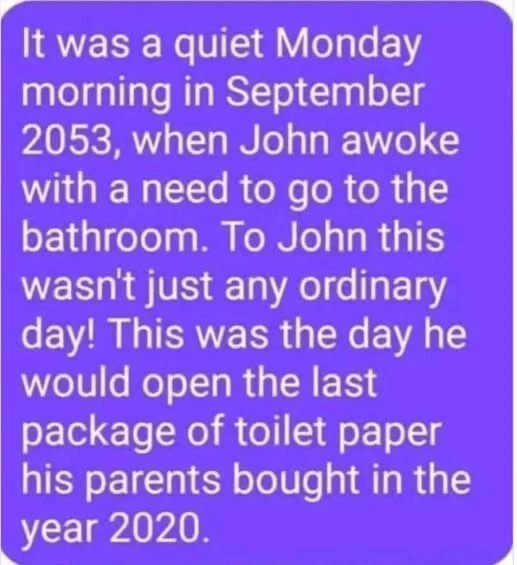
Mot: Then WHY!!!!????

Mot: . A Quiet Day it Was!!!!
Seeds of Wisdom RV and Economics Updates Tuesday Evening 10-28-25
Good Evening Dinar Recaps,
ASEAN and Australia Push Back on China: A Maritime Pivot in Global Trade
The South China Sea becomes the frontline for the next phase of economic realignment.
At the latest ASEAN–Australia summit, leaders united to condemn China’s aggressive maneuvers in the South China Sea, including incidents targeting Filipino and Australian vessels. The joint declaration emphasized international maritime law, open trade routes, and multilateral diplomacy.
Good Evening Dinar Recaps,
ASEAN and Australia Push Back on China: A Maritime Pivot in Global Trade
The South China Sea becomes the frontline for the next phase of economic realignment.
At the latest ASEAN–Australia summit, leaders united to condemn China’s aggressive maneuvers in the South China Sea, including incidents targeting Filipino and Australian vessels. The joint declaration emphasized international maritime law, open trade routes, and multilateral diplomacy.
Strategic Maritime Corridors: The South China Sea handles over $3 trillion in annual trade. Any collective defense of these routes transforms ASEAN from a passive bloc into a regional security consortium.
Economic Decoupling Pressure: Australia and the Philippines’ cooperation signals deeper coordination between Western economies and Southeast Asian partners. Expect a surge in joint infrastructure financing (ports, fiber optics, defense tech) funded through Quad and G7 channels.
Alternative Supply Networks: As trade re-routes away from China-dominated waters, Vietnam, Indonesia, and Malaysia stand to gain. Logistics hubs in Singapore and Darwin may evolve into the backbone of a “Pacific Free Trade Belt.”
Implications for Global Trade:
The diplomacy here is as much about economics as security. This could result in two maritime trading networks — one under Western alignment (ASEAN-Australia-Japan-US), and another centered on BRICS-Eurasian corridors. Such bifurcation mirrors the broader fragmentation of finance, logistics, and market access globally.
This is not just politics — it’s global finance restructuring before our eyes.
Seeds of Wisdom Team
Newshounds News™ Exclusive
Sources:
Reuters: “China, Australia keen on stable ties despite tensions, rivalry” — Reuters
Al Jazeera: “China accuses Australia of covering up South China Sea airspace incursion” — Al Jazeera
~~~~~~~~~
BRICS’ Digital Currency Bridge: Prelude to a Global Currency Reset?
As BRICS pilots ultra-fast settlements, could this signal a move toward an asset-backed global digital currency and a reshaping of the dollar era?
The recent pilot of the mBridge digital currency bridge—settling transactions in just 7 seconds and with dramatically lower fees—points to a deeper shift in global finance. According to one recent report, payments between Abu Dhabi and China via mBridge were settled in seven seconds, with transaction fees claimed to be ~98% lower than those using the traditional SWIFT system.
*************************************************
The Mechanics: mBridge & Payment Infrastructure
mBridge was developed by the Bank for International Settlements Innovation Hub together with central banks of China, Thailand, the UAE, Hong Kong and later Saudi Arabia. It is designed to allow real-time cross-border payments with central bank digital currencies (CBDCs).
The BIS announced it would hand over management of mBridge to participating central banks in late 2024.
Analysts observe that while mBridge is not explicitly a BRICS-only project, several participating states overlap with the expanded BRICS group and the infrastructure aligns with its de-dollarisation ambitions.
One recent analysis suggests that beyond faster payments, a “less likely but more transformative” scenario is the launch of a dedicated BRICS digital currency backed by a basket of member currencies or commodities like gold.
How This Could Lead to a Global Asset-Backed Digital Currency
Eliminating Intermediaries – The pilot between Abu Dhabi and China demonstrated that payments could bypass traditional correspondent banking routes (e.g., New York and London). If scaled to more BRICS and partner nations, that reduces dependency on dollar-clearing channels. (See mBridge settlement speed & cost)
Hub for Local/Regional Currencies – As the platform supports CBDCs, member states might settle trade in local or regional digital currencies rather than in US dollars. That opens the door to a synthetic or unified digital currency of the bloc.
Asset/Commodity Backing – Analysts suggest a BRICS currency could be backed by gold or other hard assets, which gives it credibility as a reserve alternative.
Infrastructure Precedes Currency Launch – The infrastructure (mBridge, BRICS Pay, regional digital settlement systems) can precede and prepare the ground for a formal digital currency to be issued by a supranational or region-wide entity.
What a Global Currency Reset Might Look Like
Reduced Dollar Dominance: The US dollar has long been the primary global reserve and trade-invoicing currency. BRICS efforts aim to reduce this dependency.
Currency Bloc or Basket: A new digital currency might be built on a basket of BRICS currencies (renminbi, rupee, real, rand, ruble etc) or backed by commodities/gold, providing an alternative reserve asset.
New Payment Architecture: With low‐cost, fast settlement networks like mBridge, trade settlement timelines shrink and reliance on Western-dominated financial rails diminishes.
Implications for Power and Sanctions: Countries under Western sanctions see appeal in alternative payment systems that circumvent dollar-based sanctions architecture.
***********************************************
Risks, Challenges & Timing
Technical vs Political: While infrastructure is advancing, full rollout and trust in a new global currency require enormous political coordination and regulatory alignment. Some experts caution that BRICS’s ability to launch a truly viable alternative remains limited in the near term.
Dollar Resilience: Despite the push, the dollar’s dominance remains resilient—for now. The shift may take years.
Diverse Member Interests: The BRICS nations have differing economic systems, policies and levels of integration; aligning them around a single digital currency or settlement system presents major coordination issues.
Geopolitical Response: The US and its allies may respond by strengthening the current financial architecture, applying regulatory or sanction pressures, or accelerating their own digital currency initiatives.
Backing & Trust: For a new currency to gain reserve status it must be trusted. This implies backing by credible assets, transparency, liquidity and stability—all difficult in emerging-market contexts.
Implications for Investors & Policymakers
Investors should monitor developments in digital sovereignty, CBDCs and cross-border settlement systems as structural shifts in global finance may alter currency, trade and reserve asset dynamics.
Central banks and policymakers in non-BRICS countries should evaluate vulnerability to exclusion from new rails, or opportunities to link with alternative systems.
Markets may gradually price in potential de-dollarisation risks, especially for currencies, commodities, and trade-financing arenas.
Commodity-rich and export-driven emerging markets may see accelerated efforts to invoice trade in alternatives to the US dollar, particularly if digital settlement systems reduce friction and cost.
Closing Thoughts
The pulse of global finance is showing subtle but significant signs of change. With BRICS nations pushing faster, cheaper settlement architectures via platforms like mBridge, the foundations for a digital currency and potentially a global currency reset are quietly being laid. While the full impact may take years to manifest, this is not just politics — it’s global finance restructuring before our eyes.
Seeds of Wisdom Team
Newshounds News™ Exclusive
Sources:
Watcher.guru — BRICS Tests Digital Currency Bridge, Settles Payments in 7 Seconds Watcher Guru
BIS Innovation Hub — Project mBridge reached minimum viable product Bank for International Settlements
ING Think — De-dollarisation: More BRICS in the wall ING Think
InvestingNews — How Would a New BRICS Currency Affect the US Dollar? Investing News Network (INN)
OMFIF — Central banks’ role in ring-fencing mBridge OMFIF
GIS Reports Online — BRICS making progress on payment system GIS Reports
~~~~~~~~~
Seeds of Wisdom Team RV Currency Facts Youtube and Rumble
Newshound's News Telegram Room Link
Follow the Gold/Silver Rate COMEX
Follow Fast Facts
Seeds of Wisdom Team™ Website
Thank you Dinar Recaps
It’s Not the Fed Who actually Controls Interest Rates
It’s Not the Fed Who actually Controls Interest Rates
Heresy Financial: 10-27-2025
We hear a lot about “the Fed” and “interest rates” in the news. It’s easy to fall into the trap of thinking the Federal Reserve has a direct dial for everything from your mortgage to your credit card.
But as a recent video from Heresy Financial meticulously breaks down, the reality is far more nuanced. The Fed’s control over interest rates isn’t a blunt instrument; it’s a sophisticated dance involving specific tools and market reactions.
It’s Not the Fed Who actually Controls Interest Rates
Heresy Financial: 10-27-2025
We hear a lot about “the Fed” and “interest rates” in the news. It’s easy to fall into the trap of thinking the Federal Reserve has a direct dial for everything from your mortgage to your credit card.
But as a recent video from Heresy Financial meticulously breaks down, the reality is far more nuanced. The Fed’s control over interest rates isn’t a blunt instrument; it’s a sophisticated dance involving specific tools and market reactions.
The elephant in the room for the U.S. economy is its staggering national debt – approximately $38 trillion – and a persistent deficit. This requires continuous borrowing, leading to ever-increasing interest costs. This financial reality could force the Fed into some unconventional moves.
Ultimately, understanding monetary policy’s impact is a complex puzzle. While the Fed can effectively manage short-term rates and influence government borrowing costs, this doesn’t automatically translate into lower interest rates for consumers.
This can cause consumer loan rates to rise, even if Treasury yields are falling. The video even touches on the possibility of future government interventions to cap consumer loan rates, reflecting a broader trend towards increased economic management.
The Federal Reserve’s role in setting interest rates is far from a simple on/off switch. It’s a sophisticated interplay of direct control over key short-term rates and indirect influence on broader market dynamics through its balance sheet and other tools.
As the economic landscape continues to evolve, understanding these mechanisms is crucial for navigating the financial world.
For a deeper dive into these fascinating concepts, be sure to watch the full video from Heresy Financial.
Seeds of Wisdom RV and Economics Updates Tuesday Afternoon 10-28-25
Good Afternoon Dinar Recaps,
North Korea and Russia Forge Strategic Alliance: A New Axis in East Asia
Military diplomacy between Moscow and Pyongyang signals deeper realignments in global trade and security.
North Korea’s top diplomat’s visit to Moscow marks one of the most overt declarations of partnership between Pyongyang and the Kremlin since the Cold War. The talks, centered on defense, logistics, and labor cooperation, confirm a pivot toward mutual reinforcement against Western sanctions.
Good Afternoon Dinar Recaps,
North Korea and Russia Forge Strategic Alliance: A New Axis in East Asia
Military diplomacy between Moscow and Pyongyang signals deeper realignments in global trade and security.
North Korea’s top diplomat’s visit to Moscow marks one of the most overt declarations of partnership between Pyongyang and the Kremlin since the Cold War. The talks, centered on defense, logistics, and labor cooperation, confirm a pivot toward mutual reinforcement against Western sanctions.
Military–Industrial Linkages: Analysts note that North Korea could provide munitions and low-cost labor to sustain Russia’s prolonged conflict in Ukraine. In exchange, Pyongyang may receive technology, fuel, and hard currency — effectively creating a closed economic loop outside Western control.
Financial Sanctions Loopholes: This alignment tests the durability of the global sanctions regime. If barter systems or digital trade intermediaries are used, it could bypass SWIFT mechanisms and accelerate the search for alternative financial corridors within the Eurasian bloc.
Strategic Ripple Effects: Japan and South Korea may strengthen defense pacts with the U.S. and NATO. China, while cautious, benefits from seeing Western bandwidth divided between Europe and East Asia.
Implications for Global Finance:
A Russia–North Korea trade corridor could become a small but symbolically powerful node in a larger de-dollarization framework. By linking resource exchange, crypto payments, and parallel shipping networks, it foreshadows a fragmented global trade map — divided between Western-led systems and Eurasian “sovereign finance zones.”
This is not just politics — it’s global finance restructuring before our eyes.
Seeds of Wisdom Team
Newshounds News™ Exclusive
Sources:
Associated Press: “North Korea’s top diplomat meets with Putin on a visit to Russia” — Associated Press
Reuters: “Putin and North Korea’s foreign minister discuss strengthening ties, KCNA says” — Reuters
~~~~~~~~~
South Korea’s High-Stakes Diplomacy at APEC: The Balancing Act Between Giants
As APEC 2025 approaches, Seoul’s role may determine the next phase of global economic integration.
South Korea faces a delicate diplomatic equation at the upcoming APEC summit in Gyeongju. Hosting both U.S. President Trump and China’s Xi Jinping, President Yoon Suk Yeol’s administration stands at the crossroads of competing visions for Asia’s economic future.
Mediator or Battleground: Seoul’s challenge is to present itself as a mediator rather than a subordinate ally. Success could enhance its leverage over semiconductor trade, digital currencies, and shipping corridors — making it a neutral hub between Western markets and the Asian mainland.
Supply Chain Strategy: By coordinating semiconductor alliances (notably “Chip 4” with the U.S., Taiwan, and Japan) while maintaining export ties with China, Korea may set a precedent for multi-polar trade diplomacy.
Digital Currency Diplomacy: Korea’s participation in cross-border CBDC pilots — including BIS and BRICS-linked projects — positions it as a test site for new payment interoperability that could redefine trade settlements in Asia.
Implications for Global Markets:
APEC 2025 could quietly shape the rules of digital trade, AI governance, and blockchain interoperability, effectively rewriting how capital and goods move across Asia. Should Korea succeed, it becomes a model for middle powers balancing great-power rivalries with market-driven neutrality.
This is not just politics — it’s global finance restructuring before our eyes.
Seeds of Wisdom Team
Newshounds News™ Exclusive
Sources:
Associated Press: “South Korea’s president faces high-stakes diplomacy at APEC summit” — Associated Press
Korea on Point: “APEC 2025: A Stage for Middle-Power Diplomacy Amid US-China Rivalry” — Korea on Point
~~~~~~~~~
Seeds of Wisdom Team RV Currency Facts Youtube and Rumble
Newshound's News Telegram Room Link
Follow the Gold/Silver Rate COMEX
Follow Fast Facts
Seeds of Wisdom Team™ Website
Thank you Dinar Recaps
Californians Keep Finding Leftover Loot From The Gold Rush
Californians Keep Finding Leftover Loot From The Gold Rush — 1 man even bought a home with his spoils. How to cash in
Jing Pan Sat, October 25, 2025
It’s been more than 170 years since California’s Gold Rush — but locals are once again finding gold dust, flakes and even nuggets glittering in the state’s rivers.
“Gold’s all around,” said Manny Goza, a prospector sifting through the Bear River, in an interview with FOX40 News. (1) The low water levels during the fall make it easier to reach stretches of the river that are usually inaccessible.
Californians Keep Finding Leftover Loot From The Gold Rush — 1 man even bought a home with his spoils. How to cash in
Jing Pan Sat, October 25, 2025
It’s been more than 170 years since California’s Gold Rush — but locals are once again finding gold dust, flakes and even nuggets glittering in the state’s rivers.
“Gold’s all around,” said Manny Goza, a prospector sifting through the Bear River, in an interview with FOX40 News. (1) The low water levels during the fall make it easier to reach stretches of the river that are usually inaccessible.
For Goza, a builder by trade, panning for gold has paid off.
“I did it every day. I've been here since 2005, bought a house in 2010 because I could pay my bills off the gold,” he said. “When I’m not contracting, I’m here digging gold.”
With gold prices up more than 50% over the past 12 months, the precious metal is drawing renewed attention from locals looking for opportunity in their own backyard.
Goza said an “amateur” prospector can expect to make around $50 a day, while a more serious one might bring in “anywhere from $100 to $15,000.”
Just like the original gold rush nearly two centuries ago, striking it big often comes down to luck. One prospector recalled a moment when a golden nugget “just rolled out — it was completely round like a baseball and it was half gold.”
Still, the work can be grueling. As another prospector put it, gold “doesn’t jump into the pan.”
And payday is never a sure thing.
“It’s emotional, some days you find $15,000, some days you don’t find anything,” Goza said.
TO READ MORE: https://finance.yahoo.com/news/californians-keep-finding-leftover-loot-123300020.html
Harry Dent: Prepare for the Biggest Crash of ALL TIME
Harry Dent: Prepare for the Biggest Crash of ALL TIME
VRIC Media: 10-27-2025
Economist and bestselling author Harry Dent joins Darrell Thomas to break down why he believes we’re living through the first 100% artificial asset bubble in history and why the next crash could be far deeper than investors expect.
Dent explains his demographic models, the dangers of prolonged stimulus, why even gold won’t escape the downturn, and how everyday investors can protect their wealth and be positioned to capitalize when markets reset around 2028.
Harry Dent: Prepare for the Biggest Crash of ALL TIME
VRIC Media: 10-27-2025
Economist and bestselling author Harry Dent joins Darrell Thomas to break down why he believes we’re living through the first 100% artificial asset bubble in history and why the next crash could be far deeper than investors expect.
Dent explains his demographic models, the dangers of prolonged stimulus, why even gold won’t escape the downturn, and how everyday investors can protect their wealth and be positioned to capitalize when markets reset around 2028.
00:00 – Intro
01:14 – Demographics & The Artificial Post-2008 Expansion
06:05 – Why Recessions Are Healthy (and Skipping Them Isn’t)
08:44 – Why Diversification Won’t Save You This Time
10:39 – When Does the Crash Arrive?
11:27 – Detoxing the Economy: How Long Will It Take?
14:31 – India Will Lead the Next Global Boom
18:04 – Strategy: Cash, Treasuries & Why Shorts Work First
19:20 – Main Street vs Wall Street: Who Gets Hurt Most?
22:51 – Can the Fed Print Its Way Out Again?
28:18 – Inflation: Was That It? What Comes Next?
32:00 – Gold vs Stocks: What Holds Up Better?
37:28 – Will Mining Benefit from Resource Nationalism?
39:28 – Oil Outlook Through a Recessionary Lens
41:12 – The Great Reset = A Massive Opportunity
“Tidbits From TNT” Tuesday 10-28-2025
TNT:
Tishwash: A US delegation hosted by the Minister of Oil to discuss energy cooperation.
Today, Monday, Oil Minister Hayan Abdul-Ghani discussed with US Under Secretary of Energy James Danley and Chargé d'Affaires Joshua Harris joint cooperation between the two countries in the oil, gas, and energy sectors.
Today, Monday, Deputy Prime Minister for Energy Affairs and Minister of Oil, Eng. Hayan Abdul-Ghani Al-Sawad, received the US Under Secretary of Energy, Mr. James P. Danly, and the Chargé d'Affaires of the US Embassy, Mr. Josh Harris.
During the meeting, prospects for joint cooperation between the two countries in the fields of oil, gas, and energy were discussed.
TNT:
Tishwash: A US delegation hosted by the Minister of Oil to discuss energy cooperation.
Today, Monday, Oil Minister Hayan Abdul-Ghani discussed with US Under Secretary of Energy James Danley and Chargé d'Affaires Joshua Harris joint cooperation between the two countries in the oil, gas, and energy sectors.
Today, Monday, Deputy Prime Minister for Energy Affairs and Minister of Oil, Eng. Hayan Abdul-Ghani Al-Sawad, received the US Under Secretary of Energy, Mr. James P. Danly, and the Chargé d'Affaires of the US Embassy, Mr. Josh Harris.
During the meeting, prospects for joint cooperation between the two countries in the fields of oil, gas, and energy were discussed.
The meeting was attended by the Undersecretary of the Ministry for Gas Affairs, Mr. Ezzat Saber Ismail, and the Director General of the Technical Department, Mr. Hassanein Abdel Latif. link
************
Tishwash: Al-Karawi: WTO membership will grant Iraq broad economic and trade privileges.
The Director General of the General Company for Grain Trade at the Ministry of Trade, Haider Nouri Al-Karawi, confirmed on Sunday that Iraq has completed the vast majority of its World Trade Organization accession files and is close to completing the remaining files after nearly twenty years of efforts.
He pointed out that membership will grant the country extensive economic and trade privileges, contribute to reducing customs duties, and attract international companies to invest in the Iraqi market.
Al-Karawi told Al-Iraqiya News, as reported by the Iraqi News Agency (INA), that “the process of joining the World Trade Organization requires a long period of time, and Iraq began working on this file in 2003 under the direct supervision of the Department of Foreign Economic Relations and the Minister of Trade.”
He added, "Iraq has completed the vast majority of the required files and is currently completing the final stages in preparation for formal membership in the organization," noting that "some countries have taken more than twenty years to complete this process, so the period of time required by Iraq is no exception."
Al-Karawi explained that "Iraq's accession to the organization will grant it significant economic and trade privileges, most notably the protection of the rights of domestic and imported products, and the provision of joint mechanisms to facilitate trade, tax, and customs exchange with member states, which will positively impact the reduction of customs duties and the facilitation of import and export operations."
He pointed out that "membership will help attract international companies by ensuring the protection of their products from counterfeiting and encouraging them to invest in the Iraqi market. It will also have a positive impact on lowering prices for consumers by strengthening legitimate competition and regulating markets."
Al-Karawi explained that "Iraq is committed to implementing more than fifteen technical and legislative files as part of the accession requirements, including the file on product protection and global trademarks, which ensures that no party will imitate or market products similar to those of international companies."
He added, "Completing these commitments gives foreign companies confidence in entering the Iraqi market link
***********
Tishwash: The oil and gas law returns to the forefront, and Parliament faces a test of political will.
As the fifth legislative session draws to a close and the country enters the electoral phase, the federal oil and gas law returns to the forefront of the political scene in Iraq as one of the most sensitive pieces of legislation postponed since 2007, amid warnings that its continued obstruction will deepen the economic crisis and keep the country hostage to political disputes.
The oil and gas law is one of the most contentious issues between the federal government, the Kurdistan Regional Government, and the oil-producing provinces, as it stands at a crucial crossroads that determines the future of oil wealth management, which constitutes more than 90 percent of state revenues.
Amid repeated calls from the presidency and parliament to pass it before the end of the current session, fears are growing that its continued obstruction will disrupt the investment environment and weaken the unity of oil decision-making.
Energy expert Mohammed Hawrami believes that the continued absence of the law represents an economic and legislative failure that has had direct repercussions on oil wealth management and the general budget, as well as declining attractiveness for foreign investment in the energy sector.
Hawrami explained that postponing the approval of the law during this session means postponing the decision to a new session, along with the accompanying new tensions over powers and revenue sharing, making any further disruption costly to the national economy.
He added that the absence of a legal framework has created a state of administrative and financial chaos between the central government, the region, and the producing provinces, and has deprived Iraq of the ability to formulate a unified production and investment policy. This has negatively impacted the confidence of foreign companies awaiting stable legislation that guarantees the sustainability of their operations.
He pointed out that Iraq needs annual investments exceeding $15 billion to develop the oil and energy sector and improve refining and export capacities. However, the absence of legal regulation of contracts and financial distribution makes the investment environment risky and limits the entry of major companies into the market.
Emphasized that the current parliament's window of opportunity is almost running out, requiring urgent action to adopt the law before the end of the session, as continued disruption means postponing any real economic transformation towards diversification and sustainable development.
For his part, Bassem Nughmish, a member of the Parliamentary Oil and Gas Committee, emphasized that the continued suspension of the law keeps the Iraqi economy mired in a cycle of rents and limits its ability to achieve balanced development
Naghamish explained that the absence of the law means the absence of a regulatory framework for managing national wealth, which confuses financial planning, leads to disparities in the distribution of revenues between the center and producing provinces, and limits the state's ability
to implement a stable fiscal policy.
He pointed out that political disputes over powers and revenue-sharing mechanisms hinder the implementation of vital projects in the oil and energy sector and create an unstable environment for foreign investors seeking clear and stable legislation.
Naghamish added that delaying the enactment of the law deprives Iraq of billions of dollars in investment opportunities annually and weakens the state's ability to transfer oil revenues into productive and development projects in the provinces. He stressed the need for the law to include clear mechanisms for financial governance, management of joint fields, and the establishment of a national fund for the development of producing provinces.
Naghamish concluded by saying that the next phase requires a comprehensive political and economic settlement that removes the oil issue from tensions and ensures a unified law that balances the powers of the central government and the rights of the regions, transforming oil wealth from a source of contention into a lever for development and stability. link
*************
Mot: Things That Suddenly Make Cents!!!

Mot: Seeeeee - They Even Season!!!!

Seeds of Wisdom RV and Economics Updates Tuesday Morning 10-28-25
Good Morning Dinar Recaps,
Dollar Softens Ahead of Global Central Bank Decisions
Markets brace for dovish signals as investors rotate toward risk assets.
The U.S. dollar weakened today as traders positioned ahead of a wave of major central bank meetings and a potential Trump–Xi summit that could reshape trade and monetary expectations. The U.S. Dollar Index (DXY) slipped modestly, reflecting a softening stance across markets anticipating looser policy conditions.
Good Morning Dinar Recaps,
Dollar Softens Ahead of Global Central Bank Decisions
Markets brace for dovish signals as investors rotate toward risk assets.
The U.S. dollar weakened today as traders positioned ahead of a wave of major central bank meetings and a potential Trump–Xi summit that could reshape trade and monetary expectations. The U.S. Dollar Index (DXY) slipped modestly, reflecting a softening stance across markets anticipating looser policy conditions.
The move underscores a cautious but notable rotation into risk assets, with equities and commodities both strengthening as the dollar retreats. This trend comes amid growing consensus that global policymakers may adopt synchronized easing measures before year-end.
Central Banks in Focus
Investors are now watching closely for guidance from the Federal Reserve, European Central Bank, and Bank of Japan, each facing the same challenge: how to sustain slowing economies without reigniting inflation.
The Fed is expected to lean dovish, with futures pricing in nearly a 70% probability of another rate cut by December.
The ECB may emphasize continued liquidity support, while Japan could signal readiness to adjust yield-curve control settings.
The dollar’s decline reflects not just policy expectations, but also a broader shift in global capital flow — one favoring risk assets, emerging markets, and commodities.
Market Implications
Gold and oil prices typically strengthen when the dollar weakens, as investors hedge against currency dilution.
Emerging-market currencies are likely to benefit, drawing short-term inflows as yield differentials narrow.
Equities could see additional upside if dovish signals are confirmed — though the risk of overshoot grows with each rally.
For now, the market appears confident that monetary policy will remain accommodative. Yet the dollar’s softness also signals something deeper — a recognition that global growth is uneven and liquidity remains the main stabilizing force.
This is not just politics — it’s global finance restructuring before our eyes.
Seeds of Wisdom Team
Newshounds News™ Exclusive
Sources:
Reuters — Dollar soft as traders brace for Trump–Xi, central bank meetings
FXStreet — EUR/USD picks up on risk appetite with central bank decisions looming
~~~~~~~~~
Volatility Beneath the Calm Surface
Record equity highs hide $100 billion daily swings as liquidity thins.
While U.S. equities continue to print new records, analysts warn that the calm appearance of the market may be deceptive. Beneath the surface, extreme volatility in major technology stocks and subtle liquidity cracks are emerging — conditions reminiscent of late-cycle instability.
According to The Financial Times, several mega-cap stocks have experienced single-day market-cap swings exceeding $100 billion — despite the major indices showing minimal net movement. The pattern suggests concentrated risk and heightened sensitivity to small shifts in sentiment or liquidity.
Hidden Fragility in a Bullish Market
Market indices mask the degree of turbulence occurring beneath them.
Tech giants dominate capitalization weightings, magnifying their impact on perceived stability.
Volatility metrics such as the VIX remain subdued, indicating complacency even as intraday price ranges expand.
Liquidity depth is thinner than in prior cycles, making sharp revaluations more likely when institutional flows reverse.
This divergence between visible calm and underlying instability is becoming a defining feature of the current bull market. Analysts describe it as “calm on the surface, chaotic underneath.”
What It Means for Investors
Portfolio diversification becomes essential when volatility hides beneath headline strength.
Options and volatility instruments may be underpriced relative to actual market risk.
Institutional hedging is quietly increasing, even as public sentiment remains bullish.
Such conditions often precede regime shifts — either toward sharper corrections or renewed monetary stimulus to maintain balance. The outcome will depend on central bank signaling and the sustainability of liquidity-driven rallies.
Broader Takeaway
Today’s markets operate on confidence and credit — not fundamentals alone. The surface calm of record highs belies the real state of global finance: one where volatility and liquidity risk have become the invisible twin pillars supporting valuations.
If left unchecked, even a minor policy misstep could expose just how thin that support has become.
This is not just politics — it’s global finance restructuring before our eyes.
Seeds of Wisdom Team
Newshounds News™ Exclusive
Sources:
Financial Times — $100bn stock swings expose fragility beneath Wall Street rally
MarketWatch — Stock-market bulls set up markets for a big move
~~~~~~~~~
Seeds of Wisdom Team RV Currency Facts Youtube and Rumble
Newshound's News Telegram Room Link
Follow the Gold/Silver Rate COMEX
Follow Fast Facts
Seeds of Wisdom Team™ Website
Thank you Dinar Recaps
Seeds of Wisdom RV and Economics Updates Monday Evening 10-27-25
Good Evening Dinar Recaps,
Gyeongju APEC Summit: South Korea Bridges East and West
Diplomacy meets economics as Seoul positions itself between Washington, Beijing, and ASEAN
As the APEC Summit convenes this week in Gyeongju, South Korea, the host nation is advancing a policy of “bridge diplomacy” — a balancing act between the United States, China, Japan, and ASEAN nations. President Lee Jae-myung’s administration aims to transform South Korea into a neutral mediator linking advanced economies with the developing Asia-Pacific bloc.
Good Evening Dinar Recaps,
Gyeongju APEC Summit: South Korea Bridges East and West
Diplomacy meets economics as Seoul positions itself between Washington, Beijing, and ASEAN
As the APEC Summit convenes this week in Gyeongju, South Korea, the host nation is advancing a policy of “bridge diplomacy” — a balancing act between the United States, China, Japan, and ASEAN nations. President Lee Jae-myung’s administration aims to transform South Korea into a neutral mediator linking advanced economies with the developing Asia-Pacific bloc.
The Core Themes
Economic coordination: APEC’s agenda includes digital trade frameworks, clean-energy transition, and investment in resilient supply chains.
Security meets commerce: Behind the scenes, the summit is expected to feature quiet talks between U.S. and Chinese delegates — a prelude to more formal trade normalization efforts.
ASEAN alignment: The APEC initiative directly supports ASEAN 2025, aimed at integrating Southeast Asia’s supply chains with broader Pacific trade systems.
Why It Matters
Diplomatic repositioning: Seoul’s bridge role reflects a shift toward multipolar diplomacy, reducing binary East-West confrontation.
Financial ripple effect: Integration across APEC and ASEAN could redirect capital flows from Western debt markets into infrastructure, logistics, and digital finance projects spanning Asia and Oceania.
The Strategic Link to the Financial Reset
As APEC and ASEAN deepen coordination, a new financial framework is emerging — one that may complement BRICS initiatives while offering an alternate venue for global investment.
South Korea’s diplomatic balancing act could lay the groundwork for a dual-system world, where the Western-led monetary order coexists with a new Asia-centric trade-finance nexus.
This is not just politics — it’s global finance restructuring before our eyes.
Seeds of Wisdom Team
Newshounds News™ Exclusive
Sources:
East Asia Forum – South Korea’s bridge diplomacy faces its APEC test
The Korea Times – Korea’s 5-dimensional diplomacy at APEC summit
Reuters – Asia-Pacific economies coordinate trade and clean-energy frameworks ahead of APEC
~~~~~~~~~
BRICS Grain Power Move: Russia’s Pilot Exchange Challenges U.S. Commodity Dominance
How a 2026 pilot could rewrite global food pricing and accelerate financial realignment.
Overview
Russia is preparing a pilot launch for the BRICS Grain Exchange by 2026 — a bold initiative aimed at breaking the Chicago Mercantile Exchange’s (CME) monopoly over global grain pricing. The project, endorsed at the 2024 BRICS Summit in Kazan, has broad support from member states including India, Brazil, and China, with full implementation targeted for 2027.
The move aligns with BRICS’ broader strategy to create independent market infrastructure — reducing reliance on Western financial systems and aligning food security with de-dollarization.
Key Developments
Putin’s Endorsement: At the Kazan summit, President Vladimir Putin emphasized that BRICS nations produce nearly half of global grain and should therefore determine their own benchmark prices.
“The exchange will contribute to fair and predictable price indicators… and protect national markets from artificial shortages,” said Putin.
Strategic Scale:
The expanded BRICS bloc now accounts for roughly 44% of global grain production and consumption.
The exchange’s projected trading volume could exceed $1 trillion, according to Eduard Zernin, head of the Russian Union of Grain Exporters.
Technical Framework:
The platform will use a digital marketplace model rather than a traditional exchange format.
Discussions are underway to finalize settlement mechanisms — possibly using a BRICS digital currency or a gold-linked unit of account.
India’s Role:
India supports the initiative as part of its drive toward food sovereignty and reduced dependence on Western commodity benchmarks. It also views the exchange as a regional export and pricing hub for farmers.
Why It Matters
Eroding Western Pricing Control:
The CME and Euronext currently set nearly all global grain benchmarks — even for commodities they produce little of. This system gives the U.S. and EU indirect control over food security and inflation trends worldwide.Financial Realignment:
The BRICS Grain Exchange would represent one of the first non-Western commodity markets of scale, potentially denominated outside the dollar system.
🌱 If successful, it could set a precedent for similar energy, metals, and digital-asset exchanges — forming the backbone of a new “BRICS Financial Architecture.”De-dollarization through Commodities:
Food and energy are the pillars of global trade. Pricing either outside the U.S. dollar would undermine the petrodollar structure and strengthen multipolar trade settlements.Strategic Leverage:
Controlling agricultural benchmarks gives BRICS new leverage in negotiating sanctions, tariffs, and trade routes — shifting power from financial centers like Chicago and London to new hubs in Kazan, Mumbai, and São Paulo.
Geopolitical Context
The timing coincides with U.S. tariff hikes and rising food insecurity in developing nations — both accelerating the BRICS rollout.
The exchange is part of a broader sovereign resilience strategy, mirroring the BRICS Pay system, New Development Bank, and the Cross-Border Settlement Platform.
Analysts note that this may tighten South-South trade corridors and integrate agricultural policy into the same multipolar structure reshaping global finance.
Implications for the Global Financial Reset
A functioning BRICS Grain Exchange could reshape commodity-derived currency reserves, as nations peg their reserves to a new grain-based or gold-linked benchmark.
This could catalyze the next phase of the financial reset — where value is defined by production and real assets, not speculative capital flows.
It signals a systemic decoupling of East-South trade from the dollar system — the cornerstone of post-WWII financial order.
This is not just politics — it’s global finance restructuring before our eyes.
Seeds of Wisdom Team
Newshounds News™ Exclusive
Sources
Watcher Guru – Historic BRICS Grain Exchange Pilot by Russia Targets US CME Monopoly
Council on Foreign Relations --“Why Expanded BRICS Is Backing a Russia-Initiated Grain Exchange”
Reuters -- “Russia’s proposed grain exchange for BRICS countries may take years to launch”
All About Feed -- “BRICS grain exchange plan is almost ready”
~~~~~~~~~
Seeds of Wisdom Team RV Currency Facts Youtube and Rumble
Newshound's News Telegram Room Link
Follow the Gold/Silver Rate COMEX
Follow Fast Facts
Seeds of Wisdom Team™ Website
Thank you Dinar Recaps
Expect Run To Gold, Not Dollars, In Coming Crisis | Matthew Piepenberg
Expect Run To Gold, Not Dollars, In Coming Crisis | Matthew Piepenberg
Liberty and Finance: 10-25-2025
Matthew Piepenburg of Von Greyerz joins Elijah K. Johnson to explain why the world is preparing for a very different kind of crisis than 2008.
Piepenburg argues that the next “uh-oh moment” in markets won’t trigger a flight to U.S. Treasuries or the dollar—but rather to gold. He contrasts views from analysts like Brent Johnson, explaining why even with a stronger DXY, gold could still rise.
Expect Run To Gold, Not Dollars, In Coming Crisis | Matthew Piepenberg
Liberty and Finance: 10-25-2025
Matthew Piepenburg of Von Greyerz joins Elijah K. Johnson to explain why the world is preparing for a very different kind of crisis than 2008.
Piepenburg argues that the next “uh-oh moment” in markets won’t trigger a flight to U.S. Treasuries or the dollar—but rather to gold. He contrasts views from analysts like Brent Johnson, explaining why even with a stronger DXY, gold could still rise.
Piepenburg also warns against waiting for the perfect entry point, saying long-term investors should focus on wealth preservation, not short-term price moves.
The ground beneath our global economy is shifting. Whispers of a looming market correction or even a full-blown credit crisis are growing louder, prompting investors to re-evaluate their traditional safe havens.
In a recent insightful discussion hosted by Elijah K. Johnson of Liberty and Finance, Matthew Piepenberg of Von Greer’s Gold offered a compelling perspective on the future of precious metals, particularly gold and silver, in this evolving landscape.
Piepenberg’s core message is clear: we are witnessing a secular bull market in gold, a long-term trend that remains firmly intact despite any short-term price volatility. He urges investors to shift their mindset, viewing gold not as a speculative commodity to be traded on daily swings, but as a strategic store of value, an asset to be held for decades, akin to a generational inheritance of wealth.
The macroeconomic forces at play are undeniable and paint a picture that strongly favors precious metals. Soaring US debt levels, the relentless debasement of fiat currencies, and a world increasingly navigating geopolitical complexities are collectively fueling a historic pivot towards gold. The traditional safe havens – the US dollar and treasury bonds – are facing unprecedented scrutiny.
A central theme of the discussion is the erosion of the US dollar’s purchasing power. Piepenberg highlights a growing global sentiment for a move away from the dollar and towards gold. This isn’t just theoretical; it’s evidenced by the significant accumulation of gold reserves by central banks worldwide. Furthermore, the very idea of gold-backed US treasury securities is now being openly discussed, a stark indicator of the shifting monetary paradigms.
The conversation even delved into the possibility of a gold revaluation by the US Treasury. Such a move, which would significantly increase the official price of gold, could be a strategy to grapple with the nation’s mounting debt. While speculative, it underlines the growing recognition of gold’s intrinsic monetary value.
The “exorbitant privilege” the US dollar has enjoyed as the world’s reserve currency is now under a microscope. Piepenberg points out its paradoxical effects, contributing to chronic trade deficits and the offshoring of manufacturing. As this privilege wanes, a multipolar global currency system is emerging, and gold is poised to play a pivotal role within it.
This raises a critical question for investors: will the US dollar and treasuries truly remain safe havens in the face of future crises? Piepenberg argues that while they may have served this purpose in the past, gold is increasingly becoming the preferred refuge for those seeking genuine security.
For those looking to navigate these turbulent economic waters, Piepenberg offers practical advice: focus on the long-term preservation of wealth. This means prioritizing physical precious metals and measuring your financial success not in the fluctuating units of fiat currency, but in the tangible ounces and grams of gold and silver.
He encourages investors to educate themselves about the historical cycles of currency debasement and to understand the unique, time-tested attributes of gold as a monetary asset. In an era of unprecedented economic uncertainty, understanding the power and potential of precious metals is not just prudent, it’s essential for safeguarding your financial future.
INTERVIEW TIMELINE:
0:00 Intro
1:30 Gold update
18:29 Reindustrialization
24:00 Gold is now #1 safe haven
News, Rumors and Opinions Monday 10-27-2025
Note: All intel should be considered as "Rumors" until we receive official announcements ...and “Rates and Dates” could change anytime until we get to the banks/redemption centers.
RV Excerpts from the Restored Republic via a GCR: Update as of Mon. 27 Oct. 2025
Compiled Mon. 27 Oct. 2025 12:01 am EST by Judy Byington
Wed. 22 Oct. 2025 GCR INTEL DOSSIER | OPERATION SANDMAN IGNITED: Collapse of the US Dollar
100+ nations have (allegedly) activated a coordinated strike to collapse the dollar and trigger the Global Currency Reset. “Project Sandman” is real — a silent alliance(allegedly) prepared to dump the U.S. dollar simultaneously, ending its reign as the world’s reserve currency overnight. Not gradually. Instant detonation.
Note: All intel should be considered as "Rumors" until we receive official announcements ...and “Rates and Dates” could change anytime until we get to the banks/redemption centers.
RV Excerpts from the Restored Republic via a GCR: Update as of Mon. 27 Oct. 2025
Compiled Mon. 27 Oct. 2025 12:01 am EST by Judy Byington
Wed. 22 Oct. 2025 GCR INTEL DOSSIER | OPERATION SANDMAN IGNITED: Collapse of the US Dollar
100+ nations have (allegedly) activated a coordinated strike to collapse the dollar and trigger the Global Currency Reset. “Project Sandman” is real — a silent alliance(allegedly) prepared to dump the U.S. dollar simultaneously, ending its reign as the world’s reserve currency overnight. Not gradually. Instant detonation.
For 50 years, the U.S. ruled through fiat counterfeiting, oil-backed deception, and military coercion. That system is(allegedly) dying. Every sign points to the imminent trigger. When it fires, the dollar — and all assets tied to it — plunge to near-zero. Treasury markets freeze. Bonds disintegrate. The Fed loses control. This is economic warfare, not speculation.
The Operation: Over a hundred nations — from BRICS, OPEC+, ASEAN, Africa, and South America — have agreed to abandon the dollar and redirect trade into gold, local currencies, or new quantum frameworks. Their weapon is abandonment. No bombs. No armies. Just withdrawal — and the empire burns from within.
The Petrodollar Collapse: The U.S. dollar’s fake power came from oil trade deals forcing nations to buy crude in USD. That’s over. When oil producers stop demanding dollars, global demand dies instantly. Sandman’s precision strike floods markets with abandoned dollars, unleashing uncontrollable inflation and panic.
Within hours of activation: Retirement funds – gone. Stock markets – wiped. Real estate bubbles – burst. Middle class savings – destroyed.
It’s not a crash. It’s a collapse. A final act of justice after decades of dollar colonialism.
Trump’s Counterstrike: President Donald J. Trump foresaw this storm. He’s preparing the only response capable of saving America: – Reinstating a gold-backed U.S. currency – Launching a sovereign digital dollar – Cutting ties with the IMF, BIS, and WEF – Declaring economic martial law if needed
The objective: destroy the central bank cartel and restore constitutional money. This isn’t about markets — it’s about national survival.
~~~~~~~~~~~
Wed. 23 Oct. 2025 RV/GCR IGNITES: Tier 4B Shock – October 20 Breaks the Financial Dam
Tier 4B (allegedly) confirmed active. Dinar RV (allegedly) live. The Global Currency Reset has (allegedly) detonated — Sun. 20 Oct. 2025 marks the day the system(allegedly) flipped. Trump’s financial counterstrike is no longer theory. It’s execution.
THE IRAQI GAZETTE DETONATION Today the Iraqi Gazette (allegedly) printed the Tier 4B redemption sequence — official, irreversible, world-shaking. The Central Bank of Iraq(allegedly) released protocols for exchange centers, investor scheduling, and redemption flow. This is not rumor. This is the public green light — the one patriots waited years to see. Tier 4B means the people, not the elites. The system door has (allegedly) opened.
THE DINAR GOES LIVE The Iraqi Dinar is now (allegedly) visible on Bloomberg terminals and live trading screens worldwide — real bid/ask pricing. Mocked investors are now vindicated. The IQD has (allegedly) crossed from speculation to integration, a fully recognized financial asset watched by institutions and governments alike. This is the (allegedly) foundation stone of the GCR — the signal that the old order is collapsing.
MARKET SHOCKWAVES Major banks are (allegedly) rewriting models, compliance divisions are scrambling, and regulators are activating dormant RV protocols. Overnight, the Deep State(allegedly) lost control of the financial board. Chaos isn’t failure — it’s the reset mechanism. The people finally have leverage, and the cabal can’t hide it.
CONTROLLED VOLATILITY Early trades are unstable — spreads wide, liquidity partial. That’s intentional. Volatility hides the hand of institutional accumulation. This chaos is the firewall protecting elite entry while scaring retail holders away. But patriots understand: disorder precedes revelation.
THE RESET BEGINS IQD activation signals a full-scale global shift. Central banks are (allegedly) realigning, USD dependency is (allegedly) crumbling, and the fiat empire is(allegedly) bleeding. Every trade in IQD cracks the foundation of globalist control. Soros’s crowd is watching in panic — the dollar wall is fracturing.
TRUMP’S COUNTERMOVE Trump’s alliance built the architecture behind the scenes. Starlink, Quantum channels, and sovereign clearing systems are now (allegedly) interlinked. The reset isn’t coming — it’s operational.
This is not about money — it’s about power. For the first time in modern history, that power is shifting back to the people. The lock is broken. The storm is financial. And Trump is (allegedly) holding the switch.
~~~~~~~~~~~~~~
Fri. 24 Oct. 2025 THE DIGITAL RESET – THE GOOD KIND THE FUTURE OF WEALTH IS HERE
The U.S. National Debt Clock was designed to shame the system — now it’s becoming the people’s weapon. What once measured corruption now exposes the collapse of fake fiat and the birth of blockchain-backed wealth. The old system is crumbling. The new one is coded, collateralized, and (allegedly) controlled by patriots — not bankers.
THE PEOPLE’S DIGITAL REVOLUTION The Clock is transforming from a symbol of failure into the blueprint for a sovereign economy. Tokenized assets. Transparent ledgers. Real ownership. The fake elites who thrived on debt and inflation are watching their empire burn while a new economy rises — one built by the people, for the people.
TOKENIZATION – THE END OF CENTRAL CONTROL Imagine dividing a house, a farm, or a gold vault into millions of digital tokens. Each token represents real ownership. No middlemen. No corruption. This is fractional freedom — turning real assets into digital power. Every American could hold a stake in the very ground of the nation.
BLOCKCHAIN – THE TRUST MACHINE Blockchain locks every transaction into an incorruptible public record. No hidden books. No erased debts. Every movement is verified across thousands of eyes. The system they used to enslave us becomes the system that sets us free.
THE SOVEREIGN WEALTH RESERVE This is the masterstroke — a citizen-owned digital reserve backed by real U.S. assets: land, gold, real estate, infrastructure. The new currency grows 3% annually, fueled by tangible value, not printed lies. Inflation dies when money is backed by reality.
COLLATERALIZED AMERICA A Variable Asset Leveling Index tracks every physical and digital asset of the United States. Tokenized. Audited. Transparent. Every dollar becomes proof of something real. Gold-backed, land-backed, people-backed — not Fed-backed.
THE REVOLUTION FROM DEBT TO OWNERSHIP The Federal Reserve’s empire was built on illusion. This is its end. The Debt Clock now counts down not to collapse — but to liberation. The time when every citizen holds a verifiable share of their nation. No more hidden hands. No more rigged markets. No more secret owners.
Read full post here: https://dinarchronicles.com/2025/10/27/restored-republic-via-a-gcr-update-as-of-october-27-2025/
************
Courtesy of Dinar Guru: https://www.dinarguru.com/
Militia Man Iraq is quietly moving into the modern financial world. I think we all know that...We believe it's loud in our faces, but globally it really isn't. Investment wise you can see the powerhouse data...Three things are happening at the same time. Iraq wants to join the Bank of International Settlements, which is the club of central banks...Iraq is planning to drop three zeros from the dinar, the currency redesign...Iraq is launching a digital dinar...
Mnt Goat I assure you of what my CBI contact told me is now all coming out in the news. It is undeniable now. So, let all the nay-sayers say what they want but this does not change the fact that we may be at the end of this RV saga and only just over a couple months to go.
Frank26 It turns out they're teaching the Iraqi citizens there is a new denomination, a new form of currency that is coming to them to represent the new exchange rate...They're showing them the lower notes but in a very unique manner...What you're seeing is the reveal of the monetary reform lower notes but it's being done like a snail walking across the table very slowly. This part has to go very slowly.
***************
IMF Revises Economic Report on Iraq- Good News
Edu Matrix: 10-26-2025
Good News: IMF Revises Economic Report on Iraq -Iraq's Economy in better shape than reported.
IMF Veriified Changes. IMF report on iraq, Iraq's GDP, Iraq's economy, Basa Airlines, Iraq tourism U.S State Department, Tourism in Iraq, usd iqd exchange rate, usd vnd exchange rate, iraqi dinar, Iraq's economy
Seeds of Wisdom RV and Economics Updates Monday Afternoon 10-27-25
Good Afternoon Dinar Recaps,
Markets Poised for Structural Realignment
Trade detente and cooling inflation signal the dawn of a new financial order
Good Afternoon Dinar Recaps,
Markets Poised for Structural Realignment
Trade detente and cooling inflation signal the dawn of a new financial order
Global markets are entering what analysts increasingly describe as a structural turning point. Two developments — a U.S.–China trade thaw and the steady easing of inflation worldwide — are creating the conditions for a major financial realignment.
Together, they suggest that the turbulence of recent years may be giving way to a re-anchored global system built on pragmatic cooperation, diversified reserves, and new capital flows.
The Convergence: Trade + Inflation Reset
Trade optimism returns: Renewed diplomatic and economic talks between Washington and Beijing have reduced tariff fears and revived industrial demand.
Inflation cooling globally: Data from the U.S., Eurozone, and Asia show steady disinflation, giving policymakers room to pivot from restrictive to supportive stances.
Commodities and currencies reprice: Copper, oil, and industrial metals are firming; the yuan and other Asian currencies have strengthened on confidence in regional growth.
Investor behavior shifts: Portfolio flows are turning back toward equities and emerging markets after years of defensive positioning.
Why It Matters
Systemic implications: The simultaneous easing of inflation and trade tension could reset how capital moves across borders, challenging the dollar-centric dominance that defined the post-2008 era.
Corporate recalibration: Firms are beginning to rebuild global supply networks, reducing fragility and diversifying manufacturing bases — a structural change, not a short-term reaction.
Policy coordination: For the first time in years, major economies may find common ground between fiscal expansion and monetary flexibility.
In essence:
“This is not just politics — it’s global finance restructuring before our eyes.”
Emerging Signals of a New Order
Resurgent BRICS trade corridors gaining institutional depth through gold- and commodity-based settlements.
G7 central banks signaling gradual rate normalization while exploring multi-currency liquidity lines.
Digital asset integration accelerating as cross-border payment infrastructure modernizes.
These shifts suggest the world may be edging toward a blended system — one where legacy Western financial institutions coexist with new frameworks emerging from Asia and the Global South.
The Strategic Outlook
The months ahead will test whether optimism translates into sustained global rebalancing.
If trade détente endures and inflation stabilizes, the world could move toward a more multipolar but integrated financial landscape — one less dependent on unilateral policy, and more driven by pragmatic collaboration.
This is not just politics — it’s global finance restructuring before our eyes.
Seeds of Wisdom Team
Newshounds News™ Exclusive
Sources:
Financial Times – Global stocks rally on US-China trade optimism
Reuters – Stocks rally, safe-havens retreat on trade deal optimism
The Australian – Markets to finish 2025 strongly amid US-China trade breakthrough, inflation beat
Bloomberg Economics – Inflation trajectory and central-bank signaling
~~~~~~~~~
Riyadh Hosts Global Alliance for Palestinian Two-State Solution
Middle East diplomacy regains momentum as Saudi Arabia steps into a leadership role
Riyadh this week hosted a Global Alliance coordination summit aimed at reviving the long-stalled Palestinian–Israeli two-state framework. Co-chaired by Saudi Arabia, Norway, and the European Union, the meeting brought together over 40 diplomatic envoys to discuss humanitarian support, reconstruction, and governance planning for a potential future Palestinian state.
Diplomatic Turning Point
Regional leadership shift: Saudi Arabia is asserting itself as a primary diplomatic hub, reshaping the balance once dominated by Western mediators.
Institutional framework: The alliance proposes a standing secretariat to manage aid, infrastructure, and economic development within Palestinian territories.
Peace through economics: Economic stabilization is seen as a prerequisite for security — a model already tested through the Abraham Accords and Gulf diversification strategies.
Why It Matters
Restructuring of alliances: The Riyadh meeting signals a multipolar approach to Middle East peace, blending Western, Arab, and European participation under a shared umbrella.
Financial architecture in motion: A two-state economic plan would require new financing channels — likely through BRICS-linked development banks or Gulf sovereign funds — bypassing older IMF/World Bank structures.
Strategic Implications
If the alliance holds, the economic underpinning of peace could integrate the Middle East into a broader Eurasian trade corridor — connecting Gulf capital, Asian infrastructure, and European technology.
This could realign financial flows toward energy-neutral development, a key element of the emerging post-dollar financial reset.
This is not just politics — it’s global finance restructuring before our eyes.
Seeds of Wisdom Team
Newshounds News™ Exclusive
Sources:
~~~~~~~~~
Seeds of Wisdom Team RV Currency Facts Youtube and Rumble
Newshound's News Telegram Room Link
Follow the Gold/Silver Rate COMEX
Follow Fast Facts
Seeds of Wisdom Team™ Website
Thank you Dinar Recaps