
Thank you to all the subscribers to our Early Access program…we thank you for your continued support.
We are excited to offer this new service to keep you informed and up-to-date on the latest Dinar and currency news.
BREAKING Treasury Demands Full Fed Audit 8,133 Tons of Gold Missing? Andrew Maguire
BREAKING Treasury Demands Full Fed Audit 8,133 Tons of Gold Missing? Andrew Maguire
Financial Wisdom: 10-5-2025
0:00 - Skepticism around U.S. gold revaluation
0:24 - Footprints of gold revaluation and dollar price expectations
0:39 - Silver targets and undervaluation of metals
1:03 - Bank of International Settlements' gold revaluation impact
BREAKING Treasury Demands Full Fed Audit 8,133 Tons of Gold Missing? Andrew Maguire
Financial Wisdom: 10-5-2025
0:00 - Skepticism around U.S. gold revaluation
0:24 - Footprints of gold revaluation and dollar price expectations
0:39 - Silver targets and undervaluation of metals
1:03 - Bank of International Settlements' gold revaluation impact
1:59 - Physical exchanges vs. legacy paper markets
2:47 - China’s Basel III compliant yuan-gold price shift
4:21 - PBOC benchmarking gold against U.S. Treasuries
5:37 - U.S. Treasury gold under pressure, Fed audit calls
7:02 - Double ownership claims and audit importance
7:49 - Risks of bullion shortages and forced revaluation
9:01 - Timing of revaluation around COMEX December futures
9:40 - Market manipulation, COMEX as price taker
12:02 - Rehypothecation concerns and lack of trust in U.S. vaults
13:43 - Key questions: unallocated gold and market price impact
14:36 - Concealed supply-demand data and audit refusals
15:09 - Bundesbank repatriation and delivery delays
16:43 - Evidence of central bank delivery default
17:15 - German gold bars replaced with mismatched bars
Seeds of Wisdom RV and Economics Updates Sunday Afternoon 10-5-25
Good Afternoon Dinar Recaps,
Central Banks Prepare for BRICS Gold Standard Amid Dollar Distrust
As dollar confidence wanes, central banks are accumulating gold and laying the infrastructure for a new monetary paradigm.
Record Accumulation Signals a Shift
Good Afternoon Dinar Recaps,
Central Banks Prepare for BRICS Gold Standard Amid Dollar Distrust
As dollar confidence wanes, central banks are accumulating gold and laying the infrastructure for a new monetary paradigm.
Record Accumulation Signals a Shift
● In 2024, central banks globally added over 1,000 tonnes of gold, a rate not seen in recent history.
● Even Western institutions are reacting: Germany and Italy are reconsidering the safety of storing their gold overseas (in New York or London).
● Some nations (e.g. China, Nigeria) are actively repatriating bullion stored abroad, reflecting concerns about access and control.
These moves aren’t mere hedges — they’re strategic repositioning in a world where reserve assets can be politicized.
Gold-Backed Settlement & Payment Infrastructure
● BRICS Pay and other gold-settlement systems are being envisioned to bypass dollar-based infrastructure.
● Some energy trades among BRICS nations are already settled partly in gold — a practical testing ground for a broader gold-backed model.
● These systems won’t appear overnight, but parallel rails and architecture are being built system by system, not by sudden leaps.
Gold has advantages: no counterparty risk, no political strings, immunity from permissioned interference.
Strategic Positioning Across Major Economies
● Russia, China, India, and other central banks are boosting gold reserves to reinforce their financial sovereignty.
● Gold has overtaken the euro in terms of reserve share in some central bank portfolios, signaling shifting trust in fiat assets.
● This is defensive more than speculative — central banks are preparing for fractures in the dollar system, not necessarily rallying behind gold’s price.
Challenges & Realism in the Transition
● Not all BRICS or allied states will join a full gold standard — many prefer hybrid systems and gradual adoption.
● Brazil’s central bank director has cautioned that BRICS doesn’t currently hold assets large enough to overtly rival the dollar in the near future.
● Trust, liquidity, legal frameworks, and gold distribution logistics remain major obstacles.
These structural challenges mean any shift will unfold gradually — not overnight — but intention and groundwork are clear.
Why This Matters / Key Takeaway
Central banks are no longer passively managing gold — they’re actively repositioning reserves and building infrastructure for alternatives to the dollar-based order.
The accumulation of gold is more than preservation — it’s control over assets that can’t be seized or blocked.
Parallel payment systems backed by gold challenge the old fiat-led hierarchy.
Capital will gravitate to those rails and institutions that offer reliability and sovereignty
This evolution points to a future where power over money, trade, and credit is redistributed — and the question isn’t if, but when, the new order consolidates.
This is not just politics — it’s global finance restructuring before our eyes.
@ Newshounds News™ Exclusive
Sources & Additional Readings
• Watcher.Guru – Central Banks Prepare for BRICS Gold Standard Amid Dollar Distrust
• GoldCore – The World Quietly Preparing for a Gold-Backed BRICS Currency
• InvestingNews – How Would a New BRICS Currency Affect the U.S. Dollar?
• Reuters – Brazil Central Bank Says No BRICS Asset Pile Big Enough to Rival Dollar
~~~~~~~~~
Seeds of Wisdom Team RV Currency Facts Youtube and Rumble
Newshound's News Telegram Room Link
Follow the Gold/Silver Rate COMEX
Follow Fast Facts
Seeds of Wisdom Team™ Website
Thank you Dinar Recaps
End of King Dollar, BRICS Gold Networks, CPI Lies, and the Great Reset Explained
End of King Dollar, BRICS Gold Networks, CPI Lies, and the Great Reset Explained
The Market Sniper: 10-5-2025
The global financial system is not merely shifting; it is entering a phase of fundamental, seismic transformation.
For those paying close attention, the tremors beneath the surface—inflation, bank instability, and geopolitical maneuvering—signal the impending end of the fiat currency era initiated by the 1971 Nixon Shock.
End of King Dollar, BRICS Gold Networks, CPI Lies, and the Great Reset Explained
The Market Sniper: 10-5-2025
The global financial system is not merely shifting; it is entering a phase of fundamental, seismic transformation.
For those paying close attention, the tremors beneath the surface—inflation, bank instability, and geopolitical maneuvering—signal the impending end of the fiat currency era initiated by the 1971 Nixon Shock.
In a recent, detailed conversation, Francis Hunt, The Market Sniper, sat down with financial analyst Bill Holter to dissect the escalating systemic risks. What follows is a summary of their stark, yet crucial, analysis covering everything from the mechanics of market failure to the necessary steps for personal preparedness.
Holter and Hunt paint a clear picture: the US dollar’s reign as the world’s reserve currency is nearing its conclusion. This is not driven by simple economic cycles but by a deliberate, geopolitical pivot.
The experts highlight the accelerating trend of nations, particularly the BRICS bloc (Brazil, Russia, India, China, and others), moving decisively away from the USD and toward a sound money paradigm backed by physical commodities and precious metals.
This shift signals the widespread loss of trust in unbacked fiat currencies. As central banks and major global players liquidate dollar assets, the demand for true, tangible wealth—physical gold and silver—soars.
Bill Holter provides crucial insights into the precious metals market, specifically silver. He details the dangerous disconnect between the paper derivatives market and the actual supply of physical metals.
A key indicator of systemic stress is the persistent “failure to deliver” in the silver market. This phenomenon suggests that the amount of paper silver traded and promised far exceeds the physical metal available, proving that the paper price is a manipulated fiction.
As nations demand physical settlement and retail investors recognize the paper manipulation, the pressure on the price of gold and silver will reach a tipping point, forcing a massive, rapid revaluation that reflects underlying real demand.
Key takeaway: Precious metals are not viewed as mere commodities by central banks anymore; they are the foundation of the next global monetary system.
One of the most insidious threats discussed is the deliberate manipulation of government statistics, particularly inflation data. By underreporting the true rate of inflation, governments obscure the actual pace at which fiat currency is losing purchasing power, lulling the public into a false sense of security.
However, the manipulation serves a greater purpose: preparing for the systemic collapse. Hunt and Holter explore the concept of the “Great Taking”—a systemic event that could manifest as government-driven asset confiscation, forced revaluation, or wealth taxes designed to resolve unpayable national debts.
When the financial system finally breaks, the integrity of contracts, property rights, and even basic public services will be jeopardized. This financial failure is projected to trigger a wave of societal consequences.
As a potential solution to a broken fiat system, governments worldwide are rapidly advancing plans for Central Bank Digital Currencies (CBDCs).
Hunt and Holter view CBDCs not as an innovation, but as the ultimate tool of government control. In a collapse scenario, a CBDC would grant authorities unprecedented oversight over individual spending, saving, and movement. This digital currency acts as a lockbox, allowing for instant implementation of policies like negative interest rates, expiration dates on money, and even asset freezing linked to political behavior.
While the outlook presented by Holter and Hunt is grim regarding the current institutional structure, they close by emphasizing that this era of systemic collapse also represents a historic opportunity for those who are prepared.
The time for preparation is now. Ignoring the signals being broadcast across the global financial landscape is no longer an option.
For a complete and detailed analysis of these complex topics, including Bill Holter’s precise market observations and Francis Hunt’s strategic insights, we highly recommend watching the full video conversation available from The Market Sniper.
Seeds of Wisdom RV and Economics Updates Sunday Morning 10-5-25
Good Morning Dinar Recaps,
U.S. Government Shutdown: Domestic Fallout and Global Ripples
The 2025 government shutdown is exposing cracks in the U.S. financial system — and the ripple effects are spreading across global markets.
Domestic Disruptions: The Shutdown’s Toll on Americans
Good Morning Dinar Recaps,
U.S. Government Shutdown: Domestic Fallout and Global Ripples
The 2025 government shutdown is exposing cracks in the U.S. financial system — and the ripple effects are spreading across global markets.
Domestic Disruptions: The Shutdown’s Toll on Americans
● Federal Operations Halted — The U.S. government officially shut down at 12:01 a.m. on October 1, 2025, after Congress failed to pass a budget, forcing over 800,000 federal employees into furlough or unpaid work.
● Critical Services Impacted — While Social Security and Medicare continue under mandatory funding, discretionary programs, public lands, and grant programs face suspension.
● National Parks and Infrastructure — About 9,300 of 14,500 park employees have been furloughed, leaving visitor services and maintenance stranded. Federal housing markets around D.C. are seeing ripple effects as unpaid workers cut back or list properties.
● Economic Hit — The White House estimates up to $15 billion lost per week, with unemployment expected to climb by 43,000 in a single month of disruption.
● Credit Rating Risk — European rating agency Scope warned that fiscal dysfunction could strain the U.S. credit outlook, adding uncertainty to global bond markets.
Economic Strain & Domestic Uncertainty
● Stalled Programs and Delayed Spending — From DOJ domestic violence grants to small business loans, federal funding halts are rippling through states and private contractors.
● Market Jitters — While Wall Street has priced in temporary disruptions, prolonged paralysis could dampen consumer sentiment, federal investment, and GDP growth.
● Structural Warning Sign — Analysts note that every week of shutdown trims roughly 0.1 percentage point from quarterly growth — a warning sign for an economy already absorbing inflation pressures and global headwinds.
Global Ramifications: Financial Reverberations Beyond Washington
● European Exposure — Analysts estimate that a two-week U.S. shutdown could cost the EU €4 billion in lost activity; an eight-week standoff could stretch that loss to €16 billion.
● Investor Confidence and Market Volatility — The shutdown adds a destabilizing variable to already uncertain global conditions — especially for nations reliant on U.S. liquidity and dollar flows.
● Sovereign Credibility Under Scrutiny — Prolonged political gridlock undermines confidence in U.S. fiscal reliability, raising bond yields and widening sovereign risk spreads across emerging markets.
● Data Delays and Policy Blindspots — Economic reports such as jobs data, retail spending, and manufacturing indices face delays, leaving central banks and investors operating in the dark.
Why This Matters
The U.S. shutdown highlights how fragile the world’s most watched economy has become. While shutdowns are historically short-lived, this one unfolds amid rising debt, inflation persistence, and political brinkmanship — all undermining confidence in the U.S. dollar’s stewardship role.
If Washington cannot stabilize its fiscal governance, other powers — from BRICS to the EU — may accelerate parallel systems less dependent on the dollar.
This is not just politics — it’s global finance restructuring before our eyes.
@ Newshounds News™ Exclusive
Sources:
• The Guardian – U.S. National Parks Impact
• Politico – U.S. GDP Loss Projections
• Reuters – U.S. Credit Rating Warning
• Euronews – Europe’s Economic Exposure
• Atlantic Council – Shutdown Economic Implications
• ABC News – Expert Growth Analysis
~~~~~~~~~
Geopolitical Shifts Reshape the Global Order: New Alliances, New Systems
From defense compacts to digital finance, nations are redrawing the architecture of global power.
China’s Institutional Challenge to the West
● In a major UN address, China unveiled its Global Governance Initiative, directly criticizing U.S. unilateralism and calling for a more “balanced multipolar order.”
● Beijing is now forming AI alliances and unified tech standards, aiming to cut reliance on U.S. technology and strengthen domestic sovereignty.
● This represents institutional competition at scale — not just economic rivalry but a bid to control the frameworks that define trade, technology, and governance.
“Whoever writes the rules of digital infrastructure, writes the future of global finance.”
The Expanding Frontier: Space as the New Strategic Arena
● The U.S. and France have expanded joint satellite and surveillance programs to counter China’s growing orbital presence.
● These partnerships mark a shift from competition on Earth to rivalry over data, communications, and orbital security — areas critical to digital banking and global transaction networks.
● Control of space infrastructure increasingly equates to control of real-time global information flow, directly linking defense dominance with financial and technological supremacy.
Trade Realignment: The Fragmentation of Global Supply Chains
● Facing escalating U.S. tariffs and trade disruptions, Europe and Asia are building alternative alliances to safeguard energy and industrial stability.
● This shift signals a clear trend: regional self-sufficiency is replacing global interdependence.
● Countries are hedging against U.S. policy volatility and exploring non-dollar trade corridors, aligning directly with BRICS strategies of localized payment systems and commodity-backed trade.
Defense & Security: New Blocs on the Rise
● Pakistan and Saudi Arabia’s Strategic Mutual Defense Agreement formalized joint military cooperation, marking a major pivot toward Middle Eastern defense autonomy.
● Similarly, Albania, Croatia, and Kosovo signed a defense pact, deepening Balkan coordination in response to NATO realignments.
● At the 2025 Hague Summit, NATO members pledged to raise defense spending to 5% of GDP by 2035, fundamentally reshaping budget priorities and geopolitical leverage.
Academic Models Confirm: Politics Now Drives Economics
● A recent Arxiv study found a strong correlation between geopolitical alignment and trade volume — meaning politics now determines economic flow.
● Another report shows countries are building alternative financial ecosystems — bypassing SWIFT and testing regionally governed digital payment networks.
● Together, these findings confirm a structural decoupling of the global economy — where financial integration follows political allegiance.
Why This Matters / Key Takeaway
The evidence is unmistakable:
We are witnessing the realignment of power across every axis — trade, defense, technology, and finance.
● Old institutions are fracturing under political and economic strain.
● New blocs and systems — from BRICS Pay to regional defense pacts — are emerging to fill the void.
● This is not fragmentation by accident, but restructuring by design — an intentional reordering of who governs global rules and resources.
As nations pivot toward sovereignty and multipolar stability, one truth echoes across every capital:
Out with the Old, In with the New.
This is not just politics — it’s global finance restructuring before our eyes.
@ Newshounds News™ Exclusive
Sources:
• AP News – China’s Global Governance Initiative
• Tom’s Hardware – China Forms AI Alliances to Cut U.S. Tech Reliance
• Reuters – U.S.-France Satellite Cooperation
• Reuters – Trade Alliances in Response to Tariffs
• Wikipedia – Defense Pacts and Spending Agreements
• Arxiv – Global Trade and Political Alignment Studies
~~~~~~~~~
Seeds of Wisdom Team RV Currency Facts Youtube and Rumble
Newshound's News Telegram Room Link
Follow the Gold/Silver Rate COMEX
Follow Fast Facts
Seeds of Wisdom Team™ Website
Thank you Dinar Recaps
“Tidbits From TNT” Sunday Morning 10-5-2025
TNT:
Tishwash: Parliament postpones the 2025 budget law until after the elections.
Parliamentary Services Committee member Baqir al-Saadi confirmed on Saturday that one of the most important laws yet to be passed is the 2025 budget schedules law. He explained that this law is on hold until after the elections because the government has not sent it to the House of Representatives.
Al-Saadi told Al Furat News Agency, "The House of Representatives is expected to hold a single session this week to approve a set of laws, after which the electoral race will begin."
TNT:
Tishwash: Parliament postpones the 2025 budget law until after the elections.
Parliamentary Services Committee member Baqir al-Saadi confirmed on Saturday that one of the most important laws yet to be passed is the 2025 budget schedules law. He explained that this law is on hold until after the elections because the government has not sent it to the House of Representatives.
Al-Saadi told Al Furat News Agency, "The House of Representatives is expected to hold a single session this week to approve a set of laws, after which the electoral race will begin." link
************
Tishwash: The Iraqi parliament will not be in session until the elections. What are the reasons?
An Iraqi parliamentarian revealed the existence of a political will aimed at continuing to disrupt parliamentary sessions until the next parliamentary elections. Meanwhile, a researcher pointed to political calculations obstructing legislative work.
MP Yasser Al-Husseini said in an interview with the "Al-Jabal" platform on Saturday, October 4, 2025, that "the inability of the House of Representatives to hold its sessions during the current period is due to the lack of political will and the intention to keep Parliament paralyzed until it is dissolved as the election date approaches."
The MP stated that "the deliberate disruption of sessions is not due to technical or procedural reasons, but rather to hidden political agreements that seek to keep the parliament paralyzed, depriving citizens of the parliament's oversight and legislative role at a time when important decisions are required."
He added that "there are political forces that see the continued disruption of parliament as an opportunity to pass the time until the next elections, with the aim of avoiding the constitutional and oversight obligations imposed by this stage. This behavior contradicts the principles of democracy and undermines the public's confidence in elected institutions."
The Iraqi parliament was scheduled to hold a parliamentary session last Wednesday to discuss and vote on 11 draft laws and proposals. However, the lack of a quorum prevented the session from convening for the third time in as many days.
"Political calculations"
For his part, political affairs researcher Riyadh Al-Wahili agreed with the parliamentarian's position, saying in a separate interview with Al-Jabal that "Parliament is facing a clear paralysis in holding its sessions, not as a result of technical or procedural circumstances, but rather due to the political will and premeditated intent of some influential forces.
There is a clear tendency to disrupt parliamentary work and leave Parliament in a state of stagnation until it is officially dissolved as the electoral deadline approaches."
Al-Wahili explained that "this obstruction reflects narrow political calculations aimed at exploiting the legislative vacuum for electoral gains, rather than adhering to Parliament's constitutional role of oversight and legislation."
According to him, "the continuation of this situation could open the door to further political crises, as the absence of parliamentary sessions means the absence of crucial decisions that affect people's daily lives, in addition to the suspension of necessary legislation to keep pace with the current situation."
The political affairs researcher concluded his remarks by noting that "if political will remains bound by electoral calculations, Parliament will lose its justification for existence and will remain mired in obstruction until the next elections finally decide its fate. link
************
Tishwash: Iraq's gold reserves surge to 163 tons: PM advisor
Iraq’s gold reserves have increased by about 10 tons, but its foreign currency reserves are down, an advisor to the prime minister told Rudaw on Saturday.
Iraq's gold reserves have "increased significantly from 152.6 tons" last October to "163 tons" today, said Mazhar Mohammed Salih, an economic advisor to Prime Minister Mohammed Shia' al-Sudani.
Iraq holds the 29th largest gold reserves globally and the fourth largest in the Arab world, according to the World Gold Council.
"Having these reserves indicates Iraq's strong financial and economic stability," Salih said, adding that Baghdad's abundant reserves "could lead to encouraging foreign investment and securing a lasting economic infrastructure for our country."
Foreign currency reserves, however, stood at "around $100 billion, down by eight billion dollars compared with October last year," he said.
Iraq's foreign currency reserves consist of the US dollar, euro, Japanese yen, Chinese yuan, and the British pound.
Iraq's economy has shown signs of stabilization in 2025, with inflation dropping by 21 percent and gold reserves seeing a significant increase, according to a July report from the Central Bank of Iraq. The country is, however, grappling with a persistent budget deficit. link
************
Tishwash: Iran removes four zeros from its currency
Iran's Islamic Consultative Assembly voted on Sunday to remove four zeros from the currency, through a bill amending the Monetary and Banking Law.
The bill stipulates converting every 10,000 current Iranian rials into one new rial, while retaining the name "rial" as the country's official currency.
The move aims to simplify financial transactions and mitigate the effects of the severe inflation that Iran has been suffering from for years.
It is noteworthy that the law removing zeros also requires the approval of the Guardian Council before it comes into effect.
This move comes after years of inflation and the deterioration of the rial's value against foreign currencies due to economic sanctions, with the US dollar now worth more than 900,000 rials on the parallel market. link
************
Mot: . Amazing How the Daze Go By Now!!!

Mot: I Say To YOU -- What is the Number One ""Weekend Rule""

Jon Dowling Weekly RV Updates 3rd Oct 2025 Latest Updates
Jon Dowling Weekly RV Updates 3rd Oct 2025 Latest Updates
Chris Real World and Jon Dowling: 10-3-2025
October signals the entry into the final quarter of 2025—a period historically reserved for year-end maneuvering.
However, the latest comprehensive Weekly RV Report for the week of October 3rd suggests that this Q4 is shaping up to be far more than just a typical fiscal close.
Jon Dowling Weekly RV Updates 3rd Oct 2025 Latest Updates
Chris Real World and Jon Dowling: 10-3-2025
October signals the entry into the final quarter of 2025—a period historically reserved for year-end maneuvering.
However, the latest comprehensive Weekly RV Report for the week of October 3rd suggests that this Q4 is shaping up to be far more than just a typical fiscal close.
We are witnessing a monumental convergence of financial system overhauls, bold geopolitical power shifts, and the long-anticipated technological unveiling that together signal a complete restructuring of the global economic landscape.
From Baghdad’s banking halls to the evolving standards of international digital payments, here is a breakdown of the critical updates defining this pivotal moment.
The Middle East remains a nexus of financial and political change, highlighted by two extraordinary developments:
After years of fluctuating stability and regulatory uncertainties, the Weekly RV Report underscores that Iraq is actively completing significant banking reforms.
These decisive actions signal the country’s profound readiness to re-engage fully with the international financial community. This move is viewed by many analysts as a concrete step toward economic sovereignty, despite previous contradictory signals that have clouded market expectations.
Crucially, United States support for Iraq’s constitutional reforms accompanies this financial maturation. This backing is not merely political; it is an affirmation of emerging stability and adherence to sound economic policy, paving the way for Iraq to play a much larger role in regional and global trade.
Adding an element of intrigue, the report notes unusual banking activity in Saudi Arabia. Speculation is rife regarding the nature of this activity—is it a sophisticated cyberattack testing the resilience of the Kingdom’s financial infrastructure, or a strategic, preparatory maneuver tied to deeper, perhaps undisclosed, economic and political transitions?
Either interpretation points to major volatility brewing within the core energy-producing nations.
The engine of global finance is undergoing a complete replacement, marking perhaps the most significant structural change since the Bretton Woods agreement.
The gradual, yet persistent, abandonment of the traditional SWIFT payment system is being accelerated by the transition to a modernized, digital asset-backed framework—commonly referred to as the Quantum Financial System (QFS) and governed by the ISO 20022 standard.
This adoption of distributed ledger technology and digital assets is not just about faster payments; it’s about transparency, security, and establishing a new paradigm for cross-border value transfer, paving the way for asset-backed currencies worldwide.
For Americans, this financial transition carries massive domestic implications. The report anticipates sweeping reforms aimed at restoring the nation’s economic prosperity to levels reminiscent of the Constitutional Republic prior to 1913.
Key among the projected changes is the potential removal of both income taxes and excise taxes. This revolutionary tax structure, utilizing consumption or tariff-based revenue models, aims to reduce government bloat and stimulate domestic production, fundamentally altering the relationship between citizen and state.
The report further details tectonic shifts across technology, monetary policy, and international defense.
The indicators of systemic financial restructuring are stark. The U.S. debt clock continues to tick down, acting as a visual testament to the ongoing restructuring efforts. This coincides with the reported gradual phasing out of the Federal Reserve, signaling the end of the current central banking model and reinforcing the move toward a fully asset-backed sovereign currency system.
The confluence of these factors—sovereign financial readiness, digital asset adoption, massive structural tax reform, and a volatile geopolitical landscape—demands immediate attention.
As the world enters its final quarter of 2025, the convergence of these events suggests that the next few months will bring historic economic and political shifts that will fundamentally redefine the 21st century.
For an in-depth analysis and further insights on these rapidly developing global events, we strongly recommend watching the full video report from economic analyst Jon Dowling.
Seeds of Wisdom RV and Economics Updates Saturday Afternoon 10-4-25
Good Afternoon Dinar Recaps,
BRICS Dollar Devaluation Advances With New Payment Systems
As BRICS nations build their own financial rails and lean on gold, the dollar’s grip is under direct challenge.
Good Afternoon Dinar Recaps,
BRICS Dollar Devaluation Advances With New Payment Systems
As BRICS nations build their own financial rails and lean on gold, the dollar’s grip is under direct challenge.
Payment Infrastructure: Building Alternatives to SWIFT
● At the Rio summit, BRICS leaders discussed a guarantee fund to undergird BRICS Pay, intended for local currency settlement without resort to Western banking networks.
● The bloc is shifting focus from grand unified currency schemes to interoperable payment systems and national rails, per analysts at GIS Reports.
● BRICS Pay is a decentralized messaging mechanism where member nations route payments via local currency systems
● While technical and regulatory gaps remain, prototypes and pilot links (e.g. between SPFS, CIPS, UPI, Pix) are being tested to bypass SWIFT.
Gold & Local Currency Strategy: Anchors for De-Dollarization
● BRICS nations now hold over 6,000 tons of gold — about 20-21% of global central bank reserves. Russia and China together control nearly three-quarters of that total.
● This accumulation acts as a hedge and backing for alternative currency initiatives and reduces exposure to dollar volatility.
● Trade among BRICS states increasingly uses settlement in national currencies, reducing the need for dollar liquidity and hedging.
Competing Views, Internal Tensions & Rebalancing
● Some analysts argue BRICS is pulling back from aggressive de-dollarization, focusing instead on gradual shifts in trade settlement.
● Indian officials maintain that while BRICS jointly explores alternatives, they have no intention to undermine the U.S. dollar outright.
● Political pressure from the U.S. — including threats of tariffs — adds complexity. Russia has responded by distinguishing between a settlement system and a new currency, signaling continued work despite external pressure.
● Diverse economic structures, regulatory standards, currency convertibility, and trust among states pose serious technical and institutional hurdles to full integration.
The Shift: Out With the Old, In With the New
Traditional dollar-based networks and financial dominance are being contested
BRICS is investing in alternative rails, backed by tangible assets and local currency trade
Power over payment systems, reserve strategies, and settlement becomes a core battlefield
In effect, we are witnessing a structural reconfiguration of global finance, where decentralized, sovereign-controlled systems are replacing old hierarchies.
Why This Matters / Key Takeaway
BRICS’ push for dollar-free payment systems and gold-backed safeguards is not just incremental — it’s rearchitecting how trade, credit, and capital move globally. As dollar dependency weakens, new centers of financial gravity emerge.
This is not just politics — it’s global finance restructuring before our eyes.
@ Newshounds News™ Exclusive
Sources & Further Reading
Watcher.Guru – BRICS Dollar Devaluation Advances With New Payment Systems Watcher Guru
GIS Reports – BRICS making incremental progress in dollar-free trade GIS Reports
InvestingNews – How Would a New BRICS Currency Affect the U.S. Dollar? Investing News Network (INN)
Wikipedia – BRICS Pay Wikipedia
Reuters / news – India says BRICS have no interest in weakening USD Reuters
Reuters / news – Russia says threats won’t stop BRICS payment work Reuters
The Guardian – Putin calls for alternative payment system at BRICS summit The Guardian
~~~~~~~~~
Seeds of Wisdom Team RV Currency Facts Youtube and Rumble
Newshound's News Telegram Room Link
Follow the Gold/Silver Rate COMEX
Follow Fast Facts
Seeds of Wisdom Team™ Website
Thank you Dinar Recaps
“Tidbits From TNT” Saturday 19-3-2025
TNT:
Tishwash: The Prime Minister directs that Iraqi National Day celebrations continue for a week.
Prime Minister Mohammed Shia Al-Sudani directed, today, Friday (October 3, 2025), to continue the celebrations of the Iraqi National Day for a week.
Al-Sudani's media office stated in a statement received by Baghdad Today that "the latter directed all relevant ministries, institutions, and departments to continue the celebrations of Iraqi National Day for a week, in honor of this important occasion, in order to consolidate the great meanings embodied in it in the souls of our Iraqi people."
TNT:
Tishwash: The Prime Minister directs that Iraqi National Day celebrations continue for a week.
Prime Minister Mohammed Shia Al-Sudani directed, today, Friday (October 3, 2025), to continue the celebrations of the Iraqi National Day for a week.
Al-Sudani's media office stated in a statement received by Baghdad Today that "the latter directed all relevant ministries, institutions, and departments to continue the celebrations of Iraqi National Day for a week, in honor of this important occasion, in order to consolidate the great meanings embodied in it in the souls of our Iraqi people." link
************
Cutebwoy: : Iraq celebrates National Day with parades, marathon, and cultural events
2025-10-03 02:55 Shafaq News – Baghdad
Iraqis are celebrating their National Day on Friday, October 3, marking 93 years since the country gained independence from the British mandate and became the first Arab state to join the League of Nations in 1932.
The date, chosen as Iraq’s official holiday in 2020, recalls the League’s approval of Iraq’s membership, which recognized the new state as sovereign and capable of governing its own affairs.
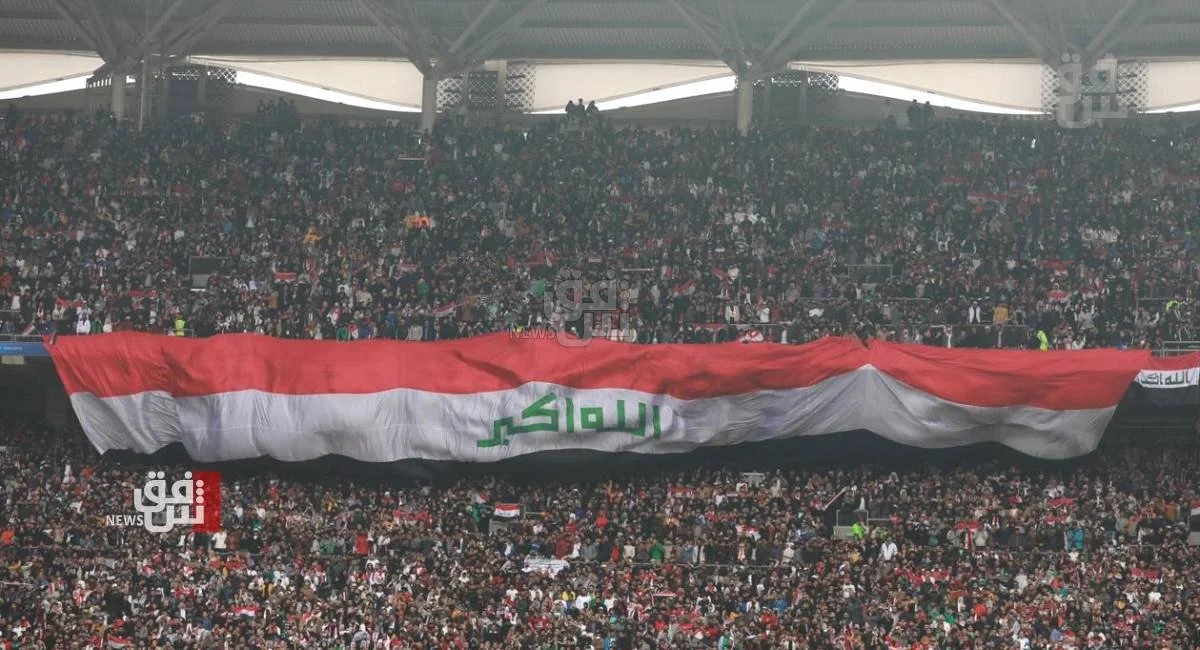
Prime Minister Nuri al-Said submitted the request that year, ushering Iraq out of mandate rule and into the international community.
While some Iraqis have proposed other milestones—such as the 1958 founding of the republic, the 2003 fall of Saddam Hussein’s regime, or the 2014 call to arms against ISIS—October 3 has become the most widely accepted symbol of independence and international recognition.
This year, celebrations stretch across the country and beyond. In Baghdad, the Ministry of Defense prepared an aerial parade by the Air Force and Army Aviation, alongside a 21-gun salute at dawn. Military officials said the events reflect pride in sovereignty and unity, encouraging citizens to share in the festivities.
The capital also hosted a National Day marathon under the slogan “One Flag, One Homeland,” with free participation open to the public. Athletes from seven provinces joined the race, which carried a total prize fund of 15 million dinars. Organizers provided uniforms, participant numbers, and facilities to accommodate runners, turning the event into a festival of sport and community.
Beyond official ceremonies, ministries, provinces, and Iraqi embassies abroad are holding cultural and social events.
In a message marking the occasion, Prime Minister Mohammed Shia al-Sudani extended his “sincere congratulations and heartfelt blessings” to all Iraqis, describing October 3 as the day that embodied the modern Iraqi state and its historic, civilizational, and cultural presence. He emphasized his government’s commitment to safeguarding the constitution, protecting resources, strengthening the economy, and securing Iraq’s rightful place regionally and internationally.
Opinion & AnalysisBreakingIraq National Day
****************
Tishwash: Iraq: A Promising Economic Destination for Arab and Foreign Investment
Iraq is currently witnessing a qualitative shift in its economic development, making it an attractive environment for investors from around the world.
Participants in investment forums emphasized that Iraq has become a preferred destination for companies and businessmen, given its significant economic and tourism potential, coupled with government efforts to create a favorable investment climate.
This comes at a time when trade with neighboring countries has reached record levels, amid a growing willingness by international companies to enter the Iraqi market and contribute to development projects.
In this context, Chairman of the Turkish-Iraqi Business Council, Khaled Akar, told the Iraqi News Agency (INA), "The volume of trade exchange between Iraq and Turkey has reached $16 billion, and we are seeking to increase it to $30 billion." He indicated that "Iraq's accession to the World Trade Organization will contribute to developing the volume of trade domestically and internationally, and will enable Turkish companies to contribute to the growth and development of Iraqi trade."
He added, "Turkish businessmen are ready to contribute to supporting development in the construction, health, digitalization, and other sectors," noting that "40 Turkish businessmen participated in the Iraq Investment Forum."
For his part, Faisal Al-Jarba, a member of the Iraqi-Saudi Business Council, told (INA), "The investment forum held in Baghdad was important and successful, as we witnessed clear satisfaction among Arab investors, as well as investors coming from East Asia and several other countries."
He added that "a large number of influential businessmen in the Kingdom of Saudi Arabia participated in this forum, which means that Iraq has become an important destination and a clear choice for investors." He noted that "the Iraqi government is serious about its work to combat corruption and confront anyone who attempts to seize state property or exploit its authority, and this bodes well."
He expressed his "hope that the Iraqi economy and Iraqi businessmen will receive the status they deserve, and that they will play a fundamental and effective role in building their country, in cooperation with other countries and investors from around the world."
In turn, Nasser Al-Noubis, Chairman of the Rotana International Group, confirmed to (INA), "Iraq is a promising country with great potential in the tourism sector. Today, it needs more than thirty thousand hotel rooms, while the available rooms are still insufficient."
He explained that "the more infrastructure develops, whether through the construction of hotels or facilitating investment and entry procedures into the country, the more opportunities will be to attract investors and encourage tourists to come to Iraq."
He pointed out that "Iraq is a great and civilized country, with diverse tourist attractions, especially the religious sites in Karbala, Najaf, and Kadhimiya, which attract visitors from all over the world."
He continued, "We began investing in Iraq more than 12 years ago, opening in Erbil, then Sulaymaniyah. Today, we are present in Baghdad and have also begun operations in Karbala. We look forward to expanding across all governorates, given the broad prospects for growth in Iraq's tourism sector." link
****************
Mot: I Used to Think This Was Funny!!!

Mot: Only in Oregon!!!!

Seeds of Wisdom RV and Economics Updates Saturday Morning 10-4-25
Good Morning Dinar Recaps,
Global Banking Alliance Collapses: A Sign of Financial Realignment
The shutdown of the Net-Zero Banking Alliance reveals cracks in global financial institutions — and signals bigger changes ahead.
Good Morning Dinar Recaps,
Global Banking Alliance Collapses: A Sign of Financial Realignment
The shutdown of the Net-Zero Banking Alliance reveals cracks in global financial institutions — and signals bigger changes ahead.
The Collapse of the NZBA
The Net-Zero Banking Alliance (NZBA) — launched in 2021 to align trillions in bank lending and investment with climate goals — has officially shut down after a member vote.
● The NZBA was backed by over 100 banks worldwide, representing $74 trillion in assets.
● Members included major players like HSBC, Citi, and Bank of America.
● Yet, mounting political pushback and regulatory concerns forced banks to walk away.
As The Guardian notes, “The alliance could not reconcile competing pressures between shareholder interests and climate commitments.”
Why It Matters
The collapse isn’t just about climate. It shows:
● Global finance alliances are fragmenting under pressure from politics, trade wars, and competing priorities.
● Banks are recalibrating — focusing more on geopolitical survival than on transnational frameworks.
● The U.S. tariffs, BRICS de-dollarization, and European trade shifts all point toward new blocs replacing old ones.
From ESG to Geopolitics
Over the past decade, ESG (environmental, social, governance) finance was positioned as a unifying framework.
Now, its retreat shows that geopolitical competition is replacing ESG coordination:
● BRICS nations are building alternative financial structures (new payment rails, gold-backed strategies).
● Western banks are pulling away from global consensus models, focusing instead on domestic politics and shareholder risk.
● The IMF and World Bank face pressure as rival blocs explore new institutions.
The Shift: Out with the Old, In with the New
The NZBA’s collapse is a symptom of a larger transformation:
● Old alliances (climate, trade, banking frameworks) are eroding.
● New alliances (BRICS, regional payment systems, digital currencies) are emerging.
● Global finance is moving toward fragmentation and multipolarity.
This is not just politics — it’s global finance restructuring before our eyes.
Why This Matters
The end of the NZBA marks a turning point in international finance. When institutions built to coordinate the world’s largest banks fall apart, it signals that capital is being reallocated toward new centers of power.
We are entering a period where:
● Geopolitical alignment will drive banking decisions.
● Cross-border cooperation will be shaped less by shared ideals, and more by strategic blocs.
● Financial restructuring will accelerate as “out with the old and in with the new” becomes reality.
@ Newshounds News™ Exclusive
Sources:
~~~~~~~~~
Global Crypto Regulation: What’s Shifting Abroad
Across Europe, Asia, and Russia, new regulatory frameworks are redrawing the rules of finance, signaling a deeper restructuring in motion.
Europe & UK: Tightening Stablecoin Scrutiny & Passporting Ambitions
• EU Stablecoin Ban Proposal – The European Union is moving toward banning certain unbacked stablecoins, while creating licensing requirements for euro-backed tokens. This aims to protect consumers and maintain financial system stability. (Cointelegraph, 2025)
• UK Digital Asset Regulation – The UK is advancing its sandbox programs and exploring comprehensive digital asset licensing, positioning London as a regulated hub for tokenized finance. (UK FCA Reports, 2025)
China: CBDC Expansion & Domestic Control
• Digital Yuan Initiatives – China continues rolling out its central bank digital currency (e-CNY), integrating it with retail, government, and cross-border trade, strengthening its financial sovereignty. (Xinhua, 2025)
• Crypto Crackdown – Domestic crypto trading remains banned, but China is supporting tokenization experiments within government-sanctioned channels, highlighting a dual strategy of control and innovation.
Russia: Legal Frameworks & Mining Oversight
• Regulatory Clarity – Russia is formalizing crypto taxation, licensing exchanges, and integrating blockchain in government operations, aiming to stabilize its digital asset ecosystem. (RT, 2025)
• Mining Incentives & Export Controls – Russia is incentivizing local mining while monitoring electricity and capital flows, balancing innovation with state oversight.
India: Crypto Legalization & Exchange Licensing
• Proposed Crypto Bill – India is finalizing legislation to formally legalize digital assets while establishing regulatory oversight for exchanges and wallet providers. (Economic Times, 2025)
• Focus on Compliance & Taxation – Digital asset transactions will be taxed, and exchanges are required to adhere to KYC/AML regulations, signaling alignment with global financial standards.
Global Implications: Towards Financial Restructuring
• Harmonizing or Diverging Rules – As the EU, UK, Russia, China, and India move at different speeds, the world faces either a fragmented regulatory landscape or emerging new financial corridors outside the traditional dollar system.
• Impact on Innovation – Countries with clear frameworks could attract tokenized asset flows, staking, and digital securities, creating an alternative to unregulated global exchanges.
• Strategic Sovereignty & Multipolar Finance – This patchwork of regulation accelerates the shift to a multipolar financial world, aligning with the broader trend of nations seeking more autonomy and resilience in global finance.
Why This Matters
The global push for crypto regulation signals that major economies are not waiting for the U.S. to lead. Europe, China, Russia, India, and the UK are setting the stage for new financial rails and governance standards. Countries adopting strong, transparent frameworks can attract capital, while others risk marginalization — underscoring that this is not just politics — it’s global finance restructuring before our eyes.
@ Newshounds News™ Exclusive
Sources
Xinhua – China Digital Yuan Initiatives
RT – Russia Crypto Regulation
Economic Times – India Crypto Bill
~~~~~~~~~
Seeds of Wisdom Team RV Currency Facts Youtube and Rumble
Newshound's News Telegram Room Link
Follow the Gold/Silver Rate COMEX
Follow Fast Facts
Seeds of Wisdom Team™ Website
Thank you Dinar Recaps
China Plans 4 New Gold Hubs as it Moves Forward With Global Reset
China Plans 4 New Gold Hubs as it Moves Forward With Global Reset
Daniela Cambone: 10-3-2025
“The global financial order is tilting—and it’s not going to stop,” says Dr. Nomi Prins, former Goldman Sachs managing director and bestselling author of Collusion.
With the Shanghai Gold Exchange launching offshore vaults in Hong Kong, Singapore, Zurich, and Dubai, Prins calls it a “time zone tilt, a geographical tilt, a power tilt” that shifts gold—and power—away from the West.
China Plans 4 New Gold Hubs as it Moves Forward With Global Reset
Daniela Cambone: 10-3-2025
“The global financial order is tilting—and it’s not going to stop,” says Dr. Nomi Prins, former Goldman Sachs managing director and bestselling author of Collusion.
With the Shanghai Gold Exchange launching offshore vaults in Hong Kong, Singapore, Zurich, and Dubai, Prins calls it a “time zone tilt, a geographical tilt, a power tilt” that shifts gold—and power—away from the West.
“This is about redistricting the globe around the hard currency of gold,” she explains. “Central banks are diversifying away from the dollar, and gold is now the second most held reserve asset worldwide, ahead of the euro.
China has been carefully sequencing this strategy for over a decade.” As gold surges toward $4,500 and silver gains momentum, Prins sees the East tightening its grip: “More nations are moving their gold away from London and into Shanghai or Singapore.
That takes supply off the market, lifts prices higher, and creates an entirely new power base.”
Chapters:
00:00 – China’s bold gold move
03:04 – Why new offshore vaults matter
05:38 – Inside China’s decade-long gold strategy
07:30 – The de-dollarization push
09:30 – Can China dethrone the LBMA?
12:38 – Gold’s next target: $4,500+
13:19 – Silver set to soar: $60 in sight
15:08 – Is China on track to overtake global finance?
Seeds of Wisdom RV and Economics Updates Friday Afternoon 10-3-25
Good Afternoon Dinar Recaps,
The Digitalization of Personal Lending: Better Opportunities for New Borrowers?
As fintech reshapes credit access, old gatekeepers are losing grip — out with opaque practices, in with inclusion, transparency, and speed. And this shift carries financial power implications globally.
Good Afternoon Dinar Recaps,
The Digitalization of Personal Lending: Better Opportunities for New Borrowers?
As fintech reshapes credit access, old gatekeepers are losing grip — out with opaque practices, in with inclusion, transparency, and speed. And this shift carries financial power implications globally.
What’s Changing in Personal Lending
● Digital lenders are now relying on alternative data — utility bills, rental history, e-commerce behavior, even phone usage — to evaluate borrowers who lack traditional credit scores.
● Underwriting powered by AI / Machine Learning enables faster, more nuanced decisions, allowing lenders to spot good behavior in nonconventional ways.
● Approvals and fund disbursements now often happen in minutes to hours rather than days or weeks. This is especially crucial for first-time borrowers facing urgent financial needs.
● The entire process — application, identity verification, signing — is moving online with transparent terms, lower overheads, and fewer barriers.
Benefits — Especially for New / Underserved Borrowers
● Greater access: those without long credit histories or collateral can now be evaluated fairly.
● Lower cost: reduced admin / staff / branch overhead means more competitive rates and fees.
● Convenience: digital processes reduce friction (travel, paper, wait times) for rural or underserved communities.
● Trust building: clearer terms, dashboards, and data transparency help borrowers understand risk and build credit profiles.
Risks, Roadblocks & Unequal Uptake
● Data privacy & security: collecting alternative data raises risks of misuse, breaches, and bias.
● Regulatory lag: many jurisdictions lack clear rules governing digital lenders or cross-border fintech operations.
● Interest rate risk: some digital platforms may still charge high rates to compensate for risk, hurting vulnerable borrowers.
● Digital divide: access to reliable internet, smartphones, or digital literacy still uneven globally, limiting reach.
“Out with the Old, In with the New” & Global Financial Restructuring
🔹 Old Model: Traditional banking required established credit history, physical branches, opaque pricing, and slow processes. These systems favored established, often wealthy borrowers.
🔹 New Model: Fintech platforms, digital underwriting, and alternative credit data enable financial inclusion, lowering barriers and distributing credit more widely.
🔹 Global Ripple Effects:
• Emerging economies can leapfrog legacy banking infrastructure by adopting digital lending systems as primary sources of credit.
• New fintech ecosystems attract capital, competition, and regulatory innovation — pulling in global investors.
• Less dependence on centralized banking infrastructure could weaken the dominance of old financial hubs; new hubs (Asia, Africa) may rise.
🔹 As these changes accelerate, they’re not merely innovations; they are part of structural financial shifts. We’re seeing old systems dismantled and new ones erected — reshaping who has credit, who has access, and who holds financial power.
Why This Matters / Key Takeaway
Digital personal lending is more than convenience. It’s a lever shifting financial inclusion, power, and risk. Just as stablecoins, BRICS payment rails, and alternative currency systems reshape global structures, so too does the democratization of credit. This is where inclusion meets architecture: who gets in, how they get in, and on what terms.
Out with the Old, In with the New.
This is not just politics — it’s global finance restructuring before our eyes.
@ Newshounds News™ Exclusive
Sources:
Modern Diplomacy — The Digitalization of Personal Lending: Better Opportunities for New Borrowers? Modern Diplomacy
McKinsey – Digital Lending: Reshaping Consumer Credit in Emerging Markets (report)
Brookings Institution – Fintech & Financial Inclusion: pathways and policy implications
MIT Technology Review – AI-driven credit scoring: Risks, uses, and oversight
~~~~~~~~~
‘Paper Gold’ Era Ends as BRICS Nations Push Dollar-Free Payments
The age of speculative gold contracts is giving way to a hard-money world. As BRICS builds payment systems that bypass the dollar, we are witnessing a deeper shift in where value, power, and trust reside.
From Paper to Metal: Shifting the Gold Narrative
● The “paper gold” era—reliance on ETFs, futures, sovereign gold bonds—is being challenged by BRICS’ move toward physical metal-backed convertibility.
● Frank Giustra, a mining magnate, warns: “If you own paper gold, you do not own gold. When the crunch comes, it will not be there.”
● BRICS nations are introducing yuan-to-gold convertibility on the Shanghai Gold Exchange and expanding physical vaulting operations (Hong Kong, etc.) to avoid reliance on Western financial infrastructure.
● The shift is already reshaping market dynamics: bullion premiums and physical supply constraints are becoming more significant factors than paper price speculation.
● According to Mining.com, the development mirrors a broader pivot: “The age of paper gold is ending as BRICS nations stand up a parallel financial system that routes around the US dollar.”
Dollar-Free Payments: Building the New Infrastructure
● BRICS is constructing a parallel payments and settlement system — covering payments, depositories, swap lines, ratings, and messaging networks — operating outside the dollar system.
● mBridge, a cross-border central bank digital currency pilot (China, Hong Kong, Thailand, UAE, Saudi Arabia) allows participants to settle in local currencies, bypassing take-outs via the dollar.
● This new rail competes directly with dollar-backed stablecoins and challenges SWIFT’s centrality.
● GIS Reports confirms incremental progress: BRICS is focusing less on a full common currency and more on interoperable payment systems, national currency trades, and technical protocols.
Why This Matters: Power, Value & Structural Shifts
🔹 Reassertion of Real Value
Physical gold anchors value in a tangible, non-sovereign asset. As paper contracts lose trust, ownership of real metal becomes the real claim to value.
🔹 Weakening Dollar Leverage
By routing payments and asset backing outside the dollar, BRICS reduces the ability of the United States to exert influence via sanctions, dollar control, or financial exclusion.
🔹 Reshaping Reserve Strategies
Central banks and states will increasingly demand deliverable, on-territory physical holdings rather than foreign paper assets they may lose access to during crises.
🔹 Multipolar Financial Order
The construction of a non-USD based monetary infrastructure bolsters a multipolar world. Countries will gradually rely on networks they control, not ones owned by Western financial centers.
🔹 Alignment & Dependency
States that join or align with these systems may find their trade, credit, and financial dependencies redirecting toward BRICS hubs, changing geopolitical alignments.
Why This Matters / Key Takeaway
The end of paper gold and rise of dollar-free payment infrastructure is not incremental — it’s architectural. It illustrates the broader movement: old systems fade while new structures, anchored in tangible value and sovereignty, take shape. This is another chapter in how global finance is being rewired under our eyes.
This is not just politics — global finance restructuring before our eyes.
@ Newshounds News™ Exclusive
Sources & Further Reading
Watcher.Guru – ‘Paper Gold’ Era Ends as BRICS Nations Push Dollar-Free Payments Watcher Guru
Mining.com – ‘Paper gold is over’ as BRICS build dollar-free systems MINING.COM
GIS Reports – BRICS incremental progress in dollar-free trade GIS Reports
Additional context: BRICS payment infrastructure development (GIS Reports)GIS Reports
~~~~~~~~~
Seeds of Wisdom Team RV Currency Facts Youtube and Rumble
Newshound's News Telegram Room Link
Follow the Gold/Silver Rate COMEX
Follow Fast Facts
Seeds of Wisdom Team™ Website
Thank you Dinar Recaps
Beijing Forces a Gold Price Revaluation
Beijing Forces a Gold Price Revaluation - LFTV Ep 243
Kinesis Money: 10-3-2025
In this week’s Live from the Vault, Andrew Maguire unpacks how Beijing’s physical gold buying and the Shanghai Gold Exchange’s Basel III-compliant vaults are forcing a US Treasury gold price revaluation.
The precious metals expert explains how silver’s critical mineral status and limited global supply are fueling physical stockpiling, pushing the market higher and reinforcing individual investors’ move from cash into physical metals.
Beijing Forces a Gold Price Revaluation - LFTV Ep 243
Kinesis Money: 10-3-2025
In this week’s Live from the Vault, Andrew Maguire unpacks how Beijing’s physical gold buying and the Shanghai Gold Exchange’s Basel III-compliant vaults are forcing a US Treasury gold price revaluation.
The precious metals expert explains how silver’s critical mineral status and limited global supply are fueling physical stockpiling, pushing the market higher and reinforcing individual investors’ move from cash into physical metals.
Timestamps
00:00 Start
02:54: Lawrence asks: Will the Fed bail out or revalue gold?
04:16 China’s physical demand drives gold higher, Fed struggles
13:01 Western paper markets struggle as Chinese bullion demand surges
23:18 Rising physical demand forces market to reprice gold and silver
32:26 Silver breakout driven by physical demand
News, Rumors and Opinions Friday 10-3-2025
Note: All intel should be considered as "Rumors" until we receive official announcements ...and “Rates and Dates” could change anytime until we get to the banks/redemption centers.
RV Excerpts from the Restored Republic via a GCR: Update as of Fri. 3 Oct. 2025
Compiled Fri. 3 Oct. 2025 12:01 am EST by Judy Byington
Summary:
An Update Compiled by Judy Byington, MSW Friday, October 3, 2025. The headlines scream of ‘government closures’ and ‘technical difficulties,’ but those tuned into the deeper frequency know this is no pause—it is a pivot.
Note: All intel should be considered as "Rumors" until we receive official announcements ...and “Rates and Dates” could change anytime until we get to the banks/redemption centers.
RV Excerpts from the Restored Republic via a GCR: Update as of Fri. 3 Oct. 2025
Compiled Fri. 3 Oct. 2025 12:01 am EST by Judy Byington
Summary:
An Update Compiled by Judy Byington, MSW Friday, October 3, 2025. The headlines scream of ‘government closures’ and ‘technical difficulties,’ but those tuned into the deeper frequency know this is no pause—it is a pivot.
According to compiled reports from sources tracking the Global Currency Reset (GCR) and the implementation of the Quantum Financial System (QFS), we are currently witnessing the greatest, most clandestine transfer of wealth in recorded history.
The fiat era, built on debt and cabal control, is being archived in real-time. Here is a breakdown of the critical actions and the imminent timeline leading up to World Quantum Day.
The public narrative of a “shutdown” is (allegedly) merely a thin veil covering a profound transformation of the world’s monetary foundation. This is not reform; it is a replacement.
According to updates, the green light for the gold/asset-backed Global Currency Reset was confirmed weeks ago. The goal is clear: seize control of the global financial system from the old guard and return taxpayer assets to The People.
The old debt machinery is (allegedly) being silently dismantled. On Wednesday, October 1, 2025, IRS servers and archives were reportedly taken offline. Audit trails are being rebuilt under military supervision to expose decades of fraud and taxation schemes.
The current turbulence is (allegedly) the necessary cover for the “removal of the old order.” With the financial core reset, the protocols that erase global debt and dismantle the old regime are now activating.
FBI Director Kash Patel noted that the government shutdown initiated on October 1st will be permanent for many outdated offices. This action (allegedly) coincides with the release of the NESARA/GESARA 30+1 Protocols—a massive purge designed to eliminate debt, smash the IRS, and permanently dismantle the Federal Reserve.
A Warning Regarding Digital Assets: By World Quantum Day, 99.5% of all existing crypto will vanish. Only ISO20022 coins, which are fully backed by gold, are expected to survive the transition.
The EBS system is confirmed to be on standby, with test signals already sent. When the message goes live, the public will reportedly see footage and ledgers that have been hidden for generations.
Judy Note: It is anticipated that when the EBS sounds the Seven Trumpets, citizens will receive cell phone messages via the new Starlink Satellite System. These messages are expected to contain instructions for setting up banking, receiving Med Bed treatments, and securing exchange appointments.
The operational readiness of the GCR is underscored by movement in the foundational currencies and the progress of Bond Holders.
The Iraqi Kingpin: The Iraqi Dinar—the kingpin of the Global Currency Reset—has reportedly revalued. On Wednesday, October 1, both TNT’s Tony and Frank 26 confirmed on TV that Iraq’s monetary reform has (allegedly) been completed and announced. Iraq has declared this Friday, October 3rd, as its Independence Day.
Bond Holders & Tier 4B: A video conference call involving President Trump and the U.S. Treasury was held Thursday to finalize the notification timing for currency exchanges and Zim Bond redemptions.
Crucially, sources confirm that Bond Holders are now being paid out, receiving necessary paperwork, though they will not gain access to their substantial accounts until Tier 4b (the Internet Group) begins its exchanges.
The final countdown is here. Stay aligned. Stay ready.
~~~~~~~~~~~~~
Thurs. 2 Oct. 2025 Bruce The Big Call:
Today there was a video conference call with President Trump, the US Treasury and other important people that went out to the Global Military Alliance. It was to determine when notifications would go out to do currency exchanges and Zim Bond redemption.
Three different sources have said that Bond Holders are being paid. They are receiving a phone call and followed up by delivery of paperwork they needed to sign. They would not have access to their accounts until Tier4b (us, the Internet Group) did their exchanges.
Word yesterday was that some of the currency advances went out on Monday. Those were to people that received prosperity packages and farm claims. It will likely take at least through the weekend to get them completed.
Three high up sources are telling us to look for notifications to set exchange appointments for Tier4b either Monday 5 Oct. or Tuesday 6 Oct. of next week.
Read full post here: https://dinarchronicles.com/2025/10/03/restored-republic-via-a-gcr-update-as-of-october-3-2025/
************
Courtesy of Dinar Guru: https://www.dinarguru.com/
Nader From The Mid East Iraq for now...is not an import country. It's an export country. For Iraq to gain purchase power, import have to be stronger than export, so when you buy, you want to buy cheaper...Watch the import, that's very important.
Frank26 I still think it's be about $1.00 to $1.25 but if it really is a true reinstatement then $3.22 to $3.86 is the number they should consider....By the way, I love Sunday into a Monday. Sunday is the start of your [Iraqi] business day. Monday is the start of my business day...
Mnt Goat Article: “OIL: AGREEMENT TO DELIVER KURDISTAN’S OIL TO SOMO AND EXPORT IT VIA CEYHAN IN ACCORDANCE WITH THE CONSTITUTION AND BUDGET.” ...we know the IMF kept telling Iraq from the results of their consultation sessions that they had to deliver oil on a steady basis and pay salaries on a steady basis. No more delays due to disputes with Baghdad. That these disputes between Baghdad and Kurdistan must end. Now with this new agreement it gives them the opportunity to do just what the IMF needs them to do – be a “united” Iraq...This will change the entire dynamics of Iraq. This will finally get the Oil and Gas Law that is required by the constitution. Through UNITY not DIVISION and Iraq finally picked unity...All I can say now is Woo Hoo!
************
You Won't Believe This...The Fed Might Do GOLD QE
George Gammon: 10-2-2025