
Thank you to all the subscribers to our Early Access program…we thank you for your continued support.
We are excited to offer this new service to keep you informed and up-to-date on the latest Dinar and currency news.
“Tidbits From TNT” Friday Morning 9-12-2025
TNT:
Tishwash: US House of Representatives Ends War Authorizations for Iraq and the Gulf
The US House of Representatives passed the National Defense Authorization Act, which sets military policies and provides funding for the military, after a key amendment repealing the war authorizations for Iraq and the Gulf, in a vote that sparked widespread controversy between Democrats and Republicans.
The vote was 231 to 196, with four Republicans opposed and 17 Democrats joining the Republicans in favor of the legislation. The amendment includes repealing the 2002 Iraq War Authorization and the 1991 Gulf War Authorization, while also including measures that make it more difficult for presidents to circumvent Congress to make military decisions.
TNT:
Tishwash: US House of Representatives Ends War Authorizations for Iraq and the Gulf
The US House of Representatives passed the National Defense Authorization Act, which sets military policies and provides funding for the military, after a key amendment repealing the war authorizations for Iraq and the Gulf, in a vote that sparked widespread controversy between Democrats and Republicans.
The vote was 231 to 196, with four Republicans opposed and 17 Democrats joining the Republicans in favor of the legislation. The amendment includes repealing the 2002 Iraq War Authorization and the 1991 Gulf War Authorization, while also including measures that make it more difficult for presidents to circumvent Congress to make military decisions.
The House of Representatives voted 261-167 to repeal these authorizations, with the support of all Democrats and 49 Republicans, representing about one-fifth of the GOP. The use of these authorizations by US presidents has been criticized in the past, as they grant them the authority to launch military operations without a formal declaration of war.
These authorizations have been used on several occasions, most notably the January 2020 US airstrike that killed Iranian Quds Force commander Qassem Soleimani. Former President Donald Trump relied on the 2002 authorization to justify the operation in Iraq.
Analysts point out that this decision comes after a dispute within the Republican Party, as three members of the Freedom Caucus voted in favor of an amendment introduced by Democratic Representative Jim McGovern to allow it to be brought to a vote, reflecting divisions within the party over issues of military force and presidential powers.
A bill to repeal the 2002 authorization passed the House of Representatives in 2021 and was approved by the Senate in 2023, repealing both the 2002 and 1991 authorizations. This comes as part of the $892.6 billion National Defense Authorization Act, which contains other controversial amendments, including restrictions on the Department of Defense's coverage of gender-affirming health care.
This time, there are broader disagreements over the nature of the amendments included in the legislation, after senior Democrats threatened to oppose the law if Republicans insisted on including controversial amendments, which would have forced the GOP to pass the bill without Democratic support. link
************
Tishwash: Customs: Committees formed to link Kurdistan's ports to the ASYCUDA system. What are the implications of this move?
The General Authority of Customs revealed the formation of joint committees to connect the Kurdistan Region's ports to the ASYCUDA system. An economic expert predicted that the move would contribute to raising annual customs revenues to more than $8 billion.
Director General of the Authority, Thamer Qasim Dawood, stated in the Official Gazette today, Thursday, September 11, 2025, that "joint committees have been formed to connect the region's ports to the ASYCUDA system," adding that "there has been no response yet."
He added, "Customs offices have been opened at the checkpoints of Al-Sadd, Darman, Jemen, and Bawe Mahmoud to inspect goods entering the central and southern governorates, as a temporary solution until the connection with all ports is completed."
For his part, economic expert Dr. Abdul Rahman Al-Mashhadani predicted that "customs revenues will double to $8.5 billion annually after the system is implemented." He noted that "the region's problem lies in its failure to adhere to customs tariffs and its failure to disclose actual revenues, which forces the majority of goods coming from Iran and Turkey to pass through its ports."
He said, "The federal border crossings will adopt alternative points such as Al-Safra if the region continues to refuse, especially given the presence of 22 unofficial crossings controlled by various parties and entities, in addition to the Bashmakh crossing, which is the largest and most important."
In this context, Al-Mashhadani noted that "the inspection points in Kirkuk and Mosul have already begun operating based on ASYCUDA data, with proposals to open secondary and mobile checkpoints to enhance oversight." He emphasized that "implementing the system will more than double revenues compared to the current situation." link
*************
Tishwash: American organization: Al-Sudani has an opportunity to reduce Iranian influence and improve relations with Washington
The American organization Defending Democracy announced in a report published today, Thursday (September 11, 2025), that Prime Minister Mohammed Shia al-Sudani has an "opportunity" to reduce Iranian influence in Iraq and restore relations with the United States to normal.
The organization said, according to what was translated by "Baghdad Today," that after Al-Sudani announced the formation of a committee to investigate the smuggling of Iranian oil through mixing it with Iraqi oil, he is now obligated to "investigate in a fair and impartial manner, announce the results, and take urgent measures to prevent smuggling based on them." The organization stressed that "the investigative committees previously formed by the Iraqi government regarding Iranian activities did not announce realistic results," describing those committees as "toothless."
The organization called on the US government to "officially inform al-Sudani" that the established investigative committee represents an "opportunity" to end "Iran's illegal activities in Iraq" and restore relations between the two countries to normal after their recent volatility. The organization emphasized that it is in the United States' interest to end Iran's "sanctions evasion" through Iraq.
The organization noted that "Iran has managed to 'invent' routes to smuggle oil through Iraq using 'Iraqi businesses and companies, Iranian-backed armed militias, and even Iraqi government officials,' generating approximately $3 billion in annual revenues, making the work of the committee formed by al-Sudani 'sensitive.'"
The organization described the current US policy as treating the Iraqi government as "part of the maximum pressure policy on Iran," emphasizing the need for "the Sudanese government to seize this opportunity to reduce Iranian influence and improve its relationship with the United States, and not repeat history by forming investigative committees that fail to reach results or hold officials accountable."
It's worth noting that "the US government announced last March the imposition of sanctions on Iraqi figures accused of working to smuggle Iranian oil using official Iraqi documents, which led to "accusations against Iraqi officials of complicity in issuing these official documents," according to the statement. link
************
Mot: . Sorry! - I Simply Want to RETURN Mine!!

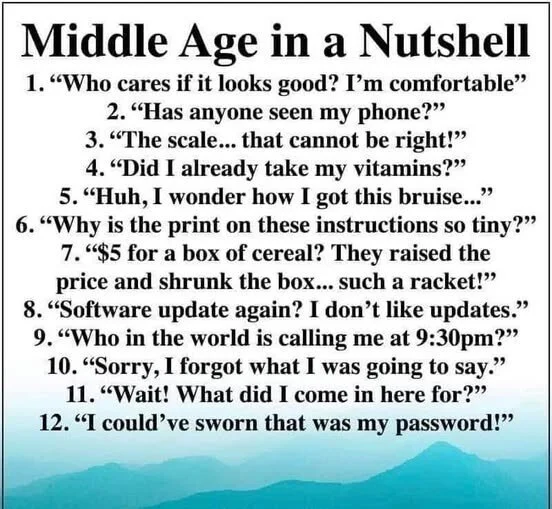
Mot: . Becoming Seasoned in a Nutshell ~~~~
The Dollar Is a Crypto Backed by a Legal Monopoly | Christopher Whalen
The Dollar Is a Crypto Backed by a Legal Monopoly | Christopher Whalen
Miles Franklin Media: 9-11-2025
Andy Schectman, Founder & CEO, Miles Franklin Precious Metals, interviews Christopher Whalen, Chairman of Whalen Global Advisors.
The two sit down for a no-holds-barred takedown of the U.S. banking system, the Fed-Treasury illusion, and why the dollar could be described as nothing more than a crypto backed by a legal monopoly.
In this interview, Whalen draws on decades of experience inside the Fed and on Wall Street to expose the hidden rot beneath the surface of America’s financial system.
The Dollar Is a Crypto Backed by a Legal Monopoly | Christopher Whalen
Miles Franklin Media: 9-11-2025
Andy Schectman, Founder & CEO, Miles Franklin Precious Metals, interviews Christopher Whalen, Chairman of Whalen Global Advisors.
The two sit down for a no-holds-barred takedown of the U.S. banking system, the Fed-Treasury illusion, and why the dollar could be described as nothing more than a crypto backed by a legal monopoly.
In this interview, Whalen draws on decades of experience inside the Fed and on Wall Street to expose the hidden rot beneath the surface of America’s financial system.
In this episode:
The dollar is a crypto backed by a monopoly
Central banks are told to buy gold
Fed & Treasury: two sides of the same coin
Bank consolidation
Why the U.S. consumer is now a “triple-D credit”
What happens when trust in the dollar breaks?
00:00 Coming Up
01:03 Introduction: Christopher Whalen
05:41 Discussion on U.S. Banking Policy
08:40 Technology & Disruption in Banking
21:23 Cryptocurrency & the Dollar
24:27 Historical Context: Gold & Silver
34:43 Future of Banking & Final Thoughts
Seeds of Wisdom RV and Economic Updates Thursday Afternoon 9-11-25
Good Afternoon Dinar Recaps,
Trump Can’t Stop This: BRICS Buys 60,000 Ounces of Gold To Hammer USD
China’s 10-month gold-buying streak signals BRICS strategy to weaken dollar dominance
China Extends Gold Accumulation Streak
BRICS member China purchased 60,000 ounces of gold in August—worth roughly $215 million—marking its tenth consecutive month of accumulation. The People’s Bank of China (PBOC) now holds 74.02 million ounces, raising the value of its gold reserves to $253.84 billion, or 7.64% of total foreign exchange reserves, according to official data.
Good Afternoon Dinar Recaps,
Trump Can’t Stop This: BRICS Buys 60,000 Ounces of Gold To Hammer USD
China’s 10-month gold-buying streak signals BRICS strategy to weaken dollar dominance
China Extends Gold Accumulation Streak
BRICS member China purchased 60,000 ounces of gold in August—worth roughly $215 million—marking its tenth consecutive month of accumulation. The People’s Bank of China (PBOC) now holds 74.02 million ounces, raising the value of its gold reserves to $253.84 billion, or 7.64% of total foreign exchange reserves, according to official data.
The strategy is clear: diversify away from U.S. dollar–denominated assets like Treasuries and bonds, and shore up reserves with tangible, non-sovereign assets.
BRICS Turns to Gold as Hedge Against USD
China isn’t alone. Other BRICS nations—India, Brazil, Russia, and South Africa—are also building gold reserves. Allianz chief economic advisor Mohamed El-Erian called the trend “part of a broader risk diversification strategy,” reflecting central banks’ preference for gold amid geopolitical strains.
Data from the International Monetary Fund (IMF) shows BRICS central banks have increased gold purchases fivefold since Russia’s invasion of Ukraine. This collective strategy highlights the bloc’s intention to reduce reliance on the U.S. dollar in reserves and international settlements.
Market Impact: Gold Surges to $3,650
The gold-buying spree has fueled a rally in precious metals markets. The XAU/USD index hit $3,650 on Wednesday, jumping nearly 25 points in a single session. As BRICS trims its U.S. dollar debt exposure, speculation grows that the bloc could back its future common currency with gold to directly challenge the dollar’s global reserve status.
Why This Matters
Even amid President Trump’s renewed tariff push and “America First” policies, BRICS is taking a parallel path—using gold to erode dollar dominance. If the bloc continues its accumulation trend and experiments with gold-backed settlement systems, the dollar’s central role in global finance could face its most serious test in decades.
@ Newshounds News™
Source: Watcher Guru
~~~~~~~~~
Seeds of Wisdom Team RV Currency Facts Youtube and Rumble
Newshound's News Telegram Room Link
Follow the Roadmap
Follow the Timeline
Seeds of Wisdom Team™ Website
Thank you Dinar Recaps
The Dollar’s 99% Collapse vs. Gold
The Dollar’s 99% Collapse vs. Gold
Wealthion: 9-10-2025
Gold has long been revered as a safe haven, but in 2025, it’s not just holding its own – it’s absolutely soaring. Breaking records and experiencing its best run since the pivotal year of 1979, the precious metal is signaling a critical shift in how investors are protecting their wealth.
This isn’t just a fleeting trend; it’s a direct response to some of the most pressing economic challenges of our time.
The Dollar’s 99% Collapse vs. Gold
Wealthion: 9-10-2025
Gold has long been revered as a safe haven, but in 2025, it’s not just holding its own – it’s absolutely soaring. Breaking records and experiencing its best run since the pivotal year of 1979, the precious metal is signaling a critical shift in how investors are protecting their wealth.
This isn’t just a fleeting trend; it’s a direct response to some of the most pressing economic challenges of our time.
In the face of such formidable headwinds, investors are flocking to gold as a tangible, immutable asset – a beacon of stability in turbulent times.
In a recent, must-watch conversation from Wealthion’s Gold Interview Series this month, Brett Rentmeester, Founder and Managing Director at Windrock Wealth Management, joined host Maggie Lake to delve into this very phenomenon.
Rentmeester eloquently explained why gold consistently remains the ultimate store of value and a vital cornerstone of wealth protection.
This isn’t just about market speculation; it’s about understanding the fundamental forces reshaping our financial future and positioning yourself to navigate them successfully.
The current surge in gold prices isn’t just a headline – it’s a powerful message from the markets. Whether you’re a seasoned investor or just beginning to consider wealth preservation strategies, understanding the dynamics at play is paramount.
Watch the full video from Wealthion to gain further insights and information from Brett Rentmeester. Equip yourself with the knowledge to protect your wealth in an era of unprecedented economic shifts.
News, Rumors and Opinions Thursday 9-11-2025
Silver Explosion Destroys Babylon’s Financial System
Greg Hunter with Bo Polny:
By Greg Hunter 9-11-2025
At the beginning of this year on USAWatchdog, Biblical cycle timing expert, geopolitical and financial analyst Bo Polny said, “Get ready for a wild ride in 2025 and beyond.” The world is going mad.
Polny has a new warning that September 2025 is going to bring a huge market event that will end the financial system as we know it.
Silver Explosion Destroys Babylon’s Financial System
Greg Hunter with Bo Polny:
By Greg Hunter 9-11-2025
At the beginning of this year on USAWatchdog, Biblical cycle timing expert, geopolitical and financial analyst Bo Polny said, “Get ready for a wild ride in 2025 and beyond.” The world is going mad.
Polny has a new warning that September 2025 is going to bring a huge market event that will end the financial system as we know it.
Polny explains, “Silver, this time around, is not just going to go through $50 per ounce, it’s going to go through it like a hot knife through butter. It’s going to go to $60 then $70, and then it’s going to three digits very shortly.
What is about to happen are incredible price moves. This is the end of the Babylonian financial system. . .. They used the money to build Babylon.
\What is Babylon? It’s a control system. . .. We are about to see an explosion that is going to blow people’s minds on what is about to happen. Silver is going to go to numbers unthinkable. Silver has been prophesized to be the metal, the thing that is going to change people’s financial position forever.”
Polny also predicts, “The war cycle ends on September 21. The wars are about to come to an end. I don’t care if people are saying wars come next year and that there is going to be a nuclear conflict.
They are all going to be 1,000% wrong because the Biblical cycle ends at the end of September and beginning of October. The September date is in my book. You can’t stop what is coming. You can only prepare for what is coming.
When this move in gold and silver happens, they will finally break free of generations of price manipulation and suppression. This will be the destruction of the banking cartel.”
There is much more in the 93-minute in-depth interview.
https://usawatchdog.com/silver-explosion-kills-babylon-financial-system-bo-polny/
***********
Courtesy of Dinar Guru: https://www.dinarguru.com/
Jeff The news is becoming so real that its is so blatantly obvious that the rate is probably changing in the second half of September...You're seeing the most critical information in this you ever have.
Frank26 The dinar is backed by gold...and so many other things. It's ridiculous the value. The fact that we [Frank and Firefly] are talking about the float tells me the monetary reform has done a good job about educating the Iraqi citizens on all the steps that are required for the reform to come out to them, to release the new exchange rate. That's exactly where we find ourselves right now, waiting for the new exchange rate for everything to make sense.
Militia Man Now that they're able to do contracts with e-signatures and they are able to trade with the dinar globally that will draw in the money...faster and faster. I think that's what [they're] telling us is taking place because of a new mechanism. So bring in your cash into the bank, you'll be able to do digital transactions for commercial trade internationally in dinar. That's what I believe [they're] saying. That's my theory.
************
Bond Market Cracks: Your Money at Risk!
Lynette Zang: 9-10-2025
Bond yields are surging, confidence is collapsing, and history is repeating itself. Just like 1971, political pressure and central bank manipulation are pushing us toward hyperinflation.
Gold is breaking records, silver is racing higher, and the system is cracking. How have you prepared for the reset?
Chapters:
00:00 – Bond Yields Surge; Gold & Silver Spike
00:32 – Why Rising Rates Crush Bond Prices (and ZIRP Debt Is Underwater)
01:28 – Bank Run Risk: Underwater Bonds Force Real Losses
02:17 – Governments Shift to Short-Term Debt
03:02 – Confidence Erodes: Are Government Bonds Really “Safe”?
03:58 – Downgrades, FDIC Shortfall, and Bail-In Talk
04:58 – A “Reshaped Fed,” Politics, and the Inflation Playbook
07:06 – Rate Cuts Next? The Hyperinflation Trigger Signal
07:53 – The System Has Changed: Build a Sound-Money Lifeboat
09:30 – Gold at Highs, Silver Chasing 50: Final Warning
Seeds of Wisdom RV and Economic Updates Thursday Morning 9-11-25
Good Morning Dinar Recaps,
GOP Crypto Bill Faces Setback as Senator Warns “We’re Not Ready”
Internal GOP rift threatens timeline for sweeping U.S. digital asset legislation
Kennedy Pushback Threatens Scott’s September Deadline
Senate Republicans are facing fresh divisions over digital asset legislation, as Sen. John Kennedy (R-La.) signaled Wednesday that the Banking Committee is “not ready” to advance a landmark cryptocurrency market structure bill this month.
Good Morning Dinar Recaps,
GOP Crypto Bill Faces Setback as Senator Warns “We’re Not Ready”
Internal GOP rift threatens timeline for sweeping U.S. digital asset legislation
Kennedy Pushback Threatens Scott’s September Deadline
Senate Republicans are facing fresh divisions over digital asset legislation, as Sen. John Kennedy (R-La.) signaled Wednesday that the Banking Committee is “not ready” to advance a landmark cryptocurrency market structure bill this month.
Kennedy’s remarks directly challenge Chairman Tim Scott’s pledge to mark up the bill before September 30. “People that I talk to still have a lot of questions. I know I still have a lot of questions,” Kennedy told reporters.
The legislation would divide oversight of digital assets between the Securities and Exchange Commission (SEC) and the Commodity Futures Trading Commission (CFTC). Kennedy warned that the framework risks giving the crypto industry too much influence over the process.
Scott’s Efforts to Build Momentum
Scott’s office has defended the push, noting that Republicans have reviewed thousands of pages of stakeholder feedback and consulted with more than 160 industry participants since June.
“The House has already acted, and the Senate should not fall behind,” said Jeff Naft, Scott’s spokesperson, referencing the House-passed CLARITY Act in July.
Meanwhile, Republicans earlier introduced the GENIUS Act, which established rules for U.S. dollar-pegged stablecoins. Kennedy, however, dismissed that effort as a “baby step” compared to the broader overhaul now under debate.
Crypto Industry Pushes for Action
Industry leaders have lined up behind Scott’s September deadline. Coinbase CEO Brian Armstrong described it as “a clear path forward,” while Andreessen Horowitz’s Colin McCune called comprehensive regulation “sorely needed for years.”
The sector has poured hundreds of millions of dollars into Washington lobbying to secure long-awaited clarity.
Democratic Skepticism Grows
Doubts about the bill are not limited to Republicans. Sen. Andy Kim (D-N.J.) argued that pushing the bill forward this month would be “a mistake,” while other Democrats have urged Republicans to slow the process.
In early September, twelve Democratic senators unveiled their own framework, marking the party’s first coordinated position on crypto regulation this year. Their plan emphasized:
Stronger disclosure requirements
Mandatory registration of platforms with FinCEN
Expanded SEC and CFTC oversight
Restrictions on lawmakers profiting from digital assets
Momentum for CLARITY Act Fades
Expectations for swift passage are fading. Prediction platform Polymarket now gives the CLARITY Act just a 32% chance of becoming law in 2025—down from nearly 90% in July.
Sen. Cynthia Lummis (R-Wyo.), a key supporter, had earlier expressed optimism that the legislation could pass with bipartisan support before year-end. She has since warned that the U.S. risks falling behind the EU and Singapore without regulatory clarity.
Why This Matters
The stalled momentum highlights the political challenges of crafting digital asset legislation in a divided Congress. With Democrats advancing a competing framework and Republicans fractured, the future of U.S. crypto market structure rules may remain uncertain well into 2025.
@ Newshounds News™
Source: CryptoNews
~~~~~~~~~
US Senate Committee Advances Trump’s ‘Crypto-Friendly’ Fed Pick
Stephen Miran’s nomination sparks partisan split amid questions over Fed independence and digital asset policy
Senate Committee Vote Falls Along Party Lines
The U.S. Senate Banking Committee has advanced the nomination of Stephen Miran to the Federal Reserve Board of Governors, setting up a full Senate vote. The decision came in a narrow 13–11 party-line vote, with Republicans in favor and Democrats opposed.
Miran, previously tapped by President Donald Trump to lead the Council of Economic Advisors, is being considered for a temporary Fed seat vacated by Adriana Kugler, whose term ends January 31.
During his confirmation hearing last week, Miran said he would not resign from his role advising the White House even if his time at the Fed extended beyond January.
Miran’s Crypto-Friendly Outlook
Though Miran has made few public statements on digital assets, he signaled in a December interview that “crypto has a big role potentially to play in innovation.” Since joining the Trump administration, however, he has been largely silent on the issue.
If confirmed, Miran would join the Fed as it prepares for an October conference on payments policy, including discussions on stablecoins and tokenization—areas where his openness to crypto innovation could play a role.
Fed Independence Tested
Miran’s nomination comes at a tense moment for the central bank. President Trump recently attempted to remove sitting Fed governor Lisa Cook, citing mortgage fraud allegations in an August 25 letter.
Cook refused to resign, and on Tuesday a federal judge in Washington, D.C., blocked Trump’s order, ruling the president had not provided sufficient cause. The administration has filed an appeal.
The episode underscores ongoing tensions over the independence of the Federal Reserve, with critics warning that political interference could undermine its credibility.
Why This Matters
Miran’s potential appointment would place a “crypto-friendly” figure on the Fed at a pivotal time for digital asset policy. With the central bank set to address stablecoins and tokenization in upcoming discussions, his stance could influence how the Fed balances innovation with oversight.
@ Newshounds News™
Source: CoinTelegraph
~~~~~~~~~
SEC Postpones Decision on Franklin XRP ETF, Sets New Final Deadline
Commission pushes review to November as optimism builds for XRP ETF approval
Franklin’s XRP ETF Faces Extended Review
The U.S. Securities and Exchange Commission (SEC) has delayed its decision on the Franklin Templeton spot XRP exchange-traded fund (ETF), setting a new final deadline of November 14, 2025.
Franklin’s proposal dates back to March, when the Cboe BZX Exchange filed to list and trade shares of the ETF. After initial publication in the Federal Register on March 19, the SEC began its statutory review process.
By law, the SEC must rule within 180 days but can extend the review by an additional 60 days if needed. The agency exercised that option this week, citing the need for more time to assess the proposal.
Final Deadline in November
The SEC’s notice makes clear that November 14 will be the final deadline for Franklin’s application. At that point, the agency must either approve or reject the XRP ETF.
If approved, the product would give investors regulated exposure to XRP’s performance, marking a milestone for both Franklin Templeton and the broader digital asset market.
The delay follows a familiar pattern: the SEC has often used the full extension period for crypto-related ETF filings, citing the need to evaluate market structure, custody, and investor protection issues.
Other XRP ETF Applications Also Pending
Franklin’s application is one of several in front of the SEC. Other asset managers—including Grayscale, Bitwise, Canary, 21Shares, and CoinShares—are also awaiting decisions.
The SEC is expected to rule on multiple proposals in mid-October, with Franklin’s deadline now set slightly later.
Market Sentiment Points to Approval
Despite the delay, investor confidence remains strong. Prediction market data from Polymarket shows a 92% probability that XRP ETFs will launch this year, up from 91% last week.
Optimism stems from the SEC’s evolving stance toward digital assets, highlighted by its Project Crypto initiative and recent remarks by SEC Chair Paul Atkins, who declared that “crypto’s time has come.”
Why This Matters
The SEC’s November decision on Franklin’s XRP ETF could open the door to mainstream adoption of XRP as a regulated investment product. With multiple applications nearing resolution, the coming weeks may mark a turning point for digital asset ETFs in the U.S.
@ Newshounds News™
Source: The Crypto Basic
~~~~~~~~~
Seeds of Wisdom Team RV Currency Facts Youtube and Rumble
Newshound's News Telegram Room Link
Follow the Roadmap
Follow the Timeline
Seeds of Wisdom Team™ Website
Thank you Dinar Recaps
“Tidbits From TNT” Thursday Morning 9-11-2025
TNT:
Tishwash: Rafidain Bank supports nearly 2,000 projects worth 24 billion dinars.
Rafidain Bank announced the allocation of the 11th installment of the "Leadership and Excellence" initiative, noting that the projects funded by the initiative have reached 1,804.
The bank stated in a statement, seen by Al-Masry, that the initiative (Leadership and Excellence) included the 69th batch of registrations, with a total amount of one billion dinars, within the framework of initiatives supported by the Central Bank of Iraq.
The statement added, "The total number of projects funded under the initiative reached 1,804, with a total value of 23 billion, 941 million Iraqi dinars, reflecting the bank's commitment to supporting pioneering projects and contributing to the development of the national economy."
TNT:
Tishwash: Rafidain Bank supports nearly 2,000 projects worth 24 billion dinars.
Rafidain Bank announced the allocation of the 11th installment of the "Leadership and Excellence" initiative, noting that the projects funded by the initiative have reached 1,804.
The bank stated in a statement, seen by Al-Masry, that the initiative (Leadership and Excellence) included the 69th batch of registrations, with a total amount of one billion dinars, within the framework of initiatives supported by the Central Bank of Iraq.
The statement added, "The total number of projects funded under the initiative reached 1,804, with a total value of 23 billion, 941 million Iraqi dinars, reflecting the bank's commitment to supporting pioneering projects and contributing to the development of the national economy." link
************
Tishwash: Kurdish Life in Nashville; A small Kurdistan in the heart of America
Nashville, Tennessee, has been home to a large Kurdish population since the reception of Kurdish refugees in the 1980s. It is known as a small Kurdistan in the heart of the United States.
Two years after the Kurdistan Region of Iraq (KRG) was named the sister city of Nashville, the presence of the Kurdish community in the city has become more pronounced. From Kurdish restaurants and markets to Kurdish festivals, cultural events and sports programs, Nashville has become a symbol of the Kurdish diaspora in the United States.
The “A Country in Our Hearts” podcast, recently broadcast by local radio (WPLN), attempts to make a connection between the past and present of the Kurdish community in Nashville by looking at the stories of Kurdish immigrants. "The choice of this topic reflects the fact that Kurds have been forced to migrate to other countries, especially the United States and Europe, in recent decades, and this idea is the point of contact between the various fronts of Kurdish immigrants who have started a new life in Nashville.
According to Gilbert, a significant part of that history dates back to the 1980s; When the Anfal operations ordered by Saddam Hussein led to the massacre and cleansing of the Kurdish people in northern Iraq, the destruction of thousands of villages and hundreds of thousands of Kurdish refugees. Most Kurdish families, including Nash Chalka, whose father was a Peshmerga, have finally arrived in the United States after years of fleeing and hiding in temporary shelters.
By 2025, refugee housing plans will continue to be suspended and the US political climate will accept fewer immigrants than in the past. This issue has become especially difficult after a massive wave of Kurdish immigrants, especially Kurds from Turkey, across the Mexican border to the United States. Because unlike the first front of Iraqi Kurdish immigrants who entered the United States through organized programs, this new group faces a complex legal process and strict legal and social measures.
This gap between two immigrant experiences shows that Nashville's “Little Kurdistan” is not just a historical immigrant narrative, but has now become a meeting place of two opposing realities: the memory of displacement in the 1980s and the challenges of asylum in the United States today.
Thus, Kurdish society in Nashvik has been able to establish a stable identity by preserving their traditions and ceremonies. The celebration of Newroz, which has been held in the city since 1994, is a clear example of this cultural resistance. The lighting of the symbolic bonfire and the gathering of thousands of people not only mark the beginning of the New Year, but also a symbol of resistance and hope for a society that has turned its painful history into an opportunity for revival.
In this sense, Nashville's “Little Kurdistan” is higher than an immigrant neighborhood, and its Kurds reflect the broader challenges of US immigration policy and the role of the diaspora in redefining identities in a new country. The Kurdish experience in Nashville shows how Washington's political decisions, from Saddam's Anfal to the restriction of access to refugees, directly affect the fate of displaced people and the future of their fronts in the United States link
************
Tishwash: Digital banks and financial inclusion
Today, Iraq is witnessing the launch of a new era of banking services, shifting toward digital services in line with the global trend toward digitization and the abandonment of traditional services.
This sound approach is not just about smart applications and digital platforms, but rather represents the launch of an ambitious vision for a more comprehensive and efficient financial future.
The traditional banking sector has always been the cornerstone of economies, but for years it has been confined by walls of branches and long bureaucratic wires, which has prevented it from reaching broad segments of society. Obtaining a bank account or a simple loan is an arduous journey, especially in remote areas. Here, the...
The importance of the real revolution of digital banks.
The technology has matured, becoming more secure and safe than ever before thanks to advanced encryption and biometrics. Consumer confidence has matured, as consumers have learned how to manage their daily affairs through their smartphones. More importantly, the urgent need to popularize the concept of the financial citizen, who has the right to save, invest, transfer, and finance with ease and transparency, has matured.
A digital bank, then, is not a luxury, but a strategic necessity. It is the bridge that will allow millions of the "unbanked" to cross into a world of economic opportunity that once seemed out of reach. It is the means by which the small shopkeeper, the woman working from home, the ambitious young man, and the elderly man in a remote village will be brought under the umbrella of the formal financial system. These are not just transactions; they are true empowerment.
Hence the importance of digital banks in achieving financial inclusion.
Digital banks are distinguished by their absence of the huge operating costs of traditional branches. Digital banks can offer their services at highly competitive prices, lower fees, and higher returns on savings, benefiting all customers, especially those with limited income.
The launch of these banks is a clear message of confidence in our economy, our technological capabilities, and our future. It is a declaration that we believe in all our citizens and strive to provide every individual with the tools they need to be an effective part of the economic fabric.
This is not the end of banking as we know it. Rather, it is a new birth—smarter, faster, and closer to the pulse of the people. The financial future begins today, with the push of a button, the touch of a screen. Let us all be the ones who make it happen.
Today comes the Central Bank's step
The launch of e-wallets is a fundamental prerequisite and an important path to launching digital banks in Iraq. This approach forms part of a broader strategy for digital transformation in the Iraqi banking and financial sector. This step—and I mean the launch of the e-wallet—can be considered
Preparing the digital infrastructure and developing the payment and financial transfer system in Iraq. These wallets serve as a technical and operational foundation for building integrated digital banking services.
• By enabling transfers between e-wallets and merchants, the Central Bank facilitates the transition to cashless transactions, a necessary step for digital banks that rely entirely on electronic services. This will contribute to enhancing digital financial literacy.
Having secure e-wallet systems in place also makes it easier for future digital banks to comply with regulatory standards without having to build systems from scratch.
All these efforts coincide with the banking sector reform plan launched by the Central Bank, which focuses on enhancing financial inclusion and digital transformation. link
************
Mot: The Work of Gary Larson: The Far Side

Mot: . Why I Mow My Own Yard!!!!

A New Financial Order? Why the BIS is Quietly Expanding Now
A New Financial Order? Why the BIS is Quietly Expanding Now
Miles Harris: 9-10-2025
In the bustling narratives of global finance, we often focus on the obvious players: central banks, major economies, technological disruptors.
But lurking quietly, yet growing monumentally, is an institution that might just be the most significant architect of our financial future: the Bank for International Settlements (BIS).
A New Financial Order? Why the BIS is Quietly Expanding Now
Miles Harris: 9-10-2025
In the bustling narratives of global finance, we often focus on the obvious players: central banks, major economies, technological disruptors.
But lurking quietly, yet growing monumentally, is an institution that might just be the most significant architect of our financial future: the Bank for International Settlements (BIS).
As global financial trust fractures amid rising geopolitical tensions, the erosion of dollar dominance, and the advent of digital currencies, the BIS is not just holding the line; it’s actively building the infrastructure for a new era.
And its symbolic new tower stretching skyward in Basel, Switzerland? That’s more than just bricks and mortar – it’s a monument to a burgeoning global role.
Often dubbed the “central bank of central banks,” the BIS is an institution many have never heard of, yet it coordinates the actions of 63 central banks, representing a staggering 95% of global GDP. Think of it as the ultimate neutral ground, where the world’s monetary authorities converge to discuss, coordinate, and innovate on monetary policy, financial regulation, and the technology that underpins it all.
Miles Harris’s insightful video brings this overlooked giant into sharp focus, revealing how the BIS is positioning itself as the indispensable coordinator for central banks worldwide at a time when that coordination is more critical than ever.
The physical expansion – that impressive new tower – isn’t just about more office space. It’s a tangible reflection of the increasing complexity and demands of global financial governance. Imagine grappling with high inflation, unprecedented financial volatility, and the seismic shifts of de-dollarization pressures. That’s the BIS’s daily brief.
These aren’t theoretical exercises; they require specialized legal, technical, and policy teams working tirelessly to shape the financial rails of tomorrow. Beyond digital cash, the BIS’s foundational Basel Committee is also expanding its regulatory purview dramatically, moving from traditional banking oversight into uncharted territories like climate risk, crypto regulation, and even the ethical deployment of AI in banking.
In a world increasingly fragmented by geopolitical tensions between East and West, the BIS’s role as a neutral platform becomes even more critical. It’s the meeting point where diverging financial infrastructures can still find common ground, enabling crucial integration without overt political alignment.
And speaking of integration, consider the $200 billion-plus in foreign reserves the BIS manages for central banks. As countries look to diversify away from U.S. Treasuries, the BIS is increasingly handling asset management that includes shifts towards gold, the Chinese yuan, and other alternative assets.
This quiet rebalancing act underscores profound shifts in global financial power.
What truly sets the BIS apart now is its emerging role in consolidating monetary governance. We’re talking about a shift of influence away from traditional multilateral institutions like the IMF or the UN, towards a model centralized among central banks themselves.
The BIS is actively developing infrastructure for real-time cross-border transactions using Central Bank Digital Currencies (CBDCs), which could potentially bypass traditional intermediaries like SWIFT. This isn’t just about speed; it’s about fundamentally reshaping monetary sovereignty and global trade.
And here’s a fascinating paradox: while official policy rhetoric often downplays gold’s monetary role, its resurgence, particularly among BRICS+ nations, signals a quiet repositioning of the metal as a monetary safeguard outside direct regulatory frameworks.
This divergence between public statements and central bank actions is a crucial trend the BIS is navigating, subtly incorporating it into a broader, more diversified monetary landscape.
Ultimately, the BIS is not just reacting to change; it’s actively crafting a multipolar, programmable monetary ecosystem. This future promises shared protocols and technological standards, with the BIS firmly at its core.
The goal? To maintain centralized control and stability, even under the appearance of cooperation and pluralism. The new BIS Tower stands tall, not merely as an office building, but as a silent monument to this new era – a future where no single currency dominates, but where stability and control are preserved through sophisticated, centralized coordination.
The story of the BIS is a complex, pivotal one, and understanding its trajectory is essential for anyone interested in the future of money.
For a deeper dive into these intricate developments, I highly recommend watching the full video from Miles Harris. It’s an eye-opening exploration into the institution that’s quietly building the financial bridges of tomorrow.
Ariel: Acceleration of Dinar Revaluation
Ariel: Acceleration of Dinar Revaluation
9-10-2025
ACCELERATION OF DINAR REVALUATION
The CBI could announce an emergency imminent rate, following the strike (e.g., September 12-15), using a 48-hour bank closure to update ATMs and SWIFT codes to a 1:1 or 3:1 rate or more, backed by gold ($17.4 billion) and reserves.
Capital controls ($5,000 withdrawal limits) would curb speculation, while $200 billion in FDI driven by U.S. trade deals (March 2025) would flood in, mirroring Vietnam’s 2007 surge.
Ariel: Acceleration of Dinar Revaluation
9-10-2025
ACCELERATION OF DINAR REVALUATION
The CBI could announce an emergency imminent rate, following the strike (e.g., September 12-15), using a 48-hour bank closure to update ATMs and SWIFT codes to a 1:1 or 3:1 rate or more, backed by gold ($17.4 billion) and reserves.
Capital controls ($5,000 withdrawal limits) would curb speculation, while $200 billion in FDI driven by U.S. trade deals (March 2025) would flood in, mirroring Vietnam’s 2007 surge.
This rapid shift bypasses delays like Powell’s tenure or gold revaluation, as Trump’s strategy hinges on immediate economic leverage.
The assault’s shock value, neutralizing Iran’s loyalists, would force Iraq to act, fulfilling global dinar holders’ expectations and repositioning Iraq as a financial hub.
This aligns with Bukele’s warnings of accelerated change, outpacing traditional timelines. I will go into detail as to why it is not feasible for a country like Iraq to have a weak currency during this type of turmoil that can target their oil which they are currently reliant upon for exports.
Listen, 1:1 is the basis and IMF approved years ago. Because the lowest they can come out with is .76 cents and float it from there.
You will have to watch the markets and go from there as to how you will decide to proceed. Iraq is just the start gun for me.
I hold other currencies so I can afford to wait as I make way more than your average person every month so my priorities are different from yours or those who are facing financial challenges.
So I understand the immediate concern once it goes for most people.
Source(s): https://x.com/Prolotario1/status/1965541570670952511
https://dinarchronicles.com/2025/09/09/ariel-prolotario1-acceleration-of-dinar-revaluation/
Seeds of Wisdom RV and Economic Updates Wednesday Afternoon 9-10-25
Good Afternoon Dinar Recaps,
BRICS Finds Its Voice: India’s Gold Shift, China’s Bold Vision, and the Bloc’s Balancing Act
As Trump’s tariffs weigh on global trade, BRICS leaders search for new strategies to safeguard growth, stability, and independence.
Caution at the Virtual Summit
At the latest BRICS virtual meeting, leaders from across the 10-member alliance presented a unified, but cautious, front. Hosted by Brazil’s President Lula da Silva, the summit highlighted the challenges of navigating escalating U.S. tariffs while preserving economic stability.
Good Afternoon Dinar Recaps,
BRICS Finds Its Voice: India’s Gold Shift, China’s Bold Vision, and the Bloc’s Balancing Act
As Trump’s tariffs weigh on global trade, BRICS leaders search for new strategies to safeguard growth, stability, and independence.
Caution at the Virtual Summit
At the latest BRICS virtual meeting, leaders from across the 10-member alliance presented a unified, but cautious, front. Hosted by Brazil’s President Lula da Silva, the summit highlighted the challenges of navigating escalating U.S. tariffs while preserving economic stability.
The bloc criticized U.S. trade policy but avoided direct confrontation with Trump.
India’s Foreign Minister S. Jaishankar, standing in for Prime Minister Modi, struck a balanced tone: “Increasing barriers and complicating transactions will not help, neither would the linking of trade measures to non-trade matters.”
Notably absent were discussions on de-dollarization or the launch of a common BRICS currency, signaling that the alliance is still proceeding carefully.
In short, the summit revealed a defensive posture: BRICS wants stability, but is not yet ready to escalate against Washington.
India’s Pivot to Gold and Away From Treasuries
Behind the diplomatic caution, however, actions speak louder than words. India has quietly reduced its U.S. Treasury holdings by $8 billion in just two months, while stepping up its gold reserves to a record 880 metric tons.
Economists see the move as part of a broader trend across emerging markets: a strategic diversification away from the U.S. dollar.
Gold is viewed as a hedge against asset freezes like those imposed on Russia in 2022.
India’s finance minister Nirmala Sitharaman described the pivot as a “considered decision” to protect reserves amid rising geopolitical uncertainty.
With U.S. deficits widening, sustained selling of Treasuries by BRICS members could eventually raise borrowing costs for Washington.
This quiet shift underscores how trade tensions are translating into monetary realignment.
Xi Jinping’s Strategic Playbook
China, meanwhile, is steering BRICS toward a more assertive global role. At the summit, President Xi Jinping laid out three moves designed to shake global markets and strengthen the bloc:
Defend Multilateralism & Reform Global Governance – Xi called for reforms that would give the Global South greater influence in shaping international financial and trade rules.
Back Open Trade, Resist Protectionism – By defending WTO principles, Xi positioned BRICS as a counterweight to tariff-heavy U.S. policy.
Strengthen Intra-BRICS Cooperation – Xi highlighted technology, infrastructure, and finance as key areas for deeper South-South integration, tying them to China’s Belt and Road Initiative.
For investors, these proposals suggest a future where capital and trade flows increasingly bypass Western systems, tilting toward intra-BRICS networks.
Why This Matters
Individually, the summit’s cautious diplomacy, India’s gold pivot, and China’s vision may seem incremental. But together, they signal a subtle yet profound shift:
BRICS is building resilience against U.S. economic pressure.
Reserve diversification is quietly reducing reliance on the dollar.
China is setting the stage for BRICS to evolve from a defensive bloc into a proactive global economic force.
As the group finds its voice, the message is clear: BRICS is no longer content to be a passive participant in a U.S.-led order. The next phase will test whether words turn into coordinated action — and how global markets adapt to a more multipolar financial system.
@ Newshounds News™
Sources: Watcher Guru, Coindoo, Coindoo
~~~~~~~~~
Seeds of Wisdom Team RV Currency Facts Youtube and Rumble
Newshound's News Telegram Room Link
Follow the Roadmap
Follow the Timeline
Seeds of Wisdom Team™ Website
Thank you Dinar Recaps
$1.3T CRE MELTDOWN Sparks Bank Crisis the Fed Can’t Contain
$1.3T CRE MELTDOWN Sparks Bank Crisis the Fed Can’t Contain
Taylor Kenny: 9-9-2025
Commercial real estate is about to detonate and your bank might not survive the next shock.
With legal bank bail-ins on the table, this breakdown shows you how your savings could be seized to save a failing bank.
Are US banks truly stable? Or are we standing on the precipice of another financial tremor, one quietly building beneath a veneer of calm? A recent video from ITM Trading featuring Taylor Kenney sheds a stark light on the hidden fragilities within the American banking system, pointing to a looming crisis that could reshape our financial landscape.
$1.3T CRE MELTDOWN Sparks Bank Crisis the Fed Can’t Contain
Taylor Kenny: 9-9-2025
Commercial real estate is about to detonate and your bank might not survive the next shock.
With legal bank bail-ins on the table, this breakdown shows you how your savings could be seized to save a failing bank.
Are US banks truly stable? Or are we standing on the precipice of another financial tremor, one quietly building beneath a veneer of calm? A recent video from ITM Trading featuring Taylor Kenney sheds a stark light on the hidden fragilities within the American banking system, pointing to a looming crisis that could reshape our financial landscape.
According to Kenney, a dangerous confluence of factors – a shrinking Federal Reserve balance sheet, massive Treasury debt issuance, and banks holding razor-thin reserves – has left the system acutely vulnerable. But the immediate, glaring threat? Commercial Real Estate (CRE).
Imagine a massive debt wall, approximately $1 to $1.3 trillion in CRE loans, all maturing this year. These weren’t just any loans; they were often financed at historically low-interest rates, think 2-3%. Now, these same borrowers face refinancing at double, even triple, those rates. This isn’t just an inconvenience; for many, it’s an unsustainable financial burden.
Compounding this, the demand for office space and commercial properties is shrinking. Vacancy rates are on the rise as businesses continue to downsize and adapt to new work models. It’s a perfect storm: dwindling income potential meeting skyrocketing debt costs.
The data is already alarming. Delinquency rates on commercial real estate loans have now surpassed those seen during the 2008 financial crisis. Office delinquency rates, in particular, have hit a record high of 11.7%.
But even these figures might not tell the whole story. Banks, in an attempt to maintain an illusion of stability, are widely employing “extend and pretend” tactics.
This means delaying the official recognition of defaults by temporarily extending payment terms, without actually addressing the underlying financial woes of the borrowers. It’s a deferral, not a solution, and it masks the true extent of the problem.
The Federal Reserve has developed tools to manage these crises, often designed to quietly support banks without the public spectacle of large-scale bailouts.
The Bank Term Funding Program (BTFP): This allowed banks to borrow against assets at inflated values, essentially providing a temporary lifeline.
The Reverse Repo Facility (RRP): Once a robust liquidity buffer holding over $2.5 trillion, the RRP allowed institutions to park cash overnight with the Fed for interest. This acted as a critical backstop for the banking system.
However, the RRP has recently shrunk to near zero. Why? The Treasury’s issuance of record amounts of short-term debt offers higher yields, attracting money market funds away from the RRP. This means a crucial liquidity buffer, a safety net for banks, is rapidly drying up, leaving the system even more exposed.
The Fed’s tools, while seemingly effective, maintain an illusion of stability that masks growing systemic risks.
The risk isn’t concentrated in a few big banks. Community and regional banks hold the majority of these vulnerable CRE loans. Furthermore, government-backed entities like Fannie Mae and Freddie Mac hold over half of all multifamily loans, increasing federal exposure.
This widespread risk means any government intervention to stabilize the sector will likely be a stealth bailout, ultimately paid for by taxpayers, further devaluing the dollar.
But beyond bailouts, there’s an even more direct and chilling concern for individual savers: “bail-ins.”
Bail-ins involve the government or regulators seizing depositors’ funds to recapitalize failing banks, rather than relying on taxpayer money.
This mechanism is legal in the US and has already occurred on a small scale. It represents a direct threat to your individual savings and assets, effectively forcing you, the depositor, to rescue the banking system.
Taylor Kenney’s analysis suggests a fundamental truth: the current financial system prioritizes protecting itself over individual savers. In a world where your bank deposits can be seized in a bail-in, and your currency devalued through inflation and stealth bailouts, true wealth preservation requires stepping outside the traditional banking system.
The solution advocated is clear: physical gold and silver. These precious metals are “real money” that cannot be seized, devalued through inflation by central banks, or controlled by the traditional banking system. They offer a tangible, enduring hedge against systemic financial instability.
CHAPTERS:
0:00 U.S. Banks Hanging by a Thread
1:55 Trillions in Loans Coming Due
3:47 The Fed’s Backdoor Crisis Tools
6:05 Repo Facility Nears Zero
8:30 Legal Bail-Ins
10:36 Gold is Built to Endure
News, Rumors and Opinions Wednesday 9-10-2025
Note: All intel should be considered as "Rumors" until we receive official announcements ...and “Rates and Dates” could change anytime until we get to the banks/redemption centers.
Restored Republic via a GCR: Update as of Wed. 10 September 2025
Compiled Wed. 10 September 2025 12:01 am EST by Judy Byington
Tues. 9 Sept. 2025: A NEW DAWN — WHEN MONEY BECOMES FREEDOM
For most of your life, money has meant control. Control over where you live, What you eat, How much time you can spend with your loved ones, Whether you can rest when you’re sick, or even retire at all. Control that was never truly yours — no matter how hard you worked.
Note: All intel should be considered as "Rumors" until we receive official announcements ...and “Rates and Dates” could change anytime until we get to the banks/redemption centers.
Restored Republic via a GCR: Update as of Wed. 10 September 2025
Compiled Wed. 10 September 2025 12:01 am EST by Judy Byington
Tues. 9 Sept. 2025: A NEW DAWN — WHEN MONEY BECOMES FREEDOM
For most of your life, money has meant control. Control over where you live, What you eat, How much time you can spend with your loved ones, Whether you can rest when you’re sick, or even retire at all. Control that was never truly yours — no matter how hard you worked.
Behind every loan, every bank transfer, every “approval” there were silent systems designed not to help you, but to trap you in debt without dignity, labor without liberation, movement without meaning.
But here’s what they don’t want you to realize: That system is already breaking. And what’s replacing it will feel like breathing clean air for the first time.
What’s coming.
In Iceland, a cooperative digital wallet program now allows citizens to exchange services without using central banks. A neighbor can trade energy credits for groceries. Teachers are paid directly by the community for tutoring. No banks. No middlemen. It runs outside the fiat grid — but within a moral one.
In Ghana, rural farmers are now paid in blockchain-backed tokens — with stable value, backed by real goods, not manipulated by war or inflation. They no longer rely on banks. They rely on a field… and a phone.
In South Korea, programmable vouchers are being tested by retailers — tokens that can be used only on essentials, removing waste, corruption, and gate keeping. This is public service without bureaucracy. It’s early. But it’s real.
~~~~~~~~~~
What the World Will Look Like After NESARA. The shift won’t just be financial. It will be emotional, social, and deeply human. Here’s what it may soon look like — quietly, and then all at once:
Debts canceled, not refinanced
Basic income, not universal welfare
Affordable homes, not inflated mortgages
Health care access, not insurance bureaucracy
Time freedom, not life behind a clock
No hidden taxes, no invisible fees
Assets on your device, not locked in a vault
Local trade, global reach — no borders between you and value
True wealth, measured by impact, not credit scores
~~~~~~~~~~~
Tues. 9 Sept. 2025: GLOBAL CURRENCY RESET EXPOSED — PRECIOUS METALS & QUANTUM FINANCE IGNITE A DINAR AND DONG EXPLOSION! TRUMP’S MASTERPLAN UNVEILED: THE FUTURE OF WEALTH IS HERE! – amg-news.com – American Media Group Trump exposes plan to eliminate the IRS, collect taxes through tariffs. Trump just declared TOTAL WAR on the IRS! A plan to replace federal income tax with tariffs and restore America’s pre-1913 prosperity. The IRS is DONE — and the American people finally WIN.
~~~~~~~~~~
Global Currency Reset:
Tues. 9 Sept. 2025 Bruce The Big Call:
SS contacts say SS increases are locked in place for September.
DOGE payments, tariff dividends should also come in the month of September.
You will receive a Quantum Card and Credit Debit cards
If married couples go in together, one of you will be given the steps to access your Quantum Account. That account is only used to move monies into your bank accounts. The other partner will have access to the other bank accounts.
You can move one amount of monies out of your Quantum Account to the master account for the first 60 days. After they see how you spend it and that is ok, you will have no limit on what you can move.
If you don’t have a trust, they would like you to set up one within the first 30 days of your exchange.
We are close to getting notified. Bruce’s opinion is that we will receive a EBS notice on Thurs. 9-11.
We could get five days of disclosure that start on Thurs. 11 Sept.
Read full post here: https://dinarchronicles.com/2025/09/10/restored-republic-via-a-gcr-update-as-of-september-10-2025/
***************
Courtesy of Dinar Guru: https://www.dinarguru.com/
Frank26 I don't see the exchange rate I want yet, but I know what it's doing...I believe it's going to be maybe starting at about $1.15 to maybe $3.22 and then it's going to float to about maybe $4.25 when they finally cap it. I know you're looking for $6.00 but that's too much. This is of course simply my opinion of the float...
Nader From The Mid East When they come and tell you it's going to happen this week or this month or this day, nobody knows the date...and nobody will know how much either. They can guess but nobody know the price. I think $3.22...I think $3.22 is fair.
Sandy Ingram The more Iraq moves on to traceable electronic rails, the easier it is for global partners to say yes to the Iraq dinar...
*************
‘US conspiring to dump debt into crypto, then…’: Putin aide drops shocker on America's $35T debt
The Economic Times: 9-10-2025
Russian President Vladimir Putin’s senior adviser, Anton Kobyakov, alleged that the United States may be attempting to offload its $35 trillion national debt by using cryptocurrencies and gold, a move he claims could rewrite the rules of the global financial system.
Speaking at the Eastern Economic Forum in Vladivostok, Kobyakov suggested that Washington could convert part of its massive debt into stablecoins, effectively 'starting from scratch' while addressing declining trust in the US dollar.
Seeds of Wisdom RV and Economic Updates Wednesday Morning 9-10-25
Good Morning Dinar Recaps,
US Senate Democrats Offer Competing Framework for Crypto Market Structure
Democrats call for bipartisan cooperation as Republicans push to fast-track a market structure bill.
A Parallel Democratic Framework
A group of 12 Democratic senators has unveiled its own framework to guide crypto market structure legislation, stressing the need for a deliberate, bipartisan process. The timing comes as Republicans on the Senate banking committee prepare to advance their bill this fall.
Good Morning Dinar Recaps,
US Senate Democrats Offer Competing Framework for Crypto Market Structure
Democrats call for bipartisan cooperation as Republicans push to fast-track a market structure bill.
A Parallel Democratic Framework
A group of 12 Democratic senators has unveiled its own framework to guide crypto market structure legislation, stressing the need for a deliberate, bipartisan process. The timing comes as Republicans on the Senate banking committee prepare to advance their bill this fall.
Like the GOP’s draft released Sept. 5, the Democrats’ version calls for regulatory clarity and clearer rules for how the SEC and CFTC would oversee digital assets.
“We owe it to the millions of Americans who participate in this market to create clear rules of the road that protect consumers and safeguard our markets,” the senators wrote. “We also must ensure that digital assets are not used to finance illicit activities or to line the pockets of politicians and their families.”
Clarity vs. Politics
The Democratic framework lays out seven key pillars, including protections against illicit finance and closing regulatory gaps in the spot market. But it also openly criticizes President Donald Trump, accusing him of destabilizing regulatory agencies.
“Designing and enforcing a digital asset framework will require significant additional resources for the SEC, CFTC, and Treasury Department,” the proposal states. “In addition, President Trump has fired countless Democratic commissioners from independent regulatory agencies and shown little interest in nominating new officials.”
At present, the CFTC has just one commissioner — Acting Chair Caroline Pham — following widespread departures. Trump has nominated Brian Quintenz to replace Pham as chair, but the other four commission seats remain vacant.
Path to Passage by 2026?
Following the passage of the GENIUS Act on payment stablecoins in July, Congress is shifting focus to broader market structure rules. Republicans plan to move their bill — the Responsible Financial Innovation Act — through the banking committee in October, the agriculture committee in November, and into law by 2026.
Meanwhile, the House already passed its version, the CLARITY Act, with bipartisan support. But Democrats remain split, especially after their framework recommended new restrictions on lawmakers themselves.
Specifically, the proposal calls for prohibiting elected officials and their families from “issuing, endorsing, or profiting from digital assets while in office” and tightening disclosure requirements.
Trump’s Crypto Ties Add Friction
Democrats argue that Trump’s personal and family-linked ventures in crypto — including World Liberty Financial, a Trump memecoin, and a family-backed mining venture — complicate efforts to build consensus. Lawmakers such as Senator Elizabeth Warren have repeatedly criticized Trump’s crypto involvement as a conflict of interest.
Despite these tensions, both parties agree that establishing clear, stable rules for the digital asset market will be critical to protecting investors and enabling growth in the years ahead. Whether the two frameworks can be reconciled remains to be seen.
Why This Matters
The competing proposals highlight the political stakes in building the first comprehensive U.S. crypto market framework. With the GENIUS Act already signed into law, momentum is shifting toward legislation that defines the regulatory perimeter for exchanges, tokens, and digital asset issuers. A bipartisan solution will be essential for lasting stability.
@ Newshounds News™
Source: Cointelegraph
~~~~~~~~~
U.S. Congress Demands 90-Day Report on Strategic Bitcoin Reserve Security
Lawmakers push Treasury to assess feasibility, cybersecurity, and national security of a federal Bitcoin reserve.
Building a Digital Fort Knox
The U.S. Congress is moving forward with legislation that would require the Treasury Department to deliver a comprehensive report on the Strategic Bitcoin Reserve and broader U.S. Digital Asset Stockpile within 90 days of enactment.
The measure, filed on September 5 by Representative David Joyce (R-OH) as part of the Financial Services and General Government Appropriations Act for FY2026 (H.R. 5166), directs the Treasury to assess the feasibility, security, and accounting of a federal digital asset reserve built primarily from seized cryptocurrencies.
The bill has already cleared the House Appropriations Committee, been assigned Union Calendar No. 193, and is awaiting a floor vote. Its ultimate passage, however, will hinge on broader budget negotiations later this year.
U.S. Treasury Report to Weigh Feasibility of a Bitcoin Reserve
Currently, the federal government holds an estimated 198,000–207,000 BTC (roughly $17–20 billion), mostly acquired through law enforcement actions against darknet markets, fraud schemes, and cybercrime. Historically, these holdings were sold off at public auctions, a practice now shifting toward strategic retention.
Under the new framework, however, Treasury would need to assess the practicability of establishing a strategic Bitcoin reserve and digital asset stockpile, including potential legal or operational barriers.
The bill also calls for clarity on how these assets would be valued on the federal balance sheet, how custody would be managed, and whether outside contractors would be used for safekeeping.
Notably, the report must analyze how consolidating seized Bitcoin and other assets into a reserve would affect the Treasury Forfeiture Fund, which currently receives proceeds from asset seizures.
National Security and Cyber Defense
National security looms large in the proposal. The legislation directs Treasury and the National Security Agency to jointly prepare a classified security assessment detailing how to protect federal digital asset reserves from cyberattacks, insider threats, and foreign adversaries.
It also requires the department to outline its legal authority, cybersecurity measures, and interagency protocols for moving digital assets securely.
The timing reflects a broader political push. In March, President Donald Trump signed an executive order establishing a framework for a national Bitcoin reserve, explicitly stating that the government would not buy coins on the open market but instead rely on confiscations.
Treasury Secretary Scott Bessent has since reinforced the message, arguing that Bitcoin can serve as a hedge and an innovation signal, while taxpayers benefit from retaining high-value assets rather than selling them off prematurely.
Strategic Pragmatism, Not a CBDC
Supporters of the bill frame it as fiscal pragmatism and geopolitical strategy. Representative Joyce said the measure ensures that the government “remains fiscally responsible, leverages new technology, and is focused on national security.”
The legislation also includes a prohibition against funding a U.S. central bank digital currency, showing Republican resistance to a government-backed CBDC.
Counterweight to BRICS Digital Currency Push
The anti-CBDC clause also stands out against the backdrop of BRICS nations advancing digital currency initiatives. China has been rapidly rolling out the digital yuan, while Russia, Brazil, and South Africa are exploring their own central bank digital currencies.
By explicitly rejecting a U.S. CBDC, Congress is signaling that America will not follow the same path as its geopolitical rivals. Instead, Washington appears to be betting on Bitcoin and decentralized assets as a strategic hedge — a move that could create a stark policy divide between Western and BRICS financial architectures.
Global Momentum for National Bitcoin Reserves
Adding urgency to the need for proper reserve classification and reporting, some U.S. states advance their own measures. Particularly, Texas has already established a state-level reserve, while other states, including New Hampshire and Arizona, have passed digital asset investment laws.
Notably, the United States is not alone in exploring crypto reserves. This week, El Salvador advanced its Bitcoin accumulation with a 21 BTC purchase to celebrate Bitcoin Day despite the IMF directory. Likewise, Kazakhstan’s president, Kassym-Jomart Tokayev, recently proposed a state crypto fund to accumulate digital assets.
In the Philippines, lawmakers have considered a proposal to establish a reserve of 10,000 Bitcoin, which would make it the first in Southeast Asia to adopt such a measure. Similarly, Brazil’s Congress is considering Bill 4501/24, a proposal to create a $19 billion Bitcoin reserve, known as RESBit, under the joint oversight of the Central Bank and Finance Ministry.
Notably, Bitbo data reveals that governments worldwide hold more than 517,000 Bitcoin, equal to 2.46% of the total supply. Holdings include nearly 194,000 Bitcoin in China, over 11,000 in Bhutan, and around 6,000 in El Salvador.
Why This Matters
The U.S. move to classify, secure, and potentially formalize its Bitcoin stockpile comes at a turning point in global finance. As BRICS nations accelerate gold buying and digital currency pilots, Washington is exploring a different hedge: strategic Bitcoin reserves. Whether this strengthens America’s financial resilience or sparks new geopolitical fault lines will be closely watched worldwide.
@ Newshounds News™
Source: CryptoNews
~~~~~~~~~
Experts Decipher If Ripple’s XRP Lawsuit Saved Crypto World Just in Time
Rate cuts, Wall Street adoption, and Ripple’s courtroom victory may have converged at a critical moment for crypto.
Rate Cuts Spark New Investor Momentum
The U.S. Federal Reserve is expected to cut interest rates after last week’s weak jobs data, a move already sending ripples through global markets. Gold surged to a record $3,600, and analysts say crypto could be next in line.
“If rates fall, more money flows into the system,” said James Rule on the Paul Barron Podcast. “That cash won’t just stay in banks. People will look to gold, metals, and crypto. We’re already seeing new, first-time users flooding in.”
For XRP in particular, lower borrowing costs may fuel fresh retail demand. Investors increasingly view the asset as both an inflation hedge and a cross-border payments tool.
Ripple’s Lawsuit Legacy
XRP’s current position cannot be separated from Ripple’s landmark legal battle with the U.S. Securities and Exchange Commission (SEC). The agency alleged that XRP sales were unregistered securities — a case that galvanized the entire crypto community.
Attorney John Deaton led thousands of XRP holders in challenging the SEC’s claims, turning the case into a referendum on crypto’s future in the U.S.
“We all fought that fight,” Rule reflected. “And it wasn’t just about Ripple. It set the tone for all of crypto.”
The outcome, widely seen as a win for Ripple, provided legal clarity and boosted confidence among both retail investors and institutions.
Wall Street, Nasdaq, and Institutional Adoption
Signs of mainstream embrace are growing rapidly:
Nasdaq has floated plans for tokenized securities.
Stripe is exploring its own blockchain infrastructure.
Ripple’s Swell conference is attracting major institutional speakers, a signal of rising corporate interest.
Together, these developments mark a turning point. “From Capitol Hill to Wall Street, the groundwork was laid by Ripple’s fight,” analysts noted.
Why This Matters
Ripple’s victory against the SEC helped clear a path for broader digital asset adoption at a time when monetary policy is loosening. With Wall Street now leaning into blockchain and institutions showing up at Ripple’s events, XRP’s dual legacy — as both a payments utility and a legal precedent — may prove decisive in shaping crypto’s future.
@ Newshounds News™
Source: Coinpedia
~~~~~~~~~
Seeds of Wisdom Team RV Currency Facts Youtube and Rumble
Newshound's News Telegram Room Link
Follow the Roadmap
Follow the Timeline
Seeds of Wisdom Team™ Website