
The Psychology of Money: 8 Ways to Improve Your Money Mindset
The Psychology of Money: 8 Ways to Improve Your Money Mindset
August 31, 2022 by Sam Stone
As the old saying goes, personal finance is ‘mostly personal and a little bit financial.’
Long-term growth and success rely more on our habits and behaviors than on complex knowledge and advanced strategies. Learning a few key points on the psychology of money can go a long way to building the right mindset for prosperity. Let’s look at a few far-reaching psychological concepts that play an outsized role in our financial lives, including some of the biases and fallacies that can point us in the wrong direction.
The Psychology of Money: 8 Ways to Improve Your Money Mindset
August 31, 2022 by Sam Stone
As the old saying goes, personal finance is ‘mostly personal and a little bit financial.’
Long-term growth and success rely more on our habits and behaviors than on complex knowledge and advanced strategies. Learning a few key points on the psychology of money can go a long way to building the right mindset for prosperity. Let’s look at a few far-reaching psychological concepts that play an outsized role in our financial lives, including some of the biases and fallacies that can point us in the wrong direction.
8 Crucial Money Psychology Concepts
Human cognition can be messy. Each of us carries a collection of cognitive biases, irrational beliefs, and behavioral quirks. When we make decisions about our money, this can, unfortunately, lead us down the wrong path.
Understanding each of the money psychology concepts below will help you approach your finances more rationally and avoid some of those poor decisions that stem from cognitive bias.
Optimism Bias
Optimism bias is the natural tendency to overestimate the likeliness of positive outcomes and underestimate negative ones.
In terms of money, optimism bias can lead to reckless decisions and insufficient planning. That can include:
Investing heavily in risky products
Carrying insufficient insurance
Taking on excessive consumer debt
Ignoring your emergency fund
No one looks forward to dealing with failed investments or significant unplanned expenses (like vehicle repairs or medical bills), but the risk is there. When misfortune does come, this optimistic bias leaves us in a precarious position.
The ideal approach to finances is to hope for the best but prepare for the worst. It’s great to be optimistic, but not when it gets in the way of sound decision-making.
Pessimism Bias
The polar opposite of optimism bias – pessimism bias – can also play an insidious role in our finances. Pessimism bias, (also known as negativity bias), draws our attention away from positive circumstances and causes us to weigh negative stimuli more heavily.
Negativity bias can cause us to subconsciously exaggerate the impact of market downturns in our minds and overreact to perceived financial dangers. One typical instance of this is people rushing to sell a stock that has decreased in price over a short period. It is also what causes many people to cash out some or all of their investments in fear of future market conditions, almost always missing out on gains in the process.
TO READ MORE: https://investedwallet.com/the-psychology-of-money/
6 Subtly Genius Ways Wealthy People Save Tons of Money
6 Subtly Genius Ways Wealthy People Save Tons of Money
Cindy Lamothe Mon, June 16, 2025 GOBankingRates
Ever wonder how the rich are able to maintain their lavish lifestyle without depleting their bank accounts? As it turns out, they’re exceptionally good at saving. In fact, many of their financial decisions are genius strategies for creating lasting wealth.
Below experts outline some of the ways they’re able to save tons of money.
6 Subtly Genius Ways Wealthy People Save Tons of Money
Cindy Lamothe Mon, June 16, 2025 GOBankingRates
Ever wonder how the rich are able to maintain their lavish lifestyle without depleting their bank accounts? As it turns out, they’re exceptionally good at saving. In fact, many of their financial decisions are genius strategies for creating lasting wealth.
Below experts outline some of the ways they’re able to save tons of money.
Prioritizing Strategic Investments
“From what I’ve observed working with affluent clients, one of the most effective ways wealthy people save money is by focusing on strategic investments,” said Shirley Mueller, finance expert and founder of VA Loans Texas.
“They understand the power of compounding and often prioritize tax-advantaged accounts like IRAs, 401(k) plans and health savings accounts (HSAs) to maximize their returns while minimizing tax liabilities.”
She also noted that many also leverage tools like trusts and charitable giving strategies to reduce tax exposure, creating long-term savings while supporting causes they care about.
“This level of planning reflects their focus on building sustainable wealth rather than chasing short-term gains,” Mueller added.
Mastering the Art of Negotiation and Rewards
According to Mueller, wealthy individuals rarely pay full price for anything, even when they can afford to.
“They are skilled negotiators, whether they’re buying property, financing a home, or making high-ticket purchases,” she said.
The expert noted many also take full advantage of rewards programs tied to credit cards or memberships.
“I’ve seen clients use travel rewards or cashback bonuses in ways that significantly offset their expenses,” Mueller explained. “For them, it’s about maximizing value on every dollar spent, an approach that helps them save thousands without cutting corners on their lifestyle.”
Valuing Maintenance Over Replacement
“Another subtle habit I’ve noticed among wealthy clients is their commitment to maintenance,” Mueller said. “They understand that taking care of what they already own — whether it’s a home, car, or investment property — saves money over time by avoiding costly repairs or replacements.”
For example, routine home maintenance can prevent expensive structural issues down the road.
Similarly, she said they approach personal finances with this mindset, regularly reviewing their budgets, portfolios, and insurance coverage to ensure everything is optimized and aligned with their goals.
“These small, consistent actions create a strong foundation for long-term financial success,” Mueller noted.
Strategic Tax Planning
TO READ MORE: https://www.yahoo.com/finance/news/6-subtly-genius-ways-wealthy-200041280.html
7 Things You Should Never Pay For With Cash
7 Things You Should Never Pay For With Cash
Jennifer Taylor
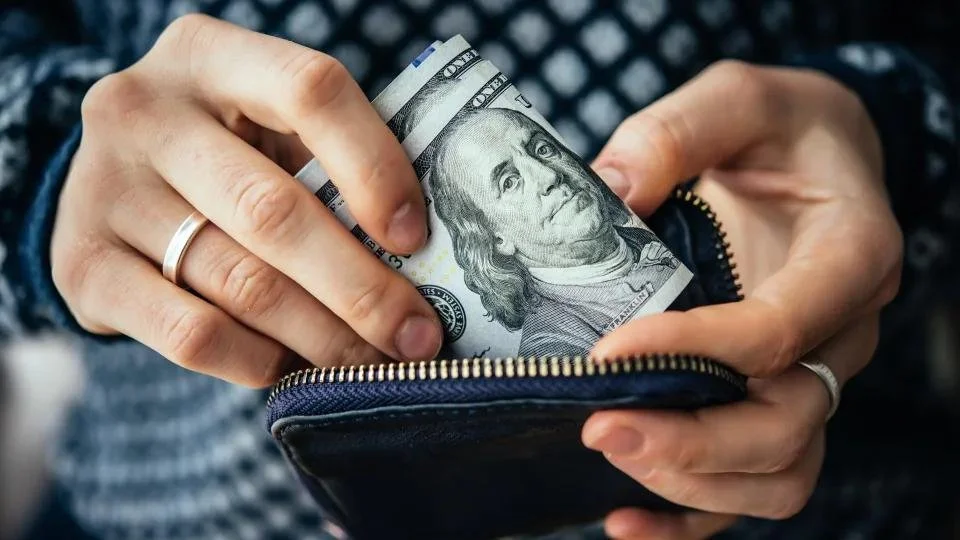
Some people charge everything to a credit card to rack up rewards points, but that isn’t your style. When possible, you prefer to pay with cash. Maybe you’ve ditched the plastic as a way to curb overspending, avoid credit card fraud or simply because you prefer to shop off the grid. However, despite the many good reasons to pay with cash, it isn’t always the best choice.
Not sure what types of purchases warrant leaving the cash in your wallet? Here’s a look at seven common payments that should always be made with a different form other than cash.
7 Things You Should Never Pay For With Cash
Jennifer Taylor
Some people charge everything to a credit card to rack up rewards points, but that isn’t your style. When possible, you prefer to pay with cash. Maybe you’ve ditched the plastic as a way to curb overspending, avoid credit card fraud or simply because you prefer to shop off the grid. However, despite the many good reasons to pay with cash, it isn’t always the best choice.
Not sure what types of purchases warrant leaving the cash in your wallet? Here’s a look at seven common payments that should always be made with a different form other than cash.
Rent
Writing a check can be a hassle, so if you don’t have the option to pay your rent online, you might opt for cash. However, William Capece, CFP, director of business development at the JS Benefits Group, said doing so is unwise, because it leaves you without a paper trail.
“Too often we hear stories of landlords who evict tenants over unpaid rent, while the tenant swears to have paid,” he said. “Cash leaves no paper trail and thus no proof.” On the flip side, he said landlords should also never accept cash payments for the same reason. “This should be outlined in the renter agreement,” he said.
Car
Since interest rates are at historic lows, Capece advised against buying a car with all cash. “Utilizing a car loan helps in many ways,” he said. “Dealers make more money when customers utilize debt, so they are more likely to give you a better deal.”
Beyond that, he said paying for such a large purchase in cash limits your ability to invest. If you can swing it, he recommended financing your car purchase and using the cash as the down payment on a rental property. “Use an appreciating asset to pay for your lifestyle,” he said.
Home Maintenance and Updates
If you own your home, you likely spend at least some money on upkeep each year. Capece said it’s important to have a paper trail for these expenses, so you don’t forget about them when it’s time to do your taxes. “Those expenses could be added to the cost basis of the home or as a write-off against income,” he said.
He recommended consulting with a tax professional for specifics on your unique situation.
Utilities and Other Recurring Bills
TO READ MORE: https://news.yahoo.com/7-things-never-pay-cash-120012133.html
Suze Orman: 6 Bad Pieces of Money Advice
Suze Orman: 6 Bad Pieces of Money Advice
Nicole Spector Fri, January 3, 2025 GOBankingRates
There has always been bad advice out there about what to do with our money. But now, in an increasingly digital age where many of us are glued to social media apps, inhaling particle after particle of “expert” information, we’re inundated with all sorts of financial advice. Some of it is salient and good; but some of it could be terrible for us, or, at best, not rightly sized for our needs and wants.
Suze Orman has become a multimillionaire as a personal finance guru, and is quick to call out a piece of advice about money that should be avoided. Let’s look at six bad pieces of money advice that Orman has bluntly struck down.
Suze Orman: 6 Bad Pieces of Money Advice
Nicole Spector Fri, January 3, 2025 GOBankingRates
There has always been bad advice out there about what to do with our money. But now, in an increasingly digital age where many of us are glued to social media apps, inhaling particle after particle of “expert” information, we’re inundated with all sorts of financial advice. Some of it is salient and good; but some of it could be terrible for us, or, at best, not rightly sized for our needs and wants.
Suze Orman has become a multimillionaire as a personal finance guru, and is quick to call out a piece of advice about money that should be avoided. Let’s look at six bad pieces of money advice that Orman has bluntly struck down.
‘It’s Fine To Hire a Financial Advisor Who Is Not a Fiduciary’
This one may catch you by surprise, if only because you may not know this distinction exists. Not all financial advisors are fiduciary financial advisors. A fiduciary financial advisory has the qualification and commitment to act in your best interest and is overseen by complex and specific rules.
A financial advisor who does not have a fiduciary duty could act against your best interests by, for example, investing your money in a stock that they want to see succeed for their own prosperity.
“Only advisors who operate as fiduciaries are promising to always put the client’s interest first,” Orman wrote in a blog on her site in 2020. “If you are interviewing potential financial planners, ask them if they are a fiduciary and if they will put that in writing if you work with them. This should be a super easy request anyone will quickly say yes to.”
‘You Have To Send Your Kid to an Expensive College in Order for Them To Be Successful’
Like fellow financial expert Dave Ramsey, Orman doesn’t at all disavow a college education, but she does have a scrutinizing eye when she sees people going into student loan debt to secure one. Her philosophy is that college is valuable, but needs to be obtained affordably.
She doesn’t want to see parents place too much importance on the best of the best when it comes to education and their children’s needs. She wants them to be practical and act within their budgets so that they’re not putting their own futures at risk in the name of helping their kids.
TO READ MORE: https://www.yahoo.com/finance/news/suze-orman-6-bad-pieces-130007865.html
4 Reasons You Should Not Spend Your Rare $2 Bills
4 Reasons You Should Not Spend Your Rare $2 Bills
Caitlyn Moorhead Thu, June 12 GOBankingRates
Sometimes called lucky, sometimes suspected as fake, the $2 bill, with its iconic depiction of Thomas Jefferson on the front and the signing of the Declaration of Independence on the back, has long been a curiosity when it comes to American currency and sorting through your cash.
The $2 bill has been in circulation, in various designs, since 1862, and while it is rarer than other dollars in your pocket, you can spend it like any other bill. Despite the novelty of it, you may or may not want to keep some of them in your stash as some are quite collectible and valuable.
4 Reasons You Should Not Spend Your Rare $2 Bills
Caitlyn Moorhead Thu, June 12 GOBankingRates
Sometimes called lucky, sometimes suspected as fake, the $2 bill, with its iconic depiction of Thomas Jefferson on the front and the signing of the Declaration of Independence on the back, has long been a curiosity when it comes to American currency and sorting through your cash.
The $2 bill has been in circulation, in various designs, since 1862, and while it is rarer than other dollars in your pocket, you can spend it like any other bill. Despite the novelty of it, you may or may not want to keep some of them in your stash as some are quite collectible and valuable.
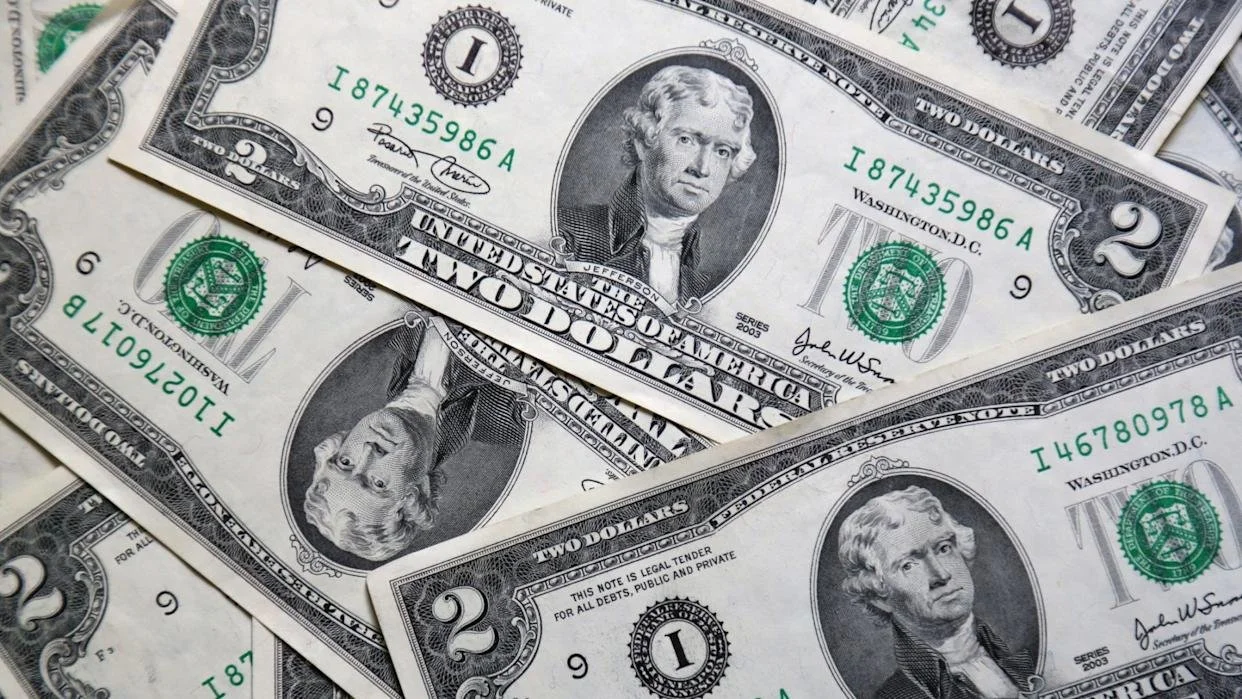
Here are four reasons why you shouldn’t spend your $2 bills.
Collectors Could Pay You Much More Than $2
While most $2 bills are worth their face value, of well, $2, certain older bills or bills with unique serial numbers might fetch a premium among collectors. Here are some rare bills that could fetch you a lot of paper:
1862 and 1869 legal tender notes: These are the earliest $2 bills and feature a portrait of Alexander Hamilton (which was later replaced by Jefferson)
1890 $2 Treasury Note: An 1890 $2 Treasury Note featuring General James McPherson can be worth thousands so double check you’re not using it to tip your delivery driver, unless you were hoping to be very generous.
1928 red seal notes: The 1928 $2 bill was the first to feature Thomas Jefferson’s home, Monticello, displayed with a red seal rather than a green one.
1976 bicentennial $2 bills: This $2 bill was released to celebrate the U.S. bicentennial, and while most of them are only worth face value, some with special serial numbers, misprints, stamps or star notes can be worth hundreds of dollars.
Sometimes It Makes Sense To Be Sentimental
Many people have received $2 bills as gifts, keepsakes, tips or tokens of good luck. If your bill has sentimental value, you might be more inclined to keep it for its personal significance rather than its monetary worth.
Good luck can be hard to come by in this economy, so though handing over a $2 bill often leads to stories, questions and sometimes even debates about its legitimacy as currency, it may be worth keeping in your pocket next to your rabbit foot if you don’t need to spend it.
It Wouldn’t Make an Economic Impact
TO READ MORE: https://www.yahoo.com/lifestyle/articles/4-reasons-not-spend-rare-200108291.html
What “Liberation Day” Could Have Been
What “Liberation Day” Could Have Been
Notes From the Field By James Hickman (Simon Black) June 10, 2025
On July 9, 1807, after Napoleon’s crushing victory over an entire coalition of European nations, the King of Prussia was forced to sign the Treaty of Tilsit, formally putting an end to the conflict.
The peace treaty was devastating for the Prussians; they were forced to pay heavy tribute and war reparations to France, limit the size of the Prussian army, and hand over roughly 50% of their territory to Napoleon.
What “Liberation Day” Could Have Been
Notes From the Field By James Hickman (Simon Black) June 10, 2025
On July 9, 1807, after Napoleon’s crushing victory over an entire coalition of European nations, the King of Prussia was forced to sign the Treaty of Tilsit, formally putting an end to the conflict.
The peace treaty was devastating for the Prussians; they were forced to pay heavy tribute and war reparations to France, limit the size of the Prussian army, and hand over roughly 50% of their territory to Napoleon.
Just imagine what it must have been like to be living in Westphalia at the time (one of the regions that was ceded to Napoleon). One day you’re Prussian territory. The next day you’re French (and later an independent kingdom).
Everything changed. And that included the legal system.
Before Napoleon arrived, that area (especially Westphalia, part of modern-day Germany) was part of the decaying Holy Roman Empire, and its legal landscape was a tangled knot of conflicting systems.
There was feudal law, where obligations to lords governed land and labor.
There was Roman civil law, which had been in place since the 15th century, though inconsistently applied.
Ecclesiastical courts handled everything from marriage disputes to moral offenses.
Customary law varied by village and town, with local statutes often passed down orally or compiled in obscure legal codices.
Add to that guild regulations, imperial edicts, and the whims of local princes and bishops, and you had a legal system that was both impossible to navigate, and ripe for abuse.
This was all wiped away.
When Prussia handed over the territory of Westphalia, Napoleon immediately imposed the Napoleonic Code as the law of the land.
The Napoleonic Code, originally drafted in 1804, was radical for its clarity and uniformity. It abolished feudal privileges, standardized property rights, and enshrined the idea of equality before the law.
No more special courts for nobles or clergy. No more confusing tangle of contradictory rules. The code was divided into clear sections—persons, property, acquisition of property, and civil procedure—and it applied to everyone.
For the first time, a Jewish merchant in Kassel and a Lutheran farmer from Göttingen were subject to the same laws, interpreted by the same courts. That was unthinkable under the old regime.
The US is in desperate need of a similar Westphalian reset. The Law of the Land in the United States of America these days is an endless collection of conflicting and often obsolete federal, state, and local laws combined with countless court rulings and precedents, plus enough rules and regulations to fill a football stadium.
Plus the code of regulations grows by around 80,000 pages each year, so the monster only becomes larger.
It shouldn’t take being conquered or vanquished by war to have your legal code pruned of dead limbs.
In fact I heard a very smart guy on a podcast some years ago talking about how every law in the US should have a sunset clause so that it’s automatically abolished in, say, 5-10 years.
Bad laws will expire without any further action from Congress. Necessary ones will be updated and refreshed.
That “very smart guy” happened to be Elon Musk. And I imagine that was exactly the type of reform he had in mind when he bank-rolled Donald Trump’s presidential campaign... and it’s exactly what “Liberation Day” should have been.
Not across the board tariffs on staunch allies. Not bazillion-gajillion percent tariffs on China.
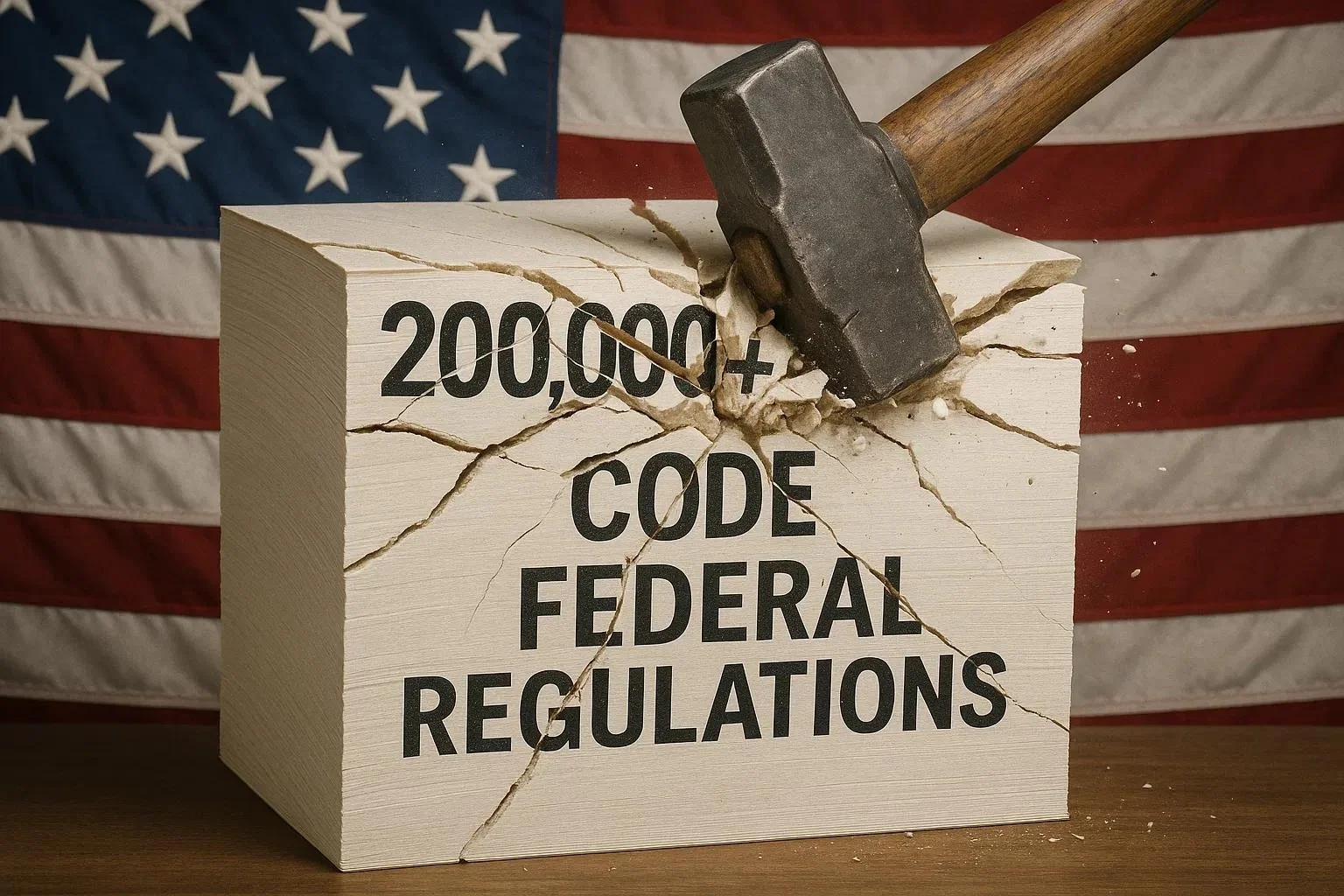
They should have liberated Americans from the 200,000+ page Code of Federal Regulations... many of which serve no purpose other than to frustrate commerce and productivity.
Bizarrely, for politicians who claim to care about “small business” and “the working class”, most of these rules hit small businesses and workers the hardest because they don’t have the resources (unlike big companies) to navigate Byzantine regulatory codes.
They’ve made it extremely difficult (to downright impossible, depending on the industry) to start a productive business. Good luck starting a restaurant in the state of California. Or a copper mine in the state of Arizona (where one unlucky business has been in permitting for 20+ years!)
The government doesn’t need to centrally plan anything; they just need to get rid of regulatory obstacles which make it more difficult for Americans to be more productive. And this is essential to saving the country from its $2 trillion annual deficits, and $36 trillion national debt.
You don’t need a PhD in economics to understand this problem; quite simply, the US economy needs to grow faster than the debt. That isn’t happening right now.
These days, the debt is growing by more than 5.5% annually, far outpacing economic growth. So saving the country’s finances mean that GDP needs to grow by at least 5.5%, and ideally much more.
And while that sounds like an unrealistic goal, it’s totally achievable; with all the talent and investment capital in the US, along with AI, robotic automation, and nuclear power on the horizon, the US should be able to grow at 7%+ per year.
That could have happened if Liberation Day had actually liberated Americans from job-killing laws and productivity-constraining regulations.
I have said many times in the past that America’s problems are still technically fixable, but that the narrow window of opportunity is rapidly closing.
It’s beyond frustrating to see these problems continue to grow worse. And it’s becoming harder every day to imagine a scenario where we don’t end up with a currency crisis or major inflation down the road.
I still hold out hope that sanity prevails... that, even if at the last minute, the US government summons the courage and clarity to do the right thing for America once and for all, and avoid the worst outcome.
I hope.
But as we used to say in the military, hope is not a course of action. And that’s why it makes so much sense to have a Plan B.
To your freedom, James Hickman Co-Founder, Schiff Sovereign LLC
5 Ways To Prepare Your Finances
5 Ways To Prepare Your Finances
G. Brian Davis Thu, June 12, 2025 GOBankingRates
The Trump Administration Says Tariffs Aren’t Going Away: 5 Ways To Prepare Your Finances
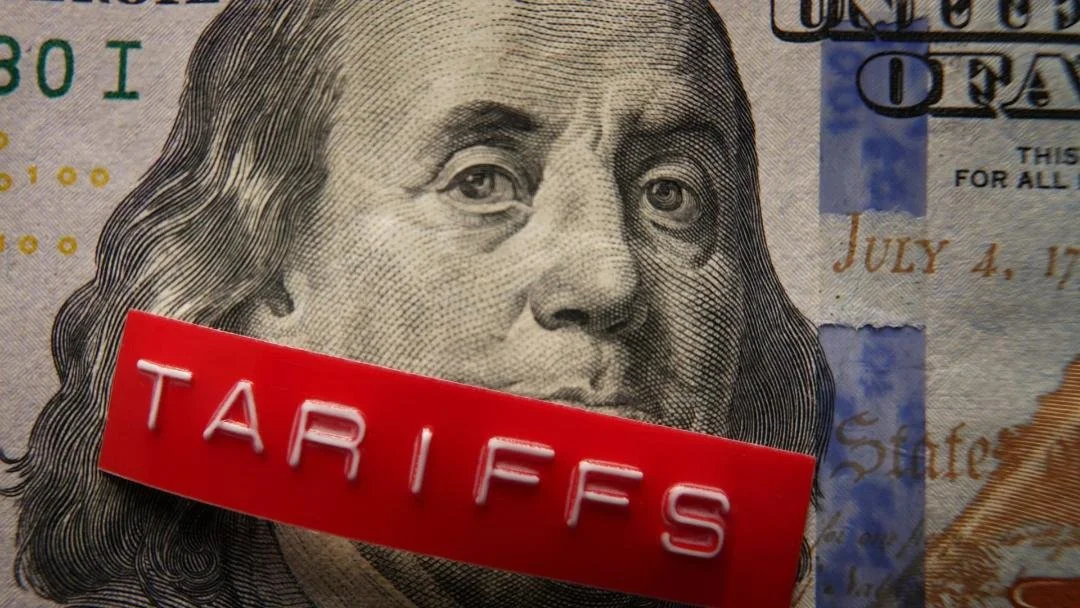
In an appearance on Fox News, Commerce Secretary Howard Lutnick made the Trump Administration’s position clear: “Rest assured, tariffs are not going away.”
The Administration has signaled that they will not extend the current 90-day pause on many tariffs. So how should American consumers prepare for a jolt in prices?
5 Ways To Prepare Your Finances
G. Brian Davis Thu, June 12, 2025 GOBankingRates
The Trump Administration Says Tariffs Aren’t Going Away: 5 Ways To Prepare Your Finances
In an appearance on Fox News, Commerce Secretary Howard Lutnick made the Trump Administration’s position clear: “Rest assured, tariffs are not going away.”
The Administration has signaled that they will not extend the current 90-day pause on many tariffs. So how should American consumers prepare for a jolt in prices?
Slash Spending Now
Don’t get caught flat-footed by price jumps. Start cutting back on spending now, to soften the impact when the worst of it hits.
“People often wait too long to pivot when it comes to their finances,” said Charles Hoff, financial education counselor at DFCU Financial. “Plan for the worst scenario now, which means cutting expenses to a level where you are living ‘well below your means’ so you can absorb increasing costs.”
Deepen Your Emergency Fund
As you rein in your spending, use the surplus to pad your emergency fund.
Robert Gabriel, financial specialist with healthcare platform Vosita, explained that most financial experts recommend emergency savings that can cover three-to-six months of living expenses. “With the volatility tariffs will create in the economy and prices, shoot for the upper part of that range. A well-cushioned emergency fund serves as a shock absorber against price hikes or possible income disruptions.”
Don’t just leave that cash losing money in an account earning no or low interest, either. Find a high-interest savings account that can hopefully keep pace with inflation or at least reduce the loss in purchasing power.
TO READ MORE: https://news.yahoo.com/news/finance/news/trump-administration-says-tariffs-aren-100245267.html
153% Gain in Three Months
153% Gain in Three Months
Notes From the Field By James Hickman (Simon Black) June 11, 2025
We’ve been extremely consistent—practically shouting from the rooftops over the last year—that there was an absolutely outrageous investment trend that was going to make people who were paying attention a lot of money… and it wasn’t going to last.
What we’ve been saying over and over is that gold’s bull run was just beginning. At $2,000, we said it wasn’t the end. At $3,000, we said it wasn’t the end… But the bizarre anomaly was that while gold was heading to all-time highs, gold stocks were still remarkably cheap.
153% Gain in Three Months
Notes From the Field By James Hickman (Simon Black) June 11, 2025
We’ve been extremely consistent—practically shouting from the rooftops over the last year—that there was an absolutely outrageous investment trend that was going to make people who were paying attention a lot of money… and it wasn’t going to last.
What we’ve been saying over and over is that gold’s bull run was just beginning. At $2,000, we said it wasn’t the end. At $3,000, we said it wasn’t the end… But the bizarre anomaly was that while gold was heading to all-time highs, gold stocks were still remarkably cheap.

And we explained the reason why—gold was hitting all-time highs because central banks were losing confidence in the US dollar and trading for the only truly universal asset in the world: gold.
But central banks were buying gold bars, not gold stocks—so while gold hit all-time highs, gold stocks barely budged.
It was a similar phenomenon with other real assets as well, including silver and platinum.
And in our 4th Pillar investment research service, we identified some of the most ridiculously undervalued companies and presented our research to subscribers.
It didn’t take very long—one of our most undervalued precious metals stocks is up 153% in three months.
Our other best performing precious metals picks of the year have gained:
146% in the last eleven months
133% in the last two months
51% in the last three months
Another five stocks we researched are up between 27-34%.
For the sake of transparency, one is actually down 27%.
And frankly, we don’t think it’s because it’s a bad company.
We think the company’s fundamentals and management are quite sound, so we believe it’s even more undervalued now. And with specific catalysts on its horizon, it’s a great opportunity to pick it up.
But in general, is it too late to find the deals?
Opportunities are definitely thinning, but there are still some out there.
To give you an example, in our most recent 4th Pillar report we sent out last week, we identified a profitable gold business trading for less than cash.
Talk about limited downside— you could literally buy the entire company, repay yourself with its cash, and have the operating business for FREE.
That’s the type of investment opportunities we find.
And just like the companies we identified recently which surged 150%, this one also has a number of catalysts on the horizon which could quickly re-rate the stock much higher.
Those catalysts are in addition to the simple fact that investors are finally catching on, and realizing how much value there is to be had in companies related to mining precious metals.
They’re looking. But we got there first.
We’ve been practically pounding the table on this for over a year.
We said these companies were cheap, we said they were going to skyrocket in value—and that’s exactly what’s happened.
This trend is not over. But it’s definitely something you want to be paying attention to.
I can’t stress this enough, these are the types of companies you want to own in this economic environment.
And we’re very proud of the work we have done to find these opportunities.
To your freedom, James Hickman Co-Founder, Schiff Sovereign LLC
7 Reasons You Should Update Your Bank Account Password ASAP
7 Reasons You Should Update Your Bank Account Password ASAP
Jacob Wade GoBankingRates
According to a recent survey by GOBankingRates, 17% of Americans have never changed their bank account passwords. This means the money parked in those accounts could be vulnerable to online thieves. With massive data breaches becoming a common trend, phishing scams and fraud schemes running rampant online, and password cracking software becoming more sophisticated, it’s important to stay up to date on securing your financial accounts.
If you haven’t changed your bank account password, here are seven reasons to do it today.
7 Reasons You Should Update Your Bank Account Password ASAP
Jacob Wade GoBankingRates
According to a recent survey by GOBankingRates, 17% of Americans have never changed their bank account passwords. This means the money parked in those accounts could be vulnerable to online thieves. With massive data breaches becoming a common trend, phishing scams and fraud schemes running rampant online, and password cracking software becoming more sophisticated, it’s important to stay up to date on securing your financial accounts.
If you haven’t changed your bank account password, here are seven reasons to do it today.
You Use the Same Password for Other Accounts
Most people have been guilty of this. With so many accounts moving online, it’s easy to use the same password over and over again. But this is a mistake that hackers want you to make, especially with your financial accounts.
Using the same password for multiple accounts puts you at more risk. If there is a data breach for any of your online accounts, hackers now have access to your password for that account. The first thing they will do is attempt to use this same username/password combo for multiple types of accounts, including your bank account.
If you have no other protections in place, they can quickly drain your accounts, leaving you with no money and no recourse. Always use unique passwords for each online account.
Be Real — It’s Been a While
While you don’t necessarily need to change your password every month, if you haven’t changed your bank account password in a few years, it might be time to mix it up. With data breaches across major companies, it is likely that an old password of yours might have been compromised. This can be quickly remedied with a password change for each of your financial accounts.
A good rule of thumb is to update your password every two years. Research from the Federal Trade Commission suggests that mandatory password changes aren’t as effective as just setting a strong password in the first place. But changing your password every few years can help keep your passwords protected from data breaches.
Your Password Is Saved In Your Browser — and Is Easier To Access
https://finance.yahoo.com/news/7-reasons-bank-account-password-190018206.html
7 Money Habits That Can Make or Break You
7 Money Habits That Can Make or Break You
Credit.com . Yahoo! Finance/Thinkstock - Todd Tresidder
Why do you keep buying things you can’t afford? It makes no sense: it’s not rational. Nobody wants to be in debt. The answer is simple: debt problems are emotional, not rational. Debt results from unconscious habits and attitudes that cause you to spend more than you can afford.
In other words, everyone knows the first law of finance is to spend less than you make. That is how you stay out of debt. Unfortunately, knowing what to do and actually getting it done are two different issues.
7 Money Habits That Can Make or Break You
Credit.com . Yahoo! Finance/Thinkstock - Todd Tresidder
Why do you keep buying things you can’t afford? It makes no sense: it’s not rational. Nobody wants to be in debt. The answer is simple: debt problems are emotional, not rational. Debt results from unconscious habits and attitudes that cause you to spend more than you can afford.
In other words, everyone knows the first law of finance is to spend less than you make. That is how you stay out of debt. Unfortunately, knowing what to do and actually getting it done are two different issues.
That’s why being on the right side of these seven financial practices is critically important to your financial success. They can close the gap between knowing what to do and actually getting it done – simply by changing your daily habits. It is the easiest way to solve your debt problems and begin building wealth.
The good news is this means you have the power to improve your financial situation no matter where you are at today. You created your habits, and your habits produce your long-term financial results. That means you’re in charge and have the power to make positive changes.
Consider the following seven financial practices that can take you to debt or wealth. The habits you choose will determine your financial success or failure.
1. Emotional Spending
Here is a simple test to determine if you’re an emotional spender:
Do you use shopping to relieve stress or escape boredom?
Do you use shopping as a pick-me-up or entertainment?
Do you celebrate by shopping for a treat?
Do you ever shop as a form of “retail therapy?”
Do you use shopping for social connection?
Do you have clothes in the closet with the tags still attached?
Do you have more than one of the same item?
Is your credit card bill so large that you can’t afford to pay it off at the end of the month?
Do you ever feel an endorphin rush when making a purchase?
Do you experience anxiety, guilt, or remorse after shopping?
Do you ever hide purchases from friends or loved ones?
If you answered “yes” to one or more of these questions, then you might have an emotional spending problem.
Emotional shoppers become addicted to the temporary endorphin high that comes from buying. You’re genetically programmed to pursue what makes you feel good, turning spending into a physiological habit like a drug. That’s why excessive spending is about the emotional experience from buying stuff and not the stuff itself.
The purchase brings temporary yet immediate gratification (even if it causes debt).
The wealthy habit is to spend based on needs — not wants — and to plan purchases rather than buy spontaneously. A good habit for breaking emotional spending is to force a two-day cool-off period for all non-planned purchases so your emotions can settle down. If you still want it after two days then it may actually be worth buying.
2. Addiction
Closely related to emotional spending is addiction, but this can be an addiction of any kind — not just shopping. Gambling, drug and sex addictions are highly destructive — both financially and otherwise. The ensuing debt spiral may be the least of your worries but is often a consequence.
The wealthy habit is to avoid all forms of addictive behavior and live in balance — admittedly easier said than done. If you face addiction issues, the solutions are beyond the scope of this article. Seek professional help and consider one of the 12-step “Anonymous” programs tailored to your specific addiction.
3. Entitlement
Entitlement thinking is the belief that you magically deserve all the good things in life regardless of what your financial statement says. After all, why shouldn’t you have designer clothes, a big-screen TV, pedicures and a new car? Everyone else does, right?
TO READ MORE: https://finance.yahoo.com/news/7-money-habits-break-110023407.html
6 Most Useful Lessons I've Learned From My Wealthiest Clients
6 Most Useful Lessons I've Learned From My Wealthiest Clients
Business Insider Jovan Johnson Sun, June 8, 2025
I've been a financial planner for over 10 years. Here are the 6 most useful lessons I've learned from my wealthiest clients.
I'm a certified public accountant and certified financial planner with over a decade of experience helping high-income professionals and diverse business owners take control of their finances. My clients range from medical professionals to small businesses, and I help them grow their wealth, reduce tax burdens, and run more profitable businesses.
Many of my high-net-worth clients share common habits, mindsets, and strategies that helped them build and maintain their wealth. The good news is that anyone can apply these habits to improve their financial life.
6 Most Useful Lessons I've Learned From My Wealthiest Clients
Business Insider Jovan Johnson Sun, June 8, 2025
I've been a financial planner for over 10 years. Here are the 6 most useful lessons I've learned from my wealthiest clients.
I'm a certified public accountant and certified financial planner with over a decade of experience helping high-income professionals and diverse business owners take control of their finances. My clients range from medical professionals to small businesses, and I help them grow their wealth, reduce tax burdens, and run more profitable businesses.
Many of my high-net-worth clients share common habits, mindsets, and strategies that helped them build and maintain their wealth. The good news is that anyone can apply these habits to improve their financial life.
Here are six of the most useful lessons I've learned from my wealthiest clients.
The more you give, the more you receive
One of the most profound lessons I've learned is that life becomes richer when you focus on pouring into others, rather than just focusing on yourself.
For example, clients who are generous with their employees often see retention rates soar. This principle extends beyond finances into mental well-being, relationships, and overall happiness. Generosity has a way of opening doors that talent or hard work alone sometimes can't.
Many of my wealthiest clients often share that they wouldn't be where they are without the generosity of others who helped them along the way.
Relying on others is the only way to accomplish everything
Wealthy individuals often have incredibly demanding schedules, leaving little time for personal tasks or downtime. One key to their success is recognizing the power of outsourcing and delegation.
Whether they hire a nanny to help with childcare or work with a financial advisor to manage their finances, they understand that they can't do it all alone. Instead of trying to juggle every responsibility, they build a trusted team around them with professionals who help them stay focused on what matters most.
They become comfortable relying on others, knowing it's the only way to accomplish everything on their plate while still maintaining their sanity and quality of life.
You can only go as far as your health allows
If you don't take care of your health, it will be harder to reach your goals, no matter how important they are. Many of my wealthiest clients have learned this firsthand. They've realized that when their mental, physical, spiritual, or emotional health is off-balance, their ability to lead, create, and perform suffers.
As a result, they intentionally make time and invest in activities that support their overall health, such as exercise, therapy, spiritual practices, or rest. Prioritizing health is not a luxury; it's a necessity.
TO READ MORE: https://www.yahoo.com/finance/news/ive-financial-planner-over-10-170701688.html