
With The Penny Going Away, What Should You Do With The Ones In Your Coin Jar?
With The Penny Going Away, What Should You Do With The Ones In Your Coin Jar?
Mike Snider and Daniel de Visé, USA TODAY Sun, May 25, 2025
Learn to love your coins.
That’s the message from Kevin McColly, CEO of Coinstar, the company behind those coin-cashing machines you see in supermarkets. American consumers made only 16% of their payments in cash in 2023, according to the Federal Reserve. A 2022 Pew survey found that two-fifths of consumers never use cash at all.
President Donald Trump has ordered the Treasury to stop minting pennies because their production cost exceeds their value. (Intriguingly, the same is true of nickels.)
With The Penny Going Away, What Should You Do With The Ones In Your Coin Jar?
Mike Snider and Daniel de Visé, USA TODAY Sun, May 25, 2025
Learn to love your coins.
That’s the message from Kevin McColly, CEO of Coinstar, the company behind those coin-cashing machines you see in supermarkets. American consumers made only 16% of their payments in cash in 2023, according to the Federal Reserve. A 2022 Pew survey found that two-fifths of consumers never use cash at all.
President Donald Trump has ordered the Treasury to stop minting pennies because their production cost exceeds their value. (Intriguingly, the same is true of nickels.)
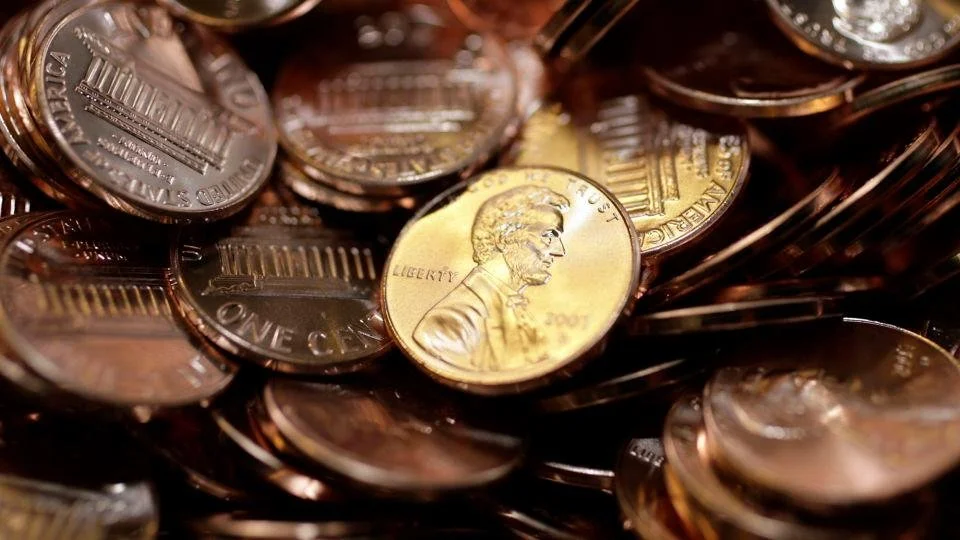
Many Americans regard both nickels and pennies as more nuisance than currency. The typical household is sitting on $60 to $90 in neglected coins, enough to fill one or two pint-size beer mugs, according to the Federal Reserve. Americans throw away millions of dollars in coins every year, literally treating them like trash.
Why do we treat coins like trash? McColly thinks we should change the way we think about coins.
To state the obvious, coins are worth money. Coinstar converts $3 billion in coins into spendable cash every year, one coin jar at a time. The average jar yields $58 in buying power.
Most of us don’t realize how much our coins are worth. Thus, a trip to a coin-exchange kiosk (or a bank, or credit union) can yield a pleasant surprise.
“People underestimate the value of their jar by about half,” McColly said. “It’s a wonderfully pleasurable experience. People have this sensation of found money.”
Certain groups of Americans – lower-income households, and those over 55 – still use plenty of cash, the Fed found, along with people who prefer to shop in person.
Coins aren't clutter, they're currency
As for the rest of us, McColly thinks it is time for a paradigm shift. Don’t think of your coins as clutter. Think of them as recyclables.
“They’re metal,” he said, in case we needed a reminder. “And they have a long and useful life.”
The Treasury still mints more than 5 billion coins a year, although the figure is dropping, according to the journal CoinNews.
“Those are just natural resources coming out of the Earth,” McColly said: Copper-plated zinc for pennies, copper-nickel alloys for nickels, dimes and quarters.
His point: If Americans got serious about gathering up their idle coins and “recycling” them into the monetary system, the Mint wouldn’t have to make so many new ones.
Granted, McColly has a vested interest. His company collects a small cut of the coins that consumers deposit.
“You can go to your own bank or credit union and not pay any fee,” said Kimberly Palmer, personal finance expert at NerdWallet. Both NerdWallet and Bankrate offer tip sheets on exchanging coins for cash. Most banks will take an account holder's coins for free, Bankrate reports, but not all, and you may need to roll the coins yourself.
“I think that a lot of people probably do have hidden coins stashed around their home, and it can be worth their time to go and collect them,” Palmer said.
McColly notes that Coinstar generally waives its fee if the depositor chooses to trade in coins for a retail gift card, rather than cash.
He is not alone in forecasting a future for the penny, the nickel, and their more profitable kin.
“We’ve been much slower than parts of Europe and Asia to adopt mobile payments and contactless credit cards,” said Ted Rossman, a senior industry analyst at Bankrate.
The pandemic delivered a timely reminder of how much we still rely on cash: Consumers and business owners sat on their coins amid a global shutdown, seeding an actual coin shortage
“It kind of froze the whole system,” Rossman said.
Retiring coins: Where does it end?
While Trump has only instructed the Mint to stop making pennies, some voices have urged America to stop using them.
The Common Cents Act, introduced on April 30 by a bipartisan group of lawmakers, would round cash transactions to the nearest five cents.
“The penny is outdated and inefficient and no longer serves the needs of our economy,” said Sen. Kirsten Gillibrand, the New York Democrat.
But the bill could push the nation down a slippery slope.
TO READ MORE: https://www.yahoo.com/news/penny-going-away-ones-coin-023835550.html
So What Happens To America’s 114 Billion Pennies Once The US Stops Making Them?
So What Happens To America’s 114 Billion Pennies Once The US Stops Making Them?
Chris Isidore, CNN Sun, May 25, 2025
The American penny isn’t going anywhere anytime soon.
The US Treasury Department announced Thursday that it plans to start winding down production of the one-cent coin it has been minting for more than 230 years. But the penny will still remain legal tender, and will still be in use at thousands of retailers around the country for sometime to come.
“If we look at the experience in Canada, for the first year after they stopped making pennies, there’s really no change in transactions,” Jeff Lenard, spokesperson for the National Association of Convenience Stores, told CNN. Convenience stores do more cash transactions than any other group, about 32 million a day, or about 20% of the total number of purchases by their customers, Lenard said.
So What Happens To America’s 114 Billion Pennies Once The US Stops Making Them?
Chris Isidore, CNN Sun, May 25, 2025
The American penny isn’t going anywhere anytime soon.
The US Treasury Department announced Thursday that it plans to start winding down production of the one-cent coin it has been minting for more than 230 years. But the penny will still remain legal tender, and will still be in use at thousands of retailers around the country for sometime to come.
“If we look at the experience in Canada, for the first year after they stopped making pennies, there’s really no change in transactions,” Jeff Lenard, spokesperson for the National Association of Convenience Stores, told CNN. Convenience stores do more cash transactions than any other group, about 32 million a day, or about 20% of the total number of purchases by their customers, Lenard said.
The National Retail Federation, which represents most major US store chains as well as thousands of small retailers, also said it anticipates its members will use pennies even after production stops at some point early next year, although it does anticipate that many will round cash transactions to the nearest nickel once the supply of pennies at banks starts to run short.
“Retailers’ primary goal is serving customers and making this transition as seamless as possible,” said Dylan Jeon, senior director of government relations for NRF.
There are an estimated 114 billion pennies currently in circulation, but they are “severely underutilized” according to the Treasury department. Many are at home in coin jars or junk drawers, or some other forgotten location gathering dust.
The math says that all those pennies could fill a cube roughly 13 stories high. Many people don’t even take them as change, tossing them into the leave-a-penny-take-a-penny dishes at store checkouts.
Lenard said the large number of pennies in circulation means that retailers won’t necessary run out of them for a while. But eventually stores won’t be able to get new rolls of pennies from their banks and will start rounding transactions up or down to the nearest nickel. The decision when to do that will rest with each retailer, not official government policy.
TO READ MORE: https://www.yahoo.com/news/happens-america-114-billion-pennies-113050465.html
Is Lending Money To Family Always The Right Thing To Do?
Is Lending Money To Family Always The Right Thing To Do?
Monique Danao Thu, May 22, 2025 Moneywise
I’ve hustled hard to make something of myself. Now my sister, 29, wants to borrow money — again. What do I do?
Consider the case of Eric, a 33-year-old who is debt-free, owns his own business and lives comfortably after years of hard work and risk-taking. When his 29-year-old sister recently asked him to cover a few months of her rent, he said no.
Is Lending Money To Family Always The Right Thing To Do?
Monique Danao Thu, May 22, 2025 Moneywise
I’ve hustled hard to make something of myself. Now my sister, 29, wants to borrow money — again. What do I do?
Consider the case of Eric, a 33-year-old who is debt-free, owns his own business and lives comfortably after years of hard work and risk-taking. When his 29-year-old sister recently asked him to cover a few months of her rent, he said no.
Lending money to family: What could go wrong?
According to Lending Tree, 35% of Americans who lent money to family or friends reported negative consequences. These include hurt feelings (14%), decreased contact (11%) and resentment (10%).
Lending to family can also blur emotional lines. It’s one thing to help someone in a crisis. But if there’s no plan for repayment or accountability, it can easily lead to resentment.
A short-term favour can quickly shift the family dynamic and turn one sibling into a provider and the other into a dependent.
Financial help doesn’t equal financial handouts
Saying no to lending money doesn’t mean saying no to helping. Some forms of support can be more beneficial in the long run. Here are a few alternatives that might empower your sibling more than a temporary bailout:
Offer to review their budget: Sometimes, all it takes is a fresh set of eyes to spot where money is going. Instead of offering cash, propose working together toward a goal like building an emergency fund.
Help them apply for jobs or update their resume: A part-time job might not cover everything. Offer to help update their resume, practice for interviews, search for better opportunities or tap into your network on their behalf.
Help them explore debt consolidation: If they’re overwhelmed by bills, consolidating the debt into a single, lower-interest payment might help them catch up.
Set boundaries with conditions: If you choose to help in the future, consider setting clear expectations, like one-time assistance, partial repayment, or proof of an action plan.
Connect them with a financial advisor or credit counsellor: If the situation is complex, a professional can offer tailored advice and help them build a sustainable plan to get back on track.
TO READ MORE: https://news.yahoo.com/news/finance/news/ve-hustled-hard-something-myself-120300511.html
What Is Your Emotional Money Score?
What Is Your Emotional Money Score? Suze Orman's 20 Questions To Determine If You Are In Control Of Your Money Or If It's In Control Of You
Kaili Killpack Mon, May 19, 2025 Benzinga
Do your emotions drive your financial decisions — or do you stay calm and calculated no matter what's happening in the market or your bank account? According to personal finance expert Suze Orman, understanding the emotional side of money is one of the most powerful steps you can take toward long-term financial security.
On a recent episode of her "Women & Money" podcast, Orman introduced listeners to the "Emotional Money Score," a self-assessment tool that helps people measure how much their emotions are influencing their financial choices.
What Is Your Emotional Money Score? Suze Orman's 20 Questions To Determine If You Are In Control Of Your Money Or If It's In Control Of You
Kaili Killpack Mon, May 19, 2025 Benzinga
Do your emotions drive your financial decisions — or do you stay calm and calculated no matter what's happening in the market or your bank account? According to personal finance expert Suze Orman, understanding the emotional side of money is one of the most powerful steps you can take toward long-term financial security.
On a recent episode of her "Women & Money" podcast, Orman introduced listeners to the "Emotional Money Score," a self-assessment tool that helps people measure how much their emotions are influencing their financial choices.
Why Emotions Matter in Money Management
Orman has long emphasized that fear, shame, and anger are internal obstacles that can sabotage financial success. These feelings can prompt impulsive decisions — like spending money you don't have or avoiding bills out of anxiety. Even the best financial plan can fall apart if emotions take the driver's seat.
She reminds listeners: "Money alone isn't the key to true financial freedom...It’s your mindset, your emotions, and your willingness to face the truth."
How the Emotional Money Score Works
To help listeners get a better handle on their emotional habits around money, Orman presented a 20-question quiz. Each question gives you four choices – A, B, C or D – with each letter representing a different emotional response to a common financial situation — such as facing an unexpected expense, setting goals, or talking about money with loved ones.
Once you’ve answered all 20 questions, you assign points to each response:
A = 3 points
B = 1 point
C = 0 points
D = 2 points
Then total your points to calculate your Emotional Money Score.
Take the Emotional Money Score Quiz
Choose the answer that best reflects your current habits or feelings:
1. When you think about your finances, which emotion do you feel most often?
A. Calm and in control
B. Anxious or fearful
C. Indifferent or avoidant
D. Excited but sometimes impulsive
TO READ MORE:: https://www.yahoo.com/finance/news/emotional-money-score-suze-ormans-154509245.html
The Do's And Don'ts After Receiving An Inheritance
The Do's And Don'ts After Receiving An Inheritance
Brad Smith·Host Tue, Apr 16, 2024,
As older Americans prepare to transfer their wealth or will it to their family, what should inheritors know before receiving this large sum of money?
Wealthstream Advisors Financial Advisor Katharine George explains the do's and don'ts when inheriting wealth, which includes money and even real estate property.
"I try to stay away from rules of thumbs but I would say in general, [avoid] making big decisions. I would say wait about six months or so, especially if you're grieving," George says. "These big changes... in that short period of time when you're grieving if it was someone close to you, we don't want to make any decisions that are rash. So buying another property or going on a big vacation.
These big changes, it could be that you need these assets invested and saved for your long term or it could be you could retire tomorrow. It really depends on the personal situation but not making any of these big decisions immediately after is really important, really let the dust settle."
The Do's And Don'ts After Receiving An Inheritance
Brad Smith·Host Tue, Apr 16, 2024,
As older Americans prepare to transfer their wealth or will it to their family, what should inheritors know before receiving this large sum of money?
Wealthstream Advisors Financial Advisor Katharine George explains the do's and don'ts when inheriting wealth, which includes money and even real estate property.
"I try to stay away from rules of thumbs but I would say in general, [avoid] making big decisions. I would say wait about six months or so, especially if you're grieving," George says. "These big changes... in that short period of time when you're grieving if it was someone close to you, we don't want to make any decisions that are rash. So buying another property or going on a big vacation.
These big changes, it could be that you need these assets invested and saved for your long term or it could be you could retire tomorrow. It really depends on the personal situation but not making any of these big decisions immediately after is really important, really let the dust settle."
For more expert insight and the latest market action, click here to watch this full episode of Wealth!This post was written by Luke Carberry Mogan.
Video Transcript
BRAD SMITH: Well, the baby Boomer generation is aging. We all are, come on now. With its oldest members nearing 80 years old. And for a generation that has done quite well for themselves, that wealth is now starting to be passed down to younger generations. Gen X and millennials are slowly starting to inherit large sums of money investments or even pieces of real estate. All of this can certainly overwhelm and alter your life.
So what should you be doing with inheritance, and what are the tax implications behind the Great Wealth Transfer as well? For more, I'm joined by Katharine George, Wealthstream Advisors financial advisor. First and foremost, we should just say, appreciate your family members while they're here. Spend that time with them. Enjoy so much of that experience.
And then if you do have to get into a position where you've got to figure out what to do with this windfall of assets, now, what do you do? What is the most apt decision that people should start to make and where they can start the thought process, Katharine?
KATHARINE GEORGE: Well, Brad, I mean, there's lots of different types of assets that people invest like you just mentioned. I'd say, the number 1 question that I get from clients who just got money is, do I have to report this on my tax return? They just got $1,000 in cash. Is this taxable? The answer is no. When you receive assets, that is not taxable. It's when you sell something or when you pull from the retirement account, that's really when the taxes could come into play.
But the first decision is really to decide, should I sell this? Is this an appropriate investment for me? These types of investments can be bucketed into non-retirement assets and retirement assets. And with non-retirement assets, there's actually a big tax advantage to selling. In most cases, when someone passes away, what they paid for the asset kind of gets stepped up to the market value today, meaning that if you sell it, there's no taxes.
So there is a period of time where you can sell the investments that you receive and maybe put it into something that would be more beneficial for you. That's kind of the first tip.
BRAD SMITH: What about real estate or other illiquid assets?
To Read More:
https://finance.yahoo.com/video/dos-donts-receiving-inheritance-162116156.html
Americans Don’t Understand Inflation — This Is How It Actually Affects Your Money
Americans Don’t Understand Inflation — This Is How It Actually Affects Your Money
Cynthia Measom Wed, April 10, 2024
Inflation — it’s a word you hear frequently, but do you really understand what it means?
What most people know about inflation is that it makes things more expensive. A simple definition of inflation is that it’s the increase in the cost of goods and services over a time period in an economy, which is usually expressed as a yearly percentage. Inflation rates are measured by price indexes, including the consumer price index by the Bureau of Labor Statistics and the personal consumption expenditures price index from the Bureau of Economic Analysis.
The main effects of inflation are better interest rates for savings accounts and higher costs of living, but there are several more nuanced effects to watch out for as you manage your money. Increasing your understanding about the different types of inflation and how they could impact your life both positively and negatively can help you make better financial decisions, especially when it comes to protecting your money now and in the long run.
Americans Don’t Understand Inflation — This Is How It Actually Affects Your Money
Cynthia Measom Wed, April 10, 2024
Inflation — it’s a word you hear frequently, but do you really understand what it means?
What most people know about inflation is that it makes things more expensive. A simple definition of inflation is that it’s the increase in the cost of goods and services over a time period in an economy, which is usually expressed as a yearly percentage. Inflation rates are measured by price indexes, including the consumer price index by the Bureau of Labor Statistics and the personal consumption expenditures price index from the Bureau of Economic Analysis.
The main effects of inflation are better interest rates for savings accounts and higher costs of living, but there are several more nuanced effects to watch out for as you manage your money. Increasing your understanding about the different types of inflation and how they could impact your life both positively and negatively can help you make better financial decisions, especially when it comes to protecting your money now and in the long run.
Inflation Can Be Confusing
According to GOBankingRates’ 2024 Financial Literacy Survey, out of all current hot money topics — inflation, interest rates, Social Security and taxes — 38% of Americans find inflation to be the most confusing. Here’s a breakdown of the percentage of each age group that finds inflation most confusing:
18- to 24-year-olds: 29%
25- to 34-year-olds: 42%
35- to 44-year-olds: 41%
45- to 54-year-olds: 45%
55- to 64-year-olds: 35%
65 and over: 32%
Overall, respondents ages 18-24 and those 65 and over — members of the youngest and oldest age groups — find inflation to be less confusing than the other age groups. Respondents ages 45-54 find inflation to be the most confusing of all generations, followed people who are 25-34. Additionally, 40% of women versus 35% of men said that inflation was the most confusing of current hot money topics.
How Inflation Affects Your Money
Not all outcomes of inflation are bad. In fact, maintaining a healthy rate of inflation is good for the economy. Here are some of the positive and negative effects of inflation:
Positive: You’ll Get Better Savings Account Rates
Investors with short-term goals might invest in a high-interest savings account if they think they would need access to their funds in the near future. If this sounds like you, your short-term savings could get a boost because increasing inflation often prompts the Federal Reserve to raise interest rates, and banks, in turn, often raise the rates they pay on savings deposits. So you could benefit from a better return on money sitting in your cash or savings account.
Negative: Borrowing Becomes More Expensive
But those aren’t the only rates banks raise. When the Federal Reserve raises interest rates, it makes it more expensive for banks to borrow money from one another. These increased rates are then passed on to individual and business borrowers. The bottom line is that higher inflation means higher interest rates on the money you borrow — and less money in your pocket.
Negative: You’ll Pay More for Stuff
With inflation, prices of pretty much everything start to rise. Medical care and prices for prescription drugs could increase, and your rent could also go up. And unless your paycheck goes up at least as much as the inflation rate, you’ll be trying to pay for the increased costs of items on the same income, so inflation can be tough on the wallet — especially during hyperinflation.
https://news.yahoo.com/finance/news/americans-don-t-understand-inflation-140003599.html
Atlanta Woman Lost $8K On Scam Call From Fake Wells Fargo Employee — Take These Steps To Keep Your Cash Safe
Atlanta Woman Lost $8K On Scam Call From Fake Wells Fargo Employee — Take These Steps To Keep Your Cash Safe
Christy Bieber Tue, May 6, 2025 Moneywise
Aleah McPherson's bank account is $8,265 lighter these days. Sadly, the funds disappeared after she fell for a scam by someone impersonating a Wells Fargo employee, leaving McPherson and her fiancé devastated by the loss.
"That was my savings. That was actually what I have been working for a while," McPherson told Fox 5 Atlanta last month. She hopes that her story will serve as a warning to others so that they don't fall victim to similar fraud and be left without their hard-earned money.
Atlanta Woman Lost $8K On Scam Call From Fake Wells Fargo Employee — Take These Steps To Keep Your Cash Safe
Christy Bieber Tue, May 6, 2025 Moneywise
Aleah McPherson's bank account is $8,265 lighter these days. Sadly, the funds disappeared after she fell for a scam by someone impersonating a Wells Fargo employee, leaving McPherson and her fiancé devastated by the loss.
"That was my savings. That was actually what I have been working for a while," McPherson told Fox 5 Atlanta last month. She hopes that her story will serve as a warning to others so that they don't fall victim to similar fraud and be left without their hard-earned money.
How a phone scam led to a huge loss
According to McPherson, the trouble started when she received a phone call from a 1-800 number associated with Wells Fargo to alert her to a serious problem. "Wells Fargo bank informed me there was fraudulent activity," she said. "They will call you if there's fraudulent activity on your account, so I didn't think there was anything out of the ordinary. I've had this happen before."
The scammer told McPherson she'd have to transfer her money out of her account to keep it safe while an investigation was carried out. McPherson believed she'd confirmed that she was actually talking to her bank, so she followed their instructions and emptied her bank account, sending the money via Zelle and a Chase digital wallet.
Although she thought moving the funds would protect them while Wells Fargo investigated the fraud, the reality is that the money disappeared into the accounts of the scammers.
Adding insult to injury, she also explained that the scammers mocked her for falling for their tricks. "Once you're done talking to them, they're all laughing in the background. They are telling you that you’ve been scammed and laughing."
Sadly, McPherson is one of many who have fallen victim to scams in which thieves pretend to be trusted organizations, including financial institutions or government agencies. These scams are called phishing or spoofing scams, and the FBI's 2024 Internet Crime Report revealed 193,407 complaints about them during the year, with victims collectively losing over $70 million.
How to protect yourself from this scam
TO READ MORE: https://www.yahoo.com/finance/news/atlanta-woman-lost-8k-scam-120200319.html
I’m a Financial Influencer: These Are the 6 Most Common Money Questions I’m Asked
I’m a Financial Influencer: These Are the 6 Most Common Money Questions I’m Asked
Nicole Spector GOBankingRates
With general financial literacy and better financial planning exploding on social media, millions of folks are turning to financial influencers to get their money questions answered without breaking the bank.
What are people the most curious or confused about? What are they reaching out to financial influencers to find out about? And how do financial influencers answer their queries or point them in the right direction?
GOBankingRates spoke with Jeff Sekinger, a financial innovator and entrepreneur, and the CEO and founder of Nurp LLC. Sekinger courts a following of 1.1 million on Instagram.
I’m a Financial Influencer: These Are the 6 Most Common Money Questions I’m Asked
Nicole Spector GOBankingRates
With general financial literacy and better financial planning exploding on social media, millions of folks are turning to financial influencers to get their money questions answered without breaking the bank.
What are people the most curious or confused about? What are they reaching out to financial influencers to find out about? And how do financial influencers answer their queries or point them in the right direction?
GOBankingRates spoke with Jeff Sekinger, a financial innovator and entrepreneur, and the CEO and founder of Nurp LLC. Sekinger courts a following of 1.1 million on Instagram.
These are the six most common money questions he’s asked — along with how he answers them.
Retirement Planning: Whether you're planning for retirement, dealing with a significant life event or simply looking to make smarter financial decisions, a financial advisor can offer the expertise and guidance you need. Here are some compelling reasons why you should consider a financial advisor -- even if you're not wealthy.
‘How Might a Trump Presidency Impact the Economy?’
Sekinger is constantly spammed with burning questions about money. A common one recently revolves around Trump. Specifically, if Trump is re-elected, how would his presidency impact the economy? More specifically, which markets, sectors and companies could benefit?
“A Trump presidency could have significant implications for the economy and markets,” Sekinger said. “Some investors are optimistic that Trump’s policies, like tax cuts and deregulation, could boost the economy and markets. Others are more cautious, citing concerns about Trump’s trade policies and potential geopolitical instability.”
According to Sekinger, companies that could benefit from a Trump presidency are the energy, financial and defense sectors.
“On the other hand, companies in sectors like healthcare and technology might face headwinds,” Sekinger said.
‘What Do I Need To Know To Be A Successful Young Investor?’
Everyone on the path to financial freedom needs to be investing. Investing can be complex, and naturally, people have questions. Commonly Sekinger is asked what you need to know to become a successful young investor.
“As a young investor, time is on your side,” Sekinger said. “Take advantage of compound interest by investing as early as possible, even if it’s just a small amount each month. Consider contributing to a Roth IRA or your employer’s 401(k) plan. Also, educate yourself about investing and avoid getting caught up in get-rich-quick schemes.”
‘How Can I Build Wealth While Managing Student Loan Debt?’
To Read More: https://news.yahoo.com/news/finance/news/m-financial-influencer-6-most-140125604.html
Warren Buffett: 6 Best Pieces of Money Advice for the Middle Class
Warren Buffett: 6 Best Pieces of Money Advice for the Middle Class
John Csiszar Fri, May 2, 2025 GOBankingRates
For one of the richest people in the entire world, Warren Buffett, the CEO of Berkshire Hathaway, is surprisingly down-to-earth. He famously lives in the same modest house in Omaha that he bought in 1958 for $31,500, and his favorite meal for breakfast is McDonald’s. Between that and his folksy, easy-to-understand wisdom, it’s no wonder that “The Oracle of Omaha” is so popular with the general public.
Warren Buffett: 6 Best Pieces of Money Advice for the Middle Class
John Csiszar Fri, May 2, 2025 GOBankingRates
For one of the richest people in the entire world, Warren Buffett, the CEO of Berkshire Hathaway, is surprisingly down-to-earth. He famously lives in the same modest house in Omaha that he bought in 1958 for $31,500, and his favorite meal for breakfast is McDonald’s. Between that and his folksy, easy-to-understand wisdom, it’s no wonder that “The Oracle of Omaha” is so popular with the general public.
Investors no doubt also love his enviable track record, which has more than doubled the average annual return of the S&P 500 since 1965, an incredible run. The bottom line is that when Buffett talks, people listen. With that financial prowess in mind, here are six of the best pieces of financial advice for the middle class offered up by the man, the myth, the money legend.
Pay Yourself First
Buffett isn’t the first or only one to recommend “paying yourself first,” but he’s a vocal advocate of it. He approaches the problem of prioritizing savings through wise budgeting. As the billionaire puts it, “Do not save what is left after spending, but spend what is left after saving.”
The idea behind this philosophy is that if you wait to sock away savings until after you’ve spent all your money in a given month, it’s highly likely that you’ll find there’s nothing left. But if you instead save your money first, you’ll have to budget what’s left so that it stretches to cover all of your expenses.
This serves the dual purpose of forcing you to cut down on needless expenditures while at the same time forcing you to build up savings, even on a smaller salary. Some middle-class Americans feel that they don’t earn enough to save, but when you flip the equation on its head like Buffett suggests, you might find out that you can save much more than you imagine.
Reduce Your Unnecessary Expenses
On the topic of budgeting, Buffett says that one of the keys to financial prosperity is simply to reduce your unnecessary expenses. But how do you know which ones?
How do you know which ones are unnecessary? If you force yourself to live on a tighter budget, you’ll see right away which expenses you prioritize in life and which ones might be extra costs that you don’t really need. Over time, even a little amount of savings can build into a large amount.
To read more: https://www.gobankingrates.com/money/financial-planning/warren-buffett-best-pieces-of-money-advice-for-the-middle-class/
7 Key Signs You’re Wealthier Than You Think
7 Key Signs You’re Wealthier Than You Think
Caitlyn Moorhead Tue, April 29, 2025 GOBankingRates
Controversial but consummately successful podcaster Joe Rogan once said he felt like he’d “made it” financially when he had enough money to eat at a restaurant at night without feeling guilty and stressed about what it cost the following day.
Rogan’s net worth is now estimated at $200 million, which is all the money in the world — unless you’re Elon Musk. That makes Rogan’s $200 million fortune he made bloviating opinions less than 0.05% of Musk’s $391 billion fortune he made buying cars and rocket ships.
7 Key Signs You’re Wealthier Than You Think
Caitlyn Moorhead Tue, April 29, 2025 GOBankingRates
Controversial but consummately successful podcaster Joe Rogan once said he felt like he’d “made it” financially when he had enough money to eat at a restaurant at night without feeling guilty and stressed about what it cost the following day.
Rogan’s net worth is now estimated at $200 million, which is all the money in the world — unless you’re Elon Musk. That makes Rogan’s $200 million fortune he made bloviating opinions less than 0.05% of Musk’s $391 billion fortune he made buying cars and rocket ships.
he point is that how you feel about wealth is subjective and can come from many sources. In a country where more than half of all six-figure earners reportedly live paycheck to paycheck, how do you know if you’re rich, or at least richer than you think? Here are eight key signs you may be wealthier than most Americans.
You Make More Than the Median Earner
Your salary, of course, plays a significant role in your ability to accumulate wealth and has a lot to do with how you measure up to the masses.
“The median household income in the U.S. is around $75,000,” said Joel Ohman, certified financial planner and CEO of Clearsurance. “So, if you make more than that, your income is higher than half the people in the country.
“Of course, how far $75,000 takes you will depend on where you live. For example, you have a lot more buying power with $75,000 a year in Glendive, Montana, than you would in Orange County, California.”
Since the cost of living varies so dramatically from one place to the next, area median income (AMI) is a more accurate yardstick to measure your comparative wealth.
HUD Loans by commercial property financing firm Janover offers a state-by-state AMI breakdown with metro, non-metro and total AMI variants. Fannie Mae has a map-based AMI lookup tool that allows for much more granular and local detail.
You’ve Met the Standard Saving Milestones
Even the most impressive income is no indication of wealth if you spend more of it than you make, which so many high earners seem to do. The more accurate barometer, then, is how much you have in the bank.
“If you’re making higher than an average salary and have saved four times your annual income, and you’re in your 20s, you’re doing very well,” said Ohman.
Ohman’s benchmark is exceptionally high. The standard guideline is to have the equivalent of your annual salary saved by age 30, three times your salary by 40, six times by 50, eight times by 60 and 10 times by 67.
Several studies have shown that more than half the country is behind on those milestones, so even being on par with your decade’s goal lands you a spot among the more affluent half.
You’re Not Drowning in Outstanding Financial Obligations
TO READ MORE: https://finance.yahoo.com/news/signs-wealthier-think-152349259.html
Financial Independence vs. Financial Freedom: Know the Difference, Build Both
Financial Independence vs. Financial Freedom: Know the Difference, Build Both
Jordan Rosenfeld Sun, April 27, 2025 GOBankingRates
The terms financial independence and financial freedom are tossed around a lot when discussing goals related to security and wealth building. Do they mean the same thing? And more importantly, how do their definitions affect your financial life?
While they’re closely related — and often part of the same journey — they aren’t the same thing, according to Melissa Murphy Pavone, CFP and founder of Mindful Financial Partners.
Here’s how to understand the difference — and what it takes to build both.
Financial Independence vs. Financial Freedom: Know the Difference, Build Both
Jordan Rosenfeld Sun, April 27, 2025 GOBankingRates
The terms financial independence and financial freedom are tossed around a lot when discussing goals related to security and wealth building. Do they mean the same thing? And more importantly, how do their definitions affect your financial life?
While they’re closely related — and often part of the same journey — they aren’t the same thing, according to Melissa Murphy Pavone, CFP and founder of Mindful Financial Partners.
Here’s how to understand the difference — and what it takes to build both.
Financial Independence: The ‘Enough’ Threshold
Financial independence means you’ve accumulated enough assets to cover your lifestyle without relying on traditional employment, according to Christopher Stroup, CFP and owner of Silicon Beach Financial. “It’s the foundation, as your money works for you.”
In other words, Pavone said financial independence means “work becomes a choice, not a necessity.”
Financial Freedom: Unlocking Possibility
Financial freedom builds on that foundation, Stroup said, allowing you “flexibility and control.” This could look like a variety of things, like “the ability to take a sabbatical, fund a passion project or change careers without financial pressure,” he said.
In a nutshell, “Independence provides security; freedom unlocks possibility,” Stroup said.
Financial freedom can also bring a sense of peace or ease because you can “live life on your own terms,” according to Autumn Knutson, CFP, founder of Styled Wealth and a CFP Board Ambassador.
A Real-World Scenario
To illustrate the difference, Stroup offered this example: Imagine an early employee at a growing tech company who leverages stock options, invests bonus income and avoids lifestyle creep.
“They reach financial independence in their 40s, but they achieve freedom by shifting into advisory work, traveling more, and spending time on causes they care about,” he explained.
TO READ MORE: https://www.yahoo.com/finance/news/financial-independence-vs-financial-freedom-131605427.html