
Barbara Corcoran’s Top 8 Tips That Will Save You From Financial Disaster
Barbara Corcoran’s Top 8 Tips That Will Save You From Financial Disaster
Laura Beck Fri, June 6, 2025 GOBankingRates
Barbara Corcoran is largely known for her role as one of the most powerful investors on ABC’s “Shark Tank.” But do you know how she made a lot of her money?
Well, as a matter of fact, Corcoran built her wealth thanks to her wildly successful real estate career. She has been wheeling and dealing on the national stage for quite some time, and she has learned a thing or two about money along the way.
Corcoran’s financial advice comes largely from her experience and what she knows best: real estate and money management. If you’re looking for help with either, check out Corcoran’s eight top tips to help you succeed.
Barbara Corcoran’s Top 8 Tips That Will Save You From Financial Disaster
Laura Beck Fri, June 6, 2025 GOBankingRates
Barbara Corcoran is largely known for her role as one of the most powerful investors on ABC’s “Shark Tank.” But do you know how she made a lot of her money?
Well, as a matter of fact, Corcoran built her wealth thanks to her wildly successful real estate career. She has been wheeling and dealing on the national stage for quite some time, and she has learned a thing or two about money along the way.
Corcoran’s financial advice comes largely from her experience and what she knows best: real estate and money management. If you’re looking for help with either, check out Corcoran’s eight top tips to help you succeed.
Buy a Home as Soon as You Can
When it comes to financial markets that can grow your wealth, Corcoran believes in getting into the real estate housing market early.
“I think the sooner you get in the market, the sooner you have a chip in the game. You can trade up,” she said.
She says it’s always a good time to buy, because even if the market feels high now, house prices usually go up in the long term. If volatile economic activity as of late is any indication, you might want to get your financial assets lined up so you can heed her advice.
Don’t Wait for Interest Rates To Drop
While many people are waiting for financial institutions to lower interest rates before buying a home, Corcoran warns against this strategy. She believes that when rates do drop, there will be a rush to buy, driving prices up by 10% to 20%.
Her advice: Don’t wait — act now.
TO READ MORE https://finance.yahoo.com/news/barbara-corcoran-top-8-tips-140011614.html
How To Save Hundreds With 3 Steps, According to Ramit Sethi
How To Save Hundreds With 3 Steps, According to Ramit Sethi
Brooke Barley Wed, June 4, 2025 GOBankingRates
When paring down a budget, some might think that means eliminating anything fun-especially when there’s debt to pay off. Entrepreneur and author of “I Will Teach You to Be Rich” Ramit Sethi insists that’s not true, even if a consumer has unpaid debt. In a recent video Sethi posted on his Instagram, he said “I believe in living a rich life today and living a rich life tomorrow, even if you have debt.”
His video went on to detail three ways that consumers can find some wiggle room in their budgets. These are methods that Sethi said most people “won’t even miss.” Read on to find out how to find these hidden savings.
How To Save Hundreds With 3 Steps, According to Ramit Sethi
Brooke Barley Wed, June 4, 2025 GOBankingRates
When paring down a budget, some might think that means eliminating anything fun-especially when there’s debt to pay off. Entrepreneur and author of “I Will Teach You to Be Rich” Ramit Sethi insists that’s not true, even if a consumer has unpaid debt. In a recent video Sethi posted on his Instagram, he said “I believe in living a rich life today and living a rich life tomorrow, even if you have debt.”
His video went on to detail three ways that consumers can find some wiggle room in their budgets. These are methods that Sethi said most people “won’t even miss.” Read on to find out how to find these hidden savings.
Cancel Unwanted Subscriptions
Sethi’s first suggestion was for people to look at their subscriptions and see if there are any they wouldn’t mind canceling-or didn’t even remember they were subscribed to. According to a recent statistic, around 85% of people have at least one paid subscription that they don’t use every month.
This comes out to about $32 a month or almost $400 a year. This could be a tremendous savings that consumers can net without changing their routine at all. Check bank and credit card statements for recurring charges during an entire month to see every subscription, then determine if there are any that can get the boot.
Switch Insurance Carriers
Sethi recommended that individuals call their insurance companies (car, renters’, pet, etc.) and say “I’m shopping around for a better rate. What can you do for me?” If the insurance company is unable to offer a better deal, switch carriers.
Most consumers who had switched carriers in the past five years earned a median savings of $461. It’s a good idea to look into competitors’ rates about every six months or so to make sure you have the lowest price.
TO READ MORE: https://finance.yahoo.com/news/save-hundreds-per-month-3-170107695.html
They’ll Ignore It Until It’s a Crisis [Podcast]
They’ll Ignore It Until It’s a Crisis [Podcast]
Notes From the Field By James Hickman (Simon Black) June 5, 2025
Think for a moment about how many times something has been whipped up into a national issue by either the big legacy media or prominent politicians.
The public has been subjected to what they call “a national conversation” about everything from transgender bathrooms to Confederate monuments to abortion rights to climate change.
They’ll Ignore It Until It’s a Crisis [Podcast]
Notes From the Field By James Hickman (Simon Black) June 5, 2025
Think for a moment about how many times something has been whipped up into a national issue by either the big legacy media or prominent politicians.
The public has been subjected to what they call “a national conversation” about everything from transgender bathrooms to Confederate monuments to abortion rights to climate change.
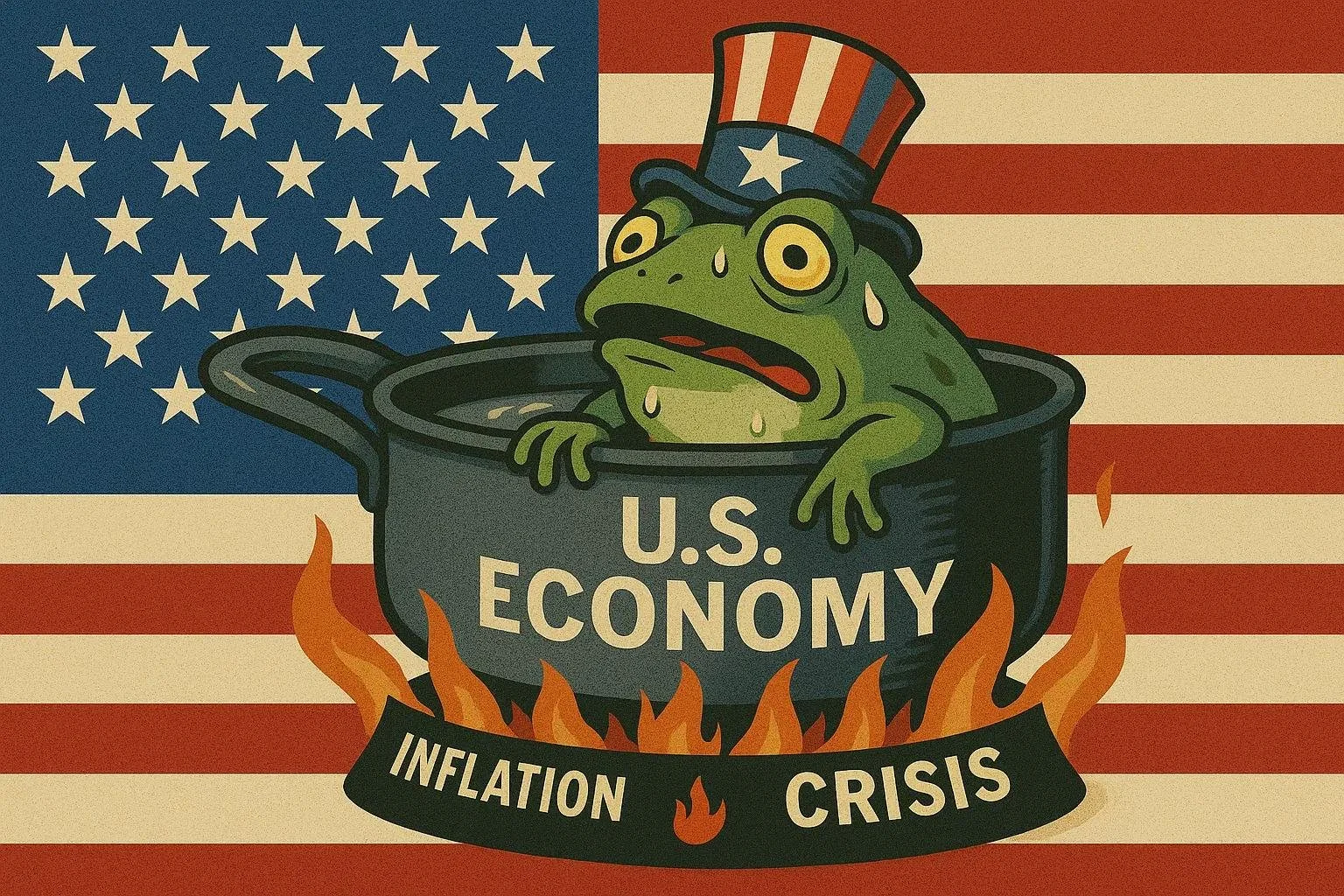
Many of these issues only affect a few people. Sometimes more. But not once have these same media or political personalities elevated the ONE issue that could deeply and adversely impact hundreds of millions of people over the next few years.
I’m talking about the US national debt... and its runaway trajectory that could easily become a major financial crisis in a few years.
The impact crater for a US debt crisis is gargantuan. 350 million people in the US would have their lives turned upside down. Dozens of countries who rely on the US financial system would suffer tremendous pain. Billions of people would be affected.
Yet there’s hardly a word about it. Far more ink has been spilled debating who should use which bathroom. It’s crazy when you think about it.
Many of those same people who should be elevating this issue are now complaining that Elon Musk did a “complete 180” because he thinks the $2 trillion projected deficit from the new tax/spending bill is an “abomination”.
I don’t see how this is a 180. Before, during, and after the election, Elon has been laser-focused on personally trying to fix America’s biggest threat: the ticking debt time bomb.
His message hasn’t changed. And the guy sacrificed plenty of time, money, and reputation to personally try and stop the catastrophe that will come if these deficits aren’t dealt with.
At least a few other prominent voices are finally echoing Elon’s warning—like Jamie Dimon, CEO of the world’s biggest bank.
That’s progress. Because the legacy media sure as hell won’t start this conversation on its own.
And that’s exactly why it’s hard to imagine we’ll hit the critical mass of voters needed to force politicians to do the right thing and tackle the deficits.
That’s what we dig into in today’s episode.
We break down how even supposedly serious financial media—like the Wall Street Journal—refuses to report on just how dire this situation really is.
One recent piece from the Journal even mocked people for buying gold to protect themselves from the obvious outcome of inflation. This is utterly hilarious, of course, given that gold has been one of the world’s best performing asset classes for this entire CENTURY.
But, hey, to the Journal, I guess we’re all just a bunch of idiots.
Today’s podcast also covers:
How everyone loves spending cuts... until you threaten their sacred cow (like taxpayer-funded Sesame Street)
What runaway interest costs mean for your future—and to the future of the US dollar
Why politicians won’t act until there’s a full-blown crisis—and what that will probably look like
That the debt problem is “solvable”—and why JP Morgan Chase CEO Jamie Dimon agrees with the solution we’ve been saying all along
Why slashing regulations needs to be part of that solution
Why strategic assets like gold, silver, uranium, and platinum are now more important than ever.
(For the audio-only version, check out our online post here.)
CLICK HERE to listen to our latest podcast.
To your freedom, James Hickman Co-Founder, Schiff Sovereign LLC
A Digital Tipping Error Gone Wrong
A Digital Tipping Error Gone Wrong
Victoria Vesovski Wed, June 4, 2025 Moneywise
California Woman Thought She’d Left A $5 Tip Until She Saw It Was $5,000 — and was told it couldn’t be voided
Americans have long grumbled about tipping culture — but now digital checkout screens are turning that frustration into full-blown financial disasters.
Sometimes, the issue isn’t just pressure to tip — it’s how easy it is to make a costly mistake. One in five Americans say they’ve accidentally tipped more than intended on digital checkout screens, according to an exclusive Opinium poll for DailyMail.com on tipping culture.
A Digital Tipping Error Gone Wrong
Victoria Vesovski Wed, June 4, 2025 Moneywise
California Woman Thought She’d Left A $5 Tip Until She Saw It Was $5,000 — and was told it couldn’t be voided
Americans have long grumbled about tipping culture — but now digital checkout screens are turning that frustration into full-blown financial disasters.
Sometimes, the issue isn’t just pressure to tip — it’s how easy it is to make a costly mistake. One in five Americans say they’ve accidentally tipped more than intended on digital checkout screens, according to an exclusive Opinium poll for DailyMail.com on tipping culture.
That’s exactly what happened to Linda Mathiesen. While buying CBD pain relief gel at a store in San Bruno, California, she accidentally tipped $5,000 on a $129.28 purchase.
Mathiesen said she meant to leave a $5 tip, but the payment terminal didn’t show a decimal point, so when she entered “5000,” the system took it — literally.
At first, the clerk at San Bruno Exotic told her the charge couldn’t be reversed. Then the story shifted — he claimed the shop never received the money. But Mathiesen’s bank statement showed otherwise.
“I’m just livid because I’m like I’m not going to pay $5,000 for something I never intended to happen,” Mathiesen told ABC 7 News.
A tipping error gone wrong
For Mathiesen, a $5,000 tipping mistake wasn’t just a moment of panic — it became a financial crisis. As a special education teacher living on a fixed income, she didn’t have the cushion to absorb the hit. With no emergency savings to fall back on, the charge was devastating.
And she’s not alone. According to the U.S. News survey, 42% of Americans have no emergency savings, despite experts recommending three to six months’ worth of expenses.
Mathiesen contacted Wells Fargo within five minutes of the transaction, but says the bank has done little to help, despite its promise of “zero liability protection” for promptly reported fraud.
The bank’s website says its “built-in protection features ensure that you won't be held responsible for unauthorized transactions, as long as they're reported promptly.” Yet, a year later, Mathiesen is still fighting to get the charge reversed.
"I busted out in tears,” she told ABC 7 News. "My son is graduating college next week ... and I can't even buy anything for him because I have $5,000 outstanding ... now it's $5,500!"
It’s not as rare as you’d think
Digital checkout screens may speed things up, but one wrong tap can turn a routine purchase into a nightmare
It happened to Vera Conner, too. The Georgia woman was ordering her usual No. 4 Italian sandwich at Subway — priced at $7.54 — when she accidentally left a $7,112.98 tip.
TO READ MORE: https://www.yahoo.com/finance/news/california-woman-thought-she-d-223000286.html
Frugal Tips to Help You Spend Less and Live Better in 2025
Frugal Tips to Help You Spend Less and Live Better in 2025
May 7, 2025 by Rudri Patel
Want to save money without giving up the things you love? It may feel overwhelming at first, but taking small micro steps will definitely help you spend less.
These practical frugal living tips help you cut expenses, reduce waste and take back control of your budget — all without feeling like you’re depriving yourself.
Frugal Tips to Help You Spend Less and Live Better in 2025
May 7, 2025 by Rudri Patel
Want to save money without giving up the things you love? It may feel overwhelming at first, but taking small micro steps will definitely help you spend less.
These practical frugal living tips help you cut expenses, reduce waste and take back control of your budget — all without feeling like you’re depriving yourself.
How To Start Living Frugally (Beginner Tips)
If you’re just starting your journey of frugal living, where do you start? Here are a few tips for beginners:
Cut one bill. Try to cut out one subscription or lower the cost of one of your bills. Call your cable company, internet servicer or phone company to see if you can negotiate on the price.
Track every dollar. Understand where your money is going. Use a notebook or an app to track your spending. This will give you a sense of where you need to cut spending.
Cook more at home. Try to make meals at home to prevent spending money dining out.
12 Frugal Living Tips to Help You Save Money
Frugal living isn’t about depriving yourself — it’s about making intelligent choices that boost your savings without sacrificing your quality of life. These 12 frugal tips are designed to guide you through various aspects of your daily spending, showing you where you can cut costs and how to make the most of your budget.
From smart shopping strategies to efficient home management, these tips provide a roadmap to a more financially savvy and sustainable lifestyle.
Frugal Home Habits
Use coupons, cashback apps and loyalty programs
Coupons can help save money, and loyalty programs can earn you discounts on various products. Cashback apps return a portion of your spending back to you.
Plan your meals
Meal planning is an effective way to minimize food waste and save money. By planning your meals for the week, you can buy only what you need, reducing impulse purchases and ensuring that you use up the food you buy, thus saving money on groceries.
Embrace energy efficiency
Investing in energy-efficient appliances and practices around your home can lead to significant savings on utility bills. Simple changes like switching to LED bulbs, using energy-efficient appliances and better insulating your home can reduce your energy consumption and save money in the long run.
Smarter Shopping and Spending
Shop off-season
Buying off-season items can save a lot of money. For example, buying winter clothes at the end of the season or getting holiday decorations after the holiday has passed can lead to significant discounts.
TO READ MORE: https://www.gobankingrates.com/saving-money/savings-advice/frugal-tips/
Here’s How To Cash In Your Change Jar As US Says Goodbye To Pennies
Here’s How To Cash In Your Change Jar As US Says Goodbye To Pennies
Liesel Nygard Mon, June 2, 2025
With the Treasuring Department’s plans to stop the production of pennies, the public might be wondering what this means for their giant coin collection at home.
Payments made with cash by American consumers decreased to 16% in 2023, according to the Federal Reserve, and for the first time in history was not the most-used instrument for smaller-value payments of $25 or less.
Here’s How To Cash In Your Change Jar As US Says Goodbye To Pennies
Liesel Nygard Mon, June 2, 2025
With the Treasuring Department’s plans to stop the production of pennies, the public might be wondering what this means for their giant coin collection at home.
Payments made with cash by American consumers decreased to 16% in 2023, according to the Federal Reserve, and for the first time in history was not the most-used instrument for smaller-value payments of $25 or less.
In February, President Donald Trump announced that he had ordered his administration to cease production of the penny, which costs almost 4 cents to create, according to the U.S. Mint. Ending penny production is expected to create an immediate annual savings of $56 million in reduced material costs.
The news has caused some pushback as fans of the penny cite its usefulness in charity drives and relative bargain in production costs compared with the nickel, which costs almost 14 cents to mint.
Circulation pathways for coins have declined as consumer coin jars continue to grow and have expanded by as much as 15% to 20%, according to a 2023 Federal Reserve report. In fact, the median household sits on $60 to $90 in coins which is the equivalent of one to two 16-ounce cups or a medium-sized piggy bank.
This is mostly due to the lack of utility of coins as a payment option as digital payments have grown since the COVID-19 pandemic, the Federal Reserve added.
“When asked why consumers do not redeem their coins more frequently, the most common answer was that it was not worth the effort to do so,” the institution’s report reads.
Rather than collecting dust, consumers could visit a coin exchange kiosk or bank to trade those coins for cash.
“People underestimate the value of their jar by about half,” Kevin McColly, CEO of Coinstar told Delaware Online. “It’s a wonderfully pleasurable experience. People have this sensation of found money.”
TO READ MORE: https://finance.yahoo.com/news/cash-change-jar-us-says-174124726.html
This Is A $118 Billion “Strategy” For Insanity
This Is A $118 Billion “Strategy” For Insanity
Notes From the Field By James Hickman (Simon Black) June 3, 2025
Last week when I wrote about America’s new stablecoin legislation (bizarrely called the “GENIUS Act”), a number of readers wrote in asking me to clarify a comment that I made about the Bitcoin company ‘Strategy’, i.e. formerly MicroStrategy. I explained in the article that I am pro-crypto and have been since the early 2010s; for me it’s about freedom.
Many banks have proven time and time again that they simply cannot and should not be trusted with their customers’ money.
This Is A $118 Billion “Strategy” For Insanity
Notes From the Field By James Hickman (Simon Black) June 3, 2025
Last week when I wrote about America’s new stablecoin legislation (bizarrely called the “GENIUS Act”), a number of readers wrote in asking me to clarify a comment that I made about the Bitcoin company ‘Strategy’, i.e. formerly MicroStrategy. I explained in the article that I am pro-crypto and have been since the early 2010s; for me it’s about freedom.
Many banks have proven time and time again that they simply cannot and should not be trusted with their customers’ money.
Wells Fargo is the poster child for blatant theft and deceit. And Bank of America is currently the prime example of recklessly irresponsible decision-making; that institution has managed to rack up more than $100 BILLION of unrealized losses from bad investments they made with YOUR money.
Crypto eliminates all of this. You can store your savings (whether as a risk asset like Bitcoin, or via US dollar stablecoins) and transact without having to deal with a bank. And this is a massive benefit.
Then there’s Strategy-- the company formerly known as MicroStrategy. By its own description, Strategy is “Bitcoin Treasury company”, which is to say that their primary business is to own Bitcoin.
And they own lots of Bitcoin-- 580,955 to be exact, worth $61.5 billion at the current price. Yet Strategy’s enterprise value is $118+ billion, or nearly TWICE the value of its Bitcoin. And this is one of the strangest things I’ve ever seen in financial markets.
Yes, technically, Strategy also has a software business, because they barely mention it.
Just have a look at Strategy’s own Q1 update-- a NINETY-TWO-page presentation that had precisely ONE slide (#26) devoted to its software business. Literally one slide. And there wasn’t even much detail-- the slide was entitled “Software Highlights” and only showed top-level revenue.
In other words, the company’s own presentation spends about 1% of its time talking about the software business without bothering to mention whether or it it’s even profitable.
(It’s not profitable; if you read the footnotes and financial addenda, you’ll see that Strategy’s “cloud-based, AI-powered” software loses LOTS of money…)
The other 99% of the presentation talks about Bitcoin. So, Strategy makes no bones about it-- they are a Bitcoin company. Full stop.
And if they’re not talking about Bitcoin, they’re talking about how much money they’re going to raise, to buy more Bitcoin.
Strategy’s current plan calls for a whopping $42 billion in new capital-- a number they seem to have landed on not through hardcore financial analysis, but as a joke related to Hitchhiker’s Guide to the Galaxy in which ‘42’ is the answer to the ultimate question of life.
Half of this $42 billion will be raised by indebting the company more, and the other half by diluting existing shareholders.
Management’s ultimate goal is to increase the average number of ‘Bitcoin per share’ that the company holds. That’s not unreasonable. But for this to happen, there are a number of things that have to go right-- from cybersecurity to crypto markets-- nearly all of which are beyond their control.
They don’t seem to have given these risks much thought. They assume, for example, that the Bitcoin price will appreciate by 30% per year.
And there are a number of very attractive charts, several of which demonstrate how high Strategy’s stock price will go in various scenarios. They show graphs with lines that start from the bottom left and soar to the top right, and there seems to be no credible way in which investors could lose money.
Then they polish it all off with made-up metrics like “Bitcoin Yield”, “Bitcoin Multiple”, “BTC $ Income”, and my personal favorite, “Bitcoin Torque”.
Strategy ends up disclosing six full pages of definitions just to explain what the hell they mean with these new terms.
For example, they humbly admit that “BTC $ Income is not equivalent to ‘income’ in the traditional financial context.” In other words, it’s not income. But they’re calling it income anyway.
Honestly it reminds me of Adam Neumann making up his own financial metrics when he infamously published WeWork’s “Community Adjusted Earnings” several years ago.
Strategy concludes its Q1 update by asking shareholders to spread the word and “educate their peers” about Bitcoin and MicroStrategy securities, i.e. help us keep this bubble going by finding more people to overpay for our assets.
And that’s exactly what it is; again, based on its stock price, Strategy is worth $118+ billion. Yet its BTC holding are worth $61.5 billion. So, anyone who buys Strategy stock solely for the Bitcoin exposure is overpaying by 2x.
Buying Strategy stock is the equivalent of paying $210,000 for Bitcoin today. And if you are willing to pay $210,000 for Bitcoin today, please contact me right away and I will gladly sell you some of mine.
Strategy doesn’t hide from this insanity. In fact, they’re leaning into it. They even track this on their website under the metric “mNAV”, i.e. the multiple by which investors overpay for the company’s Bitcoin.
Their presentation actually tries to rationalize this phenomenon; they claim the 2x mNAV is justified because of their stock’s volatility (which attracts traders) or that their “brand recognition and scale drive superior investor interest.”
Some of their financial models even assume that this mNAV will INCREASE to 3x!
Maybe so. But the bottom line is that there’s most likely a lot more upside to own Bitcoin directly. And the hard truth is that if you can’t figure out how to own Bitcoin directly, you probably shouldn’t bother buying Bitcoin to begin with… let alone paying twice the price for it.
To your freedom, James Hickman Co-Founder, Schiff Sovereign LLC
Bizarrely, The “GENIUS Act” Might Actually Be Pretty Genius…
Bizarrely, The “GENIUS Act” Might Actually Be Pretty Genius…
Notes From the Field By James Hickman (Simon Black) May 30, 2025
Peter Schiff isn’t just my partner at Schiff Sovereign-- we’ve been close friends for many years. And we generally see eye-to-eye on most things going on in the world.
But one area where we disagree is crypto. Not to put words in his mouth, but Peter is pretty vocal in his criticism of Bitcoin; he says it’s “useless” and a “total scam” and predicts it will go to zero.
Bizarrely, The “GENIUS Act” Might Actually Be Pretty Genius…
Notes From the Field By James Hickman (Simon Black) May 30, 2025
Peter Schiff isn’t just my partner at Schiff Sovereign-- we’ve been close friends for many years. And we generally see eye-to-eye on most things going on in the world.
But one area where we disagree is crypto. Not to put words in his mouth, but Peter is pretty vocal in his criticism of Bitcoin; he says it’s “useless” and a “total scam” and predicts it will go to zero.
I disagree. There are a number of important use cases for crypto-- whether as a speculative asset for capital gain, a store of value, a digital currency for online transactions, a private means to hold wealth, a way to disconnect from the banking system, etc.
This isn’t a “scam”. Rather, it’s useful, functional technology… which is why I recommended it to my audience as far back as March 2013.
Obviously crypto has deep flaws and areas to improve. And just like in any frontier boom, plenty of thieves and lunatics have emerged. But to judge crypto based on the misdeeds of Sam Bankman-Fried is like condemning the stock market because of Bernie Madoff.
All that said, there are still plenty of things that I’m skeptical about.
For example, I think there’s a bizarre disconnect between Bitcoin’s market cap and its actual value; I recognize that Bitcoin is the original cryptocurrency, and there’s some ‘brand value’ associated with that.
But as the oldest cryptocurrency, it’s also the most technologically obsolete… therefore it should not be the most valuable; no other sector places the highest value on the most obsolete technology. Only crypto. And that’s a bit odd.
There are plenty of other oddities; for example, it’s strange that the company Strategy (formerly Microstrategy) has an enterprise value of $112 billion, even though its only asset is $61 billion worth of Bitcoin.
In other words, the company is worth nearly twice as much as the Bitcoin that it owns; this is bizarre and doesn’t make any sense.
I’m also extremely skeptical of the US government’s involvement in crypto; the pre-election promises of starting a Sovereign Wealth Fund to own Bitcoin struck me as completely ludicrous.
I mean… think about it: one of the things that would drive up the price of Bitcoin is excessive government spending. So rather than cut spending, the government wants to own an asset that will benefit from their own financial irresponsibility. It’s back asswards in my humble opinion.
Naturally I was also skeptical when I heard about the GENIUS Act (Senate bill 394) to regulate crypto.
Then I read the legislation. And I concluded that the GENIUS Act might actually be pretty genius.
GENIUS stands for “Guiding and Establishing National Innovation for US Stablecoins”. Something tells me ChatGPT came up with that.
And the basic idea is for state and federal regulators to authorize “Permitted Stablecoin Issuers” who could… well, do just that-- issue stablecoins.
States can issue their own licenses and permits to stablecoin businesses. But once a particular coin passes a $10 billion market cap, it must be regulated by the Feds.
Here’s the smart part: in the definition of stablecoins, they include anything that owns short-term Treasury bills. So, through this legislation, they are creating an entirely new class of investors who would purchase US government debt.
This is pretty important, because the Treasury Department is in sore need of new lenders.
Foreign investors are fleeing the Treasury market; after decades of being considered the world’s “risk-free asset”, foreign governments and central banks are aggressively reducing their dollar holdings.
This is THE primary reason why the gold price has come so high: foreign governments and central banks have been cashing in their Treasury bonds, then trading that US dollar cash for gold.
Given that the “One, Big, Beautiful Bill” calls for another $2 trillion deficit this fiscal year, Treasury is going to need all the lenders it can get.
Remember that stablecoins (especially under this legislation) are basically just money market funds in disguise; they pool capital and buy government bonds.
So, this GENIUS Act is essentially a way of tapping crypto wealth and diverting that capital into Treasury securities.
It’s a clever idea. But frankly it would be a lot better if the government simply cut spending rather than come up with innovative ways to finance the deficit.
To your freedom, James Hickman Co-Founder, Schiff Sovereign LLC
'Rich Dad Poor Dad' Author Warns 'The Biggest Crash In History Is Coming'
'Rich Dad Poor Dad' Author Warns 'The Biggest Crash In History Is Coming'
Anand Sinha Mon, June 2, 2025 TheStreet
Robert Kiyosaki, the author of the bestselling book "Rich Dad Poor Dad," has issued another stern warning about the market.
The personal finance writer recently took to X to voice his persistent concern about "the biggest crash in history" that he says is coming as predicted in his book, "Rich Dad’s Prophecy" (2013).
When the stock, bond, and real estate markets crash this summer, millions of people, "especially my generation of boomers," will be wiped out, he warned.
'Rich Dad Poor Dad' Author Warns 'The Biggest Crash In History Is Coming'
Anand Sinha Mon, June 2, 2025 TheStreet
Robert Kiyosaki, the author of the bestselling book "Rich Dad Poor Dad," has issued another stern warning about the market.
The personal finance writer recently took to X to voice his persistent concern about "the biggest crash in history" that he says is coming as predicted in his book, "Rich Dad’s Prophecy" (2013).
When the stock, bond, and real estate markets crash this summer, millions of people, "especially my generation of boomers," will be wiped out, he warned.
Robert Kiyosaki
@theRealKiyosaki
Do not say I didn’t warn anyone. As predicted in my book Rich Dad’s Prophecy (2013) the biggest crash in history is coming. I am afraid that crash time is now and through this summer. Unfortunately, millions, especially my generation of boomers will be wiped out when the stock and bond markets crash. The good news is millions who are proactive may become extremely rich… and as you know….I want you to be one of those who become very rich. To read more: LINK
However, Kiyosaki seemed to offer a way out to "proactive" individuals who can not only survive this crash but may even become "extremely rich."
Billions of traders will shift to gold and Bitcoin — the "digital gold," as Bitcoin proponents like to call it, Kiyosaki predicted. He placed his biggest bet on silver, though:
As per Kraken, Bitcoin was quoted at $104,446.51 at press time, 6.7% lower than its May 22 record high of $111,970.17. Gold was trading at $3,372.30 per oz. at press time, 4% lower than its Apr. 22 record high of $3,500.
Meanwhile, silver was exchanging hands at $34.58 at press time, 30% lower than its record high of $49.95 per oz. that it reached way back in January 1980.
It is this price dynamic of silver that Kiyosaki said he was going to exploit. Gold and Bitcoin are also on his cards.
The bestselling author asked his X followers:
What are you going to do tomorrow….grow richer or grow poorer? Please choose to get richer.
TO READ MORE: https://www.yahoo.com/finance/news/rich-dad-poor-dad-author-223000952.html
Finally Hit It Rich? Here are the Top 5 Reasons To Never Share That With Anyone
Finally Hit It Rich? Here are the Top 5 Reasons To Never Share That With Anyone (even your closest friends)
Vishesh Raisinghani Mon, June 2, 2025 Moneywise
If you’ve managed to accumulate some wealth, showing it off can often be tempting. After all, what’s the point of success if you can’t indulge in it?
However, a growing cohort of ultra-wealthy Americans are trying to conceal their wealth rather than flaunt it openly. Here are five reasons why stealth wealth or quiet luxury lifestyles are gaining traction and why you should consider concealing the true extent of your fortune.
Finally Hit It Rich? Here are the Top 5 Reasons To Never Share That With Anyone (even your closest friends)
Vishesh Raisinghani Mon, June 2, 2025 Moneywise
If you’ve managed to accumulate some wealth, showing it off can often be tempting. After all, what’s the point of success if you can’t indulge in it?
However, a growing cohort of ultra-wealthy Americans are trying to conceal their wealth rather than flaunt it openly. Here are five reasons why stealth wealth or quiet luxury lifestyles are gaining traction and why you should consider concealing the true extent of your fortune.
Privacy and security
Being publicly wealthy could make you a prime target for thieves, fraudsters and criminal gangs. According to Silicone Valley Bank’s coverage of a study by Experian and the Department of Justice, identity theft is 43% more prevalent among the affluent.
Organized criminal gangs have targeted celebrities like Kim Kardashian and Paris Hilton, while high-profile athletes in major leagues such as the NFL and NBA are at risk of targeted home invasions, according to an the FBI report obtained by ABC News.
Business Insider even reported that Warren Buffett evaded a kidnapping in the 1980s.
With this in mind, downplaying your fortune could be the best way to safeguard your privacy and protect your family.
Broken relationships
Money has an undeniable impact on your personal relationships, especially if your loved ones are not on the same page as you when it comes to finances.
While it’s not a good idea to hide your financial standing from a legal spouse, new friendships and certain family members may be another story. Roughly 57% of Americans admit to feeling envious of someone else’s financial situation, according to a 2023 finance survey.
Put simply, hiding your income and wealth could be a great way to sustain your relationships.
Avoid lifestyle creep
One of the pitfalls of flaunting your wealth is that it’s difficult to stop. Once you’ve bought a fancy house or luxury vehicle, downgrading could be embarrassing which puts pressure on you to sustain that lifestyle.
TO READ MORE: https://www.yahoo.com/finance/news/finally-hit-rich-top-5-120700558.html
6 Money Lessons From Rachel Cruze That People Hate the Most
6 Money Lessons From Rachel Cruze That People Hate the Most
Nicole Spector Mon, June 2, 2025 GOBankingRates
“The truth hurts!” is the kind of puerile retort we’re used to hearing in elementary school scrimmages and on trashy daytime talk shows. Yet, sometimes, this is a pretty spot-on sentiment. Scientific research has found that hearing the truth really can be hurtful. But it’s also usually necessary for growth. And this applies to our financial lives as much as, if not more than, anything else.
In her more than 15 years of working in the personal finance space, Rachel Cruze has found that there are some money truths, or lessons, that especially rub people the wrong way. Here are the six things that Cruze teaches about money that folks hate to hear about the most.
6 Money Lessons From Rachel Cruze That People Hate the Most
Nicole Spector Mon, June 2, 2025 GOBankingRates
“The truth hurts!” is the kind of puerile retort we’re used to hearing in elementary school scrimmages and on trashy daytime talk shows. Yet, sometimes, this is a pretty spot-on sentiment. Scientific research has found that hearing the truth really can be hurtful. But it’s also usually necessary for growth. And this applies to our financial lives as much as, if not more than, anything else.
In her more than 15 years of working in the personal finance space, Rachel Cruze has found that there are some money truths, or lessons, that especially rub people the wrong way. Here are the six things that Cruze teaches about money that folks hate to hear about the most.
Don’t Buy a New Car Until You’re a Millionaire
No financial expert wants you to go out and buy a new car if you can’t afford it, but Cruze runs extra conservative here. She disapproves of anybody buying a new car if they have a net worth under $1 million. Many people don’t like her take, but it’s worth hearing out. New cars depreciate rapidly the instant you drive them off the lot. And they just keep plummeting in value over time.
“If you have the margin to be able to take that financial hit and it’s not a big deal in your world overall, then that’s OK to do,” Cruze said.
Eliminate Credit Cards From Your Life
We all know that credit cards can hurt us if we’re not careful, but we may not recognize just how careful we need to be. And we may not realize that credit card companies are constantly coming up with ways to seduce us into spending more. Think travel points and cash-back rewards.
Cruze advises people to stay away from credit cards entirely — advice people tend to find is unrealistic or overly aggressive. But honestly, most people aren’t paying off their credit cards every month, even though they know they should be. Additionally, a no-credit-card life is a pretty peaceful one.
“When you choose a life without debt, not only mathematically are you not sending your income to banks instead of keeping your income and investing it for yourself, there’s also an emotional aspect:When you have autonomy over your money completely … there is a level of peace that comes with that,” Cruze said.
Combine Checking Accounts With Your Spouse
TO READ MORE: https://finance.yahoo.com/news/6-money-lessons-rachel-cruze-180035778.html