
Thank you to all the subscribers to our Early Access program…we thank you for your continued support.
We are excited to offer this new service to keep you informed and up-to-date on the latest Dinar and currency news.
Seeds of Wisdom RV and Economics Updates Friday Afternoon 5-1-26
Good Afternoon Dinar Recaps,
Oil Shock and Policy Divide: Rising Energy Prices Collide With Global Rate Uncertainty
Escalating oil prices and diverging central bank signals are increasing pressure on inflation, currencies, and global financial stability
Good Afternoon Dinar Recaps,
Oil Shock and Policy Divide: Rising Energy Prices Collide With Global Rate Uncertainty
Escalating oil prices and diverging central bank signals are increasing pressure on inflation, currencies, and global financial stability
OVERVIEW (KEY POINTS)
Global financial markets are reacting to a renewed surge in oil prices driven by geopolitical tensions, while central banks show increasing hesitation and division on interest rate policy.
This is happening now as conflict-related supply risks push crude prices higher, while policymakers weigh whether further tightening could slow already fragile economic growth.
Key players include the U.S. Federal Reserve, European Central Bank, and energy markets, all navigating a complex environment of inflation persistence and economic uncertainty.
The broader implication is clear: rising energy costs combined with policy uncertainty are amplifying systemic financial stress, a key signal in broader global reset dynamics.
KEY DEVELOPMENTS
1. Oil Prices Climb on Supply Fears
Energy markets remain volatile.
Crude prices rising toward multi-month highs
Ongoing tensions disrupting key shipping and supply routes
2. Central Banks Signal Policy Caution
Rate direction is becoming unclear.
Policymakers weighing inflation control vs. growth risks
Signals suggest slower or delayed rate decisions
3. Inflation Risks Reaccelerate
Energy costs are feeding broader price pressures.
Higher fuel prices impacting transport, manufacturing, and food costs
Inflation proving more persistent than expected
4. Currency Markets React to Divergence
Exchange rates reflect uncertainty.
U.S. dollar remains firm amid global instability
Other currencies facing pressure from inflation and capital flows
5. Growth Outlook Weakens Globally
Economic momentum is slowing.
Businesses facing higher input costs and reduced margins
Global growth forecasts under downward pressure
WHY IT MATTERS
This moment highlights a critical intersection: energy shocks and monetary policy uncertainty are reinforcing each other, increasing overall financial system risk.
Markets are becoming more volatile as investors attempt to price in both persistent inflation and unclear policy direction.
For policymakers, the situation creates a difficult trade-off—tightening policy risks slowing growth, while easing could allow inflation to become entrenched.
At the system level, this reflects a broader shift toward less coordinated global policy responses, increasing fragmentation.
WHY IT MATTERS TO FOREIGN CURRENCY HOLDERS
Purchasing power declines as global inflation rises
Currency volatility increases with policy divergence
Dollar strength impacts global trade pricing
Higher risk exposure in weaker currencies
IMPLICATIONS FOR THE GLOBAL RESET
Pillar 1: Energy-Driven Inflation Restructuring Markets
Sustained energy volatility is forcing structural changes in pricing systems, supply chains, and economic policy frameworks.
Pillar 2: Monetary Policy Fragmentation
Diverging central bank strategies signal a move toward a less synchronized global financial system, increasing instability.
CONCLUSION
The convergence of rising oil prices and uncertain monetary policy marks a significant stress point for the global financial system.
As inflation pressures persist and policy clarity weakens, the ripple effects are spreading across currencies, markets, and economies.
This is not a temporary imbalance—it reflects a deeper transition in how global finance responds to shocks.
When energy volatility meets policy uncertainty, the global financial system enters a period of structural change.
Seeds of Wisdom Team
Newshounds News™ Exclusive
Sources
Reuters — "Oil prices rise as geopolitical tensions threaten supply routes"
Reuters — "Global central banks signal caution as inflation risks persist"
~~~~~~~~~~
Seeds of Wisdom Team RV Currency Facts Youtube and Rumble
Newshound's News Telegram Room Link
RV Facts with Proof Links Link
RV Updates Proof links - Facts Link
Follow the Gold/Silver Rate COMEX
Follow Fast Facts
Seeds of Wisdom Team™ Website
Thank you Dinar Recaps
Bruce’s Big Call Dinar Intel Thursday Night 4-30-26
Bruce’s Big Call Dinar Intel Thursday Night 4-30-26
Transcribed By WiserNow Emailed To Recaps (INTEL ONLY)
Recaps Note: We do not post religious or political topics - Bruce’s call tonight contained a lot of political views so intel was limited - below is a transcription of what could be posted and further down is the conference call replay link where you can listen to the entire call -
Welcome everybody the big call tonight. it's Thursday, April 30th and you're listening to the big call. Thanks everybody for tuning in once again. We’re rocking and rolling with this thing tonight. So, got some interesting information to give you guys tonight, and look forward to that.
So let’s delve into where we are from an Intel point of view.
Let's start with the cryptocurrency bill or act that is still lodged in the Senate. Now, we had been told that it was passed. We had been told there was an executive order for it, and then it's a done deal --
Bruce’s Big Call Dinar Intel Thursday Night 4-30-26
Transcribed By WiserNow Emailed To Recaps (INTEL ONLY)
Recaps Note: We do not post religious or political topics - Bruce’s call tonight contained a lot of political views so intel was limited - below is a transcription of what could be posted and further down is the conference call replay link where you can listen to the entire call -
Welcome everybody the big call tonight. it's Thursday, April 30th and you're listening to the big call. Thanks everybody for tuning in once again. We’re rocking and rolling with this thing tonight. So, got some interesting information to give you guys tonight, and look forward to that.
So let’s delve into where we are from an Intel point of view.
Let's start with the cryptocurrency bill or act that is still lodged in the Senate. Now, we had been told that it was passed. We had been told there was an executive order for it, and then it's a done deal --
At this point, I don't think that's the case. I don't think it's done deal, except that President Trump did a signing of certain executive order or orders today at 2pm Eastern. It was not open to the press.
Yet another meeting at three. And I think it was like a well, it's hard to say what the meeting, who the meeting was involving. We had one at three and one at four o'clock in the afternoon today, so one in three, one in four, and then the signing of this executive order, or executive orders, was at two o'clock, but not covered by the press, on purpose, was closed to the press.
Now, what in the world did he sign? I don't know.
What did he sign? I don't know. Maybe, maybe there was some kind of override for the clarity Act, which is the crypto currency act, right? There's several things that have gone through or in the process of going through in Congress, but I have to tell you, President Trump was, I'm going to say it in a nice way, highly ticked off.
Now, when is all of this going to be settled?
What we're hearing is, I'll start with our new timeline, starting tomorrow, the first of May,
the QFs system is to be fully integrated.
Accounts are completely integrated on the quantum financial system. We thought that a couple of weeks ago, because I remember saying it on the big call, finalized. But what makes it all they first what else I'm being told that even though this clarity Act has not officially passed through through the Senate today, that it should be done by Monday,
and that we would be getting our 800 numbers sometime between today and Monday would be the fourth, I believe, May everything let's just call it early May.
We have a new prime minister, not sudani for Iraq. And try to think of how his name is pronounced. It's Ali - Al something I don't want to miss I don't want to miss it. I'm not a guy, but he is probably and picked, and we might have had something to do to hand pick him to be in that position.
He is already in place, even if you don't see him, see the debt. And we should have new rates on not only dinar, but all of the other currencies Sunday night, when the Forex comes back up, and we should have those reflected Monday, which is the fourth of May
So did we get pushed another week? Didn't happen this week, and I sure hope that everything is on tap, that we get this clarity act on, even if President Trump has to override it with an executive order.
Maybe something along those lines were signed today at two o'clock. I don't know. It wasn't designed to be put out. Press did attend? They were not allowed to attend.
We'll see what we'll find out at some point, we'll find out
Everybody, have a great week, and we will talk you Tuesday night call. Don't forget email, managing the last day of the sale tomorrow on those two specific sales and Boomers, God bless you guys. Thank you for tuning in again, and we will see you on Tuesday night.
Bruce’s Big Call Dinar Intel Thursday Night 4-23-26 REPLAY LINK Intel Begins 1:29:50
Bruce’s Big Call Dinar Intel Tuesday Night 4-28-26 REPLAY LINK Intel Begins 1:14:50
Bruce’s Big Call Dinar Intel Thursday Night 4-23-26 REPLAY LINK Intel Begins 1:13:53
Bruce’s Big Call Dinar Intel Tuesday Night 4-21-26 REPLAY LINK Intel Begins 1:17:27
Bruce’s Big Call Dinar Intel Thursday Night 4-16-26 REPLAY LINK Intel Begins 1:20:00
Bruce’s Big Call Dinar Intel Tuesday Night 4-14-26 REPLAY LINK Intel Begins 1: 01:15
Bruce’s Big Call Dinar Intel Thursday Night 4-9-26 REPLAY LINK Intel Begins 1:19:19
Bruce’s Big Call Dinar Intel Tuesday Night 4-7-26 REPLAY LINK Intel Begins 1: 17:37
News, Rumors and Opinions Friday 5-1-2026
Note: All intel should be considered as "Rumors" until we receive official announcements ...and “Rates and Dates” could change anytime until we get to the banks/redemption centers.
RV Excerpts from the Restored Republic via a GCR Update as of Fri. 1 May 2026
Compiled Fri. 1 May 2026 12:01 am EST by Judy Byington
“Be the change that you wish to see in the world.” ― Mahatma Gandhi
Judy Note: The new gold/asset-backed Quantum Financial System (QFS) will combine with NESARA/GESARA Laws to replace the corrupt central banking system.
Note: All intel should be considered as "Rumors" until we receive official announcements ...and “Rates and Dates” could change anytime until we get to the banks/redemption centers.
RV Excerpts from the Restored Republic via a GCR Update as of Fri. 1 May 2026
Compiled Fri. 1 May 2026 12:01 am EST by Judy Byington
“Be the change that you wish to see in the world.” ― Mahatma Gandhi
Judy Note: The new gold/asset-backed Quantum Financial System (QFS) will combine with NESARA/GESARA Laws to replace the corrupt central banking system.
A long planned Global Currency Reset of 209 nations from fiat currency to gold/asset backed will return power, wealth and sovereignty back to the people.
This is not the end. This is a New Beginning.
Stay calm. Stay safe. Stock up on essentials. Trust the plan.
The Storm is here — but dawn is breaking. The Golden Age of freedom, prosperity and advanced technology is the start of the greatest comeback in human history.
~~~~~~~~~~~~~
Thurs. 30 April 2026 Breaking! GESARA Unleashed, NESARA’s Revolutionary Impact Reshaping the Nation!
Political changes coincide with a financial revolution. RV liquidity release heralds the Global Currency Reset under GESARA and NESARA, overhauling world monetary systems for asset-backed prosperity.
The Quantum Financial System replaces corrupt banks with secure networks protecting public wealth.
The Treasury Secretary’s presence in Reno advances the final phase of the financial reset.
International partners including BRICS shift from the petrodollar to sovereign currencies. Geopolitical realignments and National Guard readiness indicate major changes. Quantum communications enhance security. This movement builds an equitable future impacting all lives for generations.
~~~~~~~~~~~~~
Thurs. 30 April 2026 Bruce, The Big Call The Big Call Universe (ibize.com) 667-770-1866, pin 123456#, 667-770-1865: On Fri. 1 May 2026 the QFS System is to be fully integrated with our Quantum Accounts. A high source said that sometime between Mon 4 May and Wed. 6 May Tier4b should receive the 800 numbers to set exchange/redemption appointments. The new currency rates were set to be on the Forex by Sun. 3 May 2026.
~~~~~~~~~~~
Thurs. 30 April 2026 Exchange/Redemption Appointments …Tier4b ISO20022 on Telegram
Bond teams are still pushing payouts, first-wave transfer notes were confirmed this am.
Paymasters have clear marching orders: all first-round accounts had to (allegedly) be settled by last Wednesday 29 April 2026.
Private notifications(allegedly) start rolling out this afternoon, so watch your email or SMS for an appointment code. No code, no slot—guard it like cash.
What Happens Next: (allegedly)
Day 0 – Safe-Link Drop Released 24 hours before the first in-person sessions. Open it only from your own device.
Day 1 – Appointments for 100 T – 300 T holders
• ID check
• Digital credit to your accounts (no physical cash)
• Quick tax-framework briefing
Day 2 – Large Holdings (400 T +) Same steps, but with extra time for project networking and escrow options.
Day 3 and beyond – Return Negotiations & Higher Caps Come back with full documentation if you’re aiming above the initial limits.
Current Numbers – April 13 2026:
• No projects → USD 15 million total, no matter how many notes you hold
• With projects → first two bond notes at 1:1; every note after that @ USD 25 million per 100 T (up to 30 notes)
• More than 30 notes → schedule a follow-up visit with full paperwork
Rates are still pegged extremely high, but expect minor tweaks right up to the moment funds post.
Security Snapshot: All obstruction attempts have been neutralized; monitoring teams report zero threats to the system. Keep things quiet—don’t broadcast your numbers and never forward official emails.
Appointment Checklist
• Bring any trusted advisor, banker, or friend who keeps you sharp
• Prepare a two-page project overview—scope, budget, impact
• Set up multiple bank accounts in advance if you want fast diversification
• Rest up; a clear mind makes better calls
Everything is moving on schedule—the finish line is in sight. Follow the instructions, stay focused, and be ready when the phone rings.
Read full post here: https://dinarchronicles.com/2026/05/01/restored-republic-via-a-gcr-update-as-of-may-1-2026/
************
Courtesy of Dinar Guru: https://www.dinarguru.com/
Frank26 [Iraq boots-on-the-ground report] OMAR: The new candidate for prime minister just spoke on the television. He's saying he is eager and willing to work with all political forces inside...Iraq and looking forward to meeting the demands of the citizens and he is going to continue the monetary reform. FRANK: Wow! I am excited...because we know the demands of the Iraqi citizens. They want purchasing power. They want the CBI to release the new exchange rate...
Stephen Some of us have been involved in this since we occupied Iraq back in 2003. Some of you might have gotten invested a few years ago, maybe a few months ago. I've been invested in this for 15 years. Ever since the day I invested, I have been following the news....As non-hypy as possible and this is not hopium to make you feel good, I can honestly say in all of my years of being invested in the Iraqi dinar I have never seen such movement and pressure that I am seeing right now with what the USA is directly and indirectly doing to the country of Iraq.
Jeff The budget can't get approved till the new currency value exists. It's a law. All aspects of a law have to exist for them to approve it, which means the currency value has to exist because the budget is calculated off the currency value. So, that has to exist before it can get sent to parliament for approval. That's the reason they told us about a month ago that the budget would get approved after the government is formed because when the government is formed they they get a change of rate, then proceed with a budget approval
**
BRACE YOURSELVES! Elites Are Planning Something BIG For Gold & Silver Buyers
4-30-2026
Coffee with MarkZ, joined by Mr. Cottrell 05/01/2026
Coffee with MarkZ, joined by Mr. Cottrell 05/01/2026
MarkZ Disclaimer: Please consider everything on this call as my opinion. Be sure to consult a professional for any financial decisions
MZ: Codeman Friday! Trump invites Al-Zaidi to the White House, Ripple makes ripples, Iran, and Mr. Cottrell takes questions. After Mr. C we enjoy some time with the CBD Gurus.
THE CONTENT IN THIS PODCAST IS FOR GENERAL & EDUCATIONAL PURPOSES ONLY&NOT INTENDED TO PROVIDE ANY PROFESSIONAL, FINANCIAL OR LEGAL ADVICE. PLEASE CONSIDER EVERYTHING DISCUSSED IN MARKZ’S OPINION ONLY
Coffee with MarkZ, joined by Mr. Cottrell 05/01/2026
MarkZ Disclaimer: Please consider everything on this call as my opinion. Be sure to consult a professional for any financial decisions
MZ: Codeman Friday! Trump invites Al-Zaidi to the White House, Ripple makes ripples, Iran, and Mr. Cottrell takes questions. After Mr. C we enjoy some time with the CBD Gurus.
THE CONTENT IN THIS PODCAST IS FOR GENERAL & EDUCATIONAL PURPOSES ONLY&NOT INTENDED TO PROVIDE ANY PROFESSIONAL, FINANCIAL OR LEGAL ADVICE. PLEASE CONSIDER EVERYTHING DISCUSSED IN MARKZ’S OPINION ONLY
https://rumble.com/user/theoriginalmarkz
Kick: https://kick.com/theoriginalmarkz
FOLLOW MARKZ : TWITTER . https://twitter.com/originalmarkz?s=21. TRUTH SOCIAL . https://truthsocial.com/@theoriginalm...
Mod: MarkZ "Back To Basics" Pre-Recorded Call" for Newbies 10-19-2022 )https://www.youtube.com/watch?v=37oILmAlptM
MARKZ DAILY LINKS: https://theoriginalmarkz.com/home/
THANK YOU FOR JOINING. HAVE A BLESSED DAY. FOR UPDATES ON MARK’S PODCAST GO TO: https://t.me/+b3hYhYlhKM1hYzcx
More Iraq News Posted by Tishwash at TNT 5-1-2026
TNT:
Tishwash: Urgent: Trump invites al-Zaidi to visit Washington after the government is formed
Prime Minister-designate Ali Faleh Al-Zaidi received a phone call today, Thursday, from the US President, during which he congratulated him on his official appointment to form the new government, and extended an official invitation to him to visit Washington after the government is formed.
The Prime Minister's Media Office stated in a statement received by Al-Furat News that "the call included a review of the strategic bilateral relations between Iraq and the United States, and ways to develop and strengthen them in various fields."
TNT:
Tishwash: Urgent: Trump invites al-Zaidi to visit Washington after the government is formed
Prime Minister-designate Ali Faleh Al-Zaidi received a phone call today, Thursday, from the US President, during which he congratulated him on his official appointment to form the new government, and extended an official invitation to him to visit Washington after the government is formed.
The Prime Minister's Media Office stated in a statement received by Al-Furat News that "the call included a review of the strategic bilateral relations between Iraq and the United States, and ways to develop and strengthen them in various fields."
The statement added that "both sides affirmed their joint work and bilateral cooperation in order to consolidate stability in the region." link
**************
Tishwash: Prime Minister-designate Ali al-Zaidi discusses the financial situation and monetary policy with Central Bank Governor Ali al-Alaq
Prime Minister-designate Ali Faleh al-Zaidi and Central Bank Governor Ali Mohsen al-Alaq stressed on Thursday the importance of maintaining economic stability.
A statement from his media office, received by "Al-Eqtisad News," stated that "the Prime Minister-designate met with the Governor of the Central Bank, Ali Mohsen Al-Alaq, to discuss the financial situation in the country and monetary policy in light of the current circumstances and challenges."
He noted that "the meeting emphasized the importance of maintaining economic stability and strengthening the Central Bank's procedures to achieve sustainable development in Iraq." link
**********
Tishwash: Al-Alaq opens the Central Bank's books to Al-Zidi... and Iraq's financial situation
In one day and in two consecutive meetings, Prime Minister-designate Ali Faleh alZaidi clearly outlined his economic priorities. First, Finance Minister Taif Sami came to him to brief him
on the financial situation and the files of revenues and salaries. Then, Central Bank Governor Ali Mohsen al-Alaq came to him to discuss monetary policy and strengthening economic stability, on Thursday (April 30, 202
The Prime Minister’s Media Office stated in a statement received by that“Prime Minister-designate Mr. Ali Faleh Al-Zaidi met today, Thursday, with the Governor of the Central Bank, Mr. Ali Mohsen Al-Alaq.” The meeting witnessed “a discussion of the financial situation in the country and monetary policy in light of the current circumstances and challenges, where the importance of maintaining economic stability and strengthening the Central Bank’s procedures was emphasized, in order to achieve sustainable development in Iraq . link
**************
Tishwash: Taif Sami gives Al-Zaidi a full picture of Iraq's financial reality and salaries
In their first meeting
Prime Minister-designate Ali al-Zidi met today, Thursday (April 30, 2026), with Finance Minister Taif Sami for their first meeting, to discuss the financial situation in Iraq, as well as the issues of financial revenues and salaries.
The media office of Al-Zaidi stated in a statement, which was followed by , that“Prime Minister-designate Ali Falih Al-Zaidi met today, Thursday with Finance Minister Ms. Taif Sami.” According to the statement, the meeting included a review of the financial situation in Iraq, including financial revenues and the salary file, as well as a discussion of the challenges facing the financial situation under the current circumstances, and the importance of continuing to work on maximizing and diversifying financial resources.
According to the statement, the meeting included a review of the financial situation in Iraq, including financial revenues and the salary file, as well as a discussion of the challenges facing the financial situation under the current circumstances, and the importance of continuing to work on maximizing and diversifying financial resources.
**************
Tishwash: MP: This year's budget is a priority for the next government
Member of Parliament, Miqdad al-Khafaji, confirmed on Thursday that the current financial and economic crises necessitate expediting the completion of the general budget, indicating that this file will be at the top of the agenda of the next government as soon as it is formed.
Al-Khafaji stated to Al-Maalomah News Agency that "the exceptional circumstances the country is experiencing and the worsening financial crisis necessitate close coordination between the Council of Ministers and the Parliament to ensure the passage of the budget law for the remainder of this year."
He added that "the incoming government will, immediately after gaining confidence, begin preparing the budget schedules and drafting its articles to align with the scale of the economic challenges," emphasizing the need to resolve the issue to secure salaries and the completion of stalled service projects. link
**************
Tishwash: Launch of the "Merchant Platform" in Iraq: A digital step to support the economy and diversify trade.
The Prime Minister’s economic advisor, Mazhar Muhammad Saleh, confirmed on Thursday that the electronic merchant platform represents a real test of Iraq’s ability to turn economic ambition into reality, while noting that Iraq is witnessing a remarkable expansion in its trade partnerships.
Saleh said in a press statement that "in a step that reflects a serious trend towards modernizing the economic structure, Iraq announced the launch of the electronic (Trader Platform) and the activation of automation procedures, within a strategic path aimed at facilitating trade and enhancing our country's integration into the regional and international economy."
He explained that “(the Merchant Platform) does not merely represent administrative development and high-level governance in transparency, accountability and participation, but rather indicates a qualitative shift in the philosophy of managing the economy, from the traditional pattern based on complexity and bureaucracy, to a more efficient digital model that keeps pace with the requirements of modern market systems that are explicitly stipulated in the constitution.”
He pointed out that “the electronic platform (the merchant platform) is a pivotal tool for empowering the private sector and advancing it institutionally, as it provides an integrated electronic environment for issuing import and export licenses, adopting the (one-stop shop) system for registering companies, in addition to providing banking facilities and loans that support commercial activities, which would reduce time and costs, stimulate investment, open the door to a wider segment of entrepreneurs and improve market climate standards in accordance with the global requirements of the World Trade Organization, the World Bank and other international partners.”
He added, "This step coincides with positive economic indicators, as Iraq continued to record growth in the volume of its foreign trade, which exceeded $65 billion, with a remarkable trade surplus driven by the rise in oil exports in the past few years. This performance also contributed to strengthening Iraq's position among Arab and global economies, reflecting promising potential if it is properly invested."
He pointed out that "the real challenge lies not in the size of the numbers, but rather in their nature, as exports still depend almost entirely on oil, which makes the economy vulnerable to the fluctuations of global markets. This is where the importance of the 'Trader Platform' comes in as a means to support the diversification of the economy, by facilitating non-oil trade and encouraging local production."
On the regional relations front, Saleh affirmed that “Iraq is witnessing a remarkable expansion in its trade partnerships, whether with Arab countries or neighboring countries, indicating the restoration of its role as an active economic center. This trend is reinforced by the (Development Road) project, which is expected to transform the country into a strategic hub for transport and trade, linking the Gulf, Turkey, and Europe.”
He explained that “the relevant official bodies are committed to the success of these projects with precision and to ensuring their actual implementation, providing a stable legal and regulatory environment, in addition to combating bureaucracy and removing obstacles to any real economic reform.”
He pointed out that “digital transformation in the trade sector is not a luxury option, but an inevitable necessity in a world that is rapidly moving towards a digital economy. If this step is properly invested, Iraq has a real opportunity to move from a rentier economy to a diversified economy that is more sustainable and competitive.”
He concluded by saying: “The (Trader Platform) represents a serious test of Iraq’s ability to translate its economic ambitions into tangible reality.
It will either be a gateway to a modern economy, or it will remain just a promising project added to the list of incomplete opportunities.” link
Iraq Economic News And Points To Ponder Friday Morning 5-1-26
Iraq’s Import Trap: A System That Produces Demand, Not Supply
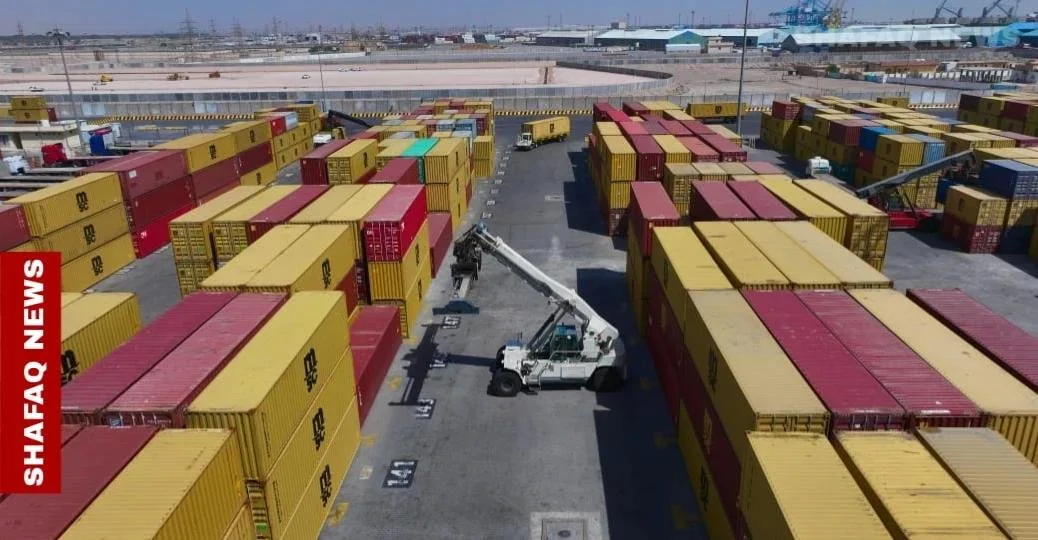
2026-05-01 Shafaq News Every day, above the oil fields of southern Iraq, gas burns off into the sky in towers of orange flame. Iraq flares 1,200 million standard cubic feet of gas per day —enough, if captured, to power the industries the country doesn't have. Instead, Baghdad imports gas from Iran to generate electricity for the factories that cannot run without it.
It pays billions for the fuel it is simultaneously destroying. The ships that arrive at Umm Qasr carrying rice, sugar, and cooking oil are a symptom of the same logic: a country that possesses what it needs, and cannot stop paying others to provide it.
Iraq’s Import Trap: A System That Produces Demand, Not Supply
2026-05-01 Shafaq News Every day, above the oil fields of southern Iraq, gas burns off into the sky in towers of orange flame. Iraq flares 1,200 million standard cubic feet of gas per day —enough, if captured, to power the industries the country doesn't have. Instead, Baghdad imports gas from Iran to generate electricity for the factories that cannot run without it.
It pays billions for the fuel it is simultaneously destroying. The ships that arrive at Umm Qasr carrying rice, sugar, and cooking oil are a symptom of the same logic: a country that possesses what it needs, and cannot stop paying others to provide it.
Iraq’s GDP stood at $279.6 billion in 2024, according to the World Bank. In that same year, oil accounted for 89% of the country's foreign exchange earnings, with crude oil accounting for between 92 and 99% of total exports.
The country sits atop one of the largest hydrocarbon reserves on earth. And yet it cannot feed itself, power its factories reliably, or manufacture goods that compete on its own domestic market.
The standard explanation —weak institutions, post-war damage, incomplete reconstruction—describes symptoms while leaving the cause untouched. The more accurate account is this: the political economy that oil built in Iraq actively destroys the conditions under which domestic production could ever compete.
Every boom has deepened the dependency rather than reducing it, not by accident but by design, because the system that distributes oil revenues is also the system that governs, and it has no incentive to change.
$80 Billion in Imports
Iraq's annual import bill exceeds $80–90 billion in goods, according to Iraqi Ministry of Planning estimates. That number is striking because of what it covers. Between 80 and 100% of many basic staples, including wheat, rice, and sugar.
The dependency on agricultural imports has been building since the mid-1960s, accelerating through each successive conflict, and never reversed during the periods of relative stability and high oil prices that should, theoretically, have enabled investment in domestic alternatives.
The USDA's Foreign Agricultural Service documented what this looks like at ground level in its most recent grain reporting on Iraq. In one recent drought year, the planted area for paddy rice fell by 96% compared to the previous season, as the government restricted cultivation areas in the south due to water shortages. Iraq —a country bisected by the Tigris and Euphrates, ancient breadbasket of the Fertile Crescent— cannot reliably grow its own rice.
The gap between what Iraq consumes and what it produces is not a temporary problem awaiting the right infrastructure investment; it is the settled outcome of a structural transformation that oil revenue accelerated and that no government since 2003 has found either the tools or the political will to reverse.
Dutch Disease, Iraqi Edition
Economists have a precise term for what happened: Dutch disease describes the way a resource boom creates overreliance on one sector at the expense of others, operating through two channels: a resource movement effect, where labor migrates from manufacturing to the booming sector, causing direct deindustrialization; and a spending effect, where increased revenues raise demand for non-tradable goods, causing indirect deindustrialization. Iraq exhibits both channels in their most acute form.
Oil extraction accounts for 55% of Iraqi GDP; manufacturing, construction, water, and electricity combined account for 8%. Agriculture accounts for 4%. The tradable, productive sectors of the economy were not gradually outcompeted; they were crowded out by a state that, flushed with petrodollars, found it cheaper and politically easier to employ people directly than to build the conditions for a private economy.
Iraq's labor force numbers around 15 million people, and approximately 42% work in the public sector, an outcome rooted in decades of state-centered economic policy, first institutionalized under the Ba'ath regime and later reinforced during the post-2003 reconstruction period.
The World Bank reported that the average Iraqi public employee generates 17 minutes of effective work per day. More than 10.5 million Iraqi citizens —approximately a quarter of the total population— receive a monthly salary from the state. Salary and pension obligations now exceed $48 billion annually, close to 40% of the federal budget, according to Iraq's Federal Board of Supreme Audit.
Every dinar spent retaining a surplus civil servant is a dinar not spent on the power grid, the roads, or the credit facilities that would allow a private manufacturer to exist, let alone compete.
Factories That Cannot Run
Of all the structural obstacles facing Iraqi producers, none is more concrete or more consequential than electricity, and the way the country manages its own energy.
Iraq is the world's second-largest gas-flaring country after Russia, burning 1,200 million standard cubic feet per day while simultaneously importing gas from Iran at a cost of billions of dollars annually, spending roughly $2.78 billion on Iranian gas in 2021 alone, and twice that the following year, according to the Washington Institute for Near East Policy. The fuel that could power Iraqi industry is instead lit on fire above the fields that produce it, while the state pays a neighbor for the replacement.
The supply gap this creates is severe, even before an acute outage in the summer season, Iraq generates around 24,000 megawatts, considerably less than the estimated 34,000 megawatts needed to meet local demand. The International Energy Agency projects the deficit will persist: even if all planned capacity additions are completed and transmission reforms implemented, Iraq will still face a shortage of approximately 10,000 megawatts over the next five years.
For a manufacturer, unreliable electricity is not an inconvenience; it is a structural cost that no tariff protection can offset. A factory running on backup diesel generators faces energy expenses far above those of competitors in Turkiye, Iran, or China, where power is stable and often subsidized. Iraqi producers are asked to compete internationally with one hand tied behind their back, and then told the problem is that their hand is weak.
The financial structure of the electricity sector ensures the crisis cannot self-correct. Only about 20% of electricity bills are paid in full, driven by weak enforcement and a widespread public expectation that electricity should be a free public service.
More than 50% of generated electricity is lost before billing through theft and inefficiency, and less than 30% of total production contributes to financial revenue, leaving only about 10% of operational expenses covered by collections.
A ministry that recovers a tenth of its operating costs cannot invest in the grid. A grid that cannot be invested in remains unreliable. An industry that cannot rely on the grid cannot grow. The loop is closed, and it has been closed for decades.
Tariff That Is Not a Tariff
Protective tariffs exist on paper for domestic manufacturers. The government operates a Public Distribution System providing subsidized staple foods, purchases grain harvests at above-market prices, and has backed financing for over 1,300 industrial projects. Formally, the architecture of industrial protection is present.
What is also present —and what systematically neutralizes it— is the border. Cartels maintain control around Iraq's key crossing points, employing false trade invoicing whereby importers misrepresent or undervalue products to pay less import duty, while encouraging officials to ignore mandatory inspections.
Analysts estimate that smuggling and illicit trade activities deprive the state of between three and four billion dollars in lost revenue annually. A tariff that is not enforced at the point of entry is not a tariff; it is an announcement.
Transparency International's 2024 Corruption Perceptions Index scored Iraq at 26 out of 100, against a world average of 43. The IMF, in its 2023 Article IV consultation, found that customs procedures required urgent modernization and that anti-smuggling initiatives had not been implemented on a meaningful scale.
It also recorded, without evident surprise, that approximately $2.5 billion was stolen from Iraq's General Commission for Taxes in 2021–22, only a fraction of which has been recovered.
owsThe Public Distribution System, meanwhile, provides genuine short-term relief. Research by the WFP and the IPC found that the PDS sl the transmission of global food price shocks to Iraqi consumers, with local prices adjusting to roughly 68% of an international price increase after five months. But the same research concluded the system strains the public budget while failing to provide long-term protection from global price volatility.
Political Trap
This is the argument that matters most, and the one most economic reporting on Iraq consistently avoids: import dependence is not a policy problem awaiting a technical solution. It is the equilibrium output of a rentier political settlement, and every actor inside that settlement has a rational interest in preserving it.
Rentier dynamics have produced deeply rooted public expectations of state generosity. Any attempt to cut subsidies or restructure the payroll risks provoking popular backlash —as Prime Minister Haider al-Abadi found directly when his 2015–18 reform efforts were met with mass protests. The government distributes oil revenues not primarily to develop the economy, but to maintain social peace.
Public employment is patronage institutionalized. Subsidized imports are a transfer payment that happens to destroy the market for domestic producers. The arrangement works, politically, for as long as oil prices cooperate.
They are not cooperating as the oil price required to balance Iraq's budget rose to around $84 per barrel in 2024, up from $54 in 2020, as spending expanded and non-oil revenues stagnated. With oil trading well below that threshold, Iraq is running a structural fiscal deficit while being politically unable to address its causes. Non-oil GDP was projected to slow to just 1% in 2025 as falling oil prices and financing constraints weighed on government spending and consumer sentiment.
The IMF's 2025 Article IV mission delivered its verdict without diplomatic softening: Iraq's vulnerabilities have increased in recent years due to a large fiscal expansion, and the country is struggling with high unemployment, an excessive state footprint, a weak banking sector, corruption, and an inefficient electricity sector.
It called for customs enforcement, tariff reform, wage bill reduction, labor market liberalization, and governance improvements —presenting these not as optional enhancements but as interlocking necessities. Iraq has received versions of the same prescription, from the same institution, in nearly the same language, for more than a decade.
Read more: Youth in despair, no jobs to share: Iraq’s workforce hanging in the air
Gas Will Keep Burning
Iraq will not resolve its import dependency through targeted subsidies, above-market procurement prices, or financing windows for industrial projects. These are interventions inside a system whose own logic produces the problem they are designed to solve. The dependency will begin to close only when the cost of maintaining the current settlement exceeds the cost of dismantling it, when oil revenue falls far enough, for long enough, that the state can no longer afford to employ a quarter of the population, subsidize electricity it cannot bill for, and look the other way at borders it does not control.
That moment may be approaching as it has approached before —after 2014, after 2020— and passed without transformation. Whether this time is different depends less on any particular minister or reform package than on whether the fiscal pressure now building is severe enough to break the political coalition that has made dependence the rational choice for twenty years.
Until then, the gas will keep burning above the southern fields. The ships will keep arriving at Umm Qasr. And somewhere between the flame and the cargo hold lies the answer to a question Iraq has not yet decided it wants to ask.
Read more: Iraq's gas flaring paradox: a wealth of resources, a nation in need
Written and edited by Shafaq News staff.
https://www.shafaq.com/en/Report/Iraq-s-import-trap-A-system-that-produces-demand-not-supply
MilitiaMan & CREW IRAQ DINAR UPDATE-Clean Progress taking place-Washington - Iraq in line-Reforms-REER-Results
MilitiaMan & CREW IRAQ DINAR UPDATE-Clean Progress taking place-Washington - Iraq in line-Reforms-REER-Results
4-30-2026
The Crew: Samson, PompeyPeter, Petra, Daytrader, Sunkissed, GIGI and Militia Man
No drama. No intrigue. No songs and dances. Just straight, factual news that I read and interpret to the best of my ability after being an avid Dinar investor and insanely obsessed Dinarian for over 15 years.
Follow MM on X == https://x.com/Slashn
MilitiaMan & CREW IRAQ DINAR UPDATE-Clean Progress taking place-Washington - Iraq in line-Reforms-REER-Results
4-30-2026
The Crew: Samson, PompeyPeter, Petra, Daytrader, Sunkissed, GIGI and Militia Man
No drama. No intrigue. No songs and dances. Just straight, factual news that I read and interpret to the best of my ability after being an avid Dinar investor and insanely obsessed Dinarian for over 15 years.
Follow MM on X == https://x.com/Slashn
Be sure to listen to full video for all the news……..
FRANK26…4-30-26…..IN 2 WEEKS
KTFA
Thursday Night Video
FRANK26…4-30-26…..IN 2 WEEKS
This video is in Frank’s and his team’s opinion only
Frank’s team is Walkingstick, Eddie and Omar in Iraq and guests
Playback Number: 605-313-5163 PIN: 156996#
KTFA
Thursday Night Video
FRANK26…4-30-26…..IN 2 WEEKS
This video is in Frank’s and his team’s opinion only
Frank’s team is Walkingstick, Eddie and Omar in Iraq and guests
Playback Number: 605-313-5163 PIN: 156996#
Seeds of Wisdom RV and Economics Updates Late Thursday Evening 4-30-26
Good Evening Dinar Recaps,
Currency Stress Signals Shift: Emerging Market Selloff and Dollar Strength Reshape Global Balance
Sharp currency declines and capital outflows are intensifying pressure on emerging markets, signaling deeper structural shifts in the global financial system
Good Evening Dinar Recaps,
Currency Stress Signals Shift: Emerging Market Selloff and Dollar Strength Reshape Global Balance
Sharp currency declines and capital outflows are intensifying pressure on emerging markets, signaling deeper structural shifts in the global financial system
OVERVIEW (KEY POINTS)
Global currency markets are under pressure as emerging market currencies weaken sharply against a strengthening U.S. dollar, highlighting growing financial stress across multiple regions.
This is happening now due to a combination of rising energy costs, capital flight to safe-haven assets, and tightening global liquidity conditions, all amplified by geopolitical uncertainty.
Key players include central banks in emerging economies, global investors reallocating capital, and the U.S. dollar maintaining dominance amid instability.
The broader implication is clear: currency instability is accelerating capital flow shifts and exposing vulnerabilities in the current global financial structure.
KEY DEVELOPMENTS
1. Emerging Market Currencies Slide Rapidly
Currency weakness is spreading.
Several currencies hitting multi-year or record lows
Selling pressure driven by capital outflows and risk aversion
2. U.S. Dollar Strengthens as Safe Haven
Flight to safety is intensifying.
Investors moving into dollar-denominated assets
Dollar benefiting from global uncertainty and liquidity demand
3. Central Banks Intervene to Stabilize Markets
Authorities attempt to slow declines.
Interventions include currency support measures and liquidity injections
Limited effectiveness as broader market pressures persist
4. Energy Prices Amplify Currency Pressure
Oil costs are impacting trade balances.
Higher energy prices worsening import bills for emerging economies
Increased strain on foreign exchange reserves
5. Capital Flows Shift Toward Developed Markets
Global investment patterns are changing.
Funds moving toward U.S. and developed market assets
Emerging markets facing reduced investment inflows
WHY IT MATTERS
This development highlights how currency markets are a leading indicator of broader financial stress, often signaling deeper systemic issues before they fully emerge.
As currencies weaken, the impact spreads to inflation, debt servicing, and economic stability, particularly in economies reliant on external financing and imports.
For policymakers, defending currencies becomes increasingly difficult when global conditions favor stronger reserve currencies like the dollar.
At the system level, this reflects a growing imbalance: capital concentration in safe havens versus vulnerability in emerging markets.
WHY IT MATTERS TO FOREIGN CURRENCY HOLDERS
Purchasing power declines in weakening currencies
Exchange rate volatility increases across markets
Dollar strength impacts global pricing and trade
Higher risk in holding emerging market currencies
IMPLICATIONS FOR THE GLOBAL RESET
Pillar 1: Capital Flow Realignment
Shifting capital toward safe-haven assets is accelerating a rebalancing of global financial influence, concentrating liquidity in fewer markets.
Pillar 2: Currency System Pressure
Widespread currency instability highlights structural weaknesses that could lead to changes in reserve currency dynamics and trade settlement systems.
CONCLUSION
The current wave of currency pressure is more than short-term volatility—it reflects underlying structural stress within the global financial system.
As capital flows shift and currencies weaken, the risks extend into inflation, debt sustainability, and economic growth.
This moment underscores a critical reality: currency stability is central to financial system confidence, and cracks are beginning to show.
When currencies weaken and capital moves, the foundation of the global financial system begins to shift.
Seeds of Wisdom Team
Newshounds News™ Exclusive
Sources
Reuters — "Emerging market currencies fall as dollar strengthens amid global uncertainty"
Reuters — "Global investors shift capital toward safe-haven assets amid volatility"
~~~~~~~~~~
Seeds of Wisdom Team RV Currency Facts Youtube and Rumble
Newshound's News Telegram Room Link
RV Facts with Proof Links Link
RV Updates Proof links - Facts Link
Follow the Gold/Silver Rate COMEX
Follow Fast Facts
Seeds of Wisdom Team™ Website
Thank you Dinar Recaps
Iran War: What’s Happening On Day 62 As Trump Asks Iran To ‘Give Up’?
Iran War: What’s Happening On Day 62 As Trump Asks Iran To ‘Give Up’?
Trump says the US blockade of Iranian ports is working, urging Tehran to ‘give up’ amid tensions.
By Elizabeth Melimopoulos and AFP 30 Apr 2026 EXPLAINER News|US-Israel War On Iran
United States President Donald Trump says Washington’s blockade of Iranian ports has been a success, urging Tehran to “just give up” as pressure mounts in a deepening standoff over the Strait of Hormuz.
Iran has pushed back strongly, with Parliament Speaker Mohammad Bagher Ghalibaf dismissing the US campaign as ineffective, while the military says its restraint so far has been “intended to give diplomacy a chance”.
Iran War: What’s Happening On Day 62 As Trump Asks Iran To ‘Give Up’?
Trump says the US blockade of Iranian ports is working, urging Tehran to ‘give up’ amid tensions.
By Elizabeth Melimopoulos and AFP 30 Apr 2026 EXPLAINER News|US-Israel War On Iran
United States President Donald Trump says Washington’s blockade of Iranian ports has been a success, urging Tehran to “just give up” as pressure mounts in a deepening standoff over the Strait of Hormuz.
Iran has pushed back strongly, with Parliament Speaker Mohammad Bagher Ghalibaf dismissing the US campaign as ineffective, while the military says its restraint so far has been “intended to give diplomacy a chance”.
Meanwhile, tensions in the Strait of Hormuz are rippling through global markets, sending oil prices above $120 a barrel and driving US petrol prices to a four-year high.
Here is what we know as the conflict enters day 62:
In Iran
Blockade ‘doomed to fail’: Iran’s President Masoud Pezeshkian said a US naval blockade on Iranian ports would deepen disruptions in the Gulf while failing to achieve its targets. “Any attempt to impose a maritime blockade or restrictions is contrary to international law… and is doomed to fail,” Pezeshkian said in a statement.
Iran speaker dismisses blockade’s impact on oil: Parliament Speaker Mohammad Bagher Ghalibaf said no oil wells have “exploded” under the US blockade, arguing the measures have only driven up global prices. He added Iran’s storage has not reached capacity and accused US officials, including Treasury Secretary Scott Bessent, of acting on “junk advice” over the policy.
Can the blockade force a production halt? The US says cutting off exports will eventually push Iran’s storage to capacity, forcing output to stop, but analysts say remaining storage may cover only about 20 days of output. As Muyu Xu, a senior crude oil analyst at Kpler, notes, any cuts are likely to be gradual, with a higher chance of acceleration into May.
No US presence in strait: Ghalibaf vowed his country’s control over the strategic Strait of Hormuz would ensure a future without US presence in the Gulf region.
War diplomacy
Putin-Trump talks: Russian President Vladimir Putin warned his US counterpart Donald Trump not to resume attacks on Iran. In a phone call between the two leaders, Putin said Trump’s decision to extend the ceasefire was “the right one”, Kremlin aide Yuri Ushakov told reporters, including from the AFP news agency.
Sticking points in US-Iran negotiations: The two sides remain divided over Iran’s nuclear programme and uranium stockpile, the US blockade, the release of $20bn in Iranian assets, and Tehran’s demand for $270bn in war reparations.
Geopolitical ripple effects: OPEC is reportedly in “crisis mode” amid the energy shock and the UAE’s plan to exit the group. Trump is also weighing a reduction of US troops in Germany after tensions with Berlin.
US-Germany tensions: Trump said the US was considering reducing its troops in Germany over Chancellor Friedrich Merz’s refusal to join Washington’s war against Iran – a force estimated between 35,000 and 50,000 troops.
EU pushes back: Following Trump’s comments, the European Union said Thursday that the deployment of US troops in Europe was in Washington’s interest. “Our NATO allies are also increasing their defence spending at an unprecedented pace,” EU spokeswoman Anitta Hipper added.
In the Gulf
Iran condemns Bahrain citizenship revocations: Tehran says Manama violated the rights of 69 people stripped of citizenship for allegedly supporting Iranian attacks. Bahrain’s Ministry of Interior accused them of “colluding with foreign entities”, while Iran’s Ministry of Foreign Affairs called the move “discriminatory” and an attempt to deflect from support for US-Israeli actions.
In the US
‘$25bn’ cost of the war so far: US Defense Secretary Pete Hegseth was asked during a fiery exchange in Congress about the cost of 60 days of conflict, and replied that it was estimated at less than $25bn so far.
Long blockade: Trump has told national security officials to prepare for a long blockade of Iran’s ports to compel Tehran to give up its nuclear programme, according to the Wall Street Journal.
‘No more Mr. Nice Guy’: “Iran can’t get their act together. They don’t know how to sign a nonnuclear deal. They better get smart soon!” Trump posted on his Truth Social platform, alongside an illustration of himself holding an assault rifle, with the caption “NO MORE MR. NICE GUY!”
Economic toll of the blockade: Washington says it has seized nearly $500m in Iranian crypto assets under “Operation Economic Fury” to ramp up pressure. Meanwhile, US Democrats are criticising the war’s $25bn cost, citing higher fuel and food prices for Americans.
In Israel
Israel warns Iran: Israel’s defence minister said his country may soon have to “act again” against Iran, to ensure the Islamic republic “does not once again become a threat to Israel”.
In Lebanon and Gaza
Lebanon slams Israel: Lebanese President Joseph Aoun condemned the “continuing Israeli violations” in south Lebanon, saying they included “demolitions of homes and places of worship, while the number of killed and wounded rises day after day”.
Deadly Lebanon strike: Israeli strikes on three south Lebanon villages killed nine people, among them two children and five women, according to Lebanon’s Health Ministry.
Gaza crisis deepens: Israeli forces have intercepted a Gaza-bound civilian aid convoy in what a press officer described as a possible “kidnapping on the high seas”, while Palestinians continue to be killed in the Gaza Strip despite a fragile “ceasefire”.
Global economy
Oil jumps: Global crude prices soared following reports of a possible extended blockade, with Brent jumping above $119 a barrel to its highest level since 2022 and US benchmark WTI above $105.
Record profits: French fossil fuel giant TotalEnergies said net profit rose 51 percent in the first quarter to $5.8bn, boosted by higher oil prices linked to the war in Iran.
Asia hit hard by rising oil prices: The Asia Pacific region, heavily reliant on Middle East oil, is feeling the strain as Brent crude nears $120 a barrel. The Asian Development Bank has cut growth forecasts and raised inflation projections, with higher fuel and food prices hitting millions.
‘Major energy crisis’: The world is facing a “major energy and economic challenge” as oil prices have soared in the wake of the war, said International Energy Agency chief Fatih Birol at a Paris meeting. With the world faced with “the biggest energy crisis in history”, oil prices were “putting a lot of pressure in many countries”, he added.
Iran war: What’s happening on day 62 as Trump asks Iran to ‘give up’?
Iraq Economic News And Points To Ponder Thursday Evening 4-30-26
US Extends Deadline For Lukoil Asset Sales To May 30
2026-04-30 Shafaq News- Baghdad/ Washington The US Treasury Department extended the deadline for energy companies to finalize deals to acquire foreign assets owned by Russian Lukoil to May 30, 2026, from an earlier May 1 cutoff.
According to a statement from the department, the United States has imposed strict conditions on the sales, barring the Russian side from receiving any direct payments, with proceeds instead held in frozen accounts under US supervision to prevent their use in financing the war effort.
US Extends Deadline For Lukoil Asset Sales To May 30
2026-04-30 Shafaq News- Baghdad/ Washington The US Treasury Department extended the deadline for energy companies to finalize deals to acquire foreign assets owned by Russian Lukoil to May 30, 2026, from an earlier May 1 cutoff.
According to a statement from the department, the United States has imposed strict conditions on the sales, barring the Russian side from receiving any direct payments, with proceeds instead held in frozen accounts under US supervision to prevent their use in financing the war effort.
The extension marks the fifth since sanctions were imposed last October. The move forms part of US pressure on Moscow over the war in Ukraine, with sanctions forcing Lukoil, Russia’s second-largest oil producer, to divest its international portfolio, estimated at $22 billion.
Lukoil operates the West Qurna-2 field in Basra, one of Iraq’s largest oil fields, under a contract with the Oil Ministry. Development began after 2010, with production starting in 2014. The field holds substantial reserves and produces between 400,000 and 470,000 barrels per day, making it a key contributor to Iraq’s oil revenues and export capacity.
Read more: Russia’s Lukoil turmoil deepens risks for Iraq’s West Qurna-2 oilfield
https://www.shafaq.com/en/Economy/US-extends-deadline-for-Lukoil-asset-sales-to-May-30
Oil Jumps On US Military Option Against Iran
2026-04-30 Shafaq News Oil prices rose on Thursday on a report the U.S. is considering potential military action against Iran to break the deadlock in negotiations to end the war, increasing concerns of more supply disruptions to already curtailed Middle East exports.
Brent crude futures for June rose $5.27, or 4.5%, to $123.30 a barrel as of 0347 GMT after gaining 6.1% in the previous session. The June contract, which has increased for a ninth day, expires on Thursday and the more active July contract was at $113.10, up $2.66, or 2.4%, after gaining 5.8% in the previous session.
U.S. West Texas Intermediate futures for June were up $2.42, or 2.3%, at $109.30 a barrel, after climbing 7% in the previous session, climbing in eight of nine sessions.
Both benchmarks are on track for their fourth month of gains.
U.S. President Donald Trump is slated to receive a briefing on Thursday on plans for a series of military strikes on Iran in hopes it will return to negotiations on its nuclear programme, according to an Axios report late on Wednesday.
The U.S. and Israel began air strikes on Iran on February 28 and it retaliated by closing off almost all shipping through the Strait of Hormuz, a chokepoint for energy supplies fromMiddle Eastern producers. Amid a ceasefire that has paused active combat, the U.S. has imposed a blockade on Iranian ports.
Talks to resolve the conflict, which has killed thousands and caused what analysts say is the world's biggest energy disruption ever, have deadlocked, with the U.S. insisting on discussing Iran's alleged nuclear weapons programme and Iran demanding some control over the strait and reparations for damage from the war.
"The oil market has moved from over-optimism to the reality of the supply disruption we are seeing in the Persian Gulf," said ING analysts in a note.
In a sign the conflict and resulting energy supply disruptions are set to continue for longer, Trump spoke on Wednesday with oil companies about how to mitigate the impact of a possiblemonths-long U.S. blockade, a White House official said.
"Prospects for any near-term resolution to the Iran conflict or a reopening of the Strait of Hormuz remain dim," IG market analyst Tony Sycamore said in a note.
The OPEC+ grouping of members ofthe Organization of the Petroleum Exporting Countries and its allies is likely to agree a small increase of around 188,000 barrels per day in oil output quotas on Sunday, sources told Reuters on Wednesday.
The meeting comes just after the United Arab Emirates' withdrawal from OPEC, effective May 1, which is expected to deal a blow to the oil producer group's ability to control prices. Although the Gulf nation's exit would allow it to raise production after exports restart, analysts say that is unlikely to affect market fundamentals this year, especially with the Hormuz closure and other production disruptions from the war.
"Gulf countries, including the UAE, will take months to return to pre-war production volumes," Wood Mackenzie analysts said in a note.(REUTERS) https://www.shafaq.com/en/Economy/Oil-jumps-on-US-military-option-against-Iran
Basrah Crudes Surge Despite Global Losses
2026-04-30 Shafaq News- Basrah Iraq’s Basrah crude jumped nearly 12% on Thursday, even as global oil markets declined.
Basrah Heavy crude climbed by $14.44 to $135.33 per barrel, while Basrah Medium crude rose by $14.44 to settle at $137.43 per barrel. Brent crude futures fell $2.05, or 1.7%, to $115.98 a barrel as of 1016 GMT.
https://www.shafaq.com/en/Economy/Basrah-crudes-surge-despite-global-losses
Iraq Imports From Turkiye Fall To $659 Million In March
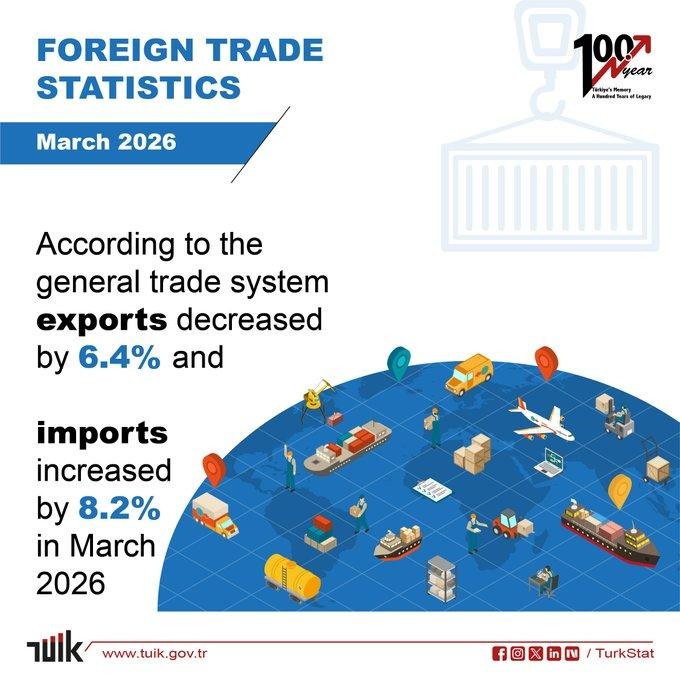
2026-04-30 Shafaq News- Ankara Iraq ranked eighth among Turkiye’s top importers with $659 million worth of goods in March, down from $774 million in February, the Turkish Statistical Institute (TURKSTAT) stated on Thursday.
Germany ranked first with imports valued at $1.82 billion, followed by the United Kingdom at $1.419 billion, the United States at $1.378 billion, Italy at $1.216 billion, France at $995 million, Spain at $846 million, and Romania at $802 million.
Exported goods included manufactured products, as well as agriculture, forestry, fishing, mining, and quarrying, which together accounted for 94% of Turkiye’s total exports.
https://www.shafaq.com/en/Economy/Iraq-imports-from-Turkiye-fall-to-659-million-in-March
Dinar For Dummies: No BS Iraqi Dinar Talk With Businessman/Investor
Dinar For Dummies: No BS Iraqi Dinar Talk With Businessman/Investor
4—30-2026
For those following the Iraqi dinar market, the landscape is shifting faster than ever. In a recent, in-depth discussion hosted by Stephen Campolo on Dinar For Dummies, seasoned investor Thom Sieloff shared his expert analysis on the current state of Iraqi currency and what the future might hold.
By breaking down the intricate intersection of Middle Eastern politics and global economics, the conversation provides much-needed clarity for those trying to separate speculation from reality.
Dinar For Dummies: No BS Iraqi Dinar Talk With Businessman/Investor
4—30-2026
For those following the Iraqi dinar market, the landscape is shifting faster than ever. In a recent, in-depth discussion hosted by Stephen Campolo on Dinar For Dummies, seasoned investor Thom Sieloff shared his expert analysis on the current state of Iraqi currency and what the future might hold.
By breaking down the intricate intersection of Middle Eastern politics and global economics, the conversation provides much-needed clarity for those trying to separate speculation from reality.
A major focus of the discussion is the evolution of Iraq’s political hierarchy. Sieloff, known for his diligent daily briefings, highlights the complexities surrounding the selection of key leadership figures
The consensus is clear: for the Central Bank of Iraq (CBI) to make significant moves regarding the dinar’s exchange rate, a stable and functioning government is an absolute prerequisite. The dialogue emphasizes that while the path toward this stability is often murky, the involvement and approval of international powers like the U.S. and the UK remain central to the country’s progress.
Beyond domestic politics, the conversation widens to address the high-stakes geopolitical pressures currently influencing the region. The speakers analyze how factors such as oil revenue security—compounded by potential blockades in the Strait of Hormuz—and shifting alliances within OPEC contribute to a volatile environment.
Furthermore, the discussion touches upon the strategic economic pressures that have been applied over the years to nudge Iraq toward necessary financial reforms. For the individual investor, understanding these macro-level dynamics is essential for contextualizing the current market climate.
Perhaps the most valuable takeaway from the episode is the emphasis on investor mindset. Both Campolo and Sieloff caution against “headline fatigue,” reminding their audience that daily news cycles are often meant to trigger emotional reactions rather than reflect long-term value. Instead, they advocate for a disciplined approach involving diligent research and the use of modern tools—such as AI-driven verification—to ensure one is making decisions based on facts rather than rumors.
Whether you are tracking the dinar, the Vietnamese dong, or other international currencies, the advice remains the same: stay grounded. The current period is one of accelerated political and economic change, requiring both patience and a healthy dose of discernment.
For a deeper dive into these topics, we encourage you to watch the full video on the Dinar For Dummies YouTube channel to stay informed and better prepared for your investment journey.
UAE Drops Bombshell, Oil and Gold to Surge
UAE Drops Bombshell, Oil and Gold to Surge
Daniela Cambone: 4-30-2026
In a recent, high-stakes episode of The Daniela Cambone Show hosted by ITM Trading, Daniela Cambone sat down with world-renowned economist Professor Steve Hanke to dissect a series of earth-shaking developments in the global economy.
From the sudden realignment of the Middle East energy landscape to the underlying forces driving persistent inflation, the interview provides a masterclass in how geopolitics and monetary policy intersect to shape our financial future.
UAE Drops Bombshell, Oil and Gold to Surge
Daniela Cambone: 4-30-2026
In a recent, high-stakes episode of The Daniela Cambone Show hosted by ITM Trading, Daniela Cambone sat down with world-renowned economist Professor Steve Hanke to dissect a series of earth-shaking developments in the global economy.
From the sudden realignment of the Middle East energy landscape to the underlying forces driving persistent inflation, the interview provides a masterclass in how geopolitics and monetary policy intersect to shape our financial future.
The headline news of the discussion was the United Arab Emirates’ (UAE) decision to exit the OPEC cartel effective May 1st.
According to Professor Hanke, this isn’t merely a logistical change; it’s a strategic pivot driven by a “pump now or lose out” mentality. The UAE is increasingly frustrated by strict production quotas and views the long-term horizon for real oil prices as declining.
Furthermore, Hanke highlights a growing sense of regional insecurity. With heightened tensions involving Iran and the broader Middle East, the UAE is concerned that future geopolitical disruptions could hinder their ability to export oil later.
By leaving OPEC, they gain the autonomy to accelerate extraction and maximize revenues while the markets are still accessible, fearing that their underground “black gold” might eventually be devalued by volatility and shifting alliances.
The conversation took a deep dive into the broader implications of Middle Eastern instability. Hanke notes that as regional tensions rise, the traditional balance of power is tilting. While the United States faces significant strategic and economic setbacks in the region, Russia and China are emerging as key beneficiaries of the shifting dynamics.
Professor Hanke did not hold back in his critique of current U.S. foreign policy. He described the American approach to the ongoing regional conflicts as ill-prepared, suggesting that the current narratives mirrors the flawed justifications used during the lead-up to the Iraq war.
He questioned the efficacy of modern military intervention, suggesting that “winning” in today’s complex global context is an increasingly elusive concept that carries heavy economic costs.
Moving from the oil fields to the Federal Reserve, Hanke offered a sobering perspective on inflation. While main stream media often focuses exclusively on interest rate hikes, Hanke argues that inflation is fundamentally a result of money supply growth.
Despite the Fed’s attempts to cool the economy, Hanke predicts that inflationary pressures will remain “sticky” due to continued bank lending and money creation.
He suggests that we shouldn’t expect a radical departure from the Federal Reserve’s current steady-state policy until a new leadership takes the helm, leaving investors to grapple with a prolonged period of diminished purchasing power.
For those looking to protect their wealth, the most striking part of the interview was Hanke’s medium-to-long-term outlook on commodities, particularly gold. Despite the usual market ebbs and flows, Hanke remains decisively bullish. He points to China’s massive role in commodity demand and the steady accumulation of gold by central banks as primary drivers for the metal’s value.
When asked about price targets, Hanke’s projections were bold: he sees gold continuing its upward trajectory, potentially reaching $6,000 to $7,000 per ounce in the long term.
This forecast is rooted in the belief that gold remains the ultimate hedge against monetary mismanagement and geopolitical chaos.
The insights shared by Professor Steve Hanke serve as a wake-up call for investors and policy watchers alike. As the UAE chooses independence over cartel quotas and the global power structure reshuffles, the importance of understanding monetary supply and hard assets has never been higher.