
Thank you to all the subscribers to our Early Access program…we thank you for your continued support.
We are excited to offer this new service to keep you informed and up-to-date on the latest Dinar and currency news.
Wednesday Iraq News Posted by Tishwash at TNT 7-8-2026
TNT:
Tishwash: The World Bank commends Iraq's steps in modernizing its public budget preparation tools.
On Tuesday, Deputy Minister of Finance Ali Karim met with a World Bank delegation headed by Samer Mata to discuss modernizing public financial management.
The Ministry of Finance stated in a press release received by the Video News Agency that the meeting reviewed the Ministry's progress in transitioning from line-item budgeting to program and performance-based budgeting.
TNT:
Tishwash: The World Bank commends Iraq's steps in modernizing its public budget preparation tools.
On Tuesday, Deputy Minister of Finance Ali Karim met with a World Bank delegation headed by Samer Mata to discuss modernizing public financial management.
The Ministry of Finance stated in a press release received by the Video News Agency that the meeting reviewed the Ministry's progress in transitioning from line-item budgeting to program and performance-based budgeting.
This included preparing implementation documents and templates, and identifying requirements for developing systems, schedules, and electronic displays in the Budget and Accounting Departments. These improvements aim to support digital transformation and enhance oversight, governance, and the efficiency of public spending.
The statement added that the Ministry emphasizes the importance of the technical support provided by the World Bank in this process. It also stressed the need to form a specialized national team from within the Ministry to oversee implementation, train spending units, and ensure a gradual and effective transition to program and performance-based budgeting.
For its part, the World Bank delegation commended the Ministry of Finance's steps in modernizing budget preparation tools and developing financial management systems. The delegation affirmed its readiness to provide the necessary technical expertise to support the project and establish more efficient and transparent modern financial practices. link
******************
Tishwash: Parliamentary move to resolve the cabinet formation issue during upcoming sessions
MP Abbas Al-Maliki stressed on Wednesday that the delay in completing the cabinet does not serve the political process, calling on political blocs to expedite the resolution of this issue and send the names of the remaining ministers to the House of Representatives for a vote.
Al-Maliki told Al-Maalomah News Agency that “the delay in completing the cabinet does not serve the political process and affects the government’s work and the implementation of its program,” indicating that “the House of Representatives informed the political blocs of the need to reach an agreement and send the names of the remaining ministers in preparation for voting on them.”
He added that "political activity is still ongoing among political forces in order to reach understandings regarding the vacant ministries."
Al-Maliki indicated that "there is a move to resolve the issue of completing the cabinet during the upcoming sessions of the Council of Representatives, which will contribute to finalizing the government formation and closing this file." link
****************
Tishwash: Visit to Washington: An economic gamble to boost investment
All eyes are on the upcoming visit of Prime Minister Ali al-Zubaidi to the American capital, Washington, amid expectations that it will be an important step in strengthening economic relations between Iraq and the United States, and opening new horizons for foreign investments, especially in vital sectors that are relied upon to diversify the national economy and reduce dependence on oil revenues.
The visit also represents an important milestone in the course of Iraqi-American relations, as it holds opportunities to enhance political, economic, and security cooperation, in addition to raising national and humanitarian issues of concern to the various components of the Iraqi people. This is confirmed by MP Khalid Sido, a member of the Parliamentary Security and Defense Committee, in an interview with Al-Sabah newspaper, where he indicated that Al-Zidi's anticipated visit to Washington represents an important opportunity to strengthen relations between Iraq and the United States, expressing his hope that its results will reflect positively on stability and economic development in Iraq.
Sido stressed the importance of the visit carrying a humanitarian message that confirms the state’s concern for all its components, emphasizing the need to address outstanding humanitarian issues.
He pointed out that the success of the visit should be measured by the gains it achieves for Iraq through the establishment of a genuine partnership based on respect for Iraqi sovereignty and non-interference in internal affairs, while preserving the independence of national decision-making. Sido indicated that Iraq possesses an important geographical location and great wealth that qualifies it to be an economic and strategic center in the region, expressing his hope that the visit will contribute to supporting security and stability and opening up broader horizons for economic and investment cooperation, which will reflect positively on the citizens and the Iraqi economy.
Furthermore, economic experts believe that the success of the visit will not be measured solely by the number of agreements that may be signed, but rather by Iraq's ability to convey a clear message to American investors and decision-makers that the country now possesses a more receptive environment for investments, and that it is moving towards building long-term economic partnerships that achieve common interests.
Professor of International Economics, Dr. Nawwar Al-Saadi, affirms that the most prominent economic message that the Iraqi delegation should carry is that Iraq is no longer looking for relations based on aid, but rather seeks sustainable investment partnerships based on mutual benefit.
Al-Saadi points out that Iraq has promising opportunities in the energy, gas, petrochemical, infrastructure, digital transformation, agriculture and manufacturing sectors, which are areas capable of generating rewarding returns for investors.
Al-Saadi adds to “Al-Sabah” that enhancing investor confidence requires providing clear messages regarding the continuation of economic reforms, improving the business environment, simplifying administrative procedures, enhancing governance and transparency, as well as protecting investments and continuing efforts to combat corruption, stressing that capital seeks first stability and legal guarantees before seeking profits.
The spokesperson added that it is also necessary to highlight Iraq’s orientations towards diversifying sources of income and expanding the role of the private sector, which would allow American companies the opportunity to enter as a partner in the development process, and not just as an implementer of projects. He pointed out that presenting a clear investment map supported by implementation mechanisms and legal guarantees will enhance the international community’s confidence in the Iraqi economy and open the door to quality investments that contribute to technology transfer, job creation, and economic growth.
For his part, economic researcher Ahmed Al-Ansari affirms that the Prime Minister’s visit to Washington represents an important opportunity to strengthen the economic partnership between Iraq and the United States, explaining that its success may contribute to attracting American and foreign investments to the energy, electricity, industry, infrastructure and technology sectors.
Al-Ansari adds that reaching economic understandings and agreements and sending reassuring messages to investors will enhance confidence in the Iraqi economy and encourage international companies to enter the local market, but he stressed at the same time that achieving these gains remains dependent on Iraq’s ability to improve the investment environment, consolidate stability, and accelerate economic and administrative reforms, in order to ensure that agreements are transformed into real productive projects that support economic diversification and provide new job opportunities.
Experts agree that the upcoming visit represents an opportunity to enhance Iraq’s economic standing regionally and internationally. However, its success requires following up on the implementation of any understandings and agreements that may result from it, and transforming them into tangible projects that contribute to achieving economic development, raise the level of confidence in the national economy, and support the government’s direction towards building a more diversified and stable economy. link
*******************
Tishwash: More than just protocol: Radical shifts drive Al-Zaidi's visit to Washington this month!
Introduction: Iraq stands at a new crossroads in the corridors of international diplomacy.
Visits by heads of state are often dismissed as routine protocol procedures filled with forced smiles, but Iraqi Prime Minister Ali Zaidi's visit to Washington in mid-July breaks this mold. In the aftermath of the "Iran 2026 War" and the fragility of the "Islamabad Memorandum," Zaidi carries not merely investment requests, but a "sovereignty first" doctrine. It is a bold attempt to transform Iraq from a regional arena of attrition into a "vital hub" that neither Washington nor the global economy can ignore.
First: Hunting the “Big Fish” – When bullets and money speak, al-Zaidi’s journey didn’t begin in Washington, but rather in the streets of Baghdad on the still night of the 28th of last month. That night, counterterrorism forces shattered the status quo with swift raids targeting bastions of nepotism. This wasn’t a political “show,” but the first wave of the “50 Whales” list identified by the Supreme Sovereign Council for Integrity.
The operation resulted in the arrest of 47 high-ranking officials, including parliamentarians and governors, and the seizure of large sums of cash hidden in private safes. For al-Zaydi, this move was domestic “political suicide,” but in Washington, it was a strategic “credit card”; it was the only message capable of persuading the US Treasury to lift restrictions on Iraqi banks and translate promises of integrity into concrete reality.
“Al-Zaidi’s categorical refusal of a $200 million bribe from an oil tycoon has become the ‘founding statement’ of his administration, and the moral cornerstone with which he confronts skeptics in the White House, declaring the end of the era of ‘money for silence’.”
Second: The “OPEC Surprise” – Iraq brandishes its surplus weapon in a high-stakes geopolitical poker game. Al-Zaidi holds a card that could redraw the global energy map: the threat to suspend Iraq’s membership in OPEC. This is not merely a threat to increase production; it is a carefully crafted pressure tactic to extract US recognition of the “Joint Energy and Development Fund.”
By threatening to pump 7 million barrels per day, al-Zaidi presents Washington with two equally unpalatable options: either engage in supporting the Iraqi infrastructure fund on favorable terms, or face an oil flood that could destabilize energy prices and traditional oil alliances. Al-Zaidi is not asking for aid; he is trading the stability of the global market for funding for the “new Iraq.”
Third: “Securing the Future” – Iraq as a Global Reserve Hub. After the 2026 war exposed the vulnerability of the Strait of Hormuz, al-Zaidi proposes Iraq as a “global reserve hub” for energy, representing a geopolitical “insurance policy” for the West. The race here is not only economic but also a race against time, as Turkey is pushing for a new agreement for the Nord Stream pipeline by a deadline this month.
Through the “Development Road” and the Nord Stream pipelines, al-Zaidi seeks to create a reliable overland alternative, offering the United States three strategic advantages:
Neutralizing the Strait’s vulnerability: ensuring the flow of oil away from regional maritime threats.
The return of the giants: providing security and political guarantees for American energy companies to return to work within a unified legal framework between Baghdad and Erbil.
Lasting stability: transforming Iraq from a “corridor of wars” into a “lifeline” connecting the Gulf to Europe by land.
Fourth: The Technological Fortress – Sovereignty via Starlink and Blockchain.
Al-Zaidi understands that digitally compromised sovereignty is illusory. Therefore, his visit to Washington transcends traditional arms deals, reaching into the realm of “digital sovereignty.” The move towards Starlink and American cloud providers is not merely a technological luxury, but an attempt to decouple from regional fiber optic networks vulnerable to hacking and political blackmail.
In this context, the KBR-Nebras agreements stand out as a cornerstone for building a “technological fortress.” By combining KBR’s infrastructure expertise with a blockchain-based “government contract gateway,” al-Zaidi aims to render corruption technologically impossible. Here, technology not only combats corruption through legal means, but also makes data and contract manipulation a matter of pure programming imagination.
Fifth: The “Hard Stop” Date – The Moment of Truth on September 30.
The date of September 30 remains the shadow over all discussions; it is the date of the “Hard Stop” for all armed activities outside the authority of the state. Al-Zaidi is going to Washington to forge a unique bilateral security agreement: advanced air and intelligence support, without an “army on the ground.”
This gamble represents a “moment of confrontation” with the militias. Without effective American intelligence cover, the withdrawal could be interpreted as a “retreat” that opens the door for the rearming of the factions. Al-Zaidi seeks to secure a technical and security commitment that guarantees the state remains the only force permitted to bear arms, transforming military support from a “combat presence” into a smart “intelligence partnership.”
Conclusion: Can technology outpace inertia?
Ali al-Zaidi’s trip to Washington is the most ambitious attempt yet to transform the Islamabad Memorandum from a fragile, war-imposed truce into a lasting geopolitical and economic reality. Al-Zaidi is betting that individual integrity, bolstered by digital immunity, can break the deadlock of past decades.
As he sits in the Oval Office, the philosophical question facing Iraq’s future remains: Can technology and sovereign vigilance outpace the inertia of a long history of corruption and weapons, or will the powerful find a way to circumvent even blockchain technology? Iraq’s next decade is being written now in Washington, in ink of oil, digital sovereignty, and unwavering resolve. link
Iraq Economic News and Points To Ponder Tuesday Evening 7-7-26
Iraq Is Moving Towards Balancing Programs With US Support And In Coordination With The World Bank.
Money and Business Economy News – Baghdad Finance Minister Faleh Sari discussed on Wednesday with the US Chargé d'Affaires to Iraq, Joshua Harris, prospects for economic cooperation between Baghdad and Washington and ways to strengthen the partnership with US financial institutions, while both sides affirmed their support for the path of economic and financial reforms.
Iraq Is Moving Towards Balancing Programs With US Support And In Coordination With The World Bank.
Money and Business Economy News – Baghdad Finance Minister Faleh Sari discussed on Wednesday with the US Chargé d'Affaires to Iraq, Joshua Harris, prospects for economic cooperation between Baghdad and Washington and ways to strengthen the partnership with US financial institutions, while both sides affirmed their support for the path of economic and financial reforms.
The Ministry of Finance said in a statement received by "Al-Eqtisad News" that the minister stressed that the government has given the economic file high priority within its program, noting that the next stage will witness reforms aimed at addressing economic and financial challenges in a radical way, and in cooperation with international partners.
The minister revealed a government trend towards preparing a program budget and gradually moving away from the traditional budget system, with the aim of raising the efficiency of spending and linking financial allocations to goals and results, in line with the requirements of financial and administrative reform.
For his part, the US Chargé d'Affaires affirmed his country's support for the Iraqi government and its readiness to enhance economic and financial cooperation, in a way that contributes to supporting stability and achieving sustainable economic growth in Iraq.
This trend coincides with what the government spokesman, Haider al-Aboudi, announced, that the Council of Ministers approved a directive to proceed with drafting a "program budget" in coordination with the World Bank and the Parliamentary Finance Committee, within the framework of economic reform. https://www.economy-news.net/content.php?id=70077
Saleh: The Funds Recovered From Corrupt Individuals Cannot Be Used To Base Budgets.
Baghdad Today - Follow-up The Prime Minister’s financial advisor, Mazhar Muhammad Salih, confirmed on Tuesday (July 7, 2026) that the funds recovered from corrupt individuals represent exceptional revenues that cannot be relied upon in preparing public budgets, while noting that these funds will contribute to reducing the deficit gap and financing projects.
Saleh said in a statement followed by “Baghdad Today”, that “the funds that were recovered from the corrupt are important and non-recurring exceptional revenues, as they cannot necessarily and permanently be relied upon in preparing the general budgets, but they constitute an important source of revenue in financial planning.”
He continued: “These funds are often directed towards bridging the deficit gap or financing specific projects that directly affect the lives of individuals, or strengthening the country’s financial reserves, and not towards building the annual budget within a long-term fiscal policy, because that is linked to the ceilings and capabilities of fiscal policy within the framework of preparing and implementing public budgets.”
He stressed that “recovering corruption funds is important because it reduces financial waste, supports the public treasury, and enhances the confidence of citizens, investors, and the international financial community in the country’s economic system,” noting that “funds recovered from corrupt individuals represent an important support tool for the national economy, but they are not necessarily a complete replacement for the general budget, as this depends on the size and ceilings of public spending.”
These moves come in parallel with the government’s efforts to reduce the fiscal deficit and diversify revenue sources away from near-total dependence on oil. https://baghdadtoday.news/302881-.html
U.S. Resumes Dollar Transfers to Iraq After Months long Suspension
The Trump administration had halted the shipments to Iraq as part of its efforts to pressure the Baghdad government to distance itself from Iran. https://www.iraq-businessnews.com/2026/07/02/u-s-resumes-dollar-transfers-to-iraq/
European Union: We Will Continue To Support Iraq In Reforming Its Banking System.
Baghdad Today - Baghdad: The European Union Ambassador to Iraq, Clemens Simetner, confirmed on Sunday (July 5, 2026) that the Union will continue to provide support to the Iraqi government through numerous programs that include combating corruption and reforming the banking system.
Simetner told the official agency, as reported by Baghdad Today, that “we saw the current government program and put alongside it what the European Union has worked on and is still working on in terms of activities, and we found a great similarity there,” explaining that “we presented projects for vocational training, reforming the banking system, providing job opportunities for small and medium enterprises, as well as efforts to combat corruption, diversify energy sources, and diversify oil products.”
He added, "These programs are being implemented and are still in place, and we are continuing to support the government through them and will continue to provide them in the future." https://baghdadtoday.news/302780-.html
Middle East: Al-Zaidi's Government Moves Towards Opening Files On Ministers, Governors, And Directors- General, While Tracking Their Money And Properties
Baghdad - One News - 7/06/2026 Middle East Monitor reported that the Iraqi government is preparing to launch the second phase of its anti-corruption campaign, in a move that expands the scope of prosecutions to include ministers, governors, directors-general, and current and former officials, while simultaneously tracking funds, real estate, and investments linked to those suspected of involvement inside and outside Iraq.
The website indicated that the new phase includes opening files in the Ministries of Health, Oil and Electricity, in addition to completing the procedures for the “Where did you get this?” bill to strengthen the prosecution of illicit enrichment; the step comes within the government’s efforts to expand accountability, recover public funds and prosecute those involved without exception.
https://1news-iq.net/ميدل-إيست-حكومة-الزيدي-تمضي-نحو-فتح-ملف/
Iraq’s Cf Backs Anti-Corruption Drive
2026-07-06 Shafaq News- Baghdad Iraq’s Shiite Coordination Framework (CF), the largest bloc in Parliament, reaffirmed on Monday its support for government and judicial measures to combat corruption, protect public funds, and strengthen the rule of law, according to a statement.
During a meeting at the office of Badr Organization Secretary-General Hadi Al-Amiri, attended by Supreme Judicial Council President Faiq Zaidan and Prime Minister Ali Al-Zaidi, the CF also reviewed official and public preparations for the funeral of Iran’s late Supreme Leader Ali Khamenei, calling for broad participation in the ceremony.
As Parliament resumed sessions following its legislative recess, the bloc called for activating oversight mechanisms and accelerating the approval of key legislation.
On June 28, Iraqi authorities launched Dawn Crackdown (Sawlat Al-Fajr), a nationwide anti-corruption campaign under Al-Zaidi’s direction targeting current and former officials, lawmakers, politicians, business figures, ministers, directors-general, provincial governors, and other suspects.
On Sunday, Tasmeem Alliance head Amer Al-Fayez revealed to Shafaq News that anti-corruption efforts would be on the agenda of the CF’s regular meeting.
Read more: Iraq detains top officials in anti-corruption sweep: What we know so far
https://shafaq.com/en/Iraq/Iraq-s-CF-backs-anti-corruption-drive
In The Presence Of The Head Of The Supreme Judicial Council, Faiq Zaidan, The Coordination Framework Affirms Its Support For The Anti-Corruption Campaign And Calls On Parliament To Strengthen Its Oversight Role
Baghdad - One News - 7/06/2026 The Coordination Framework held its periodic meeting today at the office of the Secretary-General of the Badr Organization, Hadi al-Amiri, in the presence of Prime Minister Ali al-Zaidi and the President of the Supreme Judicial Council, Judge Faiq Zaidan, to discuss the latest political, security and judicial developments in the country.
According to an official statement, the attendees discussed developments on the national scene, focusing on the sustainability of the anti-corruption campaign and the mechanisms to ensure the continuation of governmental and judicial procedures aimed at pursuing corruption cases and protecting public funds.
The Coordination Framework, according to the statement, affirmed its full support for the measures taken by the government and the judiciary in combating what it described as the “corruption pandemic,” stressing the importance of continuing efforts to stop the waste of public funds and strengthen the rule of law.
The participants called on the House of Representatives to activate its oversight tools in line with the ongoing governmental and judicial steps, in addition to intensifying work on passing laws that represent a priority during the current stage, in order to support the reform process and enhance the performance of state institutions.
The meeting also addressed a number of political and organizational issues, and the coordinating framework renewed its call for broad public participation in the funeral procession of the martyr Sayyid Ali Khamenei.
The meeting comes at a time when the Iraqi scene is witnessing an escalation in the pace of the anti-corruption campaign, coinciding with political and judicial efforts aimed at strengthening coordination between state institutions and supporting measures aimed at pursuing corruption cases and recovering public funds.
https://1news-iq.net/بحضور-رئيس-مجلس-القضاء-الأعلى-فائق-زيد/
Seeds of Wisdom RV and Economics Updates Tuesday Evening 7-7-26
Good Evening Dinar Recaps,
US-Iran Ceasefire Tested as Drone Attacks Hit Ships in the Strait of Hormuz
Renewed attacks on commercial vessels have heightened tensions in the Gulf, threatening fragile peace efforts and raising new concerns over global energy security and maritime trade.
Good Evening Dinar Recaps,
US-Iran Ceasefire Tested as Drone Attacks Hit Ships in the Strait of Hormuz
Renewed attacks on commercial vessels have heightened tensions in the Gulf, threatening fragile peace efforts and raising new concerns over global energy security and maritime trade.
Overview
Commercial vessels transiting the Strait of Hormuz were struck in separate attacks, prompting accusations against Iran and sharply escalating regional tensions.
The incidents place the fragile U.S.-Iran ceasefire at risk, just weeks after both sides agreed to pursue diplomatic negotiations.
Oil prices jumped immediately as traders reacted to renewed threats against one of the world's most critical energy corridors.
Key Developments
1. Commercial Ships Targeted in the Strait of Hormuz
Reports indicate that multiple commercial vessels were attacked while transiting the Strait of Hormuz, including a Qatari LNG tanker that suffered significant damage after an apparent drone strike. A Saudi-flagged crude tanker was also damaged, though no fatalities were reported.
2. U.S. Responds with Military Action
Following the attacks, U.S. Central Command announced retaliatory strikes against Iranian military targets, describing the vessel attacks as violations of the existing ceasefire agreement. The United States also revoked a conditional license that had permitted limited Iranian oil exports.
3. Oil Markets React Immediately
Brent crude and U.S. crude prices rose sharply as investors priced in renewed supply risks. Because nearly one-fifth of global oil shipments normally pass through the Strait of Hormuz, even limited disruptions can significantly affect global energy markets.
4. Shipping Security Deteriorates
Maritime security agencies raised the threat level for vessels operating in the region. Shipping companies are expected to face higher insurance costs, increased security measures, and potential route adjustments while tensions remain elevated.
5. Peace Talks Face New Uncertainty
The attacks have complicated ongoing diplomatic efforts between Washington and Tehran. Officials now face the challenge of preventing the latest violence from completely derailing negotiations aimed at restoring long-term stability in the Gulf.
Why It Matters
The Strait of Hormuz remains one of the world's most strategically important shipping lanes. Any disruption threatens global oil supplies, raises transportation costs, increases inflationary pressures, and injects new uncertainty into international financial markets. Renewed military escalation also risks delaying broader diplomatic efforts to stabilize the Middle East.
Why It Matters to Foreign Currency Holders
Currency investors continue monitoring geopolitical developments because energy prices directly influence inflation, interest-rate policy, and global capital flows. Prolonged instability in the Gulf could strengthen demand for safe-haven assets while increasing volatility across foreign exchange and commodity markets.
Implications for the Global Reset
Pillar 1 – Energy
Renewed attacks on commercial shipping demonstrate how energy security remains central to global financial stability, with oil prices responding rapidly to disruptions in critical transportation corridors.
Pillar 2 – Trade
The Strait of Hormuz is one of the world's busiest maritime trade routes. Higher shipping risks, insurance costs, and supply chain disruptions could increase global trade expenses and prolong inflationary pressures.
Closing Thought
This is not just about military escalation—it highlights how geopolitical conflict can rapidly influence global energy markets, international trade, inflation, and the stability of the world's financial system.
Seeds of Wisdom Team
Newshounds News™ Exclusive
Sources
Reuters – Hormuz shipping risk raised to severe after tankers hit, reviving U.S.-Iran tensions
Reuters – US military launches strikes against Iran after attacks on commercial ships
~~~~~~~~~~
Seeds of Wisdom Team RV Currency Facts Youtube and Rumble
Newshound's News Telegram Room Link
RV Facts with Proof Links Link
RV Updates Proof links - Facts Link
Start Here room with Most Asked Questions Link
Follow the Gold/Silver Rate COMEX
Follow Fast Facts
Seeds of Wisdom Team™ Website
Thank you Dinar Recaps
The Strait Of Hormuz Has Reopened — Why That Might Be A Problem For The Oil Market
The Strait Of Hormuz Has Reopened — Why That Might Be A Problem For The Oil Market: Chart Of The Day
Jake Conley Yahoo Finance
As the war has wound down and the US and Iran continue ongoing negotiations, ship traffic through the Strait of Hormuz has begun to pick up, sending increasing amounts of oil to the global market that has been starved for it.
That might be a problem for the oil market, according to JPMorgan commodity strategists, led by head of commodities research Natasha Kaneva.
The Strait Of Hormuz Has Reopened — Why That Might Be A Problem For The Oil Market: Chart Of The Day
Jake Conley Yahoo Finance
As the war has wound down and the US and Iran continue ongoing negotiations, ship traffic through the Strait of Hormuz has begun to pick up, sending increasing amounts of oil to the global market that has been starved for it.
That might be a problem for the oil market, according to JPMorgan commodity strategists, led by head of commodities research Natasha Kaneva.
"Regardless of timing, one thing is certain: a wave of oil is about to enter the market," the strategists wrote. "And here lies the paradox. The surge in oil supply is about to collide with a market that, at least for now, simply does not need it."
Critically, a significant chunk of that demand destruction came — in a stunning turnaround — from China. Through 2025, China bought massive volumes of oil, far above the nation's domestic need, helping to keep a floor under prices at a time when the world faced a major oversupply glut.
China's sudden drop in imports, the strategists noted, allowed countries getting squeezed to find an international supply they could buy to keep their economies functioning. CHART
As the war in Iran squeezed the world's supply of oil, China's imports plummeted.
Now, millions of barrels of oil locked in the Persian Gulf are flooding back into a market that has adapted, even as it loses its lead buyer. In fact, China's internal oil demand dropped so sharply during the war that officials are reportedly examining whether the change was just a temporary war-driven adaptation or a more structural shift in fossil fuel consumption throughout the country.
"The barrels now exiting Hormuz increasingly have nowhere to go except China. But China is not buying," the JPMorgan strategists wrote. "The immediate consequences are clear: the market is facing the risk of a temporary glut as trapped oil finally re-enters a system that has already spent months learning how to function without it."
That's not to say prices will plummet, the strategists cautioned. Chinese refiners are likely to reenter the market and begin buying once more, they said, and countries and private companies that emptied their stores to backfill the missing barrels will begin replenishing those stocks, buying oil off the market.
But both of those factors, the strategists wrote to clients, could take time to emerge as the market evaluates the state of supply into 2027. World oil demand is now expected to fall by 1.1 million bpd in 2026, according to the International Energy Agency, which has predicted a vast oil supply overhang into 2027.
"Much like a computer after a major crash, the oil market is attempting a system reboot," the JPMorgan strategists wrote.
"But rebooting a complex system is rarely instantaneous. Memory lingers. Processes restart unevenly. Temporary files accumulate. And before stability returns, the system must first sort through the residual chaos left behind by the shock."
Iraq Economic News and Points To Ponder Tuesday Afternoon 7-7-26
Oil Prices Rise On Demand Watch
2026-07-07 01:18 Shafaq News Oil prices edged higher on Tuesday, though gains were capped as traders looked beyond easing geopolitical tensions in the Middle East and turned their attention to supply increases and demand prospects.
Brent crude futures gained 38 cents, or 0.5%, to $72.37 a barrel, while U.S. West Texas Intermediate crude rose 30 cents, or 0.4%, to $68.85 a barrel as of 0350 GMT, after settling down at around pre-Iran war levels on Monday.
Oil Prices Rise On Demand Watch
2026-07-07 01:18 Shafaq News Oil prices edged higher on Tuesday, though gains were capped as traders looked beyond easing geopolitical tensions in the Middle East and turned their attention to supply increases and demand prospects.
Brent crude futures gained 38 cents, or 0.5%, to $72.37 a barrel, while U.S. West Texas Intermediate crude rose 30 cents, or 0.4%, to $68.85 a barrel as of 0350 GMT, after settling down at around pre-Iran war levels on Monday.
"The steps towards recovery in supply have eased the immediate risk premium, but the market remains wary of putting too much faith in the stability of the current truce given the on again-off again nature of U.S.-Iran relations," said Tim Waterer, chief market analyst at KCM Trade.
"We will be watching for early signs of demand response, particularly from China. The market has priced in a lot of the positive supply news, so the next leg in oil prices will depend on whether physical reality matches the optimistic headlines."
President Donald Trump said on Monday the U.S. would either reach a deal with Iran or "finish the job," renewing his threat of military action as Tehran projects defiance following the funeral of former Supreme Leader Ayatollah Ali Khamenei.
Investors have been keeping a close eye on talks between the U.S. and Iran over the fate of shipping through the Strait of Hormuz while tracking the recovery in Gulf oil exports.
On Monday night, Iran's Revolutionary Guards fired at least two missiles at commercial ships transiting the Strait of Hormuz, Axios reported, citing two U.S. officials. The commercial ships suffered significant damage but had no casualties, the report said.
On Tuesday, Japanese-owned supertankers carrying Saudi Arabian crude were heading to the Strait of Hormuz to exit the Gulf, shipping data showed, joining a fleet of previously stranded vessels that left a day earlier.
Despite the recent surge in strait activity, oil flow recovery is proving slower than expected, ANZ analysts said in a note.
"The initial rebound in tanker transits through the Strait of Hormuz has stalled, with vessel crossings remaining in single digits and no sustained recovery evident," they said.
"While the interim U.S.-Iran agreement has reduced immediate geopolitical risks, shipping operators remain cautious, limiting the speed at which crude exports can return to normal levels."
Meanwhile, the United Arab Emirates raised crude output above 3.8 million barrels per day in June, its highest since April 2020 and above pre-Iran war levels, after leaving OPEC+ production quotas in May, according to Reuters estimates.
The Organization of the Petroleum Exporting Countries and its allies including Russia agreed on Sunday to further increase output targets by 188,000 bpd from August, on top of similar increases for June and July.
Saudi Arabia cut the August official selling price (OSP) for its flagship Arab Light crude to Asia to $1.50 a barrel below the Oman/Dubai average, an $11 cut from the previous month and the biggest drop in more than two decades, according to a Saudi Aramco pricing statement on Monday.
(REUTERS) https://www.shafaq.com/en/Economy/Oil-prices-rise-on-demand-watch
Basrah Crude Prices Climb With Global Oil Rally
2026-07-07 02:44 Shafaq News- Baghdad Iraq's two Basrah crude grades rose in Tuesday trading, tracking a broader rally across global benchmarks.
Basrah Medium gained 67 cents to reach $60.76 per barrel, a rise of 1.17%. Basrah Heavy climbed by the same margin, adding 67 cents to settle at $57.86 per barrel, up 1.12%.
As of 0350 GMT, Brent futures were up 38 cents, or 0.5%, at $72.37 a barrel, while US West Texas Intermediate rose 30 cents, or 0.4%, to $68.85 a barrel, after both benchmarks settled near pre-Iran war levels on Monday.
Emirati Murban crude rose 0.30% to $66.68 per barrel, while Saudi Arab Light advanced 0.85% to settle at $75.68 per barrel.
The OPEC reference basket stood at $77.37 per barrel, according to the latest official data.
https://www.shafaq.com/en/Economy/Basrah-crude-prices-climb-with-global-oil-rally
Iraq's Central Bank Cuts Traveler Dollar Allowance To $2,000
2026-07-07 03:18 Shafaq News- Baghdad (Updated at 13:53) Iraq's Central Bank (CBI) reduced the foreign currency allowance for travelers from $3,000 to $2,000 per trip, an informed source told Shafaq News on Tuesday.
The reduction applies to all Iraqi citizens departing through airports and border crossings, regardless of purpose, tourism, medical treatment, study, Hajj and Umrah pilgrimage, or business travel, the source said. The delivery mechanism remains unchanged: travelers collect their allowance through government and private banks or licensed exchange companies after their passport is stamped and before departure.
Travelers requiring additional funds for exceptional medical or business circumstances are directed to use electronic payment cards loaded with supplementary balances, the source added. Spending outside Iraq through these cards will be processed at the official exchange rate of 1,320 dinars per dollar.
Economic analyst Mohammed al-Hassani told Shafaq News that travelers needing more than $2,000 for travel expenses may turn to unofficial exchange channels, which could raise demand and put pressure on the exchange rate if supply does not keep pace.
The impact, however, may be limited and temporary, al-Hassani added, depending on the volume of affected travelers and the CBI's ability to expand the use of electronic payment cards abroad, a policy the bank has been actively promoting. Sustained card adoption could reduce pressure on the parallel market, and any uptick in the dollar rate would likely be short-lived if accompanied by regulatory measures to ensure currency availability, he said.
No official statement has been issued by the Central Bank confirming the directives as of publication time.
Dollar Stabilizes In Baghdad, Rises In Erbil
2026-07-07 10:01 Shafaq News- Baghdad/ Erbil The US dollar closed Tuesday’s trading mixed in Iraq, hovering around 153,000 dinars per 100 dollars.
According to Shafaq News market survey, the dollar traded in Baghdad's Al-Kifah and Al-Harithiya exchanges at 153,000 dinars per 100 dollars, unchanged from the morning session.
In the Iraqi capital, exchange shops sold the dollar at 153,500 dinars and bought it at 152,500 dinars, while in Erbil, selling prices rose to 153,050 dinars and buying prices stood at 153,000 dinars.
https://www.shafaq.com/en/Economy/Dollar-stabilizes-in-Baghdad-rises-in-Erbil-4
Minister Of Finance: The First Phase Of The Budget Of Programs Includes The Electricity Sector And The Governorates Of Diwaniyah And Salahuddin
Money and business Economy News – Baghdad Iinister of Finance Faleh Sari said that the first phase of the budget of programs and performance will include the electricity sector and the governorates of Diwaniyah and Salahuddin, provided that the expansion will be gradually to include all state institutions during the next three years.
This came during a meeting held by the Minister with the Parliamentary Finance Committee, on Tuesday, in the framework of early coordination to prepare the next draft budget in cooperation with the House of Representatives and the World Bank.
He explained that the choice of the Ministry of Electricity came because this sector has drained large amounts over the past years without achieving the desired results, which requires the adoption of the budget of programs to ensure that spending is directed towards sustainable solutions and measurable results.
He added that the selection of the governorates of Diwaniyah and Salahuddin comes because of their need to push the wheel of service and development projects, allowing the channeling of resources according to actual priorities and achieving the best benefit from financial allocations.
The minister put the members of the committee in the form of the current financial situation, and the measures taken by the ministry to meet the financial obligations, in addition to its efforts to maximize non-oil revenues, to ensure the continued financing of projects and basic services for citizens.
The meeting witnessed a consensus on the priorities of financial reform, with emphasis on the continuation of coordination between the executive and legislative authorities to make the next draft budget a success and achieve the objectives of financial and administrative reform. https://www.economy-news.net/content.php?id=71111
Seeds of Wisdom RV and Economics Updates Tuesday Afternoon 7-7-26
Good Afternoon Dinar Recaps,
NATO Summit Opens in Ankara, Focusing on Defense Commitments and Alliance Unity
Leaders from NATO's 32 member nations are meeting in Ankara to strengthen alliance unity, expand defense investment, and address evolving global security challenges amid rising geopolitical uncertainty.
Good Afternoon Dinar Recaps,
NATO Summit Opens in Ankara, Focusing on Defense Commitments and Alliance Unity
Leaders from NATO's 32 member nations are meeting in Ankara to strengthen alliance unity, expand defense investment, and address evolving global security challenges amid rising geopolitical uncertainty.
Overview
NATO leaders convened in Ankara on July 7-8 to coordinate defense priorities and reinforce alliance cohesion.
Defense spending, military production, and continued support for Ukraine are among the summit's top agenda items.
The summit's outcomes could influence global security, government spending, defense industries, and long-term economic stability.
Key Developments
1. NATO Reviews Alliance Strategy
Leaders from all 32 NATO member countries gathered in Ankara under the leadership of Secretary General Mark Rutte to assess progress since the 2025 Hague Summit and establish new strategic priorities for the alliance.
The summit comes at a time of heightened geopolitical uncertainty, making alliance coordination a central focus.
2. Defense Spending Remains a Top Priority
One of the summit's primary objectives is ensuring members continue increasing defense spending commitments.
Several nations are expected to outline new military investment plans as NATO seeks to modernize capabilities while responding to ongoing security threats.
3. Defense Production and Innovation Expand
A parallel NATO Defence Industry Forum is bringing together government officials, military leaders, and private defense companies to accelerate weapons production, technology development, and supply-chain resilience.
The initiative reflects NATO's growing emphasis on strengthening industrial capacity alongside military readiness.
4. Ukraine Support Continues
Alliance leaders are expected to reaffirm continued political, financial, and military support for Ukraine while discussing longer-term regional security planning.
The summit also addresses broader deterrence measures aimed at preserving stability across Europe.
5. Global Markets Watching Geopolitical Signals
Financial markets are monitoring the summit closely because increased defense spending can influence government budgets, industrial production, commodity demand, and long-term fiscal policy.
Investors will also watch for any announcements that could affect energy security, international trade routes, and global geopolitical stability.
Why It Matters
NATO's decisions extend well beyond military affairs. Increased defense investment often reshapes government spending priorities, manufacturing activity, technological innovation, and international alliances—all of which influence the global economic environment.
Why It Matters to Foreign Currency Holders
Currency holders continue watching geopolitical developments because greater global stability generally supports stronger investment confidence, while prolonged international tensions can increase market volatility, influence central bank policies, and affect currency valuations worldwide.
Implications for the Global Reset
Pillar 1 – Trade
Expanded defense manufacturing increases demand across international supply chains, industrial production, advanced technology, and cross-border logistics.
Pillar 2 – Technology
Greater investment in defense innovation accelerates development in cybersecurity, artificial intelligence, communications, and next-generation infrastructure that often spills into civilian financial systems.
Closing Perspective
This is not just about defense—it reflects how geopolitical security, government investment, industrial capacity, and technological modernization continue reshaping the global economic landscape.
Seeds of Wisdom Team
Newshounds News™ Exclusive
Sources
~~~~~~~~~~
Seeds of Wisdom Team RV Currency Facts Youtube and Rumble
Newshound's News Telegram Room Link
RV Facts with Proof Links Link
RV Updates Proof links - Facts Link
Start Here room with Most Asked Questions Link
Follow the Gold/Silver Rate COMEX
Follow Fast Facts
Seeds of Wisdom Team™ Website
Thank you Dinar Recaps
Tuesday Iraq News Posted by Tishwash at TNT 7-7-2026
TNT:
Tishwash: The House of Representatives concludes the first reading of the proposed law on combating information technology crimes.
The Iraqi parliament convened its first session of the second legislative term on Monday, 6 July 2026, under the chairmanship of parliament speaker, Haibat al-Halbousi.
According to a statement issued by the parliament's Media Office, the session included the first reading of two bills: the Combating Cybercrimes Bill and the First Amendment to the Law on the Care of Minors.
TNT:
Tishwash: The House of Representatives concludes the first reading of the proposed law on combating information technology crimes.
The Iraqi parliament convened its first session of the second legislative term on Monday, 6 July 2026, under the chairmanship of parliament speaker, Haibat al-Halbousi.
According to a statement issued by the parliament's Media Office, the session included the first reading of two bills: the Combating Cybercrimes Bill and the First Amendment to the Law on the Care of Minors.
In a separate statement, the Media Office announced that the parliament's next session will be held on Thursday, 9 July, at 1:00 p.m.
The agenda will include the swearing-in of several replacement members of parliament, the questioning of the head of the National Investment Commission, and general discussions. link
************
Tishwash: After a two-year hiatus, the Iraqi government begins preparing the 2027 budget draft.
On Monday, Mazhar Muhammad Salih, advisor to the Iraqi Prime Minister for Financial Affairs, revealed that the Ministry of Finance has begun preparing the draft federal general budget law for 2027, in the first new budget that Iraq has begun preparing after two years without approving a federal budget.
Saleh told Shafaq News Agency that the Ministry of Finance began preparing the draft federal general budget law for 2027 during the month of July, based on the Financial Management Law, and that it will finish its work next September.
He added that the draft bill will then be referred to the Ministerial Council for the Economy for discussion, before being submitted to the Cabinet for approval and sent to the House of Representatives.
He pointed out that it is not possible at the present time to determine the financial size of the federal general budget for 2027, explaining that the total value of the budget will be determined after the Ministry of Finance completes the preparation of the draft law.
The government’s commencement of preparing the 2027 budget comes after two years of not approving a federal budget, as no budget was approved for the years 2025 and 2026, despite the previous government, headed by former Prime Minister Mohammed Shia Al-Sudani, enacting the three-year budget law for the years (2023-2025).
The 2025 budget could not be implemented after its amendment schedules were not approved within the House of Representatives and the time period of the law expired, which prompted the Ministry of Finance to adopt a temporary disbursement mechanism at a rate of (1/12) to secure salaries and mandatory expenses.
The 2026 budget was also not approved, due to the delay in forming the government, the economic repercussions of the regional war, and the fluctuations in energy markets, so Iraq continued to manage its spending according to the temporary spending mechanism. link
************
Tishwash: Al-Zaidi faces a test from the "big players"... Washington awaits proof of seriousness in the corruption and weapons files.
Approximately $300 billion has been smuggled out of Iraq.
Before Prime Minister Ali al-Zaidi arrived in Washington in mid-July, Baghdad found itself facing a sensitive political test: the funeral of former Iranian Supreme Leader Ayatollah Ali Khamenei and several members of his family in Iraq.
The event, which was supposed to be a religious ceremony, quickly transformed into a political issue where the interests of Baghdad, Tehran, and Washington intersected, becoming one of the first hurdles before the anticipated meeting between al-Zaidi and US President Donald Trump.
Although the visit to the White House comes amid signs of improving relations between Baghdad and Washington, serious questions remain about al-Zaidi's ability to implement the commitments outlined in the understandings reached between the two sides in what has become known as the "June Agreement."
Conversely, observers believe that the Prime Minister made significant progress toward the US administration in the past week, after launching a broad campaign to prosecute officials accused of corruption—a move seen as an attempt to demonstrate seriousness in fulfilling the pledges made to Washington.
Iranian pressure and Iraqi hesitation:
A well-informed political source revealed that approving the holding of Khamenei's funeral procession in Iraq on Wednesday was not an easy decision within the government. It was preceded by hesitant discussions before the scales tipped under Iranian pressure, supported by positions from forces within the coordination framework and armed factions.
The source, a member of parliament from one of the major Shiite parties, told Al-Mada on condition of anonymity that "Al-Zaidi realizes this issue could put him in an embarrassing position with Trump during his upcoming visit to Washington."
According to information circulating in political circles, the funeral program has undergone a significant change. Baghdad has been removed from the schedule of ceremonies, which were initially planned for the city of Kadhimiya. The visit will now be limited to Najaf and Karbala, with the possibility that Al-Zaidi will receive the body of the Supreme Leader at Najaf Airport.
Estimates suggest that a large funeral procession in the capital might have turned into anti-American demonstrations, punctuated by chants and slogans targeting the US president, similar to the scenes witnessed during funeral processions in Iran.
US President Donald Trump had expressed clear interest in the funeral processions that began earlier in the week in Iran.
In a press statement, commenting on the scenes showing thousands of participants weeping during the ceremonies, Trump said he was surprised by the scale of the public reaction, adding, "Maybe those were fake tears."
Iranian Foreign Minister Abbas Araqchi arrived in Baghdad for his first visit since the end of the last war in the region, coinciding with the launch of what has become known as "Operation Dawn," which targeted members of parliament and officials accused of corruption last week.
According to leaks following the visit, Araqchi discussed the details of the funeral processions with Iraqi officials, while initial reports indicated that Baghdad would be one of the main stops for the event.
However, the Iraqi committee responsible for organizing the pilgrimage quickly denied this information, before the outlines of the new program, limited to Najaf and Karbala, became clear.
Religious rituals, not political calculations.
In contrast, former diplomat Ghazi Faisal offers a different interpretation of the matter. He believes that Washington, including President Trump, understands that the funeral of the former Iranian Supreme Leader is not an official function of the Iraqi government, but rather falls within the realm of religious and sectarian rituals.
Faisal told Al-Mada, "Al-Zaidi is concerned with running the government, while Khamenei's funeral is part of religious tradition." He added that Baghdad's approval of holding the funeral ceremonies in Najaf and Karbala "is simply a response to religious traditions followed with religious figures, officials, or even ordinary citizens."
Faisal points out that Trump himself announced a week's grace period for Iran to complete the funeral ceremonies, out of respect for the occasion, without exerting pressure related to the negotiations between the two sides.
He believes that what transpired represents a "temporary truce" to allow for the conclusion of the ceremonies before the resumption of negotiations between Washington and Tehran.
The former diplomat concludes that the United States, as a multi-religious and multicultural country, generally views religious and sectarian diversity, and its associated rituals, with respect. This makes it unlikely that the funeral ceremonies, in themselves, will turn into a crisis in official relations between Baghdad and Washington, unless they are accompanied by political messages or stances that transcend their religious dimension.
How is al-Zaidi viewed in Washington now?
Regarding al-Zaidi's image in the United States, Kato Saadallah, a researcher specializing in American affairs, believes that Washington still grants al-Zaidi an important political opportunity, but at the same time links the continuation of this support to his ability to implement genuine reforms.
Saadallah tells Al-Mada that the Prime Minister's visit comes at the invitation of US President Donald Trump and coincides with the celebrations of the 250th anniversary of the founding of the United States. He adds that Trump will be attending the NATO summit in Ankara beforehand and will meet with al-Zaidi upon his return to Washington.
He points out that Trump had previously declared his support for al-Zaidi and the current government, a stance that granted Baghdad significant political leeway. However, according to Saadallah, this support will not be open-ended or unconditional.
He adds that the US president, through his envoy Tom Barrack, informed the Iraqi government of a set of priorities that must be addressed if Baghdad wants to maintain American backing.
Saadallah identifies three main priorities . The first is ending the proliferation of weapons outside state control and disbanding militias and armed factions, thereby restoring the state's monopoly on the use of force.
The second priority is combating corruption, which, according to the researcher, is the issue Trump focuses on more than any other, based on the conviction that corruption is the gateway through which all other Iraqi crises stem.
The third priority is halting the smuggling of hard currency and closing the channels that drain Iraq's financial reserves and fuel financial networks linked to foreign entities. Is "Operation Dawn" enough? Saadallah believes that the recent campaign launched by al-Zaidi against a number of those accused of corruption represents an important step, but it still requires further evidence.
link
*************
Presidential advisor: Funds recovered from corrupt individuals will contribute to reducing the deficit gap and financing projects.
The Prime Minister’s financial advisor, Mazhar Muhammad Salih, confirmed on Tuesday that the funds recovered from corrupt individuals represent exceptional revenues that cannot be relied upon in preparing public budgets, while noting that these funds will contribute to reducing the deficit gap and financing projects.
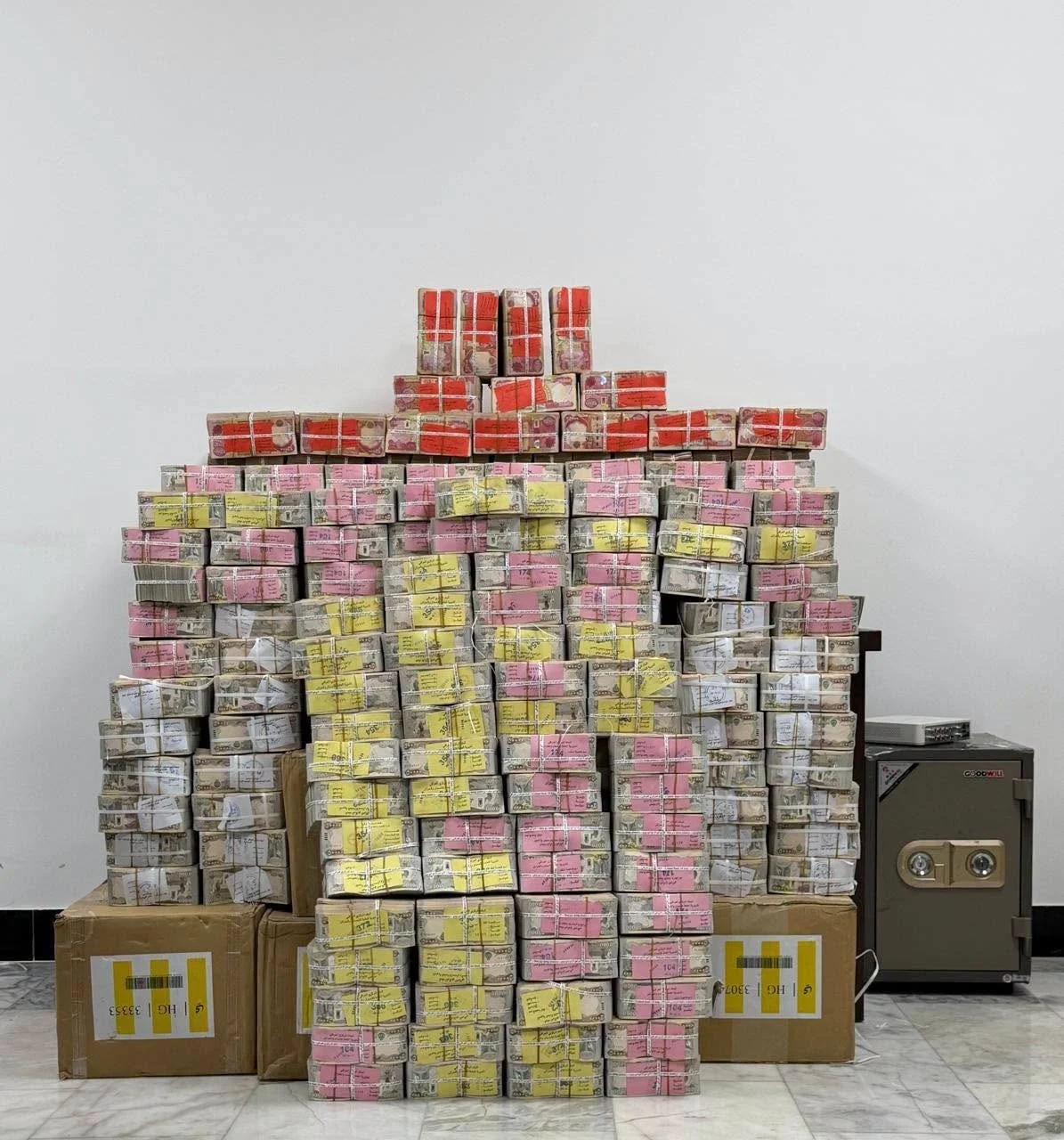
Saleh said in statements followed by Al-Mirbad that “the funds recovered from the corrupt are important and non-recurring exceptional revenues, as they cannot necessarily and permanently be relied upon in preparing public budgets, but they constitute an important source of revenue in financial planning.”
He continued: “These funds are often directed towards bridging the deficit gap or financing specific projects that directly affect the lives of individuals, or strengthening the country’s financial reserves, and not towards building the annual budget within a long-term fiscal policy, because that is linked to the ceilings and capabilities of fiscal policy within the framework of preparing and implementing public budgets.”
He stressed that "recovering corruption funds is important because it reduces financial waste, supports the public treasury, and enhances the confidence of citizens, investors, and the international financial community in the country's economic system," noting that "the funds recovered from corrupt individuals represent an important support tool for the national economy, but they are not necessarily a complete substitute for the general budget, as this depends on the size and ceilings of public spending." link
*************
Tishwash: Amid anti-corruption campaigns and efforts to recover stolen funds, for the first time in months, currency traders in Iraq are seeing the dollar fall to 152,000 Iraqi dinars
Currency markets in Iraq opened this morning (Tuesday) with a further decline in the exchange rate of the US dollar against a relative recovery of the Iraqi dinar.
Exchange bureaus in both the Kifah and Harithiya exchanges in Baghdad recorded a rate of 152,700 Iraqi dinars per 100 US dollars.
In Erbil, the dollar was offered at the Sheikh Allah market at the opening price of 152,650 dinars, and it was sold at the same price in Sulaimaniyah.
This relative decline is the first of its kind in months, as the dollar had approached 160,000 dinars in recent weeks, putting pressure on markets and traders.
Experts attribute this relative recovery to the strong anti-corruption campaigns led by Iraqi Prime Minister Ali Faleh al-Zubaidi, which have resulted in the arrest of dozens of corrupt officials and the recovery of billions of dinars from them. link
Seeds of Wisdom RV and Economics Updates Tuesday Morning 7-7-26
Federal Reserve Policy in Focus as Markets Watch for the Next Move
Investors are closely monitoring Federal Reserve signals as easing inflation and resilient markets shape expectations for future interest rate decisions.
Overview
Financial markets remain focused on the Federal Reserve as investors evaluate whether policymakers will keep interest rates unchanged in the coming months.
Recent economic data points to moderating inflation and steady economic growth, strengthening expectations that the Fed may maintain a patient approach.
Any shift in Federal Reserve policy could significantly influence borrowing costs, the U.S. dollar, global capital flows, and investment markets.
Good Morning Dinar Recaps,
Federal Reserve Policy in Focus as Markets Watch for the Next Move
Investors are closely monitoring Federal Reserve signals as easing inflation and resilient markets shape expectations for future interest rate decisions.
Overview
Financial markets remain focused on the Federal Reserve as investors evaluate whether policymakers will keep interest rates unchanged in the coming months.
Recent economic data points to moderating inflation and steady economic growth, strengthening expectations that the Fed may maintain a patient approach.
Any shift in Federal Reserve policy could significantly influence borrowing costs, the U.S. dollar, global capital flows, and investment markets.
Key Developments
1. Markets Expect a Patient Federal Reserve
Recent inflation data has continued to show signs of moderation while economic growth remains relatively resilient. As a result, investors increasingly believe the Federal Reserve may have room to leave interest rates unchanged until clearer evidence emerges that inflation is either accelerating again or moving sustainably toward its long-term target.
2. Interest Rate Expectations Are Driving Market Sentiment
Expectations surrounding future Fed decisions continue to influence Treasury yields, equity markets, and the U.S. dollar. Lower expectations for additional rate hikes have helped support stock prices while easing pressure on businesses and consumers facing higher borrowing costs.
3. Federal Reserve Communications Become the Market's Focus
With major inflation data largely behind them, investors are now paying close attention to speeches from Federal Reserve officials and upcoming policy communications. Any indication that policymakers are becoming more hawkish or dovish could quickly shift market expectations.
4. Global Markets Continue Watching U.S. Monetary Policy
Because the U.S. dollar remains the world's primary reserve currency, Federal Reserve decisions extend well beyond the United States. Central banks, international investors, and global financial institutions continue adjusting investment strategies based on expectations for U.S. interest rates and monetary policy.
Why It Matters
Federal Reserve policy influences nearly every major financial market. Interest rates affect consumer borrowing, business investment, government debt financing, currency values, and global capital flows. Even small changes in market expectations can produce significant movements across stocks, bonds, commodities, and foreign exchange markets.
Why It Matters to Foreign Currency Holders
Those following global currency developments continue watching Federal Reserve policy because U.S. interest rates influence the relative strength of the dollar against other currencies. A stable or less aggressive Fed could reduce upward pressure on the dollar while encouraging greater international capital movement into alternative assets and emerging markets.
Implications for the Global Reset
Pillar 1 – Debt
Federal Reserve interest rate decisions directly affect government borrowing costs, corporate financing, and consumer debt. A more patient monetary policy could ease financial pressures while supporting broader economic stability.
Pillar 3 – Assets
Expectations for lower interest rates often support equities, bonds, precious metals, and digital assets as investors adjust portfolios based on changing monetary conditions and future liquidity expectations.
Closing Thoughts
While no policy changes have been announced, financial markets are increasingly focused on what the Federal Reserve says next rather than what it has already done. Future communications will help determine whether current optimism surrounding inflation and economic growth can be sustained throughout the remainder of the year.
This is not just about interest rates—it reflects how central bank policy continues to influence global capital flows, asset valuations, and confidence in the international financial system.
Seeds of Wisdom Team
Newshounds News™ Exclusive
Sources
~~~~~~~~~~
Seeds of Wisdom Team
Newshounds News
Seeds of Wisdom Team RV Currency Facts Youtube and Rumble
Newshound's News Telegram Room Link
RV Facts with Proof Links Link
RV Updates Proof links - Facts Link
Start Here room with Most Asked Questions Link
Follow the Gold/Silver Rate COMEX
Follow Fast Facts
Seeds of Wisdom Team™ Website
Thank you Dinar Recaps
Iraq Economic News and Points To Ponder Late Monday Evening 7-6-26
The Iraqi Parliament Confirms Its Readiness To Legislate The Oil And Gas Law.
Shafaqna Iraq - Parliamentary statements confirmed that there is a trend within the House of Representatives to legislate the oil and gas law, in addition to working on developing non-oil resources and reducing dependence on the public sector.
Member of Parliament, Youssef Al-Kalabi, announced the readiness of Parliament to legislate laws supporting the national economy, foremost among them the oil and gas law, calling for the activation of the suspended clauses to maximize state revenues outside the oil sector, while praising the recent Cabinet decisions and describing them as having put its finger on the “source of the problem.”
The Iraqi Parliament Confirms Its Readiness To Legislate The Oil And Gas Law.
Shafaqna Iraq - Parliamentary statements confirmed that there is a trend within the House of Representatives to legislate the oil and gas law, in addition to working on developing non-oil resources and reducing dependence on the public sector.
Member of Parliament, Youssef Al-Kalabi, announced the readiness of Parliament to legislate laws supporting the national economy, foremost among them the oil and gas law, calling for the activation of the suspended clauses to maximize state revenues outside the oil sector, while praising the recent Cabinet decisions and describing them as having put its finger on the “source of the problem.”
Al-Kalabi said in a speech during the first economic conference entitled “ Iraq After Oil”: “The recent decisions of the Council of Ministers have begun to put their finger on the root of the problem.”
He pointed out that “previous decisions regarding component cranes, spare parts orders, and granted exceptions contributed to removing the real and serious private sector from the circle of competition in favor of groups that depend on other personalities.”
He then added that “the House of Representatives sees a need for a genuine revolution in the oil sector and its alternatives,” revealing that “more than 16 articles were drafted by Parliament in the previous session to maximize state revenues outside the oil sector, in cooperation with members of the Finance Committee.” He expressed his regret that 12 of those proposals were not implemented or acted upon.
The MP stressed that “the post-oil era requires two essential steps; the first is to expedite the enactment of the oil and gas law, given that the processes of extracting, marketing, exporting and developing oil are still subject to old laws that are outdated and no longer useful.”
He also explained that “the second step lies in developing non-oil imports and reducing the labor market’s dependence on the public sector as much as possible.”
Al-Kalabi added that “the House of Representatives is fully prepared to legislate these laws.”
He then pointed out that “the government program of the Prime Minister, which was voted on by Parliament, includes important clauses that give priority to enacting the oil and gas law, and opening the labor market to the serious and genuine private sector to be a key partner in economic development.” https://iraq.shafaqna.com/
Middle East: Al-Zaidi's Government Moves Towards Opening Files On Ministers, Governors, And Directors- General, While Tracking Their Money And Properties
Baghdad - One News - 7/06/2026 Middle East Monitor reported that the Iraqi government is preparing to launch the second phase of its anti-corruption campaign, in a move that expands the scope of prosecutions to include ministers, governors, directors-general, and current and former officials, while simultaneously tracking funds, real estate, and investments linked to those suspected of involvement inside and outside Iraq.
The website indicated that the new phase includes opening files in the Ministries of Health, Oil and Electricity, in addition to completing the procedures for the “Where did you get this?” bill to strengthen the prosecution of illicit enrichment; the step comes within the government’s efforts to expand accountability, recover public funds and prosecute those involved without exception. https://1news-iq.net/ميدل-إيست-حكومة-الزيدي-تمضي-نحو-فتح-ملف/
Al-Kalabi: The Recent Cabinet Decisions Have Put Their Finger On The "Source Of The Problem" In The Private Sector
Baghdad - WAA - Hassan Al-Fawaz Member of Parliament, Youssef Al-Kalabi, affirmed the readiness of Parliament to legislate laws that support the national economy, foremost among them the oil and gas law, calling for the activation of the suspended clauses to maximize state revenues outside the oil sector, while praising the recent Cabinet decisions and describing them as having put its finger on the "source of the problem".
Al-Kalabi said in a speech during the first economic conference entitled “Iraq After Oil,” which was attended by a correspondent from the Iraqi News Agency (INA): “The recent decisions of the Council of Ministers have begun to address the root causes of the problem,” noting that “previous decisions related to the components of cranes, spare parts orders, and granted exceptions contributed to removing the real and serious private sector from the circle of competition in favor of groups that depend on other personalities.”
He added that "the House of Representatives sees a need for a genuine revolution in the oil sector and its alternatives," revealing that "more than 16 articles were drafted by Parliament in the previous session to maximize state revenues outside the oil sector, in cooperation with members of the Finance Committee." He expressed his regret that 12 of those proposals were not implemented or acted upon.
The MP stressed that “the post-oil phase requires two basic steps; the first is to expedite the enactment of the oil and gas law, as the processes of extracting, marketing, exporting and developing oil are still subject to old laws that are outdated and no longer useful,” indicating that “the second step lies in developing non-oil imports, and reducing the labor market’s dependence on the public sector as much as possible.”
Al-Kalabi continued, “The House of Representatives is fully prepared to legislate these laws,” noting that “the government program of the Prime Minister, which was voted on by Parliament, includes important clauses that give priority to legislating the oil and gas law, and opening the labor market to the serious and genuine private sector to be a key partner in economic development.” https://ina.iq/ar/economie/267483-.html
The Value Of The Seized Items In The Adnan Al-Jumaili Case Has Risen To 127 Billion Dinars And 24 Million Dollars
Baghdad - One News - 7/06/2026 Judge Diaa Jaafar, the investigating judge of the Central Anti-Corruption Criminal Court, announced the seizure of new sums of money worth (25) billion Iraqi dinars, as well as the seizure of one million dollars, in addition to gold jewelry estimated at about (5) kilograms, within the framework of the ongoing investigations into the case of the accused Undersecretary of the Ministry of Oil for Liquidation Affairs, Adnan Al-Jumaili, who is detained, and the parties involved with him.
Judge Jaafar explained that the total amount of money seized had increased to (127) billion Iraqi dinars and (24) million dollars, in addition to the seizure of real estate, vehicles and other gold jewelry.
He stressed that investigations and the pursuit of those involved are ongoing, until all necessary legal procedures in the case are completed. https://1news-iq.net/ارتفاع-قيمة-المضبوطات-في-قضية-عدنان-ال/
Dawn Crackdown To Include Iraqi Corrupt Ministers And Governors
2026-07-06 / 00:59 Shafaq News- Baghdad Iraq's Dawn Crackdown (Sawlat al-Fajr) anti-corruption campaign will extend to ministers, directors-general, current and former lawmakers, and provincial governors in its next phase, to be carried out in more than three batches, MP Abdullah al-Khaigani told Shafaq News on Monday.
Prime Minister Ali al-Zaidi, Supreme Judicial Council President Faiq Zaidan, and the security forces executing the operations have agreed to pursue corrupt figures without targeting any political group at the expense of another, al-Khaigani said. The operations will cover all Iraqi provinces.
Inside the investigation, a senior government source told Shafaq News that the detainees held under the Dawn Crackdown are being questioned daily under strict secrecy measures that bar visits from political parties, lawyers, and outside contacts.
Specialized teams from the Anti-Corruption Court and the Federal Integrity Commission oversee the process. The measures are intended to prevent leaks that could allow suspects to flee the country, conceal evidence, or influence proceedings.
Legal procedures for a second phase are already complete, covering corruption files in the health, oil, and electricity ministries, and tracing funds, properties, and investment projects linked to officials in the United States, Europe, and Turkiye. A new list of accused individuals is being prepared alongside a review of an illicit enrichment bill.
The Federal Integrity Commission confirmed that arrest warrants are being executed in accordance with the law and under judicial supervision. New files that may implicate additional figures continue to be opened, judicial sources said, as part of broader efforts to recover public funds and pursue suspects inside and outside Iraq.
The arrest campaign launched at dawn on June 28, targeting political officials, lawmakers, and businessmen. Al-Zaidi described it during a Council of Ministers session as the first phase of broader measures to recover public funds, tasking oversight bodies with receiving indications of corruption or negligence across state institutions. On Saturday, he called on Iraqis to report corruption and directed that financial rewards be paid to informants.
Read more: Iraq detains top officials in anti-corruption sweep: What we know so far
https://shafaq.com/en/Iraq/Dawn-Crackdown-to-include-Iraqi-corrupt-ministers-and-governors
Central Bank Of Iraq: Domestic Currency Issued Rose To 112.9 Trillion Dinars By The End Of April
2026-07-02 04:03 Shafaq News - Baghdad Data from the Central Bank of Iraq, released on Thursday, showed that the volume of currency issued in the country rose to 112.896 trillion dinars from the beginning of 2025 until April 2026.
According to data seen by Shafaq News Agency, the total currency issued during the past year amounted to 99.799 trillion dinars, and 13.097 trillion dinars were added to it during the first four months of this year.
The net currency in circulation outside banks rose to 104.542 trillion dinars, after reaching 92.560 trillion dinars at the end of 2025, registering an increase of 11.982 trillion dinars.
The currency held by banks also increased to 8.354 trillion dinars by the end of April 2026, compared to 7.239 trillion dinars at the end of 2025, an increase of 1.115 trillion dinars.
These indicators point to the growth in the volume of issued and circulating currency in the Iraqi economy during the first months of 2026, coinciding with an increase in circulating cash liquidity and a rise in the volume of cash held by the banking sector.
Seeds of Wisdom RV and Economics Updates Monday Evening 7-6-26
Good Evening Dinar Recaps,
Wall Street Near Record Highs as Lower Oil Prices and Cooling Inflation Lift Investor Confidence
U.S. stock markets remain near record highs as declining oil prices, easing inflation pressures, and expectations for a more patient Federal Reserve continue to support investor optimism. With corporate earnings season beginning, markets are looking for confirmation that economic growth remains resilient.
Good Evening Dinar Recaps,
Wall Street Near Record Highs as Lower Oil Prices and Cooling Inflation Lift Investor Confidence
U.S. stock markets remain near record highs as declining oil prices, easing inflation pressures, and expectations for a more patient Federal Reserve continue to support investor optimism. With corporate earnings season beginning, markets are looking for confirmation that economic growth remains resilient.
Overview
Major U.S. stock indexes continue trading near record highs as investor confidence strengthens.
Lower oil prices and moderating inflation are reducing pressure on the Federal Reserve to raise interest rates.
Corporate earnings, inflation data, and upcoming Federal Reserve communications will likely determine whether the rally can continue.
Key Developments
1. Wall Street Maintains Record Momentum
The Dow Jones Industrial Average continues to trade near record highs, while the S&P 500 and Nasdaq Composite remain well supported by strong investor confidence and improving economic sentiment. Market participation has also broadened beyond technology, with gains spreading across multiple sectors.
2. Falling Oil Prices Ease Inflation Concerns
Oil prices have retreated following OPEC+ production increases and the gradual normalization of shipping through the Strait of Hormuz. Lower energy costs are helping reduce inflation expectations while easing pressure on businesses and consumers.
3. Investors Expect a More Patient Federal Reserve
With inflation moderating and recent economic data showing signs of slower growth, investors increasingly believe the Federal Reserve may delay additional interest rate increases. Expectations for a more measured monetary policy have supported both equity markets and bond prices.
4. Earnings Season Becomes the Next Major Test
Attention is shifting toward second-quarter corporate earnings, where investors will look for evidence that companies continue delivering strong profits despite higher borrowing costs. Technology companies remain a major focus, but broader participation across healthcare, industrials, and financials is encouraging investors.
5. Economic Data Will Drive Market Direction
Upcoming inflation reports, Federal Reserve meeting minutes, and speeches from Fed officials are expected to shape expectations for the remainder of the year. Positive economic data could extend the current rally, while renewed inflation pressures could increase market volatility.
Why It Matters
Financial markets are responding to improving economic conditions as lower energy prices help reduce inflation while resilient corporate performance supports investor confidence. The combination of stable growth and moderating inflation creates a more favorable environment for businesses, consumers, and financial markets.
Why It Matters to Foreign Currency Holders
Federal Reserve policy continues to influence global currency values, interest rates, and international capital flows. Any shift toward a slower pace of monetary tightening can affect the U.S. dollar, precious metals, and investment opportunities across global markets.
Implications for the Global Reset
Pillar 1 – Debt
Moderating inflation may reduce pressure for higher interest rates, influencing government borrowing costs, debt servicing, and overall financial stability.
Pillar 5 – Energy
Lower oil prices and improving global energy supplies are helping stabilize inflation while supporting broader economic growth and market confidence.
Future Outlook
Investors will closely monitor upcoming corporate earnings, inflation reports, and Federal Reserve communications to determine whether the current market rally has additional room to advance. Continued moderation in inflation combined with resilient earnings could strengthen confidence that the economy is achieving a more balanced and sustainable expansion.
This is not just about rising stock prices—it reflects how stabilizing energy markets, moderating inflation, and expectations for more predictable monetary policy are strengthening confidence across the global financial system.
Seeds of Wisdom Team
Newshounds News™ Exclusive
Sources
Reuters – Global Markets: Stocks Rise as Oil Falls and Investors Await Fed Signals
Modern Diplomacy – Can US Stocks Extend Their Rally as Chip Shares Rebound and Oil Prices Fall?
~~~~~~~~~~
Seeds of Wisdom Team RV Currency Facts Youtube and Rumble
Newshound's News Telegram Room Link
RV Facts with Proof Links Link
RV Updates Proof links - Facts Link
Start Here room with Most Asked Questions Link
Follow the Gold/Silver Rate COMEX
Follow Fast Facts
Seeds of Wisdom Team™ Website
Thank you Dinar Recaps
Trader Who Saw 1987, 2000 & 2008 Warns: ‘I Can See a Collapse Coming Now’ | Todd ‘Bubba’ Horwitz
Trader Who Saw 1987, 2000 & 2008 Warns: ‘I Can See a Collapse Coming Now’ | Todd ‘Bubba’ Horwitz
Miles Franklin Media: 7-6-2026
Michelle Makori, President & Editor-in-Chief of Miles Franklin Media, speaks with Todd “Bubba” Horwitz, Founder & Chief Market Strategist at BubbaTrading.com, who warns that he sees another major market collapse forming after 47 years of trading through historic booms and busts.
Horwitz says the warning signs are everywhere – from overvalued markets and AI-driven job losses to a housing market he says looks “almost an instant replay” of 2008. He argues the Fed has “destroyed true capitalism,” predicts the 10-year Treasury yield could hit 6%, and warns stocks could face a 40% to 60% decline.
Trader Who Saw 1987, 2000 & 2008 Warns: ‘I Can See a Collapse Coming Now’ | Todd ‘Bubba’ Horwitz
Miles Franklin Media: 7-6-2026
Michelle Makori, President & Editor-in-Chief of Miles Franklin Media, speaks with Todd “Bubba” Horwitz, Founder & Chief Market Strategist at BubbaTrading.com, who warns that he sees another major market collapse forming after 47 years of trading through historic booms and busts.
Horwitz says the warning signs are everywhere – from overvalued markets and AI-driven job losses to a housing market he says looks “almost an instant replay” of 2008. He argues the Fed has “destroyed true capitalism,” predicts the 10-year Treasury yield could hit 6%, and warns stocks could face a 40% to 60% decline.
Horwitz also explains why he would be buying physical gold and silver now, why he believes paper gold resembles a “Ponzi scheme,” and why Bitcoin could still have upside despite near-term downside risk.
He and Michelle also discuss America’s 250th anniversary, the erosion of free enterprise, socialism, debt, inflation, and whether the country is “melting down from within.”
In this episode of The Real Story with Michelle Makori:
Why Horwitz sees a 40% to 60% market decline ahead
Housing warning signs and echoes of the 2008 crisis
AI, layoffs, and why some jobs may never return
Physical gold, silver, Bitcoin, and the risk in paper markets
The Fed, true capitalism, socialism, and America at 250
00:00 Coming Up
01:26 Introduction
04:03 Overvaluation
06:32 Jobs Data Breakdown
11:22 Debt Limits Fed Pushback
16:02 Housing Echoes 2008
18:34 What Triggers The Crash
21:23 Rotation Or Head Fake
29:32 Where To Put Fresh Cash
34:15 Gold Holds Key Floor
34:22 Investor Psychology Basics
35:09 Bitcoin Entry Strategy
36:49 CME Goes 24/7
38:12 Volatility And Liquidity
40:04 Gold Manipulation Debate
41:56 Spoofing Reality Check
44:19 Paper Gold Ponzi Claim
49:37 Inflation Math Wake Up
55:26 America At 250 Crossroads
01:04:06 Closing Thoughts
Every Fiat Currency Has Failed. Every Single One.
Every Fiat Currency Has Failed. Every Single One.
GoldSilver: 7-6-2026
Every fiat currency in history has failed. 100% of them.
David Morgan on why the dollar is no different — and what governments do when the debt gets this bad.
In this conversation, GoldSilver's Maggie Lake sits down with David Morgan — founder of The Morgan Report and one of the most respected voices in precious metals — as the dollar slides and gold and silver move higher.
Every Fiat Currency Has Failed. Every Single One.
GoldSilver: 7-6-2026
Every fiat currency in history has failed. 100% of them.
David Morgan on why the dollar is no different — and what governments do when the debt gets this bad.
In this conversation, GoldSilver's Maggie Lake sits down with David Morgan — founder of The Morgan Report and one of the most respected voices in precious metals — as the dollar slides and gold and silver move higher.
David explains why most investors are watching the wrong number, why debt is the real story behind today's move, and the four options governments have when the debt gets out of control.
None of them are good for your savings. You'll learn:
Why you should be watching the dollar — not the gold price
Why debt — not inflation — is the real problem
The 4 things governments do when debt gets this bad
How financial repression is already happening to your savings
Why the new Fed chair cannot fix a $40 trillion deficit
Why central banks now hold gold instead of US paper
Seeds of Wisdom RV and Economics Updates Monday Afternoon 7-6-26
Good Afternoon Dinar Recaps,
U.S. Labor Market Cools as Weak Jobs Report Reshapes Federal Reserve Expectations
A weaker-than-expected June employment report has strengthened expectations that the Federal Reserve may pause interest rate increases, as slower hiring points to a cooling labor market despite a stable unemployment rate.
Good Afternoon Dinar Recaps,
U.S. Labor Market Cools as Weak Jobs Report Reshapes Federal Reserve Expectations
A weaker-than-expected June employment report has strengthened expectations that the Federal Reserve may pause interest rate increases, as slower hiring points to a cooling labor market despite a stable unemployment rate.
Overview
U.S. employers added only 57,000 jobs in June, roughly half of economists' forecasts.
Financial markets sharply reduced expectations for a near-term Federal Reserve rate hike.
Investors are now focused on upcoming Fed meeting minutes for guidance on future monetary policy.
Key Developments
1. Hiring Slows More Than Expected
The U.S. economy added 57,000 new jobs in June, well below expectations, while payroll gains for previous months were also revised lower. The slower pace of hiring suggests labor demand is beginning to soften after several years of strong employment growth.
2. Unemployment Rate Remains Low
The unemployment rate edged down to 4.2%, although much of the decline reflected fewer people participating in the labor force rather than stronger hiring. Overall, labor market conditions remain relatively stable despite slowing job creation.
3. Markets Reduce Rate Hike Expectations
Following the report, traders significantly lowered expectations that the Federal Reserve will raise interest rates at its next policy meeting. Investors increasingly believe policymakers have less urgency to tighten monetary policy if the economy continues to moderate.
4. Dollar Weakens as Treasury Yields Ease
The employment report pushed Treasury yields lower while the U.S. dollar weakened against several major currencies. Financial markets interpreted the softer labor data as reducing inflationary pressure and lowering the likelihood of additional monetary tightening.
5. Attention Turns to the Federal Reserve
Investors are now awaiting the release of the Federal Reserve's meeting minutes for further insight into policymakers' views on inflation, employment, and future interest rate decisions.
Why It Matters
Employment remains one of the Federal Reserve's most closely watched economic indicators. Slower hiring could reduce inflation pressures while allowing policymakers greater flexibility in balancing economic growth with price stability.
Why It Matters to Foreign Currency Holders
Federal Reserve policy influences the value of the U.S. dollar and global currency markets. Any shift toward fewer interest rate increases can affect exchange rates, precious metals, international investment flows, and expectations surrounding future monetary policy.
Implications for the Global Reset
Pillar 1 – Debt
A slower labor market may reduce inflation pressures and influence future interest rate decisions, affecting government borrowing costs, debt servicing, and broader financial conditions worldwide.
Pillar 3 – Assets
Changing expectations for Federal Reserve policy continue to impact the U.S. dollar, bonds, gold, and other financial assets as investors reposition portfolios based on future monetary policy.
Future Outlook
Upcoming Federal Reserve communications and additional employment reports will determine whether the recent slowdown represents a temporary pause or the beginning of a broader economic moderation. Markets will continue watching inflation and labor market data closely as expectations for future interest rate decisions evolve.
This is not just about employment—it reflects how labor market conditions influence monetary policy, financial markets, and the broader direction of the global economy.
Seeds of Wisdom Team
Newshounds News™ Exclusive
Sources
Reuters – US Job Growth Misses Expectations in June; Unemployment Rate Falls to 4.2%
Reuters – Fed Seen Less Likely to Raise Rates as Job Growth Slows
~~~~~~~~~~
Seeds of Wisdom Team RV Currency Facts Youtube and Rumble
Newshound's News Telegram Room Link
RV Facts with Proof Links Link
RV Updates Proof links - Facts Link
Start Here room with Most Asked Questions Link
Follow the Gold/Silver Rate COMEX
Follow Fast Facts
Seeds of Wisdom Team™ Website
Thank you Dinar Recaps