
Thank you to all the subscribers to our Early Access program…we thank you for your continued support.
We are excited to offer this new service to keep you informed and up-to-date on the latest Dinar and currency news.
The Fed’s New Plan to Shrink $40T without Paying it Back
The Fed’s New Plan to Shrink $40T without Paying it Back
Taylor Kenny: 6-1-2026
In recent years, the drumbeat of economic change has grown louder, but few signals are as significant as a fundamental shift in the leadership and philosophy of the Federal Reserve.
A recent video from ITM Trading, featuring Taylor Kenney, dives deep into the perspectives of Kevin Warsh and his calls for a “regime change” in U.S. monetary policy. For investors and everyday citizens alike, this shift could signal the end of the post-2008 economic playbook and the beginning of a much more volatile chapter in financial history.
The Fed’s New Plan to Shrink $40T without Paying it Back
Taylor Kenny: 6-1-2026
In recent years, the drumbeat of economic change has grown louder, but few signals are as significant as a fundamental shift in the leadership and philosophy of the Federal Reserve.
A recent video from ITM Trading, featuring Taylor Kenney, dives deep into the perspectives of Kevin Warsh and his calls for a “regime change” in U.S. monetary policy. For investors and everyday citizens alike, this shift could signal the end of the post-2008 economic playbook and the beginning of a much more volatile chapter in financial history.
Since the global financial crisis of 2008, the Federal Reserve has largely operated under a framework of heavy intervention. This era was defined by an ever-expanding balance sheet and persistent monetary stimulus aimed at stabilizing the economy. However, the video highlights Warsh’s critique of this “permanent stimulus” mindset.
Warsh advocates for a return to fundamental principles, challenging the dependency on central bank intervention. Invoking Milton Friedman’s famous maxim that “inflation is taxation without legislation,”
Warsh suggests that the root of our current inflationary troubles isn’t just supply chain hiccups or corporate pricing, but rather excessive government money creation. This perspective marks a sharp departure from previous narratives that dismissed inflation as merely “transitory.”
One of the most technical—yet impactful—aspects of this proposed regime change is how the Fed tracks rising costs. Warsh disputes the standard narratives and suggests focusing on “trimmed mean inflation.” This metric excludes volatile, one-off price shocks (like a sudden spike in oil) to look at the underlying trend of the money supply’s impact on the economy.
By shifting the focus away from external factors and back toward monetary policy, this approach holds the Federal Reserve more accountable for the purchasing power of the dollar. However, changing the metrics doesn’t change the underlying reality of the U.S. debt, which currently hovers around a staggering $40 trillion.
The video raises a critical question: Can a “regime change” actually work when the nation is burdened by such massive debt? In previous economic cycles, the U.S. could often “grow its way out” of debt. Today, however, interest payments on that debt are rising so sharply that simple economic growth may no longer be enough to bridge the gap.
Interestingly, the video addresses the “AI Paradox.” While many hope an AI-driven productivity boom will be disinflationary by making goods and services cheaper, the massive capital investment required to build that infrastructure could do the opposite. The increased issuance of Treasury bonds to fund these investments may actually add to inflationary pressures and put further strain on the bond market.
At the heart of the discussion is a conflict of interest. The Federal Reserve faces a difficult choice: defend the purchasing power of the dollar (by keeping interest rates high) or protect the financial system from collapsing under the weight of debt (by cutting rates to lower interest payments).
The video suggests that the latter often takes priority, leading to a “debt doom loop” where the government must borrow more just to pay the interest on what it already owes. This strategy may help manage the national ledger, but it often comes at the expense of savers, retirees, and those on fixed incomes, as inflation slowly erodes the value of their holdings.
The conclusion of the analysis provides a sobering look at the Federal Reserve’s role as an institution. The video argues that the current system often facilitates a wealth transfer rather than protecting the broader public. As the potential for a “currency reset” or significant policy shift looms, the importance of diversifying into tangible assets is emphasized.
For those looking to navigate these uncertain waters, the video suggests exploring physical gold and silver as a hedge against a devaluing currency. As we move closer to whatever this “regime change” brings, staying informed and prepared is the best strategy for maintaining financial stability.
Seeds of Wisdom RV and Economics Updates Monday Morning 6-1-26
Good Morning Dinar Recaps,
Digital Currency Battle Intensifies as Central Banks Warn of a New Global Payments Power Shift
The race between stablecoins, digital currencies, and tokenized bank deposits is accelerating, with major implications for the future of global finance.
Good Morning Dinar Recaps,
Digital Currency Battle Intensifies as Central Banks Warn of a New Global Payments Power Shift
The race between stablecoins, digital currencies, and tokenized bank deposits is accelerating, with major implications for the future of global finance.
Overview
A growing debate among central bankers is highlighting a fundamental transformation underway in the global monetary system. New comments from officials at the European Central Bank (ECB) and the Bank of England (BoE) suggest that the future of money may increasingly revolve around digital payment infrastructure, with stablecoins, tokenized bank deposits, and central bank digital currencies competing to shape the next generation of global finance.
Key Developments
1. ECB Warns Stablecoins Could Strengthen Dollar Dominance
ECB Executive Board member Isabel Schnabel warned that growing adoption of dollar-backed stablecoins could reinforce the U.S. dollar’s position in global finance. She noted that the vast majority of stablecoins are linked to the dollar, potentially extending U.S. monetary influence through digital payment networks even as traditional reserve holdings evolve.
2. Bank of England Sees Tokenized Deposits as the Future
Bank of England policymaker Megan Greene suggested that tokenized bank deposits may eventually outperform stablecoins. Greene argued that commercial banks are likely to embrace digital deposits to protect their role within the financial system, creating a new form of regulated digital money integrated directly into banking infrastructure.
3. Global Competition for Financial Infrastructure Accelerates
The debate comes as major economies continue developing competing digital payment systems. Central banks, commercial banks, and technology firms are investing heavily in new settlement networks designed to make international payments faster, cheaper, and more efficient.
4. Future Monetary Systems May Be Built on Digital Rails
Rather than focusing solely on physical cash or traditional banking transfers, policymakers are increasingly discussing how digital assets, tokenized deposits, and modern payment systems could reshape the architecture of global finance. The discussion highlights how financial innovation is moving from theory into practical implementation.
Why It Matters
The discussion is no longer about whether finance will become more digital—it is increasingly about which digital system will dominate. The outcome could influence cross-border payments, reserve currencies, banking models, and the balance of economic power between nations.
Why It Matters to Foreign Currency Holders
Digital payment systems may influence future currency demand.
Dollar-backed stablecoins could reinforce U.S. financial influence globally.
Alternative digital settlement networks may create new opportunities for international trade and payments.
Implications for the Global Reset
Pillar 1: Digital Transformation of Money
Financial institutions worldwide are investing in technologies that could fundamentally alter how money is issued, transferred, and settled.
Pillar 2: Competition for Global Monetary Influence
Nations and financial institutions are increasingly competing to establish the dominant payment infrastructure for the next generation of global commerce.
Closing Insight
The growing debate among central bankers demonstrates that the future monetary system is actively being shaped today. Whether stablecoins, tokenized deposits, or other digital payment technologies emerge as the winner, the race to modernize money is accelerating and could have lasting implications for the global financial landscape.
This is not just a technology story — it's a contest over who will control the financial rails of the future.
Seeds of Wisdom Team
Newshounds News™ Exclusive
Sources
Reuters — "Rising Stablecoin Use Could Cement Dollar Dominance, ECB's Schnabel Says"
Reuters — "Stablecoin Demand May Soon Fade, BoE's Greene Says"
~~~~~~~~~~
🌱 A Message to Our Currency Holders🌱
If you’ve been holding foreign currency for many years, you were not foolish.
You were not wrong to believe the global financial system would change.
What failed was not your patience — it was the information you were given.
For years, dates, rumors, and personalities replaced facts, structure, and proof. “This week” predictions created cycles of hope and disappointment that were never based on how currencies actually change.
That is not your failure.
Our mission here is different: • No dates • No rates • No hype • No gurus
Instead, we focus on:
• Verifiable developments • Institutional evidence
• Global financial structure • Where countries actually sit in the process
Currency value changes only come after sovereignty, trade, banking, settlement systems, and fiscal coordination are in place. History and institutions confirm this sequence.
You will see silence. You will see denials. That is not delay — that is discipline.
Protect your identity. Organize your documents. Verify everything.
Never hand your discernment to anyone who cannot show proof.
You deserve truth — not timelines.
Seeds of Wisdom Team
Newshounds News™
~~~~~~~~~~
Seeds of Wisdom Team RV Currency Facts Youtube and Rumble
Newshound's News Telegram Room Link
RV Facts with Proof Links Link
RV Updates Proof links - Facts Link
Follow the Gold/Silver Rate COMEX
Follow Fast Facts
Seeds of Wisdom Team™ Website
Thank you Dinar Recaps
Iraq Economic News and Points To Ponder Monday Morning 6-1-26
First Chinese Ship Arrives In Iraq Via The Strait Of Hormuz After Navigation Resumes
Money and Business Economy News – Baghdad The northern port of Umm Qasr received on Monday the first cargo ship coming directly from China via the Strait of Hormuz, after the resumption of maritime traffic in the strait.
The General Company for Iraqi Ports said in a statement received by "Economy News" that the ship "MV KSL XINYANG" docked at the port loaded with materials and equipment for the oil sector and various commercial goods, with a total weight of 29,720 tons.
First Chinese Ship Arrives In Iraq Via The Strait Of Hormuz After Navigation Resumes
Money and Business Economy News – Baghdad The northern port of Umm Qasr received on Monday the first cargo ship coming directly from China via the Strait of Hormuz, after the resumption of maritime traffic in the strait.
The General Company for Iraqi Ports said in a statement received by "Economy News" that the ship "MV KSL XINYANG" docked at the port loaded with materials and equipment for the oil sector and various commercial goods, with a total weight of 29,720 tons.
In an exclusive interview with Shafaq News Agency, the Director General of the General Company for Iraqi Ports, Farhan Al-Fartousi, said that “Iraqi ports continue to receive ships and goods according to regular operational plans,” indicating that “the arrival of the ship reflects the continuation of commercial activity and the ability of the ports to maintain the smooth flow of imports despite the challenges that the region witnessed during the past period.”
He explained that "the ship carried equipment and materials designated for the oil sector, in addition to various commercial goods," noting that "the resumption of maritime voyages through the Strait of Hormuz and the return of shipping lines to normal operations enhance trade and support the confidence of maritime transport companies in Iraqi ports."
Al-Fartousi added that the arrival of the ship represents an indication of the stability of maritime traffic and the continued flow of goods to Iraqi ports, and confirms the readiness of the ports to deal with various operational changes.
https://www.economy-news.net/content.php?id=69744
Work: Salary Increase For Full-Time Employees Pending The 2026 Budget
Money and Business Economy News — Baghdad The Ministry of Labor and Social Affairs revealed that the issue of increasing the salaries of full-time caregivers and opening the door for new inclusion of people with disabilities is linked to the approval of the 2026 budget, stressing the continuation of its efforts in coordination with the concerned authorities to secure the rights and services for this segment.
The head of the Ministry’s Commission for the Rights of Persons with Disabilities and Special Needs, Dhikra Abdul Rahim, said, according to the official newspaper, that “the Commission hopes to include in the 2026 budget the schedules for increasing the salaries of full-time caregivers and opening up coverage to new ones,” adding that “the Commission has begun updating the Ministry of Finance’s data and schedules related to increasing their salaries, and has completed the procedures for issuing Mastercard cards to those with a disability rate of 75 percent or more.”
She added that "the Authority is working in parallel to study mechanisms for expanding the base of beneficiaries of the program, by opening new inclusions if the necessary allocations are available in the 2026 budget," revealing that "the number of beneficiaries of the full-time caregiver has reached 388,000 in Baghdad and the governorates, which reflects the size of the segment and the importance of providing the necessary financial support for it."
Regarding the housing file, Abdul Rahim indicated that "the Authority continues to address local governments in the governorates to allocate 5 percent of the land and housing complexes to people with disabilities, to enhance their opportunities to obtain suitable housing and improve their living conditions, within the framework of governmental efforts to support the rights of this group."
Regarding the project to issue identification cards for people with disabilities, she explained that "the Authority will communicate with the Cabinet to determine the appropriate mechanism, whether free of charge or for a nominal fee, with the aim of facilitating access for beneficiaries to the services and privileges allocated to them."
Regarding the employment file, she confirmed that “the employment offices affiliated with the Authority in Baghdad and the governorates have so far registered 906 unemployed people with disabilities, and they continue to receive applications and update their data in a way that enhances their employment opportunities in the public and private sectors.”
She added that "the Authority continues to coordinate with the relevant authorities to provide real and sustainable job opportunities for this segment, in order to ensure their economic stability," explaining that "cooperation with the Federal Public Service Council has contributed to fixing the 5 percent quota allocated to them within government appointments, as well as reserving their shares within government contract grades."
Abdul Rahim noted that "the Authority is also monitoring the implementation of laws and instructions that obligate investment companies to employ people with disabilities at a rate of 3 percent of their staff, in coordination with the National Investment Authority, in order to contribute to providing equal opportunities to benefit from the energies and capabilities of this important segment of society." https://www.economy-news.net/content.php?id=69740
How did the Kuwaiti stock exchange cope with the geopolitical tensions?
Stock Exchange Economy News - Follow-up Fawzi Al-Dhafeeri, Assistant Vice President at Kuwait Investment Company, said that the Kuwaiti stock exchange dealt calmly with the recent military and geopolitical developments.
He added that the Strait of Hormuz represents Kuwait's main maritime outlet for exports and imports, and the automotive sector is the most affected.He pointed out that economic developments and current events are putting pressure on the performance of the first market stocks. https://www.economy-news.net/content.php?id=69754
The Judiciary Recovers 3 Billion Dinars In A Financial And Administrative Corruption Case.
Localities Economy News – Baghdad The Supreme Judicial Council announced on Monday the recovery of 3 billion dinars in a financial and administrative corruption case.
The judiciary's media office stated in a statement received by "Al-Eqtisad News" that "the Second Karkh Investigation Court recovered an amount of three billion Iraqi dinars, representing the proceeds of a financial and administrative corruption case."
He added that "the recovery process came about through diligent efforts and direct supervision from the court's chief judge," stressing "the continuation of legal procedures against violators who follow illegal methods to achieve profits that harm public funds." https://www.economy-news.net/content.php?id=69751
Shipping Companies Demand Clear Rules Before Resuming Navigation In The Strait Of Hormuz
Arabic and international Economy News - Follow-up Shipping executives meeting in Athens on Monday said that any peace agreement reached between the United States and Iran must include clear rules allowing ships to resume normal operations through the Strait of Hormuz.
Ship owners and shipping industry officials participated in the Capital Link conference and other events to kick off Posidonia, a biennial week-long shipping exhibition.
“What we need is of course a framework, or a set of rules, or anything that tells us exactly how we can come in and out, so even if a peace agreement is signed, that needs clarification, which we don’t know yet,” said Pankaj Khanna, president of Hydemar Maritime Holdings Corp., according to Reuters.
He added that the company has a ship stuck inside the Gulf for three months, and pointed to the impact on the sailors by saying, "It is clear that the sailors on board the ship are missing a lot, not only in terms of seeing their families, but also of birth, death and wedding occasions."
Greek Shipping Minister Vassilis Kikilias said: "Can anyone predict the end of the conflict? Unfortunately, no. It has been confirmed that there are no predictions, and that things get very complicated with regard to conflicts, and are very difficult to resolve."
He added: "Of course we hope there will be a solution. We cannot accept that ships cannot pass freely around the world. I wish they would leave the shipping industry, seafarers and global trade out of the equation, but that seems impossible."
“While insurance coverage is available, that doesn’t mean that shipping lanes are actually the route you can be prepared to take, at least until we have clear rules of engagement as a shipping industry regarding how we deal with the two countries involved here, the United States and Iran. Right now, this is a very high-risk issue,” said Yannis Procopiou, CEO of Centrofin Management. https://www.economy-news.net/content.php?id=69753
30 Million Liters Per Day Does Not Dispel Fears... What Is The Truth About The Gasoline Crisis In Iraq?
Reports Economy News – Baghdad While many Iraqi provinces are witnessing significant congestion at gas stations and a rise in gasoline prices among some street vendors, official, parliamentary, and economic explanations regarding the reasons for this phenomenon vary. Some assert that there is no real fuel crisis, while others believe the problem is related to a flaw in distribution and management. Still others point to a gap between local production and actual demand that requires urgent solutions.
The Ministry of Oil moved quickly to reassure citizens about fuel availability, confirming it has sufficient reserves to meet market demand. Rafid Sadiq, Director of Media and Public Relations at the General Company for the Distribution of Petroleum Products, part of the Iraqi Ministry of Oil, stated that demand for gasoline increased significantly during the Eid al-Adha holiday due to the surge in tourism and visits by citizens from central and southern Iraq to the Kurdistan Region and the holy sites in Najaf and Karbala.
Sadiq explained that the ministry is currently supplying approximately 34 million liters of gasoline daily to the market, noting that there is a large strategic reserve that allows for increased supply as needed. He denied the existence of a fuel crisis, emphasizing that the congestion observed at some stations is mostly related to the evening hours when a larger number of drivers head to refuel, while distribution operations continue normally.
These statements come at a time when long queues have been observed in front of a number of gas stations in different parts of the country, which has led to questions about the reasons for the congestion and the extent to which it is related to the decline in supplies, especially with the rise in gasoline prices at street vendors on the roads.
For her part, Iman al-Maliki, head of the Oil and Gas Committee in the Basra Provincial Council, indicated that part of the crisis is related to logistical factors concerning the transportation of petroleum products. She explained that the increased transportation costs have directly impacted the quantities of gasoline reaching the province.
She added that there are concerns about delays in Basra entering the large-scale production phase of premium gasoline following the commissioning of the FCC project, which has not yet reached the expected level of actual production.
In an economic analysis of the situation, economist Mustafa Faraj believes that gasoline production in Iraq reaches approximately 30 million liters per day, with reserves nearing 135 million liters. He asserts that these figures are practically sufficient to meet market demand, and that the problem is not related to production capacity or a fundamental shortage in available quantities. He points out that current production capacity exceeds official demand, suggesting an administrative and organizational flaw rather than an actual fuel shortage.
Faraj adds that the real reasons for the crisis lie in weak distribution management and quota systems, which directly impacted the smooth flow of supply, as well as a sudden increase in consumption in some areas, particularly with the surge in vehicle traffic during holidays and the influx of pilgrims to the holy cities, where consumption rose to approximately 33.5 million liters per day.
He also pointed to administrative complexities related to financial policies, explaining that any distribution system aimed at rationalizing spending may result in reduced quantities allocated to stations, even if production is theoretically available.
The economist believes that the crisis's impact on some service sectors is not so much due to a lack of production as it is to organizational and administrative problems. He pointed out that the suspension of some flights at Najaf Airport was a result of these issues, noting at the same time that the electricity sector is already suffering from a shortage of natural gas and a decline in the capacity of some power plants, which increases reliance on diesel generators and intensifies the pressure on available fuel.
In contrast, MP Mohammed Jassim Al-Khafaji offered a different explanation for the crisis, considering that the temporary shortage witnessed in some governorates during the past days is due to the Ministry of Oil’s commitment to the fuel quotas allocated to the governorates without increasing them, despite the large increase in the number of visitors arriving in religious cities, especially Karbala.
Al-Khafaji stated that Karbala received a large number of visitors recently, leading to a surge in demand for gasoline that exceeded the province's allocated quota, resulting in a limited shortage in distribution. He added that efforts are underway to address the issue and increase the province's quota for upcoming events and pilgrimages.
He explained that domestic production is approximately 30 million liters per day, while actual consumption reaches about 34 million liters per day, resulting in a deficit of approximately four million liters per day, which was previously covered by imports. He noted that imports currently face several challenges, including government policies, current import difficulties, and the high cost of imported fuel. This has led the Ministry of Oil to allocate specific quotas to the provinces, representing the minimum of their daily needs.
Al-Khafaji confirmed that any increase in demand due to religious occasions or mass pilgrimages leads to temporary supply shortages, causing some stations to run out of gasoline and temporarily cease operations. He also noted that a larger strategic reserve would have helped to address the current deficit, but the available quantities are insufficient to meet the increased demand during peak periods.
He indicated that the Ministry of Oil is currently working on solutions to the crisis, whether through resuming imports or increasing production, suggesting that importing is the most likely option at this stage, given that refineries are operating at maximum capacity. He concluded by affirming that the relevant authorities are monitoring the situation to ensure a stable fuel supply and improved distribution flow in the coming period.
Between the official narrative that confirms the abundance of fuel and the absence of a real crisis, the economic estimates that attribute the congestion to problems in management and distribution, and the view of some local officials and deputies who speak of a gap between production and consumption and restrictions on the quotas allocated to the governorates, the scene remains linked to the ability of the concerned authorities to manage the increasing demand during the visitation and holiday seasons, and to ensure that fuel reaches all areas in the required quantities, in order to prevent the temporary congestion from turning into a wider crisis in the coming period. https://www.economy-news.net/content.php?id=69749
“Tidbits From TNT” Monday AM 6-1-2026
TNT:
Tishwash: Trump appoints Tom Barrack as special presidential envoy to Iraq and Syria
US President Donald Trump announced the appointment of US Ambassador to Türkiye, Tom Barrack, as Special Presidential Envoy to Iraq and Syria, in a move aimed at strengthening strategic cooperation with the governments of the two countries.
Trump said that Barack would continue his duties as ambassador to Türkiye alongside his new responsibilities, noting that his performance would be fully supported by the U.S. State Department.
He added that the decision comes within the framework of developing bilateral relations and strengthening the partnership with Iraq and Syria, stressing the continued growth of relations with the two countries in various fields.
TNT:
Tishwash: Trump appoints Tom Barrack as special presidential envoy to Iraq and Syria
US President Donald Trump announced the appointment of US Ambassador to Türkiye, Tom Barrack, as Special Presidential Envoy to Iraq and Syria, in a move aimed at strengthening strategic cooperation with the governments of the two countries.
Trump said that Barack would continue his duties as ambassador to Türkiye alongside his new responsibilities, noting that his performance would be fully supported by the U.S. State Department.
He added that the decision comes within the framework of developing bilateral relations and strengthening the partnership with Iraq and Syria, stressing the continued growth of relations with the two countries in various fields.
The US President expressed his appreciation for the efforts made by Tom Barrack, praising his constant readiness to serve the United States, and affirming his confidence in his ability to accomplish the tasks assigned to him in the next stage. link
************
Tishwash: Al-Marsoumi: The Trump administration is moving to contain the "oil panic" in global markets.
Economic expert Nabil Al-Marsoumi confirmed today, Sunday (May 31, 2026), that "the urgent task of the Trump administration is to limit the impact of the panic on oil prices," by making the release of reserves, sanctions directives, shipping protection, financing of goods, refinery feedstock, and oversight of the futures market predictable.
Al-Marsoumi said in a post on his Facebook page, which was followed by Baghdad Today, that “Trump’s statements regarding the imminent agreement with Iran and the lifting of the naval blockade on it led to a decrease in the price of Brent crude to $91 per barrel and US crude to $87,” noting that “the decrease in oil prices was also linked to the rise in US crude oil exports to record levels of 6.4 million barrels per day with the release of the strategic oil stockpile.”
He added that "the United States committed to releasing 172 million barrels from its strategic reserves, with the peak release reaching 10 million barrels in one week, which were exported directly instead of being refined locally."
He explained that "there is a clear limit to the selling campaign. Although this strategy has temporarily helped to suppress sharp price spikes, analysts warn that these spare capacities are limited, and that global oil markets could face increasing pressure on prices once these emergency stockpiles run out."
Al-Marsoumi noted that "the continued rise in exports means that US commercial and emergency reserves are shrinking at an accelerating pace," pointing out that "total stockpiles have fallen to about 445 million barrels."
Al-Marsoumi explained that “the Trump administration cannot simply try to lower oil prices, as this is an oversimplification and could be counterproductive,” adding that “futures markets do not respond well to political intimidation, and if Washington appears to be manipulating prices rather than clarifying the supply, this could lead to a drain of liquidity from the markets that airlines, refineries, utilities, producers, and traders need to hedge against the risks of actual oil exposure.”
He stressed that "the best goal is to reduce the panic premium, and that means restoring credibility to the physical barrel of oil," explaining that "a credible barrel is not just a barrel that is underground or appears in a futures contract, but a barrel that can be extracted, documented, insured, financed, hedged, shipped, delivered, refined, and paid for without every party in the supply chain demanding a wartime premium."
He continued, "Markets take this mechanism for granted in normal times, but it becomes the market itself in times of war," noting that "global oil stocks have not simply run out, but oil has become detained, delayed, diverted, more vulnerable to legal risks, more expensive to insure, and more difficult to finance."
He concluded by saying that "oil that cannot be transported is not a complete supply, oil that cannot be insured is not a complete supply, oil that cannot be financed is not a complete supply, and oil that does not reach the appropriate refinery is not a complete supply." link
************
Tishwash: The European Bank announces support for Iraq's energy and water projects.
Finance Minister Faleh Sari discussed with the President of the European Bank for Reconstruction and Development in Iraq, Katarina Bjorlin Hansen, support for energy, water, banking and private sector financing programs. Hansen confirmed on Sunday (May 31, 2026) the bank’s continued support for efforts to improve the economic situation, while Sari stressed the ministry’s commitment to enhancing the efficiency of public finance management and directing it towards productive, agricultural and infrastructure projects in the provinces, despite regional economic challenges and pressures on revenues.
The Ministry of Finance stated in a statement, a copy of which was received by 964 Network, that “Minister of Finance Mr. Faleh Sari received today, Sunday, the President of the European Bank for Reconstruction and Development in Iraq, Ms. Katarina Björlin Hansen, to discuss prospects for financial and technical cooperation, and support for development priorities in Iraq.”
The statement emphasized that “the Ministry of Finance is proceeding according to a governmental vision based on enhancing the efficiency of public finance management and directing it towards supporting productive and developmental sectors, in line with the priorities of the governmental program and enhancing the developmental impact in the governorates, despite the economic challenges imposed by regional changes and pressures on public revenues.”
He explained that “the ministry prioritizes supporting development projects in the governorates, especially agricultural and infrastructure projects, by providing the necessary facilities and enhancing the investment and production environment, which contributes to supporting economic development and improving the service situation.”
He added that “for her part, the President of the European Bank affirmed the bank’s continued support for Iraq’s efforts to improve the economic and financial situation,” noting “the bank’s specialized programs in the fields of energy and water, support for banks, and financing for the private sector.” link
**************
Tishwash: Parliamentary Planning Committee: Activating the private sector is essential to confront the risks of the oil economy.
Member of the Planning and Regions Committee of the Parliament, MP Ali Al-Zirjawi, called on the new government on Saturday to make activating the private sector a top priority to address the economic crises facing the country, warning against continuing to rely on oil revenues to finance public expenditures.
Al-Zirjawi told Al-Maalouma that "activating the private sector should be at the forefront of the government's priorities in order to find real solutions to the economic crises that have contributed to the decline in the country's economic situation."
He added that “Iraq’s almost complete reliance on oil exports to secure revenues and cover employee salaries has led to the accumulation of internal and external debt,” indicating that “the continuation of this approach may pose a real threat to the Iraqi economy in the coming years.”
He pointed out that "diversifying national income sources, supporting investment, and enabling the private sector to play its developmental role are urgent necessities to ensure economic stability," calling on the government to "address this problem and take practical steps to mitigate its future effects." link
***************
Mot: When - I Ask!!! -- When!!!! Cookies

MilitiaMan & CREW IRAQ DINAR UPDATE-Iraq Reforms Update-Last 72 hours-CBI Independence-Convergences
MilitiaMan & CREW IRAQ DINAR UPDATE-Iraq Reforms Update-Last 72 hours-CBI Independence-Convergences
5-31-2026
The Crew: Samson, PompeyPeter, Petra, Daytrader, Sunkissed, GIGI and Militia Man
No drama. No intrigue. No songs and dances. Just straight, factual news that I read and interpret to the best of my ability after being an avid Dinar investor and insanely obsessed Dinarian for over 15 years.
Follow MM on X == https://x.com/Slashn
MilitiaMan & CREW IRAQ DINAR UPDATE-Iraq Reforms Update-Last 72 hours-CBI Independence-Convergences
5-31-2026
The Crew: Samson, PompeyPeter, Petra, Daytrader, Sunkissed, GIGI and Militia Man
No drama. No intrigue. No songs and dances. Just straight, factual news that I read and interpret to the best of my ability after being an avid Dinar investor and insanely obsessed Dinarian for over 15 years.
Follow MM on X == https://x.com/Slashn
Be sure to listen to full video for all the news……..
Iraq Economic News and Points To Ponder Sunday Afternoon 5-31-26
Basrah crudes post weekly losses amid global declines
2026-05-30 Shafaq News- Basrah Iraq’s Basrah crude plunged more than 56% over the past week, recording the sharpest losses among major global oil grades.
Basrah Heavy crude fell by $29.31 in its last trading session to $66.07 per barrel, posting a weekly loss of $37.79, or 57.12%, while Basrah Medium crude dropped by $29.31 to settle at $68.17 per barrel, recording a weekly loss of $38.79, or 56.90%.
Basrah crudes post weekly losses amid global declines
2026-05-30 Shafaq News- Basrah Iraq’s Basrah crude plunged more than 56% over the past week, recording the sharpest losses among major global oil grades.
Basrah Heavy crude fell by $29.31 in its last trading session to $66.07 per barrel, posting a weekly loss of $37.79, or 57.12%, while Basrah Medium crude dropped by $29.31 to settle at $68.17 per barrel, recording a weekly loss of $38.79, or 56.90%.
Meanwhile, US West Texas Intermediate crude declined 1.43% to $87.63 per barrel, while Brent crude slipped 1.32% to $91.48. UAE Murban crude also fell 1.42%.
Other crude grades also posted losses, including Russia’s Urals crude, down 4.49%, and Mexico’s benchmark crude, which lost 4.42%. Angolan and Nigerian grades fell between 3% and 3.3%.
https://www.shafaq.com/en/Economy/Basrah-crudes-post-weekly-losses-amid-global-declines
Iraq Power Sector Faces Risks As Iran Gas Output Falls By One-Third
2026-05-30 Shafaq News- Tehran/ Baghdad Iran has lost nearly one-third of its natural gas production capacity after key energy facilities sustained damage during the recent US-Israeli war on the country, a member of the Iranian Parliament’s Energy Committee revealed on Saturday, a development that could affect Iraq’s electricity sector.
Gholam Reza Dehghan Naserabadi told local media that several facilities and production phases in the Asaluyeh area of the South Pars Gas Field, the world’s largest, were damaged during the conflict, causing a sharp decline in output. He noted that Iranian oil and energy authorities are working to rehabilitate the affected sites and restore production to pre-war levels, with reconstruction efforts still ongoing.
The disruption could directly affect Iraq, which relies heavily on Iranian gas to fuel its power stations, with imports accounting for between one-third and 40% of electricity-generation needs, particularly during the summer months when temperatures can reach 50°C and demand surges. Electricity Ministry spokesperson Ahmed Mousa Al-Abadi told Shafaq News in March that interruptions in Iranian gas deliveries had removed more than 3,000 megawatts from the national grid. Although imports later resumed, volumes remained below contracted levels.
Baghdad has accelerated efforts to expand domestic associated-gas production and reduce reliance on foreign supplies, though officials acknowledge that achieving energy self-sufficiency will take years. Last month, Electricity Minister Ali Saadi Wahib pledged to pursue practical solutions to the country’s chronic power shortages.
Read more: Iraq power 2026: War on Iran collapses the grid ahead of peak summer
Iraqi Imports From Turkiye Climbs To $820M+ In April
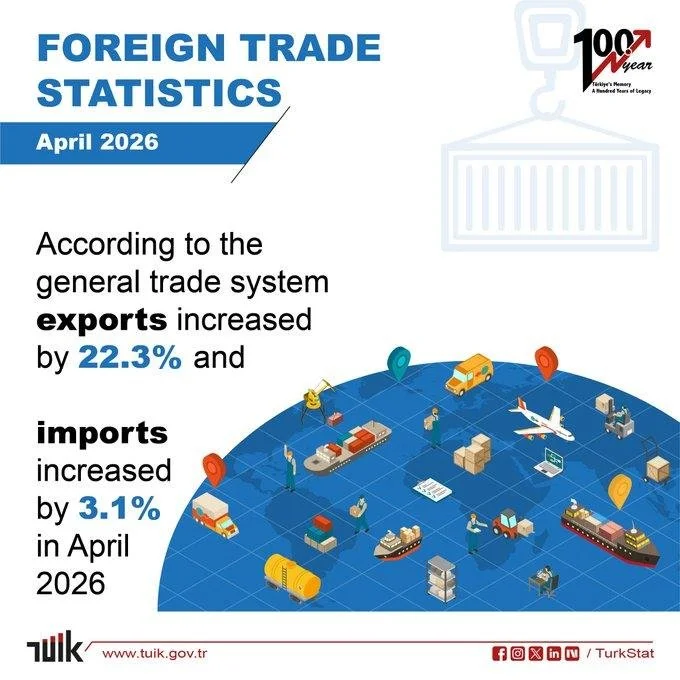
2026-05-30 Shafaq News- Baghdad/ Ankara Iraq ranked eighth among Turkiye’s top importers in April, with imports rising to $829 million from $659 million in March, the Turkish Statistical Institute (TURKSTAT) reported on Saturday.
Germany remained Turkiye’s largest export market, with $2.113 billion, followed by the United States at $1.59 billion and the United Kingdom at $1.453 billion. Italy ranked fourth with imports worth $1.356 billion, then Spain at $1.039 billion, France at $1.012 billion, and the United Arab Emirates at $840 million.
According to the report, manufactured goods, agricultural products, fisheries, mining, and quarrying products accounted for 94% of Turkiye’s total exports during the period.
https://www.shafaq.com/en/Economy/Iraqi-imports-from-Turkiye-climbs-to-820M-in-April
US Imports No Iraqi Crude Oil During Last Week
2026-05-31Shafaq News- Baghdad/ Washington Iraq, OPEC's second-largest oil producer, exported no crude oil to the United States during the last week, compared with 67,000 barrels per day (bpd) the previous week, according to data released by the US Energy Information Administration (EIA).
The EIA reported that imports from Saudi Arabia also fell to zero from 155,000 bpd a week earlier, while shipments from Libya remained unchanged at zero.
Canada remained the largest supplier of crude to the United States, exporting an average of 3.829 million bpd. Venezuela ranked second with 414,000 bpd, followed by Colombia with 211,000 bpd, Brazil with 200,000 bpd, Mexico with 145,000 bpd, and Ecuador with 114,000 bpd. https://www.shafaq.com/en/Economy/US-imports-no-Iraqi-crude-oil-during-last-week
Dollar Slips In Baghdad And Erbil Markets
2026-05-31Shafaq News- Baghdad/ Erbil The US dollar opened Sunday’s trading lower in Iraq, hovering around 153,000 dinars per 100 dollars. According to Shafaq News market survey, the dollar traded in Baghdad's Al-Kifah and Al-Harithiya exchanges at 153,300 dinars per 100 dollars, down from the previous session’s 153,450 dinars.
In the Iraqi capital, exchange shops sold the dollar at 153,750 dinars and bought it at 152,750 dinars, while in Erbil, selling prices stood at 153,050 dinars and buying prices at 152,950 dinars.
https://www.shafaq.com/en/Economy/Dollar-slips-in-Baghdad-and-Erbil-markets-1
Gold Prices Stabilize In Baghdad, Edge Lower In Erbil
2026-05-31 Shafaq News- Baghdad/ Erbil On Sunday, gold prices hovered around 980,000 IQD per mithqal in Baghdad and Erbil markets, according to Shafaq News market survey.
Gold prices on Baghdad's Al-Nahr Street recorded a selling price of 985,000 IQD per mithqal (equivalent to five grams) for 21-carat gold, including Gulf, Turkish, and European varieties, with a buying price of 981,000 IQD. The same gold had sold for 985,000 IQD on Saturday.
The selling price for 21-carat Iraqi gold stood at 955,000 IQD, with a buying price of 951,000 IQD.
In jewelry stores, the selling price per mithqal of 21-carat Gulf gold ranged between 985,000 and 995,000 IQD, while Iraqi gold sold for between 955,000 and 965,000 IQD.
In Erbil, 22-carat gold was sold at 1,019,000 IQD per mithqal, 21-carat gold at 973,000 IQD, and 18-carat gold at 833,000 IQD.
https://www.shafaq.com/en/Economy/Gold-prices-stabilize-in-Baghdad-edge-lower-in-Erbil-4
Aqaba Port Receives 44K Tons Of US Rice For Iraq
2026-05-31 Shafaq News- Baghdad/ Amman A shipment carrying 44,000 tons of US rice designated for Iraq arrived at Jordan's Aqaba Port on Sunday despite shipping disruptions and maritime restrictions affecting regional trade routes, Iraq's Ministry of Trade stated.
Lama Hashem Al-Moussawi, Director General of the State Company for Foodstuff Trading, noted that the company continues to implement its 2026 distribution plan for the food basket and social welfare programs, ensuring the uninterrupted supply of essential food items.
She added that “the company is closely monitoring shipping and unloading operations while coordinating with relevant authorities to ensure the timely delivery of supplies to warehouses and distribution centers across Iraq.”
https://www.shafaq.com/en/Economy/Aqaba-Port-receives-44K-tons-of-US-rice-for-Iraq
Seeds of Wisdom RV and Economics Updates Sunday Afternoon 5-31-26
Good Afternoon Dinar Recaps,
Banking Industry Pushes Back as Crypto CLARITY Act Faces Growing Resistance
A major battle between traditional banking and the digital asset industry could shape the future structure of U.S. financial markets.
Good Afternoon Dinar Recaps,
Banking Industry Pushes Back as Crypto CLARITY Act Faces Growing Resistance
A major battle between traditional banking and the digital asset industry could shape the future structure of U.S. financial markets.
Overview
The debate over cryptocurrency regulation intensified as JPMorgan Chase CEO Jamie Dimon publicly vowed that banks will continue fighting against the Digital Asset Market CLARITY Act. While the crypto industry views the legislation as a critical step toward regulatory certainty, traditional banks argue the bill would create an uneven playing field by allowing crypto firms to offer services without complying with the same rules and capital requirements imposed on banks.
Key Developments
1. JPMorgan CEO Signals Continued Banking Opposition
Jamie Dimon stated that the banking industry intends to continue opposing the current version of the CLARITY Act. He argues that the legislation would permit certain crypto companies to offer interest-bearing products while avoiding many of the regulatory obligations that banks must follow.
2. Debate Centers on Regulatory Fairness
According to Dimon, crypto service providers are not currently subject to the same Bank Secrecy Act (BSA) requirements, anti-money laundering standards, sanctions compliance rules, and capital reserve mandates that govern federally regulated banks. Banking groups contend that equal services should require equal regulatory oversight.
3. CLARITY Act Advances but Faces Political Hurdles
The legislation recently advanced through the Senate Banking Committee, fueling optimism within the digital asset industry. However, the bill must still pass both chambers of Congress and receive President Trump's signature before becoming law, leaving significant legislative hurdles ahead.
4. Crypto Industry Sees Bill as Path to Mainstream Adoption
Supporters argue the CLARITY Act would provide long-awaited regulatory clarity, encourage innovation, and accelerate institutional adoption of digital assets. The proposal has become one of the most closely watched cryptocurrency bills in Washington due to its potential impact on market structure and investor participation.
Why It Matters
The battle over the CLARITY Act represents more than a disagreement over cryptocurrency regulation. It highlights a broader struggle between traditional financial institutions and emerging blockchain-based financial systems, both competing for influence over the future of money and financial services.
Why It Matters to Foreign Currency Holders
Increased regulatory clarity could accelerate institutional participation in digital assets.
Growing competition between banks and crypto firms may reshape payment and settlement systems.
Regulatory outcomes could influence the future role of tokenized assets in global finance.
Implications for the Global Reset
Pillar 1: Financial System Modernization
The CLARITY Act debate reflects growing pressure to modernize regulatory frameworks as digital assets become increasingly integrated into mainstream finance.
Pillar 2: Competition Between Legacy and Digital Finance
Traditional banks and blockchain-based platforms are increasingly competing for control of financial services, payments, deposits, and investment products. The outcome could influence how future financial systems are structured.
Closing Insight
The fight over the CLARITY Act underscores the growing tension between established banking institutions and the rapidly evolving digital asset sector. Regardless of the bill's ultimate fate, the debate demonstrates that cryptocurrency is no longer operating on the fringes of finance—it is becoming part of the mainstream policy conversation.
This is not just a regulatory battle — it's a contest over who will help define the future architecture of global finance.
Seeds of Wisdom Team
Newshounds News™ Exclusive
Sources
Cointelegraph — "JPMorgan CEO Says Banks Will Continue Fighting Against CLARITY Bill"
U.S. Senate Banking Committee — "Committee Advances Digital Asset Market Clarity Act"
~~~~~~~~~~
Seeds of Wisdom Team RV Currency Facts Youtube and Rumble
Newshound's News Telegram Room Link
RV Facts with Proof Links Link
RV Updates Proof links - Facts Link
Follow the Gold/Silver Rate COMEX
Follow Fast Facts
Seeds of Wisdom Team™ Website
Thank you Dinar Recaps
The file of Iraqi funds in the US Federal Reserve: From occupation to temporary immunity
TNT:
Tishwash:The file of Iraqi funds in the US Federal Reserve: From occupation to temporary immunity
The issue of Iraqi funds deposited in accounts at the US Federal Reserve is one of the most complex financial files in Iraq's modern financial history.
These funds are linked to a series of UN resolutions and international sanctions that have shaped the Iraqi economy since the former regime's invasion of Kuwait on August 2, 1990, to the present day.
TNT:
Tishwash: The file of Iraqi funds in the US Federal Reserve: From occupation to temporary immunity
The issue of Iraqi funds deposited in accounts at the US Federal Reserve is one of the most complex financial files in Iraq's modern financial history.
These funds are linked to a series of UN resolutions and international sanctions that have shaped the Iraqi economy since the former regime's invasion of Kuwait on August 2, 1990, to the present day.
Resolution (1483) Legal and Economic Framework
UN Security Council Resolution 1483, adopted unanimously on May 22, 2003, established the legal and economic framework for managing Iraqi oil revenues following the US-led invasion of Iraq on April 9, 2003. The resolution was adopted under Chapter VII of the UN Charter, giving it international legal force. Its key features include:
- Recognition of the occupying power: The resolution explicitly recognized the United States and its allies as occupying powers under a unified command called the “Coalition Provisional Authority,” and obliged them to act in accordance with the United Nations Charter and international law, particularly the 1949 Geneva Conventions, to guarantee the rights of the Iraqi people.
Lifting the sanctions: The resolution ended the international isolation imposed on Iraq since 1990 under Resolution 661 and subsequent resolutions, as the Security Council lifted all financial and trade sanctions except for the ban on the sale of weapons and military equipment.
New financial resource management mechanisms
For managing financial resources, the decision stipulated the following:
1. Establishment of the Development Fund for Iraq (DFI): The fund was established and placed under the custody of the Central Bank of Iraq. It was allocated to collect oil export revenues, frozen assets of the former regime that the resolution mandated member states to transfer to it, and the surplus from the Oil-for-Food Program. The stated objective was to use these funds to meet humanitarian needs and for reconstruction. The disbursement mechanism was directed by the Coalition Provisional Authority in consultation with the Iraqi Interim Administration. To ensure transparency, the International Advisory and Monitoring Board (IAMB) was established, comprising representatives of the UN Secretary-General, the International Monetary Fund, the World Bank, and the Arab Fund for Economic and Social Development. This board approved independent auditors to ensure that oil sales and disbursements were conducted in accordance with international best practices.
2. Management of oil revenues: The resolution mandated that all oil sales revenues be deposited into this fund, with 5% of them being deducted for the benefit of the compensation fund established under Resolution 687 to compensate those affected by the invasion of Kuwait.
3. Spending of funds: The resolution specified the need to use the Fund’s money transparently to meet humanitarian needs, rebuild the economy, repair infrastructure, cover the costs of civil administration, and disarmament.
4. Termination of the “Oil-for-Food” program: The decision stipulated the gradual termination of the program within six months, and the immediate transfer of $1 billion of unrelated funds to the Development Fund for Iraq.
Resolution 1483 provided the legal cover under which the Coalition Provisional Authority exercised its influence and charted a course for channeling financial assets and oil revenues into reconstruction efforts. While it lifted sanctions, it placed Iraqi financial resources under international oversight and granted the Coalition Provisional Authority broad powers.
Executive Order 13303 and American protection
In conjunction with Resolution 1483, US President George Bush issued Executive Order 13303 on May 22, 2003, to provide broad legal protection for the Fund’s money and oil revenues from any international prosecution or seizure, to ensure the continuation of reconstruction.
Practical implementation: Regulation No. 2 of 2003
The practical implementation of the requirements of Resolution 1483 was carried out by the regulations issued by the Coalition Provisional Authority, in particular Regulation No. 2 of 2003. Part Three of it stipulated that the funds of the Development Fund for Iraq be kept in an account opened with the Federal Reserve Bank of the United States in New York in the name of “Central Bank of Iraq / Development Fund for Iraq Account”.
Although the regulations granted the Coalition Provisional Authority (CPA) administrator, Paul Bremer, the authority to direct the opening of accounts at other financial institutions, the primary and sole account was opened at the U.S. Federal Reserve Bank. The bank, acting on CPA directives, transferred 95% of oil revenues to the fund's account and 5% to a compensation account.
End of the Development Fund for Iraq (DFI)
Pursuant to Security Council Resolution 1956 of December 15, 2010, adopted at the request of the Iraqi government, the arrangement for depositing oil export revenues into the Development Fund for Iraq was terminated effective June 30, 2011. This ended the mandate of the International Advisory and Monitoring Board (IAMB). Consequently, the management of the funds was transferred entirely to the Iraqi government, but without comprehensive international protection. Iraq became dependent on an annual executive order issued by the US president (such as Executive Order 13303) to provide legal immunity for its funds held abroad against creditor claims.
Current money management: IRAQ2 account
With the original Development Fund for Iraq (IRAQ1) coming to an end in 2010, the management of oil funds moved to a new mechanism:
1. Existing Bank Accounts (IRAQ2): The Iraqi government has opened an alternative account at the Federal Reserve Bank of New York known as (IRAQ2). All revenues from Iraqi oil sales are deposited into this account and then transferred within 24 hours to the Central Bank of Iraq's account (IRAQ1) to avoid international claims or seizures, as the funds deposited therein are classified as sovereign funds belonging to a central bank.
2. Mandatory Deposit: Since Iraq prices its oil in dollars, it is obligated to deposit its revenues in the Federal Reserve Bank of New York. Furthermore, the outstanding external debt (approximately $40 billion) prevents Iraq from easily closing these accounts or transferring the funds, as they would be subject to immediate seizure by creditors once removed from the US protection umbrella.
3. Memorandum of Understanding: To ensure the continued flow and protection of oil funds, a memorandum of understanding was signed on June 2, 2014, between the Federal Reserve Bank and the Iraqi Ministry of Finance to regulate the operation of the IRAQ2 account, an agreement that still represents the legal basis for depositing Iraqi funds in the United States.
Temporary sovereign immunity
With the expiration of the international protection provided by the United Nations under Chapter VII, Iraq now relies on sovereign immunity, renewed annually by the US president, for funds deposited in the Federal Reserve, provided these are sovereign funds and not derived from commercial activities. This annual immunity aims to protect Iraq's funds from previous creditors, as there are still outstanding debts estimated at around $40 billion owed to countries both within and outside the Paris Club. There are also concerns that unknown creditors may file lawsuits once the sovereign immunity expires.
The position of the Central Bank of Iraq
The Central Bank of Iraq, represented by its Investment and Foreign Transfers Department, issued an official document addressed to the General Secretariat of the Council of Representatives, explaining the legal and logistical mechanisms adopted for managing Iraqi funds abroad. This document was a response to parliamentary inquiries submitted by MP Adnan al-Jabri.
The bank explained in its letter No. (5/3/1464) dated March 14, 2024, that the legal basis for depositing crude oil revenues into account (IRAQ2) dates back to after the expiration of the extension of the executive order issued by the US President in 2003, as well as after the end of the protection that the United Nations provided to Iraqi funds in 2010.
The central bank also warned that closing accounts at the Federal Reserve would have serious consequences, including:
A- Exposing Iraq to the risks of international and judicial claims.
b) Loss of the ability to conduct financial settlements in US dollars due to the lack of sufficient alternative channels.
The path towards permanent sovereign immunity
To secure Iraqi funds, a transition from temporary protection to permanent sovereign immunity is required. This can be achieved by completing the settlement of the remaining Paris Club debt and strengthening relations with major powers (the United States, China, the European Union, Japan, and Russia) to secure their support in protecting Iraqi funds. link
Iraq Economic News and Points To Ponder Sunday Morning 5-31-26
Members of the Parliamentary Integrity Committee: Al-Zidi's steps represent a strong start to combating corruption and recovering state funds
latest news Sunday, May 31, 2026 Baghdad - One News Members of the Parliamentary Integrity Committee praised the measures taken by Prime Minister Ali Faleh al-Zaidi in the fight against corruption, considering that the formation of the Sovereign Council for Integrity and Recovery of Funds and the start of reviewing government contracts represent a strong start in the path of reform and holding those involved in wasting public money accountable.
Members of the Parliamentary Integrity Committee: Al-Zidi's steps represent a strong start to combating corruption and recovering state funds
latest news Sunday, May 31, 2026 Baghdad - One News Members of the Parliamentary Integrity Committee praised the measures taken by Prime Minister Ali Faleh al-Zaidi in the fight against corruption, considering that the formation of the Sovereign Council for Integrity and Recovery of Funds and the start of reviewing government contracts represent a strong start in the path of reform and holding those involved in wasting public money accountable.
Members of the committee affirmed that the recent steps reflect a serious political will to open major corruption files and review contracts concluded during the past years, in order to protect public funds and recover wasted money for the state treasury.
They pointed out that the government campaign has entered the practical implementation phase by activating oversight and legal procedures against a number of files that are subject to audit, stressing that the next phase may witness the taking of more judicial and administrative measures against those involved in corruption cases in accordance with the law.
The committee members added that the success of these efforts requires continued coordination between the government, the judiciary, and oversight bodies to ensure that no entity or individual involved in corruption cases escapes legal accountability.
https://1news-iq.net/أعضاء-بلجنة-النزاهة-النيابية-خطوات-ال/
New Iraq Anti-Corruption Council Is ‘Illegal’, MP Warns
2026-05-31 04:45 Shafaq News- Baghdad The new anti-corruption council formed by Iraqi Prime Minister Ali Al-Zaidi violates constitutional provisions governing the country's independent watchdog bodies, lawmaker Mohammad Jasem Al-Khafaji said on Sunday.
A day earlier, Al-Zaidi ordered the formation of the Supreme Sovereign Council for Integrity, Oversight, and Recovery of Public Funds, which he will chair alongside the heads of the Federal Integrity Commission and the Federal Board of Supreme Audit. According to a statement from the Prime Minister's Office, the council will oversee ministries, provincial governments and other state institutions on major issues affecting public finances, with the aim of preventing waste of public funds, recovering state assets and referring findings to the judiciary.
However, Al-Khafaji, an MP from the Ishraqat Kanoon bloc that holds eight seats in parliament, argued that the two bodies are tasked with overseeing the executive branch and investigating corruption and waste of public funds, including within government ministries and the prime minister's office itself.
"How can the prime minister be the head of their council?" he asked, describing the move as a "clear constitutional and legal violation." The lawmaker urged the government to strengthen oversight institutions by nominating qualified candidates to lead them and submitting those nominations to Parliament for approval, rather than continuing to rely on acting officials.
He further called on the government to work through existing legislation governing the Integrity Commission and the Federal Board of Supreme Audit instead of establishing “illegal councils."
Al-Zaidi, according to his government’s pledge, is pursuing a broader anti-corruption campaign focused on strengthening financial oversight, reviewing major government contracts and recovering public funds.
On Saturday, he also directed the new council to assess the economic viability of government projects and establish specialized committees to review public contracts and ensure compliance with existing laws and regulations.
Read more: What does Iraq's new government promise? A guide to Ali Al-Zaidi's ministerial program
https://shafaq.com/en/Iraq/New-Iraq-anti-corruption-council-is-illegal-MP-warns
Al-Sudani To The Elders Of The Al-Shaab Area: The Relationship With The Tribes Is Permanent And Represents An Extension Of A Steadfast Path In Serving The Nation - 5/30/2026
Baghdad - One News 5/30/2026 The head of the Reconstruction and Development Coalition, Mohammed Shia Al-Sudani, received a group of sheikhs and dignitaries from the Al-Shaab area in Baghdad. During the meeting, the general situation was reviewed, and the role of the tribes in maintaining civil peace and supporting the state’s progress was emphasized.
Al-Sudani affirmed that the relationship with the tribes is long-standing, enduring, and constantly renewed, representing a continuation of a consistent commitment to serving national causes. He explained that the tribes' support and ongoing coordination were key factors in the success of previous government initiatives.
He called for supporting the current government in confronting present challenges and backing its efforts and those of its ministers, expressing his gratitude to all who have supported the state and government since 2003.
https://1news-iq.net/السوداني-لوجهاء-منطقة-الشعب-العلاقة-م/
Middle East: Al-Zaydi Is Expected To Make Major Changes Affecting The Popular Mobilization Forces As Part Of Steps To Restrict Weapons To The State
latest news Sunday,May 31, 2026 Baghdad - One News Asharq Al-Awsat newspaper reported that Iraq may witness steps in the coming period related to the issue of restricting weapons to the state, in conjunction with the completion of the plan to disband and integrate the Peace Brigades.
The newspaper added that the anticipated moves include the handover of weapons by a number of armed factions, as part of a process aimed at disarming heavy and medium weapons and restructuring the Popular Mobilization Forces.
She noted that these measures coincide with expected changes in some sensitive security agencies, which may include the intelligence service, as part of broader arrangements related to the country's security system.
The issue of restricting weapons to the state is one of the most complex and sensitive issues in Iraq, given its overlap with security, political and institutional dimensions, at a time when the government is seeking to strengthen state authority and consolidate its monopoly on the use of armed force. https://1news-iq.net/الشرق-الأوسط-من-المتوقع-أن-يجري-الزيدي/
Al-Sadr's Disarmament Move Reached US, Aimed At Easing Pressure On Iraq
2026-05-31 / 04:14 Shafaq News- Baghdad Muqtada Al-Sadr's decision to dissolve ties with Saraya Al-Salam, the armed wing of his Patriotic Shiite Movement (PSM), was conveyed to Washington, political analyst Rafid Al-Atwani told Shafaq News on Sunday, describing the move as an effort by Al-Sadr to ease pressure on the Iraqi government amid mounting international scrutiny of armed groups.
Al-Atwani, who is close to the PSM, argued that armed groups such as the Mahdi Army, founded by al-Sadr in 2003, emerged during the years of the US military presence in Iraq, while the current government has adopted a policy of restricting weapons to state institutions.
Al-Sadr, according to Al-Atwani, had previously sought to integrate Saraya Al-Salam members into Iraq's security institutions, but successive governments rejected the proposal and maintained the presence of armed factions outside official structures.
Saraya Al-Salam currently operates through three brigades within the Popular Mobilization Forces (PMF), a predominantly Shiite umbrella force incorporated into the Iraqi state in 2016. However, he suggested that the group's members could eventually be withdrawn from the PMF and integrated into another security institution, possibly the Federal Police, citing Al-Sadr's longstanding reservations about the PMF's leadership and some of its factions.
He noted that around 400 Saraya Al-Salam members remain outside the PMF structure and would require separate legal and financial arrangements, while some personnel could eventually be transferred to Al-Bunyan Al-Marsous, a civil organization affiliated with Al-Sadr.
The Shiite cleric's latest move, the analyst added, differs from previous suspensions or dissolutions of armed groups linked to the movement, noting that Al-Sadr took the decision to “keep the country away from the threat of military strikes or sanctions.”
Asked whether a new armed formation linked to the movement could emerge in the future, Al-Atwani said it was too early to tell. "Any new formation will depend on the circumstances Iraq faces in the future," he remarked.
On May 27, Al-Sadr announced the formal separation of Saraya Al-Salam from the PSM, stating that its members would join state institutions "in the national interest."
Prime Minister Ali Al-Zaidi, who has made state control over weapons a central pledge of his government program, and representatives of Al-Sadr had agreed on a mechanism to integrate the group into Iraq's security forces and transfer its weapons to the state, forming a committee to oversee the implementation process.
Read more: Ali Al-Zaidi's incomplete cabinet faces Iraqi armed factions test
The broader government plan is widely viewed as extending beyond Saraya Al-Salam to factions operating under the "Islamic Resistance in Iraq" umbrella, including Kataib Hezbollah, Asaib Ahl al-Haq, Kataib Sayyed al-Shuhadaa, and Harakat al-Nujaba. Although many of these groups are formally part of the PMF, they continue to maintain separate command structures and weapons networks outside direct government control. (the problem)
Washington has increased pressure on Baghdad, linking support for the Iraqi government to limiting the role of armed factions within state institutions and their disarmament.
A source previously told Shafaq News that Iraq's Shiite Coordination Framework (CF), the country's main ruling coalition that includes parties linked to armed factions, is expected to discuss Al-Sadr's decision, the future of the PMF, and broader efforts to place weapons under state control during a meeting with Prime Minister Ali Al-Zaidi in the coming days.
https://shafaq.com/en/Iraq/Al-Sadr-s-disarmament-move-reached-US-aimed-at-easing-pressure-on-Iraq
Baghdad Advances Roadmap For Armed Faction Integration - 5/30/2026
2026-05-30 Shafaq News- Baghdad Iraqi Prime Minister Ali Al-Zaidi is preparing to launch the next phase of efforts to bring armed factions under state control, with a high-level meeting planned to set a timetable for disarmament, integration of fighters into official institutions, and the dismantling of faction-controlled sites, a government source told Shafaq News on Saturday.
The process will be carried out in three stages. The first stage involves identifying and documenting sites belonging to each faction or movement, followed by the assessment and handover of weapons according to a defined timetable. The third stage focuses on integrating faction members into the state institutions or the Popular Mobilization Forces (PMF).
According to the source, the integration process will be overseen by joint committees composed of representatives from the participating factions, relevant ministries, and security and military institutions under the supervision of the commander-in-chief of the armed forces.
Earlier this week, a committee formed by Patriotic Shiite Movement (PSM) leader Muqtada Al-Sadr convened its first meeting to oversee the formal full separation of Saraya Al-Salam from the movement and begin implementing the measures required under Al-Sadr’s one-week deadline.
Most of Iraq’s current armed groups emerged after the 2003 US-led invasion and expanded significantly following ISIS' takeover of large parts of Iraq in 2014.
The issue has also drawn growing international attention, particularly from the United States, which has linked support for the Iraqi government to reducing the influence of armed factions within state institutions.
Reports indicate that Washington opposes the participation of armed factions in government unless they are disarmed and has also called for ending government funding for some formations, adding pressure to Iraq’s already complex political landscape.
Read more: After Al-Sadr’s decision, is Iraq closer to restricting weapons to the state?
https://shafaq.com/en/Iraq/Baghdad-advances-roadmap-for-armed-faction-integration
Seeds of Wisdom RV and Economics Updates Sunday Morning 5-31-26
Good Morning Dinar Recaps,
China Accelerates Digital Yuan Expansion in Bid to Reshape Global Finance
Beijing is intensifying efforts to expand the digital yuan domestically and internationally as it seeks greater influence in the future of cross-border payments.
Good Morning Dinar Recaps,
China Accelerates Digital Yuan Expansion in Bid to Reshape Global Finance
Beijing is intensifying efforts to expand the digital yuan domestically and internationally as it seeks greater influence in the future of cross-border payments.
Overview
China is significantly expanding the use of its digital yuan (e-CNY) through new banking initiatives, government programs, and international payment projects. The effort reflects Beijing’s broader objective of strengthening financial independence, reducing reliance on Western-controlled payment systems, and increasing the global role of its currency in international trade.
Key Developments
1. China Expands Digital Yuan Adoption Across Multiple Sectors
The People’s Bank of China (PBOC) is encouraging banks to increase digital yuan usage through government spending programs, green energy payments, salary distributions, healthcare reimbursements, and other public-sector transactions. These initiatives are designed to build a larger domestic user base and strengthen the digital currency ecosystem.
2. International Trade Becomes a Major Focus
China is promoting the digital yuan for use in cross-border transactions, particularly among countries participating in the Belt and Road Initiative. Financial institutions are developing compatible products such as loans, trade financing tools, and letters of credit to facilitate broader international adoption.
3. Digital Yuan Supports China's De-Dollarization Strategy
Analysts believe the expansion reflects China's desire to reduce dependence on a global financial system heavily influenced by the U.S. dollar. Recent geopolitical tensions and sanctions-related concerns have reinforced Beijing’s interest in creating alternative payment channels and settlement mechanisms.
4. New Incentives Aim to Increase Usage
The PBOC has introduced additional incentives, including allowing interest to be earned on digital yuan holdings and authorizing more banks to participate in the system. Authorities are also exploring smart-contract functionality to automate payments and improve efficiency across supply chains and government programs.
Why It Matters
The digital yuan represents one of the most advanced central bank digital currency (CBDC) projects in the world. If adoption expands significantly, it could gradually influence how international trade settlements, cross-border payments, and financial transactions are conducted.
Why It Matters to Foreign Currency Holders
Growing use of digital currencies could reshape future payment networks.
Increased de-dollarization efforts may encourage greater currency diversification.
Alternative settlement systems could gradually reduce dependence on traditional banking channels.
Implications for the Global Reset
Pillar 1: Evolution of Digital Currency Infrastructure
China's investment in digital currency technology highlights the growing importance of CBDCs in the future global financial landscape.
Pillar 2: Alternative Cross-Border Settlement Systems
Efforts to expand digital yuan usage internationally demonstrate how nations are increasingly seeking payment systems that operate outside traditional Western-dominated financial networks.
Closing Insight
While the digital yuan still faces significant adoption challenges, China’s continued investment signals a long-term commitment to building an alternative financial infrastructure. The initiative reflects a broader global trend toward digital currencies, faster settlement systems, and greater competition in international finance.
This is not just a currency upgrade — it’s a strategic effort to influence the future architecture of global payments and trade.
Seeds of Wisdom Team
Newshounds News™ Exclusive
Sources
~~~~~~~~~~
🌱 A Message to Our Currency Holders🌱
If you’ve been holding foreign currency for many years, you were not foolish.
You were not wrong to believe the global financial system would change.
What failed was not your patience — it was the information you were given.
For years, dates, rumors, and personalities replaced facts, structure, and proof. “This week” predictions created cycles of hope and disappointment that were never based on how currencies actually change.
That is not your failure.
Our mission here is different: • No dates • No rates • No hype • No gurus
Instead, we focus on:
• Verifiable developments • Institutional evidence
• Global financial structure • Where countries actually sit in the process
Currency value changes only come after sovereignty, trade, banking, settlement systems, and fiscal coordination are in place. History and institutions confirm this sequence.
You will see silence. You will see denials. That is not delay — that is discipline.
Protect your identity. Organize your documents. Verify everything.
Never hand your discernment to anyone who cannot show proof.
You deserve truth — not timelines.
Seeds of Wisdom Team
Newshounds News™
~~~~~~~~~~
Seeds of Wisdom Team RV Currency Facts Youtube and Rumble
Newshound's News Telegram Room Link
RV Facts with Proof Links Link
RV Updates Proof links - Facts Link
Follow the Gold/Silver Rate COMEX
Follow Fast Facts
Seeds of Wisdom Team™ Website
Thank you Dinar Recaps
The Dollar isn’t Different, it’s Just Next
The Dollar isn’t Different, it’s Just Next
Taylor Kenny: 5-29-2026
In the world of high finance, few terms carry as much weight—or as much misunderstanding—as the “Currency Reset.” To the uninitiated, it sounds like a plot from a dystopian novel. To the seasoned analyst, it is a mathematical inevitability.
In a recent, high-stakes conversation, Taylor Kenney sat down with Fernando Grijalva, a senior analyst at ITM Trading with decades of experience in international trade. Grijalva isn’t just a theorist; he has witnessed currency resets firsthand, including the Mexican peso crisis of the 1990s.
The Dollar isn’t Different, it’s Just Next
Taylor Kenny: 5-29-2026
In the world of high finance, few terms carry as much weight—or as much misunderstanding—as the “Currency Reset.” To the uninitiated, it sounds like a plot from a dystopian novel. To the seasoned analyst, it is a mathematical inevitability.
In a recent, high-stakes conversation, Taylor Kenney sat down with Fernando Grijalva, a senior analyst at ITM Trading with decades of experience in international trade. Grijalva isn’t just a theorist; he has witnessed currency resets firsthand, including the Mexican peso crisis of the 1990s.
Their discussion serves as both a warning and a roadmap for navigating what could be the most significant economic shift of our lifetime. Here are the key takeaways from their in-depth dialogue.
The first misconception Fernando Grijalva addresses is that a currency reset means the total collapse of society. In reality, a reset is a restructuring of currency and debt systems.
When a government’s debt becomes unsustainable and its currency loses purchasing power to the point of instability, the “rules of the game” are changed. This often involves the introduction of a new currency or a dramatic revaluation of the existing one. The catch? These resets are almost always unannounced. Governments do not give the public a “head start” to protect their assets; the change happens overnight.
According to Grijalva, a reset doesn’t happen in a vacuum. It is preceded by distinct “symptoms” that signal the end of a cycle. Currently, the United States and the global economy are flashing several red flags.
History shows that reserve currencies—the “global standards”—typically have a lifespan of roughly 80 to 100 years. The U.S. dollar has enjoyed this status since the mid-20th century, but that dominance is fading.
We are currently seeing the rise of the BRICS nations (Brazil, Russia, India, China, and South Africa), who are increasingly settling trades in their own currencies rather than the dollar. As the world moves toward a multipolar financial system, the dollar’s “exorbitant privilege” is diminishing, making a domestic currency reset more likely.
If the “paper” system is being restructured, where should wealth reside? Fernando stresses that physical gold remains the premier asset for a reset scenario for several reasons.
Grijalva specifically warns against “paper gold” or ETFs. During a true currency reset, counterparty defaults are common. If you don’t hold the physical metal, you may find yourself holding a worthless contract during a period of capital controls.
While a reset can be devastating for those holding cash or dollar-denominated debt (like bonds), it can be a massive opportunity for those positioned correctly.
Grijalva points to historical examples in Mexico and Venezuela. In every crisis, there is a transfer of wealth. Those who held hard assets before the reset saw their purchasing power skyrocket relative to the new currency, allowing them to acquire real estate and businesses for pennies on the dollar. This is how generational wealth is built during times of chaos.
The most critical takeaway from Grijalva and Kenney’s conversation is that you cannot “time” the market when it comes to a reset. By the time the announcement is made on the news, it is already too late to move your capital.
The goal isn’t to guess the date, but to position yourself now. Positioning means diversifying out of the “debt-based” system and into “value-based” assets like physical gold and silver.
Are you prepared for a shift in the global financial order?
Seeds of Wisdom RV and Economics Updates Saturday Afternoon 5-30-26
Good Afternoon Dinar Recaps,
Global Energy Investment Realigns as Geopolitical Risks Reshape Economic Priorities
Rising Middle East tensions and growing electricity demand are accelerating a historic shift in global energy investment patterns.
Good Afternoon Dinar Recaps,
Global Energy Investment Realigns as Geopolitical Risks Reshape Economic Priorities
Rising Middle East tensions and growing electricity demand are accelerating a historic shift in global energy investment patterns.
Overview
A new International Energy Agency (IEA) report reveals that countries worldwide are dramatically reshaping their energy investment strategies in response to geopolitical instability, energy security concerns, and surging electricity demand. As uncertainty surrounding the Middle East and the Strait of Hormuz continues, governments and corporations are increasingly prioritizing domestic energy production, grid expansion, and alternative energy sources.
Key Developments
1. Global Energy Investment Expected to Reach $3.4 Trillion
The IEA projects global energy investment will reach a record $3.4 trillion in 2026. Approximately $2.2 trillion is expected to flow into electricity grids, renewable energy, nuclear power, storage systems, low-emission fuels, and efficiency projects, while traditional fossil fuel investments are projected at $1.2 trillion.
2. Energy Security Concerns Drive Strategic Realignment
Recent crises, including Russia's invasion of Ukraine and ongoing tensions affecting the Strait of Hormuz, have prompted nations to rethink their dependence on foreign energy supplies. Many countries are accelerating efforts to develop domestic energy resources and diversify supply chains to reduce geopolitical vulnerabilities.
3. Electricity Infrastructure Becomes the Primary Investment Focus
Electricity-related spending is expected to approach $1.6 trillion in 2026, including nearly $550 billion for power grids and more than $100 billion for battery storage systems. The rapid expansion of artificial intelligence, data centers, and digital infrastructure is significantly increasing electricity demand worldwide.
4. Nuclear and Renewable Energy Continue Expanding
Investment in renewable energy is expected to reach approximately $665 billion, with solar power alone accounting for roughly $365 billion. Nuclear investment is also gaining momentum, exceeding $80 billion globally, as governments seek reliable sources of low-emission electricity.
Why It Matters
Energy has become a central pillar of economic security and financial stability. As nations redirect trillions of dollars toward energy independence and infrastructure modernization, capital flows are increasingly shifting away from traditional energy models and toward long-term strategic resilience.
Why It Matters to Foreign Currency Holders
Energy-producing nations may gain greater economic influence through enhanced energy security.
Increased infrastructure spending could impact government borrowing and fiscal policy decisions.
Shifting energy trade routes may influence global currency flows and international settlement systems.
Implications for the Global Reset
Pillar 1: Energy Security Becomes National Security
Governments are increasingly treating energy infrastructure as a strategic asset, accelerating investment in domestic production, power grids, and diversified supply chains.
Pillar 2: Capital Reallocation Reshapes Global Finance
The movement of trillions of dollars toward electricity, renewables, nuclear energy, and storage technologies reflects a broader restructuring of long-term investment priorities that could influence economic power balances for decades.
Closing Insight
The world is entering an era where energy security is becoming inseparable from financial security. The unprecedented scale of investment underway suggests governments are preparing not only for future energy needs but also for a more fragmented and competitive global economic landscape.
This is not just an energy transition — it's a strategic realignment of capital, infrastructure, and economic power.
Seeds of Wisdom Team
Newshounds News™ Exclusive
Sources
Modern Diplomacy — "Energy Investments Shift as Middle East Tensions Rise"
International Energy Agency (IEA) — "World Energy Investment 2026"
~~~~~~~~~~
Seeds of Wisdom Team RV Currency Facts Youtube and Rumble
Newshound's News Telegram Room Link
RV Facts with Proof Links Link
RV Updates Proof links - Facts Link
Follow the Gold/Silver Rate COMEX
Follow Fast Facts
Seeds of Wisdom Team™ Website
Thank you Dinar Recaps
Iraq Economic News and Points To Ponder Saturday Afternoon 5-30-26
US Website: The Cost Of The War On Iran Exceeded $95 Billion
Money and Business Economy News — Follow-up US spending on the operation against Iran has exceeded $95 billion since it began on February 28, according to data from the Iran War Cost Tracker website, which tracks the costs of the Iranian war.
The website explains that its estimates are based on what was stated in the briefing given by the Pentagon to Congress on March 10, in which it said that Washington spent $11.3 billion in the first six days of fighting in the Middle East, and that it plans to spend an additional $1 billion for each subsequent day of the conflict.
US Website: The Cost Of The War On Iran Exceeded $95 Billion
Money and Business Economy News — Follow-up US spending on the operation against Iran has exceeded $95 billion since it began on February 28, according to data from the Iran War Cost Tracker website, which tracks the costs of the Iranian war.
The website explains that its estimates are based on what was stated in the briefing given by the Pentagon to Congress on March 10, in which it said that Washington spent $11.3 billion in the first six days of fighting in the Middle East, and that it plans to spend an additional $1 billion for each subsequent day of the conflict.
About a month ago, a source told CNN that the cost of the war on Iran so far ranges between $40 billion and $50 billion, without including the costs of rebuilding military facilities and replacing assets.
The US Department of Defense announced in the middle of this month that the cost of the war on Iran has so far reached $29 billion, and could reach $1 trillion when including the cost of replacing ammunition and energy burdens.
According to another website run by researchers at Brown University’s Climate Solutions Lab, which tracks the burden of the war on American consumers due to rising energy prices, the 48.4% increase in gasoline prices and the 51.3% increase in diesel prices over the last 89 days have cost citizens a total of more than $49.5 billion so far, which means about $378.14 per American household. https://www.economy-news.net/content.php?id=69624
The Second Billion... Real Madrid Confirms Its Leadership As The Richest Club In The World
Money and Business Economy News - Follow-up Initial estimates revealed that Real Madrid is close to achieving revenues exceeding 1.2 billion euros during the current fiscal year, a record figure for sports clubs worldwide.
Real Madrid already tops Deloitte's list of highest-earning football clubs for the third consecutive season, after finishing last season with a total income of 1.161 billion euros, becoming the first club in history to surpass the one billion euro mark more than once.
Financial reports indicate that Real Madrid’s massive economic growth has been driven by a huge commercial boom, particularly in the sponsorship, marketing and official merchandise rights sectors, along with increased revenues from the Santiago Bernabeu stadium after its redevelopment.
During the 2024-2025 season, Real Madrid generated approximately 594 million euros in commercial revenue alone, an increase of 23% compared to previous seasons, benefiting from the signing of new sponsorship contracts and increased sales of shirts and official club products worldwide.
The Club World Cup also contributed to boosting the club's income, in addition to the high returns from the Champions League, despite the team playing fewer matches in the Spanish King's Cup.
In terms of match revenues, Real Madrid recorded around 233 million euros, making it one of the highest-earning clubs from attendance and matches, benefiting from the new operational capacity of the "Santiago Bernabeu" stadium, which has been transformed into an integrated economic project.
As part of its future plans, the club continued to strengthen its commercial partnerships, renewing its agreement with Emirates Airlines as a major sponsor until 2031, in a deal worth nearly 74 million euros annually.
Real Madrid is also in advanced negotiations with Adidas to extend and expand the current sponsorship contract, as part of a plan to raise the total value of sponsors on the team's shirt to around 300 million euros annually.
This continued financial growth confirms Real Madrid’s ability to maintain its economic superiority despite strong competition from English Premier League clubs and Paris Saint-Germain, especially with the club’s reliance on a balanced investment model that combines sporting success and commercial strength. https://www.economy-news.net/content.php?id=69601
Iran Issues New Warning Regarding The Strait Of Hormuz
Arabic and international Iran's Khatam al-Anbiya Construction Headquarters announced on Saturday that all ships and oil tankers transiting the Strait of Hormuz are obligated to follow routes designated by Iran and obtain prior authorization from the Islamic Revolutionary Guard Corps Navy.
In a statement, the headquarters said, "Any violation of the regulations governing passage through the Strait of Hormuz will seriously jeopardize the safety of the offending vessels," warning that "any action taken by military vessels to interfere with the management of the strait will make them targets for Iranian forces."
The statement added that "the Iranian armed forces manage the Strait of Hormuz with full authority and resolve," emphasizing their continued enforcement of regulations concerning navigation in the strategic waterway.
This announcement comes amid escalating security tensions in the region and close international monitoring of maritime traffic and ship transit through the Strait of Hormuz.
The Wall Street Journal reported on Saturday an increase in ship traffic through the Strait of Hormuz, attributing it to "the boldness of ship owners, some of whom are cooperating with the U.S. military."
The American newspaper reported that in recent weeks, groups of ships, some of them among the world's largest oil and liquefied natural gas tankers, have transited this perilous waterway, creating a small lifeline for the global economy.
It noted that some ships sail "in darkness," turning off their lights and navigating without using the Automatic Identification System (AIS), the navigational aids that help prevent collisions. Disabling this system makes it more difficult to track the ships electronically and thus less vulnerable to attack.
To navigate the strait, some vessels remain in contact with US military officials, who use radar, drones, and other tools to monitor maritime traffic and assist in safe passage.https://www.economy-news.net/content.php?id=69682
Qatar Rejects Imposing Permanent Transit Fees On The Strait Of Hormuz
Arabic and international A Qatari official confirmed that his country rejects imposing permanent transit fees in the Strait of Hormuz due to the impact this would have on consumers, but temporary fees could be imposed for security or technical purposes such as mine removal and securing navigation.
During his participation in the Shangri-La Security Conference in Singapore, Qatar’s Deputy Prime Minister and Minister of State for Defense Affairs, Sheikh Saud bin Abdulrahman Al Thani, explained that Qatar and its Gulf partners believe that any permanent fees for passage through the strait would increase the burden on the end consumer, and therefore oppose their continuous application.
He pointed out that temporary fees related to exceptional circumstances or specific technical and security tasks can be agreed upon, and may contribute to restoring the smooth flow of navigation and ensuring the security of the waterway.
The Qatari official's remarks came in response to inquiries about reports of talks between Iran and Oman regarding the establishment of a permanent fee system aimed at regulating and formalizing the management of ship traffic through the Strait of Hormuz, one of the world's most important maritime trade routes.
The escalation against Iran has effectively disrupted shipping in the Strait of Hormuz, a key waterway for oil and liquefied natural gas supplies from the Gulf states to global markets, and has impacted oil production and export levels in the region. As a result of the strait's closure, most countries around the world have experienced a rise in fuel and industrial product prices.https://www.economy-news.net/content.php?id=69679
Twenty-Six Planes Were Unable To Land At Munich Airport In Germany After A Suspected Drone Strike.
Arabic and international A spokesman for Munich Airport said that the detection of an object suspected to be a drone caused a total of 26 aircraft to be prevented from landing at Germany's second largest airport and diverted to other airports.
The spokesman explained that these planes were diverted to the airports of Stuttgart, Nuremberg, Frankfurt, Linz, Salzburg and Leipzig.
The spokesman added that the planes that had to remain temporarily on the ground at the airport will be able to take off gradually after the resumption of air traffic at the airport, with some delays in the schedules.
He confirmed that the airport was not completely closed due to this incident, noting that during the period when the use of the landing and takeoff runways was suspended, passengers were still able to access the airport, park their cars, complete travel procedures, and pass through security checkpoints.
The airport is experiencing heavy traffic coinciding with the Pentecost holiday, as the spokesperson said: "On this day, approximately 900 flights take off and land, carrying around 120,000 passengers."
Several airports have recently seen repeated reports of objects suspected to be drones being spotted, sometimes leading to the suspension of air traffic at some of these airports.
In early October, two objects believed to be drones were spotted at Munich Airport on two consecutive nights, leading to the suspension of air traffic at the airport twice in a row. Dozens of flights were diverted or canceled, affecting thousands of passengers, some of whom were forced to spend the night on the airport terminal benches.
https://www.economy-news.net/content.php?id=69681
Justice: A Comprehensive Plan To Automate 137 Executive Directorates Across Iraq
Localities The Ministry of Justice announced on Saturday the completion of electronic automation in several enforcement directorates in Baghdad. It also indicated that a comprehensive plan is being prepared to automate 137 enforcement directorates across Iraq, emphasizing that electronic automation will enhance integrity within these directorates.
Rasti Yousef Hamid, Director General of the Enforcement Department at the Ministry of Justice, stated, "The electronic system has been completed in the enforcement directorates as part of the Ministry of Justice's plan, in cooperation with the General Company for Electronic Systems, a subsidiary of the Ministry of Industry and Minerals.
" He explained that "the project was launched in the Al-Shaab and Al-Doura directorates, followed this week by the Al-Ghazaliya and Al-Kadhimiyah directorates, and will then be rolled out to the remaining directorates in Baghdad, eventually encompassing all of Iraq's directorates."
He added, "The completion of this project represents a major technological revolution in the enforcement directorates. It is not merely a transition from paper-based to electronic processes, but a significant administrative revolution that benefits citizens, clients, and employees alike, as it reduces the effort and time required to complete transactions and expedites their processing."
He explained that "this project is a gateway to integrity and transparency that will open in the implementation directorates after the project is completed," noting that "the ministry has an integrated plan to include all 137 implementation directorates in Baghdad and the governorates in the automation process." https://www.economy-news.net/content.php?id=69673