
Thank you to all the subscribers to our Early Access program…we thank you for your continued support.
We are excited to offer this new service to keep you informed and up-to-date on the latest Dinar and currency news.
Iran War: What’s Happening On Day 62 As Trump Asks Iran To ‘Give Up’?
Iran War: What’s Happening On Day 62 As Trump Asks Iran To ‘Give Up’?
Trump says the US blockade of Iranian ports is working, urging Tehran to ‘give up’ amid tensions.
By Elizabeth Melimopoulos and AFP 30 Apr 2026 EXPLAINER News|US-Israel War On Iran
United States President Donald Trump says Washington’s blockade of Iranian ports has been a success, urging Tehran to “just give up” as pressure mounts in a deepening standoff over the Strait of Hormuz.
Iran has pushed back strongly, with Parliament Speaker Mohammad Bagher Ghalibaf dismissing the US campaign as ineffective, while the military says its restraint so far has been “intended to give diplomacy a chance”.
Iran War: What’s Happening On Day 62 As Trump Asks Iran To ‘Give Up’?
Trump says the US blockade of Iranian ports is working, urging Tehran to ‘give up’ amid tensions.
By Elizabeth Melimopoulos and AFP 30 Apr 2026 EXPLAINER News|US-Israel War On Iran
United States President Donald Trump says Washington’s blockade of Iranian ports has been a success, urging Tehran to “just give up” as pressure mounts in a deepening standoff over the Strait of Hormuz.
Iran has pushed back strongly, with Parliament Speaker Mohammad Bagher Ghalibaf dismissing the US campaign as ineffective, while the military says its restraint so far has been “intended to give diplomacy a chance”.
Meanwhile, tensions in the Strait of Hormuz are rippling through global markets, sending oil prices above $120 a barrel and driving US petrol prices to a four-year high.
Here is what we know as the conflict enters day 62:
In Iran
Blockade ‘doomed to fail’: Iran’s President Masoud Pezeshkian said a US naval blockade on Iranian ports would deepen disruptions in the Gulf while failing to achieve its targets. “Any attempt to impose a maritime blockade or restrictions is contrary to international law… and is doomed to fail,” Pezeshkian said in a statement.
Iran speaker dismisses blockade’s impact on oil: Parliament Speaker Mohammad Bagher Ghalibaf said no oil wells have “exploded” under the US blockade, arguing the measures have only driven up global prices. He added Iran’s storage has not reached capacity and accused US officials, including Treasury Secretary Scott Bessent, of acting on “junk advice” over the policy.
Can the blockade force a production halt? The US says cutting off exports will eventually push Iran’s storage to capacity, forcing output to stop, but analysts say remaining storage may cover only about 20 days of output. As Muyu Xu, a senior crude oil analyst at Kpler, notes, any cuts are likely to be gradual, with a higher chance of acceleration into May.
No US presence in strait: Ghalibaf vowed his country’s control over the strategic Strait of Hormuz would ensure a future without US presence in the Gulf region.
War diplomacy
Putin-Trump talks: Russian President Vladimir Putin warned his US counterpart Donald Trump not to resume attacks on Iran. In a phone call between the two leaders, Putin said Trump’s decision to extend the ceasefire was “the right one”, Kremlin aide Yuri Ushakov told reporters, including from the AFP news agency.
Sticking points in US-Iran negotiations: The two sides remain divided over Iran’s nuclear programme and uranium stockpile, the US blockade, the release of $20bn in Iranian assets, and Tehran’s demand for $270bn in war reparations.
Geopolitical ripple effects: OPEC is reportedly in “crisis mode” amid the energy shock and the UAE’s plan to exit the group. Trump is also weighing a reduction of US troops in Germany after tensions with Berlin.
US-Germany tensions: Trump said the US was considering reducing its troops in Germany over Chancellor Friedrich Merz’s refusal to join Washington’s war against Iran – a force estimated between 35,000 and 50,000 troops.
EU pushes back: Following Trump’s comments, the European Union said Thursday that the deployment of US troops in Europe was in Washington’s interest. “Our NATO allies are also increasing their defence spending at an unprecedented pace,” EU spokeswoman Anitta Hipper added.
In the Gulf
Iran condemns Bahrain citizenship revocations: Tehran says Manama violated the rights of 69 people stripped of citizenship for allegedly supporting Iranian attacks. Bahrain’s Ministry of Interior accused them of “colluding with foreign entities”, while Iran’s Ministry of Foreign Affairs called the move “discriminatory” and an attempt to deflect from support for US-Israeli actions.
In the US
‘$25bn’ cost of the war so far: US Defense Secretary Pete Hegseth was asked during a fiery exchange in Congress about the cost of 60 days of conflict, and replied that it was estimated at less than $25bn so far.
Long blockade: Trump has told national security officials to prepare for a long blockade of Iran’s ports to compel Tehran to give up its nuclear programme, according to the Wall Street Journal.
‘No more Mr. Nice Guy’: “Iran can’t get their act together. They don’t know how to sign a nonnuclear deal. They better get smart soon!” Trump posted on his Truth Social platform, alongside an illustration of himself holding an assault rifle, with the caption “NO MORE MR. NICE GUY!”
Economic toll of the blockade: Washington says it has seized nearly $500m in Iranian crypto assets under “Operation Economic Fury” to ramp up pressure. Meanwhile, US Democrats are criticising the war’s $25bn cost, citing higher fuel and food prices for Americans.
In Israel
Israel warns Iran: Israel’s defence minister said his country may soon have to “act again” against Iran, to ensure the Islamic republic “does not once again become a threat to Israel”.
In Lebanon and Gaza
Lebanon slams Israel: Lebanese President Joseph Aoun condemned the “continuing Israeli violations” in south Lebanon, saying they included “demolitions of homes and places of worship, while the number of killed and wounded rises day after day”.
Deadly Lebanon strike: Israeli strikes on three south Lebanon villages killed nine people, among them two children and five women, according to Lebanon’s Health Ministry.
Gaza crisis deepens: Israeli forces have intercepted a Gaza-bound civilian aid convoy in what a press officer described as a possible “kidnapping on the high seas”, while Palestinians continue to be killed in the Gaza Strip despite a fragile “ceasefire”.
Global economy
Oil jumps: Global crude prices soared following reports of a possible extended blockade, with Brent jumping above $119 a barrel to its highest level since 2022 and US benchmark WTI above $105.
Record profits: French fossil fuel giant TotalEnergies said net profit rose 51 percent in the first quarter to $5.8bn, boosted by higher oil prices linked to the war in Iran.
Asia hit hard by rising oil prices: The Asia Pacific region, heavily reliant on Middle East oil, is feeling the strain as Brent crude nears $120 a barrel. The Asian Development Bank has cut growth forecasts and raised inflation projections, with higher fuel and food prices hitting millions.
‘Major energy crisis’: The world is facing a “major energy and economic challenge” as oil prices have soared in the wake of the war, said International Energy Agency chief Fatih Birol at a Paris meeting. With the world faced with “the biggest energy crisis in history”, oil prices were “putting a lot of pressure in many countries”, he added.
Iran war: What’s happening on day 62 as Trump asks Iran to ‘give up’?
Iraq Economic News And Points To Ponder Thursday Evening 4-30-26
US Extends Deadline For Lukoil Asset Sales To May 30
2026-04-30 Shafaq News- Baghdad/ Washington The US Treasury Department extended the deadline for energy companies to finalize deals to acquire foreign assets owned by Russian Lukoil to May 30, 2026, from an earlier May 1 cutoff.
According to a statement from the department, the United States has imposed strict conditions on the sales, barring the Russian side from receiving any direct payments, with proceeds instead held in frozen accounts under US supervision to prevent their use in financing the war effort.
US Extends Deadline For Lukoil Asset Sales To May 30
2026-04-30 Shafaq News- Baghdad/ Washington The US Treasury Department extended the deadline for energy companies to finalize deals to acquire foreign assets owned by Russian Lukoil to May 30, 2026, from an earlier May 1 cutoff.
According to a statement from the department, the United States has imposed strict conditions on the sales, barring the Russian side from receiving any direct payments, with proceeds instead held in frozen accounts under US supervision to prevent their use in financing the war effort.
The extension marks the fifth since sanctions were imposed last October. The move forms part of US pressure on Moscow over the war in Ukraine, with sanctions forcing Lukoil, Russia’s second-largest oil producer, to divest its international portfolio, estimated at $22 billion.
Lukoil operates the West Qurna-2 field in Basra, one of Iraq’s largest oil fields, under a contract with the Oil Ministry. Development began after 2010, with production starting in 2014. The field holds substantial reserves and produces between 400,000 and 470,000 barrels per day, making it a key contributor to Iraq’s oil revenues and export capacity.
Read more: Russia’s Lukoil turmoil deepens risks for Iraq’s West Qurna-2 oilfield
https://www.shafaq.com/en/Economy/US-extends-deadline-for-Lukoil-asset-sales-to-May-30
Oil Jumps On US Military Option Against Iran
2026-04-30 Shafaq News Oil prices rose on Thursday on a report the U.S. is considering potential military action against Iran to break the deadlock in negotiations to end the war, increasing concerns of more supply disruptions to already curtailed Middle East exports.
Brent crude futures for June rose $5.27, or 4.5%, to $123.30 a barrel as of 0347 GMT after gaining 6.1% in the previous session. The June contract, which has increased for a ninth day, expires on Thursday and the more active July contract was at $113.10, up $2.66, or 2.4%, after gaining 5.8% in the previous session.
U.S. West Texas Intermediate futures for June were up $2.42, or 2.3%, at $109.30 a barrel, after climbing 7% in the previous session, climbing in eight of nine sessions.
Both benchmarks are on track for their fourth month of gains.
U.S. President Donald Trump is slated to receive a briefing on Thursday on plans for a series of military strikes on Iran in hopes it will return to negotiations on its nuclear programme, according to an Axios report late on Wednesday.
The U.S. and Israel began air strikes on Iran on February 28 and it retaliated by closing off almost all shipping through the Strait of Hormuz, a chokepoint for energy supplies fromMiddle Eastern producers. Amid a ceasefire that has paused active combat, the U.S. has imposed a blockade on Iranian ports.
Talks to resolve the conflict, which has killed thousands and caused what analysts say is the world's biggest energy disruption ever, have deadlocked, with the U.S. insisting on discussing Iran's alleged nuclear weapons programme and Iran demanding some control over the strait and reparations for damage from the war.
"The oil market has moved from over-optimism to the reality of the supply disruption we are seeing in the Persian Gulf," said ING analysts in a note.
In a sign the conflict and resulting energy supply disruptions are set to continue for longer, Trump spoke on Wednesday with oil companies about how to mitigate the impact of a possiblemonths-long U.S. blockade, a White House official said.
"Prospects for any near-term resolution to the Iran conflict or a reopening of the Strait of Hormuz remain dim," IG market analyst Tony Sycamore said in a note.
The OPEC+ grouping of members ofthe Organization of the Petroleum Exporting Countries and its allies is likely to agree a small increase of around 188,000 barrels per day in oil output quotas on Sunday, sources told Reuters on Wednesday.
The meeting comes just after the United Arab Emirates' withdrawal from OPEC, effective May 1, which is expected to deal a blow to the oil producer group's ability to control prices. Although the Gulf nation's exit would allow it to raise production after exports restart, analysts say that is unlikely to affect market fundamentals this year, especially with the Hormuz closure and other production disruptions from the war.
"Gulf countries, including the UAE, will take months to return to pre-war production volumes," Wood Mackenzie analysts said in a note.(REUTERS) https://www.shafaq.com/en/Economy/Oil-jumps-on-US-military-option-against-Iran
Basrah Crudes Surge Despite Global Losses
2026-04-30 Shafaq News- Basrah Iraq’s Basrah crude jumped nearly 12% on Thursday, even as global oil markets declined.
Basrah Heavy crude climbed by $14.44 to $135.33 per barrel, while Basrah Medium crude rose by $14.44 to settle at $137.43 per barrel. Brent crude futures fell $2.05, or 1.7%, to $115.98 a barrel as of 1016 GMT.
https://www.shafaq.com/en/Economy/Basrah-crudes-surge-despite-global-losses
Iraq Imports From Turkiye Fall To $659 Million In March
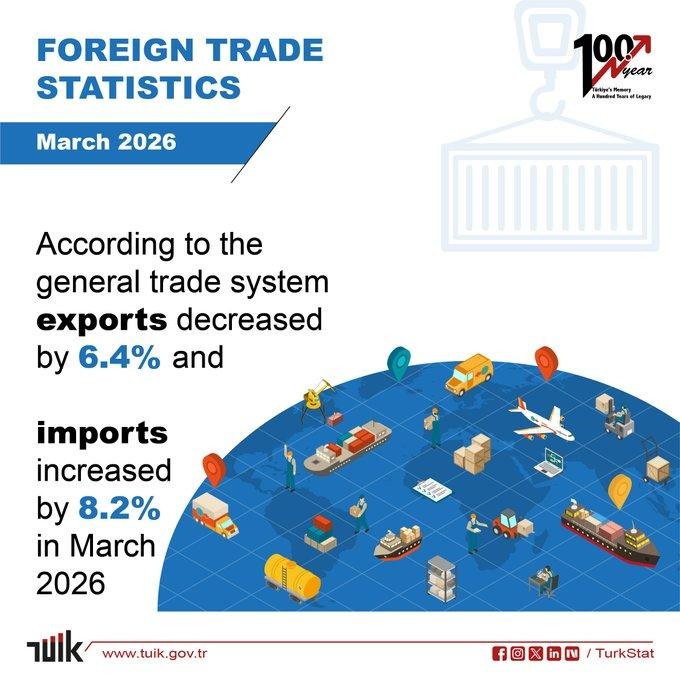
2026-04-30 Shafaq News- Ankara Iraq ranked eighth among Turkiye’s top importers with $659 million worth of goods in March, down from $774 million in February, the Turkish Statistical Institute (TURKSTAT) stated on Thursday.
Germany ranked first with imports valued at $1.82 billion, followed by the United Kingdom at $1.419 billion, the United States at $1.378 billion, Italy at $1.216 billion, France at $995 million, Spain at $846 million, and Romania at $802 million.
Exported goods included manufactured products, as well as agriculture, forestry, fishing, mining, and quarrying, which together accounted for 94% of Turkiye’s total exports.
https://www.shafaq.com/en/Economy/Iraq-imports-from-Turkiye-fall-to-659-million-in-March
UAE Drops Bombshell, Oil and Gold to Surge
UAE Drops Bombshell, Oil and Gold to Surge
Daniela Cambone: 4-30-2026
In a recent, high-stakes episode of The Daniela Cambone Show hosted by ITM Trading, Daniela Cambone sat down with world-renowned economist Professor Steve Hanke to dissect a series of earth-shaking developments in the global economy.
From the sudden realignment of the Middle East energy landscape to the underlying forces driving persistent inflation, the interview provides a masterclass in how geopolitics and monetary policy intersect to shape our financial future.
UAE Drops Bombshell, Oil and Gold to Surge
Daniela Cambone: 4-30-2026
In a recent, high-stakes episode of The Daniela Cambone Show hosted by ITM Trading, Daniela Cambone sat down with world-renowned economist Professor Steve Hanke to dissect a series of earth-shaking developments in the global economy.
From the sudden realignment of the Middle East energy landscape to the underlying forces driving persistent inflation, the interview provides a masterclass in how geopolitics and monetary policy intersect to shape our financial future.
The headline news of the discussion was the United Arab Emirates’ (UAE) decision to exit the OPEC cartel effective May 1st.
According to Professor Hanke, this isn’t merely a logistical change; it’s a strategic pivot driven by a “pump now or lose out” mentality. The UAE is increasingly frustrated by strict production quotas and views the long-term horizon for real oil prices as declining.
Furthermore, Hanke highlights a growing sense of regional insecurity. With heightened tensions involving Iran and the broader Middle East, the UAE is concerned that future geopolitical disruptions could hinder their ability to export oil later.
By leaving OPEC, they gain the autonomy to accelerate extraction and maximize revenues while the markets are still accessible, fearing that their underground “black gold” might eventually be devalued by volatility and shifting alliances.
The conversation took a deep dive into the broader implications of Middle Eastern instability. Hanke notes that as regional tensions rise, the traditional balance of power is tilting. While the United States faces significant strategic and economic setbacks in the region, Russia and China are emerging as key beneficiaries of the shifting dynamics.
Professor Hanke did not hold back in his critique of current U.S. foreign policy. He described the American approach to the ongoing regional conflicts as ill-prepared, suggesting that the current narratives mirrors the flawed justifications used during the lead-up to the Iraq war.
He questioned the efficacy of modern military intervention, suggesting that “winning” in today’s complex global context is an increasingly elusive concept that carries heavy economic costs.
Moving from the oil fields to the Federal Reserve, Hanke offered a sobering perspective on inflation. While main stream media often focuses exclusively on interest rate hikes, Hanke argues that inflation is fundamentally a result of money supply growth.
Despite the Fed’s attempts to cool the economy, Hanke predicts that inflationary pressures will remain “sticky” due to continued bank lending and money creation.
He suggests that we shouldn’t expect a radical departure from the Federal Reserve’s current steady-state policy until a new leadership takes the helm, leaving investors to grapple with a prolonged period of diminished purchasing power.
For those looking to protect their wealth, the most striking part of the interview was Hanke’s medium-to-long-term outlook on commodities, particularly gold. Despite the usual market ebbs and flows, Hanke remains decisively bullish. He points to China’s massive role in commodity demand and the steady accumulation of gold by central banks as primary drivers for the metal’s value.
When asked about price targets, Hanke’s projections were bold: he sees gold continuing its upward trajectory, potentially reaching $6,000 to $7,000 per ounce in the long term.
This forecast is rooted in the belief that gold remains the ultimate hedge against monetary mismanagement and geopolitical chaos.
The insights shared by Professor Steve Hanke serve as a wake-up call for investors and policy watchers alike. As the UAE chooses independence over cartel quotas and the global power structure reshuffles, the importance of understanding monetary supply and hard assets has never been higher.
Seeds of Wisdom RV and Economics Updates Thursday Afternoon 4-30-26
Good Afternoon Dinar Recaps,
Digital Finance Breakthrough: U.S. and UK Advance Crypto and Tokenization Frameworks
Regulatory momentum in two major economies signals accelerating transition toward a digitized financial system
Good Afternoon Dinar Recaps,
Digital Finance Breakthrough: U.S. and UK Advance Crypto and Tokenization Frameworks
Regulatory momentum in two major economies signals accelerating transition toward a digitized financial system
OVERVIEW (KEY POINTS)
The United States and the United Kingdom are both advancing key policies that move financial systems closer to regulated digital asset integration, marking a significant step toward next-generation financial infrastructure.
This is happening now as U.S. lawmakers push forward a comprehensive crypto market structure bill, while the UK formalizes rules allowing tokenized funds to operate within existing financial regulations.
Key players include U.S. regulators, UK financial authorities, institutional investors, and global markets preparing for blockchain-based financial operations.
The broader implication is clear: digital assets are transitioning from experimental markets into regulated financial systems, signaling structural evolution in global finance.
KEY DEVELOPMENTS
1. U.S. Pushes Forward Crypto Market Structure Bill
Legislative momentum is building.
Senate efforts aim to define oversight between major financial regulators
Bill progression signals movement toward clear regulatory framework
2. Regulatory Clarity Targets Institutional Adoption
Framework designed to reduce uncertainty.
Addresses issues like stablecoin yields and compliance standards
Includes provisions on ethics and legal protections
3. UK Approves Tokenized Funds Within Existing Rules
Digital assets move into mainstream finance.
Asset managers can now use blockchain for fund operations
Tokenization integrated without creating separate experimental systems
4. Blockchain Becomes Core Financial Infrastructure
Shift from pilot programs to real-world use.
Funds allowed to maintain records on distributed ledger technology (DLT)
Supports onchain transactions as primary system of record
5. Roadmap Expands Toward Tokenized Economy
Future financial architecture taking shape.
Progression toward tokenized assets and cash flows
Exploration of digital wallets and smart contract management
WHY IT MATTERS
This development highlights a major shift: digital finance is moving into regulated, institutional frameworks, increasing legitimacy and scalability.
Markets are likely to respond as regulatory clarity reduces uncertainty, potentially unlocking capital flows into digital assets and tokenized systems.
For policymakers, the challenge is balancing innovation with stability, ensuring investor protection while enabling modernization.
At the system level, this reflects a transition toward a digitally integrated financial ecosystem, where blockchain plays a central operational role.
WHY IT MATTERS TO FOREIGN CURRENCY HOLDERS
Digital assets may influence cross-border transactions
Currency competition could increase with tokenized systems
Capital flows may shift toward regulated digital markets
Exchange systems may become faster and more efficient
IMPLICATIONS FOR THE GLOBAL RESET
Pillar 1: Institutionalization of Digital Assets
Regulatory frameworks signal that crypto and tokenization are becoming embedded in traditional finance, not operating outside it.
Pillar 2: Infrastructure Transformation
Adoption of blockchain for core financial processes points to a long-term restructuring of how assets are issued, traded, and settled.
CONCLUSION
The coordinated movement by the U.S. and UK marks a turning point in the evolution of financial systems, where digital assets gain formal recognition within regulatory structures.
As frameworks solidify, the gap between traditional finance and digital systems continues to narrow, accelerating adoption and integration.
This is not a speculative phase—it is a measured transition toward a new financial architecture.
When regulation embraces innovation, the foundation of the financial system begins to transform.
Seeds of Wisdom Team
Newshounds News™ Exclusive
SOURCES
Cointelegraph — "Tillis to push Senate Banking vote on stalled crypto bill"
Cointelegraph — "UK regulator clears path for tokenized funds within existing rules"
~~~~~~~~~~
Seeds of Wisdom Team RV Currency Facts Youtube and Rumble
Newshound's News Telegram Room Link
RV Facts with Proof Links Link
RV Updates Proof links - Facts Link
Follow the Gold/Silver Rate COMEX
Follow Fast Facts
Seeds of Wisdom Team™ Website
Thank you Dinar Recaps
Iraq Economic News And Points To Ponder Thursday Afternoon 4-30-26
The Toman Loses 65% Of Its Value In 6 Months
Money and Business Economy News - Follow-up The Iranian currency continued its sharp decline in the parallel markets against the US dollar on Thursday morning, coinciding with increasing economic pressure from Washington on Tehran amid fears of a possible renewal of military conflict in the Middle East region.
The Toman Loses 65% Of Its Value In 6 Months
Money and Business Economy News - Follow-up The Iranian currency continued its sharp decline in the parallel markets against the US dollar on Thursday morning, coinciding with increasing economic pressure from Washington on Tehran amid fears of a possible renewal of military conflict in the Middle East region.
The US dollar traded at 179,850 tomans, with the local currency losing more than 16% in one week and about 38.65% in the past six months, driven by escalating regional tensions and the ongoing naval blockade of Iranian oil tankers in the Strait of Hormuz. https://www.economy-news.net/content.php?id=68487
Iraq Announces Its Rejection Of Any Illegal Measures That Would Hinder International Trade.
Money and Business Economy News — Follow-up Iraq announced its rejection of any illegal measures that would hinder international trade.
The Ministry of Foreign Affairs stated in a statement received by “Al-Eqtisad News” that “the Permanent Representative of the Republic of Iraq to the United Nations, Ambassador Luqman Al-Faily, participated in the Security Council session held on Wednesday, April 29, 2026, which was dedicated to discussing the item on the maintenance of international peace and security: maritime security.”
The Ambassador delivered a speech on behalf of the Republic of Iraq, in which he emphasized "the great importance that Iraq attaches to maritime security and freedom of navigation, reiterating its full commitment to ensuring freedom of navigation in international waterways, particularly in the Arabian Gulf region and the Strait of Hormuz, in accordance with the provisions of the United Nations Convention on the Law of the Sea (UNCLOS)."
He pointed out that "any threat to these corridors represents a direct danger to the stability of the Iraqi economy, as they are the main route for its oil exports and foreign trade."
He also called for "activating mechanisms for dialogue and cooperation between the Gulf littoral states, stressing his rejection of any illegal measures that would hinder international trade, given their negative impact on global supply chains and their repercussions on energy and food prices." https://www.economy-news.net/content.php?id=68485
Al-Zaydi Discusses With Taif Sami The Files Of Salaries And Financial Revenues
Money and Business Economy News – Baghdad Prime Minister-designate Ali Faleh al-Zaidi discussed the issues of salaries and financial revenues with Finance Minister Taif Sami on Thursday.
A statement from his media office, received by "Al-Eqtisad News," stated that "Prime Minister-designate Ali Falih Al-Zaidi met with Finance Minister Taif Sami."
The statement indicated that "the meeting reviewed the financial situation in Iraq, including financial revenues and the salary file, as well as discussing the challenges facing the financial situation under the current circumstances, and the importance of continuing to work on maximizing and diversifying financial resources."https://www.economy-news.net/content.php?id=68492
Oil Jumps On US Military Option Against Iran
2026-04-30 Shafaq News Oil prices rose on Thursday on a report the U.S. is considering potential military action against Iran to break the deadlock in negotiations to end the war, increasing concerns of more supply disruptions to already curtailed Middle East exports.
Brent crude futures for June rose $5.27, or 4.5%, to $123.30 a barrel as of 0347 GMT after gaining 6.1% in the previous session. The June contract, which has increased for a ninth day, expires on Thursday and the more active July contract was at $113.10, up $2.66, or 2.4%, after gaining 5.8% in the previous session.
U.S. West Texas Intermediate futures for June were up $2.42, or 2.3%, at $109.30 a barrel, after climbing 7% in the previous session, climbing in eight of nine sessions.
Both benchmarks are on track for their fourth month of gains.
U.S. President Donald Trump is slated to receive a briefing on Thursday on plans for a series of military strikes on Iran in hopes it will return to negotiations on its nuclear programme, according to an Axios report late on Wednesday.
The U.S. and Israel began air strikes on Iran on February 28 and it retaliated by closing off almost all shipping through the Strait of Hormuz, a chokepoint for energy supplies fromMiddle Eastern producers. Amid a ceasefire that has paused active combat, the U.S. has imposed a blockade on Iranian ports.
Talks to resolve the conflict, which has killed thousands and caused what analysts say is the world's biggest energy disruption ever, have deadlocked, with the U.S. insisting on discussing Iran's alleged nuclear weapons programme and Iran demanding some control over the strait and reparations for damage from the war.
"The oil market has moved from over-optimism to the reality of the supply disruption we are seeing in the Persian Gulf," said ING analysts in a note.
In a sign the conflict and resulting energy supply disruptions are set to continue for longer, Trump spoke on Wednesday with oil companies about how to mitigate the impact of a possiblemonths-long U.S. blockade, a White House official said.
"Prospects for any near-term resolution to the Iran conflict or a reopening of the Strait of Hormuz remain dim," IG market analyst Tony Sycamore said in a note.
The OPEC+ grouping of members ofthe Organization of the Petroleum Exporting Countries and its allies is likely to agree a small increase of around 188,000 barrels per day in oil output quotas on Sunday, sources told Reuters on Wednesday.
The meeting comes just after the United Arab Emirates' withdrawal from OPEC, effective May 1, which is expected to deal a blow to the oil producer group's ability to control prices. Although the Gulf nation's exit would allow it to raise production after exports restart, analysts say that is unlikely to affect market fundamentals this year, especially with the Hormuz closure and other production disruptions from the war.
"Gulf countries, including the UAE, will take months to return to pre-war production volumes," Wood Mackenzie analysts said in a note. (REUTERS) https://www.shafaq.com/en/Economy/Oil-jumps-on-US-military-option-against-Iran
Gold Rises Slightly, Eyes Second Monthly Decline
2026-04-30 Shafaq News Gold edged higher on Thursday on dip-buying, but was on track for a second straight monthly fall as elevated oil prices kept fears alive of inflation and higher-for-longer interest rates.
Spot gold was up 0.5% at $4,567.16 per ounce, as of 0549 GMT, after falling to its lowest point since March 31 in the last session. Bullion was down about 2.2% so far this month.
U.S. gold futures for June delivery rose 0.4% to $4,578.10.
"Gold has struggled again this month as oil strength has dominated the narrative. Rising crude pushes up inflation expectations and interest rate forecasts, which in turn caps gold's appeal," said Tim Waterer, chief market analyst at KCM Trade.
However, "a combination of bargain-hunting and expectations that a peaceful resolution to the (U.S.-Iran) conflict will be found at some point are providing something of a floor for gold," he said.
Brent crude rose above $124 a barrel on a report that the U.S. was considering potential military action against Iran to break the deadlock in negotiations to end the war, increasing concerns of more supply disruptions to already curtailed Middle East exports.
The Federal Reserve held interest rates steady on Wednesday, but in its most divided decision since 1992 noted rising concerns about inflation in a policy statement that drew three dissents from officials who no longer feel the U.S. central bank should communicate a bias towards lowering borrowing costs.
Traders are now pricing out Fed rate cuts entirely for this year, with markets now seeing a 30% chance of a hike by March 2027, sharply up from roughly 5% a day prior. FEDWATCH
While gold is traditionally seen as a hedge against inflation, high interest rates weigh on its appeal as a non-yielding asset.
Meanwhile, U.S. President Donald Trump discussed how to mitigate the impact of a possible months-long U.S. blockade of Iran's ports with oil companies.
Spot silver rose 1.1% to $72.26 per ounce, platinum gained 1.9% to $1,914.85, and palladium was steady at $1,458.75. All three metals were also on track for a second straight monthly fall. (REUTERS)
https://www.shafaq.com/en/Economy/Gold-rises-slightly-eyes-second-monthly-decline
Dollar Climbs In Baghdad And Erbil Markets
2026-04-30 Shafaq News- Baghdad/ Erbil The US dollar opened Thursday’s trading higher in Iraq, hovering around 154,000 dinars per 100 dollars.
According to Shafaq News market survey, the dollar traded in Baghdad's Al-Kifah and Al-Harithiya exchanges at 153,900 dinars per 100 dollars, up from the previous session’s 153,750 dinars.
In the Iraqi capital, exchange shops sold the dollar at 154,500 dinars and bought it at 153,500 dinars, while in Erbil, selling prices stood at 153,700 dinars and buying prices at 153,550 dinars.
https://www.shafaq.com/en/Economy/Dollar-climbs-in-Baghdad-and-Erbil-markets
Gold Prices Rise In Baghdad And Erbil Markets
2026-04-30 Shafaq News- Baghdad/ Erbil On Thursday, gold prices hovered around 1 million IQD per mithqal in Baghdad and Erbil markets, continuing their upward trend, according to Shafaq News market survey.
Gold prices on Baghdad's Al-Nahr Street recorded a selling price of 996,000 IQD per mithqal (equivalent to five grams) for 21-carat gold, including Gulf, Turkish, and European varieties, with a buying price of 992,000 IQD. The same gold had sold for 986,000 IQD on Wednesday.
The selling price for 21-carat Iraqi gold stood at 966,000 IQD, with a buying price of 962,000 IQD.
In jewelry stores, the selling price per mithqal of 21-carat Gulf gold ranged between 995,000 and 1,005,000 IQD, while Iraqi gold sold for between 965,000 and 975,000 IQD.
In Erbil, 24-carat gold was sold at 1,140,000 IQD per mithqal, 22-carat gold at 1,046,000 IQD, 21-carat gold at 998,000 IQD, and 18-carat gold at 855,000 IQD. https://www.shafaq.com/en/Economy/Gold-prices-rise-in-Baghdad-and-Erbil-markets-4-1
Seeds of Wisdom RV and Economics Updates Thursday Morning 4-30-26
Good Morning Dinar Recaps,
Shipping Crisis Deepens: Red Sea Disruptions and Oil Volatility Strain Global Trade System
Escalating maritime threats and rerouted supply chains are driving costs higher and exposing vulnerabilities in the global financial system
Good Morning Dinar Recaps,
Shipping Crisis Deepens: Red Sea Disruptions and Oil Volatility Strain Global Trade System
Escalating maritime threats and rerouted supply chains are driving costs higher and exposing vulnerabilities in the global financial system
OVERVIEW (KEY POINTS)
Global trade is facing renewed strain as shipping disruptions intensify across key maritime routes, particularly in the Red Sea and surrounding regions tied to Middle East instability.
This is happening now because ongoing geopolitical tensions have forced shipping companies to reroute vessels away from high-risk zones, increasing transit times and operational costs.
Key players include global logistics firms, energy markets, and major economies now adapting to higher transportation costs and supply chain uncertainty.
The broader implication is clear: persistent disruption in global trade routes is feeding inflation, slowing growth, and increasing systemic financial stress.
KEY DEVELOPMENTS
1. Red Sea Shipping Disruptions Intensify
Critical trade routes remain unstable.
Attacks and threats forcing vessels to avoid key corridors
Increased reliance on longer routes around Africa’s Cape of Good Hope
2. Freight Costs Surge Globally
Shipping expenses are rising sharply.
Longer routes increasing fuel consumption and delivery times
Freight rates climbing across container and bulk shipping sectors
3. Oil Markets React to Supply Risks
Energy prices remain volatile.
Disruptions impacting oil transport and availability
Prices responding to uncertainty around secure delivery routes
4. Supply Chains Face Prolonged Delays
Businesses are adjusting operations.
Delays affecting manufacturing and retail sectors
Companies increasing inventory buffers to manage risk
5. Logistics Firms See Mixed Impact
Short-term gains, long-term uncertainty.
Higher rates boosting near-term profitability
Concerns over future demand if global growth slows
WHY IT MATTERS
This development highlights how physical trade disruptions can quickly translate into financial stress, especially when they affect key global supply routes.
Markets are reacting through increased volatility in commodities, equities, and transportation sectors, reflecting uncertainty in delivery timelines and costs.
For policymakers, rising shipping costs add another layer to inflation, complicating decisions around interest rates and economic support measures.
At the system level, this reinforces a key vulnerability: global trade efficiency is critical to financial stability, and disruptions expose structural weaknesses.
WHY IT MATTERS TO FOREIGN CURRENCY HOLDERS
Import-heavy currencies face added pressure from higher costs
Purchasing power declines due to rising goods prices
Exchange rate volatility increases with trade imbalances
Commodity-linked currencies may benefit from higher prices
IMPLICATIONS FOR THE GLOBAL RESET
Pillar 1: Trade Route Vulnerability Exposed
Ongoing disruptions highlight the need for diversified and resilient global supply chains, reshaping trade strategies.
Pillar 2: Cost-Driven Economic Realignment
Rising logistics and energy costs are forcing economies to restructure pricing, sourcing, and production models.
CONCLUSION
The escalation in shipping disruptions marks a critical stress point for global trade and financial systems.
As costs rise and delays persist, the impact is spreading across industries, contributing to inflation and economic uncertainty.
This is not an isolated issue—it reflects a broader shift in how geopolitical risk is influencing global commerce and finance.
When trade routes become unstable, the financial system built on them must adjust.
Seeds of Wisdom Team
Newshounds News™ Exclusive
Sources
Reuters — "Shipping firms reroute vessels as Red Sea risks persist"
Reuters — "Freight costs surge as global trade routes face disruption"
~~~~~~~~~~
🌱 A Message to Our Currency Holders🌱
If you’ve been holding foreign currency for many years, you were not foolish.
You were not wrong to believe the global financial system would change.
What failed was not your patience — it was the information you were given.
For years, dates, rumors, and personalities replaced facts, structure, and proof. “This week” predictions created cycles of hope and disappointment that were never based on how currencies actually change.
That is not your failure.
Our mission here is different: • No dates • No rates • No hype • No gurus
Instead, we focus on:
• Verifiable developments • Institutional evidence
• Global financial structure • Where countries actually sit in the process
Currency value changes only come after sovereignty, trade, banking, settlement systems, and fiscal coordination are in place. History and institutions confirm this sequence.
You will see silence. You will see denials. That is not delay — that is discipline.
Protect your identity. Organize your documents. Verify everything.
Never hand your discernment to anyone who cannot show proof.
You deserve truth — not timelines.
Seeds of Wisdom Team
Newshounds News
~~~~~~~~~~
Seeds of Wisdom Team RV Currency Facts Youtube and Rumble
Newshound's News Telegram Room Link
RV Facts with Proof Links Link
RV Updates Proof links - Facts Link
Follow the Gold/Silver Rate COMEX
Follow Fast Facts
Seeds of Wisdom Team™ Website
Thank you Dinar Recaps
Iraq Economic News And Points To Ponder Thursday Morning 4-30-26
The Dollar Is A Pressure Tactic... A US Report Links The Suspension Of Shipments To The Influence Of Factions In Iraq!
Published on: April 29, 2026, 3:45 PM Follow-up/Al-Mada The Foundation for Defense of Democracies in the United States held Iraqi factions linked to Iran responsible for Washington’s decision to suspend dollar shipments to Baghdad, considering this move a financial and security pressure tool that can be used to push Iraq towards deeper changes in the management of its economy and banking system.
The report explained that the United States had been sending cash payments ranging between $400 and $500 million to Iraq periodically for years, within a mechanism linked to oil revenues, but the US Treasury Department recently halted these shipments.
The Dollar Is A Pressure Tactic... A US Report Links The Suspension Of Shipments To The Influence Of Factions In Iraq!
Published on: April 29, 2026, 3:45 PM Follow-up/Al-Mada The Foundation for Defense of Democracies in the United States held Iraqi factions linked to Iran responsible for Washington’s decision to suspend dollar shipments to Baghdad, considering this move a financial and security pressure tool that can be used to push Iraq towards deeper changes in the management of its economy and banking system.
The report explained that the United States had been sending cash payments ranging between $400 and $500 million to Iraq periodically for years, within a mechanism linked to oil revenues, but the US Treasury Department recently halted these shipments.
The report indicated that the decision came in the context of escalating attacks carried out by armed factions using drones and missiles against American targets inside Iraq, including the American embassy in Baghdad, considering that suspending the flow of dollars was “justified,” and that its effectiveness depends on how it is used as a tool of pressure.
He explained that the Iraqi economy is heavily dependent on dollar inflows, so any disruption to these shipments directly impacts the market, leading to increased demand for hard currency, a decline in the value of the dinar, and greater difficulty in importing basic commodities such as food and fuel.
The report noted that part of these funds reaches, through the banking system, entities linked to armed factions, through companies operating in the fields of construction, import, banking and security services, indicating that the problem is not limited to cash flows, but extends to the mechanisms of their distribution.
In this context, the report considered Rafidain Bank, as the government entity through which oil revenues deposited in the US Federal Reserve pass, to be a key link in the distribution of funds within Iraq, including employee salaries. It added that transferring the salaries of some entities to Al-Nahrain Islamic Bank, under pressure from the US Treasury Department, did not solve the problem but merely shifted it to another entity.
He warned that a prolonged dollar shortage could lead to inflation and monetary instability, weakening the Iraqi government's ability to manage the economy and giving factions more room to strengthen their financial and social networks.
The report called on Washington to use this suspension thoughtfully, so that it would press for Iraqi compliance without causing an economic collapse, suggesting linking the resumption of dollar shipments to enhanced security measures around American diplomatic facilities.
He also stressed the need to push Iraq towards reducing reliance on cash and moving towards electronic payment systems, in order to limit illegal activities, calling for an investigation into the activities of Al-Nahrain Islamic Bank for possible involvement in money laundering operations, and the possibility of subjecting it to procedures under “Article 311” of the “Patriot” Act.
In the same context, the report recommended threatening sanctions against government officials if they are found to be involved in fuel smuggling or supporting financial networks linked to factions, in addition to strengthening oversight and external auditing of Al-Rafidain Bank, as it is the main channel for the flow of dollars.
The report concluded by emphasizing that Iraq’s continued access to dollars without strict oversight is no longer an acceptable option, calling for any future financial flows to be linked to transparent procedures that ensure they do not leak to entities outside the official framework. https://almadapaper.net/433487/
An American Institute: Iraqi Factions Are Behind The Suspension Of Dollar Shipments To Baghdad, And The Trump Administration Is Using The Move As A Pressure Tactic
4/29/2026 Baghdad – One News The US-based Foundation for Defense of Democracies blamed “Iraqi militias linked to Iran” for Washington’s suspension of dollar shipments to Baghdad, describing the move as “correct” and potentially useful for security and financial pressure on Iraq, and calling for an investigation into the activities of “Al-Nahrain Islamic Bank.”
The American Institute noted in a report that the United States has been transferring funds in amounts ranging from $400 to $500 million at a time to Baghdad for many years, pointing out that the US Treasury Department stopped sending these shipments related to Iraqi oil sales.
The report confirmed that Iraq is critically dependent on dollar inflows, but the Iraqi government, especially the Ministry of Oil, is deeply entangled with the militias, adding that suspending the shipments represents an effective and short-term financial lever for security and financial pressure. https://1news-iq.net/معهد-أميركي-الفصائل-العراقية-وراء-تعل/
A Parliamentary Question To The Governor Of The Central Bank Regarding The Delay In Releasing Foreign Remittances
Baghdad / NINA / The Parliamentary Finance Committee directed a question to the Governor of the Central Bank on Tuesday regarding the delay in releasing foreign currency transfers.
Committee member, MP Hussein Mounis, stated in a press release: "A question was directed to the Governor of the Central Bank of Iraq regarding the delay in releasing foreign currency transfers (excluding US dollars) to Iraqi banks, despite the completion of the requirements for the first phase of reforms being implemented by Oliver Wyman."
He added, "The current circumstances in the region and Iraq, along with the accompanying difficulties in international trade, necessitate greater support for the Iraqi market through financing and credit facilities that contribute to the stability of commercial activity." He demanded clarification on the reasons for the delay in releasing these transfers and the setting of an official date for their implementation, given their importance in supporting imports and trade.
Mounis stressed the need to answer the parliamentary question within a period not exceeding 15 days, based on the provisions of Article (15) of the Law of the Council of Representatives and its Formations. /End 9 https://ninanews.com/Website/News/Details?key=1292558
Parliamentary Finance Committee: Preparing The Budget Requires A Fully Empowered Government And Real Resources, Not "Fantasy" Figures
2026-04-28 10:53 Shafaq News – Baghdad Jamal Kojar, a member of the Finance Committee in the Iraqi Parliament, confirmed on Tuesday that the deficit is hindering the resolution of the budget, while pointing out that budgets are based on resources and not on "fanciful figures".
Kojer told Shafaq News Agency that preparing the budget law and sending it to the House of Representatives requires a fully empowered government, and that the current caretaker government does not have the authority to send the draft budget law to Parliament.
He added that the House of Representatives, in coordination with the government, has three options: to limit spending to the 1/12 system, to legislate a law similar to the Food Security Law, or to submit a draft budget law for the second half of this year.
Koger explained that "the total budget amount cannot be determined given that there is a financial deficit, and the important point is that budgets are based on resources and not on imaginary figures."
The Finance Committee in the Iraqi Parliament confirmed last week that voting on the 2026 budget law is linked to the formation of the next government, the government program, and the speed with which it is sent to the Council.
Committee member Ribwar Karim told Shafaq News Agency that the committee received information from the government indicating that "there is no liquidity crisis, and that employees' salaries are fully secured for the coming months."
Karim added that the parliament is still waiting for the formation of the next government with full powers, so that it can present projects to confront any economic crisis in the next stage.
A US Report Recommends That The Trump Administration Sanction Iraq's Rafidain Bank: A Means Of Securing Dollars For Factions
Baghdad – One News 4/29/2026 According to the US report, dollar shipments arriving in Iraq sometimes fall into the hands of militias through banking services, which run construction and import companies, currency exchanges, and security contracting firms.
The report considered that a large part of the problem lies with the state-owned Rafidain Bank, as it is the final means of distributing oil revenues deposited in the Federal Reserve Bank of New York, which reach Iraqi society, especially civil servants, after until recently it also reached members of the Popular Mobilization Forces through their salaries, which were forced by pressure from the Treasury Department to be transferred to the smaller, state-owned Al-Nahrain Islamic Bank. https://1news-iq.net/تقرير-أمريكي-يوصي-إدارة-ترامب-بمعاقبة/
Thursday Iraq News Posted by Tishwash at TNT 4-30-2026
TNT:
Tishwash: Al-Marsoumi: Iraq is at a critical economic crossroads and needs competent individuals and political support.
Economic expert, Nabil Al-Marsoumi, warned that the Iraqi economy is going through a phase that requires extensive reforms in light of the major challenges that will face the president and the next government.
Al-Marsoumi told Al-Furat News Agency that: “The economic reality is characterized by significant pressures, most notably limited liquidity, challenges in the oil sector, budget deficits, high rates of unemployment and poverty, and declining economic performance.”
TNT:
Tishwash: Al-Marsoumi: Iraq is at a critical economic crossroads and needs competent individuals and political support.
Economic expert, Nabil Al-Marsoumi, warned that the Iraqi economy is going through a phase that requires extensive reforms in light of the major challenges that will face the president and the next government.
Al-Marsoumi told Al-Furat News Agency that: “The economic reality is characterized by significant pressures, most notably limited liquidity, challenges in the oil sector, budget deficits, high rates of unemployment and poverty, and declining economic performance.”
He added, "The next government will not be able to change the reality on its own unless it has broad political support, and political forces must refrain from demands that may hinder its work and limit populist rhetoric that increases the burdens on the state."
Al-Marsoumi stressed that “Iraq stands today at an important crossroads in its economic path due to the magnitude of the challenges,” emphasizing “the importance of forming a government of competent individuals, far removed from quotas, capable of managing the current stage and addressing the economic crisis.” link
************
Tishwash: Baghdad and Erbil meet to unify customs procedures
Iraq’s Border Ports Commission held a meeting Tuesday with federal and regional representatives aimed at unifying customs procedures between federal authorities and the Kurdistan Region, focusing on tariff alignment and the rollout of a shared electronic system.
The meeting, held under commission chief Lt. Gen. Omar al-Waeli and convened on directives from the Ministerial Council for Economy, discussed unifying the customs tariff and implementing the ASYCUDA electronic system across all border crossings. Participants also addressed customs exemptions, prohibition and restriction lists, standardization and quality control, radiographic inspection procedures, the agricultural calendar, unofficial crossings and tax procedures.
Waeli called for discussions “in a positive spirit, making citizens’ needs, meeting their requirements, and facilitating trade movement between the region and the governorates a top priority.” He noted that “the region is going through exceptional circumstances that require everyone to overcome differences in viewpoints and implementation,” and described the commission as “a point of meeting and understanding with the region.”
Efforts to unify customs procedures follow years of differences between federal and regional systems, including variations in tariff application at border crossings that have led to trade disruptions and delays. Previous attempts to enforce unified tariffs and clearance procedures have highlighted the impact of inconsistent regulations on traders and supply chains.
Recent discussions between Baghdad and Erbil have focused on aligning tariffs and ensuring consistent conditions for companies operating across all crossings.
************
Tishwash: An advisor to the outgoing prime minister, said that al-Zaidi met with the US chargé d’affaires in Baghdad, Joshua Harris
Abdul Amir Taiban denies the existence of an American veto on Ali al-Zidi, who is tasked with forming the next government, and confirms that all leaders of the framework support this assignment.
Al-Zaydi at the US embassy hours after the framework was nominated and approved – Taiban
A day after Ali al-Zaidi was tasked with forming Iraq’s ninth government, Abdul Amir Taiban, an advisor to the outgoing prime minister, said that al-Zaidi met with the US chargé d’affaires in Baghdad, Joshua Harris, considering this meeting a “green card” and an American approval and blessing of his appointment, contrary to the voices that say there is an American “veto” on his appointment.
In an interview with journalist Laith Al-Jazaeri, which was followed by 964 , Taiban reveals a “unique situation” that the framework was notNetwork accustomed to, after it unanimously agreed to nominate Al-Zidi, a situation that the framework had lacked throughout the past five months.
He explained that the absence of Humaam Hamoudi and Amar Al-Hakim from the picture during Al-Zidi's assignment does not mean that they do not support his assignment, revealing absolute support for Al-Zidi’s assignment.
On Monday evening (April 27, 2026), the Coordination Framework announced the nomination of Ali al-Zidi for the premiership, praising the “historic stances” of the head of the State of Law Coalition, Nouri Kamel al-Maliki, and the head of the Reconstruction and Development Coalition, Mohammed Shia al-Sudani, by relinquishing their candidacy for the premiership and formation of the next government, in the absence of the head of the Sayyid al-Shuhada Brigades, Abu Ala al-Walai, and the head of the Supreme Islamic Council, Humam Hamoudi.
President Nizar Amidri tasked Ali al-Zidi, the candidate of the largest parliamentary bloc, with forming the new government, explaining that“with this, we have completed the third stage of the constitutional entitlement, which could not tolerate delay,” wishing him “success in forming a strong national government that represents all Iraqis and meets their aspirations.”
The President called on all political forces to “support al-Zaydi and cooperate with him to expedite the completion of this constitutional and national entitlement in a way that serves the interests of Iraq and its people.” The official news agency quoted Prime Minister-designate Ali al-Zidi’s first remarks, in which he said, “We are determined to work with all political forces to form a government that responds to the demands of citizens in establishing security and stability and achieving comprehensive development.”
Al-Zidi’s nomination comes after a difficult process that included two violations of the constitutional deadlines.
The first lasted 71 days, until the election of the President of the Republic on April 11, 2026, while the other violation appears to be about to end within hours, after the country lived through 48 hours of a constitutional violation of the deadline for assigning the candidate of the largest bloc to head the government. conducted a preliminary investigation into the history, life, andNetwork 964 Thebusiness of Prime Minister-designate Ali al-Zaidi before his appointment. provides more information about the young businessman who following report appears to be more active than is typical among his peers.
His name appears on long lists of those who own or contribute to companies that carry out large projects. He also has extensive political connections, despite not practicing politics. link
************
Tishwash: Badr: Washington will return $500 million to Iraq as a message of support for al-Zaidi
Hamed al-Moussawi, spokesman for the Badr parliamentary bloc, said on Wednesday that Washington would resend the $500 million shipment it had previously withheld from Baghdad as a "goodwill gesture" to the new project in Iraq led by Prime Minister-designate Ali al-Zidi .
Al-Moussawi said in a televised interview followed by Al-Sa’a Network that “the coordination framework held a first session through a group of advisors to develop visions regarding the form of the next government and to divide the points between the parties .”
He added that "there is a vision within the coordination framework that believes that the Ministry of Foreign Affairs should be within the framework, because the ministry during the past period went through circumstances that did not reflect the vision of Iraq as a whole, and there is talk about creating a position of (Minister of State for Foreign Affairs) that would be part of the coordination framework, and through which it would try to open a window with the world, provided that this person would also be the Minister of the Economic Ministerial Council ."
He continued, “Some of those who are affiliated with us in the factions’ channels are saying: What is Al-Zaidi’s political and security experience? And how will he manage foreign affairs? And I say to them: Looking at our other partners, there is now a person who leads an entire component (Al-Halbousi), and he was a simple person and later became the leader of a bloc, so why do we revolt when we reach the Shiite? ”
He noted that he had heard that the Americans would release the $500 million they had previously withheld from Iraq, as a goodwill gesture to the new project led by al-Zaidi .
He explained that "Badr has 20 deputies, and this guarantees us two ministries according to the prevailing equation in the political process. According to the language of numbers and electoral entitlement, 20 seats correspond to two ministries and 20 special grades . link
************
Tishwash: Independent politician: Government formation will proceed too quickly and in less time than planned.
An independent politician suggested that the process of forming the new government will proceed at a record speed and in less than the constitutional period, in light of political consensus and support within the coordination framework.
Abu Mithaq Al-Masari said during his appearance on the program “On the Ruler” broadcast by Al-Furat satellite channel, that “the visit of the Prime Minister-designate to both Hadi Al-Amiri and Nouri Al-Maliki dispelled doubts about the seriousness of his assignment, especially with the country entering the critical stage of constitutional deadlines.”
He added that "the formation of the government will proceed very quickly and in less time than specified, and that al-Zidi's nomination is serious and heading towards completing the formation," indicating that "Washington is interested in having a strong political actor in Baghdad, and al-Zidi has the consensus of the framework forces, which is what the United States wants, without any objection to it."
He pointed out that "Al-Zaydi faces a difficult task and must prioritize the issue of managing Iraq's funds with the US Federal Reserve," noting that "the government only needs half plus one, and all the members of the framework support it, which means there is no difficulty in passing it within the parliament."
Al-Masari continued, "There are expected concessions to the Kurdistan Democratic Party regarding the sovereign ministries, with talk of rotating the portfolios of Foreign Affairs and Finance, in addition to a move to rotate the Ministry of Education with Higher Education," expecting that "Abbas al-Amiri will assume the presidency of al-Zaydi's office." link
Seeds of Wisdom RV and Economics Updates Wednesday Evening 4-29-26
Good Evening Dinar Recaps,
Central Banks Split: Oil Shock Drives Inflation Higher as Policy Gridlock Emerges
Surging energy prices and global uncertainty are dividing central banks, increasing risks to growth, currencies, and financial stability
Good Evening Dinar Recaps,
Central Banks Split: Oil Shock Drives Inflation Higher as Policy Gridlock Emerges
Surging energy prices and global uncertainty are dividing central banks, increasing risks to growth, currencies, and financial stability
OVERVIEW (KEY POINTS)
Major central banks are showing growing division and caution as rising oil prices and geopolitical tensions push inflation higher across global economies.
This is happening now because the ongoing Middle East conflict has driven oil above $110–$120 per barrel, feeding directly into inflation while slowing growth expectations.
Key players include the U.S. Federal Reserve, European Central Bank, and global institutions now facing a policy dilemma between controlling inflation and supporting economic growth.
The broader implication is clear: policy fragmentation and inflation pressure are increasing systemic risk, signaling deeper stress within the global financial system.
KEY DEVELOPMENTS
1. Federal Reserve Shows Rare Internal Division
Policy consensus is breaking down.
Fed held rates steady at 3.5%–3.75%
Most divided vote since 1992, signaling uncertainty
2. Oil Prices Surge on Prolonged Supply Disruption
Energy markets remain under pressure.
Oil climbed above $118–$120 per barrel amid supply fears
Ongoing blockade concerns point to extended disruption
3. Global Inflation Pressures Reaccelerate
Energy costs are driving price increases worldwide.
Inflation rising across Europe and globally due to energy spikes
Fuel-driven inflation spreading into broader economies
4. Central Banks Hold Rates Despite Rising Risks
Policy caution dominates globally.
Bank of Canada and others keeping rates unchanged amid uncertainty
ECB signaling potential future hikes despite weak growth outlook
5. Global Growth Forecasts Are Being Cut
Economic outlook is weakening.
Asia growth forecast reduced while inflation raised to 5.2%
Manufacturing and exports showing signs of slowing momentum
WHY IT MATTERS
This development highlights a critical shift: central banks are no longer aligned, reflecting uncertainty about how to respond to energy-driven inflation.
Markets are reacting to this divergence with increased volatility in bonds, currencies, and equities, as expectations for future policy become less predictable.
For policymakers, the challenge is intensifying. Raising rates risks slowing economies further, while holding rates allows inflation to persist longer.
At the system level, this signals a transition toward a more fragile and fragmented financial environment, where coordinated global responses are harder to achieve.
WHY IT MATTERS TO FOREIGN CURRENCY HOLDERS
Currency volatility increases due to policy divergence
Purchasing power declines as inflation rises globally
Safe-haven currencies may strengthen during uncertainty
Emerging market currencies face added pressure
IMPLICATIONS FOR THE GLOBAL RESET
Pillar 1: Monetary Policy Fragmentation
Diverging central bank strategies signal a shift away from coordinated global monetary policy, increasing systemic instability.
Pillar 2: Energy-Driven Inflation Reshaping Economies
Persistent energy shocks are forcing structural adjustments in pricing, trade, and economic policy frameworks.
CONCLUSION
The current environment reflects more than temporary volatility. It represents a fundamental shift in how central banks respond to global shocks.
As inflation rises and policy consensus breaks down, the financial system is becoming more sensitive to both geopolitical events and energy markets.
This moment highlights a deeper reality: when central banks lose alignment, systemic risk rises significantly.
When energy shocks divide monetary policy, the global financial system enters a new phase of instability.
Seeds of Wisdom Team
Newshounds News™ Exclusive
Sources
Reuters — "Fed holds rates steady in most divided vote since 1992"
Reuters — "Oil rises on fears of prolonged Middle East supply disruption"
~~~~~~~~~~
Seeds of Wisdom Team RV Currency Facts Youtube and Rumble
Newshound's News Telegram Room Link
RV Facts with Proof Links Link
RV Updates Proof links - Facts Link
Follow the Gold/Silver Rate COMEX
Follow Fast Facts
Seeds of Wisdom Team™ Website
Thank you Dinar Recaps
Iraq Economic News And Points To Ponder Wednesday Evening 4-29-26
Iraq Ranks 82nd Globally With 8.4% Housing Price Ratio
2026-04-29 Shafaq News- Baghdad Iraq ranked 82nd out of 104 countries in the 2025 housing price-to-income ratio index, marking a 0.1 percentage point increase from the previous year, according to World Population Review.
The report placed Iraq’s ratio at 8.4% with an affordability index of 1.2, compared with 8.3% and 1.1 in 2024.
Iraq Ranks 82nd Globally With 8.4% Housing Price Ratio
2026-04-29 Shafaq News- Baghdad Iraq ranked 82nd out of 104 countries in the 2025 housing price-to-income ratio index, marking a 0.1 percentage point increase from the previous year, according to World Population Review.
The report placed Iraq’s ratio at 8.4% with an affordability index of 1.2, compared with 8.3% and 1.1 in 2024.
Globally, Syria topped the list at 115.1%, followed by Cuba (48%), Ethiopia (47.1%), Cameroon (46.6%), and Sri Lanka (34.2%). Other countries near the top included Nepal (32.1%), Hong Kong (29.1%), China (28.5%), Vietnam (25.8%), and Thailand (23.1%).
At the lower end, Oman ranked 104th with a ratio of 3.1%, alongside Saudi Arabia, indicating relatively lower housing cost pressure relative to income. https://www.shafaq.com/en/Economy/Iraq-ranks-82nd-globally-with-8-4-housing-price-ratio
US Dollar Tops 180,000 Toman In Iran
2026-04-29 Shafaq News- Tehran The US dollar surpassed 180,000 toman in Iran's open market on Wednesday, an increase of nearly 8% from the previous day. According to Iran’s Donya-e-Eqtesad, the dollar had traded around 160,000 toman on Tuesday before closing near 165,000. One toman = 10 Iranian rials
https://www.shafaq.com/en/Economy/US-dollar-tops-180-000-toman-in-Iran
USD/IQD Exchange Rates Dip Slightly In Baghdad And Erbil At Closure
2026-04-29 Shafaq News- Baghdad/ Erbil The US dollar closed Wednesday’s trading lower in Iraq, hovering around 154,000 dinars per 100 dollars.
According to Shafaq News market survey, the dollar traded in Baghdad's Al-Kifah and Al-Harithiya exchanges at 153,450 dinars per 100 dollars, down from the previous session’s 153,750 dinars.
In the Iraqi capital, exchange shops sold the dollar at 154,000 dinars and bought it at 153,000 dinars, while in Erbil, selling prices stood at 153,450 dinars and buying prices at 153,350 dinars.
Gold Prices Edge Lower In Baghdad And Erbil Markets
2026-04-29 Shafaq News- Baghdad/ Erbil On Wednesday, gold prices hovered around 990,000 IQD per mithqal in Baghdad and Erbil markets, according to a Shafaq News market survey.
Gold prices on Baghdad's Al-Nahr Street recorded a selling price of 986,000 IQD per mithqal (equivalent to five grams) for 21-carat gold, including Gulf, Turkish, and European varieties, with a buying price of 982,000 IQD. The same gold had sold for 1,005,000 IQD on Tuesday.
The selling price for 21-carat Iraqi gold stood at 956,000 IQD, with a buying price of 952,000 IQD.
In jewelry stores, the selling price per mithqal of 21-carat Gulf gold ranged between 985,000 and 995,000 IQD, while Iraqi gold sold for between 955,000 and 965,000 IQD.
In Erbil, 22-carat gold was sold at 1,037,000 IQD per mithqal, 21-carat gold at 990,000 IQD, and 18-carat gold at 848,000 IQD. https://www.shafaq.com/en/Economy/Gold-prices-edge-lower-in-Baghdad-and-Erbil-markets-1-2
US Renews Calls For Dismantling Iran-Aligned Groups In Iraq After Three Reward Offers
2026-04-29 Shafaq News- Washington/ Baghdad The United States Department of State renewed its call for the dismantling of Iran-aligned armed groups in Iraq, tying the issue directly to the future of the US-Iraq relationship, as Washington placed its third $10 million reward offer on a senior commander within roughly two weeks.
A State Department spokesperson, speaking on background, said that Washington had "spoken clearly to what is needed to dismantle the Iran-aligned militias in Iraq," adding that the United States stands with Iraqis working toward sovereignty, security, and a prosperous future.
The latest reward offer, announced through the Rewards for Justice program run by the State Department's Diplomatic Security Service, targets Hashem Finyan Rahim al-Saraji, also known as Abu Alaa al-Walae, leader of Kataib Sayyid al-Shuhada.
The program accused him of directing attacks on US diplomatic facilities and military personnel in Iraq and Syria, and of involvement in the killing of Iraqi civilians. Washington designated the group a Foreign Terrorist Organization in September 2025.
Ten days earlier, a $10 million reward was announced for Ahmad al-Hamidawi, leader of Kataib Hezbollah, over attacks on US diplomatic facilities in March 2026 and a sustained campaign against American personnel in Iraq.
A separate offer followed for Haydar al-Sa'adi, Secretary General of Harakat Ansar Allah al-Awfiya —the group held responsible for the January 28, 2024, drone strike on Tower 22 in Jordan that killed three American service members.
All three men operate within the Islamic Resistance in Iraq, the umbrella coalition of Iran-aligned factions that has claimed over 750 strikes on US targets since the outbreak of the 2026 US-Israeli conflict with Iran.
Attacks attributed to its affiliated groups have struck the US Embassy in Baghdad, logistical support center at Baghdad International Airport, Harir Base, and Erbil Airport in the Kurdistan Region, and energy infrastructure across the country.
For Shafaq News, Mostafa Hashem, Washington, D.C.
Al-Marsoumi: Iraq Is At A Critical Economic Crossroads And Needs Competent Individuals And Political Support.
Time: 2026/04/29 {Economic: Al-Furat News} Economic expert, Nabil Al-Marsoumi, warned that the Iraqi economy is going through a phase that requires extensive reforms in light of the major challenges that will face the president and the next government.
Al-Marsoumi told Al-Furat News Agency that: “The economic reality is characterized by significant pressures, most notably limited liquidity, challenges in the oil sector, budget deficits, high rates of unemployment and poverty, and declining economic performance.”
He added, "The next government will not be able to change the reality on its own unless it has broad political support, and political forces must refrain from demands that may hinder its work and limit populist rhetoric that increases the burdens on the state."
Al-Marsoumi stressed that “Iraq stands today at an important crossroads in its economic path due to the magnitude of the challenges,” emphasizing “the importance of forming a government of competent individuals, far removed from quotas, capable of managing the current stage and addressing the economic crisis.”
https://alforatnews.iq/news/لمرسومي-العراق-أمام-مفترق-اقتصادي-حرج-يحتاج-كفاءات-ودعم-سياسي
SHOCKING: Bond Collapse Warning From Former Treasury Secretary | Andy Schectman
SHOCKING: Bond Collapse Warning From Former Treasury Secretary | Andy Schectman
Liberty and Finance: 4-28-2026
Andy Schectman returns to break down mounting stress in the silver market, including a growing mismatch between COMEX open interest and available supply.
He highlights record-breaking gold and silver imports by China as evidence of a major shift happening beneath the surface.
Andy also points to rising U.S. debt pressures and warns that interest payments are approaching historic levels.
SHOCKING: Bond Collapse Warning From Former Treasury Secretary | Andy Schectman
Liberty and Finance: 4-28-2026
Andy Schectman returns to break down mounting stress in the silver market, including a growing mismatch between COMEX open interest and available supply.
He highlights record-breaking gold and silver imports by China as evidence of a major shift happening beneath the surface.
Andy also points to rising U.S. debt pressures and warns that interest payments are approaching historic levels.
Notably, he discusses former Treasury Secretary Hank Paulson’s warning that the U.S. should prepare for a potential collapse in Treasury demand.
He also explores the rapid rise of stablecoins and digital financial systems, raising concerns about surveillance, control, and the future of financial freedom.
INTERVIEW TIMELINE:
0:00 Intro
1:30 Gold & silver update
12:00 Genius Act & tokenization
24:00 Warning of Treasury market collapse
Seeds of Wisdom RV and Economics Updates Wednesday Afternoon 4-29-26
Good Afternoon Dinar Recaps,
Blockade Strategy Expands: Trump Signals Prolonged Pressure on Iran as Markets React
Extended U.S. blockade plans intensify economic strain on Iran while raising global energy and financial system risks
Good Afternoon Dinar Recaps,
Blockade Strategy Expands: Trump Signals Prolonged Pressure on Iran as Markets React
Extended U.S. blockade plans intensify economic strain on Iran while raising global energy and financial system risks
OVERVIEW (KEY POINTS)
U.S. President Donald Trump is preparing to extend the blockade on Iran’s ports, signaling a shift toward sustained economic pressure rather than immediate military escalation.
This is happening now as negotiations remain stalled, with Iran refusing to meet U.S. demands on immediate nuclear concessions, while attempting to manage the conflict through alternative trade routes.
Key players include the United States, Iran, European economies responding to rising energy costs, and global markets adjusting to prolonged disruption in oil flows.
The broader implication is clear: a sustained blockade strategy is amplifying inflation, currency instability, and global trade disruptions, increasing systemic financial risk.
KEY DEVELOPMENTS
1. U.S. Plans Extended Blockade Strategy
A long-term pressure approach is taking shape.
Blockade viewed as lower-risk alternative to military escalation
Aims to force Iran into favorable negotiation terms
2. Iran’s Currency Collapse Accelerates
Economic strain inside Iran is intensifying.
Rial weakened to 1,810,000 per dollar
Nearly 15% decline in just two days
3. Inflation Surges to Extreme Levels
Domestic conditions deteriorate rapidly.
Inflation reached 65.8% in a single month period
Rising costs expected to further destabilize the economy
4. Strait of Hormuz Disruptions Continue
Global energy flows remain constrained.
Iran restricting shipping through a key route for global oil supply
U.S. blockade compounding trade and logistics disruptions
5. Oil Prices Rise Amid Supply Concerns
Markets respond to prolonged uncertainty.
Oil prices increased nearly 3% on continued conflict
Risk of extended supply shortages priced into markets
WHY IT MATTERS
This development highlights how economic warfare strategies can have global financial consequences, particularly when energy supply chains are involved.
The combination of restricted oil flows and rising prices is feeding into inflation across multiple economies, increasing pressure on consumers and businesses.
For policymakers, prolonged disruption complicates decisions around interest rates, energy policy, and economic stability.
At the system level, this reinforces a critical shift: geopolitical conflict is directly influencing currency values, inflation, and global financial conditions.
WHY IT MATTERS TO FOREIGN CURRENCY HOLDERS
Energy-importing currencies face increased pressure
Purchasing power declines as inflation rises globally
Safe-haven currencies may strengthen during instability
Exchange rate volatility increases across regions
IMPLICATIONS FOR THE GLOBAL RESET
Pillar 1: Economic Warfare Reshaping Global Systems
Extended blockades demonstrate how financial and trade restrictions can be used as strategic tools, impacting global economic structures.
Pillar 2: Currency Instability and Realignment
Severe currency devaluation highlights vulnerabilities that could lead to broader shifts in reserve strategies and trade settlements.
CONCLUSION
The move toward a prolonged blockade represents a significant escalation in economic pressure, with consequences extending far beyond the immediate conflict.
As Iran’s economy weakens and global energy markets remain unstable, the ripple effects are being felt across currencies, inflation, and trade systems.
This is not just a regional conflict—it is a systemic stress event influencing global financial stability.
When economic pressure targets energy and currency simultaneously, the global financial system absorbs the impact.
Seeds of Wisdom Team
Newshounds News™ Exclusive
Sources
Reuters — "U.S. considers extended blockade strategy against Iran amid stalled talks"
Modern Diplomacy — "Trump Urges Iran to ‘Get Smart’ on Deal Amid Plans to Prolong Blockade"
~~~~~~~~~~
Seeds of Wisdom Team RV Currency Facts Youtube and Rumble
Newshound's News Telegram Room Link
RV Facts with Proof Links Link
RV Updates Proof links - Facts Link
Follow the Gold/Silver Rate COMEX
Follow Fast Facts
Seeds of Wisdom Team™ Website
Thank you Dinar Recaps
More “Iraq News” Posted by Tishwash at TNT 4-29-2026
TNT:
Tishwash: Washington announces its solidarity with Iraq and supports al-Zaidi's efforts to form a government.
The United States Mission in Iraq expressed its best wishes to Prime Minister-designate Ali al-Zaidi in his mission to form a government capable of meeting the aspirations of the Iraqi people and achieving a brighter and more peaceful future.
In a statement, the mission affirmed Washington’s solidarity with the Iraqi people in their pursuit of common goals, foremost among them preserving the country’s sovereignty, enhancing security to eliminate terrorism, and building a prosperous economy that brings tangible benefits to both the Iraqi and American sides.
TNT:
Tishwash: Washington announces its solidarity with Iraq and supports al-Zaidi's efforts to form a government.
The United States Mission in Iraq expressed its best wishes to Prime Minister-designate Ali al-Zaidi in his mission to form a government capable of meeting the aspirations of the Iraqi people and achieving a brighter and more peaceful future.
In a statement, the mission affirmed Washington’s solidarity with the Iraqi people in their pursuit of common goals, foremost among them preserving the country’s sovereignty, enhancing security to eliminate terrorism, and building a prosperous economy that brings tangible benefits to both the Iraqi and American sides.
The Coordination Framework announced in a statement the selection of Ali al-Zidi as the official candidate of the Coordination Framework bloc, being the largest bloc in the House of Representatives, to assume the position of Prime Minister and form the next Iraqi government.
This came during a crucial meeting held by the leaders of the framework at the Government Palace in Baghdad on Monday, where the name of Al-Zaydi was agreed upon after studying the list of candidates and choosing the person whose specifications match the requirements of the current stage and its challenges. link
************
Tishwash: Al-Jubouri: The government will be formed within two weeks, less than the constitutional deadlines.
Fahd Al-Jubouri, a leader in the National Wisdom Movement, predicted that the government would be formed within two weeks, in less time than the constitutional deadline, according to political agreements.
Al-Jubouri said, during his appearance on the “On the Ruler” program on Al-Furat satellite channel, that “things are moving towards accelerating the formation of the government within a period not exceeding two weeks, based on understandings between the political forces,” indicating that “Prime Minister-designate Ali Al-Zidi will return to the coordination framework regarding the formation of the ministerial cabinet and some files, as he is the supporting and sponsoring party.”
He added that "the coordination framework will hold a meeting tomorrow in the presence of the Prime Minister-designate to discuss the ministerial formation," noting that "Al-Zidi is assigned a service-oriented task and refuses to engage in any discussion related to his financial dealings with the state."
He explained that "the new government will face major challenges, foremost among them the economic situation and foreign relations, especially with neighboring countries," noting that "the Wisdom Movement announced its support for Al-Zaidi and its backing for him in this matter."
Al-Jubouri added that "the United States is awaiting the outcomes of the new Iraqi government and will base its position on them," stressing "the need for the next government to have plans to address regional challenges, including the repercussions of the closure of the Strait of Hormuz and its impact on Iraqi oil exports."
He pointed out that "the coordination framework hopes for the success of Al-Zaidi's government, and at the same time will monitor its performance," noting that "the framework stipulated that Al-Zaidi not participate in the elections or form a political party, and he expressed his unwillingness to go in this direction."
Al-Jubouri concluded by saying, "The framework formed two committees, one of which is concerned with discussing the ministerial formation, and it has made significant progress in its work." link
*************
Tishwash: Financial Inclusion Week kicks off in Halabja
The city of Halabja witnessed the launch of the activities of the Financial Inclusion Week for the year 2026, under the sponsorship and supervision of the Central Bank of Iraq, and organized by the “Our Awareness” Organization for Electronic Payment Culture and the “We Reach You” Financial Inclusion Initiative, under the slogan “Financial Health: The Path of Individuals Towards Sustainable and More Stable Financial Inclusion,” in a step that reflects the growing interest in promoting financial culture and expanding the scope of modern banking services in various Iraqi governorates, in line with the state’s directions towards building a more efficient and sustainable digital economy.
The events were held with broad participation from financial, banking and non-banking institutions, in a scene that reflects the extent of coordination and integration between the parties concerned with consolidating the concepts of financial inclusion and supporting the transition towards the digital economy, in line with the directions of the government and the Central Bank of Iraq aimed at reducing reliance on paper money and promoting the use of modern electronic payment methods, and in a way that contributes to raising the efficiency of financial transactions and achieving higher levels of transparency and economic stability, as well as facilitating citizens’ access to official financial services in a safe and fast manner.
National Initiative
Financial Inclusion Week opened with an official conference attended by the Governor of Halabja, Ms. Noukhsha Naseh Ahmed, who affirmed in her address the local government's full support for this national initiative. She noted that choosing Halabja as the launch location carries significant implications, reflecting its role in supporting development projects and impactful community initiatives. She explained that financial inclusion is a fundamental tool for empowering citizens to access safer and more reliable financial services, in addition to its role in strengthening trust in financial and banking institutions and supporting the gradual transition to modern digital systems.
Sound resource management
She added that expanding financial inclusion is not limited to providing banking services only, but also includes building a new community culture based on financial awareness and sound resource management, which helps families and individuals to plan financially better, enhances opportunities for saving and investment, and reduces the risks associated with traditional cash transactions, which positively impacts social and economic stability in the province and in Iraq in general.
A development message
For his part, Mr. Nabil Al-Najjar, head of the “Our Awareness” organization for the culture of electronic payment, stressed that launching the activities from Halabja carries an important humanitarian and developmental message, which is that modern financial services should be available to all citizens without exception, and in the various Iraqi governorates.
He pointed out that this initiative actively contributes to establishing a culture of electronic payment within Iraqi society, and expanding opportunities for access to financial services, which enhances the role of small and medium enterprises and supports sustainable economic development paths, especially in areas that need more developmental and service support.
Modern financial services
Ghazi Al-Kinani, advisor to the Global Smart Card Company, confirmed that electronic payment companies and governmental and private banks, in cooperation with the Central Bank of Iraq, are making great efforts to promote a culture of banking and increase citizens’ interaction with modern financial products and services more than they are now, in a way that contributes to consolidating trust between financial institutions and citizens.
Citizen's needs
Al-Kinani explained that banking awareness among citizens has witnessed remarkable development in recent years, as citizens have become more aware of the importance of banking services and more informed about all new financial products that suit their daily needs and the requirements of their working lives, which reflects the success of the awareness and regulatory efforts made in this field.
He added that the Financial Inclusion Week represents an important opportunity to bring the service provider closer to the citizen directly, through field communication and introducing the available services and mechanisms for benefiting from them, stressing that this continuous banking movement will achieve positive results that serve all parties and contribute to supporting the national economy and enhancing financial stability. link
*************
Tishwash: The Iraqi ambassador to Washington discusses regional developments and government formation with the chairman of the House Subcommittee on the Middle East.
Nizar Al-Khairallah, the Ambassador of the Republic of Iraq to the United States, met with Mike Lawler, Chairman of the Subcommittee on Foreign Affairs of the U.S. House of Representatives concerned with the Middle East and North Africa.
During the meeting, the two sides discussed the ongoing developments in the Middle East region and their implications for Iraq, exchanging views on regional challenges and their impact on internal stability.
The meeting also addressed the process of forming the new government in Iraq, emphasizing the importance of supporting political stability and promoting progress in the democratic process, in order to meet the aspirations of the Iraqi people.
The two sides discussed bilateral relations between Baghdad and Washington, and ways to expand prospects for joint cooperation in various fields, in order to strengthen the strategic partnership between the two countries and serve mutual interests. link
*************
Tishwash: Global Tech partners with Huawei to enhance digital infrastructure in Iraq
Global Tech has entered into a strategic partnership agreement with Huawei to enhance the reliability of digital infrastructure inIraqEspecially in vital sectors.
The company said in a statement received byAlsumaria NewsThe agreement was concluded on the sidelines of a specialized seminar held by Global Tech entitled (Business Continuity in Modern Data Centers) with the participation of a select group of representatives from the banking sector, electronic payment companies, and the technology sector.
She explained that "the agreement aims to enhance cooperation in the field of data center development and provide advanced solutions that support business continuity, thereby contributing to raising the level of reliability of the digital infrastructure inIraq“Especially in vital sectors.”
The seminar was attended by a number of decision-makers and specialists in the fields of technology and digital infrastructure. Its sessions addressed the readiness of data centers to ensure system continuity and reduce operational risks, in accordance with international standards.
The statement indicated that “the agreement comes within the framework of GlobalTek’s strategy to expand its strategic partnerships and provide integrated solutions that support the development of digital infrastructure and enhance the readiness of institutions to meet the requirements of digital transformation in Iraq.”
According to the statement, the event included a panel discussion with representatives from Huawei and the Uptime Institute, along with GlobalTek and Tabadul for Electronic Payments. The discussion reviewed the most prominent challenges facing business continuity and the role of modern technological solutions in supporting system stability. link