
Thank you to all the subscribers to our Early Access program…we thank you for your continued support.
We are excited to offer this new service to keep you informed and up-to-date on the latest Dinar and currency news.
Iraq Economic News And Points To Ponder Tuesday Evening 3-24-26
Iraq between war and economic fragility: The Al-Azm Alliance calls for political realism - Urgent
Baghdad Today – Baghdad Ghanem Al-Aifan, a leader in the Al-Azm Alliance, stressed on Tuesday (March 24, 2026) the need to distinguish between the Iraqi leadership and the government, emphasizing that the government is aware of the limits of its capabilities in light of the current political and economic reality.
Iraq between war and economic fragility: The Al-Azm Alliance calls for political realism - Urgent
Baghdad Today – Baghdad Ghanem Al-Aifan, a leader in the Al-Azm Alliance, stressed on Tuesday (March 24, 2026) the need to distinguish between the Iraqi leadership and the government, emphasizing that the government is aware of the limits of its capabilities in light of the current political and economic reality.
Al-Aifan explained to Baghdad Today that “the Iraqi economy is subject to many challenges, in addition to internal divisions and the inability of the military establishment to officially engage in any war, which pushes the government to strive earnestly to keep the specter of confrontation away from the country.”
He added that "the government succeeded in managing what he described as the '12-day war,' but its repercussions were heavy on Iraq as a result of the involvement of some factions in the course of the crisis according to ideological positions."
Al-Aifan called for "the necessity of avoiding a repeat of the mistakes of the previous regime, which confronted the international community with slogans only, which led to disastrous results," noting that "mature countries rely on the principle of political realism, not revolutionary rhetoric, by realizing the extent of their capabilities and not being swept away by ideology."
He pointed out that "the current stage requires the activation of institutional work in a real way, and the imposition of state control over the security file, while keeping Iraq neutral from the possibility of slipping into any conflict, taking into account the fragility of the economic situation in the country." https://baghdadtoday.news/295745-.html
Iraq Summons US, Iran Envoys, Moves To UN After Strikes
2026-03-24 Shafaq News- Baghdad Iraq is to summon the US chargé d’affaires and the Iranian ambassador and file a complaint with the UN Security Council over recent strikes on its territory.
The Ministerial Council for National Security authorized, on Tuesday, the foreign ministry to deliver formal protest notes to both diplomats over attacks that hit Popular Mobilization Forces (PMF) sites in Al-Anbar and Peshmerga positions in Erbil, according to military spokesman Sabah al-Numan.
The council also directed the ministry to prepare a formal complaint to the Security Council, calling for an end to “violations of Iraqi sovereignty.”
The diplomatic move follows an earlier decision by the same council to authorize the PMF and security forces to respond to attacks on military sites.
The escalation comes after an airstrike on a PMF position at Habbaniyah base in Al-Anbar that killed and wounded dozens. The PMF said its Al-Anbar operations commander, Saad Duwai, was killed along with 14 fighters in the strike, which it attributed to the United States.
In northern Iraq, Kurdish authorities reported 36 casualties among Peshmerga forces after ballistic missiles struck military positions in Erbil province. https://shafaq.com/en/Iraq/Iraq-summons-US-Iran-envoys-moves-to-UN-after-strikes
How The Iran–US–Israel War Exposes Iraq’s Defense Paralysis
2026-03-24 Shafaq News The expanding confrontation between Iran, the United States, and Israel has done more than draw Iraqi territory into a regional battlefield. It has laid bare a deeper reality: Iraq currently lacks the structural capacity to enforce its own sovereignty. Missiles and drones have crossed its airspace and struck sites inside the country without a single confirmed interception from its defense system, while Baghdad has issued no clear military posture or deterrent signal.
What this conflict reveals is not a temporary gap, but a systemic failure rooted in how Iraq’s security architecture has been built since 2003.
Some Iraqi officials and political figures argue that this absence of response reflects a deliberate strategy rather than incapacity. In their view, avoiding direct engagement in a confrontation between far more advanced military powers is a rational choice aimed at preventing escalation.
Yet this interpretation is difficult to sustain when measured against the operational record. The lack of even symbolic defensive action, no interception attempts, no declared alert levels, no public assessment of damage, suggests not restraint, but an inability to act.
Documented Operational Failure
Since late February, multiple incidents have demonstrated the same pattern. Drones struck radar installations at the Basra Operations Command without any recorded defensive response. Earlier attacks targeted the Taji base near Baghdad and the Imam Ali base in Nasiriyah. In each case, Iraqi authorities neither signaled a shift in military posture nor outlined a response plan.
These incidents point to a critical absence: Iraq does not possess an integrated air defense system capable of detecting, tracking, and intercepting incoming threats. Its current air force inventory, including US-supplied F-16 fighter jets, French Caracal helicopters, and South Korean T-50IQ aircraft, was not designed for sustained airspace control or missile defense.
There is no unified command-and-control network linking these assets, and no operational surface-to-air missile system of modern standard.
Political analyst Ahmed al-Hamdani summarized the reality bluntly: “Iraqi military capabilities have no meaningful role in this conflict, because the country possesses neither the aircraft nor the air defense components required to bring down hostile projectiles or enforce its own airspace.” The events of recent weeks have reinforced that assessment.
Structural Constraints, Not Just Neglect
The roots of this deficit are not limited to underinvestment or mismanagement. Iraq’s post-2003 security model was built primarily to address internal threats, particularly insurgency and terrorism, rather than external defense. That design has left the country ill-prepared for conventional or hybrid warfare involving drones and precision-guided munitions.
External constraints have compounded the problem. Security expert Ali al-Maamari points to the 2008 US–Iraq Strategic Framework Agreement as a factor shaping procurement decisions. According to his assessment, Iraq’s defense acquisitions have largely been channeled through US-aligned systems, “limiting diversification and complicating efforts to develop an independent supply chain.”
At the same time, Iranian influence within Iraq’s political and security institutions introduces a parallel constraint. Tehran’s network of allied factions operates within Iraq’s system, creating incentives to prevent the emergence of a fully autonomous Iraqi military posture that could restrict their operational space. Al-Maamari argues that this dual pressure has left Iraq unable to convert its formal sovereignty into effective strategic autonomy.
It could be argued that Iraq’s limitations stem primarily from internal fragmentation, including corruption and institutional inefficiency. These factors are undeniably significant. Yet repeated procurement failures and external veto dynamics suggest that domestic dysfunction alone does not fully explain the scale of the capability gap.
Spending Without Capability
Iraq allocated approximately $21.6 billion to its defense sector in 2024, a figure that raises a more difficult question: how has a budget of that scale failed to produce even a minimal air defense capability?
Political science professor Issam al-Feyli of Al-Mustansiriyah University estimates that, after accounting for salaries, pensions, and maintenance, Iraq’s effective investment in modernization amounts to roughly one percent of the combined military development spending of its immediate surrounding: Iran, Turkiye, Saudi Arabia, and Israel. Each of those maintains integrated air defense systems and, in most cases, domestic production capacity for drones and advanced weapons.
Iraq’s procurement record reflects repeated breakdowns. Efforts to acquire South Korea’s M-SAM-II air defense system were never completed. Other deals with the Czech Republic and Pakistan collapsed. Analysts attribute these failures to a mix of corruption, political interference, and competing external pressures.
Al-Feyli notes that Iraq’s position is uniquely vulnerable: “It exists within a profoundly unstable geostrategic environment, surrounded by states whose military capabilities exceed its own by orders of magnitude, and that are, at their core, competing for influence over Iraq itself.”
Fragmented Decision-Making
The military gap is reinforced by political fragmentation. Security analyst Dr. Ahmed al-Sharifi highlights two interconnected failures: the absence of a clear deterrent posture from civilian leadership, and the inability of military institutions to execute coordinated responses.
This fragmentation became particularly visible when armed factions launched attacks in the Kurdistan Region, where US forces were consolidating ahead of a planned withdrawal. Rather than presenting a unified national stance, segments of Iraq’s political leadership justified the attacks, framing US forces as legitimate targets regardless of the federal government’s agreements.
Al-Feyli observed that this response reflected a deeper problem: “Some parties effectively endorsed the bombardment without acknowledging that those forces were withdrawing under a federal agreement.” The issue, he suggests, is not a policy disagreement but a fundamental lack of consensus on what constitutes Iraq’s national interest.
Capability Versus Perception
According to the 2026 Global Firepower Index, Iraq ranks sixth in the Middle East in terms of military strength. However, this ranking is based on aggregate indicators such as personnel numbers and equipment inventories, not on operational integration or readiness.
Iraq fields approximately 193,000 active personnel and 100,000 paramilitary forces, along with a mix of Soviet-era and Western equipment. Yet the absence of an integrated air defense system, combined with fragmented command structures, significantly reduces the effectiveness of these assets.
Even if Iraq possessed more advanced systems, it is not certain that it could fundamentally alter the outcome of a confrontation involving technologically superior powers. However, the issue is whether Iraq can impose any cost at all or assert basic control over its territory. At present, the evidence suggests it cannot.
Strategic Choices Ahead
As the September 2026 deadline for the withdrawal of US forces approaches, Iraq faces a narrowing set of strategic options. Broadly, three paths are emerging. The first is continued reliance on external security arrangements, particularly those tied to the United States.
The second involves partial realignment toward regional powers, a move that carries its own risks of dependency. The third, and most challenging, is the pursuit of an autonomous deterrence capability built on internal political consensus and institutional reform.
None of these options can succeed without addressing the core issue: Iraq’s strategic problem is the absence of political cohesion and autonomy required to translate those resources into effective power.
The current conflict has exposed these vulnerabilities in real time. Airspace violations without interception, strikes without response, and a fragmented political reaction have together provided a documented record of a state that remains, despite its formal sovereignty, unable to defend its own territory.
https://shafaq.com/en/Report/How-the-Iran-US-Israel-war-exposes-Iraq-s-defense-paralysis
Written and edited by Shafaq News staff.
Seeds of Wisdom RV and Economics Updates Tuesday Afternoon 3-24-26
Good Afternoon Dinar Recaps,
Stablecoin Breakthrough: Compromise Framework Clears Path for U.S. Crypto Legislation
New proposal balances bank protection and crypto innovation, removing a key roadblock to market structure reform
Good Afternoon Dinar Recaps,
Stablecoin Breakthrough: Compromise Framework Clears Path for U.S. Crypto Legislation
New proposal balances bank protection and crypto innovation, removing a key roadblock to market structure reform
Overview (Key Points)
• A new stablecoin compromise proposal has emerged, addressing major regulatory conflicts
• Passive yield resembling bank deposits would be banned, easing concerns from traditional banks
• Activity-based rewards remain allowed, preserving crypto innovation and user incentives • The framework could unlock stalled market-structure legislation, signaling forward momentum in Washington
Key Developments
1. Ban on Passive Yield to Protect Traditional Banking System
The proposal would prohibit stablecoins from offering passive yield that mirrors interest-bearing bank deposits.
This directly addresses concerns about deposit flight, where funds could leave traditional banks for higher-yield crypto alternatives.
Regulators are aiming to prevent systemic disruption to the banking sector while still allowing digital asset growth.
2. Activity-Based Rewards Keep Crypto Utility Alive
Rather than eliminating incentives entirely, the framework allows rewards tied to usage, such as payments or platform activity.
This preserves core crypto business models, especially in payments, DeFi, and fintech ecosystems.
It reflects a middle-ground approach, balancing regulation with continued technological development.
3. Removes Major Obstacle to Broader Crypto Legislation
Stablecoin disagreements have been one of the primary bottlenecks holding up broader market-structure reform.
This compromise could clear the path for comprehensive crypto legislation, including regulatory clarity for exchanges and digital assets.
Momentum appears to be building toward bipartisan agreement.
4. Aligns with Bipartisan Senate Framework
The proposal aligns with the framework referenced by Senators Thom Tillis and Angela Alsobrooks, signaling cross-party coordination.
This increases the likelihood of legislative traction, especially as crypto policy becomes a strategic economic issue.
5. Next Steps: Legislative and Treasury Approval Pipeline
The framework must still move through committee markup, House alignment, and Treasury approval.
Final passage will depend on how regulators balance innovation, risk, and financial stability concerns.
Why It Matters
This compromise represents a turning point in U.S. digital asset regulation. By addressing the core conflict between banks and crypto platforms, lawmakers may finally unlock long-awaited regulatory clarity.
The result could be accelerated institutional adoption, clearer rules for stablecoins, and expanded use of blockchain-based payments.
Why It Matters to Foreign Currency Holders
• Stablecoins are increasingly acting as digital dollars, influencing global liquidity flows
• Regulatory clarity in the U.S. strengthens confidence in dollar-backed digital assets • Could accelerate global demand for tokenized fiat systems, reshaping currency competition
• Signals movement toward a hybrid financial system blending traditional banking and blockchain infrastructure
Implications for the Global Reset
Pillar 1: Convergence of Traditional Finance and Digital Assets
This framework highlights a structured integration of crypto into the regulated financial system, rather than replacement.
Stablecoins are evolving into a bridge layer between legacy banking and digital finance.
Pillar 2: Policy Control Over Digital Money Design
By restricting yield while allowing utility, regulators are actively shaping how digital money functions.
This reflects a broader shift where governments influence not just currency supply—but its behavior and incentives.
This is not just crypto regulation — it’s the blueprint for how digital dollars will coexist with the global banking system.
Seeds of Wisdom Team
Newshounds News™ Exclusive
Sources
Investors —- “Clarity Act Deal Could Ban Stablecoin Yields; Circle Leads Crypto Sell-Off”
Bitget —- “Stablecoin Compromise Proposal Targets Yield Rules”
~~~~~~~~~~
BRICS Credibility Tested: Iran Pressure on India Sparks Global Energy Risk Surge
Rising geopolitical tension and energy chokepoints are forcing BRICS into a defining moment for global influence
Overview (Key Points)
Iran has directly pressured India to activate BRICS involvement in the escalating Iran–U.S.–Israel conflict, placing the bloc’s credibility under global scrutiny. The request signals a shift from passive diplomacy to demanded geopolitical action.
This comes at a critical moment, as tensions in the Middle East are already disrupting global energy stability. With the Strait of Hormuz under threat, markets are reacting to the possibility of prolonged supply constraints.
India finds itself in a strategic balancing act, maintaining relationships with both Iran and the United States. As the current BRICS chair, its response carries outsized influence over the bloc’s direction.
The broader implication is clear: BRICS is being tested not as an economic alliance, but as a geopolitical force capable of shaping global outcomes. Its response—or lack thereof—could redefine its role in the emerging world order.
Key Developments
1. Iran Calls on BRICS to Take Action
Iran formally urged India to mobilize BRICS as an independent geopolitical actor in the conflict.
• Proposal includes a regional security framework excluding Western powers • Signals Iran’s push for multi-polar power structures over Western-led systems
2. Strait of Hormuz Becomes a Critical Pressure Point
The situation has intensified around one of the world’s most vital energy corridors.
• Roughly 20% of global oil and LNG flows through the Strait • Any disruption creates immediate global price volatility and supply risk
3. India Navigates a High-Stakes Diplomatic Balance
India’s response reflects strategic caution rather than alignment.
• Condemned infrastructure attacks and emphasized secure shipping lanes • Avoided directly criticizing the U.S. or Israel, preserving multi-alignment strategy
4. Russia Aligns with Iran, Increasing BRICS Tension
Russia’s condemnation of strikes on Iran adds pressure within the bloc.
• Highlights internal alignment challenges within BRICS • Makes India’s neutral stance harder to maintain
5. Energy Markets React as Oil Prices Surge
Global markets are already pricing in prolonged instability.
• Oil prices have surged above $110 per barrel • Forecasts suggest sustained elevated energy costs through the decade
Why It Matters
This situation underscores a major shift from economic cooperation to geopolitical expectation within BRICS. The bloc is no longer being judged solely on trade and development—but on its ability to influence global conflicts.
Energy markets are particularly vulnerable. With critical supply routes at risk, price volatility and inflation pressures could spread across global economies, impacting everything from transportation to manufacturing.
From a policy standpoint, governments may be forced to accelerate energy diversification and strategic reserves planning, further reshaping global economic strategies.
Why It Matters to Foreign Currency Holders
• Rising energy prices can weaken purchasing power globally • Currency volatility increases as oil-importing nations face higher deficits • Capital flows may shift toward energy-producing economies • Exchange rates could fluctuate based on exposure to energy risk
Implications for the Global Reset
Pillar 1: BRICS Transition from Economic Bloc to Geopolitical Actor
BRICS is being pushed into a decision-making role on global conflict, signaling a shift toward multi-polar governance structures. Whether it acts or not will determine its credibility as an alternative power center.
Pillar 2: Energy Control as a Lever of Global Financial Power
The Strait of Hormuz highlights how energy chokepoints influence global finance. Control or disruption of supply routes can reshape capital flows, inflation, and currency stability worldwide.
Conclusion
The pressure on India marks a defining moment for BRICS, forcing the bloc to confront whether it can move beyond rhetoric into meaningful geopolitical action. This is no longer a theoretical test—it is unfolding in real time under global scrutiny.
At the same time, the situation exposes the fragility of global energy systems, where a single chokepoint can ripple through economies, markets, and currencies.
The intersection of geopolitics, energy, and finance is becoming impossible to ignore. What happens next will not only shape the future of BRICS—but also the balance of power in the global financial system.
This is not just a regional conflict — it’s a stress test for the emerging multi-polar world order.
Seeds of Wisdom Team
Newshounds News™ Exclusive
Sources
Watcher.Guru — "BRICS Credibility Tested: India Pressured by Iran to Act on Conflict"
Reuters — "Oil Prices Rise Amid Middle East Tensions and Supply Risks"
~~~~~~~~~~
Seeds of Wisdom Team RV Currency Facts Youtube and Rumble
Newshound's News Telegram Room Link
RV Facts with Proof Links Link
RV Updates Proof links - Facts Link
Follow the Gold/Silver Rate COMEX
Follow Fast Facts
Seeds of Wisdom Team™ Website
Thank you Dinar Recaps
Iraq Economic News And Points To Ponder Tuesday Afternoon 3-24-26
Oil Surges Past $103 Following Iranian Denial Of US Secret Negotiations
2026-03-24 Shafaq News Oil prices rose on Tuesday on supply fear, as Iran denied it had talks with the United States to end the war in the Gulf, contradicting U.S. President Donald Trump who said a deal could be reached soon.
Brent futures rose $4, or 4%, to $103.94 a barrel at 0400 GMT, while U.S. West Texas Intermediate (WTI) climbed $3.49, or 4%, to $91.62.
Oil Surges Past $103 Following Iranian Denial Of US Secret Negotiations
2026-03-24 Shafaq News Oil prices rose on Tuesday on supply fear, as Iran denied it had talks with the United States to end the war in the Gulf, contradicting U.S. President Donald Trump who said a deal could be reached soon.
Brent futures rose $4, or 4%, to $103.94 a barrel at 0400 GMT, while U.S. West Texas Intermediate (WTI) climbed $3.49, or 4%, to $91.62.
Crude futures dropped more than 10% on Monday, after Trump ordered a five-day delay to attacks on Iran's power plants, saying the U.S. had talks with unnamed Iranian officials that produced "major points of agreement".
"By shelving the plan to strike Iranian power plants for five days, the U.S. effectively sucked much of the 'war premium' from the oil price," said KCM Trade chief market analyst Tim Waterer.
"Today's moderate bounce is just the market finding its footing in the mud. Traders are aware that while the missiles are on hold, the Strait of Hormuz is still far from a clear waterway."
The war has all but halted shipments of about one-fifth of the world's oil and liquefied natural gas through the Strait of Hormuz. However, two tankers bound for India sailed through the strait on Monday.
Tehran rejected the claim of contact with Washington, dismissing it as an attempt to manipulate financial markets, while Iran's Revolutionary Guards said they had attacked U.S. targets and denounced Trump's comments as "worn-out psychological operations".
"Even with a possible decrease in tensions after (Monday's) announcement from President Trump, we expect a price floor of $85–$90 and a natural drift back to the $110 range until the Strait of Hormuz is restored," Macquarie said in a client note.
If the strait remains effectively shut until the end of April, Brent could still reach $150 a barrel, Macquarie said.
In the latest attacks on energy infrastructure across the region, a gas company office and a pressure-reduction station were hit in the Iranian city of Isfahan, while a projectile struck a gas pipeline feeding a power station in Khorramshahr, Iran's Fars news agency reported.
To ease supply shortage, the U.S. temporarily waived sanctions on Russian and Iranian oil already at sea. Industry sources said traders have since offered Iranian crude to Indian refiners at a premium to ICE Brent.
The International Energy Agency Executive Director Fatih Birol on Monday said the agency is consulting Asian and European governments on possible further releases of strategic reserves "if necessary".
Still, markets are bracing for market disruption at least until April, which continue to be a tailwind beneath Brent while maintaining momentum for inflation, said Priyanka Sachdeva, senior market analyst at brokerage Phillip Nova.
Oil executives and energy ministers at a conference in Houston flagged the longer-term impact of the U.S.–Israel war with Iran on the global economy. U.S. Energy Secretary Chris Wright downplayed the crisis.
Japan Unlocks Strategic Oil Reserves To Stabilize Domestic Supply
2026-03-24 Shafaq News- Tokyo Japan is tapping its strategic oil reserves to stabilize fuel supplies amid rising global prices, Prime Minister Sanae Takaichi confirmed on Tuesday.
In a post on X, Takaichi explained the move ensures the country has sufficient petroleum products to meet nationwide demand. Last week, Tokyo began drawing oil equivalent to about 15 days of private-sector reserves.
Japan depends on the Middle East for roughly 95% of its oil imports, leaving the nation highly exposed to supply disruptions. Its strategic reserves, among the largest globally, exceeded 400 million barrels as of December.
International Energy Agency (IEA) member countries agreed on March 11 to release a record 400 million barrels of oil from strategic reserves to offset the surge in global crude prices following the closure of the Strait of Hormuz.
On Saturday, US President Donald Trump threatened broad strikes on Iranian energy sites within 48 hours if Tehran does not fully reopen the Strait. The ultimatum was later postponed by five days, citing advanced talks with Iran. Tehran, however, rejected Trump’s claims of negotiations, warning it could fully close the maritime gateway and target regional energy infrastructure if its power facilities are attacked.https://www.shafaq.com/en/Economy/Japan-unlocks-strategic-oil-reserves-to-stabilize-domestic-supply
Iran Halts Gas Exports To Turkiye
2026-03-24 Shafaq News- Ankara Iran has stopped natural gas exports to Turkiye following an Israeli strike on the giant South Pars gas field last week, Bloomberg reported on Tuesday, citing sources described as familiar with the matter.
On March 18, Israel struck South Pars in Iran, the world’s largest natural gas field. Tehran retaliated with attacks on energy assets linked to US companies in the Ras Laffan complex in Qatar, which produces about a fifth of global liquefied natural gas.
Ankara is still importing gas from Russia and Azerbaijan, its main suppliers, and can use gas held in storage, the sources said, while the Turkish Energy Ministry declined to comment. It’s unclear how long the halt in Iranian supplies will last or if it will force Turkiye to seek additional sources of liquefied natural gas. European benchmark gas futures pared losses following the news.
According to the latest annual data from the energy regulator in Ankara, Turkiye sourced about 13% of its total natural gas imports, about 7 billion cubic meters, from Iran in 2024.https://www.shafaq.com/en/Economy/Iran-halts-gas-exports-to-Turkiye
Dollar Trades Near 154,000 As Iraq Markets Reopen
2026-03-24 Shafaq News- Baghdad/ Erbil The US dollar opened Tuesday’s trading mixed in Iraq, hovering around 154,000 dinars per 100 dollars, as markets resumed following the Eid Al-Fitr holiday.
According to a Shafaq News market survey, the dollar traded in Baghdad's Al-Kifah and Al-Harithiya exchanges at 154,500 dinars per 100 dollars, up from 150,000 dinars recorded before the holiday closure.
In the Iraqi capital, exchange shops sold the dollar at 155,000 dinars and bought it at 154,000 dinars, while in Erbil, selling prices stood at 154,300 dinars and buying prices at 154,200 dinars.https://www.shafaq.com/en/Economy/Dollar-trades-near-154-000-as-Iraq-markets-reopen
Gold Prices Fall In Baghdad And Erbil Markets
2026-03-24 Shafaq News- Baghdad/ Erbil On Tuesday, gold prices hovered around at 960,000 IQD per mithqal in Baghdad and Erbil markets, according to a survey by Shafaq News Agency.
Gold prices on Baghdad's Al-Nahr Street recorded a selling price of at 962,000 IQD per mithqal (equivalent to five grams) for 21-carat gold, including Gulf, Turkish, and European varieties, with a buying price of at 958,000 IQD.
The selling price for 21-carat Iraqi gold stood at 932,000 IQD, with a buying price of 928,000 IQD.
In jewelry stores, the selling price per mithqal of 21-carat Gulf gold ranged between 965,000 and 975,000 IQD, while Iraqi gold sold for between 935,000 and 945,000 IQD.
In Erbil, 22-carat gold was sold at 1,023,000 IQD per mithqal, 21-carat gold at 977,000 IQD, and 18-carat gold at 834,000 IQD. https://www.shafaq.com/en/Economy/Gold-prices-fall-in-Baghdad-and-Erbil-markets-7-1
Iraq’s Food Imports From US Exceed $140 Million In 2025
2026-03-24 Shafaq News- Baghdad Iraq’s imports of American food and agricultural products showed a significant increase, surpassing $140 million in 2025, according to official data from the US Department of Agriculture, released on Tuesday.
Soybeans dominated the imports, with Iraq receiving 279,231 metric tons valued at $125.09 million. This represents a sharp rise compared with the ten-year average of $24.82M. Other US food products, including spices and sauces, were imported in quantities totaling 6,566 tons, valued at $16.27M.
The US Department of Agriculture noted that the continued flow of these products into Iraqi markets highlights the expanding trade relationship between Baghdad and Washington, strengthening mutual reliance in securing essential food supplies. https://www.shafaq.com/en/Economy/Iraq-s-food-imports-from-US-exceed-140-million-in-2025
Al-Hilali: Iraq Cannot Guarantee America's Support In Negotiations With Iran... And These Are The Repercussions Of The Occupation Of Al-Kharj.
Time: 2026/03/24 {Politics: Al-Furat News} Political analyst Ayed Al-Hilali confirmed that Iraq cannot guarantee the United States in the negotiations with Iran, noting that the repercussions of the escalation, especially regarding Kharg Island, may lead to dangerous shifts in the course of the conflict in the region.
Al-Hilali said, during his appearance on the “Free Talk” program on Al-Furat satellite channel, that: “The Iranian side announced that it is not interested in negotiating with the United States, considering that it did not start the war, and therefore the course of the battle is not determined by its will alone,” noting that there is “a clear deficit in the oil file at the level of the region.”
He added that “the statements made by US President Donald Trump do not concern the Iranian side, and that the five-day deadline falls under strategic deception,” explaining that “the Greater Middle East project does not exclude any country, but it will not be achieved because of the inability of the Zionist entity to impose hegemony.”
Al-Hilali explained that "the pressure on China regarding the oil file is intended to pass American and Israeli agendas," noting that "part of this project was thwarted through the Popular Mobilization Forces, while Iran is working to thwart the other part through war."
He added that "there is a major division within the American establishment, and that Trump is now listening to Israel in his decisions," stressing that "targeting a primary school in Iran has deprived him of the legitimacy and morality of the war, which has put him in a restricted position."
Al-Hilali explained that “any landing operation on Kharg Island may necessitate direct Chinese intervention due to its connection to energy lines, and may lead to significant losses exceeding what happened in Vietnam,” noting that “Iraq cannot guarantee the United States in negotiations, but it is capable of playing an important role in reducing escalation in the region.”
Wafaa Al-Fatlawi LINK
Seeds of Wisdom RV and Economics Updates Tuesday Morning 3-24-26
Good Morning Dinar Recaps,
Global Reset Series – Part 7
What the Next Global Financial System Could Look Like
The global monetary system is evolving gradually as technology, geopolitics, and economic forces reshape financial infrastructure.
Overview
Most economists do not expect a sudden replacement of the global financial system.
Good Morning Dinar Recaps,
Global Reset Series – Part 7
What the Next Global Financial System Could Look Like
The global monetary system is evolving gradually as technology, geopolitics, and economic forces reshape financial infrastructure.
Overview
Most economists do not expect a sudden replacement of the global financial system.
Instead, the world appears to be moving toward a more diversified and technologically advanced monetary framework.
Key Developments
1. Several trends are shaping this transition:
central bank digital currencies
modernized payment systems
diversified reserve assets including gold
Institutions such as the Bank for International Settlements are studying how these developments could reshape global finance.
2. A multipolar monetary environment may emerge
Rather than a single dominant financial center, the future system may include multiple financial hubs and currencies.
The United States Dollar is expected to remain a major global reserve currency, but other currencies may play larger roles in regional trade.
3. Technology will play a major role
Digital payment systems and real-time settlement infrastructure could significantly accelerate global financial transactions.
Why It Matters
Financial infrastructure determines how money flows through the global economy.
Technological innovation and evolving economic power structures are gradually reshaping that infrastructure.
Why It Matters to Foreign Currency Holders
Understanding these developments helps investors and observers see how the global monetary system may evolve over time.
Implications for the Global Reset
Pillar 1 — Digital Finance
Technology will increasingly shape financial systems.
Pillar 2 — Monetary Multipolarity
The future financial system may include multiple centers of economic influence.
Seeds of Wisdom Team View
The next global financial system is not being built in a single moment.
It is emerging gradually through technological innovation, policy changes, and evolving economic power around the world.
Seeds of Wisdom Team
Newshounds News™ Exclusive
Sources
~~~~~~~~~~
A Message to Our Currency Holders
If you’ve been holding foreign currency for many years, you were not foolish.
You were not wrong to believe the global financial system would change.
What failed was not your patience — it was the information you were given.
For years, dates, rumors, and personalities replaced facts, structure, and proof. “This week” predictions created cycles of hope and disappointment that were never based on how currencies actually change.
That is not your failure.
Our mission here is different: • No dates • No rates • No hype • No gurus
Instead, we focus on:
• Verifiable developments • Institutional evidence
• Global financial structure • Where countries actually sit in the process
Currency value changes only come after sovereignty, trade, banking, settlement systems, and fiscal coordination are in place. History and institutions confirm this sequence.
You will see silence. You will see denials. That is not delay — that is discipline.
Protect your identity. Organize your documents. Verify everything.
Never hand your discernment to anyone who cannot show proof.
You deserve truth — not timelines.
Seeds of Wisdom Team
Newshounds News
~~~~~~~~~~
Seeds of Wisdom Team RV Currency Facts Youtube and Rumble
Newshound's News Telegram Room Link
RV Facts with Proof Links Link
RV Updates Proof links - Facts Link
Follow the Gold/Silver Rate COMEX
Follow Fast Facts
Seeds of Wisdom Team™Website
Thank you Dinar Recaps
Iraq Economic News And Points To Ponder Tuesday Morning 3-24-26
Trade: Procedures to release 50,000 containers piled up at border crossings
Money and Business Economy News – Baghdad The Ministry of Commerce is working with relevant authorities to find a mechanism to bring more than 50,000 containers of stockpiled goods into the country, while emphasizing the continuity of land supply chains.
Trade: Procedures to release 50,000 containers piled up at border crossings
Money and Business Economy News – Baghdad The Ministry of Commerce is working with relevant authorities to find a mechanism to bring more than 50,000 containers of stockpiled goods into the country, while emphasizing the continuity of land supply chains.
The Director General of the Private Sector Development Department at the Ministry, Dr. Malek Al-Duraie, stated in an interview with the official newspaper, which was followed by “Al-Eqtisad News”, that the government has succeeded in controlling the border crossings after imposing the customs tariff and implementing the ASYCUDA system, which enhances its economic security in all aspects, and within the government plans prepared to reform the country’s financial and commercial system.
He pointed out that there are goods that have not yet entered the country, after the imposition of the new tariff, and they are still piled up at the land ports in the process of being taken out as part of the port procedures, stressing that their number exceeded 50,000 containers containing various types of goods.
Al-Duraiei explained that the merchants appealed during a meeting they held with the ministry two days ago, in order for the necessary measures to be taken to allow their goods that are in the border crossings to enter, because their accumulation there is causing them huge financial losses, in addition to the fact that their entry into the markets will compensate for the disruption of trade through the sea ports as a result of the security conditions that the region is currently experiencing.
He continued, saying that the ministry is discussing with representatives of chambers of commerce and relevant authorities the preparation of recommendations in this area and submitting them to the Prime Minister’s office to obtain approval for their inclusion under a mechanism that guarantees the state’s rights and preserves the new system.
In the same context, the Director General of the Department of Private Sector Development stated that the entry of new goods into local markets, in conjunction with the continuation of supply and trade chains through land ports and their uninterrupted operation, will enhance efforts to prevent any crisis or shortage in securing basic materials for citizens, by facilitating their entry in an official and legal manner and within the government procedures prepared in this regard to confront the crisis. https://www.economy-news.net/content.php?id=67077
Oil Prices Rise To $104 A Barrel
Today, Oil prices rose in early trading on Tuesday, driven by supply concerns after Iran denied holding talks with the United States to end the trade war. Brent crude futures climbed $1.06, or 1.1%, to $104 a barrel, while U.S. West Texas Intermediate crude rose $1.58, or 1.8%, to $89.71. Crude contracts had plunged more than 10% on Monday after Trump said he had ordered a five-day delay in the attacks he had threatened to launch against Iranian power plants. https://ina.iq/en/economy/47025-oil-prices-rise-to-104-a-barrel.html
Iran Suspends Trade At Shalamcheh Border Crossing With Iraq After Rocket Attack
2026-03-24 Shafaq News- Basra Iran has temporarily halted commercial traffic at the Shalamcheh border crossing with southern Iraq following rocket fire near the trade yard.
Sources told Shafaq News on Tuesday that the suspension was taken as a precaution after strikes landed close to the commercial exchange area on the Iranian side of the crossing, adding that trade movement is expected to resume once authorities complete an assessment of the security situation. https://www.shafaq.com/en/Economy/Iran-suspends-trade-at-Shalamcheh-border-crossing-with-Iraq-after-rocket-attack
The Electricity System Has Stabilized And Gas Supplies Have Increased To 18 Million Cubic Meters Per Day.
Time: 2026/03/24 {Local: Al-Furat News} The spokesman for the Ministry of Electricity, Ahmed Al-Abadi, announced today, Tuesday, that the ministry continues to hold a permanent operations room, with intensive government follow-ups, and direct supervision by the Deputy Prime Minister for Energy Affairs, Minister of Oil and Acting Minister of Electricity, Hayyan Abdul Ghani Al-Sawad, and is monitoring the current conditions in the region and is keen to follow up on production stations, power transmission lines and distribution networks, and is responsible for securing fuel, its components and gas in order to maintain the momentum of the work of power generation stations to keep up with the required loads.
Al-Abadi explained in a statement received by Al-Furat News that “the national electricity system is recording good stability in terms of its achieved production, the sustainability of its work, its lines, stations, operating hours and supply,” expressing that “the ministry is still coordinating at a high level with the Ministry of Oil to benefit from national gas and fuel and secure it for electricity stations.”
He explained that "the system is operating smoothly after completing a large part of the rehabilitation and maintenance programs for the generating units, to keep pace with its readiness for the upcoming summer loads, noting that the releases of imported gas have begun to gradually increase, as gas was released to the central and southern regions, and its releases have increased again from (5 million to 18 million cubic meters per day), and thus gas has been made available to the stations that were affected in the past few days."
He concluded that "the ministry is aware of the magnitude of its responsibilities and service obligations towards citizens, and is proceeding with the completion of its preparedness plan for next summer, and is continuing to implement its projects and contracts with international companies to develop the capabilities of the system." LINK
CBI: Social Media Influencers Are Financial Crime Threat
Shafaq News – Baghdad (Updated at 16:35) The Central Bank of Iraq (CBI) instructed all banks and financial institutions to classify social media celebrities and influencers as “high-risk and multi-risk clients.”
According to documents, the CBI said this group now poses new risks to the financial sector, particularly in cases involving money laundering, terrorism financing, illicit funding, fictitious contracts, and unexplained transfers.
The Central Bank’s media team member, Alaa Fahd, said in a post on Facebook that social-media celebrities and influencers have become “a source of new threats” to the financial sector. He added that the measure is a necessary step to protect the financial system from chaos and misuse, noting that some influencers have recently been involved in facilitating suspicious contracts, documents, and transfers used in unlawful activities.
Fahad further pointed out that the new instructions do not amount to restrictions but serve as “a shield to protect the national economy, strengthen confidence in the banking sector, and close the door to any attempt to infiltrate one of the country’s most sensitive sectors.”
Iraq has seen rapid growth in social media use, with the Digital Media Center reporting 34.3 million users in 2024—nearly 74% of the population. TikTok recorded the fastest expansion, while platforms such as Facebook, Instagram, Snapchat, and LinkedIn also grew.
Earlier this year, Iraq’s Communications and Media Commission (CMC) required social-media influencers to pay annual licensing fees based on the size of their audience.
Under the new policy, creators with more than 5 million followers will pay 1 million IQD (about $703) per year, while those with 3 to 5 million followers will be charged 850,000 IQD (about $598).
Accounts with 1 to 3 million followers must pay 650,000 IQD (about $457), those with 500,000 to 1 million followers owe 450,000 IQD (about $316), and creators with 100,000 to 500,000 followers will pay 350,000 IQD (about $246).
https://www.shafaq.com/en/Economy/CBI-Social-media-influencers-are-financial-crime-threat
“Tidbits From TNT” Tuesday Morning 3-24-2026
TNT:
Tishwash: First Iraqi oil tanker to cross the Strait of Hormuz since the outbreak of war
A giant oil tanker carrying two million barrels of Iraqi crude successfully crossed the Strait of Hormuz, according to Bloomberg.
According to ship-tracking data compiled by Bloomberg, the tanker Omega Trader, operated by Japan's Mitsui O.S.K. Lead, arrived in Mumbai, India, in the past few days. The tanker's last known signal before reaching India was from the Arabian Gulf more than ten days ago.
The passage of this tanker represents the first observed movement of Baghdad's oil barrels through the vital waterway since the outbreak of the war, which has entered its fourth week.
TNT:
Tishwash: First Iraqi oil tanker to cross the Strait of Hormuz since the outbreak of war
A giant oil tanker carrying two million barrels of Iraqi crude successfully crossed the Strait of Hormuz, according to Bloomberg.
According to ship-tracking data compiled by Bloomberg, the tanker Omega Trader, operated by Japan's Mitsui O.S.K. Lead, arrived in Mumbai, India, in the past few days. The tanker's last known signal before reaching India was from the Arabian Gulf more than ten days ago.
The passage of this tanker represents the first observed movement of Baghdad's oil barrels through the vital waterway since the outbreak of the war, which has entered its fourth week.
Reports indicate that most of the ships that finally made it through unloaded their cargo in India, whose government contacted Iranian officials to ensure a safe passage for energy ships bound for it. The Iranian navy even escorted one of the liquefied gas ships through the strait. link
************
Tishwash: An economist told Al-Mirbad: There are no financial problems in March and April, but they are likely to begin in May, depending on events.
Economic expert Safwan Qusay suggested that the country’s financial problems may begin during the month of May, noting that if the Ministry of Finance is unable to meet the item of employee compensation or public operational spending, the Central Bank can support the financial policy of the Ministry of Finance with internal loans, and there may be flexibility for the Central Bank of around $30 billion.
Qusay told Al-Mirbad that there are no concerns about funding the items currently due during March and April, but the financial solution may be available in May and beyond.
He added that Iraq sells oil using futures contracts, meaning that the oil sold during January is paid for in March and the oil sold during February is paid for in April, noting that there are no financial problems in the current month of March or the next month of April. link
************
Tishwash: Sudanese: Dissolving the factions will be easier after next September, after the end of the international coalition's mission.
Prime Minister Mohammed Shia al-Sudani confirmed on Monday that the issue of disbanding Iraqi armed factions will become easier after September 2026, with the end of the international coalition's mission and the withdrawal of foreign forces from Iraq.
In an interview with the Italian newspaper Corriere della Sera, he pointed out that the factions view these foreign forces as an “occupation.”
Al-Sudani added that Iraqi security forces have successfully thwarted numerous attacks, alongside political efforts to curb the activities of these factions, and expressed his hope for the return of American military trainers. link
************
Tishwash: Iraq increases its holdings of US Treasury bonds to $42 billion
Official data released by the US Treasury Department within the "Treasury International Capital (TIC)" system on Monday showed that Iraq's total holdings of US bonds amounted to about $42 billion at the end of December 2025, after being $41.1 billion in November, registering a monthly increase of about $0.9 billion.
Shafaq News Agency followed up on those data which showed that Iraq’s holdings of long-term bonds amounted to $40.8 billion, while short-term bonds reached about $1.2 billion, bringing the total to $42 billion.
The monthly table for 2025 showed a continued gradual increase in holdings of long-term bonds, compared to relative stability in short-term bonds, as the year began with a total of about $39.85 billion in January, before gradually rising to $42 billion in December.
Compared to last year, when Iraq’s total holdings of US bonds amounted to about $23.4 billion in December 2024, this shows an annual increase of nearly 79% in one year, driven by a focus on long-term bonds. link
************
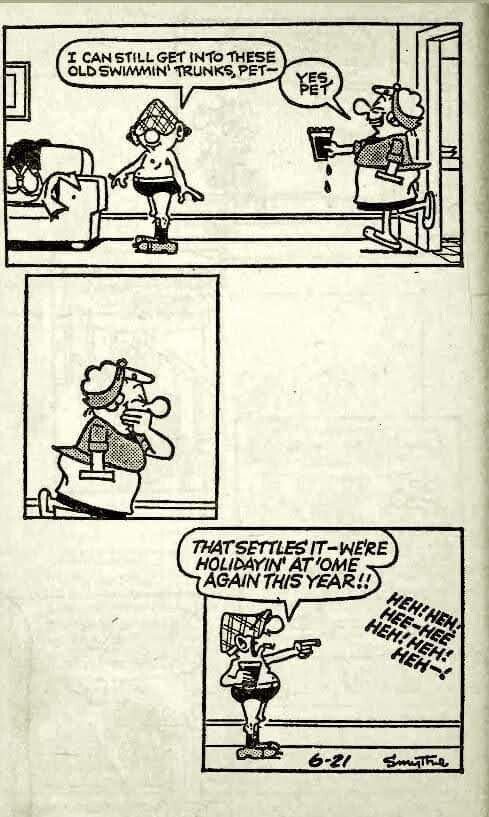
Mot: Not Funny - K!!! Andy cap and swim trunks
Seeds of Wisdom RV and Economics Updates Monday Evening 3-23-26
Good Evening Dinar Recaps,
Currency Shift in Motion: Chinese Yuan Expands Across Africa as Dollar Dominance Faces Pressure
Rising trade, lower costs, and strategic policy moves accelerate global currency diversification
Overview (Key Points)
China is rapidly expanding the use of the Chinese yuan across Africa, signaling a growing shift in global trade and currency dynamics.
Good Evening Dinar Recaps,
Currency Shift in Motion: Chinese Yuan Expands Across Africa as Dollar Dominance Faces Pressure
Rising trade, lower costs, and strategic policy moves accelerate global currency diversification
Overview (Key Points)
China is rapidly expanding the use of the Chinese yuan across Africa, signaling a growing shift in global trade and currency dynamics.
While the U.S. dollar still dominates roughly 60% of Africa’s financial system, rising transaction costs and financial risks are pushing countries to explore alternatives.
Through currency swaps, trade incentives, and zero-tariff policies, China is positioning the yuan as a viable settlement currency across the continent.
This development highlights a broader trend: the gradual evolution toward a more multipolar global financial system.
Key Developments
1. Rising Costs of Dollar-Based Trade Drive Change
African nations are increasingly burdened by:
High transaction and conversion fees (estimated at $5 billion annually)
Dependence on external financial systems
Exposure to U.S. monetary policy and inflation dynamics
These pressures are accelerating the search for more cost-efficient alternatives.
2. China Expands Yuan-Based Currency Swaps
China has introduced currency swap agreements allowing African nations to:
Settle trade directly in yuan
Reduce reliance on the dollar
Improve liquidity in bilateral trade
This move strengthens financial ties and currency accessibility.
3. Trade Between China and Africa Surges
Africa has become China’s fastest-growing export market, with trade increasing by over 27% in 2025.
This growth is being reinforced by:
Zero-tariff policies tied to yuan usage
Expanded infrastructure and logistics cooperation
Increased demand for Chinese goods
The result is a natural expansion of yuan usage alongside trade flows.
4. Strategic Push Amid Global Trade Tensions
China is leveraging:
Global tariff disputes
Supply chain shifts
Emerging market partnerships
to promote the yuan as an alternative to dollar-based trade systems.
Notably, China is currently the most aggressive BRICS member advancing local currency usage globally.
5. Africa Moves Toward Currency Diversification
African nations are increasingly seeking to:
Reduce dependency on a single reserve currency
Mitigate risks tied to debt and inflation
Build more resilient financial systems
This reflects a broader global trend toward currency diversification and financial independence.
Why It Matters
The U.S. dollar has long served as the backbone of global trade and finance.
However, rising costs and geopolitical shifts are encouraging alternatives that:
Lower transaction expenses
Increase financial sovereignty
Reduce systemic risk exposure
Why It Matters to Foreign Currency Holders
Expanding yuan usage could:
Shift global reserve allocations
Impact currency exchange dynamics
Influence long-term valuation trends
As trade settlement diversifies, currency power may gradually rebalance.
Implications for the Global Reset
Pillar 1: Gradual Erosion of Dollar Exclusivity
The expansion of yuan-based trade signals a slow but meaningful shift away from single-currency dominance.
Pillar 2: Rise of Regional Financial Ecosystems
Currency swaps and bilateral trade agreements are building:
Parallel financial systems
Regional trade networks
Alternative payment infrastructures
Conclusion
China’s push to expand the yuan across Africa represents a strategic and structural shift in global finance.
While the dollar remains dominant, the rise of alternative settlement systems signals an evolving landscape.
This is not an overnight transformation—but a gradual rebalancing that could reshape global trade and currency dynamics over time.
Seeds of Wisdom Team
Newshounds News™ Exclusive
Sources
~~~~~~~~~~
Seeds of Wisdom Team RV Currency Facts Youtube and Rumble
Newshound's News Telegram Room Link
RV Facts with Proof Links Link
RV Updates Proof links - Facts Link
Follow the Gold/Silver Rate COMEX
Follow Fast Facts
Seeds of Wisdom Team™ Website
Thank you Dinar Recaps
Iraq Economic News And Points To Ponder Monday Afternoon 3-23-26
The Coordinating Body Will Meet Tomorrow, Tuesday, To Decide On A Replacement For Maliki
latest news Monday, March 23, 2026 Baghdad – One News 3/23/2026
Saudi Arabia’s Al-Sharq TV reported that the Coordination Framework will hold a meeting on Tuesday to discuss nominating a replacement for former Prime Minister Nouri al-Maliki.
The Coordinating Body Will Meet Tomorrow, Tuesday, To Decide On A Replacement For Maliki
latest news Monday, March 23, 2026 Baghdad – One News 3/23/2026
Saudi Arabia’s Al-Sharq TV reported that the Coordination Framework will hold a meeting on Tuesday to discuss nominating a replacement for former Prime Minister Nouri al-Maliki.
The channel added that disagreements within the framework led to the postponement of deciding on the mechanism for choosing a replacement, in light of differing positions among the leaders.
She indicated that some leaders informed Maliki of the need to withdraw from the prime ministership race, but he refused and stipulated that a vote be held within the framework to withdraw his candidacy.
According to the sources, a proposal was put forward to conduct a secret paper vote to choose the alternative, with three options on the table including Maliki, the current Prime Minister Mohammed Shia al-Sudani, and a possible third candidate.
She also explained that the coordinating framework has several options: either keeping al-Maliki, nominating al-Sudani, or choosing a new name, amid a clear division among its components.
The channel confirmed that Tuesday’s meeting could be crucial in determining the course of the prime ministerial nomination, given the escalating controversy surrounding the decision-making mechanism within the framework.
https://1news-iq.net/الإطار-التنسيقي-يجتمع-يوم-غد-الثلاثاء/
IEA Prepared To Unseal Strategic Oil Reserves
2026-03-23 Shafaq News- Paris The International Energy Agency (IEA) is weighing a release of emergency oil stocks as tensions linked to the Strait of Hormuz closure strain global supply, IEA Executive Director Fatih Birol indicated on Monday, describing the situation as the most severe since the energy crises of the 1970s.
Speaking at the National Press Club, Birol noted ongoing assessments of supply conditions and coordination with member states. “If necessary, we will of course do so. We are looking at the conditions,” he added, stressing that no fixed crude price would trigger another coordinated release.
“The most important and only solution to this problem is to open the Strait of Hormuz,” he remarked.
IEA member countries agreed on March 11 to release a record 400 million barrels of oil from strategic reserves to counter the sharp rise in global crude prices.
On Saturday, US President Donald Trump pledged to launch broad strikes on Iranian energy sites within 48 hours if Tehran does not fully reopen the Strait of Hormuz. In response, Iran threatened to fully close the maritime gateway and target regional energy infrastructure if its power facilities face attacks. https://www.shafaq.com/en/Economy/IEA-prepared-to-unseal-strategic-oil-reserves
Oil Prices Oscillate With Trump’s 48-Hour Ultimatum To Iran
2026-03-23 Shafaq News Oil prices swung between gains and losses on Monday as investors weighed rising U.S. and Iranian threats over energy facilities against the release of millions of barrels of seaborne Iranian oil after Washington temporarily removed sanctions.
Brent crude futures rose 65 cents to $112.84 a barrel by 0446 GMT. U.S. West Texas Intermediate was at $98.75 a barrel, up 84 cents. Both contracts were down more than $1 earlier in the session.
The spread of more than $13 a barrel between Brent and WTI is the widest in years.
"Oil sentiment may lurch on threats and rhetoric in the near term, but its more durable direction will continue to be shaped by the state of Middle East oil flows," said Vandana Hari, founder of oil market analysis provider Vanda Insights.
On Saturday, U.S. President Donald Trump threatened to "obliterate" Iran's power plants if it did not fully reopen the Strait of Hormuz within 48 hours, barely a day after he talked about "winding down" the war, now in its fourth week.
Iran's Parliament Speaker Mohammad Baqer Qalibaf wrote on X that critical infrastructure and energy facilities in the Middle East could be "irreversibly destroyed" if Iranian power plants were attacked.
"It clearly means more escalation, which means higher oil prices. Some are incorrectly thinking, however, that Iran may cave," said Amrita Sen, founder of Energy Aspects.
"Trump is trying to show he can out-escalate and that way ends in scorched earth for Gulf infrastructure."
The crisis in the Middle East is "very severe" and worse than the two oil shocks of the 1970s put together, Fatih Birol, the executive director of the International Energy Agency, said on Monday.
The war has damaged major energy facilities in the Gulf and nearly halted shipping through the Strait of Hormuz, which handles about 20% of global oil and liquefied natural gas flows.
Analysts estimated a loss of 7 million to 10 million barrels per day of oil production in the Middle East.
Iraq has declared force majeure on all oilfields developed by foreign oil companies, three energy officials said.
Crude production at Basra Oil Company has been cut to 900,000 bpd from 3.3 million bpd, Iraqi Oil Minister Hayan Abdel-Ghani said in a statement issued by his ministry.
Indian refiners plan to resume buying Iranian oil while refiners elsewhere in Asia are examining such a move, traders have said.
"Drawing not only on the subtext of Trump’s remarks but also on a distillation of his barrage of often opaque, at times contradictory, statements, we detect a desire to bring hostilities to an end, alongside a growing focus on reopening the Strait of Hormuz," Hari said.
However, it is unclear that threats to strike Tehran’s energy infrastructure "will prove effective so long as Iran retains the capacity to launch retaliatory, like-for-like attacks on neighbouring states," Hari added.
https://www.shafaq.com/en/Economy/Oil-prices-oscillate-with-Trump-s-48-hour-ultimatum-to-Iran
Oil Prices Retreat $17 Following Trump’s Five-Day Truce
2026-03-23 Shafaq News Oil prices plunged by more than 13% on Monday after U.S. President Donald Trump said he would postpone any military strikes against Iranian power plants for five days, hours ahead of a deadline that threatened further escalation in the conflict now in its fourth week.
Brent crude futures traded at about $104.1 a barrel, or down 7.2%, at 1130 GMT after sliding as much as 15% to a session low of $96 a barrel. U.S. West Texas Intermediate was down 7.8% at $90.55 after losing 13.5% to a session low of $85.28.
The U.S. president had warned that Iranian power plants would be destroyed if Tehran failed to "fully open" the Strait of Hormuz to all shipping within 48 hours, setting a deadline of around 7:44 p.m. EDT (2344 GMT) on Monday.
His comments sparked threats of retaliation from Iran's Revolutionary Guards, which said they would attack Israel's power plants and those supplying U.S. bases across the Gulf region if Trump followed through with his threat to "obliterate" Iran's power network.
The war has damaged major energy facilities in the Gulf and nearly halted shipping through the Strait of Hormuz, which handles about 20% of global oil and liquefied natural gas flows. Analysts estimated a loss of 7 million to 10 million barrels per day of oil production in the Middle East.
(REUTERS) https://www.shafaq.com/en/Economy/Oil-prices-retreat-17-following-Trump-s-five-day-truce
Iraqi Oil Tanker Clears Hormuz In First Transit Since Conflict
2026-03-23 Shafaq News- Baghdad A supertanker carrying two million barrels of Iraqi crude has successfully passed through the Strait of Hormuz, marking the first confirmed shipment from Iraq via the waterway since the outbreak of the regional conflict.
Shipping data compiled by Bloomberg showed the tanker Omega Trader, operated by Mitsui O.S.K. Lines, has arrived in Mumbai in recent days.
The vessel’s tracking signal had last been recorded inside the Gulf more than ten days earlier, reflecting disruptions to maritime traffic during the escalation.
The transit underscores tentative movement in oil flows through Hormuz after weeks of disruption, with several vessels recently completing deliveries, primarily to India. Reports indicate New Delhi engaged with Iranian officials to secure safe passage for energy shipments, with Iran’s navy escorting at least one liquefied gas carrier through the strait.
https://www.shafaq.com/en/Economy/Iraqi-oil-tanker-clears-Hormuz-in-first-transit-since-conflict
Massive Wealth Transfer Incoming as Inflation Illusion Shatters
Massive Wealth Transfer Incoming as Inflation Illusion Shatters
Taylor Kenny: 3-22-2026
The current economic landscape is marked by a subtle yet significant phenomenon: a wealth transfer from the general public to the top echelons of society, particularly the top 0.1%.
This process, facilitated by inflation, operates much like a stealthy form of taxation, eroding the purchasing power of the average citizen without the immediate backlash associated with overt tax increases.
Massive Wealth Transfer Incoming as Inflation Illusion Shatters
Taylor Kenny: 3-22-2026
The current economic landscape is marked by a subtle yet significant phenomenon: a wealth transfer from the general public to the top echelons of society, particularly the top 0.1%.
This process, facilitated by inflation, operates much like a stealthy form of taxation, eroding the purchasing power of the average citizen without the immediate backlash associated with overt tax increases.
In a recent YouTube video, insights from Murray Rothbard’s seminal 1960s writings were brought to the forefront, shedding light on how government-induced inflation acts as a mechanism for wealth redistribution, favoring those at the pinnacle of economic and political power.
Murray Rothbard, a notable economist, astutely observed that inflation is not merely a byproduct of economic activity but a deliberate action taken by governments to expand the money supply.
By essentially “counterfeiting” money, governments devalue currency, reducing its purchasing power. This action doesn’t just diminish the value of money; it transfers wealth from those who hold currency to those who receive the newly created money first, typically governments and financial elites.
This process is particularly insidious because it doesn’t require legislative approval or direct action that could provoke public outcry, as is often the case with tax hikes.
The impact of this covert taxation is not felt evenly across society. Savers, individuals on fixed incomes, and the middle and lower classes bear the brunt of inflation’s effects.
Their purchasing power diminishes as prices rise, often without a corresponding increase in their income. Conversely, those closest to the source of the new money—governments and financial institutions—benefit at the expense of the broader population.
The current financial landscape, characterized by liquidity crises, Federal Reserve bailouts, and private credit freezes, exacerbates the wealth transfer cycle.
As governments and central banks implement policies aimed at stabilizing the financial system, they inadvertently accelerate the concentration of wealth among the elite. The liquidity and the lowering of interest rates may prop up financial markets in the short term, but they also fuel asset price inflation, further enriching those who hold significant assets while leaving the average citizen to grapple with rising costs of living.
In the face of this ongoing wealth transfer, there’s a growing recognition of the importance of safeguarding wealth through assets that are less susceptible to the manipulations of monetary policy.
Gold, often regarded as “real money,” has historically served as a hedge against inflation and currency devaluation. Unlike fiat currencies, which can be printed in limitless quantities, gold’s supply is relatively fixed, making it a more stable store of value.
By holding gold, individuals can protect their wealth from the erosive effects of inflation and challenge the government’s control over the monetary system.
The accelerating economic shifts underscore the urgency of taking proactive steps to secure one’s financial future.
Rather than passively observing the unfolding economic drama, individuals can take action to build resilience and create generational opportunity.
Diversifying investments, including allocating a portion to gold and other real assets, can provide a buffer against the adverse effects of inflation and monetary policy manipulations.
The insights from Murray Rothbard’s work, as highlighted in the ITM Trading video with Taylor Kenney, serve as a timely reminder of the need for vigilance and action in the face of economic change. By understanding the mechanisms driving the wealth transfer and taking informed steps to protect and grow one’s wealth, individuals can navigate the challenges of the current economic environment and build a more secure financial future.
For those interested in delving deeper into this critical analysis and exploring strategies for safeguarding wealth, watching the full video from ITM Trading with Taylor Kenney is a valuable next step. As the economic landscape continues to evolve, staying informed and proactive is key to thriving in a world marked by significant financial shifts.
Seeds of Wisdom RV and Economics Updates Monday Afternoon 3-23-26
Good Afternoon Dinar Recaps,
Treasury Pushes AI Integration: Financial Stability Enters the Algorithm Era
U.S. regulators pivot toward proactive AI adoption as a pillar of economic security and system resilience
Good Afternoon Dinar Recaps,
Treasury Pushes AI Integration: Financial Stability Enters the Algorithm Era
U.S. regulators pivot toward proactive AI adoption as a pillar of economic security and system resilience
Overview (Key Points)
• The U.S. Treasury and FSOC launched the AI Innovation Series to accelerate responsible AI adoption across the financial system
• Regulators are shifting from restriction to enablement, recognizing that failure to adopt AI is now a systemic risk • AI is becoming embedded in core financial infrastructure, including fraud detection, credit allocation, and cybersecurity
• Public-private collaboration will shape governance frameworks to ensure safe, scalable, and resilient deployment
Key Developments
1. Treasury Signals Major Regulatory Shift Toward AI Enablement
The Treasury Department is reframing its regulatory stance, moving away from a defensive posture toward one that actively encourages AI adoption. Officials emphasized that lagging in AI integration could weaken financial institutions, making them less competitive and more vulnerable to systemic risks.
This marks a philosophical shift in financial oversight, where innovation is now tied directly to national economic strength.
2. AI Declared a Core Component of Financial Stability
Leadership within FSOC made clear that AI is no longer optional infrastructure. From fraud prevention to risk modeling,
AI is now seen as essential to maintaining efficiency, security, and resilience across financial markets.
Institutions that fail to modernize could introduce inefficiencies and vulnerabilities into the broader system.
3. Launch of Public-Private AI Innovation Series
The initiative will host four high-level roundtables, bringing together banks, fintech firms, regulators, and AI experts.
The goal is to identify high-impact use cases while ensuring governance frameworks evolve alongside deployment.
4. Focus on Operationalizing AI Across Financial Systems
Treasury leadership emphasized a shift from experimentation to full-scale operational integration.
The focus is on embedding AI into core workflows like credit underwriting, cybersecurity, and risk management, with measurable improvements in resilience and efficiency.
Why It Matters
This signals a structural transformation in how financial systems are governed. AI is becoming foundational infrastructure, not just a tool.
The U.S. is positioning itself to lead globally in AI-driven finance, potentially reshaping capital flows, risk models, and market behavior.
Why It Matters to Foreign Currency Holders
• Financial power is increasingly tied to technological leadership • AI-driven productivity may influence currency strength and valuation • Lagging nations risk weaker financial competitiveness and currency stability • Accelerates shift toward digital and programmable monetary systems
Implications for the Global Reset
Pillar 1: Structural Evolution of Financial Infrastructure
AI integration represents a deep modernization of global financial architecture, transforming how money, credit, and risk flow through the system.
Pillar 2: Technological Competition as Monetary Power
Future dominance will be shaped by AI capability, giving leading nations greater influence over markets, capital flows, and global standards.
This is not just technological innovation — it’s the intelligence upgrade of the global financial system.
Seeds of Wisdom TeamNewshounds News™ Exclusive
Sources
U.S. Department of the Treasury — Treasury Launches AI Innovation Series (March 23, 2026)
Financial Stability Oversight Council (FSOC) — Public-Private AI Initiative Announcement and Remarks
~~~~~~~~~~
Seeds of Wisdom Team RV Currency Facts Youtube and Rumble
Newshound's News Telegram Room Link
RV Facts with Proof Links Link
RV Updates Proof links - Facts Link
Follow the Gold/Silver Rate COMEX
Follow Fast Facts
Seeds of Wisdom Team™ Website
Thank you Dinar Recaps
Iraq Economic News And Points To Ponder Monday Afternoon 3-23-26
Iraq increases holdings of US bonds to $42B in December
2026-03-23 Shafaq News- Washington Iraq’s holdings of US Treasury bonds reached $42 billion by the end of December 2025, up from $41.1 billion in November, the US Treasury’s Treasury International Capital (TIC) system said on Monday. The data showed that long-term holdings accounted for $40.8 billion, while short-term bonds totaled about $1.2 billion.
Monthly figures for 2025 indicated a steady rise in long-term bond holdings, while short-term holdings remained relatively stable. Total holdings increased from about $39.85 billion in January to $42 billion in December 2025.
Iraq increases holdings of US bonds to $42B in December
2026-03-23 Shafaq News- Washington Iraq’s holdings of US Treasury bonds reached $42 billion by the end of December 2025, up from $41.1 billion in November, the US Treasury’s Treasury International Capital (TIC) system said on Monday. The data showed that long-term holdings accounted for $40.8 billion, while short-term bonds totaled about $1.2 billion.
Monthly figures for 2025 indicated a steady rise in long-term bond holdings, while short-term holdings remained relatively stable. Total holdings increased from about $39.85 billion in January to $42 billion in December 2025.
In 2024, Iraq’s total holdings stood at around $23.4 billion, with an annual increase of nearly 79%, driven primarily by higher investment in long-term bonds.https://www.shafaq.com/en/Economy/Iraq-increases-holdings-of-US-bonds-to-42B-in-December
Precious Metals Tank In Global Liquidation Wave
2026-03-23 Shafaq News Gold slid more than 5% on Monday, reaching its weakest level of 2026 after logging its worst week in about 43 years, as an escalating Middle East conflict stoked inflation concerns and raised expectations of higher global interest rates.
Spot gold fell 5.8% to $4,226.16 per ounce as of 0633 GMT, its lowest since December 11, and extended losses into a ninth straight session.
The metal dropped more than 10% last week, its worst week since February 1983, and has also retreated more than 20% from its record peak of $5,594.82 an ounce reached on January 29.
U.S. gold futures for April delivery fell 7.5% to $4,231.80.
"With the Iranian conflict into its fourth week, and oil prices hanging around the $100 level, expectations have pivoted from rate cuts to potential rate hikes, which have tarnished gold's appeal from a yield point of view," said Tim Waterer, chief market analyst, KCM Trade.
Iran said on Sunday it would strike the energy and water systems of its Gulf neighbours in retaliation if U.S. President Donald Trump follows through with his threat to hit Iran's electricity grid in 48 hours.
Asian shares fell, and oil prices stayed well above $110 a barrel.
"Gold's high liquidity appears to be hurting it during this risk-off period. Downturns in stock markets are leading to gold portions being closed to cover margin calls on other assets," Waterer said.
The closure of the Strait of Hormuz has kept crude elevated, stoking inflation fears by pushing up transport and manufacturing costs. While rising inflation typically boosts gold's appeal as a hedge, high rates curb demand for the non-yielding asset.
"A reinforced shift from safe-haven allocation towards macro-driven positioning could skew risks further to the downside, as a firmer U.S. dollar and the receding probability of the Fed easing dominate the narrative," said BMI, a unit of Fitch Solutions.
Market pricing for a U.S. Federal Reserve rate hike this year has shot up, with rate futures showing the U.S. central bank is more likely to raise interest rates than cut them by the end of 2026, according to CME's FedWatch tool.
Other precious metals also declined sharply, with spot silver declining 8.9% to $61.76 per ounce. Spot platinum slipped 9% to $1,749.31 and palladium shed 5.2% to $1,330.50.
(REUTERS) https://www.shafaq.com/en/Economy/Precious-metals-tank-in-global-liquidation-wave
Dollar Trading Halts In Baghdad, Resumes In Erbil After Holiday
2026-03-23 Shafaq News- Baghdad/ Erbil Dollar trading halted in Baghdad on Monday as wholesale markets still closed for the Eid al-Fitr holiday, while trading resumed in Erbil of the Kurdistan Region.
Some exchange shops in Baghdad continued limited activity, with the selling price at 155,500 Iraqi dinars per 100 US dollars and the buying price at 154,500 dinars.
In Erbil, the US dollar declined slightly, trading at 154,400 dinars for selling and 154,300 dinars for buying per 100 dollars.
Baghdad’s currency markets are expected to reopen on Tuesday as the Eid holiday concludes across Iraq, with trading set to resume gradually. https://www.shafaq.com/en/Economy/Dollar-trading-halts-in-Baghdad-resumes-in-Erbil-after-holiday
Gold Prices Fall In Baghdad And Erbil Markets
2026-03-23 Shafaq News- Baghdad/ Erbil On Monday, gold prices declined in Baghdad and Erbil markets, with trading activity in the capital remaining limited due to the Eid holiday.
According to a survey by Shafaq News Agency, gold prices on Baghdad's Al-Nahr Street recorded a selling price of less than 1 million IQD per mithqal (equivalent to five grams) for 21-carat gold, including Gulf, Turkish, and European varieties.
In jewelry stores, the selling price per mithqal of 21-carat Gulf gold ranged between 875,000 and 885,000 IQD, while Iraqi gold sold for between 845,000 and 855,000 IQD.
In Erbil, prices also declined, with 22-carat gold selling at around 975,000 IQD per mithqal, 21-carat gold at 930,000 IQD, and 18-carat gold at 797,000 IQD.https://www.shafaq.com/en/Economy/Gold-prices-fall-in-Baghdad-and-Erbil-markets-1-0
Iraq, Five Arab States Hold 1K+ Tons Of Gold Reserves
2026-03-23 Shafaq News- Baghdad Iraq and five Arab countries hold a combined over 1,000 tons of gold reserves, according to global data for March 2026, underscoring a steady build-up of bullion holdings in the region.
Saudi Arabia led Arab states with 323.1 tons, followed by Lebanon (286 tons), while Iraq ranked third with 174.6 tons, ahead of Algeria (173.6 tons) and Libya (146.7 tons).
Iraq’s gold holdings account for 24.6% of its total foreign reserves, according to the data.
Globally, the United States topped the list with 8,133 tons, followed by Germany (3,350 tons), Italy (2,451 tons), France (2,437 tons), and Russia (2,326 tons).
Data from the World Gold Council showed Iraq increased its reserves in 2025, purchasing 1 ton in March, 1.6 tons in June, 3.1 tons in July, 2.5 tons in August, and 3.8 tons in October.https://www.shafaq.com/en/Economy/Iraq-five-Arab-states-hold-1K-tons-of-gold-reserves
Iraq-Italy Trade Surpasses $2.7B
2026-03-23 Shafaq News- Baghdad Iraq’s trade with Italy topped $2.7 billion in 2025, largely fueled by crude oil exports, the international trade platform OEC reported on Monday.
According to the data shared, roughly $2.6 billion of that total came from crude oil shipments. Non-oil exports added about $112 million, covering agricultural products, raw materials, and selected manufactured goods.
Imports from Italy reached around €192 million ($207 million), consisting of industrial equipment, machinery, and business services exchanged between Iraqi and Italian companies.https://www.shafaq.com/en/Economy/Iraq-Italy-trade-surpasses-2-7B
IEA Prepared To Unseal Strategic Oil Reserves
2026-03-23 Shafaq News- Paris The International Energy Agency (IEA) is weighing a release of emergency oil stocks as tensions linked to the Strait of Hormuz closure strain global supply, IEA Executive Director Fatih Birol indicated on Monday, describing the situation as the most severe since the energy crises of the 1970s.
Speaking at the National Press Club, Birol noted ongoing assessments of supply conditions and coordination with member states. “If necessary, we will of course do so. We are looking at the conditions,” he added, stressing that no fixed crude price would trigger another coordinated release.
“The most important and only solution to this problem is to open the Strait of Hormuz,” he remarked.
IEA member countries agreed on March 11 to release a record 400 million barrels of oil from strategic reserves to counter the sharp rise in global crude prices.
On Saturday, US President Donald Trump pledged to launch broad strikes on Iranian energy sites within 48 hours if Tehran does not fully reopen the Strait of Hormuz. In response, Iran threatened to fully close the maritime gateway and target regional energy infrastructure if its power facilities face attacks.https://www.shafaq.com/en/Economy/IEA-prepared-to-unseal-strategic-oil-reserves
Iraq’s 20% Telecom Tax Sparks Debate Over Economic Burden On Citizens
2026-03-23 Shafaq News- Baghdad The decision by Iraq’s caretaker government, led by Mohammed Shia Al-Sudani, to reimpose a 20% tax on internet services and mobile recharge cards has sparked debate over the country’s fiscal policy and its direct impact on citizens.
The measure, which took effect on March 10, 2026, reinstates a tax previously abolished in 2022. However, it is now applied differently, with the levy added directly to the price paid by users rather than being imposed on telecom companies, as was the case under former Prime Minister Haider al-Abadi (2014–2018).
In 2016, Haidar Al-Abadi’s government defended salary deductions of 3.8% and telecom taxes as necessary during the costly war against ISIS and a sharp decline in oil prices. At the time, Iraq’s domestic debt stood at 63 trillion dinars ($52–53B in 2016 terms).
Recent economic data indicate that domestic debt rose to 91 trillion dinars in 2025–2026 (USD69 - 70 B), prompting the government to seek additional liquidity and focus on increasing non-oil revenues.
Economic experts interviewed by Shafaq News say the key difference between the two periods lies in how the tax is applied. Previously, companies could absorb part of the cost or adjust pricing structures. Now, the tax is passed directly to consumers, with an immediate effect on service prices.
Nawar Al-Saadi, a professor of international economics, described the shift as a “dangerous transformation” in tax policy. “In 2015, the tax targeted telecom companies as the legally responsible entities, allowing them some flexibility in managing the cost,” he told Shafaq News, adding that today, the burden has moved entirely to the consumer, meaning the impact is immediately reflected in the price of recharge cards or internet subscriptions.
He noted that this approach eliminates room for competition among providers to absorb costs, explaining, “Users now pay the full 20% when purchasing mobile credit or renewing fiber-to-the-home (FTTH) subscriptions.”
Saadi stressed that telecommunications and internet services have become essential to economic activity, education, and work, making any increase in their cost significant for a broad segment of the population.
Economic researcher Ahmed Eid said the decision reflects a government push to boost non-oil revenues but raises concerns about how the tax burden is distributed.
Speaking to Shafaq News, he said, instead of addressing inefficiencies in public revenue management or collecting outstanding dues from major companies accused of failing to meet past financial obligations, “the government has turned to taxing everyday services used by citizens because it is the easiest option.”
Eid pointed out that many countries are reducing taxes on digital services to support technological transformation, “while Iraq is moving in the opposite direction.” He also argued that imposing a tax of this scale on services relied upon by millions for work and education highlights a misalignment in fiscal priorities and deepens perceptions of inequality.
“Tidbits From TNT” Monday 3-23-2026
TNT:
Tishwash: Mass evacuation: Cargo planes evacuate foreigners from the Joint Operations Command in Baghdad - Urgent
An informed source reported on Sunday (March 22, 2026) that all foreigners working at the Joint Operations Command headquarters in Baghdad have withdrawn and left.
The source told Baghdad Today that "the evacuation process included all foreigners present at the command headquarters, as they were transported via air cargo planes that arrived at the military bases two days ago."
He added that "the move came as part of strict security measures that coincided with the evacuation of other vital sites in the area."
TNT:
Tishwash: Mass evacuation: Cargo planes evacuate foreigners from the Joint Operations Command in Baghdad - Urgent
An informed source reported on Sunday (March 22, 2026) that all foreigners working at the Joint Operations Command headquarters in Baghdad have withdrawn and left.
The source told Baghdad Today that "the evacuation process included all foreigners present at the command headquarters, as they were transported via air cargo planes that arrived at the military bases two days ago."
He added that "the move came as part of strict security measures that coincided with the evacuation of other vital sites in the area." link
************
Tishwash: Central Bank: Measures to address the problems of Iraqi banks deprived of dealing in dollars
Ahmed Dawood Salman, the director of the transfers department at the Central Bank of Iraq, announced that the bank has taken several measures to address the problems of Iraqi banks that are deprived of dealing in dollars.
He added in statements carried by the Iraqi News Agency and followed by Iraq Observer: The Central Bank is continuing its procedures with international auditing companies, in order to audit the previous transfer process that led to some Iraqi banks being deprived of dollars or any problems that Iraqi banks were facing that led to them being deprived of dealing in dollars.
He added that “there are several conditions and procedures that the Central Bank has imposed on banks, as the Director General of the Investment Department for Foreign Transfers and the Director General of the Banking Supervision Department are working on this matter with the auditing firm (Olive Wyman) and we will continue and we will notice the changes in the coming days.” link
************
Tishwash: Al-Jizani: We expect the government formation to be finalized after Eid al-Fitr.
Sami Al-Jizani, a member of the National Wisdom Movement, predicted that the issue of forming a government would be resolved after Eid al-Fitr, stressing the need to end the constitutional vacuum in light of the continuation of the caretaker government.
Al-Jizani said, during his appearance on the “Free Talk” program on Al-Furat satellite channel, that “the speech of the head of the National State Forces Alliance, Mr. Ammar Al-Hakim, stressed the importance of finding a quick solution to the political crisis, in order to enable Iraq to play its pivotal role in the region,” noting that “the country has a position and distinguished relations that qualify it for this, but the delay in forming the government is hindering this role.”
He added that "the region is linked by religious, social and political ties," pointing to "Iran's role in supporting Iraq during the war against ISIS," while Mr. Al-Hakim warned of the expansion of the conflict in light of the current escalation.
Al-Jizani explained that "there are attempts by some countries to play a positive role; however, most countries in the region have not taken effective action to end the crisis," indicating that "the current stage requires prioritizing the national interest and moving towards forming a fully empowered government."
He stressed that "the supreme religious authority called for supporting oppressed peoples, especially in Iran and Lebanon, which is consistent with Mr. Al-Hakim's supportive stances in this regard."
In his speech during the Eid al-Fitr sermon at his office in Baghdad, Mr. Al-Hakim said that our country is facing a sensitive stage in its history, in light of rapid regional and international transformations and major economic and security challenges, which requires all of us to deal with the spirit of supreme national responsibility and the mindset of the state. In the current circumstances, Iraq cannot tolerate the continuation of the political vacuum or the disruption of the work of its constitutional institutions, because a strong state is not run with diminished powers and does not face challenges with temporary governments or interim solutions.
He stressed that respecting constitutional deadlines is not just a legal procedure, but an expression of respect for the will of the people and the preservation of the stability of the political system. Therefore, expediting the formation of a fully empowered Iraqi government is no longer a political matter that can be postponed or manipulated, but has become an urgent national necessity imposed by the interest, security and stability of Iraq.
Mr. Ammar Al-Hakim stressed, “We will not stand idly by in the face of the continued political deadlock that has exhausted state institutions and burdened citizens. We will work with all available constitutional and political means to end the deadlock and accelerate the completion of constitutional requirements by forming a strong government that possesses the real elements of success that enable it to fulfill its responsibilities towards our people in this sensitive and critical stage.” link
***********
Mot: Learning English Again
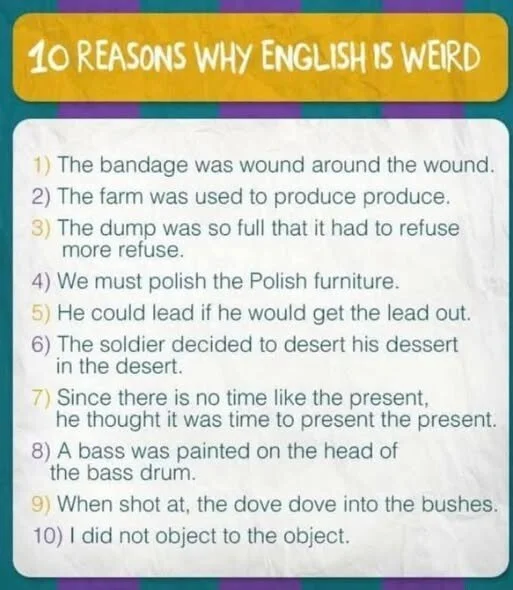
Seeds of Wisdom RV and Economics Updates Monday Morning 3-23-26
Good Morning Dinar Recaps,
Global Reset Series – Part 6
The Global Debt Pressure Point
Rising sovereign debt levels are creating one of the most significant financial risks facing the global economy.
Overview
Global government debt has reached record levels in recent years, raising concerns among economists and financial institutions.
Good Morning Dinar Recaps,
Global Reset Series – Part 6
The Global Debt Pressure Point
Rising sovereign debt levels are creating one of the most significant financial risks facing the global economy.
Overview
Global government debt has reached record levels in recent years, raising concerns among economists and financial institutions.
According to the International Monetary Fund, total global debt now exceeds hundreds of trillions of dollars, including both public and private borrowing.
Key Developments
1. Government borrowing surged during recent crises
Large fiscal spending programs were implemented across many countries during:
• pandemic economic disruptions
• financial stabilization efforts
• energy market volatility
2.Debt servicing costs are rising
As interest rates increased globally, many governments are facing higher borrowing costs.
This can place pressure on national budgets and financial stability.
3.Financial institutions are monitoring risks
Organizations such as the World Bank and the International Monetary Fund are closely studying how rising debt levels could affect global economic growth.
Why It Matters
High sovereign debt levels can influence:
• currency stability
• monetary policy decisions
• financial market confidence
Why It Matters to Foreign Currency Holders
Debt pressures often drive major changes in economic policy, fiscal frameworks, and monetary strategies.
These pressures can influence long-term financial system reforms.
Implications for the Global Reset
Pillar 1 — Fiscal Stability
Managing sovereign debt will remain a key challenge for governments worldwide.
Pillar 2 — Monetary Policy
Central banks must balance inflation control with financial stability.
Seeds of Wisdom Team View
Debt cycles have historically played a major role in financial system transitions.
Understanding these pressures helps explain why governments may explore new financial tools and policy frameworks.
Seeds of Wisdom TeamNewshounds News™ Exclusive
Sources
~~~~~~~~~~
A Message to Our Currency Holders
If you’ve been holding foreign currency for many years, you were not foolish.
You were not wrong to believe the global financial system would change.
What failed was not your patience — it was the information you were given.
For years, dates, rumors, and personalities replaced facts, structure, and proof. “This week” predictions created cycles of hope and disappointment that were never based on how currencies actually change.
That is not your failure.
Our mission here is different: • No dates • No rates • No hype • No gurus
Instead, we focus on:
• Verifiable developments • Institutional evidence
• Global financial structure • Where countries actually sit in the process
Currency value changes only come after sovereignty, trade, banking, settlement systems, and fiscal coordination are in place. History and institutions confirm this sequence.
You will see silence. You will see denials. That is not delay — that is discipline.
Protect your identity. Organize your documents. Verify everything.
Never hand your discernment to anyone who cannot show proof.
You deserve truth — not timelines.
Seeds of Wisdom Team
Newshounds News
~~~~~~~~~~
Seeds of Wisdom Team RV Currency Facts Youtube and Rumble
Newshound's News Telegram Room Link
RV Facts with Proof Links Link
RV Updates Proof links - Facts Link
Follow the Gold/Silver Rate COMEX
Follow Fast Facts
Seeds of Wisdom Team™ Website
Thank you Dinar Recaps