
Thank you to all the subscribers to our Early Access program…we thank you for your continued support.
We are excited to offer this new service to keep you informed and up-to-date on the latest Dinar and currency news.
Seeds of Wisdom RV and Economics Updates Sunday Morning 3-15-26
Good Morning Dinar Recaps,
Energy Shock Forces Global Central Banks to Reassess Policy as Oil Disruptions Ripple Through Markets
Rising geopolitical tensions and energy disruptions are reshaping inflation forecasts, monetary policy expectations, and global financial stability.
Overview
Global financial markets are entering a new phase of uncertainty as energy supply disruptions linked to escalating Middle East tensions ripple through the global economy.
Good Morning Dinar Recaps,
Energy Shock Forces Global Central Banks to Reassess Policy as Oil Disruptions Ripple Through Markets
Rising geopolitical tensions and energy disruptions are reshaping inflation forecasts, monetary policy expectations, and global financial stability.
Overview
Global financial markets are entering a new phase of uncertainty as energy supply disruptions linked to escalating Middle East tensions ripple through the global economy.
A major coordinated release of emergency oil reserves by the International Energy Agency underscores the severity of the situation. The agency authorized the largest emergency release of oil reserves in its history, attempting to stabilize markets after supply disruptions and shipping risks emerged around the Strait of Hormuz, one of the world’s most critical energy chokepoints.
At the same time, economists warn that rising oil prices could push the global economy toward stagflation — a combination of high inflation and slowing growth — forcing central banks to reconsider interest-rate policy worldwide.
These developments could have far-reaching implications for currencies, debt markets, and global monetary stability, all key components of a potential global financial reset.
Key Developments
1. Historic Emergency Oil Release Signals Severe Energy Market Stress
The International Energy Agency announced a coordinated release of approximately 400 million barrels of oil reserves, representing roughly one-third of member countries’ emergency stockpiles.
The decision was taken after disruptions to shipping routes and escalating conflict threatened global crude supply chains.
Despite the intervention, markets remain volatile, with oil prices continuing to climb as traders worry about prolonged disruptions in the Strait of Hormuz, a passage that carries roughly one-fifth of global oil supply.
This type of large-scale emergency release historically occurs only during major global crises or supply shocks.
2. Oil Price Surge Raises Global Inflation Risks
Economists are warning that the current energy shock could trigger a wave of inflation across major economies, particularly if oil prices continue to climb.
Recent market reactions suggest oil could reach levels not seen since the early stages of the Russia-Ukraine conflict, with analysts warning that prices could climb significantly higher if disruptions continue.
Energy price spikes tend to cascade through the global economy, affecting transportation costs, manufacturing, agriculture, and consumer goods.
As a result, inflation pressures could intensify across North America, Europe, and Asia, forcing policymakers to reassess economic forecasts.
3. Central Banks May Delay Rate Cuts or Resume Tightening
Before the latest energy disruptions, many central banks had been preparing to shift toward interest-rate cuts following the post-pandemic inflation cycle.
However, rising oil prices are now forcing policymakers to reconsider that strategy.
Higher energy costs could push inflation higher again, potentially leading central banks to delay planned rate cuts or even consider additional tightening measures if inflation accelerates.
This creates a difficult dilemma for policymakers:
raising rates risks slowing economic growth, while failing to control inflation could destabilize currencies and bond markets.
4. Markets Begin Pricing in a Potential Stagflation Scenario
Investors are increasingly considering the possibility of a stagflationary environment similar to the energy crises of the 1970s.
Such a scenario would combine:
• Rising energy prices• Slowing global economic growth• Persistent inflation pressures
Financial markets have already shown signs of stress, including equity volatility and shifts toward safe-haven assets.
Historically, stagflation periods have triggered major shifts in monetary systems, commodity markets, and global financial structures.
Why It Matters
Energy shocks often act as catalysts for broader financial disruptions.
Because oil plays a central role in global trade, transportation, and industrial production, sustained price increases can destabilize economic growth and monetary policy simultaneously.
Periods of energy-driven inflation have historically coincided with major changes in the global financial system, including shifts in currency regimes and international economic coordination.
Why It Matters to Foreign Currency Holders
Energy shocks can significantly influence currency valuations and international capital flows.
Key effects often include:
• Stronger demand for commodity-linked currencies• Weakening currencies in energy-importing nations• Flight toward safe-haven assets such as gold or reserve currencies
These movements can create rapid shifts in foreign exchange markets, particularly when central banks adjust interest-rate expectations.
Implications for the Global Reset
Pillar 1: Energy Markets Reshaping Global Financial Stability
• Energy disruptions can trigger inflation shocks that reshape monetary policy worldwide.
• Commodity markets increasingly influence currency strength and sovereign debt stability.
Pillar 2: Monetary Policy Facing Structural Limits
• Central banks are navigating a narrow path between controlling inflation and sustaining economic growth.
• Persistent supply shocks could accelerate discussions around alternative financial systems, commodity-backed assets, or new monetary frameworks.
As geopolitical tensions reshape energy markets, the ripple effects through inflation, interest rates, and global trade flows may become one of the defining economic forces shaping the next phase of the international financial system.
This is not just an energy story — it is a monetary one. The global financial system is being stress-tested in real time.
Seeds of Wisdom Team
Newshounds News™ Exclusive
Sources
~~~~~~~~~~
Shipping Insurance Shock in the Strait of Hormuz Sends Warning Signals Through the Global Financial System
Surging war-risk premiums and shipping disruptions in the world’s most critical oil corridor are rapidly impacting global energy markets and trade costs.
Overview
A growing crisis in the Strait of Hormuz — the world’s most important oil shipping corridor — is triggering a surge in maritime insurance costs, freight rates, and global shipping disruptions.
Marine insurers and shipping markets are rapidly repricing risk as tensions escalate in the Gulf region, sending war-risk insurance premiums sharply higher and delaying hundreds of vessels.
Because roughly 20% of the world’s oil supply moves through the Strait of Hormuz, disruptions in the region can quickly cascade through energy markets, inflation expectations, global trade routes, and financial markets.
These developments are increasingly being viewed by economists and market analysts as a potential trigger point for wider financial system stress.
Key Developments
1. War-Risk Insurance Premiums Surge for Ships Entering the Gulf
Marine insurance premiums for vessels traveling through the Strait of Hormuz have risen dramatically as conflict risks increase.
War-risk coverage for ships in the region has jumped from roughly 0.25% of a vessel’s value to as high as 1.5%, significantly increasing the cost of transporting oil and other goods.
For large oil tankers worth tens of millions of dollars, this translates into hundreds of thousands — and sometimes millions — of dollars in additional costs per voyage.
Insurance markets play a critical role in global trade because ships cannot legally or financially operate without coverage.
2. Hundreds of Ships Delayed as Risk Repricing Disrupts Shipping
Heightened security concerns and insurance challenges have left hundreds of vessels delayed or stranded in the Gulf region.
Reports indicate that large numbers of ships are waiting for safe passage or rerouting to avoid the area, creating bottlenecks in global shipping networks.
These delays are beginning to ripple through global supply chains, affecting:
• Oil and liquefied natural gas shipments• Industrial commodities and chemicals• Food and consumer goods transport
Even temporary disruptions at this scale can quickly tighten supply chains and push prices higher worldwide.
3. Strait of Hormuz Remains One of the World’s Most Critical Energy Chokepoints
The Strait of Hormuz is widely considered the single most important maritime chokepoint in the global energy system.
Each day, approximately 20 million barrels of oil pass through the narrow waterway, supplying major economies across Asia, Europe, and beyond.
Because so much global energy trade depends on this route, even small disruptions can trigger major shifts in energy markets.
Historically, tensions in the strait have often produced rapid spikes in oil prices and shipping costs.
4. Governments and Insurers Move to Stabilize Maritime Trade
In response to the growing crisis, governments and financial institutions are exploring ways to stabilize shipping insurance and maintain trade flows.
Efforts include:
• Expanded maritime security patrols• Emergency insurance and reinsurance programs• Coordination with global shipping and insurance markets
These measures aim to prevent a prolonged disruption to energy shipments that could destabilize global markets.
Why It Matters
Shipping insurance may appear technical, but it is one of the most powerful levers in global trade.
When insurers raise premiums or withdraw coverage, shipping costs surge immediately — often before physical supply disruptions occur.
Because energy markets influence nearly every sector of the global economy, disruptions in maritime trade can quickly feed into:
• Inflation pressures• Central bank policy decisions• commodity price volatility
Why It Matters to Foreign Currency Holders
Energy shocks and shipping disruptions often trigger rapid currency market shifts.
Potential effects include:
• Rising oil prices strengthening energy-exporting currencies• Weakening currencies in energy-importing economies• Increased volatility in emerging-market currencies
Currency markets frequently react before broader economic data reflects the underlying shock.
Implications for the Global Reset
Pillar 1: Supply Chain Vulnerabilities Exposing Systemic Risk
• The Strait of Hormuz crisis highlights how critical global trade chokepoints remain vulnerable to geopolitical shocks.
• Supply disruptions can quickly translate into inflation, commodity price spikes, and financial market instability.
Pillar 2: Financial Markets Increasingly Driven by Geopolitical Risk
• Insurance markets, shipping finance, and commodity flows are becoming central drivers of global financial stability.
• Rising geopolitical risk is forcing markets to reprice global trade routes and energy supply chains in real time.
As tensions around the Strait of Hormuz continue to reshape shipping costs and energy markets, the ripple effects through inflation, currencies, and global trade flows could become a major factor shaping the next phase of the international financial system.
This is not just a regional shipping story — it is a structural stress point in the global economic system.
Seeds of Wisdom Team
Newshounds News™ Exclusive
Sources
Reuters / Guardian — Shipping insurance surge and vessel delays in Strait of Hormuz
Reuters reporting on shipping disruptions and global trade impact
~~~~~~~~~~
🌱 A Message to Our Currency Holders🌱
If you’ve been holding foreign currency for many years, you were not foolish.
You were not wrong to believe the global financial system would change.
What failed was not your patience — it was the information you were given.
For years, dates, rumors, and personalities replaced facts, structure, and proof. “This week” predictions created cycles of hope and disappointment that were never based on how currencies actually change.
That is not your failure.
Our mission here is different: • No dates • No rates • No hype • No gurus
Instead, we focus on:
• Verifiable developments • Institutional evidence
• Global financial structure • Where countries actually sit in the process
Currency value changes only come after sovereignty, trade, banking, settlement systems, and fiscal coordination are in place. History and institutions confirm this sequence.
You will see silence. You will see denials. That is not delay — that is discipline.
Protect your identity. Organize your documents. Verify everything.
Never hand your discernment to anyone who cannot show proof.
You deserve truth — not timelines.
Seeds of Wisdom Team
Newshounds News
~~~~~~~~~~
Seeds of Wisdom Team RV Currency Facts Youtube and Rumble
Newshound's News Telegram Room Link
RV Facts with Proof Links Link
RV Updates Proof links - Facts Link
Follow the Gold/Silver Rate COMEX
Follow Fast Facts
Seeds of Wisdom Team™ Website
Thank you Dinar Recaps
Iraq Economic News and Points To Ponder Sunday Morning 3-15-26
Iraq Recovers $379 Million And More Than $2 Billion Held In Lieu Of Funds From Türkiye, Jordan And Syria
Money and Business Economy News – Baghdad The Iraqi Funds Recovery Fund revealed on Sunday the mechanisms for recovering funds smuggled from abroad, while noting the recovery of about $379 million and efforts to conclude international agreements in this regard.
Iraq Recovers $379 Million And More Than $2 Billion Held In Lieu Of Funds From Türkiye, Jordan And Syria
Money and Business Economy News – Baghdad The Iraqi Funds Recovery Fund revealed on Sunday the mechanisms for recovering funds smuggled from abroad, while noting the recovery of about $379 million and efforts to conclude international agreements in this regard.
The Chairman of the Board of Directors of the Fund, Muhammad Ali Al-Lami, said that “the Fund adopts multiple legal and diplomatic mechanisms to cooperate with countries and international organizations with the aim of recovering Iraqi funds smuggled abroad,” explaining that “the Fund adopts two basic methods in the recovery process, the first is direct, and it is done through consultation, contracting or cooperation with international companies specializing in recovering funds and assets, in addition to law firms.”
He added that "the second indirect method is done through communication with international and diplomatic bodies via the Iraqi Ministry of Foreign Affairs and Iraqi embassies and attachés abroad."
He pointed out that “all recovered funds are deposited into the accounts of the Ministry of Finance based on the amended Fund Law No. (9) of 2012, specifically Article (4/Ninth), which stipulates opening one or more closed accounts inside or outside Iraq in the name of the Ministry of Finance to deposit the revenues obtained by the Fund, and then including them in the state’s general budget.”
He added that "the amounts recovered so far amount to approximately (12,170,227) euros, (347,803,899) US dollars, (22,707,875,477) Iraqi dinars, (1,735,064) Japanese yen," noting that "the total amount of recovered funds is equivalent to approximately (379,344,897) US dollars."
Regarding the Fund's future plans, he stated that "the Fund seeks to conclude cooperation agreements with international and local institutions to develop its work, acquire expertise, and enhance efforts to investigate and recover Iraqi funds," indicating that "a number of agreements have recently been signed with local and international entities in this regard."
Regarding the issue of frozen and smuggled funds abroad, he stressed that "it is difficult to accurately determine all the amounts, as some of them are unknown, and some are deposited in personal accounts belonging to the henchmen of the former regime, while another part is known and frozen by local decisions and laws, and there is an effort to verify and recover them in cooperation with the competent authorities and committees."
He pointed out that "among the funds frozen abroad, there are approximately (193,947,000) dollars in Turkey, (700,000,000) dollars in Jordan, and (1,450,000,000) dollars in Syria."
Regarding the number of cases filed by Iraq against entities and individuals involved in stealing and smuggling Iraqi funds, Mohammed noted that “the Fund has been pursuing non-cooperative individuals who may possess Iraqi funds, and approximately (39) requests for judicial assistance have been organized,” noting that “these cases are being considered by a judge assigned to the Fund’s cases, based on Article (12) of the Iraqi Funds Recovery Fund Law No. (9 of 2012) as amended, which stipulates that the Judicial Council assign a first-class judge to consider cases related to the Fund’s tasks.”
He explained that "the follow-up on these cases is done on two fronts: internally through the owners of the Iraqi funds recovery fund and in cooperation with the relevant authorities, and externally through international companies and specialized law firms." https://www.economy-news.net/content.php?id=66774
European Airlines Profit From The Iran War
Money and Business Economy News - Follow-up Since the end of February, the war in Iran has sent shockwaves through the aviation world, with travelers feeling the immediate impact of higher ticket prices, while airlines have had to recalculate their routes to avoid closed airspace, making flights longer and more expensive.
Fuel prices, which account for about a third of the cost of flights, have jumped to record highs, especially in Europe, where prices have doubled in a few days due to the partial closure of the Strait of Hormuz and uncertainty about supplies.
On the other hand, some European and Asian airlines have taken advantage of the crisis to offer direct flights between Europe and Asia, especially for passengers from Switzerland, Italy, Spain, the Netherlands, Germany and France.
Despite prices rising to levels described by passengers as exorbitant, experts insist that it is not exploitation, but a necessity to deal with rising fuel costs and limited supply.
Low-cost carriers such as Ryanair and EasyJet are ramping up flights within Europe to mitigate the impact of the crisis on travelers, while private jets have seen increased demand as a safe option to avoid route changes and airspace closures.
Amid all this, European tourism has begun to be affected, as travelers look for closer alternatives. Hotels in Barcelona, Lisbon, Rome, Paris, Amsterdam and Berlin are experiencing increased demand, and flexibility in planning has become the key to traveling safely.
Do you think airlines are exploiting the crisis or acting out of necessity? And would you pay thousands of euros for a flight now or wait for prices to drop?https://www.economy-news.net/content.php?id=66769
Iraq to boost its imports of Egyptian food products during 2025
Money and Business Economy News – Baghdad Data from the Egyptian Food Export Council on Sunday showed that Iraq's imports of food products rose during 2025 to reach more than $200 million.
According to the data, Iraq was among the largest importers of Egyptian food products last year, recording $236 million compared to about $184 million in 2024, amid increasing demand for Egyptian food products in regional markets.
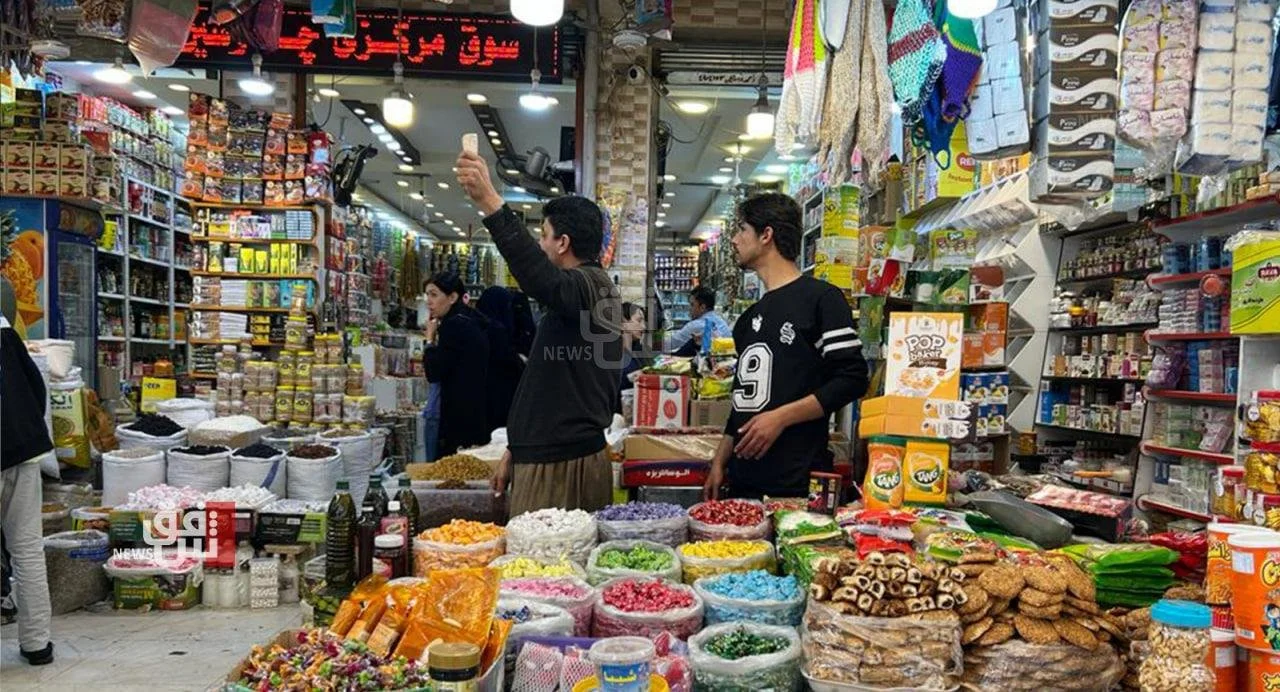
In the same context, Saudi Arabia topped the list of the largest importers with a value of $563 million in 2025, followed by the United States of America with about $438 million.
Egypt’s food exports to Jordan also increased to $287 million, while exports to the United Arab Emirates reached about $237 million during the same year.
Exports to Algeria amounted to approximately $244 million, while Egyptian food industry exports to Lebanon reached approximately $201 million.
In European and Asian markets, Egyptian exports to Germany amounted to about $181 million, to the United Kingdom about $137 million, while to China they reached about $136 million.
The data indicates that the top 10 foreign markets accounted for about 39% of Egypt’s total food industry exports during 2025, with a total value of about $2.66 billion.https://www.economy-news.net/content.php?id=66778
Dollar STEADY IN Baghdad, RISES IN Erbil
2026-03-15 Shafaq News- Baghdad/ Erbil The US dollar opened Sunday’s trading stable in Iraq, hovering around 154,000 dinars per 100 dollars.
According to a Shafaq News market survey, the dollar traded in Baghdad's Al-Kifah and Al-Harithiya exchanges at 154,050 dinars per 100 dollars, the same level recorded on Saturday’s closure.
In the Iraqi capital, exchange shops sold the dollar at 154,500 dinars and bought it at 153,500 dinars, while in Erbil, selling prices stood at 153,950 dinars and buying prices at 153,850 dinars.
https://www.shafaq.com/en/Economy/Dollar-steady-in-Baghdad-rises-in-Erbil
Gold Prices Steady In Baghdad, Erbil
2026-03-15 Shafaq News- Baghdad/ Erbil On Sunday, gold prices held ground in Baghdad and Erbil markets, hovering near 1.085 million IQD per mithqal, according to a survey by Shafaq News Agency.
Gold prices on Baghdad's Al-Nahr Street recorded a selling price of 1.090 million IQD per mithqal (equivalent to five grams) for 21-carat gold, including Gulf, Turkish, and European varieties, with a buying price of 1.086 million IQD, unchanged from Saturday.
The selling price for 21-carat Iraqi gold stood at 1.060 million IQD, while the buying price reached 1.056 million IQD.
In jewelry stores, the selling price per mithqal of 21-carat Gulf gold ranged between 1.090 million and 1.100 million IQD, while Iraqi gold sold for between 1.060 million and 1.070 million IQD.
In Erbil, 22-carat gold was sold at 1.123 million IQD per mithqal, 21-carat gold at 1.072 million IQD, and 18-carat gold at 919,000 IQD. https://www.shafaq.com/en/Economy/Gold-prices-steady-in-Baghdad-Erbil-8
EIA: Iraq’s Oil Exports To US Rank Third Over Week
2026-03-15 Shafaq News- Baghdad/ Washington Iraq’s crude oil exports to the United States rose to 309,000 barrels per day (bpd) last week, ranking third among the largest suppliers, US Energy Information Administration (EIA) data showed on Sunday.
According to the data, Iraqi shipments were up 155,000 bpd from 154,000 bpd a week earlier.
Total US crude imports from nine major suppliers increased to 5.799 million bpd, up 134,000 bpd from 5.655 million bpd the previous week. Canada remained the top supplier at 4.227 million bpd, followed by Saudi Arabia with 607,000 bpd, Iraq with 309,000 bpd, Venezuela with 232,000 bpd, and Nigeria with 156,000 bpd.
Additional imports came from Mexico at 140,000 bpd, Columbia at 76,000 bpd, Brazil at 50,000 bpd, and Libya at 2,000 bpd.https://www.shafaq.com/en/Economy/EIA-Iraq-s-oil-exports-to-US-rank-third-over-week-4
MilitiaMan and Crew: IQD News Update-Oil-Global-Markets-Borders-Trade-PM Sudani
MilitiaMan and Crew: IQD News Update-Oil-Global-Markets-Borders-Trade-PM Sudani
3-13-2026
The Crew: Samson, PompeyPeter, Petra, Daytrader, Sunkissed, GIGI and Militia Man
Follow MM on X == https://x.com/Slashn
Be sure to listen to full video for all the news……..
MilitiaMan and Crew: IQD News Update-Oil-Global-Markets-Borders-Trade-PM Sudani
3-13-2026
The Crew: Samson, PompeyPeter, Petra, Daytrader, Sunkissed, GIGI and Militia Man
Follow MM on X == https://x.com/Slashn
Be sure to listen to full video for all the news……..
War To Bring About Fiat Collapse & CBDCs | Robert Kientz
War To Bring About Fiat Collapse & CBDCs | Robert Kientz
Liberty and Finance: 3-13-2026
The global financial system may be entering its biggest transformation in decades.
Robert Kientz warns that major banks like Jamie Dimon are now openly embracing blockchain infrastructure that could power a digital dollar, even without a formal central bank digital currency.
With cryptocurrencies such as XRP surging and governments exploring asset tokenization, the foundation for a fully digital financial system may already be in place.
War To Bring About Fiat Collapse & CBDCs | Robert Kientz
Liberty and Finance: 3-13-2026
The global financial system may be entering its biggest transformation in decades.
Robert Kientz warns that major banks like Jamie Dimon are now openly embracing blockchain infrastructure that could power a digital dollar, even without a formal central bank digital currency.
With cryptocurrencies such as XRP surging and governments exploring asset tokenization, the foundation for a fully digital financial system may already be in place.
Kientz explains how war, debt, and banking consolidation could accelerate this shift while raising major concerns about privacy, property rights, and financial control.
At the same time, grassroots efforts are emerging to restore gold and silver as legal tender in several U.S. states.
INTERVIEW TIMELINE:
0:00 Intro
1:30 Secret implementation of CBDCs
23:00 Action steps against CBDCs
27:22 War & CBDCs
32:00 The Freedom Report
Seeds of Wisdom RV and Economics Updates Saturday Afternoon 3-14-26
Good Afternoon Dinar Recaps,
Global Copper Supply Crunch Raises Concerns for Technology, Energy Transition, and Economic Growth
Rising demand from artificial intelligence, electric vehicles, and electrification is intensifying pressure on global copper supplies.
Overview
A growing number of analysts warn that the world could face a long-term shortage of copper, a metal essential for modern industry, electrification, and emerging technologies.
Good Afternoon Dinar Recaps,
Global Copper Supply Crunch Raises Concerns for Technology, Energy Transition, and Economic Growth
Rising demand from artificial intelligence, electric vehicles, and electrification is intensifying pressure on global copper supplies.
Overview
A growing number of analysts warn that the world could face a long-term shortage of copper, a metal essential for modern industry, electrification, and emerging technologies.
Copper is a critical material used in electrical wiring, renewable energy infrastructure, electric vehicles, and data centers supporting artificial intelligence systems.
With demand projected to surge in the coming decades, experts say new mining investments and production capacity may struggle to keep pace.
The potential imbalance between supply and demand could have significant implications for global manufacturing, infrastructure development, and energy transition projects.
Key Developments
1. Copper Demand Rising Rapidly Across Multiple Industries
Copper plays a central role in modern industrial and digital infrastructure.
The metal is widely used in power transmission systems, electronics, construction materials, electric vehicles, and renewable energy technologies.
Demand is also rising due to the expansion of artificial intelligence data centers, which require significant electrical capacity and cooling systems.
According to the International Energy Agency, the global energy transition — including electric vehicles, renewable power grids, and battery storage — could significantly increase copper demand over the coming decades.
This surge in demand is placing increasing pressure on global mining production.
2. Long Lead Times Make New Copper Mines Difficult to Develop
One of the biggest challenges facing the copper industry is the long development timeline required to bring new mines into production.
Industry analysts estimate that large copper mining projects can take more than a decade to move from discovery to full-scale production.
The process includes exploration, feasibility studies, environmental approvals, financing, and infrastructure development.
According to research referenced by the S&P Global, the average timeline for new mining projects has increased significantly in recent years due to regulatory complexity and rising development costs.
This means that even large investments today may take many years to increase global copper supply.
3. Limited Pipeline of New Copper Mining Projects
Another factor contributing to supply concerns is the limited number of new copper discoveries being developed into active mining operations.
Many known copper deposits are still in early exploration or feasibility stages, and only a small number have reached the construction phase.
Developing these resources requires substantial capital investment and long-term market confidence.
Analysts warn that if investment levels remain insufficient, future supply may struggle to meet rising demand from electrification and digital infrastructure.
4. Energy Transition Could Significantly Increase Copper Consumption
Copper demand is expected to rise sharply as countries expand renewable energy systems and electric transportation networks.
Electric vehicles require significantly more copper than traditional internal combustion vehicles, largely due to electric motors, battery systems, and high-voltage wiring.
Renewable power infrastructure — including wind turbines, solar installations, and grid expansion projects — also depends heavily on copper components.
As governments pursue decarbonization and electrification strategies, the metal’s importance to global economic development is likely to increase.
Why It Matters
Copper is often considered one of the most important industrial metals for economic growth.
Because it is used across nearly every sector — from construction to electronics — copper demand is often viewed as a key indicator of global industrial activity.
If supply constraints emerge, they could lead to higher prices, project delays, and increased costs for infrastructure development worldwide.
This could affect industries ranging from energy and transportation to technology and manufacturing.
Why It Matters to Foreign Currency Holders
Commodity shortages can significantly affect global financial markets and currency valuations.
When essential industrial metals become scarce, the consequences often include:
• Higher manufacturing and infrastructure costs globally• Inflationary pressure in commodity-dependent economies• Increased strategic competition for resource access
Countries that produce large quantities of copper may experience stronger commodity-driven currency flows, while importing nations may face higher industrial costs.
Implications for the Global Reset
Pillar 1: Strategic Commodities Reshaping Economic Power
• Critical minerals such as copper are becoming central to global economic competition.
• Countries with access to key resources may gain greater influence in global supply chains.
Pillar 2: Resource Constraints Influencing Economic Transformation
• The energy transition and digital infrastructure expansion require massive increases in raw material production.
• Supply constraints could accelerate new mining investment, recycling technologies, and resource partnerships.
As global economies transition toward electrification, artificial intelligence, and renewable energy, access to critical minerals like copper will likely become an increasingly important factor in shaping the future global financial system.
Seeds of Wisdom Team
Newshounds News™ Exclusive
Sources
Watcher Guru — “The World Is Running Out of Copper: Why It Matters More Than You Think”
International Energy Agency — “The Role of Critical Minerals in Clean Energy Transitions”
~~~~~~~~~~
Iran Urges BRICS Solidarity Amid Regional Conflict, While Members Maintain Cautious Diplomacy
Tehran calls for stronger backing from fellow BRICS nations, but the bloc has so far taken a careful and largely neutral stance.
Overview
Iran is urging the BRICS alliance to show greater solidarity among member nations as tensions escalate in the Middle East.
Iranian Foreign Minister Abbas Araghchi stated that support among BRICS countries is “essential” to maintaining regional and global stability, particularly during the current confrontation involving Iran, Israel, and the United States.
However, while Tehran has called for diplomatic backing from the bloc, other BRICS members have largely maintained a cautious and neutral approach, emphasizing dialogue and de-escalation rather than direct political alignment.
The situation highlights the growing geopolitical expectations placed on BRICS as it expands its role in global economic and diplomatic affairs.
Key Developments
1. Iran Calls for Greater BRICS Solidarity
Iran’s foreign minister emphasized that cooperation among BRICS member states is important for addressing international conflicts and maintaining stability.
Araghchi argued that multilateral organizations and international institutions should condemn military escalation against Iran and work toward diplomatic solutions.
Tehran’s appeal reflects its broader strategy of leveraging partnerships within the Global South and emerging-economy alliances.
However, these statements represent Iran’s diplomatic position rather than an official BRICS policy decision.
2. Diplomatic Talks Between Iran and India
Araghchi’s comments followed a diplomatic discussion with S. Jaishankar, India’s minister of external affairs.
Both officials discussed bilateral relations and issues related to BRICS cooperation, according to public statements.
India has expressed concern over rising tensions in the Middle East, but has not formally endorsed Iran’s position in the conflict.
Indian Prime Minister Narendra Modi has instead emphasized stability and diplomatic engagement as the preferred path forward.
3. BRICS Functions as a Diplomatic Forum, Not a Military Alliance
Although the BRICS bloc is expanding its global influence, it does not operate as a collective defense alliance.
The organization primarily focuses on:
• Economic cooperation among emerging economies• Financial coordination and development initiatives• Multilateral diplomacy and Global South representation
Because of these priorities, BRICS members often avoid taking unified positions on active military conflicts where members have differing geopolitical interests.
4. Internal Diversity Within BRICS Shapes Its Response
The expanded BRICS group now includes Brazil, Russia, India, China, South Africa, Iran, Egypt, Ethiopia, Indonesia, Saudi Arabia, and the United Arab Emirates.
The diversity of political systems, alliances, and regional interests among these members means that reaching consensus on sensitive geopolitical issues can be difficult.
Past BRICS declarations have expressed concern over military escalations and called for diplomatic solutions, but the bloc typically avoids explicitly aligning with one side of a conflict.
Why It Matters
Iran’s appeal for BRICS solidarity illustrates how emerging economic alliances are increasingly being viewed as geopolitical platforms.
At the same time, the cautious response from other members highlights the limits of political unity within the group.
BRICS countries often pursue independent foreign policies, which can lead to divergent responses during international crises.
Why It Matters to Foreign Currency Holders
Geopolitical tensions involving major energy-producing regions can influence global financial markets, commodity prices, and currency movements.
Periods of instability in the Middle East often trigger:
• Volatility in global oil and energy markets• Shifts toward safe-haven currencies and assets• Changes in global capital flows and investment sentiment
Because several BRICS countries are major energy producers or consumers, regional conflicts can influence trade balances, commodity markets, and currency dynamics.
Implications for the Global Reset
Pillar 1: Rising Influence of Multilateral Economic Blocs
• Organizations such as BRICS are gaining visibility as alternative forums for economic cooperation outside Western institutions.
• Member states may increasingly use these platforms to coordinate economic policies and diplomatic engagement.
Pillar 2: Geopolitics Intersecting With Economic Alliances
• Conflicts involving major energy producers can influence global markets, trade flows, and financial stability.
• Economic alliances may become more important venues for diplomatic dialogue during periods of geopolitical tension.
Iran’s appeal to BRICS highlights the growing geopolitical expectations placed on emerging economic alliances, even as member states continue to balance competing diplomatic relationships and strategic interests.
Seeds of Wisdom Team
Newshounds News™ Exclusive
Sources
Watcher Guru — “BRICS Must Essentially Support Iran, Says Diplomat”
Reuters — BRICS joint statements and diplomatic context on Middle East tensions
~~~~~~~~~~
Seeds of Wisdom Team RV Currency Facts Youtube and Rumble
Newshound's News Telegram Room Link
RV Facts with Proof Links Link
RV Updates Proof links - Facts Link
Follow the Gold/Silver Rate COMEX
Follow Fast Facts
Seeds of Wisdom Team™ Website
Thank you Dinar Recaps
Iraq Economic News and Points To Ponder Saturday Afternoon 3-14-26
International Development And Iraqi National Bank Lead The Private Banking Sector In Iraq
Economy 2026-03-13 The Iraq Future Foundation issued its annual report on the performance of private banks in Iraq for the year 2025, revealing that the Supreme Iraqi Bank and the International Development Bank continue to top the list of the largest private banks in the country, with assets exceeding 3 trillion dinars each.
According to the report, the two banks together account for approximately 27.8% of the total assets of the private banking sector in Iraq This reflects a clear concentration in the banking market in favor of institutions.
International Development And Iraqi National Bank Lead The Private Banking Sector In Iraq
Economy 2026-03-13 The Iraq Future Foundation issued its annual report on the performance of private banks in Iraq for the year 2025, revealing that the Supreme Iraqi Bank and the International Development Bank continue to top the list of the largest private banks in the country, with assets exceeding 3 trillion dinars each.
According to the report, the two banks together account for approximately 27.8% of the total assets of the private banking sector in Iraq This reflects a clear concentration in the banking market in favor of institutions.
For major financial institutions.
The report indicated that the bankAl AhlyThe Iraqi Bank leads the market share with 17.5%, while the International Development Bank comes in second with a 10.3% share of total banking sector assets.
The report also classifies both banks as market leaders, noting their 16.8% deposit growth during the period under review and their combined 31% share of total cash credit extended in the private banking sector.
According to the report, this performance reflects the expansion of lending activity, increased customer confidence in major banks, and the growing role of private banks in financing economic activities within Iraq.
The Iraq Future Foundation confirmed that the report's findings are based on a comprehensive analysis of the performance profiles and financial data of private banks, in addition to monitoring the most significant developments in the Iraqi banking sector during the year. https://www.alsumaria.tv/news/economy/558795/التنمية-الدولي-والأهلي-العراقي-يتصدران-القطاع-المصرفي-الخاص-في-العراق
The Prime Minister's Advisor: The Government Will Resort To Borrowing To Secure Salaries If The War Continues
Baghdad ( NINA ) – The Prime Minister's financial advisor, Mazhar Muhammad Salih, confirmed that the government will resort to domestic borrowing if the Strait of Hormuz remains closed, indicating that Iraq is financially secure for five months.
Salih told the official news agency, "There is an impact from the disruption of Iraqi oil exports through the Strait of Hormuz on the overall financial and economic situation in the country, but it is not yet apparent because the oil is exported and then the price is set."
He explained that "the impact will begin to appear in about two months, around the fifth or sixth month, due to the halt in exports, and a settlement will most likely occur because estimates indicate that the blockade will last a maximum of four months." He clarified
that "the government has no option but to resort to borrowing to provide salaries and meet external obligations," indicating that "Iraq will go through a period of austerity during the two months we mentioned, in terms of wages, pensions, and social welfare."
He indicated that "one of the solutions the government will adopt is domestic borrowing, and there is cooperation between the monetary and financial authorities, because Iraq's reserves are good and allow it to borrow," explaining that "Iraq's monetary reserves support its ability to obtain domestic loans, which will increase if the crisis continues, but Iraq is resilient and will not be greatly affected if this crisis continues for 4 or 5 months." / https://ninanews.com/Website/News/Details?key=1286539
Iraqi Factions Offer A Reward Of 150 Million Dinars For Information About The Presence Of Americans In The Country
Friday, March 13, 2026 Baghdad – One News 3/13/2026 Armed groups in Iraq have announced a financial reward for information about American soldiers or military officials working in Iraq and the region.
A statement released on Friday (March 13, 2026) said that “the tightening of the noose around Americans on the ground has reduced their security options,” adding that some of them “have been forced to take up alternative civilian positions that they believe are safer.”
The statement explained that the announcing party has allocated a financial reward of 150 million Iraqi dinars in exchange for providing information about those targets.
The statement indicated that the reward “includes anyone who provides information, whether Iraqi or foreign resident within the country,” and that it would be paid in exchange for “accurate proactive information that leads to the execution of arrests or the field neutralization of high-ranking officials in the US military or intelligence agencies.”
The statement also mentioned that the delivery of information and data would be through “security channels at the headquarters of the factions spread throughout Iraq,” with a pledge to “guarantee complete confidentiality and protect the identity of the source of information.”
This statement comes amid escalating regional tensions and the ongoing war in the Middle East, which has been reflected on the Iraqi scene through mutual attacks and escalating threats against US forces deployed in the country.
https://1news-iq.net/الفصائل-العراقية-تحـدد-مكافأة-150-مليو/
US Calls On Iraq To Dismantle “Iran-Aligned Militias” After Attacks
2026-03-14 Shafaq News- Baghdad The United States on Saturday urged Iraq to move swiftly against “Iran-aligned militias,” warning that persistent strikes on infrastructure and international interests —including in Iraqi Kurdistan— could deepen instability in the country.
A US State Department spokesperson told Shafaq News that Washington condemns recent strikes on infrastructure in Iraq and the Kurdistan Region, attributing them to Tehran and its affiliated armed factions.
The comments followed a March 9 phone call between US Secretary of State Marco Rubio and Iraqi caretaker Prime Minister Mohammed Shia Al-Sudani, during which both sides reviewed security developments across the region. According to the spokesperson, Rubio criticized the attacks linked to Iranian-backed groups during the conversation and urged Baghdad to take decisive measures, including dismantling those factions and preventing further assaults on domestic and international targets.
Rubio also stressed the importance of ensuring that Iraqi territory is not used to threaten the United States or regional stability, while expressing Washington’s expectation that Baghdad will strengthen state control over armed actors.
Since the outbreak of the US-Israeli war against Iran on Feb. 28, Iraq and the Kurdistan Region have experienced a series of drone and rocket attacks attributed to Iran-aligned armed factions amid the wider regional escalation.
Read more: Proxy escalation: Iraq caught between diplomacy and battlefield reality
For Shafaq News, Mostafa Hashem, Washington, D.C.
https://www.shafaq.com/en/Iraq/US-calls-on-Iraq-to-dismantle-Iran-aligned-militias-after-attacks
“No Guarantees For Our Safety”: Drone Attacks Near Baghdad Airport Alarm Residents
2026-03-13 Shafaq News- Baghdad Repeated drone attacks targeting Baghdad International Airport have spread fear among residents living in surrounding neighborhoods, with locals describing the situation as “terrifying,” as the sound of drones and their interception at night has become constant.
Since February 28, when the United States and Israel launched attacks on Iran, factions operating under the Islamic Resistance in Iraq umbrella say they have carried out more than 200 attacks on US military facilities across Iraq. Several of the drones launched during the escalation have targeted the Diplomatic support Center inside the Baghdad airport complex, while others have flown over nearby residential districts before reaching the airport.
A security source, speaking on condition of anonymity, confirmed that some incidents have already affected residential areas. The source revealed to Shafaq News that a drone fell near houses in the al-Turath neighborhood in western Baghdad, injuring a woman, while a projectile landed in the al-Jihad neighborhood.
Security expert Jalil Khalaf linked the attacks to what he described as armed factions operating outside the authority of the federal government. In remarks to Shafaq News, he explained that Iraqi security institutions have struggled to contain these groups, which he said have chosen to strike US-linked targets in Iraq —such as the embassy or military sites— “even if they are empty.”
The danger for civilians persists even when drones are intercepted in the air, according to security expert Saif Raad. “When drones are targeted in the sky by air-defense systems belonging to either Iran or the United States, large parts of them remain intact,” Raad said, warning that the debris may include fuel, explosive materials, or secondary fragments capable of causing casualties and damaging homes or infrastructure.
Raad added that commonly used attack drones can carry explosive payloads of around 50 kilograms or more, meaning a crash or detonation in a populated area could cause severe damage, with shrapnel potentially spreading up to 200 meters.
For residents living near the airport, the threat has already altered daily routines. Haneen Khaled, who lives in a neighborhood close to Baghdad International Airport, explained to our agency that her family recently moved their sleeping arrangements to the ground floor of their home out of fear that debris from a drone could strike the upper floor. She added that her husband is considering covering the roof with sandbags as a precaution to reduce the impact if an explosive drone were to hit the building.
In the al-Budur residential complex adjacent to the airport, families say anxiety has become constant. “The attacks happen day and night,” Jamila Kamel said, adding that explosions leave residents and their children frightened because of their proximity to the airport.
Some residents in the complex have temporarily moved to relatives’ homes in other areas, fearing that a drone could fall on their houses.
“There are no guarantees for the safety of families here,” warned Abdul-Basit al-Dulaimi, a resident of the al-Furat neighborhood near the airport, noting that drones and air-defense interceptions occur above areas filled with women and children who are not part of the conflict.
Read more: Drone incidents reported across 14 Iraqi provinces in latest escalation
“Tidbits From TNT” Saturday 3-`4-2026
TNT:
Tishwash: Among them Iraq... Total Energies prepares to halt oil production in 3 countries
Reuters reported that French oil company Total Energies announced it has halted or is preparing to halt production in Qatar, Iraq, and some offshore sites in the UAE, amid escalating security tensions in the region .
The agency, as reported by Al-Sa’a Network, stated that “the cessation of production in the Middle East could lead to a loss of approximately 15% of its global production .”
This decision comes after two Iranian explosive-laden boats were targeted, resulting in them colliding with two fuel tankers and catching fire near the port of Umm Qasr in Basra
TNT:
Tishwash: Among them Iraq... Total Energies prepares to halt oil production in 3 countries
Reuters reported that French oil company Total Energies announced it has halted or is preparing to halt production in Qatar, Iraq, and some offshore sites in the UAE, amid escalating security tensions in the region .
The agency, as reported by Al-Sa’a Network, stated that “the cessation of production in the Middle East could lead to a loss of approximately 15% of its global production .”
This decision comes after two Iranian explosive-laden boats were targeted, resulting in them colliding with two fuel tankers and catching fire near the port of Umm Qasr in Basra link
*************
Tishwash: Bahaa al-Araji calls for a decisive second term for al-Sudani: an urgent necessity
Bahaa Al-Araji, a leader in the “Reconstruction and Development” coalition, confirmed that renewing Al-Sudani’s term has become an “urgent necessity” imposed by the rapid developments in the region.
Al-Araji called on the opposing parties within the framework to abide by the decision of the senior leadership and to distance themselves from “media posturing” that serves dubious agendas.
Al-Araji added: “The stability of Iraq’s security and keeping it away from conflict zones is the top priority. At this critical stage, there is no room for maneuvering at the expense of the nation’s security.”
Informed sources within the coordination framework revealed that the official announcement of the re-nomination of Al-Sudani, which was scheduled for last Monday, has been postponed due to reservations from some forces.
The sources explained that the dissenting parties failed to convince the majority of their position, which was described as “disproportionate to the magnitude of the serious challenges” facing Iraq. According to these sources, key figures within the framework are pressing for a swift resolution to this issue, accusing other parties of prioritizing “regional interests” over the national interest.
In a more forceful tone, MP Alia Nassif, a member of the Reconstruction Coalition, confirmed that the coalition is “free” from giving up the nomination of Al-Sudani in favor of the head of the State of Law Coalition, Nouri Al-Maliki.
Nasif warned Shia political leaders against continuing what she described as “obstinacy and playing games with regional conflicts,” indicating that the United States might resort to drastic measures to completely change the current system if the political turmoil persists. Nasif stated that Washington “will not simply stand by and watch,” but might instead “crush and dismantle” the existing system to replace it with a new model. link
*************
Tishwash: Al-Baiji: The presidency will be decided next week, and the PUK candidate is the most likely to win.
MP Mansour al-Baiji revealed on Thursday that the selection of the new president of the republic is nearing resolution, predicting that political negotiations on this matter will conclude next week.
He also indicated that the Patriotic Union of Kurdistan PUK) candidate is ahead of his rivals. Al-Baiji told the Information Agency that "the political blocs' efforts have reached advanced stages in nominating a presidential candidate," explaining that "next week will be decisive for this issue, ending the political deadlock and moving forward with forming the government."
He added that "current indicators and data within the halls of parliament suggest that the PUK candidate is the most likely to secure the position," noting "broad understandings supporting this choice to ensure the stability of constitutional entitlements."
He clarified that "resolving the presidential issue will directly pave the way for tasking the candidate of the largest bloc with forming the new cabinet," emphasizing "the necessity of prioritizing the national interest to expedite the passage of laws that serve the Iraqi citizen." link
*************
Tishwash: Sudani’s coalition released from Maliki nomination concession, says bloc MP
The Reconstruction and Development Coalition and its leader Prime Minister Mohammed Shia’ al-Sudani are no longer bound by a previous concession to support Nouri al-Maliki’s nomination as prime minister, coalition MP Aliya Nsaif said Wednesday, citing both domestic and international opposition to his candidacy.
“The Reconstruction and Development Coalition today is dealing realistically with internal and regional data,” Nsaif told Dijlah TV. “As long as there is a national space rejecting the nomination of Mr. Maliki, and there is also regional and international rejection, based on these two internal and external rejections we are now released from that concession.”
The Coordination Framework nominated Maliki on Jan. 24 following Iraq’s November 2025 elections. After being nominated, he faced mounting pressure to stand down but refused to formally withdraw, repeatedly absenting himself from Framework meetings and leaving the alliance in the position of having to either force him out or proceed with a nominee Washington had publicly rejected. U.S. President Donald Trump warned that Washington could reconsider its support for Iraq if Maliki became prime minister, and the Foreign Ministry said the U.S. message included an “explicit hint” of sanctions.
Nsaif also addressed the assault on Bahaa al-Araji, head of the coalition’s parliamentary bloc, who was struck inside parliament after expressing opposition to Iraq’s involvement in the regional conflict. “When a member of parliament expresses his opinion and says he does not want to drag Iraq into the ongoing war and that the commander-in-chief should decide, does this position require that he be slapped?” she said. “What is this terrorism? This is terrorism of the word.”
She said some factions had reacted emotionally due to their historical and religious ties with Iran, but warned against escalatory rhetoric. “I say to them: this is the Islamic Republic — go there if you have energy and want to release it. Do not make this people bear responsibility.” link
**************
Mot: Suck in Stomach

Seeds of Wisdom RV and Economics Updates Saturday Morning 3-14-26
Good Morning Dinar Recaps,
Global Energy System Losing Resilience as Hormuz Crisis Exposes Structural Fragility
Experts warn that the world’s energy network is operating with minimal slack, making geopolitical shocks more disruptive to global markets.
Overview
A growing body of analysis suggests the global energy system has entered a new phase of structural fragility, where geopolitical disruptions can trigger rapid and far-reaching economic consequences.
Good Morning Dinar Recaps,
Global Energy System Losing Resilience as Hormuz Crisis Exposes Structural Fragility
Experts warn that the world’s energy network is operating with minimal slack, making geopolitical shocks more disruptive to global markets.
Overview
A growing body of analysis suggests the global energy system has entered a new phase of structural fragility, where geopolitical disruptions can trigger rapid and far-reaching economic consequences.
Recent tensions in the Persian Gulf — particularly around the strategic Strait of Hormuz — have highlighted how modern energy markets operate with very limited spare capacity, infrastructure flexibility, or logistical redundancy.
According to energy analysts and international agencies, multiple overlapping disruptions — war, sanctions, supply chain constraints, and infrastructure bottlenecks — are placing unprecedented stress on global oil and LNG markets.
The result is an energy system where regional shocks increasingly produce global economic ripple effects.
Key Developments
1. Strait of Hormuz Remains the Most Critical Energy Chokepoint
The Strait of Hormuz is one of the most strategically important maritime corridors in the world.
Roughly one-fifth of global oil supply moves through the waterway, making it a central artery for global energy trade.
The strait connects major energy exporters in the Persian Gulf with global markets in Asia, Europe, and North America.
Escalating tensions between Iran, Israel, and the United States have raised concerns that shipping traffic could be disrupted.
Because there are few viable alternative routes, even temporary interruptions can trigger global price volatility and supply uncertainty.
2. Global Energy Buffers Are Smaller Than Many Markets Assume
Energy experts warn that global emergency reserves provide only limited protection against prolonged supply disruptions.
Strategic petroleum reserves held by advanced economies — coordinated through the International Energy Agency — contain roughly 400 million barrels of oil.
While significant, those reserves would cover only a few weeks of global consumption if major supply routes were disrupted.
At the same time, liquefied natural gas infrastructure cannot be quickly restarted after disruptions, creating additional vulnerabilities in global energy supply chains.
These structural constraints mean the global energy system has less flexibility than it did during previous crises.
3. Asia and China Face High Exposure to Maritime Energy Routes
Energy security challenges are particularly acute for Asia.
Countries across the region depend heavily on maritime oil and LNG imports, many of which pass through the Strait of Hormuz.
For China, more than 70 percent of oil imports arrive by sea, creating significant exposure to disruptions in global shipping corridors.
China has attempted to diversify supply sources by purchasing discounted oil from countries such as Iran and Venezuela, but most shipments still rely on vulnerable maritime routes.
This dependence underscores the strategic importance of global shipping lanes in modern energy security.
4. LNG Infrastructure Bottlenecks Limiting Global Supply Flexibility
The global liquefied natural gas market is expanding rapidly, but infrastructure constraints limit how quickly supply can respond to shocks.
In the United States, the world’s largest LNG exporter, pipeline capacity often lags behind production growth.
Key gas-producing regions such as the Permian Basin and Appalachia frequently experience transport bottlenecks that prevent producers from fully supplying export terminals.
At the same time, Qatar — another major LNG exporter — faces geographic limitations because its exports depend heavily on maritime routes through the Persian Gulf.
These structural constraints mean that even major energy exporters cannot quickly increase supply during a global crisis.
5. Europe’s Energy Transition Has Created New Dependencies
Europe has dramatically reduced its reliance on Russian pipeline gas since the Russian invasion of Ukraine in 2022.
However, replacing Russian supplies with LNG imports has created a new reliance on global shipping routes and volatile spot markets.
The **European Union now imports significant LNG volumes from the United States and Qatar, exposing the region to global shipping disruptions and price competition from Asian buyers.
When global LNG supply tightens, European buyers must compete for cargoes in international markets, driving up prices and increasing economic pressure.
Why It Matters
The emerging pattern across global energy markets is simultaneous disruption rather than isolated shocks.
In the past, energy systems could absorb localized crises because spare capacity, alternative routes, and strategic reserves provided flexibility.
Today, however, multiple geopolitical tensions and infrastructure constraints are occurring at the same time, leaving far less margin for error.
Energy markets have therefore become more sensitive to geopolitical developments than at any point in recent decades.
Why It Matters to Foreign Currency Holders
Energy shocks historically play a major role in global financial instability and currency realignments.
Large disruptions to oil and gas markets can trigger:
• Rapid inflation spikes across major economies• Currency volatility in energy-importing nations• Shifts in global capital toward commodity-linked assets
Because energy is a core input for nearly every sector of the global economy, major supply shocks often ripple through financial markets, government debt, and currency valuations.
Implications for the Global Reset
Pillar 1: Energy Security as a Core Driver of Financial Stability
• Control of energy supply routes and production capacity increasingly shapes geopolitical influence and economic resilience.
• Energy market disruptions can rapidly influence inflation, monetary policy, and global capital flows.
Pillar 2: Structural Weakness in Global Trade and Supply Systems
• Modern energy supply chains rely heavily on a small number of strategic chokepoints and shipping routes.
• As global tensions increase, economic systems with limited redundancy become more vulnerable to cascading disruptions.
The current tensions around the Strait of Hormuz demonstrate how geopolitics, energy security, and global financial stability are becoming increasingly interconnected.
In an era of tighter supply margins and rising geopolitical rivalry, energy shocks may play a growing role in shaping the next phase of global economic restructuring.
Seeds of Wisdom Team
Newshounds News™ Exclusive
Sources
Modern Diplomacy — “When Elasticity Fails: The New Fragility of the Global Energy System”
Reuters — “Energy Markets Face Growing Risks as Hormuz Tensions Rise”
~~~~~~~~~~
Iran Denies Special Oil Access for India as Hormuz Blockade Fuels Global Energy Concerns
Rumors of preferential treatment for India highlight the growing geopolitical significance of the world’s most critical oil corridor.
Overview
Iran has officially denied reports that it granted special oil access to India through the Strait of Hormuz, rejecting speculation that a preferential arrangement was made between the two BRICS-linked countries.
The rumors surfaced after **S. Jaishankar, India’s external affairs minister, met with Iranian foreign minister Abbas Araghchi during the height of the current regional conflict.
Shortly after the meeting, unconfirmed reports circulated claiming that Iran had opened the Strait of Hormuz specifically for Indian oil tankers, allowing them to load shipments while other countries remained blocked.
However, Iranian officials clarified that no such exemption exists and that restrictions remain in place for all countries.
The incident underscores the global importance of the Strait of Hormuz, a maritime chokepoint that carries a substantial share of the world’s oil supply.
Key Developments
1. Iran Rejects Claims of Special Oil Access for India
Officials in Iran confirmed that reports suggesting India received special permission to access oil shipments through the Strait of Hormuz are incorrect.
According to Iranian authorities, the blockade conditions remain unchanged, and no exceptions have been granted to individual countries.
The clarification followed widespread speculation that India’s diplomatic engagement with Iran had resulted in a preferential energy arrangement.
Iran stated that no special agreement had been signed with India, and access restrictions remain tied to the broader geopolitical standoff involving the United States and Israel.
2. Strait of Hormuz Carries a Critical Share of Global Oil Supply
The Strait of Hormuz is widely regarded as the most important oil transit route in the world.
Approximately 20 percent of global oil supply moves through the narrow maritime corridor, making it essential to the stability of global energy markets.
The route connects major energy producers in the Persian Gulf with consumers across Asia, Europe, and North America.
Any disruption to traffic through the strait can rapidly affect global oil prices, shipping routes, and energy supply chains.
3. India’s Energy Security Under Pressure
For India, the situation highlights the country’s continued reliance on energy imports.
India has increasingly diversified its oil supply by purchasing discounted crude from Russia, particularly since Western sanctions reshaped global energy markets.
However, India still depends on liquefied petroleum gas (LPG) imports from Iran, making supply disruptions in the Persian Gulf a significant concern.
Officials have warned that current LPG reserves could last only a limited period if maritime disruptions continue.
4. Domestic Economic Pressures Emerging in India
Supply constraints are beginning to affect India’s domestic economy.
Government authorities have reportedly limited LPG deliveries to commercial users, including restaurants and hotels, in order to preserve existing reserves.
This has placed pressure on sectors that rely heavily on gas supplies, particularly the hospitality and food service industries.
The restrictions illustrate how international energy disruptions can quickly translate into domestic economic challenges.
Why It Matters
The speculation surrounding India’s potential access to oil shipments demonstrates how geopolitical relationships are increasingly intertwined with global energy flows.
Countries dependent on imported energy must often balance diplomatic relationships, trade partnerships, and security concerns in order to secure stable supplies.
The Strait of Hormuz remains one of the most strategically sensitive locations in the global energy system.
Any sustained disruption could have significant consequences for oil prices, inflation, and economic stability worldwide.
Why It Matters to Foreign Currency Holders
Energy supply shocks can trigger major shifts in global financial markets and currency valuations.
When oil flows are threatened, the impact often includes:
• Rising energy prices that increase global inflation pressure• Currency volatility in major energy-importing economies• Capital movement toward commodity-linked assets and safe-haven currencies
Because energy costs influence transportation, manufacturing, and food production, disruptions can ripple throughout the global financial system.
Implications for the Global Reset
Pillar 1: Strategic Energy Routes Driving Geopolitical Influence
• Control of critical energy corridors such as the Strait of Hormuz can shape global economic power dynamics.
• Nations dependent on imported energy must increasingly rely on diplomatic and strategic alliances to secure supply access.
Pillar 2: Energy Disruptions Triggering Global Market Volatility
• Oil supply disruptions often influence inflation, currency values, and central bank policy decisions.
• Energy instability can accelerate financial restructuring and shifts in global trade relationships.
The recent rumors surrounding India and Iran illustrate how geopolitics, energy security, and international financial stability are deeply interconnected in today’s global economy.
As tensions continue in the Persian Gulf, energy corridors like the Strait of Hormuz remain central to the stability of the global financial system.
Seeds of Wisdom Team
Newshounds News™ Exclusive
Sources
Watcher Guru — “Did Iran Allow BRICS Member India Access Oil From the Strait of Hormuz?”
Reuters — “Energy Markets Watch Hormuz as Regional Tensions Threaten Oil Flows”
~~~~~~~~~~
🌱 A Message to Our Currency Holders🌱
If you’ve been holding foreign currency for many years, you were not foolish.
You were not wrong to believe the global financial system would change.
What failed was not your patience — it was the information you were given.
For years, dates, rumors, and personalities replaced facts, structure, and proof. “This week” predictions created cycles of hope and disappointment that were never based on how currencies actually change.
That is not your failure.
Our mission here is different: • No dates • No rates • No hype • No gurus
Instead, we focus on:
• Verifiable developments • Institutional evidence
• Global financial structure • Where countries actually sit in the process
Currency value changes only come after sovereignty, trade, banking, settlement systems, and fiscal coordination are in place. History and institutions confirm this sequence.
You will see silence. You will see denials. That is not delay — that is discipline.
Protect your identity. Organize your documents. Verify everything.
Never hand your discernment to anyone who cannot show proof.
You deserve truth — not timelines.
Seeds of Wisdom Team
Newshounds News
~~~~~~~~~~
Seeds of Wisdom Team RV Currency Facts Youtube and Rumble
Newshound's News Telegram Room Link
RV Facts with Proof Links Link
RV Updates Proof links - Facts Link
Follow the Gold/Silver Rate COMEX
Follow Fast Facts
Seeds of Wisdom Team™ Website
Thank you Dinar Recaps
Iraq Economic News and Points To Ponder Saturday Morning 3-14-26
Gold Prices In Baghdad Have Fallen; A Mithqal Of 21-Karat Gold Is Now Selling For 1.09 Million Dinars.
Money and Business Economy News – Baghdad Gold prices, both foreign and Iraqi, witnessed a decline in local markets in Baghdad on Saturday. The selling price of a mithqal of 21-karat gold from the Gulf, Turkey, and Europe in the wholesale markets of Al-Nahr Street in Baghdad reached about 1.090 million dinars, while the buying price reached 1.086 million dinars, after it had recorded 1.120 million dinars last Thursday.
Gold Prices In Baghdad Have Fallen; A Mithqal Of 21-Karat Gold Is Now Selling For 1.09 Million Dinars.
Money and Business Economy News – Baghdad Gold prices, both foreign and Iraqi, witnessed a decline in local markets in Baghdad on Saturday. The selling price of a mithqal of 21-karat gold from the Gulf, Turkey, and Europe in the wholesale markets of Al-Nahr Street in Baghdad reached about 1.090 million dinars, while the buying price reached 1.086 million dinars, after it had recorded 1.120 million dinars last Thursday.
The selling price of a mithqal of 21-karat Iraqi gold was recorded at 1.060 million dinars, while the buying price was 1.056 million dinars. In goldsmith shops, the selling price of a mithqal of 21-karat Gulf gold ranged between 1.090 and 1.100 million dinars, while the selling price of a mithqal of Iraqi gold ranged between 1.060 and 1.070 million dinars.https://www.economy-news.net/content.php?id=66725
Gold Prices Dip In Baghdad, Erbil
2026-03-14 Shafaq News- Baghdad/ Erbil On Saturday, gold prices hovered around 1.09 million IQD per mithqal in Baghdad and Erbil markets, according to a survey by Shafaq News Agency.
Gold prices on Baghdad's Al-Nahr Street recorded a selling price of 1.090 million IQD per mithqal (equivalent to five grams) for 21-carat gold, including Gulf, Turkish, and European varieties, with a buying price of 1.086 million IQD. The same gold had sold for 1.120 million IQD on Thursday.
The selling price for 21-carat Iraqi gold stood at 1.060 million IQD, while the buying price reached 1.056 million IQD.
In jewelry stores, the selling price per mithqal of 21-carat Gulf gold ranged between 1.090 million and 1.100 million IQD, while Iraqi gold sold for between 1.060 million and 1.070 million IQD.
In Erbil, 22-carat gold was sold at 1.123 million IQD per mithqal, 21-carat gold at 1.072 million IQD, and 18-carat gold at 919,000 IQD. https://www.shafaq.com/en/Economy/Gold-prices-dip-in-Baghdad-Erbil-4
Iraq Consumes 1M+ Oil Barrels Daily
2026-03-14 Shafaq News- Baghdad Iraq consumed more than 1.04 million barrels of crude oil per day in 2026, ranking 22nd worldwide and second among Arab countries in oil consumption, according to data published by Global Firepower.
Saudi Arabia recorded consumption of 3.5 million barrels per day, followed by the United Arab Emirates with 846,000 barrels, and Kuwait with 840,000 barrels daily.
Globally, the United States remains the largest oil consumer at 20.3 million barrels per day, followed by China with 16.1 million barrels, and India at 5.2 million barrels. Russia ranks fourth with 3.8 million barrels per day, while Saudi Arabia holds the fifth position globally. https://www.shafaq.com/en/Economy/Iraq-consumes-1M-oil-barrels-daily
Basrah Crude Records Over 30% Weekly Gains
2026-03-14 Shafaq News- Basrah Iraq’s Basrah crude grades posted weekly gains exceeding 30% last week.
Basrah Heavy crude advanced $8.83 in the latest session to $112.82 per barrel, bringing its weekly increase to $30.20, or 36.6%. Basrah Medium crude gained $8.83 to $114.77 per barrel, with weekly gains reaching $30.20, or 35.7%.
Global oil benchmarks moved higher as regional tensions outweighed efforts by the International Energy Agency (IEA) and the United States to calm supply concerns, with the US–Iran war entering its third week.
Brent crude settled at $103.14 per barrel, up $2.68 (2.67%), while US West Texas Intermediate (WTI) closed at $98.71 per barrel, rising $2.98 (3.11%). https://www.shafaq.com/en/Economy/Basrah-crude-records-over-30-weekly-gains
US Dollar Drops In Baghdad And Erbil Markets
2026-03-14 Shafaq News- Baghdad/ Erbil The US dollar opened Saturday's trading lower in Iraq, hovering around 154,000 dinars per 100 dollars.
According to a Shafaq News market survey, the dollar traded in Baghdad's Al-Kifah and Al-Harithiya exchanges at 154,050 dinars per 100 dollars, down from Thursday's 154,250 dinars.
In the Iraqi capital, exchange shops sold the dollar at 154,500 dinars and bought it at 153,500 dinars, while in Erbil, selling prices stood at 153,850 dinars and buying prices at 153,750 dinars.
https://www.shafaq.com/en/Economy/US-dollar-drops-in-Baghdad-and-Erbil-markets-6
U.S. Energy Secretary Says Focus Is On Ending Iran’s Ability To Threaten Global Energy Markets
Today, 01:13 INA- Follow-Up U.S. Energy Secretary Chris Wright said Washington is focused on ending Iran’s ability to threaten Americans and global energy markets amid ongoing disruptions in energy supplies.
In press remarks, Wright said that “the world is currently witnessing temporary disturbances in energy supplies,” adding that the United States is working to curb Iran’s capacity to threaten both Americans and global energy markets.
He added, “We are working with President Donald Trump to take practical steps to reduce energy costs during this transitional period.” https://ina.iq/en/economy/46573-us-energy-secretary-says-focus-is-on-ending-irans-ability-to-threaten-global-energy-markets.html
Oil Prices Record Weekly Surge amid Supply Shortage Concerns
Today, 12:08 Oil futures surged during Friday's session as the Strait of Hormuz remains closed. Analysts remain cautious regarding potential and sudden developments over the weekend following two weeks of escalating conflict in the region.
Brent crude futures for May delivery rose by $2.68, or 2.67%, to settle at $103.14 per barrel. Meanwhile, U.S. West Texas Intermediate (WTI) for April delivery increased by $2.98, or 3.11%, settling at $98.71.
On a weekly basis, Brent crude recorded a significant gain of 11.27%, while WTI surged by 8%.
https://ina.iq/en/economy/46585-oil-prices-record-weekly-surge-amid-supply-shortage-concerns.html
Trump: Iran "Wants a Deal—But Not a Deal That I Would Accept"
Today, 10:10 U.S. President Donald Trump said that Iran is seeking to reach an agreement but stressed that he would not approve any such deal, according to remarks made two weeks after the start of the war in the Middle East.
Writing on his “Truth Social” platform, Trump described media outlets as “fake,” adding that they “hate to report the extent of the great success achieved by the U.S. military against Iran,” in his words.
“The fake news media hates talking about the great results achieved by the U.S. military against Iran, which has been totally defeated and wants to make a deal — but it will not be a deal that I accept,” Trump wrote.
https://ina.iq/en/international/46580-trump-iran-wants-a-dealbut-not-a-deal-that-i-would-accept.html
The Airline Announces Exceptional Evacuation Flights For Stranded Iraqis.
Money and Business Economy News – Baghdad The Iraqi Airways General Company confirmed on Saturday that it will carry out exceptional evacuation flights for stranded people via Cairo and Delhi to Saudi Arabia tomorrow.
The company stated in a statement that "In implementation of the directives of the Minister of Transport, Khalid Shawani, and in response to the appeals of Iraqi citizens stranded abroad due to the current events, the General Company for Iraqi Airways announced the implementation of exceptional flights to evacuate citizens starting from Sunday, the 15th, until Wednesday, the 18th of this month, after obtaining official approvals, within the framework of the government's efforts to ensure their return to the homeland as quickly as possible."
According to the statement, the company’s general manager, Munaf Abdul-Munim, said that “the operational plan approved by the crisis cell includes operating six flights from Dalaman Airport in Turkey, with two flights from Cairo and four flights from Delhi heading to the Kingdom of Saudi Arabia, in preparation for returning them to Iraq by land through the Arar border crossing.”
He added that “Iraqi Airways has put its technical and operational crews in a state of full readiness to carry out this humanitarian mission in accordance with the highest standards of safety and organization,” calling on citizens wishing to return to “visit the company’s offices and the Iraqi embassies in Cairo and Delhi to register their names and complete travel procedures within the evacuation flights,” stressing “continued coordination with the competent authorities to ensure the safe and rapid return of all those stranded to the country.” https://www.economy-news.net/content.php?id=66732
Closure Of All HSBC Bank Branches In Qatar
Banks Reuters reported on Wednesday that all HSBC bank branches in Qatar have been closed.
The agency reported that “Standard Chartered Bank has begun evacuating a number of its employees from its offices in Dubai,” noting that “banks have intensified their precautionary measures following an Iranian warning that Tehran may target American and Zionist banks in the region.”
She added that "HSBC Bank in Qatar has closed all its branches following the Iranian warning," explaining that "a text message was sent to customers stating that all branches of the bank in Qatar will remain closed until further notice to ensure the safety of customers and employees." https://www.economy-news.net/content.php?id=66633
Oil Shock Could Trigger a Debt Reset
Oil Shock Could Trigger a Debt Reset
Liberty and Finance: 3-13-2026
The current global economic landscape is marked by a complex interplay of geopolitical tensions, inflationary pressures, and shifting economic power dynamics.
A recent in-depth discussion between Elijah K. Johnson of Liberty and Finance and Francis Hunt, known as the Market Sniper, sheds light on these issues, focusing on the implications of the Iran conflict on energy prices, inflation, and precious metals markets.
At the heart of the conversation is the pressing issue of excessive global debt and the proliferation of fiat currency.
Oil Shock Could Trigger a Debt Reset
Liberty and Finance: 3-13-2026
The current global economic landscape is marked by a complex interplay of geopolitical tensions, inflationary pressures, and shifting economic power dynamics.
A recent in-depth discussion between Elijah K. Johnson of Liberty and Finance and Francis Hunt, known as the Market Sniper, sheds light on these issues, focusing on the implications of the Iran conflict on energy prices, inflation, and precious metals markets.
At the heart of the conversation is the pressing issue of excessive global debt and the proliferation of fiat currency.
Hunt emphasizes that governments often resort to “manufactured” inflationary events to achieve debt debasement, a strategy that has historical precedents.
Drawing parallels between the 1970s stagflation era, the OPEC oil crisis, and today’s economic environment, Hunt highlights the critical role of energy prices, particularly oil, as both an inflationary mechanism and a geopolitical weapon.
The dynamics of global economic power are undergoing a significant shift. America’s manufacturing dominance is waning, and trade deficits with producer nations like China, Europe, Japan, and South Korea are growing.
These nations, being energy importers, are vulnerable to oil price shocks. The Iran conflict has pushed oil prices upward, acting as a so-called tax” that inflates costs across sectors. While this facilitates debt debasement, it also risks stagflation and economic contraction.
A crucial point of discussion is the sensitivity of today’s economy compared to the 1970s.
Vastly larger debt levels make the current economic landscape more fragile and reactive to oil price fluctuations, even at lower price points than before.
Hunt suggests that oil prices could rise sharply, but severe spikes could trigger deflationary pressures in other asset classes. The geopolitical realignments, such as the U.S. adjusting its global military commitments to focus on strategic regions, reflect fiscal constraints and changing priorities.
In the context of precious metals, Hunt shares his technical analysis, indicating a consolidation phase for gold and silver.
He suggests a range-bound market, with gold expected to lead any future bullish breakout.
Amidst the unfolding economic reset, Hunt advises continued accumulation of precious metals as a protective hedge against systemic risks and fiat currency debasement.
Holding some physical cash is also recommended as a contingency for potential disruptions in the financial system.
As the global economy navigates through these challenging times, staying informed and adapting investment strategies accordingly is crucial.
The insights from Francis Hunt and Elijah K. Johnson offer a valuable perspective on managing wealth through the unfolding economic reset. For more insights, watch the full video from Liberty and Finance and follow the Market Sniper channel for continued analysis on navigating these complex economic waters.
Seeds of Wisdom RV and Economics Updates Friday Afternoon 3-13-26
Good Afternoon Dinar Recaps,
U.S. Temporarily Eases Russian Oil Sanctions as War Sends Energy Prices Soaring
Washington moves to stabilize global energy markets as conflict in the Middle East threatens one of the world’s most critical oil supply routes.
Overview
The administration of Donald Trump has temporarily relaxed restrictions on Russian petroleum exports in an attempt to calm rapidly rising global oil prices triggered by the ongoing war involving the United States, Israel, and Iran.
Good Afternoon Dinar Recaps,
U.S. Temporarily Eases Russian Oil Sanctions as War Sends Energy Prices Soaring
Washington moves to stabilize global energy markets as conflict in the Middle East threatens one of the world’s most critical oil supply routes.
Overview
The administration of Donald Trump has temporarily relaxed restrictions on Russian petroleum exports in an attempt to calm rapidly rising global oil prices triggered by the ongoing war involving the United States, Israel, and Iran.
Washington issued a 30-day sanctions waiver allowing buyers to purchase Russian oil cargoes that are currently stranded at sea, providing temporary flexibility in global energy markets.
The decision comes as benchmark Brent crude oil surged toward $101 per barrel, reflecting mounting fears that the escalating conflict could produce one of the most significant disruptions to global energy supplies in decades.
Key Developments
1. U.S. Issues 30-Day Waiver on Russian Oil Cargoes
The U.S. government issued a temporary sanctions waiver allowing transactions involving Russian oil shipments that are already in transit at sea.
The measure permits buyers to complete purchases of Russian petroleum products that might otherwise be blocked by sanctions restrictions.
The decision reflects Washington’s effort to ease immediate supply pressure on global markets as energy traders scramble to adjust to the conflict’s impact on oil flows.
Officials indicated the waiver is strictly temporary and designed to stabilize markets rather than permanently loosen sanctions on Russia.
2. Oil Prices Surge as War Threatens Global Supply
Energy markets have reacted sharply to the expanding conflict.
Benchmark Brent crude climbed to roughly $101 per barrel, after previously jumping about 9 percent in a single week.
Oil prices are now nearly 40 percent higher than before the conflict began, highlighting the magnitude of market anxiety surrounding potential supply disruptions.
According to the International Energy Agency, the war could trigger one of the largest oil supply shocks in modern history if key shipping routes are disrupted.
3. Strait of Hormuz Emerges as Global Energy Flashpoint
Much of the market’s concern is focused on the Strait of Hormuz, the narrow waterway between the Persian Gulf and the Gulf of Oman.
Roughly one-fifth of the world’s oil supply normally passes through this strategic maritime corridor.
Iran has reportedly launched attacks on vessels moving through the region, raising fears that the strait could be partially or fully blocked.
A sustained disruption in the waterway would create a severe global energy shock affecting oil, shipping, and financial markets worldwide.
4. Escalating Military Conflict Across the Region
The war continues to intensify across multiple fronts.
Iran has launched additional missile and drone strikes against Israel, while Israeli forces under Prime Minister Benjamin Netanyahu reported airstrikes against more than 200 targets inside Iran.
Explosions have been reported in Tehran and nearby Karaj, while Israeli operations have also targeted Iran-aligned groups such as Hezbollah in Lebanon.
The conflict has now expanded beyond the initial battleground, with attacks also occurring in Iraq where international forces operate.
5. Energy Strategy and Economic Messaging from Washington
U.S. Treasury Secretary Scott Bessent described the spike in oil prices as a temporary disruption rather than a long-term economic threat.
Officials have emphasized that the United States remains the world’s largest oil producer, a point frequently highlighted by President Trump.
Trump has argued that higher global oil prices could increase revenue for American energy producers, even while policymakers attempt to prevent severe disruptions to global supply.
Why It Matters
The decision to allow limited Russian oil flows underscores how geopolitical conflicts can quickly reshape global energy policy.
Only a few years ago, Western governments were attempting to reduce dependence on Russian energy following the Ukraine war.
Now, in response to a new geopolitical crisis, policymakers are temporarily allowing sanctioned oil back into the market to prevent price spikes.
This shift illustrates how energy security often overrides political objectives during periods of global instability.
Why It Matters to Foreign Currency Holders
Major energy disruptions can significantly impact currency markets, commodity prices, and global financial stability.
Sharp increases in oil prices often trigger:
• Inflationary pressure across major economies• Currency volatility in energy-importing countries• Capital flows toward commodity-linked assets and safe-haven currencies
Energy shocks have historically played a major role in global financial system stress and economic restructuring.
Implications for the Global Reset
Pillar 1: Energy Markets as a Core Driver of Global Financial Stability
• Oil price shocks often trigger major shifts in inflation, monetary policy, and currency valuations.
• Control of strategic energy routes such as the Strait of Hormuz can shape global economic power dynamics.
Pillar 2: Geopolitical Conflict Accelerating Financial Realignment
• Regional wars can rapidly disrupt trade routes and commodity markets.
• Governments may increasingly use energy policy and sanctions flexibility to manage economic shocks.
The temporary easing of Russian oil sanctions highlights how global energy security and geopolitical conflict remain deeply intertwined with the stability of the international financial system.
As the conflict evolves, energy markets may become one of the most important indicators of broader global financial restructuring.
Seeds of Wisdom Team
Newshounds News™ Exclusive
Sources
Modern Diplomacy — “US Relaxes Russia Oil Curbs as War Drives Prices Up”
Reuters — “Oil Prices Surge as Middle East Conflict Raises Supply Fears”
~~~~~~~~~~
U.S. Reopens Global Trade Offensive: New Tariff Investigations Signal Return of Economic Pressure
Washington launches sweeping trade probes that could lead to new tariffs against major economies, reshaping global commerce.
Overview
The administration of Donald Trump has launched a new wave of global trade investigations that could pave the way for fresh tariffs against some of the world’s largest economies.
The move comes after the Supreme Court of the United States struck down much of the administration’s earlier tariff regime that had been imposed under emergency powers.
In response, Washington is turning to Section 301 of the Trade Act of 1974, a legal mechanism that allows the U.S. government to impose tariffs or other penalties on countries deemed to be engaging in unfair trade practices.
Officials say the investigations could result in new tariffs by the summer, potentially reigniting global trade tensions and reshaping economic relationships between major powers.
Key Developments
1. Section 301 Investigations Could Lead to New Tariffs
U.S. trade officials have launched broad investigations targeting industrial overcapacity and unfair trade practices across multiple global economies.
The probes rely on Section 301 of the Trade Act of 1974, a long-standing legal authority used to respond to policies that disadvantage American industries.
According to U.S. Trade Representative Jamieson Greer, the investigations could justify new tariffs on foreign imports as early as this summer.
The initiative effectively rebuilds Washington’s tariff leverage after the Supreme Court ruling weakened earlier trade restrictions.
2. Sixteen Major Trading Partners Under Scrutiny
The first investigation focuses on excess industrial capacity in global manufacturing, which U.S. officials argue distorts markets by flooding international trade with artificially cheap goods.
Sixteen major trading partners are under review, including:
• China
• European Union
• India
• Japan
• South Korea
• Mexico
Additional economies under scrutiny include Taiwan, Vietnam, Thailand, Malaysia, Cambodia, Singapore, Indonesia, Bangladesh, Switzerland, and Norway.
Notably absent from the list is Canada, the second-largest trading partner of the United States.
U.S. officials say they will examine whether countries maintain large trade surpluses or underused industrial capacity that could overwhelm global markets with exports.
3. China Rejects U.S. Claims of Industrial Overcapacity
China quickly rejected the U.S. allegations.
Beijing’s foreign ministry called the claims that Chinese industries suffer from overcapacity a “false proposition” and accused Washington of using tariffs as a political tool in economic competition.
The dispute is particularly intense in sectors such as electric vehicles, where China has dramatically expanded production capacity.
Chinese EV giant BYD has rapidly expanded manufacturing facilities abroad, including plants in Brazil, Hungary, Turkey, Thailand, and Uzbekistan.
U.S. officials argue that such expansion risks exporting excess industrial capacity into global markets, particularly in Europe.
4. New Forced Labor Investigation Could Impact Global Supply Chains
Alongside the industrial capacity probe, Washington is launching a second investigation targeting imports linked to forced labor.
The probe could affect imports from more than 60 countries, expanding enforcement related to the Uyghur Forced Labor Protection Act, which already restricts certain goods connected to alleged forced labor in China’s Xinjiang region.
China denies the accusations and has repeatedly rejected claims that it operates forced labor camps in the region.
If new restrictions are imposed, the investigation could broaden trade penalties beyond China to multiple export economies connected to global supply chains.
Why It Matters
The investigations signal a renewed willingness by Washington to use tariffs as a central tool of economic diplomacy.
Trade policies are increasingly being used not only to protect domestic industries but also to shape global supply chains and geopolitical influence.
New tariffs targeting multiple major economies could reignite global trade tensions at a time when markets are already dealing with energy shocks and geopolitical conflicts.
Why It Matters to Foreign Currency Holders
Trade disputes between major economies can significantly affect currency markets, global investment flows, and commodity prices.
Tariff conflicts often lead to:
• Currency volatility between major trading nations• Shifts in supply chains and global manufacturing hubs• Increased market uncertainty for investors
When tariffs reshape global trade flows, the effects can ripple through exchange rates, commodity demand, and international investment patterns.
Implications for the Global Reset
Pillar 1: Economic Competition Between Major Powers
• Tariffs are increasingly being used as strategic economic weapons in geopolitical competition.
• Trade policy is becoming a primary tool for influencing global industrial dominance.
Pillar 2: Restructuring of Global Supply Chains
• New tariffs could accelerate the diversification of manufacturing away from traditional production hubs.
• Governments and corporations may increasingly seek regional supply chains to reduce exposure to geopolitical trade disputes.
The renewed use of Section 301 investigations signals that global trade tensions remain a central feature of the evolving international economic landscape.
Even after legal setbacks, Washington appears determined to maintain tariffs as a powerful instrument of economic strategy.
Seeds of Wisdom Team
Newshounds News™ Exclusive
Sources
Modern Diplomacy — “Trump Revives Tariff Threat with New Global Trade Probes”
Reuters — “U.S. Launches New Trade Probes That Could Lead to Tariffs on Major Economies”
~~~~~~~~~~
Seeds of Wisdom Team RV Currency Facts Youtube and Rumble
Newshound's News Telegram Room Link
RV Facts with Proof Links Link
RV Updates Proof links - Facts Link
Follow the Gold/Silver Rate COMEX
Follow Fast Facts
Seeds of Wisdom Team™ Website
Thank you Dinar Recaps
Why BANKS Created the Federal Reserve | The 1913 Secret Meeting
Why BANKS Created the Federal Reserve | The 1913 Secret Meeting
Prime Time Wealth:
In November 1910, seven men representing one quarter of the world's wealth met in secret on Jekyll Island, Georgia.
They traveled in disguise, used only first names, and spent nine days drafting legislation that would become the Federal Reserve Act.
This wasn't a government committee or public reform effort—it was America's most powerful bankers writing the rules for their own industry.
Why BANKS Created the Federal Reserve | The 1913 Secret Meeting
Prime Time Wealth:
In November 1910, seven men representing one quarter of the world's wealth met in secret on Jekyll Island, Georgia.
They traveled in disguise, used only first names, and spent nine days drafting legislation that would become the Federal Reserve Act.
This wasn't a government committee or public reform effort—it was America's most powerful bankers writing the rules for their own industry.
This video exposes the secret meeting that created the Federal Reserve, reveals why the bankers needed complete secrecy, shows how they designed a system that appears democratic but ensures banker control, and connects this 1913 creation directly to World War I financing just months later.
If you've ever wondered why banks always get rescued while your savings lose value, the answer traces back to Jekyll Island in 1910.
“Tidbits From TNT” Friday 3-13-2026
TNT:
Tishwash: Trump speaks about falling oil prices and financial markets
The US president predicted Donald Trump On Wednesday, oil prices fell, but the financial markets were doing well.
He said in his speech, he said, "We are achieving a feat that no one expected in Iran. He added, "A short operation in Iran will keep us from going to war."
He added, "The financial markets are fine, and we will lower oil prices," emphasizing, "War is easy for us. We destroyed drone factories, struck approximately 28 Iranian mine-laying boats, and targeted the Iranian leadership twice."
TNT:
Tishwash: Trump speaks about falling oil prices and financial markets
The US president predicted Donald Trump On Wednesday, oil prices fell, but the financial markets were doing well.
He said in his speech, he said, "We are achieving a feat that no one expected in Iran. He added, "A short operation in Iran will keep us from going to war."
He added, "The financial markets are fine, and we will lower oil prices," emphasizing, "War is easy for us. We destroyed drone factories, struck approximately 28 Iranian mine-laying boats, and targeted the Iranian leadership twice."
[The text abruptly ends here. USA Since February 28, 2026, Israel has been conducting a large-scale military operation against Iran, which resulted in the assassination of the Supreme Leader.Mr. Ali Khamenei And dozens of commanders, as missile and drone strikes continue to be exchanged and tensions escalate in the region. link
************
Tishwash: A government advisor identifies two benefits of rising oil prices despite OPEC restrictions.
The financial advisor to the Prime Minister, Mazhar Muhammad Saleh, confirmed that the arrival of global oil prices at the $90 per barrel mark gives Iraq an important financial opportunity to boost its revenues and improve its ability to finance its economic obligations, noting that every increase of one dollar adds hundreds of millions of dollars annually to the public treasury.
Saleh told Al-Furat News Agency that the increase has direct benefits, most notably an increase in financial resources that enable the state to finance infrastructure projects such as electricity, roads and housing, and to meet obligations towards the salaries of employees and retirees, as well as reducing the need to borrow to cover the financial deficit.
He added that increased returns effectively contribute to strengthening the central bank’s foreign currency reserves, which positively impacts the stability of the Iraqi dinar exchange rate, enhances confidence in the financial system, and gives monetary authorities greater ability to cope with economic shocks.
Saleh explained that fully benefiting from these prices faces limitations, including Iraq’s commitments within the OPEC+ alliance, which may impose production quotas, in addition to geopolitical challenges and their impact on the safety of vital maritime routes such as the Strait of Hormuz, which may hinder the smooth flow of exports.
He pointed to a structural challenge in that a large part of the revenues goes towards operating expenses and salaries, calling for the need to invest financial surpluses in building a diversified economic base that includes the industry, agriculture and tourism sectors, to reduce the almost total dependence on oil and avoid the risks of future global price fluctuations. link
************
Tishwash: A group of MPs were at Maliki's office, including Amer Abdul-Jabbar and Hussein Mounis.
Maliki gathers nearly 30 MPs in his office to discuss the latest political and security developments and regional repercussions on Iraq
The head of the State of Law Coalition, Nouri al-Maliki, received in his office today, Wednesday (March 11, 2026), about 30 MPs, including the head of the Rights Movement, Hussein Mounis, Amer Abdul-Jabbar, and Muhammad Jamil al-Mayahi.
The media office of Maliki stated in a statement, a copy of which was received by 964 Network, that “the head of the State of Law Coalition, Mr. Nouri al-Maliki, received in his office this evening a number of members of the House of Representatives, in a meeting during which the latest developments on the political and security scene were discussed.”
He added that “the meeting discussed the current events in the region and their repercussions on the political and security realities, with the attendees stressing the importance of monitoring regional developments and dealing with them in a way that preserves the country’s interests and stability.”
He added that “the need to unify the national ranks and strengthen the spirit of cooperation among the various political forces to confront the current challenges, and to work with a spirit of national responsibility in a way that serves the interest of the people, was emphasized.”
According to the statement, the participants discussed “coordinating the positions of parliamentary forces within the House of Representatives, in a way that contributes to supporting legislative and oversight work, and enhances political stability in the country.” link
*************
Mot: Three sophisticated southern women sit together
Three sophisticated southern women sit together at a country club, Eliza, Josephine, and Isabelle. Eliza says to the other two, “You know girls, my husband bought me the most wonderful jewelry for our anniversary. A lavish diamond necklace and some beautiful earrings.”
“How wonderful!” Josephine says.
Isabelle responds, “That’s nice, real nice.”
Josephine then says to the other two, “Well, my husband spared no expense for our anniversary. He took us on a beautiful trip to the Bahamas.”
“Amazing!” responds Eliza. “Thats nice, real nice,” Isabelle says.
Eliza and Josephine look to Isabelle. “What did your husband get you for your anniversary?” asks Eliza. “He bought me lessons in southern etiquette classes,” Isabelle says.
“Etiquette classes?” Eliza says. “What did you learn there?” asks Josephine. “Well,” says Isabelle, “I used to say, ‘I DON’T GIVE A RATS ASS’ but now I say,
‘That’s nice, real nice.’”