
Thank you to all the subscribers to our Early Access program…we thank you for your continued support.
We are excited to offer this new service to keep you informed and up-to-date on the latest Dinar and currency news.
“Tidbits From TNT” Saturday 2-28-2026
TNT:
Phantom809: Israel and the U.S. have launched strikes against Iran, with explosions reported in Tehran and air raid sirens sounding across Israel.
AP TEL AVIV — The U.S. and Israel have launched strikes against Iran with the goal of toppling the regime, President Trump and Israeli Prime Minister Benjamin Netanyahu said Saturday.
Iran retaliated by launching missiles at Israel and a U.S. naval base in Bahrain. An Iranian official said all Israeli and U.S. interests in the region were now considered legitimate targets.
TNT:
Phantom809: Israel and the U.S. have launched strikes against Iran, with explosions reported in Tehran and air raid sirens sounding across Israel.
AP TEL AVIV — The U.S. and Israel have launched strikes against Iran with the goal of toppling the regime, President Trump and Israeli Prime Minister Benjamin Netanyahu said Saturday.
Iran retaliated by launching missiles at Israel and a U.S. naval base in Bahrain. An Iranian official said all Israeli and U.S. interests in the region were now considered legitimate targets.
The joint U.S.-Israeli attack on Iran comes after weeks of escalating tensions and a major U.S. military buildup in the region, as the U.S. and Iran tried to negotiate a deal to limit Iran's nuclear program. Trump said those efforts had failed.
"Bombs will be dropping everywhere," President Trump said, addressing Iranians in a video posted to his Truth Social account. "When we are finished, take over your government. It will be yours to take. This will be, probably, your only chance for generations."
The Israeli military said in a statement its fighter jets were striking "dozens of military targets" in Iran with "full synchronization and coordination" between the Israeli and U.S. militaries following months of joint planning.
Prime Minister Benjamin Netanyahu said the goal of the joint U.S.-Israeli attack is to "remove the existential threat posed by the terrorist regime in Iran."
"Our joint action will create the conditions for the brave Iranian people to take their destiny into their own hands," Netanyahu said in a video.
A person briefed on the operation told NPR it was expected to last a few days, with Israel's military focusing on targeting Iran's missile program.
"We are going to destroy their missiles and raze their missile industry to the ground," Trump said.
Israel has closed its airspace to all passenger flights, and civil defense protocols have been activated. Regional military forces remain on high alert.
A 48-hour state of emergency has been declared nationwide. Air raid sirens have been sounding across Israel, with authorities warning civilians to enter bomb shelters.
Trails of smoke streaked the sky above Tel Aviv as Israeli interception systems fired at incoming missiles. A hospital in central Israel began moving operations to an underground fortified compound.
"Our objective is to defend the American people by eliminating imminent threats from the Iranian regime, a vicious group of very hard, terrible people. It's menacing activities directly endanger the United States, our troops, our bases overseas and our allies throughout the world," Trump said.
Trump said the U.S. had "sought repeatedly to make a deal" but Iran "rejected every opportunity to renounce their nuclear ambitions."
Trump told the Iranian Revolutionary Guard Corps to "lay down your arms… or you will face certain death."
Iranian government media reported rocket fire in parts of the capital, Tehran. State television has broadcast footage showing smoke rising after a blast in the city. The extent of the damage and potential casualties has not yet been confirmed.
The strike follows weeks of speculation about potential military action against Iran, particularly amid a significant U.S. military buildup in the Middle East.
This is a developing story and will be updated.
************
Tishwash: Trump: I get along well with Iraqi leaders
US President Donald Trump said on Friday that he gets on very well with Iraqi leaders.
In Baghdad, US envoy Tom Barrack held a series of meetings with senior officials to resolve the political deadlock in the country.
Trump said, “I get along very well with the Iraqi leadership,” indicating that there is good understanding and coordination between the two sides.
A source within the coordination framework revealed an American warning related to Iraqi political entitlements. The source stated that the American envoy, Tom Barrack, informed the Iraqi Prime Minister that Washington might impose sanctions if Nouri al-Maliki were nominated for a high political position.
The source indicated that the potential US sanctions on Iraq may be announced in the middle of next week, and will initially target figures loyal to Iran, before later including leaders in the coordination framework.
Al-Ahd TV, the mouthpiece of Asaib Ahl al-Haq, which opposes Maliki’s nomination for prime minister, quoted a source as saying: “Barak informed Maliki that America does not object to him assuming any position other than the prime ministership.” link
**************
Tishwash: Two crucial messages for Maliki... "The Hour" reveals Washington's message
In recent hours, the Iraqi capital, Baghdad, witnessed two important meetings between the US envoy to Iraq, Tom Barak , and outgoing Prime Minister Mohammed Shia al-Sudani and Nouri al-Maliki, leader of the State of Law Coalition and candidate of the Coordination Framework for the next government .
The importance of the two meetings stems from the fact that they form the basis for determining the shape of the next government, the course of the political process, and the relationship between Baghdad and Washington, in light of the American rejection of al-Maliki’s nomination for the premiership and the latter’s insistence on adhering to this nomination, as the United States had previously threatened to impose sanctions on Iraq if al-Maliki assumed the position .
A statement from the Iraqi Prime Minister's office said that "Barak conveyed to Al-Sudani the viewpoint of US President Donald Trump, his vision of the current situation in the region, and Iraq's pivotal role in building stability and promoting regional development . "
The statement, which was received by Al-Sa’a Network, explained that “Al-Sudani indicated that the Iraqi leadership is committed to prioritizing the national interest and making efforts to protect the interests of the Iraqi people,” noting that “Iraq’s sovereignty and stability in various fields are not merely local considerations.”
The media office of Nouri al-Maliki, head of the State of Law Coalition, confirmed in a statement that he received the American envoy and that they discussed developments in the political scene in Iraq and upcoming national obligations .
During the meeting, according to a statement from his office, Maliki stressed "the need to respect Iraq's sovereignty and the choices of its people," pointing to "the importance of supporting the democratic process and strengthening political stability," and noting "the importance of continued communication and coordination between the two sides on issues of common interest."
The content of the two American messages to Maliki
However, political sources within the coordination framework revealed the content of the two meetings, in a manner that differs radically from the official statements issued by the offices of Al-Sudani and Al-Maliki. According to these sources, the American envoy informed Al-Sudani that Washington would impose sanctions if Al-Maliki were nominated for the premiership .
The most important content came during the meeting between Barak and Maliki, where the American envoy handed Maliki two messages, one written and the other oral, stating that Maliki would not be the head of the next government in Iraq, otherwise American sanctions would be imposed on institutions, entities and individuals in Iraq .
Al-Sa’a Network obtained the contents of the two American messages addressed to Nouri al-Maliki and the coordination framework. The written message that Barak conveyed to al-Maliki from US President Donald Trump included the following :
" The United States recognizes and appreciates your experience, wisdom, and vision, which are of paramount importance not only to the political development in Iraq but also to the broader stability of the region. It is in this spirit that we seek constructive engagement, within the framework of specific considerations, to ensure the formation of the next Iraqi government. Trump's stance toward Maliki and the prime ministerial candidate is not based on personalities but on principle. Trump is focused on a new Middle East that turns the page on the past, one in which Iraq serves as an inspiration both domestically and internationally, and in which it strengthens its partnership with the United States. In this context, we must be direct and clear: the formation of the new government must reflect balance, inclusivity, and momentum toward the future.
This requires your (Maliki's) public and official withdrawal from the premiership. This step is essential for a viable political consensus and a move toward restoring international confidence at a pivotal moment in the future of Iraq and the region.
We believe your (Maliki's) voice will be valuable in selecting the next prime ministerial candidate. However, we must also be clear: failure to cooperate in facilitating this transition and forming the government as Washington sees fit will have consequences, and the United States will impose sanctions." Measures were taken against a number of Iraqi government institutions, as well as bodies, individuals and entities in Iraq .
As for the verbal message that Barak conveyed to Maliki, it included, according to informed political sources, that “Iraq has become completely subservient to Iran in recent years, and that the pro-Iranian militias in Iraq are the ones who control and lead the scene in Iraq, and that the United States spent billions of dollars on Iraq without gaining anything, and in return, Iran took control of it. Therefore, we will give you (Maliki) the option and opportunity for you and your team to participate in choosing the next prime minister and to have a role in Iraqi political life in the next stage, and you can be officially invited to the United States, but all of this is after you officially and publicly withdraw from the nomination for the position of prime minister of the next government.”
Sources confirmed that the US sanctions could be announced in the middle of next week, and will include pro-Iran figures, then leaders in the coordination framework, and possibly Maliki , all if the latter does not give up his candidacy for the next government .
American messages combine persuasion and intimidation
Regarding the American messages to Maliki, Essam Al-Faily, a professor of political science at Al-Mustansiriya University, confirmed that the American message of rejection of Maliki assuming the premiership is clear through the leaks of what was said in the meeting that brought the latter together with the American envoy .
Al-Faily told Al-Sa’a Network: “The American message is clear and combines enticement and intimidation, as Washington confirmed that Maliki is an unwelcome figure in the position of Prime Minister, but at the same time the United States appreciates Maliki’s role and left him the important role in choosing the candidate for the premiership after he withdrew his candidacy and stipulated that his candidate be far from the Iranian axis . ”
He added that "the American message confirms that Washington does not want figures close to Iran, based on its vision for the region and the new Middle East, as it is working to limit Iranian influence in Iraq by preventing Maliki from assuming the premiership on the one hand, and preventing any other figure close to the Iranian axis from assuming this position . "
Al-Faily pointed out that “Washington is very frank and serious about dealing with the same way it dealt with Maliki, as it will take the same position with any figure close to Iran in Iraq, and this necessitates that Iraqi politicians understand this American vision in dealing with the Iraqi and Iranian file during the next stage.”
Former Iraqi Prime Minister Nouri al-Maliki expressed his rejection of what he described as blatant American interference in Iraq’s internal affairs, considering it a violation of the country’s sovereignty, in response to US President Donald Trump’s warning against Maliki’s return to the premiership .
This was preceded by the announcement of the Coordination Framework nominating Maliki for the premiership, in light of the results of the parliamentary elections in November 2025. However, Trump warned at the time that he would stop his country’s support for Iraq if Maliki assumed the position of Prime Minister .
Is there a time limit for the sanctions?
Regarding the existence of a time limit for imposing American sanctions on Iraq, researcher and political analyst Ayed Al-Hilali said, “In light of the meeting that took place today between Tom Barrack and Nouri Al-Maliki, questions are escalating in political circles about the nature of the messages that the meeting carried, and whether it reflects a decisive American position rejecting Al-Maliki’s nomination for the premiership, in addition to what is being rumored about the existence of a time limit ending on Monday to resolve this issue . ”
Al-Hilali added in a statement to Al-Sa’a Network: “The available data indicates that the meeting falls within the framework of normal diplomatic communication between Washington and the influential Iraqi political forces, especially in light of the political deadlock and internal complexities in which regional and international considerations are intertwined.”
He explained that the United States views the formation of the Iraqi government from the perspective of stability and ensuring that the country does not slide into new conflicts or sharp alignments that affect its strategic balances. Therefore, any messages conveyed during these meetings often relate to the specifications of the next stage and the form of the government, more than to an official declaration of rejection of a specific person.
Al-Hilali continued: “Regarding what is being circulated about a deadline ending on Monday, no official Iraqi body has yet announced a binding constitutional deadline at this time,” stressing that “the constitution does not stipulate a time limit for nominating a specific person outside the general frameworks for assigning the largest bloc, and therefore, talk of a deadline seems closer to political pressure or indirect messages aimed at accelerating understandings between the different forces, and not an official decision announced with a final date.”
Al-Hilali pointed out that “according to the political assessment, there may be American signals about the need to expedite the resolution to avoid further complications, but the final decision remains an internal Iraqi one, governed by the balance of power and understandings between the blocs. Therefore, the meeting and talk about the deadline reflect the level of sensitivity surrounding the stage, more than they indicate a decisive international decision that has been officially announced link
************
Mot: The Traffic Cam

Seeds of Wisdom RV and Economics Updates Saturday Morning 2-28-26
Good Morning Dinar Recaps,
MILITARY ESCALATION: U.S.–Israel Strikes Hit Iran, Triggering Regional Shockwaves
“Operation Lion’s Roar” marks a dramatic escalation in Middle East tensions with far-reaching implications
Good Morning Dinar Recaps,
MILITARY ESCALATION: U.S.–Israel Strikes Hit Iran, Triggering Regional Shockwaves
“Operation Lion’s Roar” marks a dramatic escalation in Middle East tensions with far-reaching implications
Overview
Today, the Israel and the United States launched coordinated military strikes against the Islamic Republic of Iran — a major escalation that shatters recent diplomatic efforts and raises the specter of a wider conflict in the Middle East.
The operation, reportedly dubbed “Operation Lion’s Roar,” involved missile and aerial assaults on Tehran and other strategic targets, including symbolic infrastructure associated with Iran’s leadership. Explosions were widely reported over Tehran and other Iranian cities, and both nations’ airspaces were disrupted.
The strikes follow months of heightened tensions tied to Iran’s nuclear and ballistic missile programs and come amid ongoing U.S.–Iran negotiations that had sought to curb Tehran’s capabilities. Iran responded with warnings of retaliation, including potential strikes on U.S. bases in the region.
Key Developments
1. First Major Joint U.S.–Israeli Offensive on Iranian Soil
Israeli Defence Minister Israel Katz publicly confirmed that Israel launched a pre-emptive military attack against Iran, while U.S. forces simultaneously conducted strikes targeting key infrastructure and leadership elements. Explosions were reported across Tehran, prompting closures of airspace and emergency preparations in Israel.
President Donald Trump described the actions as necessary to eliminate imminent threats posed by Iran’s nuclear ambitions and missile development, warning that U.S. personnel might suffer casualties in the operation.
2. Iran Responds With Alerts and Potential Retaliation
Tehran acknowledged the strikes and issued stern warnings of countermeasures, including the possibility of targeting U.S. military installations in neighboring countries. Sirens sounded in Israel, and civil defense precautions were enacted. Iran has not yet detailed the full scale of damage or casualties, but the strikes triggered panic and major civilian responses, including long queues at gas stations in Tehran as citizens sought safety.
3. Global Airspace and Flight Disruptions
In the immediate aftermath, airlines suspended flights across the Middle East, citing closed and unsafe airspace. Russia also ordered suspension of flights to and from both Iran and Israel as tensions spiked. These travel disruptions underscore how quickly military action can ripple into global transportation networks.
Why It Matters
This is arguably the most consequential military escalation in the Middle East since the earlier Iran–Israel conflict cycles. Strategic implications include:
Energy Markets: Oil price volatility will likely surge as markets price geopolitical risk around the Strait of Hormuz — a critical global shipping lane.
Global Security Architecture: A direct attack on Iran by U.S. and Israeli forces fundamentally alters deterrence calculations and may compel stronger postures from Russia, China, and regional powers.
Nuclear Diplomacy Undermined: Diplomatic negotiations aimed at limiting Tehran’s nuclear program are substantially jeopardized, increasing the likelihood of protracted confrontation.
This is not just diplomacy collapsing — it’s the reset of geopolitical monetary sentiment.
Why It Matters to Foreign Currency Holders
For those tracking the global reset and currency flows:
Safe-haven demand may spike for the U.S. dollar, Swiss franc, and gold as risk aversion surges.
Emerging market currencies — particularly in oil-exporting and Middle Eastern states — may face acute volatility.
Commodity prices including crude oil, natural gas, and strategic metals could experience sharp repricing, influencing inflation expectations and monetary policy decisions globally.
Conflict reshapes how capital allocates — often moving toward liquidity and perceived stability.
This is not just diplomacy collapsing — it’s the reset of geopolitical monetary sentiment.
Implications for the Global Reset
Pillar 1: Geopolitical Risk as Monetary Driver
Military escalation embeds geopolitical risk into monetary and investment frameworks, shifting emphasis from purely economic fundamentals to security dynamics.
Pillar 2: Redefinition of Reserve Demand
Heightened uncertainty could reinforce the dollar’s status as a haven in the short term, even as long-term strategic forces — such as de-dollarization efforts by blocs like BRICS — continue to gain traction.
This event is not just a battlefield development — it is a pivotal moment where war, diplomacy, and global financial architectures intersect.
Seeds of Wisdom Team
Newshounds News™ Exclusive
Sources
Reuters — “Israel says it launched pre-emptive attack against Iran”
Reuters — “U.S. and Israel launch strikes on Iran, targeting its leadership”
~~~~~~~~~~
POWER BALANCE: China Signals BRICS Depends on India’s Leadership in 2026
Beijing’s early outreach to New Delhi reveals the strategic reality inside the expanding BRICS bloc
Overview
As India prepares to assume the 2026 chairmanship of BRICS, China moved swiftly to secure alignment — signaling that the bloc’s future cohesion may hinge on New Delhi’s role.
On February 10, China’s Executive Vice Foreign Minister Ma Zhaoxu met with India’s Foreign Secretary Vikram Misri in New Delhi for a new round of the China-India Strategic Dialogue — just days before India formally assumed the chair. The timing was widely viewed as deliberate.
According to former Indian diplomat Vidya Bhushan Soni, the outreach underscores a central truth: BRICS cannot function effectively without India’s active participation and leadership.
With BRICS now expanded to 11 full members — including Indonesia — and 10 partner countries, the bloc is entering one of its most consequential phases since its founding nearly two decades ago.
Key Developments
1. China Moves Early to Secure Strategic Alignment
Beijing’s diplomatic engagement before India’s chairmanship officially began suggests recognition that:
India is essential to BRICS legitimacy and balance
The bloc’s internal cohesion depends on China–India coordination
Global efforts to diminish BRICS influence may intensify in 2026
China’s Ambassador to India, Xu Feihong, publicly confirmed both nations agreed to support each other’s BRICS chair roles in 2026 and 2027 and work toward a “multipolar world.”
This is not symbolic — it is strategic positioning.
2. India Frames 2026 Around Resilience & Sustainability
On January 13, India’s External Affairs Minister S. Jaishankar formally launched India’s BRICS presidency, unveiling the official summit logo and theme.
India’s 2026 theme:
“Building for Resilience, Innovation, Cooperation and Sustainability.”
Jaishankar stated:
“As BRICS completes 20 years, it stands as a valuable forum for international cooperation, consultation and coordination… advancing priorities of resilience, innovation, cooperation and sustainability.”
India plans to host the 18th BRICS Summit in New Delhi in late 2026.
The symbolism matters:
The logo features a lotus with a Namaste gesture
Petals reflect the colors of all member states
Messaging emphasizes a people-centric, humanity-first approach
India is clearly positioning itself as a stabilizing anchor within a rapidly expanding bloc.
3. BRICS Expansion Raises the Stakes
With 11 members and growing Global South representation, BRICS now represents:
~35% of global GDP
~45% of the world’s population
Increasing coordination on trade, development finance, and local currency settlement
China understands that without India:
The bloc risks appearing China-dominant
Internal fragmentation could slow progress
Multipolar ambitions weaken
India’s balancing position — maintaining ties with the West while engaging BRICS — is what gives the bloc global credibility.
Why It Matters
This is not just diplomatic choreography.
It signals:
BRICS is entering a consolidation phase
China recognizes limits to unilateral leadership
India’s chairmanship will shape the bloc’s global perception
If India succeeds in steering BRICS toward pragmatic cooperation rather than ideological confrontation, the grouping could mature into a durable parallel platform in global governance.
If tensions resurface between Beijing and New Delhi, momentum could stall.
This is not just multipolar rhetoric — it’s structural repositioning.
Why It Matters to Foreign Currency Holders
For those watching global monetary shifts:
India’s leadership may determine how aggressively BRICS pursues de-dollarization
Balanced messaging could stabilize markets while quietly expanding local currency trade
A cohesive BRICS strengthens the case for multipolar reserve diversification
India’s moderation could slow sudden shocks — but deepen long-term structural change.
This is not just expansion — it’s a leadership test for India.
Implications for the Global Reset
Pillar 1: Multipolar Coordination Over Ideological Confrontation
India’s approach suggests BRICS may prioritize practical economic cooperation rather than abrupt systemic disruption.
Pillar 2: Controlled Evolution of Financial Architecture
Rather than launching radical alternatives overnight, 2026 may focus on:
Development finance expansion
Local currency settlement mechanisms
Institutional credibility
A reset does not always happen explosively — sometimes it unfolds through patient coordination.
Seeds of Wisdom Team
Newshounds News™ Exclusive
Sources
Watcher Guru — “Ex-Diplomat Says China Knows BRICS Can’t Succeed Without India
ANI News — “China-India Strategic Dialogue Held Ahead of India’s BRICS Chairmanship”
~~~~~~~~~~
🌱 A Message to Our Currency Holders🌱
If you’ve been holding foreign currency for many years, you were not foolish.
You were not wrong to believe the global financial system would change.
What failed was not your patience — it was the information you were given.
For years, dates, rumors, and personalities replaced facts, structure, and proof. “This week” predictions created cycles of hope and disappointment that were never based on how currencies actually change.
That is not your failure.
Our mission here is different: • No dates • No rates • No hype • No gurus
Instead, we focus on:
• Verifiable developments • Institutional evidence
• Global financial structure • Where countries actually sit in the process
Currency value changes only come after sovereignty, trade, banking, settlement systems, and fiscal coordination are in place. History and institutions confirm this sequence.
You will see silence. You will see denials. That is not delay — that is discipline.
Protect your identity. Organize your documents. Verify everything.
Never hand your discernment to anyone who cannot show proof.
You deserve truth — not timelines.
Seeds of Wisdom Team
Newshounds News
~~~~~~~~~~
Seeds of Wisdom Team RV Currency Facts Youtube and Rumble
Newshound's News Telegram Room Link
RV Facts with Proof Links Link
RV Updates Proof links - Facts Link
Follow the Gold/Silver Rate COMEX
Follow Fast Facts
Seeds of Wisdom Team™ Website
Thank you Dinar Recaps
Iraq Economic News and Points To Ponder Saturday Morning 2-28-26
Iraq Rejects Regional Escalation As Iran Begins Strikes On US Bases
2026-02-28 Shafaq News- Baghdad Iraq rejects further military escalation in the region, Foreign Minister Fouad Hussein said on Saturday during a phone call with his Iranian counterpart Abbas Araghchi, as military operations intensified between the United States, Israel, and Iran.
Iraq Rejects Regional Escalation As Iran Begins Strikes On US Bases
2026-02-28 Shafaq News- Baghdad Iraq rejects further military escalation in the region, Foreign Minister Fouad Hussein said on Saturday during a phone call with his Iranian counterpart Abbas Araghchi, as military operations intensified between the United States, Israel, and Iran.
According to a statement, Araghchi confirmed that Tehran would continue to defend itself, and the response would focus on US military installations in the region, describing the move as self-defense and that the strikes would not target the countries hosting those bases.
Hussein reaffirmed Iraq’s opposition to widening the conflict, saying armed confrontation cannot resolve ongoing crises. He called on all sides to prioritize dialogue and de-escalation to safeguard regional security and stability.
Earlier on Saturday, Iran launched what it called “True Promise 4,” targeting US military sites and firing projectiles toward Israel in response to a joint Israeli-American attack.
Regional media reported that Al-Juffair Base in Bahrain and Al-Dhafra Air Base in the United Arab Emirates were among the targets. Explosions were also reported in Kuwait and Qatar, where warning sirens were activated.
Read more: Zero-sum game: Can the Iran-Israel conflict push Iraq toward frontline?
https://www.shafaq.com/en/Iraq/Iraq-rejects-regional-escalation-as-Iran-begins-strikes-on-US-bases
US Envoy Holds Talks With PM Al-Sudani As Deadline Pressures Iraq’s Government Formation
2026-02-27 Shafaq News- Baghdad Caretaker Iraqi Prime Minister Mohammed Shia Al-Sudani met Friday with US Special Envoy to Syria Tom Barrack to discuss bilateral ties, regional tensions, and efforts to shield Iraq from wider instability.
According to a statement from Al-Sudani’s office, Barrack conveyed President Donald Trump’s view of current regional developments and underscored Iraq’s role in promoting stability and economic growth.
Al-Sudani said Iraqi leaders are prioritizing national interests and safeguarding strategic gains, stressing that Iraq’s sovereignty and stability are essential not only domestically but for regional balance.
The meeting reviewed ways to address regional disputes through dialogue and diplomatic channels, with both sides emphasizing economic development as a path to reducing tensions.
Barrack’s visit followed talks with State of Law Coalition leader Nouri Al-Maliki, during which issues related to Iraq’s political process and regional security were discussed. Barrack highlighted Iraq’s role in counterterrorism and conflict de-escalation, according to a statement from Al-Maliki’s office.
The diplomatic activity comes as political blocs elected in late 2025 seek to resolve delayed constitutional steps, including selecting a president and naming a prime minister. Washington earlier set a deadline for the ruling Shiite Coordination Framework to reconsider Al-Maliki’s nomination for premier, a move that has deepened divisions within the alliance.
Read more: Iraq’s next Prime Minister held hostage by US-Iran standoff
US To Act Hard If Iraqi Factions Target Its Interests
2026-02-27 Shafaq News- Washington Washington treats threats from some Iraqi armed factions seriously, pledging to respond firmly to any threat against US interests or the Kurdistan Region, a US politician said on Friday.
Malik Francis, a member of the US Republican Party, told Shafaq News that previous incidents have shown some of these factions are capable of carrying out rocket or drone attacks, noting that US authorities respond to such actions by increasing protective measures, strengthening coordination with the Iraqi government, and reserving the right to respond if necessary. At the same time, he added, the US administration recognizes that some of the warnings are part of political messaging linked to regional tensions.
Regarding the impact of US-Iran tensions on Iraq, Francis stated that “continued escalation carries serious risks” as any targeting of foreign interests, particularly in the Kurdistan Region, which he described as a more stable and investment-attractive environment, could undermine investor confidence, directly affecting Iraq’s economy and financial stability.
“Continued attacks place the Iraqi government in a difficult position between its sovereign obligations to protect foreign missions and internal pressures from certain armed groups, and if Baghdad fails to enforce the state’s monopoly over weapons, it could weaken state authority and further destabilize the political environment.”
In a statement, Kataib Hezbollah said that the United States would face “massive losses” if it launched a military strike against Iran and called on its fighters to prepare for what it described as a “long war of attrition.” The group also cautioned the Kurdistan Regional Government against what it termed “collaboration with hostile foreign powers.”
Additionally, the Iraqi Resistance Coordination Committee, an umbrella grouping of several armed factions, threatened to target US interests and bases in Iraq and nearby countries.
https://www.shafaq.com/en/Iraq/US-to-act-hard-if-Iraqi-factions-target-its-interests
Iran Briefs Iraq On Progress In US Nuclear Negotiations
2026-02-27 Shafaq News- Baghdad/ Tehran Iranian Foreign Minister Abbas Araghchi on Friday updated his Iraqi counterpart Fuad Hussein during a telephone call on the latest stage of negotiations between Iran and the US regarding its nuclear program.
According to separate statements from the two countries' foreign ministries, both sides reviewed recent regional and international developments during the conversation. They also discussed the need for continued coordination among regional countries to safeguard stability.
Earlier today, Araghchi also briefed Egyptian Foreign Minister Badr Abdelatty on the progress of US-Iran discussions, warning against “excessive demands” by the United States, one day after the two sides concluded a third round of talks in Geneva.
The latest round of indirect Iran-US nuclear talks concluded on February 26, with both sides agreeing to continue consultations on Monday in Vienna. Araghchi presented proposals linking sanctions relief to nuclear commitments while reiterating Tehran’s position on maintaining uranium enrichment for peaceful purposes. The US delegation called for stricter limits on enrichment levels and additional guarantees regarding the nature of Iran’s nuclear program.
Read more: US-Iran talks begin under shadow of ‘indefinite’ deal and escalation risks
https://www.shafaq.com/en/Iraq/Iran-briefs-Iraq-on-progress-in-US-nuclear-negotiations
Khor Mor Gas Field Suspends Operations
2026-02-28 Shafaq News- Al-Sulaymaniyah Operations at the Khor Mor gas field in Al-Sulaymaniyah of Iraqi Kurdistan were halted on Saturday as a precautionary measure, due to the Iran-US-Israeli military escalation, a source at the company told Reuters. Operated by the UAE-based Dana Gas Khor Mor, the field is one of the most significant gas fields, which supplies fuel to power plants across the Kurdistan Region. https://www.shafaq.com/en/Economy/Khor-Mor-gas-field-suspends-operations
Gold Prices Surge In Baghdad And Erbil Markets
2026-02-28 Shafaq News- Baghdad/ Erbil On Saturday, gold prices jumped sharply in Baghdad and Erbil markets, rising well above 1.15 million IQD per mithqal, according to a survey by Shafaq News Agency.
Gold prices on Baghdad's Al-Nahr Street recorded a selling price of 1.150 million IQD per mithqal (equivalent to five grams) for 21-carat gold, including Gulf, Turkish, and European varieties, with a buying price of 1.146 million IQD, compared with 1.120 million IQD on Thursday.
The selling price for 21-carat Iraqi gold stood at 1.120 million IQD, while the buying price reached 1.116 million IQD.
In jewelry stores, the selling price per mithqal of 21-carat Gulf gold ranged between 1.150 million and 1.160 million IQD, while Iraqi gold sold for between 1.120 million and 1.130 million IQD.
In Erbil, 22-carat gold was sold at 1.213 million IQD per mithqal, 21-carat gold at 1.158 million IQD, and 18-carat gold at 992,000 IQD. https://www.shafaq.com/en/Economy/Gold-prices-surge-in-Baghdad-and-Erbil-markets-9
USD/IQD Exchange Rates Surge In Baghdad And Erbil
2026-02-28 Shafaq News- Baghdad/ Erbil The US dollar opened Saturday’s trading sharply higher in Iraq, hovering around 156,000 dinars per 100 dollars.
According to a Shafaq News market survey, the dollar traded in Baghdad's Al-Kifah and Al-Harithiya exchanges at 156,000 dinars per 100 dollars, up from Thursday’s 153,800 dinars.
In the Iraqi capital, exchange shops sold the dollar at 156,500 dinars and bought it at 155,500 dinars.
In Erbil, selling prices stood at 155,500 dinars per 100 dollars, while buying prices reached 154,500 dinars.
https://www.shafaq.com/en/Economy/USD-IQD-exchange-rates-surge-in-Baghdad-and-Erbil-7
Basrah Crude Ends Week Lower
2026-02-28 Shafaq News- Baghdad Basrah Heavy and Basrah Medium crude grades closed the week in negative territory despite gains in the final trading session.
Basrah Heavy rose 64 cents on Friday to settle at $67.47 per barrel, but recorded a weekly loss of 67 cents, or 0.98%.
Basrah Medium gained 34 cents in the last session to reach $70.39 per barrel, posting a weekly decline of 97 cents, equivalent to 1.38%.
Globally, oil prices fell on Friday after the United States and Iran extended talks over Tehran’s nuclear program, easing concerns about potential hostilities that could disrupt supplies.
For the week, Brent crude was on track to decline 1.8%, while US West Texas Intermediate (WTI) was set to fall around 2.2%, trimming part of the gains recorded in the previous week.https://www.shafaq.com/en/Economy/Basrah-crude-ends-week-lower
MilitiaMan and Crew: IQD News Update-Global Financial System-Integration-Imminent
MilitiaMan and Crew: IQD News Update-Global Financial System-Integration-Imminent
2-27-2026
The Crew: Samson, PompeyPeter, Petra, Daytrader, Sunkissed, GIGI and Militia Man
Follow MM on X == https://x.com/Slashn
Be sure to listen to full video for all the news……..
MilitiaMan and Crew: IQD News Update-Global Financial System-Integration-Imminent
2-27-2026
The Crew: Samson, PompeyPeter, Petra, Daytrader, Sunkissed, GIGI and Militia Man
Follow MM on X == https://x.com/Slashn
Be sure to listen to full video for all the news……..
Seeds of Wisdom RV and Economics Updates Friday Evening 2-27-26
Good Evening Dinar Recaps,
$30 TRILLION PLAY: Putin Urges BRICS to Lead the Bioeconomy Revolution
Industrial Sovereignty, Local Currencies, and the Next Phase of Global Growth
Good Evening Dinar Recaps,
$30 TRILLION PLAY: Putin Urges BRICS to Lead the Bioeconomy Revolution
Industrial Sovereignty, Local Currencies, and the Next Phase of Global Growth
Overview (Key Points)
Vladimir Putin proposes a BRICS-led bioeconomy strategy at Moscow’s Future Technologies Forum.
Bioeconomy projected to reach $6.3 trillion by 2035 and $30 trillion by 2050.
Focus sectors: Agriculture, Advanced Medicine, Clean Energy, Synthetic Biology, and AI-driven bio-manufacturing.
Potential shift toward local currency settlement in biotech trade.
Signals a pivot from currency debates to industrial dominance strategy at the 2026 summit in India.
Key Developments
1. A Strategic Pivot: From De-Dollarization Talk to Industrial Control
At the Future Technologies Forum in Moscow, Putin called the bioeconomy the “new reality” of global growth, urging BRICS members to collaborate on next-generation sectors.
Rather than focusing solely on a new currency framework, the strategy aims at capturing industrial supply chains that could disrupt 15–20% of global output by 2030.
Putin stated:
“Russia is ready to implement joint projects in bioeconomy with partners in BRICS countries.”
This marks a shift from defensive sanctions evasion to offensive sector leadership.
2. What Is the Bioeconomy?
The BRICS bioeconomy strategy targets three primary pillars:
Agriculture — resilient crops, food security innovation
Medicine — artificial organs, genetics, bionic prosthetics
Energy — biomimetics and biofuels
It also includes:
Synthetic biology
AI-driven bio-manufacturing
Medical patent ecosystems
Advanced biotech infrastructure
The bloc’s 11 members — including UAE and Egypt — possess vast biological resources and demographic scale, giving them production depth and consumption demand.
3. $30 Trillion by 2050: The Stakes
Global projections estimate:
$6.3 trillion bioeconomy market by 2035
$30 trillion valuation by 2050
If BRICS secures a dominant share, it would reshape:
Healthcare trade flows
Energy settlement systems
Agricultural supply chains
Cross-border medical tourism
The proposal will reportedly be discussed at the 2026 summit in India.
4. Natural De-Dollarization Through Trade Flow Shifts
Instead of announcing a new reserve currency, the bloc may pursue something more subtle:
Settling biotech trade in local currencies.
If bio goods, medical devices, agricultural technology, and synthetic materials move through non-dollar channels:
Demand for dollar settlement could gradually decline.
Forex markets would see increased local currency utilization.
Long-term Treasury demand could soften at the margins.
This is not a sudden break — it is sector-driven diversification.
Why It Matters
Industrial sovereignty reduces sanction vulnerability.
Biotech leadership creates durable export leverage.
Medical tourism could re-route capital flows toward BRICS nations.
Clean bio-energy reduces petrodollar dependency over time.
The shift is strategic: own the future growth sector instead of fighting over current monetary dominance.
Why It Matters to Foreign Currency Holders
For global reset observers:
Sector-based settlement in local currencies supports organic de-dollarization.
A bio-dominant BRICS bloc could generate long-term trade surpluses, strengthening member currencies.
Reduced reliance on dollar clearing mechanisms lowers exposure to financial restrictions.
This approach represents a structural, not rhetorical, shift.
Implications for the Global Reset
Pillar 1: Sector-Based Monetary Diversification
Control over biotech supply chains enables:
Independent trade corridors
Alternative payment systems
Local currency liquidity scaling
Economic gravity shifts when trade flows shift.
Pillar 2: Industrial Sovereignty as Financial Leverage
If BRICS dominates biotech:
It becomes less sensitive to Western capital cycles.
It gains bargaining power in global supply negotiations.
It anchors long-term growth outside traditional Western tech ecosystems.
This is reset mechanics through innovation capture, not monetary confrontation.
From Sanctions Resistance to Sector Leadership.
Seeds of Wisdom Team View
The most transformative power shift rarely begins with currency announcements.
It begins with who controls the next trillion-dollar industry.
Putin’s proposal reframes the BRICS debate:
Not “replace the dollar.”
But “replace dependency.”
If bioeconomy trade becomes multi-currency by default,
the monetary shift follows naturally.
Industrial dominance precedes monetary dominance.
The $30 Trillion Bioeconomy Could Redefine Global Power.
Seeds of Wisdom Team
Newshounds News™ Exclusive
Sources
~~~~~~~~~~
Seeds of Wisdom Team RV Currency Facts Youtube and Rumble
Newshound's News Telegram Room Link
RV Facts with Proof Links Link
RV Updates Proof links - Facts Link
Follow the Gold/Silver Rate COMEX
Follow Fast Facts
Seeds of Wisdom Team™ Website
Thank you Dinar Recaps
“Tidbits From TNT” Friday 2-27-2026
TNT:
Tishwash: Egypt's MoneyHash & Iraqi Startup Wayl Partner to Expand E-Payments
The payment orchestration platform is working with Iraqi provider Wayl to help businesses access local payment methods.
MoneyHash, a payment orchestration platform that helps businesses manage and route transactions across multiple payment providers through a single integration, has partnered with Wayl, an Iraq-based payment solutions provider and merchant of record, to support companies expanding into Iraq.
Payment orchestration platforms like MoneyHash sit between merchants and banks, card networks, and digital wallets, enabling businesses to optimise payment flows, reduce failed transactions and manage multiple providers without building separate integrations for each market.
TNT:
Tishwash: Egypt's MoneyHash & Iraqi Startup Wayl Partner to Expand E-Payments
The payment orchestration platform is working with Iraqi provider Wayl to help businesses access local payment methods.
MoneyHash, a payment orchestration platform that helps businesses manage and route transactions across multiple payment providers through a single integration, has partnered with Wayl, an Iraq-based payment solutions provider and merchant of record, to support companies expanding into Iraq.
Payment orchestration platforms like MoneyHash sit between merchants and banks, card networks, and digital wallets, enabling businesses to optimise payment flows, reduce failed transactions and manage multiple providers without building separate integrations for each market.
Wayl operates local payment infrastructure in Iraq, providing access to widely used domestic wallets, bank-based payment options and localised checkout systems. As a merchant of record, Wayl can legally process payments on behalf of foreign businesses, handling regulatory and operational requirements within the country.
The collaboration connects MoneyHash’s orchestration layer with Wayl’s on-the-ground payment rails, allowing merchants to accept international card schemes alongside Iraqi payment methods through a unified system. link
***************
Tishwash: The Central Bank of Iraq announces the completion of a pivotal step in reforming the banking sector and expanding foreign transactions.
The Central Bank of Iraq announced on Thursday that it has completed the main step in the comprehensive reform process for commercial and Islamic banks and branches of foreign banks operating in Iraq, after completing the submission of the required documents for review in accordance with the “minimum requirements”.
The bank explained in a statement received by "Al-Eqtisad News" that the minimum requirements included choosing one of the following three paths: continuing in the market as independent banking institutions, merging with other banking institutions, or exiting the market.
The Central Bank of Iraq confirmed that all Iraqi banks submitted the required documents according to the path they chose, which allows the bank to assess the level of compliance of each bank with the minimum requirements.
He explained that the coming months will see the addressing of any gaps or observations identified during the evaluation process, and that banks will work to complete the requirements for full compliance with banking reform standards.
As part of strengthening the role of private banks in supporting the economy, the Central Bank of Iraq announced the launch of a new initiative to expand the banks’ ability to support international trade for their clients. Banks that meet specific criteria, as assessed by the Central Bank, will be allowed to resume cross-border transactions and issue letters of credit in several international currencies, including the euro, the UAE dirham, the Chinese yuan, the Jordanian dinar, and others.
The bank indicated that this step complements the reform path it is leading to enhance confidence in the future of the Iraqi economy, deepen the global integration of the financial sector, and support sustainable economic growth in Iraq link
************
Tishwash: Iraq reopens cross-border trade channel for private lenders
Iraq’s Central Bank (CBI) cleared private banks to resume cross-border transactions and issue letters of credit in multiple foreign currencies, in a move aimed at strengthening trade financing and accelerating banking reform, the CBI said on Thursday.
In a statement, the bank noted it completed “a key phase of a comprehensive reform process covering commercial and Islamic banks and branches of foreign banks.” The step required institutions to submit documentation for review under “minimum requirements,” selecting one of three paths: continuing operations as independent banking institutions, merging with other banks, or exiting the market.
All Iraqi banks have submitted the required documents in line with the path each chose, and they will address any identified gaps in the coming months, the CBI added.
Under the new initiative, private banks that meet specific standards based on the central bank’s assessment will be permitted to resume cross-border transactions and issue letters of credit in several international currencies, including the euro, UAE dirham, Chinese yuan, and Jordanian dinar, among others.
THE CENTRAL BANK .. Banks chose their way in the reform processes and a new initiative to raise their capacity
The Iraqi Central Bank announces the completion of the major step in the process of comprehensive reform of commercial and Islamic banks and foreign banking branches by submitting the required documents for review in accordance with the "minimum requirements" which summarized by choosing one of the three tracks, which is "continuing in the market as independent banking institutions, merging with other banking institutions, or exiting From the market".
The Iraqi Central Bank affirms that all Iraqi banks have submitted the required documents according to the route they had chosen, allowing the central bank to assess its level of acceptance for the minimum requirements. Over the coming months, banks will work to address any loopholes that are identified, and will strive to achieve full compliance with repair standards.
This bank also announces a new initiative to expand the capacity of private banks to support international trade to its customers, where banks that meet certain criteria according to the assessment of the Iraqi Central Bank will be allowed to resume cross-border transactions and issue credentials based on many international currencies, including the euro, the UAE Dirham, the Chinese Yuan, the Jordanian Dinar, among others.
This step is a continuation of the path laid out by the Iraqi Central Bank to strengthen confidence in the future of the Iraqi economy, global cohesion with the financial sector, and to lead the sustainable growth of Iraq. link
************
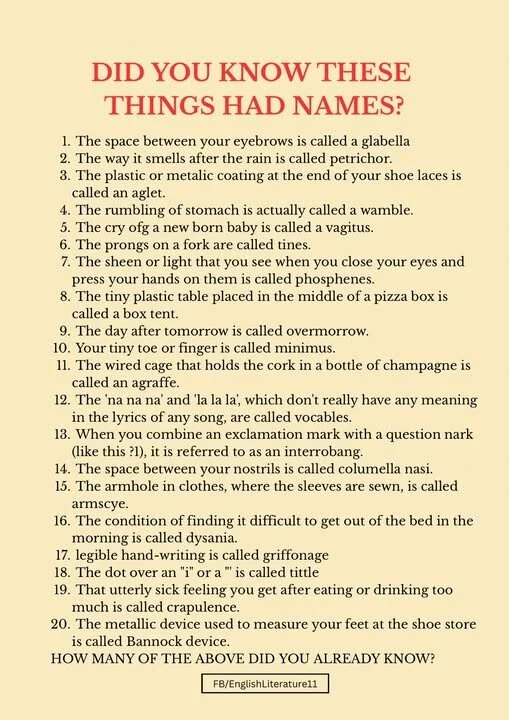
Mot: Things have names.
Seeds of Wisdom RV and Economics Updates Friday Morning 2-27-26
Good Morning Dinar Recaps,
MISSILE FLASHPOINT: Iran Capabilities Clash With U.S. Strike Claims
State of the Union Sparks Fresh Global Security & Reset Concerns
Good Morning Dinar Recaps,
MISSILE FLASHPOINT: Iran Capabilities Clash With U.S. Strike Claims
State of the Union Sparks Fresh Global Security & Reset Concerns
Overview (Key Points)
President Donald Trump, in his recent address, warned that Iran is developing missiles capable of threatening Europe and U.S. bases, and potentially the U.S. homeland.
He claimed U.S. airstrikes under “Operation Midnight Hammer” destroyed Iran’s nuclear weapons program, though no public evidence was presented.
The International Atomic Energy Agency (IAEA) signaled that Iran could resume limited uranium enrichment soon.
U.S. intelligence assessments indicate Iran could develop an ICBM by 2035, with concerns over collaboration with North Korea.
The escalation narrative carries major implications for energy markets, currency stability, and the global financial reset trajectory.
Key Developments
1. Missile Capability Claims Escalate Tensions
During his State of the Union speech, Donald Trump labeled Iran the “world’s biggest sponsor of terrorism” and asserted that Tehran is developing missiles capable of threatening Europe and U.S. assets abroad — and potentially the American mainland.
Public assessments from the U.S. Defense Intelligence Agency (DIA) suggest Iran could develop an intercontinental ballistic missile by 2035. Some analysts argue that estimate may be conservative, especially given Iran’s reported cooperation with North Korea on missile technology.
2. Operation Midnight Hammer & Nuclear Facility Debate
Trump referenced U.S. airstrikes in June, dubbed “Operation Midnight Hammer,” claiming they destroyed Iran’s nuclear weapons program.
However, the International Atomic Energy Agency stated that while certain facilities were struck, Iran could resume limited enrichment activities soon. The IAEA confirmed it was unable to inspect the bombed sites but had accessed other facilities not targeted in the strikes.
This gap between political claims and international inspection reports fuels global uncertainty.
3. Nuclear Weapons Timeline Dispute
U.S. and Israeli officials justified action by suggesting Iran was nearing nuclear weapons capability.
Yet both the IAEA and U.S. intelligence have previously indicated that Iran halted its formal nuclear weapons program in 2003. Tehran maintains that its enrichment efforts are for civilian energy purposes, though Western powers question the necessity of enrichment levels that approach weapons-grade thresholds.
The result: strategic ambiguity, which historically drives market volatility.
4. Casualty Figures & Information War
Trump also stated that Iran killed 32,000 protesters during unrest. Independent groups confirmed over 7,000 deaths, with thousands more under review, while Iranian officials reported significantly lower numbers.
The disparity highlights the information warfare dimension of modern geopolitical conflict — a key factor in global risk pricing.
Why It Matters
Energy Markets: Any escalation involving Iran threatens oil supply routes in the Strait of Hormuz.
Defense Spending Surge: NATO and regional allies could increase military budgets, impacting sovereign debt levels.
Safe-Haven Flows: Gold, U.S. Treasuries, and the dollar typically strengthen amid Middle East instability.
Sanctions Risk: Renewed sanctions cycles would intensify de-dollarization efforts among adversarial blocs.
Geopolitical conflict remains one of the strongest catalysts for financial system stress — and reset acceleration.
Why It Matters to Foreign Currency Holders
For currency watchers and global reset observers:
Dollar Strength vs. Dollar Weaponization: Conflict often strengthens the dollar short term, but expanded sanctions can accelerate long-term diversification away from it.
BRICS Bloc Reaction: Nations already pushing local-currency trade may deepen those efforts if U.S.-Iran tensions escalate further.
Commodity Currency Volatility: Oil-linked currencies could experience rapid repricing.
Gold Repricing Potential: Military instability historically fuels precious metals demand — a key pillar in reset discussions.
Geopolitics Is the Spark Behind Monetary Shifts.
Implications for the Global Reset
Pillar 1: Monetary Power & Sanctions Architecture
If tensions intensify, expect expanded sanctions enforcement. The more aggressively sanctions are used, the stronger the incentive becomes for alternative settlement systems outside the dollar framework.
Pillar 2: Energy & Commodity Realignment
Iran sits at the heart of global energy corridors. Any sustained disruption reshapes commodity pricing structures — which directly influences currency pegs, reserve allocations, and trade settlement mechanisms.
This is not just about missiles — it is about who controls the monetary levers during global instability.
Seeds of Wisdom Team View
The most powerful driver of a financial reset is not economics alone — it is geopolitics.
Military escalation narratives create:
Capital flight
Commodity repricing
Debt expansion
Currency realignment
Whether or not Iran’s capabilities match political rhetoric, the perception of threat is enough to move markets and influence strategic alliances.
The reset does not begin with a currency announcement.
It begins with instability that forces structural change.
Seeds of Wisdom Team
Newshounds News™ Exclusive
Sources
Modern Diplomacy — “Beyond the Rhetoric: The State of Iran’s Military Capabilities”
Reuters — “IAEA says Iran could resume limited uranium enrichment soon”
~~~~~~~~~~
POWER SHIFT: BRICS Expansion Forces Global North Recalibration
From Rhetoric to Infrastructure — The Global South’s Strategy Goes Mainstream
Overview (Key Points)
BRICS expansion in 2026 now represents over 35% of global GDP and roughly 45% of the world’s population.
23 nations currently hold active membership applications, signaling sustained momentum.
De-dollarization efforts are moving from political language to operational financial systems.
Western leaders are now echoing strategic principles long championed by the Global South — including multi-alignment and flexible coalitions.
Internal differences within BRICS may actually be its greatest structural strength.
Key Developments
1. Davos Moment Signals Strategic Convergence
When Mark Carney spoke at Davos in early 2026, calling the rules-based liberal international order selectively enforced, he received a standing ovation.
The irony: those critiques have been voiced for decades across the Global South — often dismissed until now.
BRICS expansion is where those long-standing grievances turned into coordinated policy. What was once framed as dissent is now institutional alignment.
2. From Political Bloc to Financial Infrastructure
BRICS is no longer just a geopolitical talking point.
Russia and China now settle approximately 90% of bilateral trade in rubles and yuan.
The New Development Bank has shifted roughly one-third of its loans into local currencies.
The mBridge platform links central banks in China, Hong Kong, UAE, and Thailand — operating outside SWIFT channels entirely.
This is monetary plumbing being built in real time.
3. De-Dollarization — Steady, Not Sudden
Russian President Vladimir Putin clarified the bloc’s posture:
“We are not refusing, not fighting the dollar, but if they don’t let us work with it, what can we do?”
Meanwhile, Donald Trump expressed concern in 2025:
“BRICS was set up to hurt us… to take our dollar off as the standard.”
Yet inside the bloc, there is nuance.
Indian External Affairs Minister S. Jaishankar stated clearly:
“Global economic stability is pegged on the dollar as the reserve currency.”
This divergence reveals a key truth: BRICS does not require ideological uniformity to function.
4. Internal Flexibility Is Structural Power
Unlike the EU model, BRICS has:
No binding governance structure
No centralized enforcement mechanisms
No mandatory policy harmonization
Western analysts once viewed this as weakness.
In reality, it creates resilience against external interference. Members coordinate where beneficial — and opt out where necessary. That flexibility accelerates expansion rather than constrains it.
South African Minister Ronald Lamola emphasized the developmental focus:
“We can only grow and expand as friends when we work together…”
Why It Matters
Global South agency is institutionalized, not rhetorical.
Trade settlement diversification is accelerating, not reversing.
The West is increasingly adopting issue-based coalitions and multi-alignment strategies once pioneered by emerging economies.
BRICS expansion survived repeated forecasts of collapse — and continues to grow.
The narrative is shifting from “Will BRICS survive?” to “How far will BRICS expand?”
Flexibility Is the New Global Power.
Why It Matters to Foreign Currency Holders
For global reset observers and currency holders:
Local currency trade settlement reduces automatic dollar dependency.
Parallel payment systems weaken unilateral sanction leverage.
The New Development Bank’s local-currency lending model reduces exposure to dollar liquidity cycles.
Flexibility within BRICS prevents sudden rupture — instead encouraging gradual realignment.
This is not overnight replacement — It is incremental diversification.
Implications for the Global Reset
Pillar 1: Multipolar Monetary Architecture
BRICS expansion signals movement toward multi-currency settlement systems, where trade can be conducted without default dollar routing.
Even partial diversification alters reserve strategies.
Pillar 2: Structural Adaptation by the West
The Global North is now echoing strategies the Global South formalized decades ago:
Multi-alignment
Flexible partnerships
Issue-based coalitions
The difference?
BRICS built the infrastructure first.
The reset does not require collapse — It requires parallel systems reaching critical mass.
Seeds of Wisdom Team View
The most underestimated force in the global reset is strategic patience.
BRICS expansion did not seek confrontation — it built options.
And options create leverage.
The Global South spent decades refining non-alignment.
Now the Global North is adopting the same language.
Momentum does not require unanimity. It requires direction.
The Global South Built the Blueprint — The North Is Catching Up.
Seeds of Wisdom Team
Newshounds News™ Exclusive
Sources
~~~~~~~~~~
🌱 A Message to Our Currency Holders🌱
If you’ve been holding foreign currency for many years, you were not foolish.
You were not wrong to believe the global financial system would change.
What failed was not your patience — it was the information you were given.
For years, dates, rumors, and personalities replaced facts, structure, and proof. “This week” predictions created cycles of hope and disappointment that were never based on how currencies actually change.
That is not your failure.
Our mission here is different: • No dates • No rates • No hype • No gurus
Instead, we focus on:
• Verifiable developments • Institutional evidence
• Global financial structure • Where countries actually sit in the process
Currency value changes only come after sovereignty, trade, banking, settlement systems, and fiscal coordination are in place. History and institutions confirm this sequence.
You will see silence. You will see denials. That is not delay — that is discipline.
Protect your identity. Organize your documents. Verify everything.
Never hand your discernment to anyone who cannot show proof.
You deserve truth — not timelines.
Seeds of Wisdom Team
Newshounds News
~~~~~~~~~~
Seeds of Wisdom Team RV Currency Facts Youtube and Rumble
Newshound's News Telegram Room Link
RV Facts with Proof Links Link
RV Updates Proof links - Facts Link
Follow the Gold/Silver Rate COMEX
Follow Fast Facts
Seeds of Wisdom Team™ Website
Thank you Dinar Recaps
Iraq Economic News and Points To Ponder Friday Morning 2-27-26
The Central Bank And Banks Have Chosen Their Path In Reform Processes And A New Initiative To Enhance Their Capabilities
The Central Bank of Iraq announces the completion of a key step in the comprehensive reform process for commercial and Islamic banks and branches of foreign banks. This step involved the submission of required documentation for review in accordance with the "minimum requirements," which outlined three paths: "continuing in the market as independent banking institutions, merging with other banking institutions, or exiting the market."
The Central Bank And Banks Have Chosen Their Path In Reform Processes And A New Initiative To Enhance Their Capabilities
The Central Bank of Iraq announces the completion of a key step in the comprehensive reform process for commercial and Islamic banks and branches of foreign banks. This step involved the submission of required documentation for review in accordance with the "minimum requirements," which outlined three paths: "continuing in the market as independent banking institutions, merging with other banking institutions, or exiting the market."
The Central Bank of Iraq confirms that all Iraqi banks submitted the required documentation according to their chosen path, allowing the Central Bank to assess their compliance with the minimum requirements. Over the coming months, the banks will address any identified gaps and strive for full compliance with the reform standards.
The Central Bank also announces a new initiative to expand the capacity of private banks to support international trade for their clients. Banks that meet specific criteria, as assessed by the Central Bank of Iraq, will be permitted to resume cross-border transactions and issue letters of credit in several international currencies, including the Euro, UAE Dirham, Chinese Yuan, Jordanian Dinar, and others.
This step complements the Central Bank of Iraq's strategy to enhance confidence in the future of the Iraqi economy and the global integration of the financial sector, and to drive sustainable growth in Iraq.
https://cbi.iq/news/section/155 - Infographic https://cbi.iq/news/view/3144
An Economist Says Reforming Private Banks Is Key To Stabilizing The Dollar And Boosting Confidence In The Financial Market.
Baghdad Today – Baghdad Economic expert Ahmed Abdel Rabbo confirmed on Wednesday (February 25, 2026) that the Central Bank of Iraq has taken a series of measures during the past period aimed at controlling the exchange market and enhancing financial stability, in light of the monetary challenges that Iraq has recently witnessed.
Abd Rabbo explained in an interview with “Baghdad Today” that the current stage requires speeding up the completion of the private banks reform project, as it is the cornerstone for achieving permanent stability in the dollar exchange rate within the local market, noting that the continued existence of some banks under sanctions contributes to creating bottlenecks in the supply of foreign currency and negatively affects the level of confidence in the banking sector.
Supporting Restructuring
He added that it is necessary to intensify efforts to support the work of Oliver Wyman, which is concerned with the restructuring of banks, in order to complete the banking compliance requirements within clear and announced timetables, which will contribute to removing a number of banks from the circle of restrictions and returning them to normal activity in accordance with transparent standards and strict supervision.
Reducing The Gap Between The Two Prices
Abdel Rabbo pointed out that achieving tangible progress in this direction will not only reduce the gap between the official and parallel dollar exchange rates, but will also send a genuine message of reassurance to the markets that the path of financial reforms is proceeding steadily, and that monetary stability is no longer a temporary measure, but a long-term strategic option to enhance confidence in the Iraqi financial market.
Over the past two years, Iraq has witnessed fluctuations in the dollar exchange rate as a result of tightening foreign transfer procedures and international compliance requirements, which prompted the Central Bank of Iraq to adopt stricter regulatory and supervisory mechanisms to control the currency sale window and enhance transparency.
Some private banks were also subjected to restrictive measures and sanctions, which affected the supply of foreign currency in the local market and widened the gap between the official and parallel exchange rates.
In this context, the restructuring of the banking sector has emerged as one of the most important paths of financial reform to ensure sustainable monetary stability and enhance confidence in the banking system. https://baghdadtoday.news/293908-.html
Iraq Reopens Cross-Border Trade Channel For Private Lenders
Shafaq News- Baghdad Iraq’s Central Bank (CBI) cleared private banks to resume cross-border transactions and issue letters of credit in multiple foreign currencies, in a move aimed at strengthening trade financing and accelerating banking reform, the CBI said on Thursday.
In a statement, the bank noted it completed “a key phase of a comprehensive reform process covering commercial and Islamic banks and branches of foreign banks.” The step required institutions to submit documentation for review under “minimum requirements,” selecting one of three paths: continuing operations as independent banking institutions, merging with other banks, or exiting the market.
All Iraqi banks have submitted the required documents in line with the path each chose, and they will address any identified gaps in the coming months, the CBI added.
Under the new initiative, private banks that meet specific standards based on the central bank’s assessment will be permitted to resume cross-border transactions and issue letters of credit in several international currencies, including the euro, UAE dirham, Chinese yuan, and Jordanian dinar, among others. البنك المركزي العراقي-Central Bank of Iraq
stpeondSro52h60gumgg1lua020383fuaih6mi5i8f4cci1t6u18lm7ma8ut ·
THE CENTRAL BANK .. Banks chose their way in the reform processes and a new initiative to raise their capacity
The Iraqi Central Bank announces the completion of the major step in the process of comprehensive reform of commercial and Islamic banks and foreign banking branches by submitting the required documents for review in accordance with the "minimum requirements" which summarized by choosing one of the three tracks, which is "continuing in the market as independent banking institutions, merging with other banking institutions, or exiting From the market".
The Iraqi Central Bank affirms that all Iraqi banks have submitted the required documents according to the route they had chosen, allowing the central bank to assess its level of acceptance for the minimum requirements.
Over the coming months, banks will work to address any loopholes that are identified, and will strive to achieve full compliance with repair standards.
This bank also announces a new initiative to expand the capacity of private banks to support international trade to its customers, where banks that meet certain criteria according to the assessment of the Iraqi Central Bank will be allowed to resume cross-border transactions and issue credentials based on many international currencies, including the euro, the UAE Dirham, the Chinese Yuan, the Jordanian Dinar, among others, and come This step is a continuation of the path laid out by the Iraqi Central Bank to strengthen confidence in the future of the Iraqi economy, global cohesion with the financial sector, and to lead the sustainable growth of Iraq.
https://www.shafaq.com/en/Economy/Iraq-reopens-cross-border-trade-channel-for-private-lenders
US State Department: Washington's Support Is Linked To The Iraqi Government And Its Program, Not To Individuals
The US State Department explained in statements to “Lwan News” that the formation of the Iraqi government is an internal matter that reflects the constitutional will and the outcomes of the democratic process, stressing that Washington’s support is linked to a government that enjoys national credibility and is committed to reform and the rule of law.
The ministry said that any government that does not meet the requirements of stability and reform will not receive full US support, stressing that its position on the return of Nouri al-Maliki is based on an assessment of the previous phase and its repercussions, and that its support is linked to the government program and its performance, not to the individuals themselves.
The US State Department added that it is following with interest Iraq’s steps regarding the demarcation of maritime borders and the deposit of maps with the United Nations, and encourages Iraq, Kuwait and Saudi Arabia to address differences through technical and legal dialogue, stressing that sovereign issues must be addressed within legal and diplomatic frameworks away from escalation.
She stressed that a stable, prosperous Iraq that is committed to its regional obligations remains an important partner for Washington, and that it will work with any future Iraqi government, provided it adheres to good governance, the constitution, and the promotion of regional security. https://1news-iq.net/الخارجية-الأمريكية-دعم-واشنطن-مرتبط-ب/
Iraq Protests Arab States’ Support For Kuwait In Maritime Dispute
Shafaq News- Baghdad Iraq’s Foreign Ministry on Thursday reproached Palestine, Jordan, and Egypt over their official positions aligned with Kuwait regarding Baghdad’s deposit of its maritime boundaries map with the United Nations.
The three counties expressed concern over Iraq’s submission to the United Nations, reaffirmed support for Kuwait’s sovereignty, and urged both sides to resolve the maritime dispute through dialogue in line with international law and the 1982 UN Convention on the Law of the Sea.
The ministry said in separate statements, that the remarks came during meetings between Undersecretary for Bilateral Relations Ambassador Mohammed Hussein Bahr Al-Uloom and the ambassadors of Palestine, Jordan, and Egypt. Bahr Al-Uloom presented Baghdad’s position concerning the three counties’ statements, which “overlooked Iraq’s viewpoint and the measures it had taken in full accordance with international law, particularly the 1982 United Nations Convention on the Law of the Sea.”
He described Iraq’s move as a sovereign right, adding that the country acted with full transparency and remains committed to addressing related issues through legal and diplomatic channels in a way that safeguards its sovereignty and national rights. وزارة الخارجية العراقية
doSterposn9i80t4c0h44ah3i86f7c8afgi1m0f81m08h91a64aa13f53cll ·
Foreign Ministry Representative Hosts The Ambassador Of The Arab Republic Of Egypt To Iraq
The Ministry of Foreign Affairs, representing the Ministry of Foreign Relations, Ambassador Mohammed Hussein Bahr Aloum, on Thursday, 26/02/2026, hosted the Ambassador of the Arab Republic of Egypt to the Republic of Iraq, Mr. Ahmed Samir Helmy, on the background of the statement issued by the Egyptian Ministry of Foreign Affairs and Immigration regarding the deposit of the Republic of Iraq the map of maritime areas to the nations المتحدة
The ministry spokesman affirmed clearly and explicitly that Iraq's decision to deposit a map of its maritime areas is indeed a sovereign that cannot be reversed, in accordance with Iraq's position and his observations in accordance with the Egyptian statement, which obliterates Iraq's opinion, position and the actions it has taken in full compliance with the provisions of international law, and especially the United Nations Convention on Law The seafarers of 1982, with full transparency reflects his keenness in addressing all relevant issues through legal and diplomatic frameworks, upholding Iraq's sovereignty and preserving its national rights.
In this context, Iraq expresses its regret for making such a statement, for which it is due to a state of dissatisfaction at the official and popular levels.
The ministry spokesman also stressed the depth and durability of the fraternal and historical relations between the Republic of Iraq and the Arab Republic of Egypt, emphasizing the importance of investigating the highest levels of accuracy and objectivity in official statements and positions, which have a direct impact on the course of the bilateral relations, emphasizing that any statement should include respect for the sovereignty of the two countries on Towards even more. He expressed the appreciation of the Republic of Iraq for the special relations with the Arab Republic of Egypt and its keenness to develop them in various fields.
On his part, the Egyptian ambassador expressed his gratitude for what the ministry spokesman provided with important and comprehensive information on the reality of the situation between the two countries and the level of cooperation and communication on the subject of drawing maritime borders, underlining that the concern expressed by Egypt in its statement stems from its eagerness to support security and stability between the two countries. He also noted that he would ensure that Iraq's message is conveyed to the Egyptian leadership in a clear and detailed manner, reflecting the Iraqi viewpoint and the relevant developments between the two countries.
***************
To read more about the news of the Ministry, you can visit the official pages and accounts of the Iraqi Ministry of Foreign Affairs: Ministry's website: https://mofa.gov.iq
Earlier this month, Baghdad a detailed maritime domain map with the United Nations and prepared to submit a Federal Supreme Court ruling that annulled the demarcation with Kuwait up to marker 162, a step that calls for re-demarcation under international law. Meanwhile, Gulf states, including the GCC, have urged Iraq to withdraw the submission and address the issue through diplomatic channels.
Read more: Khor Abdullah entangled in sovereignty disputes and legacy of invasion
https://www.shafaq.com/en/Iraq/Iraq-protests-Arab-states-support-for-Kuwait-in-maritime-dispute
MilitiaMan and Crew: IQD News Update-Facts-Central Bank Integration-Globally-ER
MilitiaMan and Crew: IQD News Update-Facts-Central Bank Integration-Globally-ER
2-26-2026
The Crew: Samson, PompeyPeter, Petra, Daytrader, Sunkissed, GIGI and Militia Man
Follow MM on X == https://x.com/Slashn
Be sure to listen to full video for all the news……..
MilitiaMan and Crew: IQD News Update-Facts-Central Bank Integration-Globally-ER
2-26-2026
The Crew: Samson, PompeyPeter, Petra, Daytrader, Sunkissed, GIGI and Militia Man
Follow MM on X == https://x.com/Slashn
Be sure to listen to full video for all the news……..
Seeds of Wisdom RV and Economics Updates Thursday Evening 2-26-26
Good Morning Dinar Recaps,
Nuclear Diplomacy in Geneva: Risks and Ripples Across Markets
Critical U.S.–Iran talks test global stability and financial sentiment
Good Morning Dinar Recaps,
Nuclear Diplomacy in Geneva: Risks and Ripples Across Markets
Critical U.S.–Iran talks test global stability and financial sentiment
Overview
Negotiators from the United States and Iran resumed nuclear negotiations in Geneva, marking a pivotal moment in diplomatic efforts to avoid a broader military confrontation. While no binding deal was reached, diplomats reported incremental progress — and markets reacted sharply to the evolving risk calculus.
Key Diplomatic Signals
Negotiations continued amid a massive U.S. military buildup near the region.
Tehran signaled willingness to show “flexibility” but stopped short of solid concessions.
Officials framed today’s session as a last chance to avert conflict that could destabilize the region and markets.
Market and Commodity Reactions
Oil and Energy Prices
Geopolitical risk premiums strengthened as traders balanced rising tensions against a recent surge in U.S. crude inventories — a dynamic keeping oil prices relatively stable but jittery. Brent and WTI oil benchmarks remain anchored by uncertainty.
Strategic Impact:
Energy markets price both supply risk from conflict and demand headwinds from economic slowdowns — a rare dual squeeze that influences inflation and global growth projections.
Stock Index Volatility
U.S. equity averages closed lower as investors reassessed risk, particularly in:
Chipmakers and AI-focused sectors
Global yield-sensitive industries
Heightened caution reflects both geopolitical uncertainty and broader macro concerns.
ESG and Institutional Shifts
Meanwhile, the Government Pension Fund of Norway is deploying Claude AI for ESG investment screening, signaling how risk frameworks are evolving alongside geopolitical stress in capital markets.
Why It Matters
This moment impacts the global reset across multiple domains:
Geopolitical Risk Realignment — Nuclear diplomacy is reshaping risk premia across asset classes.
Energy Security Dynamics — Oil prices are bridging geopolitical tension and inventory-driven pressure.
Market Behavior Under Stress — Safe-haven flows, volatility repricing, and risk-asset retrenchment reflect deep structural uncertainty.
Financial systems are reacting not just to economic data but to the probability of conflict and diplomacy outcomes.
This is not just market volatility — it’s the recalibration of geopolitical risk premia.
Why It Matters to Foreign Currency Holders
From a global macro reset perspective:
Safe-haven currencies (e.g., USD, CHF, JPY) may benefit temporarily amid risk-off moves.
Emerging market currencies could face pressure from widened risk spreads.
Oil-linked FX baskets (e.g., CAD, NOK) may see increased volatility as energy markets oscillate between supply concerns and inventory dynamics.
Yield curves and Treasury flows shift as investors reposition amid geopolitical uncertainty.
Cumulatively, these tendencies signal that currency dynamics are increasingly tied to geopolitical outcomes rather than purely economic fundamentals.
This is not just market volatility — it’s the recalibration of geopolitical risk premia.
Implications for the Global Reset
Pillar 1: Risk-Based Capital Allocation
Financial flows are being rerouted toward perceived stability as conflict risk shapes sentiment more than traditional macro indicators.
Pillar 2: Commodity-Finance Interdependence
Energy prices and inventories have never been more tightly coupled with diplomatic risk — oil market psychology now moves in lockstep with nuclear negotiations.
Pillar 3: Political Certainty Over Economic Certainty
Markets react more to conflict probability than inflation data — a structural shift that reinforces geopolitical drivers in global finance.
Today’s diplomatic developments are more than another flashpoint — they are a force multiplier shaping how capital markets, energy systems, and currency regimes interact.
This is not just energy pricing — it’s geopolitics fused with financial flows.
Seeds of Wisdom Team
Newshounds News™ Exclusive
Sources
~~~~~~~~~~
Brazil Draws the Line: No BRICS Currency at 2026 Summit
Lula clarifies de-dollarization debate ahead of India-hosted gathering
Overview
In a significant recalibration of expectations, Luiz Inácio Lula da Silva made it clear that a BRICS currency is not on the table for 2026.
Speaking ahead of the 18th BRICS Summit, scheduled to be hosted in India, Lula stated:
“There is no proposal to create the BRICS currency. There is no debate within BRICS about whether to create a new currency.”
The announcement directly addresses years of speculation that the bloc was preparing to launch a gold-backed or trade-backed alternative to the U.S. dollar.
Instead, Brazil is drawing a sharp distinction between:
Creating a new currency
Expanding trade in local currencies
That distinction matters.
Key Developments
1. BRICS Currency: Officially Off the 2026 Agenda
Despite persistent market chatter, Lula confirmed:
No formal proposal exists
No internal debate is underway
No summit agenda includes currency formation
This signals a cooling of expectations surrounding a unified BRICS monetary instrument.
Strategic Impact:
The bloc is not ready for a shared reserve asset or supranational unit — institutional alignment remains insufficient.
2. Local Currency Trade Still Supported
While rejecting a new BRICS currency, Lula did endorse bilateral trade in national currencies.
He emphasized that trade between Brazil and India does not require U.S. dollar settlement.
“It is not necessary that a trade agreement between India and Brazil has to be done with US dollars. We can use our own currencies.”
However, he acknowledged:
It is difficult
It requires coordination
It is gradual
This reflects a pragmatic approach rather than ideological de-dollarization.
3. Not Anti-Dollar — But Pro-Options
Lula stressed that local currency trade is not anti-American or anti-dollar.
He openly acknowledged:
The U.S. dollar remains the strongest global currency
The United States will resist alternative currency influence
BRICS must consider geopolitical realities
This marks a shift from aggressive de-dollarization rhetoric toward a more cautious tone.
Why It Matters
For years, markets speculated that BRICS was on the verge of launching:
A shared currency
A gold-backed trade unit
A dollar alternative reserve asset
Brazil’s clarification introduces reality over rhetoric.
The bloc remains focused on:
Trade flexibility
Payment diversification
Bilateral arrangements
But not a monetary revolution — at least not yet.
This is not a monetary revolution — it’s a recalibration of expectations.
Why It Matters to Foreign Currency Holders
For currency watchers and global reset observers:
No immediate BRICS currency launch
No 2026 monetary reset event
Gradual diversification remains the path
However:
China and India still pursue:
Yuan internationalization
Rupee cross-border expansion
The broader trend of multipolar payment systems continues — just without a unified BRICS coin.
De-dollarization talk cools, but diversification continues quietly.
Implications for the Global Reset
Pillar 1: De-Dollarization Is Incremental, Not Explosive
The process is evolving through bilateral trade arrangements — not through a dramatic currency replacement event.
Pillar 2: BRICS Remains Economically Diverse
Internal financial differences make a shared currency structurally difficult.
Brazil’s message suggests:
Monetary sovereignty remains national
Coordination is selective
Integration is cautious
The Bigger Picture
Lula also highlighted the demographic power of the bloc:
India and China together represent nearly half of humanity
BRICS collectively accounts for a substantial portion of global population and economic output
Yet demographic weight alone does not equal monetary unity.
Institutional integration takes time — and consensus.
For now, BRICS is choosing flexibility over transformation.
This is not just currency commentary — it’s a strategic signal about how fast global monetary realignment can truly move.
Seeds of Wisdom Team
Newshounds News™ Exclusive
Sources
Watcher Guru — “Brazil Makes Major Declaration on BRICS Currency & De-Dollarization”
Reuters — “Brazil’s Lula Clarifies BRICS Currency Debate Ahead of Summit”
~~~~~~~~~~
Seeds of Wisdom Team RV Currency Facts Youtube and Rumble
Newshound's News Telegram Room Link
RV Facts with Proof Links Link
RV Updates Proof links - Facts Link
Follow the Gold/Silver Rate COMEX
Follow Fast Facts
Seeds of Wisdom Team™ Website
Thank you Dinar Recaps
Iraq Economic News and Points To Ponder Thursday Evening 2-26-26
Central Bank Advances Iraqi Banking Reform, Eases Foreign Transactions
26th February 2026 in Iraq Banking & Finance News, Iraq Industry & Trade News
By John Lee. The Central Bank of Iraq (CBI) has announced completion of the principal phase of its comprehensive reform programme for commercial, Islamic and foreign bank branches operating in Iraq.
According to the Bank, all Iraqi banks have submitted the required documentation under the "minimum requirements" framework, selecting one of three pathways:
Central Bank Advances Iraqi Banking Reform, Eases Foreign Transactions
26th February 2026 in Iraq Banking & Finance News, Iraq Industry & Trade News
By John Lee. The Central Bank of Iraq (CBI) has announced completion of the principal phase of its comprehensive reform programme for commercial, Islamic and foreign bank branches operating in Iraq.
According to the Bank, all Iraqi banks have submitted the required documentation under the "minimum requirements" framework, selecting one of three pathways:
Continuing in the market as independent banking institutions;
Merging with other banking institutions;
Exiting the market.
The submissions enable the Central Bank to assess each institution's compliance with minimum reform standards. Over the coming months, banks are expected to address any identified gaps and work towards full compliance.
The Central Bank also announced a new initiative aimed at expanding the capacity of private banks to support international trade. Banks meeting specified criteria under Central Bank evaluation will be permitted to resume cross-border transactions and issue letters of credit in multiple international currencies, including:
Euro;
UAE dirham;
Chinese yuan;
Jordanian dinar.
The Bank said the move forms part of its broader strategy to strengthen confidence in Iraq's financial sector, enhance global integration, and support sustainable economic growth.
Iraq’s CF Weighs Al-Maliki Nomination Under US Pressure
2026-02-26 Shafaq News- Baghdad Leaders of Iraq’s Shiite Coordination Framework (CF) held internal meetings Thursday to align positions ahead of a broader session next week, as divisions persist over nominating former prime minister Nouri Al-Maliki amid mounting US pressure.
Sources within the alliance told Shafaq News that three key issues will dominate the upcoming meeting, including urging parliament to set a date to elect a president. Kurdish parties are not expected to formally reveal their candidate until the voting session.
Under the proposed sequence, the Framework would present its nominee for prime minister one week after the president is elected, followed by a parliamentary session to announce the designation and begin government formation.
Another source said the bloc could still opt for an alternative candidate from the list under consideration, depending on political calculations and regional dynamics.
Earlier this week, a senior Framework official told Shafaq News the alliance had secured an extension to a US deadline related to withdrawing Al-Maliki’s nomination, adding that Al-Maliki has refused to step aside voluntarily, arguing that only the two-thirds majority that nominated him can rescind the decision.
The Framework, which groups Iraq’s main ruling Shiite factions, is split over Al-Maliki’s candidacy. Washington has strongly opposed to his return, with US envoy Tom Barrack conveying the American position during a recent visit to Baghdad.
President Donald Trump has also publicly criticized Al-Maliki’s previous tenure as prime minister from 2006 to 2014, and US pressure has intensified in recent weeks. CF formally nominated Al-Maliki on January 24, 2026, with majority backing from its components. Read more: Nouri Al-Maliki’s new doctrine for power: Pragmatism over defiance?
https://www.shafaq.com/en/Iraq/Iraq-s-CF-weighs-Al-Maliki-nomination-under-US-pressure
Iraq Protests Arab States’ Support For Kuwait In Maritime Dispute
2026-02-26 Shafaq News- Baghdad Iraq’s Foreign Ministry on Thursday reproached Palestine, Jordan, and Egypt over their official positions aligned with Kuwait regarding Baghdad’s deposit of its maritime boundaries map with the United Nations.
The three counties expressed concern over Iraq’s submission to the United Nations, reaffirmed support for Kuwait’s sovereignty, and urged both sides to resolve the maritime dispute through dialogue in line with international law and the 1982 UN Convention on the Law of the Sea.
The ministry said in separate statements, that the remarks came during meetings between Undersecretary for Bilateral Relations Ambassador Mohammed Hussein Bahr Al-Uloom and the ambassadors of Palestine, Jordan, and Egypt. Bahr Al-Uloom presented Baghdad’s position concerning the three counties’ statements, which “overlooked Iraq’s viewpoint and the measures it had taken in full accordance with international law, particularly the 1982 United Nations Convention on the Law of the Sea.”
He described Iraq’s move as a sovereign right, adding that the country acted with full transparency and remains committed to addressing related issues through legal and diplomatic channels in a way that safeguards its sovereignty and national rights.
doSterposn9i80t4c0h44ah3i86f7c8afgi1m0f81m08h91a64aa13f53cll ·
Foreign Ministry representative hosts the Ambassador of the Arab Republic of Egypt to Iraq
The Ministry of Foreign Affairs, representing the Ministry of Foreign Relations, Ambassador Mohammed Hussein Bahr Aloum, on Thursday, 26/02/2026, hosted the Ambassador of the Arab Republic of Egypt to the Republic of Iraq, Mr. Ahmed Samir Helmy, on the background of the statement issued by the Egyptian Ministry of Foreign Affairs and Immigration regarding the deposit of the Republic of Iraq the map of maritime areas to the nations المتحدة
The ministry spokesman affirmed clearly and explicitly that Iraq's decision to deposit a map of its maritime areas is indeed a sovereign that cannot be reversed, in accordance with Iraq's position and his observations in accordance with the Egyptian statement, which obliterates Iraq's opinion, position and the actions it has taken in full compliance with the provisions of international law, and especially the United Nations Convention on Law The seafarers of 1982, with full transparency reflects his keenness in addressing all relevant issues through legal and diplomatic frameworks, upholding Iraq's sovereignty and preserving its national rights.
In this context, Iraq expresses its regret for making such a statement, for which it is due to a state of dissatisfaction at the official and popular levels.
The ministry spokesman also stressed the depth and durability of the fraternal and historical relations between the Republic of Iraq and the Arab Republic of Egypt, emphasizing the importance of investigating the highest levels of accuracy and objectivity in official statements and positions, which have a direct impact on the course of the bilateral relations, emphasizing that any statement should include respect for the sovereignty of the two countries on Towards even more.
He expressed the appreciation of the Republic of Iraq for the special relations with the Arab Republic of Egypt and its keenness to develop them in various fields.
On his part, the Egyptian ambassador expressed his gratitude for what the ministry spokesman provided with important and comprehensive information on the reality of the situation between the two countries and the level of cooperation and communication on the subject of drawing maritime borders, underlining that the concern expressed by Egypt in its statement stems from its eagerness to support security and stability between the two countries.
He also noted that he would ensure that Iraq's message is conveyed to the Egyptian leadership in a clear and detailed manner, reflecting the Iraqi viewpoint and the relevant developments between the two countries.
***************
To read more about the news of the Ministry, you can visit the official pages and accounts of the Iraqi Ministry of Foreign Affairs: Ministry's website:https://mofa.gov.iq
Earlier this month, Baghdad a detailed maritime domain map with the United Nations and prepared to submit a Federal Supreme Court ruling that annulled the demarcation with Kuwait up to marker 162, a step that calls for re-demarcation under international law. Meanwhile, Gulf states, including the GCC, have urged Iraq to withdraw the submission and address the issue through diplomatic channels.
Read more: Khor Abdullah entangled in sovereignty disputes and legacy of invasion
https://www.shafaq.com/en/Iraq/Iraq-protests-Arab-states-support-for-Kuwait-in-maritime-dispute
German Report: Dispute Over Khor Abdullah Area Affects The Development Road Project And The Grand Faw Port –
Khor Abdullah – One News 2/26/2026 A report published by the German website DW stated that the dispute over the Khor Abdullah area is affecting regional development projects, especially the Grand Faw Port and the development road project in Iraq.
The report added that Iraqis see the Kuwaiti Mubarak Al-Kabeer port, which is part of Kuwait's 2035 vision and China's Belt and Road Initiative, as restricting maritime access and threatening the viability of their projects.
It also stated that if the Iraqi parliament refuses to ratify the agreement, a permanent and implementable solution must be found. The report added that this solution should be based on re-engagement between the two parties, grounded in justice, shared economic interests, and respect for international law and the constitution.
The report concludes that the Khor Abdullah dispute transcends being a technical disagreement over maritime borders, as Iraq and Kuwait can transform this thorny dispute into a model for regional diplomacy and respect for the international legal order, while demonstrating a clear commitment to international law and judicial bodies.
https://1news-iq.net/تقرير-الماني-الخلاف-بشأن-منطقة-خور-عبد/
Dollar’s Global Dominance Finally Cracking?
Dollar’s Global Dominance Finally Cracking?
WTFinance: 2-26-2026
The global monetary system is at a crossroads, influenced by geopolitical tensions, technological innovation, and shifting economic landscapes.
In a recent episode of the WTFinance Podcast, host Anthony Fatseas sat down with Barry Eichengreen, a distinguished economist and professor at the University of California, Berkeley, to dissect the current state and future trajectory of global finance.
Dollar’s Global Dominance Finally Cracking?
WTFinance: 2-26-2026
The global monetary system is at a crossroads, influenced by geopolitical tensions, technological innovation, and shifting economic landscapes.
In a recent episode of the WTFinance Podcast, host Anthony Fatseas sat down with Barry Eichengreen, a distinguished economist and professor at the University of California, Berkeley, to dissect the current state and future trajectory of global finance.
Their discussion shed light on the dominance of the US dollar, the rise of alternative currencies, and the challenges posed by a rapidly changing world.
Eichengreen highlighted the pressing issue of a K-shaped economy, where technological advancements, particularly AI, and post-pandemic trends have exacerbated economic inequality.
The K-shaped recovery, where certain sectors and populations rebound quickly while others lag, poses significant political challenges. Addressing these disparities requires nuanced policy-making, but Eichengreen emphasized the difficulty in implementing effective measures due to political gridlock and competing interests.
The conversation also touched on the geopolitical implications of US policies under Trump and Putin, which have prompted Europe and other regions to diversify their economic and strategic dependencies away from the US.
While this transition is slow and complex, it signifies a shift in the global economic landscape.
Eichengreen noted that Europe’s pursuit of greater unity is hindered by internal divisions and competition, whereas China’s efforts to internationalize its currency are stalled due to governance and trust issues.
Despite these developments, Eichengreen stressed that the US dollar remains the global reserve currency, and its position is not immediately threatened.
Although there is a gradual erosion of its share, mainly in favor of smaller, well-managed currencies leveraging digital technology, a sudden flight from the dollar would trigger a severe global liquidity crisis, jeopardizing 21st-century globalization.
The discussion also explored the growing role of digital currencies, stablecoins, and central bank digital currencies (CBDCs).
Eichengreen provided a historical perspective on global currency cycles, from ancient times to the present, underscoring the significance of geopolitical, financial, and economic factors in shaping currency dominance.
His forthcoming book, “Money Beyond Borders: Global Currencies from Crisis to Crypto,” delves into these themes, offering an in-depth analysis of the interplay between geopolitics, financial innovation, and economic power.
The episode concluded with a cautionary note on the need to carefully manage the privileges and responsibilities associated with issuing the world’s primary international currency.
Eichengreen emphasized that the US must be mindful of its role in maintaining global financial stability and the implications of its monetary policies on the global economy.
In conclusion, the WTFinance Podcast episode with Barry Eichengreen offers valuable insights into the complex and evolving global monetary system.
As the world navigates the challenges of technological disruption, geopolitical tensions, and economic inequality, understanding the dynamics of currency dominance and the rise of digital currencies is crucial. For those interested in delving deeper into these topics, watching the full video from WTFinance is a must.
Seeds of Wisdom RV and Economics Updates Thursday Afternoon 2-26-26
Good Morning Dinar Recaps,
BRICS Warships in Formation: Economic Bloc Steps Into Global Security Arena
“Will for Peace 2026” signals a strategic shift from finance to force projection
Good Morning Dinar Recaps,
BRICS Warships in Formation: Economic Bloc Steps Into Global Security Arena
“Will for Peace 2026” signals a strategic shift from finance to force projection
Overview
In January 2026, the BRICS bloc — Brazil, Russia, India, China, and South Africa — crossed a symbolic threshold.
Warships from China, Russia, Iran, and the United Arab Emirates gathered off South Africa’s Western Cape for the “Will for Peace 2026” naval drills — described as the first operational military event conducted under a BRICS security framework.
What began as an economic reform coalition is now signaling a willingness to evolve into something more strategic.
The question is no longer whether BRICS has security ambitions — it’s whether it can function as a unified security actor.
Key Developments
1. A Military Exercise With Strategic Messaging
The naval drills took place near Simon’s Town and ran for eight days.
South Africa framed the exercise as maritime cooperation focused on:
Anti-piracy operations
Shipping lane protection
Maritime security coordination
However, analysts note this event represents something deeper:
BRICS is testing its identity beyond economics.
This marks a departure from the bloc’s traditional focus on:
Development banking
Trade reform
Currency diversification
Multipolar financial systems
Now, hard power projection is entering the equation.
2. China Assumes Command Leadership
For the first time within a BRICS security context, China assumed centralized coordination — overseeing:
Strategic planning
Tactical execution
Command-and-control architecture
This leadership role signals Beijing’s intent to institutionalize a BRICS global security framework from within.
China’s military footprint in Africa has expanded rapidly:
At least 15 PLA Navy port calls across Africa between 2024–2025
Expanded military education commitments under FOCAC (2024–2027)
Training programs for 6,500 African military and police personnel
The exercise reflects China’s broader strategy of integrating security relationships alongside economic ties.
Strategic Impact:
Beijing is shaping BRICS security architecture in ways that align with its global ambitions.
3. Internal Fractures Exposed
Despite the optics, unity was far from complete.
Notably absent:
India
Brazil
India’s absence was widely interpreted as balancing its ties with the United States.
Brazil also avoided participation, signaling that not all founding members are ready to militarize BRICS cooperation.
Further tensions emerged inside South Africa itself.
President Cyril Ramaphosa reportedly ordered that Iranian naval vessels not participate — yet Iranian warships docked and joined drills led by China’s 48th Naval Task Force.
A Board of Enquiry followed.
This episode exposed:
Civil-military coordination gaps
Political divisions
Questions about sovereignty and command authority
Strategic Impact:
BRICS unity on paper does not automatically translate into operational cohesion.
Why It Matters
This development signals three major shifts:
BRICS is no longer purely economic.
China is increasingly shaping the bloc’s strategic direction.
Internal divisions could limit BRICS’ ability to function as a cohesive security alliance.
The comparison some analysts draw is provocative:
BRICS was designed as an economic counterweight to Western institutions — not a military counterpart to NATO.
Yet exercises like “Will for Peace 2026” blur that boundary.
From trade bloc to naval bloc — BRICS is recalibrating global power signals.
Why It Matters to Foreign Currency Holders
For those watching global financial realignment:
Security blocs influence trade corridors and maritime stability.
Naval coordination impacts energy routes and shipping insurance costs.
Geopolitical alignments affect capital flows and reserve currency positioning.
If BRICS evolves into a security actor, it reshapes how:
Trade is protected
Resources are transported
Strategic partnerships are structured
Security architecture and monetary architecture often move together.
When warships gather, economic alliances reveal strategic ambition.
Implications for the Global Reset
Pillar 1: Multipolarity Expands Beyond Finance
BRICS’ evolution suggests multipolarity is expanding from economic forums into military signaling.
Pillar 2: China’s Strategic Institutionalization
By leading operational planning, China positions itself as the bloc’s de facto strategic architect.
However:
Without India and Brazil’s participation, BRICS security cohesion remains incomplete.
This tension will determine whether BRICS becomes:
A coordinated security coalition
orA symbolic platform with limited operational unity
This is not just economic reform — it’s the testing of a multipolar security axis
Conclusion
“Will for Peace 2026” represents a pivotal moment.
BRICS is experimenting with security integration, but internal fractures are visible. The bloc’s future role in global security will depend on:
Whether founding members align on military objectives
Whether sovereignty concerns are resolved internally
Whether China’s leadership role is accepted or resisted
The economic alliance has tested the waters of security cooperation.
Whether this marks the birth of a lasting military dimension — or a one-off symbolic exercise — remains to be seen.
This is not just geopolitics — it’s the visible reshaping of global power architecture.
Seeds of Wisdom Team
Newshounds News™ Exclusive
Sources
~~~~~~~~~~
Seeds of Wisdom Team RV Currency Facts Youtube and Rumble
Newshound's News Telegram Room Link
RV Facts with Proof Links Link
RV Updates Proof links - Facts Link
Follow the Gold/Silver Rate COMEX
Follow Fast Facts
Seeds of Wisdom Team™ Website
Thank you Dinar Recaps