
Thank you to all the subscribers to our Early Access program…we thank you for your continued support.
We are excited to offer this new service to keep you informed and up-to-date on the latest Dinar and currency news.
Iraq Economic News and Points To Ponder Wednesday Evening 1-21-26
Iraq Can Fund Salaries, But Oil Sets The Limits
2026-01-21 Shafaq News Iraq is not expected to face immediate difficulties in paying public-sector salaries or pensions in early 2026, according to government advisers and economists. However, continued payments remain closely linked to oil prices staying within a limited range, leaving public finances vulnerable to external market shifts.
Iraq Can Fund Salaries, But Oil Sets The Limits
2026-01-21 Shafaq News Iraq is not expected to face immediate difficulties in paying public-sector salaries or pensions in early 2026, according to government advisers and economists. However, continued payments remain closely linked to oil prices staying within a limited range, leaving public finances vulnerable to external market shifts.
Oil revenues account for more than 90% of Iraq’s state income, making fiscal stability highly sensitive to fluctuations in global crude prices. Monthly operational spending —primarily salaries, pensions, and social welfare— absorbs the bulk of government expenditures, reducing flexibility in the event of a downturn.
The Prime Minister’s financial adviser, Mudhhir Mohammed Saleh, said that Iraq’s fixed monthly obligations amount to approximately 8 trillion Iraqi dinars (around $6.1 billion), excluding subsidies, debt servicing, and outstanding contractual payments.
In comments to Shafaq News, he noted that oil revenues can cover these commitments provided the annual average oil price remains above $60 per barrel, assuming exports of about 3.4 million barrels per day.
*Economists caution that this benchmark reflects structural fragility rather than financial resilience.* Ahmed Abd Rabbo, an economic analyst, said salary payments may remain secure in the short term but warned that the underlying imbalance persists.
He pointed to the steady expansion of the public wage and pension bill over the past decade, alongside limited growth in non-oil revenues. “The issue is not an immediate inability to pay,” he said, “but prolonged exposure to oil-market volatility without sufficient reform.”
Official data highlight the scale of the challenge. The Eco Iraq Observatory reported that Iraq’s fiscal deficit reached 24.68 trillion dinars (about $18.8B) by October 2025. Current expenditures accounted for roughly 75% of total spending, while non-oil revenues totaled less than 10 trillion dinars, compared with oil revenues of nearly 93 trillion dinars during the same period.
Central Bank figures further show that salaries and service-related spending reached about 96 trillion dinars, representing close to 90% of overall expenditure, leaving limited room to absorb revenue shocks or expand investment.
Nawar al-Saadi, a professor of international economics, said the main concern is the absence of a stabilizing mechanism. “Oil revenues are sufficient to fund current spending,” he told Shafaq News, “but they are not being channeled into economic diversification or a functioning stabilization fund. Any sudden price decline or unplanned obligation immediately turns salaries into a sensitive financial and political issue.”
Another economist, Mustafa al-Faraj, estimated that salary payments remain manageable if oil prices stay above $55 per barrel, warning that sustained prices below that level would impose significant constraints unless spending is adjusted.
He argued that reforms should focus on expenditure discipline, including reviewing high-level salaries, addressing duplicate salary payments, and reassessing legacy compensation schemes, alongside efforts to activate non-oil sectors such as tourism.
The government of Prime Minister Mohammed Shia al-Sudani, whose term has recently ended, introduced limited deficit-control measures, including the sale of unused government vehicles and equipment, a 50% reduction in fuel allocations, and a freeze on recognizing additional academic degrees for salary and promotion purposes from January 2026.
Economists say that while these measures may save about $2 billion annually, and ease pressure in the short term, they remain modest relative to the overall deficit. Without broader structural reforms targeting spending rigidity and revenue diversification, Iraq’s ability to sustain salary payments will continue to depend largely on favorable oil market conditions.https://www.shafaq.com/en/Report/Iraq-can-fund-salaries-but-oil-sets-the-limits
Iraq Imports Exceed $17B In Q3 2025
2026-01-21 Shafaq News– Baghdad Iraq’s imports reached $17.929 billion in the third quarter of 2025, up from $17.534 billion in the second quarter, Trading Economics said on Wednesday.
According to the data, machinery and transport equipment accounted for 38% of imports, followed by manufactured goods at 27%, mineral fuels at 10%, and chemicals and related products at 7%.
Syria ranked as Iraq’s largest import partner, accounting for 18%, followed by China with 14% and the United States with 6%. Other key partners included South Korea, Jordan, Germany, and India.
Iraq’s average imports between 1988 and 2025 stood at $13.478 billion. Figures peaked at a record $50.155 billion in the fourth quarter of 2012, while the lowest level was recorded at $2.681 billion in the fourth quarter of 1994. Iraq’s Central Bank announced last month that imports from January to September 2025 totaled $63.093 billion. https://www.shafaq.com/en/Economy/Iraq-imports-exceed-17B-in-Q3-2025
Iraq Climbs To Fourth Among Turkiye’s House Buyers In December 2025
Economy & Business 2026-01-21 Shafaq News– Ankara Iraqis purchased 133 houses in Turkiye in December 2025, ranking fourth among foreign buyers of real estate, the Turkish Statistical Institute (TURKSTAT) said on Wednesday.
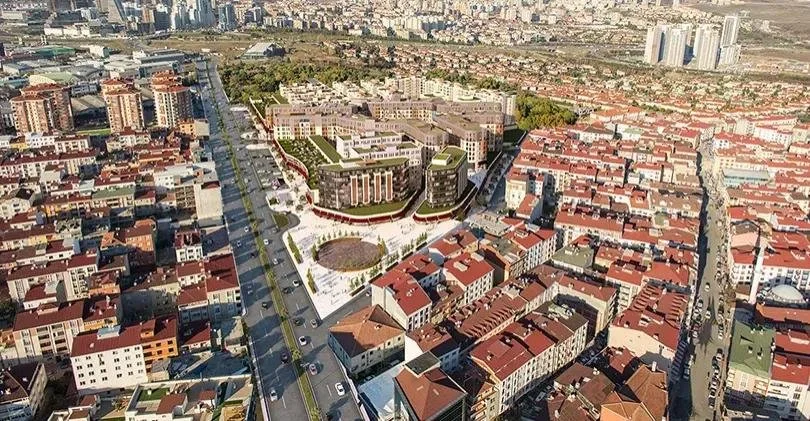
Total home sales across Turkiye rose by 19.8 percent in December compared with the same month last year, reaching 254,777 units.
Sales to foreign nationals increased by 5.1 percent year-on-year to 2,541 homes, accounting for 1.0 percent of total property sales during the month. Russians topped the list of foreign buyers with 504 homes, followed by Iranians with 232 and Ukrainians with 193. Azerbaijan ranked fifth with 113 homes, followed by Germany with 105, Kazakhstan 92, Saudi Arabia with 74, Afghanistan and China recorded 71 houses.
Last month, data showed that Iraqis bought 104 houses and took fifth place in November 2025. Iraqis had led foreign property purchases in Turkiye for several years, starting in 2015, but slipped to second place behind Iran at the beginning of 2021. Their ranking dropped further to third in April 2022 following a surge in Russian purchases. https://www.shafaq.com/en/Economy/Iraq-climbs-to-fourth-among-Turkiye-s-house-buyers-in-December-2025
USD/IQD Exchange Rates Climb In Baghdad, Dip In Erbil
Economy & Business Iraq 2026-01-21 Shafaq News– Baghdad/ Erbil The US dollar exchange rates closed higher in Baghdad but lower in Erbil on Wednesday, widening the gap between the two markets by 250 Iraqi dinars by the end of trading.
According to a Shafaq News market survey, the dollar rose in Baghdad’s Al-Kifah and Al-Harithiya central exchanges to 148,200 dinars per 100 dollars, up from 148,000 dinars earlier in the day.
Local exchange shops in the capital sold the dollar at 148,750 dinars per 100 dollars, while buying prices stood at 147,750 dinars. In Erbil, the selling price fell to 147,950 dinars per 100 dollars and the buying price to 147,850 dinars. https://www.shafaq.com/en/Economy/USD-IQD-exchange-rates-climb-in-Baghdad-dip-in-Erbil-1
Trump Treasury & Fed Will Run it Hot in 2026 – Craig Hemke
Trump Treasury & Fed Will Run it Hot in 2026 – Craig Hemke
By Greg Hunter’s USAWatchdog.com
Financial writer, market analyst and precious metals expert Craig Hemke predicted at the beginning of 2024 that the US would add a whopping $2 trillion in debt. It did.
At the beginning of 2025, Hemke predicted the US dollar would take a big hit. It did, and record high gold and silver prices score Hemke another bullseye.
Trump Treasury & Fed Will Run it Hot in 2026 – Craig Hemke
By Greg Hunter’s USAWatchdog.com
Financial writer, market analyst and precious metals expert Craig Hemke predicted at the beginning of 2024 that the US would add a whopping $2 trillion in debt. It did.
At the beginning of 2025, Hemke predicted the US dollar would take a big hit. It did, and record high gold and silver prices score Hemke another bullseye.
At the beginning of 2026, Hemke is predicting the Trump Treasury and Fed are going to put the pedal to the metal in running the economy. Hemke explains, “Japan had yield curve control for years. They have taken it off, and interest rates have skyrocketed. This is where we are heading in the US.
In May, Trump is going to appoint a ‘yes man’ to the Fed. He’s going to replace (Jay) Powell, who will work with Scott Bessent (Treasury Secretary) and do his bidding and meld operations together.
Why would they need to do that? Because they are going to run it hot.
Remember, it was austerity a year ago. DOGE was going to cut $2 trillion in spending. They were going to balance the budget and all that kind of stuff. They quickly figured out that dog was not going to hunt.
Now, it’s all about growing our way out of this. Scott Bessent was on TV this weekend saying we are going to grow fast enough that the interest expense, which is around 6% of GDP, is going back down to 3% of GDP.
They think they can grow GDP that fast. They are going to grow GDP that fast by Trump’s ‘yes man’ cutting the short end, and if interest rates on the long end start going higher because of the inflation that it’s going to cause, they are going to come back in with yield curve control here in the US.
They have done this before after World War II, and they are going to do it again as soon as this year. That is the most bullish thing that can happen for gold and silver. This is also why gold and silver have been rallying so strongly in the last 24 months.”
Hemke predicts gold will hit at least $6,000 per ounce, and silver will easily hit $130 per ounce in 2026. The industrial demand for silver is not going to let up anytime soon.
Also, central bank demand is going to continue. Hemke contends, “Two weeks after the start of the Ukraine war, the US kicked Russia out of the SWIFT system and froze its foreign currency reserves. That sparked, at the same time, global central bank gold demand that has run record buying for four years in a row.
It started in 2022. Countries looked around and said, ‘Wow, if we get sideways with the US, they will do the same thing to us.’ So, they started selling their Treasuries and dollar reserves and started buying gold.
There were record amounts in 2022, 2023, 2024 and another big year in 2025 for physical gold buying by central banks.
We just got news today that the Polish central bank is buying another 150 metric tons of gold. They are building their gold holding to 700 metric tons. So, this global central bank demand is underpinning gold.”
In closing, Hemke says, “The Fed is saying they are going to cap interest rates. The Fed is going to be a buyer of 10-year Treasury notes at let’s say 4%. . .. With locking in rates while inflation is up there, you will have negative real interest rates.
The most bullish factor for gold prices are negative real interest rates. That’s the path, and that’s where the US is headed. It will be yield curve control.”
There is much more in the 39-minute interview.
Join Greg Hunter of USAWatchdog as he goes One-on-One with Craig Hemke of the popular website TFMetalsReport.com for 1.20.26.
https://usawatchdog.com/trump-treasury-fed-will-run-it-hot-in-2026-craig-hemke/
Seeds of Wisdom RV and Economics Updates Wednesday Afternoon 1-21-26
Good Afternoon Dinar Recaps,
How Metals and Bonds Interact in a Currency Reset
Credibility anchors first, liquidity instruments second — not triggers, not shortcuts
Good Afternoon Dinar Recaps,
How Metals and Bonds Interact in a Currency Reset
Credibility anchors first, liquidity instruments second — not triggers, not shortcuts
Overview
In every historical monetary reset, metals and bonds play defined but separate roles. Neither triggers a reset, releases funds, nor dictates timing. Instead, they function as support mechanisms once sovereign authorities decide to restructure or realign the monetary system.
Metals anchor trust.
Bonds provide liquidity and settlement.
Understanding the distinction is essential for currency holders navigating reset narratives.
Key Developments
1. Metals Serve as Trust Anchors, Not Payment Tools
Gold — and occasionally silver — has historically been used to signal credibility and restraint when fiat systems lose confidence. Metals stabilize perception and valuation frameworks, but they do not circulate cash or fund economies.
2. Bonds Act as the Liquidity Engine
Bonds are instruments of movement and settlement. During resets, sovereign debt is often restructured, repriced, extended, or netted, allowing liquidity to flow while liabilities are realigned within the system.
3. Reset Mechanics Are Sequential, Not Instant
Resets do not occur through sudden asset “activation.” Instead:
Metals justify value
Bonds move value
This sequence allows systems to transition without collapsing payment rails or credit structures.
4. Sovereign Authority Controls the Process
All resets are executed through central banks, treasuries, and regulatory systems. Public speculation does not initiate, accelerate, or bypass these mechanisms.
Why It Matters
Confusion around metals and bonds fuels unrealistic expectations. Gold is often mistaken for a payout mechanism, while bonds are incorrectly assumed to trigger resets. In reality, credibility and liquidity must be established separately to prevent systemic failure.
Resets are not events — they are managed transitions.
Why It Matters to Foreign Currency Holders
For foreign currency holders waiting on revaluation or systemic realignment:
Metals may support new valuation confidence, but they do not deliver funds
Bonds may be adjusted to realign debt and liquidity, not enrich holders
Timing and execution are determined entirely by sovereign policy, not asset possession
Understanding this prevents false expectations and misinterpretation of market signals.
Implications for the Global Reset
Pillar 1: Credibility Must Precede Liquidity
No system can move money without trust. Metals help establish credibility, especially during transitions away from overleveraged fiat systems.
Pillar 2: Liquidity Is Engineered, Not Released
Bonds enable restructuring, settlement, and continuity. They are tools of control, not windfalls.
Together, metals and bonds support a reset — but neither causes it.
Gold doesn’t pay people. Bonds don’t create trust. A reset requires both — executed through sovereign systems, not public speculation.
Seeds of Wisdom Team
Newshounds News™ Exclusive
Reality Check
No metal “releases” funds
No bond holder sets timing
No reset bypasses central banking systems
Sources
~~~~~~~~~~
Argentina’s President Milei Declares International Left-Wing “Officially Dead”
Right-wing libertarian leader doubles down on ideological overhaul — signaling deeper geopolitical shifts
Overview
Argentina’s President Javier Milei, a vocal right-wing libertarian and self-described anarcho-capitalist, has issued a bold statement declaring the “international left-wing officially dead.” The proclamation, circulating on social media platforms shortly after Milei’s address to global audiences, reflects his ongoing campaign to redefine political identities and challenge established ideological alignments — both domestically and internationally.
Milei’s rhetoric signals a further shift in Argentina’s political discourse and aligns with broader movements questioning traditional political categories amid rising populism, national sovereignty debates, and economic realignment pressures.
Key Developments
1. Milei’s Public Declaration Against the Left
A statement attributed to Argentina’s president proclaimed the “international left-wing officially dead,” underscoring his rejection of leftist political frameworks and signaling a broader ideological defeat from his viewpoint. The announcement gained traction online, reflecting Milei’s use of social media and direct communication channels to shape political debate.
2. Ideological Positioning in Global Context
Milei’s political positions have been widely characterized as right-wing populist and libertarian, emphasizing limited government, free markets, and staunch opposition to socialist and collectivist ideologies. These themes are central to his governance and international rhetoric, reinforcing his status as a polarizing figure in both Latin American and global politics.
3. Broader Political Polarization in Argentina
Milei’s ascent has disrupted Argentina’s long-standing political consensus, especially against leftist currents such as Peronism and traditional socialist movements. His statements reflect deeper social and political polarization at home and the potential for ideological export amid shifting global alliances.
Why It Matters
Although declarative in nature, Milei’s statement captures a larger trend of ideological realignment in global politics. As populist and nationalist leaders gain prominence in various regions, traditional left-right distinctions are being reinterpreted or rejected outright. This shift affects international cooperation frameworks, trade negotiations, geopolitical alliances, and even economic governance models.
For global reset narratives, this kind of rhetoric highlights the erosion of consensus around established political economies and the rise of alternatives that challenge multilateral norms.
Why It Matters to Foreign Currency Holders
For foreign currency holders tracking systemic resets and monetary realignment:
Political ideology shifts can influence capital allocation and currency confidence — especially if governments adopt radical economic policies.
A decline in left-wing discourse may accompany favoring of deregulation, privatization, and free-market currencies, potentially affecting reserve asset preferences.
International ideological shifts often coincide with realignments in trade blocs, reserve currency strategy, and speculative flows.
Understanding ideological undercurrents helps interpret currency risk premia and structural repositioning across geopolitical blocs.
Implications for the Global Reset
Pillar 1: Ideological Fragmentation
The declaration reflects broader fragmentation of traditional political frameworks. Instead of stable left-right binaries shaping global governance, fluid ideological coalitions based on nationalism, economic sovereignty, and strategic autonomy are emerging.
Pillar 2: Political Risk in Economic Policy
A president publicly dismissing a major global ideology signals widening political risk — an important driver of market volatility, reserve diversification, and structural economic policy shifts that feed into reset scenarios.
This is less a proclamation of an end and more an indicator of how contested ideological ground shapes economic and geopolitical evolution.
This is not just rhetoric — it’s a signal of shifting political strata that could reshape alliances, policies, and global economic dynamics.
Seeds of Wisdom Team
Newshounds News™ Exclusive
Sources
~~~~~~~~~~
Seeds of Wisdom Team RV Currency Facts Youtube and Rumble
Newshound's News Telegram Room Link
RV Facts with Proof Links Link
RV Updates Proof links - Facts Link
Follow the Gold/Silver Rate COMEX
Follow Fast Facts
Seeds of Wisdom Team™ Website
Thank you Dinar Recaps
Major Currencies are Headed for a Reckoning
Major Currencies are Headed for a Reckoning
WTFinance: 1-21-2026
The global financial landscape is undergoing a significant transformation, driven by a complex interplay of fiscal dominance, geopolitical volatility, monetary policy, and demographic shifts.
In a recent episode of the WTFinance podcast, host Anthony Fatseas sat down with macro strategist Lyn Alden to explore these changes and their far-reaching implications.
As we navigate the uncertain terrain of 2025 and beyond, Lyn’s expert analysis provides valuable insights into the forces shaping our economic future.
Major Currencies are Headed for a Reckoning
WTFinance: 1-21-2026
The global financial landscape is undergoing a significant transformation, driven by a complex interplay of fiscal dominance, geopolitical volatility, monetary policy, and demographic shifts.
In a recent episode of the WTFinance podcast, host Anthony Fatseas sat down with macro strategist Lyn Alden to explore these changes and their far-reaching implications.
As we navigate the uncertain terrain of 2025 and beyond, Lyn’s expert analysis provides valuable insights into the forces shaping our economic future.
Lyn explains that the market environment has transitioned from a liquidity-driven, relatively predictable phase in 2023-2024 to a more volatile, headline-driven phase in 2025 and beyond.
This shift is not simply the natural end of a bull market but a reflection of broader systemic tensions, including fiscal dominance, where government debt and deficits heavily influence central bank policies.
As a result, markets are becoming increasingly sensitive to political and geopolitical uncertainties, making it essential for investors and individuals to be prepared for a more unpredictable future.
The conversation between Anthony and Lyn delves into the intricate relationship between the U.S. Federal Reserve and political pressures, particularly under the Trump Administration.
The ongoing debates about Fed independence and the potential implications of leadership changes have significant implications for monetary policy.
While the Fed may begin to increase its balance sheet again, the approach is expected to be gradual and cautious, aiming to maintain financial system stability without triggering a bond market crisis. This delicate balancing act will be crucial in navigating the challenges ahead.
The persistent fiscal deficits and monetary expansion have significant socio-economic consequences, including rising inequality between older and younger generations and the emergence of a “K-shaped” economy.
Lyn emphasizes the challenges posed by demographic shifts, particularly aging populations, and the role of technological advancements like AI, which while boosting productivity, also disrupt labor markets and potentially exacerbate wage pressures. As the global economy continues to evolve, understanding these dynamics will be essential for developing effective strategies to mitigate their impact.
Geopolitical risks, such as the strategic importance of Greenland and the transition from a unipolar to a multipolar world, are framed within the broader theme of fiscal dominance and systemic instability.
Lyn warns that this era of fiscal dominance tends to breed populism, social unrest, and conflict, often culminating in currency and debt crises that force significant economic restructuring. As the global landscape becomes increasingly complex, it is crucial to be aware of these risks and their potential consequences.
Despite the bleak outlook, Lyn recommends practical strategies for individuals, emphasizing diversification, preparedness for unlikely but impactful events, and maintaining personal and community resilience. By focusing on productive efforts, financial prudence, and supporting social cohesion, individuals can navigate the ongoing uncertainty and build a more secure future.
The evolving global financial landscape presents significant challenges, but also opportunities for growth and adaptation.
By understanding the complex interplay of fiscal dominance, geopolitical volatility, monetary policy, and demographic shifts, we can develop effective strategies to navigate the uncertain terrain ahead. As Lyn Alden’s insights make clear, being prepared, diversified, and resilient will be essential for weathering the storms ahead.
For further insights and information, be sure to watch the full video from WTFinance.
Seeds of Wisdom RV and Economics Updates Wednesday Morning 1-21-26
Good Morning Dinar Recaps,
ECB Signals Need for Deep Economic Review Amid Rising Global Uncertainty
Lagarde and ECB leaders warn Europe must adapt to a shifting international order as tariff risks and geopolitical strain mount
Good Morning Dinar Recaps,
ECB Signals Need for Deep Economic Review Amid Rising Global Uncertainty
Lagarde and ECB leaders warn Europe must adapt to a shifting international order as tariff risks and geopolitical strain mount
Overview
European Central Bank officials, including President Christine Lagarde and policymakers such as François Villeroy de Galhau, are pushing for a fundamental rethink of the euro-area economic model in response to rising U.S. tariff threats, geopolitical pressure, and persistent uncertainty. While inflation in the euro zone has remained near target, policymakers emphasize the need for resilience, unity, and strategic autonomy in the face of external economic shocks.
Key Developments
1. Lagarde Calls for “Deep Review” to Navigate New Economic Order
ECB President Christine Lagarde told French radio that the European economy must undertake a comprehensive review to adapt to a changing world order, especially given policy volatility and U.S. tariff risks. She noted that while direct inflationary pressure from tariffs may be limited, the uncertainty they generate poses a real economic threat.
2. Villeroy Urges Europe to Respond Decisively to External Threats
ECB governor François Villeroy de Galhau emphasized the importance of European unity, self-reliance, and defense of internal economic rights in the face of potential additional U.S. tariffs. He highlighted strengths in areas such as AI and clean energy, calling policymakers to mobilize around a major European project that supports long-term competitiveness.
3. Tariffs Likely Have Muted Effect on Inflation, But Growth Risks Remain
French central bank chief Villeroy noted that while new U.S. tariffs are expected to have a limited impact on eurozone inflation, they will weigh negatively on growth for all involved — including the U.S. and European economies.
Why It Matters
ECB leadership is clearly shifting focus beyond routine inflation targeting. Their remarks reflect growing concern that external political and trade pressures are reshaping economic fundamentals, not just cyclical growth. Traditional monetary policy tools are less potent when underlying geopolitical volatility dominates market expectations.
This marks a potential pivot point: policy frameworks may need to incorporate geopolitical risk directly, not just as a secondary consideration.
Why It Matters to Foreign Currency Holders
For holders tracking currency revaluation or reset signals:
Calls for deep economic review can undermine confidence in status-quo monetary strategy.
Geopolitical shocks can push capital toward alternative reserve assets and settlement systems.
Regional unity initiatives and strategic autonomy narratives can support diversified currency alignments beyond traditional anchors.
Periods of systemic reassessment often precede monetary recalibration and realignment in foreign exchange markets.
Implications for the Global Reset
Pillar 1: Multipolar Economic Strategy
ECB leaders are effectively signaling that Europe cannot rely on the U.S. or existing global frameworks alone — a core tenet of the shift toward a multipolar economic structure.
Pillar 2: Monetary Strategy Under Pressure
While inflation remains near target, the emphasis on resilience and structural review suggests that central banking doctrine itself may evolve to factor in political risk, defensive industrial policy, and strategic autonomy.
This isn’t incremental adjustment — it’s structural re-orientation.
This is not just ECB caution — it’s Europe repositioning itself for a new economic stratification.
Seeds of Wisdom Team
Newshounds News™ Exclusive
Sources
Reuters — ECB’s Lagarde says European economy needs ‘deep review’ to face new world order
Reuters — Time for Europe to wake up amid US threats, ECB’s Villeroy says
Reuters — Fresh tariffs to have muted inflation impact in Europe, ECB’s Villeroy says
~~~~~~~~~~
IMF Sees Steady Global Growth Through 2027 Despite Trade Uncertainty
Updated IMF outlook shows resilience but highlights risks that could reshape global economic dynamics
Overview
The International Monetary Fund has released its latest forecast projecting global economic growth holding at around 3.3% in 2026 and easing only slightly in 2027, even as geopolitical tensions and tariff risks linger. Supported by strong investment in technology — particularly artificial intelligence — the forecast signals cautious optimism. However, the IMF also warns that growth remains vulnerable to trade disruptions, geopolitical conflict, and concentrated sector risk, conditions that have deeper implications for the evolving global economic order.
Key Developments
1. Upgraded Growth Forecast
The IMF lifted its 2026 global growth projection to 3.3%, an upward revision compared with its previous outlook. Growth for 2027 is also expected to remain strong at 3.2%, indicating a sustained global expansion trajectory in the near term.
2. AI Investment Seen as Major Growth Engine
Strong investment in artificial intelligence and technology sectors has become a central driver of economic momentum in major economies such as the United States and parts of Asia. While this supports headline growth, it also highlights concentration risk in a narrow set of sectors.
3. Trade Tensions and Tariff Risks Remain Downside Threats
Despite easing of some trade friction, the IMF flagged that tariff uncertainty and geopolitical disruptions continue to pose significant downside risks. Any new escalation in trade barriers — particularly between major economic blocs — could materially impact growth forecasts and global supply chains.
4. Regional Divergence and Uneven Momentum
Growth prospects are uneven across regions, with some emerging markets showing strong prospects while others face slower recoveries due to structural constraints, debt burdens, or weaker fiscal space. This divergence could reshape capital flows and investment priorities.
Why It Matters
The IMF’s steady growth forecast suggests that global resilience is not broken, but its undercurrents reveal deeper systemic stresses. Heavy reliance on AI-led investment, persistent trade policy uncertainty, and geopolitical fragmentation point to a world where traditional levers of growth may be insufficient if shocks intensify.
This dual picture — surface resilience with hidden vulnerabilities — is critical to understanding how and why the global reset may unfold unevenly rather than as a single market event.
Why It Matters to Foreign Currency Holders
For holders watching currency revaluation or reset mechanisms:
AI-driven growth reinforces dollar and reserve asset dominance in the near term, but also increases systemic vulnerability that could trigger sudden reallocation if markets correct.
Trade fragmentation may encourage regional settlement systems or alternative reserve strategies, especially among emerging markets seeking insulation from tariff volatility.
Divergent regional growth could lead to currency divergence, strengthening currencies tied to technological leadership and weakening those dependent on traditional industries.
Periods of narrow growth concentration and geopolitical friction have historically preceded structural monetary and policy realignment.
Implications for the Global Reset
Pillar 1: Multipolar Momentum
The IMF’s outlook suggests that while global growth continues, leadership dynamics are shifting. Economic power increasingly consolidates where tech and investment momentum exist, accelerating a multi-centered global order.
Pillar 2: Monetary Fragility and Risk Syndromes
Concentration in a few sectors (e.g., AI) exposes macroeconomic systems to vulnerabilities that can catalyze abrupt responses, including monetary policy shifts, currency repositioning, or capital controls — key elements in reset scenarios.
The forecast is not a crisis warning — but it does signal that structural realignments are brewing under the surface of headline growth figures.
This is not complacency — it’s cautious growth amidst systemic stress.
Seeds of Wisdom Team
Newshounds News™ Exclusive
Sources
IMF lifts 2026 global growth forecast but flags AI, trade risks — New Indian Express
IMF raises global growth forecast to 3.3% in 2026 as AI investment offsets trade policies — LiveMint
~~~~~~~~~~
🌱 A Message to Our Currency Holders🌱
If you’ve been holding foreign currency for many years, you were not foolish.
You were not wrong to believe the global financial system would change.
What failed was not your patience — it was the information you were given.
For years, dates, rumors, and personalities replaced facts, structure, and proof. “This week” predictions created cycles of hope and disappointment that were never based on how currencies actually change.
That is not your failure.
Our mission here is different: • No dates • No rates • No hype • No gurus
Instead, we focus on:
• Verifiable developments • Institutional evidence
• Global financial structure • Where countries actually sit in the process
Currency value changes only come after sovereignty, trade, banking, settlement systems, and fiscal coordination are in place. History and institutions confirm this sequence.
You will see silence. You will see denials. That is not delay — that is discipline.
Protect your identity. Organize your documents. Verify everything.
Never hand your discernment to anyone who cannot show proof.
You deserve truth — not timelines.
Seeds of Wisdom Team
Newshounds News
~~~~~~~~~~
Seeds of Wisdom Team RV Currency Facts Youtube and Rumble
Newshound's News Telegram Room Link
RV Facts with Proof Links Link
RV Updates Proof links - Facts Link
Follow the Gold/Silver Rate COMEX
Follow Fast Facts
Seeds of Wisdom Team™ Website
Thank you Dinar Recaps
Iraq Economic News and Points To Ponder Wednesday Morning 1-21-26
Finance Minister: We Seek To Reduce The Oil Dominance Over The General Budget
Money and Business Economy News – Baghdad Finance Minister Taif Sami confirmed on Wednesday the effort to reduce the oil sector's dominance over the general budget.
The ministry stated in a statement received by “Al-Eqtisad News” that “Minister of Finance Taif Sami Mohammed received today a high-level delegation from the World Bank for the Middle East and North Africa region, where the two sides reviewed prospects for joint international cooperation to support the reform program currently being pursued by the Iraqi government and to expand the map of major development projects in the country.”
Finance Minister: We Seek To Reduce The Oil Dominance Over The General Budget
Money and Business Economy News – Baghdad Finance Minister Taif Sami confirmed on Wednesday the effort to reduce the oil sector's dominance over the general budget.
The ministry stated in a statement received by “Al-Eqtisad News” that “Minister of Finance Taif Sami Mohammed received today a high-level delegation from the World Bank for the Middle East and North Africa region, where the two sides reviewed prospects for joint international cooperation to support the reform program currently being pursued by the Iraqi government and to expand the map of major development projects in the country.”
During the meeting, the Minister of Finance affirmed that "the Ministry is committed to creating an attractive environment for foreign and local investments by simplifying financial and banking procedures and providing all necessary facilities to stimulate the movement of money and business, thereby ensuring sustainable development that positively impacts the level of services provided to citizens," stressing that partnership with international institutions represents a fundamental pillar in the strategy to advance the national economic reality.
According to the statement, "The meeting witnessed a discussion of the executive steps to activate the role of the private sector as a pivotal partner in the economic development process by providing technical and financial support for vital projects that contribute to creating job opportunities and modernizing infrastructure."
Sami explained that "empowering the private sector and giving it a leading role in the economic cycle is a strategic goal that we seek to achieve in cooperation with the World Bank to ensure the resilience of the Iraqi economy and its ability to face global challenges," noting that the ministry attaches paramount importance to stimulating the productive and industrial sectors to reduce total dependence on imports and localize international expertise in Iraqi institutions.
The discussions also focused on mechanisms to maximize non-oil revenues through the automation of tax and customs systems and the strengthening of public treasury resources to ensure long-term financial stability. Sami indicated that "the Iraqi government is determined to carry out deep structural reforms aimed at diversifying sources of national income and reducing the dominance of oil over the general budget by activating electronic collection and controlling border crossings." https://economy-news.net/content.php?id=64813
SOMO: A Plan To Maximize The Value Of Iraqi Oil By Diversifying Markets
Energy Economy News – Baghdad The State Oil Marketing Company (SOMO) announced on Wednesday a plan to maximize the value of Iraqi oil by diversifying markets, while indicating that it has adopted a flexible and well-thought-out system for export movement in line with the global market.
The company’s general manager, Ali Nizar Al-Shatri, told the Iraqi News Agency, as reported by “Al-Eqtisad News”: “The Oil Marketing Company relies on an integrated system of accurate data that includes export levels, shipping flows, and supply and demand trends in the main markets, which allows for flexible and well-thought-out planning of export movements in line with global market conditions in coordination with the Organization of (OPEC).”
He added that "the company coordinates through regular official and technical channels with member countries, including data exchange, participation in technical meetings and specialized committees, and continuous communication about market developments and emerging challenges," stressing that "coordination ensures a collective commitment to agreed policies and enhances trust among producing countries, which positively impacts the balance of supply and demand and the stability of the global oil market."
He explained that "the role of the oil marketing company is not limited to the commercial aspect only, but extends to contributing to achieving market stability and protecting Iraq's interests within an international system that relies on cooperation and coordination to achieve common goals that serve both producers and consumers."
He added that “the Oil Marketing Company prepares daily, weekly and monthly reports that monitor the market situation in terms of supply and demand and geopolitical developments, and in light of these studies, decisions are made that contribute to the success of the marketing process, taking into account the organization’s goals of achieving stability in the global market,” noting that “the Oil Marketing Company faces a fundamental challenge, which is to achieve a delicate balance between the requirements of the national economy in terms of oil revenues, and the collective responsibility of Iraq as an active member of the (OPEC+) alliance to maintain the stability of the global market.”
He explained that "the Iraqi economy relies heavily on oil revenues to finance the general budget, support basic services, and implement development projects, which imposes continuous pressure to maximize returns," adding that "any ill-considered increase in oil supply could lead to downward pressure on prices, which would negatively affect total revenues even if exported quantities increased."
He added that "the company faces challenges related to fluctuations in global demand, geopolitical conditions, and changes in energy policies of consuming countries, in addition to the need to maintain Iraq's reliability as a committed partner within the alliance," noting that "commitment to quotas and voluntary reductions is not seen as a burden, but rather as a strategic tool and investment to ensure market stability in the medium and long term, achieving more sustainable returns compared to short-term gains, thus serving the interests of Iraq and producing and consuming countries alike."
Al-Shukri stressed that “the Oil Marketing Company is working in coordination with the Ministry of Oil and the relevant authorities to maximize the value of Iraqi oil by diversifying markets, improving marketing conditions, and raising the efficiency of operations, in order to ensure the best possible revenue within the agreed ceilings, and in a way that serves the interest of Iraq and the stability of the global oil market at the same time. https://economy-news.net/content.php?id=64818
Iraq's Imports Exceeded $17 Billion In The Third Quarter Of 2025
Money and Business Economy News – Baghdad Iraq's imports of goods in the third quarter of 2025 amounted to more than $17 billion, according to Trading Economics.
The website said in a statistic seen by “Al-Eqtisad News” that Iraq’s imports in the third quarter of last year amounted to $17.929 billion, up from $17.534 billion in the second quarter of the same year.
He added that Iraq’s average imports between 1988 and 2025 amounted to $13.478 billion, recording its highest level ever at $50.155 billion in the last quarter of 2012, and its lowest level at $2.681 billion in the last quarter of 1994.
The statistics indicated that Iraq’s most important imports are: machinery and transport equipment, which constitute 38% of total imports; manufactured products, which constitute 27%; mineral fuels, which constitute 10%; and chemicals and related products, which constitute 7%.
The main import partners are: Syria (18% of total imports), China (14%), and the United States (6%). Other partners include South Korea, Jordan, Germany, and India, according to the website. https://economy-news.net/content.php?id=64816
Gold Prices Jump To Over One Million Dinars In Iraq
Stock Exchange Economy News – Baghdad Gold prices, both foreign and Iraqi, rose on Wednesday, with 21-karat gold recording more than one million dinars for the first time in the local markets of the capital, Baghdad.
Gold prices in the wholesale markets of Al-Nahr Street in Baghdad this morning recorded a selling price of 1.020 million dinars per mithqal of 21-karat gold from the Gulf, Turkey and Europe, and a buying price of 1.016 million dinars, while yesterday, Tuesday, they recorded 982 thousand dinars.
The selling price of one mithqal of 21-karat Iraqi gold reached 990,000 dinars, and the buying price was 986,000 dinars.
Regarding gold prices in jewelry stores, the selling price of a mithqal of 21-karat Gulf gold ranges between 1.025 million dinars and 1.030 million dinars, while the selling price of a mithqal of Iraqi gold ranges between 995 thousand and 1.000 million dinars. https://economy-news.net/content.php?id=64814
The Dollar Is Rising In Baghdad Today.
Economy News – Baghdad The exchange rate of the US dollar rose this morning, Wednesday, in the markets of the capital, Baghdad.
The dollar exchange rate rose in the Al-Kifah and Al-Harithiya exchanges in Baghdad, recording 148,000 Iraqi dinars for every 100 dollars, after it had recorded 147,650 dinars for 100 dollars on Tuesday.
Selling prices in exchange shops in the local markets of Baghdad have increased, with the selling price reaching 148,500 dinars for 100 dollars, while the buying price reached 147,500 dinars for 100 dollars. https://economy-news.net/content.php?id=64810
Gold Prices Surge In Baghdad And Erbil
2026-01-21 Shafaq News- Baghdad/ Erbil Gold prices in Baghdad's Al-Nahr Street surged nearly 4% on Wednesday, with 21-carat gold —including Gulf, Turkish, and European varieties— hitting 1.020 million IQD per gram, while the buying price stood at 1.016 million IQD.
In jewelry stores, the selling price per mithqal of 21-carat Gulf gold ranged between 1.025 million IQD and 1.030 million IQD, while Iraqi gold sold for between 995,000 and 1 million IQD.
In Erbil, 22-carat gold was sold at 1.070 million IQD per mithqal, 21-carat gold at 1.025 million IQD, and 18-carat gold at 878,000 IQD. https://www.shafaq.com/en/Economy/Gold-prices-surge-in-Baghdad-and-Erbil-1
Iraq Achieves Total Control Over Syrian Frontier
2026-01-19 Shafaq News– Baghdad Iraq has fully secured its border with Syria, the country’s Armed Forces said on Monday, framing the move as a measure to protect national security and prevent illegal groups from exploiting border vulnerabilities.
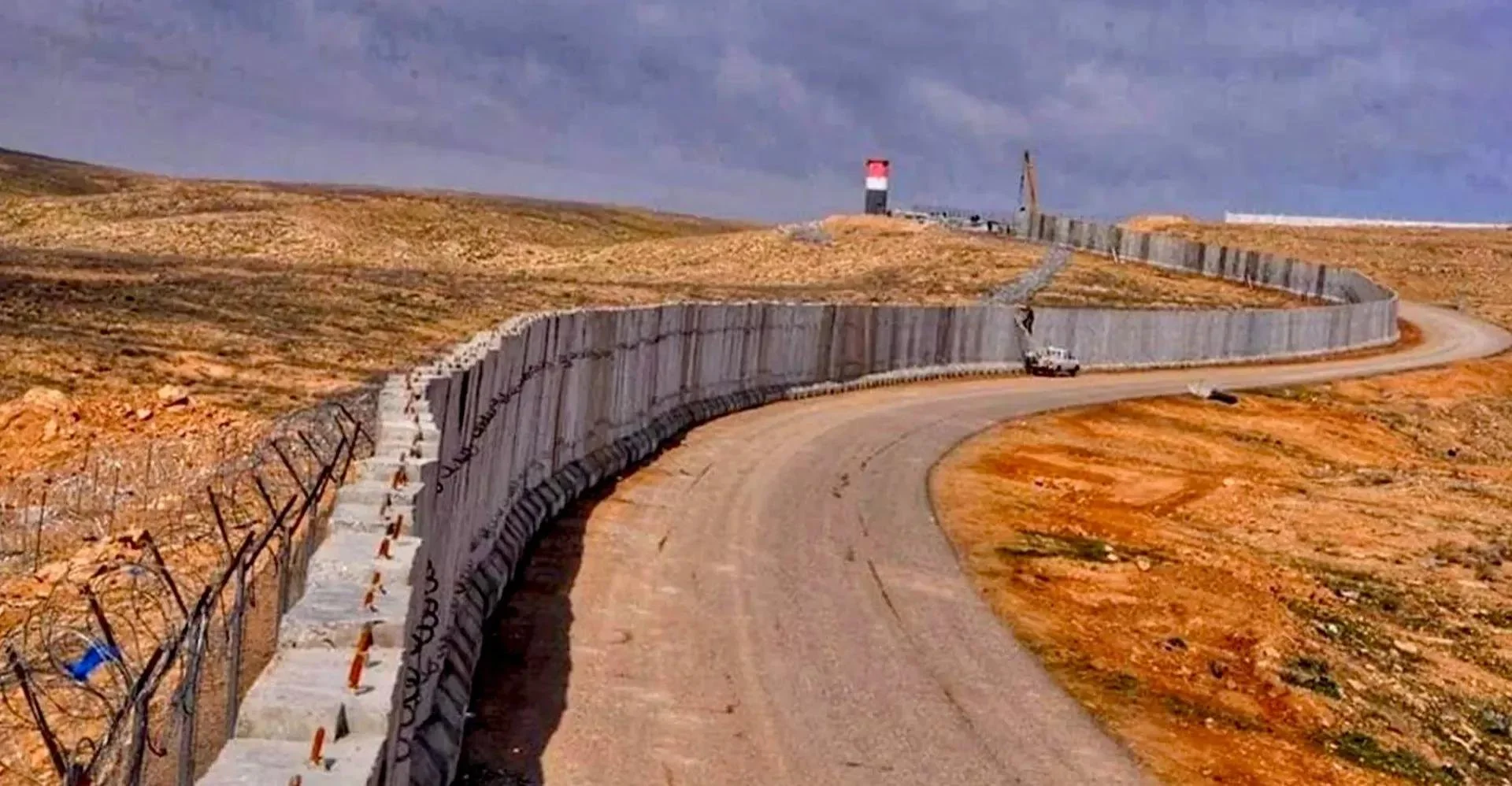
Speaking to Shafaq News, Sabah Al-Numan, spokesperson for the Iraqi Armed Forces, indicated that the concrete wall along the 600-kilometer Iraq-Syria frontier is now about 80% complete. The border has also been reinforced with additional personnel, advanced technical and logistical equipment, and fixed defense lines maintained by both the Iraqi Army and Popular Mobilization Forces (PMF).
''Iraq’s borders with all neighboring states are experiencing the same high level of stability,'' he noted.
Earlier today, PMF confirmed the deployment of its 25th Brigade along the border as part of a broader security plan, intended to support Iraqi forces and strengthen intelligence and field operations.
Muqtada Al-Sadr, leader of Iraq’s Patriotic Shiite Movement (PSM), had previously cautioned against handling the situation in Syria “naively,” urging authorities to secure the borders and reinforce deployments promptly.
The warning comes amid rising tensions in northeastern Syria, where clashes between the Syrian army and the Kurdish-led Syrian Democratic Forces (SDF) left dozens dead or injured and forced thousands of Kurdish families to flee. Meanwhile, Syria’s transitional President Ahmad Al-Sharaa signed a new agreement with the SDF, ending the clashes and paving the way for the group’s integration into state institutions. https://www.shafaq.com/en/Security/Iraq-achieves-total-control-over-Syrian-frontier
“Tidbits From TNT” Wednesday Morning 1-21-2026
TNT:
Tishwash: Iraq attracts investments exceeding $100 billion in 3 years
The National Investment Commission announced on Tuesday that it had achieved investment accomplishments exceeding $100 billion in Iraq during the past three years, noting that it had dealt with more than 850 investment requests for various projects during the past year .
The spokesperson for the authority, Hanan Jassim, said in a statement to the official agency, which was followed by the “Al-Sa’a” network, that “the volume of investments achieved during the past three years amounted to more than 102 billion US dollars, in an indication of rising investor confidence, which paves the way for achieving higher figures during 2026. ”
TNT:
Tishwash: Iraq attracts investments exceeding $100 billion in 3 years
The National Investment Commission announced on Tuesday that it had achieved investment accomplishments exceeding $100 billion in Iraq during the past three years, noting that it had dealt with more than 850 investment requests for various projects during the past year .
The spokesperson for the authority, Hanan Jassim, said in a statement to the official agency, which was followed by the “Al-Sa’a” network, that “the volume of investments achieved during the past three years amounted to more than 102 billion US dollars, in an indication of rising investor confidence, which paves the way for achieving higher figures during 2026. ”
She noted that “during 2025, the Authority dealt with more than 850 investment applications for various projects in the energy, housing, health, education, transportation, and services sectors, which were audited and studied in accordance with the provisions of the applicable investment law and in coordination with the relevant sectoral authorities to obtain the necessary approvals .”
She explained that "the Authority issued and amended about 40 investment licenses for strategic projects that included power generation stations, smart electricity billing projects in Baghdad and a number of governorates, residential complexes, commercial centers, airports, and service projects, in addition to participating in about 30 joint technical and legal committees to address obstacles and expedite the completion of transactions link
************
Tishwashs: Iraq discusses with the World Bank ways to enhance transparency and combat corruption
The head of the Integrity Commission, Mohammed Al-Lami, discussed with a delegation from the World Bank mission in Iraq on Tuesday ways to enhance transparency standards in contracts and projects funded by the World Bank, stressing Iraq’s openness and its joining all international and regional initiatives aimed at confronting and reducing corruption.
The delegation expressed the mission’s desire to conclude a memorandum of understanding with the commission in a way that contributes to strengthening the integrity system and good governance.
The Integrity Commission stated in a statement received by Network 964 that “the head of the Federal Integrity Commission, Dr. (Mohammed Ali Al-Lami), met with a delegation from the World Bank mission in Iraq to discuss ways to enhance joint cooperation in the areas of integrity, transparency and combating corruption, especially in contracts and national projects funded by the Bank.”
The statement added that “Dr. Al-Lami affirmed, during his meeting with Mr. Alan Bacaris, Director of the Integrity Unit at the World Bank, and Mr. Emmanuel Salinas, Special Representative of the World Bank Mission in Iraq and their accompanying delegation, that Iraq welcomes all international and regional initiatives aimed at confronting corruption and reducing its avenues and has taken the initiative to join them,” praising “the areas of cooperation with the World Bank Mission, especially in the field of promoting transparency and preventing and combating corruption.”
For his part, Alan Bacaris, Director of the Integrity Unit at the World Bank, and his accompanying delegation, expressed “his mission’s desire to conclude a memorandum of understanding with the Commission,” praising “the Commission’s steps in the programs implemented by the Iraqi Academy for Combating Corruption, and the benefit to international bodies from the Academy’s experience, commending the endeavor to automate and digitize anti-corruption procedures.”
At the conclusion of the meeting, the head of the commission stressed “the importance of preparing the final draft of the memorandum of understanding and concluding it between the two parties, noting the technical support provided by international organizations, including the World Bank mission and the UNDP
Which contributes to strengthening the integrity and good governance system and supports national efforts aimed at preventing and combating corruption in accordance with best international practices,” pointing out that “one of the commission’s main objectives is to prevent corruption before it occurs and to support investors and protect them from extortion.” link
************
Tishwash: US Envoy to Iraq Calls Corruption the “Disease” Undermining Stability
Mark Savaya says dismantling corruption networks is essential to restoring Iraqi sovereignty and weakening militias.
Mark Savaya, the United States president’s special envoy to Iraq, said on Wednesday that corruption lies at the core of Iraq’s instability and must be confronted decisively if the country is to be stabilized and militias dismantled.
In a statement posted on his official X account, Savaya argued that while militias are often treated as the central problem, they are in fact a byproduct of a deeper and more entrenched system of corruption.
“Militias are a symptom. Corruption is the disease,” he said, stressing that meaningful reform must begin with targeting illicit financial networks.
Savaya said he has detailed knowledge of how corrupt money is channeled through complex structures that extend beyond senior officials.
According to him, illicit funds frequently move through layers of lower-level actors, including family members, friends, guards, drivers, and intermediaries, a system designed to provide insulation and plausible deniability while remaining fully functional.
He described the corruption apparatus as a highly sophisticated and deliberately constructed network that has been active for more than two decades. Savaya said the system has repeatedly bypassed regulations, compliance mechanisms, and international auditing frameworks, allowing it to operate with relative impunity.
According to the US envoy, these corruption networks have played a critical role in financially empowering, protecting, and sustaining Iranian-backed militia groups in Iraq.
He warned that without dismantling these financial lifelines, efforts to restore Iraqi sovereignty and weaken armed groups would remain ineffective.
Savaya emphasized that any serious attempt to stabilize Iraq must focus on shutting down major sources of corrupt funding, including fake payrolls, fraudulent loans, and fictitious assets.
“Without that,” he said, “every other effort will fail.”
His comments come amid ongoing debates within Iraq and among international partners over governance reform, state authority, and the long-term challenge posed by militias and entrenched corruption.
The Twitter post
https://x.com/Mark_Savaya/status/2013841906837364863?s=20
If Iraq is to be fixed, corruption must be confronted first and decisively. Militias are a symptom. Corruption is the disease.
I know in detail how illicit money is channeled. It does not flow only through senior principals. More importantly, it moves through layers of lower level actors such as family members, friends, guards, drivers, and intermediaries.
This structure creates insulation and deniability while keeping the system fully operational. This is a highly complex and deliberately constructed network that has been active for more than two decades. It has successfully bypassed regulations, compliance frameworks, and international auditing mechanisms.
Through this system, Iranian backed militia groups have been financially empowered, protected, and sustained. Any serious effort to stabilize Iraq, restore sovereignty, and dismantle militias must begin with dismantling the corruption networks that finance and protect them.
The sources of massive corrupt money such as fake payrolls, fake loans, and fictitious assets must stop. Without that, every other effort will fail. link
************
Mot: Apparently -- This Really Might Beeeeee the Week!!!!

Mot: Heres One fir Ya!!! ... hmmmmmmm

Seeds of Wisdom RV and Economics Updates Tuesday Evening 1-20-26
Good Evening Dinar Recaps,
Wall Street Slips Toward Three-Week Lows as Tariff Shock Rattles Markets
Trade escalation revives volatility and exposes cracks beneath the rally
Good Evening Dinar Recaps,
Wall Street Slips Toward Three-Week Lows as Tariff Shock Rattles Markets
Trade escalation revives volatility and exposes cracks beneath the rally
Overview
U.S. equity markets slid toward three-week lows as renewed tariff threats from President Donald Trump triggered a sharp shift in investor sentiment. The Dow Jones Industrial Average, S&P 500, and Nasdaq all moved lower as traders rotated out of risk assets and volatility surged across global markets.
Key Developments
Broad Market Decline: All three major U.S. indexes posted notable losses as tariff headlines revived fears of a prolonged trade confrontation.
Risk-Off Rotation: Capital flowed into traditional safe havens while equities and high-beta assets faced sustained selling pressure.
Volatility Spike: Market volatility indicators rose, reflecting uncertainty over trade policy, growth expectations, and geopolitical stability.
Global Spillover: Weakness in U.S. markets echoed across Europe and Asia, reinforcing the interconnected nature of global financial stress.
Why It Matters
Markets had been pricing in relative stability and policy containment. The sudden reintroduction of tariff risk highlights how fragile that confidence remains. Trade conflict acts as a drag on earnings, investment, and global growth — and history shows that sustained equity stress often forces policymakers into corrective action.
Why It Matters to Foreign Currency Holders
For foreign currency holders anticipating revaluation or systemic change:
Equity market stress often precedes currency realignments and policy shifts.
Risk-off environments expose weaknesses in fiat systems built on leverage and confidence.
Trade shocks accelerate discussions around alternative settlement systems, reserve diversification, and monetary reform.
Market instability is not noise — it is often the pressure point where monetary change begins.
Implications for the Global Reset
Pillar 1: Financial Market Stress
Persistent equity weakness signals structural fragility rather than a temporary pullback, increasing the odds of coordinated fiscal or monetary intervention.
Pillar 2: Policy Inflection Risk
As trade tensions suppress growth and markets wobble, central banks and governments may be forced into unexpected pivots — a recurring feature in reset-style transitions.
This is not just a market pullback — it is a stress test of the existing financial order.
This is not just volatility — it’s global finance restructuring before our eyes.
Seeds of Wisdom Team
Newshounds News™ Exclusive
Sources
Reuters — Wall Street falls as tariff threats spark risk-off trading
CNBC — Stocks slide, volatility jumps as trade tensions return to focus
~~~~~~~~~~
Global Market Wrap: Stocks Slip, Dollar Weakens as Safe Havens Gain
Capital rotation signals stress beneath the surface of global markets
Overview
Global financial markets shifted into a defensive posture as equities softened, the U.S. dollar weakened, and investors moved into bonds and traditional safe-haven currencies. Gold prices strengthened as trade tensions and geopolitical uncertainty drove renewed risk aversion across asset classes.
Key Developments
Global Equities Pull Back: Stock markets in the U.S., Europe, and Asia edged lower as investors reassessed growth and trade risks.
U.S. Dollar Weakness: The dollar declined against major currencies, reflecting reduced confidence amid rising policy and geopolitical uncertainty.
Safe Havens Strengthen: Bonds, gold, and defensive currencies attracted inflows as investors sought capital preservation.
Risk Rotation Accelerates: Market behavior suggests portfolio rebalancing away from growth-sensitive assets and toward stability.
Why It Matters
The combination of falling equities and a weaker dollar is a notable signal. Historically, this pattern reflects waning confidence in growth assumptions and policy stability. When investors simultaneously exit risk assets and the reserve currency, it often marks the early stages of deeper systemic stress rather than a routine market pullback.
Why It Matters to Foreign Currency Holders
For foreign currency holders anticipating revaluation or monetary restructuring:
Dollar weakness can precede currency realignments and reserve diversification.
Safe-haven accumulation highlights declining trust in leveraged financial systems.
These rotations often emerge before policy resets, liquidity injections, or structural reforms.
Such market signals align closely with conditions that tend to surface ahead of major monetary transitions.
Implications for the Global Reset
Pillar 1: Reserve Currency Pressure
A weakening dollar alongside rising safe havens points to subtle but growing strain on the traditional reserve system.
Pillar 2: Capital Reallocation
As capital migrates toward hard assets and defensive positions, the foundations of the post-World War II financial order face renewed testing.
This environment reinforces the narrative that global markets are gradually repositioning for a multipolar financial future.
This is not just a market rotation — it’s global finance restructuring before our eyes.
Seeds of Wisdom Team
Newshounds News™ Exclusive
Sources
~~~~~~~~~~
Move Over BRICS: Zambia Accepts Chinese Yuan for Taxes
Africa becomes a new front in China’s currency expansion strategy
Overview
Zambia has become the first African nation to accept tax and royalty payments in the Chinese yuan, marking a significant step in the currency’s internationalization beyond the BRICS framework. Chinese mining companies operating in Zambia are now paying government taxes directly in yuan rather than U.S. dollars, a move confirmed by the Zambian government and central bank.
Key Developments
Yuan Used for Taxes: Chinese mining firms in Zambia have begun paying royalties and taxes in yuan, not dollars — a first for Africa.
Central Bank Confirmation: The Bank of Zambia confirmed that yuan-based payments started in October and are now part of official reserve and payment operations.
Reserve Diversification: Zambia is actively increasing its holdings of foreign currencies, with the yuan taking a growing share.
China’s Africa Footprint: The shift builds on China’s deep economic ties through the Belt and Road Initiative, spanning mining, ports, railroads, airports, and infrastructure projects.
Why It Matters
Accepting taxes in a foreign currency is a powerful signal of trust and structural alignment. Unlike trade settlements, tax payments embed a currency directly into a country’s fiscal system. This move elevates the yuan from a trade currency to a functional component of sovereign finance — a major milestone in de-dollarization dynamics.
Why It Matters to Foreign Currency Holders
For foreign currency holders watching global realignment:
Dollar exclusivity is weakening not just in trade, but in government revenue systems.
Currency diversification at the central bank level often precedes valuation shifts and reserve rebalancing.
Africa’s role as a testing ground suggests de-dollarization is spreading quietly, not through headlines but through infrastructure and taxation.
These are the kinds of structural changes that tend to surface before major monetary transitions.
Implications for the Global Reset
Pillar 1: Fiscal-Level De-Dollarization
When taxes are paid in non-dollar currencies, the dollar’s role as the default sovereign settlement tool erodes.
Pillar 2: Multipolar Currency System
China is extending yuan usage beyond BRICS and into Africa, signaling a broader strategy to normalize multiple reserve and settlement currencies globally.
This is not symbolic — it is operational de-dollarization.
This is not just trade diversification — it’s global finance restructuring before our eyes.
Seeds of Wisdom Team
Newshounds News™ Exclusive
Sources
Watcher.Guru — Move Over BRICS, Zambia’s Government Accepts Chinese Yuan as Taxes
News24 — Zambia accepts taxes in yuan as China pushes currency across Africa
~~~~~~~~~~
Seeds of Wisdom Team RV Currency Facts Youtube and Rumble
Newshound's News Telegram Room Link
RV Facts with Proof Links Link
RV Updates Proof links - Facts Link
Follow the Gold/Silver Rate COMEX
Follow Fast Facts
Seeds of Wisdom Team™ Website
Thank you Dinar Recaps
Seeds of Wisdom RV and Economics Updates Tuesday Afternoon 1-20-26
Good Afternoon Dinar Recaps,
U.S.–Europe Trade Tensions Escalate at Davos
Tariff warnings, Greenland politics, and a fragile global trade order collide
Good Afternoon Dinar Recaps,
U.S.–Europe Trade Tensions Escalate at Davos
Tariff warnings, Greenland politics, and a fragile global trade order collide
Overview
Tensions between the United States and the European Union took center stage at the 2026 World Economic Forum in Davos after U.S. Treasury Secretary Scott Bessent publicly urged European leaders not to retaliate against President Donald Trump’s proposed tariffs tied to the Greenland dispute. The warning comes as global markets show increasing signs of stress and risk aversion.
Key Developments
Davos Intervention: Treasury Secretary Scott Bessent cautioned EU officials that retaliation would risk reigniting a destructive trade war at a time of fragile global growth.
Greenland Factor: The tariff threat is linked to broader geopolitical pressure surrounding Greenland, highlighting how strategic geography is now intersecting with trade policy.
Market Sensitivity: Equity markets, currencies, and commodities have reacted sharply, underscoring how tariff rhetoric alone can move global capital.
Diplomatic Fractures: Despite public calls for restraint, trust between Washington and Brussels appears strained as trade policy becomes increasingly unilateral.
Why It Matters
Escalating trade tensions between two of the world’s largest economic blocs threaten global supply chains, suppress growth, and weaken confidence in multilateral trade frameworks. Even without immediate tariffs, the threat itself is enough to disrupt markets, delay investment, and amplify geopolitical risk.
Why It Matters to Foreign Currency Holders
For those holding foreign currencies in anticipation of higher future valuations:
Trade fragmentation increases pressure on fiat currency stability.
Volatility in the euro and dollar highlights vulnerabilities in the current reserve system.
Periods of trade conflict historically precede currency realignments and revaluations, especially during broader systemic shifts.
This environment reinforces why many currency holders view geopolitical stress as a catalyst rather than a setback.
Implications for the Global Reset
Pillar 1: Trade Fragmentation
The Davos warning underscores a move away from unified global trade toward regional blocs and strategic alliances — a core feature of reset-era restructuring.
Pillar 2: Monetary Confidence Erosion
As trade disputes intensify, confidence in legacy systems weakens, accelerating interest in alternative settlement mechanisms, hard assets, and currency reform.
This is not just diplomacy — it’s structural pressure on the post-World War II economic order.
This is not just trade policy — it’s global finance restructuring before our eyes.
Seeds of Wisdom Team
Newshounds News
Sources
The Guardian — Scott Bessent urges Europe not to retaliate against Trump tariffs
Reuters — Global markets react as tariff tensions rise at Davos
~~~~~~~~~~
Why Gold and Silver Are Soaring While Crypto Slips Under Tariff Pressure
Safe-haven metals surge as trade tensions expose fault lines in risk assets
Overview
Gold and silver prices have surged to new record highs as investors seek safety amid escalating U.S.–EU tariff tensions and broader geopolitical uncertainty. At the same time, cryptocurrency markets have weakened, with Bitcoin, Ethereum, and major altcoins declining as capital rotates out of high-risk assets. This divergence highlights a renewed preference for tangible stores of value during periods of economic and political stress.
Key Developments
1. Precious Metals Attract Safe-Haven Demand
Gold and silver have rallied sharply as investors hedge against tariff escalation, market volatility, and geopolitical risk. Rising uncertainty has reinforced the traditional role of precious metals as defensive assets during periods of instability.
2. Crypto Markets Slide Amid Risk-Off Sentiment
Cryptocurrencies have declined alongside broader risk assets. Bitcoin has fallen below $93,000, while Ethereum dropped under $3,100. The overall crypto market fell more than 2% in the past 24 hours, with SOL, DOGE, and ADA also trending lower.
3. Tariff Tensions Drive Capital Rotation
Renewed tariff threats tied to U.S.–EU trade disputes have increased caution across markets. Investors appear to be reducing exposure to speculative assets and reallocating capital toward metals viewed as protection against policy-driven shocks.
4. Diplomacy Signals Brief Market Relief
President Donald Trump confirmed upcoming trade discussions with European leaders at the World Economic Forum in Davos. While this raised hopes for de-escalation, markets continue to price in elevated risk until concrete outcomes emerge.
Why It Matters
The divergence between precious metals and cryptocurrencies signals a shift in investor psychology. In periods of sustained uncertainty, markets tend to favor assets with long-established roles as stores of value over newer, volatility-prone instruments.
This rotation reflects declining confidence in growth-dependent assets when trade policy and geopolitical stability are in question.
Why It Matters to Foreign Currency Holders
For foreign currency holders anticipating revaluation or reset-driven gains:
Rising gold and silver prices often signal declining confidence in fiat stability.
Sustained safe-haven demand can precede currency realignment or reserve diversification.
Weakness in speculative assets suggests capital is preparing for monetary or structural adjustment rather than growth expansion.
Historically, precious-metal strength has accompanied periods leading into monetary resets or repricing events.
Implications for the Global Reset
Pillar 1: Return to Hard-Asset Confidence
The renewed dominance of gold and silver reflects skepticism toward policy stability, debt expansion, and trade coherence. Hard assets regain prominence when trust in systems weakens.
Pillar 2: Risk Assets Face Structural Headwinds
Crypto and other speculative markets remain sensitive to liquidity conditions and political risk. As tariffs and fragmentation persist, volatility increases, reinforcing the divide between value preservation and growth speculation.
This shift signals preparation — not panic — within the global financial system.
This is not just a metals rally — it’s a warning that markets are repositioning for systemic change.
Seeds of Wisdom Team
Newshounds News
Sources
~~~~~~~~~~
BRICS Digital Currency Link Signals 2026 Acceleration in De-Dollarization
CBDC interoperability proposal highlights Global South push to reshape trade and payments
Overview
A new proposal from India’s Reserve Bank to link BRICS central bank digital currencies (CBDCs) is emerging as one of the clearest signals yet that de-dollarization efforts are entering a more structured phase in 2026. The initiative, expected to be placed on the agenda of the BRICS summit hosted by India later this year, aims to facilitate cross-border trade and tourism payments while reducing reliance on the U.S. dollar.
Key Developments
1. RBI Pushes CBDC Interoperability to Summit Level
India’s central bank has recommended formally discussing a BRICS digital currency link at the 2026 summit. If adopted, this would mark the first coordinated attempt to connect the CBDCs of Brazil, Russia, India, China, South Africa, and newer members at a bloc-wide level.
2. Building on 2025 Rio Declaration
The proposal expands on a 2025 BRICS declaration in Rio de Janeiro that called for interoperability between national payment systems. The current framework represents a shift from concept to implementation, signaling that BRICS nations are preparing digital infrastructure for real trade usage.
3. Trade Imbalances and Governance Take Center Stage
Officials acknowledge that interoperability alone is insufficient. Governance rules, settlement mechanisms, and solutions for trade imbalances remain unresolved. Previous local-currency trade experiments, particularly between Russia and India, exposed practical limits without robust settlement frameworks.
4. FX Swaps and Periodic Settlement Considered
Central banks are exploring bilateral foreign exchange swaps and periodic settlement schedules to manage imbalances. These mechanisms would help prevent the accumulation of unusable local currency balances while maintaining sovereignty over monetary policy.
Why It Matters
This proposal reflects a structural evolution in global payments. Rather than replacing the dollar outright, BRICS nations are building parallel systems that reduce dependence on correspondent banking networks and U.S.-centric settlement rails.
The focus on CBDC interoperability suggests that future trade flows may bypass traditional financial intermediaries altogether.
Why It Matters to Foreign Currency Holders
For foreign currency holders anticipating revaluation or reset-driven gains:
Digital settlement frameworks often precede currency repricing.
Reduced dollar reliance increases flexibility for regional currency realignment.
Trade-driven digital infrastructure strengthens the case for managed revaluation rather than speculative appreciation.
This development reinforces the idea that currency change is being engineered through plumbing, not proclamations.
Implications for the Global Reset
Pillar 1: Payments Before Currency Replacement
BRICS is prioritizing payment interoperability rather than announcing a new reserve currency. This incremental approach minimizes disruption while steadily weakening dollar dominance in trade settlement.
Pillar 2: Global South Trade Reorganization
Trade projections show BRICS+ growth outpacing traditional blocs. As trade reorganizes, digital payments become the backbone supporting a multipolar monetary system.
The reset is advancing through infrastructure — quietly, technically, and deliberately.
This is not the launch of a new currency — it is the rewiring of how global trade settles value.
Seeds of Wisdom Team
Newshounds News
Sources
Watcher.Guru — BRICS Digital Currency Link & 2026 Trading Show De-Dollarization Shift
Reuters — India’s central bank proposes linking BRICS digital currencies
~~~~~~~~~~
Seeds of Wisdom Team RV Currency Facts Youtube and Rumble
Newshound's News Telegram Room Link
RV Facts with Proof Links Link
RV Updates Proof links - Facts Link
Follow the Gold/Silver Rate COMEX
Follow Fast Facts
Seeds of Wisdom Team™ Website
Thank you Dinar Recaps
Iraq Economic News and Points To Ponder Tuesday Afternoon 1-20-26
The Banking Sector And The New Public
The past year, 2025, witnessed tireless activity at various levels in the pursuit of achieving the desired banking reform in Iraq. On the one hand, the outgoing government made strenuous efforts to reform the state-owned banks, which included merging some banks and making the decision to split Al-Rafidain Bank into two banks. These measures were described as being part of the reform of the state-owned banking sector.
The Banking Sector And The New Public
The past year, 2025, witnessed tireless activity at various levels in the pursuit of achieving the desired banking reform in Iraq. On the one hand, the outgoing government made strenuous efforts to reform the state-owned banks, which included merging some banks and making the decision to split Al-Rafidain Bank into two banks. These measures were described as being part of the reform of the state-owned banking sector.
On the other hand, the Central Bank of Iraq, as the supervisory and regulatory body for the work of private (national) banks, played a pivotal role in advancing the reform of this sector, by taking important steps during 2025, the most prominent of which was bringing in the global company “Oliver Wyman”, which is one of the consulting companies specializing in the development of banking and financial systems.
This contract aims to elevate the private banking sector to meet international standards, especially since Iraq is about to enter a phase of developmental and reconstruction renaissance that requires a robust banking sector capable of meeting the needs of international companies wishing to invest in Iraq, after the wars and crises that the country has gone through that have deeply affected its economic structure.
Oliver Wyman established strict conditions and clear requirements for achieving banking reform, obligating banks to comply and emphasizing that those lagging behind or failing to comply could be forced out of the banking sector. These conditions included: increasing bank capital, encouraging bank mergers, and adhering to international standards for governance, solvency, and risk management.
According to the available data, most banks have responded to these requirements and agreed to bear the costs of consultations and repairs.
This raises a fundamental question commensurate with the scale of this response:
After the banks have fulfilled their obligations, what rights and facilities should they receive to enable them to provide banking services that meet the standards of international banks?
Banking experts believe that successful banking reform is a reciprocal process. After banks commit to the new standards, there is an urgent need for an incentive package to help them conduct their banking activities efficiently, especially since a large portion of banks are still subject to various sanctions.
These stimulus packages include financial and funding support, technical assistance and institutional capacity building, regulatory flexibility and a phased approach to implementing requirements, infrastructure and technological system reforms, and opportunities for growth and regional and international partnerships.
The success of banking reform depends not only on enforcement but also on integrating obligations with rights and building a banking environment capable of supporting comprehensive economic development in Iraq.
Finally, reforming the banking sector in Iraq cannot be measured solely by the number of regulations or the stringency of the conditions, but rather by its ability to become a genuine engine for economic development.
Banks that have responded to the reform requirements and complied with international standards, in turn, need a supportive regulatory environment and practical incentives that enable them to fulfill their natural role in financing, investment, and driving economic growth.
Successful banking reform is a balanced partnership between the regulatory authority and the banks, based on the exchange of obligations and rights, a phased implementation, and addressing structural challenges, foremost among them sanctions, weak infrastructure, and limited financing tools. Without this, reform could transform from an opportunity for advancement into a burden that hinders the sector's effectiveness.
With the start of a new year, the opportunity remains to build a modern, robust Iraqi banking sector that is integrated into the global financial system and capable of meeting the requirements of reconstruction and sustainable development, provided that the reform process is completed with a comprehensive vision that balances discipline and empowerment, and oversight and incentives, in a way that serves the national economy and enhances confidence in the banking system https://alsabaah.iq/126635-.html
The Caretaker Government Issues Several Decisions, Including The Establishment Of Water Treatment Plants.
Today 20:08 The caretaker cabinet issued several decisions on Tuesday, including the establishment of water treatment plants in Basra. A statement from the cabinet's media office ,
received by Al-Maalomah News Agency, indicated that "the cabinet directed the Ministry of Planning to prepare detailed reports on the size and costs of projects included in the plan, whether self-funded or through loans, from 2005 to 2025. The results will be presented to the cabinet for evaluation of public spending." The statement
added that "the cabinet approved setting the price of surplus wheat intended for export at between 415,000 and 420,000 Iraqi dinars per ton, taking into account global market prices. Sales will be conducted from the General Company for Grain's warehouses in Nineveh and Salah al-Din governorates. The cabinet also approved financing the outstanding payments owed to seed producers for 2024 by supplying them with available seeds from the warehouses in lieu of their debts, thus ensuring the continuation of the 2025 agricultural plan."
He noted that "the Council granted the authority to disburse funds for contracts with the Korean company Daewoo related to the infrastructure of the Grand Faw Port, directing the Ministry of Transport to prepare a detailed technical study and cost estimate in coordination with the Air Force before awarding the contract. In Basra, the Council approved the establishment of water treatment plants on the Shatt al-Arab to secure drinking water for the residents of the Al-Baradhiya area, with their costs to be included within the recovered petroleum expenditures for the development of the Zubair field."
He continued, "The Council corrected the gas calculation process to be in dry cubic meters instead of cubic feet, and amended previous decisions related to obligating the Ministry of Oil to purchase refined petroleum products, leaving the determination of investment periods to future technical discussions."
The statement concluded, "The Council approved the continuation of spending by the Ministries of Finance and Planning on completed investment projects according to available liquidity, while allowing the issuance of necessary spare parts orders not exceeding 25% of the contract value, to ensure that vital projects do not stop until the federal budget is approved." LINK
US Official: We Are In An "Active War" With Venezuela For Control Of Its Oil.
January 19, 2:25 PM Information/Follow-up… US Senator Rand of Kentucky asserted that the United States is in an active war with Venezuela to control its oil.
Paul told NBC: "This is an act of war... aimed at continuing to get their oil. It's an ongoing war for the distribution of that oil... I still hope the crisis will be resolved, but we are still in an active war with Venezuela."
Rand added that "the United States has imposed a complete naval blockade on the Venezuelan coast and deployed hundreds of warships off its shores." End/25 LINK
Moscow: The US "Peace Council" Will Not Replace The United Nations
January 19, 21:00 Information/Follow-up...Vladimir Dzhabarov, head of the Russian Federation Council's Committee on the Protection of State Sovereignty, said that the "Peace Council" proposed by US President Donald Trump regarding Gaza would not be able to replace the United Nations.
In a post on Telegram, Japarov stressed that the United Nations is indispensable despite its flaws, asserting that any new council operating according to the principles of a semi-closed club will not be able to address the root causes of conflicts.
He noted that Trump had repeatedly criticized the United Nations and recently signed a memorandum withdrawing the United States from 31 UN agencies, but stressed that the UN had maintained a balance between the two superpowers, the Soviet Union and the United States, throughout the 40 years of the Cold War, and remained the most effective tool the international community possessed thanks to the veto mechanism in the Security Council.
Japarov ruled out the possibility of Trump withdrawing from the UN Security Council, explaining that Washington benefits from the location of the UN headquarters on its territory to achieve its political goals, and that the success of the "Peace Council" depends on the results of the Republicans in the midterm congressional elections scheduled for next November.
He revealed that the US administration expects the role of the "Peace Council" to expand from the reconstruction of the Gaza Strip after the conflict between Hamas and Israel to later include the settlement in Ukraine and Venezuela, and perhaps become an alternative to the United Nations in other hotspots.
He explained that the council included high-level figures to give it weight, including Russian President Putin, Brazilian President Lula da Silva, Kazakh President Kassym-Jomart Tokayev, and Hungarian Prime Minister Viktor Orban, along with leaders from Pakistan, India, Turkey, and other European countries.
Japarov urged caution regarding the idea of a "Peace Council," warning against the inclusion of controversial figures on its executive committee, such as former British Prime Minister Tony Blair, who supported the 2003 US-led invasion of Iraq under the pretext of its possession of weapons of mass destruction. (End of 25) LINK
Al-Sudani To The SDF Commander: The Need To Consolidate Dialogue And Prevent Terrorists From Tampering With The Security Of Syria And Iraq
Time: 2026/01/20 23:25:0 Politics:Al-Furat News} Prime Minister Mohammed Shia Al-Sudani made a phone call this evening, Tuesday, to Mazloum Abdi, the commander of the Syrian Democratic Forces.
The most concise and informative news can be found on the Al-Furat News Telegram channel. To subscribe, click here.
The Prime Minister's Media Office stated in a statement, a copy of which was received by Al-Furat News, that: "During the call, developments in Syria were discussed, in light of the latest security developments and events, and their repercussions on regional security and stability and the situation in Iraq."
Al-Sudani stressed "the need to consolidate dialogue at this critical stage, in a way that guarantees the rights of all Syrian components, preserves the unity and security of the country, and prevents terrorists from escaping from prisons and tampering with the security and stability of Syria and Iraq and the general security in the region." LINK
Gold Prices Climb In Baghdad, Erbil Markets
Economy & Business 2026-01-20 04:25 Shafaq News– Baghdad/ Erbil On Tuesday, gold prices edged higher in Baghdad and Erbil markets, according to a survey by Shafaq News Agency.
Gold prices on Baghdad's Al-Nahr Street recorded a selling price of 982,000 IQD per mithqal (equivalent to five grams) for 21-carat gold, including Gulf, Turkish, and European varieties, with a buying price of 978,000 IQD. The same gold had soldfor 965,000 dinars on Monday.
The selling price for 21-carat Iraqi gold was 952,000 IQD, with a buying price of 948,000 IQD.
In jewelry stores, the selling price per mithqal of 21-carat Gulf gold ranged between 980,000 and 990,000 IQD, while Iraqi gold sold for between 950,000 and 960,000 IQD.
In Erbil, 22-carat gold was sold at 1.034 million IQD per mithqal, 21-carat gold at 987,000 IQD, and 18-carat gold at 846,000 IQD. https://www.shafaq.com/en/Economy/Gold-prices-climb-in-Baghdad-Erbil-markets-8-6
“Tidbits From TNT” Tuesday 1-20-2026
TNT:
Tishwash: Shocking photos reveal Saddam Hussein with Trump and Savaya during their meeting! What's going on and what's being planned for Iraq?
Mark Savaya, the special envoy to Iraq, posted a picture of himself with US President Donald Trump on Tuesday (January 20, 2026), which sparked widespread interaction on social media, due to a striking detail that appeared in front of Trump during the meeting.
The image showed an Iraqi coin bearing the image of former Iraqi President Saddam Hussein placed on the table in front of Trump, in a scene described by observers as unusual and carrying symbolic connotations.
TNT:
Tishwash: Shocking photos reveal Saddam Hussein with Trump and Savaya during their meeting! What's going on and what's being planned for Iraq?
Mark Savaya, the special envoy to Iraq, posted a picture of himself with US President Donald Trump on Tuesday (January 20, 2026), which sparked widespread interaction on social media, due to a striking detail that appeared in front of Trump during the meeting.
The image showed an Iraqi coin bearing the image of former Iraqi President Saddam Hussein placed on the table in front of Trump, in a scene described by observers as unusual and carrying symbolic connotations.
Savaya did not comment on the reason for the coin's presence or its background, simply stating, "It was a wonderful day." This opened the door to interpretation and questions about whether the image was intentional or accidental, especially given the sensitivity surrounding symbols associated with Iraq and its political history in the American context. link
Tishwash: Saddam Hussein is "present" on Trump and Savaya's table... Coded messages reshape the contours of the American role in Iraq
another version
A photo posted by the US Special Envoy to Iraq, Mark Savaya, has sparked a storm of political speculation about the nature of the next phase in the relationship between Washington and Baghdad, after he appeared in a meeting with President Donald Trump accompanied by an old Iraqi banknote bearing the image of former President Saddam Hussein .
Although the date the photo was taken could not be definitively verified, the timing of its publication and its content clearly indicate that it reflects the recent trends of the US administration towards the Iraqi issue.
Savaya commented on the photo, describing the meeting as "a great day with a great man," in a statement that observers considered an official declaration of the beginning of an era of "shock diplomacy" which he is leading with a direct presidential mandate that goes beyond traditional diplomatic frameworks.
Political analysts believe that the presence of the “five dinar” denomination, which has been abolished for decades, on the table of discussion between the president and his special envoy cannot be considered a mere coincidence. Rather, it is a coded visual message directed to the Iraqi interior and regional powers, symbolizing Washington’s desire to see a “strong central state” capable of controlling weapons and securing the borders, in an explicit exposure of the current state of security fragmentation and the dominance of armed factions.
This move reinforces the influence of Savaya, who was appointed in October 2025 with a primary mission focused on undermining the influence of pro-Iranian armed groups and drying up their sources of funding, while simultaneously working to open up major investment opportunities for American companies in the energy and infrastructure sectors, which puts Baghdad before a real test of balancing its international relations.
It is expected that Savaya will adopt a similar approach to what Tom Brack did in recent regional files, where this method is based on “stirring up stagnant waters” through major deals conditional on comprehensive political and security stability, especially what happened in Syria.
While Savaya’s mission is described as extremely complex due to the deep-rooted opposition to Washington in Iraqi decision-making centers, his direct line of communication with the White House gives him the ability to exert unprecedented maximum pressure.
This public appearance, with symbols from Iraq’s past, confirms that the US administration is prepared to cross all traditional red lines and political sensitivities in order to redraw the balances in the region and impose a new reality that ends the state of stagnation that has characterized US foreign policy in Iraq for many years.
***************
Tishwash: Six measures to protect gold and regulate its market: Mazhar Saleh explains Iraq's vision for national wealth.
The Prime Minister’s financial advisor, Mazhar Muhammad Saleh, outlined six key measures on Monday to regulate the gold market, noting that the Gold City project is a strategic initiative to protect one of the nation’s greatest assets.
Saleh said in a press statement: “The global rise in gold prices has not led to a decline in demand for it in the local market, but rather has contributed to changing its function from an ‘ornamental commodity’ to a ‘savings tool and protection of value,’ stressing the ‘need to adopt a unified national mark and the obligation of modern technical examination to protect household savings.’”
He added that "this functional transformation of the yellow metal makes quality control and government oversight an urgent economic and social necessity, as it protects families' wealth and enhances confidence in the market," indicating that "quick and low-cost procedures, such as the unified national marking and rapid technical inspection, represent sufficient means to restore discipline and reduce manipulation."
Saleh pointed out that “gold remains a symbol of family security and savings for generations in the Iraqi social memory, and with rising prices, it has become part of the tools of unofficial monetary policy, as it is a store of value parallel to the dinar,” noting that “regulating the market is not a formal procedure, but rather a basic condition for building confidence and protecting national wealth.”
Saleh called for "a comprehensive reform of the gold market system, through the adoption of a unified and mandatory Iraqi mark that includes (carat, testing authority, and year of mark), while criminalizing the trading of unmarked gold," stressing "the importance of strengthening oversight through field testing using modern technologies such as (XRF), which reveals the truth about gold immediately without causing any damage to the pieces."
The financial advisor added that "the next stage requires regulating gold smelting and import operations through workshop licensing and tightening border inspection, as well as establishing a national register for gold traders and adopting unified official invoices to reduce undocumented trading," noting that "empowering the consumer through awareness campaigns and effective reporting mechanisms represents a fundamental pillar in this system."
Saleh concluded his remarks by saying: “The institutional completion of the ‘City of Gold’ project has become an urgent necessity, as it represents the official incubator for protecting this great national wealth and providing the highest standards of legal and professional protection for it.” link
**************
Mot: . Best Kids Menu!!!!

Mot: . Truth be Told -- hmmmmmmmm!!! directions

Seeds of Wisdom RV and Economics Updates Tuesday Morning 1-20-26
Good Morning Dinar Recaps,
Iran and Venezuela — Similar Look, Different Reality: Do Your Research
Two weak currency visual snapshots, but very different economic stories behind the numbers
Good Morning Dinar Recaps,
Iran and Venezuela — Similar Look, Different Reality: Do Your Research
Two weak currency visual snapshots, but very different economic stories behind the numbers
Overview
Iran’s rial and Venezuela’s bolívar both appear nearly worthless on USD converters — often rounding to zero or showing huge numerical values. At a glance, they look the same. But the underlying causes are fundamentally different. One is a consequence of prolonged inflationary collapse and hyperinflation, the other largely stems from sanctions, restricted foreign exchange access, and structural economic constraints rather than classic hyperinflation cycles.
Key Developments
1. Venezuela’s Bolívar Collapse Was Driven by Hyperinflation
Venezuela endured one of the world’s most severe hyperinflation episodes in recent history, stretching back several years as the bolívar spiraled in value due to runaway price increases, currency devaluations, and a collapse in economic output and confidence. The IMF notes persistent triple-digit inflation figures and deep economic contraction.
2. Iran’s Rial Is Weakened by Sanctions and FX Scarcity
Iran’s currency has plummeted on open markets to prices well above one million rials per USD, reflecting dire foreign currency shortages, strict U.S. and international sanctions, and limited access to global financial systems. This depreciation is not classic hyperinflation driven by runaway domestic money printing alone, but rather external pressure, scarcity, and multiple exchange rate dysfunctions.
3. A Low Converter Value Is a Technical Reflection, Not a Reset Signal
When currencies become so devalued that digital converters display “$0.00” for a unit of local money, that’s a rounding artifact — not evidence of parity, revaluation, or reset. It simply reflects how deeply the local currency has lost purchasing power in global terms.
4. Policy and Structural Differences Matter More Than Zeros
Venezuela’s crisis was rooted in policy-driven hyperinflation — massive money printing to cover fiscal deficits, extreme price controls, and collapse of oil revenue.
Iran’s situation is tied to extended sanctions, capital controls, restricted FX access, and geopolitical isolation, which depress foreign currency inflows and erode market confidence.
Why It Matters to Currency Holders
For those watching currency movements for reset or revaluation implications:
Superficial similarity in exchange rate figures does not imply common outcomes.
Venezuela’s bolívar trajectory was shaped by decades of hyperinflation and economic collapse — not a reset waiting to happen.
Iran’s rial, though extremely weak, reflects external constraints, not the same kind of monetary breakdown seen in hyperinflation crises.
A low converter value alone is not a signal of an imminent revaluation, reset, or parity event.
Understanding the drivers behind currency weakness — not just the headline number — is critical to contextual analysis and realistic expectations.
Implications for the Global Reset
This comparison underscores a broader point in global currency analysis:
Visual indicators are not substitutes for structural fundamentals.
Seeing zeros on a converter does not equate to approaching parity or imminent systemic revaluation — it reveals distortion, dysfunction, or policy pressures. True reset conditions require coordinated systemic shifts, not just numeric quirks.
This isn’t just about zeroes on a screen — it’s about economics vs. appearances.
Sources
Reuters — Venezuelan banks to sell $300M in dollars; bolivar weakened 83% and inflation accelerates
IMF — Venezuela economic profile, inflation and macroeconomic data
Iran’s economics: Explaining the weak rial and rising inflation — The National
Iran’s Rial All but Vanishes on Currency Screens as Economic Crisis Deepens
~~~~~~~~~~
Gold Surges to $4,719.60 on COMEX as Confidence in Fiat Systems Erodes
Safe-haven demand accelerates amid geopolitical stress and monetary uncertainty
Overview
Gold prices surged to $4,719.60 on COMEX, marking another historic high as investors continue rotating out of risk assets and fiat-dependent instruments. The move reflects intensifying concern over geopolitical conflict, trade fragmentation, debt sustainability, and the long-term credibility of existing monetary frameworks.
Key Developments
1. Gold Hits New Record on COMEX
The latest COMEX pricing shows gold trading at $4,719.60, underscoring sustained demand rather than a short-lived spike. Futures market positioning suggests institutional participation alongside central bank accumulation.
2. Safe-Haven Demand Continues to Build
Gold’s rise comes as markets face heightened volatility driven by tariff threats, geopolitical disputes, and policy uncertainty. Investors are increasingly seeking assets outside the traditional debt-based financial system.
3. Currency and Bond Markets Show Stress Signals
Persistently high sovereign debt levels, rising military expenditures, and narrowing central bank policy flexibility are pressuring confidence in long-term fiat stability. Gold is responding as a neutral reserve asset with no counterparty risk.
4. Central Banks Remain Net Buyers
Ongoing central bank gold accumulation reflects a strategic shift toward reserve diversification, particularly among non-Western and emerging economies seeking insulation from sanctions and financial leverage.
Why It Matters
Gold’s move to record territory is not driven by speculation alone. It reflects a structural repricing of risk, where trust in policy coordination, fiscal discipline, and monetary predictability is weakening.
Historically, sustained gold rallies coincide with transitions in the global monetary order, not merely inflation cycles.
Why It Matters to Foreign Currency Holders
For foreign currency holders watching for reset or revaluation conditions:
Rising gold prices signal declining confidence in fiat purchasing power.
Gold strength often precedes currency realignment, repricing, or restructuring.
Nations with gold-backed credibility or reserve leverage may gain positioning advantages during systemic transitions.
Gold does not predict timing — but it reflects directional pressure within the system.
Implications for the Global Reset
Pillar 1: Monetary Trust Is Shifting
Gold’s surge suggests markets are reassessing what constitutes reliable money. Trust is migrating away from promises and toward tangible reserves.
Pillar 2: Reserve Diversification Accelerates
As geopolitical and financial fragmentation deepens, gold increasingly functions as a neutral settlement anchor in a multipolar world.
This is not a panic signal — it is a repricing of monetary reality.
Gold is not just rising — it is being revalued against a changing system.
Seeds of Wisdom Team
Newshounds News™ Exclusive
Sources
~~~~~~~~~~
🌱 A Message to Our Currency Holders🌱
If you’ve been holding foreign currency for many years, you were not foolish.
You were not wrong to believe the global financial system would change.
What failed was not your patience — it was the information you were given.
For years, dates, rumors, and personalities replaced facts, structure, and proof. “This week” predictions created cycles of hope and disappointment that were never based on how currencies actually change.
That is not your failure.
Our mission here is different: • No dates • No rates • No hype • No gurus
Instead, we focus on:
• Verifiable developments • Institutional evidence
• Global financial structure • Where countries actually sit in the process
Currency value changes only come after sovereignty, trade, banking, settlement systems, and fiscal coordination are in place. History and institutions confirm this sequence.
You will see silence. You will see denials. That is not delay — that is discipline.
Protect your identity. Organize your documents. Verify everything.
Never hand your discernment to anyone who cannot show proof.
You deserve truth — not timelines.
Seeds of Wisdom Team
Newshounds News
~~~~~~~~~~
Seeds of Wisdom Team RV Currency Facts Youtube and Rumble
Newshound's News Telegram Room Link
RV Facts with Proof Links Link
RV Updates Proof links - Facts Link
Follow the Gold/Silver Rate COMEX
Follow Fast Facts
Seeds of Wisdom Team™ Website
Thank you Dinar Recaps
Iraq Economic News and Points To Ponder Tuesday Morning 1-20-26
Within A Week, Trading On The Iraqi Stock Exchange Exceeded One Billion Dinars.
Today 15:10 Economy The Iraq Stock Exchange announced on Tuesday that shares worth more than one billion dinars were traded last week. The exchange stated in a report, which was reviewed by Al-Maalomah News Agency, that "69 companies saw their shares traded last week, while 25 companies did not trade due to a mismatch between buy and sell orders. Trading remains suspended for 10 companies out of the 104 listed on the exchange due to their failure to submit disclosures."
Within A Week, Trading On The Iraqi Stock Exchange Exceeded One Billion Dinars.
Today 15:10 Economy The Iraq Stock Exchange announced on Tuesday that shares worth more than one billion dinars were traded last week. The exchange stated in a report, which was reviewed by Al-Maalomah News Agency, that "69 companies saw their shares traded last week, while 25 companies did not trade due to a mismatch between buy and sell orders. Trading remains suspended for 10 companies out of the 104 listed on the exchange due to their failure to submit disclosures."
He added that "the number of shares traded reached 1.27 billion, a decrease of 78 percent compared to the previous week, with a financial value of 1.713 billion dinars, a decrease of 69 percent compared to the previous week, through the execution of 2,554 transactions."
He pointed out that "the ISX60 index closed at 984.54 points, registering a decrease of 1.353 percent from its closing in the previous session."
He explained that "the number of shares purchased by non-Iraqi investors last week reached 50 million shares with a financial value of 14 million dinars through the execution of three transactions, while the number of shares sold by non-Iraqi investors reached three million shares with a financial value of 16 million dinars through the execution of 19 transactions."
It is worth noting that the Iraq Stock Exchange holds five trading sessions weekly from Sunday to Thursday, and lists 104 Iraqi joint-stock companies representing the banking, telecommunications, industry, agriculture, insurance, financial investment, tourism, hotels, and services sectors. End 25 LINK
Parliamentary Warnings Of A Political Crisis Due To The Large Number Of Presidential Candidates.
Today 14:20 The Information Agency / Baghdad… MP Sami Oshana warned on Tuesday against the scenario of Kurdish forces presenting multiple candidates for the presidency to parliament, indicating that this could complicate the political landscape.
Oshana told the Information Agency that “discussions between the two Kurdish parties are still ongoing and have not yet reached a final agreement on a presidential candidate,” explaining that “multiple candidates will lead to division within parliament and hinder the decision-making process.”
He added that “the next phase requires a clear consensus to avoid a new political crisis,” stressing that “delaying an agreement opens the door to unforeseen possibilities.” The presidential candidate position remains undecided, given the ongoing Kurdish disagreements over agreeing on a single candidate, which portends further complications in the political scene in the coming period. End / 25 LINK
Dollar Exchange Rates Rise In Baghdad
Time: 2026/01/20 Readings: 390 times
{Economic: Al-Furat News} The exchange rate of the US dollar rose this morning, Tuesday, in the markets of the Iraqi capital, Baghdad. The prices were as follows...
The selling price was 148,250 dinars for 100 dollars, while the buying price was 147,250 dinars for 100 dollars. LINK
International Monetary Fund: Average Oil Price In 2026 At $62.13 Per Barrel
Time: 2026/01/19 17:47:32 Readings: 105 times {Economic: Al-Furat News} The International Monetary Fund expects the average price of oil during 2026 to be around $62.13 per barrel, with a slight increase to $62.17 in 2027.
This came according to a report published by the Fund on Monday regarding the prospects for the global economy during 2026 and 2027.
The fund indicated in its report that it expects a further decline in oil prices due to "weak global demand growth versus strong supply growth".
It is worth noting that the IMF's Director of Communications, Julie Kozak, stated last January that the Fund does not yet see a significant impact of the situation in Venezuela and Iran on oil prices. LINK
Oil Prices Rise, With Brent Crude Reaching $64 A Barrel.
Time: 2026/01/20 08:10:30 Reading: 45 times {Economic: Al-Furat News} Oil prices rose on Tuesday after better-than-expected Chinese economic growth data boosted optimism about demand, while markets also monitored President Donald Trump's threats to increase US tariffs on European countries due to his desire to buy Greenland.
Brent crude futures rose 19 cents, or 0.3%, to $64.13 a barrel The price of the U.S. West Texas Intermediate crude oil contract for February, which expires on Tuesday, rose by 25 cents, or 0.4%, from Friday's close to $59.69. LINK
Gold And Silver At Record Highs
Time: 2026/01/20 08:20:11 Readings: 105 times {Economic: Al-Furat News} Gold and silver traded near record levels on Tuesday, as US President Donald Trump’s threats to annex Greenland deteriorated global sentiment and triggered a rush towards safe-haven assets.
Spot gold rose 0.1% to $4,675.32 an ounce as of 03:36 GMT, after hitting a record high of $4,689.39 in the previous session. U.S. gold futures for February delivery climbed 1.9% to $4,680.30 an ounce.
Spot silver fell 1.4% to $93.33 an ounce, after hitting a record high of $94.72 earlier in the session. Among other precious metals, spot platinum fell 1.8% to $2,331.20 an ounce, while palladium dropped 2% to $1,804.15. LINK
Gold And Silver Hit Record Highs
Time: 2026/01/19 Reading: 90 times {Economic: Al-Furat News} Gold and silver prices recorded new record levels on Monday, driven by increased demand for safe-haven assets, amid escalating trade tensions following US President Donald Trump's threat to impose additional tariffs on European countries over the Greenland dispute.
Spot gold rose 1.5% to $4,663.37 an ounce after hitting an all-time high of $4,689.39, while U.S. gold futures for February climbed 1.6% to $4,669.90 an ounce.
Silver saw a strong jump, with its spot price rising 3.3% to $92.93 an ounce, after hitting a record high of $94.08.
Prices of other precious metals also rose, with platinum climbing 0.9% to $2,348.32 an ounce and palladium rising 0.5% to $1,808.46 an ounce. LINK
Iraq’s Currency In Circulation Exceeded 93T Dinars In October 2025
2026-01-19 Shafaq News– Baghdad Currency in circulation in Iraq rose by 1.604 trillion dinars in October 2025, pushing the total above 93 trillion dinars, according to figures released Monday by the Central Bank of Iraq.
The data showed that net currency in circulation climbed to 93.789 trillion dinars in October, up from 92.185 trillion dinars in September. During the same period, total currency issued reached 101.015 trillion dinars, while cash held inside commercial banks stood at 7.226 trillion dinars.
The Central Bank explained that issued currency includes all banknotes and coins printed and released into the market, encompassing both paper and metal denominations circulating outside its vaults. It noted that the continued expansion of cash held outside the banking system, alongside comparatively low bank reserves, indicates a preference among citizens to keep money in cash rather than deposit it in banks.
The bank warned that this pattern weakens financial intermediation and poses challenges to overall financial stability, as large volumes of liquidity remain outside formal channels.
The figures were released shortly after the Central Bank reported a widening fiscal gap in 2025. Public revenues reached 104.434 trillion dinars ($72.0 billion) in the first ten months of the year, while expenditures totaled 115.535 trillion dinars ($79.7 billion), meaning government spending exceeded income over the same period.
https://www.shafaq.com/en/Economy/Iraq-s-Currency-in-circulation-exceeded-93T-dinars-in-October-2025
Oil Gains On Weak Dollar As Investors Track Greenland Row
Economy & Business Oil Prices 2026-01-20 Shafaq News Oil prices edged up on Tuesday, bolstered by a weaker dollar, while markets watched President Donald Trump's threats of higher U.S. tariffs on European nations over his desire to buy Greenland.
Brent futures rose 15 cents, or 0.2%, to $64.09 a barrel at 0430 GMT. The U.S. West Texas Intermediate crude contract for February, which expires on Tuesday, was up 14 cents, or 0.2%, to $59.58.
The more actively-traded WTI March contract gained 6 cents, or 0.1%, to $59.40. WTI contracts did not settle on Monday due to the U.S. Martin Luther King Jr. Day holiday.
"A weaker U.S. dollar provided some support to oil and the broader commodities complex," said ING commodities strategists on Tuesday. A weaker greenback makes dollar-denominated oil contracts cheaper for holders of other currencies.
Prices have held up relatively well amid a broader risk-off move in the markets, said ING, adding this followed the re-emergence of trade tensions between the U.S. and Europe over Trump's Greenland demands.
Over the weekend, fears of a renewed trade war escalated after Trump said he would impose additional 10% levies from February 1 on goods imported from Denmark, Norway, Sweden, France, Germany, the Netherlands, Finland and Britain, rising to 25% on June 1 if no deal on Greenland was reached.
CHINA DATA SUPPORTS OIL
The oil market is also finding some support from the better-than-expected fourth-quarter Chinese gross domestic product data released on Monday, said IG market analyst Tony Sycamore.
"This resilience in the world's top oil importer provided a lift to demand sentiment," he said.
China's economy grew 5.0% last year, the data showed, meeting the government's target by seizing a record share of global demand for goods to offset weak domestic consumption. That strategy blunted the impact of U.S. tariffs but is increasingly hard to sustain.
The country's refinery throughput in 2025 also climbed, edging up 4.1% year-on-year, while crude oil output grew 1.5%, government data showed on Monday. Both were at all-time highs.
Markets are also keeping a close eye on Venezuela's oil sector after Trump said the U.S. would run the industry following the capture of President Nicolas Maduro.
Vitol offered Venezuelan oil to Chinese buyers at discounts of about $5 per barrel to ICE Brent for April delivery, multiple trade sources said. Reuters https://www.shafaq.com/en/Economy/Oil-gains-on-weak-dollar-as-investors-track-Greenland-row