
Thank you to all the subscribers to our Early Access program…we thank you for your continued support.
We are excited to offer this new service to keep you informed and up-to-date on the latest Dinar and currency news.
Iraq Foreign Investments $100B in Three Years
Iraq Foreign Investments $100B in Three Years
Edu Matrix: 1-8-2026
In a significant economic breakthrough, Iraq has attracted over $100 billion in investments over the last three years, marking a record-breaking achievement for the country.
This substantial influx of foreign capital is a promising sign for investors, particularly those with an interest in the Iraqi dinar (IQD), as it has the potential to positively impact the currency’s valuation.
Iraq Foreign Investments $100B in Three Years
Edu Matrix: 1-8-2026
In a significant economic breakthrough, Iraq has attracted over $100 billion in investments over the last three years, marking a record-breaking achievement for the country.
This substantial influx of foreign capital is a promising sign for investors, particularly those with an interest in the Iraqi dinar (IQD), as it has the potential to positively impact the currency’s valuation.
According to recent data from the National Investment Commission, the investments have been channeled into crucial sectors such as power generation, smart grid technologies, large residential developments, and airport infrastructure. These projects are transforming Iraq’s economic landscape, paving the way for a brighter future for the country’s growth and currency potential.
The influx of foreign investment is expected to have a positive impact on the Iraqi economy, driving growth and development in key sectors. As foreign capital flows into the country, it is likely to boost economic activity, create new opportunities, and stimulate job creation. This, in turn, could lead to increased confidence in the Iraqi dinar, potentially strengthening its value against other currencies.
However, despite this promising development, concerns remain regarding Iraq’s ability to manage and regain control of the vast amounts of Iraqi dinars circulating globally. The speaker in a recent video by Edu Matrix highlighted this issue, noting that it remains a major obstacle to currency stabilization. With a large amount of IQD in circulation outside of Iraq, the country’s ability to regulate and manage its currency is compromised, potentially leading to volatility and instability in the foreign exchange market.
To fully capitalize on the benefits of foreign investment and drive economic growth, Iraq will need to address this challenge and implement effective measures to regain control of its currency. This could involve a range of strategies, including improving monetary policy, enhancing currency management, and increasing transparency and oversight.
For investors interested in the Iraqi dinar, this development presents both opportunities and challenges. On one hand, the influx of foreign investment could lead to a stronger IQD, making it an attractive investment opportunity. On the other hand, the risks associated with currency volatility and the challenges of managing a large amount of IQD in circulation globally must be carefully considered.
For further insights and information on this topic, viewers can watch the full video by Edu Matrix, available on their channel. Additional information is also available on their blog, accessible via the link provided in the video description.
As Iraq continues to attract foreign investment and drive economic growth, the potential for the Iraqi dinar to appreciate in value remains a tantalizing prospect for investors. While challenges remain, the country’s record-breaking investment milestone is a significant step towards a brighter economic future.
Seeds of Wisdom RV and Economics Updates Thursday Evening 1-8-26
Good Evening Dinar Recaps,
By Law. By Responsibility. By Protection of the People.
What Gives the U.S. — and Trump — the Legal Right to Act
Good Evening Dinar Recaps,
By Law. By Responsibility. By Protection of the People.
What Gives the U.S. — and Trump — the Legal Right to Act
Overview
Presidential authority to act internationally derives from U.S. law, constitutional duty, and established international legal frameworks — not personal power.
When actions target terrorist organizations, transnational criminal networks, and illicit trafficking, they are classified as lawful enforcement and national security actions, not acts of war.
The objective is protection, stabilization, and order, while preserving sovereignty and avoiding unnecessary conflict.
Key Developments
Under Article II of the U.S. Constitution, the President is charged with protecting national security and enforcing federal law.
U.S. statutes and treaties authorize actions to disrupt drug trafficking, terrorism financing, human trafficking, and illicit resource flows.
Modern enforcement frameworks distinguish criminal networks from nation-states, allowing targeted action without triggering broad military escalation.
International cooperation and legal alignment reduce the risk of regional destabilization while restoring internal order.
Why It Matters to Foreign Currency Holders
Currency stability follows lawful enforcement and order.
Lawful Authority: Actions taken under law create predictability — predictability supports trade, banking, and currency confidence.
Networks, Not Nations: Targeting criminal systems avoids war-driven economic shocks and capital flight.
Peace Through Control: Disrupting drugs, trafficking, and illicit finance restores internal stability first.
Order Before Prosperity: Economic normalization follows enforcement and governance, not chaos.
No Instant Reset: Legal authority establishes conditions for long-term stability, not immediate revaluation.
Implications for the Global Reset
Pillar 1 – Rule of Law: Financial systems depend on lawful authority, not unilateral force.
Pillar 2 – Stability Before Value: Currency confidence follows security, enforcement, and governance repair.
Key Takeaway
The right to act comes from lawful duty to protect, not aggression — strength is exercised through restraint, precision, and rule of law.
This is not unilateral power — it is structured enforcement designed to preserve stability, trade, and financial order.
Seeds of Wisdom Team
Newshounds News™ Exclusive
Sources
U.S. Constitution – “Article II: Presidential Authority and Duties”
U.S. Department of Justice – “Counter-Terrorism and Transnational Crime Authorities”
U.S. Department of State – “Use of Force and International Law”
United Nations – “Counter-Terrorism and Transnational Organized Crime Frameworks”
~~~~~~~~~~
Supreme Court and Trump’s Tariffs: What’s Happening and Why It Matters
Legal clarity on executive trade powers could ripple through markets and currencies
Overview
The U.S. Supreme Court is expected to rule on Friday regarding the legality of sweeping tariffs imposed by President Trump under the International Emergency Economic Powers Act (IEEPA).
Prediction markets indicate roughly a 77% probability that the Court may find the tariffs illegal or beyond Congress’s delegated authority.
Lower courts have already questioned whether the IEEPA allows broad tariffs based solely on executive action.
Key Developments
Oral arguments raised concerns that emergency powers were applied beyond their original legislative intent.
A ruling against the tariffs would focus on constitutional limits and legal process, not the efficacy of tariffs as an economic tool.
Potential outcomes include refund claims for previously collected tariffs and a reshaping of how executive powers may be used in economic policy.
Why It Matters to Currency Holders
Currency and market confidence depend on rule of law and policy predictability.
Legal Limits on Executive Power: Court review reinforces separation of powers, protecting markets from abrupt policy reversals.
Trade Certainty: Clear legal authority underpins predictable global trade flows, bolstering currency stability.
Potential Economic Impact: A ruling against tariffs could affect trade balances, government revenue, and importer liabilities, indirectly impacting currency flows.
Rule of Law First: Courts determine how authority is exercised — not whether tariffs themselves are economically effective.
Implications for the Global Reset
Pillar 1 – Legal Clarity: Strengthening checks and balances maintains financial order and preserves confidence in international commerce.
Pillar 2 – Policy Predictability: Currency holders benefit from predictable trade and tariff regimes that avoid abrupt shocks.
Key Takeaway
A Supreme Court decision against Trump’s tariffs would signal a process- and authority-focused ruling, not a rejection of tariffs as an economic policy. Lawful clarity strengthens long-term stability, even amid short-term uncertainty.
This is not just a legal ruling — it has direct implications for trade flows, currency confidence, and the structure of executive authority.
Seeds of Wisdom Team
Newshounds News™ Exclusive
Sources
Al Jazeera — “Supreme Court Review and Separation of Powers Analysis”
Bloomberg — “Trump’s Tariffs Face Supreme Court Scrutiny Amid IEEPA Debate”
~~~~~~~~~~
Seeds of Wisdom Team RV Currency Facts Youtube and Rumble
Newshound's News Telegram Room Link
RV Facts with Proof Links Link
RV Updates Proof links - Facts Link
Follow the Gold/Silver Rate COMEX
Follow Fast Facts
Seeds of Wisdom Team™ Website
Thank you Dinar Recaps
Jon Dowling: Latest Updates on the Great Wealth Transfer with Eli Weber, January 2026
Jon Dowling: Latest Updates on the Great Wealth Transfer with Eli Weber, January 2026
1-8-2026
In a captivating episode of the Jon Dowling podcast, recorded in January 2026, the host engages in a profound conversation with Eli Weber, a renowned Kabbalah guru and longtime friend.
This dialogue is a treasure trove of insights, covering a wide array of subjects from geopolitics and financial restructuring to spiritual growth and personal development.
As we navigate through the complexities of our rapidly changing world, this conversation offers a guiding light, shedding light on the intricacies of the global reset and its far-reaching implications.
Jon Dowling: Latest Updates on the Great Wealth Transfer with Eli Weber, January 2026
1-8-2026
In a captivating episode of the Jon Dowling podcast, recorded in January 2026, the host engages in a profound conversation with Eli Weber, a renowned Kabbalah guru and longtime friend.
This dialogue is a treasure trove of insights, covering a wide array of subjects from geopolitics and financial restructuring to spiritual growth and personal development.
As we navigate through the complexities of our rapidly changing world, this conversation offers a guiding light, shedding light on the intricacies of the global reset and its far-reaching implications.
The discussion kicks off with an in-depth analysis of the global reset, a phenomenon that is reshaping the world’s geopolitical, financial, and social landscapes.
The recent “arrest” of Venezuelan leader Maduro is scrutinized as a pivotal event, symbolizing a broader narrative driven by deepstate forces and the Trump Administration.
According to Eli Weber and Jon Dowling, this move is part of a larger effort to purge corrupt influences and restore national sovereignty, not just in Venezuela but across various countries, including Cuba, Colombia, Iran, Iraq, and Zimbabwe.
This perspective invites listeners to consider the orchestrated nature of global events and the potential for a significant shift in the way nations are governed and interconnected.
The commentary underscores the complex interplay between political will, deepstate agendas, and the quest for a more just and equitable world order.
A significant portion of the conversation is dedicated to the unfolding financial transformation, marked by the emergence of the Quantum Financial System (QFS) and the anticipated collapse of the old monetary order.
The hosts discuss the rising prominence of precious metals such as silver, gold, and copper, not merely as investment assets but as foundational elements in the new economic paradigm.
The prospect of a restored gold standard and the integration of XRP into a blockchain-based financial system are explored as indicators of a profound shift towards transparency, security, and value-backed currency.
The empowerment of individuals during this financial transition is highlighted as a crucial theme. Listeners are encouraged to educate themselves and make informed decisions, embracing the changes with a sense of personal responsibility and proactive engagement.
The episode also delves into the realm of technological innovations, particularly in the energy sector. The advent of quantum and fusion technologies is hailed as a revolutionary development, poised to phase out fossil fuels and usher in an era of unprecedented abundance and sustainability.
This transition is not only seen as a response to the global energy crisis but also as a step towards healing the planet and ensuring a livable future for generations to come.
One of the most compelling aspects of this conversation is its emphasis on the spiritual and personal dimensions of the global reset.
Eli Weber and Jon Dowling stress the importance of cultivating patience, accountability, humility, and a daily practice of appreciating the present moment. They guide listeners on a journey of inner growth, suggesting that the external changes unfolding around us are mirrored by an inner transformation, one that requires a deepening connection with our true selves and the world around us.
As the conversation comes to a close, the message is clear: the future is not something to be feared but embraced.
The global reset, with all its geopolitical, financial, and technological upheavals, is also an opportunity for spiritual awakening and personal growth. By staying informed, being proactive, and maintaining faith in the unfolding process, individuals can navigate these changes with grace and resilience.
In a world on the cusp of transformation, conversations like the one between Jon Dowling and Eli Weber are beacons of light, guiding us towards a brighter, more enlightened future. As we move forward, the blend of geopolitical savvy, financial acumen, and spiritual depth offered in this podcast episode will undoubtedly remain a relevant and inspiring guide.
Seeds of Wisdom RV and Economics Updates Thursday Afternoon 1-8-26
Good Afternoon Dinar Recaps,
Religion vs. Extremism: Why Legal Systems Target Groups, Not Faiths
Counter-terrorism law separates belief from violence to preserve financial and social stability
Good Afternoon Dinar Recaps,
Religion vs. Extremism: Why Legal Systems Target Groups, Not Faiths
Counter-terrorism law separates belief from violence to preserve financial and social stability
Overview
Modern counter-terrorism frameworks do not criminalize religions.
Legal systems instead designate specific organizations whose actions meet internationally defined criteria for terrorism.
Extremist groups may use religious language, but designation is based on conduct, not belief.
Key Developments
Governments and international bodies apply terrorism designations based on violence, coercion, financing, and threat to civilians.
No religion is designated as a terrorist entity under international law.
Many Muslim-majority nations publicly condemn extremist groups, emphasizing that violence violates both civil law and religious principles.
Financial enforcement tools — including sanctions, asset freezes, and banking restrictions — are narrowly targeted to avoid destabilizing societies.
Why It Matters to Foreign Currency Holders
Currency value depends on legal clarity, enforcement precision, and internal stability.
Legal Precision Matters: Financial actions are applied to organizations, not populations or belief systems.
Stability Over Ideology: Extremist violence disrupts trade, borders, banking, and currency confidence.
International Coordination: Shared legal definitions allow enforcement without cultural or religious conflict.
Internal Peace First: Separating faith from militancy supports domestic order — a prerequisite for currency stability.
No Broad Labels: Narrow legal definitions prevent economic chaos and misapplication of sanctions.
Implications for the Global Reset
Pillar 1 – Rule of Law Enforcement: Financial systems rely on precise legal targeting to maintain confidence.
Pillar 2 – Social Stability as Economic Foundation: Peace and legal clarity precede currency normalization and growth.
Key Takeaway
Counter-terrorism law targets violent organizations, not religions — preserving social cohesion while dismantling networks that threaten economic and financial order.
This is not about belief — it’s about protecting stability, trade, and currency systems from violent disruption.
Seeds of Wisdom Team
Newshounds News™ Exclusive
Sources
United Nations – “Counter-Terrorism and Preventing Violent Extremism Framework”
U.S. Department of State – “Foreign Terrorist Organization Designations”
Organization of Islamic Cooperation – “OIC Statements Condemning Extremism and Terrorism”
~~~~~~~~~~
Why the History of the Land and Israel Still Matters Today
Order, legitimacy, and stewardship precede lasting prosperity
Overview
Israel’s connection to the land is rooted in documented lineage, covenantal law, and continuous historical record.
Across centuries of changing empires and borders, the land remained tied to an identifiable people and legal tradition.
Possession historically depended not on conquest alone, but on order, law, stewardship, and timing.
Key Developments
Biblical and historical records consistently frame land inheritance as conditional, not absolute.
Periods of loss followed breakdowns in law, unity, or stewardship — not permanent forfeiture.
Restoration occurred only after legal order, governance, and internal alignment were re-established.
This pattern appears repeatedly across ancient, medieval, and modern history of the region.
Why It Matters to Foreign Currency Holders
Land governance and legitimacy are foundational to economic systems and currency trust.
Land Precedes Economy: Stable land control enables taxation, trade, infrastructure, and currency confidence.
Legitimacy Matters: Systems grounded in recognized law and continuity outlast those built on force alone.
Order Before Inheritance: Historical precedent shows restoration follows legal and institutional repair.
Peace Within First: Internal unity and governance stability precede durable external peace and economic growth.
No Instant Outcomes: Restoration — of land, governance, or currency value — follows preparation, not urgency.
Implications for the Global Reset
Pillar 1 – Rule of Law: Long-term stability depends on recognized legal frameworks, not raw power.
Pillar 2 – Order Before Prosperity: Economic normalization follows governance, boundaries, and stewardship.
Key Takeaway
Both biblical and historical records demonstrate that inheritance follows order, not conquest — and stability is established before prosperity.
This is not just ancient history — it’s a living blueprint for how legitimacy, stability, and value endure.
Seeds of Wisdom Team
Newshounds News™ Exclusive
Sources
Israel Antiquities Authority – “Archaeological and Historical Records of the Land”
United Nations – “Historical Mandates and Recognition Documents”
Biblical Archaeology Society – “Land, History, and Continuity in the Levant”
Library of Congress – “Historical Maps and Treaties of the Region”
~~~~~~~~~~
Why Regional Security Enforcement Is Legal Under Modern International Law
Stability, not occupation, underpins lawful economic order
Overview
Modern international law permits nations to act against terrorist, cartel, and transnational criminal organizations that operate across borders.
These actions are directed at non-state actors, not territorial conquest or permanent occupation.
The legal basis rests on regional stability, civilian protection, and safeguarding trade and infrastructure.
Key Developments
International frameworks recognize the right of states to counter threats that undermine peace, commerce, and financial systems.
Enforcement actions are typically conducted in coordination with partner nations or under multilateral agreements.
Today’s approach emphasizes lawful enforcement, intelligence sharing, and limited scope, rather than regime change or annexation.
This model reflects an evolution away from historical doctrines of conquest toward rules-based security cooperation.
Why It Matters to Foreign Currency Holders
Currency stability depends on order, not chaos.
Peace Within Comes First: Internal security is a prerequisite for economic activity and currency confidence.
Lawful Enforcement, Not Occupation: Targeting criminal networks preserves sovereignty while restoring order.
Trade & Energy Protection: Secure regions protect shipping lanes, pipelines, and lawful commerce.
Modern Frameworks: Enforcement operates under treaties and cooperation, not unilateral imperial control.
No Instant Reset: Stabilization prepares systems for normalization; it does not trigger immediate revaluation.
Implications for the Global Reset
Pillar 1 – Rule of Law: Economic systems rely on lawful security enforcement to function.
Pillar 2 – Stability Before Value: Currency normalization follows restored order, not military headlines.
Key Takeaway
Regional security actions today are about protecting stability under law, not asserting control — and stability is a prerequisite for economic and currency confidence.
This is not about expansion — it’s about enforcement, order, and protecting the foundations of global trade and finance.
Seeds of Wisdom Team
Newshounds News™ Exclusive
Sources
United Nations – “Counter-Terrorism and Transnational Organized Crime Frameworks”
U.S. Department of State – “Security Cooperation and Regional Stability”
Congressional Research Service – “Use of Force and International Law”
Organization of American States – “Regional Security and Cooperation Frameworks”
~~~~~~~~~~
🌱 A Message to Our Currency Holders🌱
If you’ve been holding foreign currency for many years, you were not foolish.
You were not wrong to believe the global financial system would change.
What failed was not your patience — it was the information you were given.
For years, dates, rumors, and personalities replaced facts, structure, and proof. “This week” predictions created cycles of hope and disappointment that were never based on how currencies actually change.
That is not your failure.
Our mission here is different:
• No dates • No rates • No hype • No gurus
Instead, we focus on:
• Verifiable developments • Institutional evidence
• Global financial structure • Where countries actually sit in the process
Currency value changes only come after sovereignty, trade, banking, settlement systems, and fiscal coordination are in place. History and institutions confirm this sequence.
You will see silence. You will see denials. That is not delay — that is discipline.
Protect your identity. Organize your documents. Verify everything.
Never hand your discernment to anyone who cannot show proof.
You deserve truth — not timelines.
Seeds of Wisdom Team
Newshounds News
Seeds of Wisdom Team RV Currency Facts Youtube and Rumble
Newshound's News Telegram Room Link
RV Facts with Proof Links Link
RV Updates Proof links - Facts Link
Follow the Gold/Silver Rate COMEX
Follow Fast Facts
Seeds of Wisdom Team™ Website
Thank you Dinar Recaps
“Tidbits From TNT” Thursday 1-8-2025
TNT:
Tishwash: Officially, the exchange rate in the 2026 budget is 1300 Iraqi dinars.
The Central Bank of Iraq has decided to adopt an exchange rate of 1,300 dinars for the US dollar in the 2026 budget, according to an official document revealed on Thursday.
The Central Bank of Iraq sent an official letter to the Ministry of Finance/Budget Department/Current Budget Preparation Section, regarding the determination of the official exchange rate adopted in the draft Federal General Budget Law of the Republic of Iraq for the year 2026.
TNT:
Tishwash: Officially, the exchange rate in the 2026 budget is 1300 Iraqi dinars.
The Central Bank of Iraq has decided to adopt an exchange rate of 1,300 dinars for the US dollar in the 2026 budget, according to an official document revealed on Thursday.
The Central Bank of Iraq sent an official letter to the Ministry of Finance/Budget Department/Current Budget Preparation Section, regarding the determination of the official exchange rate adopted in the draft Federal General Budget Law of the Republic of Iraq for the year 2026.
According to a book issued by the Statistics and Research Department of the Central Bank of Iraq, obtained by Shafaq News Agency, the bank clarified in its book that the official exchange rate that will be adopted in the 2026 budget is 1300 dinars per dollar.
The book indicated that this price has been in effect since February 2023, explaining that it is related to the work of the Central Bank of Iraq. link
*************
Tishwash: Iraq's gold reserves remain stable at 170 tons… An expert explains the reasons
The World Gold Council announced on Wednesday that Iraq maintained its global ranking with reserves exceeding 170 tons of gold, without any change.
The council stated in its latest statistics for January, which were reviewed by Shafaq News Agency, that Iraq maintained its 29th position globally out of 100 countries that possess the largest reserves of the precious metal.
He explained that Iraq’s gold reserves amounted to 170.9 tons, equivalent to 22.1% of its total other hard currency reserves, ranking fourth at the Arab level after Saudi Arabia, Lebanon and Algeria.
It is worth noting that the World Gold Council, which is based in the United Kingdom, includes the world’s largest gold mining companies and has extensive experience in analyzing market trends and factors affecting the price of the precious metal.
For his part, economist Mohammed Al-Hassani confirmed that data from the World Gold Council showed that Iraq’s gold reserves remained stable without any change, despite the clear fluctuations in global markets, with a number of countries moving to strengthen their gold holdings as a safe haven.
Al-Hassani explained to Shafaq News Agency that this stability reflects a cautious monetary policy followed by the Central Bank of Iraq, which aims to maintain financial stability and avoid buying at high price levels, while keeping the option of moving in the future linked to global market developments and economic conditions. link
**************
Tishwash: The Iraqi parliament is completing its transitional steps towards reaching the stage of forming a government.
The Iraqi parliament is focusing on completing its transitional steps to make the most of the time until the formation of the next government, by naming its parliamentary committees and their heads, distributing the administrative positions of the council and preparing its monthly agenda, while awaiting the decision on the appointment of the president of the republic and moving to the final stage, which is the assignment of a prime minister and the selection of its members to grant it confidence .
A parliamentary source reported the formation of a joint committee comprising members of the House of Representatives and heads of political blocs, tasked with distributing members among the parliamentary committees .
The source explained to Shafaq News Agency that "these committees will be temporary, and modifications will be made to them later after the formation of the new government ."
This comes in conjunction with intensive parliamentary activity following the start of the sixth electoral session, as MP Mohammed Al-Baldawi, from the Sadiqun parliamentary bloc, stated that the meeting of the Speaker of Parliament with the heads of political blocs, in addition to the second session of the Council, resulted in an agreement to grant a ten-day deadline to the heads of blocs to name and distribute their members to the parliamentary committees .
Al-Baldawi explained to Shafaq News Agency that the number of parliamentary committees currently stands at 25, with a trend to split some of the committees to raise the number to 27, noting that the final decision will be made after the distribution of the representatives and the official approval of the committees within the parliament .
He added that the process of appointing heads of standing committees requires time, and is linked to the formation of the new government and consideration of parliamentary entitlement, provided that the committees are temporarily managed by the oldest members .
In the same context, the First Deputy Speaker of the House of Representatives, Adnan Faihan, stressed in a statement from his office on the sidelines of a meeting he had with the Speaker and his second deputy, the importance of expediting the submission of the names of candidates for the temporary committees, with the need to take into account the criteria of experience, competence, specialization, achieving the legal quorum during meetings, and giving priority to draft laws and proposals that directly affect the lives of citizens .
The statement indicated that the meeting also agreed to form a committee headed by the First Deputy and with the membership of a number of heads of political blocs, which will study the names of the candidates and decide on their distribution among the committees, as well as prepare a monthly agenda for the sessions of the House of Representatives, in a way that contributes to developing legislative performance and strengthening the oversight role of the legislative institution during the current session .
On Monday morning, January 5, Speaker of Parliament Hebat al-Halbousi opened the proceedings of the second session of the first legislative term of the first legislative year of the sixth electoral cycle, after the Council held its first session on December 29, which witnessed the election of al-Halbousi as Speaker of Parliament, Adnan Faihan as First Deputy Speaker, and Farhad al-Atroushi as Second Deputy Speaker .
On another note, a parliamentary source revealed that MPs Ivan Faiq and Kulsal Muhammad will hold the positions of rapporteurs of the House of Representatives during today’s session, without an official decision being issued yet by the parliament’s presidency .
In this context, MP Arshad Al-Salihi announced that he had obtained the approval of the Council Presidency to name MP Kulsal Muhammad Abdul Rahman as the rapporteur of the House of Representatives, stressing that this step comes within the framework of guaranteeing the constitutional entitlements of the Turkmen component .
In parallel, the Independent High Electoral Commission issued its decisions to name a number of replacement candidates who won membership in the House of Representatives for the sixth session in the governorates of Baghdad, Salah al-Din, Diyala, Nineveh, Karbala and Babylon, after auditing the results and legal and technical deliberations, in a step aimed at completing parliamentary representation in accordance with constitutional procedures .
Regarding the presidential file, Speaker of Parliament Hebat al-Halbousi announced that the number of candidates for the position had risen to more than 80, with the closing of the nomination period at the end of official working hours on Monday, noting the diversity of the candidates from various religious and national components .
As for the formation of the government, the forces of the Coordination Framework are continuing their meetings to discuss the mechanism for choosing the new Prime Minister. Leaders in the Framework confirmed that there is no political deadlock, noting progress in the dialogues, pending the completion of the election of the President of the Republic, after which the Framework’s candidate for forming the government will be announced in accordance with the constitutional timeline. link
************
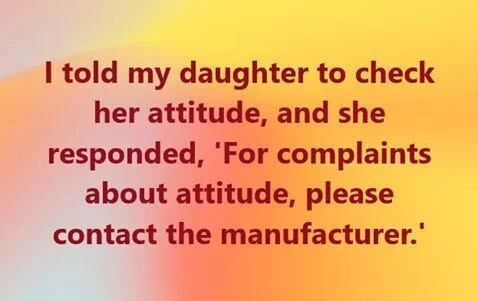
Mot: .. aaaahhhhhhh -- the Fun of Raising the ""Wee Folks""!!!!

Seeds of Wisdom RV and Economics Updates Thursday Morning 1-8-26
Good Morning Dinar Recaps,
What Must Exist Before a Currency Revaluation Can Occur
Why stability, infrastructure, and trust always come before valuation change
Good Morning Dinar Recaps,
What Must Exist Before a Currency Revaluation Can Occur
Why stability, infrastructure, and trust always come before valuation change
Overview
Currency revaluation or normalization does not occur in isolation
Foundational political, economic, and security conditions must be in place first
Authorities prioritize order, continuity, and confidence over sudden monetary shifts
Key Developments
Historically, meaningful currency adjustments occur only after internal stability is established, including enforceable rule of law, secure borders, and functioning state authority.
Trade and energy security are prerequisites, as uninterrupted shipping routes, energy flows, and export reliability underpin currency demand.
A functional banking system is essential, including settlement rails, liquidity access, regulatory oversight, and international correspondent banking relationships.
Market stress is managed before — not during — revaluation, with authorities addressing inflation, commodity volatility, and capital flight risks in advance.
Public confidence is treated as a strategic asset, requiring predictability and transparency rather than surprise announcements during instability.
Why It Matters to Foreign Currency Holders
For foreign currency holders, this framework clarifies why revaluation narratives often move faster than reality. Monetary authorities do not use currency revaluation as a tool to create stability — they use it as a reflection of stability already achieved.
Currencies cannot sustainably reprice upward while facing unresolved internal unrest, disrupted trade routes, weak banking rails, or credibility gaps. Any adjustment without these foundations risks capital flight, inflation spikes, and loss of trust, outcomes central banks actively seek to avoid.
Understanding these prerequisites helps currency holders distinguish structural progress from speculation, and patience from misinformation.
Implications for the Global Reset
Pillar 1: Stability Before Valuation
Global monetary restructuring favors orderly transitions anchored in security, governance, and economic continuity.Pillar 2: Infrastructure Enables Trust
Payment systems, banking oversight, and trade logistics are the invisible rails that allow currencies to reprice and hold value.
Key Takeaway
Currency revaluation follows order, stability, and legal clarity — it does not precede them.
This is not about timing a windfall — it’s about understanding how currencies survive and strengthen during global financial restructuring.
Seeds of Wisdom Team
Newshounds News™ Exclusive
Sources
International Monetary Fund – Exchange Rate Policy & Stability
Bank for International Settlements – Financial Stability & Settlement Systems
~~~~~~~~~~
Why Banking “Stress” Signals Modernization, Not Immediate Failure
How financial pressure often marks transition — not collapse
Overview
Banking stress typically reflects structural transition, not system failure
Oversight mechanisms are designed to preserve continuity and liquidity
Reform unfolds through regulation, consolidation, and balance-sheet repair
Key Developments
The U.S. banking system operates under layered oversight, primarily involving the U.S. Treasury, the Federal Reserve, and the FDIC, with mandates focused on stability and depositor protection.
When stress appears, authorities respond with supervision and restructuring, including tighter regulations, forced mergers, capital adjustments, and enhanced risk controls.
Abrupt shutdowns are not the default response; instead, continuity of payment systems and access to deposits is prioritized.
Modernization often follows stress events, leading to improved transparency, stronger compliance frameworks, and updated operating rules.
System integrity is preserved while weak points are corrected, allowing the broader financial architecture to continue functioning.
Why It Matters to Foreign Currency Holders
For foreign currency holders, banking stress should be interpreted as a signal of adjustment, not disappearance. Currencies depend on functioning settlement rails, liquidity access, and trusted banking infrastructure. Authorities understand that undermining confidence in these systems risks capital flight and market instability.
Rather than triggering an “instant reset,” banking stress events usually support longer-term stability, reinforcing the foundations required for currencies to hold value during global financial restructuring.
In short, stress precedes strengthening, not collapse.
Implications for the Global Reset
Pillar 1: Continuity Over Chaos
Financial systems are redesigned while remaining operational, ensuring confidence and payment continuity.Pillar 2: Modernized Infrastructure
Stress accelerates regulatory upgrades, risk controls, and settlement efficiency — critical for future currency frameworks.
Key Takeaway
Banking stress signals transition and reform — not the disappearance of banking. Stability is maintained while systems are modernized.
This is not a banking collapse — it’s a controlled evolution of the financial system under pressure.
Seeds of Wisdom Team
Newshounds News™ Exclusive
Sources
~~~~~~~~~~
Why Jamie Dimon and JPMorgan Matter During Financial Transitions
Systemically important banks signal stabilization before reform, not collapse
Overview
Jamie Dimon, CEO of JPMorgan Chase, leads one of the most systemically important financial institutions in the global banking system.
During past periods of market stress, JPMorgan has played a central stabilizing role, coordinating with regulators and absorbing weaker institutions.
Public alignment by major banking leaders with Treasury and Federal Reserve initiatives often signals a shift from competition to system preservation.
Key Developments
JPMorgan is a designated Systemically Important Financial Institution (SIFI), meaning it is critical to the functioning of global markets.
In previous crises, JPMorgan has been used as a shock absorber, stepping in where disorder could have spread.
When senior banking executives publicly emphasize regulation, oversight, and stability, it typically reflects managed transition planning, not imminent failure.
Why It Matters to Foreign Currency Holders
Foreign currency holders often watch banking leadership closely for early signals of systemic change.
Systemic Stability First: Major banks are used to prevent disorder while reforms are implemented.
Regulatory Alignment Signals Transition: Cooperation with regulators indicates preparation for modernization, not collapse.
Market Confidence Is Protected: Coordinated messaging helps preserve confidence in settlement, custody, and liquidity systems.
Reform Through Consolidation: Financial transitions historically occur through supervision and consolidation, not overnight bank failures.
No Instant Reset: Banking cooperation supports gradual restructuring, not sudden currency revaluation events.
Implications for the Global Reset
Pillar 1 – Managed Financial Transition: Large institutions anchor stability while structural reforms unfold.
Pillar 2 – Institutional Continuity: Settlement, custody, and liquidity systems are preserved during modernization phases.
Key Takeaway
When systemically important banks like JPMorgan shift toward regulatory cooperation and stabilization messaging, it usually signals controlled transition and reform, not financial chaos or immediate currency revaluation.
This is not just banking leadership — it’s financial system preservation during structural change.
Seeds of Wisdom Team
Newshounds News™ Exclusive
Sources
U.S. Treasury – “Financial Markets, Financial Institutions & Fiscal Service”
Federal Reserve – “Systemically Important Financial Institutions (SIFIs)”
~~~~~~~~~~
Seeds of Wisdom Team RV Currency Facts Youtube and Rumble
Newshound's News Telegram Room Link
RV Facts with Proof Links Link
RV Updates Proof links - Facts Link
Follow the Gold/Silver Rate COMEX
Follow Fast Facts
Seeds of Wisdom Team™ Website
Thank you Dinar Recaps
Iraq Economic News and Points To Ponder Thursday Morning 1-8-26
Dollar Surge In Iraq: Why Did The Parallel Market Jump To 148,000 IQD?
IRAQ Jawad Al-Samarraie January 8, 2026 Baghdad — Over the last five days, the Iraqi street has witnessed a state of economic panic as the U.S. dollar surged from 138,000 to 148,500 IQD per $100 in the parallel market. This sharp 10-point jump occurs despite the official exchange rate remaining stable at 132,000 IQD, creating a widening gap that has sparked fears of inflation and a decline in purchasing power.
Dollar Surge In Iraq: Why Did The Parallel Market Jump To 148,000 IQD?
IRAQ Jawad Al-Samarraie January 8, 2026 Baghdad — Over the last five days, the Iraqi street has witnessed a state of economic panic as the U.S. dollar surged from 138,000 to 148,500 IQD per $100 in the parallel market. This sharp 10-point jump occurs despite the official exchange rate remaining stable at 132,000 IQD, creating a widening gap that has sparked fears of inflation and a decline in purchasing power.
Financial and economic expert Dr. Abdul Rahman al-Sheikhly explains that the primary driver behind this volatility is the full implementation of the ASYCUDA (Automated System for Customs Data) system, which officially began on January 1, 2026.
The system mandates that traders pay all customs duties upfront before a bank transfer can be processed. In response, many traders have attempted to evade these official channels:
Market Mismatch: Traders are fleeing to the black market to obtain cash dollars to bypass the new digital scrutiny and advance payments.
Border Loopholes: Some border crossings, particularly in the Kurdistan Region, are perceived as less rigid in their application of the system, encouraging a shift in demand away from the central electronic platform.
The anxiety isn’t limited to traders. Citizens have increasingly turned to the dollar as a safe haven for their savings.
Salary Delays: A week-long delay in paying government employees and retirees created a shockwave of fear. This led many to convert their IQD savings into hard currency to hedge against a potential official devaluation.
Rumor Mill: Widespread rumors of a permanent change in the official rate exacerbated the rush, although the government maintains that the situation is under control and the salary delay was a temporary administrative issue.
The parallel market rates as of today show the following levels across major Iraqi hubs:
City Selling Price (per $100) Buying Price (per $100)
Baghdad 148,500 IQD 147,500 IQD
Erbil 147,000 IQD 146,500 IQD
Basra 148,000 IQD 147,500 IQD
Currency Exchange Rates Today (Thursday, Jan 8, 2026)
Dr. al-Sheikhly advises against randomly pumping dollars into the market, as it fails to address the structural issues. Instead, he proposes:
Strict Import Oversight: Imposing heavier customs penalties on traders who import goods via unofficial transfers rather than using the banking platform.
De-dollarization: Enforcing the use of the Iraqi Dinar for all internal domestic transactions.
Public Transparency: Providing clear communication regarding government policies to neutralize market-distorting rumors. https://www.iraqinews.com/iraq/iraq-dollar-price-surge-january-2026-asycuda-impact/ (IraqiNews.com)
Iraq’s Customs Revenues Projected To Reach $7.6 Billion In 2026
IRAQ Amr Salem January 7, 2026 Baghdad (IraqiNews.com) – Head of the General Authority of Customs’ Valuation Department, Ahmed al-Akeedi, said on Tuesday that the deployment of the ASYCUDA system and the new customs tariff will improve the authority’s earnings.
In a statement to the state-run news agency (INA), al-Akeedi said that Iraqi customs revenues reached 2.5 trillion Iraqi dinars (approximately $1.9 billion) in 2025, an unprecedented milestone in Iraqi customs history and an exceptional achievement.
Revenues are predicted to grow by at least four to six times with the application of the ASYCUDA system and complete compliance with customs rates, perhaps exceeding 10 trillion Iraqi dinars (about $7.63 billion) by the end of 2026, according to al-Akeedi.
Iraq’s Border Ports Commission (BPC) reported in early December an unprecedented increase in customs income, reaching 2.2 trillion Iraqi dinars ($1.68 billion) in 2025.
The BPC said in a statement that the achievement followed a series of measures aiming to simplify operations and improve control.
Iraqi Finance Minister Taif Sami revealed in May that Iraq’s customs revenues grew significantly following the use of an automation initiative.
The step followed the adoption of the Automated System for Customs Data (ASYCUDA), a computerized system created by the United Nations Conference on Trade and Development (UNCTAD) to manage a country’s customs.
Iraq’s BPC started using ASYCUDA in 15 ports across the country as the first phase of a government initiative to efficiently manage the country’s customs and reduce corruption. https://www.iraqinews.com/iraq/iraqs-customs-revenues-projected-to-reach-7-6-billion-in-2026/
Iraq Stock Exchange’s Monthly Transactions Hit $59.5 Million
IRAQ Amr Salem January 7, 2026 Baghdad (IraqiNews.com) – The Iraq Stock Exchange (ISX) announced on Wednesday that trading volume during the past month surpassed 78 billion Iraqi dinars (approximately $59.53 million).
According to the ISX, 79 of the 104 companies registered on the market had their shares traded during the course of 20 trading sessions in December, Shafaq News reported.
The stock market recorded 18,173 transactions, where the number of traded shares surpassed 63.67 billion, worth 78.7 billion Iraqi dinars (approximately $60 million).
The ISX60 index finished at 983.31 points, rising 2.92 percent compared to the previous session.
The ISX operates five sessions per week, from Sunday to Thursday, and has 104 listed companies in banking, telecommunications, industry, agriculture, insurance, financial investment, tourism, hotel, and service sectors.
The ISX provides a platform for investors to purchase and sell assets such as equities and bonds.
To trade on the ISX, investors must first create a brokerage account with a licensed brokerage firm.
The ISX allows firms to raise cash by issuing shares, while investors may profit from the listed companies’ financial accomplishments through capital gains and dividends.
https://www.iraqinews.com/iraq/iraq-stock-exchanges-monthly-transactions-hit-59-5-million/
The Dollar Stabilizes As Concerns About Venezuela Subside.
Economy News — Follow-up The dollar held near a two-week high as Asian trading began on Tuesday, with market jitters over U.S. military action in Venezuela easing and dovish comments from Federal Reserve officials encouraging risk-taking on Wall Street.
The dollar index, which measures its performance against a basket of six currencies, stood at 98.36, up 0.04%, after ending a four-day winning streak on Monday.
“The market isn’t really worried about what’s happening geopolitically, at least in the near term,” said Rodrigo Catril, a currency strategist at National Australia Bank in Sydney. He added that this environment “reduces the appeal of safe-haven assets, and we’ve seen the dollar in a difficult position,” according to Reuters.https://economy-news.net/content.php?id=64219
A Sudanese Advisor Explains To "Al-Eqtisad News" The Repercussions Of Fixing The Exchange Rate At 1300 Dinars In The 2026 Budget.
Money and Business Economy News – Baghdad The Prime Minister’s Advisor for Economic and Financial Affairs, Mazhar Muhammad Salih, revealed on Thursday the impact of the Central Bank of Iraq’s decision to fix the official exchange rate at 1300 dinars in the 2026 budget.
Saleh told Al-Eqtisad News that "the government decided to fix the official exchange rate at 1,300 dinars per US dollar in the 2026 budget project, within the framework of what he described as 'calculated coordination between fiscal and monetary policies'."
He explained that this step represents a limited increase in the value of the Iraqi dinar, and is a positive sign that reflects the strength of the country’s foreign reserves and the ability of monetary policy to confidently maintain stability.
He pointed out that fiscal policy is now moving towards maximizing real revenues, moving away from resorting to what is known as "monetary adjustment," which relies on using the exchange rate as an indirect financing tool, stressing that this trend promotes the use of authentic financial instruments to mobilize resources and control spending.
The advisor stressed that this monetary signal sends a clear message that containing inflation and stabilizing the national economy is a permanent priority, while maintaining the independence of monetary policy, and pushing fiscal policy towards greater efficiency and responsibility, in order to achieve the sustainability of macroeconomic balance in the Iraqi economy.
Earlier today, the Central Bank of Iraq addressed the Ministry of Finance regarding fixing the official exchange rate at 1300 dinars in the 2026 budget. https://economy-news.net/content.php?id=64316
MilitiaMan and Crew: IQD News Update-Prudent Integration Indicators-End Result-REER
MilitiaMan and Crew: IQD News Update-Prudent Integration Indicators-End Result-REER
1-7-2026
The Crew: Samson, PompeyPeter, Petra, Daytrader, Sunkissed, GIGI and Militia Man
Follow MM on X == https://x.com/Slashn
Be sure to listen to full video for all the news……..
MilitiaMan and Crew: IQD News Update-Prudent Integration Indicators-End Result-REER
1-7-2026
The Crew: Samson, PompeyPeter, Petra, Daytrader, Sunkissed, GIGI and Militia Man
Follow MM on X == https://x.com/Slashn
Be sure to listen to full video for all the news……..
Seeds of Wisdom RV and Economics Updates Wednesday Evening 1-7-26
Good Evening Dinar Recaps,
GOLD AND SILVER SURGE — SAFE-HAVEN FLOWS SIGNAL FX STRESS AHEAD
Precious metals rally as investors hedge against policy risk and currency erosion
Good Evening Dinar Recaps,
GOLD AND SILVER SURGE — SAFE-HAVEN FLOWS SIGNAL FX STRESS AHEAD
Precious metals rally as investors hedge against policy risk and currency erosion
Overview
Gold and silver prices climbed sharply as investors increased safe-haven allocations.
The move reflects rising unease over monetary policy, geopolitics, and sovereign risk rather than short-term speculation.
Precious metals are once again acting as early warning indicators for currency instability.
Key Developments
Gold pushed higher amid sustained central-bank buying, particularly from emerging market economies seeking to diversify reserves away from the U.S. dollar.
Silver outperformed gold on a percentage basis, supported by both safe-haven demand and industrial usage tied to energy transition technologies.
Bond market volatility and uncertainty over future interest-rate paths encouraged investors to shift from paper assets into tangible stores of value.
Analysts noted that metals strength is occurring despite relatively firm equity markets, highlighting underlying financial stress.
Why It Matters
Precious metals tend to rise when confidence in fiat systems weakens. The current rally is not driven by crisis headlines alone, but by structural concerns over debt sustainability, geopolitical fragmentation, and policy credibility.
When gold and silver strengthen alongside rising asset prices, it often signals that investors are hedging systemic risk rather than chasing growth.
Why It Matters to Foreign Currency Holders
Gold strength often precedes currency realignments, especially in emerging and heavily indebted economies.
Silver’s dual role as both industrial metal and monetary hedge highlights pressure points in manufacturing-linked currencies.
Central-bank accumulation of gold reduces reliance on reserve currencies, subtly reshaping global FX demand.
Currency holders may face declining purchasing power if metals continue to outperform fiat instruments.
Hard-asset preference signals declining trust in paper claims, a key dynamic in any monetary transition.
Implications for the Global Reset
Pillar: De-Dollarization Through Reserve Diversification
Central banks are quietly increasing gold exposure to reduce currency risk.Pillar: Hard Assets as Monetary Anchors
Precious metals are reasserting their role as trust assets amid rising debt and geopolitical uncertainty.
This is not just a metals rally — it’s a confidence shift away from fiat dependency.
Seeds of Wisdom Team
Newshounds News™ Exclusive
Sources
Reuters – “Gold rises as investors seek safety amid policy and geopolitical uncertainty”
Reuters – “Silver outperforms as safe-haven demand meets industrial supply strain”
~~~~~~~~~~
Ukraine’s Post-War Reconstruction May Fuel Billion-Dollar European Deals
European investors eye massive infrastructure and energy opportunities
Overview
As the conflict between Russia and Ukraine continues, the prospect of post-war reconstruction is emerging as a major investment theme. U.S. President Donald Trump has pushed for a rapid ceasefire, Russian President Vladimir Putin seeks to leverage battlefield stalemates, and Ukrainian President Volodymyr Zelenskiy coordinates reconstruction planning with European allies.
Over four years of war, Ukraine’s civil infrastructure and economy have been devastated. The World Bank estimated in late 2024 that direct physical damage reached $176 billion, with additional economic losses from reduced output and higher costs potentially totaling $589 billion. Reconstruction over the next decade is projected to cost $524 billion, largely financed by the European Union and private investors, with expectations that European and U.S. companies will secure most contracts.
Sectors to Watch
Investment will focus on:
Energy infrastructure: Repairing the power grid, building wind and solar farms, and enhancing decentralized renewable energy for resilience against future attacks.
Housing: Rebuilding residential areas and providing modular construction solutions.
Transport networks: Roads, bridges, and railways to restore trade and mobility.
European companies like Heidelberg Materials, Holcim, and Siemens Energy have already seen valuations rise due to infrastructure spending in 2025. Mid-sized firms with local production capacity in Poland, Hungary, and neighboring regions may capture early contracts. Examples include Wienerberger, producing bricks and water pipes, and Strabag, Austria’s largest construction firm specializing in roads and railways.
Investment Outlook
Reconstruction represents a multi-billion-dollar opportunity for European investors. Companies supplying materials, energy systems, and transport infrastructure are likely to see surging demand. Key risks include the timing of a ceasefire, ongoing security concerns, regulatory uncertainty, and the stability of Ukraine’s post-conflict economy.
Analysis
Ukraine’s reconstruction could become one of Europe’s largest investment themes in 2026. Mid-sized firms with strategic proximity and specialized expertise may capture outsized growth. Energy resilience, particularly through decentralized renewable technologies, will be central to economic recovery and national security.
Investors entering early, especially in modular construction, renewable energy, and transport infrastructure, could achieve significant returns as Europe channels resources into rebuilding Ukraine.
Why It Matters to Foreign Currency Holders
Eurozone investment flows: Large-scale reconstruction may shift capital into Eastern Europe, influencing euro liquidity and cross-border fund movements.
Commodity demand impact: Rebuilding requires steel, cement, energy equipment, and other critical materials, potentially affecting global prices.
Debt and fiscal implications: EU and Ukrainian financing plans could affect sovereign debt markets, risk premiums, and bond yields.
Geopolitical risk: Any escalation in hostilities could disrupt reconstruction timelines, impacting investor confidence and currency stability.
Opportunity for hedged positions: Currency and asset managers may benefit from strategically timed exposure to reconstruction-linked sectors.
Implications for the Global Reset
Pillar: Strategic Investment in Reconstruction & Energy Security
Post-war reconstruction in Ukraine highlights how geopolitics and infrastructure development can redirect global capital flows.Pillar: Cross-Border Fiscal and Commodity Pressures
Large-scale rebuilding efforts may influence European bond markets, commodities, and energy imports, shaping international financial and trade networks.
This is not just economics — it’s a test case for European reconstruction finance and strategic resource deployment.
Seeds of Wisdom Team
Newshounds News™ Exclusive
Sources
Reuters – “Ukraine’s post-war reconstruction may fuel billion-dollar European deals”
Financial Times – “European firms line up for Ukraine rebuilding contracts”
~~~~~~~~~~
DEBT MARKETS FLASH RED — SOVEREIGN RISK IS BEING REPRICED GLOBALLY
Bond stress signals mounting pressure on fiat currencies and government balance sheets
Overview
Global bond markets showed renewed stress as investors demanded higher yields to hold sovereign debt.
The move reflects growing concern over debt sustainability, deficit expansion, and political risk.
Currency markets are quietly responding as confidence in government-backed paper weakens.
Key Developments
U.S. Treasury yields pushed higher, particularly at the long end of the curve, signaling investor unease over deficits and fiscal discipline.
European government bonds faced selling pressure, especially in highly indebted member states, as refinancing risks increased.
Emerging market debt spreads widened, indicating rising default risk and reduced appetite for riskier sovereign exposure.
Analysts noted that bond market stress is occurring despite official reassurances, suggesting markets are no longer fully trusting policy messaging.
Why It Matters
Government bonds form the foundation of the global financial system. When yields rise rapidly, it signals that investors are pricing in greater risk of inflation, monetization, or outright fiscal strain.
This shift increases borrowing costs for governments, limits policy flexibility, and raises the likelihood of currency debasement as deficits are financed indirectly through monetary channels.
Why It Matters to Foreign Currency Holders
Rising sovereign yields often precede currency weakness, particularly in high-debt nations.
Bond sell-offs reduce foreign demand for local currencies, accelerating capital outflows.
Debt-heavy countries may resort to inflationary policies, eroding purchasing power.
FX volatility tends to follow bond market stress, not lead it.
Currency holders are exposed when confidence in “risk-free” assets breaks down.
Implications for the Global Reset
Pillar: End of Risk-Free Sovereign Debt
Markets are increasingly questioning the safety of government obligations.Pillar: Fiscal Dominance Over Monetary Policy
Governments may pressure central banks to prioritize debt servicing over currency stability.
This is not a routine bond move — it’s a warning shot across the global fiat system.
Seeds of Wisdom Team
Newshounds News™ Exclusive
Sources
Reuters – “Global bond yields climb as investors reassess sovereign risk”
Reuters – “Treasury yields rise as deficit concerns weigh on investor confidence”
~~~~~~~~~~
PAYMENTS AND BANKING SHAKE-UP — DIGITAL RAILS ACCELERATE AMID TRUST CRISIS
Investors and governments pivot as confidence in traditional banking infrastructure falters
Overview
Global payments and banking systems are undergoing rapid change, with digital and alternative rails gaining momentum.
Concerns over fiat stability, banking stress, and geopolitical risk are driving corporates, central banks, and investors toward new settlement technologies.
Adoption of digital currencies, tokenized assets, and cross-border fintech solutions is rising, reflecting growing dissatisfaction with traditional systems.
Key Developments
Major central banks are testing or expanding digital currency pilots, aiming to reduce reliance on the dollar-dominated SWIFT network.
Private-sector digital payment networks are seeing record volumes as multinational corporations hedge against currency and settlement risk.
Geopolitical tensions are accelerating decentralization, with nations exploring regional or bilateral payment arrangements outside conventional financial channels.
Analysts highlight that regulatory uncertainty remains high, but urgency among FX managers and treasury departments is rising to avoid exposure to legacy-system failures.
Why It Matters
The stability of cross-border payments underpins global trade and finance. As traditional rails face disruption from geopolitical and debt stress, currency holders may experience delays, devaluation risk, and diminished access to liquidity.
Digital and alternative payments could redefine settlement hierarchies, weaken reliance on single reserve currencies, and expose legacy banks to solvency and operational stress.
Why It Matters to Foreign Currency Holders
FX liquidity risk is rising as traditional rails are strained by political, banking, or systemic shocks.
Digital currencies and alternative rails offer hedging options, but may also concentrate new forms of counterparty risk.
Hedging strategies must evolve to account for currency volatility stemming from settlement disruptions.
Early adoption of non-traditional payment methods may protect purchasing power, particularly for exposed emerging-market FX.
Currency holders need to monitor central bank digital currency (CBDC) rollouts, as these could reshape the global liquidity landscape.
Implications for the Global Reset
Pillar: Payment System Fragmentation
Alternative rails and regional digital currencies challenge dollar dominance and legacy infrastructure.Pillar: Technological Sovereignty
Nations are racing to maintain control over domestic and cross-border payment flows, signaling a shift toward multipolar financial architecture.
This is not just fintech innovation — it’s the structural evolution of global currency flows.
Seeds of Wisdom Team
Newshounds News™ Exclusive
Sources
Reuters – “Digital payments surge as firms and central banks hedge against banking instability”
Bloomberg – “Central banks accelerate digital currency plans amid FX and settlement stress”
~~~~~~~~~~
Seeds of Wisdom Team RV Currency Facts Youtube and Rumble
Newshound's News Telegram Room Link
RV Facts with Proof Links Link
RV Updates Proof links - Facts Link
Follow the Gold/Silver Rate COMEX
Follow Fast Facts
Seeds of Wisdom Team™ Website
Thank you Dinar Recaps
“Tidbits From TNT” Wednesday 1-7-2026
TNT:
Tishwash: The Iraqi Trade Bank announces that all its branches will be open during official holidays.
The Iraqi Trade Bank announced on Tuesday that all its branches will be open during official holidays, based on the directives of the Central Bank.
The bank's media office stated in a statement received by the Iraqi News Agency (INA) that, "Based on the directives of the Central Bank of Iraq, it has been decided to open all branches of the Iraqi Trade Bank to receive customers during official holidays from ten o'clock in the morning until one o'clock in the afternoon.
TNT:
Tishwash: The Iraqi Trade Bank announces that all its branches will be open during official holidays.
The Iraqi Trade Bank announced on Tuesday that all its branches will be open during official holidays, based on the directives of the Central Bank.
The bank's media office stated in a statement received by the Iraqi News Agency (INA) that, "Based on the directives of the Central Bank of Iraq, it has been decided to open all branches of the Iraqi Trade Bank to receive customers during official holidays from ten o'clock in the morning until one o'clock in the afternoon.
Working hours during this period will be limited to receiving and processing foreign transfers and the pre-customs declaration only, and no other banking operations will be carried out other than those mentioned above."
He added that "work will continue at the bank during official holidays until 31/1/2026". link
*************
Tishwash: Al-Rasheed Bank announces the launch of Reconstruction Bonds (Third Issue)
Al-Rasheed Bank announced today, Tuesday, the launch of its third issuance of reconstruction bonds. The bank's media office stated in a press release that "the third issuance of reconstruction bonds will be issued in denominations of 500,000 Iraqi dinars only, with the disbursement of the fourth and final semi-annual interest payments."
The statement further clarified that "the fourth and final semi-annual interest payments will also be disbursed to reconstruction bonds in denominations of 1,000,000 Iraqi dinars only."
The bank called on the citizens included to "visit the relevant branches to complete the receipt procedures," stressing "its full commitment to fulfilling all government bond obligations, within the framework of its national role in supporting reconstruction plans and enhancing confidence in the Iraqi banking sector." link
*************
Tishwash: The 2025 budget tables: Who bears the responsibility for the trillions of dinars lost?
The 2025 budget tables raise a pivotal question: Who will answer for managing the funds of an entire year away from parliamentary oversight?
Between continuous postponement and parliamentary statements, the citizen remains facing the hypothesis of non-transparent spending, while the government and parliament prepare for the 2026 budget in less favorable financial circumstances, making transparency the first real test.
Between a simple question on paper: “Where are the 2025 budget tables?” and a more complex question about the shape of the 2026 budget in light of cheaper oil and a heavier deficit, the financial scene in Iraq is moving on shaky political ground that makes every numerical entitlement a file for contention and postponement.
MP Mudar Al-Karawi summarizes one aspect of the picture when he says that “the 2025 budget schedules were expected to reach the Finance Committee in the House of Representatives during February or March of last year, but they have not been sent yet.”
But behind this statement is a whole fiscal year in which public money was spent without the detailed distribution of its expenditure passing through the House of Representatives as the constitution requires, as if trillions of dinars were managed in “dark rooms” outside the oversight light.
The tripartite law, which included the budgets for 2023, 2024, and 2025, was presented to the public as a reform step that would end the annual delay in approving the budget and provide a basis for planning for three consecutive years.
But the end of 2025 revealed a harsh paradox: the state has an effective budget law, but its third year is almost a “year without schedules”; spending continues, contracts are signed, and obligations are postponed, while the document that is supposed to explain to Iraqis how and where their money was spent has not been completed or has not yet been presented on a clear legislative path.
A full year's schedules without a clear legislative path
Al-Karawi links the completion of the parliamentary leadership and the formation of committees, particularly the Finance Committee, to the reopening of this stalled issue. With the resumption of sessions, the committee will face two overlapping tasks simultaneously: first, demanding that the government submit the 2025 budget schedules with detailed section by section; and second, developing a clear mechanism for finalizing the 2026 budget by proposing ideas that align with Iraq's current financial realities, rather than simply repeating the approaches of past years.
The crux of the problem is that Iraq entered the “tripartite budget” experiment based on a single law covering the years 2023, 2024 and 2025, with huge spending figures, a clear deficit, and a hypothetical oil price that was more optimistic than what the market later proved.
The law stipulated sending annual schedules that clarify where the money goes each year, from provincial projects to sectoral allocations, but what happened in practice is that the third year turned into a gray area; spending is ongoing, and obligations are continuing, while the schedules that give Parliament the right to examine and amend have not arrived at all, or have remained locked away in the executive drawers.
With this transformation, the “2025 schedules” become more than a financial document; they become a test of the limits of real oversight of public finances, and a mirror reflecting how trillions of dinars can be managed away from public parliamentary debate, at a time when the citizen is asked to bear the consequences of those decisions without being informed of their details.
Who is held accountable for a lost fiscal year?
The question of “Who is accountable?” oscillates between politics, oversight, and the judiciary, and has yet to find a definitive answer.
Theoretically, the House of Representatives possesses broad oversight tools; the Finance Committee can request a detailed report from the new government on its spending plans for 2025, summon relevant ministers and officials to explain the reasons for the delays, and even proceed with questioning if it is proven that the delay was not a mere administrative oversight but a deliberate political decision to avoid public debate on the figures.
In contrast, the Financial Control Bureau can present to the representatives and the public a report that answers the direct question of the street: On what basis were hundreds of trillions spent in a year whose schedules were not approved?
What is the extent of the commitments that were postponed to 2026 without a clear legislative cover? And how did these commitments overlap with the contracts and projects that were extended or referred in light of this vacuum? Opening the “books of 2025” in this manner is not a supervisory luxury, but rather a prerequisite to convince people that talk of “financial reform” is not just a slogan for political consumption.
However, the deeper dilemma lies in the conflict of interests; the forces that participated in managing the 2025 budget within the executive branch are almost the same ones that have the upper hand within parliament.
Here, accountability becomes a test for the entire political system: Does it have the courage to subject a full fiscal year to a genuine review, or will the file be moved from shelf to shelf until it is forgotten under other headings?
2026... A new year born from cheaper oil and heavier spending
The biggest challenge, as Al-Karawi points out, is looming from the gateway of 2026. The new year does not start from a zero point, but rather on top of accumulated layers of public spending; inflated salaries that have come to swallow the largest part of the budget, long-term contracts in the electricity and infrastructure sectors, obligations towards the region and governorates, in addition to internal and external debts whose interest accumulates year after year.
In contrast, the oil prices on which the three-year budget assumptions were based have declined significantly; this means that each barrel is now being sold at a price lower than the price at which the spending was designed.
This difference does not remain confined to tables and calculations, but is directly reflected in the state’s ability to finance salaries and services, and in its margin for investment spending.
Therefore, Al-Kroui warns that the financial situation in 2026 “will not be easy”, and that the matter “requires taking decisions that would provide a degree of flexibility and smoothness in financial dealings, secure funding for state departments and ensure the continuity of the salary file.”
Politically, the 2026 budget appears to be an early test for both the incoming government and the new parliament; it will reveal the extent to which political forces can move from the logic of postponing the problem to the logic of acknowledging the numbers as they are, and bear the cost of moving from the discourse of “oil abundance” to the discourse of managing scarcity with greater transparency before the public. link
************
Mot: . They Say - its Not What Ya Says.. but How Ya Says it!!!

Mot: Getting it Right is Important!! -- Right!!!!????

Seeds of Wisdom RV and Economics Updates Wednesday Morning 1-7-26
Good Morning Dinar Recaps,
Trump Administration Says Military ‘Always an Option’ to Acquire Greenland
White House renews push to secure strategic Arctic territory amid rising geopolitical tension
Good Morning Dinar Recaps,
Trump Administration Says Military ‘Always an Option’ to Acquire Greenland
White House renews push to secure strategic Arctic territory amid rising geopolitical tension
Overview
The Trump administration confirmed it is actively exploring ways to acquire Greenland, calling the effort a national security priority and stating that U.S. military force remains an option. The comments have triggered strong pushback from European allies and reignited concerns over sovereignty, alliance stability, and Arctic security.
The renewed focus comes amid heightened geopolitical tension following recent U.S. military actions abroad, raising alarms among NATO partners that the administration may be signaling a more assertive approach toward territorial and strategic control.
Key Developments
The White House stated that acquiring Greenland is vital to U.S. national security, particularly to counter perceived threats from China and Russia in the Arctic.
Officials indicated that multiple options are under consideration, including purchasing the territory or establishing a compact of free association, while explicitly declining to rule out military action.
European leaders, including those from Denmark, France, Germany, Italy, Spain, and the United Kingdom, issued a joint statement reaffirming Greenland’s sovereignty and rejecting any U.S. takeover.
Canada publicly supported Denmark’s position, underscoring the risk such rhetoric poses to NATO unity.
U.S. lawmakers raised concerns that threatening action against a fellow NATO ally could undermine the alliance’s foundational principles.
Why It Matters
This episode represents a significant escalation in U.S. rhetoric toward a NATO partner and challenges long-standing norms around sovereignty and collective security. It also highlights how strategic geography is increasingly central to global power competition, particularly in regions tied to defense, trade routes, and resource access.
Energy & Strategic Resources
Greenland holds vast untapped reserves of rare earth elements, critical minerals, uranium, and hydrocarbons, many of which are essential to advanced manufacturing, defense systems, and the global energy transition. As Western nations seek to reduce reliance on China-dominated supply chains, Greenland’s resource potential has become increasingly strategic.
Control or preferential access to these materials could influence future trade flows, industrial policy, and reserve asset strategies, making Greenland a focal point in the broader realignment of global supply chains. The Arctic’s melting ice is also opening new shipping lanes, further elevating Greenland’s importance in global commerce and energy logistics.
Why It Matters to Foreign Currency Holders
Strategic resource competition can reshape trade balances and strengthen currencies tied to critical minerals and energy production.
Heightened NATO tensions may increase volatility in reserve currencies and drive diversification into hard assets and alternative stores of value.
Arctic shipping and resource access could alter global trade routes, impacting currency flows and long-term economic positioning.
Policy uncertainty tied to territorial ambitions can raise sovereign risk premiums, affecting capital allocation and FX stability.
Resource-backed economic leverage may accelerate shifts away from purely fiat-based valuation frameworks.
Implications for the Global Reset
Pillar: Strategic Resource Realignment
Control of critical minerals and energy inputs is becoming central to economic power, reserve strategy, and industrial sovereignty.Pillar: Alliance and Monetary Stability Stress
Challenges to NATO cohesion and sovereignty norms increase systemic risk and encourage hedging against traditional financial structures.
This is not just politics — it’s global finance restructuring before our eyes.
Seeds of Wisdom Team
Newshounds News™ Exclusive
Sources
~~~~~~~~~~
Trump Says 50 Million Barrels of Venezuelan Oil Will Be Sold to the United States at Market Prices
Administration signals direct control over oil flows following Maduro’s removal
Overview
President Donald Trump said Tuesday that Venezuela’s interim authorities will sell between 30 million and 50 million barrels of oil to the United States at market prices, with proceeds overseen by his administration. The announcement follows the U.S. operation that captured Venezuelan President Nicolás Maduro and his wife, Cilia Flores, and signals a sharp escalation in Washington’s involvement in Venezuela’s energy sector.
Trump said the oil would be transported directly to U.S. ports and that he had instructed the Secretary of Energy to execute the plan immediately.
Key Developments
Trump stated that the oil would be sold, not gifted, at prevailing market prices, with revenues controlled by the U.S. administration.
The president said the proceeds would be used to benefit both Venezuela and the United States, framing the arrangement as partial reimbursement for damages he claims Venezuela caused the U.S.
The announcement follows the capture of Maduro and his wife on narco-terrorism charges after a large-scale U.S. military operation in Caracas.
Trump said his administration intends to “run” Venezuela’s recovery and pressure interim leaders to open the country’s oil reserves to American companies.
The White House is reportedly planning meetings with major U.S. oil executives, including firms with historical exposure to Venezuelan production.
Why It Matters
Venezuela holds the largest proven oil reserves in the world, yet years of sanctions, mismanagement, and underinvestment have crippled production. The U.S. move signals an attempt to directly influence the future structure of Venezuela’s energy sector, raising questions about sovereignty, international law, and the precedent of resource control following regime change.
The announcement also underscores how energy assets are being positioned as strategic spoils rather than neutral market goods, particularly in geopolitically unstable regions.
Energy & Strategic Resources
Venezuelan oil represents a critical lever in global energy markets, especially as supply constraints, geopolitical fragmentation, and energy security concerns intensify. Directing oil sales toward the United States could reshape regional trade flows and weaken alternative energy partnerships Venezuela previously maintained with countries such as China, Russia, and Iran.
Beyond pricing impacts, control over production, shipping, and settlement terms carries implications for currency flows, sanctions enforcement, and reserve strategy, reinforcing the role of energy as a foundational pillar in the broader global financial realignment.
Why It Matters to Foreign Currency Holders
Oil-linked currencies and trade balances may shift as Venezuelan supply is redirected toward U.S. markets.
Dollar demand could rise if oil transactions are settled under U.S. oversight, reinforcing short-term dollar strength while accelerating long-term hedging behavior.
Energy-backed influence may prompt other producing nations to reassess pricing and settlement frameworks outside traditional Western systems.
Emerging market risk premiums could increase as investors reassess the security of resource sovereignty.
Reserve diversification trends may accelerate as energy becomes more explicitly tied to geopolitical power.
Implications for the Global Reset
Pillar: Resource Control and Monetary Leverage
Energy assets are increasingly intertwined with financial authority, sanctions power, and currency influence.Pillar: Post-Crisis Asset Reallocation
Direct intervention in resource-rich states signals a shift toward hard-asset-centered geopolitical strategy.
This is not just energy policy — it’s global finance restructuring before our eyes.
Seeds of Wisdom Team
Newshounds News™ Exclusive
Sources
Newsweek – “Trump Says Venezuelan Oil Will Be Sold to U.S. at Market Prices After Maduro Capture”
Reuters – “Trump orders U.S. officials to secure Venezuelan oil sales following Maduro arrest”
~~~~~~~~~~
China Bans Dual-Use Exports to Japan After Taiwan Remarks, Raising Rare Earths Concerns
Beijing restricts exports of dual-use goods to Japan amid escalating Sino-Japanese tensions
Overview
China announced a ban on exports of dual-use goods to Japan that could contribute to its military capabilities, citing national security concerns. The measure comes after remarks by Japanese Prime Minister Sanae Takaichi that suggested a Chinese attack on Taiwan could pose an existential threat to Japan, a comment Beijing called “provocative.” Dual-use items include goods, software, and technologies with both civilian and military applications, notably certain rare earth elements used in drones, semiconductors, and advanced manufacturing.
Japan’s foreign ministry strongly protested the restrictions, calling the ban “absolutely unacceptable and deeply regrettable” and saying it deviates from international norms.
Key Developments
China’s commerce ministry said the export ban takes effect immediately for any items that could enhance Japan’s military capabilities, but has not yet released a specific list of restricted goods.
Dual-use goods encompass a wide range of technologies, including rare earth elements crucial for electronics, aerospace, and defense manufacturing.
Japanese officials have demanded the measures be revoked, warning that they could disrupt supply chains for critical industries.
Analysts note that China previously used rare earth export controls as leverage during diplomatic disputes, including a high-profile case in 2010 that disrupted Japanese manufacturing.
The ban follows a broader pattern of diplomatic and trade tensions between Beijing and Tokyo, with both nations increasing defense postures and economic tools in strategic competition.
Why It Matters
The move marks a significant escalation in trade policy being used as a tool of geopolitical pressure between two of Asia’s largest economies. Rare earths and other dual-use technologies are essential inputs for high-performance manufacturing, renewable technologies, and military systems. Restricting their flow to Japan — even if targeted at military use — has wide implications for industrial production, innovation capacity, and regional supply chains.
Energy & Strategic Resources
Rare earth elements and other dual-use materials are strategic resources central to modern technology, including electric vehicles, robotics, defense systems, and renewable energy infrastructure. China controls a substantial share of global rare earth processing and export capacity, giving it leverage in disputes where these materials can be wielded as geopolitical assets.
Disruptions to Japan’s access could trigger shifts in industrial investments, accelerate supply-chain diversification, and prompt other nations to secure alternative sources or accelerate domestic production. These dynamics are increasingly a key part of the broader global realignment of strategic resources and currency flows in an era of heightened geopolitical tension.
Why It Matters to Foreign Currency Holders
Supply-chain risk affects currency volatility as nations adjust trade exposures to resource chokepoints.
Dependence on Chinese materials may drive reshoring and diversification, influencing long-term trade balances.
Price shocks in rare earths and related critical minerals can transmit inflationary pressures globally.
Resource control amplifies geopolitical risk premiums, impacting foreign exchange valuations.
Reserve and investment strategies may shift toward hard assets as nations hedge against strategic supply disruptions.
Implications for the Global Reset
Pillar: Strategic Resource Leverage
Control over rare earths and dual-use technologies is now an explicit tool of diplomatic and economic power.Pillar: Supply-Chain Decoupling
Growing tensions encourage diversification away from dominant suppliers, reshaping global trade networks and reserve asset planning.
This is not just trade policy — it’s global finance restructuring before our eyes.
Seeds of Wisdom Team
Newshounds News™ Exclusive
Sources
Reuters – “China bans exports of dual-use items for military purposes to Japan”
Reuters – “Japan condemns China’s dual-use export ban as rare earths risks loom”
~~~~~~~~~~
🌱 A Message to Our Currency Holders🌱
If you’ve been holding foreign currency for many years, you were not foolish.
You were not wrong to believe the global financial system would change.
What failed was not your patience — it was the information you were given.
For years, dates, rumors, and personalities replaced facts, structure, and proof. “This week” predictions created cycles of hope and disappointment that were never based on how currencies actually change.
That is not your failure.
Our mission here is different: • No dates • No rates • No hype • No gurus
Instead, we focus on:
• Verifiable developments • Institutional evidence
• Global financial structure • Where countries actually sit in the process
Currency value changes only come after sovereignty, trade, banking, settlement systems, and fiscal coordination are in place. History and institutions confirm this sequence.
You will see silence. You will see denials. That is not delay — that is discipline.
Protect your identity. Organize your documents. Verify everything.
Never hand your discernment to anyone who cannot show proof.
You deserve truth — not timelines.
Seeds of Wisdom Team Newshounds News
Seeds of Wisdom Team RV Currency Facts Youtube and Rumble
Newshound's News Telegram Room Link
RV Facts with Proof Links Link
RV Updates Proof links - Facts Link
Follow the Gold/Silver Rate COMEX
Follow Fast Facts
Seeds of Wisdom Team™ Website
Thank you Dinar Recaps
Iraq Economic News and Points To Ponder Wednesday Morning 1-7-26
Iraq's Gold Reserves Remain Stable At 170 Tons.
Economy News – Baghdad The World Gold Council announced on Wednesday that Iraq maintained its global ranking with reserves exceeding 170 tons of gold, without any change.
The council stated in its latest statistics for January, which were reviewed by "Economy News", that Iraq maintained its 29th position globally out of 100 countries that possess the largest reserves of the precious metal.
Iraq's Gold Reserves Remain Stable At 170 Tons.
Economy News – Baghdad The World Gold Council announced on Wednesday that Iraq maintained its global ranking with reserves exceeding 170 tons of gold, without any change.
The council stated in its latest statistics for January, which were reviewed by "Economy News", that Iraq maintained its 29th position globally out of 100 countries that possess the largest reserves of the precious metal.
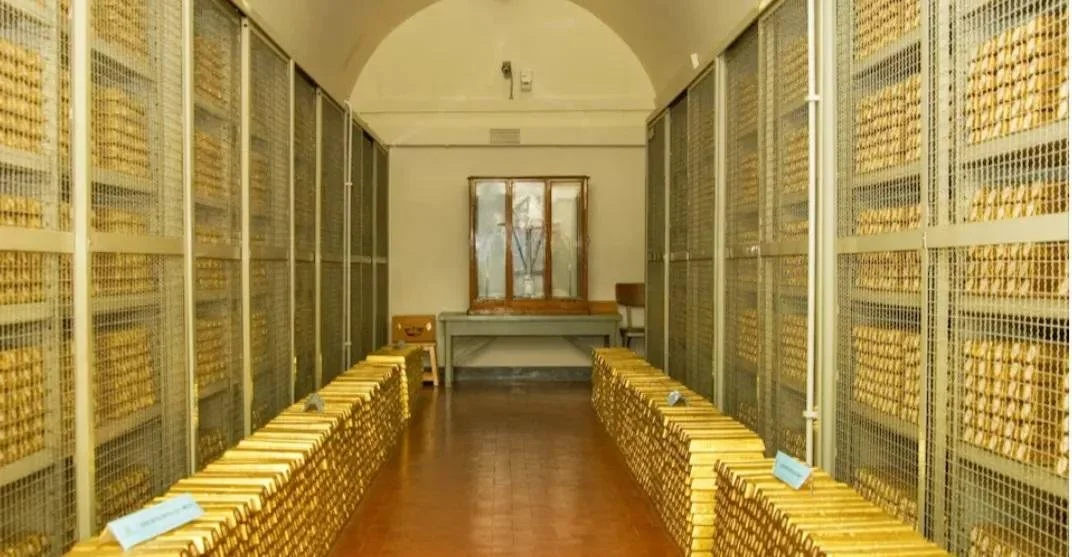
He explained that Iraq’s gold reserves amounted to 170.9 tons, equivalent to 22.1% of its total other hard currency reserves, ranking fourth at the Arab level after Saudi Arabia, Lebanon and Algeria.
It is worth noting that the World Gold Council, which is based in the United Kingdom, includes the world’s largest gold mining companies and has extensive experience in analyzing market trends and factors affecting the price of the precious metal. https://economy-news.net/content.php?id=64277
Central Bank: The Dollar Is Stable At 1320 Dinars, And The Rise In The Parallel Market Is Due To Demand Outside
Banks. Economy News – Baghdad Haider Ghazi, the media officer of the Central Bank of Iraq, confirmed that there has been no change in the exchange rate of the dollar against the dinar, and it remains fixed at 1320 dinars per dollar, explaining that what is being circulated as an exchange rate is only the demand of the unofficial market for dollars outside the system of banks licensed to work in foreign transfers through correspondent banks.
Ghazi, in a statement according to the official newspaper, attributed the main reason for the rise in the parallel market to the customs duty due to demand outside the banking system, noting that the application of the prior customs duty for transfer purposes may have put significant pressure on those seeking cash dollars, and was behind the rise in demand for the dollar against the dinar in the local markets.
He explained that traders are required to bring the customs declaration (customs statement) from the ASYCUDA system before the bank transfer is made to them, adding that on many occasions the Central Bank of Iraq stated that the ways to obtain dollars are through:
First, external transfers through banks in a systematic and documented manner with all parties, and second, through the traveler's dollar after depositing an amount in Iraqi dinars with companies of categories A and B, and it is received through outlets inside Iraqi airports, as the bank set the traveler's share per month at $3,000. https://economy-news.net/content.php?id=64273
Gold Prices In Baghdad Have Decreased.
Economy News – Baghdad Gold prices, both foreign and Iraqi, fell on Wednesday in local markets in the capital, Baghdad. Gold prices in the wholesale markets of Al-Nahr Street in Baghdad this morning recorded a selling price of 914,000 dinars per mithqal of 21-karat gold from the Gulf, Turkey, and Europe, while the buying price was 910,000 dinars, after the prices were at 924,000 dinars yesterday, Tuesday.
The selling price of one mithqal of 21-karat Iraqi gold reached 884,000 dinars, while the buying price reached 880,000 dinars. He pointed out that gold prices in jewelry stores varied, as the selling price of a mithqal of 21-karat Gulf gold ranged between 915,000 and 925,000 dinars, while the selling price of a mithqal of Iraqi gold ranged between 885,000 and 895,000 dinars. https://economy-news.net/content.php?id=64275
Basra Crude Oil Prices Decline
Time: 2026/01/07 10:04:49 Reading: 45 times {Economic: Al-Furat News} Basra Heavy and Basra Medium crude oil prices fell by more than 2% on Wednesday, as oil prices declined in global markets.
Basra Heavy crude prices fell by $1.38, or 2.35%, to $57.27, and Basra Medium crude prices fell by $1.38, or 2.26%, to $59.82.
Oil prices fell globally after US President Donald Trump said Venezuela would return between 30 and 50 million barrels of sanctioned oil to the United States, increasing concerns about a supply glut in the global market.
Oil products explain the reason for the disruption to gas transport.
Time: 2026/01/07 13:14:37 Reading: 180 times {Economic: Al-Furat News} The Undersecretary of the Ministry of Oil for Gas Affairs, Izzat Saber Ismail, explained that there was a problem in the gas transportation process, as a result of a technical malfunction that affected the pipeline from Basra to Baghdad, while praising the high level of coordination between the two companies and the speed with which solutions were found to the emergency problems.
The media office of the Oil Products Distribution Company stated in a statement received by Al-Furat News that “the company’s Director General, Hussein Talib Aboud, and the senior staff received the Undersecretary of the Ministry of Oil for Gas Affairs, Izzat Saber Ismail, accompanied by the Director General of the Gas Filling and Services Company, Anmar Ali Hussein, where the meeting witnessed a discussion of the reality of cooking gas and the problems that accompanied it in the supply during the past two days.”
The statement added that "the Undersecretary chaired, on the sidelines of the meeting, a joint meeting of senior owners in the oil products distribution and gas filling and services companies, stressing that gas production exceeds the level of consumption, as the concerned parties produce more than (9) thousand tons per day, while the daily consumption rate is (7) thousand tons."
The agent explained that "the problem in transporting the gas is due to a technical malfunction in the pipeline transporting from Basra to Baghdad, praising the high level of coordination between the two companies and the speed with which they addressed the emergency problems." LINK
In A New Clarification, The Ministry Of Oil Identifies The Reasons For The Cooking Gas Shortage And Reassures Citizens.
Time: 2026/01/07 11:52:4 {Local: Al-Furat News} The Ministry of Oil clarified today, Wednesday, the reasons for the recent shortage of cooking gas, while indicating that a plan has been put in place to expand the pipelines and increase reserves.
The Undersecretary of the Ministry of Oil for Gas Affairs, Izzat Saber, said in a press statement that "the recent shortage of cooking gas is due to a leak in one of the gas pipelines heading to the capital, Baghdad," stressing that "technical and engineering teams are currently working to repair it in order to bring it back into service."
Saber added that "the ministry resorted to using tankers to transport gas production as an alternative measure to ensure the continuity of supplies," noting that "some tried to exploit this emergency situation to raise prices for citizens."
He added that "100 tankers transport gas daily to factories and direct sales outlets for citizens to meet the need," revealing that "there is a plan to further expand the pipeline in order to increase the strategic gas reserves in equipped factories and avoid any shortages in the future."
The Ministry of Oil announced yesterday, Tuesday, that what is being circulated regarding the existence of a cooking gas crisis is inaccurate, indicating that the crisis is fabricated, while announcing the dispatch of additional shipments to processing stations to meet the demand.
The ministry said, "There is no real crisis in cooking gas cylinders, and what is happening now is deliberate disruption by some transporters," stressing that "the ministry will take deterrent measures against those responsible for this."
She added that "cooking gas is available at all processing stations in large quantities," noting that the ministry will send additional shipments of gas to stations and any area experiencing an increase in demand LINK
The UAE Will Have The Highest Cost Of Living In The Arab World, While Iraq Will Have The Lowest, In 2026.
Economy News - Follow-up The 2026 cost of living index for Arab countries showed that Iraq was among the countries with a low cost of living, according to data issued by Numbeo, a website specializing in comparing price levels between countries.
The United Arab Emirates topped the list of countries with the highest cost of living in the Arab world, after recording 55.2 points, followed by Yemen with an index of 53.1 points, then Qatar with 50.4 points, Palestine with 48.1 points, and Bahrain with 47.6 points, amid high price levels compared to the rest of the countries in the region.
The following countries came in the next positions with an index of 43.9 points, Oman with 43.6 points, Kuwait with 42.5 points, Lebanon with 41.7 points, then Jordan with 39.4 points, while Morocco recorded 31.4 points, and Tunisia with 29.1 points.
At the bottom of the list, Iraq ranked among the Arab countries with the lowest cost of living, scoring 28.4 points, ahead of Algeria, which scored 28.0 points, Syria, 25.0 points, and Egypt, 21.6 points, while Libya came at the bottom of the list with an index of 18.3 points.
It should be emphasized that the index measures price levels only in comparison to New York City, and does not reflect income levels or quality of life. https://economy-news.net/content.php?id=64231
Mr. Al-Hakim Outlines 11 Paths To Ensure The Iraqi Army's Performance In Protecting The Homeland And The Democratic System.
Time: 2026/01/07 13:52:14 Reading: 45 times {Political: Al-Furat News} The head of the National State Forces Alliance, Mr. Ammar Al-Hakim, outlined 11 paths today, Wednesday, to ensure the performance of the Iraqi army in protecting the homeland and the democratic system.
In a speech on the occasion of the 105th anniversary of the founding of the Iraqi Army, Mr. Al-Hakim said: “The Iraqi Army, with its long history, is not just an armed formation, but rather the memory of a state and the experience of a nation; a journey that went through stages of establishment and building, and a journey that was exposed to the upheavals of politics, wars and challenges, but it remained in its essence linked to the soil of Iraq and the identity of the Iraqis.”
He added: “Our army, in the battles against terrorism, has set an example of patience, cohesion, and capacity building, moving from the stage of challenge to the stage of initiative, until the victories that we are all proud of were achieved, and they would not have been achieved without the blood of the martyrs, the sacrifices of the wounded, the vigilance of the fighters, and the support and assistance of their families.”
He continued: “One of the most important things that distinguishes the military institution is that it pays a heavy price and makes great sacrifices so that we can live a normal life. Therefore, talking about the army should not remain in the realm of slogans, but should turn into a moral, political and legislative commitment to the rights of the fighters and their families.”
He added that the main paths to strengthening the army's position and ensuring its constitutional role in protecting the homeland, preserving the democratic system, and maintaining sovereignty are:
Establishing a national constitutional military doctrine.
Building a sovereign armament decision through diversifying sources of power.
Upgrading the air defense and airspace protection system.
Investing in quality training and continuous development.
Strengthening command, control, and communications.
Developing cyber capabilities and electronic warfare.
Combating corruption and administrative mismanagement within the military establishment.
Supporting military manufacturing, local maintenance, and building a national supply chain.
Deepening the integration between the army and the rest of the security system.
Updating the military intelligence and early warning system.
Caring for combatants, their families, the wounded, and disabled veterans. LINK
MilitiaMan and Crew: IQD News Update-"REER Adjustment: Global Integration 2026
MilitiaMan and Crew: IQD News Update-"REER Adjustment: Global Integration 2026
1-6-2026
The Crew: Samson, PompeyPeter, Petra, Daytrader, Sunkissed, GIGI and Militia Man
Follow MM on X == https://x.com/Slashn
Be sure to listen to full video for all the news……..
MilitiaMan and Crew: IQD News Update-"REER Adjustment: Global Integration 2026
1-6-2026
The Crew: Samson, PompeyPeter, Petra, Daytrader, Sunkissed, GIGI and Militia Man
Follow MM on X == https://x.com/Slashn
Be sure to listen to full video for all the news……..