
Thank you to all the subscribers to our Early Access program…we thank you for your continued support.
We are excited to offer this new service to keep you informed and up-to-date on the latest Dinar and currency news.
BRICS Launches New Payment System in 185 Countries
BRICS Launches New Payment System in 185 Countries
Cyrus Janssen: 11-17-2025
If you blinked, you might have missed it. While Western headlines were dominated by the usual political theater and market fluctuations, a seismic shift in the global financial architecture quietly took place in 2025.
The BRICS alliance, in a move that analysts will likely point to as a historic turning point, launched a new payment system with a staggering reach: 185 countries.
The goal? To facilitate international trade using the Chinese renminbi (RMB), effectively bypassing the US dollar.
BRICS Launches New Payment System in 185 Countries
Cyrus Janssen: 11-17-2025
If you blinked, you might have missed it. While Western headlines were dominated by the usual political theater and market fluctuations, a seismic shift in the global financial architecture quietly took place in 2025.
The BRICS alliance, in a move that analysts will likely point to as a historic turning point, launched a new payment system with a staggering reach: 185 countries.
The goal? To facilitate international trade using the Chinese renminbi (RMB), effectively bypassing the US dollar.
This isn’t just a minor policy adjustment; it’s a direct challenge to the decades-long dominance of the US dollar as the world’s primary reserve currency.
And while it was largely underreported in Western media, its echoes are being felt profoundly across the globe, particularly in the emerging economies of the Global South.
From the bustling ports of Southeast Asia to the resource-rich nations of Africa and Latin America, a quiet financial revolution is underway. Countries are increasingly looking to China’s currency and its financial infrastructure as a viable alternative to the dollar-dominated system.
This trend signifies a profound loss of confidence in the Western-led financial order and a pragmatic pivot towards China’s economic sphere of influence.
China’s financial influence is no longer confined to emerging markets. The Association of Southeast Asian Nations (ASEAN) recently upgraded its free trade agreement with China, strengthening economic bonds despite concerted efforts from the US to project power in the region.
The trust in the RMB is also being validated in capital markets. When Indonesia issued “dim sum bonds” (RMB-denominated bonds sold offshore), they were met with overwhelming investor demand—a clear signal of market confidence.
Underpinning all of this is the technological backbone: China’s Cross-Border Interbank Payment System (CIPS).
This system has grown exponentially, now weaving a vast financial web that connects thousands of banks across those 185 countries, processing trillions of RMB every single quarter.
The symbolism of recent events is impossible to ignore. The BRICS group recently facilitated its first-ever RMB-based loan between China and South Africa, explicitly targeting development projects across Africa. This move solidifies China’s role as the financial anchor and preferred partner for the Global South.
Even advanced economies are taking note. South Korea, a key US ally, is actively deepening its currency swap agreements with China to make trade smoother and less dependent on the dollar.
Analysts now predict a near-inevitable conclusion: the Chinese renminbi is on a fast track to become the second most used currency in global trade finance. The world isn’t de-dollarizing overnight, but it is undoubtedly, and rapidly, multi-polarizing.
This monumental geopolitical shift has direct consequences for investors. As nations realign their trade and financial alliances, the focus turns to securing the critical resources that power modern economies.
In the latter part of his detailed analysis, investor Cyrus Janssen highlights a key sector poised to benefit from this new paradigm: copper. As countries everywhere seek to onshore supply chains and secure access to critical minerals essential for energy transition and technology, copper becomes as strategically important as oil once was.
This focus on resource security spotlights companies like Vizsla Copper, which is focused on exploring and developing high-grade copper assets in safe, mining-friendly jurisdictions like Alaska. With a significant resource, strong infrastructure, government backing, and an experienced leadership team, companies that can provide North American copper are becoming increasingly valuable strategic assets.
In a world reorganizing itself around new financial and energy realities, understanding these geopolitical currents is no longer optional for the savvy investor—it’s essential.
Seeds of Wisdom RV and Economics Updates Tuesday Afternoon 11-18-25
Good Afternoon Dinar Recaps,
The Quiet Breakaway — Nations Build New Financial Plumbing
Countries accelerate development of non-Western payment networks as global tensions rise.
Overview
Countries are rapidly moving toward alternative financial rails, reducing their exposure to sanctions and geopolitically vulnerable systems.
Cross-border CBDCs and regional clearing systems are expanding as nations explore ways to bypass traditional chokepoints.
A global trend toward financial fragmentation is now visibly reshaping the next generation of monetary infrastructure.
Good Afternoon Dinar Recaps,
The Quiet Breakaway — Nations Build New Financial Plumbing
Countries accelerate development of non-Western payment networks as global tensions rise.
Overview
Countries are rapidly moving toward alternative financial rails, reducing their exposure to sanctions and geopolitically vulnerable systems.
Cross-border CBDCs and regional clearing systems are expanding as nations explore ways to bypass traditional chokepoints.
A global trend toward financial fragmentation is now visibly reshaping the next generation of monetary infrastructure.
Key Developments
Strategic research highlights a structural decline in reliance on legacy networks, including SWIFT and Western-dominated clearing mechanisms.
Economic blocs in Asia, the Middle East, and Africa are testing shared digital settlement platforms and multi-currency corridors.
Governments aim to protect financial sovereignty, citing risks from sanctions, capital controls, and geopolitical weaponization of finance.
Why It Matters
These parallel systems could erode the dominance of existing global financial infrastructure, creating a more multipolar landscape with new rules, new standards, and new centers of gravity.
Implications for the Global Reset
Pillar 4: Payments & Monetary Infrastructure — The rise of multi-network settlement systems shifts global power away from single-system dependency.
Pillar 2: Monetary Realignment — Alternative rails support diversification away from reserve-currency monopolies.
This is not just politics — it’s global finance restructuring before our eyes.
Seeds of Wisdom Team
Newshounds News™ Exclusive
Sources:
~~~~~~~~~~
The IMF’s Warning Shot — ‘Restructure Now Before the Crisis Hits’
IMF leadership pushes governments to fix balance sheets and rebalance economies before shocks arrive.
Overview
IMF Director Kristalina Georgieva warned nations to restructure debt proactively, not reactively — a sharp break from legacy guidance.
Global imbalances in savings, investment, and current accounts are becoming more dangerous as geopolitical tensions rise.
Technological disruption and political fragmentation are forcing governments to rethink long-held economic assumptions.
Key Developments
The IMF is preparing a global restructuring “playbook” to guide nations through debt resolution and fiscal rebalancing.
Countries were urged to reform their financial sectors, strengthen competition policy, and modernize capital markets as part of long-term resilience planning.
Coordinated multilateral action was emphasized, highlighting that isolated national responses may amplify systemic risks.
Why It Matters
This marks a philosophical shift at the IMF — from crisis response to pre-crisis restructuring. If widely adopted, it could fundamentally alter the way global debt cycles unfold.
Implications for the Global Reset
Pillar 3: Financial Governance — Reforms aimed at preventing crises may reshape the architecture of global financial oversight.
Pillar 1: Sovereign Debt Realignment — Proactive restructuring could rewrite norms around national solvency and IMF intervention.
This is not just politics — it’s global finance restructuring before our eyes.
Seeds of Wisdom Team
Newshounds News™ Exclusive
Sources:
~~~~~~~~~
The Fractured Future — WEF Warns of a World Splitting Into Economic Blocs
New data shows businesses and policymakers preparing for long-term global fragmentation.
Overview
The World Economic Forum warns that global growth is being constrained by fragmentation, political tension, and elevated debt loads.
Supply chains are being rebuilt regionally, with the vast majority of companies preparing to shift sourcing and markets.
Policymakers face rising uncertainty, challenging traditional trade and financial assumptions.
Key Developments
A majority of CEOs plan to restructure supply chains, refocusing on resilience and geopolitical safety.
Emerging markets face the steepest headwinds, with geopolitical risk undermining development potential.
Institutions are pressing for macro-policy reforms, including improved current-account balance and competitive markets.
Why It Matters
Fragmentation is no longer theoretical — it is actively reshaping trade, investment, and governance, potentially accelerating a shift toward a multipolar global economic structure.
Implications for the Global Reset
Pillar 5: Global Economic Order — Fragmentation forces new patterns of trade and economic alignment, reshaping global influence.
Pillar 2: Monetary Realignment — As trade blocs form, currency alliances and reserve strategies may also shift.
This is not just politics — it’s global finance restructuring before our eyes.
Seeds of Wisdom Team
Newshounds News™ Exclusive
Sources:
~~~~~~~~~~
Seeds of Wisdom Team RV Currency Facts Youtube and Rumble
Newshound's News Telegram Room Link
RV Facts with Proof Links Link
RV Updates Proof links - Facts Link
Follow the Gold/Silver Rate COMEX
Follow Fast Facts
Seeds of Wisdom Team™ Website
Thank you Dinar Recaps
Iraq Economic News and Points To Ponder Tuesday Afternoon 11-18-25
Government Advisor: Medium-Term Financial Plan To Ensure The Sustainability Of Vital Projects
Time: 2025/11/18 20:51:04 Reading: 60 times {Economic: Al-Furat News} Mazhar Muhammad Saleh, the economic advisor to the Prime Minister, confirmed that the government is capable of managing the 2026 fiscal year even if the federal general budget law is not approved, noting the possibility of working with the current Federal Financial Management Law No. 6 of 2019, as amended, with spending at a rate of 1/12 of the actual current expenditures that took place in 2025.
Government Advisor: Medium-Term Financial Plan To Ensure The Sustainability Of Vital Projects
Time: 2025/11/18 20:51:04 Reading: 60 times {Economic: Al-Furat News} Mazhar Muhammad Saleh, the economic advisor to the Prime Minister, confirmed that the government is capable of managing the 2026 fiscal year even if the federal general budget law is not approved, noting the possibility of working with the current Federal Financial Management Law No. 6 of 2019, as amended, with spending at a rate of 1/12 of the actual current expenditures that took place in 2025.
*********************
Saleh said in a statement to Al-Furat News: “It is important to adhere to high fiscal discipline without resorting to austerity, while taking into account low-income, poor and vulnerable groups, and working to diversify non-oil public revenues through reforming customs and tax policies, especially on large taxpayers, while ensuring fair and transparent governance.”
He explained that "the government is now seeking to create major investment partnerships with the national and foreign private sector to reduce pressure on public spending and achieve the implementation of income-generating and job-creating investment projects, with a focus on automating the economy and moving towards the digital age."
Saleh stressed that "reforming the energy sector at all levels will boost government revenues as it is a leading sector for development within a coordinated policy for electronic government collection to ensure speed and accuracy of collection."
The economic advisor concluded by emphasizing the need to "adopt a medium-term budget plan that ensures sustainable financing for vital projects, thereby achieving sustainable development and targeted growth in accordance with the National Development Plan 2024-2028 and Iraq Vision 2025." LINK
https://alforatnews.iq/news/%D9%85%D8%B3%D8%AA%D8%B4%D8%A7%D8%B1-%D8%AD%D9%83%D9%88%D9%85%D9%8A-%D8%AE%D8%B7%D8%A9-%D9%85%D8%A7%D9%84%D9%8A%D8%A9-%D9%85%D8%AA%D9%88%D8%B3%D8%B7%D8%A9-%D8%A7%D9%84%D8%A3%D8%AC%D9%84-%D9%84%D8%B6%D9%85%D8%A7%D9%86-%D8%A7%D8%B3%D8%AA%D8%AF%D8%A7%D9%85%D8%A9-%D8%A7%D9%84%D9%85%D8%B4%D8%A7%D8%B1%D9%8A%D8%B9-%D8%A7%D9%84%D8%AD%D9%8A%D9%88%D9%8A%D8%A9
Finance Minister: Public Debt Is At Safe Levels And We Are Working To Reduce Spending
Localities Finance Minister Taif Sami confirmed on Tuesday that the level of public debt in Iraq is still within safe limits, noting that the ministry is working to maximize revenues and reduce spending.
The Minister of Finance said that "the ministry has maintained the sustainability of public debt through its rescheduling," indicating that "the remaining external debt does not exceed $3 billion within the Paris Club agreement, and there is $40 billion that is not recognized," noting that "the external debt is paid annually on an ongoing basis."
She explained that "domestic debt, in turn, is managed according to internationally approved natural contexts."
She stressed that "improving tax and customs collection and automating the work of the Ministry of Electricity will contribute to reducing the pressure on the public treasury," noting that "the ministry is working to reduce the deficit by reducing spending in the upcoming budgets."nnnhttps://economy-news.net/content.php?id=62443
******************************************************
A Sudanese Advisor Predicts A Rise In Gold Prices And Identifies Three Factors Behind Its Increase.
Money and Business Economy News — Baghdad The Prime Minister's advisor, Mazhar Muhammad Saleh, predicted on Tuesday that gold prices would rise, and identified three factors behind the increase.
Saleh said: “In the short term, until the end of 2025, the general trend for gold prices appears to be upward, with strong possibilities for continued growth,” explaining that “this is due to the close link between the US dollar, its interest rates, and the global geopolitical situation, a triad that now precisely determines the movement of gold.”
Therefore, it is unlikely, in Saleh’s view, that a significant and sustained decline in gold prices will occur in the short term (i.e., for several weeks or months) or even the medium term, unless there are fundamental changes in the basic factors, such as a sudden and large increase in US interest rates or a tangible decrease in the intensity of geopolitical tensions, as well as a broad rise in the value of the US dollar.
He added that “gold remains a reliable hedge against inflation or the decline in the value of the dollar, which is important for Iraq in managing its future financial surpluses and financing its basic investments,” noting that “the gold donation here is not just a monetary value added to the reserve balance, but it is a symbol of economic sovereignty and an enhancement of Iraq’s position in international financial negotiations, giving it a wider margin of movement in managing reserves, away from unilateral dependence on the dollar or others.”
Saleh pointed out that any gold addition to Iraq’s reserves would constitute a strategic message to the world that the country is moving towards diversifying its financial instruments, not just accumulating idle assets. Under the current international monetary system, this step would give Iraq additional flexibility in the face of external shocks and reduce the fragility of the sharp link to the dollar or another currency, especially with fluctuating oil prices and global financial volatility.
The government advisor continued, saying: “Based on the standard rules set by international financial institutions for the optimal management and diversification of foreign reserves, Iraq can expand its gold reserves as a strategic pillar supporting the sustainability of economic stability, according to specific relative, not absolute, standard ratios.”
According to the World Gold Council, Iraq currently possesses about 170.9 tons of gold, thus maintaining its 29th place globally and fourth place in the Arab world in terms of the size of its reserves of the precious metal, reflecting the Central Bank’s direction towards strengthening reserves and diversifying foreign assets. https://economy-news.net/content.php?id=62431
Gold Prices In Baghdad Have Fallen Again
Economy | 18/11/2025 Mawazin News - Baghdad: Gold prices have decreased in local markets in the capital, Baghdad. The price of 21-karat Gulf gold in jewelry shops ranged between 795,000 and 805,000 Iraqi dinars.
Meanwhile, the selling price of a mithqal of Iraqi gold ranged between 765,000 and 775,000 Iraqi dinars.
https://www.mawazin.net/Details.aspx?jimare=270437
For current and reliable Iraqi news please visit: https://www.bondladyscorner.com
“Tidbits From TNT” Tuesday 11-18-2025
TNT:
Tishwash: Talabani calls for expediting the enactment of the oil and gas law.
On Monday in Erbil, Deputy Prime Minister of the Kurdistan Region, Qubad Talabani, received a delegation from the US-Kurdistan Trade Council, headed by its president, David Tvorey. The two sides discussed a number of issues of common interest.
During the meeting, discussions focused on the mechanism for developing trade relations between the United States and the Kurdistan Region.
TNT:
Tishwash: Talabani calls for expediting the enactment of the oil and gas law.
On Monday in Erbil, Deputy Prime Minister of the Kurdistan Region, Qubad Talabani, received a delegation from the US-Kurdistan Trade Council, headed by its president, David Tvorey. The two sides discussed a number of issues of common interest.
During the meeting, discussions focused on the mechanism for developing trade relations between the United States and the Kurdistan Region.
With reference to the economic development process in the region, Qubad Talabani emphasized that “the Kurdistan Region desires that American companies have a larger and more influential role in this process, and expressed the readiness of the regional government to provide all forms of support and facilities in this regard.”
Another focus of the meeting was the oil and gas file, and the Deputy Prime Minister explained, “We are in favor of quickly passing the oil and gas law during the new session of the Iraqi Parliament, which will contribute to resolving the disputes between the region and Baghdad in accordance with the constitution and powers, and in a way that takes into account the special status of the Kurdistan Region.”
Talabani also stressed that “our priority is that the gas wealth should be used to serve the citizens and develop the industrial and economic infrastructure of the Kurdistan Region.” link
************
Tishwash: UN representative in Iraq: "The 'new Middle East' can only be shaped by its own people."
The Special Representative of the UN Secretary-General for Iraq, Mohammed al-Hassan, affirmed on Tuesday that the "new Middle East" can only be shaped by its own people, while also indicating the UN's readiness to provide all forms of assistance to Iraq.
Speaking at the Sixth Middle East Peace and Security Forum in Dohuk Governorate, al-Hassan stated, as reported by Al-Ghad Press, that "Iraq's journey towards sustainable development has begun, and the new Middle East can only be shaped by its own people."
He added that "the peoples of the Middle East are weary of wars, after more than 400 years of conflicts, crises, and occupation," calling for "easing the burden on the region's peoples, especially since the Middle East and Iraq are the cradle of civilizations, and it is time for them to shine with civilization as they once did."
He continued, "Moving towards a better future requires wise leadership working for the common good, as the Iraqi people are a creative people," explaining that "the next and true battle is not political, but rather an arena of intellectual and scientific excellence, and Iraq has already begun laying the foundations for such projects."
Al-Hassan stressed "the need to focus on politics and the knowledge economy," emphasizing that "the United Nations is ready to provide all forms of assistance to Iraq." link
************
Tishwash: The first crisis after the government transitioned to a caretaker role falls on the shoulders of the citizens: Iraq is without cash.
The recent decision by the Federal Court, which definitively ended the parliamentary term and designated the current government as a caretaker administration, has profoundly altered the state's ability to manage its finances.
According to the constitution, a caretaker government is barred from any powers related to domestic or foreign borrowing, entering into major contracts, or authorizing investment spending. This has placed Iraq in a highly sensitive financial predicament at a time of political instability.
This decision did not come about naturally, but rather coincided with a government vacuum expected to last for many months due to negotiations to form a new government. With the end of the fiscal year approaching and the 2025 budget still unapproved, the government's ability to use any exceptional financial tools to address the deficit has been frozen, while operational spending continues to balloon without any legal basis for funding.
Thus, the way was opened for warnings from experts, foremost among them Nabil Al-Marsoumi, who believes that preventing borrowing under a caretaker government practically means that Iraq is entering a danger zone, with the possibility of the “first financial catastrophe” occurring if an urgent legal solution is not found or political understandings are not accelerated to form a new government with full powers.
According to economists , this situation is unprecedented since 2003, as Iraq has never before faced such a severe financial constraint while burdened with enormous financial obligations, including salaries, social protection, food subsidies, energy costs, and project loans. With no fully empowered government, the Ministry of Finance is operating within a limited scope, allowing it only the necessary expenditures to keep government services running, leaving it with no room for maneuver.
This restriction directly clashed with the results of recent years, as the operating budget expanded to record levels, the number of employees and contractors ballooned, and the payroll bill rose to more than 70 trillion dinars annually, while non-oil revenues remained at modest limits not exceeding 9 trillion dinars.
The court's decision coincided with a significant decline in foreign currency reserves due to the gap between the central bank's purchases of hard currency for the Ministry of Finance and its sales through the dollar window to meet commercial demand. This decline further limited the state's ability to use reserves as a temporary financing alternative at a time when year-end obligations are mounting.
The most alarming aspect is that this fiscal constraint is occurring at a time when the country is experiencing a slowdown in overall economic performance, rising multidimensional poverty rates, and declining service levels, along with signs of expanding unemployment and weakening productivity. According to observers, this makes any unfunded fiscal deficit a multiplier of the social crisis. link
************
Mot: 4 Stages of a Mans Life!!!

Mot: . Folks Just Need to Understand!!!

Seeds of Wisdom RV and Economics Updates Tuesday Morning 11-18-25
Good Morning Dinar Recaps,
Gaza’s Turning Point — UN Endorses Trump’s Peace Blueprint as Netanyahu Pushes Back
Unexpected UN alignment with Washington’s proposal reshapes the diplomatic battlefield.
Overview
UN officials signal formal support for major elements of Donald Trump’s proposed Gaza stabilization plan.
Israel’s Prime Minister Benjamin Netanyahu rejects key points, arguing they endanger Israel’s long-term security.
Arab mediators cautiously welcome the framework, calling it the first viable multi-power roadmap in months.
Good Morning Dinar Recaps,
Gaza’s Turning Point — UN Endorses Trump’s Peace Blueprint as Netanyahu Pushes Back
Unexpected UN alignment with Washington’s proposal reshapes the diplomatic battlefield.
Overview
UN officials signal formal support for major elements of Donald Trump’s proposed Gaza stabilization plan.
Israel’s Prime Minister Benjamin Netanyahu rejects key points, arguing they endanger Israel’s long-term security.
Arab mediators cautiously welcome the framework, calling it the first viable multi-power roadmap in months.
Key Developments
UN envoys endorsed a phased demilitarization model, describing it as “the only scalable path to sustained calm.”
Netanyahu publicly rebuked the proposal, stating it limits Israel’s operational freedom and weakens deterrence.
Washington reportedly secured preliminary backing from Egypt, Jordan, and Gulf partners for reconstruction oversight.
UN officials highlighted economic corridors, including proposed U.S.–Arab reconstruction funds tied to governance reforms.
Why It Matters
This marks one of the most significant diplomatic shifts since the start of the conflict. UN backing lends global legitimacy to a U.S.-driven framework, while Israel’s resistance exposes deep fractures over who controls Gaza’s future governance. The competing visions now emerging are reshaping alliances, negotiating leverage, and long-term regional architecture.
Implications for the Global Reset
Pillar 5 — Diplomacy & Peace Architecture
UN support strengthens a multipolar peace framework no longer dominated by a single regional actor.
Pillar 2 — Sovereignty & Governance Realignment
Israel’s pushback underscores a global struggle to determine who defines post-conflict governance norms — states, alliances, or international bodies.
This is not just politics — it’s global finance restructuring before our eyes.
Seeds of Wisdom Team
Newshounds News™ Exclusive
Sources
Associated Press – “UN Backs Elements of Trump’s Gaza Plan Amid Israeli Pushback”
Al Jazeera – “Netanyahu Rejects Internationally Supported Ceasefire Framework”
~~~~~~~~~~
The Coming Global Debt Shake-Up — UN Signals a New Financial Era
UN and IMF leaders warn that the world’s sovereign debt system is reaching a breaking point.
Overview
Global debt leaders issued urgent calls for restructuring, arguing the current system is no longer sustainable for many developing nations.
The UN’s Economic and Social Council highlighted over $1.4 trillion in annual interest costs, preventing vulnerable nations from funding essential services.
Reformers pushed for a modernized debt architecture, emphasizing transparency, coordinated restructuring, and deeper multilateral cooperation.
Key Developments
Developing economies demanded faster and more equitable restructuring tools, saying slow and fragmented processes worsen crises.
IMF and World Bank leaders were pressed to expand their roles, with many nations calling for a more inclusive and representative governance structure.
Civil society groups joined finance ministers in insisting that debt relief, climate funding, and development support must be integrated into a unified global framework.
Why It Matters
The debate is shifting from temporary relief to structural redesign. If global debt rules are rewritten, the balance of financial power — and the governance of capital flows — could be permanently altered.
Implications for the Global Reset
Pillar 1: Sovereign Debt Realignment — Momentum builds toward a more transparent, predictable restructuring mechanism, reducing the dominance of creditor-driven processes.
Pillar 3: Financial Governance — Pressure for inclusive decision-making is accelerating reforms that could redefine how international financial institutions operate.
This is not just politics — it’s global finance restructuring before our eyes.
Seeds of Wisdom Team
Newshounds News™ Exclusive
Sources:
UN – “Economic and Social Council Calls for Stronger Global Financial Architecture”
World Economic Forum – “Key Takeaways from the 2025 IMF–World Bank Meetings”
~~~~~~~~~~
Seeds of Wisdom Team RV Currency Facts Youtube and Rumble
Newshound's News Telegram Room Link
RV Facts with Proof Links Link
RV Updates Proof links - Facts Link
Follow the Gold/Silver Rate COMEX
Follow Fast Facts
Seeds of Wisdom Team™ Website
Thank you Dinar Recaps
Elon Musk Warns ‘The Only Way to Get Us Out of the Debt Crisis’ and ‘Prevent America from Going Bankrupt is AI and Robotics’
Elon Musk Warns ‘The Only Way to Get Us Out of the Debt Crisis’ and ‘Prevent America from Going Bankrupt is AI and Robotics’
Caleb Naysmith Mon, November 17, 2025 Barchart
In a wide-ranging conversation on the Joe Rogan Experience, Tesla (TSLA) and SpaceX CEO Elon Musk offered a characteristically direct assessment of the United States’ fiscal trajectory. Known for speaking bluntly about technology, governance, and long-term societal risks, Musk framed the national debt not merely as a political challenge, but as a structural threat to the country’s economic future. His remarks reflect longstanding concerns he has raised about government inefficiency, declining industrial productivity, and the need for technological acceleration to maintain global competitiveness.
Elon Musk Warns ‘The Only Way to Get Us Out of the Debt Crisis’ and ‘Prevent America from Going Bankrupt is AI and Robotics’
Caleb Naysmith Mon, November 17, 2025 Barchart
In a wide-ranging conversation on the Joe Rogan Experience, Tesla (TSLA) and SpaceX CEO Elon Musk offered a characteristically direct assessment of the United States’ fiscal trajectory. Known for speaking bluntly about technology, governance, and long-term societal risks, Musk framed the national debt not merely as a political challenge, but as a structural threat to the country’s economic future. His remarks reflect longstanding concerns he has raised about government inefficiency, declining industrial productivity, and the need for technological acceleration to maintain global competitiveness.
During the discussion, Musk argued that “the only way to get us out of the debt crisis and prevent America from going bankrupt is AI and robotics,” a conclusion he reached after observing what he described as unsustainable growth in federal obligations. He noted that interest payments on the national debt now exceed major federal expenditures, including the military budget — a comparison he called a personal “wake-up call.”
According to Musk, traditional political tools are insufficient: “You can make it directionally better, but ultimately you can’t fully fix the system… there’s no way to solve the debt crisis” without economic expansion at a scale only advanced automation could provide.
Musk’s perspective is rooted in decades of engagement with capital-intensive industries — spaceflight, automotive manufacturing, and energy infrastructure — where advances in automation have been central to efficiency and cost reduction. Tesla’s use of robotics in high-volume manufacturing and SpaceX’s reliance on automated systems in rocket reusability mirror his belief that technology can compensate for structural inefficiencies. His argument that democratic systems are limited in their ability to impose deep, unpopular cuts is consistent with his prior critiques of bureaucratic inertia and his advocacy for innovation-led solutions over policy-driven austerity.
TO READ MORE: https://www.yahoo.com/finance/news/elon-musk-warns-only-way-193002636.html
MilitiaMan and Crew: IQD News Update-Exchange Rate-REER-CBI Authority-Reality
MilitiaMan and Crew: IQD News Update-Exchange Rate-REER-CBI Authority-Reality
11-17-2025
The Crew: Samson, PompeyPeter, Petra, Daytrader, Sunkissed, GIGI and Militia Man
Follow MM on X == https://x.com/Slashn
Be sure to listen to full video for all the news……..
MilitiaMan and Crew: IQD News Update-Exchange Rate-REER-CBI Authority-Reality
11-17-2025
The Crew: Samson, PompeyPeter, Petra, Daytrader, Sunkissed, GIGI and Militia Man
Follow MM on X == https://x.com/Slashn
Be sure to listen to full video for all the news……..
Iraq Economic News and Points To Ponder Monday Evening 11-17-25
Transport Committee: Iraq Is Taking Steps Towards Joining The World Maritime Trade Organization]
Economy | 17/11/2025 Mawazin News – Baghdad: The head of the Parliamentary Transportation Committee, Zahra al-Bajari, confirmed that Iraq is seeking to join the World Maritime Trade Organization (WMT), a move aimed at strengthening the country's position in the maritime transport and international trade sector.
Al-Bajari stated that "joining the WMT is a strategic objective for Iraq due to its importance in developing the maritime transport sector and increasing investment opportunities, as Iraq possesses the necessary qualifications to participate in this international organization."
Transport Committee: Iraq Is Taking Steps Towards Joining The World Maritime Trade Organization]
Economy | 17/11/2025 Mawazin News – Baghdad: The head of the Parliamentary Transportation Committee, Zahra al-Bajari, confirmed that Iraq is seeking to join the World Maritime Trade Organization (WMT), a move aimed at strengthening the country's position in the maritime transport and international trade sector.
Al-Bajari stated that "joining the WMT is a strategic objective for Iraq due to its importance in developing the maritime transport sector and increasing investment opportunities, as Iraq possesses the necessary qualifications to participate in this international organization."
She added that "this step will contribute to improving the infrastructure of Iraqi ports, expanding cooperation with member states, and enhancing Iraq's standing in global trade."
Al-Bajari indicated that "the next parliament will support all measures aimed at achieving this goal."
https://www.mawazin.net/Details.aspx?jimare=270376
Sudani Affirms Iraq's Commitment To The Stability Of The Global Oil Market
Energy Economy News — Baghdad Prime Minister Mohammed Shia al-Sudani affirmed on Monday Iraq’s commitment to the stability of the global oil market, in a way that guarantees the interests of both producers and consumers.
The Prime Minister's Media Office stated in a statement received by "Al-Eqtisad News" that "Prime Minister Mohammed Shia Al-Sudani received the CEO of the Russian oil company Lukoil, Vagit Alekperov.
The meeting discussed ways to find solutions and mechanisms that enhance the stability of oil production, after the company was subjected to US Treasury measures, which affect the progress of its investment contracts. In addition, the meeting discussed the stability of the oil supply market and not affecting Iraq's ability to contribute to oil production, as the company produces approximately 480,000 barrels per day from the West Qurna oil field."
The Prime Minister affirmed "Iraq's commitment to the stability of the global oil market, in a way that guarantees the interests of producers and consumers, and the continuation of Iraqi oil production at the established stable rates."
https://economy-news.net/content.php?id=62393
Basra Crude Oil Prices Rise In Global Markets
Monday, November 17, 2025 | Economy Number of views: 195 Baghdad/ NINA / Prices of Basra Medium and Basra Heavy crude oil rose in weekly trading on Monday.
According to data from the Energy Administration, Basra Medium crude reached $63.92 per barrel, while Basra Heavy reached $62.07 per barrel, representing a change of +1.06% for both.
In global markets, Brent crude reached $63.75 per barrel, while West Texas Intermediate (WTI) crude reached $59.43 per barrel, representing changes of -0.66% and -0.64%, respectively. https://ninanews.com/Website/News/Details?key=1262313
Gold Prices Remain Stable Globally
Economy | 17/11/2025 Mawazin News - Follow-up: Gold prices held steady as investors awaited a series of US economic data releases this week that could provide a clearer picture of the Federal Reserve's monetary policy path.
Spot gold rose 0.1% to $4,083.92 per ounce by 02:56 GMT, while US gold futures for December delivery fell 0.2% to $4,085.30 per ounce.
Traders are awaiting key data releases, most notably the September non-farm payrolls report on Thursday, along with an update to the economic data release schedule, which was impacted by the recent US government shutdown.
Investors currently estimate a 46% probability of a quarter-point US interest rate cut next month, compared to 50% last week, amid ongoing concerns about inflation and signs of relative stability in the labor market following two rate cuts this year.
Gold typically tends to perform well during periods of low interest rates and economic uncertainty, but a stronger dollar index has made the precious metal less attractive to holders of other currencies.
Data from SPDR Gold Trust—the world's largest gold-backed fund—showed that its holdings fell 0.47% on Friday to 1,044.00 metric tons, compared to 1,048.93 tons the previous day.
Among other precious metals, silver rose 0.8% to $50.96 an ounce, platinum gained 0.7% to $1,552.36, and palladium climbed 1.7% to $1,408.13. https://www.mawazin.net/Details.aspx?jimare=270351
Dollar Prices Fall In Baghdad As The Stock Exchange Closes
Economy | 17/11/2025 Mawazin News - Baghdad: The exchange rate of the US dollar declined in Baghdad markets as the stock exchange closed.
The Al-Kifah and Al-Harithiya exchanges recorded a decrease in the price, reaching 141,250 Iraqi dinars per 100 US dollars, down from 141,400 dinars this morning.
Exchange rates also fell at currency exchange shops in the capital, Baghdad, with the selling price reaching 142,250 dinars per 100 US dollars, compared to a buying price of 140,250 dinars. https://www.mawazin.net/Details.aspx?jimare=270380
For current and reliable Iraqi news please visit: https://www.bondladyscorner.com
Gold Telegraph: A Monetary Earthquake
Gold Telegraph: A Monetary Earthquake
11-17-2025
BREAKING NEWS: CHINA’S UNREPORTED GOLD PURCHASES COULD BE MORE THAN 10 TIMES ITS OFFICIAL FIGURES AS IT QUIETLY TRIES TO DIVERSIFY AWAY FROM THE US DOLLAR
I have been covering this theme for years… It is now hitting the mainstream.
Interesting…
Gold Telegraph: A Monetary Earthquake
11-17-2025
BREAKING NEWS: CHINA’S UNREPORTED GOLD PURCHASES COULD BE MORE THAN 10 TIMES ITS OFFICIAL FIGURES AS IT QUIETLY TRIES TO DIVERSIFY AWAY FROM THE US DOLLAR
I have been covering this theme for years… It is now hitting the mainstream.
Interesting…
Source: https://www.ft.com/content/b77a95b0-ee74-4bde-b11f-32ee0fe03cd8
BREAKING NEWS: NEW YORK FEDERAL RESERVE PRESIDENT CONVENED A MEETING WITH WALL STREET BANKS THIS WEEK OVER A KEY SHORT-TERM LENDING FACILITY
Here we go…
“Impromptu talks come amid worries about strains in money markets…”
Source: https://www.ft.com/content/395f92e2-85f2-45f7-b140-5ee9ac689bc3
European regulators are debating a plan to pool non-U.S. central bank dollars to create an alternative to Federal Reserve backstops and reduce reliance on the United States. This is big. This is also why a neutral reserve currency is gaining so much momentum… Gold.
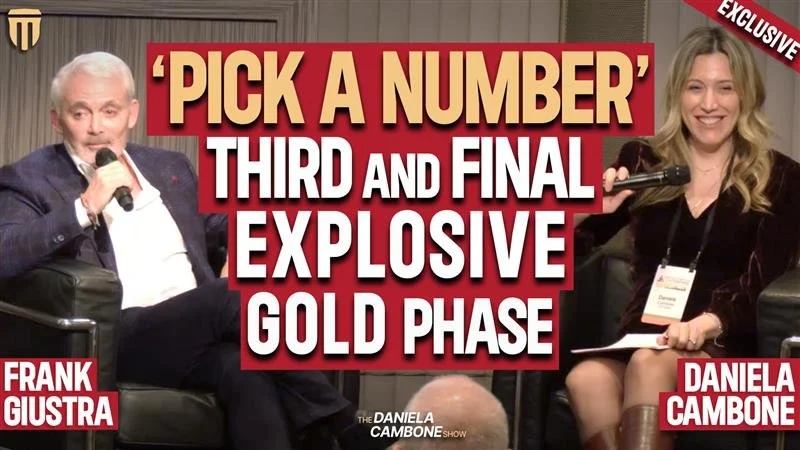
My two friends @DanielaCambone and @Frank_Giustra had an amazing discussion. I highly recommend watching. Great insights into Tether and gold…
ITM Trading: Tether Is Betting Billions on Gold - What They Know About Final Explosive Phase - Frank Giustra Watch now: https://youtu.be/PVi1e1g1Bhc
Every time I stop in Timmins, I’m reminded of a simple truth: Mining doesn’t just pull metals from the ground it builds cities, livelihoods, and futures. Jobs. Growth. Stability. Canada is sitting on a treasure trove of critical minerals. The opportunity ahead is HUGE.
BREAKING NEWS: SWISS GOLD REFINERS ARE INTERESTED IN SETTING UP SHOP IN THE UNITED STATES IN THE FUTURE
Golden age?
“Switzerland exported nearly 53 billion Swiss francs’ ($66.83 billion) worth of gold to the United States in 2024…”
A Monetary Earthquake:
China’s Unreported Gold Purchases Could Be 10× Its Official Total, According to the Financial Times.
Dr. Judy Shelton recently told me something that the world should play close attention too.
China, the world’s largest producer and consumer of gold, is almost certainly not being transparent about how much it really holds.
Through the Shanghai Gold Exchange, Beijing has quietly built the infrastructure to merge gold and the yuan — setting the stage for settlement through digital instruments or stablecoins.
She warned that China may soon propose a new international monetary system anchored to gold… a move that could redefine global finance.
https://twitter.com/i/status/1989832987005927926
Former US Treasury Secretary Janet Yellen says the United States is in danger of becoming a banana republic. This is coming from Janet Yellen. Read that again. This is just getting unbelievable.
The irony is amazing. She weaponized the system and helped trigger the global rush to gold.
Source(s): https://x.com/GoldTelegraph_/status/1989440262482137483
https://dinarchronicles.com/2025/11/16/gold-telegraph-a-monetary-earthquake/
“Vietnam News and Views” Posted by Henig at KTFA 11-17-2025
KTFA:
Henig: IMO: I like what I'm seeing here: "major progress on multiple issues" and "narrowing differences on outstanding matters." As we've discussed before, exchange rates are almost always going to be a part of any trade talks like this--especially given the fact that they're spurred on by President Trump's tariffs. Let's continue to watch and see how this situation develops.
Việt Nam, US make major progress in 5th round of trade talks
November 16, 2025 - 16:19
In the series of talks, the Vietnamese and US delegations made major progress on multiple issues, including services, digital trade, agriculture, technical barriers to trade (TBT), and sanitary and phytosanitary standards (SPS), while narrowing differences on outstanding matters.
KTFA:
Henig: IMO: I like what I'm seeing here: "major progress on multiple issues" and "narrowing differences on outstanding matters." As we've discussed before, exchange rates are almost always going to be a part of any trade talks like this--especially given the fact that they're spurred on by President Trump's tariffs. Let's continue to watch and see how this situation develops.
Việt Nam, US make major progress in 5th round of trade talks
November 16, 2025 - 16:19
In the series of talks, the Vietnamese and US delegations made major progress on multiple issues, including services, digital trade, agriculture, technical barriers to trade (TBT), and sanitary and phytosanitary standards (SPS), while narrowing differences on outstanding matters.
HÀ NỘI — According to the agreed plan, the fifth round of in-person negotiations on the Việt Nam–United States Reciprocal Trade Agreement concluded after the three-day session from November 12 to 14 in Washington DC, the Ministry of Industry and Trade reported.
Việt Nam’s negotiating delegation was led by Minister of Industry and Trade and Government Chief Negotiator Nguyễn Hồng Diên, joined by members of the negotiating team and representatives from the Ministries of Public Security, Foreign Affairs, Finance, Home Affairs, Agriculture and Environment, Science and Technology, Justice and the State Bank of Việt Nam.
During the talks, the Vietnamese and US delegations made major progress on multiple issues, including services, digital trade, agriculture, technical barriers to trade (TBT) and sanitary and phytosanitary standards (SPS), while narrowing differences on outstanding matters.
In the closing session, both the Office of the United States Trade Representative (USTR) and the Vietnamese negotiating team assessed the round as highly positive, creating favourable conditions for the early conclusion of the Việt Nam–US Reciprocal Trade Agreement.
The US highly valued the goodwill, effort and creative approach of the Vietnamese delegation, particularly the results of the direct meeting between Minister Diên and US Trade Representative Jamieson Greer held immediately before the official technical negotiations. Responding to Việt Nam’s proposals, the US side offered initial positive feedback and indicated it could consider further steps based on the overall negotiation outcome.
The two sides also agreed on follow-up work after this round and consented to hold several online meetings in the coming days to continue addressing outstanding issues and prepare for a virtual ministerial-level negotiation between Trade Representative Jamieson Greer and Minister Diên, expected later in November.
In addition to the negotiations, Minister Diên held working sessions with the US Under Secretary of State, members of the House of Representatives including the Chair of the House Ways and Means Committee, and met with leaders of major US technology and semiconductor companies as well as the Footwear and Apparel Association, to promote bilateral economic, investment and trade cooperation and rally support for Việt Nam’s reciprocal trade negotiations. — VNS
https://vietnamnews.vn/economy.....talks.html
************
Henig: IMO: I like what I see here, too: They're talking about "accelerated and sustainable growth" in a new era. I especially like this line: “Việt Nam is no longer just a ‘rising star’, it has become a soaring dragon,” spoken by Ken Atkinson.
Vietnam 2.0 investor conference to spotlight new “Dragon Rising” growth phase
November 17, 2025 - 07:26
Held under the theme “Vietnam 2.0 – Unlocking the Next Growth Phase,” the two-day event on December 3-4 will explore Việt Nam’s transformation into a new era of accelerated and sustainable growth.
HCM CITY — More than 100 leading investors from Singapore, Hong Kong, Australia, Japan, Europe and the UK will gather in HCM City early next month for the Dynam Investor Conference 2025, one of the year’s most anticipated international investment events.
Held under the theme “Vietnam 2.0 – Unlocking the Next Growth Phase,” the two-day event on December 3-4 will explore Việt Nam’s transformation into a new era of accelerated and sustainable growth.
The conference, jointly organised by Dynam Capital Ltd (Guernsey), Vantage Point Asset Management (Singapore) and Shinec Vietnam, aims to open new channels for long-term foreign capital into one of Southeast Asia’s most dynamic economies.
According to the organisers, the event will feature in-depth analyses, candid dialogues and direct networking with top Vietnamese business leaders and policymakers.
It will bring together global financial experts to discuss ways to strengthen Việt Nam’s capital markets and build a more transparent and sustainable financial ecosystem.
Key sessions will focus on macroeconomic trends, market outlooks and investment opportunities in infrastructure, energy, environment and technology.
The event follows a successful Melbourne VPAM Vietnam Investment Roadshow, which gathered major institutional investors such as Future Fund, Macquarie Group, Morgan Stanley, Smorgon Family Office, Myer Group, Farrer Capital, Bloomberg and Navigate Australia.
Discussions during the roadshow identified Việt Nam as one of Asia’s next key growth markets, reflecting growing global investor interest in infrastructure, manufacturing and capital markets.
“Việt Nam is no longer just a ‘rising star’, it has become a soaring dragon,” said Ken Atkinson, senior advisor to the organisers.
“This conference serves as a bridge for global investors to seize golden opportunities and help build a prosperous and sustainable future for Việt Nam.”
With billions of dollars in potential investments, the conference is expected to attract significant attention from the international financial community and provide a platform for Vietnamese enterprises to connect with high-quality foreign capital. — VNS
https://vietnamnews.vn/economy.....phase.html
Seeds of Wisdom RV and Economics Updates Monday Afternoon 11-17-25
Good Afternoon Dinar Recaps,
The Hybrid Currency System of the Future Has Arrived
CBDCs, stablecoins, and liquidity protocols form the next monetary architecture.
Overview
Academics warn that CBDCs could increase bank-run risk without structural safeguards.
A hybrid model — CBDCs plus regulated stablecoins — is gaining support.
Nations are accelerating research into digital monetary sovereignty.
Good Afternoon Dinar Recaps,
The Hybrid Currency System of the Future Has Arrived
CBDCs, stablecoins, and liquidity protocols form the next monetary architecture.
Overview
Academics warn that CBDCs could increase bank-run risk without structural safeguards.
A hybrid model — CBDCs plus regulated stablecoins — is gaining support.
Nations are accelerating research into digital monetary sovereignty.
Key Developments
New models propose embedding stablecoins into central bank settlement systems.
Political narratives around “digital dollar resets” are being challenged by policy experts.
Research shows digital currencies must include strict limits to avoid systemic stress.
Why It Matters
Digital currencies are no longer speculative: they are now central to the next-phase monetary system.
Implications for the Global Reset
Pillar: Digital Monetary Architecture — Expect dual-layer systems combining central bank authority with programmable digital assets.
Pillar: Sovereign Digital Currency — Countries may adopt digital money to control cross-border flows more precisely.
This is not just politics — it’s global finance restructuring before our eyes.
Seeds of Wisdom Team
Newshounds News™ Exclusive
Sources
~~~~~~~~~~
Alert: Iran Teams With BRICS for Crypto Sanctions Workaround
Tehran pivots to blockchain-based settlement as sanctions pressure intensifies.
Overview
France, the U.K., and Germany reinstated sanctions on Iran in August 2025, accelerating Tehran’s push into cryptocurrency-based settlement.
Iranian officials declared at the deBlock Summit—the country’s first government-backed blockchain conference—that blockchain is now essential for international commerce.
BRICS partners are increasingly positioned as Iran’s alternative trade network as dollar-based systems tighten restrictions.
Key Developments
Parliamentary Speaker Mohammad Bagher Ghalibaf said digital currency settlement is no longer optional, emphasizing the need for foreign investment in Iran’s crypto ecosystem.
Iran’s government pledged to collaborate with universities, researchers, and technology firms to expand blockchain infrastructure.
Industry leaders criticized regulatory gaps, warning that outdated rules undermine Iran’s ability to use crypto to bypass sanctions.
Iran’s central bank continues to restrict Rial-to-crypto conversions on local platforms, complicating BRICS crypto settlement plans.
Business leaders stressed that sanctions blocking Iran from SWIFT make blockchain indispensable, yet regulatory clarity is still lacking.
Why It Matters
Iran is openly positioning digital assets as a survival mechanism. With Western sanctions tightening and access to traditional payment channels blocked, cryptocurrencies are becoming Tehran’s primary pathway for international trade.
Implications for the Global Reset
Pillar: Currency & Trade Integration — BRICS-led digital settlement is accelerating as sanctioned nations seek non-dollar channels.
Pillar: Digital Monetary Architecture — Iran’s rapid blockchain adoption may push BRICS toward a unified cross-border crypto settlement system.
This is not just politics — it’s global finance restructuring before our eyes.
Seeds of Wisdom Team
Newshounds News™ Exclusive
Sources
Watcher.Guru — “Alert: Iran Teams With BRICS for Crypto Sanctions Workaround”
Crypto.News – “Iran plans crypto strategy with BRICS to work around global sanctions”
Chainalysis Blog – “Sanctions: Iranians Flock to Crypto; Int’l Actions Target …”
~~~~~~~~~~
Seeds of Wisdom Team RV Currency Facts Youtube and Rumble
Newshound's News Telegram Room Link
RV Facts with Proof Links Link
RV Updates Proof links - Facts Link
Follow the Gold/Silver Rate COMEX
Follow Fast Facts
Seeds of Wisdom Team™ Website
Thank you Dinar Recaps
“Tidbits From TNT” Monday 11-17-2025
TNT:
Tishwash: The Prime Minister emphasizes the need to proceed with economic and financial reform plans.
Prime Minister Mohammed Shia al-Sudani stressed on Sunday the need to proceed with economic and financial reform plans, directing the Ministry of Electricity to study economic models for investment projects.
The Prime Minister’s Media Office said in a statement received by the Iraqi News Agency (INA) that “Prime Minister Mohammed Shia Al-Sudani chaired a meeting today, Sunday, dedicated to following up on the financial dues for energy projects (electricity and oil), in the presence of the Minister of Finance, the Ministers of Oil and Electricity, and a number of advisors and executive officials in the ministries.”
TNT:
Tishwash: The Prime Minister emphasizes the need to proceed with economic and financial reform plans.
Prime Minister Mohammed Shia al-Sudani stressed on Sunday the need to proceed with economic and financial reform plans, directing the Ministry of Electricity to study economic models for investment projects.
The Prime Minister’s Media Office said in a statement received by the Iraqi News Agency (INA) that “Prime Minister Mohammed Shia Al-Sudani chaired a meeting today, Sunday, dedicated to following up on the financial dues for energy projects (electricity and oil), in the presence of the Minister of Finance, the Ministers of Oil and Electricity, and a number of advisors and executive officials in the ministries.”
The statement added, "During the meeting, ways to maximize public treasury revenues were discussed by increasing export capacity of petroleum products (diesel, naphtha, black oil, condensates) and other products after achieving self-sufficiency."
He continued, "The meeting witnessed a discussion on setting a mechanism for the flow of revenues, and restricting the export of oil products through the State Oil Marketing Company (SOMO)," adding that "with regard to the electricity sector, Al-Sudani directed the Ministry of Electricity to study the economic models for investment projects."
The Prime Minister stressed – according to the statement – the need to proceed with economic and financial reform plans, especially with regard to benefiting from oil wealth, and raising the percentage of crude oil refining in accordance with the targeted plans to produce more high-quality and valuable oil derivatives. link
************
Tishwash: Al-Araji: Iraq is committed to building balanced relations with all countries of the world.
The Ministry of Foreign Affairs confirmed on Sunday that Iraq has played an important role in promoting regional stability over the past years.
The Ministry said in a statement followed by Al-Masra, “The Ministry of Foreign Affairs held a special session today to introduce the Iraqi National Security Strategy (Iraq First), during which it hosted National Security Advisor Qasim Al-Araji, and in the presence of the Undersecretary of the Ministry for Multilateral Affairs and Legal Affairs, Ambassador Shorsh Khalid Saeed, and the Head of the Organizations Department, Ambassador Fadel Al-Rahim, in addition to a number of heads of departments in the Ministry’s headquarters and representatives of Arab and foreign diplomatic missions operating in Iraq.”
Undersecretary Shorsh Khalid Saeed opened the session with a speech in which he welcomed the advisor and the attendees, noting that “the Ministry has contributed effectively to the preparation of the strategy for the period (2025–2030), which aims to address security, environmental, economic and social challenges.”
He added that “the session witnessed interventions by a number of heads of diplomatic missions, during which they raised questions and proposals related to the items of the strategy, and the advisor to the Undersecretary of the Ministry took it upon himself to answer them and clarify its various aspects.”
He emphasized “the proactive role that Iraq has played in recent years in promoting regional stability,” and praised “the great efforts made by the committee responsible for preparing the strategy, and its keenness to include the role of foreign policy in promoting international cooperation.”
For his part, the National Security Advisor expressed his gratitude to the Ministry of Foreign Affairs and diplomatic missions, reviewing the most prominent challenges that Iraq faced during the past period and the pivotal role of the leadership in overcoming them and consolidating state institutions.
He pointed out that “the preparation of the national security strategy involved all state institutions, along with international organizations and civil society organizations,” stressing that “these entities are considered partners in its implementation.”
He stressed that “Iraq is committed to building balanced relations with all countries of the world, based on mutual respect and non-interference in internal affairs,” praising “the important role played by the Ministry of Foreign Affairs in consolidating international relations.”
He reviewed the five main pillars of the strategy, which are: the security and intelligence pillar, the economic pillar, the pillar of state relations and international partnerships, the pillar of community security, and the pillar of public services.
He pointed to “the importance of institutional evaluation and encouraging volunteer work,” and gave the delegations a brief overview of the success of the parliamentary elections that took place in Iraq.
He praised “the efforts of the government, the commission and the security services in conducting safe and stable elections that promote the peaceful transfer of power,” noting that “Iraq has succeeded in the Al-Hol camp file through the national measures and efforts that have been taken.”
The Chairman of the Standing Committee for National Security Strategy, Ali Abdul Aziz Al-Yassiri, gave a detailed explanation regarding the strategy’s axes and outputs. link
************
Tishwash: KRG Prime Minister Welcomes USKBC Delegation as Kurdistan Deepens Business Ties with American Investors
Meeting highlights investment reforms, sectoral opportunities, and the Kurdistan Region’s expanding role as a secure hub for U.S. capital.
Kurdistan Region Prime Minister Masrour Barzani on Sunday received a delegation from the U.S.-Kurdistan Business Council (USKBC), led by its President David Tafuri, as the autonomous region continues to position itself as one of the Middle East’s most open and secure environments for American and diaspora investment.
The meeting was held as the Kurdistan Region deepens economic engagement with U.S. companies, driven in part by its foreign-investor-friendly legal framework and an expanding strategy to attract diaspora capital—especially from Assyrian, Chaldean, and Syriac communities seeking to rebuild commercial and cultural links with their ancestral homeland.
At the start of the meeting, Tafuri congratulated Prime Minister Barzani on the outcome of Iraq’s recent parliamentary elections and outlined the purpose of the delegation’s visit, stressing the Council’s commitment to expanding American commercial partnerships across the Kurdistan Region.
He also briefed KRG officials on the composition of the visiting delegation, which includes U.S. business leaders, legal experts, and investors exploring opportunities in key economic sectors.
Prime Minister Barzani provided an overview of recent political developments in both the Kurdistan Region and Iraq, underscoring the KRG’s institutional reforms and improved governance under the ninth cabinet.
He highlighted major advancements in the energy sector—particularly natural gas development—as well as ongoing measures to modernize the region’s economic infrastructure and regulatory environment.
Barzani reiterated the government’s strong commitment to enabling and expanding the presence of American companies in the Kurdistan Region.
The visit follows a larger U.S. and Assyrian-American economic outreach effort to the Kurdistan Region, where diaspora entrepreneurs have been examining long-term opportunities supported by Investment Law No. 4 of 2006.
The law allows 100 percent foreign ownership, long-term land use rights, significant tax exemptions, and full repatriation of profits—legal advantages unmatched elsewhere in Iraq, where federal regulations require majority local ownership.
These policies have created renewed momentum for Assyrian diaspora investment, as communities seek sustainable ways to preserve their heritage while fostering economic resilience in historic areas like Ankawa, Alqosh, Amedi, and the broader Nineveh Plains.
During recent meetings with senior KRG officials, including PM Barzani and Board of Investment Chairman Mohammad Shukri, U.S.-based Assyrian investors discussed a range of potential ventures in education, healthcare, agriculture, tourism, and cultural preservation.
On Saturday evening, Board of Investment spokesperson Bargasht Akrayee confirmed that Tafuri’s delegation would meet with top KRG officials, investors, and business leaders across the region to explore joint projects. The USKBC—an influential Washington-based organization—has long played a key role in promoting U.S.-Kurdistan economic ties, frequently organizing visits for American businesses seeking to enter the Kurdish market.
The Kurdistan Region’s comparative stability, legal predictability, and investor-friendly climate have gained growing attention among U.S. business circles. For diaspora groups—particularly Assyrians—the region offers a rare opportunity to build commercial ventures with full ownership, legal protections under international arbitration standards, and a political environment supportive of minority rights.
“This is a historic moment for Assyrians who wish to invest in their homeland,” said Alexander Karana, an American attorney who accompanied the recent delegation, in an analysis published by Global Strat View.
Karana emphasized that the Kurdistan Region’s investment laws allow diaspora communities to participate in economic growth “with dignity, security, and purpose,” reinforcing both cultural identity and long-term communal stability.
As Prime Minister Barzani continues to encourage foreign and diaspora investment, the meeting with the USKBC delegation signals a broader KRG strategy: leveraging international partnerships, nurturing minority-led economic initiatives, and transforming the Kurdistan Region into a regional hub for sustainable, diversified, and globally connected development. link
************
Mot: . Shes Waiting fer da RV!!!!

Mot: This is why every grandma needs a 5-year-old.—

Seeds of Wisdom RV and Economics Updates Monday Morning 11-17-25
Good Morning Dinar Recaps,
The Liquidity Crunch Nobody Sees Coming
IMF warnings reveal cracks beneath the global FX system.
Overview
IMF analysts warn that liquidity risks in the $9.6 trillion daily FX market are deeper than regulators acknowledge.
Growth forecasts are weakening, increasing stress on banks, credit markets, and non-bank institutions.
Global liquidity backstops, especially U.S. swap lines, may not be sufficient for a major systemic event.
Good Morning Dinar Recaps,
The Liquidity Crunch Nobody Sees Coming
IMF warnings reveal cracks beneath the global FX system.
Overview
IMF analysts warn that liquidity risks in the $9.6 trillion daily FX market are deeper than regulators acknowledge.
Growth forecasts are weakening, increasing stress on banks, credit markets, and non-bank institutions.
Global liquidity backstops, especially U.S. swap lines, may not be sufficient for a major systemic event.
Key Developments
Regulators are being urged to upgrade stress tests to reflect real-time FX vulnerabilities.
Central banks are evaluating whether current swap-line systems need restructuring.
Non-bank financial firms show rising leverage, particularly in derivatives markets.
Why It Matters
Stress in FX markets can cascade through the entire global system. A liquidity shock would impact trade, credit markets, and sovereign financing.
Implications for the Global Reset
Pillar: Finance Reform — A redesigned global liquidity framework may emerge.
Pillar: Systemic Resilience — Expect stronger global oversight of currency risk and cross-border leverage.
This is not just politics — it’s global finance restructuring before our eyes.
Seeds of Wisdom Team
Newshounds News™ Exclusive
Sources
Reuters – “IMF Warns Banks and Supervisors of Liquidity Risks in FX Markets”
Barron’s – “IMF Lowers Global Growth Outlook, Warns on Stability Risks”
~~~~~~~~~~
The Quiet Revolt Against Dollar Power
Central banks explore alternatives as geopolitical fragmentation expands.
Overview
Countries are questioning the long-term reliability of U.S. dollar swap lines.
Emerging blocs like BRICS-Plus are designing settlement systems outside Western frameworks.
Economic fragmentation is rising, and global institutions are sounding alarms.
Key Developments
Several central banks are evaluating new regional liquidity agreements.
Settlements in non-dollar assets are increasing, especially for energy and commodities.
Policymakers warn that geopolitical tension could trigger instability in international bond markets.
Why It Matters
When nations pursue independent, non-dollar financial plumbing, the balance of global power shifts. The world is moving from a unipolar monetary system to a multipolar one.
Implications for the Global Reset
Pillar: Geopolitical Realignment — Expect deeper integration among regional blocs.
Pillar: Monetary Sovereignty — Nations may accelerate efforts to reduce dollar reliance.
This is not just politics — it’s global finance restructuring before our eyes.
Seeds of Wisdom Team
Newshounds News™ Exclusive
Sources
Financial Times – “Central Banks Are Beginning to Fret About Dollar Swap Lines”
The Times – “Economic Fragmentation Threatens Global Stability”
~~~~~~~~~~
Markets Look Calm — But the System Is Shaking
Hidden leverage and AI-driven trading spark warnings about systemic fragility.
Overview
Global institutions warn that asset prices may be inflated relative to underlying fundamentals.
High-risk exposure is concentrated in non-bank financial institutions with limited oversight.
Growth downgrades and rate uncertainty are exposing vulnerabilities.
Key Developments
AI-driven trading systems may trigger flash events not captured by current reporting frameworks.
Derivatives leverage appears increasingly opaque.
Debt levels remain elevated across sovereign, corporate, and consumer markets.
Why It Matters
A sudden liquidity event or geopolitical shock could generate rapid contagion. Markets are more interconnected — and more fragile — than most investors realize.
Implications for the Global Reset
Pillar: Risk Redistribution — Expect reforms in derivatives, leverage caps, and non-bank oversight.
Pillar: Market Transparency — New global reporting frameworks for AI-driven systems may emerge.
This is not just politics — it’s global finance restructuring before our eyes.
Seeds of Wisdom Team
Newshounds News™ Exclusive
Sources
The Guardian – “IMF Warns Global Financial System Under Strain”
arXiv – “Vulnerabilities in AI Financial Incident Reporting”
~~~~~~~~~~
Gold Returns to the Throne
Central banks accelerate accumulation as trust in fiat weakens.
Overview
Central bank gold purchases are rising at the fastest pace in modern history.
New financial systems are being designed around physical-asset settlement.
Gold is reemerging as a core pillar of sovereign reserve strategy.
Key Developments
Multiple countries have increased strategic gold reserves this year.
Commodity-backed settlement networks are being tested between Eurasian partners.
A global narrative shift is underway: gold as collateral, not speculation.
Why It Matters
Gold is being positioned as the neutral reserve asset in a world of political fragmentation and fiat volatility.
Implications for the Global Reset
Pillar: Asset-Backed Currency — Expect hybrid systems tying currency to physical reserves.
Pillar: Reserve Realignment — Gold’s rising share may diminish reliance on U.S. debt instruments.
This is not just politics — it’s global finance restructuring before our eyes.
Seeds of Wisdom Team
Newshounds News™ Exclusive
Sources
~~~~~~~~~~
Seeds of Wisdom Team RV Currency Facts Youtube and Rumble
Newshound's News Telegram Room Link
RV Facts with Proof Links Link
RV Updates Proof links - Facts Link
Follow the Gold/Silver Rate COMEX
Follow Fast Facts
Seeds of Wisdom Team™ Website
Thank you Dinar Recaps