
Thank you to all the subscribers to our Early Access program…we thank you for your continued support.
We are excited to offer this new service to keep you informed and up-to-date on the latest Dinar and currency news.
The Next Economic Crisis is Not What you Think
The Next Economic Crisis is Not What you Think
Heresy Financial: 10-13-2025
Over the last three decades, financial crises have frequently blindsided the public. But what if these events weren’t random? What if they followed a predictable, escalating pattern—a deadly game of hot potato where the entity that absorbs the previous crisis inevitably becomes the epicenter of the next one?
A recent detailed analysis suggests that this cycle is real, and it points to a startling conclusion: after years of absorbing private and corporate failures, the government itself is now positioned as the next major economic domino.
The Next Economic Crisis is Not What you Think
Heresy Financial: 10-13-2025
Over the last three decades, financial crises have frequently blindsided the public. But what if these events weren’t random? What if they followed a predictable, escalating pattern—a deadly game of hot potato where the entity that absorbs the previous crisis inevitably becomes the epicenter of the next one?
A recent detailed analysis suggests that this cycle is real, and it points to a startling conclusion: after years of absorbing private and corporate failures, the government itself is now positioned as the next major economic domino.
Here is a breakdown of this repeating cycle and the critical steps you must take to protect your financial future in an era of manipulated money.
The pattern identified in the analysis is simple yet terrifying: the crisis is never truly solved; it is merely transferred, growing larger and moving closer to the core of the financial system with each iteration.
The cycle began with the collapse of Long-Term Capital Management (LTCM). This highly leveraged hedge fund, relying on complex arbitrage strategies, imploded, threatening to drag down the global financial system.
For a decade, the risk resided primarily on the balance sheets of the largest global banks.
By 2008, the burden of transferred risk, combined with massive new risks generated by subprime mortgages, became too great. The epicenter shifted to the banks themselves.
The cost of saving the financial system was transferred directly to the public ledger.
When the pandemic hit in 2020, the economy faced an unprecedented shutdown. The epicenter shifted again, this time centered on the entity that had absorbed the previous crisis: the taxpayers (and by extension, the entire private economy).
This massive intervention was highly inflationary and successful at preventing an immediate depression, but it set the stage for the next and most severe crisis yet.
Following the pattern, the entity that absorbed the 2020 crisis—the government, via the national balance sheet—now holds the greatest risk.
The crisis we are facing now is a Sovereign Debt Crisis.
For years, governments have borrowed and spent far beyond their means, assuming that economic growth would outpace debt accumulation. Today, the reality is that the level of national debt has reached a point where the government’s ability to service or repay it through conventional means (like taxation) is questionable.
The inevitable risk is a sovereign default—a political and economic catastrophe that would shake the foundations of the global financial system.
When faced with the political impossibility of default, the Federal Reserve is expected to step in yet again. They will utilize monetary tools to prevent the government from collapsing under its debt load.
The government avoids default, but the individual pays the price: Inflation.
By injecting massive amounts of liquidity and artificially depressing the value of government debt, the value of every dollar you hold—and the value of those “safe” government bonds—is dramatically reduced. This is a deliberate, subtle devaluation of wealth.
In this environment of crisis transference and monetary manipulation, financial education is no longer optional—it is essential for survival. Protecting your wealth requires actively positioning yourself outside the traditional financial safety nets.
To shield yourself from the coming sovereign crisis and the resulting inflationary pressures, the expert analysis suggests a critical shift in portfolio construction:
The assets that have traditionally been considered the safest—cash and government debt—are now the most vulnerable to monetary policy manipulation.
The crisis cycle has finally reached the top of the chain. This is not a moment for passive investment; it is a moment for active defense. Understanding how risk is transferred and how central banks will react is the only way to safeguard your financial future against the cost of a debt-riddled government.
Seeds of Wisdom RV and Economics Updates Tuesday Afternoon 10-14-25
Good Afternoon Dinar Recaps,
BRICS Rising: From Summits to Soft Power – Media & Expansion Take Center Stage
BRICS is moving beyond finance: its outreach in media, governance, and expansion is shaping an architecture of influence aligned with global financial change.
Good Afternoon Dinar Recaps,
BRICS Rising: From Summits to Soft Power – Media & Expansion Take Center Stage
BRICS is moving beyond finance: its outreach in media, governance, and expansion is shaping an architecture of influence aligned with global financial change.
Media Diplomacy Surges
Reuters maintains a dedicated BRICS section covering diplomatic, financial, and media moves, giving real-time insight into the bloc’s narrative-shaping.
At their 2025 summit in Rio, BRICS leaders agreed on statements to strengthen cooperation in AI, media governance, and global representation.
Russia has also floated a precious metals exchange concept within BRICS to counter Western-dominated trading platforms — a move that overlaps economic policy with messaging and structural autonomy.
Expansion, Mixed Messaging & Tariff Tensions
In June 2025, Vietnam was formally admitted as a partner country of BRICS, expanding the bloc’s footprint in Asia.
Brazilian President Lula has pushed for tighter trade and financial integration, citing tariffs as a tool of coercion — implicitly referencing U.S. protectionism.
Ahead of the summit, President Trump threatened a 10% tariff on countries aligning with “BRICS anti-American policies.” BRICS members pushed back, asserting they remain open to engagement with the West.
Structural Depth: Finance, Trade & Symbolism
Even Brazil cautions: it doesn’t believe BRICS has assets large enough to displace the dollar in the near term.
But at the same time, BRICS finance ministers issued a joint IMF reform proposal,
The Russian-led proposal for a BRICS Grain Exchange remains active in communiques — a strategic push to internalize trade in agricultural commodities.
Why This Matters
BRICS is evolving: not just as an anti-dollar coalition, but as a parallel ecosystem of trade, media, and governance influence.
By extending into narrative control, local institution-building, and soft-power alignment, the bloc is rewriting the rules of financial cooperation — and laying the groundwork for alternatives to Western dominance.
This is not just politics — it’s global finance restructuring before our eyes.
Seeds of Wisdom Team
Newshounds News™ Exclusive
Sources:
“BRICS News | Today’s Latest Stories” — Reuters
“BRICS agree to joint statement ahead of Rio leaders summit” — Reuters
“Russia in talks with BRICS over precious metals exchange” — Reuters
“Vietnam admitted as BRICS ‘partner country’” — Reuters
“Brazil’s Lula calls for tighter trade ties for BRICS as tariffs bite” — Reuters
“Trump threatens extra 10% tariffs on BRICS as leaders meet in Brazil” — Reuters Reuters
“BRICS tariff to be applied only if they adopt policies deemed anti-American” — Reuters
“No BRICS asset pile big enough to rival dollar, Brazil central bank director says” — Reuters
“BRICS finance ministers make unified proposal for IMF reforms” — Reuters
“BRICS leaders tout joint finance, trade projects at Russian …” — Reuters
“Russia’s proposed grain exchange for BRICS countries may take years to launch” — Reuters
~~~~~~~~~
Seeds of Wisdom Team RV Currency Facts Youtube and Rumble
Newshound's News Telegram Room Link
Follow the Gold/Silver Rate COMEX
Follow Fast Facts
Seeds of Wisdom Team™ Website
Thank you Dinar Recaps
“Tidbits From TNT” Tuesday 10-14-2025
TNT:
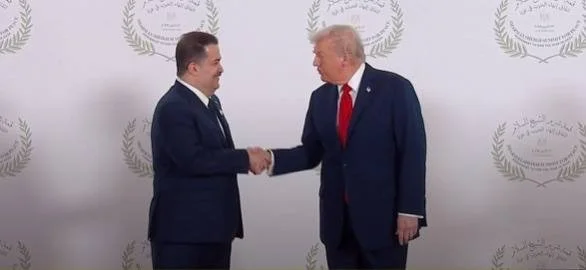
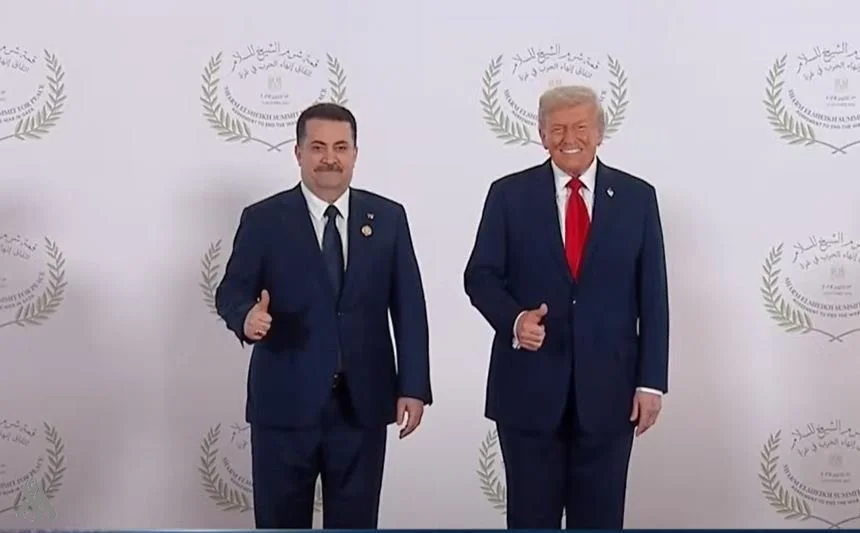
Tishwash: Al-Sudani meets Trump at the Sharm el-Sheikh summit.
Iraqi Prime Minister Mohammed Shia al-Sudani met with US President Donald Trump on Monday on the sidelines of the Sharm el-Sheikh summit, which brings together a number of regional and international leaders.
The Prime Minister held a series of meetings on Monday with a number of kings, presidents, and heads of government, as well as the Secretary-Generals of the United Nations and the Arab League, and former British Prime Minister Tony Blair.
These meetings took place on the sidelines of Al-Sudani's participation in the Sharm El-Sheikh conference in the Arab Republic of Egypt, regarding the situation in Gaza.
TNT:
Tishwash: Al-Sudani meets Trump at the Sharm el-Sheikh summit.
Iraqi Prime Minister Mohammed Shia al-Sudani met with US President Donald Trump on Monday on the sidelines of the Sharm el-Sheikh summit, which brings together a number of regional and international leaders.
The Prime Minister held a series of meetings on Monday with a number of kings, presidents, and heads of government, as well as the Secretary-Generals of the United Nations and the Arab League, and former British Prime Minister Tony Blair.
These meetings took place on the sidelines of Al-Sudani's participation in the Sharm El-Sheikh conference in the Arab Republic of Egypt, regarding the situation in Gaza. link
Tishwash: Al-Sudani meets a number of kings, presidents, and heads of government in Sharm El-Sheikh.
Prime Minister Mohammed Shia al-Sudani held a series of meetings on Monday with a number of kings, presidents, and heads of government. He also met with the Secretary-Generals of the United Nations and the Arab League, as well as former British Prime Minister Tony Blair.
The meetings were held on the sidelines of his participation in the Sharm el-Sheikh conference in the Arab Republic of Egypt on the situation in Gaza.
A statement from his office, a copy of which was received by {Euphrates News}, stated that: “Al-Sudani met with the kings of Jordan and Bahrain, the presidents of Palestine, Azerbaijan, and Cyprus, the German chancellor, and the heads of governments of Britain, Spain, Italy, Greece, and Armenia.”
He added, "During the meetings, Al-Sudani discussed joint relations, ways to develop them in various fields, and the importance of developing prospects for joint cooperation in a way that brings mutual benefit to brotherly and friendly peoples."
The statement continued, "The meetings also addressed the steps taken to end the suffering of Palestinians in Gaza, the need to work to maintain a ceasefire against civilians, and the need for major powers, Arab and international organizations and institutions to play their part in rebuilding Gaza and providing basic needs for Palestinian civilians."
During the meetings, Al-Sudani emphasized "the need for international efforts to reduce tensions and escalation in the region and around the world," calling for "the importance of strengthening dialogue and finding solutions based on international law to address everyone's concerns, including the existing disputes between Iran and Western countries over the nuclear issue and other issues." link
*************
Tishwash: Al-Awadi: The Prime Minister's participation in the Sharm El-Sheikh Summit is a clear message about Iraq's regional role
Government spokesman Bassem Al-Awadi confirmed today, Monday, that the participation of Prime Minister Mohammed Shia Al-Sudani in the Sharm El-Sheikh Peace Summit on Gaza comes within the framework of emphasizing the importance of Iraq's regional role and its firm position towards the Palestinian issue.
Al-Awadi said in a statement to Al-Iraqiya News, which was followed by the Iraqi News Agency (INA), that "the presence of a large number of heads of state at this summit would not have happened without the great importance of the Palestinian issue, as well as the international community's growing awareness of the importance of the Iraqi role in the region."
He added, "Iraq cannot be informed of the truth about the agreements and initiatives proposed regarding Gaza and the region, without the actual presence of the Prime Minister, which allows him to be directly informed and participate in formulating positions".
He added, "Iraq officially went to the Sharm El-Sheikh summit to confirm its clear position on the necessity of stopping the killing of civilians in Arab and Islamic countries, especially Palestine, lifting the siege on Gaza, stopping forced displacement, and starting reconstruction".
He explained that "the Prime Minister's participation in the summit is to confirm Iraq's firm and decisive position that the Palestinian people have the right to live on their land freely and with dignity," stressing that "this issue is not negotiable, and the Palestinian people must be granted the right to self-determination."
He also pointed out that "the Iraqi government believes in the importance of dialogue and understandings as a way to find a real balance in the region, and warns that failure to adhere to these paths will expose existing agreements to collapse".
Al-Awadi explained, "Through his participation, the Prime Minister seeks to meet with the largest possible number of leaders and officials to exchange views, explain Iraq's firm position, in addition to inviting leaders to visit Baghdad and enhance bilateral cooperation."
Al-Awadi said, "There is a clear international view of Iraq's return to its influential regional role and the balance of its presence on pivotal issues, which is confirmed even by the United States, which believes that Iraq is witnessing development and reconstruction and has become the focus of the region's attention, and its position on the Palestinian issue is clear and firm." link
************
Mot: Not So Funny Now – HUH

Mot: . Yeppers!!! -- Siigghhhhhh!!!

Seeds of Wisdom RV and Economics Updates Tuesday Morning 10-14-25
Good Morning Dinar Recaps,
The Hidden Cost of a Shutdown: When Politics Freezes the U.S. Economy
As Washington’s government shutdown drags on, economic ripples are spreading—not just domestically, but across global markets and confidence in U.S. leadership.
Good Morning Dinar Recaps,
The Hidden Cost of a Shutdown: When Politics Freezes the U.S. Economy
As Washington’s government shutdown drags on, economic ripples are spreading—not just domestically, but across global markets and confidence in U.S. leadership.
Economic Data Goes Dark
The U.S. government shutdown entered its 13th day, and Treasury Secretary Scott Bessent warned the closure is “beginning to harm the real economy.”
With the shutdown, key agencies like the Bureau of Labor Statistics, Commerce Department, and Census Bureau have suspended their operations, halting release of critical economic indicators.
A Reuters analysis also flagged that “a shutdown could affect financial markets by limiting regulator operations and delaying publication of key economic data,” thereby reducing visibility for investors and central banks.
Ripples of Confidence & Credibility
The IRS announced over 34,000 employees (≈46% of its workforce) would be furloughed during the shutdown, hampering tax operations and citizen services.
Markets reacted with nervousness: U.S. index futures slid amid concerns the U.S. shutdown would cloud the Fed’s next rate path by suppressing data flows.
Fitch Ratings, however, maintained that in the near term, the shutdown is “unlikely to affect sovereign ratings,” while acknowledging uncertainty and institutional strain.
Global Context: The Governance Gap
As U.S. paralysis deepens, observers in emerging and developing economies see a reinforcement of arguments for diversified global governance—where dependence on Washington’s stability is too risky.
Political dysfunction in the U.S. is being interpreted in some financial circles as evidence that the era of unquestioned fiscal leadership is waning.
Why This Matters
This isn’t merely a budget fight — it’s a test of U.S. institutional resilience. The longer critical functions remain offline, the louder the signal to the rest of the world: monetary and structural dependency on the U.S. is a strategic vulnerability.
This is not just politics — it’s global finance restructuring before our eyes.
Seeds of Wisdom Team
Newshounds News™ Exclusive
Sources:
“US Treasury chief says government shutdown is hitting economy” — Reuters
“How the US government shutdown affects key economic data publishing” — Reuters
“How a US government shutdown could affect financial markets” — Reuters
“IRS to furlough nearly half of its workforce due to US government shutdown” — Reuters
“US stock futures fall as government shutdown clouds interest-rate view” — Reuters
“US government shutdown unlikely to affect sovereign ratings in near term, Fitch says” — Reuters
~~~~~~~~~
Gold’s Comeback: The Silent Vote Against Dollar Dominance
As BRICS nations push alternative financial paradigms, global players are rediscovering gold as a neutral anchor in turbulent times.
Gold’s Strategic Resurgence
Central banks are on pace to buy 1,000+ metric tons of gold in 2025 — their fourth consecutive year of heavy accumulation.
Global gold demand rose 3% in Q2 2025 (to ~1,248.8 metric tons) driven by a 78% surge in investment demand, according to the World Gold Council.
In parallel, physical gold ETFs hit record inflows in the first half of 2025, reinforcing investor appetite for safe-haven exposure.
De-Dollarization & Hedge Demand
With the dollar’s global reserve share slipping, gold becomes a logical diversification asset — especially for nations and institutions seeking refuge from currency volatility or political interference.
Reuters noted that gold hit a fresh record (over $4,000/oz) amid mounting U.S.–China trade tensions and expectations of Fed rate cuts.
Another Reuters piece emphasized that “anxieties over global geopolitical and economic risks are the biggest drivers pushing gold’s 54% surge this year.”
Market Narrative & Forecasts
Bank of America has raised its gold forecast to $5,000/oz by 2026, citing persistent demand as a hedge.
Reuters framed gold now as the “hedge-everything” trade: it thrives when investors fret over inflation, economic slowdowns, or geopolitical risk.
Why This Matters
Gold’s ascent is more than a cyclic rebound — it’s a structural recalibration. Each tonne acquired, each ETF inflow, each central bank purchase is a tacit vote against overreliance on the dollar.
While the U.S. remains a central pillar, its dominance is being tested not just by alternatives — but by assets that transcend them.
This is not just politics — it’s global finance restructuring before our eyes.
Seeds of Wisdom Team
Newshounds News™ Exclusive
Sources:
“Central banks on track for 4th year of massive gold purchases” — Reuters
“Global gold demand up 3% in second quarter as investment jumps” — Reuters
“Gold’s record-breaking rally: who’s keeping it going?” — Reuters
“Gold rises to record as US-China trade woes escalate” — Reuters
“Gold set to extend record-breaking run on global anxieties” — Reuters
“BofA hikes gold price forecast to $5,000/oz for 2026” — Reuters
“Gold’s rise in central bank reserves appears unstoppable” — Reuters
~~~~~~~~~
China’s Export Boom Defies Tariffs: Beijing Rewires Global Trade Beyond Washington’s Reach
September data shows China’s export machine remains strong despite 100% U.S. tariffs — signaling a rapid pivot toward new markets and the rise of a multipolar trade network.
Resilient Trade in a Fractured World
China’s exports rose 8.3% year-on-year in September, beating forecasts and marking the fastest growth since March.
Imports also jumped 7.4%, reflecting both restocking and improving demand from developing markets.
Analysts note that Beijing’s export diversification is offsetting tariff pain as the U.S. share of China’s trade continues to decline.
“China is adapting faster than expected,” said Xu Tianchen of the Economist Intelligence Unit. “100% tariffs will bite, but the effect won’t mirror the shock of 2018.”
Tariffs as a Political Lever — and a Catalyst for Diversification
President Donald Trump’s 100% tariffs on Chinese goods — announced last week — revived fears of another trade war.
Beijing retaliated by tightening export controls on rare earth elements and enhancing oversight of semiconductor users.
Exports to ASEAN, Africa, and Latin America rose sharply, while shipments to the U.S. fell to under 10% of total exports — a historic low.
This marks a decisive stage in Beijing’s de-dollarization and south-south trade realignment — the architecture of a new multipolar economy taking shape.
Markets Adjust to the Split Supply Chain
Shipments to India and Southeast Asia hit record highs, showing that regional integration is accelerating even as global supply chains fragment.
Meanwhile, South Korea’s export data reflected muted demand from China, underscoring Beijing’s continued domestic challenges.
China’s trade surplus narrowed to $90.45 billion, down from $102.3 billion in August — a reflection of rising import appetite and global rebalancing.
The numbers show not isolation, but substitution — the creation of new trade corridors that weaken U.S. leverage and strengthen regional interdependence.
The Road Ahead: Tariff Truce and Global Realignment
The 90-day tariff truce between Beijing and Washington expires November 9.
Economists warn that without a new framework, both sides risk renewed uncertainty heading into 2025.
Beijing’s policy push — including a 500 million yuan infrastructure credit program — aims to sustain export-led growth through the turbulence.
China’s ability to adapt under pressure shows that the global trade map is no longer dictated from Washington, but negotiated through multipolar alliances.
Why This Matters
China’s export resilience — despite aggressive tariffs — signals a deeper transformation in how global trade functions.
The U.S. can no longer rely on tariff leverage alone; the world is rebalancing supply chains and currencies at once.
In this multipolar era, trade resilience equals geopolitical power.
This is not just politics — it’s global finance restructuring before our eyes.
Seeds of Wisdom Team
Newshounds News™ Exclusive
Sources:
• Modern Diplomacy – China’s exports surge past forecasts despite fresh U.S. tariffs
• Reuters – China exports beat forecasts despite U.S. tariffs
• South China Morning Post – China’s exports surge as U.S. tariffs reignite trade tensions
• CNBC – China responds to U.S. tariffs with new export curbs on critical minerals
• Bloomberg – China finds new buyers for exports as U.S. tariffs bite
~~~~~~~~~
Seeds of Wisdom Team RV Currency Facts Youtube and Rumble
Newshound's News Telegram Room Link
Follow the Gold/Silver Rate COMEX
Follow Fast Facts
Seeds of Wisdom Team™ Website
Thank you Dinar Recaps
MilitiaMan and Crew: IQD News Update-Iraq -USA Set the Stage Global Integration
MilitiaMan and Crew: IQD News Update-Iraq -USA Set the Stage Global Integration
10-13-2025
The Crew: Samson, PompeyPeter, Petra, Daytrader, Sunkissed, GIGI and Militia Man
Follow MM on X == https://x.com/Slashn
Be sure to listen to full video for all the news……..
MilitiaMan and Crew: IQD News Update-Iraq -USA Set the Stage Global Integration
10-13-2025
The Crew: Samson, PompeyPeter, Petra, Daytrader, Sunkissed, GIGI and Militia Man
Follow MM on X == https://x.com/Slashn
Be sure to listen to full video for all the news……..
Seeds of Wisdom RV and Economics Updates Monday Evening 10-13-25
Good Evening Dinar Recaps,
GAIN Act: Senate Pushes Trade Rule That Could Shake the AI Chip Industry
As Washington moves to prioritize domestic markets in AI chip exports, a critical battleground opens between sovereignty and globalization in tech.
Good Evening Dinar Recaps,
GAIN Act: Senate Pushes Trade Rule That Could Shake the AI Chip Industry
As Washington moves to prioritize domestic markets in AI chip exports, a critical battleground opens between sovereignty and globalization in tech.
What the GAIN Act Does — and What It Upends
The U.S. Senate passed the GAIN Act (as part of the 2026 defense & tech bill), mandating that AI chip manufacturers must fulfill U.S. orders before any foreign exports. (CoinTribune)
Export license bans may be imposed on “most advanced circuits,” giving the government discretionary power to block overseas shipments.
The law mirrors the logic of the Patriot Act, treating advanced semiconductors as dual-use technologies essential to national security.
🌱 This is more than trade policy — it reframes chips as sovereignty assets. The state reclaims control over technology flow in defense of strategic dominance.
Winners, Losers & Strategic Fault Lines
U.S. firms gain preferential access to domestic markets — especially leaders like NVIDIA, AMD, and AI hardware providers.
Foreign partners and tech startups may suffer disruption or exclusion from global supply chains.
Crypto miners and distributed computing users are affected: GPUs are essential components for many blockchain networks, and restrictions may raise costs or limit access.
🌱 This is technological containment as power play: one side builds walls, the other must adapt or reroute. The cycle of innovation is being gated by security.
How This Tattoo Matches the Global Reset
The GAIN Act comes just as BRICS and other nations pursue monetary and digital sovereignty. The U.S. is now applying similar logic to tech: retaining control over advanced systems.
This pivot echoes broader themes: the world is fragmenting into competing spheres of regulation, trust, and control, not just shared markets.
Legislation like the GAIN Act complements your earlier themes — whether it’s finance or technology, authority is being restructured around strategic domains.
Risks, Pushback & Unintended Consequences
Innovation chill: Overregulation may slow global AI progress, as talent moves to jurisdictions with freer regimes.
Diplomatic blowback: Allies and trade partners might see this as techno-mercantilism, fueling pushback or retaliatory regulation.
Supply chain strain: Many chip production components are multinational. Restricting trade flows could fracture the supply web and cause bottlenecks.
Why This Matters
The GAIN Act doesn’t just regulate chips — it signals how the U.S. intends to defend its technological hegemony in a fracturing world. As capital, currency, and data realign globally, tech becomes another axis in the reshaping of sovereignty.
• In tech as in finance, the question is not if structures will change — but who sets the architecture.
• As nations reassert control over money, data, and innovation, multi-domain sovereignty is quietly being redrawn.
This is not just politics — it’s global finance and tech restructuring before our eyes.
Seeds of Wisdom Team
Newshounds News™ Exclusive
Source:
• CoinTribune – GAIN Act: The US Senate Passes a Law That Could Disrupt the AI Chip Industry cointribune.com
~~~~~~~~
Dollar in Danger: BRICS Currency Launch Accelerates the Global Shift Away from the U.S. Dollar
The new BRICS financial architecture is accelerating rapid de-dollarization — and Washington’s response through domestic digital currency laws underscores how global power is shifting beneath the surface.
A Rapid, Measurable Decline in Dollar Dominance
The dollar’s share of global reserves has fallen steadily — from 73% in 2001 to around 54% in 2025, according to the IMF. The trend is no longer theoretical; it’s systemic.
Now, with BRICS nations — Brazil, Russia, India, China, South Africa, and new partners such as Indonesia — accounting for nearly 40% of global GDP (PPP), the dollar’s dominance is facing its most serious structural challenge in decades.
🌍 De-dollarization is no longer a warning — it’s an active transition, powered by new digital payment systems and the development of local-currency trade mechanisms across BRICS economies.
Three Systems Are Reshaping Global Trade
While BRICS leaders stopped short of announcing a single currency for 2025, their coordinated actions are clear:
Bilateral trade in national currencies has accelerated since sanctions on Russia reshaped global settlement networks.
The BRICS Cross-Border Payments Initiative is building a SWIFT alternative immune to Western sanctions.
A new BRICS Grain Exchange aims to conduct commodity trading — especially in agriculture — using national currencies instead of the dollar.
“BRICS countries repeatedly emphasize they are firmly against using currencies — the U.S. dollar in particular — as a foreign policy weapon.”
(Kelly Bogdanova, RBC Wealth Management)
These mechanisms represent monetary sovereignty in motion — a foundational shift away from the U.S.-centric system that defined postwar finance.
Tariffs Accelerate the Breakaway
Washington’s recent tariff escalation has only hastened coordination within the BRICS bloc.
U.S. tariffs on Brazil and India were interpreted as economic sanctions.
China cut U.S. Treasury holdings by 27% since 2022.
Central banks purchased over 1,000 tonnes of gold annually for reserve diversification.
“We are witnessing a simultaneous collapse in the price of all U.S. assets… The market is rapidly de-dollarising.”
(George Saravelos, Deutsche Bank)
The U.S. is now confronting the ripple effect of its own monetary weaponization.
Every tariff and sanction has become a catalyst for the creation of alternative systems — a global firewall against the dollar’s political use.
Digital Infrastructure Powers the Transition
Technology is doing what politics once resisted.
China’s digital yuan is operational.
BRICS Pay pilot programs and the Bridge settlement platform are expanding.
The New Development Bank recently launched a Multilateral Guarantee Mechanism — funding infrastructure and climate projects in local currencies, not dollars.
“India does not aim to undermine the dollar but seeks practical alternatives for trade settlements where necessary.”
(S. Jaishankar, India’s External Affairs Minister)
India’s position is pragmatic — not anti-dollar, but pro-autonomy.
It underscores how even U.S. partners are seeking monetary flexibility as the financial order transitions toward multipolarity.
BRICS Expansion and the New Balance of Power
The 17th BRICS Summit in Rio de Janeiro (July 2025) was historic:
Indonesia joined as a full member.
Eleven new partner nations — including Nigeria, Thailand, and Vietnam — entered cooperation agreements.
The bloc now represents nearly half the global population (47.9%).
With India set to lead the 2026 presidency, priorities are shifting to financial reform, digital governance, and climate-linked finance — all structured to reduce dependency on the dollar-based system.
“The multipolar world is already here.”
(Gen. Mark Milley, former U.S. Joint Chiefs Chairman)
The balance of power is no longer anchored in Washington or Wall Street — it’s distributed across digital networks, trade corridors, and emerging alliances.
The Road Ahead
Analysts forecast the dollar’s reserve share could decline to 40–45% by 2040 under a gradual shift — or below 30% by 2030 in the event of U.S. debt or political shocks.
Foreign buying of Treasuries continues to fall, yields are climbing, and the dollar’s reputation as a safe haven is eroding.
The BRICS financial network — through digital platforms, gold accumulation, and local currency swaps — is now a functioning alternative ecosystem.
Whether the transition remains orderly depends on how quickly substitute systems scale and how Washington adapts through domestic innovation, including tokenized dollar initiatives.
Why This Matters
This story is not just about finance — it’s about power redistribution.
The BRICS currency evolution and rapid de-dollarization trend mark the beginning of a post-dollar era, one defined by parallel systems of settlement, trade, and governance.
If the U.S. cannot adapt its economic model and regulatory infrastructure, the Genius and Clarity Acts — which seek to digitize and protect the dollar’s role — may prove too slow to counter this transformation.
This is not just politics — it’s global finance restructuring before our eyes.
Seeds of Wisdom Team
Newshounds News™ Exclusive
Sources:
• Watcher.Guru – “Dollar in Danger as BRICS Currency Launch Fuels Rapid De-Dollarization”
• IMF Global Reserves Data (2025)
• RBC Wealth Management, BRICS Monetary Outlook (2025)
~~~~~~~~~
Seeds of Wisdom Team RV Currency Facts Youtube and Rumble
Newshound's News Telegram Room Link
Follow the Gold/Silver Rate COMEX
Follow Fast Facts
Seeds of Wisdom Team™ Website
Thank you Dinar Recaps
Iraq Economic News and Points To Ponder Monday Afternoon 10-13-25
With Iraq's Participation, The Peace Agreement Was Signed In Gaza.
Time: 10/13/2025 19:18:35 Reading: 165 times {International: Al Furat News} The United States, Egypt, Qatar, and Turkey signed the comprehensive document on the Gaza agreement on Monday evening.
The document was signed by US President Donald Trump, his Egyptian counterpart Abdel Fattah el-Sisi, Turkish President Recep Tayyip Erdogan, and Qatari Emir Tamim bin Hamad Al Thani.
With Iraq's Participation, The Peace Agreement Was Signed In Gaza.
Time: 10/13/2025 19:18:35 Reading: 165 times {International: Al Furat News} The United States, Egypt, Qatar, and Turkey signed the comprehensive document on the Gaza agreement on Monday evening.
The document was signed by US President Donald Trump, his Egyptian counterpart Abdel Fattah el-Sisi, Turkish President Recep Tayyip Erdogan, and Qatari Emir Tamim bin Hamad Al Thani.
The agreement was signed during the Sharm el-Sheikh summit, hosted by Egypt, in the presence of a number of Arab and foreign leaders, including Prime Minister Mohammed Shia al-Sudani.
Before signing, Trump said, "The Sharm el-Sheikh summit is a great day for the Middle East. The document is very comprehensive and will clarify the rules and regulations."
He added, "Ultimately, we reached a solution to this issue that had lasted for more than 3,000 years. This was perhaps one of the most difficult conflicts in the world."
The US President stressed that "the Gaza agreement is the largest and most important agreement in the Middle East."
He explained: "We chose Egypt for a reason, and that is your great assistance. You (Sisi) are a wonderful leader... and you are doing a wonderful job." LINK
An Economic Expert Warns: The 2026 Budget Faces Major Challenges That Threaten Its Ability To Be Approved.
Time: 2025/10/13 18:39:37 Reading: 135 times {Economic: Al Furat News} Economic expert Abdul Rahman Al Mashhadani warned that the 2026 budget faces significant challenges that could impact its ability to be approved. He attributed the primary reason to the Ministry of Finance's delay in submitting the budget to the government for discussion on time.
Al-Mashhadani told Furat News, "The fear of not passing the budget is more closely linked to the delay in forming the next government," noting that "the new parliament will not hold its first session until after January 6, which weakens the possibility of completing the budget on time."
Al-Mashhadani pointed out that "the struggle over sovereign positions and the premiership could prolong the period required to form a government, rendering the budget potentially useless if these obstacles are not addressed quickly."
The expert added, "The time required to form a government could range from five to six months or more, increasing the risk of delays and complicating efforts to ratify important financial laws." LINK
The Dollar Stabilizes In Baghdad And Rises In Erbil.
Stock Exchange The dollar exchange rate stabilized against the dinar on Monday afternoon in Baghdad markets, while it rose slightly in Erbil as the stock exchange closed.
Baghdad Selling price: 142,750 dinars for $100 Purchase price: 140,750 dinars for $100.
Erbil Selling price: 141,550 dinars per $100 Purchase price: 141,500 dinars for $100.
91 views Added 10/13/2025 - 5:16 PM https://economy-news.net/content.php?id=61102
Tax Reform: Tax Deposits Are Liquidated Periodically And Are Only Withdrawn By Government Decision.
Money and Business Economy News – Baghdad The Supreme Committee for Tax Reform confirmed on Monday that tax deposits are liquidated periodically and can only be withdrawn by Cabinet decision. It also indicated that there are no risks associated with tax deposits, thanks to taxpayers' awareness.
Committee member Khaled Al-Jabri said, "There are no longer any tax deposits withdrawn by employees except by a decision issued by the Council of Ministers."
Al-Jabri added, "All tax trusts are now liquidated periodically, due to taxpayers' increased understanding and awareness that these tax trusts can be used to process tax dues or pay other entitlements, such as employee salaries."
He pointed out that "tax integrity today no longer represents a threat, but has become an effective tool due to increased awareness among taxpayers, as a result of the awareness campaigns launched in the recent period."
https://economy-news.net/content.php?id=61097
Oil Rises More Than 1% After Sharp Losses
Monday, October 13, 2025 08:40 | Economic Number of readings: 325 Baghdad / NINA / Oil prices recovered some gains on Monday, after hitting their lowest levels in five months in the previous session, as investors hope that potential talks between the presidents of the United States and China will ease trade tensions between the world's two largest economies and oil consumers.
Brent crude futures rose 87 cents, or 1.39%, to $63.60 a barrel, after settling down 3.82% on Friday to its lowest levels since May 7.
West Texas Intermediate crude, the US intermediate, rose 87 cents, or 1.48%, to $59.77 a barrel, after falling 4.24% to reach its lowest levels since May 7. / End https://ninanews.com/Website/News/Details?key=1256716
Gold Hits New Record High As Trade Tensions Escalate Between Washington And Beijing.
Monday, October 13, 2025 09:11 | Economics Number of readings: 323 Baghdad / NINA / Gold recorded a new record jump on Monday morning, driven by increased demand for safe havens amid escalating trade tensions between the United States and China, and growing expectations of a rate cut by the US Federal Reserve. At the same time, silver prices rose to their highest levels ever.
The price of spot gold rose 0.7% to reach $4,044.29 per ounce by 02:53 GMT, after reaching a record high of $4,059.30 earlier in the session. US gold futures for December delivery also rose 1.6% to $4,062.50, according to Reuters.
This rise came after US President Donald Trump threatened on Friday to impose additional 100% tariffs on Chinese imports, along with new restrictions on the export of vital software, which will take effect on November 1, in response to Chinese restrictions imposed on the export of rare earth minerals and related equipment.
Meanwhile, silver prices jumped 2% to a record high of $51.52 an ounce, driven by the same factors that supported gold, along with tight supply in the spot market.
In other precious metals markets, platinum rose 2.6% to $1,628.80, and palladium rose by the same amount to $1,442.06. /End https://ninanews.com/Website/News/Details?key=1256736
For current and reliable Iraqi news please visit: https://www.bondladyscorner.com
Seeds of Wisdom RV and Economics Updates Monday Afternoon 10-13-2025
Good Afternoon Dinar Recaps,
Ten Major Banks Explore Unified Stablecoin Alliance
Traditional banking giants are quietly forming a consortium to issue digital tokens pegged to fiat — a possible turning point in monetary power.
Good Afternoon Dinar Recaps,
Ten Major Banks Explore Unified Stablecoin Alliance
Traditional banking giants are quietly forming a consortium to issue digital tokens pegged to fiat — a possible turning point in monetary power.
What’s Actually Unfolding
A coalition of ten prominent banks — including Bank of America, Goldman Sachs, Deutsche Bank, UBS, Citi, Barclays, MUFG, TD Bank, Santander, and BNP Paribas — is reportedly exploring the issuance of a stablecoin pegged 1:1 to G7 currencies.
Their stated goal: to test whether blockchain-based, fiat-backed digital assets can combine payment efficiency with regulatory compliance and risk control.
The banks are in coordination with regulators and supervisors in markets where they operate, aiming to design a framework that balances innovation with stability.
Why This Matters — The Stakes Are High
If such a stablecoin gains traction, it would allow global banks to control money creation and flow via a digital platform — shifting influence from central banks and payments networks toward private institutions.
The effort represents an attempt to merge control with liquidity: rather than competing in the back end, these banks may jointly own the rails.
It also signals financial institutions taking a direct hand in monetary infrastructure, not just financing — blurring the lines between banking, currency, and payments.
Challenges & Open Questions
Regulatory uncharted territory: Even supportive authorities will demand clarity on reserve backing, audits, redemption protections, and systemic safeguards.
Trust & adoption: Winning public trust is even harder than building the system. If users fear failure or expropriation, adoption could stall.
Interoperability vs fragmentation: Will this new system remain separate, or integrate with current rails (SWIFT, Fedwire, etc.) — or compete?
Power concentration risk: A few banks controlling currency rails may raise concerns about collusion, data privacy, and undue leverage.
Where This Fits in the Bigger Reset
This effort is part of a broader pattern: traditional banks moving from intermediaries to infrastructure owners.
In parallel, SWIFT is developing its own blockchain payments platform, teaming with Bank of America and Citigroup to support tokenized transactions.
The move toward institutional stablecoins complements other shifts: Canton Network, institutional blockchain initiatives, and tokenization of bonds and assets.
If successful, this stablecoin could act as a new monetary backbone — one managed by banks instead of central banks, especially in a multilateral world of competing financial blocs.
Why This Matters
This isn’t just fintech hype — it’s a strategic bet on who will own the future of money.
The seeds of financial sovereignty are being planted not by states alone, but by private capital institutions assembling new currency power.
As this system grows, existing monetary hierarchies may erode — making sovereignty, infrastructure control, and trust the true new currencies.
This is not just politics — it’s global finance restructuring before our eyes.
🌱Seeds of Wisdom Team🌱
@ Newshounds News™ Exclusive
Sources:
• Reuters — Major banks explore issuing stablecoins pegged to G7 currencies Reuters
• CryptoBriefing — Goldman Sachs, Deutsche Bank, and other banking giants unite to explore reserve-backed digital money Crypto Briefing
• Bankless — Global Banks Join Forces to Explore 1:1 Reserve-Backed Digital Currency Bankless
• Crypto.news — Goldman Sachs, BoA, Citigroup to explore stablecoin launch crypto.news
• ArXiv — Banking 2.0: The Stablecoin Banking Revolution arXiv
• Wikipedia — Canton Network (for context on institutional blockchain infrastructure) Wikipedia
~~~~~~~~~
Seeds of Wisdom Team RV Currency Facts Youtube and Rumble
Newshound's News Telegram Room Link
Follow the Gold/Silver Rate COMEX
Follow Fast Facts
Seeds of Wisdom Team™ Website
Thank you Dinar Recaps
Iraq Economic News and Points To Ponder Monday Morning 10-13-25
Parliamentary Finance Committee: Washington Controls Iraqi Financial Transfers And Hinders Economic Independence
October 12, 18:33 Information/Baghdad.. Parliamentary Finance Committee member Moeen Al-Kadhimi
confirmed on Sunday that the United States imposes direct control over financial transfers in Iraq, restricting the country's ability to conduct banking transactions freely and independently.
Parliamentary Finance Committee: Washington Controls Iraqi Financial Transfers And Hinders Economic Independence
October 12, 18:33 Information/Baghdad.. Parliamentary Finance Committee member Moeen Al-Kadhimi
confirmed on Sunday that the United States imposes direct control over financial transfers in Iraq, restricting the country's ability to conduct banking transactions freely and independently.
He noted that Washington is exploiting this issue to serve its political and economic interests. Al-Kadhimi told Al-Maalouma News Agency, "The United States continues to exert pressure on the Central Bank of Iraq through the SWIFT financial transfer system, preventing Iraq from freely dealing with a number of countries and negatively impacting the national economy."
He added, "Washington is exploiting this system as a tool for political pressure, controlling access to funds in a number of sectors, and imposing restrictions on foreign transfers, particularly those related to trade and imports."
Al-Kadhimi stated that "Iraq does not yet enjoy full financial sovereignty due to these interventions that serve American interests without taking into account the needs of the Iraqi market or the country's economic security requirements." https://almaalomah.me/news/112665/economy/حركة-حقوق:-تنويع-الاقتصاد-أولوية-في-المرحلة-المقبلة
Advantages Of Domestic Debt
Economic 10/12/2025 Mohammed Sharif Abu Maysam The most important characteristic of domestic debt owed by the state is that it is not accompanied by conditions and obligations from the creditor parties, unlike external debt, which is often coupled with a package of conditions and obligations imposed by creditors as they attempt to transfer the economies of debtor countries to be subordinate to the institutions of economic globalization.
These conditions guarantee the transition of the economic system in that country to a form of liberal economic system, in which the authority of foreign capital replaces the authority of the traditional state through the privatization of state functions.
This advantage is sufficient to motivate the state, when it needs financing in a deficit situation, to resort to domestic debt, as it is debt from local financing sources, guaranteed by treasury bonds or transfers.
Furthermore, this debt is denominated in local currency and does not pose a risk to exchange rates due to increased demand for foreign currencies, as is the case when repaying external debt.
This is another advantage of domestic debt over external debt, as it is repaid when due in local currency.
In recent years, after Iraq was able to pay off its debts to the International Monetary Fund,
it has been observed that the financial deficit is being financed through the issuance of treasury bonds and their transfers.
This is credited to those in charge of fiscal and monetary policy, not only to spare the country the problems of international conditions and obligations and the accumulation of interest rates on these debts, but also because the adoption of domestic debt contributes, in one way or another, to stimulating the accumulated cash mass to invest in the issued bonds, which are based on which high and guaranteed interest rates are granted in light of the decline in foreign exchange rates against the local currency, which the markets have witnessed in recent months.
This has had a positive impact on market activity and has indirectly contributed to controlling inflation indicators.
What is being said about the rise in domestic debt until the end of last March to about 85 trillion and 536 billion dinars, in light of the continuation of construction and reconstruction operations in all governorates, and the rise in market activity rates, does not represent a negative situation in light of the expansion in investment spending, if the operating budget allocations are secured as governing allocations.
In any case, the government’s spending direction, according to what has been announced, is not limited to current expenditures only, but rather targets the investment aspect, which contributes to diversifying revenues that support, in one way or another, the financing of the public treasury.
Just as highlighting the negatives is the duty of the economic observer, it is also the duty to highlight what is positive, and put an end to the fallacies that some employ with the aim of creating noise. https://alsabaah.iq/121931-.html
The Etiquette Course Concludes At The Center For Banking Studies.
October 10, 2025 The Center for Banking Studies at the Central Bank of Iraq concluded the course entitled (The Art of Etiquette in Banking) for the period from 10/5-7/2025.
This comes within the framework of the efforts of the Center for Banking Studies to develop the skills of banking cadres in all Iraqi governorates. 43 trainees participated in the course, which targeted all employees who deal directly and indirectly with customers, customer service employees, sales and marketing employees, and administrative support teams.
The course covered the fundamentals and rules of professional etiquette in the banking environment, improving verbal and physical communication skills with clients and colleagues, and handling difficult situations and complaints professionally, reinforcing positive behaviors that enhance the quality of banking services. https://cbi.iq/news/view/3009
The Etiquette Course Concludes At The Center For Banking Studies.
October 10, 2025 The Center for Banking Studies at the Central Bank of Iraq concluded the course entitled (The Art of Etiquette in Banking) for the period from 10/5-7/2025.
This comes within the framework of the efforts of the Center for Banking Studies to develop the skills of banking cadres in all Iraqi governorates. 43 trainees participated in the course, which targeted all employees who deal directly and indirectly with customers, customer service employees, sales and marketing employees, and administrative support teams.
The course covered the fundamentals and rules of professional etiquette in the banking environment, improving verbal and physical communication skills with clients and colleagues, and handling difficult situations and complaints professionally, reinforcing positive behaviors that enhance the quality of banking services. https://cbi.iq/news/view/3009
Economic Belt Along The Development Path
Economic 10/13/2025 Baghdad: Morning The Iraqi Ports Company confirmed, on Sunday, the identification of sectors targeted for investment in the development pipeline. While categorizing investment opportunities in the development pipeline into three phases, it indicated that there is an economic belt extending from Al-Faw to Türkiye.
The company's director, Farhan Al-Fartousi, said in a statement to the Iraqi News Agency (INA):
"Oliver Wyman has reached advanced stages of formulating the general policy for implementing the development road project," noting that "the most important thing this company has achieved is identifying the sectors that will be targeted for investment, as it is an economic project and not just a road project."
He added, "There will be an economic belt along this road from Al-Faw to Turkey. Consequently, we have reached a comprehensive vision for investment opportunities.
These investment opportunities have been classified as 1, 2, and 3 according to their readiness for investment, given that expansions will occur on both sides of the road, whether economic or residential expansions towards the road and railway."
Al-Fartousi explained that "the opportunities were classified according to raw materials because Iraq is rich in a number of raw materials that make it one of the world's leading manufacturing countries, especially fertilizers.
Iraq is ranked second in the world in strategic phosphate reserves, and so are the remaining energy projects, fiber optic cable transmission projects, and other projects." https://alsabaah.iq/121994-.html
SOMO: The Agreement With Exxonmobil Strengthens Iraq's Marketing Position In The Oil Sector.
Yesterday, 18:59 Baghdad – INA he State Oil Marketing Organization (SOMO) confirmed on Sunday that the recently concluded agreement on principles with ExxonMobil improves export capabilities and strengthens Iraq's marketing position in the oil sector.
The company's general manager, Ali Nizar Al-Shatri, told the Iraqi News Agency (INA), "The agreement of principles with ExxonMobil is an important strategic step for the Iraqi oil industry and the marketing sector alike."
He added, "ExxonMobil is the world's leading oil, gas, and refining company.
It is an integrated company that possesses the latest technology and offers competitive prices, enabling it to contribute to the marketing of Iraqi crude oil in various markets." He added,
"The company has offered to enter into refinery and storage projects in several regions around the world, particularly in Asia, which would strengthen Iraq's marketing position and support the economic integration provided by the agreement."
Al-Shatri pointed out that "Iraq has long needed such agreements with integrated global companies that possess the expertise and technology," explaining that
"Iraq not only needs to develop oil production, but also to improve its export capabilities by building integrated systems for storage tanks and export pipelines, which will keep pace with the development of fields such as the Majnoon field, which an agreement has been reached with ExxonMobil to develop."
Last Wednesday, Prime Minister Mohammed Shia al-Sudani sponsored the signing ceremony of the HOA (Honorary Agreement of Principles) between the Ministry of Oil and the American company Exxon Mobil.
The Prime Minister's Media Office stated in a statement received by the Iraqi News Agency (INA),
"The agreement is an important step for the future of the oil sector in Iraq and the development of economic relations with the United States of America," stressing that "the doors are open to all major international companies to contribute to the development of the oil sector."
The Prime Minister noted the government's "interest in cooperating with major oil companies, particularly American ones, to operate in important oil fields, including the Majnoon field in Basra, and its commitment to attracting and developing investments in the energy sector, particularly in gas investment."
He stressed "the importance of ExxonMobil's contribution to modernizing Iraq's oil export infrastructure, diversifying export sources, and utilizing the latest technologies in the oil industry to advance the oil sector and increase production."
In turn, the company's Vice President, Peter Larden, expressed his "thanks to the Prime Minister for the government's steps to strengthen bilateral cooperation, and congratulated him on the occasion of Iraq's National Day," praising "the remarkable development and progress the country is witnessing across various sectors and fields." https://ina.iq/ar/economie/245537-.html
For current and reliable Iraqi news please visit: https://www.bondladyscorner.com
Seeds of Wisdom RV and Economics Updates Monday Morning 10-13-2025
Good Morning Dinar Recaps,
Phase One Peace: Hostage Release, Summit Diplomacy & a Fragile New Order
The first phase of a U.S.-brokered ceasefire unfolds. Hostages are freed, leaders convene — but the roots of lasting peace remain fragile.
Good Morning Dinar Recaps,
Phase One Peace: Hostage Release, Summit Diplomacy & a Fragile New Order
The first phase of a U.S.-brokered ceasefire unfolds. Hostages are freed, leaders convene — but the roots of lasting peace remain fragile.
All Living Israeli Hostages Freed — Hamas Makes Final Handover
All 20 remaining living Israeli hostages have been released under the ceasefire deal.
Israel committed to releasing over 1,900 Palestinian prisoners in return, part of the phased exchange.
The release was assisted by the Red Cross and coordinated across multiple sites in Gaza.
Meanwhile, Hamas deployed fighters near hospitals during the release — a show of strength even amid truce efforts.
These exchanges are the visible fruit of the deal — gestures meant to build trust and validate negotiation over violence.
Diplomacy Accelerates: Trump, Egypt & Regional Summit
Trump arrived in Israel, addressed the Knesset, and proclaimed “the war is over” in a dramatic speech.
He then traveled onward to Sharm el-Sheikh, Egypt, for the Gaza Peace Summit, co-chaired with President al-Sisi.
Over 20 regional and international leaders are expected to attend, though Netanyahu is not scheduled to go.
Iran has publicly declined to attend the summit, signaling dissent within the regional alignment.
This diplomatic architecture attempts to transition conflict from the battlefield to negotiation tables.
Complexities Beneath the Surface
Gaza’s future governance, disarmament, and security structures remain unresolved — the border lines are drawn, but who governs what is a looming question.
Palestinian Authority leadership appears willing to support the ceasefire architecture, though Israel has resisted giving control to the PA.
The differential participation of states (e.g. Iran skipping the summit) highlights fault lines in how this new order will be built.
Internal dynamics in Gaza — displacement, reconstruction pressure, factionalism — might destabilize post-ceasefire progress.
Even when the guns fall silent, the variables of legitimacy, reconstruction, and security remain in flux.
How This Moves the Global Chessboard
This peace phase is a test case for post-war order-building — who funds reconstruction, who governs Gaza, who enforces peace.
The financial stakes are high: flows of aid, credit, and investment will become instruments of influence in the rebuilt terrain.
Nations backing alternative financial orders (e.g. BRICS, asset-backed systems) may seek entry points in reconstruction and leverage in governance.
If this deal endures, it could shift regional realignment — allowing non-Western powers to argue for a new balance of influence.
Peace isn’t passive — it’s contested territory where money, aid, governance, and narratives compete for legitimacy.
Why This Matters / Key Takeaway
This historic release of hostages and the summit diplomacy are more than symbolic — they mark the opening act of a realignment in the Middle East. As military confrontation recedes, what replaces it will define capital flows, alliances, and sovereignty for decades.
• The fragile peace sets the foundation for a new regional order.
• How reconstruction is led and financed will test whether this is merely a pause or a new chapter.
• The world is watching to see whether negotiation and capital, not force, reshape the region.
This is not just politics — it’s global finance restructuring before our eyes.
@ Newshounds News™ Exclusive
Sources
• The Guardian – Hamas releases 20 remaining hostages The Guardian
• Reuters – Hamas deploys fighters during release Reuters
• Reuters – Hamas freed the last 20 surviving hostages Reuters
• AP News – Living hostages and Palestinian prisoners are released AP News
• Reuters – Trump says war is over, hosts released
~~~~~~~~~
JPMorgan Unveils $1.5 Trillion Investment Plan: The U.S. Financial Powerhouse Re-Arms for the Next Era
The largest American bank is directing massive capital toward defense, energy, and quantum infrastructure — signaling that Wall Street is now aligning directly with U.S. national security goals.
Wall Street Turns Strategic
JPMorgan announced a $1.5 trillion investment initiative aimed at revitalizing key U.S. industries — defense technology, energy transition, AI, and quantum computing.
CEO Jamie Dimon stated the plan will “anchor America’s competitive edge” while preparing for economic and geopolitical volatility through 2035.
The strategy prioritizes sectors viewed as dual-use — where economic output directly reinforces national defense and energy independence.
🌱 This signals that U.S. financial institutions are no longer just profit engines — they’re instruments of strategic statecraft. Wall Street’s capital flows are aligning with Washington’s new industrial policy.
The Economic Engine of Security
Funding will target advanced manufacturing, semiconductors, rare-earth supply chains, and quantum-secure communication networks.
JPMorgan described this as part of a “resilient capital architecture” designed to safeguard supply chains and energy grids.
Dimon emphasized that “America’s future depends on finance that fortifies the real economy, not speculative bubbles.”
🌱 The plan effectively merges monetary and defense policy — planting seeds for a new era where finance becomes an extension of national resilience.
De-Globalization and the Great Re-Anchoring
The initiative comes amid global fragmentation, as BRICS, China, and the Gulf nations push toward multipolar financial ecosystems.
Analysts say the U.S. is re-anchoring domestic industry in anticipation of reduced global capital interdependence.
Dimon’s remarks framed the move as “a generational pivot from financial globalization to financial sovereignty.”
🌱 This reflects the broader transition from global to regional finance — where economic power is rooted in domestic capability rather than outsourced efficiency.
BRICS, De-Dollarization, and Counterbalance
JPMorgan’s strategy coincides with intensifying efforts by BRICS+ nations to reduce dollar exposure and create commodity-backed settlement systems.
By funding U.S. energy and defense sectors, the bank aims to reinforce the dollar’s strategic backing — effectively turning investment capital into geopolitical counterweight.
As Dimon noted, “The U.S. dollar’s strength must come from the strength of what it represents.”
🌱 While BRICS builds alternatives, the U.S. is planting the seeds of its own financial renewal — transforming capital markets into instruments of sovereignty.
Why This Matters
This move isn’t merely about banking — it’s a blueprint for financial resilience in a fractured world. JPMorgan’s $1.5 trillion plan positions U.S. capital as a tool of national strategy, not just market speculation.
If successful, it could redefine how private finance supports state power, setting a precedent for global capital alignment in an era of monetary fragmentation.
This is not just politics — it’s global finance restructuring before our eyes.
@ Newshounds News™ Exclusive
Sources:
• Reuters – JPMorgan unveils $1.5 trillion plan to boost investments in U.S. strategic industries (Oct 13 2025)
• Bloomberg Intelligence
• Financial Times Analysis
~~~~~~~~~
Seeds of Wisdom Team RV Currency Facts Youtube and Rumble
Newshound's News Telegram Room Link
Follow the Gold/Silver Rate COMEX
Follow Fast Facts
Seeds of Wisdom Team™ Website
Thank you Dinar Recaps
“Tidbits From TNT” Monday Morning 10-13-2025
TNT:
Tishwash: Without prior announcement.. Sudanese leaves for Sharm El-Sheikh summit
I declare Media Office To the Prime Minister Muhammad Shiaa Al-Sudani Today, Monday, the latter headed to Egypt to participate in a summit Sharm El Sheikh Which Trump will attend and related to the plan to stop the Gaza war and impose peace.
And he said Media Office Al-Sudani said in a statement received by Al-Sumaria News, "President Cabinet of Ministers Muhammad Shiaa Al-Sudani He heads to the Arab Republic of Egypt to participate in a summit Sharm El Sheikh Regarding Gaza.
This announcement came as a surprise, as no participation had ever been announced or revealed .
TNT:
Tishwash: Without prior announcement.. Sudanese leaves for Sharm El-Sheikh summit
I declare Media Office To the Prime Minister Muhammad Shiaa Al-Sudani Today, Monday, the latter headed to Egypt to participate in a summit Sharm El Sheikh Which Trump will attend and related to the plan to stop the Gaza war and impose peace.
And he said Media Office Al-Sudani said in a statement received by Al-Sumaria News, "President Cabinet of Ministers Muhammad Shiaa Al-Sudani He heads to the Arab Republic of Egypt to participate in a summit Sharm El Sheikh Regarding Gaza.
This announcement came as a surprise, as no participation had ever been announced or revealed .
At the summit or extending an invitation from Egypt or from Iraq to attend the summit, which will be attended by the heads of more than 20 countries, while the summit will be jointly chaired by the President of Egypt Abdel Fattah El-Sisi And the American President Donald Trump.
It is not known whether Sudanese will meet with US President Trump on the sidelines of the summit, with questions continuing about the nature of the relationship between Iraq and America and the reason why Al-Sudani has not visited Washington and met with the US President yet. link
************
Tishwash: Iraq unveils 60 investment opportunities
The General Company for Iraqi Ports announced on Thursday that the consulting company has reached the semi-final stages of developing the economic model for the Development Road project, noting that there are 60 investment opportunities in five sectors within the project.
The company's general manager, Farhan Al-Fartousi, said, "The Iraqi Business Summit "Faw Port: Iraq's Gateway to Investment," which was held two days ago at the Grand Faw Port, came after the General Company for Iraqi Ports had reached advanced stages of completing this major project." He pointed out that "this also coincided with the Ministry of Transport's imminent completion of the final designs for the Development Road project."
He added, "The economic consulting company tasked with developing the project's economic model has reached the semi-final stages," noting that "the Prime Minister has directed us to work as a single economic and technical team, and we have begun the process of promoting the project."
He continued, "The most important outcomes of this economic forum are the move towards investment, moving towards detailing investment opportunities, and engaging in a detailed explanation with companies to determine the rate of return on revenue for these projects." He explained that "Oliver Wyman has presented several investment opportunities, and we have begun analyzing these opportunities to the public to attract other investors."
He stated, "We will continue to hold such economic forums in Baghdad, Basra, and outside Iraq to present this project to the public, as it is not just a road project, but an integrated economic project, as it constitutes an economic belt starting from the port of Faw and extending to the Iraqi-Turkish border."
He explained that "the investment opportunities available for the development road have been identified in eight main sectors, including transportation, energy, oil and gas, minerals, and phosphates," noting that "there are approximately 60 investment opportunities within these sectors, which we will work to present in detail for discussion with investment companies." link
************
Central Bank: Digital financial inclusion and the "1 Trillion" initiative support small businesses
The Central Bank of Iraq confirmed on Sunday that digital financial inclusion supports small and medium-sized enterprises (SMEs), noting that the "One Trillion" initiative provided soft loans for emerging projects.
The bank's director of financial inclusion, Hussein Abdul Amir, said, "This vital sector requires comprehensive enablers based on a set of policies, including financing policies, special empowerment for entrepreneurs, financial infrastructure development, and strategic partnerships." He noted that "all of these factors represent an existing approach for the central bank to enable access to small and medium-sized enterprises," according to the official agency.
He added, "The Central Bank of Iraq is working on its projects currently in the implementation phase to enhance projects' access to the financial sector, strengthen project bank accounts, and enable them to obtain the necessary financing for their operations. We are also seeking to develop the financial sector."
He continued, "Digital financial inclusion is very important for these projects to develop digital applications and e-wallets that provide financial services to various projects, independent of the financial and banking sector. These are aspects supported by the Central Bank." He noted that "financial inclusion also plays a fundamental role in enhancing financial awareness and knowledge among entrepreneurs, in terms of how to access appropriate funding sources and select sources with high objectivity based on their capabilities, whether financial planning or project size."
He stressed that "all these aspects are supported by the Central Bank, in addition to its direct financing initiatives through the One Trillion Initiative launched by the Central Bank, which provided loans to emerging projects and provided financing with low installments and easy repayment periods." link
*************
Tishwash: Al-Sudani reveals: The government has achieved important structural reforms.
Al-Sudani reveals: The government has achieved important structural reforms.
Prime Minister Mohammed Shia al-Sudani revealed that the government has achieved important structural reforms, especially in the economic sector.
Al-Sudani's office said in a statement, "Prime Minister Mohammed Shia al-Sudani received the sheikhs and dignitaries of the Taji tribes north of Baghdad, in the presence of MP Alia Nassif."
According to the statement, Al-Sudani expressed "his appreciation for the role of MP Alia Nassif and her interest and keenness to follow up on the affairs and issues of citizens." He pointed out that Iraqi society, with all its components, is cohesive and unified and has been able to overcome sectarian, ethnic and regional strife thanks to the awareness and wisdom of its components, foremost among them the authentic Arab tribes.
The Prime Minister stressed that "not participating in the elections is a squandering of the citizens' right to choose their representatives. Active participation and the selection of the most qualified are necessary for the process of reconstruction and development to continue." He affirmed that "the needs of citizens have been and continue to be at the forefront of our government's concerns, the formation of which nearly three years ago was an opportunity to restore the relationship between the state and the citizen."
"We worked to provide basic services, the principles of decent living, security and stability. We formed a service and engineering effort team that contributed to reducing costs and accelerating completion in areas that had not seen any service for years," he added. "We completed 511 projects in Baghdad and the governorates during the short period of the government's term, and we were able to address the stalled projects, numbering 2,358 projects across Iraq, worth 131 trillion dinars, including 8 hospitals in Baghdad.
" Al-Sudani continued, "We completed projects to relieve traffic congestion in Baghdad and the governorates. The capital has not seen such projects since the 1980s," adding, "The government has achieved important structural reforms, especially in the economic sector." link
************
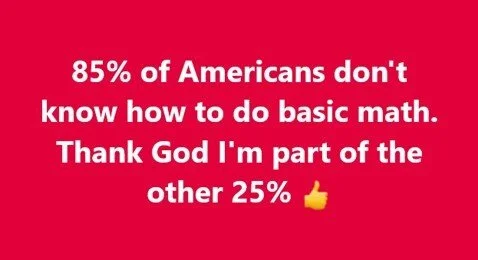
Mot: Soooo Glad I Fingured This Out via da Net - I Is!!
Mot: Happy “Columbus Day” Weekend!
MilitiaMan and Crew: IQD News Update-CBI Monetary Policy-Stable Exchange Rate
MilitiaMan and Crew: IQD News Update-CBI Monetary Policy-Stable Exchange Rate
10-12-2025
The Crew: Samson, PompeyPeter, Petra, Daytrader, Sunkissed, GIGI and Militia Man
Follow MM on X == https://x.com/Slashn
Be sure to listen to full video for all the news……..
MilitiaMan and Crew: IQD News Update-CBI Monetary Policy-Stable Exchange Rate
10-12-2025
The Crew: Samson, PompeyPeter, Petra, Daytrader, Sunkissed, GIGI and Militia Man
Follow MM on X == https://x.com/Slashn
Be sure to listen to full video for all the news……..
FRANK26….10-12-25……PEACE STARTS THE END
KTFA
Sunday Night Video
FRANK26….10-12-25……PEACE STARTS THE END
This video is in Frank’s and his team’s opinion only
Frank’s team is Walkingstick, Eddie in Iraq and guests
Playback Number: 605-313-5163 PIN: 156996#
KTFA
Sunday Night Video
FRANK26….10-12-25……PEACE STARTS THE END
This video is in Frank’s and his team’s opinion only
Frank’s team is Walkingstick, Eddie in Iraq and guests
Playback Number: 605-313-5163 PIN: 156996#