
Thank you to all the subscribers to our Early Access program…we thank you for your continued support.
We are excited to offer this new service to keep you informed and up-to-date on the latest Dinar and currency news.
It’s Game Over, Debt Bubble Blowing Up
It’s Game Over, Debt Bubble Blowing Up
Liberty and Finance: 10-4-2025
The financial headlines often tell a straightforward story: when the stock market soars, safe-haven assets like gold and silver typically languish. After all, why seek safety when the bulls are running free?
Yet, we’re currently witnessing a fascinating and somewhat perplexing market dynamic: the U.S. stock market is hitting unprecedented highs, and gold and silver are surging right alongside it.
What gives?
It’s Game Over, Debt Bubble Blowing Up
Liberty and Finance: 10-4-2025
The financial headlines often tell a straightforward story: when the stock market soars, safe-haven assets like gold and silver typically languish. After all, why seek safety when the bulls are running free?
Yet, we’re currently witnessing a fascinating and somewhat perplexing market dynamic: the U.S. stock market is hitting unprecedented highs, and gold and silver are surging right alongside it.
What gives?
Liberty and Finance recently hosted Don Durrett, an astute expert in precious metals investing, who sheds brilliant light on this perplexing phenomenon.
His insights reveal that this isn’t a contradiction, but rather a profound signal of underlying systemic risks, particularly the growing U.S. debt crisis, viewed through the critical lens of Triffin’s dilemma.
Durrett explains that while many American investors are celebrating stock market records, the smart money – especially foreign central banks and international investors – is reading a different tea leaves.
The U.S. is grappling with a ballooning national debt, a problem that is not yet fully reflected in domestic market sentiment.
This is where Triffin’s dilemma becomes acutely relevant. The paradox highlights the conflict of interest that arises when a national currency (like the U.S. dollar) serves as the world’s primary reserve currency.
To satisfy global demand for dollars, the U.S. must run trade deficits, essentially exporting its currency. But this simultaneously undermines confidence in the dollar’s long-term value due to increasing debt and potential inflation.
Foreign entities understand this delicate balance. They are strategically reducing their exposure to U.S. debt and, crucially, accumulating gold at an accelerated pace.
This isn’t just hedging; it’s a strategic shift reflecting a growing acknowledgment of the dollar’s inherent vulnerabilities and the looming implications of unaddressed debt.
These are not incremental gains; they represent a fundamental re-pricing of these metals as global confidence in fiat currencies, particularly the dollar, continues to wane.
A striking point Durrett makes is the minimal gold exposure among American investors. While foreign central banks are buying hand over fist, many Americans remain under-invested in precious metals.
This often stems from a lack of immediate fear or a full recognition of the systemic debt issues that are quietly brewing beneath the surface of seemingly robust stock markets.
However, Durrett believes this is poised to change. As fear and recognition of economic risks grow domestically, American investors are expected to follow suit, turning to gold and silver as essential tools for capital preservation.
The unusual parallel surge of the stock market and precious metals is not a sign of irrational exuberance, but rather a sophisticated, two-tiered market revealing systemic risks.
While American investors revel in stock market highs, foreign central banks are signaling a shifting global paradigm, strategically embracing gold as a bulwark against a potential U.S. dollar devaluation and a broader economic reset.
Durrett’s insights underscore the critical importance of understanding these dynamics. As the U.S. debt crisis continues to unfold, gold and silver are not just commodities; they are increasingly becoming a strategic necessity for capital preservation in an uncertain economic future.
Iraq Economic News and Points To Ponder Sunday Afternoon 10-5-25
Gold Prices Rise Slightly In Baghdad Markets.
Money and Business Economy News – Baghdad Iraqi and foreign gold prices saw a slight increase on the Baghdad Stock Exchange today, Saturday.
Gold prices in the wholesale markets on Al-Nahr Street in the capital, Baghdad, this morning recorded a selling price of one mithqal of 21 karat Gulf, Turkish and European gold at 775 thousand dinars, and a purchase price of 771 thousand, while last Thursday’s prices recorded 772 thousand dinars.
Gold Prices Rise Slightly In Baghdad Markets.
Money and Business Economy News – Baghdad Iraqi and foreign gold prices saw a slight increase on the Baghdad Stock Exchange today, Saturday.
Gold prices in the wholesale markets on Al-Nahr Street in the capital, Baghdad, this morning recorded a selling price of one mithqal of 21 karat Gulf, Turkish and European gold at 775 thousand dinars, and a purchase price of 771 thousand, while last Thursday’s prices recorded 772 thousand dinars.
wazine News – Baghdad : The dollar exchange rate stabilized in local markets in the capital, Baghdad, on Sunday. The selling price reached 142,500 dinars per $100, while the buying price reached 140,500 dinars per $100. https://www.mawazin.net/Details.aspx?jimare=267834
Iraqi Oil Exports To The US Exceed 4 Million Barrels Despite The Decline.
Economy | 10:42 - 05/10/2025 Mawazine News - Follow-up The U.S. Energy Information Administration announced that Iraq's crude oil exports to the United States amounted to more than 4.2 million barrels during September, down from about 7.9 million barrels in August.
The administration explained that Iraq ranked sixth among the largest exporters to the United States and second among Arab countries after Saudi Arabia, whose exports amounted to 7.29 million barrels, while Libya ranked third with 3.03 million barrels. https://www.mawazin.net/Details.aspx?jimare=267833
Decline In Iraqi Market Indices, With Trading Worth 777 Million Dinars
Stock Exchange Economy News – Baghdad The Iraq Stock Exchange recorded a slight decline in the general index during today's session, Sunday. The ISX 60 closed at 965.71 points, down 0.15%, or 1.44 points.
The ISX 15 index also fell to 1,128.13 points, compared to the previous close of 1,131.26 points, recording a decrease of -0.28%, equivalent to 3.13 points. The trading value of traded shares exceeded 777 million dinars through the listing of 979 transactions. https://economy-news.net/content.php?id=60762
OPEC+ Countries Decide To Increase Oil Production By 137,000 Barrels Per Day.
Buratha News Agency 80 2025-10-05 The eight OPEC+ member states announced they had agreed to raise their oil production ceiling for November by 137,000 barrels per day compared to October.
This decision was made at a virtual meeting held on Sunday by OPEC+ member states that had previously voluntarily reduced their production: Russia, Saudi Arabia, Iraq, Kazakhstan, Kuwait, the United Arab Emirates, Oman, and Algeria.
According to the meeting's results, Kazakhstan will be able to increase its oil production in November to 1.563 million barrels per day, while Iraq's production will rise to 4.255 million barrels per day.
Russia will increase oil production in November by 41,000 barrels per day, reaching 9.532 million barrels per day, while Saudi Arabia's production will rise to 10.061 million barrels per day.
OPEC+ said in a statement: "Given the strong global economic outlook and current favorable market conditions, reflected in declining oil inventories, the eight participating countries have decided to adjust their production by 137,000 barrels per day, compared to the additional voluntary cuts of 1.65 million barrels per day announced in April 2023. This adjustment will be implemented in November 2025."
The statement indicated that the countries will continue to assess market conditions and reiterated the importance of adopting a cautious approach and maintaining full flexibility – as participants can suspend or cancel oil production increases, including lifting the voluntary 2.2 million barrels per day cap. The next meeting of the eight member states is scheduled for November 2. http://burathanews.com/arabic/economic/466075
For current and reliable Iraqi news please visit: https://www.bondladyscorner.com
Seeds of Wisdom RV and Economics Updates Sunday Afternoon 10-5-25
Good Afternoon Dinar Recaps,
Central Banks Prepare for BRICS Gold Standard Amid Dollar Distrust
As dollar confidence wanes, central banks are accumulating gold and laying the infrastructure for a new monetary paradigm.
Record Accumulation Signals a Shift
Good Afternoon Dinar Recaps,
Central Banks Prepare for BRICS Gold Standard Amid Dollar Distrust
As dollar confidence wanes, central banks are accumulating gold and laying the infrastructure for a new monetary paradigm.
Record Accumulation Signals a Shift
● In 2024, central banks globally added over 1,000 tonnes of gold, a rate not seen in recent history.
● Even Western institutions are reacting: Germany and Italy are reconsidering the safety of storing their gold overseas (in New York or London).
● Some nations (e.g. China, Nigeria) are actively repatriating bullion stored abroad, reflecting concerns about access and control.
These moves aren’t mere hedges — they’re strategic repositioning in a world where reserve assets can be politicized.
Gold-Backed Settlement & Payment Infrastructure
● BRICS Pay and other gold-settlement systems are being envisioned to bypass dollar-based infrastructure.
● Some energy trades among BRICS nations are already settled partly in gold — a practical testing ground for a broader gold-backed model.
● These systems won’t appear overnight, but parallel rails and architecture are being built system by system, not by sudden leaps.
Gold has advantages: no counterparty risk, no political strings, immunity from permissioned interference.
Strategic Positioning Across Major Economies
● Russia, China, India, and other central banks are boosting gold reserves to reinforce their financial sovereignty.
● Gold has overtaken the euro in terms of reserve share in some central bank portfolios, signaling shifting trust in fiat assets.
● This is defensive more than speculative — central banks are preparing for fractures in the dollar system, not necessarily rallying behind gold’s price.
Challenges & Realism in the Transition
● Not all BRICS or allied states will join a full gold standard — many prefer hybrid systems and gradual adoption.
● Brazil’s central bank director has cautioned that BRICS doesn’t currently hold assets large enough to overtly rival the dollar in the near future.
● Trust, liquidity, legal frameworks, and gold distribution logistics remain major obstacles.
These structural challenges mean any shift will unfold gradually — not overnight — but intention and groundwork are clear.
Why This Matters / Key Takeaway
Central banks are no longer passively managing gold — they’re actively repositioning reserves and building infrastructure for alternatives to the dollar-based order.
The accumulation of gold is more than preservation — it’s control over assets that can’t be seized or blocked.
Parallel payment systems backed by gold challenge the old fiat-led hierarchy.
Capital will gravitate to those rails and institutions that offer reliability and sovereignty
This evolution points to a future where power over money, trade, and credit is redistributed — and the question isn’t if, but when, the new order consolidates.
This is not just politics — it’s global finance restructuring before our eyes.
@ Newshounds News™ Exclusive
Sources & Additional Readings
• Watcher.Guru – Central Banks Prepare for BRICS Gold Standard Amid Dollar Distrust
• GoldCore – The World Quietly Preparing for a Gold-Backed BRICS Currency
• InvestingNews – How Would a New BRICS Currency Affect the U.S. Dollar?
• Reuters – Brazil Central Bank Says No BRICS Asset Pile Big Enough to Rival Dollar
~~~~~~~~~
Seeds of Wisdom Team RV Currency Facts Youtube and Rumble
Newshound's News Telegram Room Link
Follow the Gold/Silver Rate COMEX
Follow Fast Facts
Seeds of Wisdom Team™ Website
Thank you Dinar Recaps
Iraq Economic News and Points To Ponder Sunday Morning 10-5-25
Economist: Controlling Exchange Rates Is The Responsibility Of The Central Bank, And The Challenges Facing Banks Continue.
Time: 2025/10/03 16:11:39 Reading: 90 times Economic: Al Furat News} Economic expert Salah Nouri affirmed on Friday that the financial system and exchange rate control are among the primary responsibilities of the Central Bank of Iraq, noting that the bank faces numerous challenges in this area.
Economist: Controlling Exchange Rates Is The Responsibility Of The Central Bank, And The Challenges Facing Banks Continue.
Time: 2025/10/03 16:11:39 Reading: 90 times Economic: Al Furat News} Economic expert Salah Nouri affirmed on Friday that the financial system and exchange rate control are among the primary responsibilities of the Central Bank of Iraq, noting that the bank faces numerous challenges in this area.
Nouri told Al Furat News Agency, "The Central Bank faces challenges in light of the fact that many private banks operate outside its controls and conditions, in addition to the conditions set by the US Federal Reserve regarding foreign currency transfers."
He added, "Controlling exchange rates in the parallel market is difficult to completely eliminate.
Rather, the solution lies in reducing price fluctuations through the flexibility of the central bank's tools in response to global fluctuations."
Nouri continued, "Private banks' response and adaptation to the Central Bank's lending instructions contributes to revitalizing the Iraqi economy.
" He explained that "the instructions for external financial transfers for import purposes are similar to the US Federal Reserve's procedures in this area, which requires private banks to ully adapt and comply with the Central Bank's instructions." https://alforatnews.iq/news/خبير-اقتصادي-ضبط-أسعار-الصرف-من-مهام-البنك-المركزي-وتحديات-المصارف-مستمرة
Revealing US Efforts To Ensure Continued Kurdistan Oil Exports
October 3, 2025 Washington / Iraq Observer follow-up The Trump administration is working to ensure continued oil exports from northern Iraq— resumed after a two-year hiatus—in the long termto support the country's economy,generate gains for American companies, andcounter Iran's influence in the region.
According to a report published by the Asharq Al-Awsat website, the United States is focused on ensuring the implementation of the oil export agreement and fulfilling its financial obligations, according to a senior US State Department official who requested anonymity due to the confidentiality of the talks. The official added that
Washington has been working over the past weeks to bring international oil companies together with the Iraqi and Kurdish governments, an effort that included hundreds of phone calls and meetings that paved the way for reaching the agreement.
The United States' role in resuming shipments through the pipeline to Turkey's Mediterranean coast also enhances the agreement's long-term sustainability.
The current agreement is only valid until the end of the year, during which the parties are scheduled to hold talks on the companies' dues, amounting to hundreds of millions of dollars, while Türkiye is pushing for new terms for the transportation of crude.
Secretary of State Marco Rubio explained last week in a post on the X platform hat the agreement “will deliver tangible benefits to both Americans and Iraqis, while reaffirming Iraq’s sovereignty.”
According to Iraqi and Kurdish officials,US pressure was a decisive factor in reaching the export agreement, and Washington is now seeking to transform it into a long-term agreement that also protects the interests of American companies. https://observeriraq.net/الكشف-عن-سعي-امريكي-لضمان-استمرار-صادر/
UN Warns Of Iraq's Reliance On Oil To Secure Salaries
October 4, 2025 New York / Iraq Observer follow-up The United Nations Development Programme warned on Saturday that Iraq's continued dependence on oil to secure salaries.
"The Iraqi state's near-total dependence on oil and the salaries of 8 million government employees is hampering any real path to sustainable development,"
said Abdullah Al-Dardari, Assistant Secretary-General of the United Nations,
Assistant Administrator and Director of the Regional Bureau for Arab States at the United Nations Development Programme.
He called for"investment in infrastructure, agriculture, renewable energy, and technology as essential pillars of economic diversification." https://observeriraq.net/تحذير-اممي-من-اعتماد-العراق-على-النفط-ب/
Oil Minister: More Than One Million Barrels Have Been Received From The Region So Far.
Saturday, October 4, 2025, | Economics Number of reads: 245 Baghdad / NINA / Oil Minister Hayan Abdul Ghani announced, on Saturday, the receipt of more than one million barrels from the region so far, while confirming the loading of the first tanker with the region's oil into the port of Ceyhan.
Abdul Ghani said, according to the official agency: "Several days ago, the process of pumping oil from the Kurdistan region towards the port of Ceyhan was resumed via the Iraqi-Turkish pipeline after a halt of more than two years for this pipeline," noting that "for the first time, the federal government receives oil produced in the region and undertakes the process of exporting it outside Iraq."
He added that "the quantities received so far have reached more than one million barrels." / End
https://ninanews.com/Website/News/Details?key=1255216
Iraq Jawad Al-Samarraie October 4, 2025 Mohammed Najjar, Advisor To The Prime Minister And Executive Director Of The Iraq Development Fund
Baghdad (IraqiNews.com) – The economic study for Iraq’s ambitious Development Road project is complete,revealing highly promising results, including a forecast of 1.6 million new job opportunities.
The CEO of the Iraq Development Fund, Mohammed Al-Najjar, announced today,Friday (October 3, 2025), that the strategic corridor is projected to attract up to $150 billion in investments over the next three decades, a sum expected to match or exceed Iraq’s oil revenues.
Al-Najjar affirmed that the Development Road represents the strategic core of Iraq’s Vision 2050, aiming to transform the country from a landlocked state into a global economic corridor.
He noted that the project is not just a transport route but a comprehensive strategic channel comprising railways, dry ads, pipelines for oil, gas, electricity, and internet, along with the establishment of new economic cities.
The project is now entering its execution phase, with the next step being an international ministerial meeting to brief partner countries on the completed technical and economic studies.
Al-Najjar confirmed that the economic assessment by the consulting firm Oliver Wyman is finalized,
revealing the massive job creation potential.
Following the ministerial meeting, the study will receive final approval, followed by the launch of a major campaign to invite international investors.
Al-Najjar stressed that international interest in the project has significantly increased.
He disclosed that specialized global infrastructure funds and the European Union have submitted formal requests to participate.
The next steps also include establishing two key entities: a commercial company to handle the project’s business aspects and a governmental body to manage its sovereign affairs.
The entire 1,200-kilometer project will officially commence once the Grand Faw Port enters service, marking the primary starting point for the new global trade route.https://www.iraqinews.com/iraq/development-road-project-1-6-million-jobs-150-billion-investment/
For current and reliable Iraqi news please visit: https://www.bondladyscorner.com
Seeds of Wisdom RV and Economics Updates Sunday Morning 10-5-25
Good Morning Dinar Recaps,
U.S. Government Shutdown: Domestic Fallout and Global Ripples
The 2025 government shutdown is exposing cracks in the U.S. financial system — and the ripple effects are spreading across global markets.
Domestic Disruptions: The Shutdown’s Toll on Americans
Good Morning Dinar Recaps,
U.S. Government Shutdown: Domestic Fallout and Global Ripples
The 2025 government shutdown is exposing cracks in the U.S. financial system — and the ripple effects are spreading across global markets.
Domestic Disruptions: The Shutdown’s Toll on Americans
● Federal Operations Halted — The U.S. government officially shut down at 12:01 a.m. on October 1, 2025, after Congress failed to pass a budget, forcing over 800,000 federal employees into furlough or unpaid work.
● Critical Services Impacted — While Social Security and Medicare continue under mandatory funding, discretionary programs, public lands, and grant programs face suspension.
● National Parks and Infrastructure — About 9,300 of 14,500 park employees have been furloughed, leaving visitor services and maintenance stranded. Federal housing markets around D.C. are seeing ripple effects as unpaid workers cut back or list properties.
● Economic Hit — The White House estimates up to $15 billion lost per week, with unemployment expected to climb by 43,000 in a single month of disruption.
● Credit Rating Risk — European rating agency Scope warned that fiscal dysfunction could strain the U.S. credit outlook, adding uncertainty to global bond markets.
Economic Strain & Domestic Uncertainty
● Stalled Programs and Delayed Spending — From DOJ domestic violence grants to small business loans, federal funding halts are rippling through states and private contractors.
● Market Jitters — While Wall Street has priced in temporary disruptions, prolonged paralysis could dampen consumer sentiment, federal investment, and GDP growth.
● Structural Warning Sign — Analysts note that every week of shutdown trims roughly 0.1 percentage point from quarterly growth — a warning sign for an economy already absorbing inflation pressures and global headwinds.
Global Ramifications: Financial Reverberations Beyond Washington
● European Exposure — Analysts estimate that a two-week U.S. shutdown could cost the EU €4 billion in lost activity; an eight-week standoff could stretch that loss to €16 billion.
● Investor Confidence and Market Volatility — The shutdown adds a destabilizing variable to already uncertain global conditions — especially for nations reliant on U.S. liquidity and dollar flows.
● Sovereign Credibility Under Scrutiny — Prolonged political gridlock undermines confidence in U.S. fiscal reliability, raising bond yields and widening sovereign risk spreads across emerging markets.
● Data Delays and Policy Blindspots — Economic reports such as jobs data, retail spending, and manufacturing indices face delays, leaving central banks and investors operating in the dark.
Why This Matters
The U.S. shutdown highlights how fragile the world’s most watched economy has become. While shutdowns are historically short-lived, this one unfolds amid rising debt, inflation persistence, and political brinkmanship — all undermining confidence in the U.S. dollar’s stewardship role.
If Washington cannot stabilize its fiscal governance, other powers — from BRICS to the EU — may accelerate parallel systems less dependent on the dollar.
This is not just politics — it’s global finance restructuring before our eyes.
@ Newshounds News™ Exclusive
Sources:
• The Guardian – U.S. National Parks Impact
• Politico – U.S. GDP Loss Projections
• Reuters – U.S. Credit Rating Warning
• Euronews – Europe’s Economic Exposure
• Atlantic Council – Shutdown Economic Implications
• ABC News – Expert Growth Analysis
~~~~~~~~~
Geopolitical Shifts Reshape the Global Order: New Alliances, New Systems
From defense compacts to digital finance, nations are redrawing the architecture of global power.
China’s Institutional Challenge to the West
● In a major UN address, China unveiled its Global Governance Initiative, directly criticizing U.S. unilateralism and calling for a more “balanced multipolar order.”
● Beijing is now forming AI alliances and unified tech standards, aiming to cut reliance on U.S. technology and strengthen domestic sovereignty.
● This represents institutional competition at scale — not just economic rivalry but a bid to control the frameworks that define trade, technology, and governance.
“Whoever writes the rules of digital infrastructure, writes the future of global finance.”
The Expanding Frontier: Space as the New Strategic Arena
● The U.S. and France have expanded joint satellite and surveillance programs to counter China’s growing orbital presence.
● These partnerships mark a shift from competition on Earth to rivalry over data, communications, and orbital security — areas critical to digital banking and global transaction networks.
● Control of space infrastructure increasingly equates to control of real-time global information flow, directly linking defense dominance with financial and technological supremacy.
Trade Realignment: The Fragmentation of Global Supply Chains
● Facing escalating U.S. tariffs and trade disruptions, Europe and Asia are building alternative alliances to safeguard energy and industrial stability.
● This shift signals a clear trend: regional self-sufficiency is replacing global interdependence.
● Countries are hedging against U.S. policy volatility and exploring non-dollar trade corridors, aligning directly with BRICS strategies of localized payment systems and commodity-backed trade.
Defense & Security: New Blocs on the Rise
● Pakistan and Saudi Arabia’s Strategic Mutual Defense Agreement formalized joint military cooperation, marking a major pivot toward Middle Eastern defense autonomy.
● Similarly, Albania, Croatia, and Kosovo signed a defense pact, deepening Balkan coordination in response to NATO realignments.
● At the 2025 Hague Summit, NATO members pledged to raise defense spending to 5% of GDP by 2035, fundamentally reshaping budget priorities and geopolitical leverage.
Academic Models Confirm: Politics Now Drives Economics
● A recent Arxiv study found a strong correlation between geopolitical alignment and trade volume — meaning politics now determines economic flow.
● Another report shows countries are building alternative financial ecosystems — bypassing SWIFT and testing regionally governed digital payment networks.
● Together, these findings confirm a structural decoupling of the global economy — where financial integration follows political allegiance.
Why This Matters / Key Takeaway
The evidence is unmistakable:
We are witnessing the realignment of power across every axis — trade, defense, technology, and finance.
● Old institutions are fracturing under political and economic strain.
● New blocs and systems — from BRICS Pay to regional defense pacts — are emerging to fill the void.
● This is not fragmentation by accident, but restructuring by design — an intentional reordering of who governs global rules and resources.
As nations pivot toward sovereignty and multipolar stability, one truth echoes across every capital:
Out with the Old, In with the New.
This is not just politics — it’s global finance restructuring before our eyes.
@ Newshounds News™ Exclusive
Sources:
• AP News – China’s Global Governance Initiative
• Tom’s Hardware – China Forms AI Alliances to Cut U.S. Tech Reliance
• Reuters – U.S.-France Satellite Cooperation
• Reuters – Trade Alliances in Response to Tariffs
• Wikipedia – Defense Pacts and Spending Agreements
• Arxiv – Global Trade and Political Alignment Studies
~~~~~~~~~
Seeds of Wisdom Team RV Currency Facts Youtube and Rumble
Newshound's News Telegram Room Link
Follow the Gold/Silver Rate COMEX
Follow Fast Facts
Seeds of Wisdom Team™ Website
Thank you Dinar Recaps
“Tidbits From TNT” Sunday Morning 10-5-2025
TNT:
Tishwash: Parliament postpones the 2025 budget law until after the elections.
Parliamentary Services Committee member Baqir al-Saadi confirmed on Saturday that one of the most important laws yet to be passed is the 2025 budget schedules law. He explained that this law is on hold until after the elections because the government has not sent it to the House of Representatives.
Al-Saadi told Al Furat News Agency, "The House of Representatives is expected to hold a single session this week to approve a set of laws, after which the electoral race will begin."
TNT:
Tishwash: Parliament postpones the 2025 budget law until after the elections.
Parliamentary Services Committee member Baqir al-Saadi confirmed on Saturday that one of the most important laws yet to be passed is the 2025 budget schedules law. He explained that this law is on hold until after the elections because the government has not sent it to the House of Representatives.
Al-Saadi told Al Furat News Agency, "The House of Representatives is expected to hold a single session this week to approve a set of laws, after which the electoral race will begin." link
************
Tishwash: The Iraqi parliament will not be in session until the elections. What are the reasons?
An Iraqi parliamentarian revealed the existence of a political will aimed at continuing to disrupt parliamentary sessions until the next parliamentary elections. Meanwhile, a researcher pointed to political calculations obstructing legislative work.
MP Yasser Al-Husseini said in an interview with the "Al-Jabal" platform on Saturday, October 4, 2025, that "the inability of the House of Representatives to hold its sessions during the current period is due to the lack of political will and the intention to keep Parliament paralyzed until it is dissolved as the election date approaches."
The MP stated that "the deliberate disruption of sessions is not due to technical or procedural reasons, but rather to hidden political agreements that seek to keep the parliament paralyzed, depriving citizens of the parliament's oversight and legislative role at a time when important decisions are required."
He added that "there are political forces that see the continued disruption of parliament as an opportunity to pass the time until the next elections, with the aim of avoiding the constitutional and oversight obligations imposed by this stage. This behavior contradicts the principles of democracy and undermines the public's confidence in elected institutions."
The Iraqi parliament was scheduled to hold a parliamentary session last Wednesday to discuss and vote on 11 draft laws and proposals. However, the lack of a quorum prevented the session from convening for the third time in as many days.
"Political calculations"
For his part, political affairs researcher Riyadh Al-Wahili agreed with the parliamentarian's position, saying in a separate interview with Al-Jabal that "Parliament is facing a clear paralysis in holding its sessions, not as a result of technical or procedural circumstances, but rather due to the political will and premeditated intent of some influential forces.
There is a clear tendency to disrupt parliamentary work and leave Parliament in a state of stagnation until it is officially dissolved as the electoral deadline approaches."
Al-Wahili explained that "this obstruction reflects narrow political calculations aimed at exploiting the legislative vacuum for electoral gains, rather than adhering to Parliament's constitutional role of oversight and legislation."
According to him, "the continuation of this situation could open the door to further political crises, as the absence of parliamentary sessions means the absence of crucial decisions that affect people's daily lives, in addition to the suspension of necessary legislation to keep pace with the current situation."
The political affairs researcher concluded his remarks by noting that "if political will remains bound by electoral calculations, Parliament will lose its justification for existence and will remain mired in obstruction until the next elections finally decide its fate. link
************
Tishwash: Iraq's gold reserves surge to 163 tons: PM advisor
Iraq’s gold reserves have increased by about 10 tons, but its foreign currency reserves are down, an advisor to the prime minister told Rudaw on Saturday.
Iraq's gold reserves have "increased significantly from 152.6 tons" last October to "163 tons" today, said Mazhar Mohammed Salih, an economic advisor to Prime Minister Mohammed Shia' al-Sudani.
Iraq holds the 29th largest gold reserves globally and the fourth largest in the Arab world, according to the World Gold Council.
"Having these reserves indicates Iraq's strong financial and economic stability," Salih said, adding that Baghdad's abundant reserves "could lead to encouraging foreign investment and securing a lasting economic infrastructure for our country."
Foreign currency reserves, however, stood at "around $100 billion, down by eight billion dollars compared with October last year," he said.
Iraq's foreign currency reserves consist of the US dollar, euro, Japanese yen, Chinese yuan, and the British pound.
Iraq's economy has shown signs of stabilization in 2025, with inflation dropping by 21 percent and gold reserves seeing a significant increase, according to a July report from the Central Bank of Iraq. The country is, however, grappling with a persistent budget deficit. link
************
Tishwash: Iran removes four zeros from its currency
Iran's Islamic Consultative Assembly voted on Sunday to remove four zeros from the currency, through a bill amending the Monetary and Banking Law.
The bill stipulates converting every 10,000 current Iranian rials into one new rial, while retaining the name "rial" as the country's official currency.
The move aims to simplify financial transactions and mitigate the effects of the severe inflation that Iran has been suffering from for years.
It is noteworthy that the law removing zeros also requires the approval of the Guardian Council before it comes into effect.
This move comes after years of inflation and the deterioration of the rial's value against foreign currencies due to economic sanctions, with the US dollar now worth more than 900,000 rials on the parallel market. link
************
Mot: . Amazing How the Daze Go By Now!!!

Mot: I Say To YOU -- What is the Number One ""Weekend Rule""

Seeds of Wisdom RV and Economics Updates Saturday Afternoon 10-4-25
Good Afternoon Dinar Recaps,
BRICS Dollar Devaluation Advances With New Payment Systems
As BRICS nations build their own financial rails and lean on gold, the dollar’s grip is under direct challenge.
Good Afternoon Dinar Recaps,
BRICS Dollar Devaluation Advances With New Payment Systems
As BRICS nations build their own financial rails and lean on gold, the dollar’s grip is under direct challenge.
Payment Infrastructure: Building Alternatives to SWIFT
● At the Rio summit, BRICS leaders discussed a guarantee fund to undergird BRICS Pay, intended for local currency settlement without resort to Western banking networks.
● The bloc is shifting focus from grand unified currency schemes to interoperable payment systems and national rails, per analysts at GIS Reports.
● BRICS Pay is a decentralized messaging mechanism where member nations route payments via local currency systems
● While technical and regulatory gaps remain, prototypes and pilot links (e.g. between SPFS, CIPS, UPI, Pix) are being tested to bypass SWIFT.
Gold & Local Currency Strategy: Anchors for De-Dollarization
● BRICS nations now hold over 6,000 tons of gold — about 20-21% of global central bank reserves. Russia and China together control nearly three-quarters of that total.
● This accumulation acts as a hedge and backing for alternative currency initiatives and reduces exposure to dollar volatility.
● Trade among BRICS states increasingly uses settlement in national currencies, reducing the need for dollar liquidity and hedging.
Competing Views, Internal Tensions & Rebalancing
● Some analysts argue BRICS is pulling back from aggressive de-dollarization, focusing instead on gradual shifts in trade settlement.
● Indian officials maintain that while BRICS jointly explores alternatives, they have no intention to undermine the U.S. dollar outright.
● Political pressure from the U.S. — including threats of tariffs — adds complexity. Russia has responded by distinguishing between a settlement system and a new currency, signaling continued work despite external pressure.
● Diverse economic structures, regulatory standards, currency convertibility, and trust among states pose serious technical and institutional hurdles to full integration.
The Shift: Out With the Old, In With the New
Traditional dollar-based networks and financial dominance are being contested
BRICS is investing in alternative rails, backed by tangible assets and local currency trade
Power over payment systems, reserve strategies, and settlement becomes a core battlefield
In effect, we are witnessing a structural reconfiguration of global finance, where decentralized, sovereign-controlled systems are replacing old hierarchies.
Why This Matters / Key Takeaway
BRICS’ push for dollar-free payment systems and gold-backed safeguards is not just incremental — it’s rearchitecting how trade, credit, and capital move globally. As dollar dependency weakens, new centers of financial gravity emerge.
This is not just politics — it’s global finance restructuring before our eyes.
@ Newshounds News™ Exclusive
Sources & Further Reading
Watcher.Guru – BRICS Dollar Devaluation Advances With New Payment Systems Watcher Guru
GIS Reports – BRICS making incremental progress in dollar-free trade GIS Reports
InvestingNews – How Would a New BRICS Currency Affect the U.S. Dollar? Investing News Network (INN)
Wikipedia – BRICS Pay Wikipedia
Reuters / news – India says BRICS have no interest in weakening USD Reuters
Reuters / news – Russia says threats won’t stop BRICS payment work Reuters
The Guardian – Putin calls for alternative payment system at BRICS summit The Guardian
~~~~~~~~~
Seeds of Wisdom Team RV Currency Facts Youtube and Rumble
Newshound's News Telegram Room Link
Follow the Gold/Silver Rate COMEX
Follow Fast Facts
Seeds of Wisdom Team™ Website
Thank you Dinar Recaps
“Tidbits From TNT” Saturday 19-3-2025
TNT:
Tishwash: The Prime Minister directs that Iraqi National Day celebrations continue for a week.
Prime Minister Mohammed Shia Al-Sudani directed, today, Friday (October 3, 2025), to continue the celebrations of the Iraqi National Day for a week.
Al-Sudani's media office stated in a statement received by Baghdad Today that "the latter directed all relevant ministries, institutions, and departments to continue the celebrations of Iraqi National Day for a week, in honor of this important occasion, in order to consolidate the great meanings embodied in it in the souls of our Iraqi people."
TNT:
Tishwash: The Prime Minister directs that Iraqi National Day celebrations continue for a week.
Prime Minister Mohammed Shia Al-Sudani directed, today, Friday (October 3, 2025), to continue the celebrations of the Iraqi National Day for a week.
Al-Sudani's media office stated in a statement received by Baghdad Today that "the latter directed all relevant ministries, institutions, and departments to continue the celebrations of Iraqi National Day for a week, in honor of this important occasion, in order to consolidate the great meanings embodied in it in the souls of our Iraqi people." link
************
Cutebwoy: : Iraq celebrates National Day with parades, marathon, and cultural events
2025-10-03 02:55 Shafaq News – Baghdad
Iraqis are celebrating their National Day on Friday, October 3, marking 93 years since the country gained independence from the British mandate and became the first Arab state to join the League of Nations in 1932.
The date, chosen as Iraq’s official holiday in 2020, recalls the League’s approval of Iraq’s membership, which recognized the new state as sovereign and capable of governing its own affairs.
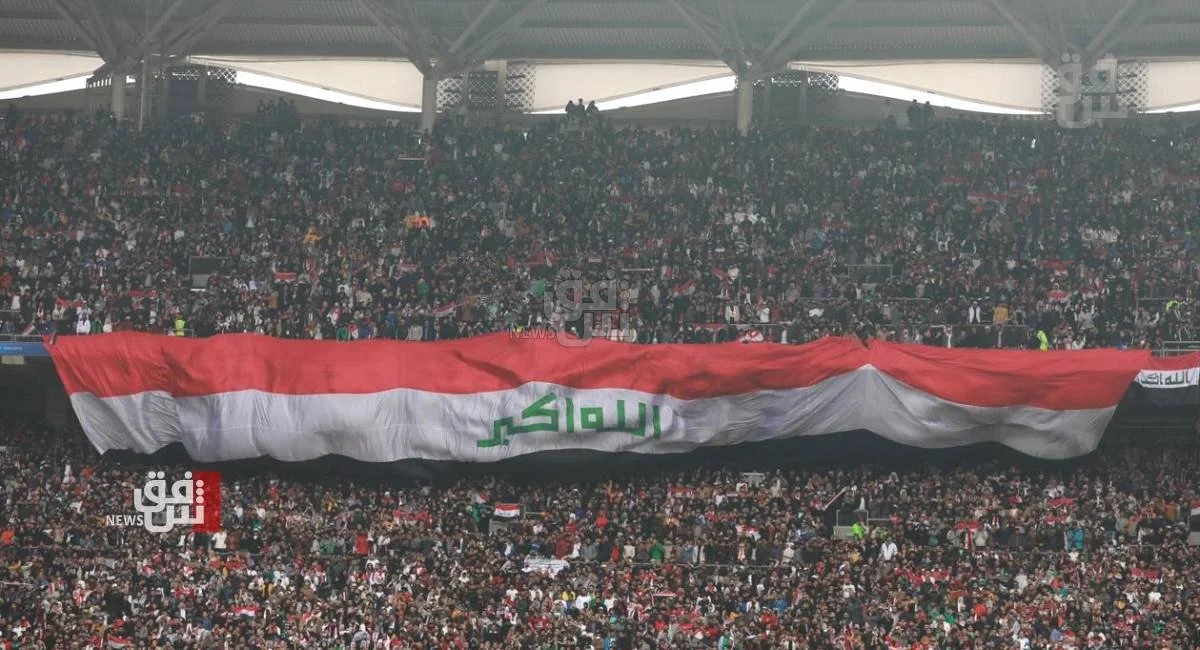
Prime Minister Nuri al-Said submitted the request that year, ushering Iraq out of mandate rule and into the international community.
While some Iraqis have proposed other milestones—such as the 1958 founding of the republic, the 2003 fall of Saddam Hussein’s regime, or the 2014 call to arms against ISIS—October 3 has become the most widely accepted symbol of independence and international recognition.
This year, celebrations stretch across the country and beyond. In Baghdad, the Ministry of Defense prepared an aerial parade by the Air Force and Army Aviation, alongside a 21-gun salute at dawn. Military officials said the events reflect pride in sovereignty and unity, encouraging citizens to share in the festivities.
The capital also hosted a National Day marathon under the slogan “One Flag, One Homeland,” with free participation open to the public. Athletes from seven provinces joined the race, which carried a total prize fund of 15 million dinars. Organizers provided uniforms, participant numbers, and facilities to accommodate runners, turning the event into a festival of sport and community.
Beyond official ceremonies, ministries, provinces, and Iraqi embassies abroad are holding cultural and social events.
In a message marking the occasion, Prime Minister Mohammed Shia al-Sudani extended his “sincere congratulations and heartfelt blessings” to all Iraqis, describing October 3 as the day that embodied the modern Iraqi state and its historic, civilizational, and cultural presence. He emphasized his government’s commitment to safeguarding the constitution, protecting resources, strengthening the economy, and securing Iraq’s rightful place regionally and internationally.
Opinion & AnalysisBreakingIraq National Day
****************
Tishwash: Iraq: A Promising Economic Destination for Arab and Foreign Investment
Iraq is currently witnessing a qualitative shift in its economic development, making it an attractive environment for investors from around the world.
Participants in investment forums emphasized that Iraq has become a preferred destination for companies and businessmen, given its significant economic and tourism potential, coupled with government efforts to create a favorable investment climate.
This comes at a time when trade with neighboring countries has reached record levels, amid a growing willingness by international companies to enter the Iraqi market and contribute to development projects.
In this context, Chairman of the Turkish-Iraqi Business Council, Khaled Akar, told the Iraqi News Agency (INA), "The volume of trade exchange between Iraq and Turkey has reached $16 billion, and we are seeking to increase it to $30 billion." He indicated that "Iraq's accession to the World Trade Organization will contribute to developing the volume of trade domestically and internationally, and will enable Turkish companies to contribute to the growth and development of Iraqi trade."
He added, "Turkish businessmen are ready to contribute to supporting development in the construction, health, digitalization, and other sectors," noting that "40 Turkish businessmen participated in the Iraq Investment Forum."
For his part, Faisal Al-Jarba, a member of the Iraqi-Saudi Business Council, told (INA), "The investment forum held in Baghdad was important and successful, as we witnessed clear satisfaction among Arab investors, as well as investors coming from East Asia and several other countries."
He added that "a large number of influential businessmen in the Kingdom of Saudi Arabia participated in this forum, which means that Iraq has become an important destination and a clear choice for investors." He noted that "the Iraqi government is serious about its work to combat corruption and confront anyone who attempts to seize state property or exploit its authority, and this bodes well."
He expressed his "hope that the Iraqi economy and Iraqi businessmen will receive the status they deserve, and that they will play a fundamental and effective role in building their country, in cooperation with other countries and investors from around the world."
In turn, Nasser Al-Noubis, Chairman of the Rotana International Group, confirmed to (INA), "Iraq is a promising country with great potential in the tourism sector. Today, it needs more than thirty thousand hotel rooms, while the available rooms are still insufficient."
He explained that "the more infrastructure develops, whether through the construction of hotels or facilitating investment and entry procedures into the country, the more opportunities will be to attract investors and encourage tourists to come to Iraq."
He pointed out that "Iraq is a great and civilized country, with diverse tourist attractions, especially the religious sites in Karbala, Najaf, and Kadhimiya, which attract visitors from all over the world."
He continued, "We began investing in Iraq more than 12 years ago, opening in Erbil, then Sulaymaniyah. Today, we are present in Baghdad and have also begun operations in Karbala. We look forward to expanding across all governorates, given the broad prospects for growth in Iraq's tourism sector." link
****************
Mot: I Used to Think This Was Funny!!!

Mot: Only in Oregon!!!!

Iraq Economic News and Points To Ponder Saturday Morning 10-4-25
Prime Minister: Iraq Is Moving Towards Full Independence And Preserving Its National Unity.
Buratha News Agency 10 3 2025 Prime Minister Mohammed Shia al-Sudani affirmed today, Friday (October 3, 2025), that Iraq is moving towards full independence and preserving its national unity.
"We extend our sincere congratulations and best wishes to all Iraqis on the occasion of Iraqi National Day, which falls on October 3 of each year, marking the 93rd anniversary of our country's membership in the highest international body recognized by all countries and peoples of the world," Al-Sudani said in a statement.
Prime Minister: Iraq Is Moving Towards Full Independence And Preserving Its National Unity.
Buratha News Agency 10 3 2025 Prime Minister Mohammed Shia al-Sudani affirmed today, Friday (October 3, 2025), that Iraq is moving towards full independence and preserving its national unity.
"We extend our sincere congratulations and best wishes to all Iraqis on the occasion of Iraqi National Day, which falls on October 3 of each year, marking the 93rd anniversary of our country's membership in the highest international body recognized by all countries and peoples of the world," Al-Sudani said in a statement.
Al-Sudani explained, "This day embodies the entity of the modern Iraqi state, and all that its contemporary existence carries in terms of historical, civilizational, and cultural meanings for our beloved Iraq, and for our noble people with all their fraternal spectrums, and with all their deep historical reach and what they have offered to humanity on its journey towards civilization, that journey that began in the land between the two rivers."
He added, "Throughout their modern history, Iraqis have faced many challenges and struggles, both during the early days of the founding of the present Iraqi state and during their fight against dictatorship," noting that "they have offered hundreds of thousands of martyrs along the way so that Iraq may attain its independence and full sovereignty."
Al-Sudani pointed out that "since we assumed our executive duties as Prime Minister, we have been keen to protect Iraq and its constitution, preserve its sovereignty, protect its wealth, and achieve prosperity and economic strength for our people.
We have also worked diligently and sincerely to ensure that Iraq is placed first in our endeavors and efforts, and that it takes its rightful place regionally and internationally."
He continued: "Glory to Iraq and its people, and mercy and blessings to all our martyrs on the path to Iraq's freedom, independence, and sovereignty." https://burathanews.com/arabic/news/466007
Source: Jordan Investment Bank Close To Managing Iraqi Gulf Commercial Bank
September 29, 2025 Al-Mustaqilla/- Exclusive sources revealed to Al-Mustaqilla a remarkable investment move linking the Jordanian banking sector with its Iraqi counterpart.
Information indicates that the Arab Jordan Investment Bank is preparing to enter into a strategic partnership with the Iraqi Gulf Commercial Bank in the near future.
According to the source, the first phase of this partnership will see the management of the Gulf Commercial Bank assumed by an administrative team and financial experts from the Arab Jordan Investment Bank, within a specific timeframe aimed at strengthening the administrative and financial structure of the Iraqi bank.
According to the preliminary agreement, this phase will extend for approximately two full years, during which the focus will be on developing banking systems, enhancing the efficiency of financial services, and attracting new capital to support the bank's activities in the Iraqi market.
The source indicated that this step represents the first stage toward a potential acquisition, as the undisclosed agreement includes a clause allowing the Arab Jordan Investment Bank to gradually increase its stake, eventually leading to the full purchase of the Gulf Commercial Bank, should the partnership prove successful and achieve the desired goals in terms of profits and financial stability.
Economists believe that this transaction may reflect a new trend in economic relations between Iraq and Jordan, as Jordanian banks seek to expand their presence in the Iraqi market,
which is witnessing growing demand for advanced financial and banking services.
Observers also expect this deal to contribute to raising the level of competition among Iraqi banks and encouraging more foreign investment in the local financial sector.
These moves indicate that the next two years may witness a significant transitional phase in the structure of the Gulf Commercial Bank, opening the door to enhanced banking cooperation between the two countries and providing the Iraqi market with an additional impetus toward modernization and openness to regional expertise.
https://mustaqila.com/مصدر-بنك-الاستثمار-الأردني-يقترب-من-إد/
Iraqi Oil Prices Continue To Decline In Global Markets.
Energy Iraqi oil prices recorded a decline during daily trading on Friday (October 3, 2025) in the global market. According to data, Basra Medium crude fell to $65.74 per barrel, while Basra Heavy crude recorded $64.19 per barrel, with a change rate of -1.11 for both.
Regarding global oil prices, British Brent crude recorded $64.64 per barrel, while US West Texas Intermediate crude recorded $61.09 per barrel, with a change rate of +0.52 and +0.53, respectively. https://economy-news.net/content.php?id=60664
The First Shipment Of Kurdistan Region Oil Was Sold Through The Port Of Ceyhan After The Resumption Of Exports.
Thursday, October 2, 2025, | Economics Number of readings: 88 Baghdad / NINA / Oil Minister Hayan Abdul Ghani announced the sale of the first shipment of Kurdistan Region's oil, after the resumption of exports, through the Turkish port of Ceyhan on Thursday afternoon.
Abdul Ghani told the Kurdish media network, Rudaw: "At 12:00 noon today, the first shipment of oil from the Kurdistan Region was sold and left the port of Ceyhan."
The Oil Minister explained: "The ship was carrying 650,000 barrels of oil," noting: "The oil exported through pipelines is collected daily in the tanks of Ceyhan port and is exported in stages."
It is noteworthy that on September 25, an agreement was announced between the central government and the Kurdistan Regional Government to resume the export of the region's oil through the Turkish port of Ceyhan. At dawn on Saturday, September 27, 2025, the export of the region's oil through pipelines resumed, after it was halted at the end of March 2023. https://ninanews.com/Website/News/Details?key=1254977
Gold Is Heading For Gains For The Seventh Consecutive Week.
Stock Exchange Gold steadied on Friday, heading for its seventh consecutive weekly gain, supported by expectations of a US interest rate cut and continued concerns over the US government shutdown.
Spot gold settled at $3,851.48 per ounce, after hitting an all-time high of $3,896.49 in the previous session. The precious metal has gained 2.5 percent so far this week.
US gold futures for December delivery rose 0.2 percent to $3,875.50.
The US government shutdown extended into a second day on Thursday, potentially delaying key economic data, including the closely watched nonfarm payrolls report, scheduled for release on Friday. https://economy-news.net/content.php?id=6066
For current and reliable Iraqi news please visit: https://www.bondladyscorner.com
Seeds of Wisdom RV and Economics Updates Saturday Morning 10-4-25
Good Morning Dinar Recaps,
Global Banking Alliance Collapses: A Sign of Financial Realignment
The shutdown of the Net-Zero Banking Alliance reveals cracks in global financial institutions — and signals bigger changes ahead.
Good Morning Dinar Recaps,
Global Banking Alliance Collapses: A Sign of Financial Realignment
The shutdown of the Net-Zero Banking Alliance reveals cracks in global financial institutions — and signals bigger changes ahead.
The Collapse of the NZBA
The Net-Zero Banking Alliance (NZBA) — launched in 2021 to align trillions in bank lending and investment with climate goals — has officially shut down after a member vote.
● The NZBA was backed by over 100 banks worldwide, representing $74 trillion in assets.
● Members included major players like HSBC, Citi, and Bank of America.
● Yet, mounting political pushback and regulatory concerns forced banks to walk away.
As The Guardian notes, “The alliance could not reconcile competing pressures between shareholder interests and climate commitments.”
Why It Matters
The collapse isn’t just about climate. It shows:
● Global finance alliances are fragmenting under pressure from politics, trade wars, and competing priorities.
● Banks are recalibrating — focusing more on geopolitical survival than on transnational frameworks.
● The U.S. tariffs, BRICS de-dollarization, and European trade shifts all point toward new blocs replacing old ones.
From ESG to Geopolitics
Over the past decade, ESG (environmental, social, governance) finance was positioned as a unifying framework.
Now, its retreat shows that geopolitical competition is replacing ESG coordination:
● BRICS nations are building alternative financial structures (new payment rails, gold-backed strategies).
● Western banks are pulling away from global consensus models, focusing instead on domestic politics and shareholder risk.
● The IMF and World Bank face pressure as rival blocs explore new institutions.
The Shift: Out with the Old, In with the New
The NZBA’s collapse is a symptom of a larger transformation:
● Old alliances (climate, trade, banking frameworks) are eroding.
● New alliances (BRICS, regional payment systems, digital currencies) are emerging.
● Global finance is moving toward fragmentation and multipolarity.
This is not just politics — it’s global finance restructuring before our eyes.
Why This Matters
The end of the NZBA marks a turning point in international finance. When institutions built to coordinate the world’s largest banks fall apart, it signals that capital is being reallocated toward new centers of power.
We are entering a period where:
● Geopolitical alignment will drive banking decisions.
● Cross-border cooperation will be shaped less by shared ideals, and more by strategic blocs.
● Financial restructuring will accelerate as “out with the old and in with the new” becomes reality.
@ Newshounds News™ Exclusive
Sources:
~~~~~~~~~
Global Crypto Regulation: What’s Shifting Abroad
Across Europe, Asia, and Russia, new regulatory frameworks are redrawing the rules of finance, signaling a deeper restructuring in motion.
Europe & UK: Tightening Stablecoin Scrutiny & Passporting Ambitions
• EU Stablecoin Ban Proposal – The European Union is moving toward banning certain unbacked stablecoins, while creating licensing requirements for euro-backed tokens. This aims to protect consumers and maintain financial system stability. (Cointelegraph, 2025)
• UK Digital Asset Regulation – The UK is advancing its sandbox programs and exploring comprehensive digital asset licensing, positioning London as a regulated hub for tokenized finance. (UK FCA Reports, 2025)
China: CBDC Expansion & Domestic Control
• Digital Yuan Initiatives – China continues rolling out its central bank digital currency (e-CNY), integrating it with retail, government, and cross-border trade, strengthening its financial sovereignty. (Xinhua, 2025)
• Crypto Crackdown – Domestic crypto trading remains banned, but China is supporting tokenization experiments within government-sanctioned channels, highlighting a dual strategy of control and innovation.
Russia: Legal Frameworks & Mining Oversight
• Regulatory Clarity – Russia is formalizing crypto taxation, licensing exchanges, and integrating blockchain in government operations, aiming to stabilize its digital asset ecosystem. (RT, 2025)
• Mining Incentives & Export Controls – Russia is incentivizing local mining while monitoring electricity and capital flows, balancing innovation with state oversight.
India: Crypto Legalization & Exchange Licensing
• Proposed Crypto Bill – India is finalizing legislation to formally legalize digital assets while establishing regulatory oversight for exchanges and wallet providers. (Economic Times, 2025)
• Focus on Compliance & Taxation – Digital asset transactions will be taxed, and exchanges are required to adhere to KYC/AML regulations, signaling alignment with global financial standards.
Global Implications: Towards Financial Restructuring
• Harmonizing or Diverging Rules – As the EU, UK, Russia, China, and India move at different speeds, the world faces either a fragmented regulatory landscape or emerging new financial corridors outside the traditional dollar system.
• Impact on Innovation – Countries with clear frameworks could attract tokenized asset flows, staking, and digital securities, creating an alternative to unregulated global exchanges.
• Strategic Sovereignty & Multipolar Finance – This patchwork of regulation accelerates the shift to a multipolar financial world, aligning with the broader trend of nations seeking more autonomy and resilience in global finance.
Why This Matters
The global push for crypto regulation signals that major economies are not waiting for the U.S. to lead. Europe, China, Russia, India, and the UK are setting the stage for new financial rails and governance standards. Countries adopting strong, transparent frameworks can attract capital, while others risk marginalization — underscoring that this is not just politics — it’s global finance restructuring before our eyes.
@ Newshounds News™ Exclusive
Sources
Xinhua – China Digital Yuan Initiatives
RT – Russia Crypto Regulation
Economic Times – India Crypto Bill
~~~~~~~~~
Seeds of Wisdom Team RV Currency Facts Youtube and Rumble
Newshound's News Telegram Room Link
Follow the Gold/Silver Rate COMEX
Follow Fast Facts
Seeds of Wisdom Team™ Website
Thank you Dinar Recaps
MilitiaMan and Crew: IQD News Update-Historic Oil Deal-US Deals-Exchange rate
MilitiaMan and Crew: IQD News Update-Historic Oil Deal-US Deals-Exchange rate
10-3-2025
The Crew: Samson, PompeyPeter, Petra, Daytrader, Sunkissed, GIGI and Militia Man
Follow MM on X == https://x.com/Slashn
Be sure to listen to full video for all the news……..
MilitiaMan and Crew: IQD News Update-Historic Oil Deal-US Deals-Exchange rate
10-3-2025
The Crew: Samson, PompeyPeter, Petra, Daytrader, Sunkissed, GIGI and Militia Man
Follow MM on X == https://x.com/Slashn
Be sure to listen to full video for all the news……..
Bruce’s Big Call Dinar Intel Thursday Night 10-2-25
Bruce’s Big Call Dinar Intel Thursday Night 10-2-25
Transcribed By WiserNow Emailed To Recaps (INTEL ONLY)
Welcome everybody to the big call tonight. It is Thursday, October 2nd and you're listening to the big call. Thanks for tuning in, everybody. Good to talk to everybody, all over the globe. Thank you satellite team for getting the signal out all around and, gosh, at one point, we had up to 200 countries tuned in at one time one night. I'm not having we're getting to now, but it's always good to know we're reaching a lot of folks. Let's talk a little bit about where we are from an Intel point of view.
Now, I was able to find out something last night about a call that was supposed to go on at around noon today. I'm not even sure what time zone thinking it was Easter. I don't know exactly. I don't even know the location where it originated.
Bruce’s Big Call Dinar Intel Thursday Night 10-2-25
Transcribed By WiserNow Emailed To Recaps (INTEL ONLY)
Welcome everybody to the big call tonight. It is Thursday, October 2nd and you're listening to the big call. Thanks for tuning in, everybody. Good to talk to everybody, all over the globe. Thank you satellite team for getting the signal out all around and, gosh, at one point, we had up to 200 countries tuned in at one time one night. I'm not having we're getting to now, but it's always good to know we're reaching a lot of folks. Let's talk a little bit about where we are from an Intel point of view.
Now, I was able to find out something last night about a call that was supposed to go on at around noon today. I'm not even sure what time zone thinking it was Easter. I don't know exactly. I don't even know the location where it originated.
But, and that's not important, what's important is that this was a video conference call. And some I think it was maybe one way video, in some cases, not to everybody on this call, which is cool, that's cool, but who is on the call?
We had President Trump. We had Scott Bessent - the we had another associate of his in the treasury. We had a general McGregor - I think that was the main group. And this went out, and it might have been other folks too that I didn't mention. This went out to the GMA, the Global Military Alliance.
Remember, I believe we had 184 generals around the country and 57 around the world. Rather in 57 countries, it probably went beyond just these generals in the GMA.
And so it was a call, and it was on how long it went. It was to start around noon, and this was to determine the when, behind when this would start for us, meaning our notifications, our 800 numbers coming out in the wells, Fargo emails, and when we would be starting –
Now that went out, I did not get direct revelation after that call as to what exactly took place. I don't know, and I don't know what they decided.
And yes, the government is shut down, which is good, because I believe what's going to happen is when we come back up, it's going to be a day or two, or who knows how many days away. I believe that people that are going to be let go out of government will be let go, and hopefully that minimizes the number of people that we have in government, and we come back up as the restored public, which is part of NESARA, part of the new USN currency, part of the new start for us.
And I think it might just be the time, the time to bring this new government back, and that's what we're hoping for. So I can't tell you exactly where that stands right now, but I believe this transition to take us without a continuing resolution, but with plans to bring out the restored Republic and everything that comes with NESARA and GESARA or the global that should be part of it. So I'm looking forward to getting more confirmation about that.
In the meantime, we've heard from three different sources that are fairly well connected in all of this, that are hearing that bond holders are being paid, they are receiving an email and then following up with a phone call and a delivery, usually by FedEx for the individual bond holders that either has their paperwork in the FedEx that they need to sign and then take to the bank along with whatever else is in there,
Okay, but they should have access to their funds in their accounts when we are going in for our exchanges
This shotgun start may not be exactly the same time. It could be over a 48 hour period, but what is really good is we got word yesterday that some of the advances we talked about ABC advances on bondholders, currencies, advances have gone out and went out Monday.
This was, this was people that we know of high reputation, that knew of people that received prosperity packages, farm claims as part of what We call the advances those are supposed to go out first, and they have started going out as of Monday.
Now did we get evidence of more that have gone out since then?
Not necessarily, but they think they probably are moving just like bondholders are being notified by email and by FED EX, and then we take, oh, gosh, I'm going to say at least through the weekend to get them done. And it'll take bond holders quite a while to fully be paid out, because they have to go through and make sure each of the bond holders are authentic and genuine and have not changed their appearance with any kind of facial reconstruction and so on.
And they've seen quite a few examples of that already, and so they want to make sure that they're going to the legitimate holder of these bonds.
And so what's interesting is those deliveries that I mentioned, of the advances which are to the prosperity package holders. We know two of them. In particular, in one farm claim, they asked to see a driver's license and a utility bill, and then they were able to take pictures of those and verify that, yes, these are the legitimate people that should be receiving the prosperity packages And the farm claim.
Okay, so that's moving on. I can only guess or presume that more have gone out since Monday, but I don't have any evidence of further people being delivered these I have heard from another source that their people have been notified that they will be receiving their prosperity package tomorrow.
But you know, guys, I don't have a direct link to the prosperity package top person - we did have, a person through a contact of mine is no longer with us that could keep us up to speed on prosperity. But you guys know that anybody that's involved in that knows there were, at one time, seven or eight different types of prosperity packages and those different prosperity groups, rather, groups were combined into one called omega, and omega has combined all of the people that were involved in in receiving prosperity.
So I think they're going out. I have not received anything yet, and I'm looking forward to but at this point, the best guess that we're hearing from about three pretty high up sources are telling us to Look for the notifications, meaning the emails with 800 numbers for us either Monday or Tuesday of next week.
This is Thursday. We're talking about not getting them over the weekend. Think they're going to be delivering bond holders and maybe some of the advances. And I'm hoping that we do get our notifications Monday or Tuesday, and then we would start setting our appointments and going in.
And that's as far a timeline as I have so far three different sources that brought us the Monday Tuesday, and I always get more information late, sometimes late after the call on Tuesday or late after the call tonight, so we'll see how that goes.
But I would say there is a lot going on behind the scenes. What we have to do is just stay patient like we are, and occupy and keep working on our plan a until this comes through for us, and it will come through. It's just matter of when.
Let's thank everybody. First of all, Bob for joining us tonight. Sue for coming in after her class and doing a wonderful job again, with the teaching and with prayer and praise and her segment and everything. And thank you Bob for coming in and being here and telling us everything that's going on with you. It's great.
Yeah, I want to thank the satellite team, the SAT team, for getting the call out all over the people who would like to hear it, and they do hear it, and it can run 20, 22, million around the world. So it's really a blessing to have the SAT team. Let's do this. Let's go ahead, pray thea call out and go on for our weekend.
Well, good night, everybody. All so much. Now I'm going to go and turn off the recording. Have a great weekend, you guys.
Bruce’s Big Call Dinar Intel Thursday Night 10-2-25 REPLAY LINK Intel Begins 1:08:45
Bruce’s Big Call Dinar Intel Tuesday Night 9-30-25 REPLAY LINK Intel Begins 1:11:44
Bruce’s Big Call Dinar Intel Thursday Night 9-25-25 REPLAY LINK Intel Begins 1:22:12
Bruce’s Big Call Dinar Intel Tuesday Night 9-23-25 REPLAY LINK Intel Begins 1:30:50
Bruce’s Big Call Dinar Intel Thursday Night 9-18-25 REPLAY LINK Intel Begins 1:00:15
Bruce’s Big Call Dinar Intel Tuesday Night 9-16-25 REPLAY LINK Intel Begins 1:11:44
Bruce’s Big Call Dinar Intel Thursday Night 9-11-25 REPLAY LINK Intel Begins 1:14:50
Bruce’s Big Call Dinar Intel Tuesday Night 9-9-25 REPLAY LINK Intel Begins 1:14:00
Bruce’s Big Call Dinar Intel Thursday Night 9-4-25 REPLAY LINK Intel Begins 1:16:30
Bruce’s Big Call Dinar Intel Tuesday Night 9-2-25 REPLAY LINK Intel Begins 1:10:10
Seeds of Wisdom RV and Economics Updates Friday Afternoon 10-3-25
Good Afternoon Dinar Recaps,
The Digitalization of Personal Lending: Better Opportunities for New Borrowers?
As fintech reshapes credit access, old gatekeepers are losing grip — out with opaque practices, in with inclusion, transparency, and speed. And this shift carries financial power implications globally.
Good Afternoon Dinar Recaps,
The Digitalization of Personal Lending: Better Opportunities for New Borrowers?
As fintech reshapes credit access, old gatekeepers are losing grip — out with opaque practices, in with inclusion, transparency, and speed. And this shift carries financial power implications globally.
What’s Changing in Personal Lending
● Digital lenders are now relying on alternative data — utility bills, rental history, e-commerce behavior, even phone usage — to evaluate borrowers who lack traditional credit scores.
● Underwriting powered by AI / Machine Learning enables faster, more nuanced decisions, allowing lenders to spot good behavior in nonconventional ways.
● Approvals and fund disbursements now often happen in minutes to hours rather than days or weeks. This is especially crucial for first-time borrowers facing urgent financial needs.
● The entire process — application, identity verification, signing — is moving online with transparent terms, lower overheads, and fewer barriers.
Benefits — Especially for New / Underserved Borrowers
● Greater access: those without long credit histories or collateral can now be evaluated fairly.
● Lower cost: reduced admin / staff / branch overhead means more competitive rates and fees.
● Convenience: digital processes reduce friction (travel, paper, wait times) for rural or underserved communities.
● Trust building: clearer terms, dashboards, and data transparency help borrowers understand risk and build credit profiles.
Risks, Roadblocks & Unequal Uptake
● Data privacy & security: collecting alternative data raises risks of misuse, breaches, and bias.
● Regulatory lag: many jurisdictions lack clear rules governing digital lenders or cross-border fintech operations.
● Interest rate risk: some digital platforms may still charge high rates to compensate for risk, hurting vulnerable borrowers.
● Digital divide: access to reliable internet, smartphones, or digital literacy still uneven globally, limiting reach.
“Out with the Old, In with the New” & Global Financial Restructuring
🔹 Old Model: Traditional banking required established credit history, physical branches, opaque pricing, and slow processes. These systems favored established, often wealthy borrowers.
🔹 New Model: Fintech platforms, digital underwriting, and alternative credit data enable financial inclusion, lowering barriers and distributing credit more widely.
🔹 Global Ripple Effects:
• Emerging economies can leapfrog legacy banking infrastructure by adopting digital lending systems as primary sources of credit.
• New fintech ecosystems attract capital, competition, and regulatory innovation — pulling in global investors.
• Less dependence on centralized banking infrastructure could weaken the dominance of old financial hubs; new hubs (Asia, Africa) may rise.
🔹 As these changes accelerate, they’re not merely innovations; they are part of structural financial shifts. We’re seeing old systems dismantled and new ones erected — reshaping who has credit, who has access, and who holds financial power.
Why This Matters / Key Takeaway
Digital personal lending is more than convenience. It’s a lever shifting financial inclusion, power, and risk. Just as stablecoins, BRICS payment rails, and alternative currency systems reshape global structures, so too does the democratization of credit. This is where inclusion meets architecture: who gets in, how they get in, and on what terms.
Out with the Old, In with the New.
This is not just politics — it’s global finance restructuring before our eyes.
@ Newshounds News™ Exclusive
Sources:
Modern Diplomacy — The Digitalization of Personal Lending: Better Opportunities for New Borrowers? Modern Diplomacy
McKinsey – Digital Lending: Reshaping Consumer Credit in Emerging Markets (report)
Brookings Institution – Fintech & Financial Inclusion: pathways and policy implications
MIT Technology Review – AI-driven credit scoring: Risks, uses, and oversight
~~~~~~~~~
‘Paper Gold’ Era Ends as BRICS Nations Push Dollar-Free Payments
The age of speculative gold contracts is giving way to a hard-money world. As BRICS builds payment systems that bypass the dollar, we are witnessing a deeper shift in where value, power, and trust reside.
From Paper to Metal: Shifting the Gold Narrative
● The “paper gold” era—reliance on ETFs, futures, sovereign gold bonds—is being challenged by BRICS’ move toward physical metal-backed convertibility.
● Frank Giustra, a mining magnate, warns: “If you own paper gold, you do not own gold. When the crunch comes, it will not be there.”
● BRICS nations are introducing yuan-to-gold convertibility on the Shanghai Gold Exchange and expanding physical vaulting operations (Hong Kong, etc.) to avoid reliance on Western financial infrastructure.
● The shift is already reshaping market dynamics: bullion premiums and physical supply constraints are becoming more significant factors than paper price speculation.
● According to Mining.com, the development mirrors a broader pivot: “The age of paper gold is ending as BRICS nations stand up a parallel financial system that routes around the US dollar.”
Dollar-Free Payments: Building the New Infrastructure
● BRICS is constructing a parallel payments and settlement system — covering payments, depositories, swap lines, ratings, and messaging networks — operating outside the dollar system.
● mBridge, a cross-border central bank digital currency pilot (China, Hong Kong, Thailand, UAE, Saudi Arabia) allows participants to settle in local currencies, bypassing take-outs via the dollar.
● This new rail competes directly with dollar-backed stablecoins and challenges SWIFT’s centrality.
● GIS Reports confirms incremental progress: BRICS is focusing less on a full common currency and more on interoperable payment systems, national currency trades, and technical protocols.
Why This Matters: Power, Value & Structural Shifts
🔹 Reassertion of Real Value
Physical gold anchors value in a tangible, non-sovereign asset. As paper contracts lose trust, ownership of real metal becomes the real claim to value.
🔹 Weakening Dollar Leverage
By routing payments and asset backing outside the dollar, BRICS reduces the ability of the United States to exert influence via sanctions, dollar control, or financial exclusion.
🔹 Reshaping Reserve Strategies
Central banks and states will increasingly demand deliverable, on-territory physical holdings rather than foreign paper assets they may lose access to during crises.
🔹 Multipolar Financial Order
The construction of a non-USD based monetary infrastructure bolsters a multipolar world. Countries will gradually rely on networks they control, not ones owned by Western financial centers.
🔹 Alignment & Dependency
States that join or align with these systems may find their trade, credit, and financial dependencies redirecting toward BRICS hubs, changing geopolitical alignments.
Why This Matters / Key Takeaway
The end of paper gold and rise of dollar-free payment infrastructure is not incremental — it’s architectural. It illustrates the broader movement: old systems fade while new structures, anchored in tangible value and sovereignty, take shape. This is another chapter in how global finance is being rewired under our eyes.
This is not just politics — global finance restructuring before our eyes.
@ Newshounds News™ Exclusive
Sources & Further Reading
Watcher.Guru – ‘Paper Gold’ Era Ends as BRICS Nations Push Dollar-Free Payments Watcher Guru
Mining.com – ‘Paper gold is over’ as BRICS build dollar-free systems MINING.COM
GIS Reports – BRICS incremental progress in dollar-free trade GIS Reports
Additional context: BRICS payment infrastructure development (GIS Reports)GIS Reports
~~~~~~~~~
Seeds of Wisdom Team RV Currency Facts Youtube and Rumble
Newshound's News Telegram Room Link
Follow the Gold/Silver Rate COMEX
Follow Fast Facts
Seeds of Wisdom Team™ Website
Thank you Dinar Recaps