
Thank you to all the subscribers to our Early Access program…we thank you for your continued support.
We are excited to offer this new service to keep you informed and up-to-date on the latest Dinar and currency news.
Iraq Economic News and Points To Ponder Friday Morning 9-12-25
Iraq Is Considering Contracting With International Companies Specializing In Oil Monitoring And Packaging.
Time: 2025/09/11 10:25:53 Read: 1,095 times {Economic: Al Furat News} Informed sources within the Ministry of Oil said on Thursday that the ministry is studying a plan to enhance the transparency of oil exports from Basra ports, as part of measures aimed at curbing US pressure on the oil sector.
Last Saturday, Prime Minister Mohammed Shia al-Sudani ordered the formation of a high-level investigative committee to investigate suspicions of Iraqi oil smuggling.
Iraq Is Considering Contracting With International Companies Specializing In Oil Monitoring And Packaging.
Time: 2025/09/11 10:25:53 Read: 1,095 times {Economic: Al Furat News} Informed sources within the Ministry of Oil said on Thursday that the ministry is studying a plan to enhance the transparency of oil exports from Basra ports, as part of measures aimed at curbing US pressure on the oil sector.
Last Saturday, Prime Minister Mohammed Shia al-Sudani ordered the formation of a high-level investigative committee to investigate suspicions of Iraqi oil smuggling.
According to sources, "The Ministry of Oil is currently considering contracting with well-known international oil companies specializing in oil auditing, monitoring, and packaging.
The sources emphasized that the framework the ministry is considering in this regard is to provide greater transparency in Iraqi oil export operations abroad."
Over the past two years, the Prime Minister has implemented a comprehensive and tangible reform package in the country's energy sector, resulting in significant strides in combating corruption, increasing revenues, expanding oil exploration, and developing gas fields across Iraq. https://alforatnews.iq/news/وزارة-النفط-تدرس-إجراءات-لزيادة-شفافية-صادرات-العراق-النفطية
Experts: Iraq On The Verge Of Self-Sufficiency In Oil Derivatives
Economic 09/11/2025 Morning: Hussein Faleh Over the past two years, Iraq's oil refining sector has witnessed significant transformations as part of a broader government strategy aimed at achieving energy security, reducing reliance on imports, and achieving self-sufficiency in all petroleum products.
Oil refining capacity has risen to 1.3 million barrels, placing the country among the top Arab countries in this field.
Oil expert Nabil Al-Marsoumi explained in an interview with Al-Sabah that “Iraq’s oil refining capacity currently stands at around 1.3 million barrels per day, but the actual production of petroleum derivatives does not exceed 1 million barrels per day.”
He pointed out that “the development achieved in the refining sector came after the operation of the Karbala refinery, the addition of new units in the northern and Al-Sumoud refineries in Salah al-Din, in addition to the development of the Basra refinery, which contributed to increasing the production of gasoline and gas.”
Decrease in gasoline imports
Al-Marsoumi added "Iraq previously imported about 15 million liters of gasoline per day, while imports have now decreased to about 6 million liters."
He explained that "the country achieved self-sufficiency in gas in 2024, but will resume importing in 2025 due to the growing demand for this material for use in electricity generation."
Al-Marsoumi continued, “Iraq may be able to achieve self-sufficiency in gas next year, but it will be difficult to achieve this in gasoline due to the significant increase in consumption rates.”
He pointed out that “the most prominent challenges facing Iraqi refineries are the antiquated nature of their infrastructure, as they still produce about 400,000 to 500,000 barrels per day of fuel oil (black oil), whose value in global markets is lower than the price of crude oil, and its local uses remain limited, causing economic losses.”
Al-Marsoumi stressed "the importance of modernizing Iraqi refineries and establishing modern refineries to produce high-value white derivatives, such as refined gasoline for cars, jet fuel, gas, and oils, which will contribute to maximizing financial returns and providing the national economy with new resources."
Expanding storage capacity
For his part, oil expert Hamza Al-Jawahri proposed, to advance the refining and petrochemical industries, "expanding the storage capacity of petroleum products and separating it organizationally from extractive industries."
Al-Jawahri told Al-Sabah: “Expanding storage capacity is essential, as any failure to sell any product could lead to the refinery shutting down, which poses a major challenge that must be addressed.”
He stressed the “need to separate oil manufacturing operations, whether refining or petrochemical industries, from the extractive industry, and perhaps place them within an independent ministry to ensure their optimal development.”
Al-Jawahiri, who added that “Iraq, as a major global producer of crude oil, cannot remain with the same current organizational structure.
Rather, there must be a ministry specializing in the oil industry that includes the fields of refining and petrochemicals, separate from the Ministry of Oil,” stressed that “the human resources available in Iraq represent an important asset, but they are not being properly invested, despite the state spending large sums of money on them.”
He called for “intensive training of Iraqi personnel in the refineries and petrochemical industries sector, in order to qualify them to contribute to the development of the national industry.”
Investing In Human Energies
Al-Jawahiri stressed that "the issue is not limited to increasing refining capacity alone, but rather ncludes optimal investment in human resources and expanding storage capacities, in addition to establishing a private institution to market petroleum products and petrochemical industries, which will enhance the country's economic capabilities and bring about a major development boom."
Economic And Strategic Advantages
Crisis management expert Ali Jabbar Al-Furaiji told Al-Sabah that “the operation of the Karbala refinery with a capacity of 140,000 barrels per day, and the addition of advanced production units in the Basra and Baiji refineries, have contributed to raising the total refining capacity from approximately 1.1 million barrels per day in 2024 to approximately 1.3 million barrels per day currently, with a plan to reach 1.65 million barrels per day in the near term.” Al-Furaiji explained that “these transformations achieve a number of gains, the most prominent of which are:
1. Reducing imports and saving hard currency:
Iraq was spending approximately $4.5 billion annually on importing gasoline alone. With the move toward local self-sufficiency by 2025, the import bill will decline significantly, saving billions of dollars and easing pressure on foreign reserves.
2. Enhancing energy security: Geographically distributing refining capacity between Karbala, Basra, and Baiji contributes to reducing operational risks and ensuring stable supplies during crises.
3. Maximizing added value by expanding the production of light derivatives and reducing reliance on their imports, which allows resources to be redirected toward infrastructure and services.
4. Attracting investment and transferring technology:
Through new projects, such as the South Basra/Al-Tuba refinery with a capacity of 200,000 barrels per day, which represents an entry point for investment partnerships and the localization of refining technologies.
Modern.
5. Improving the balance of payments: by increasing exports of surplus fuel oil and some derivatives, thus strengthening the trade balance and supporting financial stability.
Existing challenges
Al-Furaiji pointed out that "the gap still exists between the design capacity of refineries and their actual operating rates, due to supply constraints or maintenance bottlenecks," noting "the need to integrate refinery projects with gas collection and electricity processing programs to reduce operating costs and enhance sustainability."
He stressed that “expanding refining capacity is not a temporary boom, but rather a cumulative leap that restructures foreign exchange flows and supports the resilience of the local market,” explaining that
“the direct impact is represented by reducing the import bill by $3-5 billion annually, while
the strategic impact is represented by consolidating the concept of energy self-sufficiency as one of the pillars of sovereignty.” Al-Furaiji concluded his remarks by saying:
"Economic".
“The success of this strategy is measured by three main factors: operational sustainability through regular maintenance and stable supply, quality outputs that meet international specifications, and rapid replacement of imports to ensure the stability of the currency and the economy.”
The kidney.
Earlier, Prime Minister Mohammed Shia Al-Sudani confirmed that Iraq had raised its refining capacity to (1.3) million barrels per day.
The media office said in a statement,
“Within the framework of the government’s approach to strengthening national sovereignty in the energy sectors and providing petroleum derivatives, on the path to consolidating economic stability and confident national development, Iraq has been able to raise its refining capacity to the level of (1.3) million barrels per day, to become among the Arab countries with the highest capabilities in this field,” noting that “with this growth and expansion in capabilities, we are moving towards achieving a refining capacity of (1.65) million barrels per day.” https://alsabaah.iq/120360-.html
For current and reliable Iraqi news please visit: https://www.bondladyscorner.com
Seeds of Wisdom RV and Economic Updates Friday Morning 9-12-25
Good Morning Dinar Recaps,
SEC Chair Paul Atkins: “Crypto’s Time Has Come”
US regulator signals major shift with clearer rules, global cooperation, and support for crypto innovation.
A Break from the Past
For years, the US crypto industry faced what many described as a regulatory witch hunt. Companies struggled with unclear rules, heavy legal costs, and a constant risk of enforcement actions. According to SEC Chair Paul Atkins, this era is finally coming to an end.
Good Morning Dinar Recaps,
SEC Chair Paul Atkins: “Crypto’s Time Has Come”
US regulator signals major shift with clearer rules, global cooperation, and support for crypto innovation.
A Break from the Past
For years, the US crypto industry faced what many described as a regulatory witch hunt. Companies struggled with unclear rules, heavy legal costs, and a constant risk of enforcement actions. According to SEC Chair Paul Atkins, this era is finally coming to an end.
Speaking at the inaugural OECD roundtable on global financial markets in France, Atkins acknowledged that the SEC’s previous approach drove innovation and investment away from the US. Many firms relocated to friendlier jurisdictions, while those that stayed spent millions defending themselves in court.
Quoting Victor Hugo, Atkins said, “An invasion of armies can be resisted, but not an idea whose time has come. And today, crypto’s time has come.”
Clearer Guidelines for Digital Assets
Atkins revealed that the SEC is preparing “clear and predictable” rules for digital asset service providers. He stressed that most cryptocurrencies will not be classified as securities, a move that could remove one of the biggest hurdles facing the industry.
With well-defined rules, startups and investors will be able to raise capital directly on blockchain networks without unnecessary regulatory bottlenecks. This approach, Atkins argued, will unlock growth while protecting market participants.
Building the World’s Crypto Capital
The SEC Chair also outlined a vision for the US to become the global leader in digital assets. However, he emphasized that this ambition will not come at the cost of isolation.
Atkins said the US is ready to collaborate with international regulators, particularly in Europe. He praised the European Union’s Markets in Crypto-Assets (MiCA) framework, describing it as a “comprehensive playbook” for regulating virtual currencies.
Such cooperation, he suggested, will help align global standards while fostering trust among investors.
Backing for Crypto “Super-Apps”
Atkins also announced support for the development of crypto super-apps—platforms that allow users to trade, lend, stake, and store digital assets under a single regulatory license.
According to Atkins, allowing investors and financial advisers to choose among multiple custody solutions will foster healthier competition and improve security. Such flexibility, he said, is essential for a maturing market.
AI and Blockchain: The Next Frontier
Looking to the future, Atkins highlighted the convergence of artificial intelligence (AI) and blockchain technology as a game-changing opportunity.
He argued that combining on-chain capital systems with AI-powered financial tools could accelerate market efficiency, reduce transaction costs, and foster the development of novel financial frameworks. Atkins described this merger as a crucial step in positioning the US at the forefront of global financial innovation.
Why This Matters
The SEC’s policy shift marks a turning point for crypto in the United States. Clearer rules, international collaboration, and support for innovation could transform the US into the global hub for digital assets—bringing crypto from the sidelines into the financial mainstream.
@ Newshounds News™
Source: The Crypto Basic
~~~~~~~~~
Rex-Osprey Launches First Spot XRP ETF in the U.S.
The SEC’s green light allows XRP to join Bitcoin and Ethereum in the regulated ETF market.
Historic Launch for XRP
The Rex-Osprey Spot XRP ETF officially launches today, September 12, becoming the first spot XRP ETF available in the United States. The U.S. Securities and Exchange Commission (SEC) allowed the fund to proceed after completing its 75-day review without objections.
This ETF gives investors direct exposure to XRP tokens through traditional brokerage accounts, simplifying crypto investing for institutions and retail traders alike. By entering the regulated ETF market, XRP now stands alongside Bitcoin and Ethereum in offering mainstream, compliant access to digital assets.
From Delays to Approval
Just two days ago, the SEC extended deadlines for several other pending XRP ETF applications, citing the need for additional review time. That move reflected the agency’s cautious approach in vetting crypto-related investment products.
Yet today’s launch shows the regulator is ready to move forward with at least one XRP fund, signaling that momentum for broader ETF approvals may be building. For issuers awaiting decisions, Rex-Osprey’s success could serve as a precedent-setting case.
Institutional and Retail Boost
The introduction of an XRP ETF is expected to attract both institutional capital and retail participation. ETFs provide a familiar investment vehicle, reducing friction for those hesitant to directly buy and custody crypto assets.
Market analysts suggest that ETF-based exposure could deepen XRP’s liquidity, improve price discovery, and strengthen its role as a bridge asset in digital finance.
Why This Matters
The launch of the Rex-Osprey Spot XRP ETF marks a turning point for the token. After years of legal battles and regulatory uncertainty, XRP is finally gaining parity with Bitcoin and Ethereum in the ETF space. With more issuers waiting in line, today’s approval may signal the beginning of a wider wave of regulated XRP investment products.
@ Newshounds News™
Source: Coinpedia
~~~~~~~~~
Coinbase Seeks Court Action After SEC’s Missing Gensler Texts Come to Light
Discovery of erased records fuels transparency battle between Coinbase and the SEC.
Texts Erased, Transparency Questioned
Coinbase has accused the US SEC of destroying nearly a year of text messages from former Chair Gary Gensler, urging a federal court to impose sanctions on the regulator.
The company says the lost records cut into its ability to scrutinize how the agency shaped its aggressive stance on cryptocurrencies under Gensler. The accusation came through in a Thursday filing in Washington, where Coinbase is backing litigation by History Associates, a research group that sought Gensler’s communications under the Freedom of Information Act.
Device Policy Blamed for Missing Records
An investigation by the SEC’s Office of Inspector General confirmed that Gensler’s messages between Oct. 2022 and Sept. 2023 were erased. The watchdog also found other senior officials may have lost records, raising broader concerns about the agency’s recordkeeping practices.
Lawyers for History Associates argue the SEC failed to hand over relevant records and allowed them to be wiped by a device policy that automatically deleted texts if a phone remained offline for more than 45 days.
For Coinbase, the missing period is critical—it spans Ethereum’s transition to proof of stake, FTX’s collapse, and a wave of enforcement actions against exchanges. Internal texts could reveal how the regulator debated strategies and when it chose to act.
Coinbase Seeks Judicial Action
In the filing, lawyers said the SEC failed to search text messages despite court orders requiring the production of “all documents and communications.” They argued that the omission violated discovery rules and could justify sanctions.
The dispute adds to months of friction between Coinbase and the SEC. The exchange has long accused the regulator of “regulation by enforcement” rather than providing clear guidance. By pressing the court to intervene, Coinbase aims to highlight what it sees as gaps in transparency and due process.
Consequences for Erased Messages
Legal experts note that courts take the destruction of potential evidence seriously, especially when records vanish after formal requests. Judges may impose sanctions ranging from ordering additional searches to limiting the SEC’s legal arguments. However, courts also weigh intent to determine whether the loss was deliberate.
Coinbase insists the regulator should face consequences, arguing that the SEC should not benefit from what it calls an avoidable loss of key communications.
Why This Matters
The missing Gensler texts strike at the heart of accountability for the SEC during one of crypto’s most turbulent years. A court ruling in Coinbase’s favor could force greater transparency from the regulator, while a decision to side with the SEC risks fueling industry skepticism over fairness and due process.
@ Newshounds News™
Source: Crypto News
~~~~~~~~~
Seeds of Wisdom Team RV Currency Facts Youtube and Rumble
Newshound's News Telegram Room Link
Follow the Roadmap
Follow the Timeline
Seeds of Wisdom Team™ Website
Thank you Dinar Recaps
“Tidbits From TNT” Friday Morning 9-12-2025
TNT:
Tishwash: US House of Representatives Ends War Authorizations for Iraq and the Gulf
The US House of Representatives passed the National Defense Authorization Act, which sets military policies and provides funding for the military, after a key amendment repealing the war authorizations for Iraq and the Gulf, in a vote that sparked widespread controversy between Democrats and Republicans.
The vote was 231 to 196, with four Republicans opposed and 17 Democrats joining the Republicans in favor of the legislation. The amendment includes repealing the 2002 Iraq War Authorization and the 1991 Gulf War Authorization, while also including measures that make it more difficult for presidents to circumvent Congress to make military decisions.
TNT:
Tishwash: US House of Representatives Ends War Authorizations for Iraq and the Gulf
The US House of Representatives passed the National Defense Authorization Act, which sets military policies and provides funding for the military, after a key amendment repealing the war authorizations for Iraq and the Gulf, in a vote that sparked widespread controversy between Democrats and Republicans.
The vote was 231 to 196, with four Republicans opposed and 17 Democrats joining the Republicans in favor of the legislation. The amendment includes repealing the 2002 Iraq War Authorization and the 1991 Gulf War Authorization, while also including measures that make it more difficult for presidents to circumvent Congress to make military decisions.
The House of Representatives voted 261-167 to repeal these authorizations, with the support of all Democrats and 49 Republicans, representing about one-fifth of the GOP. The use of these authorizations by US presidents has been criticized in the past, as they grant them the authority to launch military operations without a formal declaration of war.
These authorizations have been used on several occasions, most notably the January 2020 US airstrike that killed Iranian Quds Force commander Qassem Soleimani. Former President Donald Trump relied on the 2002 authorization to justify the operation in Iraq.
Analysts point out that this decision comes after a dispute within the Republican Party, as three members of the Freedom Caucus voted in favor of an amendment introduced by Democratic Representative Jim McGovern to allow it to be brought to a vote, reflecting divisions within the party over issues of military force and presidential powers.
A bill to repeal the 2002 authorization passed the House of Representatives in 2021 and was approved by the Senate in 2023, repealing both the 2002 and 1991 authorizations. This comes as part of the $892.6 billion National Defense Authorization Act, which contains other controversial amendments, including restrictions on the Department of Defense's coverage of gender-affirming health care.
This time, there are broader disagreements over the nature of the amendments included in the legislation, after senior Democrats threatened to oppose the law if Republicans insisted on including controversial amendments, which would have forced the GOP to pass the bill without Democratic support. link
************
Tishwash: Customs: Committees formed to link Kurdistan's ports to the ASYCUDA system. What are the implications of this move?
The General Authority of Customs revealed the formation of joint committees to connect the Kurdistan Region's ports to the ASYCUDA system. An economic expert predicted that the move would contribute to raising annual customs revenues to more than $8 billion.
Director General of the Authority, Thamer Qasim Dawood, stated in the Official Gazette today, Thursday, September 11, 2025, that "joint committees have been formed to connect the region's ports to the ASYCUDA system," adding that "there has been no response yet."
He added, "Customs offices have been opened at the checkpoints of Al-Sadd, Darman, Jemen, and Bawe Mahmoud to inspect goods entering the central and southern governorates, as a temporary solution until the connection with all ports is completed."
For his part, economic expert Dr. Abdul Rahman Al-Mashhadani predicted that "customs revenues will double to $8.5 billion annually after the system is implemented." He noted that "the region's problem lies in its failure to adhere to customs tariffs and its failure to disclose actual revenues, which forces the majority of goods coming from Iran and Turkey to pass through its ports."
He said, "The federal border crossings will adopt alternative points such as Al-Safra if the region continues to refuse, especially given the presence of 22 unofficial crossings controlled by various parties and entities, in addition to the Bashmakh crossing, which is the largest and most important."
In this context, Al-Mashhadani noted that "the inspection points in Kirkuk and Mosul have already begun operating based on ASYCUDA data, with proposals to open secondary and mobile checkpoints to enhance oversight." He emphasized that "implementing the system will more than double revenues compared to the current situation." link
*************
Tishwash: American organization: Al-Sudani has an opportunity to reduce Iranian influence and improve relations with Washington
The American organization Defending Democracy announced in a report published today, Thursday (September 11, 2025), that Prime Minister Mohammed Shia al-Sudani has an "opportunity" to reduce Iranian influence in Iraq and restore relations with the United States to normal.
The organization said, according to what was translated by "Baghdad Today," that after Al-Sudani announced the formation of a committee to investigate the smuggling of Iranian oil through mixing it with Iraqi oil, he is now obligated to "investigate in a fair and impartial manner, announce the results, and take urgent measures to prevent smuggling based on them." The organization stressed that "the investigative committees previously formed by the Iraqi government regarding Iranian activities did not announce realistic results," describing those committees as "toothless."
The organization called on the US government to "officially inform al-Sudani" that the established investigative committee represents an "opportunity" to end "Iran's illegal activities in Iraq" and restore relations between the two countries to normal after their recent volatility. The organization emphasized that it is in the United States' interest to end Iran's "sanctions evasion" through Iraq.
The organization noted that "Iran has managed to 'invent' routes to smuggle oil through Iraq using 'Iraqi businesses and companies, Iranian-backed armed militias, and even Iraqi government officials,' generating approximately $3 billion in annual revenues, making the work of the committee formed by al-Sudani 'sensitive.'"
The organization described the current US policy as treating the Iraqi government as "part of the maximum pressure policy on Iran," emphasizing the need for "the Sudanese government to seize this opportunity to reduce Iranian influence and improve its relationship with the United States, and not repeat history by forming investigative committees that fail to reach results or hold officials accountable."
It's worth noting that "the US government announced last March the imposition of sanctions on Iraqi figures accused of working to smuggle Iranian oil using official Iraqi documents, which led to "accusations against Iraqi officials of complicity in issuing these official documents," according to the statement. link
************
Mot: . Sorry! - I Simply Want to RETURN Mine!!

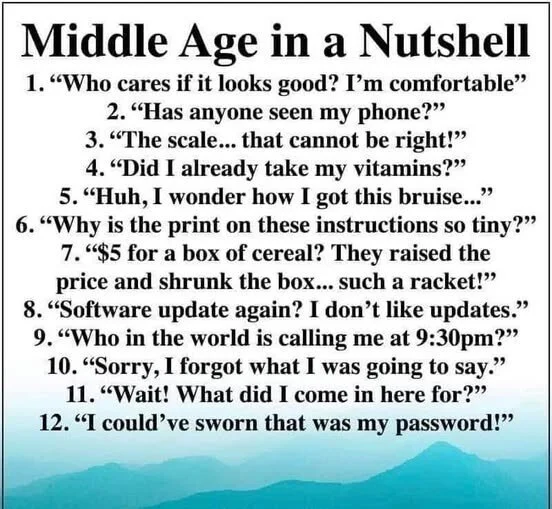
Mot: . Becoming Seasoned in a Nutshell ~~~~
The Dollar Is a Crypto Backed by a Legal Monopoly | Christopher Whalen
The Dollar Is a Crypto Backed by a Legal Monopoly | Christopher Whalen
Miles Franklin Media: 9-11-2025
Andy Schectman, Founder & CEO, Miles Franklin Precious Metals, interviews Christopher Whalen, Chairman of Whalen Global Advisors.
The two sit down for a no-holds-barred takedown of the U.S. banking system, the Fed-Treasury illusion, and why the dollar could be described as nothing more than a crypto backed by a legal monopoly.
In this interview, Whalen draws on decades of experience inside the Fed and on Wall Street to expose the hidden rot beneath the surface of America’s financial system.
The Dollar Is a Crypto Backed by a Legal Monopoly | Christopher Whalen
Miles Franklin Media: 9-11-2025
Andy Schectman, Founder & CEO, Miles Franklin Precious Metals, interviews Christopher Whalen, Chairman of Whalen Global Advisors.
The two sit down for a no-holds-barred takedown of the U.S. banking system, the Fed-Treasury illusion, and why the dollar could be described as nothing more than a crypto backed by a legal monopoly.
In this interview, Whalen draws on decades of experience inside the Fed and on Wall Street to expose the hidden rot beneath the surface of America’s financial system.
In this episode:
The dollar is a crypto backed by a monopoly
Central banks are told to buy gold
Fed & Treasury: two sides of the same coin
Bank consolidation
Why the U.S. consumer is now a “triple-D credit”
What happens when trust in the dollar breaks?
00:00 Coming Up
01:03 Introduction: Christopher Whalen
05:41 Discussion on U.S. Banking Policy
08:40 Technology & Disruption in Banking
21:23 Cryptocurrency & the Dollar
24:27 Historical Context: Gold & Silver
34:43 Future of Banking & Final Thoughts
Iraq Economic News and Points To Ponder Thursday Afternoon 9-11-25
The Association Of Private Banks Reveals The Latest Details Of Banking Reform In Iraq.
Banks Economy News – Baghdad The Iraqi Private Banks Association confirmed on Thursday that banking reform in Iraq encompasses both the public and private sectors, noting that the reform plan has reached its final form and will include all private banks without exception.
Ali Tariq, Executive Director of the Iraqi Private Banks Association, said, "Banking reform in Iraq consists of two parts: the first for government banks and the second for private banks."
The Association Of Private Banks Reveals The Latest Details Of Banking Reform In Iraq.
Banks Economy News – Baghdad The Iraqi Private Banks Association confirmed on Thursday that banking reform in Iraq encompasses both the public and private sectors, noting that the reform plan has reached its final form and will include all private banks without exception.
Ali Tariq, Executive Director of the Iraqi Private Banks Association, said, "Banking reform in Iraq consists of two parts: the first for government banks and the second for private banks."
He explained that "reform for private banks consists of standards divided into four axes: the first is governance, capital, and ownership structure. The second axis is the business plan and the products offered by banks, and how to spread their branches, ATMs, and all financial and banking services."
He added, "The third axis relates to developing procedures, particularly with regard to anti-money laundering, compliance, and risk management. The fourth axis concerns financial statements, which include financial statements and multiple ratios that the bank must adhere to in the future. Therefore, the issue of capital, ownership structure, and governance is part of a broader reform plan."
He explained that "during the previous period, there were serious comments from the banks, which were conveyed to the Central Bank of Iraq, and a dialogue was opened."
He continued, "We are now in the final stage of formulating the plan, which will include all banks, not just those deprived of dollars or specific banks, but all private sector banks." He noted that "this plan is not just to fix a defect, but rather to set standards that the bank must adhere to to ensure it is above the norm and continues to operate normally." https://economy-news.net/content.php?id=59911
The Central Bank's Fruitful Efforts To Achieve The Comprehensive Banking Reform Project.
Samir Al-Nusairi The Central Bank's actions and efforts, in partnership and consultation with private banks, have been fruitful in facilitating the implementation of the objectives, mechanisms, and standards of the comprehensive banking reform project, in cooperation with the government and the global consulting firm Oliver Wyman, and the objectives and initiatives of its third strategy.
Given that economic reform begins with banking reform, the challenges facing the Iraqi economy and the opportunities for reform in the banking and financial sector are highlighted in the government's program, as are the prospects for the Central Bank's future vision for the role of the banking sector in achieving sustainable development and investment.
The efforts currently being made to activate and revolutionize productive economic sectors other than oil to diversify sources of national income, achieve financial sustainability, and accelerate the growth of the national economy are also highlighted, as is the role of the Central Bank in regulating foreign trade financing, completing infrastructure projects to achieve comprehensive digital transformation, and expanding the use of electronic payment tools to achieve financial inclusion.
Opportunities exist to reform and develop the banking sector during 2025-2028 in accordance with the following objectives:
First: Developing the Iraqi banking system and its compliance with international banking and accounting standards.
Second: Building a sound, modern, comprehensive and flexible banking sector.
Third: Enhancing citizens' confidence in the banking sector locally and internationally, and acknowledging its transparency, progress, and strict commitment to international standards, and gaining the trust of reputable correspondent banks to deal with it.
Fourth: Rehabilitating restricted and weak banks to return to activity in the banking market with full internal and external activities.
Fifth: Transforming banks to their primary function, which is financing and bank lending for development, and enhancing financial inclusion and increasing its current rate as planned.
Sixth: Strengthening the procedures and decisions for the transition from a cash economy to a digital economy, withdrawing funds outside the banking cycle, which constitute approximately 80%, and introducing them into the banking system.
Although all the above objectives have a three-year implementation period according to the banking reform project and the Central Bank’s strategy, what was achieved in 2023 and 2024 and up to June 30, 2025 in terms of building foundations, rules and pillars formed a supportive pillar in building the mechanisms and paths of the desired reforms, and they constitute ambitious percentages as announced, which will lead to the evaluation and classification of banks based on their achievement of the planned objectives in the reform project according to the internationally approved standards and criteria. https://economy-news.net/content.php?id=59864
Oil Prices Fall Due To Global Developments
Economy | 08:59 - 11/09/2025 Mawazine News - Follow-up: Oil prices fell slightly on Thursday, with weak demand for crude in the US, along with the prospect of a widespread increase in supplies, despite escalating tensions in the Middle East and the Russian war in Ukraine.
Brent crude futures fell about 0.2% to $67.35 a barrel, while US crude futures fell 0.2% to $63.53 a barrel.
Both benchmark crude contracts rose by more than $1 on Wednesday after the Israeli attack on the political leadership of Hamas in Qatar the day before Tuesday, and as Poland activated its air defenses and NATO air defenses to shoot down suspected Russian drones that had strayed into its airspace during an attack on western Ukraine.
The Energy Information Administration revealed that US crude oil inventories rose by 3.9 million barrels in the week ending September 5, compared to expectations for a draw of 1 million barrels, while gasoline inventories increased by 1.5 million barrels, compared to expectations for a draw of 200,000 barrels, according to Reuters. https://www.mawazin.net/Details.aspx?jimare=266594
For current and reliable Iraqi news please visit: https://www.bondladyscorner.com
Seeds of Wisdom RV and Economic Updates Thursday Afternoon 9-11-25
Good Afternoon Dinar Recaps,
Trump Can’t Stop This: BRICS Buys 60,000 Ounces of Gold To Hammer USD
China’s 10-month gold-buying streak signals BRICS strategy to weaken dollar dominance
China Extends Gold Accumulation Streak
BRICS member China purchased 60,000 ounces of gold in August—worth roughly $215 million—marking its tenth consecutive month of accumulation. The People’s Bank of China (PBOC) now holds 74.02 million ounces, raising the value of its gold reserves to $253.84 billion, or 7.64% of total foreign exchange reserves, according to official data.
Good Afternoon Dinar Recaps,
Trump Can’t Stop This: BRICS Buys 60,000 Ounces of Gold To Hammer USD
China’s 10-month gold-buying streak signals BRICS strategy to weaken dollar dominance
China Extends Gold Accumulation Streak
BRICS member China purchased 60,000 ounces of gold in August—worth roughly $215 million—marking its tenth consecutive month of accumulation. The People’s Bank of China (PBOC) now holds 74.02 million ounces, raising the value of its gold reserves to $253.84 billion, or 7.64% of total foreign exchange reserves, according to official data.
The strategy is clear: diversify away from U.S. dollar–denominated assets like Treasuries and bonds, and shore up reserves with tangible, non-sovereign assets.
BRICS Turns to Gold as Hedge Against USD
China isn’t alone. Other BRICS nations—India, Brazil, Russia, and South Africa—are also building gold reserves. Allianz chief economic advisor Mohamed El-Erian called the trend “part of a broader risk diversification strategy,” reflecting central banks’ preference for gold amid geopolitical strains.
Data from the International Monetary Fund (IMF) shows BRICS central banks have increased gold purchases fivefold since Russia’s invasion of Ukraine. This collective strategy highlights the bloc’s intention to reduce reliance on the U.S. dollar in reserves and international settlements.
Market Impact: Gold Surges to $3,650
The gold-buying spree has fueled a rally in precious metals markets. The XAU/USD index hit $3,650 on Wednesday, jumping nearly 25 points in a single session. As BRICS trims its U.S. dollar debt exposure, speculation grows that the bloc could back its future common currency with gold to directly challenge the dollar’s global reserve status.
Why This Matters
Even amid President Trump’s renewed tariff push and “America First” policies, BRICS is taking a parallel path—using gold to erode dollar dominance. If the bloc continues its accumulation trend and experiments with gold-backed settlement systems, the dollar’s central role in global finance could face its most serious test in decades.
@ Newshounds News™
Source: Watcher Guru
~~~~~~~~~
Seeds of Wisdom Team RV Currency Facts Youtube and Rumble
Newshound's News Telegram Room Link
Follow the Roadmap
Follow the Timeline
Seeds of Wisdom Team™ Website
Thank you Dinar Recaps
MilitiaMan and Crew: IQD News Update-Iraq Freedom-At Stake-In Process-100%
MilitiaMan and Crew: IQD News Update-Iraq Freedom-At Stake-In Process-100%
9-11-2025
The Crew: Samson, PompeyPeter, Petra, Daytrader, Sunkissed, GIGI and Militia Man
Follow MM on X == https://x.com/Slashn
Be sure to listen to full video for all the news……..
MilitiaMan and Crew: IQD News Update-Iraq Freedom-At Stake-In Process-100%
9-11-2025
The Crew: Samson, PompeyPeter, Petra, Daytrader, Sunkissed, GIGI and Militia Man
Follow MM on X == https://x.com/Slashn
Be sure to listen to full video for all the news……..
Iraq Economic News and Points To Ponder Thursday Morning 9-11-25
$500 Billion Awaits Return: Iraq Faces A Golden Window To Recover Its Smuggled Funds.
September 10, 2025 Baghdad / Iraq Observer At a time when the Iraqi economy is under increasing pressure due to corruption, waste, and mismanagement, the recovery of smuggled assets stands out as one of the most important legal avenues that can restore a portion of Iraq's plundered wealth and contribute to alleviating the state's financial burdens.
$500 Billion Awaits Return: Iraq Faces A Golden Window To Recover Its Smuggled Funds.
September 10, 2025 Baghdad / Iraq Observer At a time when the Iraqi economy is under increasing pressure due to corruption, waste, and mismanagement, the recovery of smuggled assets stands out as one of the most important legal avenues that can restore a portion of Iraq's plundered wealth and contribute to alleviating the state's financial burdens.
While the value of these funds is estimated at approximately $500 billion,
legal opinions and
judicial sources
confirm that the
path to their recovery is
"legally feasible" and
requires political will and concerted efforts
at both the
local and
international levels.
In this context, legal researcher Ali Al-Tamimi said in an exclusive interview with Iraq Observer,
"There are international agreements in force that allow Iraq to claim these funds," adding,
"The most prominent of these is the 2005 United Nations Convention against Money Laundering,
which Iraq ratified under Law No. 35 of 2007." Al-Tamimi explains that
Legal materials supporting Iraqi rights
"Articles 55 and 56 of the international agreement
establish a legal framework
for the recovery of stolen assets located abroad," noting that
this agreement has been adopted by many countries that have already succeeded in recovering their assets, such as Nigeria, the Philippines, Algeria, and Egypt.
This leaves the way "legally open" for Iraq to recover whatever stolen assets can be recovered.
Al-Tamimi pointed out that
Iraq has a legal right to claim the
massive sums deposited in the US Federal Reserve belonging to the former regime,
estimated at $65 billion. He explained that
Article 28 of the 2008 Iraqi-US Strategic Agreement
authorizes Iraq to
request economic assistance from Washington,
including cooperation in asset recovery cases.
Potential International Support: From ISIS to Guardianship
Al-Tamimi touched on an important international aspect, emphasizing that
Article 50 of the UN Charter allows countries that have fought groups classified under Chapter VII
(such as ISIS)
to request economic assistance from the UN Security Council. He noted that
UN Resolution 2170, issued in 2014,
places ISIS under this classification,
giving Iraq the legal legitimacy to request international financial support in this context.
In a significant warning, Al-Tamimi noted that the
continuation of the
political,
security, and
economic crises in Iraq
could force the country back into Chapter VII of the UN Charter, meaning
it would be subject to partial international guardianship.
This is a situation from which it had previously exited
following the settlement of financial dues to Kuwait,
which amounted to $4.5 billion.
Legal amendments are required
Earlier, Integrity Commission Chairman Mohammed Ali al-Lami
stressed the
need to recover Iraq's looted funds.
The Federal Integrity Commission stated in a statement that
“the Chairman of the Board of Directors of the Iraq Asset Recovery Fund, Mohammed Ali Al-Lami,
held a meeting of the Board of Directors of the Iraq Asset Recovery Fund,
during which several topics on the agenda were discussed, including a
review of the files presented to the Fund, and the
importance of
diligent follow-up and
investigation of this information.” He pointed out that
“the Iraq Asset Recovery Fund Law No. (9 of 2012), as amended,
requires some important amendments that the legislative authority should take the initiative to legislate.”
According to the statement, Al-Lami stressed the
"need to exert maximum efforts to recover Iraqi funds looted during the era of the former regime,
in accordance with the current Iraqi Fund Recovery Fund Law,"
urging that "the information received by the fund be given due importance." Al-Lami pointed out that
"the task of recovering Iraq's assets
is a national responsibility that
requires the combined efforts of all Iraqis
to participate in, and
to support the relevant authorities
by providing information that helps uncover the
amount of these funds and
their locations." He explained that
"the Ministry of Foreign Affairs'
acceleration of its procedures in sending the files within the legal deadlines to the relevant authorities
contributes to
accelerating the completion of the files and
culminating in the efforts to recover Iraq's assets."
Despite the importance of this issue,
observers believe that the most important step remains the
activation of international diplomatic tools and
official legal action by the Iraqi government
to form specialized teams
in cooperation with the
United Nations and the
countries where the smuggled funds are located.
While the legal aspects
demonstrate that the recovery of smuggled funds is possible and
supported by valid and proven agreements from other countries,
political will and
effective management
remain the key to
success or
failure
in this matter.
https://observeriraq.net/500-مليار-دولار-بانتظار-العودة-العراق-أم/
For current and reliable Iraqi news please visit: https://www.bondladyscorner.com
Seeds of Wisdom RV and Economic Updates Thursday Morning 9-11-25
Good Morning Dinar Recaps,
GOP Crypto Bill Faces Setback as Senator Warns “We’re Not Ready”
Internal GOP rift threatens timeline for sweeping U.S. digital asset legislation
Kennedy Pushback Threatens Scott’s September Deadline
Senate Republicans are facing fresh divisions over digital asset legislation, as Sen. John Kennedy (R-La.) signaled Wednesday that the Banking Committee is “not ready” to advance a landmark cryptocurrency market structure bill this month.
Good Morning Dinar Recaps,
GOP Crypto Bill Faces Setback as Senator Warns “We’re Not Ready”
Internal GOP rift threatens timeline for sweeping U.S. digital asset legislation
Kennedy Pushback Threatens Scott’s September Deadline
Senate Republicans are facing fresh divisions over digital asset legislation, as Sen. John Kennedy (R-La.) signaled Wednesday that the Banking Committee is “not ready” to advance a landmark cryptocurrency market structure bill this month.
Kennedy’s remarks directly challenge Chairman Tim Scott’s pledge to mark up the bill before September 30. “People that I talk to still have a lot of questions. I know I still have a lot of questions,” Kennedy told reporters.
The legislation would divide oversight of digital assets between the Securities and Exchange Commission (SEC) and the Commodity Futures Trading Commission (CFTC). Kennedy warned that the framework risks giving the crypto industry too much influence over the process.
Scott’s Efforts to Build Momentum
Scott’s office has defended the push, noting that Republicans have reviewed thousands of pages of stakeholder feedback and consulted with more than 160 industry participants since June.
“The House has already acted, and the Senate should not fall behind,” said Jeff Naft, Scott’s spokesperson, referencing the House-passed CLARITY Act in July.
Meanwhile, Republicans earlier introduced the GENIUS Act, which established rules for U.S. dollar-pegged stablecoins. Kennedy, however, dismissed that effort as a “baby step” compared to the broader overhaul now under debate.
Crypto Industry Pushes for Action
Industry leaders have lined up behind Scott’s September deadline. Coinbase CEO Brian Armstrong described it as “a clear path forward,” while Andreessen Horowitz’s Colin McCune called comprehensive regulation “sorely needed for years.”
The sector has poured hundreds of millions of dollars into Washington lobbying to secure long-awaited clarity.
Democratic Skepticism Grows
Doubts about the bill are not limited to Republicans. Sen. Andy Kim (D-N.J.) argued that pushing the bill forward this month would be “a mistake,” while other Democrats have urged Republicans to slow the process.
In early September, twelve Democratic senators unveiled their own framework, marking the party’s first coordinated position on crypto regulation this year. Their plan emphasized:
Stronger disclosure requirements
Mandatory registration of platforms with FinCEN
Expanded SEC and CFTC oversight
Restrictions on lawmakers profiting from digital assets
Momentum for CLARITY Act Fades
Expectations for swift passage are fading. Prediction platform Polymarket now gives the CLARITY Act just a 32% chance of becoming law in 2025—down from nearly 90% in July.
Sen. Cynthia Lummis (R-Wyo.), a key supporter, had earlier expressed optimism that the legislation could pass with bipartisan support before year-end. She has since warned that the U.S. risks falling behind the EU and Singapore without regulatory clarity.
Why This Matters
The stalled momentum highlights the political challenges of crafting digital asset legislation in a divided Congress. With Democrats advancing a competing framework and Republicans fractured, the future of U.S. crypto market structure rules may remain uncertain well into 2025.
@ Newshounds News™
Source: CryptoNews
~~~~~~~~~
US Senate Committee Advances Trump’s ‘Crypto-Friendly’ Fed Pick
Stephen Miran’s nomination sparks partisan split amid questions over Fed independence and digital asset policy
Senate Committee Vote Falls Along Party Lines
The U.S. Senate Banking Committee has advanced the nomination of Stephen Miran to the Federal Reserve Board of Governors, setting up a full Senate vote. The decision came in a narrow 13–11 party-line vote, with Republicans in favor and Democrats opposed.
Miran, previously tapped by President Donald Trump to lead the Council of Economic Advisors, is being considered for a temporary Fed seat vacated by Adriana Kugler, whose term ends January 31.
During his confirmation hearing last week, Miran said he would not resign from his role advising the White House even if his time at the Fed extended beyond January.
Miran’s Crypto-Friendly Outlook
Though Miran has made few public statements on digital assets, he signaled in a December interview that “crypto has a big role potentially to play in innovation.” Since joining the Trump administration, however, he has been largely silent on the issue.
If confirmed, Miran would join the Fed as it prepares for an October conference on payments policy, including discussions on stablecoins and tokenization—areas where his openness to crypto innovation could play a role.
Fed Independence Tested
Miran’s nomination comes at a tense moment for the central bank. President Trump recently attempted to remove sitting Fed governor Lisa Cook, citing mortgage fraud allegations in an August 25 letter.
Cook refused to resign, and on Tuesday a federal judge in Washington, D.C., blocked Trump’s order, ruling the president had not provided sufficient cause. The administration has filed an appeal.
The episode underscores ongoing tensions over the independence of the Federal Reserve, with critics warning that political interference could undermine its credibility.
Why This Matters
Miran’s potential appointment would place a “crypto-friendly” figure on the Fed at a pivotal time for digital asset policy. With the central bank set to address stablecoins and tokenization in upcoming discussions, his stance could influence how the Fed balances innovation with oversight.
@ Newshounds News™
Source: CoinTelegraph
~~~~~~~~~
SEC Postpones Decision on Franklin XRP ETF, Sets New Final Deadline
Commission pushes review to November as optimism builds for XRP ETF approval
Franklin’s XRP ETF Faces Extended Review
The U.S. Securities and Exchange Commission (SEC) has delayed its decision on the Franklin Templeton spot XRP exchange-traded fund (ETF), setting a new final deadline of November 14, 2025.
Franklin’s proposal dates back to March, when the Cboe BZX Exchange filed to list and trade shares of the ETF. After initial publication in the Federal Register on March 19, the SEC began its statutory review process.
By law, the SEC must rule within 180 days but can extend the review by an additional 60 days if needed. The agency exercised that option this week, citing the need for more time to assess the proposal.
Final Deadline in November
The SEC’s notice makes clear that November 14 will be the final deadline for Franklin’s application. At that point, the agency must either approve or reject the XRP ETF.
If approved, the product would give investors regulated exposure to XRP’s performance, marking a milestone for both Franklin Templeton and the broader digital asset market.
The delay follows a familiar pattern: the SEC has often used the full extension period for crypto-related ETF filings, citing the need to evaluate market structure, custody, and investor protection issues.
Other XRP ETF Applications Also Pending
Franklin’s application is one of several in front of the SEC. Other asset managers—including Grayscale, Bitwise, Canary, 21Shares, and CoinShares—are also awaiting decisions.
The SEC is expected to rule on multiple proposals in mid-October, with Franklin’s deadline now set slightly later.
Market Sentiment Points to Approval
Despite the delay, investor confidence remains strong. Prediction market data from Polymarket shows a 92% probability that XRP ETFs will launch this year, up from 91% last week.
Optimism stems from the SEC’s evolving stance toward digital assets, highlighted by its Project Crypto initiative and recent remarks by SEC Chair Paul Atkins, who declared that “crypto’s time has come.”
Why This Matters
The SEC’s November decision on Franklin’s XRP ETF could open the door to mainstream adoption of XRP as a regulated investment product. With multiple applications nearing resolution, the coming weeks may mark a turning point for digital asset ETFs in the U.S.
@ Newshounds News™
Source: The Crypto Basic
~~~~~~~~~
Seeds of Wisdom Team RV Currency Facts Youtube and Rumble
Newshound's News Telegram Room Link
Follow the Roadmap
Follow the Timeline
Seeds of Wisdom Team™ Website
Thank you Dinar Recaps
“Tidbits From TNT” Thursday Morning 9-11-2025
TNT:
Tishwash: Rafidain Bank supports nearly 2,000 projects worth 24 billion dinars.
Rafidain Bank announced the allocation of the 11th installment of the "Leadership and Excellence" initiative, noting that the projects funded by the initiative have reached 1,804.
The bank stated in a statement, seen by Al-Masry, that the initiative (Leadership and Excellence) included the 69th batch of registrations, with a total amount of one billion dinars, within the framework of initiatives supported by the Central Bank of Iraq.
The statement added, "The total number of projects funded under the initiative reached 1,804, with a total value of 23 billion, 941 million Iraqi dinars, reflecting the bank's commitment to supporting pioneering projects and contributing to the development of the national economy."
TNT:
Tishwash: Rafidain Bank supports nearly 2,000 projects worth 24 billion dinars.
Rafidain Bank announced the allocation of the 11th installment of the "Leadership and Excellence" initiative, noting that the projects funded by the initiative have reached 1,804.
The bank stated in a statement, seen by Al-Masry, that the initiative (Leadership and Excellence) included the 69th batch of registrations, with a total amount of one billion dinars, within the framework of initiatives supported by the Central Bank of Iraq.
The statement added, "The total number of projects funded under the initiative reached 1,804, with a total value of 23 billion, 941 million Iraqi dinars, reflecting the bank's commitment to supporting pioneering projects and contributing to the development of the national economy." link
************
Tishwash: Kurdish Life in Nashville; A small Kurdistan in the heart of America
Nashville, Tennessee, has been home to a large Kurdish population since the reception of Kurdish refugees in the 1980s. It is known as a small Kurdistan in the heart of the United States.
Two years after the Kurdistan Region of Iraq (KRG) was named the sister city of Nashville, the presence of the Kurdish community in the city has become more pronounced. From Kurdish restaurants and markets to Kurdish festivals, cultural events and sports programs, Nashville has become a symbol of the Kurdish diaspora in the United States.
The “A Country in Our Hearts” podcast, recently broadcast by local radio (WPLN), attempts to make a connection between the past and present of the Kurdish community in Nashville by looking at the stories of Kurdish immigrants. "The choice of this topic reflects the fact that Kurds have been forced to migrate to other countries, especially the United States and Europe, in recent decades, and this idea is the point of contact between the various fronts of Kurdish immigrants who have started a new life in Nashville.
According to Gilbert, a significant part of that history dates back to the 1980s; When the Anfal operations ordered by Saddam Hussein led to the massacre and cleansing of the Kurdish people in northern Iraq, the destruction of thousands of villages and hundreds of thousands of Kurdish refugees. Most Kurdish families, including Nash Chalka, whose father was a Peshmerga, have finally arrived in the United States after years of fleeing and hiding in temporary shelters.
By 2025, refugee housing plans will continue to be suspended and the US political climate will accept fewer immigrants than in the past. This issue has become especially difficult after a massive wave of Kurdish immigrants, especially Kurds from Turkey, across the Mexican border to the United States. Because unlike the first front of Iraqi Kurdish immigrants who entered the United States through organized programs, this new group faces a complex legal process and strict legal and social measures.
This gap between two immigrant experiences shows that Nashville's “Little Kurdistan” is not just a historical immigrant narrative, but has now become a meeting place of two opposing realities: the memory of displacement in the 1980s and the challenges of asylum in the United States today.
Thus, Kurdish society in Nashvik has been able to establish a stable identity by preserving their traditions and ceremonies. The celebration of Newroz, which has been held in the city since 1994, is a clear example of this cultural resistance. The lighting of the symbolic bonfire and the gathering of thousands of people not only mark the beginning of the New Year, but also a symbol of resistance and hope for a society that has turned its painful history into an opportunity for revival.
In this sense, Nashville's “Little Kurdistan” is higher than an immigrant neighborhood, and its Kurds reflect the broader challenges of US immigration policy and the role of the diaspora in redefining identities in a new country. The Kurdish experience in Nashville shows how Washington's political decisions, from Saddam's Anfal to the restriction of access to refugees, directly affect the fate of displaced people and the future of their fronts in the United States link
************
Tishwash: Digital banks and financial inclusion
Today, Iraq is witnessing the launch of a new era of banking services, shifting toward digital services in line with the global trend toward digitization and the abandonment of traditional services.
This sound approach is not just about smart applications and digital platforms, but rather represents the launch of an ambitious vision for a more comprehensive and efficient financial future.
The traditional banking sector has always been the cornerstone of economies, but for years it has been confined by walls of branches and long bureaucratic wires, which has prevented it from reaching broad segments of society. Obtaining a bank account or a simple loan is an arduous journey, especially in remote areas. Here, the...
The importance of the real revolution of digital banks.
The technology has matured, becoming more secure and safe than ever before thanks to advanced encryption and biometrics. Consumer confidence has matured, as consumers have learned how to manage their daily affairs through their smartphones. More importantly, the urgent need to popularize the concept of the financial citizen, who has the right to save, invest, transfer, and finance with ease and transparency, has matured.
A digital bank, then, is not a luxury, but a strategic necessity. It is the bridge that will allow millions of the "unbanked" to cross into a world of economic opportunity that once seemed out of reach. It is the means by which the small shopkeeper, the woman working from home, the ambitious young man, and the elderly man in a remote village will be brought under the umbrella of the formal financial system. These are not just transactions; they are true empowerment.
Hence the importance of digital banks in achieving financial inclusion.
Digital banks are distinguished by their absence of the huge operating costs of traditional branches. Digital banks can offer their services at highly competitive prices, lower fees, and higher returns on savings, benefiting all customers, especially those with limited income.
The launch of these banks is a clear message of confidence in our economy, our technological capabilities, and our future. It is a declaration that we believe in all our citizens and strive to provide every individual with the tools they need to be an effective part of the economic fabric.
This is not the end of banking as we know it. Rather, it is a new birth—smarter, faster, and closer to the pulse of the people. The financial future begins today, with the push of a button, the touch of a screen. Let us all be the ones who make it happen.
Today comes the Central Bank's step
The launch of e-wallets is a fundamental prerequisite and an important path to launching digital banks in Iraq. This approach forms part of a broader strategy for digital transformation in the Iraqi banking and financial sector. This step—and I mean the launch of the e-wallet—can be considered
Preparing the digital infrastructure and developing the payment and financial transfer system in Iraq. These wallets serve as a technical and operational foundation for building integrated digital banking services.
• By enabling transfers between e-wallets and merchants, the Central Bank facilitates the transition to cashless transactions, a necessary step for digital banks that rely entirely on electronic services. This will contribute to enhancing digital financial literacy.
Having secure e-wallet systems in place also makes it easier for future digital banks to comply with regulatory standards without having to build systems from scratch.
All these efforts coincide with the banking sector reform plan launched by the Central Bank, which focuses on enhancing financial inclusion and digital transformation. link
************
Mot: The Work of Gary Larson: The Far Side

Mot: . Why I Mow My Own Yard!!!!

A New Financial Order? Why the BIS is Quietly Expanding Now
A New Financial Order? Why the BIS is Quietly Expanding Now
Miles Harris: 9-10-2025
In the bustling narratives of global finance, we often focus on the obvious players: central banks, major economies, technological disruptors.
But lurking quietly, yet growing monumentally, is an institution that might just be the most significant architect of our financial future: the Bank for International Settlements (BIS).
A New Financial Order? Why the BIS is Quietly Expanding Now
Miles Harris: 9-10-2025
In the bustling narratives of global finance, we often focus on the obvious players: central banks, major economies, technological disruptors.
But lurking quietly, yet growing monumentally, is an institution that might just be the most significant architect of our financial future: the Bank for International Settlements (BIS).
As global financial trust fractures amid rising geopolitical tensions, the erosion of dollar dominance, and the advent of digital currencies, the BIS is not just holding the line; it’s actively building the infrastructure for a new era.
And its symbolic new tower stretching skyward in Basel, Switzerland? That’s more than just bricks and mortar – it’s a monument to a burgeoning global role.
Often dubbed the “central bank of central banks,” the BIS is an institution many have never heard of, yet it coordinates the actions of 63 central banks, representing a staggering 95% of global GDP. Think of it as the ultimate neutral ground, where the world’s monetary authorities converge to discuss, coordinate, and innovate on monetary policy, financial regulation, and the technology that underpins it all.
Miles Harris’s insightful video brings this overlooked giant into sharp focus, revealing how the BIS is positioning itself as the indispensable coordinator for central banks worldwide at a time when that coordination is more critical than ever.
The physical expansion – that impressive new tower – isn’t just about more office space. It’s a tangible reflection of the increasing complexity and demands of global financial governance. Imagine grappling with high inflation, unprecedented financial volatility, and the seismic shifts of de-dollarization pressures. That’s the BIS’s daily brief.
These aren’t theoretical exercises; they require specialized legal, technical, and policy teams working tirelessly to shape the financial rails of tomorrow. Beyond digital cash, the BIS’s foundational Basel Committee is also expanding its regulatory purview dramatically, moving from traditional banking oversight into uncharted territories like climate risk, crypto regulation, and even the ethical deployment of AI in banking.
In a world increasingly fragmented by geopolitical tensions between East and West, the BIS’s role as a neutral platform becomes even more critical. It’s the meeting point where diverging financial infrastructures can still find common ground, enabling crucial integration without overt political alignment.
And speaking of integration, consider the $200 billion-plus in foreign reserves the BIS manages for central banks. As countries look to diversify away from U.S. Treasuries, the BIS is increasingly handling asset management that includes shifts towards gold, the Chinese yuan, and other alternative assets.
This quiet rebalancing act underscores profound shifts in global financial power.
What truly sets the BIS apart now is its emerging role in consolidating monetary governance. We’re talking about a shift of influence away from traditional multilateral institutions like the IMF or the UN, towards a model centralized among central banks themselves.
The BIS is actively developing infrastructure for real-time cross-border transactions using Central Bank Digital Currencies (CBDCs), which could potentially bypass traditional intermediaries like SWIFT. This isn’t just about speed; it’s about fundamentally reshaping monetary sovereignty and global trade.
And here’s a fascinating paradox: while official policy rhetoric often downplays gold’s monetary role, its resurgence, particularly among BRICS+ nations, signals a quiet repositioning of the metal as a monetary safeguard outside direct regulatory frameworks.
This divergence between public statements and central bank actions is a crucial trend the BIS is navigating, subtly incorporating it into a broader, more diversified monetary landscape.
Ultimately, the BIS is not just reacting to change; it’s actively crafting a multipolar, programmable monetary ecosystem. This future promises shared protocols and technological standards, with the BIS firmly at its core.
The goal? To maintain centralized control and stability, even under the appearance of cooperation and pluralism. The new BIS Tower stands tall, not merely as an office building, but as a silent monument to this new era – a future where no single currency dominates, but where stability and control are preserved through sophisticated, centralized coordination.
The story of the BIS is a complex, pivotal one, and understanding its trajectory is essential for anyone interested in the future of money.
For a deeper dive into these intricate developments, I highly recommend watching the full video from Miles Harris. It’s an eye-opening exploration into the institution that’s quietly building the financial bridges of tomorrow.
Seeds of Wisdom RV and Economic Updates Wednesday Afternoon 9-10-25
Good Afternoon Dinar Recaps,
BRICS Finds Its Voice: India’s Gold Shift, China’s Bold Vision, and the Bloc’s Balancing Act
As Trump’s tariffs weigh on global trade, BRICS leaders search for new strategies to safeguard growth, stability, and independence.
Caution at the Virtual Summit
At the latest BRICS virtual meeting, leaders from across the 10-member alliance presented a unified, but cautious, front. Hosted by Brazil’s President Lula da Silva, the summit highlighted the challenges of navigating escalating U.S. tariffs while preserving economic stability.
Good Afternoon Dinar Recaps,
BRICS Finds Its Voice: India’s Gold Shift, China’s Bold Vision, and the Bloc’s Balancing Act
As Trump’s tariffs weigh on global trade, BRICS leaders search for new strategies to safeguard growth, stability, and independence.
Caution at the Virtual Summit
At the latest BRICS virtual meeting, leaders from across the 10-member alliance presented a unified, but cautious, front. Hosted by Brazil’s President Lula da Silva, the summit highlighted the challenges of navigating escalating U.S. tariffs while preserving economic stability.
The bloc criticized U.S. trade policy but avoided direct confrontation with Trump.
India’s Foreign Minister S. Jaishankar, standing in for Prime Minister Modi, struck a balanced tone: “Increasing barriers and complicating transactions will not help, neither would the linking of trade measures to non-trade matters.”
Notably absent were discussions on de-dollarization or the launch of a common BRICS currency, signaling that the alliance is still proceeding carefully.
In short, the summit revealed a defensive posture: BRICS wants stability, but is not yet ready to escalate against Washington.
India’s Pivot to Gold and Away From Treasuries
Behind the diplomatic caution, however, actions speak louder than words. India has quietly reduced its U.S. Treasury holdings by $8 billion in just two months, while stepping up its gold reserves to a record 880 metric tons.
Economists see the move as part of a broader trend across emerging markets: a strategic diversification away from the U.S. dollar.
Gold is viewed as a hedge against asset freezes like those imposed on Russia in 2022.
India’s finance minister Nirmala Sitharaman described the pivot as a “considered decision” to protect reserves amid rising geopolitical uncertainty.
With U.S. deficits widening, sustained selling of Treasuries by BRICS members could eventually raise borrowing costs for Washington.
This quiet shift underscores how trade tensions are translating into monetary realignment.
Xi Jinping’s Strategic Playbook
China, meanwhile, is steering BRICS toward a more assertive global role. At the summit, President Xi Jinping laid out three moves designed to shake global markets and strengthen the bloc:
Defend Multilateralism & Reform Global Governance – Xi called for reforms that would give the Global South greater influence in shaping international financial and trade rules.
Back Open Trade, Resist Protectionism – By defending WTO principles, Xi positioned BRICS as a counterweight to tariff-heavy U.S. policy.
Strengthen Intra-BRICS Cooperation – Xi highlighted technology, infrastructure, and finance as key areas for deeper South-South integration, tying them to China’s Belt and Road Initiative.
For investors, these proposals suggest a future where capital and trade flows increasingly bypass Western systems, tilting toward intra-BRICS networks.
Why This Matters
Individually, the summit’s cautious diplomacy, India’s gold pivot, and China’s vision may seem incremental. But together, they signal a subtle yet profound shift:
BRICS is building resilience against U.S. economic pressure.
Reserve diversification is quietly reducing reliance on the dollar.
China is setting the stage for BRICS to evolve from a defensive bloc into a proactive global economic force.
As the group finds its voice, the message is clear: BRICS is no longer content to be a passive participant in a U.S.-led order. The next phase will test whether words turn into coordinated action — and how global markets adapt to a more multipolar financial system.
@ Newshounds News™
Sources: Watcher Guru, Coindoo, Coindoo
~~~~~~~~~
Seeds of Wisdom Team RV Currency Facts Youtube and Rumble
Newshound's News Telegram Room Link
Follow the Roadmap
Follow the Timeline
Seeds of Wisdom Team™ Website
Thank you Dinar Recaps
$1.3T CRE MELTDOWN Sparks Bank Crisis the Fed Can’t Contain
$1.3T CRE MELTDOWN Sparks Bank Crisis the Fed Can’t Contain
Taylor Kenny: 9-9-2025
Commercial real estate is about to detonate and your bank might not survive the next shock.
With legal bank bail-ins on the table, this breakdown shows you how your savings could be seized to save a failing bank.
Are US banks truly stable? Or are we standing on the precipice of another financial tremor, one quietly building beneath a veneer of calm? A recent video from ITM Trading featuring Taylor Kenney sheds a stark light on the hidden fragilities within the American banking system, pointing to a looming crisis that could reshape our financial landscape.
$1.3T CRE MELTDOWN Sparks Bank Crisis the Fed Can’t Contain
Taylor Kenny: 9-9-2025
Commercial real estate is about to detonate and your bank might not survive the next shock.
With legal bank bail-ins on the table, this breakdown shows you how your savings could be seized to save a failing bank.
Are US banks truly stable? Or are we standing on the precipice of another financial tremor, one quietly building beneath a veneer of calm? A recent video from ITM Trading featuring Taylor Kenney sheds a stark light on the hidden fragilities within the American banking system, pointing to a looming crisis that could reshape our financial landscape.
According to Kenney, a dangerous confluence of factors – a shrinking Federal Reserve balance sheet, massive Treasury debt issuance, and banks holding razor-thin reserves – has left the system acutely vulnerable. But the immediate, glaring threat? Commercial Real Estate (CRE).
Imagine a massive debt wall, approximately $1 to $1.3 trillion in CRE loans, all maturing this year. These weren’t just any loans; they were often financed at historically low-interest rates, think 2-3%. Now, these same borrowers face refinancing at double, even triple, those rates. This isn’t just an inconvenience; for many, it’s an unsustainable financial burden.
Compounding this, the demand for office space and commercial properties is shrinking. Vacancy rates are on the rise as businesses continue to downsize and adapt to new work models. It’s a perfect storm: dwindling income potential meeting skyrocketing debt costs.
The data is already alarming. Delinquency rates on commercial real estate loans have now surpassed those seen during the 2008 financial crisis. Office delinquency rates, in particular, have hit a record high of 11.7%.
But even these figures might not tell the whole story. Banks, in an attempt to maintain an illusion of stability, are widely employing “extend and pretend” tactics.
This means delaying the official recognition of defaults by temporarily extending payment terms, without actually addressing the underlying financial woes of the borrowers. It’s a deferral, not a solution, and it masks the true extent of the problem.
The Federal Reserve has developed tools to manage these crises, often designed to quietly support banks without the public spectacle of large-scale bailouts.
The Bank Term Funding Program (BTFP): This allowed banks to borrow against assets at inflated values, essentially providing a temporary lifeline.
The Reverse Repo Facility (RRP): Once a robust liquidity buffer holding over $2.5 trillion, the RRP allowed institutions to park cash overnight with the Fed for interest. This acted as a critical backstop for the banking system.
However, the RRP has recently shrunk to near zero. Why? The Treasury’s issuance of record amounts of short-term debt offers higher yields, attracting money market funds away from the RRP. This means a crucial liquidity buffer, a safety net for banks, is rapidly drying up, leaving the system even more exposed.
The Fed’s tools, while seemingly effective, maintain an illusion of stability that masks growing systemic risks.
The risk isn’t concentrated in a few big banks. Community and regional banks hold the majority of these vulnerable CRE loans. Furthermore, government-backed entities like Fannie Mae and Freddie Mac hold over half of all multifamily loans, increasing federal exposure.
This widespread risk means any government intervention to stabilize the sector will likely be a stealth bailout, ultimately paid for by taxpayers, further devaluing the dollar.
But beyond bailouts, there’s an even more direct and chilling concern for individual savers: “bail-ins.”
Bail-ins involve the government or regulators seizing depositors’ funds to recapitalize failing banks, rather than relying on taxpayer money.
This mechanism is legal in the US and has already occurred on a small scale. It represents a direct threat to your individual savings and assets, effectively forcing you, the depositor, to rescue the banking system.
Taylor Kenney’s analysis suggests a fundamental truth: the current financial system prioritizes protecting itself over individual savers. In a world where your bank deposits can be seized in a bail-in, and your currency devalued through inflation and stealth bailouts, true wealth preservation requires stepping outside the traditional banking system.
The solution advocated is clear: physical gold and silver. These precious metals are “real money” that cannot be seized, devalued through inflation by central banks, or controlled by the traditional banking system. They offer a tangible, enduring hedge against systemic financial instability.
CHAPTERS:
0:00 U.S. Banks Hanging by a Thread
1:55 Trillions in Loans Coming Due
3:47 The Fed’s Backdoor Crisis Tools
6:05 Repo Facility Nears Zero
8:30 Legal Bail-Ins
10:36 Gold is Built to Endure