
Thank you to all the subscribers to our Early Access program…we thank you for your continued support.
We are excited to offer this new service to keep you informed and up-to-date on the latest Dinar and currency news.
Seeds of Wisdom RV and Economic Updates Wednesday Morning 9-10-25
Good Morning Dinar Recaps,
US Senate Democrats Offer Competing Framework for Crypto Market Structure
Democrats call for bipartisan cooperation as Republicans push to fast-track a market structure bill.
A Parallel Democratic Framework
A group of 12 Democratic senators has unveiled its own framework to guide crypto market structure legislation, stressing the need for a deliberate, bipartisan process. The timing comes as Republicans on the Senate banking committee prepare to advance their bill this fall.
Good Morning Dinar Recaps,
US Senate Democrats Offer Competing Framework for Crypto Market Structure
Democrats call for bipartisan cooperation as Republicans push to fast-track a market structure bill.
A Parallel Democratic Framework
A group of 12 Democratic senators has unveiled its own framework to guide crypto market structure legislation, stressing the need for a deliberate, bipartisan process. The timing comes as Republicans on the Senate banking committee prepare to advance their bill this fall.
Like the GOP’s draft released Sept. 5, the Democrats’ version calls for regulatory clarity and clearer rules for how the SEC and CFTC would oversee digital assets.
“We owe it to the millions of Americans who participate in this market to create clear rules of the road that protect consumers and safeguard our markets,” the senators wrote. “We also must ensure that digital assets are not used to finance illicit activities or to line the pockets of politicians and their families.”
Clarity vs. Politics
The Democratic framework lays out seven key pillars, including protections against illicit finance and closing regulatory gaps in the spot market. But it also openly criticizes President Donald Trump, accusing him of destabilizing regulatory agencies.
“Designing and enforcing a digital asset framework will require significant additional resources for the SEC, CFTC, and Treasury Department,” the proposal states. “In addition, President Trump has fired countless Democratic commissioners from independent regulatory agencies and shown little interest in nominating new officials.”
At present, the CFTC has just one commissioner — Acting Chair Caroline Pham — following widespread departures. Trump has nominated Brian Quintenz to replace Pham as chair, but the other four commission seats remain vacant.
Path to Passage by 2026?
Following the passage of the GENIUS Act on payment stablecoins in July, Congress is shifting focus to broader market structure rules. Republicans plan to move their bill — the Responsible Financial Innovation Act — through the banking committee in October, the agriculture committee in November, and into law by 2026.
Meanwhile, the House already passed its version, the CLARITY Act, with bipartisan support. But Democrats remain split, especially after their framework recommended new restrictions on lawmakers themselves.
Specifically, the proposal calls for prohibiting elected officials and their families from “issuing, endorsing, or profiting from digital assets while in office” and tightening disclosure requirements.
Trump’s Crypto Ties Add Friction
Democrats argue that Trump’s personal and family-linked ventures in crypto — including World Liberty Financial, a Trump memecoin, and a family-backed mining venture — complicate efforts to build consensus. Lawmakers such as Senator Elizabeth Warren have repeatedly criticized Trump’s crypto involvement as a conflict of interest.
Despite these tensions, both parties agree that establishing clear, stable rules for the digital asset market will be critical to protecting investors and enabling growth in the years ahead. Whether the two frameworks can be reconciled remains to be seen.
Why This Matters
The competing proposals highlight the political stakes in building the first comprehensive U.S. crypto market framework. With the GENIUS Act already signed into law, momentum is shifting toward legislation that defines the regulatory perimeter for exchanges, tokens, and digital asset issuers. A bipartisan solution will be essential for lasting stability.
@ Newshounds News™
Source: Cointelegraph
~~~~~~~~~
U.S. Congress Demands 90-Day Report on Strategic Bitcoin Reserve Security
Lawmakers push Treasury to assess feasibility, cybersecurity, and national security of a federal Bitcoin reserve.
Building a Digital Fort Knox
The U.S. Congress is moving forward with legislation that would require the Treasury Department to deliver a comprehensive report on the Strategic Bitcoin Reserve and broader U.S. Digital Asset Stockpile within 90 days of enactment.
The measure, filed on September 5 by Representative David Joyce (R-OH) as part of the Financial Services and General Government Appropriations Act for FY2026 (H.R. 5166), directs the Treasury to assess the feasibility, security, and accounting of a federal digital asset reserve built primarily from seized cryptocurrencies.
The bill has already cleared the House Appropriations Committee, been assigned Union Calendar No. 193, and is awaiting a floor vote. Its ultimate passage, however, will hinge on broader budget negotiations later this year.
U.S. Treasury Report to Weigh Feasibility of a Bitcoin Reserve
Currently, the federal government holds an estimated 198,000–207,000 BTC (roughly $17–20 billion), mostly acquired through law enforcement actions against darknet markets, fraud schemes, and cybercrime. Historically, these holdings were sold off at public auctions, a practice now shifting toward strategic retention.
Under the new framework, however, Treasury would need to assess the practicability of establishing a strategic Bitcoin reserve and digital asset stockpile, including potential legal or operational barriers.
The bill also calls for clarity on how these assets would be valued on the federal balance sheet, how custody would be managed, and whether outside contractors would be used for safekeeping.
Notably, the report must analyze how consolidating seized Bitcoin and other assets into a reserve would affect the Treasury Forfeiture Fund, which currently receives proceeds from asset seizures.
National Security and Cyber Defense
National security looms large in the proposal. The legislation directs Treasury and the National Security Agency to jointly prepare a classified security assessment detailing how to protect federal digital asset reserves from cyberattacks, insider threats, and foreign adversaries.
It also requires the department to outline its legal authority, cybersecurity measures, and interagency protocols for moving digital assets securely.
The timing reflects a broader political push. In March, President Donald Trump signed an executive order establishing a framework for a national Bitcoin reserve, explicitly stating that the government would not buy coins on the open market but instead rely on confiscations.
Treasury Secretary Scott Bessent has since reinforced the message, arguing that Bitcoin can serve as a hedge and an innovation signal, while taxpayers benefit from retaining high-value assets rather than selling them off prematurely.
Strategic Pragmatism, Not a CBDC
Supporters of the bill frame it as fiscal pragmatism and geopolitical strategy. Representative Joyce said the measure ensures that the government “remains fiscally responsible, leverages new technology, and is focused on national security.”
The legislation also includes a prohibition against funding a U.S. central bank digital currency, showing Republican resistance to a government-backed CBDC.
Counterweight to BRICS Digital Currency Push
The anti-CBDC clause also stands out against the backdrop of BRICS nations advancing digital currency initiatives. China has been rapidly rolling out the digital yuan, while Russia, Brazil, and South Africa are exploring their own central bank digital currencies.
By explicitly rejecting a U.S. CBDC, Congress is signaling that America will not follow the same path as its geopolitical rivals. Instead, Washington appears to be betting on Bitcoin and decentralized assets as a strategic hedge — a move that could create a stark policy divide between Western and BRICS financial architectures.
Global Momentum for National Bitcoin Reserves
Adding urgency to the need for proper reserve classification and reporting, some U.S. states advance their own measures. Particularly, Texas has already established a state-level reserve, while other states, including New Hampshire and Arizona, have passed digital asset investment laws.
Notably, the United States is not alone in exploring crypto reserves. This week, El Salvador advanced its Bitcoin accumulation with a 21 BTC purchase to celebrate Bitcoin Day despite the IMF directory. Likewise, Kazakhstan’s president, Kassym-Jomart Tokayev, recently proposed a state crypto fund to accumulate digital assets.
In the Philippines, lawmakers have considered a proposal to establish a reserve of 10,000 Bitcoin, which would make it the first in Southeast Asia to adopt such a measure. Similarly, Brazil’s Congress is considering Bill 4501/24, a proposal to create a $19 billion Bitcoin reserve, known as RESBit, under the joint oversight of the Central Bank and Finance Ministry.
Notably, Bitbo data reveals that governments worldwide hold more than 517,000 Bitcoin, equal to 2.46% of the total supply. Holdings include nearly 194,000 Bitcoin in China, over 11,000 in Bhutan, and around 6,000 in El Salvador.
Why This Matters
The U.S. move to classify, secure, and potentially formalize its Bitcoin stockpile comes at a turning point in global finance. As BRICS nations accelerate gold buying and digital currency pilots, Washington is exploring a different hedge: strategic Bitcoin reserves. Whether this strengthens America’s financial resilience or sparks new geopolitical fault lines will be closely watched worldwide.
@ Newshounds News™
Source: CryptoNews
~~~~~~~~~
Experts Decipher If Ripple’s XRP Lawsuit Saved Crypto World Just in Time
Rate cuts, Wall Street adoption, and Ripple’s courtroom victory may have converged at a critical moment for crypto.
Rate Cuts Spark New Investor Momentum
The U.S. Federal Reserve is expected to cut interest rates after last week’s weak jobs data, a move already sending ripples through global markets. Gold surged to a record $3,600, and analysts say crypto could be next in line.
“If rates fall, more money flows into the system,” said James Rule on the Paul Barron Podcast. “That cash won’t just stay in banks. People will look to gold, metals, and crypto. We’re already seeing new, first-time users flooding in.”
For XRP in particular, lower borrowing costs may fuel fresh retail demand. Investors increasingly view the asset as both an inflation hedge and a cross-border payments tool.
Ripple’s Lawsuit Legacy
XRP’s current position cannot be separated from Ripple’s landmark legal battle with the U.S. Securities and Exchange Commission (SEC). The agency alleged that XRP sales were unregistered securities — a case that galvanized the entire crypto community.
Attorney John Deaton led thousands of XRP holders in challenging the SEC’s claims, turning the case into a referendum on crypto’s future in the U.S.
“We all fought that fight,” Rule reflected. “And it wasn’t just about Ripple. It set the tone for all of crypto.”
The outcome, widely seen as a win for Ripple, provided legal clarity and boosted confidence among both retail investors and institutions.
Wall Street, Nasdaq, and Institutional Adoption
Signs of mainstream embrace are growing rapidly:
Nasdaq has floated plans for tokenized securities.
Stripe is exploring its own blockchain infrastructure.
Ripple’s Swell conference is attracting major institutional speakers, a signal of rising corporate interest.
Together, these developments mark a turning point. “From Capitol Hill to Wall Street, the groundwork was laid by Ripple’s fight,” analysts noted.
Why This Matters
Ripple’s victory against the SEC helped clear a path for broader digital asset adoption at a time when monetary policy is loosening. With Wall Street now leaning into blockchain and institutions showing up at Ripple’s events, XRP’s dual legacy — as both a payments utility and a legal precedent — may prove decisive in shaping crypto’s future.
@ Newshounds News™
Source: Coinpedia
~~~~~~~~~
Seeds of Wisdom Team RV Currency Facts Youtube and Rumble
Newshound's News Telegram Room Link
Follow the Roadmap
Follow the Timeline
Seeds of Wisdom Team™ Website
“Tidbits From TNT” Wednesday Morning 9-10-2025
TNT:
Tishwash: Is Washington's refusal to grant a Sudanese visa a political message or a diplomatic slap in the face?
An informed political source confirmed to Al-Mustaqilla on Wednesday that Iraqi Prime Minister Mohammed Shia al-Sudani has not yet obtained an entry visa to the United States, despite the start of the UN General Assembly meetings in New York.
The source, who spoke on condition of anonymity due to the sensitivity and accuracy of the information, stressed that the Prime Minister's Office had not received any official notification from the US embassy in Baghdad or the Iraqi embassy in Washington regarding the issuance of visas to the Iraqi delegation.
TNT:
Tishwash: Is Washington's refusal to grant a Sudanese visa a political message or a diplomatic slap in the face?
An informed political source confirmed to Al-Mustaqilla on Wednesday that Iraqi Prime Minister Mohammed Shia al-Sudani has not yet obtained an entry visa to the United States, despite the start of the UN General Assembly meetings in New York.
The source, who spoke on condition of anonymity due to the sensitivity and accuracy of the information, stressed that the Prime Minister's Office had not received any official notification from the US embassy in Baghdad or the Iraqi embassy in Washington regarding the issuance of visas to the Iraqi delegation.
This has raised widespread questions about the reasons for this unusual delay, especially since participation in UN meetings is an international protocol open to world leaders.
The source added that the lack of clarity from Washington has prompted many observers, followers, and media outlets to raise several possibilities, most notably that the delay reflects an undeclared political stance by the US president's administration toward the current Iraqi government, or a pressure message linked to thorny and complex domestic and regional issues, amid escalating disagreements over the US military presence and relations with Iran.
Others believe the matter may be merely technical or procedural, but its timing raises questions about Washington's willingness to treat al-Sudani's government as a genuine partner, or to limit it to the status of an "international observer."
The question remains: Will Washington grant al-Sudani a visa at the last minute, or is Iraq facing a new diplomatic crisis at the United Nations? link
************
Tishwash: International praise for Iraq's balanced policies
Several NATO members, including the United States, France, Italy, and the United Kingdom, have commended the Iraqi government's policies and its efforts to address security challenges.
The delegates' praise came during a session of the North Atlantic Council, which hosted Prime Minister Mohammed Shia al-Sudani yesterday, Monday, in the Belgian capital, Brussels.
Al-Sudani delivered a speech in which he noted that this meeting is being held amidst the turmoil and fundamental transformations taking place in the Middle East, the violation of the principles of the international order, the perpetration of crimes against humanity, and the threat to regional security. He emphasized the establishment of a constructive partnership with NATO based on a sovereign decision, aiming for comprehensive, long-term relations in various fields.
The Prime Minister explained that Iraq is no longer a security concern, but rather a reliable strategic partner.
Representatives from ten NATO member states, including the United States, France, Turkey, the Netherlands, Italy, the United Kingdom, Slovakia, Greece, Hungary, and Latvia, delivered interventions and expressed their positions.
Some delegates also represented the positions of several other NATO member states. International praise was paid to the Iraqi government's policies and its efforts to address security challenges, particularly those positions that have helped Iraq avoid the repercussions of the escalation currently taking place in the region.
These interventions included an emphasis on the long-term partnership between the member states of the Atlantic Council and Iraq, as well as an emphasis on the fact that Iraq represents a fundamental pillar in enhancing regional security and stability, in addition to praising Iraq's role, its balanced foreign policy, and its wise management of situations in events.
Regional. The interventions also commended the Iraqi government's success in building the defensive capabilities of its armed forces, noting that a stable Iraq is a guarantee of regional security. They also emphasized the Atlantic Council countries' commitment to supporting Iraq's security, and emphasized that Iraq today is a force for regional peace. link
************
Tishwash: The Central Bank's fruitful efforts to achieve the comprehensive banking reform project.
Samir Al-Nusairi
The Central Bank's actions and efforts, in partnership and consultation with private banks, have been fruitful in facilitating the implementation of the objectives, mechanisms, and standards of the comprehensive banking reform project, in cooperation with the government and the global consulting firm Oliver Wyman, and the objectives and initiatives of its third strategy.
Given that economic reform begins with banking reform, the challenges facing the Iraqi economy and the opportunities for reform in the banking and financial sector are highlighted in the government's program, as are the prospects for the Central Bank's future vision for the role of the banking sector in achieving sustainable development and investment.
The efforts currently being made to activate and revolutionize productive economic sectors other than oil to diversify sources of national income, achieve financial sustainability, and accelerate the growth of the national economy are also highlighted, as is the role of the Central Bank in regulating foreign trade financing, completing infrastructure projects to achieve comprehensive digital transformation, and expanding the use of electronic payment tools to achieve financial inclusion.
Opportunities exist to reform and develop the banking sector during 2025-2028 in accordance with the following objectives:
First: Developing the Iraqi banking system and its compliance with international banking and accounting standards.
Second: Building a sound, modern, comprehensive and flexible banking sector.
Third: Enhancing citizens' confidence in the banking sector locally and internationally, and acknowledging its transparency, progress, and strict commitment to international standards, and gaining the trust of reputable correspondent banks to deal with it.
Fourth: Rehabilitating restricted and weak banks to return to activity in the banking market with full internal and external activities.
Fifth: Transforming banks to their primary function, which is financing and bank lending for development, and enhancing financial inclusion and increasing its current rate as planned.
Sixth: Strengthening the procedures and decisions for the transition from a cash economy to a digital economy, withdrawing funds outside the banking cycle, which constitute approximately 80%, and introducing them into the banking system.
Although all the above objectives have a three-year implementation period according to the banking reform project and the Central Bank’s strategy, what was achieved in 2023 and 2024 and up to June 30, 2025 in terms of building foundations, rules and pillars formed a supportive pillar in building the mechanisms and paths of the desired reforms, and they constitute ambitious percentages as announced, which will lead to the evaluation and classification of banks based on their achievement of the planned objectives in the reform project according to the internationally approved standards and criteria link
************
Mot: ... Ya Know!!!-- its Funny the Things that Pass through Ur Mind When Ur ~

Mot: Exercising in the Morning they say is Good for you

Iraq Economic News and Points To Ponder Tuesday Evening 9-9-25
Mazhar Saleh: The Economy Is Achieving Positive Indicators With A Growth Rate Of 5.3% In 2025.
Time: 2025/09/09 11:33:40 Reading: 705 times {Economic: Al Furat News} The financial advisor to the Prime Minister, Mazhar Mohammed Salih, confirmed on Tuesday that the Iraqi economy is going through a pivotal phase that combines positive indicators and promising opportunities with structural challenges that require radical reforms, which the government program is working on with determination and a coherent approach.
Mazhar Saleh: The Economy Is Achieving Positive Indicators With A Growth Rate Of 5.3% In 2025.
Time: 2025/09/09 11:33:40 Reading: 705 times {Economic: Al Furat News} The financial advisor to the Prime Minister, Mazhar Mohammed Salih, confirmed on Tuesday that the Iraqi economy is going through a pivotal phase that combines positive indicators and promising opportunities with structural challenges that require radical reforms, which the government program is working on with determination and a coherent approach.
Speaking to Al Furat News Agency, Saleh explained that "the gross domestic product is expected to achieve growth of approximately 5.3% in 2025 compared to previous years, indicating the strength of economic investment activity in the country."
He added, "The government has proposed more than 160 investment projects in the electricity, refineries, and ports sectors, reflecting a significant trend toward revitalizing the private sector within the services-oriented government."
He pointed out that "the economy will continue to need to reaffirm two fundamental paths without interruption. The first is to continue sustaining infrastructure projects as a lever for growth and the development of direct productive activity. The second is to activate the strategic partnership with the private sector to lead sustainable development within the social market philosophy, ensuring a high degree of economic diversification, in accordance with the objectives of the National Development Plan 2024-2028 and beyond." LINK
Economist: The Financial Management Law allows for the adoption of 2025 expenditure data and the preparation of the 2026 budget.
Time: 2025/09/09 15:30:00 Reading: 450 times {Economic: Al Furat News} Economic expert Salah Nouri confirmed, today, Tuesday, that the Financial Management Law No. (6) of 2019 has addressed the issue of approving the budget in its special chapter, indicating that Article (13/First) stipulated spending at a rate of (1/12) or less of the total actual expenditures for current expenditures for the previous year after excluding non-recurring expenditures on a monthly basis.
Nouri added in his statement to {Euphrates News} Agency that “Article (13/Third) of the same law clarified that if the approval of the draft federal general budget law for a specific fiscal year is delayed, the final financial statements for the previous fiscal year shall be considered the basis for that year.”
The economic expert pointed out that, "according to these texts, it is possible to spend 1/12 of the actual expenditures for the year 2026 for the year 2025, indicating that this allows the Ministry of Finance to prepare the 2026 budget based on the actual financial data for the year 2025." LINK
The Iraqi Stock Exchange Traded Shares Worth 14 Billion Dinars Last Week.
Money and Business Economy News – Baghdad The Iraq Stock Exchange announced on Tuesday that shares worth more than 14 billion dinars were traded last week.
The market said in a report that "the number of companies whose shares were traded last week reached 56 joint-stock companies, while the shares of 23 companies were not traded due to the failure of buy and sell orders to match prices. Meanwhile, 16 companies remain suspended due to failure to disclose their shares, out of a total of 104 companies listed on the market."
He added that "the number of traded shares reached 23 billion, 598 million, and 632 thousand shares, an increase of 570% compared to the previous week, with a financial value of 14 billion, 286 million, and 282 thousand dinars, an increase of 95% compared to the previous week, through the execution of 3,670 transactions," noting that "the ISX60 traded price index closed at 960.40 points, recording a decrease of 0.54% from its closing in the previous session."
He pointed out that "the number of shares purchased by non-Iraqi investors last week amounted to 260 million shares, with a financial value of 638 million dinars, through the implementation of 113 transactions."
The number of shares sold by non-Iraqi investors amounted to 399 million shares, with a financial value of 842 million dinars, through the implementation of 124 transactions.
It's worth noting that the Iraq Stock Exchange holds five trading sessions per week, from Sunday to Thursday, and lists 104 Iraqi joint-stock companies representing the banking, telecommunications, industry, agriculture, insurance, financial investment, tourism, hotels, and services sectors. https://economy-news.net/content.php?id=59842
Oil Prices Rise Thanks To OPEC+ Decision
Economy | 09/09/2025 Mawazine News - Follow-up Oil prices rose on Tuesday after the OPEC+ group decided to increase production by less than market participants had expected, while prices continued to be supported by concerns about tightening supply due to the possibility of new sanctions on Russia.
Brent crude rose 22 cents, or 0.33%, to $66.24 a barrel, while US West Texas Intermediate crude rose 24 cents, or 0.39%, to $62.50 a barrel.
Eight members of OPEC+, which includes the Organization of the Petroleum Exporting Countries (OPEC) and its allies, agreed on Sunday to increase production starting in October by 137,000 barrels per day.
This is significantly less than the monthly increases of about 555,000 barrels per day in September and 411,000 barrels per day in July and June. https://www.mawazin.net/Details.aspx?jimare=266477
New Rise In Dollar Exchange Rates In Baghdad
economy | 09/09/2025 Mawazine News - Baghdad - The dollar exchange rate rose on Tuesday at the Baghdad Stock Exchange and money exchanges.
The US dollar exchange rate reached 143,400 dinars for every $100 in morning trading at the main stock exchange in the capital, Baghdad.
Meanwhile, the exchange rate in local markets in Baghdad reached 144,250 dinars for sale, while the purchase price reached 142,250 dinars. https://www.mawazin.net/Details.aspx?jimare=266490
Gold Prices Rise In Local Markets
Economy | 09/09/2025 Mawazine News - Baghdad - Foreign and Iraqi gold prices witnessed a significant increase in local markets on Tuesday.
The selling price of one mithqal of 21-karat Iraqi gold reached 710,000 dinars, while the purchase price reached 700,000 dinars.
Gold prices in jewelers' shops ranged between 740,000 and 750,000 dinars for one mithqal of 21-karat Gulf gold, while the selling price of one mithqal of Iraqi gold ranged between 710,000 and 720,000 dinars. https://www.mawazin.net/Details.aspx?jimare=266492
For current and reliable Iraqi news please visit: https://www.bondladyscorner.com
Seeds of Wisdom RV and Economic Updates Tuesday Evening 9-9-25
Good Evening Dinar Recaps,
India Drives BRICS Trade Solutions, Trump Warns It Won’t End Well New Delhi pushes for reforms inside BRICS while facing mounting pressure from Washington.
India’s Direct Challenge to Partners At the latest BRICS virtual summit, India’s External Affairs Minister S. Jaishankar, representing Prime Minister Narendra Modi, delivered a blunt message: India’s biggest trade deficits are with its BRICS partners.
Good Evening Dinar Recaps,
India Drives BRICS Trade Solutions, Trump Warns It Won’t End Well
New Delhi pushes for reforms inside BRICS while facing mounting pressure from Washington.
India’s Direct Challenge to Partners
At the latest BRICS virtual summit, India’s External Affairs Minister S. Jaishankar, representing Prime Minister Narendra Modi, delivered a blunt message: India’s biggest trade deficits are with its BRICS partners.
Jaishankar argued that reform within the bloc is overdue, stating:
“The BRICS itself can set an example by reviewing trade flows among its member states.”
His remarks highlight the growing strain as India navigates tariff battles with the Trump administration while balancing partnerships with China and Russia.
Massive Trade Deficits Exposed
The scale of India’s trade imbalances is striking:
India’s trade deficit with China hit a record $99.21 billion in FY 2025, with Beijing’s surplus climbing 16% this year to $77.7 billion.
With Russia, bilateral trade reached $68.7 billion, but India’s reliance on oil imports created a $59 billion deficit.
These numbers add urgency to India’s call for BRICS reforms, especially as Trump’s tariffs complicate negotiations.
Trump Administration’s Harsh Warnings
Trump’s trade advisor Peter Navarro escalated tensions, warning India that its policies “won’t end well” if New Delhi resists cooperation in new trade talks.
Navarro criticized India’s tariffs as the “highest in any major country against the U.S.” and defended Washington’s 50% tariff on Indian goods—even harsher than the 30% levies on Chinese imports.
On energy, Navarro said bluntly:
“India never bought oil from Moscow before Russia invaded Ukraine, except for like little tiny drops of it.”
He also issued a geopolitical warning:
“If India doesn’t come around, it’s lying down with Russia and China, and that won’t end well for India.”
BRICS Alliance Under Fire
Navarro didn’t stop with India. He attacked the entire BRICS bloc, labeling its members as “vampires” draining U.S. wealth with unfair trade practices:
“None of these countries can survive if they don’t sell to the United States. Their exports are like vampires sucking our blood dry.”
China’s President Xi Jinping responded by warning that tariff wars “severely disrupt the world economy and undermine international trade rules.”
Signs of Reconciliation
Despite the heated rhetoric, Trump has also signaled a softer side, praising Modi as a “great prime minister” and emphasizing the “special” U.S.-India relationship. Modi, for his part, responded positively, suggesting that diplomacy may still offer a path to resolution.
Why This Matters
India’s push for BRICS trade reforms—and the Trump administration’s aggressive tariffs—are testing global alliances at a critical moment. Whether diplomacy or confrontation prevails will shape the trajectory of BRICS, U.S.-India relations, and broader trade stability in the years ahead.
@ Newshounds News™
Source: Watcher.Guru – India Drives BRICS Trade Solutions, Trump Warns It Won’t End Well
~~~~~~~~~
Seeds of Wisdom Team RV Currency Facts Youtube and Rumble
Newshound's News Telegram Room Link
Follow the Roadmap
Follow the Timeline
Seeds of Wisdom Team™ Website
Thank you Dinar Recaps
Iraq Economic News and Points To Ponder Tuesday Afternoon 9-9-25
Parliamentary Call To Establish A "Petrodollar Fund"
Second and third 09/09/2025 Baghdad: Janan Al-Asadi Basra MP Asaad Al-Bazouni called for the establishment of a special fund known as the "Petrodollar Fund," to address environmental pollution and the significant rise in cancer rates in Basra, given the province's heavy reliance on oil revenues in the general budget. Without any real plan to address the negative impacts of oil extraction operations.
Parliamentary Call To Establish A "Petrodollar Fund"
Second and third 09/09/2025 Baghdad: Janan Al-Asadi Basra MP Asaad Al-Bazouni called for the establishment of a special fund known as the "Petrodollar Fund," to address environmental pollution and the significant rise in cancer rates in Basra, given the province's heavy reliance on oil revenues in the general budget. Without any real plan to address the negative impacts of oil extraction operations.
Basra MP and member of the parliamentary investment committee, Asaad Al-Bazouni, told Al-Sabah:
“Iraq’s revenues depend on oil for more than 90 percent of its revenues, and most of these revenues come from Basra province, especially after the halt in exports from the Kurdistan region.
” He explained that “despite the allocation of five dollars for every barrel of oil extracted for the benefit of the province, these funds have not been transferred or received in full, which has left approximately 27 trillion dinars owed to the province that have not yet been disbursed.”
Al-Bazouni added, "The efforts have not yet succeeded in providing serious solutions to the problem of environmental pollution resulting from oil extraction operations, nor have they addressed the rising rates of cancer among citizens.
" He explained that "serious solutions begin by directing the allocated funds of five dollars per barrel to a 'special fund' whose mission is to address environmental pollution and cancer in the governorate, similar to reconstruction funds in other governorates.
This provides a transparent and effective mechanism for managing these funds and investing them in necessary health and environmental projects.
" He pointed out that "the establishment of this fund will address environmental and health imbalances in the governorate and provide direct economic and social support to residents suffering from the effects of pollution resulting from the oil industry."
This demand comes at a time when local and international reports indicate a significant increase in cancer rates in Basra Governorate due to emissions from oil gas flaring and oil extraction.
Hundreds of cases are recorded in the governorate each month, and medical sources have confirmed that the number of infections exceeds official statistics, with warnings that this situation will continue and that infection rates will increase in the future. https://alsabaah.iq/120221-.html
Iraq's Non-Oil Revenues Jump To 7 Trillion Dinars Thanks To Reforms.
September 9, 2025 Last updated: September 9, 2025 Al-Mustaqilla/- The Prime Minister's Advisor for Economic and Financial Affairs, Mazhar Mohammed Salih, announced a significant jump in Iraq's non-oil revenues this year,thanks to the reform packages adopted by the government.
Saleh explained in a statement to the official newspaper, which was followed by Al-Mustaqilla, that
non-oil revenues increased from 420 billion dinars in the first half of 2023 to more than 7 trillion dinars in 2024.
He pointed out that this growth was the result of implementing eight reform packages that included expanding the tax base, activating digital governance, and developing electronic payment mechanisms, which contributed to reducing the shadow economy and enhancing the transparency of financial performance.
He added that the three-year general budget law increased the contribution of non-oil revenues to approximately 20% of total revenues, an important step toward reducing dependence on oil as the primary source of economic revenue.
Saleh explained that these reforms were not limited to the financial aspect alone, but also included strengthening partnerships with the private sector and supporting youth entrepreneurship through the launch of the Riyada Bank, which aims to finance productive projects and encourage innovation.
Experts believe that these indicators represent a strategic shift in the structure of the Iraqi economy,particularly as the government seeks to diversify sources of income and promote sustainable development, independent of the fluctuations in global oil markets. https://mustaqila.com/إيرادات-العراق-غير-النفطية-تقفز-إلى-7-تر/
Strengthening Digital Infrastructure
Economic 09/09/2025 Dr. Nabil Rahim Al-Abbadi Electronic signatures are a cornerstone of banks' digital transformation, providing a reliable technical and legal basis for electronic transactions.
This aligns with Iraq's efforts to improve its digital infrastructure, as stated by the Minister of Communications.
Relying on electronic signatures will reduce the need for paper documents, lowering operational costs associated with printing, torage, and ransportation.
It will also speed up transaction procedures such as opening accounts and issuing loans, reducing waiting times from days to minutes in some cases. Furthermore, it uses advanced encryption technologies, reducing the chances of forgery and fraud.
This enhances customer confidence in digital banking services, a vital step in an environment marked by increasing cyber risks.
Having an internationally recognized electronic signature means that Iraqi banking documents and transactions will be accepted internationally, opening doors for cooperation with international banks and making Iraq more attractive to foreign investment.
Digital signatures are the fuel for accelerating digital banks (or digital branches of traditional banks), enabling the provision of complete services online without the need for a physical presence, such as opening accounts completely remotely, signing contracts and agreements securely, and completing lending and financing transactions seamlessly.
With a solid legal and technical foundation, banks can develop and offer innovative financial services such as mobile banking with a more secure experience, crowdfunding platforms that require authenticated signatures on agreements, and Wealth-Tech (digital wealth management) services that rely on secure electronic contracts.
Electronic signatures eliminate geographical barriers, allowing banks to reach customers in remote areas or those who prefer a fully digital banking experience.
This aligns with the digital transformation vision that aims to include all citizens.
Despite the significant advantages, the success of e-signatures in the Iraqi banking sector faces some challenges, most notably digital infrastructure.
Gaps in internet coverage and reliability remain in some areas of Iraq, potentially limiting the effectiveness of e-signatures.
Culture and trust are also key here, and both customers and employees need to be educated about the importance and security of e-signatures.
Intensive training programs are also needed, as is cybersecurity.
With increased reliance on digitization, banks increasingly need to invest heavily in advanced cybersecurity systems to protect customer data and transactions from attacks.
The launch of e-signatures in Iraq is a step in the right direction and could be a powerful catalyst for the banking sector.
To realize the full benefits, collaboration between the public and private sectors is essential:
Banks should work closely with the Ministry of Communications and regulatory authorities to ensure that e-signature systems comply with international standards, invest in infrastructure and security, and adopt technologies such as cloud computing and blockchain to enhance security and efficiency.
I see the imperative of organizing comprehensive awareness campaigns to educate customers on the benefits and use of electronic signatures to build trust and drive adoption.
I also believe it is imperative to conduct ongoing training for staff to develop the skills of bank employees to navigate new technologies and manage digital platforms efficiently.
In short, this decision is not just a technical addition, but a strategic shift that lays the foundation for the Iraqi banking sector to compete regionally and globally, and to enter the era of digital banking with confidence and security. https://alsabaah.iq/120203-.html
For current and reliable Iraqi news please visit: https://www.bondladyscorner.com
Seeds of Wisdom RV and Economic Updates Tuesday Afternoon 9-9-25
Good Afternoon Dinar Recaps,
SEC Crypto Task Force Targets Financial Surveillance, Privacy, and Market Clarity
Commissioner Hester Peirce leads new push for balance between oversight and innovation in digital assets.
A Fresh Approach at the SEC
The U.S. Securities and Exchange Commission (SEC) is pressing ahead with its digital asset agenda, announcing that its crypto task force will hold a public roundtable on financial surveillance and privacy in Washington, D.C., on October 17.
Good Afternoon Dinar Recaps,
SEC Crypto Task Force Targets Financial Surveillance, Privacy, and Market Clarity
Commissioner Hester Peirce leads new push for balance between oversight and innovation in digital assets.
A Fresh Approach at the SEC
The U.S. Securities and Exchange Commission (SEC) is pressing ahead with its digital asset agenda, announcing that its crypto task force will hold a public roundtable on financial surveillance and privacy in Washington, D.C., on October 17.
Led by Commissioner Hester Peirce, the task force has already hosted multiple roundtables since the departure of former SEC Chair Gary Gensler, with 10 events planned across the country through December.
“Understanding recent developments in privacy-protecting tools will assist the SEC and other financial regulators as we work on policy solutions in the crypto space,” Peirce said.
Policy Shifts in Motion
The SEC recently proposed new rules, including:
Exemptions and safe harbors for certain crypto asset sales.
Adjustments to broker-dealer financial responsibility rules that could reduce compliance burdens for U.S.-operating crypto companies.
These steps suggest a measured shift toward more industry-friendly regulation compared to the enforcement-heavy approach under prior leadership.
Collaboration with the CFTC
The SEC is not acting alone. The Commodity Futures Trading Commission (CFTC), now led solely by Acting Chair Caroline Pham, has also signaled a softer stance. Pham said the agency would follow the White House’s lead on digital asset policy.
Both regulators have begun exploring:
A potential shift to 24/7 capital markets.
Regulations for crypto derivatives.
A coordinated framework for spot crypto trading, following recommendations from the President’s Working Group on Digital Asset Markets.
Congressional Oversight Ahead
All of these efforts could soon be superseded by federal legislation. The Senate is considering the Responsible Financial Innovation Act, a comprehensive market structure bill. Co-sponsor Senator Cynthia Lummis believes it could become law before 2026, formally codifying the roles of the SEC and CFTC in digital asset regulation.
Why This Matters
The SEC’s evolving stance shows a recognition that crypto markets require both regulatory clarity and respect for privacy-enhancing tools. With roundtables engaging industry and policymakers, and Congress weighing a structural overhaul, the coming years could define how the U.S. balances surveillance, innovation, and investor protection in digital finance.
@ Newshounds News™
Source: CoinTelegraph – SEC Financial Surveillance and Privacy Crypto Task Force
~~~~~~~~~
SEC Delays Decision on HBAR and Polkadot ETFs Until November
Regulator points to listing standards, not token rejection, as altcoins hold strong.
Another SEC Delay
The U.S. Securities and Exchange Commission (SEC) has once again delayed decisions on two altcoin ETF filings: Canary’s Hedera (HBAR) ETF and Grayscale’s Polkadot (DOT) ETF. The regulator extended its deadline to November 8, marking the third delay since March.
For the Canary HBAR ETF, Nasdaq first filed in February and amended the proposal in March. The SEC has since requested several rounds of public comments, questioning whether the product qualifies under Nasdaq’s commodity-based trust shares rule. Grayscale’s Polkadot ETF is following a nearly identical timeline.
Why the Delay?
The SEC’s hesitation has less to do with HBAR or DOT specifically and more to do with the lack of uniform listing standards for spot crypto ETFs. The agency is holding back approvals until exchanges finalize a broader framework.
Major exchanges — including Nasdaq, NYSE, and CBOE BZX — have already submitted amendments to redefine “commodity” by removing “excluded commodities.”
This change would smooth the way for altcoin ETFs, making them easier to classify and list.
In short, the SEC appears to be waiting for standardization before approving any products beyond Bitcoin and Ethereum.
Market Reactions Stay Positive
Despite the delay, both tokens showed resilience:
HBAR rose about 1% this week, trading near $0.22.
Polkadot (DOT) surged almost 4% to $4.03, with trading volume spiking more than 225% in 24 hours.
Analysts suggest this optimism reflects a belief that approval is inevitable once listing standards are finalized. Bloomberg continues to assign a 90% probability of eventual approval for both ETFs.
The Bigger Picture
The SEC’s cautious approach signals it is building a standardized ETF framework rather than rejecting altcoin products outright. While the November deadline is the next milestone, market participants are already pricing in a favorable outcome.
If approved, HBAR and Polkadot ETFs could mark the beginning of a new wave of altcoin ETFs, further expanding crypto’s integration into U.S. capital markets.
@ Newshounds News™
Source: Coinpedia – SEC Delays Decision on HBAR and Polkadot ETFs+
~~~~~~~~~
Analysts Say Bitcoin Has Yet to Prove Its “Digital Gold” Role
Despite gold’s surge, Bitcoin still trades like a risk asset tied to tech stocks.
Geopolitics and Market Anxiety
Global markets were rocked this week by a combination of weak U.S. employment figures, intensifying trade disputes, ongoing wars, and political turmoil in France. The uncertainty pushed gold to new record highs. Bitcoin, however, did not follow. Instead, it mirrored the Nasdaq 100, reinforcing its tight correlation with equities rather than acting as a safe-haven asset.
Ecoinometrics: “Digital Gold” Narrative Still Missing
Research group Ecoinometrics found that Bitcoin’s correlation with gold and U.S. Treasuries remains close to zero. Meanwhile, its connection to risk assets remains strong, with Ethereum even more equity-like in its trading behavior. Analysts emphasized that Bitcoin has yet to make the anticipated transition into a true “digital gold” hedge.
Fed Meeting as the Turning Point
Investor attention now shifts to the upcoming Federal Reserve meeting, which may set the tone for both crypto and equities:
A clear rate-cut signal could spark optimism across risk markets, potentially lifting Bitcoin.
A hawkish surprise may weigh on both tech stocks and crypto, keeping Bitcoin locked in its current risk-asset role.
Bitwise: Macro Still Dictates the Trend
According to André Dragosch of Bitwise, the current weakness in Bitcoin isn’t driven by crypto fundamentals, but rather by slowing global growth and shrinking risk appetite.
Still, Dragosch maintains a cautiously optimistic outlook:
Liquidity growth and Fed easing could fuel a stronger environment later this year.
In the short term, the Fed meeting represents a “double event”—either a launchpad for recovery or a trigger for further downside.
Why This Matters
Bitcoin’s ability—or failure—to prove itself as “digital gold” will remain a central narrative for investors. With gold surging to fresh highs and global instability persisting, the coming months may determine whether Bitcoin truly evolves into a safe-haven asset or continues behaving like a speculative tech trade.
@ Newshounds News™
Source: Coindoo – Analysts Say Bitcoin Has Yet to Prove Its “Digital Gold” Role
~~~~~~~~~
Seeds of Wisdom Team RV Currency Facts Youtube and Rumble
Newshound's News Telegram Room Link
Follow the Roadmap
Follow the Timeline
Seeds of Wisdom Team™ Website
Thank you Dinar Recaps
Iraq Economic News and Points To Ponder Tuesday Morning 9-9-25
Iraq Is At The Heart Of A Global Digital Storm. Iraqis Are Increasingly Buying Cryptocurrencies, And There Are Warnings Of Risks To The Iraqi Economy.
September 8, 2025 Baghdad / Iraq Observer In recent years, Iraq has witnessed an escalating debate about cryptocurrencies, a phenomenon that has swept the world, transforming money flows from traditional banking channels to a borderless and unregulated digital space.
While Iraq ranks relatively high globally in cryptocurrency adoption indicators, official voices are increasingly raising their voices, most notably the warnings of the Central Bank of Iraq and the Prime Minister's financial advisors, regarding the legal, financial, and security risks these currencies pose, which could be devastating to individuals and the national economy.
Iraq Is At The Heart Of A Global Digital Storm. Iraqis Are Increasingly Buying Cryptocurrencies, And There Are Warnings Of Risks To The Iraqi Economy.
September 8, 2025 Baghdad / Iraq Observer In recent years, Iraq has witnessed an escalating debate about cryptocurrencies, a phenomenon that has swept the world, transforming money flows from traditional banking channels to a borderless and unregulated digital space.
While Iraq ranks relatively high globally in cryptocurrency adoption indicators, official voices are increasingly raising their voices, most notably the warnings of the Central Bank of Iraq and the Prime Minister's financial advisors, regarding the legal, financial, and security risks these currencies pose, which could be devastating to individuals and the national economy.
Reasons Why Iraqis Are Turning To Cryptocurrencies
Mazhar Mohammed Saleh, the financial advisor to the Prime Minister, explained in a statement to the Iraq Observer that the use of cryptocurrencies in Iraq is due to "many reasons," most notably individuals' reliance on these currencies for remittances abroad to avoid the fees and restrictions of the traditional banking system.
He added that the lack of banking options, especially in underserved areas, has prompted many to opt for decentralized digital methods that the digital space easily provides.
Saleh believes that this phenomenon is not limited to Iraq, but that it has taken on a more dangerous character in the country due to the fragility of the traditional financial system and the lack of official channels for citizens to resort to.
This has made cryptocurrencies a quick and accessible option for a wide segment of the population, especially young people.
*Central Bank warnings and looming risks Despite the growing popularity, Saleh notes that the Central Bank of Iraq has issued stern warnings against dealing or trading in cryptocurrencies, citing the risks associated with financial volatility, fraud, and terrorist financing.
He explained that "the risks of using cryptocurrencies are very significant and real," as many young people have been exposed to fraud, significant financial losses, and a lack of legal recourse due to dealing with unlicensed platforms.
He explained that trading often takes place through unofficial brokers or using virtual private networks (VPNs) to circumvent restrictions, making these transactions far removed from any legal or banking protection.
The financial advisor emphasized that relying on informal methods, such as brokers in neighboring countries, to facilitate transfers or withdrawals increases the fragility of these transactions.
Digital Theft And Lack Of Guarantees
Furthermore, the high volatility makes people vulnerable to quickly losing their savings with any sharp change in cryptocurrency prices. Saleh continues that one of the most significant risks of this phenomenon is the exposure of traders to what he calls "digital theft," given that trading is illegal and lacks any safeguards or frameworks to protect investors.
He notes that the absence of a protective banking or legal authority makes trading in cryptocurrencies an uncalculated risk that could wipe out individuals' savings in an instant.
He also pointed out that these operations constitute a form of "digital money laundering," which falls under the Anti-Money Laundering and Counter-Terrorism Financing Law.
He noted that AML/CFT regulations apply to digital transactions, especially if they are linked to a criminal purpose, indicating that violators face severe penalties that may include imprisonment for 5 to 15 years, or a fine of up to five times the amount of laundered funds.
*Iraq in the "Global Adoption" Index of Cryptocurrencies
In contrast to these warnings, international data confirms the extent of the phenomenon's spread in Iraq. The "Global Adoption" Index for Cryptocurrencies revealed that Iraq ranked relatively high globally, ranking among the top third of countries worldwide in digital currency use.
According to the sixth edition of the global index, which ranks 151 countries, Iraq ranked 44th globally, with a score of 0.05, placing it at the forefront of the region's countries that have adopted cryptocurrencies at the grassroots level.
Iraq outperformed countries such as Saudi Arabia, Oman, Kuwait, the UAE, Qatar, and Bahrain in this ranking. However, countries such as Türkiye, Yemen, and Jordan ranked higher than Iraq, indicating that the Middle East region as a whole is witnessing a frantic race in the field of digital currencies.
Asia-Pacific: The Largest Growth Arena
Internationally, data showed that the Asia-Pacific region was the fastest-growing region in cryptocurrency activity, with a 69% increase in value received year-on-year over the past twelve months.
Total cryptocurrency transaction volume in the region also increased from $1.4 trillion to $2.36 trillion, reflecting the global boom in this sector. https://observeriraq.net/العراق-في-قلب-العاصفة-الرقمية-صعود-في/
Strengthening Digital Infrastructure
Economic 09/09/2025 Dr. Nabil Rahim Al-Abbadi Electronic signatures are a cornerstone of banks' digital transformation, providing a reliable technical and legal basis for electronic transactions.
This aligns with Iraq's efforts to improve its digital infrastructure, as stated by the Minister of Communications.
Relying on electronic signatures will reduce the need for paper documents, lowering operational costs associated with printing, storage, and transportation.
It will also speed up transaction procedures such as opening accounts and issuing loans, reducing waiting times from days to minutes in some cases. Furthermore, it uses advanced encryption technologies, reducing the chances of forgery and fraud.
This enhances customer confidence in digital banking services, a vital step in an environment marked by increasing cyber risks.
Having an internationally recognized electronic signature means that Iraqi banking documents and transactions will be accepted internationally, opening doors for cooperation with international banks and making Iraq more attractive to foreign investment.
Digital signatures are the fuel for accelerating digital banks (or digital branches of traditional banks), enabling the provision of complete services online without the need for a physical presence, such as opening accounts completely remotely, signing contracts and agreements securely, and completing lending and financing transactions seamlessly.
With a solid legal and technical foundation, banks can develop and offer innovative financial services such as mobile banking with a more secure experience, crowdfunding platforms that require authenticated signatures on agreements, and Wealth-Tech (digital wealth management) services that rely on secure electronic contracts.
Electronic signatures eliminate geographical barriers, allowing banks to reach customers in remote areas or those who prefer a fully digital banking experience.
This aligns with the digital transformation vision that aims to include all citizens.
Despite the significant advantages, the success of e-signatures in the Iraqi banking sector faces some challenges, most notably digital infrastructure. Gaps in internet coverage and reliability remain in some areas of Iraq, potentially limiting the effectiveness of e-signatures.
Culture and trust are also key here, and both customers and employees need to be educated about the importance and security of e-signatures.
Intensive training programs are also needed, as is cybersecurity.
With increased reliance on digitization, banks increasingly need to invest heavily in advanced cybersecurity systems to protect customer data and transactions from attacks.
The launch of e-signatures in Iraq is a step in the right direction and could be a powerful catalyst for the banking sector.
To realize the full benefits, collaboration between the public and private sectors is essential:
Banks should work closely with the Ministry of Communications and regulatory authorities to ensure that e-signature systems comply with international standards, invest in infrastructure and security, and adopt technologies such as cloud computing and blockchain to enhance security and efficiency.
I see the imperative of organizing comprehensive awareness campaigns to educate customers on the benefits and use of electronic signatures to build trust and drive adoption.
I also believe it is imperative to conduct ongoing training for staff to develop the skills of bank employees to navigate new technologies and manage digital platforms efficiently.
In short, this decision is not just a technical addition, but a strategic shift that lays the foundation for the Iraqi banking sector to compete regionally and globally, and to enter the era of digital banking with confidence and security. https://alsabaah.iq/120203-.html
For current and reliable Iraqi news please visit: https://www.bondladyscorner.com
“Tidbits From TNT” Tuesday Morning 9-9-2025
TNT:
Tishwash: Iraqi Oil: Signing Major Investment Contracts and Expanding Gas Investment
The Ministry of Oil confirmed on Monday that major investment contracts had been signed and gas investments had expanded, as Iraq has become an attractive investment environment for the oil industry. It noted significant progress in the extraction, refining, gas, and distribution sectors .
“Iraq has signed major contracts with international companies such as Chevron and BB to develop fields in Nasiriyah and Kirkuk, in addition to the integrated gas development project in the Artawi field, with a value exceeding $10 billion,” said Undersecretary of the Ministry, Bassem Khadir, in a speech during the opening of the third Iraq International Oil and Gas Exhibition, which was followed by the “ Al-Sa’a ” network.
TNT:
Tishwash: Iraqi Oil: Signing Major Investment Contracts and Expanding Gas Investment
The Ministry of Oil confirmed on Monday that major investment contracts had been signed and gas investments had expanded, as Iraq has become an attractive investment environment for the oil industry. It noted significant progress in the extraction, refining, gas, and distribution sectors .
“Iraq has signed major contracts with international companies such as Chevron and BB to develop fields in Nasiriyah and Kirkuk, in addition to the integrated gas development project in the Artawi field, with a value exceeding $10 billion,” said Undersecretary of the Ministry, Bassem Khadir, in a speech during the opening of the third Iraq International Oil and Gas Exhibition, which was followed by the “ Al-Sa’a ” network.
He added, "The ministry has increased its gas investment percentage from 45% to 70%, with an ambitious plan to close the flared gas file by 2028. Work is also underway on renewable energy projects, most notably a 1,000-megawatt solar power plant ."
He pointed out that "the integrated project in Artawi includes four axes: increasing oil production, exploiting gas from five fields, establishing a solar energy project, and using seawater injection to increase pressure in oil fields ."
Khadir emphasized that "Iraq is working to develop the infrastructure and human resources in the oil sector, while supporting national companies and raising their efficiency to match their partnerships with international companies, thus enhancing development in all governorates and creating ample job opportunities link
*************
Tishwash: Al-Sudani: Iraq has overcome all challenges and today represents a fundamental pillar of security and stability in the region.
Prime Minister Mohammed Shia al-Sudani affirmed on Monday that Iraq has overcome all challenges and is today a fundamental pillar of security and stability in the region .
His office stated in a statement received by the Mail that "Al-Sudani met, in the Belgian capital, Brussels, with NATO Secretary General Mark Rutte, during which bilateral relations between Iraq and the NATO mission in Iraq were discussed ."
Al-Sudani expressed his "appreciation for Rutte's invitation to participate in the North Atlantic Council meetings," noting that "Iraq has overcome all challenges and today represents a fundamental pillar of security and stability in the region ."
He stressed that "social cohesion in Iraq is its strength," emphasizing "the need for the international community to play its role in stopping the war in the region and the grave violations being committed in Gaza ."
For his part, Rutte expressed his "appreciation for Iraq's role in stabilizing security in the region," praising the "significant shift in the management of all issues during the current government's tenure ."
He praised the "great support that NATO's mission in Iraq receives link
*************
Tishwash: Steve Lutes: US companies are ready to support economic diversification in Kurdistan.
The Vice President of the American Chamber of Commerce, Steve Lutes, confirmed that the Prime Minister of the Kurdistan Region, Masrour Barzani, seeks to diversify the economy in Kurdistan, stressing that American companies are ready to cooperate in this field.
A delegation from the American Chamber of Commerce, comprising more than 30 companies, is currently visiting Erbil to invest in various sectors within the Kurdistan Region.
Steve Lutes told Kurdistan 24 on Sunday that the delegation is not only listening to economic opportunities from officials, but is also seeking to connect with local businesspeople, with the goal of finding new partners and increasing trade and investment activity in the Kurdistan Region.
"Kurdistan Regional Prime Minister Masrour Barzani is focused on diversifying the economy, and we believe American companies will be able to seize these opportunities and contribute to achieving this goal," Lutz added. link
************
Tishwash: Al-Sudani's advisor reveals the extent of the development path's contribution to the Iraqi economy.
Mudhar Mohammed Salih, advisor to the Iraqi Prime Minister, revealed on Monday that the development road project will contribute 20% to diversifying the national economy.
Salih said in a press interview that "the development road project, which connects the port of Faw in southern Iraq to Turkey via a 1,200 km railway and road network, is one of the largest logistics projects in the region, with an estimated cost of $17 billion."
He added that "the project will open the door to diversifying the national economy as the road is connected to free economic zones, industrial cities and advanced logistics services," expecting that "it will contribute approximately 20% to diversifying the national economy in terms of its contribution to the gross domestic product in the long term."
Salih pointed out that "this will be a basis for employing a national workforce of approximately one million workers and activating important joints in the national economy, in addition to advanced land and rail transportation services, in addition to attracting regional and international investments continuously as it connects the Gulf to Europe via Turkey, which are important economic regions globally in terms of relative weight."
The government advisor concluded his remarks by saying, "The project will sustainably strengthen the Iraqi economy and improve the country's resilience to global market fluctuations. If invested efficiently and integrated with plans to boost industry, trade, and services, its impact could undoubtedly be as significant as that of oil in the long term." link
*************
Mot: When - Enough is Enough!!!! Beach time out
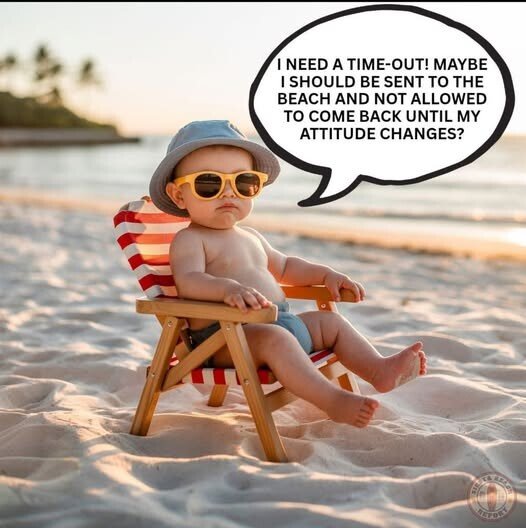
Mot: . Not What She Was Hoping For wild child

Iraq Economic News and Points To Ponder Monday Evening 9-8-25
Experts: Banking Reforms Are Necessary To Enhance Financial Stability.
Economic 09/08/2025 Morning: Hussein Faleh The Iraqi banking sector is undergoing a pivotal phase marked by comprehensive reform and institutional development.
The Central Bank, in collaboration with private banks, the government, and the global consulting firm Oliver Wyman, is implementing a strategic plan aimed at enhancing financial stability, diversifying the economy, and gradually transitioning from a cash to a digital economy.
Experts: Banking Reforms Are Necessary To Enhance Financial Stability.
Economic 09/08/2025 Morning: Hussein Faleh The Iraqi banking sector is undergoing a pivotal phase marked by comprehensive reform and institutional development.
The Central Bank, in collaboration with private banks, the government, and the global consulting firm Oliver Wyman, is implementing a strategic plan aimed at enhancing financial stability, diversifying the economy, and gradually transitioning from a cash to a digital economy.
Experts believe these efforts pave the way for ending restrictions on Iraqi banks' dollar transactions and opening new horizons for the banking sector to achieve sustainable development.
pivotal stage
Economic expert Dr. Mustafa Hantoush explained that"the Central Bank and the banking system are going through a critical phase that could lead to the end of restrictions imposed on Iraqi banks' dollar transactions."
He pointed out that "the Central Bank's decision to extend the deadline for increasing the capital of banks included in the reform to more than two years, instead of the previous deadline of the end of this year, reflects a state of joint cooperation with these banks and supports them in facing challenges." Hantoush told Al-Sabah:
Final Report
“The Central Bank has contracted with Oliver Wyman to conduct a comprehensive study of the banking sector,” noting that “the company completed its study and submitted its initial report three weeks ago, while the final report was issued recently, including a package of mechanisms to address banking challenges and regulate dollar transactions.
” He added that “these mechanisms are currently under discussion between the Central Bank and the consulting firm,” expecting “the dialogue between the two sides to continue to reach compromises, whether by extending the capital increase period to more than three years, or reducing the required amounts in line with the capabilities of Iraqi banks.”
tangible progress
For his part, Economic and Banking Advisor Samir Al-Nusairi stated that "the measures and efforts led by the Central Bank of Iraq,in cooperation and consultation with private banks, have yielded tangible progress in implementing the objectives, mechanisms, and standards of the comprehensive banking reform project.
This progress is being made in partnership with the government and the global consulting firm Oliver Wyman, and within the framework of the Central Bank's third strategy.
productive sectors
" Al-Nusairi explained to Al-Sabah that "the project came in response to current economic challenges and an effort to enhance the banking sector's role in supporting sustainable development by activating non-oil productive sectors, diversifying sources of national income, achieving financial stability and economic growth, regulating foreign trade financing, supporting infrastructure projects for digital transformation, and expanding the use of electronic payment tools to achieve financial inclusion." Al-Nusairi explained that
international recognition
"the reform and development plan for the banking sector for the period 2025-2028 focuses on
developing the banking system and ensuring its compliance with international banking and accounting standards, building a modern, flexible, and inclusive banking sector, enhancing citizens' confidence locally, and obtaining international recognition for its transparency and commitment to standard criteria, ensuring the confidence of global correspondent banks.
It also aims to rehabilitate restricted or weakly active banks to enable them to return to full operations. It also aims to focus the role of banks on financing and development lending, enhancing financial inclusion and increasing its percentage.
It also aims to move from a cash economy to a digital economy by withdrawing funds circulating outside the banking cycle – which constitutes approximately 80 percent – and integrating them into the banking system." Al-Nusairi pointed out that
Evaluation and classification
"what has been achieved during the years 2023, 2024, and until mid-2025 represents 'ambitious' levels in building the foundations upon which the reform project is based, which has enabled the evaluation and classification of banks according to their level of achievement of objectives.
" He noted that "there are banks that have achieved remarkable progress, while others still need additional time, while exceptional efforts are being made by the Central Bank and the administrations of some troubled banks to rehabilitate them."
Central Bank Governor Ali Al-Alaq had previously revealed details of the banking reform plan,
particularly regarding the foreign partner and the plan's objectives, stressing that the foreign partner is not a condition of the reform plan, while indicating that the banking reform is based on international laws and standards.
Reform plan
Al-Alaq said,"The banking reform plan is not a surprise, but rather a well-thought-out plan, and it took more than a year to develop in coordination with banks and international bodies. It was agreed upon the need to review the Iraqi banking sector after years of practical experience.
" He pointed out that, "After numerous problems emerged, all parties agreed to adopt a plan that would place our banks within international standards and practices, and within the framework of the Central Bank Law and the Iraqi Banking Law. Therefore, the standards are not innovative, but rather stem from the Central Bank Law." https://alsabaah.iq/120119-.html
The Central Bank Governor Meets With The United Nations Development Programme Representative.
September 08, 2025 His Excellency the Governor of the Central Bank of Iraq, Mr. Ali Mohsen Al-Alaq, met with the new Resident Representative of the United Nations Development Programme in Iraq (Mr. Titon Mitra) at the Central Bank's headquarters in Baghdad.
The meeting addressed a range of key issues in cooperation between the two parties, focusing on
providing advice on technical aspects and controls related to the regulatory framework for e-commerce, with the goal of working toward consumer protection and enhancing a safe environment for the growth of the digital economy.
During the meeting, His Excellency the Governor reviewed the tangible progress made in the digital transformation of electronic transactions across trade and services, and the reduction of reliance on cash.
He highlighted the importance of cooperation on advisory and technical aspects with various specialized international and regional organizations.
His Excellency also addressed the Central Bank's plan to reform the banking sector, the key stages it is undergoing, and the cooperation with Oliver Wyman.
Mr. Mitra commended the cooperation between the Central Bank of Iraq and the United Nations Development Programme, pointing out the Central Bank's reform plan for the banking sector to consolidate the pillars of this important sector, which influences the stability of economic and commercial activity in Iraq. https://cbi.iq/news/view/2976
For current and reliable Iraqi news please visit: https://www.bondladyscorner.com
Seeds of Wisdom RV and Economic Updates Monday Evening 9-8-25
Good Evening Dinar Recaps,
BRICS Anti-America Strains Rise as JP Morgan Predicts US Dollar Future
Despite de-dollarization campaigns, JPMorgan says the U.S. dollar’s dominance remains entrenched for decades to come.
JPMorgan’s Dollar Dominance Outlook
JPMorgan analysts argue that the U.S. dollar’s global supremacy is not easily displaced. Their research points to deep and liquid capital markets, rule of law, predictable legal systems, and robust USD liquidity as foundations of dollar dominance.
Good Evening Dinar Recaps,
BRICS Anti-America Strains Rise as JP Morgan Predicts US Dollar Future
Despite de-dollarization campaigns, JPMorgan says the U.S. dollar’s dominance remains entrenched for decades to come.
JPMorgan’s Dollar Dominance Outlook
JPMorgan analysts argue that the U.S. dollar’s global supremacy is not easily displaced. Their research points to deep and liquid capital markets, rule of law, predictable legal systems, and robust USD liquidity as foundations of dollar dominance.
While dollar reserves fell from 73% in 2001 to 58.4% in 2023, the share has stabilized since 2021. JPMorgan concludes that fears of a rapid U.S. dollar collapse are overstated, saying erosion of its role would take decades, not years.
Trump’s Escalating Anti-BRICS Stance
President Donald Trump has sharpened rhetoric against BRICS nations, threatening 100% tariffs on countries moving away from the dollar. His approach toward India has been particularly volatile, swinging from labeling it a “dead economy” to reaffirming U.S.-India ties.
These tensions highlight the political flashpoints driving speculation about dollar stability, even as structural realities keep the greenback secure.
BRICS Push for Alternatives
Despite JPMorgan’s confidence, BRICS nations continue to pursue alternatives:
Russia and China are expanding non-dollar payment systems.
India is extending its digital payment network to regional partners.
Still, JPMorgan cautions that fragmentation of international payments is a bigger near-term risk than outright de-dollarization.
Market Reality vs. Political Rhetoric
Financial voices emphasize the gap between BRICS ambitions and global trade realities.
Ted Jenkin, CEO of oXYGen Financial, noted: “With the exception of Europe, the dollar is the most widely used currency by far around the world.”
Even China, while cutting U.S. Treasury holdings, increased purchases of other U.S. securities, signaling continued reliance on dollar assets.
According to the Federal Reserve, 60% of international claims remain dollar-denominated, unchanged since 2000 and far above the euro’s 20%.
Why This Matters
While BRICS nations push for de-dollarization, the U.S. dollar remains the cornerstone of global finance. JPMorgan’s analysis suggests that structural advantages, institutional trust, and widespread usage ensure its dominance will endure well beyond today’s political disputes.
@ Newshounds News™
Source: Watcher Guru
~~~~~~~~~
Seeds of Wisdom Team RV Currency Facts Youtube and Rumble
Newshound's News Telegram Room Link
Follow the Roadmap
Follow the Timeline
Seeds of Wisdom Team™ Website
Thank you Dinar Recaps
Iraq Economic News and Points To Ponder Monday Afternoon 9-8-25
Iraq Seeks To Increase Its Share Of Global Oil Markets.
Energy Economy News – Baghdad SOMO confirmed that Iraq seeks to increase its production and export share in line with global market needs and balance, as it is the second-largest producer in OPEC.
SOMO General Manager Ali Nizar said, "Iraq possesses exceptional investment opportunities in the oil and gas sector, making it an open market for reputable international companies."
Iraq Seeks To Increase Its Share Of Global Oil Markets.
Energy Economy News – Baghdad SOMO confirmed that Iraq seeks to increase its production and export share in line with global market needs and balance, as it is the second-largest producer in OPEC.
SOMO General Manager Ali Nizar said, "Iraq possesses exceptional investment opportunities in the oil and gas sector, making it an open market for reputable international companies."
He added, "The company's plans focus on strengthening Iraq's position as a pivotal energy hub by diversifying export outlets, entering into partnerships with global refineries, providing strategic storage sites, and expanding the pipeline network." https://economy-news.net/content.php?id=59799
Iraqi Oil Prices Decline On The Global Market.
Economy | 08/09/2025 Mawazine News - Baghdad - Iraqi oil prices declined on Monday, with the opening of daily trading in the global market.
According to data reviewed by Mawazine News, Basra Heavy crude recorded $64.81 per barrel, while the average recorded $68.01 per barrel, with a change of -0.38 for both.
On the other hand, the data showed an increase in global crude prices, as British Brent crude recorded $66.69 per barrel, while US West Texas Intermediate crude recorded $63.00 per barrel, with a change of +1.18 and +1.12, respectively. https://www.mawazin.net/Details.aspx?jimare=266434
The US State Department Expresses Its Dissatisfaction With Baghdad's Policy Toward The Kurdistan Region.
The head of the Kurdistan Regional Government's Office of Foreign Relations, Safeen Dizayee, announced on Monday that the US State Department had informed the Iraqi government of its dissatisfaction with the policy pursued towards the region.
Dizayee explained that this position is due to the ongoing tensions between Baghdad and Erbil on sensitive issues, most notably the sharing of financial revenues, salaries, and disagreements related to oil agreements. These disagreements hinder cooperation and negatively impact political and economic stability in Iraq in general and the region in particular.
Dizayee indicated that Erbil continues its efforts to strengthen its relations with countries with advanced economic and industrial expertise, such as Thailand, to benefit from their experiences in developing economic sectors.
He also noted that the regional capital is currently hosting more than six economic forums and conferences organized by consulates and embassies from European countries and others from the United States, an indication of international confidence in the region as a stable investment destination. https://www.radionawa.com/all-detail.aspx?jimare=42555
For The Fourth Day, The Dollar Exchange Rate Remains Stable In Baghdad.
Economy | 11:41 - 08/09/2025 Mawazine News – Baghdad The exchange rate of the US dollar against the Iraqi dinar witnessed relative stability on stock exchanges, with a relative decline on some exchanges.
On the Baghdad stock exchange, the selling price reached 143,500 dinars per $100, while the buying price reached 142,900 dinars per $100. However, at money exchanges, the selling price reached 144 dinars and the buying price 142 dinars. https://www.mawazin.net/Details.aspx?jimare=266440
Gold Exceeds $3,600 For The First Time In Its History
Stock Exchange
Spot gold hit an all-time high on Monday, reaching $3,600.46 per ounce, the first time in its history, driven by growing expectations of a Federal Reserve interest rate cut this month following unexpectedly weak employment data last week.
Spot gold was trading at $3,586.81 per ounce at 01:21 GMT. The price of gold rose to a record high of $3,599.89 on Friday.
US gold futures for December delivery fell 0.7 percent to $3,626.10.
"The key factor is the US jobs data and expectations of a 50 basis point rate cut in September. It's a slim chance, but it represents a significant shift compared to the situation before the jobs data," said Kael Rodda, an analyst at Capital.com.
He added, "In general, all factors are pushing gold prices higher at the moment, and despite the surprise inflation data this week, we will see a good test of the $3,600 level."
U.S. employment growth weakened sharply in August, and the unemployment rate rose to a nearly four-year high of 4.3 percent, underscoring the weakening strength of the labor market and strengthening the chances of a Federal Reserve interest rate cut next week.
The gold price currently reflects expectations of a 25 basis point cut this month, with an 8 percent probability of a cut as large as 50 basis points, according to the CME Group's FedWatch tool.
Lowering interest rates reduces the opportunity cost of holding gold and weakens the dollar, making gold cheaper for investors holding other currencies.
Focus now turns to Thursday's US inflation report, which may provide further clarity on the size of the Federal Reserve's expected interest rate cut.
Gold prices have risen 37 percent so far this year, following gains of 27 percent in 2024, driven by a weaker dollar, central bank buying, monetary easing, and prevailing geopolitical and economic uncertainty.
The People's Bank of China added gold to its reserves in August, continuing its purchases of the precious metal for the tenth consecutive month.
Meanwhile, gold traders increased their net long positions by 20,740 contracts to 168,862 contracts in the week ending September 2.
As for silver, its spot price fell 0.5 percent to $40.75 per ounce, while platinum rose 0.1 percent to $1,374.35, and palladium remained unchanged at $1,109.71. https://economy-news.net/content.php?id=59806
Political | 08/09/2025 Mawazine News - Baghdad – President Abdul Latif Jamal Rashid discussed, on Monday, with the Chargé d'Affaires of the United States Embassy to Iraq, Joshua Harris, developing joint cooperation and enhancing dialogue in the capital, Baghdad.
The Presidency said in a statement received by Mawazine News, "The meeting discussed bilateral relations between the two countries and encouraging initiatives that serve the interests of the two friendly peoples. His Excellency the President of the Republic affirmed Iraq's keenness to build balanced partnerships based on mutual respect and common interests."
He continued, "Regional and international developments were reviewed, emphasizing the importance of continuing efforts to achieve regional stability and promote constructive dialogue between various parties."
For his part, Mr. Joshua Harris expressed his pride in representing his country in Iraq, stressing his aspiration to work together to consolidate relations and enhance cooperation in various fields, in a way that contributes to supporting security, stability and prosperity in the region." https://www.mawazin.net/Details.aspx?jimare=266450
For current and reliable Iraqi news please visit: https://www.bondladyscorner.com
Seeds of Wisdom RV and Economic Updates Monday Afternoon 9-8-25
Good Afternoon Dinar Recaps,
SEC Launches Cross-Border Pump-and-Dump Prevention Task Force
The new initiative targets market manipulation schemes and signals future reforms for crypto assets.
A New SEC Task Force
The U.S. Securities and Exchange Commission (SEC) has unveiled a new Cross-Border Task Force aimed at protecting American investors from fraud. The initiative will focus on foreign companies that attempt to skirt U.S. oversight through schemes like pump-and-dump operations.
Good Afternoon Dinar Recaps,
SEC Launches Cross-Border Pump-and-Dump Prevention Task Force
The new initiative targets market manipulation schemes and signals future reforms for crypto assets.
A New SEC Task Force
The U.S. Securities and Exchange Commission (SEC) has unveiled a new Cross-Border Task Force aimed at protecting American investors from fraud. The initiative will focus on foreign companies that attempt to skirt U.S. oversight through schemes like pump-and-dump operations.
SEC Chair Paul S. Atkins emphasized: “We welcome companies from around the world seeking access to the U.S. capital markets. But we will not tolerate bad actors… that attempt to use international borders to frustrate and avoid U.S. investor protections.”
The task force will consolidate investigative resources and give the SEC broader reach against transnational fraud.
Crypto Reform on the Horizon
Atkins linked the new initiative to the SEC’s Project Crypto, which supports President Donald Trump’s push to make the U.S. the world’s crypto capital. He signaled that the regulator is preparing to overhaul how digital assets are treated under securities law.
“We will work to bring crypto asset distributions back to America. The days of convoluted offshore corporate structures, decentralization theater, and confusion over security status are over,” Atkins said.
He added that the SEC had previously discouraged crypto-based capital raising, pushing innovation offshore. The new approach seeks to reverse that trend and restore opportunities for investors.
Why This Matters
The SEC’s new task force reflects a broader shift: tighter scrutiny on global market manipulation and a coming reset in crypto regulation. For U.S. investors, the message is clear—Washington intends to both protect markets from foreign fraud and position America as the center of digital asset innovation.
@ Newshounds News™
Source: Daily Hodl
~~~~~~~~~
This Week’s US Economic Calendar: CPI, PPI, and Jobs Data to Watch
Markets brace for key reports that could shape the Fed’s September decision and ripple across stocks, gold, and crypto.
Markets Price in Rate Cut
Traders enter the week with high conviction that the Federal Reserve will cut rates at its September meeting. Futures point to a 96–97% probability, bolstered by weak labor market data showing just 22,000 jobs added in August. Bond yields have slipped, equities are climbing, and gold has reached new highs near $3,588/oz.
Tuesday: Inflation Revision
The week begins with a BLS 12-month inflation data revision. If revisions trend higher, it could pressure the Fed and weigh on Bitcoin and Ethereum. Softer numbers may instead provide relief for risk assets.
Wednesday: Producer Price Index
Midweek brings the Producer Price Index (PPI). Rising wholesale prices would signal sticky inflation, a negative for risk assets. A cooler PPI, however, could give crypto markets room for a rebound.
Thursday: CPI and OPEC in Focus
Thursday is the most critical day, with the Consumer Price Index (CPI) for August released alongside OPEC’s monthly oil report. Rising energy costs could intensify inflation concerns, creating a double catalyst for volatility in equities and digital assets.
Friday: Consumer Sentiment and Inflation Expectations
The week ends with the University of Michigan survey, offering a look at consumer sentiment and inflation expectations. Persistent price concerns could dampen market confidence, while optimism might fuel a late-week rally in crypto.
Why This Matters
With inflation still the Fed’s central concern, this week’s data could set the tone for the final quarter of 2025. Traders are watching bonds, commodities, and crypto closely as the Fed’s next move—and broader risk appetite—comes into focus.
@ Newshounds News™
Source: Coinpedia
~~~~~~~~~
Ripple’s SEC Battle Is Over: Time To Challenge SWIFT?
With legal clarity finally secured, Ripple turns back to its original mission: competing with the world’s dominant payments network.
Ripple Clears Its Legal Hurdle
Ripple has ended its long-running battle with the U.S. Securities and Exchange Commission, bringing long-sought legal clarity to XRP, now trading near $2.93. The settlement removes a major obstacle that has hung over the company since 2020 and allows Ripple to refocus on building its payments network.
How Ripple Compares to SWIFT
The Society for Worldwide Interbank Financial Telecommunication (SWIFT), established in 1973, processes over 53 million messages daily across 220 countries. While SWIFT is deeply entrenched, critics argue its system is outdated:
Transactions often take several days and involve high fees.
One in 10 transactions fails, while one in 20 settles late.
Even with ISO 20022 upgrades by late 2025, many see SWIFT as “legacy tech” reliant on XML.
By contrast, Ripple’s blockchain ledger offers:
Near-instant settlement
Lower costs
Greater transparency and traceability
CEO Brad Garlinghouse has long framed Ripple as a modern alternative to SWIFT, saying as early as 2018 that the company was “taking over SWIFT” by signing banks and remittance firms onto the XRP Ledger.
Why SWIFT Still Holds the Advantage
Despite Ripple’s momentum, the banking sector remains slow to change. Blockchain advocates note that replacing SWIFT’s infrastructure could take 5–7 years and cost hundreds of millions of dollars. Banks continue using SWIFT because it is already universal, trusted, and familiar.
As Ripple’s Cassie Craddock put it, “Scaling to the level of traditional providers requires tackling two key hurdles: usability and regulation.”
The Role of Regulation and Stablecoins
Ripple now benefits from unique legal clarity on XRP, but broader adoption also hinges on regulatory frameworks like the GENIUS Act, which sets rules for stablecoin issuers. Ripple’s own stablecoin, Ripple USD, is being positioned as a bridge between blockchain innovation and traditional finance.
“Stablecoins are simple, pegged to the dollar, and behave like cash,” Craddock noted, adding that this familiarity is key to winning over institutions.
Can Ripple Truly Challenge SWIFT?
SWIFT’s ubiquity is its strongest moat. For Ripple to compete, it must overcome regulatory inconsistencies, risk-averse banks, and skepticism over XRP liquidity. Still, U.S. policymakers are creating space for private digital assets to complement traditional finance — and Ripple is well positioned to benefit.
As Garlinghouse said earlier this year, “The market opportunity is massive in the U.S… there’s an opportunity to modernize the payment systems from SWIFT.”
Why This Matters
Ripple’s victory over the SEC marks a turning point, but SWIFT remains a formidable incumbent. The battle ahead is not legal but structural: convincing banks and regulators that blockchain can deliver efficiency, security, and compliance at global scale.
@ Newshounds News™
Source: Cointelegraph
~~~~~~~~~
Seeds of Wisdom Team RV Currency Facts Youtube and Rumble
Newshound's News Telegram Room Link
Follow the Roadmap
Follow the Timeline
Seeds of Wisdom Team™ Website
Thank you Dinar Recaps
MilitiaMan and Crew: IQD News Update-A Big Week Coming-A Century worth of Oil
MilitiaMan and Crew: IQD News Update-A Big Week Coming-A Century worth of Oil
9-8-2025
The Crew: Samson, PompeyPeter, Petra, Daytrader, Sunkissed, GIGI and Militia Man
Follow MM on X == https://x.com/Slashn
Be sure to listen to full video for all the news……..
MilitiaMan and Crew: IQD News Update-A Big Week Coming-A Century worth of Oil
9-8-2025
The Crew: Samson, PompeyPeter, Petra, Daytrader, Sunkissed, GIGI and Militia Man
Follow MM on X == https://x.com/Slashn
Be sure to listen to full video for all the news……..