
Thank you to all the subscribers to our Early Access program…we thank you for your continued support.
We are excited to offer this new service to keep you informed and up-to-date on the latest Dinar and currency news.
Iraq Good News Erases 87% of National +IQD RV Latest News
Iraq Good News Erases 87% of National +IQD RV Latest News
Edu Matrix: 7-31-2025
In a groundbreaking achievement for Iraq's economy, the state-owned Al-Rafidain Bank has announced the settlement of 87% of the country's foreign debt liabilities as of July 30, 2025.
This pivotal milestone, reached through strategic negotiations and successful legal actions, underscores Iraq's commitment to financial recovery and national sovereignty.
Iraq Good News Erases 87% of National +IQD RV Latest News
Edu Matrix: 7-31-2025
In a groundbreaking achievement for Iraq's economy, the state-owned Al-Rafidain Bank has announced the settlement of 87% of the country's foreign debt liabilities as of July 30, 2025.
This pivotal milestone, reached through strategic negotiations and successful legal actions, underscores Iraq's commitment to financial recovery and national sovereignty.
With significant concessions secured from creditors in France, the Netherlands, Turkey, and Lebanon, Iraq is enhancing its credit rating and building global trust in its financial governance.
The decline in foreign debt from $19.7 billion to $8.9 billion reflects Iraq’s focused policy reforms. Discover how this achievement paves the way for global integration and investor confidence in Iraq's fiscal stability!
Iraq Economic News and Points To Ponder Thursday Afternoon 7-31-25
The Iraqi Stock Exchange Traded Shares Worth More Than 7 Billion Dinars In One Week.
Thursday, July 31, 2025| Economic Number of readings: 164 Baghdad / NINA / The Iraq Stock Exchange announced, on Thursday, that it traded shares worth more than 7 billion dinars during five trading sessions during the last week of July.
According to market statistics, the number of traded shares during this week amounted to more than 3 billion shares, with a financial value of more than 7 billion dinars.
The Iraqi Stock Exchange Traded Shares Worth More Than 7 Billion Dinars In One Week.
Thursday, July 31, 2025| Economic Number of readings: 164 Baghdad / NINA / The Iraq Stock Exchange announced, on Thursday, that it traded shares worth more than 7 billion dinars during five trading sessions during the last week of July.
According to market statistics, the number of traded shares during this week amounted to more than 3 billion shares, with a financial value of more than 7 billion dinars.
The ISX60 market trading index closed for the first session of the week at (977.25) points, while the index closed at the end of the week at (945.99) points, achieving a decrease of (3.30%) compared to its closing at the beginning of the session. The
ISX15 market trading index closed for the first session of the week at (1130.28) points, while the index closed at the end of the week at (1108.27) points, achieving a decrease of (1.99%) compared to its closing at the beginning of the session.
During the week, (4556) buy and sell contracts were executed on the shares of companies listed on the market. /End https://ninanews.com/Website/News/Details?key=1243925
Iraq To Increase Oil Production In August
Time: 2025/07/31 Reading: 660 times {Economic: Al Furat News} A government advisor revealed Iraq's intention to increase its crude oil export production over the next month.
The Prime Minister's financial advisor, Mohammed Salih, explained in a press statement that "the OPEC+ meeting held in June 2025 approved a plan to gradually ease the additional voluntary production cuts that eight countries have committed to since 2023," noting that "these countries will collectively begin gradually increasing their production by 548,000 barrels per day until September 2025."
Salih explained that Iraq had been committed to an additional voluntary cut of approximately 220,000 barrels per day since the beginning of 2024, and according to the new easing plan, it will be allowed to gradually increase its production starting next August.
The list of countries that will implement this increase includes Saudi Arabia, Iraq, the UAE, and Kuwait, in addition to Russia, Algeria, Oman, and Kazakhstan. The percentages of the increase will be distributed differently among these countries, based on an internal agreement within the alliance.
The Organization of the Petroleum Exporting Countries and its allies in the OPEC+ alliance decided to increase the production of eight member countries, as part of a plan to gradually ease the voluntary cuts, starting in August 2025 and continuing until September of the same year.
It is noteworthy that the federal government announced on July 17 that it had reached an agreement with the Kurdistan Regional Government to resume crude oil exports from the region, after a halt of more than two years, following drone attacks targeting the region's oil fields.
The agreement stipulates that "the regional government shall immediately begin delivering all oil produced from the region's fields to the State Oil Marketing Organization (SOMO) for export, provided that the current delivered quantity is not less than 230,000 barrels per day, to which any increase in production will be added."
Under the agreement, the federal Ministry of Finance is obligated to pay the regional government an advance of $16 for each barrel delivered, while 50,000 barrels per day are allocated for domestic consumption within the region.
Iraq is OPEC's second-largest oil producer, exporting approximately 3.5 million barrels of crude oil per day. LINK
Oil Prices Continue To Rise For The Fourth Consecutive Day.
Energy Economy News - Follow-up Oil prices rose for a fourth consecutive day on Thursday as investors fretted over supply amid US President Donald Trump's efforts to quickly resolve the war in Ukraine and his threats to impose tariffs on countries that buy Russian oil.
Brent crude futures for September delivery, which expire on Thursday, rose 27 cents, or 0.4%, to $73.51 a barrel by 00:28 GMT. US West Texas Intermediate crude for September delivery rose 37 cents, or 0.5%, to $70.37 a barrel. Both benchmarks settled 1% higher on Wednesday.
Brent crude for October delivery rose 29 cents, or 0.4%, to $72.76. "Buying interest continues to be supported by concerns that secondary tariffs on countries importing Russian crude will lead to supply cuts," said Toshitaka Tazawa, an analyst at Fujitomi Securities.
Trump threatened on Tuesday that he would begin imposing measures on Russia, including 100% secondary tariffs on its trading partners, if it did not make progress toward ending the war within 10 to 12 days, shortening a previous 50-day deadline. Trump said on Wednesday that the United States was still negotiating with India on trade, after announcing earlier in the day that the United States would impose a 25% tariff on goods imported from India starting Friday.
The United States also warned China, the largest buyer of Russian oil, that it could face hefty tariffs if it continues purchasing. The US Treasury Department announced new sanctions on Wednesday against more than 115 individuals, entities, and vessels linked to Iran, a sign that the Trump administration is intensifying its "maximum pressure" campaign against Iran after the bombing of key nuclear sites in June. China is the largest buyer of Iranian oil.
Meanwhile, U.S. crude oil inventories rose by 7.7 million barrels in the week ending July 25 to 426.7 million barrels, driven by lower exports, the Energy Information Administration reported Wednesday. Analysts had expected inventories to decline by 1.3 million barrels.
https://economy-news.net/content.php?id=58145
After A Month Of Declines In Its Prices, Gold Is On The Rise Globally
Economy | 07/31/2025 Mawazine News - Follow-up Gold prices rose on Thursday from a monthly low recorded in the previous session, as uncertainty over new US tariffs increased the yellow metal's appeal.
Spot gold rose 0.8% to $3,301.49 per ounce by 06:12 GMT, after hitting its lowest level since June 30 at $3,267.79 on Wednesday. US gold futures were steady at $3,295.80 per ounce.
https://www.mawazin.net/Details.aspx?jimare=264434
A New Rise In The Dollar Exchange Rate In Baghdad
Economy | 07/31/2025 Mawazine News - Baghdad - The dollar exchange rate witnessed a significant rise against the Iraqi dinar this Thursday morning in local markets in Baghdad.The selling price reached 140,750 dinars for $100, while the buying price reached 138,750 dinars for $100. https://www.mawazin.net/Details.aspx?jimare=264431
For current and reliable Iraqi news please visit: https://www.bondladyscorner.com
Seeds of Wisdom RV and Economic Updates Thursday Afternoon 7-31-25
Good Afternoon Dinar Recaps,
Trump White House Releases Long-Promised Crypto Framework — Stablecoins, Tax Clarity, and U.S. Dollar Hegemony Take Center Stage
The Trump administration has released its long-anticipated crypto policy report, outlining a sweeping regulatory blueprint that seeks to clarify digital asset oversight, promote stablecoins, and assert U.S. leadership in the evolving global financial system. The report marks a decisive step toward formalizing the United States’ stance on crypto market structure, stablecoin integration, tax treatment, and banking reforms.
Good Afternoon Dinar Recaps,
Trump White House Releases Long-Promised Crypto Framework — Stablecoins, Tax Clarity, and U.S. Dollar Hegemony Take Center Stage
The Trump administration has released its long-anticipated crypto policy report, outlining a sweeping regulatory blueprint that seeks to clarify digital asset oversight, promote stablecoins, and assert U.S. leadership in the evolving global financial system. The report marks a decisive step toward formalizing the United States’ stance on crypto market structure, stablecoin integration, tax treatment, and banking reforms.
A Formal Taxonomy of Digital Assets
The centerpiece of the report is a call to define a “taxonomy” of digital assets — clearly distinguishing which cryptocurrencies should be classified as commodities and which fall under the category of securities. The Commodity Futures Trading Commission (CFTC) would oversee spot markets for commodity tokens, while the Securities and Exchange Commission (SEC) would regulate crypto securities.
The report explicitly recommends joint oversight between the CFTC and SEC, which many in the industry see as a pragmatic division of responsibilities. SEC Chair Paul Atkins supported the proposal, stating:
“A rational regulatory framework for digital assets is the best way to catalyze American innovation, protect investors from fraud, and keep our capital markets the envy of the world.”
Banking Reform and Digital Custody Rights
The working group also called for streamlined bank charters and a transparent framework to allow banks to provide digital asset services. This includes holding custody of crypto assets and offering tokenized payment solutions — a critical step for integrating traditional financial institutions into the blockchain economy.
The proposal aims to ease regulatory barriers for banks entering the crypto space, aligning with broader efforts to modernize U.S. financial infrastructure without compromising on compliance.
Stablecoins as Instruments of Dollar Hegemony
Notably, the report reaffirmed the administration’s support for stablecoins pegged to the U.S. dollar, identifying them as key tools for protecting and extending the dollar’s global influence. While rejecting the development of a Federal Reserve–issued central bank digital currency (CBDC), the report endorsed stablecoin issuers who maintain reserves in U.S. financial instruments.
In a subtle yet important acknowledgment, the report noted that:
“Stablecoin issuers can coordinate with law enforcement to freeze and seize assets to counter illicit use.”
This mirrors a major feature typically associated with CBDCs, but implemented in the private sector — a potential compromise that merges financial control with free-market innovation.
Crypto Taxation: Tailored and Transparent
The final section of the report urged Congress to pass custom digital asset tax legislation — particularly for staking income and transaction-based activity. The authors propose that cryptocurrencies be recognized as a distinct class of assets, subject to modified tax rules that reflect their hybrid characteristics as both commodities and securities.
“Legislation should be enacted that treats digital assets as a new class of assets subject to modified versions of tax rules applicable to securities or commodities for federal income tax purposes.”
This would resolve longstanding ambiguities in crypto tax reporting and could pave the way for mainstream institutional adoption.
@ Newshounds News™
Source: Cointelegraph
~~~~~~~~~
Seeds of Wisdom Team RV Currency Facts Youtube and Rumble
Newshound's News Telegram Room Link
Follow the Roadmap
Follow the Timeline
Seeds of Wisdom Team™ Website
Thank you Dinar Recaps
Ariel: Big Moves are Being made Today
Ariel: Big Moves are Being made Today
Big Moves Are Being Made Today:
• Sec Dropped The Ripple Case
• Kurdish Region Ready To Export Oil
• President Demands Fed To Lower Interest Rates Now
Iraq has 30% Tariffs on them.
Ariel: Big Moves are Being made Today
Big Moves Are Being Made Today:
• Sec Dropped The Ripple Case
• Kurdish Region Ready To Export Oil
• President Demands Fed To Lower Interest Rates Now
Iraq has 30% Tariffs on them.
What was one of the main things Donald Trump said must cease regarding countries with financial undercuts?
Currency Manipulation.
Do I think Iraq will come out with a hard rate change on August 1st?
Can not say emphatically. But one thing I can say with 100% certainty.
Is that by default of their fraudulent monetary practice is that they will have to start on Friday a official procedure to end the program rate and allow a market float to determine their currency value.
National Bank of Iraq and Temenos have partnered together to transition the Iraqi Banks from Legacy Systems to a Unified Core Banking and Payments Platform.
What does this mean?
Temenos digital products are adaptable and scalable that will allow them to work inside an Open Banking System. This new upgrade will allow Iraq to trade with Global Financial Institutions around the world.
Do you all understand the importance of what is being done for your financial freedom?
All the tools will be available for you all to make a stable future for yourselves and family. Take full advantage of this opportunity.
This will never happen again.
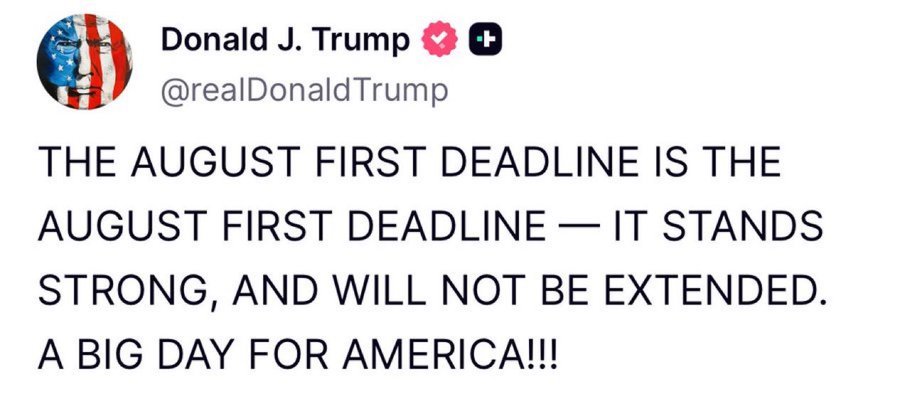
Majeed: RV before the deadline, August 1
“Tidbits From TNT” Thursday 7-31-2025
TNT:
Tishwash: Erbil agrees to send 120 billion dinars to Baghdad and deliver July payrolls.
An informed source revealed, today, Tuesday (July 29, 2025), that the Kurdistan Regional Government has agreed to send 120 billion dinars to Baghdad, during the regional council of ministers session scheduled for tomorrow, Wednesday.
The source told Baghdad Today, "The Council of Ministers will approve sending the amount to the federal government early next week, along with providing a copy of the quantities of oil the region can currently export."
He added that "the regional government will also send its employees' payrolls for July to Baghdad," noting that "the federal government, for its part, will disburse June salaries at the end of next week, amounting to 974 billion dinars."
TNT:
Tishwash: Erbil agrees to send 120 billion dinars to Baghdad and deliver July payrolls.
An informed source revealed, today, Tuesday (July 29, 2025), that the Kurdistan Regional Government has agreed to send 120 billion dinars to Baghdad, during the regional council of ministers session scheduled for tomorrow, Wednesday.
The source told Baghdad Today, "The Council of Ministers will approve sending the amount to the federal government early next week, along with providing a copy of the quantities of oil the region can currently export."
He added that "the regional government will also send its employees' payrolls for July to Baghdad," noting that "the federal government, for its part, will disburse June salaries at the end of next week, amounting to 974 billion dinars." link
************
Tishwash: Workshop on localizing the gold industry and strengthening craft workshops
The Central Agency for Standardization and Quality Control held a workshop at the agency's headquarters under the title "Localizing the Gold Industry and Strengthening Craft Workshops."
In his opening remarks at the workshop, the head of the Central Agency emphasized the role of the precious metals sector in strengthening the national economy, pointing to the need to enhance trust between local manufacturers and the public by ensuring the quality of jewelry and its freedom from commercial fraud.
He also commended the agency's role in protecting citizens from unfair practices, stressing its commitment to supporting local industries in accordance with international quality standards and in line with Iraq's vision for achieving sustainable economic development.
For his part, Kazem Attia Al-Shammari, a member of the Parliamentary Committee for Economy and Trade, emphasized the importance of strengthening national industries, particularly in the fields of gold and handicrafts. He noted that this would help attract investment by providing a business environment subject to quality and transparency standards.
Ghassan Sakban Kazim, Director of the Qirat Foundation for Economic Development, presented a video explaining the work of specialized gold-making workshops, with a detailed explanation of the foundation's goals of supporting national industry and facilitating procedures between the public and private sectors. He also addressed ways to overcome obstacles facing industrialists to ensure their compliance with technical and legal standards.
The workshop included a discussion session chaired by the Director General of the Standardization Department, Mohammed Latif Ahmed, with the participation of the Assistant Director General, Mustafa Saad Khazal, and the Director of the Qirat Foundation. Numerous proposals and questions were raised and answered, taking into account the workshop's concluding recommendations.
The workshop was attended by Prime Minister's Advisor Hussein Allawi Al-Najm, a representative of the Organized Crime Directorate, a number of general managers, and a number of Central Agency for Public Mobilization and Statistics (CAP) staff and goldsmith workshop owners, reflecting both official and popular interest in developing this vital sector. link
************
Tishwash: A state-owned bank announces the settlement of 87% of Iraq's external debt.
Rafidain Bank announced on Wednesday that it had achieved "substantial" progress on its foreign debt portfolio, settling approximately 87% of total international obligations through high-level financial and legal negotiations, resulting in a significant reduction in the volume of foreign debt.
The bank said in a statement today, "In the context of Iraq's commitment to the Paris Club Agreement, and with the direct approval of the Council of Ministers, the bank concluded major negotiated settlements with Dutch and French creditor companies, the most prominent of which was: Cabinet Resolution No. (403) of 2025: Settlement of three lawsuits filed by Dutch companies with a concession rate in favor of the bank exceeding 90% of the value of those claims.
The statement explained that "the bank has achieved significant legal successes abroad, most notably winning lawsuits in Turkey and Lebanon, enabling it to recover more than $2.8 million, reflecting the competence of its legal apparatus and its ability to defend the state's rights before international courts."
The bank affirmed in its statement that it "continues its efforts to close the remaining issues through final settlements, which will strengthen Iraq's sovereign rating and consolidate international confidence in its financial stability and commitment to sound financial governance." link
************
Tishwash: The Iranian parliament approves removing four zeros from the currency.
MP Fathallah Tavasoli, a member of the Iranian parliament's economic committee, announced the committee's approval of a bill to remove four zeros from the national currency.
Tosoli explained that this project, submitted by the government, was approved after addressing the comments and in agreement with the governor of the Central Bank, the Ministry of Economy, and the relevant committee.
The Economic Committee stated that this step aims to facilitate transactions, and that the project's details are currently being amended to comply with other laws.
In May, the governor of the Central Bank of Iran, Mohammad Reza Farzin, stated that removing four zeros from the national currency "represents a priority in the country's monetary reform plan for the current year 2025."
Removing zeros from a currency is a financial procedure in which the circulating currency is replaced by a new one with a reduced nominal value, with specific zeros removed from its denominations (for example, when six zeros are removed, every million units of the old currency become equivalent to one unit of the modified currency).
This measure is usually taken to enhance financial credibility, restore monetary confidence, regulate exchange markets, and combat inflation. link
*************
Mot: Mornings like this feed the soul.

Mot: What is it bout Dem Sheets!!! --- HUH!!!!

Iraq Economic News and Points To Ponder Thursday Morning 7-31-25
Why Aren't Prices Falling? An Expert Reveals Traders' Concerns Despite The Dollar's Decline
Time: 2025/07/30 17:07:15 Reads: 570 Times {Economic: Al Furat News} Economic expert Abdul Rahman Al Mashhadani revealed that stabilizing the dollar exchange rate in local markets requires at least six months for traders to begin reducing commodity prices, despite the current decline in the exchange rate.
Why Aren't Prices Falling? An Expert Reveals Traders' Concerns Despite The Dollar's Decline
Time: 2025/07/30 17:07:15 Reads: 570 Times {Economic: Al Furat News} Economic expert Abdul Rahman Al Mashhadani revealed that stabilizing the dollar exchange rate in local markets requires at least six months for traders to begin reducing commodity prices, despite the current decline in the exchange rate.
Al-Mashhadani said in a statement to {Euphrates News} that: "Traders are still not reassured by the current decline, which is causing them to maintain their prices." He explained that "the relationship between the decline in the exchange rate and commodity prices is directly proportional, while the increase is inverse." He pointed out that "traders are obsessed with the current decline.
If the exchange rate increases, they will raise prices on the same day, and the increase will be higher than the previous price." Al-Mashhadani emphasized that "despite the decline in the exchange rate,
traders continue to conduct business at a rate of 150 dinars per dollar due to their lack of confidence in the stability of the situation." https://alforatnews.iq/news/لماذا-لا-تنخفض-الأسعار؟-خبير-يكشف-هاجس-التجار-رغم-هبوط-الدولار
The Most Prominent Iraqi Banks That Have Maintained Their Asset Size Since The Beginning Of The Year.
Economy 2025-07-30 | 364 views Alsumaria News – Economic Despite the variability in the performance of some banks, Iraqi private banks have maintained their leading position as the largest banks in terms of asset size.
Together, they accounted for approximately 50% of the total assets of private banks
and 8% of the total assets of the Iraqi banking sector.
List of major banks by assets:
International Development Bank - 3.1 trillion dinars
Bank of Baghdad - 2.9 trillion dinars
Iraqi Islamic Bank - 2.77 trillion dinars
Bank Mansour - 2 trillion Iraqi dinars
Both the International Development Bank and the Iraqi Islamic Banksaw their assets grow during the first half of 2025, while the Bank of Baghdad and Mansour Bank recorded a decline.
About Credit Performance:
Private Iraqi banks have recorded a credit portfolio exceeding one trillion dinars,
reflecting their strong financing capacity:
International Development Bank: 1.12 trillion dinars
Iraqi Islamic Bank: 1 trillion dinars
In contrast, the credit portfolio of:
Mansour Bank: 242 billion dinars
Bank of Baghdad: only 91 billion dinars
Public Deposits
The banks were able to attract deposits exceeding 2 trillion dinars each, as follows:
International Development Bank: 2.3 trillion dinars
Bank of Baghdad: 2.2 trillion dinars
As for the public deposits in the remaining banks, they were as follows:
Mansour Bank: 1.23 trillion dinars
Iraqi Islamic Bank: 743 billion dinars
As for the money supply in banks:
Mansour Bank: 1.47 trillion dinars
Bank of Baghdad: 1.43 trillion dinars
International Development Bank: 1.3 trillion dinars
Iraqi Islamic Bank: 1.3 trillion dinars
The above banks are considered leaders in the private banking sector in terms of the services they provide, the spread of their branches, and the level of services they offer.
https://www.alsumaria.tv/news/economy/535414/أبرز-المصارف-العراقية-التي-حافظت-على-حجم-الموجودات-منذ-بداية-العام
The Cabinet Decides To Reduce Electronic Payment Fees And Commissions By 50%.
Economy 29-07-2025, 19:24 | 329 Baghdad Today – Baghdad The Council of Ministers approved, on Tuesday (July 29, 2025), a package of decisions related to the amounts, commissions, and movements of government electronic collections and collections, in a step aimed at encouraging the transition to electronic financial transactions.
The Council of Ministers decided, according to a statement from the Prime Minister's Office, received by Baghdad Today, to "reduce the cost of issuing electronic payment cards by 50%, with the price of a single card not exceeding 5,000 dinars.
" The statement noted that "this measure aims to make the cards accessible to a wider segment of users, which will contribute to increasing reliance on electronic payment in various daily transactions."
The decisions also included, according to the statement,
"reducing electronic payment fees to 0.005 percent for all transactions involving fuel stations.
This reduction comes while maintaining the current upper limit for deductions,
providing an additional incentive for consumers and fuel stations to use electronic payment methods."
In a related context, the Council of Ministers has mandated the Ministry of Oil to increase the use of electronic payment transactions to 50% in all transactions.
This mandate includes the private sector (constructed stations) achieving the aforementioned percentage within a maximum period of six months.
The Council also obligated electronic payment companies to comply with the above-mentioned paragraphs, starting January 1, 2026. https://baghdadtoday.news/279767-50.html
Key Card And Baha Abdul-Hussein On Washington's Sanctions List
July 31, 2025 Last updated: July 31, 2025 Al-Mustaqilla/- Informed sources told Al-Mustaqilla that US authorities have begun formal steps to place the "Ki Card" company and its director, Bahaa Abdul Hussein, on the economic sanctions list, accusing them of committing violations related to corruption and money laundering.
These measures are part of Washington's ongoing efforts to combat financial corruption and
enhance transparency in economic transactions, particularly in regions where electronic payment companies and digital financial services are increasingly active.
K-Card, a leading provider of electronic payment services in Iraq,
is facing accusations of exploiting its market position to engage in dubious financial activities,
including money laundering and illegal transfers, according to the same sources.
These developments have raised widespread questions within Iraqi economic circles about the
extent to which US sanctions will impact the country's electronic payments sector,
an emerging and important sector supporting the digital economy.
For its part, Qi Card and its CEO have yet to issue any official statements in response to these accusations.
Markets and observers expect this US move to lead to tighter oversight of financial companies operating in Iraq, and possibly more stringent enforcement of anti-corruption and financial crime mechanisms.
It's worth noting that the United States uses economic sanctions as a tool of pressure against individuals and companies involved in illegal activities, with the aim of limiting their negative impact on the global economy and promoting integrity in financial transactions. https://mustaqila.com/كي-كارد-وبهاء-عبد-الحسين-على-لائحة-عقوب/
For current and reliable Iraqi news please visit: https://www.bondladyscorner.com
Seeds of Wisdom RV and Economic Updates Thursday Morning 7-31-25
Good morning Dinar Recaps,
Transatlantic Turbulence: Trump-EU Turnberry Agreement Reshapes Global Trade Balance
The United States and European Union have entered a historic — and highly controversial — trade pact that risks redefining global economic alignments. The Turnberry Agreement, signed on July 28, imposes sweeping tariffs on European exports while locking in a massive $750 billion fossil fuel purchase commitment from the EU. Beneath the diplomatic optics, the deal signals a deep strategic realignment with potentially lasting consequences for global trade, energy security, and industrial policy.
Good morning Dinar Recaps,
Transatlantic Turbulence: Trump-EU Turnberry Agreement Reshapes Global Trade Balance
The United States and European Union have entered a historic — and highly controversial — trade pact that risks redefining global economic alignments. The Turnberry Agreement, signed on July 28, imposes sweeping tariffs on European exports while locking in a massive $750 billion fossil fuel purchase commitment from the EU. Beneath the diplomatic optics, the deal signals a deep strategic realignment with potentially lasting consequences for global trade, energy security, and industrial policy.
Key Sectors Targeted by New U.S. Tariffs
The agreement, driven by President Donald Trump’s renewed protectionist agenda, slaps a 15% tariff on a broad range of high-value European exports to the United States. This follows an earlier 27.5% hike on select categories in April, disproportionately impacting European economies such as Germany and France.
Strategic sectors affected include:
Automobiles – German automakers face steep tariff headwinds.
Luxury goods – French brands like LVMH and Kering are considering U.S.-based production pivots to mitigate exposure.
Pharmaceuticals – Tariff exemptions for medicines are ending, threatening a sector that accounts for 22.5% of EU exports.
Cosmetics and wines – These industries face new uncertainty, with over €8 billion in annual trade now exposed to higher costs.
Europe’s $750 Billion Energy Commitment: Strategic Dependence or Economic Leverage?
In exchange, the EU has committed to purchasing $750 billion in U.S. fossil fuels, particularly shale gas — a move that critics say deepens Europe’s strategic energy dependence and contradicts stated climate neutrality goals.
The European Commission’s ability to enforce this commitment remains questionable, especially amid diverging member state priorities. Nevertheless, the symbolic and financial weight of the deal indicates a forced alignment with U.S. geopolitical and economic interests.
Industrial Reorientation, Climate Contradictions, and Strategic Fallout
The agreement is expected to trigger major industrial reorientations across the EU, with companies considering relocation to the U.S. to maintain market access. This not only undermines Europe’s industrial sovereignty but also threatens its climate commitments, as increased fossil fuel imports conflict with the European Green Deal.
A Global Economy Rebalanced on Unequal Terms
The Turnberry Agreement underscores a new era of asymmetric trade negotiations, where traditional Western alliances are subordinated to America First–driven policies. Europe’s attempt to avoid confrontation with the U.S. may instead result in economic subjugation, as critics argue the deal surrenders too much leverage without meaningful reciprocity.
As tariff walls rise and energy dependencies deepen, the global trade system appears increasingly fractured — reinforcing the move toward a multipolar economic order where geopolitics, energy, and trade policy are no longer separable.
@ Newshounds News™
Source: Cointribune
~~~~~~~~~
BRICS Accelerates Intra-Bloc Trade: India and Brazil Set $60B Target Amid U.S. Backlash
BRICS member states India and Brazil have jointly committed to tripling their bilateral trade flows, signaling a bold escalation of intra-BRICS economic cooperation amid rising geopolitical tensions. The move comes as U.S. President Donald Trump continues to threaten tariffs against BRICS-aligned nations that pursue “anti-American” economic strategies.
Strategic Trade Expansion Between India and Brazil
India’s Prime Minister Narendra Modi and Brazil’s President Luiz Inácio Lula da Silva signed a series of agreements this month aimed at boosting food security, energy transition, and industrial collaboration. The deals cover a broad range of sectors including cotton, chicken, and essential food commodities, as both countries seek to reduce reliance on external powers and foster deeper South-South cooperation.
Lula stated unequivocally:
“Our $12 billion trade flow is not up to par with our economies. We are determined to accelerate this goal, tripling this amount in the short term.”
India’s Modi echoed this, asserting that a $60 billion trade target within five years is “not difficult to achieve,” given the growth potential and mutual economic alignment between the two emerging markets.
A Response to U.S. Pressure on BRICS Nations
The timing of the India-Brazil trade acceleration is significant. It follows recent threats from the Trump administration, which has warned of retaliatory tariffs on BRICS countries that pursue policies counter to U.S. interests. Trump’s comments have drawn rebukes from multiple BRICS leaders, including Lula, who criticized the U.S. president’s approach:
“I don’t think it’s very responsible and serious for a president of a country the size of the U.S. to threaten the world over the internet… We don’t want an emperor.”
This political backdrop underscores how BRICS trade initiatives are increasingly intertwined with broader multipolar realignment efforts, as member states seek autonomy from Western financial and trade systems.
Toward a $60 Billion Trade Corridor
Negotiations for the expanded trade framework are expected to begin in Q1 2026, with both nations committing to fast-track the process. Analysts view this as part of a wider BRICS strategy to establish strong internal trade corridors, increase resilience against sanctions, and enhance strategic food and energy security within the bloc.
As U.S. pressure mounts, BRICS’ internal partnerships — such as the India-Brazil trade pact — are becoming the foundation of a multipolar economic architecture, designed to shift global power away from the traditional transatlantic axis.
@ Newshounds News™
Source: Watcher Guru
~~~~~~~~~
Seeds of Wisdom Team RV Currency Facts Youtube and Rumble
Newshound's News Telegram Room Link
Follow the Roadmap
Follow the Timeline
Seeds of Wisdom Team™ Website
Thank you Dinar Recaps
MilitiaMan and Crew: Iraq Dinar News- Major Developments in Iraq-Advancement WTO
MilitiaMan and Crew: Iraq Dinar News- Major Developments in Iraq-Advancement WTO
7-30-2025
The Crew: Samson, PompeyPeter, Petra, Daytrader, Sunkissed, GIGI and Militia Man
Welcome back to our channel! In today’s video, we’ll be diving into some significant updates from Iraq that could shape the future of its economy and international relations.
Iraq Dinar Insights: We’ll discuss the current status of the Iraqi dinar, exploring its value, recent trends, and what it means for investors and the economy. Results are being seen!
MilitiaMan and Crew: Iraq Dinar News- Major Developments in Iraq-Advancement WTO
7-30-2025
The Crew: Samson, PompeyPeter, Petra, Daytrader, Sunkissed, GIGI and Militia Man
Welcome back to our channel! In today’s video, we’ll be diving into some significant updates from Iraq that could shape the future of its economy and international relations.
Iraq Dinar Insights: We’ll discuss the current status of the Iraqi dinar, exploring its value, recent trends, and what it means for investors and the economy. Results are being seen!
Sudani's Vision for Baghdad: Prime Minister Mohammed Shia' Al Sudani has ordered a comprehensive rehabilitation plan for Baghdad. We’ll take a look at the key elements of this initiative and its potential impact on the city’s infrastructure and quality of life of the citizens.
National Bank of Iraq's New Agreement: We’ll cover the recent agreement signed by the National Bank of Iraq aimed at activating the sovereign guarantees program. What does this mean for foreign investments and economic stability in Iraq?
Rafidain Bank Updates: Discover how the Rafidain Bank has made strides in completing its external debt file. The implications of this development for Iraq's financial health and international standing, is global.
Iraq's Accession to the WTO: Finally, we’ll remind you of Iraq’s journey towards joining the World Trade Organization (WTO) and what this means for the nation’s trade policies and global economic partnerships.
Join us as we explore these critical topics and provide insights into Iraq’s path towards economic reform and international integration.
Iraq Economic News and Points To Ponder Wednesday Afternoon 7-30-25
The National Bank Of Iraq Signs A Strategic Agreement With The Ministry Of Finance To Activate The Sovereign Guarantees Program.
Banks Economy News – Baghdad The National Bank of Iraq signed a strategic cooperation agreement with the Ministry of Finance aimed at activating the sovereign guarantees program. This qualitative step reflects the Iraqi government's commitment to empowering the banking sector, enhancing its role in supporting the national economy, and stimulating investment in priority projects.
The National Bank Of Iraq Signs A Strategic Agreement With The Ministry Of Finance To Activate The Sovereign Guarantees Program.
Banks Economy News – Baghdad The National Bank of Iraq signed a strategic cooperation agreement with the Ministry of Finance aimed at activating the sovereign guarantees program. This qualitative step reflects the Iraqi government's commitment to empowering the banking sector, enhancing its role in supporting the national economy, and stimulating investment in priority projects.
This agreement aims to enable Iraqi banks to contribute to providing long-term credit facilities for national projects, through guarantees provided (in part) by the Iraqi government to foreign international financing institutions. This will help reduce financing risks and encourage the private sector and local and international investors to enter the Iraqi market with greater confidence.
Under the agreement, the National Bank of Iraq will play a pivotal role in facilitating financial relations for projects and assisting in obtaining financing through international financial institutions, in line with its strategic position and active role in supporting productive sectors, particularly industries that receive direct attention from the Iraqi government.
This agreement comes as part of the government's efforts to strengthen public-private partnerships and enable local banks to play a greater role in supporting the national economy, particularly in vital sectors such as industry, energy, and housing.
This agreement represents a pivotal milestone in the bank's journey and embodies its commitment to providing innovative and secure financing solutions that support economic development efforts in Iraq.
This partnership with the Ministry of Finance will open new horizons for the banking sector and enable the National Bank of Iraq to contribute more effectively to financing vital projects Iraq needs.
This step is in line with the Iraqi government's financial and administrative reform plan, which aims to diversify sources of income, boost non-oil revenues, and enable the banking sector to play a greater role in supporting sustainable development and achieving the national economic vision.
The National Bank of Iraq affirms its commitment to continuing to work with relevant government agencies to implement innovative financing programs that contribute to enabling major national projects, particularly in the fields of industry, energy, and infrastructure.
The bank also seeks to expand its regional and international partnerships to provide financing tools that align with development requirements and support the government's efforts to achieve comprehensive and sustainable economic stability. 342 views https://economy-news.net/content.php?id=58100
Currency Market: New Rise In Dollar Prices In The Local Market
Buratha News Agency1702025-07-30 The dollar exchange rate against the dinar resumed its rise after the closure of the two main stock exchanges in Al-Kifah and Al-Harithiya. The selling price reached 140,500 dinars for $100, while the buying price reached 138,500 dinars for $100. https://burathanews.com/arabic/economic/463476
Oil Prices Rise, Brent Exceeds $72 A Barrel
Energy Oil prices rose slightly on Wednesday, as investors focused on developments in US President Donald Trump's deadline to end the war in Ukraine and his threat to impose tariffs on countries that trade in Russian oil.
Brent crude futures, the most active, rose 40 cents, or about 0.6%, to $72.09 a barrel.
US West Texas Intermediate crude rose 76 cents to $69.97 a barrel, as investors shrugged off mixed US data on oil and fuel inventories. September Brent futures rise ahead of trading close.
September Brent crude, which expires Wednesday, rose 37 cents to $72.88.
Both contracts had fallen about 1% earlier in the session.
Trump said on Tuesday that he would begin imposing measures on Russia, including secondary tariffs of 100% on its trading partners, if it did not make progress in ending the war within 10 to 12 days, 50 days earlier than previously scheduled.
Trump also imposed a 25% tariff on goods imported from India starting August 1, along with unspecified sanctions related to arms and oil purchases from Russia, potentially straining relations with the world's most populous democracy.
The United States also warned China, the largest buyer of Russian oil, that it could face hefty tariffs if it continues to purchase this oil. US inventory data reveals unexpected increases.
The US Energy Information Administration announced that US crude inventories rose by 7.7 million barrels, compared to analysts' expectations in a Reuters poll for a decrease of 1.3 million barrels.
US gasoline inventories fell by 2.7 million barrels, compared to expectations for a smaller decrease of 0.6 million barrels.
Distillate inventories, which include diesel and heating oil, rose by 3.6 million barrels, exceeding expectations for a gain of only 0.3 million barrels, according to the EIA data.
56 views 2025/07/30 - https://economy-news.net/content.php?id=58141
Gold Prices Fell More Than 1 Percent After The US Interest Rates Were Held Steady.
Wednesday, July 30, 2025, 11:57 PM | Economic Number of readings: 87 Baghdad/ NINA / Gold prices fell, at settlement on Wednesday, by more than one percent, after the Federal Reserve (the US central bank) kept interest rates unchanged and refrained from providing indications about the timing of a cut, while strong US economic data weakened the appeal of the yellow metal.
Spot gold fell 1.5 percent to $3,275.92 per ounce.
US gold futures also lost 0.8 percent, recording $3,352.8.
As for other precious metals, silver fell in spot transactions by 3.2 percent to $36.97 per ounce, falling to its lowest level in three weeks, while platinum fell by 6.6 percent to $1,303.19, its lowest level since June 24, and palladium fell by 4.9 percent to $1,196.75. https://ninanews.com/Website/News/Details?key=1243853
For current and reliable Iraqi news please visit: https://www.bondladyscorner.com
Gargantuan Bubbles Everywhere you Look, 50%+ Crash to Wipe out Market
Gargantuan Bubbles Everywhere you Look, 50%+ Crash to Wipe out Market
VRIC Media: 7-30-2025
In a recent illuminating panel discussion hosted by VRIC Media, financial titans Todd Horwitz of Bubba Trading and Michael Pento of Pento Portfolio Strategies delivered a stark warning about the state of the US and global economy.
Their message was clear: despite record-high market indicators, an underlying fragility points to significant systemic risks, with dire implications for investors.
Gargantuan Bubbles Everywhere you Look, 50%+ Crash to Wipe out Market
VRIC Media: 7-30-2025
In a recent illuminating panel discussion hosted by VRIC Media, financial titans Todd Horwitz of Bubba Trading and Michael Pento of Pento Portfolio Strategies delivered a stark warning about the state of the US and global economy.
Their message was clear: despite record-high market indicators, an underlying fragility points to significant systemic risks, with dire implications for investors.
Horwitz and Pento expressed profound concern over what they identify as unsustainable bubbles inflating across equities, real estate, and credit markets.
While mainstream headlines trumpet new market highs, the experts highlighted disturbing indicators like persistently low trading volumes and valuations reaching historic extremes, including all-time high Shiller PE ratios and negative risk premiums.
These signs, they cautioned, bear an uneasy resemblance to the precursors of previous market crashes, painting a picture of an underlying fragility masked by seemingly robust figures. They foresee an eventual recession and credit crisis as the inevitable consequence of these market distortions.
Amidst this unsettling landscape, the panelists discussed a potential strategic pivot from overvalued tech stocks towards hard assets. Both experts emphatically favor precious metals – particularly gold and platinum – as essential safe havens.
They foresee these assets not only outperforming the broader market but also serving as crucial hedges against rising inflation, especially with anticipated, and in their view, aggressively dangerous, Federal Reserve interest rate cuts. Such cuts in an already inflationary environment, they argued, would likely ignite even higher inflation, further fueling precious metals rallies.
The discussion also cast a critical eye on the Federal Reserve’s role. Horwitz and Pento voiced strong calls for auditing the Fed to enhance transparency and accountability, criticizing its artificial control over interest rates, which they believe distorts free market dynamics. They advocated for a return to a true, free-market interest rate system, possibly linked to gold supply, arguing it would be a vital safeguard against reckless monetary expansion and inflationary pressures.
Shifting to broader economic and geopolitical factors, the experts expressed skepticism regarding the effectiveness of current tariff policies. They viewed such threats as more political posturing than realistic economic strategy, especially given global wage disparities and their limited ability to genuinely revive US manufacturing.
The conversation also touched upon the potential of other commodities like uranium and energy, highlighting nuclear power’s pivotal role in achieving energy independence and environmental sustainability.
In their comprehensive and cautionary concluding remarks, Horwitz and Pento urged investors to exercise extreme prudence. Their core advice centered on the importance of physical ownership of precious metals – particularly gold and platinum – as a vital protective measure against the systemic risks they perceive.
The Federal Reserve’s future policies remain a central wildcard, with calls for greater transparency and a return to market-based interest rates seen as crucial for restoring genuine economic stability.
As market highs mask underlying fragility and geopolitical tensions add complexity, the panel’s overarching message was clear: vigilance, diversification, and a deep understanding of macroeconomic imbalances are paramount for navigating the challenging economic landscape ahead.
Seeds of Wisdom RV and Economic Updates Wednesday Afternoon 7-30-25
Good Afternoon Dinar Recaps,
Crypto Policy Crossroads: Senate Pushes Digital Asset Frameworks for Markets and Mortgages
Digital regulation gains momentum as lawmakers weigh oversight frameworks and new use cases
Senate Committee Unveils Digital Asset Regulation Framework
In a pivotal move for U.S. digital asset oversight, the Senate Banking, Housing, and Urban Affairs Committee has released a Discussion Draft aimed at formally regulating the crypto ecosystem. The proposal introduces foundational definitions, seeks jurisdictional clarity between federal agencies, and proposes comprehensive guardrails for stablecoins and digital asset intermediaries.
Good Afternoon Dinar Recaps,
Crypto Policy Crossroads: Senate Pushes Digital Asset Frameworks for Markets and Mortgages
Digital regulation gains momentum as lawmakers weigh oversight frameworks and new use cases
Senate Committee Unveils Digital Asset Regulation Framework
In a pivotal move for U.S. digital asset oversight, the Senate Banking, Housing, and Urban Affairs Committee has released a Discussion Draft aimed at formally regulating the crypto ecosystem. The proposal introduces foundational definitions, seeks jurisdictional clarity between federal agencies, and proposes comprehensive guardrails for stablecoins and digital asset intermediaries.
This marks a shift from fragmented enforcement to a structured legislative path, with implications for how exchanges, custodians, and token issuers will operate in the years ahead.
Key Elements of the Draft Legislation
Defined Classifications of Digital Assets:
The bill distinguishes between payment stablecoins, digital commodities, and securities, creating tailored compliance expectations for each.Clarifying SEC vs. CFTC Authority:
Digital commodities would fall under CFTC jurisdiction, while the SEC would retain authority over assets resembling investment contracts, especially those with profit expectations tied to a third party’s efforts.Stablecoin Oversight and Reserve Requirements:
Issuers would face federal registration and strict prudential standards, including full reserves in eligible assets, regular audits, and anti-money laundering (AML) protocols—drawing parallels with the Lummis-Gillibrand Payment Stablecoin Act.Consumer Disclosures:
Retail-facing platforms would be required to deliver a standardized “digital asset disclosure form,” mirroring mutual fund prospectuses to inform users about risks, fees, and legal standing.Custody and Commingling Protections:
Intermediaries would be barred from mixing customer funds with corporate assets, with enhanced custody and recordkeeping practices designed to avoid failures akin to FTX.
Reactions and Outlook
The industry has responded with cautious optimism, welcoming the move toward regulatory clarity. However, concerns remain over the breadth of federal reach, especially as it pertains to software developers and decentralized protocols.
Regulatory agencies are divided. While the CFTC supports expanded authority over digital commodity markets, the SEC continues to assert a broad view of its existing jurisdiction.
Although still in discussion phase, the draft opens the door for bipartisan negotiations, and could intersect with parallel bills such as the GENIUS Act and the CLARITY Act, both of which aim to modernize digital asset laws.
Crypto Assets in Homeownership? Lummis Targets Mortgages Next
In a surprising intersection of crypto and housing finance, Senator Cynthia Lummis (R-WY) has introduced the 21st Century Mortgage Act, a bill that would allow cryptocurrencies to be considered as assets during mortgage evaluations.
The legislation would codify a June 2025 directive from the Federal Housing Finance Agency (FHFA), which instructs government-backed mortgage purchasers like Fannie Mae and Freddie Mac to explore incorporating digital assets in loan risk assessments.
“This legislation embraces an innovative path to wealth-building, keeping in mind the growing number of young Americans who possess digital assets,” said Senator Lummis.
A Generational Wealth Tool – Or a Risk Factor?
The proposal comes amid generational shifts in asset ownership. According to U.S. Census data, homeownership among Americans under 35 sits at just 36% as of Q1 2025—well below historical averages.
The bill would allow crypto-holding borrowers to leverage their digital wealth without converting to fiat, offering a new route to homeownership. However, Senate Democrats have raised concerns, citing crypto's volatility and liquidity risks that may complicate borrower stability.
In a July 24 letter, several lawmakers urged FHFA Director William Pulte to fully examine the systemic implications of such a move.
Momentum Builds Across Chambers
The 21st Century Mortgage Act is one of several crypto bills expected to be discussed after the Senate’s August recess. Others include:
A market structure bill that defines how crypto assets are traded and regulated.
A House-passed bill barring the Federal Reserve from launching a central bank digital currency (CBDC).
A House companion bill, the American Homeowner Crypto Modernization Act, introduced by Rep. Nancy Mace (R-SC), which also mandates that mortgage lenders consider digital asset balances held on registered exchanges.
Globally, similar initiatives are taking shape. Australia-based Block Earner recently announced Bitcoin-backed mortgage offerings, following a court ruling that its crypto lending services did not qualify as financial products under Australian law.
Conclusion: Crypto Enters the Regulatory and Housing Mainstream
From stablecoin regulation to mortgage underwriting, digital assets are entering formal policy discussions across U.S. institutions. The Senate’s regulatory proposals reflect a maturing market landscape—one that increasingly demands legal clarity, consumer protection, and financial integration.
While significant hurdles remain, these legislative developments suggest that digital assets are no longer peripheral. They are becoming part of the financial system’s foundation—not just as speculative investments, but as tools for access, collateralization, and wealth-building.
@ Newshounds News™
Sources:
~~~~~~~~~
White House Readies Crypto ‘Regulatory Bible’ Amid Push for Strategic Bitcoin Reserve
New report expected to define U.S. digital asset rules for years to come
The White House is preparing to release a sweeping report this week that industry leaders have dubbed a “regulatory Bible”—a document expected to shape U.S. crypto policy and rulemaking for the foreseeable future.
The report stems from a January 2025 executive order by President Donald Trump establishing the President’s Working Group on Digital Asset Markets, tasked with delivering a detailed roadmap on how federal agencies should approach the evolving digital asset economy. The working group includes Treasury Secretary Scott Bessent, Commerce Secretary Howard Lutnick, and SEC Chair Paul Atkins, among others.
While the contents of the report have not been officially released, early insights suggest it will influence every major regulatory decision over the next three and a half years.
“This will dictate every rulemaking or guidance document that comes out,” said Cody Carbone, CEO of The Digital Chamber, in an interview with The Block. “I do think it is a big deal.”
Legislative Context: A Convergence of Bills and Executive Strategy
The timing of the report coincides with a flurry of congressional activity. In mid-July, the House passed both a stablecoin oversight bill and broader digital asset market regulation, sending them to the president’s desk or over to the Senate for reconciliation.
Senate Republicans have targeted September 30 as a date to vote on a companion digital asset bill. The White House report is expected to fill critical regulatory gaps, guiding both federal agencies and lawmakers as they refine legislative proposals like the GENIUS Act, the CLARITY Act, and emerging digital payment infrastructure bills.
Carbone noted that the report may also revisit or repeal prior agency guidance, helping to standardize how platforms, issuers, and consumers engage with digital assets.
Bitcoin Reserve Still Uncertain, But a Priority
One of the more ambitious proposals under discussion is the creation of a U.S. strategic bitcoin reserve—a concept floated by President Trump in a March 2025 executive order. That order tasked key administration officials with exploring budget-neutral strategies to acquire and manage a digital asset stockpile, including bitcoin, without adding cost to taxpayers.
However, sources indicate the upcoming report does not yet include language on the bitcoin reserve, although that could change prior to publication.
“Nothing is set in stone,” Carbone said. “But I’m hoping the report will shed light on how the administration plans to acquire bitcoin and what a stockpile would include.”
Industry Expectations: Tax Policy and Tokenized Securities in Focus
Alongside regulatory clarity, tax treatment of digital assets ranks among the industry’s top priorities.
The Digital Chamber submitted a letter to Bo Hines, Executive Director of the Presidential Council of Advisers for Digital Assets, emphasizing key industry needs:
Clear and consistent tax guidelines for digital asset transactions and holdings.
A legal framework for tokenized securities and digital commodities.
Harmonized federal oversight across agencies, avoiding duplicative compliance burdens.
“Tax clarity is number one,” Carbone said. “That needs to be one of the foundational portions of this report and where Washington leans in.”
A Pivotal Moment for U.S. Crypto Policy
Industry leaders are treating the forthcoming release as a watershed moment in U.S. digital asset policy.
“We look forward to the release tomorrow... a significant milestone following this year’s executive order on digital assets,” said Summer Mersinger, CEO of the Blockchain Association.
“While most of the actions have been agency or Congress driven, the White House’s prioritization of crypto has been evident,” added Ron Hammond, head of policy and advocacy at Wintermute.
A briefing is scheduled for 2:30 p.m. Wednesday, involving both government officials and select industry stakeholders. It remains unclear whether the full report will be released before or after the session.
If fully realized, the report could define a national crypto strategy—from regulatory harmonization to strategic asset acquisition, tax reform, and digital infrastructure development. As the federal government accelerates its crypto policymaking, the industry is now positioned at a critical juncture between legitimacy and liability, growth and governance.
@ Newshounds News™
Source: The Block
~~~~~~~~~
BlackRock Endorses Stablecoins as Key to Strengthening U.S. Dollar Dominance
GENIUS Act Seen as Dual Catalyst for U.S. Treasury Demand and Global Dollar Supremacy
BlackRock, the world’s largest asset manager with over $12.5 trillion in AUM, has added its voice to a growing chorus of analysts and policymakers suggesting that stablecoins could significantly enhance the U.S. dollar’s dominance in a rapidly digitizing global economy.
In a recent weekly commentary, BlackRock strategists praised the newly established U.S. stablecoin regulatory framework as a "step in the right direction" for the dollar. Their position reinforces the narrative that tokenized versions of the U.S. dollar, under proper regulation, could extend the reach of America’s fiat currency into new international use cases—including on-chain institutional settlement.
“Tokenized forms of the U.S. dollar will bolster its dominance, especially as institutional transactions move on-chain,” BlackRock noted.
“Stablecoins are part of the future of finance.”
GENIUS Act Ushers in First-Ever Federal Crypto Framework
The commentary follows passage of the GENIUS Stablecoin Act, the first federal crypto bill to be signed into law in the United States. The bipartisan legislation provides a regulatory blueprint for stablecoin issuers and outlines strict reserve requirements intended to strengthen market confidence and tie stablecoins directly to U.S. financial infrastructure.
BlackRock analysts highlighted that the law’s mandate for stablecoin issuers to hold reserves in U.S. Treasuries, money market funds, and repurchase agreements will generate a dual benefit:
Boost demand for short-term U.S. debt instruments, and
Enhance the credibility and attractiveness of stablecoins in both domestic and international markets.
From Under $50B to $273B: Stablecoins Enter Institutional Era
The stablecoin market has expanded from under $50 billion in 2021 to $273 billion as of July 2025, with rapid institutional integration now underway. The two largest stablecoin issuers—Tether and Circle—currently hold a combined $120 billion in U.S. Treasury bills, already representing 2% of the $6 trillion Treasury market.
As stablecoins gain traction across emerging markets, cross-border payments, and decentralized finance, BlackRock expects their share of Treasury demand to grow significantly, potentially reshaping liquidity flows in short-term government securities.
Dollar’s Digital Edge: First-Mover Advantage in Global Payments
While the U.S. dollar already dominates global trade, the rise of Bitcoin and other non-sovereign digital assets poses new challenges to fiat relevance. Stablecoins, especially those pegged to the U.S. dollar, offer a strategic counterbalance—allowing the greenback to maintain its primacy within blockchain-based financial systems.
“Stablecoins expose the dollar to entirely new digital use cases,” BlackRock stated, especially in jurisdictions where local currencies are unstable or access to U.S. dollars is restricted.
However, the firm cautioned that a prohibition on interest-bearing stablecoins—included in the GENIUS Act—could limit their appeal in certain major markets, particularly those where competitive yield is essential for adoption.
Bitcoin's Parallel Role: Risk, Return, and Digital Hedging
In the same analysis, BlackRock acknowledged that Bitcoin will also play a crucial role in the digital financial future—but as a risk asset rather than a stable store of value. While the firm has promoted BTC through its iShares Bitcoin Trust (IBTC) and other financial instruments, BlackRock continues to position Bitcoin as complementary to stablecoins, not a replacement for fiat.
The firm’s growing footprint in both tokenized assets and digital infrastructure aligns with its broader push to modernize capital markets through blockchain rails, tokenized securities, and programmable money.
Conclusion: GENIUS Act as a Catalyst for U.S. Financial Dominance
BlackRock’s analysis underscores a broader reality taking shape: stablecoins, when regulated effectively, are not threats to sovereign money—but vehicles for extending its reach. The GENIUS Act represents not only a breakthrough in digital asset policy, but also a strategic maneuver in currency diplomacy, ensuring the U.S. dollar remains embedded in the next generation of global finance.
As demand for digitally native, regulated, dollar-backed assets rises, the GENIUS framework—and the market it enables—could redefine the contours of both monetary power and international trade.
@ Newshounds News™
Source: The Crypto Basic
~~~~~~~~~
Seeds of Wisdom Team RV Currency Facts Youtube and Rumble
Newshound's News Telegram Room Link
Follow the Roadmap
Follow the Timeline
Seeds of Wisdom Team™ Website
Thank you Dinar Recaps
The $1 Quadrillion Time Bomb, Dollar Endgame, and Post-Collapse Hope
The $1 Quadrillion Time Bomb, Dollar Endgame, and Post-Collapse Hope
Liberty and Finance: 7-29-2025
In a recent interview with Liberty and Finance, financial analyst Phil Low explains that the derivatives complex, a financial instrument worth over a quadrillion dollars, sits atop the global financial system as the peak of Exter’s inverted pyramid.
This complex, often hidden from public view and off the books of financial institutions, represents a staggering amount of off-balance-sheet financial bets that threaten to bring down the entire system if they begin to unravel.
The $1 Quadrillion Time Bomb, Dollar Endgame, and Post-Collapse Hope
Liberty and Finance: 7-29-2025
In a recent interview with Liberty and Finance, financial analyst Phil Low explains that the derivatives complex, a financial instrument worth over a quadrillion dollars, sits atop the global financial system as the peak of Exter’s inverted pyramid.
This complex, often hidden from public view and off the books of financial institutions, represents a staggering amount of off-balance-sheet financial bets that threaten to bring down the entire system if they begin to unravel.
Derivatives, such as options, futures, and swaps, are financial instruments that derive their value from an underlying asset or security, such as stocks, bonds, or commodities.
While these instruments can be used to hedge risk and manage exposure, their complexity and the potential for misuse have led to concerns about their impact on the stability of the global financial system.
The derivatives market’s rapid growth is not a failure of capitalism, as some might argue, but rather a distortion caused by central banks enabling infinite credit expansion without market discipline. Central banks, particularly the U.S. Federal Reserve, have pursued policies of ultra-low interest rates and quantitative easing, which have fueled asset bubbles and encouraged excessive risk-taking by financial institutions. This has led to a massive buildup of leverage and speculative bets in the derivatives market.
If the derivatives market were to begin unraveling, through margin calls or a refusal to extend credit, it could instantly freeze the financial system. In such a scenario, the Federal Reserve would be forced to print trillions of dollars overnight just to keep the system afloat. This has led some to question the sustainability of the current system, which relies on constant intervention by central banks to prevent collapse.
In a true free market, institutions would bear the consequences of their risk-taking, but under the current system, the losses are socialized while the profits remain private.
Unless we restore sound money and allow markets to self-correct, this vast structure of speculative leverage teeters ever closer to collapse.
To prevent a potential catastrophe, it is crucial to address the root causes of the problem, including excessive leverage, moral hazard, and the distorting effects of central bank policies. This may require a fundamental rethinking of the role of central banks in the global economy and a return to sound money principles that prioritize market discipline and stability over short-term gains.
In conclusion, the derivatives complex represents a quadrillion-dollar time bomb that threatens to bring down the global financial system.
To prevent a potential collapse, we must address the underlying causes of the problem and restore sound money principles that prioritize market discipline and stability over short-term gains. Watch the full video from Liberty and Finance for further insights and information on this critical issue.
Iraq Economic News and Points To Ponder Wednesday Morning 7-30-25
Government Advisor: Electronic Transformation Contributed To Lowering The Dollar Exchange Rate.
Baghdad - INA - Amina Al-Salami The Prime Minister's financial advisor, Mazhar Mohammed Saleh,
confirmed on Tuesday that the expansion of electronic transactions has contributed to reducing speculation and unreal demand for the dollar, which has lowered its price on the parallel market.
He also indicated that reliance on digital payment tools has led to a decline in the volume of cash dollar trading.
Government Advisor: Electronic Transformation Contributed To Lowering The Dollar Exchange Rate.
Baghdad - INA - Amina Al-Salami The Prime Minister's financial advisor, Mazhar Mohammed Saleh,
confirmed on Tuesday that the expansion of electronic transactions has contributed to reducing speculation and unreal demand for the dollar, which has lowered its price on the parallel market.
He also indicated that reliance on digital payment tools has led to a decline in the volume of cash dollar trading.
Saleh told the Iraqi News Agency (INA):
"The expansion of the use of bank cards and electronic transactions has contributed to reducing the margin of speculation and the unreal demand for the dollar, especially after linking transfer operations and trade finance to digital data and pre-verification of documents, such as the advance customs declaration."
He indicated that "citizens' reliance on digital payment tools, both locally and during foreign travel, has led to a decrease in the volume of cash trading in dollars outside the official system."
Saleh explained that "this has begun to have positive impacts at the international level, given Iraq's membership in the Middle East and North Africa Financial Action Task Force (MENAFATF), a regional organization established in 2004 that works to combat money laundering, terrorist financing, and the proliferation of weapons in the region, in line with the 40 recommendations issued by the Financial Action Task Force (FATF) in Paris."
He pointed out that "Iraq, through its digital advancements, has made tangible progress, particularly
++with enhanced compliance with the requirements of the Financial Action Task Force and international compliance practices.
This has positively impacted Iraq's current stable credit ratings and opened up broader horizons for better engagement with global correspondent banks,
as we can see from the decline in the dollar exchange rate against the official rate in the parallel market in recent months." He emphasized that
"modern electronic technology can be leveraged in Iraq through three complementary paths, the most important of which, based on the government's program, is the
digital transformation of public finances and economic governance, which includes several directions, including:
automating taxes and customs to maximize non-oil revenues,
digitizing government contracts, and
distributing support to eligible groups,
in addition to
enhancing transparency and
combating corruption through the presence of a digital fingerprint for every transaction."
Regarding innovation and small business technology, Saleh noted that
"digital technology development paths are taking on more modern dimensions,
most notably supporting digital entrepreneurship, such as
e-commerce,
delivery apps,
distance learning, and others.
This is in addition to financing startups in the fields of
artificial intelligence,
smart agriculture, and
solar energy, in addition to building digital platforms for vocational training and market access."
He added, "There is a trend toward transitioning to a data and knowledge economy in close conjunction,
through the establishment of national data centers, the use of artificial intelligence in planning,
and the enhancement of internet infrastructure and the achievement of equitable access to it in accordance with global standards for digital justice.
We also emphasize the importance of supporting the higher education sector in digital and technical specializations."
He pointed out that "these trends will undoubtedly contribute to creating sustainable jobs, reducing operating costs, and increasing the productivity of the national economy in a promising digital era for Iraq." https://ina.iq/ar/economie/239703-.html
Government Advisor: Localizing The Pharmaceutical Industry Saved More Than $1 Billion Annually.
Baghdad – INA Hamoudi Al-Lami, the Prime Minister's advisor for industry and private sector development, revealed significant developments in the field of localizing the pharmaceutical industry in Iraq on Tuesday.
While noting that localization has saved more than $1 billion annually,
he confirmed that 34 factories are currently operating at full capacity and that there are 178 applications to establish pharmaceutical factories. Al-Lami told the Iraqi News Agency (INA):
“Since the first week of its formation, the government has begun implementing a program to localize the pharmaceutical industry.
The Council of Ministers issued decisions in 2023 supporting this trend,
whether for existing projects by expanding them or by providing facilities for new projects,
by granting loans to investors wishing to establish new factories or develop their existing projects.”
He added, "The government has provided facilities regarding the required guarantees, including opening credits guaranteed by production lines.
The Cabinet's decisions also included measures to support the provision of raw materials needed to operate existing and future industrial projects, in addition to reviewing the prices of medicines purchased by the Ministry of Health from national factories.
Prices have been more than doubled,
which has led to an increase in the value of contracts with the General Company for Drug Marketing from 144 billion dinars at the beginning of the government's term to more than 600 billion dinars so far.
This represents the value of locally produced medicines and constitutes about a quarter of the cost of imported medicines, which means saving more than a billion dollars annually so far."
He confirmed that "the number of applications to establish pharmaceutical and medical supplies factories has reached 178 by July 1, up from 100 previously.
These applications include factories for the production of medicines, medical supplies, surgical sutures, intravenous solutions, syringes, and other medical devices, thanks to the government support provided to investors."
He explained that "the number of pharmaceutical factories producing in the country has increased to 34, compared to 22 factories when the current government was formed.
This is the same number that has remained since the establishment of the first pharmaceutical factory in 1956 until the formation of this government." He explained that
"the new factories are operating at full capacity and have contributed to increasing the coverage rate of locally produced medicines." Al-Lami explained that
"locally produced medications are subject to the highest international standards,
the same specifications as those approved globally.
They are also subject to strict pharmaceutical oversight using the latest technologies.
Clinical trials are underway for complex medications, such as those for blood diseases and cancer,
which have begun to be produced locally after technology transfer from international companies."
He concluded his remarks by saying,
"The Prime Minister's directives emphasize that the effectiveness and safety of pharmaceutical production are a red line," noting that, "during the tenure of the current government, 38 new medications have been added to treat high blood pressure, 33 new medications to treat diabetes, and 58 types of antibiotics covering the needs of adults and children in various forms.
Local production of 25 cancer medications has also begun through technology transfer." ttps://ina.iq/ar/economie/239730-.html
Experts: Economic Partnerships Are An Important Step To Drive Development.
Economic 2025/07/30 Baghdad: Shukran Al-Fatlawi Economic experts have commended the government's efforts to revive bilateral partnerships with international capital and organizations, stressing that this step will increase sustainable development rates and boost Iraq's production capacity in various fields.
They noted that the Development Road project is one of the most prominent gateways for attracting foreign partnerships with both the public and private sectors.
According to experts, economic partnerships represent a real key to diversifying sources of income and a step toward eliminating rentierism, which has severely impacted the Iraqi economy.
These partnerships also play a role in strengthening the capabilities of government institutions through
resource management and reform implementation.
Sustainable Development
Executive Director of the Iraq Development Fund, Mohammed Al-Najjar, said, "Iraqi-global economic partnerships are the first gateway to achieving sustainable development for the country." He noted that the Development Road project represents a key link in achieving economic partnerships with advanced global efforts.
Al-Najjar added that the advanced global effort is looking at Iraq with great interest, as it is a virgin labor market that provides renewed job opportunities in more than one sector, and this matter is considered a privilege and an attractive element within the Iraqi labor market that can be invested in the form Which revives the economy.
Implementation Transparency
Economic researcher Imad Al-Muhammadawi told Al-Sabah that economic advisory partnerships represent a fundamental pillar in supporting development efforts in Iraq, noting that
their success requires effective government commitment, political stability, and transparency in implementation.
He also emphasized the importance of expanding these partnerships to include nnovation, technology, the green economy, clean energy, and other sustainable projects that serve the public interest,
while taking into account the need to monitor performance evaluation to ensure sustainable results.
Development Path
Al-Muhammadawi stated that at the forefront of international economic partnerships that can achieve significant positive results for Iraq is the “Development Road Project,” which aims to link the port of Faw to the Turkish border strip and Europe to the north, and the Arabian Gulf to the south,
to transport goods between the Gulf and Europe.
He described it as a major pivotal economic reform program that
will have a positive impact on all sectors,
in addition to reducing the costs of transporting goods between Europe and Asia,
reaching India and China, not to mention achieving stability.
And international security.
The spokesman pointed out that economic partnerships represent a fundamental pillar in supporting development efforts in the country, noting that
cooperation between Iraq and international institutions or donor countries works to exchange expertise, provide technical advice, and support economic policies.
He explained that these partnerships include multiple areas,
foremost among which are
tax and financial reform,
restructuring economic institutions,
improving the business and investment environment,
developing the private sector, and
enhancing financial inclusion,which means
“improving individuals and companies’ access to financial sector services and products and integrating them into banking systems to facilitate transactions.”
Preparing Plans
For her part, economic researcher Suhad Al-Shammari explained in an interview with Al-Sabah that
Iraq has opened its doors to investment to countries with significant economic experience, noting that
the country is witnessing the preparation of clear five- and ten-year plans for the economic and service sectors, both domestically and internationally, due to its virgin investment resources.
These could move Iraq forward significantly,
supporting its rentier economy that relies solely on oil,
making it immune to oil price fluctuations and
away from regional variables.
At the same time, she indicated that international consultations have
contributed to the preparation of data-based economic policies, and have
achieved important steps towards
reforming subsidies and
increasing transparency in the management of public funds, in addition to
helping to enhance Iraq’s ability to negotiate and engage in regional and international economic initiatives.
International Customs System
It's worth noting that the country has multiple economic and financial contracts and partnerships,
in addition to the "Development Road Project," represented
by the official launch of the TIR system in Iraq, effective April 1, 2025, complementing this project.
This will
reduce shipping times and strengthen Iraq's position as a regional trade corridor.
The TIR system is an international customs transit system that allows goods to pass from the country of origin to the country of destination in sealed loading containers with customs control along the supply chain, helping transport companies and customs authorities save time and money. Big on the border. https://alsabaah.iq/118278-.html
For current and reliable Iraqi news please visit: https://www.bondladyscorner.com